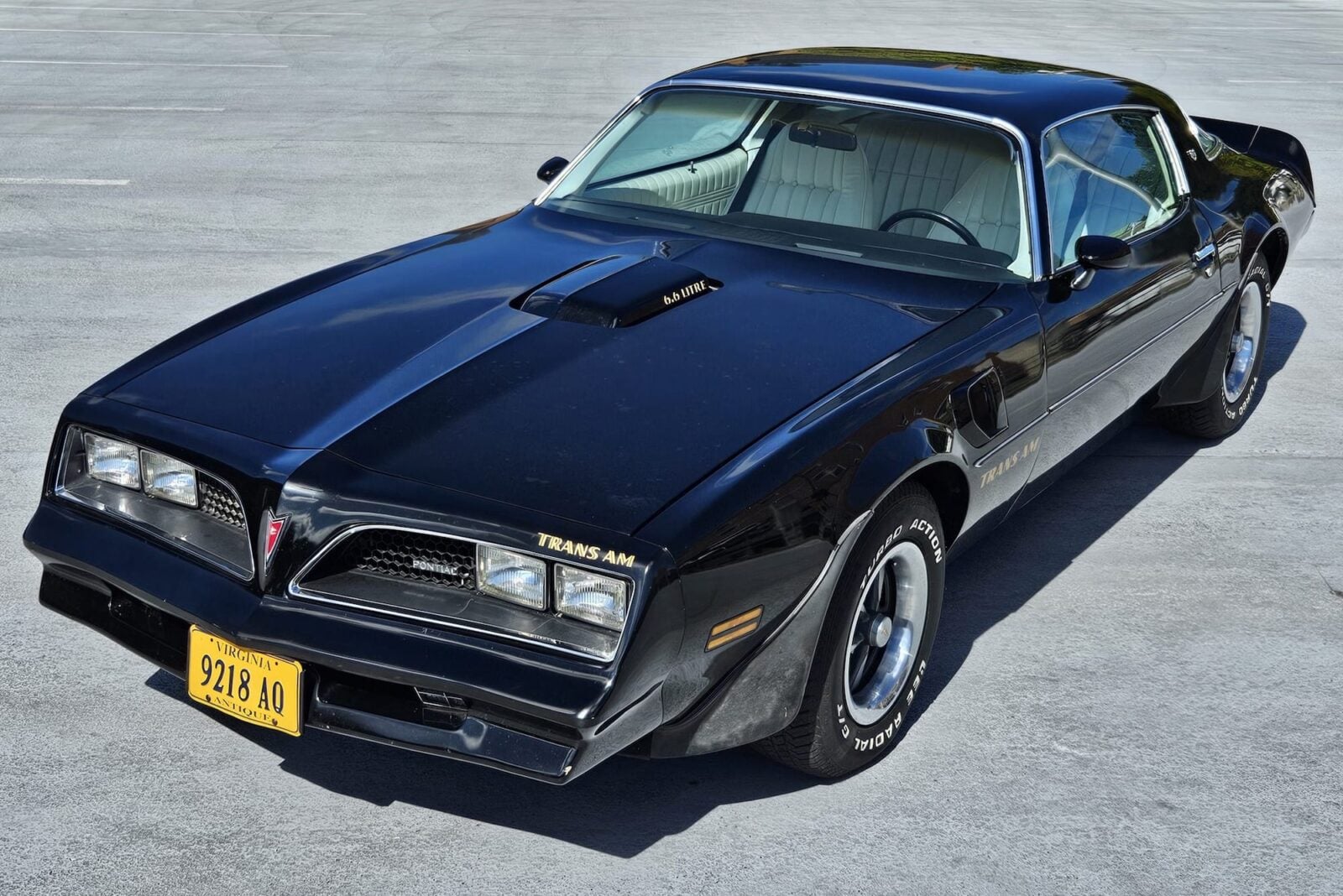
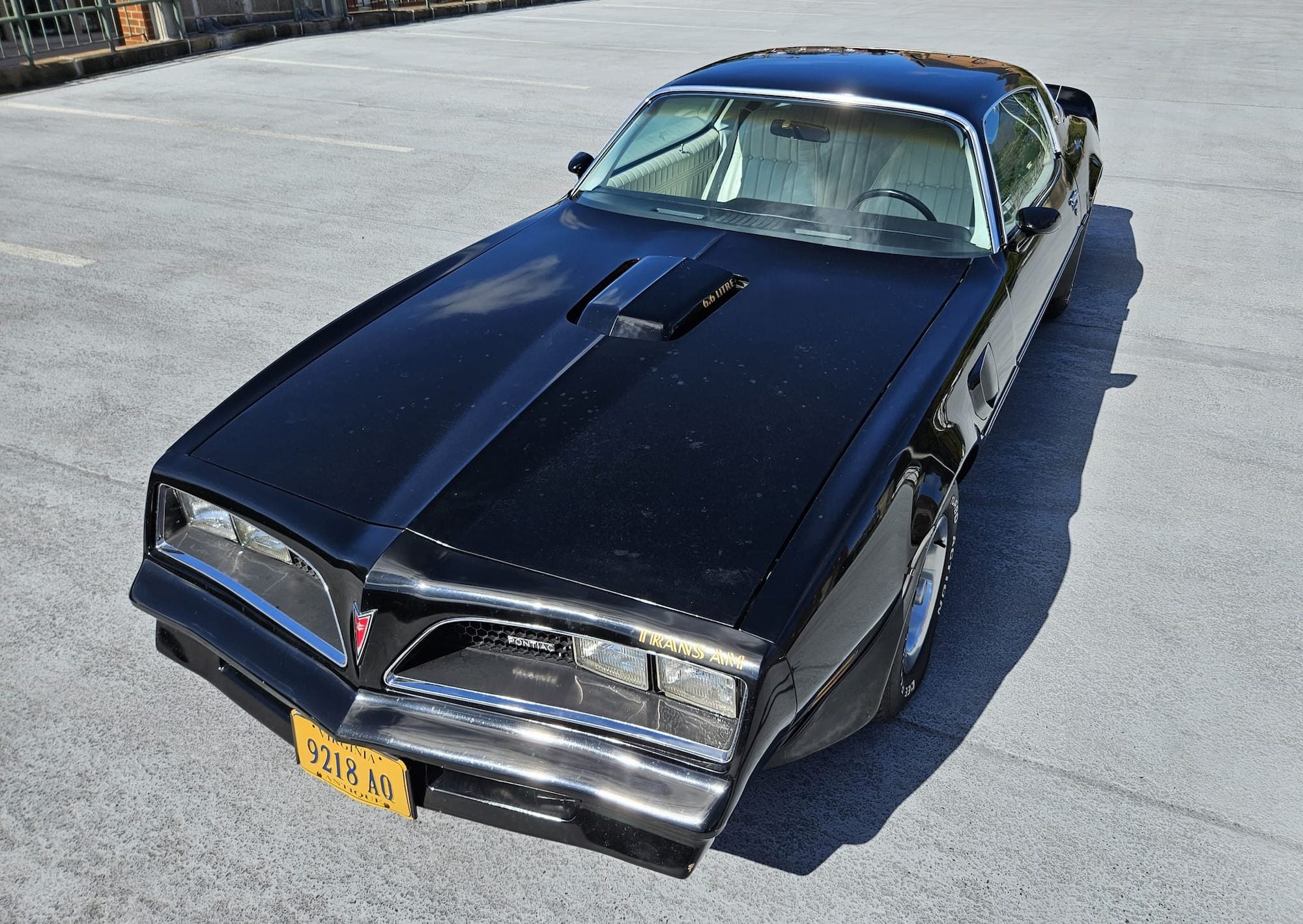
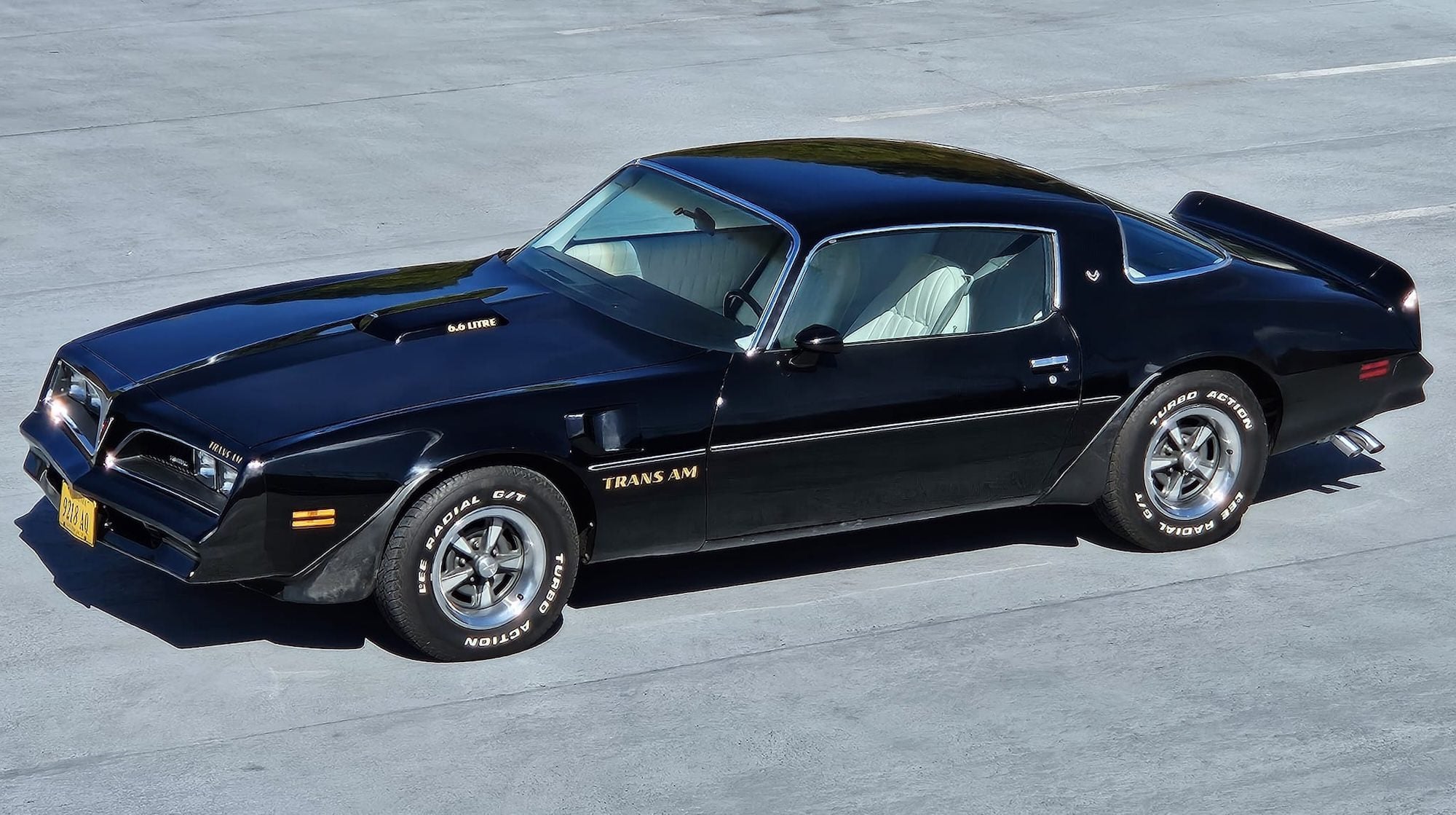
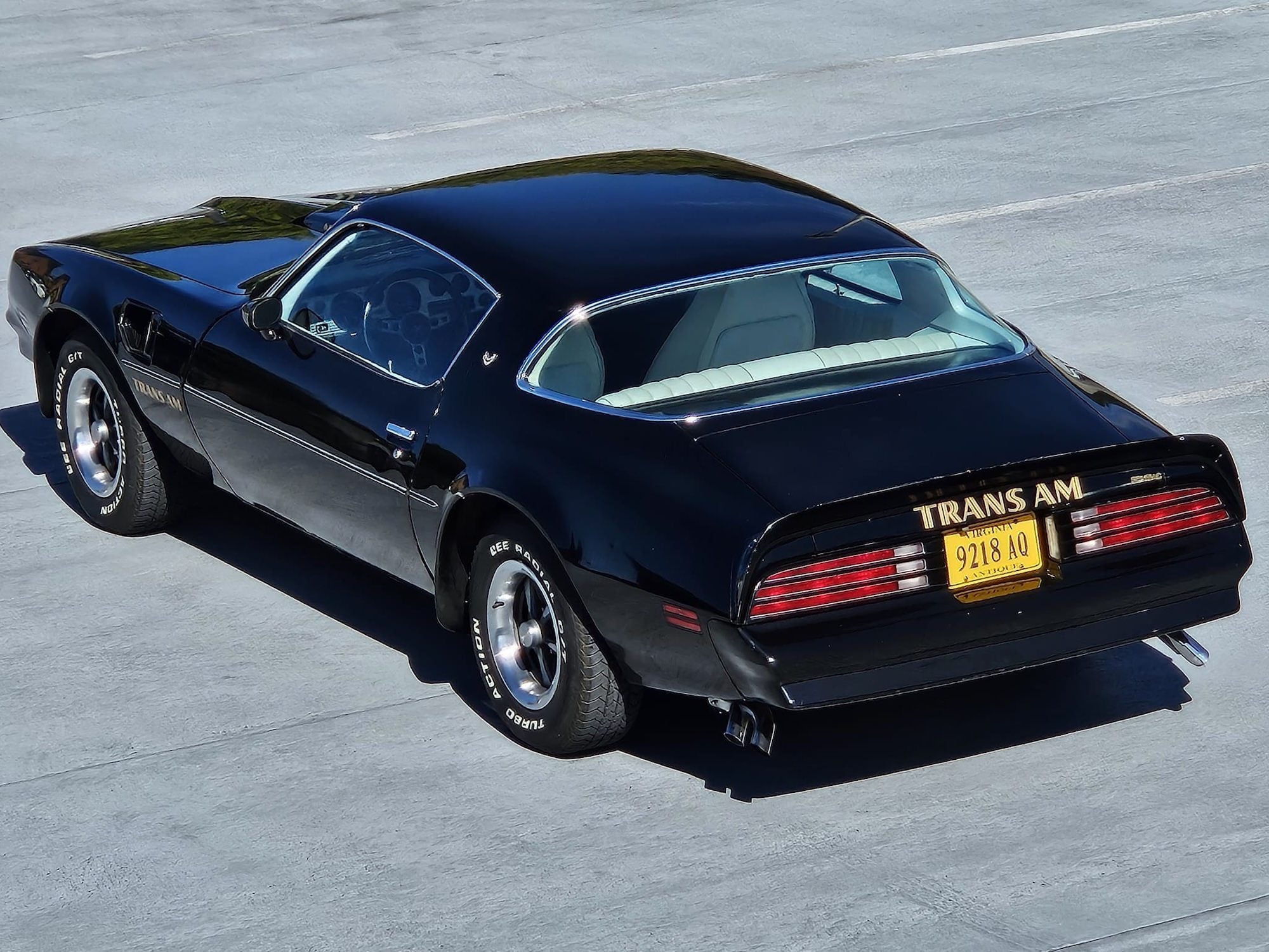
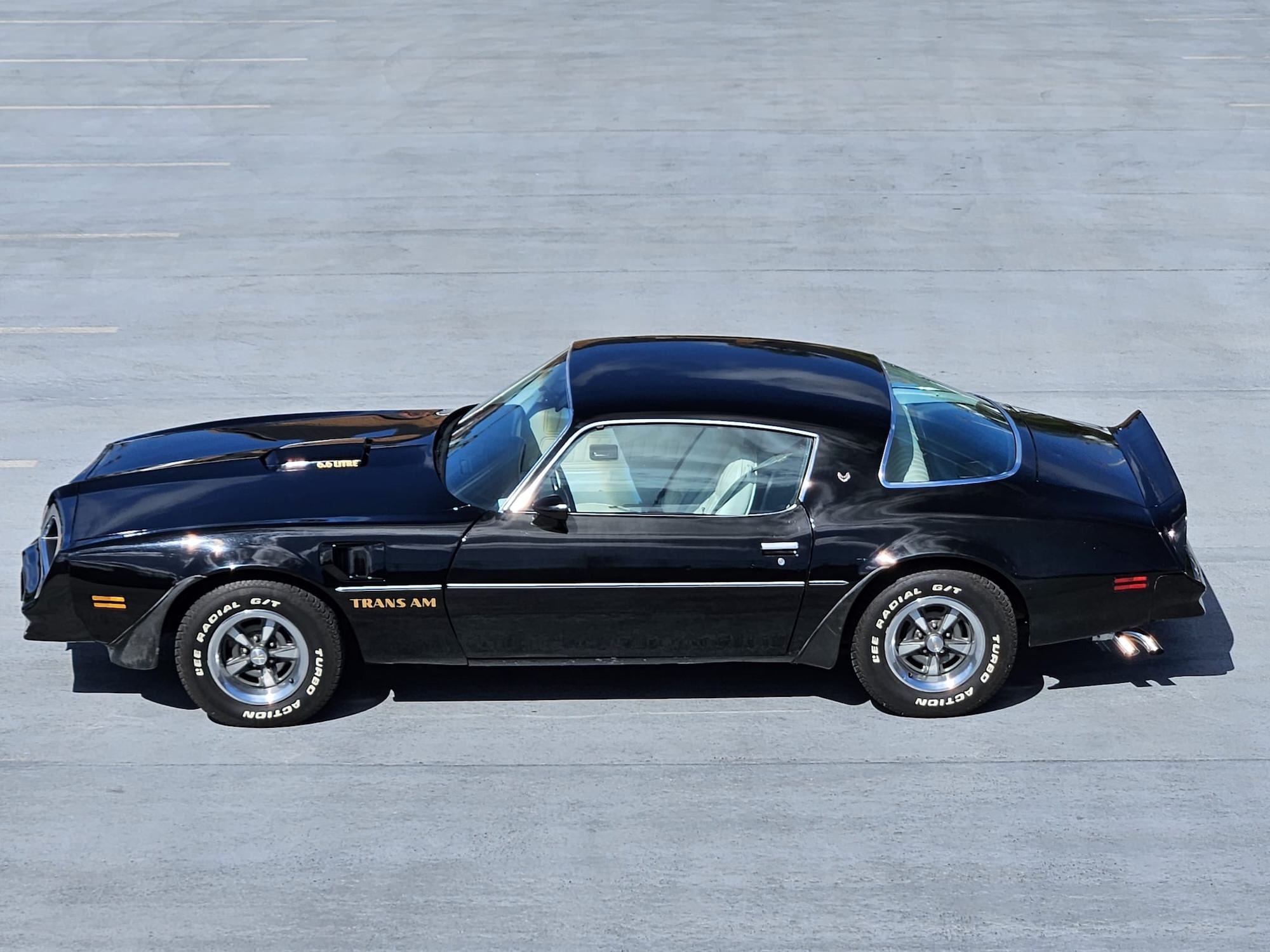
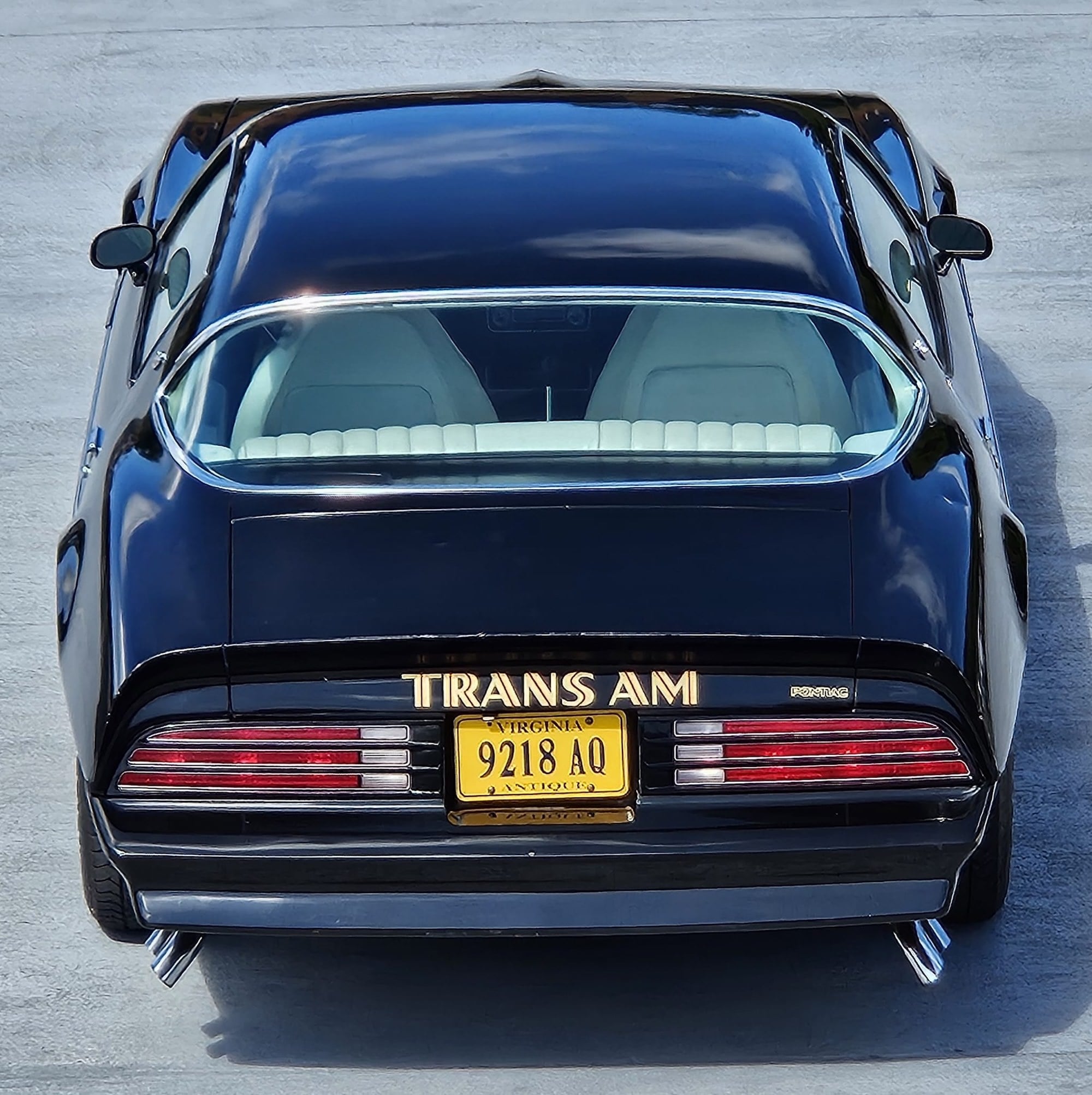
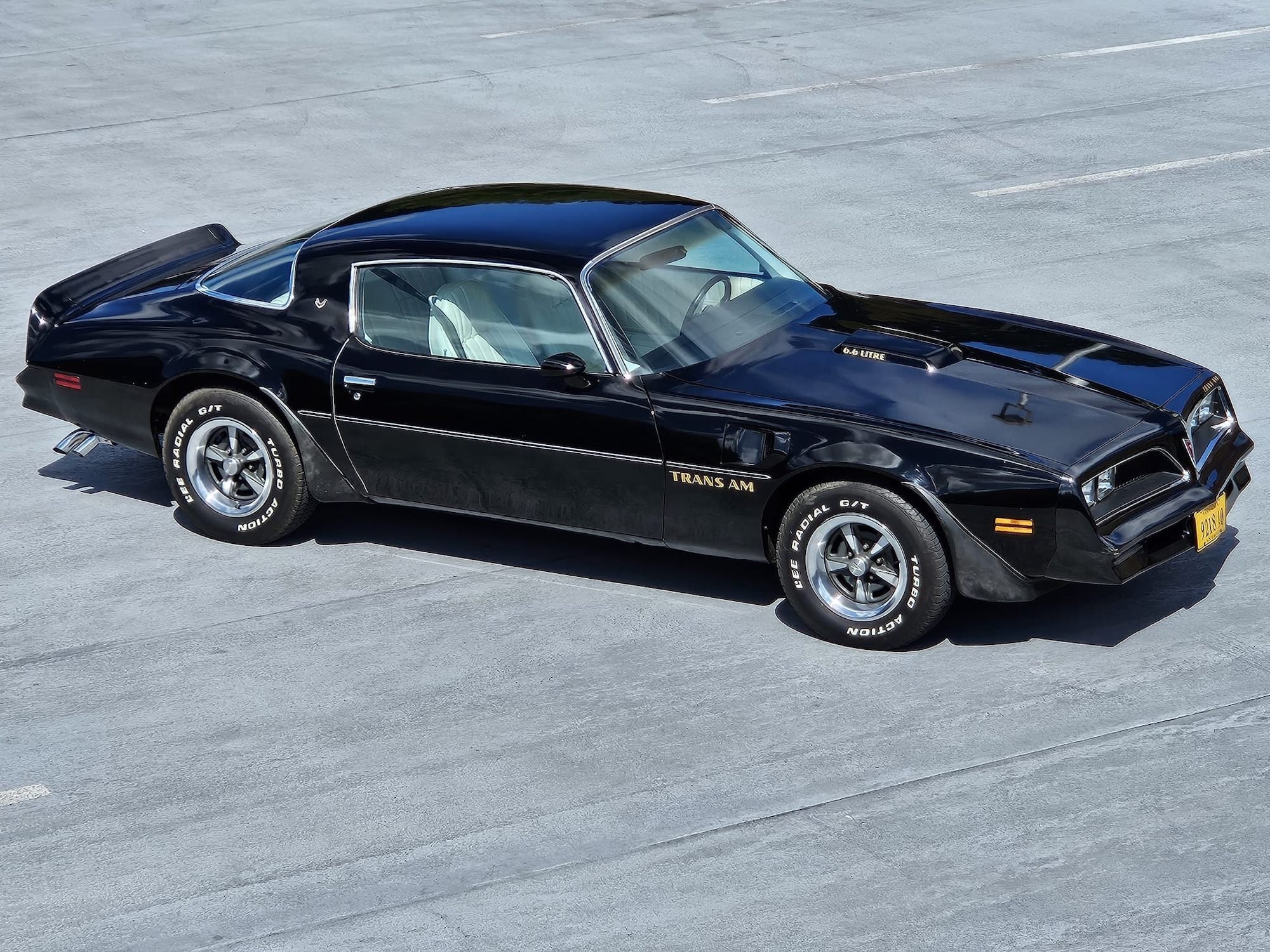
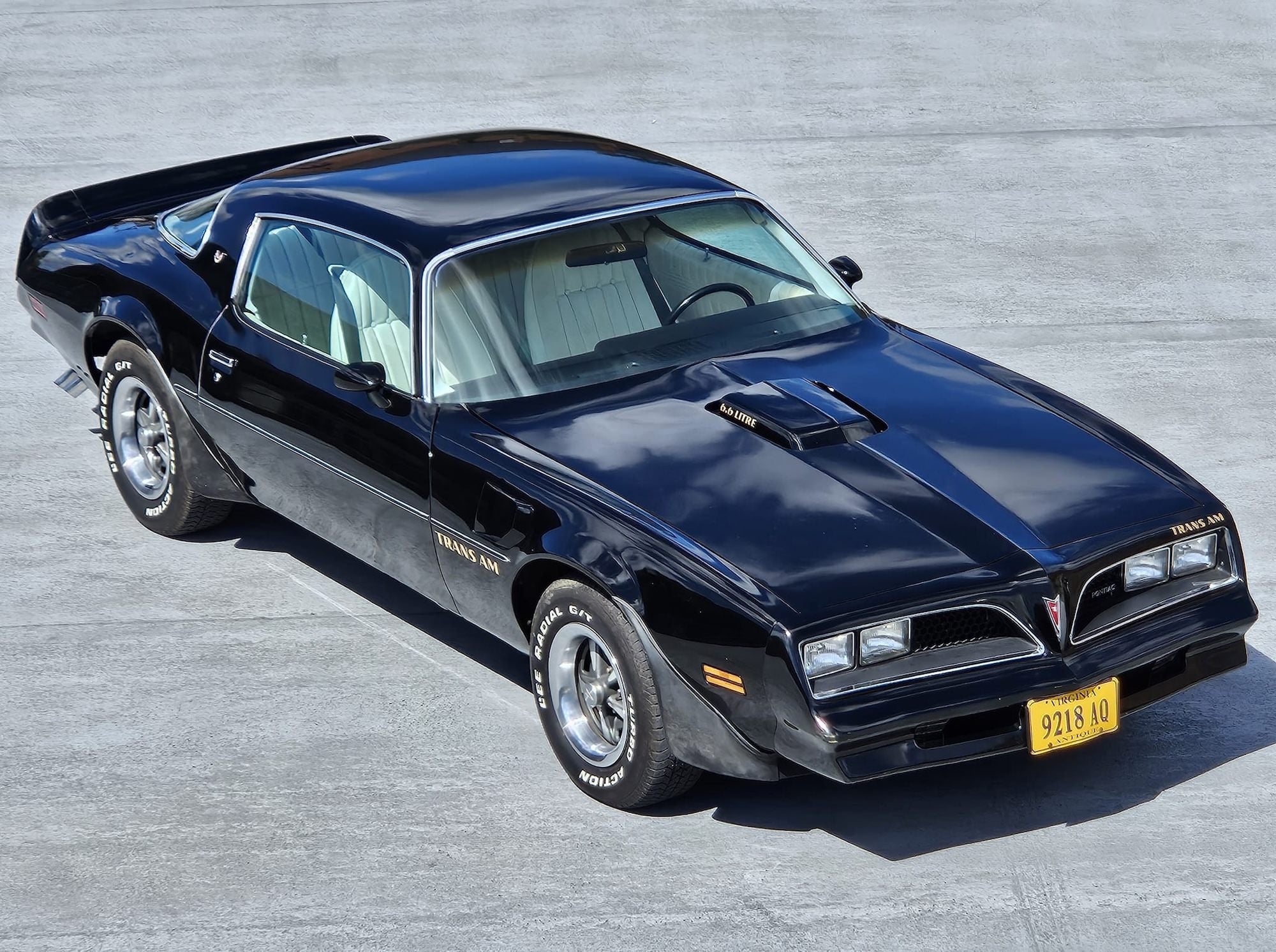
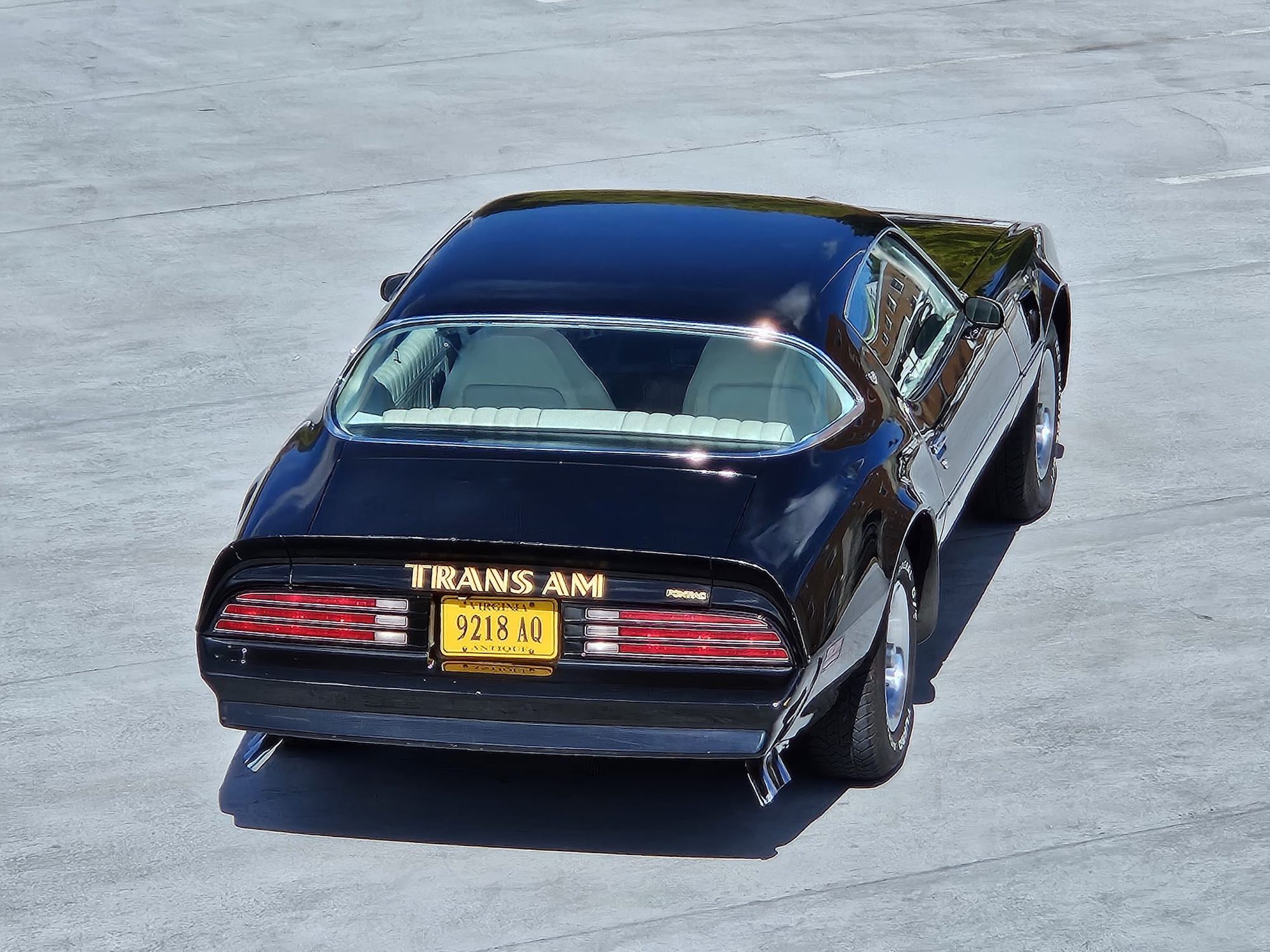
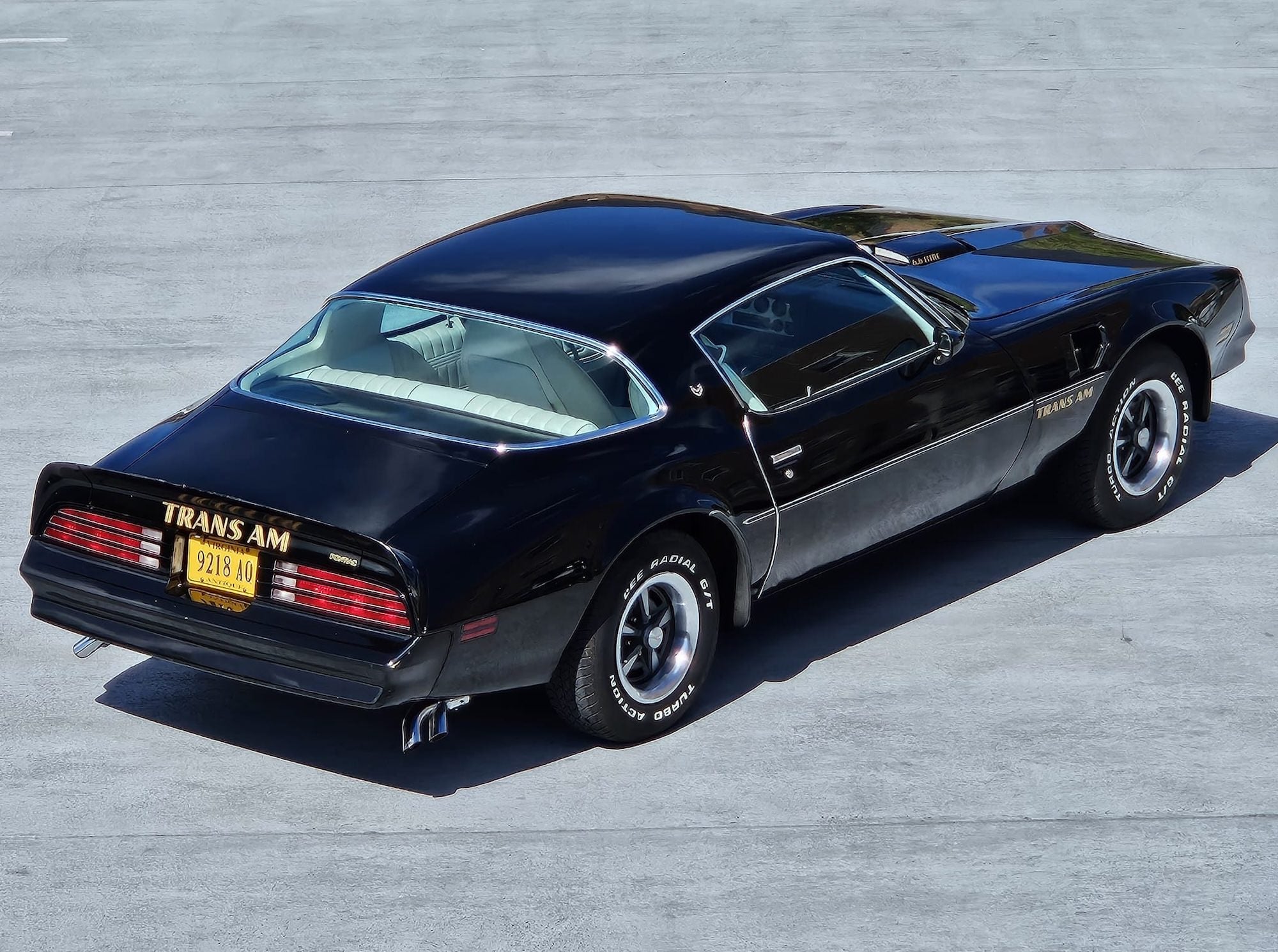
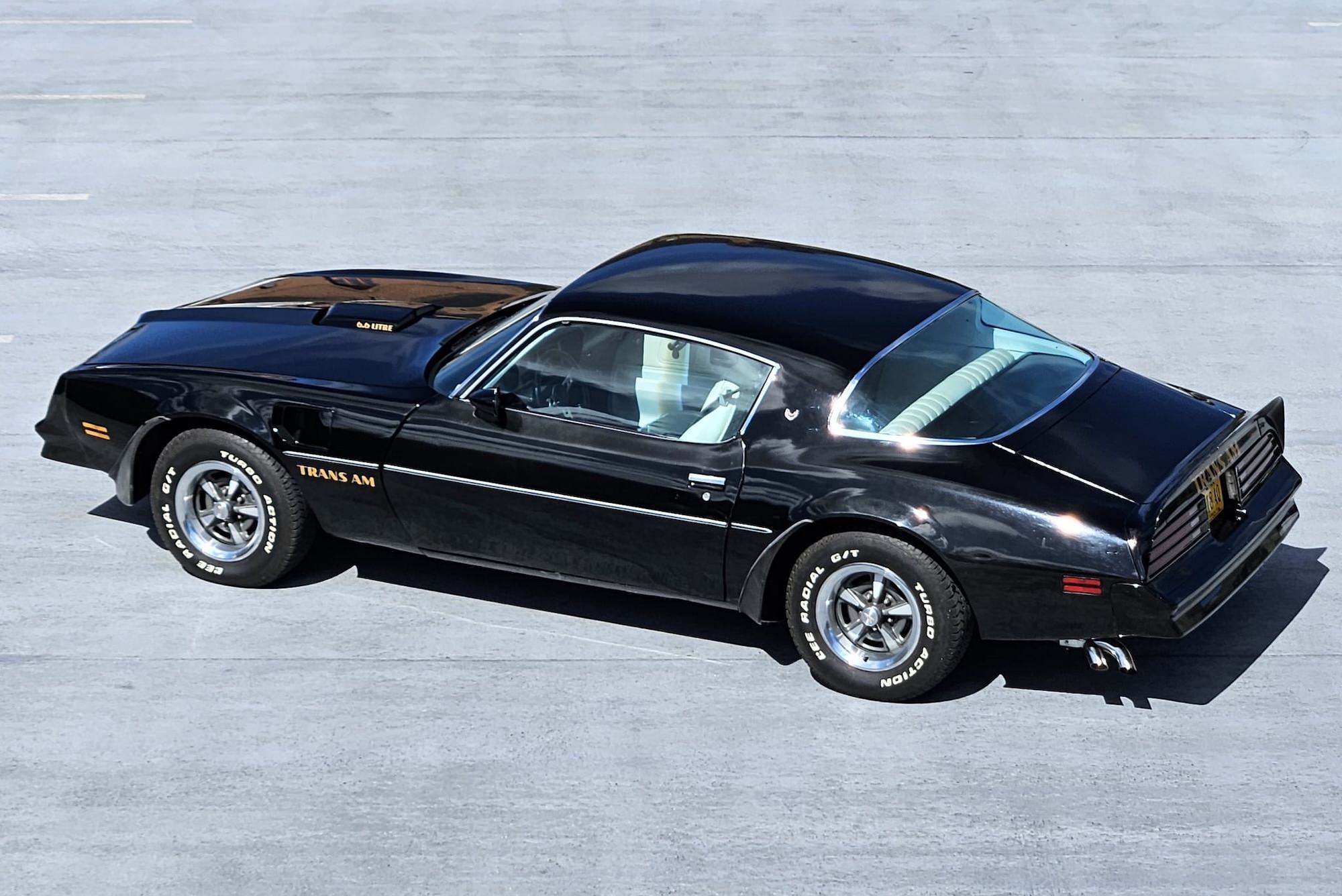
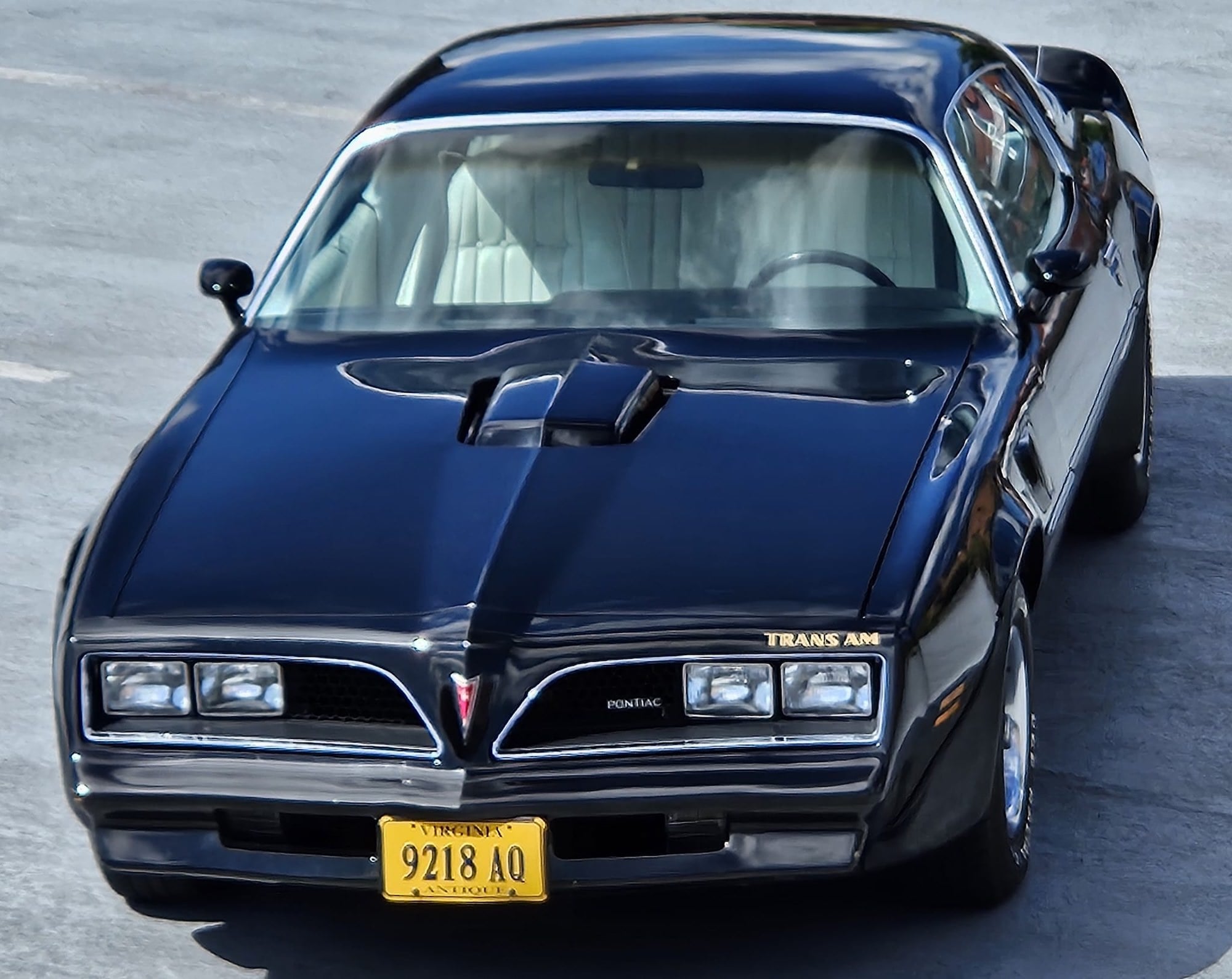
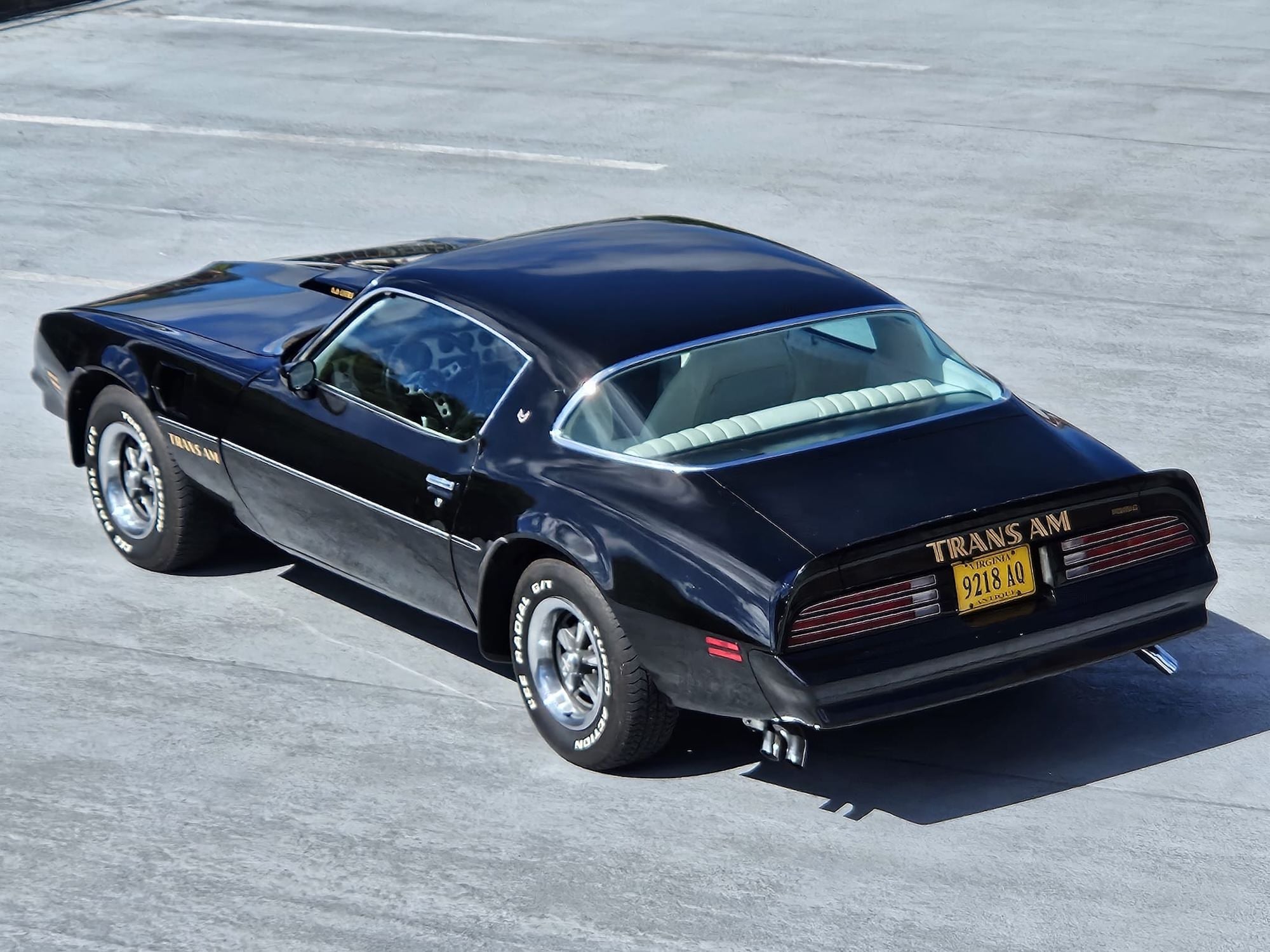
This is a one-owner Pontiac Firebird Trans Am from 1977, it has just 8,000 miles from new, and it’s remained in the same town its whole life until now – as it’s being offered for sale for the first time in 50 years.
The 1977 Trans Am is best-remembered for being the car made famous in the Burt Reynolds and Sally Field film Smokey and the Bandit. The film resulted in skyrocketing sales for the model, and turned it into an overnight ’70s icon.
Fast Facts: A 1977 Pontiac Firebird Trans Am
- This 1977 Pontiac Firebird Trans Am is a one-owner example bought new in Staunton, Virginia, on January the 3rd, 1977. It’s remained in the same city ever since and now shows just 8,000 miles. The car is being offered for sale for the first time in 50 years.
- The Trans Am debuted in 1969 as a performance package for the Firebird, initially powered by Pontiac’s 400 cubic inch V8. The second generation arrived for 1970, followed by notable developments including the SD-455, the oversized “Screaming Chicken” hood bird graphic, and the black-and-gold Special Edition introduced for 1976.
- The Trans Am became a major cultural icon after appearing in the 1977 film “Smokey and the Bandit.” Production climbed from 46,704 cars in 1976 to 117,108 by 1979. Later generations adopted Chevrolet V8s, turbocharged engines, fuel injection, and eventually the LT1 and LS1 before Firebird production ended in 2002.
- The car shown here is finished in Starlight Black over white vinyl and retains its matching-numbers 400 V8, rated at 180 bhp, paired with a 3-speed automatic and Safe-T-Track differential. Equipment includes air conditioning, cruise control, power steering, front disc brakes, Rally II wheels, shaker hood, rear spoiler, and extensive original documentation.
History Speedrun: The Pontiac Trans Am
Pontiac announced the Firebird Trans Am in March of 1969, and perhaps a little ironically, the car was completely ineligible for the race series it was named after. The SCCA (Sports Car Club of America) Trans-Am championship capped engine displacement at 305 cubic inches (5.0 liters). Every 1969 Trans Am left the factory with a 400 cubic inch (6.6 liter) V8. Pontiac paid the SCCA a $5 royalty on each car for the name anyway.
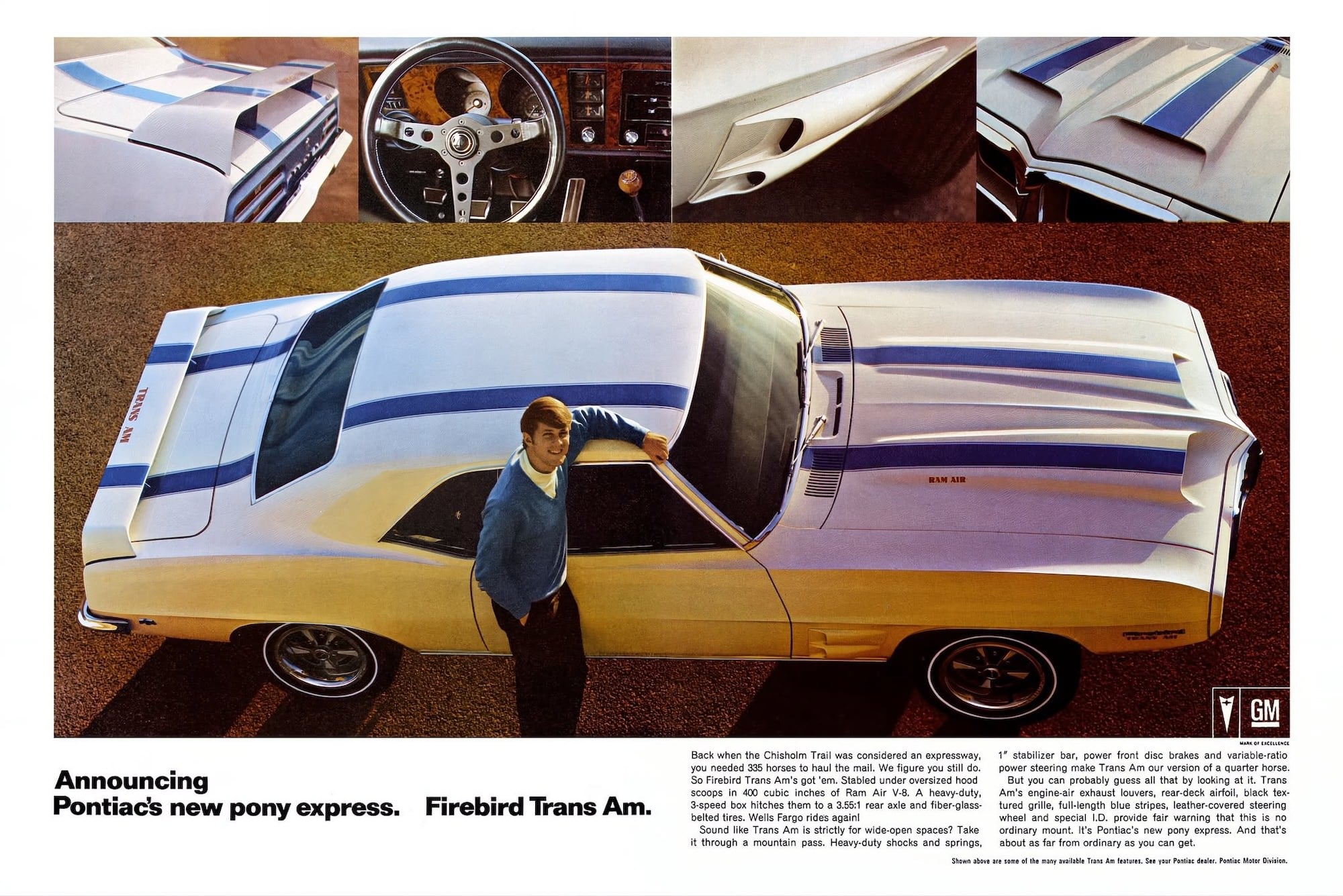
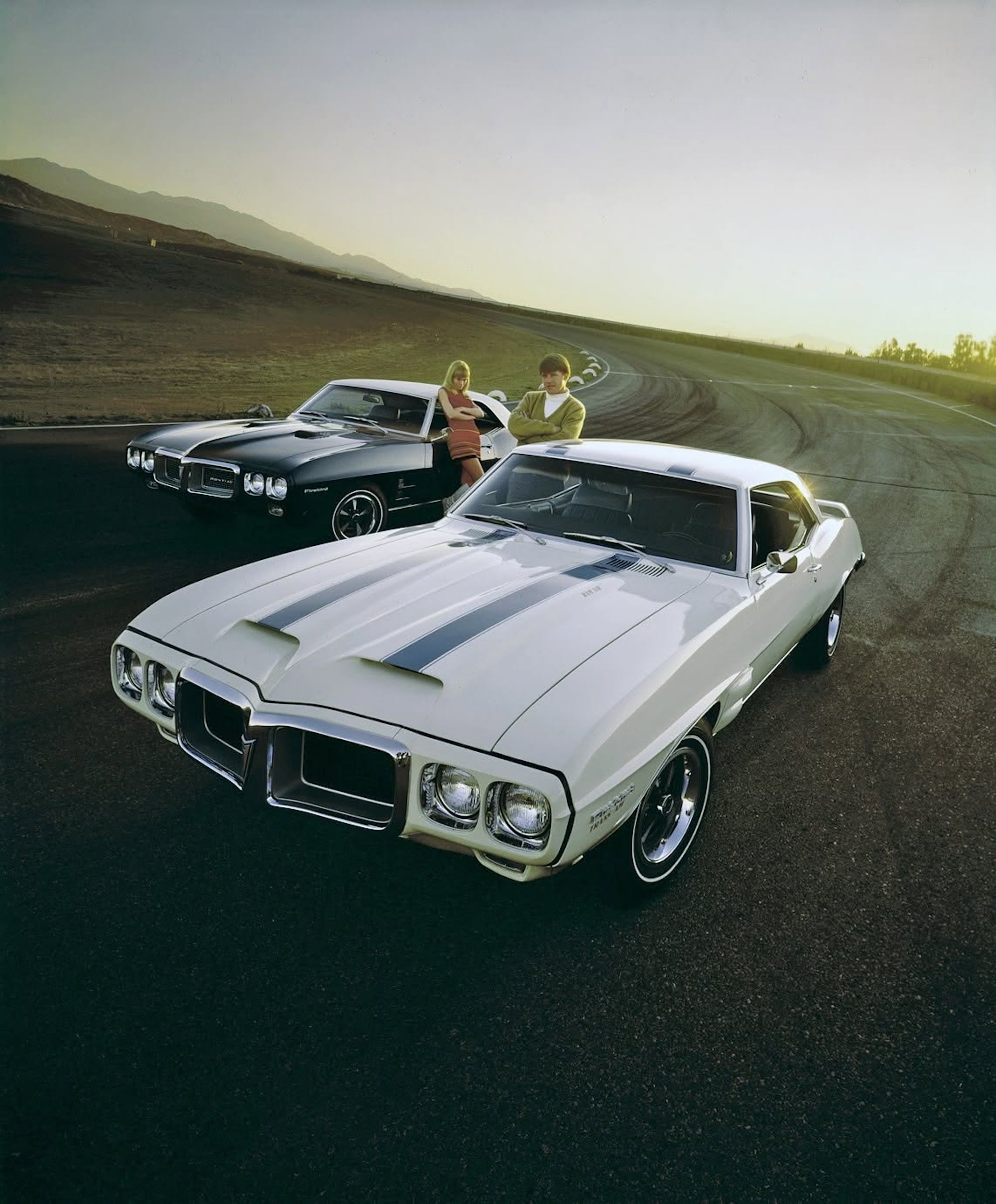
 Pontiac announced the Firebird Trans Am in March of 1969, and perhaps a little ironically, the car was completely ineligible for the race series it was named after. Images courtesy of General Motors.
The engine that had been intended to make the Trans Am legal for the series was a short-stroke 303 cubic inch (5.0 liter) tunnel-port V8 from Pontiac’s Ram Air V program, but sadly it never reached production. 25 or so were built and made available to racers as replacement engines. Firebirds did run in the Trans Am series, but they weren’t factory-built cars.
Jerry Titus raced in the series using a Camaro Z/28 race car that had been reskinned as a Firebird in 1969, it was powered by a Chevrolet 302 V8 – legal because Canadian-market Firebirds were sold with Chevy engines. The Pontiac 303 reached their cars in 1970, but Titus was tragically killed after a practice crash at Road America.
The Trans Am Package Arrives
The Trans Am package first arrived as an option package, RPO 322, at $724.60 on top of a Firebird coupe listing at about $2,831 off the showroom floor, which put the cheapest Trans Am at $3,556. It was fitted with the L74 Ram Air III 400, rated 335 bhp, and it came with a heavy-duty 3-speed manual with floor shifter, a 3.55:1 Safe-T-Track axle, heavy-duty springs and shocks, a one-inch front anti-roll bar, power front disc brakes and variable-ratio power steering.
A 4-speed manual and a 3-speed Turbo Hydra-Matic were extra, as was the only other engine available – the L67 Ram Air IV, at 345 bhp.
Every car was Cameo White with Tyrol Blue stripes and a blue tail panel, and Pontiac built just 697 of them, 689 coupes and 8 convertibles. Only 55 coupes got the Ram Air IV and today they’re among the most highly-collectible Trans Ams money can buy. If you can even find one.
The Second-Gen Trans Am Debuts
The redesigned second-gen Firebird appeared in February of 1970 as a 1970½ model, styled in Bill Porter’s studio. Pontiac’s 1970 model-identification sheet listed the Trans Am’s Ram Air III at 345 bhp and the Ram Air IV at 370 bhp. Compression then fell to 8.4:1 for 1971 and the 455 HO became the Trans Am’s standard engine – 335 bhp and 480 lb ft, or 305 bhp and 410 lb ft on the new SAE net standard. A 174-day strike at the Norwood plant nearly killed the Firebird outright in 1972, only 1,286 Trans Ams were built.
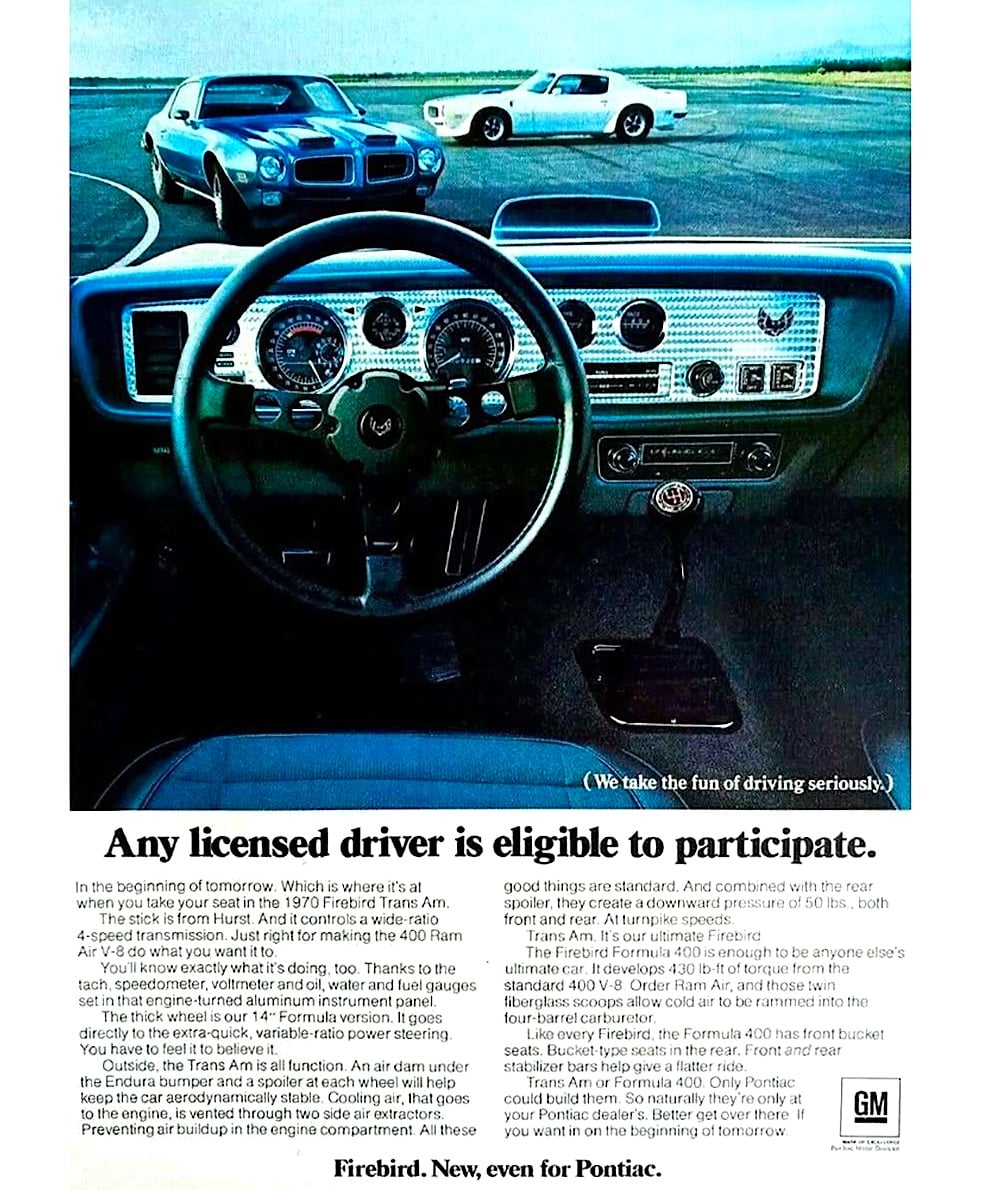
The redesigned second-gen Firebird appeared in February of 1970 as a 1970½ model, styled in Bill Porter’s studio. Image courtesy of General Motors.
What followed this near-death experience was the last serious muscle car of the era – the SD-455 was hand-assembled by two-person crews at Milford and dyno-tested individually, with four-bolt mains, round-port heads, forged pistons and even a provision for dry-sump oiling.
Pontiac’s PR spec sheets had printed 310 bhp and 390 lb ft, all on the strength of a 308/320º cam, but a milder, more emissions friendly 301/313º grind went into production instead – to leave enough margin to pass emissions standards, the published rating then dropped to 290 bhp and 395 lb ft. Only 252 Trans Ams received the engine in 1973 and 943 in 1974, alongside 43 and 58 Firebird Formulas.
The Unforgettable Screaming Chicken
Norm Inouye drew up the first oversized hood bird for the 1970½ car at Porter’s request, working from Porter’s own sketch. GM design chief Bill Mitchell killed it on sight. Porter later recalled his cutting observation: “It looks like something on a Macy’s truck.”
When John Schinella took over the Firebird studio in mid-1971 he revived the idea, driving around Detroit with a decal on a Formula to gauge public reaction before pitching it to the big wigs again.
Pontiac general manager Jim McDonald approved it as an option rather than standard equipment, to test the waters, and it reached buyers for the first time on the 1973 Trans Am as option WW7, at $55. Schinella also created the black-and-gold Special Edition scheme that debuted for 1976.
Smokey and the Bandit
Hal Needham’s classic film Smokey and the Bandit reached theaters in 1977, Needham had asked Pontiac for Trans Ams and LeMans sedans for the sheriff’s patrol cars, and by his own account came away with three Trans Ams and two LeManses. The screen cars were 1976 bodies fitted with 1977 front-end sheetmetal, since the 1977 model wasn’t yet in production, and 1976 honeycomb wheels are visible in some shots.
Above Video: Smokey and the Bandit was one of the surprise box office hits of the 1970s, it was one of the top grossing movies of the year, and it turned the Trans Am into a must-have icon overnight.
A stock automatic couldn’t reach the speed needed on the short dirt approach to the Mulberry Bridge jump, so Needham had a race engine and a manual gearbox fitted to the jump car – he drove it himself and perhaps unsurprisingly, none survived filming intact.
Trans Am production went from 46,704 in 1976 to 68,744 in 1977, 93,341 in 1978 and 117,108 in 1979. The film had turned the car into an icon in its own time, and buyers couldn’t get enough.
The cars themselves were slower than the film had suggested, the W72 400 made just 200 bhp in 1977 and 220 bhp in 1978 and 1979. Pontiac introduced the WS6 Special Performance Package for 1978 at about $251, adding 15×8 Snowflake wheels, wider tires and a thicker rear anti-roll bar; four-wheel disc brakes joined the list for 1979.
That year was also the end of the Pontiac 400 – GM had stopped building the engine after 1978, so the T/A 6.6 units offered for 1979 were holdovers assembled during the 1978 model year and warehoused, available only with the Borg-Warner Super T-10 4-speed.
The replacement was the LU8 turbocharged 301 cubic inch (4.9 liter) V8, a draw-through system with a modified Quadrajet sitting ahead of a Garrett turbocharger running 9 psi, plus electronic spark control that used a knock sensor to retard timing when detonation was detected. It only made 210 bhp but the 345 lb ft torque figure did help it get off the line with reasonable pace.
The Third + Fourth Generation Cars
The 1982 car changed significantly, it was 400 lbs lighter and 11 inches shorter, and its engines now came from Chevrolet, with a 145 bhp carbureted 305 cubic inch (5.0 liter) V8 or the 165 bhp Cross-Fire version. Tuned Port Injection pushed output past 200 bhp in 1985.
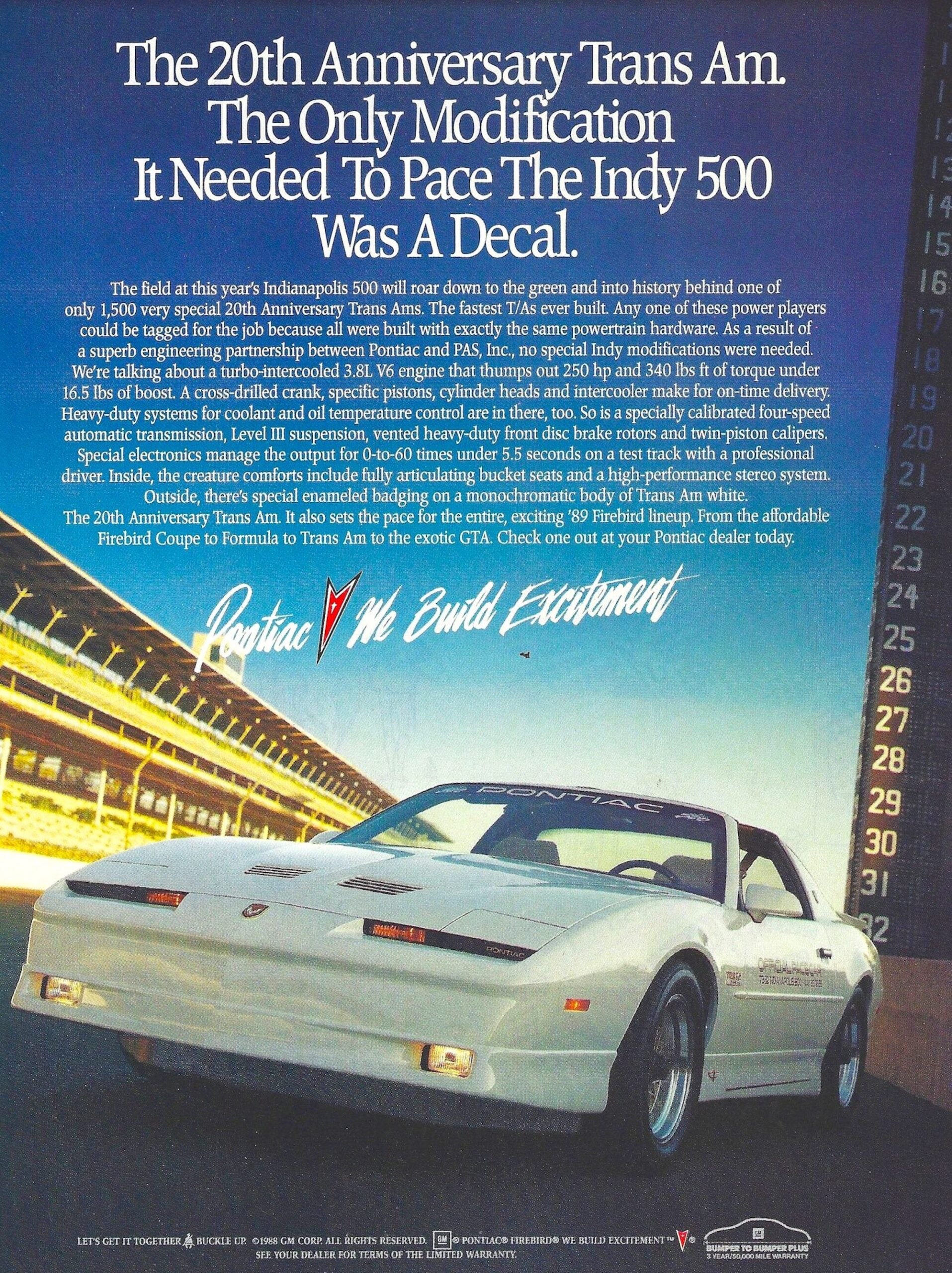
The 1982 car changed significantly, it was 400 lbs lighter and 11 inches shorter, and its engines now came from Chevrolet, with a 145 bhp carbureted 305 cubic inch (5.0 liter) V8 or the 165 bhp Cross-Fire version. Image courtesy of General Motors.
The GTA arrived for 1987 with the 350 cubic inch (5.7 liter) L98 and WS6 as standard, though buyers could substitute the 305 cubic inch (5.0 liter) TPI V8 and a 5-speed manual. Then, in 1989, Pontiac put the Buick Grand National’s 3.8 liter turbo V6 into a 20th Anniversary Turbo Trans Am, it offered 250 bhp and 340 lb ft of torque, not at all bad for a V6.
The fourth generation launched for 1993 with the 275 bhp LT1, a Borg-Warner T56 6-speed or a 4-speed automatic. The LT1 went to 285 bhp in 1996, when SLP-built WS6 Ram Air cars returned at 305 bhp and 335 lb ft. The all-aluminum LS1 followed in 1998, rated 305 bhp at 5,200 rpm and 335 lb ft at 4,000, with WS6 cars at 320 bhp and 345 lb ft.
Pontiac’s send-off was the 2002 Collector Edition, finished in Collector Yellow with WS6 as standard, but it wasn’t quite the last car down the line. The final Firebird built at Sainte-Thérèse, Quebec in August of 2002 was a Bright Red Trans Am convertible, ordered by GM’s Scott Settlemire as a non-saleable car for the Heritage Collection. A Bright Red Camaro followed it, and the plant shut down the next day.
GM announced Pontiac’s phase-out in 2009, weeks before entering Chapter 11, and the marque was gone the following year. Trans Am Depot of Tallahassee, Florida licensed the name and logo from GM and now converts modern Camaros using around 230 bespoke parts per car. Its Trans Am SE Bandit Edition was developed with Burt Reynolds, who signed all 77 of them, and was offered with a supercharged 7.4 liter LSX V8 rated at up to 840 hp. Just a teensy bit more power than the originals from the Malaise Era.
The 1977 Pontiac Firebird Trans Am Shown Here
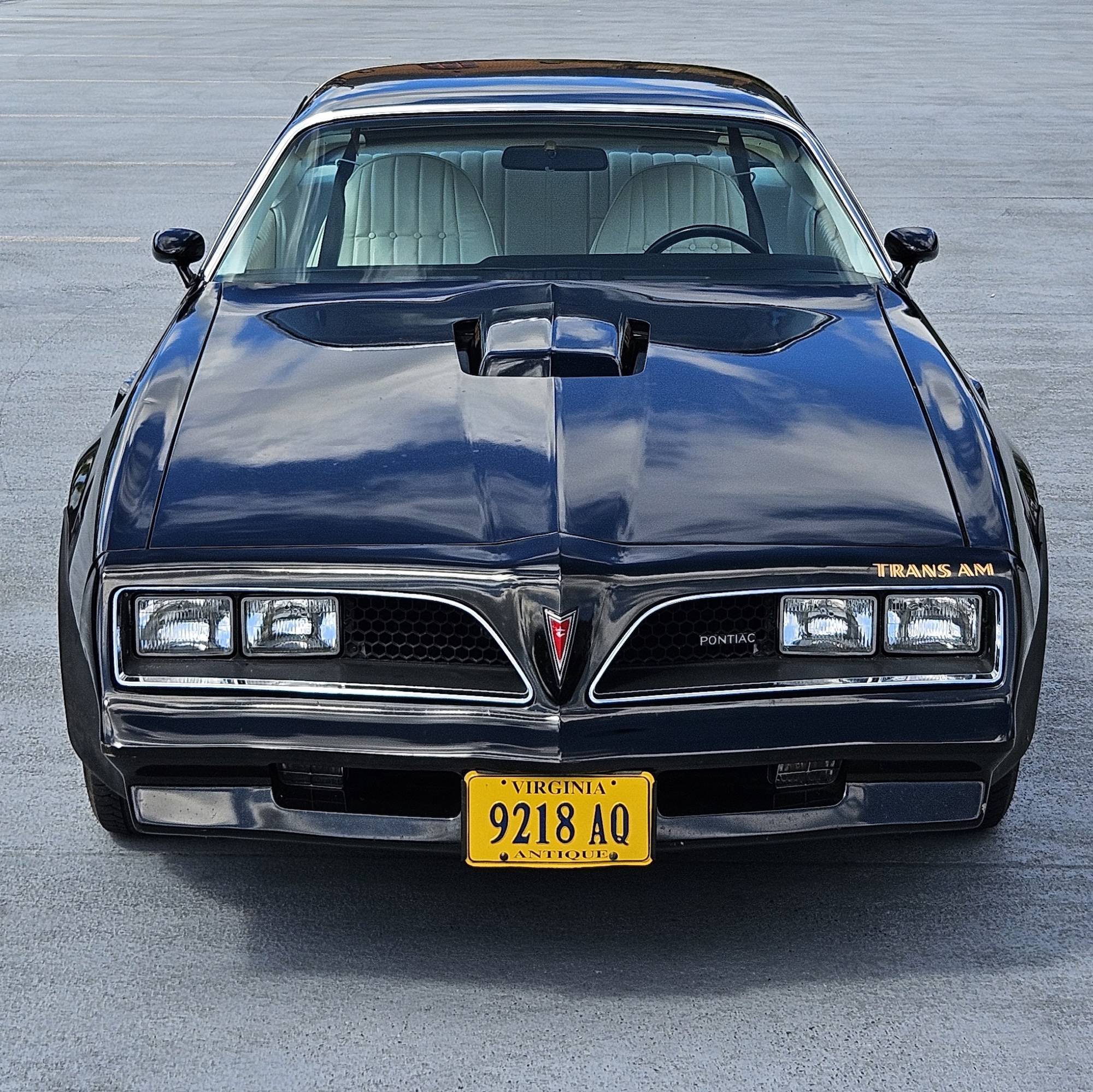
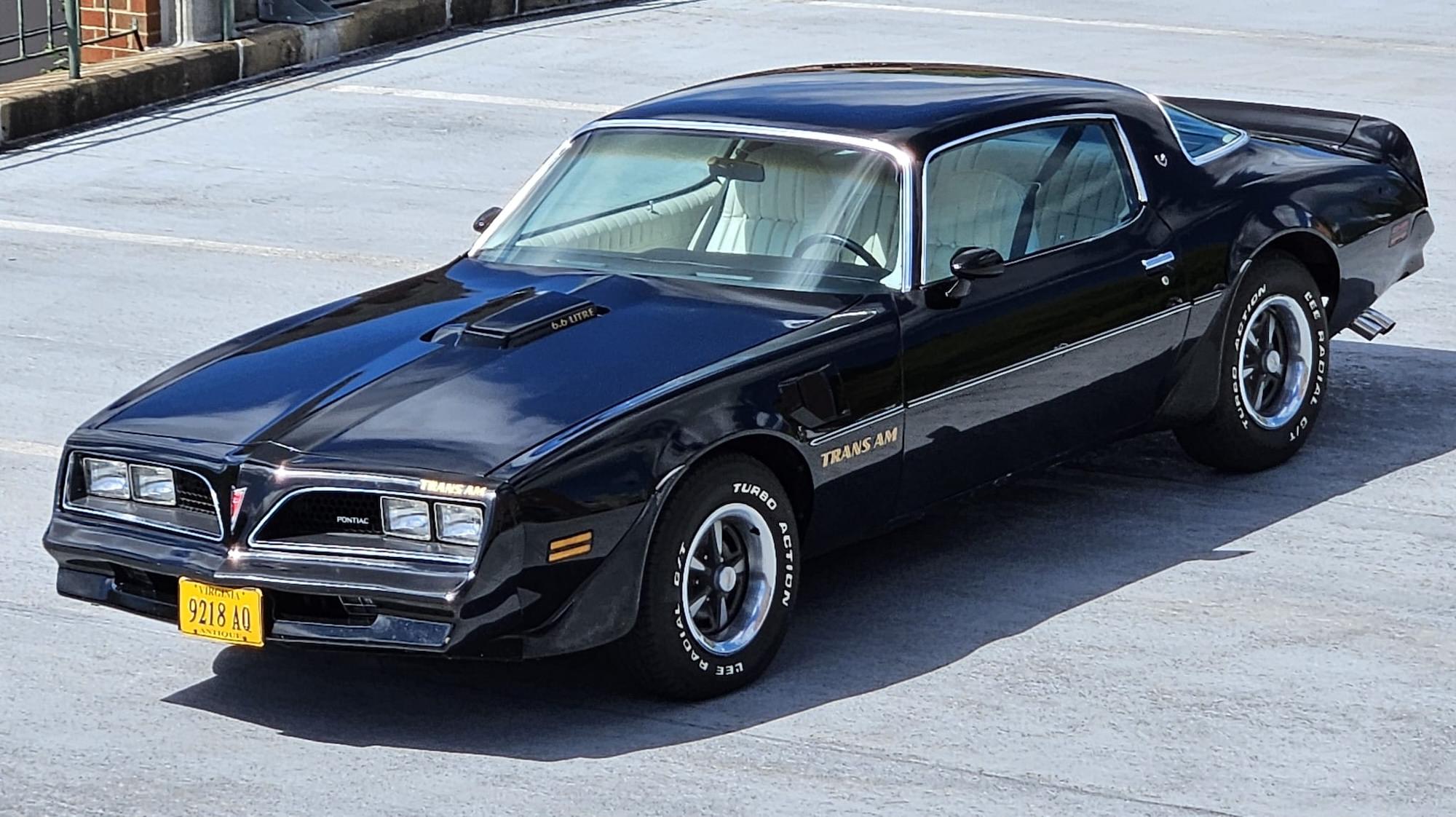
This 1977 Pontiac Firebird Trans Am has stayed with the same owner from new, having been bought in Staunton, Virginia, on January the 3rd, 1977. It remained in the same city throughout its life and it’s now being offered on dealer consignment with unusually complete documentation, including the original sales invoice, build sheets, factory literature, and PHS records. The five-digit odometer currently shows just 8,000 miles.
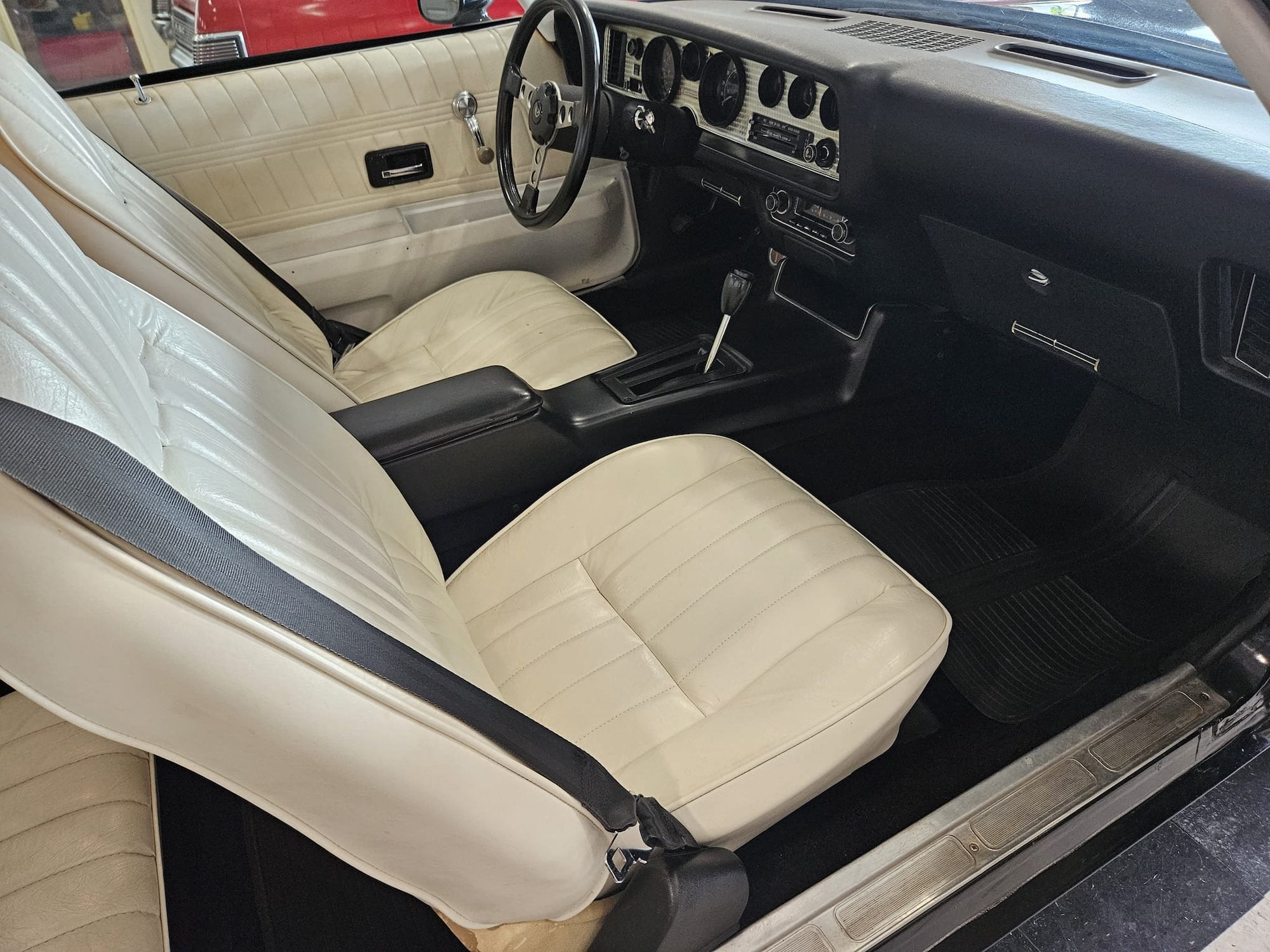
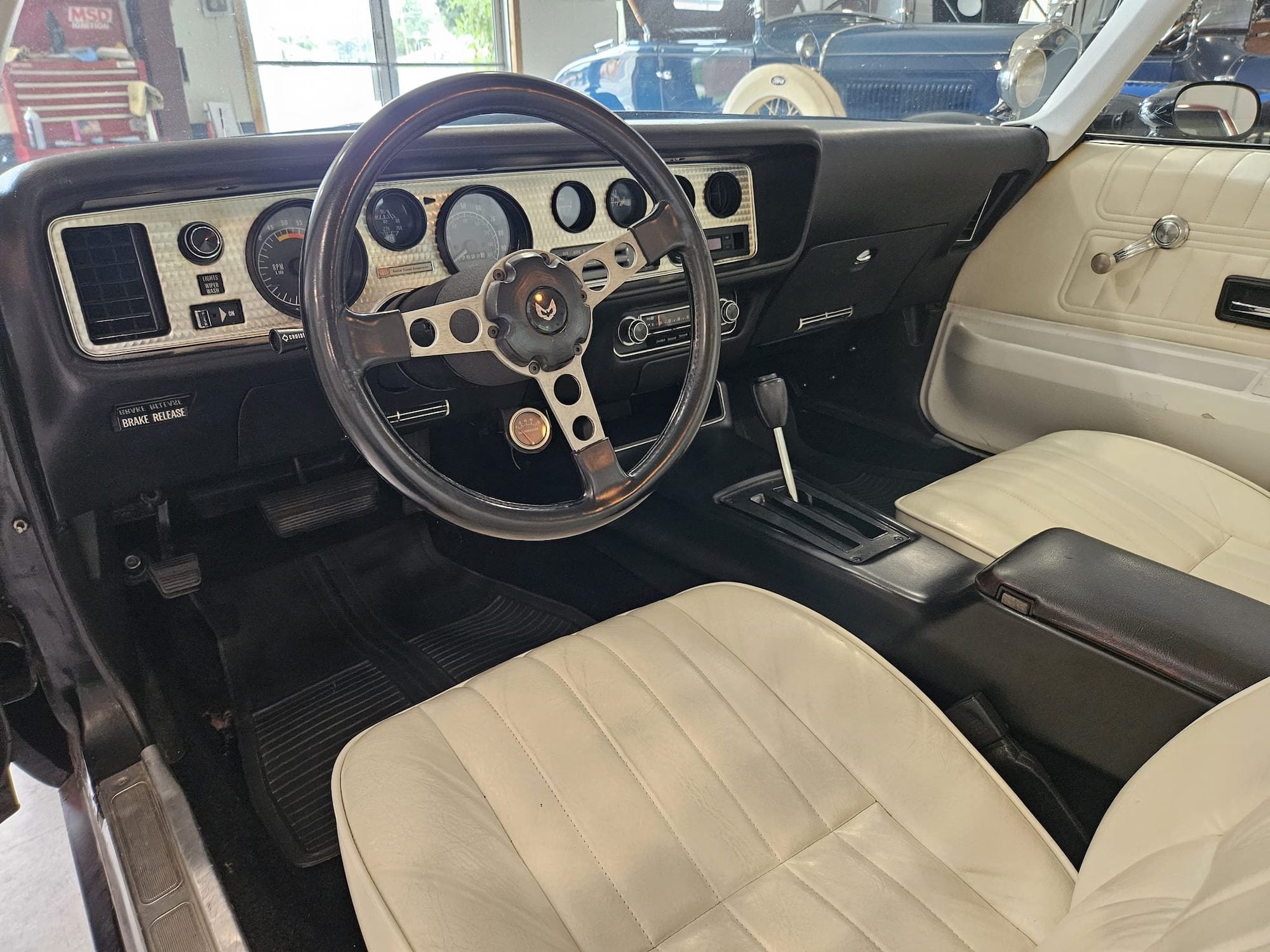
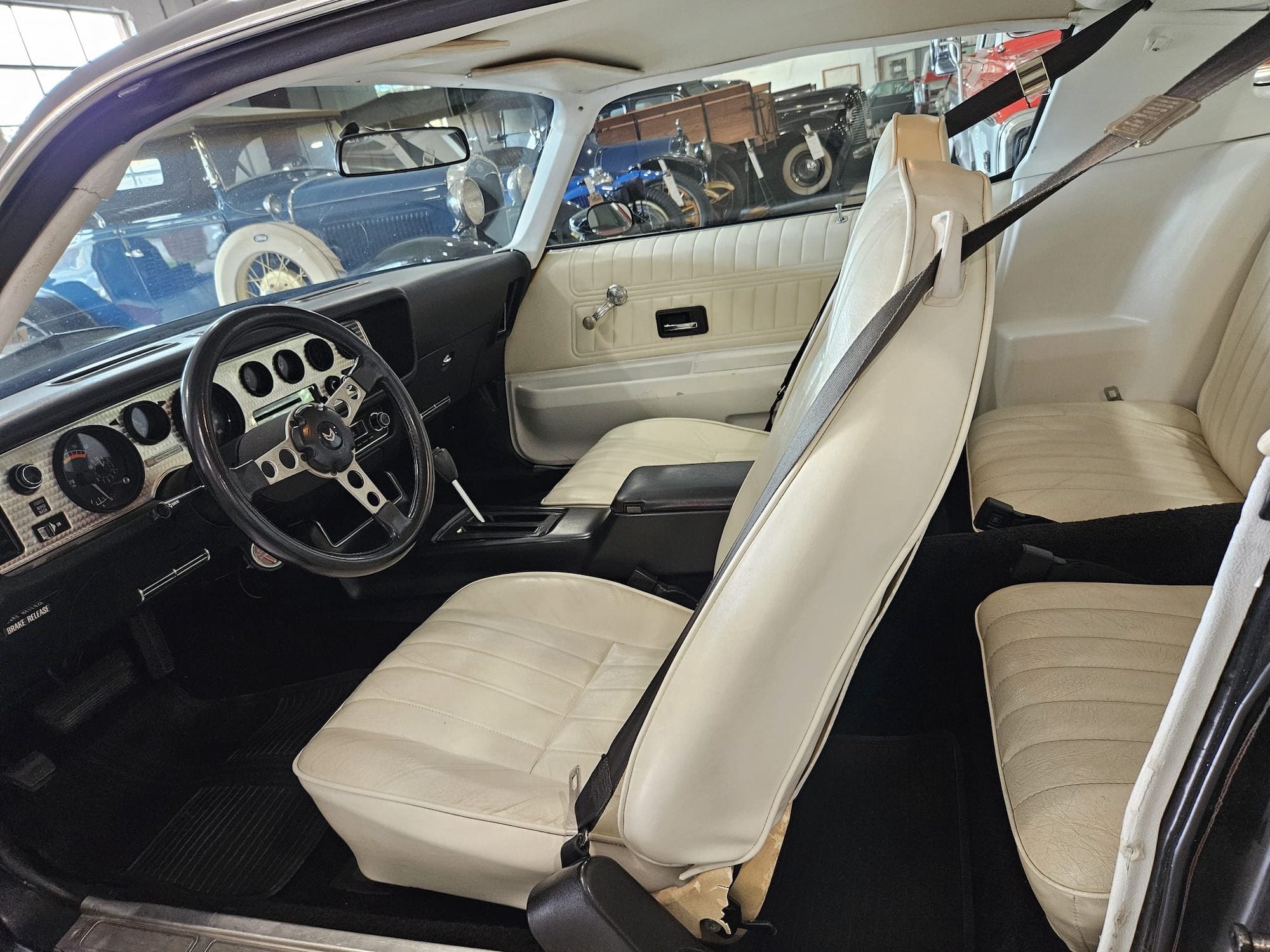
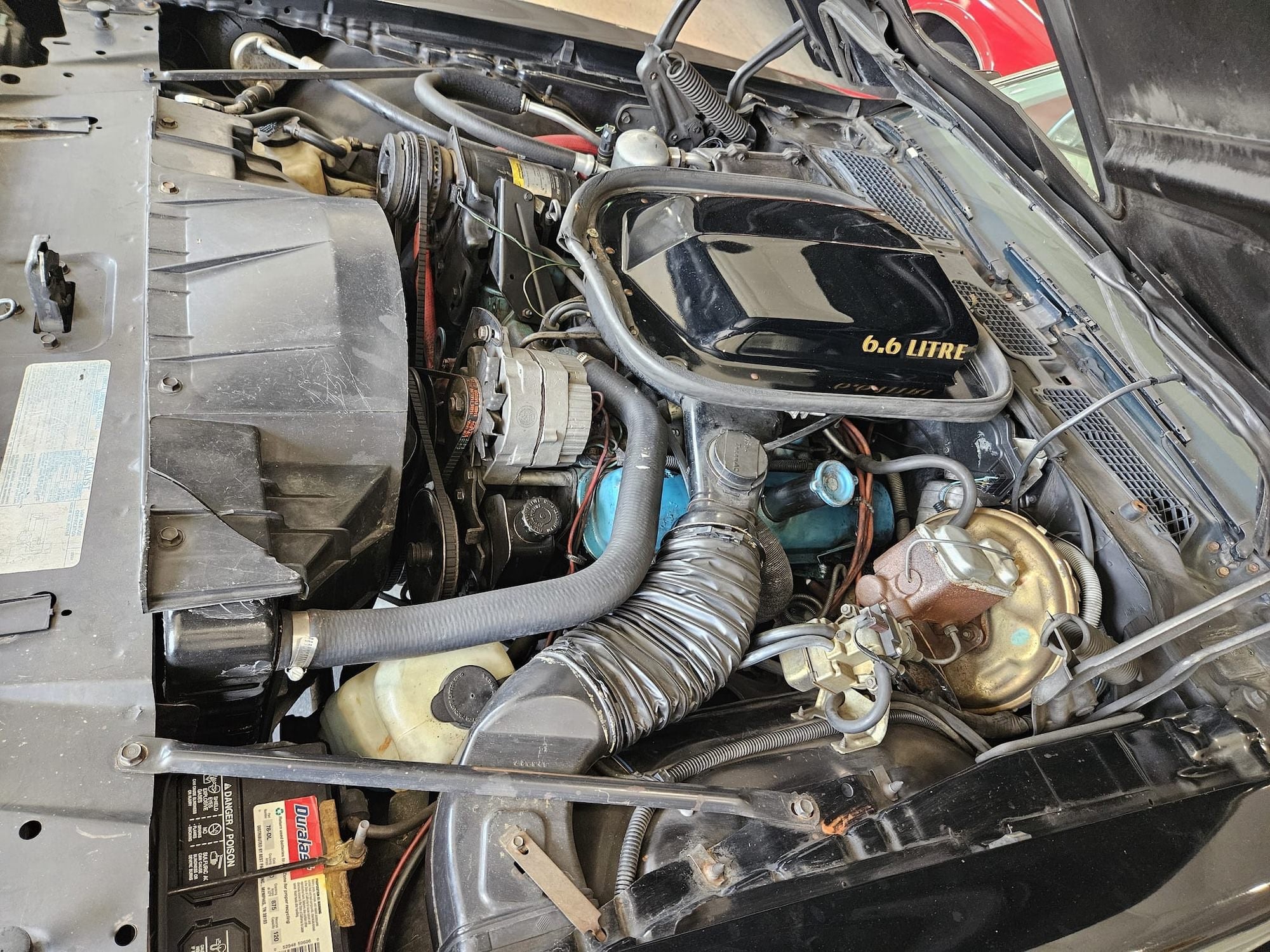
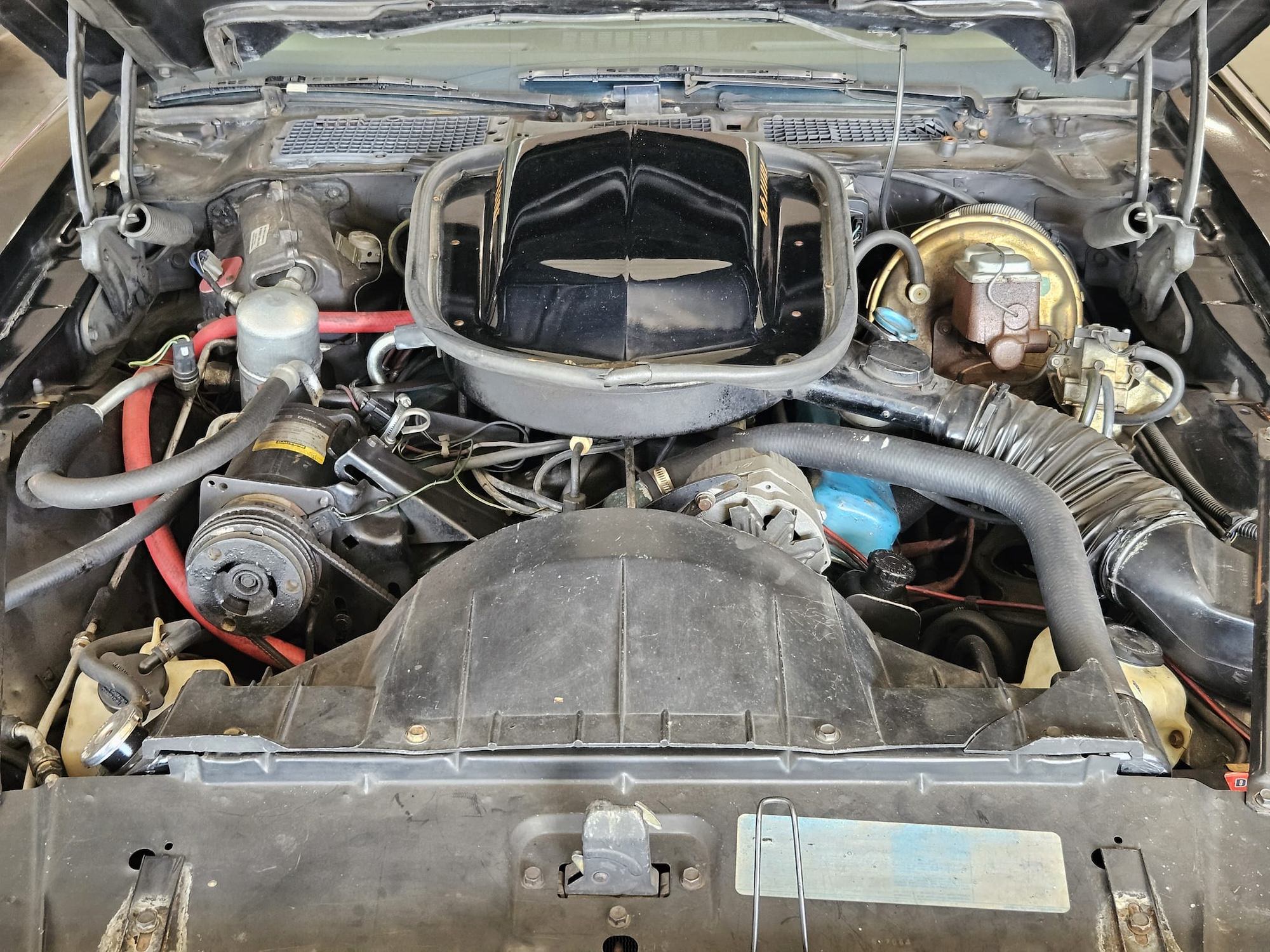
The car is finished in Starlight Black over white vinyl, it’s powered by its matching-numbers 400 cubic inch V8, with the engine stamping corresponding to the VIN. Factory-rated at 180 bhp and 325 lb ft of torque, the four-barrel V8 sends power back through a 3-speed automatic transmission to a Safe-T-Track limited-slip differential – the car also has power steering, power-assisted front disc brakes, rear drums, and 15-inch Rally II wheels.
Additional equipment includes the shaker hood, front air dam, rear spoiler, engine-turned dashboard fascia, Formula steering wheel, center console, air conditioning, cruise control, AM/FM radio, and tilt steering column. An aftermarket oil-pressure gauge has also been fitted. The driver’s seat cover and headliner have been replaced, while the lower door panels are said to have been reconditioned.
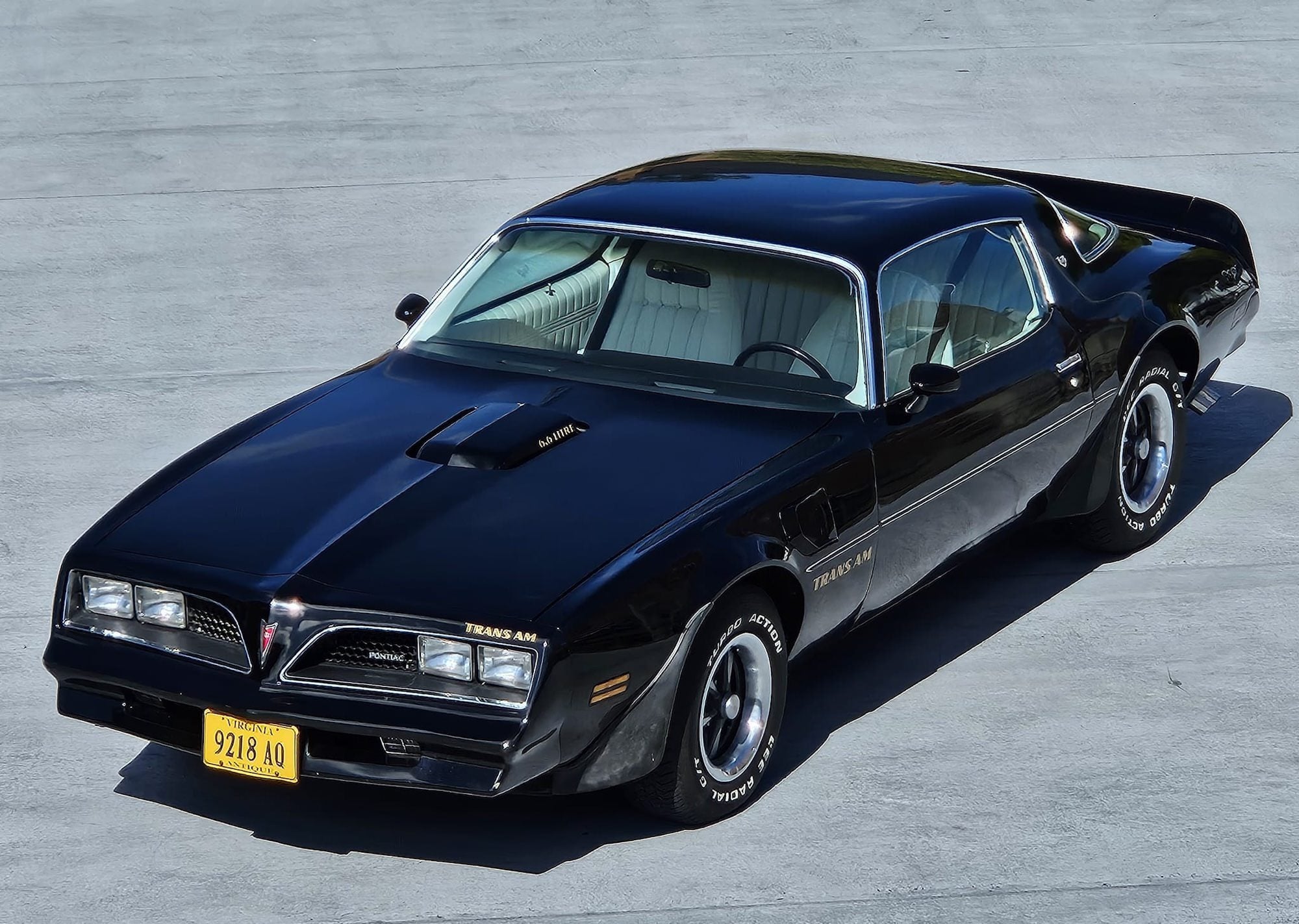
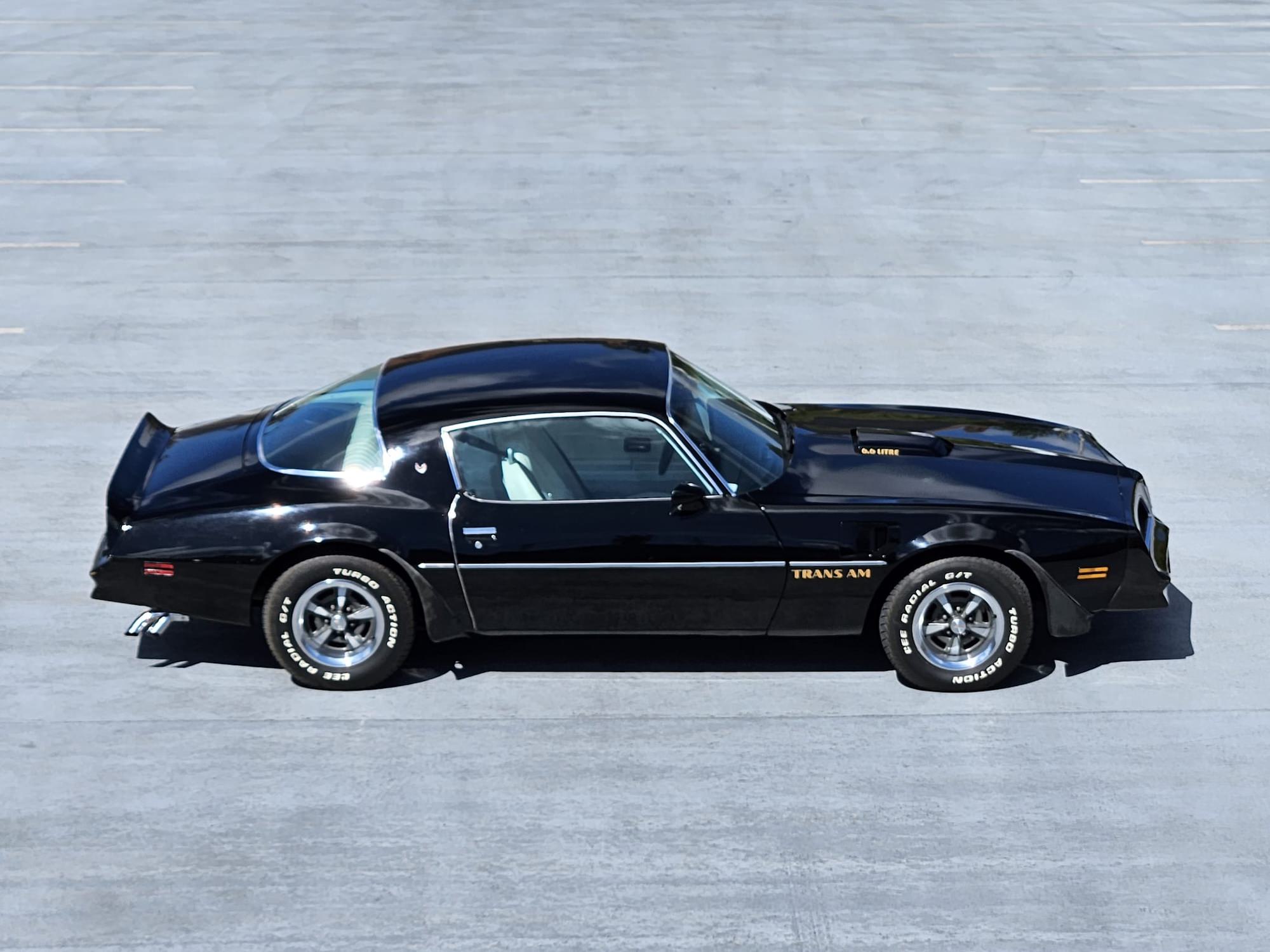
This 1977 Pontiac Firebird Trans Am has stayed with the same owner from new, having been bought in Staunton, Virginia, on January the 3rd, 1977.
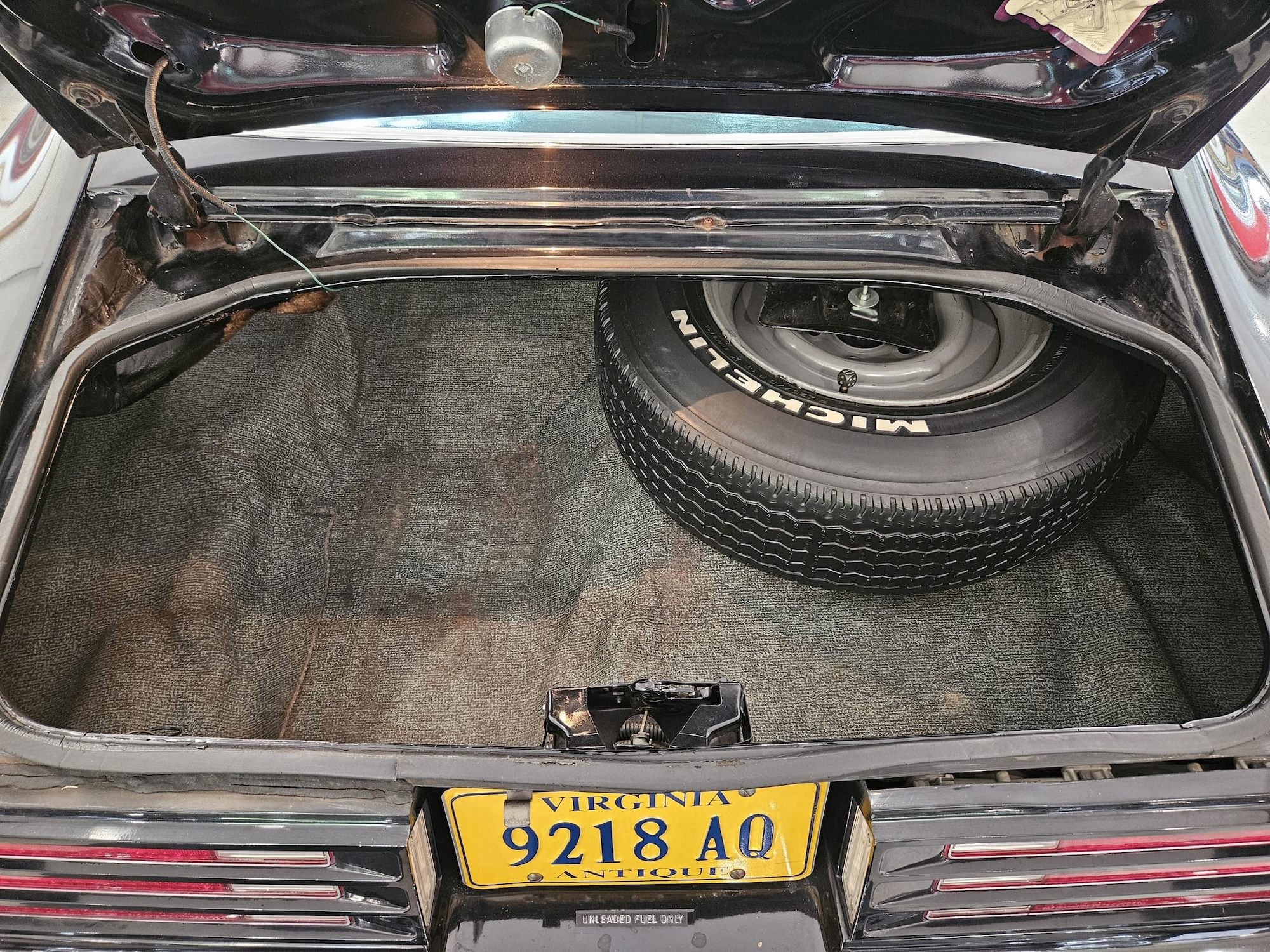
The seller notes a few age-related issues, including a brief puff of exhaust smoke on cold starts, a power-steering pump squeal at full lock, some exterior blemishes, and a bent passenger-side underbody pinch weld. A full-size spare has also replaced the original space-saver unit.
The car is now being offered for sale out of Staunton, Virginia with a clean Virginia title in the seller’s name, and you can visit the listing here if you’d like to read more about it or register to bid.
Images courtesy of Bring a Trailer and General Motors/Pontiac

Articles that Ben Branch has written have been covered on CNN, Popular Mechanics, Smithsonian Magazine, Road & Track Magazine, the official Pinterest blog, the official eBay Motors blog, BuzzFeed, Autoweek Magazine, Wired Magazine, Autoblog, Gear Patrol, Jalopnik, The Verge, and many more.
Silodrome was founded by Ben back in 2010, in the years since the site has grown to become a world leader in the alternative and vintage motoring sector, with well over a million monthly readers from around the world and many hundreds of thousands of followers on social media.