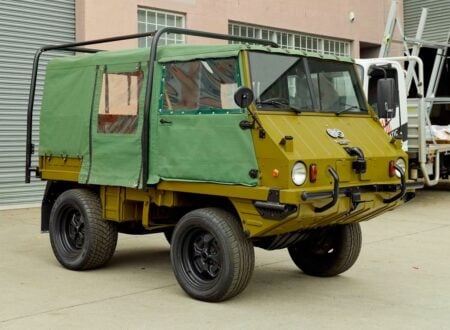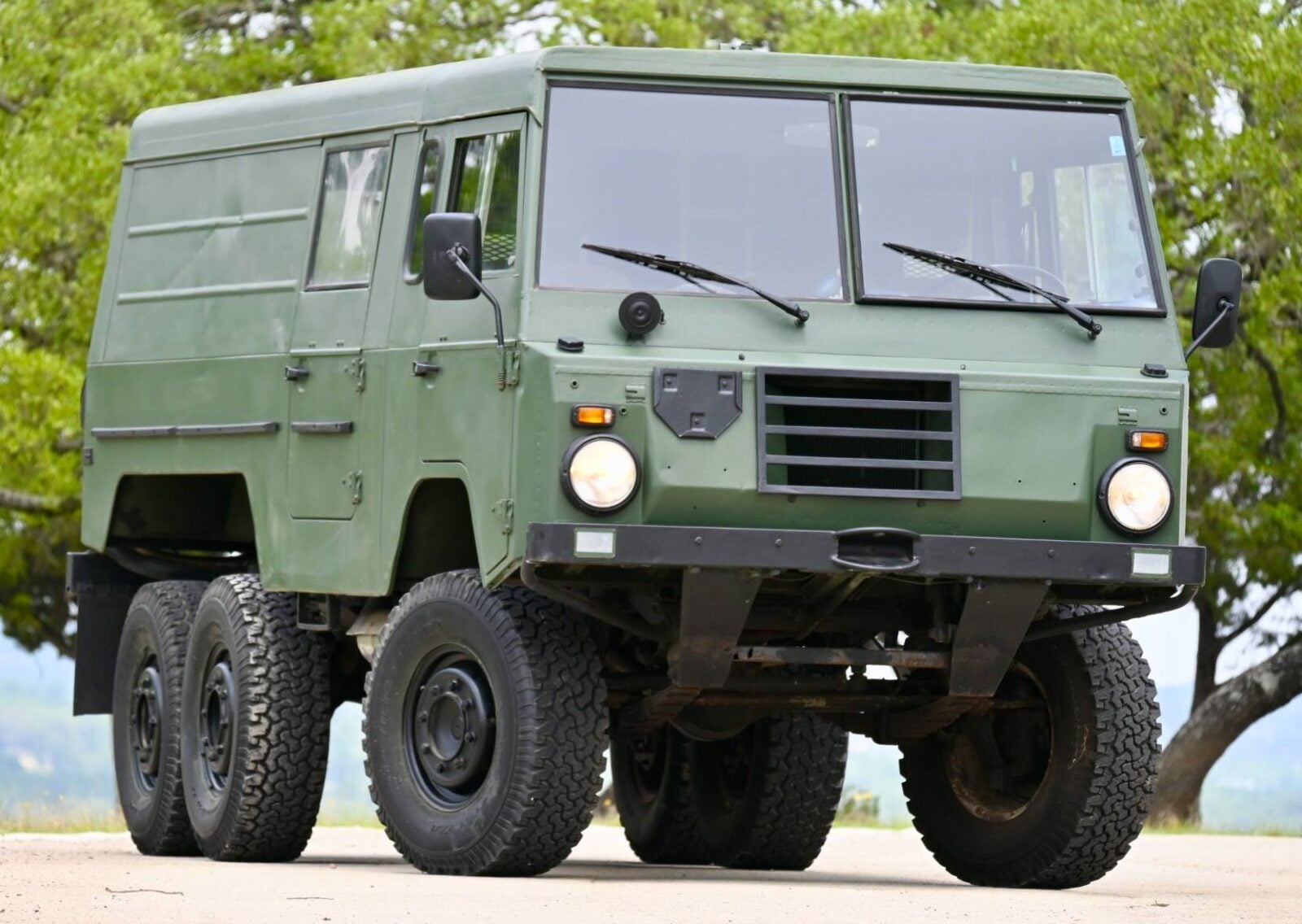
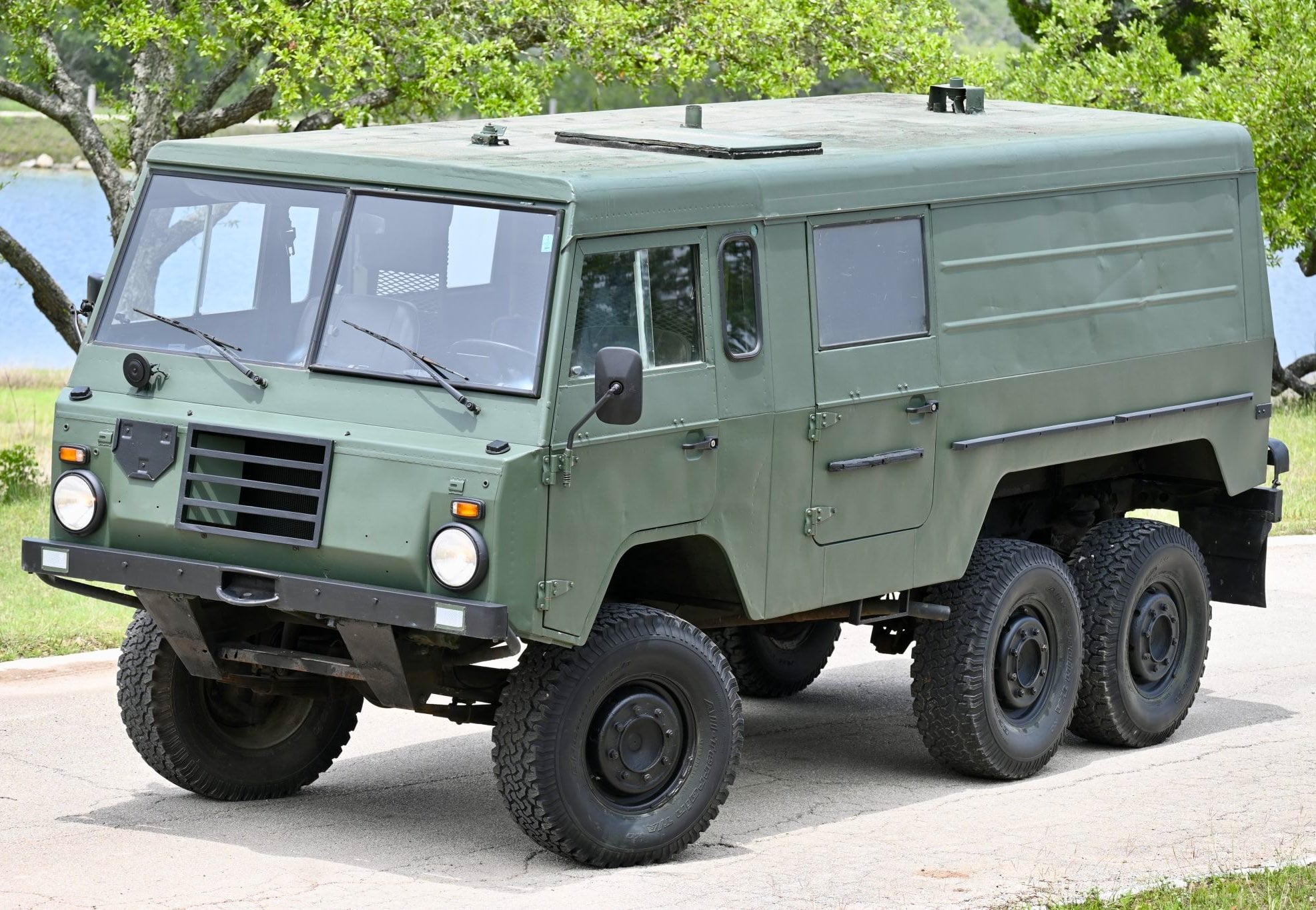
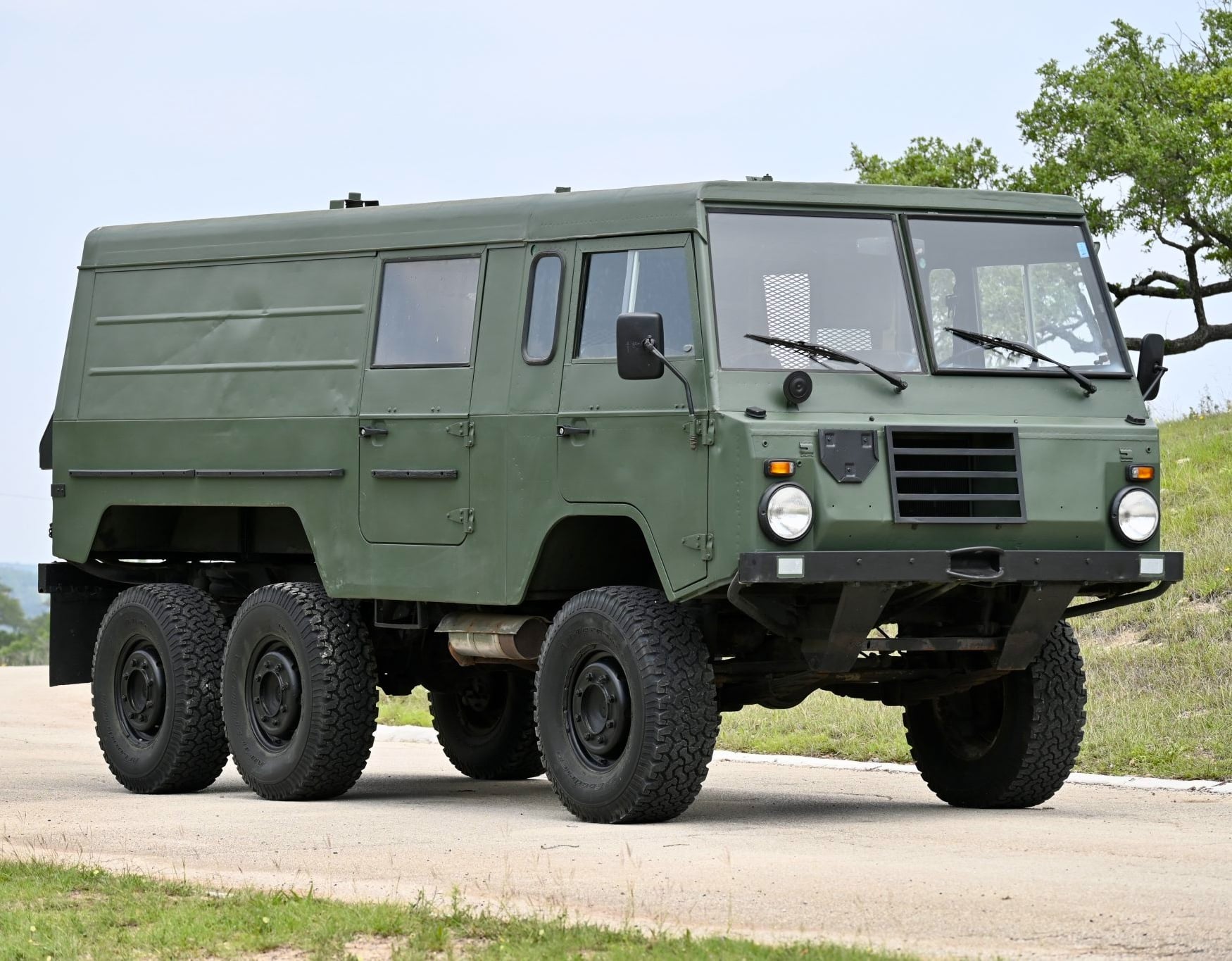
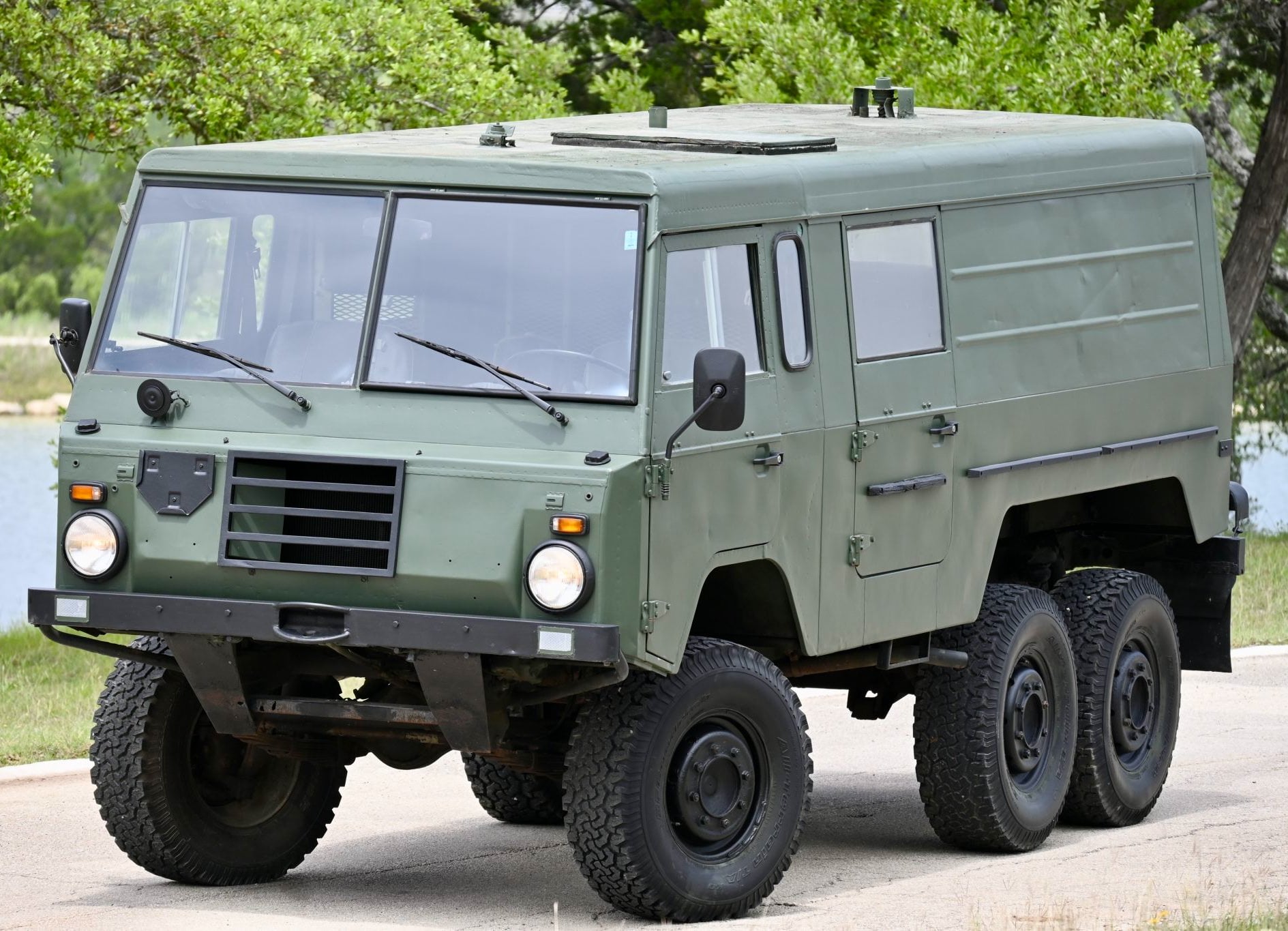
This is a 1975 Volvo C304 6×6, it’s a Swedish military six-wheeler famous for its toughness and for its excellent off-road ability.
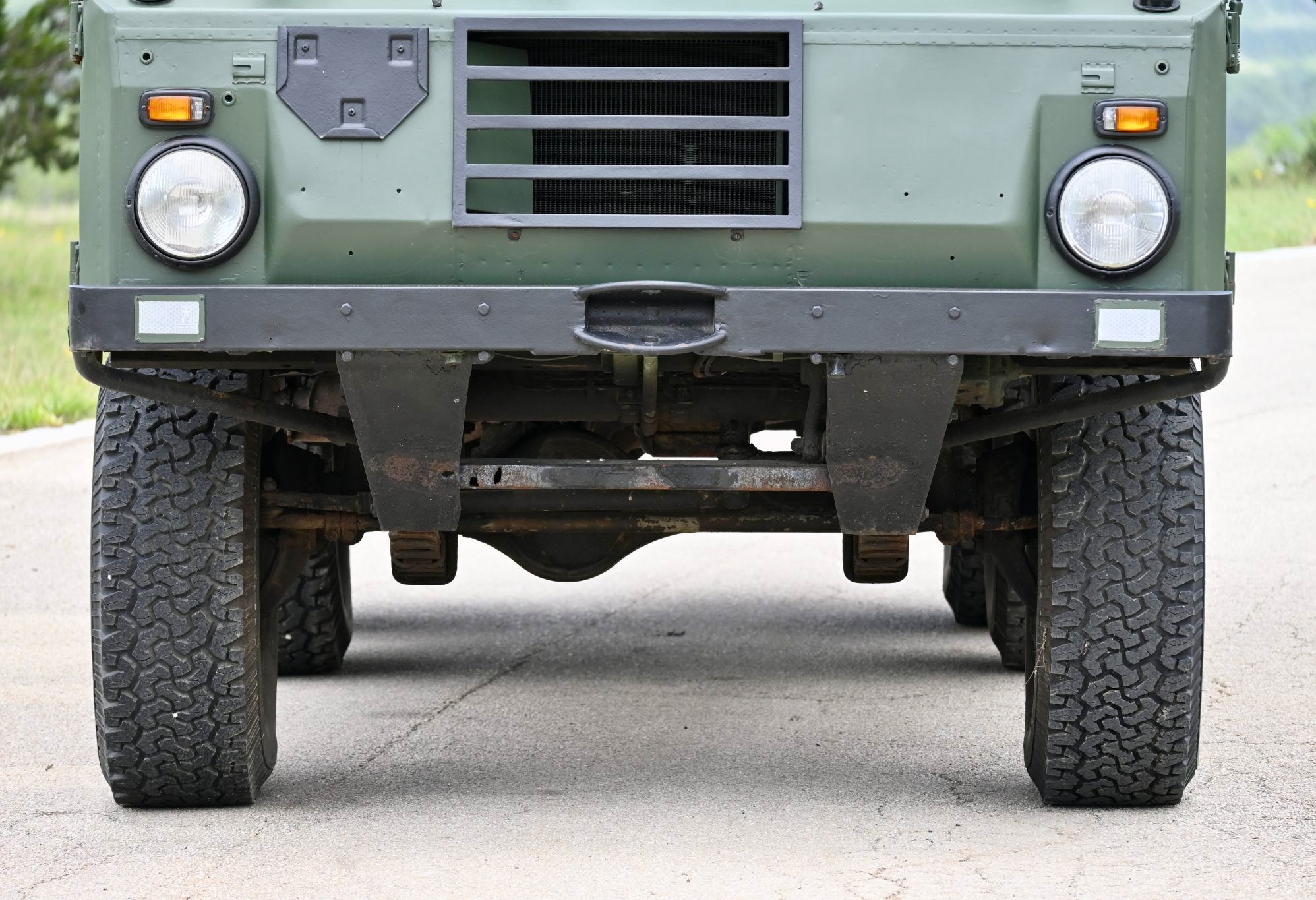
The C304 has a dual-range transfer case and all three axles have locking differentials – they’re also portal axles and so ground clearance is class-leading – over 15 inches and on par with the Unimogs of the era.
Fast Facts: The Volvo C304 6×6
- The Volvo C304 6×6 was built from 1974 to 1984 as part of Volvo’s modular C3 military vehicle family, which also included the 4×4 C303 and the larger 6×6 C306. Its family tree runs back through the L3314 Laplander, the TP21 Sugga, and the wartime TPV – decades of Swedish military off-road development.
- All C3 variants shared a ladder-frame chassis, portal axles with locking differentials, leaf spring suspension, and Volvo’s 3.0 liter B30A inline-six producing 117 bhp and 152 lb ft in military tune. The C304 measured 5,350 mm long and 1,930 mm wide, with over 15 inches of ground clearance under the differentials.
- A total of 8,718 C3-series vehicles were produced, with 75% entering military service in Sweden and abroad, including Malaysia, Angola, and the Baltic states. The C304 served in specialized roles as an ambulance (Tgb 1314), communications vehicle (Tgb 1313), and artillery coordination platform (Tgb 1321).
- This specific 1975 example is a U.S. import finished in drab green, riding on 16 inch wheels with 285/75 BFGoodrich tires. It has 15,000+ kilometers on the odometer and it’s offered on dealer consignment with a clean Texas title out of Dripping Springs, Texas.
History Speedrun: The Volvo C304 6×6
Volvo’s enviable early reputation was built on safe, sensible passenger cars dating back to the 1950s, running in parallel to these sensible models, the Swedish automaker also designed and built some of the most capable military off-road vehicles ever produced. The Volvo C304 6×6, built from 1974 to 1984, was the pinnacle of that lesser-known military legacy – it’s a tough, go-anywhere six-wheeler designed for the Swedish Army, that has since become a cult favorite among overland adventurers worldwide.
Above Video: This episode from The OutFit shows off their Volvo C304 overlander and discusses its merits and the modifications they’ve made to it over time.
From The Sow To The Laplander
The C304’s story actually starts much earlier than the 1970s, during World War II Volvo built its first dedicated military off-roader, the TPV (Terrängpersonvagn m/43). This was a four-wheel-drive vehicle that combined a light truck chassis with a body that was directly derived from the Volvo PV800 series taxicab. Just 210 TPVs were built between 1944 and 1946, but they established Volvo as a supplier of genuinely capable military off-roaders.
In 1953, the TPV was succeeded by the TP21, a vehicle now universally known by its nickname “Sugga” – Swedish for “Sow,” a reference to the vehicle’s somewhat porcine looks that were inherited from its taxi-derived body.
The Sugga was powered by a 3.67 liter flathead inline-six producing 90 bhp, mated to an unsynchronized 4-speed manual and a dual-range transfer case with vacuum-lockable front and rear differentials. Approximately 720 were built between 1953 and 1958, and some reportedly remained in Swedish military service as late as the 1990s.
The next generation arrived in 1963 with the L3314 Laplander, this was a more modern forward-control 4×4 powered by Volvo’s 1.8 liter B18 four-cylinder engine. The cab-over-engine layout maximized cargo space in the back and gave the driver excellent forward visibility. 7,737 L3314s were built before it was succeeded by the C3 family in the mid-1970s, with military users including Sweden, Norway, the Netherlands, and countries as far away as Saudi Arabia.
Volvo’s C3 Family – A Modular Military Off-Roader
In the late 1960s the Swedish Defense Materiel Administration (FMV) issued a requirement for a new generation of all-terrain vehicles. Volvo responded with the C3 series – this was a modular family designed from the outset to be configured as a 4×4 (the C303) or as two distinct 6×6 variants (the C304 and C306).
An 8×8 prototype was built and tested but never reached production, as its higher manufacturing cost couldn’t be justified by its off-road performance and additional cargo carrying gains. An amphibious version was also explored and similarly abandoned, largely on the basis of its prohibitive cost.
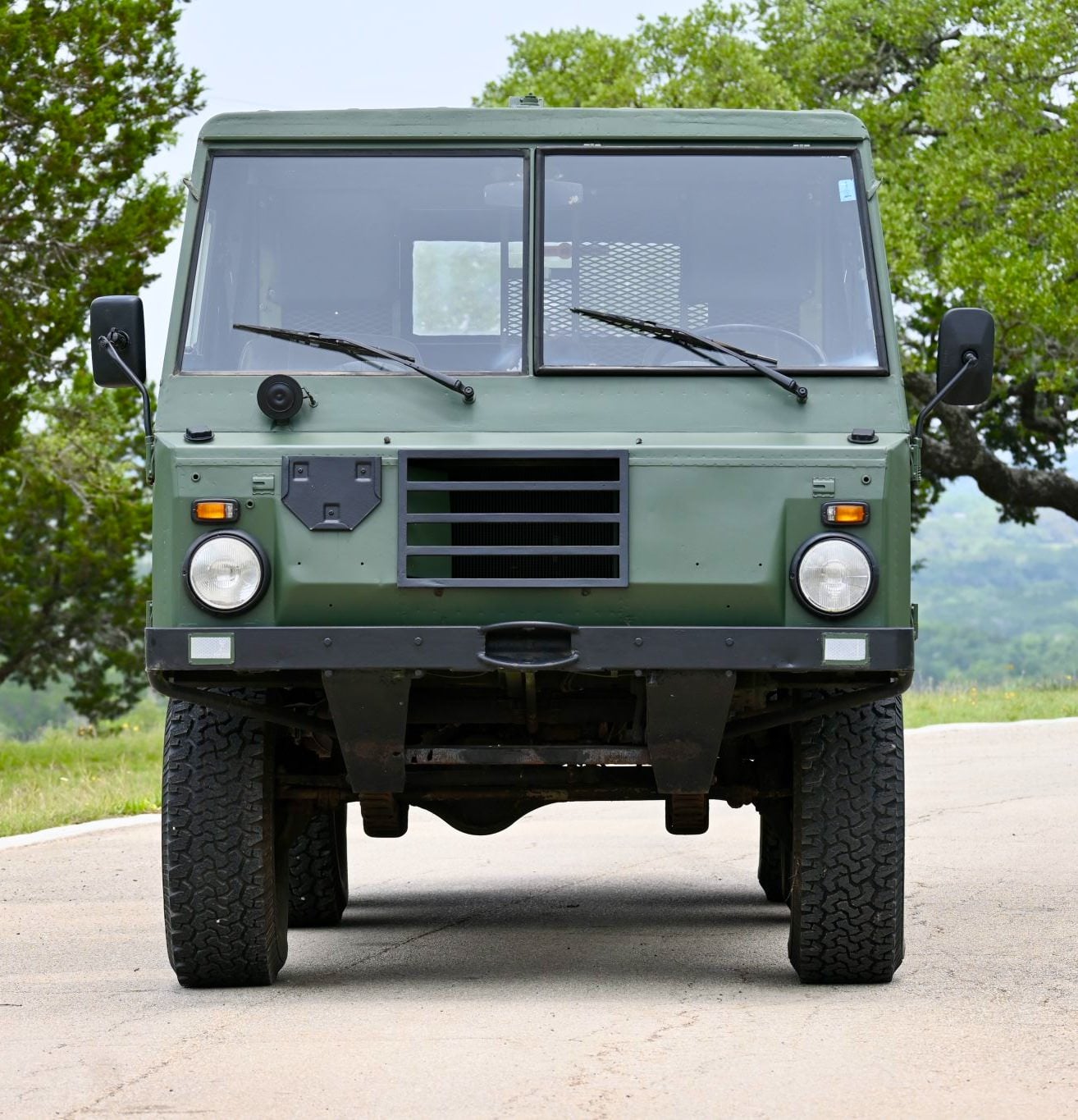
 All C3 variants shared the same fundamental architecture based around a ladder-frame chassis, portal live axles with locking differentials, leaf spring suspension, and Volvo’s 3.0 liter B30A inline-six petrol engine.
All C3 variants shared the same fundamental architecture based around a ladder-frame chassis, portal live axles with locking differentials, leaf spring suspension, and Volvo’s 3.0 liter B30A inline-six petrol engine.
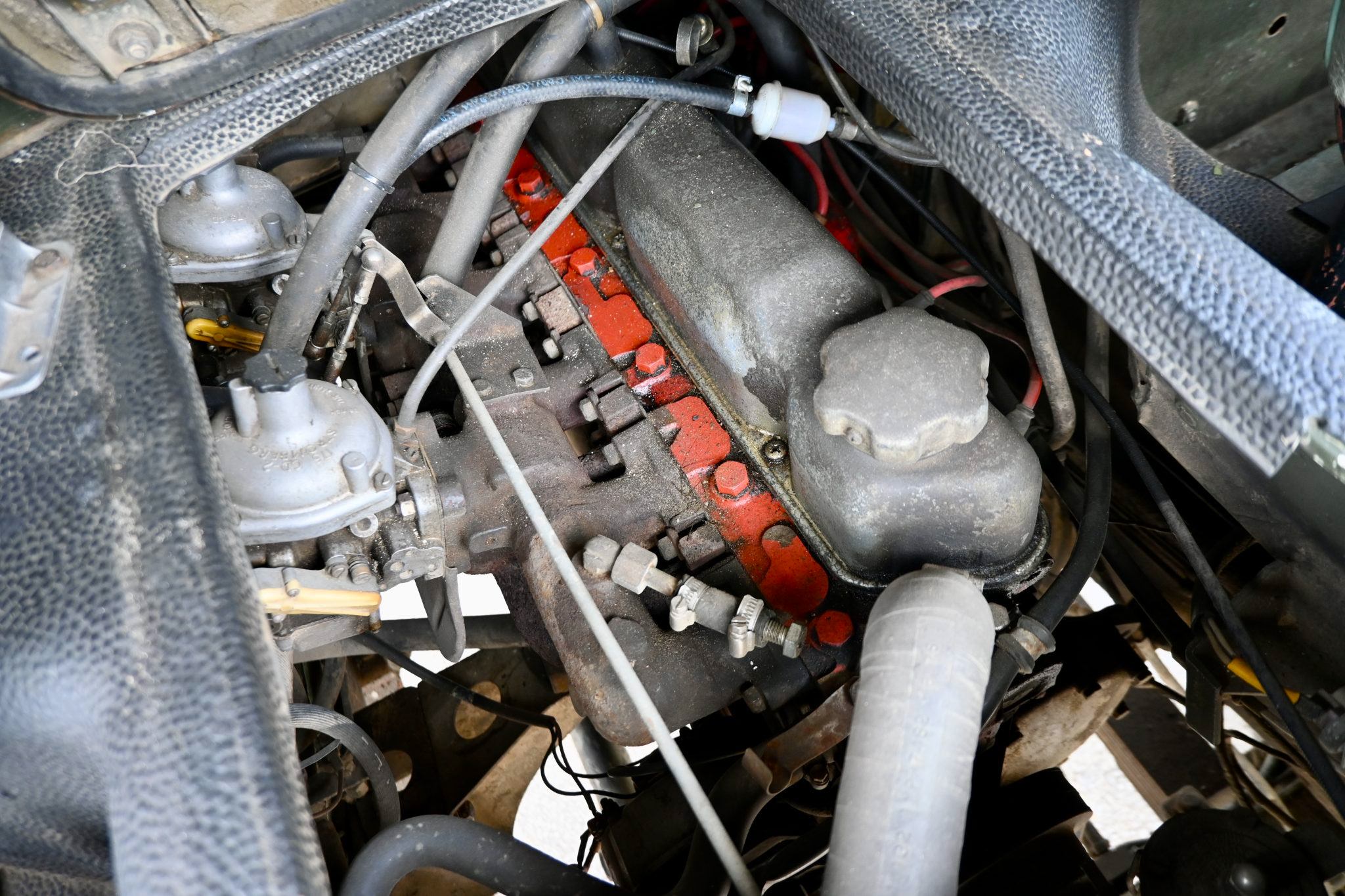
The Volvo B30 is a simple pushrod, overhead-valve unit derived from the B20 four-cylinder and familiar to pretty much anyone who had ever worked on a Volvo automobile. In military specification, the B30A produced 117 bhp at 4,000 rpm and 152 lb ft of torque at 2,500 rpm, fed by twin Zenith-Stromberg carburetors. It was deliberately detuned from the civilian 125 hp rating as the focus was on reliability and better tolerance for lower-octane fuels.
The C304 6×6 Variant In Detail
The C304 was the enclosed six-wheel drive member of the C3 family, it was longer than the 4×4 C303 and (obviously) it had a third axle and an extended wheelbase. It measured in at 5,350 mm long, 1,930 mm wide, and 2,170 mm tall, with a curb weight of 2,820 kgs and a gross vehicle weight of 4,400 kgs. The relative narrowness of the C303 and C340 was entirely intentional, as it allowed the vehicles to navigate tight Scandinavian forest trails and logging roads where wider trucks couldn’t follow.
Perhaps the most standout feature of the C3 family was the use of portal axles – a design in which the axle shafts and differential housing sit above the wheel centers, dramatically increasing ground clearance under the diffs. The use of portal axles in the C3s was possibly influenced by the German Unimog, which had made use of portals since the first models were made in the years just after WWII.
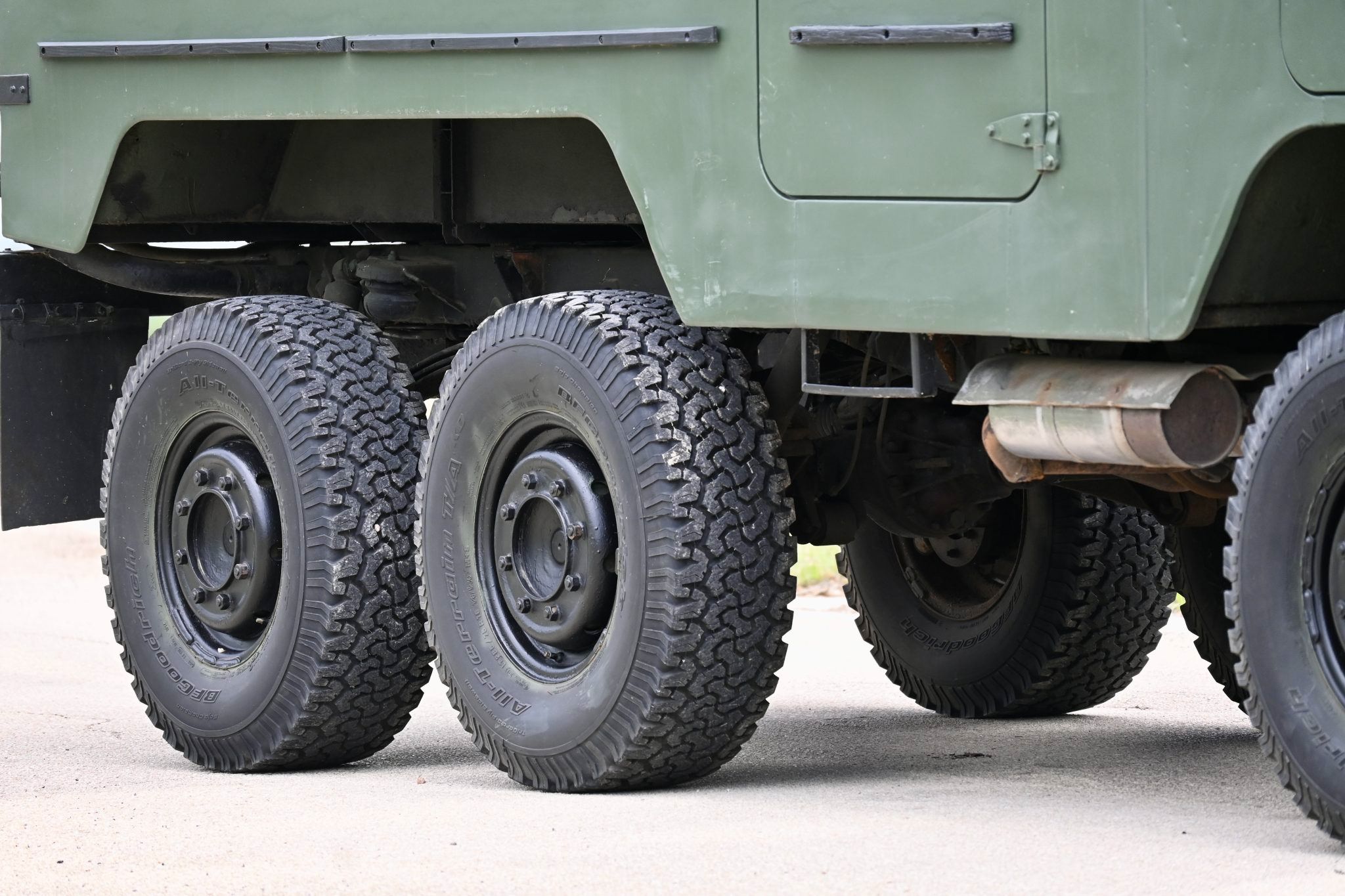
The C304 had 400mm (15.7 inches) of clearance under the differentials, this was comparable to the Unimog and far better than most conventional 4×4s of the time. This, combined with approach and departure angles of approximately 45º, gave the C304 excellent off-road ability across almost all types of terrain.
The drivetrain routed power through a 4-speed manual transmission and an FD 51 transfer case offering both high and low range. Both rear axles were permanently driven, with the front axle engaged via vacuum-operated selection for off-road use, this was to reduce wear when on-road, and to (slightly) improve fuel economy.
All three differentials could be locked independently, and the two rear axles shared a walking-beam leaf spring arrangement that distributed loads evenly and allowed the rear bogie to articulate smoothly over obstacles, this also gave the C304 a remarkably composed ride on rough ground.
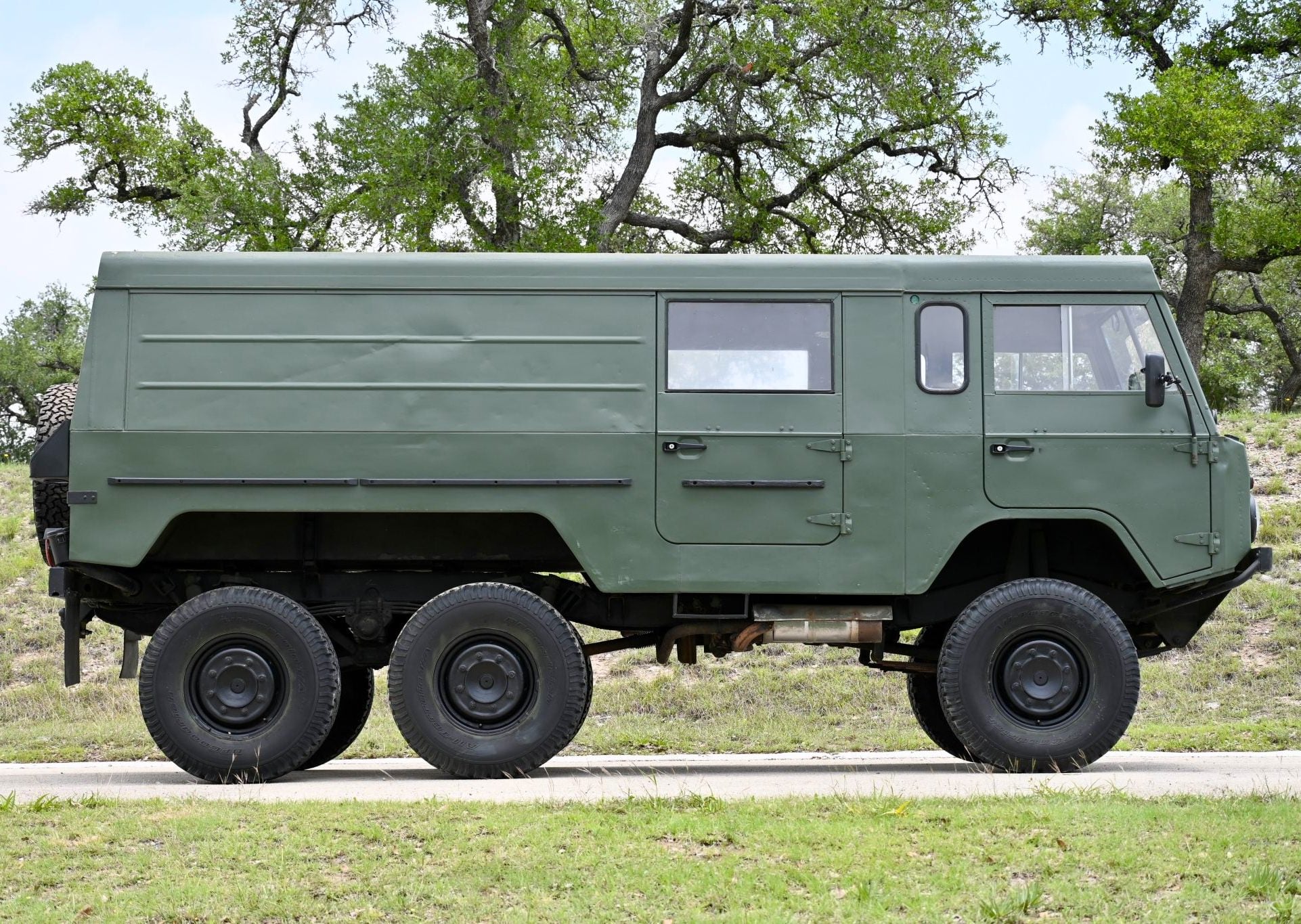
The drivetrain routed power through a 4-speed manual transmission and an FD 51 transfer case offering both high and low range. Both rear axles were permanently driven, with the front axle engaged via vacuum-operated selection for off-road use, this was to reduce wear when on-road, and to (slightly) improve fuel economy.
The standard fuel tank held just 85 liters, this was modest (to say the least) for a thirsty gasoline six-cylinder pushing almost three metric tons of steel – and the top speed was only around 80 to 100 km/h (50 to 62 mph), depending on vehicle variant, gearing, and tires, it was also somewhat limited by the very low 6.99:1 axle ratio. Braking was handled by drum brakes on all six wheels with a dual, semi-redundant system and vacuum servo assist.
Within the Swedish Army, the C304 was designated Tgb 13 in its basic hardtop configuration. Specialized variants included the Tgb 1313, a communications vehicle fitted with extensive radio and telephone equipment, the Tgb 1314, an ambulance, and the Tgb 1321, a radio-equipped variant typically used for coordinating artillery batteries.
The C304’s 6×6 sibling, the C306 (Tgb 20), was a larger, wider chassis-cab truck with a canvas-top body that could carry up to 19 soldiers. The Tgb 22 variant of the C306 doubled as a transport for the RBS 70 man-portable anti-aircraft missile system.
Production Numbers + Military Operators
A total of 8,718 C3 series vehicles were built across all variants, including the C303, C304, and C306, with 75% entering military service and the remainder sold to civilian operators including fire departments, rescue services, power companies, and Sweden’s public roads administration. Beyond Sweden, the C3 family served with the armed forces of Malaysia, Angola, Estonia, Latvia, and Lithuania, and a number of others.
The platform’s famous toughness was proven on the world stage when a specially prepared Volvo C303 won the under-10-ton truck class at the 1983 Paris-Dakar Rally.
The Afterlife Of The C3 – An Overlanding Icon
Since Swedish military surplus sales began in the 1990s, the C3 series (both the C303 and C304) has found an enthusiastic second life as an expedition and overlanding vehicle. Its combination of 4×4 or 6×6 traction, portal-axle ground clearance, locking differentials, and a cabin narrow enough to fit inside a standard shipping container makes it ideally suited to remote travel.
Since Swedish military surplus sales began in the 1990s, the C3 series (both the C303 and C304) has found an enthusiastic second life as an expedition and overlanding vehicle. Its combination of 4×4 or 6×6 traction, portal-axle ground clearance, locking differentials, and a cabin narrow enough to fit inside a standard shipping container makes it ideally suited to remote travel.
Common owner mods include pop-top roof conversions, diesel engine swaps (the Mercedes-Benz OM606 is a popular choice), auxiliary fuel tanks, LPG dual-fuel systems, front disc brake conversions, and modern all-terrain tires. Bodies came in standard steel or rarer zinc-coated steel, with the latter commanding a premium on the resale market due to significantly better rust resistance.
The 1975 Volvo C304 6×6 Shown Here
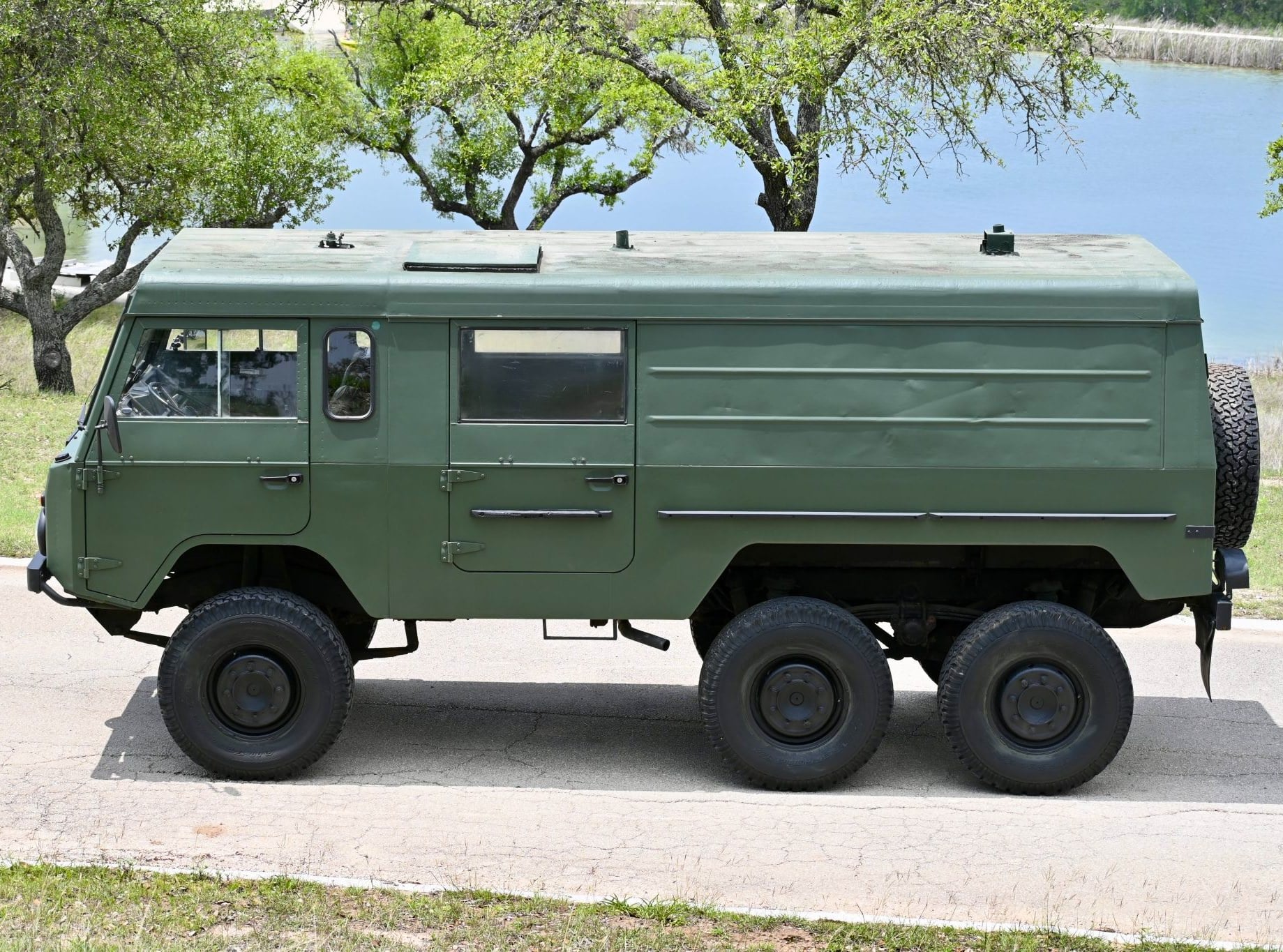
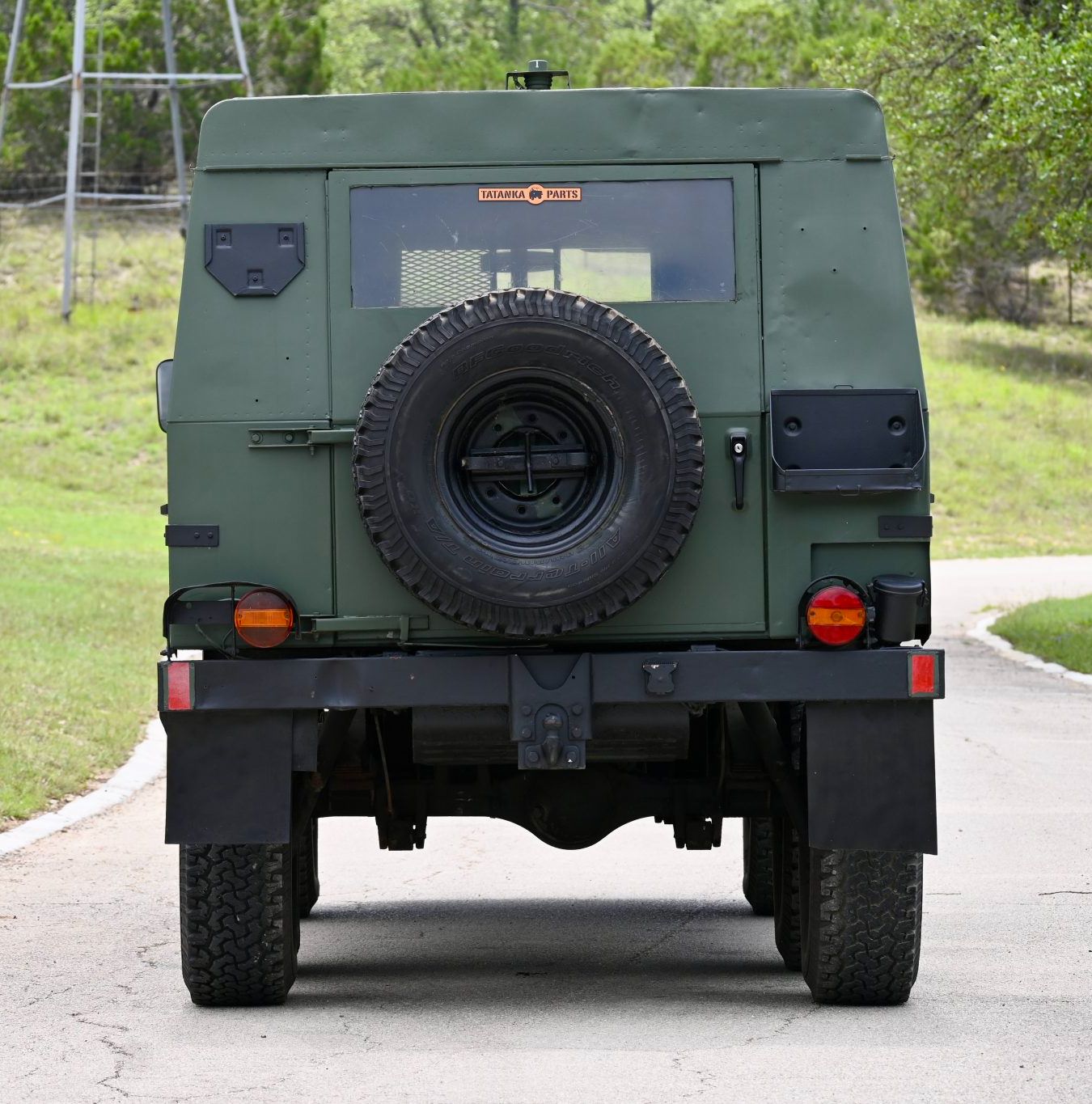
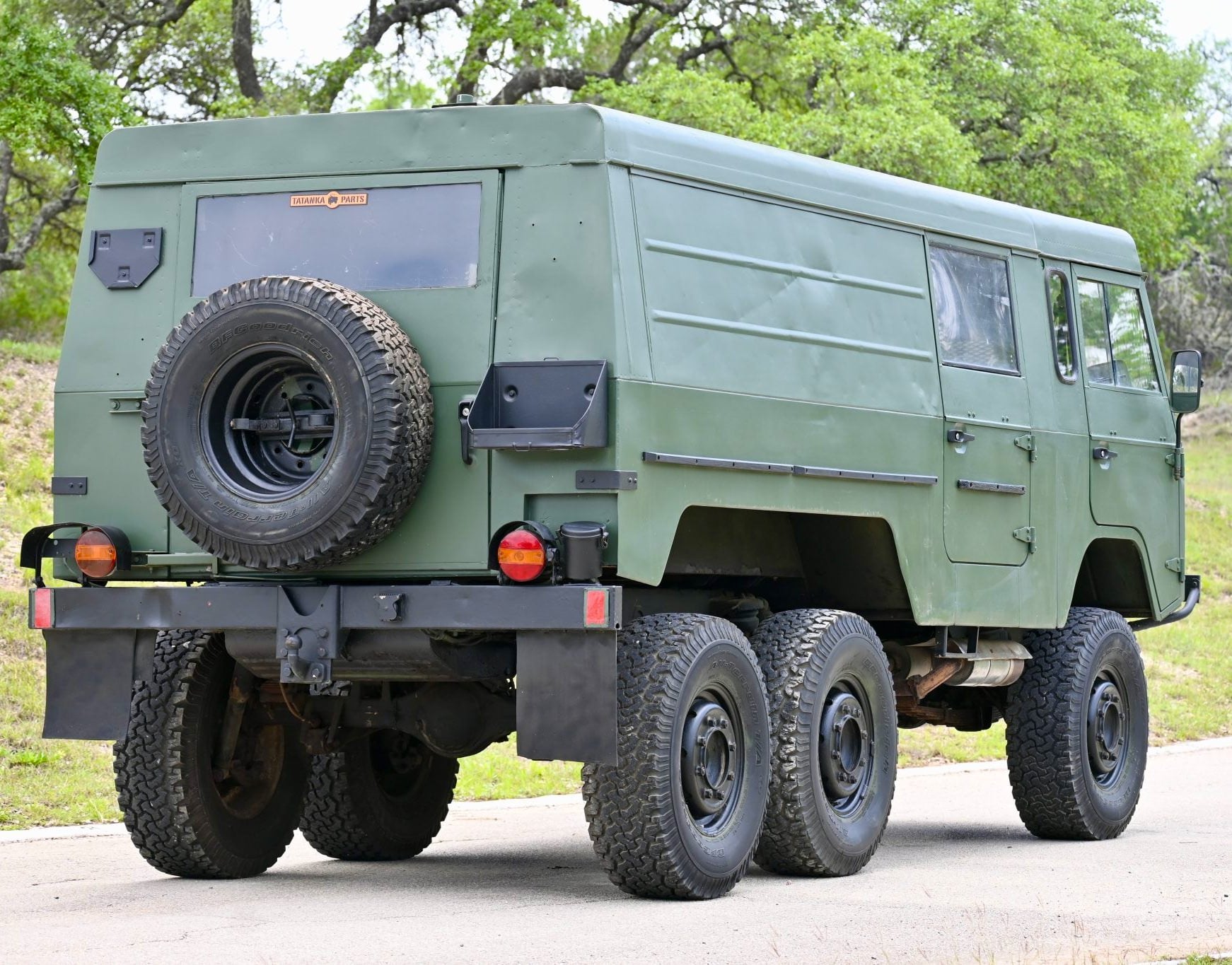
This is a 1975 Volvo C304, it’s a six-wheel-drive former Swedish military vehicle that was imported to the United States under previous ownership and bought by its current owner in 2025.
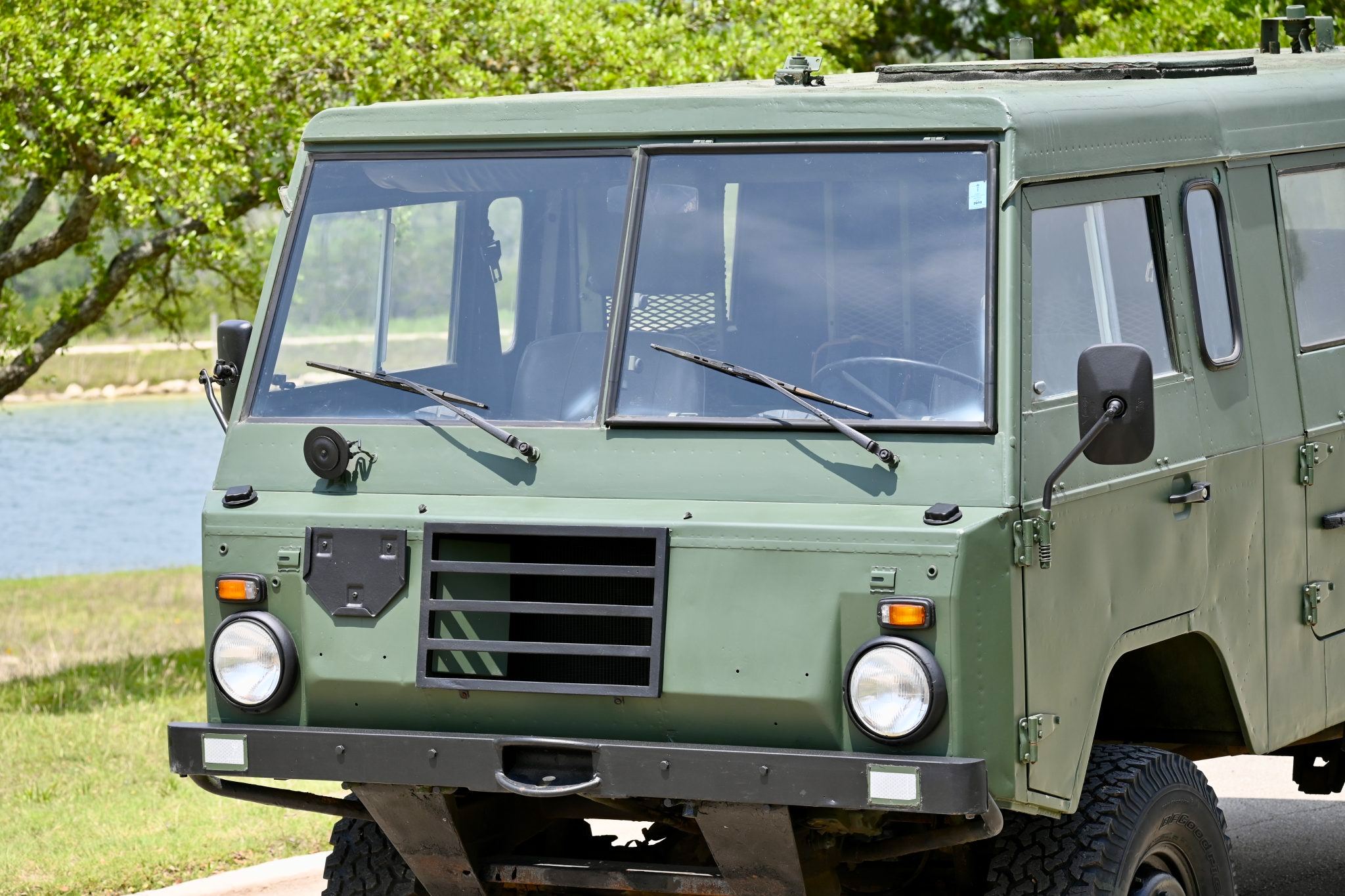
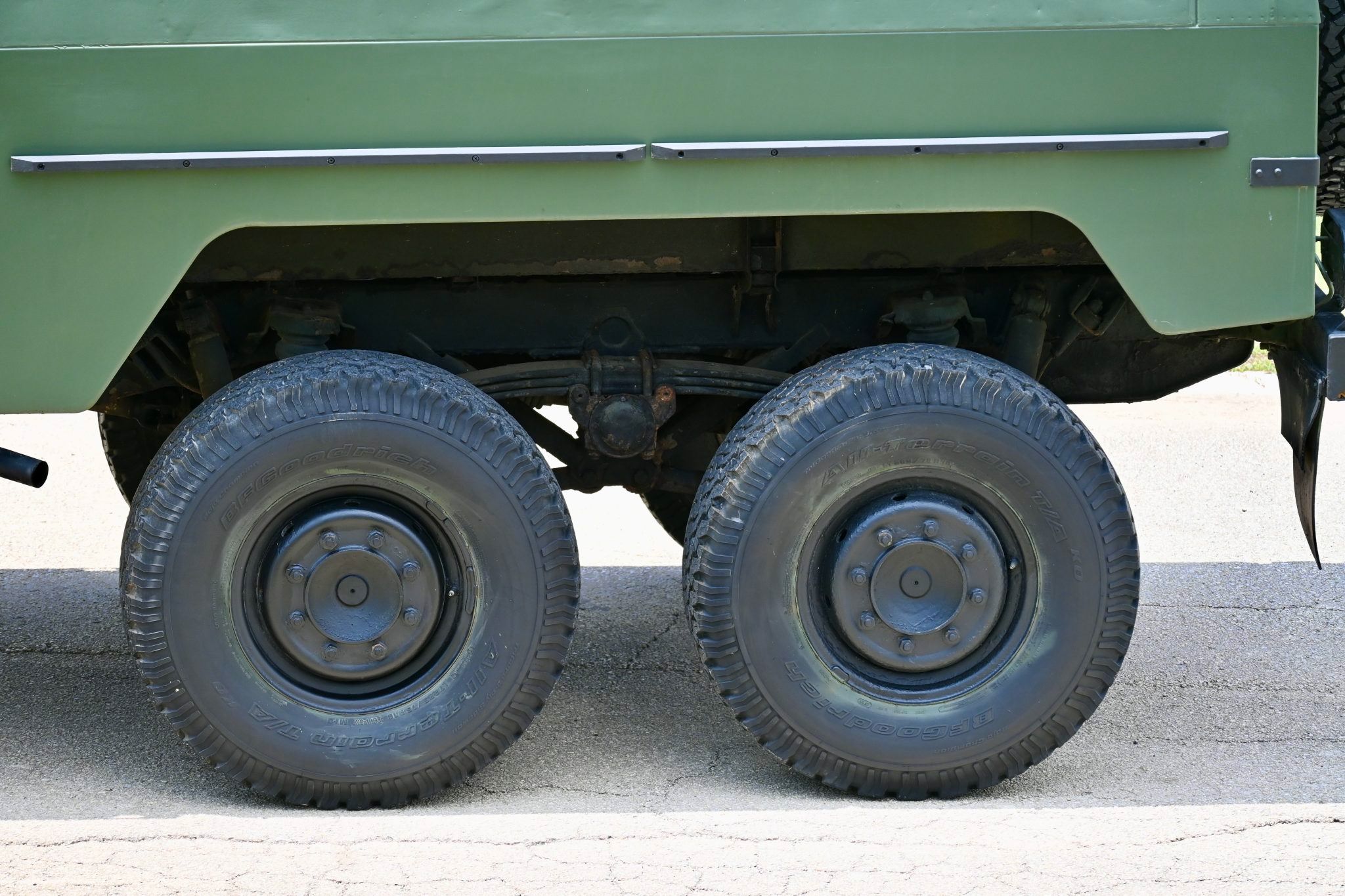
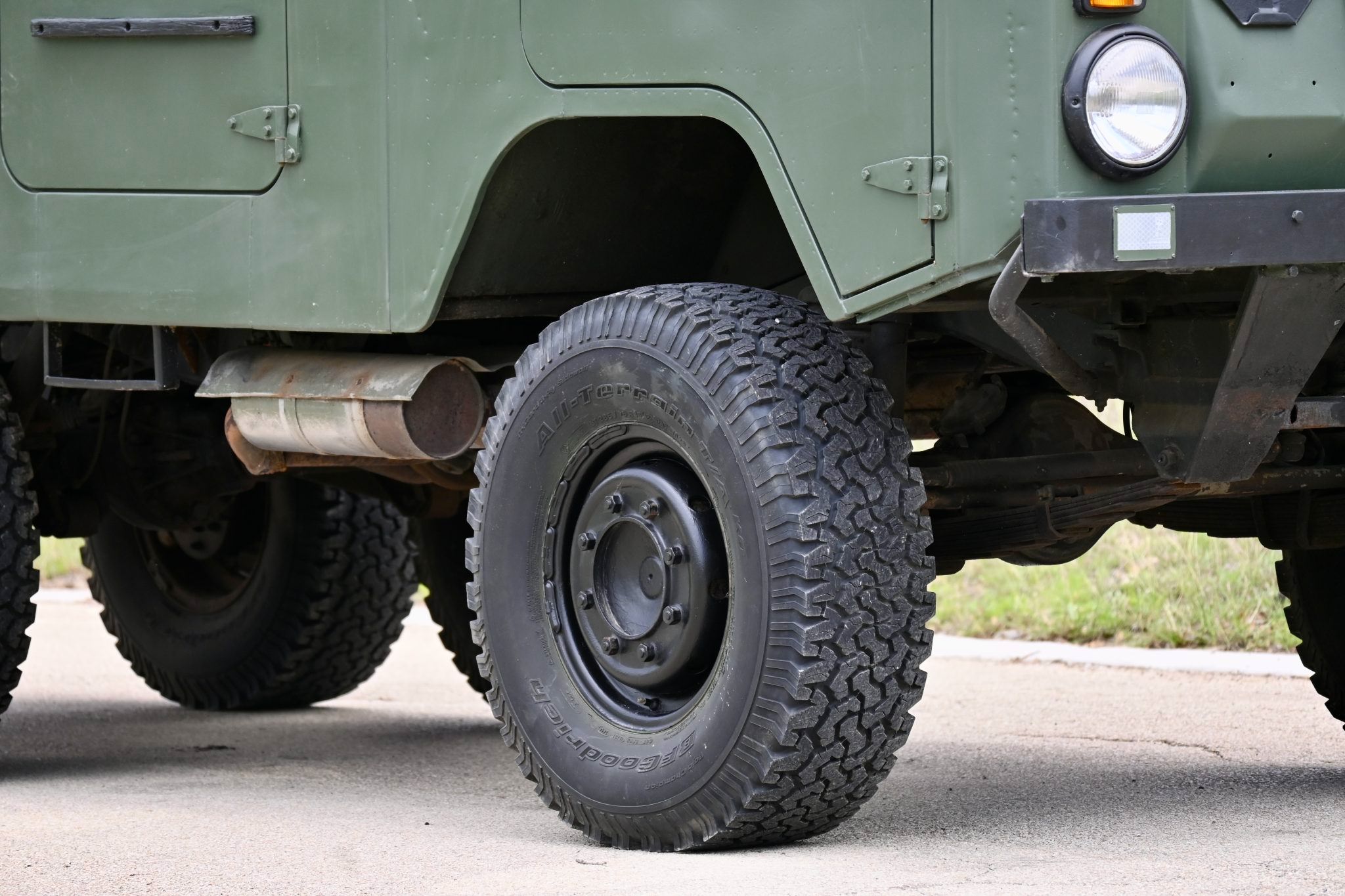
The body is finished in drab army green and it has a split windshield, fold-out side steps, a side-exit exhaust, mud flaps, and a ball hitch. It rides on black-finished 16 inch wheels wearing 285/75 BFGoodrich tires, with a full-size spare mounted to the rear.
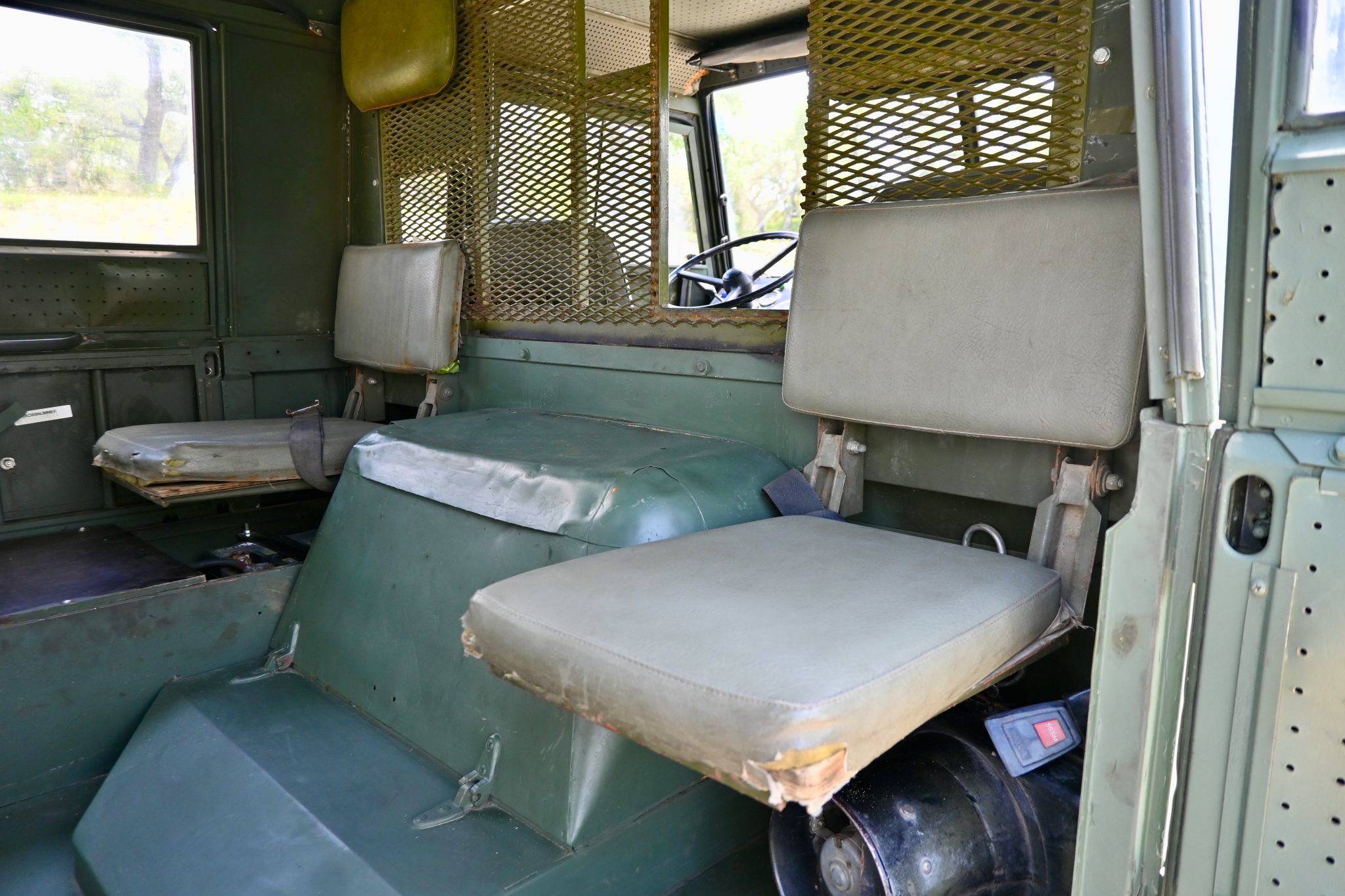
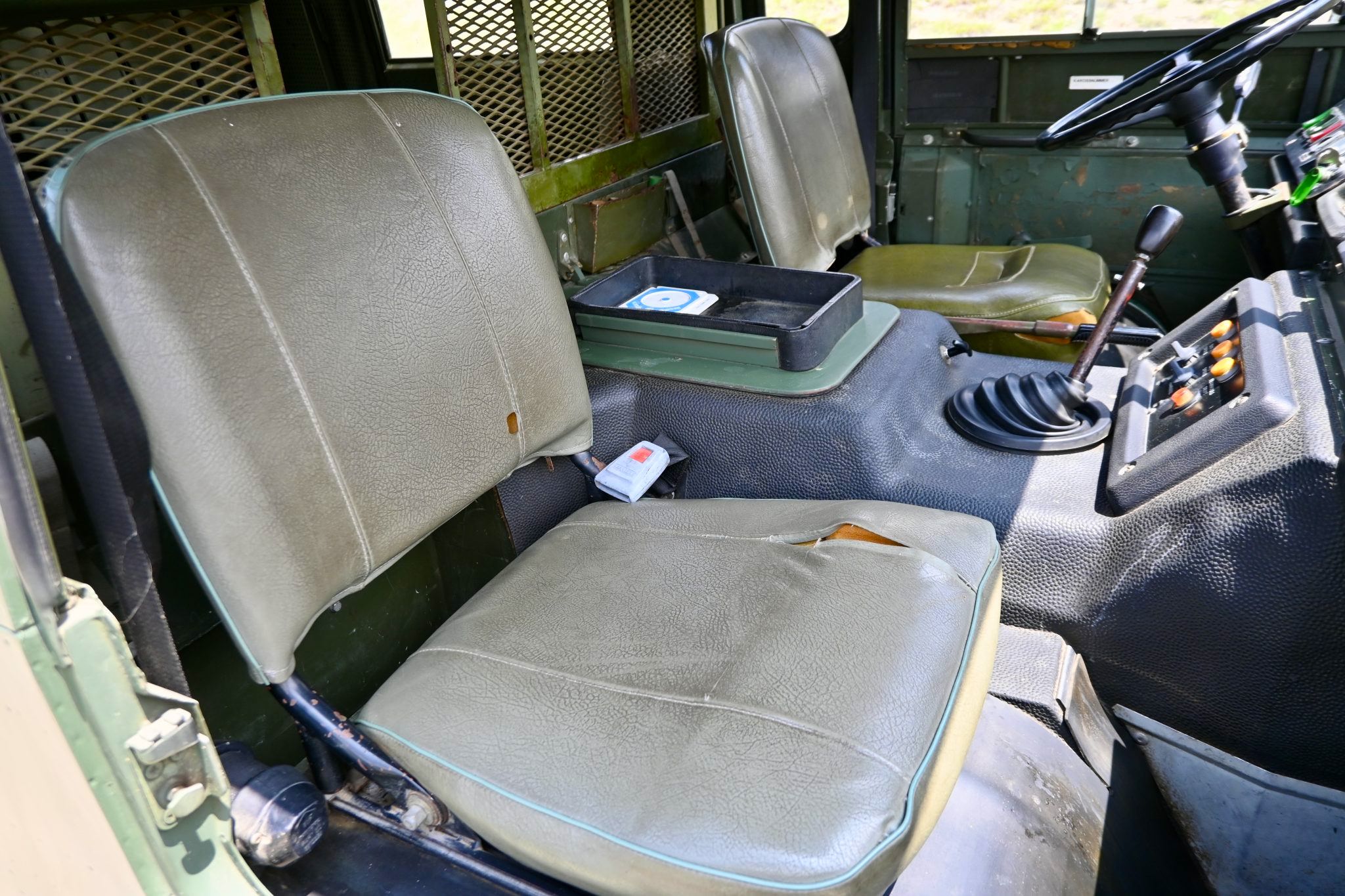
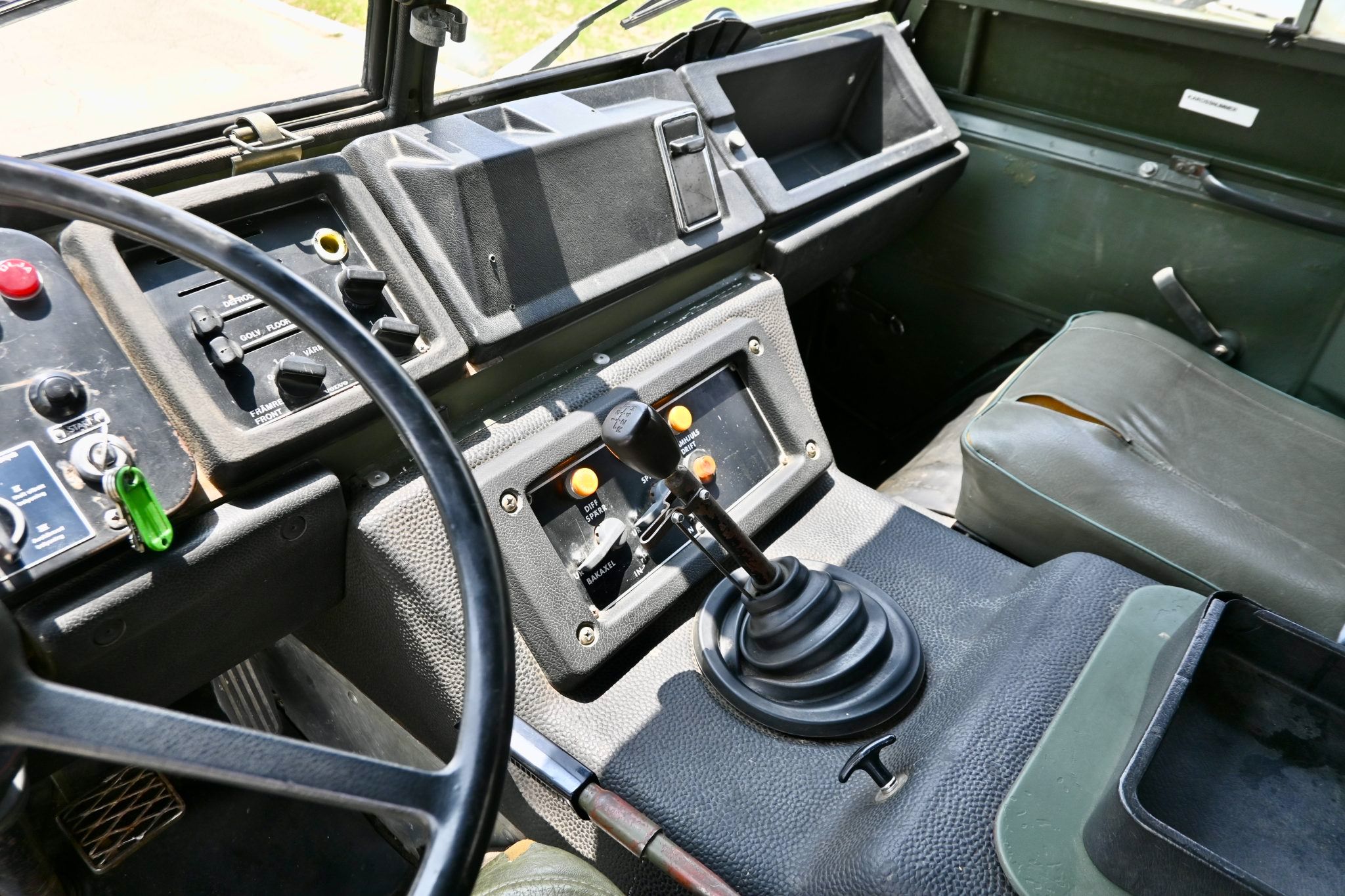
The suspension uses leaf springs, and braking is handled by drum brakes at all six wheels. The front cabin is fitted with bucket seats upholstered in green vinyl, with differential controls mounted in the center console area. The truck is equipped with a heater, and the three-spoke steering wheel frames VDO instruments including a 100 km/h speedometer and gauges for fuel level and coolant temperature.
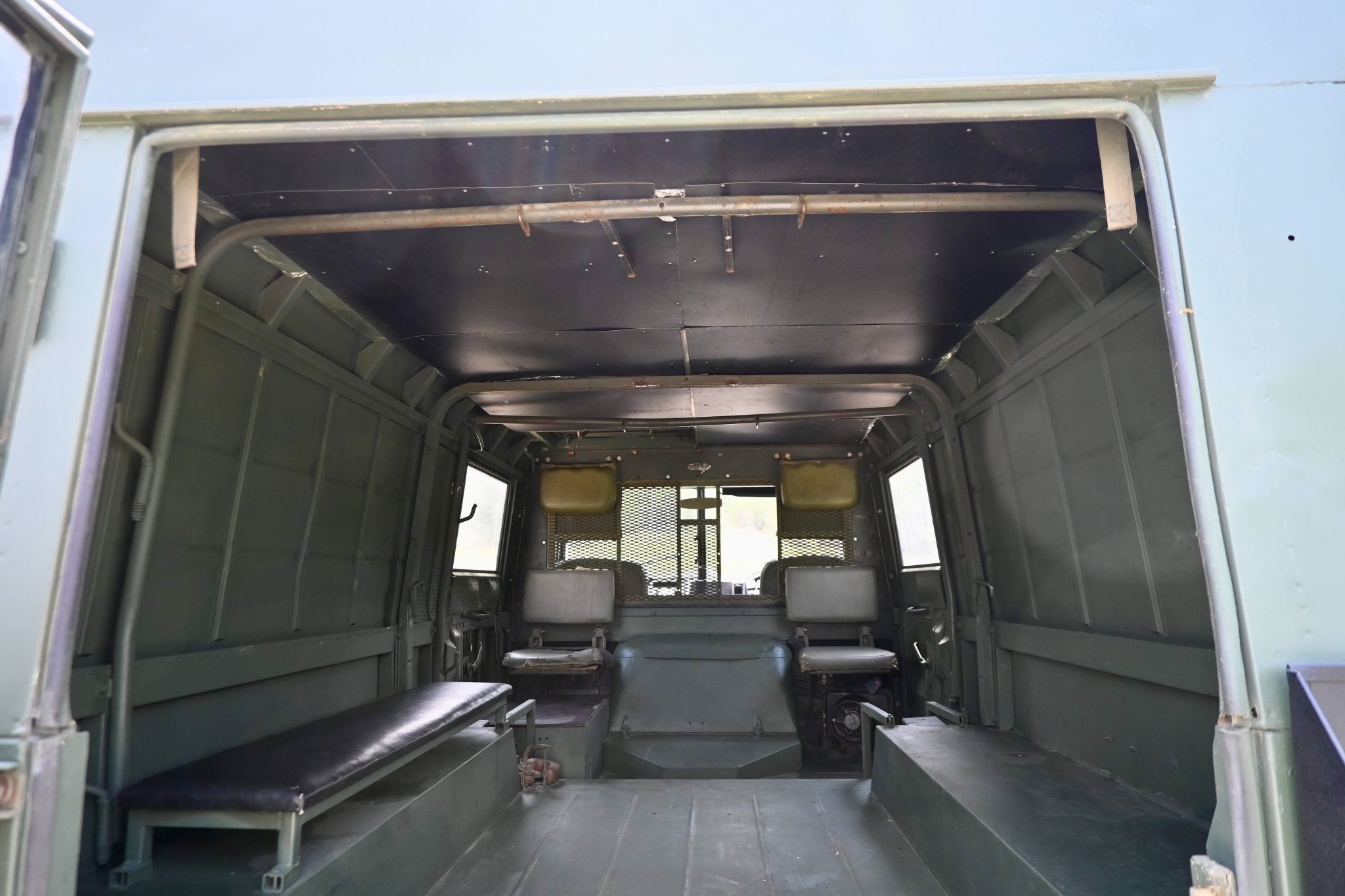
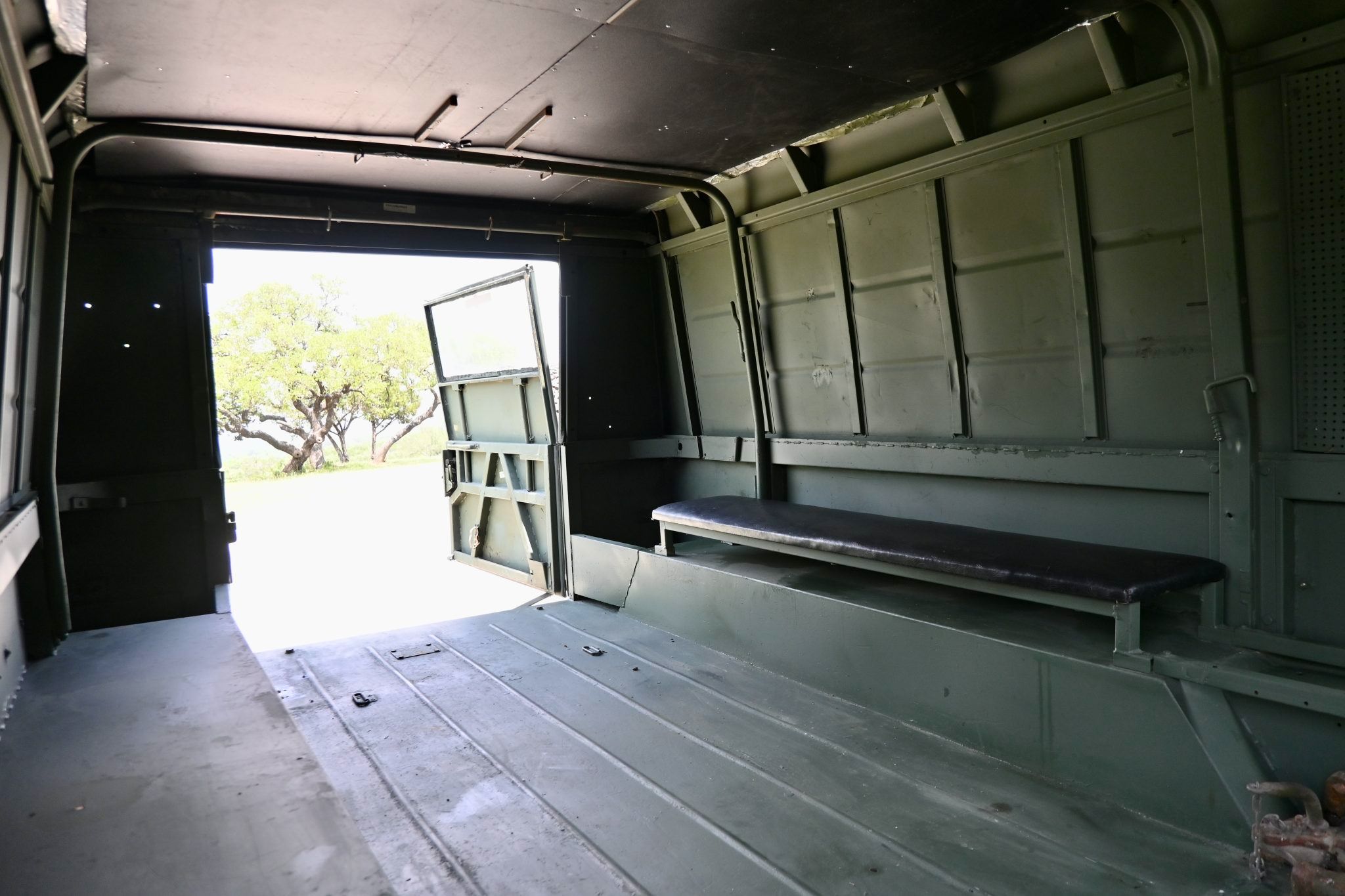
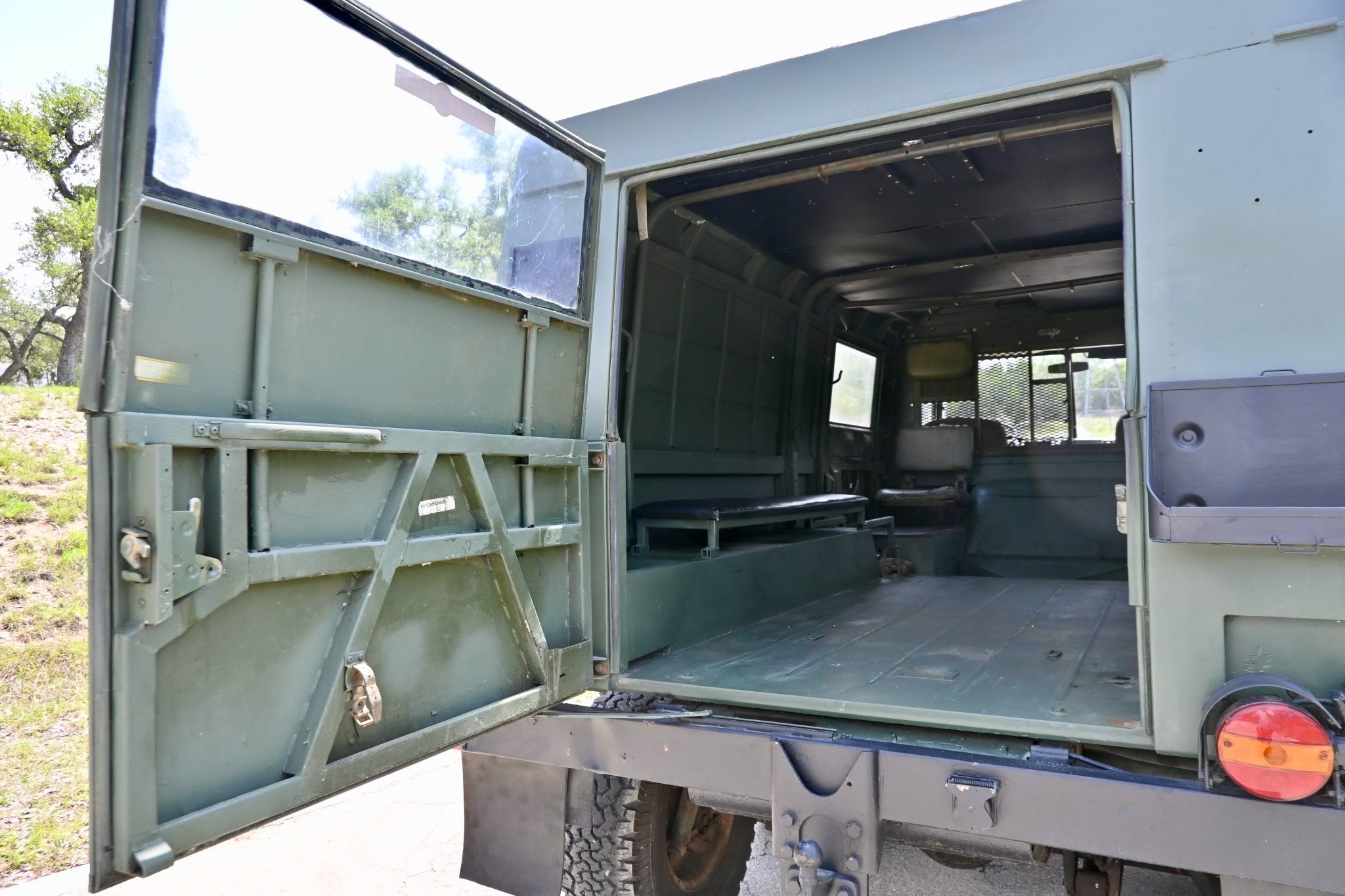
The rear section contains a bench seat along the left side and two rear-facing jump seats, all original to the vehicle’s original military troop-carrying layout.
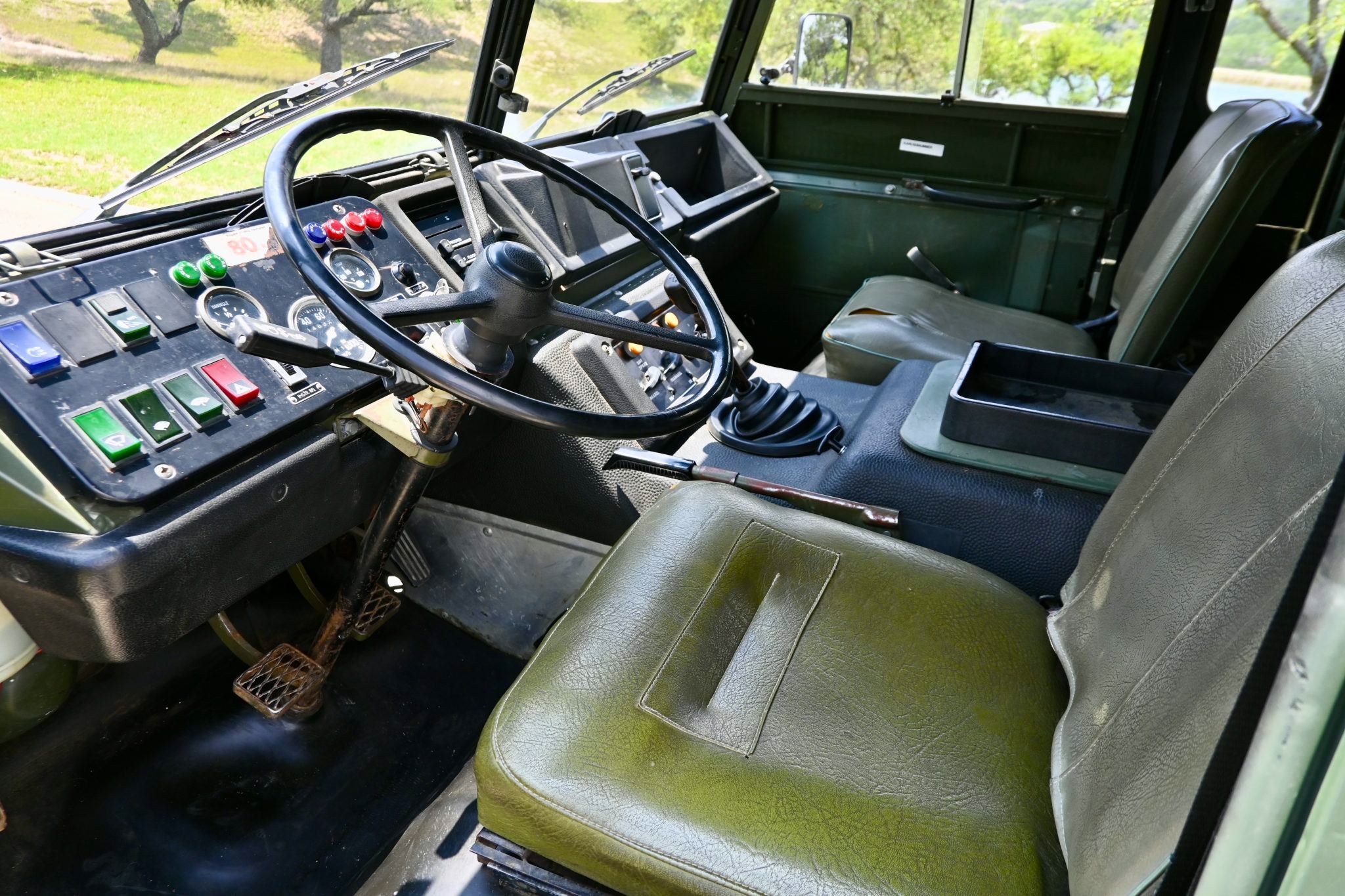
This is a 1975 Volvo C304, it’s a six-wheel-drive former Swedish military vehicle that was imported to the United States under previous ownership and bought by its current owner in 2025.
Power comes from a 3.0 liter inline-six and the oil was changed in preparation for the sale. The drivetrain routes power to all six wheels through a manual transmission, a dual-range transfer case, and driver-selectable locking differentials, all working through portal axles.
This C304 is now offered on dealer consignment with a clean Texas title out of Dripping Springs, Texas and you can visit the listing here if you’d like to read more about it or register to bid.
Images courtesy of Bring a Trailer

Articles that Ben Branch has written have been covered on CNN, Popular Mechanics, Smithsonian Magazine, Road & Track Magazine, the official Pinterest blog, the official eBay Motors blog, BuzzFeed, Autoweek Magazine, Wired Magazine, Autoblog, Gear Patrol, Jalopnik, The Verge, and many more.
Silodrome was founded by Ben back in 2010, in the years since the site has grown to become a world leader in the alternative and vintage motoring sector, with well over a million monthly readers from around the world and many hundreds of thousands of followers on social media.