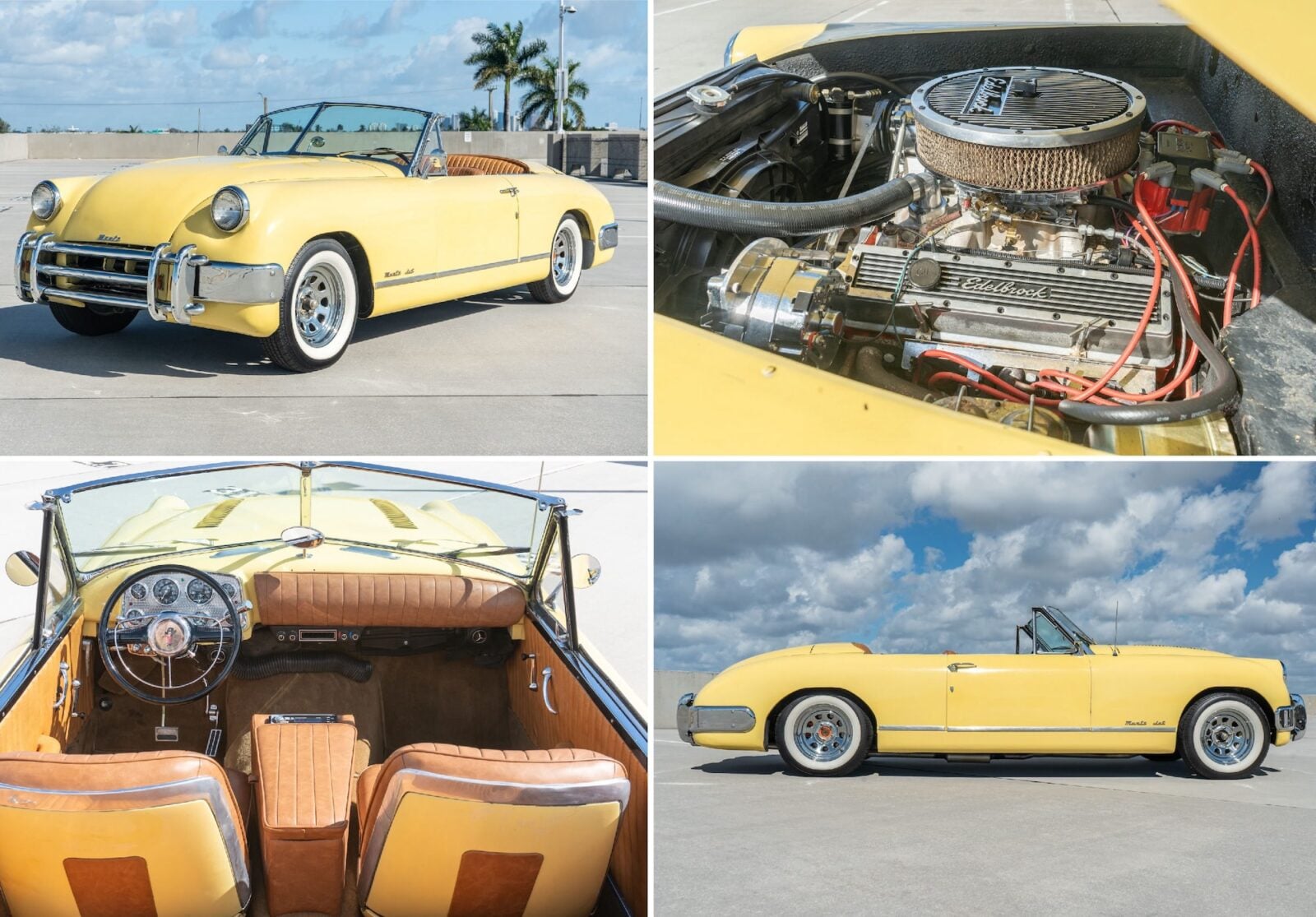
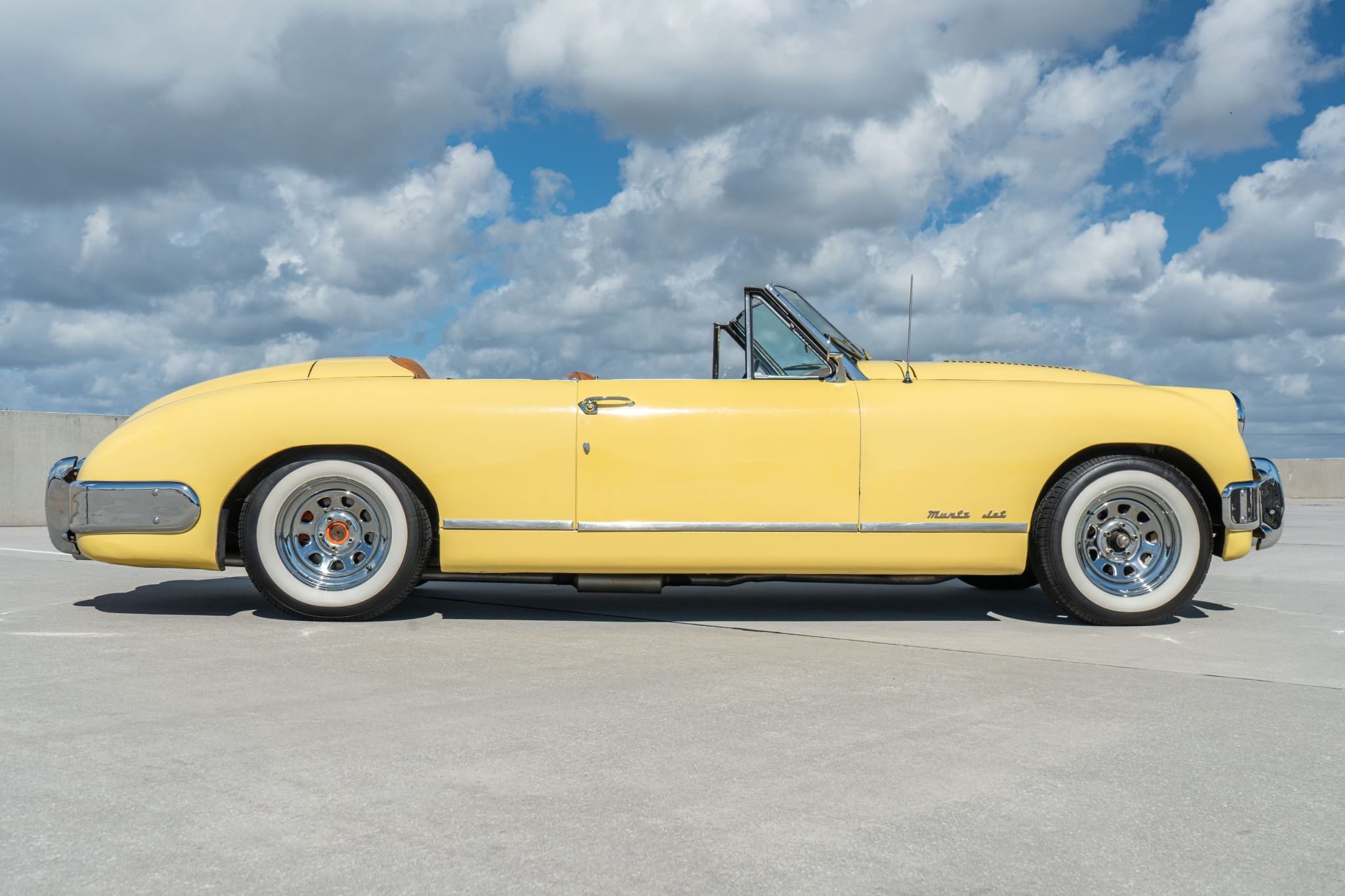
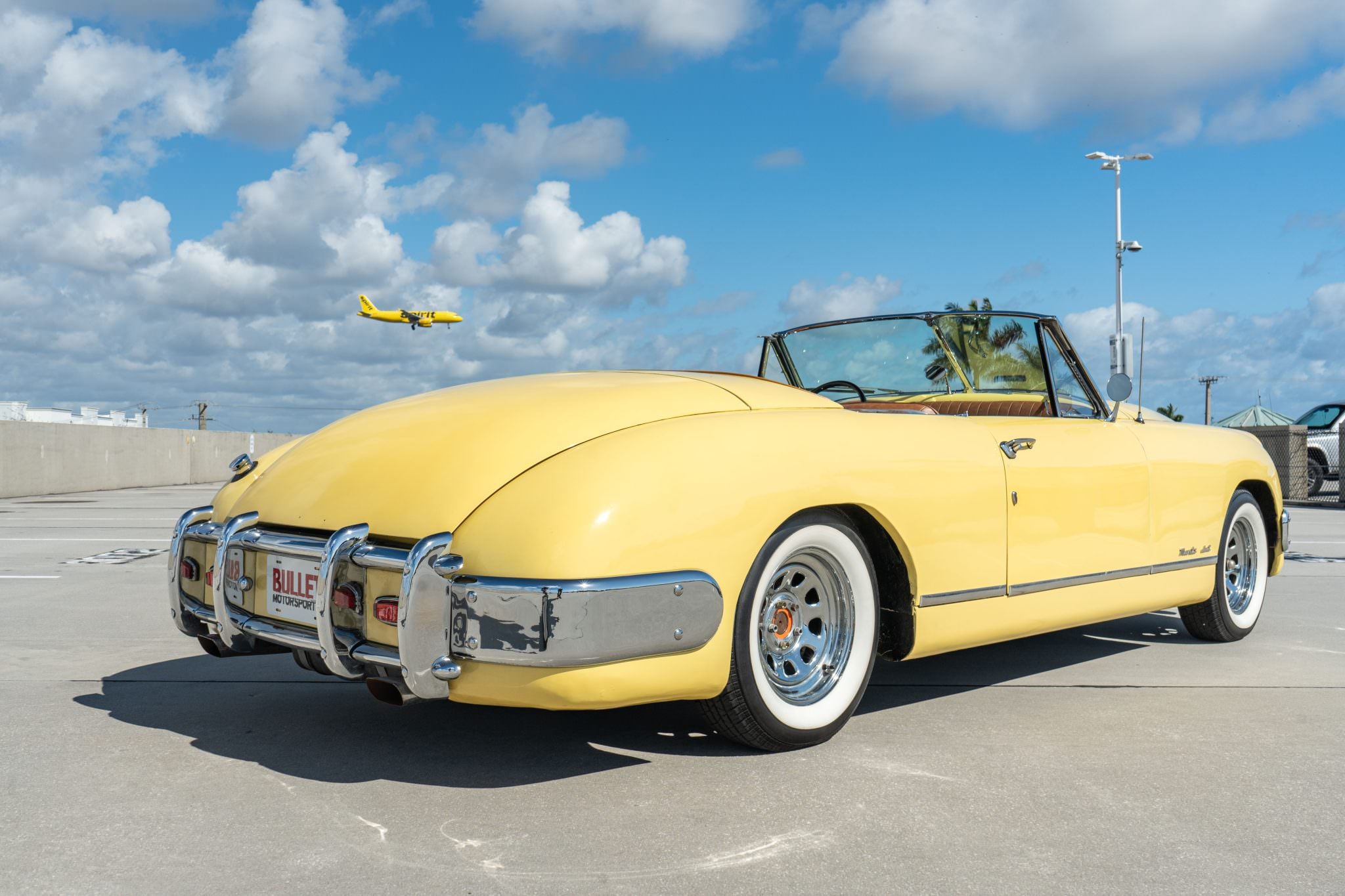
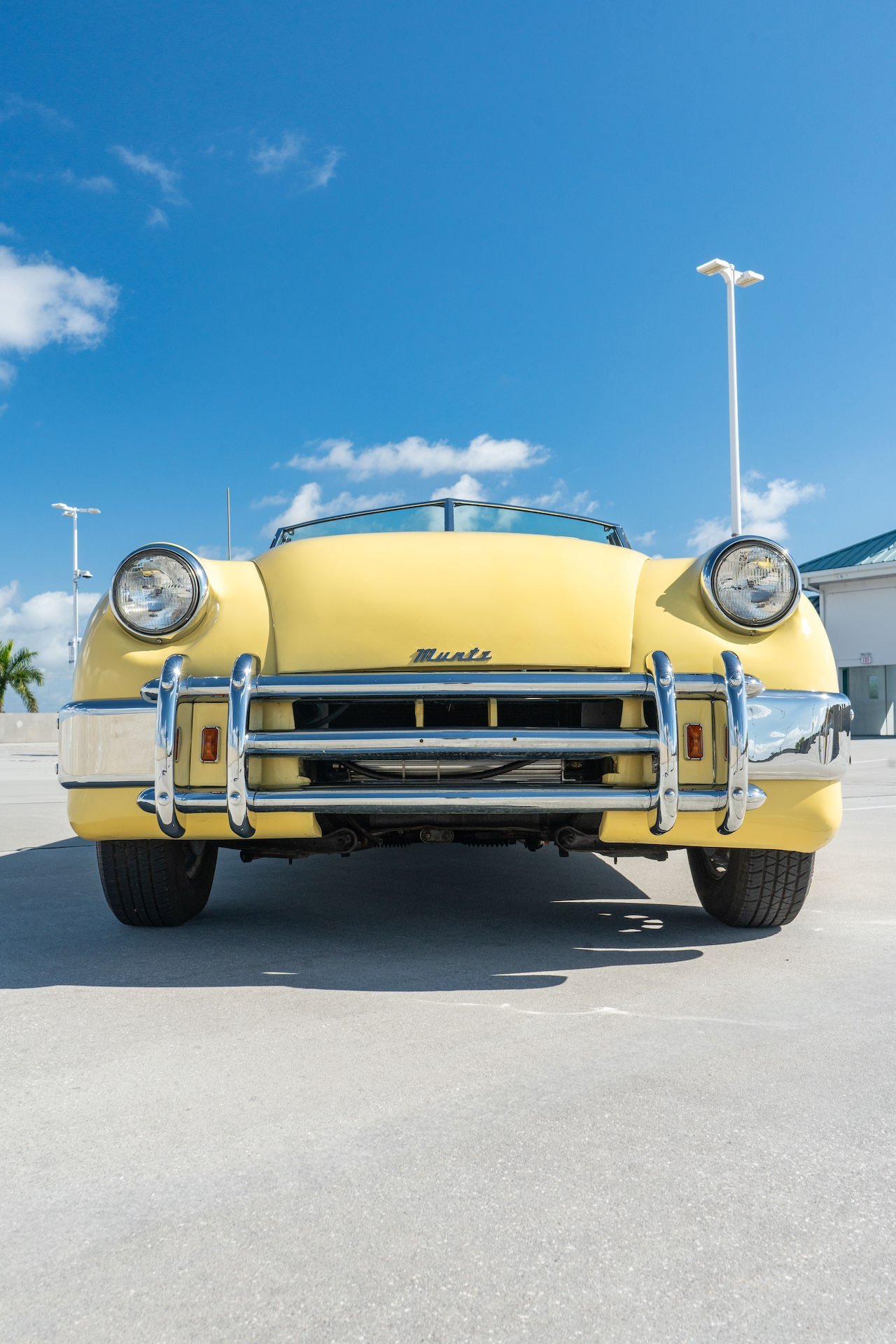
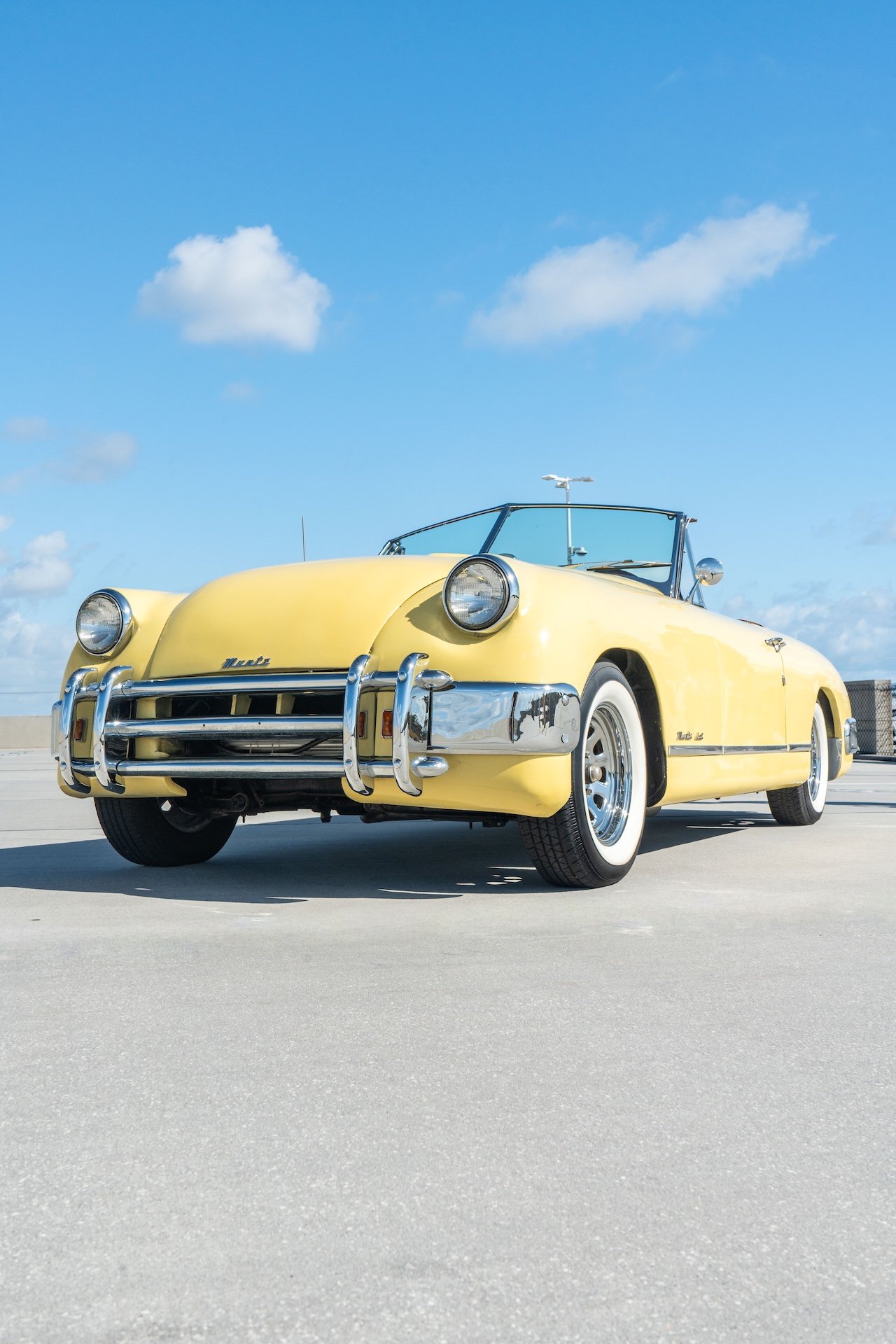
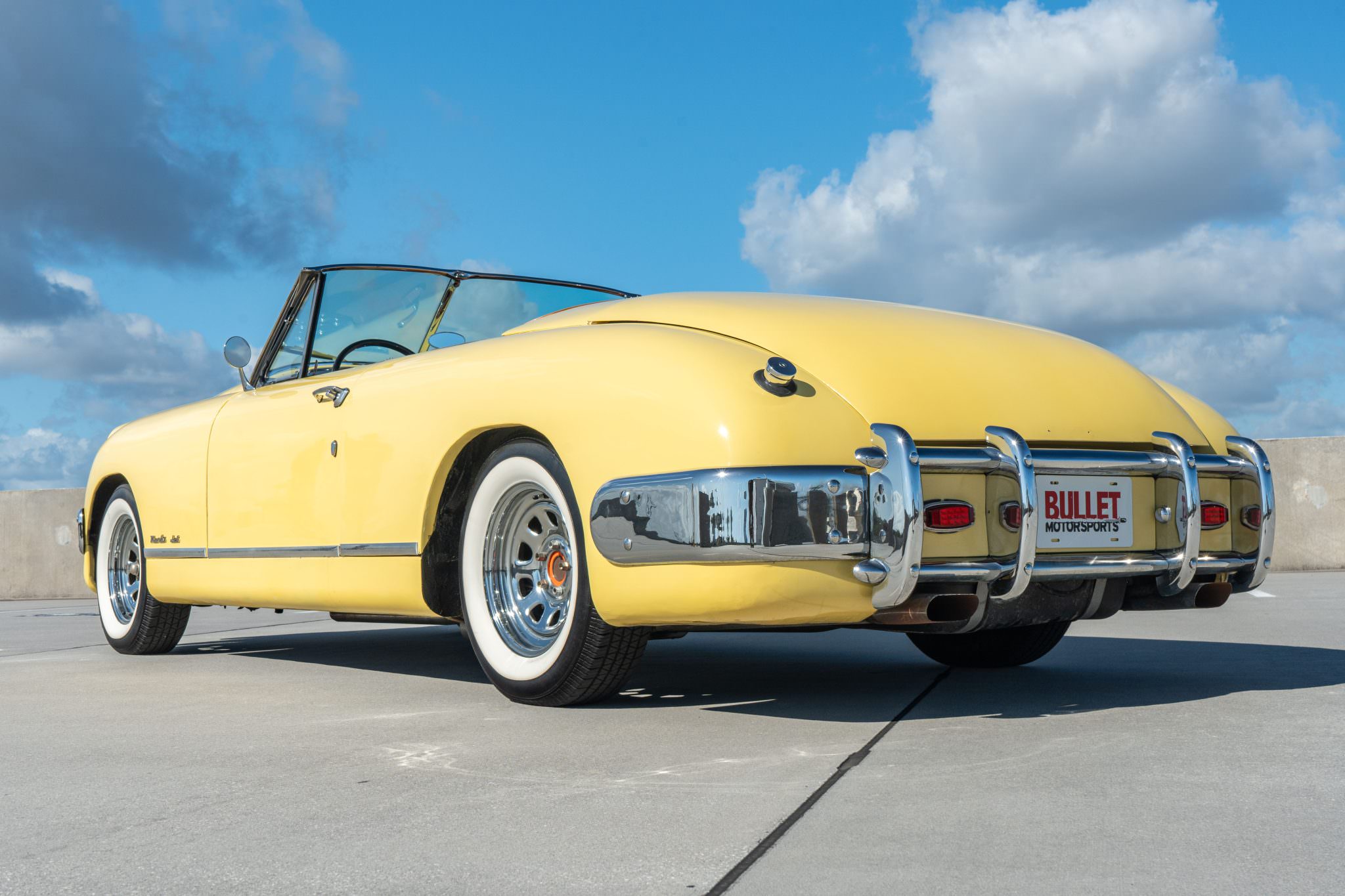
This is a 1951 Muntz Jet that is now powered by a Chevrolet 350 small block V8, offering vastly more power than the original 160 bhp power unit supplied by the likes of Cadillac or Lincoln.
The Muntz Jet was one of the most fascinating of the low-volume American sports cars released in the years immediately after WWII. It was based on the Kurtis Sport Car (KSC) platform, developed by Indy 500-winning race car designer Frank Kurtis, and the whole project was run by the larger-than-life Earl “Madman” Muntz.
Fast Facts: The Muntz Jet
- The Muntz Jet was an unusual early American grand-touring convertible produced in very small numbers during the early post-WWII period. Based on the Frank Kurtis-designed Kurtis Sport Car, it combined race-derived engineering with luxury features and V8 power, perhaps a sign of Earl “Madman” Muntz’s flamboyant approach to marketing and product design.
- Development began with Frank Kurtis’s sports car program before Earl Muntz purchased the rights and modified the concept into a longer-wheelbase touring convertible with rear seating. Production cars commonly used Cadillac or Lincoln V8 engines and automatic transmissions – in favor of effortless highway performance rather than sharp sports-car handling.
- The car was expensive to build and difficult to sell profitably, typically retailing for roughly $4,500 to $5,500 during the early 1950s. Production took place first in Southern California and later in Evanston, Illinois. Historical records suggest fewer than 200 examples were built, though some sources do estimate higher totals.
- The 1951 example shown here has been modified with a Chevrolet 350 cubic inch V8, a 700R4 4-speed automatic transmission, and a Ford 9-inch rear axle. Additional upgrades include rack-and-pinion steering and four-wheel disc brakes, delivering significantly more power and better braking capability than the original factory specification.
History Speedrun: Earl Muntz And The Muntz Jet
The Muntz Jet arrived at a strange, optimistic moment in American motoring. Postwar buyers had money, highways were improving, and the idea of a fast, comfortable personal luxury car was starting to matter as much as outright performance.

 Earl Muntz was famous in Southern California as an electronics pitchman and retailer, a high-energy self-promoter who understood advertising, pricing psychology, and spectacle. He’d popularized the practice of “Muntzing” televisions, stripping circuits down to reduce cost, while building a reputation for selling big-ticket items with barnstorming flair. Image courtesy of the Muntz Collection.
Earl “Madman” Muntz looked at that new post-WWII landscape and decided there was room for a low-volume, high-style convertible that combined Hollywood flash with genuine grand-touring pace. The result was the Jet, a car that was hugely influential in the evolution of the early American GT.
The story of the car starts long before Muntz ever put his name on a badge. The Jet was developed by Frank Kurtis, the prolific Southern California fabricator best known for Indy race cars, sports race cars, and even F1 cars. Kurtis produced a limited run of Kurtis sports cars that leaned on race-car engineering but were aimed at road use, with V8 power and dramatic, low-slung lines.
Muntz acquired the rights and tooling from Kurtis, and under Muntz’s ownership the car was revised, with Kurtis making changes for him that included a longer wheelbase, 113 inches, plus a genuine rear seat, pushing the car away from two-seat sports car territory and toward a high-speed touring convertible suitable for the whole family.
If the Jet had been created by a conventional automaker, its development story would have included ample product planning and committee meetings. Muntz’s version was closer to a vaudeville act with a drafting board backstage. He was already famous in Southern California as an electronics pitchman and retailer, a high-energy self-promoter who understood advertising, pricing psychology, and spectacle.
He’d popularized the practice of “Muntzing” televisions, stripping circuits down to reduce cost, while building a reputation for selling big-ticket items with barnstorming flair. That restless commercial instinct carried straight into the Jet: make it fast and comfortable, load it with conversation-starting features, and sell the idea as much as the machine.
The Jet’s specification changed as production evolved, and that’s part of why it remains a bit of an automotive historian’s puzzle. Early cars are widely documented as using Cadillac V8 power, while later Jets mostly seem to have had Lincoln V8s.
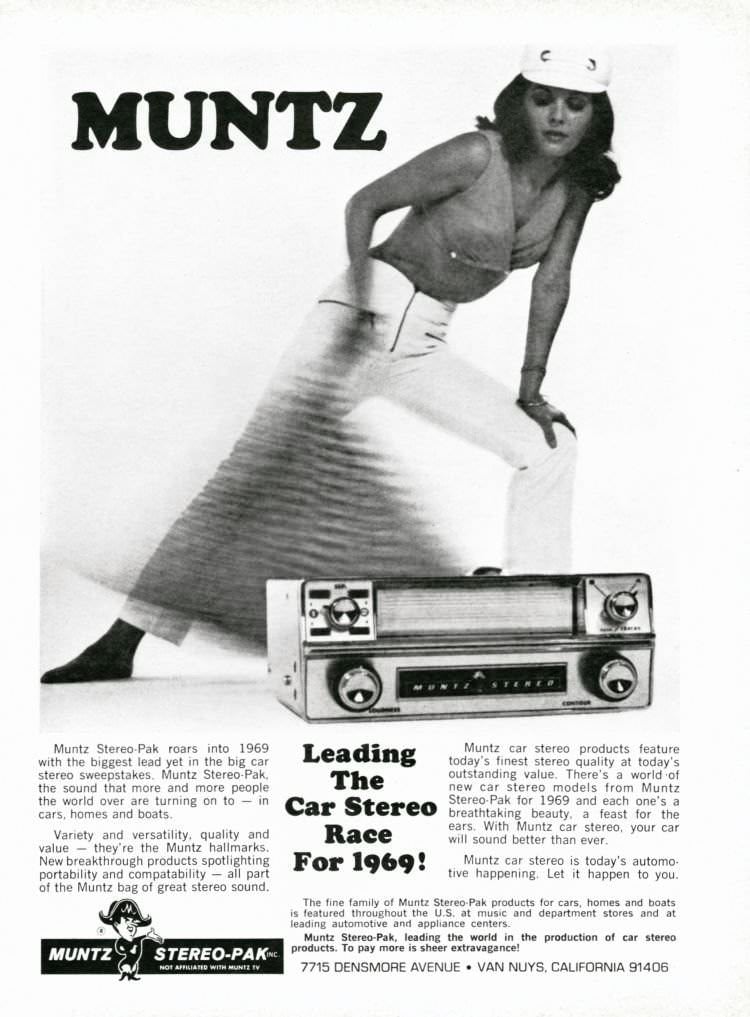
Many electronics sold by Muntz were stripped down and simple, but cheap to buy, and hugely popular. Image courtesy of the Muntz Collection.
The car offered classic American V8 torque, automatic transmissions in most examples, and there was a focus on effortless speed rather than precision handling. Period-style luxury novelties were also part of the Jet’s character, including an ice chest to keep your beers cold and even a liquor cabinet option for those who preferred the harder stuff, which indicates exactly what kind of owner Muntz was imagining.
Early assembly took place in Southern California, then operations shifted to Evanston, Illinois, Muntz’s home turf. The Jet was expensive to build and difficult to make profitable at the price buyers would tolerate.
Period sources and later historians place the Jet’s retail price between roughly $4,500 and $5,500 USD, depending on year and specification, with Muntz himself later claiming he was losing approximately $1,000 per car (though this may also have been one of his famous marketing tactics). The math explains a lot – the Jet wasn’t just low-volume because it was exclusive, it was low-volume because, truth be told, the business model didn’t really work.
Muntz made claims over the years that placed production output far higher than reality, but registry keepers and auction house records tend to converge on a figure of under 200 cars with 198 being the commonly cited number, with some sources going as high as 394.
The safest conclusion, supported across multiple mainstream histories and specialist registry work referenced by major auction catalogs, is that the Jet was built in very small numbers between approximately 1949 and 1954 – depending on how the early Kurtis-based cars are counted.
Reported top-speed figures land in the low 100 mph range, with some sources citing 112 mph-plus capability for the type depending on the engine. Some individual cars are outliers, too, as one Petersen Vault Collection Jet is reportedly one of two fitted by the factory with a Chrysler FirePower Hemi V8, likely making them the fastest of the factory built cars.
The story of the Muntz Jet starts long before Muntz ever put his name on a badge. The Jet was developed by Frank Kurtis, the prolific Southern California fabricator best known for Indy race cars, sports race cars, and even F1 cars.
Earl Muntz’s personal story arc is inseparable from the car – he was a salesman, a tinkerer, a promoter, and most of all a showman, who operated on instinct, guts, and wits. The Jet is a great example of the man – it’s ambitious, occasionally contradictory, and full of big swings.
In an era when Detroit was still deciding what an American grand tourer should be, Muntz took a shot from the sidelines with a car that mixed race-bred origins, Hollywood-grade marketing, and genuine high-speed intent.
The Jet didn’t survive long enough to mature into a stable product line, but it left behind something collectors still respond to – a rare, charismatic American convertible that feels like it was built by one big personality as much as by engineering.
The Engine-Swapped 1951 Muntz Jet Shown Here
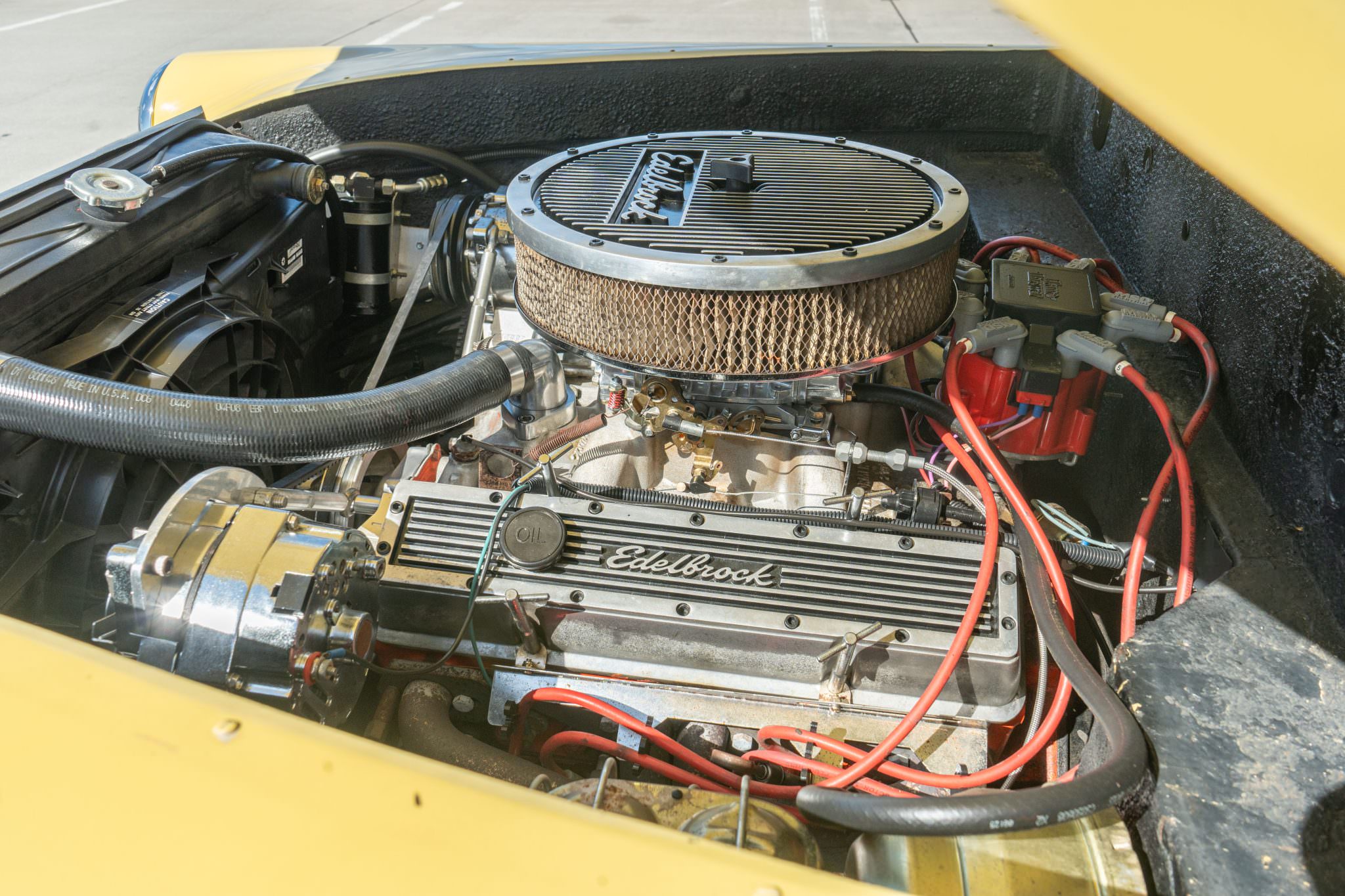
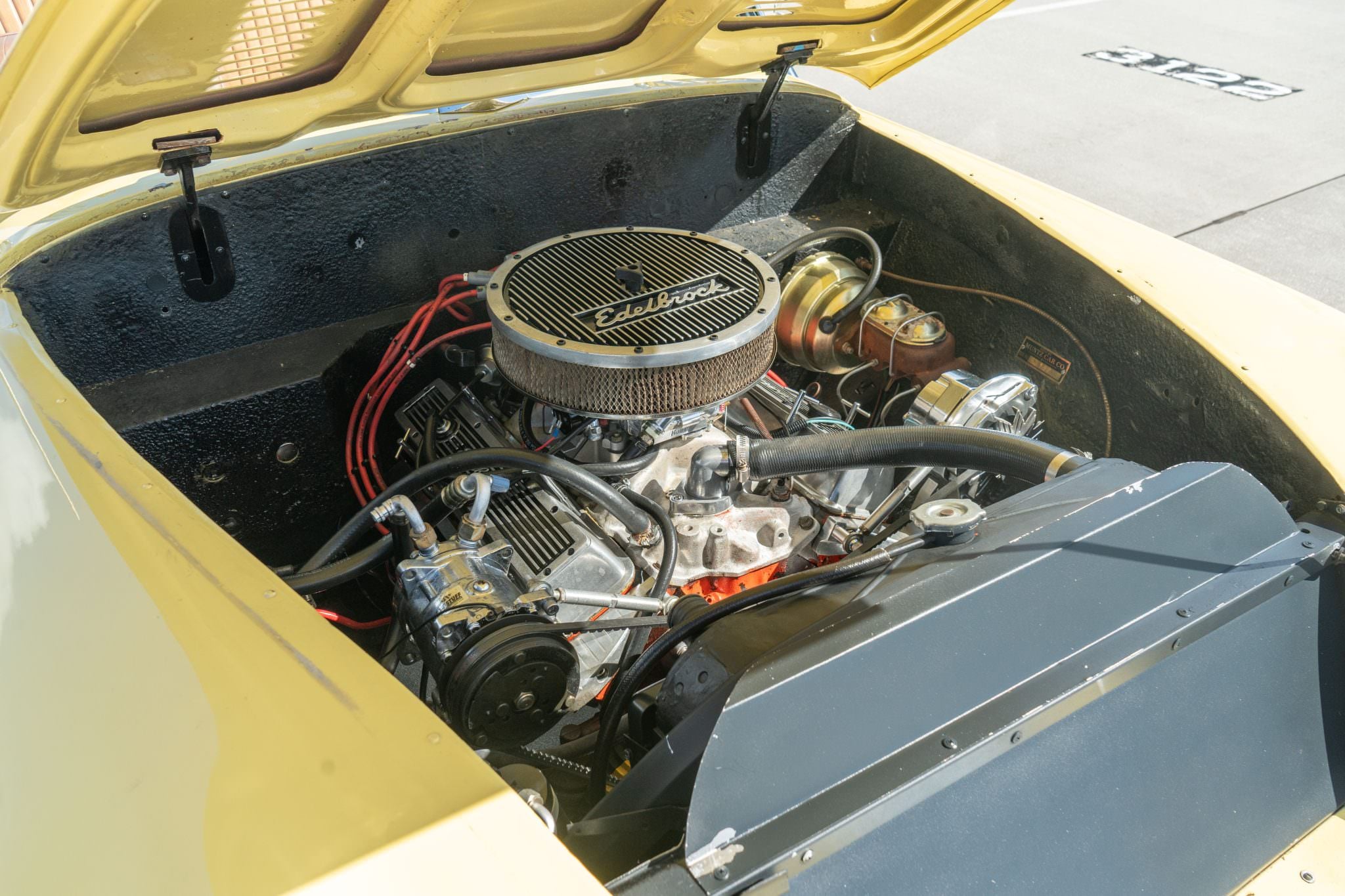
This 1951 Muntz Jet has been significantly modified from stock, the original drivetrain has been replaced with a 350 cubic inch (5.7 liter) V8 paired with a 700R4 4-speed automatic transmission and a Ford 9-inch rear end.
The engine is fitted with a Holley four-barrel carburetor, an Edelbrock intake manifold, and MSD ignition, breathing out through a dual exhaust system with Flowmaster mufflers.
Although this car doesn’t come with a post-engine swap dyno chart, we do know that even a relatively standard Chevrolet 350 crate engine is capable of 330 bhp and 380 lb ft of torque – that’s vastly more than the 160 bhp that this car would have come with originally.
As a result of this power increase, the car has also been upgraded with power rack-and-pinion steering and four-wheel ventilated disc brakes to give it considerably better stopping power than the original four wheel drum brakes.
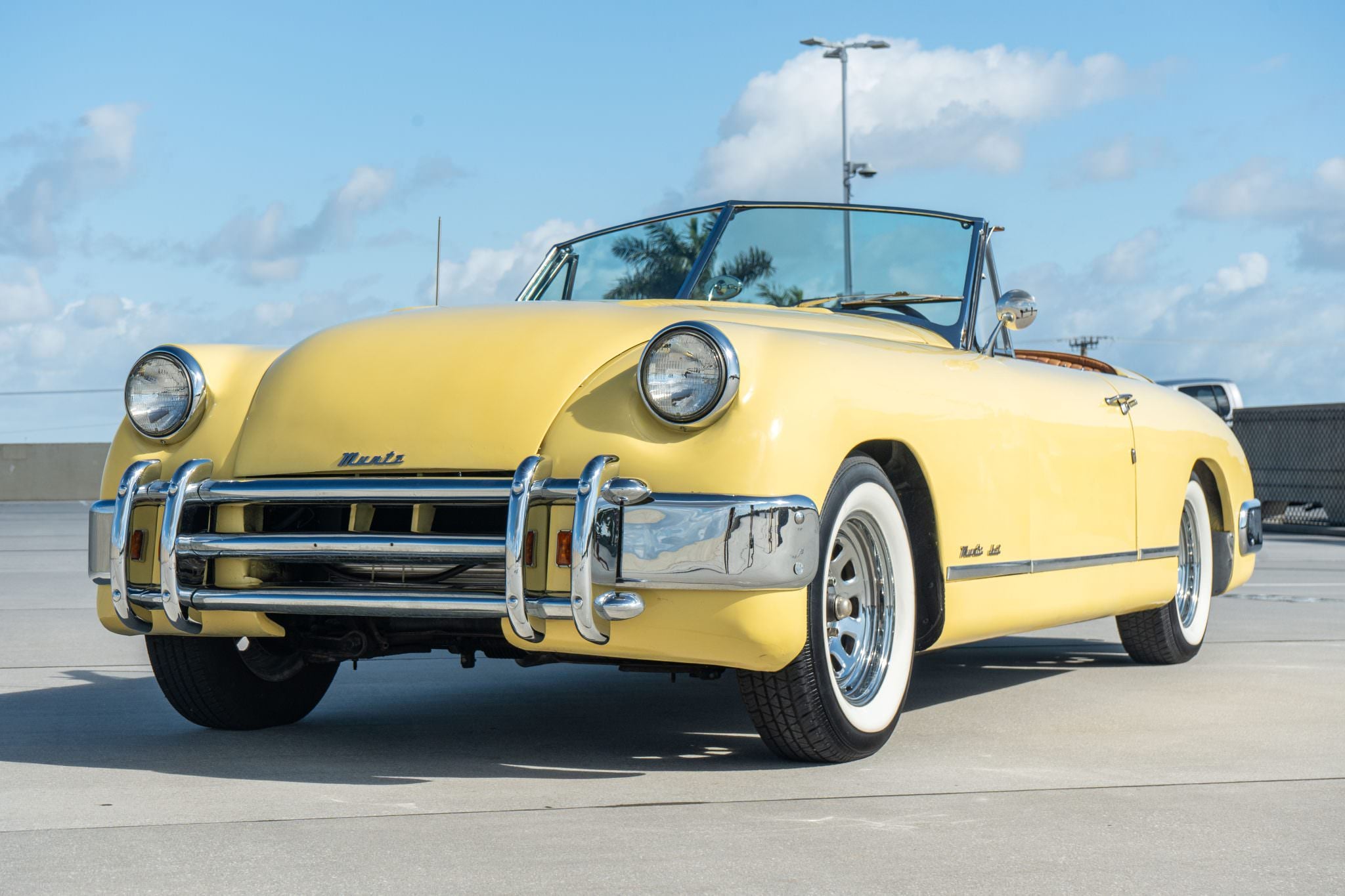
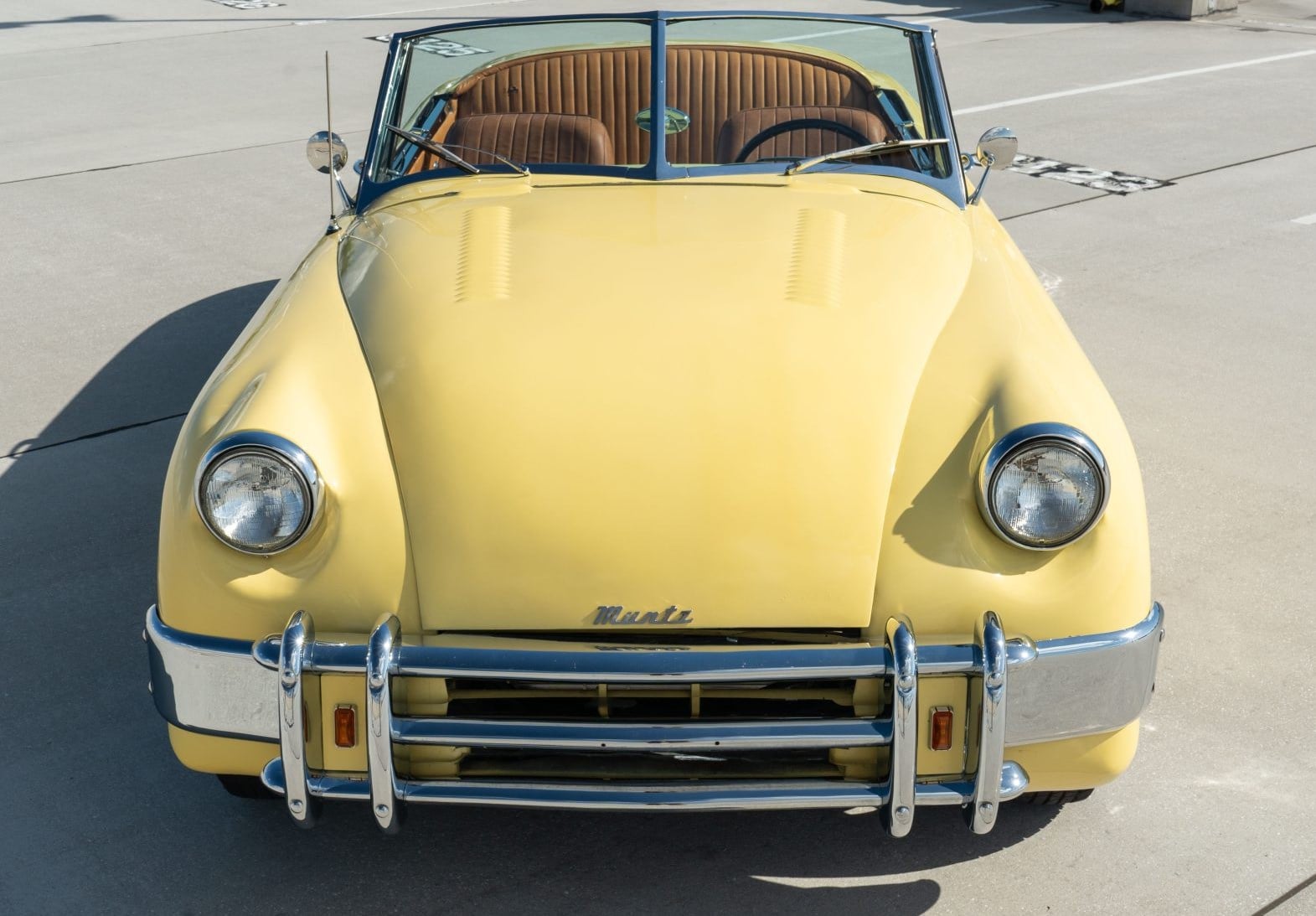
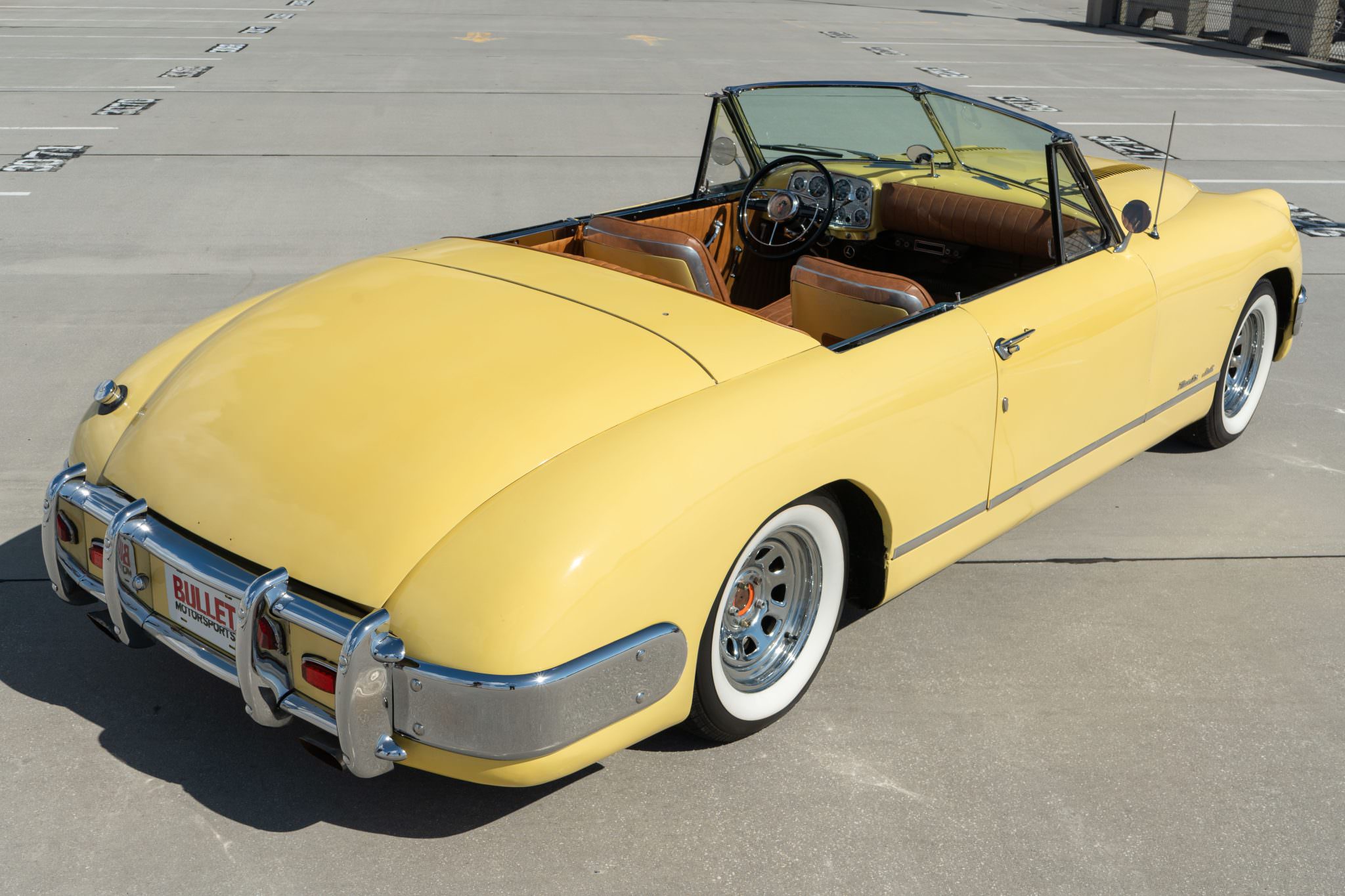
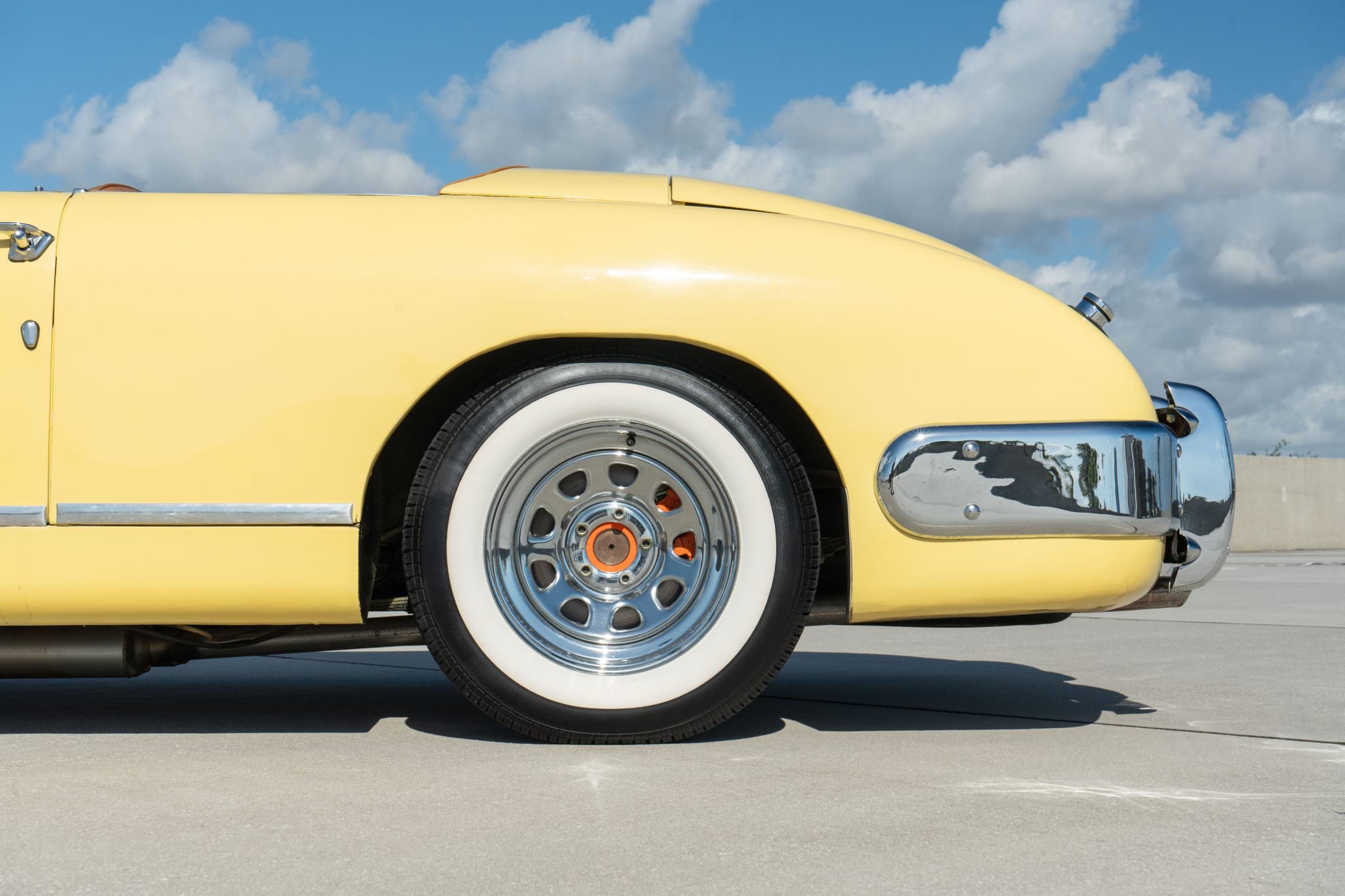
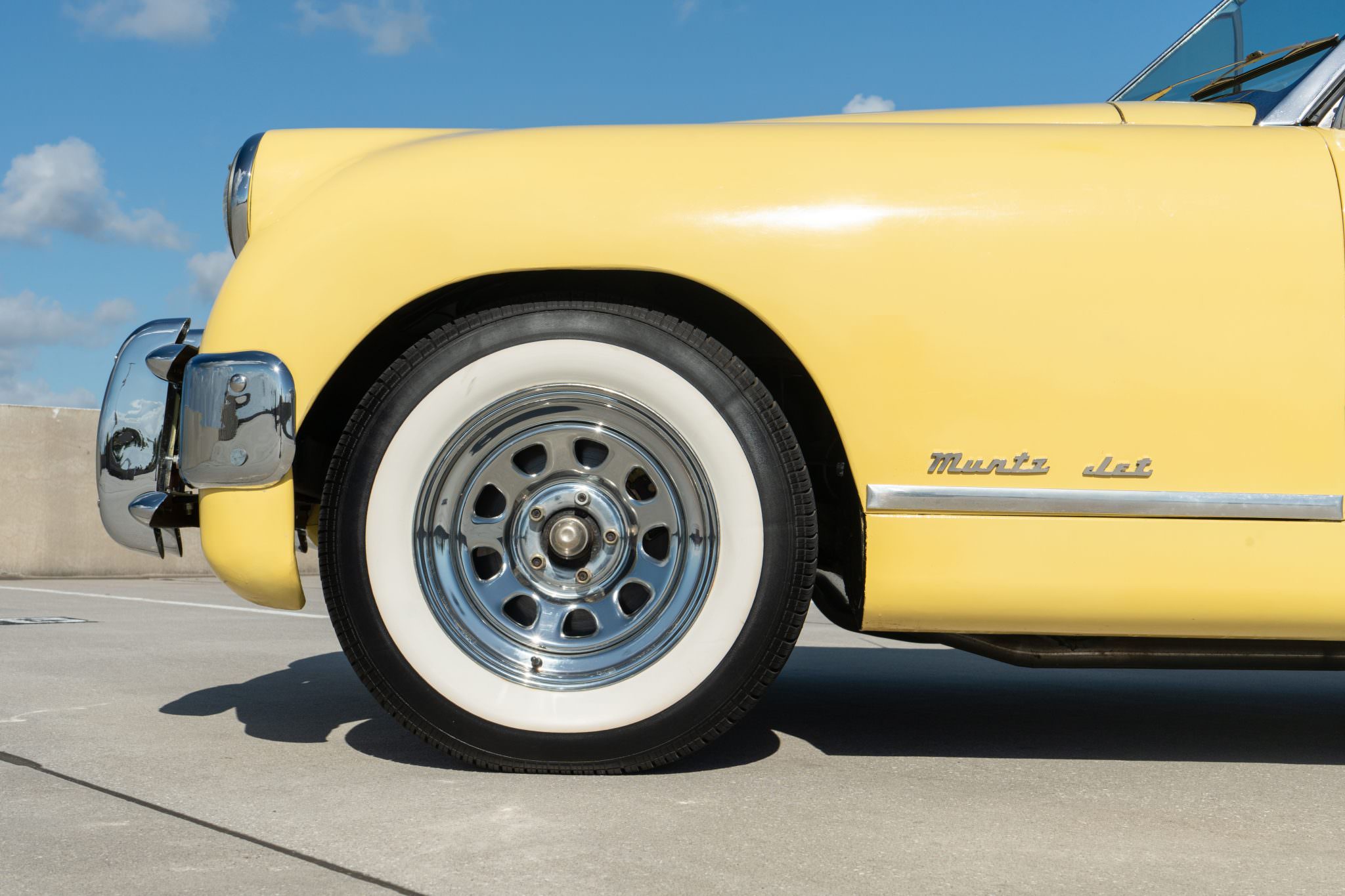
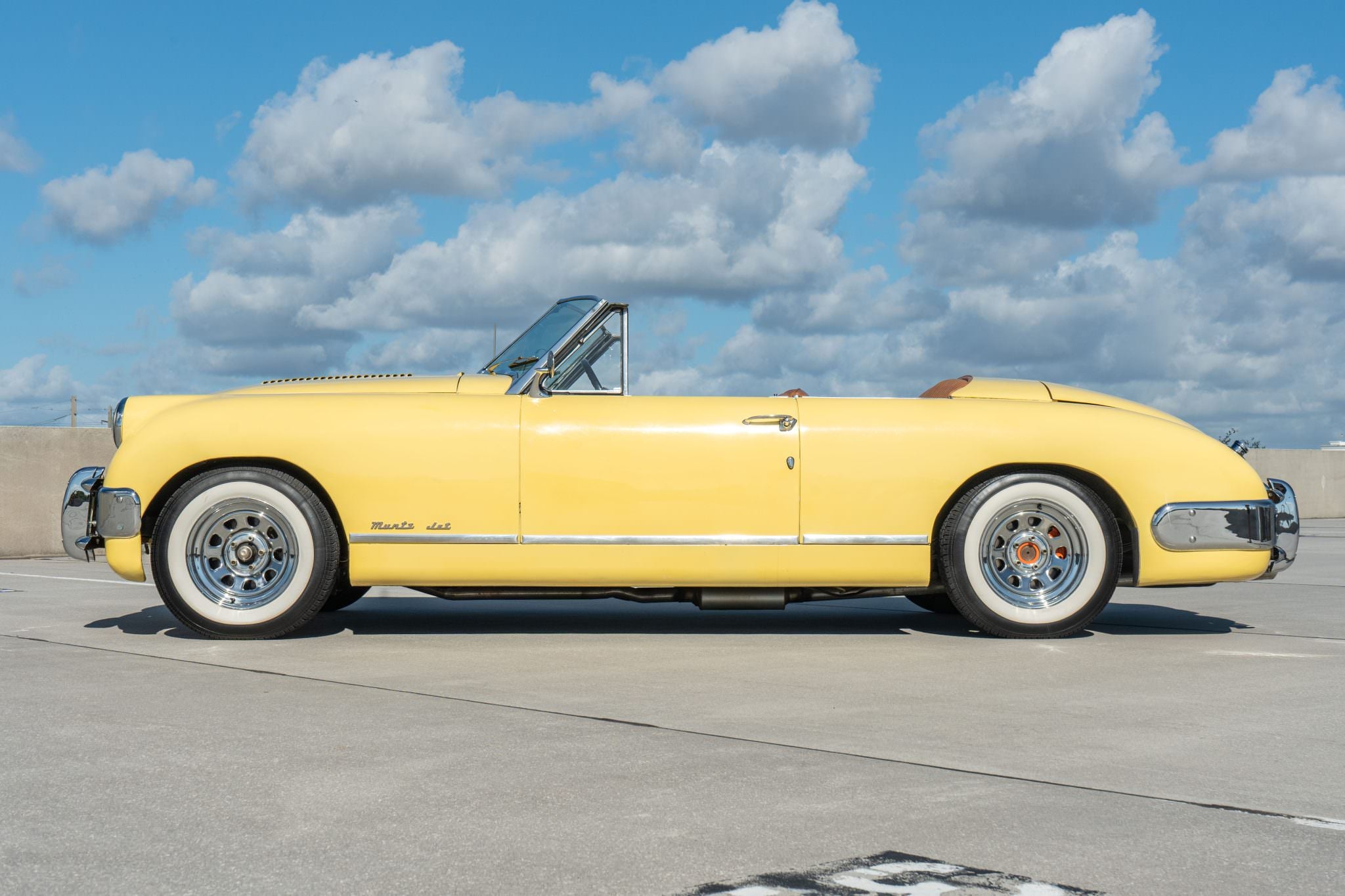
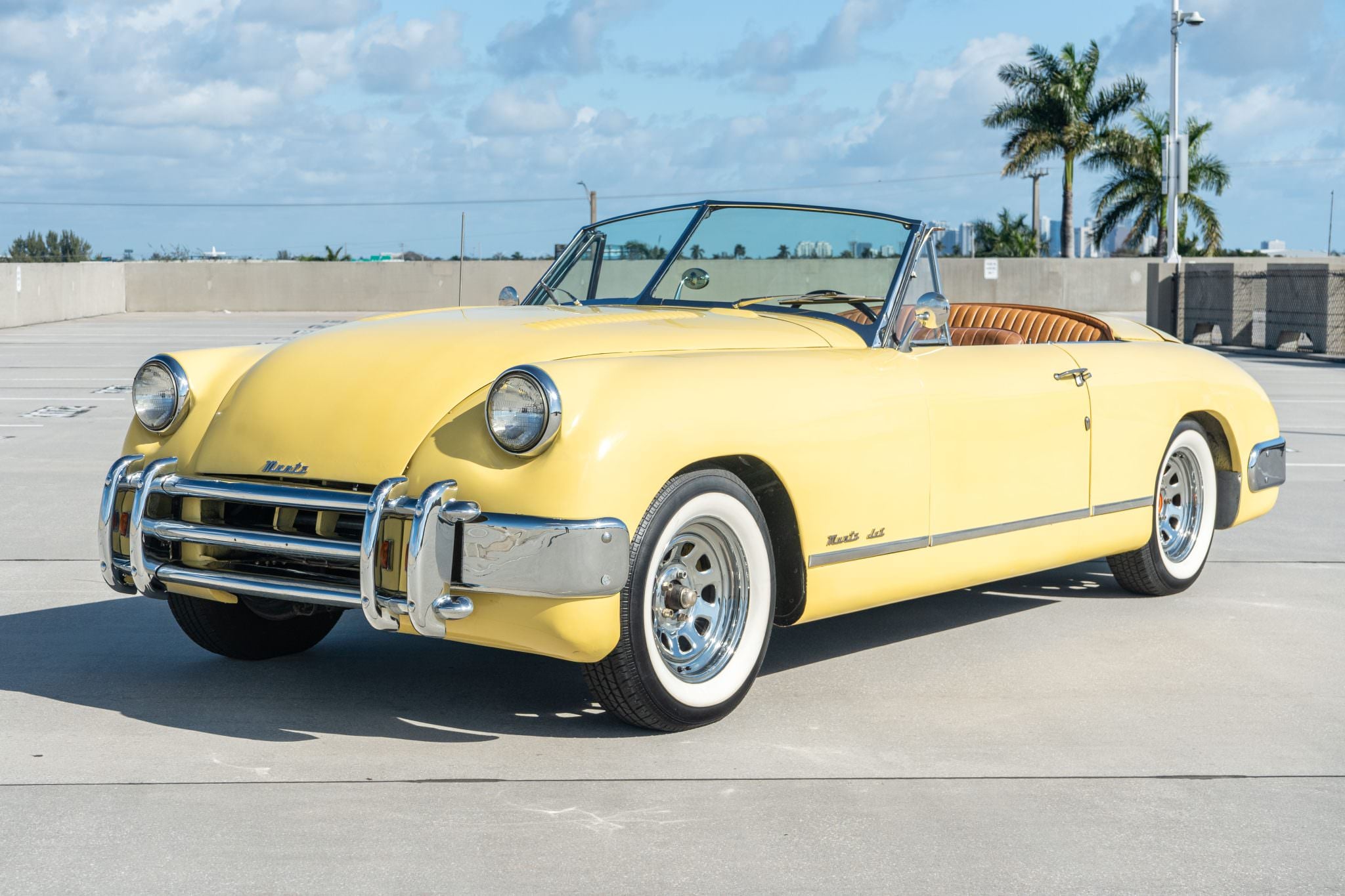
The body is finished in yellow and keeps all the classic Muntz Jet styling cues, like chrome wraparound bumpers, a louvered hood, and a split windshield. It rides on 15 inch chrome wheels with whitewall radials, and a set of chrome wire wheel covers with “Madman” Muntz medallions is included along with a removable top frame.
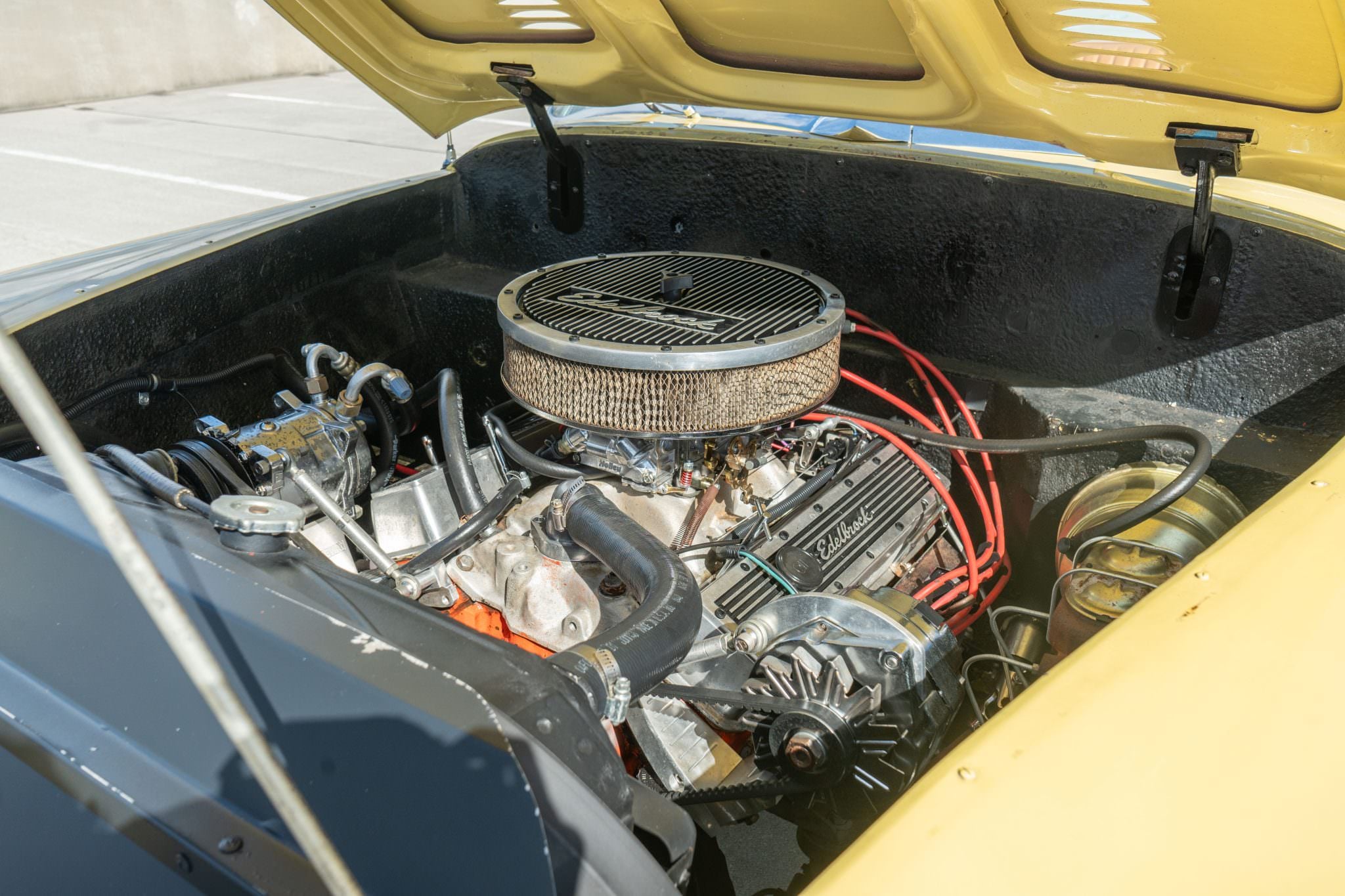
This is a 1951 Muntz Jet that is now powered by a Chevrolet 350 small block V8, offering vastly more power than the original 160 bhp power unit supplied by the likes of Cadillac or Lincoln.
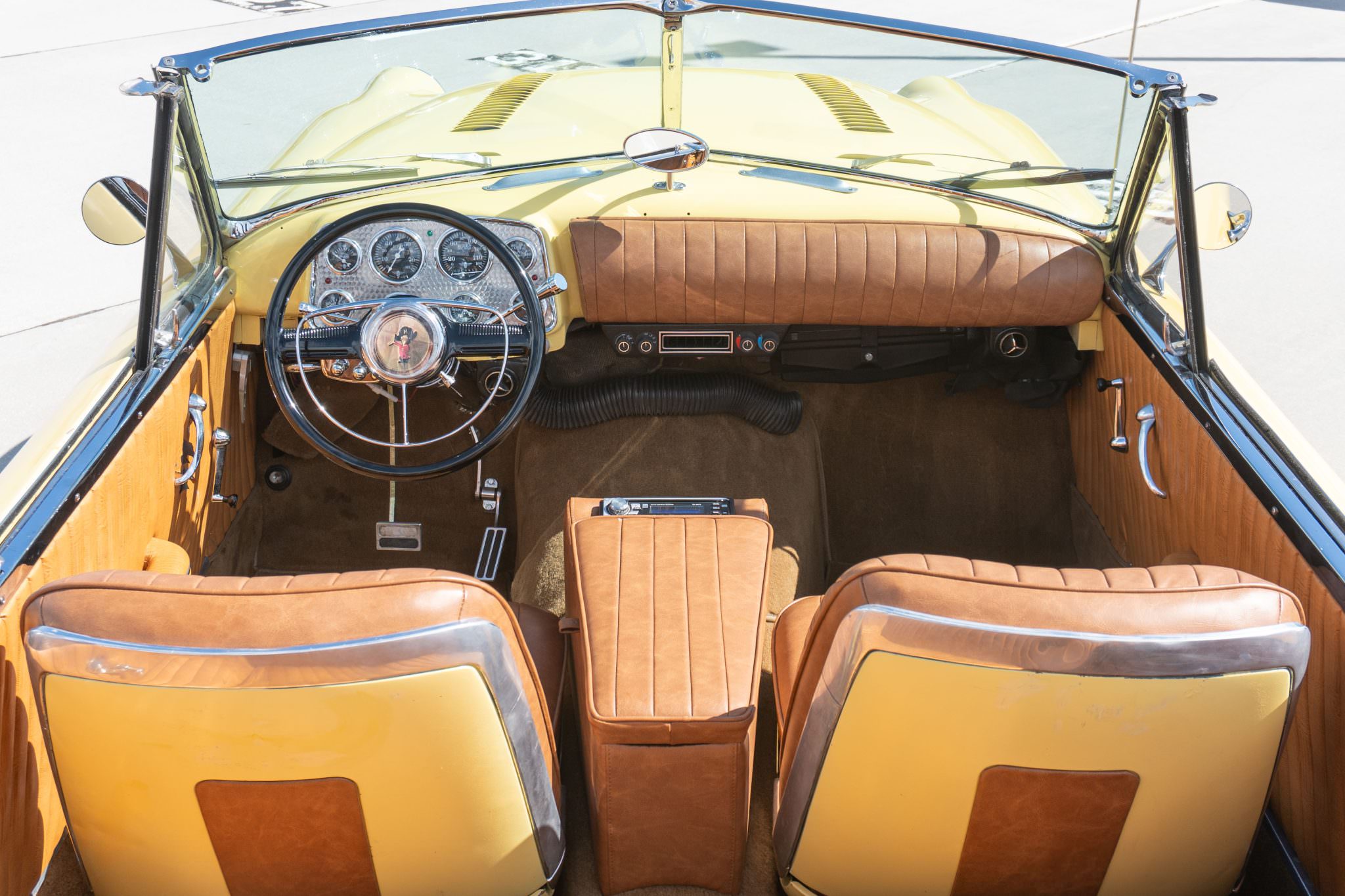
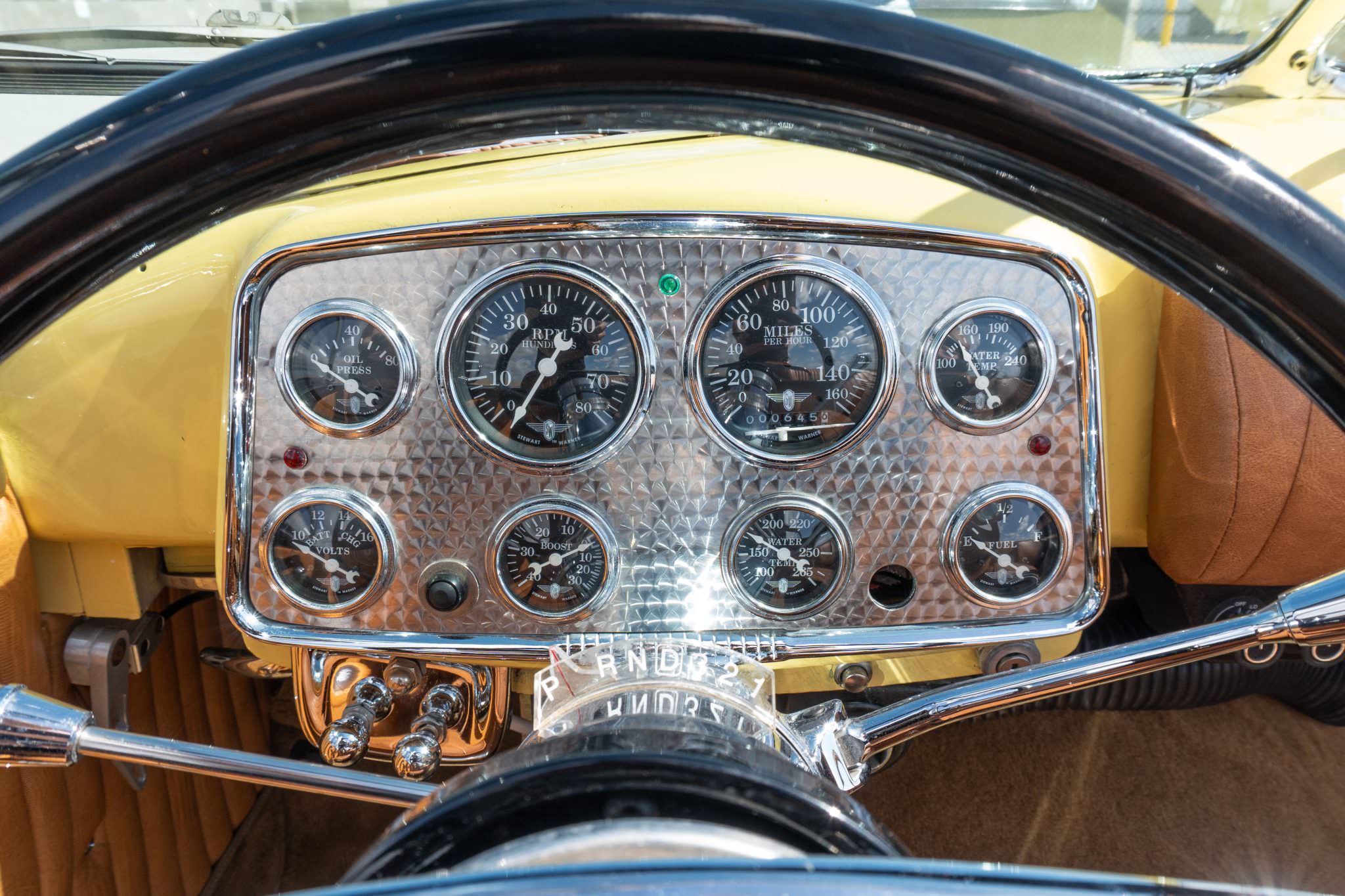
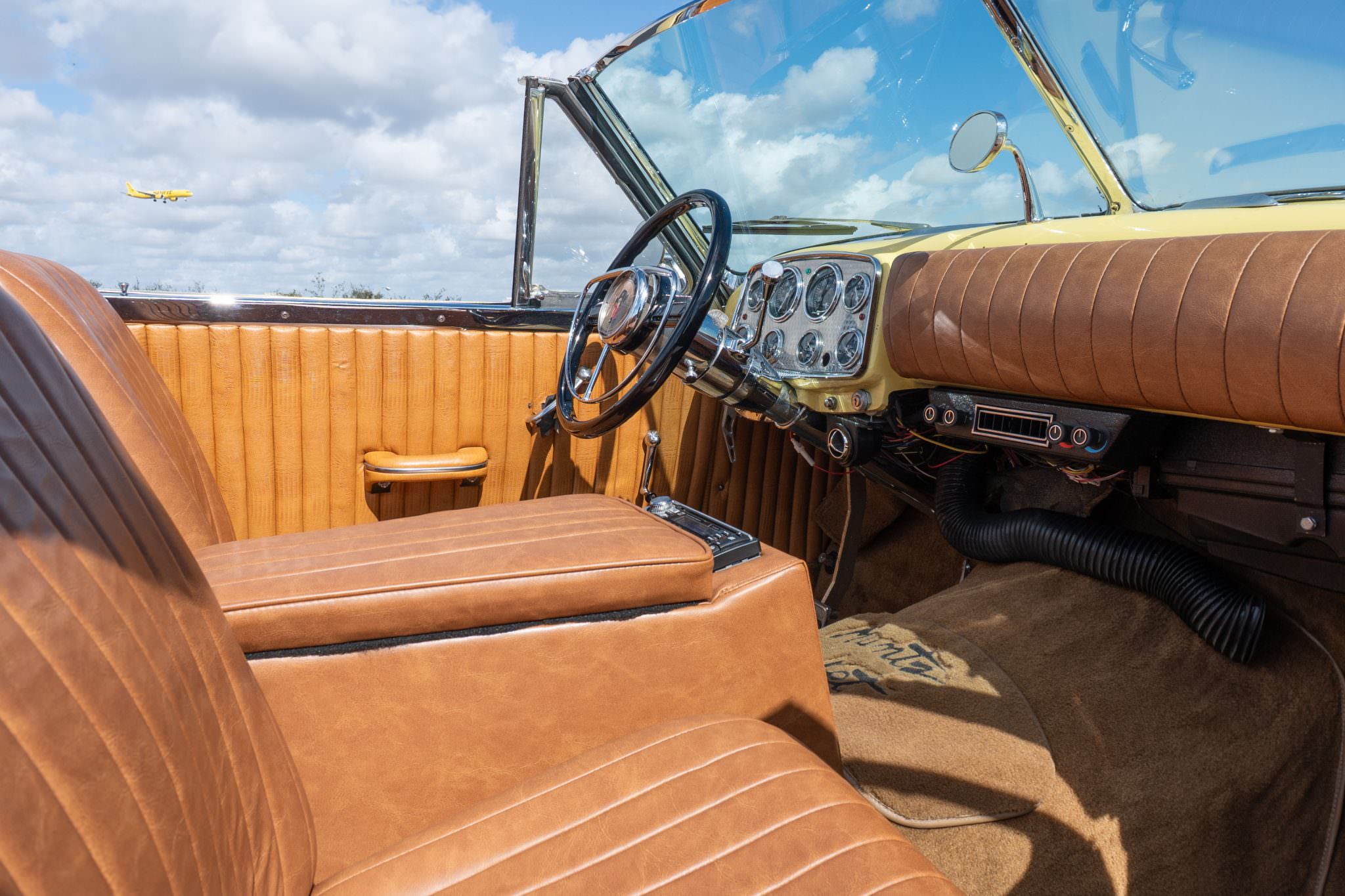
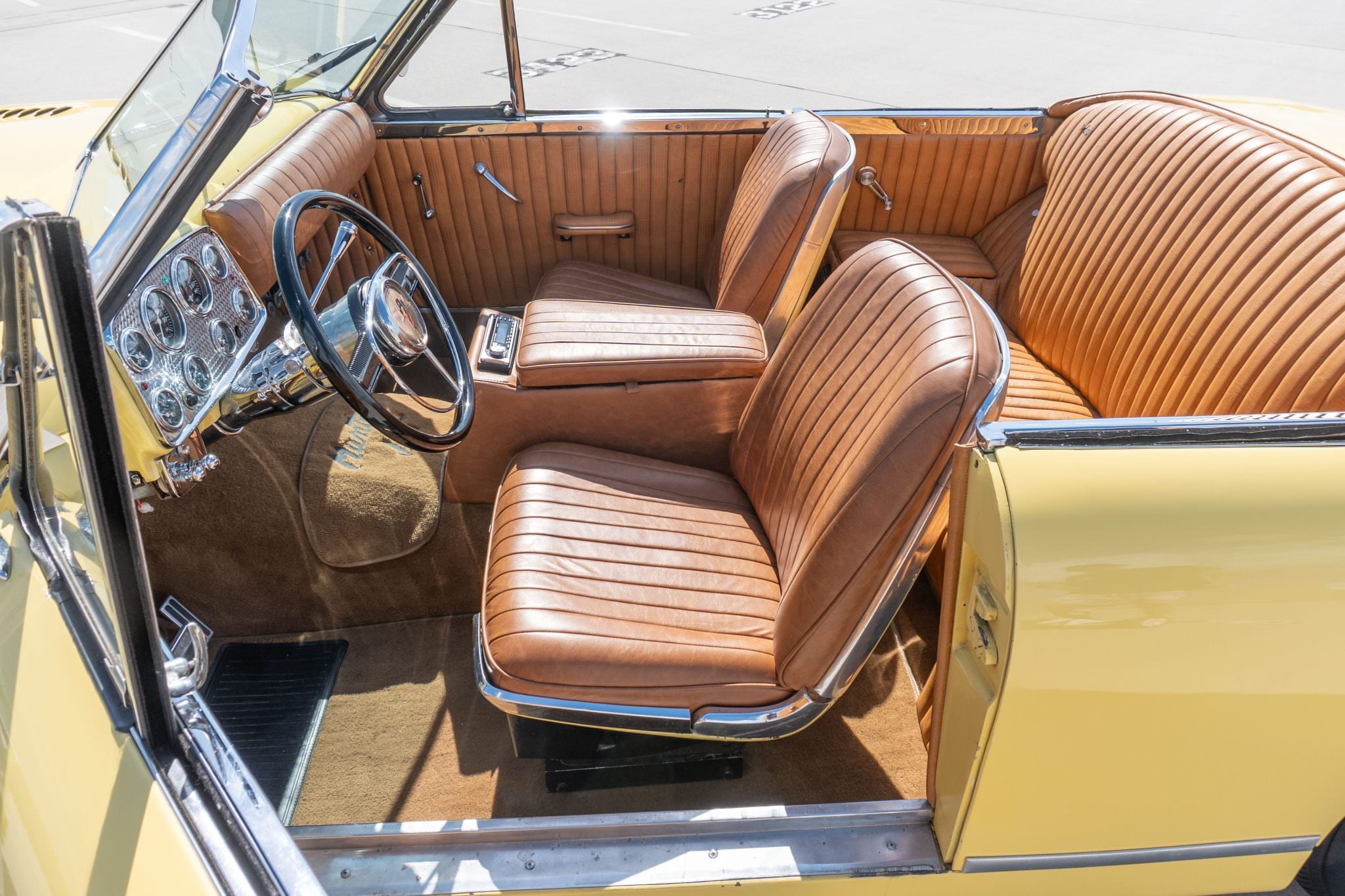
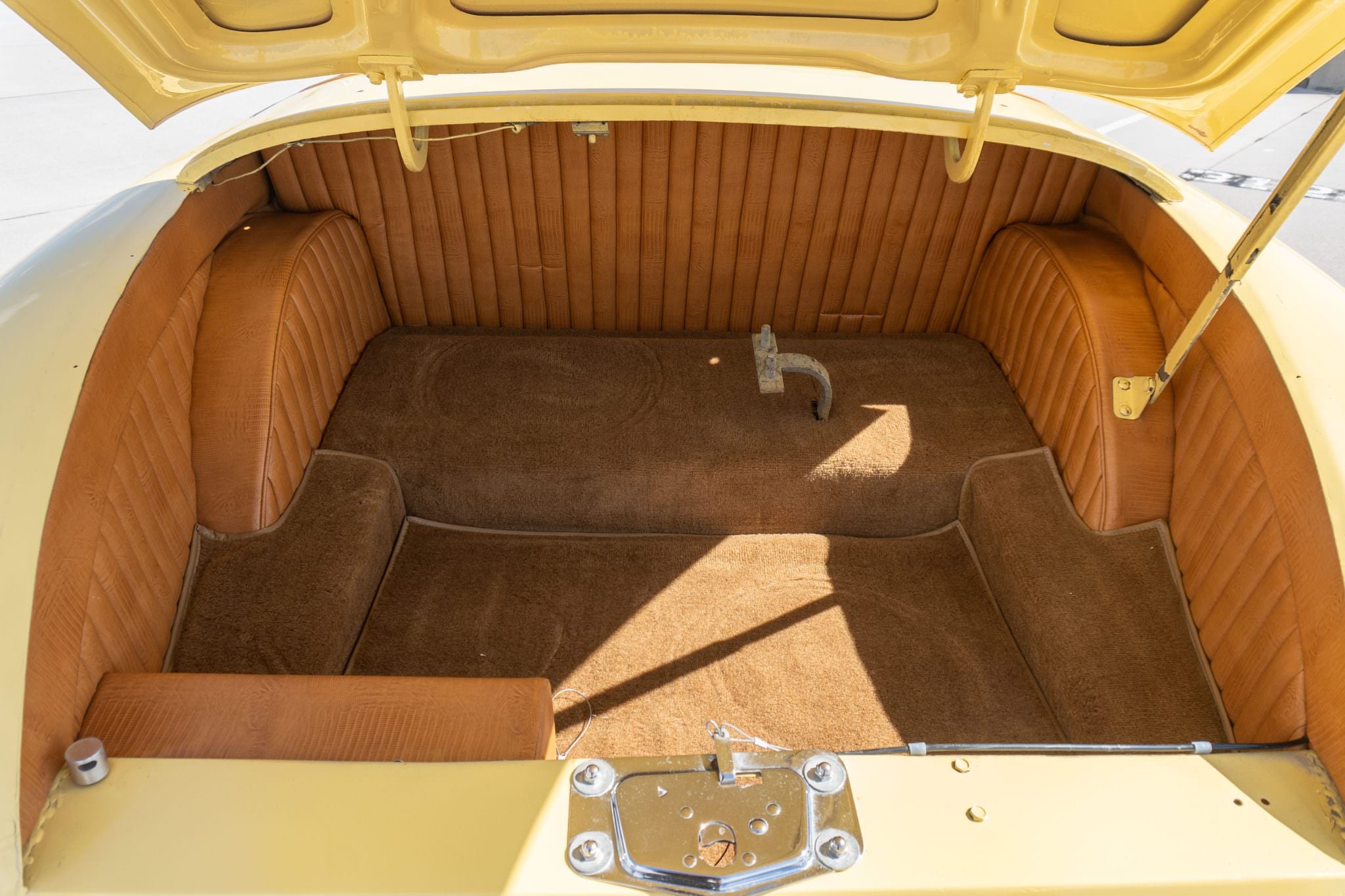
Inside, the car has been reupholstered in tan pleated vinyl, with mid-1960s Ford Thunderbird bucket seats up front and a rear bench. The cabin includes a center console with a CD player and rear storage bins, though the Vintage Air climate control system is noted as inoperative and requiring repair.
The car is now being offered for sale out of Fort Lauderdale, Florida, with a California title and you can read the listing here on Bring a Trailer if you’d like to read more about it or place a bid.
Images courtesy of Bring a Trailer

Articles that Ben Branch has written have been covered on CNN, Popular Mechanics, Smithsonian Magazine, Road & Track Magazine, the official Pinterest blog, the official eBay Motors blog, BuzzFeed, Autoweek Magazine, Wired Magazine, Autoblog, Gear Patrol, Jalopnik, The Verge, and many more.
Silodrome was founded by Ben back in 2010, in the years since the site has grown to become a world leader in the alternative and vintage motoring sector, with well over a million monthly readers from around the world and many hundreds of thousands of followers on social media.