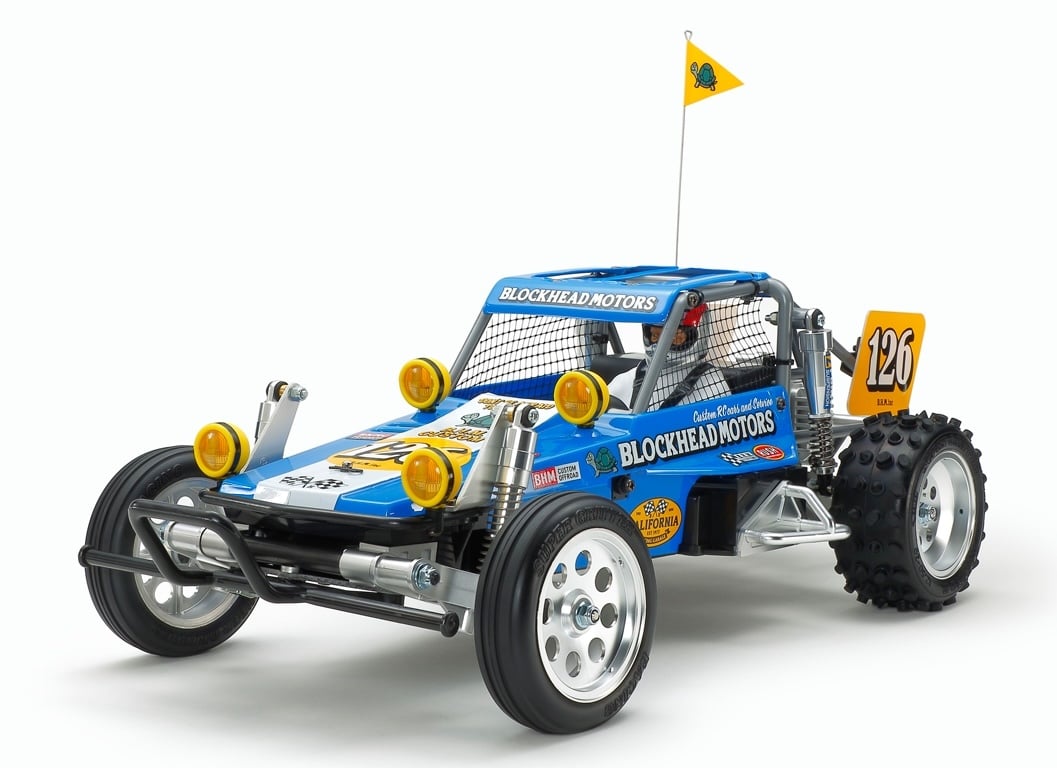
This is the new reissue of the Wild One, one of the most famous Tamiya off-road racing buggies in history alongside models like the Grasshopper and Hornet, that made its original debut all the way back in 1985.
This new version of the Wild One uses the upgraded parts from the 2012 re-release, and it comes with the highly-collectible Blockhead Motors branding from Jun Watanabe. Watanabe has been designing Blockhead Motors stickers, apparel, and customizations of Tamiya off road buggy models since 2012, and they’re highly collectible.
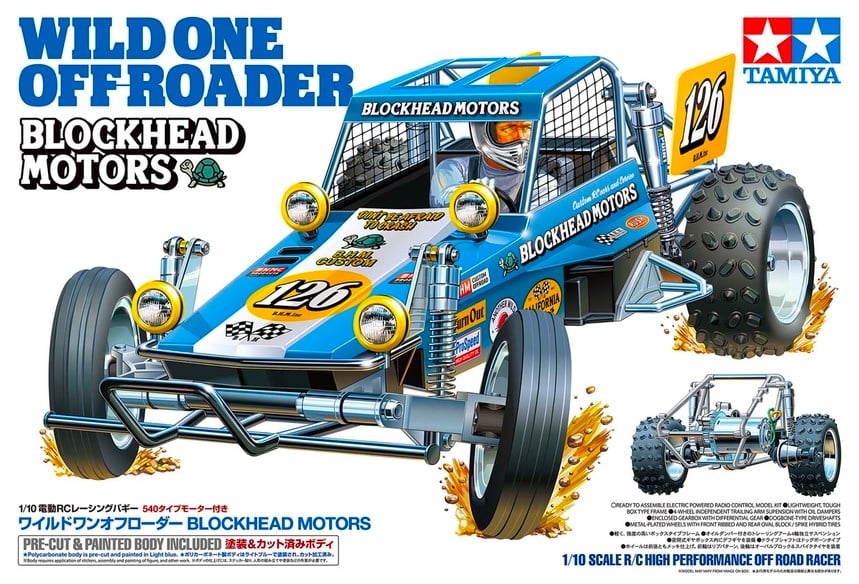
 This is the new reissue of the Wild One, one of the most famous Tamiya off-road racing buggies in history alongside models like the Grasshopper and Hornet, that made its original debut all the way back in 1985. Image courtesy of Tamiya USA.
History Speedrun: The Wild One
In 1984 Japanese scale model and remote control car manufacturer Tamiya released two vehicles that would become some of the most important in the company’s history – the Tamiya Grasshopper and the Tamiya Hornet.
Both the Grasshopper and the Hornet were released within a few months of one another, and they kickstarted the 1980s R/C boom that in many regions was largely focused on buggies. Many other buggy designs would follow, but these two are among the earliest and most influential.
The Grasshopper came first in early 1984 with the Hornet following later in October of that same year. While the Hornet was faster, the Grasshopper was slightly cheaper and the fact that it came first helped sales a great deal – Christmas morning of 1984 saw countless children tearing open presents and whooping with delight to see that Tamiya logo on their new buggy kit.
Both the Hornet and Grasshopper shared a very similar design, with an injection-moulded bathtub monocoque chassis onto which everything else would be attached. The battery pack was installed centrally for optimal weight distribution, the electric motor went in the back to power the rear wheels, and the speed controller, servos, and transmitters/receivers were all tucked inside the plastic bodywork.
A new buggy called the Tamiya Wild One was unveiled in 1985 and it joined its two earlier siblings at the top of a wishlist for kids from across the USA, Europe, and as far away as Australia and New Zealand.
The 1:10th scale kits were relatively simple to build, taking just a few hours even for an inexperienced first time kit builder. Once the construction phase was complete it was time to apply the stickers and charge the battery, impatiently waiting for that amber light to turn green ready for the first drive.
Above Video: This episode from Matteo’s RC Movies gives a great look into the Blockhead Motors version of the Wild One, including ample footage of it being driven off-road at speed.
Battery technology being what it was at the time, each drive was limited to just a 10 or 15 minutes before the speeds would slow and it would be time to plug the battery in and wait for that hallowed green light to make another appearance.
Of course, those kids born in leafy suburbs on the right side of the railroad tracks would have two or more battery packs on hand, and as a result much less patience was required.
R/C racing leagues popped up across the western world in the 1980s, both on and off-road racing disciplines were catered for in various classes, with the Grasshopper, Hornet, and Wild One being among the most popular choices for those new to the racing world.
The Tamiya Wild One R/C Buggy Reissue
The new Tamiya Wild One “Blockhead Motors” is a special-edition reworking of one of the most recognizable R/C buggies ever produced. The original Wild One made its debut in 1985 as Tamiya model number 58050, it was a 1:10 scale 2WD off-road buggy that drew its design cues from the full-size dune buggies and sand rails of the era.
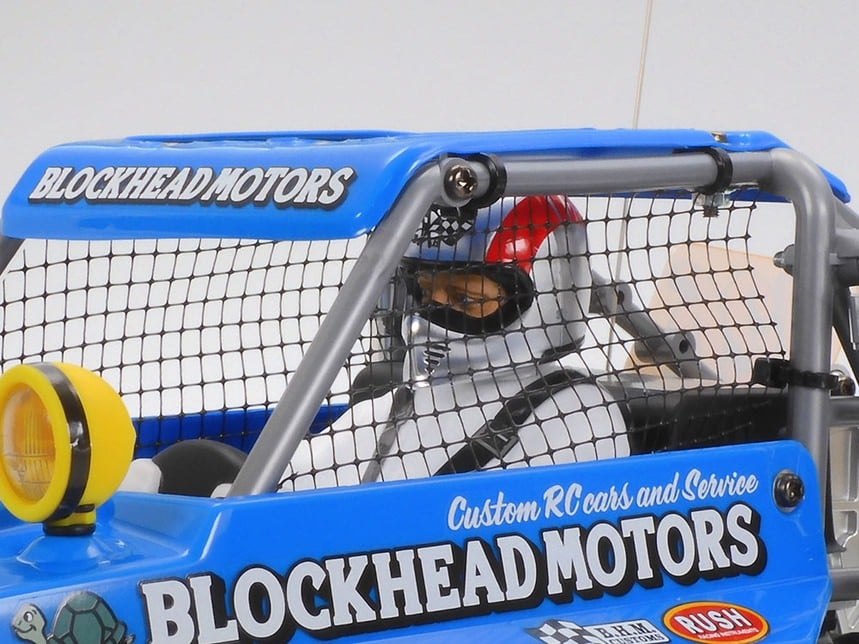
With its wide, low body, roll cage, and aggressive styling, the Wild One became a staple of the 1980s R/C boom and was re-released in 2012 as model number 58525 before being revisited as this new Blockhead Motors edition. This version, designated 58695, reimagines the classic kit with a fresh colorway, upgraded cosmetic details, and a new sticker set by legendary Japanese designer Jun Watanabe under his Blockhead Motors brand.
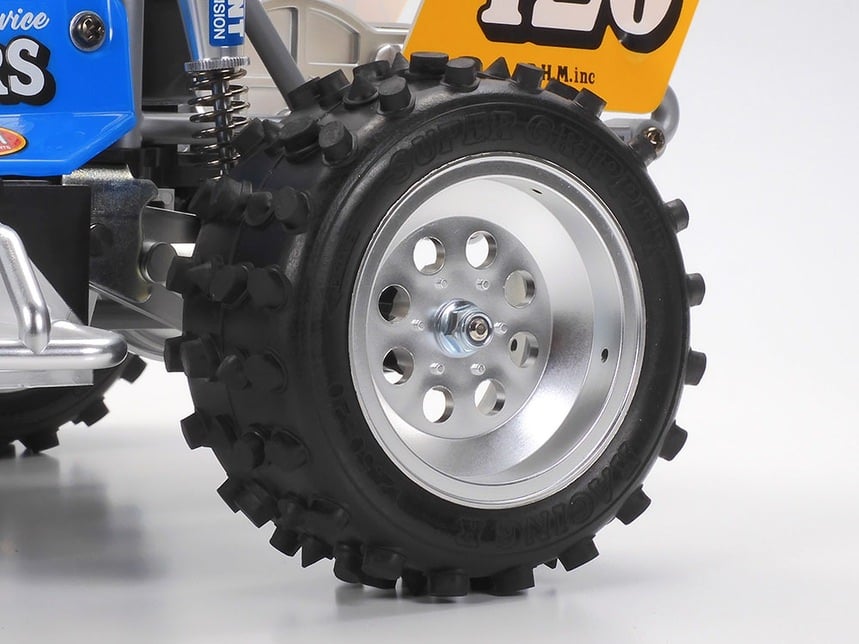
While the original Wild One had a black and red livery, the Blockhead Motors edition swaps to a bright light blue polycarbonate body that is pre-cut and pre-painted at 0.7 mm thickness, eliminating the need for owners to spray and trim the shell themselves.
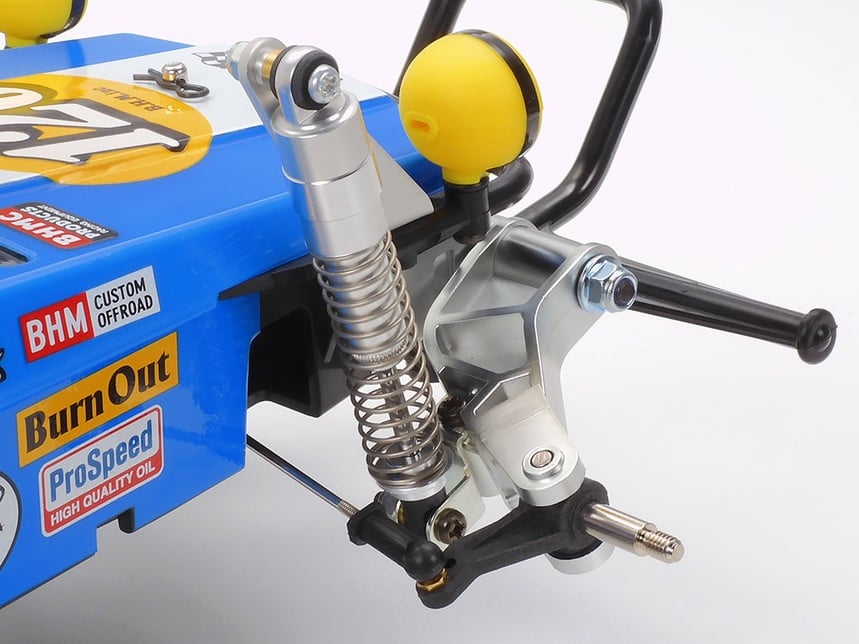
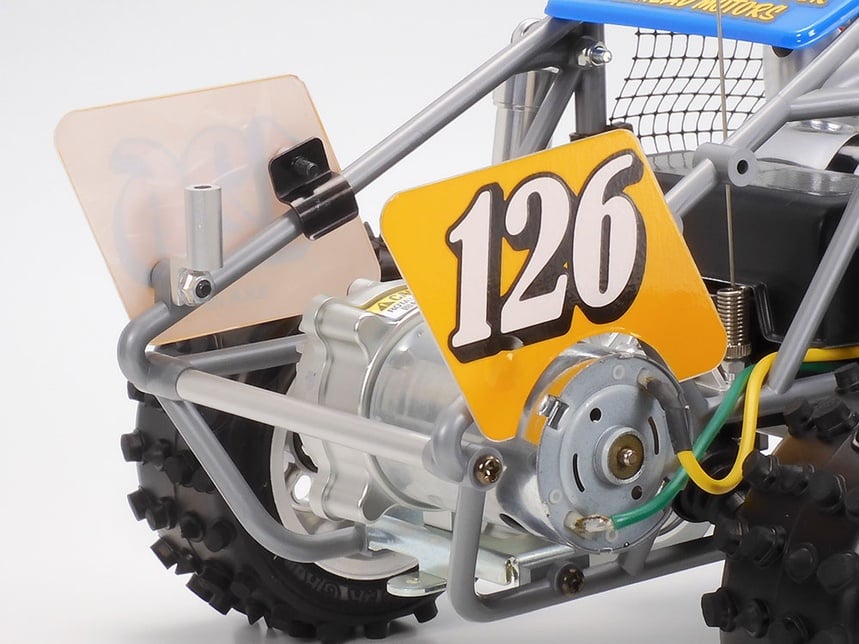
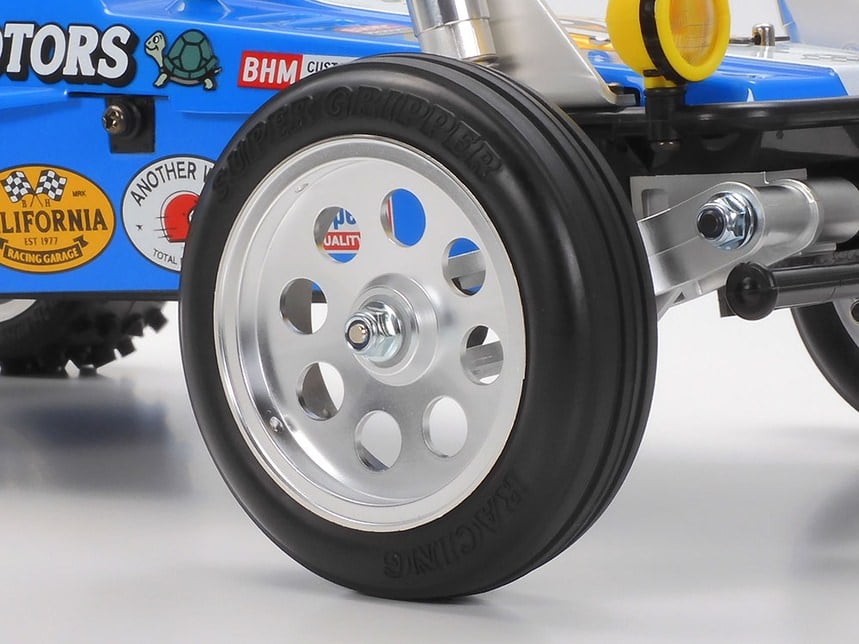
The kit also includes some metal-plated parts as well as metal-plated front and rear wheels, giving the chassis and running gear a more premium, realistic appearance than the standard re-release. Additional scale details unique to this version include window nets on the cockpit sides, number plates, and a dummy antenna – all touches that lean clearly into the desert racing aesthetic and give the finished model a more real-world, competition-ready look.
The Blockhead Motors edition shares its underpinnings with the earlier 2012 Wild One re-release. The chassis is built around Tamiya’s famously tough, lightweight ABS box-type frame, paired with a battery case designed to accept modern power sources including Tamiya Racing Packs and LF batteries.
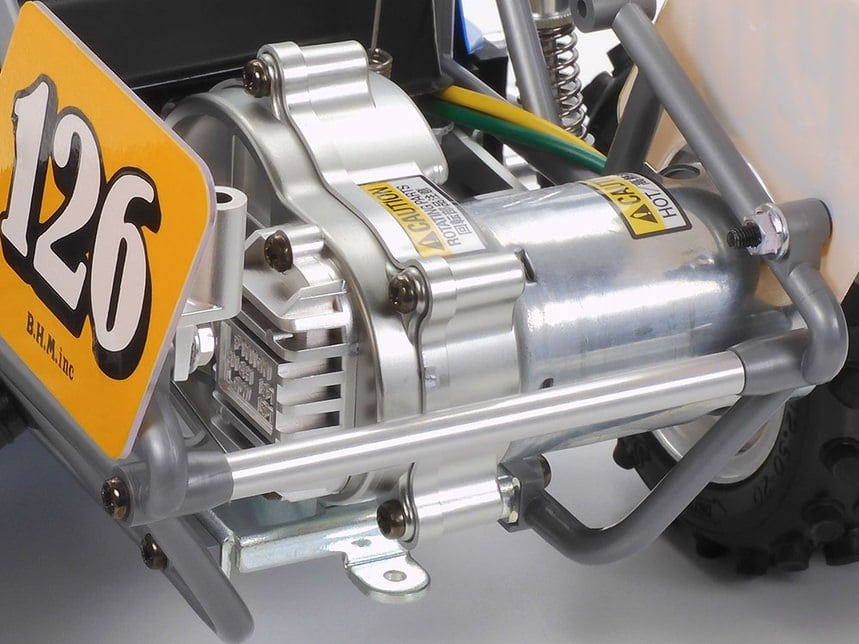
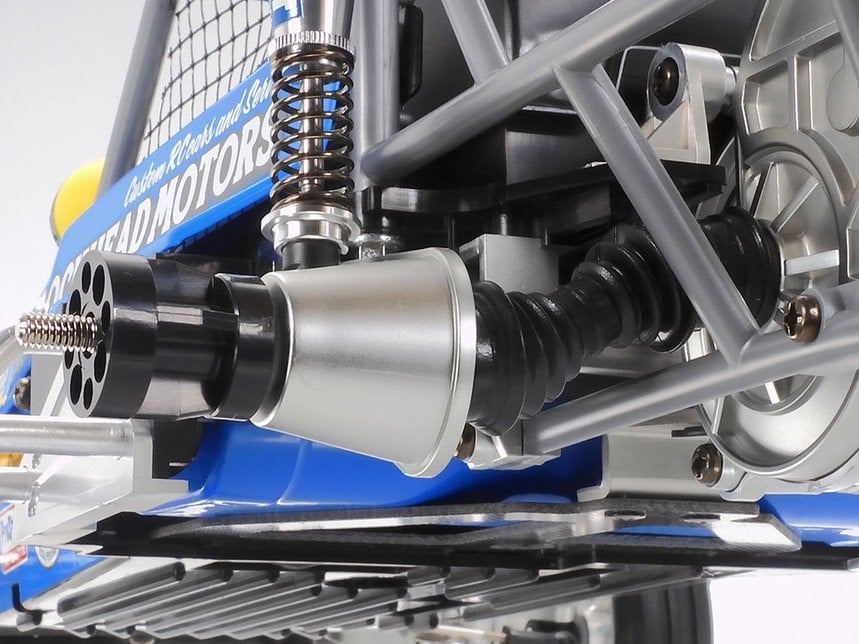
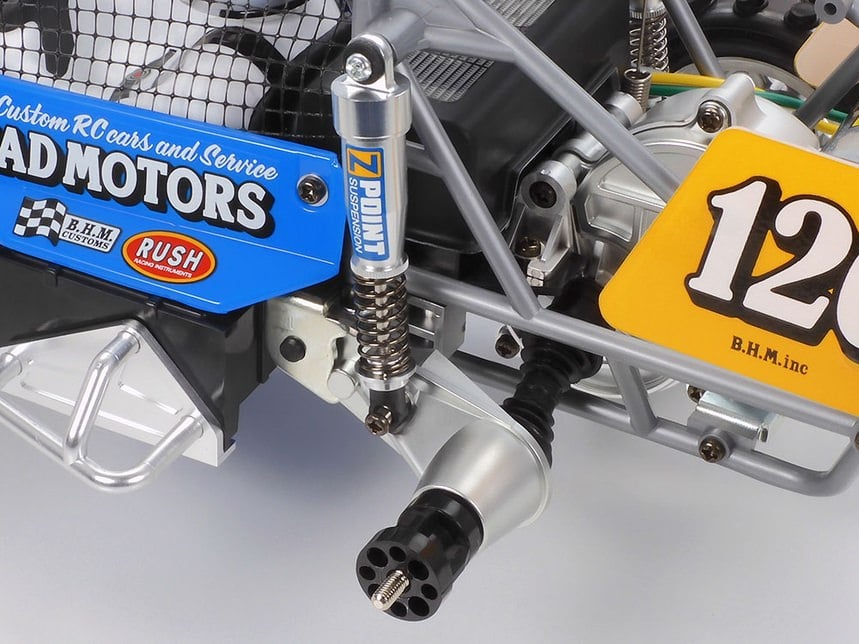
Suspension is four-wheel independent via coil springs and trailing arms, and the wide track width contributes to stable handling on loose surfaces. An enclosed gearbox houses differential gears for smoother cornering, and the driveshafts use dog bone-type joints with dust covers.
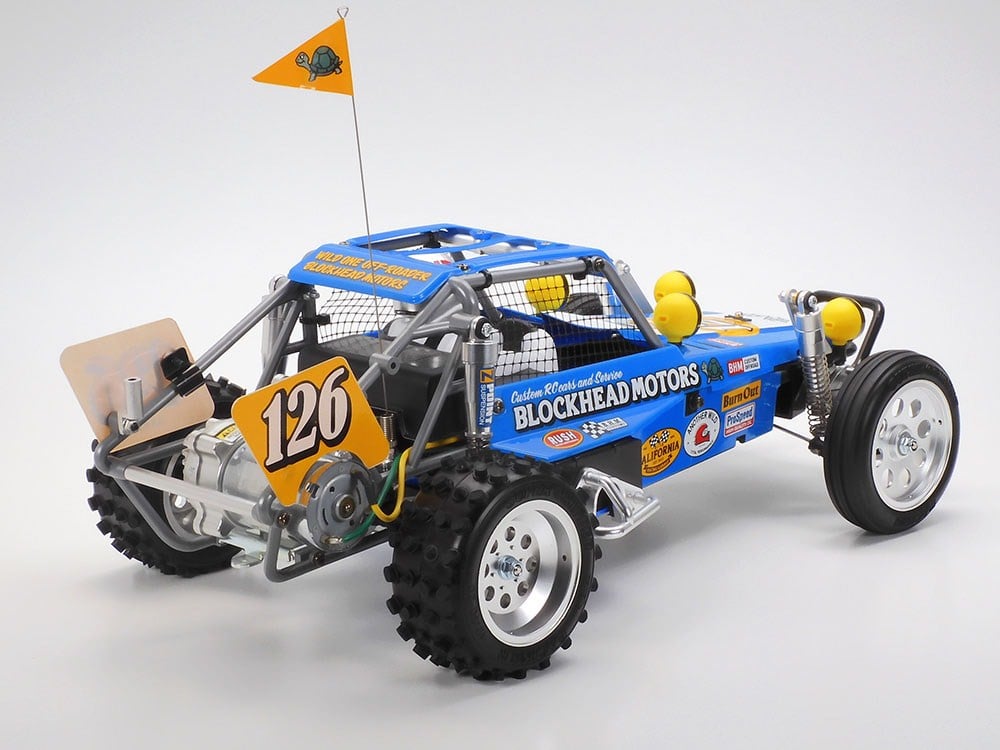
The new Tamiya Wild One “Blockhead Motors” is a special-edition reworking of one of the most recognizable R/C buggies ever produced. The original Wild One made its debut in 1985 as Tamiya model number 58050, it was a 1:10 scale 2WD off-road buggy that drew its design cues from the full-size dune buggies and sand rails of the era. Image courtesy of Tamiya USA.
The kit includes a 540-type brushed motor as standard, and builders will need to supply a two-channel radio system, steering servo, 7.2 to 7.4V battery, and charger to complete the build. Assembled, the buggy measures 425mm long, 225mm wide, and 140mm tall, on a 255mm wheelbase.
It’s now available to order direct from Tamiya USA here, and there is a free user manual download available on the store page for new owners to get acquainted with their new buggy.
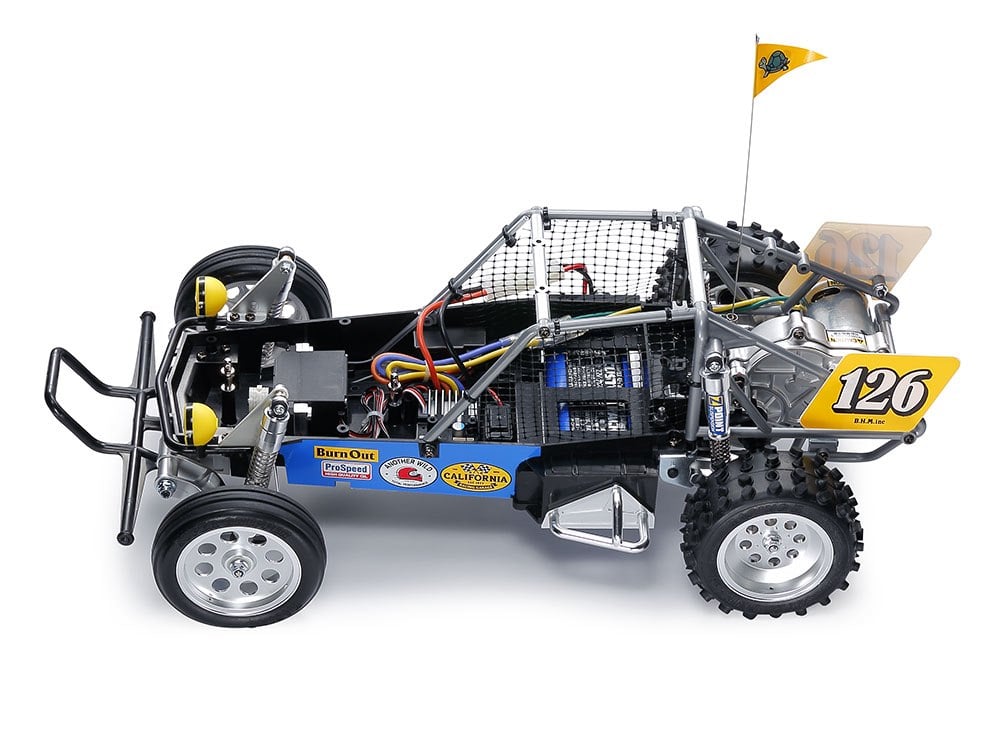
Images courtesy of Tamiya USA

Articles that Ben Branch has written have been covered on CNN, Popular Mechanics, Smithsonian Magazine, Road & Track Magazine, the official Pinterest blog, the official eBay Motors blog, BuzzFeed, Autoweek Magazine, Wired Magazine, Autoblog, Gear Patrol, Jalopnik, The Verge, and many more.
Silodrome was founded by Ben back in 2010, in the years since the site has grown to become a world leader in the alternative and vintage motoring sector, with well over a million monthly readers from around the world and many hundreds of thousands of followers on social media.