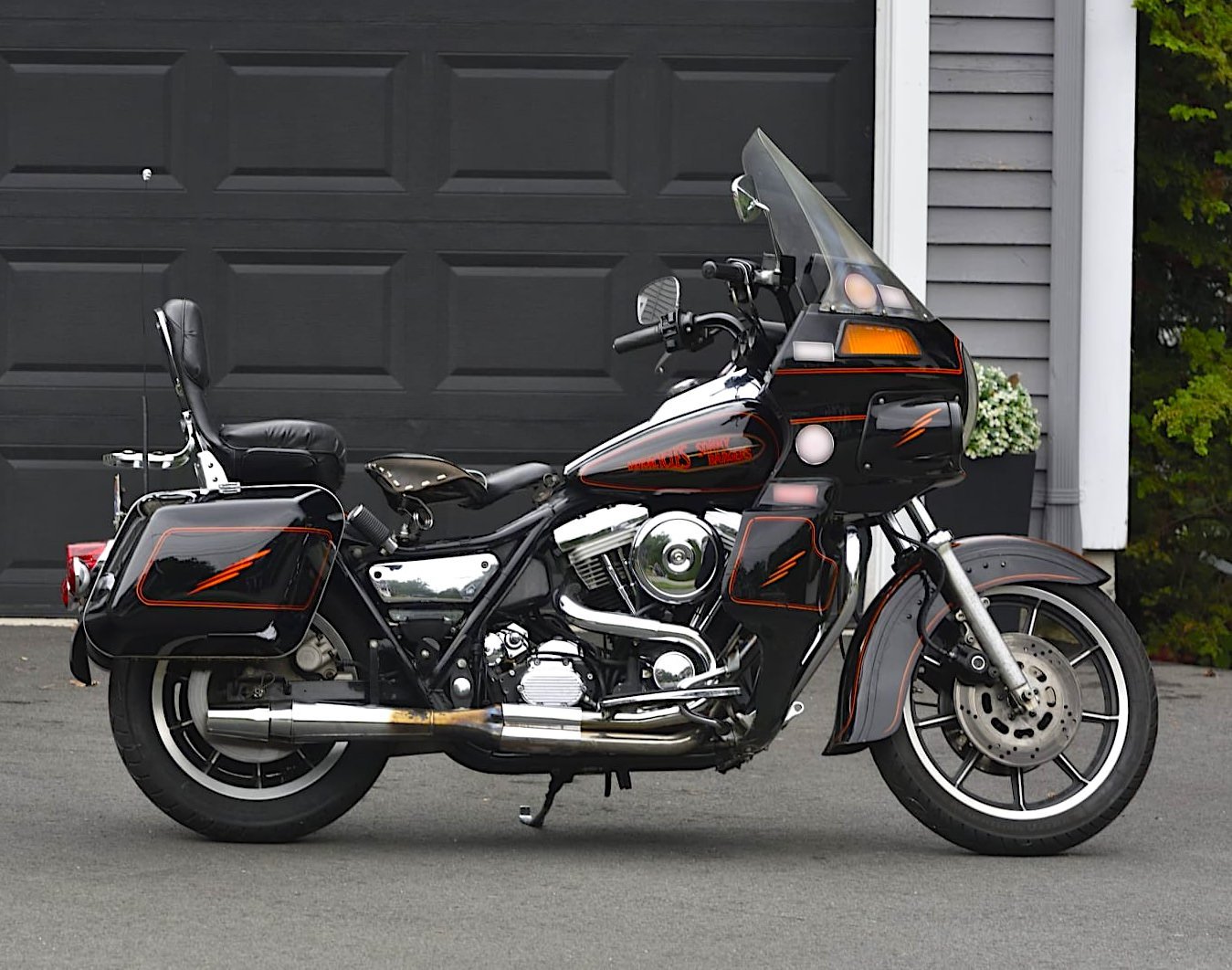
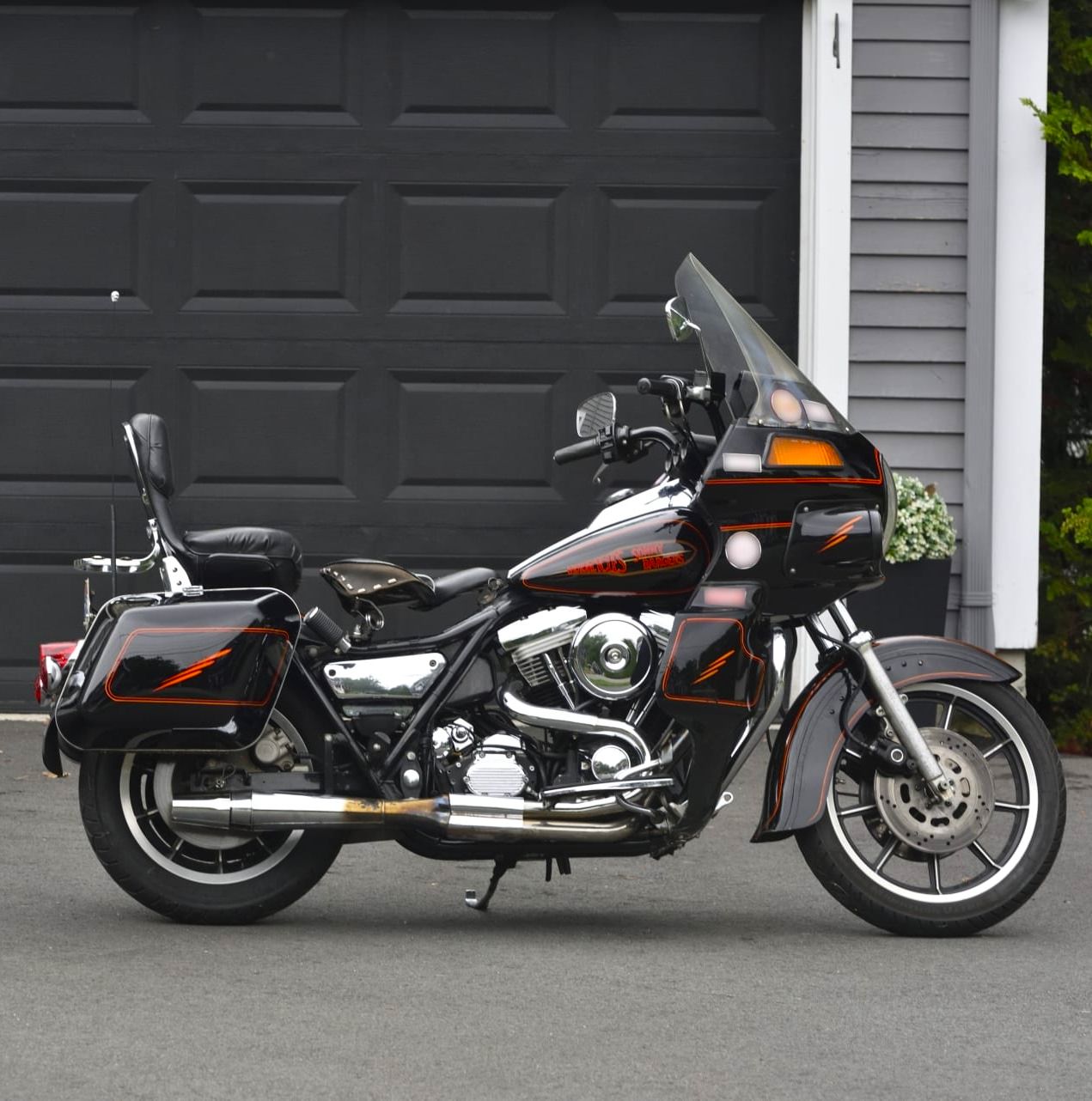
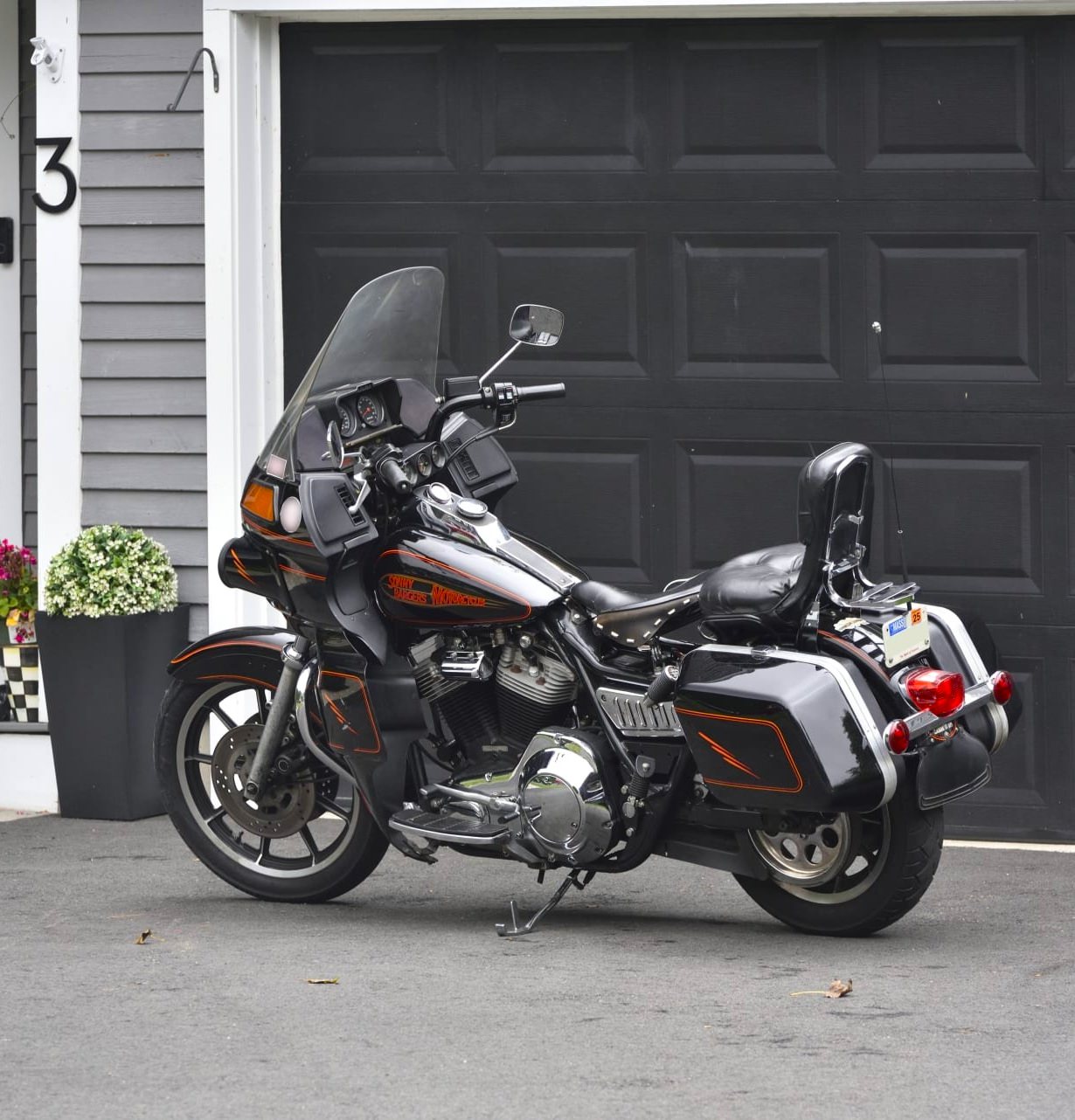
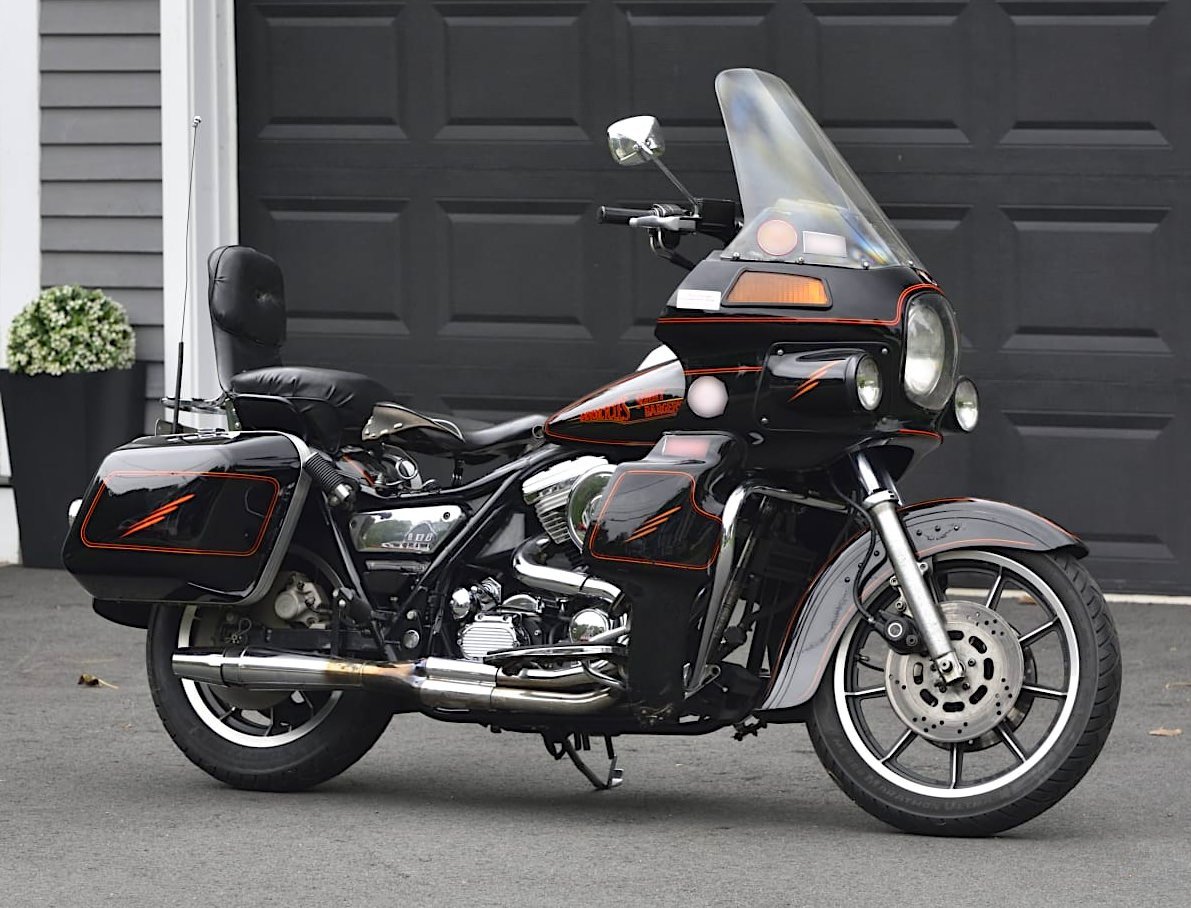
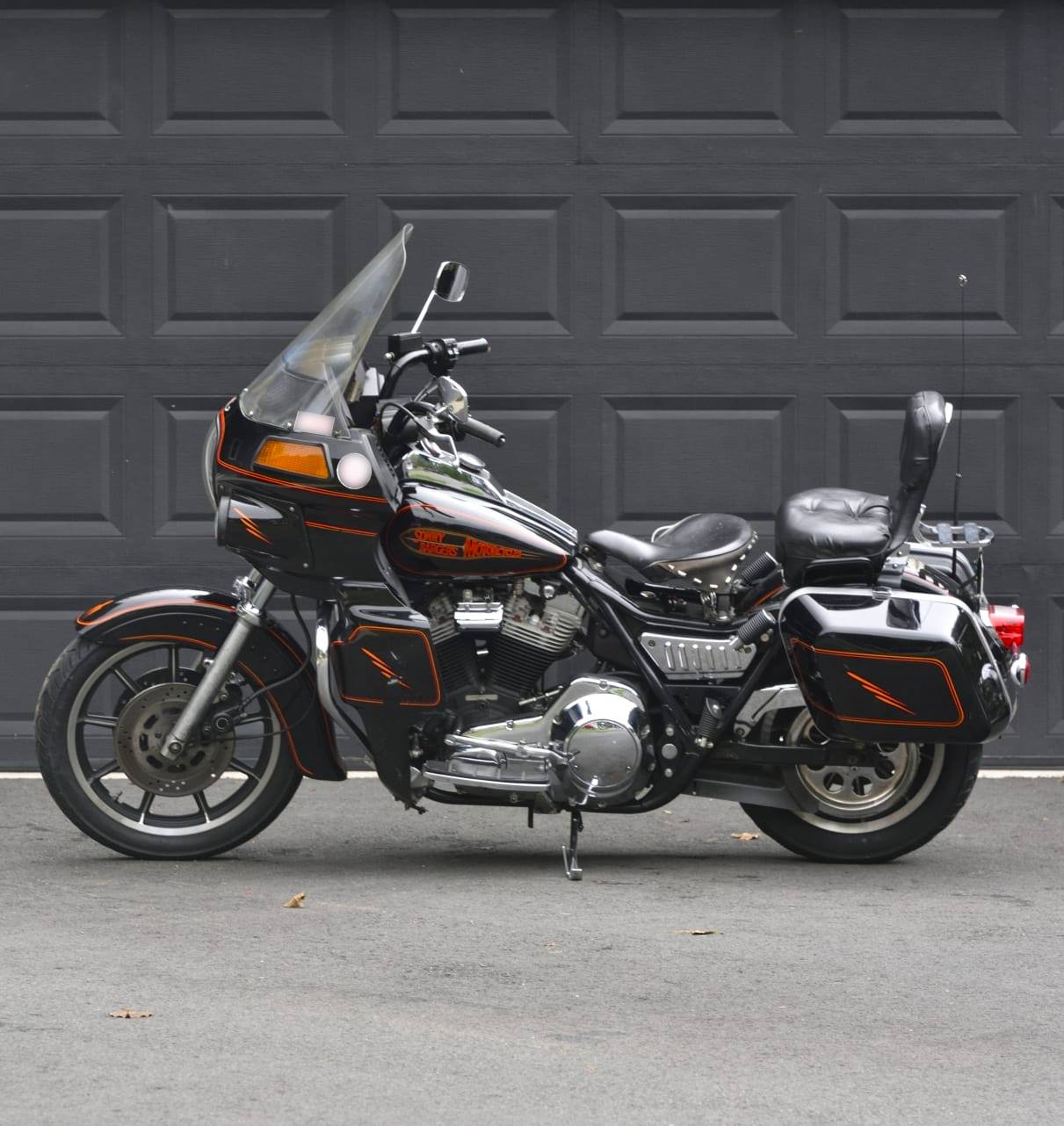
This is a 1992 Harley-Davidson FXRT that was personally owned and ridden by outlaw motorcycle legend Sonny Barger – one of the most prominent members of the Hells Angels but also an author of five books who regularly appeared on TV and in film.
The Harley-Davidson FXR was one of the most important American motorcycles of its time, a bike developed to show that an American manufacturer could build a bike capable of competing with the Japanese for V-twin supremacy.
Fast Facts: Sonny Barger’s Harley-Davidson FXRT
- This 1992 Harley-Davidson FXRT was formerly owned and ridden by Sonny Barger, it was one of Harley’s most technically significant chassis, and it belonged to one of the most recognizable figures in outlaw motorcycle culture. The FXR line was developed to prove Harley-Davidson could deliver handling, stability, and refinement that stood comparison with advanced Japanese and European V-twins.
- Sonny Barger, born Ralph Hubert Barger Jr. in 1938, was a founding member and long-time leader of the Oakland chapter of the Hells Angels Motorcycle Club. His influence shaped the club’s structure and public identity, while his life included brief military service, repeated legal battles, multiple books, and appearances in film and television before his death in 2022.
- Introduced for the 1981 model year, the FXR platform represented a major engineering rethink for Harley-Davidson. Led by an engineering-focused team that included Erik Buell, the FXR used a stiff triangulated steel frame with rubber-mounted engines, delivering improved handling, braking stability, and rider confidence compared with earlier FX and FL models.
- The FXRT Sport Glide variant combined the FXR chassis with a frame-mounted fairing and hard luggage, creating one of Harley’s most capable long-distance motorcycles. The 1992 example features custom details tied to Barger, Evolution V-twin power, and touring equipment, and it remains notable as the motorcycle shown on the cover of his biography.
Who Was Sonny Barger?
Sonny Barger was one of the most recognizable and influential figures in American outlaw motorcycle club history. Born Ralph Hubert Barger Jr. in 1938 in Modesto, California, he grew up in Oakland, where he would later become a founding member and long-time leader of the Oakland chapter of the Hells Angels Motorcycle Club.
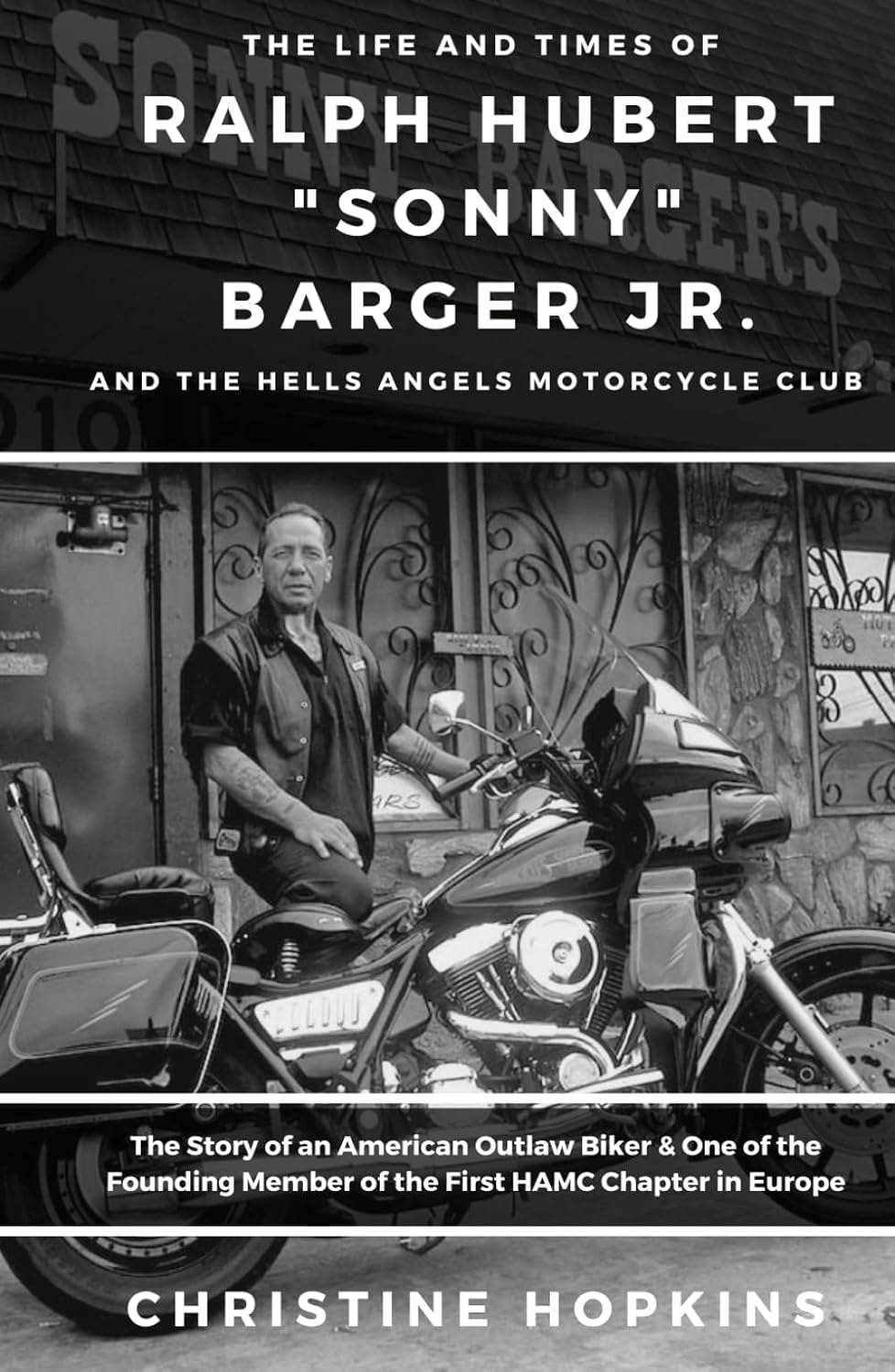
 This is the same bike pictured on the front of the Sonny Barger biography written by Christine Hopkins.
Under Barger’s leadership in the late 1950s and 1960s, the Oakland chapter emerged as the club’s de facto headquarters, shaping its organizational structure, public identity, and helping fuel its national expansion.
Barger briefly served in the U.S. Army in the mid-1950s after enlisting as a minor with a forged birth certificate, his military career was short-lived as a result and ended when the underage enlistment was discovered, resulting in an honorable discharge.
His post-service years were defined by his deepening involvement with outlaw motorcycle clubs, most notably the Hells Angels, and by his frequent encounters with law enforcement. He was indicted multiple times over the decades, including a high-profile 1972 murder case, but was acquitted of the most serious charges, which only helped to further establish his reputation as both a survivor and a central figure in Hells Angels mythology.
Beyond motorcycling, Barger became a published author and cultural commentator. His books, including Hell’s Angel: The Life and Times of Sonny Barger and the Hells Angels Motorcycle Club and Freedom: Credos from the Road, offered first-person accounts of outlaw biker life and helped shape public understanding of the subculture.
He also made appearances in film and television, notably on the television show Sons of Anarchy, where he played Lenny “The Pimp” Janowitz. Barger remained a symbol of American counterculture until his death in 2022 at age 83.
History Speedrun: The Harley-Davidson FXR
When the Harley-Davidson FXR arrived at the start of the 1980s, it marked a quiet but hugely important pivot inside the Milwaukee-based motorcycle manufacturer. The company was slowly emerging from one of the most turbulent and difficult periods in its history, fighting declining quality, stiff foreign competition from Japan, and an ongoing internal debate over how far it could modernize without losing its identity.
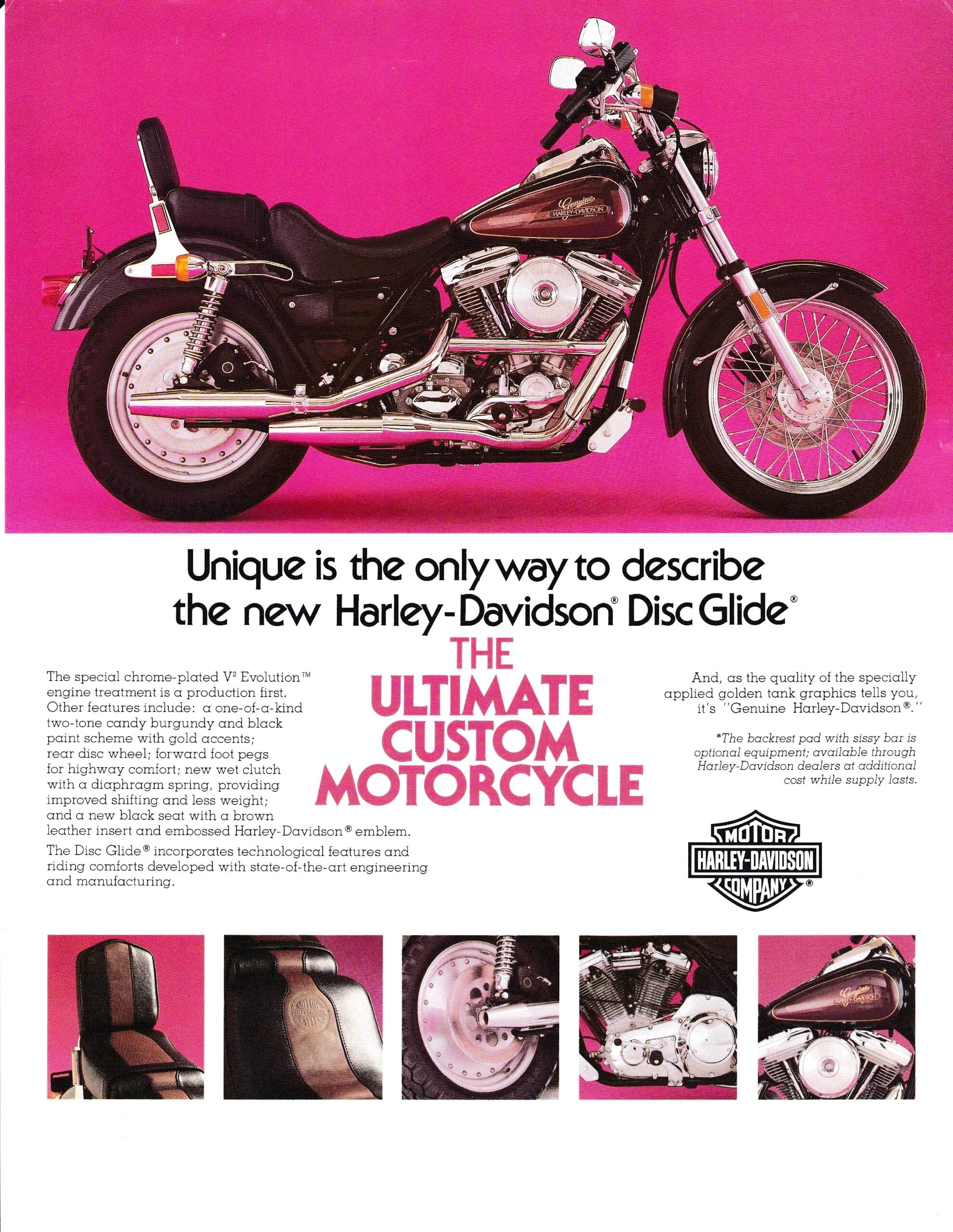
A huge array of different FXR models were offered, the Disc Glide version is one of the rarest, with only 800 made in 1983 and 1984. Image courtesy of Harley-Davidson.
The FXR became the answer to that question, even if Harley itself never fully embraced what it had created.
The FXR platform debuted for the 1981 model year as a clean-sheet rethink of Harley-Davidson’s Big Twin chassis. While styling input came from the design studio overseen by Willie G. Davidson, the motorcycle’s defining qualities were engineering-led.
Central to that effort was Erik Buell, who at the time was working inside Harley-Davidson and would later found his own performance-focused motorcycle marque. Buell and the engineering team were tasked with building a large-displacement Harley that could handle, brake, and track accurately at speed – without abandoning rubber engine mounting or the classic V-twin drivetrain.
The FXR frame was unlike anything Harley had previously produced, rather than relying on a traditional cradle the engineers developed a triangulated steel frame that combined a rubber-mounted powertrain with genuine torsional rigidity. This was a difficult balance to strike, but the result was a chassis that isolated vibration from the V-twin while remaining stiff regardless of the braking, accelerating, and cornering forces it was subjected to.
Steering geometry, swingarm placement, and mass centralization were all reconsidered, giving the FXR noticeably sharper responsiveness and better handling than the FX and FL models that preceded it, or arguably many of the models that came after it also.
Power initially came from the 1,340cc Shovelhead V-twin, but this was soon replaced by the 1,340cc Evolution Big Twin from 1984 onwards which offered more power, better reliability, and improved refinement.
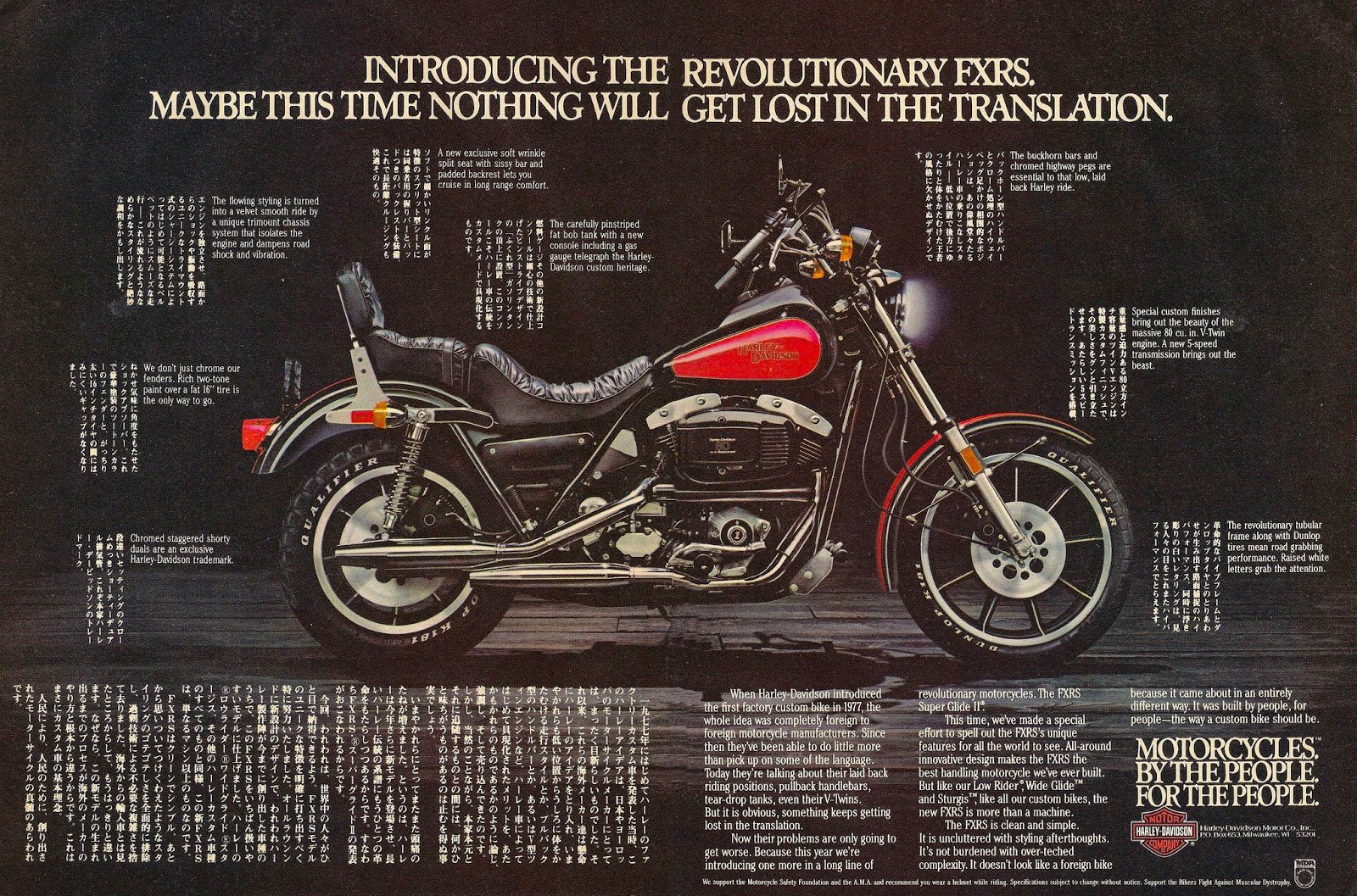
The Harley-Davidson marketing department made no secret of the fact that the FXR was intended to compete with the Japanese, as this period ad shows. Image courtesy of Harley-Davidson.
In FXR trim, the Evolution delivered 67 bhp with a strong, accessible torque curve, paired to a 5-speed transmission that had long proven itself capable by the time the FXR entered production. Disc brakes front and rear, conventional but well-sorted suspension, and relatively conservative wheelbase dimensions completed a package that felt closer to European or Japanese cruisers than traditional American highway mile munchers.
That comparison with more advanced imported cruisers was not accidental. Harley-Davidson was well aware of motorcycles like BMW’s R100RS and other Japanese equivalents that offered long-distance comfort with good handling and stability at sustained highway speeds.
The FXR was never intended to be a sportbike, but it was designed to prove that a Big Twin Harley could hold a line through fast sweepers, remain composed on uneven pavement, and reward an experienced rider who pushed well beyond boulevard pace.
Over its production run, the FXR family expanded into several distinct variants. The FXRS Low Rider became the best-known version, pairing the FXR chassis with familiar low-slung Harley cues. The FXRT Sport Glide added frame-mounted fairing and hard luggage, quietly becoming one of the most capable long-distance motorcycles Harley had ever sold.
The FXRP police model proved the platform’s versatility, earning respect in law enforcement fleet service for its stability and predictable handling. Across all versions, the underlying engineering remained consistent.
Production of FXR models continued through the mid-1990s, with most markets seeing the platform phased out by 1994.
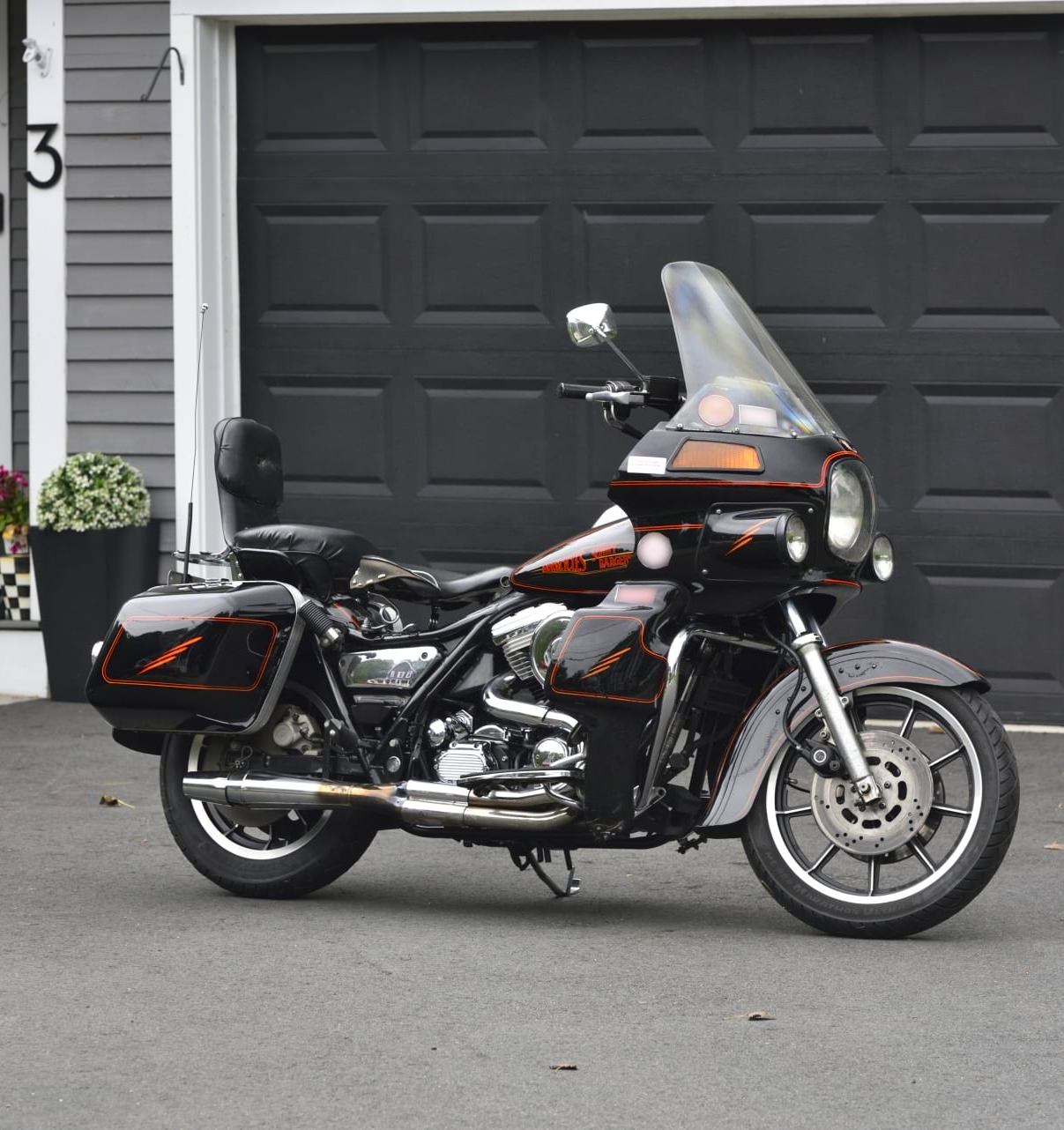
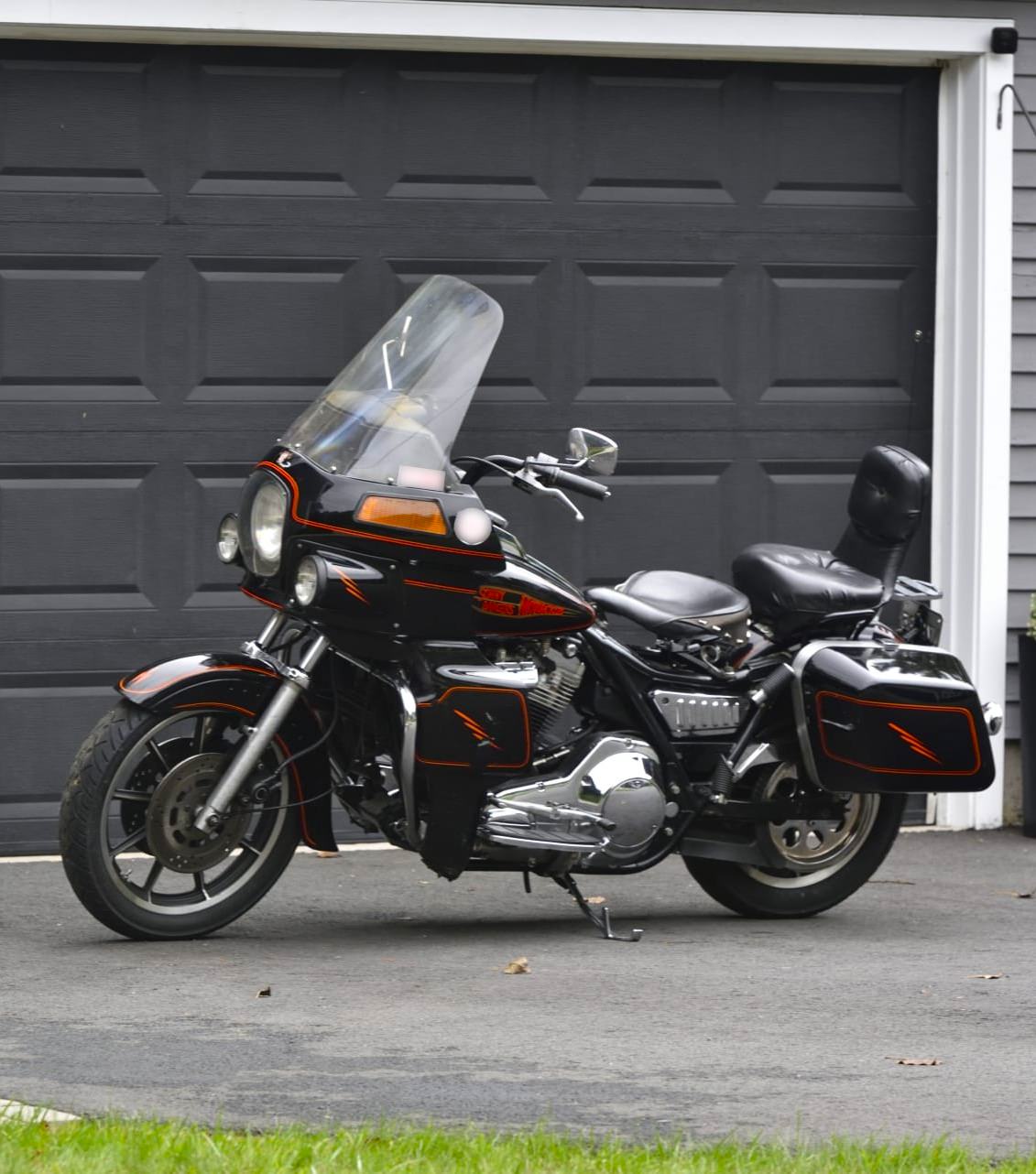
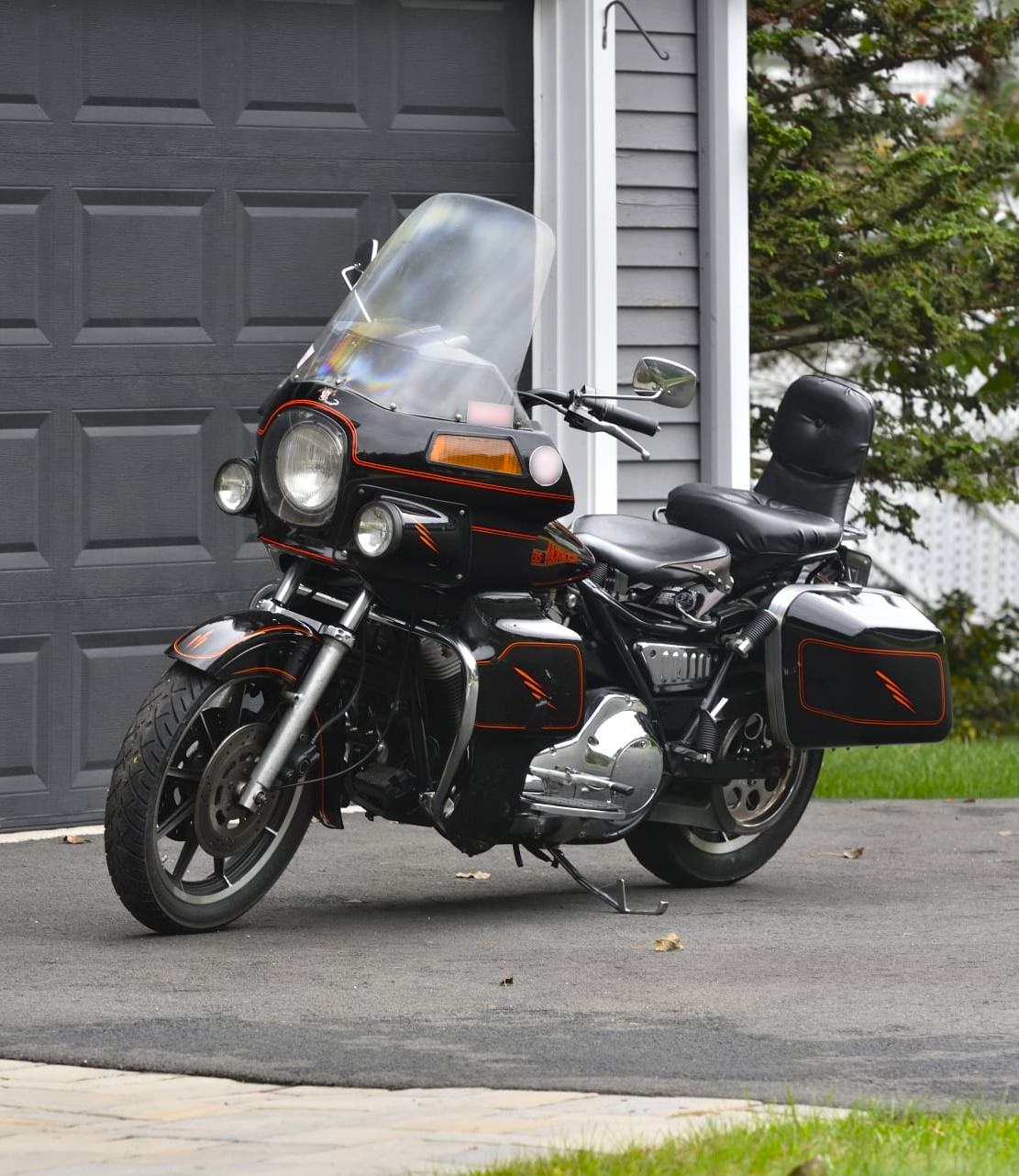
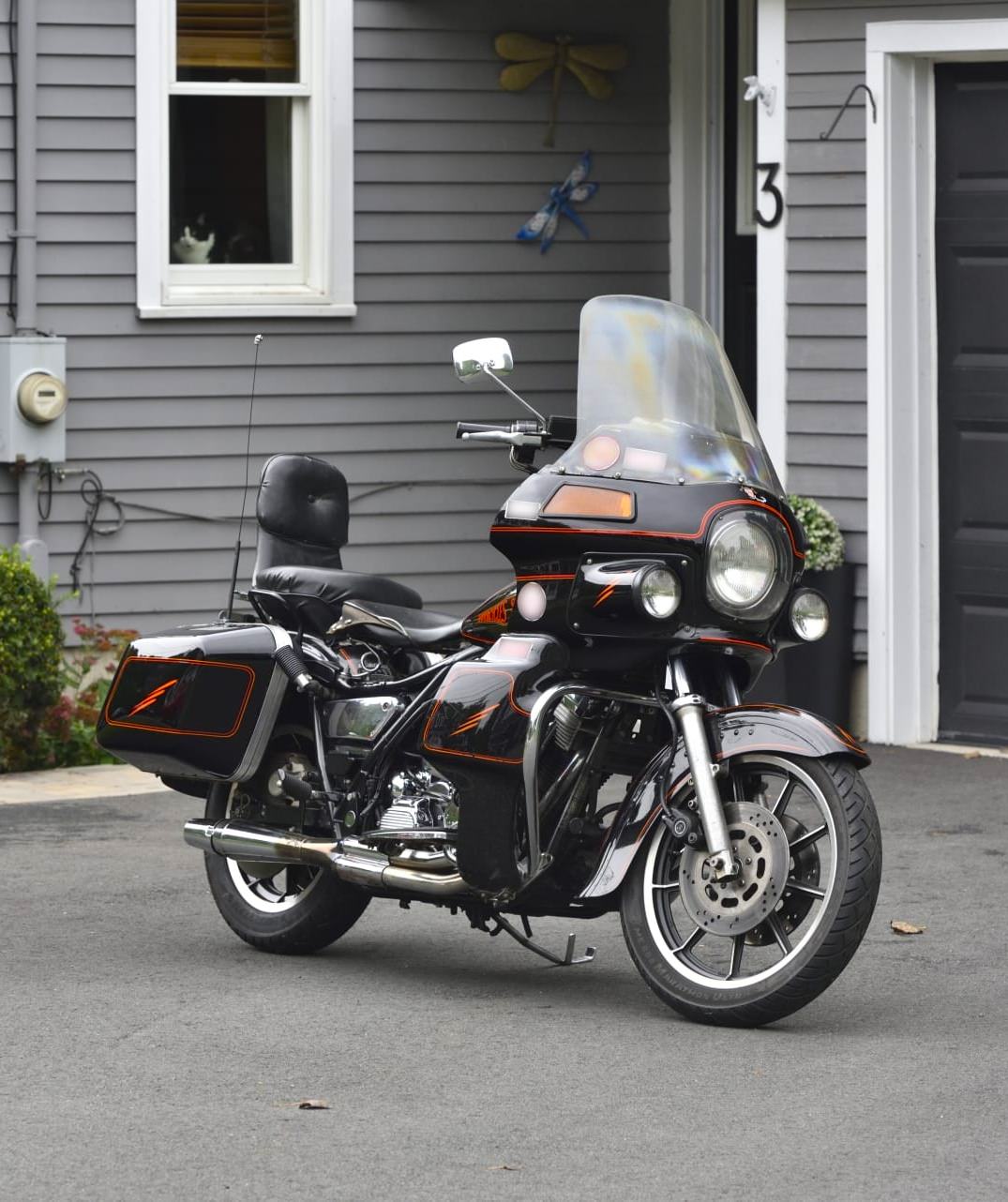
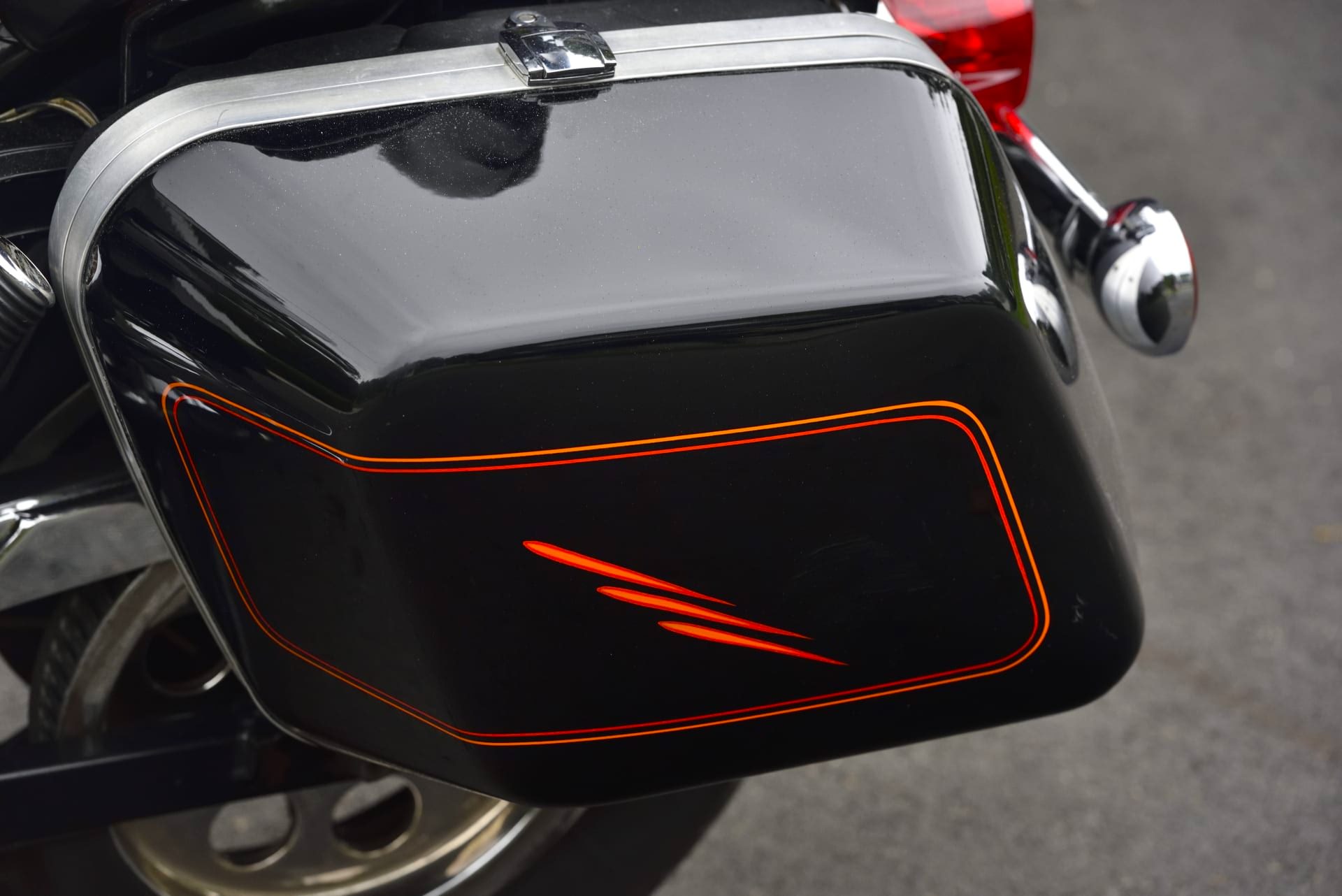
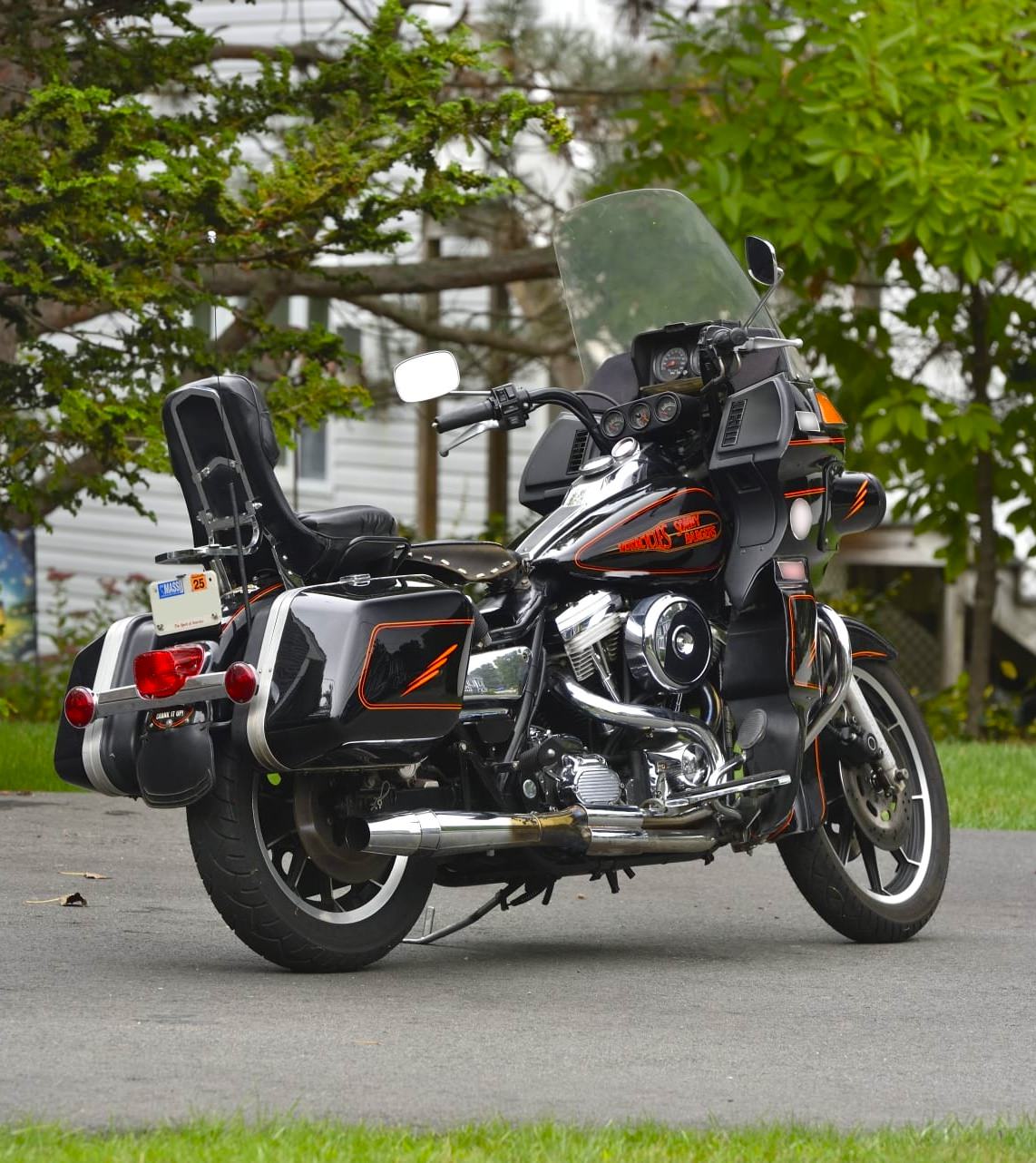
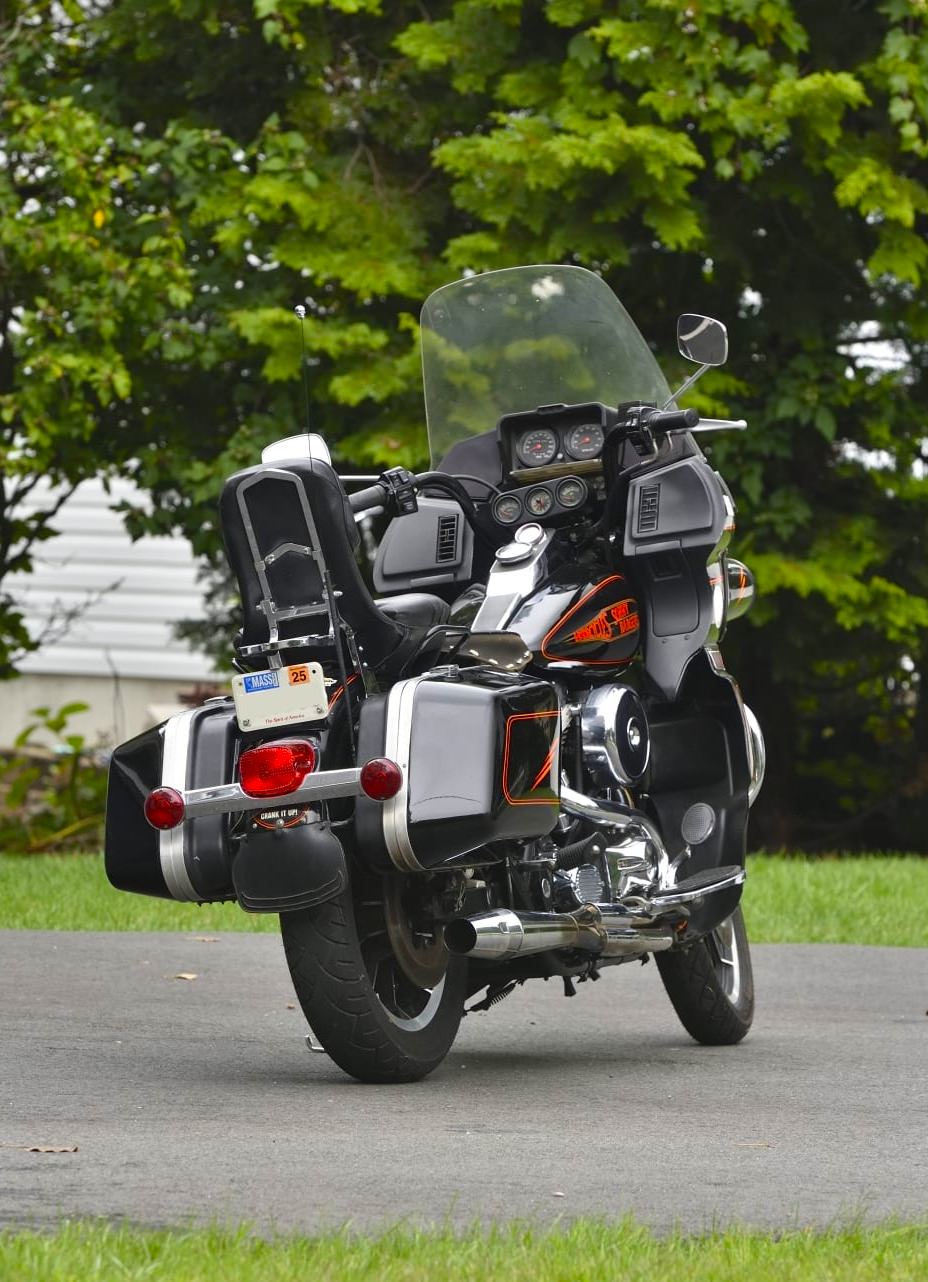
The 1992 Harley-Davidson FXRT you see here is the full touring model, that’s what the “T” appended to the name stands for. It has the front fairing to keep the wind at bay when riding cross country, and it has a pair of hard panniers for luggage.
Its replacement, based on the Dyna frame, was cheaper to build and easier to adapt across multiple models, but it never matched the FXR’s balance of stiffness and isolation. In hindsight, the FXR was a technical high point that ran counter to much of Harley-Davidson’s broader commercial strategy at the time.
Today, the FXR is still pointed to as a high-water mark by many of the Harley-Davidson faithful, and their values on the secondhand market typically remain strong – much more so than the values of the Dyna that replaced it.
The Ex-Sonny Barger Harley-Davidson FXRT Shown Here
The 1992 Harley-Davidson FXRT you see here is the full touring model, that’s what the “T” appended to the name stands for. It has the front fairing to keep the wind at bay when riding cross country, and it has a pair of hard panniers for luggage.
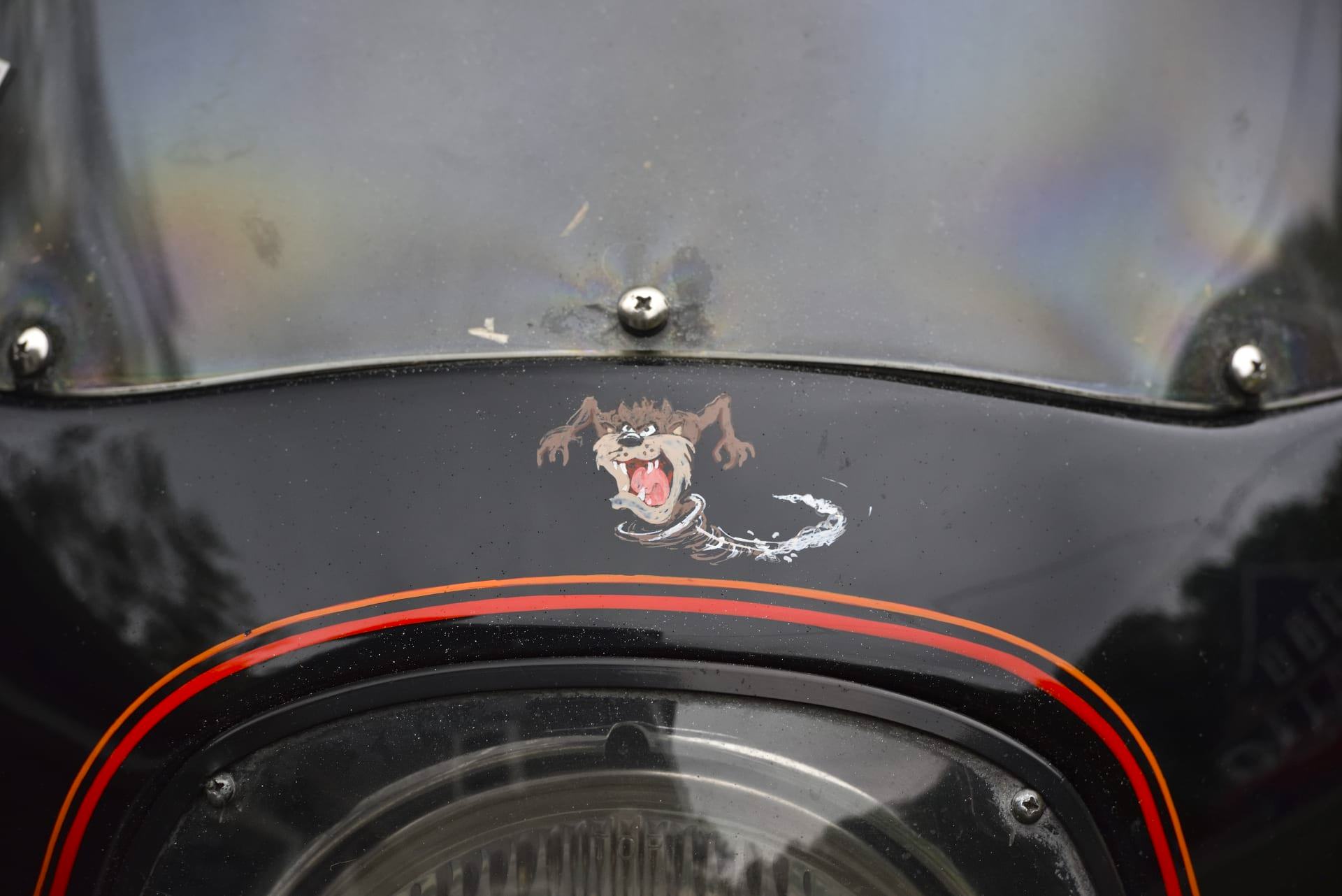
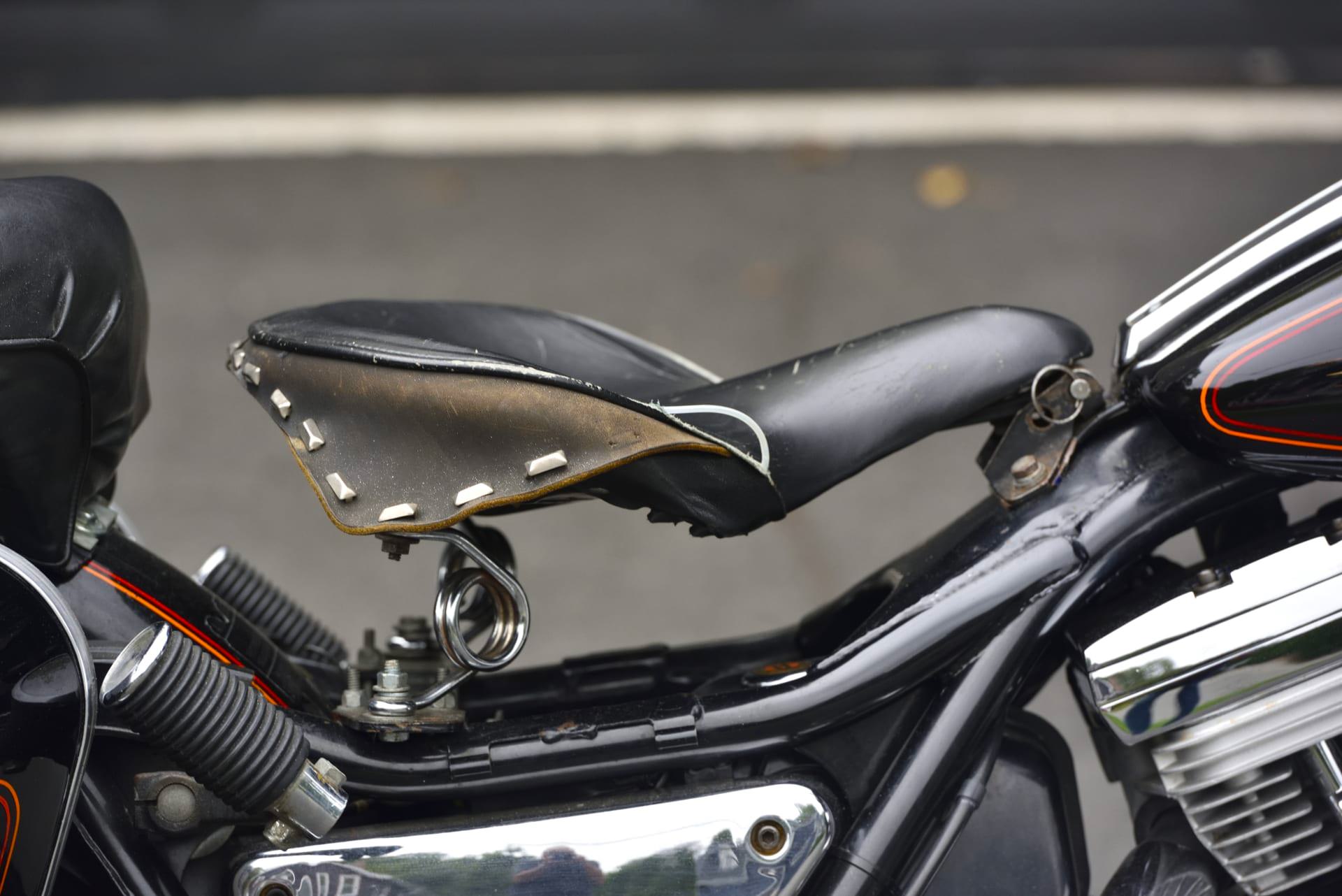
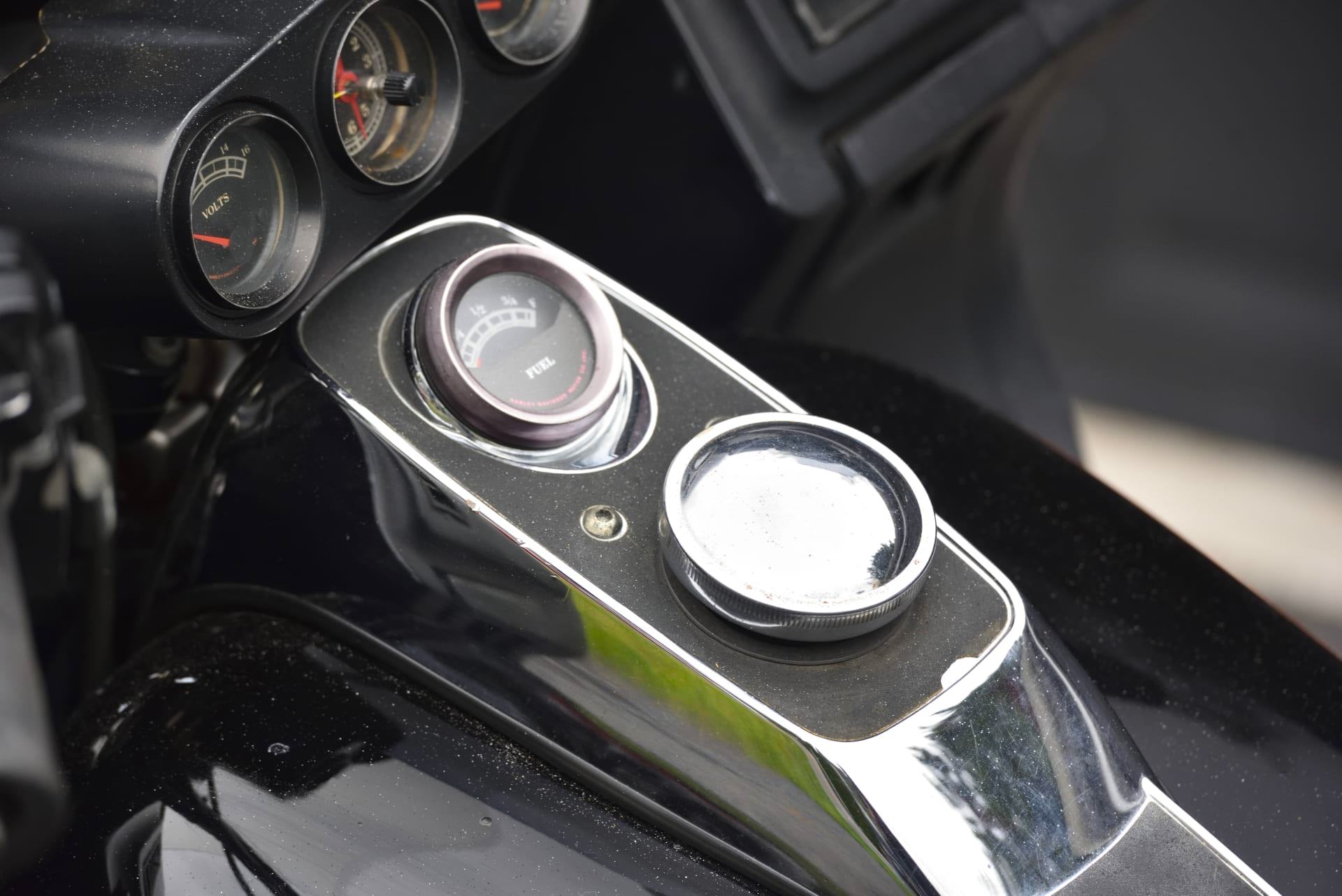
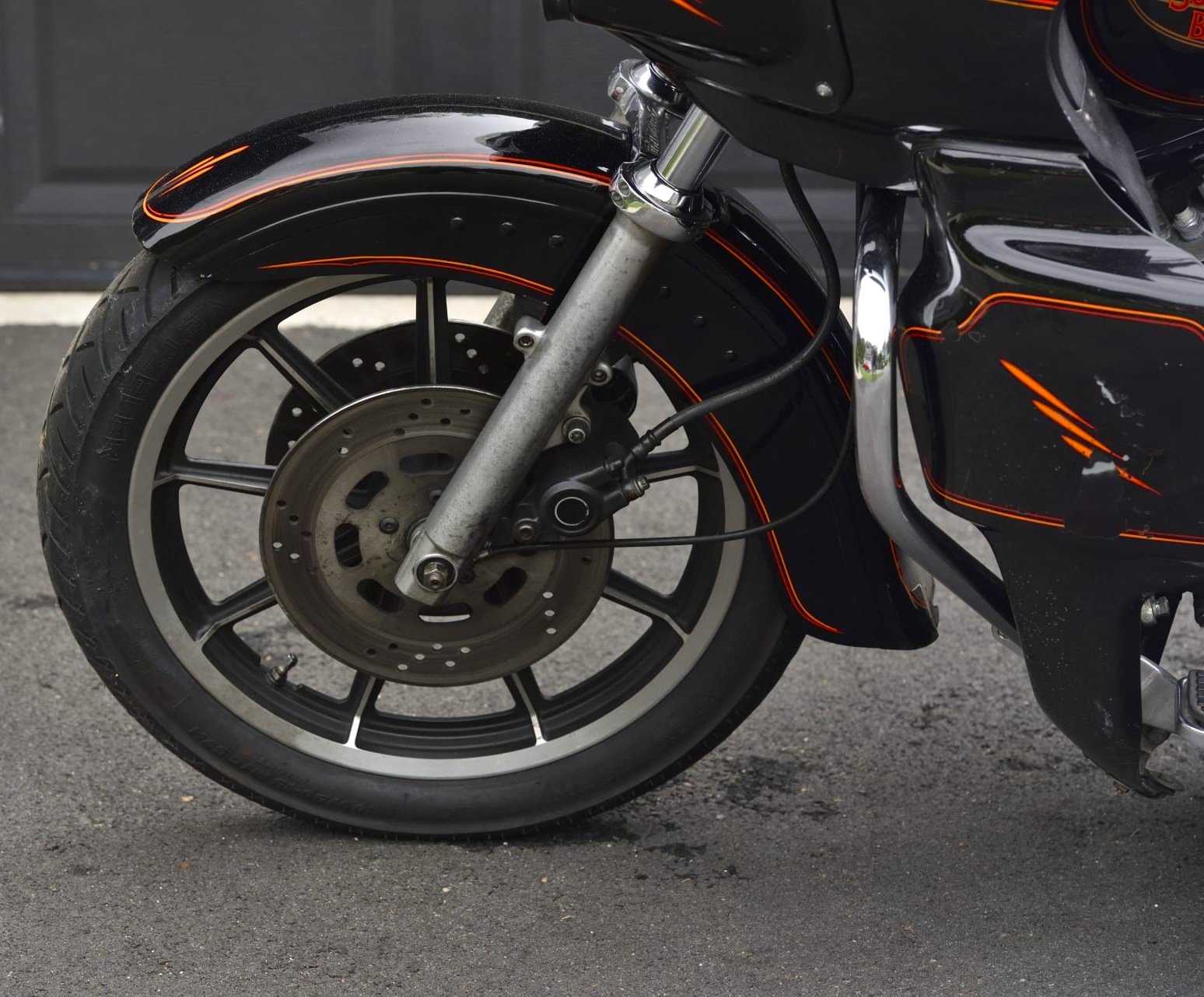
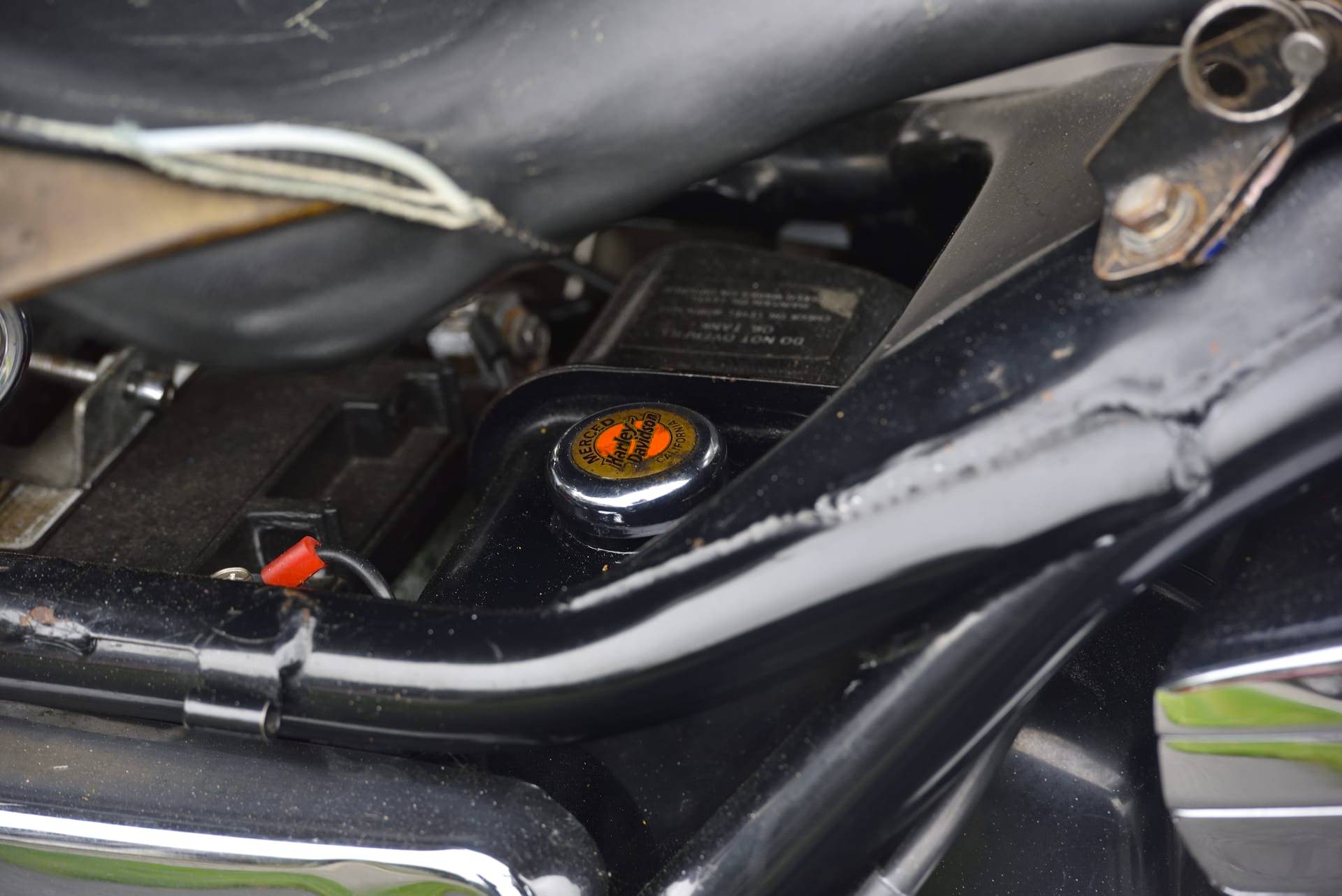
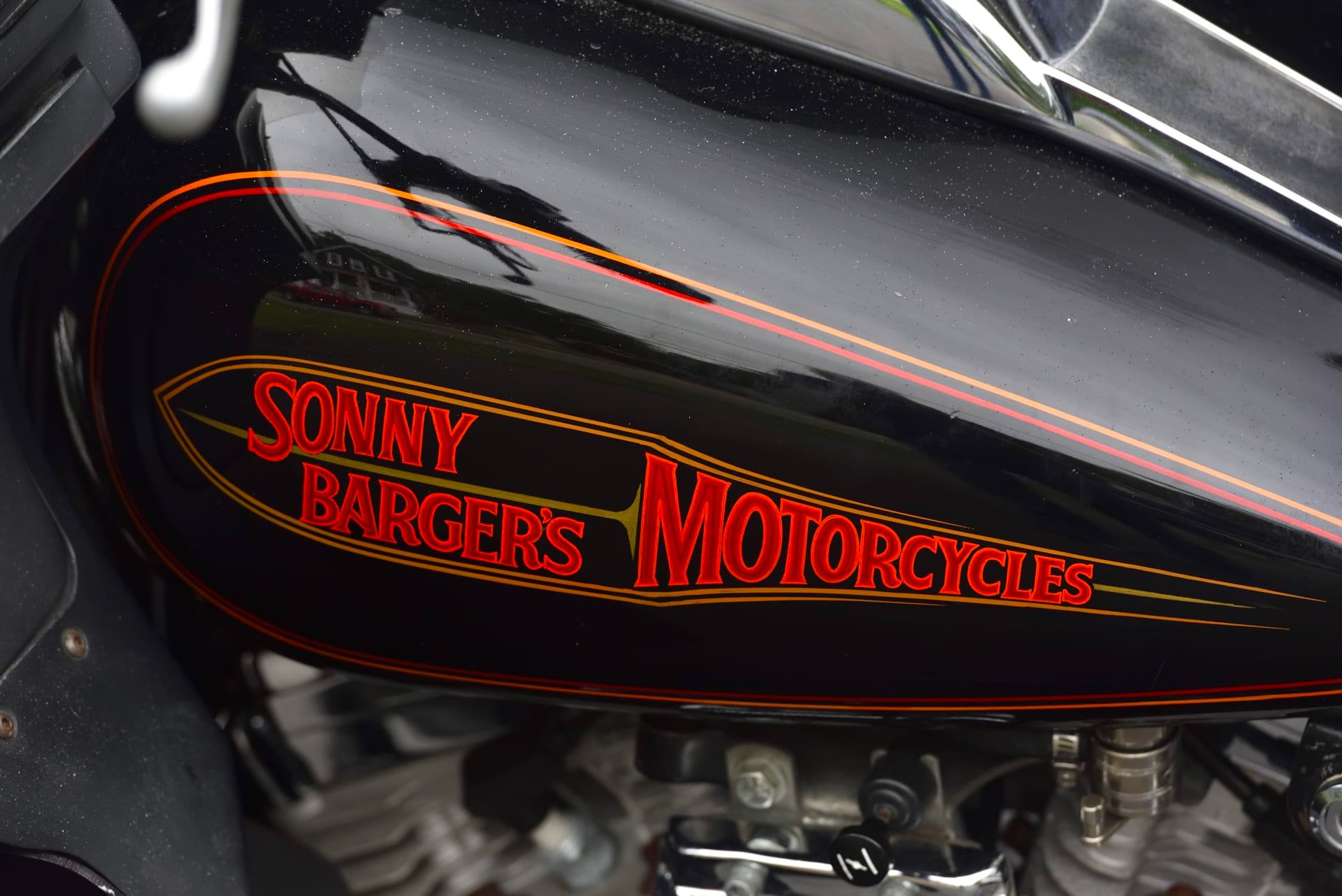
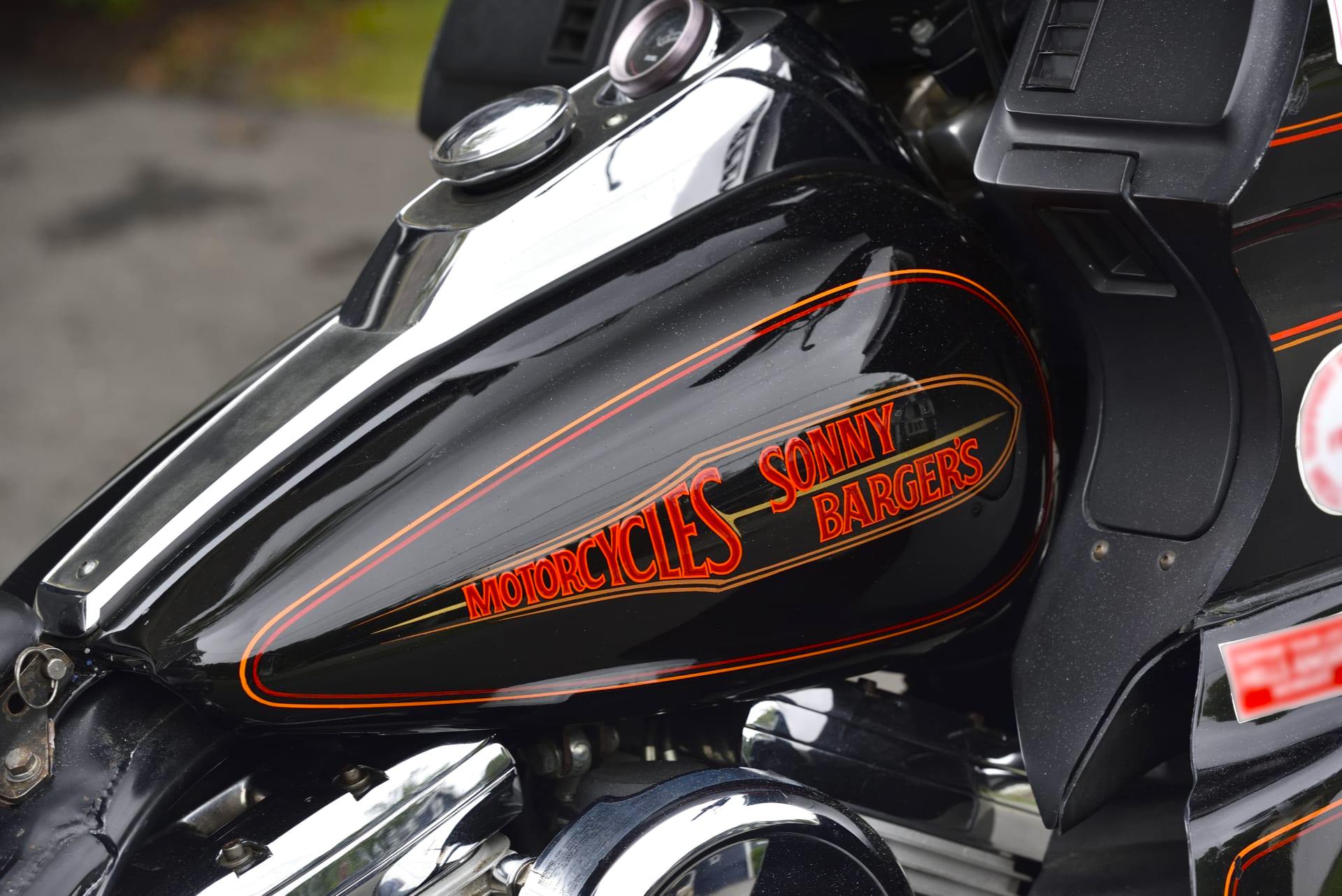
Unusually, this bike has a sprung saddle, a feature not offered by the factory on this model, and it has an additional rear pillion seat with a backrest. It has an aftermarket exhaust, and it’s finished in custom black paintwork with red detailing – including the addition of Sonny Barger’s name on either side of the fuel tank.
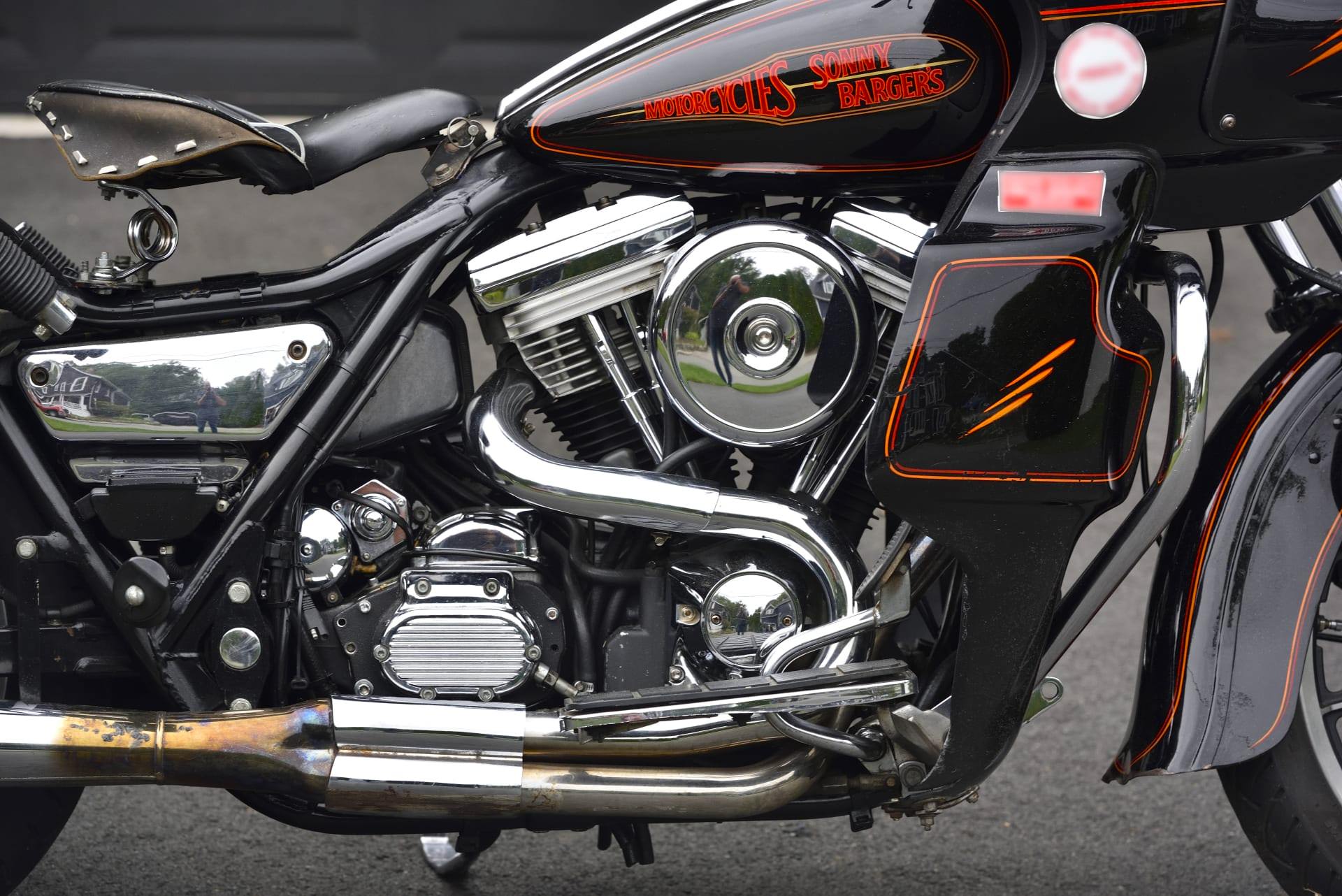
Unusually, this bike has a sprung saddle, a feature not offered by the factory on this model, and it has an additional rear pillion seat with a backrest. It has an aftermarket exhaust, and it’s finished in custom black paintwork with red detailing – including the addition of Sonny Barger’s name on either side of the fuel tank.
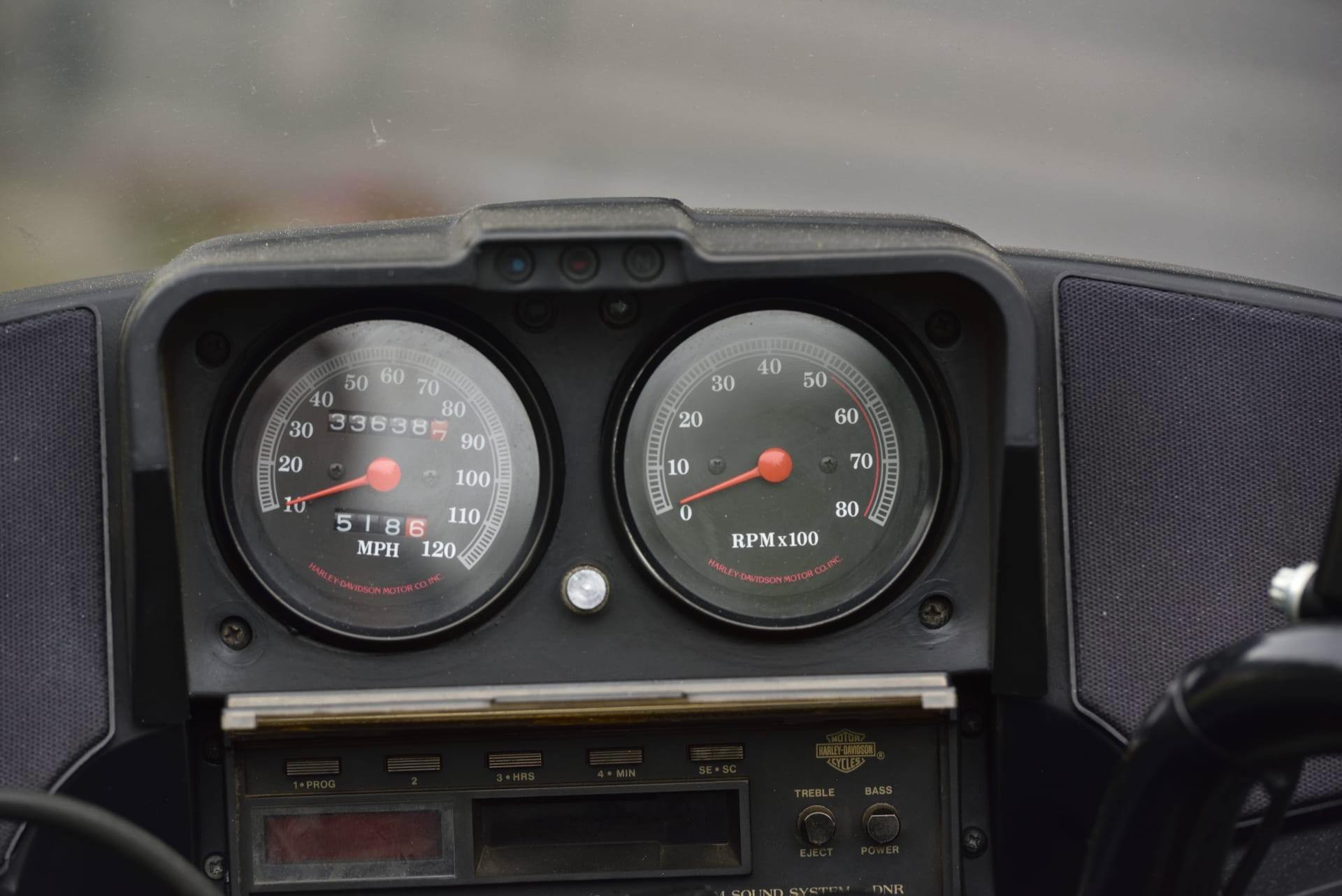
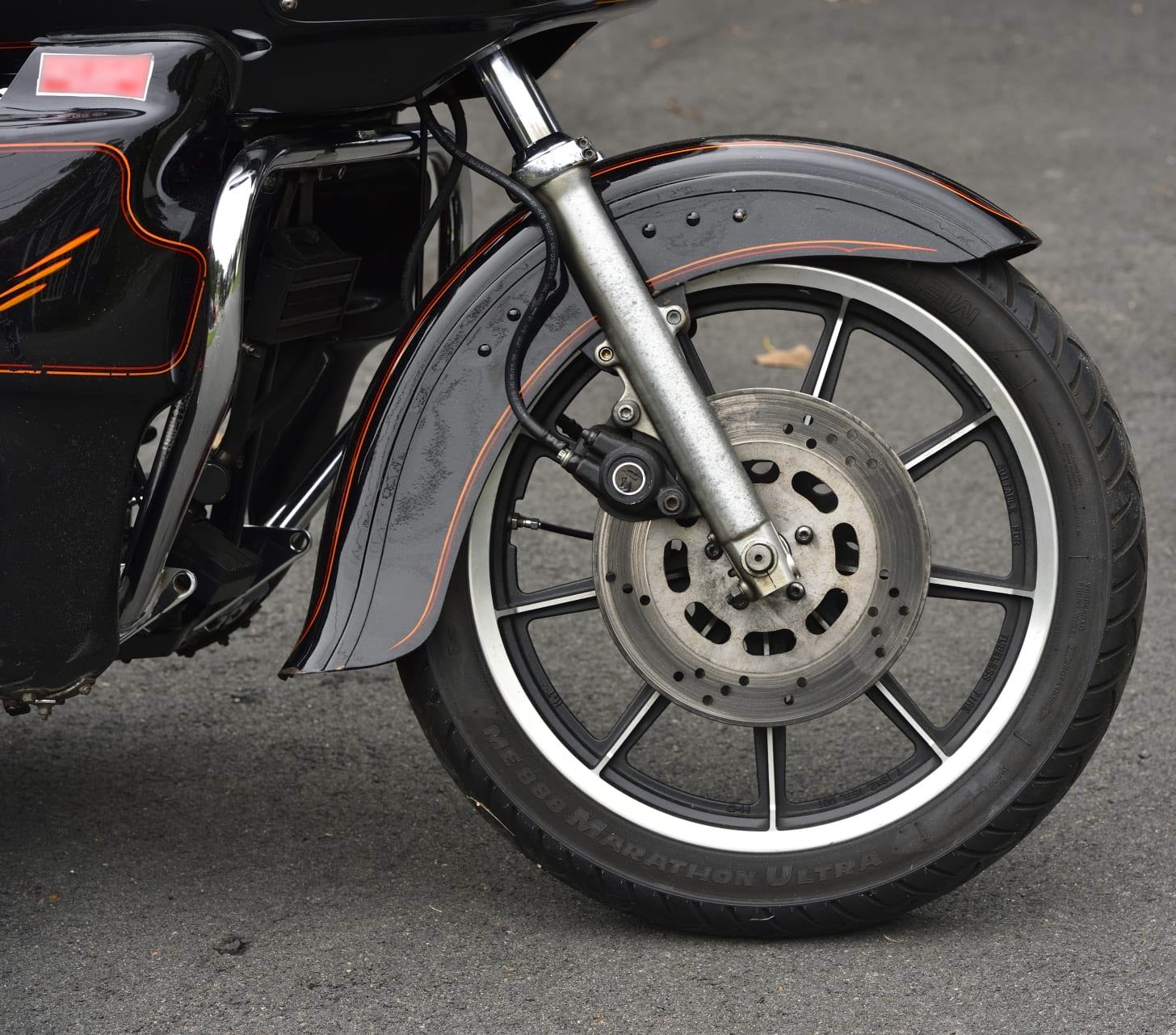
This bike has cast alloy nine-spoke wheels, dual disc front and single disc rear brakes, a 5-speed manual gearbox, and interestingly, this is the bike pictured on the front of the Sonny Barger biography written by Christine Hopkins.
It’s now being offered for sale by Mecum as part of its Las Vegas Motorcycle Auction at the end of January and you can visit the listing here if you’d like to read more about it or register to bid.
Images courtesy of Mecum
Articles that Ben Branch has written have been covered on CNN, Popular Mechanics, Smithsonian Magazine, Road & Track Magazine, the official Pinterest blog, the official eBay Motors blog, BuzzFeed, Autoweek Magazine, Wired Magazine, Autoblog, Gear Patrol, Jalopnik, The Verge, and many more.
Silodrome was founded by Ben back in 2010, in the years since the site has grown to become a world leader in the alternative and vintage motoring sector, with well over a million monthly readers from around the world and many hundreds of thousands of followers on social media.