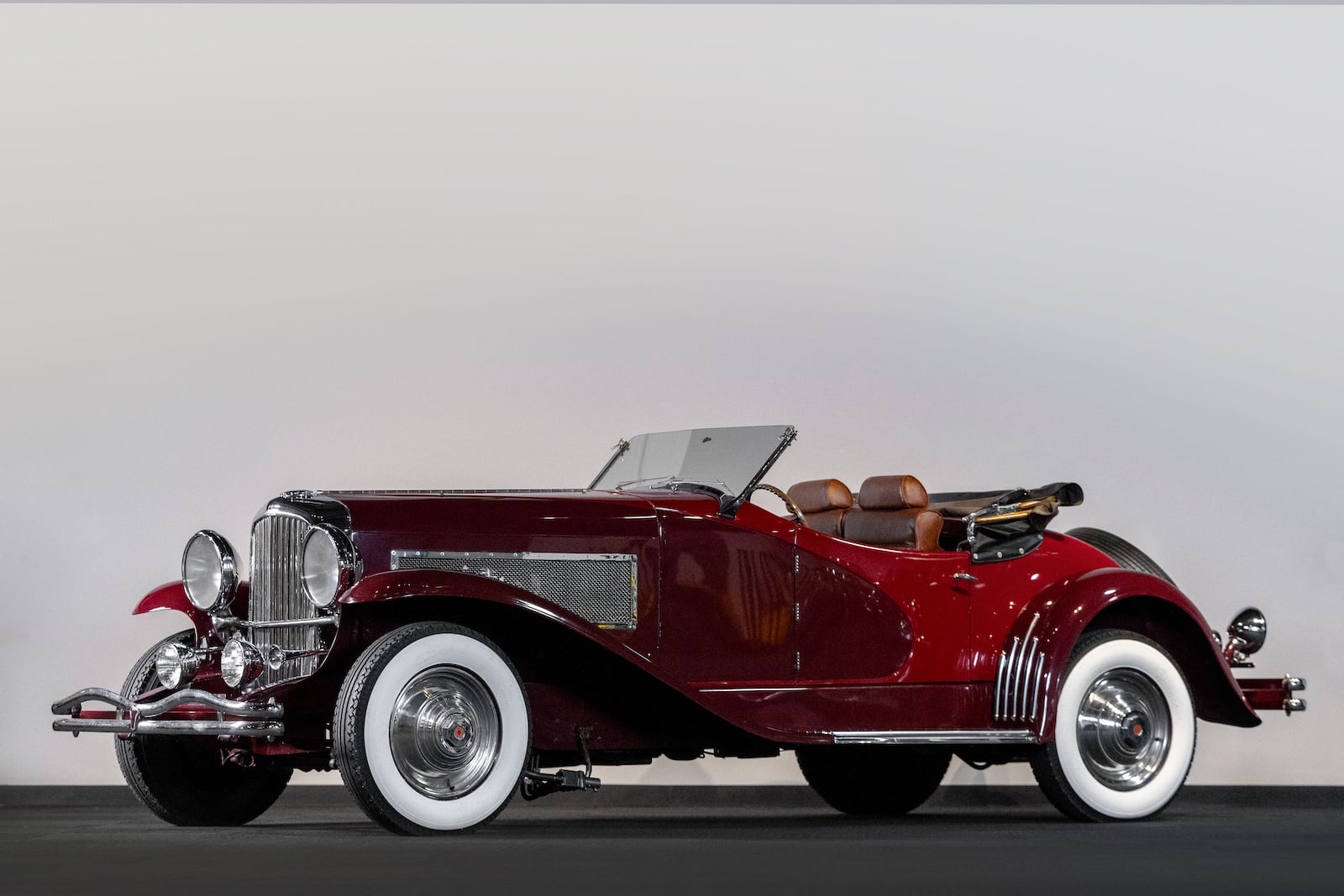
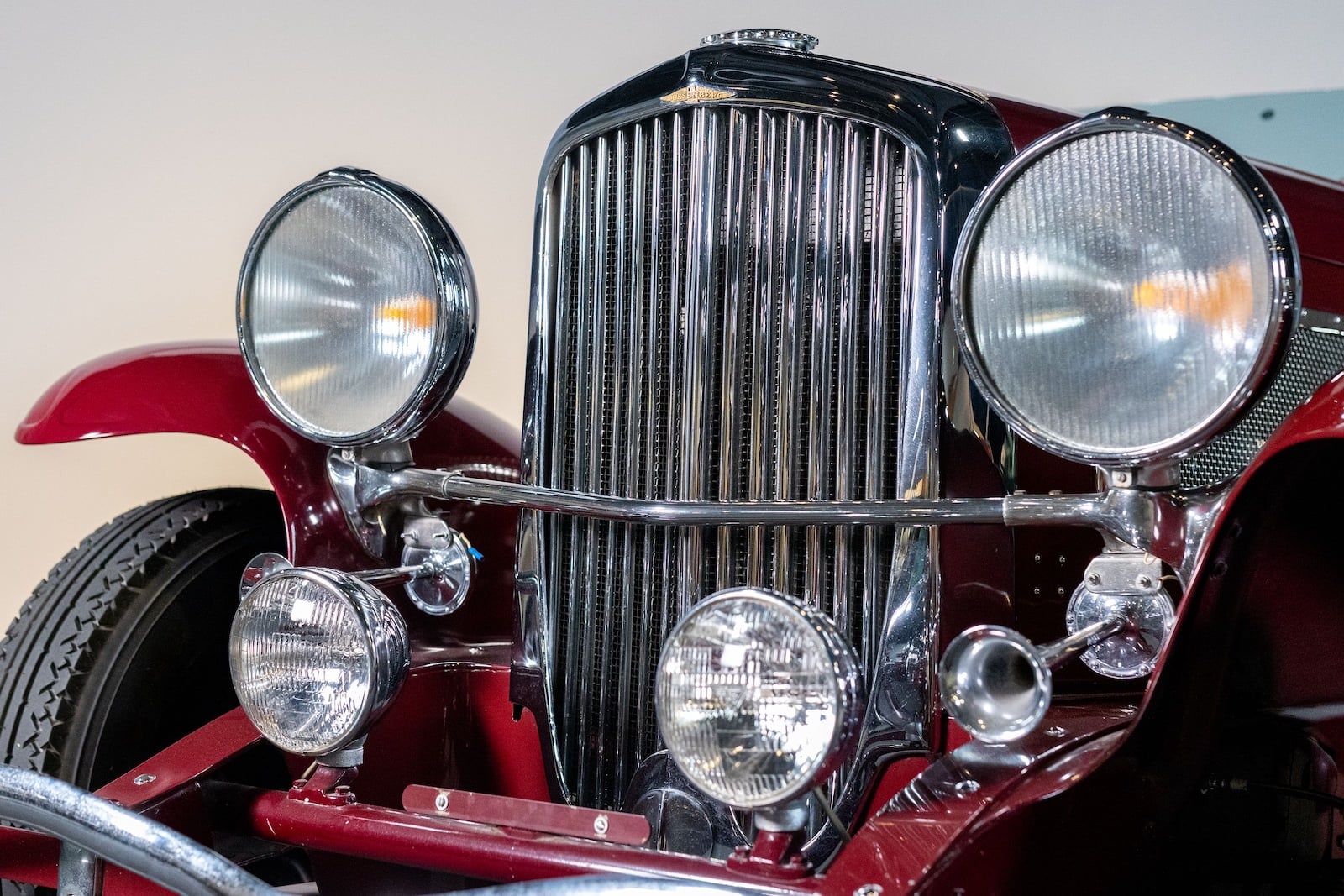
This is a 1971 Duesenberg SSJ Roadster that formerly belonged to legendary American singer, actor, comedian, dancer, and musician Sammy Davis Jr.
Although the year of the car may look like a typo at first, it isn’t. This is from a low-volume run of production cars built by the Duesenberg Corporation under Bernard Miller’s ownership in the 1970s, based closely on the styling of the iconic Duesenberg SSJ from the 1930s.
Fast Facts: The 1970s-Era Duesenberg SSJ
- This is a 1971 Duesenberg SSJ Roadster built by Bernard Miller’s Duesenberg Corporation in Gardena, California, using templates from the original 1935 SSJ La Grande body. The aluminum-over-ash bodywork was made using traditional coachbuilding methods, mounted on a 128 inch wheelbase Dodge truck chassis.
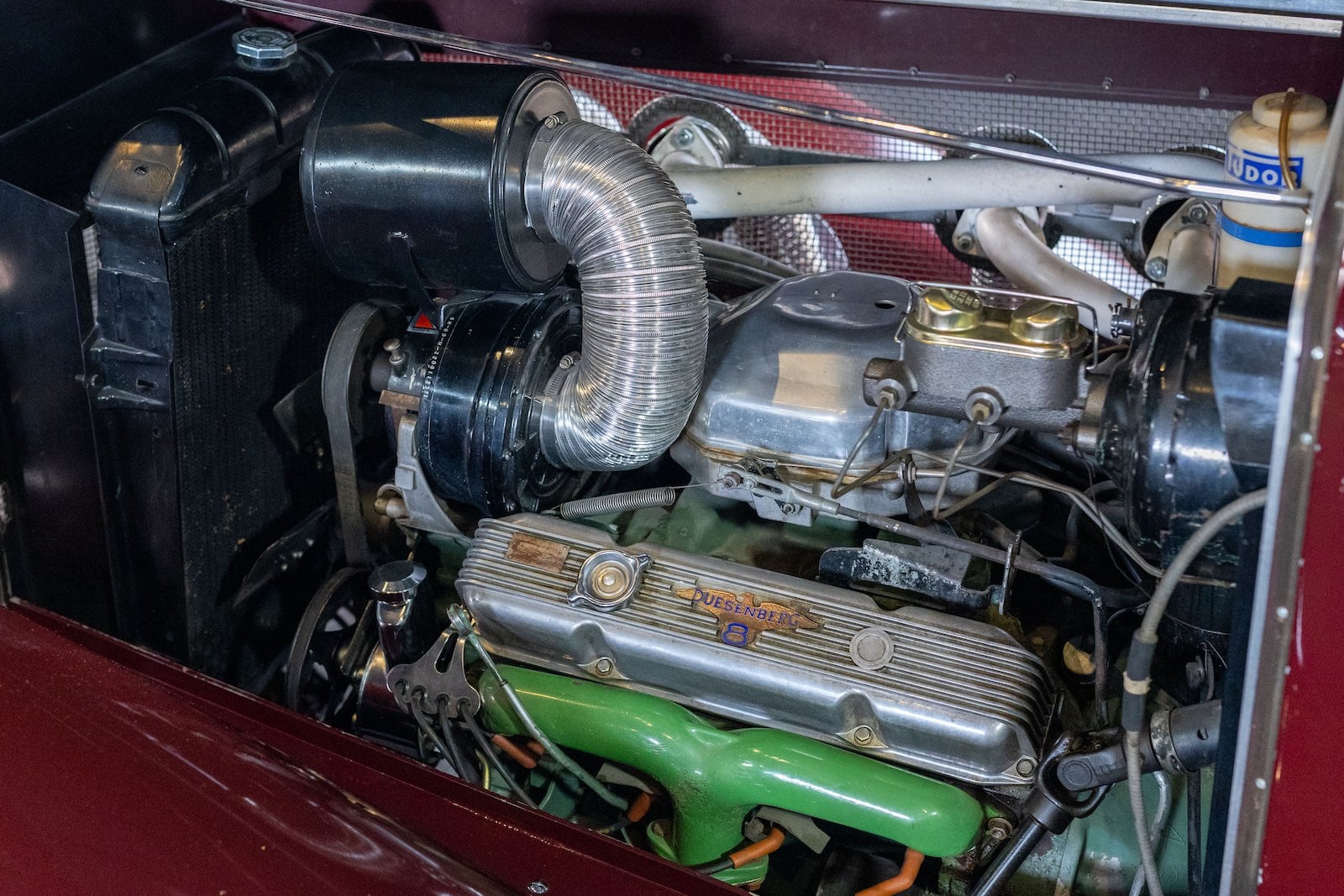
- Power comes from a supercharged Chrysler 383 cubic inch V8 paired with a LoadFlite automatic transmission. The listing claims 504 bhp, and production numbers remain contested, with very few examples completed.
- The car was purchased new by Harrah’s in 1972 through legendary Duesenberg dealer Leo Gephart and made available to Sammy Davis Jr. during his frequent performing engagements at Harrah’s Lake Tahoe and Reno. The title was later formally transferred to Davis as his personal car.
- Showing just 5,247 miles in its original Maroon and Dark Red livery with brown leather interior, the car was eventually returned to the Harrah Automobile Foundation and has been preserved at the National Automobile Museum ever since. It’s now due to be offered by Bonhams on June the 13th.
History Speedrun: The “New” Duesenberg SSJ
In 1970, Duesenberg enthusiast and Model J owner Bernard Miller bought the Duesenberg Corporation name and set about doing what several others had attempted and failed to do – build a worthy successor to what many regard as the greatest American automobile ever made. It was a tall order, but Miller arguably did a better job of it than anyone who had previously tried.
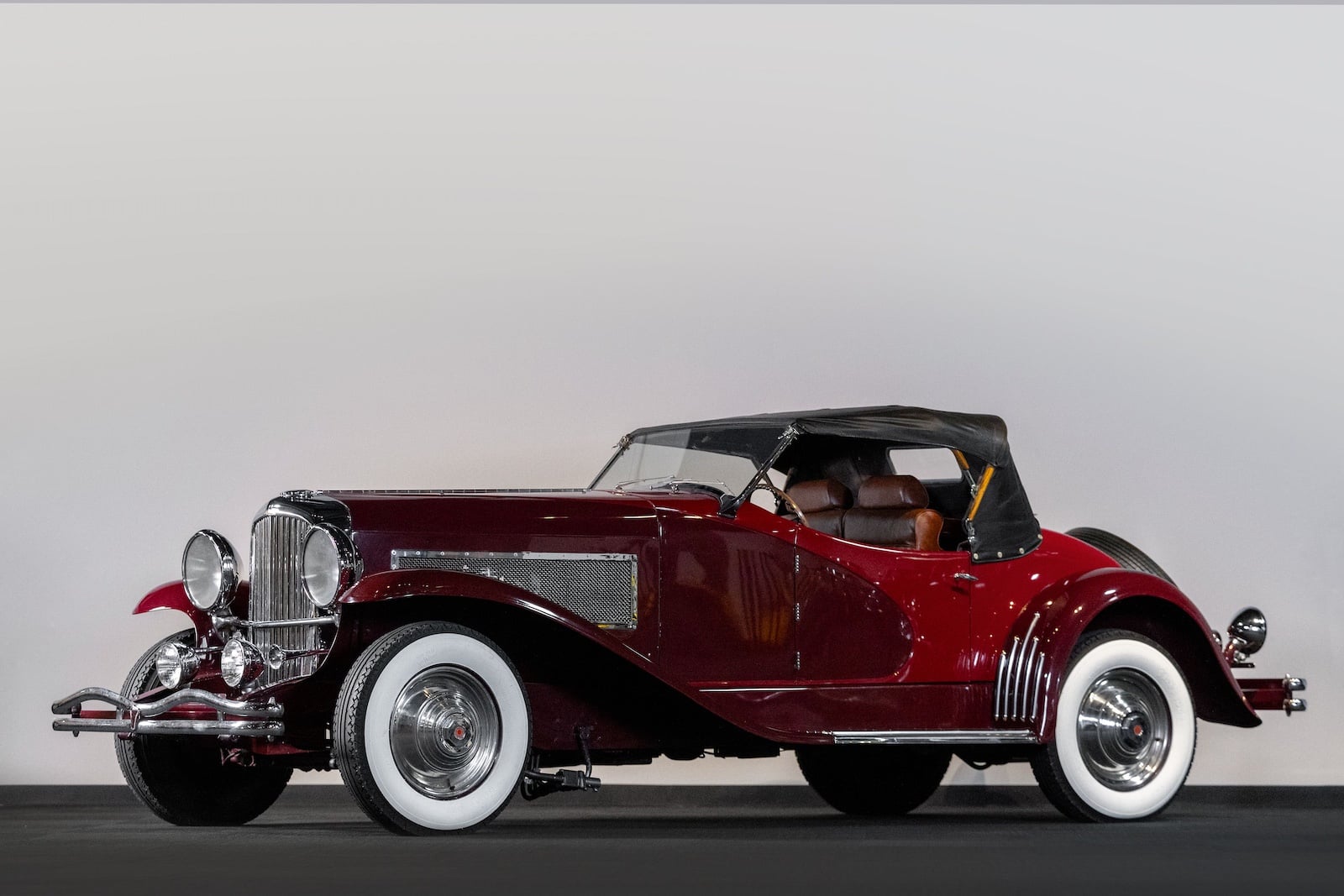
 This is a 1971 Duesenberg SSJ Roadster that formerly belonged to legendary American singer, actor, comedian, dancer, and musician Sammy Davis Jr.
Unlike the 1966 Virgil Exner-designed Duesenberg Model D, which reimagined the Duesenberg as a modernized luxury concept car on a Chrysler Imperial platform, Miller’s vision was more reverential to the original designs.
He wanted to recreate the most dramatic Duesenberg of them all, the SSJ, a short-wheelbase supercharged roadster famously associated with Hollywood A-listers Gary Cooper and Clark Gable in the mid-1930s. Only two original SSJs were ever built, with Cooper’s example later becoming the better-known survivor – it sold at auction for $22 million in 2018, making it the most expensive American car ever sold up until that point in history.
Operating out of Gardena, California, Miller’s Duesenberg Corporation used templates taken from the original 1935 SSJ La Grande body to produce cars that were far removed from the unofficial fiberglass kit car replicas that would proliferate later in the 1970s.
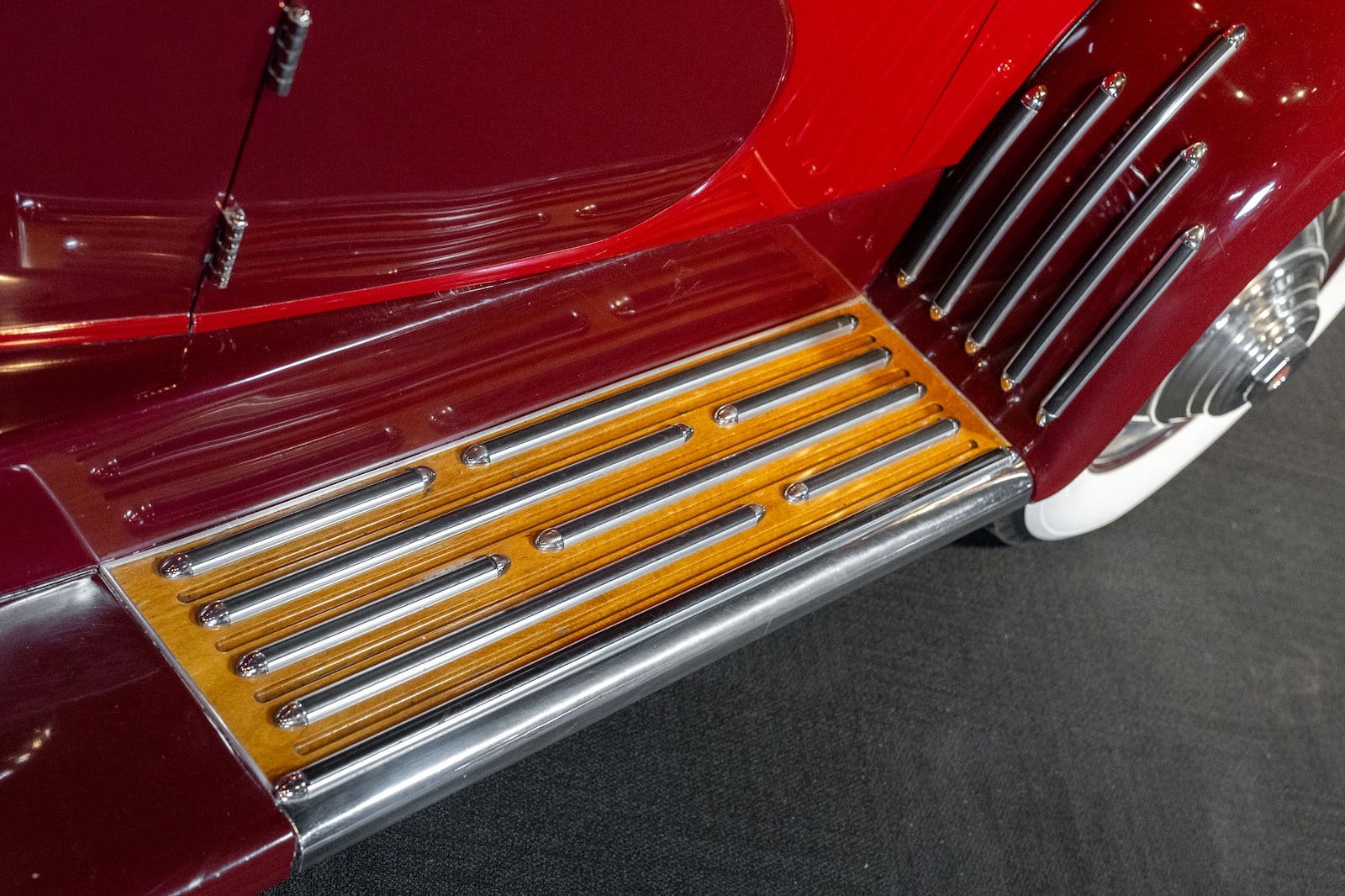
The bodies were made using traditional coachbuilding methods, with hand-formed aluminum panels laid over an inner ash wood framework and steel fenders – the same techniques that had been used on the originals all those decades earlier.
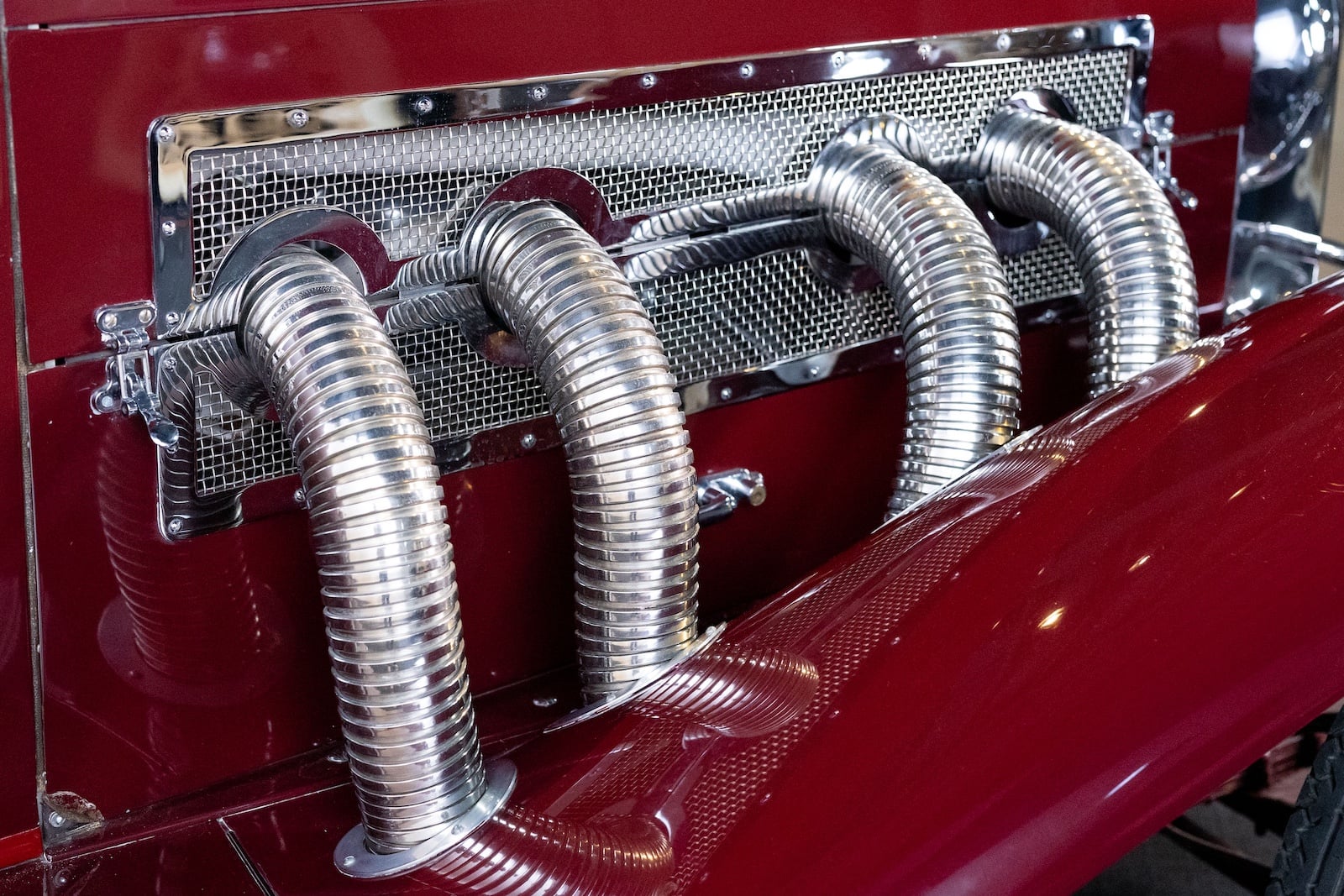
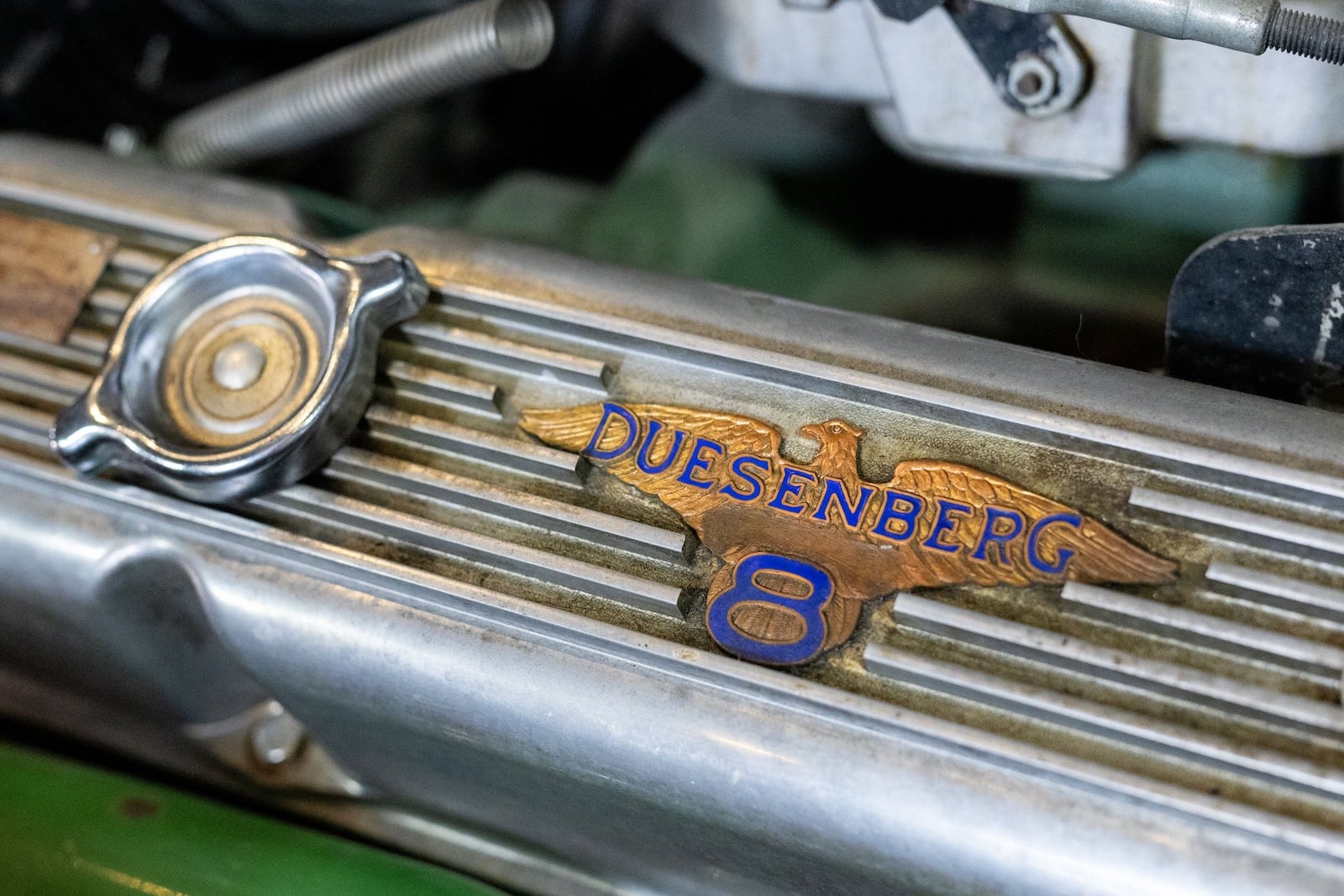
Beneath the bodywork, the cars rode on a 128 inch wheelbase Dodge truck chassis with independent front suspension and four-wheel hydraulic brakes. Power came from a Chrysler 383 cubic inch V8 paired with a LoadFlite automatic transmission, and at least some examples were equipped with a centrifugal supercharger in a nod to the blown Duesenberg SJs of the 1930s.
The supercharged 383 reportedly produced somewhere in the region of 300 to 500 bhp depending on the source, though individual cars would have likely varied depending on their specification, and no two were identical.
As you might have expected, the cars were not cheap. The original asking price was around $24,500 USD (enough to buy two top-of-the-line Cadillacs in the early 1970s) and each was finished to its owner’s individual specifications with bespoke paint, interior materials and equipment.
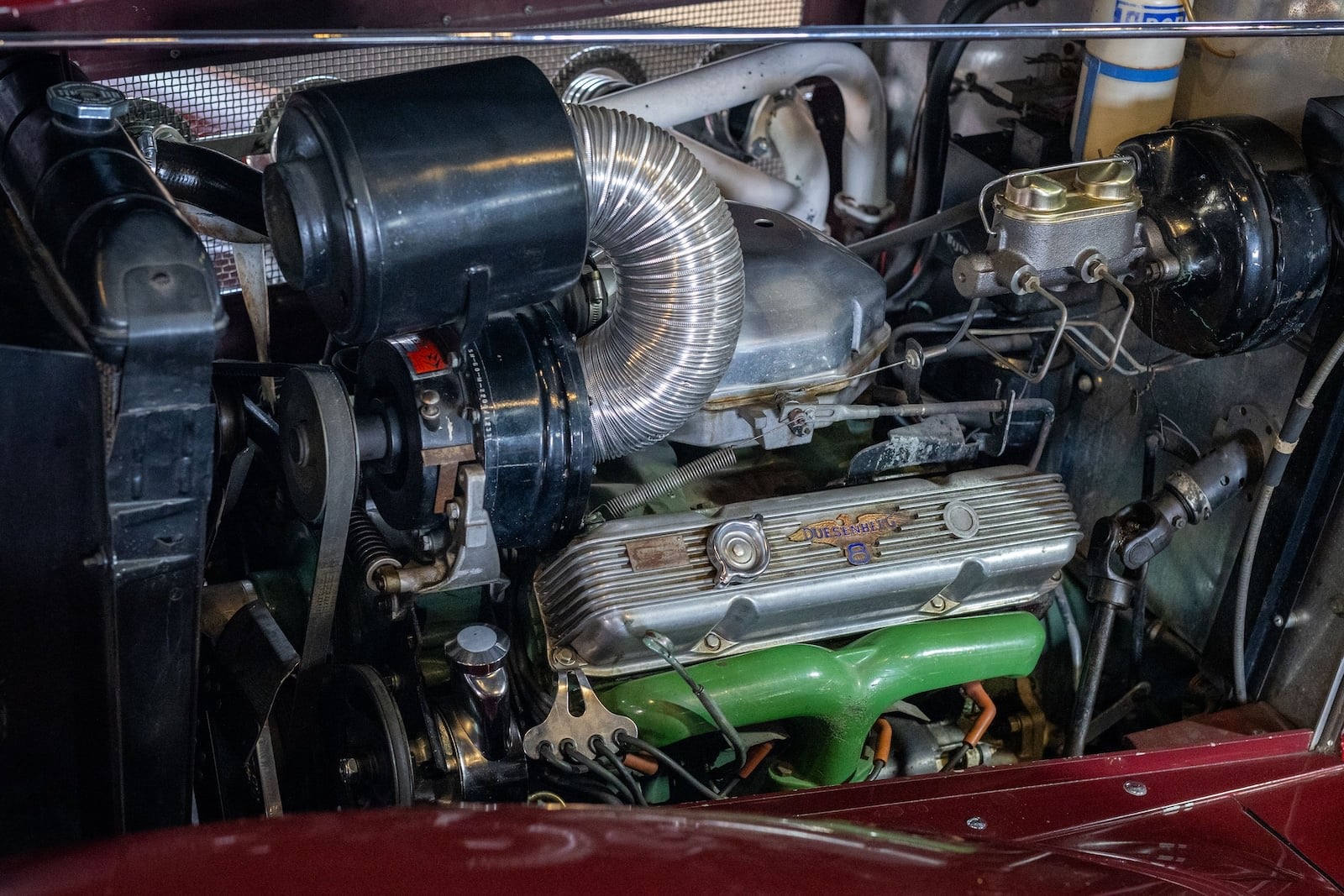
Beneath the bodywork, the cars rode on a 128 inch wheelbase Dodge truck chassis with independent front suspension and four-wheel hydraulic brakes. Power came from a Chrysler 383 cubic inch V8 paired with a LoadFlite automatic transmission, and at least some examples were equipped with a centrifugal supercharger in a nod to the blown Duesenberg SJs of the 1930s.
Road & Track magazine founder John Bond featured the Miller SSJ in the magazine’s February 1971 issue and called it “the best replica yet,” a significant endorsement from one of America’s most respected automotive publications. There has always been some contention about whether the cars were replicas or official continuation cars, they were built by a modern version of the Duesenberg company, so perhaps that latter title is more fitting.
Production numbers remain somewhat contested, the Wikipedia page cites eight completed cars during a 1970 to 1974 production run, while some auction listings have suggested a slightly higher total – RM Sotheby’s notes that production continued through into 1975.
What’s not in dispute is that very few were made, and that Miller’s Duesenberg Corporation was among the most serious and well-executed of the many attempts to revive the Duesenberg name across the 20th century.
The Ex-Sammy Davis Jr 1971 Duesenberg SSJ Shown Here
According to records held in the Harrah’s Automobile Collection and National Automobile Museum files, this particular “Miller” Duesenberg SSJ Roadster was bought new by Harrah’s in 1972 from the Duesenberg Corporation through Leo Gephart, one of the most important figures in the history of collector car dealing.
Gephart, who handled more than 80 Duesenbergs during his career (more than any other individual in the hobby) was a natural intermediary for the transaction, and his involvement in the sale lends a significant degree of credibility to the car’s documented chain of custody from new.
According to the Bonhams listing, the car was maintained at Harrah’s properties and made available to Sammy Davis Jr. during his frequent performing engagements at Harrah’s Lake Tahoe and Harrah’s Reno.
The original asking price was around $24,500 USD (enough to buy two top-of-the-line Cadillacs in the early 1970s) and each was finished to its owner’s individual specifications with bespoke paint, interior materials and equipment.
Davis was one of Bill Harrah’s favorite entertainers (and the only performer to hold a long-term contract with Harrah’s) regularly doing multi-week engagements with as many as three shows per night. Amazingly, Sammy is said to have done a total of 684 shows at Harrah’s Lake Tahoe and 256 at Harrah’s Reno.
The relationship between the two men is well documented, Harrah built a private home in Northern Nevada specifically for entertainers to use during their engagements at his hotel/casinos, and Davis was one of the most regular occupants. At some point, the car’s title was formally transferred to Davis, making him its registered owner rather than just its most frequent driver.
A 1970s Ebony magazine feature article captured Davis posing on the running board of his Duesenberg, surrounded by a number of other cars from his collection (see a low-res scan of it below). The car was formally loaned back to the Harrah Automobile Foundation in 1987, and Davis eventually transferred it to the Collection outright. It has remained with the National Automobile Museum, the successor institution to Harrah’s legendary collection, ever since.
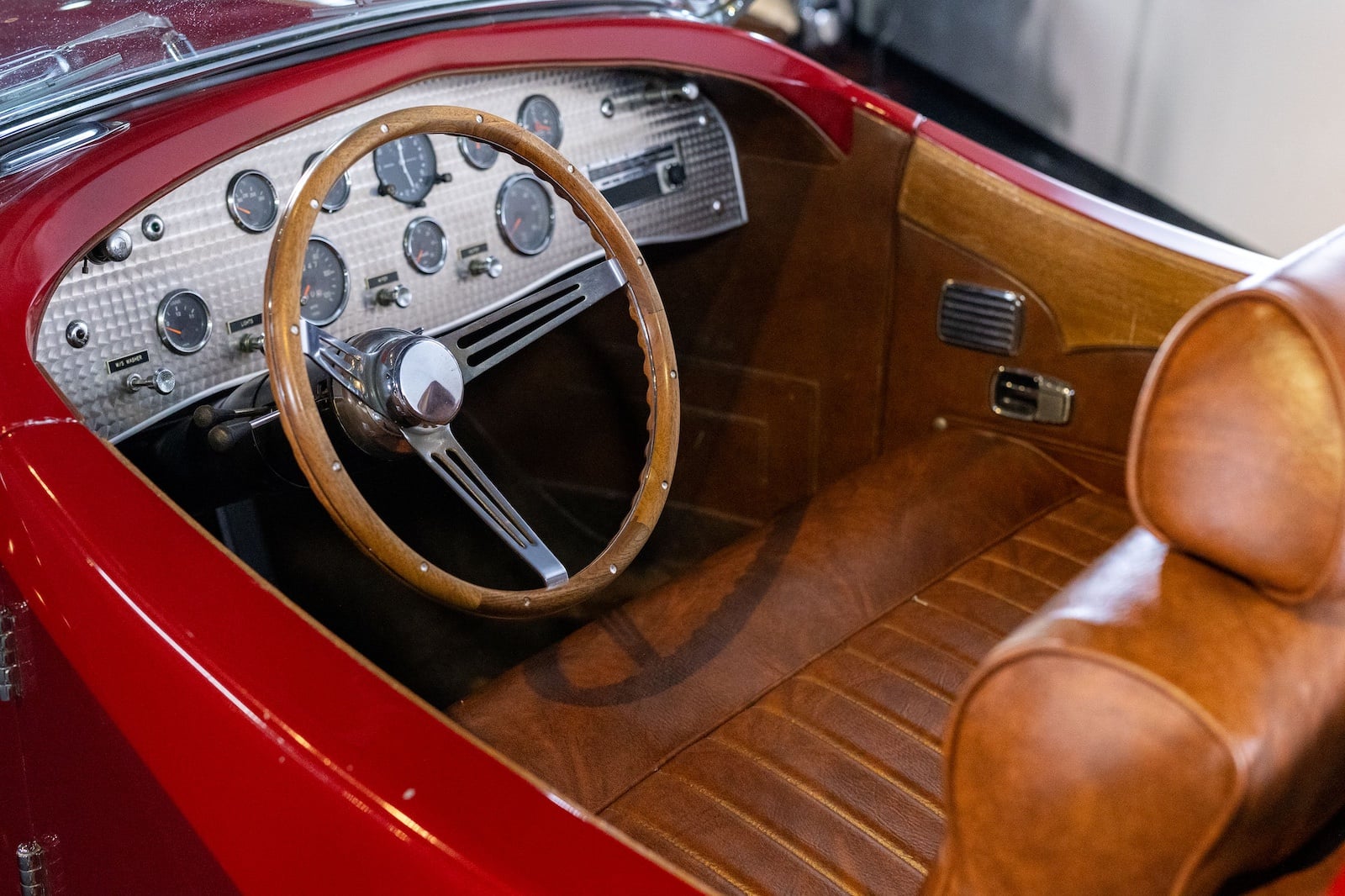
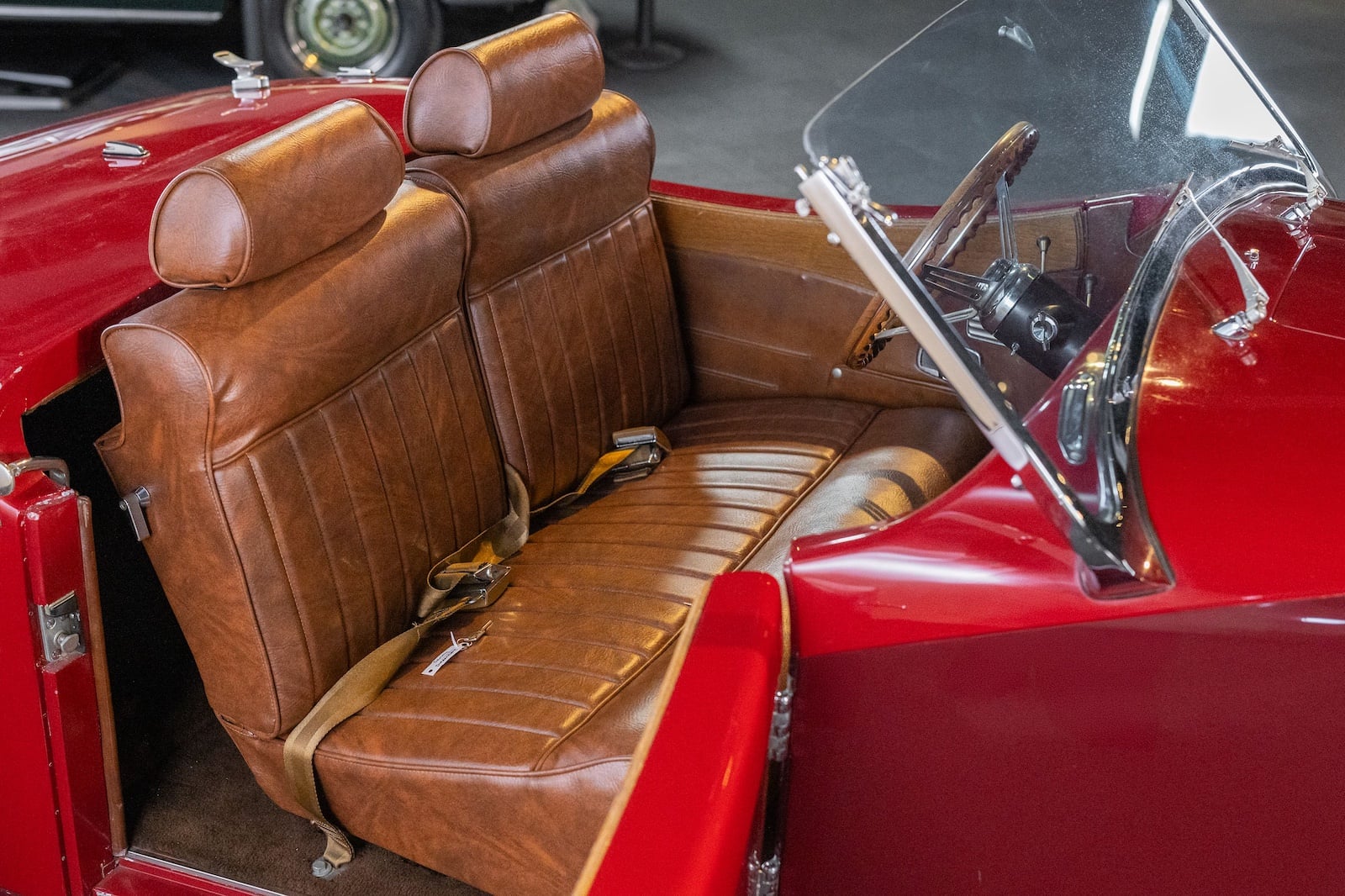
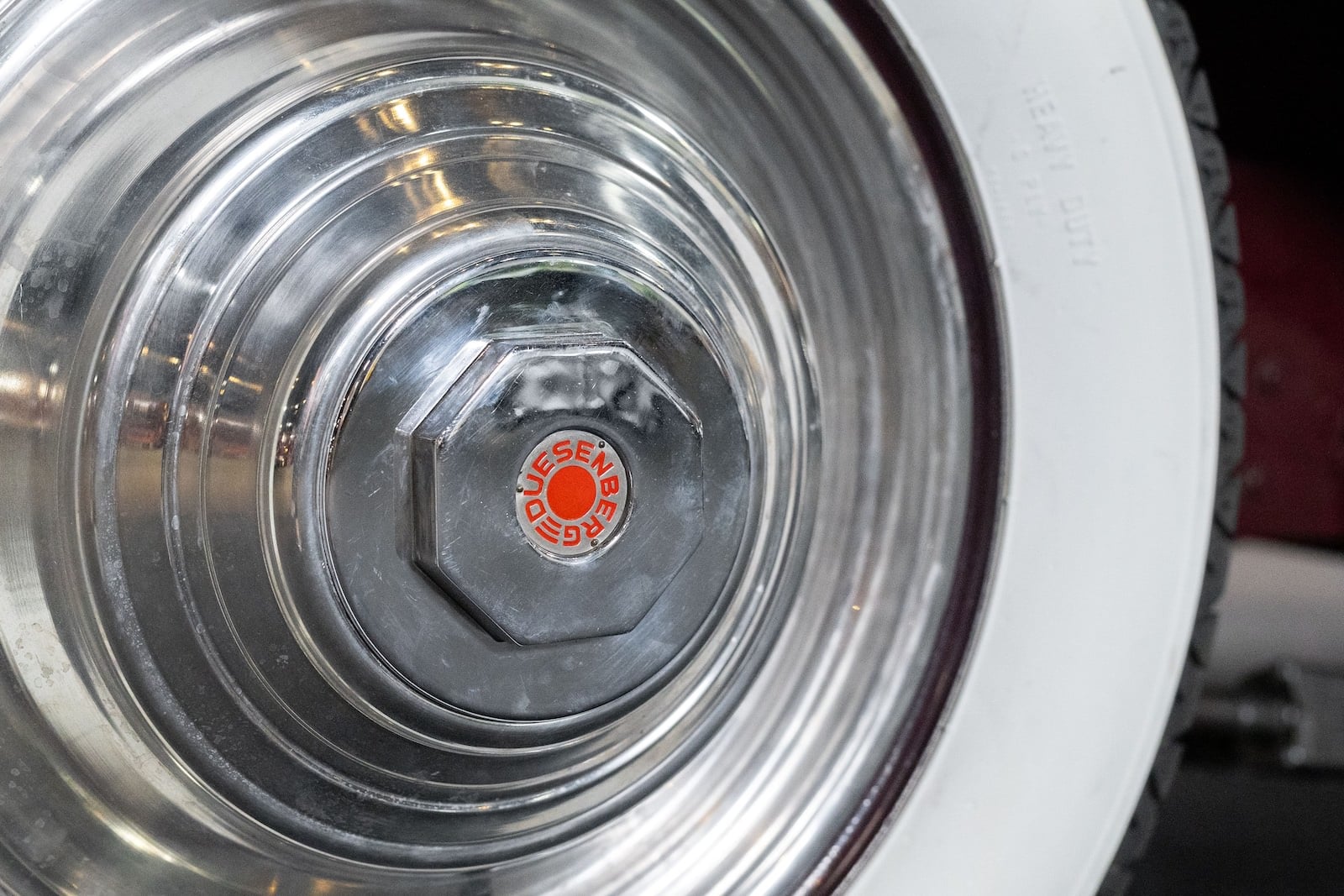
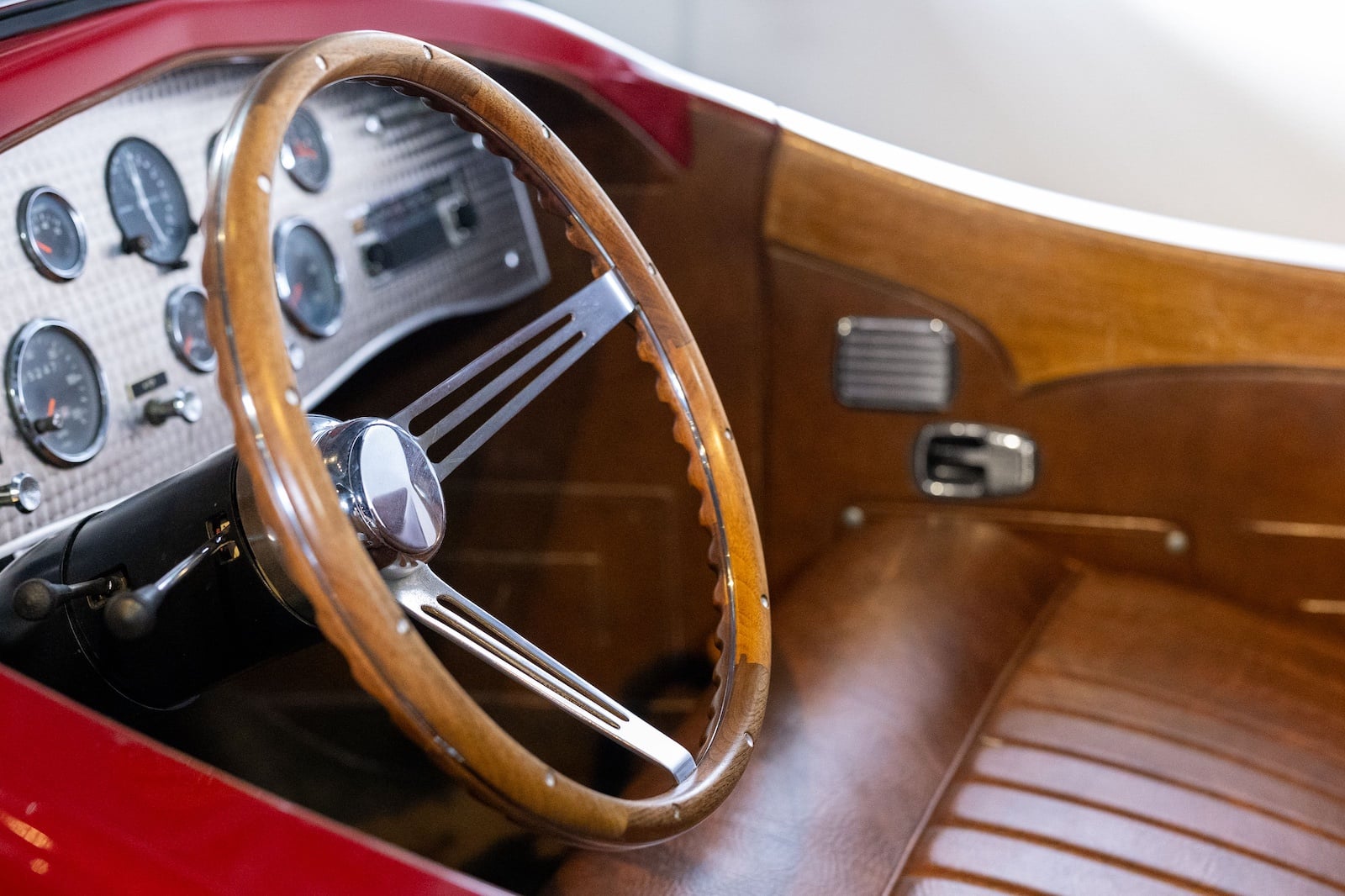
As it sits today, the car shows 5,247 miles and is finished in its original Maroon with Dark Red sweep panel livery, riding on 7.00-18 Firestone wide whitewall tires. The interior is upholstered in brown leather, with a black leatherette top.
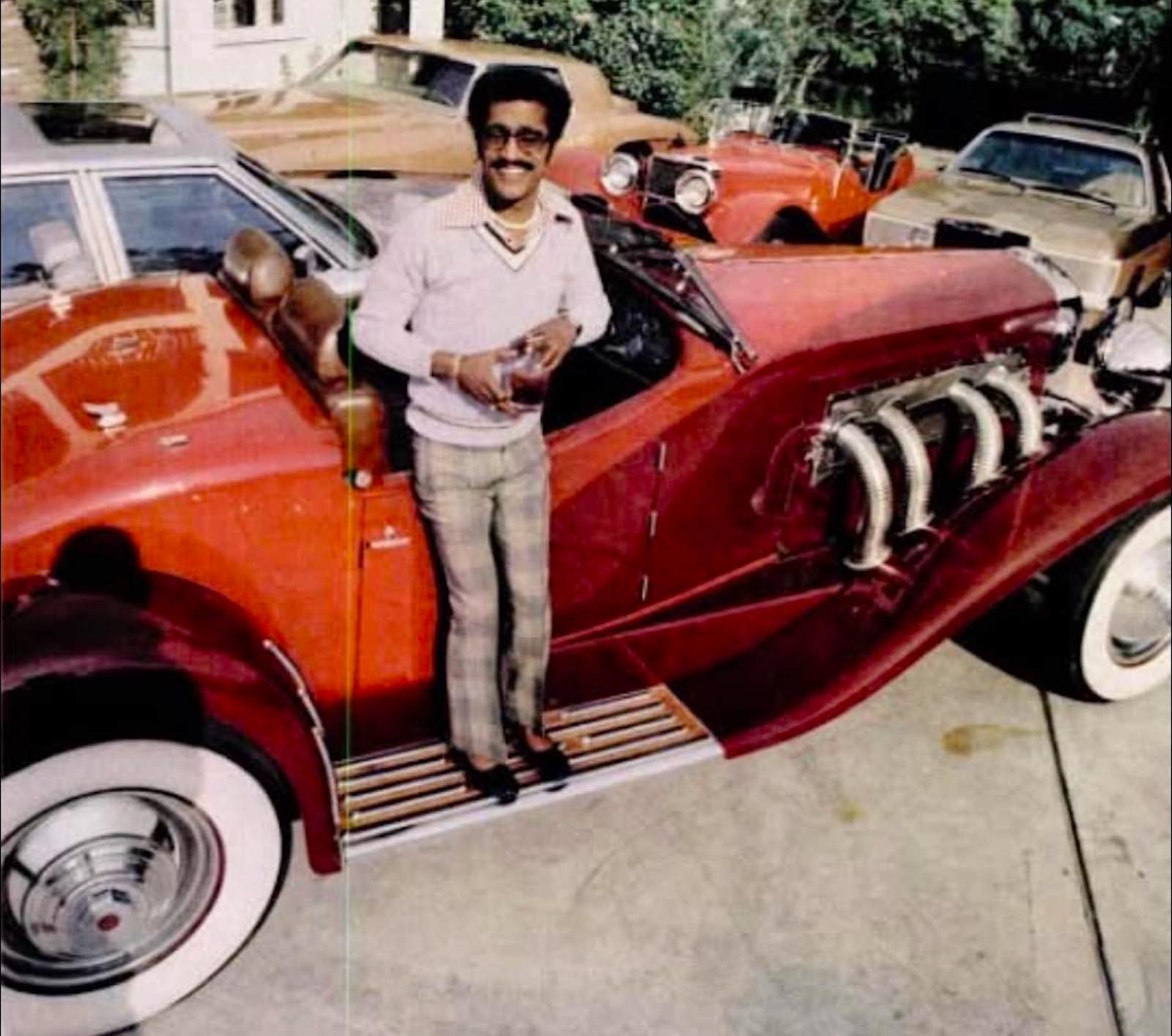
This is a picture of Davis from a 1970s Ebony magazine feature article, posing on the running board of his Duesenberg, surrounded by a number of other cars from his collection. Image courtesy of Ebony magazine.
Equipment includes power steering and brakes, Bijur chassis lubrication, T-3 driving lights, a wood-rimmed steering wheel, VDO gauges, a Lear Jet 8-track stereo, and a Breitling Waxman chronometer. Power comes from the supercharged Chrysler 383 cubic inch V8 paired with a LoadFlite automatic transmission, the listing claims 504 bhp, though most other sources place the output of similar Miller SSJ engines at closer to 300 bhp.
The car is now due to roll across the auction block with Bonhams on the 13th of June, and you can visit the listing here if you’d like to read more about it or register to bid.
Images courtesy of Bonhams

Articles that Ben Branch has written have been covered on CNN, Popular Mechanics, Smithsonian Magazine, Road & Track Magazine, the official Pinterest blog, the official eBay Motors blog, BuzzFeed, Autoweek Magazine, Wired Magazine, Autoblog, Gear Patrol, Jalopnik, The Verge, and many more.
Silodrome was founded by Ben back in 2010, in the years since the site has grown to become a world leader in the alternative and vintage motoring sector, with well over a million monthly readers from around the world and many hundreds of thousands of followers on social media.