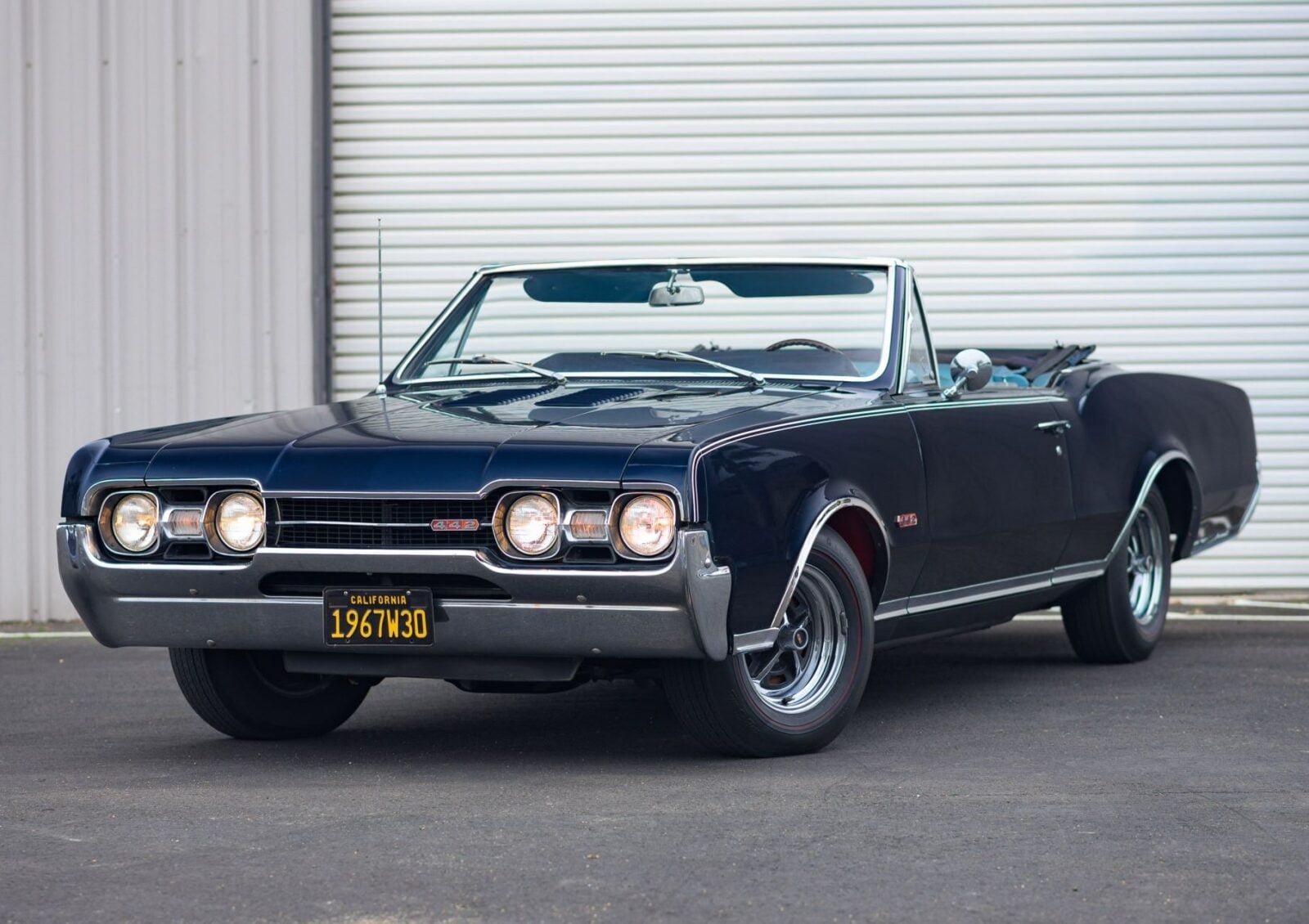
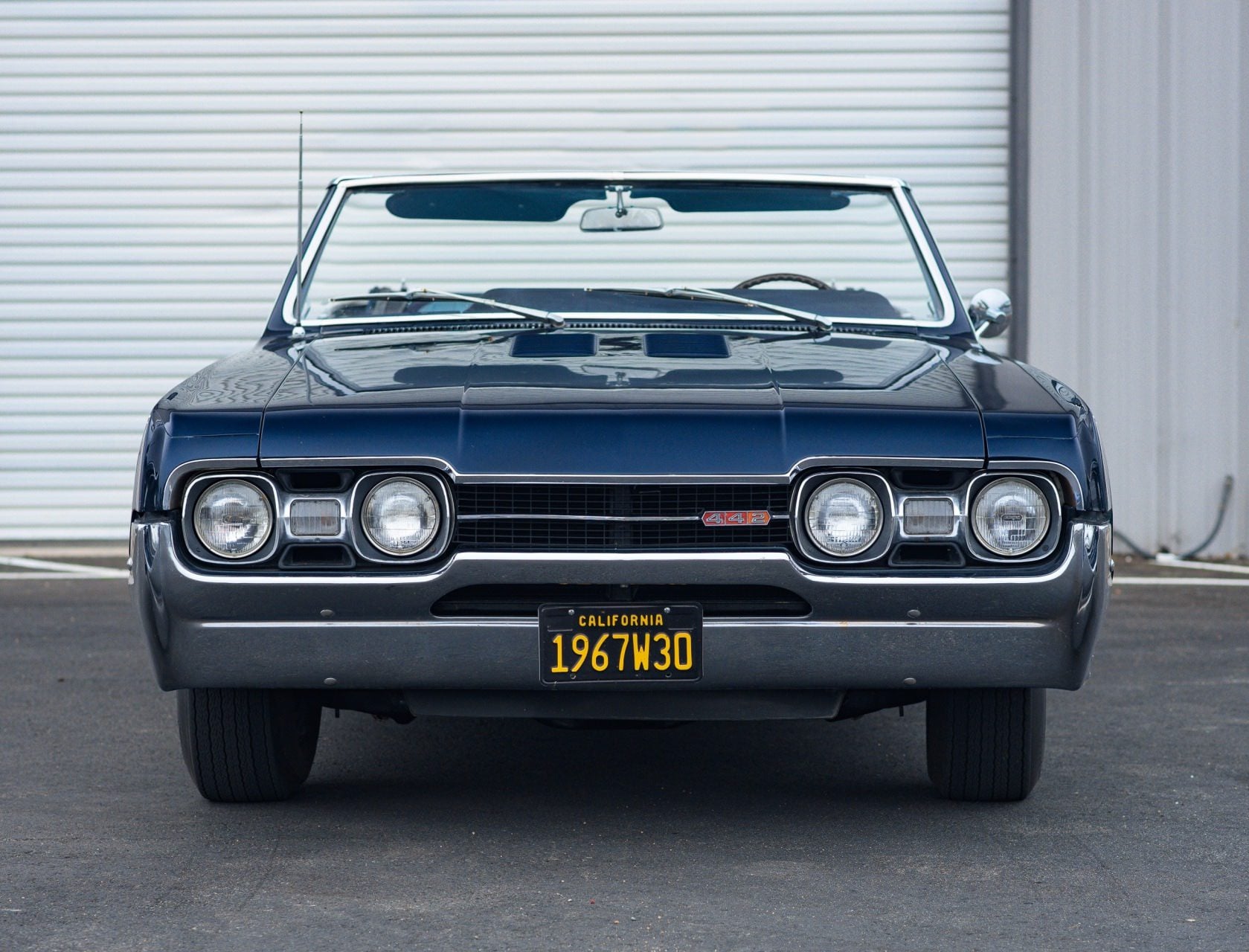
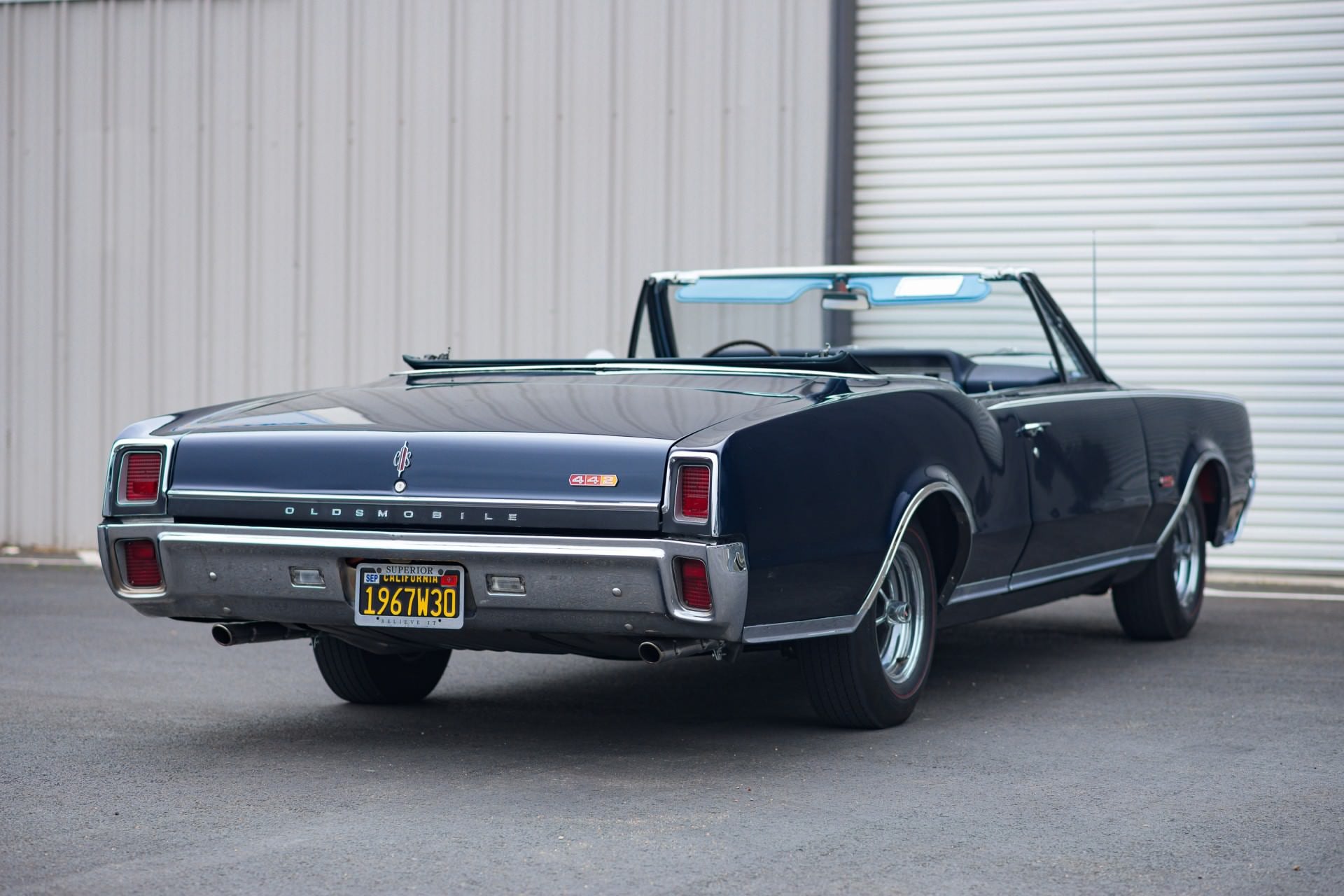
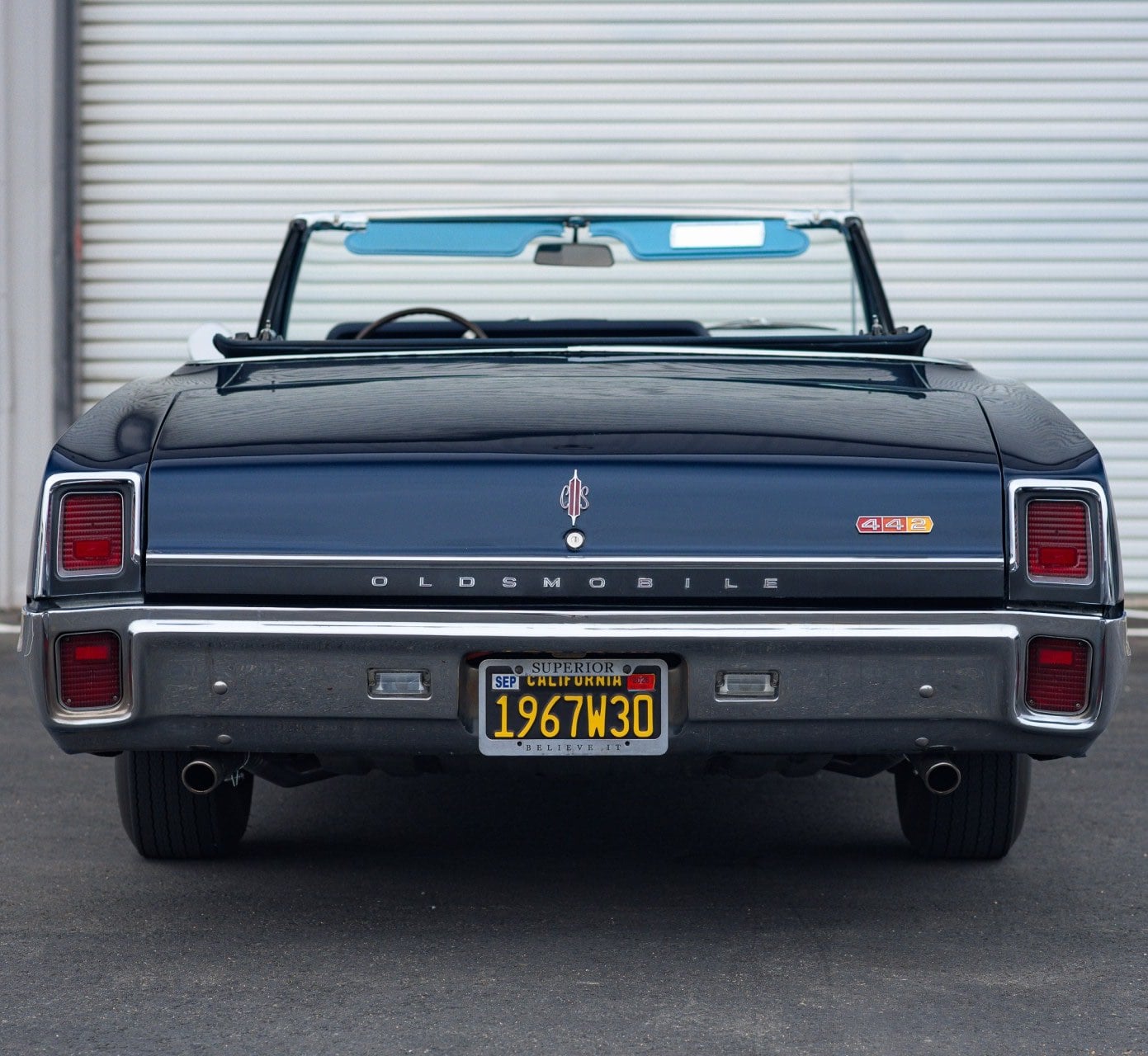
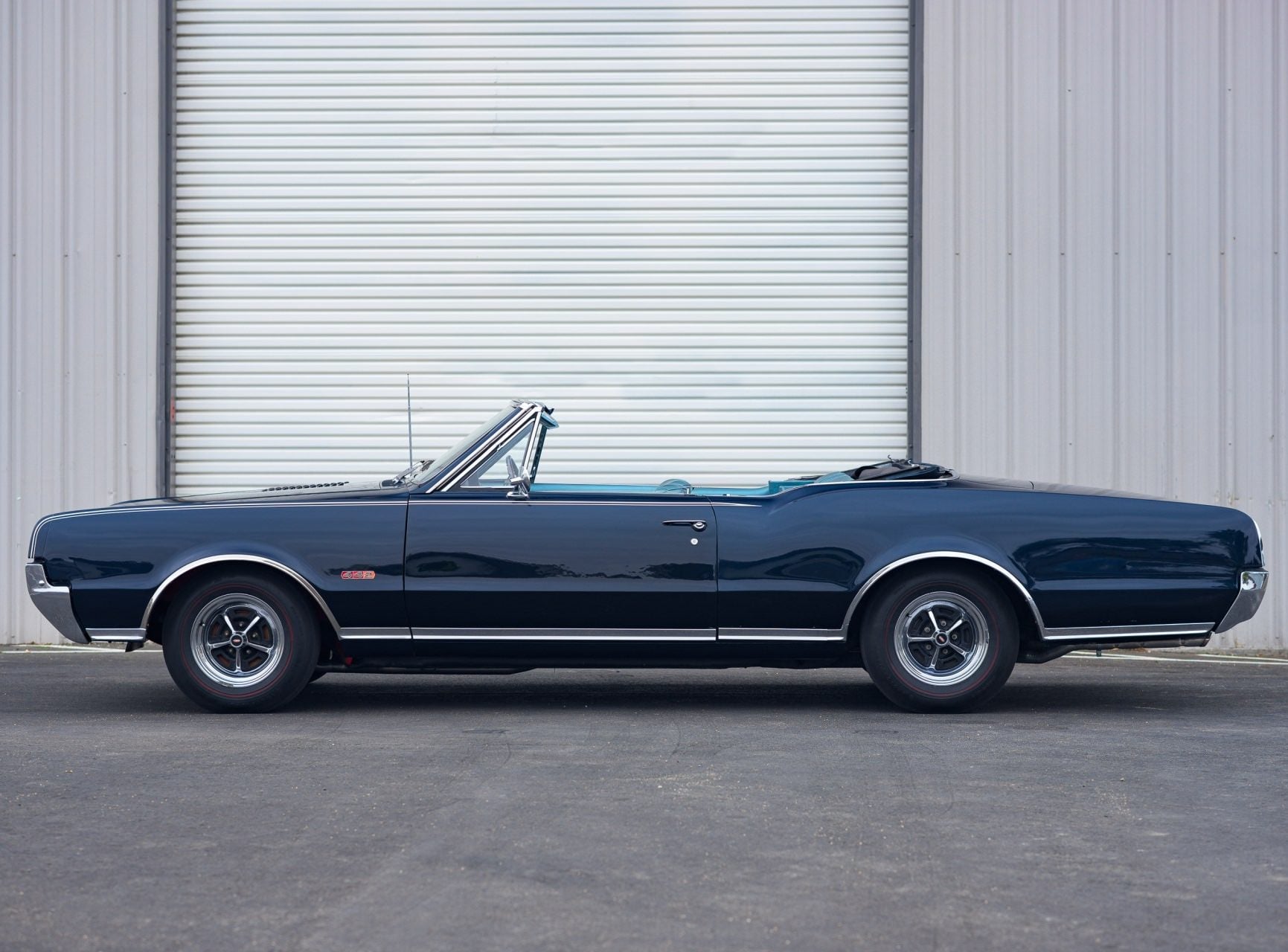
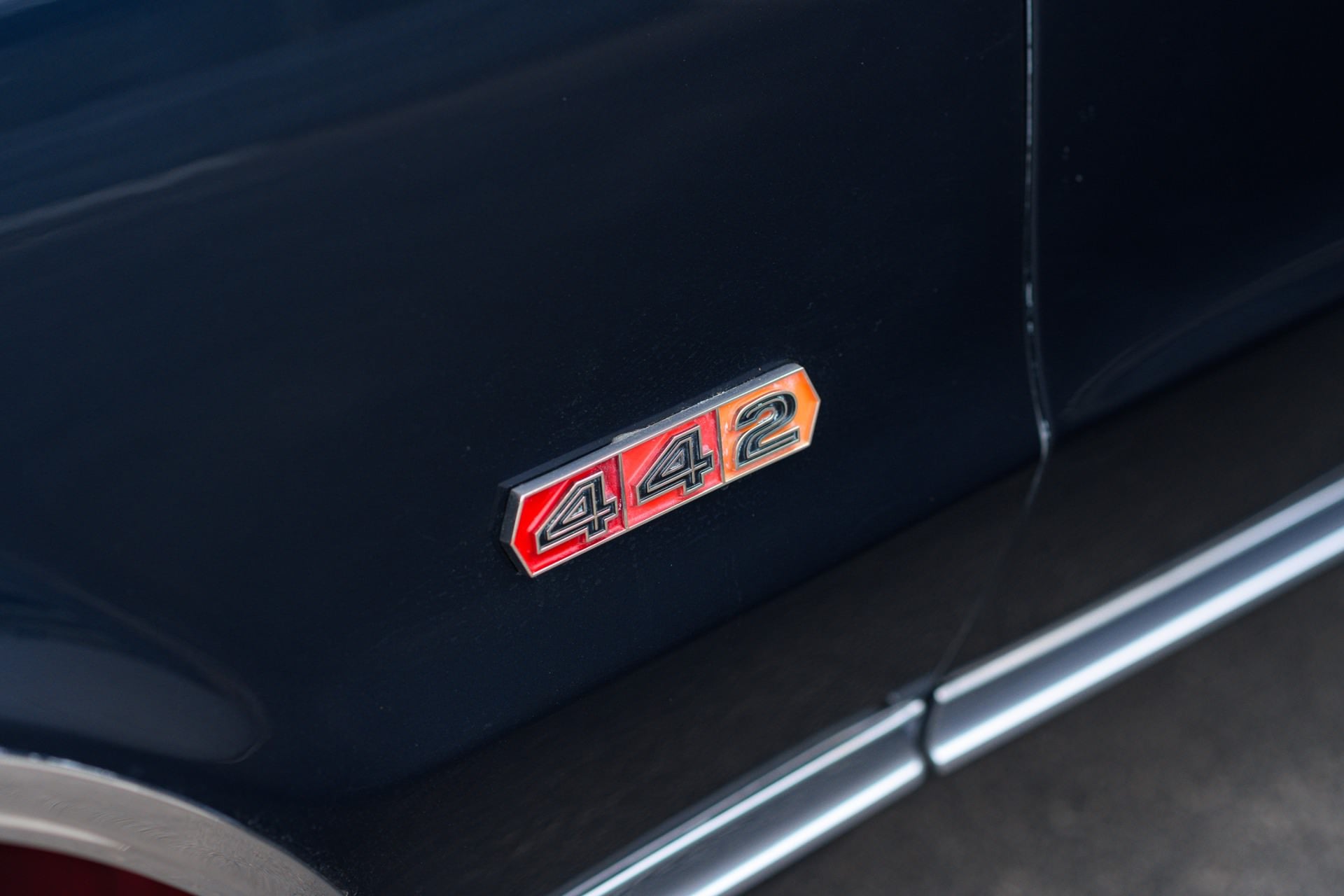
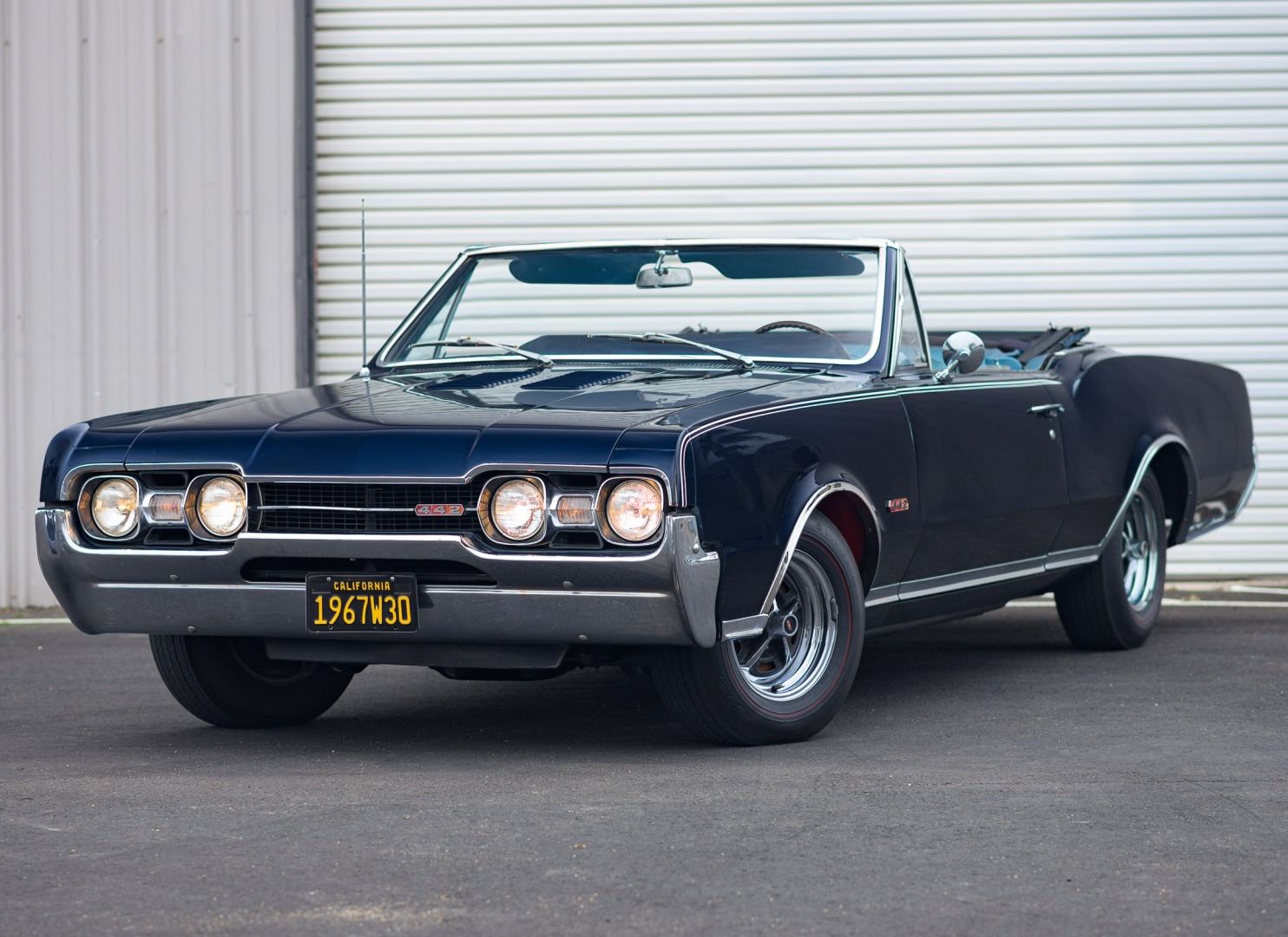
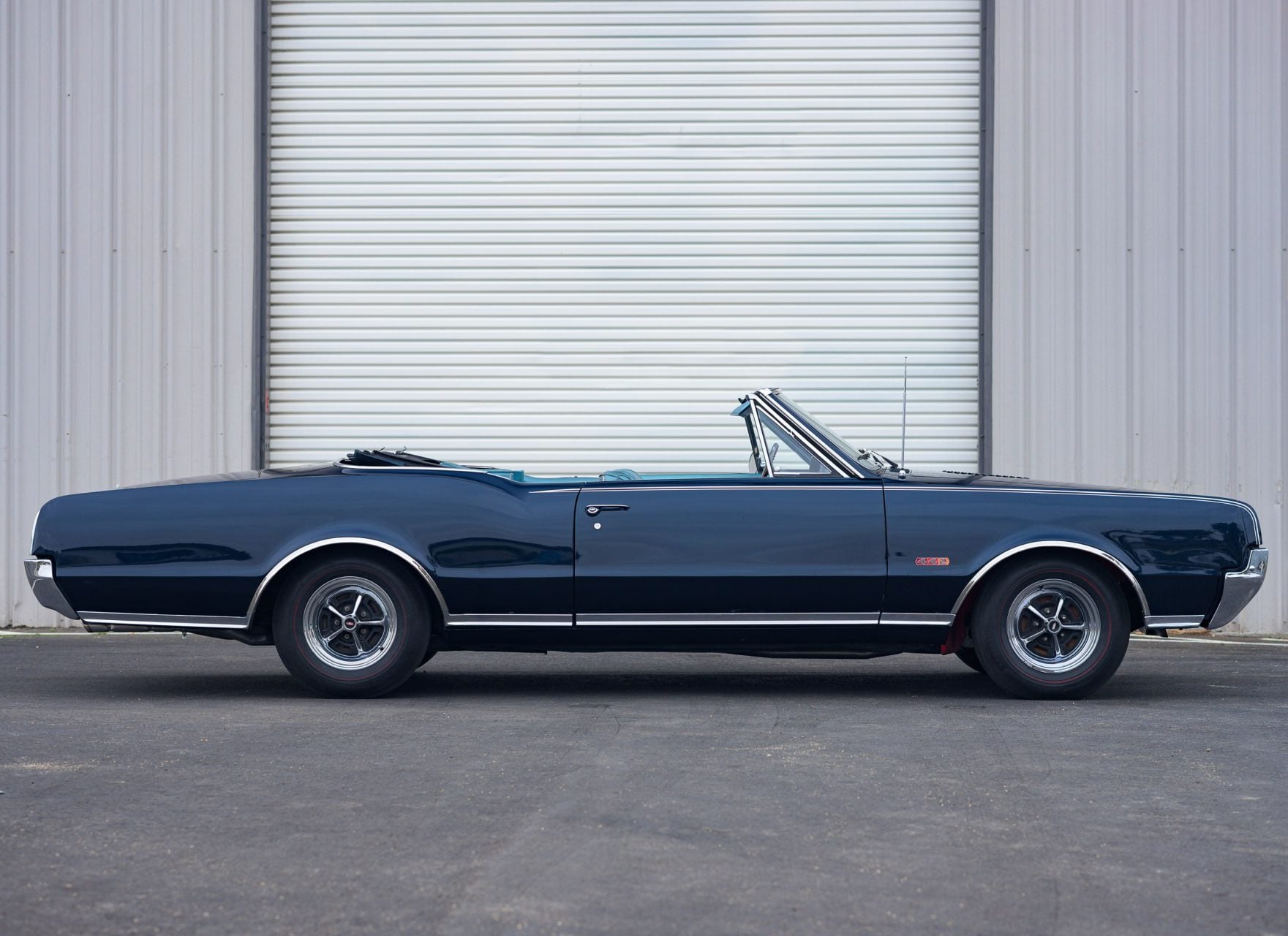
This is a 1967 Oldsmobile 442 Convertible that has been given a full nut-and-bolt restoration, as well as an upgrade to the W-30 performance package – an option that was never offered on the drop tops from the factory.
The 442 has been called a “thinking man’s GTO,” as it was developed in response to John DeLorean’s famous muscle car, but it offered better handling and a notably more refined character. Today they’re highly sought after by collectors for exactly those two reasons.
Fast Facts: The 1967 Oldsmobile 442
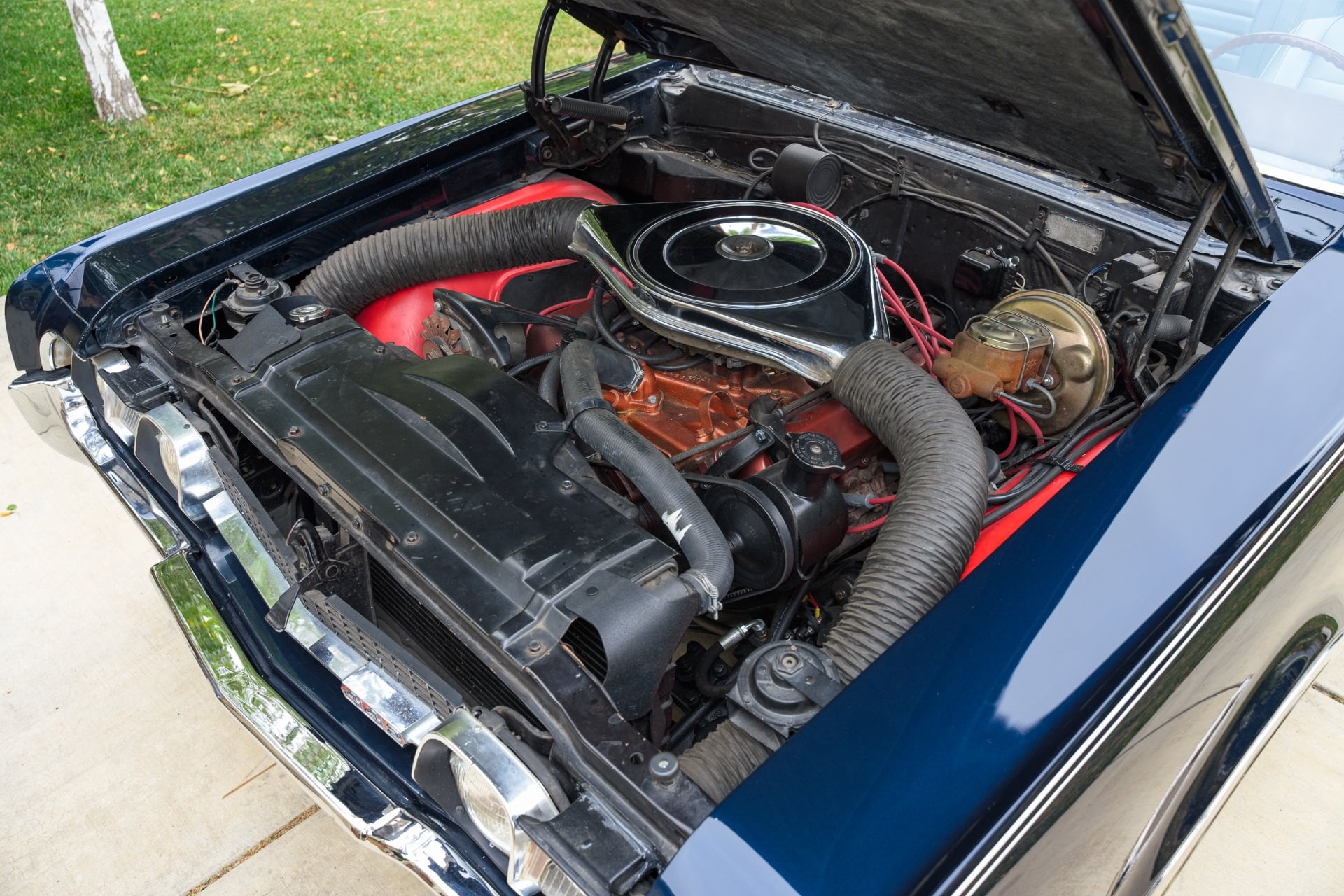
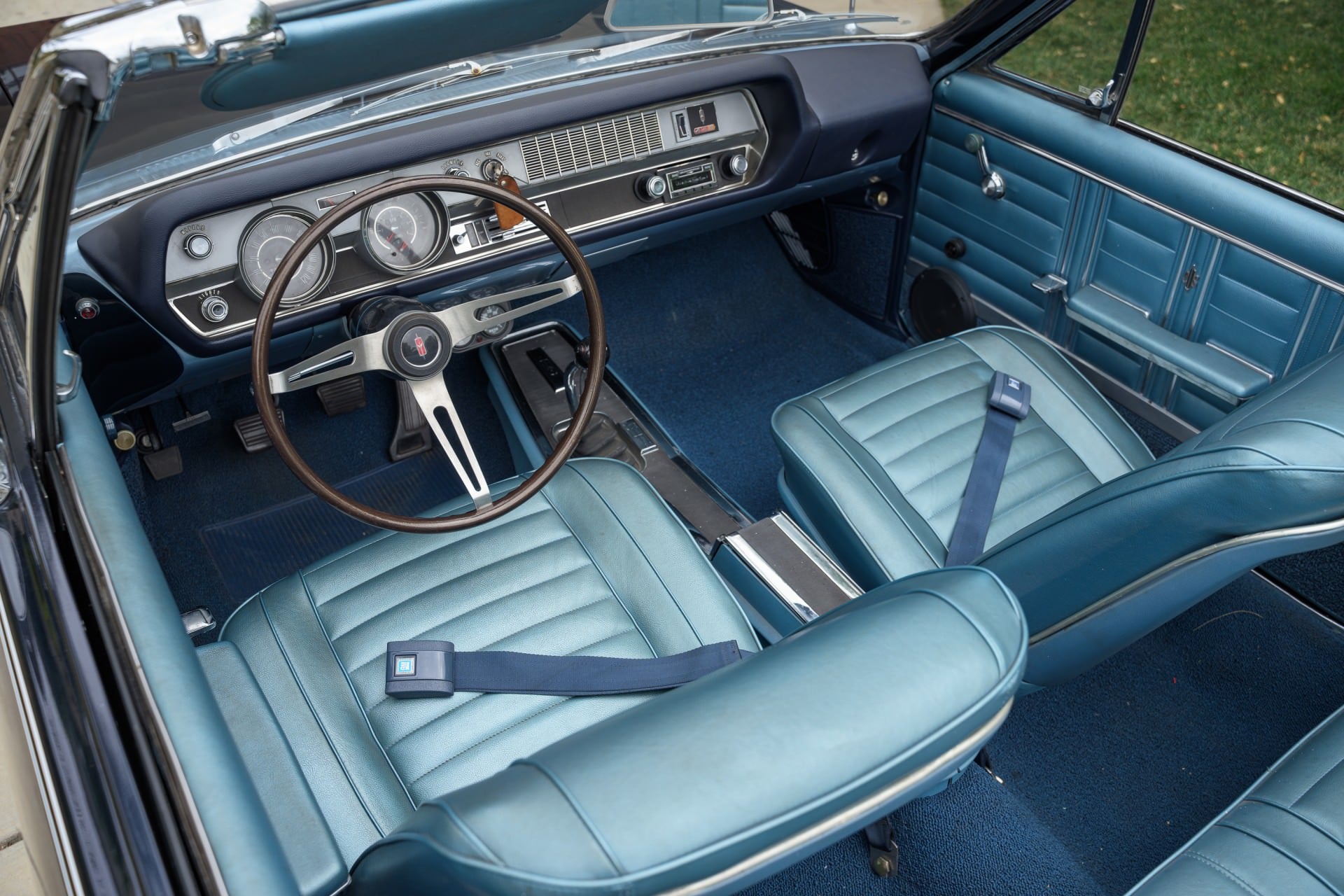
- This 1967 Oldsmobile 442 Convertible has received a comprehensive frame-off rotisserie nut-and-bolt restoration, finished in Midnight Blue over a Light Blue interior. It’s also been fitted with W-30 equipment – a forced-air induction package that was never offered on factory convertibles, making this a rather interesting aftermarket addition.
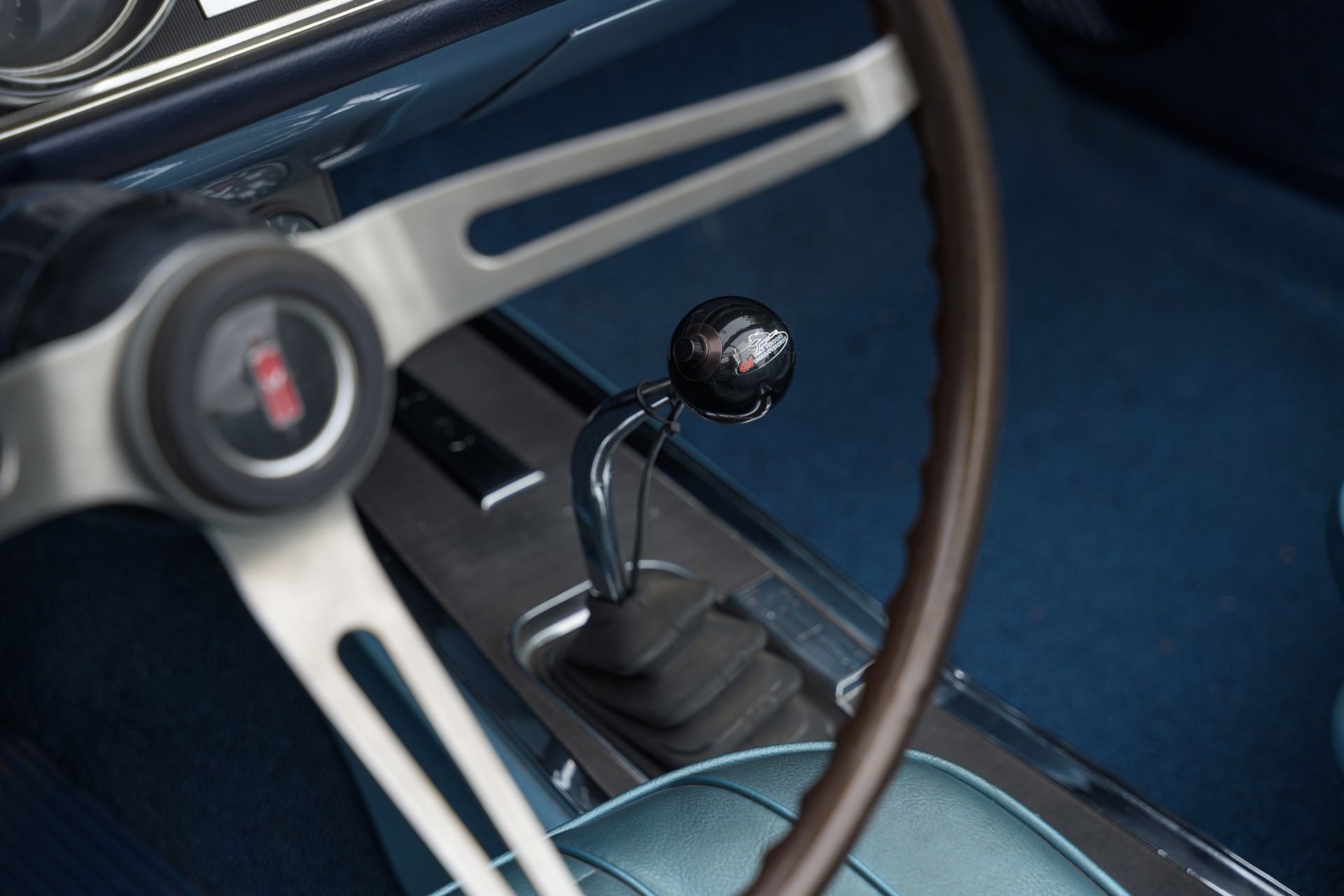
- The drivetrain pairs the 400 cubic inch V8 with a Muncie M21 close-ratio 4-speed manual transmission and a Gear Vendors overdrive unit for highway cruising. A 3.90 rear axle ratio provides excellent off-the-line acceleration, giving the car a balance of performance and long-distance usability.
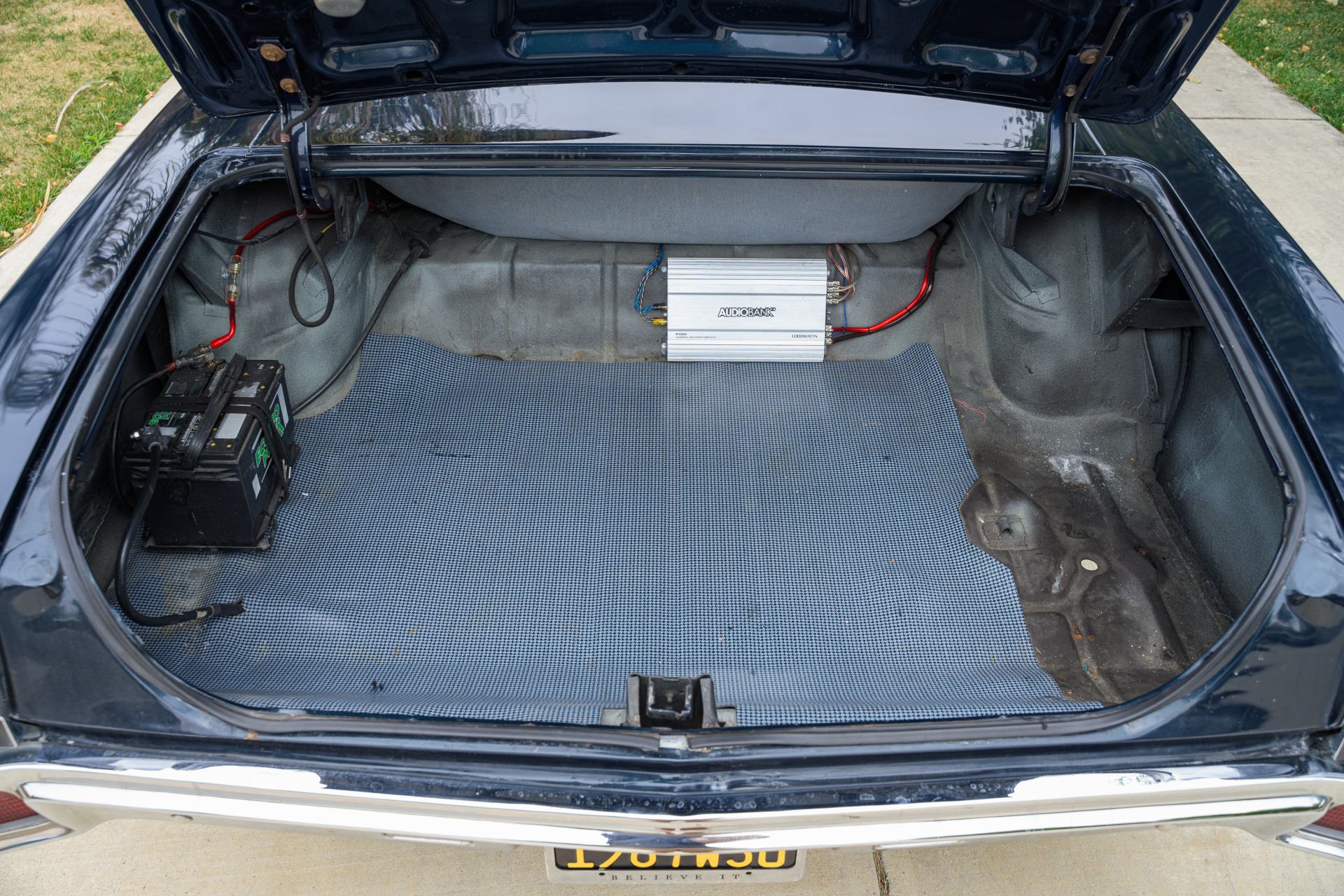
- The car rides on new Coker Redline radial tires (a period-correct choice) and it keeps its original spare tire in the trunk, never used. A 1,000.watt digital display stereo with four speakers is the only significant modern departure from the original specification.
- The 442 was Oldsmobile’s answer to the Pontiac GTO, earning praise from Car and Driver as “the best handling car of its type.” The 1967 model represents the most refined version of the original option-package concept, sitting at the sweet spot before the car became a standalone model in 1968.
History Speedrun: The Oldsmobile 442
The Oldsmobile 4-4-2 was never really supposed to exist, truth be told it was a hasty corporate counterpunch thrown in the middle of the 1964 model year after the Pontiac GTO proved that stuffing a big engine into a mid-size chassis was the fastest route to young buyers wallets across the country. And not only young ones.
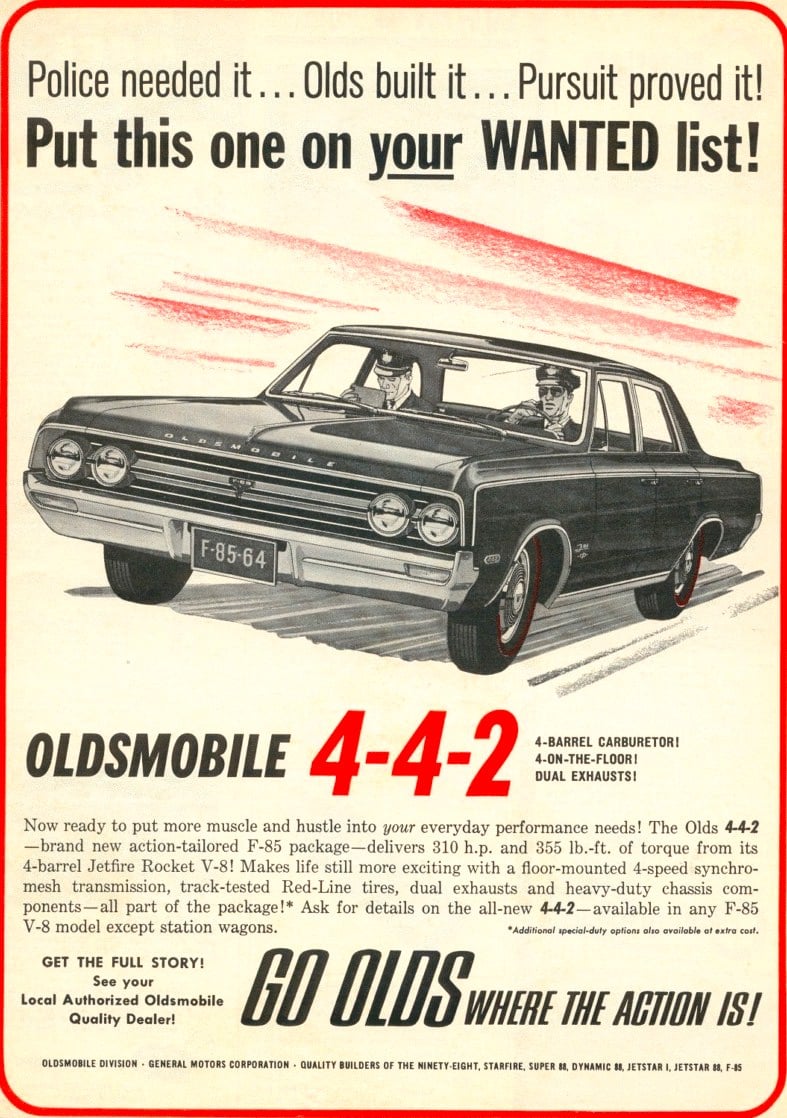
 The model was named 4-4-2 after the four-barrel carb, 4-speed manual, dual exhaust. It was offered on both the F-85 and the Cutlass, and it was available as a two-door hardtop, a two-door coupe, a convertible, and (for only ten buyers!) a four-door sedan. Image courtesy of Oldsmobile.
Oldsmobile engineer and performance enthusiast John Beltz, working alongside Dale Smith and division chief engineer Bob Dorshimer, cobbled together the bones of a muscle car from heavy-duty police-spec parts already in the Oldsmobile parts catalog.
The result of this development work was designated the “B09 Police Apprehender Pursuit” option, which is arguably a much cooler name than the official name it ended up with. It had a four-barrel carbureted 330 cubic inch V8 producing 310 bhp, a 4-speed manual transmission, dual exhausts, and upgraded suspension.
Those first three features gave the car its name – 4-4-2 after the four-barrel carb, 4-speed manual, dual exhaust. It was offered on both the F-85 and the Cutlass, and it was available as a two-door hardtop, a two-door coupe, a convertible, and (for only ten buyers!) a four-door sedan.
While the GTO might have got most of the headlines, the Oldsmobile actually had it beat in the handling department. Car Life praised the 442 as one of the best-handling American passenger cars of the period – this was high praise for what was essentially a parts-bin special.
The 442 formula evolved quite quickly, and in 1965, Oldsmobile dropped in a 400 cubic inch V8 and the name quietly took on a new interpretation – it now meant 400 cubes, a four-barrel carb, and a dual exhaust. That said, the original meaning never fully disappeared. Sales climbed past 25,000 examples and the following year brought a tri-carb setup using three Rochester two-barrel carburetors, the first time Oldsmobile had used multiple carbs since the late 1950s.
That same year, Oldsmobile quietly introduced the W-30 performance option, exclusive to the tri-carb engine, which added an air induction system and internal engine modifications. Only 54 W-30 packages shipped for 1966, making them among the rarest first-generation 4-4-2s in existence.
The 1967 442 Arrives
For 1967, a corporate edict banned multi-carburetor setups on all production cars except the Corvette. Oldsmobile was forced to rethink the 442’s engine strategy in a single model year. Amazingly enough, the result was arguably the best first-generation car they built.
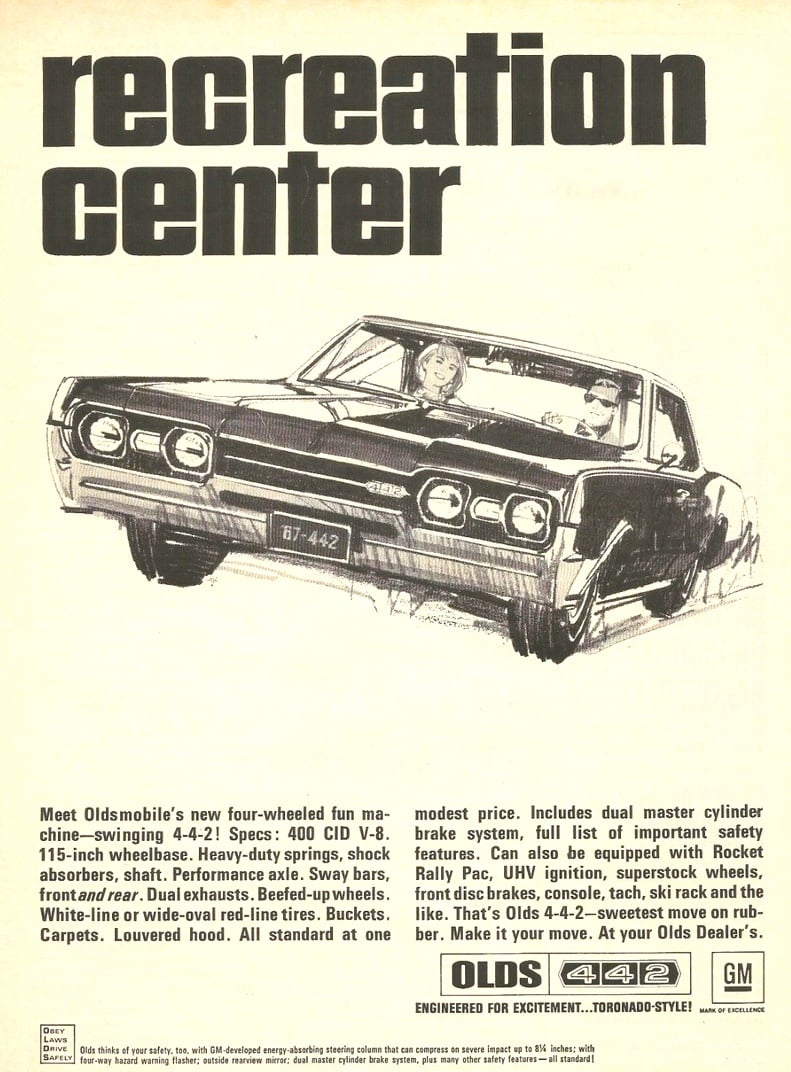
For 1967, a corporate edict banned multi-carburetor setups on all production cars except the Corvette. Oldsmobile was forced to rethink the 442’s engine strategy in a single model year. Amazingly enough, the result was arguably the best first-generation car they built. Image courtesy of Oldsmobile.
The 1967 442 was offered exclusively on the Cutlass Supreme platform in three body styles – the Holiday Coupe (a pillarless two-door hardtop), the Sport Coupe (a two-door post car), and the Convertible. All had a distinctive blacked-out grille with the 4-4-2 nameplate on the horizontal bar, a special louvered hood, and the usual complement of badging.
The chassis received heavy-duty Police Package suspension hardware which included stiffer springs, heavy-duty shock absorbers, front and rear stabilizer bars, stronger engine mounts, and a heavy-duty driveshaft. Front disc brakes were newly optional for 1967, a welcome addition. Car and Driver called the result “the best handling car of its type we’ve ever tested.” High praise indeed.
Under the hood of every 1967 442 was the 400 cubic inch V8. The standard engine was the L78 Rocket V8 fitted with a Rochester Quadrajet four-barrel carburetor, rated at 350 bhp and 440 lb ft of torque. For the performance-obsessed, Oldsmobile offered the W-30 Force-Air-Induction package at $300 over the base 442 price.
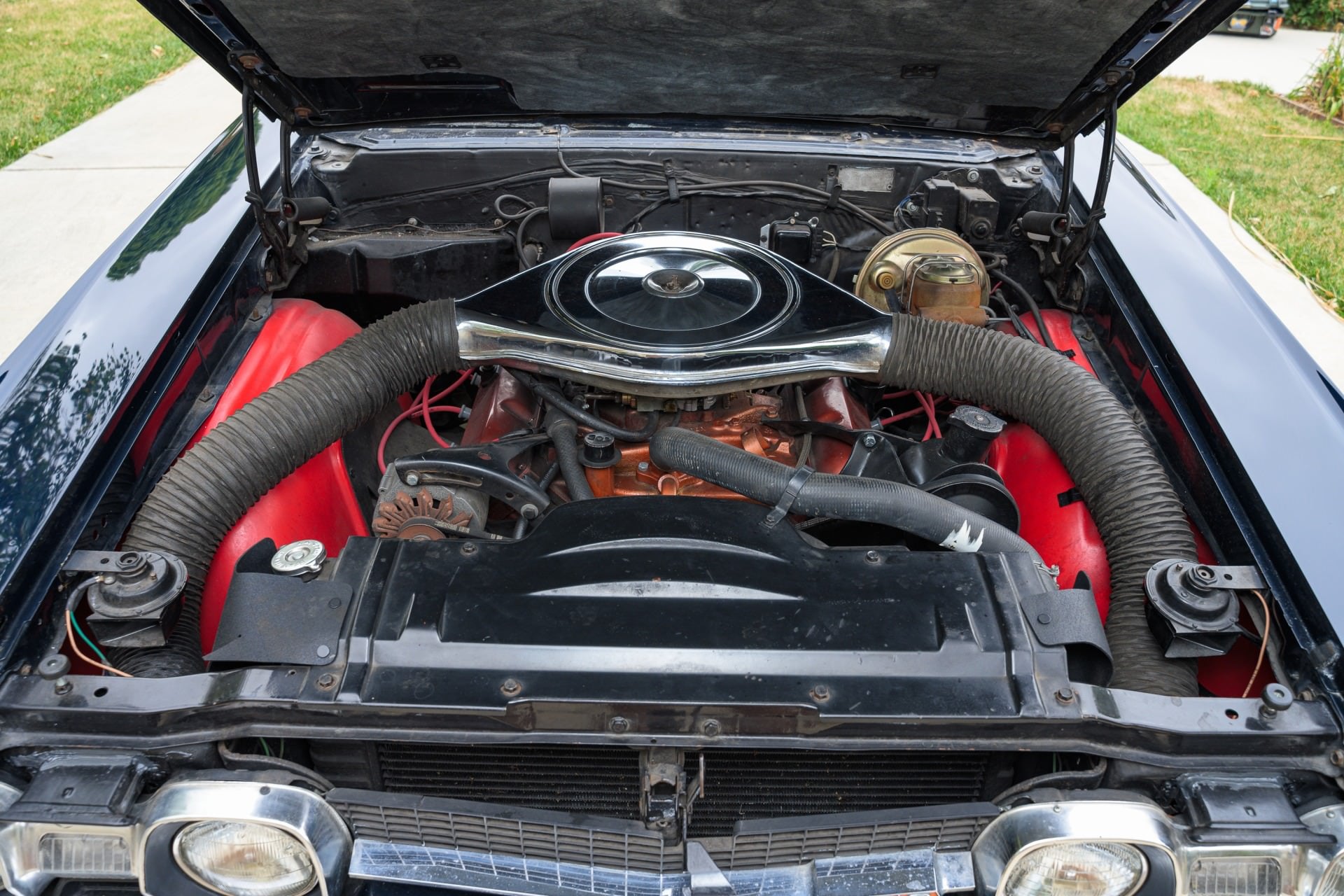
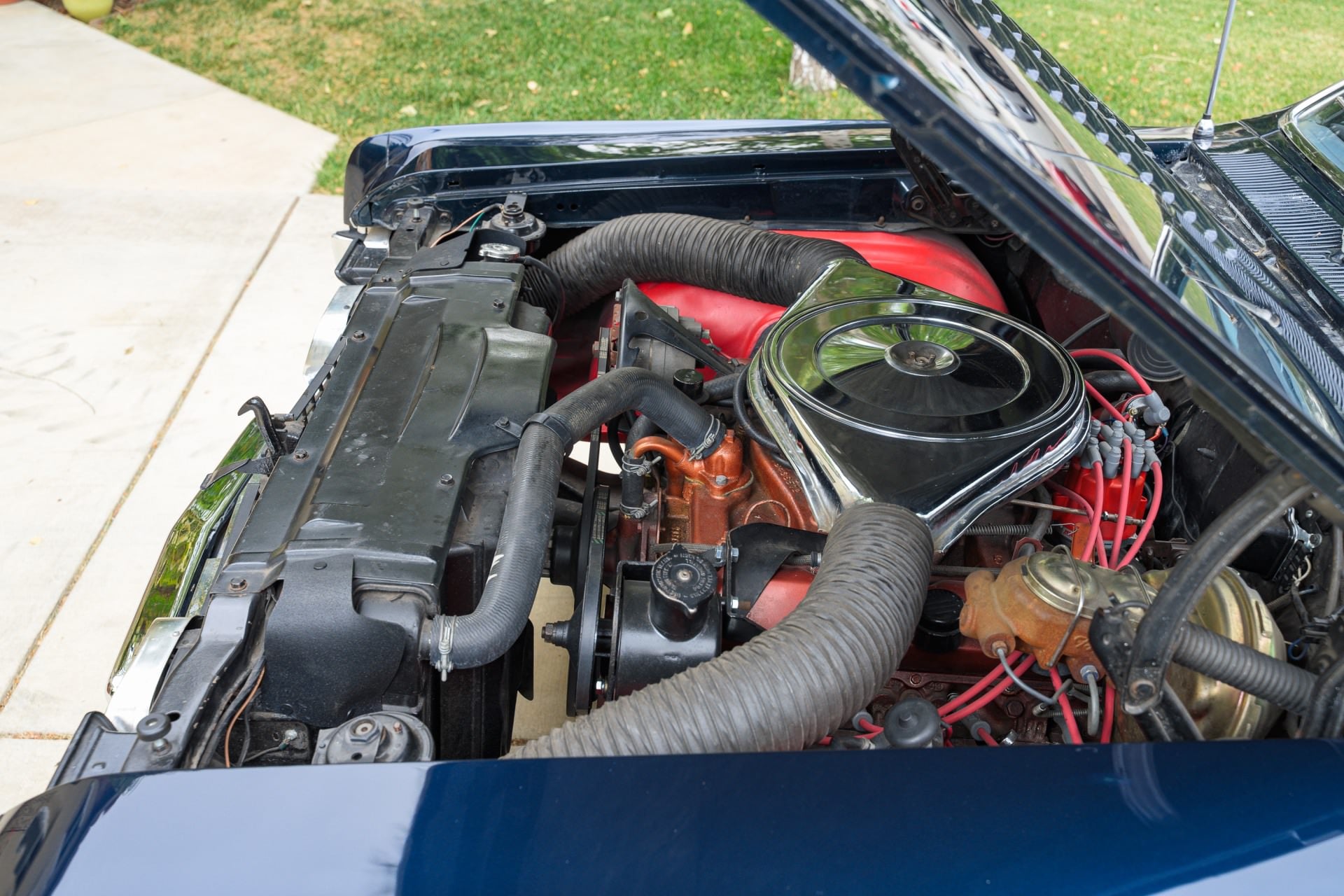
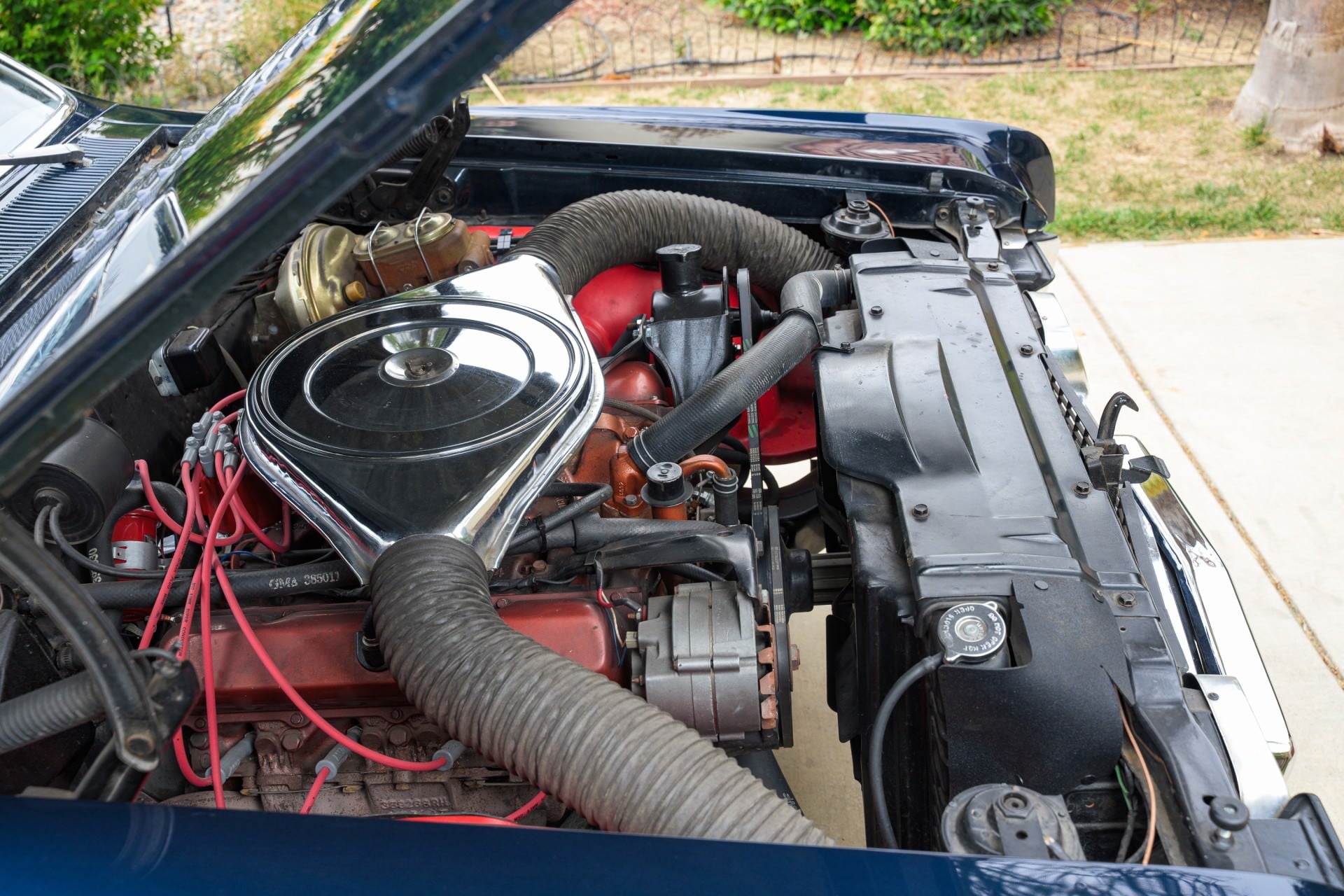
The W-30 bumped output to 360 bhp and drew cold air through inlets positioned above and below the parking lights between the headlights, routing it via flexible ducting to a specially stamped air cleaner. The package also included high-strength valve springs, a hotter camshaft, higher oil pressure, and red inner fender liners.
The battery was relocated to the trunk to make room for the ducting, which had the added benefit of slightly improving weight distribution. Period testers considered the 360 bhp rating somewhat conservative, and when Cars magazine tested a W-30 equipped with a close-ratio 4-speed and 4.33 rear axle, they recorded a 14.1 second quarter mile at 103 mph in fully stock trim.
To meet NHRA homologation requirements, 502 factory W-30 engines were built for the 1967 model year, along with an unknown number of dealer-installed packages. The W-30 was available only on the Holiday Coupe and Sport Coupe, no factory W-30 convertibles were produced, though the package was added afterwards to a number of drop tops.
Transmission choices included a standard 3-speed manual. The 3-speed Turbo Hydra-Matic automatic was newly available for 1967, replacing the older 2-speed Jetaway. For more serious drivers, Oldsmobile offered both a wide-ratio and a close-ratio Muncie 4-speed manual, both with Hurst shifters. Rear axle ratios ranged from a highway-friendly 2.41:1 to a drag-strip-ready 4.33:1. Total production for the 1967 model year came in at 24,829 examples, holding relatively steady with the two years before.
The 1968 model year brought a dramatic shift – the 442 was promoted to a standalone model with its own unique VIN designation, riding on a new 112 inch wheelbase (down from 115). That same year, Oldsmobile partnered with Hurst Performance to create the Hurst/Olds, this was a limited run of 515 cars that exploited a loophole by using an outside contractor to fit the full-size 455 cubic inch V8 into the mid-size chassis, sidestepping GM’s displacement limits.
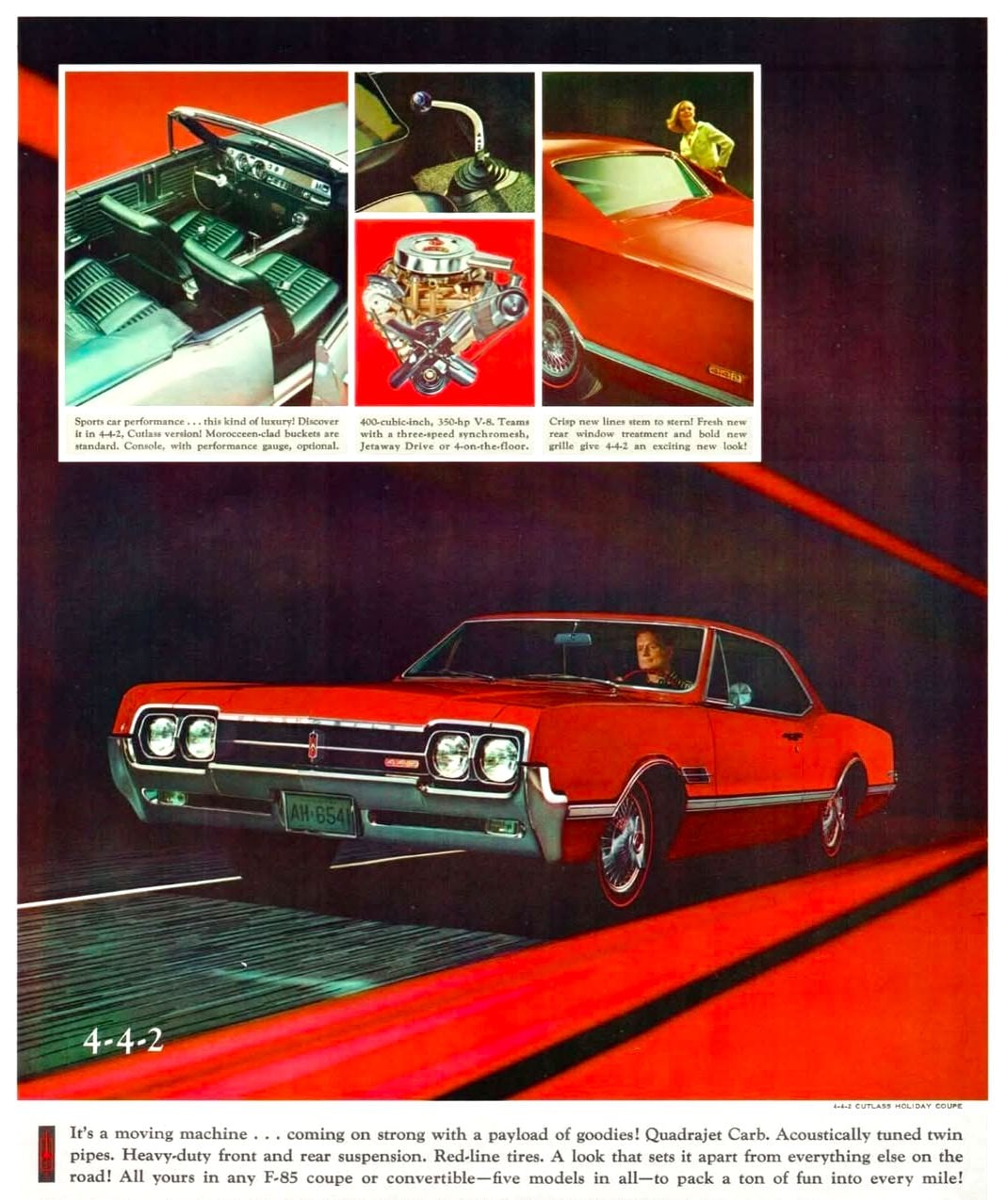
While the GTO might have got most of the headlines, the Oldsmobile actually had it beat in the handling department. Car Life praised the 442 as one of the best-handling American passenger cars of the period – this was high praise for what was essentially a parts-bin special. Image courtesy of Oldsmobile.
The Long (Slow) Goodbye
The 442 reached its peak in 1970 when GM lifted the restrictions outright. The 455 became the standard engine, rated at 365 bhp and a staggering 500 lb ft of torque, while the W-30 option pushed output to 370 bhp. A W-30 convertible paced the Indianapolis 500, and Oldsmobile produced 268 Y74 Indy Pace Car replicas for public sale.
Despite all of this, the end was nigh. Rising insurance premiums, emissions standards, and the fuel crisis gutted the muscle car market. The 442 reverted to an option package on the Cutlass for 1972, and while Oldsmobile revived the 442 name on the rear-wheel drive Cutlass Supreme and later on the front-wheel-drive Cutlass Calais, though these were mere shadows of the original cars.
The 1967 Oldsmobile 442 Convertible Shown Here
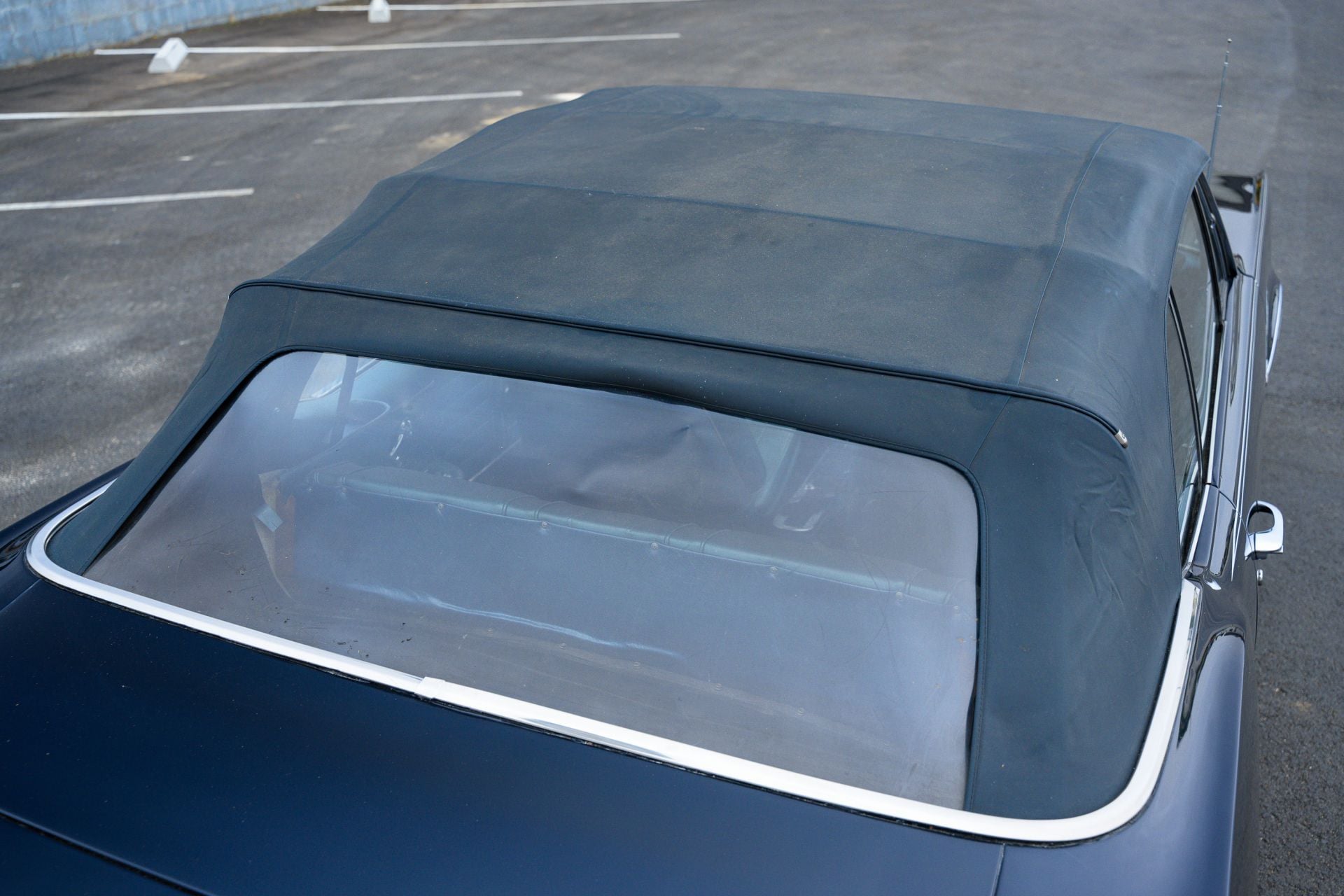
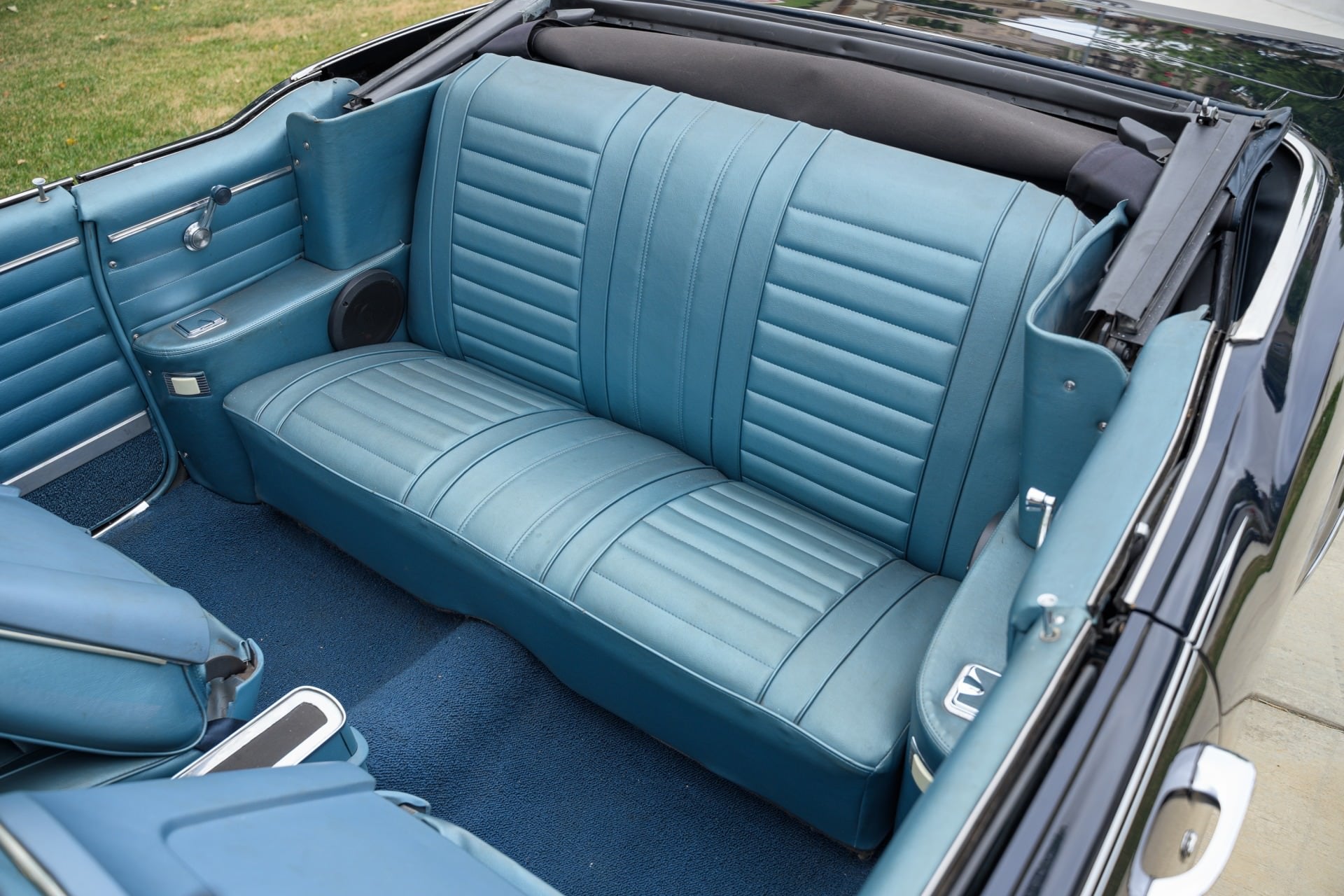
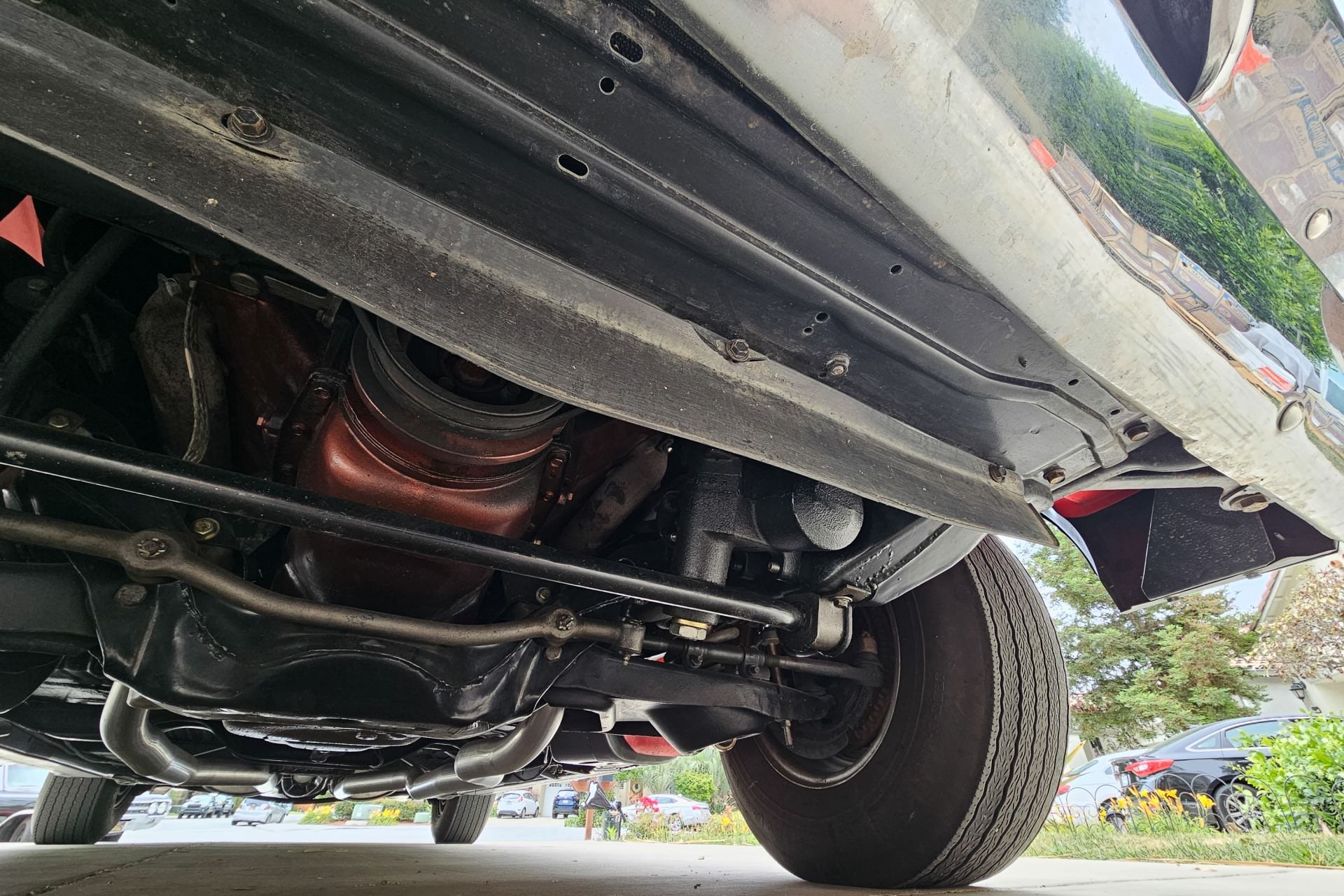
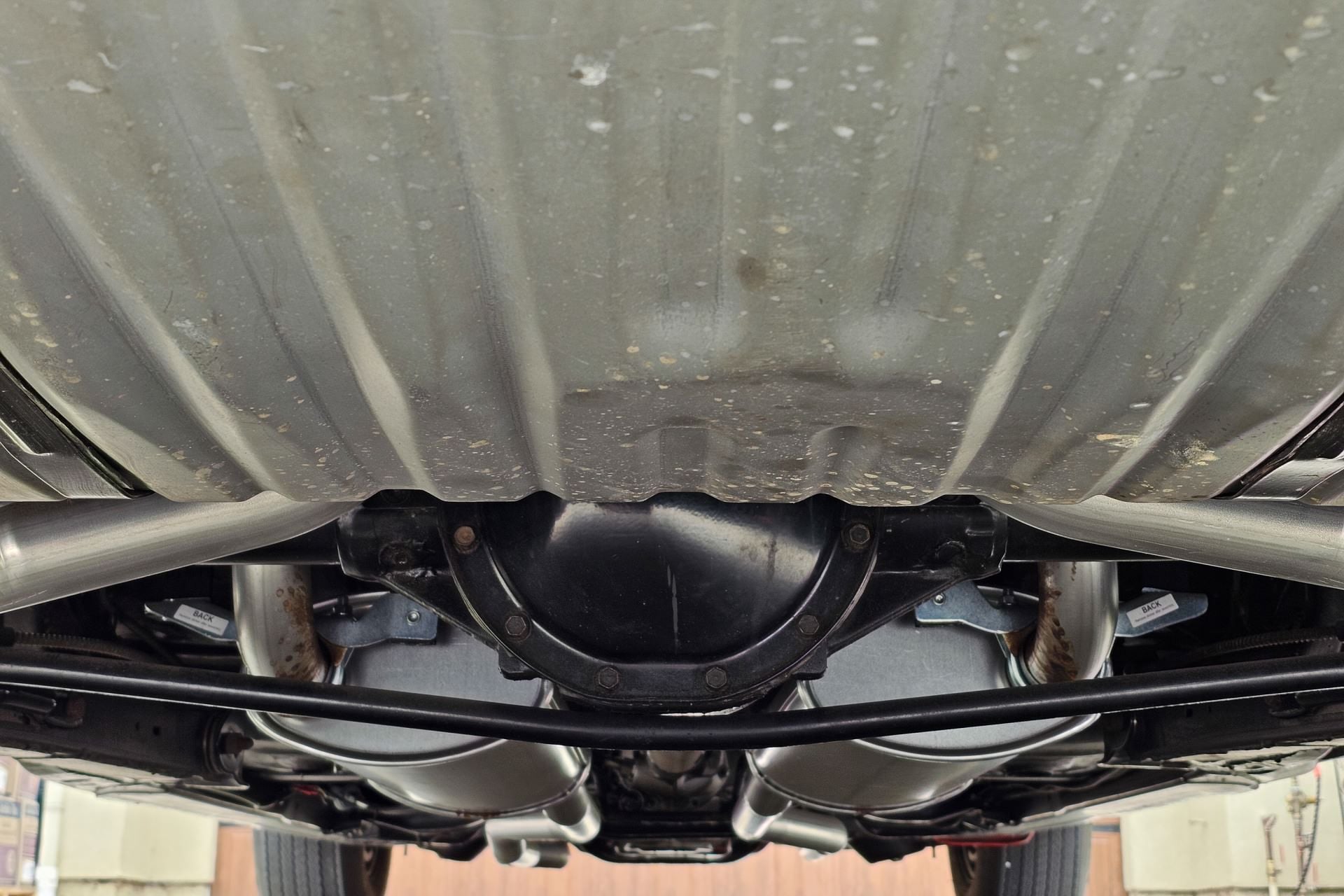
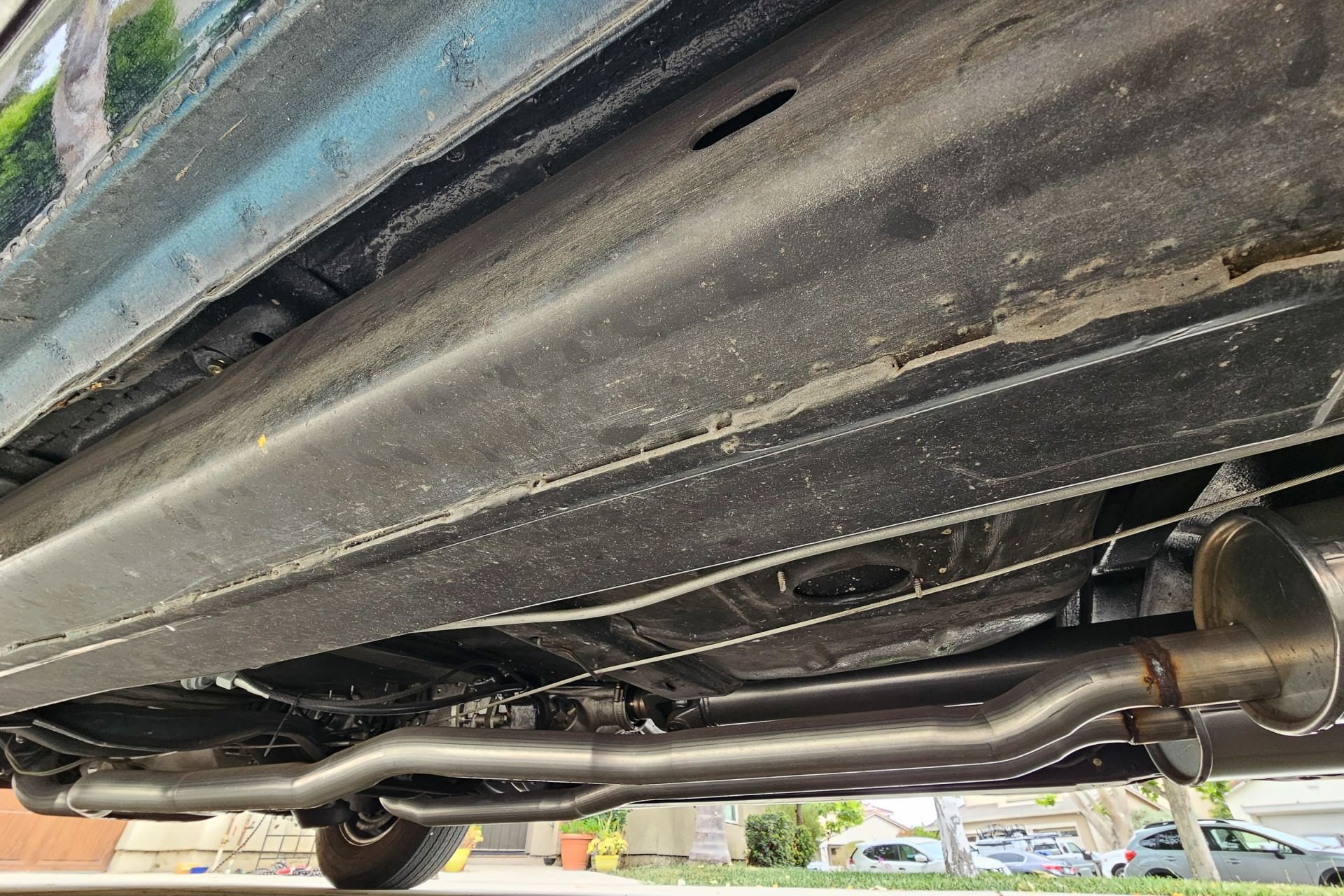
This 1967 Oldsmobile 442 now benefits from a comprehensive frame-off rotisserie nut-and-bolt restoration – the body was disassembled and every part was removed, inspected, and either restored or replaced. The car has been finished in Midnight Blue over a Light Blue interior.
The drivetrain is built around the 400 cubic inch V8 fitted with W-30 equipment, pairing the forced-air induction hardware with a Muncie M21 close-ratio 4-speed manual transmission. A Gear Vendors overdrive unit has been added to the driveline for relaxed highway cruising, and a 3.90 rear axle ratio allows solid acceleration off the line.
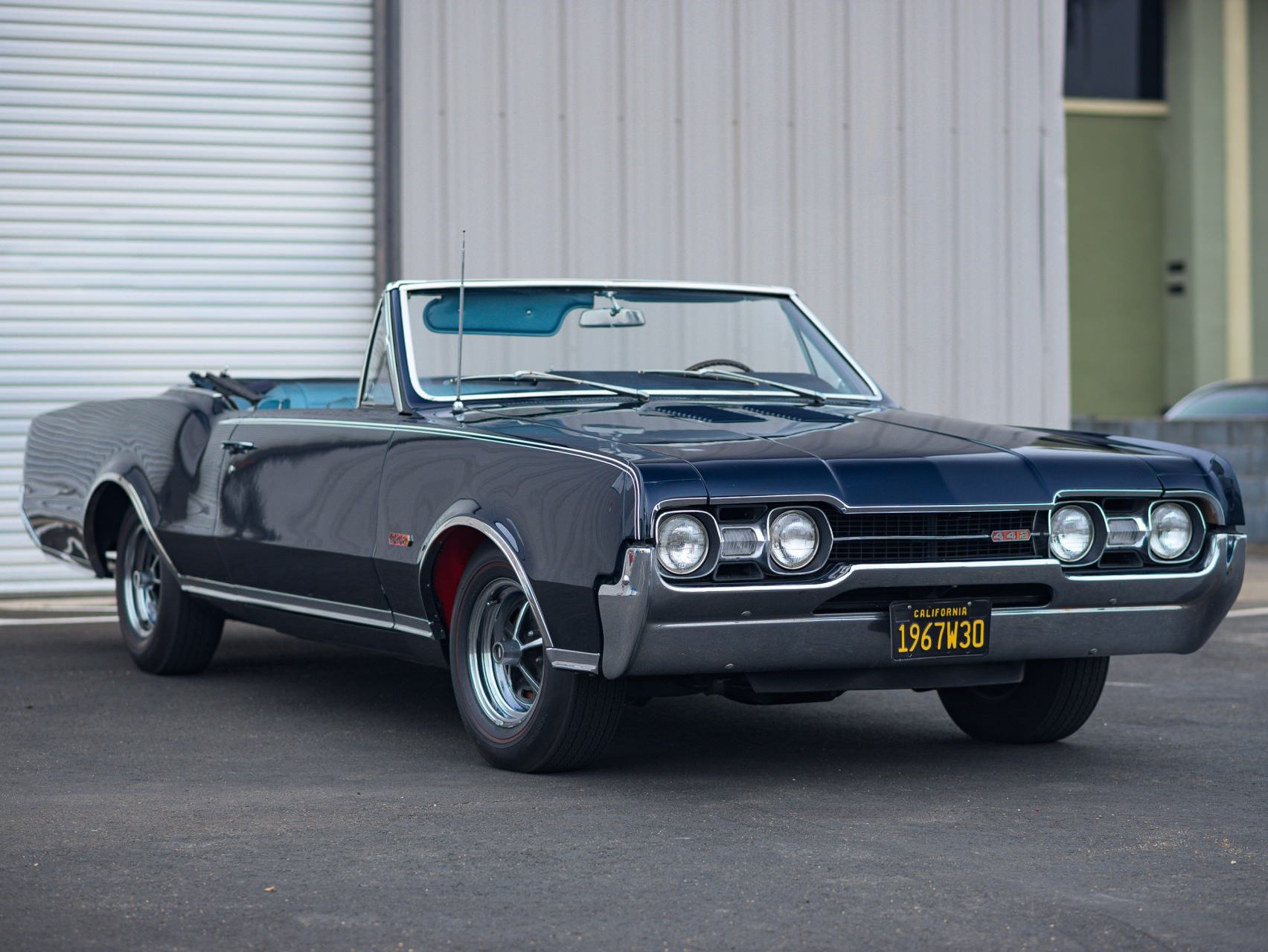
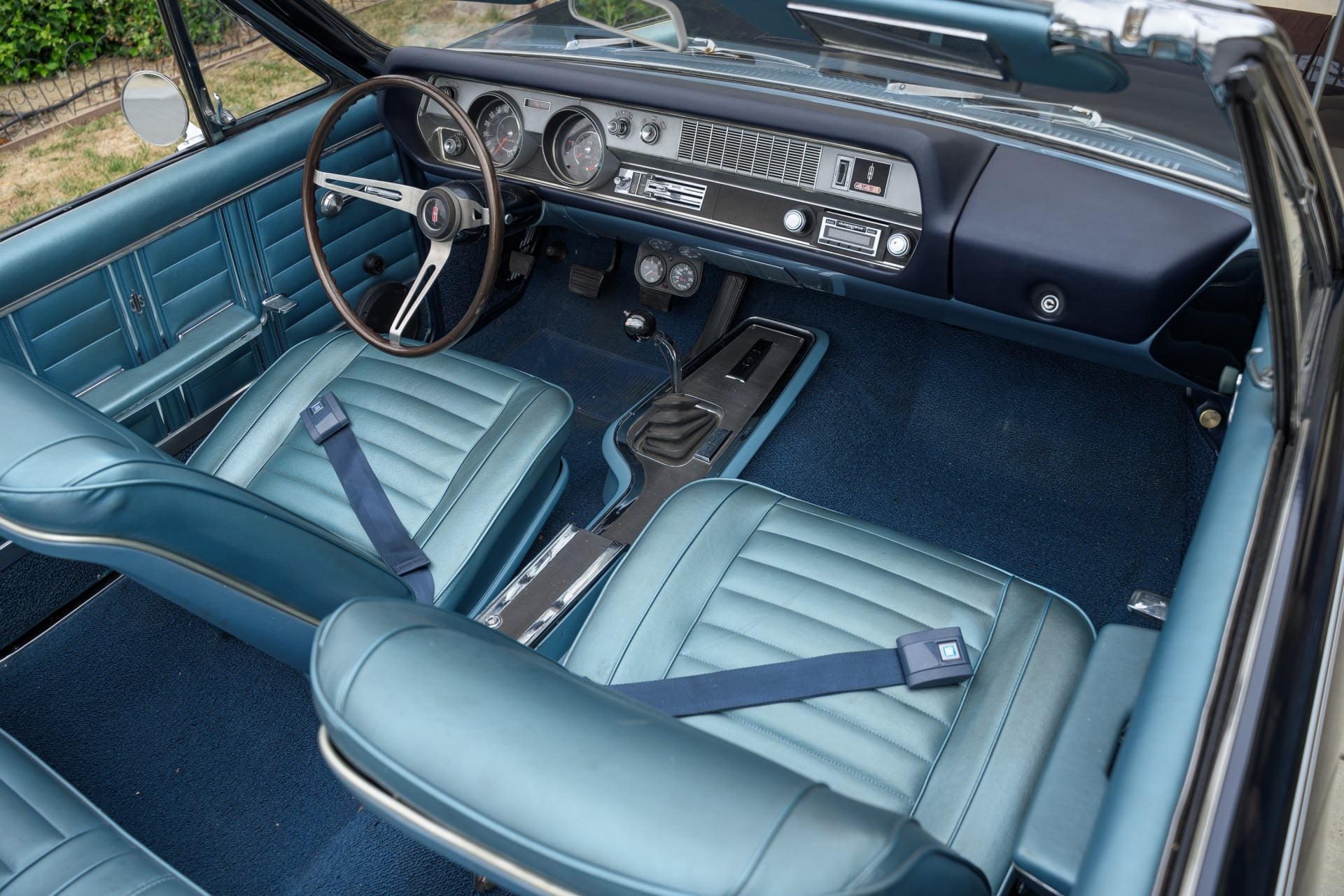
This is a 1967 Oldsmobile 442 Convertible that has been given a full nut-and-bolt restoration, as well as an upgrade to the W-30 performance package – an option that was never offered on the drop tops from the factory.
The car rides on new Coker Redline radial tires, this is a period-correct choice that suits the car’s era, and the original spare tire remains in the trunk, never used. A modern 1,000 watt digital display stereo system with four speakers has been installed, but this is the only significant departure from the car’s original spec.
It’s now due to roll across the auction block with Mecum in mid-August and you can visit the listing here if you’d like to read more or register to bid.
Images courtesy of Mecum

Articles that Ben Branch has written have been covered on CNN, Popular Mechanics, Smithsonian Magazine, Road & Track Magazine, the official Pinterest blog, the official eBay Motors blog, BuzzFeed, Autoweek Magazine, Wired Magazine, Autoblog, Gear Patrol, Jalopnik, The Verge, and many more.
Silodrome was founded by Ben back in 2010, in the years since the site has grown to become a world leader in the alternative and vintage motoring sector, with well over a million monthly readers from around the world and many hundreds of thousands of followers on social media.