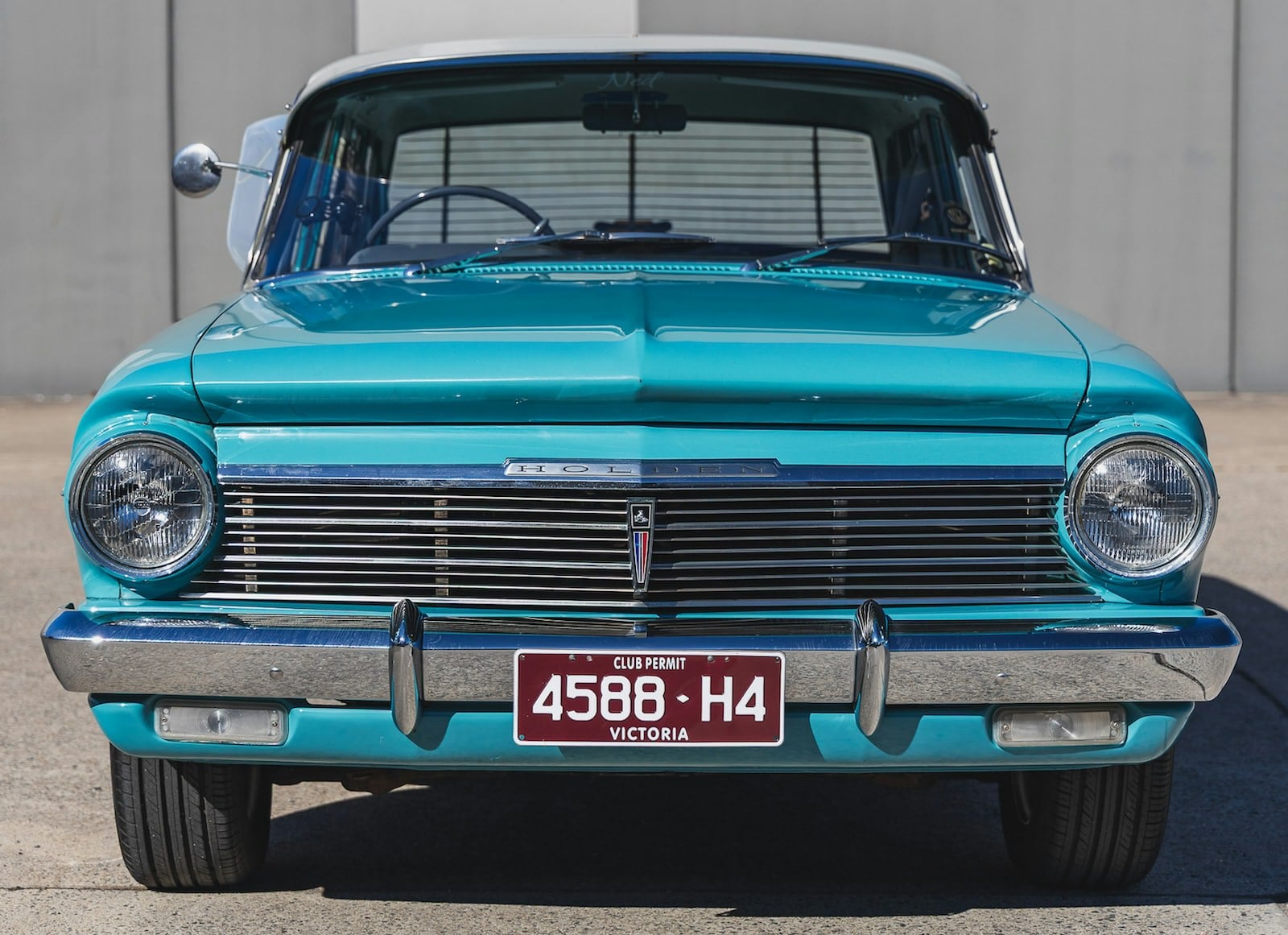
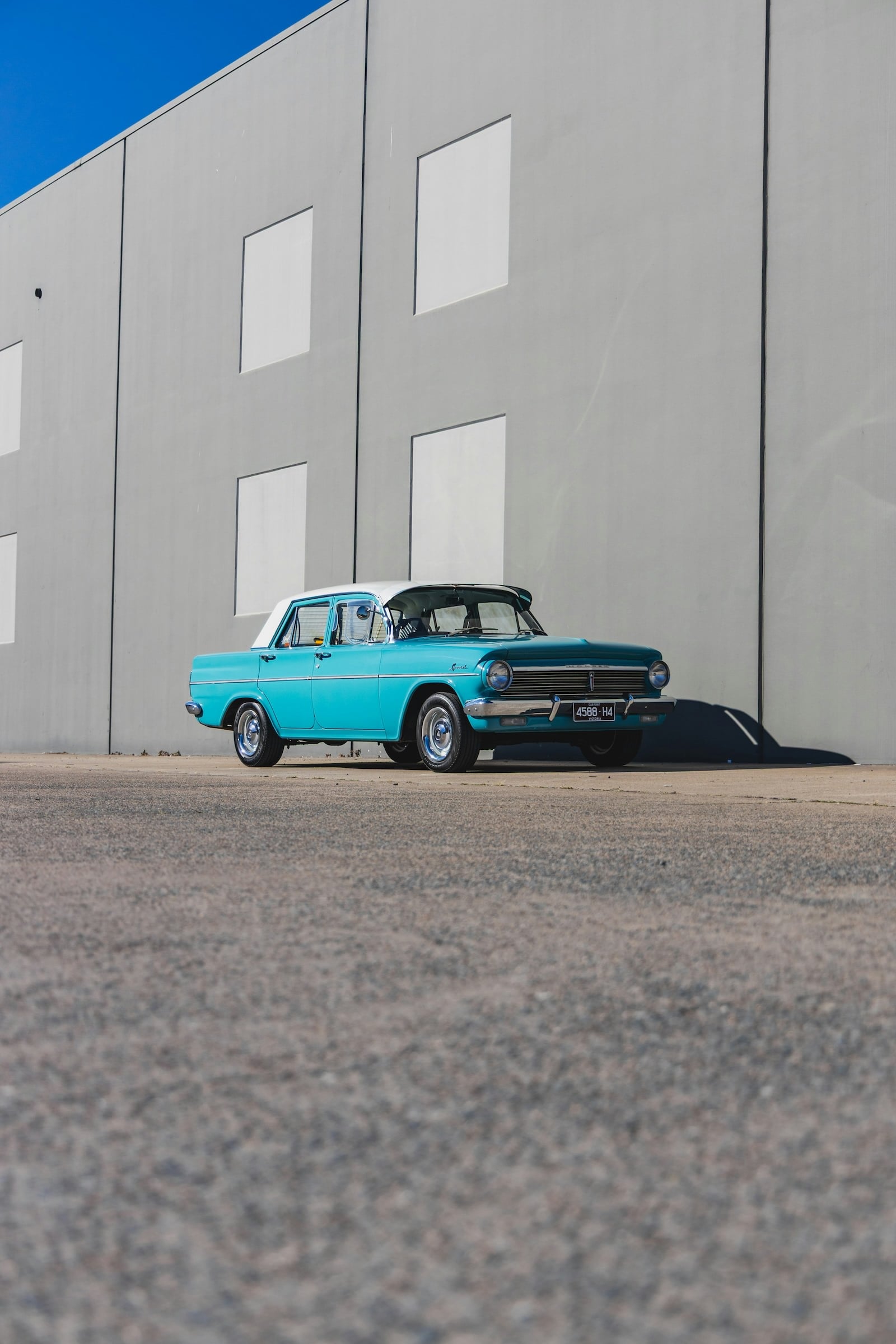
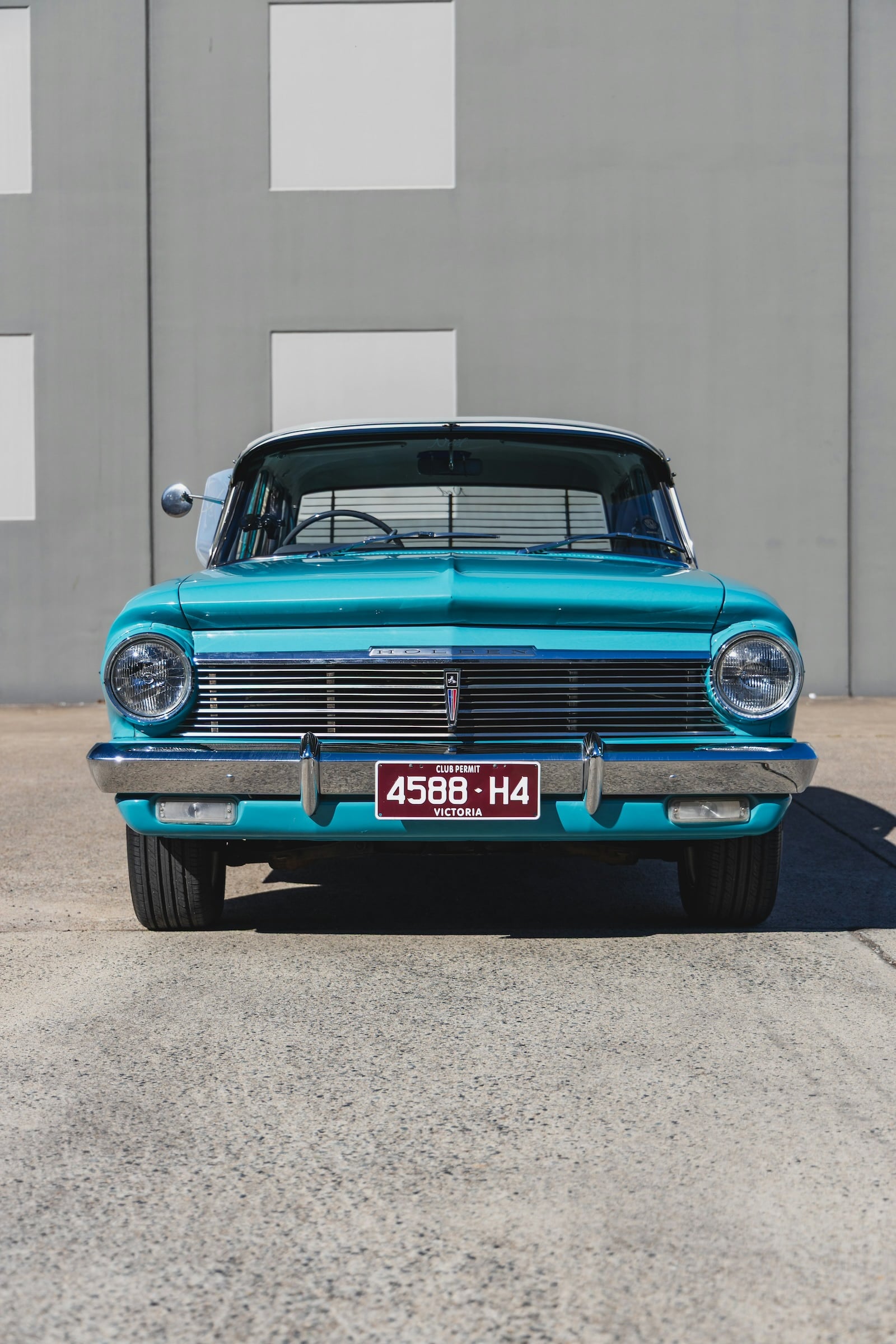
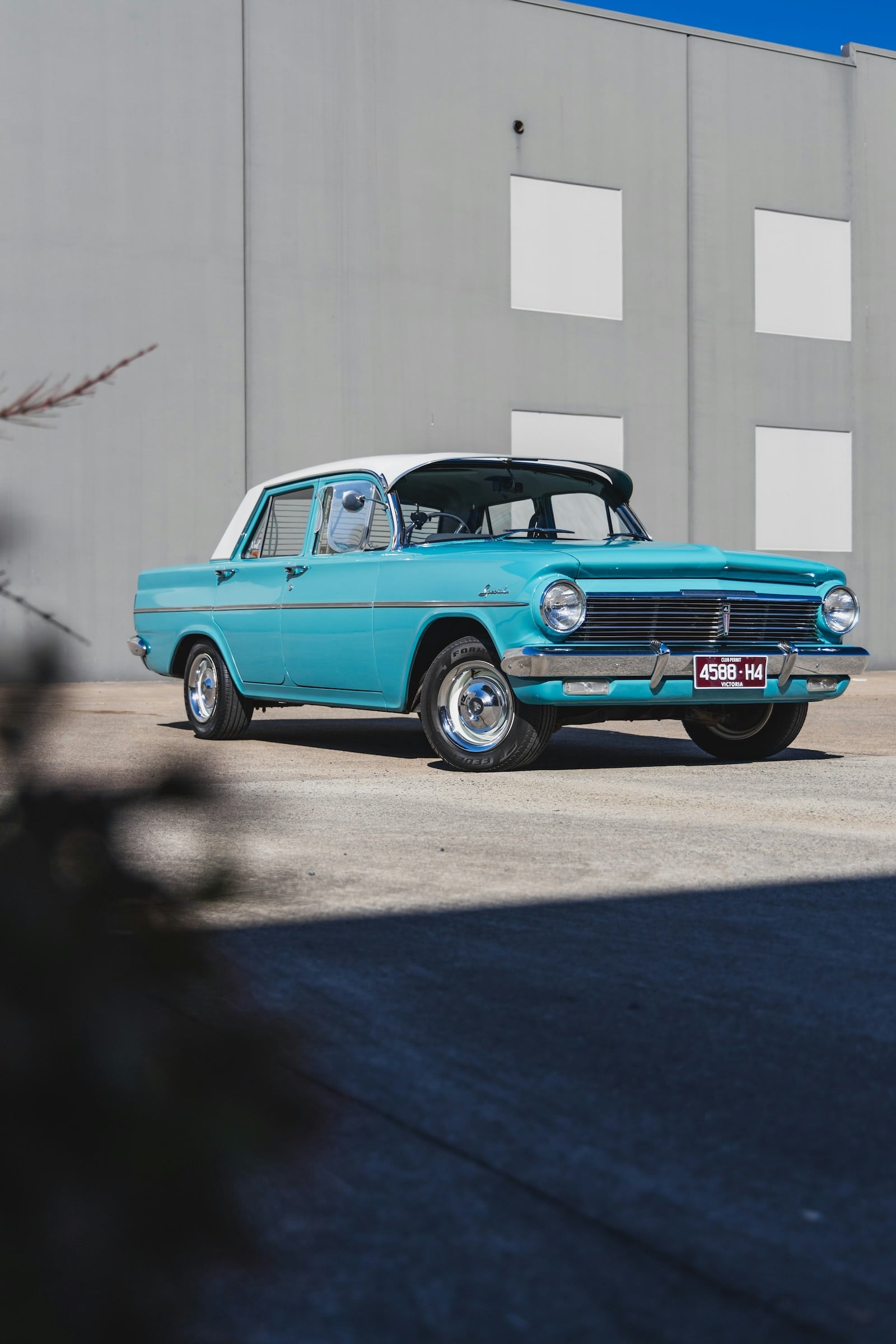
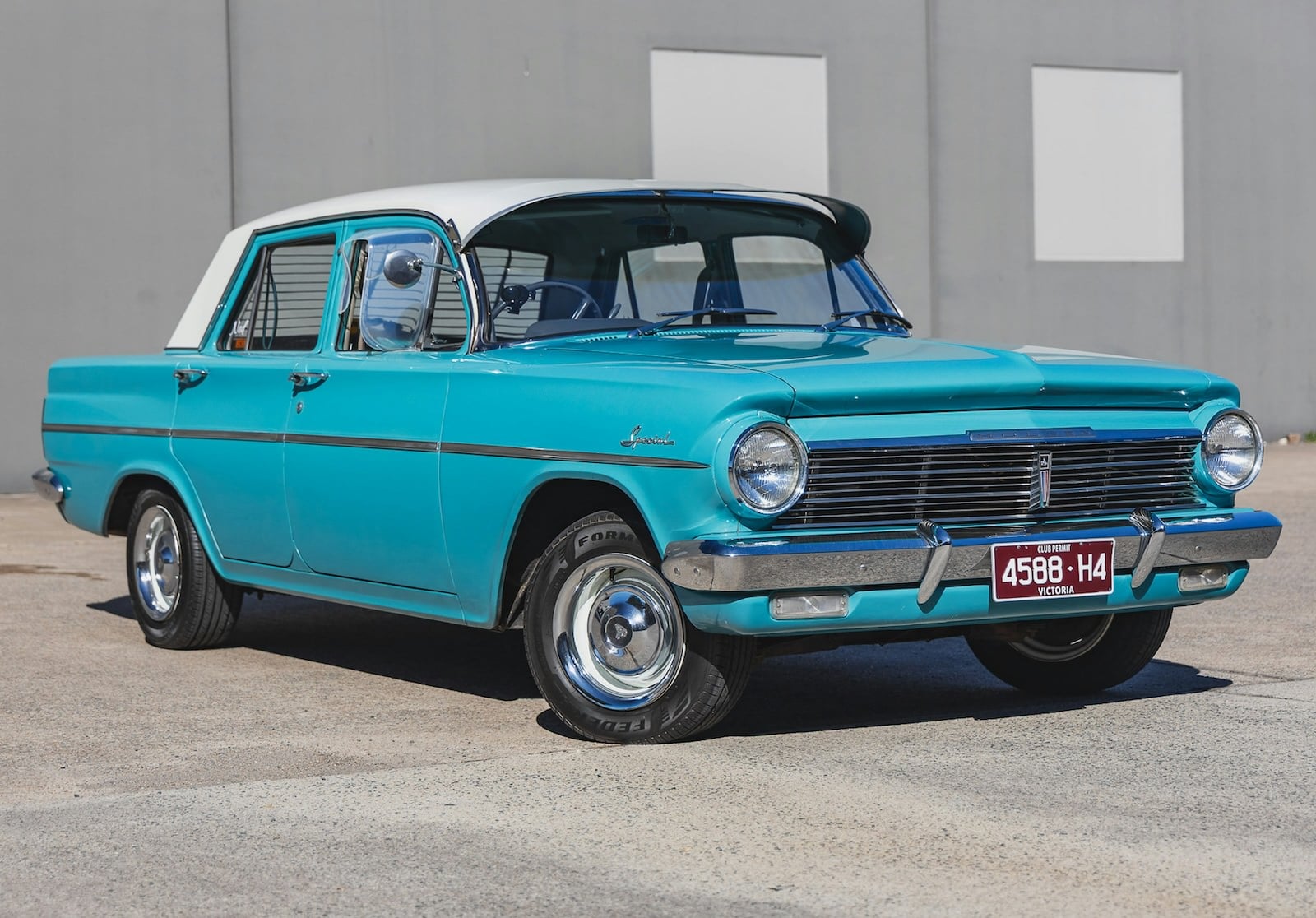
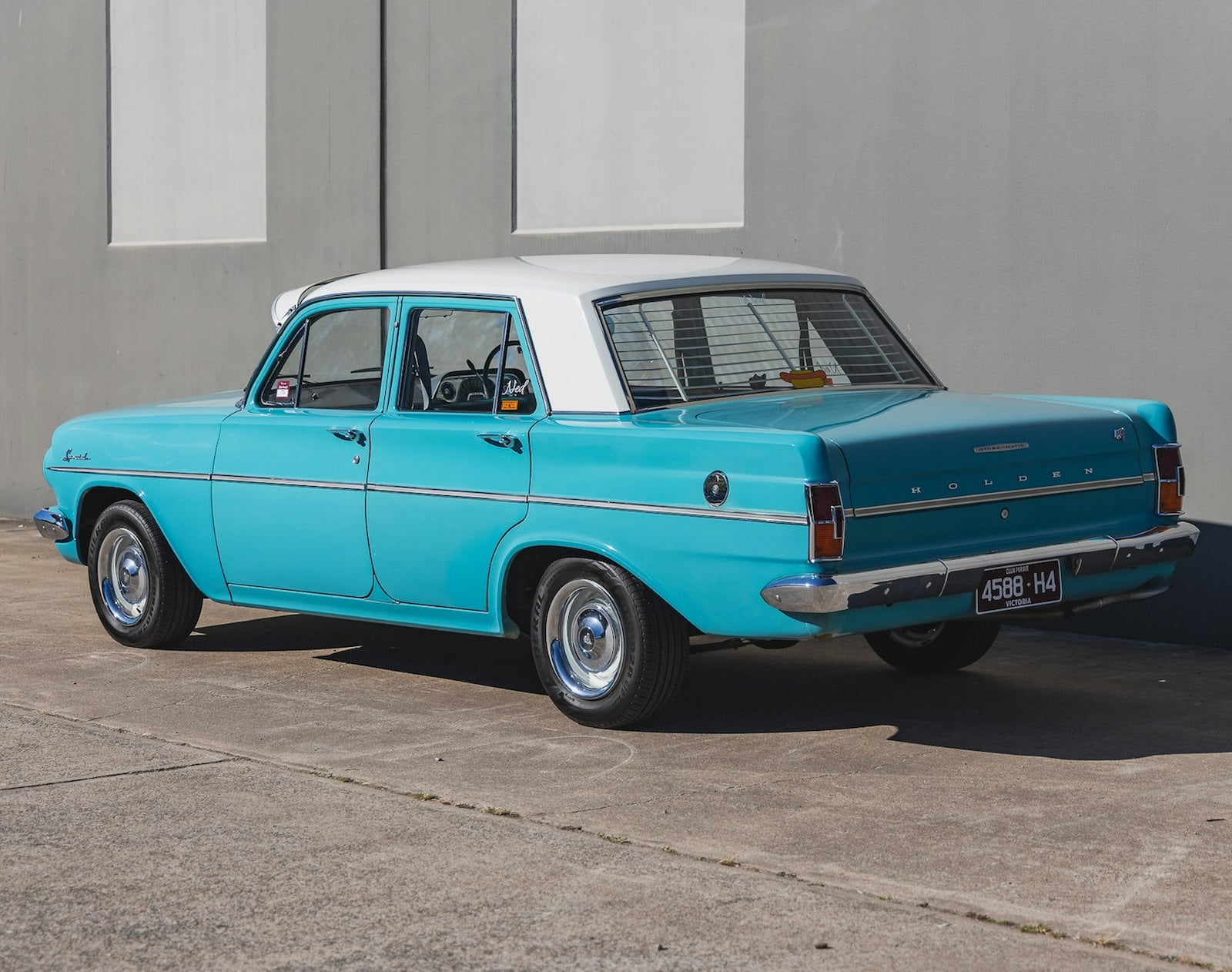
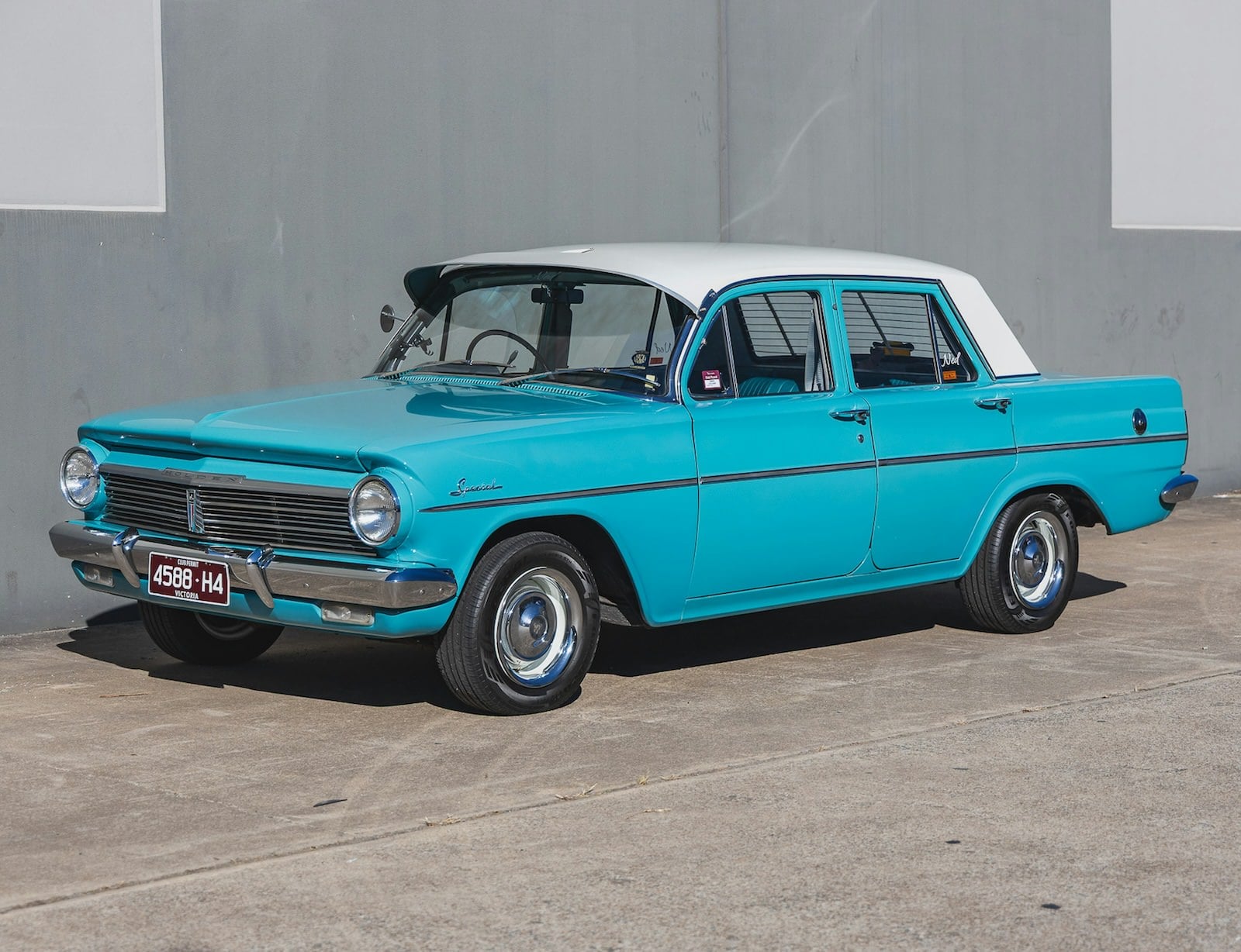
This is a 1963 Holden EH Special, it’s an Australian sedan that dominated the southern nation’s sales charts back in the 1960s, and remained a common sight on roads until well into the 1980s.
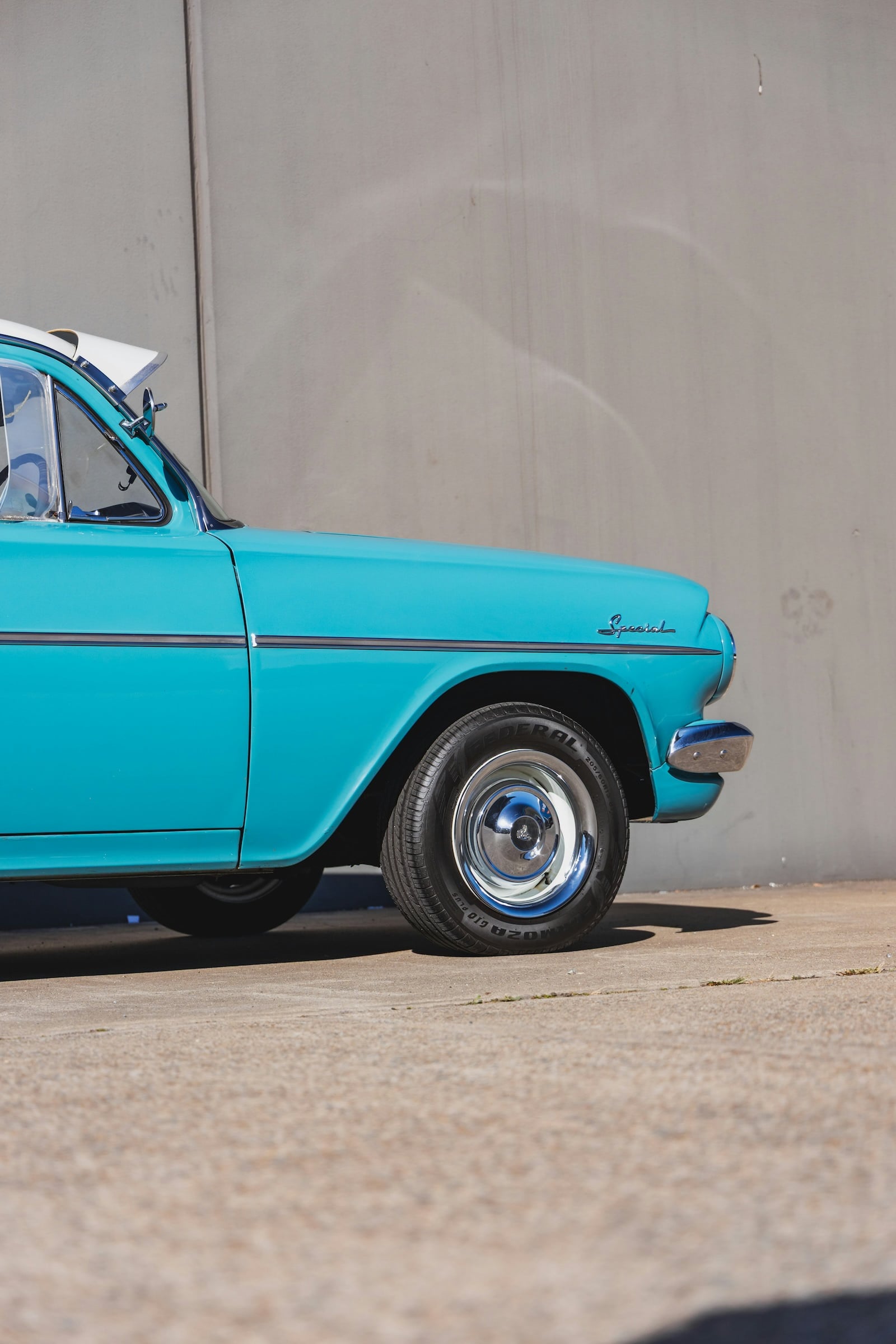
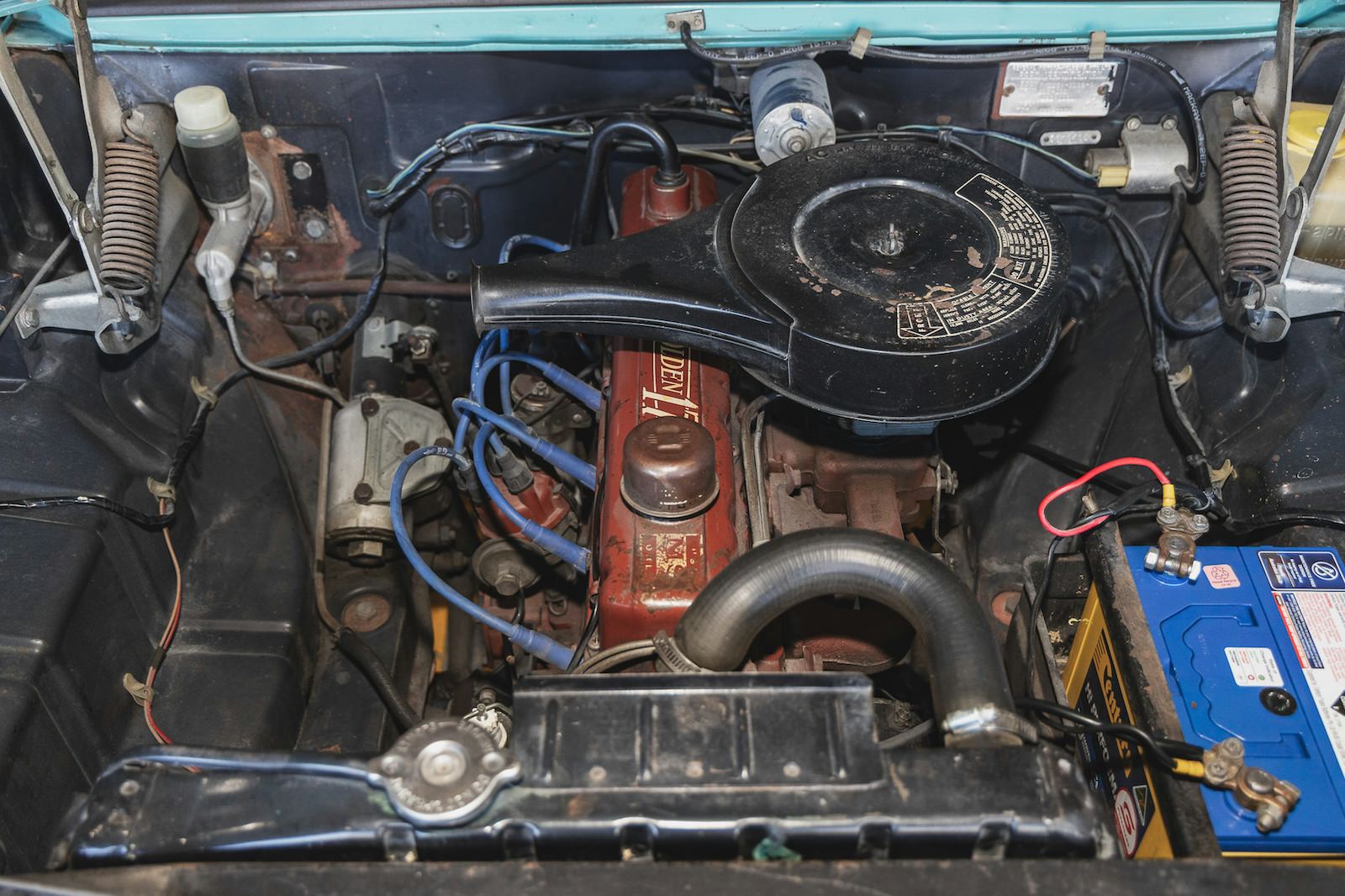
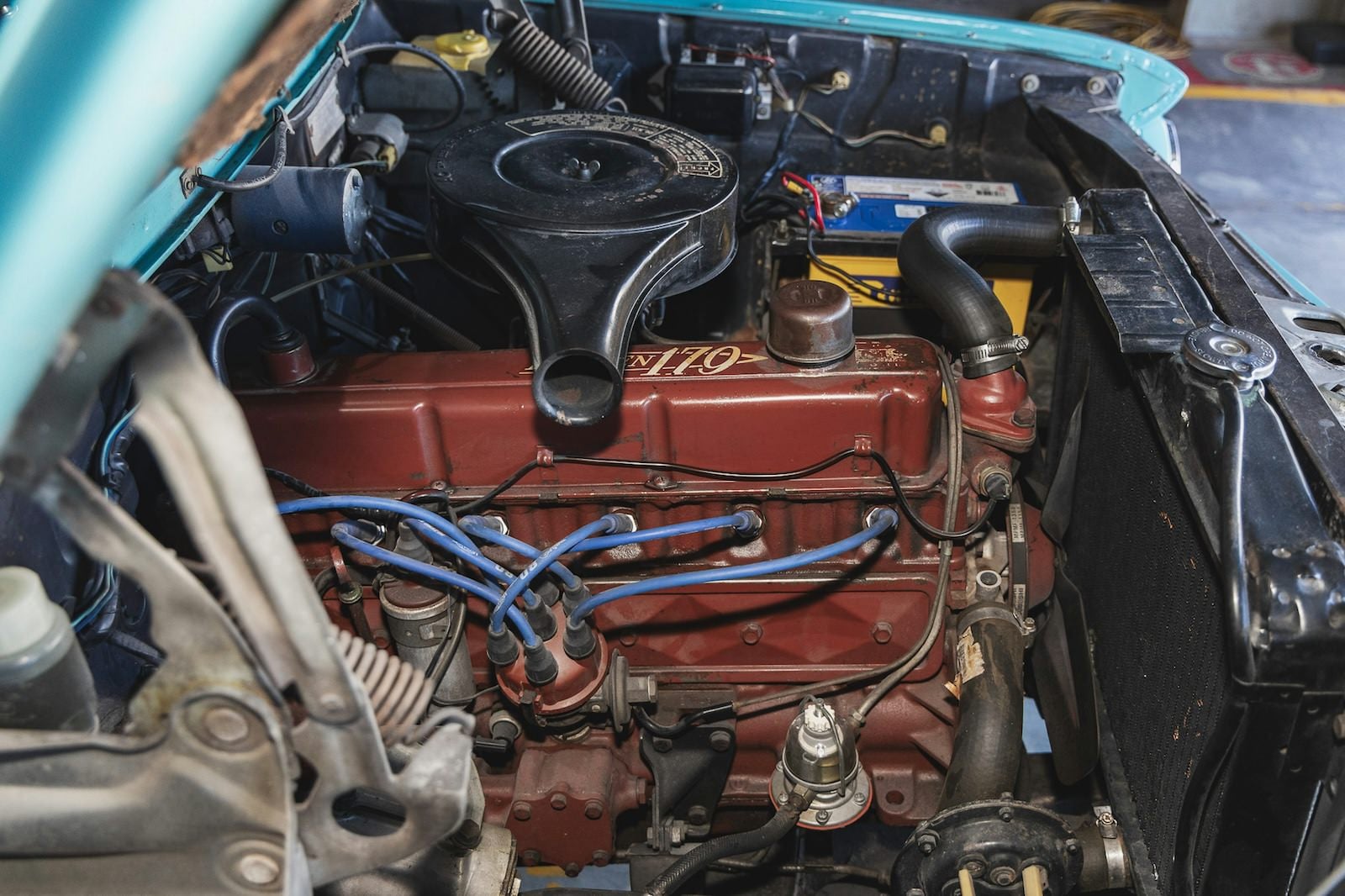
This car is an EH Special, denoting the fact that it was a more upmarket version of the model, a special-equipment example with more chrome and better trim. This car had the largest engine on offer, the 179 cubic inch (2.9 liter) straight-six affectionately known as the Holden Red motor.
Fast Facts: A 1963 Holden EH Special
- The Holden EH debuted in August of 1963 as a substantially updated version of the earlier EJ, with revised styling and a new range of straight-six engines. Holden built 256,959 examples, making it one of Australia’s fastest-selling cars of the era. The range included Standard, Special, and Premier sedans, station wagons, utilities, and panel vans.
- The EH introduced Holden’s new Red motor, available in 149 cubic inch (2.4 liter) and 179 cubic inch (2.9 liter) versions, producing up to 115 bhp. The larger engine offered considerably more performance than the outgoing Grey motor, while buyers could choose manual or automatic transmissions, depending on the engine and model.
- Holden developed the EH S4 as a limited-production racing special, fitting a 179 engine, stronger manual gearbox, revised gearing, and other competition-focused equipment. Six examples competed in the 1963 Armstrong 500 at Bathurst, with Ralph Sach and Fred Morgan finishing second. The S4 subsequently enjoyed further success in Australian touring car racing.
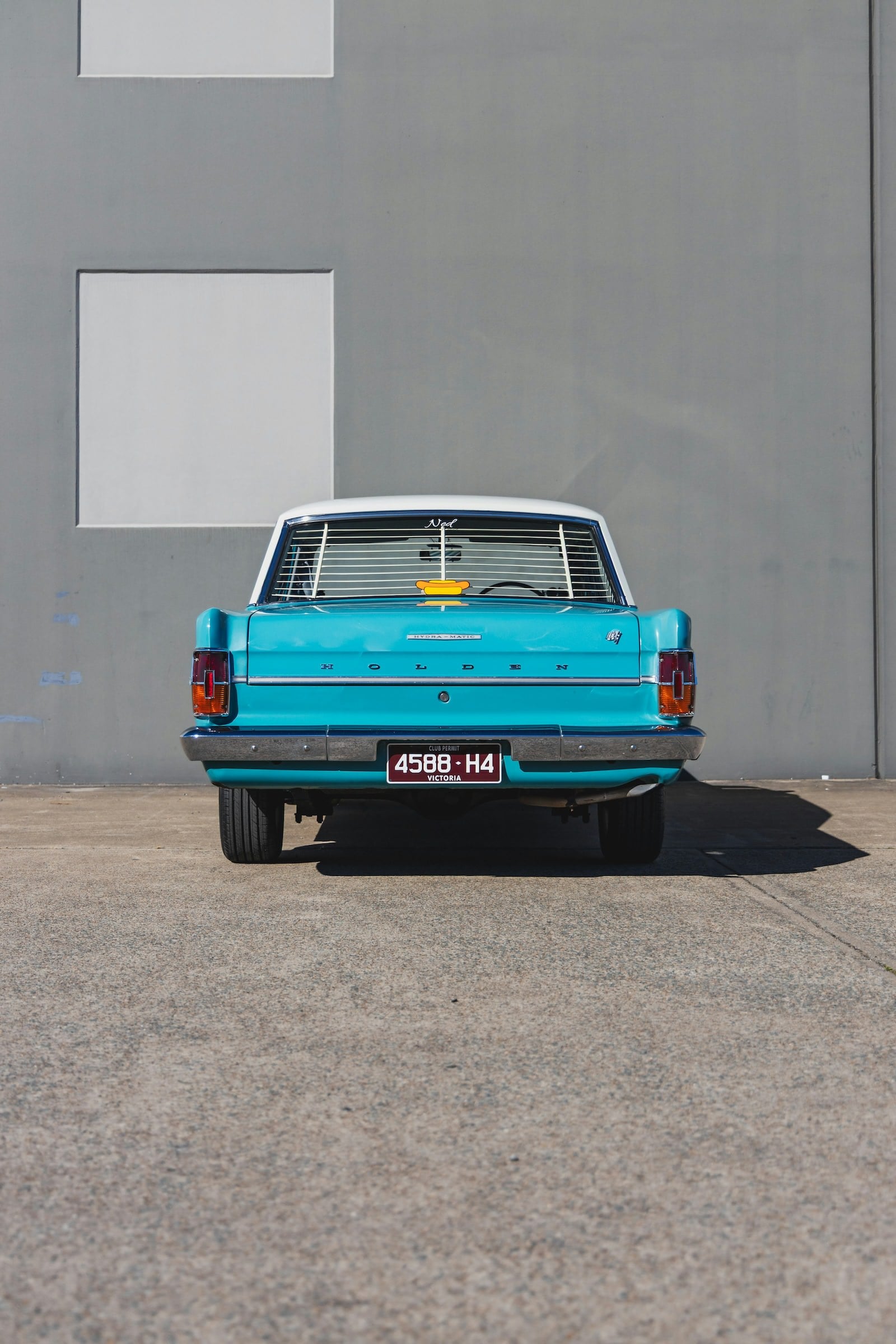
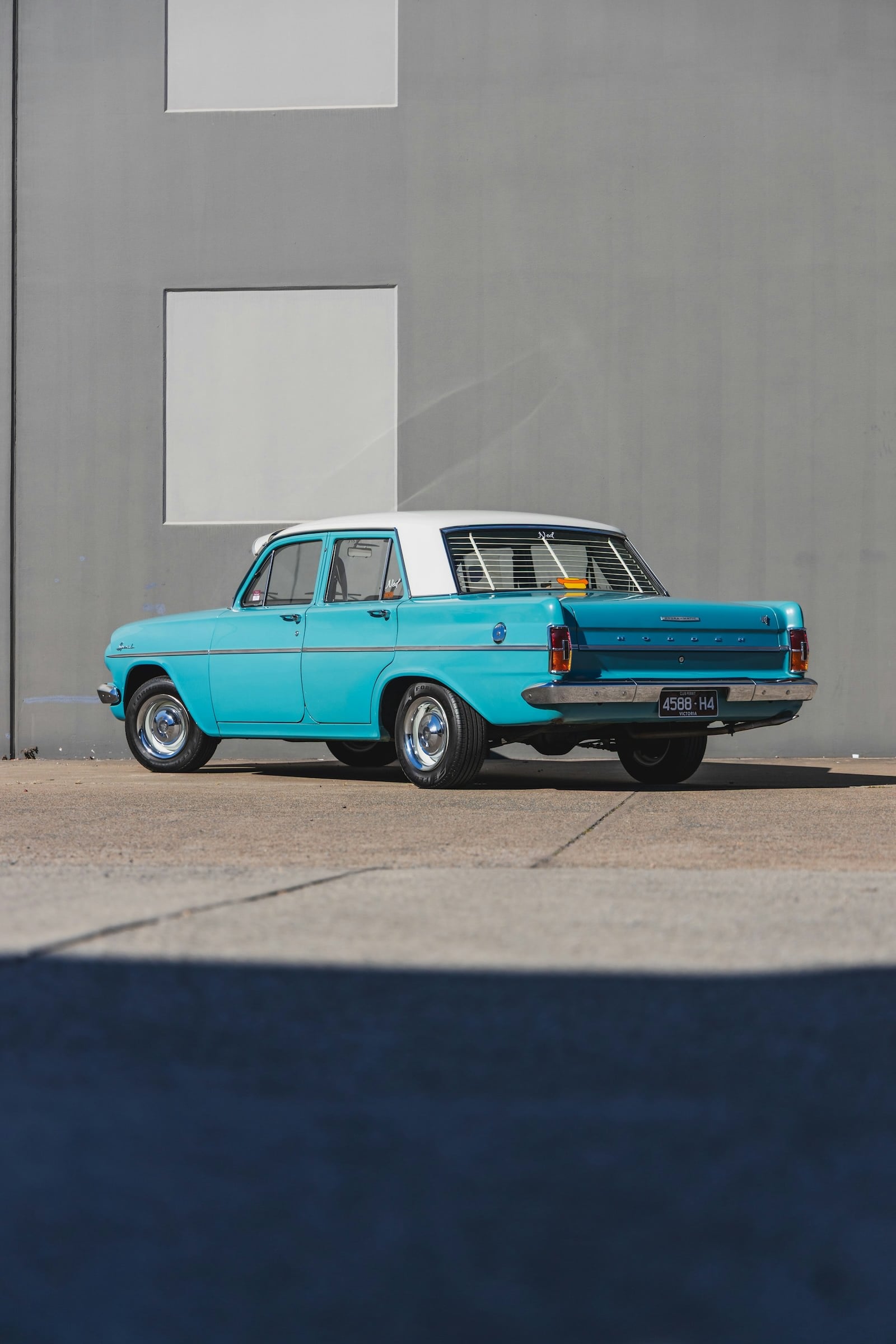
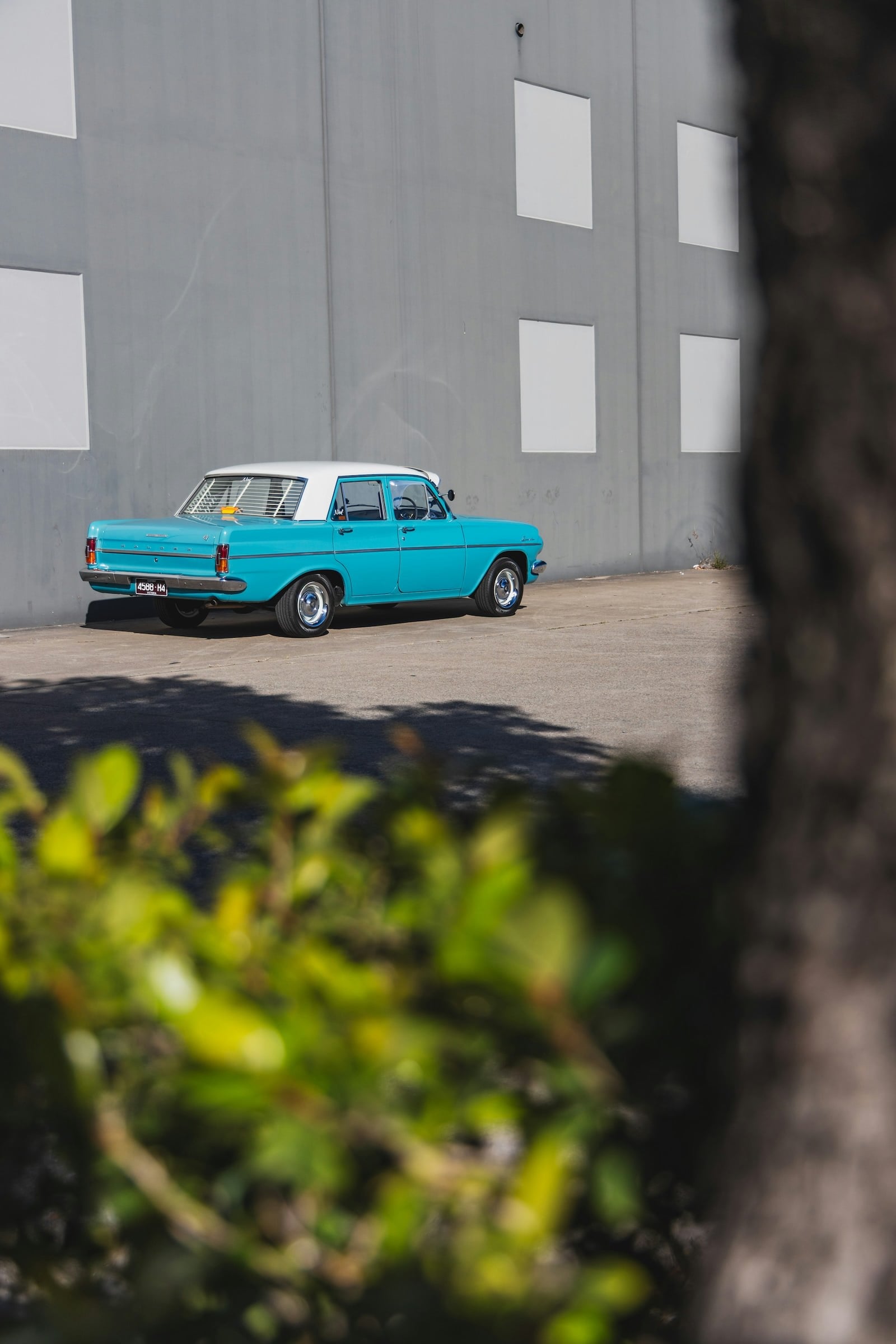
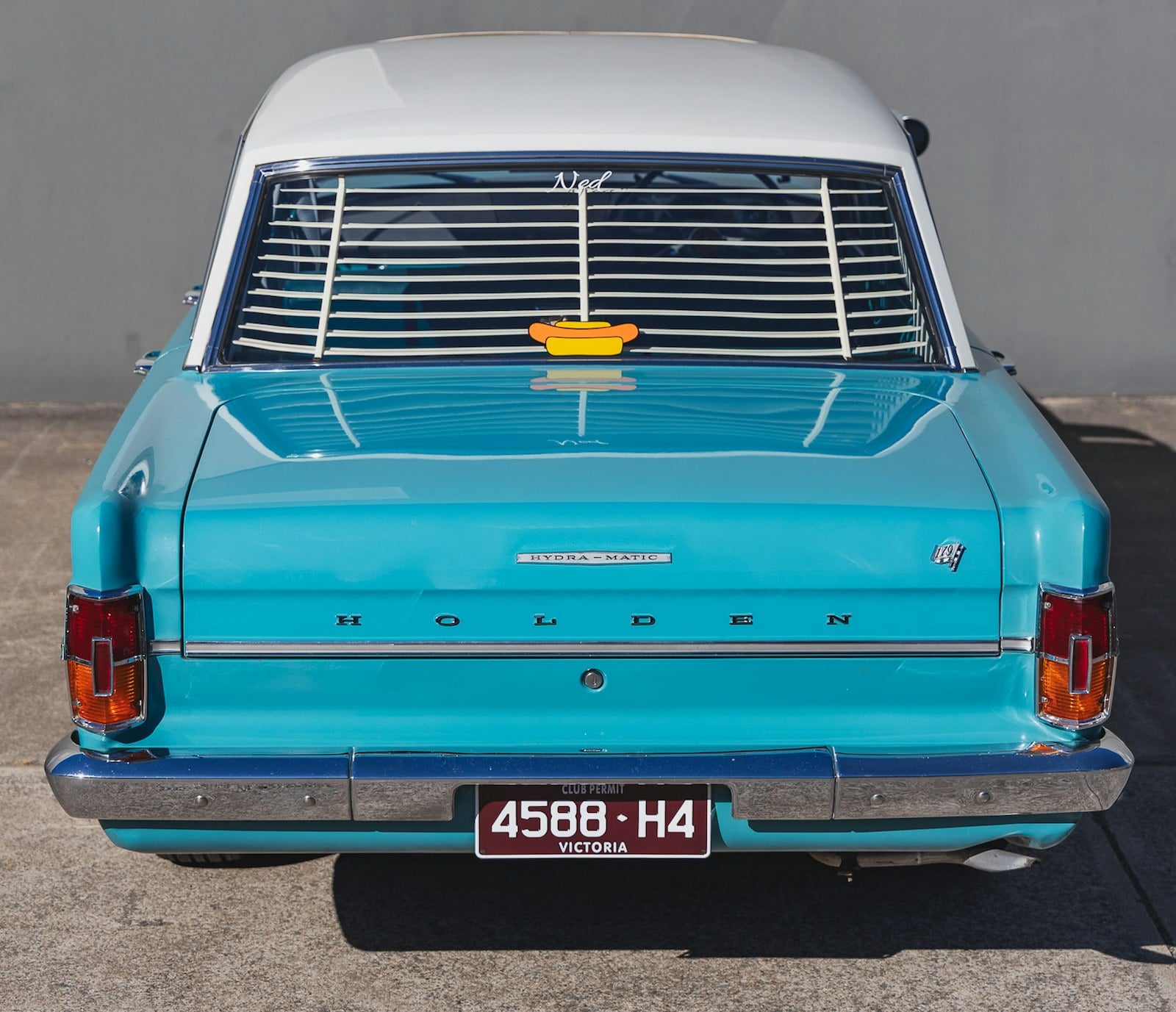
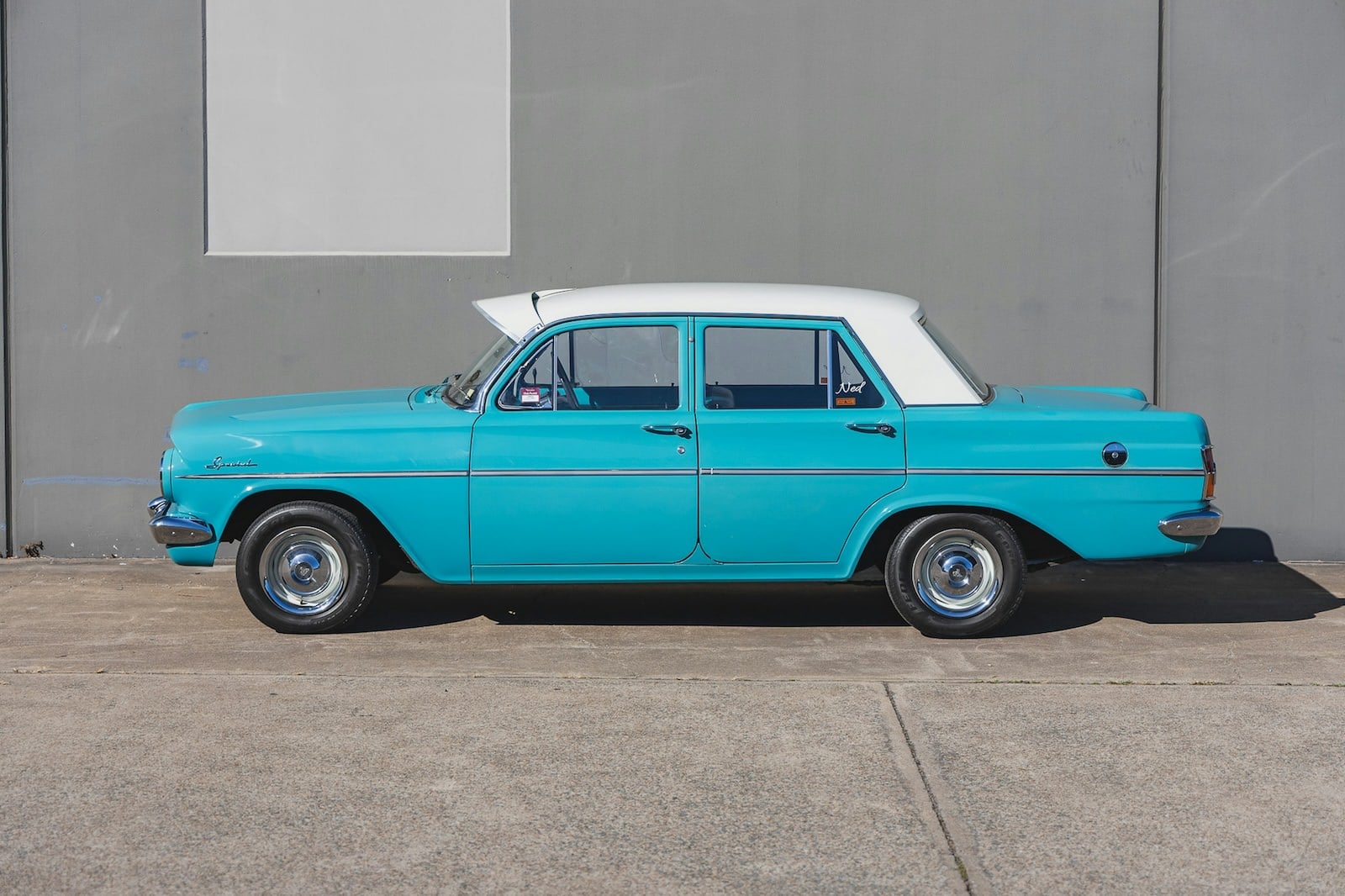
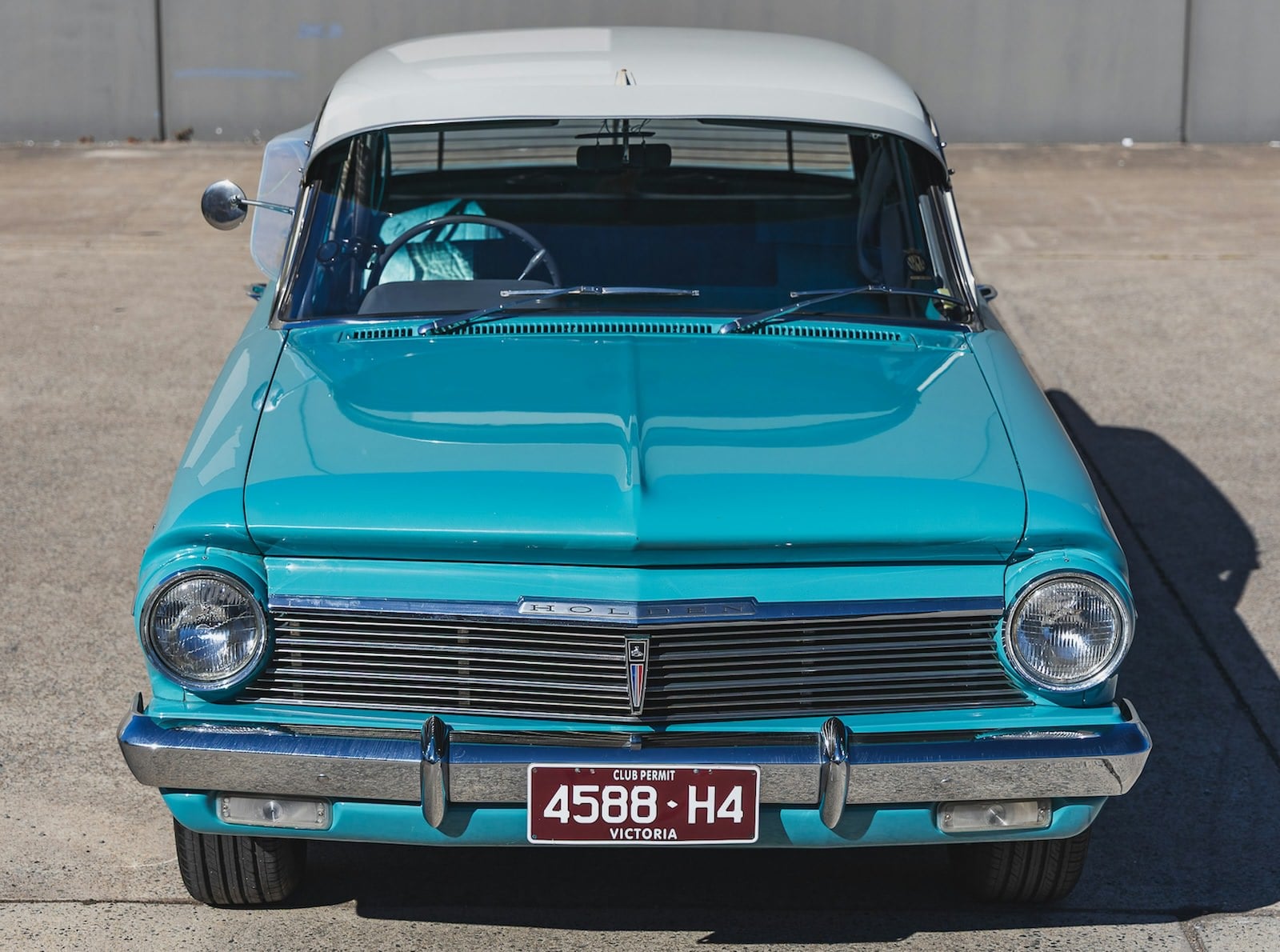
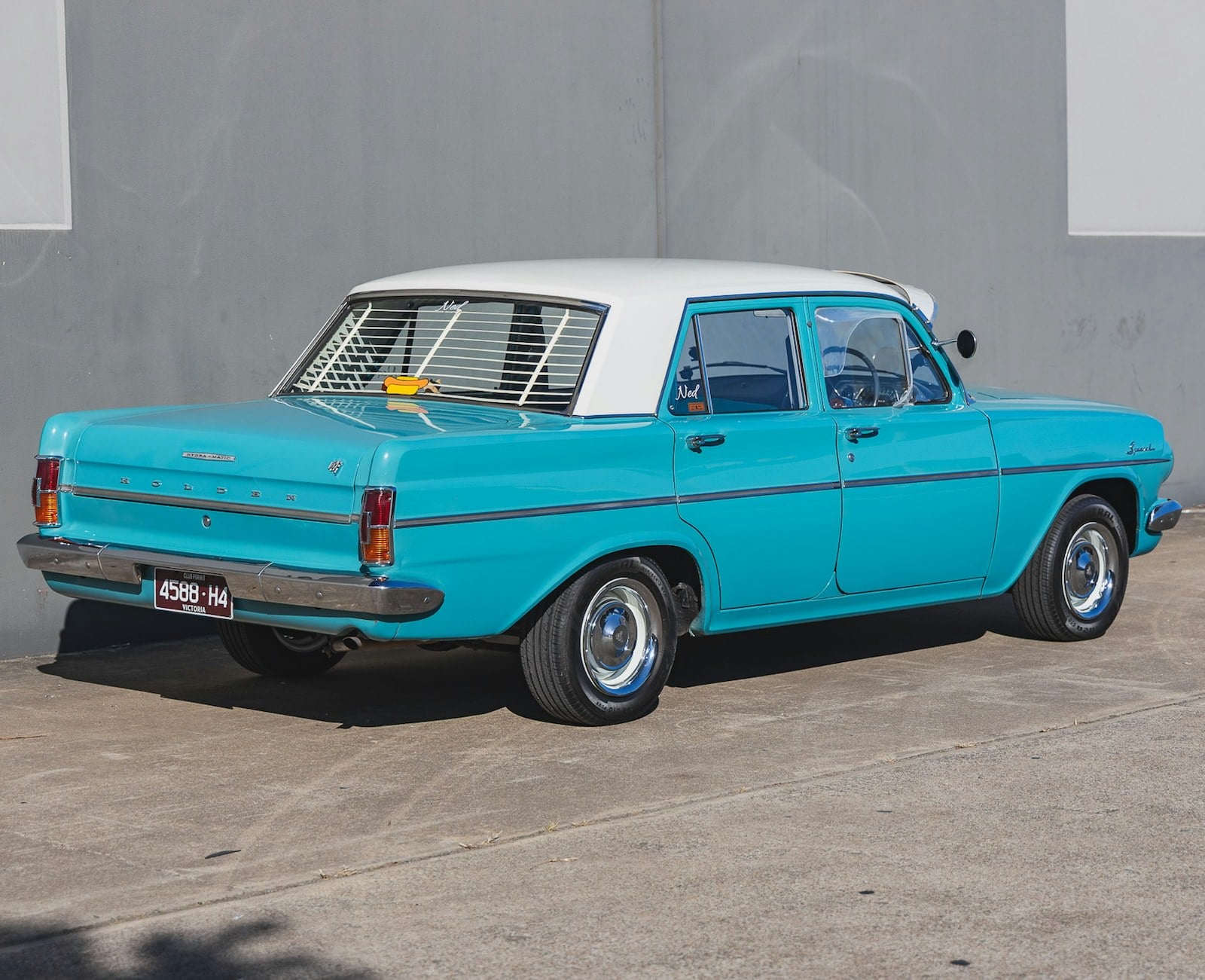
- The 1963 EH Special shown here was delivered new in Australia in September of 1963, it has two-tone Turquoise and White paintwork, a 179 Red motor, and a 3-speed automatic transmission. Its odometer shows 67,008 miles, believed genuine by the seller, and its original service book documents 20 early maintenance entries.
History Speedrun: The Holden EH Sedan
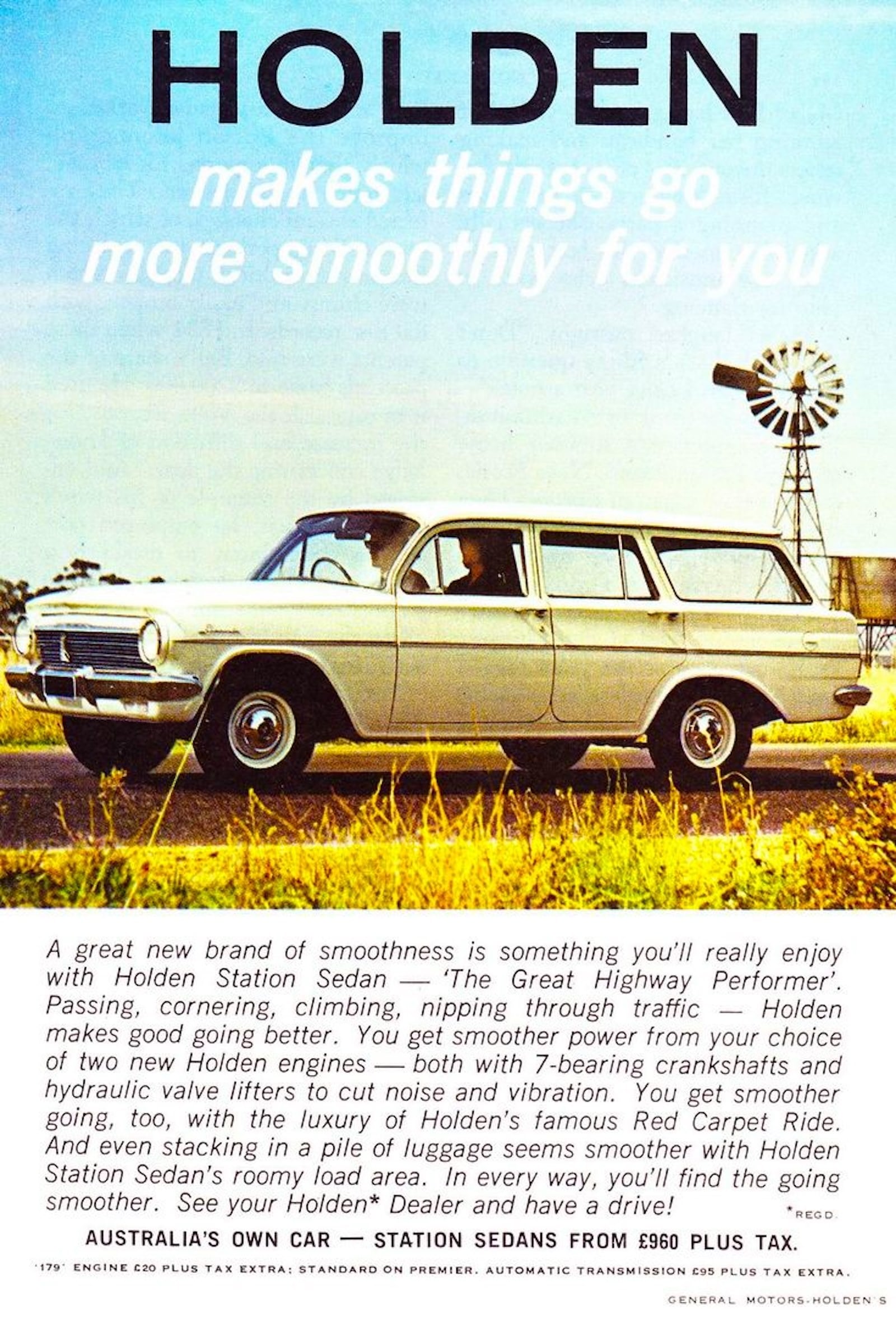
Holden released their new EH model in August of 1963, they would ultimately sell over a quarter of a million of them over three model years, 256,959 in total, and it soon became one of the most common family cars on Australian roads. The body of the EH was closely based on the earlier Holden EJ model, and Holden later described the EH as the fastest-selling Australian car ever.
 Holden released their new EH model in August of 1963, they would ultimately sell over a quarter of a million of them over three model years, 256,959 in total, and it soon became one of the most common family cars on Australian roads. Image courtesy of General Motors Holden.
From The EJ To The EH
The Holden EJ sedan of mid-1962 had been the first all-new Holden of the decade, it was lower and sleeker than the outgoing EK it replaced and introduced the Premier variant, Holden’s first ever luxury model, but it kept the old suspension and the 138 cubic inch (2.3 liter) “Grey” straight-six with a measly 75 bhp. Holden built 154,811 EJs in 13 months, it sold well, but it was clear that a new model was needed to stay competitive with their arch rivals over at Australia’s Ford operations.
The new EH sedan changed far more of that body than Holden’s earlier facelifts had. The roof, rear quarters, trunk, front fenders, hood, grille and tail lights were all brand new, giving a squarer profile, though the ute and panel van kept the older EJ tail lights. The Standard EH sedan remained at the EJ’s price, but it offered a lot more car for the money.
The Holden Red Engine
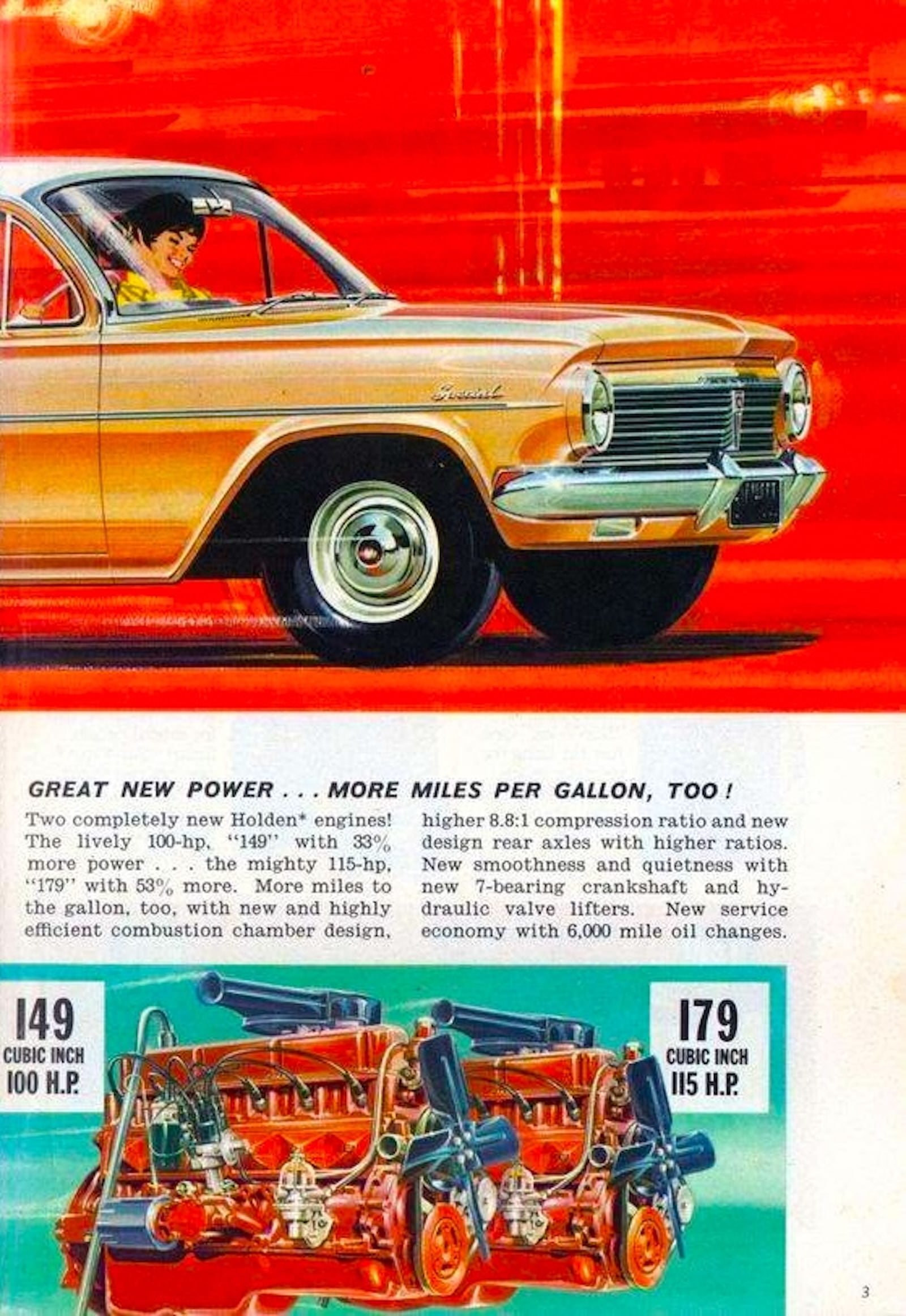
The new straight-six took its nickname from the bright red color of its block. It was a fresh design rather than a development of the earlier Grey six, a pushrod overhead-valve unit with seven main bearings and a single-barrel Bendix-Stromberg carburetor, built in two sizes on a common 3.00 inch stroke. The 149 cubic inch (2.4 liter) version made 100 bhp at 4,400 rpm and 145 lb ft of torque at 2,000 rpm, with a 95 bhp low-compression alternative.
Opening the bore from 3.25 to 3.563 inches gave the 179 cubic inch (2.9 liter) engine 115 bhp at 4,000 rpm and 175 lb ft of torque at 1,600 rpm, 53% more power than the Grey with a much stronger bottom end to boot.
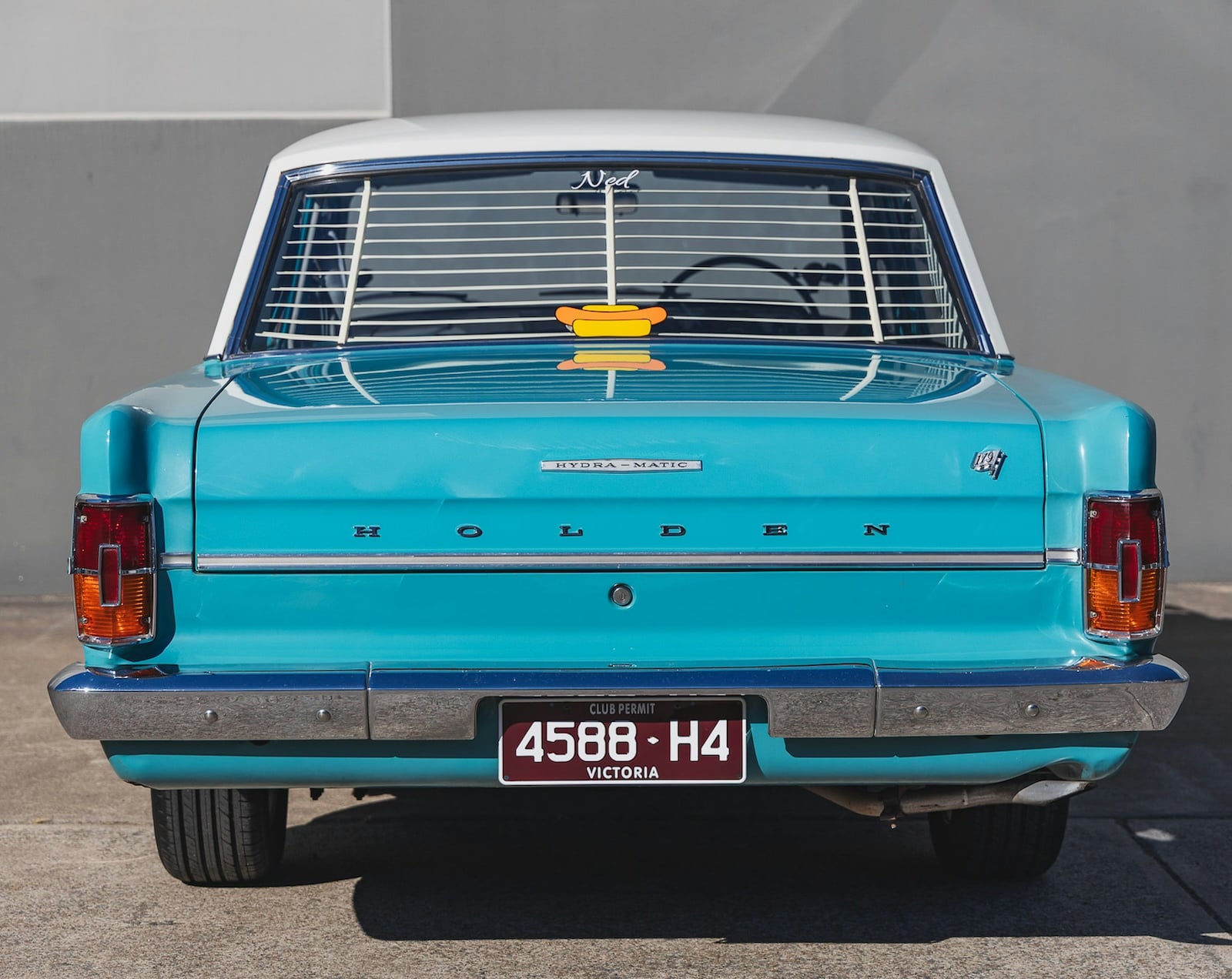
The 179 Red engine was standard in the EH Premier and optional elsewhere, but at launch it was only offered with the Hydra-Matic automatic gearbox. The 3-speed column-shift manual, carried over from the EJ without synchromesh on first, wasn’t considered strong enough for the additional torque. A manual 179 did reach the range in early 1964, using a stronger gearbox, a larger clutch, and thicker tailshaft that was first developed for the S4, Holden’s first factory-built racing special that was based on the EH Special.
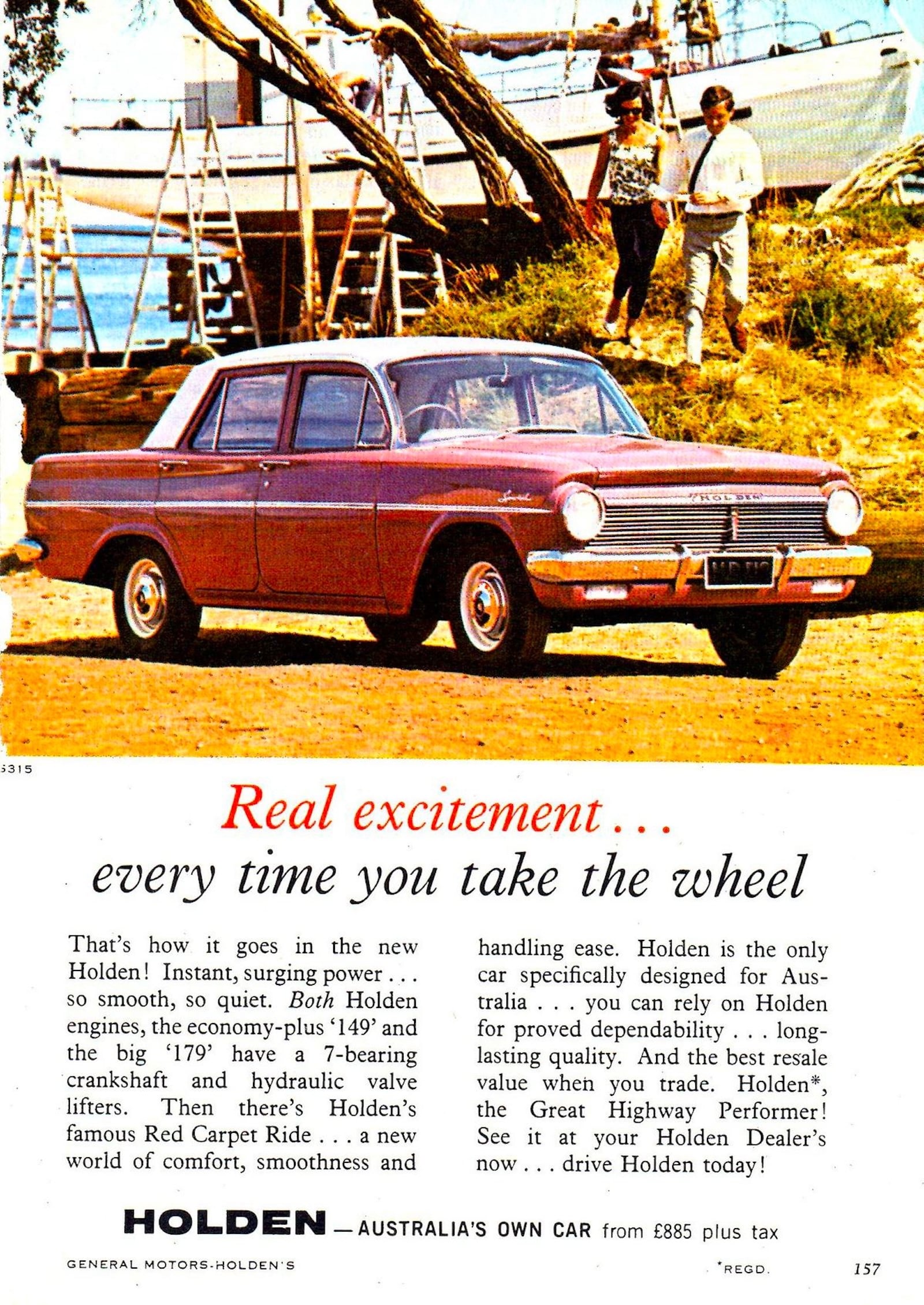
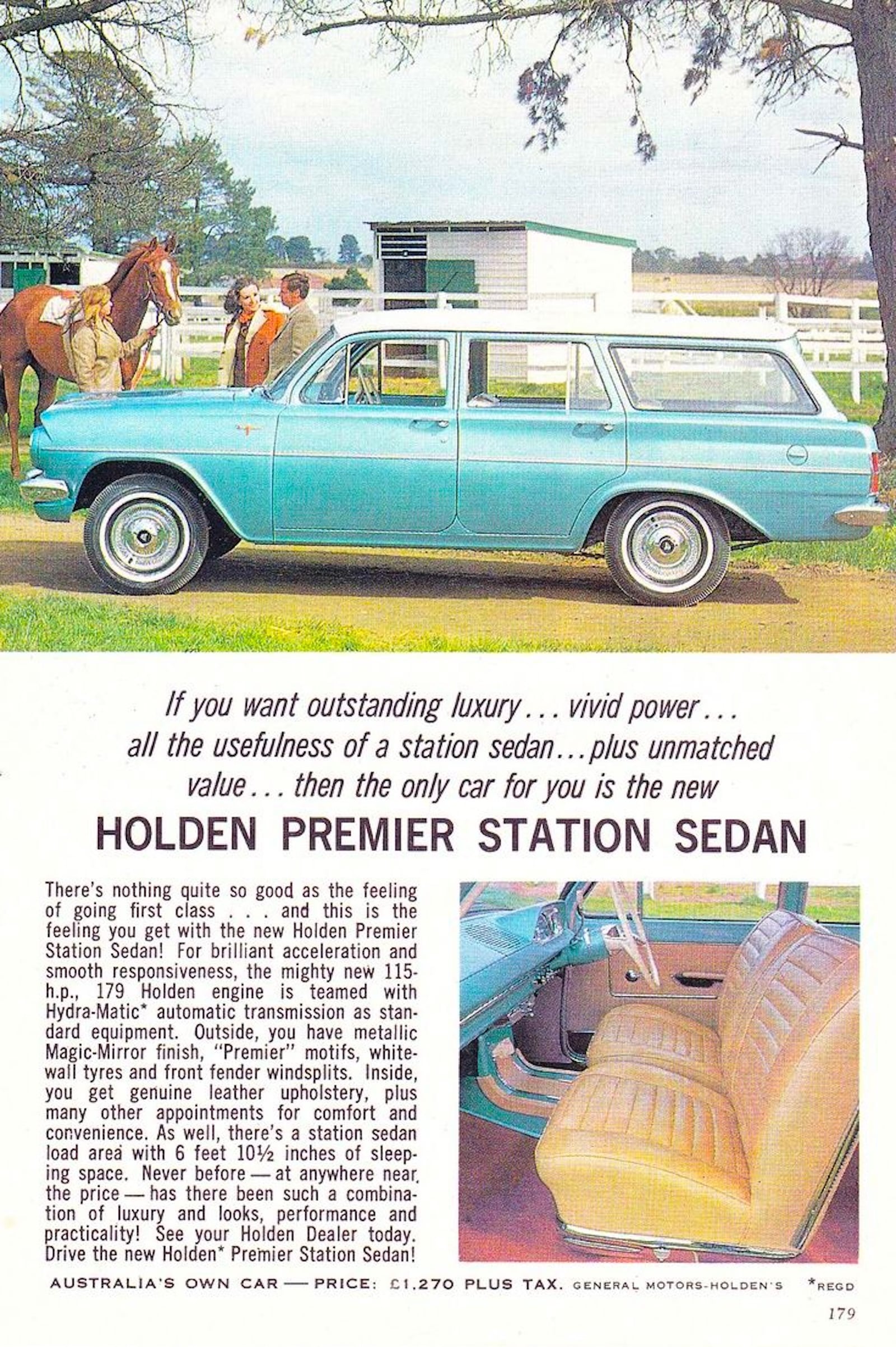
The new EH sedan changed far more of that body than Holden’s earlier facelifts had. The roof, rear quarters, trunk, front fenders, hood, grille and tail lights were all brand new, giving a squarer profile, though the ute and panel van kept the older EJ tail lights. Image courtesy of General Motors Holden.
Much like the earlier EJ, the EH has a steel unibody shell, still a relatively new technology at the time for a production four-door sedan. The front suspension used unequal-length wishbones, coil springs, kingpins, and an anti-roll bar, while the live rear axle sat on semi-elliptic leaf springs. 9-inch drums stopped all four wheels, steering was recirculating ball, and power steering was a factory option fitted to only a few thousand cars.
The Standard, Special, and Premier EH sedans were joined by matching Station Sedan wagons, a ute and a panel van, the Premier station wagon was new for the EH. Period road tests recorded an 85 mph top speed for a 149 manual Standard and 96 mph for a 179 automatic Premier. Not bad numbers for the era.
The Holden EH S4 + Bathurst
Ford’s XL Falcon had won the 1962 Armstrong 500 at Phillip Island, and for 1963 the race moved to Mount Panorama at Bathurst. Entries had to be production sedans built in at least 100 examples, grouped into classes by price, but GM was enforcing a worldwide ban on factory racing.
Holden’s answer was the EH 225 179M-S4 of September 1963, it was a Special sedan with the 179 and the manual gearbox, a 3.55:1 axle in place of the usual 3.36:1, a Repco-PBR vacuum brake booster, a fuel tank enlarged from 9.5 to 11.75 imperial gallons, and an expanded tool kit.
The tool kit was there because, for part of the race, the rules restricted repairs to the drivers and the tools supplied with the car. Holden built 120 of them at Pagewood in Sydney and six in Melbourne. They’re considered Australian classic car royalty today.
The S4 was said to be on sale to the general public, but some dealers claimed never to have heard of it, and the organizers announced that the S4 couldn’t be accepted on homologation grounds, because no printed price list or workshop manual could be found. Holden supplied both the day before entries closed and the S4 made it to the starting grid by the skin of its teeth.
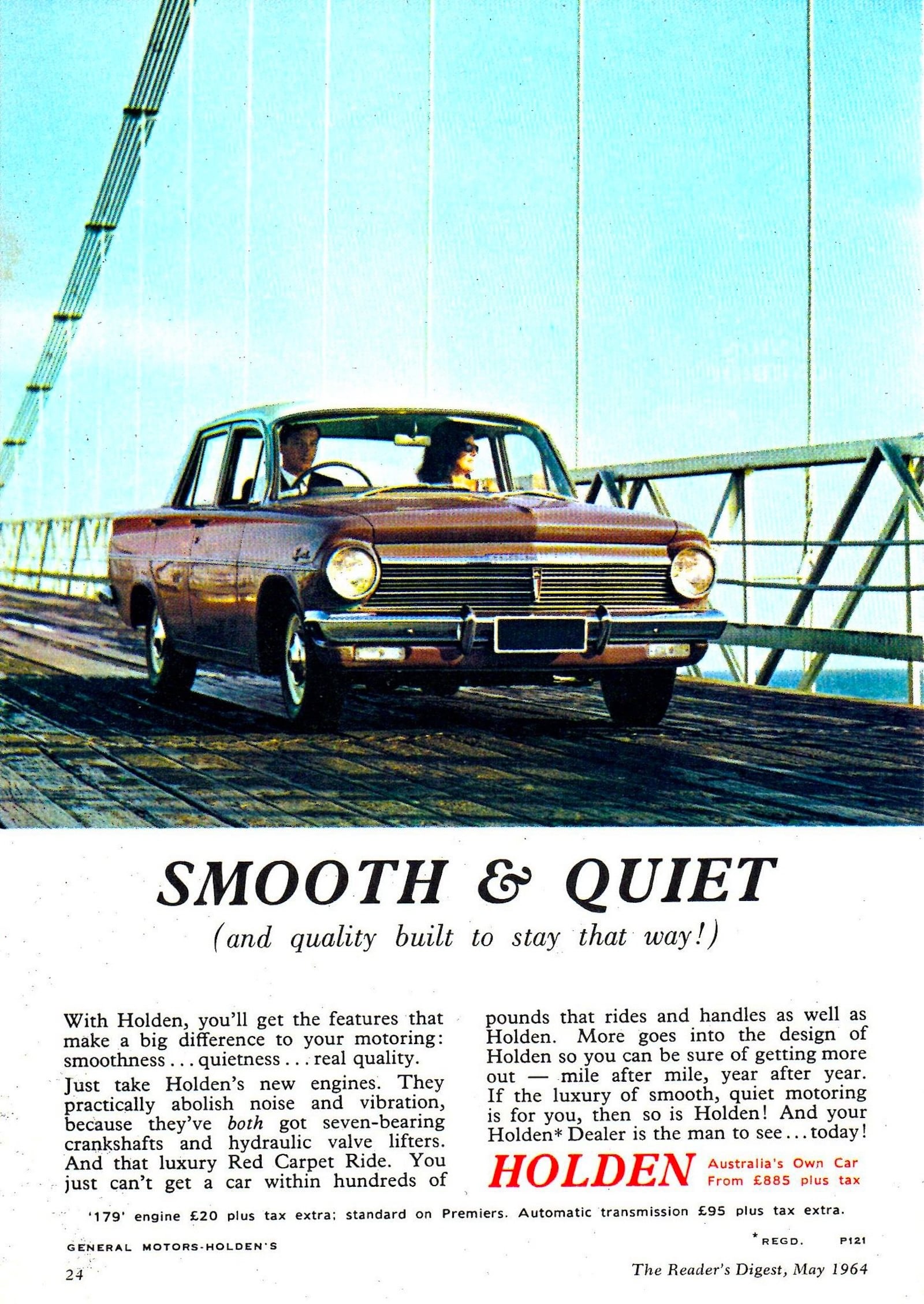
Much like the earlier EJ, the EH has a steel unibody shell, still a relatively new technology at the time for a production four-door sedan. The front suspension used unequal-length wishbones, coil springs, kingpins, and an anti-roll bar, while the live rear axle sat on semi-elliptic leaf springs. Image courtesy of General Motors Holden.
Six Holden S4s started the race on the 6th of October 1963, but none of them was a works entry. The factory Ford Cortina GT of Harry Firth and Bob Jane was first to complete the 130 laps and therefore won the race, and the Ralph Sach and Fred Morgan S4 finished second on 129. The Brian Muir and Spencer Martin car broke a rear spring center bolt, the spring shifted and snapped the tailshaft, and repairs made with the standard tool kit left it on 111 laps. Holden didn’t better that second place at Bathurst until a Monaro GTS 327 won in 1968.
Under the looser Appendix J rules the Holden S4 kept racing. Norm Beechey’s Neptune Racing Team car, bored to 3.5 liters and claimed to make 230 bhp, it finished 1.2 seconds behind Ian Geoghegan’s Cortina GT in the single-race 1964 Australian Touring Car Championship. Muir took third in the 1965 championship in an S4.
The Holden HD + The 179 Badge
The Holden HD was the successor to the EH, it brought a wider, longer body, a 140 bhp twin-carburetor X2 version of the 179 and a two-speed Powerglide in place of the Hydra-Matic. From mid-1965 it also had ball-joint front suspension and optional front disc brakes, the first ever offered on a Holden.
Every 179-engined EH wore a checkered-flag “179” badge, mounted on the trunk lid of the sedans. The badges soon began disappearing. In May 1965 a Canberra children’s court heard that three children had taken 15 car badges, many of them 179 emblems, to make belt buckles. Some things never change.
The 1963 Holden EH Special Shown Here
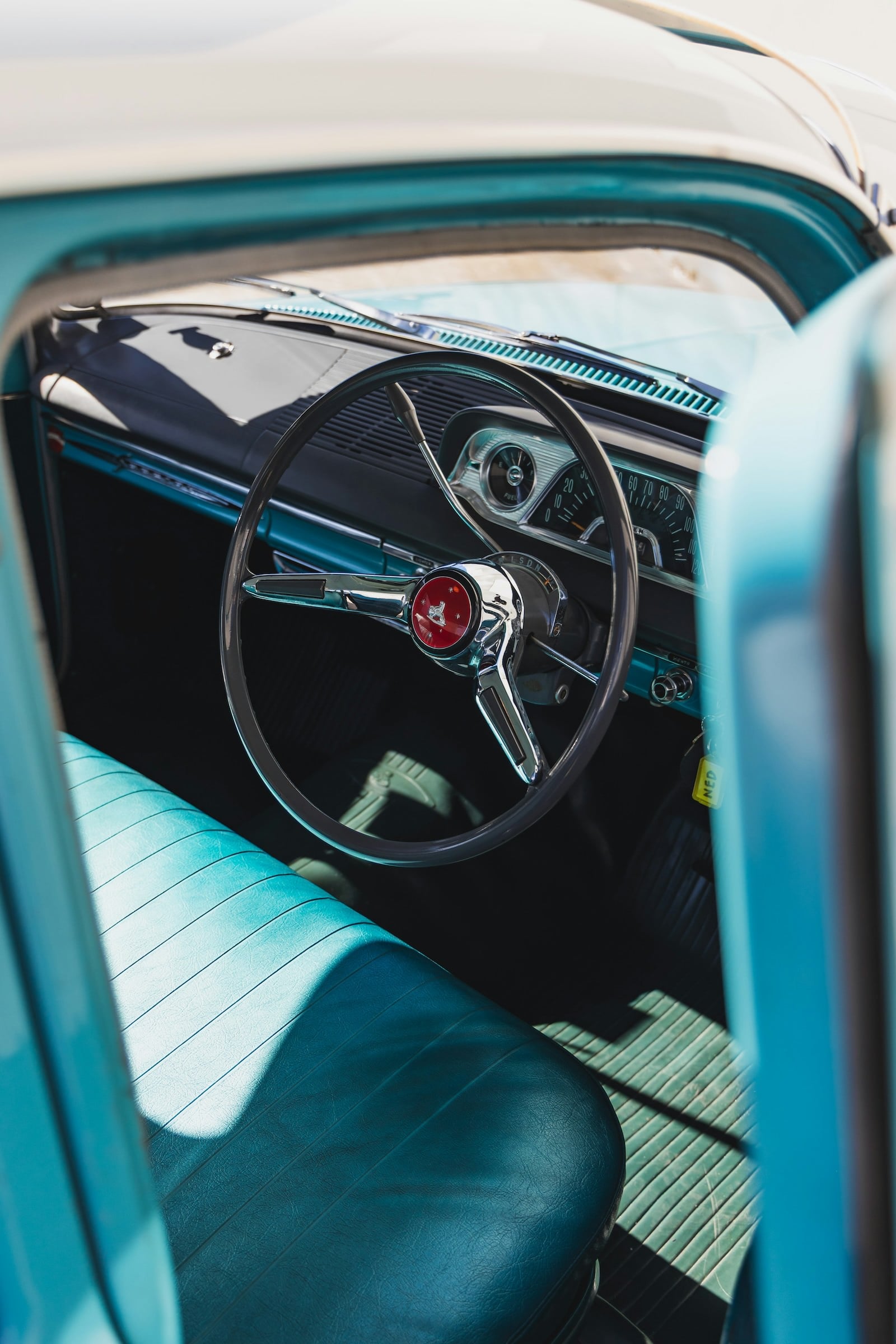
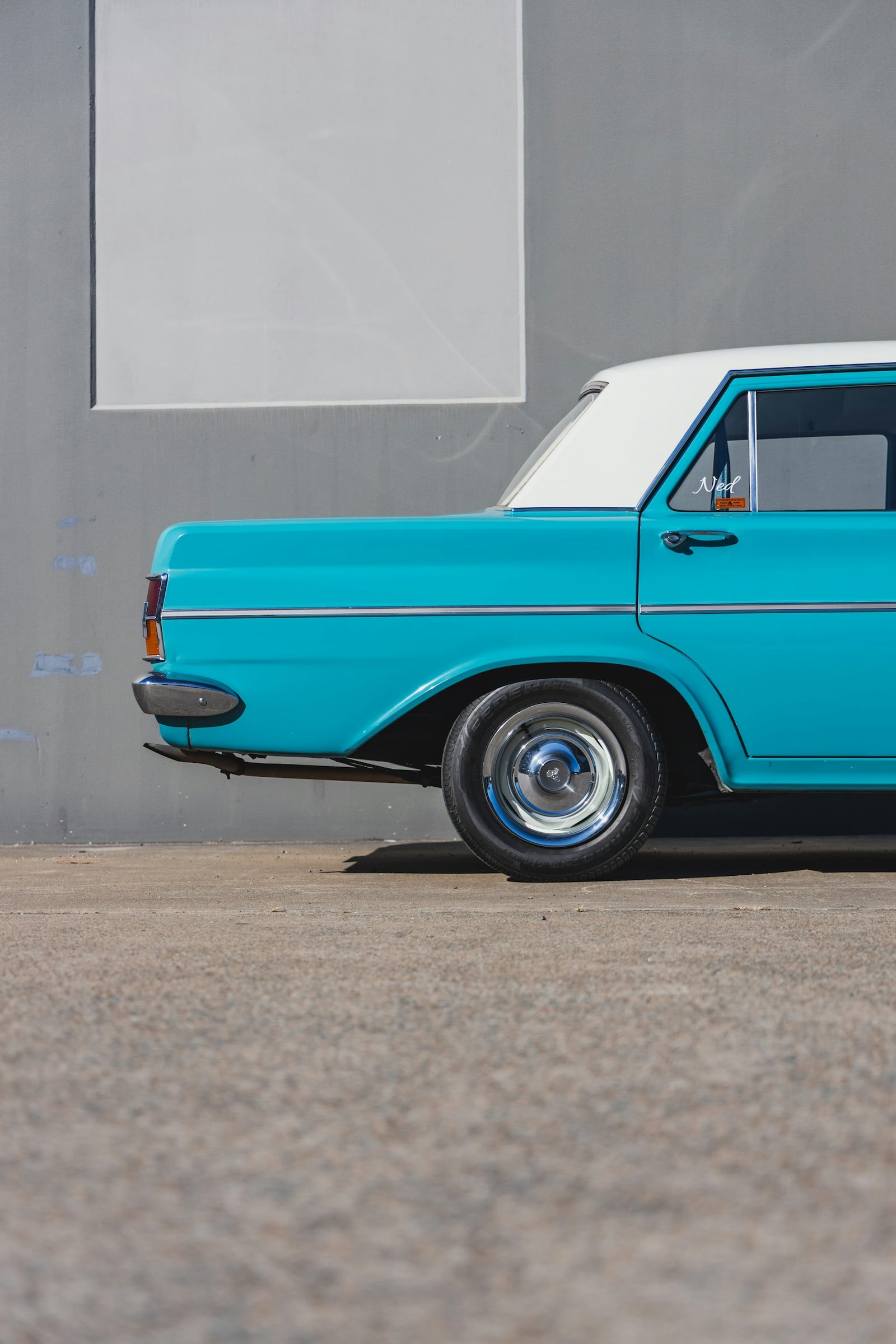
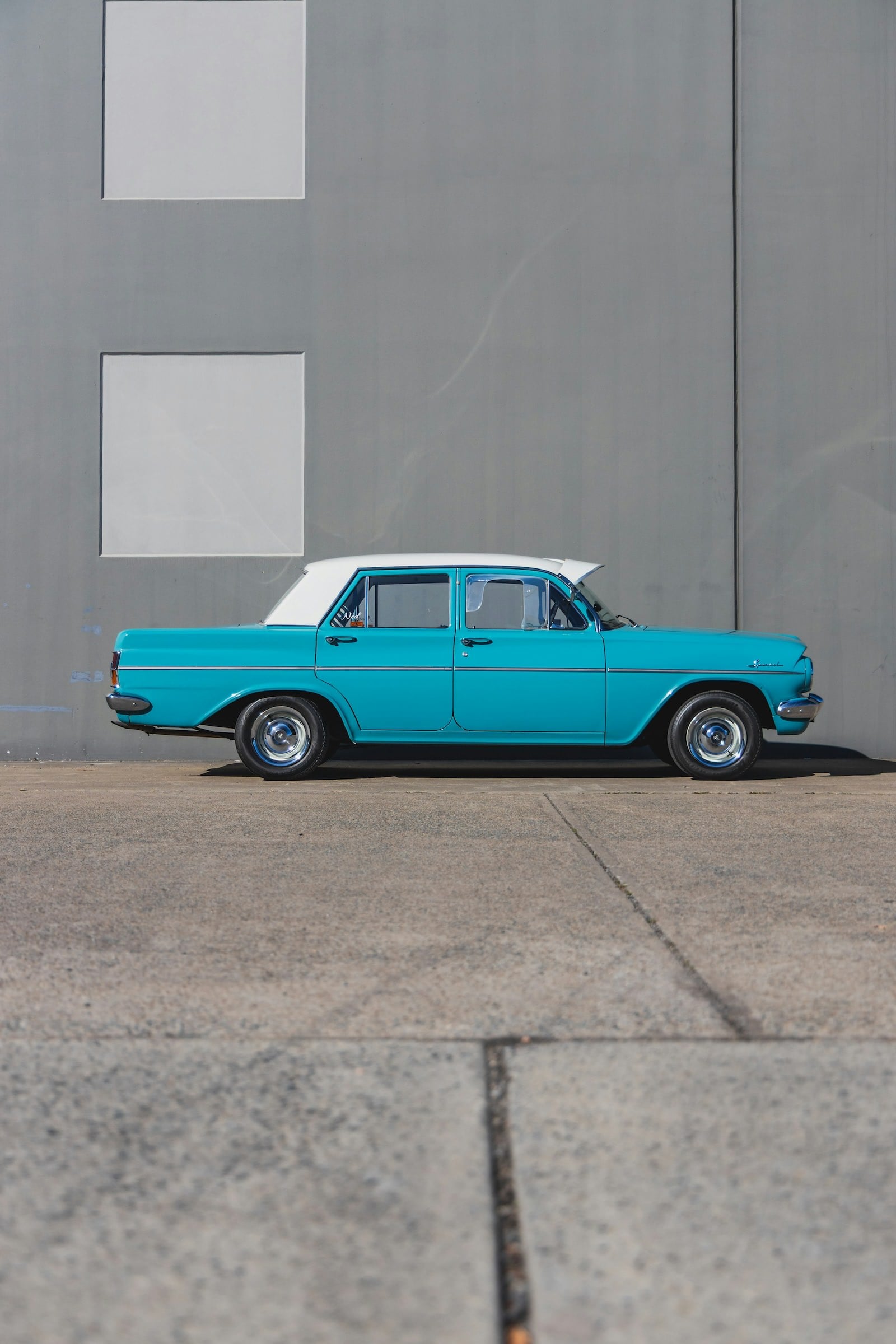
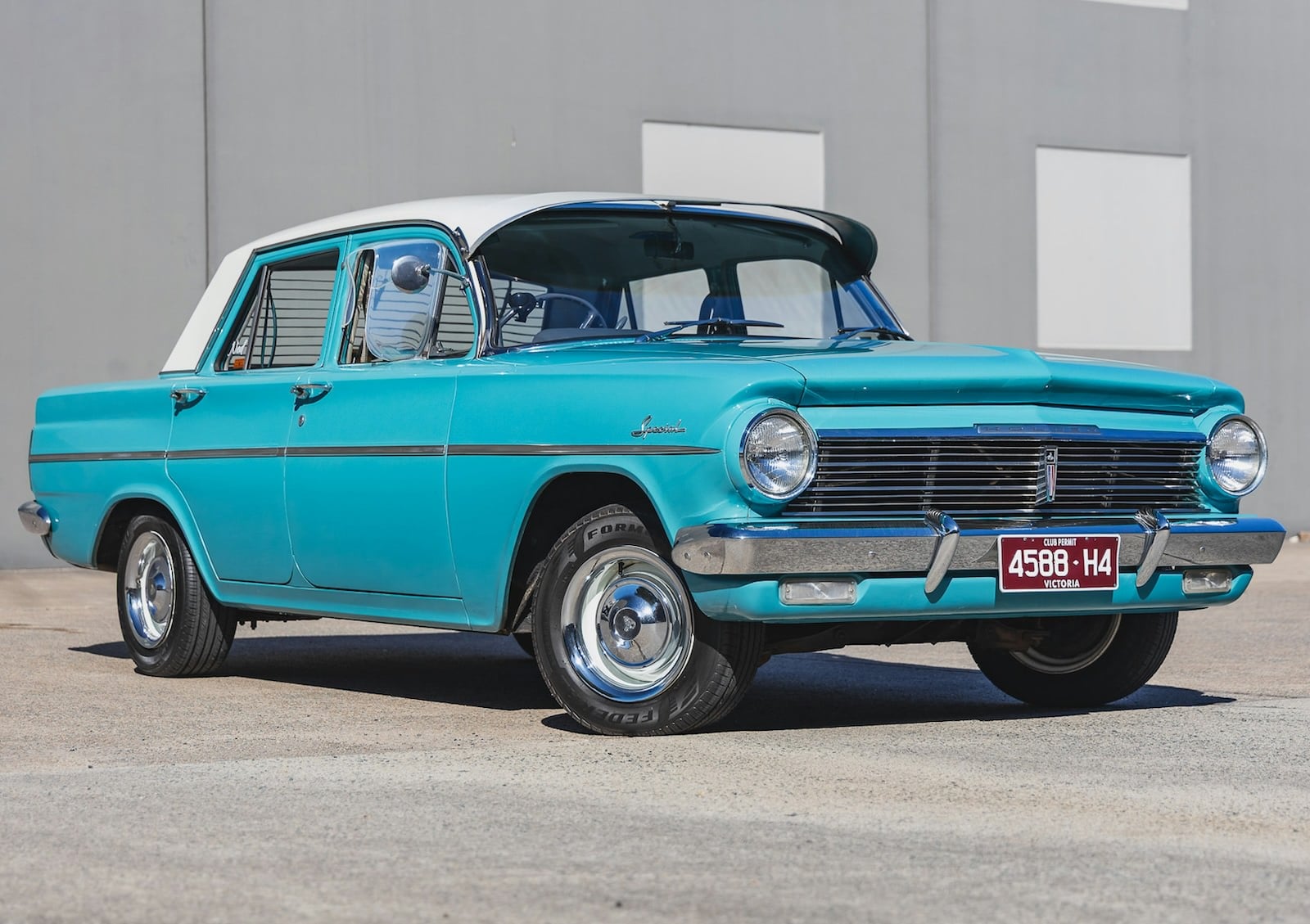
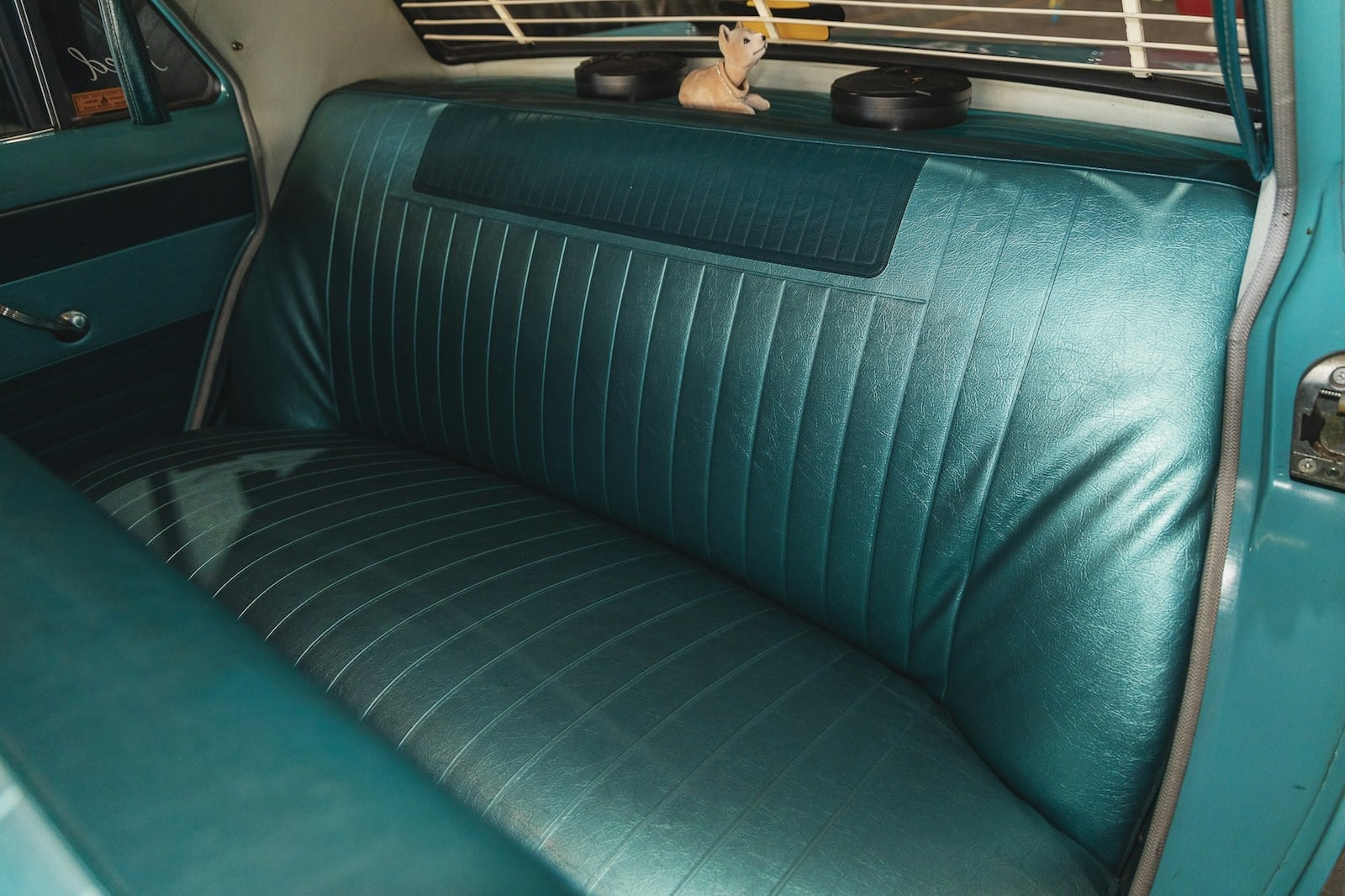
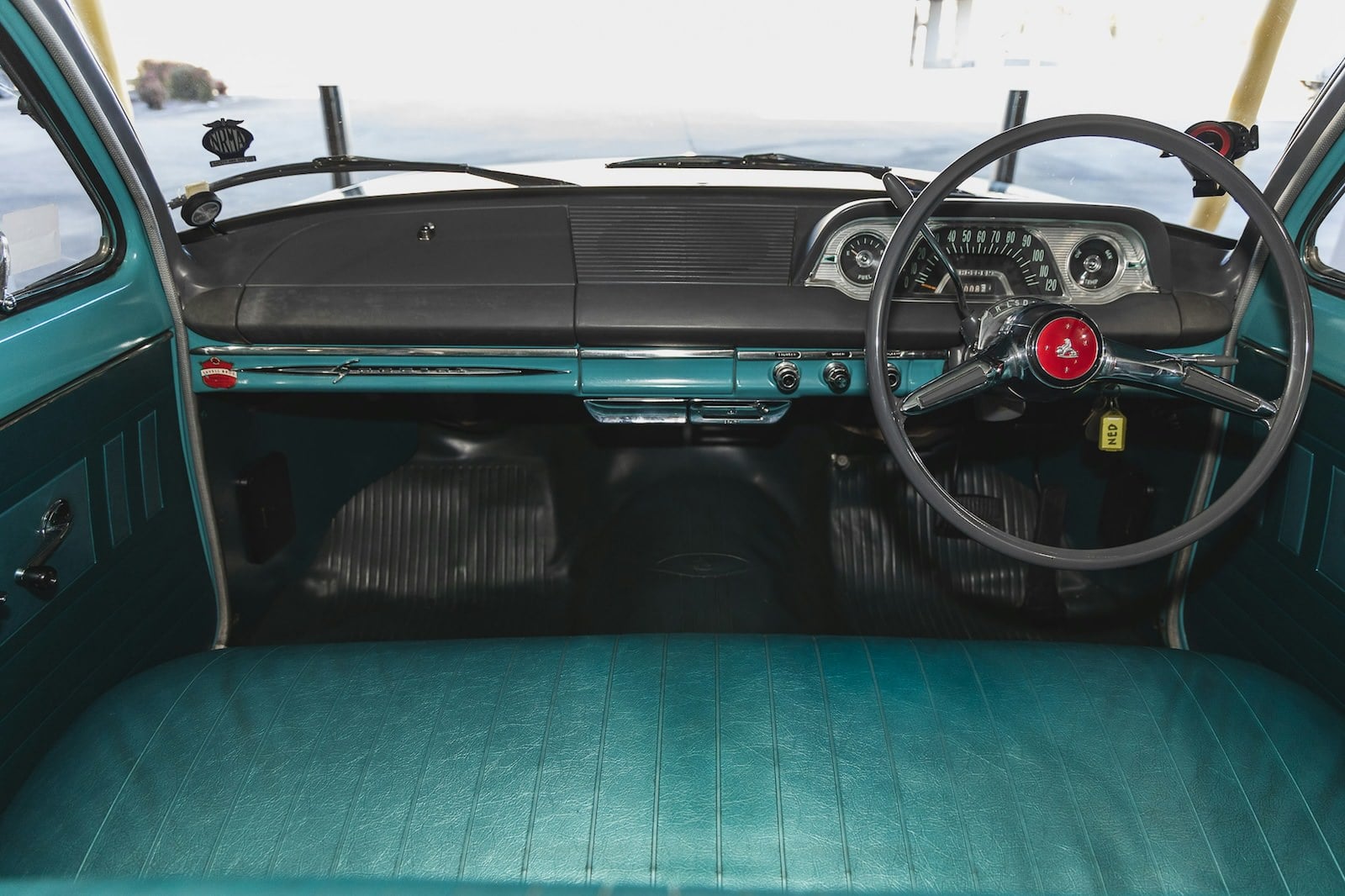
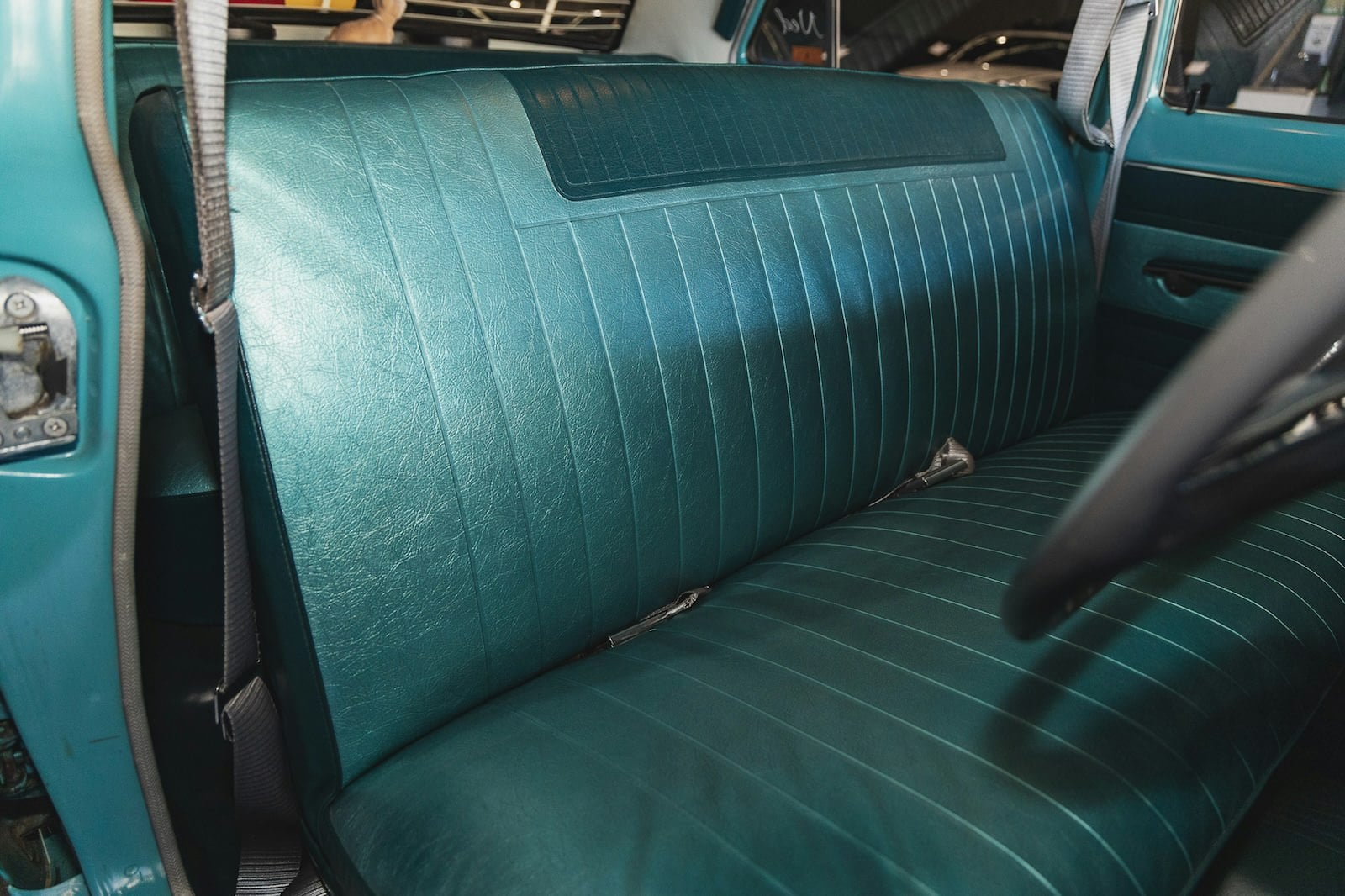
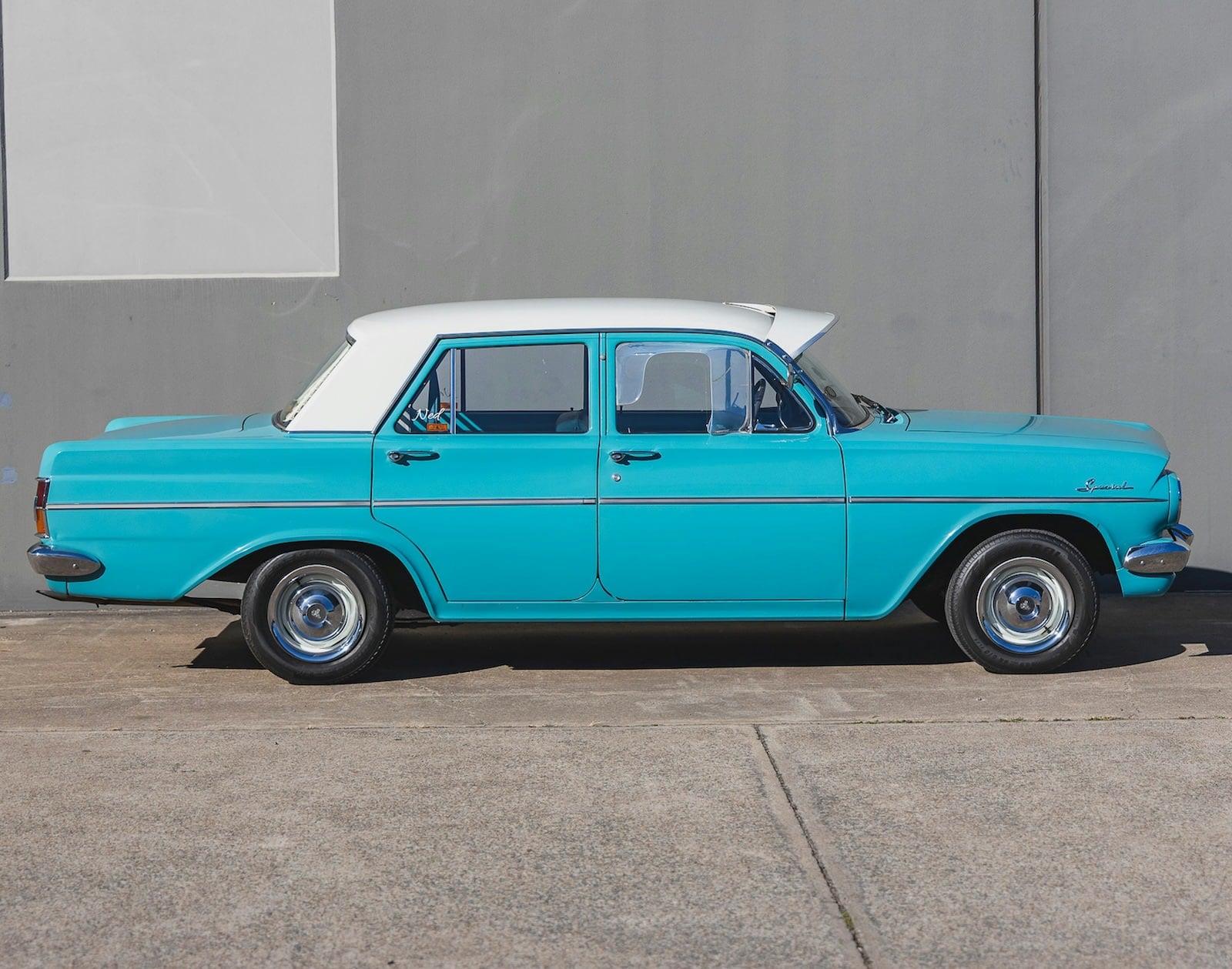
This is an original 1963 Holden EH Special Sedan, it was delivered new in Australia in September of 1963 and it’s finished in a distinctive two-tone Turquoise and White color scheme, with a matching Turquoise, Blue, and Grey interior.
Power comes from a 179 cubic inch Holden Red motor, a 2.9 liter inline-six, driving the rear wheels through a 3-speed automatic transmission. The odometer currently shows 67,008 miles – which the seller believes to be the genuine mileage from new. It remains in largely good condition, although the seller notes some cracking in the paintwork, marks on the chrome bumpers, and a crack in the driver’s side plastic window surround.
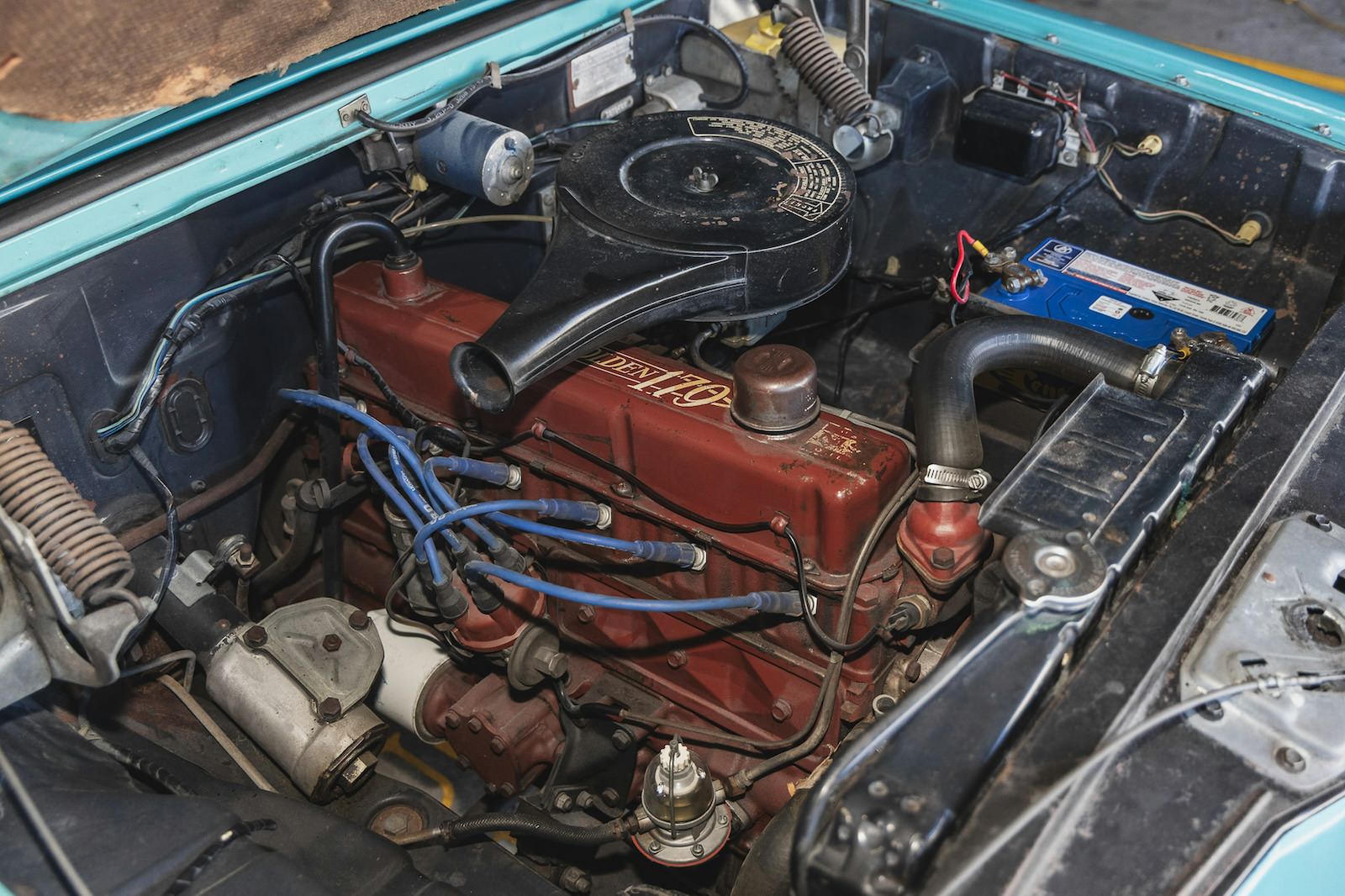
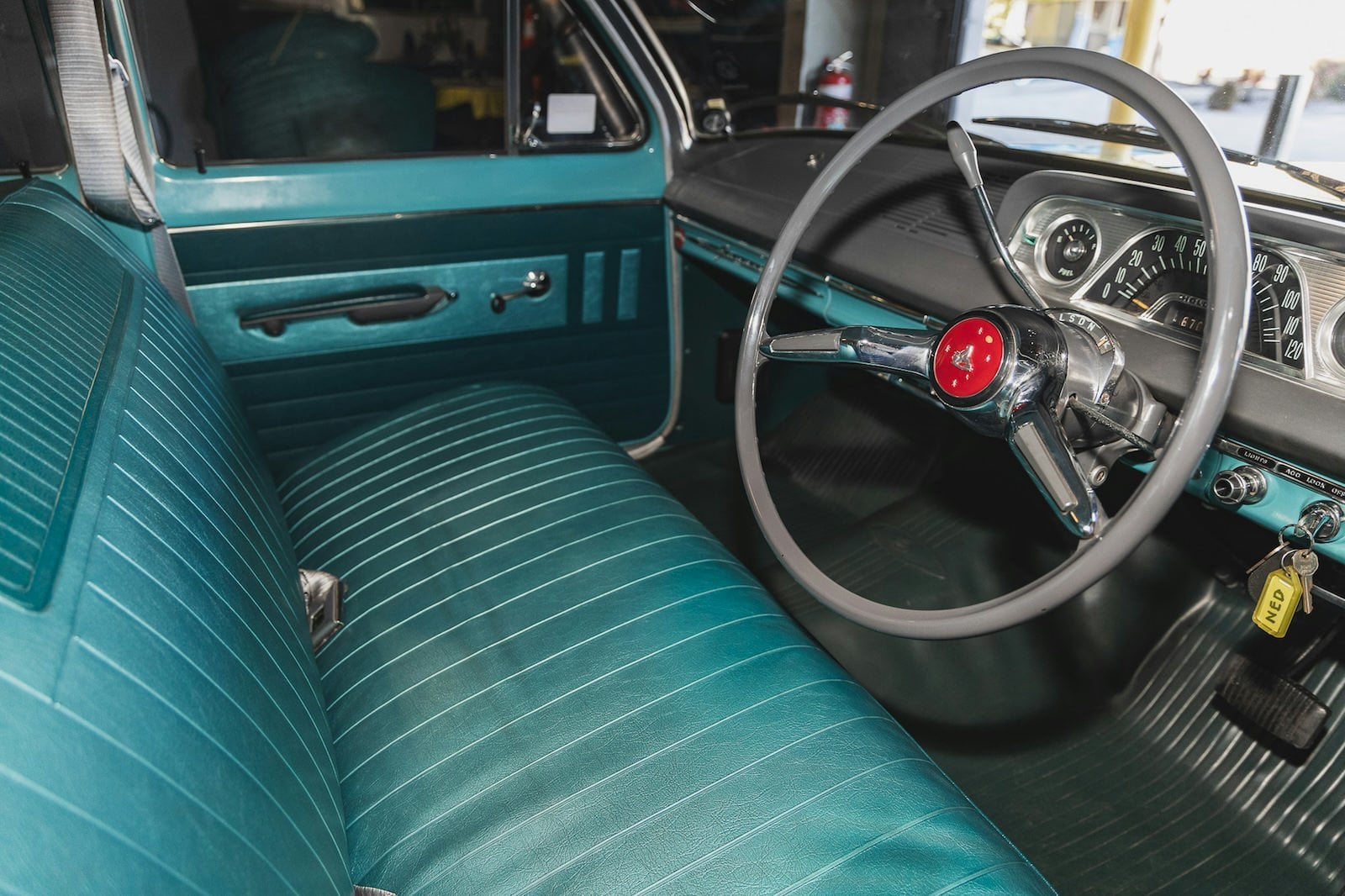
This is an original 1963 Holden EH Special Sedan, it was delivered new in Australia in September of 1963 and it’s finished in a distinctive two-tone Turquoise and White color scheme, with a matching Turquoise, Blue, and Grey interior.
The car is accompanied by its original service book, which contains 20 early maintenance entries, documenting lubrication services and oil changes from 1,000 through to 35,269 miles. The seller reports that the most recent known service was completed by Fixit Automotive in Victoria, with the recorded mileage listed as 65,816 kilometers.
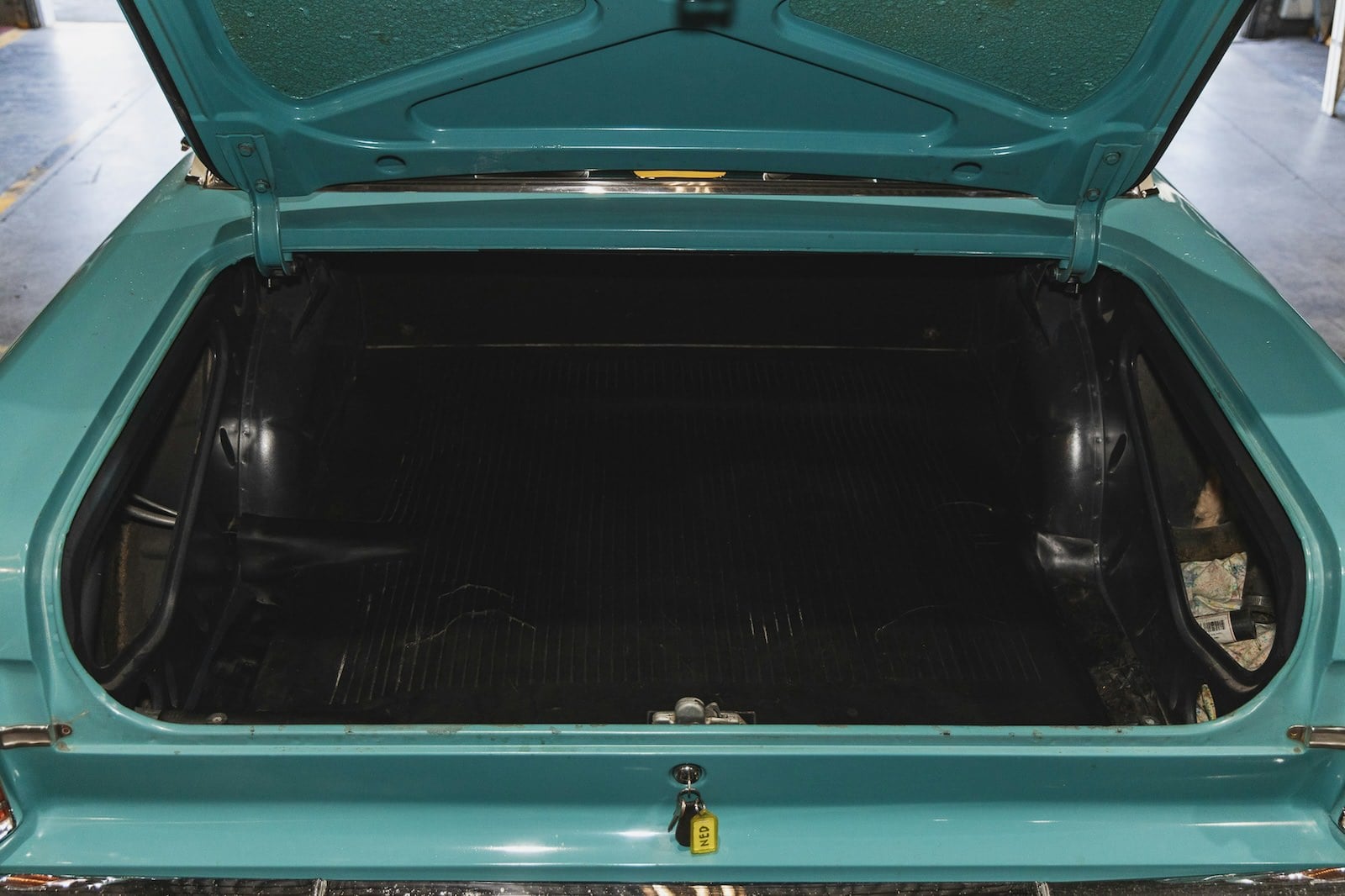
The car is now being offered for sale with its service documentation, a single key, jumper cables, a small fuel can, and spare tail light covers. If you’d like to read more about it or register to bid you can visit the listing here.
Images courtesy of Collecting Cars + General Motors Holden

Articles that Ben Branch has written have been covered on CNN, Popular Mechanics, Smithsonian Magazine, Road & Track Magazine, the official Pinterest blog, the official eBay Motors blog, BuzzFeed, Autoweek Magazine, Wired Magazine, Autoblog, Gear Patrol, Jalopnik, The Verge, and many more.
Silodrome was founded by Ben back in 2010, in the years since the site has grown to become a world leader in the alternative and vintage motoring sector, with well over a million monthly readers from around the world and many hundreds of thousands of followers on social media.