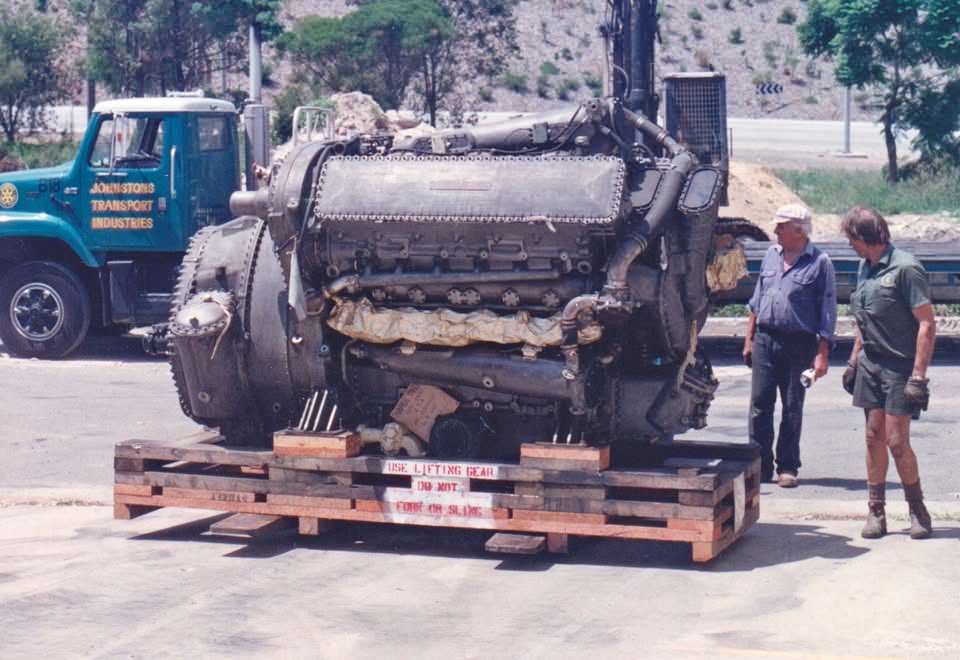
This is an original Napier Deltic 18 cylinder engine, an unusual diesel two-stroke, triangular opposed-piston design with a displacement of 88.3 liters (5,384 cubic inches) and up to 2,500 bhp.
These engines were used to power everything from naval fast attack boats to civilian railway locomotives, and they were famous for their relatively compact design, well, compact for their huge displacement and power output.
Above Video: This is an animation of the internal workings of the Napier Deltic 18-cylinder diesel engine, it makes understanding how it actually works much easier than just reading about it.
History Speedrun: The Napier Deltic Diesel Engine
In 1943 in the midst of World War II, the British Admiralty had bit of a problem. Their Motor Torpedo Boats were powered by gasoline engines, which made them fast but dangerously flammable – this was a serious liability when German E-boats running on diesel could often take hits without turning into fireballs.
The Admiralty wanted a diesel engine that could match the performance of petrol, but the diesels of the time were heavy, slow-revving, and more or less completely unsuited to anything that needed to move quickly. The Admiralty needed something different, and what they got was one of the most mechanically exotic diesel engines ever built.
D. Napier & Son, then a subsidiary of English Electric, had spent the 1930s working on an opposed-piston aviation diesel called the Culverin, which was built under license from the legendary German firm Junkers.
The Culverin never found a home in an aircraft, but it gave Napier’s engineers deep familiarity with opposed-piston diesel design – an arrangement where two pistons share a single cylinder, moving toward each other to create a combustion chamber in the middle. There was no cylinder head, no poppet valves, and no camshaft.
The pistons themselves acted as the valving mechanism, covering and uncovering intake and exhaust ports in the cylinder walls. Not dissimilar to the way petrol two-stroke engines use piston position in the cylinder to control access to the exhaust port.
Napier’s major breakthrough was geometrical, rather than arranging opposed-piston cylinders in a conventional inline layout, the design team placed three banks of six cylinders in an equilateral triangle, with a crankshaft at each apex – with the crucial crankshaft-phasing solution first proposed by Admiralty Engineering Laboratory draughtsman Herbert Penwarden. The result was an engine shaped like the Greek letter Delta, which gave it its name – Deltic. Internally, Napier designated it the E130.
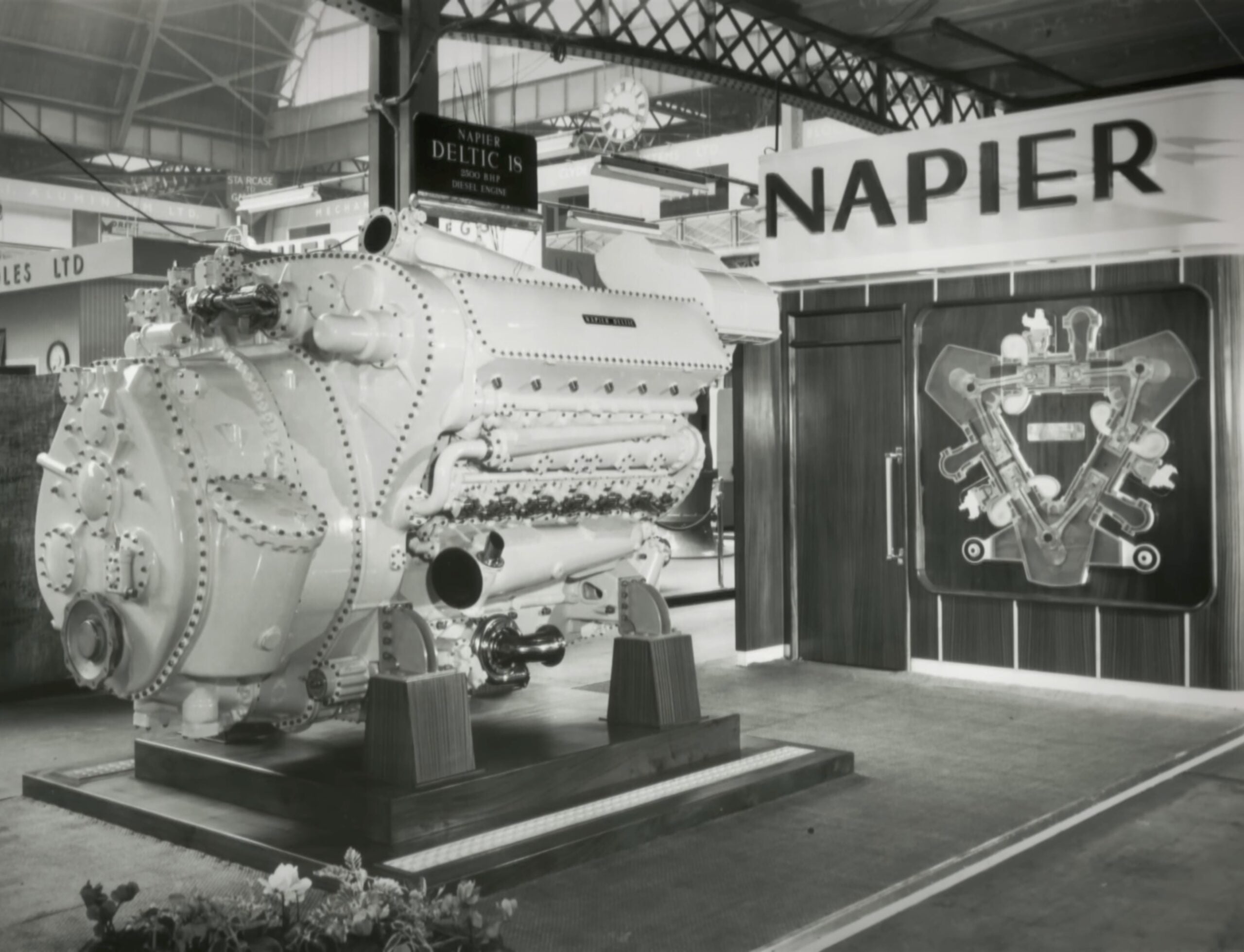
 Napier’s major breakthrough was geometrical, rather than arranging opposed-piston cylinders in a conventional inline layout, the design team placed three banks of six cylinders in an equilateral triangle, with a crankshaft at each apex. Image courtesy of D. Napier & Son
The 18-cylinder Deltic displaced 88.3 liters (5,384 cubic inches) across 18 cylinders and 36 pistons. It was a two-stroke, supercharged, uniflow-scavenged diesel that was rated at 2,500 bhp at 2,000 rpm for short-duration marine use, with a lower continuous rating.
Depending on whether the marine reverse gearbox is included, the D18 installation measured up to roughly 10 ft 11 in long, 6 ft 2.5 in wide, and 7 ft 1 in tall. The engine alone weighed about 8,700+ lbs, while the engine with reverse gear weighed around 10,500 lb.
By way of a comparison, when two Deltics were installed in a captured German E-boat alongside one of its original Mercedes-Benz diesels for testing, the Deltics were half the size and one-fifth the weight of the German engines while producing the equivalent amount of power.
The engineering work required to make this triangular layout actually work was formidable to say the least. Each crankshaft connects to pistons in two adjacent cylinder banks via fork-and-blade connecting rods, the exhaust pistons on the forked rods, the intake pistons on the blades.
One of the three crankshafts rotated in the opposite direction to the other two, this was necessary to achieve correct piston phasing. Phasing gears linked all three crankshafts to a single output shaft, and the firing order was meshed across all three banks so that a cylinder fires every 20º of crankshaft rotation, producing remarkably smooth power delivery. This phasing challenge was so difficult that Junkers themselves had abandoned the triangular layout without ever having solving it.
The first complete 18 cylinder Deltic engine ran on a test bed in April of 1950, and by January of 1952, six engines were available for full development trials. The engine was publicly launched in 1953 and quickly entered naval service in the Royal Navy’s Dark-class fast patrol boats, from 1954 onwards.
Turbocharged variants followed, powering the Nasty/Tjeld-class patrol boats that served with the navies of Norway, the United States, Greece, Germany, and Turkey, some remaining in service into the 1990s. U.S. Navy Nasty-class boats saw active service in Vietnam.
The most powerful variant to enter production was the charge-cooled, turbo-blown CT18-42K, which was good for around 3,700+ bhp depending on specification, built for the Indian Navy’s Seaward Defence Boats. Experimental turbocompound versions reportedly reached as high as 5,600+ bhp on the test stand.
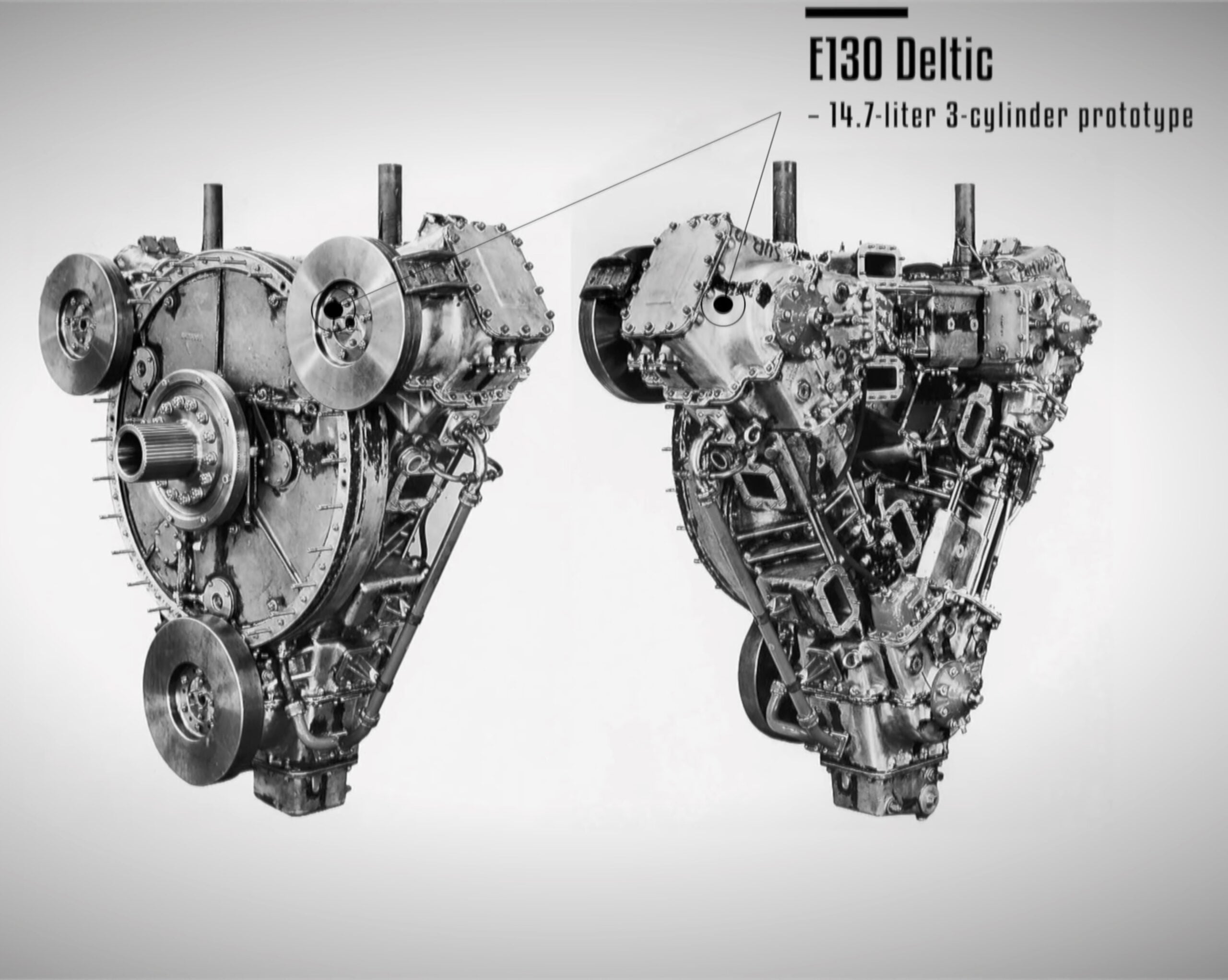
This is the first prototype of the Deltic, built with just three cylinders and six pistons to prove the concept, before attention shifted to building the full 18 cylinder versions. Image courtesy of D. Napier & Son
Perhaps the Deltic’s most famous application was on rails, English Electric recognized that the engine’s extraordinary power density could transform the world of diesel-powered locomotives.
In 1961 and 1962 they built 22 Class 55 diesel-electric locomotives for British Railways’ East Coast Main Line. Each carried two Deltic engines detuned to 1,650 bhp apiece, giving a combined output of 3,300 hp – making them the most powerful single-unit diesel locomotives in the world at the time of their introduction.
For two decades, the Class 55s dominated express services between London King’s Cross and Edinburgh, regularly running at 100 mph. They were finally displaced by the InterCity 125 High Speed Trains starting in 1978, with the last Class 55 making its final run on the 2nd of January 1982. Six of these trains still survive today in museum collections.
Interestingly, the Deltic’s naval career lasted far longer than this. HMS Atherstone, a Hunt-class minesweeper, was among the last Royal Navy vessels to operate with Deltic power when she was decommissioned in 2017 – more than six decades after the engine’s first sea trials. No electronics, no common-rail injection, no variable geometry turbos – just mechanical engineering pushed to its limits inside a noisy triangle.
The Napier Deltic Diesel Engine Shown Here
The engine you see here is an original Napier Deltic 18 cylinder diesel that was originally used by the Royal Australian Navy, according to the seller, who also notes that it’s been rebuilt and that it comes with some spares including a Coffman Shell starter.
Above Video: This video offers an excellent look back at the Napier Deltic, why it was developed, and how it worked.
Obviously there aren’t many sensible civilian uses for an engine like this, but thankfully very few Silodrome readers are sensible people. It’s most likely to be bought for a museum display, but we can live in hope that someone buys it to build the mother of all wakeboarding boats.
This Napier Deltic is now being offered for sale out of Campbelltown, in NSW, Australia with an asking price of $1,000,000 AUD, this works out to approximately $714,000 USD. If you’d like to read more or enquire about buying it you can visit the listing here.
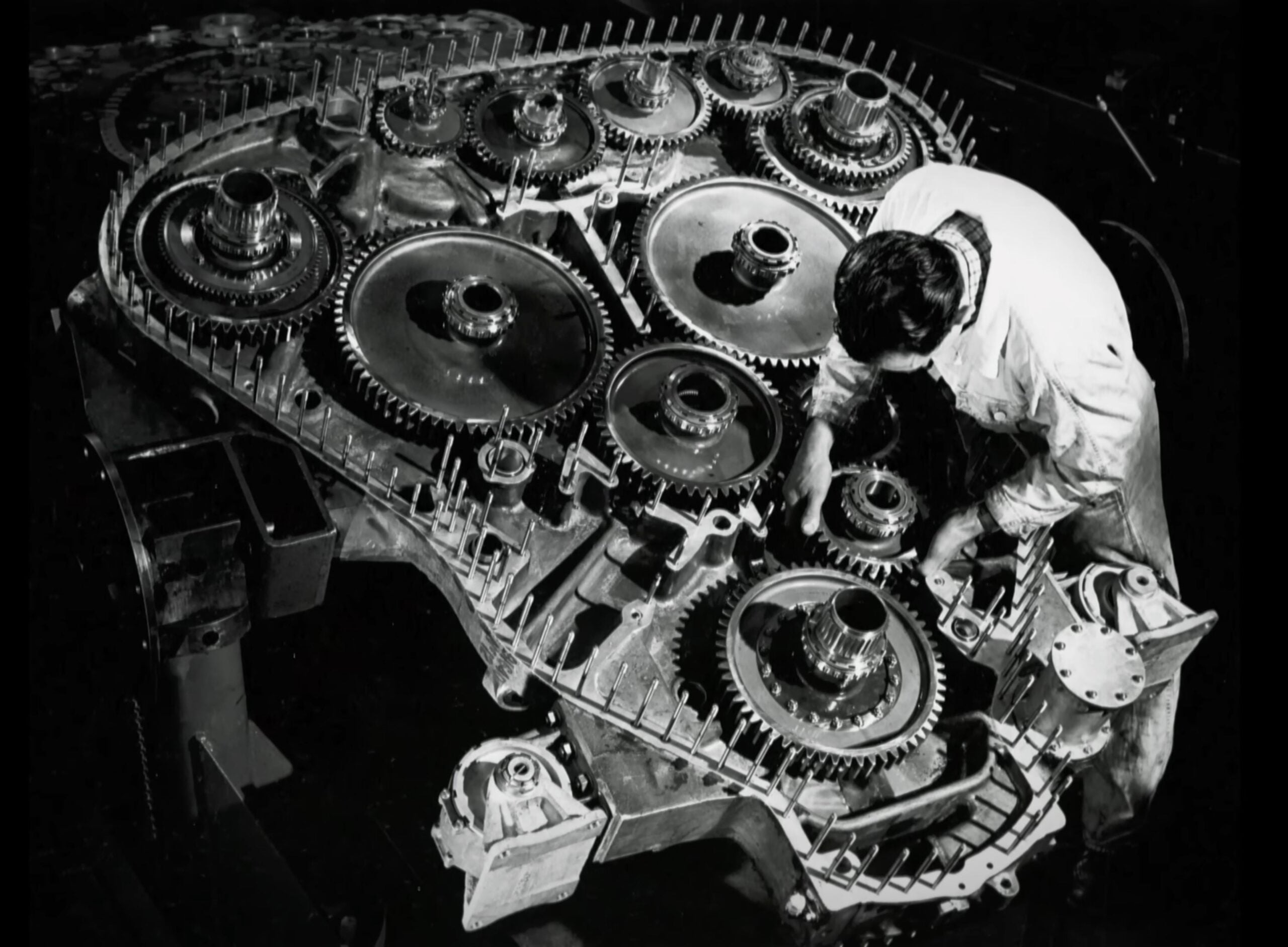
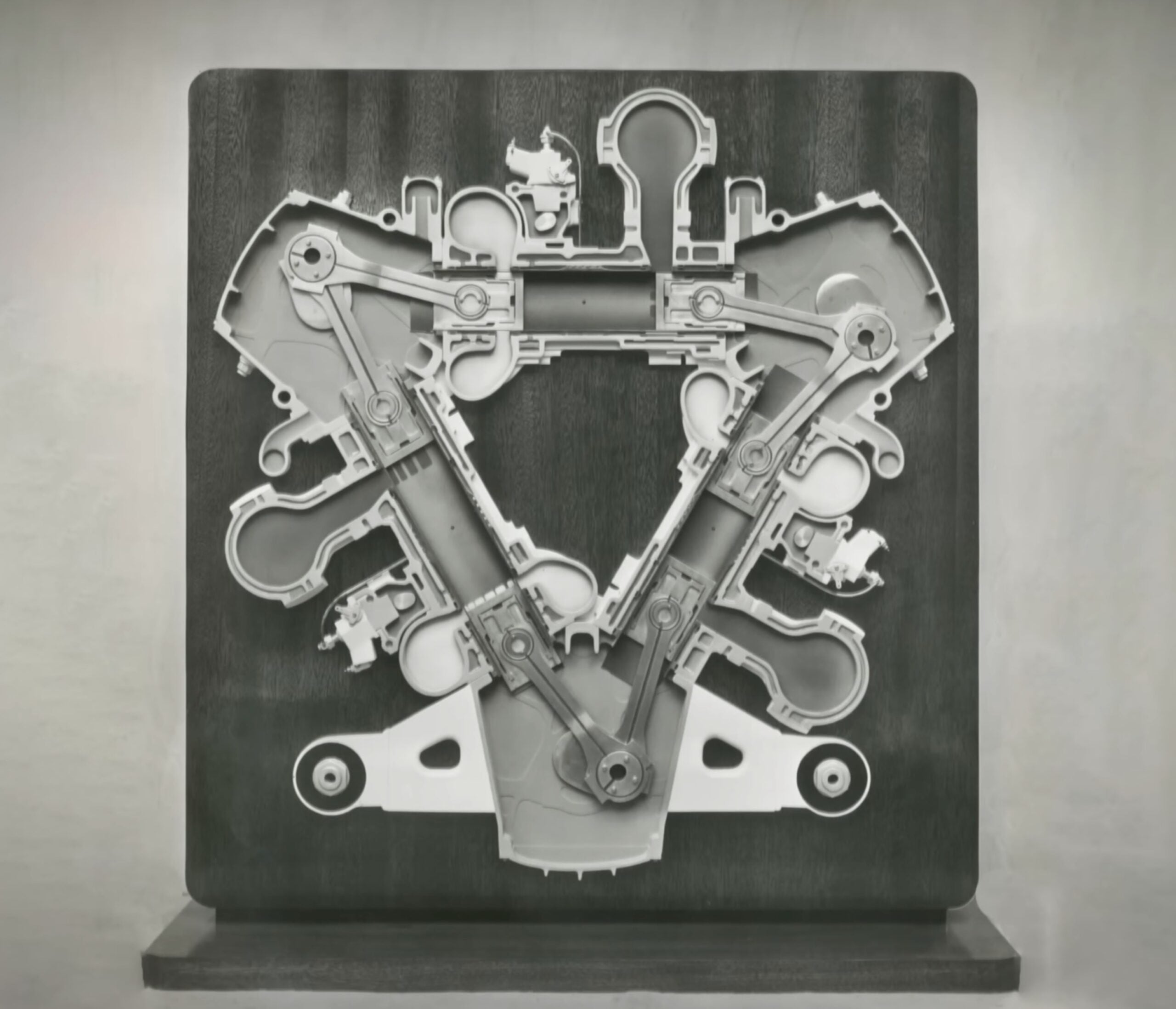
Images courtesy of D. Napier & Son

Articles that Ben Branch has written have been covered on CNN, Popular Mechanics, Smithsonian Magazine, Road & Track Magazine, the official Pinterest blog, the official eBay Motors blog, BuzzFeed, Autoweek Magazine, Wired Magazine, Autoblog, Gear Patrol, Jalopnik, The Verge, and many more.
Silodrome was founded by Ben back in 2010, in the years since the site has grown to become a world leader in the alternative and vintage motoring sector, with well over a million monthly readers from around the world and many hundreds of thousands of followers on social media.