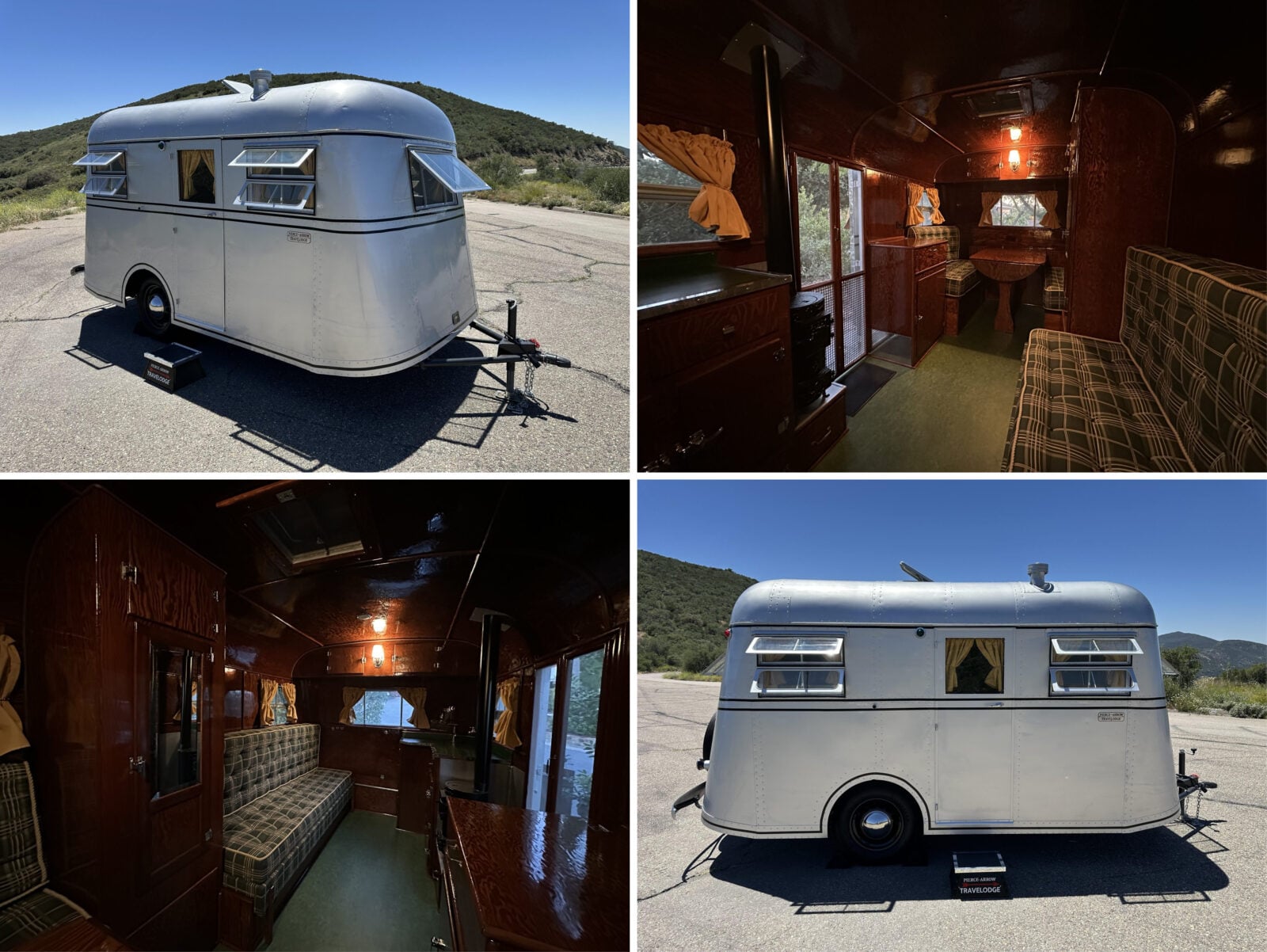
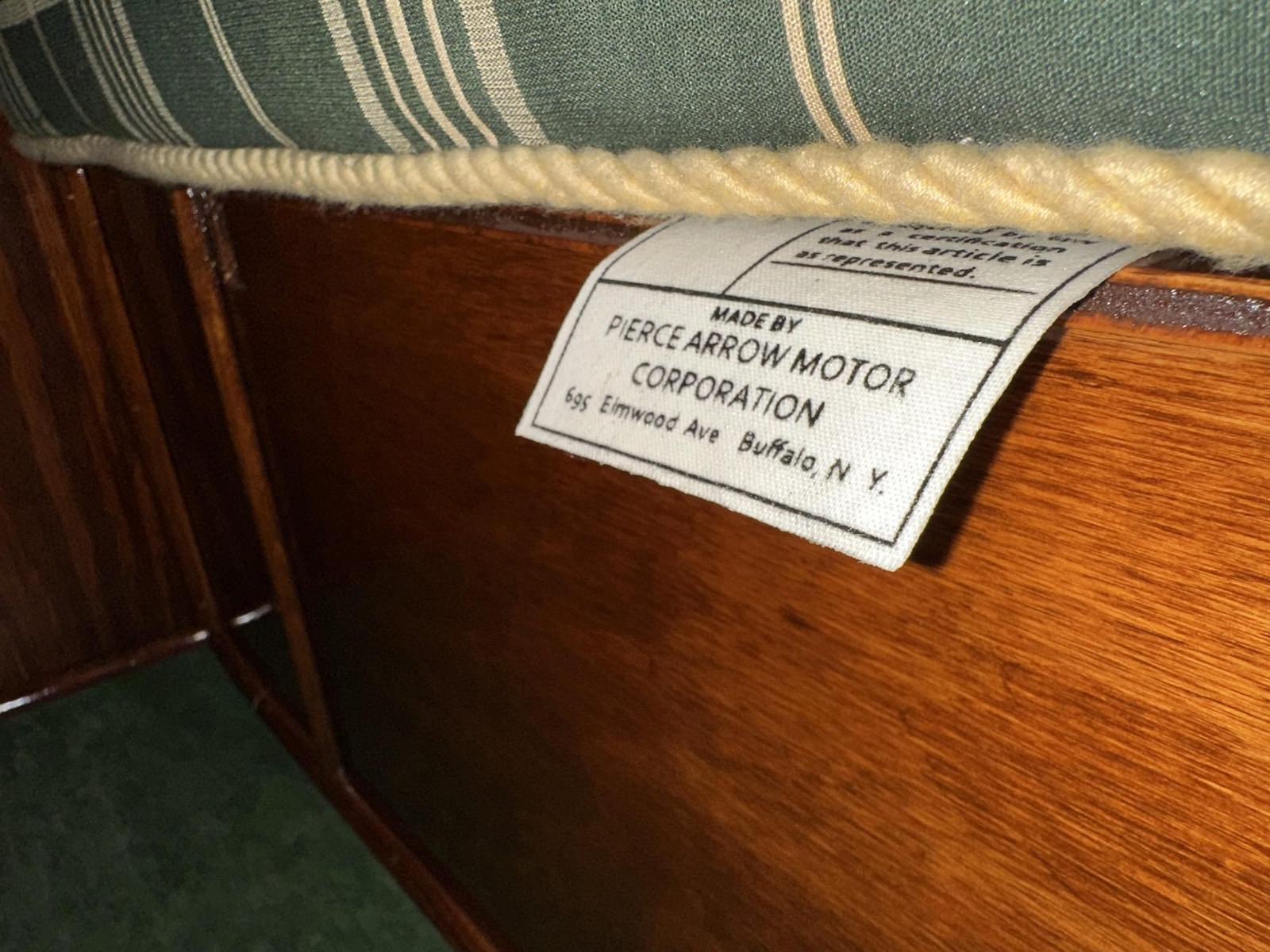
This is a recently refurbished 1937 Pierce-Arrow Travelodge Model C travel trailer, it’s a rare survivor and a fascinating look back at the early days of car-towable campers.
In some respects, luxury automaker Pierce-Arrow’s “Travelodge” campers were a hail mary pass in the midst of the Great Depression, in the hopes of saving the company as high-end car sales dwindled. It didn’t work, but the company did build what were arguably the most advanced travel trailers of the time.
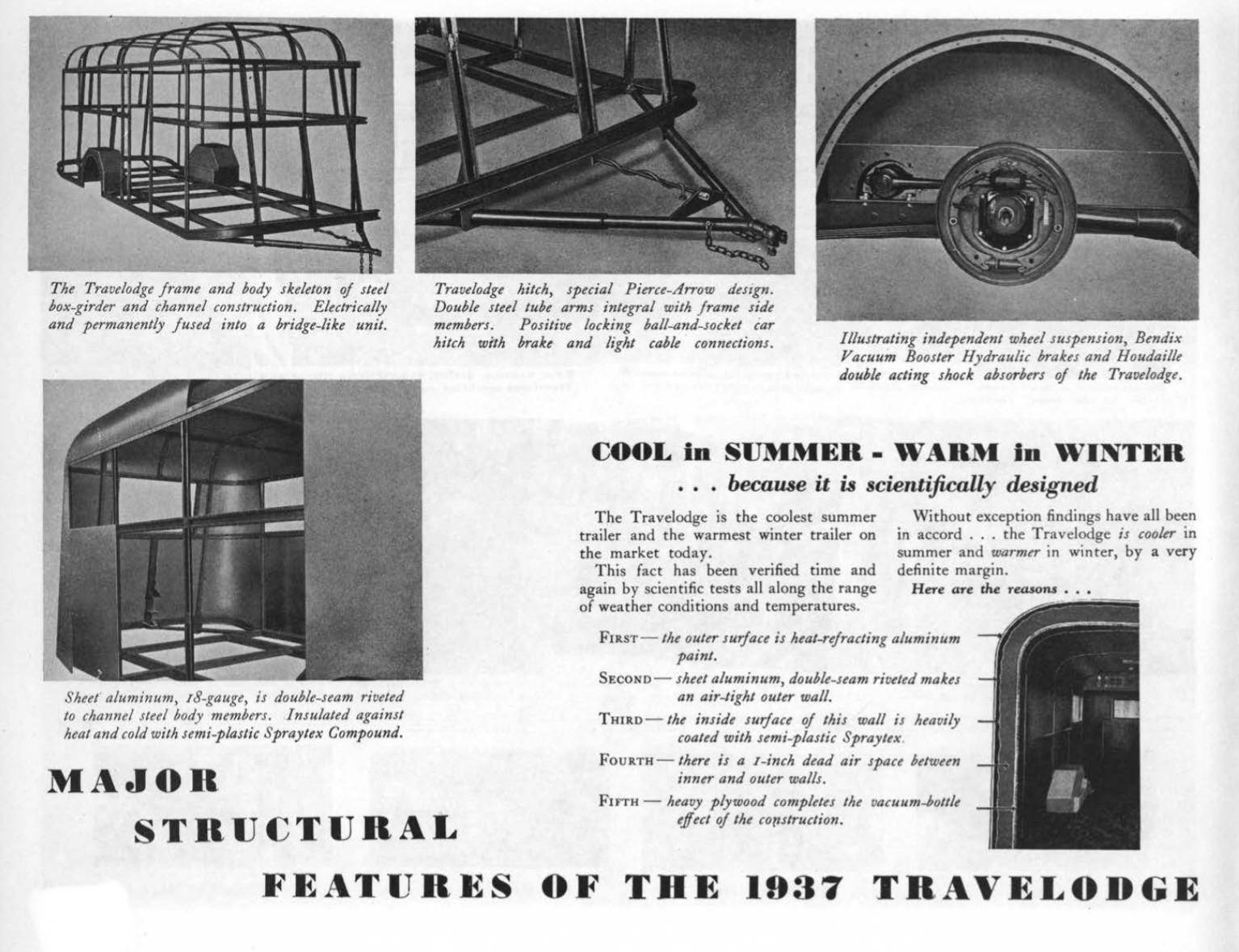
 Each Travelodge was built on a welded steel frame clad in riveted 18-gauge aluminum. Underneath, fully independent suspension smoothed the ride over the largely unsealed roads of the time, while Bendix hydraulic brakes (actuated by a vacuum cylinder connected by hose to the tow vehicle) provided stopping power that was cutting-edge for any trailer of the period. Image courtesy of Pierce-Arrow.
History Speedrun: Pierce-Arrow Travel Trailers
The Pierce-Arrow Motor Car Company spent nearly four decades building some of the most prestigious automobiles ever to roll out of an American factory, or any factory for that matter. Its cars carried presidents, Hollywood stars, and captains of industry. But in the final desperate years of the Great Depression, the Buffalo, New York firm tried something a little different – building luxury camping trailers. The result was the Pierce-Arrow Travelodge, one of the most fascinating footnotes in American travel trailer history.
From Birdcages To Motorcars
The foundations of Pierce-Arrow go all the way back to 1865, when the company was founded as Heinz, Pierce and Munschauer – a manufacturer of household goods. Under George Norman Pierce’s leadership, the firm became known for products including bathtubs, iceboxes, and even delicate gilded birdcages. Pierce bought out his partners in 1872, renaming the business the George N. Pierce Company, and by 1896 he had added bicycles to the product line.
The leap to automobiles came in 1901 with the single-cylinder Motorette, followed by the two-cylinder Arrow in 1903. But it was the four-cylinder Great Arrow of 1904 that set Pierce on its course toward the higher-end luxury market.
The car won the prestigious Glidden Tour reliability trial in 1905, and by 1908 the company had been rechristened the Pierce-Arrow Motor Car Company. Over the following decades, Pierce-Arrow established itself as one of America’s most revered luxury marques – one of the celebrated “Three Ps” alongside Packard and Peerless.
The automaker supplied White House automobiles from President Taft through President Franklin Roosevelt, and its engineering innovations included hydraulic valve lifters, dual spark plugs per cylinder, and four-valve cylinder heads.
The Great Depression Takes Hold
The Great Depression hit luxury automakers like a ton of bricks. Pierce-Arrow’s best production years had been 1925 through to 1930, when 37,702 cars were built. From 1931 through 1938, combined output collapsed to just 12,960 units, with only 787 built in 1936, 166 in 1937, and a mere 26 in 1938. A brief period under Studebaker ownership failed to stabilize the company, and Pierce-Arrow returned to independence in 1933, though on very shaky footing.
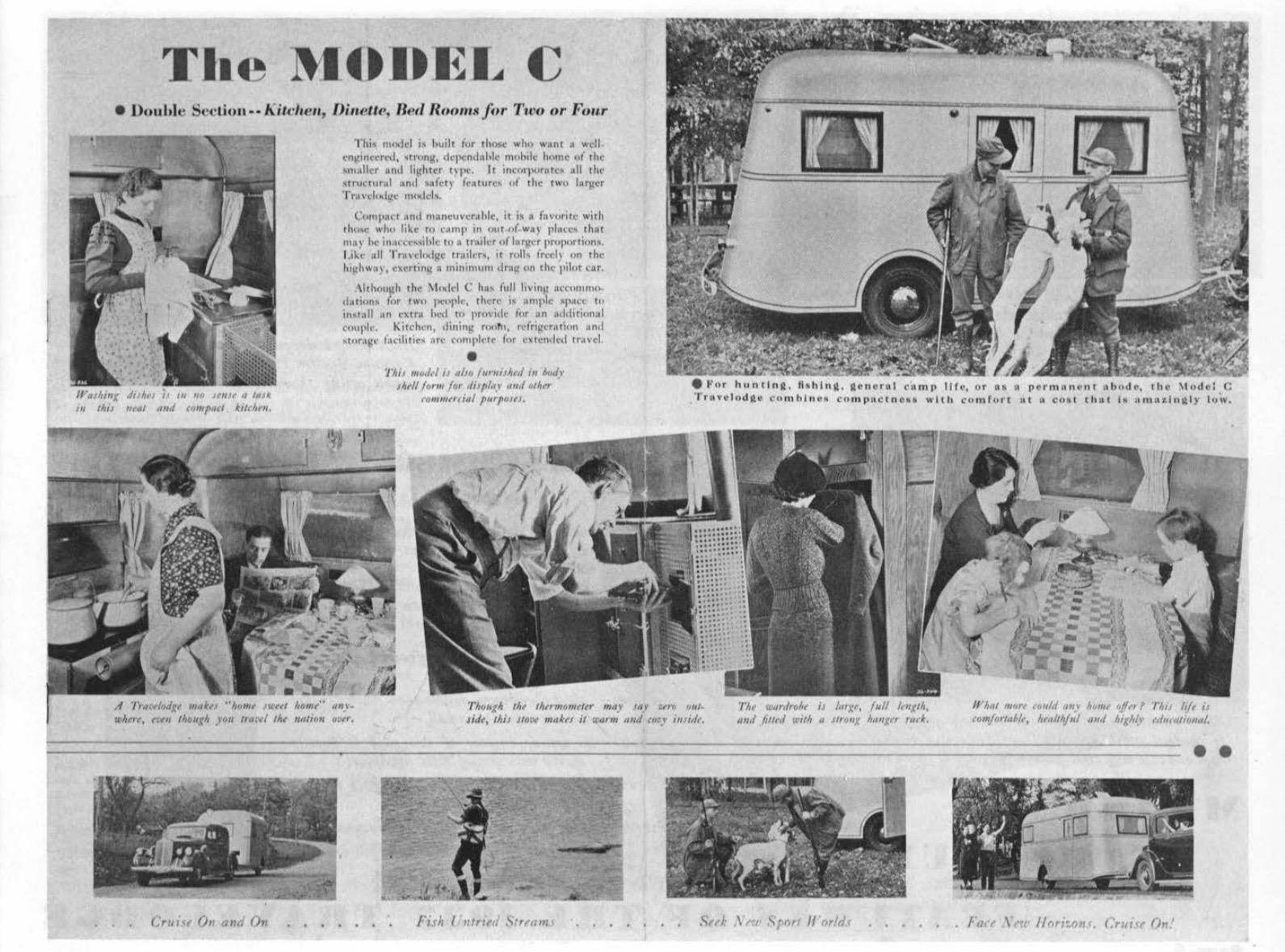
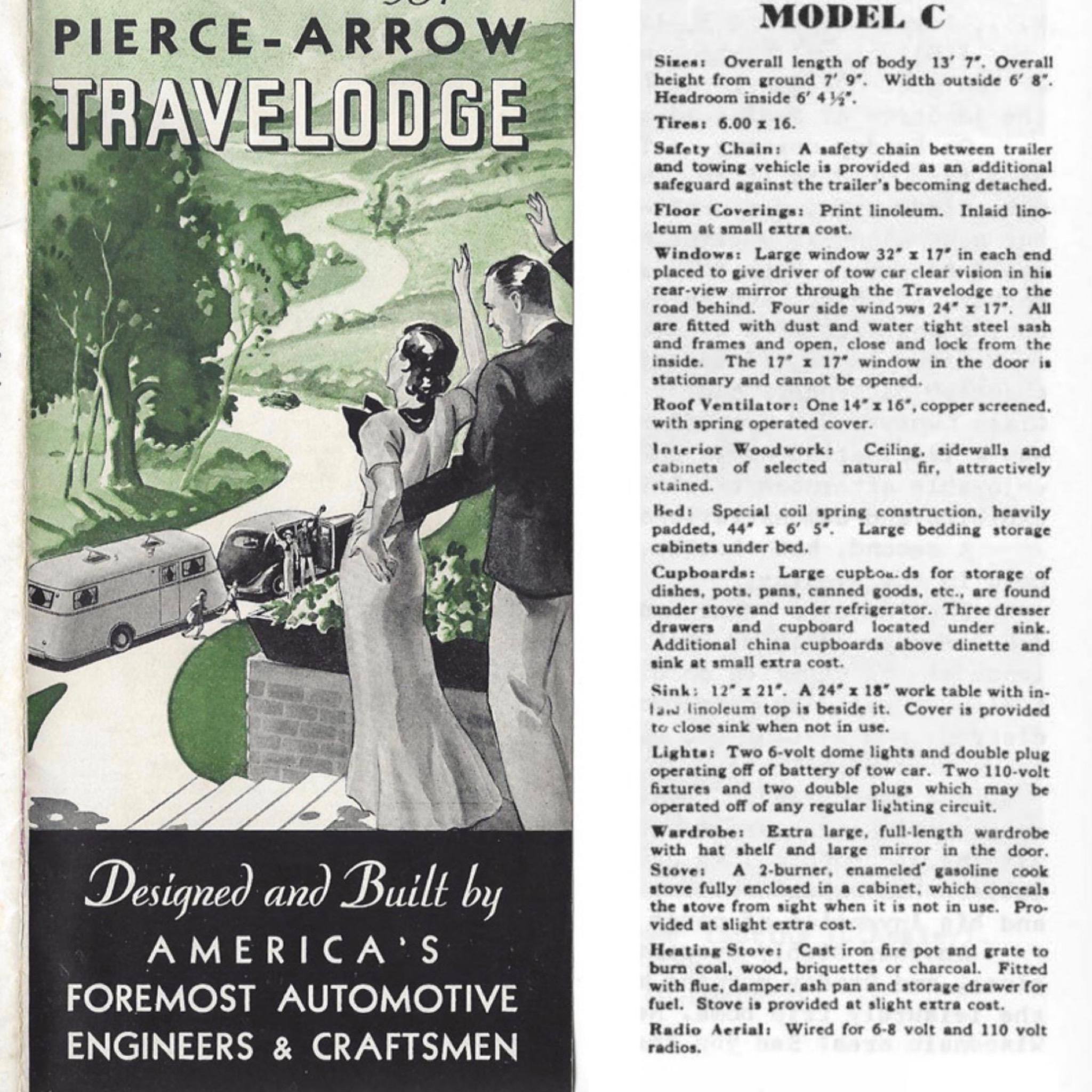
The Pierce-Arrow Model C was the most affordable Travelodge, priced at $784 USD when new, roughly $18,000 USD in today’s money. Despite its compact dimensions, it was remarkably well-equipped for the time. Image courtesy of Pierce-Arrow.
Unlike Packard, which introduced the more affordable One Twenty to generate cash flow, Pierce-Arrow refused to dilute its brand with a cheaper car – instead, the company looked for completely new product lines. The most ambitious of these was the Travelodge, a range of luxury camping trailers launched in 1936 – interestingly that was also the year that Airstream produced their first aluminum travel trailer, having been inspired by the Bowlus Road Chief.
The Pierce-Arrow Travelodge
Production of the Travelodge began at a separate division in the Buffalo factory in the mid-summer of 1936, with all units classed as 1937 models regardless of their actual build date.
Production lasted from mid-summer through November of 1936. Pierce-Arrow marketed the trailers as the product of car engineers, emphasizing that their campers were safer and better built than anything else on the market. And they were probably right.
Each Travelodge was built on a welded steel frame clad in riveted 18-gauge aluminum, a significant departure from the wood-framed construction common in the trailer industry at the time. Underneath, fully independent suspension smoothed the ride over the largely unsealed roads of the time, while Bendix hydraulic brakes (actuated by a vacuum cylinder connected by hose to the tow vehicle) provided stopping power that was cutting-edge for any trailer of the period.
Three models were offered, named A, B, and C from largest to smallest. The flagship 19 foot Model A and the mid-range 16.5 foot Model B had interiors finished in Mountain Birch wood ceiling paneling with Red Gum walls and cabinetry. The entry-level Model C, measuring in at 13 feet 7 inches, used for wood interiors with linoleum flooring. All three shared the same “toaster” styling, named affectionately by collectors for the trailers’ rounded, appliance-like profile.
The Pierce-Arrow Model C
The Pierce-Arrow Model C was the most affordable Travelodge, priced at $784 USD when new, roughly $18,000 USD in today’s money. Despite its compact dimensions, it was remarkably well-equipped for the time.
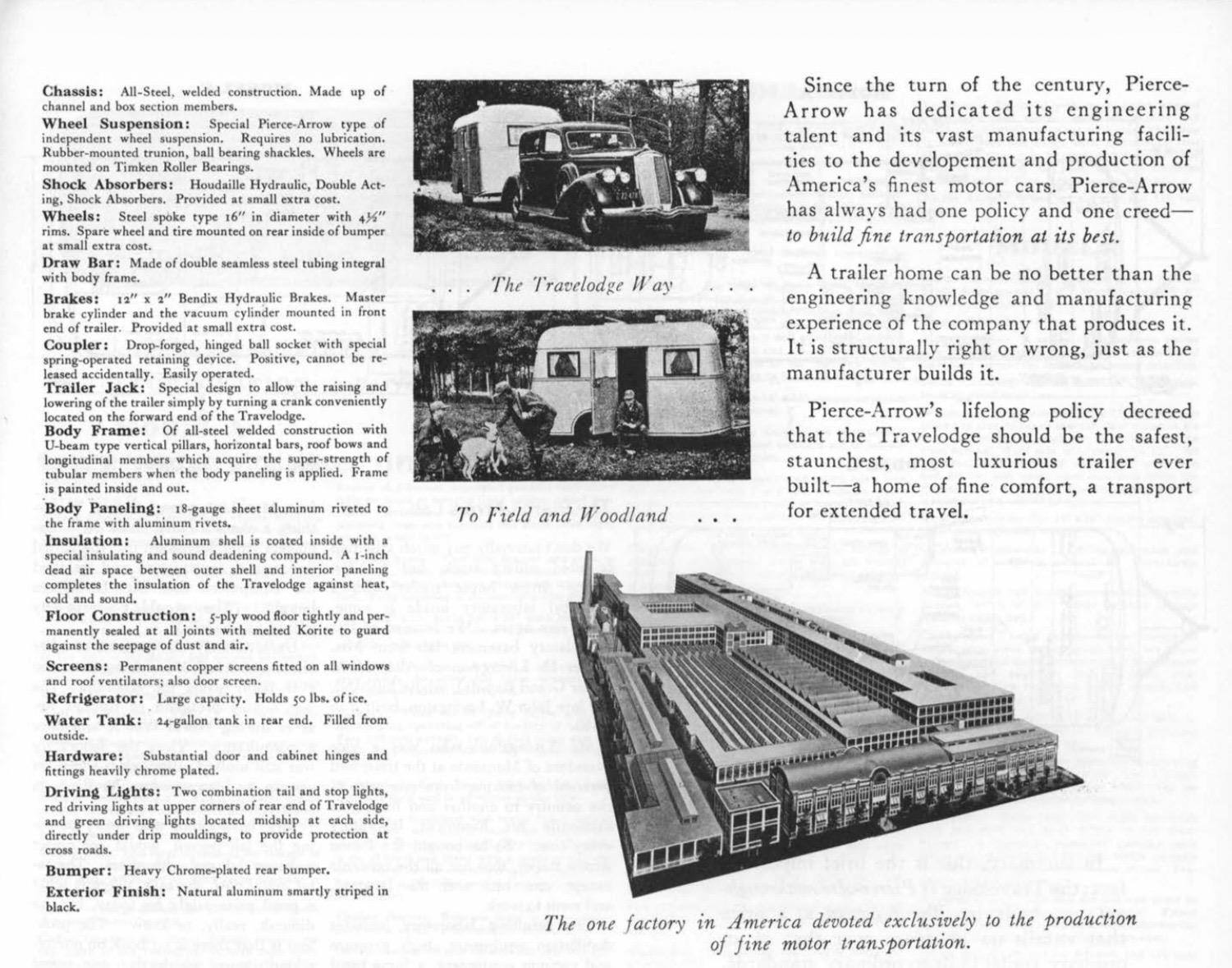
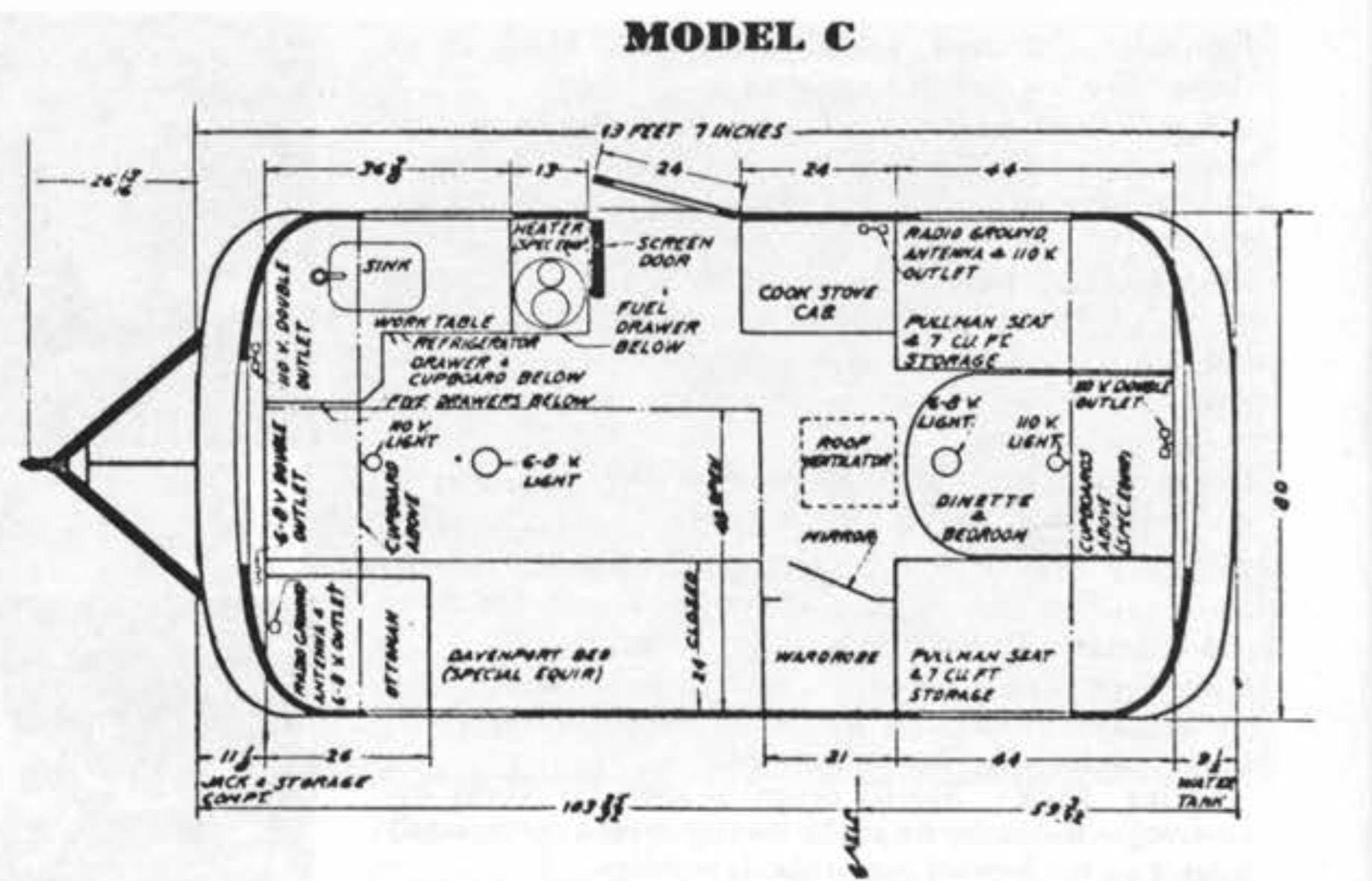
The interior had booth-style seating that converted into a double bed, an insulated icebox, a hand-pumped water spout and sink, a Prentiss-Wabers Auto-Cook-Kit camp stove, a wood-burning heater, and ample counter and storage space. Image courtesy of Pierce-Arrow.
The interior had booth-style seating that converted into a double bed, an insulated icebox, a hand-pumped water spout and sink, a Prentiss-Wabers Auto-Cook-Kit camp stove, a wood-burning heater, and ample counter and storage space.
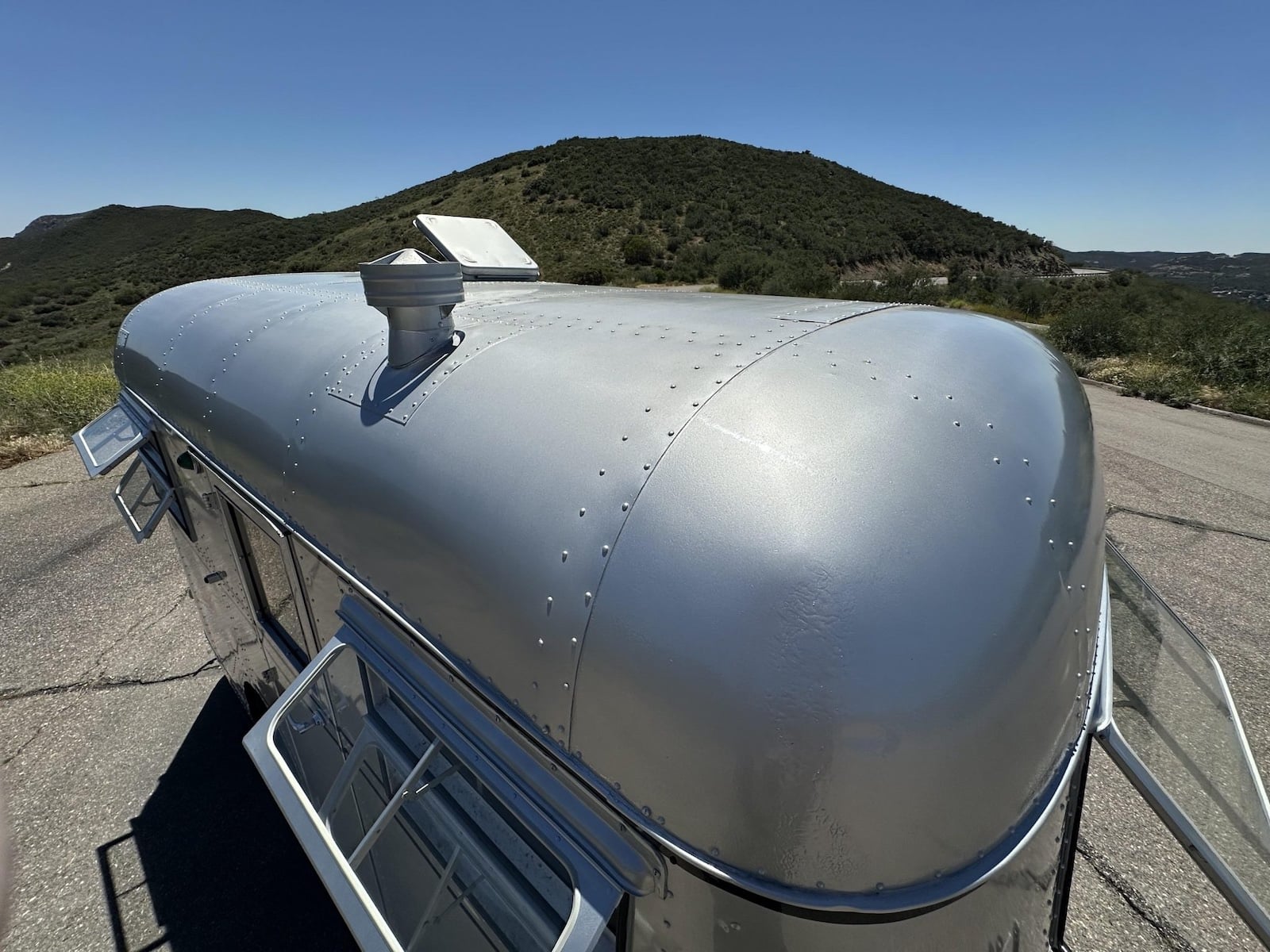
Six windows with screens and a rooftop ventilation hatch kept things comfortable, while leaded glass cabinets, chrome fixtures, and a brass Pierce arrow logo above the fold-up counter added touches of genuine luxury.
Like its larger siblings, the Model C rode on fully independent suspension and was offered with Bendix hydraulic brakes – the fundamental mechanical specification used across the entire Travelodge range.
Sadly, the Travelodge suffered from the same fundamental problem that was killing Pierce-Arrow’s automobile business – uncompromising quality at a price few Depression-era buyers could justify. Exact production figures remain uncertain due to incomplete factory records, but the Pierce-Arrow Society’s vehicle register believes that at least 149 Model A’s, 261 Model B’s, and somewhere between 74 and 100 Model C’s were built, putting the total at a figure estimated at roughly 450 to 520 units.
It wasn’t enough to save the company, and Pierce-Arrow declared insolvency in 1938 – the final automobile was assembled by chief engineer Karl Wise from parts bought from the company’s receivers.
Surviving Travelodges are rare, making them exceptionally sought-after with collectors. Some examples have been sold through RM Sotheby’s and Gooding & Company, others have been displayed at Pebble Beach. They may not have saved the company, but people are still celebrating them almost a century later.
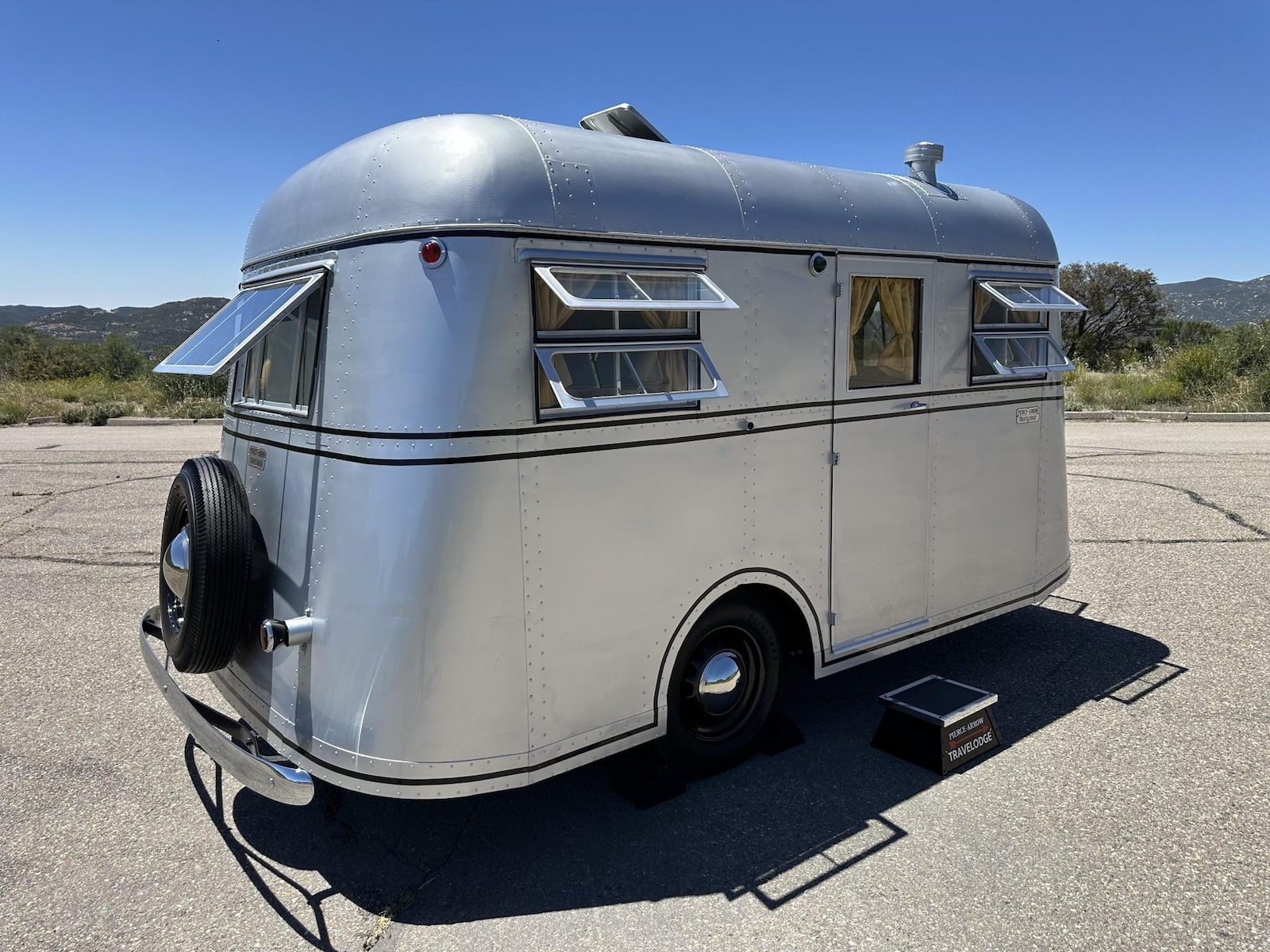
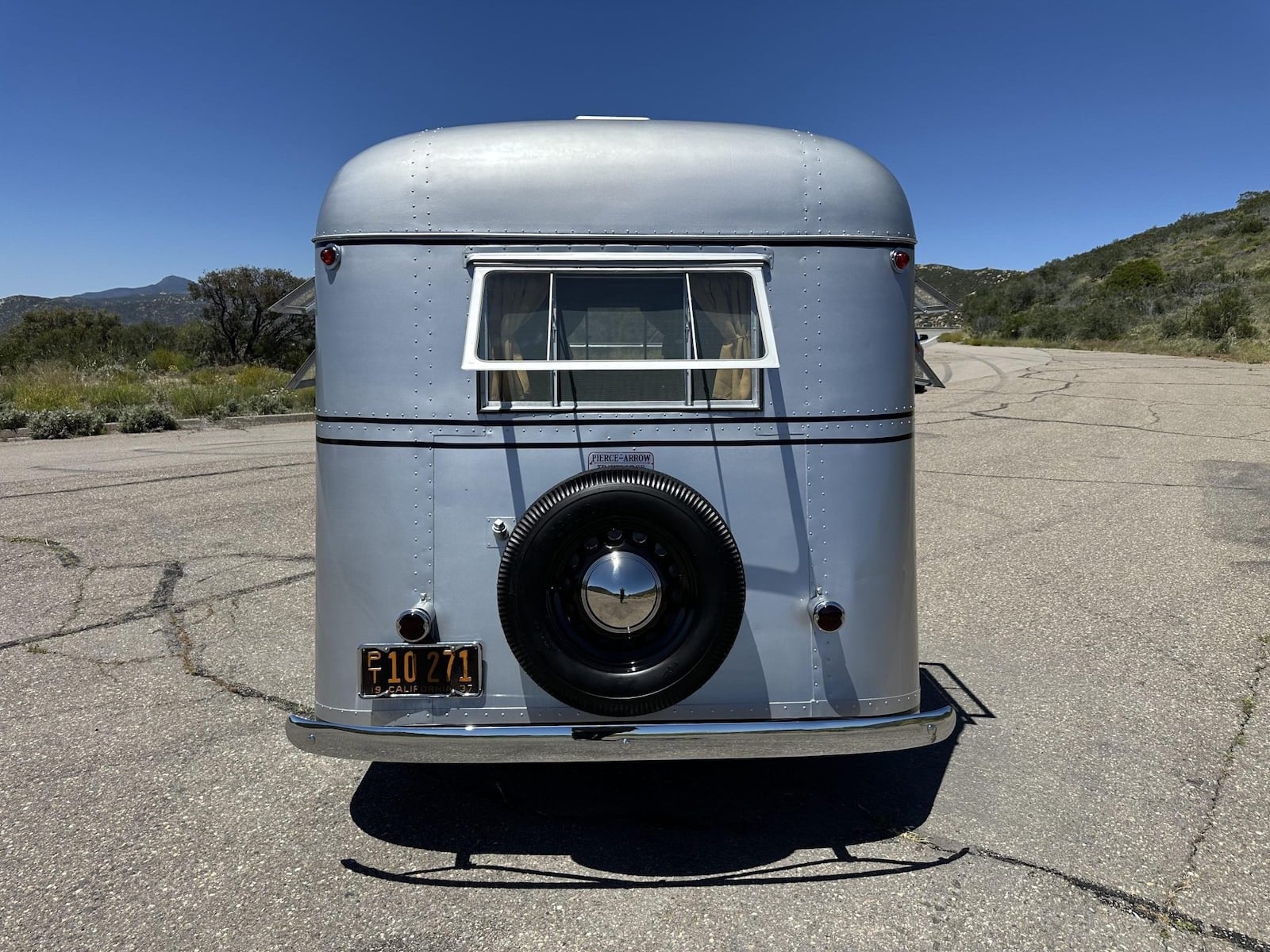
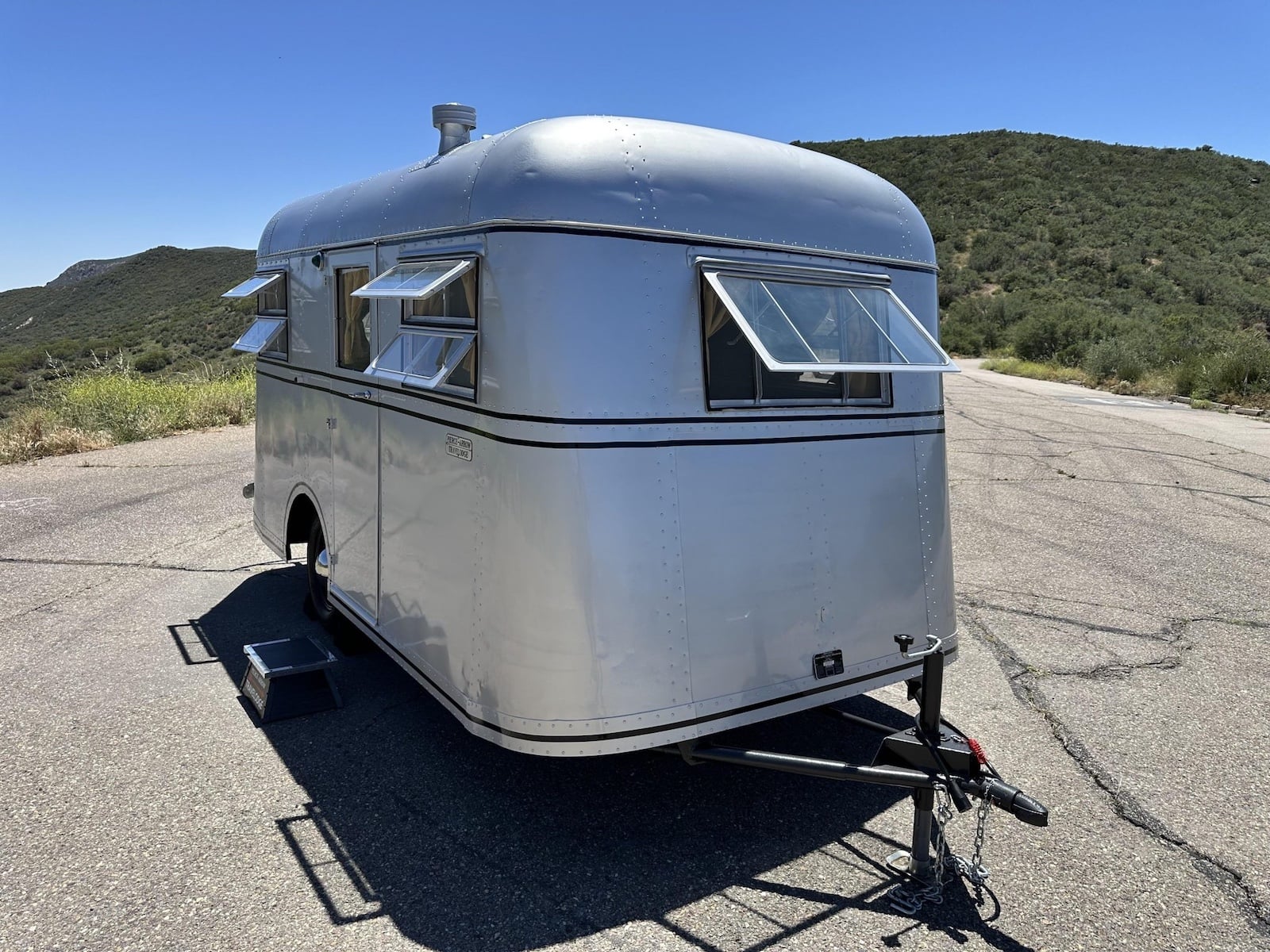
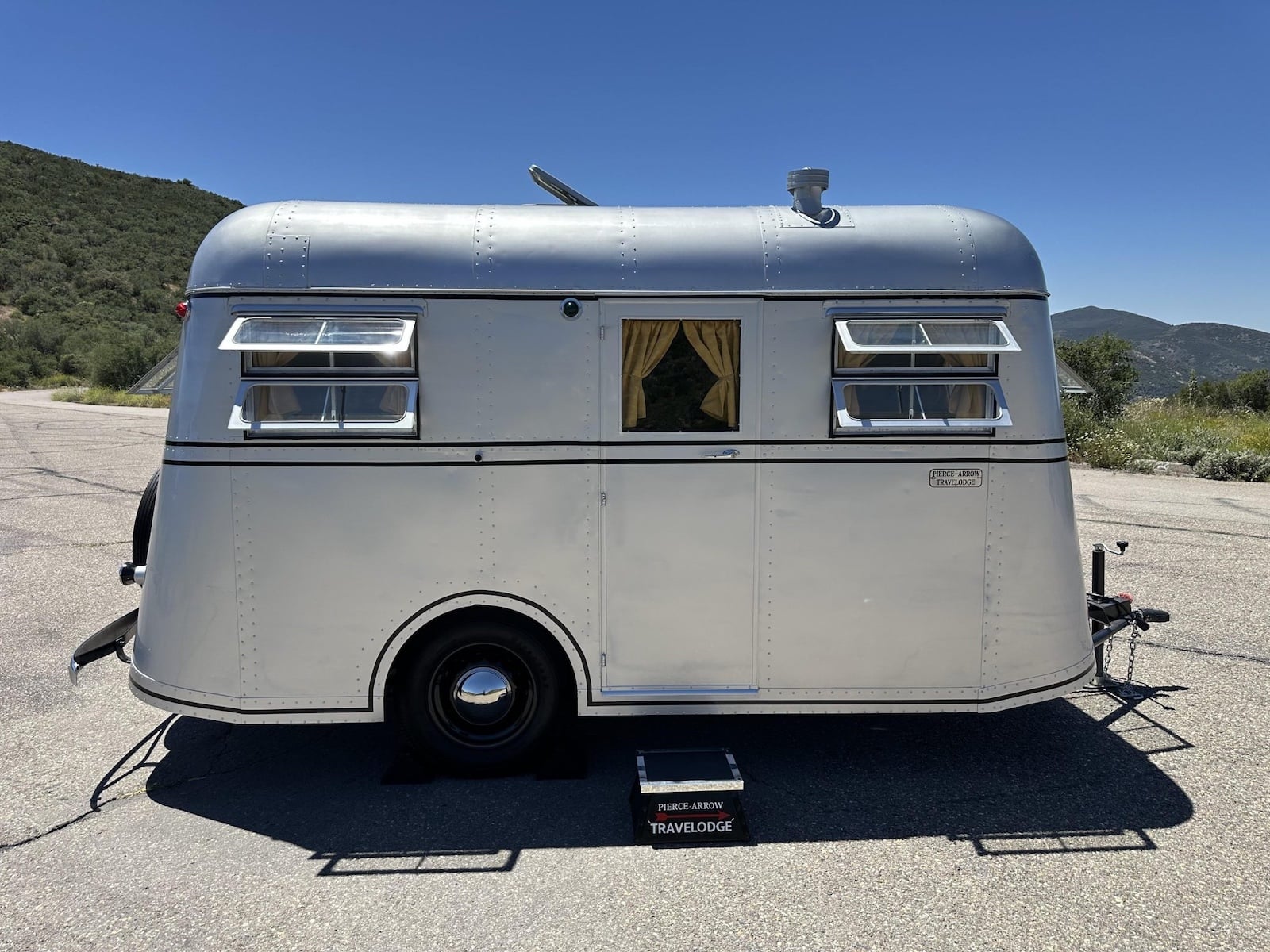
The 1937 Pierce-Arrow Travelodge Model C Shown Here
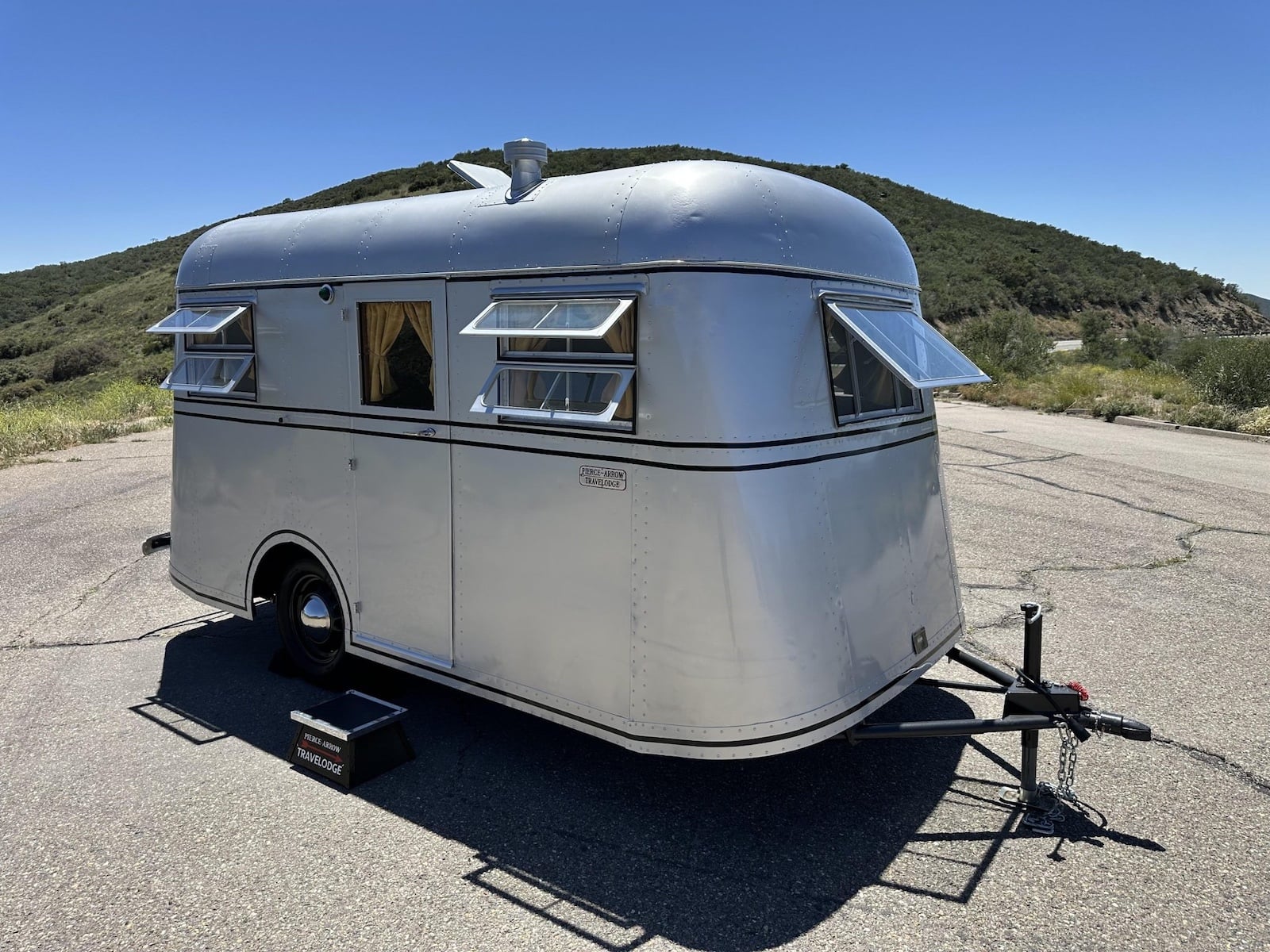
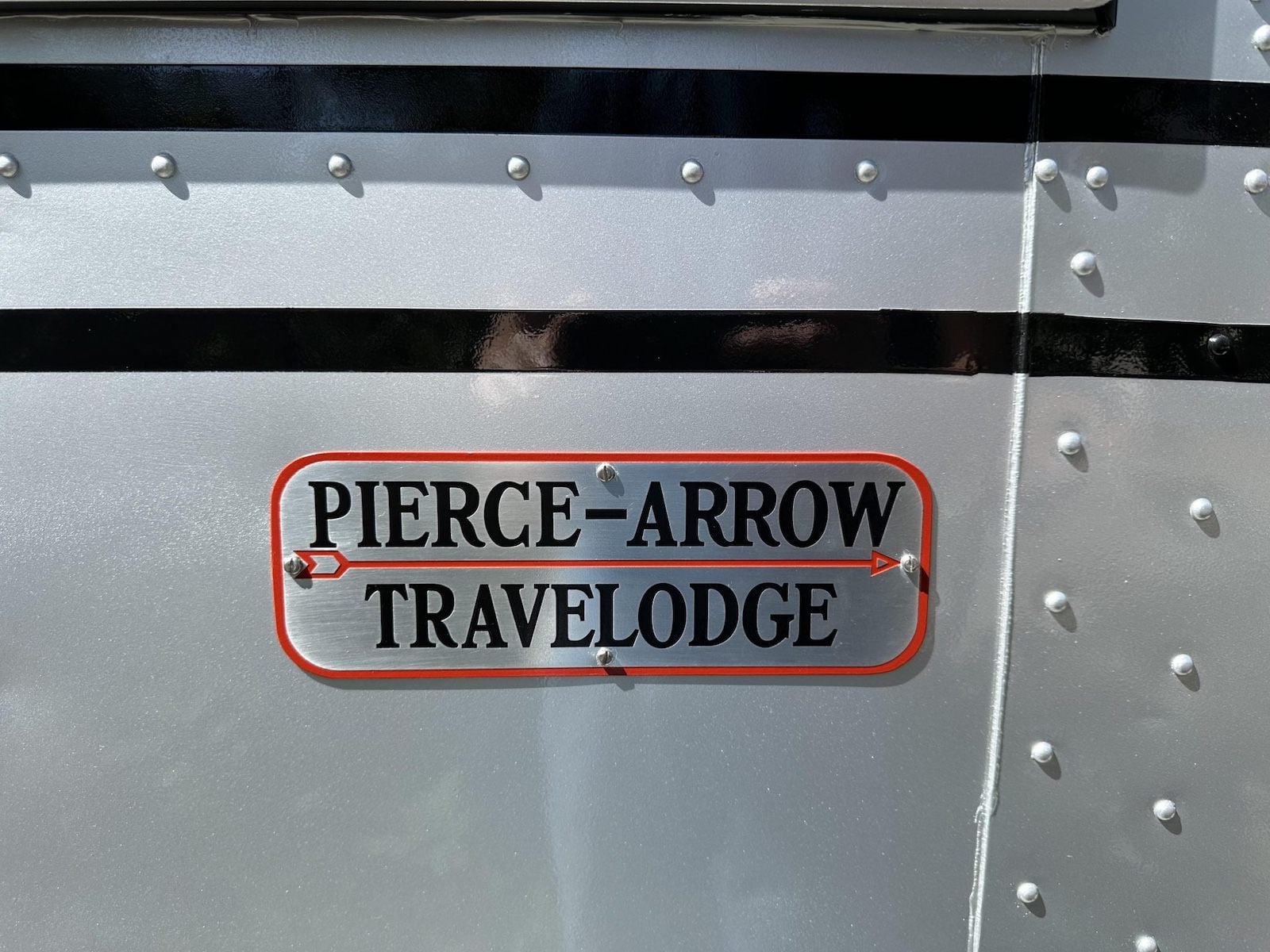
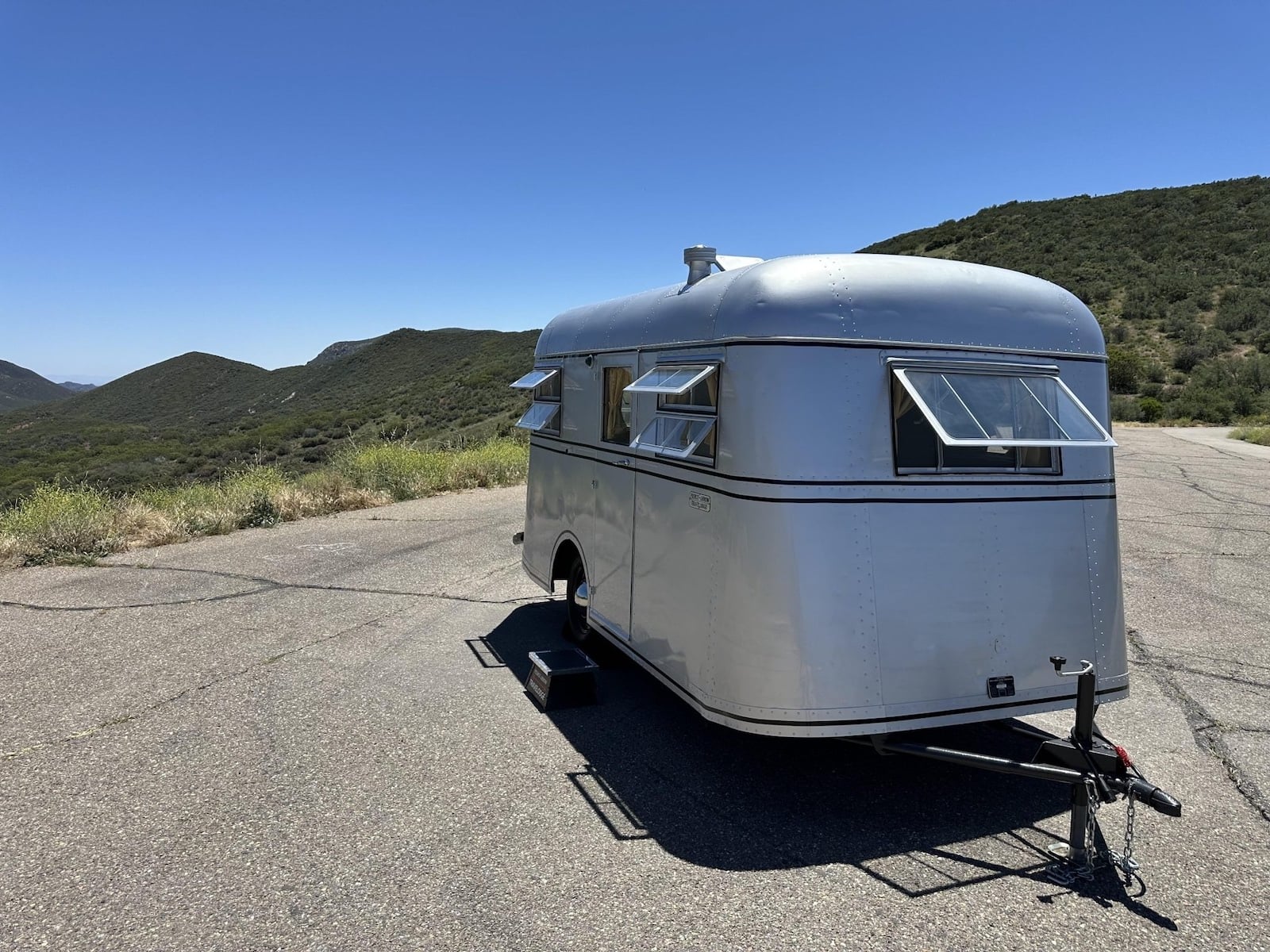
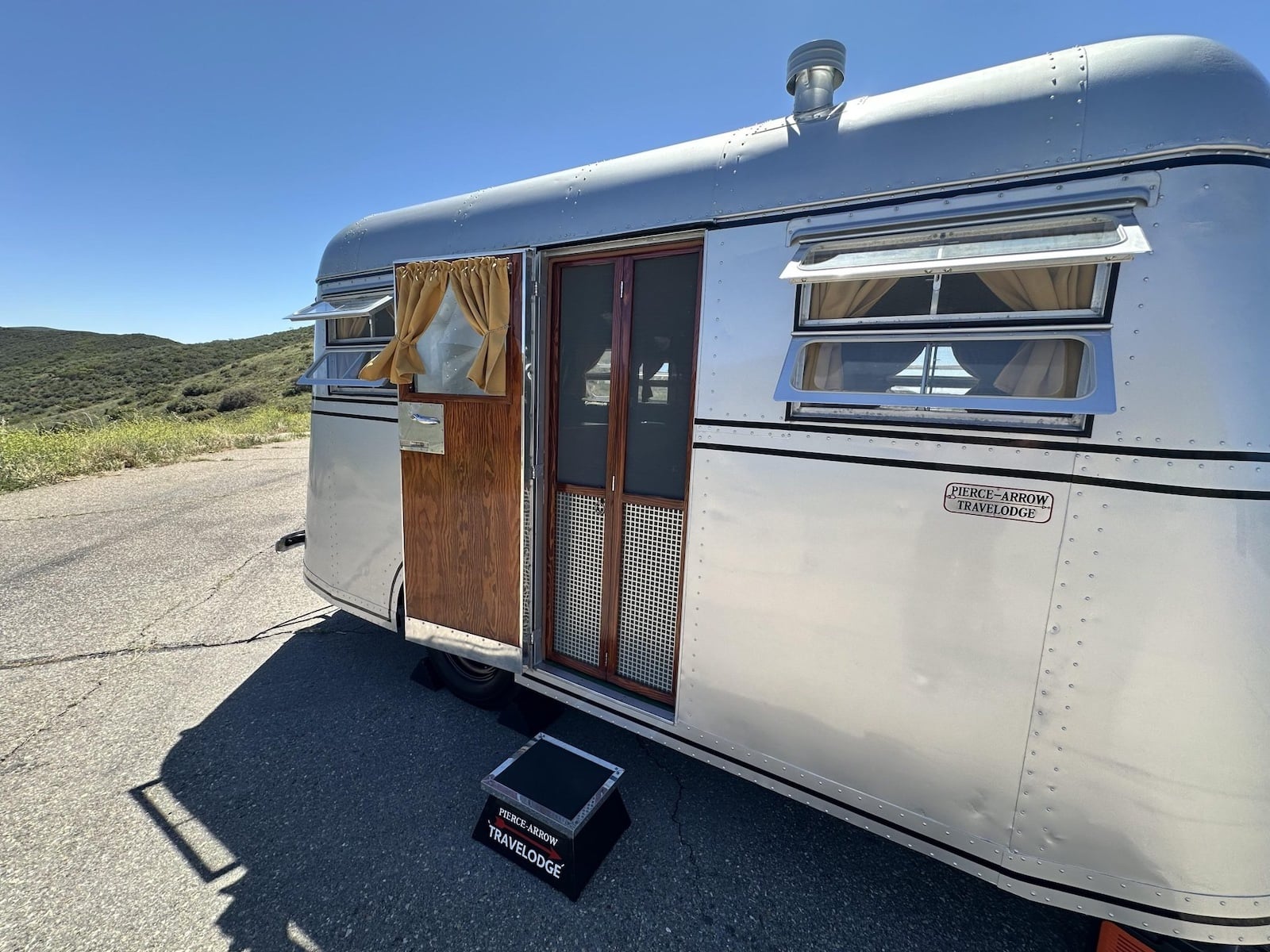
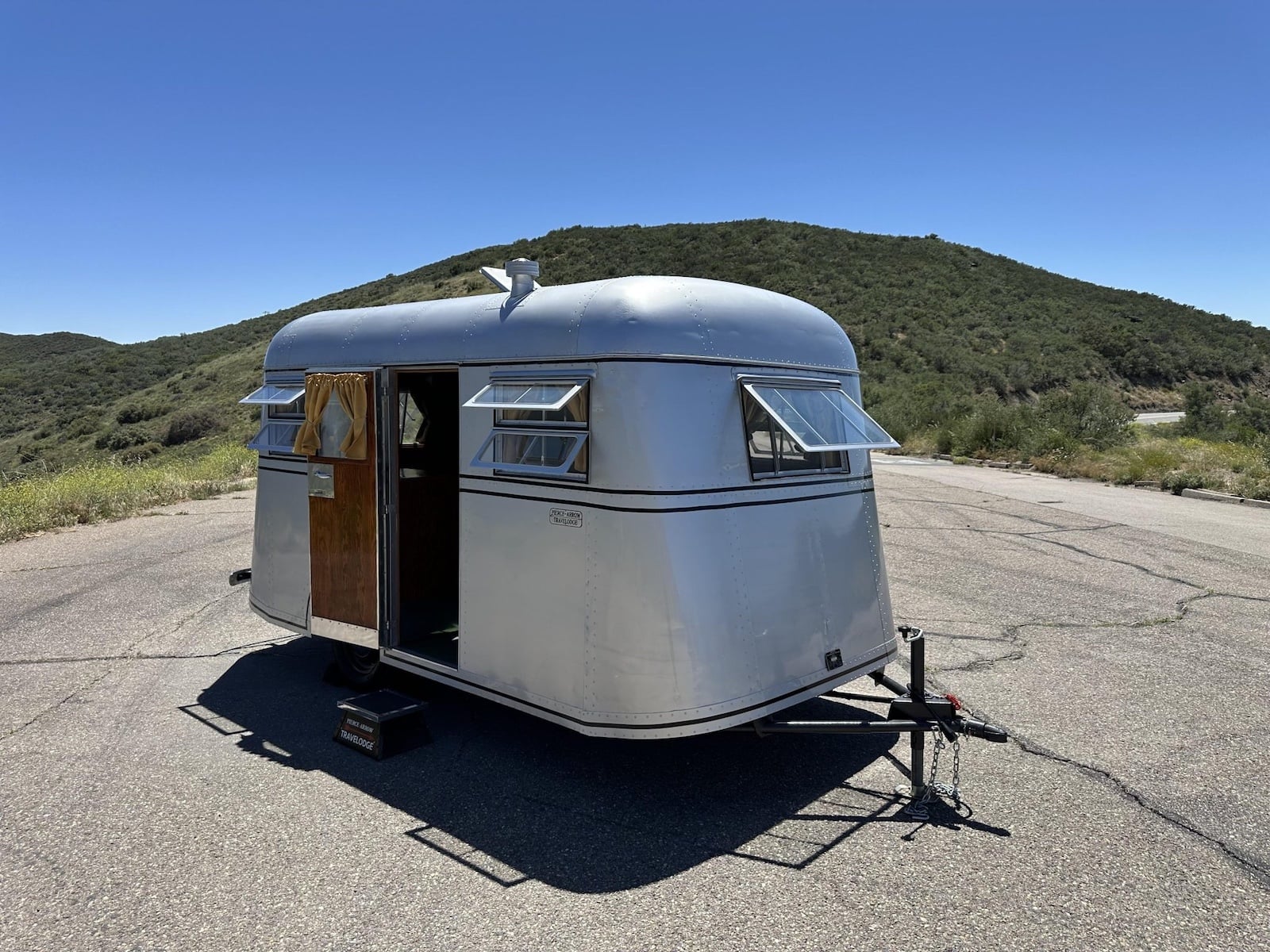
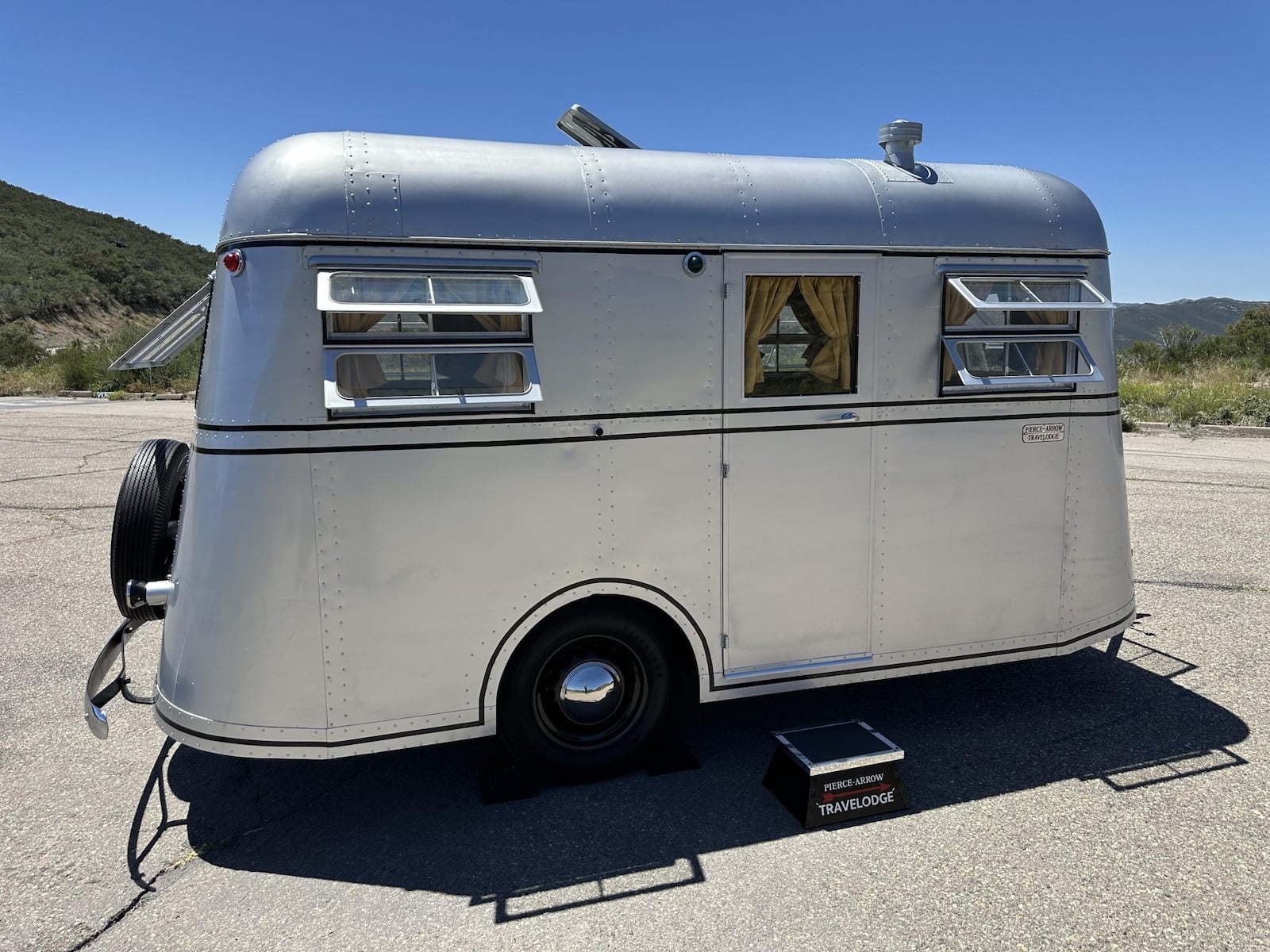
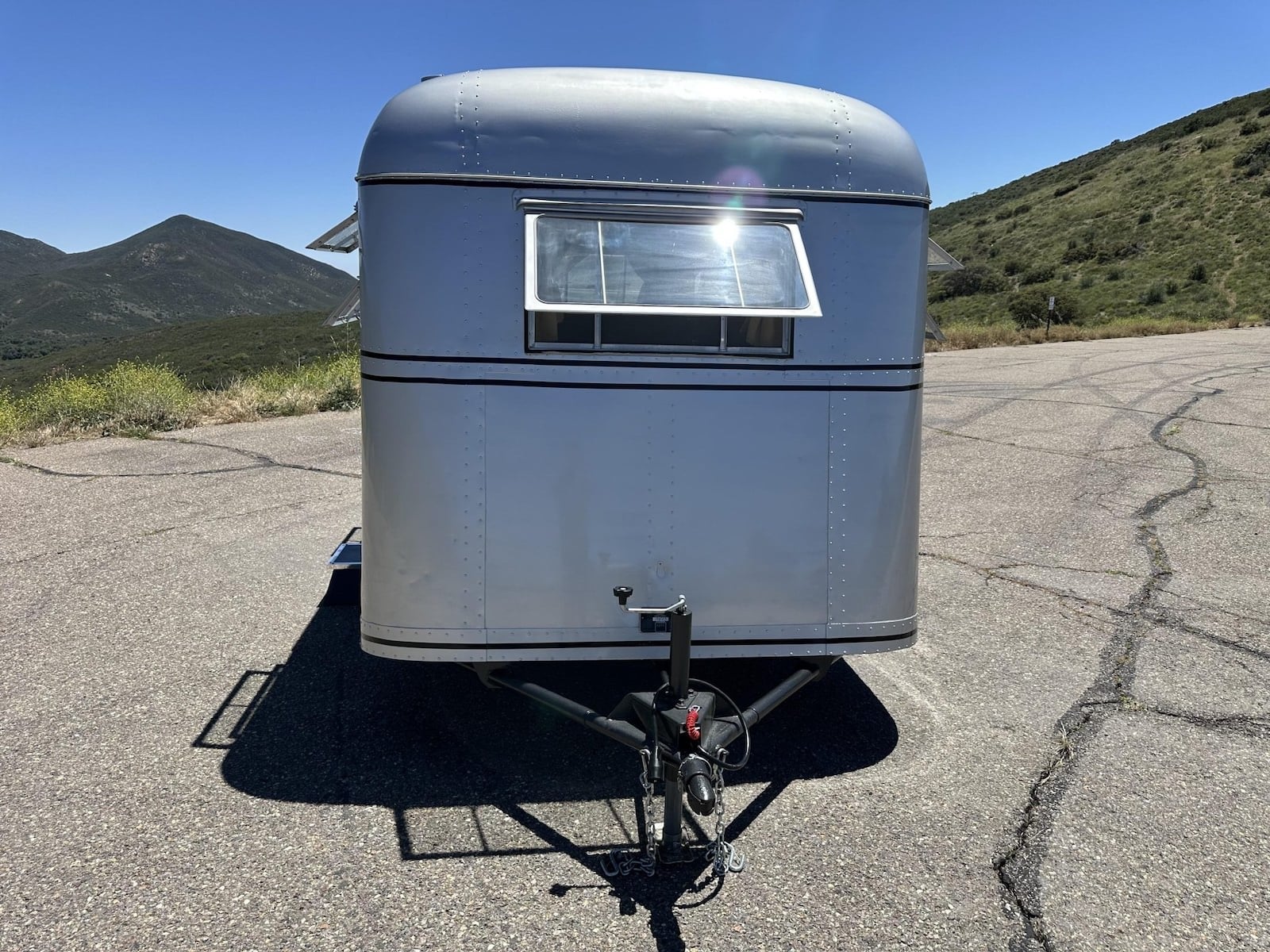
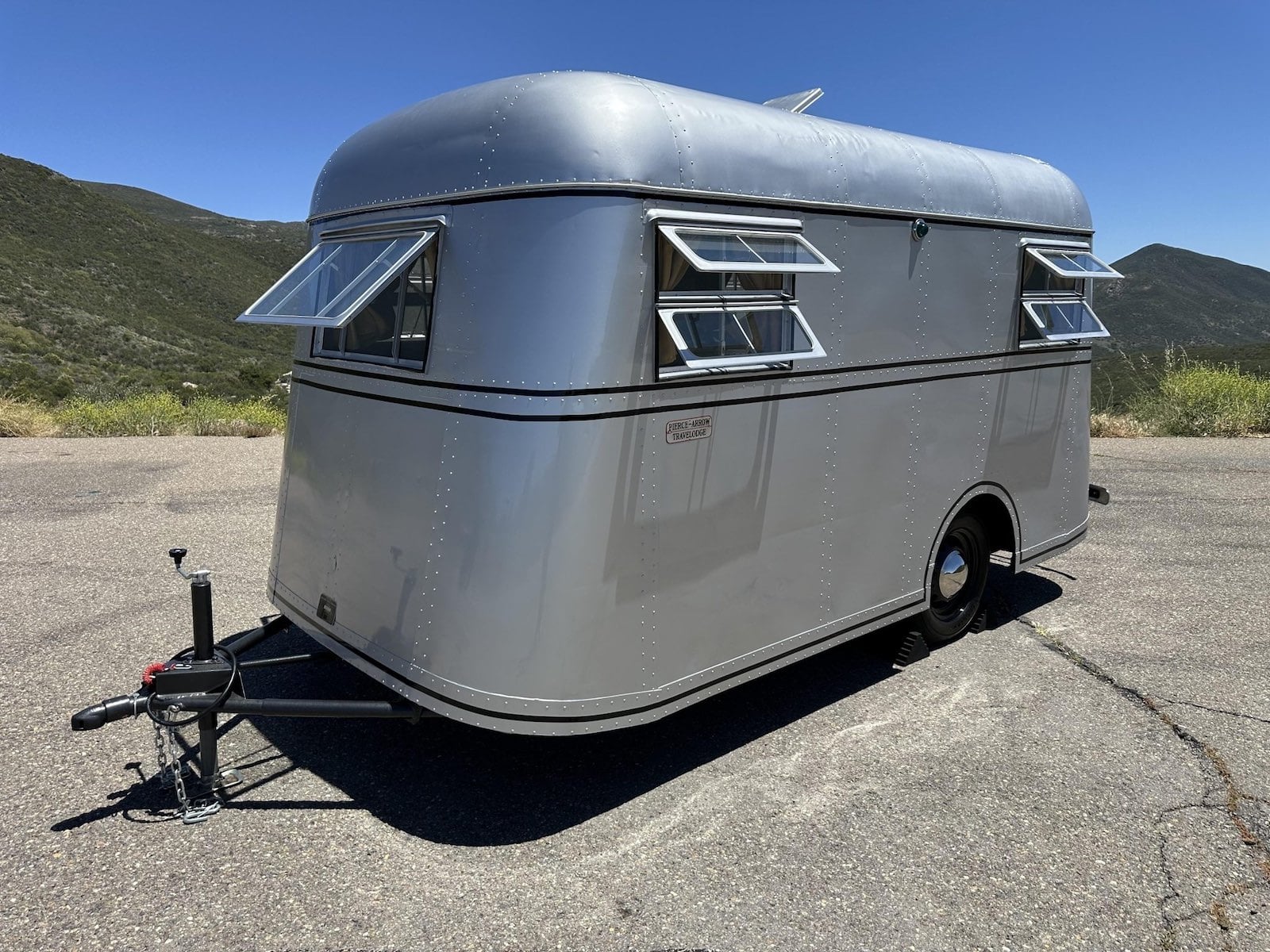
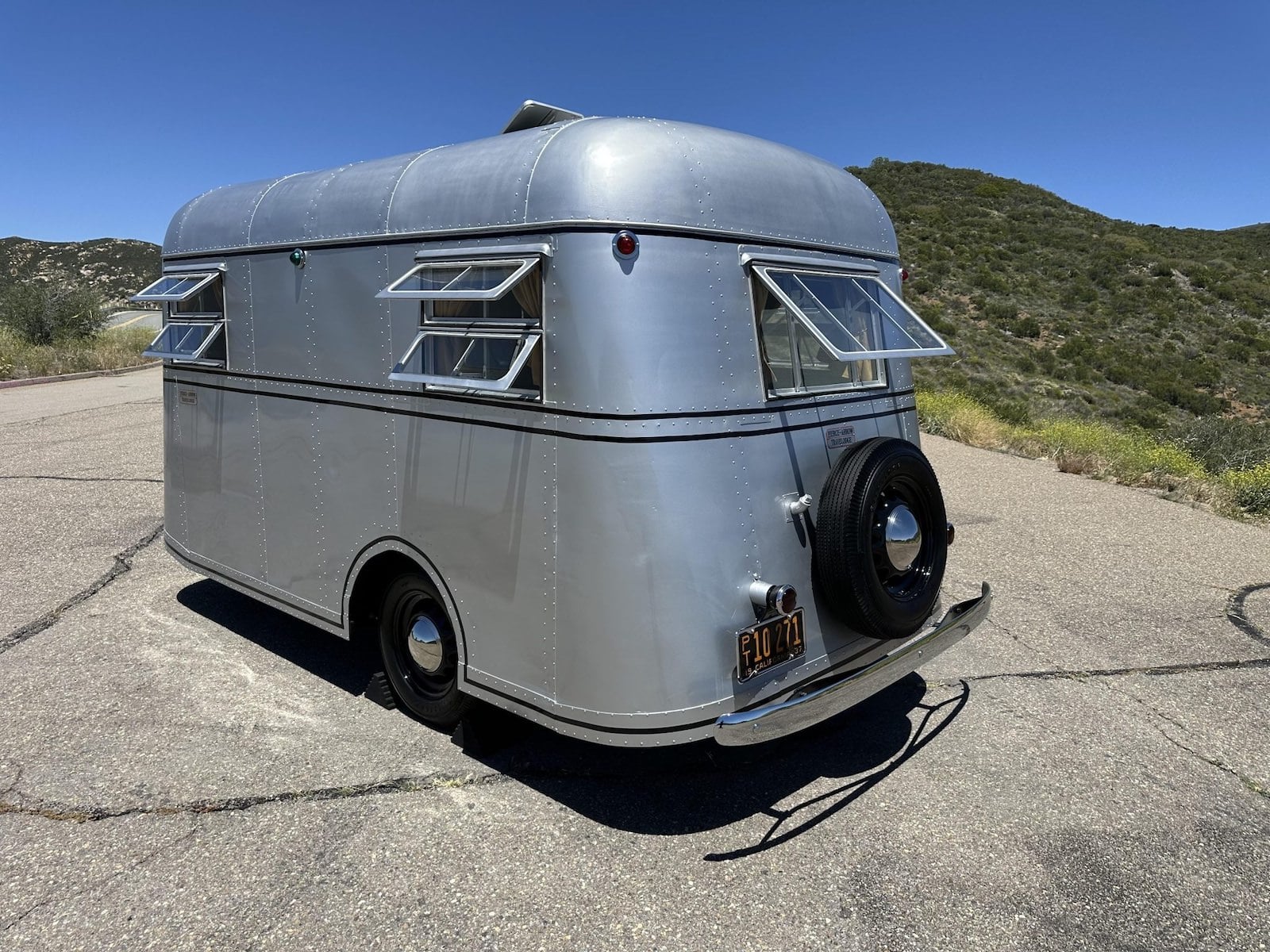
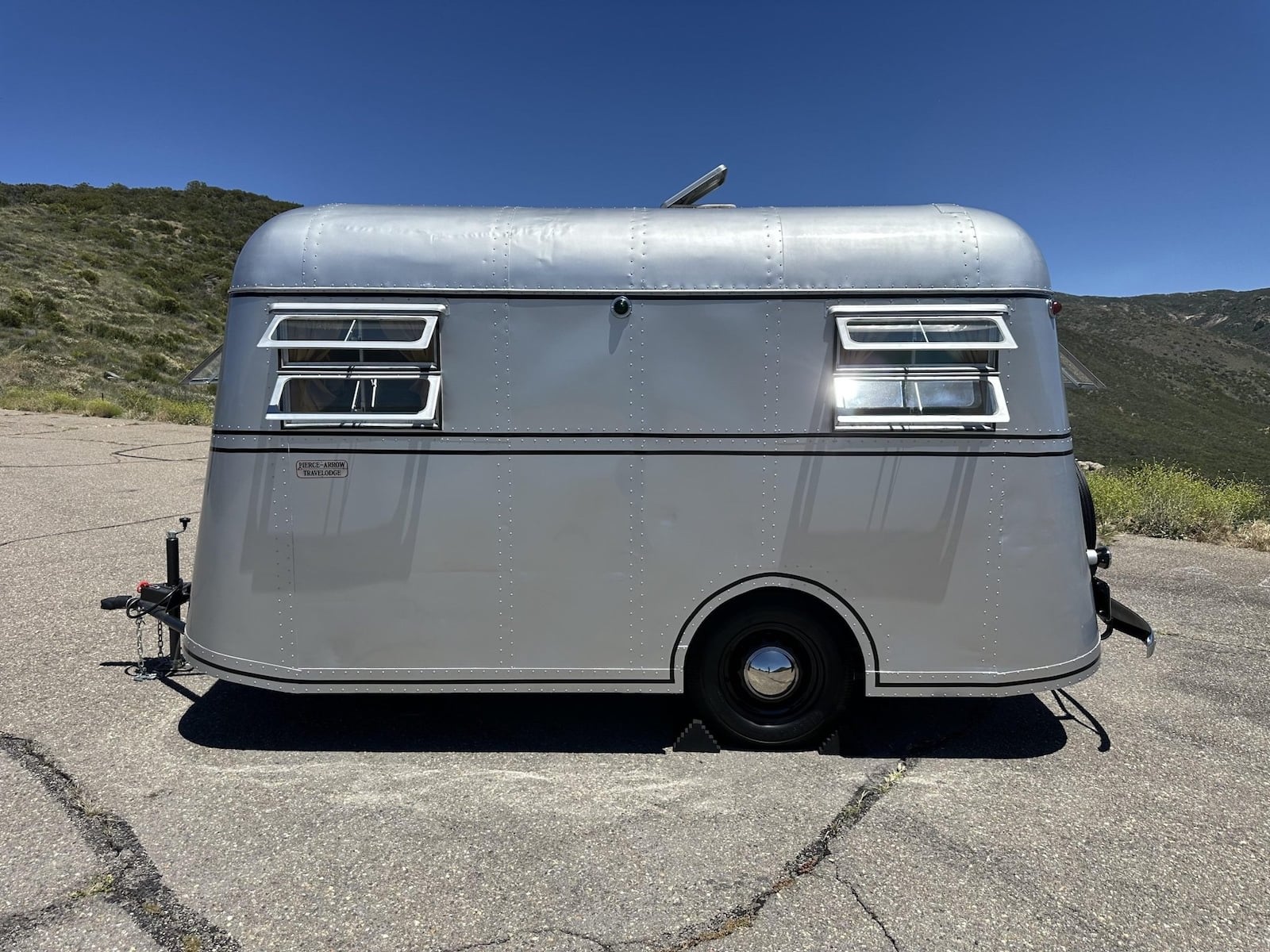
This 1937 Pierce-Arrow Travelodge Model C is a 13 foot travel trailer that was bought by the seller in 2020, it then underwent a multi-year refurb which was completed in 2024. The work was extensive, the trailer was stripped down to its bare shell and steel framework, at which point the exterior aluminum was repaired and repainted in silver with black stripes, the frame was reinforced, the plywood floors were replaced, and the bumper was re-chromed.
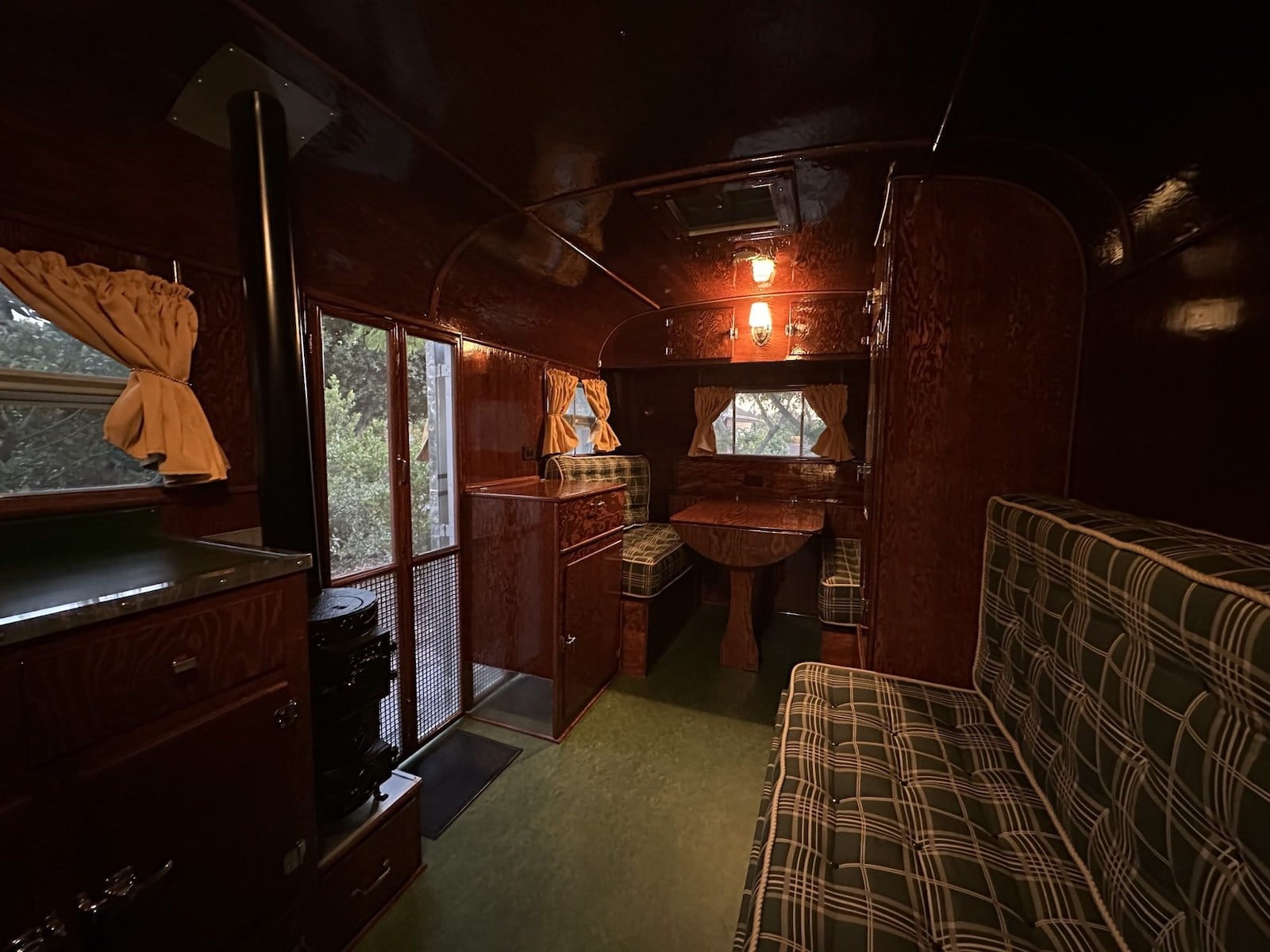
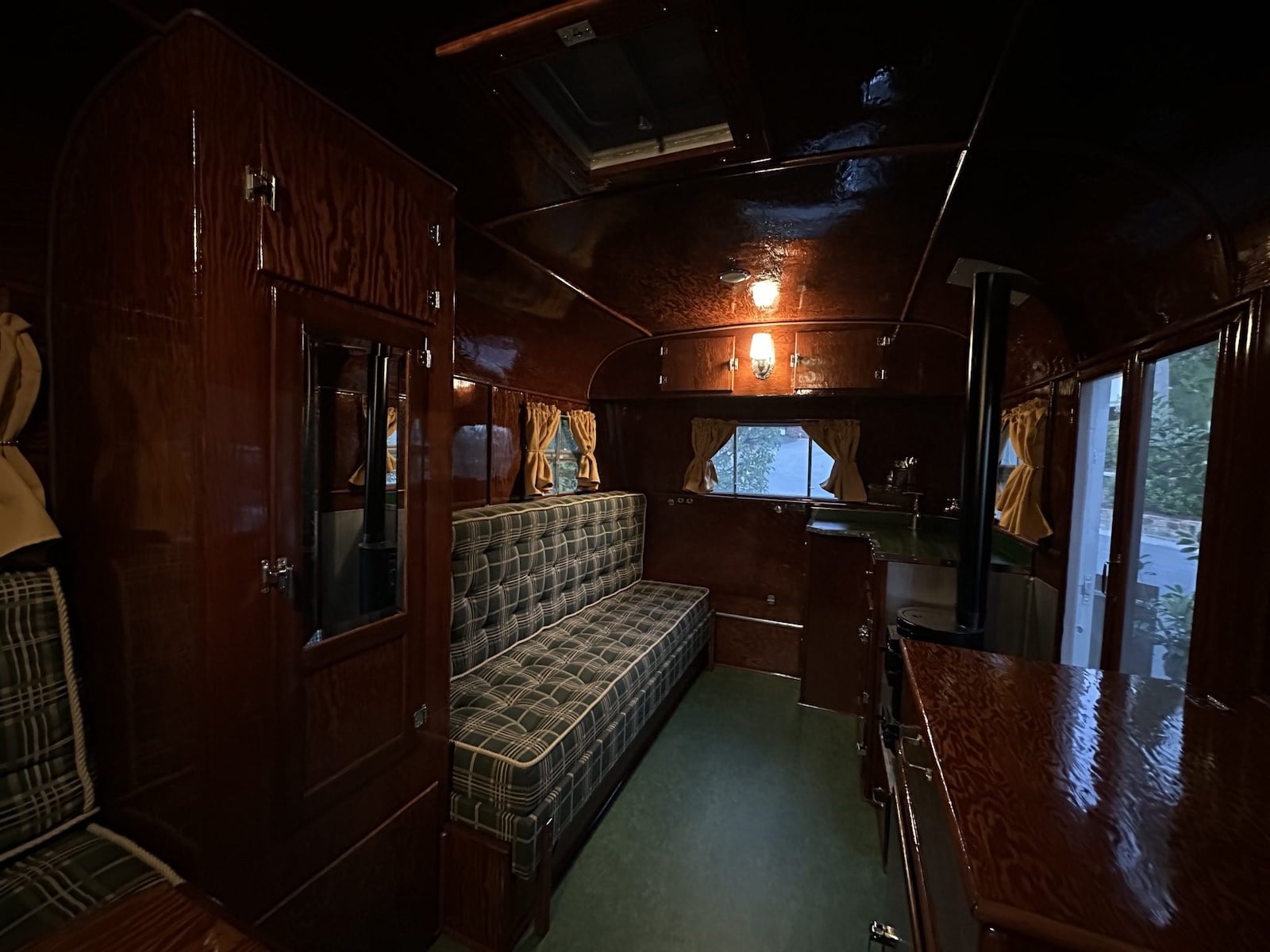
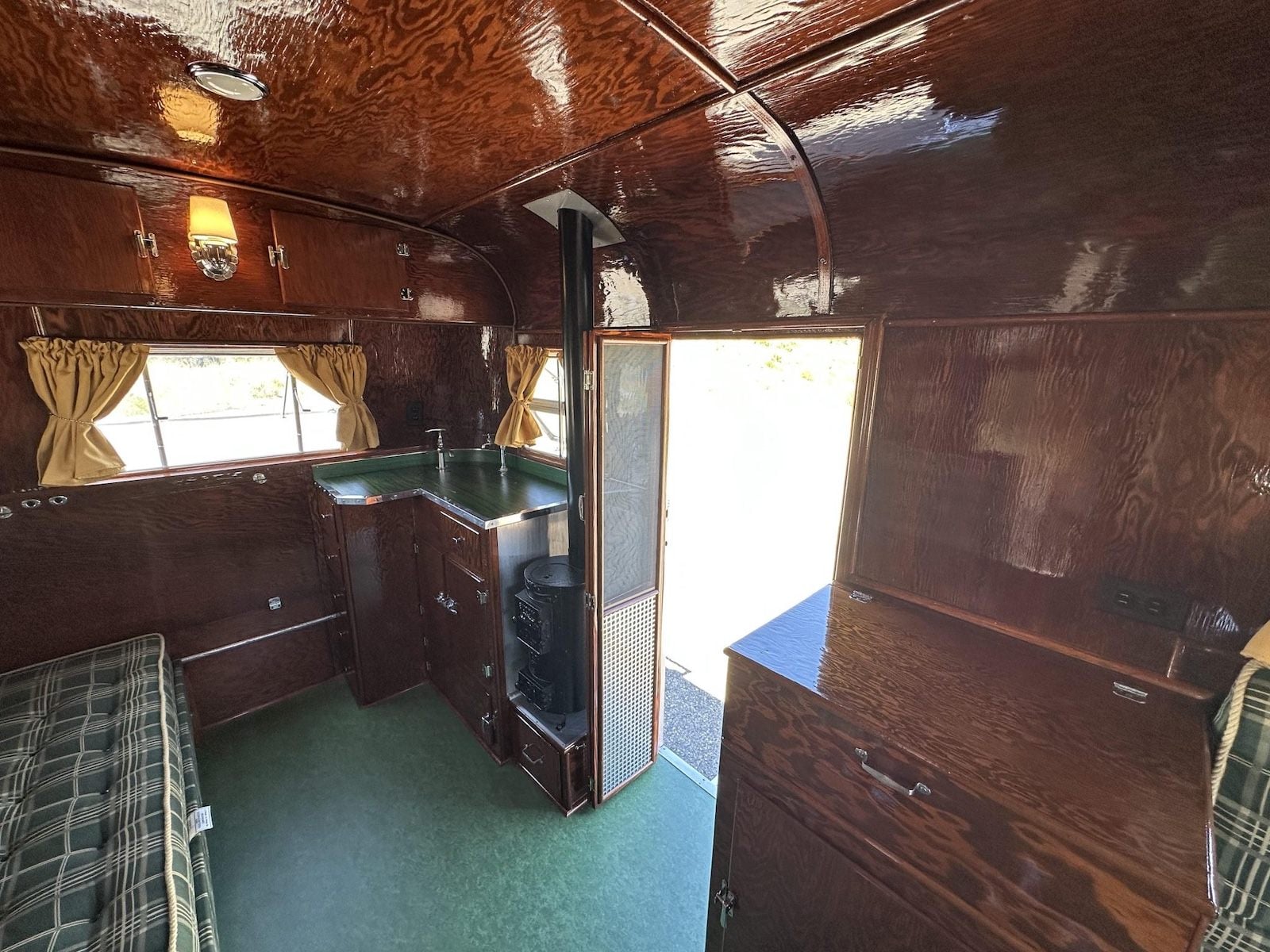
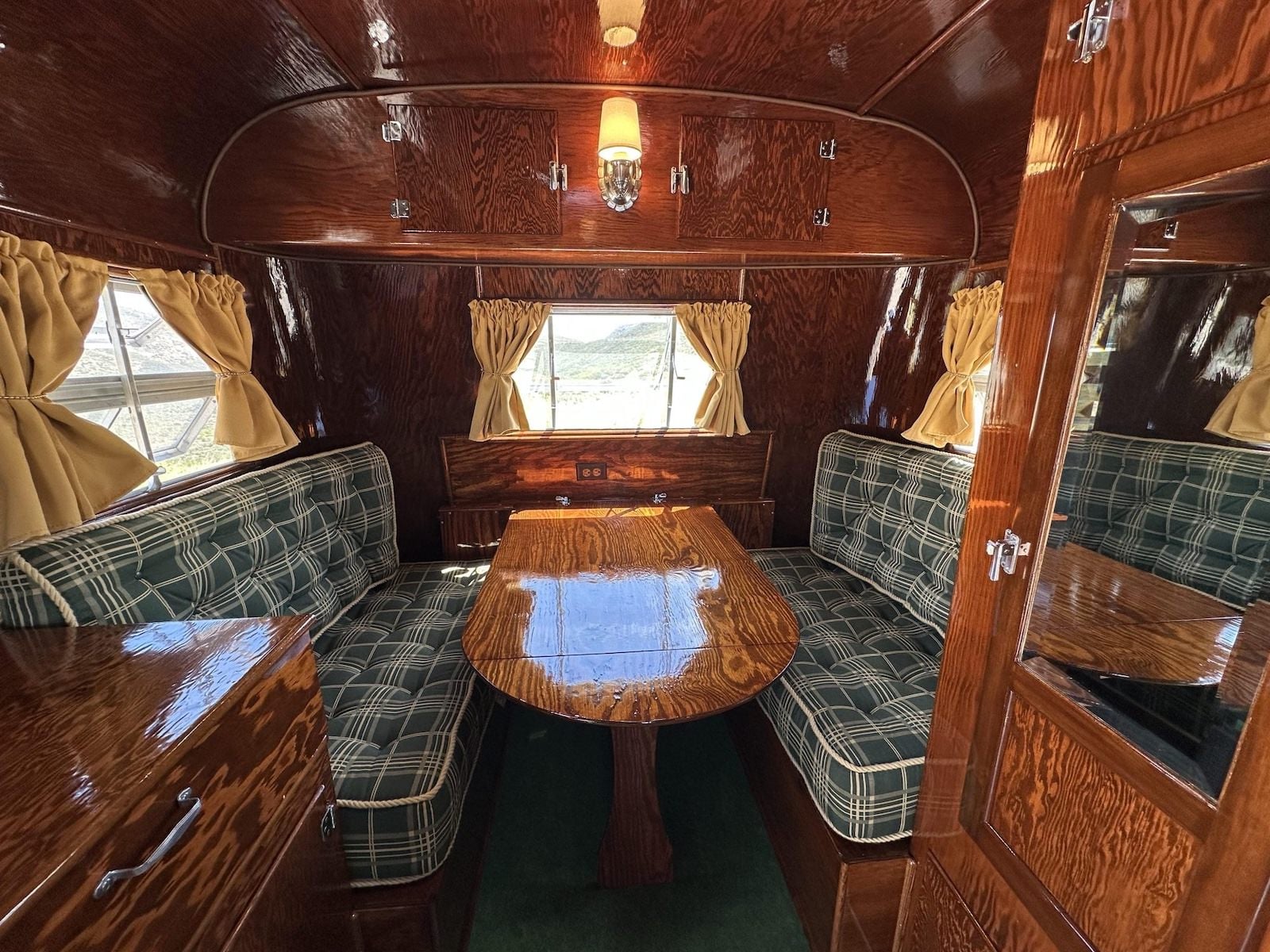
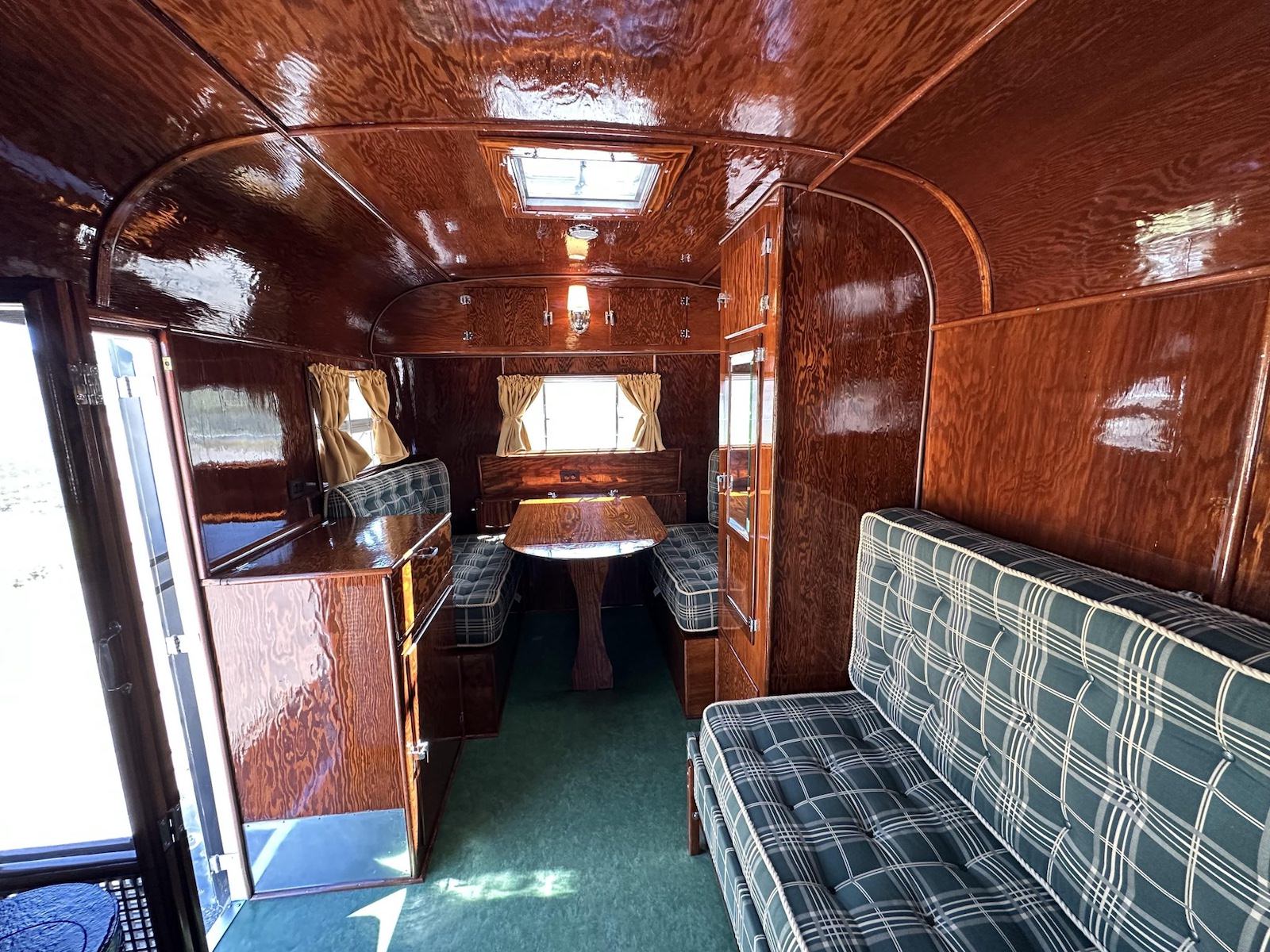
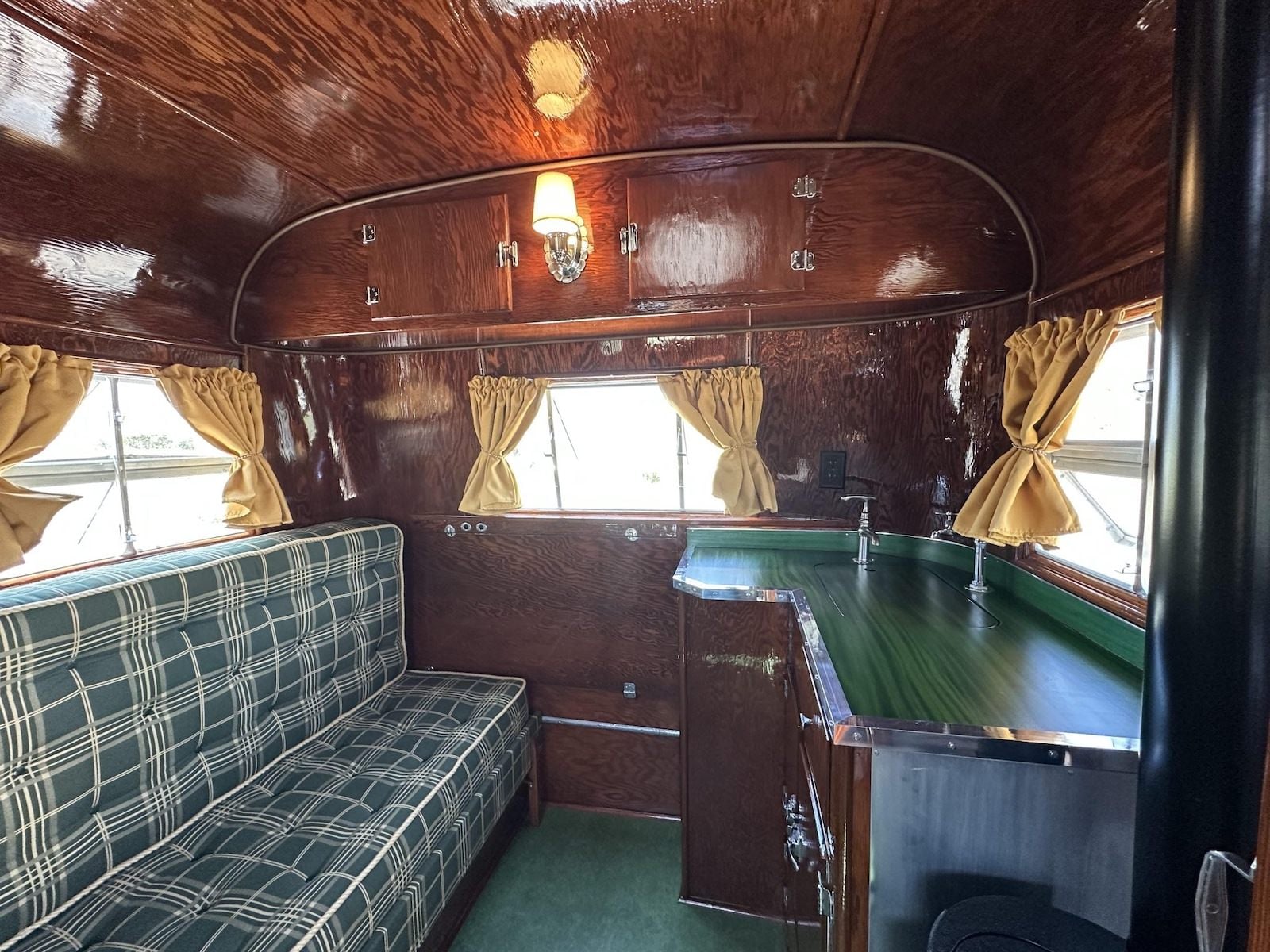
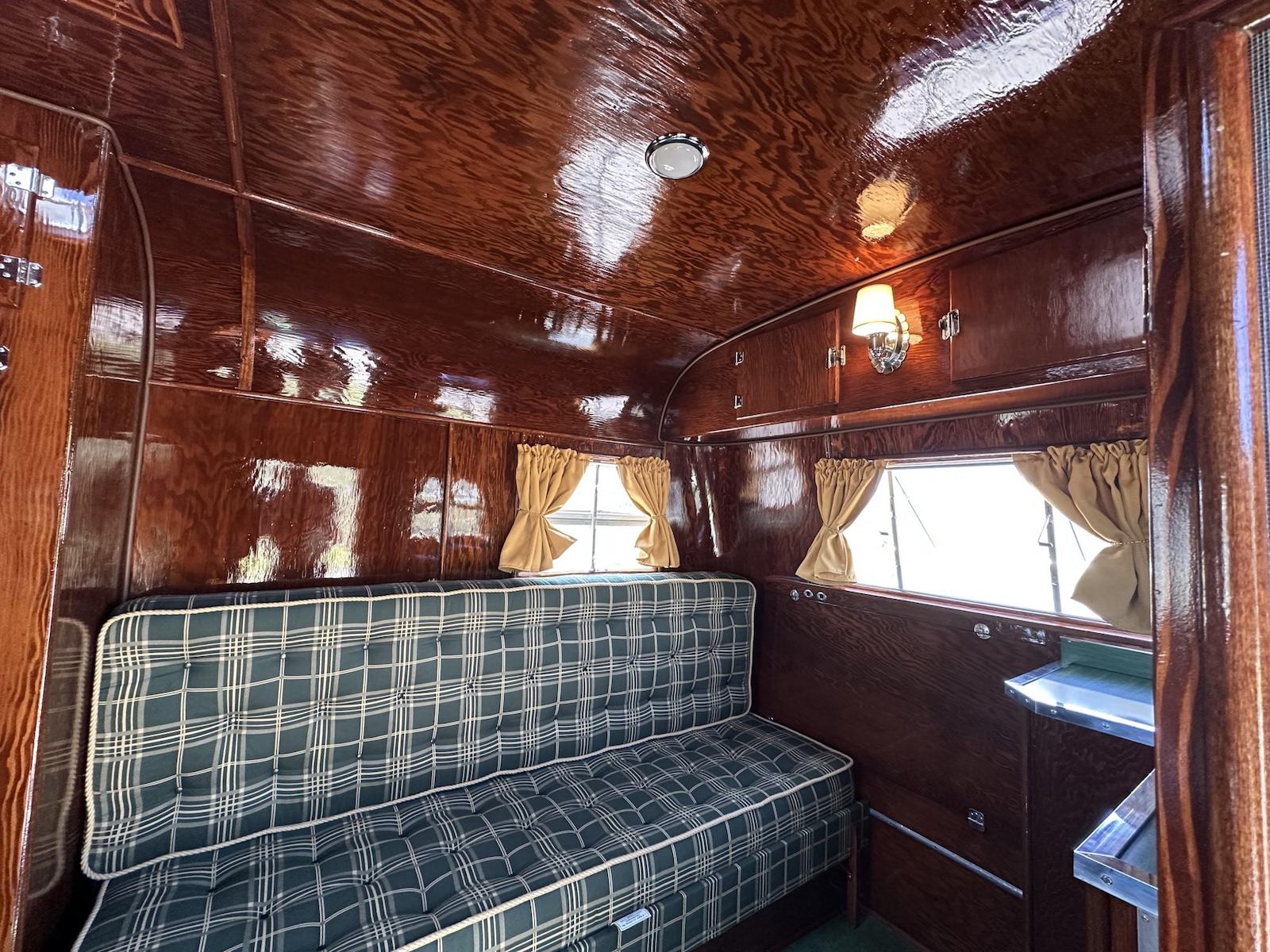
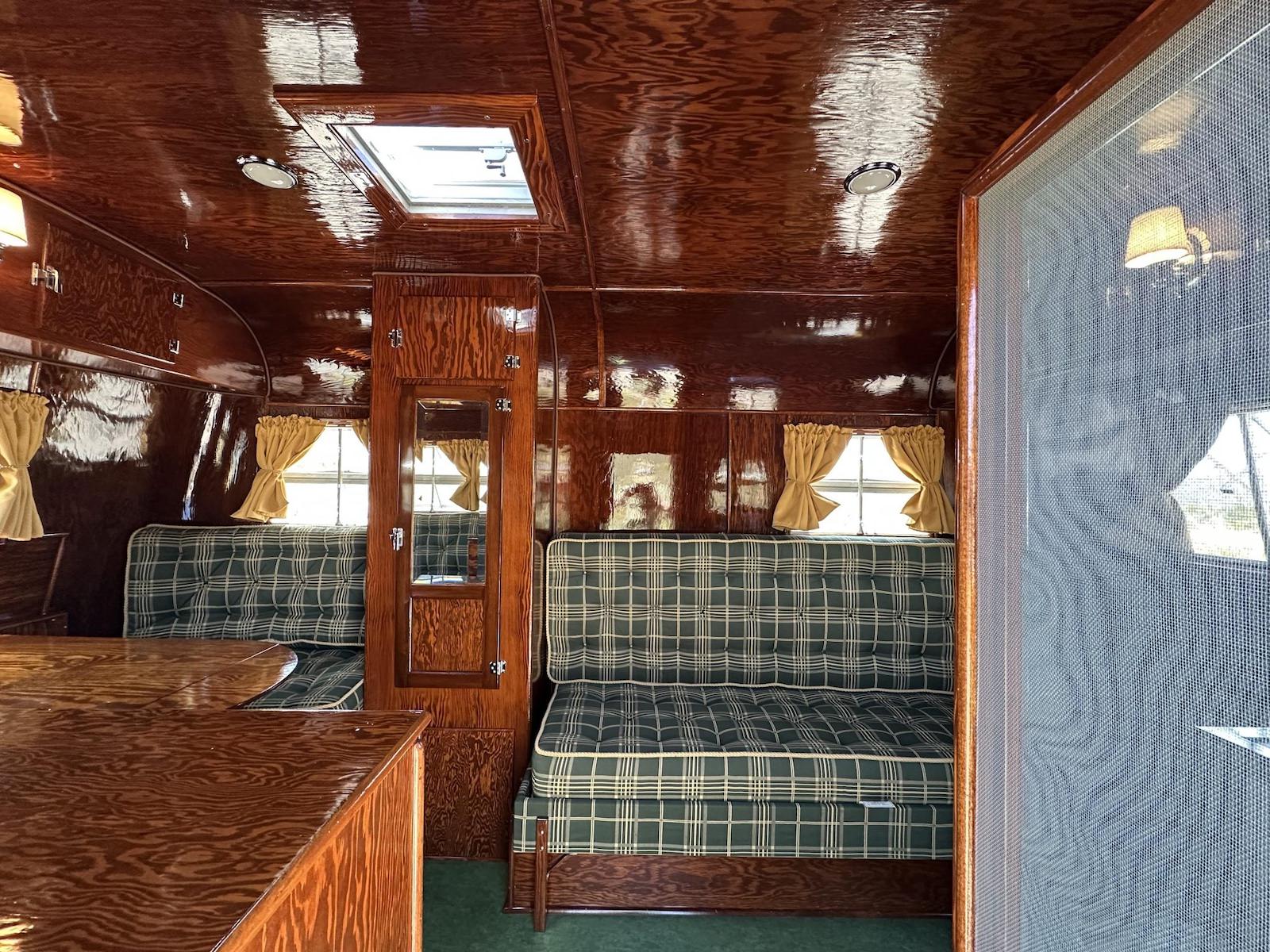
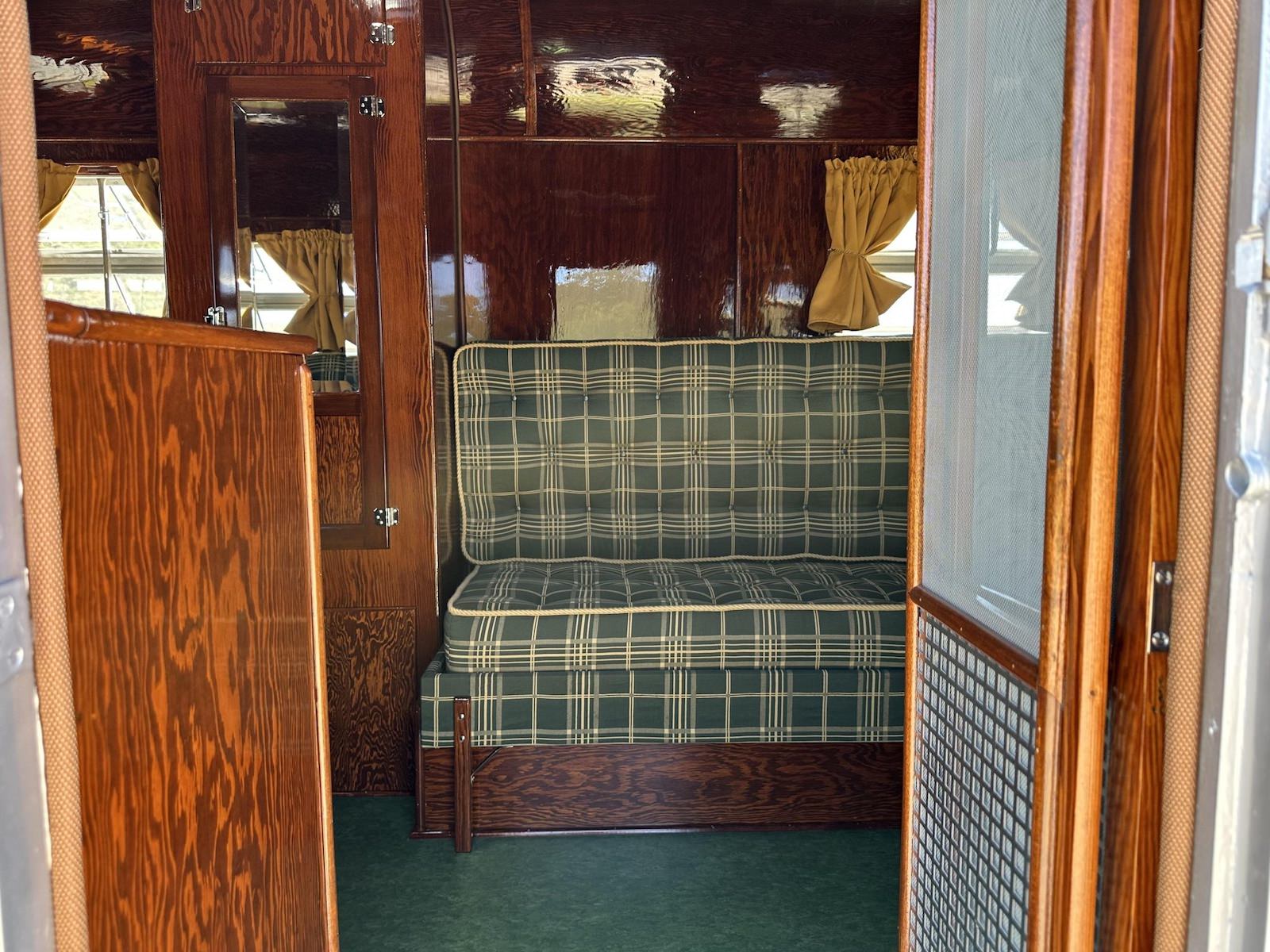
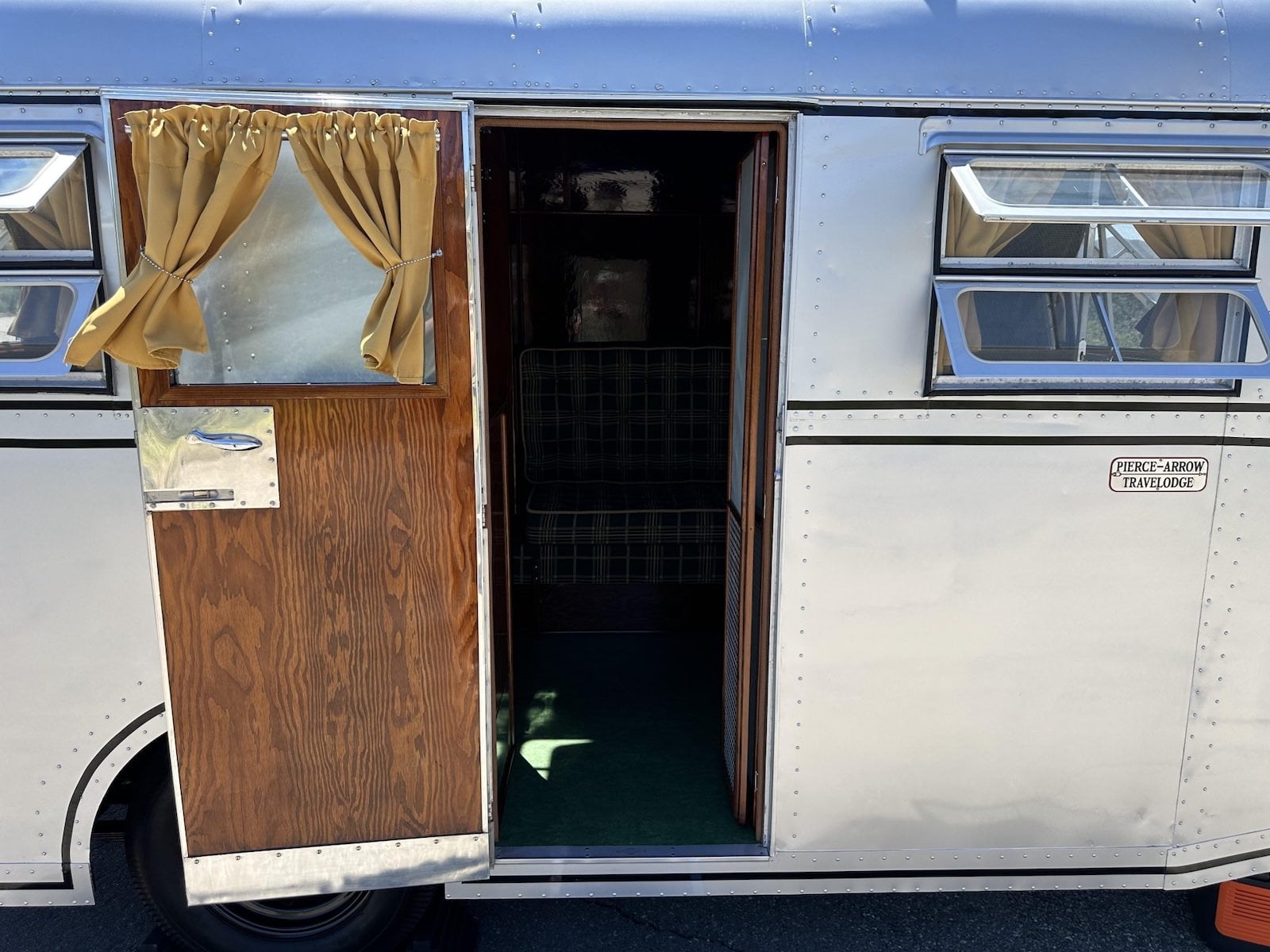
The interior of this Model C, has a 13 foot 7 inch living space with a kitchenette, a Davenport bed, a wardrobe, and a dinette that converts into a sleeping berth. The existing Douglas fir wood paneling and cabinetry were removed, refinished, and reinstalled, while replacement cushions and curtains use factory-style upholstery.
The aluminum-skinned door was rebuilt using white oak framing, a reproduction door seal and sill panel were installed, and a bi-fold screen door was refinished. An entry step was fabricated using historical photos as reference.
The interior of this Model C, has a 13 foot 7 inch living space with a kitchenette, a Davenport bed, a wardrobe, and a dinette that converts into a sleeping berth. The existing Douglas fir wood paneling and cabinetry were removed, refinished, and reinstalled, while replacement cushions and curtains use factory-style upholstery.
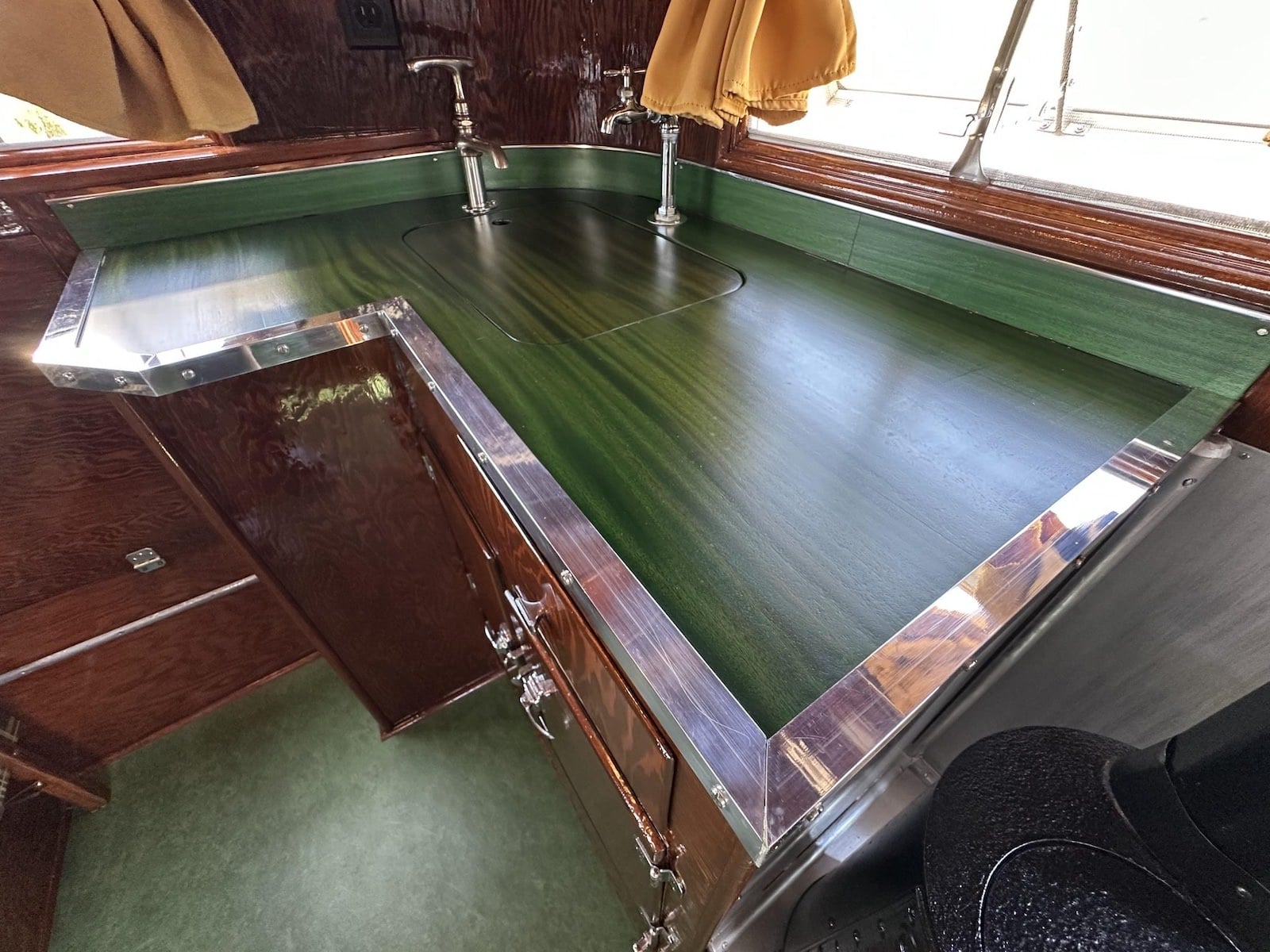
Green woodgrain countertops were selected to mimic the factory design and are complemented by green linoleum flooring. Dynamat sound-deadening material was applied to the interior before reassembly, and the electrical system and lighting were fully overhauled.
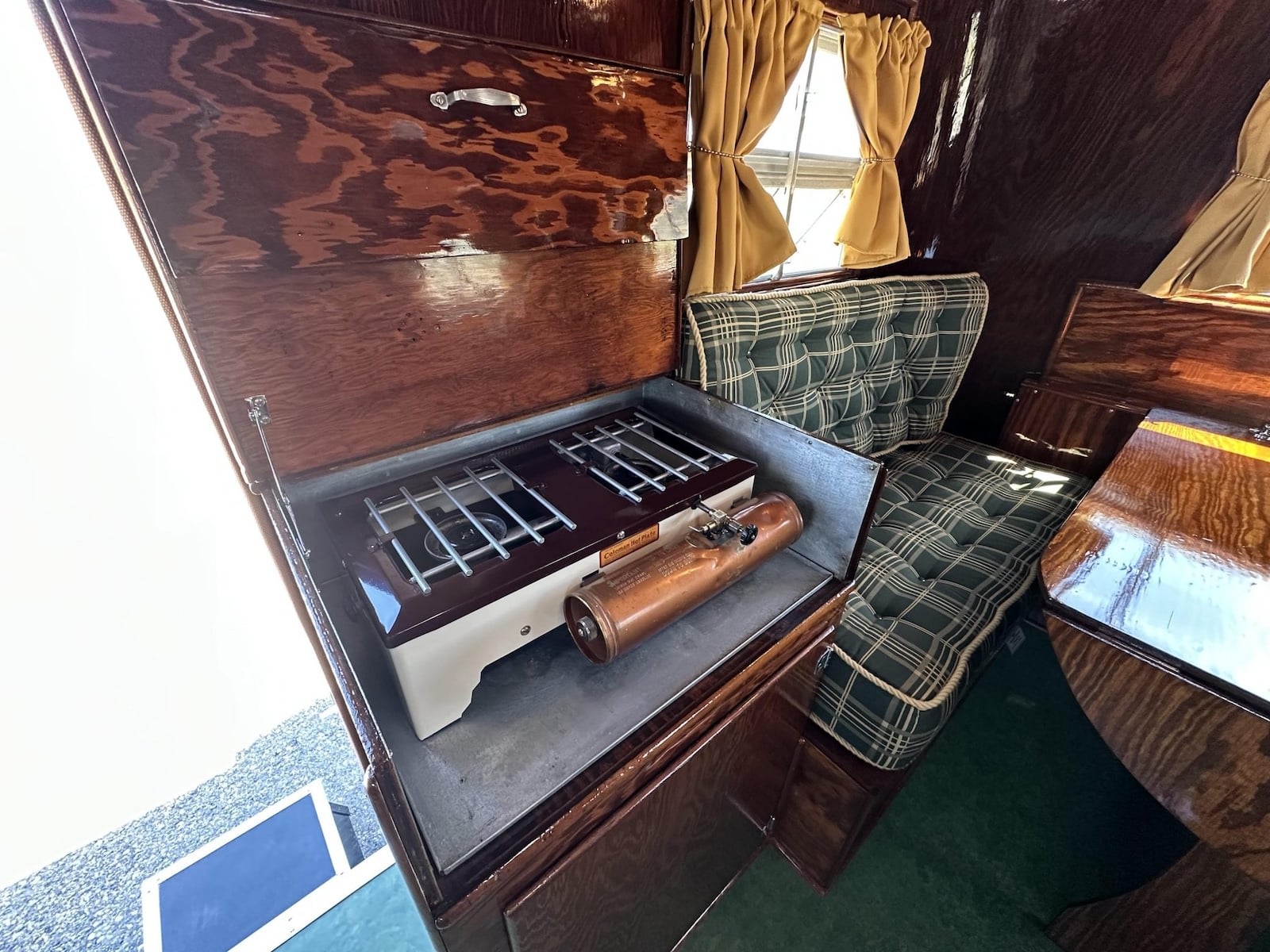
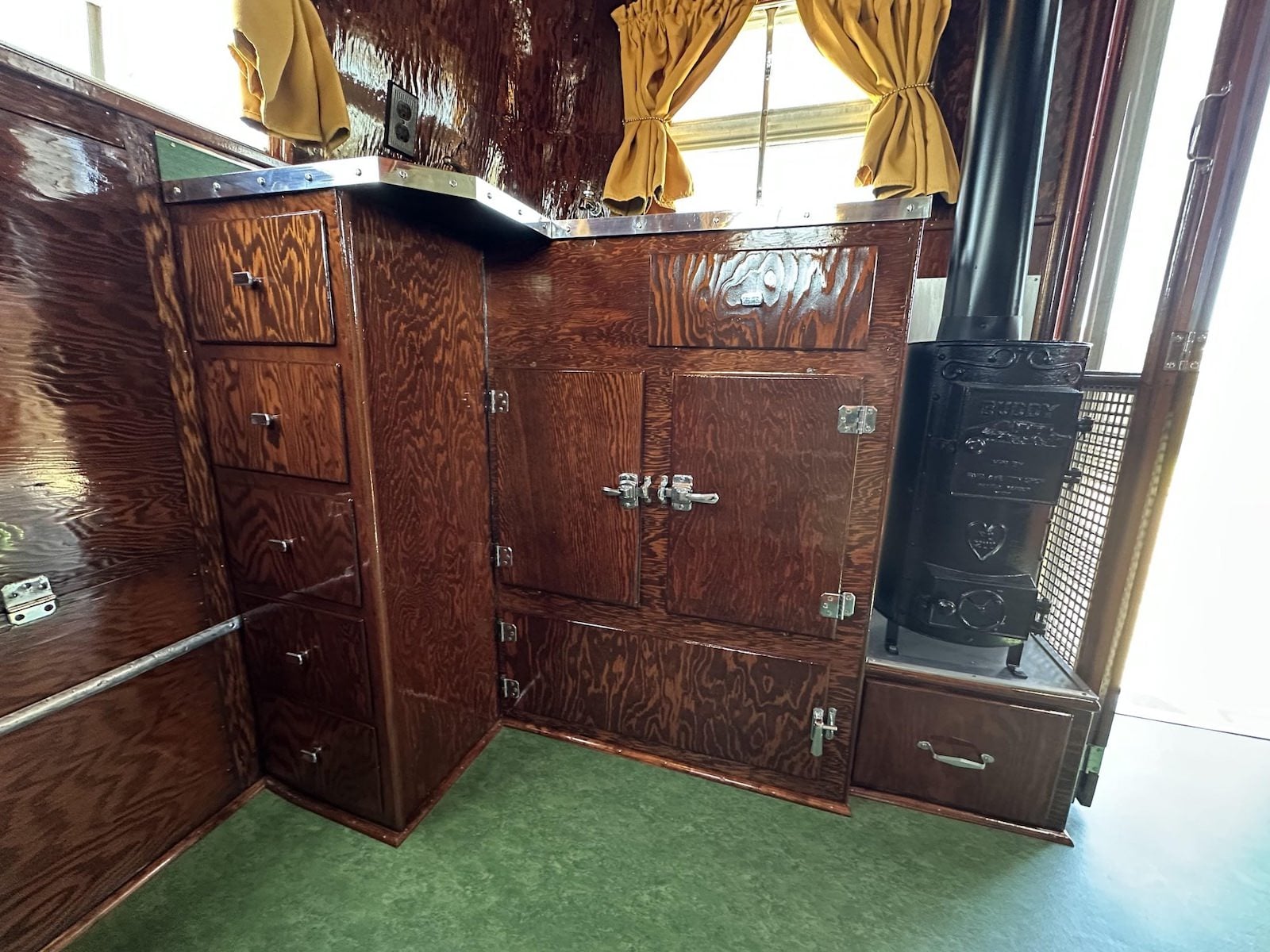
The kitchenette was given thorough attention during the rebuild. The Coleman two-burner camp stove was refurbed along with the cast-iron stove, ice box, and porcelain sink. The aluminum water tank was re-created, the water pump was rebuilt, and the plumbing was replaced throughout with polished brass pipe. A shore-power connection port is mounted on the underside of the trailer along with plumbing fixtures.
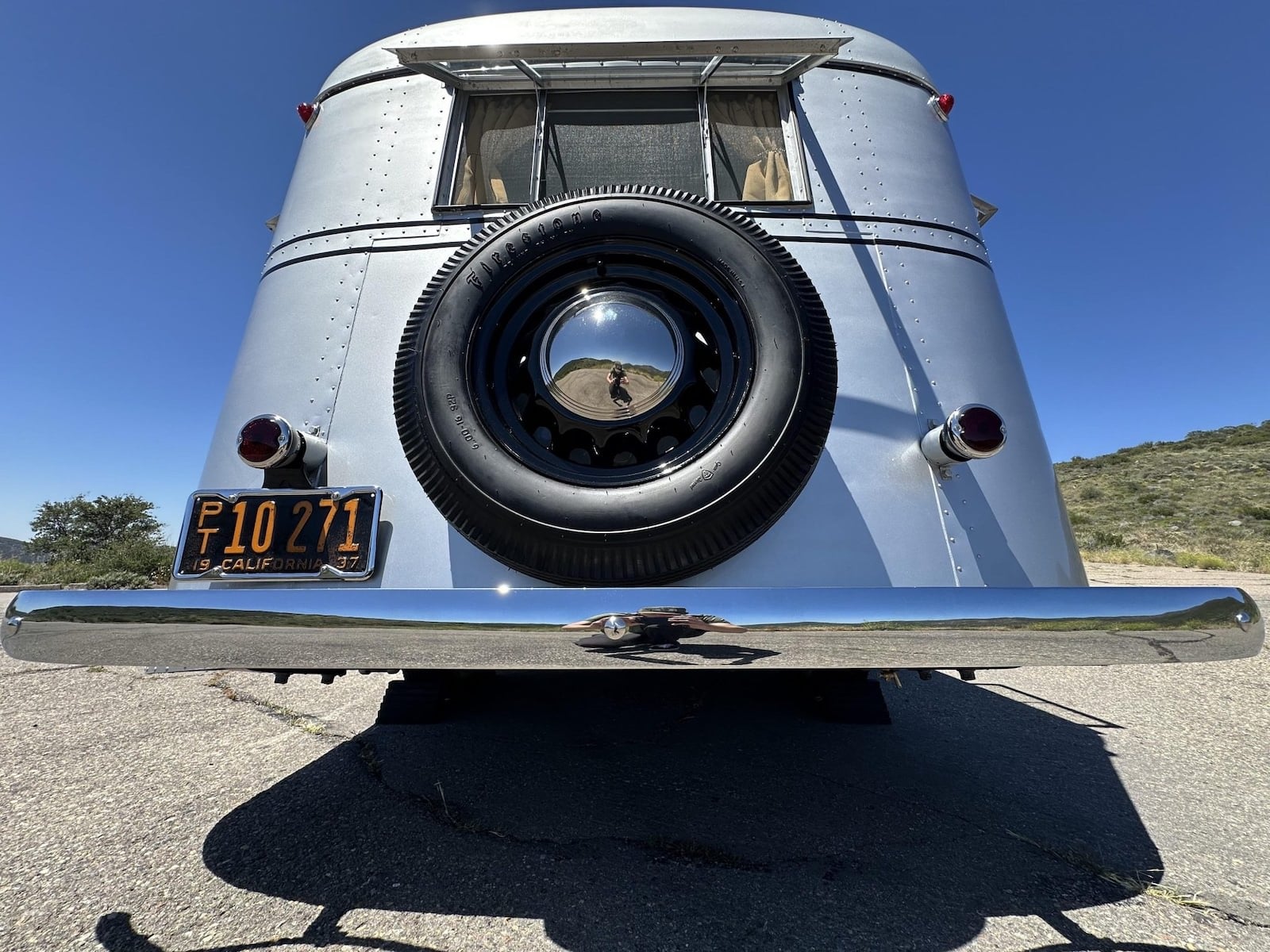
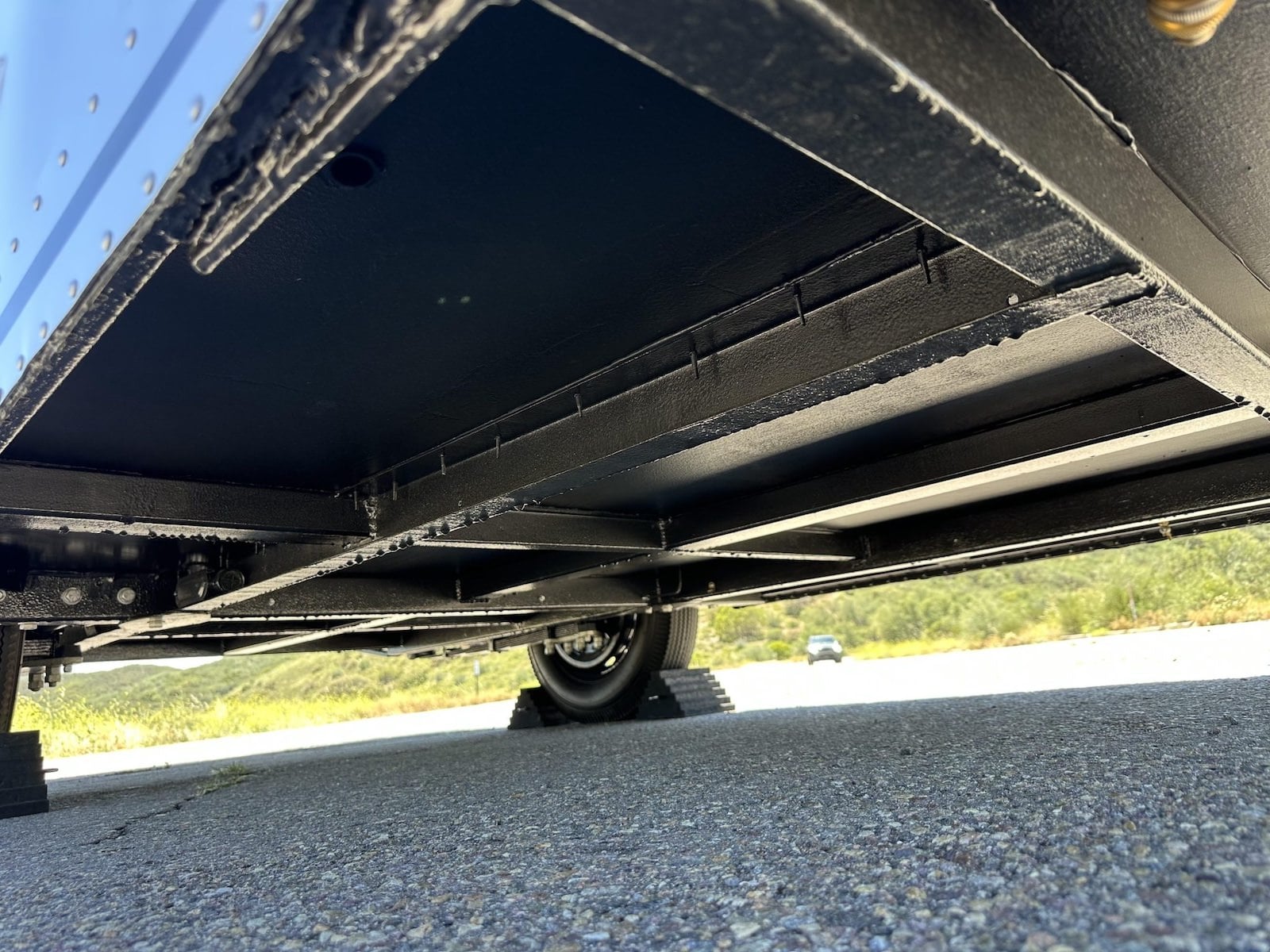
Mechanically, the trailer rides on its original independent suspension with trailing arms supported by quarter-elliptical leaf springs, fitted with artillery-style 16 inch wheels that were powdercoated in gloss black and outfitted with polished hubcaps and Firestone Deluxe Champion tires.
This 1937 Pierce-Arrow Travelodge Model C is a 13 foot travel trailer that was bought by the seller in 2020, it then underwent a multi-year refurb which was completed in 2024. The work was extensive, the trailer was stripped down to its bare shell and steel framework, at which point the exterior aluminum was repaired and repainted in silver with black stripes, the frame was reinforced, the plywood floors were replaced, and the bumper was re-chromed.
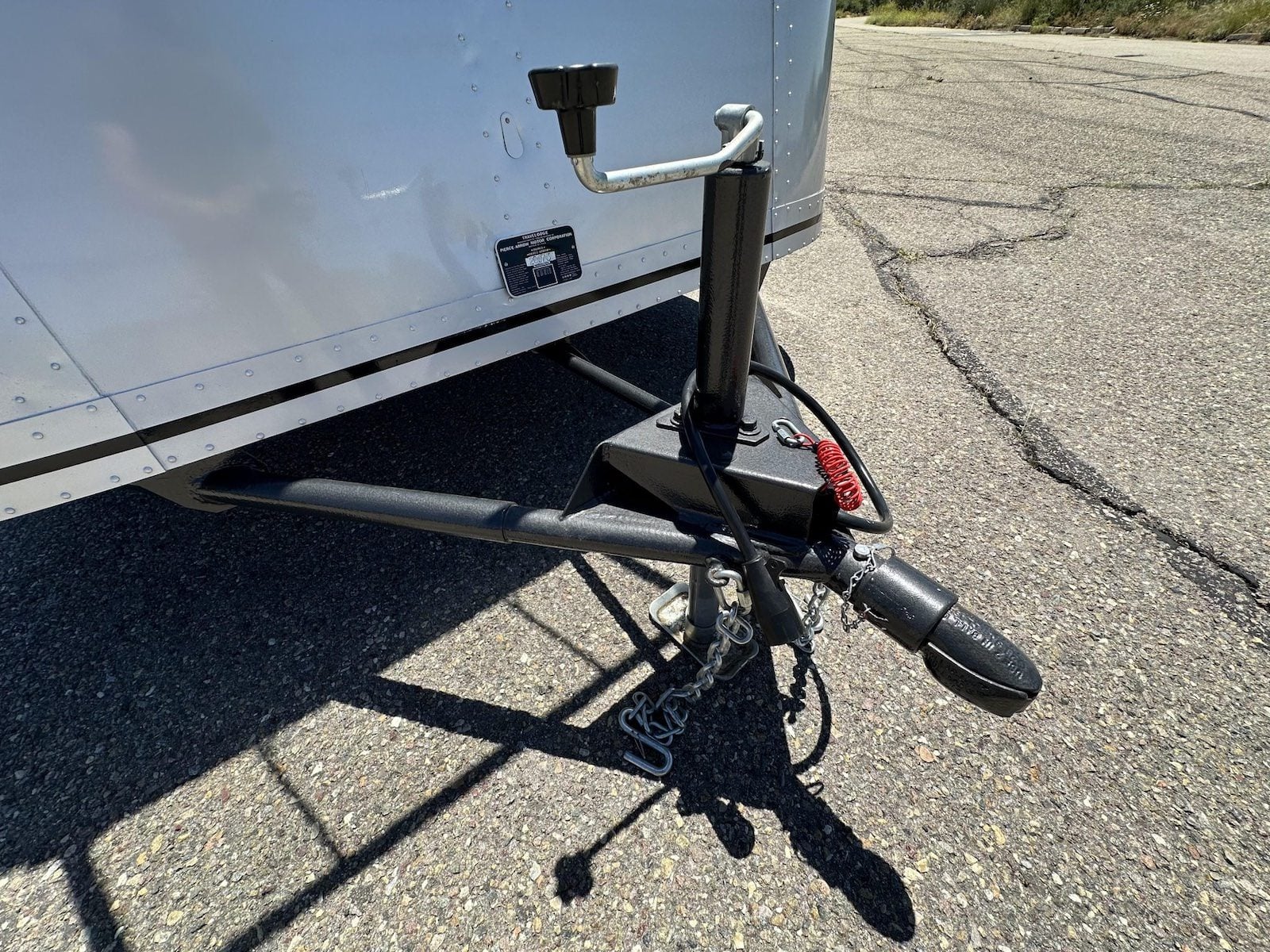
A matching spare is carried on the rear. The Bendix hydraulic drum brakes and master cylinder were overhauled, and the braking system was updated with an electric controller and a backup battery. The tongue is equipped with a 2 inch ball coupler, a seven-pin connector and breakaway kit were added, and the jack and safety chains were replaced.
It’s now being offered for sale out of La Mesa, California with a clean California title in the seller’s name, period literature and promotional materials, two bound photo books documenting the refurbishment, printed photos, a Brooklin scale model, and more. If you’d like to read more or place a bid you can visit the listing here.
Images courtesy of Bring a Trailer + Pierce-Arrow

Articles that Ben Branch has written have been covered on CNN, Popular Mechanics, Smithsonian Magazine, Road & Track Magazine, the official Pinterest blog, the official eBay Motors blog, BuzzFeed, Autoweek Magazine, Wired Magazine, Autoblog, Gear Patrol, Jalopnik, The Verge, and many more.
Silodrome was founded by Ben back in 2010, in the years since the site has grown to become a world leader in the alternative and vintage motoring sector, with well over a million monthly readers from around the world and many hundreds of thousands of followers on social media.