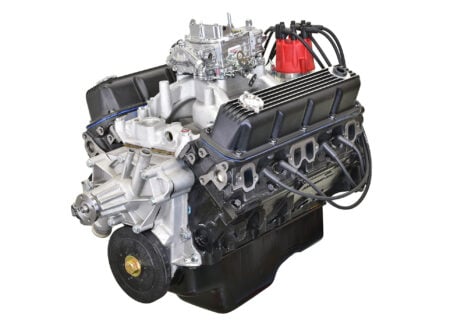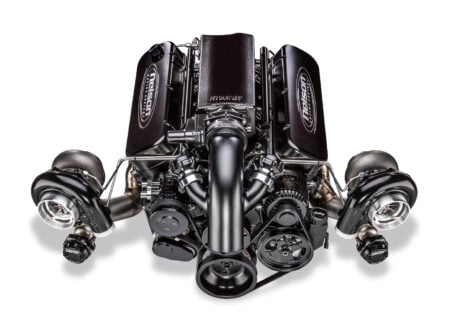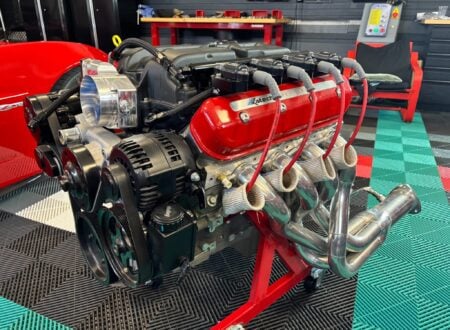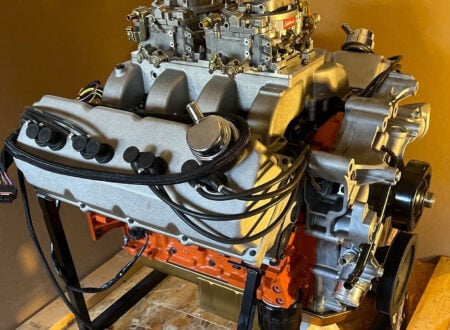
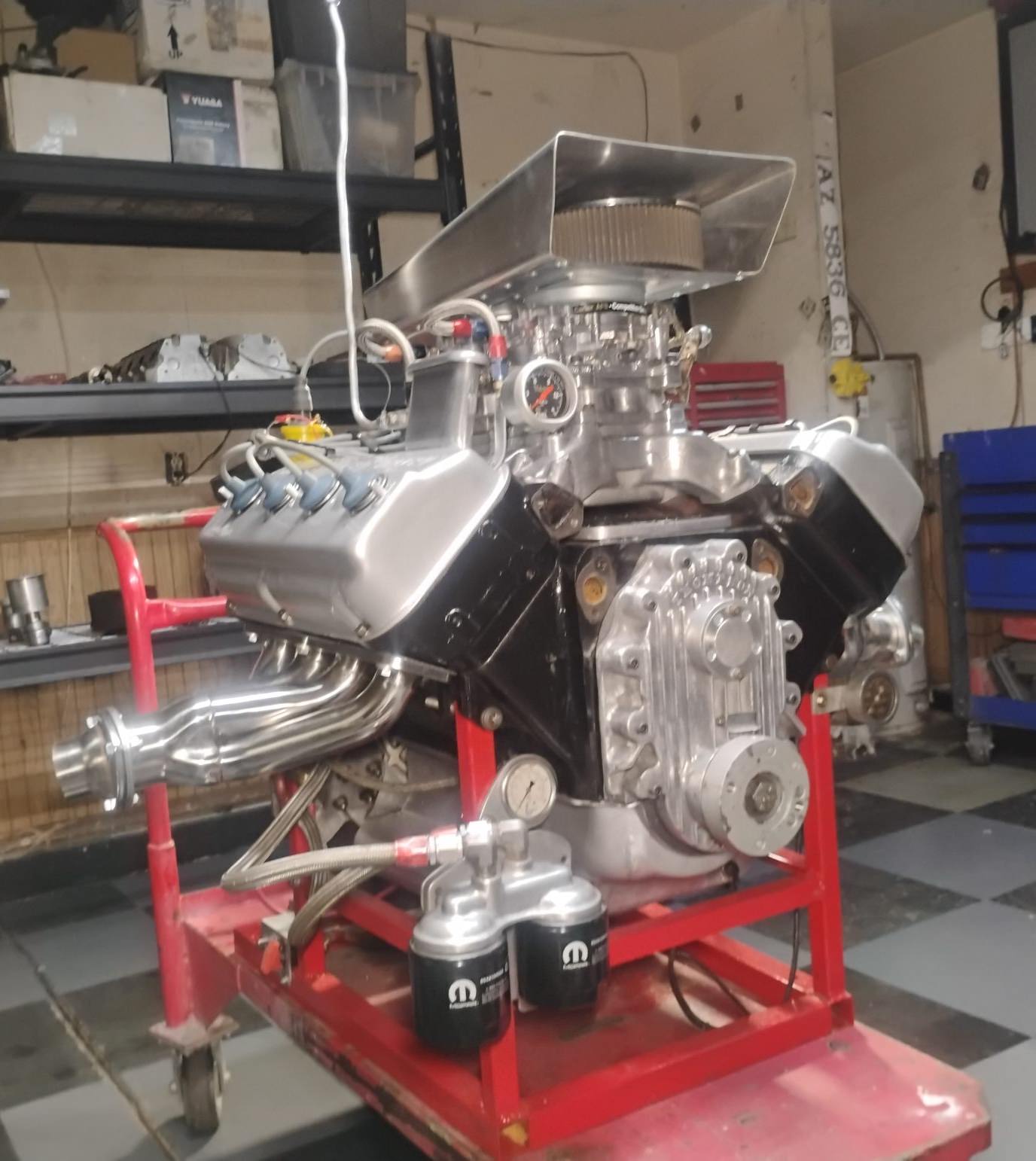
This is a Chrysler 392 Hemi V8 that has now been rebuilt into even more of a fire-breathing monster than it was when it first left the factory back in 1957.
Factory-built versions of the 392 Hemi were capable of 390bhp (and possibly more), but performance-minded individuals and a healthy aftermarket of go-faster parts mean than these V8s can be made to produce quite a bit more. This engine now has a forged crankshaft, a Schiefer 6359 Racing 300º solid roller camshaft, high-compression pistons, and quite a bit more.
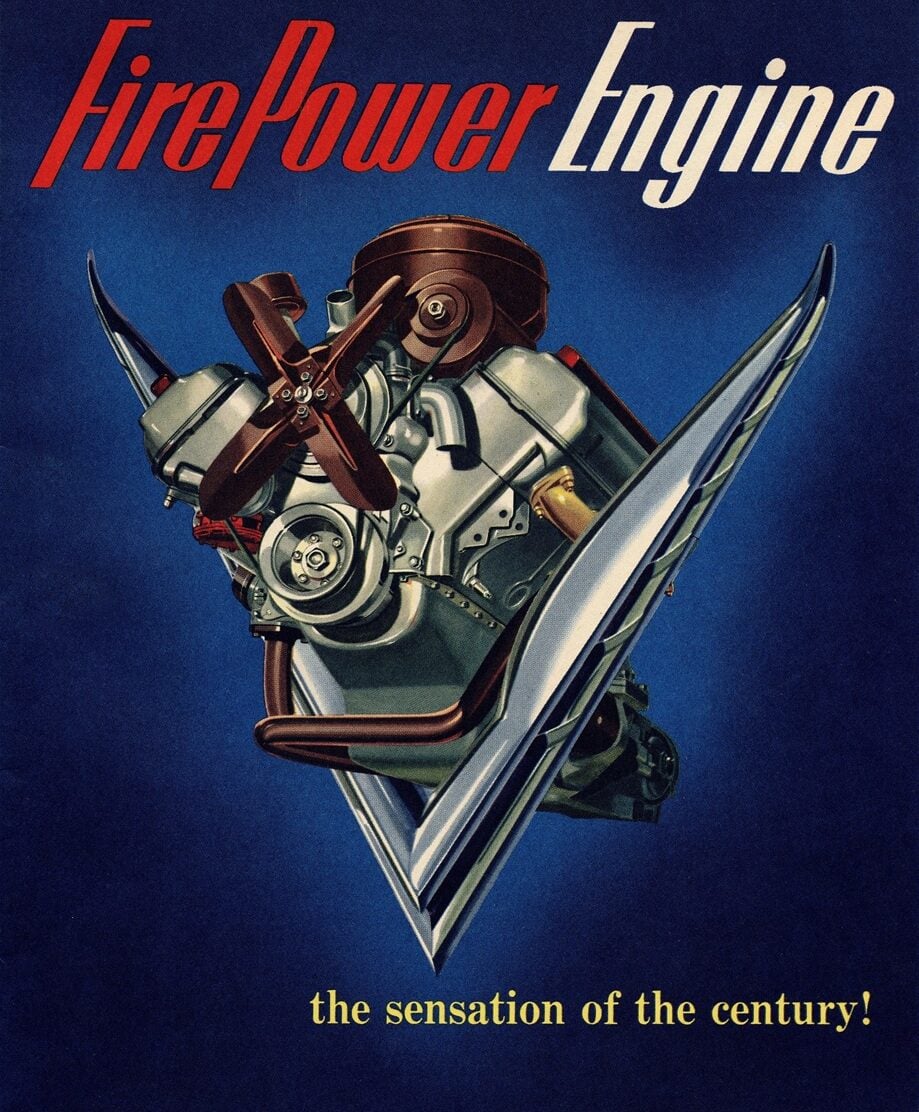
 Factory-built versions of the 392 Hemi were capable of 390bhp (and possibly more), but performance-minded individuals and a healthy aftermarket of go-faster parts mean than these V8s can be made to produce quite a bit more. Image courtesy of Chrysler.
History Speedrun: The 392 Hemi V8
Chrysler’s Hemi engine didn’t start with road car engines, but with an experimental WWII-era fighter aircraft engine.
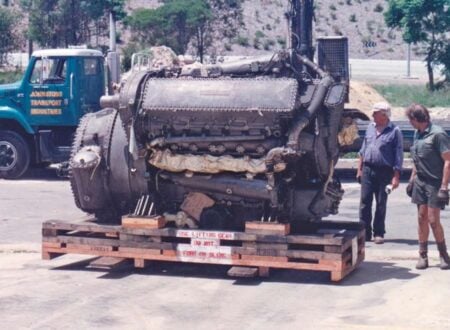
During the Second World War, Chrysler developed the XI-2220 (sometimes also referred to as the XIV-2220), an experimental inverted V16 aircraft engine designed for the Republic P-47 Thunderbolt. It displaced 2,220 cubic inches (over 36 liters), produced 2,500 bhp, and was more than ten feet long.
It was essentially two V8s joined at the middle, with power taken from the center of the crankshaft. From a historic standpoint it’s interesting for a few reasons, but perhaps mainly because it used hemispherical combustion chambers with centrally placed spark plugs. The engine first flew in July of 1945, but by then the war was winding down and jets were making piston-powered fighters obsolete. The XI-2220 V16 engine never entered production.
The engine might have been a dead end for aviation, but for the automobile, it was a beginning.
Chrysler’s engineers carried their wartime experience with hemi-head design directly into postwar passenger car development. On February the 9th, 1951, Chrysler introduced the FirePower V8 – it was a 331 cubic inch overhead-valve V8 producing 180 bhp, a decent turn of power for the time.
It wasn’t called a “Hemi” yet, internally, Chrysler referred to it as the “Double Rocker Shaft” V8, a nod to the complex valve train required by the hemispherical chamber’s angled valve arrangement. With intake and exhaust valves set on opposite sides of the dome-shaped chamber and the spark plug positioned dead center, the design breathed remarkably well and burned fuel efficiently.
The trade-offs were weight, width, and manufacturing cost, but at 180 bhp, the FirePower outgunned almost everything else on the American road, including Cadillac’s 160 bhp V8.
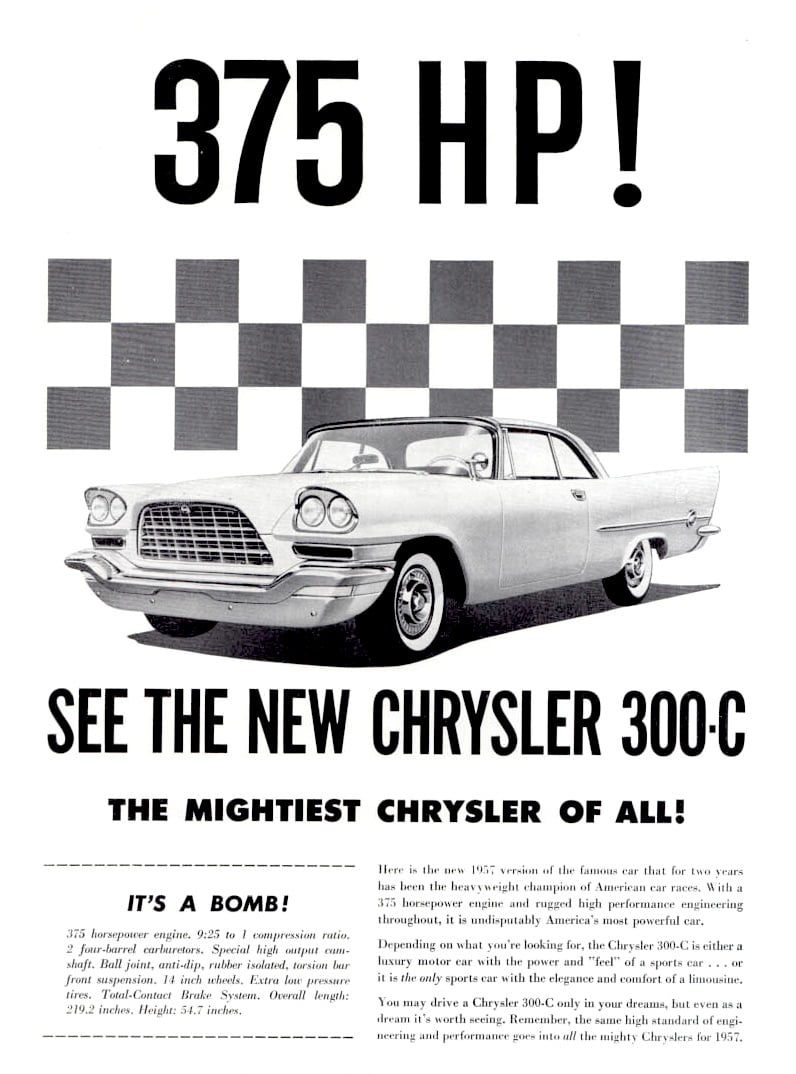
The 1957 Chrysler 300C received dual four-barrel carburetors and was rated at 375 bhp and 420 lb ft of torque. An optional high-performance version, available only with a 3-speed manual, pushed the rating to 390 bhp (though some estimates from the time suggested actual output exceeded 400 bhp). Image courtesy of Chrysler.
The other Chrysler divisions quickly followed suit – DeSoto launched the FireDome in 1952, and Dodge introduced the Red Ram in 1953. Each division developed its own version independently, with different bore spacings and virtually no shared parts. Only Plymouth missed out entirely.
Output climbed quickly and by 1955, the Chrysler C-300 carried a 331 FirePower with twin four-barrel carburetors, mechanical lifters, and a hot cam, producing 300 bhp, this was a staggering figure for the era and the opening salvo in what became the American horsepower wars. The engine grew to 354 cubic inches for 1956, reaching 355 bhp in the 300B.
Then came the 392 v8.
The Mighty 392 Hemi Debuts
For 1957, Chrysler bored and stroked the FirePower to its ultimate first-generation displacement, with a 4.00 inch bore, 3.906 inch stroke, 392 cubic inches. The block’s deck height was raised by half an inch, resulting in it being referred to as the “raised deck” Hemi. The cylinder heads were cast with wider intake ports to maintain compatibility with earlier intake manifolds despite the taller block. In standard New Yorker and Imperial trim, the 392 made 325 bhp. With a higher compression ratio the power could climb to 345 bhp.
This is considerably more than the 275 – 300 bhp that the Formula 1 cars of the time were producing, but Chrysler didn’t stop there.
The 1957 Chrysler 300C received dual four-barrel carburetors and was rated at 375 bhp and 420 lb ft of torque. An optional high-performance version, available only with a 3-speed manual, pushed the rating to 390 bhp (though some estimates from the time suggested actual output exceeded 400 bhp). For 1958, the 300D continued with the 392, its standard letter-car tune bumped to 380 bhp.
A vanishingly rare Bendix Electrojector fuel-injected option was rated at 390 bhp, but the primitive electronic control system was so unreliable that only a handful were built before most were recalled and refitted with carburetors.
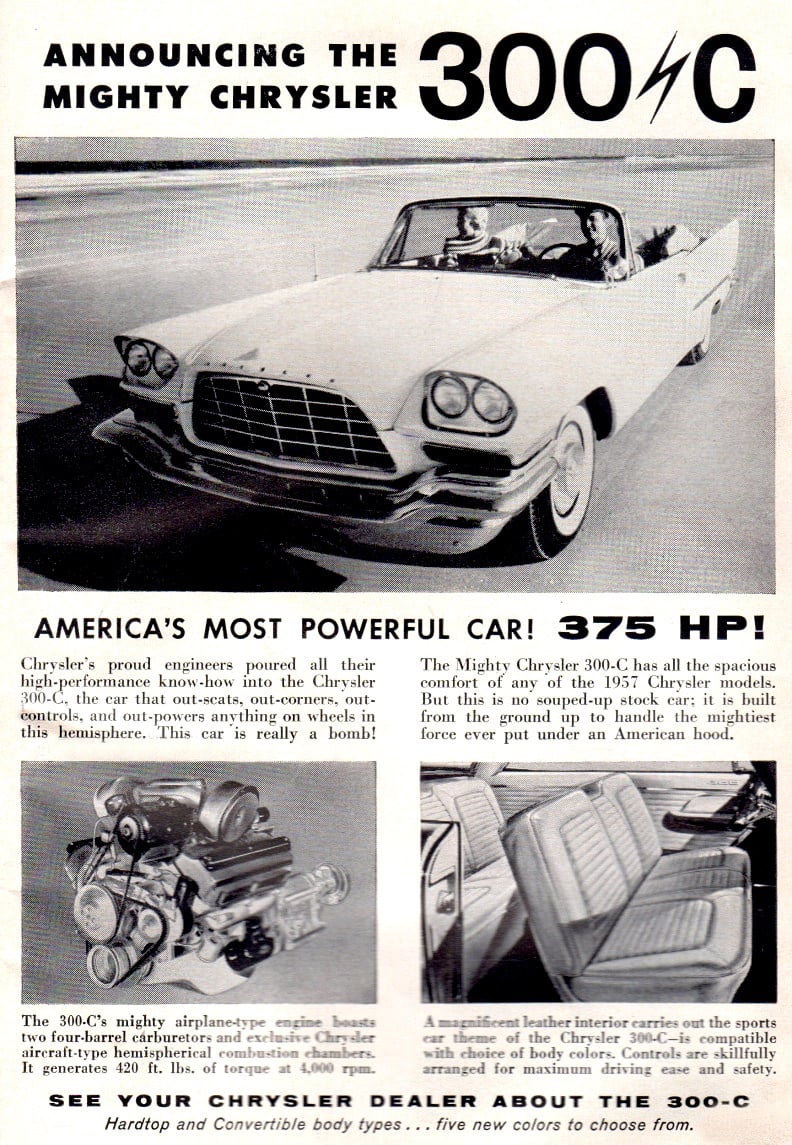
Production of the high-performance 300C and 300D was tiny by mainstream production car standards, with roughly 2,400 300Cs and about 809 300Ds built. The year 1958 marked the end of the first-generation Hemi in Chrysler cars, with the company pivoting to lighter, cheaper wedge-head V8s. Image courtesy of Chrysler.
Production of the high-performance 300C and 300D was tiny by mainstream production car standards, with roughly 2,400 300Cs and about 809 300Ds built. The year 1958 marked the end of the first-generation Hemi in Chrysler cars, with the company pivoting to lighter, cheaper wedge-head V8s. The engineering was brilliant, but as usual, the bean counters won at the end of the day.
Drag racers had already figured out what they had, and the 392’s beefy bottom end, generous displacement, and outstanding breathing made it a natural candidate for superchargers and nitromethane. Don “Big Daddy” Garlits ran a 392-powered Swamp Rat I fitted with Isky valve gear and a Schiefer clutch.
Later, after a bruising trip to California in 1959, he added a GMC 6-71 blower and became virtually unstoppable. The 392 became one of the defining Top Fuel engines of the late 1950s and early 1960s, before the 426 Hemi increasingly took over after its 1964 debut. Remarkably, 392-powered cars continued to appear competitively in drag racing well into the 1970s.
The Built 392 Hemi V8 Shown Here
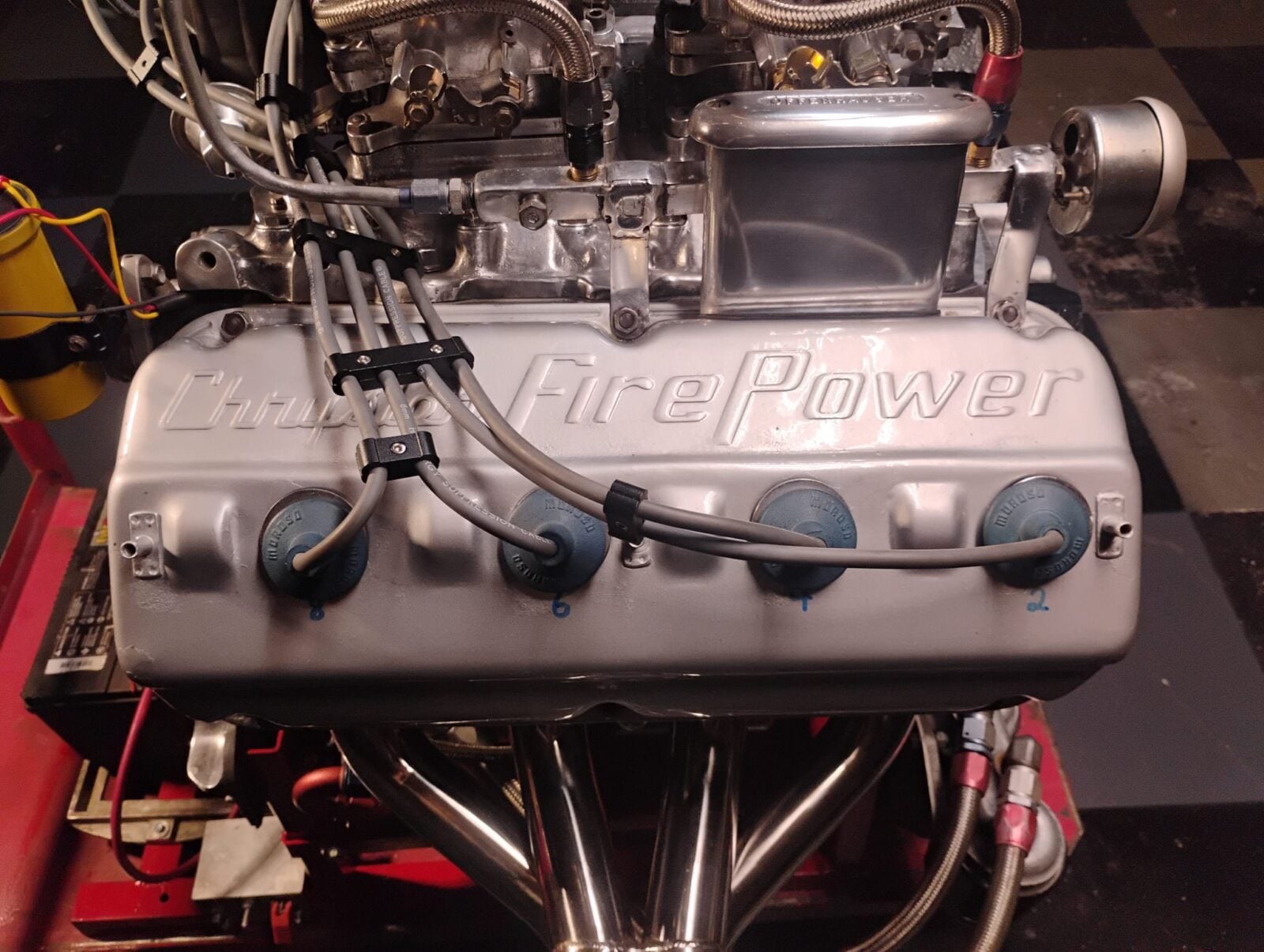
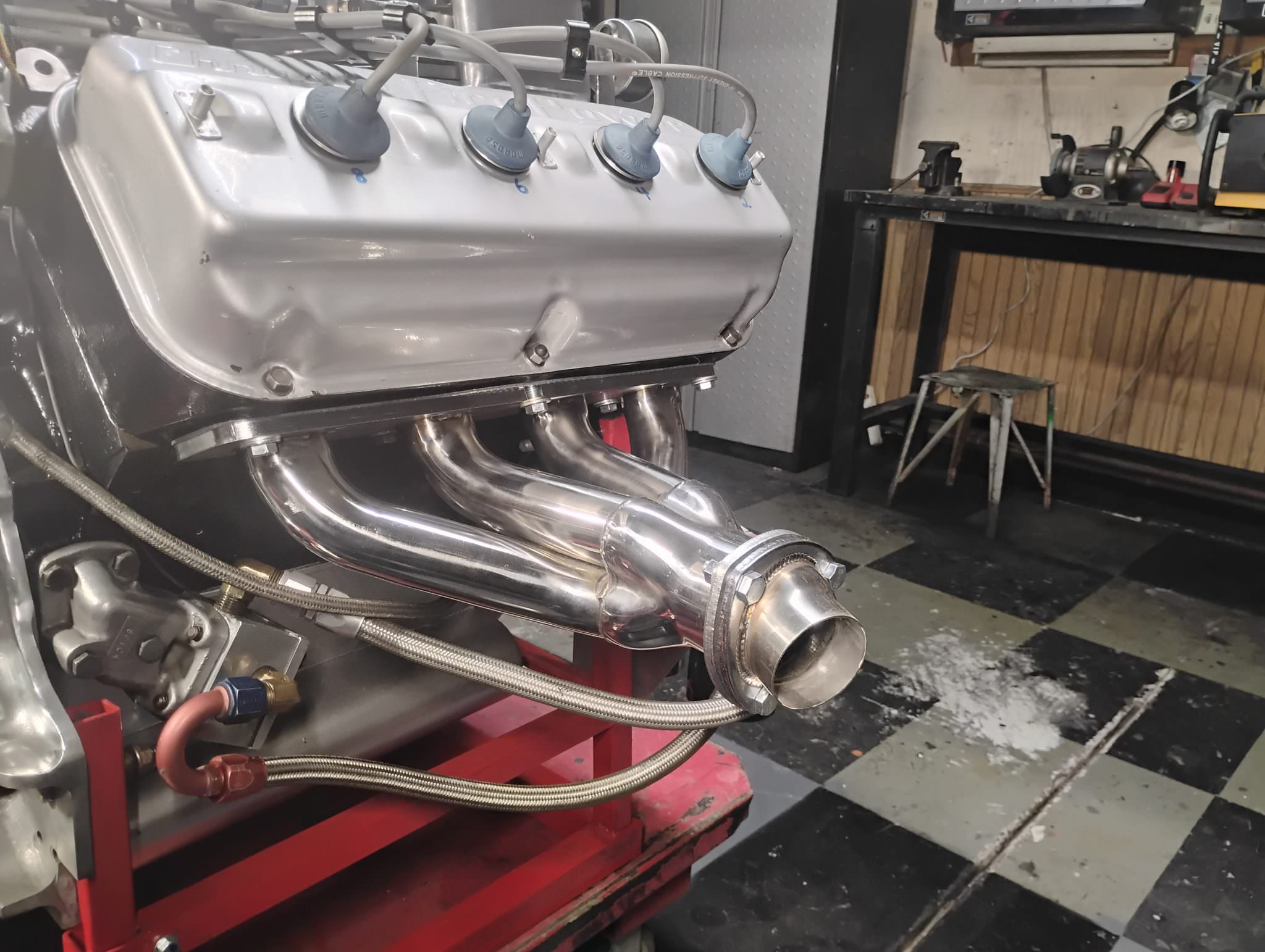
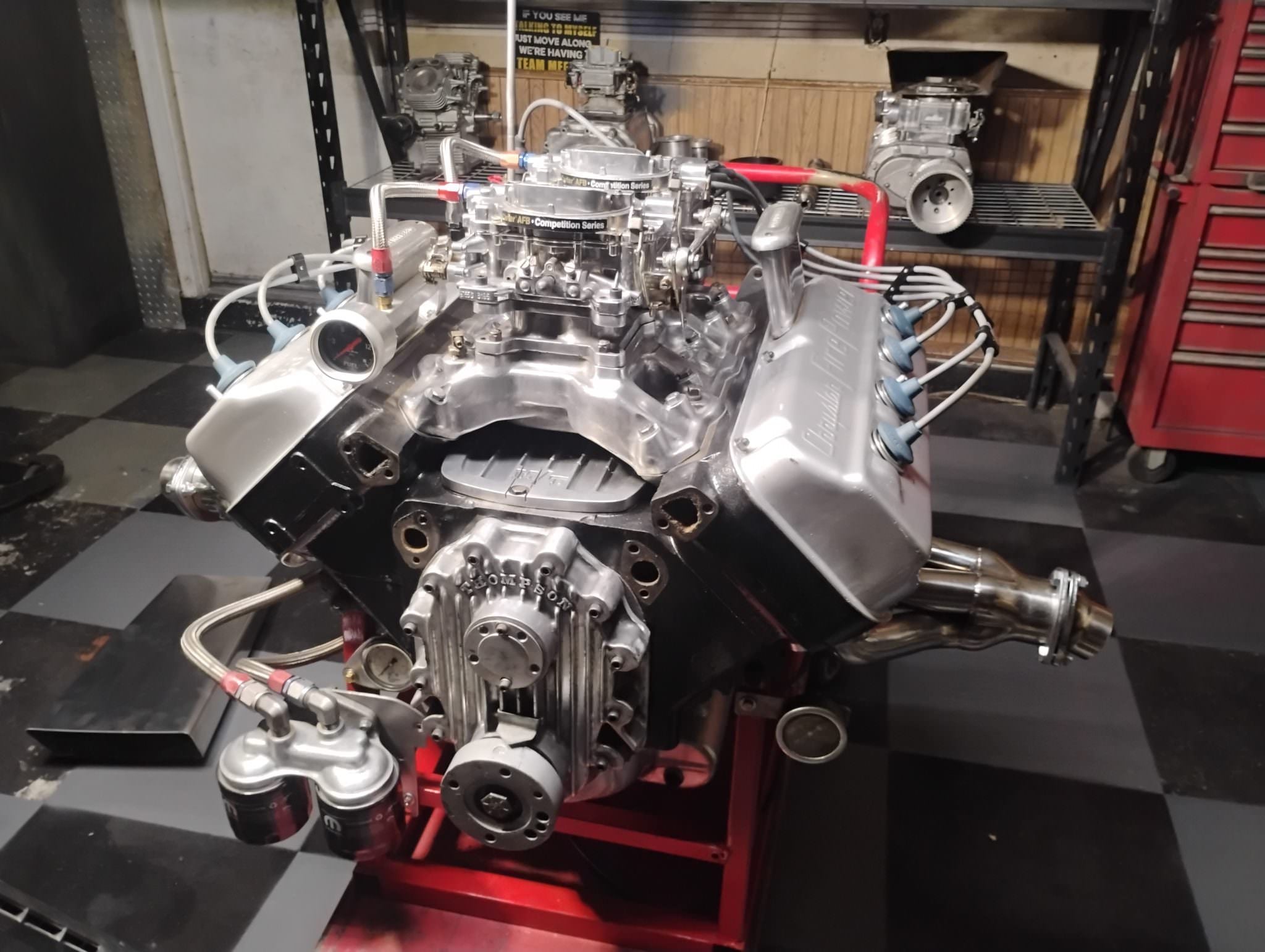
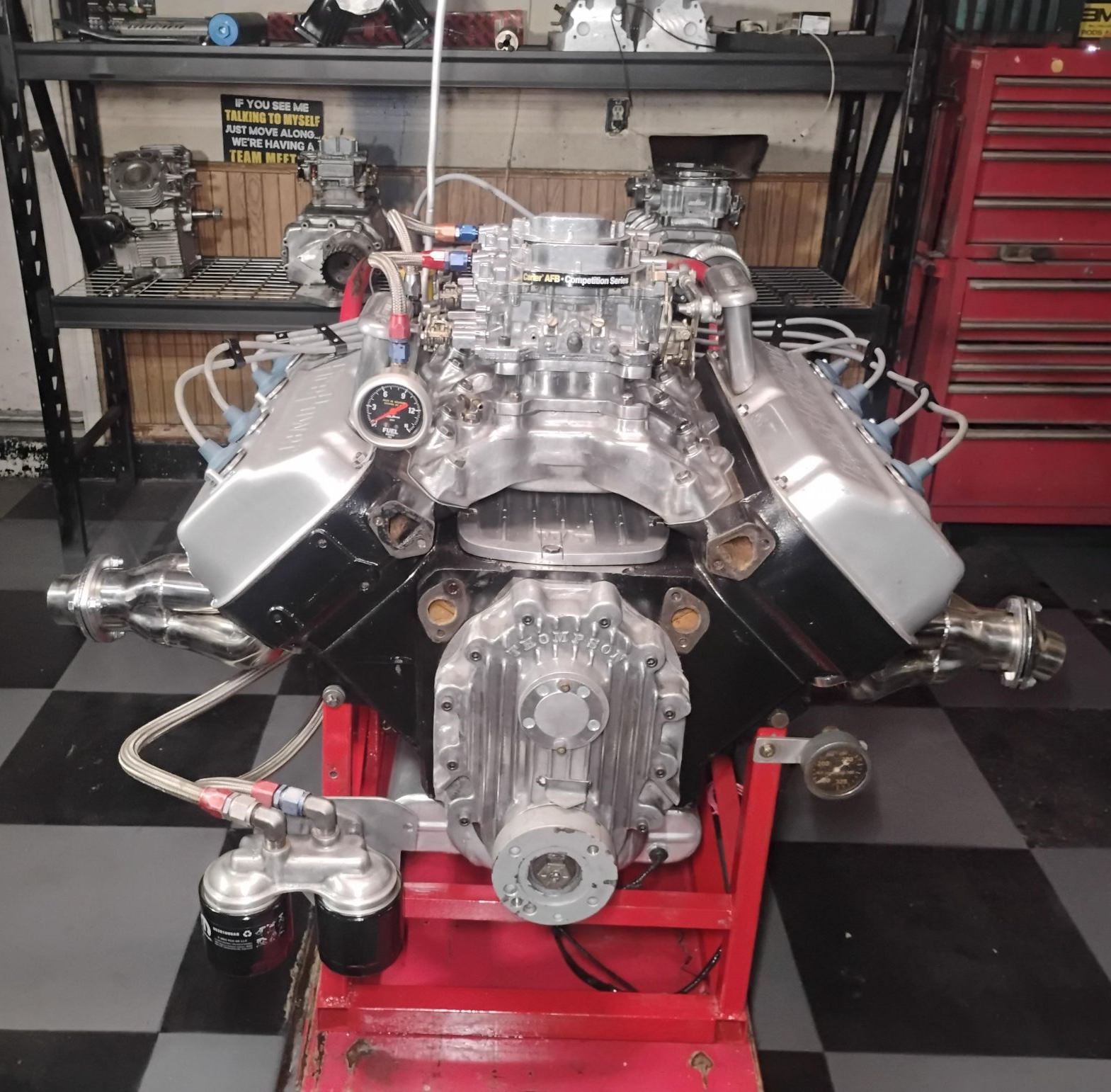
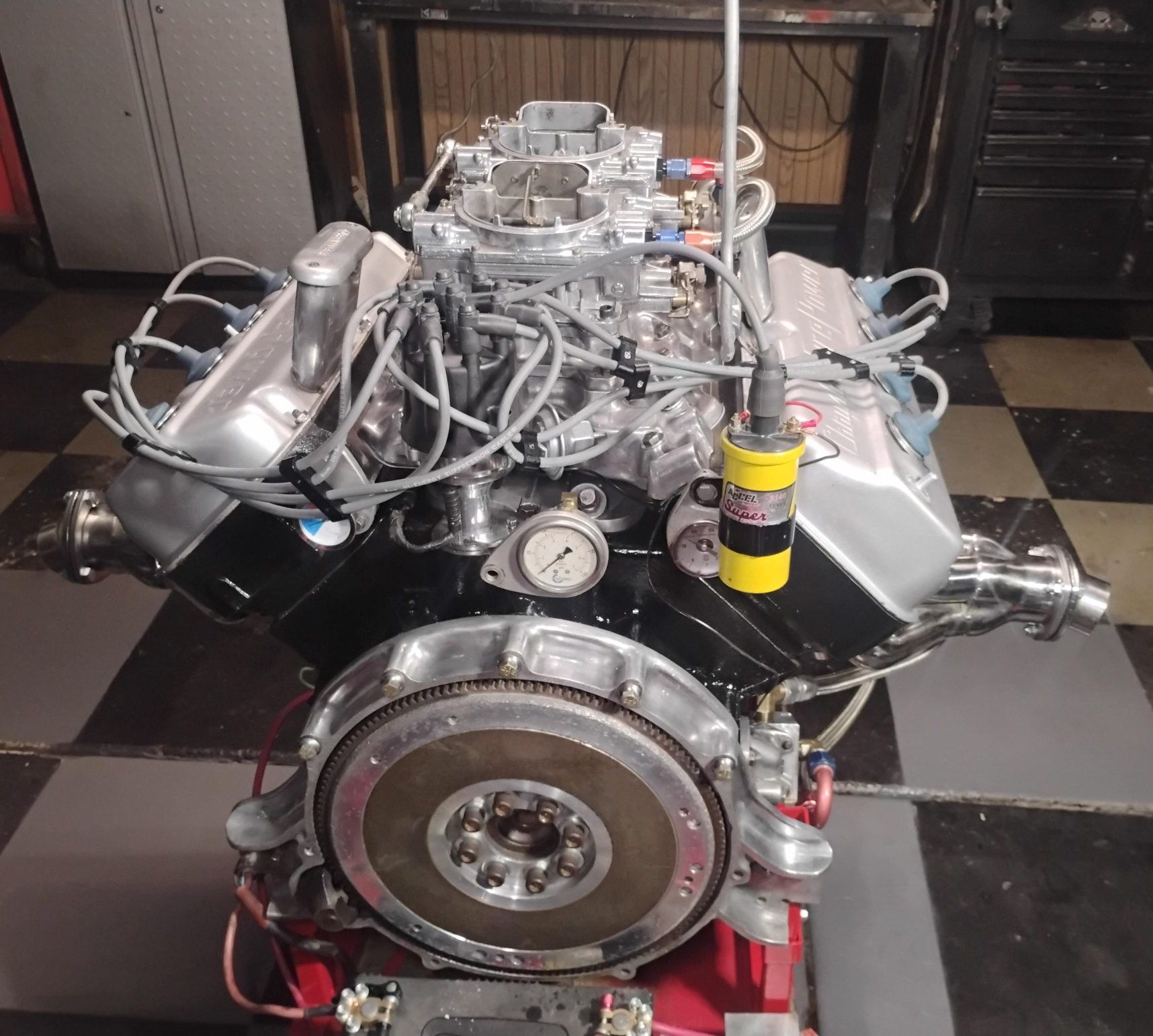
The 392 Hemi V8 shown here is based on a 1957 block that has been rebuilt over the past three years. It’s been fitted with a Schiefer 6359 Racing 300º solid roller camshaft, Isky solid roller lifters, adjustable chromoly pushrods, high-compression pistons, a forged crankshaft, and oversized billet steel main caps.
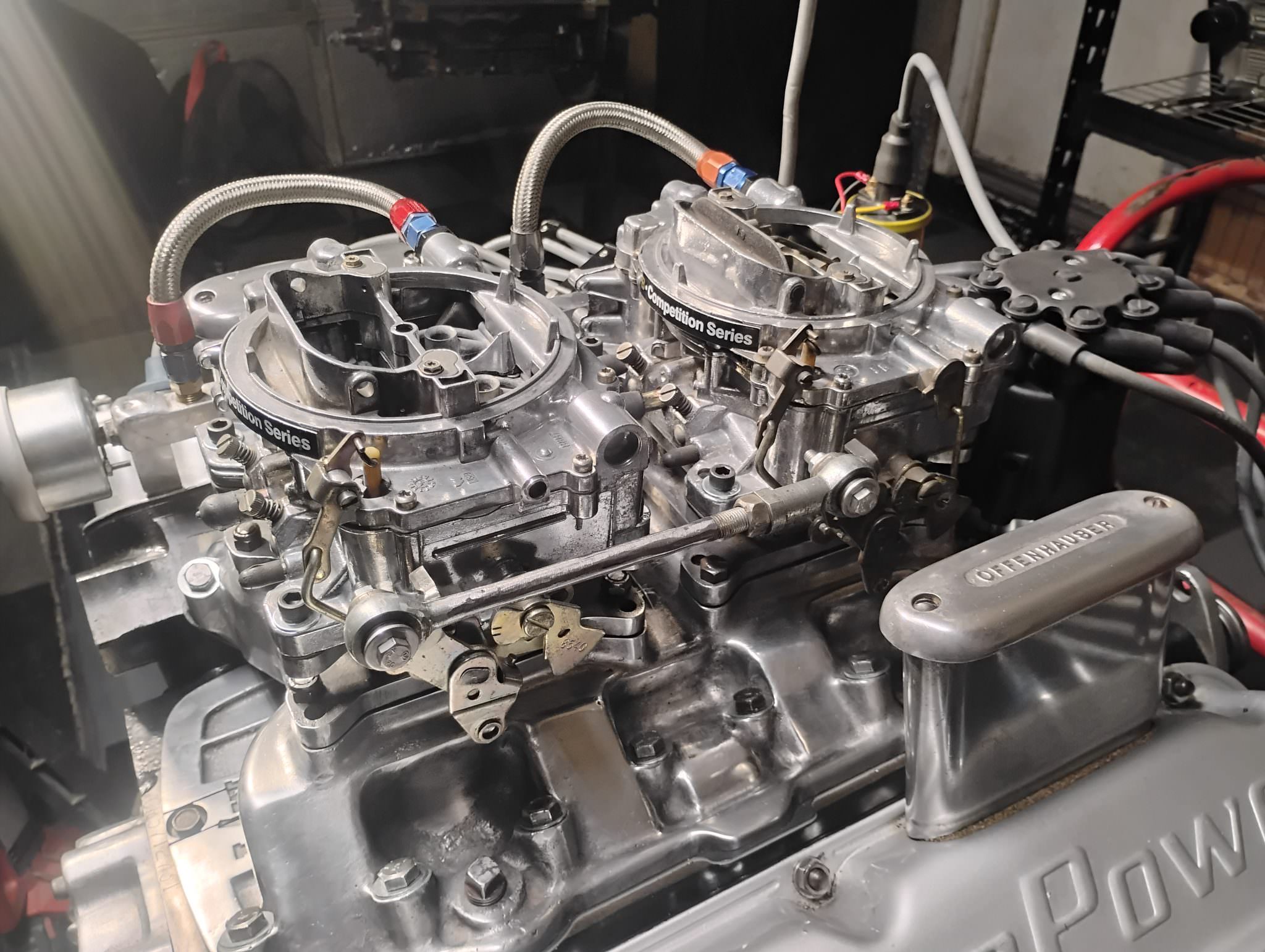
The cylinder heads received new ground-in seats and valves, and the engine was assembled with replacement gaskets throughout. Up top, dual Carter AFB Competition Series carburetors provide fueling, with Offenhauser valve cover breathers managing crankcase ventilation.
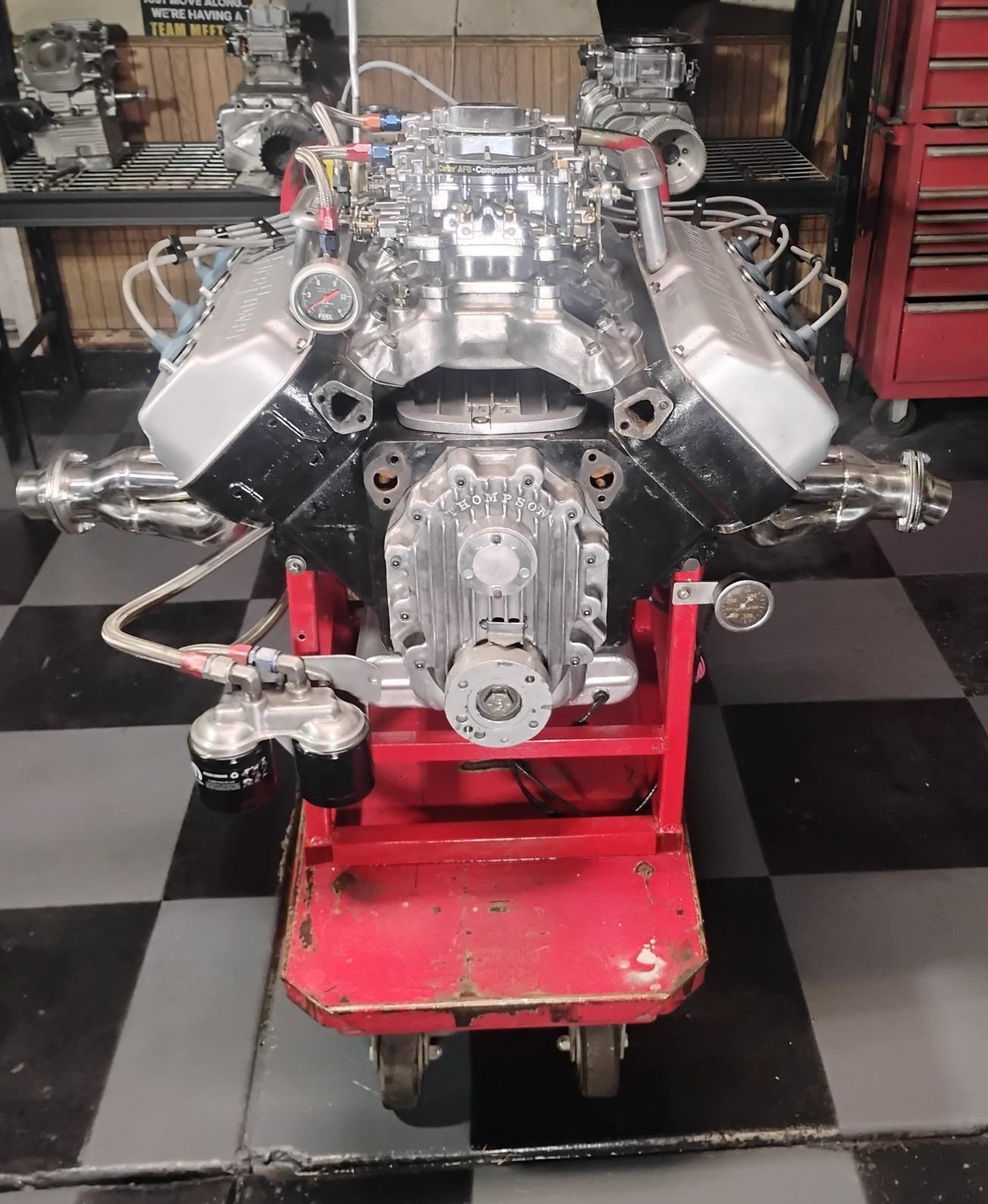
The 392 Hemi V8 shown here is based on a 1957 block that has been rebuilt over the past three years. It’s been fitted with a Schiefer 6359 Racing 300º solid roller camshaft, Isky solid roller lifters, adjustable chromoly pushrods, high-compression pistons, a forged crankshaft, and oversized billet steel main caps.
A Mickey Thompson cast aluminum valley tray and an aluminum timing cover with an integrated front bearing support for additional crankshaft stability are fitted. The engine also comes equipped with an aluminum flywheel, exhaust headers, a 10-quart sump, and dual oil filters with braided lines. The Chrysler FirePower-branded valve covers were kept in pride of place.
It’s now being offered for sale at no reserve out of Glendale, Arizona on Bring a Trailer, and you can visit the listing here if you’d like to read more about it or register to bid.
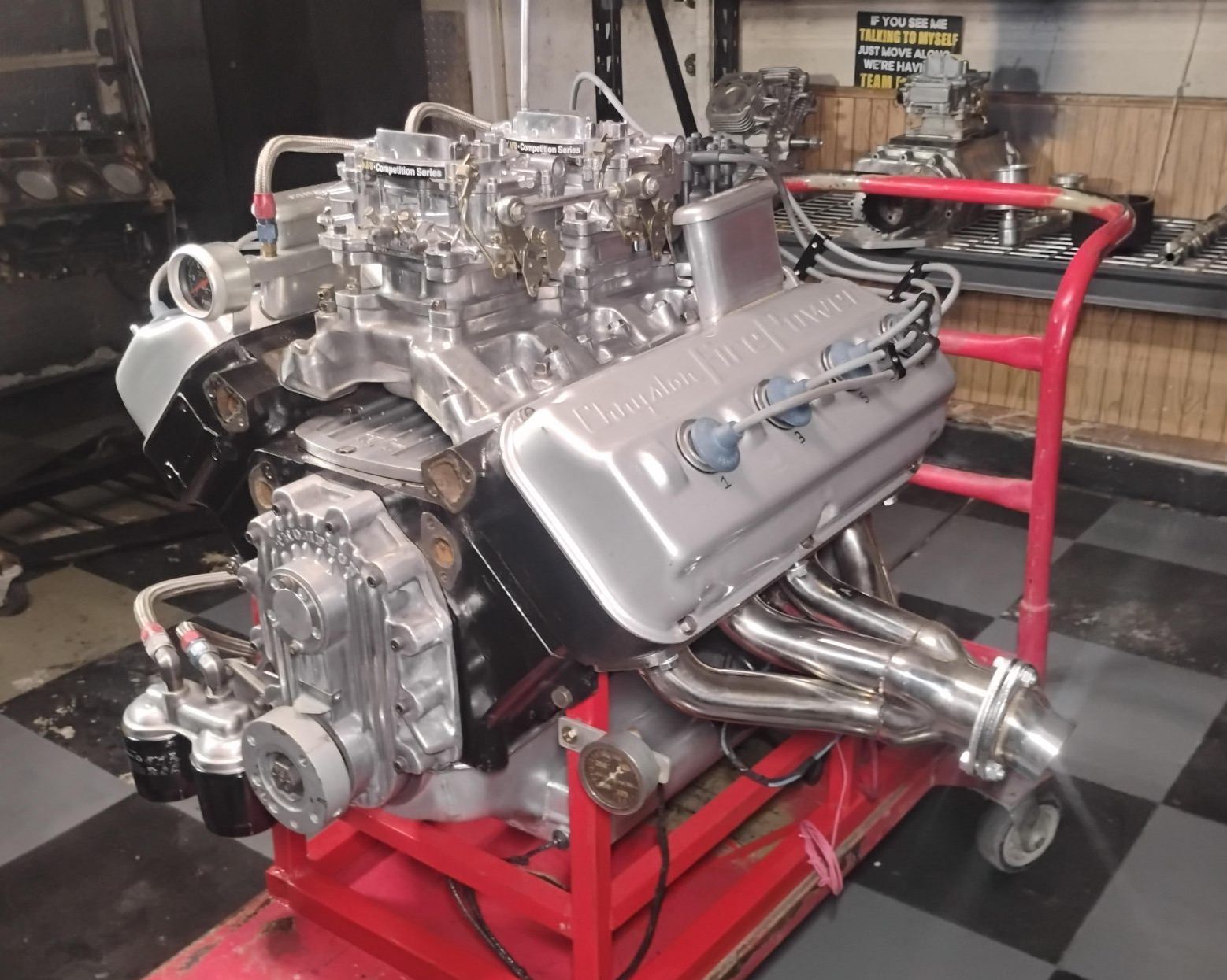
Images courtesy of Bring a Trailer

Articles that Ben Branch has written have been covered on CNN, Popular Mechanics, Smithsonian Magazine, Road & Track Magazine, the official Pinterest blog, the official eBay Motors blog, BuzzFeed, Autoweek Magazine, Wired Magazine, Autoblog, Gear Patrol, Jalopnik, The Verge, and many more.
Silodrome was founded by Ben back in 2010, in the years since the site has grown to become a world leader in the alternative and vintage motoring sector, with well over a million monthly readers from around the world and many hundreds of thousands of followers on social media.