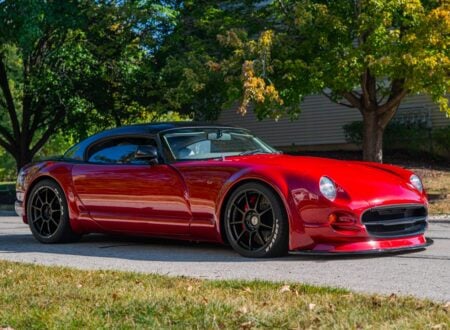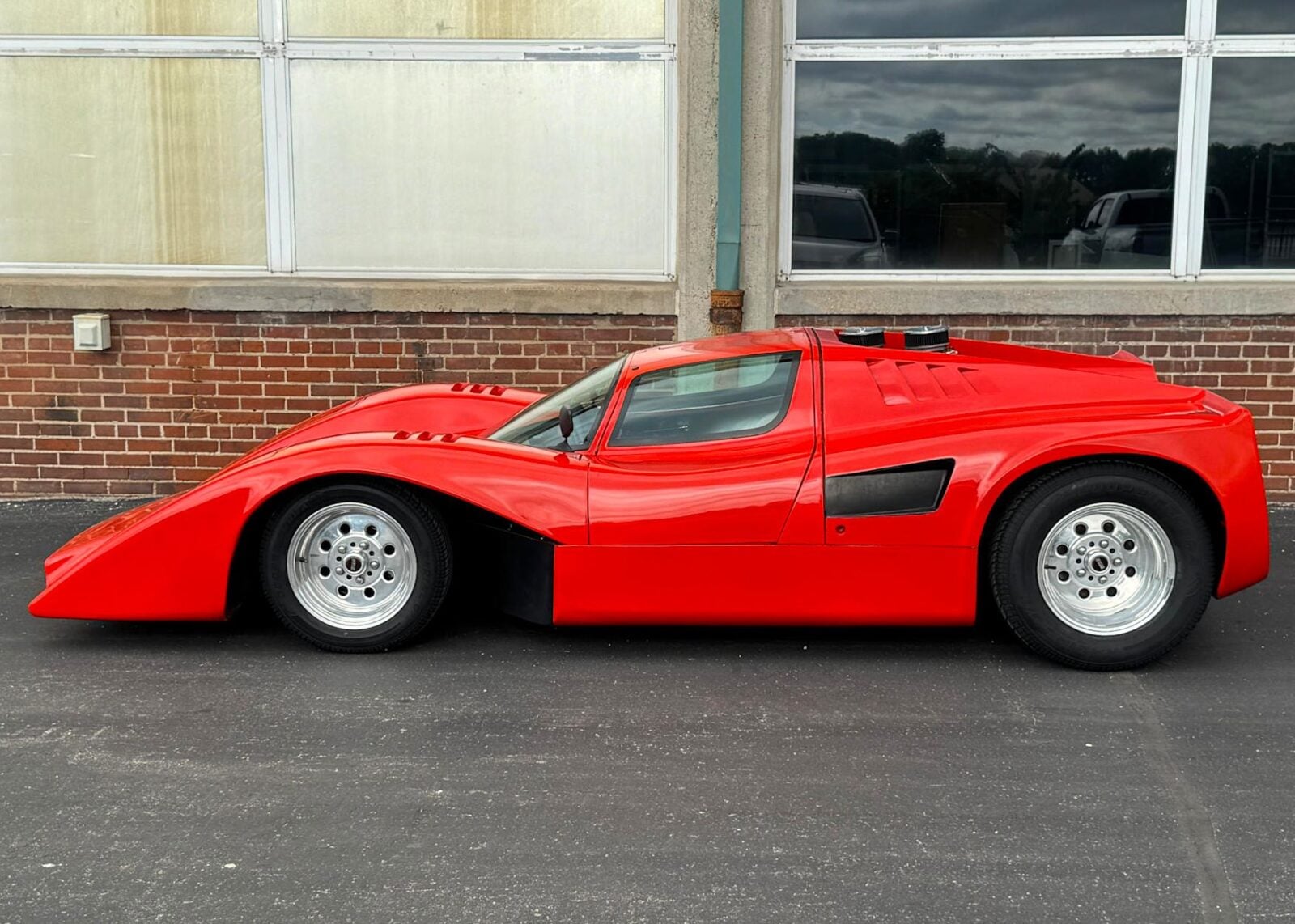
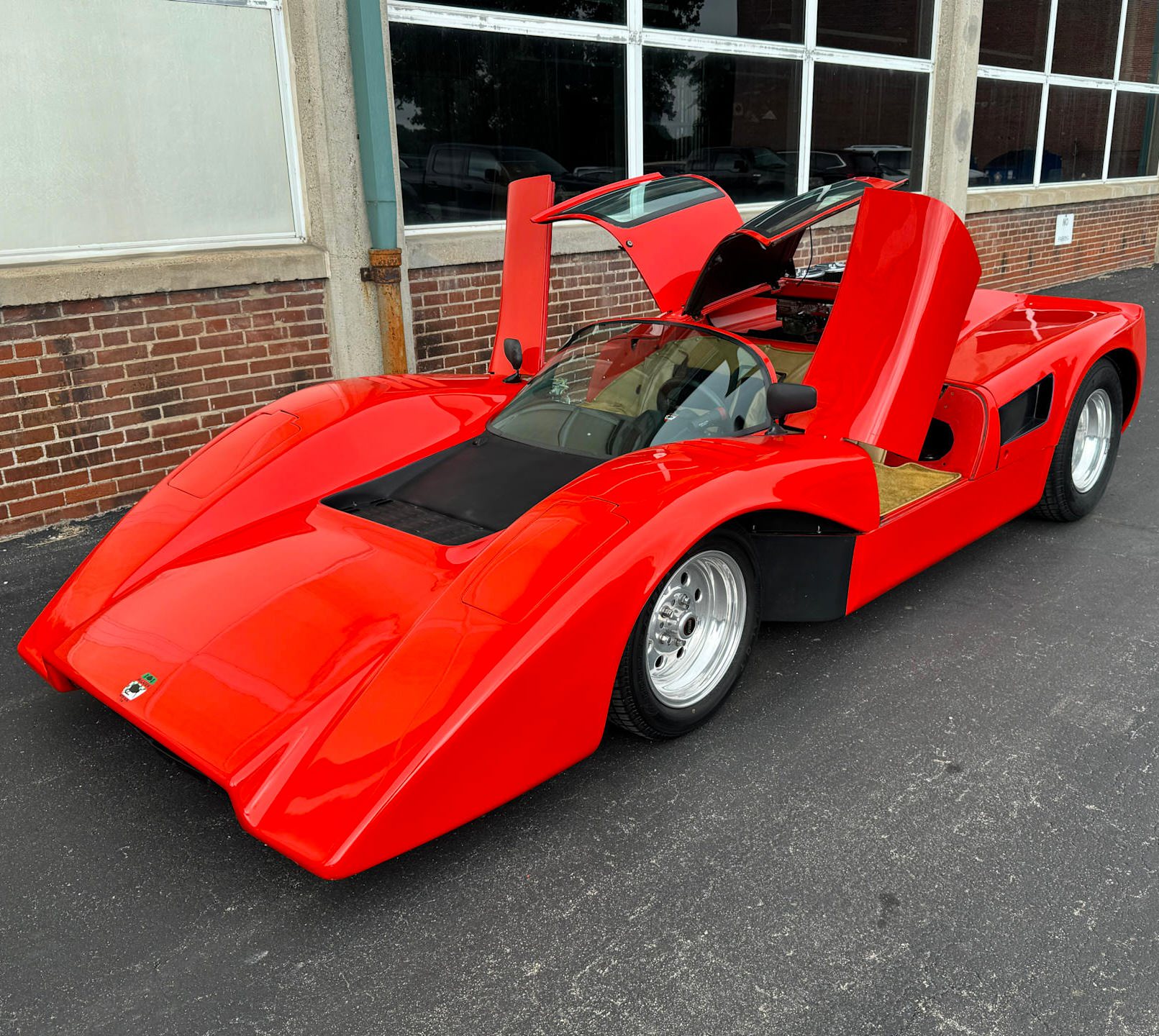
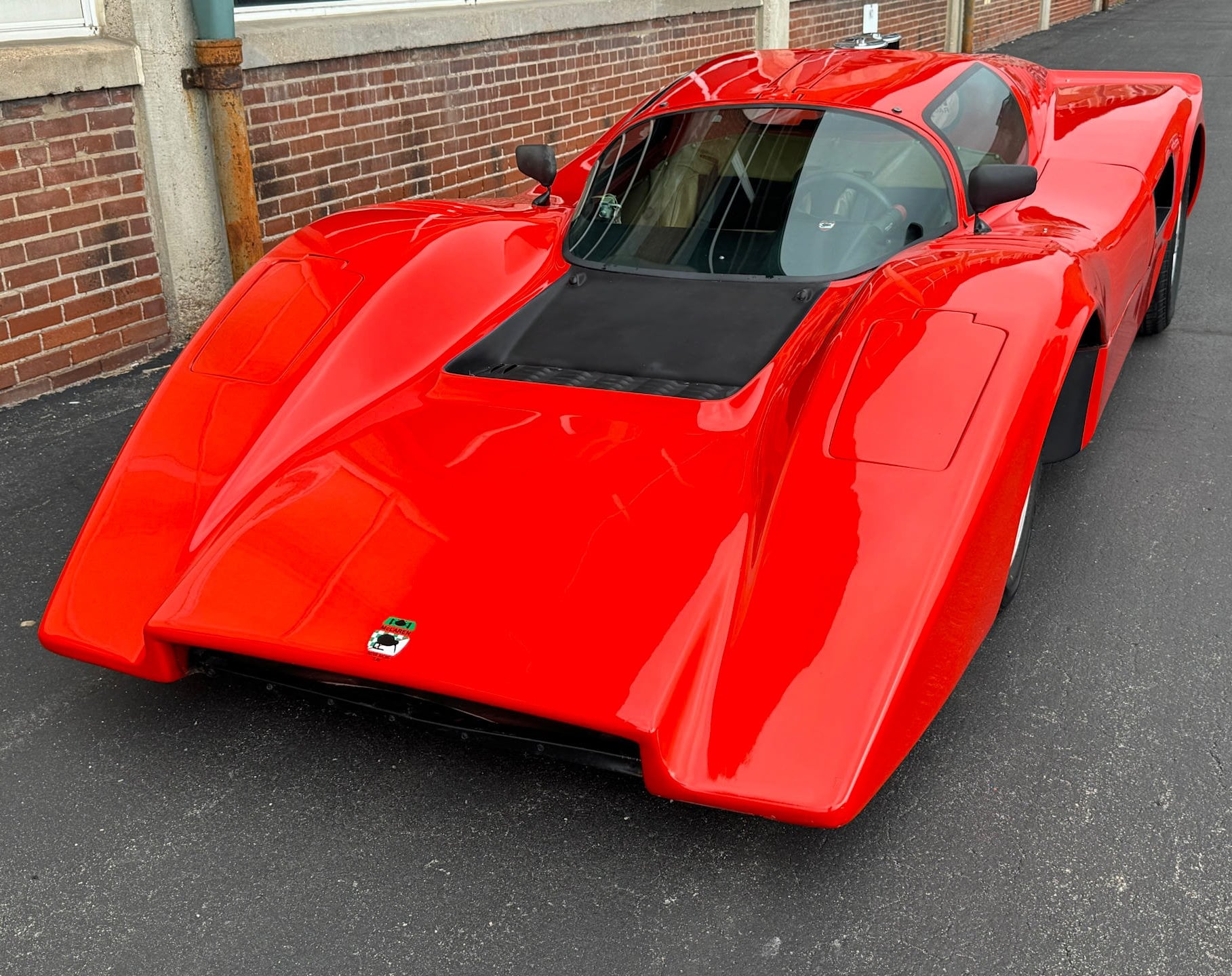
This is an original 1980 Manta Mirage, it’s a largely forgotten mid-engined supercar from the 1970s and 1980s. It has a tubular steel spaceframe chassis, a lightweight composite body, and it’s powered by a Chevrolet 350 V8.
The Mirage was one of very few street-legal, mid-engined cars being built in America at the time, it could be ordered as either a turnkey car or as a kit, and various examples of Manta cars ended up in films and on TV shows due to their futuristic looks.
Fast Facts: The 1980 Manta Mirage
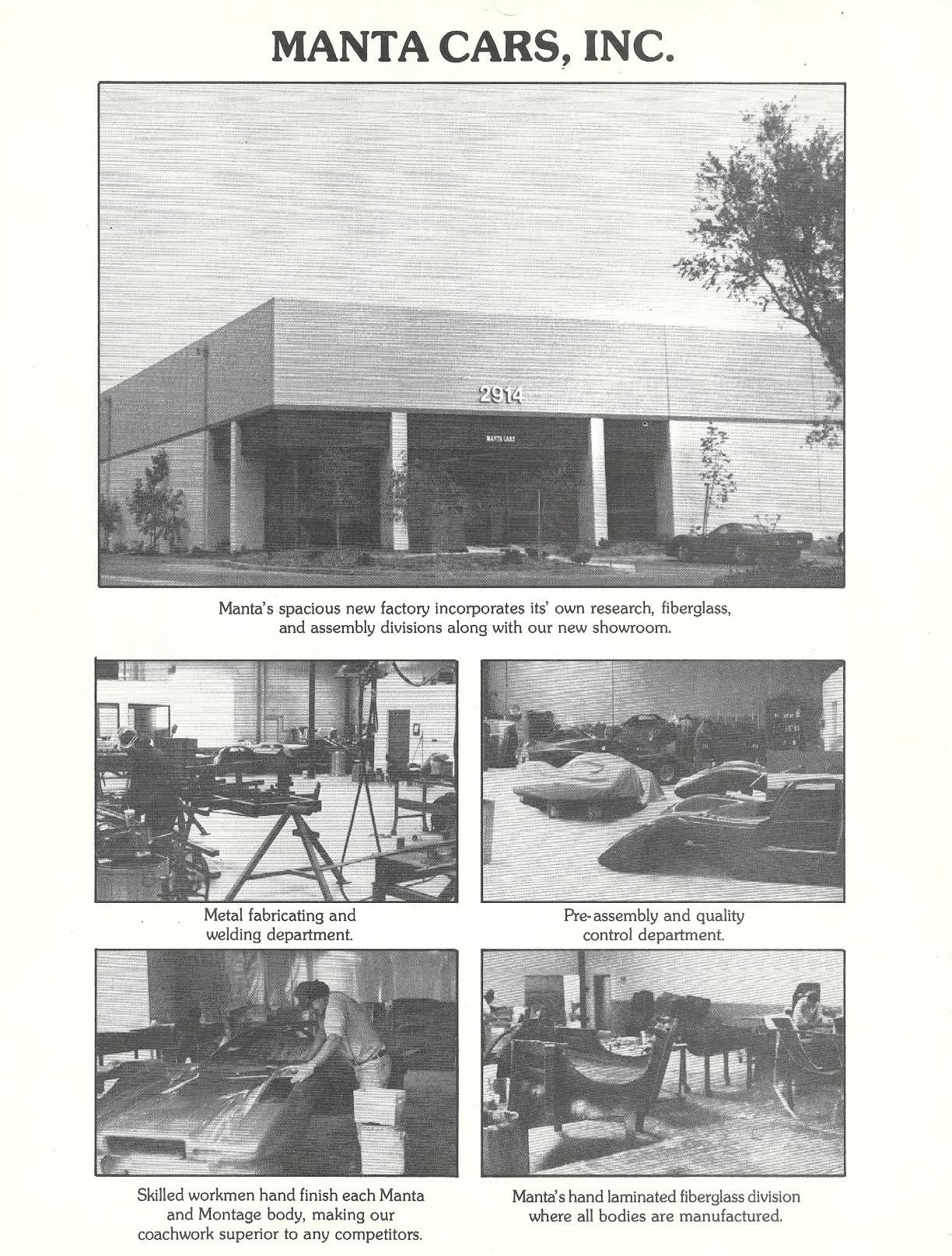
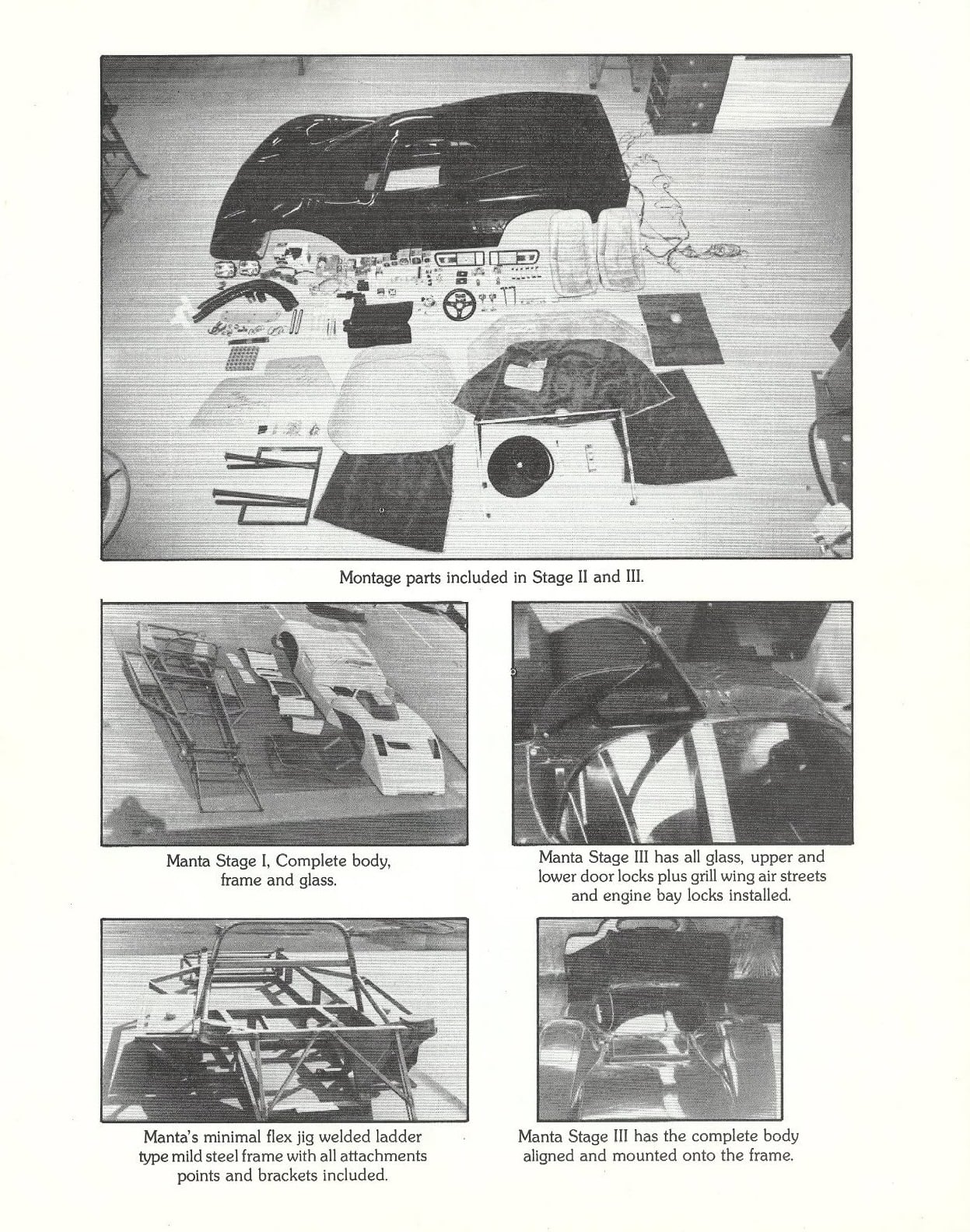
- The Manta Mirage was a street-legal, Can-Am-inspired kit car introduced in 1974 by Manta Cars of Costa Mesa, California. It used a McLaren M8-inspired fiberglass body over a tubular steel spaceframe and was typically powered by a Chevrolet small-block V8 driving through a 4-speed Corvair transaxle.
- Founded by brothers Brad and Tim LoVette, Manta offered the Mirage primarily as a kit, though turnkey cars were also available. Finished examples weighed around 1,900 lbs, they had independent suspension, removable roof panels, and two-piece doors. Buyers supplied their own drivetrains, with Chevrolet 327 and 350 V8s being by far the most common choices.
- Manta later introduced the cheaper Montage, based on a Volkswagen Beetle floorpan and styled after the McLaren M6GT, followed by the mid-engined, spaceframe Montage-T. The company reportedly produced about 1,000 kits and completed cars before closing in 1986, with its designs appearing frequently in films and on television shows.
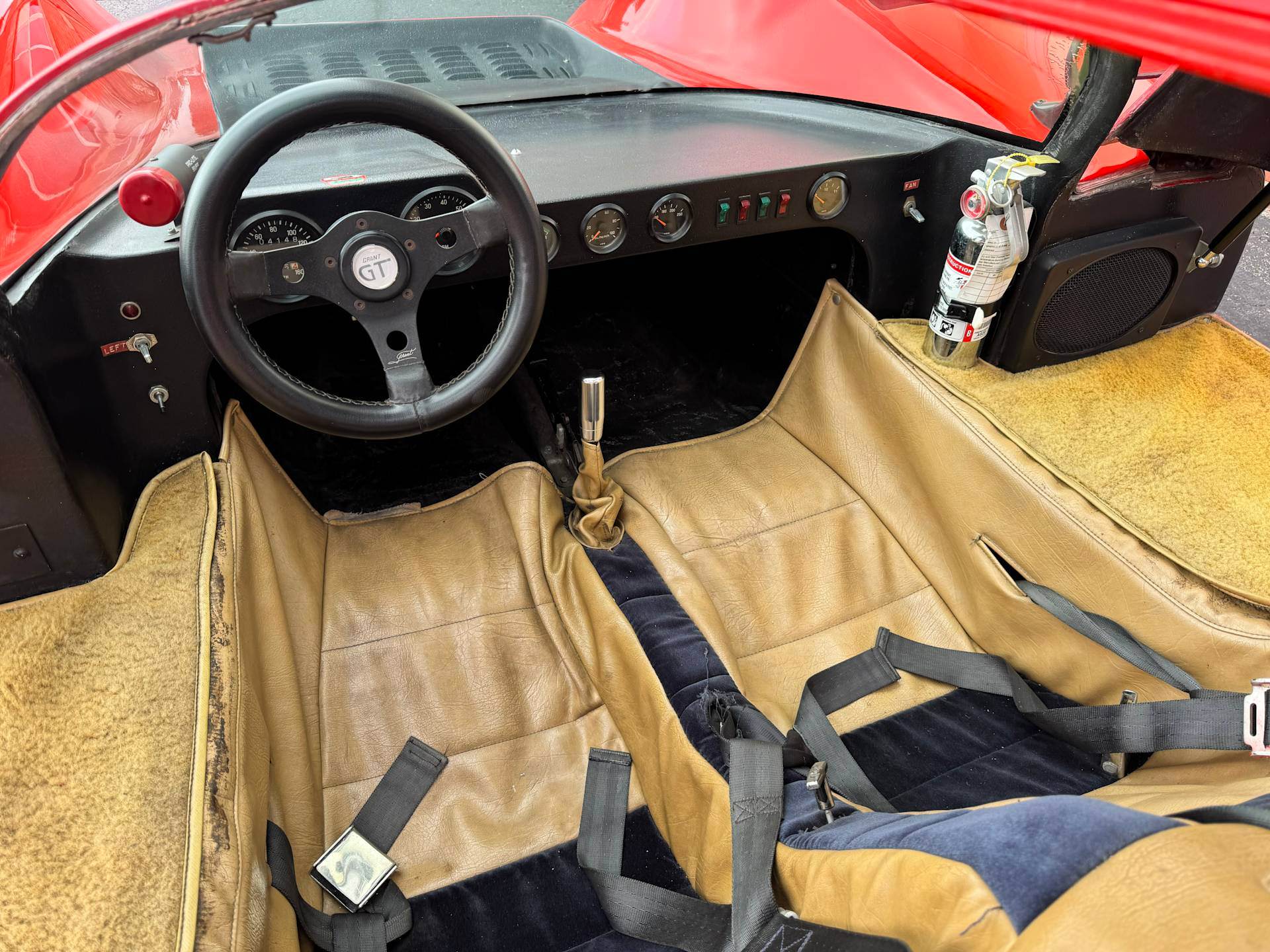
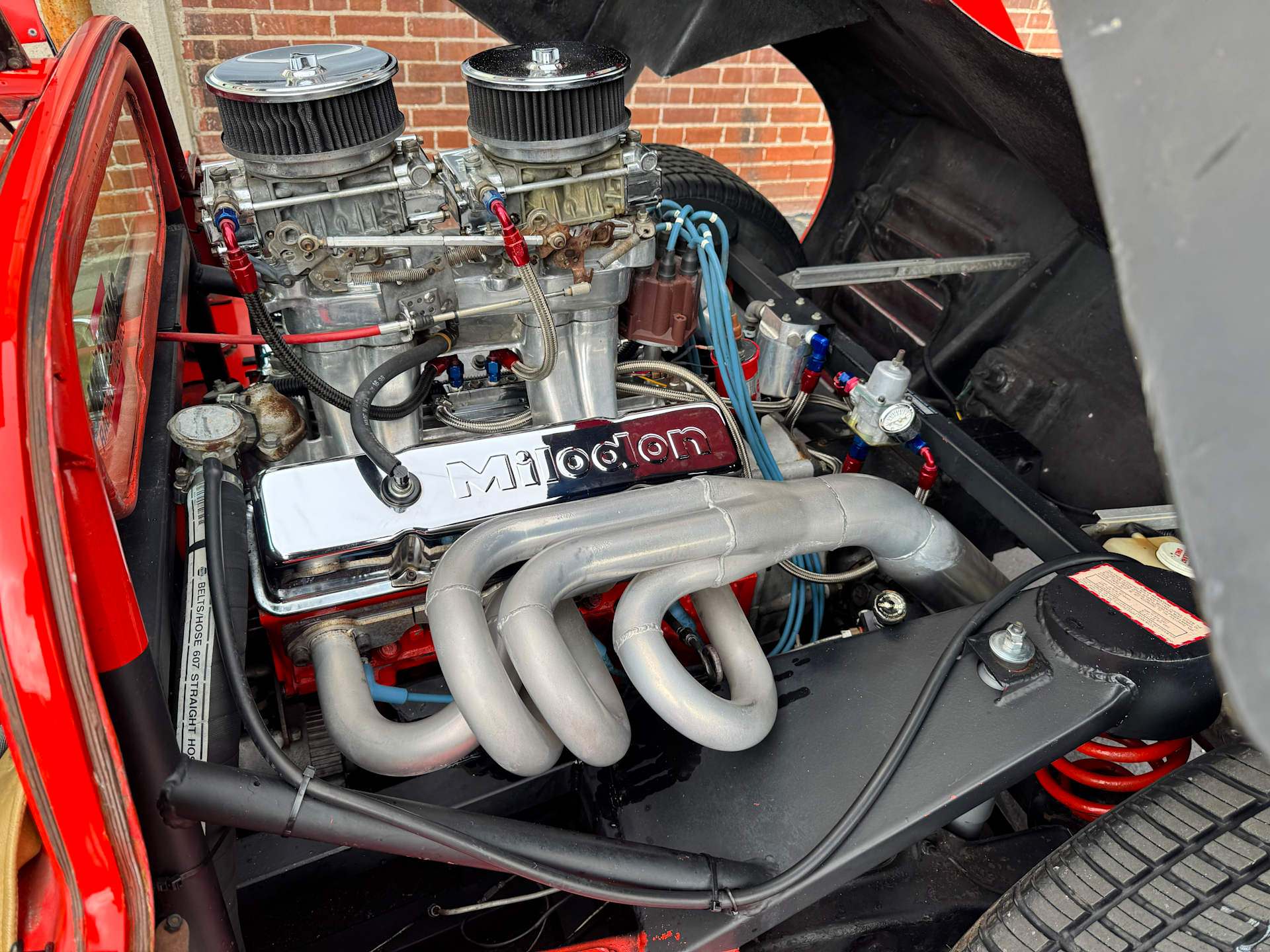
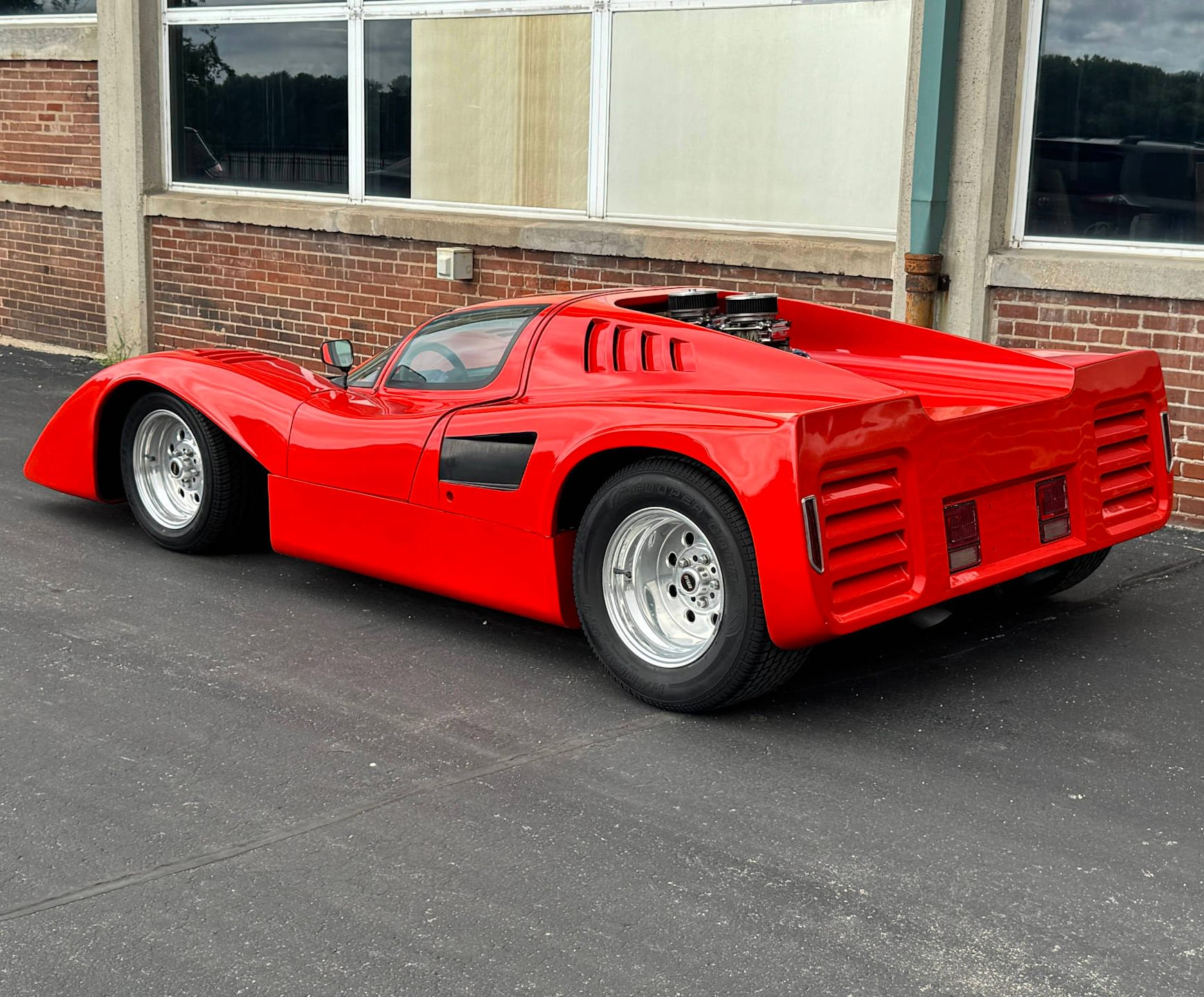
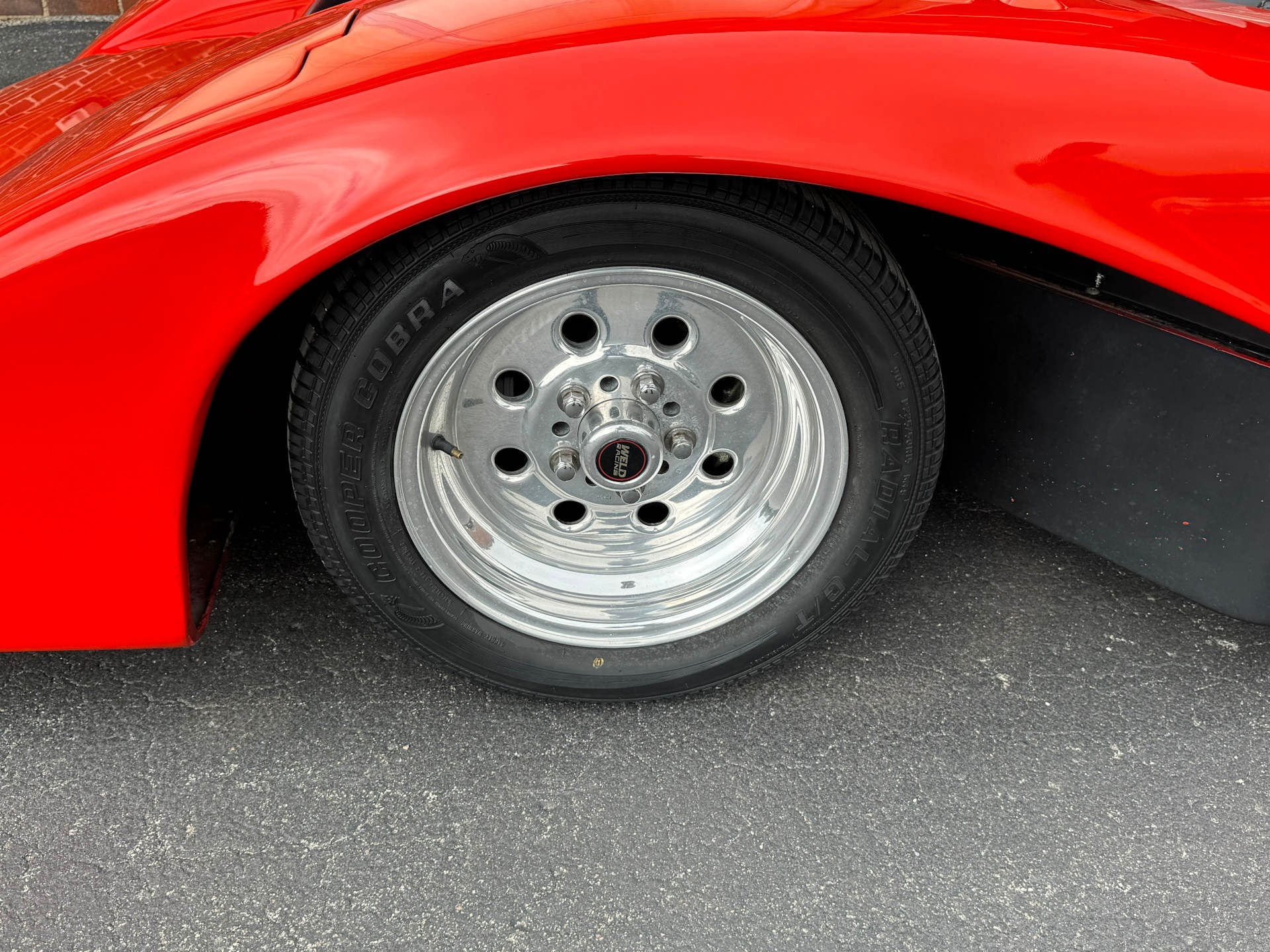
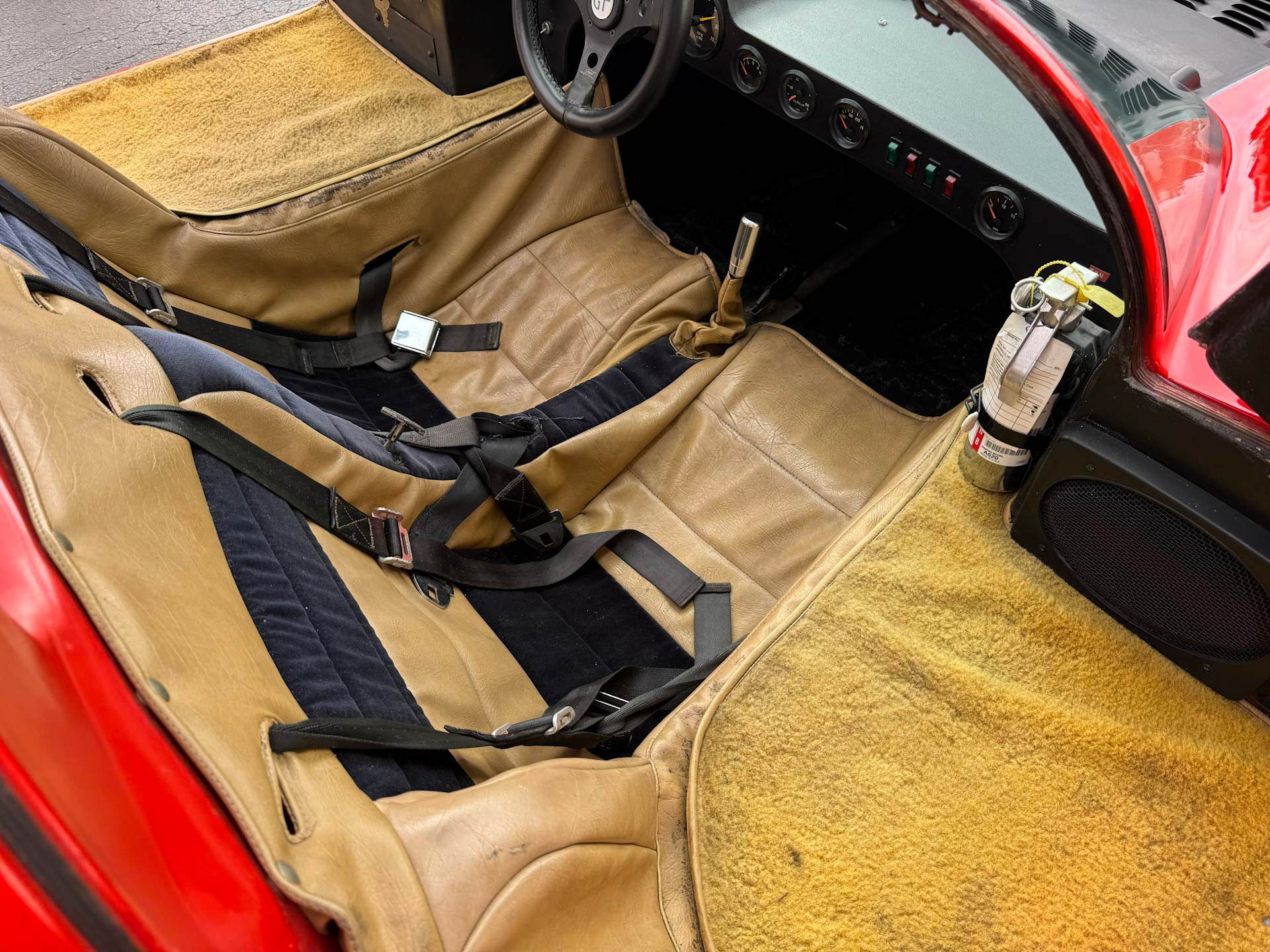
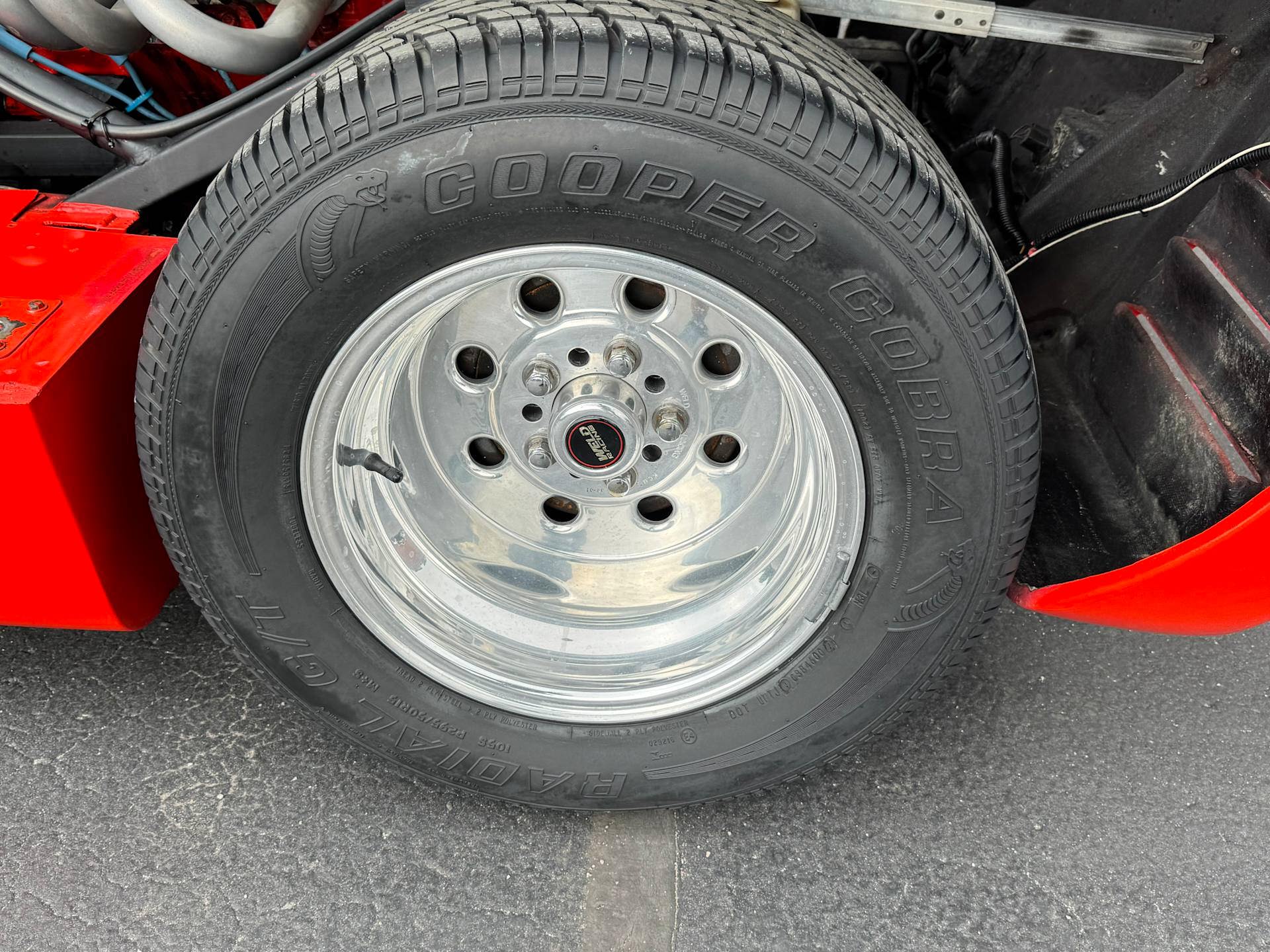
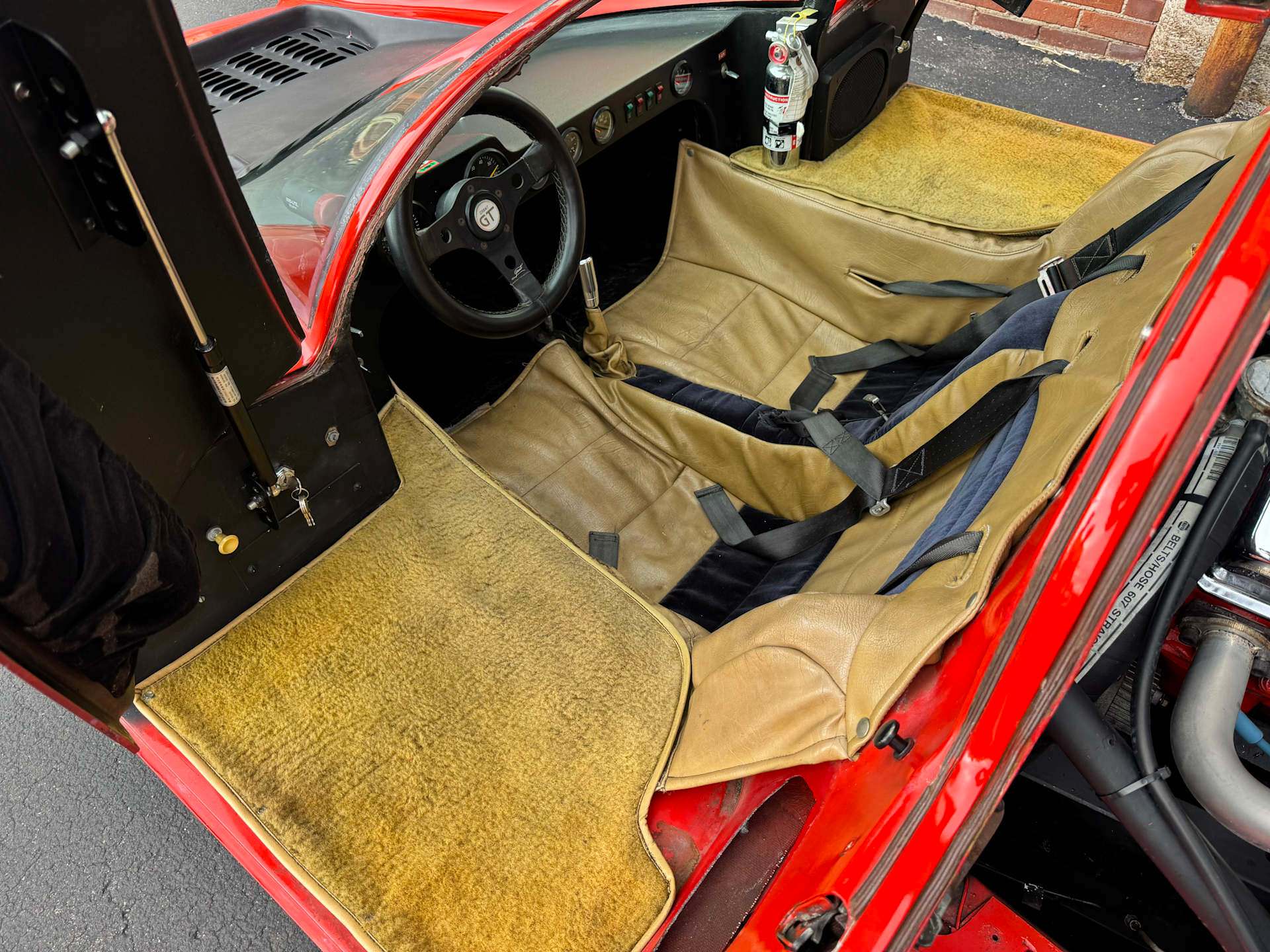
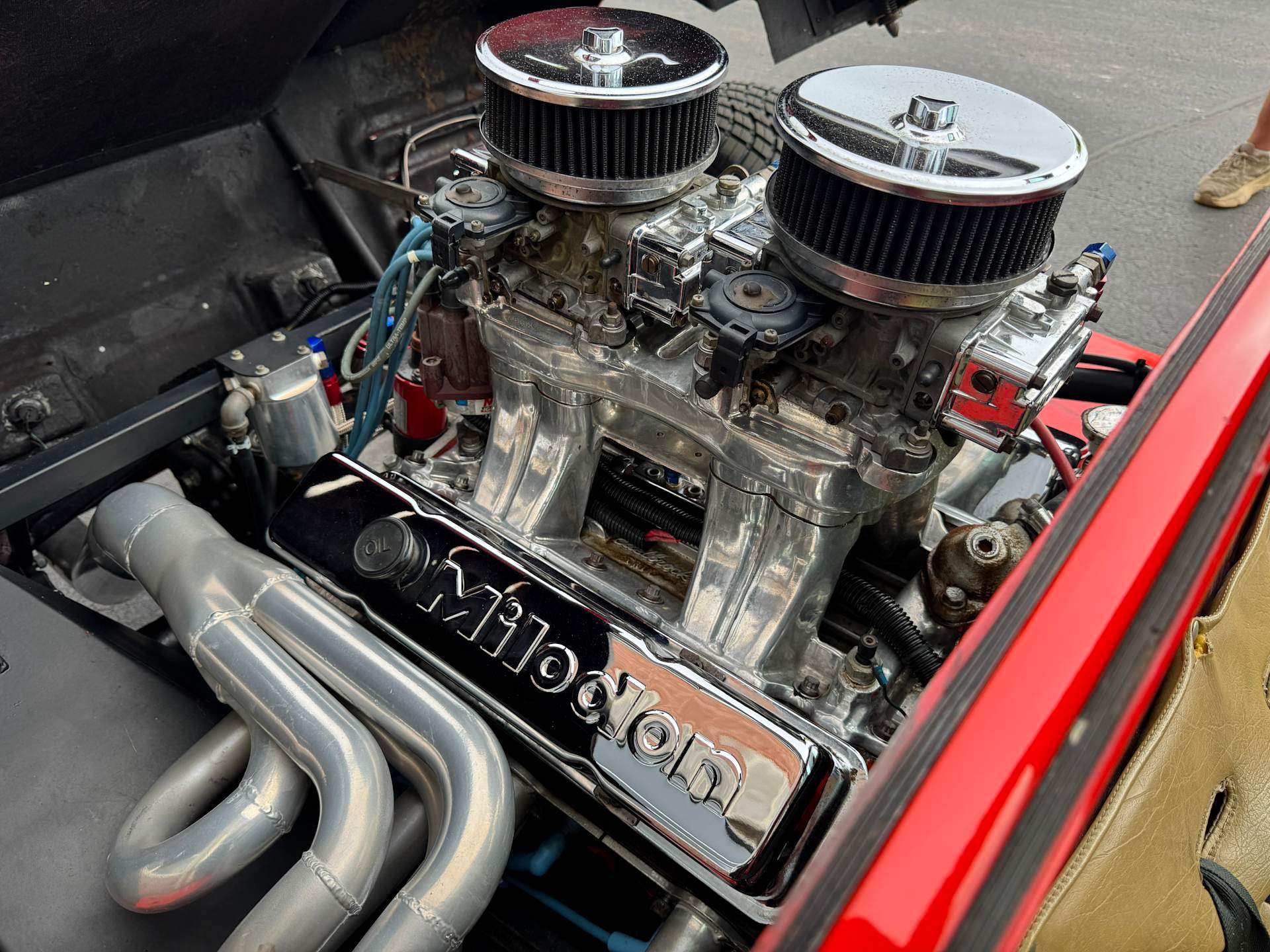
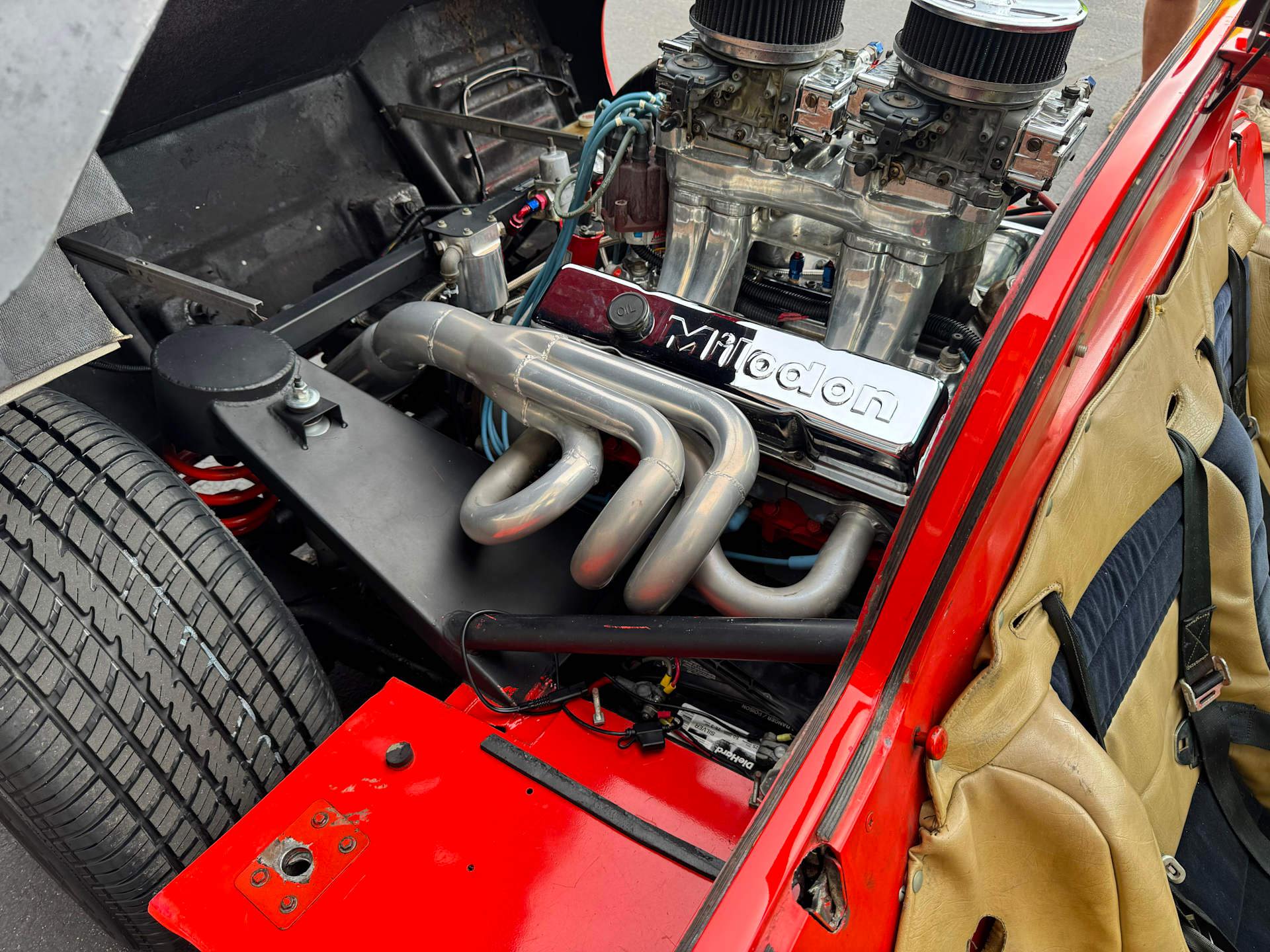
- The 1980 Mirage you see here is finished in red with black accents and a tan interior. Its Chevrolet 350 V8 uses a tunnel-ram intake, dual four-barrel carburetors, and tubular headers, with power sent through a 4-speed manual transaxle. It also has VDO gauges, a Grant steering wheel, and Weld Racing wheels.
History Speedrun: The Manta Mirage
The Manta Mirage was a street-legal Can-Am-style car sold in kit form for enthusiasts to build at home in their suburban garages. The car entered production in 1974 by Manta Cars of Costa Mesa, California, with a McLaren M8-inspired fiberglass body around a tubular steel spaceframe chassis, and it was designed to be assembled at home using a Chevrolet small block V8 driving through a 4-speed Chevrolet Corvair transaxle.
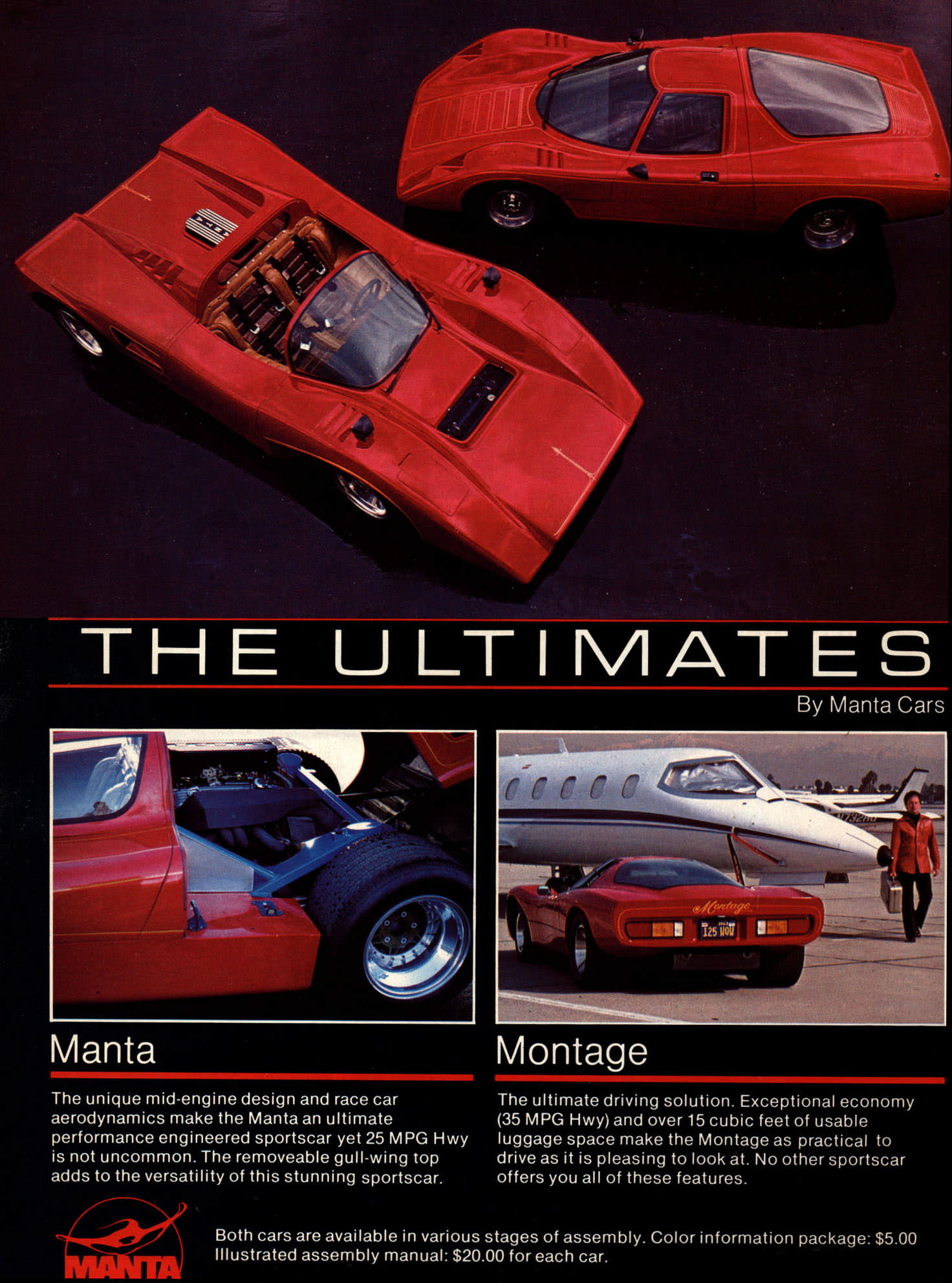
 The Mirage that resulted typically weighed around 1,900 lbs when finished and ready for its license plates. It had independent suspension at both ends. Image courtesy of Manta Cars.
Manta Cars was started by brothers Brad and Tim LoVette, Brad had been road racing and building fiberglass race-car bodywork when the brothers decided that there was a market for a road-going Can-Am-style car. According to reminiscences preserved on the company’s old website, Brad got his hands on some body molds taken from a genuine McLaren M8B.
The Mirage that resulted typically weighed around 1,900 lbs when finished and ready for its license plates. It had independent suspension at both ends, though brake and suspension hardware varied widely from build to build, some early cars used Volkswagen front-end parts, and many finished cars carry four-wheel discs – a sensible choice when you look at the average power-to-weight ratio of these cars.
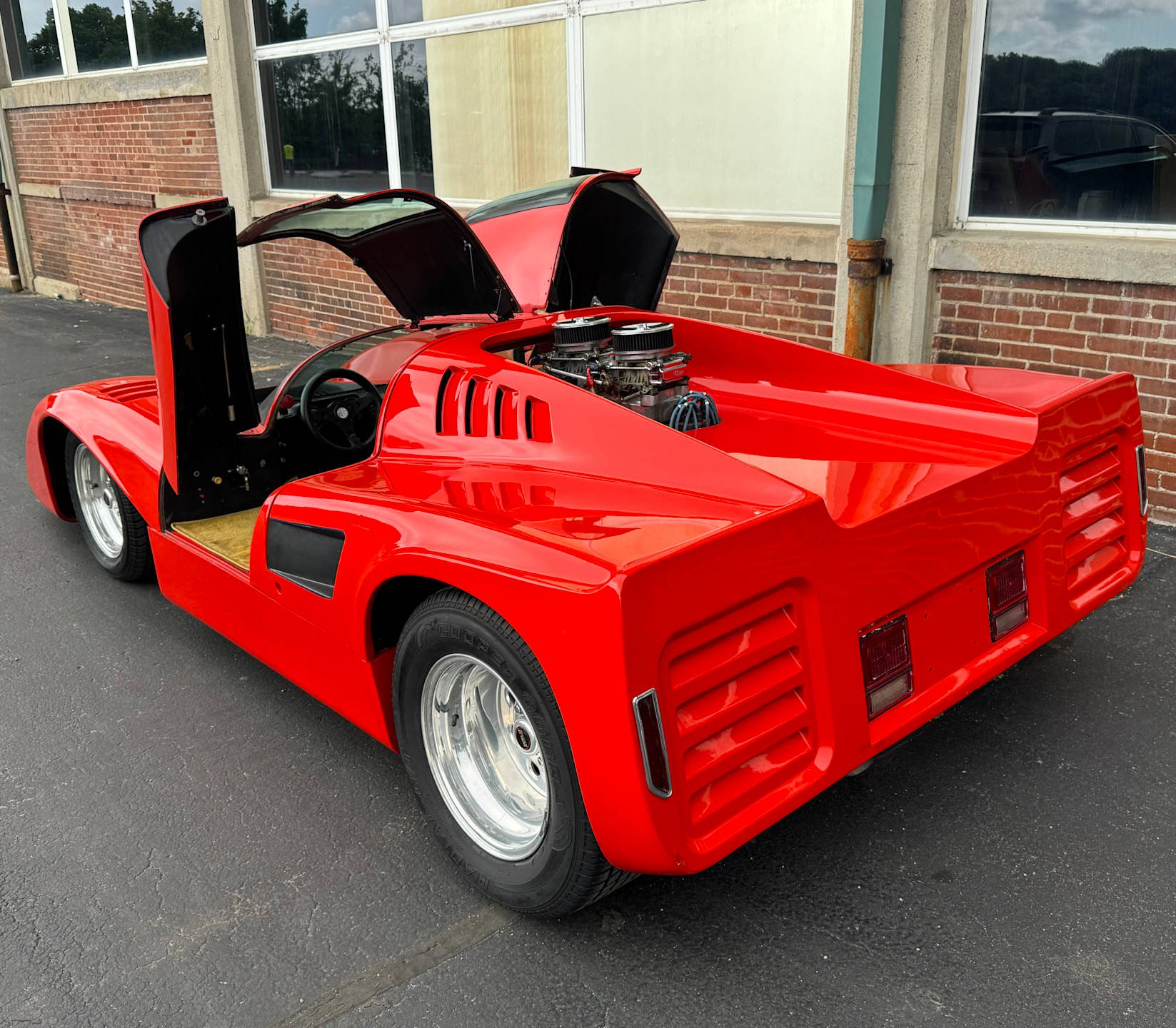
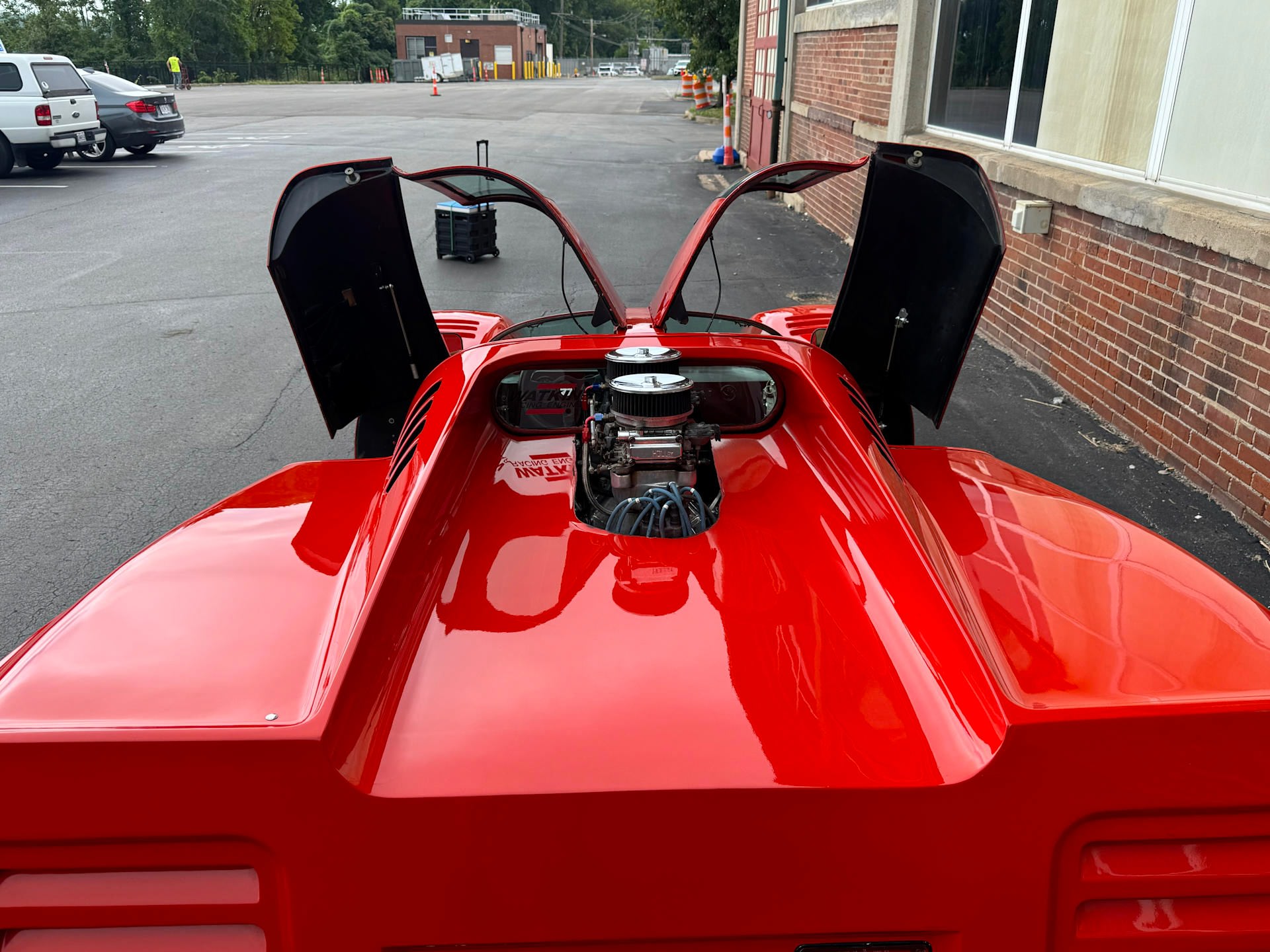
The doors of the Manta Mirage came in two parts, the lower sections flipping forward for entry and the upper sections opening gullwing-style, and the whole roof panel could be removed when the weather allowed for it.
The Mirage kits shipped from the factory without a drivetrain, builders had to choose their own engines, most fitted the 327 cubic inch (5.4 liter) or 350 cubic inch (5.7 liter) Chevrolet small block V8, while a handful went further still, installing the 454 cubic inch (7.4 liter) Chevrolet big block or Ford’s 460 cubic inch (7.5 liter) V8.
Manta also sold complete turn-key cars from the factory, though the vast majority of customers seem to have opted for the kit version.
In November of 1974 the Mirage appeared on the cover of Hot Rod magazine, a huge publicity coup for the company, the story was a three-issue build series with Brad LoVette premised on an ordinary enthusiast completing the car in 80 hours for $5,000 USD – the equivalent to $33,865 USD in 2026.
Manta’s own sales copy called the finished car “a rare thoroughbred in a world of conventional sports cars” and claimed 25 to 28 mpg on the highway, a useful boast in the fuel-crisis years and possibly true when you consider the low weight and excellent aero of the car.
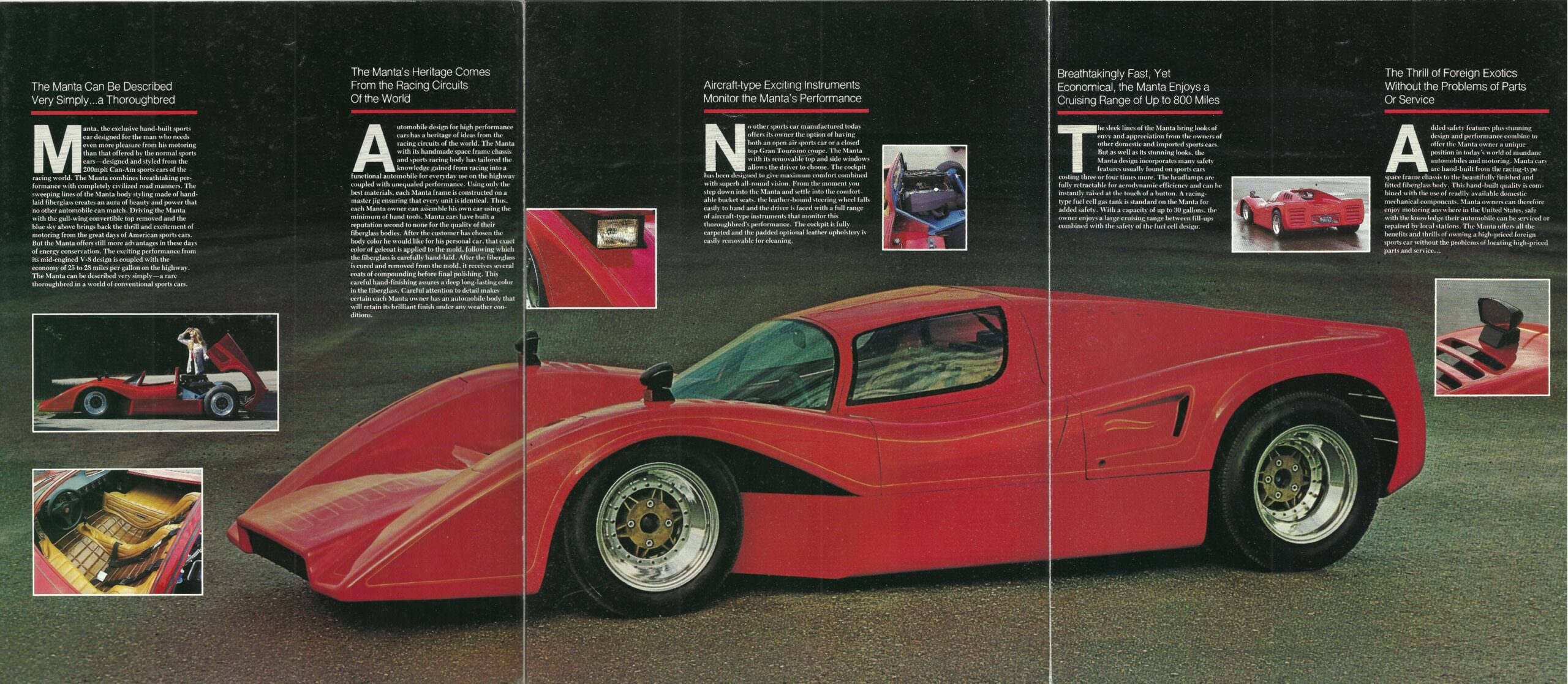
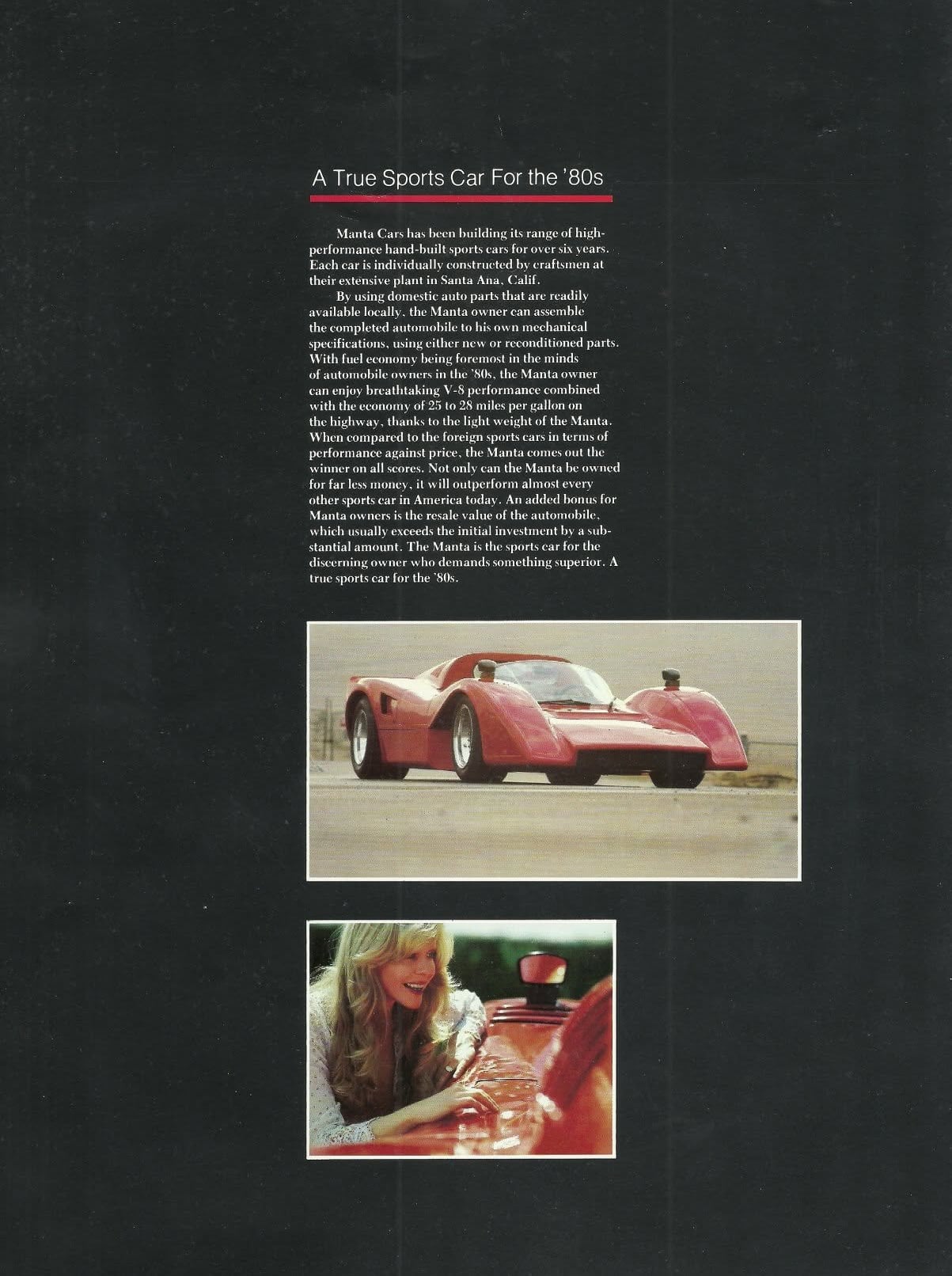
Mirage kits shipped from the factory without a drivetrain, builders had to choose their own engines, most fitted the 327 cubic inch (5.4 liter) or 350 cubic inch (5.7 liter) Chevrolet small block V8. Image courtesy of Manta Cars.
The Montage + Montage-T
The Manta Montage followed about two years after the Mirage as the affordable entry point into the range. It was a closed coupe shaped after the McLaren M6GT, the road car Bruce McLaren was developing at his death in 1970, and it bolted to a Volkswagen Beetle floorpan, with air-cooled flat-fours including the VW Type 4 unit from the Porsche 914 providing power.
This car was considerably slower of course, but it could also be built for far less money, as secondhand Beetles were incredibly cheap at the time, and parts availability was excellent.
The later Montage-T model dispensed with the VW pan in favor of a custom steel spaceframe, it moved the engine amidships for improved handling, and was designed around the 2.8 liter V6 drivetrain from GM’s X-body cars like the Chevrolet Citation.
Manta did also build a prototype of a 1955 Corvette reproduction which was intended as a fourth model, but it never reached production, and only one was ever made. The company, by then operating from Santa Ana, is generally reported to have closed in 1986 after selling about 1,000 kits and factory-built cars across all models.
The Mantas Go To Hollywood
The Mirage was put to work in Hollywood almost immediately. H.B. Halicki’s 1974 film Gone in 60 Seconds, the original not the 2000 remake with Nicolas Cage and Angelina Jolie, had a Mirage with MANTA lettered on its flanks among the 48 cars on the thieves’ shopping list, and one also turns up in Halicki’s 1983 follow-up film Deadline Auto Theft.
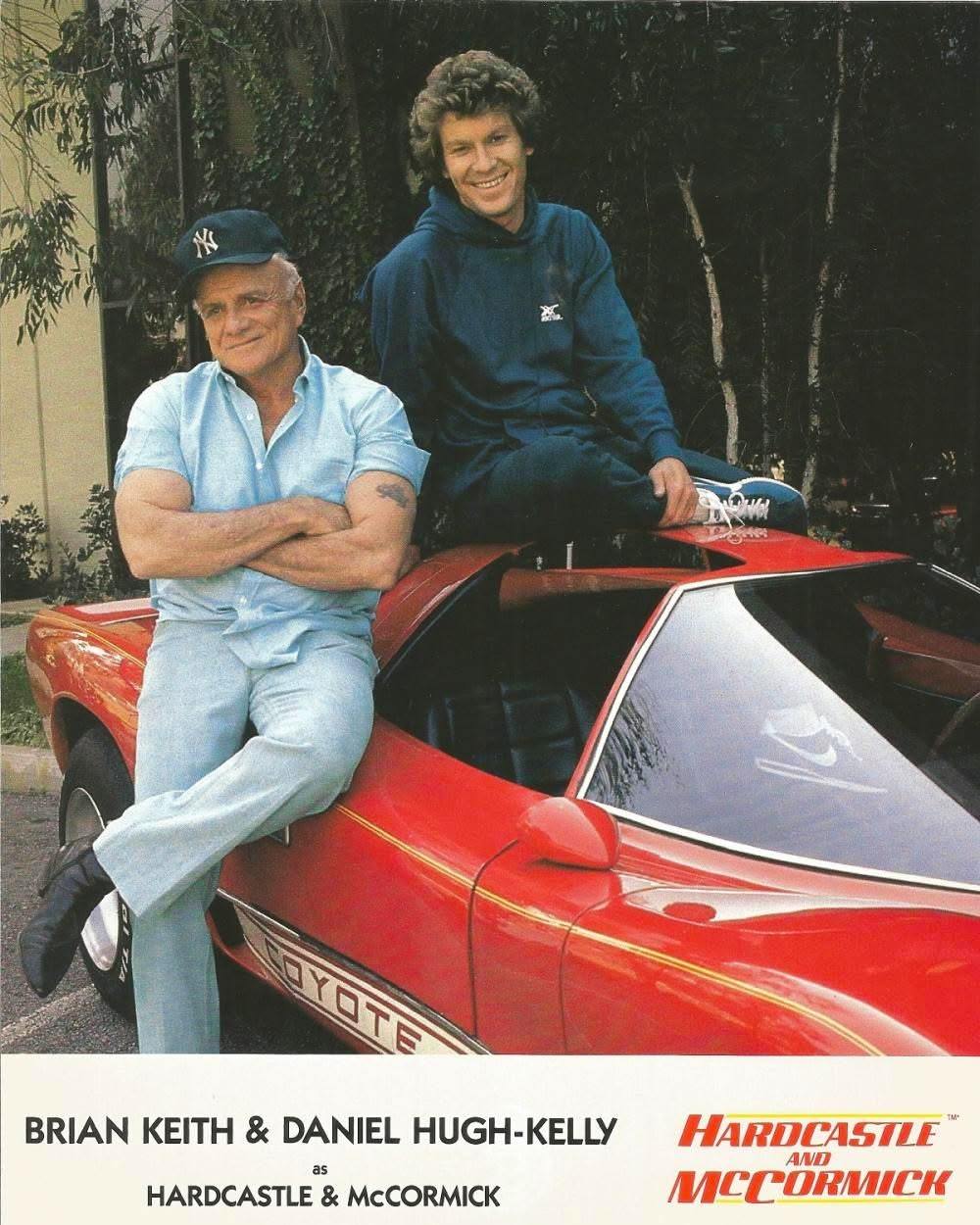
The “Coyote X” car, driven by Daniel Hugh Kelly through three seasons of ABC’s popular TV series Hardcastle and McCormick from 1983 to 1986, started out as a modified Manta Montage. Image courtesy of ABC.
The company’s biggest screen moment came secondhand. The “Coyote X” car, driven by Daniel Hugh Kelly through three seasons of ABC’s popular TV series Hardcastle and McCormick from 1983 to 1986, started out as a modified Manta Montage with a VW-pan, a Porsche 914 engine, and a dubbed-in exhaust note. It was built for the show by Mike Fennel and Unique Movie Cars.
For seasons two and three the show introduced a DeLorean-based Coyote as its principal car as the actor Brian Keith (who played Hardcastle) had trouble getting in and out of the much lower Montage. The shape on screen was still the shape in Manta’s catalog however, and the association only helped fuel Montage kit car sales.
A Montage also appears briefly in the 1991 horror comedy Highway to Hell, and a Mirage was modified on the Counting Cars episode “Red, Hot and Dangerous.” The armored racers in Death Race 2000 (1975) were movie customs based on Manta Mirages and built by Dick Dean on inexpensive Volkswagen and Corvair underpinnings.
The 1980 Manta Mirage Shown Here
This is a 1980 Manta Mirage, it’s finished in red with black accents and it has a tan interior. As you would expect, it has a tubular steel spaceframe chassis with a lightweight fiberglass body over the top – the body styling being closely inspired by the earlier McLaren M8B Can Am race car.
Power comes from a Chevrolet 350 cubic inch (5.7 liter) V8 fitted with a tunnel-ram intake and dual four-barrel carburetors, with exhaust gases exiting through tubular headers on each side. The engine is paired with a 4-speed manual transaxle.
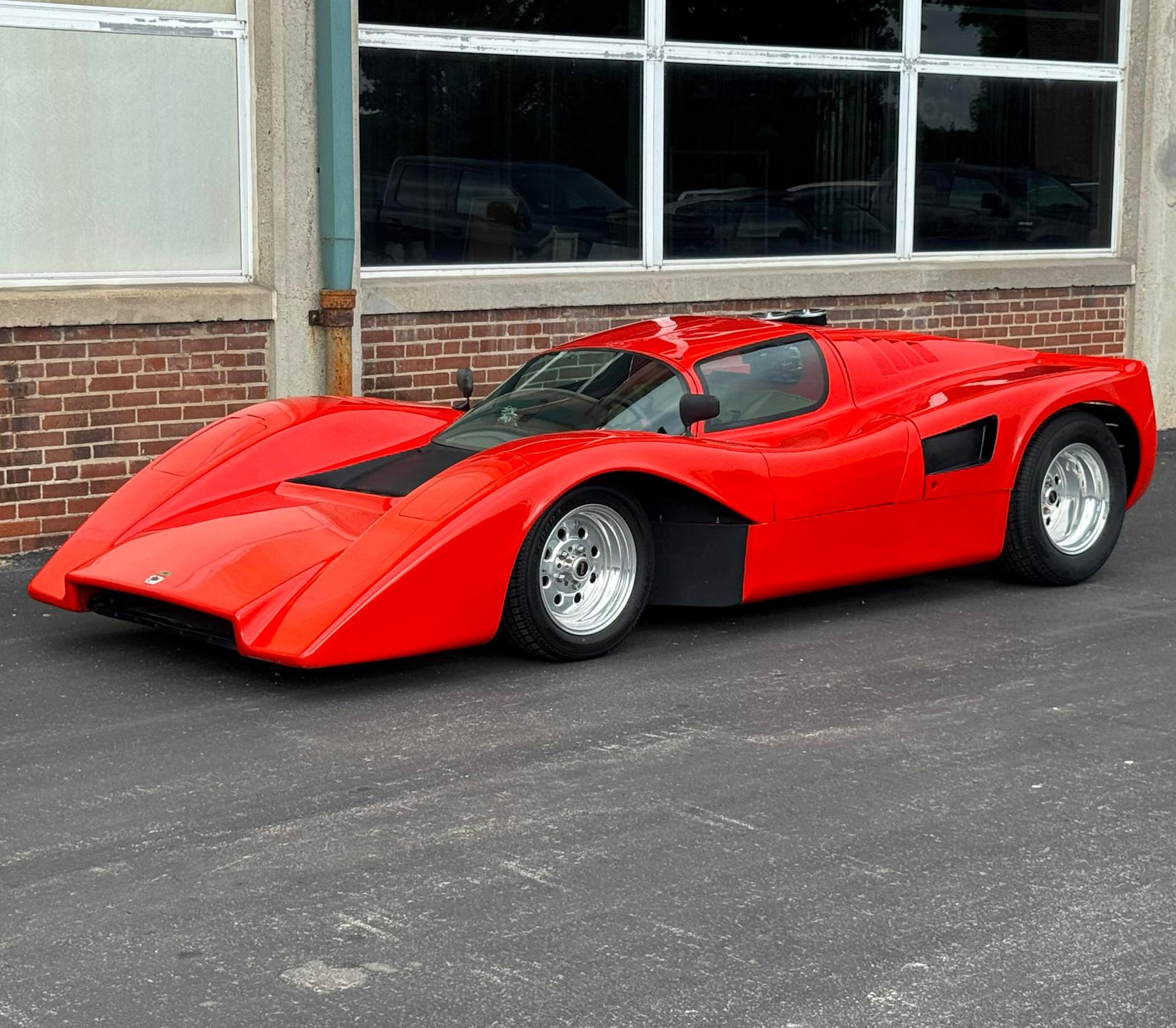
This car is powered by a Chevrolet 350 cubic inch (5.7 liter) V8 fitted with a tunnel-ram intake and dual four-barrel carburetors, with exhaust gases exiting through tubular headers on each side. The engine is paired with a 4-speed manual transaxle.
Inside, the car is fitted with VDO instrumentation and a Grant steering wheel, and it rides on Weld Racing aluminum wheels. Given the low curb weight of the Mirage and the excellent power output that can be achieved from a small block Chevy V8, this thing looks like it could be a veritable rocket ship in the right hands.
It’s now due to roll across the auction block with Mecum in late September, you can visit the listing here if you’d like to read more or register to bid.
Images courtesy of Mecum + Manta Cars

Articles that Ben Branch has written have been covered on CNN, Popular Mechanics, Smithsonian Magazine, Road & Track Magazine, the official Pinterest blog, the official eBay Motors blog, BuzzFeed, Autoweek Magazine, Wired Magazine, Autoblog, Gear Patrol, Jalopnik, The Verge, and many more.
Silodrome was founded by Ben back in 2010, in the years since the site has grown to become a world leader in the alternative and vintage motoring sector, with well over a million monthly readers from around the world and many hundreds of thousands of followers on social media.