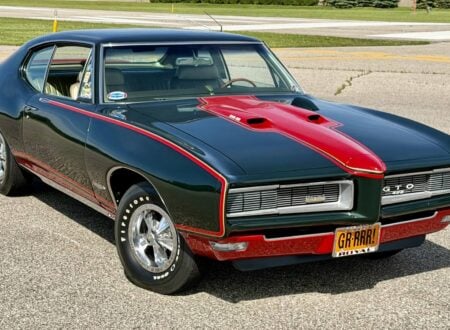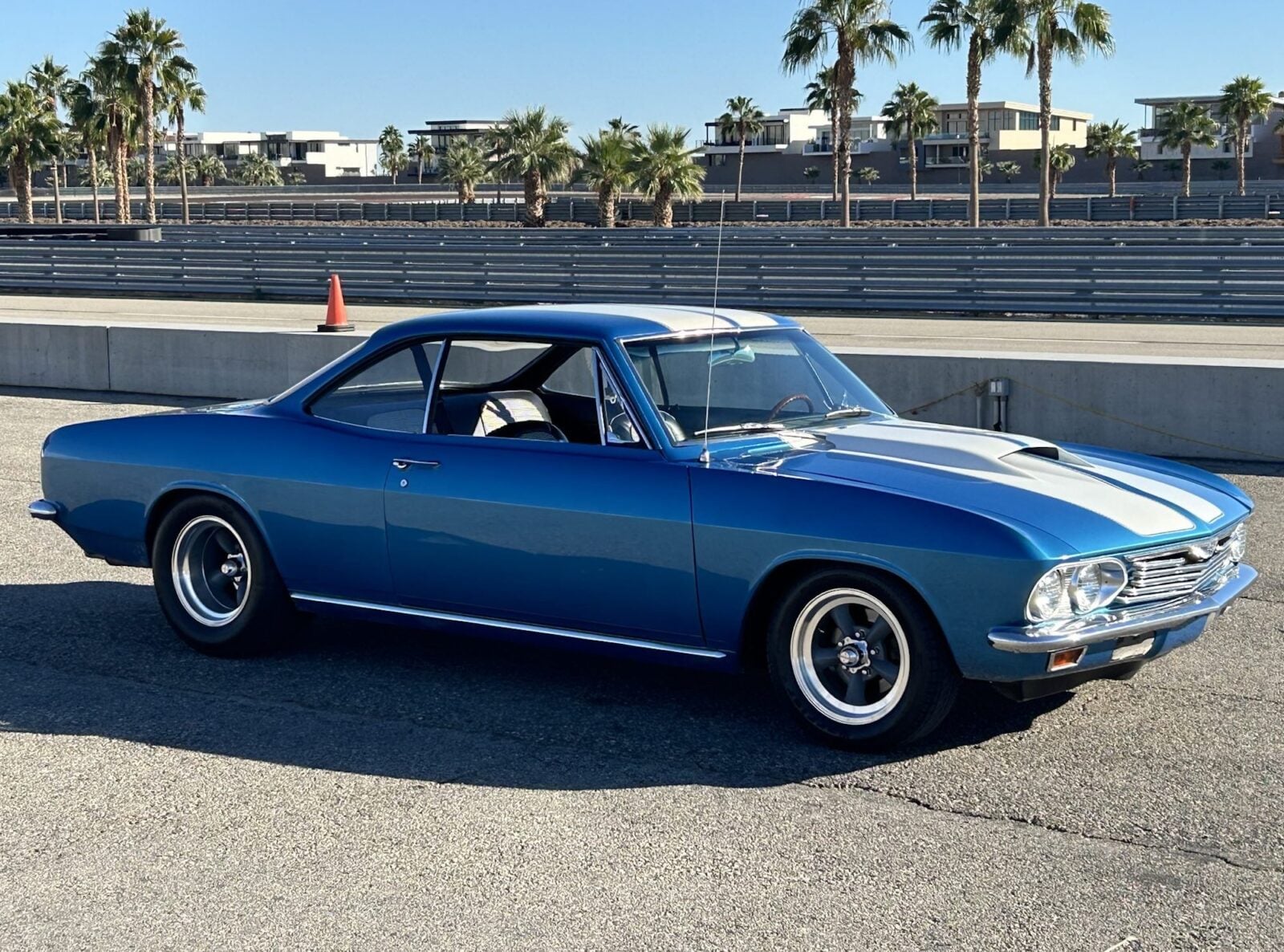
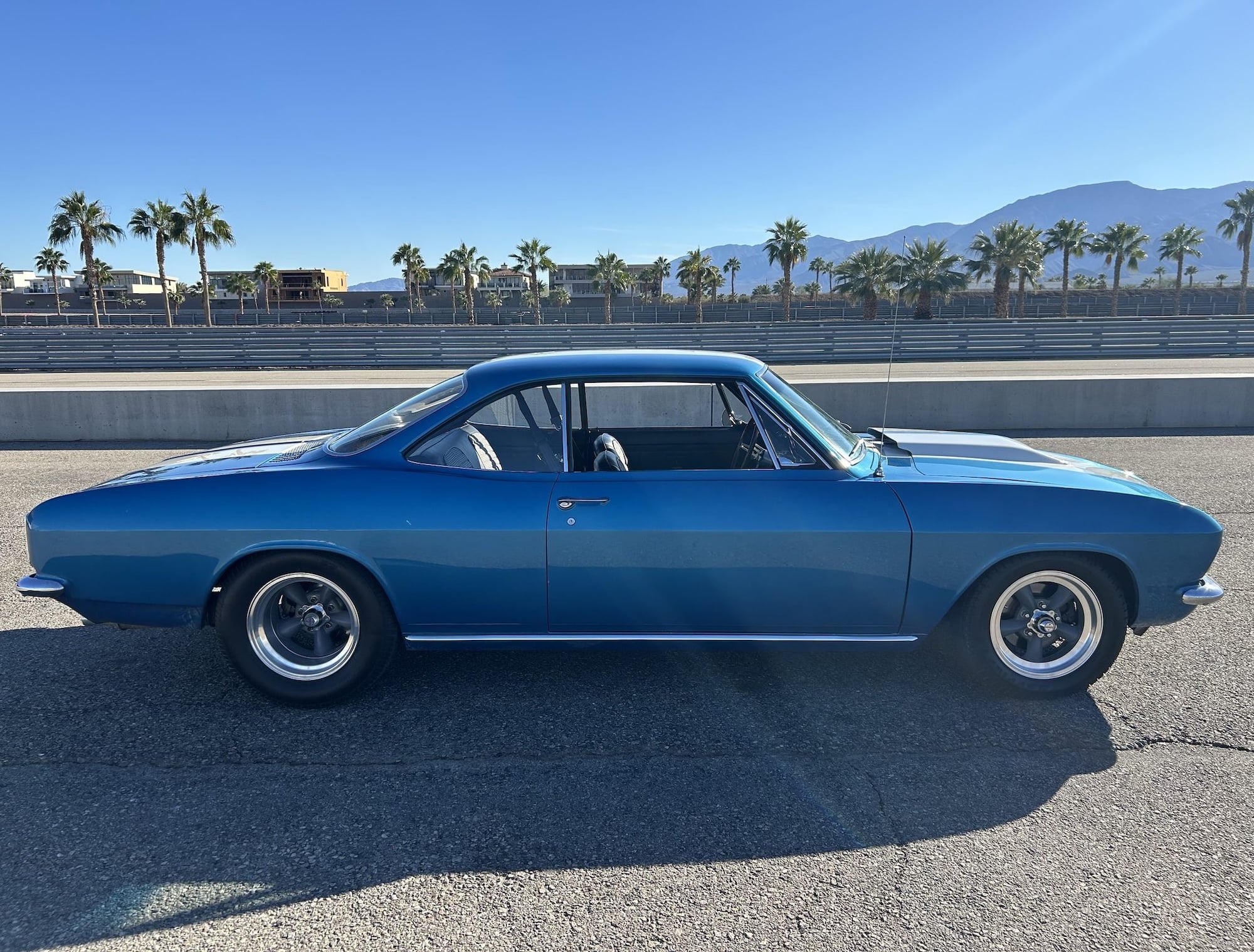
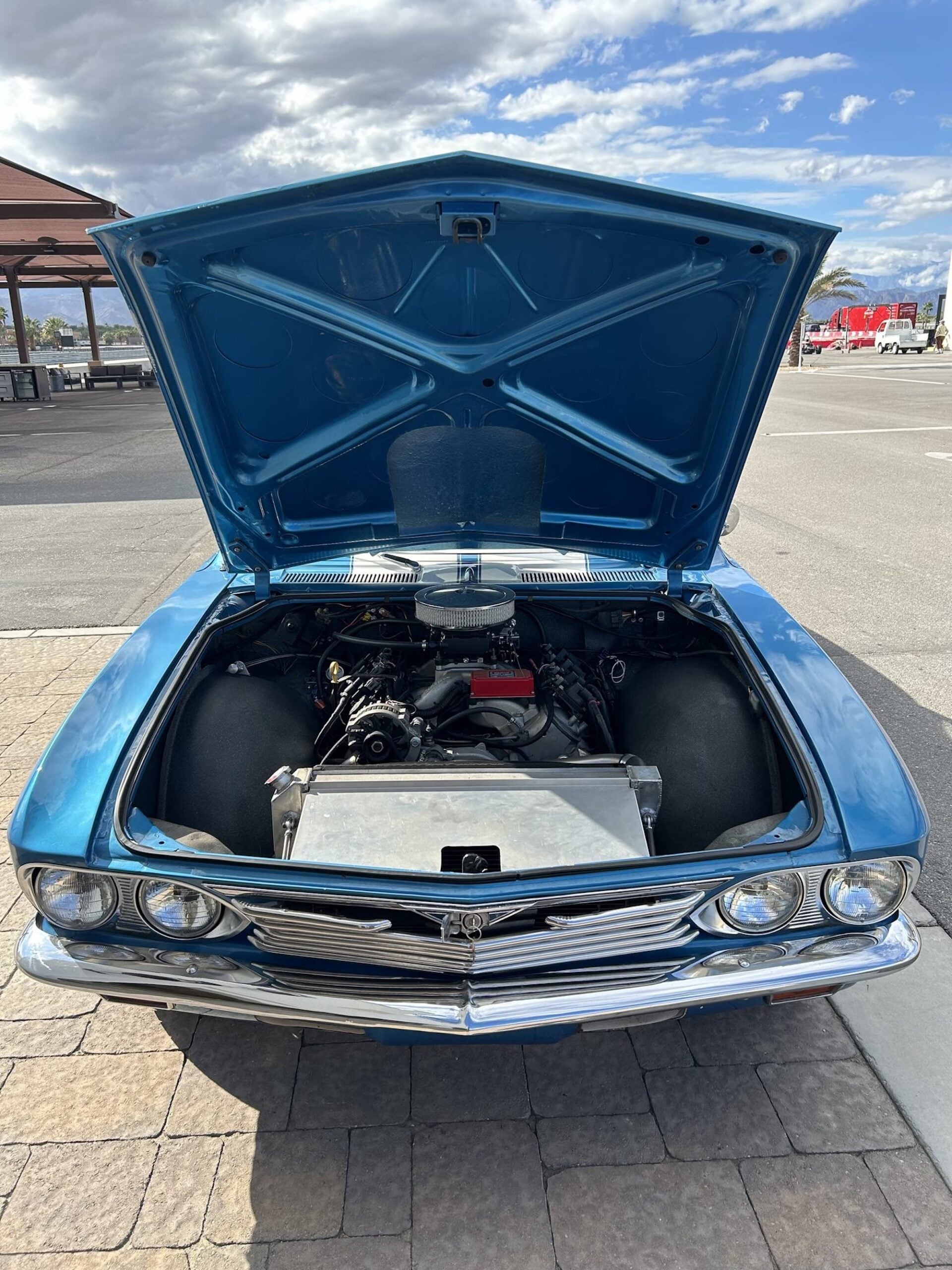
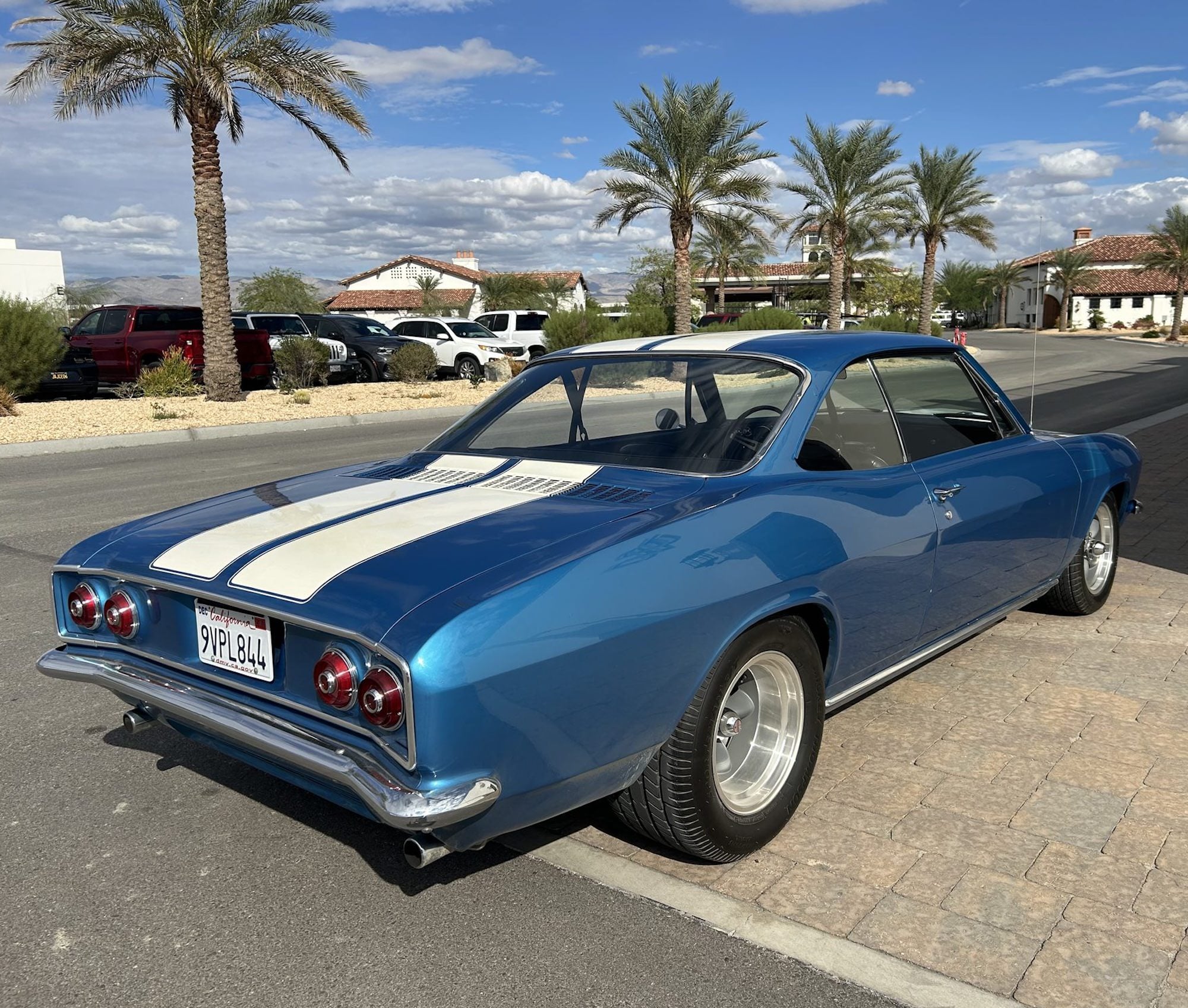
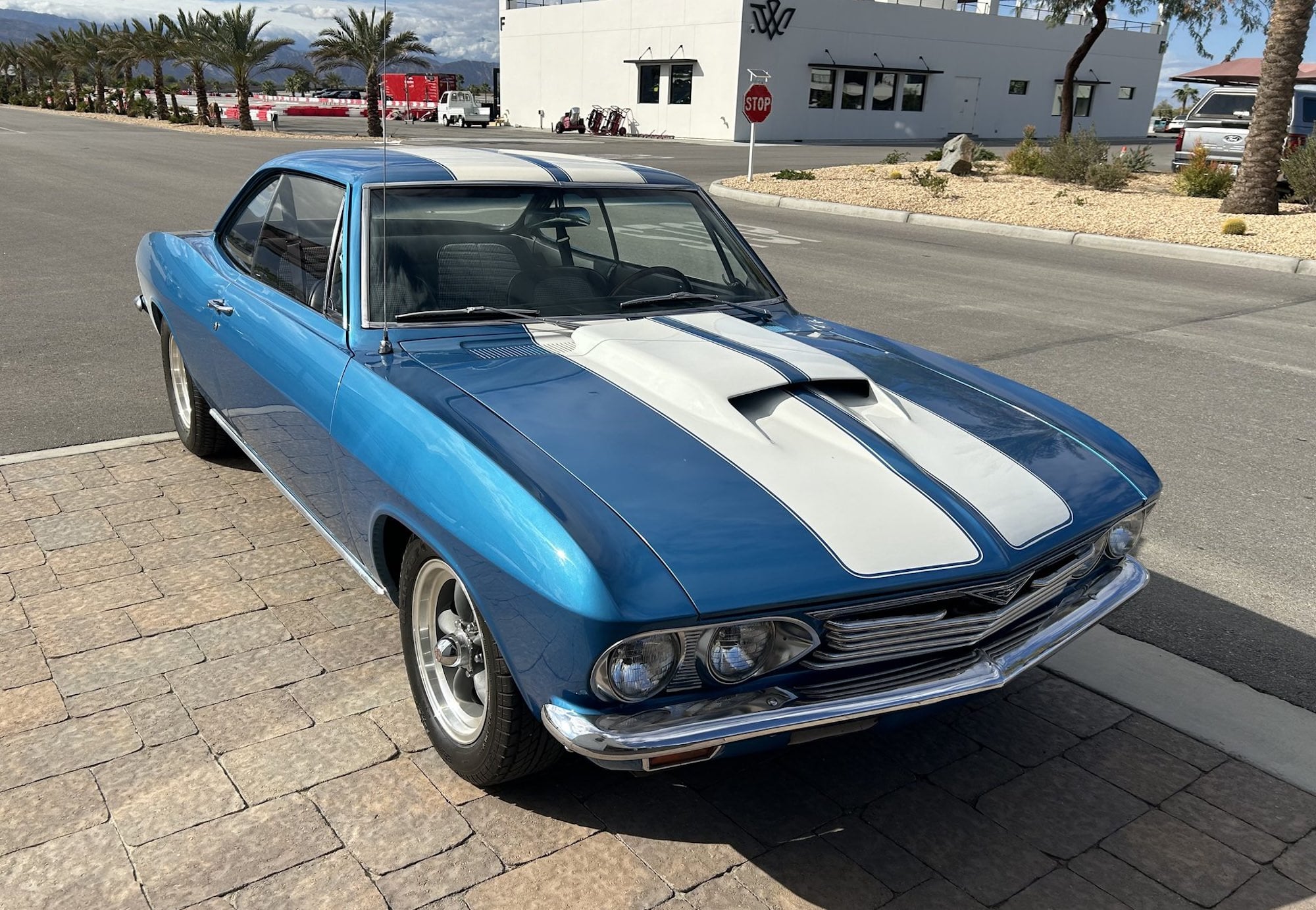
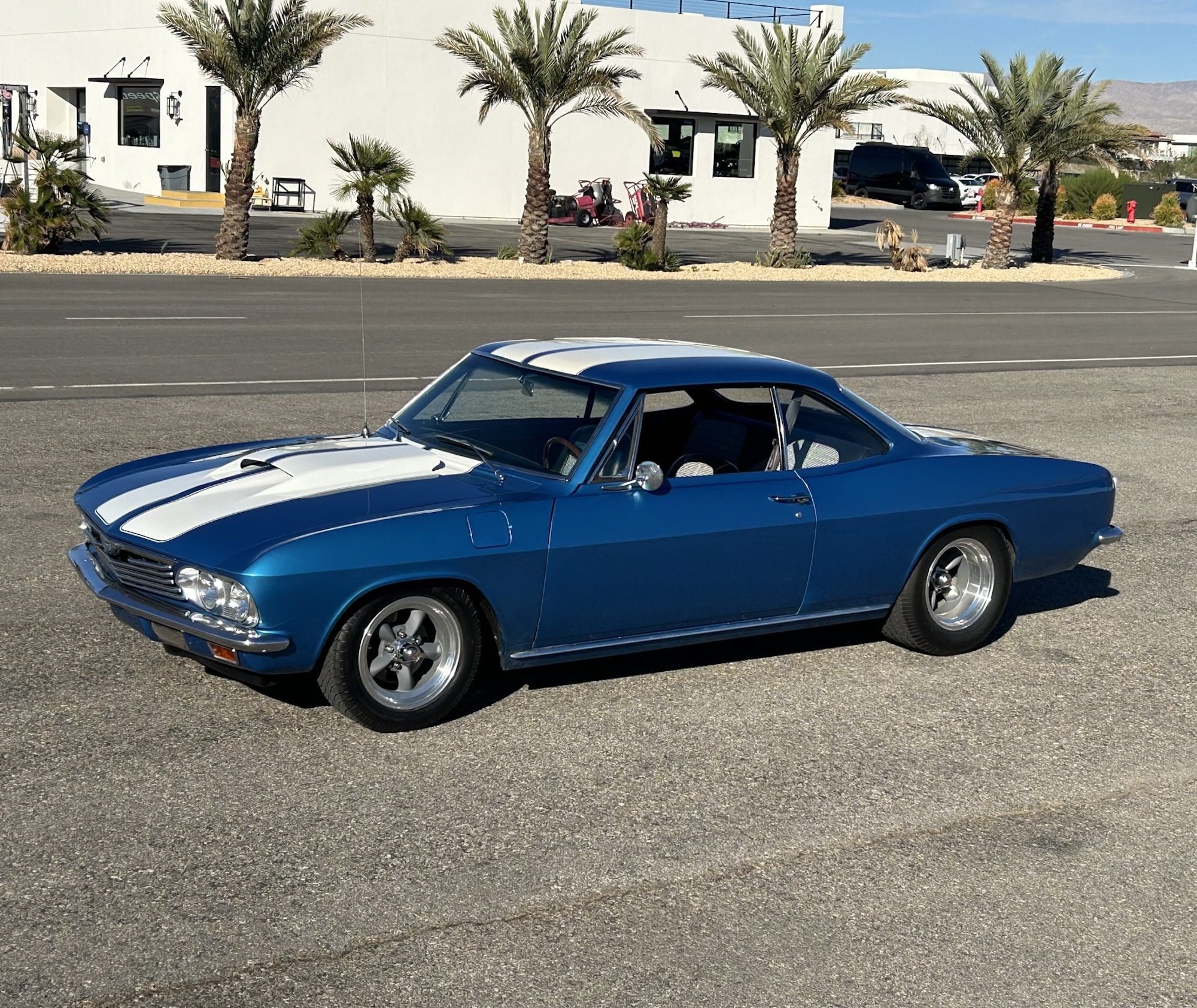
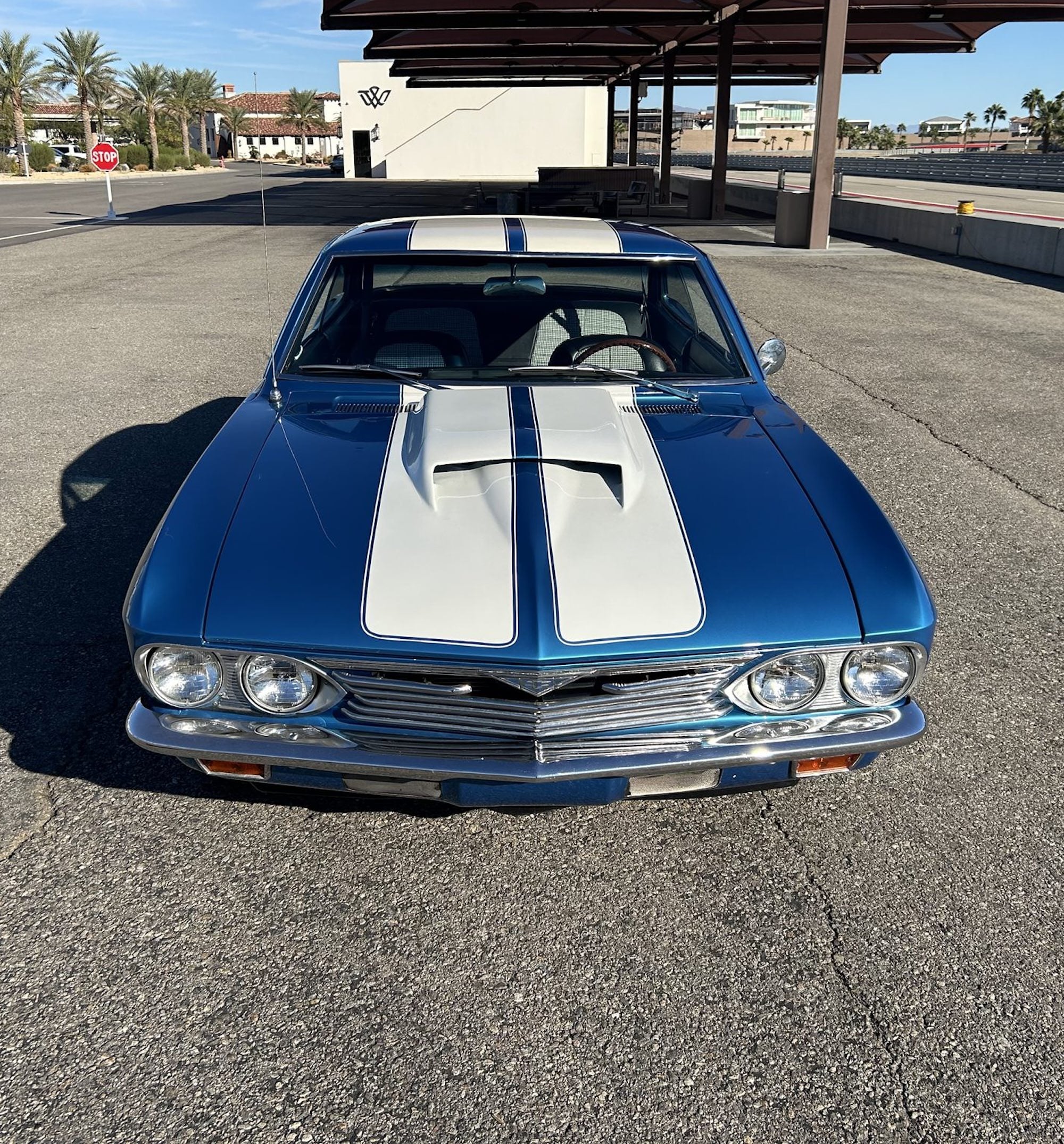
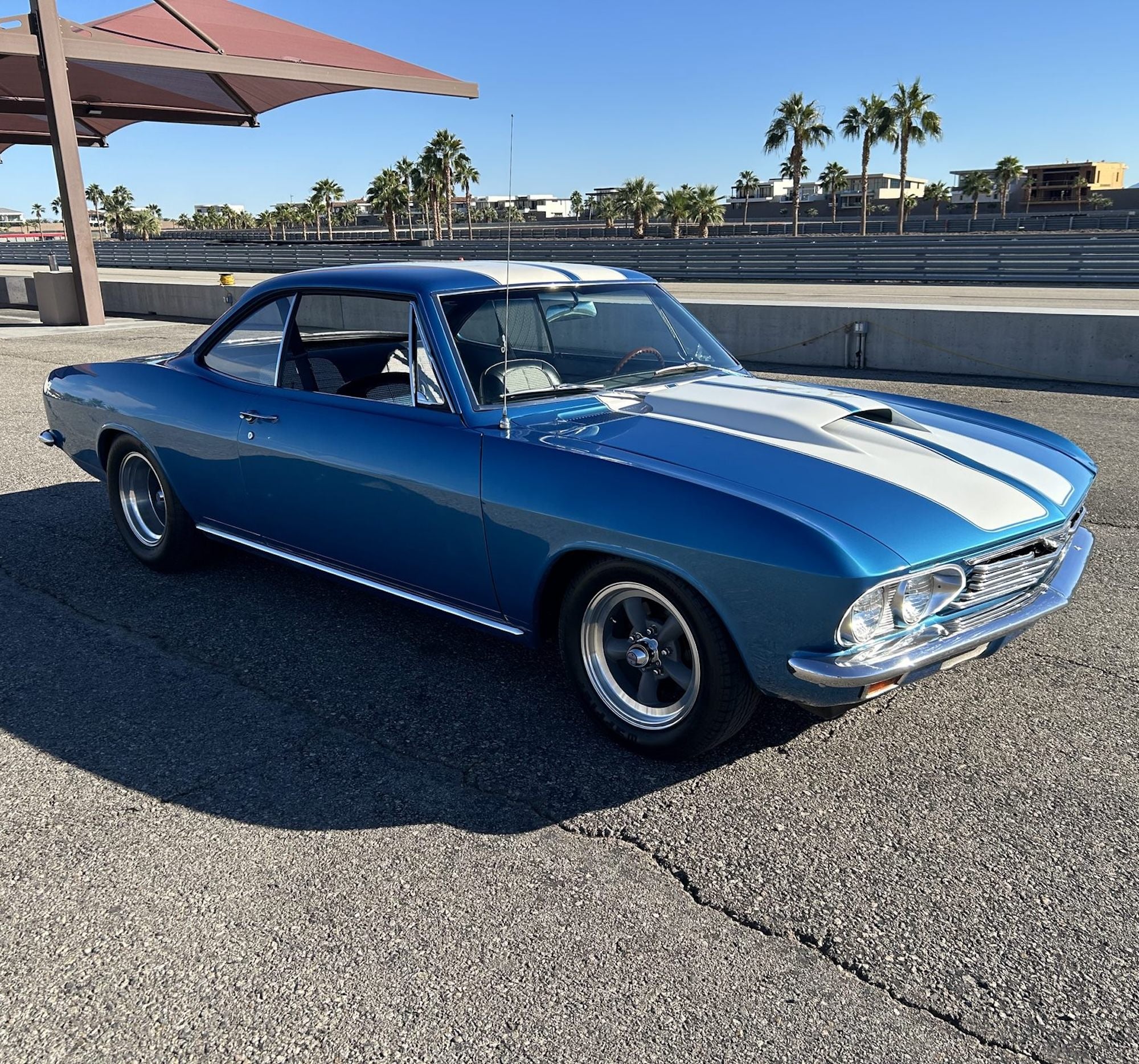
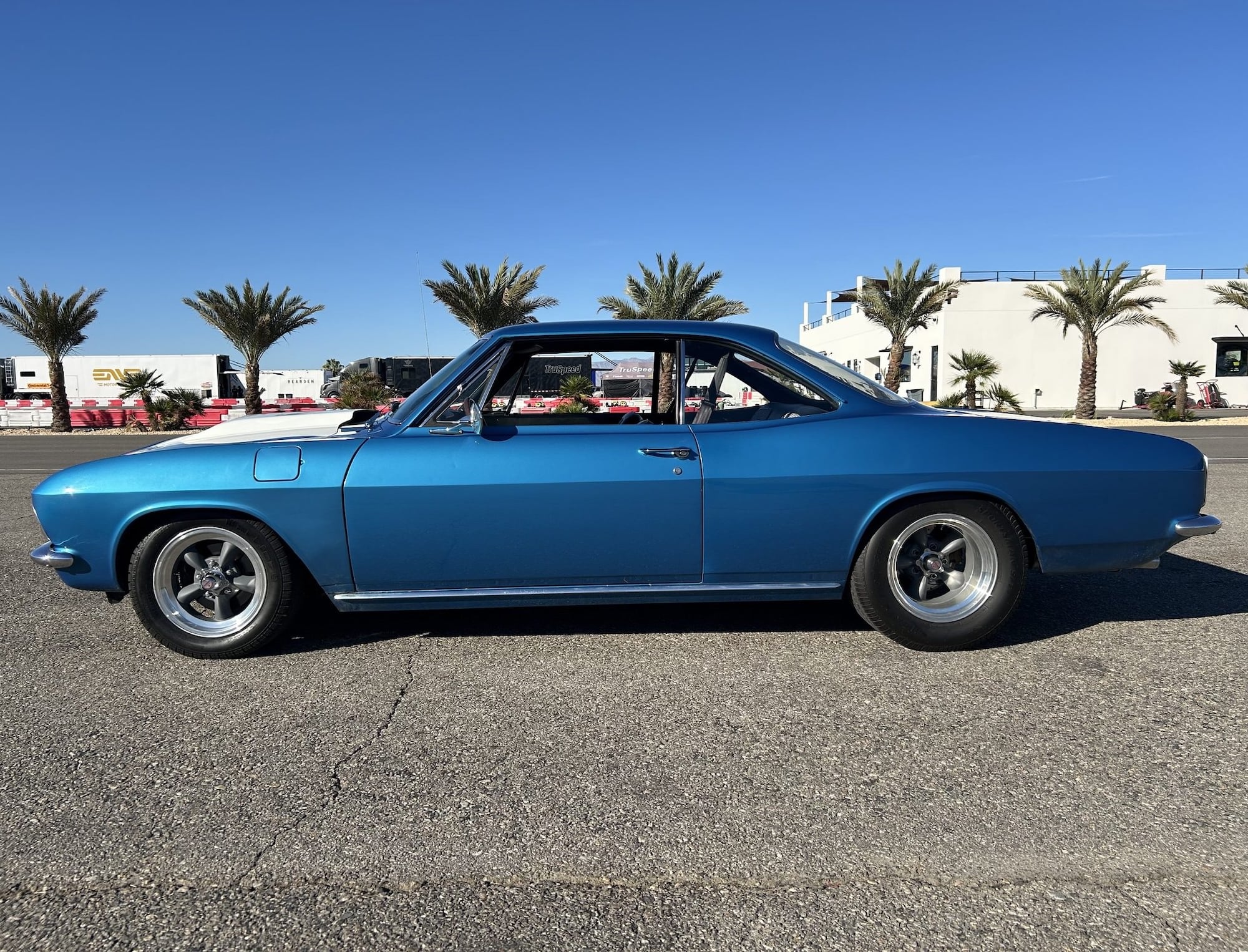
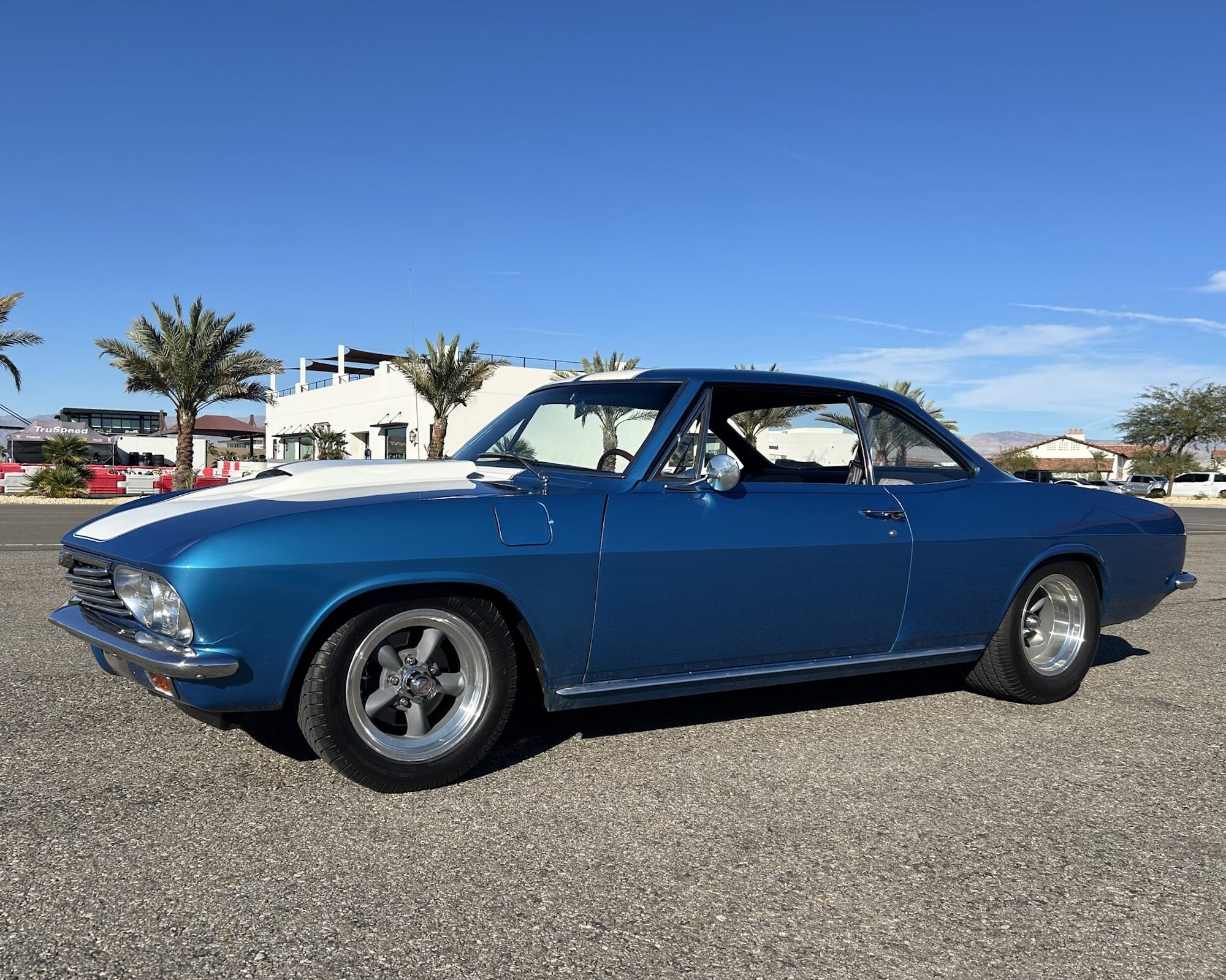
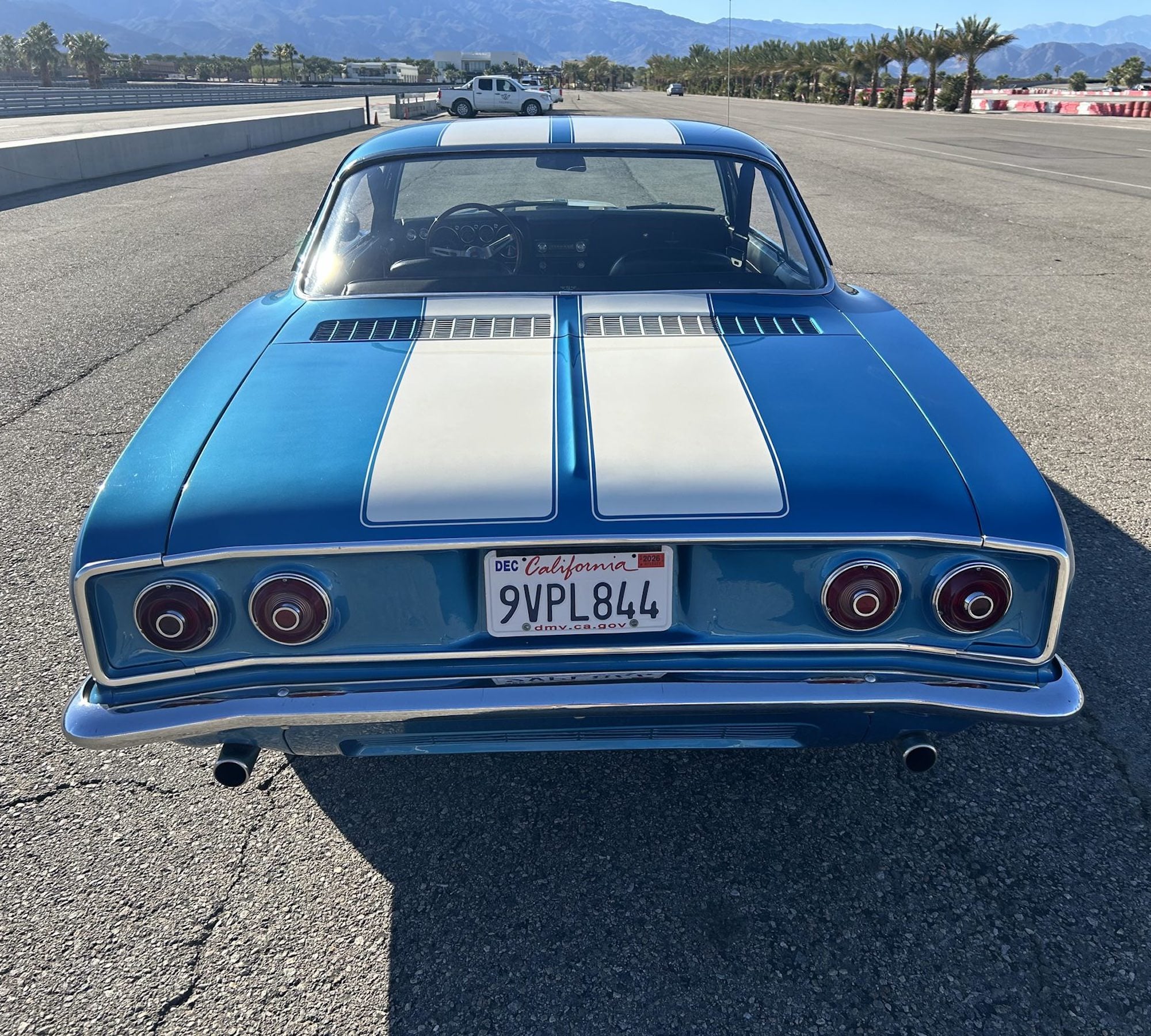
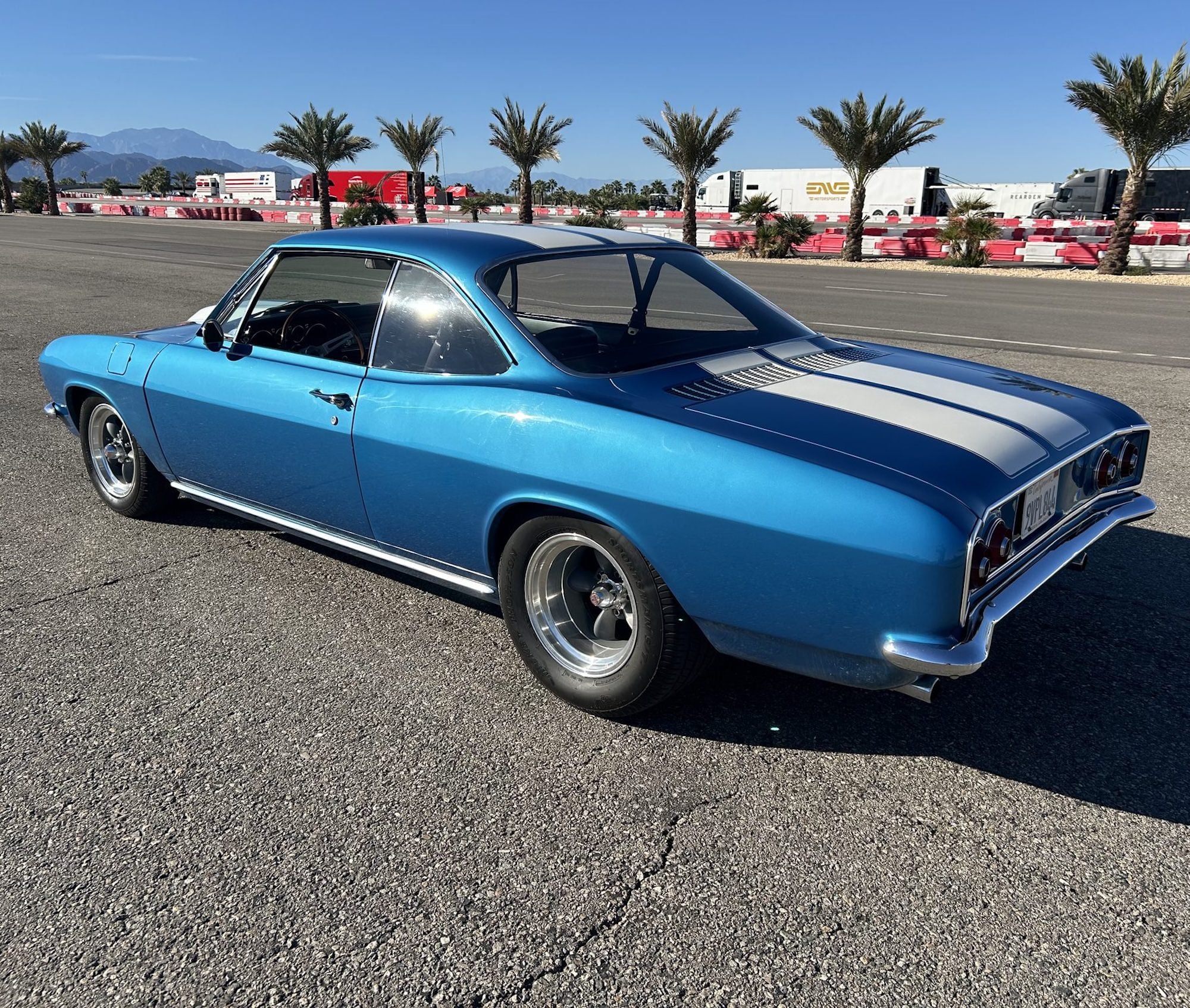
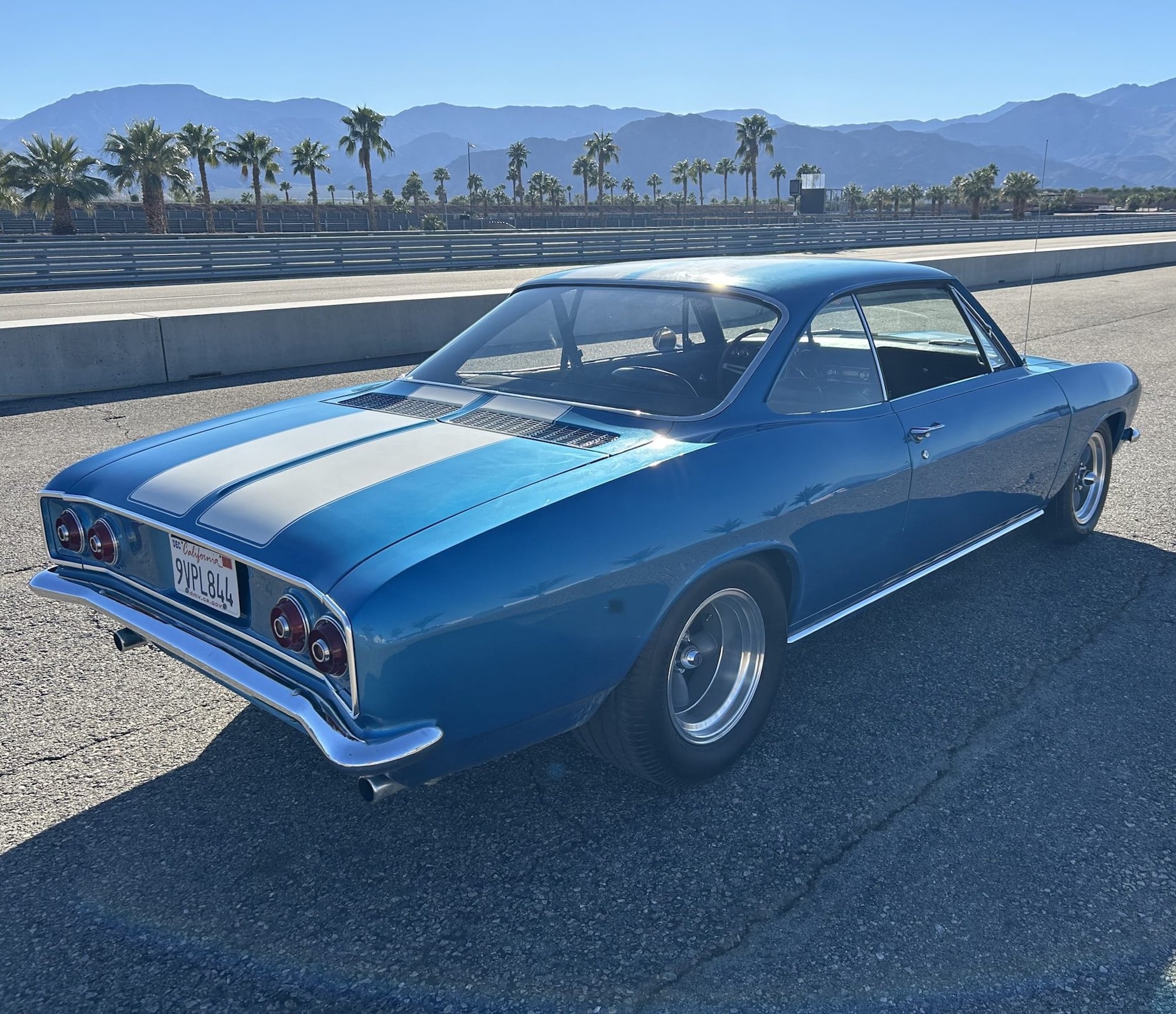
This is a 1966 Chevrolet Corvair Monza coupe, but unlike all of the others that we’ve featured over the years, it’s powered by a front-mounted V8 rather than a rear-mounted flat-six.
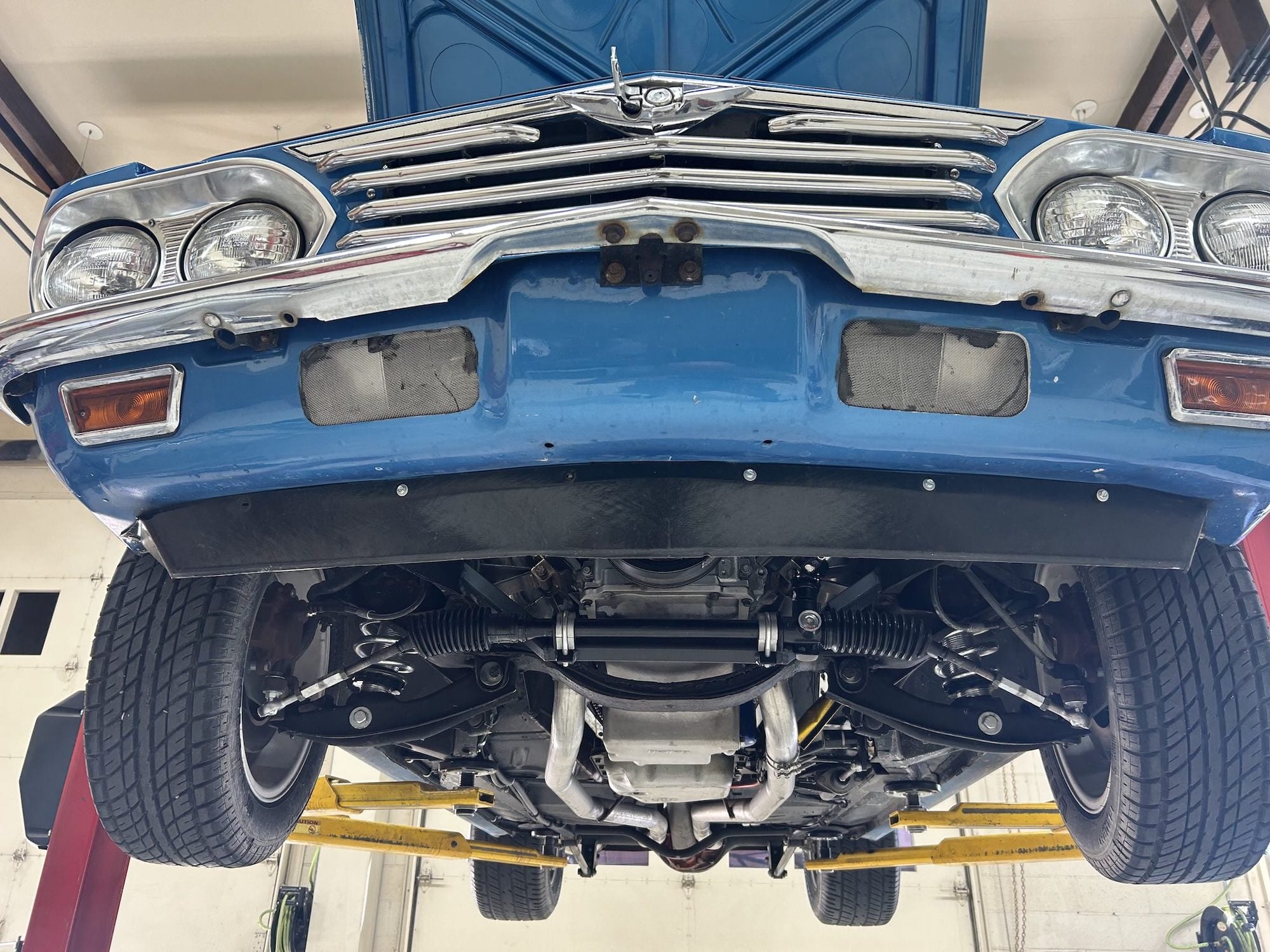
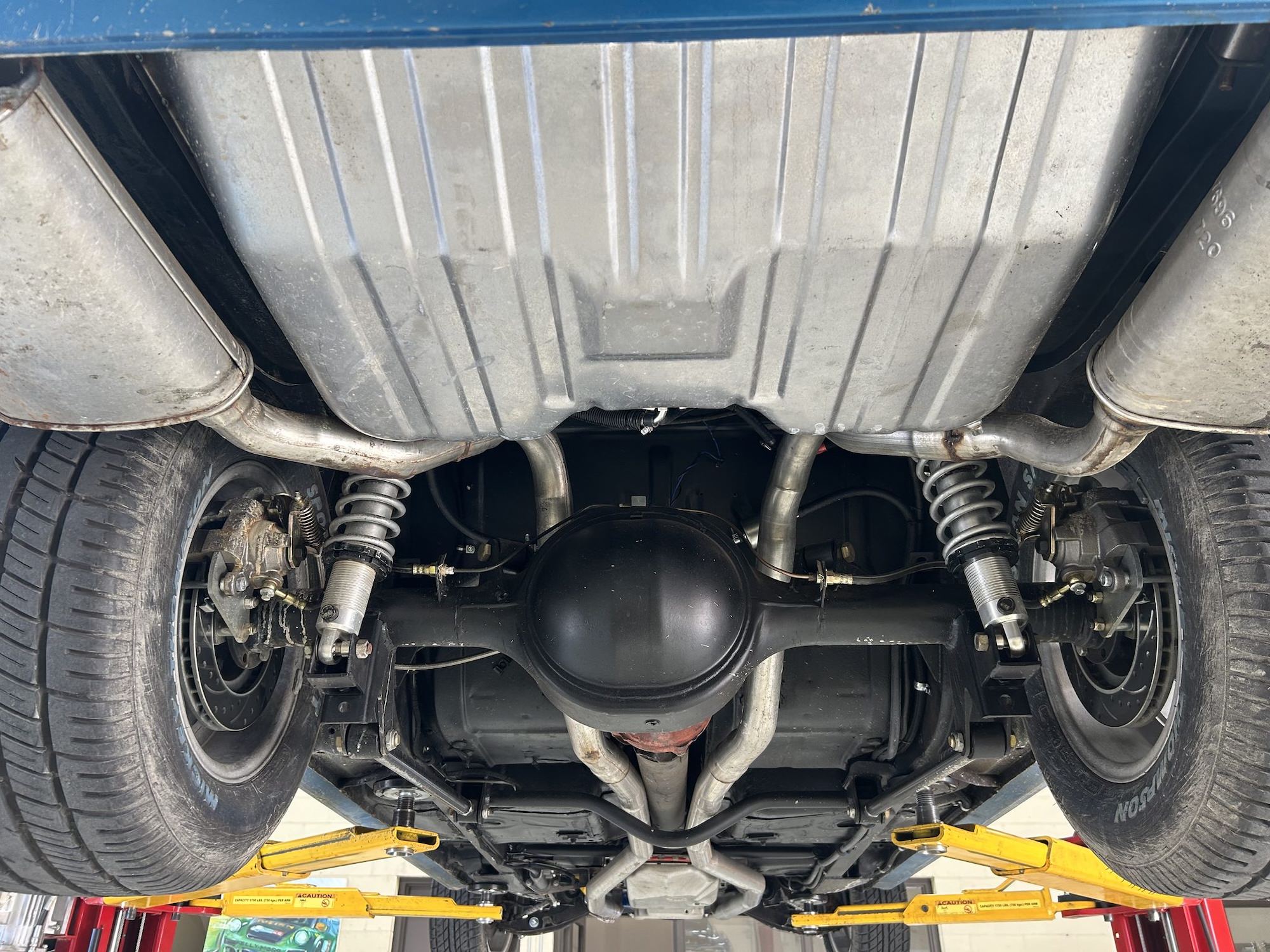
Exactly why this car was modified in this way isn’t mentioned, but it clearly took an extraordinary amount of work. It now has a reinforced steel frame and a 6.0 liter LQ9 V8 up front that sends power back through a 4L80E 4-speed transmission to a Detroit Locker rear diff.
Fast Facts: A Front-Engined 1966 Chevrolet Corvair Monza
- The Chevrolet Corvair debuted in October of 1959 with an unconventional rear-mounted, air-cooled flat-six engine, making it markedly different from other American compact cars. Developed under Ed Cole, it won Motor Trend’s 1960 Car of the Year award, and the sportier Monza coupe followed in 1960, becoming a particularly popular variant.
- Early Corvairs became controversial because of their swing-axle rear suspension and associated handling/safety concerns. Chevrolet introduced suspension revisions in 1964, followed by a completely redesigned second generation in 1965 with an improved independent rear suspension system. Production ended in 1969 due to low sales.
- This 1966 Chevrolet Corvair Monza has been extensively modified with a front-mounted 6.0 liter LQ9 V8, replacing the original rear-mounted flat-six. The engine has ported cylinder heads, a GM Hot Cam, and Holley Sniper fuel injection. Power reaches the rear wheels through a 4L80E 4-speed automatic transmission and Detroit Locker differential.
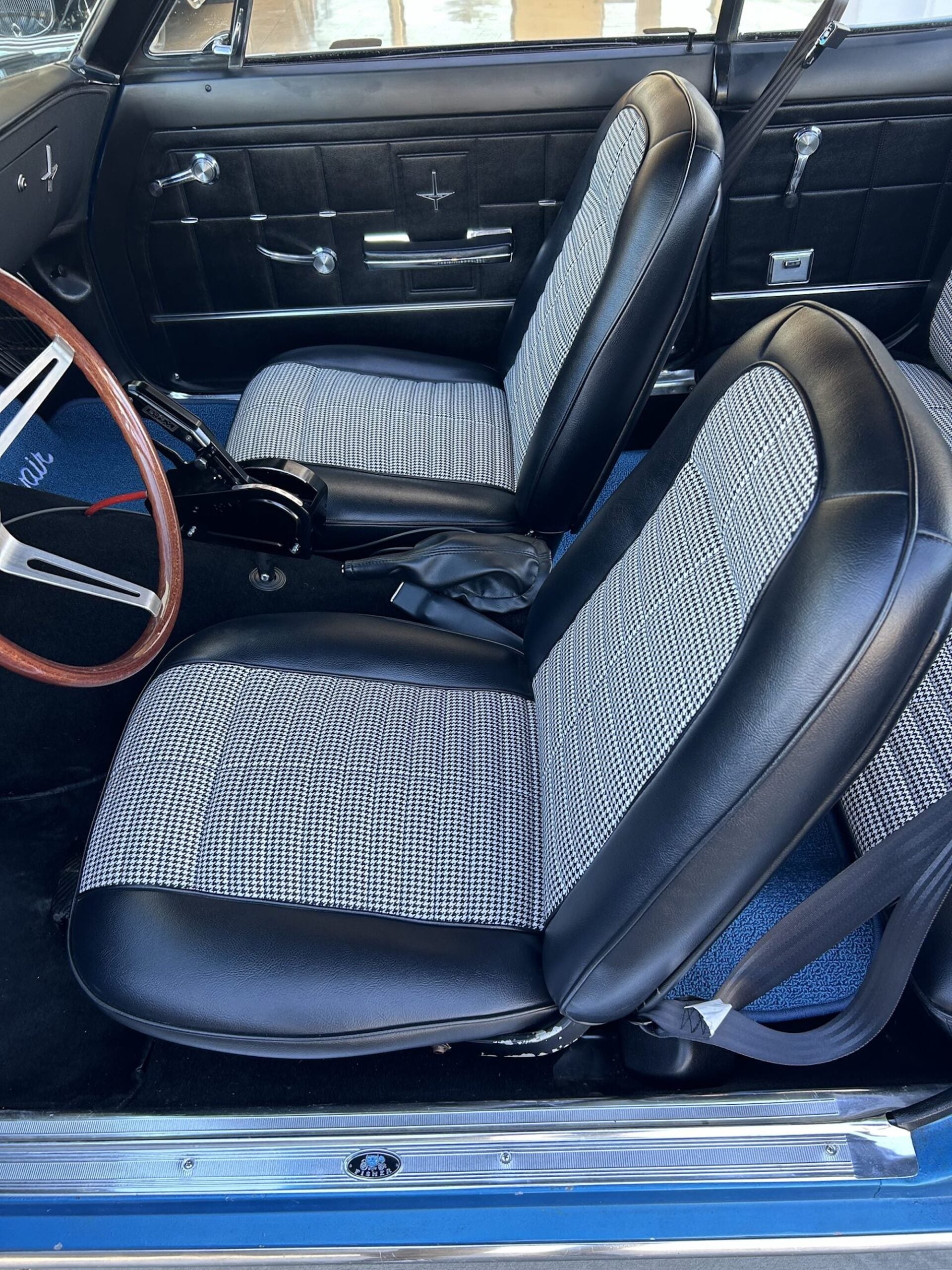
- The conversion required a custom frame made from 2×3 inch steel rails, four-link rear suspension, coilovers, rack-and-pinion steering, and four-wheel disc brakes. Finished in blue with white racing stripes, the car has a raised hood scoop, American Racing wheels, and Camaro bucket seats. It’s now offered for sale in Thermal, California.
History Speedrun: The Chevrolet Corvair
After World War II, Cadillac assigned engineer Ed Cole, who’d worked on tank engines during the war, to build an experimental rear-engined Cadillac. It had its engine where the back seat would normally be and it rode on dual rear tires. During the icy winter of 1945-1946, Cole’s neighbors’ cars skidded around on their driveways while his pulled away cleanly, it persuaded him that a rear engine gave better traction and handling on slippery roads, because the weight of the engine and transmission was over the driven wheels.
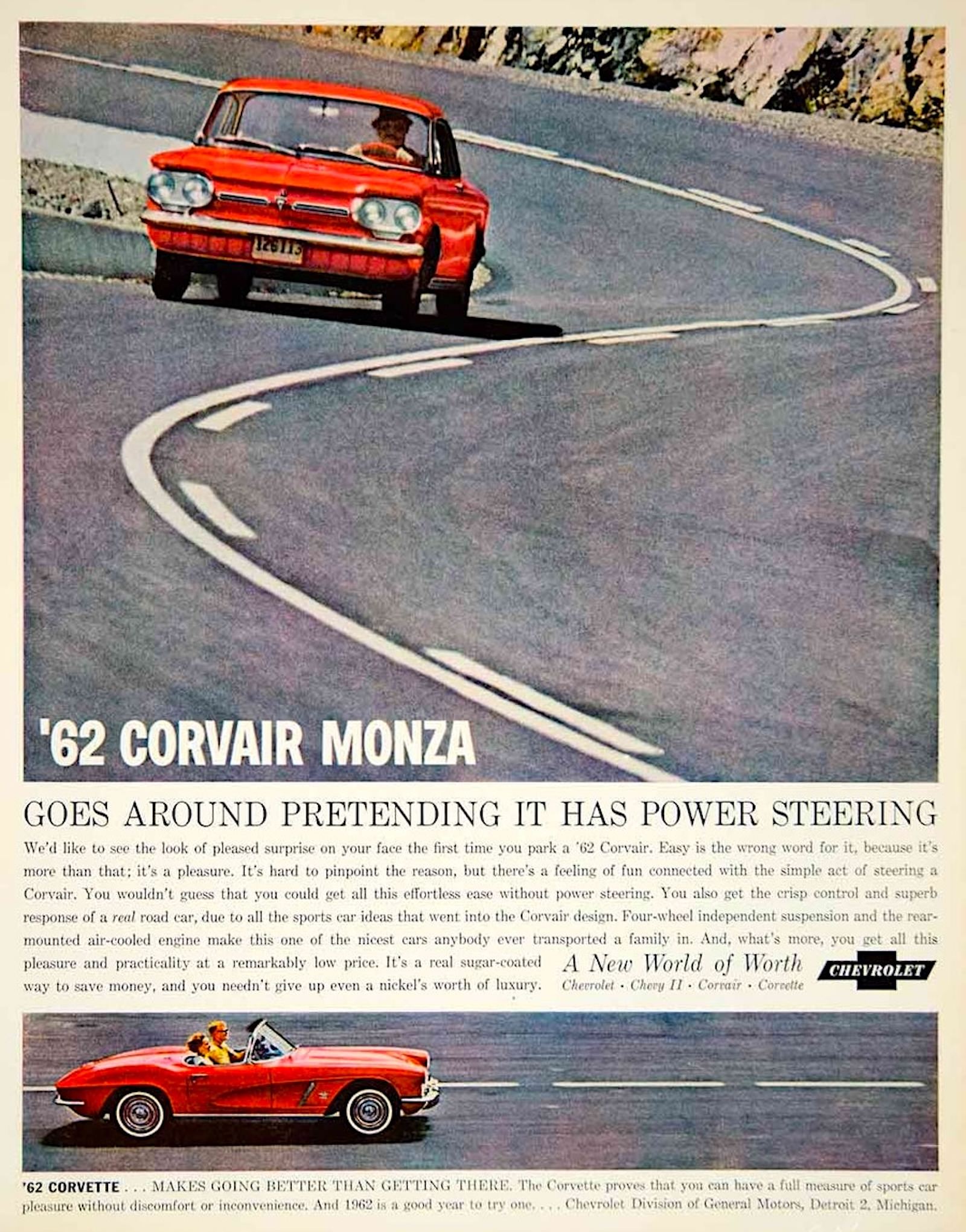
 The Chevrolet Corvair went on sale on October the 2nd, 1959, as a four-door sedan priced from $2,038 USD – around $23,600 USD in 2026 dollars. Image courtesy of General Motors.
Cole became Chevrolet’s Chief Engineer in 1952 and began working on a small rear-engined car in secret. He was named Chevrolet’s General Manager in July of 1956, and in September of 1957 he showed GM President Harlow Curtice a full-size clay model – the project cleared GM’s board in December of that same year.
Chevrolet Engineering had bought a Porsche 356 coupe in the early summer of 1957. Its engine went onto a dynamometer for cooling tests, and the car then received the first Corvair drivetrain to act as a test mule. Cole drove it at GM’s Milford Proving Ground in late 1957 and at Pikes Peak in early 1958.
To keep the top secret project quiet, tooling was ordered for a “Holden,” borrowing the name of GM’s Australian subsidiary. The production name came from a 1954 Chevrolet show car – the Corvair. Some have since suggested it was chosen for the fact that it joins “Corvette” with “Air,” as the final production car would have an air-cooled engine.
Corvair: Engineering + Launch
The Chevrolet Corvair went on sale on October the 2nd, 1959, as a four-door sedan priced from $2,038 USD – around $23,600 USD in 2026 dollars. It had a welded unit-construction body on a 108 inch wheelbase. The engine was a 140 cubic inch (2.3 liter) air-cooled flat-six built largely of aluminum, with pushrod overhead valves, two single-barrel carburetors, and an 8.0:1 compression ratio. It made 80 bhp gross at 4,400 rpm.
Mounted behind the rear axle, the engine drove through a transaxle with a 3-speed manual or a 2-speed Powerglide automatic, and the layout put nearly 64% of the car’s weight over the rear wheels. The front suspension used wishbones and coil springs, the rear used swing axles with semi-trailing arms and coils. No one knew it at the time of launch, but those swing axles were going to make the Corvair famous in all the wrong ways.
The brakes were 9-inch drums at all four wheels and the recirculating-ball steering was slow but light, and so power steering wasn’t offered.
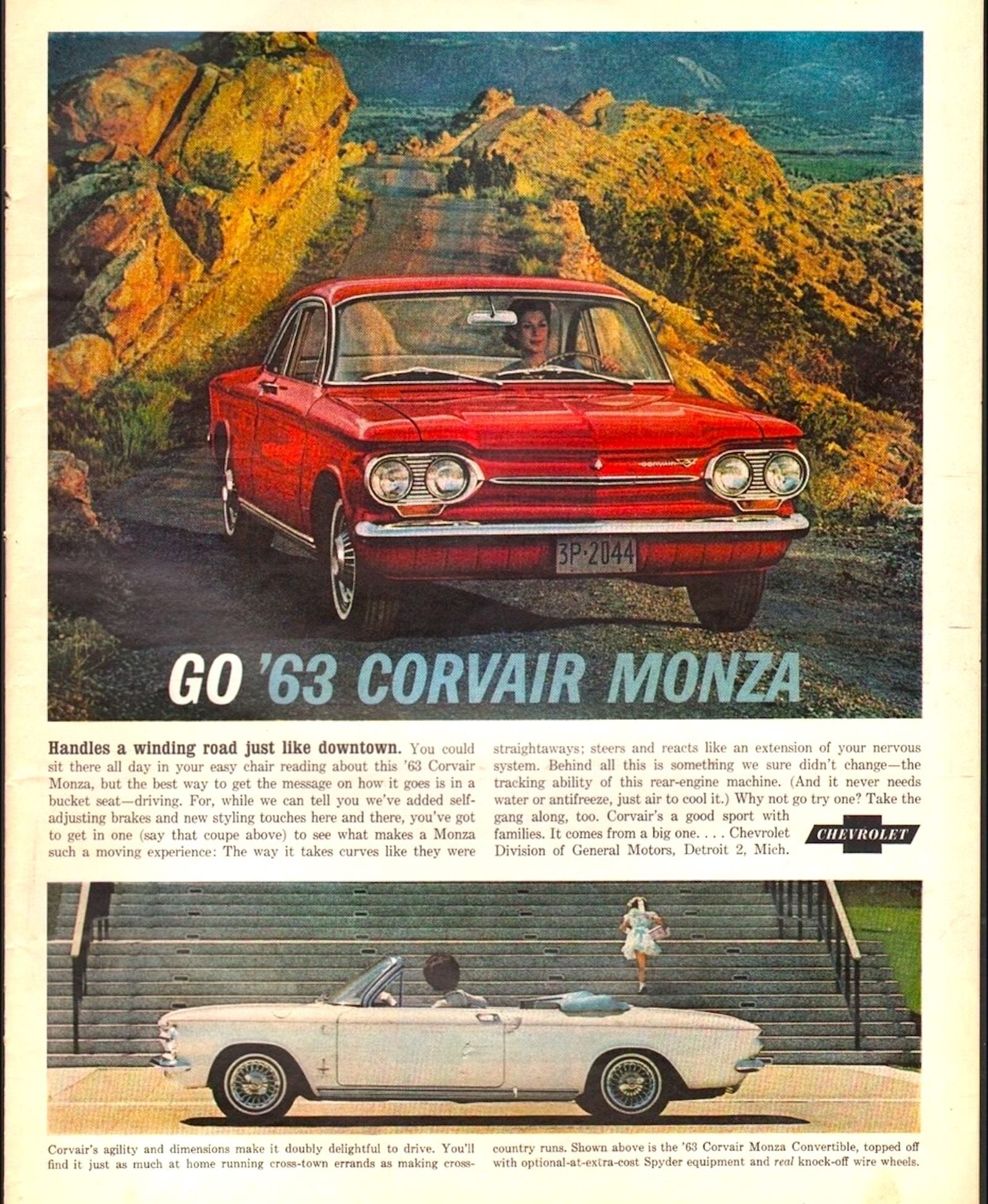
Chevrolet’s answer to the Corvair’s less-than-stellar sales figures was the Corvair Monza, shown as a coupe at the Chicago Auto Show in February of 1960 and put into production that spring, when a 95 bhp engine also became available. Image courtesy of General Motors.
“If I felt any better about our Chevy Corvair, I think I’d blow up,” Cole said at the launch. The car was named Motor Trend’s 1960 “Car of the Year,” but buyers preferred the conventional front-engined Ford Falcon, and in December of 1959 Cole ordered work on a front-engined compact, the Chevy II. Chevrolet built 250,007 Corvairs in the US for 1960.
The Monza, Spyder, And That Swing Axle
Chevrolet’s answer to the Corvair’s less-than-stellar sales figures was the Corvair Monza, shown as a coupe at the Chicago Auto Show in February of 1960 and put into production that spring, when a 95 bhp engine also became available.
For 1961 a larger bore took the engine to 145 cubic inches (2.4 liters), a 4-speed manual arrived, and the range added the Lakewood wagon and the Corvair 95 forward-control vans and pickups, among them the Greenbrier and the side-ramp Rampside.
In 1962 the Monza coupe accounted for 151,738 of the 328,500 Corvair cars and vans built. A convertible followed that spring, along with the Monza Spyder, whose turbocharged engine made 150 bhp and 210 lb ft. With Oldsmobile’s Jetfire, it was one of the first two production cars sold with a turbocharger.
Under hard cornering, the early car’s outer rear swing axle could jack the tail upward and tuck the wheel under, provoking sudden oversteer and a loss of control. A front anti-roll bar had been deleted to save cost, and Chevrolet instead specified tire pressures of 15 psi front and 26 psi rear, which owners often ignored, and by 1965 more than 100 lawsuits had been filed against GM.
For 1964 the anti-roll bar became standard and a transverse leaf spring was added at the rear, while a longer stroke enlarged the engine to 164 cubic inches (2.7 liters).
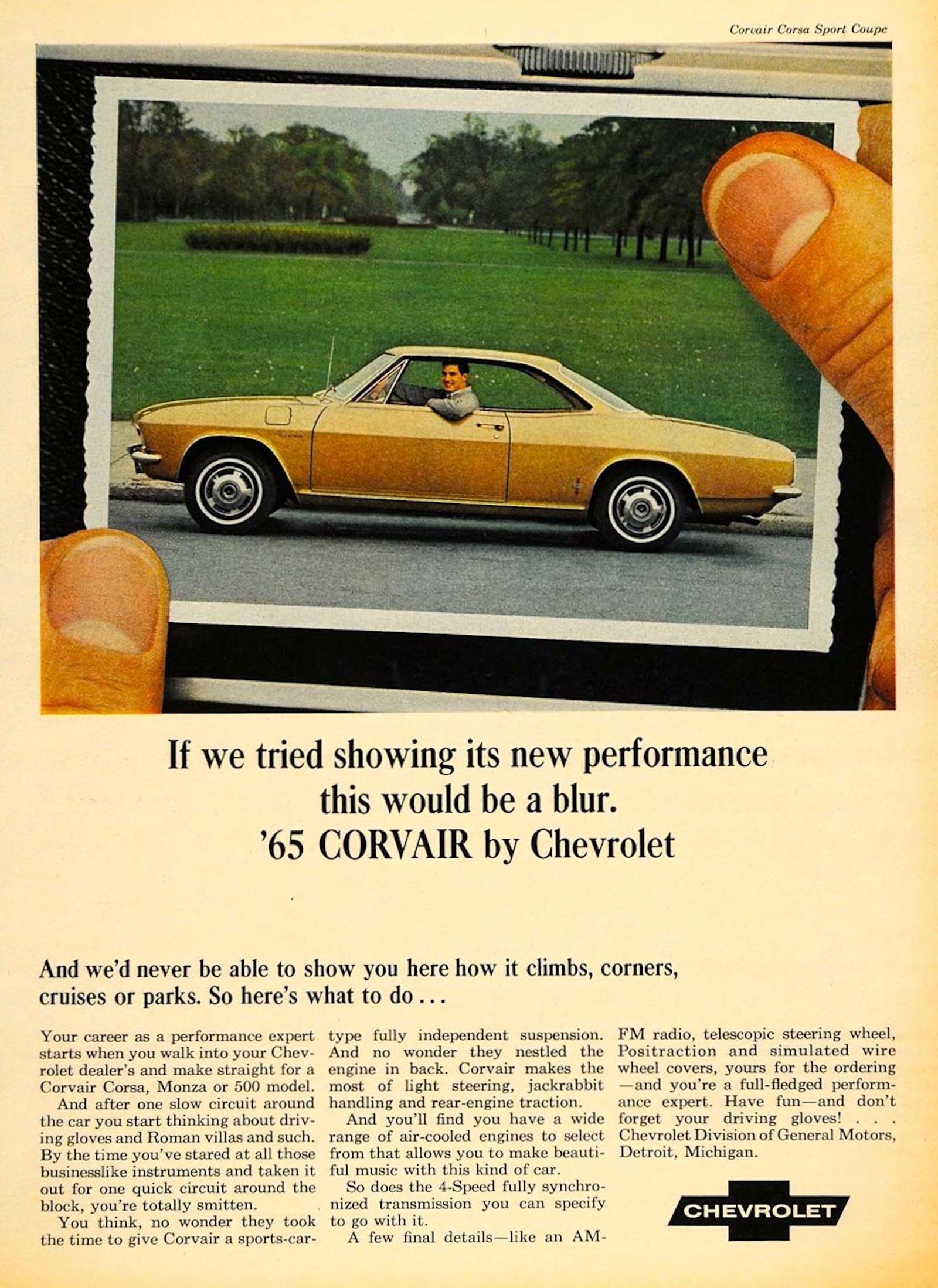
The 1965 Corvair had a stylish new pillarless body and a fully independent rear suspension derived from the Corvette Sting Ray, with trailing arms, half-shafts jointed at both ends acting as upper links, lower lateral links and coil springs. Image courtesy of General Motors.
The Second Generation Corvair Debuts
The 1965 Corvair had a stylish new pillarless body and a fully independent rear suspension derived from the Corvette Sting Ray, with trailing arms, half-shafts jointed at both ends acting as upper links, lower lateral links and coil springs. Brakes grew to 9.5 inch drums, and the new top model, the Corsa, came with a 140 bhp four-carburetor engine, a turbocharged version that was good for 180 bhp and 265 lb ft of torque was optional.
Chevrolet built 237,056 Corvair cars and vans for 1965, far fewer than Ford sold of its new Mustang, and in April of 1965 GM froze the Corvair’s engineering development. That November Ralph Nader published his book Unsafe at Any Speed, whose opening chapter attacked the 1960-1963 cars for their swing-axle-related safety issues. On March the 22nd, 1966, GM President James Roche apologized to a Senate subcommittee after it emerged that GM had hired a private detective to follow Nader. Production fell to 103,743 for 1966 and 27,253 for 1967.
The Corvair Goes Racing
Pennsylvania Chevrolet dealer Don Yenko wanted to race the Corsa in SCCA D Production, but the club wouldn’t class a car with a rear seat as a sports car. Yenko deleted the seat, and in November of 1965 the SCCA accepted the car on condition that he build 100 for homologation purposes by January the 1st, 1966.
He ordered 100 Ermine White Corsa coupes through Chevrolet’s Central Office Production Order (COPO) system and converted them as Yenko Stingers, and the SCCA confirmed its approval that January. Stingers were sold in four stages of tune, with Stage III advertised at 220 bhp. Jerry Thompson won the national D Production championship in a Stinger in 1967.
The End Of Production
Output dropped to just 15,399 units for 1968 and a measly 6,000 for 1969. The last Corvair, a gold two-door hardtop, was built on May the 14th, 1969. Research by the Corvair Society of America, based on Chevrolet records, puts US production at 1,789,384 cars and vans in total, including kits shipped for assembly overseas. GM Canada built another 48,927 cars and 1,128 kits. Chevrolet’s next small car, the Vega, arrived in 1970.
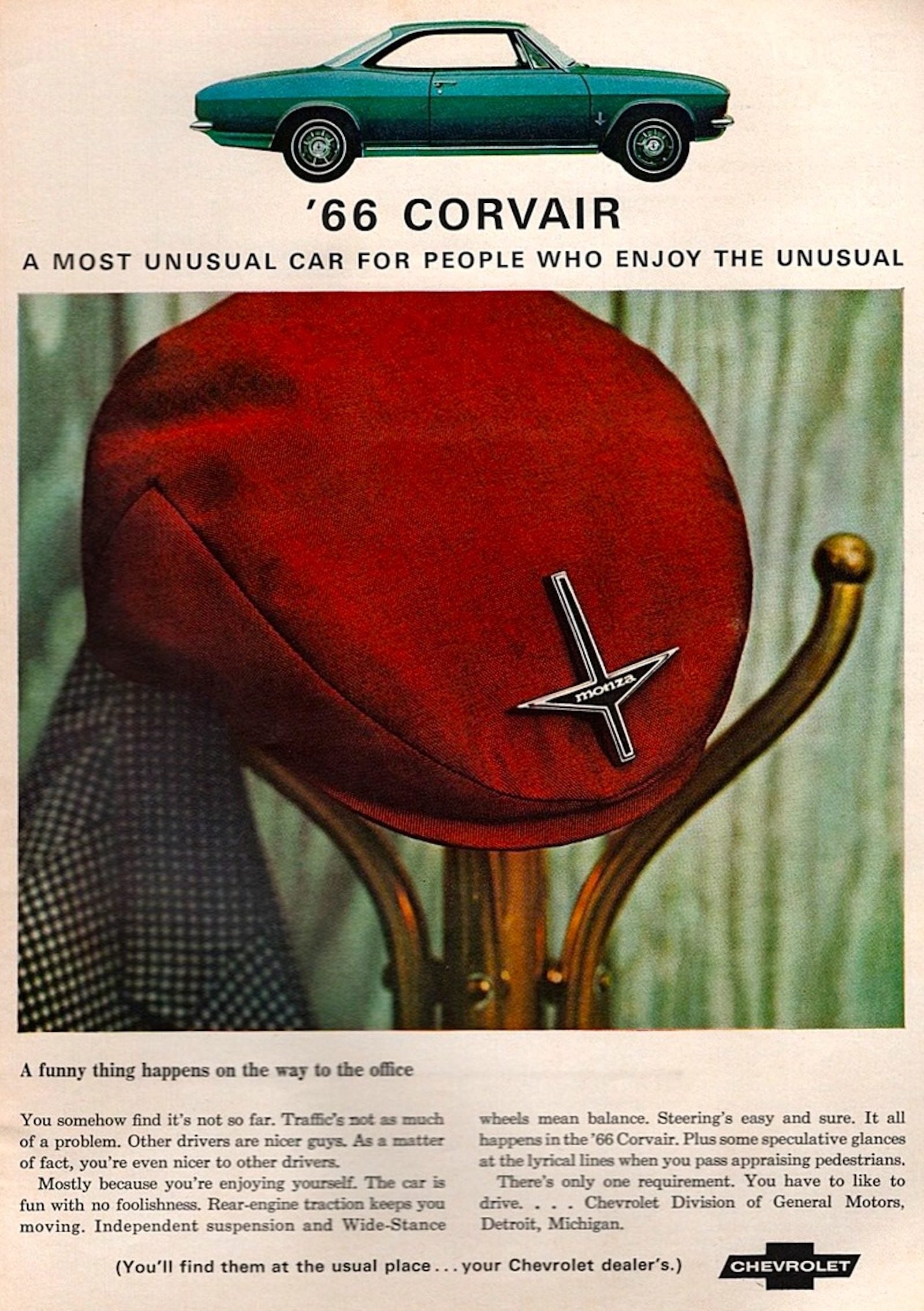
On the second generation Corvair, the brakes grew to 9.5 inch drums, and the new top model, the Corsa, came with a 140 bhp four-carburetor engine, a turbocharged version that was good for 180 bhp and 265 lb ft of torque was optional. Image courtesy of General Motors.
In July 1972 the National Highway Traffic Safety Administration published its evaluation of the 1960-1963 Corvair, based on 1971 tests by Texas A&M University against a Falcon, a Valiant, a Volkswagen Beetle, and a Renault Dauphine. It found that the car’s handling and stability “does not result in an abnormal potential for loss of control or rollover.”
By the time the Department of Transportation announced the findings in July of 1972, the Corvair had been out of production for more than three years.
The Front-Engined 1966 Corvair Monza Shown Here
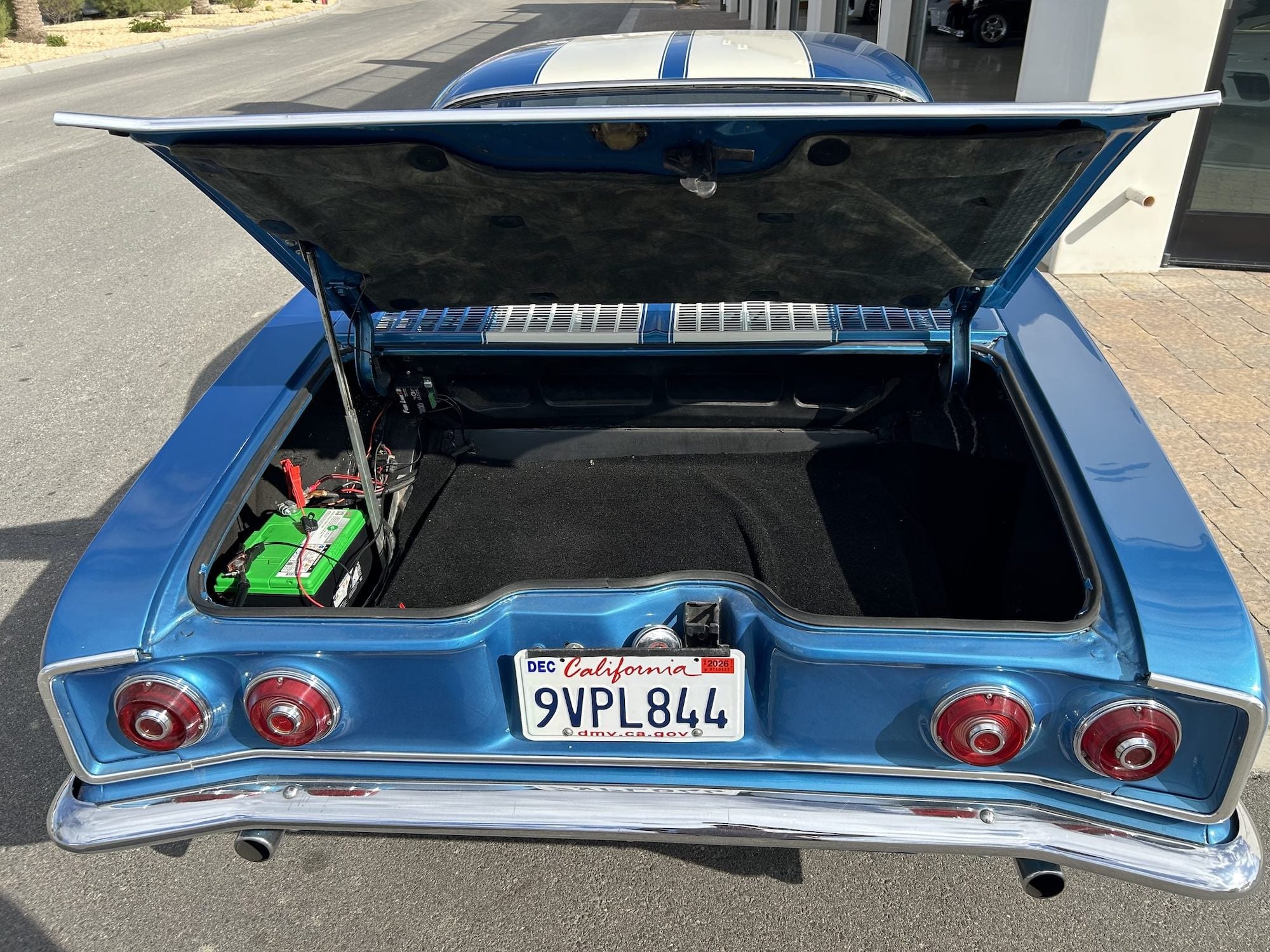
This 1966 Chevrolet Corvair Monza coupe has been extensively modified under previous ownership, most notably with the installation of a front-mounted 6.0 liter GM LQ9 V8, replacing the original rear-mounted flat-six. The V8 is reportedly fitted with ported cylinder heads, a GM Hot Cam, an Edelbrock intake manifold, MSD ignition, and a high-volume oil pump.
A Holley Sniper electronic fuel injection system and high-pressure fuel regulator were installed in December of 2025. The engine is paired with a 4L80E 4-speed automatic transmission with an electronic valve body and a 2,400 rpm stall converter.
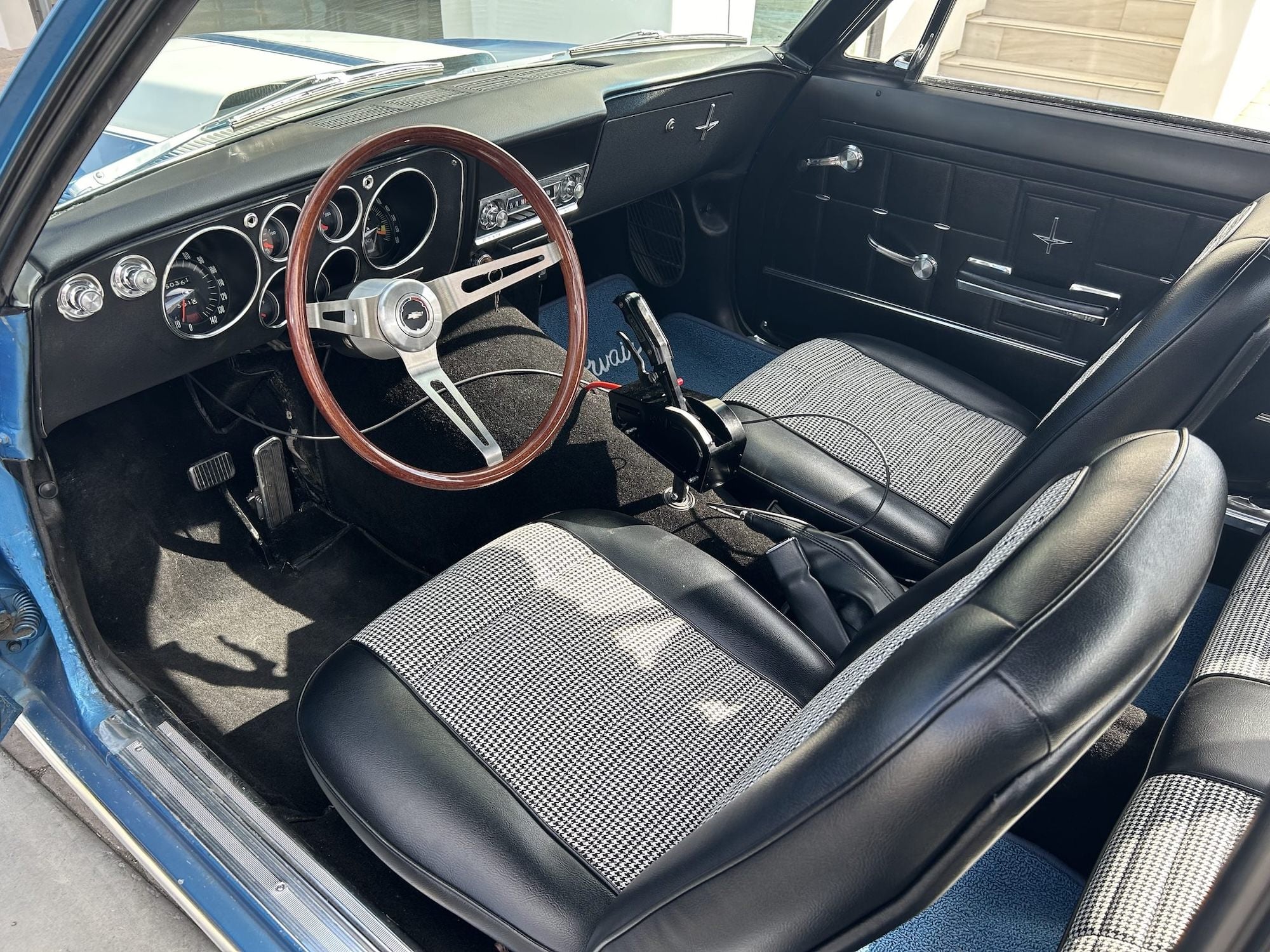
To accommodate the new drivetrain, the car received a custom frame built from 2×3 inch steel rails, along with coilover suspension at all four corners, a four-link rear suspension, and rack-and-pinion steering. The rear axle has a Detroit Locker differential, a NASCAR-style third member, and Moser axles. Braking is handled by four-wheel discs with drilled and slotted rotors, while 15-inch American Racing wheels are shod with 195/60 front and 295/50 rear tires.
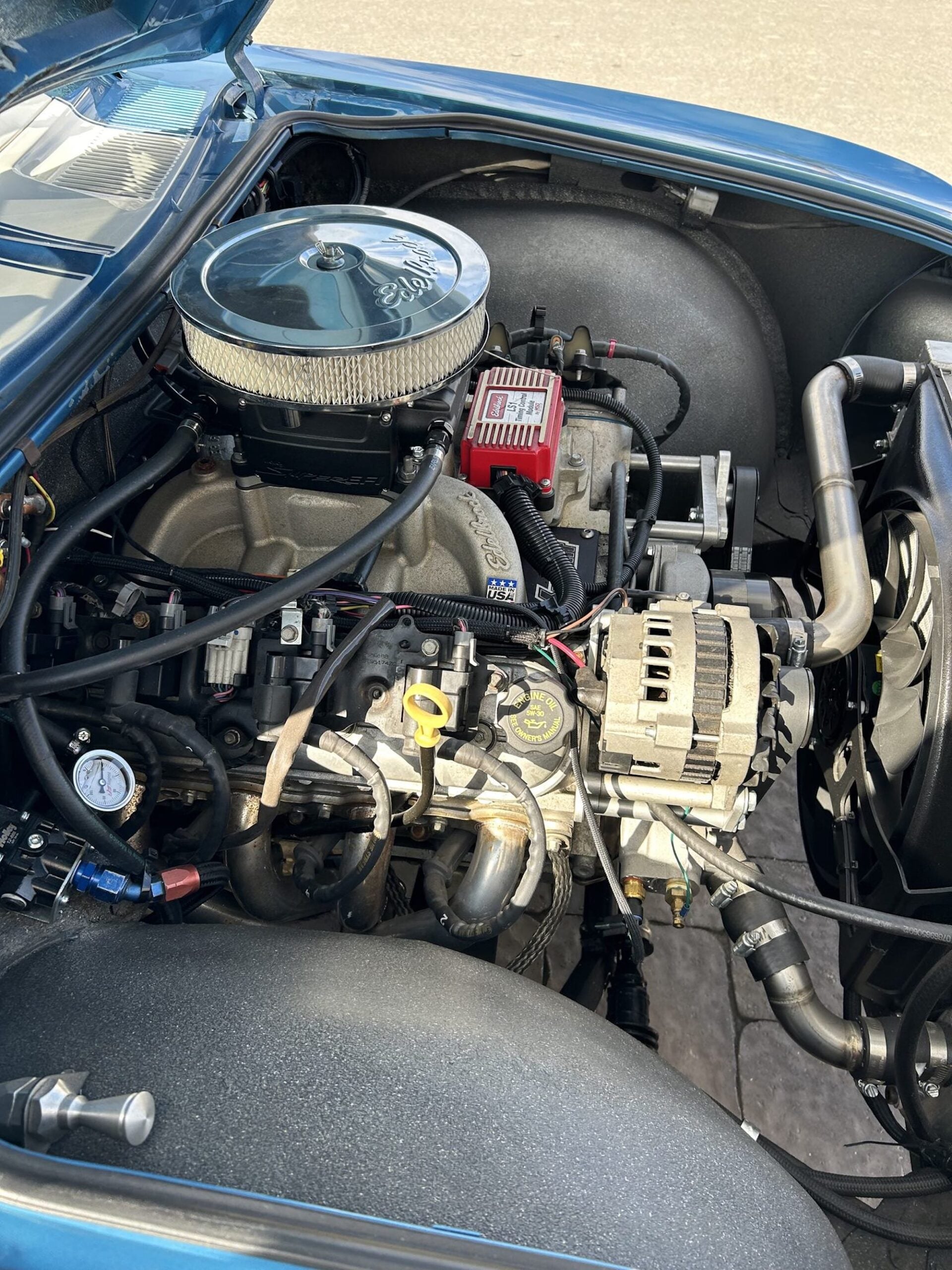
This 1966 Chevrolet Corvair Monza coupe has been extensively modified under previous ownership, most notably with the installation of a front-mounted 6.0 liter GM LQ9 V8, replacing the original rear-mounted flat-six.
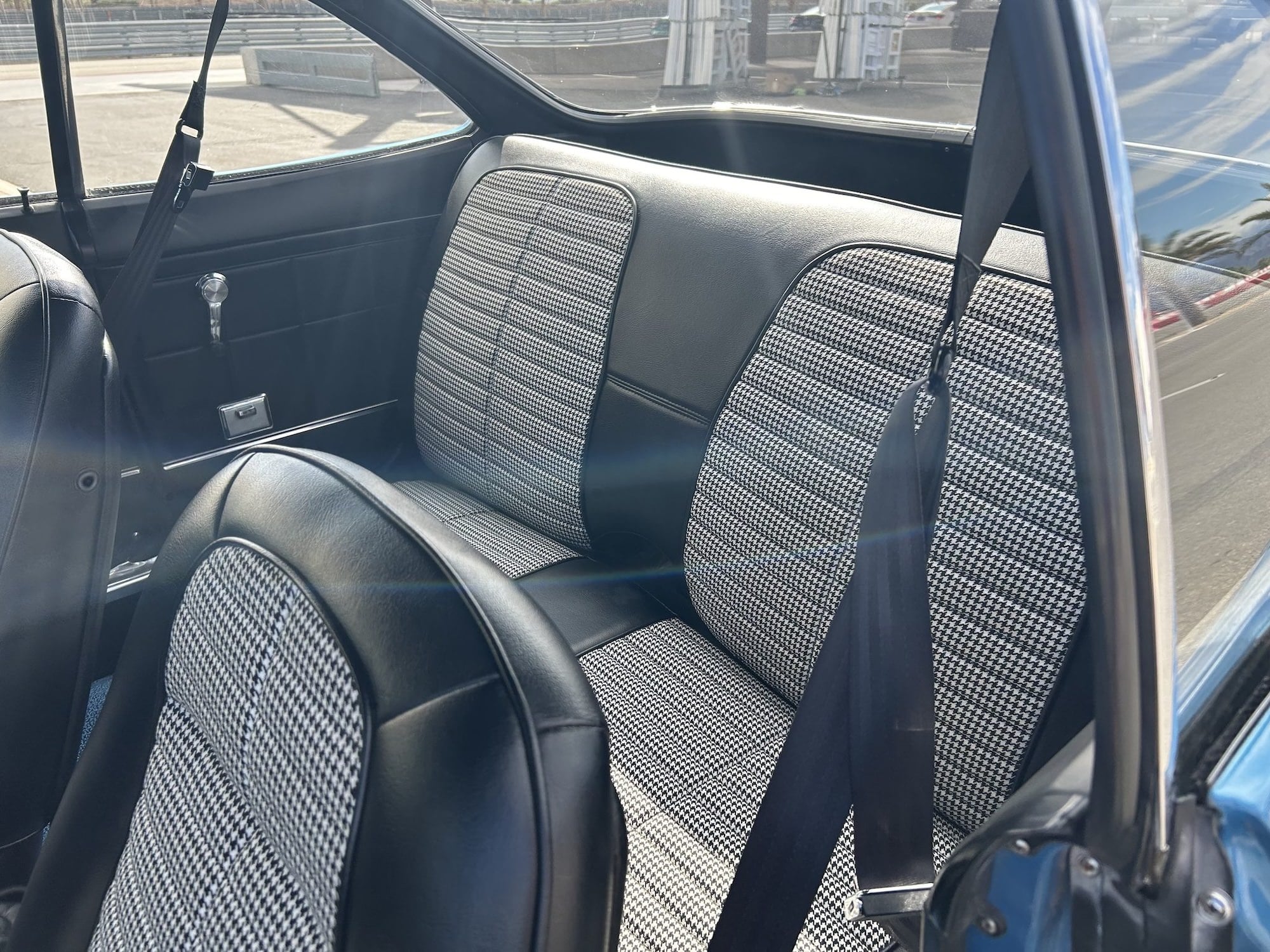
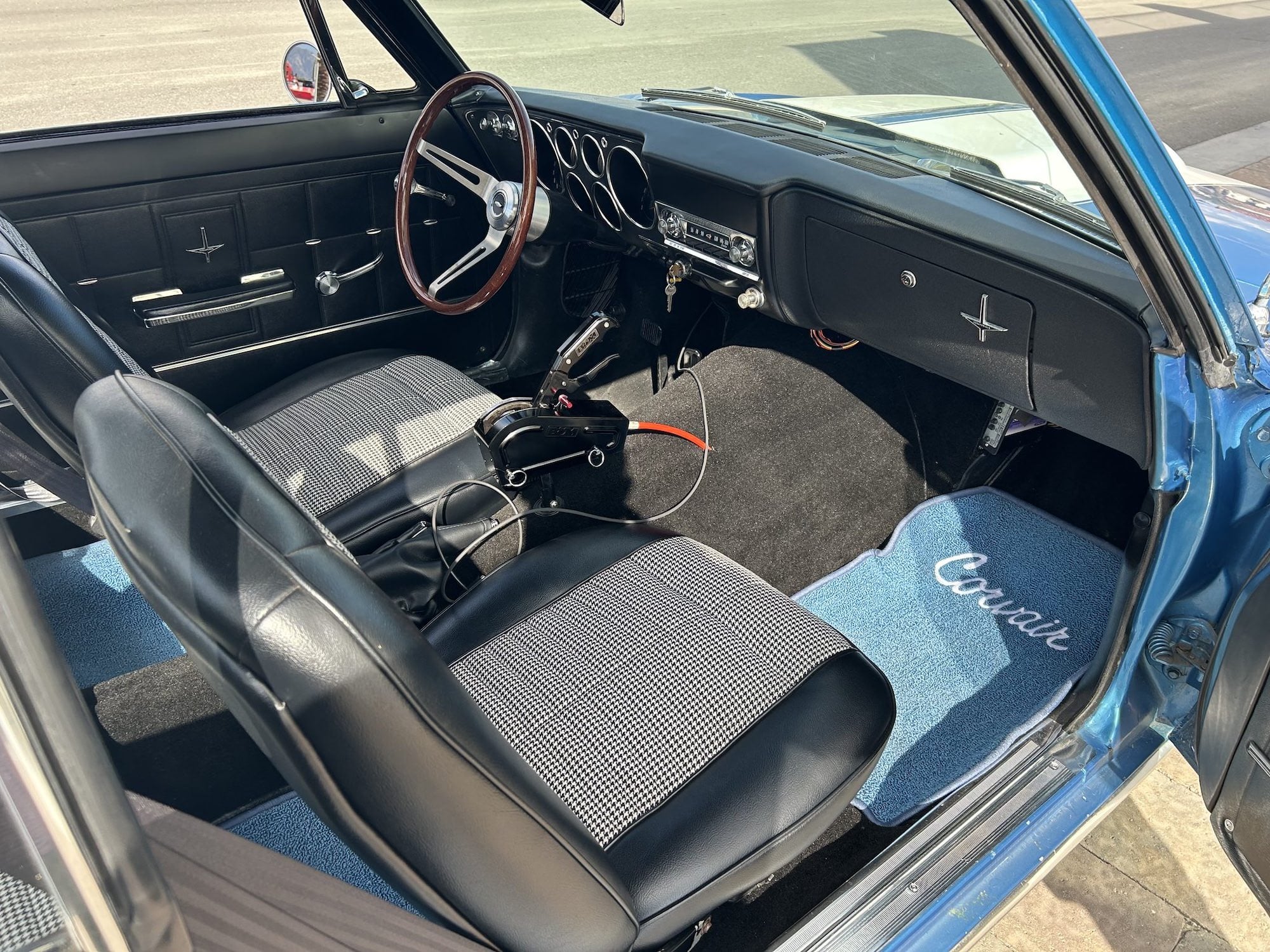
The body has been refinished in blue with dual white racing stripes and fitted with a raised hood scoop to accommodate the front-mounted V8. Inside, the cabin has front bucket seats sourced from a 1969 Chevrolet Camaro and a rear bench upholstered in black with houndstooth inserts. Other additions include a B&M shifter, AutoMeter auxiliary gauges, front shoulder belts, and an AM radio.
The car is now being offered for sale out of Thermal, California with a clean California title. If you’d like to read more about it or register to bid, you can visit the listing here.
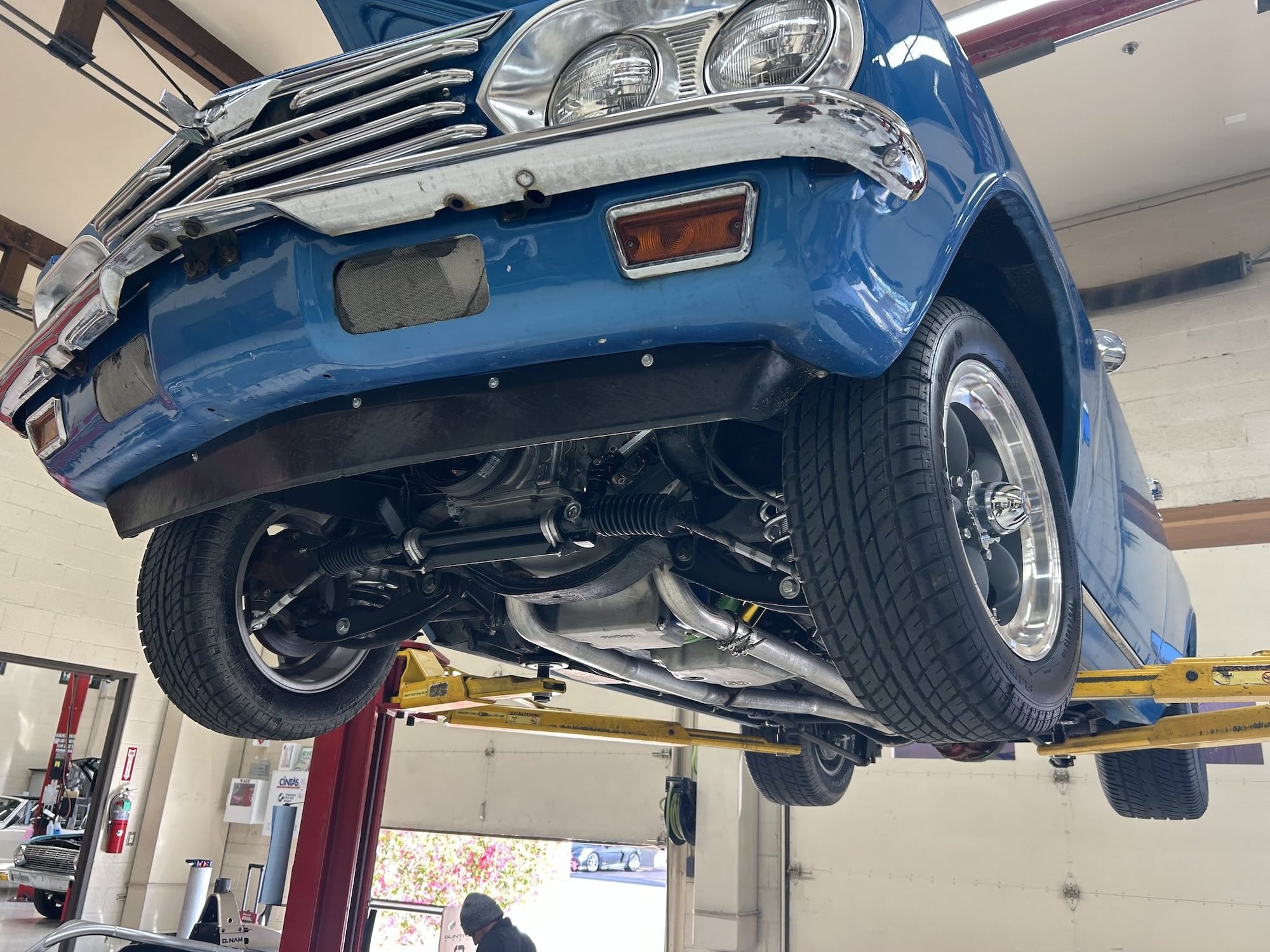
Images courtesy of Bring a Trailer + General Motors

Articles that Ben Branch has written have been covered on CNN, Popular Mechanics, Smithsonian Magazine, Road & Track Magazine, the official Pinterest blog, the official eBay Motors blog, BuzzFeed, Autoweek Magazine, Wired Magazine, Autoblog, Gear Patrol, Jalopnik, The Verge, and many more.
Silodrome was founded by Ben back in 2010, in the years since the site has grown to become a world leader in the alternative and vintage motoring sector, with well over a million monthly readers from around the world and many hundreds of thousands of followers on social media.