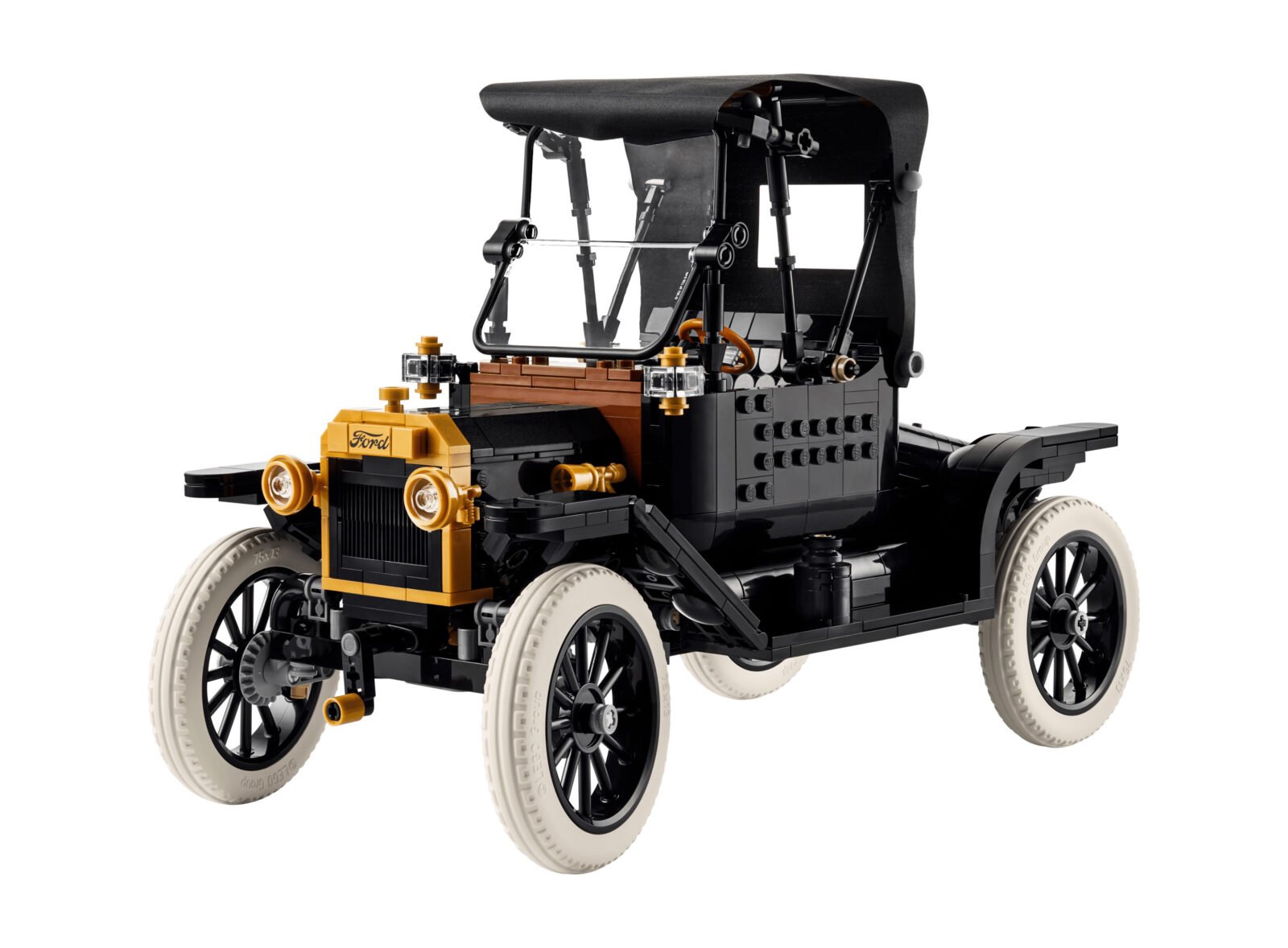
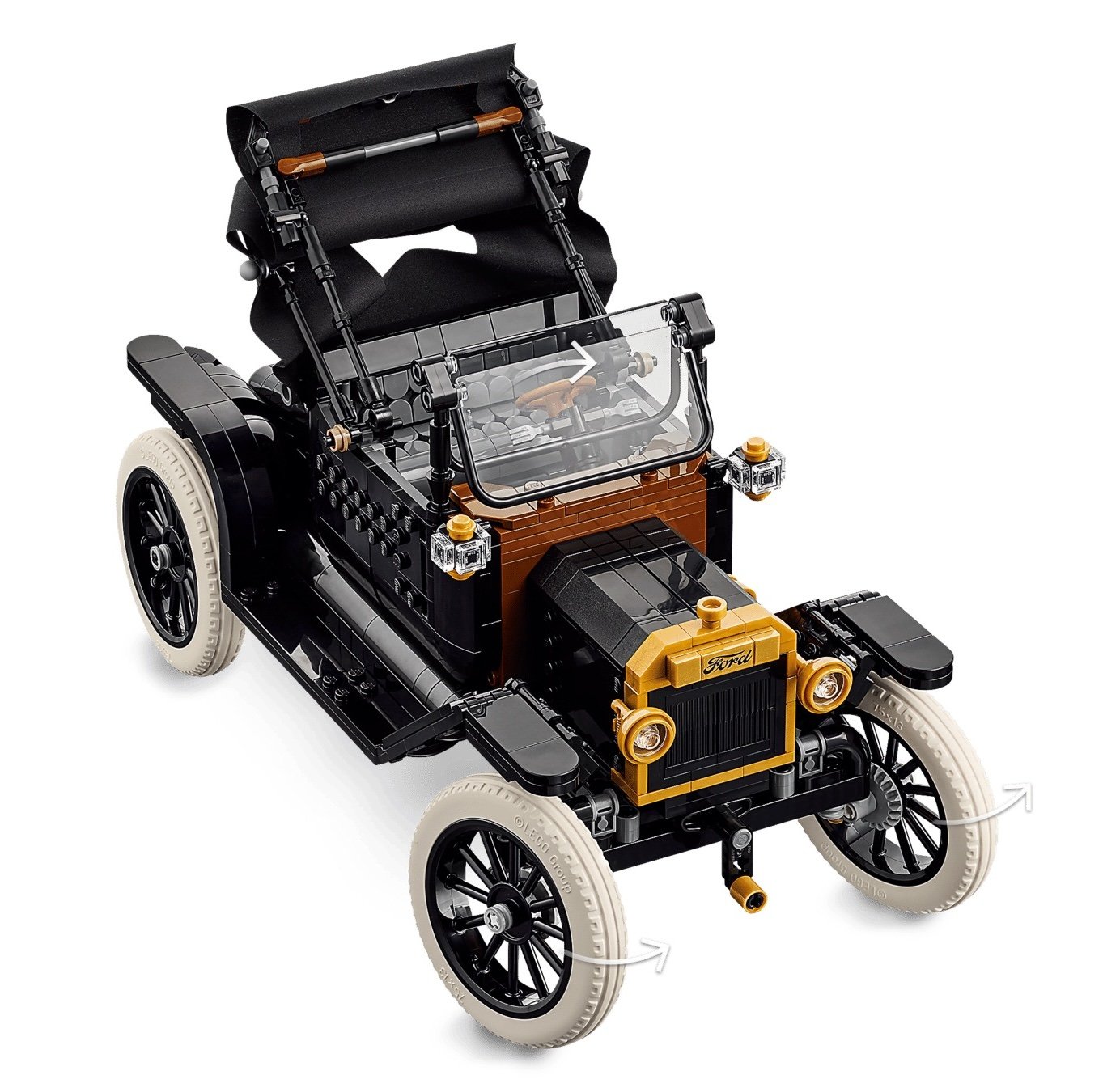
This is the new Ford Model T from Lego®, it’s part of the Lego® Icons series that includes many of the greatest vehicles (and machines) of the 20th century and beyond.
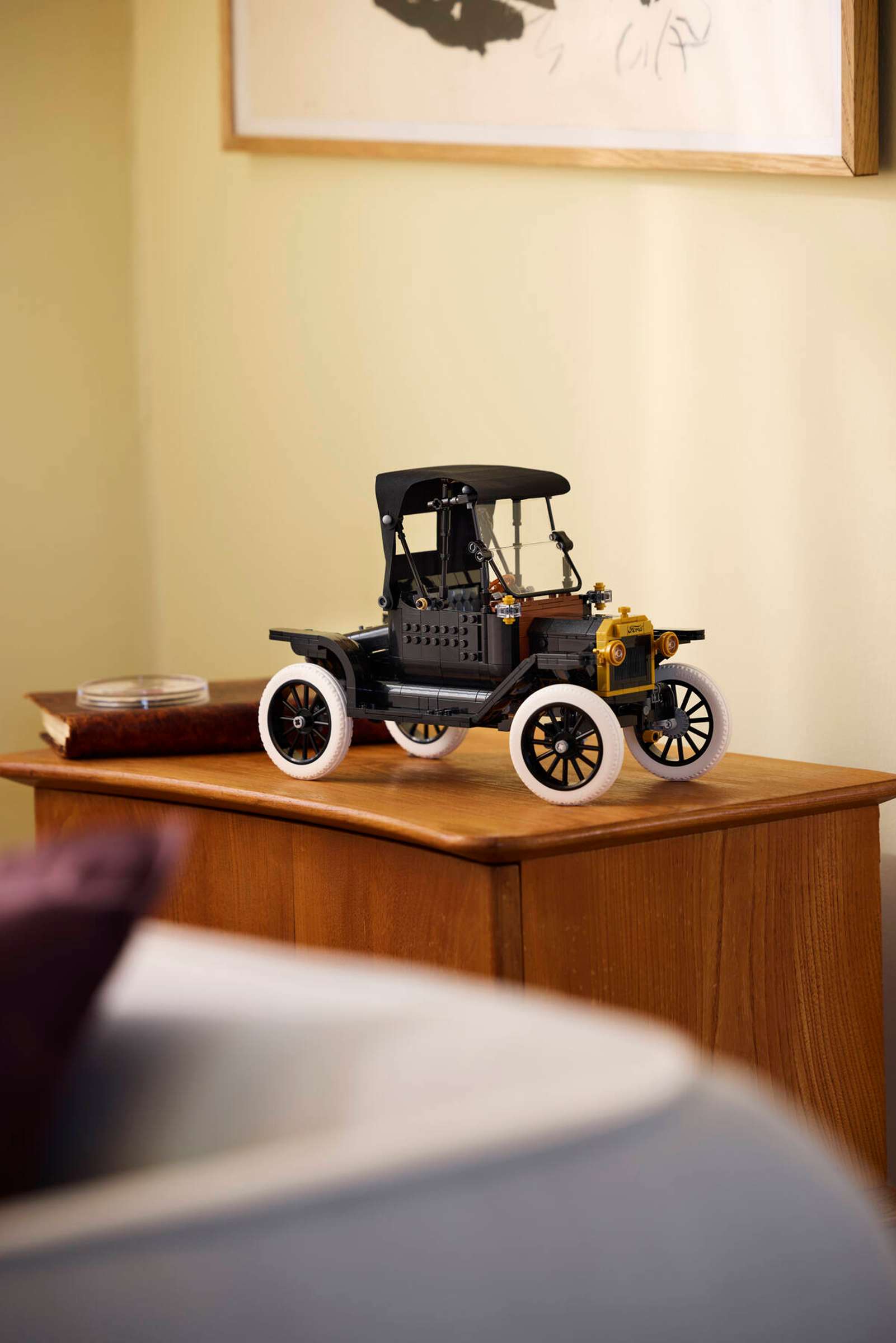
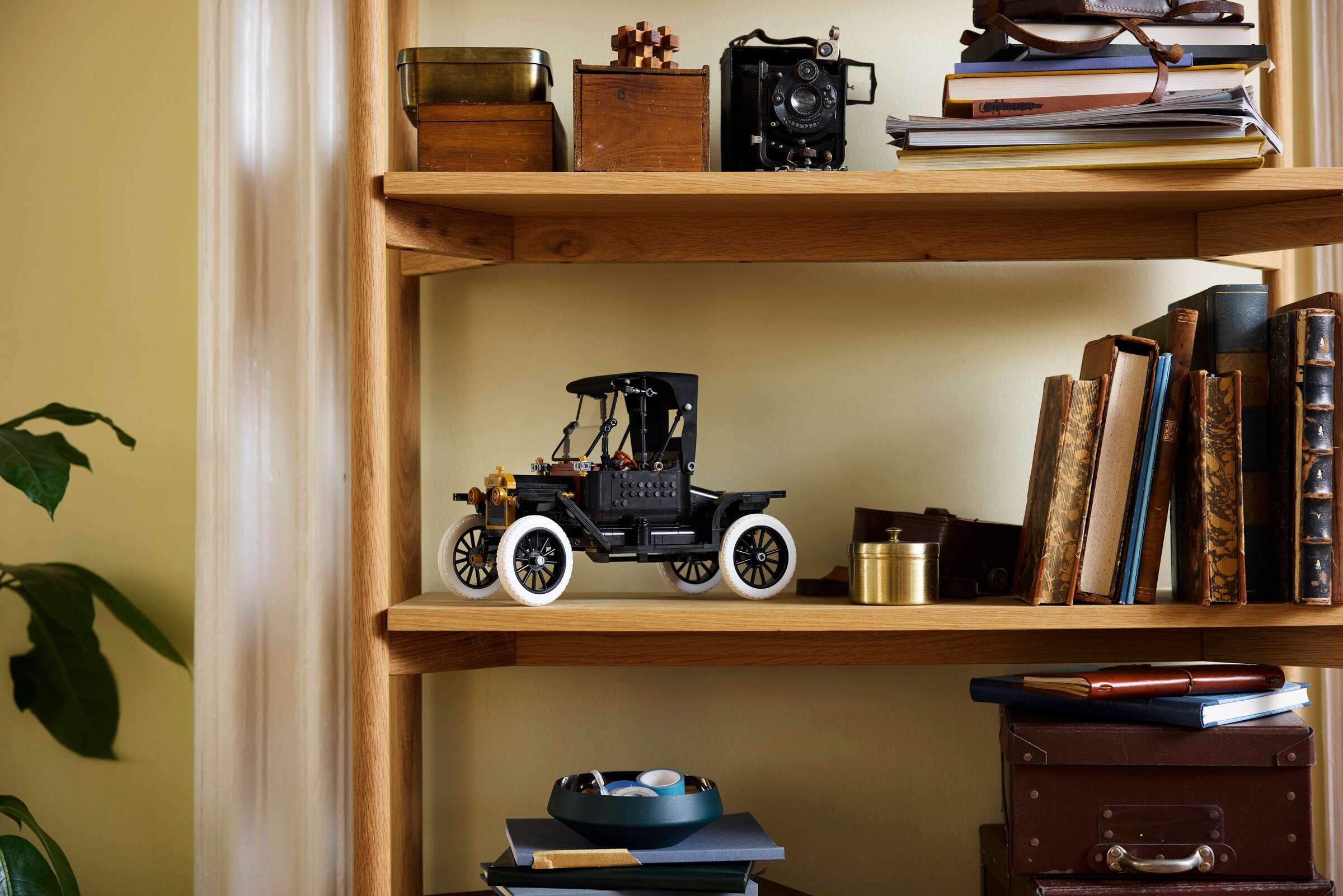
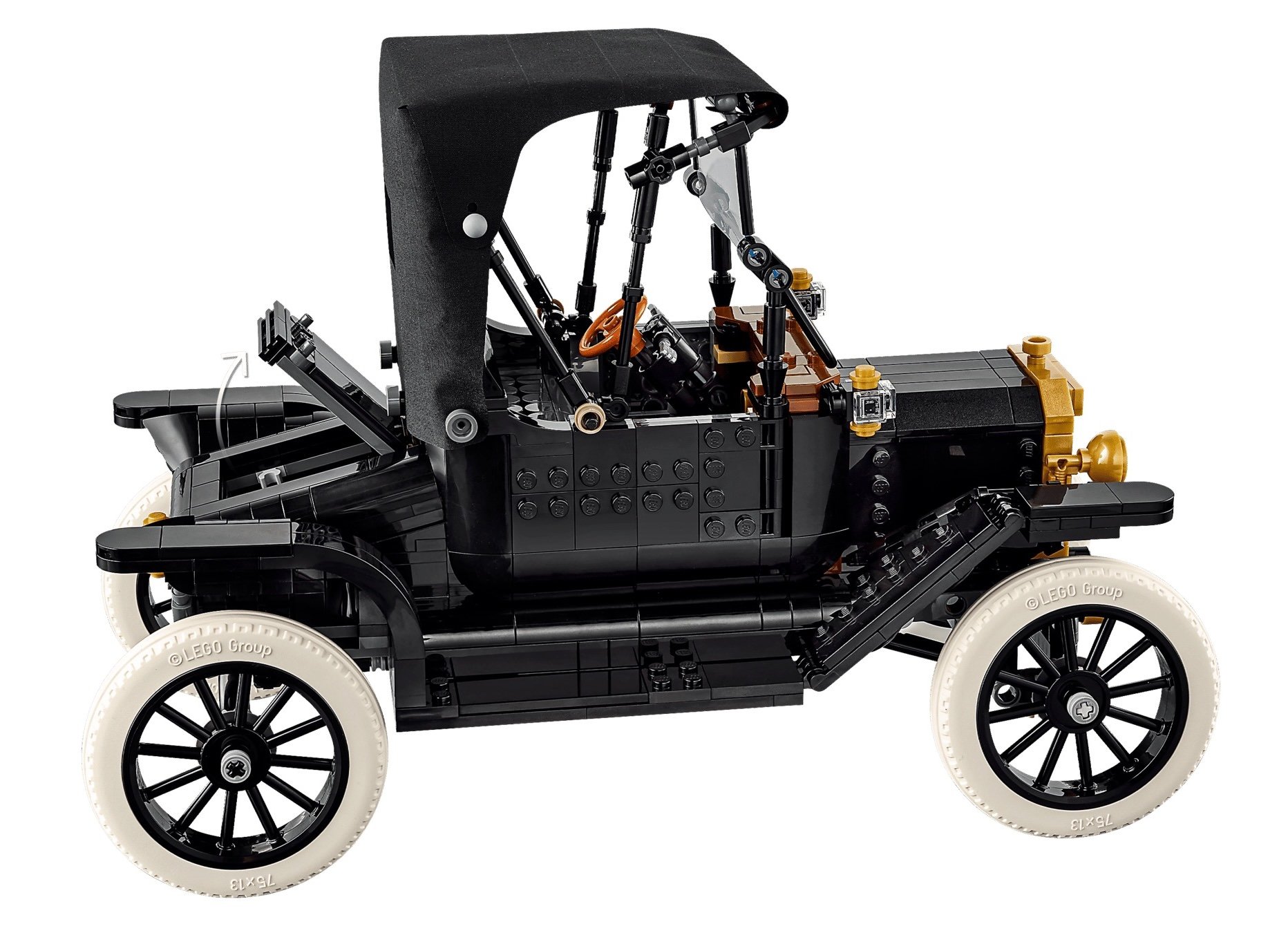
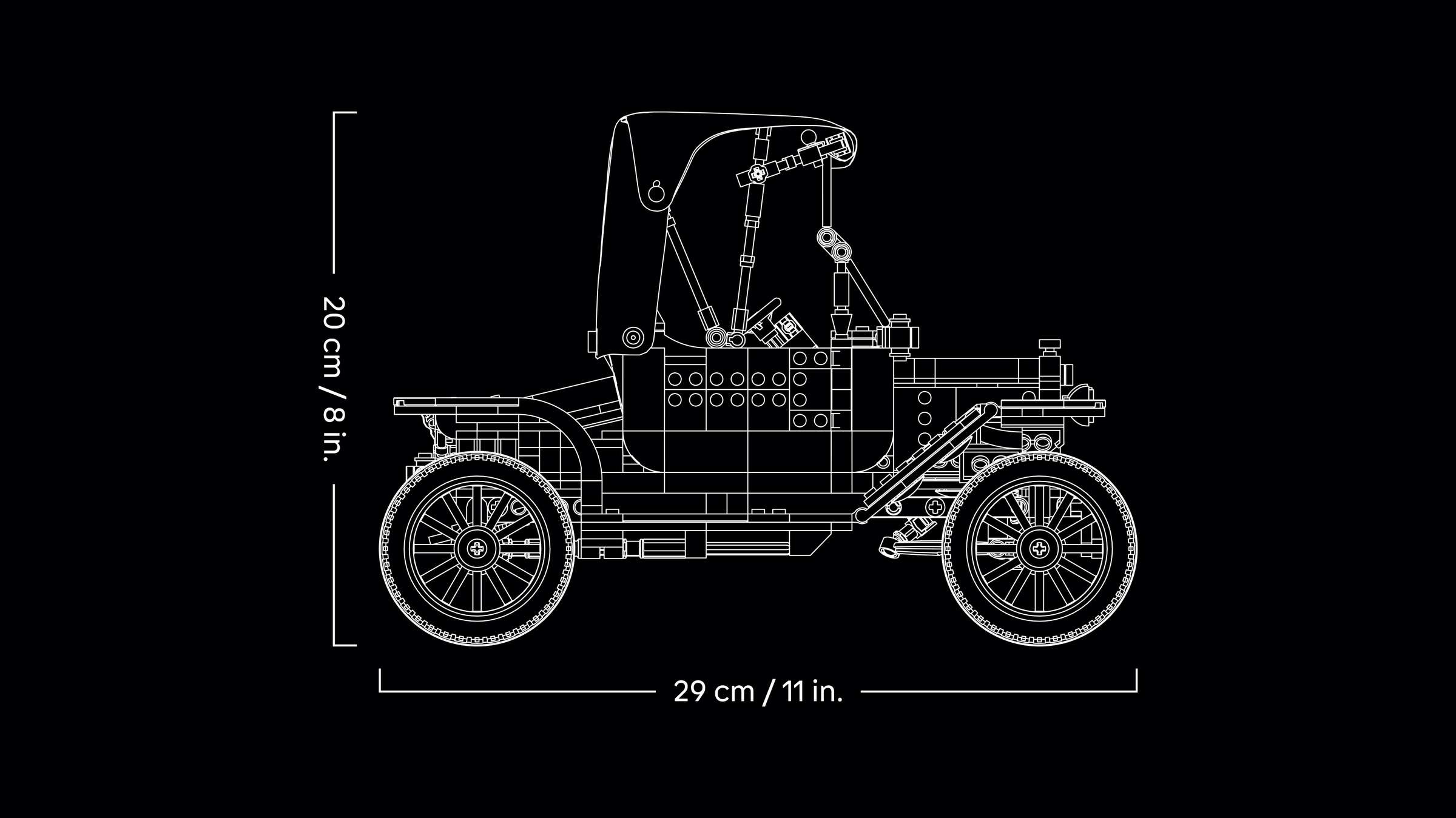
The Lego® Ford Model T is on the large side, measuring in at almost a foot long and 2/3rd of a foot high – 11 inches long and 8 inches high, or 29cm long and 20cm high. The model includes working steering, a folding soft top, an opening hood, and a detailed engine.
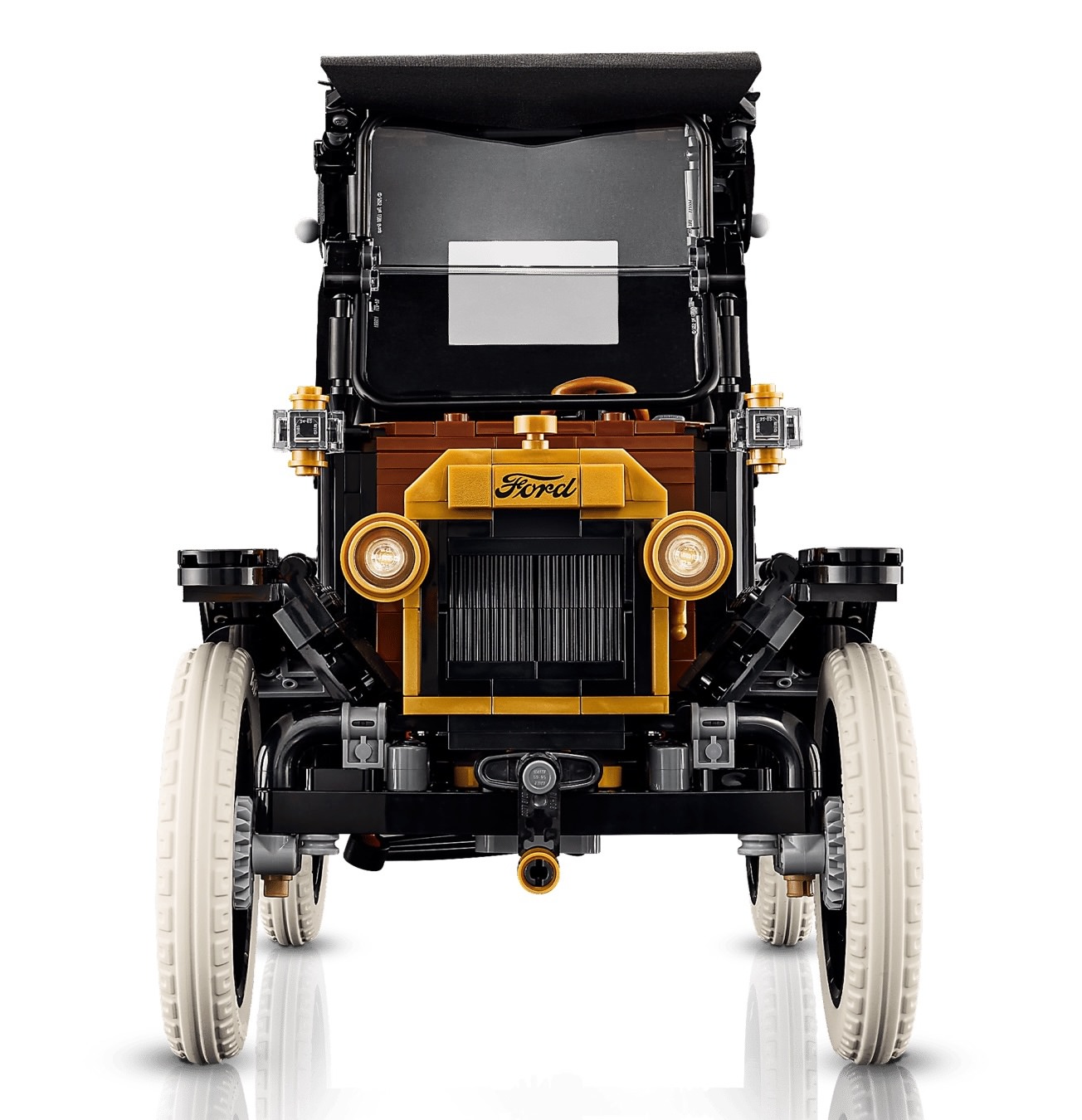
 The Lego® Ford Model T is quite large, measuring in at almost a foot long and 2/3rd of a foot high – 11 inches long and 8 inches high, or 29cm long and 20cm high. The model includes working steering, a folding soft top, an opening hood, and a detailed engine.
History Speedrun: The Ford Model T
When the Henry Ford approved the Model T for production in 1908, the goal was scale. This was to be a car that could be built in volumes that the world had never seen before, and for a price that would seem too good to be true at first. Henry Ford wanted a car light enough, simple enough, and affordable enough to move beyond wealthy motoring hobbyists and into the hands of ordinary working class Americans. The result would reshape transportation, manufacturing, and the fundamental layout of cities around the world.
Introduced on October the 1st, 1908, the Model T rode on a 100 inch wheelbase and used a 177 cubic inch (2.9 liter) inline four-cylinder side-valve engine producing just 20 bhp. Power was sent to the rear wheels via a two-speed planetary transmission operated by pedals rather than a conventional gear lever. Top speed was roughly 40 to 45 mph, but this was more than adequate for the primitive roads of the era.
From the outset in the United States, the car was left-hand drive, a decision that would help standardize American road practice. Early cars sold for $825, positioning them well below most competitors but still out of reach for a large portion of the population. Though that would change quickly.
The Henry Ford’s real revolution came not just from the car itself, but from how it was built. In 1913, at the Highland Park plant, the Ford Motor Company introduced the moving assembly line for automobile production.
Instead of skilled workers building a car in one place, the chassis moved past specialized stations. Assembly time dropped from more than 12 hours to about 90 minutes per car. Costs fell accordingly, and by 1916 the price had dropped below $400. By 1925, a runabout could be purchased for as little as $260 brand new off a dealership floor.
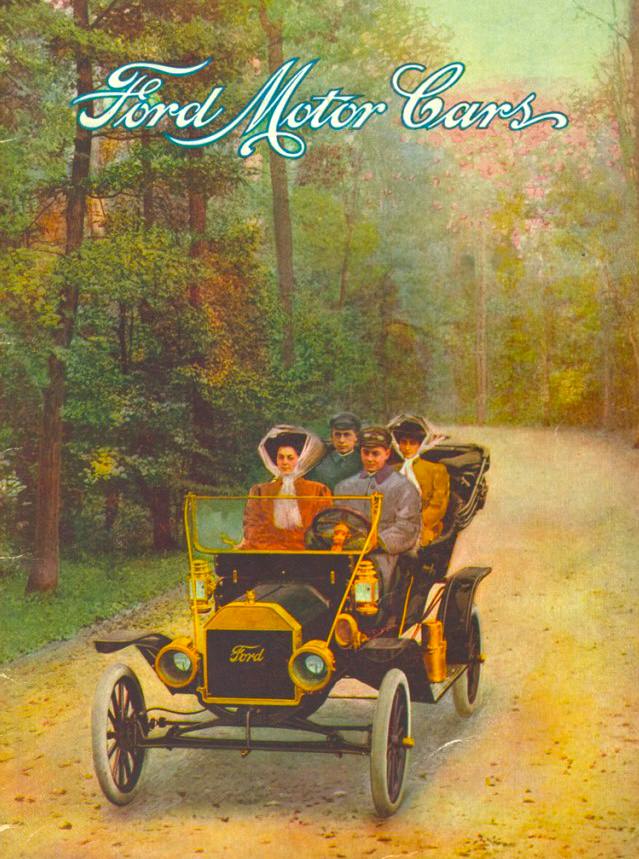
The Model T evolved incrementally over its 19-year run, early brass radiators gave way to painted radiator shells. Electric starters became available in 1919, and body styles expanded to include touring cars, roadsters, coupes, sedans, and even light trucks. Image courtesy of Ford.
Production of the Model T scaled at a pace the industry had never seen, by 1914 Ford was building more cars than all other automakers in the United States combined. When production ended in 1927, more than 15 million Model Ts had been built, a figure that remained a global production record for decades until it was eventually overtaken by the Volkswagen Beetle on the 17th of February 1972.
The Model T evolved incrementally over its 19-year run, early brass radiators gave way to painted radiator shells. Electric starters became available in 1919, and body styles expanded to include touring cars, roadsters, coupes, sedans, and even light trucks.
For many years just a single color option was offered for the Model T – black. This was likely to simplify production, some have said black enamel dried faster, and Henry Ford was once quoted as saying “The customer can have any color he wants, so long as it is black.”
The social impact of the Model T was immediate, many rural families gained reliable transportation for the first time. Farmers used Model T-based trucks and modified them into tractors for work in the fields. Small businesses expanded their reach ask they could deliver goods and offer services to a much wider audience.
In 1914, Ford introduced the $5 workday, doubling typical daily wages and reducing employee turnover. $5 a day was enough for the average factory worker to support his family, own a house, and own a car.
By the mid-1920s the market had begun to shift, the car buying public wanted more style, more comfort, more speed, more color choices, and more frequent model changes. Competitors, particularly General Motors, offered more powerful engine options, annual updates, plenty of colors, and all at a competitive price. The Model T’s basic design, intentionally simple and affordable, began to look somewhat dated.
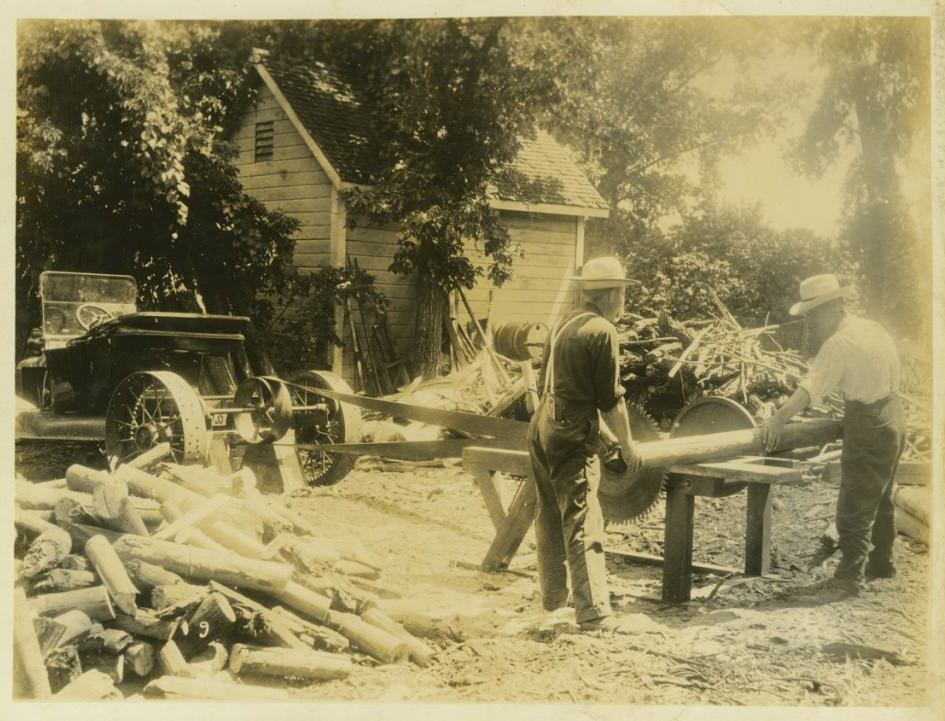
The social impact of the Model T was immediate, many rural families gained reliable transportation for the first time. Farmers used Model T-based trucks and modified them into tractors for work in the fields. Small businesses expanded their reach ask they could deliver goods and offer services to a much wider audience. Image courtesy of Ford.
In May of 1927, production of the Model T stopped to make way for the new Model A. The Model T hadn’t just motorized America in its 19 year production run, it had laid out the template for 20th century industrial manufacturing in the United States and around the world.
The New Lego® Ford Model T
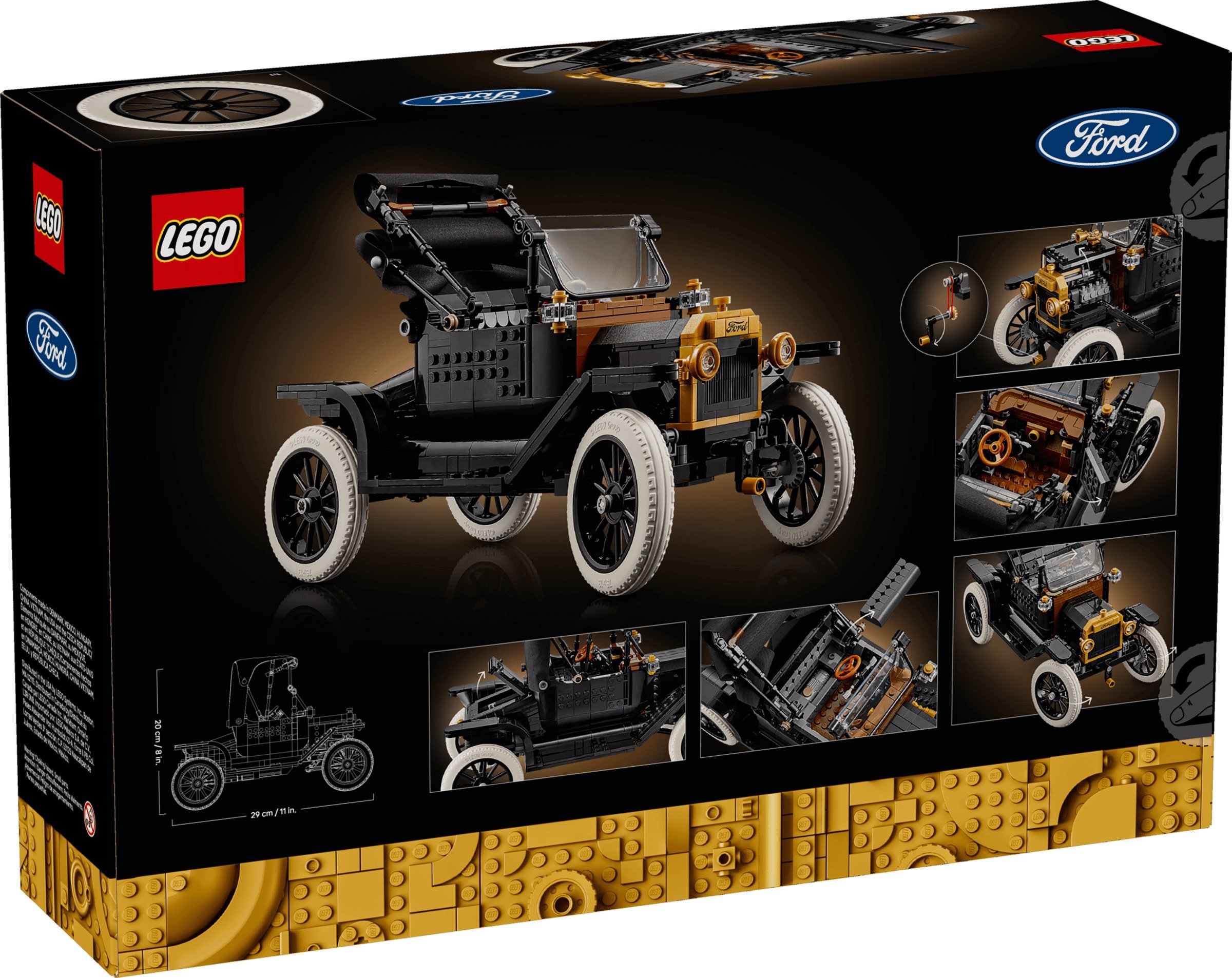
The Lego® Icons Ford Model T (set 11376) is a 1,060 piece kit designed for adult builders, classic car enthusiasts, and it’s ideal as a kit for parents to build with their kids. It faithfully recreates the Model T, capturing the simplicity and approachability that made the original a landmark in automotive history.
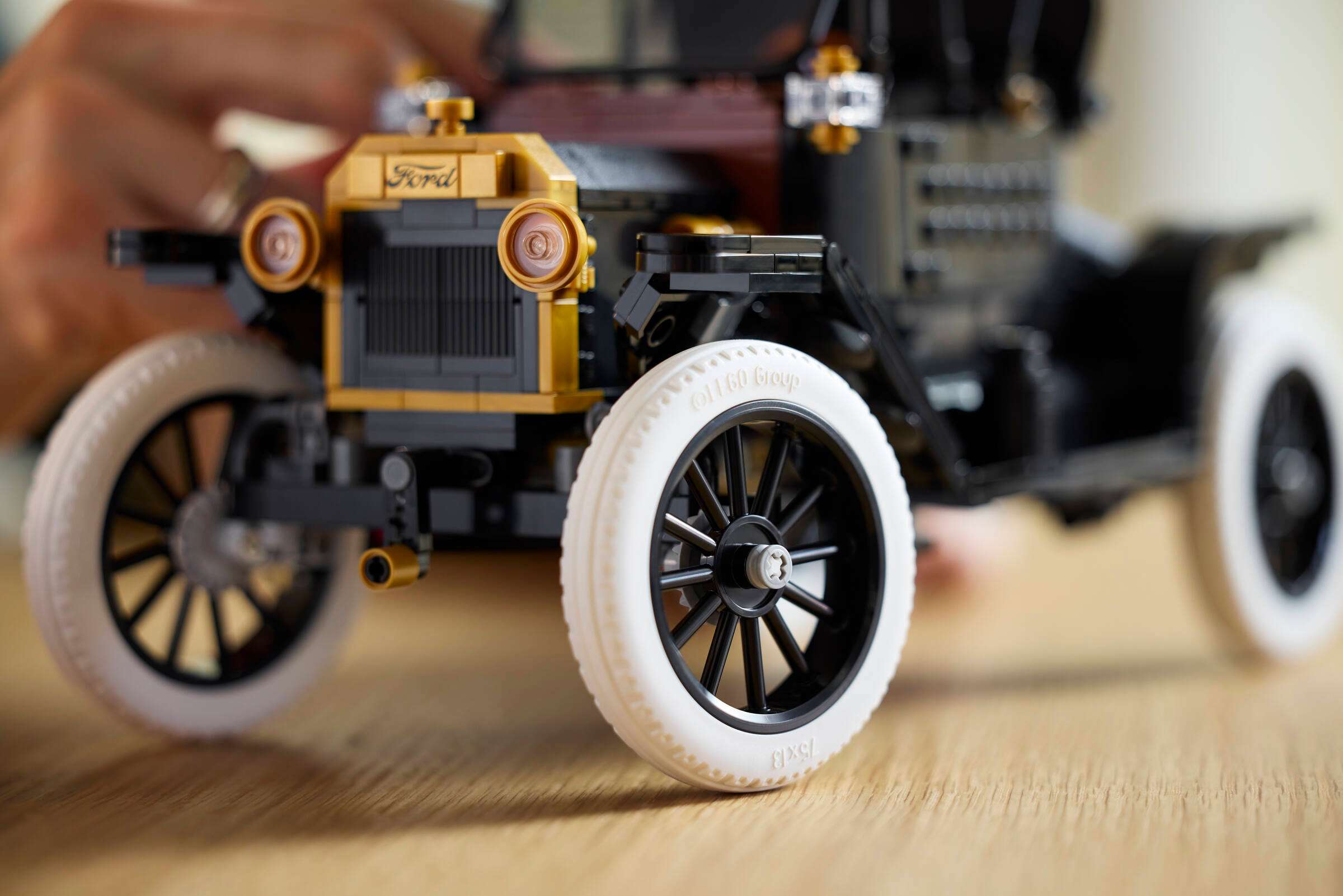
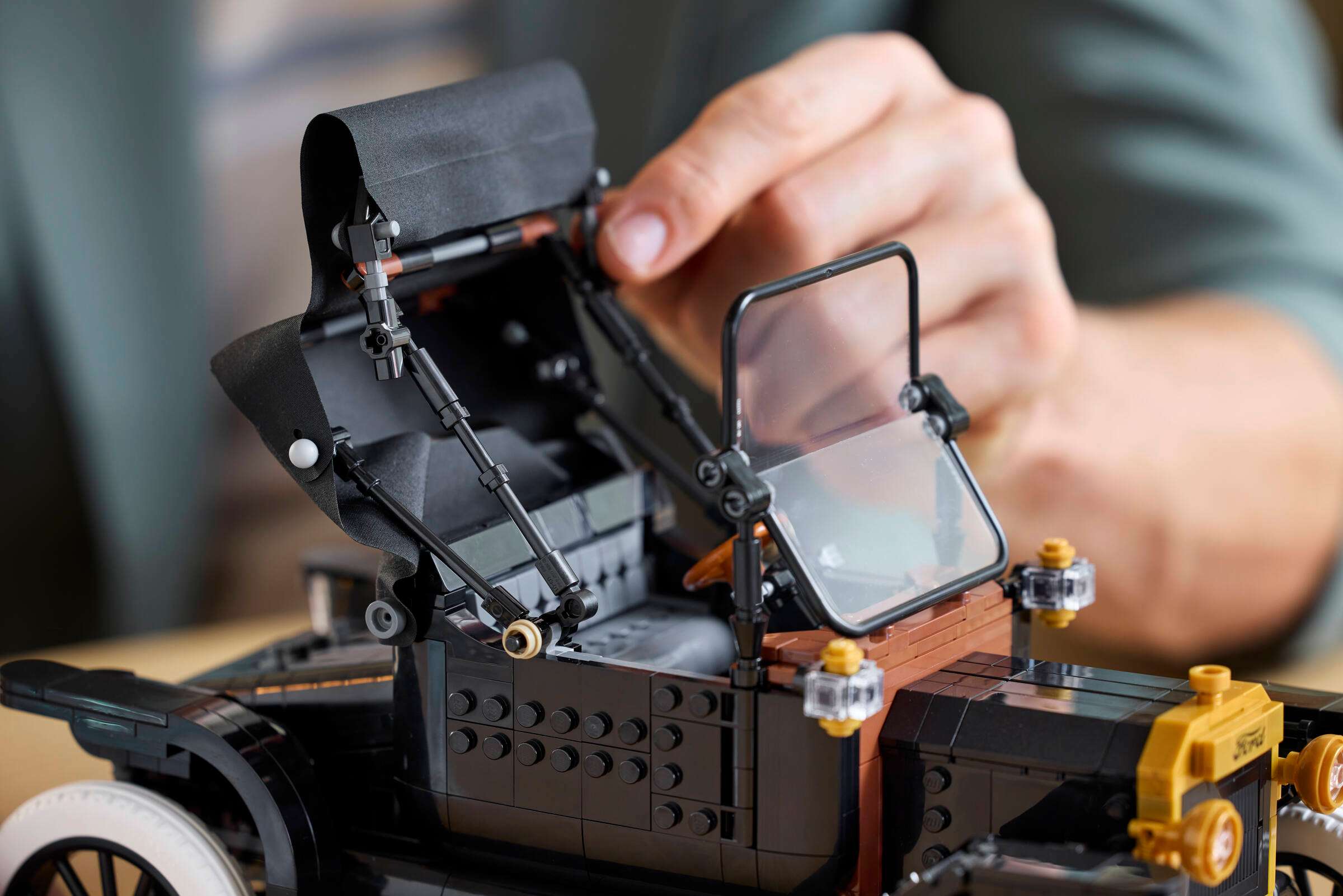
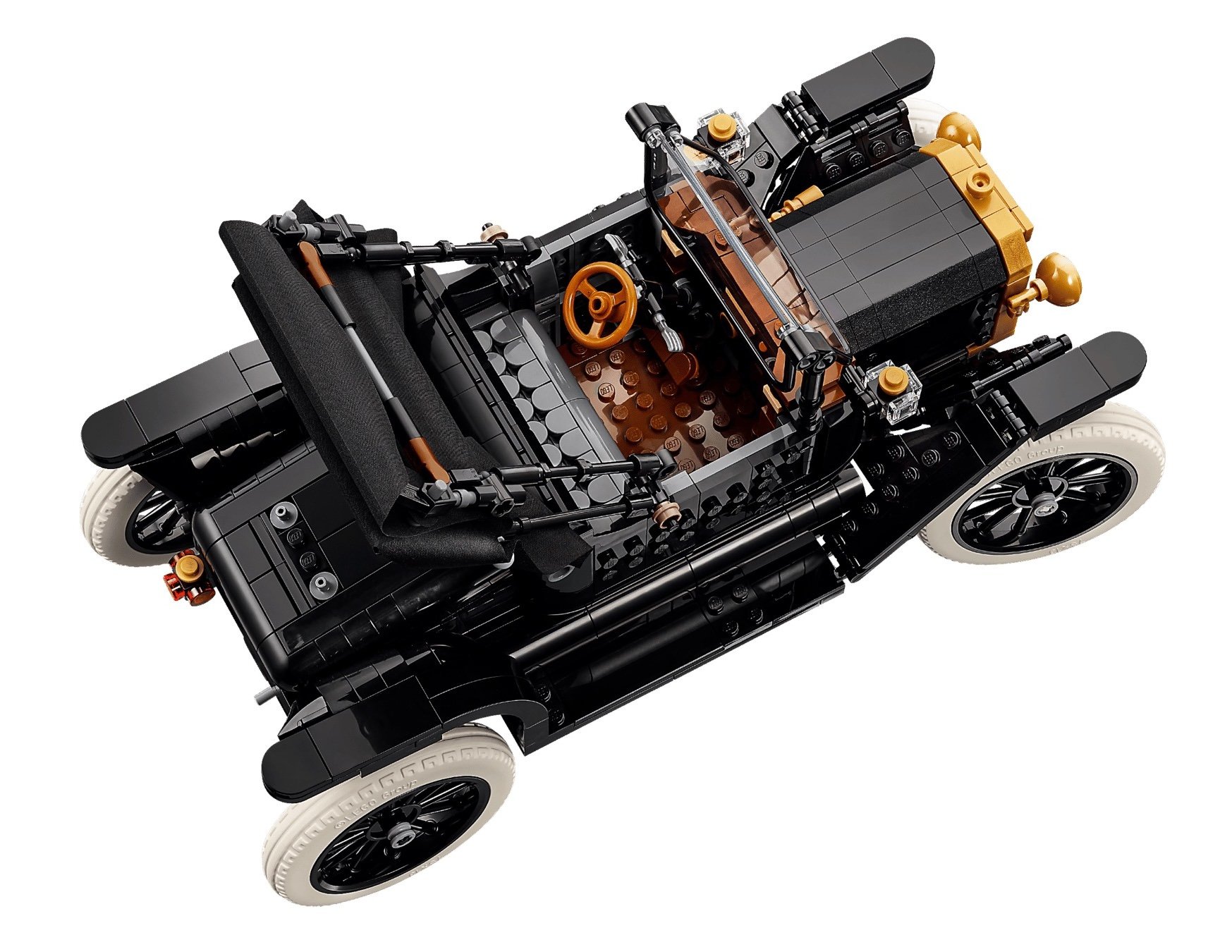
Finished in period-correct black with brass-colored accents, this Lego® model has spoked wheels with narrow white tires, a functional folding fabric roof, and a fold-down split windshield.
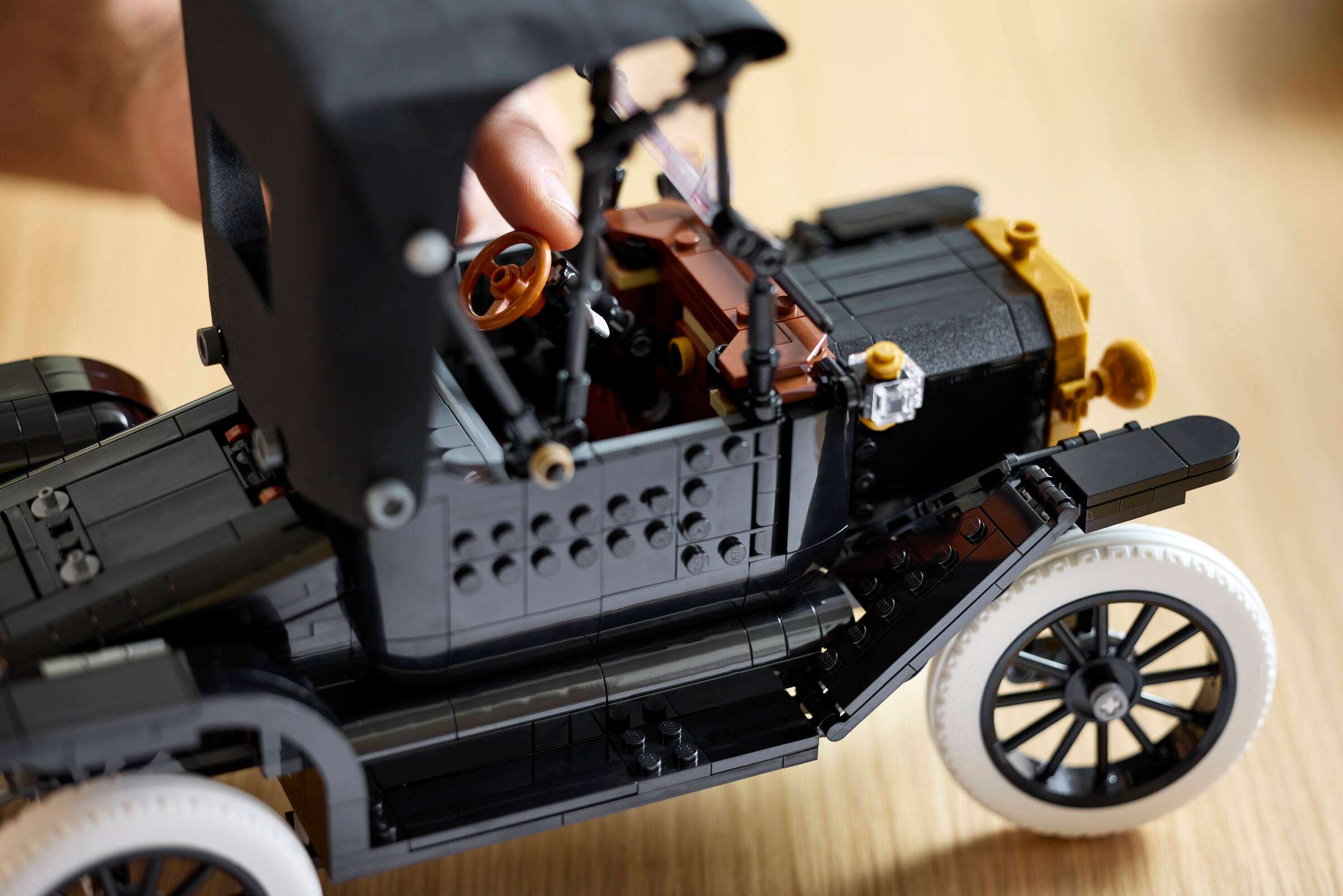
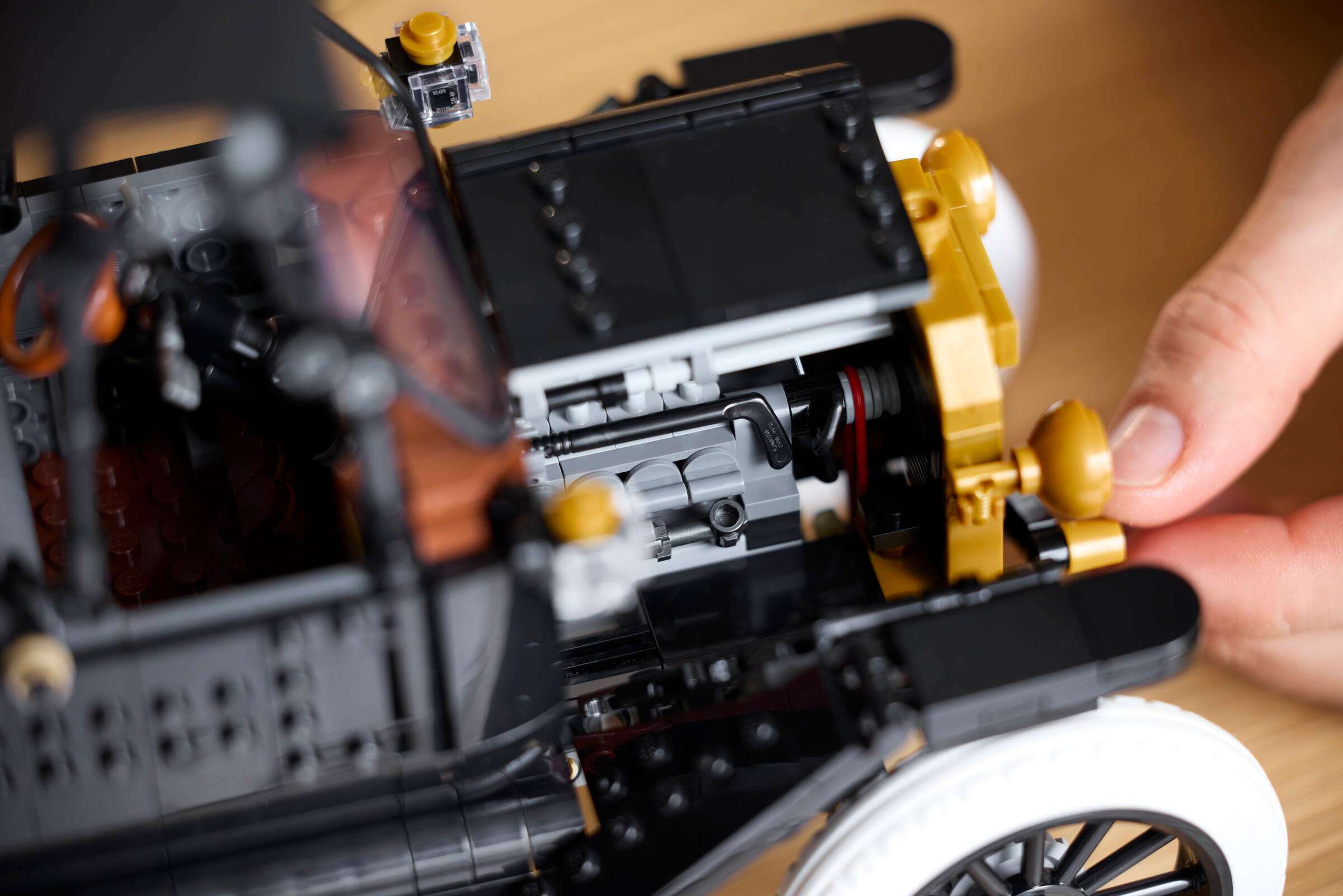
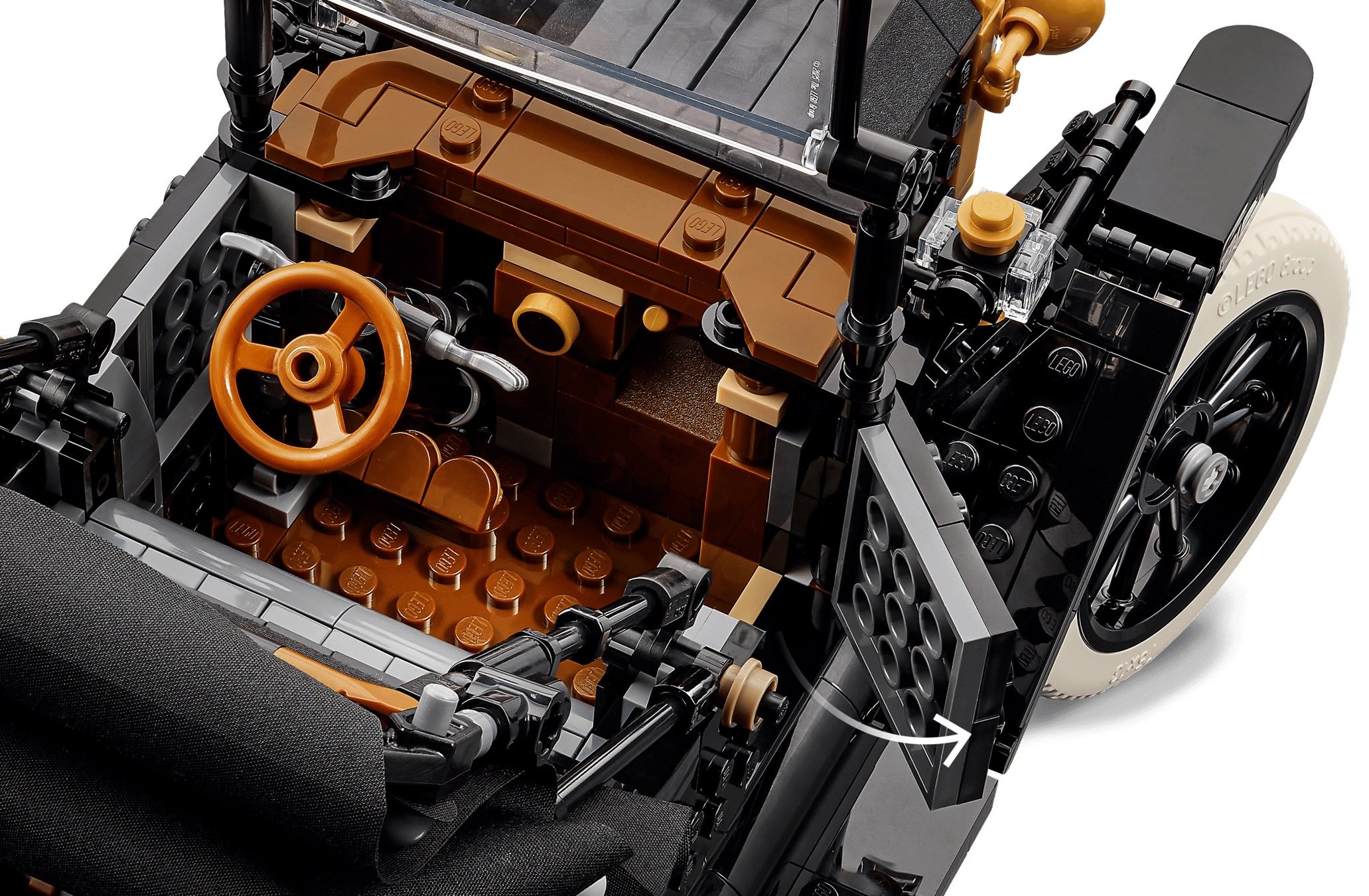
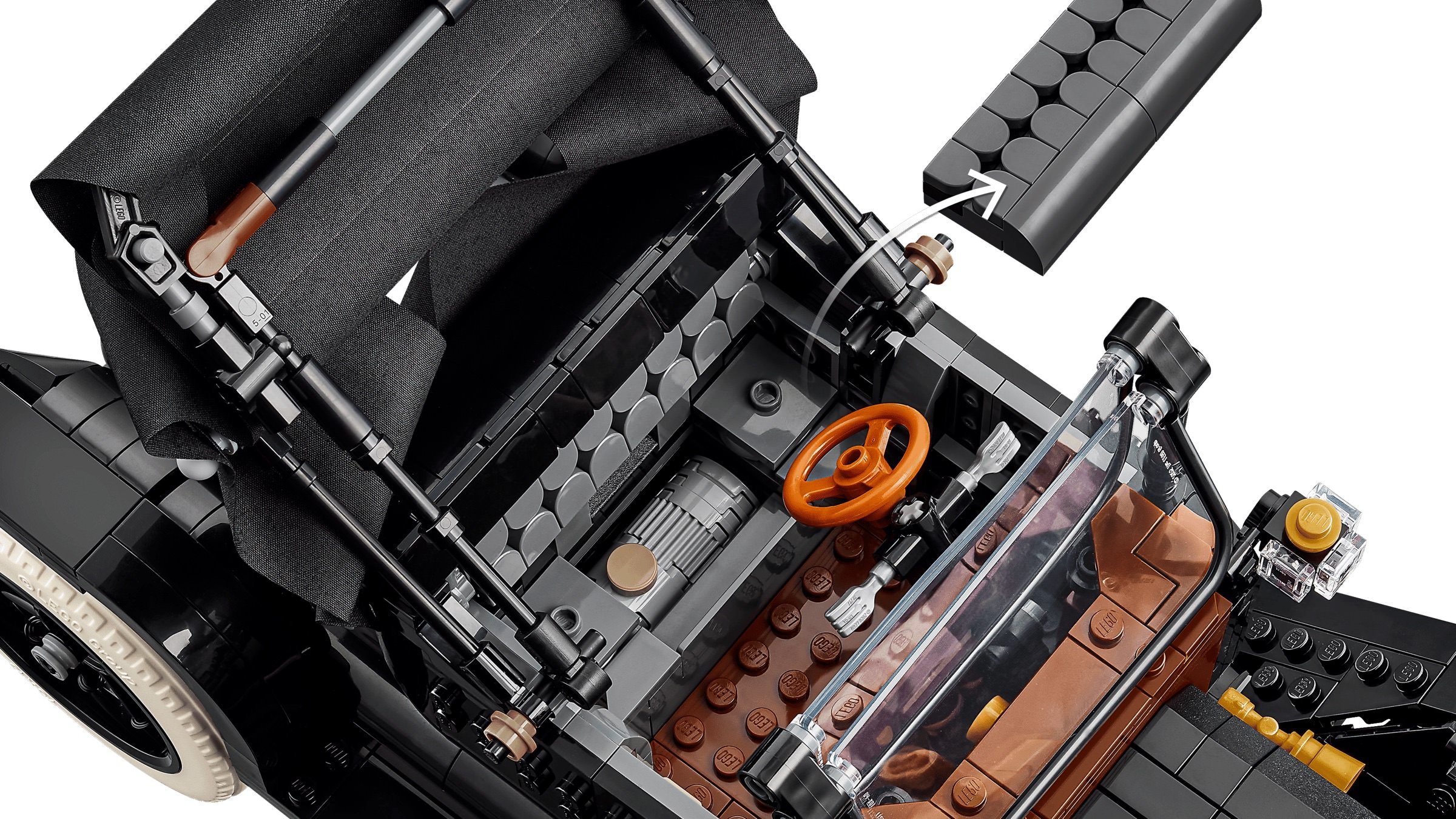
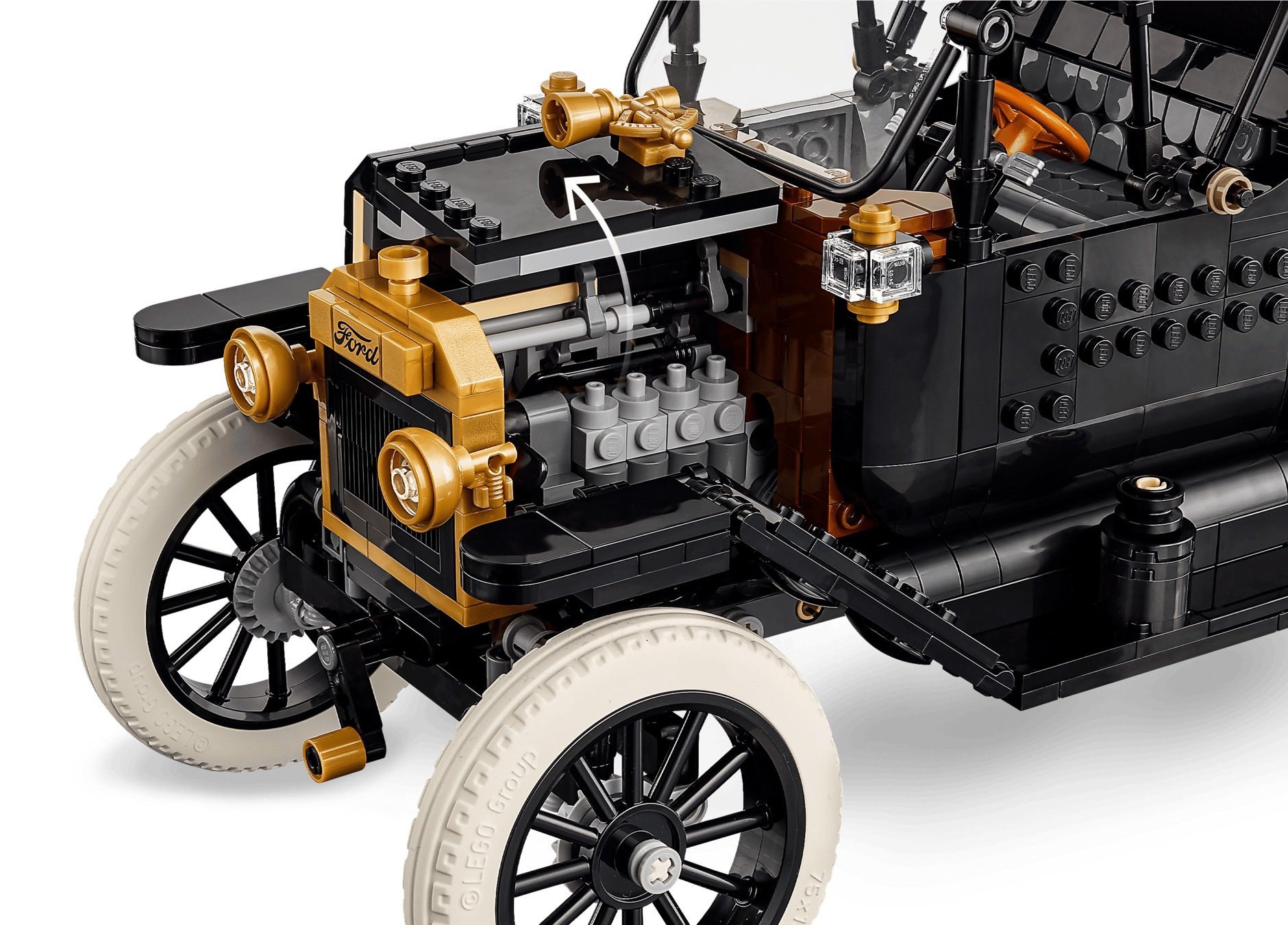
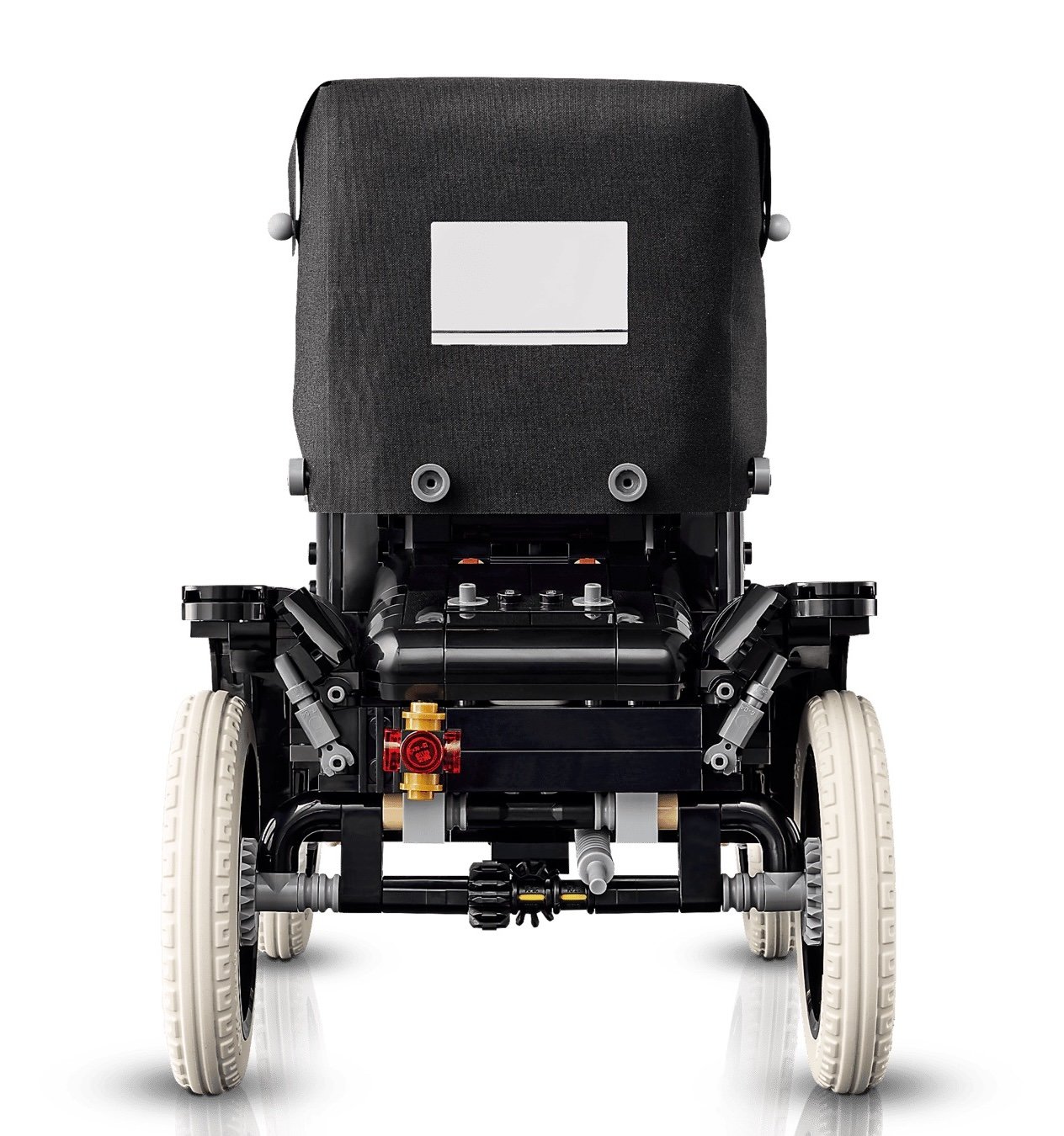
Functionality is built into the design: the steering wheel is operational, the passenger doors open, and the trunk can be opened. Under the opening hood, removable panels reveal a detailed engine, and a hand crank can be turned to spin the cooling fan.
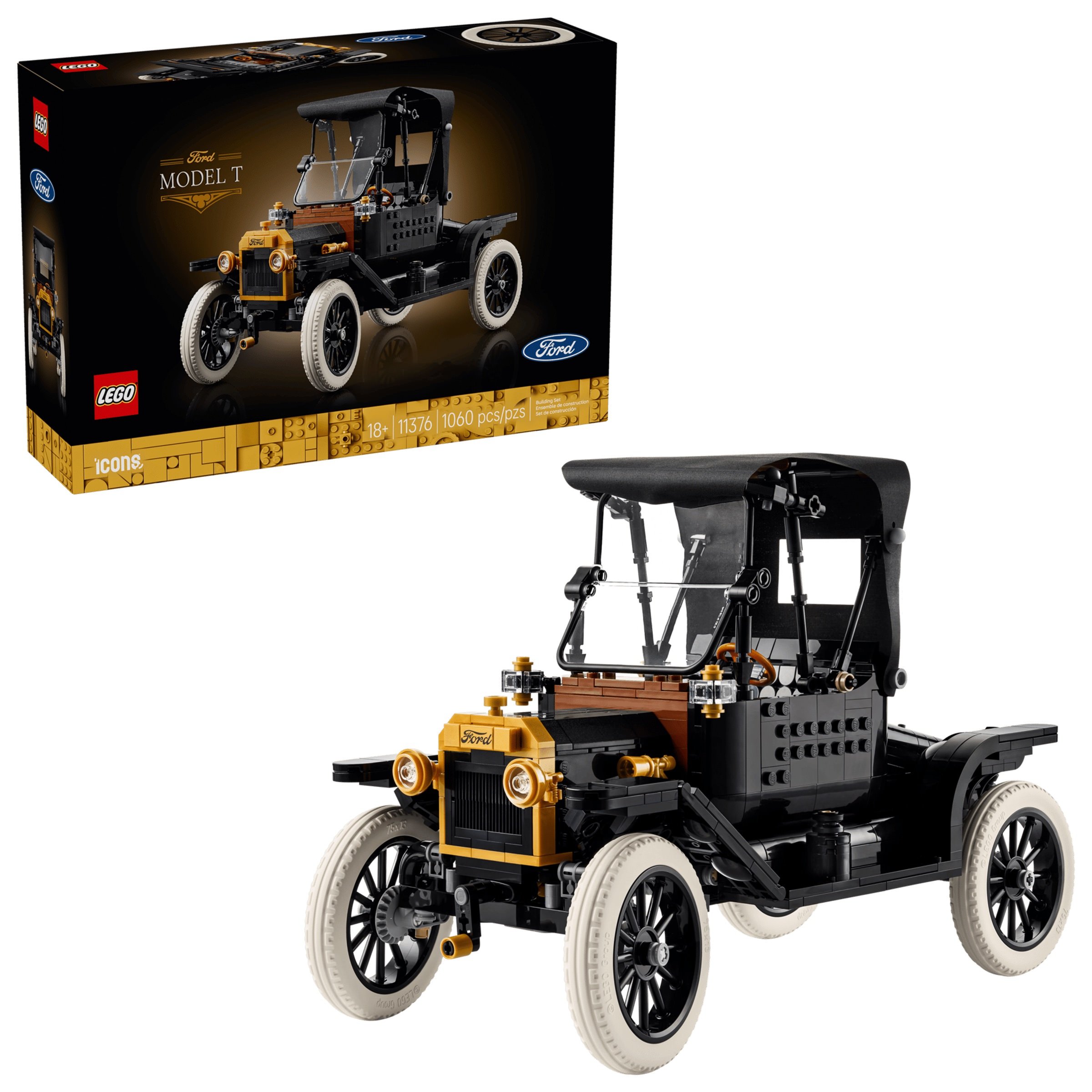
Finished in period-correct black with brass-colored accents, this Lego® model has spoked wheels with narrow white tires, a functional folding fabric roof, and a fold-down split windshield.
Additional details include a seat that lifts to show the location of the fuel tank and carefully recreated cabin elements that offer impressive attention to detail.
It’s a brand new Lego® kit with pre-orders being taken now for $129.99 USD, and shipping begins on the 1st of March. If you’d like to get one you can visit the official Lego® store page here.
Images courtesy of Lego®

Articles that Ben Branch has written have been covered on CNN, Popular Mechanics, Smithsonian Magazine, Road & Track Magazine, the official Pinterest blog, the official eBay Motors blog, BuzzFeed, Autoweek Magazine, Wired Magazine, Autoblog, Gear Patrol, Jalopnik, The Verge, and many more.
Silodrome was founded by Ben back in 2010, in the years since the site has grown to become a world leader in the alternative and vintage motoring sector, with well over a million monthly readers from around the world and many hundreds of thousands of followers on social media.