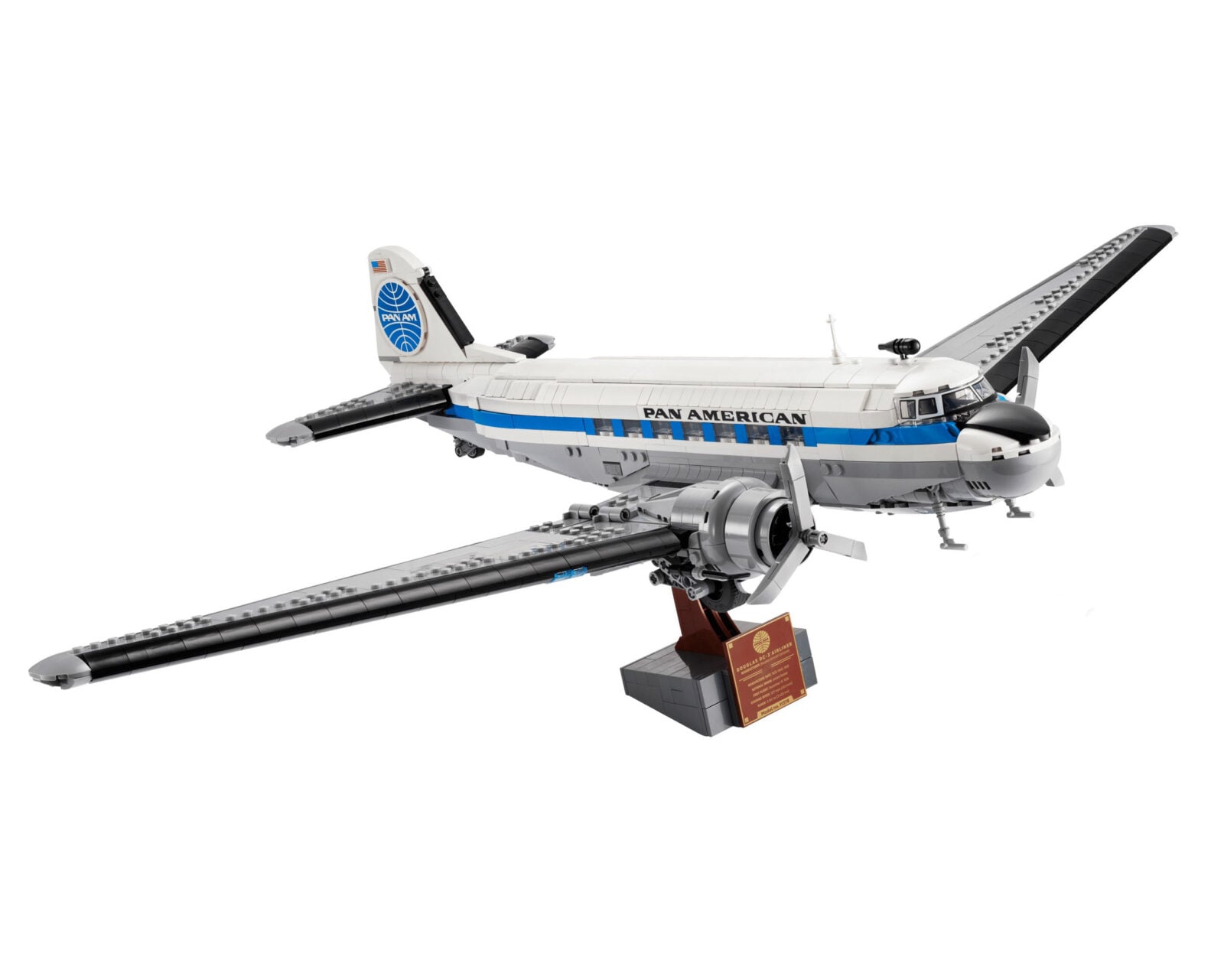
This is the brand new Douglas DC-3 Pan Am® airliner kit from Lego, it consists of 1,903 pieces and when it’s completed, it measures in at an impressive half-a-meter long.
The DC-3 is one of the best-loved of the early airliners and a number of them remain flying today, either in private ownership or as part of museum collections. The design had a long service life, including both civilian and military use during WWII.
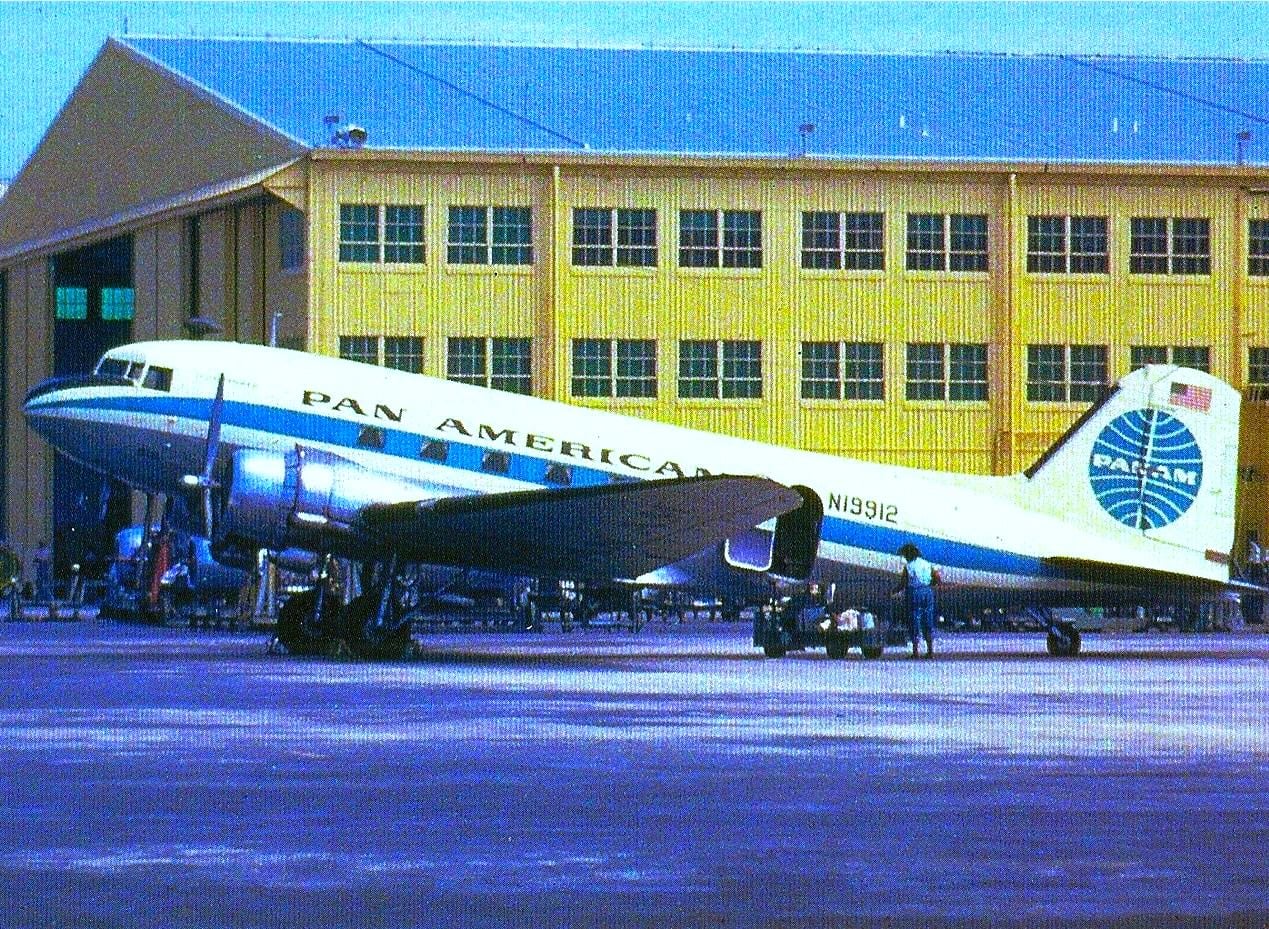
 This is a period postcard of a Pan Am DC-3 in Berlin, Germany. Image courtesy of Pan Am.
History Speedrun: The Douglas DC-3
The Douglas DC-3 began life as a favour that Donald Douglas didn’t particularly want to grant. In 1934, American Airlines CEO C. R. Smith talked Douglas into designing a “sleeper aircraft” based on the successful DC-2, intended to replace American’s aging Curtiss Condor II biplanes on overnight transcontinental routes. The passengers would sleep in bunks rather than sit in traditional seats.
Douglas was skeptical of the idea, night flying was deeply unpopular and the economics looked questionable, but Smith sweetened the deal with a commitment to purchase 20 aircraft, and development went ahead under chief engineer Arthur E. Raymond. The prototype, designated the Douglas Sleeper Transport (DST), first flew on the 17th of December 1935.
A day-plane version with 21 seats in place of the DST’s seven upper and seven lower sleeping berths was designated the DC-3, and there was no separate prototype – the first production DC-3 followed the initial batch of DSTs off the Santa Monica line and was delivered to American Airlines.
The impact that this aircraft had was immediate and industry-wide. American inaugurated DST sleeper service on the New York to Chicago route in June of 1936, with the standard 21 seat DC-3 entering service that September. Within a year C. R. Smith noted that the DC-3 was the first airplane that could make money just by hauling passengers, without relying on mail subsidies.
TWA and United quickly followed American’s lead, and by 1938, 95% of all US commercial airline traffic was carried on DC-3s. By 1939 the figure was an astonishing 90% worldwide, with 30 foreign airlines operating the type. KLM was the first European carrier to take delivery, in 1936.

Pan Am operated around 90 DC-3s across its network, deploying them primarily on Latin American, Alaskan, and Chinese routes through its associates and subsidiaries from 1937 onward. The late-1950s livery chosen for the model would represent the tail end of the type’s service life with Pan Am and its affiliates.
Douglas DC-3 Specifications
The DC-3 was powered by a pair of radial piston engines producing between 1,000 and 1,200 bhp each, early examples used the Wright R-1820 Cyclone, while later aircraft were fitted with the Pratt & Whitney R-1830 Twin Wasp. It cruised at 207 mph, carried 21 to 32 passengers or 6,000 lbs of cargo, and had a range of 1,500 miles. It took off easily, cruised comfortably at 185 mph at 10,000 feet, had a ceiling of 23,200 feet, and a relatively low stall speed of just 67 mph. Pilots famously used to say that it practically landed itself.
The most common civilian configuration of the DC-3 was the seven-window, 21 seat layout, though a less common eight-window variant carried 24 passengers, and relatively few of this configuration have survived to the modern day. Later versions stretched capacity to 28 and even 32 seats.
The military C-47 Skytrain added a reinforced cargo floor, a large cargo door, and a glider-towing shackle at the tail. The specialised C-53 Skytrooper was a dedicated troop carrier that lacked the C-47’s cargo door and reinforced floor – only 380 were built before the more versatile C-47 took over. Seven basic military versions were produced under at least 22 different designations, and licensed copies rolled off lines in the Soviet Union as the Lisunov Li-2 and in Japan as the Showa L2D.
Pan American came to the DC-3 a little later than the major US domestic carriers. It was primarily an international and overwater operator – its flagship fleet in the late 1930s largely comprised flying boats like the Sikorsky S-42 and the Boeing 314 Clipper.
Pan Am was in no hurry to order the DC-3, Douglas had already received orders from the US domestic airlines and four European carriers before Pan Am and its associate Panagra joined the queue. But once committed, the airline moved fast. Pan Am took delivery of its first DC-3 on the 1st of October 1937, added eight more before the end of that year, and two more in 1939, all powered by the Wright Cyclone engine.
Pan Am deployed its DC-3s not on glamorous transoceanic Clipper routes but across its sprawling Latin American and Asian network, DC-3s entered Latin American service in 1937 and by 1940 new DC-3As were operating throughout Latin America, Alaska, and China. The aircraft also served with Pan Am’s associate and subsidiary carriers, including Panagra, Mexicana, and CNAC (the China National Aviation Corporation).
CNAC, jointly owned by Pan Am and the Chinese government, operated semi-independently, and its DC-3s and C-47s flew some of the most dangerous missions of the war, pioneering the “Hump” route over the Himalayas and completing more than 20,000 Hump flights during the conflict.
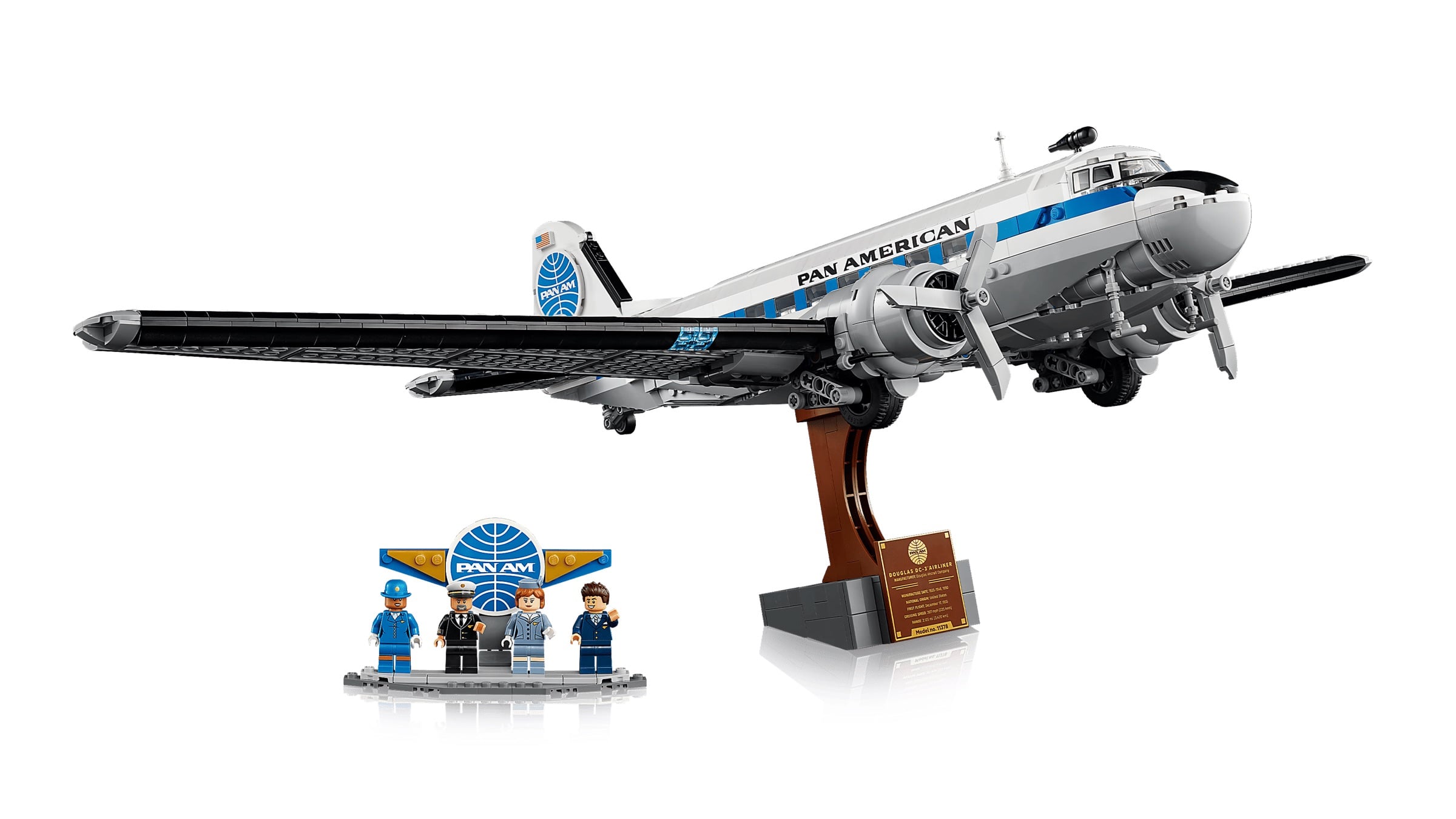
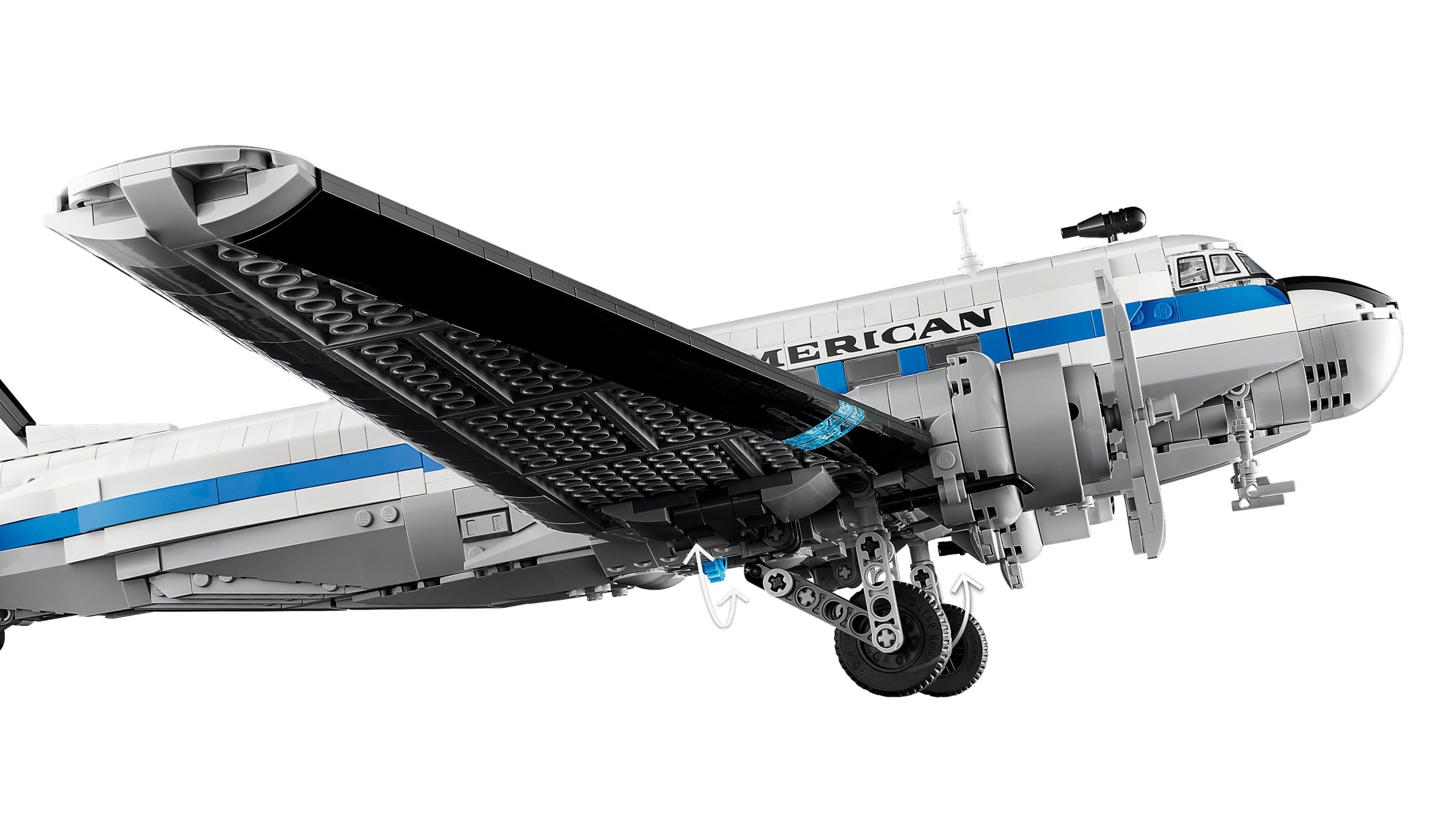
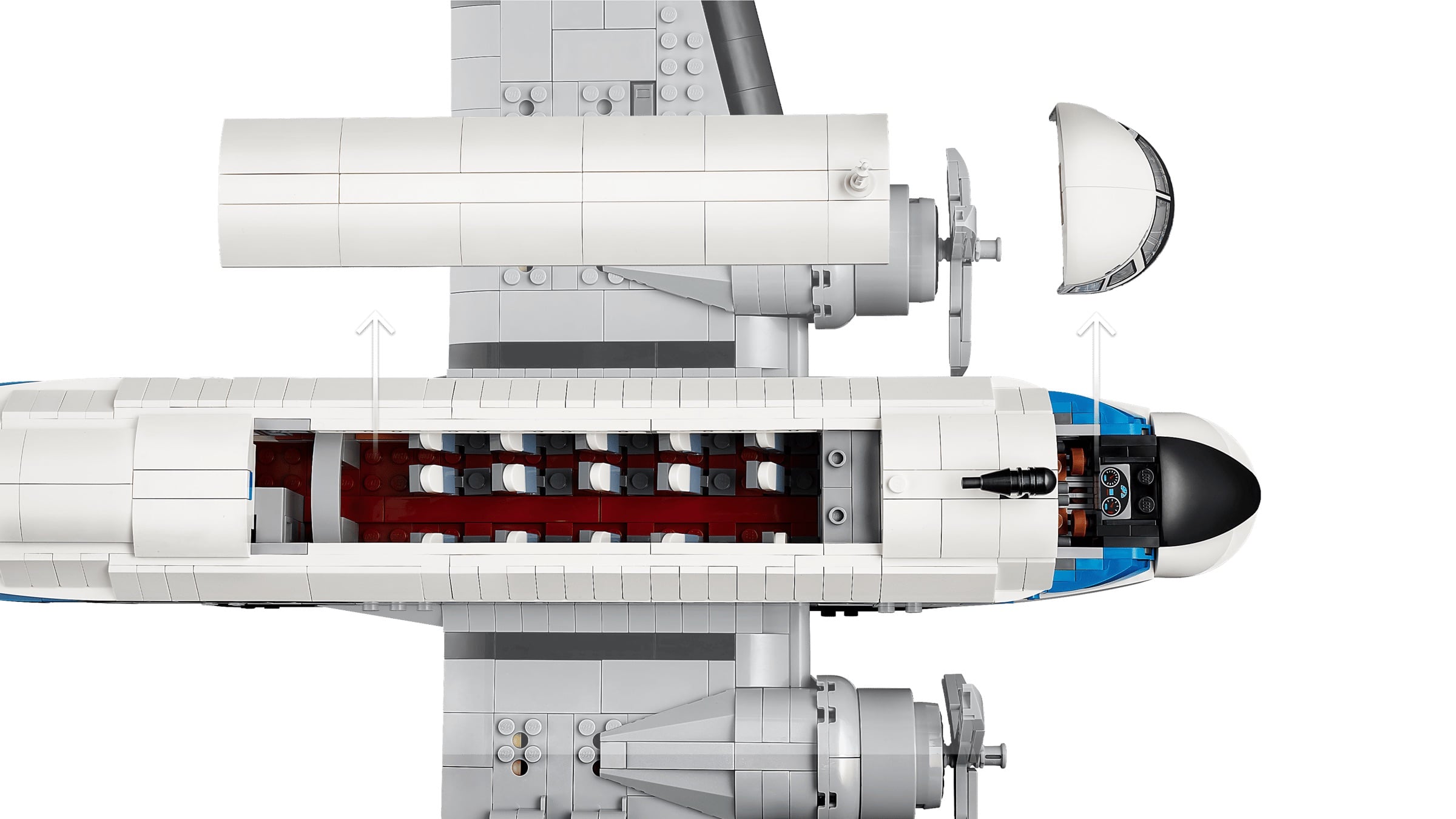
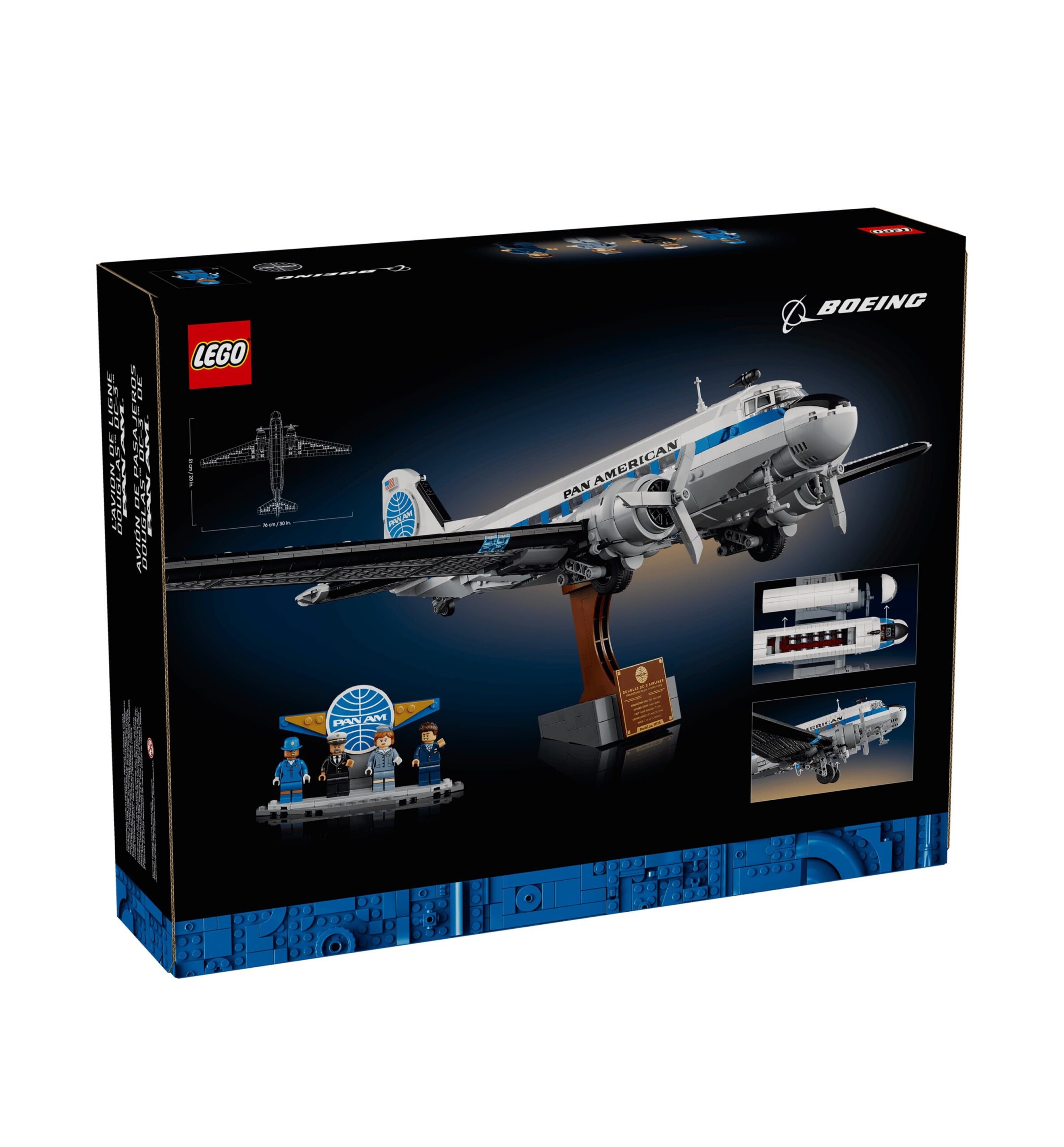
This is the new Lego Douglas DC-3, officially designated as #11378, the Douglas DC-3 Pan Am Airliner, runs to 1,903 pieces and it’s aimed squarely at adult builders, though many teens and more advanced kids will be able to tackle.
Post-WWII DC-3 Use
After the war, even Pan Am, an airline that had always prided itself on operating the newest, most advanced equipment available, couldn’t resist the economics of surplus military airframes. As Davies noted, Pan Am bought secondhand aircraft for the first time in its history, snapping up war-surplus C-47s and C-53s for roughly $5,000 to $8,000 USD apiece.
These bargain-bin DC-3s served Pan Am’s postwar Latin American and European routes until DC-4s and Constellations gradually replaced them from 1948 onward. By the early 1950s, the DC-3 had largely passed from Pan Am’s own fleet into the liveries of its Latin American associates, airlines like Avianca, Cubana, Mexicana, and Panagra.
The New Lego Douglas DC-3 Pan Am® Airliner
This is the new Lego Douglas DC-3, officially designated as #11378, the Douglas DC-3 Pan Am Airliner, runs to 1,903 pieces and it’s aimed squarely at adult builders, though many teens and more advanced kids will be able to tackle.
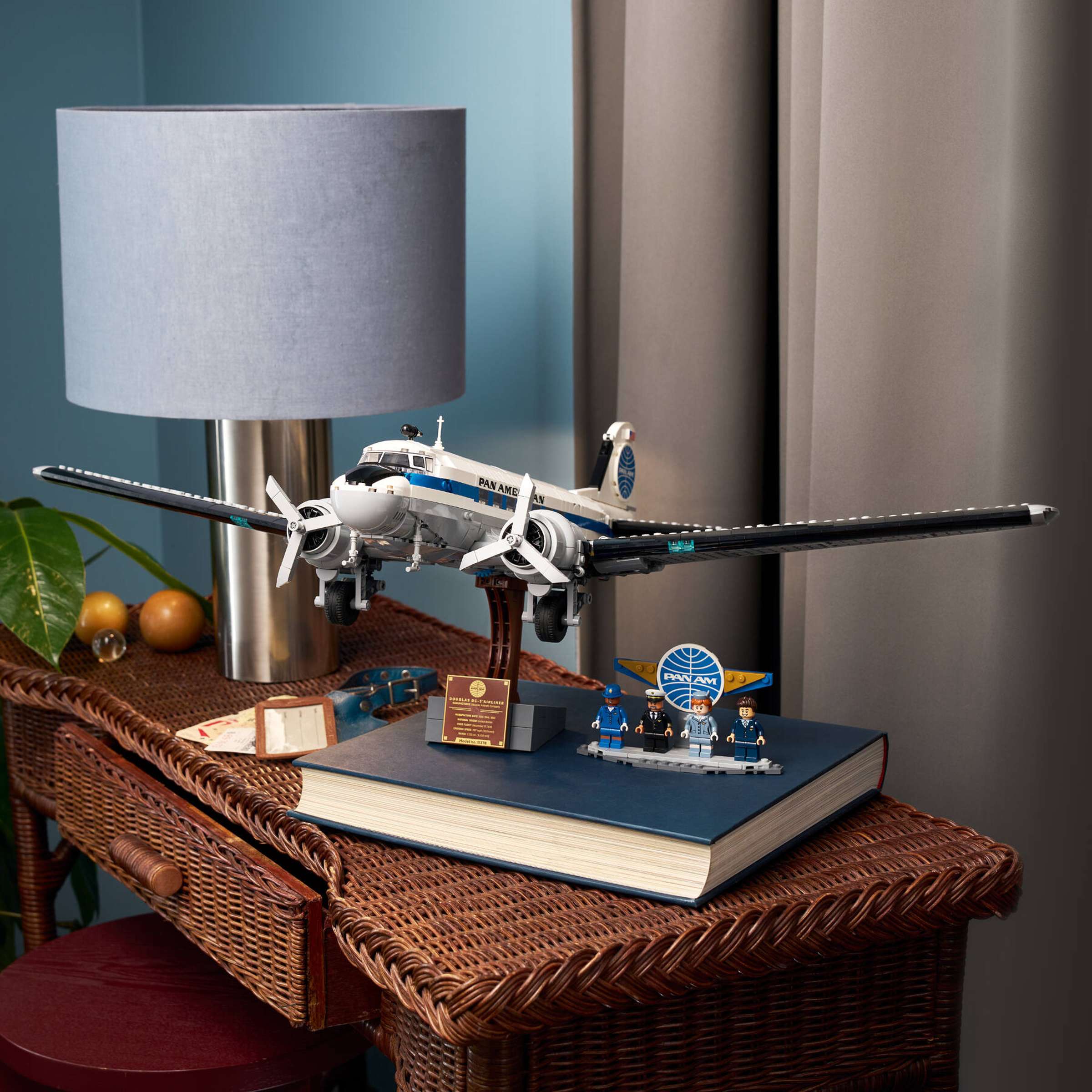
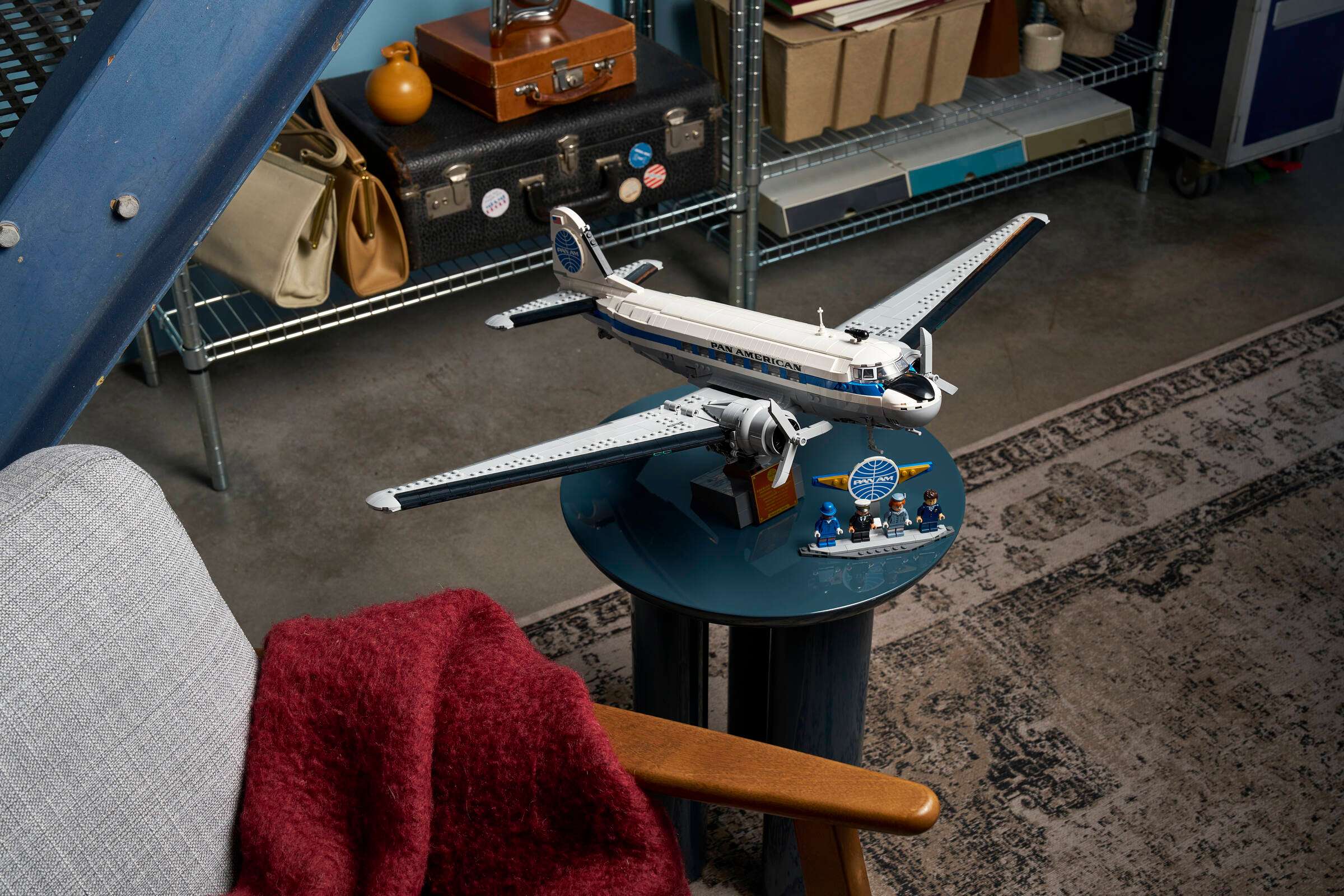
The finished model measures in at 20 inches long with a 30 inch wingspan, and it carries Pan Am’s late-1950s livery – the deep navy blue and white scheme that became one of the most recognizable airline color schemes of the 20th century. It sits on a dedicated display stand with an information plaque, positioning it firmly as a desk or shelf centrepiece rather than a toy.
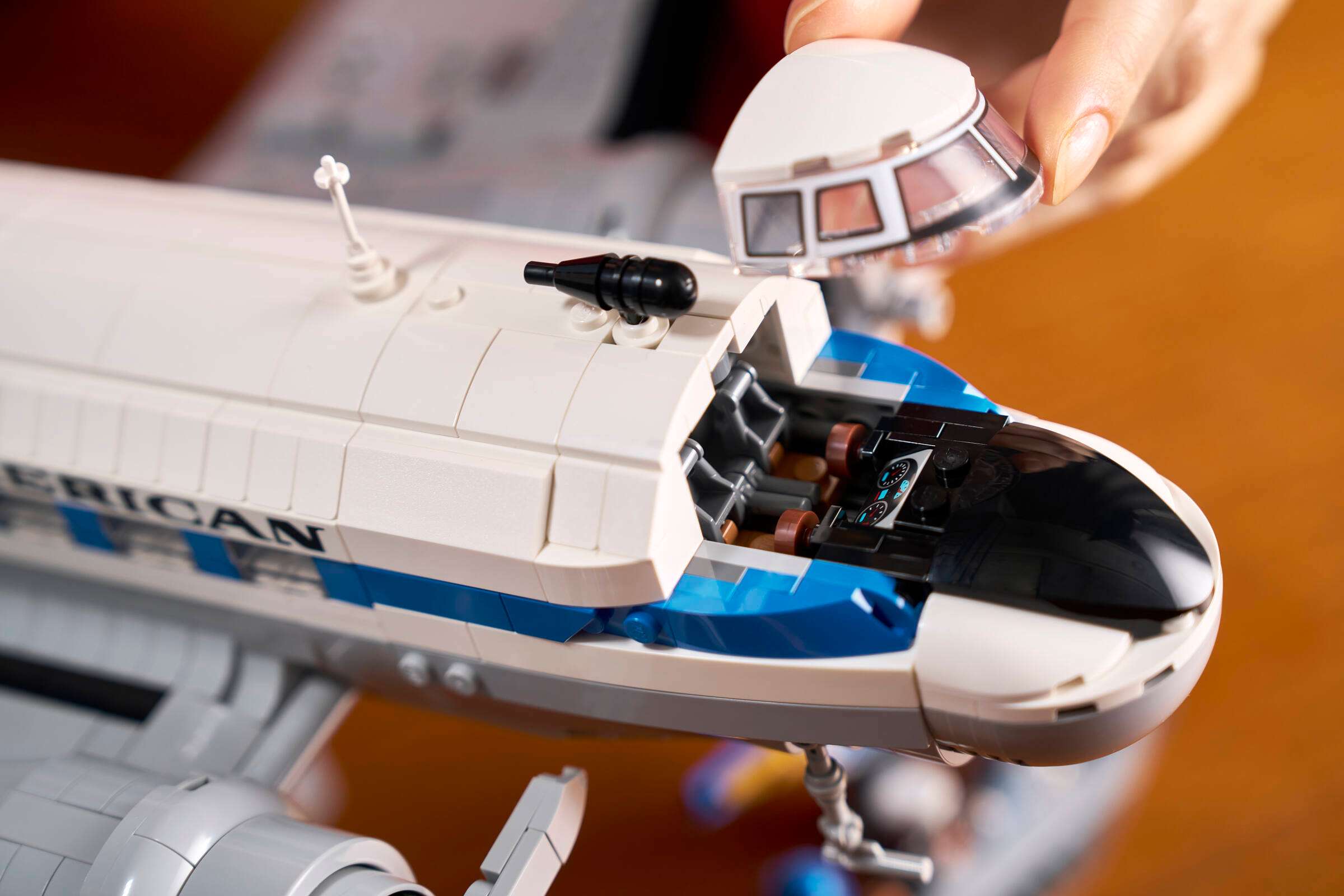
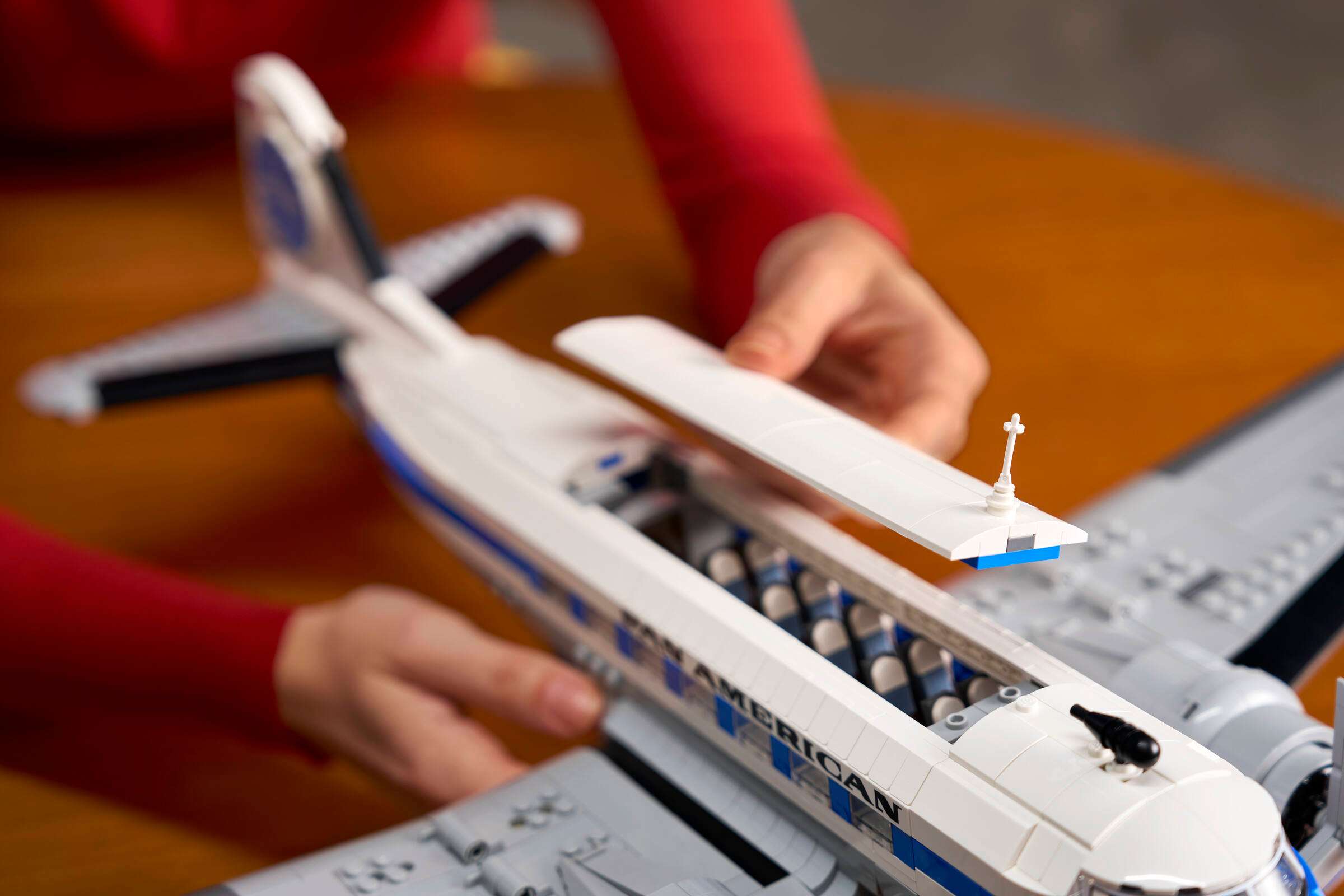
The build includes a number of nice functional details – it has retractable landing gear operated by a dial mechanism, and removable fuselage sections that open up to reveal a detailed cockpit and passenger cabin complete with an aisle and individual seating.
Four minifigures come dressed in period Pan Am aircrew uniforms – with a pilot, a stewardess, a flight attendant, and a purser – and get their own Pan Am-branded display stand.
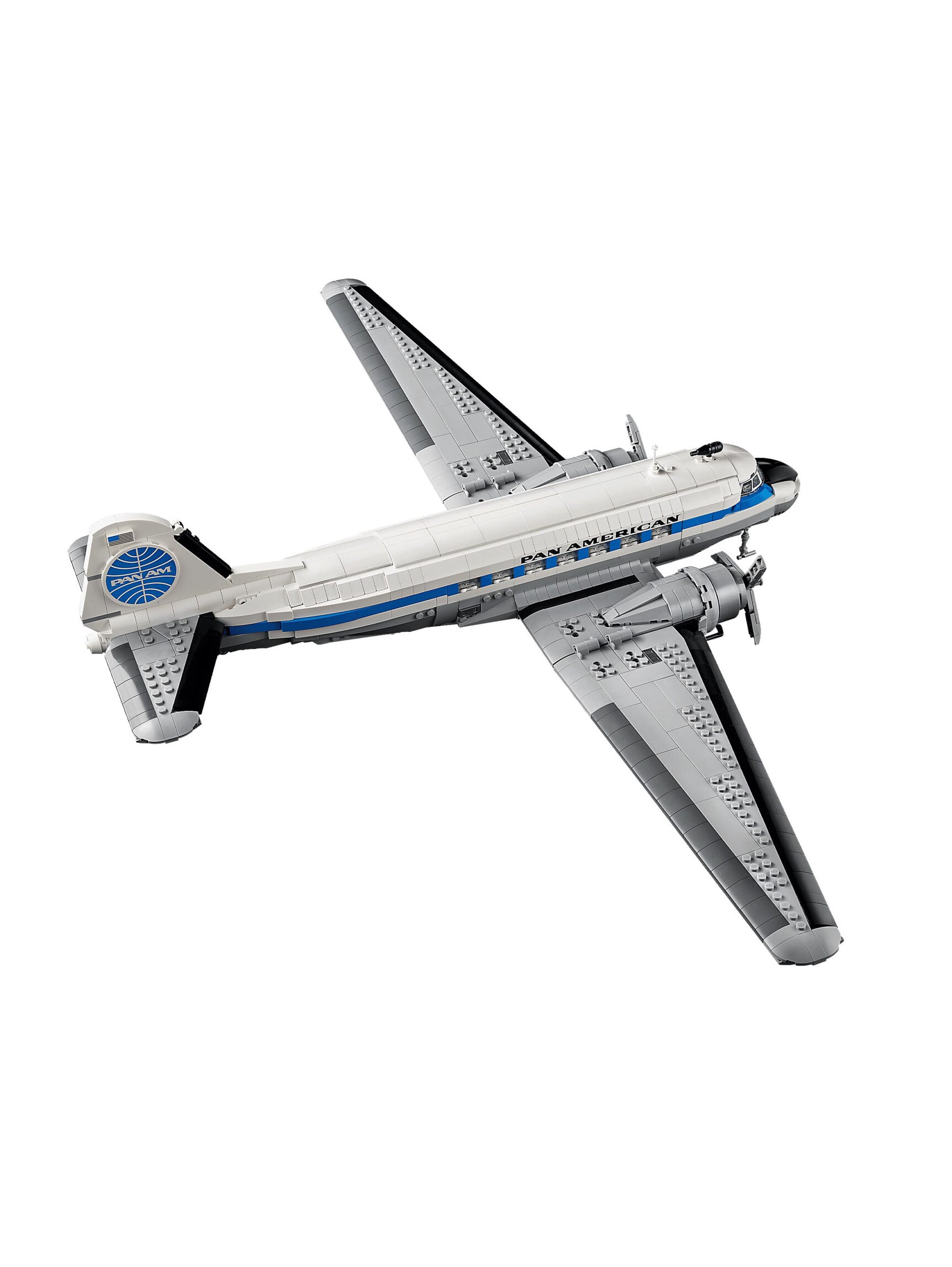
The finished model measures in at 20 inches long with a 30 inch wingspan, and it carries Pan Am’s late-1950s livery – the deep navy blue and white scheme that became one of the most recognizable airline color schemes of the 20th century. It sits on a dedicated display stand with an information plaque, so it can be used as a desk or shelf centerpiece rather.
Pan Am operated around 90 DC-3s across its network, deploying them primarily on Latin American, Alaskan, and Chinese routes through its associates and subsidiaries from 1937 onward. The late-1950s livery chosen for the model would represent the tail end of the type’s service life with Pan Am and its affiliates.
If you’d like to read more about this new Lego set or order your own you can visit the official Lego store here.



Images courtesy of Lego + Pan Am

Articles that Ben Branch has written have been covered on CNN, Popular Mechanics, Smithsonian Magazine, Road & Track Magazine, the official Pinterest blog, the official eBay Motors blog, BuzzFeed, Autoweek Magazine, Wired Magazine, Autoblog, Gear Patrol, Jalopnik, The Verge, and many more.
Silodrome was founded by Ben back in 2010, in the years since the site has grown to become a world leader in the alternative and vintage motoring sector, with well over a million monthly readers from around the world and many hundreds of thousands of followers on social media.