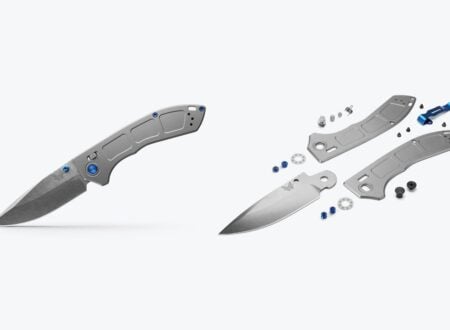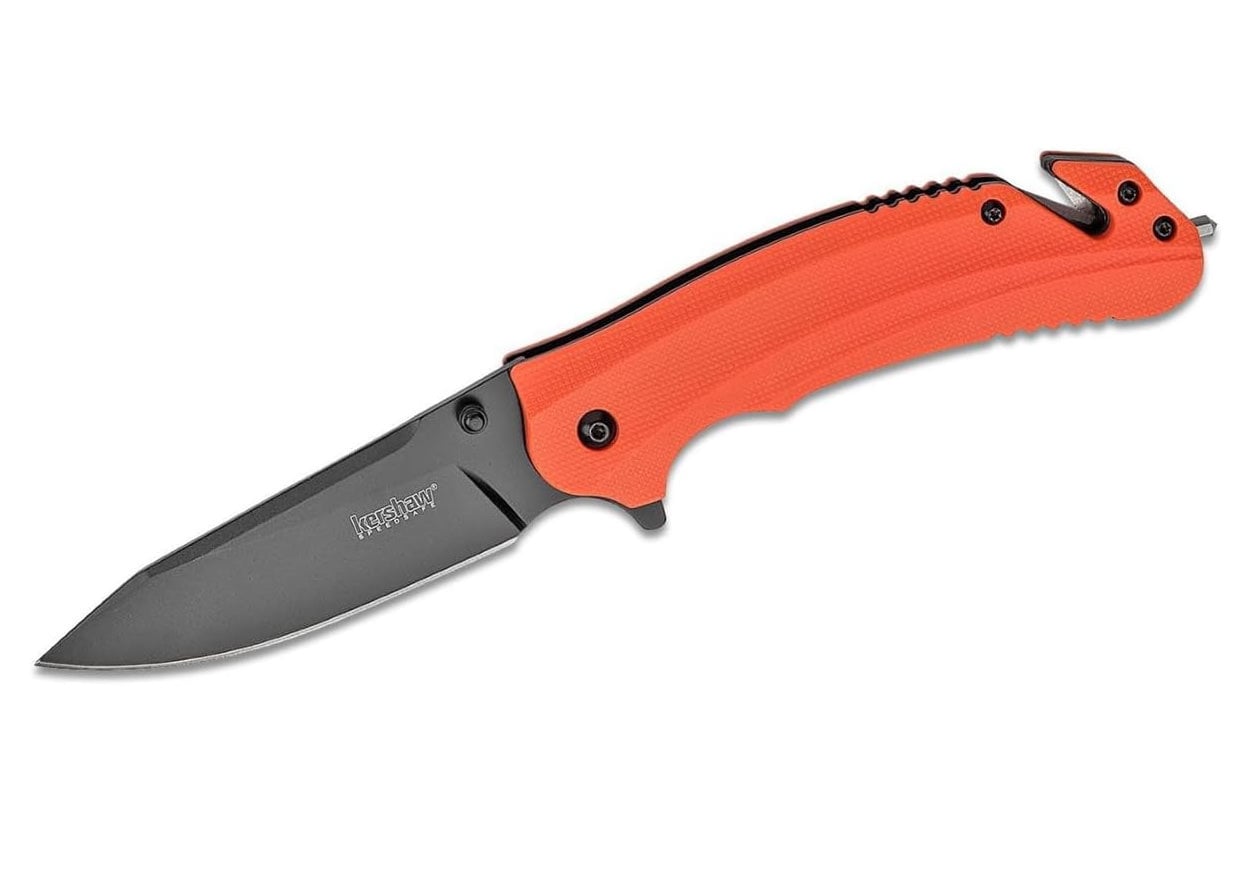
This is the Kershaw Barricade Pocket Knife, it was developed by the American knife making company for use in road-rescue situations, and it’s designed to be left in your automotive first aid kit or glove compartment for when you need it.
The Barricade is a folding knife with both a carbide glass breaker and cord/seatbelt cutter, as well as a 3.5” drop point blade made from 8Cr13MoV steel – a carbon, chromium, molybdenum, vanadium alloy known for being easy to sharpen to a razor edge.
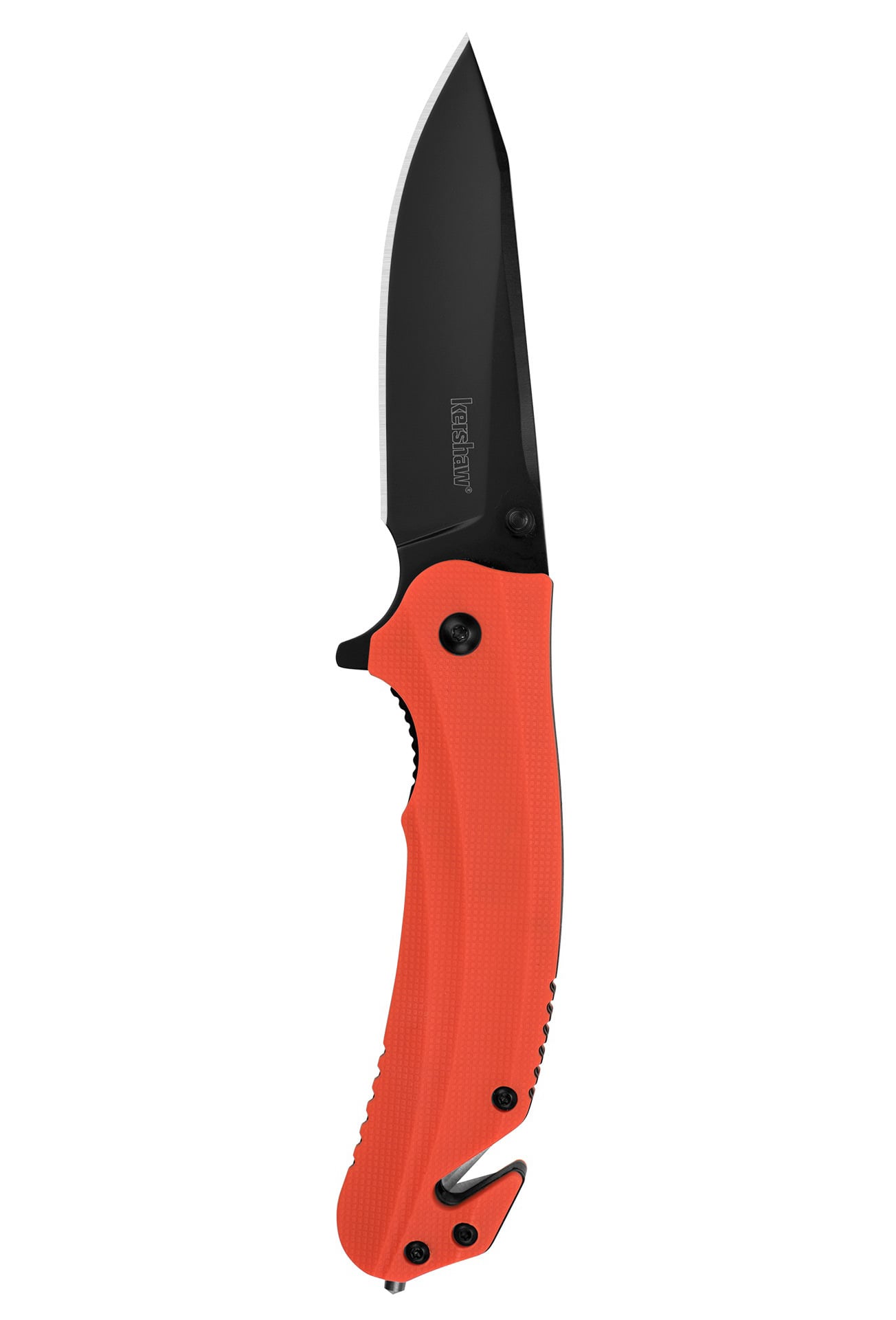
 This is the Kershaw Barricade Pocket Knife, it was developed by the American knife making company for use in road rescue situations, and it’s designed to be left in your automotive first aid kit or glove compartment for when you need it.
History Speedrun: Kershaw Knives
The story of Kershaw Knives starts (as many good knife stories do) with a guy who already knew the business inside and out – his name was Pete Kershaw and he was born and raised in Medford, Oregon, where he grew up on a pear orchard, hunting, fishing, and working on equipment.
In 1967, a then-28 year old Pete was hired by Pete Gerber of Gerber Legendary Blades to serve as the company’s National Sales Manager. He held that role for seven years, spending his time at trade shows, talking to customers, and learning everything he could about the industry – including who made what, where, and how well they made it.
By 1974, he was ready to go out on his own. He had developed original concepts for a line of hunting and pocket knives, with six fixed-blade designs and four folders. He left Gerber and set up shop at a cement plant in Lake Oswego, Oregon, a suburb of Portland. The company was small, Pete sold his early knives directly from the trunk of his car, but from the start, the focus was on quality, and on finding the right manufacturing partner to deliver it reliably, knife after knife.
During his time at Gerber, Pete had built up contacts with Japanese and European knife manufacturers, and he used those connections once he was out on his own. By May of 1974, he had appointed Kai Cutlery of Seki City, Japan to produce his knives. No one can argue that the Japanese don’t know their way around making world class blades – they’ve been doing it since the time of the samurai.
Sources differ on when Kai fully acquired Kershaw, 1977 is widely repeated, while Pete Kershaw himself reportedly placed the completed sale closer to 1985. In either case, this acquisition gave the small Oregon brand the manufacturing muscle and financial backing of a major cutlery conglomerate.
Kai itself was a family-owned company based in Seki City, already decades into a history that would eventually span more than a century – the company celebrated its 100th anniversary in 2008 under the leadership of Koji Endo, the third generation of the Endo family to run it.
Through the late 1970s and 1980s, Kershaw continued to refine its lineup of hunting and field knives, building a steady reputation among outdoorsmen in the United States, Canada, and further afield. In many respects, the brand’s first real transformation came in the 1990s.
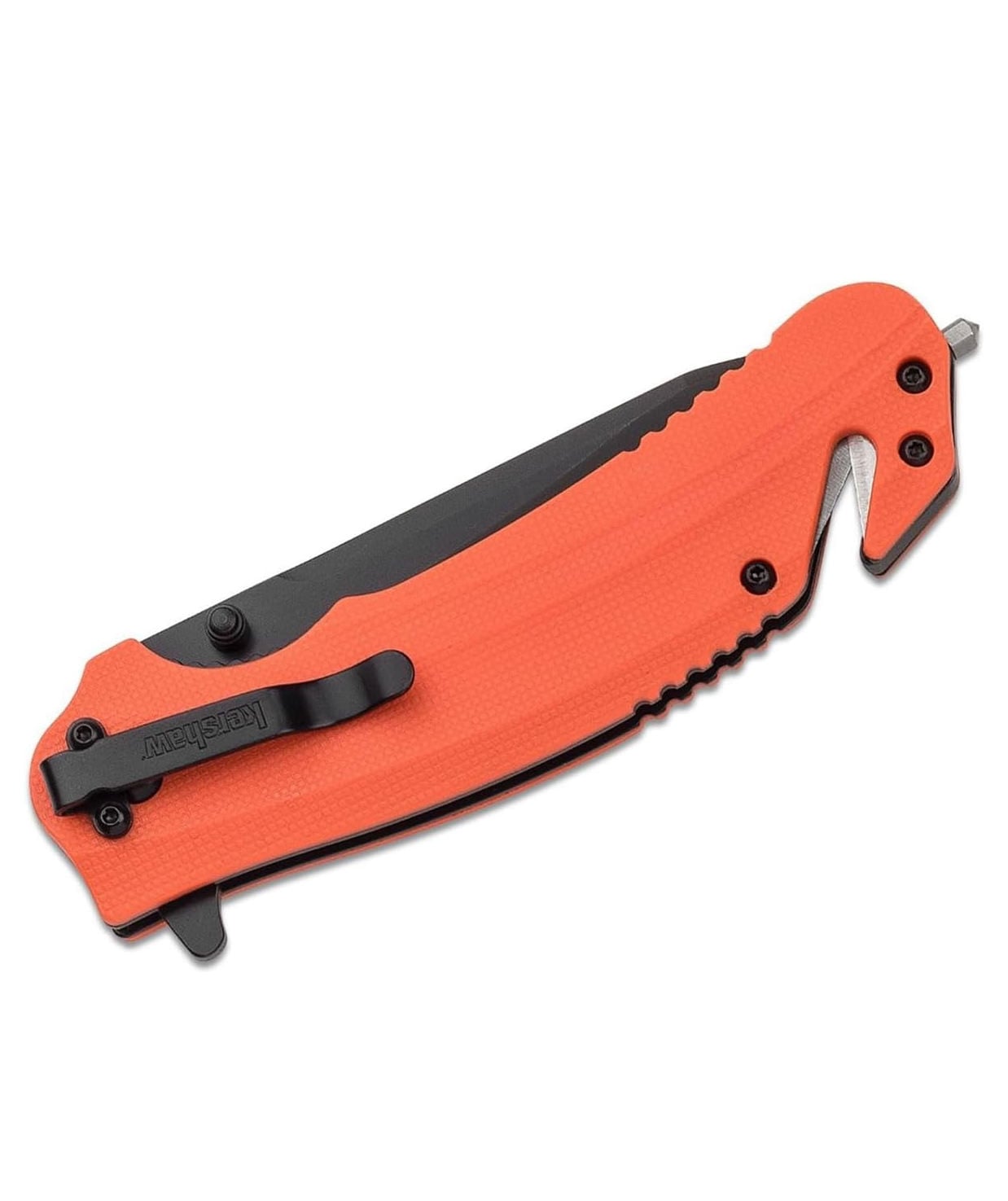
The Barricade has three rescue-specific features – a carbide glass breaker in the butt end, a built-in seatbelt/cord cutter integrated into the handle, and SpeedSafe assisted opening for fast one-handed deployment via flipper or ambidextrous thumb studs.
In 1995, Kershaw released its first liner lock knives, the Liner Action series, which marked a significant step into more modern folding knife designs. In the late 1990s, Kai USA opened a U.S. production facility in Wilsonville, Oregon, which was operational by 1997. The goal was to give Kershaw domestic manufacturing capability to complement its Japanese-made products and reach a wider American market, with American-made knives.
Doug Flagg, Kershaw’s VP of Sales, learned about a revolutionary assisted-opening mechanism at the SHOT Show in 1996 and flew to Hawaii to meet its inventor – a custom knifemaker named Ken Onion who was a former U.S. Marine and who had built his first knife just five years earlier in 1991.
Their deal reshaped the knife industry. Onion’s mechanism was patented as “SpeedSafe,” and by 1998 the first production knife to feature it, the Kershaw Random Task, won Blade Magazine’s “American Made Knife of the Year.” Between 1996 and 2008, Onion served as Kershaw’s Premier Knife Designer, developing a series of now iconic models like the Leek, Blur, Scallion, Shallot, and Chive – many cleverly named after varieties of onion as a play on his own unusual surname.
Demand was so strong that the company had to expand its factory and hire more staff, ultimately relocating in 2003 to a 55,000 square foot facility in Tualatin, Oregon. At the 2005 Blade Show, Onion and Kershaw claimed four top awards.
In 2006, Kai USA launched Zero Tolerance Knives as a new “premium tactical” brand, debuting with Ken Onion and Strider Knives collaborations. When Onion left the company in 2008, the same year he was inducted into the Blade Magazine “Cutlery Hall of Fame,” Kershaw entered a new era of collaborations with knife designers like Rick Hinderer and Ernest Emerson.
The 2014 Kershaw-Emerson CQC series brought Emerson’s “Wave Shaped” opening feature to a mass-market audience for the first time, and in 2015 the Launch series introduced high-quality American-made automatic knives at surprisingly affordable price points.
The Kershaw Barricade Pocket Knife
The Kershaw Barricade is a folding knife with a 3.5 inch drop point blade made from 8Cr13MoV stainless steel with a black-oxide coating. The handle is made from glass-filled nylon in high-visibility orange, and the knife weighs in at 4.5 oz with an overall length of 8.5 inches when opened.
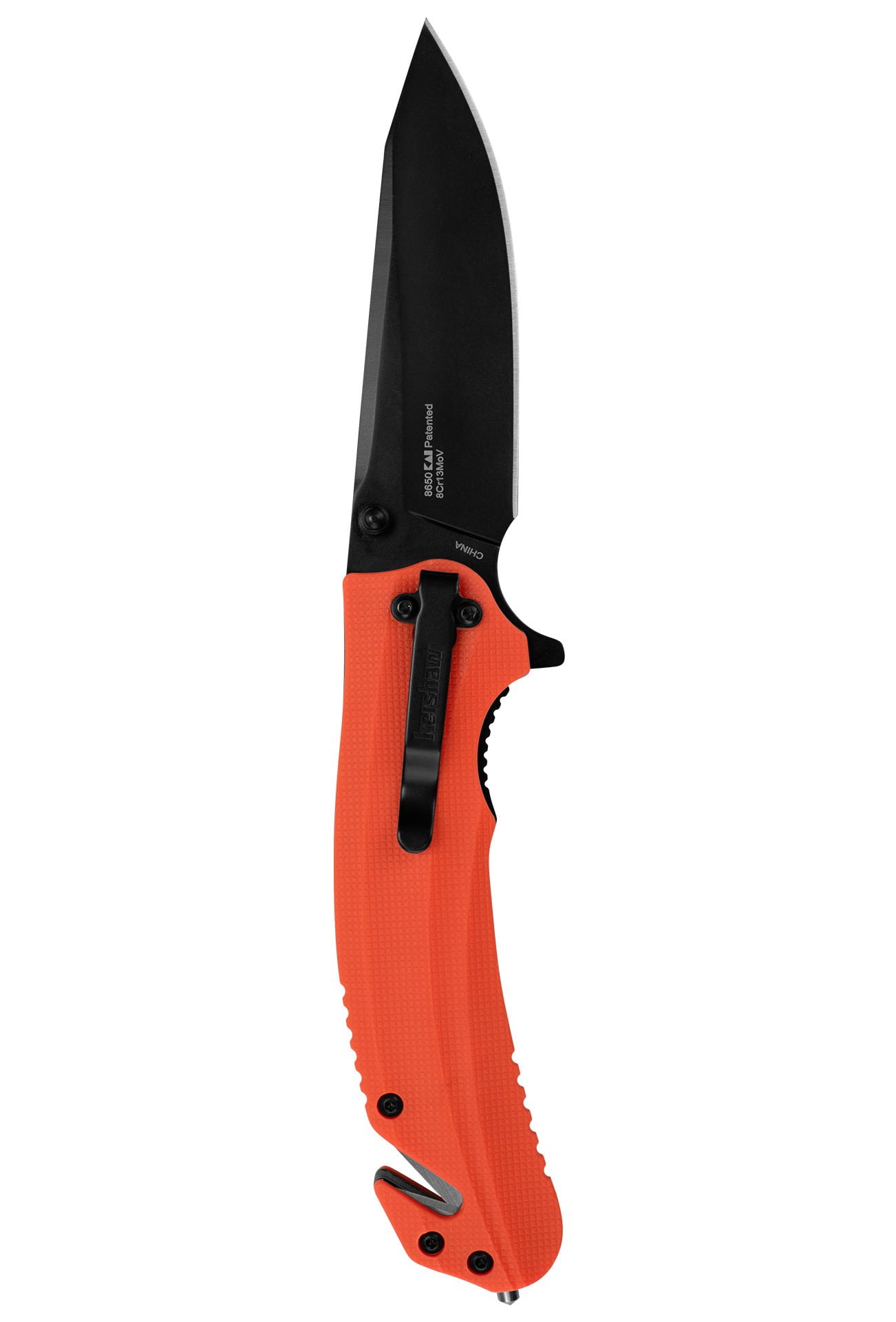
The Kershaw Barricade is a folding knife with a 3.5 inch drop point blade made from 8Cr13MoV stainless steel with a black-oxide coating. The handle is made from glass-filled nylon in high-visibility orange, and the knife weighs in at 4.5 oz with an overall length of 8.5 inches when opened.
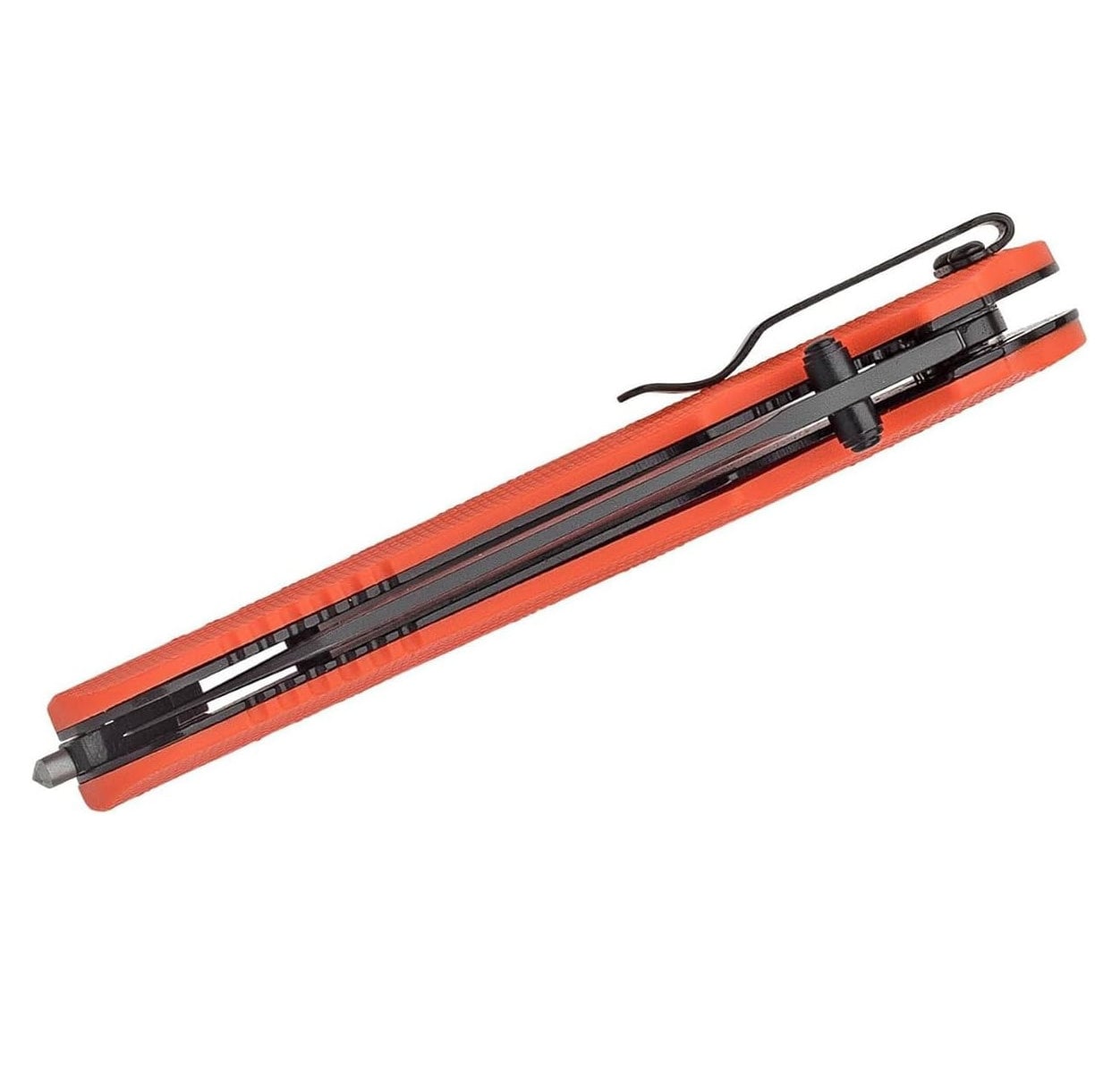
The Barricade has three rescue-specific features – a carbide glass breaker in the butt end, a built-in seatbelt/cord cutter integrated into the handle, and SpeedSafe assisted opening for fast one-handed deployment via flipper or ambidextrous thumb studs.
A liner lock secures the blade when open to stop it closing on your hand for safety. Kershaw backs the knife with a Limited Lifetime Warranty and it’s now for sale on the official Kershaw Amazon store here with an MSRP of $31 USD.
Images courtesy of Kershaw Knives

Articles that Ben Branch has written have been covered on CNN, Popular Mechanics, Smithsonian Magazine, Road & Track Magazine, the official Pinterest blog, the official eBay Motors blog, BuzzFeed, Autoweek Magazine, Wired Magazine, Autoblog, Gear Patrol, Jalopnik, The Verge, and many more.
Silodrome was founded by Ben back in 2010, in the years since the site has grown to become a world leader in the alternative and vintage motoring sector, with well over a million monthly readers from around the world and many hundreds of thousands of followers on social media.