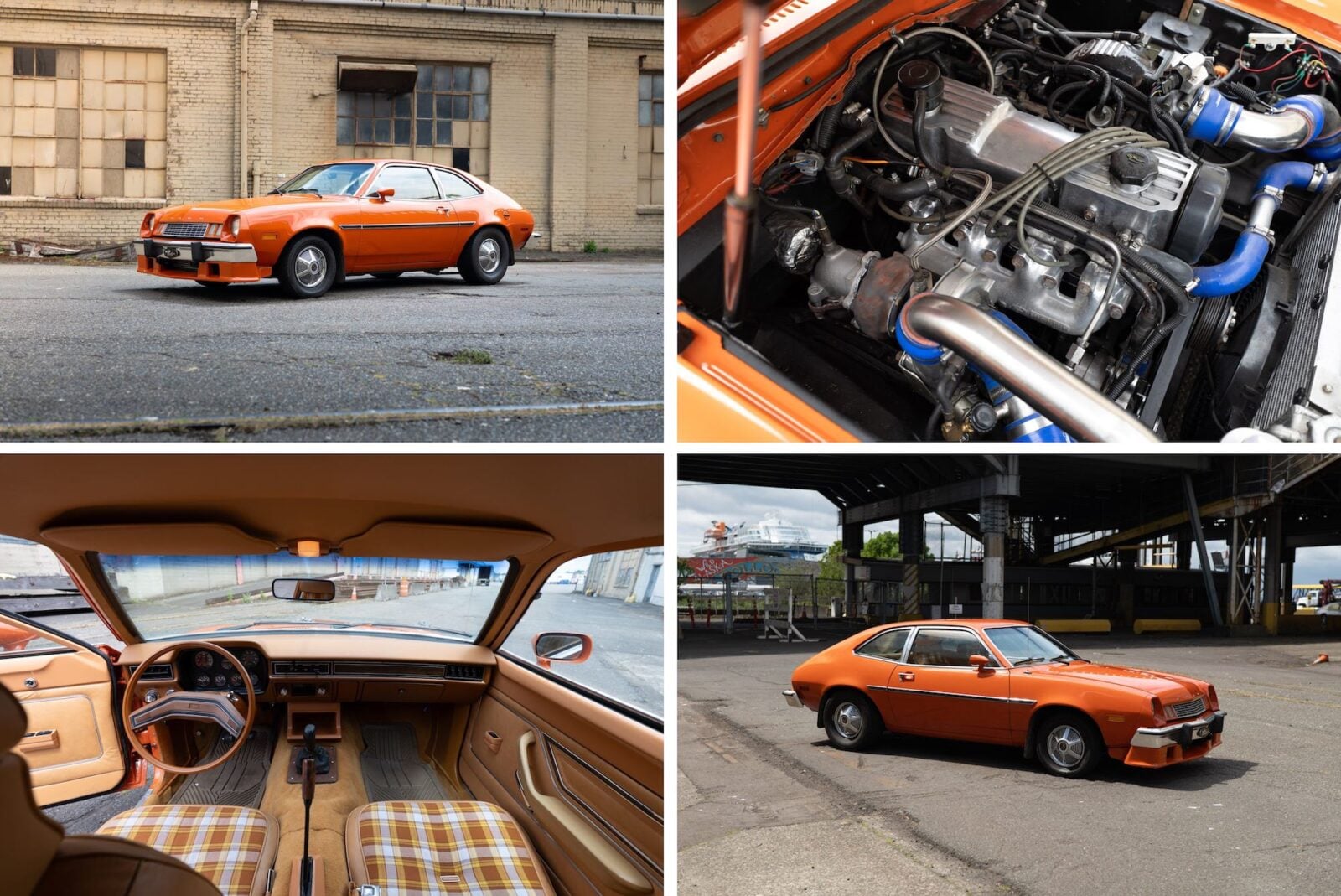
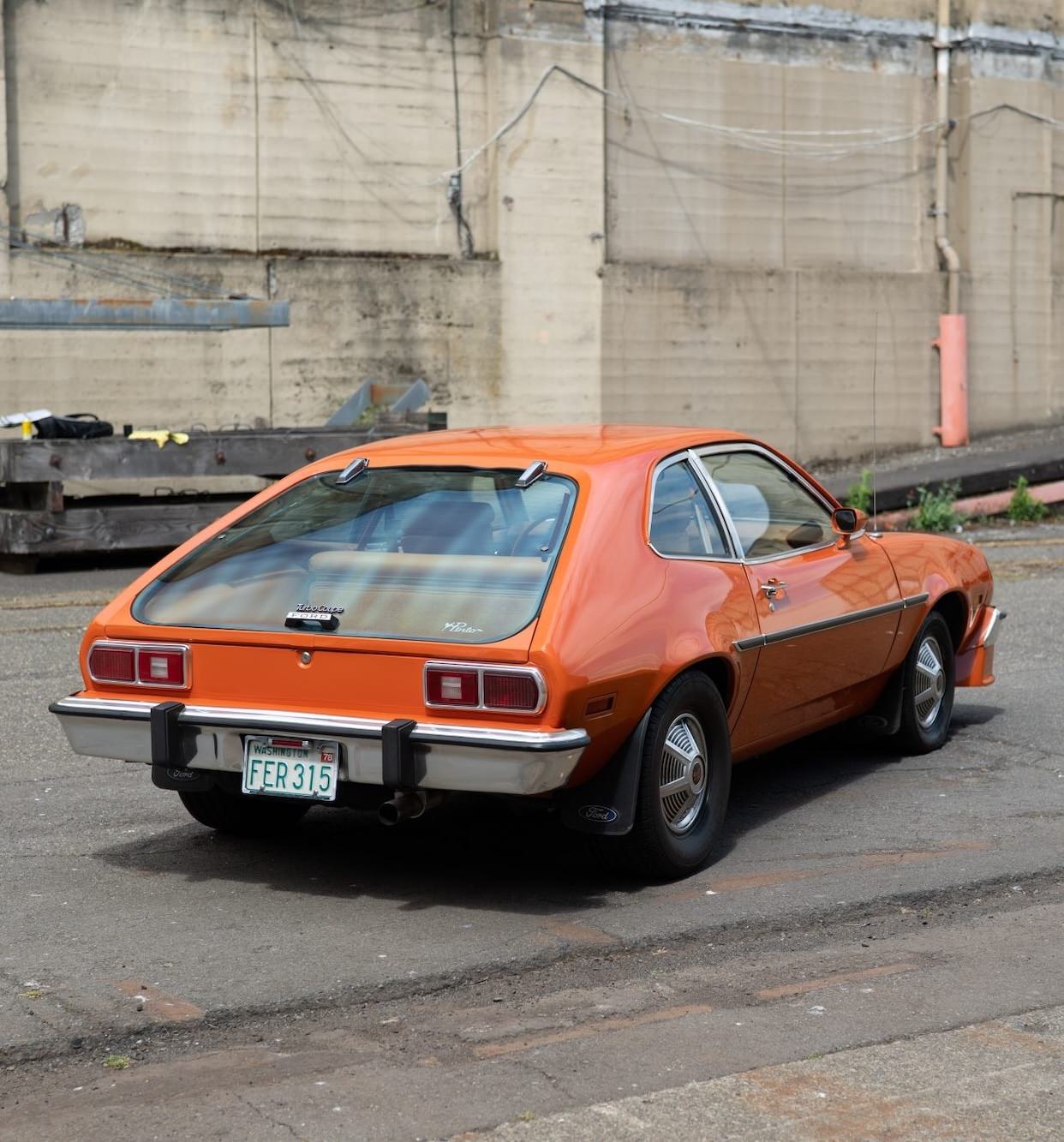
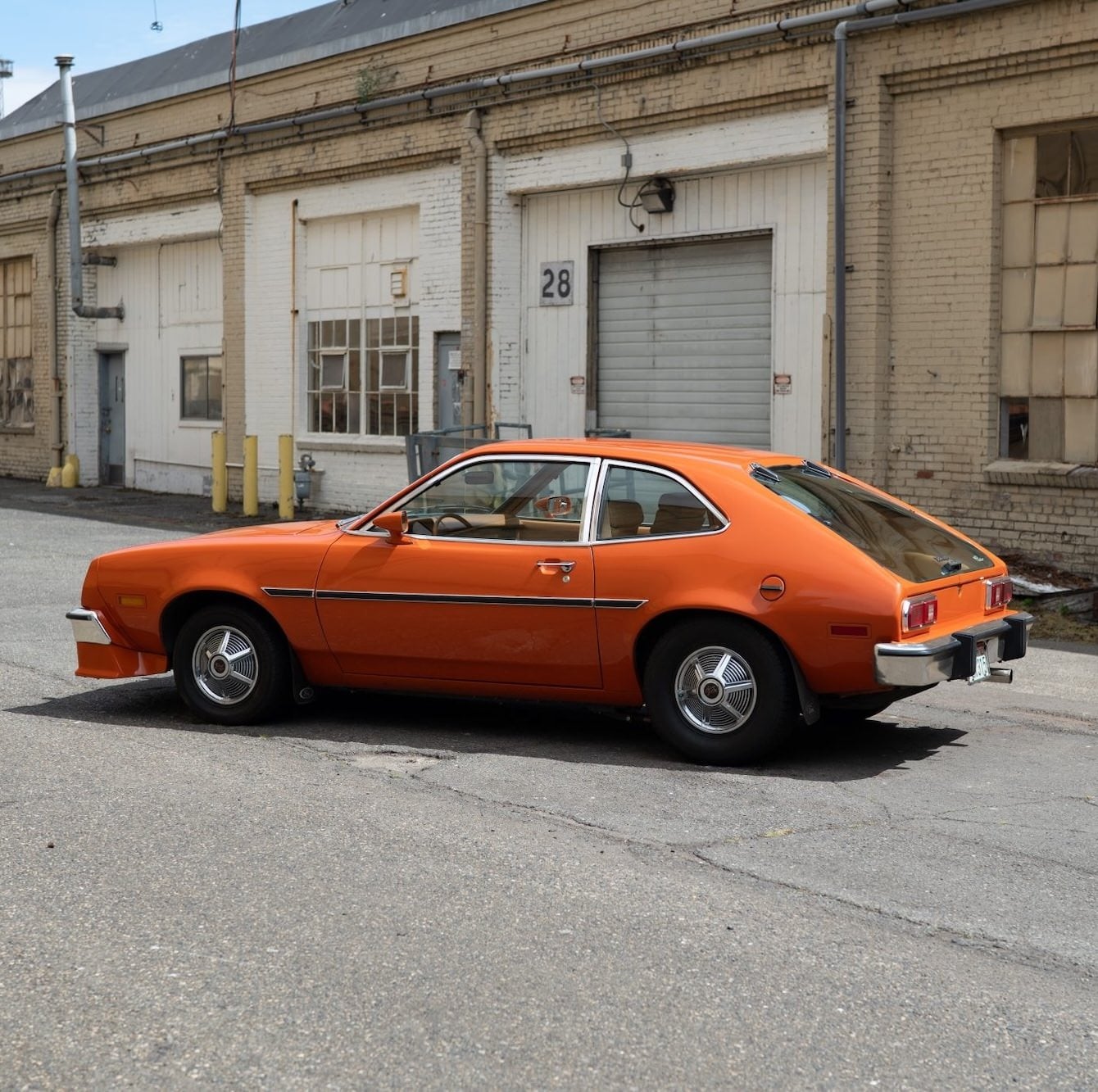
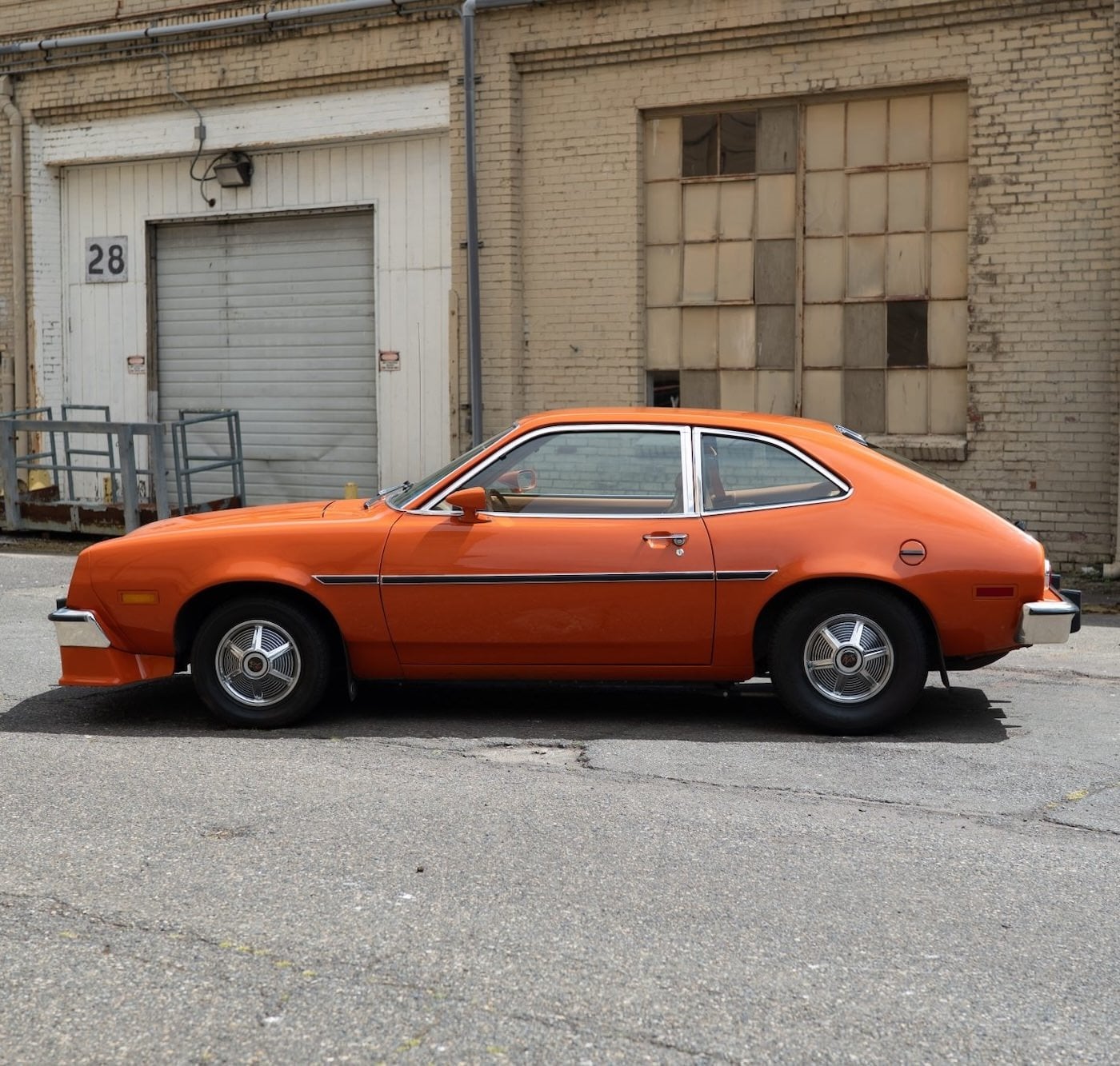
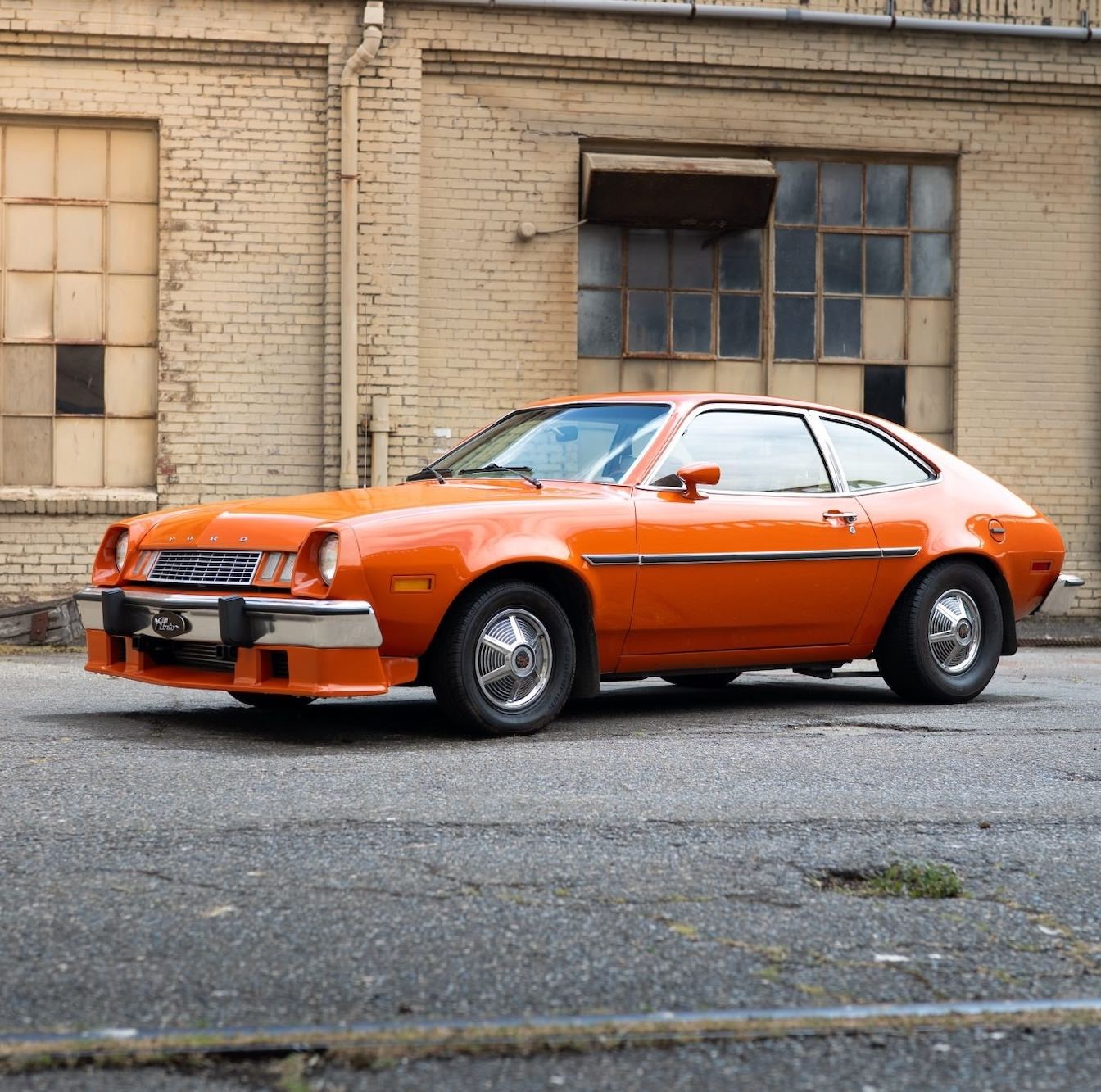
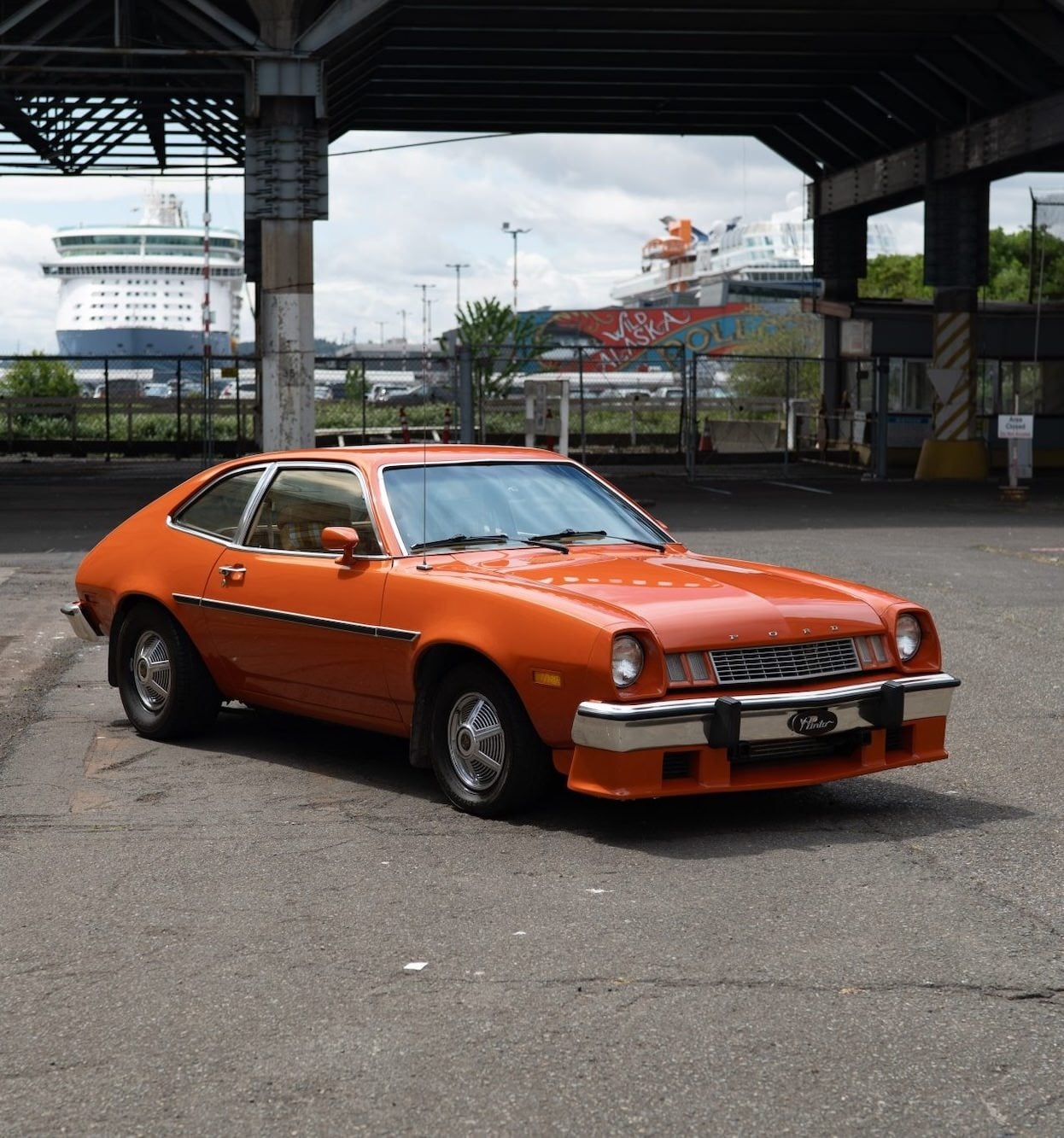
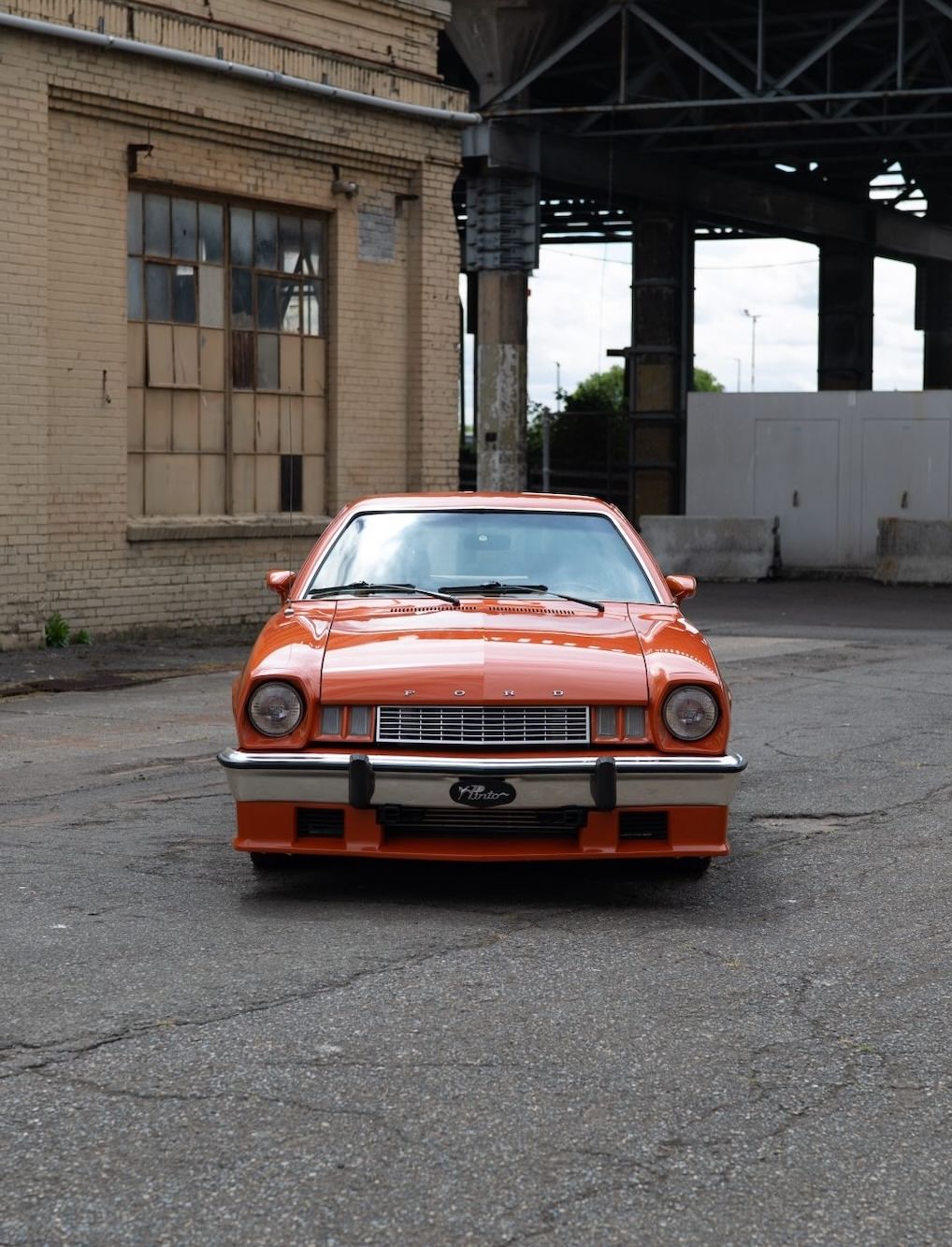
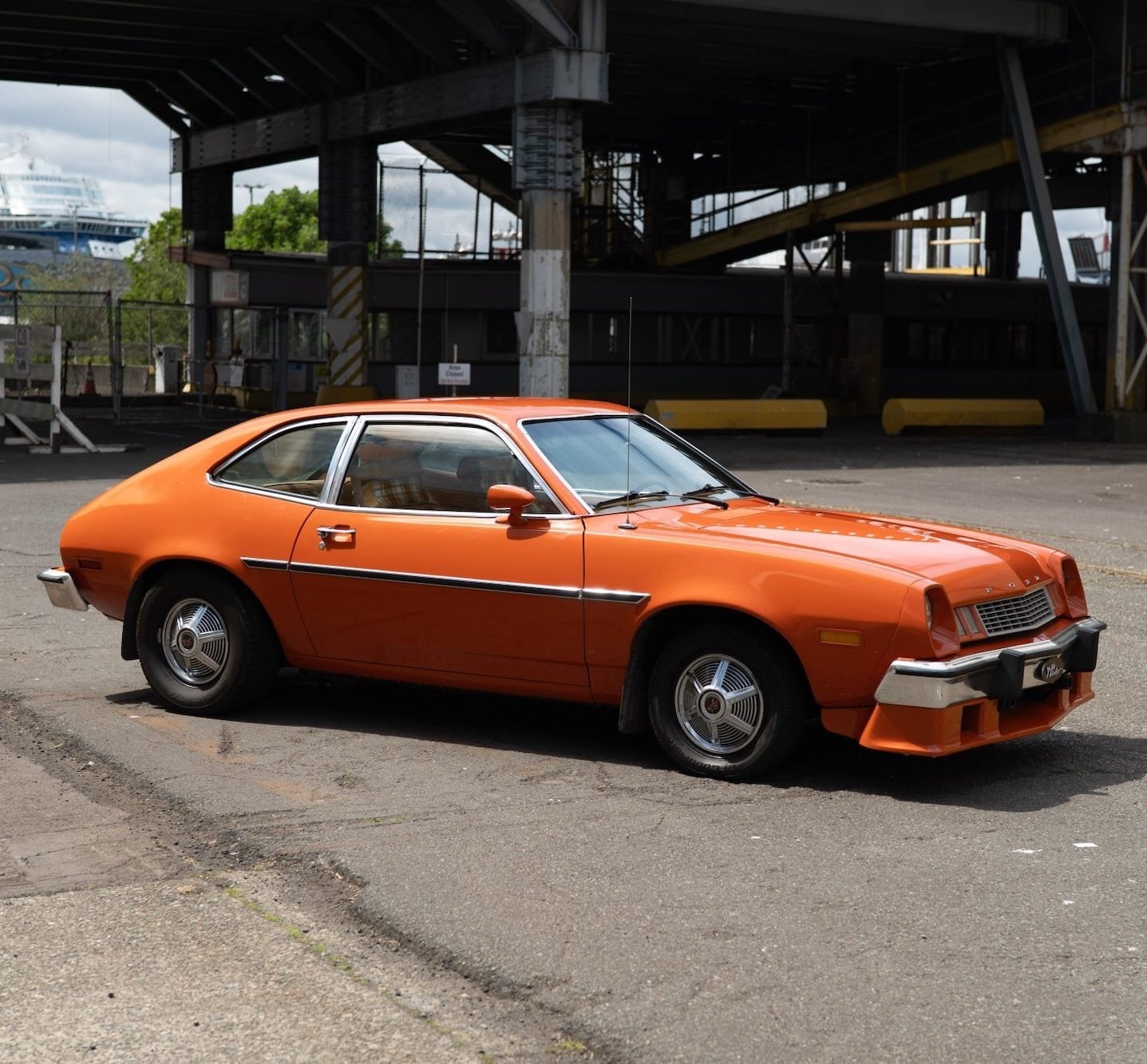
This is a 1978 Ford Pinto 4-Speed that’s been in the possession of the same owner for a remarkable 36 years and counting. In that time vehicle has been significantly modified, and it’s now powered by a fuel-injected, turbocharged 2.3 liter inline-four.
The Ford Pinto was one of the best-selling American cars in its class in the 1970s, it was the first car for many American high schoolers and college students of the time, and today the model has become a bit of a blue collar cult classic.
Fast Facts: A Ford Pinto 4-Speed Sleeper
- This 1978 Ford Pinto Runabout has been with the same owner for 36 years, and over that time it’s been heavily modified into a turbocharged sleeper. Power now comes from a fuel-injected, turbocharged 2.3 liter inline-four mated to a 4-speed manual, making for an unusual (and much faster) take on Ford’s most controversial subcompact.
- The Pinto arrived in 1970 as Lee Iacocca’s answer to Volkswagen and the rising Japanese imports, built around his “limits of 2000” brief – under 2,000 lbs and under $2,000. Ford developed it in just 25 months, sold over three million examples, but the model became synonymous with its rear-end gas tank failures.
- The Grimshaw lawsuit, the 1978 recall of 1.5 million cars, and the unprecedented 1980 Indiana reckless homicide trial severely tarnished the Pinto’s reputation. Ford was ultimately acquitted, but production ended that July. The saga is widely credited with pushing the American auto industry toward treating safety as a marketable feature rather than a liability.
- The car shown here was refurbished in 2000 with a Garrett turbo, aluminum intercooler, stainless charge piping, custom exhaust, and chassis upgrades including heavy-duty sway bars and adjustable rear control arms. Finished in orange over brown and orange tartan, it’s now offered on consignment with a Marti Report and Washington state title.
History Speedrun: The Ford Pinto
In 1968 Lee Iacocca walked into a Ford product planning meeting and laid down what became known internally as the “limits of 2000.” It was a new subcompact car he wanted Ford to build, it would weigh no more than 2,000 pounds and cost no more than $2,000. That was the entire brief.
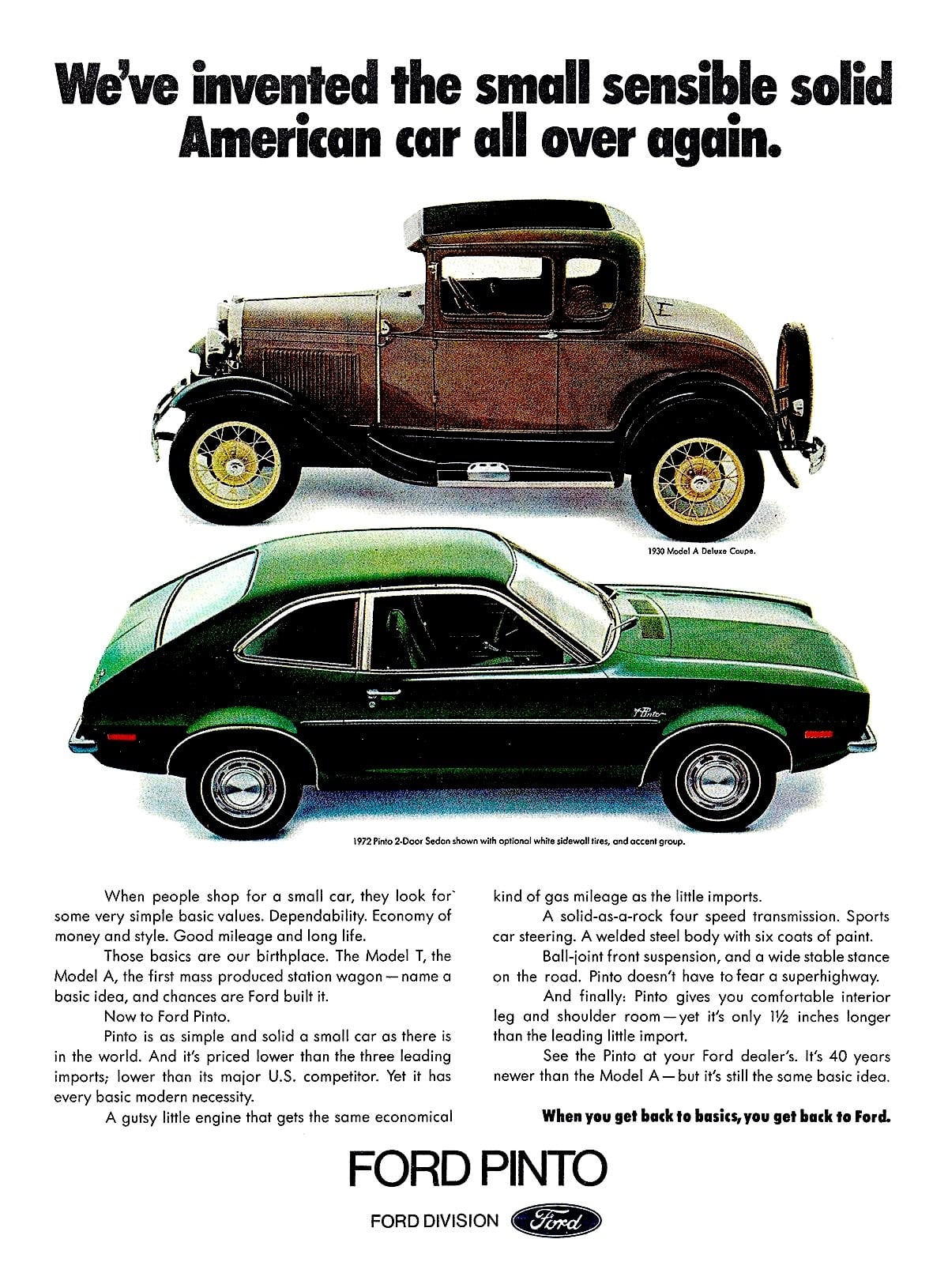
 The competitive pressure that led to the development of the Pinto was intense, by the late 1960s, Volkswagen was moving Beetles in volumes that terrified Detroit, and the first wave of Japanese imports were rapidly gaining momentum. Image courtesy of Ford.
To make this project happen, Ford compressed the development cycle from the industry-average 43 months down to just 25 – it was the fastest the company had ever moved a clean-sheet car from drawing board to dealership. The Pinto that resulted sold more than three million examples, briefly outsold every domestic subcompact built against it, and is now remembered almost entirely for one thing – its gas tank.
The German + Japanese Onslaught
The competitive pressure that led to the development of the Pinto was intense, by the late 1960s, Volkswagen was moving Beetles in volumes that terrified Detroit, and the first wave of Japanese imports – like the Toyota Corolla, Datsun 510, and soon the Honda Civic – were rapidly gaining momentum. The writing was on the wall, and the smarter executives at the Big Three knew it. Sadly, this turned out to be a minority of them.
Ford’s existing answer in the US was the Cortina, imported from England, which never quite fit American tastes. Iacocca, already a company hero for the Mustang and Bronco, argued the Big Three would lose the bottom of the market entirely if they didn’t act and act fast. The Pinto was to be their shot over the bow of the Germans and Japanese, and the model did go bang, but perhaps not in the way Ford had hoped.
Designed by Robert Eidschun and launched in September of 1970 as a 1971 model, the Pinto arrived as a two-door fastback sedan with a conventional trunk. A three-door Runabout hatchback followed in February of 1971, and a two-door wagon joined the lineup for 1972.
Underneath was straightforward subcompact engineering with one notable detail, it had rack-and-pinion steering, making the Pinto one of the first high-volume domestic American cars to use it. Wheelbase was 94 inches, overall length 163 inches, and the lightest 1971 cars came in just above 2,000 lbs. The base price was $1,850, slightly below Iacocca’s original target.
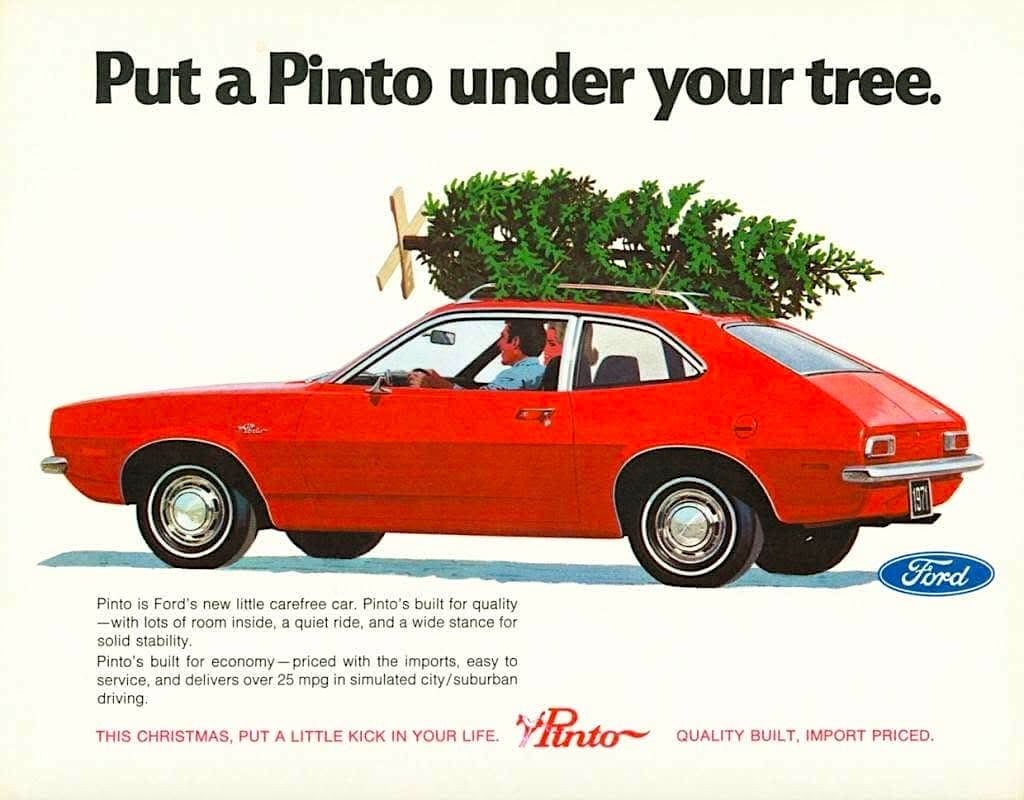
Designed by Robert Eidschun and launched in September of 1970 as a 1971 model, the Pinto arrived as a two-door fastback sedan with a conventional trunk. A three-door Runabout hatchback followed in February of 1971, and a two-door wagon joined the lineup for 1972. Image courtesy of Ford.
Pinto Engine Options
The engines were a fascinating case study in transatlantic Ford-parts-sharing. The base 1.6 liter Kent inline-four came from Ford’s UK operations. The optional 2.0 liter overhead-cam four (the motor that European Ford fans still call the “Pinto engine”) came from Cologne, Germany.
In 1974, Ford introduced the 2.3 liter Lima SOHC four, built at the company’s Lima, Ohio engine plant. The 2.3 made roughly the low-80s to low-90s bhp in Pinto trim, depending on the year, and proved reliable enough to remain in production all the way through until 1997, eventually finding its way into the Mustang SVO and Thunderbird Turbo Coupe in turbocharged form.
From 1975, the Pinto could also be ordered with a 2.8 liter Cologne V6 borrowed from the Mustang II parts bin.
Pinto Model Variants
The budget Pony arrived as a stripped-down entry-level version of the Pinto. The 1976 Pony MPG was tuned for fuel economy, with the EPA rating it at 25 mpg city and 38 mpg highway – good numbers in the post-1973 Oil Crisis fuel economy era.
The Squire wagon got woodgrain side trim, and the Cruising Wagon, with its panel-van rear and bubble porthole windows, encapsulated the late-1970s custom van craze perfectly. Lincoln-Mercury sold a rebadged version called the Bobcat from 1974 in Canada and from 1975 in the US.
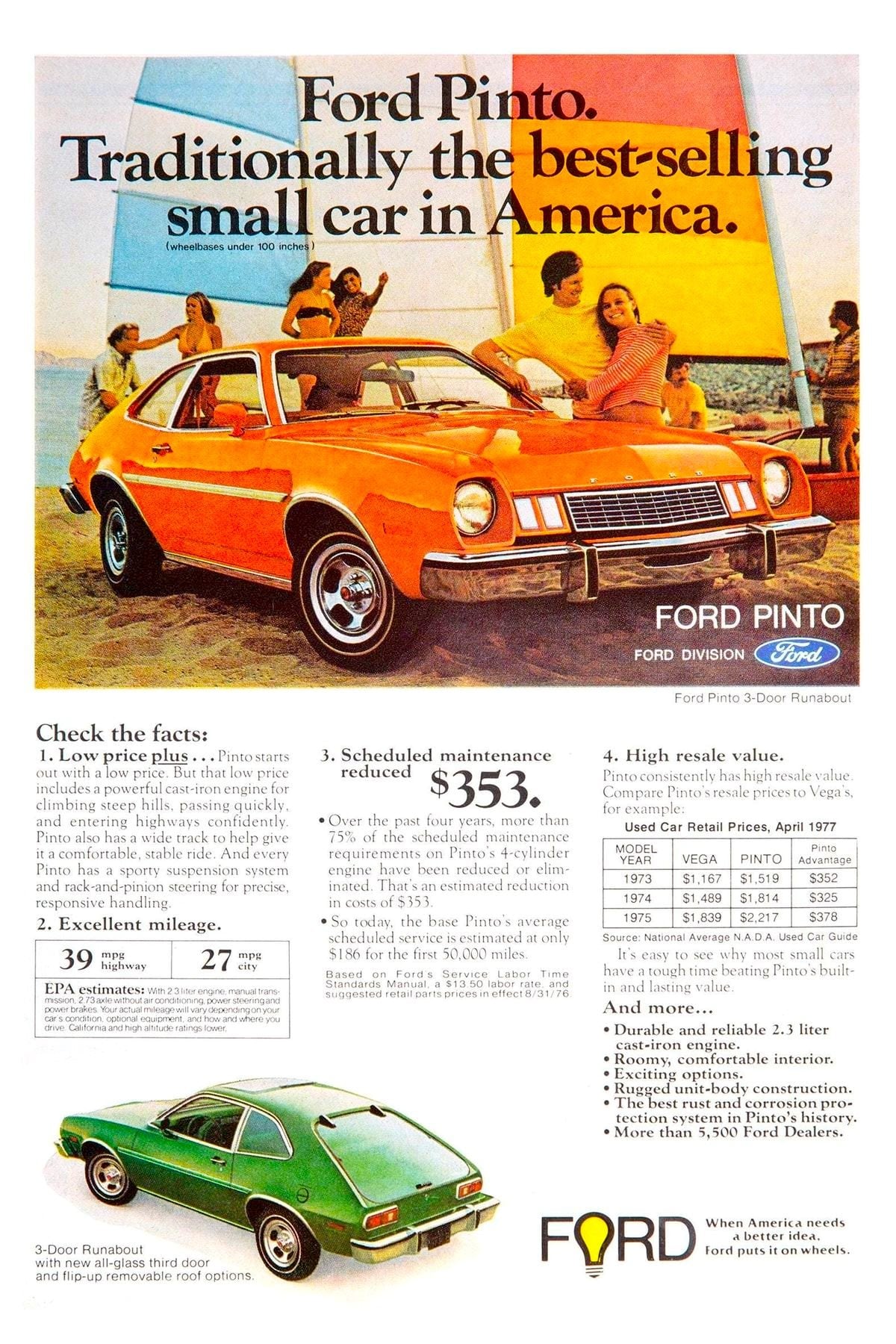
Ford built 352,402 Pintos in the 1971 model year, then 480,405 in 1972, 484,512 in 1973, and a peak 544,209 in 1974. Henry Ford II even drove a 1971 Runabout as one of his daily drivers. Image courtesy of Ford.
Ford built 352,402 Pintos in the 1971 model year, then 480,405 in 1972, 484,512 in 1973, and a peak 544,209 in 1974. Henry Ford II even drove a 1971 Runabout as one of his daily drivers. The Pinto would also become the platform foundation for the 1974 Mustang II, which used a modified version of its floor pan and a number of drivetrain parts.
Then came the fuel tank troubles.
The Infamous Pinto Gas Tank
The Pinto’s gas tank sat behind the rear axle and only inches forward of the rear sheet metal, with little crush space between the bumper and the tank itself. In rear-end collisions at moderate speeds, the tank could be pushed forward onto bolts on the differential housing, rupture, and spray fuel into the passenger compartment causing horrific fires.
The Center for Auto Safety petitioned the National Highway Traffic Safety Administration to investigate in 1974, and in September of 1977, Mark Dowie published “Pinto Madness” in Mother Jones, citing documents he argued showed Ford had calculated it would be cheaper to settle burn-injury lawsuits than to fix the tank.
The 1978 California verdict in Grimshaw v. Ford Motor Co. (stemming from a 1972 crash that killed Lilly Gray and severely burned 13-year-old passenger Richard Grimshaw) awarded $127.8 million, the largest product-liability award in US history up to that point in time. The trial judge subsequently reduced it to $3.5 million, this was still a staggering amount of money at the time.
On June the 9th, 1978, Ford recalled 1.5 million Pinto sedans and hatchbacks and 30,000 Mercury Bobcat sedans and hatchbacks to retrofit a protective shield between the tank and differential and a more rupture-resistant filler neck.
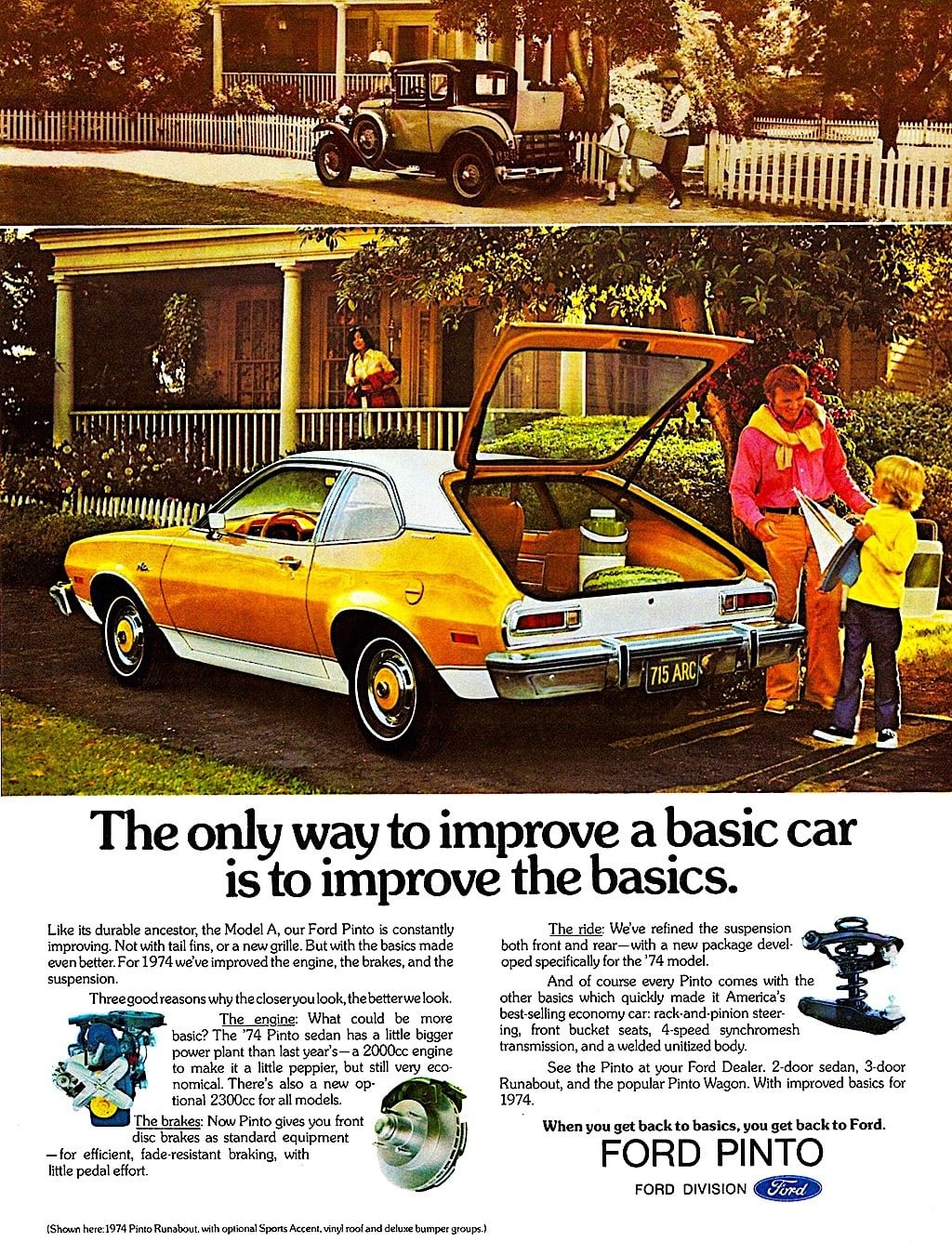
Today, surviving Pintos are affordable collectibles with a small (but devoted) nationwide following. Their retro status and the fact that seemingly half the US adult population had their first kiss (or more) in a rusty secondhand Pinto means there’s a huge sentimental factor at play also. Image courtesy of Ford.
Two months later came something unprecedented – in Elkhart County, Indiana, a grand jury indicted Ford itself on three counts of reckless homicide after a 1973 Pinto carrying Judy Ann, Lynn Marie, and Donna Ulrich was struck from behind and burned in 1978. It was the first criminal prosecution of an American corporation over a product defect. After a 10 week trial held in Winamac, a Pulaski County jury acquitted Ford in March of 1980.
The Pinto’s production ended in July of that same year, replaced for 1981 by the front-wheel-drive Ford Escort. Total production stood at around 3.17 million units, more than the Chevrolet Vega and AMC Gremlin combined.
Whether Ford’s behavior was quite as cynical as the Mother Jones exposé claimed is something academics and engineers have continued to argue over for decades. What’s harder to dispute is the impact on the industry, the Pinto saga helped move American automakers from “safety doesn’t sell” toward marketing it as a major feature, something their Scandinavian counterparts had been doing for decades.
Today, surviving Pintos are affordable collectibles with a small (but devoted) nationwide following. Their retro status and the fact that seemingly half the US adult population had their first kiss (or more) in a rusty secondhand Pinto means there’s a huge sentimental factor at play also.
The Turbocharged 1978 Ford Pinto Shown Here
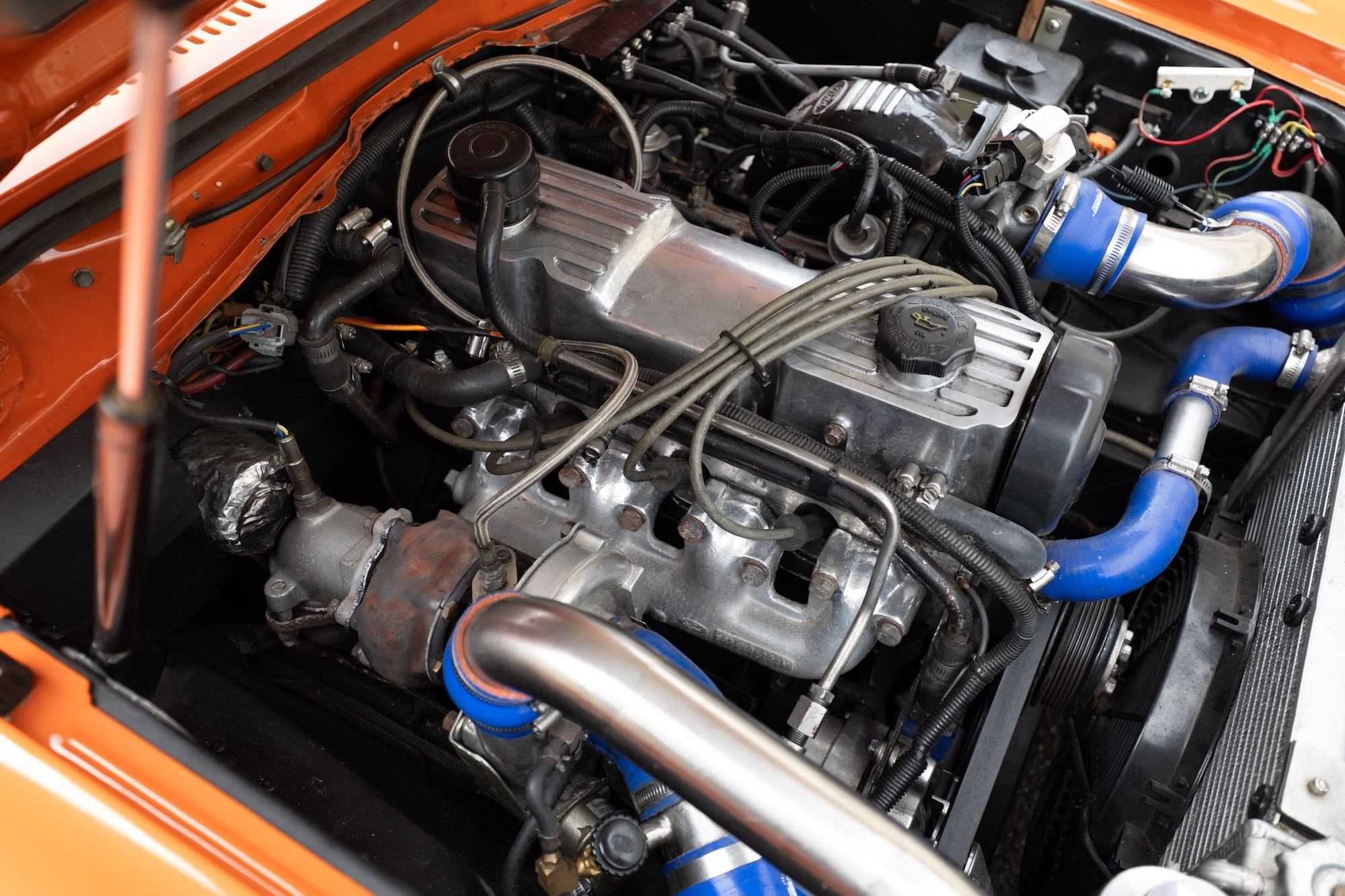
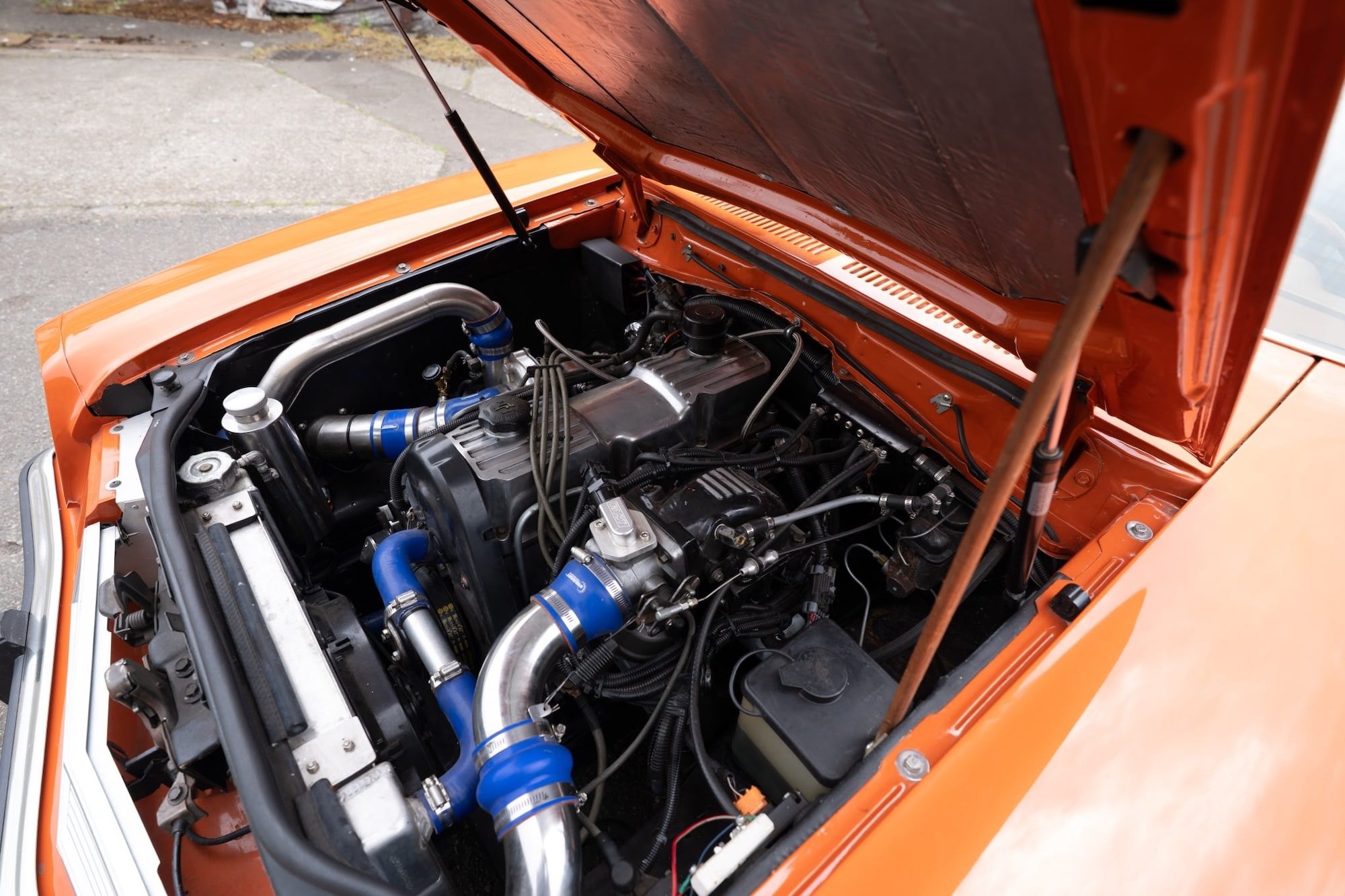
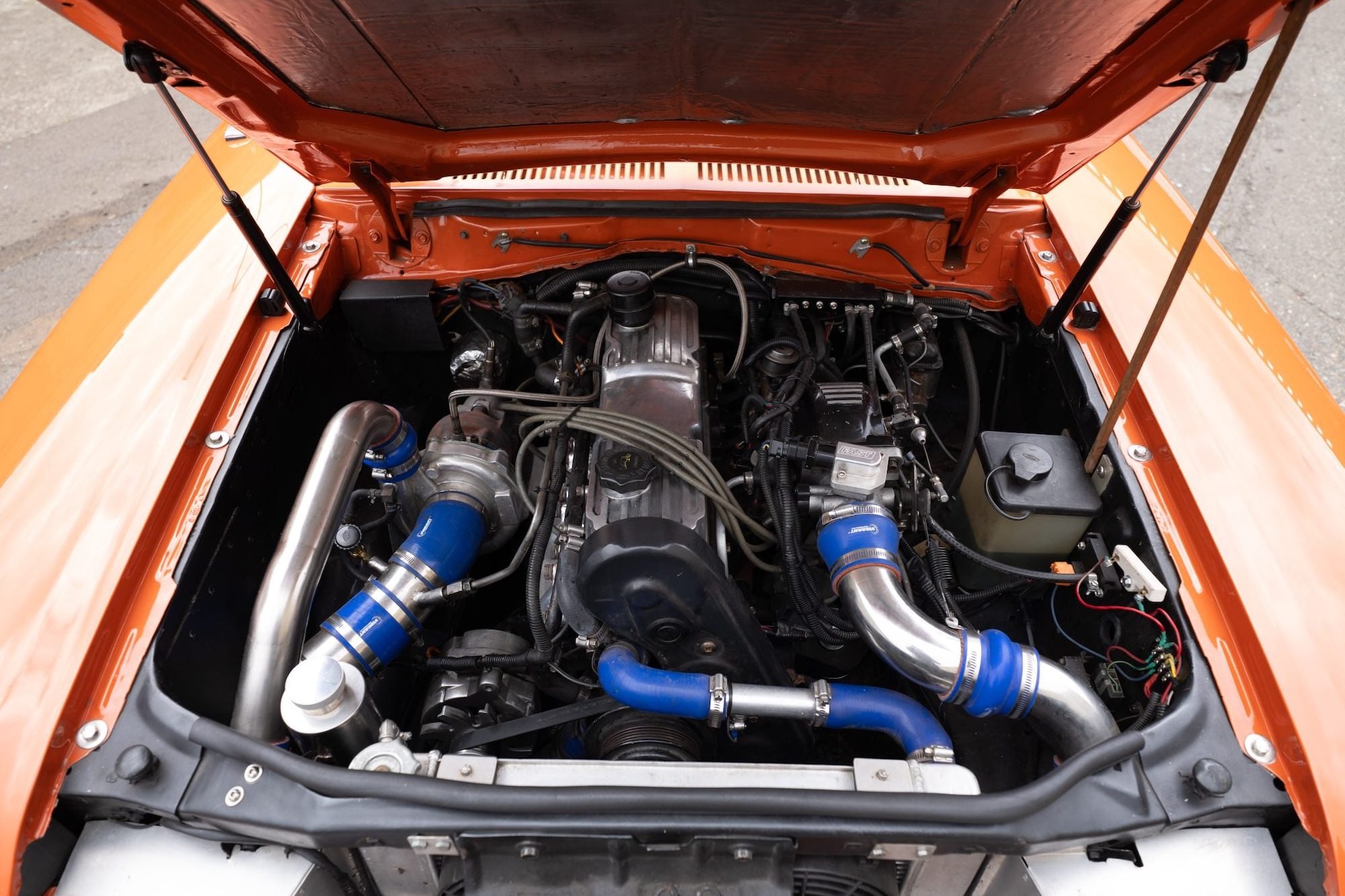
This 1978 Ford Pinto Runabout was bought by the current owner around the year 1990 and has since been significantly modified and refurbished. The refurbishment, which was completed around the year 2000, centered on the 2.3 liter inline-four, which received a new fuel injection system, a Garrett turbocharger, an aluminum intercooler, stainless-steel charge piping with silicone couplers, and a custom exhaust system.
Cooling upgrades included an aluminum radiator and three electric fans, while the chassis was fitted with heavy-duty sway bars, adjustable rear control arms, and a custom front air dam. Power is sent to the rear wheels through a 4-speed manual transmission.
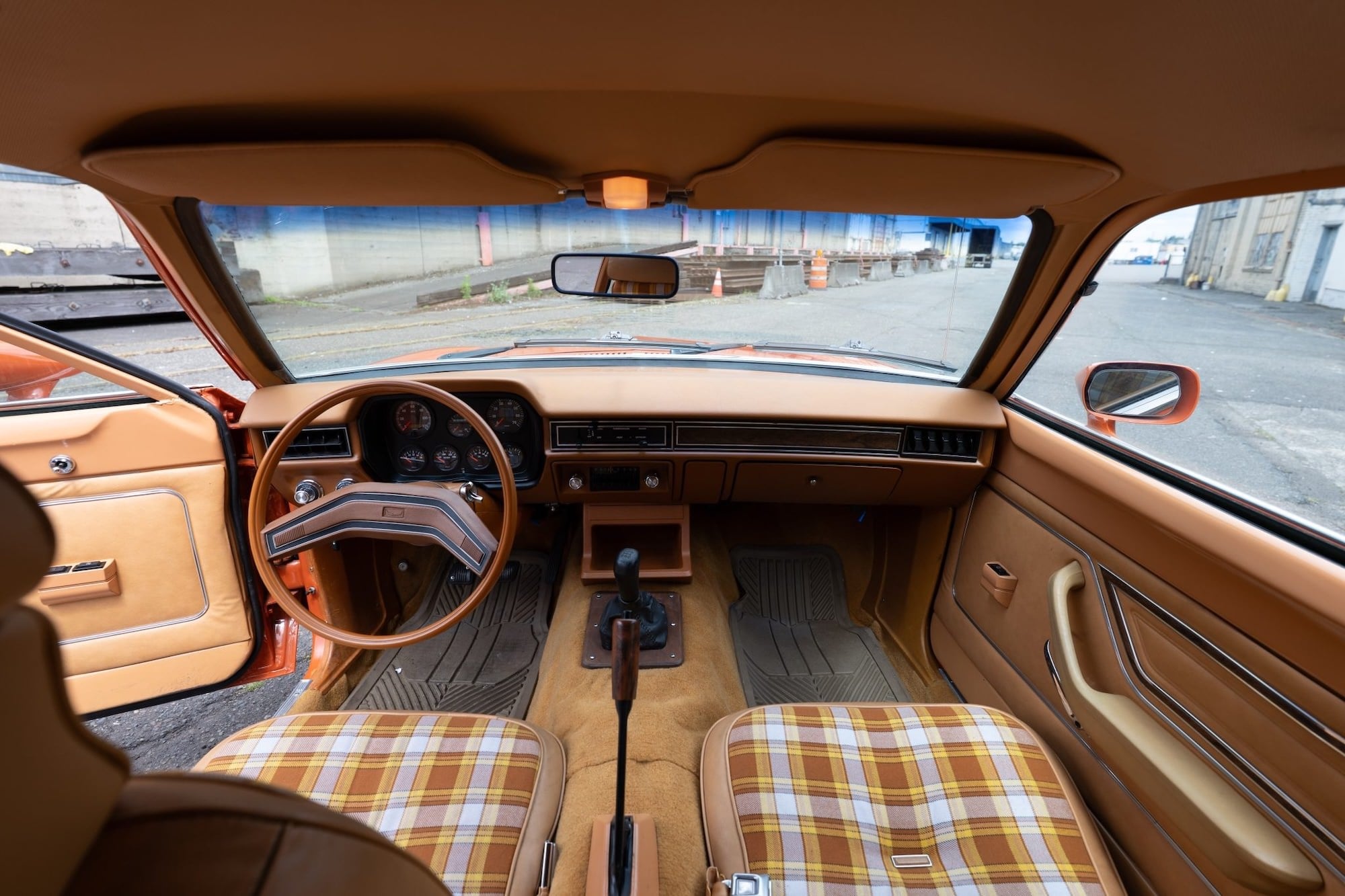
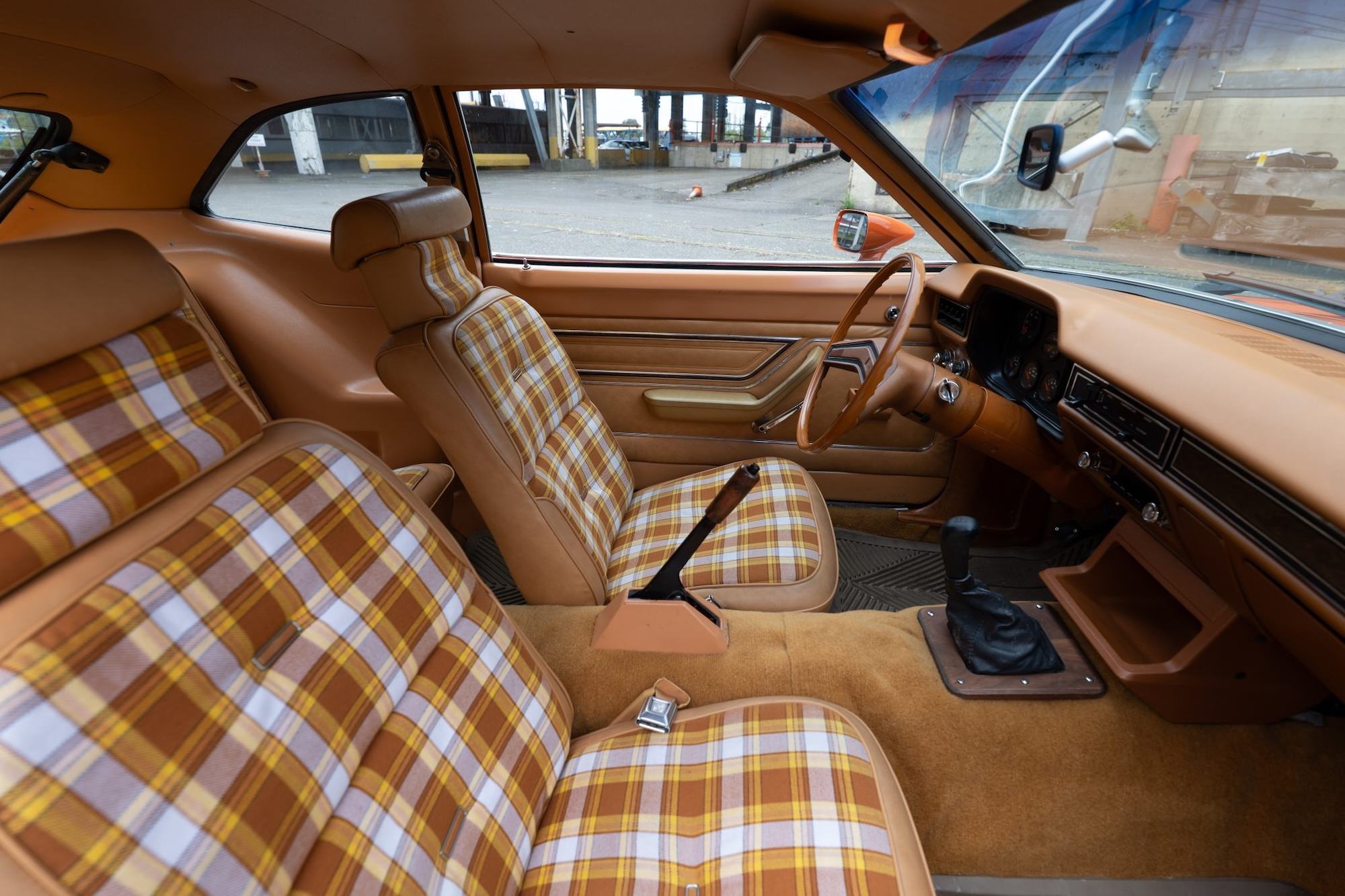
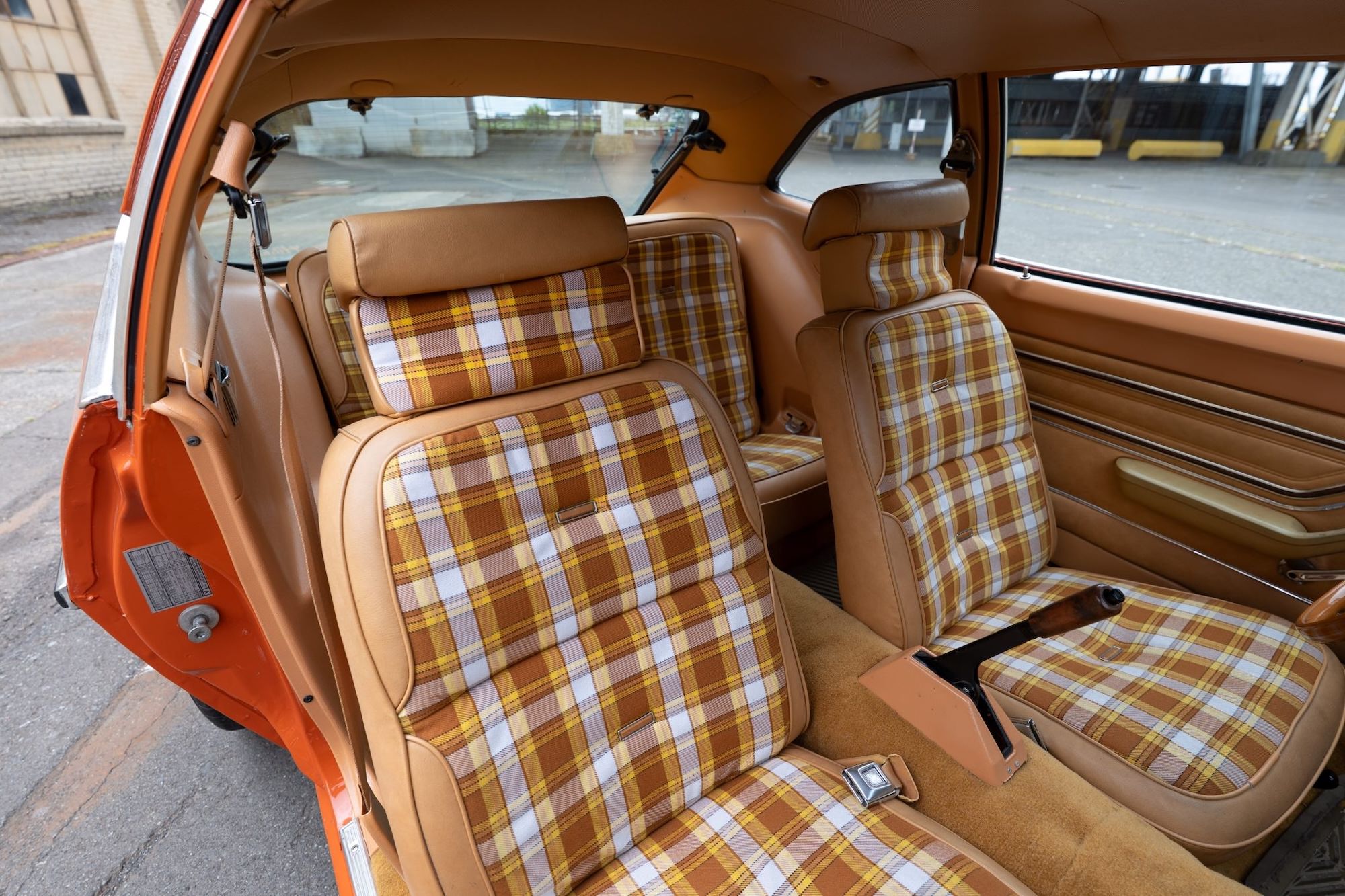
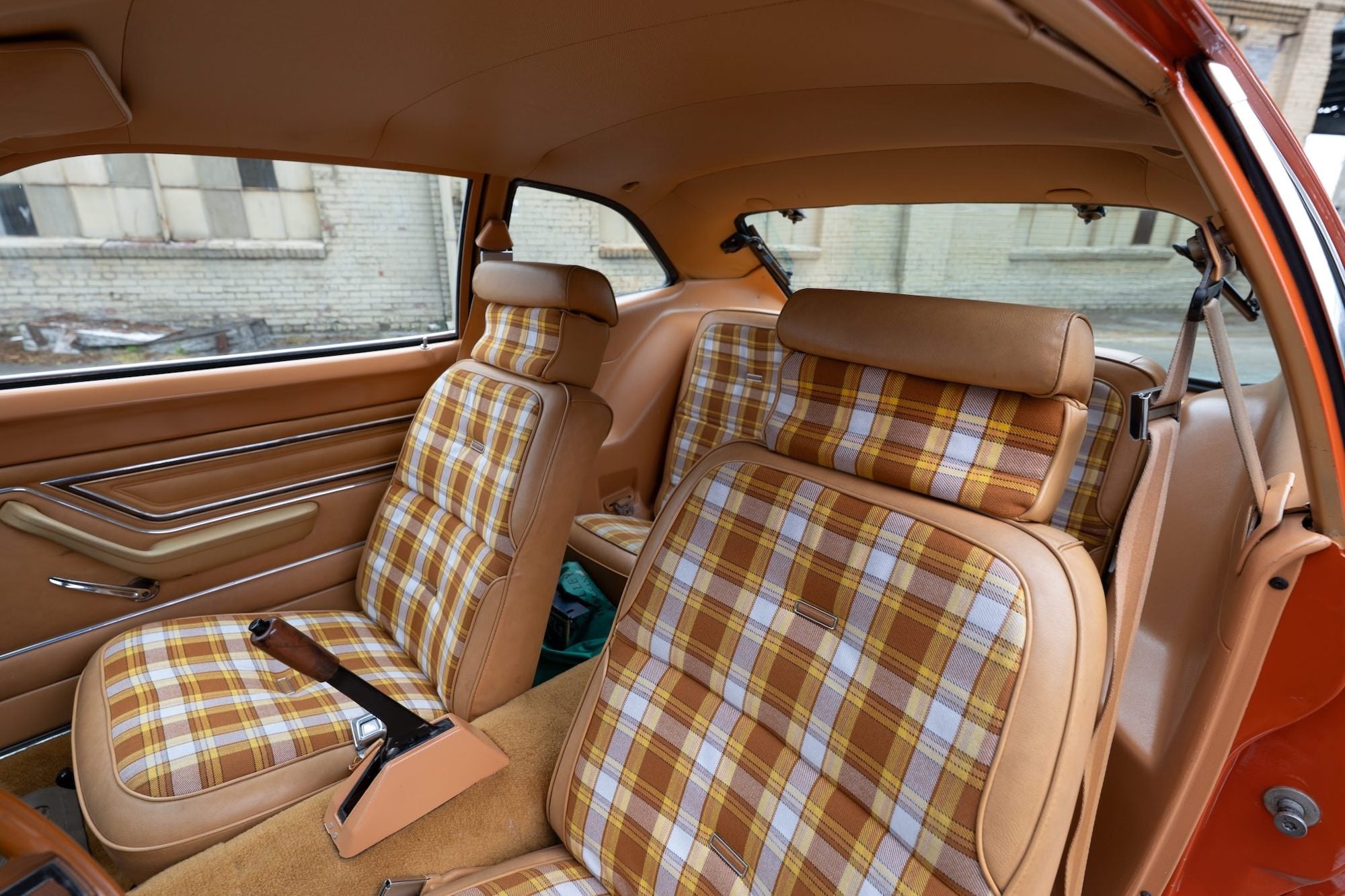
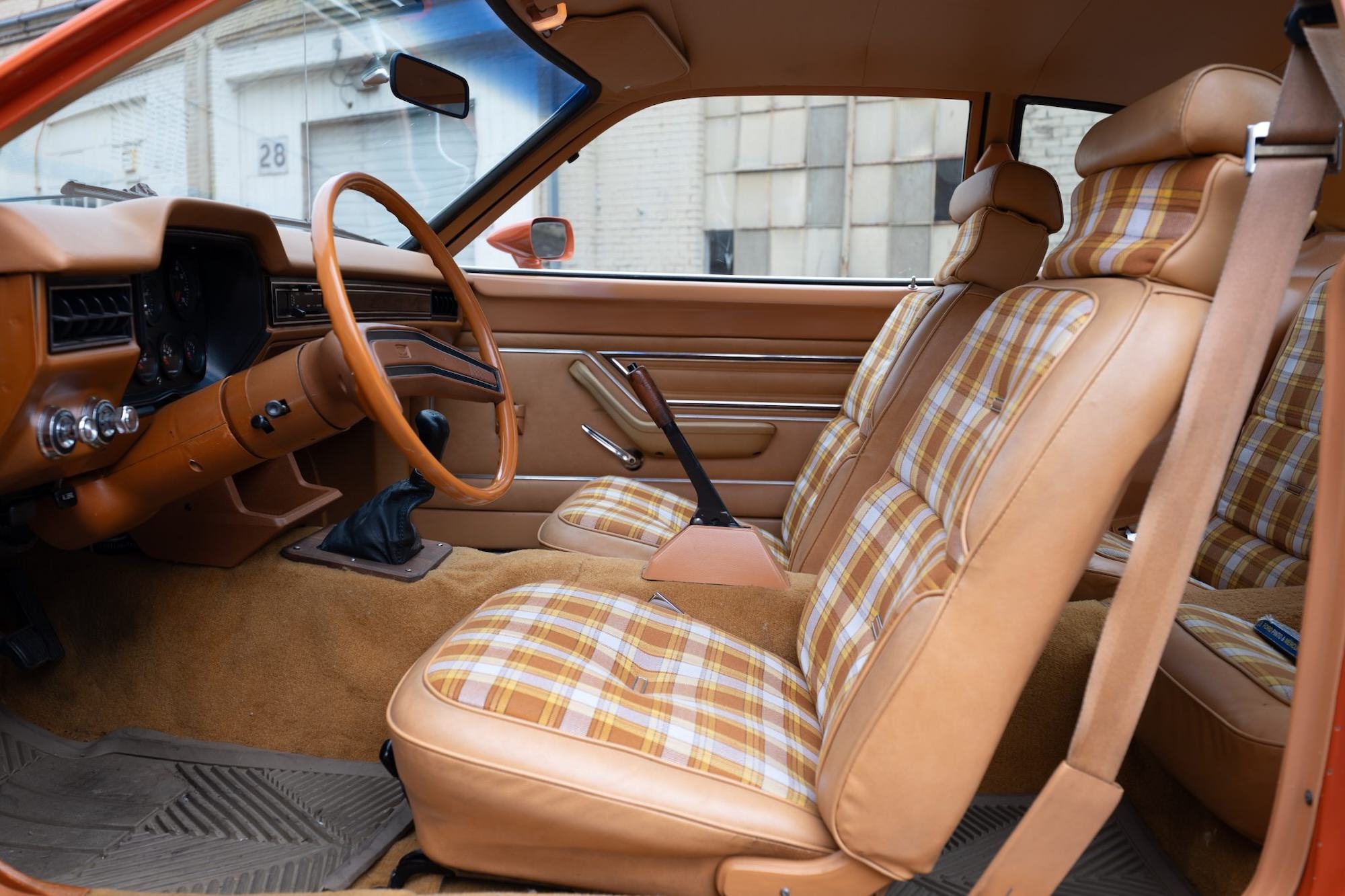
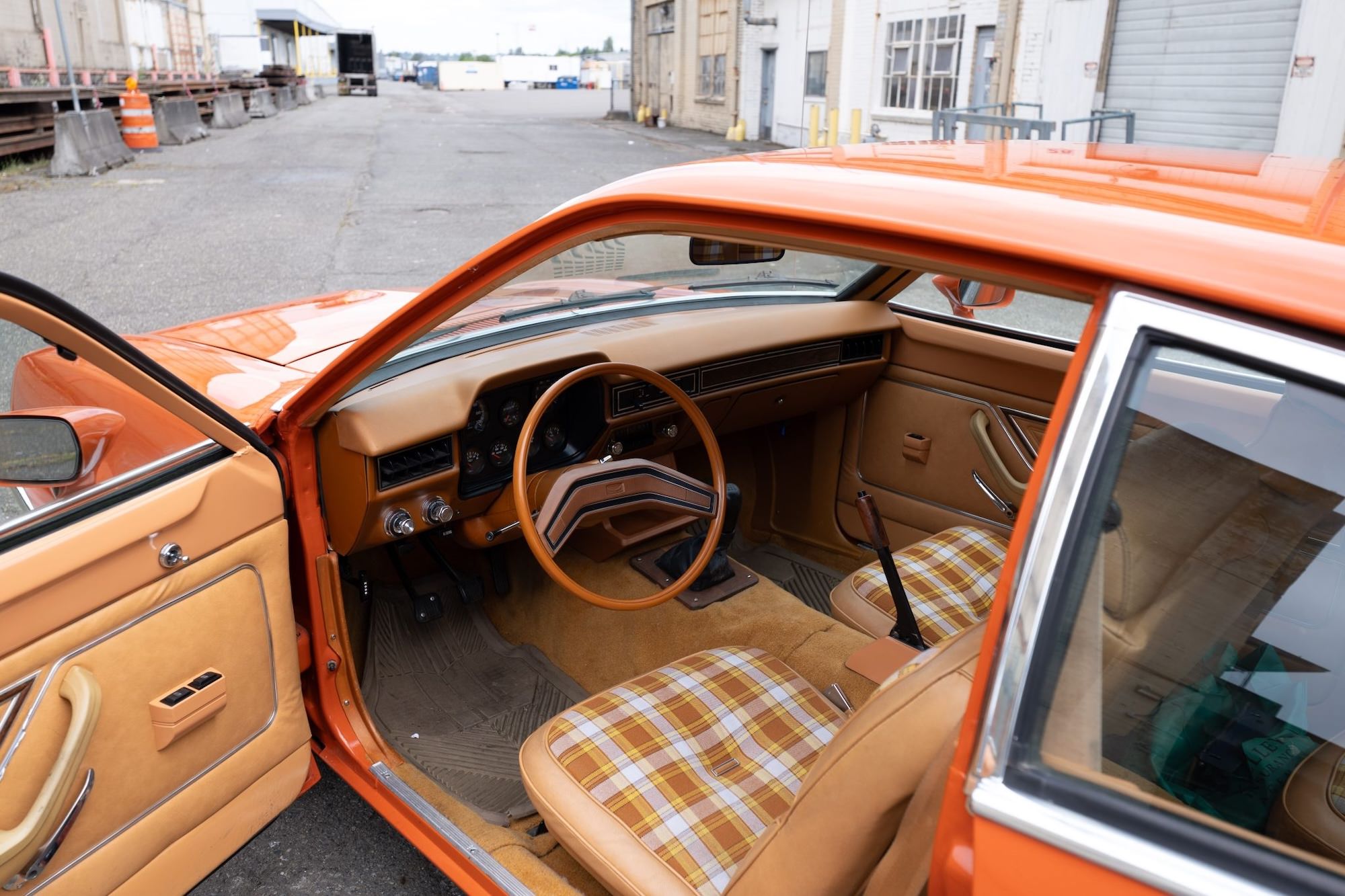
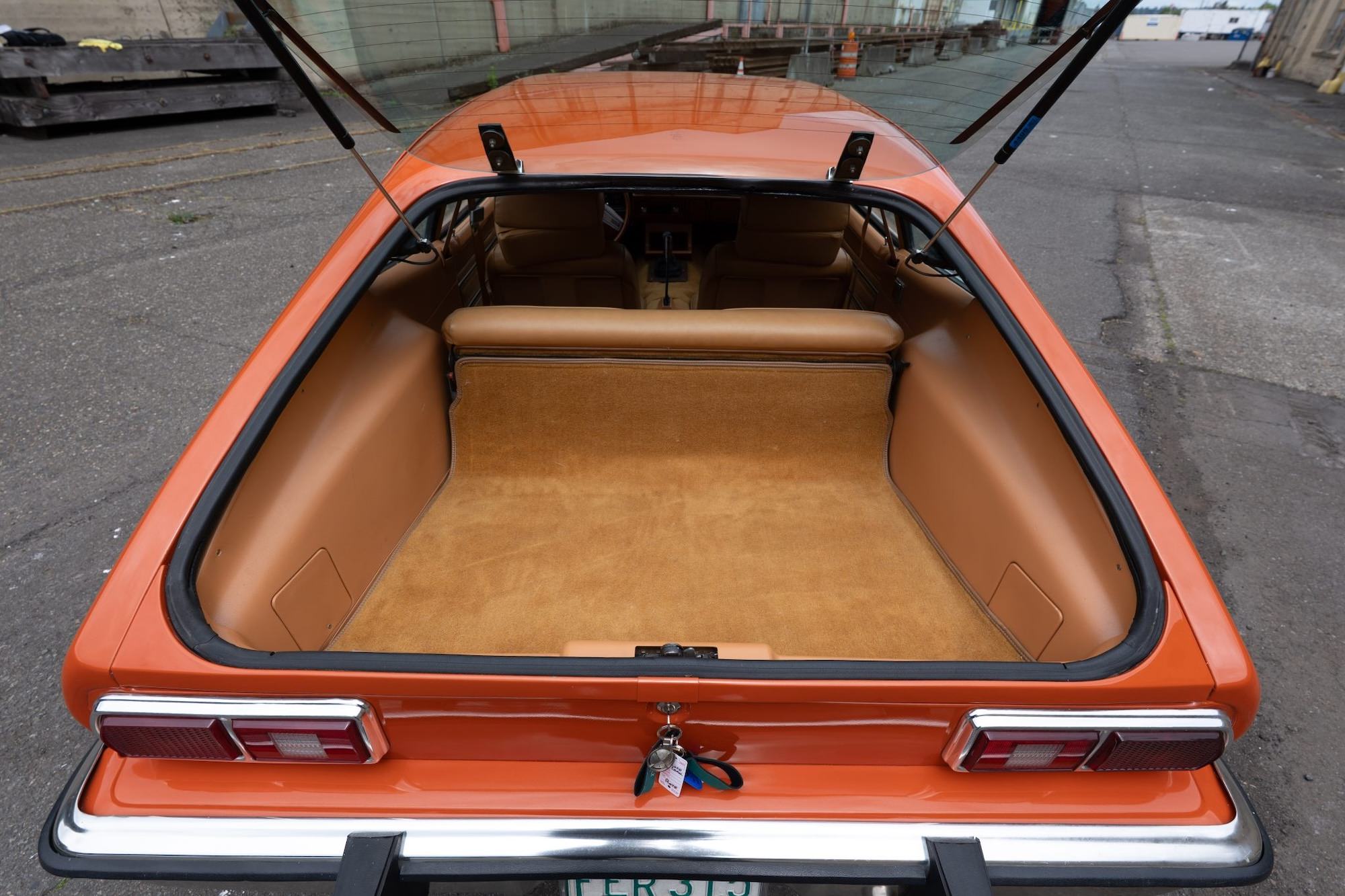
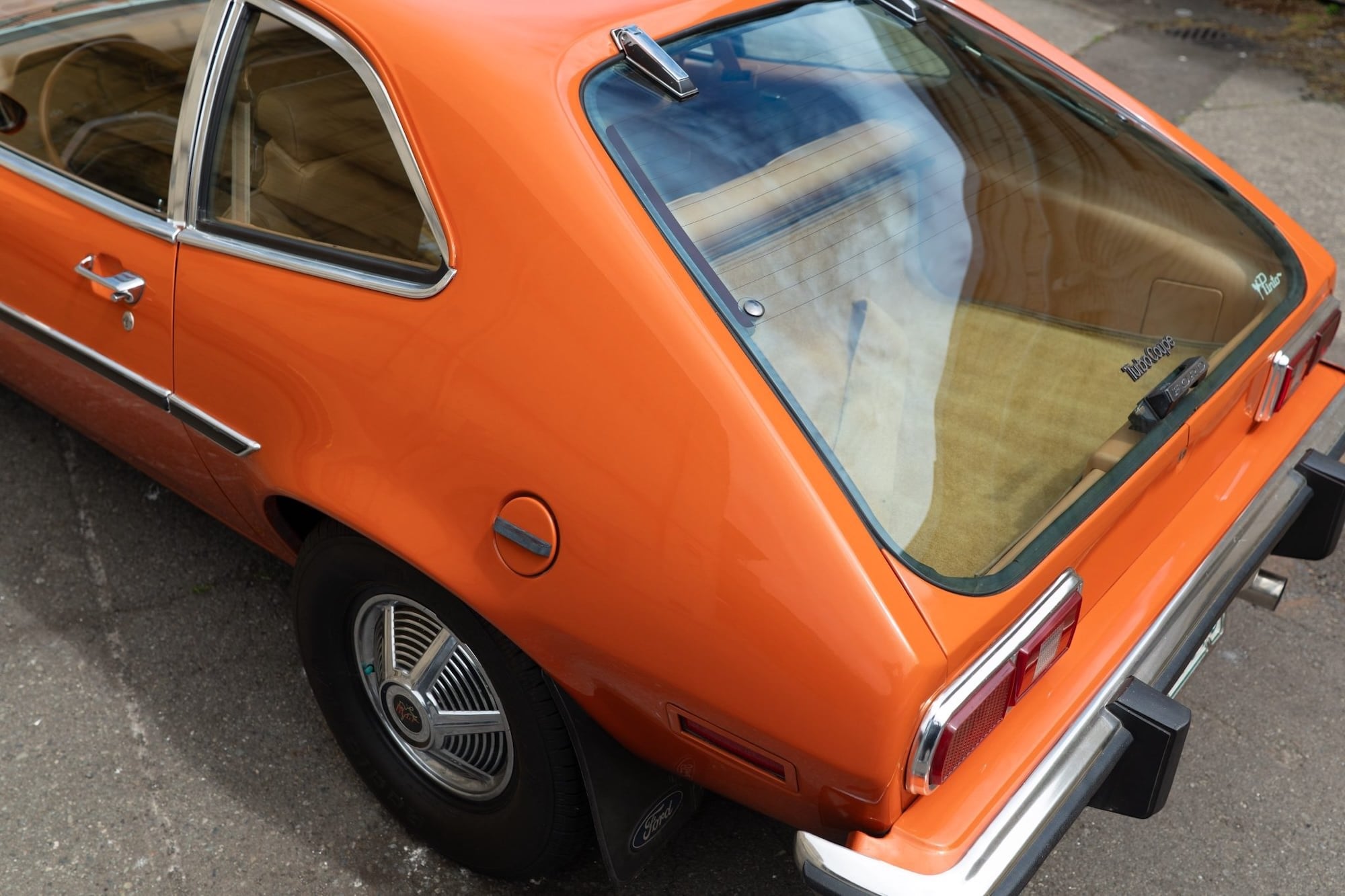
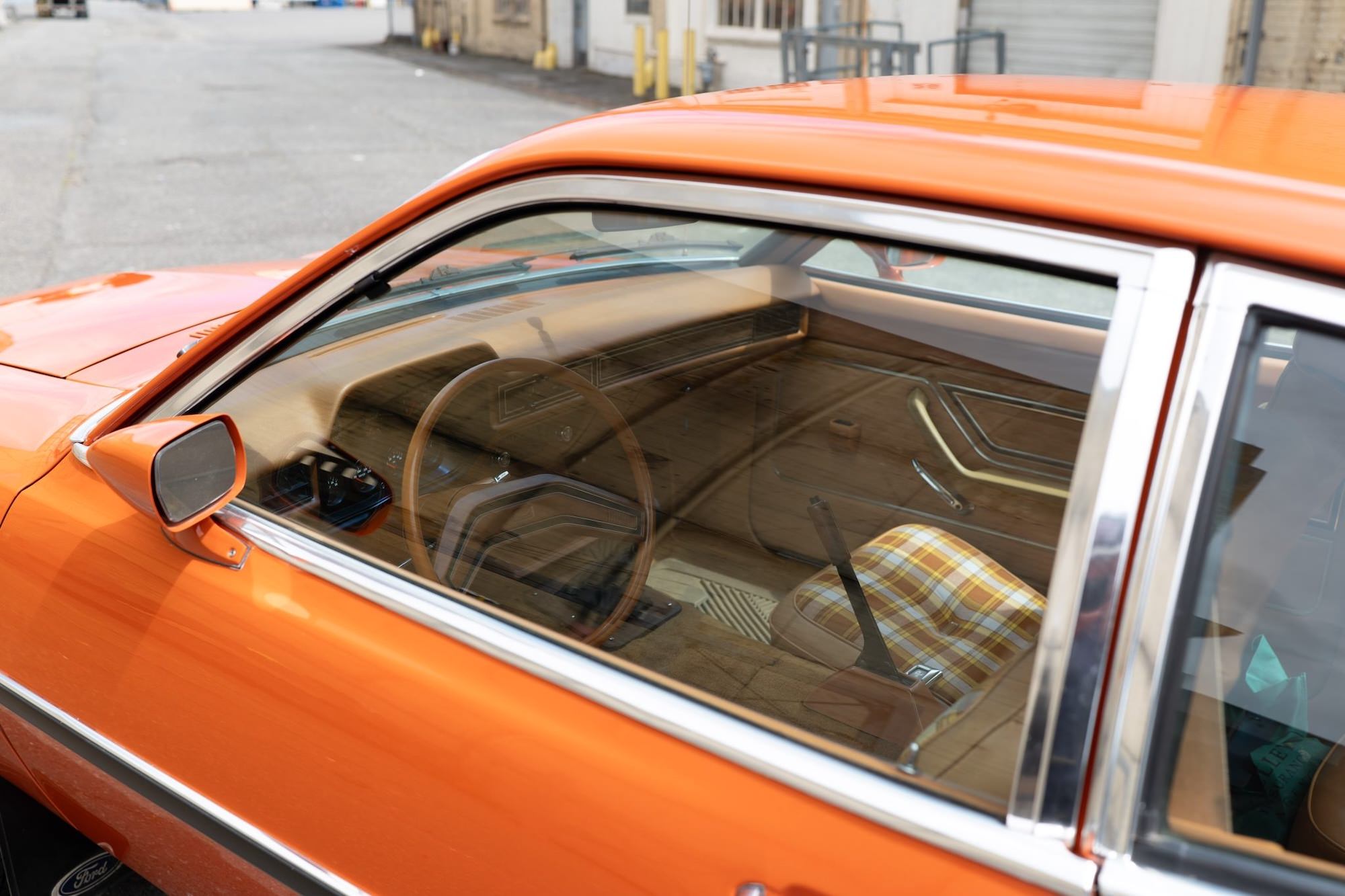
The car is finished in orange over a brown and orange tartan cloth and vinyl interior with faux woodgrain dashboard trim. It has a glass rear hatch, black bodyside moldings, sport mirror housings, Ford-logo mud flaps, and chrome bumpers with black impact guards.
It rides on 14-inch steel wheels with styled covers, shod with staggered BFGoodrich G-Force Super Sport tires (185/60 front and 245/60 rear). Braking is handled by power-assisted front discs and rear drums, the stock factory set up.
Inside, the front buckets and individual rear seats are trimmed in the same tartan and vinyl, and equipment includes power windows, a heater, and an AM radio. A two-spoke steering wheel fronts a suite of VDO instrumentation comprising a 120 mph speedometer, tachometer, and gauges for boost pressure, voltage, coolant temperature, oil pressure, and fuel level.
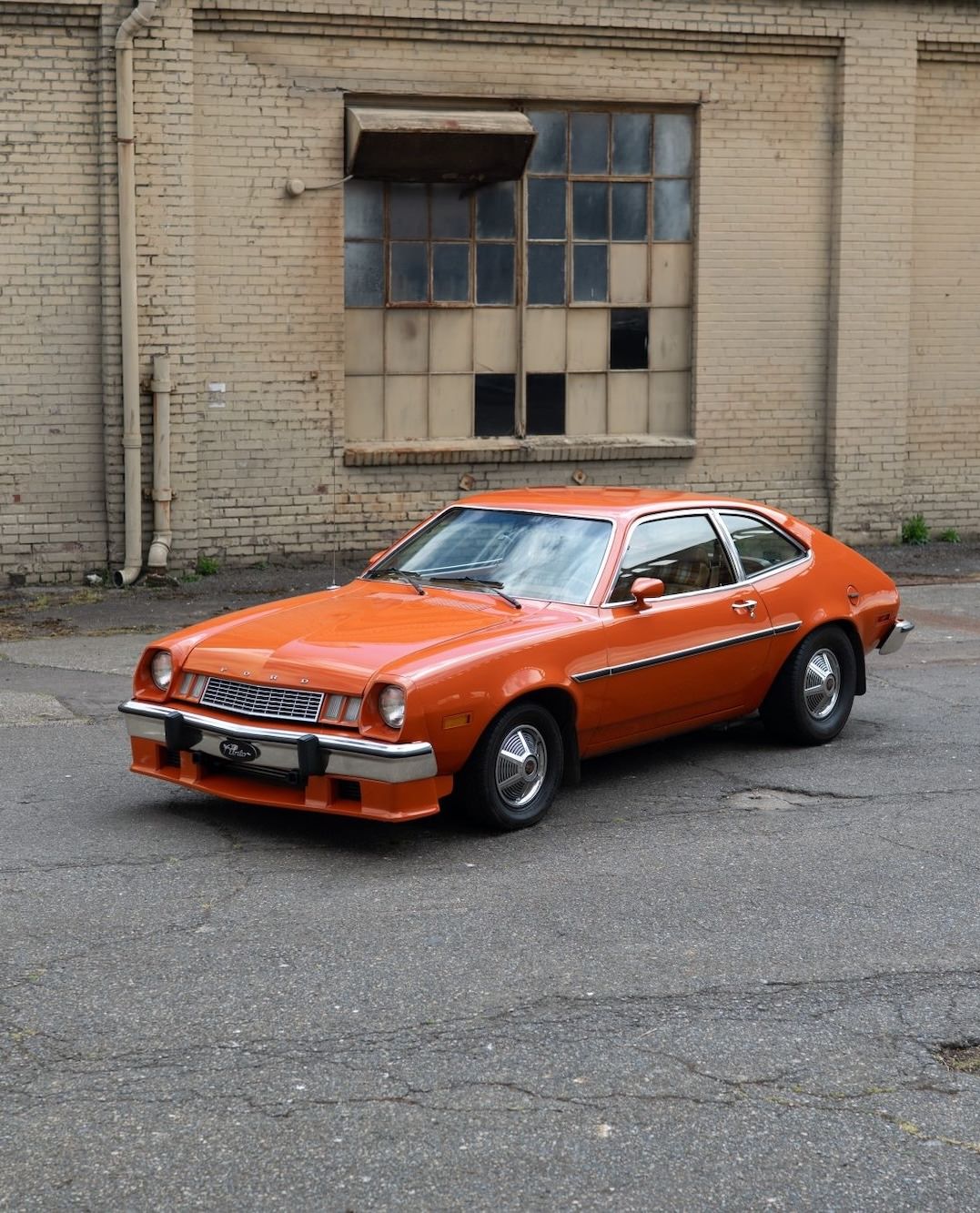
This is a 1978 Ford Pinto 4-Speed that’s been in the possession of the same owner for a remarkable 36 years and counting. In that time vehicle has been significantly modified, and it’s now powered by a fuel-injected, turbocharged 2.3 liter inline-four.
The digital odometer reads 5,000 miles, said to be the distance covered since the refurbishment was completed, the total mileage is unknown. Recommissioning work performed in preparation for sale included fluid services and replacement of the battery, a fuel injection module, and ignition components.
The car is now being offered for sale with a Marti Report, service records, and a Washington state title out of Seattle, Washington. If you’d like to read more or place a bid you can visit the listing here.
Images courtesy of Ford + Bring a Trailer

Articles that Ben Branch has written have been covered on CNN, Popular Mechanics, Smithsonian Magazine, Road & Track Magazine, the official Pinterest blog, the official eBay Motors blog, BuzzFeed, Autoweek Magazine, Wired Magazine, Autoblog, Gear Patrol, Jalopnik, The Verge, and many more.
Silodrome was founded by Ben back in 2010, in the years since the site has grown to become a world leader in the alternative and vintage motoring sector, with well over a million monthly readers from around the world and many hundreds of thousands of followers on social media.