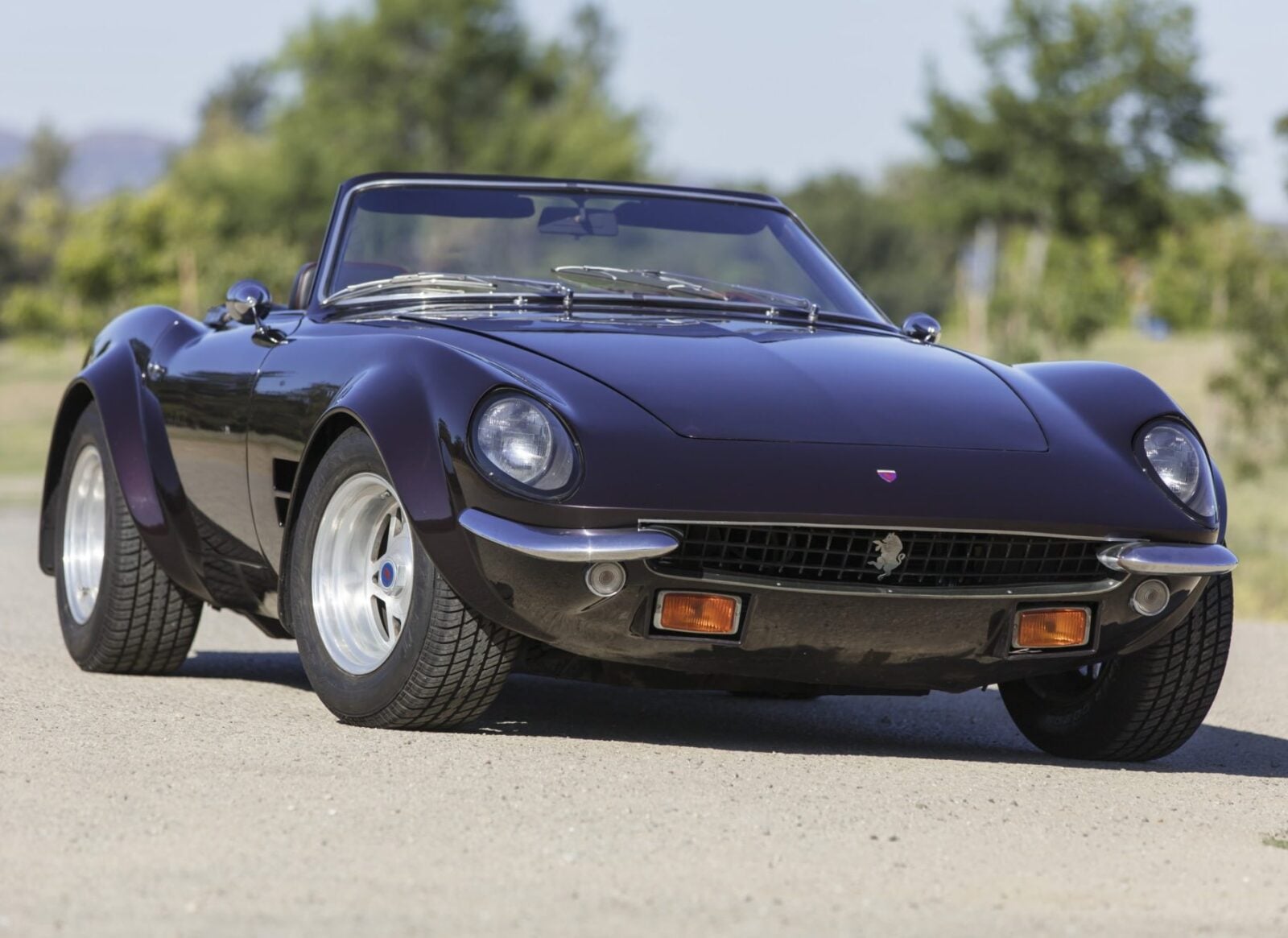
The Intermeccanica Italia Spyder is a fascinating Italian/American sports car that offered Ferrari and Lamborghini-rivaling good looks, with the convenience of a simple-to-maintain American V8 under the hood.
Though it still isn’t a particularly well-known classic, the Italia Spyder has a small-but-dedicated ownership circle that has been keeping them on the road for over 50 years and counting. This specific car is rumored to be “Lorna,” the Italia Spyder used in the original 1974 Gone In 60 Seconds film.
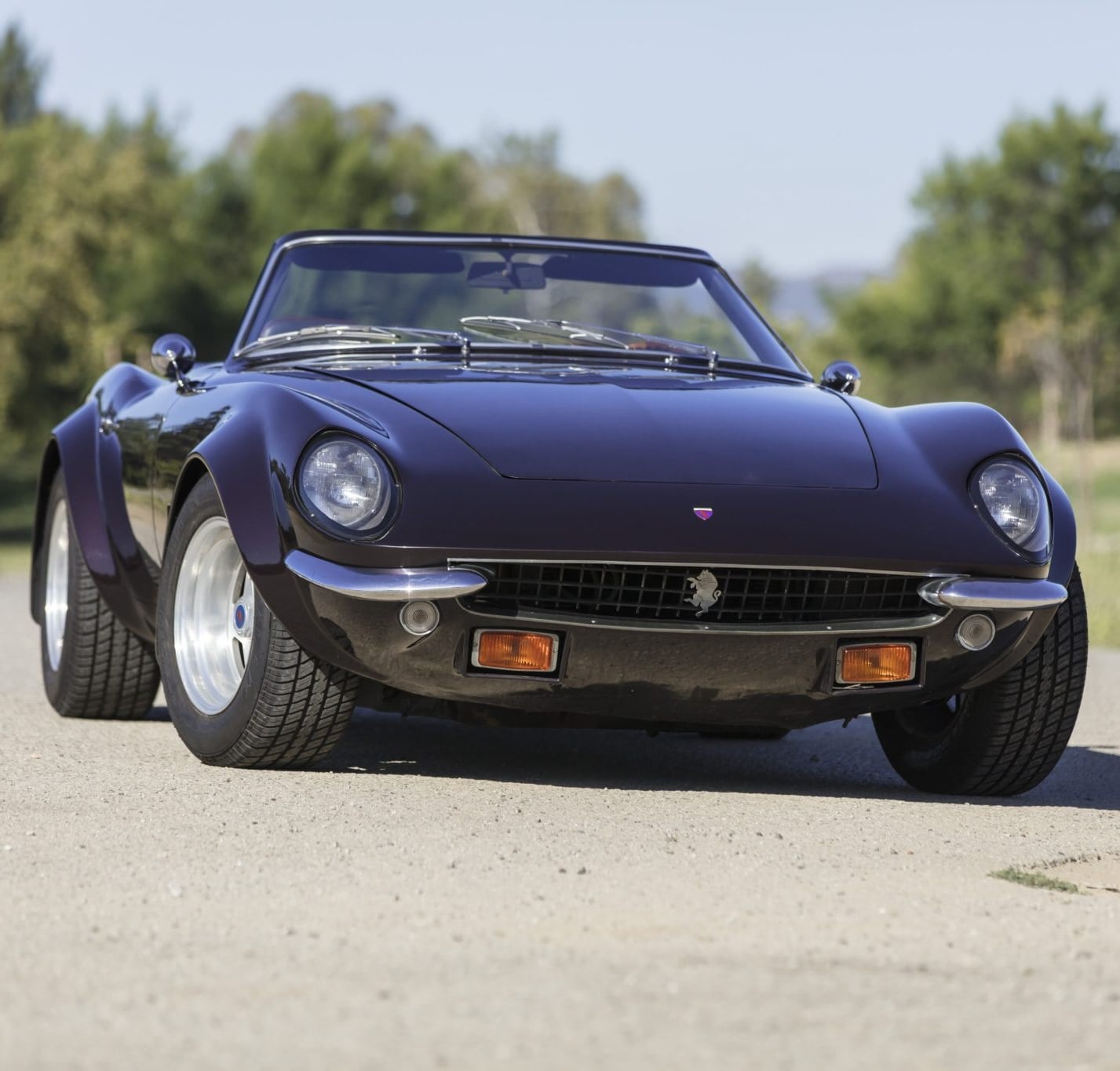
 The Intermeccanica Italia Spyder is a fascinating Italian/American sports car that offered Ferrari and Lamborghini-rivaling good looks, with the convenience of a simple-to-maintain American V8 under the hood.
History Speedrun: The Intermeccanica Italia
The Intermeccanica Italia was a handbuilt Italian sports car with a Ford V8 under the hood, made by Costruzione Automobili Intermeccanica in Turin. Production ran from 1967 through 1972, it was initially named the Torino, with the Italia name adopted in 1968.
Somewhere between 400 and 500 examples were built across hardtop coupe and Spyder (convertible) body styles. The car arrived at the end of a strange, drawn-out development chain that saw the same basic design sold under four names by three different companies, with the Omega name later acquired by General Motors and Ford objecting to the Torino name early on, forcing a name change.
The Failed Griffith Project
Intermeccanica was founded in 1959 by Frank Reisner, a Hungarian-born, Canadian-raised chemical engineer, along with his Czech-born wife Paula. The Italian operation began in Turin as a tuning parts company at first, manufacturing carburetors, performance cams, and sports exhaust systems for Renaults, Simcas, Peugeots, and other smaller European cars.
From there it progressed to a Formula Junior single-seater and the aluminum-bodied IMP based on Steyr-Puch mechanicals, of which 21 were made. Intermeccanica’s first first foray into production automaking came when they supplied the bodies and chassis for the Buick V8-powered Apollo GT, of which 88 were ultimately built by several American operations between 1962 and 1965.
The car that would become the Italia started out in 1966 as a commission from Jack Griffith of Long Island, New York. Griffith had earlier built the TVR-based Griffith Series 200 and wanted a larger, all-steel sports car with an American V8 and a body made to a higher standard.
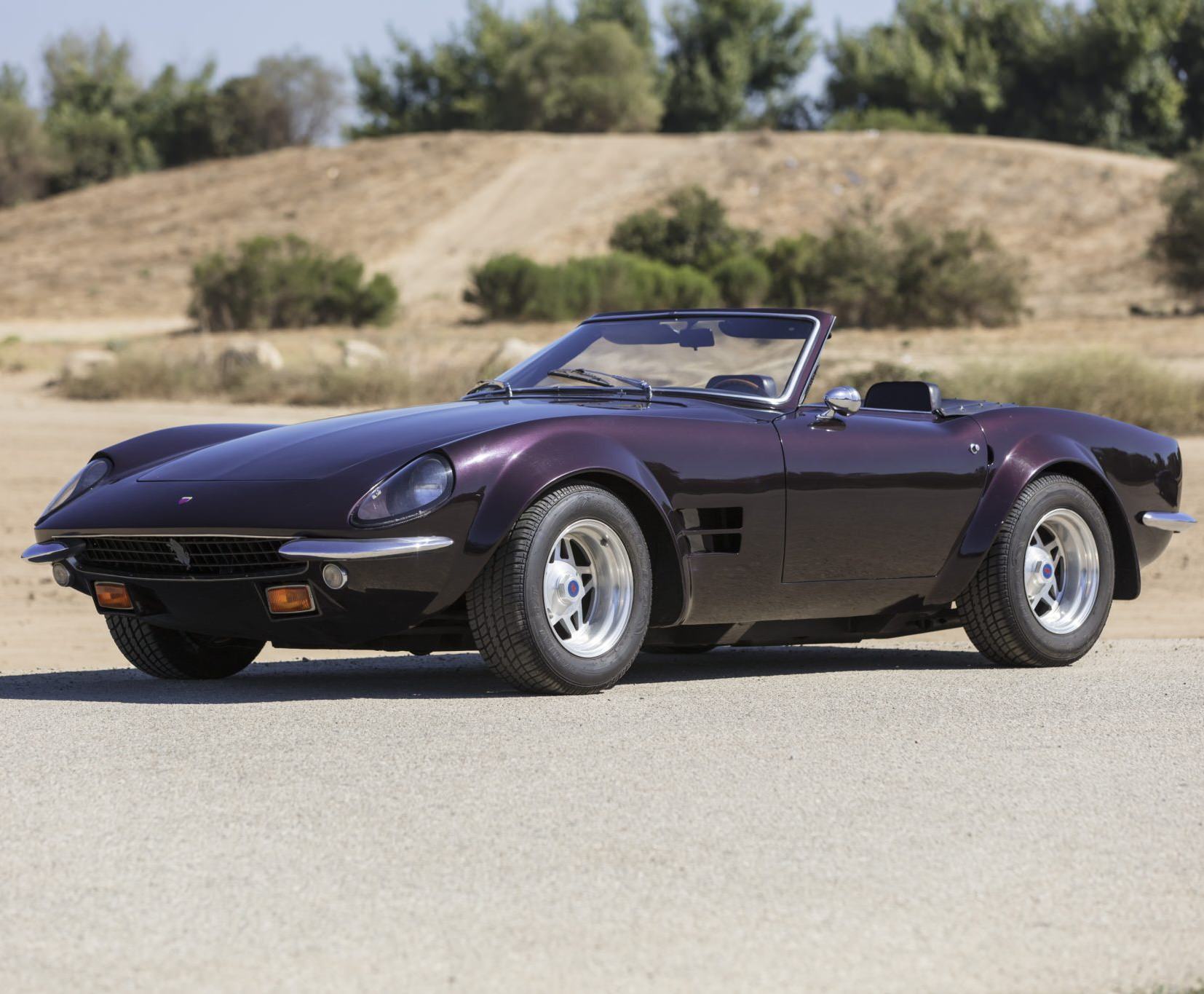
The car was named the Torino for its debut at the 1967 New York Auto Show. Ford, which already had the Torino name registered for its own intermediate-sized car, objected within weeks. After a short initial run under the Torino name, Reisner settled on Italia and had the name added in script across the nose.
He hired Robert Cumberford, a former GM designer, to sketch the car, and John Crosthwaite, a chassis engineer formerly at Grand Prix team BRM, to develop the new square-tube steel chassis. Franco Scaglione, the former Bertone stylist responsible for the Alfa Romeo BAT concepts, was brought in by Reisner to productionize Cumberford’s shape for actual manufacturing.
Four Names In Six Years
Griffith’s finances collapsed after 14 cars had been built and shipped out to customers. Steve Wilder, a motoring journalist and Griffith customer, acquired the project and renamed the car the Omega. Final assembly moved to Holman & Moody in North Carolina, and the Griffith’s Plymouth V8 was swapped out for Ford power.
Record keeping was lax, but it’s believed that 33 Omegas were completed before Wilder walked away, selling the Omega name to General Motors on his way out. Reisner, left with the tooling and the design rights, decided to complete assembly in Turin, Italy and export the cars fully finished to the United States.
For his US distributor Reisner turned to Genser-Foreman of New Jersey, who named the car the “GFX,” this was short for “Genser-Foreman Experimental.” Reisner also brokered a new supply deal with Ford, which shipped 289 cubic inch V8s, transmissions, rear axles, and Magnum 500 wheels to Turin.
The “Italia” Name Debuts
The car was named the Torino for its debut at the 1967 New York Auto Show. Ford, which already had the Torino name registered for its own intermediate-sized car, objected within weeks. After a short initial run under the Torino name, Reisner settled on Italia and had the name added in script across the nose.
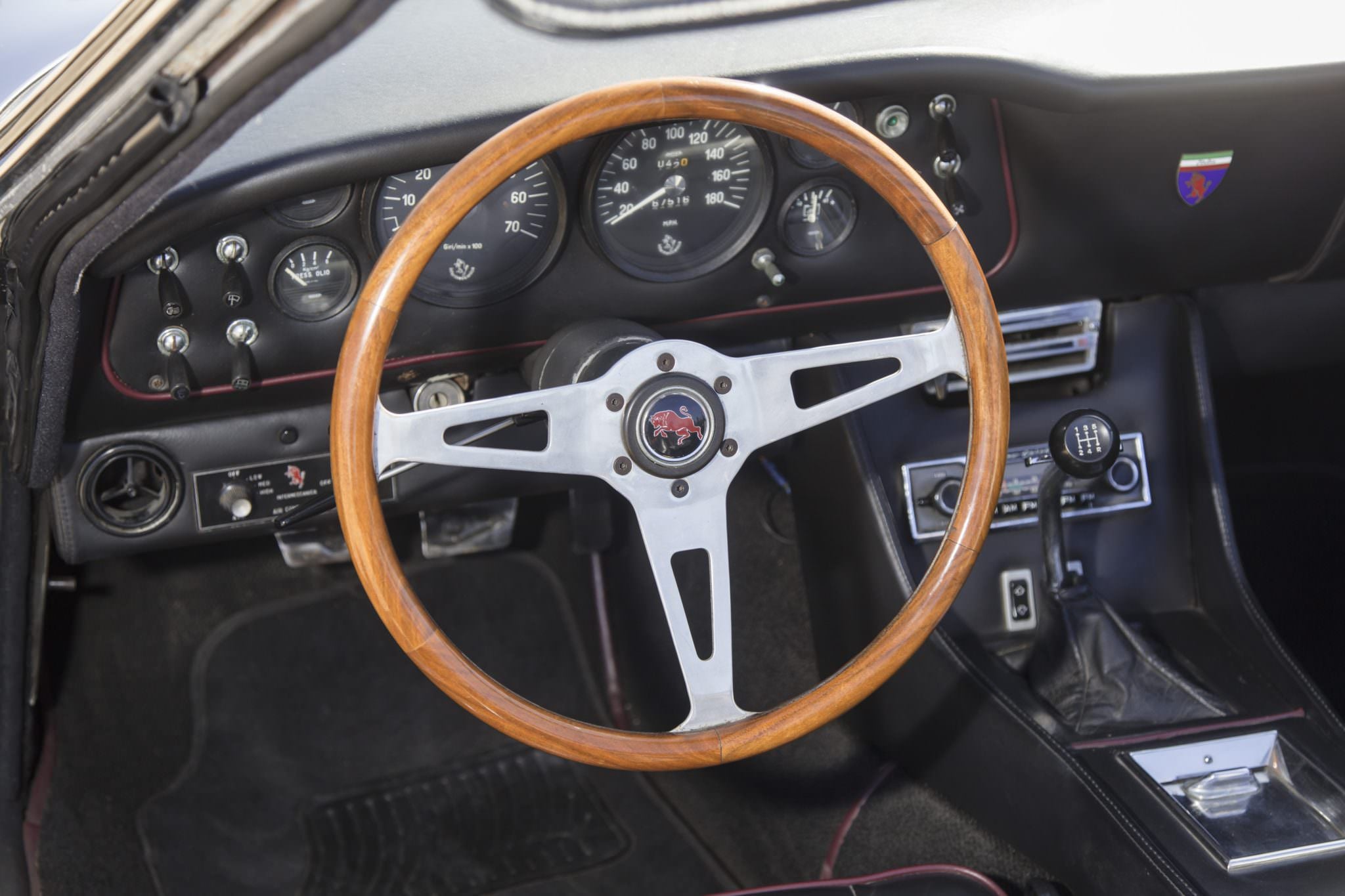
Inside, the car is trimmed in black leather with maroon piping carried through to the dash, center console, and door panels. Equipment includes air conditioning, power windows, a wood-rimmed steering wheel, and a Becker Europa push-button radio wired to Blaupunkt speakers.
The Italia belongs to the small class of Italian-American hybrids that included the Iso Grifo, De Tomaso Mangusta and Pantera, the Bizzarrini 5300 GT and a handful of others. The handmade steel body was shaped over wooden bucks in Turin, with sweeping fenders, a long hood, and a short deck that often drew comparisons to Ferrari’s contemporary cars as well as to the C3 Corvette.
Many have mistaken red Italias for Ferraris at a glance, something that continues to the modern day. The Italia wore a “Prancing Bull” badge in a nod to Torino’s coat of arms, an obvious combined pun on the Ferrari and Lamborghini animal emblems.
Under the hood, the earliest Torino and Italia-badged cars used the Ford 289 High Performance V8 rated at 271 bhp. From spring 1968 onward Intermeccanica switched to the 302 cubic inch small block, which produced 250 bhp at 4,800 rpm but complied with tightening federal US emissions rules.
Later cars, beginning by 1970, used either the 351 Windsor or 351 Cleveland V8, with output somewhere between 271 and 300 bhp depending on the exact spec and year. A 4-speed manual was standard, with a 3-speed automatic available though thankfully unpopular with most buyers. A number of surviving cars have been converted to 5-speed manuals for better highway cruising.
The car’s curb weight sat just above 2,500 lbs, giving the Italia an excellent power-to-weight ratio and a 0 to 60 mph time of 6.6 seconds, impressive by the standards of the time. The chassis was a square-tube steel frame with independent front suspension and a live rear axle. The interior had leather upholstery, a wood-rimmed Nardi steering wheel, oval instrument binnacles, power windows, and, on many cars, a Blaupunkt AM/FM radio.
Each Italia was effectively bespoke, with details that varied car to car depending on options ordered and what parts happened to be on the shelf in Turin.
The Italia Spyder outsold the coupe by a wide margin, but surviving factory records are incomplete. Total production is most commonly cited at around 400 to 500 cars across the Torino and Italia periods combined. Within that, estimates for Italia-badged Spyder production range from 240 to 354, with 56 to 57 Italia coupes reported. Separate estimates for the earlier Torino-badged run vary from 45 to 97 cars.
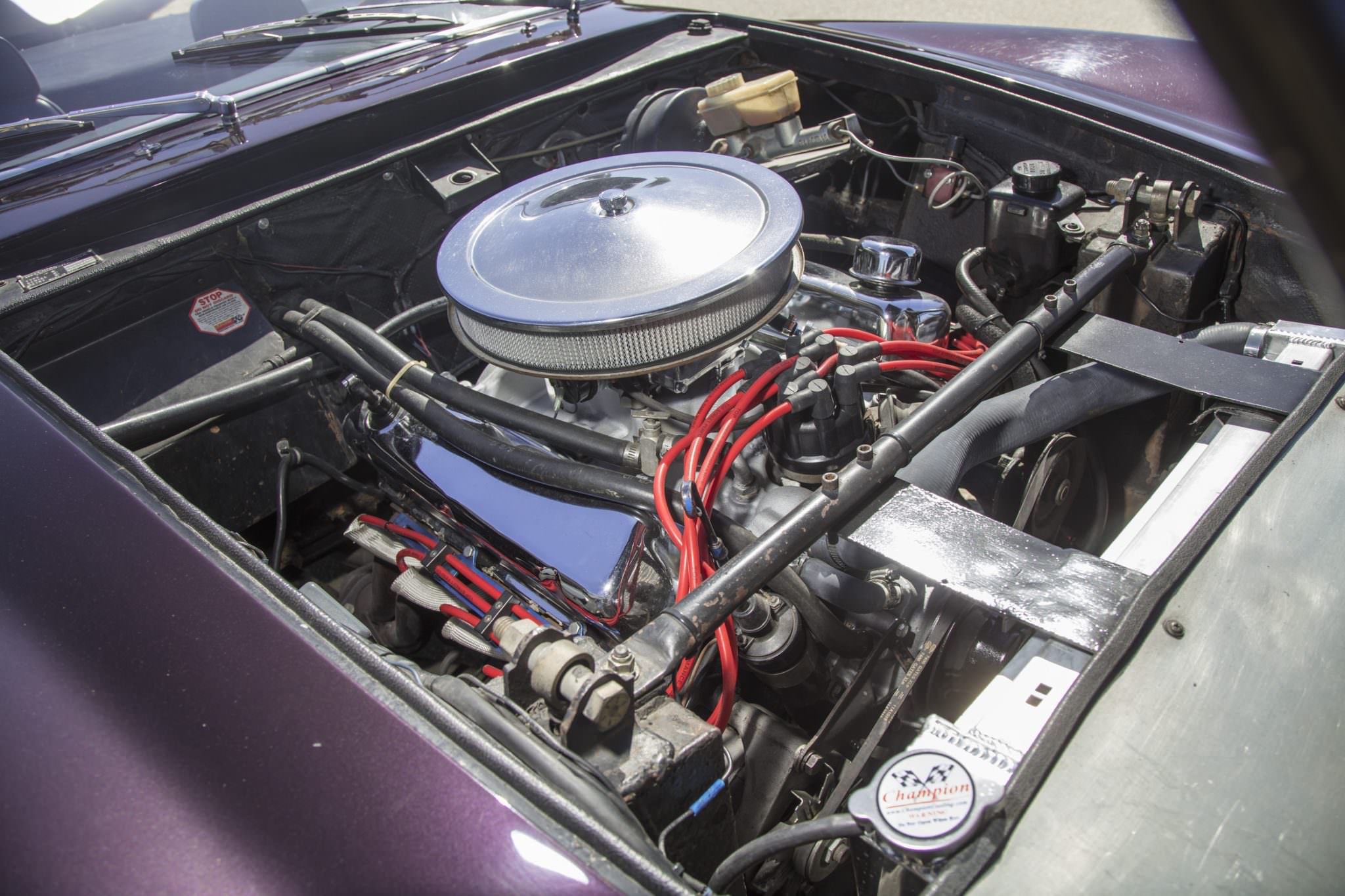
The earliest Torino and Italia-badged cars used the Ford 289 High Performance V8 rated at 271 bhp. From spring 1968 onward Intermeccanica switched to the 302 cubic inch small block, which produced 250 bhp at 4,800 rpm but complied with tightening federal US emissions rules. Later cars, beginning by 1970, used both 351 Windsor and 351 Cleveland V8s, with output quoted in period sources between 271 and 300 bhp.
Production ended in the spring of 1972 as tightening US emissions rules and rising insurance premiums for high-performance cars eroded the market for low-volume V8 sports cars. Intermeccanica had already shifted focus to the Opel-backed Indra, which had been introduced in 1971 and overlapped slightly with the Italia.
After moving to California in 1975, the Reisners developed a Porsche 356 Speedster replica, with production beginning through a Santa Ana partnership in 1976. From there the company moved further into replicas, and eventually to the Vancouver area, where it remains in operation today under Frank’s son Henry Reisner. Intermeccanica replicas are widely considered to be among the best in the world.
The Appearance In “Gone In 60 Seconds”
Interestingly, the Italia appears briefly in H.B. Halicki’s 1974 film Gone in 60 Seconds, long before the 2000 remake starring Nicolas Cage, Angelina Jolie, Giovanni Ribisi, Christopher Eccleston, Robert Duvall, and Vinnie Jones.
The car used in the film is a 1968 Intermeccanica Italia GFX Spyder, listed among the thieves’ 48 targets and code-named “Lorna.” The specific car used belonged to actor Lyle Waggoner, then best known as a regular on The Carol Burnett Show and later cast as Steve Trevor on the Wonder Woman TV series.
Waggoner wasn’t the only celebrity owner, Alex Trebek, the long-serving host of Jeopardy!, owned a 1971 Italia Spyder finished in dark metallic red, with a Ford 351 Windsor V8 and factory air conditioning ordered from new, an option rarely specified on an Italia.
Exactly how many Italias have survived isn’t known but their values have been seeing steady appreciation in recent years as more people learn about them, and similar exotic Italian/American cars like the Mangusta and Pantera see their values stretching well into the six figures.
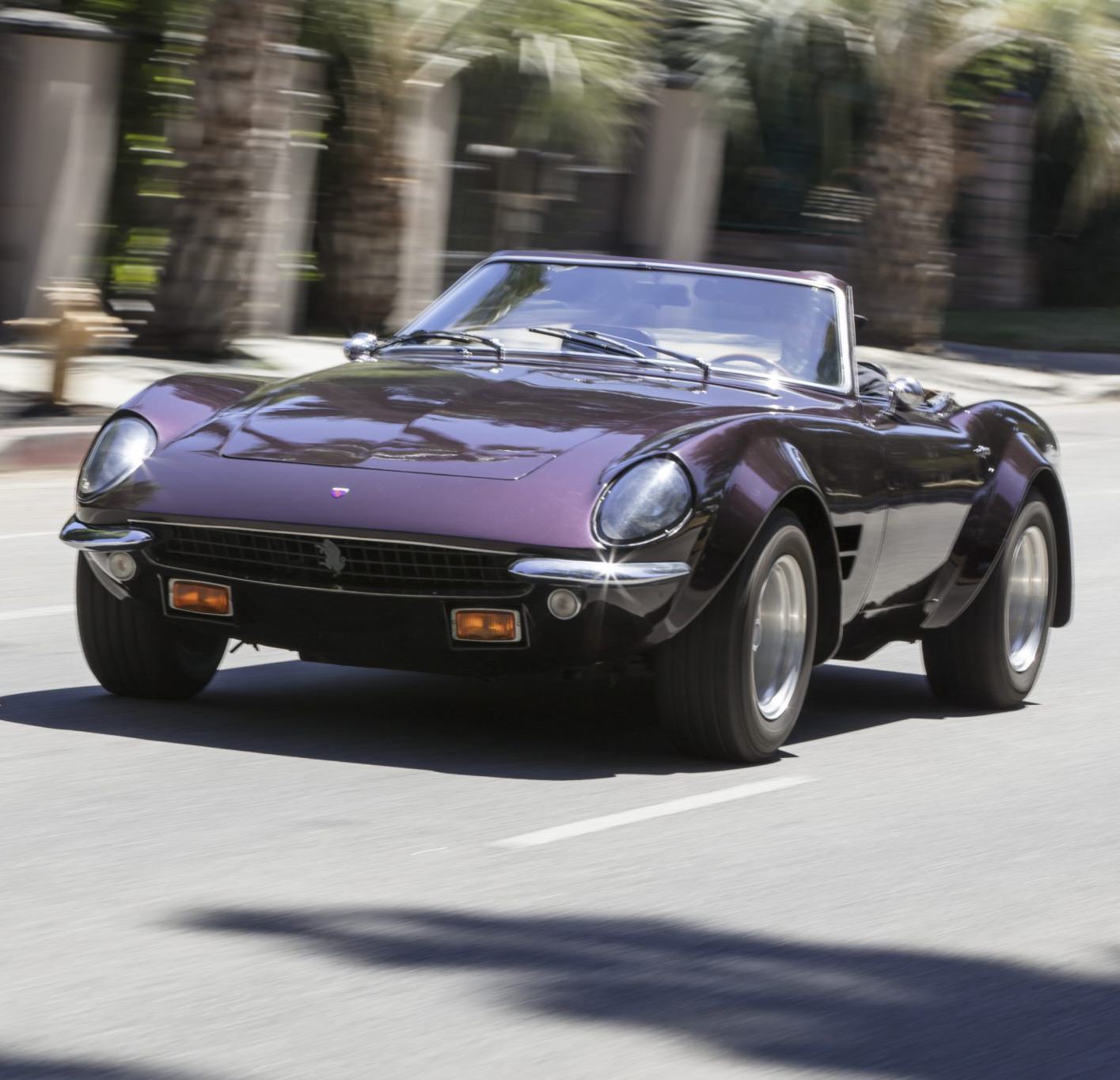
Interestingly, the Italia appears briefly in H.B. Halicki’s 1974 film “Gone in 60 Seconds,” long before the 2000 remake starring Nicolas Cage, Angelina Jolie, Giovanni Ribisi, Christopher Eccleston, Robert Duvall, and Vinnie Jones.
The Intermeccanica Italia Spyder Shown Here
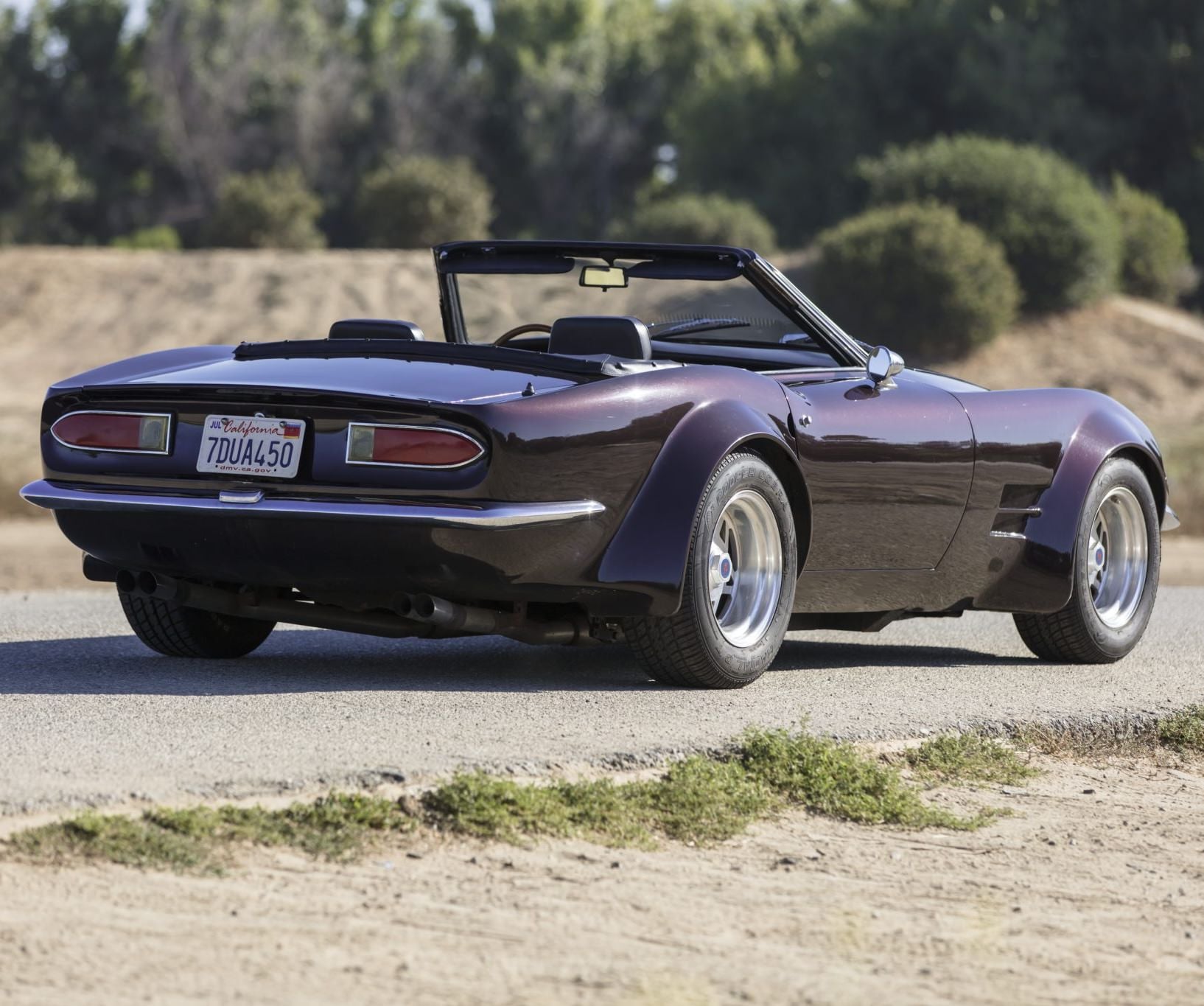
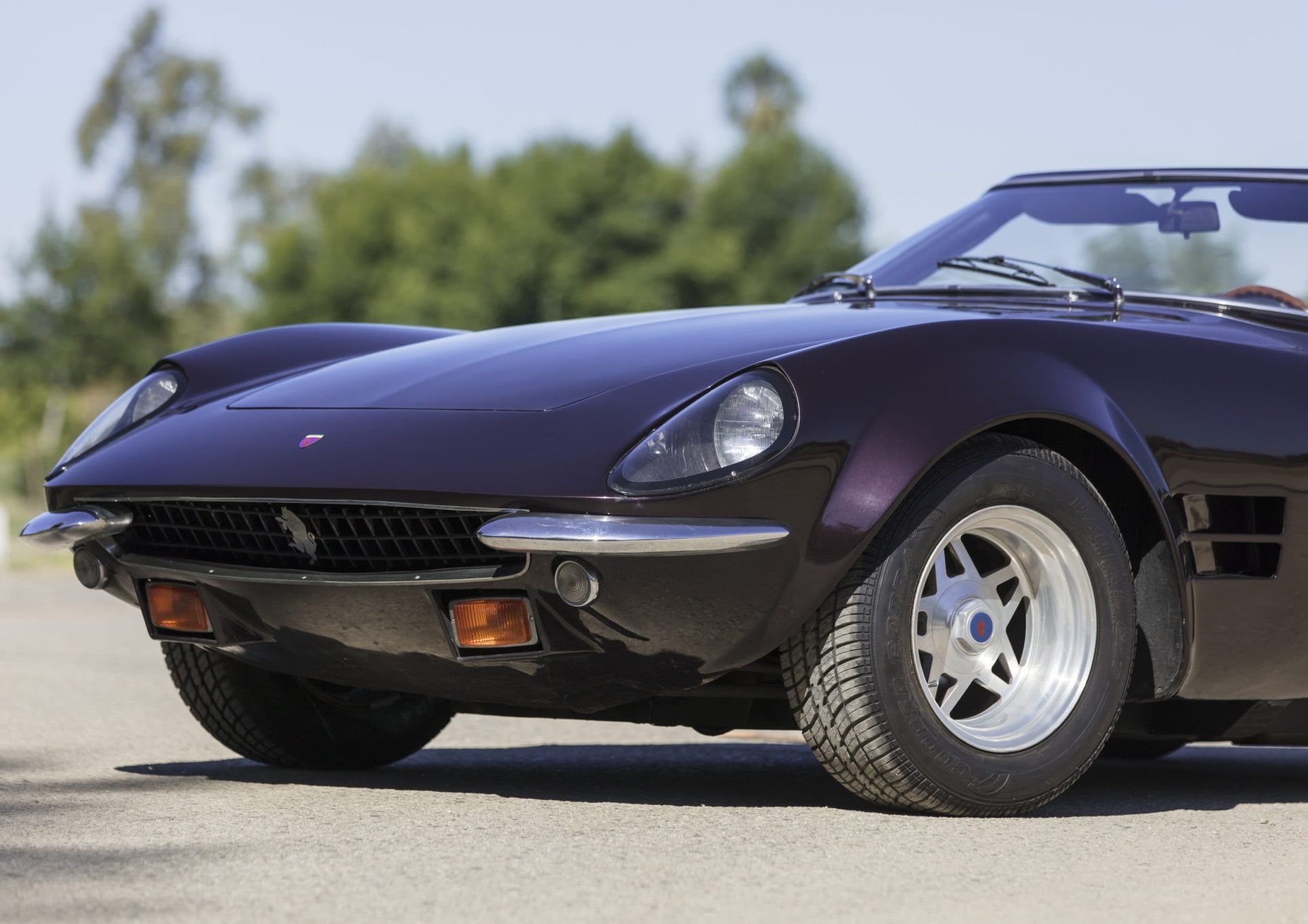
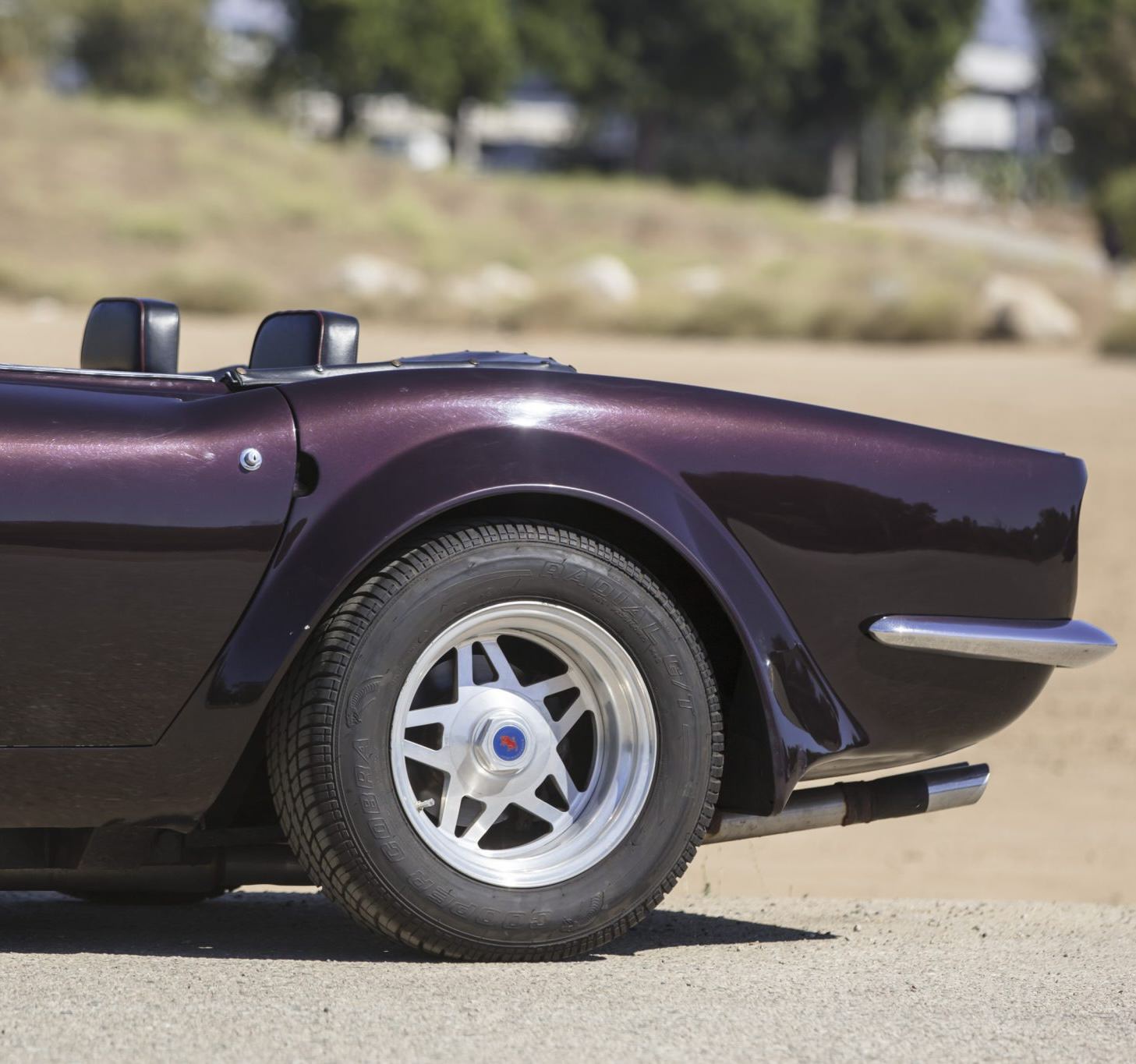
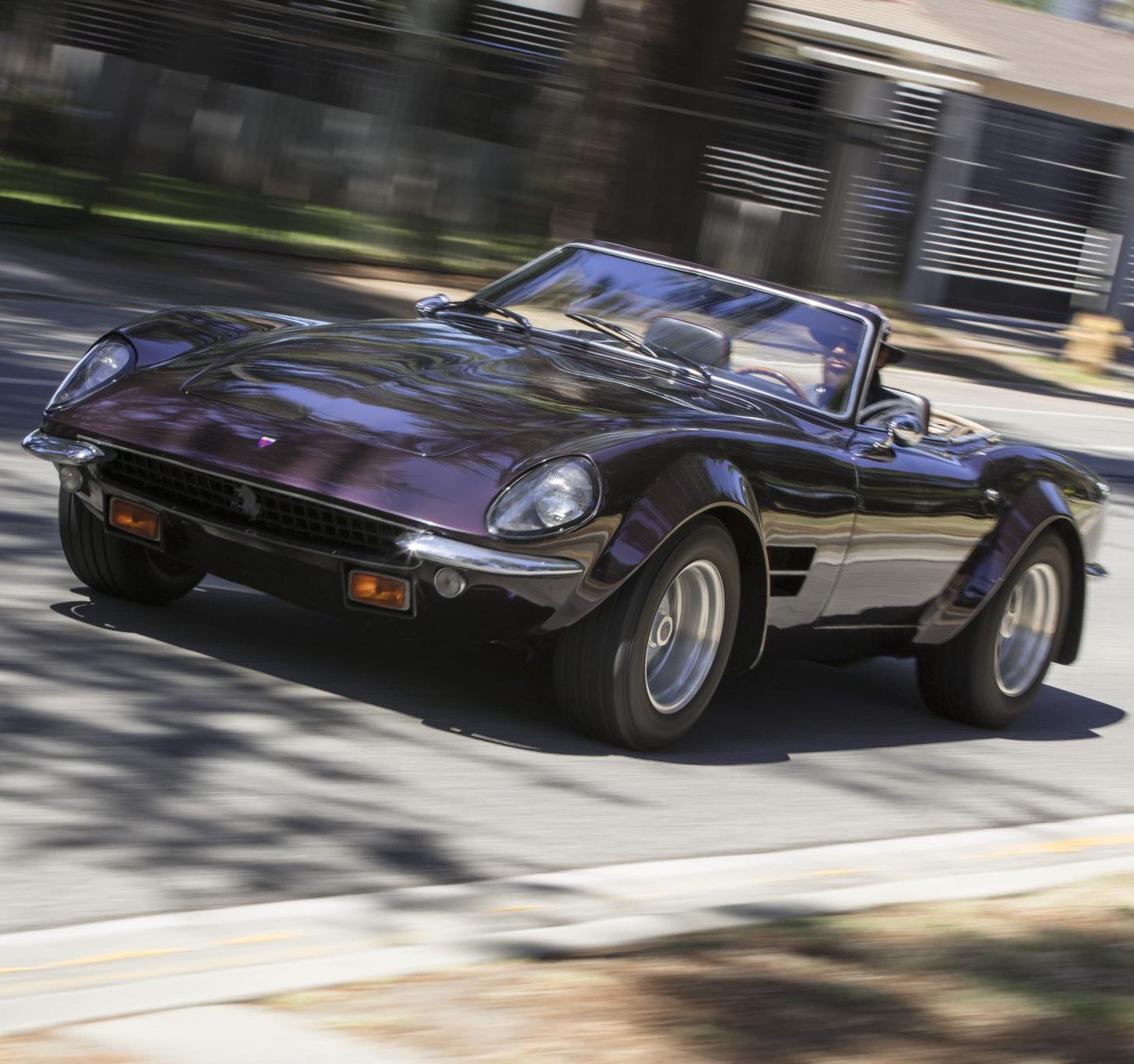
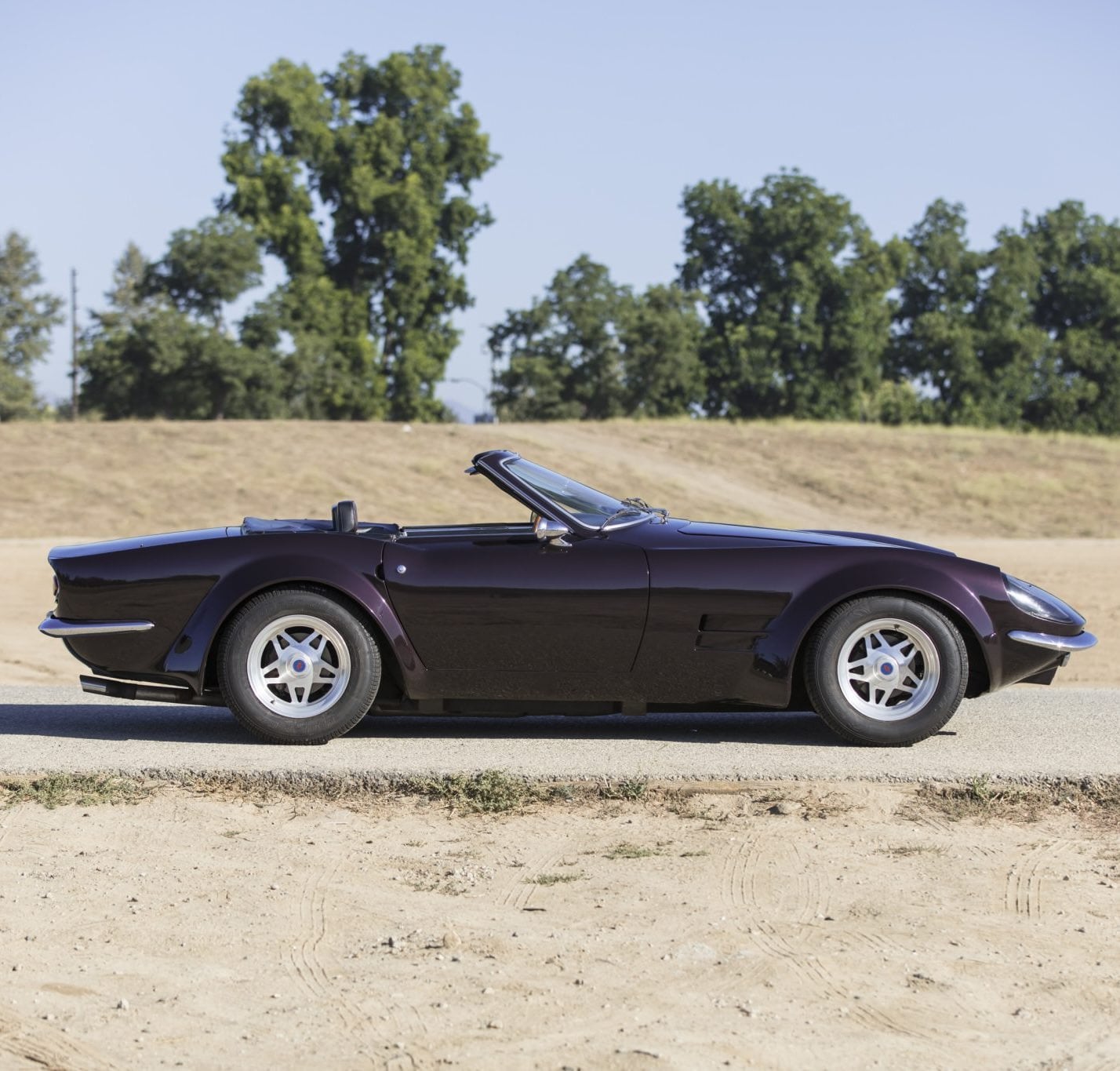
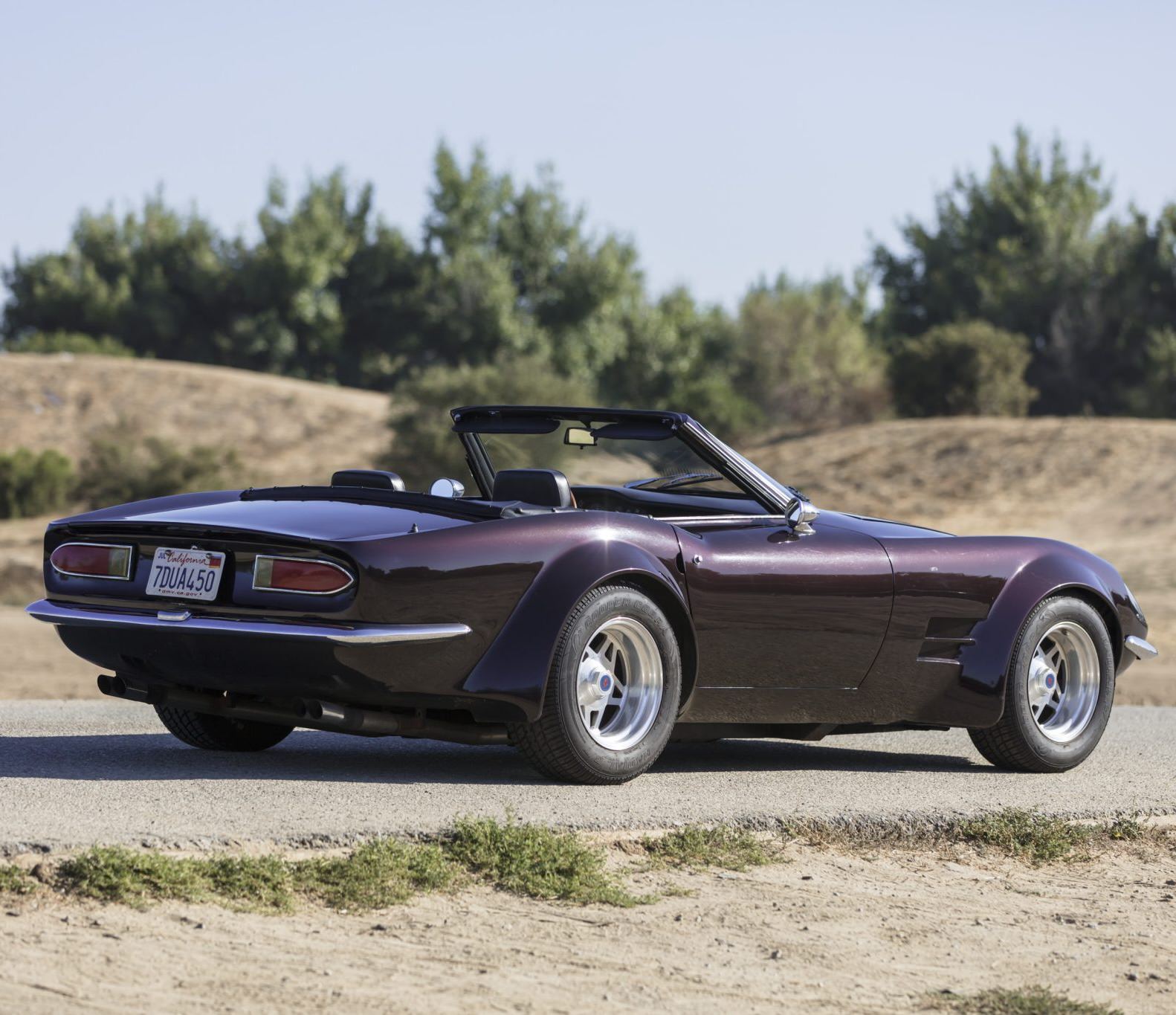
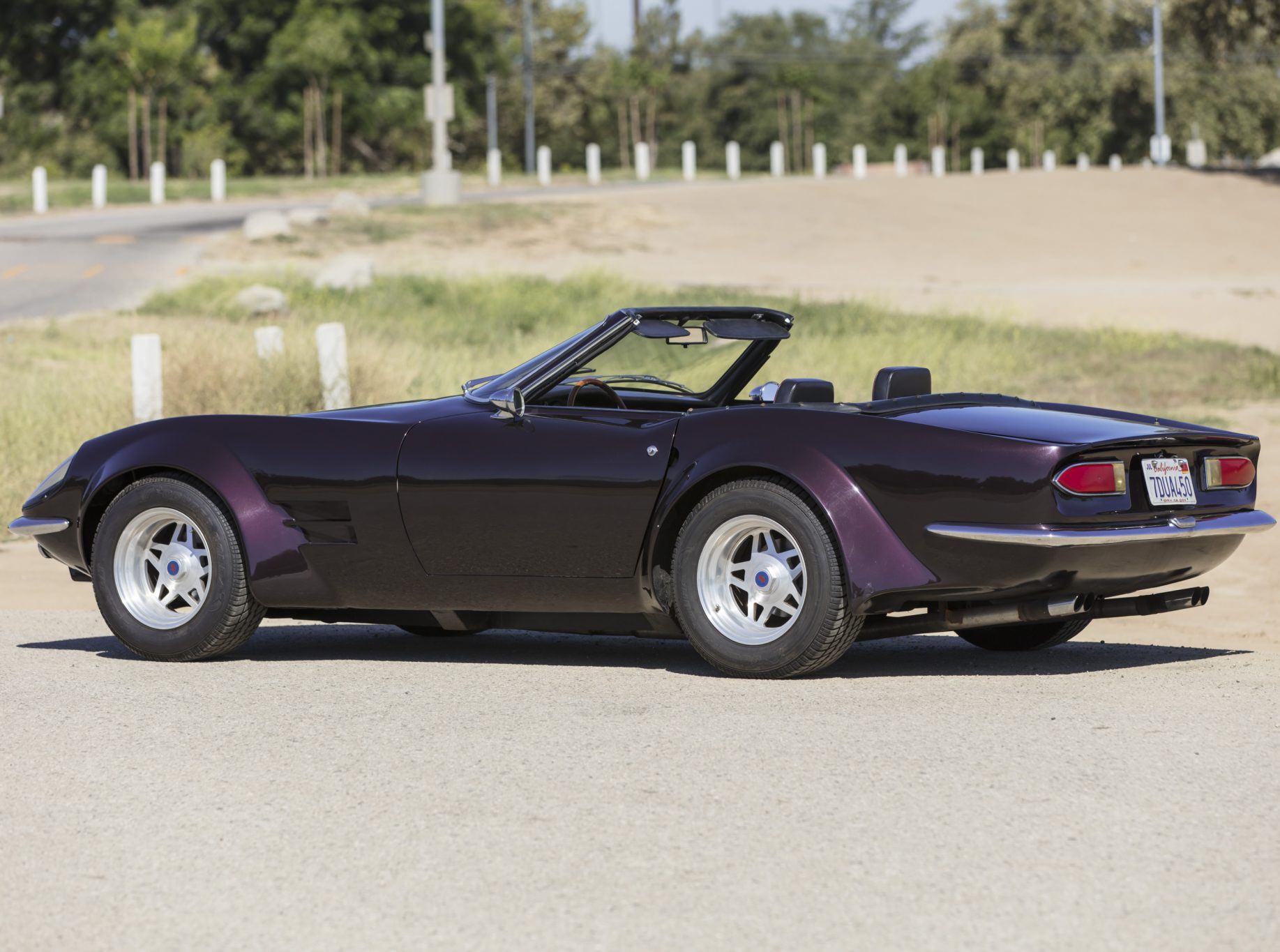
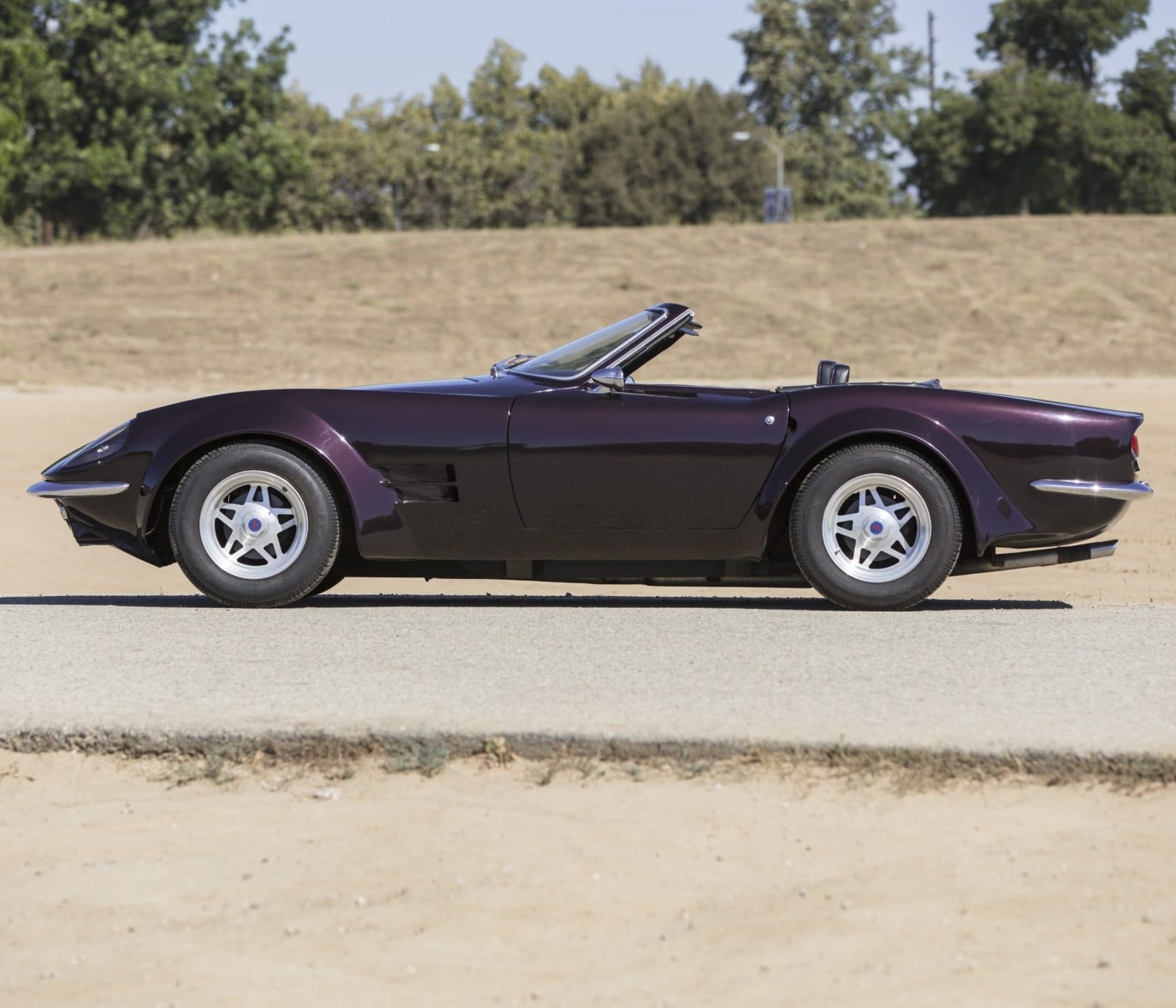
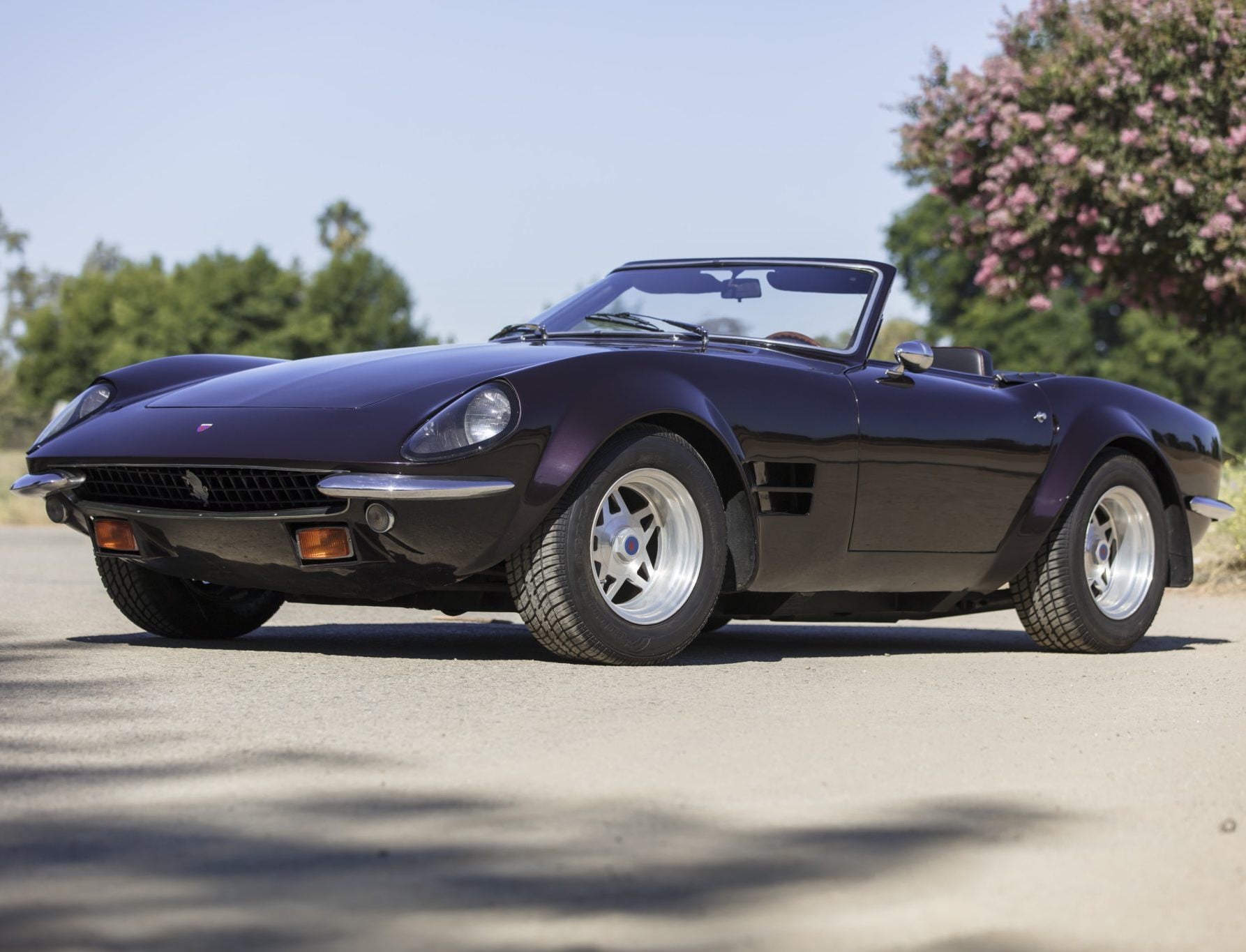
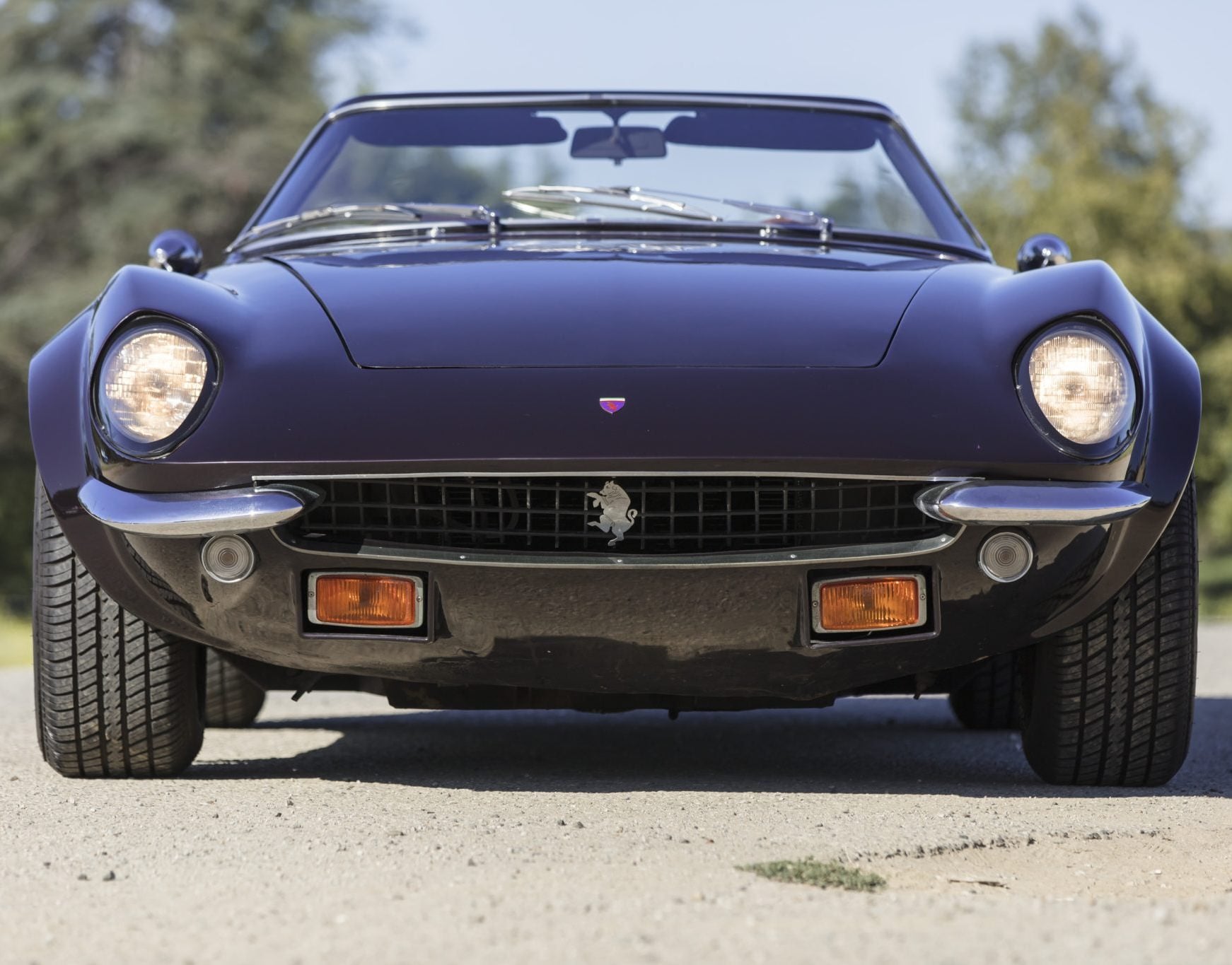
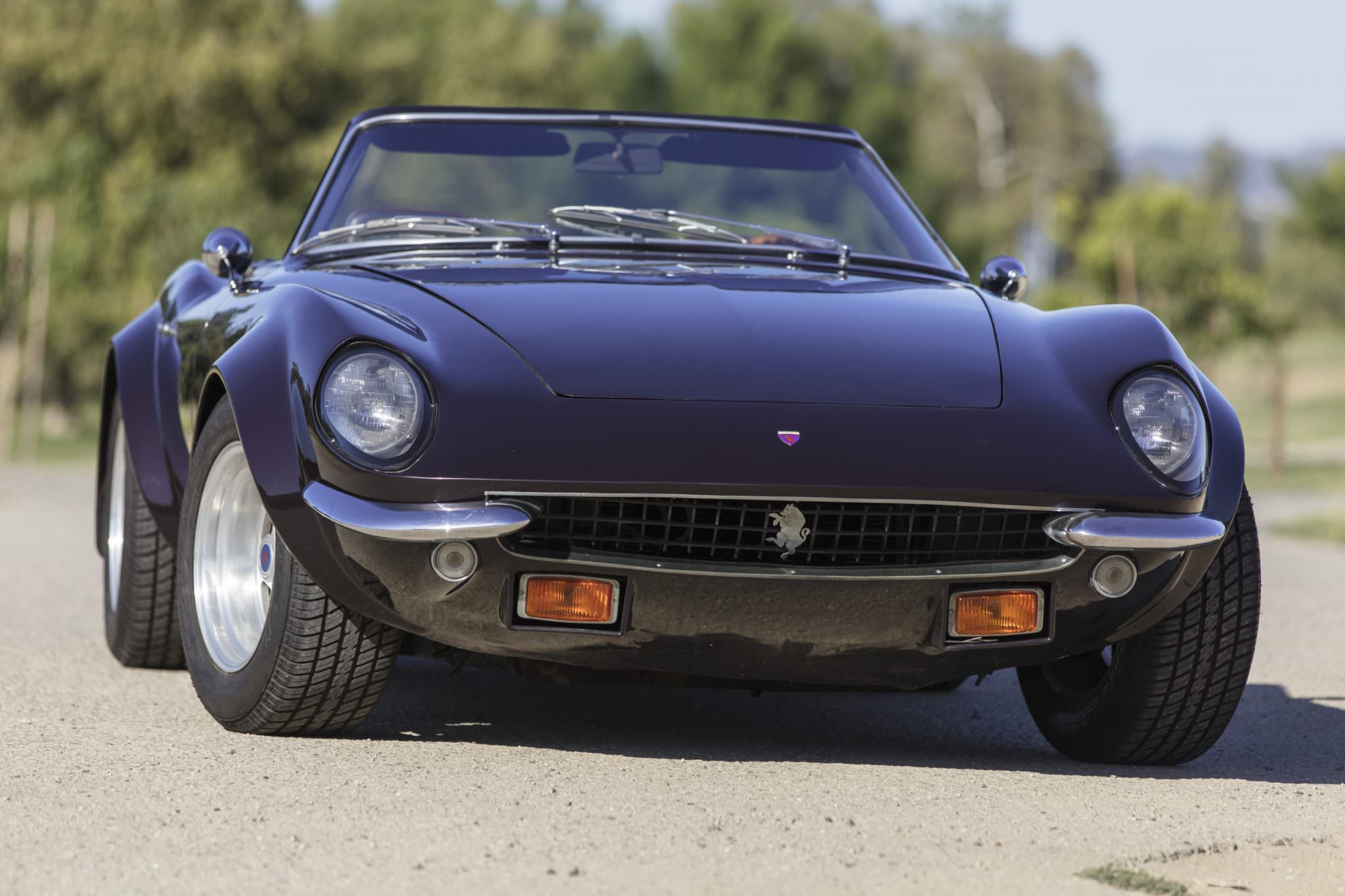
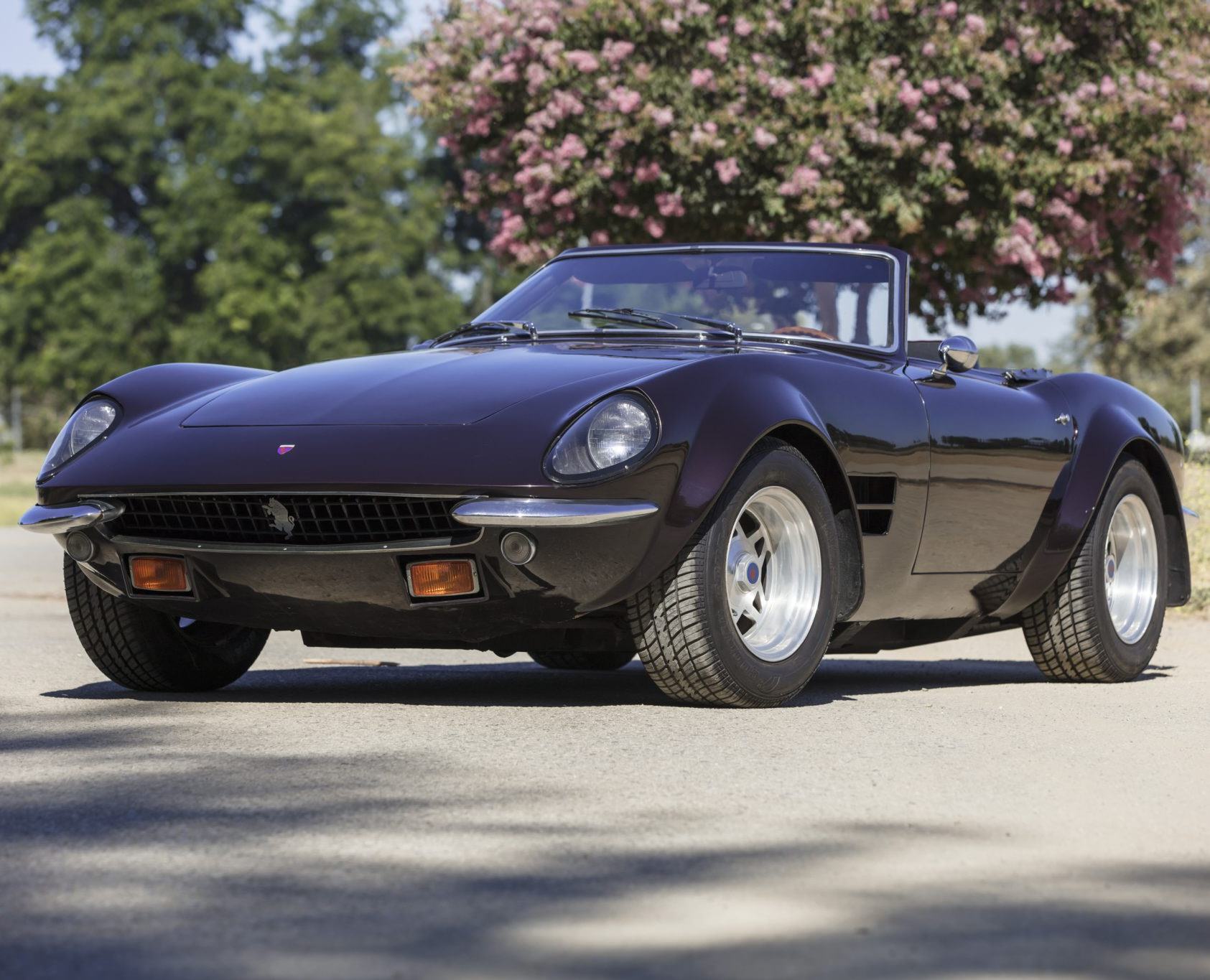
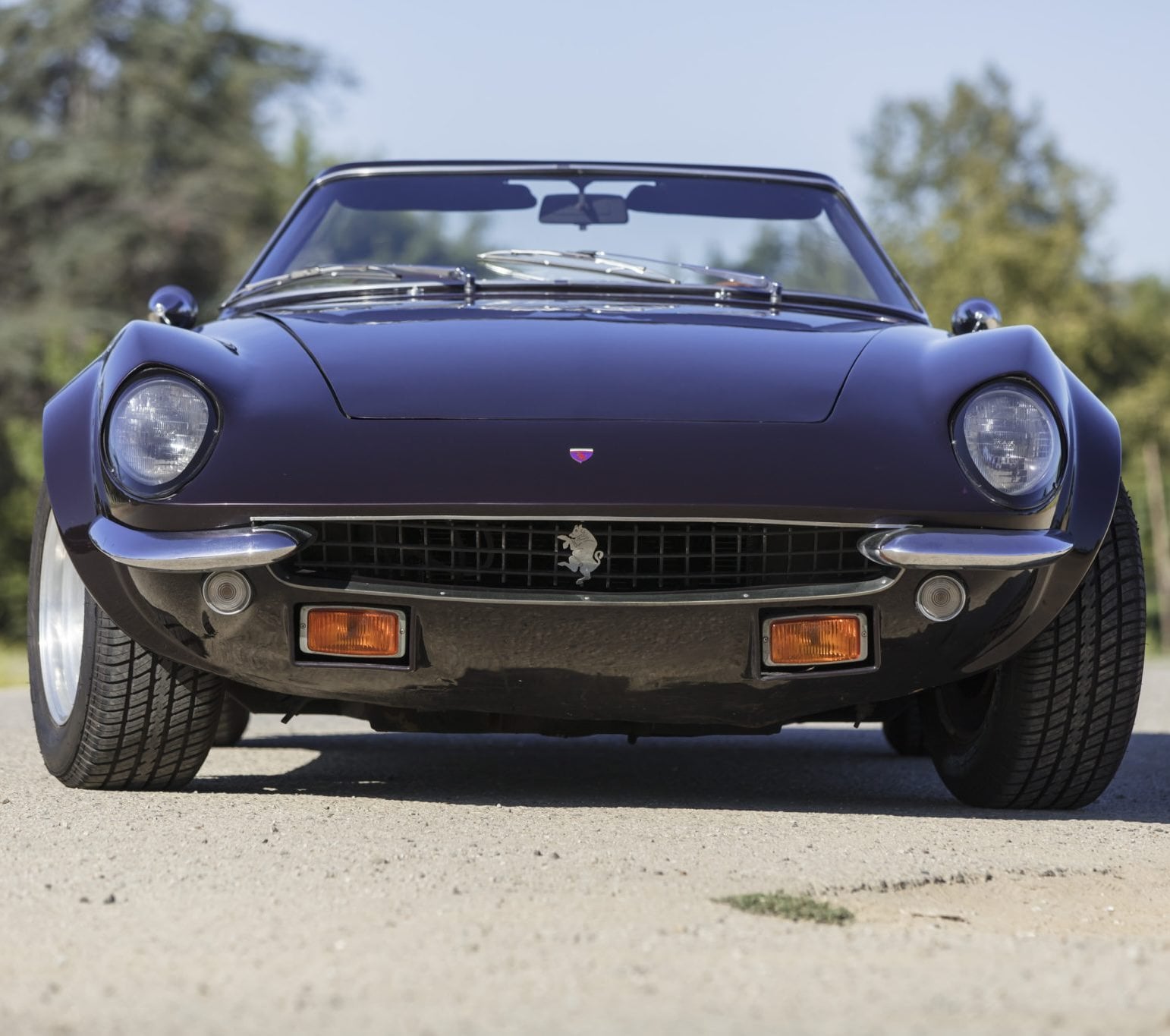
This 1970 Intermeccanica Italia Spyder is one of ~400 examples built between 1966 and 1973, and it has an unusually colorful backstory. Chassis 50387414 is documented as having been owned by American actor Lyle Waggoner and modified by Hollywood stunt-car builder Eddie Paul, who added widebody fender flares, a revised lower front valance, extra fender vents, and reworked taillights before the car was repainted in metallic purple.
It’s believed to have been used in the 1974 film Gone in 60 Seconds named “Lorna,” though this isn’t documented, and further research would be needed to verify it. The current seller’s father bought the car in 2003, with ownership passing to the seller in 2023.
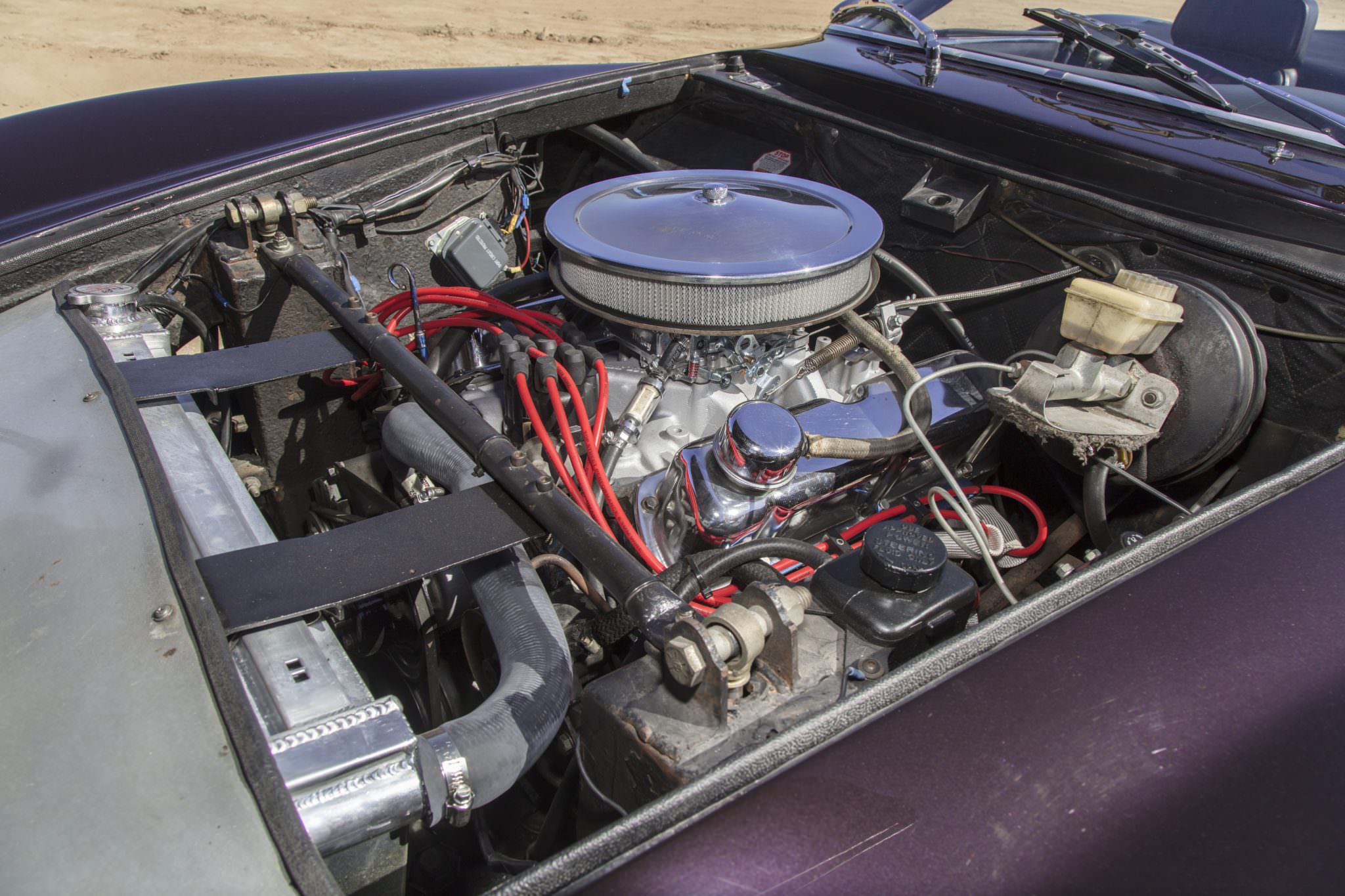
Power comes from a 351 Ford V8 fed by an aftermarket intake manifold and a Holley four-barrel carburetor installed in March of 2025. A 5-speed manual transmission was fitted under prior ownership, and the dual exhaust runs ceramic-coated headers exiting through quad tips.
The car sits on 15 inch five-spoke alloy wheels with Intermeccanica-branded center caps and 235/60 Cooper Cobra Radial G/T tires, and it rides on adjustable coilovers at the rear. Power steering, four-wheel disc brakes, and a beige convertible top with matching black boot cover round out the exterior specification, alongside headlight covers, door-mounted mirrors, and a “Dancing Bull” grille badge.
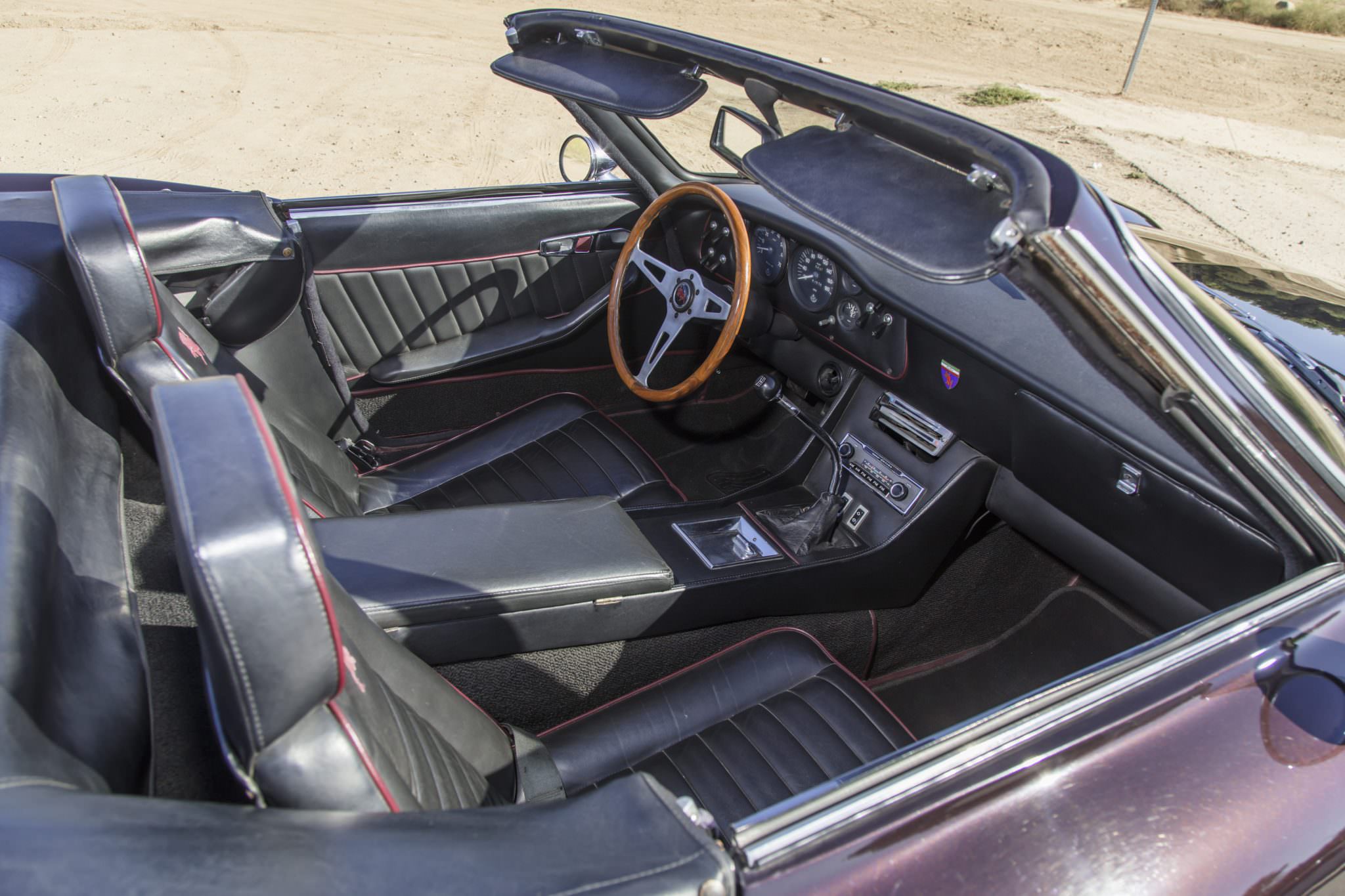
Inside, the car is trimmed in black leather with maroon piping carried through to the dash, center console, and door panels. Equipment includes air conditioning, power windows, a wood-rimmed steering wheel, and a Becker Europa push-button radio wired to Blaupunkt speakers.
Exactly how many Italias have survived isn’t known but their values have been seeing steady appreciation in recent years as more people learn about them, and similar exotic Italian/American cars like the Mangusta and Pantera see their values stretching well into the six figures.
Jaeger instrumentation includes a 180 mph speedometer, a 7,000 rpm tachometer, and gauges for water temperature, oil pressure, fuel level, and voltage. The five-digit odometer reads 68,000 miles, and servicing completed in 2025 included a new aluminum radiator, an Optima battery, and replacement of the water pump, valve cover gaskets, thermostat housing, and some ignition parts.
It’s now being offered for sale out of North Hollywood, California with a clean California title in the seller’s name that lists the car as a 1970 Italia. If you’d like to read more about it or register to bid you can visit the listing here.
Images courtesy of Bring a Trailer

Articles that Ben Branch has written have been covered on CNN, Popular Mechanics, Smithsonian Magazine, Road & Track Magazine, the official Pinterest blog, the official eBay Motors blog, BuzzFeed, Autoweek Magazine, Wired Magazine, Autoblog, Gear Patrol, Jalopnik, The Verge, and many more.
Silodrome was founded by Ben back in 2010, in the years since the site has grown to become a world leader in the alternative and vintage motoring sector, with well over a million monthly readers from around the world and many hundreds of thousands of followers on social media.