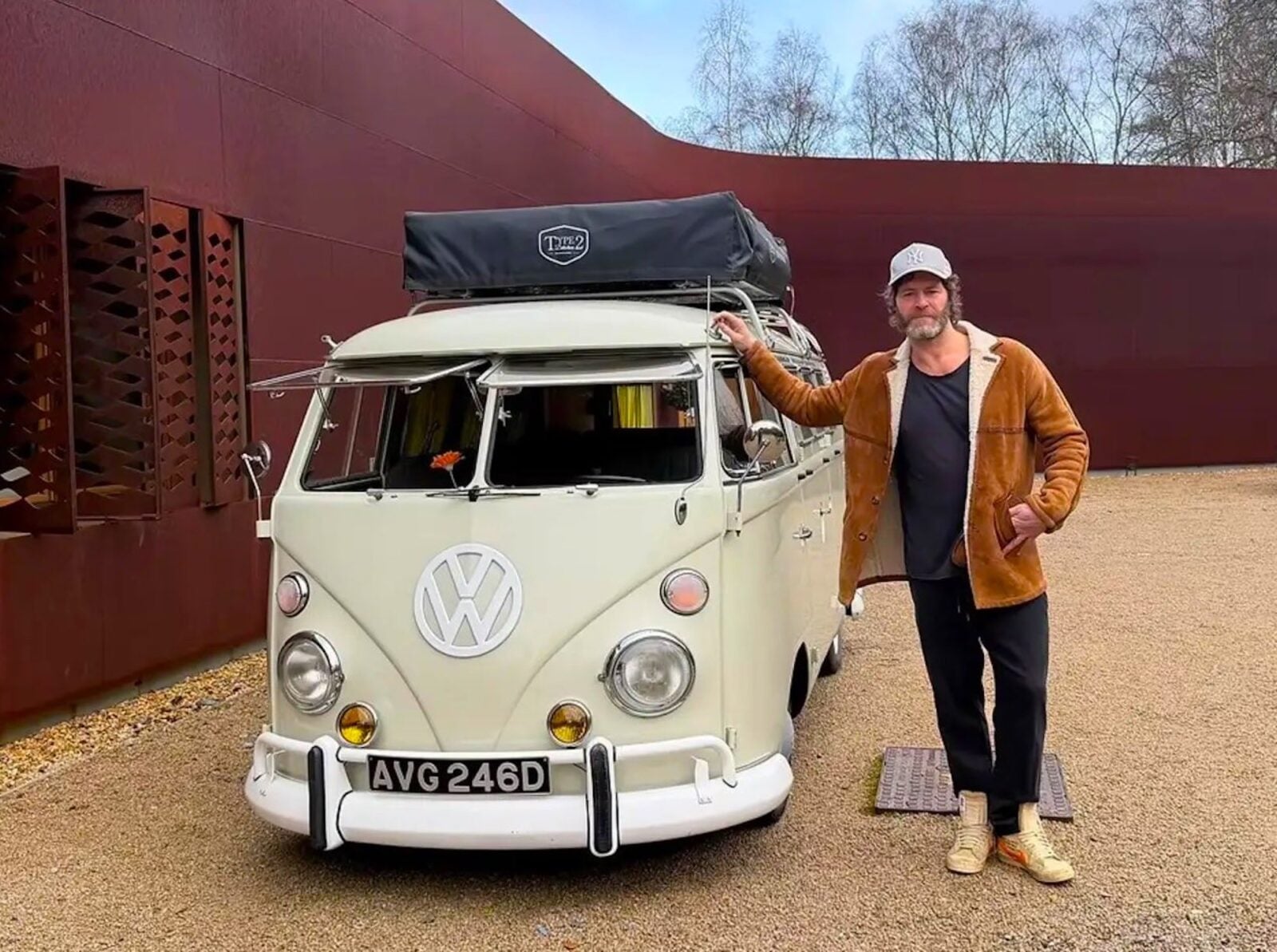
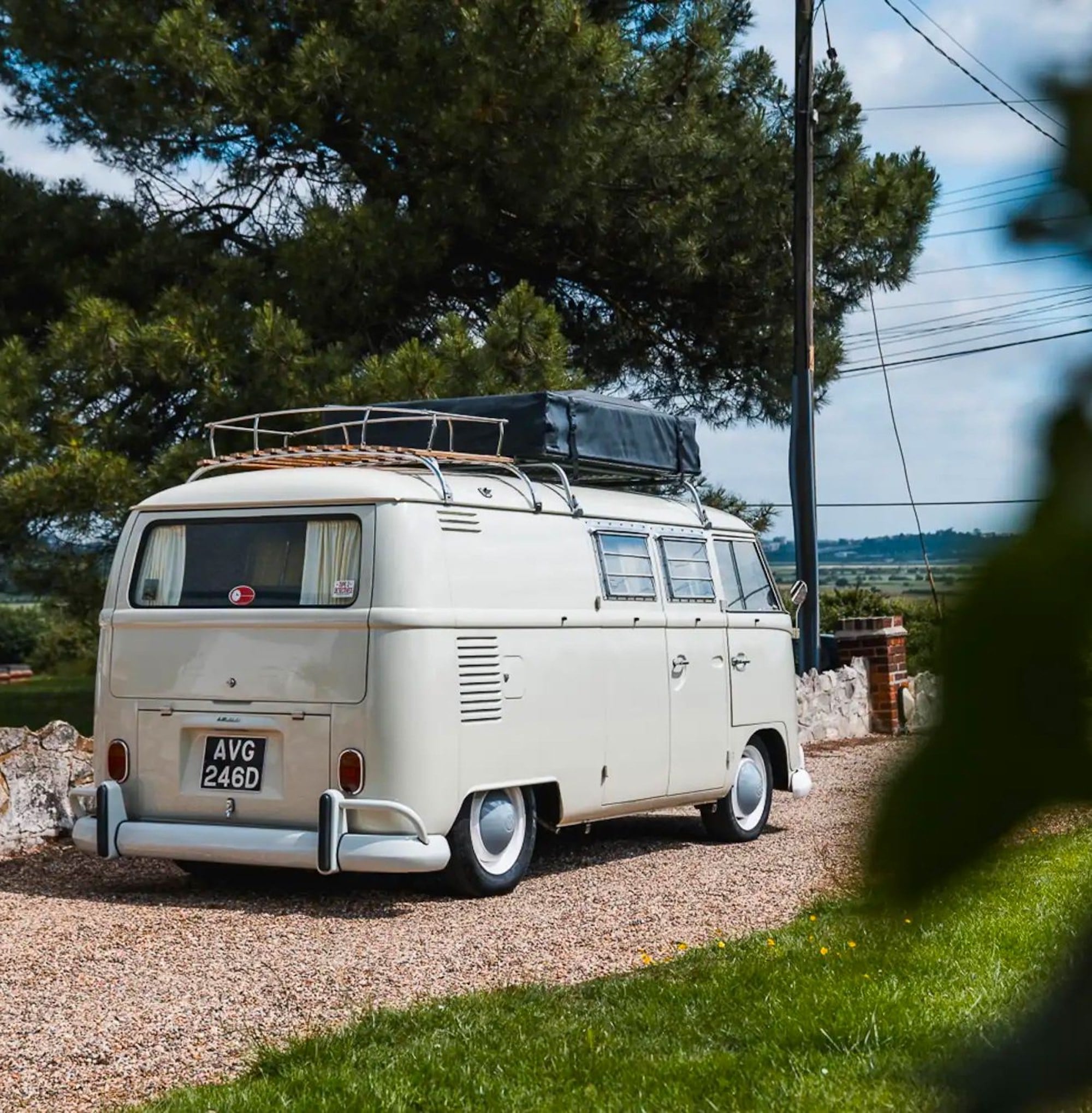
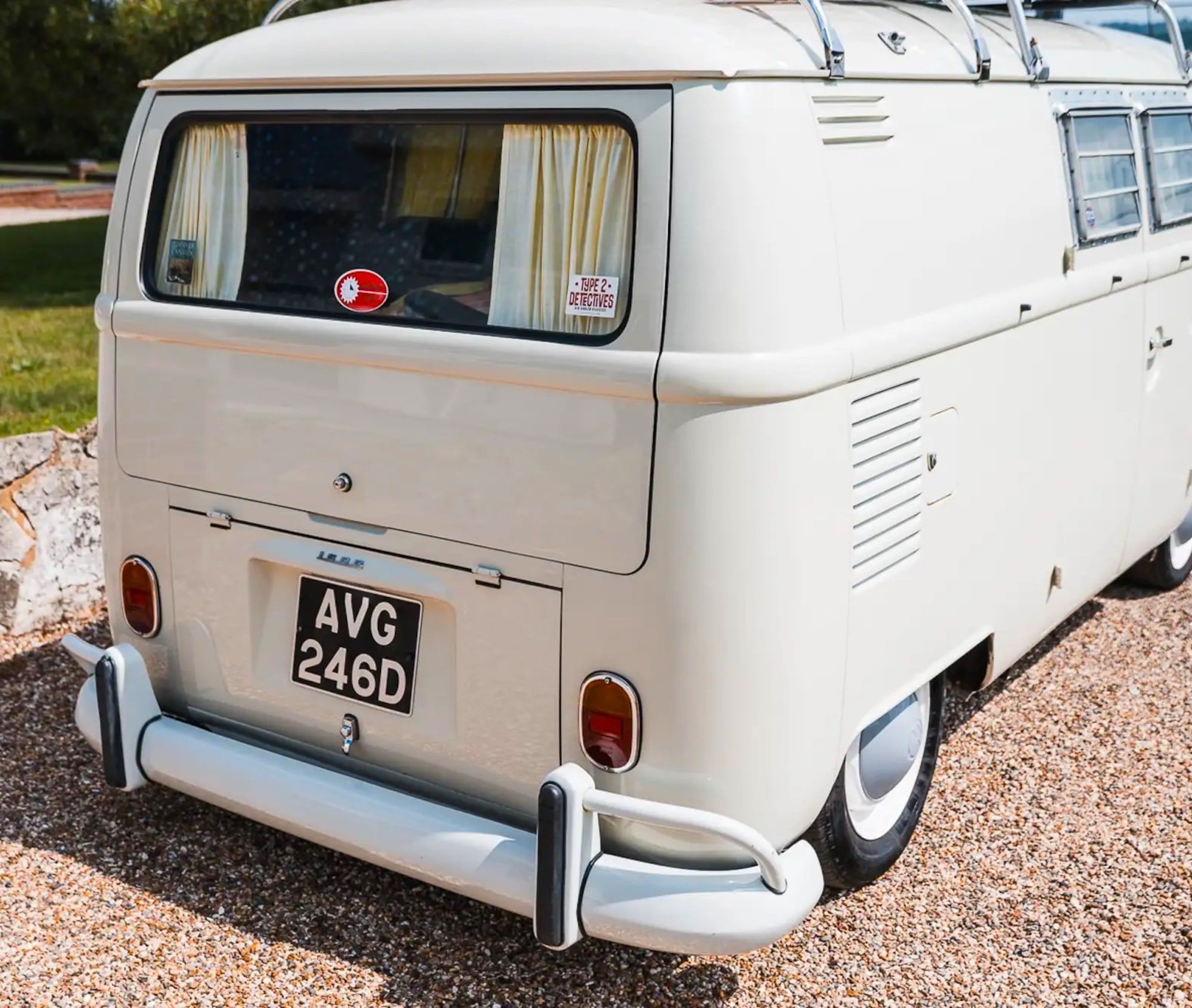
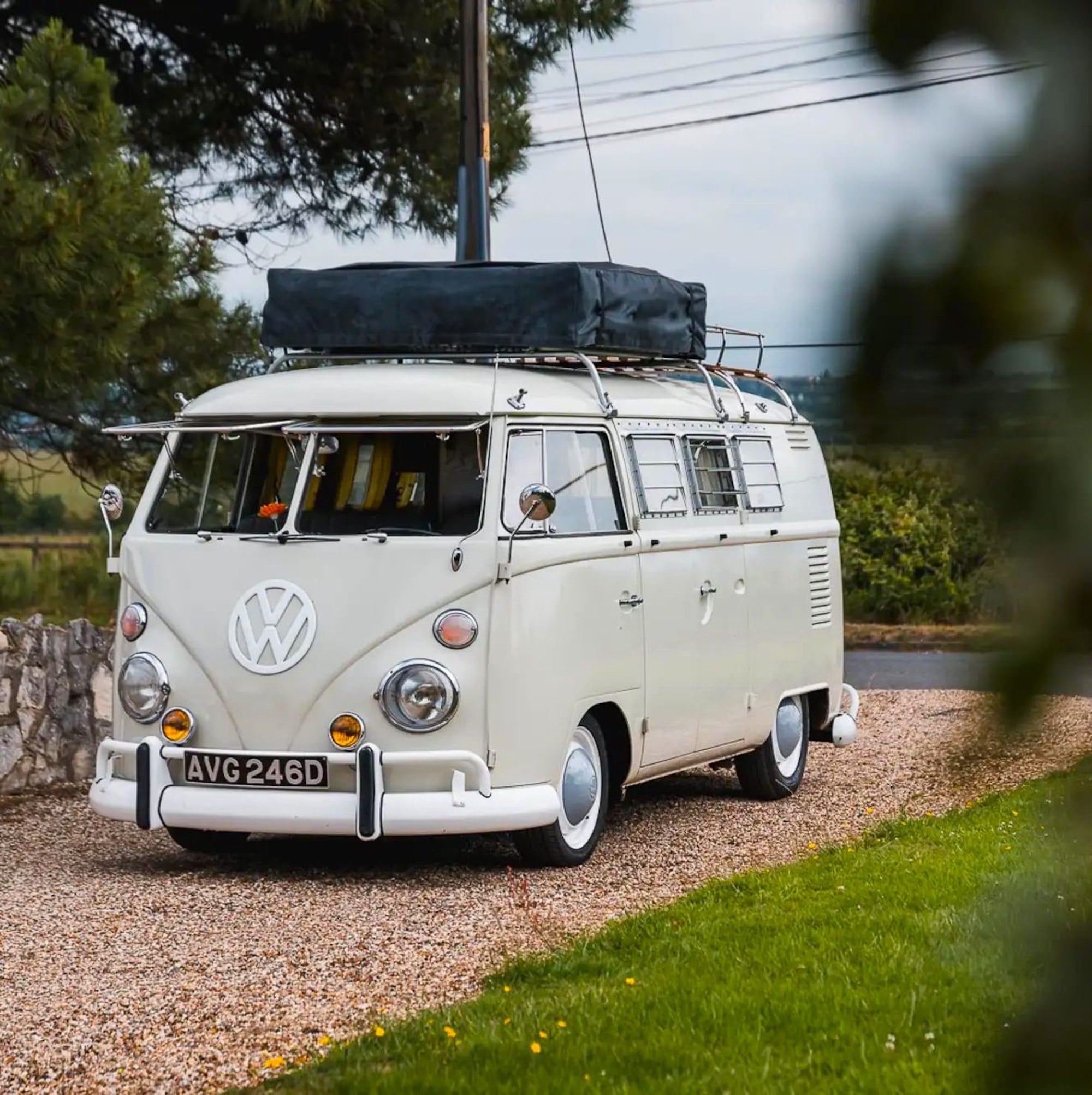
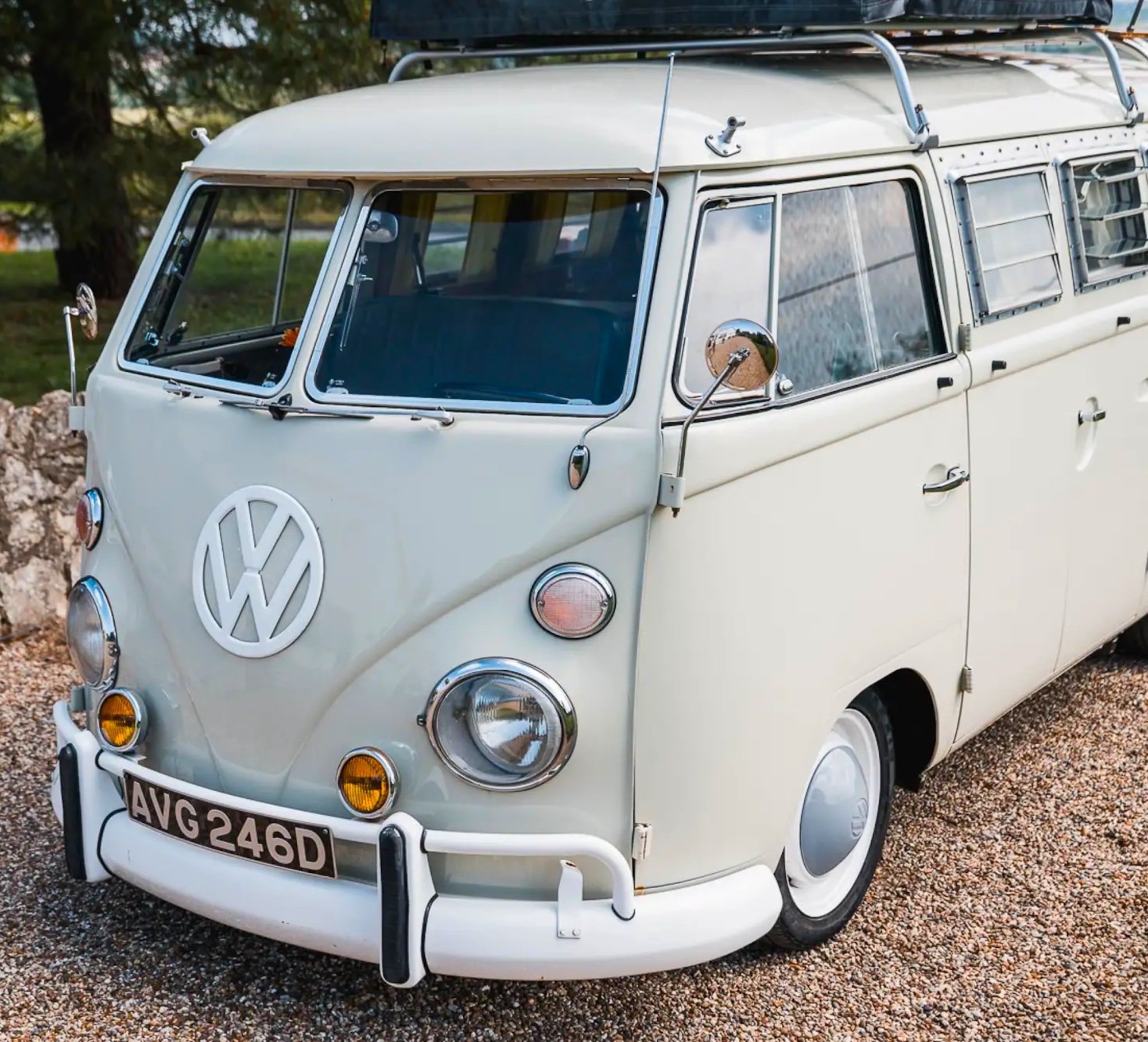
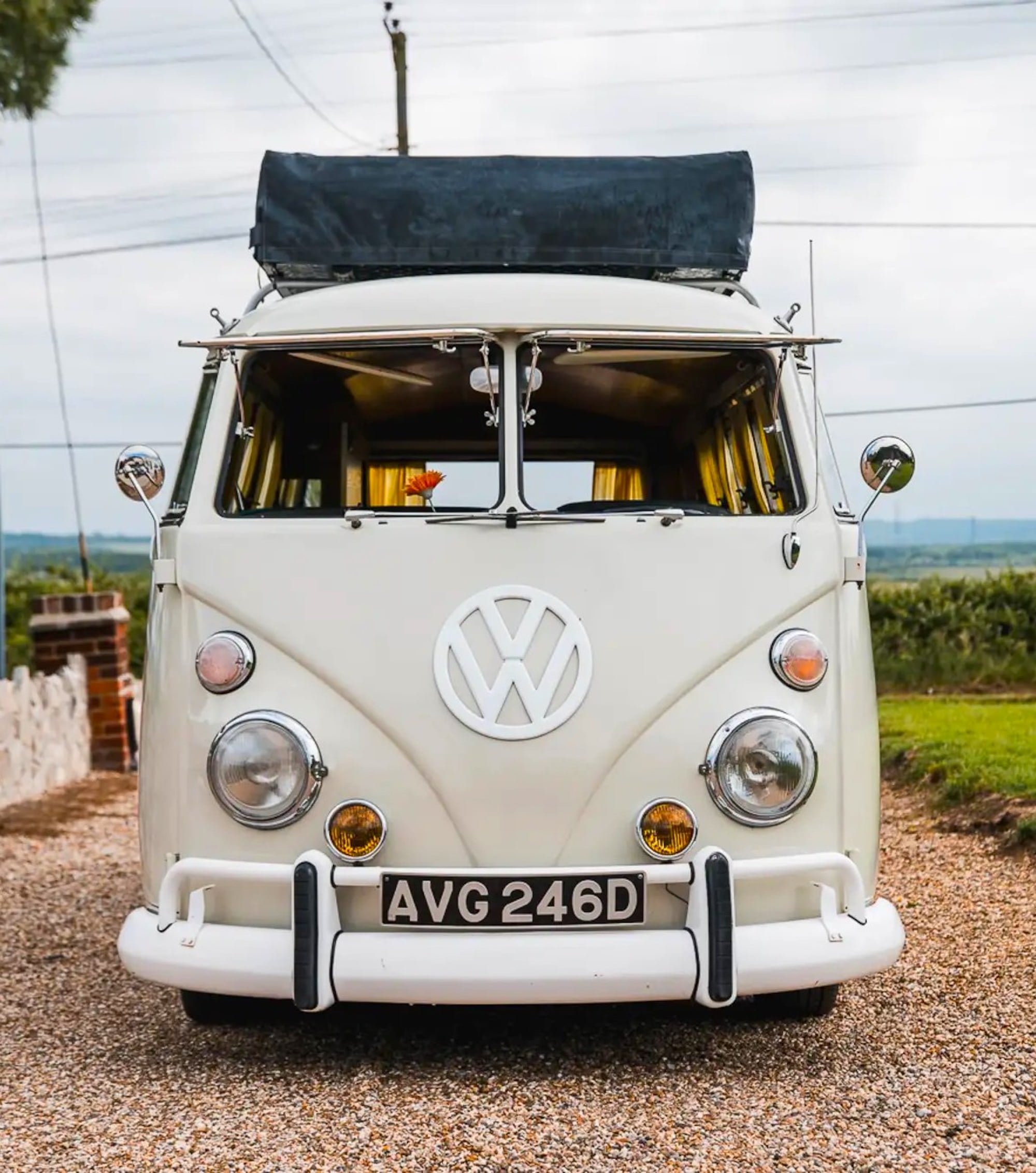
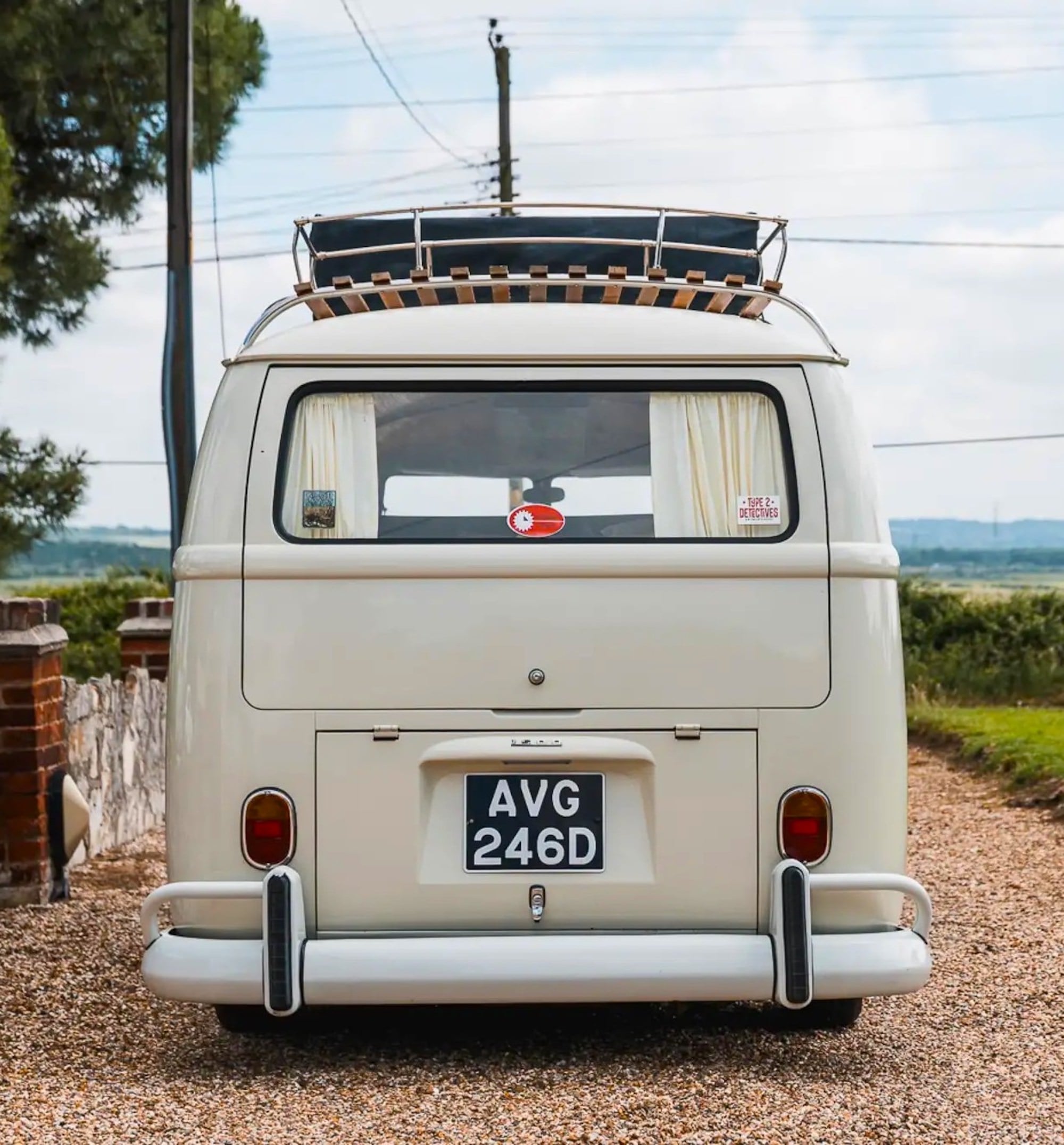
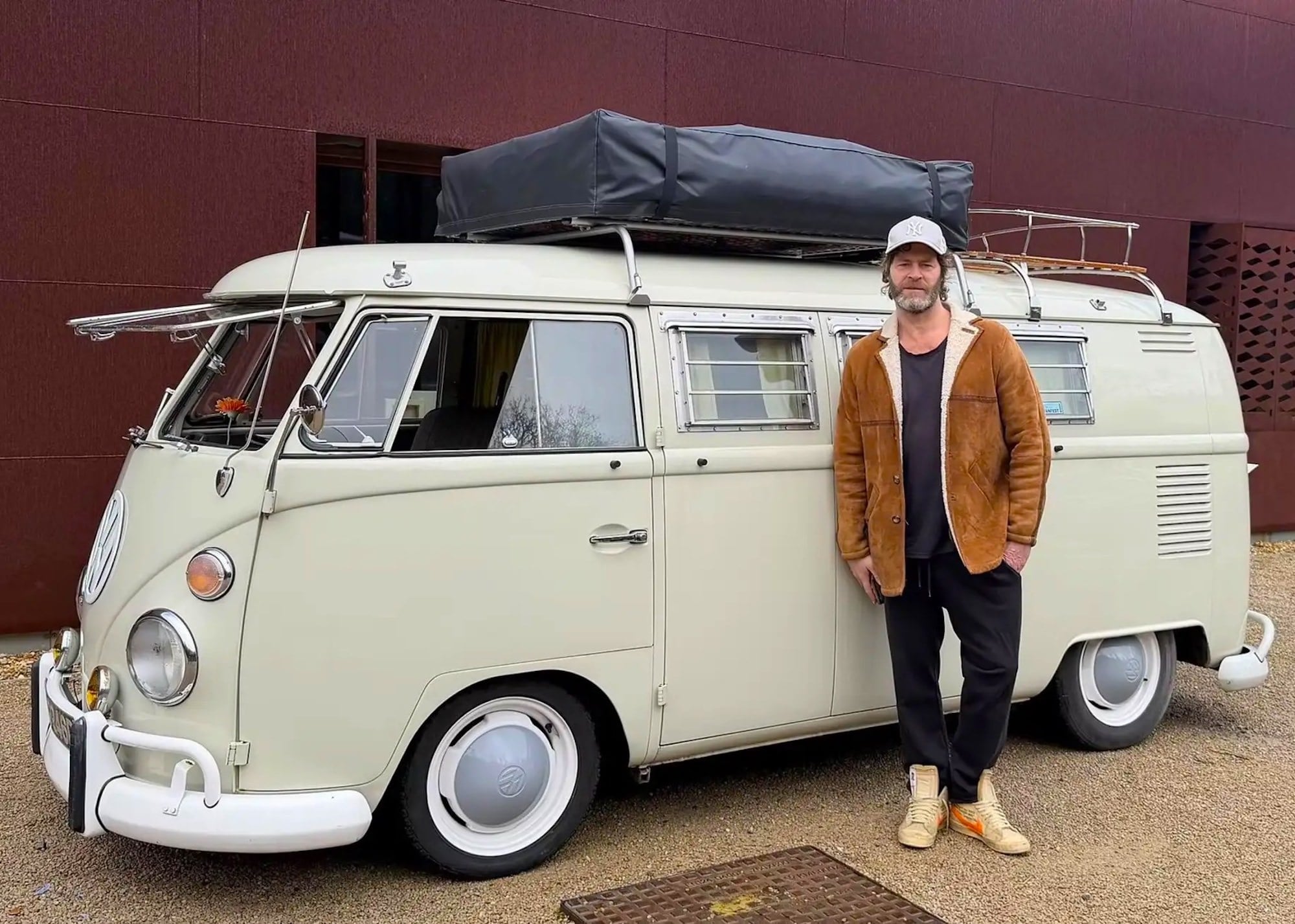
This is a 1966 Volkswagen Type 2 (T1) Campervan powered by an uprated 2.0 liter twin-carb engine. It currently belongs to celebrity-owner Howard Donald, and he’s now decided to offer it for sale.
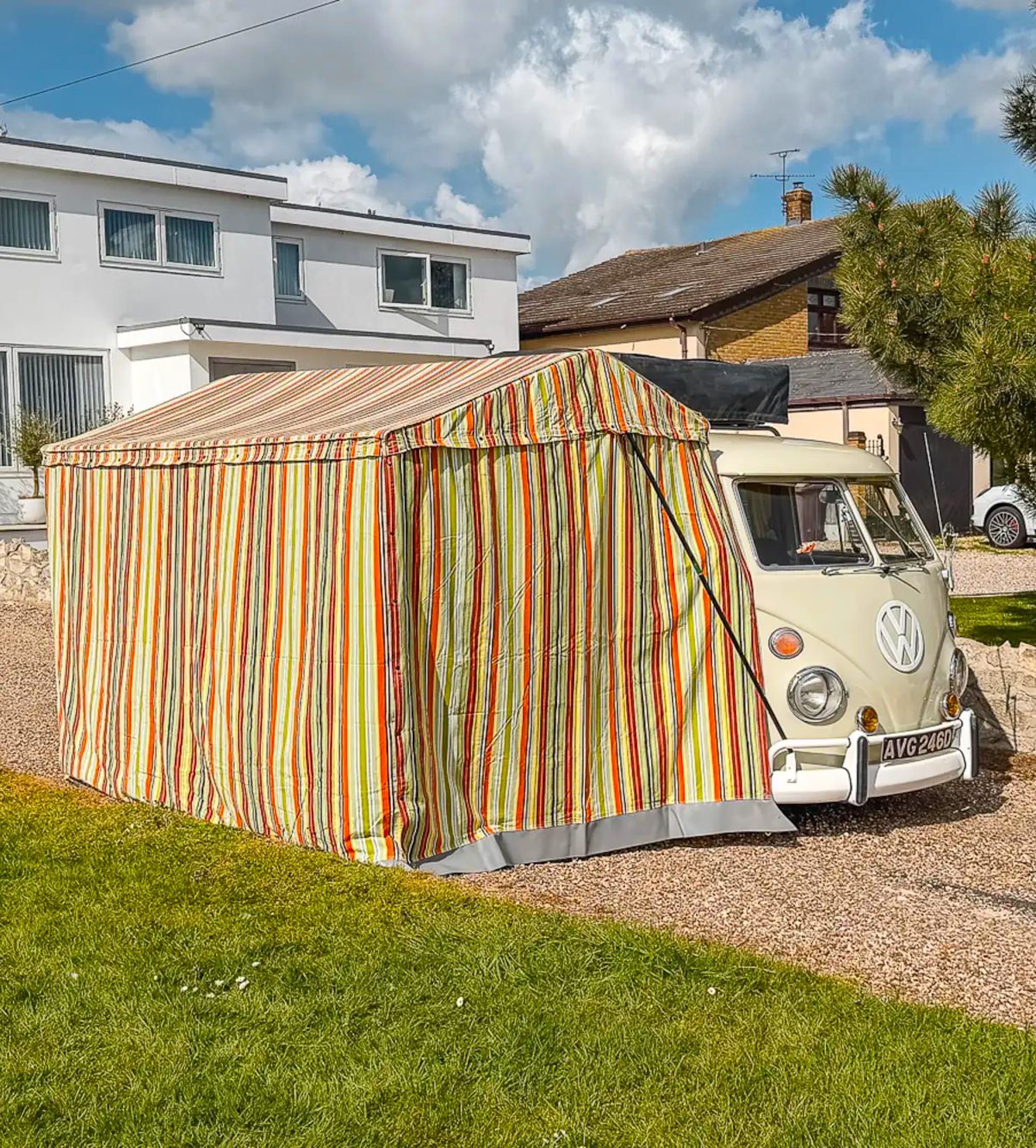
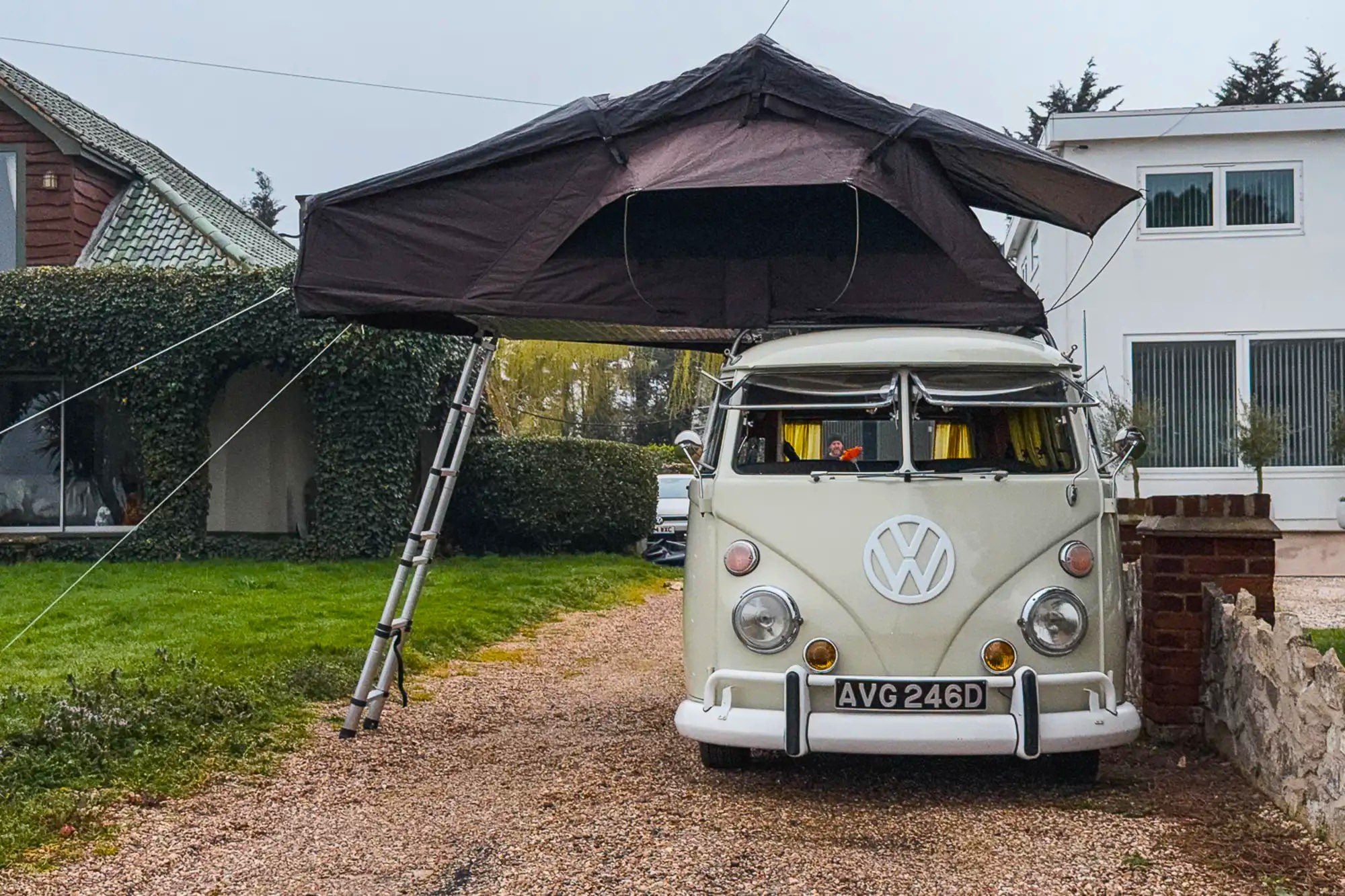
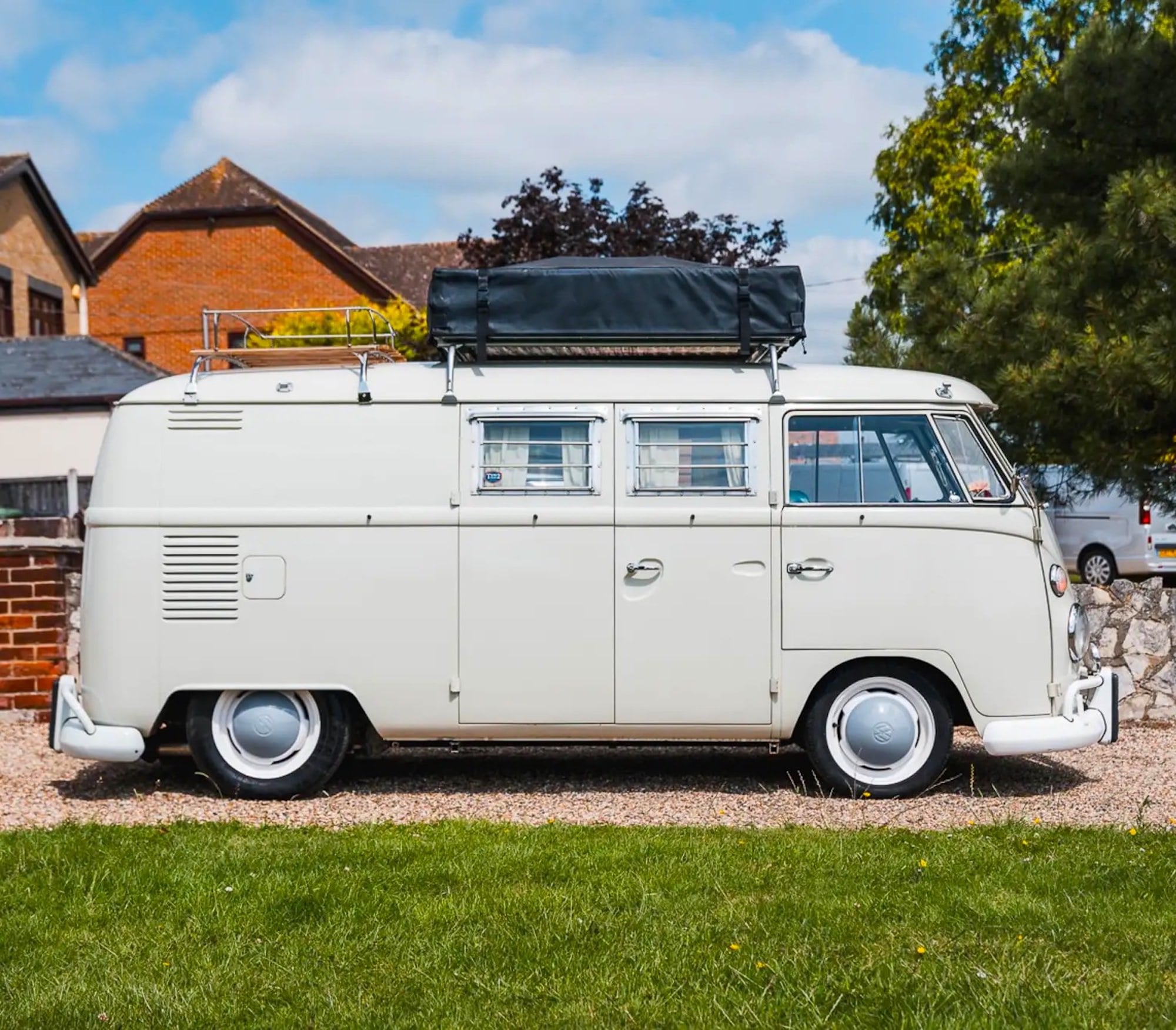
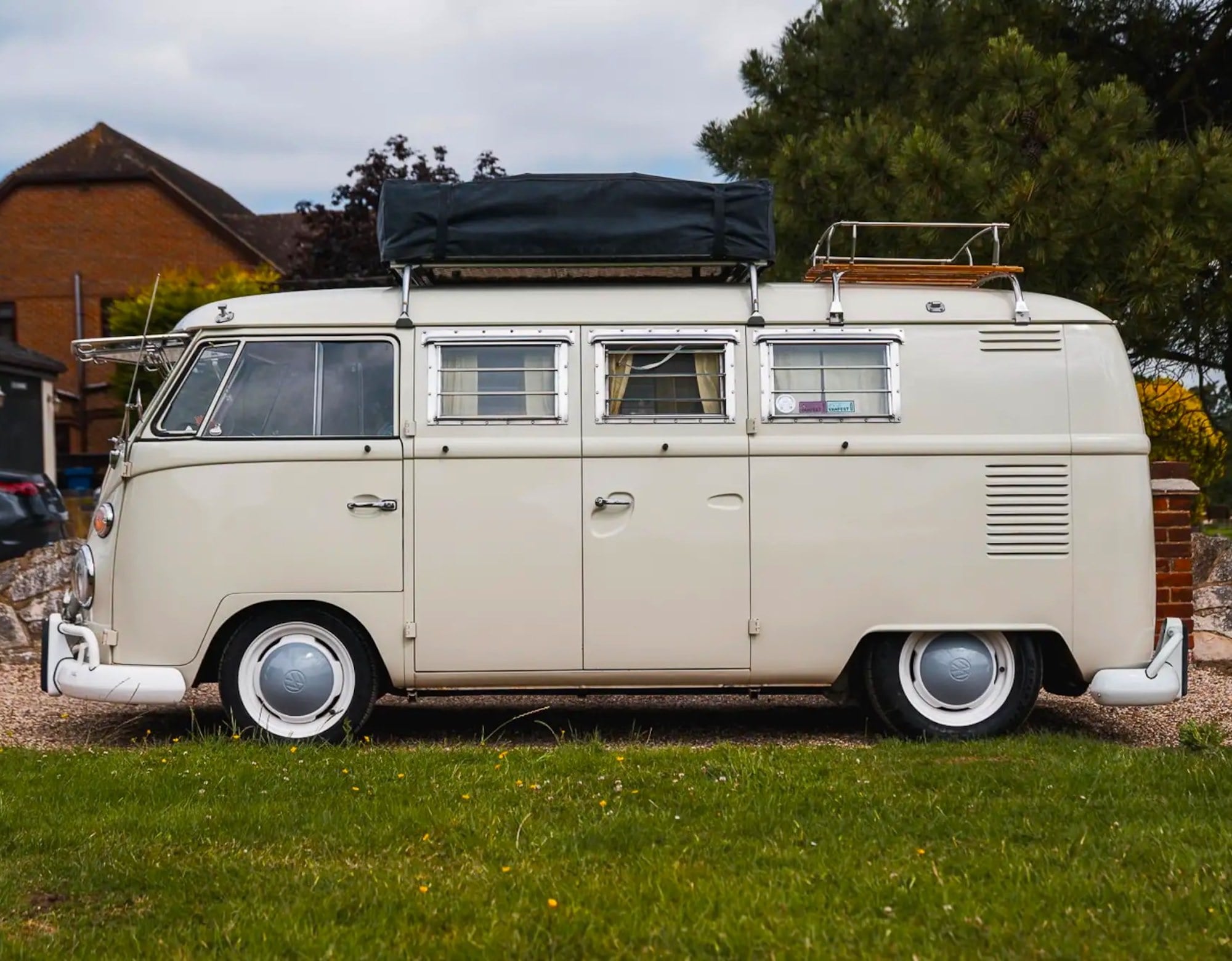
This camper is well set up for extended roadtrips, with a folding rooftop tent and a side awning, allowing a lot more living space than Type 2s typically do. The more powerful engine also makes it ideal for use in modern traffic.
Fast Facts: Howard Donald’s 1966 Volkswagen Type 2
- This 1966 Volkswagen Type 2 (T1) is a rare “double-door” split-screen campervan converted by Sundial of California, which set itself apart from contemporaries like Westfalia by cutting windows into plain panel vans and fitting louvered glass.
- Found in Colorado in 2007 and imported to the UK, this Van received significant mechanical upgrades including dual-circuit disc brakes, a straight-axle rear conversion, a narrowed front beam with dropped spindles, and an uprated 2.0 liter twin-carburetor engine with a fire suppression system.
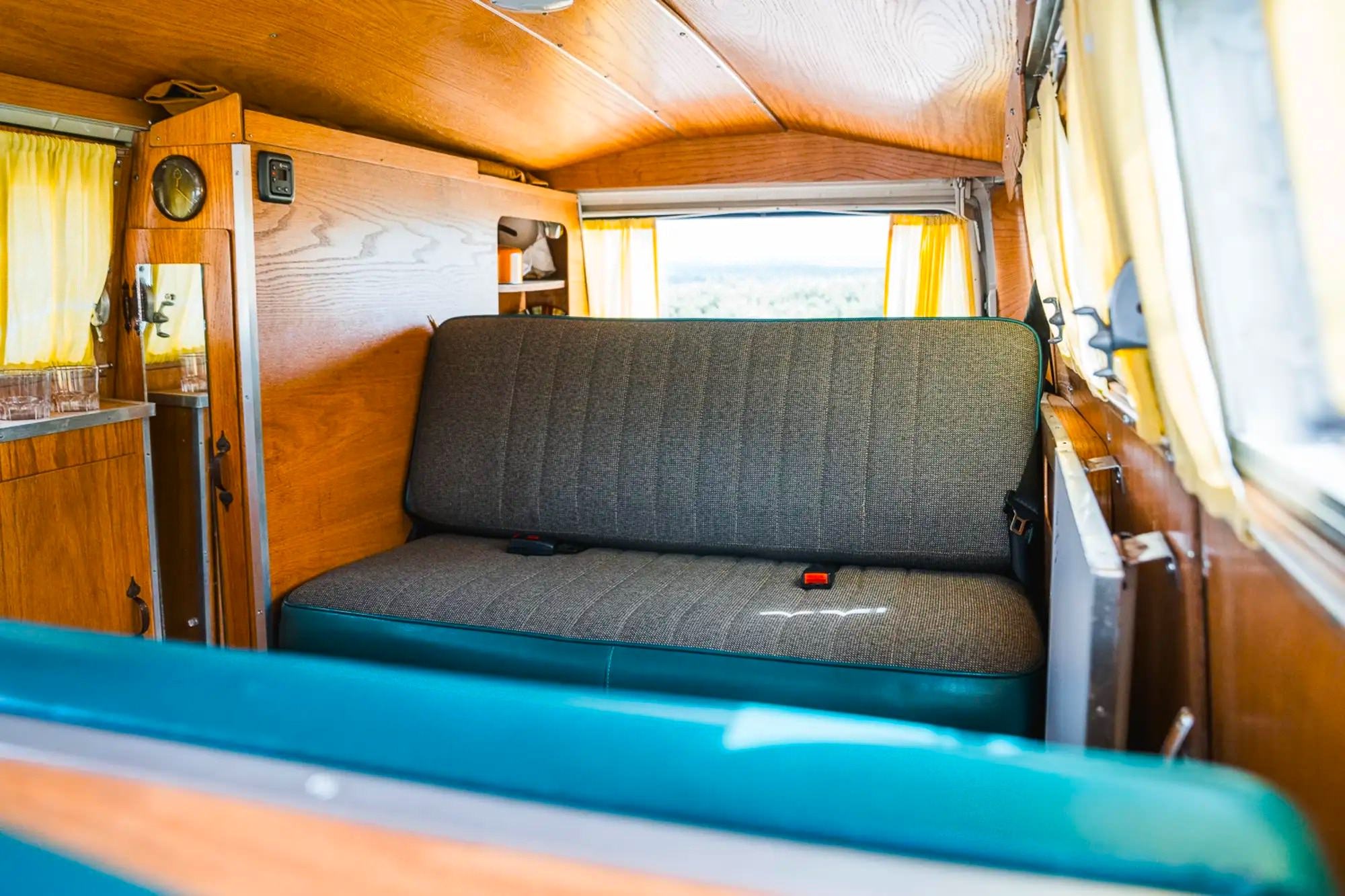
- A professional interior restoration replicated the original Sundial design, keeping period Sundial emblems and the cooler badge in Sea Green fabric, with a cold-water sink, compressor fridge, rock-and-roll bed, 240v hook-up, period stereo, and a fold-out roof tent.
- Offered by Iconic Auctioneers directly from Howard Donald of “Take That” fame, who has owned and enjoyed the van for the past few years and signed the interior, hoping the next owner takes it on many more adventures.
History Speedrun: The Volkswagen Type 2 (T1)
Perhaps fittingly, the Volkswagen Type 2 began as a doodle. In 1946 the Dutch dealer Ben Pon, who would become Volkswagen’s Netherlands importer the following year, visited the Wolfsburg factory intending to arrange Beetle imports, but while he was there he noticed the Plattenwagen, a crude flatbed parts-mover the factory had built on a Beetle chassis with the driver perched at the back.
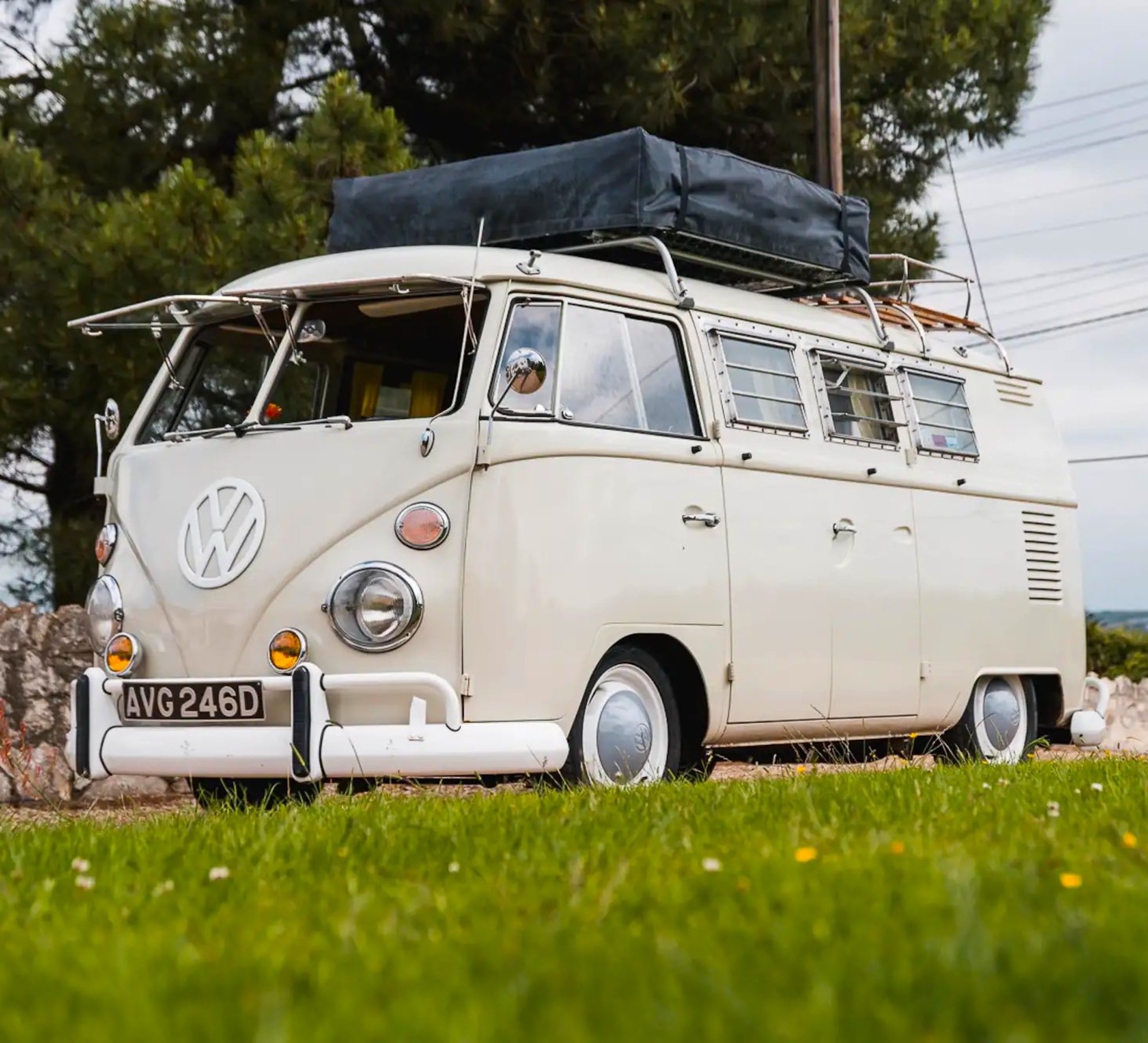
 This is a 1966 Volkswagen Type 2 (T1) Campervan powered by an uprated 2.0 liter twin-carb engine that currently belongs to celebrity-owner Howard Donald, and he’s now decided to offer it for sale.
Pon envisioned a new production vehicle based on the same fundamental idea. On April the 23rd, 1947, he sketched a simple box-shaped van with the driver at the very front, the engine at the rear, and a load bay between them, proposing a payload of 1,500 lbs.
The project had to wait for factory capacity, which was completely consumed by the runaway demand for new Beetles, but development began in earnest in 1948 under Volkswagen’s postwar managing director Heinz Nordhoff.
The first prototype, known internally as the Type 29, was built in about three months. Pon’s original notion of bolting a body onto the Beetle’s floor pan proved unworkable because the pan was too weak, so engineers used a ladder-type chassis with a unitized body.
The wheelbase came out at 94.5 inches (2,400 mm), the same as the Beetle’s. Early shapes were aerodynamically poor, and wind-tunnel work at the Technical University of Braunschweig reshaped the nose and windshield into the distinctive V-front, cutting the drag coefficient from 0.75 Cd to 0.44 Cd, bettering the Beetle’s own 0.48 Cd.
Volkswagen presented the finished van in November of 1949 and began series production on March the 8th, 1950. Officially it was the Type 2, following the Type 1 Beetle, and it would be sold under names that depended on body style – Transporter for the panel van, Kombi for the windowed utility version, and Microbus for the passenger model. Germans simply called it the Bulli. Its two-piece windshield later earned it the enthusiast nicknames Splitscreen, Splittie, and split-window bus.
Mechanically the vans were Beetle-derived and modest in their fitout in order to keep costs low. The first vans used the 1,131cc air-cooled flat-four boxer engine rated at 25 bhp, driving the rear wheels through a 4-speed gearbox with reduction gears in the hubs that traded top speed for the low-end pull a loaded van needed.
Top speed was 50 mph for the earliest vans, rising to closer to 65 mph on later, more powerful models. Power grew over the years, a 1,192 cc unit of 30 bhp arrived in 1953, a higher compression ratio became standard in 1955, and an unusual 34 bhp version offered briefly from 1959 proved troublesome and was discontinued almost immediately.
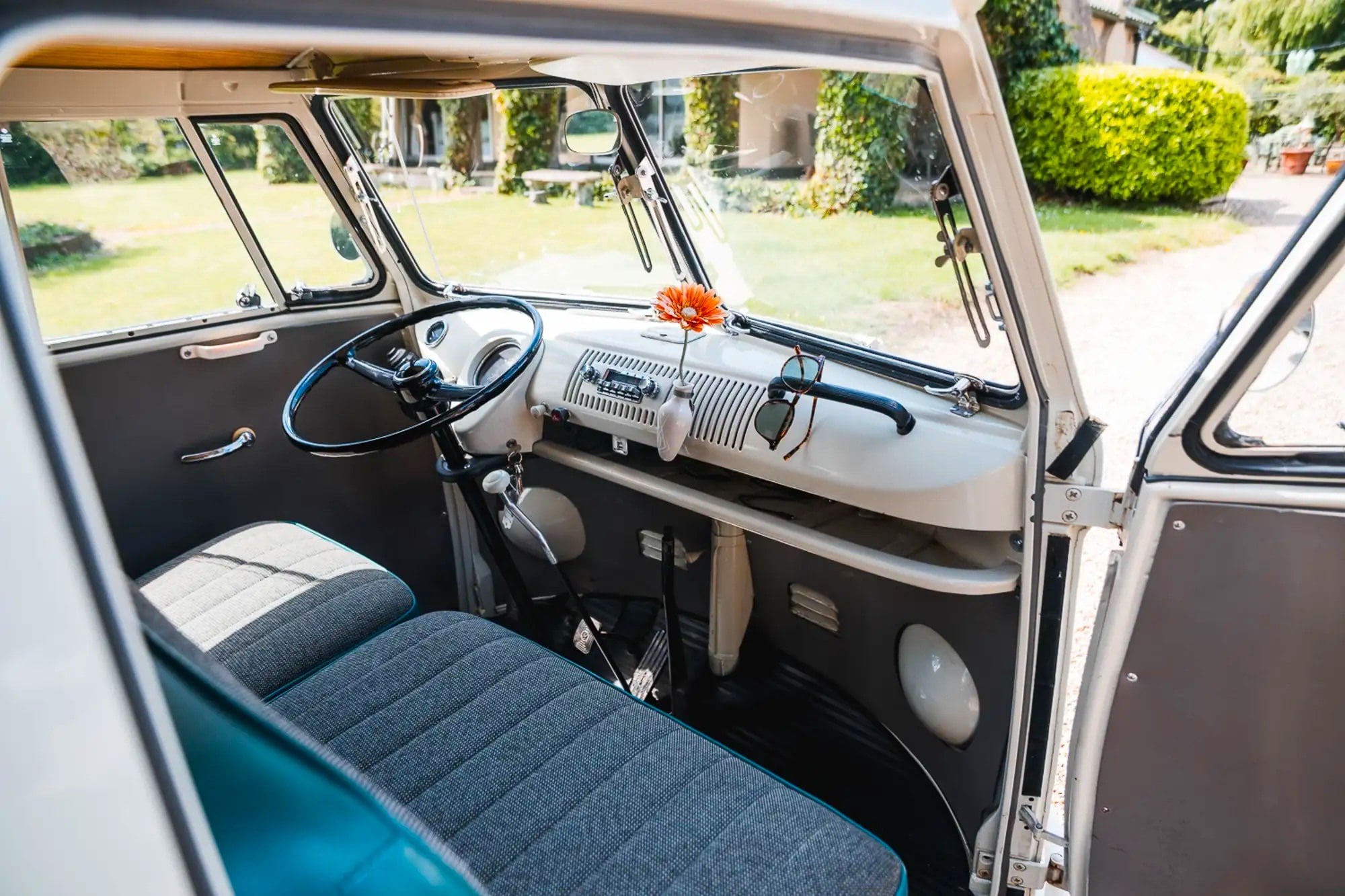
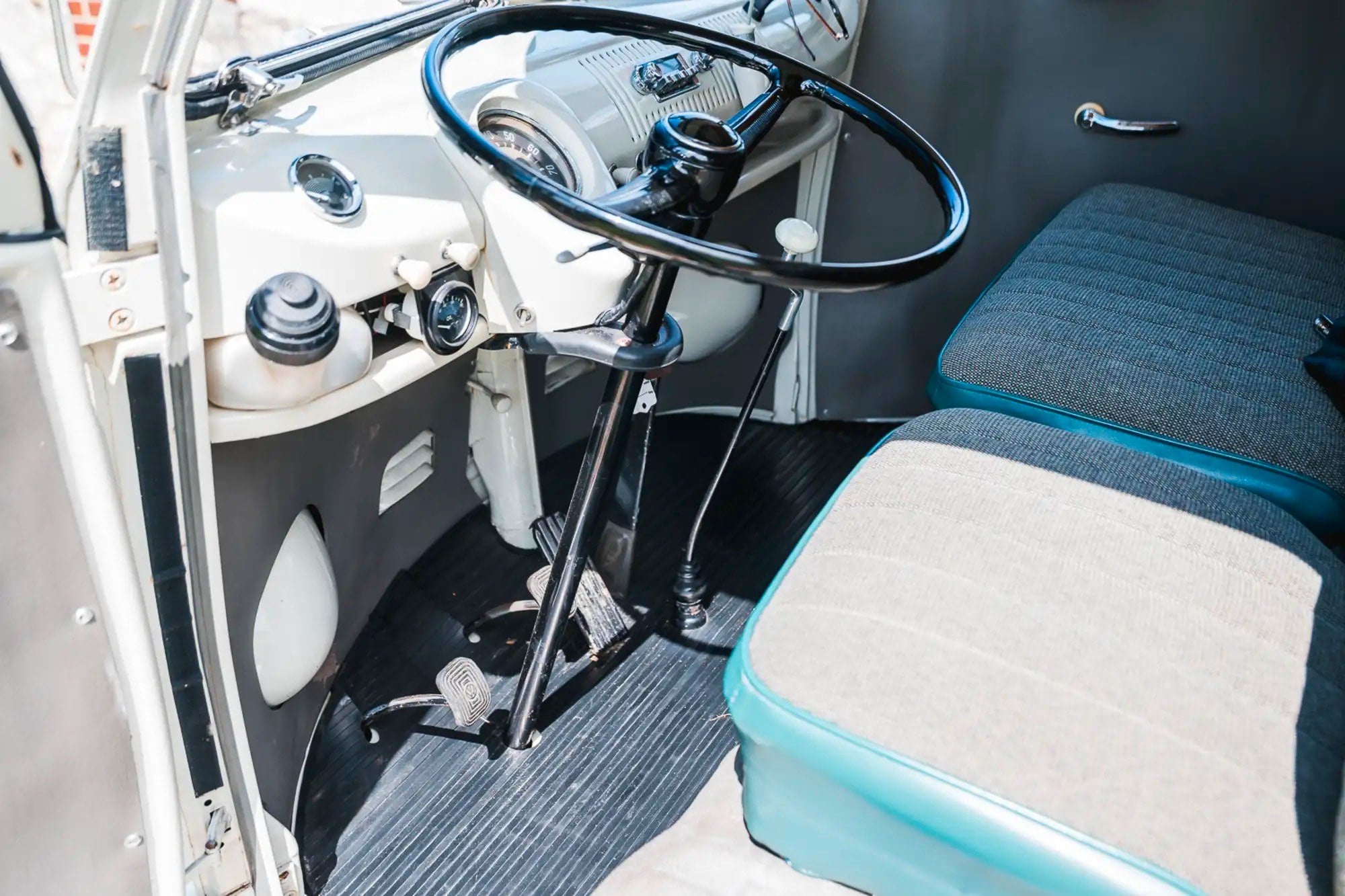
This 1966 Volkswagen Type 2 T1 is a rare “double-door” split-screen campervan converted by Sundial of California. The double-door designation refers to its twin opening cargo doors on the left side, a rare configuration that makes these examples especially sought after.
In 1962 a heavy-duty model introduced a 1.5 liter (1,493 cc) engine rated at 42 bhp, raising the payload to 1,000 kgs from the original 750 kgs. For the 1963 model year the 1.5 liter became standard in the US market and soon replaced the 1.2 liter in the regular range, with some later and export versions rated higher, at around 50 bhp.
The Type 2 grew into a surprisingly wide range of configurations and variants. At launch only two were offered, the Kombi and the Commercial panel van, a passenger Microbus followed in May of 1950 and a luxury Deluxe Microbus in June of 1951, the multi-window model later nicknamed Samba, fitted with skylight windows and a folding canvas sunroof.
An ambulance was added in December of 1951, a single-cab pickup in August of 1952, and later a double-cab pickup and a flatbed. Enthusiasts came to identify the passenger versions by window count – the standard 11 window bus, the 15 window Deluxe, and the range-topping 23 window Samba, which became 13 and 21 window vehicles after a 1964 rear-hatch design change.
Volkswagen delivered 11,943 Type 2s worldwide in 1951 and reached 100,000 examples within four years. Output outgrew Wolfsburg, and in 1956 VW opened a dedicated Transporter plant in Hanover, which still builds Volkswagen vans today.
The one-millionth Transporter was built in the early 1960s, and by the time German T1 production ended after the 1967 model year, well over 1.8 million had been made. Brazil built its own T1-based vans from 1957 until 1975, after which a T1/T2 hybrid known as the “T1.5” (with the later T2 front end and a T1 rear) continued there until 1996.
The T1’s most lasting cultural role came from its use for camping. This hadn’t been an original design intent for the van, but an inexpensive box on wheels that could be driven around turned out to be perfect as a little home-on-wheels.
In 1951 the German coachbuilder Westfalia-Werke, based in the Westphalia region of Germany, built a removable “Camping Box” for the Transporter, reportedly at the request of a British officer who wanted a van he could live and travel in.
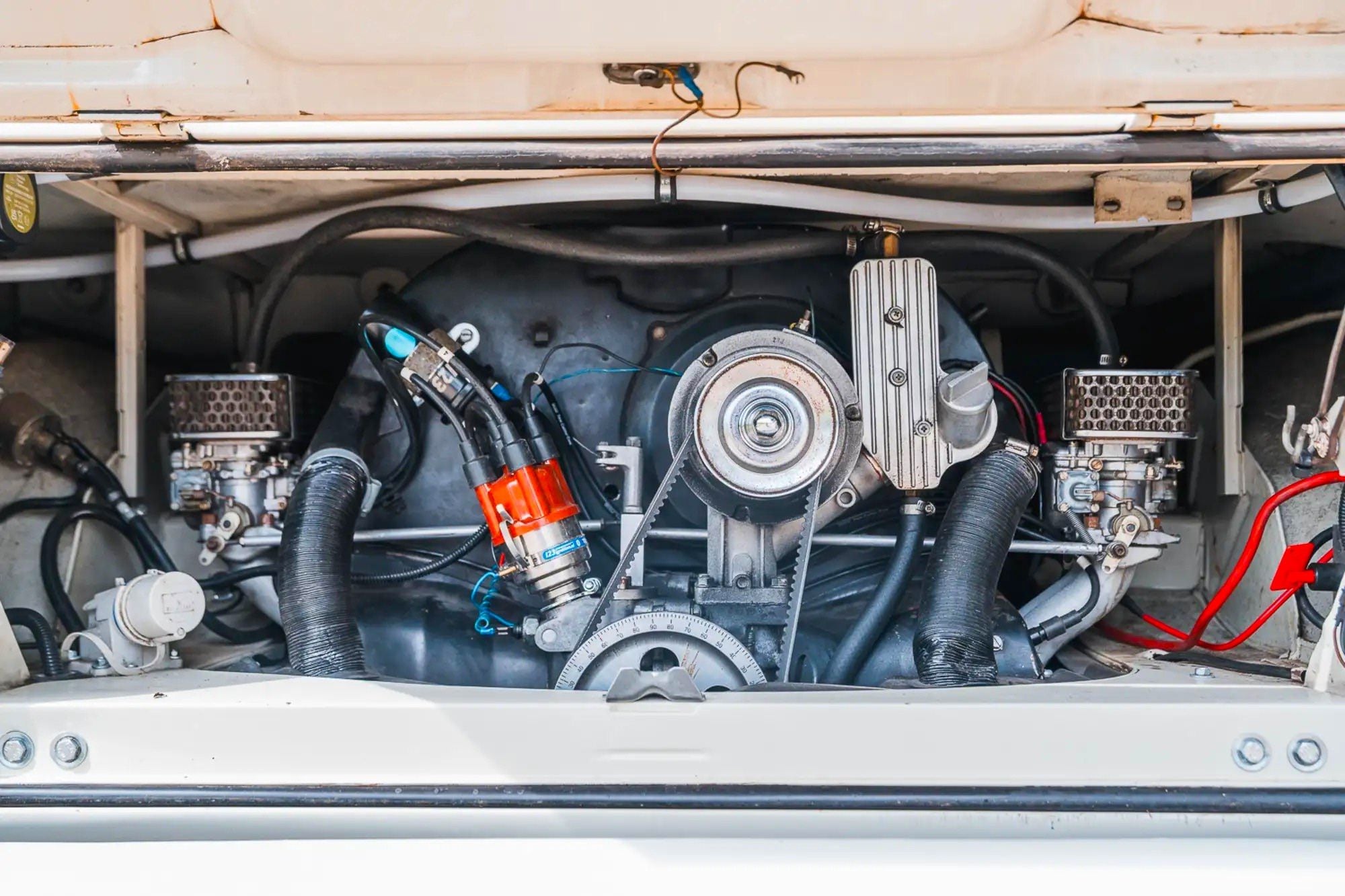
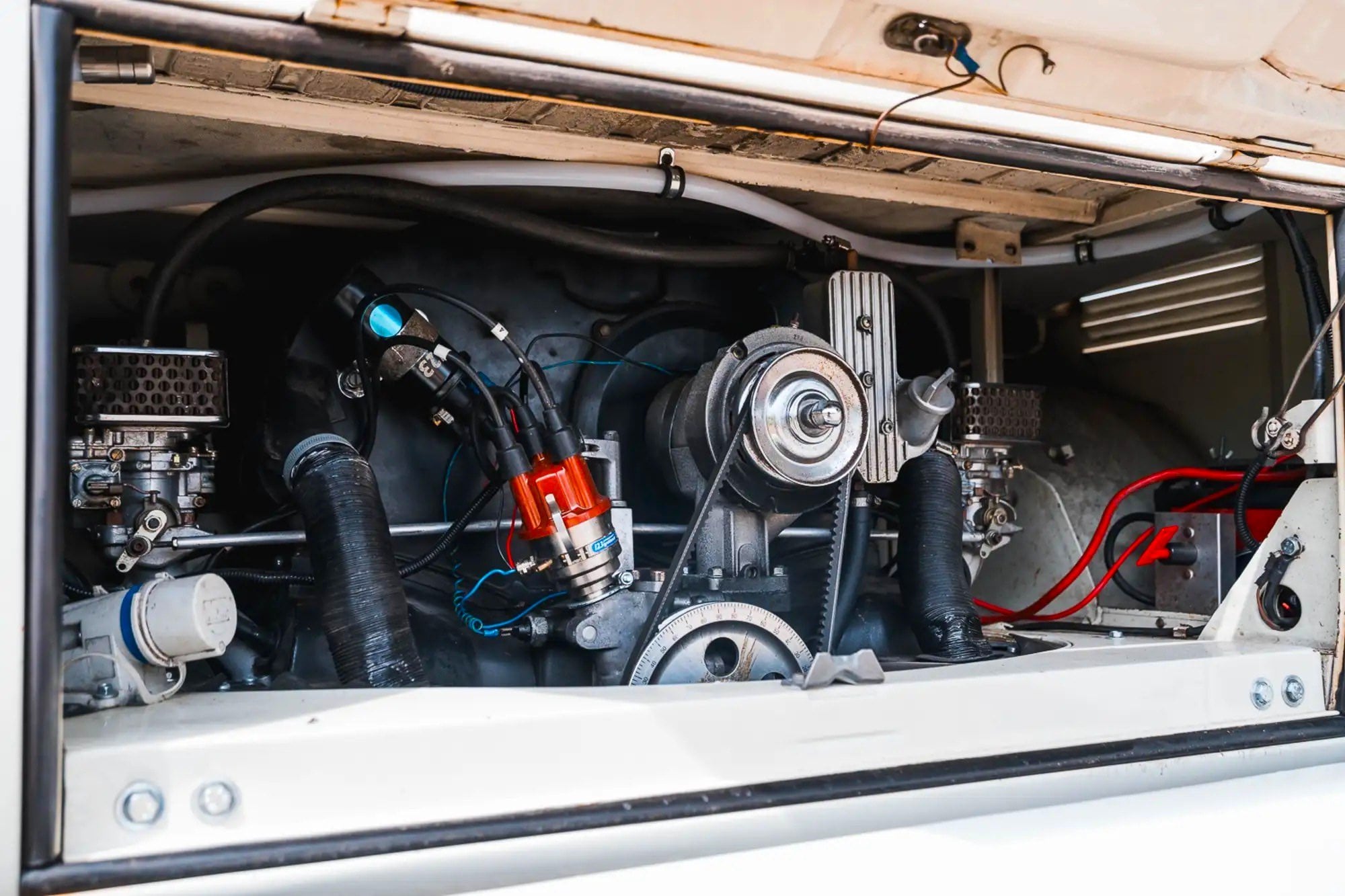
This Type 2 benefits from a dual-circuit braking system with disc brakes, a straight-axle rear conversion, a narrowed front beam with dropped spindles to keep the geometry correct, and an uprated 2.0 liter twin-carburetor engine
The kit turned the cargo bay into a small living space with a folding bed, a table, a bench seat, storage, and the checked upholstery that became a Westfalia signature. Westfalia was not strictly the first to convert a Transporter, as a Dresden coachbuilder is credited with beating them to it, but it was the first to do so in volume, and it became Volkswagen’s official camper partner.
About 1,000 Camping Box conversions were built between 1951 and 1958, after which Westfalia introduced its numbered SO (Sonderausführung, or special model) range, beginning with the SO-23 Deluxe, and added features like pop-top roofs late in the T1 era.
Westfalia campers were sold through VW dealers worldwide and offered through a Tourist Delivery Program that let buyers collect a new van in Germany, tour Europe, and have it shipped home. American servicemen stationed in Germany bought them in large numbers and brought them back, and the bus found a natural home first in California surf culture and then in the 1960s counterculture, where the cheap, slow, roomy camper became a symbol of the flower-power-Hippie-era.
Other companies, including Dormobile, ASI/Riviera, and Danbury, built their own conversions, but Westfalia’s name became almost synonymous with the VW campervan.
The split-window T1 gave way to the bay-window T2 for 1968, but the earlier model remains the most collectible of all the Transporters, with restored Samba and Westfalia examples now among the most valuable air-cooled Volkswagens.
The 1966 Volkswagen Type 2 (T1) Campervan Shown Here
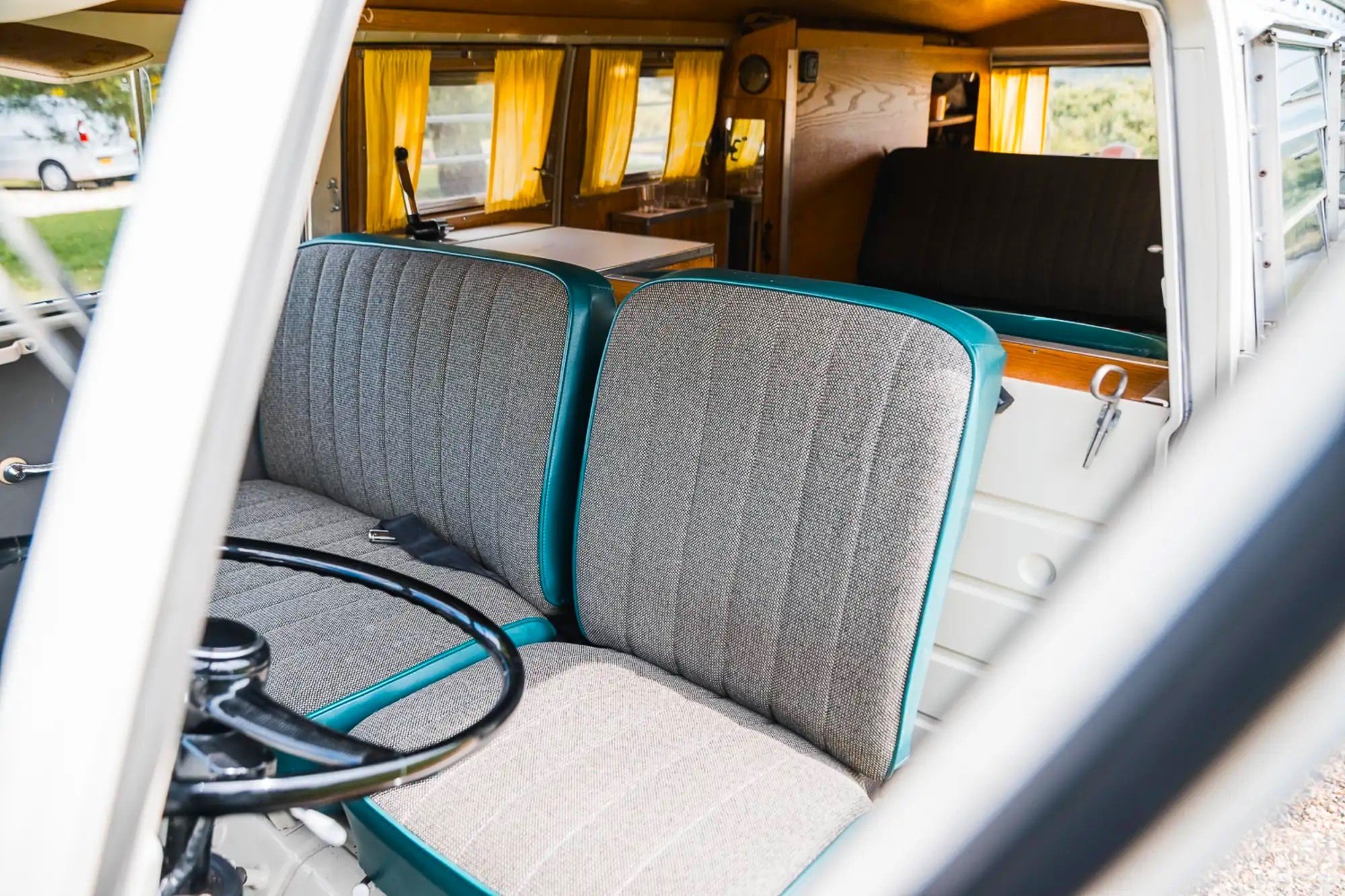
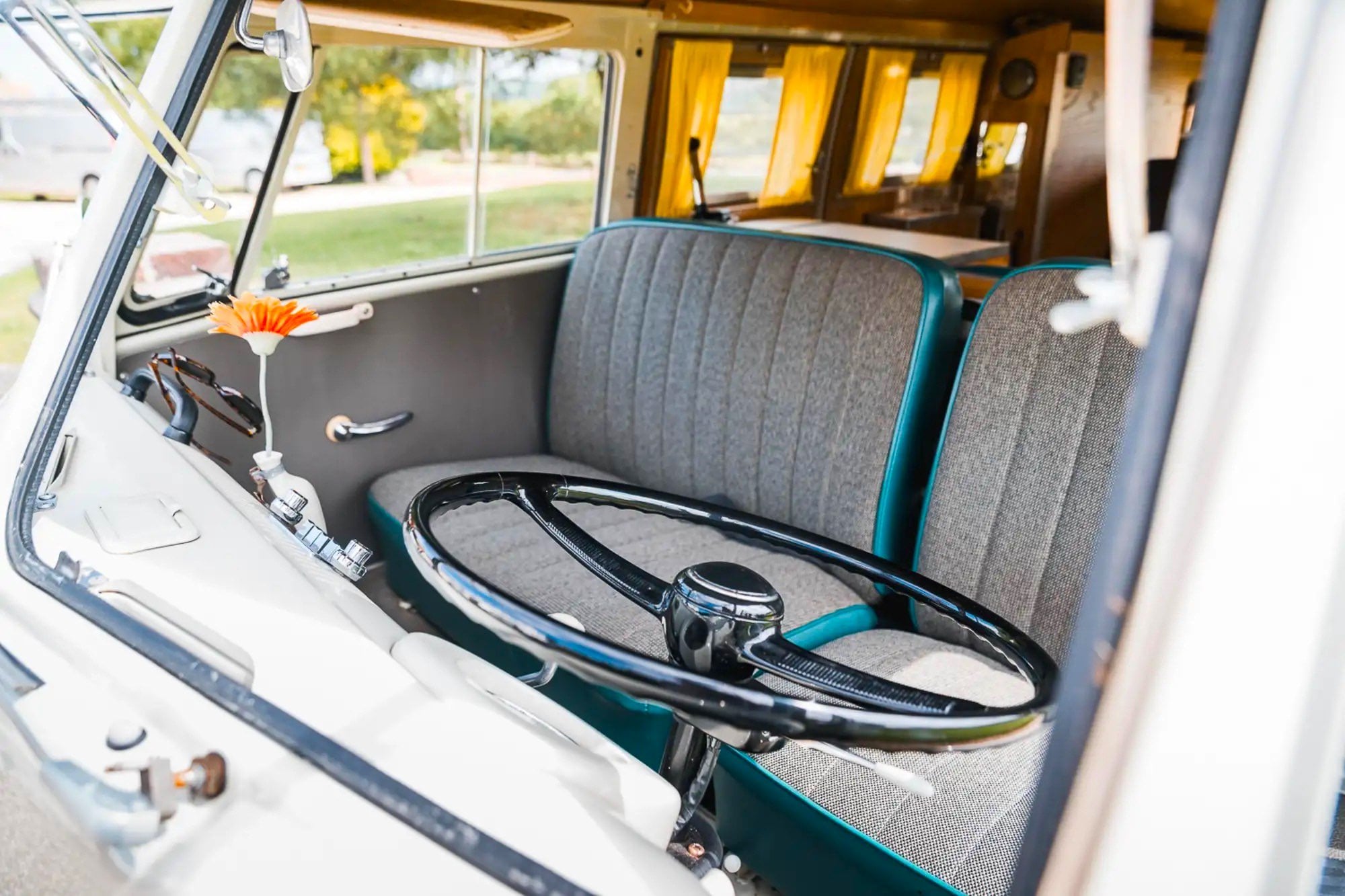
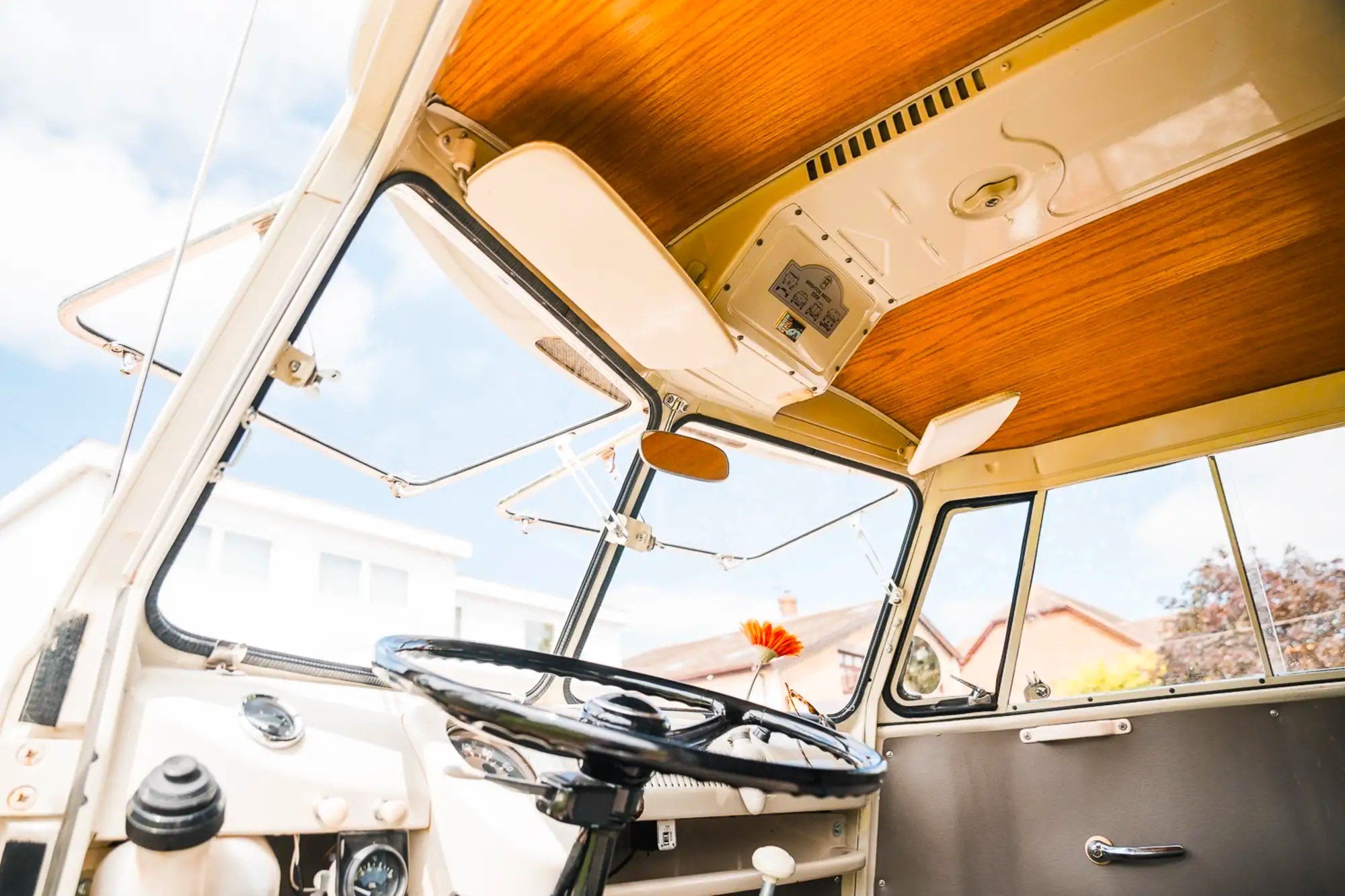
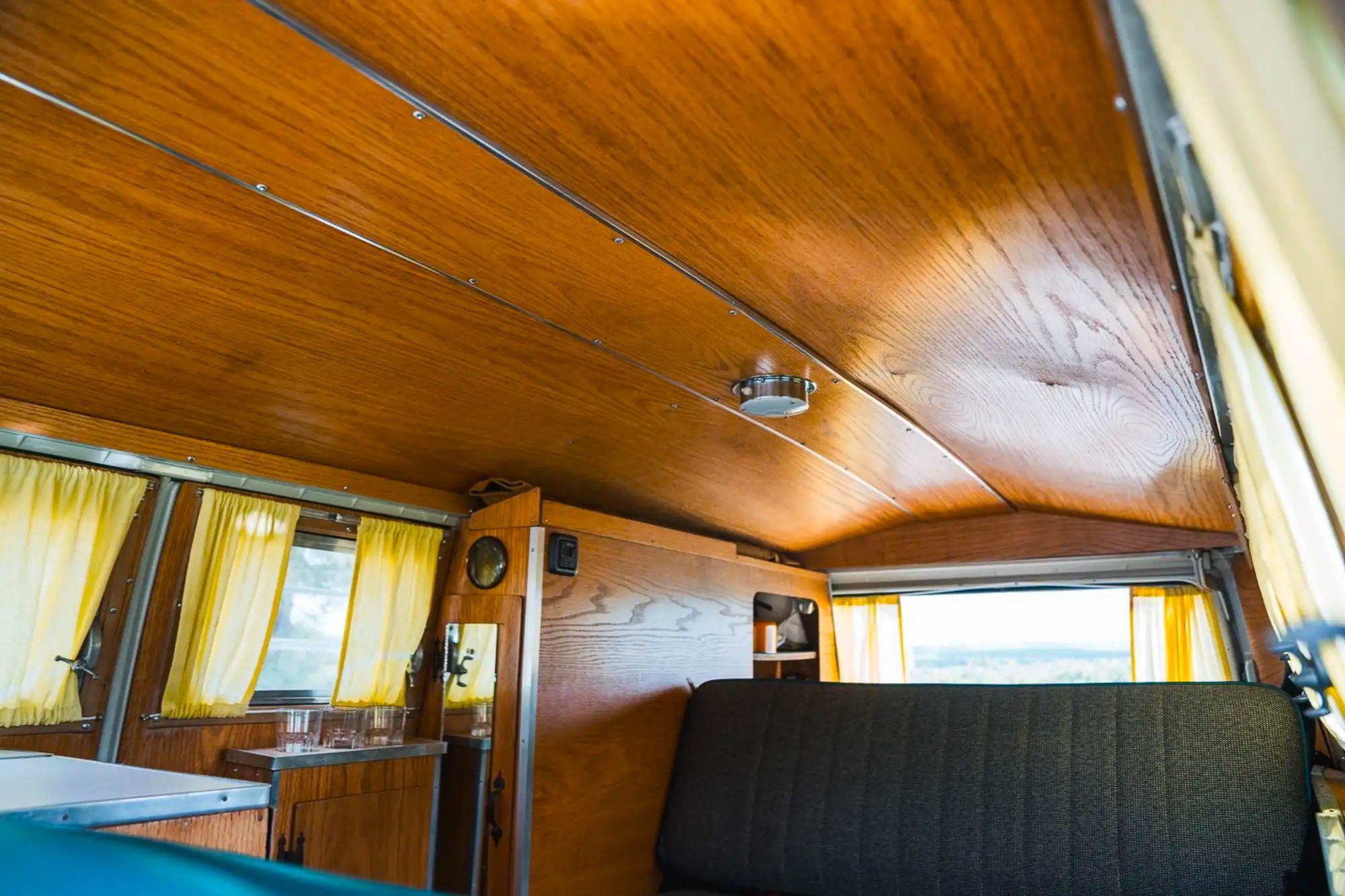
This 1966 Volkswagen Type 2 T1 is a rare “double-door” split-screen campervan converted by Sundial of California. The double-door designation refers to its twin opening cargo doors on the left side, a rare configuration that makes these examples especially sought after.
Sundial set itself apart from converters like Westfalia by starting with plain panel vans, cutting windows into the sides, and fitting louvered glass, and this van comes from a more limited run of the desirable double-door split-screens the company produced.
The van was found in Colorado in 2007 and imported to the UK by a previous enthusiast-owner. A solid example to begin with, it received a round of mechanical work from a Type 2 specialist that included a dual-circuit braking system with disc brakes, a straight-axle rear conversion, a narrowed front beam with dropped spindles to keep the geometry correct, and an uprated 2.0 liter twin-carburetor engine fitted with an engine-bay fire suppression system.
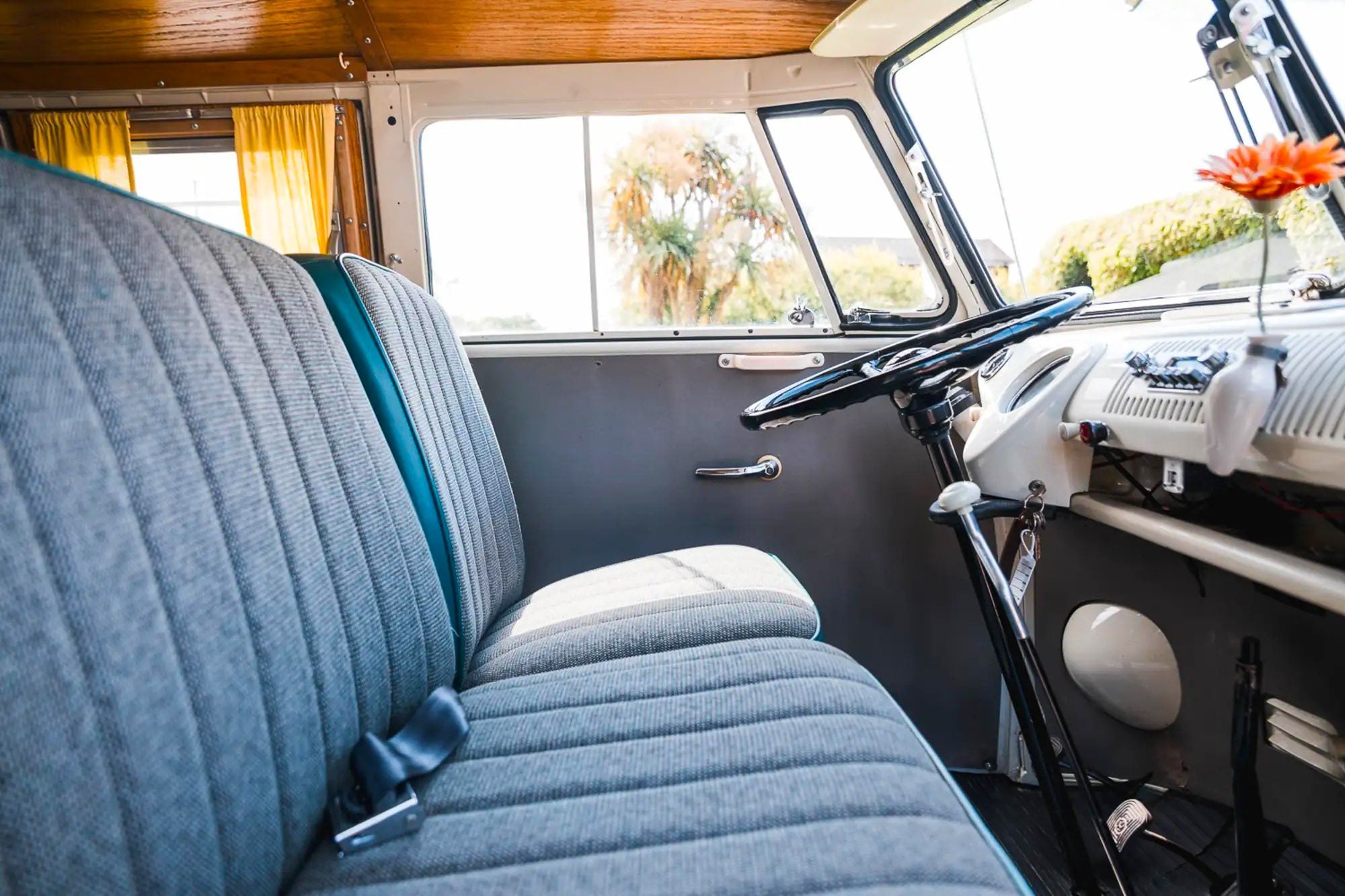
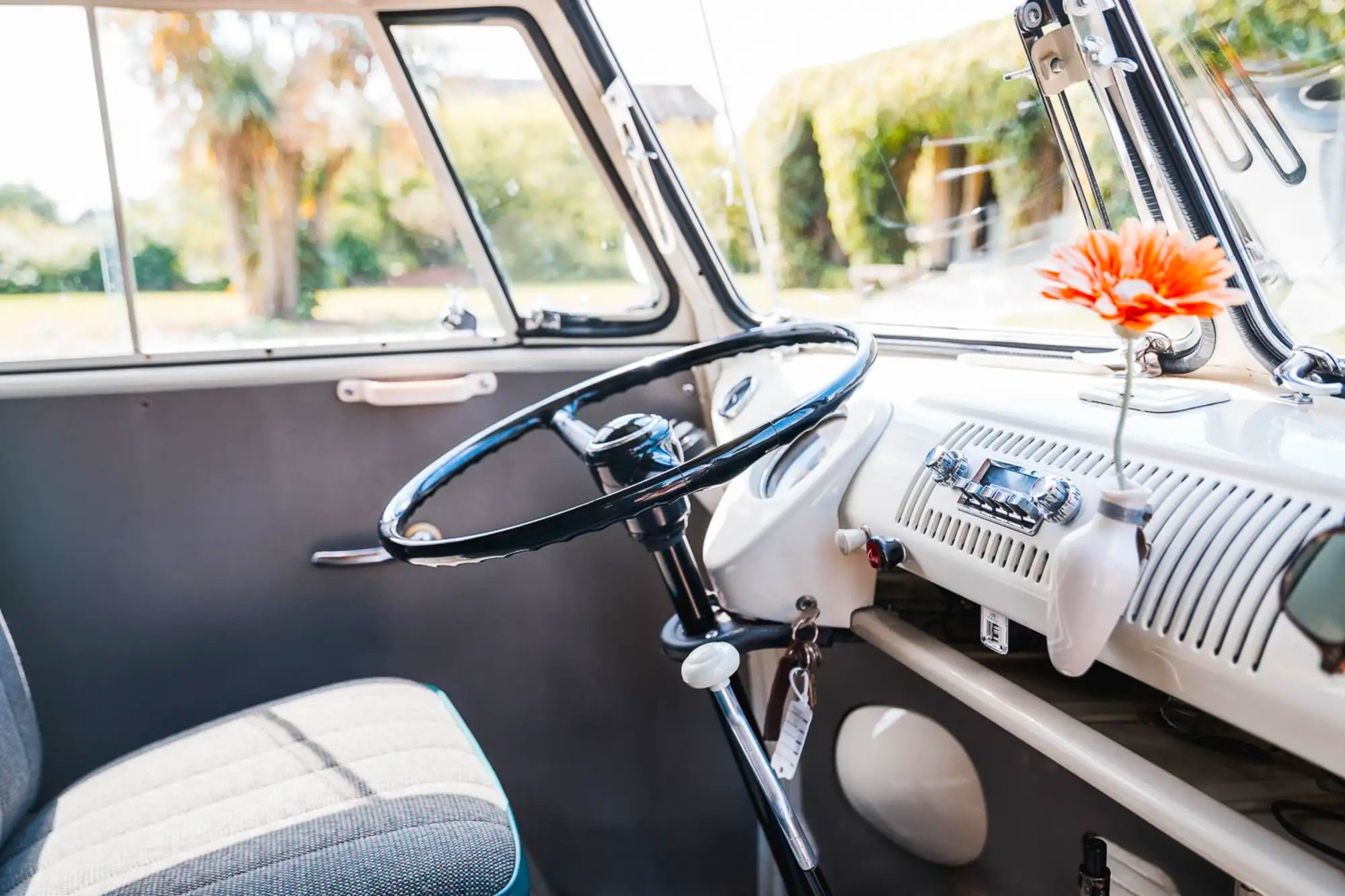
The interior was professionally restored to replicate the original Sundial specification and style, keeping the period Sundial emblems and cooler badge and finished in Sea Green fabric. Equipment includes a cold-water sink, compressor fridge, three-quarter-width rock-and-roll bed, 240v hook-up, leisure battery, period stereo, oil temperature gauge, two rear seatbelts, and a two-person fold-out roof tent.
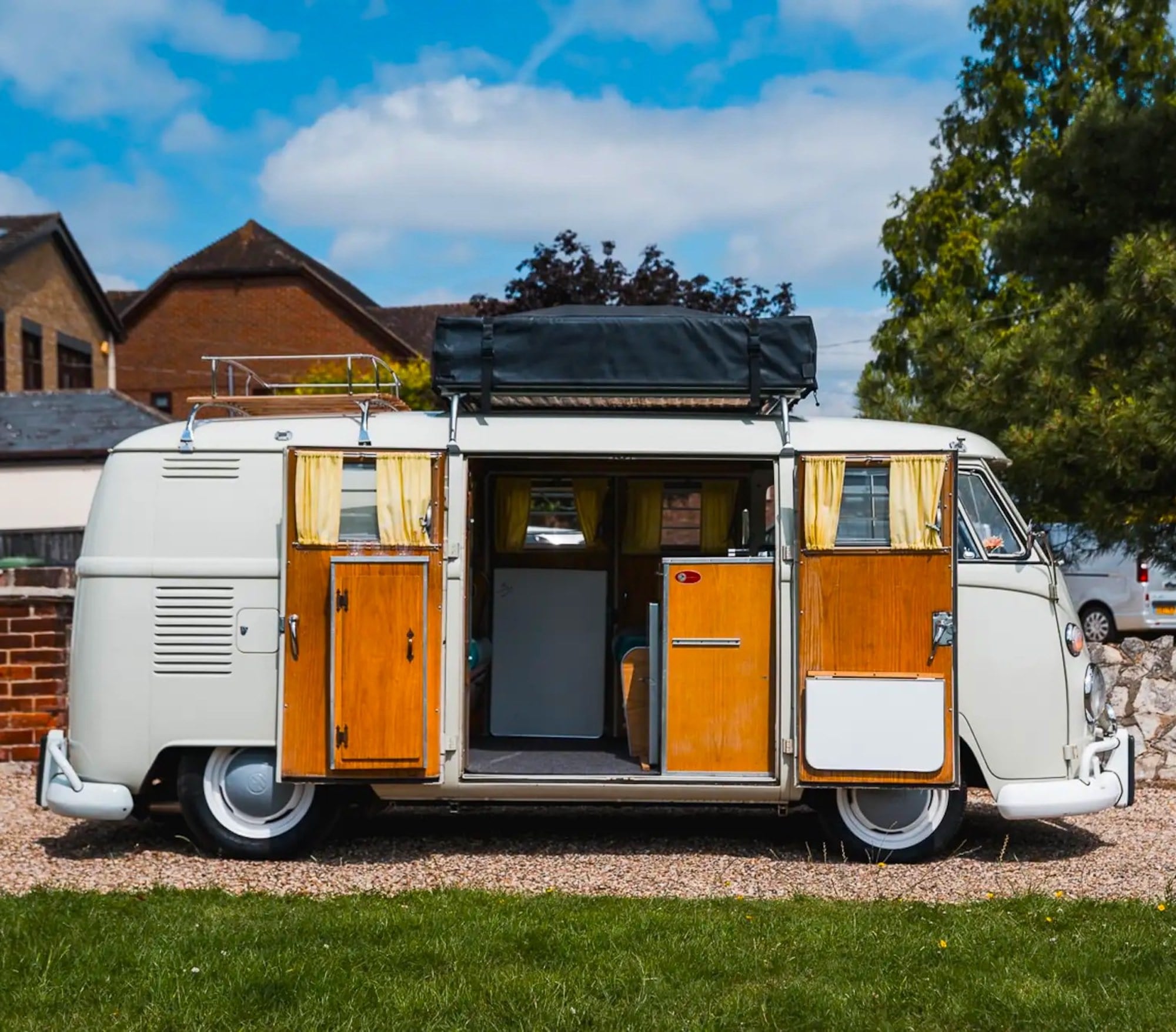
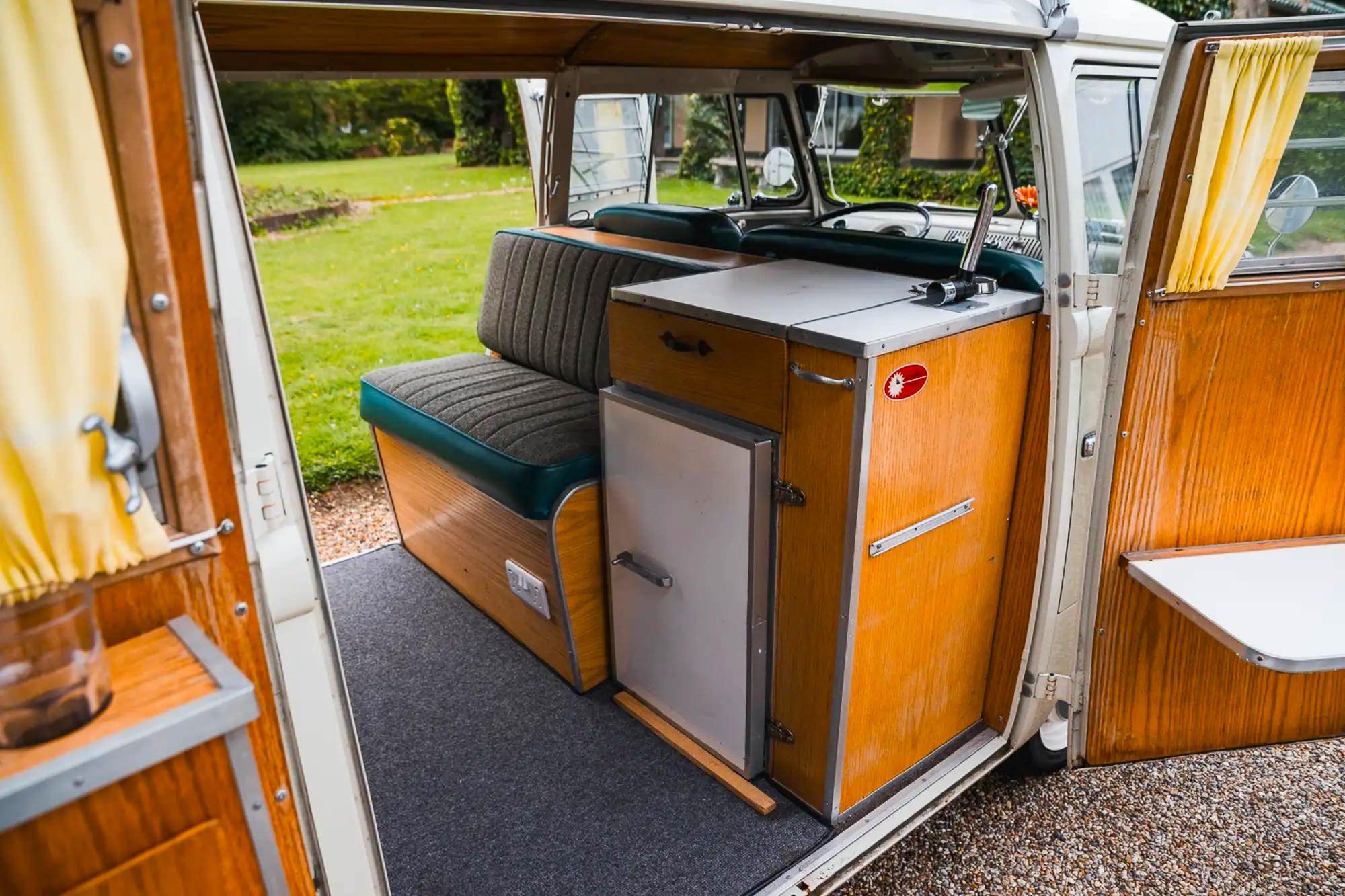
This camper is well set up for extended roadtrips, with a folding rooftop tent and a side awning, allowing a lot more living space than Type 2s typically do. The more powerful engine also makes it ideal for use in modern traffic.
The campervan is offered by Iconic Auctioneers directly from the ownership of Howard Donald, the Take That band member and a singer, songwriter, drummer, pianist, dancer, DJ, and record producer in his own right. Donald has owned and enjoyed the van for the past few years and has signed the interior, passing it along in the hope that the next owner takes as much pleasure in it as he has.
It’s now due to roll across the auction block with Iconic Auctioneers and you can visit the listing here if you’d like to read more about it or register to bid.
Images courtesy of Iconic Auctioneers

Articles that Ben Branch has written have been covered on CNN, Popular Mechanics, Smithsonian Magazine, Road & Track Magazine, the official Pinterest blog, the official eBay Motors blog, BuzzFeed, Autoweek Magazine, Wired Magazine, Autoblog, Gear Patrol, Jalopnik, The Verge, and many more.
Silodrome was founded by Ben back in 2010, in the years since the site has grown to become a world leader in the alternative and vintage motoring sector, with well over a million monthly readers from around the world and many hundreds of thousands of followers on social media.