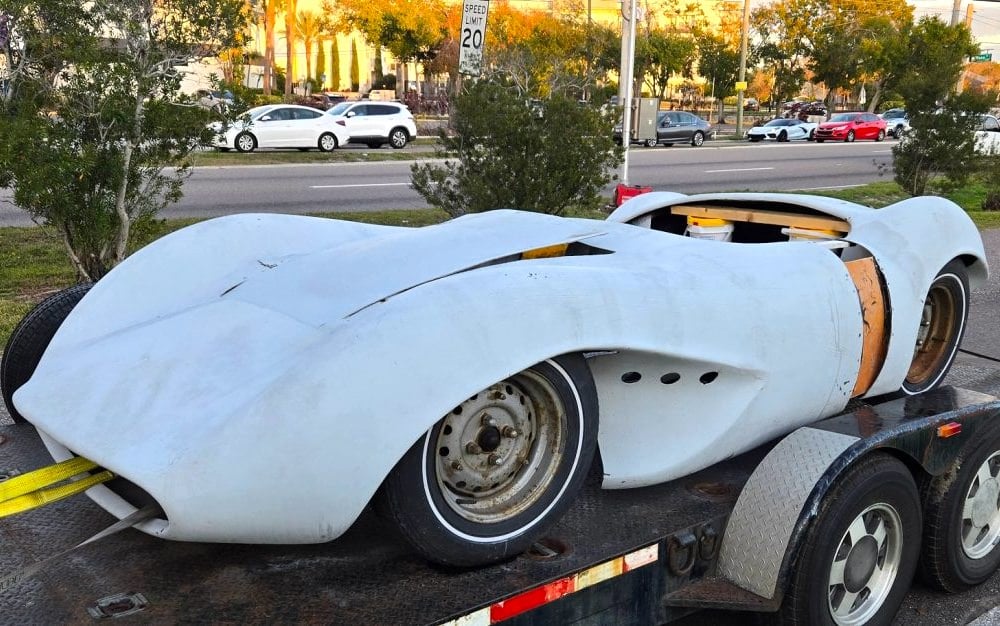
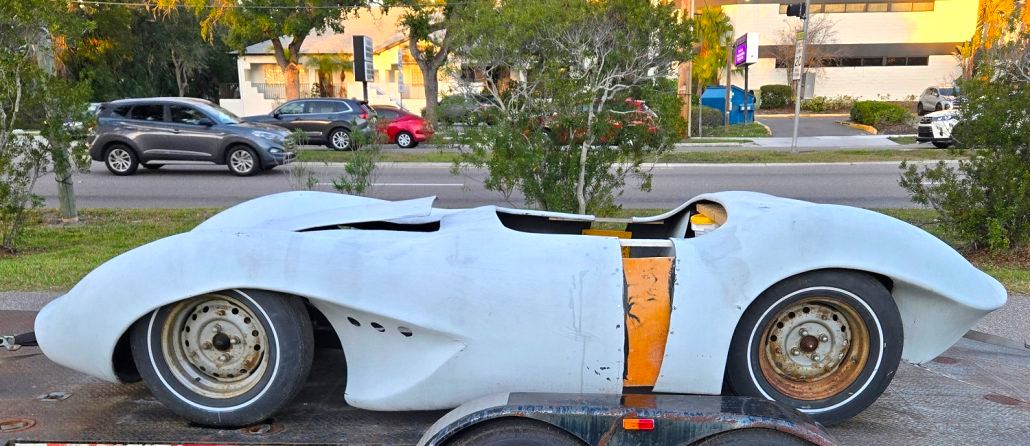
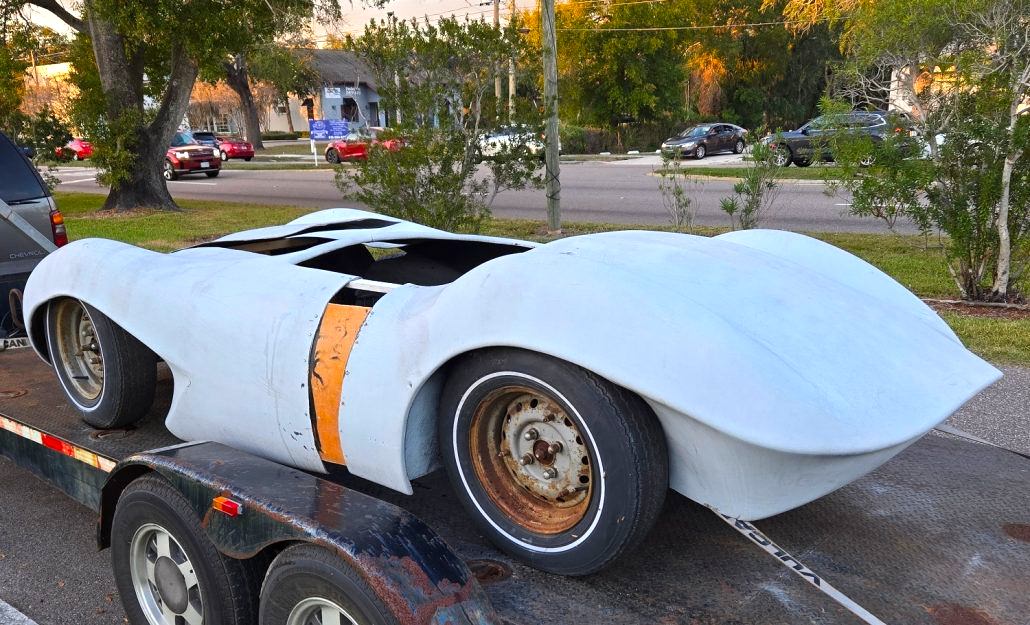
This is the 1964 Bohada, it’s an exceedingly rare American sports car that disappeared from view for over 60 years before being rediscovered, and it’s now being offered for sale.
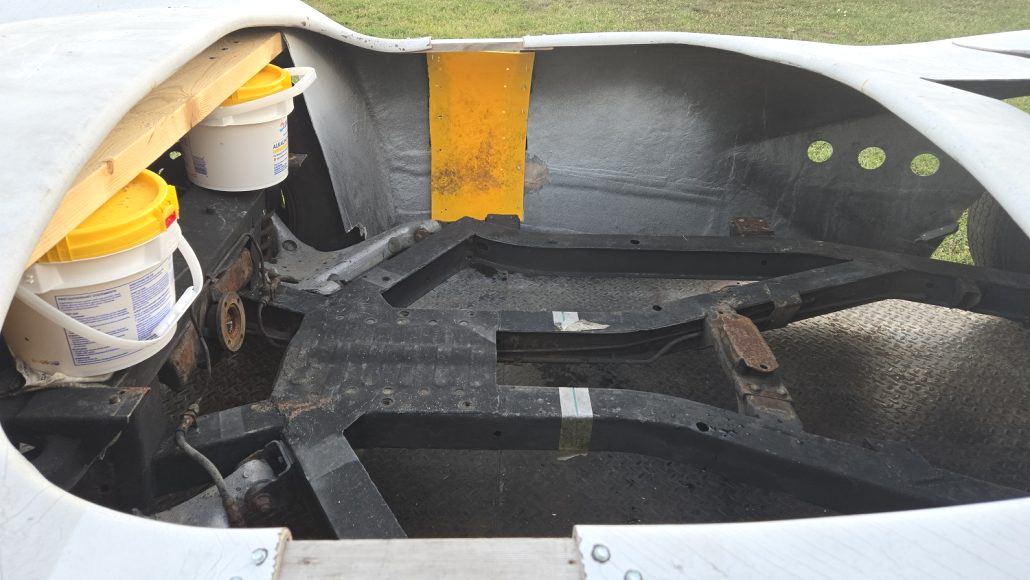
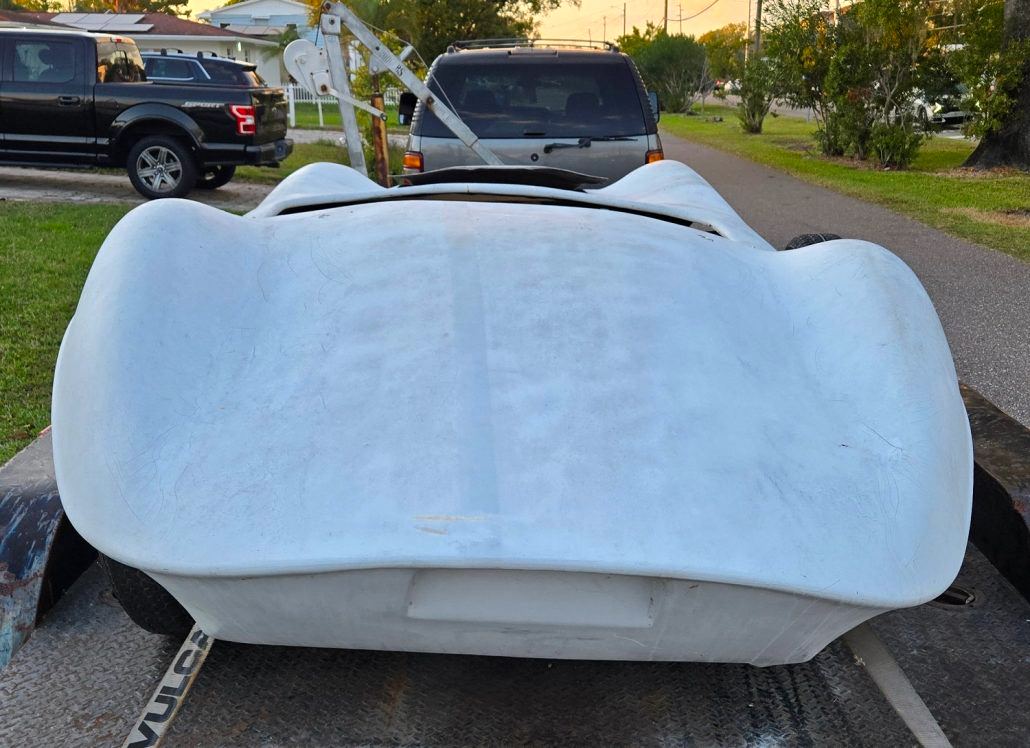
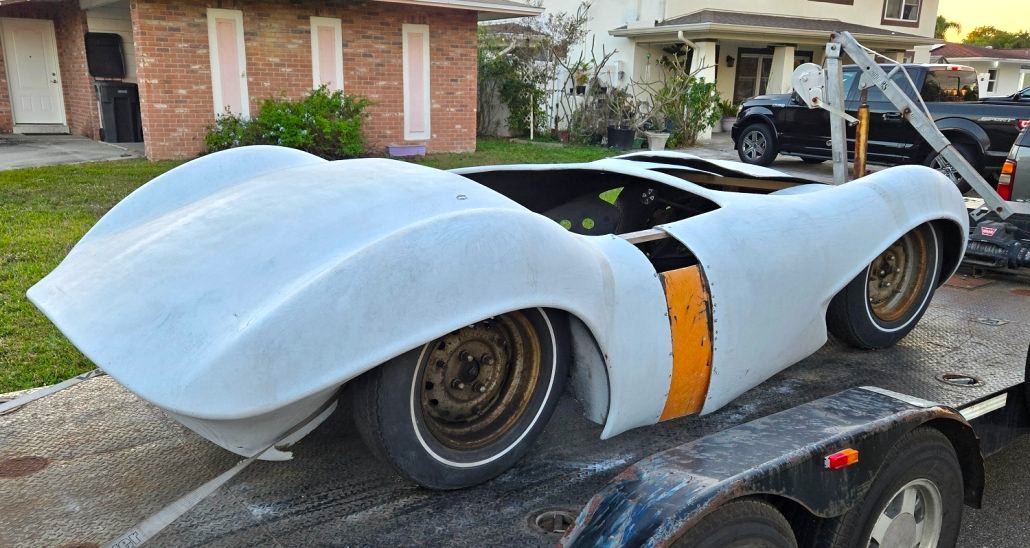
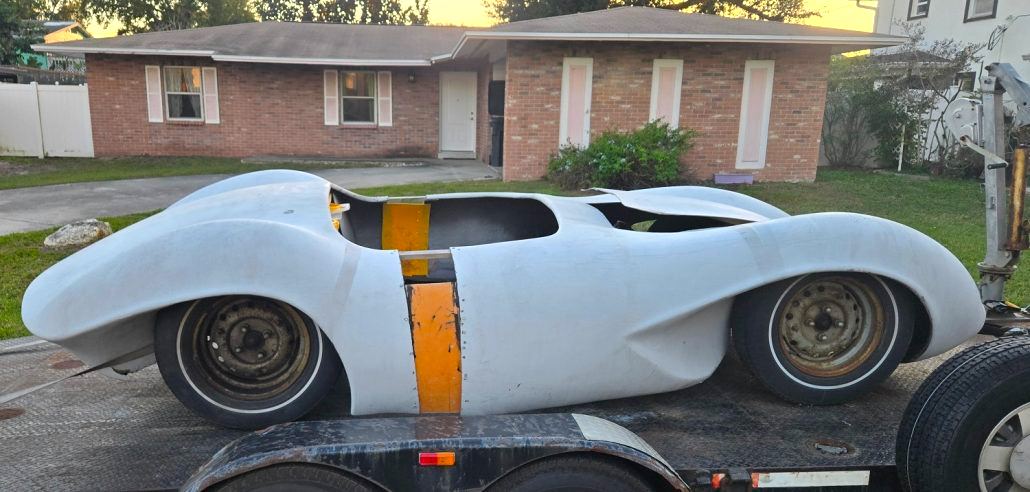
The car is currently in parts and will require a full restoration, it comes with the body, chassis, and many other required parts – but the buyer will need to source an engine. The asking price is $6,900, not bad for something this unusual, and it’s being offered for sale out of Florida.
Fast Facts: The Bohada Sports Car
- The Bohada is an exceedingly rare 1960s American fiberglass sports car built by three Industrial Arts teachers from the Buffalo, New York area – Bob Jones, Hank Steiger, and Dave Timm. The name is a portmanteau of the first two letters of each builder’s nickname: Bo-Ha-Da.
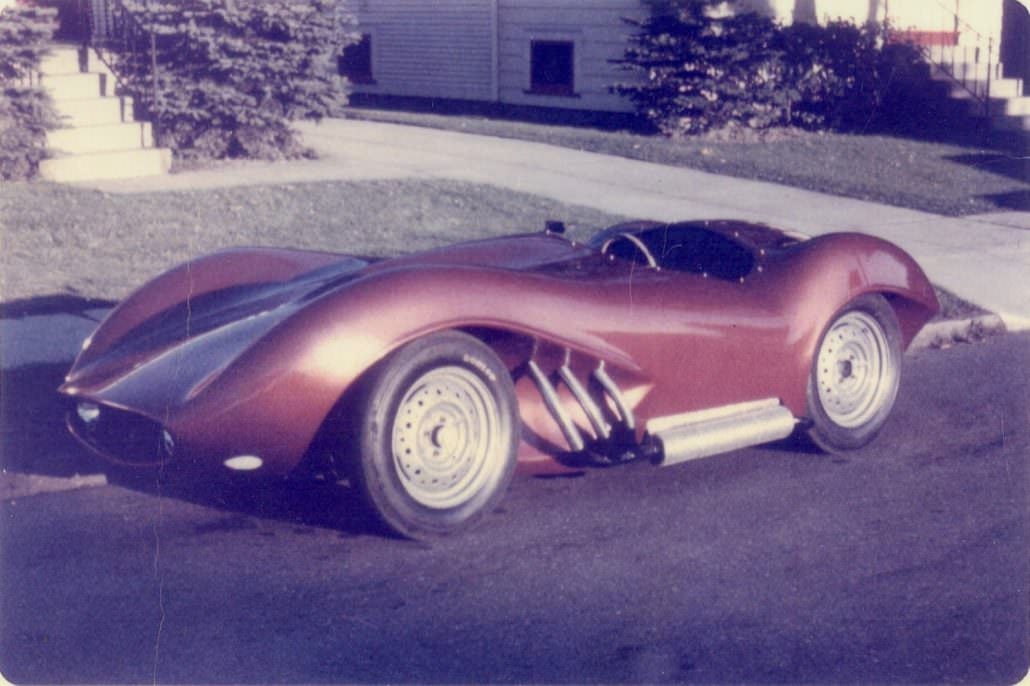
- The first car used a tubular space frame chassis with a nearly midship-mounted Austin A40 engine fitted with Harley-Davidson carburetors. The fiberglass body weighed just 72 lbs, stood only 29 inches tall, and had no doors. A second car was built using Volvo running gear and a Volvo engine.
- The car debuted in 1964 and won awards at shows across the American Northeast before disappearing from public view for decades. Researcher Geoff Hacker of Undiscovered Classics pieced the story back together from the 2010s onward, and the original plaster buck and molds were rescued from a New York garage in late 2022 by automotive historian Mike Puma.
- The car is now for sale in Florida for $6,900 with its body widened and lengthened to fit a Triumph TR4A-generation chassis offering independent front and rear suspension and rack and pinion steering. The body work is unfinished and no drivetrain is installed – the buyer will need to source an engine.
History Speedrun: The Bohada Sports Car
The Bohada is one of those wildly obscure American fiberglass sports cars that was developed thanks to a plucky combination of backyard ingenuity and genuine design talent. It was a car made real by three friends in the Buffalo, New York area during the early 1960s, built with their own hands in their spare time, and then largely forgotten for decades before automotive history researchers began piecing its story back together.
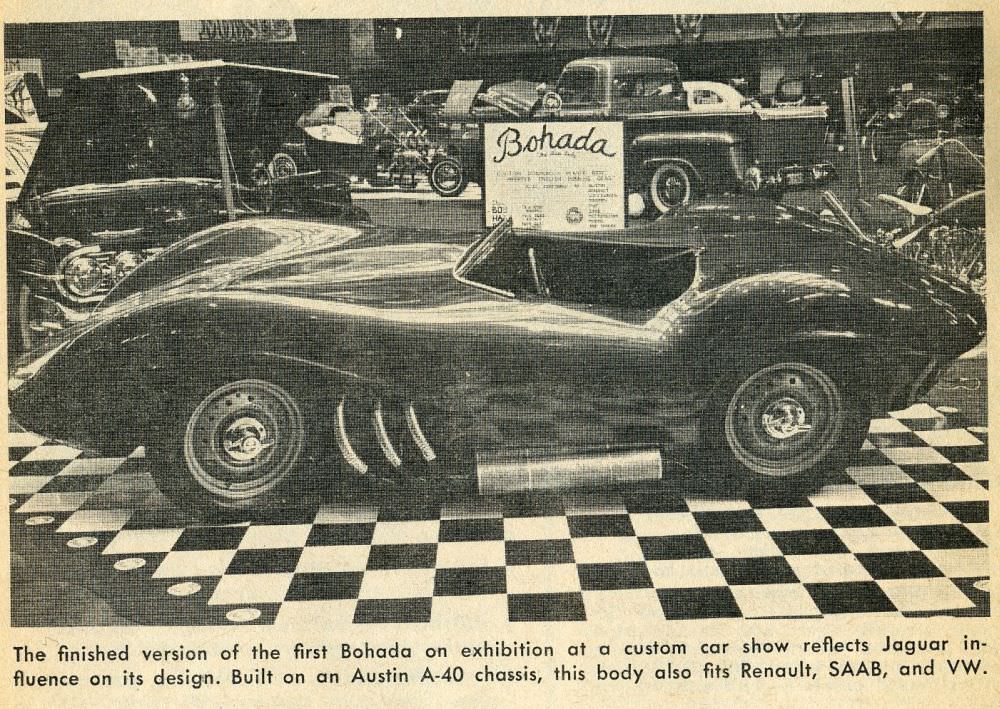
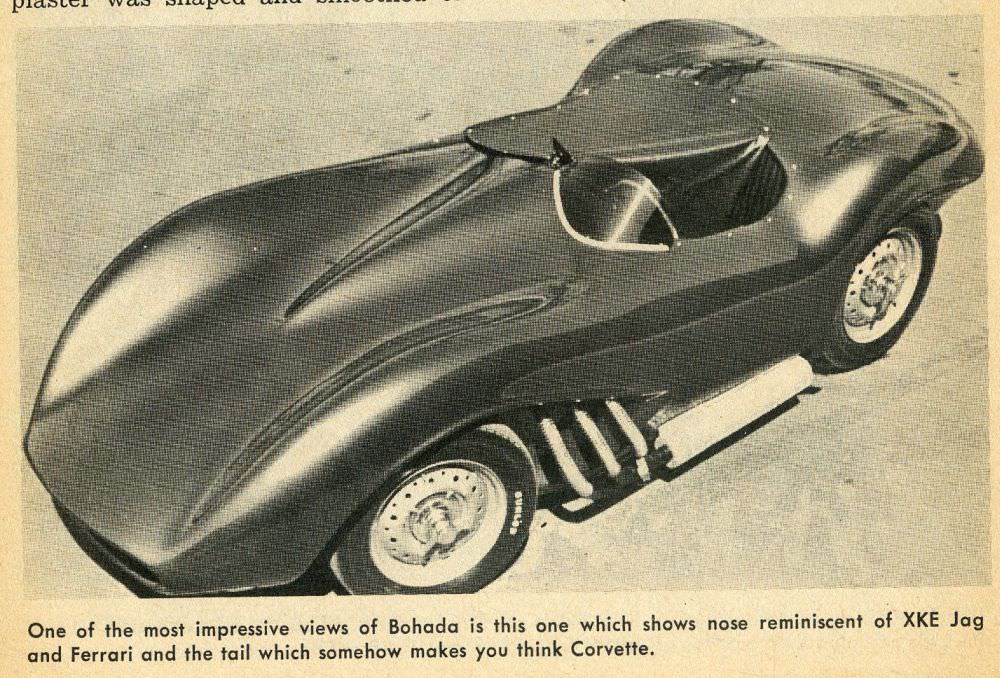
 The Bohada is one of those wildly obscure American fiberglass sports cars that was developed thanks to a plucky combination of backyard ingenuity and genuine design talent.
The Bohada name is a portmanteau drawn from the first two letters of each builder’s name – Bo from Bob Jones, Ha from Hank Steiger, and Da from Dave Timm. All three men were Industrial Arts teachers in the Blasdell and Buffalo area of Western New York, and their complementary skillsets of design, fabrication, and moldmaking made them an unusually capable team for a project just like this.
Bohada Origins + Development
The idea for the car is said to have come from Bob Jones, who had been driving a Jaguar and found it unnecessarily large and heavy for his tastes. He began sketching plans for a smaller, more agile sports car, a car whose body could accommodate engines and suspension parts from a variety of small imported cars rather than being locked to a single donor platform.
Jones soon had a full set of plans on paper, and the three men built the first chassis together as a welding workshop project while attending summer school. That chassis was a tubular space frame designed to accept running gear and an engine from an Austin A40.
The Austin engine was mounted so far rearward in the frame that it sat in a nearly midship position, the front of the engine was a few inches behind the trailing edge of the front tire. To extract more performance from the modest four-cylinder, the men fitted a pair of Harley-Davidson carburetors, a milled cylinder head, oversize pistons, and equal-length exhaust headers feeding a handmade straight-through muffler.
The radiator was tilted backward to preserve the low hoodline, with hot air from the engine bay ducted rearward to exit in front of the rear wheels.
The body design began with a small clay model created by Jones and Timm to establish the overall proportions and styling. From that, they produced a larger quarter-scale model in wood and clay, which was used to generate a set of full-size templates. Those templates were then handed off to Hank Steiger, who was responsible for the moldmaking.
The body design began with a small clay model created by Jones and Timm to establish the overall proportions and styling. From that, they produced a larger quarter-scale model in wood and clay, which was used to generate a set of full-size templates. Those templates were then handed off to Hank Steiger, who was responsible for the moldmaking.
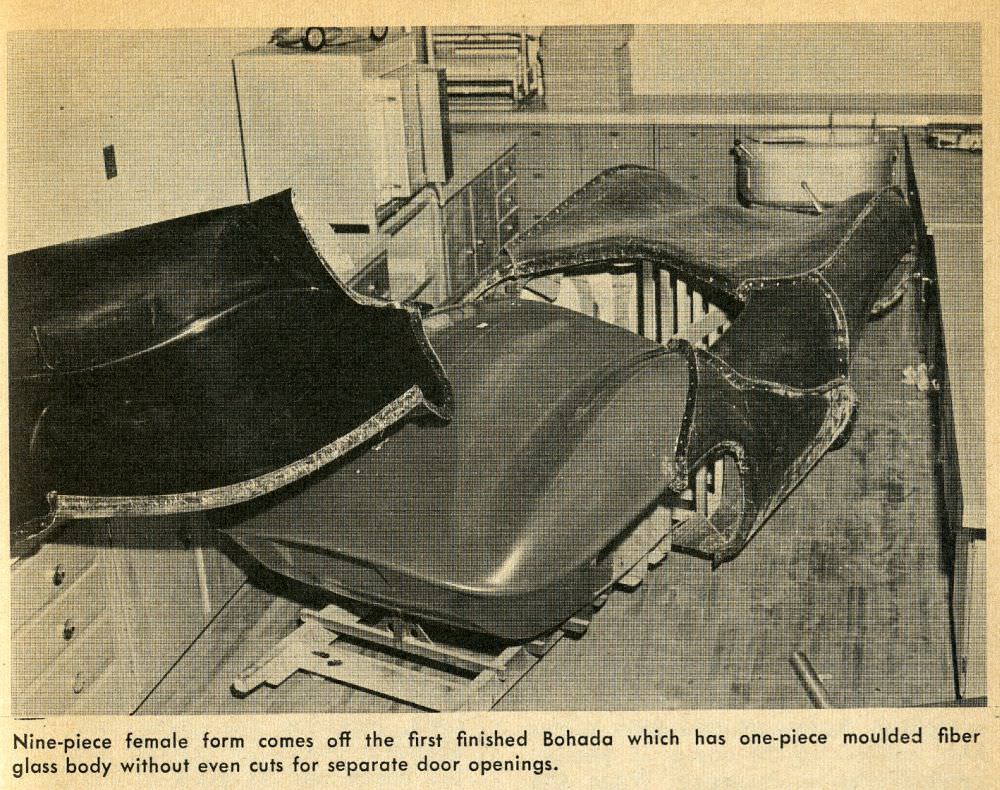
Steiger built a full-size male buck consisting of a wooden frame covered in metal lath, over which he applied and shaped 60 to 70 coats of plaster using a squeegee. Once the buck was finished and smoothed to his satisfaction, he constructed an eleven-piece female mold from which the fiberglass body shells could be laid up.
The mold sections were intelligently divided so that the entire body (including the rolled tail, rear license plate recess, cockpit roll lines, and raised beads) could be produced as a single piece for maximum structural integrity and an unbroken surface.
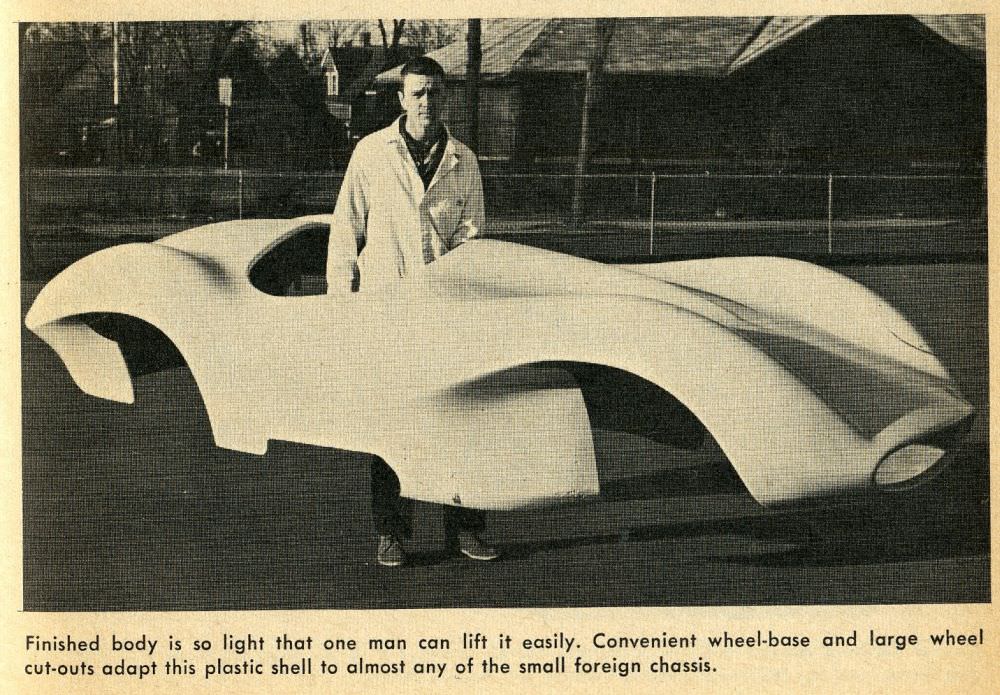
Bodies were made using both the traditional hand-layup method and by spraying, using equipment originally designed for building fiberglass water tanks. The finished body shell weighed in at just 72 lbs – astonishingly light compared to the more common steel car bodies of the time.
The Specifications Of The Bohada
The resulting car was remarkably compact – the wheelbase measured in at less than 90 inches and the first Bohada stood just 29 inches tall at its highest point. There were no doors (entry required climbing over the side) though the men noted that doors could be cut into the body if desired, or if required by racing regulations.
Half-inch tubing was laid inside the body for additional strength and rigidity, and the body was attached to the chassis with quick-release fiberglass hangers and wing nuts, allowing the entire shell to be removed in roughly 15 minutes for major mechanical work.
For routine maintenance, an engine access door, which doubled as a glove compartment, permitted oil checks, spark plug changes, and points adjustments without removing the body, and further engine access could be gained by removing the front wheels.
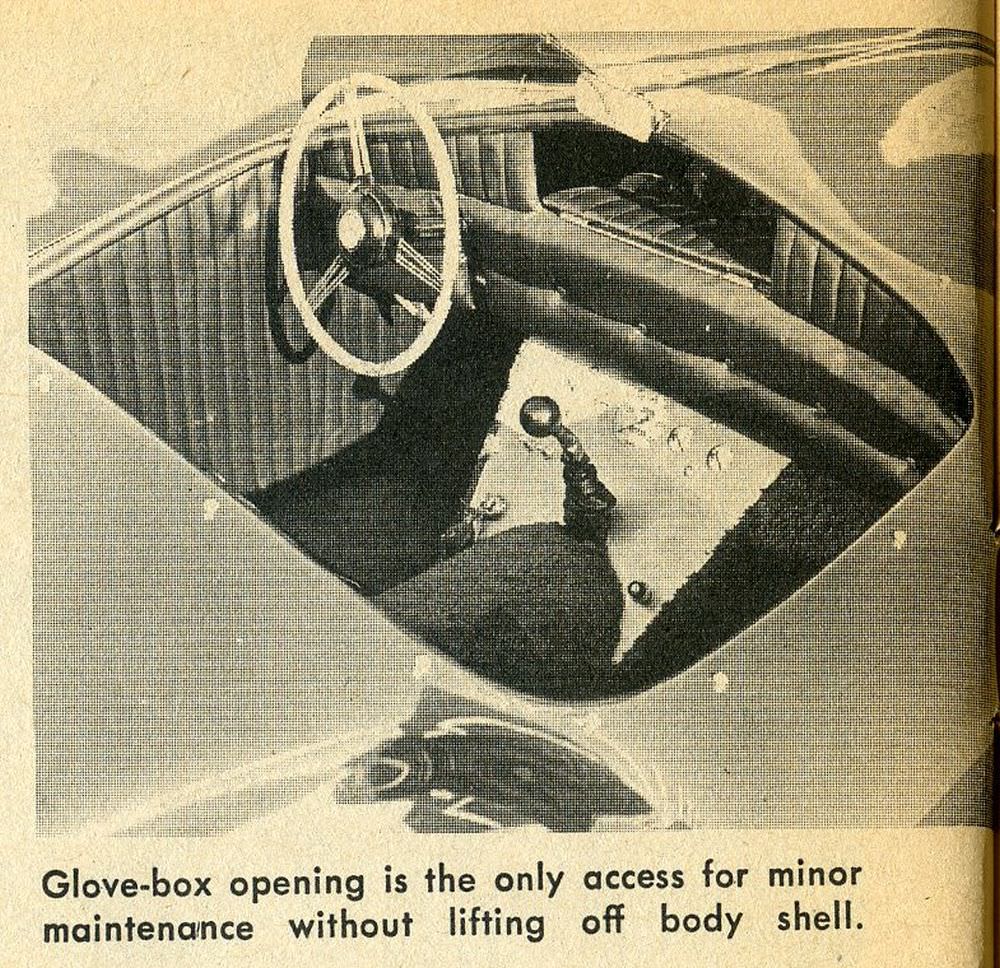
For routine maintenance, an engine access door, which doubled as a glove compartment, permitted oil checks, spark plug changes, and points adjustments without removing the body, and further engine access could be gained by removing the front wheels.
The Second Bohada And The Planned GT Coupe
A second car followed soon after the first, this one used an entirely different chassis built from 2½ inch tubing, with a shortened Volvo front crossmember and its suspension parts, a shortened Volvo rear axle, and a Volvo engine.
As with the first car, the engine was positioned well rearward in the frame to achieve roughly 50/50 front/rear weight distribution. The Volvo-powered car also appeared in period publications under the name “H. M. Striger Special” – this was almost certainly a misspelling of Steiger.
A third car project was also planned, it was to be a GT coupe variant of the Bohada that would have replaced the tubular steel frame with a stressed plywood monocoque structure skinned in fiberglass – possibly influenced by the Marcos GT from England, which had a plywood chassis.
According to Bob Jones and Dave Timm, only two Bohadas were ever built – the Austin-powered original and the Volvo-powered car. However, the trio didn’t stop there.
The planned GT coupe variant of the Bohada eventually evolved into an entirely separate design called the Knight. This was to be a rear-engined car powered by a Corvair engine – a significant departure from the Bohada’s front-engined layout. The men created a full set of molds for the Knight, but the car itself was never completed.
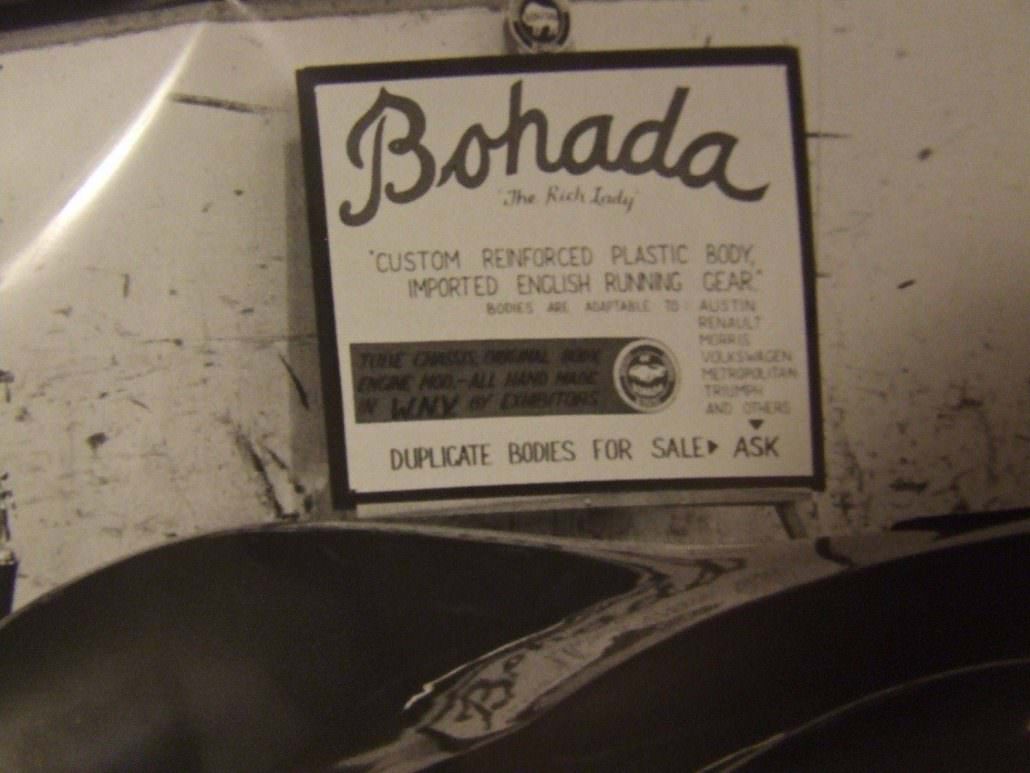
The three men also intended to market the Bohada bodies commercially, in both roadster and GT coupe form, from Bob Jones’s address in Blasdell, and several bodies are known to have been made.
The Bohada Goes To The Shows
The first Bohada debuted in 1964, it appeared at a number of car shows across the American Northeast during the mid-1960s and was a consistent award winner. After that period, the car seems to have largely disappeared from public view.
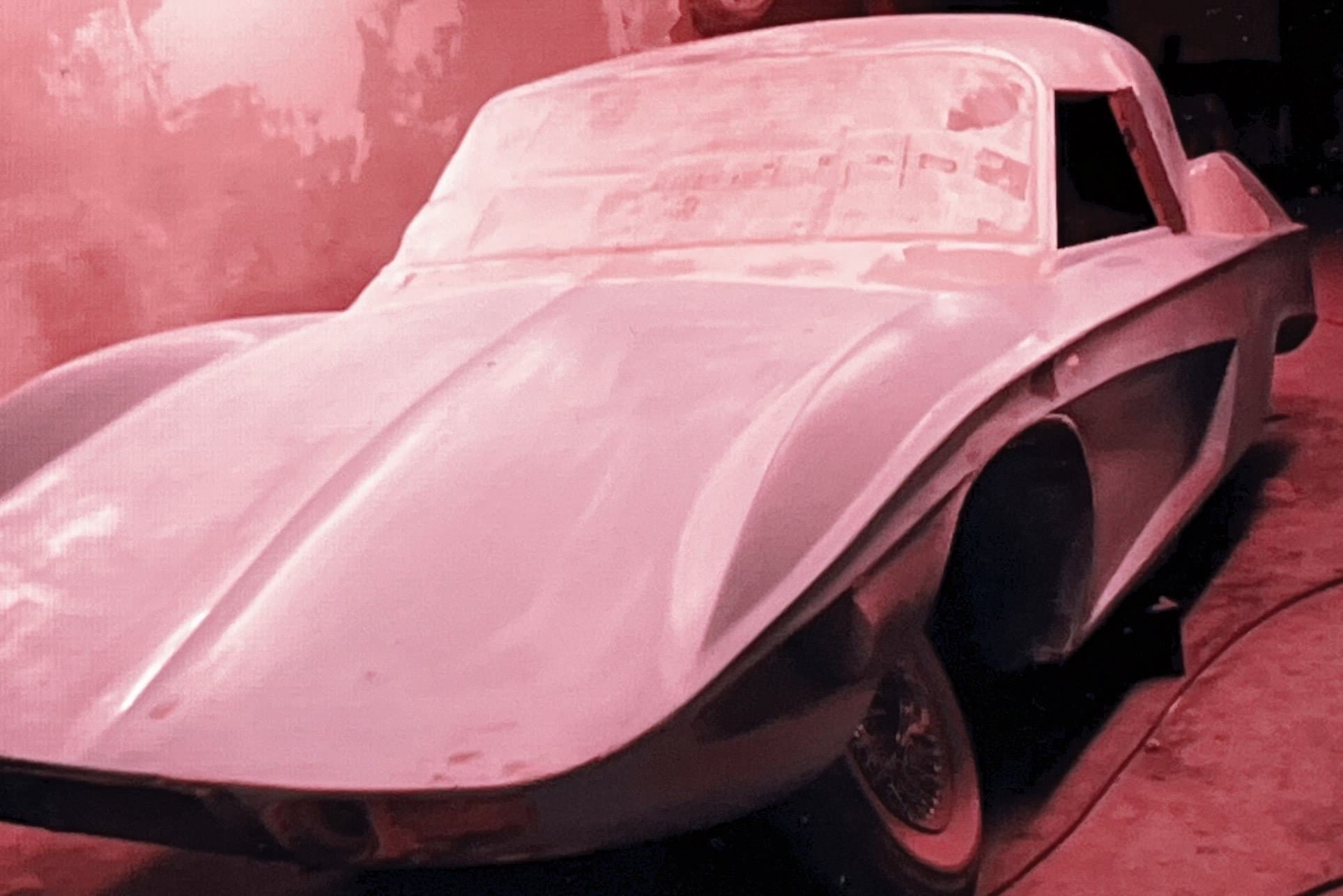
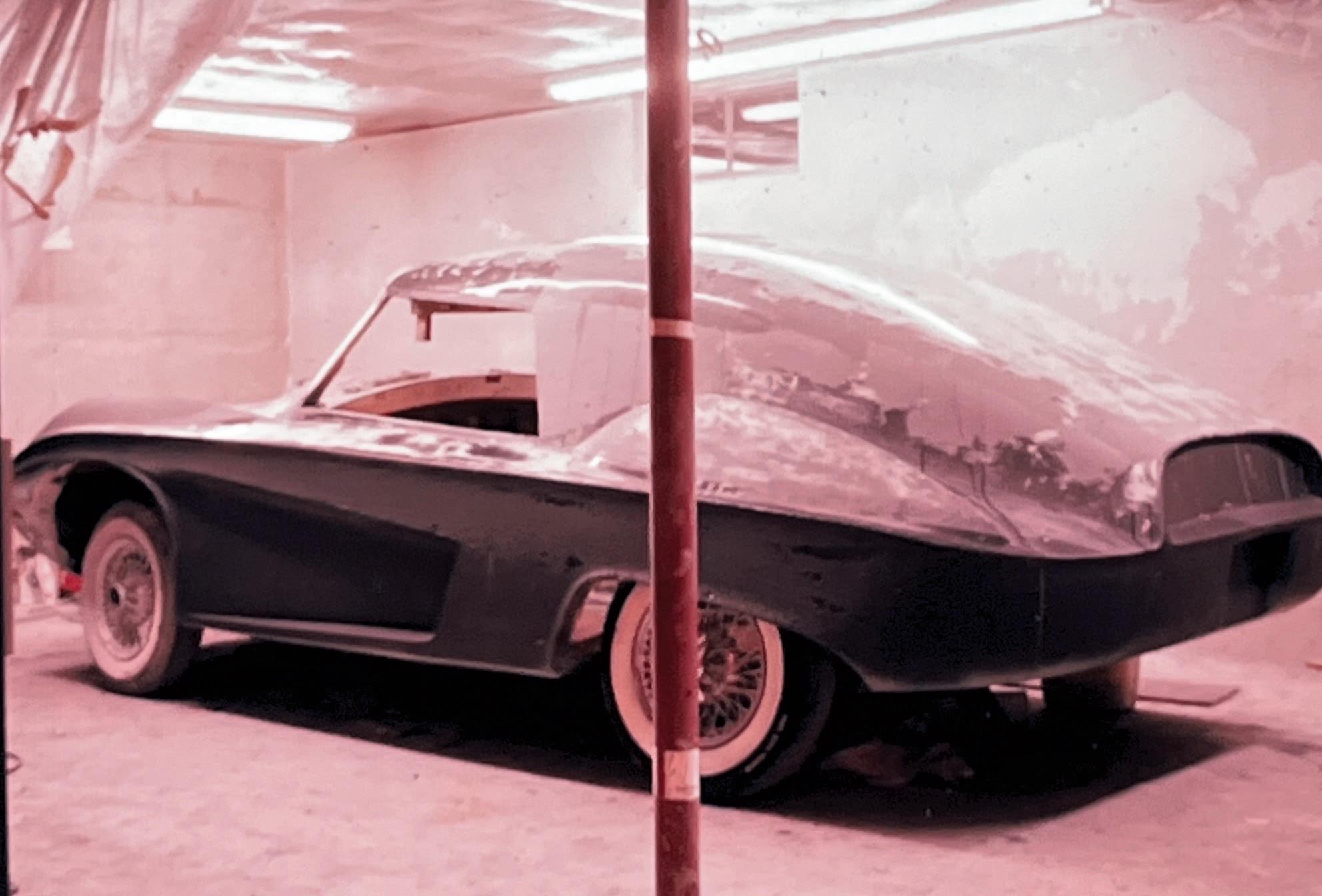
The planned GT coupe variant of the Bohada eventually evolved into an entirely separate design called the Knight (shown above). This was to be a rear-engined car powered by a Corvair engine – a significant departure from the Bohada’s front-engined layout. The men created a full set of molds for the Knight, but the car itself was never completed.
The Bohada’s trail resurfaces in the 2000s and 2010s through the research efforts of Geoff Hacker and his network of fiberglass-car historians at Undiscovered Classics. A bare Bohada body shell was discovered by researcher Guy Dirkin in the Detroit, Michigan area.
In April of 2011, Mike Budniewski of Buffalo (who had been 14 years old when his teacher Henry Martin Steiger built the cars) contacted Hacker and confirmed that at least two complete cars had been built – one Austin-powered, one Volvo-powered.
In 2013, H.M. Steiger, Hank’s son, reached out to Hacker with period newspaper clippings and the original Foreign Car Guide article, this significantly improved the documented records on the car. In October of 2019, Wayne Timm (Dave Timm’s son) confirmed that both his father and Bob Jones were still alive at that time, and he believed Jones still had the original body mold in New York.
Amazingly, in late 2022, the full-size plaster buck and fiberglass molds for the Bohada were rescued from a garage in Western New York by automotive historian Mike Puma, along with the buck and molds for the never-built Knight – all of which had sat undisturbed for close to 60 years. The discovery was made public in 2023, and the tooling was prepared for public display.
Now For Sale: An Original 1964 Bohada
The 1964 Bohada that’s now being offered for sale is one of the two known cars built by the original Jones-Steiger-Timm trio, and it’s been significantly modified from its original mid-1960s form.
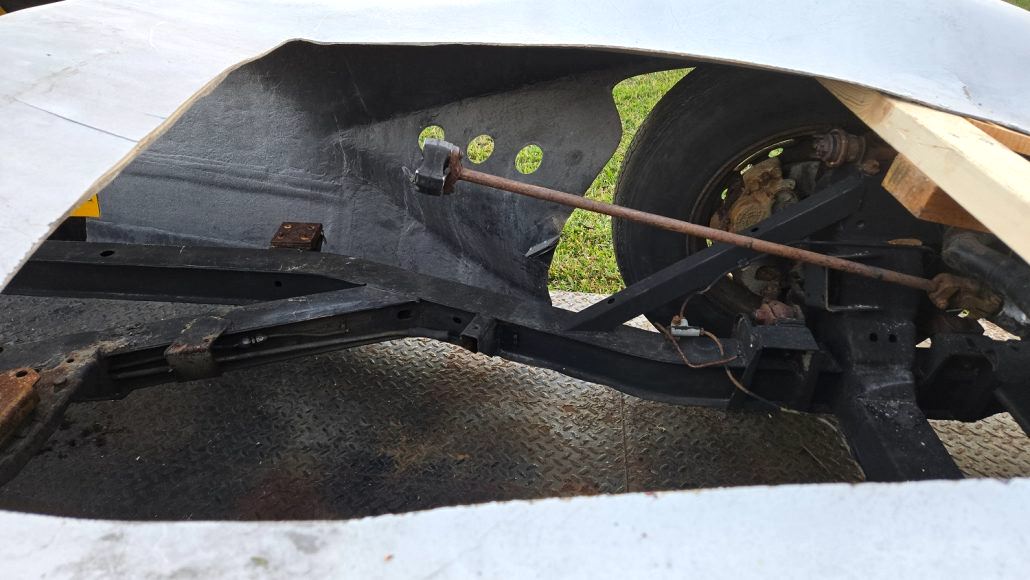
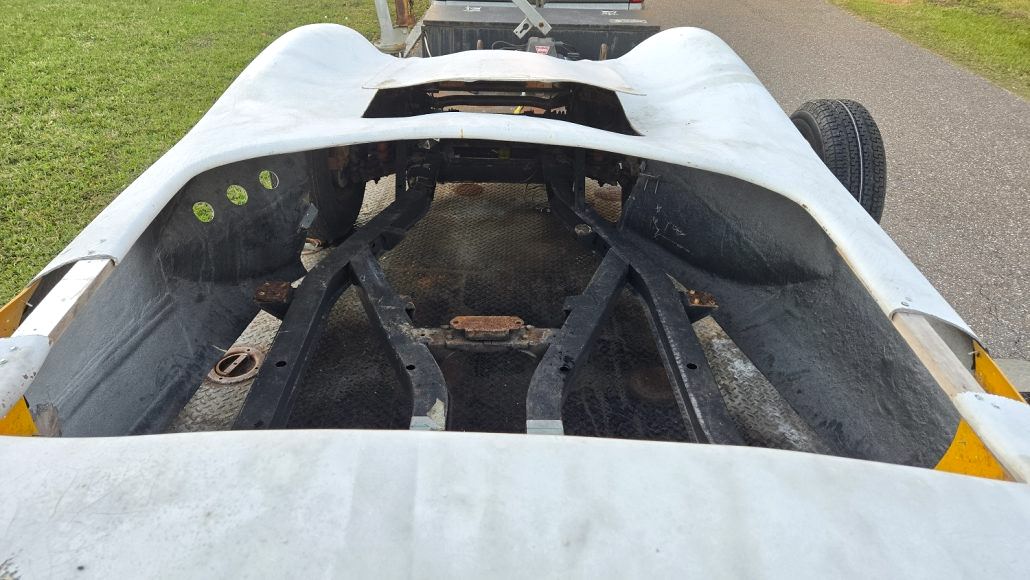
The fiberglass body has been widened and lengthened to fit a stock Triumph TR4A-generation chassis, a change from the original sub-90-inch-wheelbase, but one that brings some mechanical advantages.
The TR4A platform provides independent front and rear suspension (from the TR4A IRS model) as well as rack and pinion steering, giving the car a more modern and capable foundation than the original Austin A40 or Volvo running gear could ever have offered.
The fiberglass work to widen the body has been completed, but the lengthening remains unfinished, and the body has not yet been mounted to the chassis. No drivetrain is installed, it would need to be sourced and fitted by the buyer.
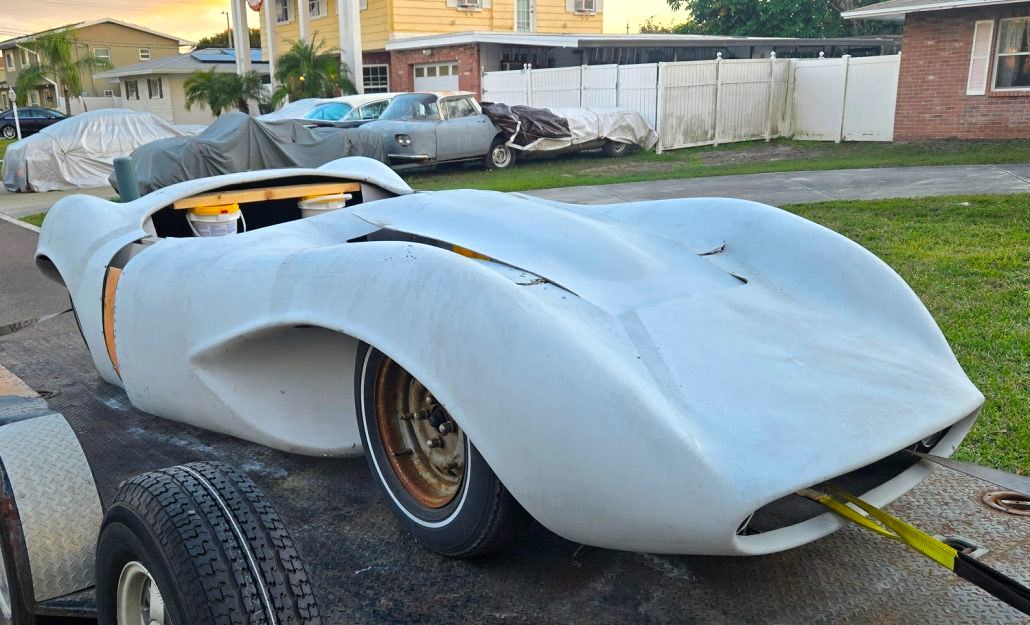
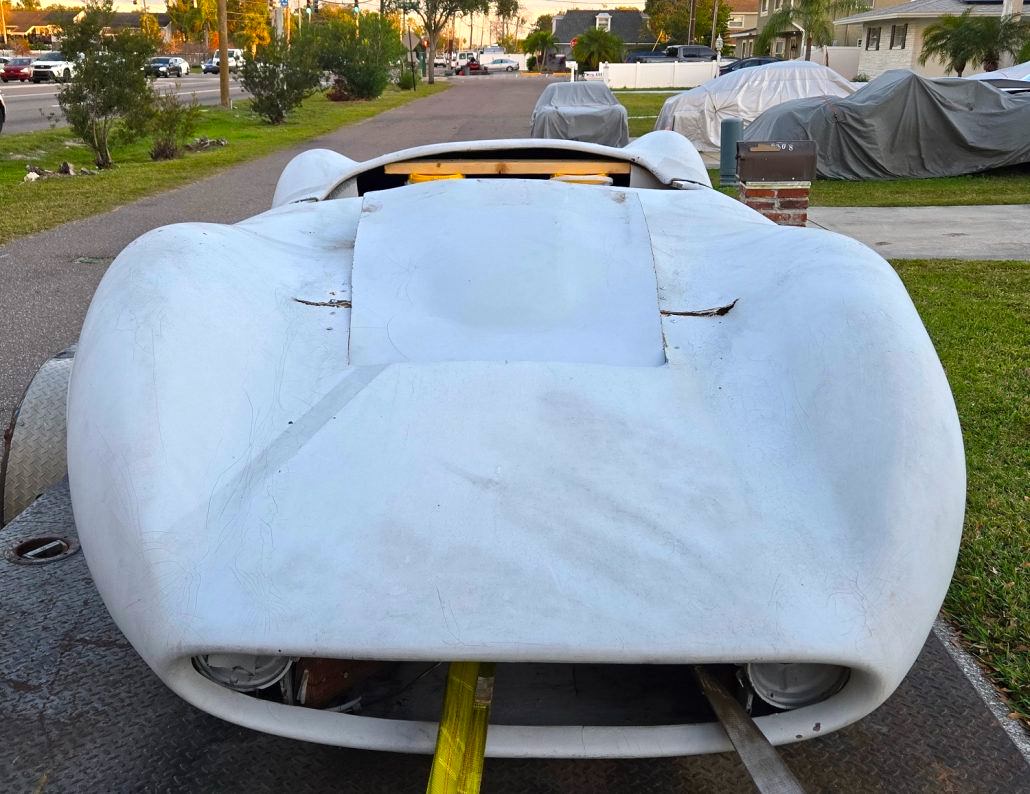
The 1964 Bohada that’s now being offered for sale is one of the two known cars built by the original Jones-Steiger-Timm trio, and it’s been significantly modified from its original mid-1960s form.
American specials like the Bohada have been increasingly welcomed at major concours events in recent years. Both the Amelia Island Concours d’Elegance and the Pebble Beach Concours d’Elegance have held classes for these types of cars in 2023 and 2024, and the broader collector market for one-of-a-kind fiberglass-bodied specials from this era has been growing steadily.
The car is unrestored and is titled in Florida, where it’s currently located. The listing is priced at $6,900 – if you’d like to read more about the car or inquire about buying it you can visit the listing here.
Images courtesy of Undiscovered Classics

Articles that Ben Branch has written have been covered on CNN, Popular Mechanics, Smithsonian Magazine, Road & Track Magazine, the official Pinterest blog, the official eBay Motors blog, BuzzFeed, Autoweek Magazine, Wired Magazine, Autoblog, Gear Patrol, Jalopnik, The Verge, and many more.
Silodrome was founded by Ben back in 2010, in the years since the site has grown to become a world leader in the alternative and vintage motoring sector, with well over a million monthly readers from around the world and many hundreds of thousands of followers on social media.