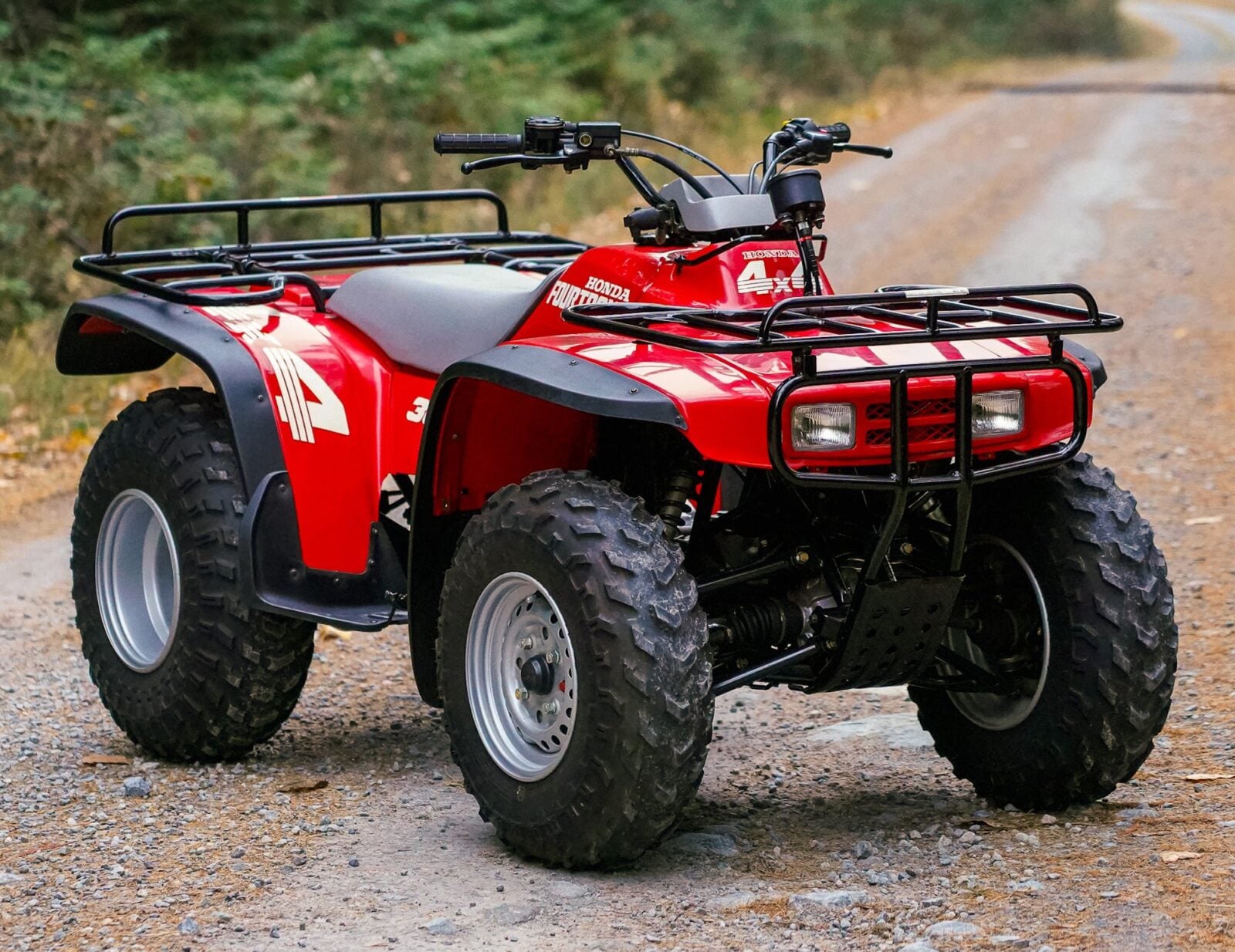
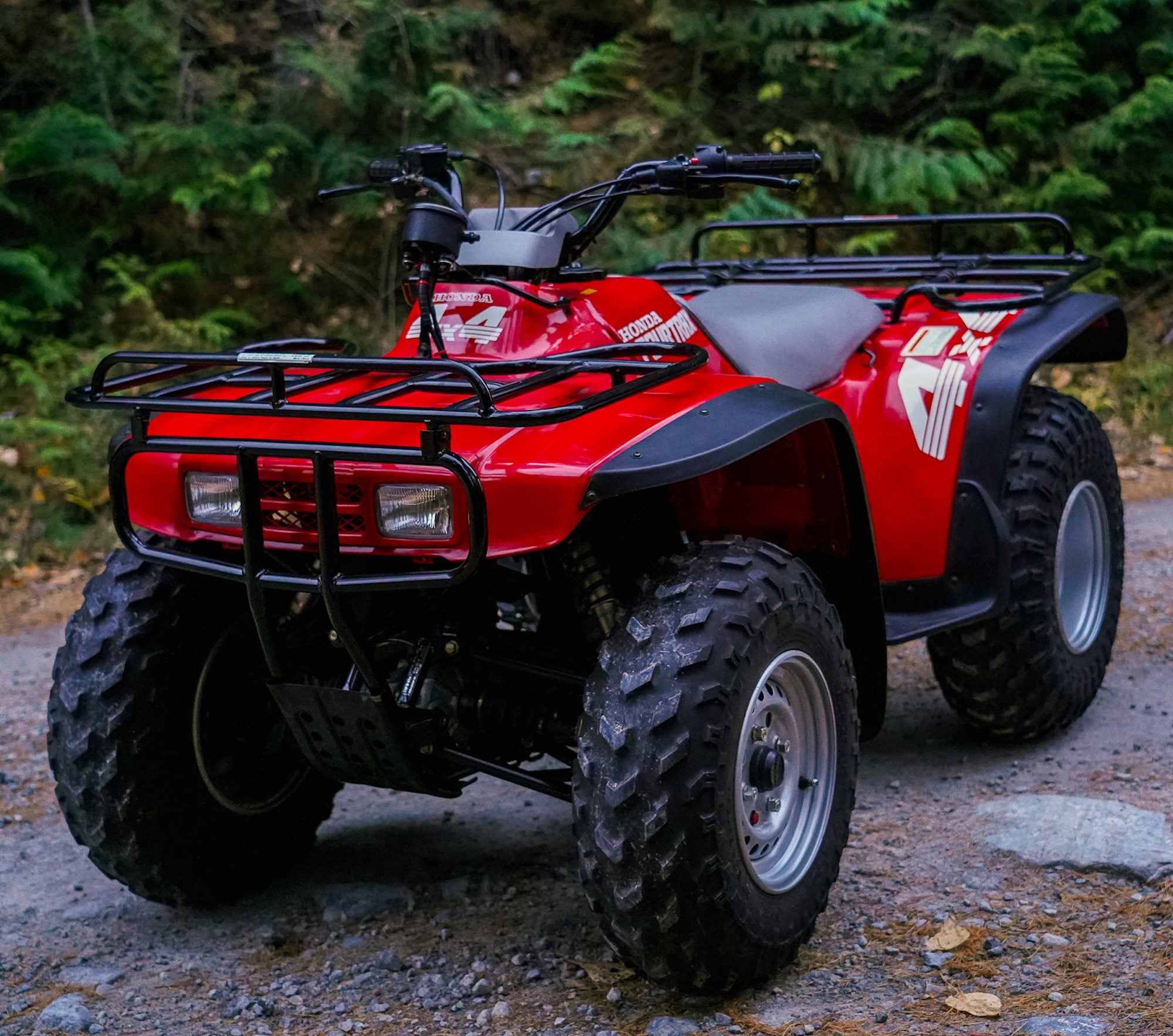
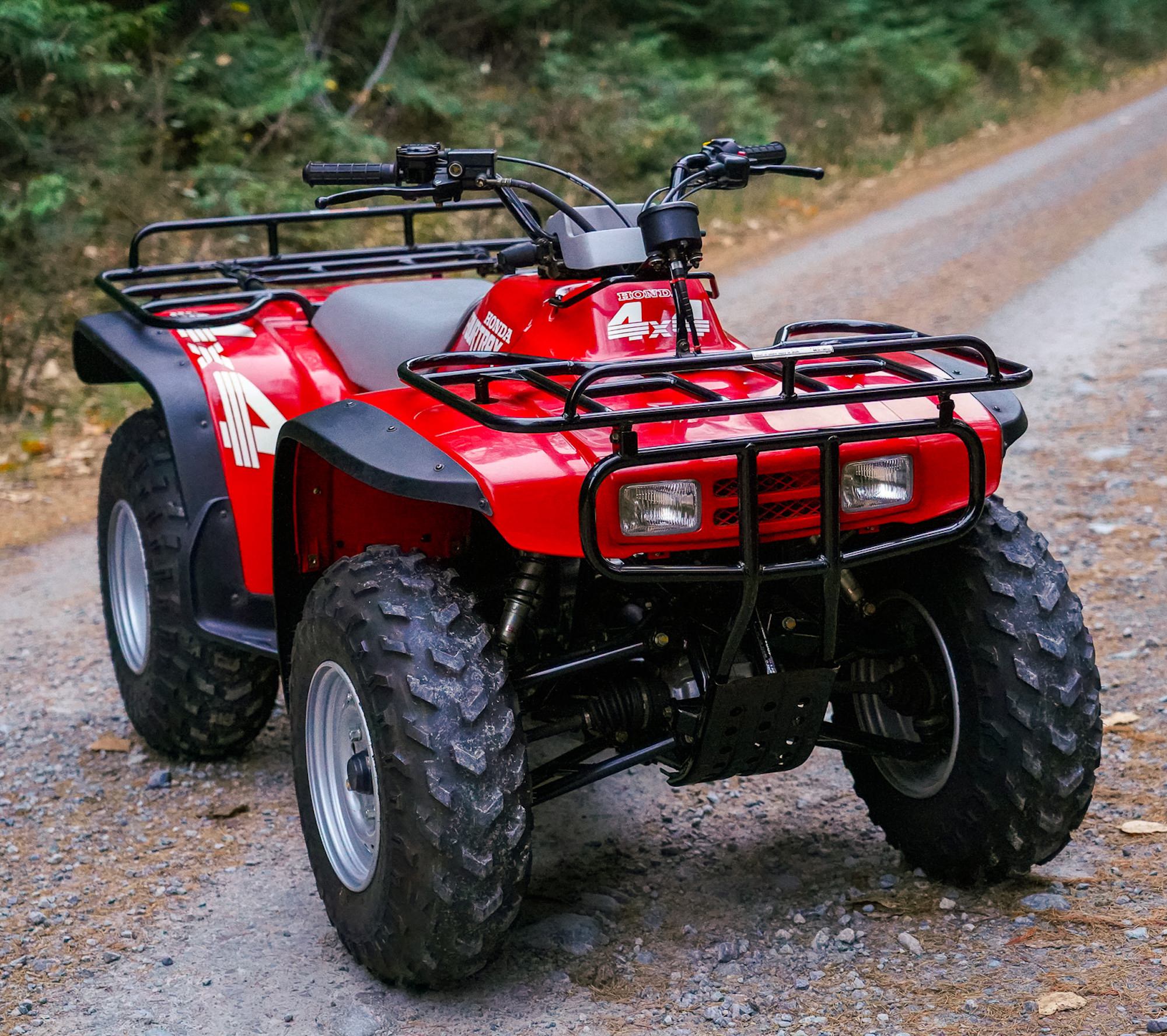
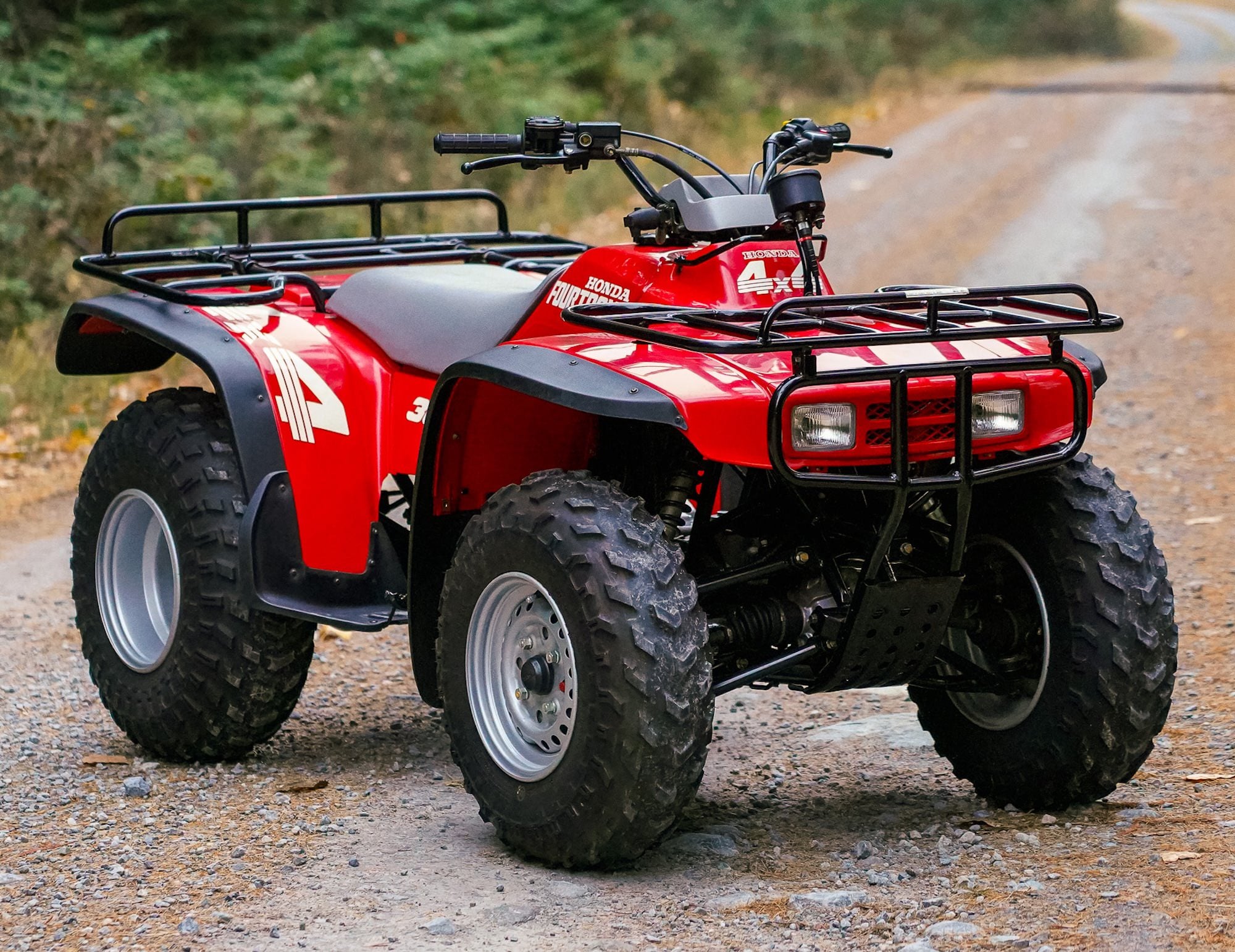
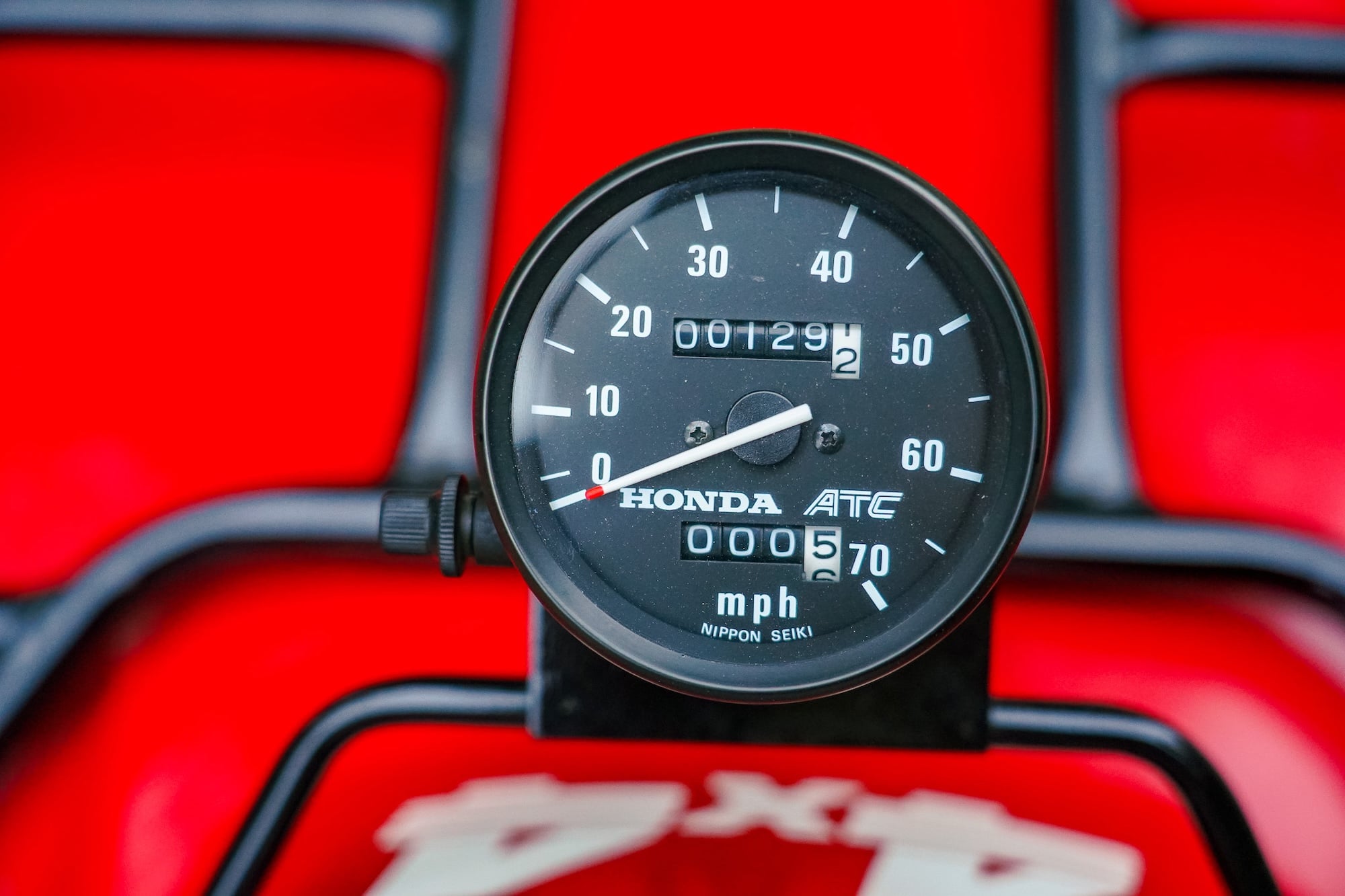
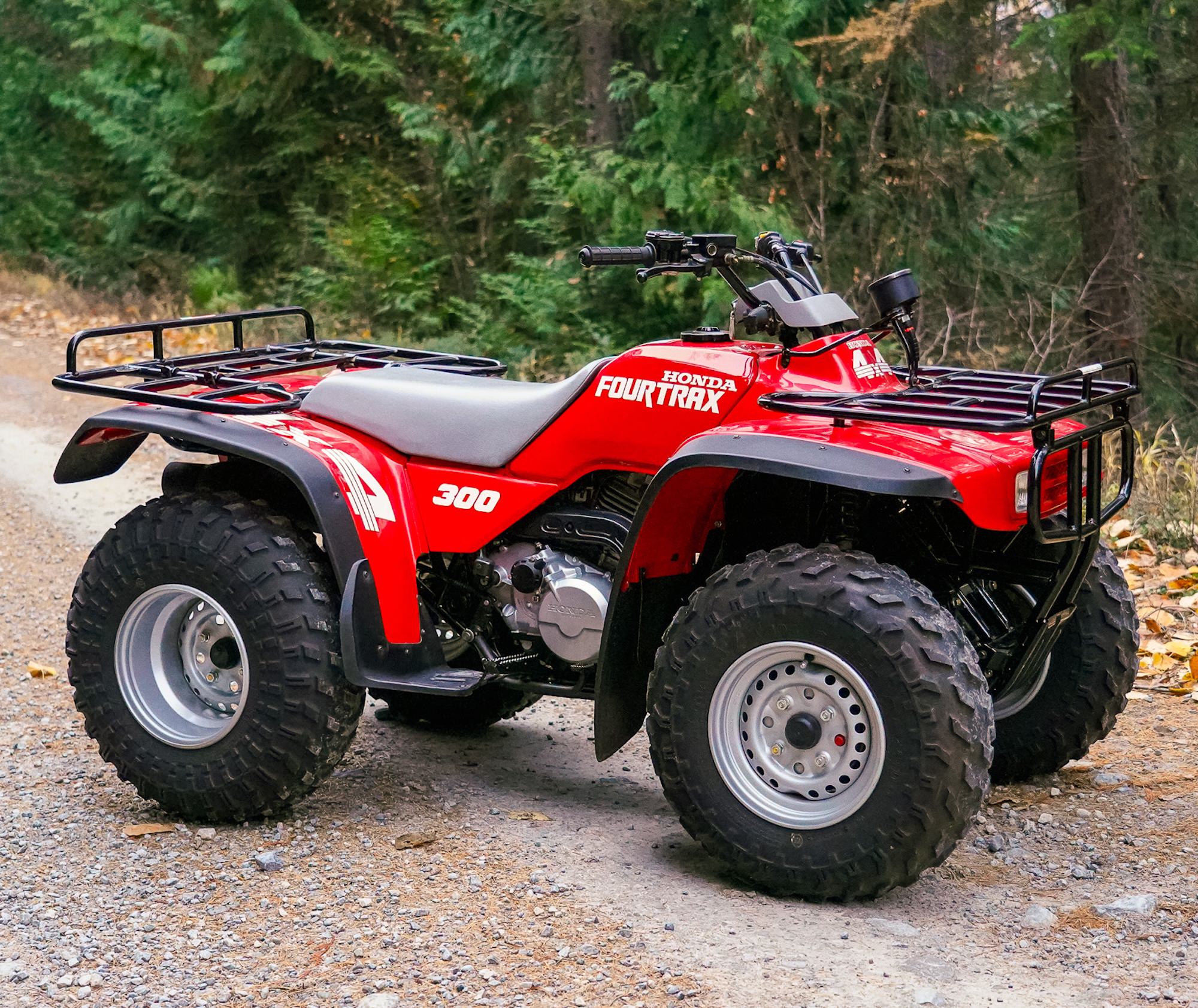
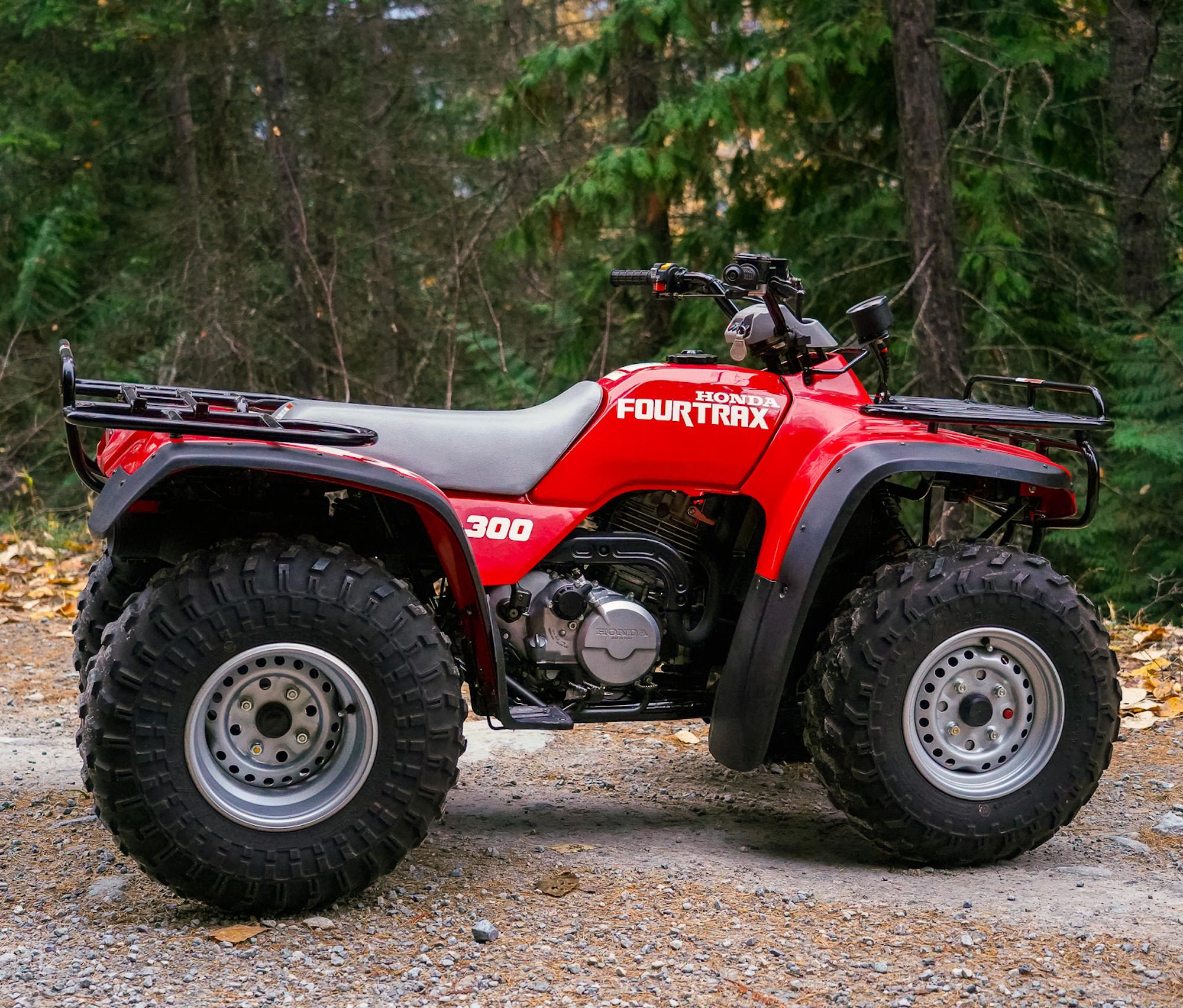
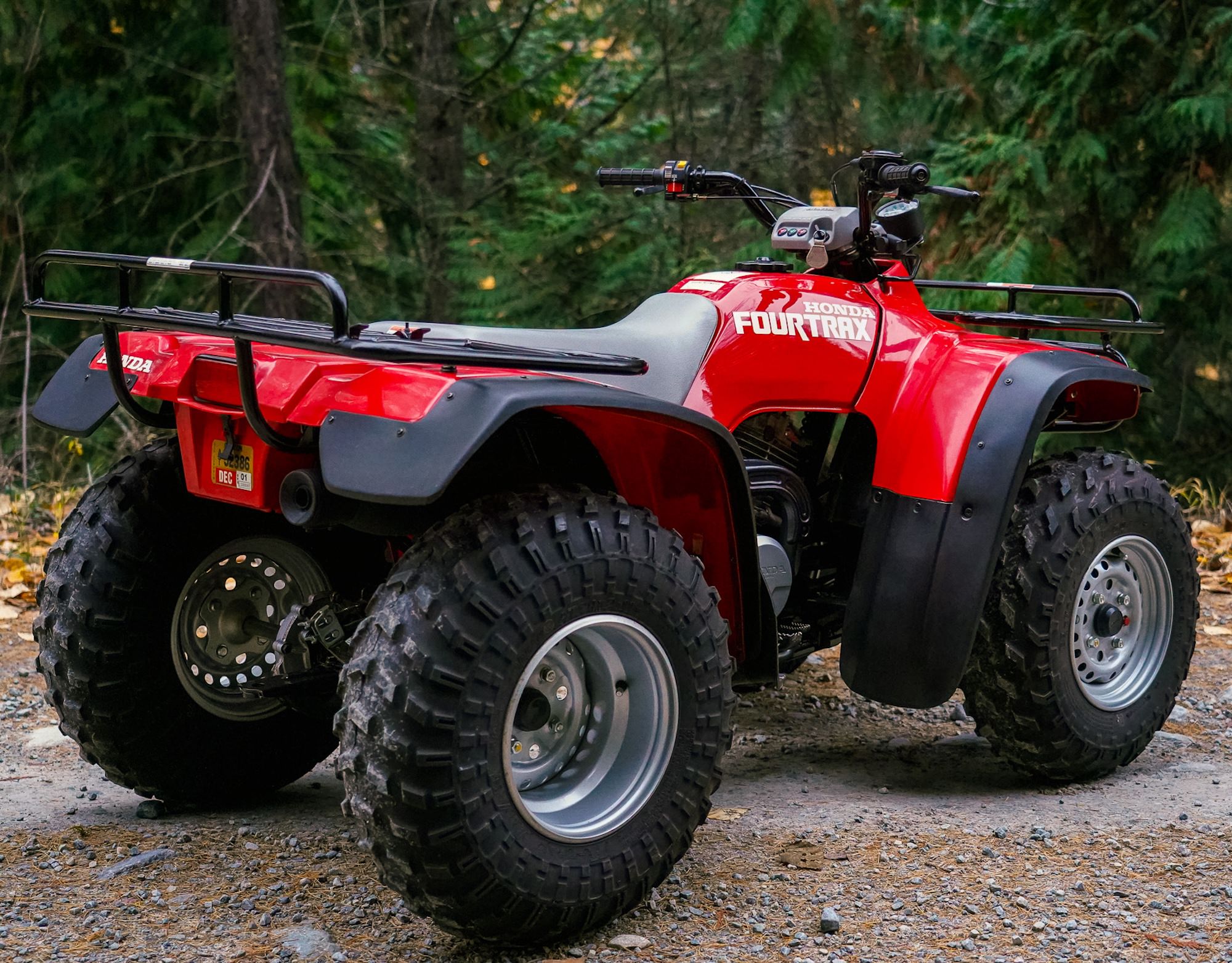
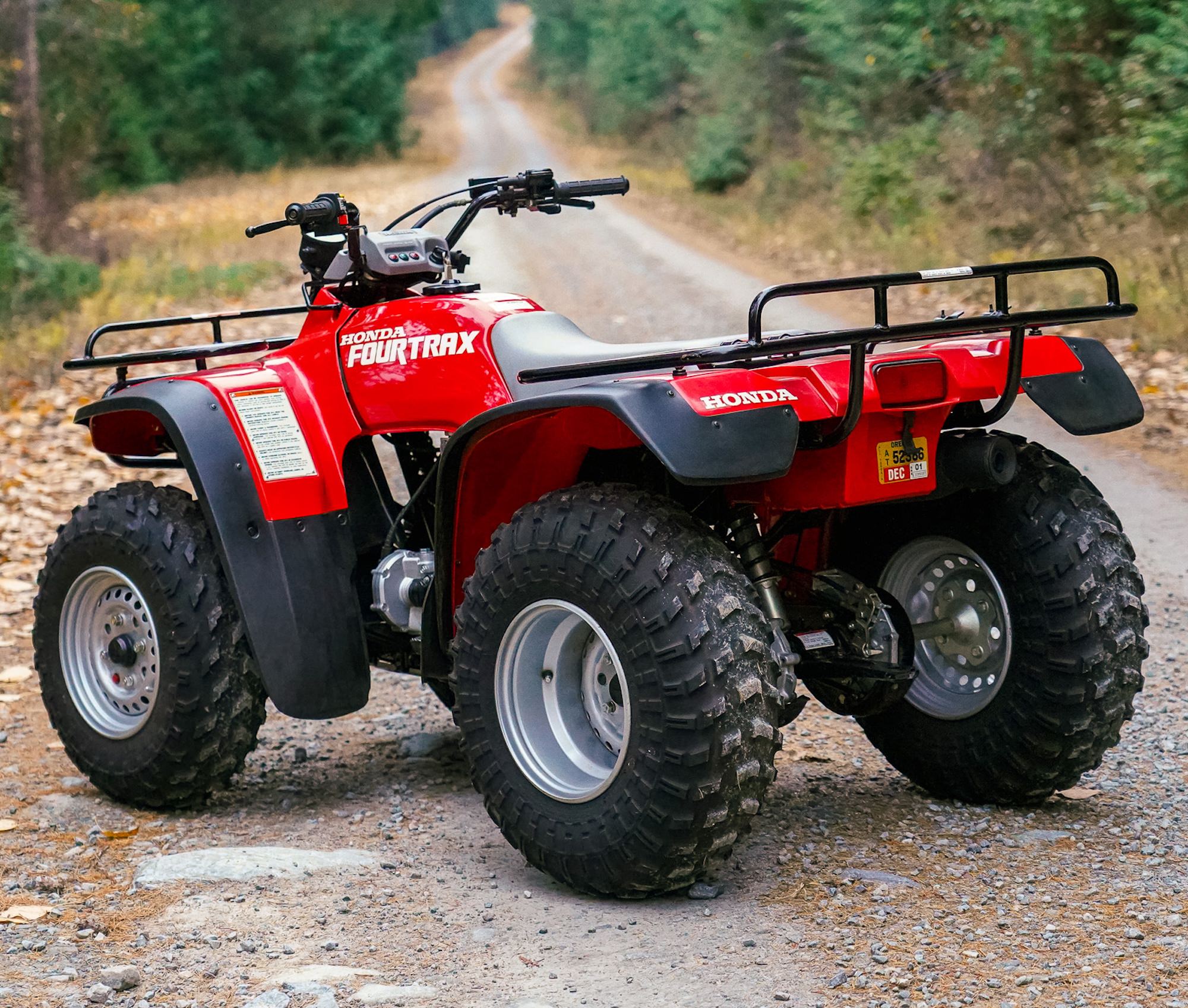
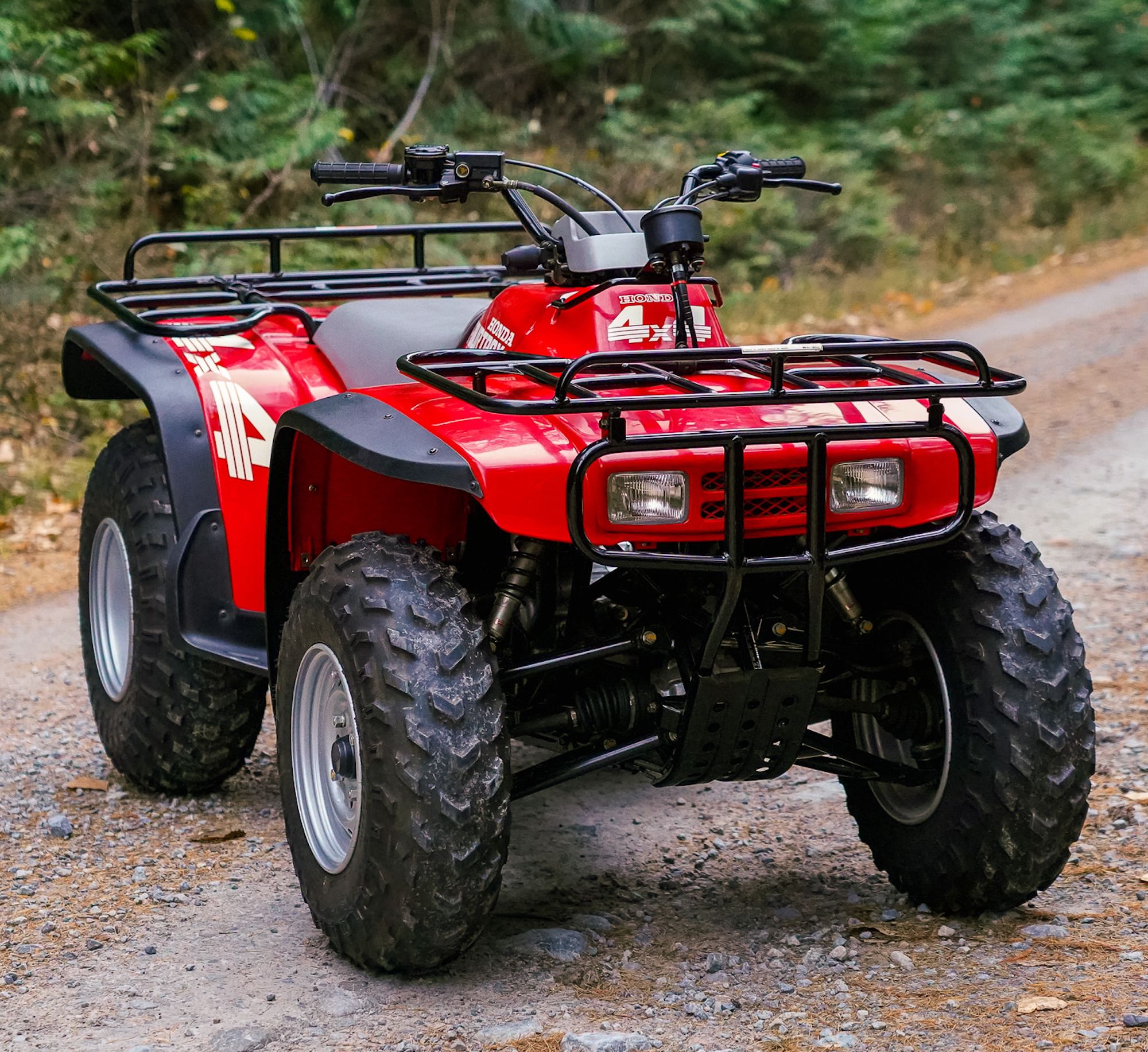
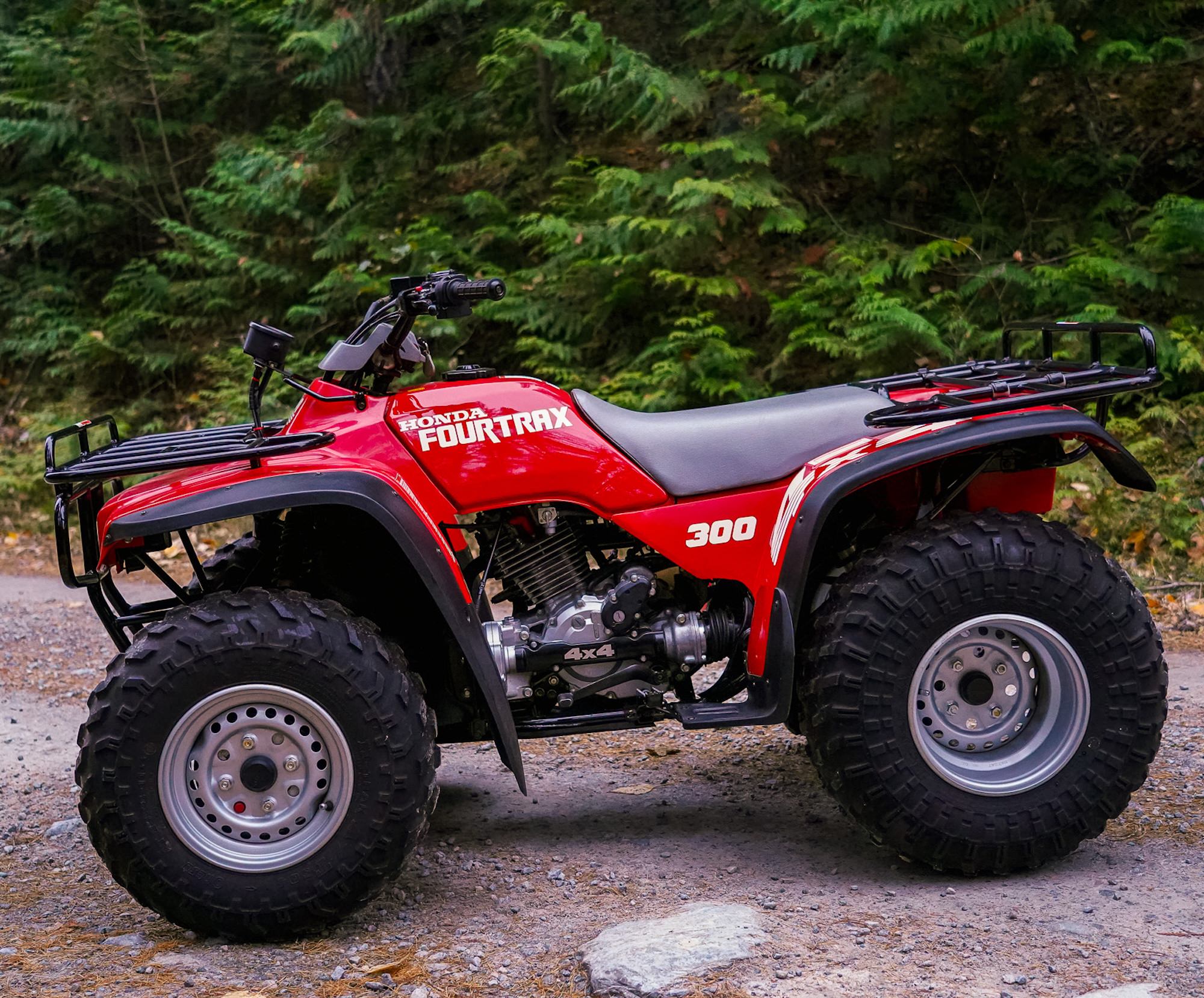
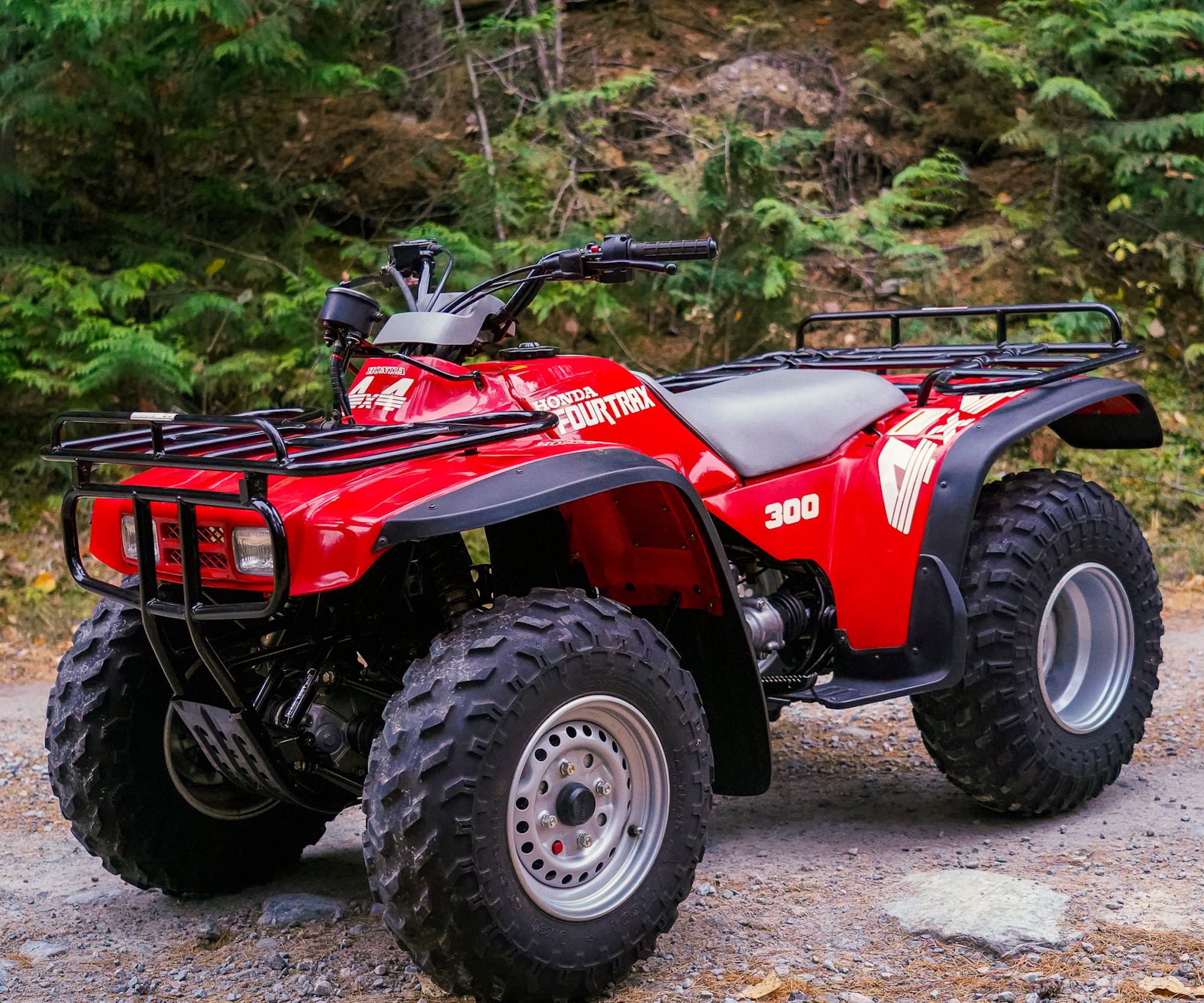
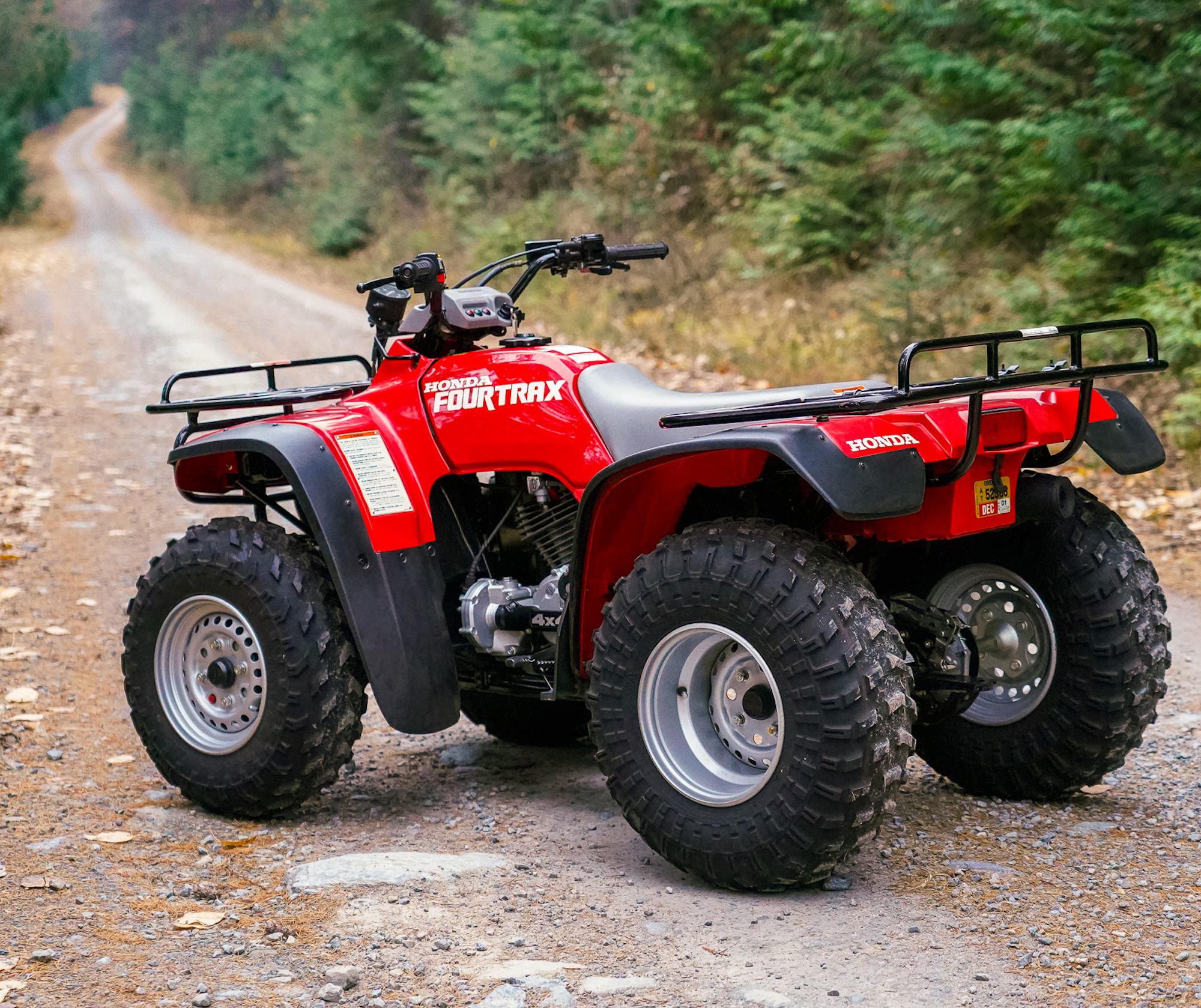
This is by far the cleanest and most original Honda FourTrax we’ve come across in recent memory, largely because it has just 129 miles on the odometer since new. It was part of a private collection in Montana, and it’s now being offered for sale in time-capsule-like-condition.
The Honda FourTrax was the first production four-wheel-drive quad bike, and it caught on fast. It offered farmers, hunters, anglers, ranchers, and rangers the ability to go many places a standard 4×4 couldn’t, and they could bring hundreds of pounds of gear with them.
Fast Facts: A 1991 Honda FourTrax With 129 Miles
- Honda entered the four-wheeled ATV market in 1984 with the TRX200, following Suzuki’s pioneering QuadRunner. The TRX200 offered a four-stroke engine, 5-speed transmission, dual-range gearing, shaft drive, and cargo racks. Many of Honda’s early ATVs were aimed at farmers, ranchers, and outdoor enthusiasts who needed practical off-road transportation and carrying capacity.
- In 1986 Honda introduced the FourTrax TRX350, widely credited as the first production four-wheel-drive ATV. That same year, Honda launched the sporting TRX250R, powered by a liquid-cooled two-stroke engine. The FourTrax range expanded rapidly, helping establish four-wheeled ATVs as the industry standard following the rapid decline of three-wheelers.
- The Honda FourTrax 300 and 300 4×4 arrived in 1988, both powered by a 282cc air-cooled four-stroke single producing 20 bhp. They featured 5-speed transmissions, automatic clutches, and shaft drive. More than 530,000 were sold through 2000, making the FourTrax 300 one of Honda’s most successful ATVs.
- The 1991 Honda FourTrax TRX300FW shown here has reportedly covered just 129 miles since new and previously belonged to a private collection in Oregon. Finished in red with white graphics, it retains its original-style equipment, including cargo racks, Ohtsu tires, and a solo seat. It’s being offered at no reserve in Montana with manuals, tools, and a clear title.
History Speedrun: The Honda FourTrax
The American Rupp of Mansfield, Ohio, was selling a four-wheeled ATV in the early 1970s, the Rupp Go-Joe, with handlebar steering and balloon tires. It’s been credited as being the first quad bike, but it didn’t catch on, it may have simply arrived a decade too soon.
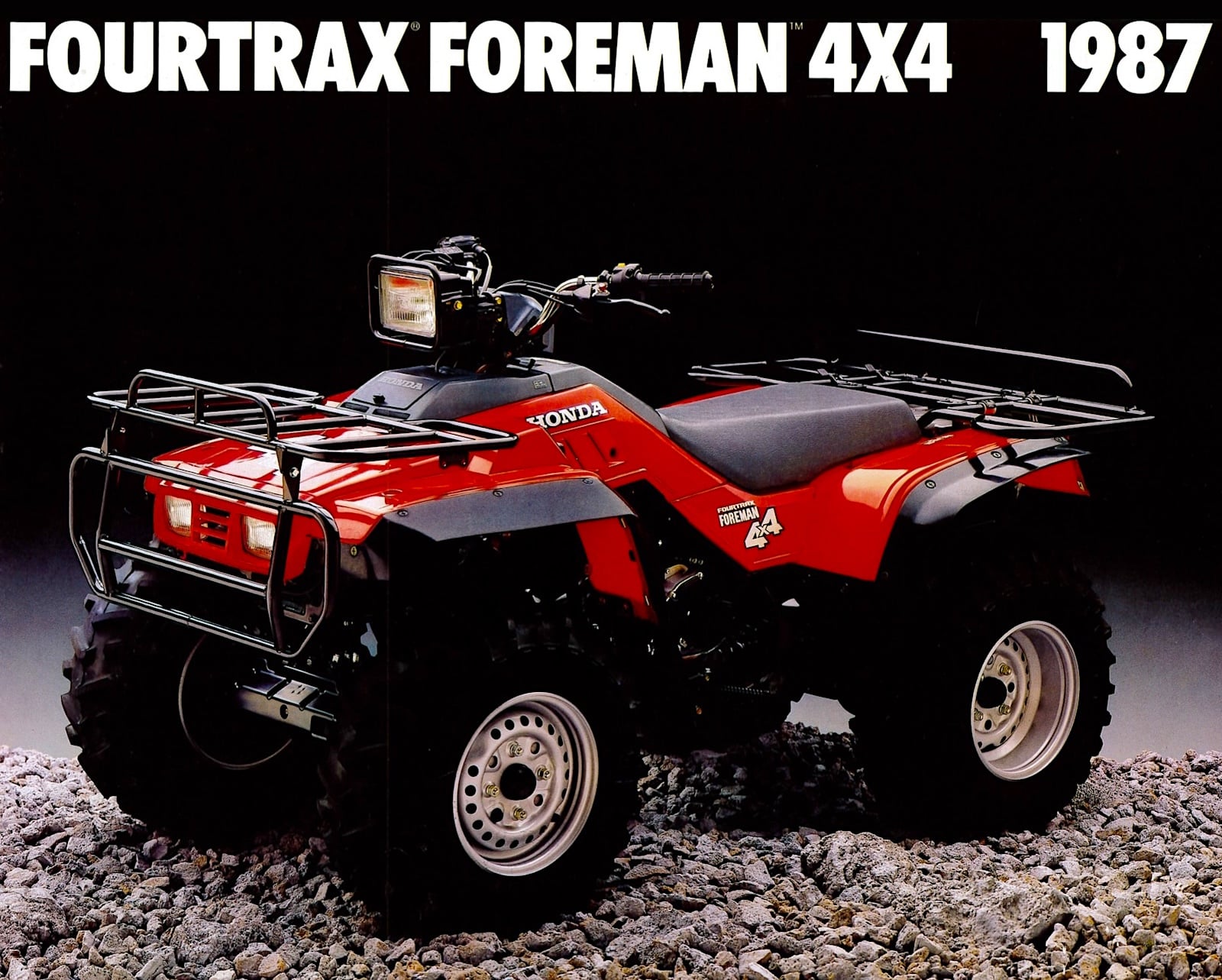
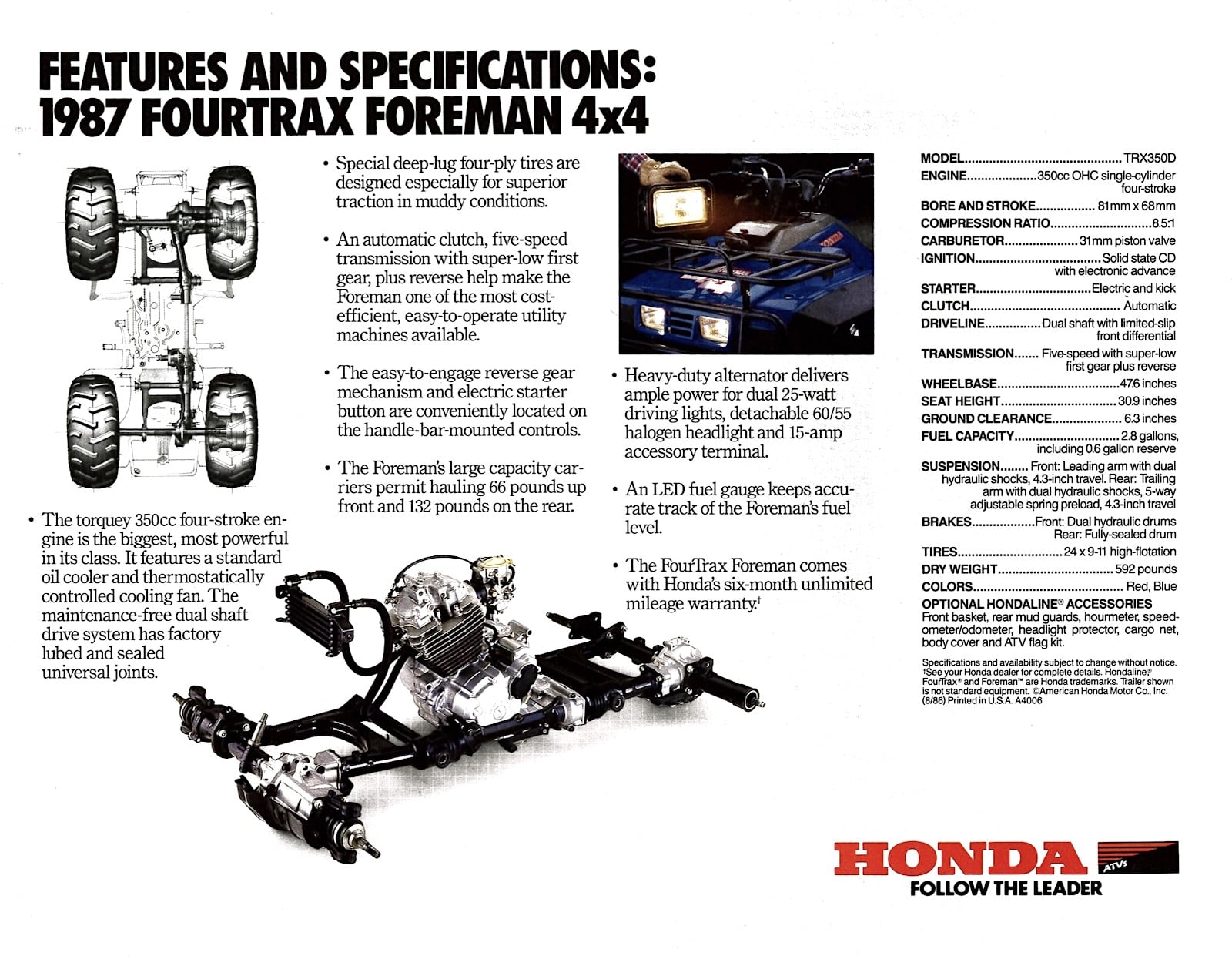
 The Honda FourTrax soon exploded into a model series with quad bikes for everything from farming and hunting, to racing and leisure use. Images courtesy of Honda.
Suzuki put its first four-wheeler on sale in 1982, the QuadRunner, a full two years before Honda had one of its own. Honda had been selling three-wheeled “ATCs” since the Honda US90 of 1970, and in 1982 it launched the Big Red, a three-wheeler with cargo racks that was built for farm work.
Honda’s internal engineering figures showed that an ATV uses about 8% of the fuel a tractor does. In the run-up to 1984 its engineers ran test machines for weeks at a time, with riders carrying 50 lb instrument packs, and all their research pointed to one key finding – a fourth wheel would make the agricultural vehicle more stable and allow it to carry more cargo.
The result was the Honda TRX200 quad bike of 1984. It had a single-cylinder four-stroke engine, a 5-speed transmission with a dual-range sub-transmission (a second, lower set of ratios), shaft drive, reverse, and cargo racks at both ends. Honda delivered 370,000 ATVs of all types in the United States that year, they owned 69% of the market, and they had no intention of losing their lead.
The TRX200 was later given the FourTrax name, probably as it sounded a little more catchy, but it still wasn’t quite as cool as the QuadRunner name that Suzuki had coined.
Four-Wheel Drive + The Honda 250R
The 1986 range included the FourTrax 4×4 (TRX350), which Honda described as the first four-wheel-drive ATV. Not to be outdone, Suzuki’s four-wheel-drive QuadRunner followed just a year later in 1987. At the launch of the FourTrax 4×4, one was lowered from a helicopter with all four wheels turning in unison.
The TRX350 was powered by a 350cc four-stroke single with a counter-balancer and a fan-assisted oil cooler. Drive went through a centrifugal automatic clutch and a 5-speed gearbox with reverse, and then by shaft drive to both ends. A limited-slip differential at the front let the front wheels turn at different speeds in a corner while limiting how far one could spin ahead of the other.
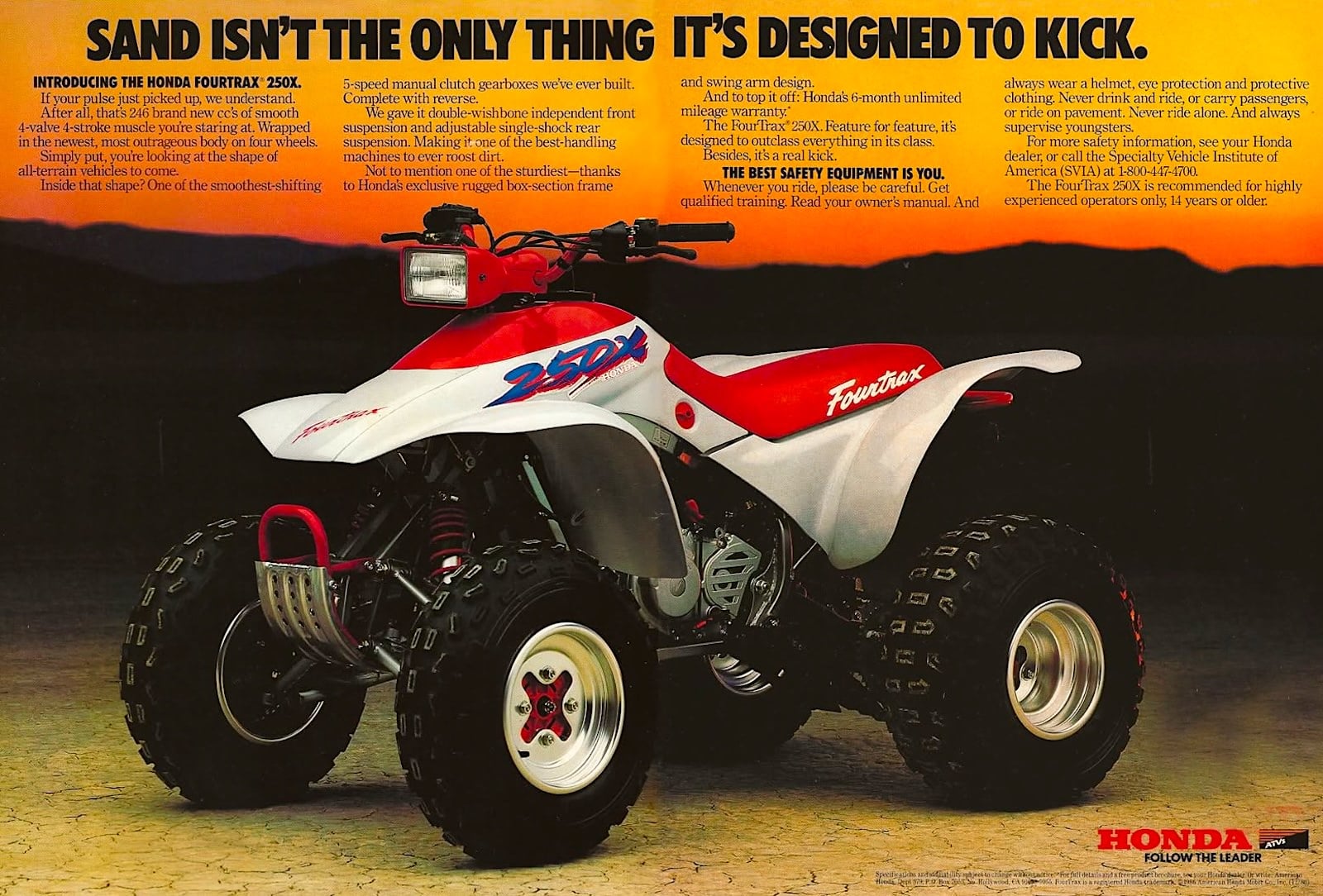
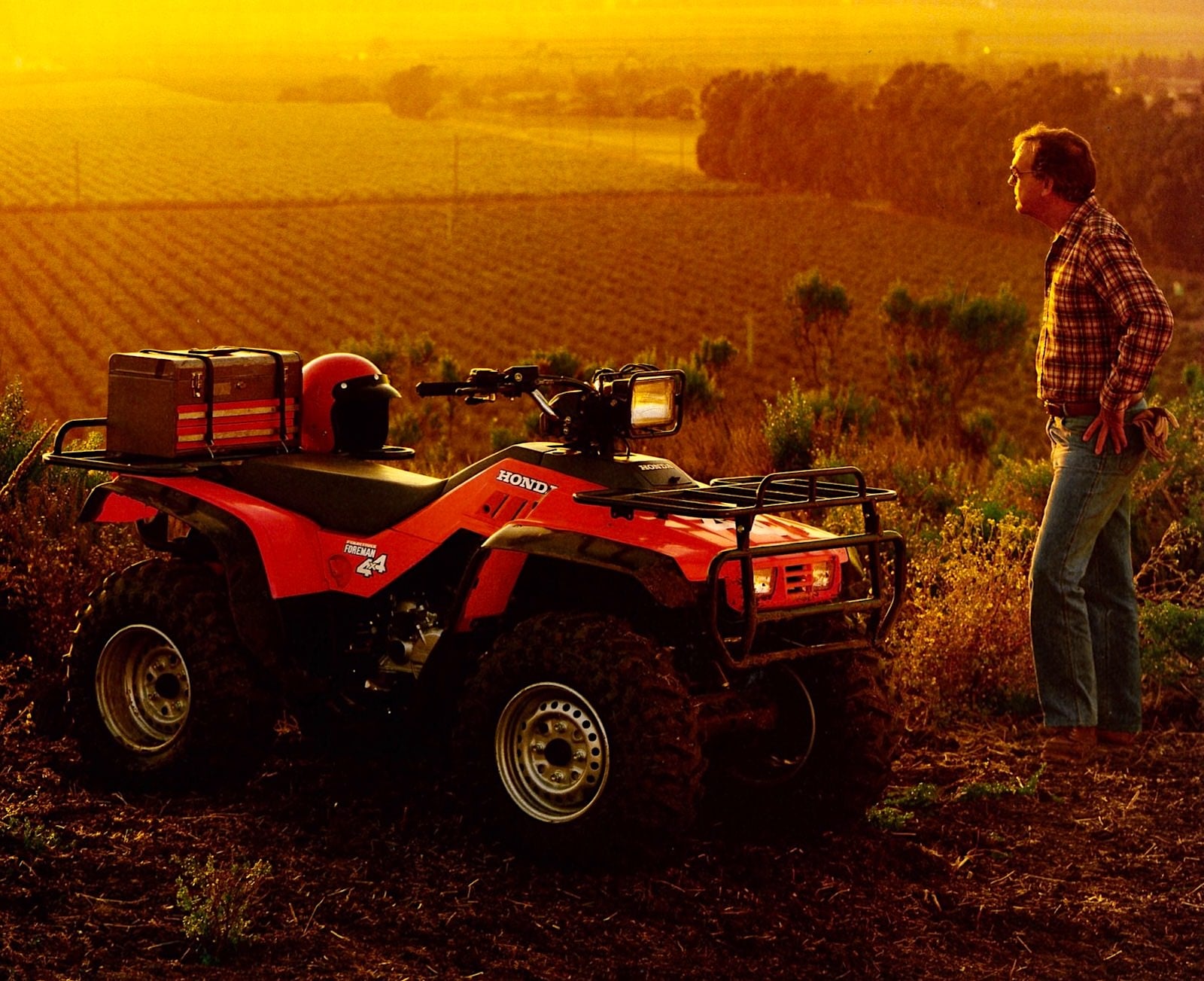
The 1986 Honda range included the FourTrax 4×4 (TRX350), which Honda described as the first four-wheel-drive ATV. Not to be outdone, Suzuki’s four-wheel-drive QuadRunner followed just a year later in 1987. At the launch of the FourTrax 4×4, one was lowered from a helicopter with all four wheels turning in unison. Images courtesy of Honda.
The front wheels were bolted to swing arms with shock absorbers, the rear axle on a swingarm. Brakes were drums at both ends, the fronts hydraulic, the rears by cable. For 1987 Honda added the FourTrax Foreman 4×4 (TRX350D), a 350cc model with cargo racks, a 310 watt alternator, and an 850 lb towing capacity.
The same 1986 range included the FourTrax 250R (TRX250R), Honda’s answer to Suzuki’s LT250R of 1985. It had a liquid-cooled 246cc two-stroke single similar to the one in the ATC250R three-wheeler, a 6-speed close-ratio gearbox, and chain drive.
The frame was steel, with double A-arms at the front and a single Pro-Link shock at the rear, and there were three disc brakes, two at the front and one at the rear. Honda built it for four model years, to 1989. It remained a common choice for racers until four-stroke sport quads arrived in 2003 and 2004. Honda described the FourTrax 400EX of 1999 as its first high-performance ATV in more than a decade.
Honda’s last three-wheelers were 1987 models. On April 28, 1988, a US federal court approved consent decrees under which the major distributors stopped selling new three-wheeled ATVs on safety grounds. Quads had proven to be safer, with fewer rollovers, and they soon became the de facto standard.
The Honda FourTrax 300
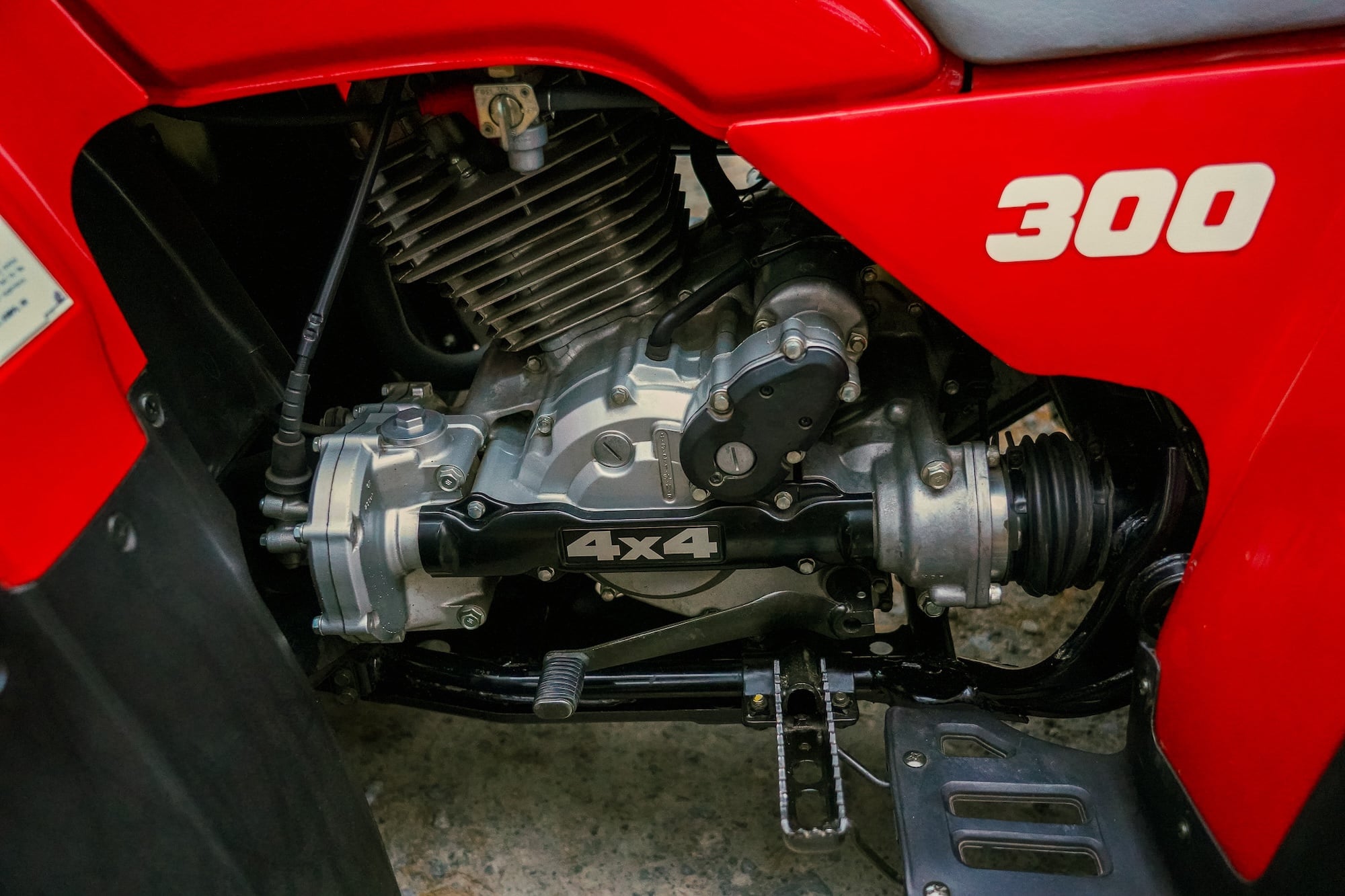
The FourTrax 300 (TRX300) and FourTrax 300 4×4 (TRX300FW) arrived for 1988. Both used a 282cc air-cooled four-stroke single making 20 bhp, with a 5-speed transmission, automatic clutch, and shaft drive. The two-wheel-drive model replaced the TRX250 and weighed 42 lbs less, with MacPherson strut front suspension. The 4×4 had double wishbones at the front and a limited-slip front diff.
An extra-low first gear helped the 300 tow up to 850 lbs, and its racks were rated for 66 lbs at the front and 132 lbs at the rear. The pair stayed in the range through the 2000 model year, and Honda put their combined sales at more than 530,000 units – they also call the 300 the best-selling ATV of all time.
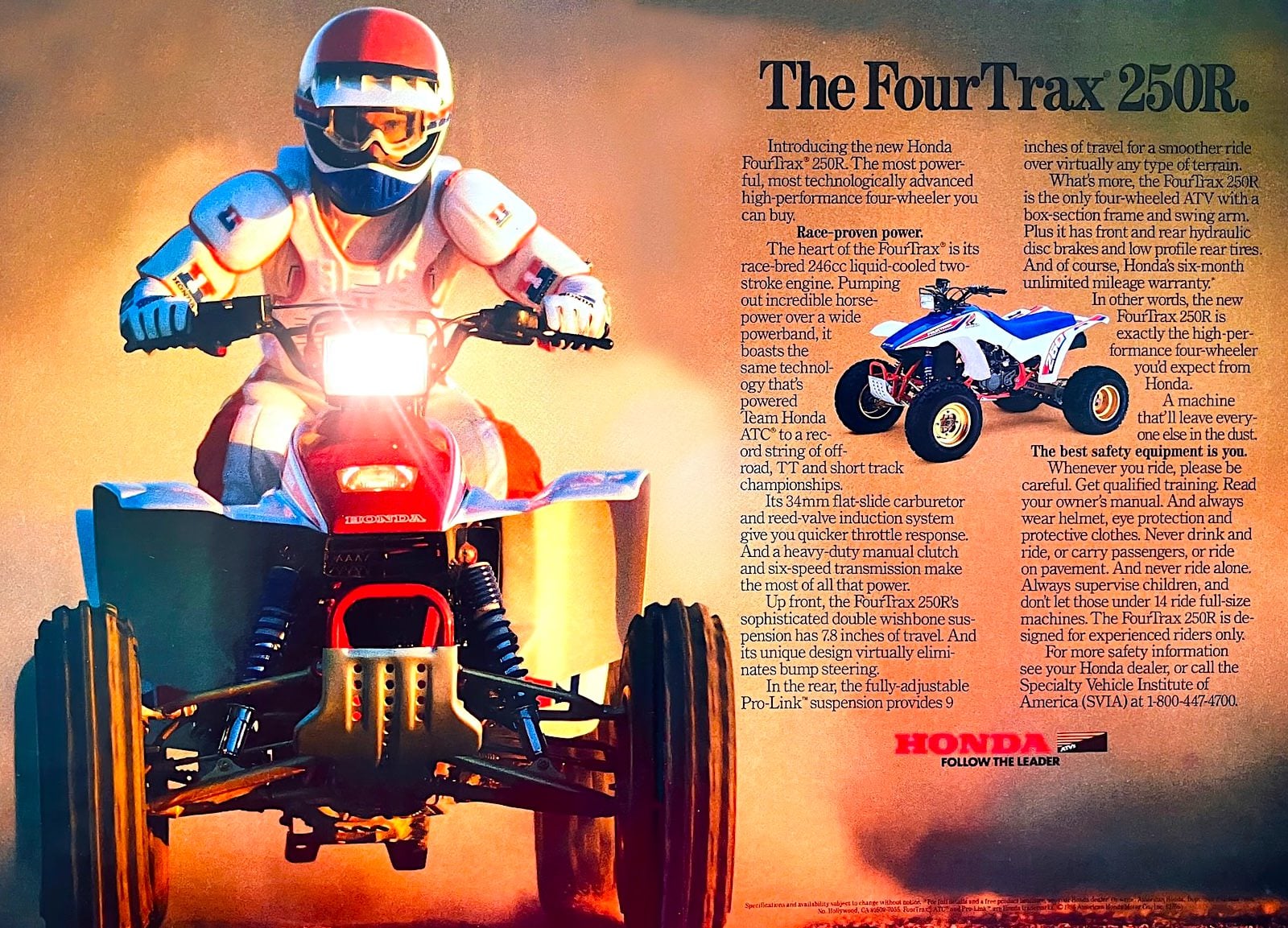
In 1986 Honda introduced the FourTrax TRX350, widely credited as the first production four-wheel-drive ATV. That same year, Honda launched the race-ready TRX250R, powered by a liquid-cooled two-stroke engine. Image courtesy of Honda.
Longitudinal Engines + Automatic Transmissions
The 1995 Honda Foreman 400 arrived with an unusual longitudinally mounted engine. Its 395cc single sat with the crankshaft running lengthwise, in line with the driveshafts, so power reached the wheels with fewer changes of direction to reduce power losses.
An overhead-valve design kept the engine short and helped to raise ground clearance, the layout then spread to the smaller Honda Recon in 1997, and to the Honda Rancher models that replaced the 300 for 2000.
The 1998 Honda Foreman ES added the Electric Shift Program, which shifted a conventional gearbox by push button. The Honda Rubicon, a 2001 model introduced in spring 2000, paired a liquid-cooled 500cc single with the Hondamatic, a hydraulic continuously variable transmission.
It used an engine-driven pump and a variable-capacity hydraulic motor, and Honda set it against the belt-drive automatics then in wide use. The 650cc Rincon of 2003 had independent suspension at both ends, and for 2006 its engine grew to 675cc and was given fuel injection for emissions and reliability purposes. Electric power steering followed a year later on the 2007 Foreman.
Honda still uses the FourTrax name for its multipurpose ATVs, with sport models sold as the TRX series. The 2027 range, announced in April of 2026, consists of the Recon, Rancher, Foreman 4×4, Foreman Rubicon, and Rubicon 700.
The 1991 Honda FourTrax TRX300FW Shown Here
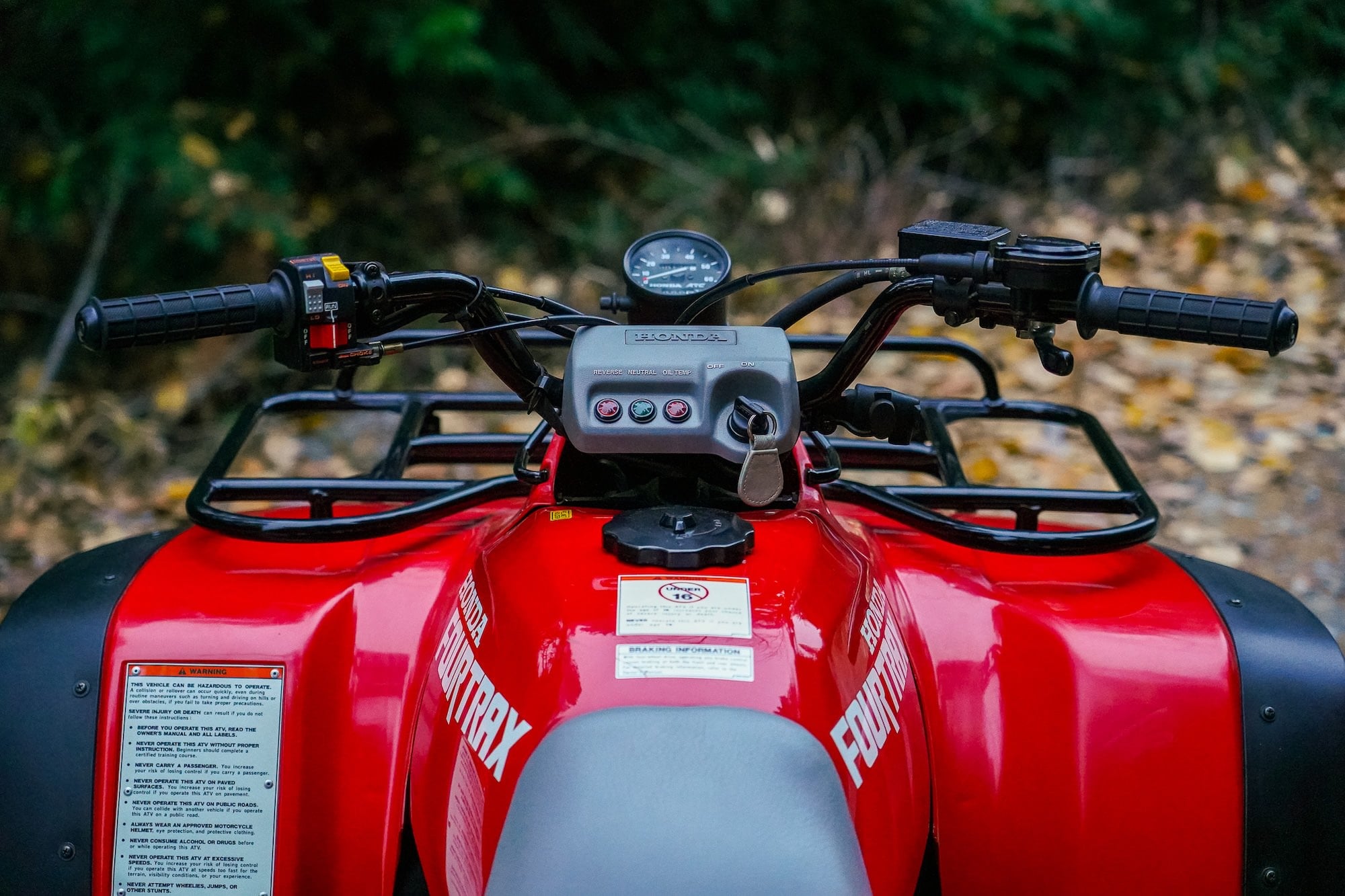
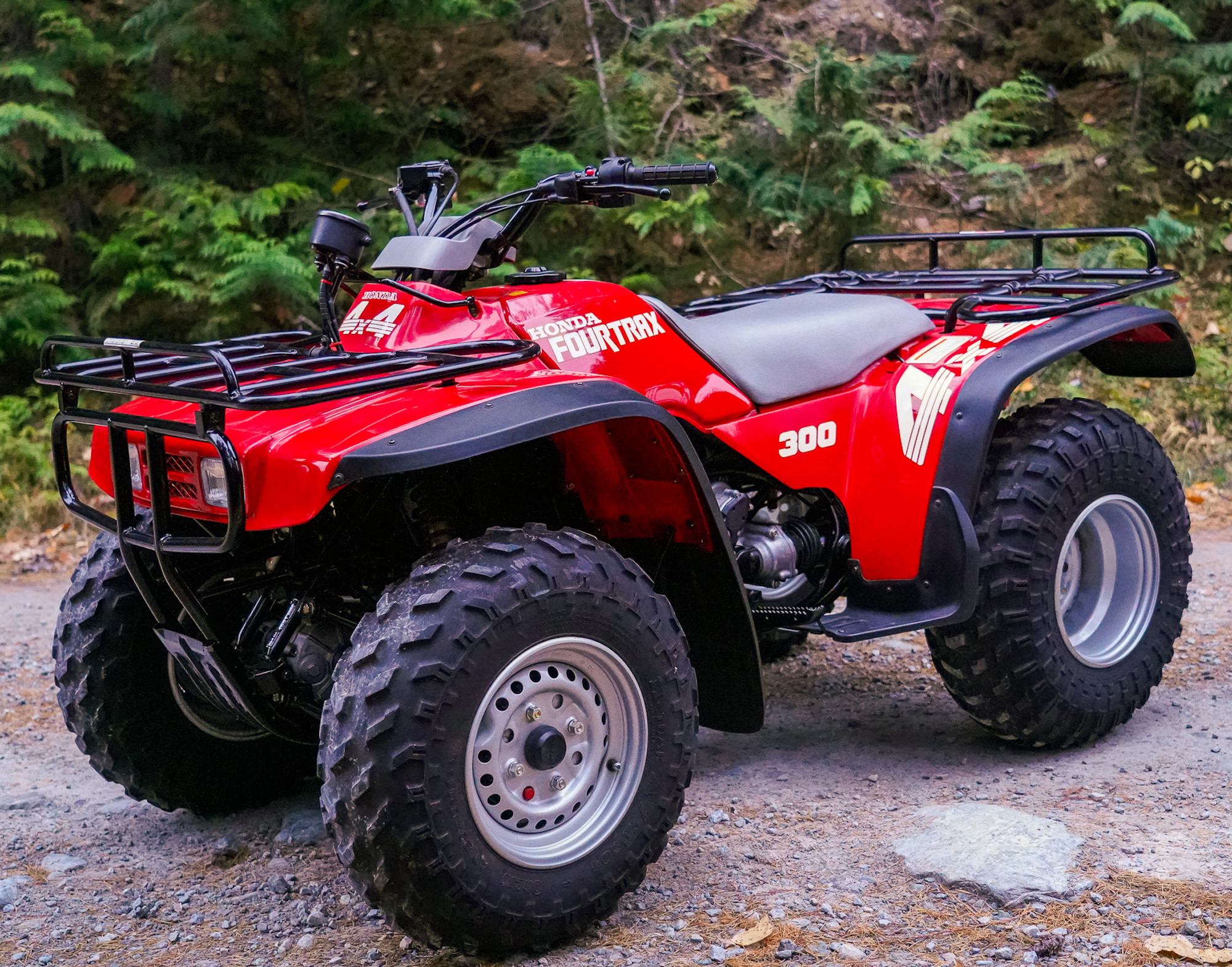
This is a 1991 Honda FourTrax TRX300FW that reportedly spent time in a private collection in Oregon before being bought by the current owner in 2026. It remains in its original-style red finish with white graphics over a black steel frame, and its five-digit odometer shows just 129 miles – as a result it remains in almost time warp condition throughout.
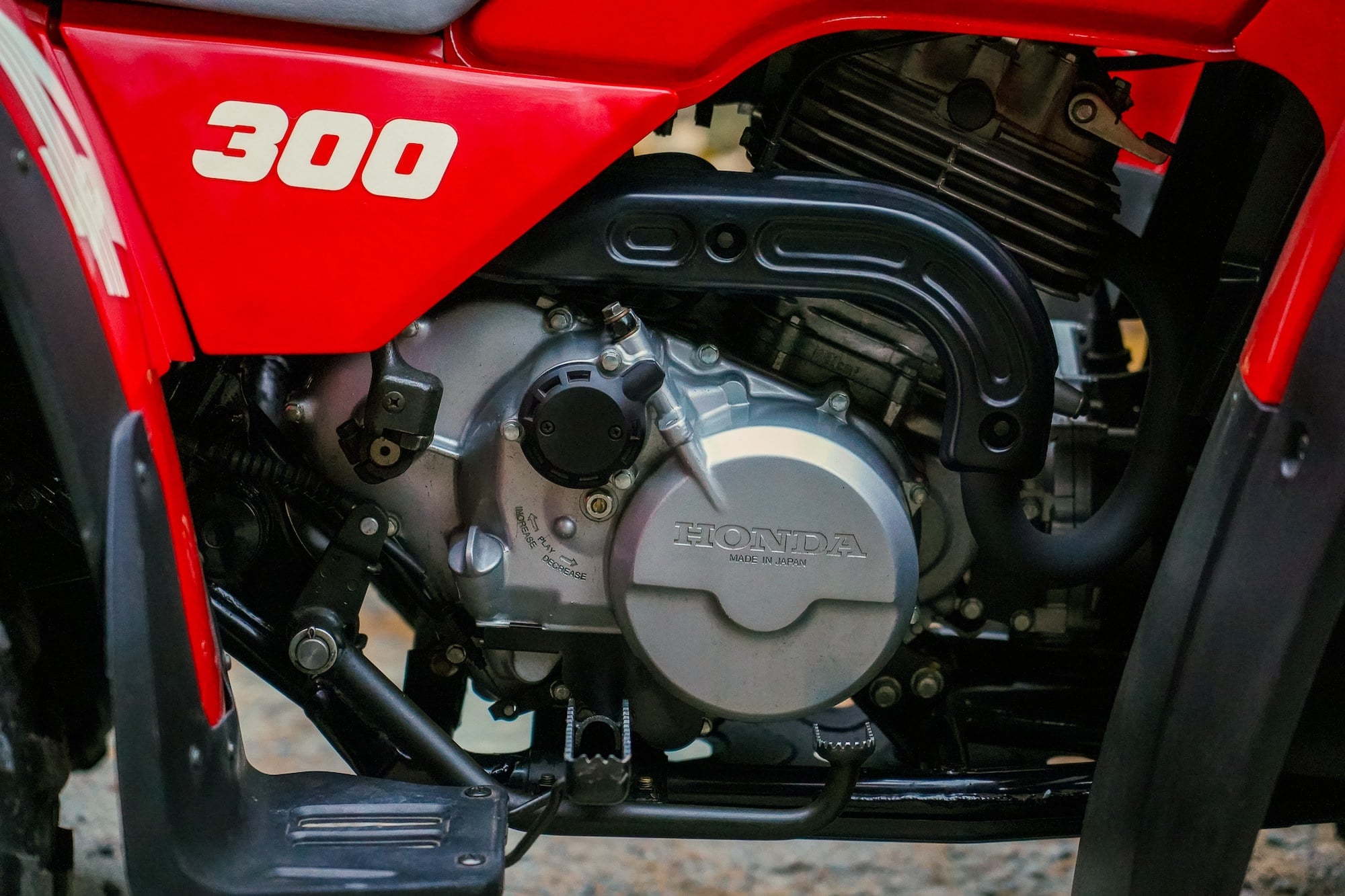
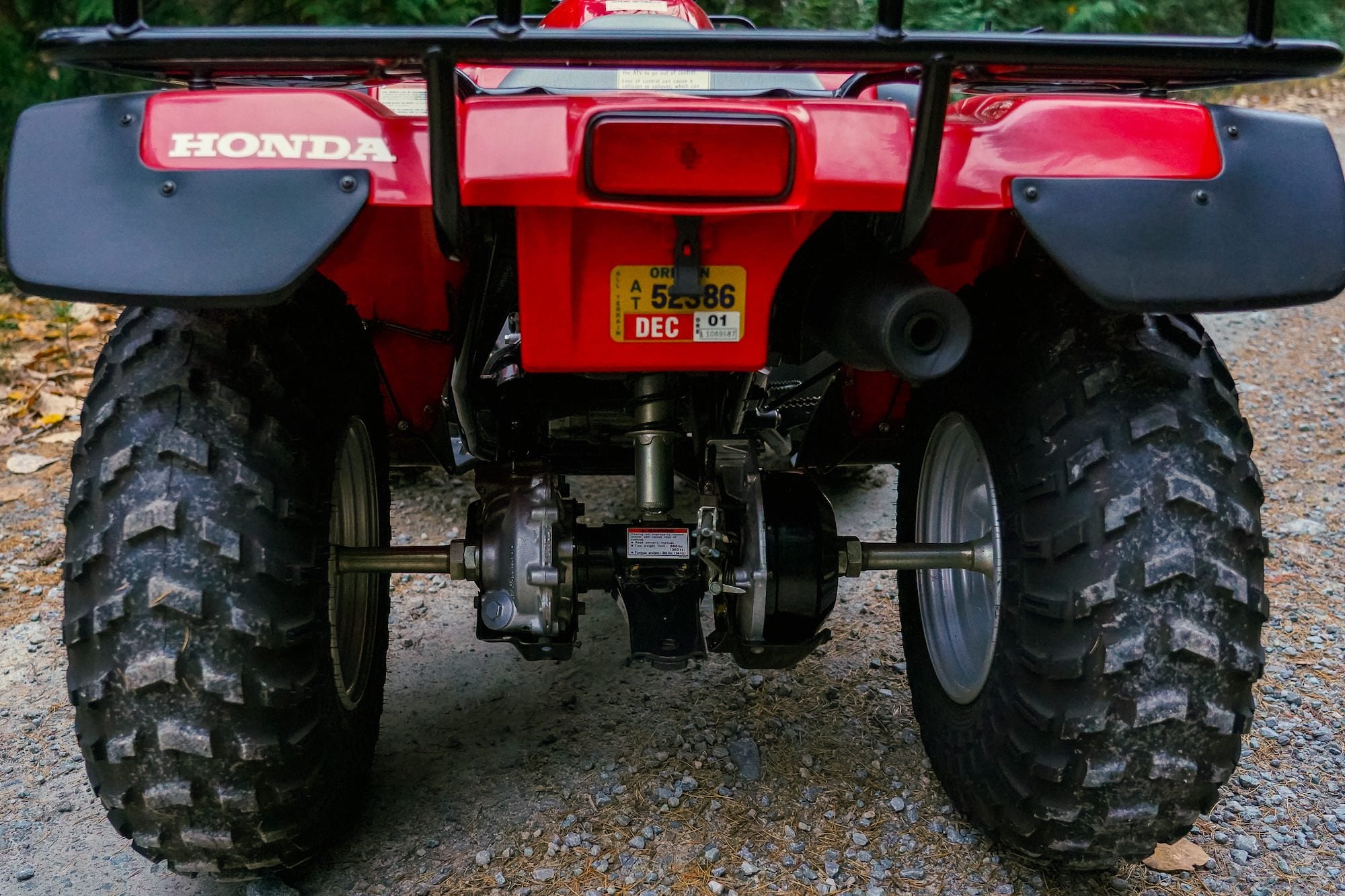
As you would expect, power comes from an air-cooled 282cc four-stroke single-cylinder engine, paired with an automatic clutch and a 5-speed transmission with reverse. The TRX300FW has full-time four-wheel drive, with power delivered through enclosed driveshafts.
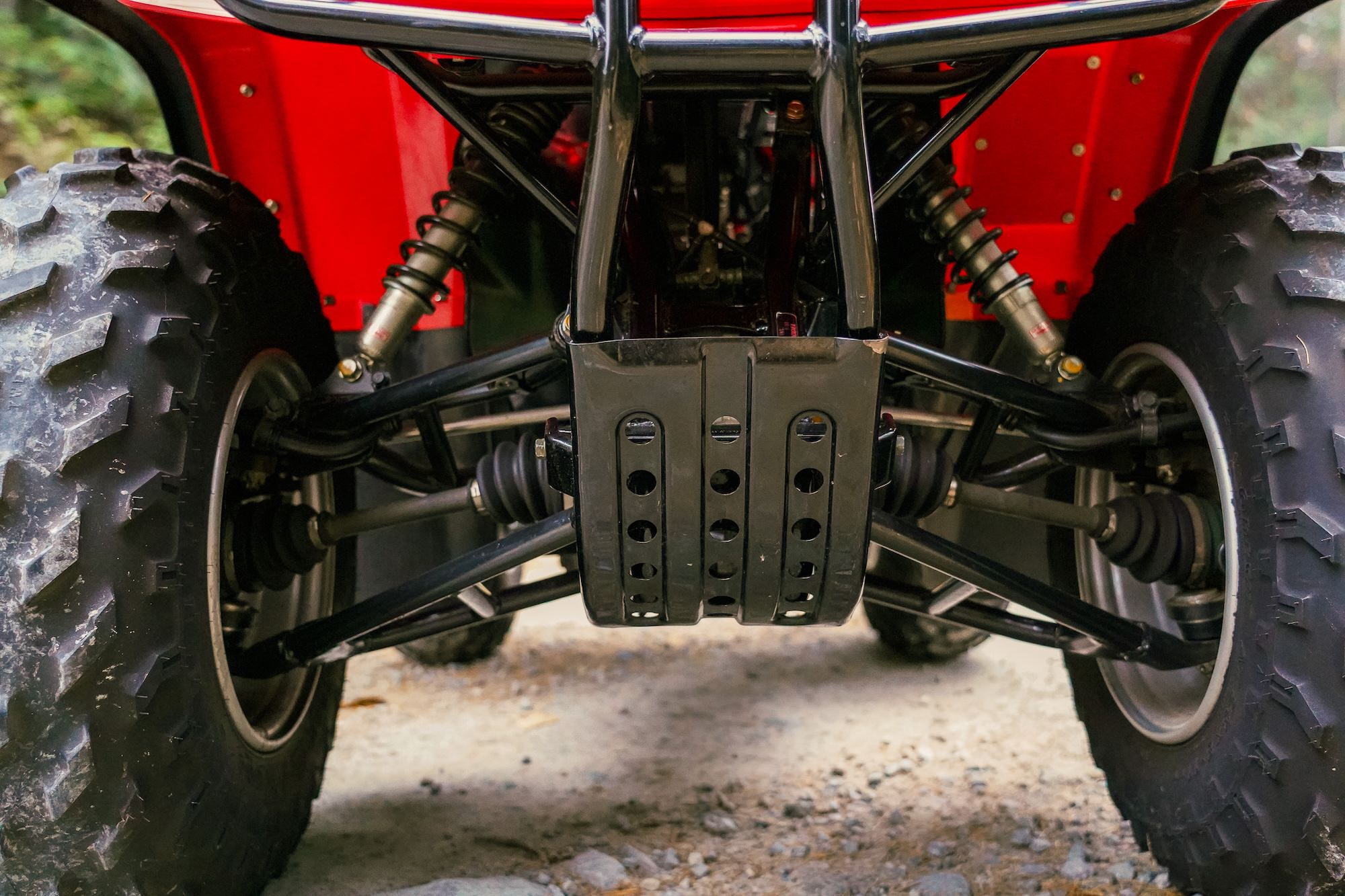
It also has an electronic ignition, an electric starter, a manual compression release, front independent suspension with twin A-arms and Showa shocks, a rear swingarm with a Showa monoshock, and drum brakes at both ends.
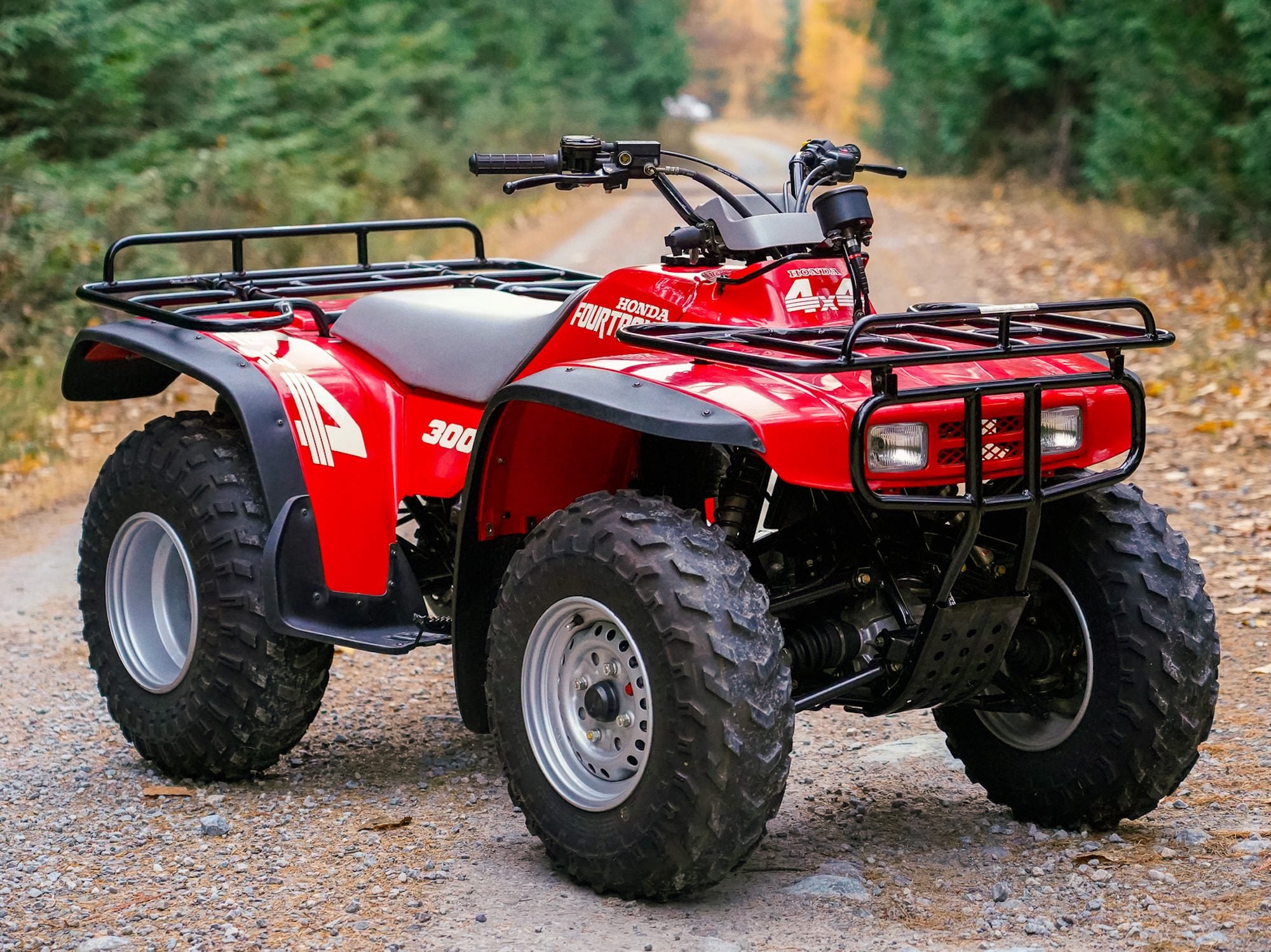
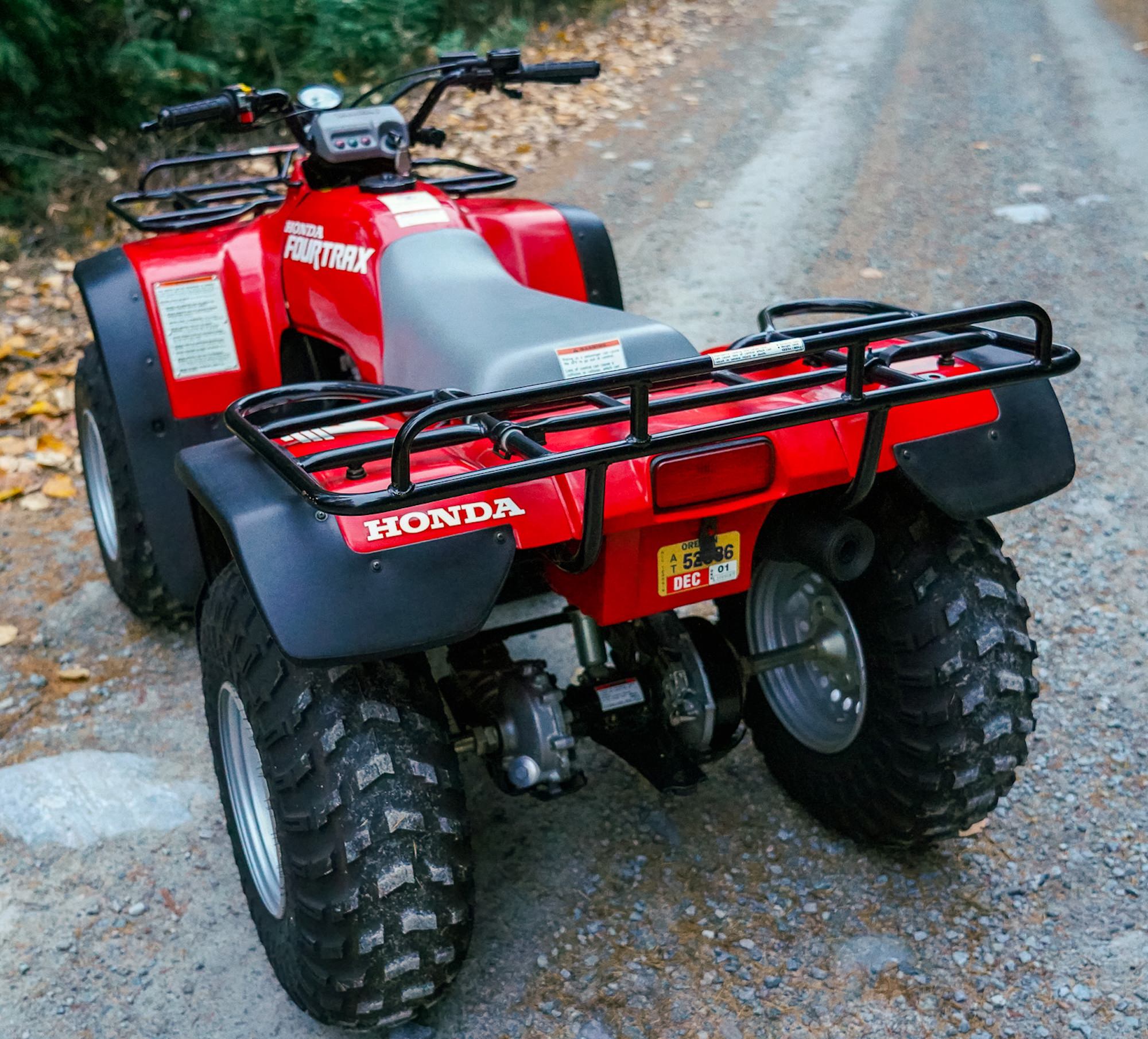
This is a 1991 Honda FourTrax TRX300FW that reportedly spent time in a private collection in Oregon before being bought by the current owner in 2026. It remains in its original-style red finish with white graphics over a black steel frame, and its five-digit odometer shows just 129 miles – as a result it remains in almost time warp condition throughout.
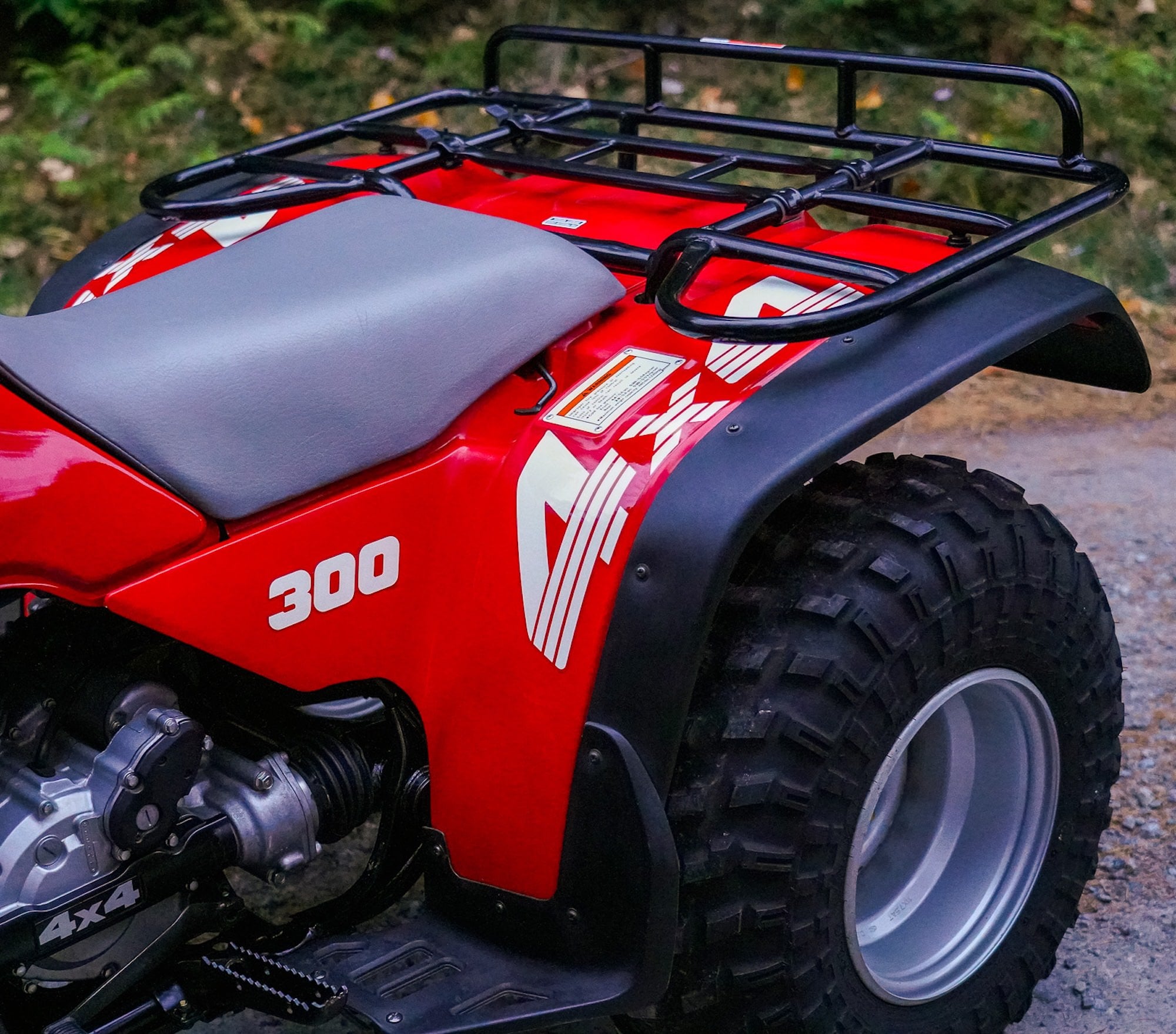
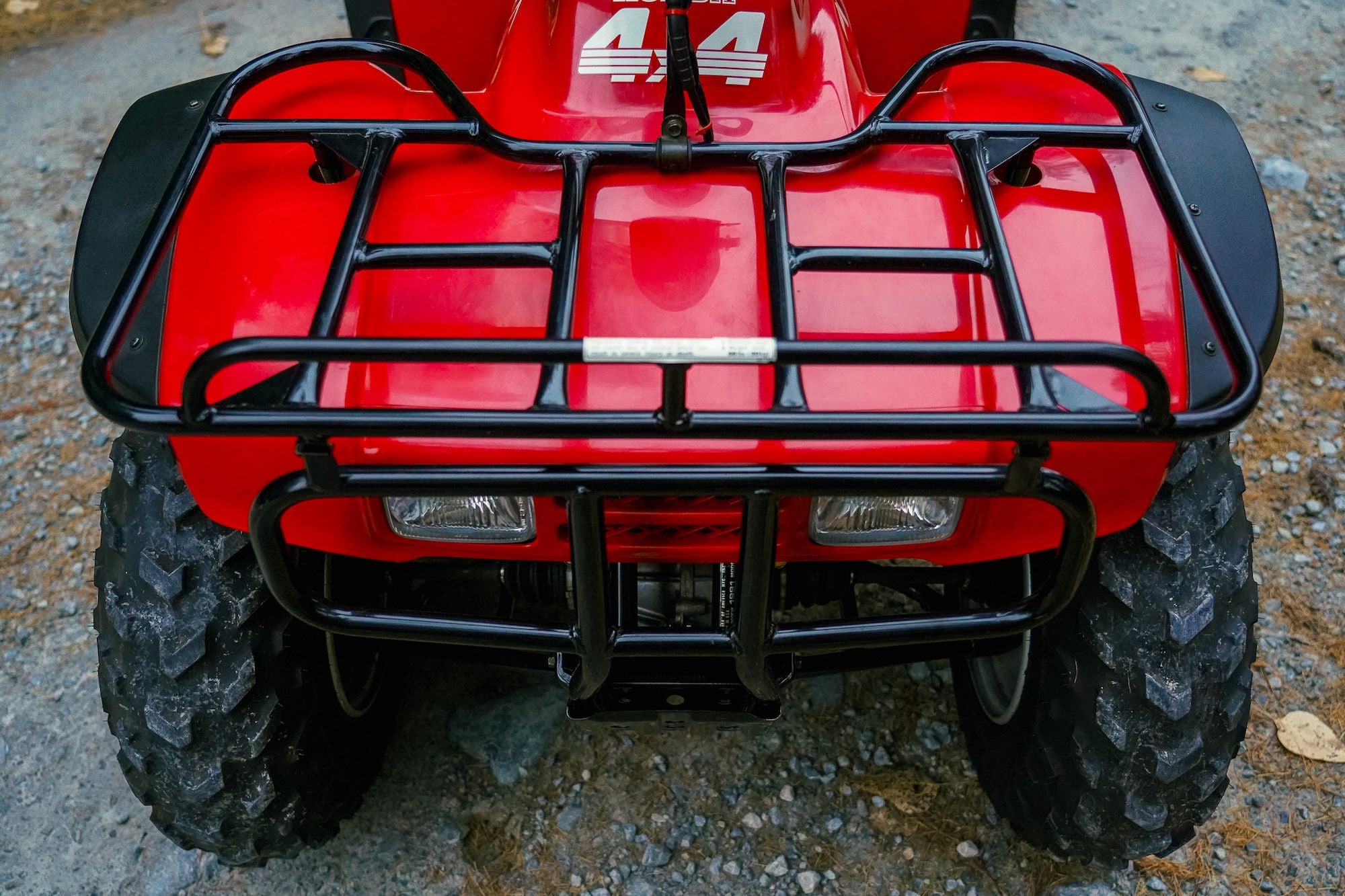
It’s fitted with front and rear cargo racks, a grey vinyl solo seat, a four-gallon fuel tank, trail lighting, a high-mounted exhaust, a toolbox, skid plates, mudflaps, and 11 inch steel wheels fitted with Ohtsu tires. Its Nippon Seiki speedometer has both a trip meter and odometer.
It’s now being offered for sale at no reserve out of McAllister, Montana with its owner’s manual, service manual, original-style tool kit, removable windshield, and a Montana title in the seller’s name. If you’d like to read more or register to bid, you can visit the listing here.
Images courtesy of Bring a Trailer + Honda

Articles that Ben Branch has written have been covered on CNN, Popular Mechanics, Smithsonian Magazine, Road & Track Magazine, the official Pinterest blog, the official eBay Motors blog, BuzzFeed, Autoweek Magazine, Wired Magazine, Autoblog, Gear Patrol, Jalopnik, The Verge, and many more.
Silodrome was founded by Ben back in 2010, in the years since the site has grown to become a world leader in the alternative and vintage motoring sector, with well over a million monthly readers from around the world and many hundreds of thousands of followers on social media.