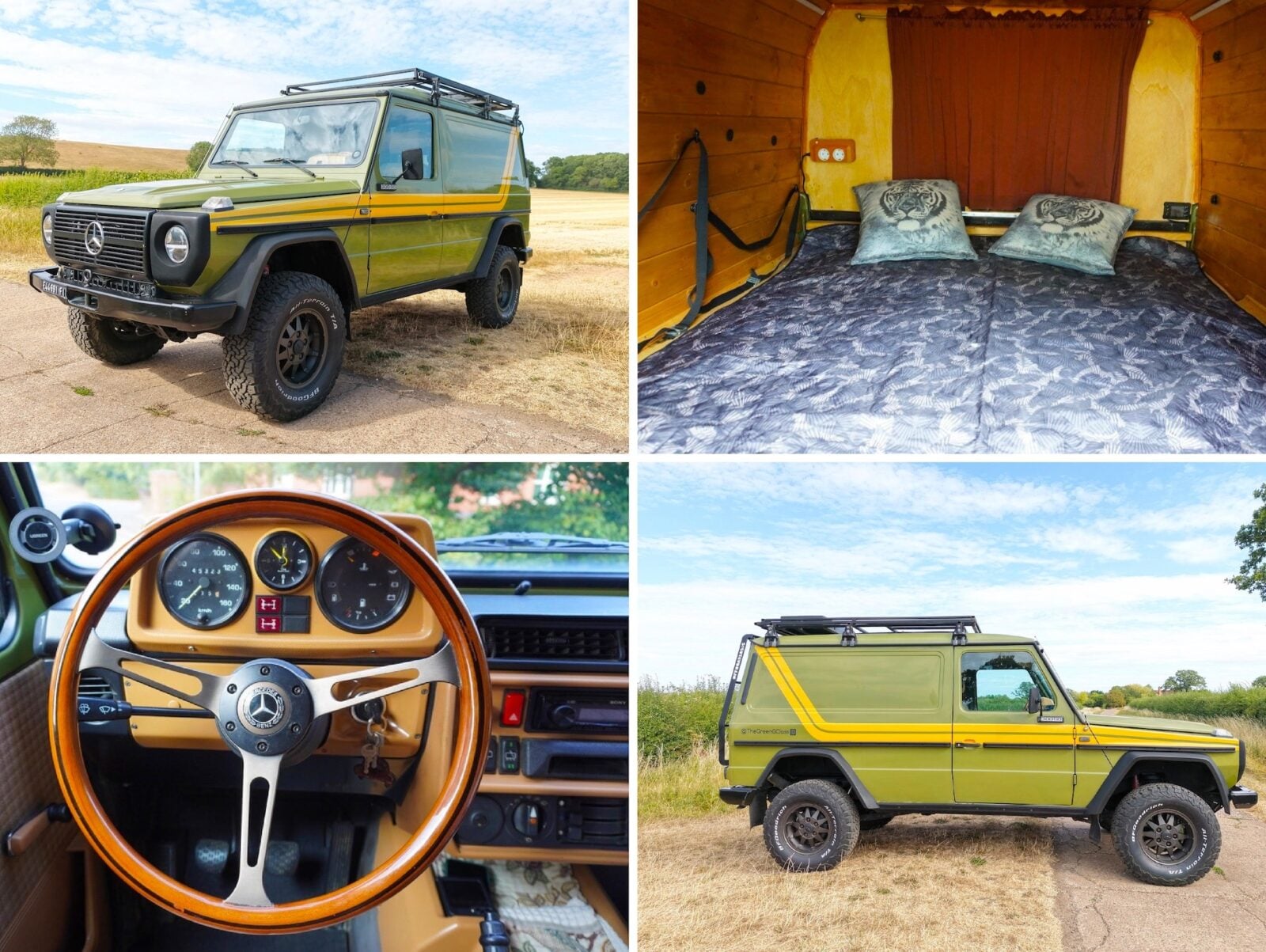
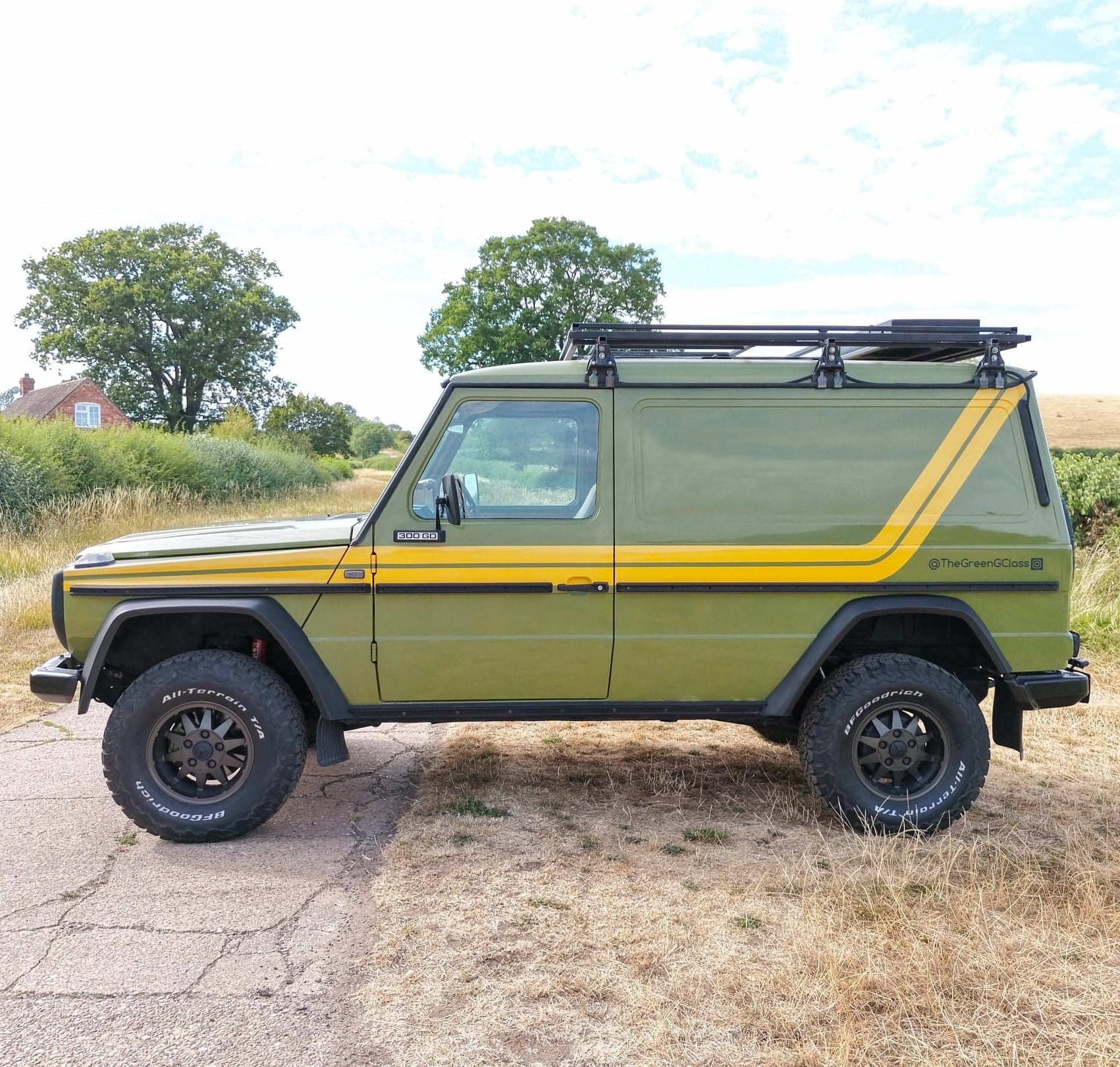
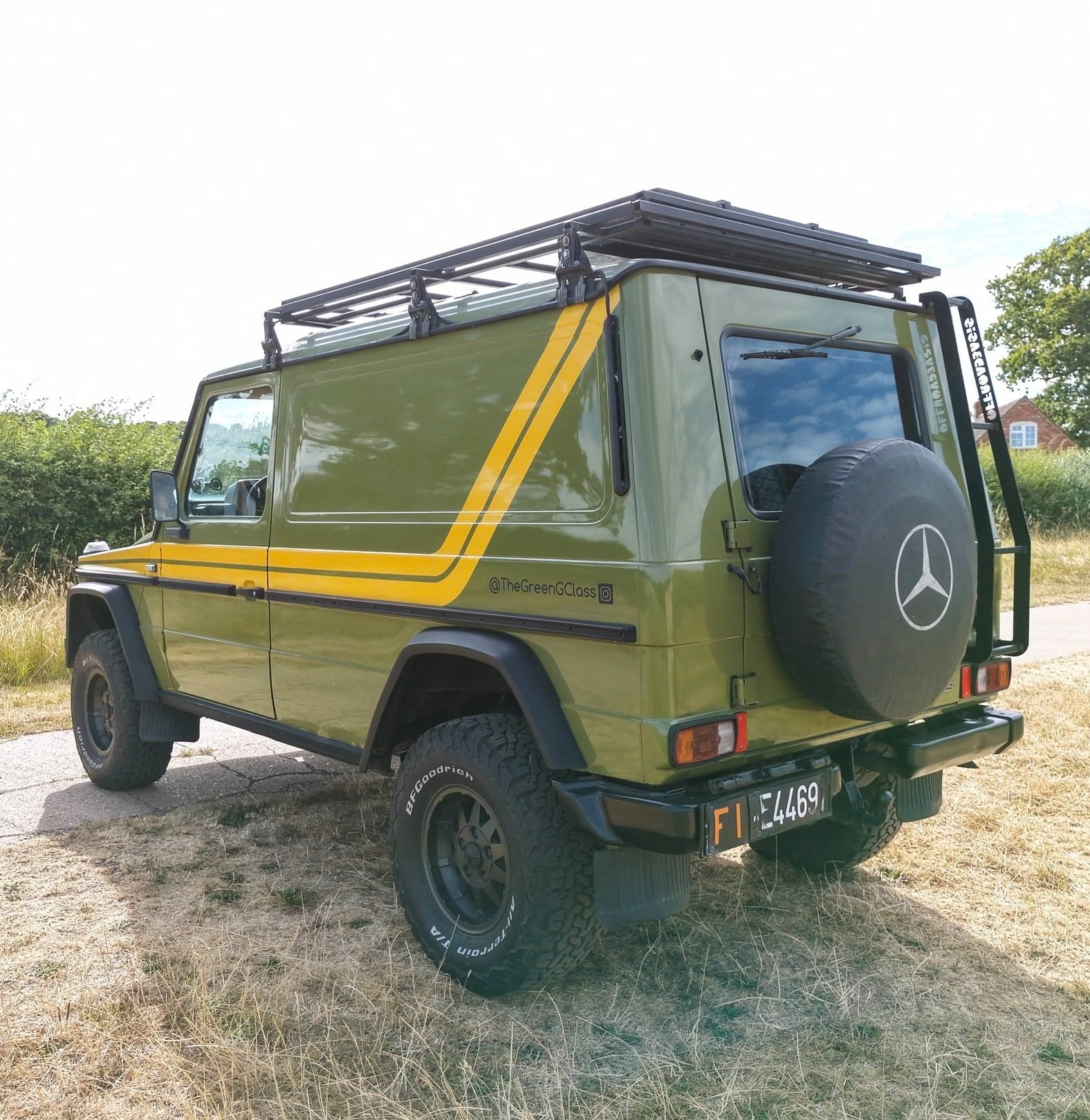
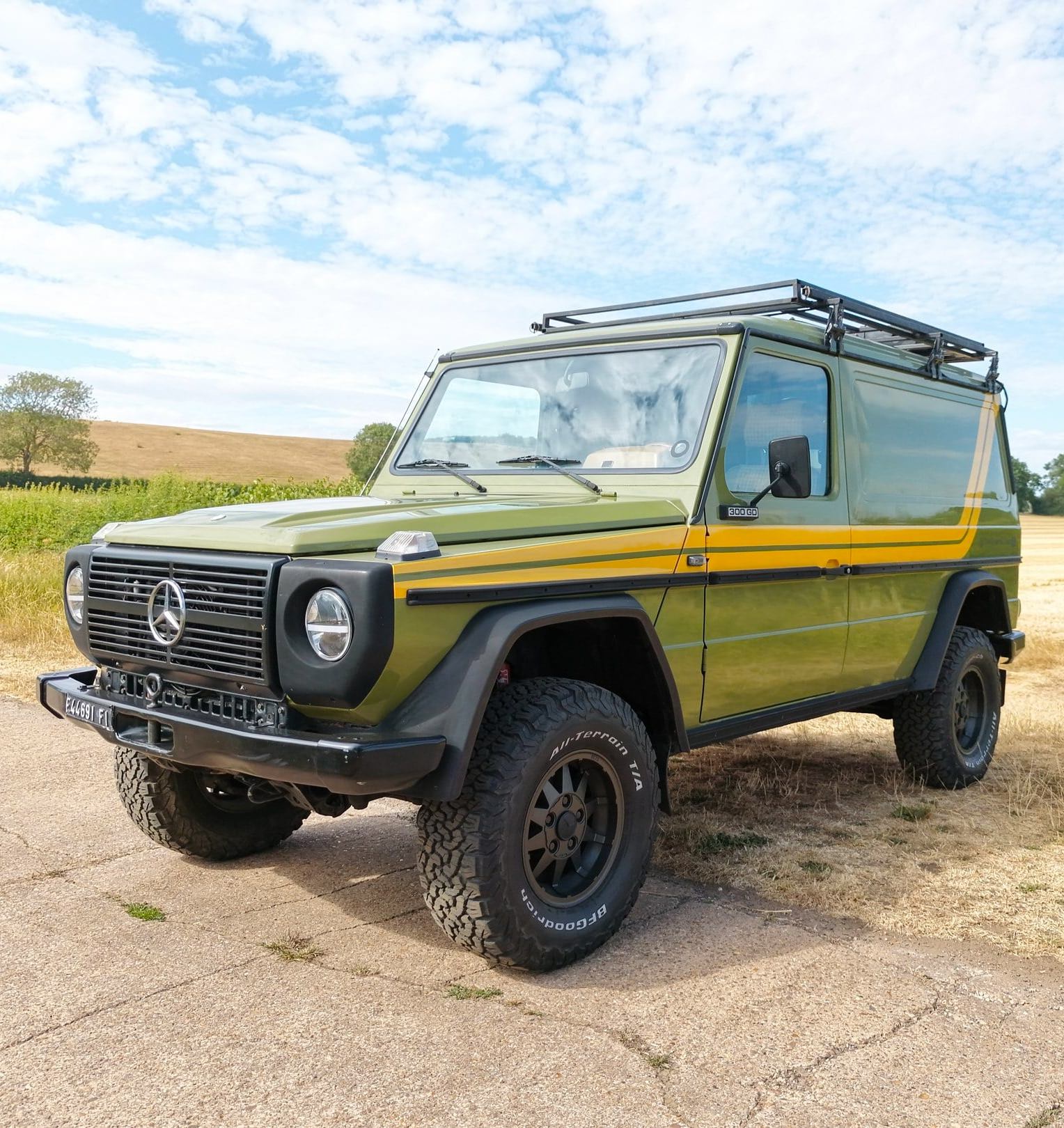
This is a 1984 Mercedes-Benz G-Wagon that benefits from a slew of upgrades and modifications, it’s been turned into an overland camper for off-road (and on-road) adventures, and it’s now powered by a more powerful five-cylinder turbo diesel engine (OM617).
G-Wagons are widely known as luxury vehicles nowadays of course, but it wasn’t always like this. The model series started life as a Mercedes project to develop a utilitarian off-road vehicle for military use – the celebrity, billionaire, rapper, and NBA player owners didn’t come until decades later.
Fast Facts: A Mercedes G-Wagon Overland Camper
- This 1984 Mercedes-Benz 300GD has been transformed from a utilitarian W460 G-Wagon into an overland camper. The vehicle remained in the same family for decades, with the current owner’s grandfather storing it indoors and using it sparingly before a later three-year renovation and conversion project.
- The original naturally aspirated diesel was replaced with a 2,995 cc OM617 5-cylinder turbo diesel, while keeping the existing manual transmission. Mechanical work included piston rings, head gasket, oil cooler, intercooler, injection-pump servicing and a new starter, while air conditioning was also added. The original engine accompanies the sale.
- Further work included raised suspension, wheel spacers, refreshed brakes, cooling-system repairs, new tires, and attention to the transmission, fuel system and exhaust. Almost €30,000 in documented work was completed with assistance from Penta Garage in Italy.
- The wood-lined camper interior includes storage benches, an adjustable table, refrigerator, auxiliary battery, solar system, diesel heater, 48 liter water tank, shower equipment, inverter and extra lighting. A roof rack and rear ladder complete the setup. Around 80% of the conversion is reportedly reversible, with many original parts kept on hand.
History Speedrun: The Mercedes-Benz G-Wagon
Mercedes-Benz first showed the G-Wagon to the press in Toulon, in the south of France, in February of 1979, and series production began in Graz, Austria, later that same month. In April of 2023 the 500,000th G-Wagon (now named the G-Class) left the same Graz plant, and in 2024 Mercedes-Benz estimated that 80% of all the G-Wagons it’s ever built were still in use somewhere in the world.
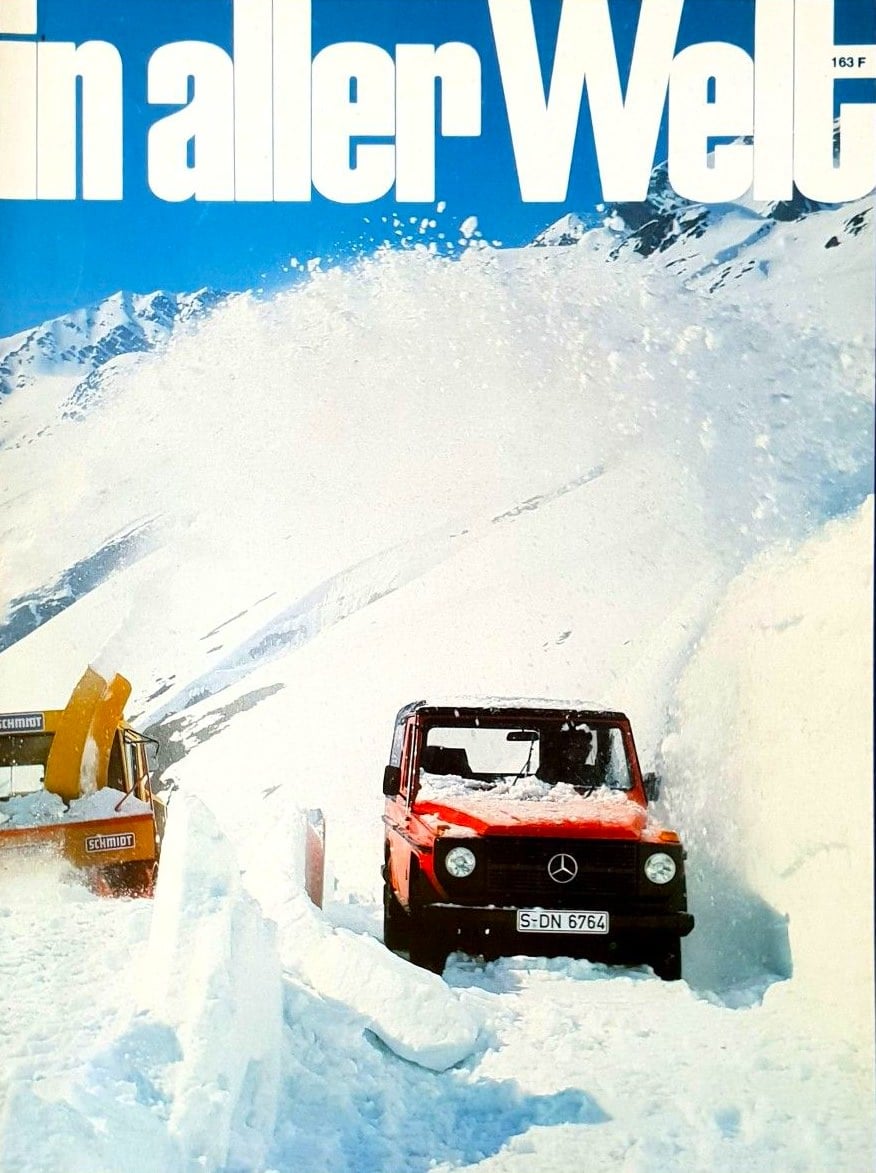
 G-Wagons are widely known as luxury vehicles nowadays, but it wasn’t always like this. The G-Class started life as a Mercedes project to develop a utilitarian off-road vehicle for military use, the celebrity, billionaire, rapper, and NBA player owners didn’t come until decades later. Image courtesy of Mercedes-Benz.
A Joint Venture Between Two Giants
The G-Wagon began as a conversation about cooperation, in the summer of 1969 Daimler-Benz opened talks with Steyr-Daimler-Puch, an Austrian group that built trucks, buses, and the Fiat-bodied Puch 500 minicar alongside its own series of highly-regarded off-roaders.
Each company already built a serious off-roader – Mercedes had the Unimog of course, Puch built the Haflinger and was developing the then-new Pinzgauer. In 1971 the three were run against one another on the Mercedes test track at Gaggenau, where the Puch machines performed well, and the idea of a joint vehicle took on a more concrete form – it was to be a vehicle with excellent off-road ability that could also be driven comfortably on the road.
This latter ability was something that the Unimog, Haflinger, and Pinzgauer really weren’t very well suited to.
In 1972 the two chief executives, Joachim Zahn and Karl Rabus, agreed to develop it together. Erich Ledwinka, chief engineer at Steyr-Daimler-Puch and son of Tatra’s legendary Hans Ledwinka, led the engineering side of things, the shape came from the Mercedes-Benz design department under Bruno Sacco. A wooden model was complete by April 1973 and a running prototype was being tested by 1974.
The origin story that circulates most widely, repeated by almost everyone, credits Mohammad Reza Pahlavi, the Shah of Iran, with the idea to create the vehicle that would become the G-Wagon. In these historic accounts he was a major Daimler-Benz shareholder who asked for a military 4×4 and ordered 20,000 of them for his army.
The Shah ultimately fled Iran in January of 1979, and unsurprisingly, the order went with him. Mercedes’ own history of the project opens with the 1969 talks and doesn’t mention Iran. The company has always described the G-Wagon as intended for military, commercial, government, and private buyers – but it doesn’t mention the Shah.
This may simply be because they don’t want their flagship luxury four-wheeler associated with the sordid history surrounding the 1979 Iranian Revolution, or it may also be that the Shah’s involvement has been a little overstated in the intervening decades.
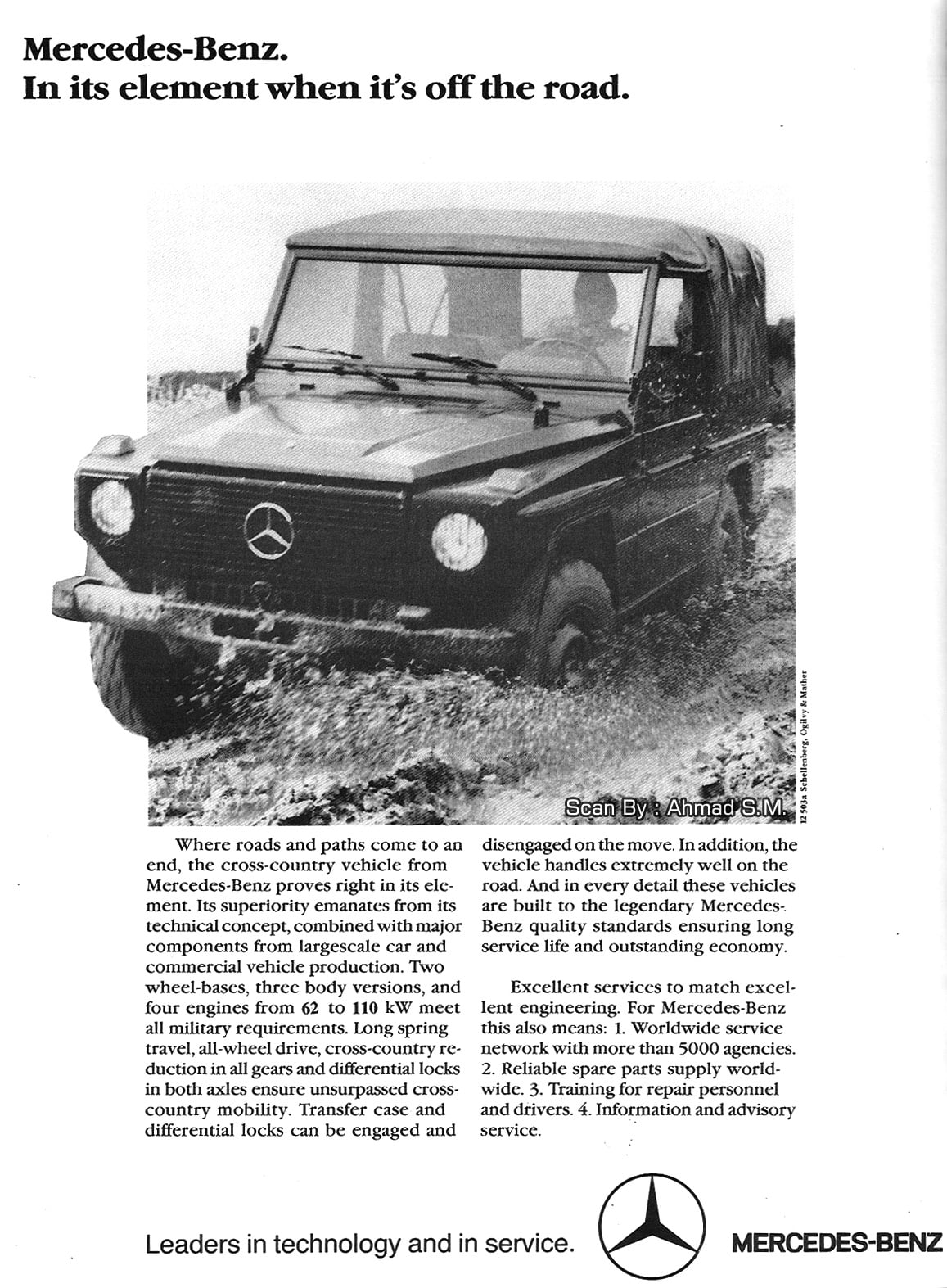
To build the G-Wagon a new joint company, named Geländefahrzeug Gesellschaft, was formed in 1977 to build the vehicle at Puch’s Graz-Thondorf factory. Mercedes shipped engines, axles, transmissions, and the larger pressings from Germany, and the workers in Graz did the rest by hand. Image courtesy of Mercedes-Benz.
To build the G-Wagon a new joint company, named Geländefahrzeug Gesellschaft, was formed in 1977 to build the vehicle at Puch’s Graz-Thondorf factory. Mercedes shipped engines, axles, transmissions, and the larger pressings from Germany, and the workers in Graz did the rest by hand. In Austria, Switzerland, and parts of Eastern Europe the G-Wagon was fitted with a Puch badge. Daimler-Benz sold its half of the joint company to its partner in 1981, and Steyr-Daimler-Puch, now Magna Steyr, has built every G-Wagon on contract for Mercedes ever since.
The 460 G-Wagon
The initial launch range, coded 460, had four engine options and five bodies on two wheelbase lengths – an open short-wheelbase car, and station wagon and panel-van versions on both chassis. The engines were existing Mercedes passenger-car units, from a 2.4 liter four-cylinder diesel producing just 71 bhp in the 240 GD, up to the fuel-injected 2.8 liter petrol six-cylinder of the 280 GE with a much more reasonable 154 bhp.
The 460 used body-on-frame construction with coil-sprung live axles at both ends and part-time four-wheel drive with a dual-range transfer case. The development cars covered 2,000 kms (1,240 miles) on the Schöckl, the 1,445 meter (4,741 ft) mountain outside Graz, on a test route with gradients of up to 60%. Almost 52,000 civilian 460s were built by 1992, over 20,000 of them were 300 GD diesels.
The Wolf, The P4, + A Six-Wheeler For Australia
The Bundeswehr (the unified armed forces of Germany) ran a tender for a light off-roader in the 1970s and chose Volkswagen’s Iltis over the G-Wagon. As a result, the first uniformed customers were the German riot police and Federal Border Guard in 1980, and the Swiss Army, whose tender the 230 GE won in 1982.
Peugeot licensed the design for use in France, it was named the P4 and it was presented at Satory in 1981. The P4 was a G-Wagon with Peugeot engines and transmissions, assembled at Sochaux and later by Panhard – the French army ended up with 13,500 of them.
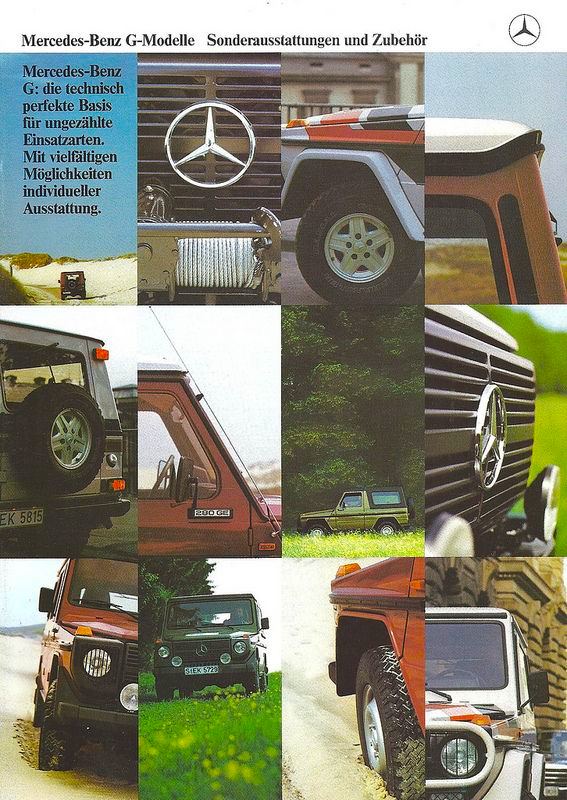
The initial launch range, coded 460, had four engine options and five bodies on two wheelbase lengths – an open short-wheelbase car, and station wagon and panel-van versions on both chassis. Image courtesy of Mercedes-Benz.
The Bundeswehr came around to the idea of the G-Wagon in the early 1990s, ordering 12,500 of the 461 series, the utility-focused model line that was introduced in 1992, and calling it the “Wolf.” The 461 came as a station wagon, panel van, pickup, or cab-chassis, and it stayed in production until 2021, when a 464 series replaced it.
Its last major addition to the line was a 6×6 developed for Australia’s Land 121 tender and added to the 461 range in 2010 – the Australian Army had ordered 2,146 G-Wagons in 4×4 and 6×6 form by 2016, replacing two-thirds of its earlier Land Rover Perentie fleet.
The 463 Series + The Turn Toward Luxury
At the Frankfurt Auto Show in September of 1989, after 75,000 vehicles had been built and sold, Mercedes presented the new 463 series. It had permanent four-wheel drive, three differential locks worked by buttons on the dash, switchable ABS, a body-colored front end, a more car-derived interior, and no panel van version.
The 500 GE of 1993 put a 5.0 liter V8 with 237 bhp into fewer than 450 cars, and in September that year the range was formally renamed the G-Class. No one knew it at the time, but the 500 GE was going to be the model that would map out the entire future of the model series.
The G 500 made the V8 a regular model in 1998 with 292 bhp. AMG versions followed from 1999 onwards, a supercharged G55 with 469 bhp appeared in 2004, and in 2012 the G65 AMG, whose 6.0 liter V12 produced 738 lb ft and which Mercedes called the most powerful series-production off-roader in the world.
A number of other high end G-Wagons would be built, many in very limited quantities and some riding on six-wheel drive chassis, or even up on portal axles.
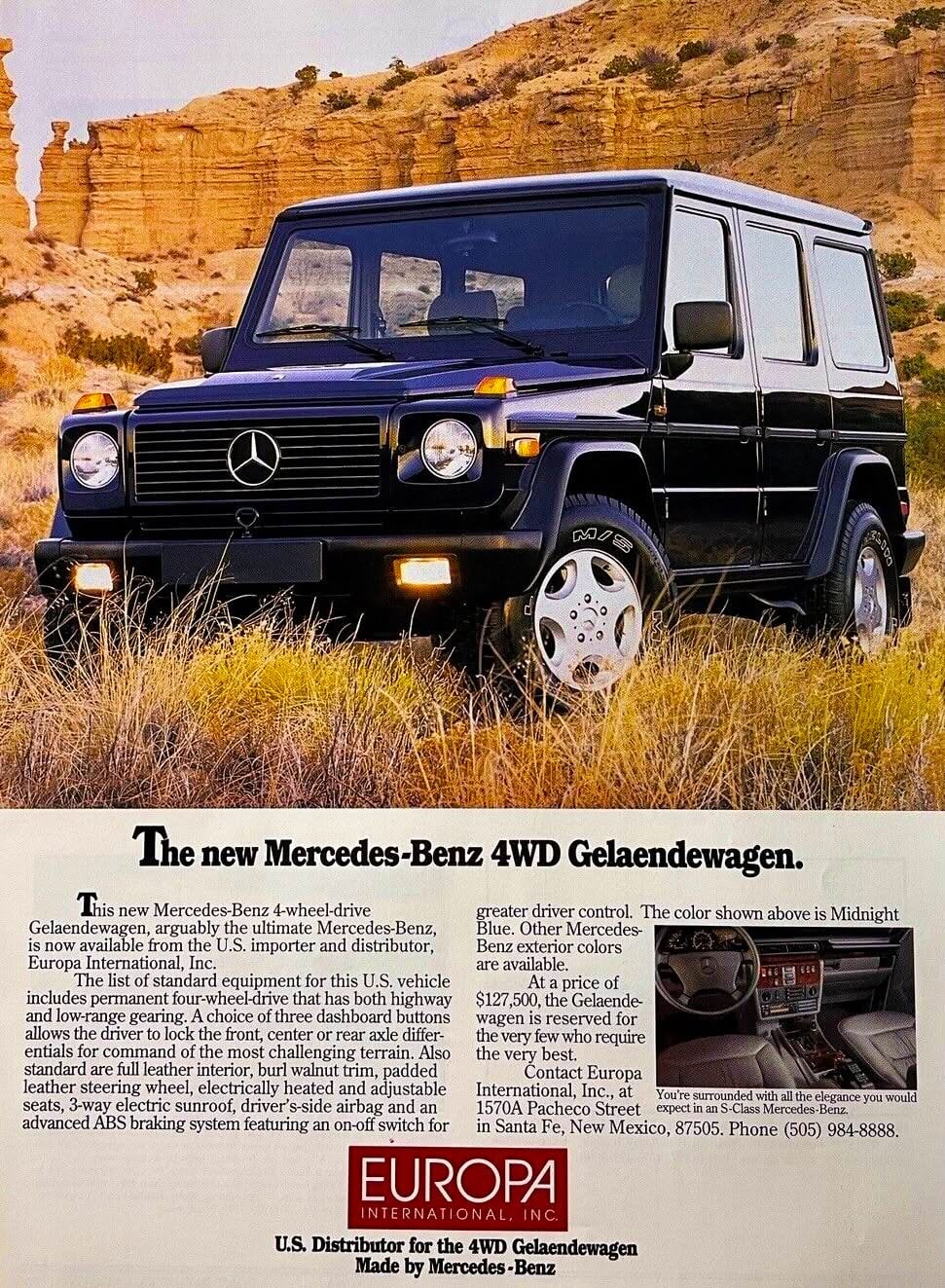
At the Frankfurt Auto Show in September of 1989, after 75,000 vehicles had been built and sold, Mercedes presented the new 463 series. It had permanent four-wheel drive, three differential locks worked by buttons on the dash, switchable ABS, a body-colored front end, a more car-derived interior, and no panel van version. Image courtesy of Mercedes-Benz.
The Popemobile, The Dakar, + Otto
In late-1980, for Pope John Paul II’s visit to Germany, Mercedes removed the roof of a 230 G, painted it pearl white with gold trim, raised the rear floor by 16 inches, and covered it with a transparent dome. The car went to the Vatican on loan as SCV 7, received bulletproof glazing after the 1981 assassination attempt, wore a Puch badge for the 1983 visit to Austria, and returned to the Mercedes-Benz Museum in 2004.
The Vatican has used G-based Popemobiles ever since, the latest, an open-top electric G 580 handed to Pope Francis in December 2024, carried his successor, Leo XIV, into St. Peter’s Square for his inaugural Mass in 2025.
In January 1983 Jacky Ickx and the actor Claude Brasseur won the car classification of the Paris-Dakar Rally in a 280 GE prepared by Mercedes-Benz France. Engineer Georg Berkmann had taken the twin-cam six to around 194 bhp with camshafts meant for the 280 SL.
Aerodynamicist Rüdiger Faul cut the drag coefficient from 0.52 to 0.41 with roof extensions and segments of 70 mm (2.75 inch) diameter plastic drainpipe fitted around the windshield. Of 193 cars, buggies, and trucks that started, 61 finished. A sign of just how brutal the event was in its early days.
In 1988 a man named Gunther Holtorf bought a 300 GD, named it Otto, and drove it for 26 years covering 559,000 miles, 215 countries, 41 container crossings, Everest base camp, on the original engine, gearbox, and axles throughout. He handed it to the Mercedes-Benz Museum in 2014, and Dieter Zetsche, then chairman, used the occasion to promise that there would still be a G-Class in the future.
The 500,000th was built nine years later, painted agave green in imitation of a 1986 280 GE, the 200,000 before it had taken just six years to sell.
The G-Wagon Overland Camper Shown Here
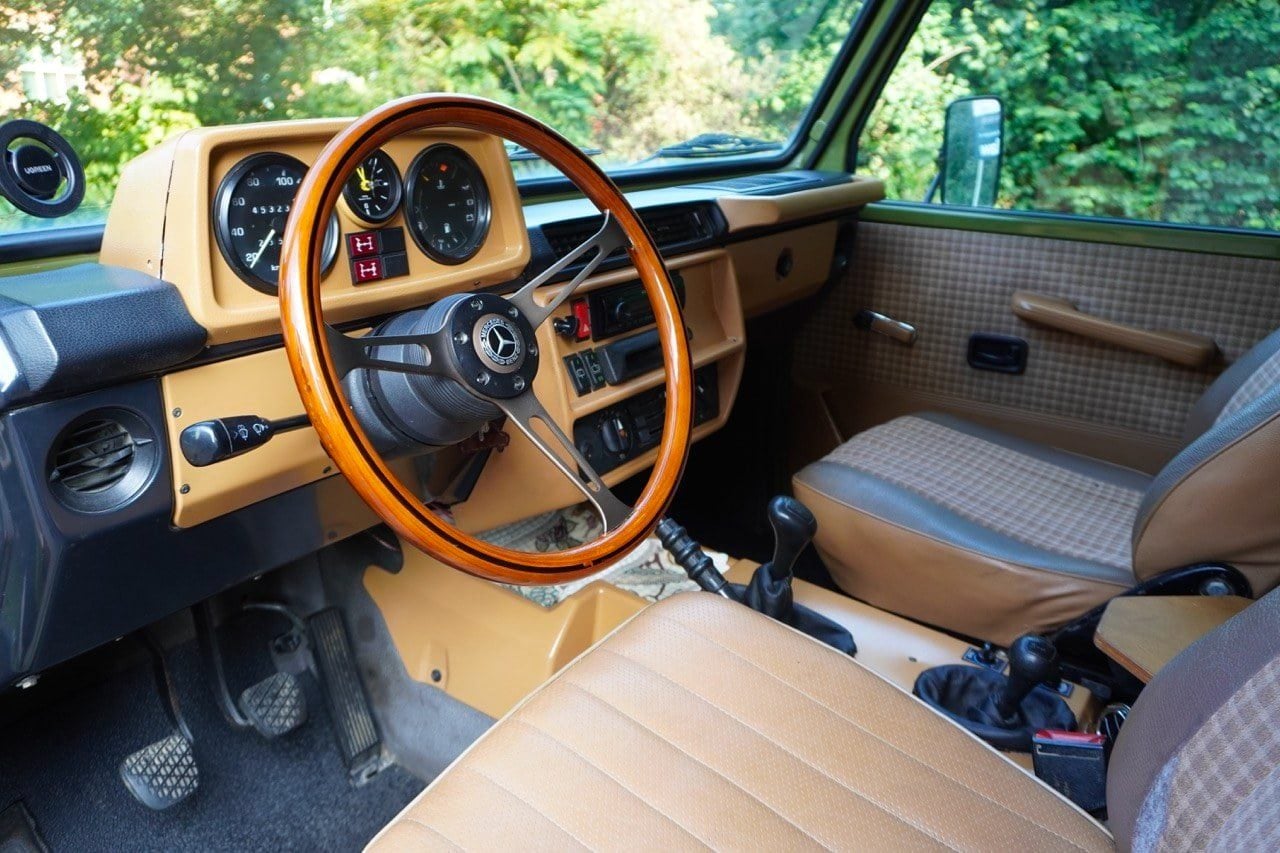
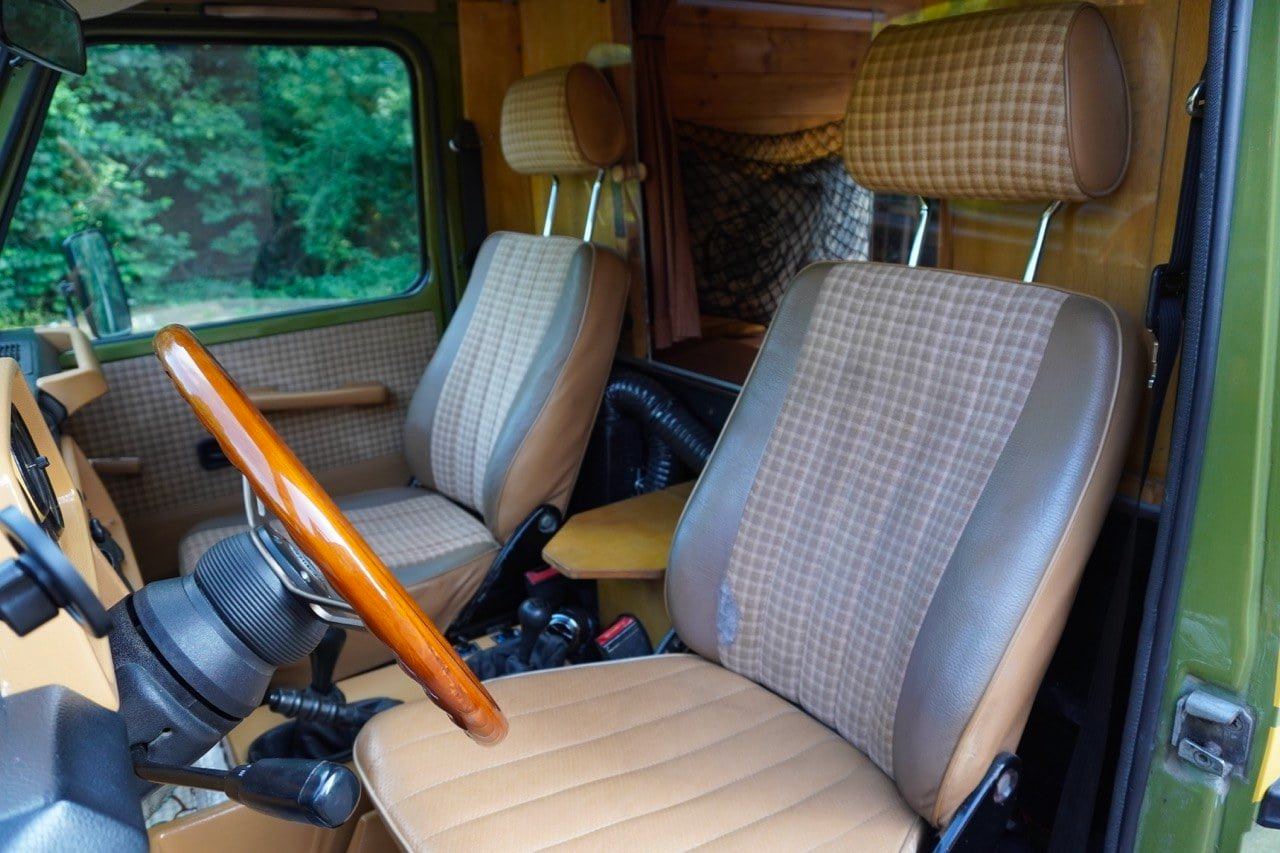
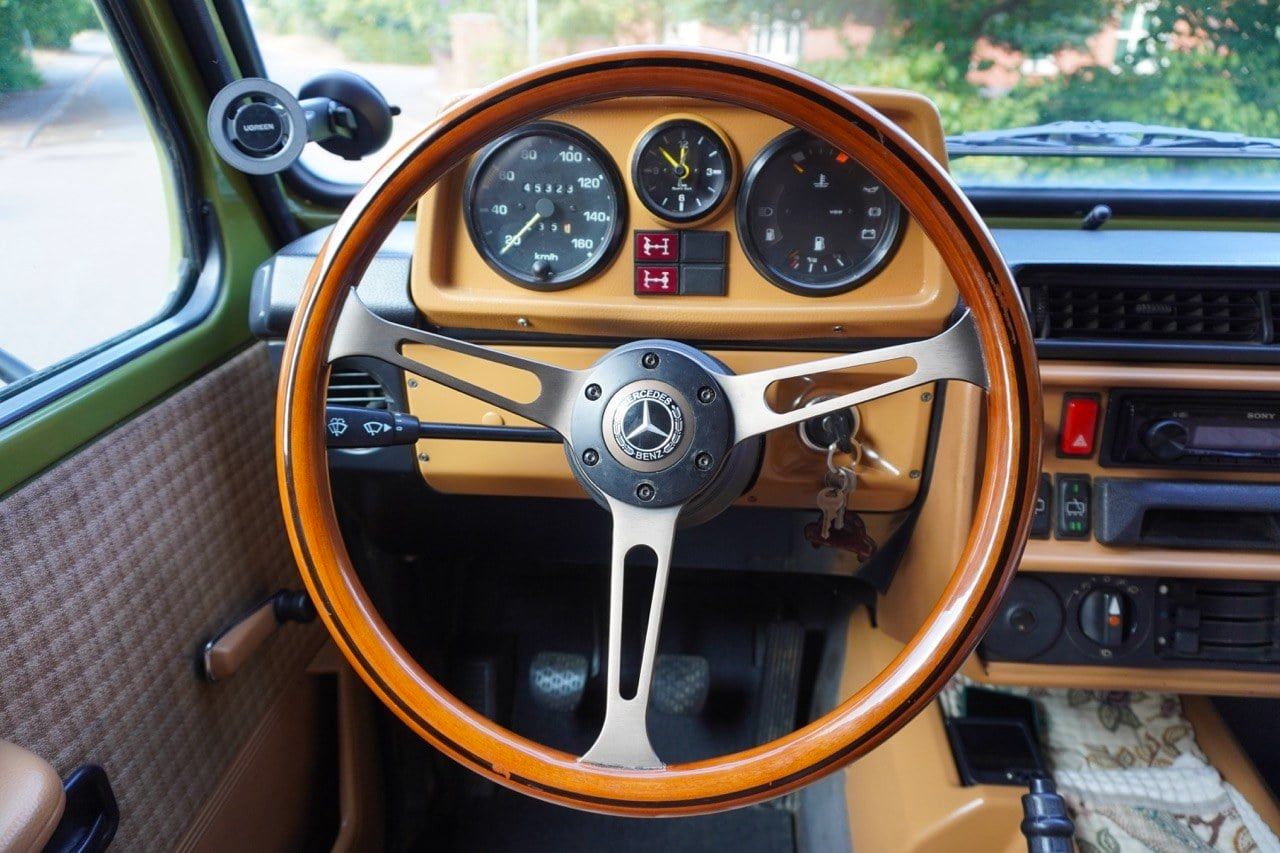
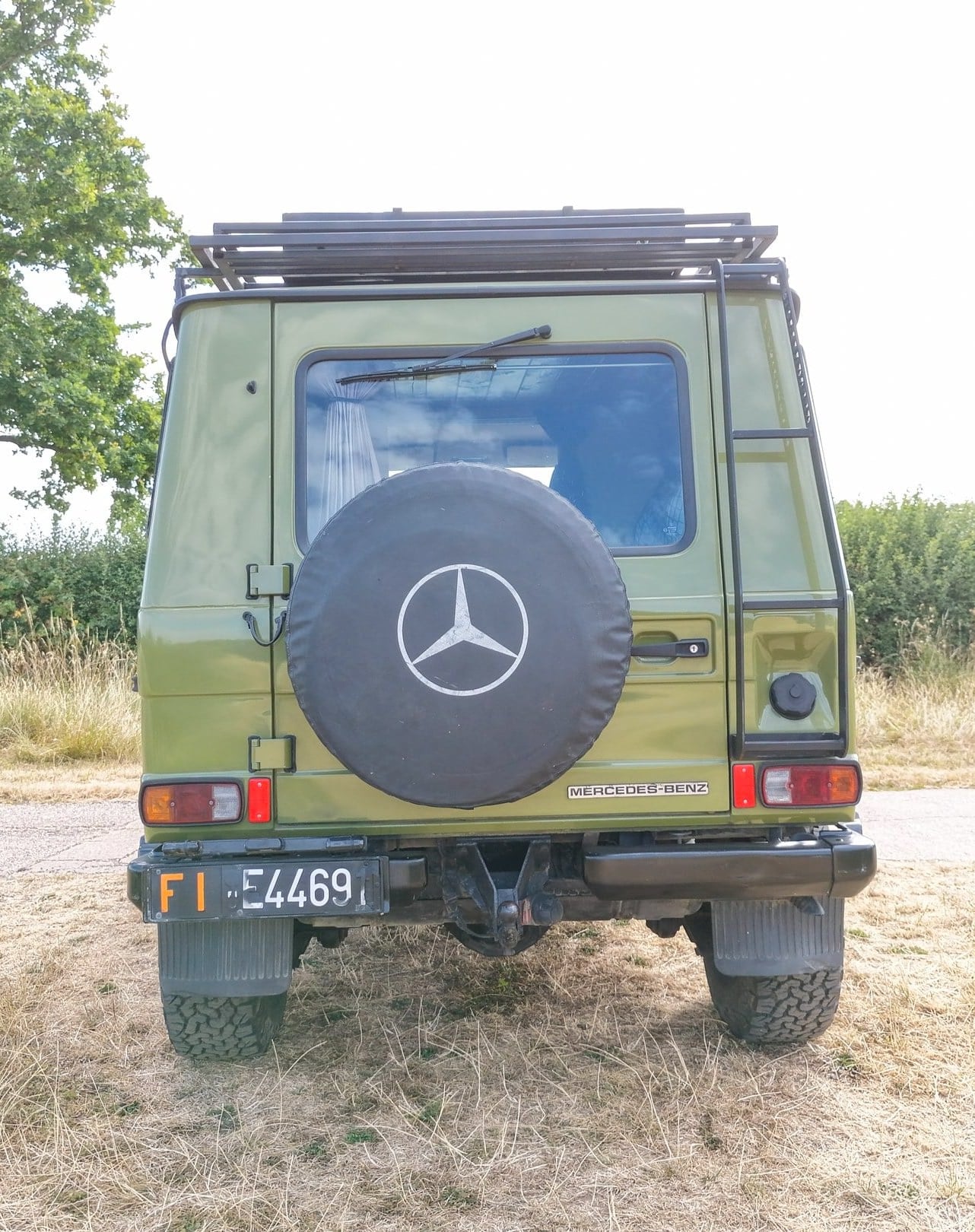
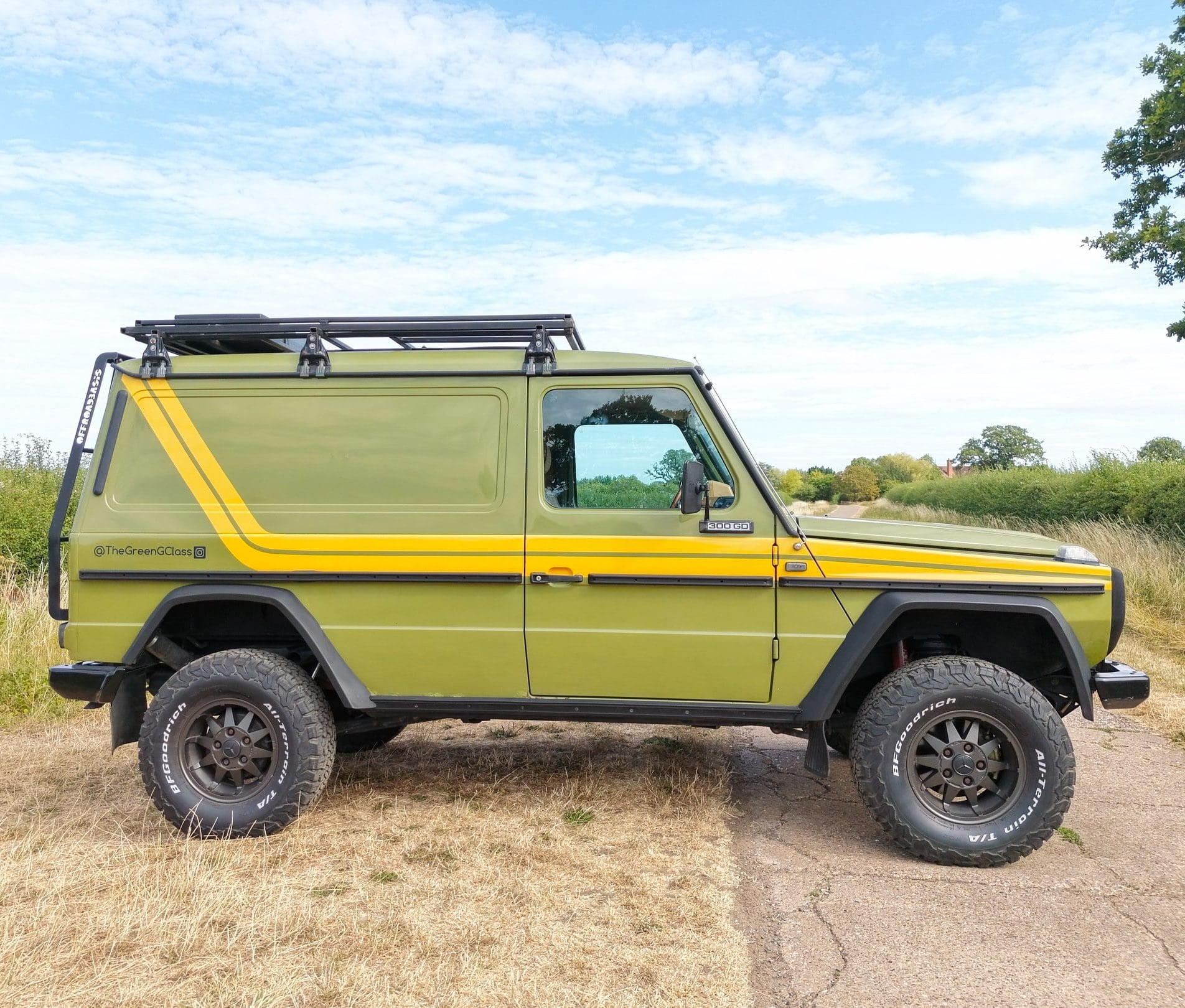
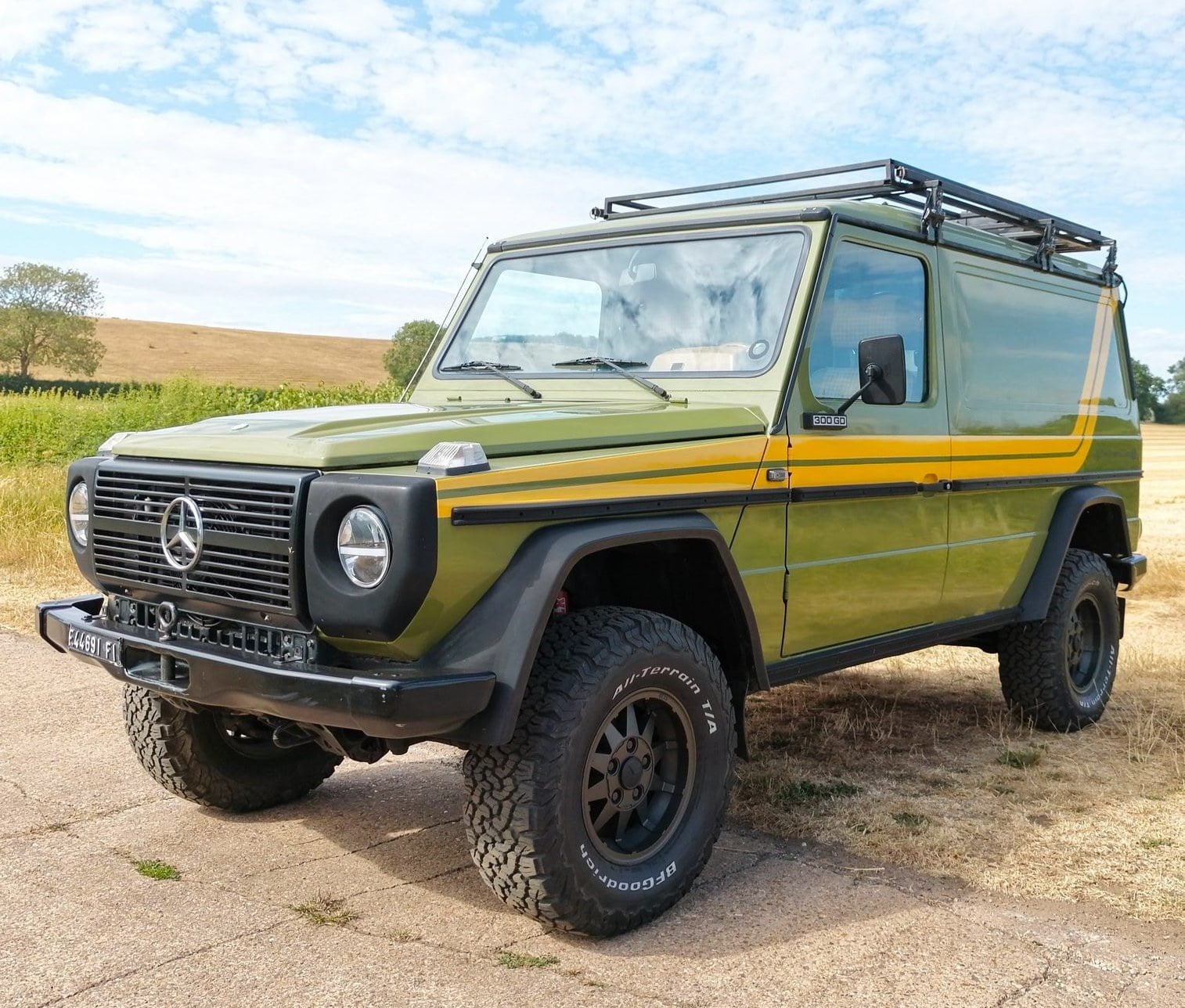
The 1984 Mercedes-Benz 300GD you see here spent many years in same family ownership, and it’s more recently been turned into a compact overland camper. The current owner’s grandfather kept it indoors on a farm and reportedly used it only occasionally before his death. Then around six years ago the family began a three-year renovation and camper-conversion project intended to fulfil his plan of using the G-Wagon for European travel adventures.
The work is documented with almost €30,000 in receipts, and was carried out with assistance from Penta Garage in Italy and a family member who’s a mechanical engineer.
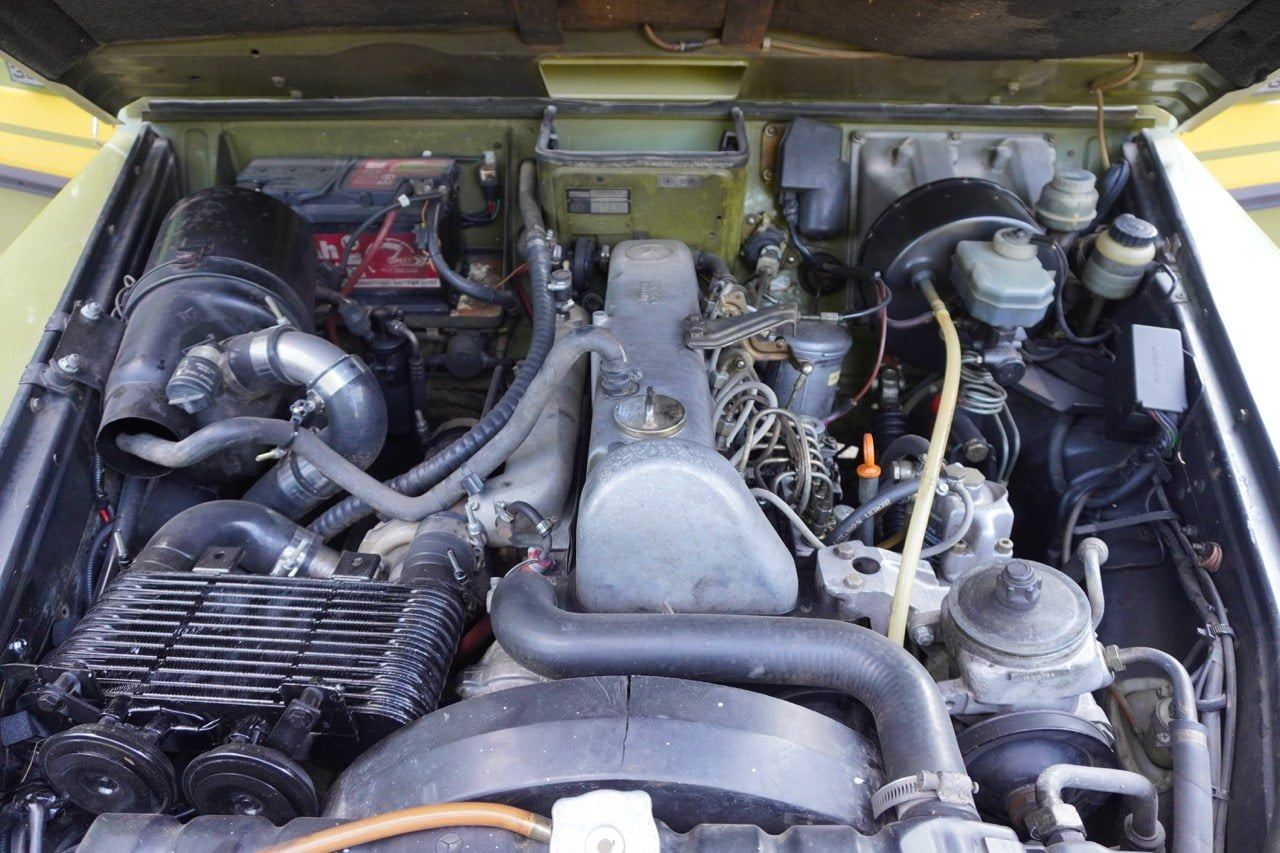
One of the biggest changes was replacing the original naturally aspirated diesel with a more powerful 2,995cc OM617 5-cylinder turbo diesel, paired with the existing 4-speed manual transmission, but the original engine is also included with the sale. The replacement engine has received considerable mechanical work, including piston rings, a head gasket, oil cooler, intercooler and hoses, injection-pump servicing and a new starter, and an air-conditioning system was also added.
The chassis and running gear were also attended to, with raised suspension, wheel spacers, refreshed brakes, cooling-system repairs, new tires and various transmission, fuel-system and exhaust jobs. More recent maintenance includes a 2025 service, while the clutch is being replaced and the flywheel resurfaced. The seller reports that the engine starts reliably from cold and is free of leaks.
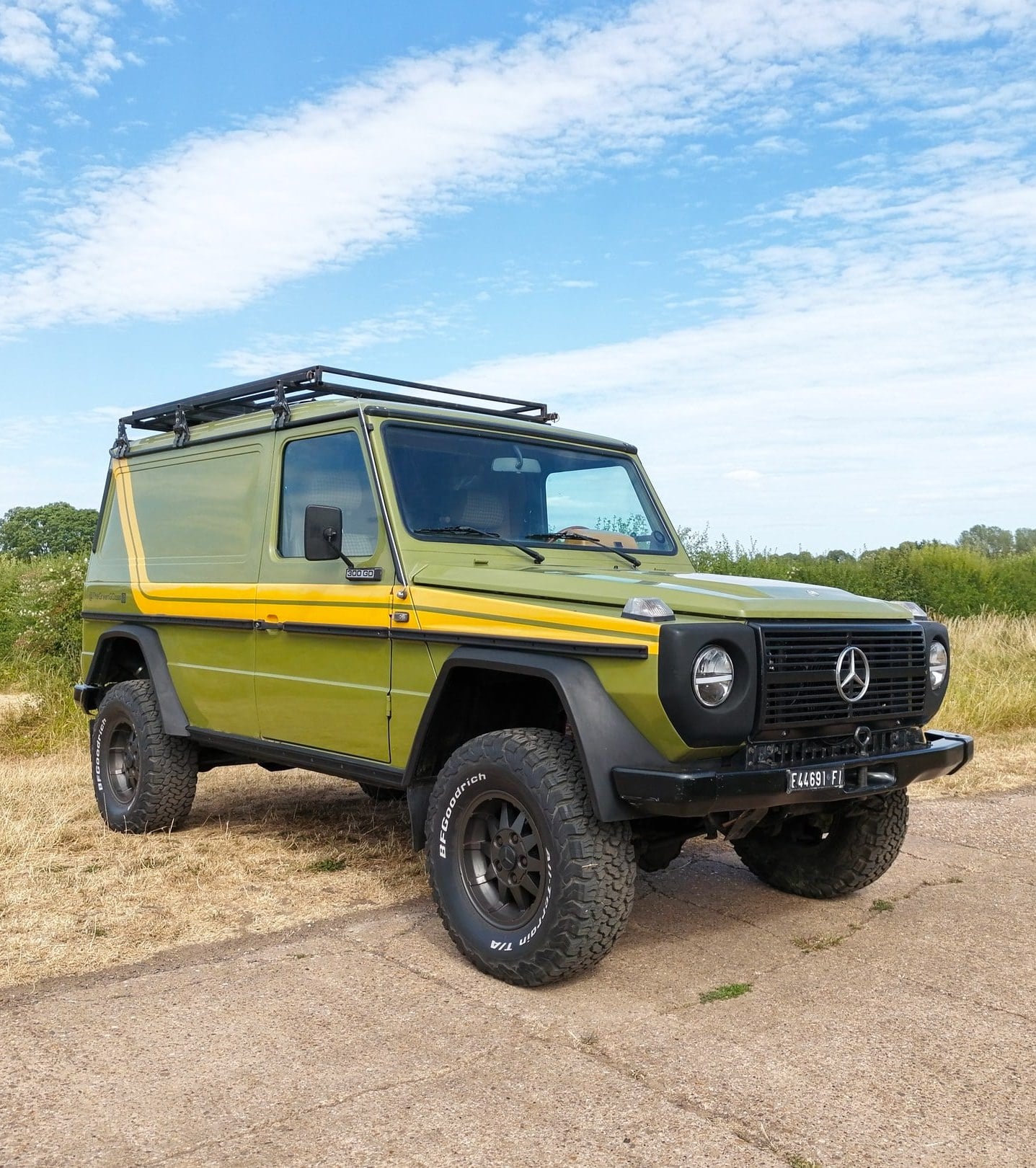
This is a 1984 Mercedes-Benz G-Wagon that now benefits from a slew of upgrades and modifications, it’s been turned into an overland camper for off-road (and on-road) adventures, and it’s now powered by a more powerful five-cylinder turbo diesel engine (OM617).
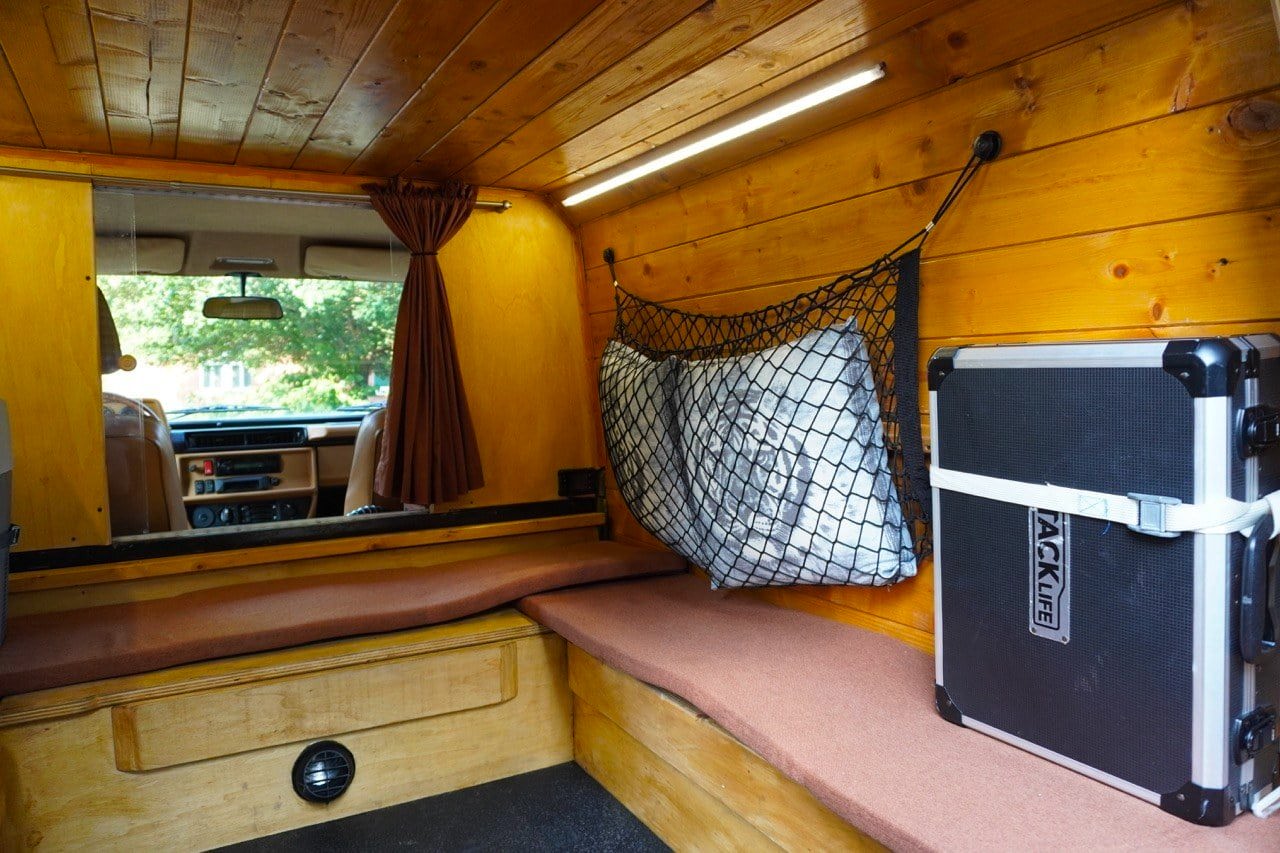
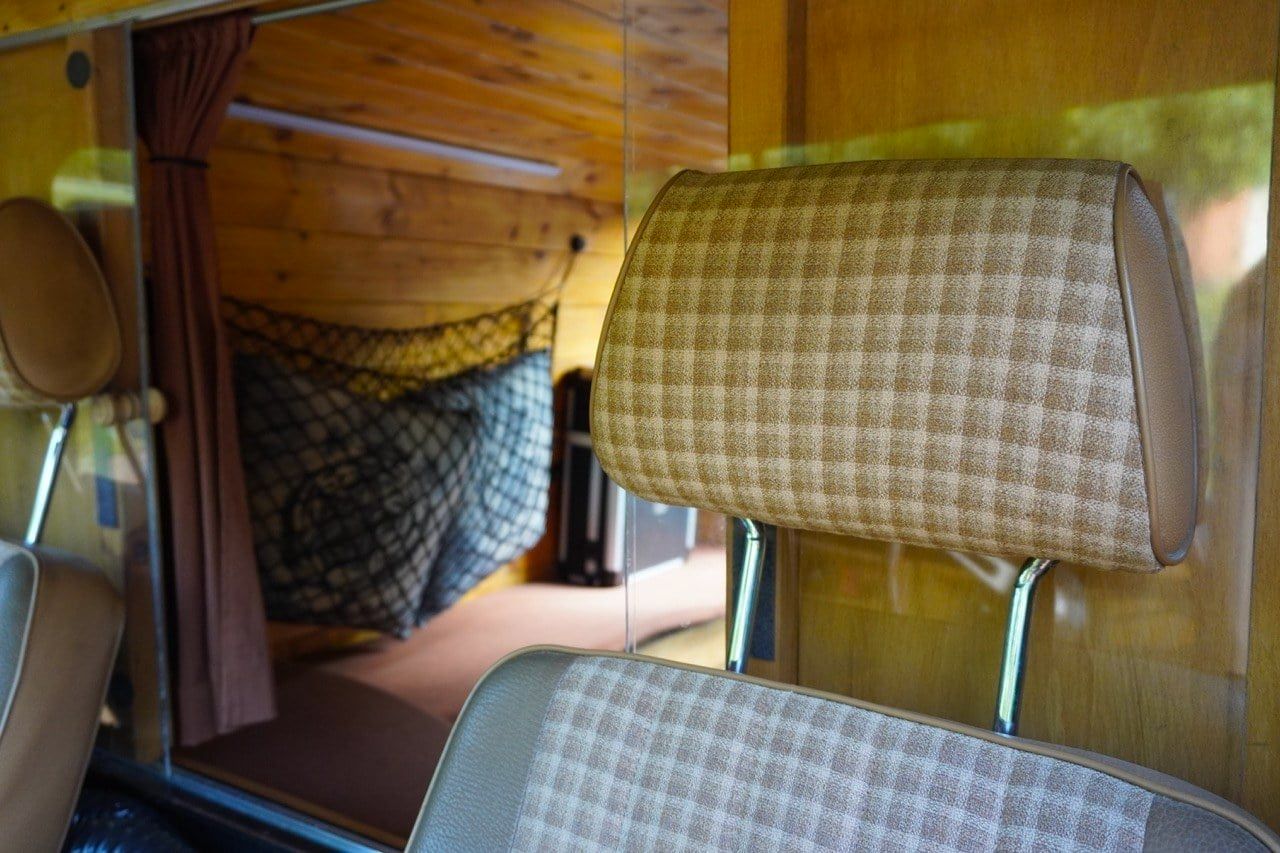
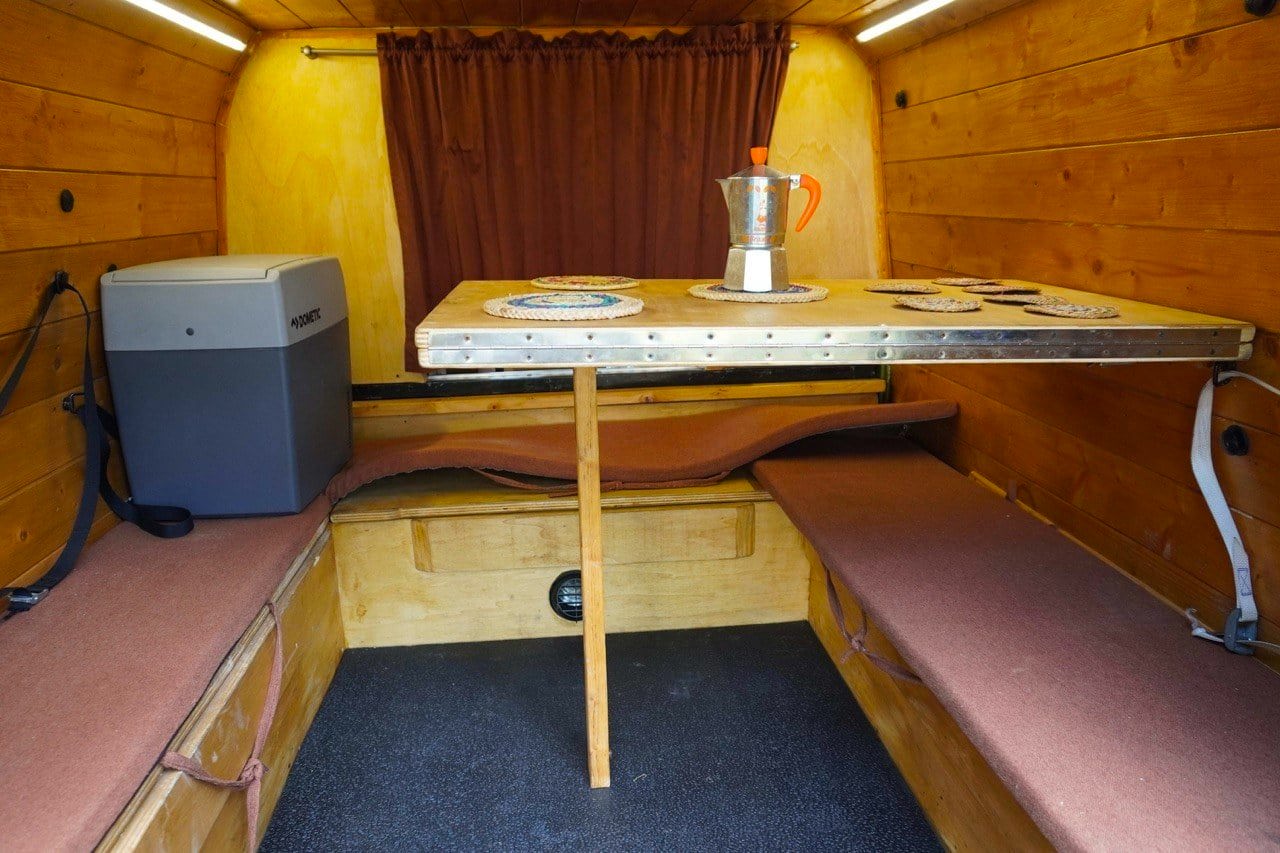
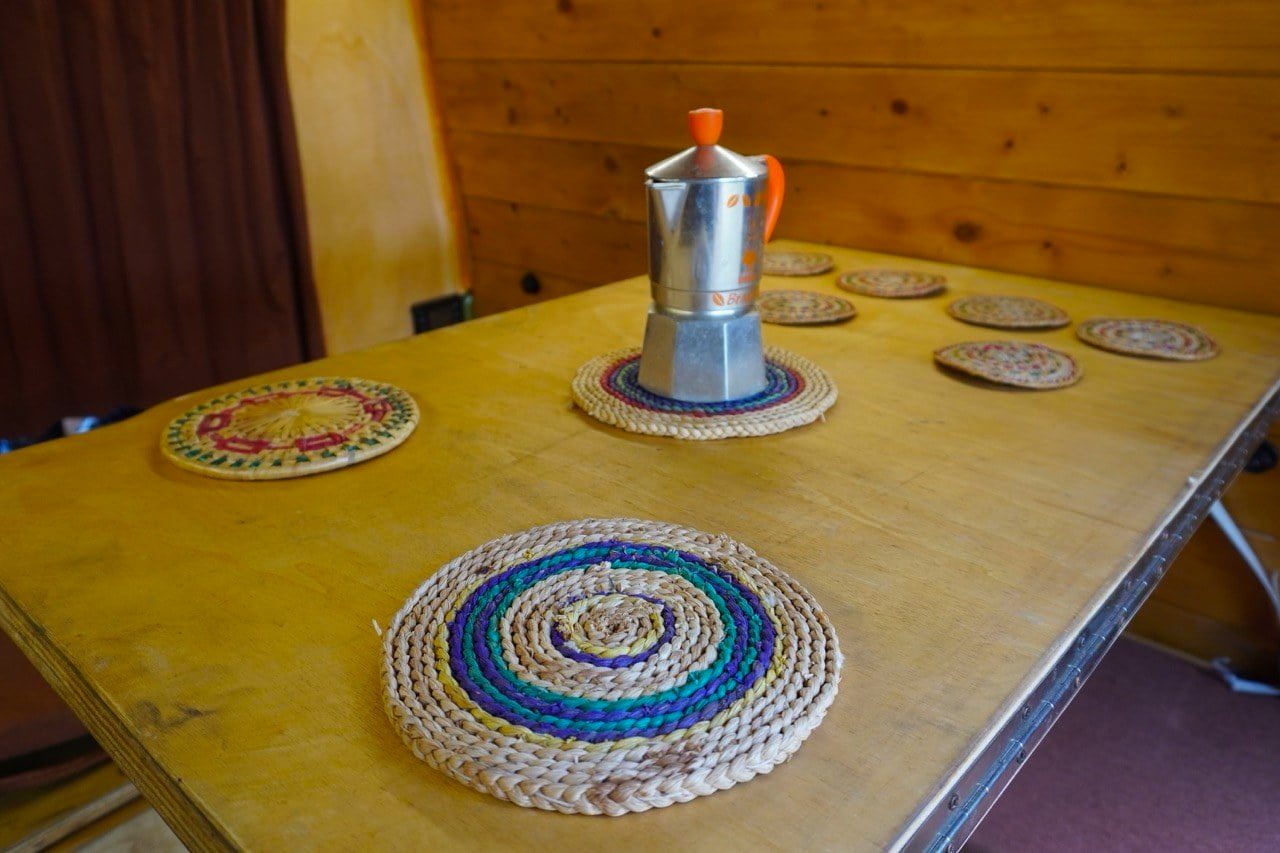
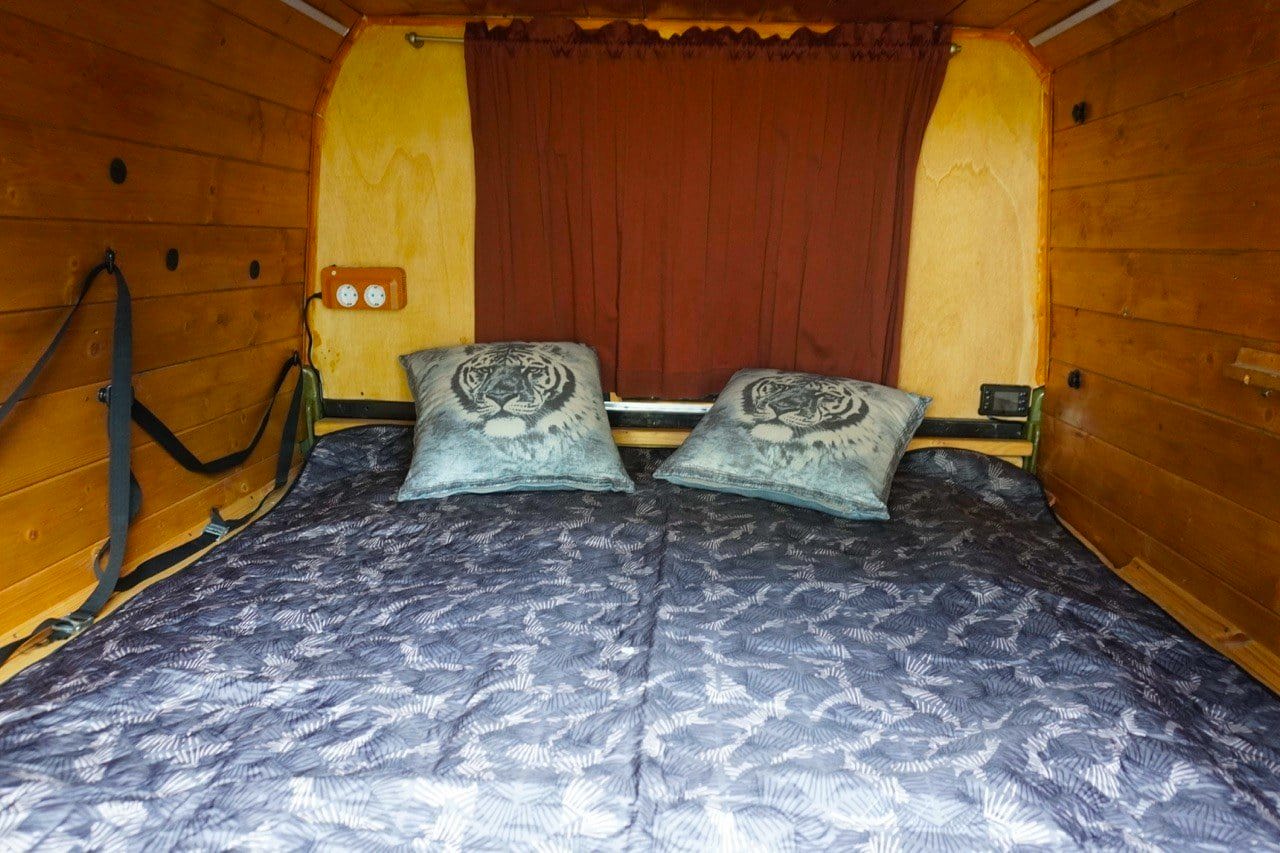
Inside, the rear has been converted into a wood-lined camper with storage benches, an adjustable table, fridge, auxiliary battery, solar system, diesel heater, 48 liter water tank, shower equipment, inverter and additional lighting. A roof rack and rear ladder have also been fitted. The conversion is said to be around 80% reversible, with many of the original parts kept on hand.
It’s now being offered for sale out of Warwickshire in the United Kingdom and you can visit the listing here if you’d like to read more about it or register to bid.
Images courtesy of Car & Classic

Articles that Ben Branch has written have been covered on CNN, Popular Mechanics, Smithsonian Magazine, Road & Track Magazine, the official Pinterest blog, the official eBay Motors blog, BuzzFeed, Autoweek Magazine, Wired Magazine, Autoblog, Gear Patrol, Jalopnik, The Verge, and many more.
Silodrome was founded by Ben back in 2010, in the years since the site has grown to become a world leader in the alternative and vintage motoring sector, with well over a million monthly readers from around the world and many hundreds of thousands of followers on social media.