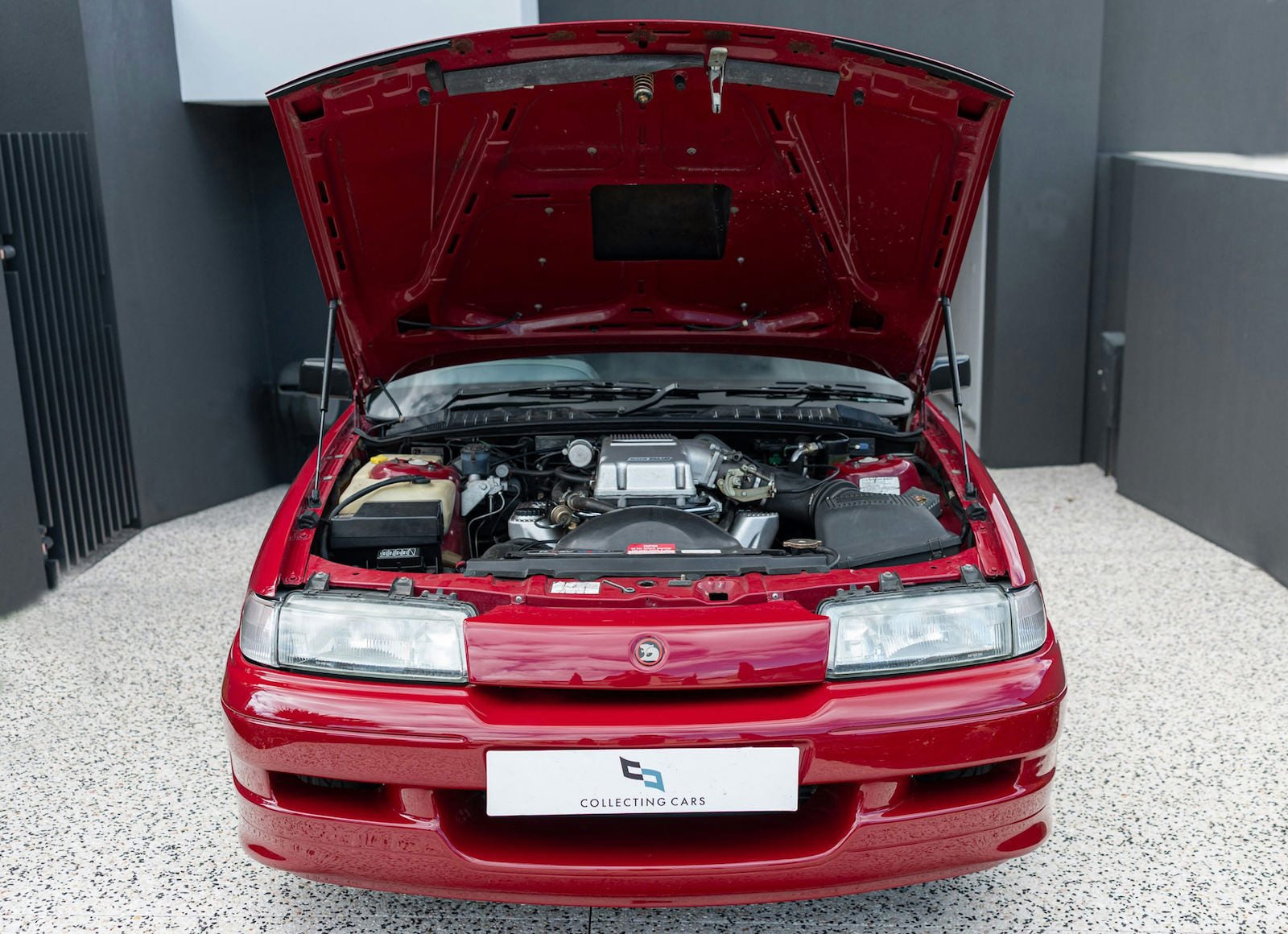
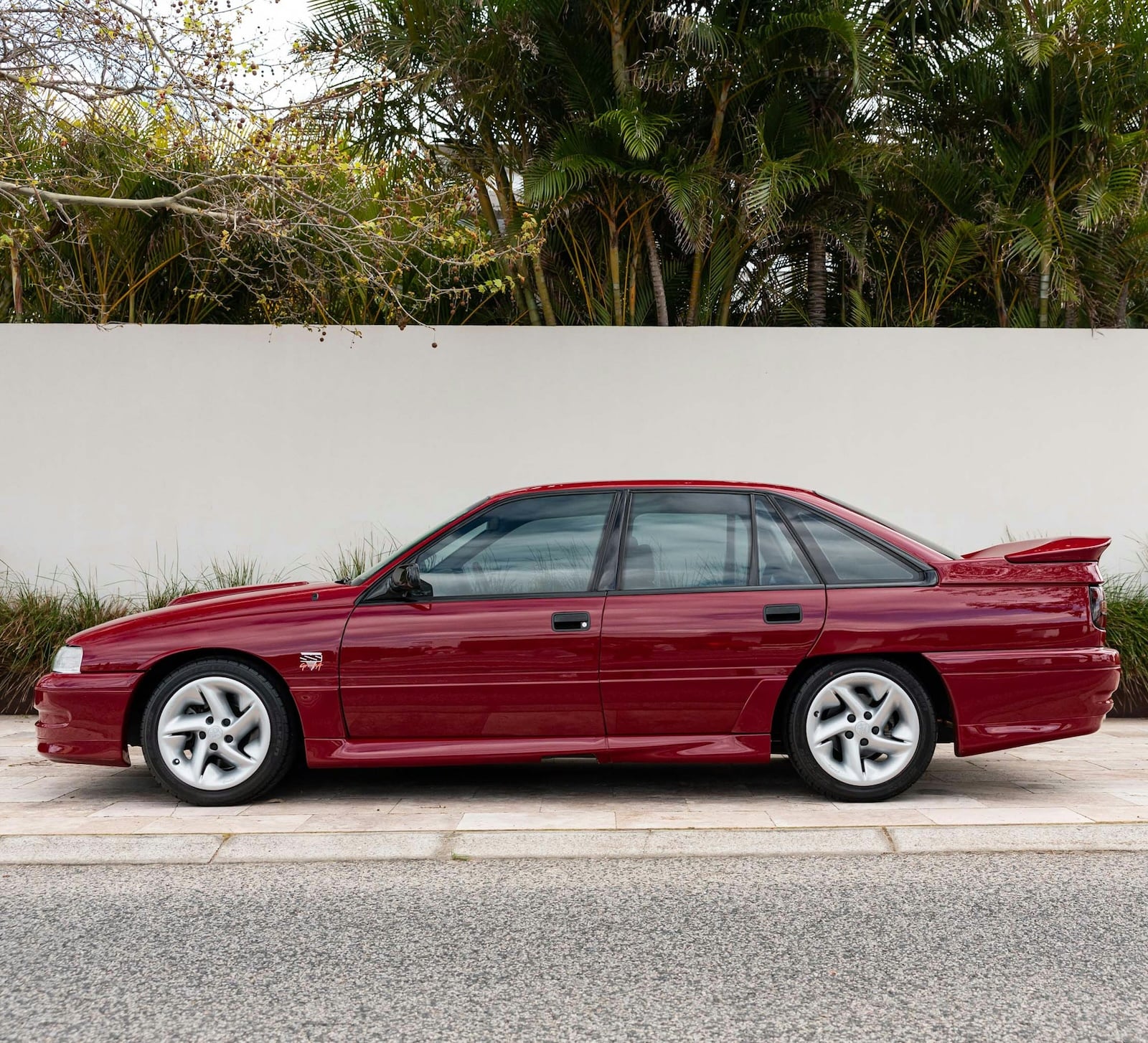
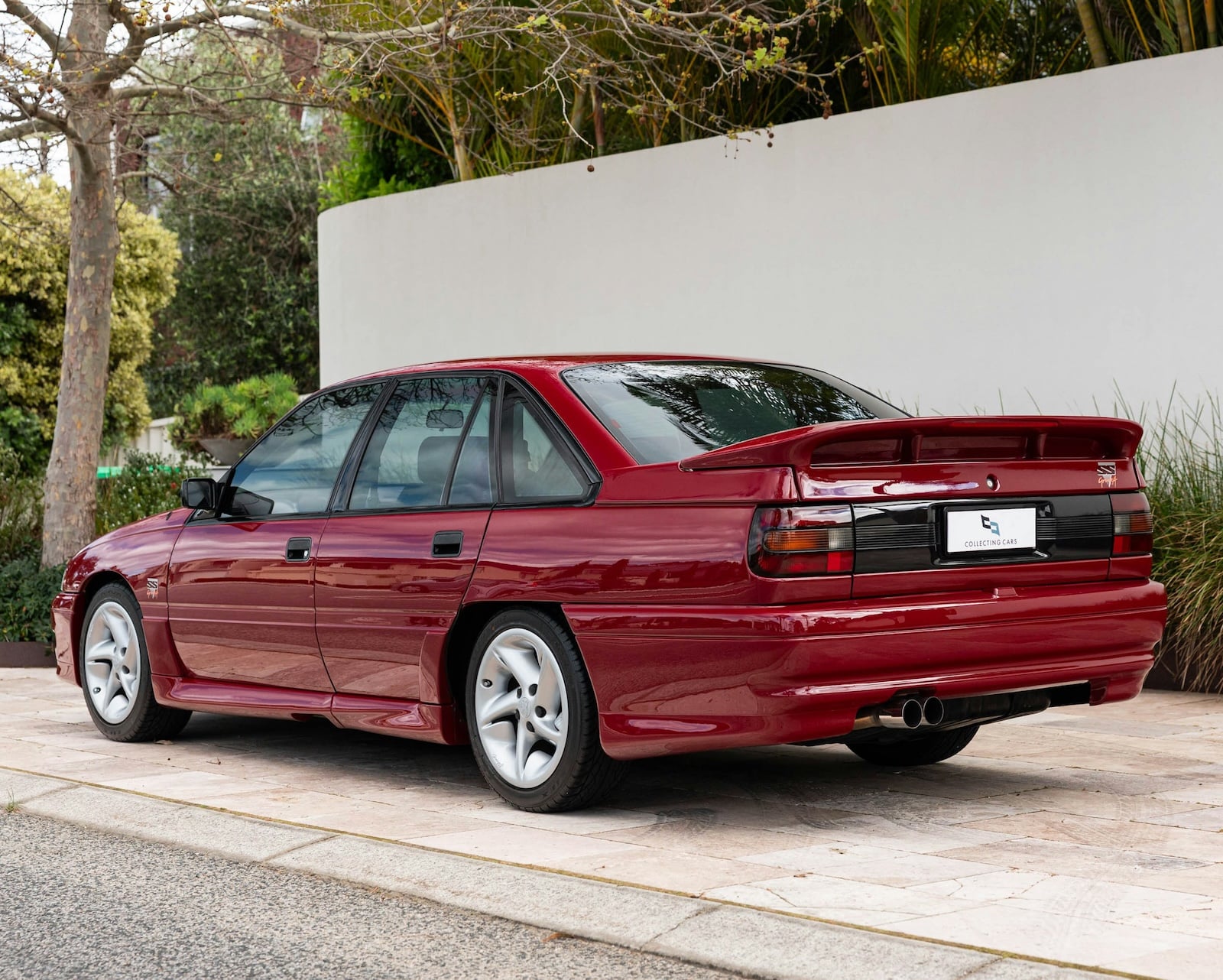
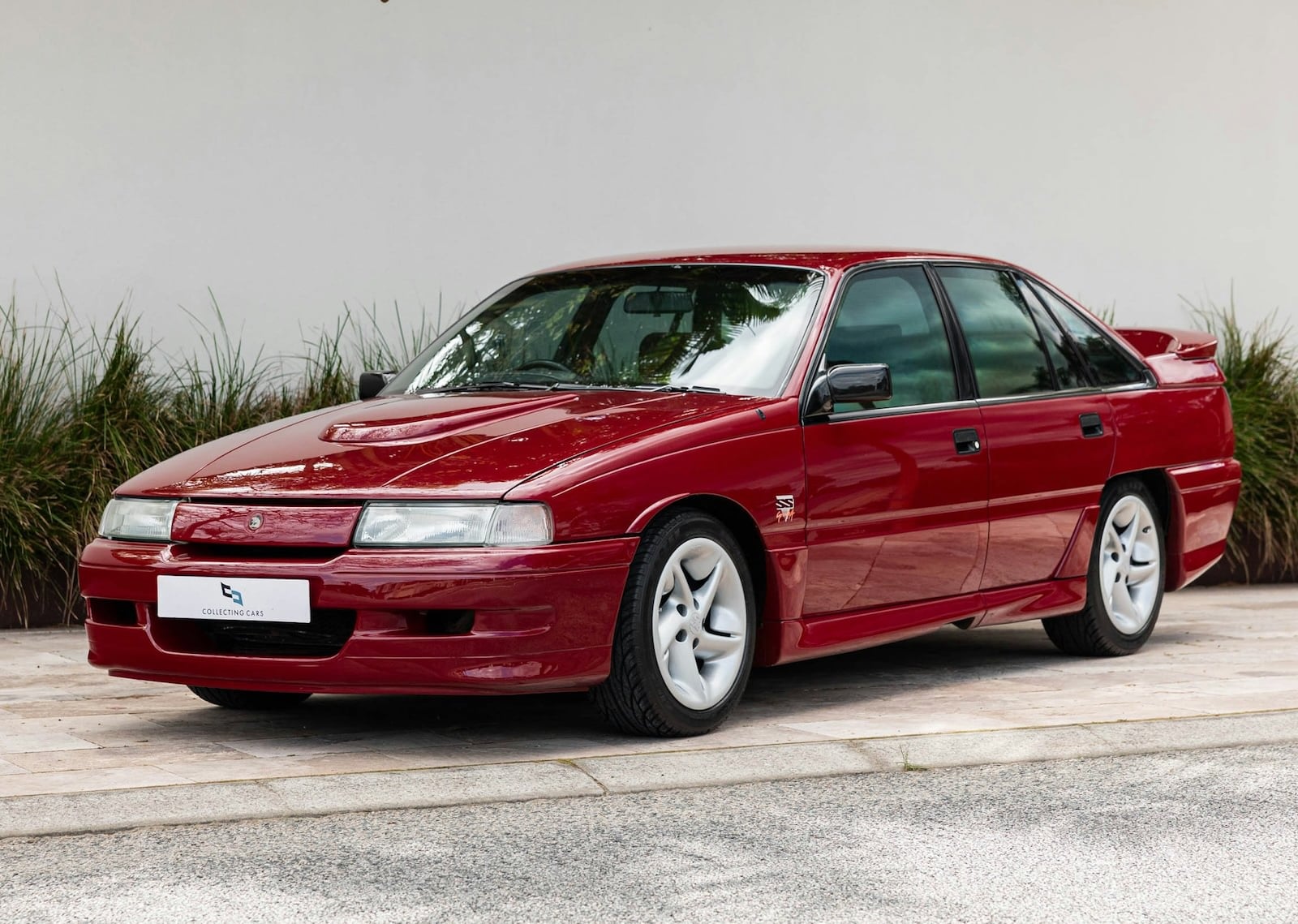
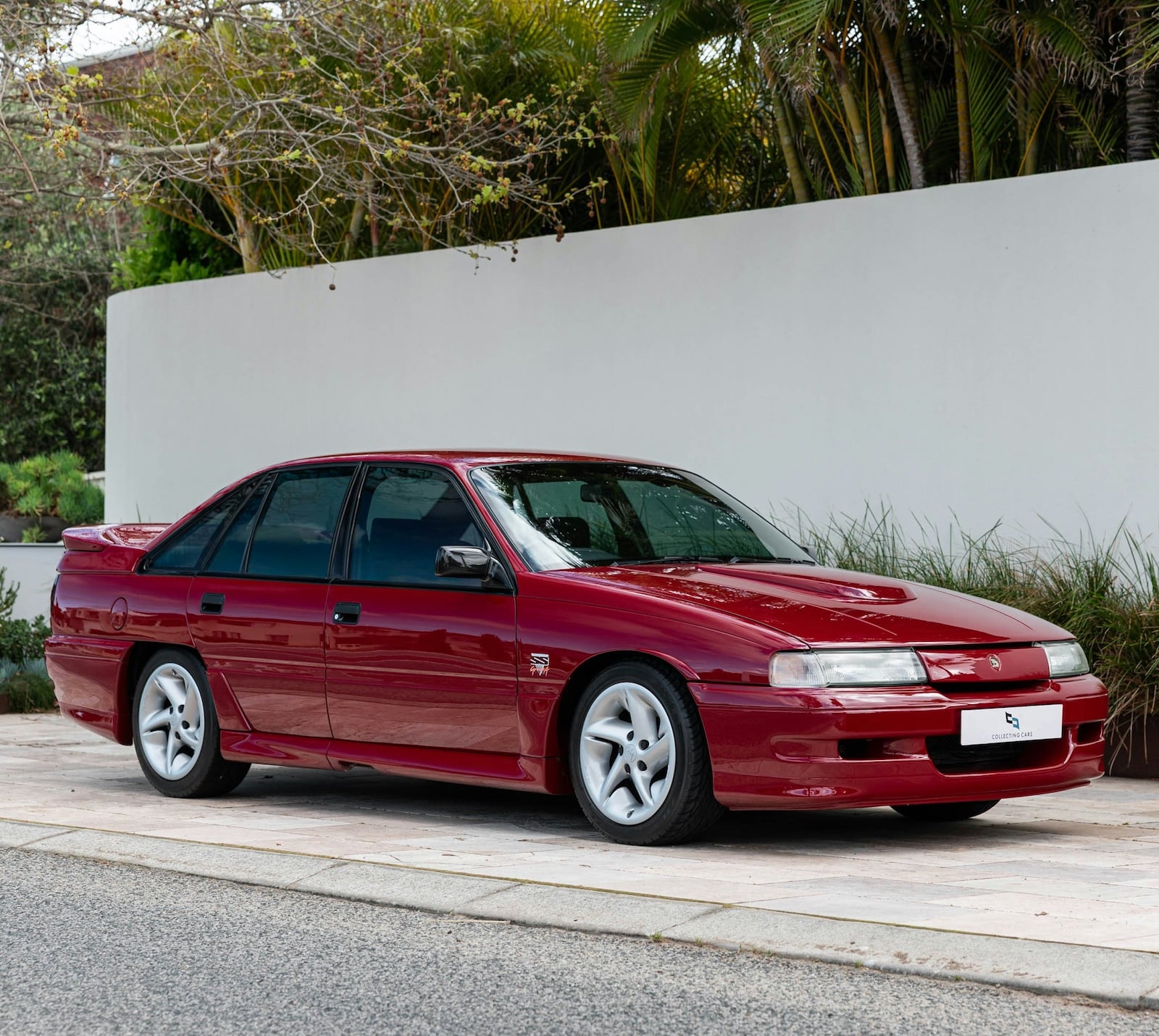
This is an original Holden Commodore VN SS Group A from 1990, it was a homologation special created to allow the VN to compete in Group A touring car racing.
500 examples were planned but ultimately just 302 were made, today they’re among the most collectible Australian-built performance cars from their era, but they only come up for sale rarely – very few have ever been exported out of the country.
Fast Facts: A 1990 Commodore VN SS Group A
- Introduced in 1988, the Holden Commodore VN was wider and longer than its VL predecessor, helping it compete with the Ford Falcon. Designed by Phillip Zmood using elements of the Opel Omega and Senator, it was manufactured in Australia and overseas, with badge-engineered versions sold under Toyota and Beijing nameplates.
- The 1990 Holden Commodore VN SS Group A was developed to homologate the model for Group A touring car racing. Although regulations required 500 road-going examples, only 302 were produced due to limited demand. Holden received special permission to race regardless, and the cars have since become highly collectible Australian performance classics.
- HSV equipped the Group A with a modified 5.0 liter V8 producing 288 bhp and 303 lb ft of torque, paired with a ZF 6-speed manual transmission. Upgraded suspension, brakes, tires, and a distinctive aerodynamic bodykit helped distinguish the homologation special from the standard VN Commodore.
- The 1990 example shown here is finished in Durif Red over a grey velour interior with red inserts. It passed compliance in November 1990 and shows 50,767 kilometers, although the mileage is unverified. Accompanied by service records, owner’s manuals, and two keys, it is currently being offered for sale in Perth, Australia.
History Speedrun: The Holden Commodore VN
The VN version of the Holden Commodore was released in 1988 as a major upgrade over the preceding Holden Commodore VL. The new VN model was wider and longer, better placing it as a competitor with the Australian Ford Falcon, and it was intended as a new Holden for the fast approaching new decade of the 1990s.
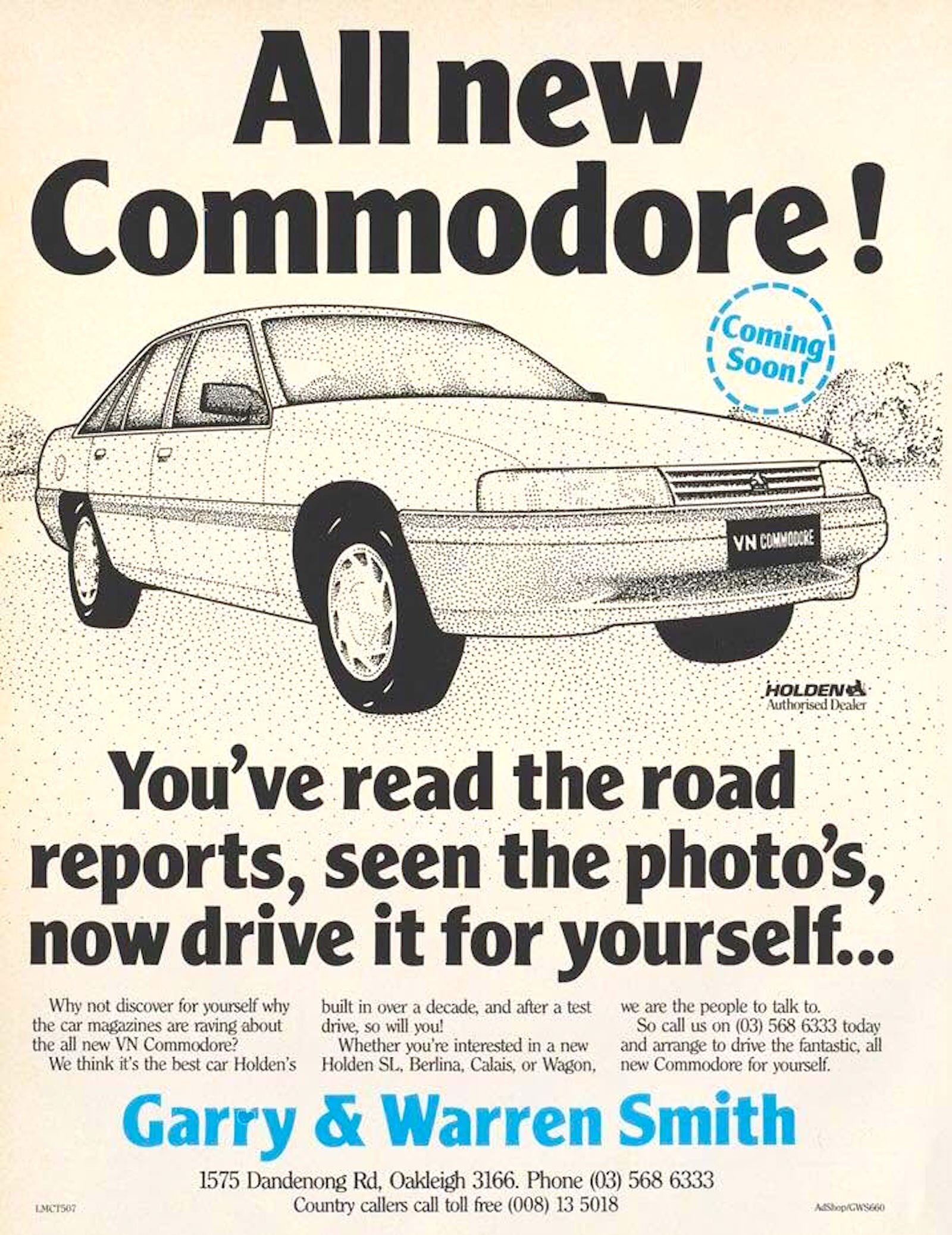
 The VN version of the Holden Commodore was released in 1988 as a major upgrade over the preceding Holden Commodore VL. The new VN model was wider and longer, better placing it as a competitor with the Australian Ford Falcon, and it was intended as a new Holden for the fast approaching new decade of the 1990s. Image courtesy of General Motors.
Designed by Phillip Zmood, the VN Commodore was closely based on the Opel Omega and Opel Senator, similar vehicles being built in Europe. Holden, Opel, and Vauxhall all belonged to General Motors at the time, and this sort of platform sharing was commonplace.
Versions of the VN would be assembled in New Zealand and China as well as Australia, and badge-engineered examples would be sold as the Toyota Lexcen and the Beijing BJ6490 (and 6490D). An array of engines would be offered, across all versions there would be everything from 2.0 liter inline-fours through to inline and V6s, through to the king of them all, the 5.0 liter HEC 5000i V8.
The VN Commodore would remain in production from 1988 until 1991 in Australia, but the Chinese version would remain in production through until 1997. The VN was replaced with the VP model, and the 1990s would ultimately be the last golden age for the Holden Commodore family before hatchbacks, SUVs, and pickup trucks took over the local Australian market.
The Holden VN Group A SS Commodore
The Holden VN Group A SS Commodore was a specially developed version of the VN to homologate the new model for motor racing – specifically for motor racing in the hotly contested world of Group A touring car racing.
In order to homologate the model, 500 road going versions had to be built and sold to customers through regular dealerships. Sadly for Holden, the model was relatively costly and the market couldn’t absorb 500 of them, as a result just 302 were made in total.
This could have sunk the Holden racing program completely, but the company received special permission to compete despite not hitting the magic 500 number. The grids of the Australian Touring Car Championship had been thinning out somewhat, and the Nissan Skyline R32 GT-R had been utterly dominating the series, with the BMW M3 Evolution following closely behind.
The Holden VN Group A SS Commodore was a specially developed version of the VN to homologate the new model for motor racing – specifically for motor racing in the hotly contested world of Group A touring car racing. Image courtesy of General Motors.
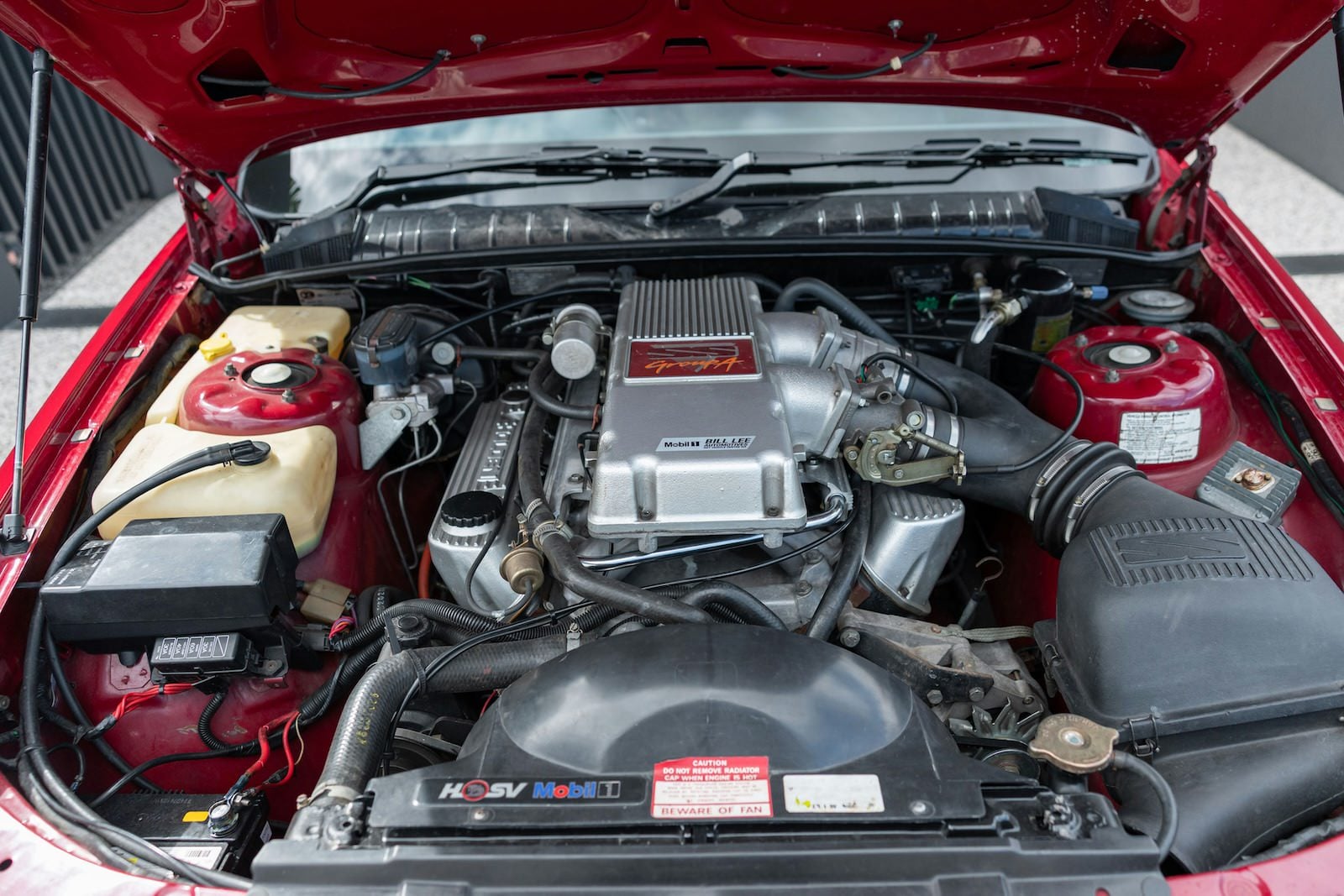
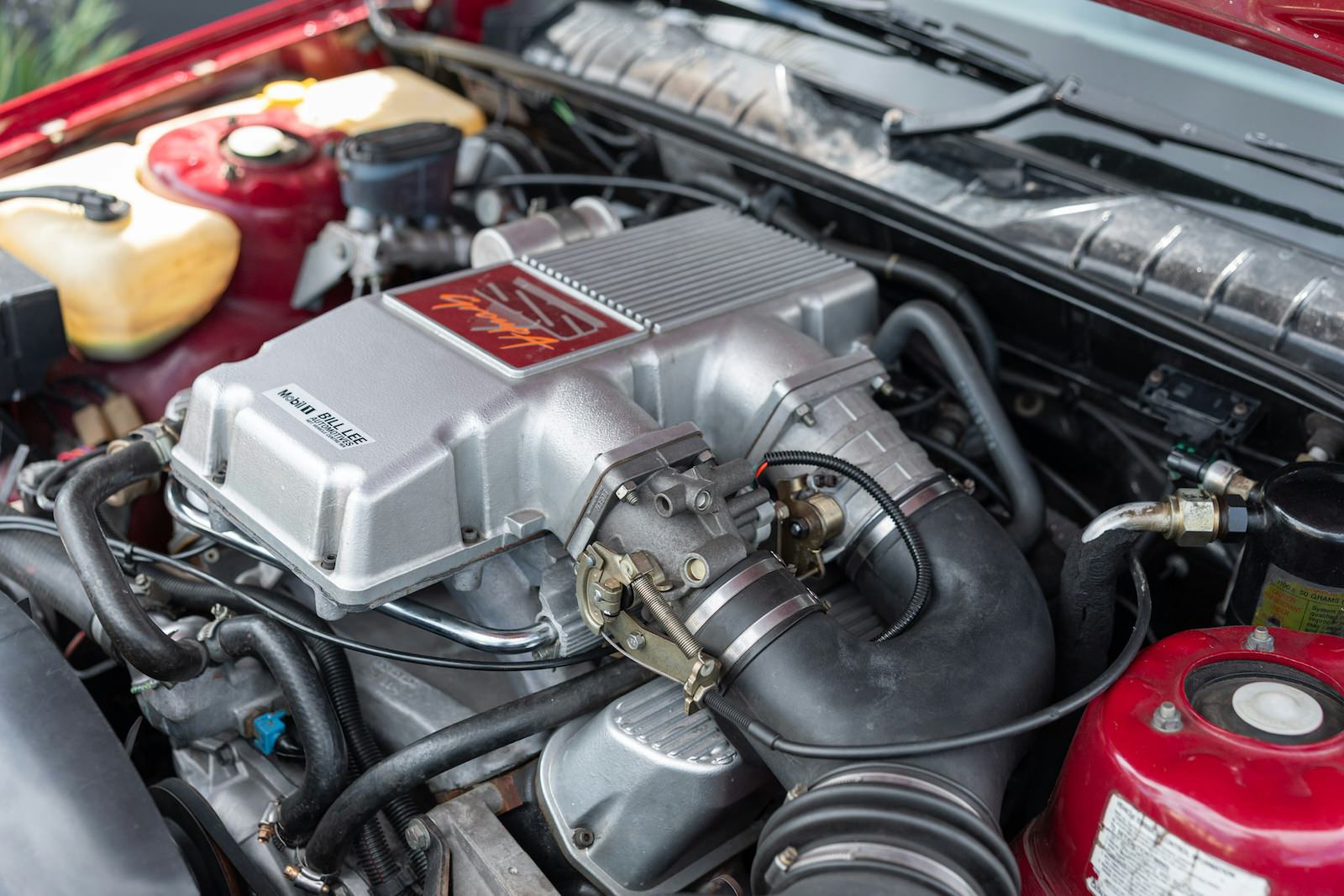
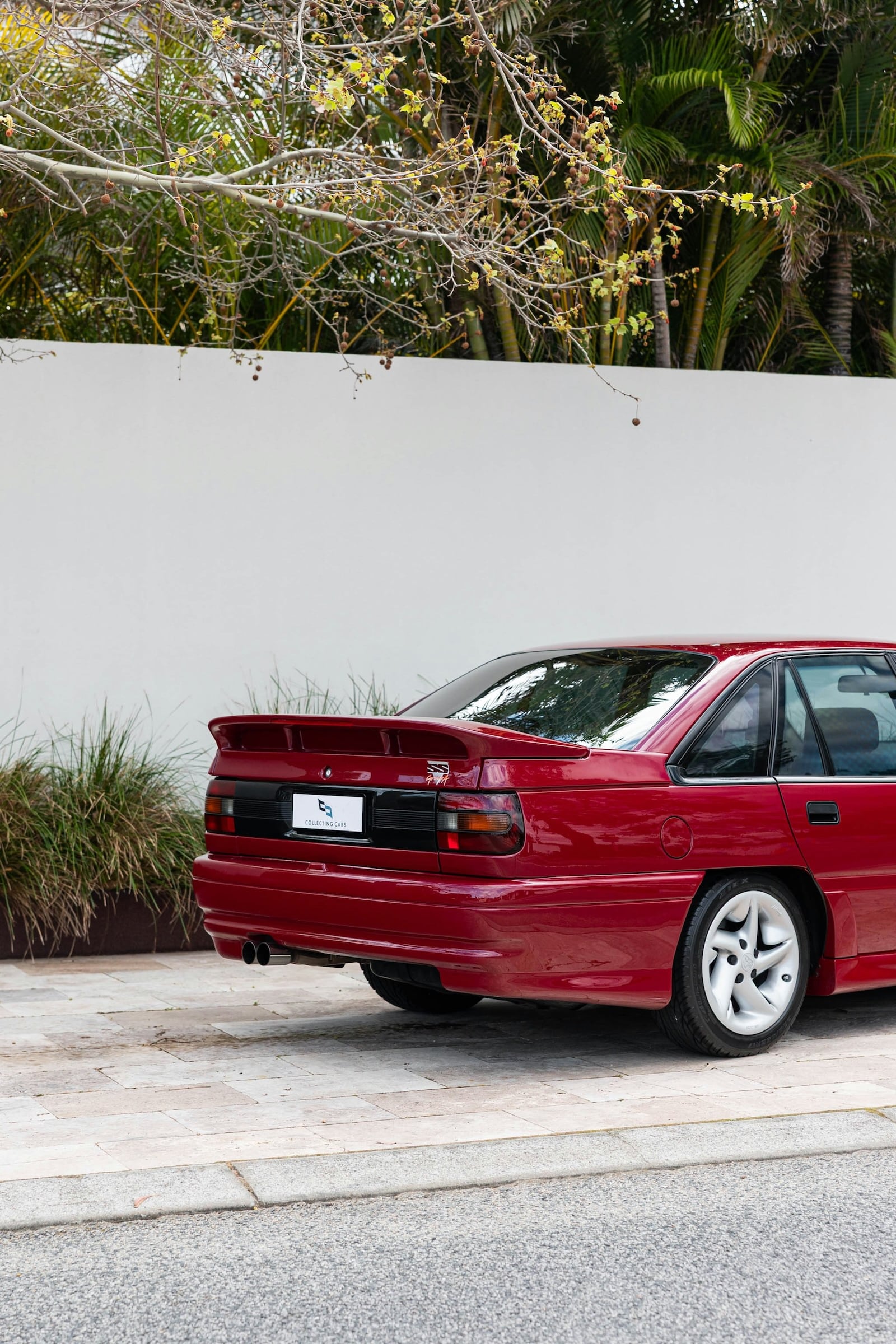
Each VN version of the Group A SS Commodore was fitted with the 5.0 liter HEC 5000i V8 in modified form, capable of 288 bhp and 303 lb ft of torque. This engine was mated to a 6-speed manual transmission, and the cars were fitted with upgraded suspension and brakes by HSV (Holden Special Vehicles), as well as a full aerodynamic bodykit.
Today, the surviving examples of the Group A SS VN Commodore are hugely collectible, with their prices enjoying what seems like notable annual increases. The trick for many collectors is simply finding one for sale.
The 1990 Holden Commodore VN SS Group A Shown Here
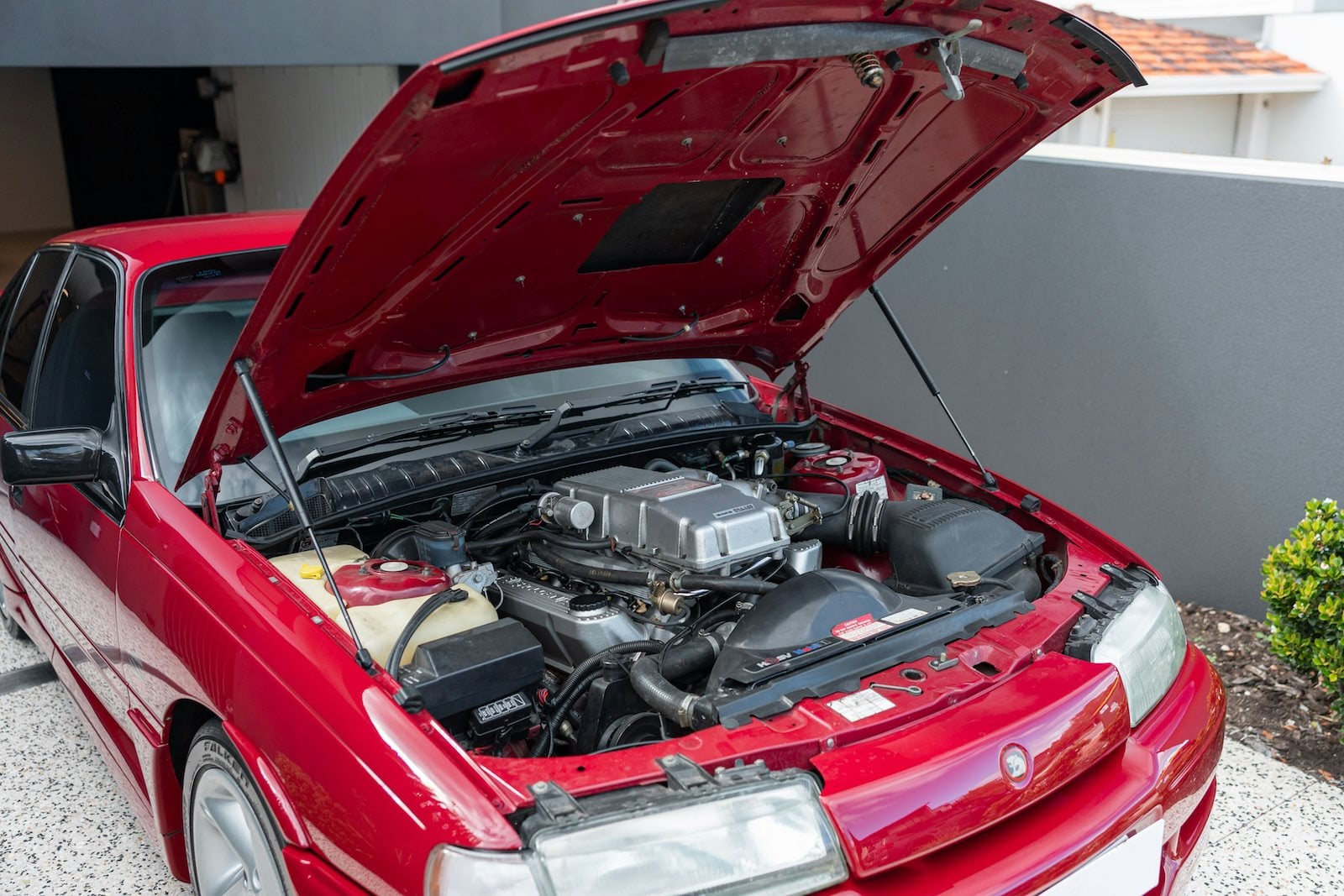
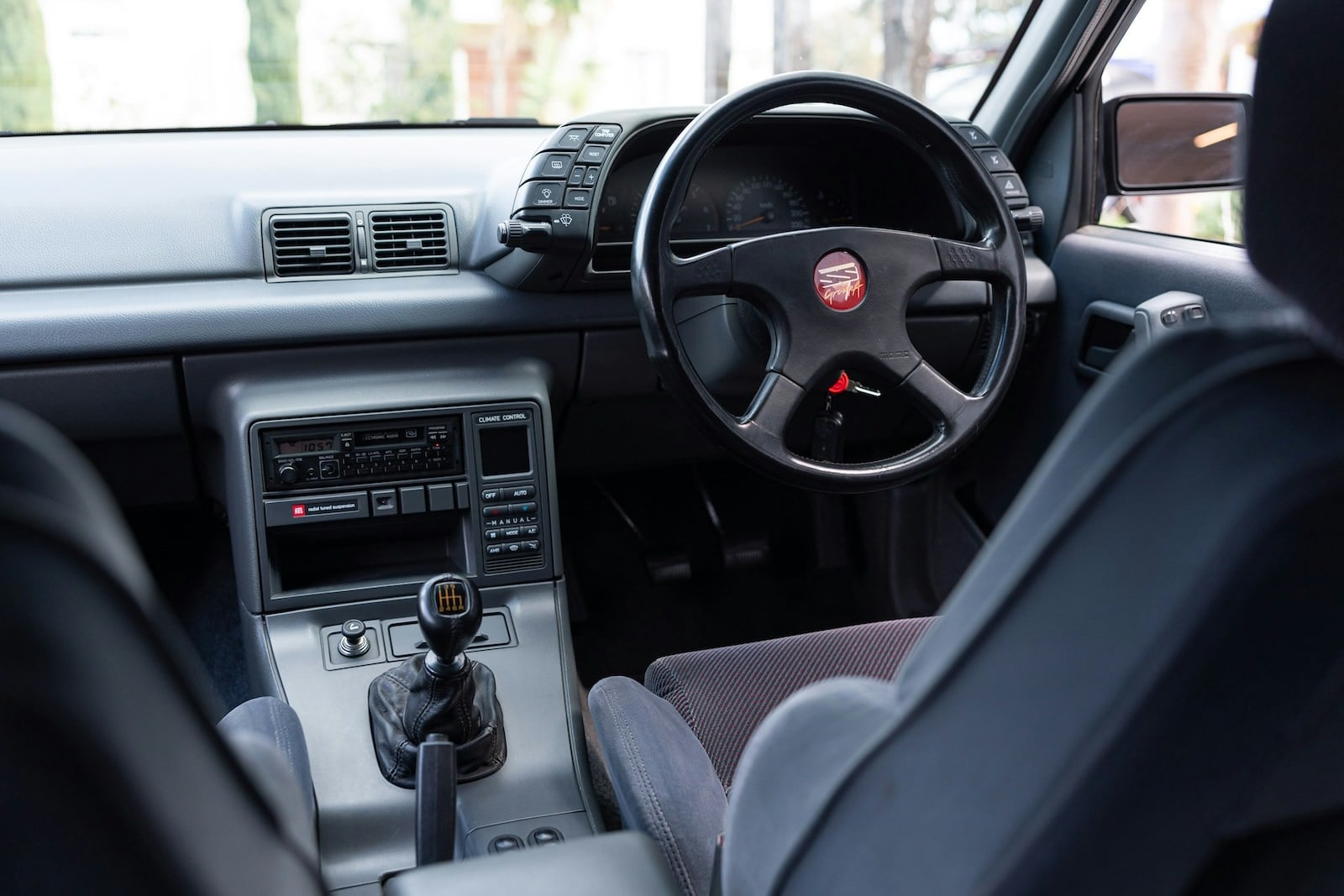
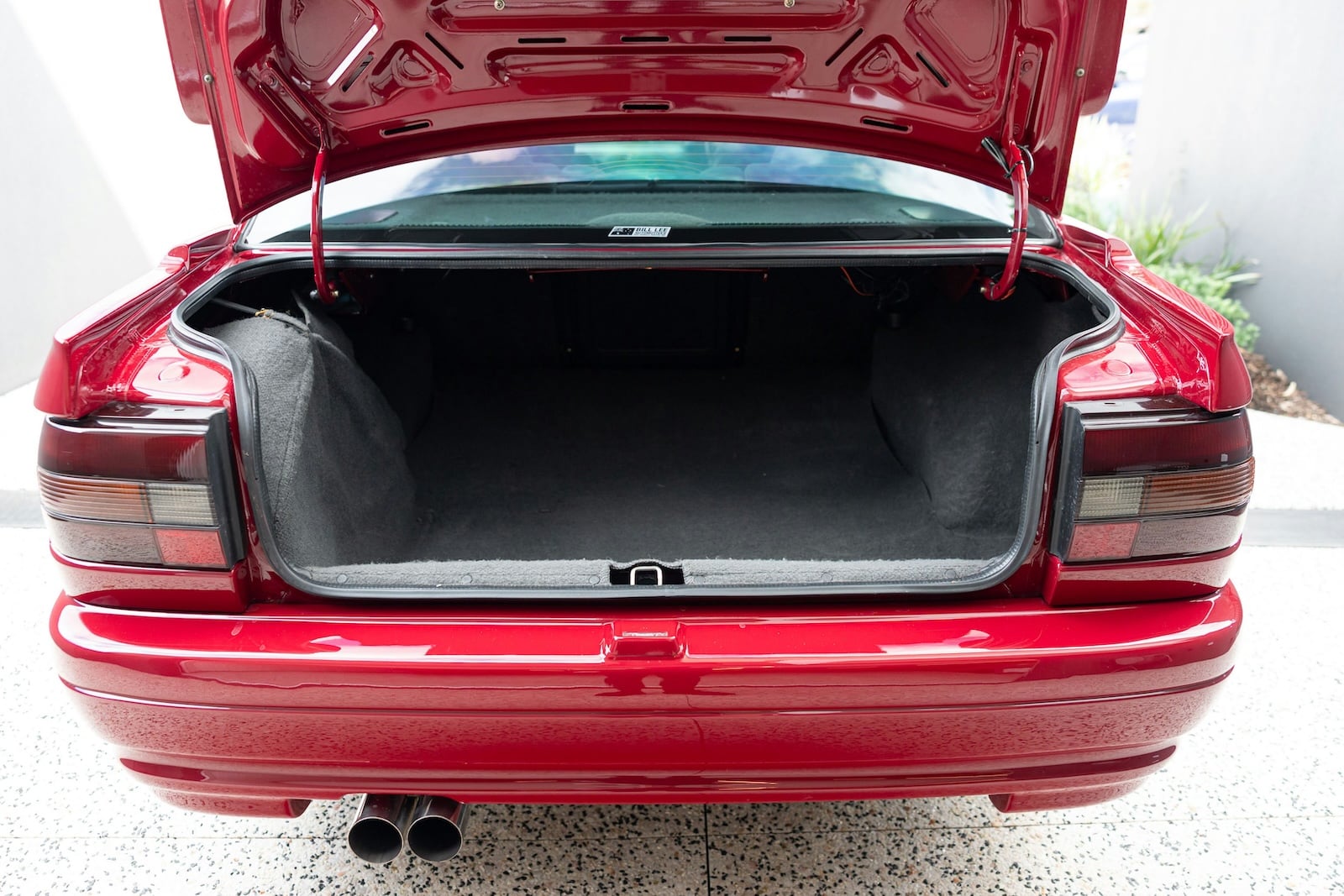
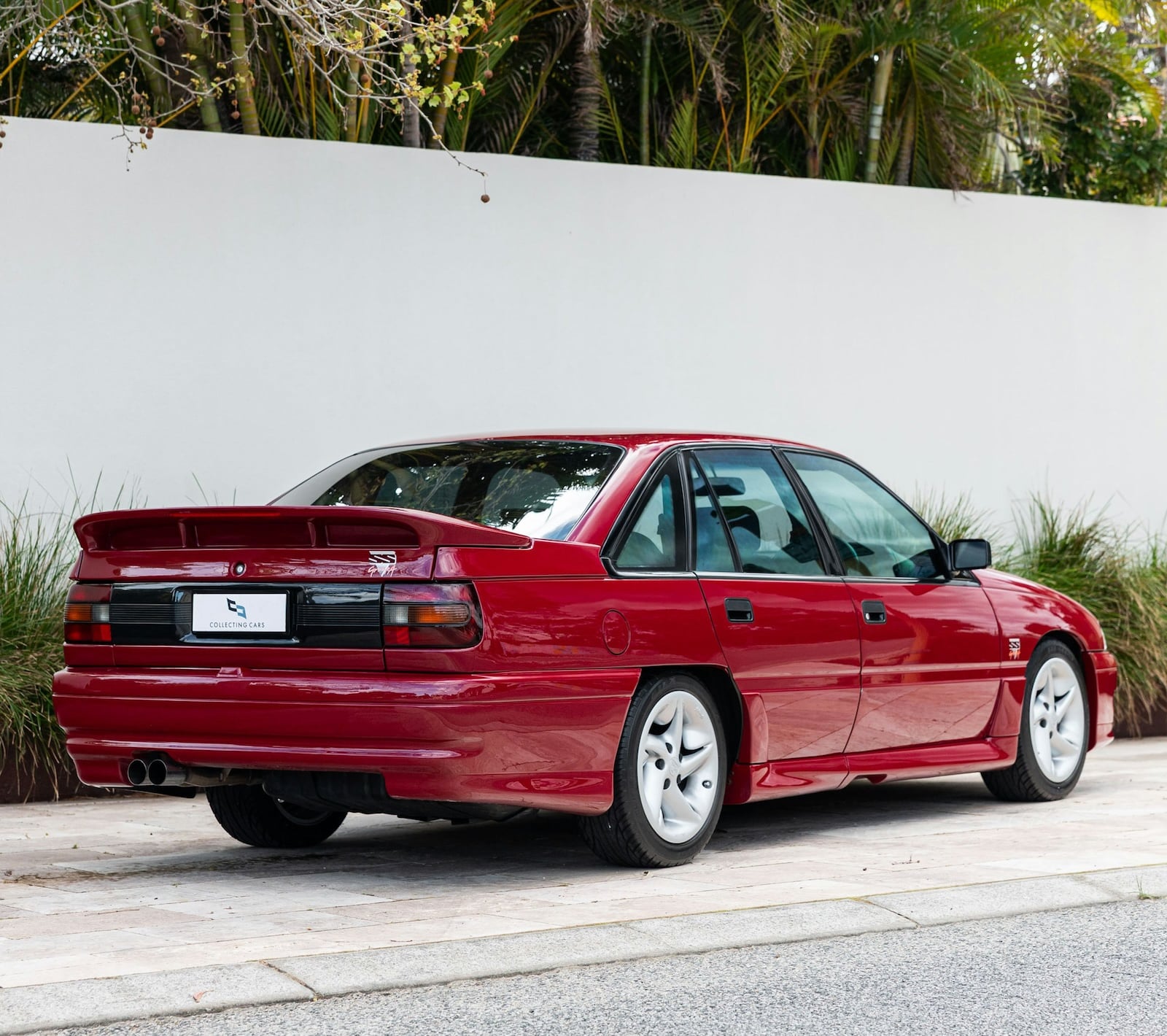
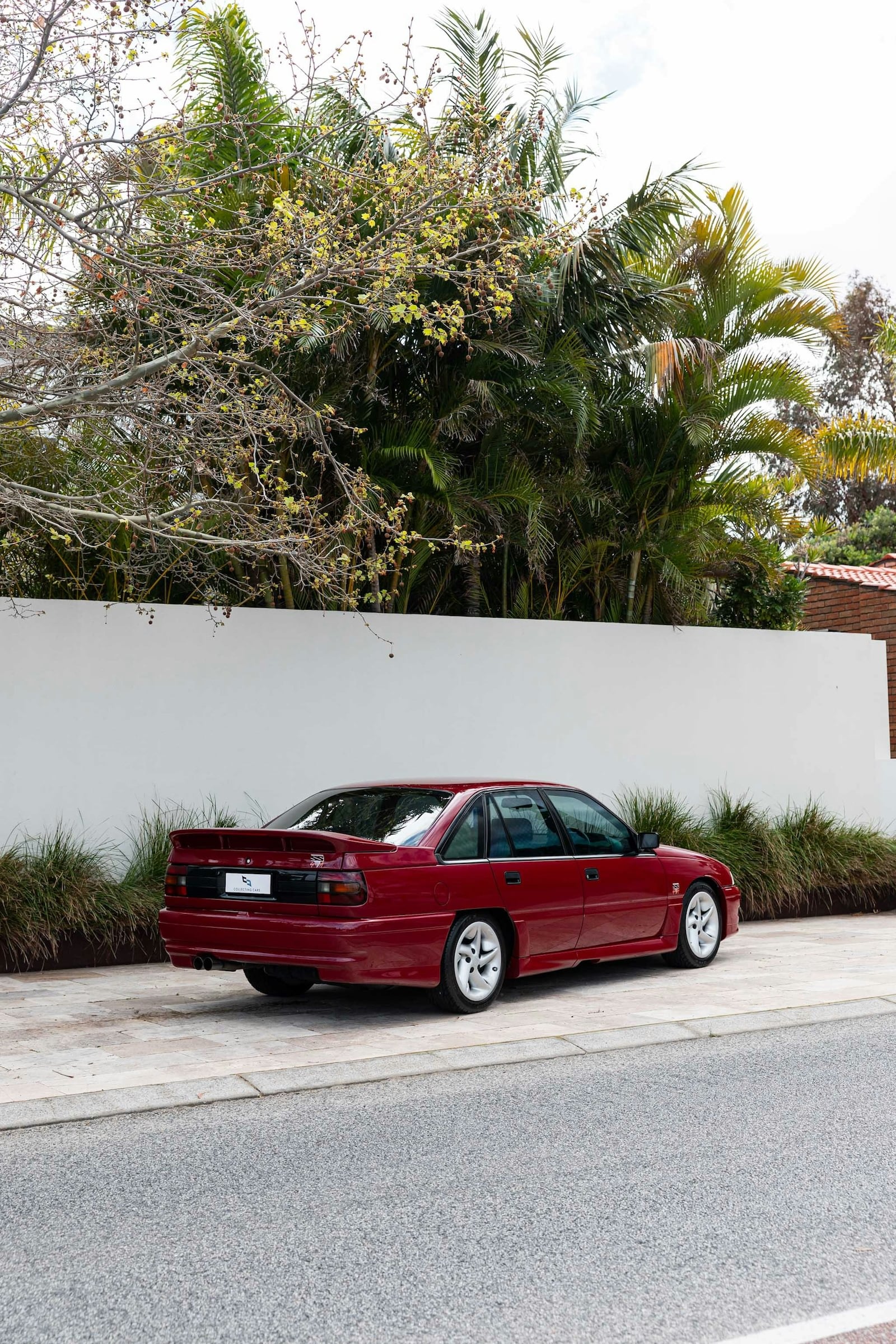
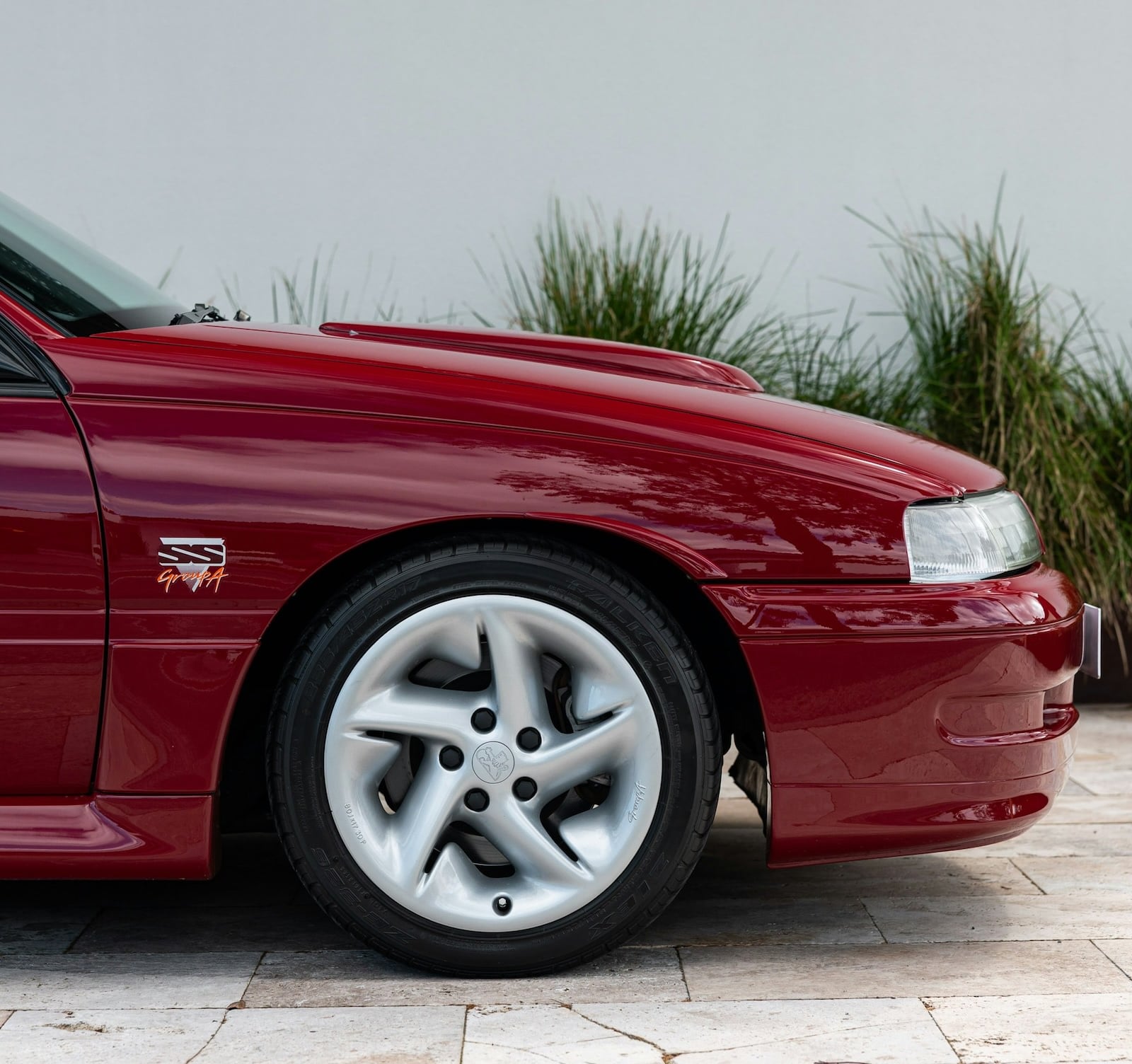
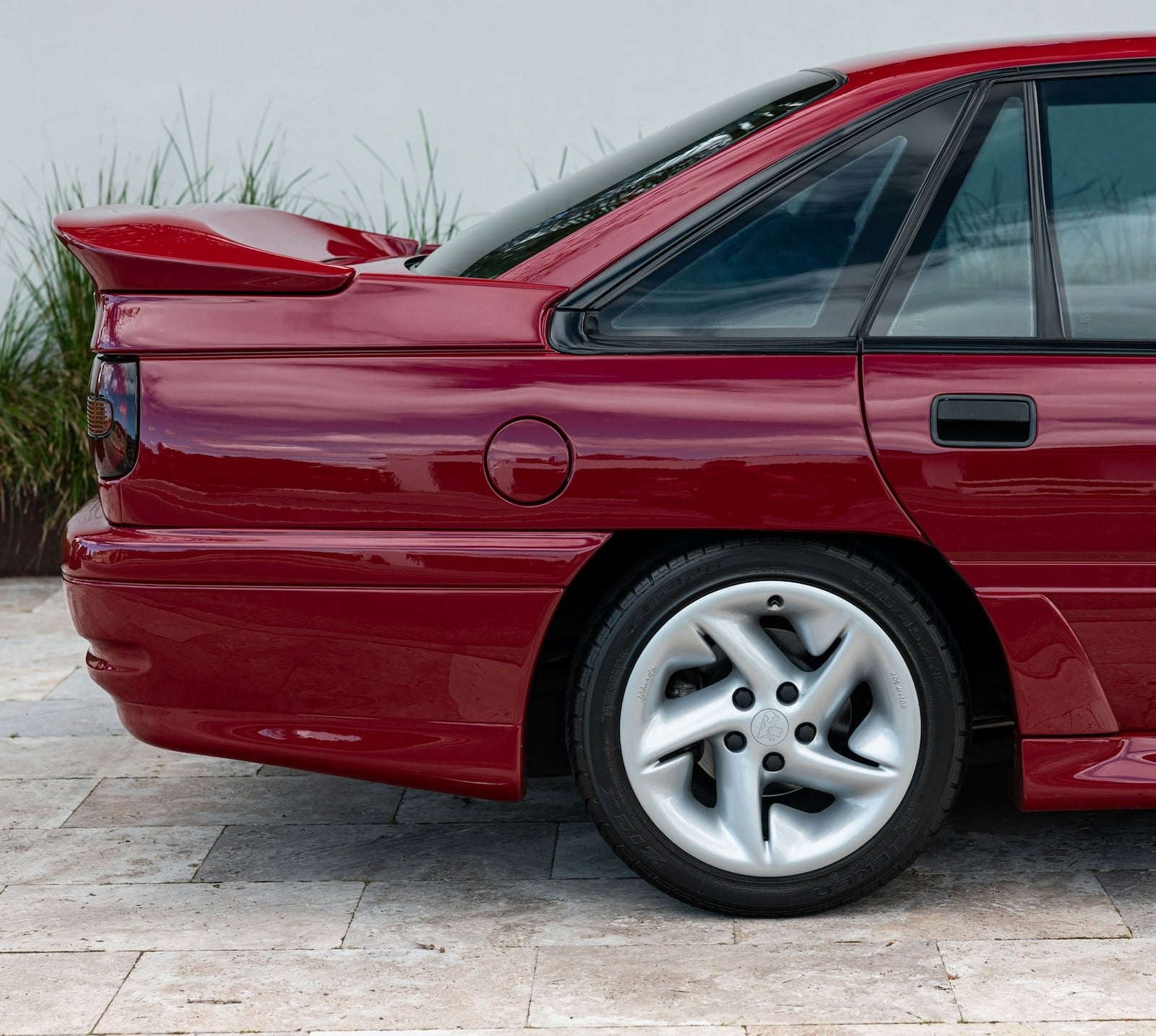
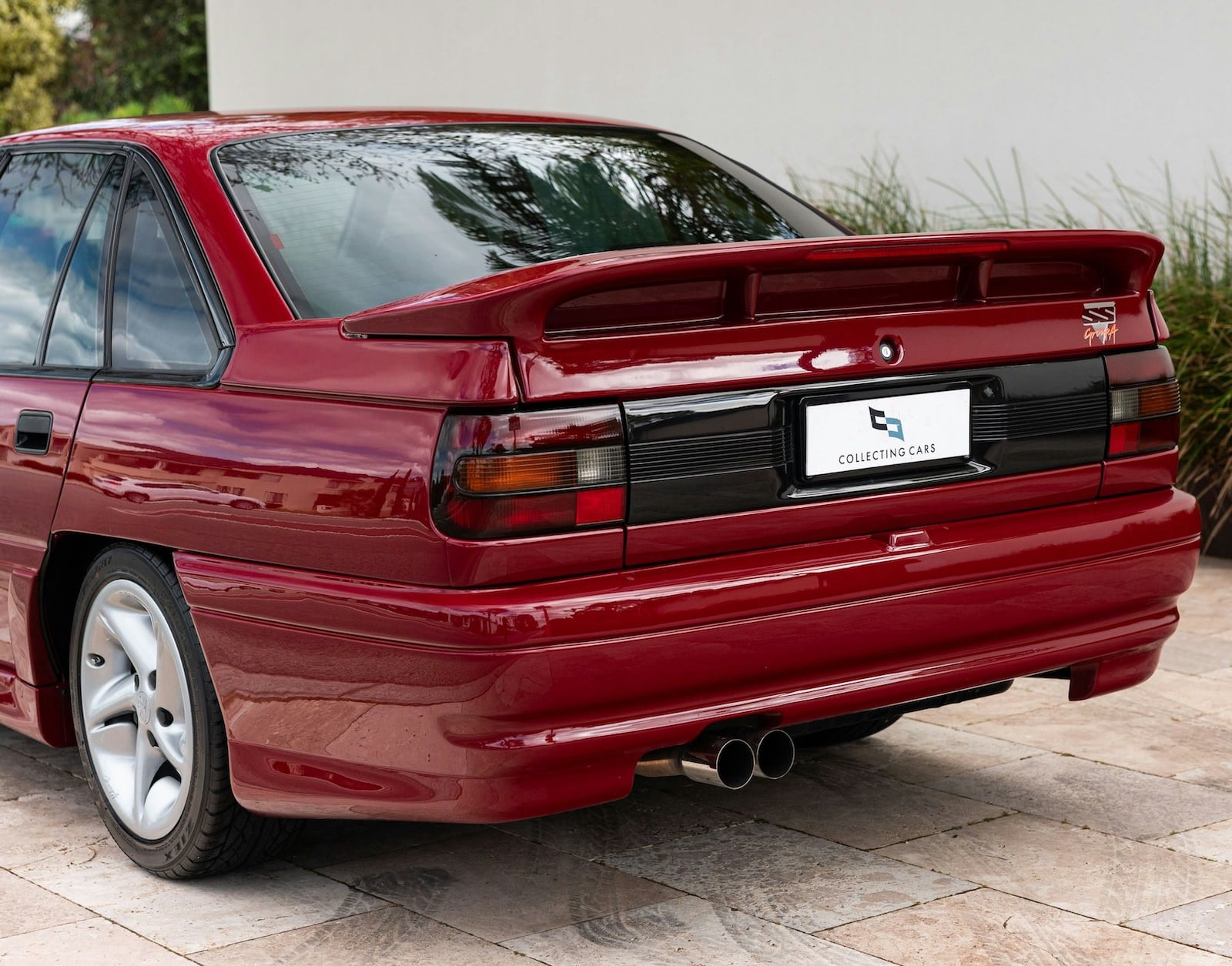
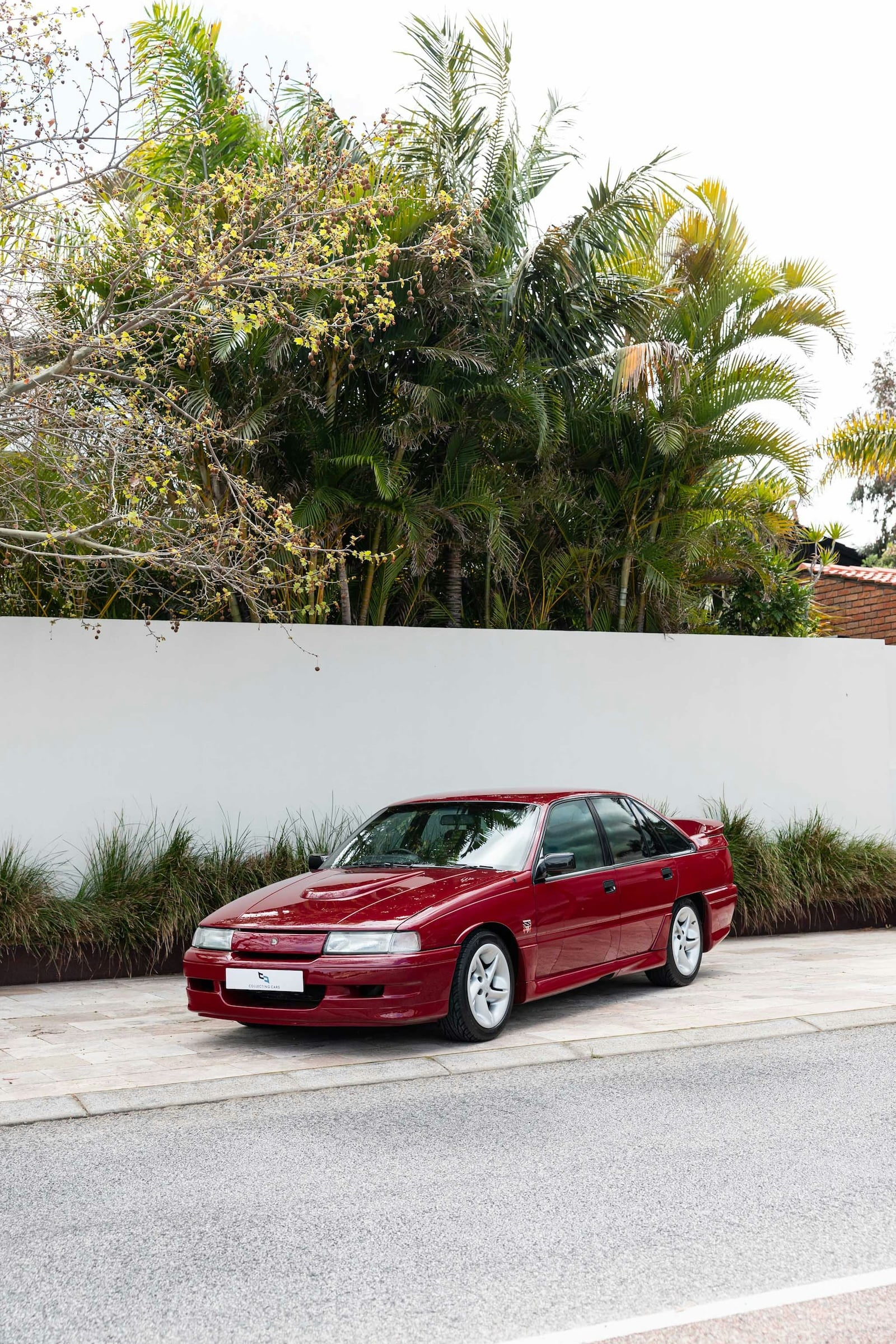
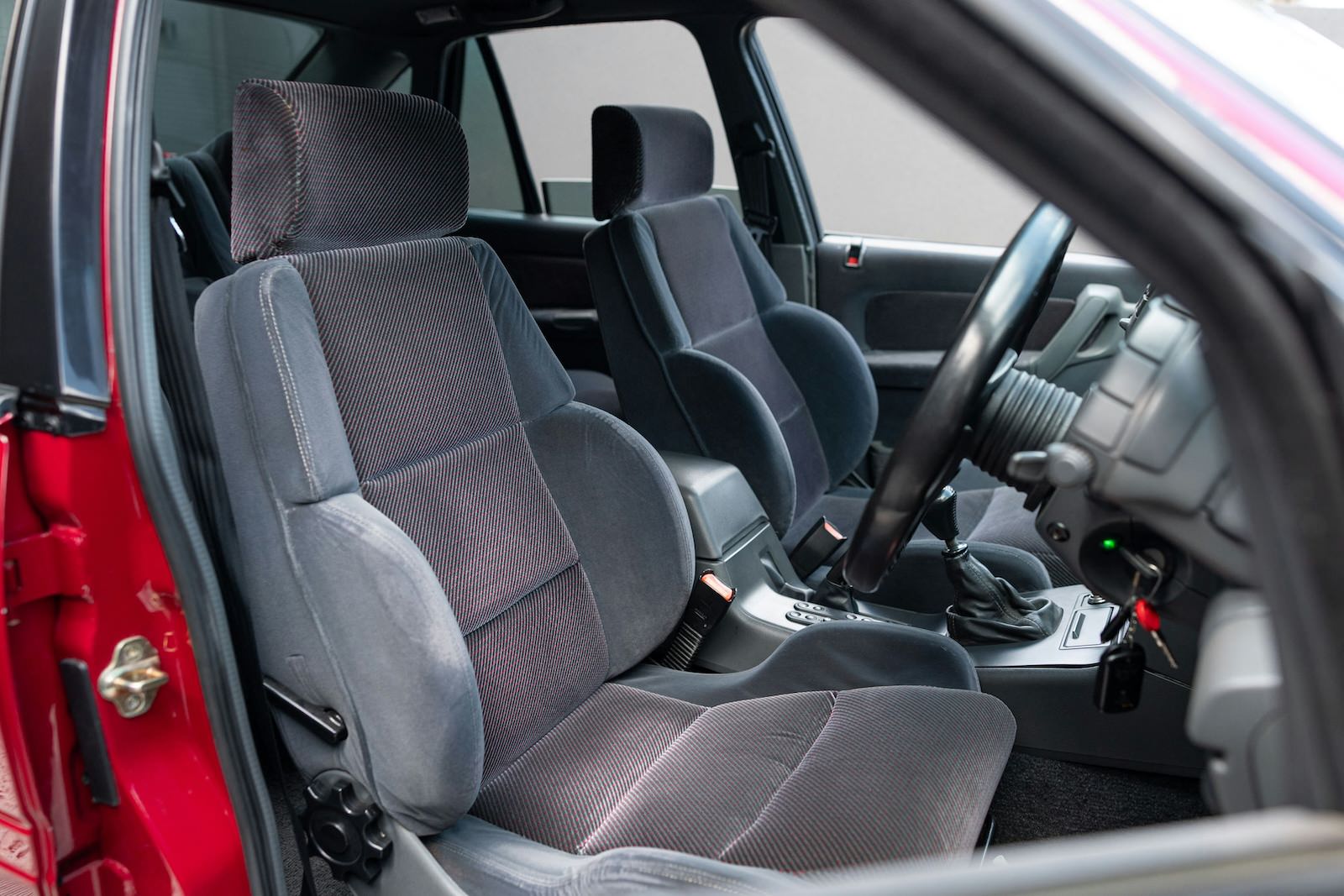
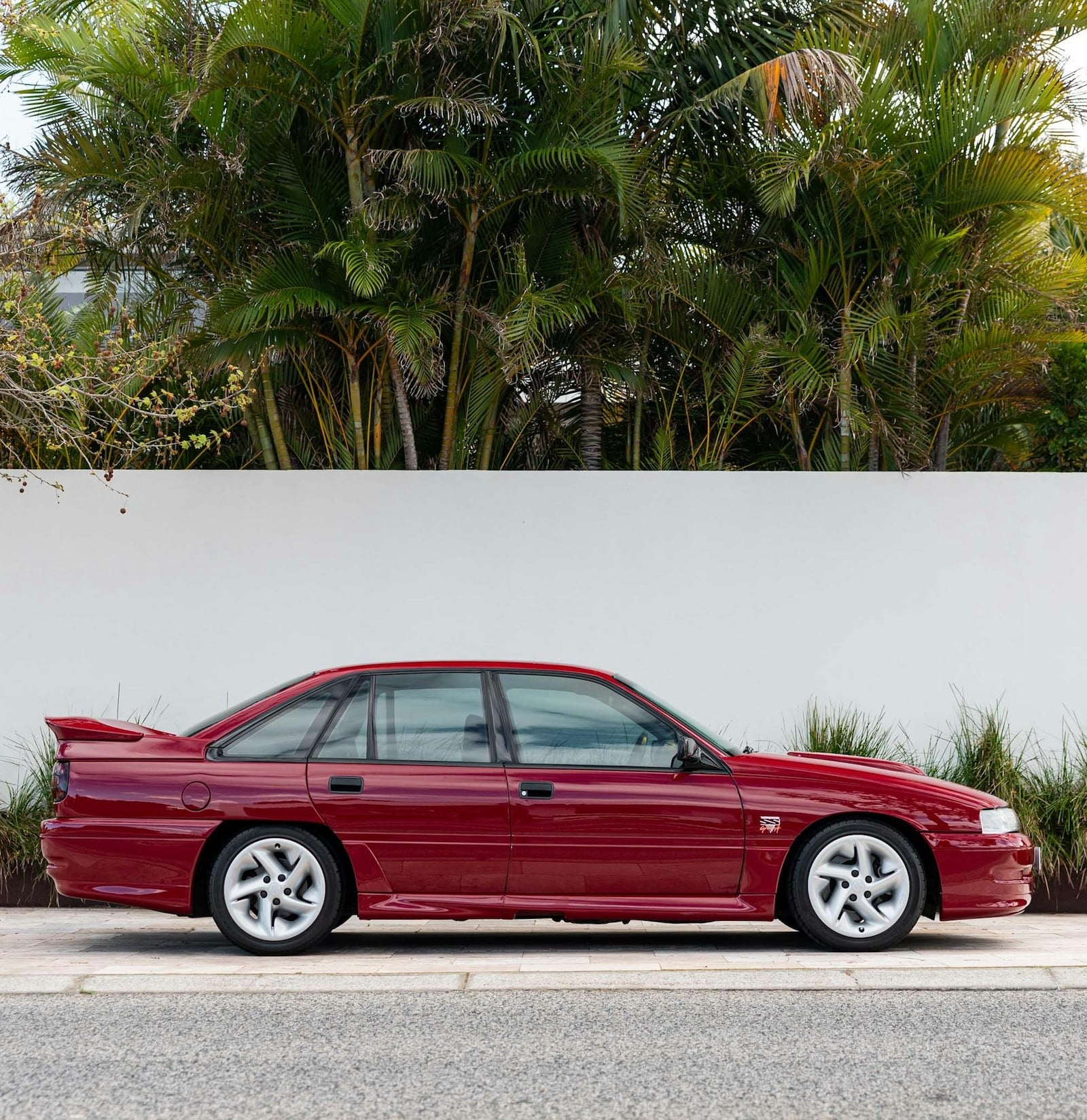
This is an original 1990 Holden HSV Commodore VN SS Group A, it’s one of just 302 examples made for Group A touring car homologation. It passed compliance in November of 1990 and it’s finished in the model-specific Durif Red over a grey velour interior with red patterned inserts on the seats and door cards.
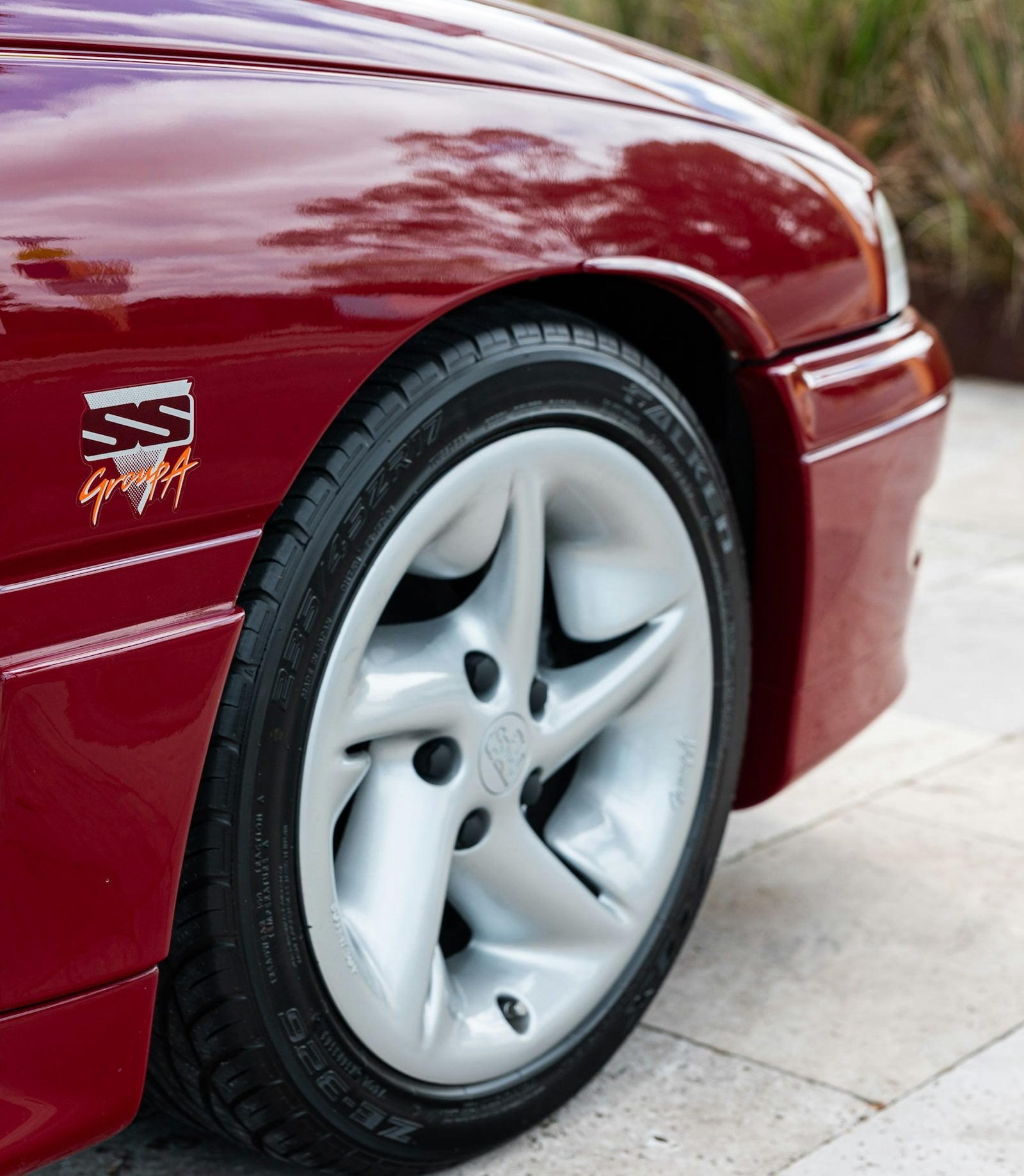
Power comes from a modified 5.0 liter naturally aspirated Holden V8 producing 215 kW (288 bhp) and 411 Nm (303 lb ft) of torque, driving the rear wheels through a 6-speed ZF S6-40 manual transmission, interestingly, the same gearbox used in the Chevrolet Corvette C4 ZR-1. The Group A specification also included upgraded suspension, brakes, and tires, as outlined higher up, this example rides on its correct 17-inch Group A alloy wheels fitted with modern Falken Ziex tires.
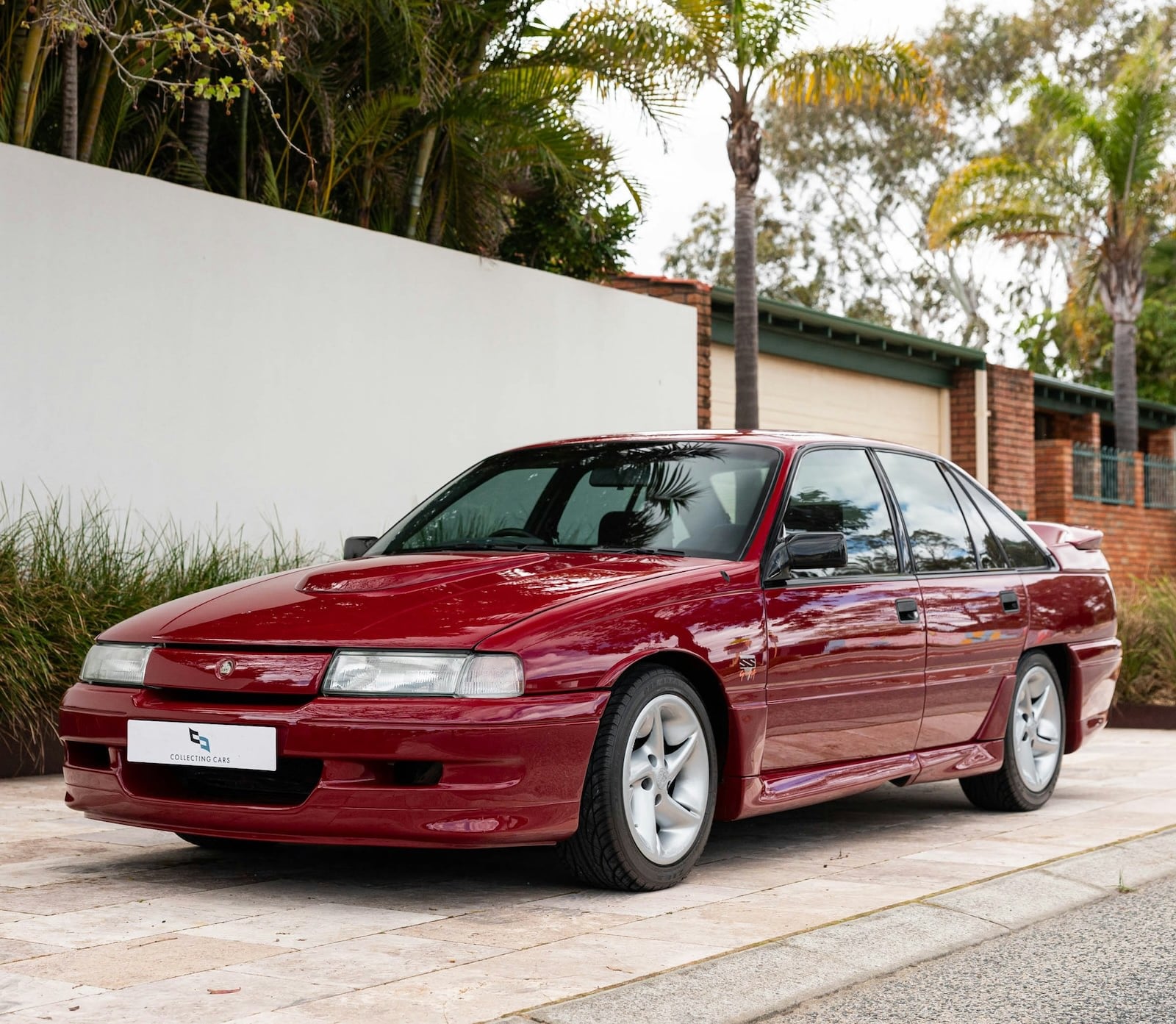
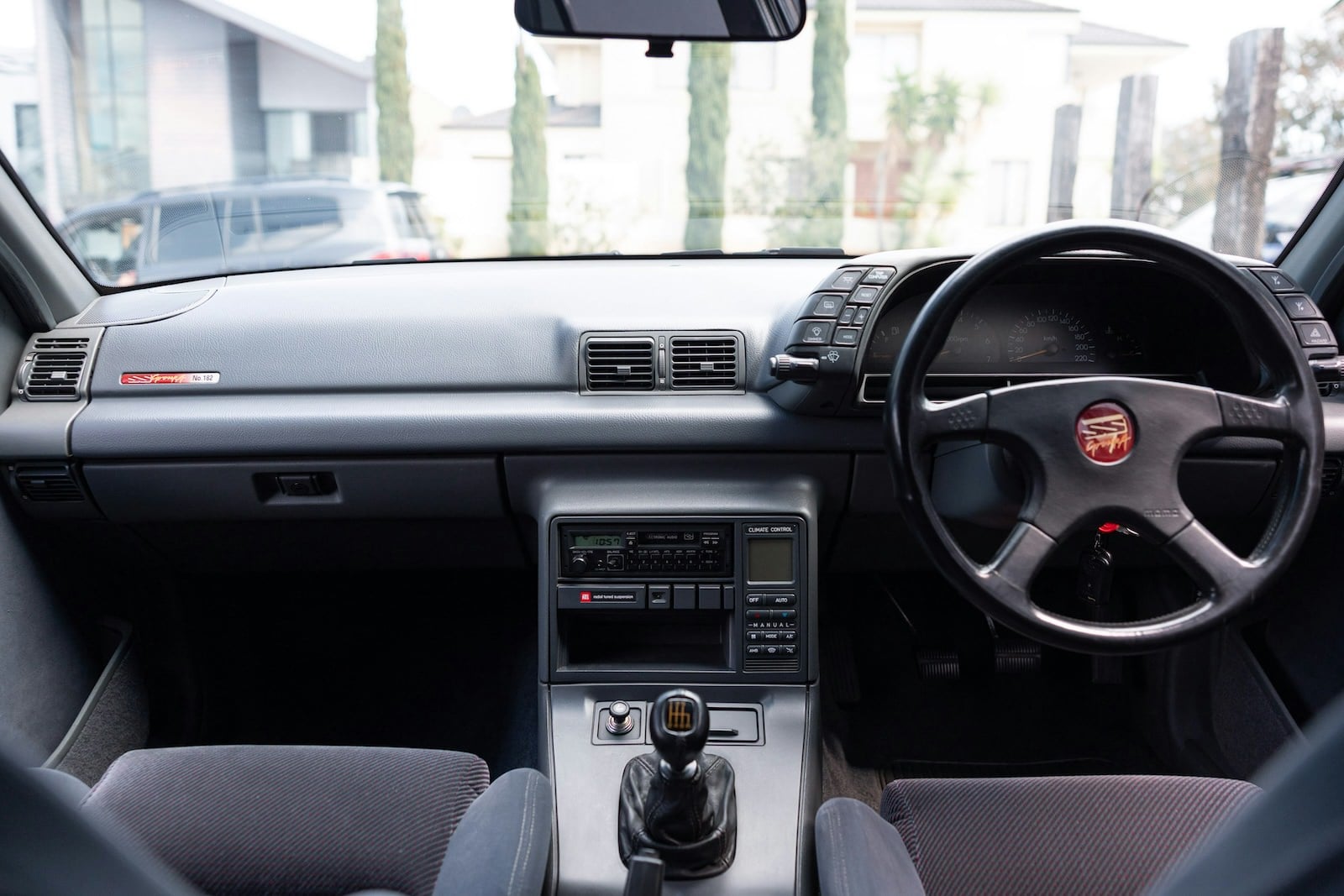
This is an original 1990 Holden HSV Commodore VN SS Group A, it’s one of just 302 examples made for Group A touring car homologation. It passed compliance in November of 1990 and it’s finished in the model-specific Durif Red over a grey velour interior with red patterned inserts on the seats and door cards.
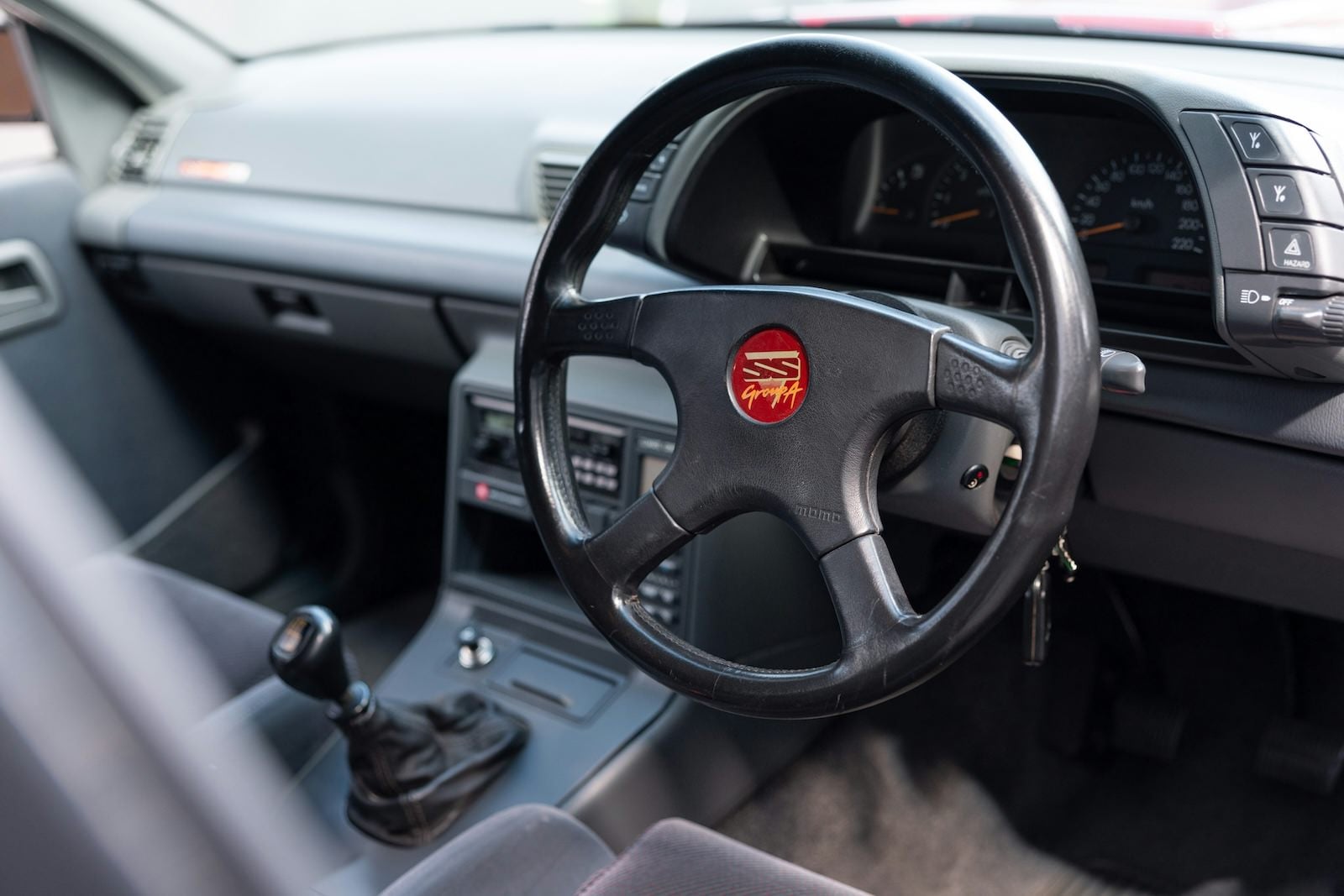
Factory equipment included a four-spoke Momo steering wheel, automatic climate control, electric windows, electrically adjustable mirrors, a top-tinted windscreen, and a cassette stereo. The odometer currently displays 50,767 kilometers, although the mileage is not warranted by the seller. The most recent recorded service was carried out in April of 2022 at 50,348 kilometers, following services at Bill Lee Automotives in August of 2019 and April of 2020.
It’s now being offered for sale out of Perth, Australia accompanied by its owner’s manuals in a red Metro Holden wallet, a stamped service booklet, maintenance invoices, and two keys. If you’d like to read more about it or register to bid, you can visit the listing here.
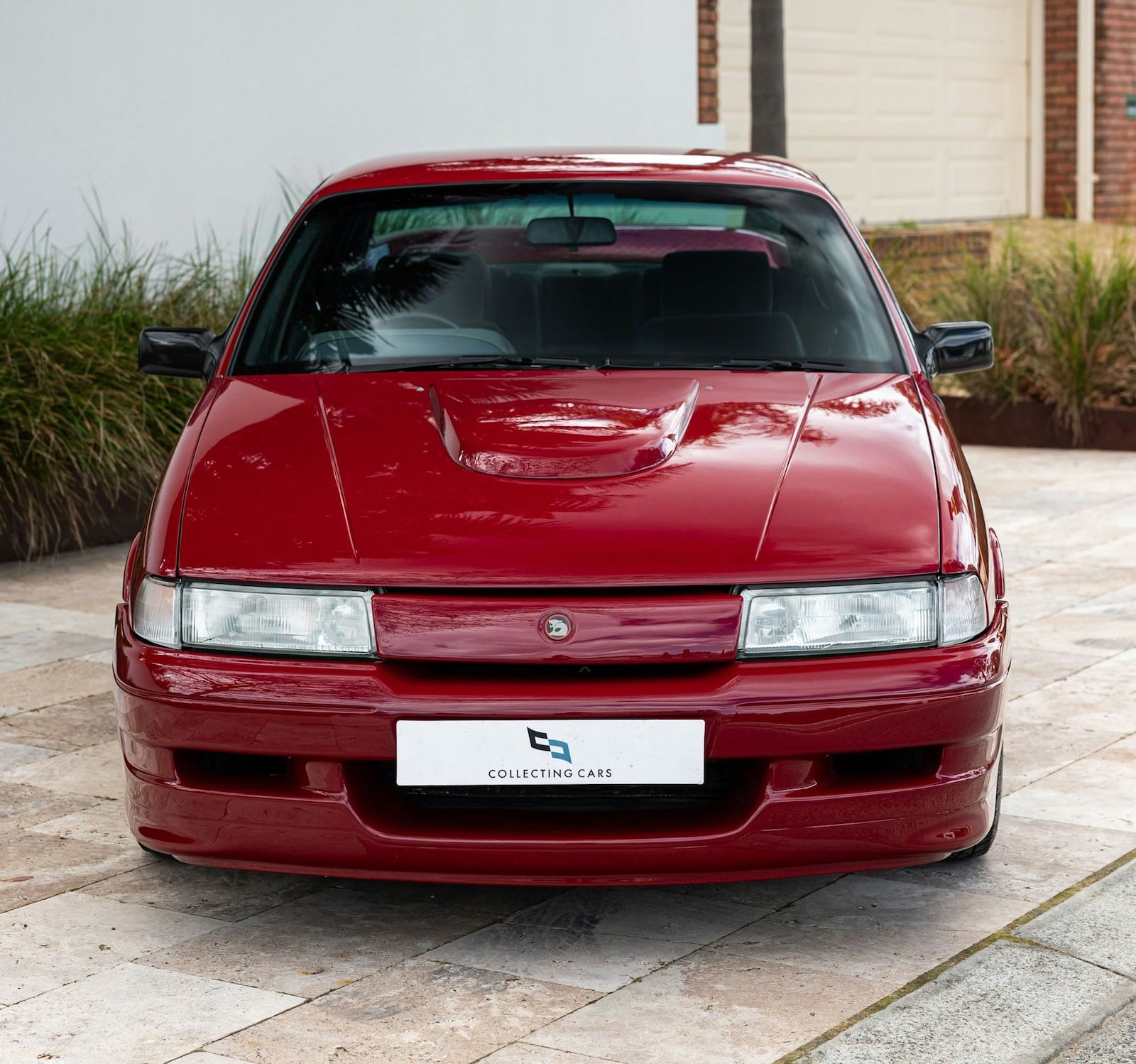
Images courtesy of Collecting Cars

Articles that Ben Branch has written have been covered on CNN, Popular Mechanics, Smithsonian Magazine, Road & Track Magazine, the official Pinterest blog, the official eBay Motors blog, BuzzFeed, Autoweek Magazine, Wired Magazine, Autoblog, Gear Patrol, Jalopnik, The Verge, and many more.
Silodrome was founded by Ben back in 2010, in the years since the site has grown to become a world leader in the alternative and vintage motoring sector, with well over a million monthly readers from around the world and many hundreds of thousands of followers on social media.