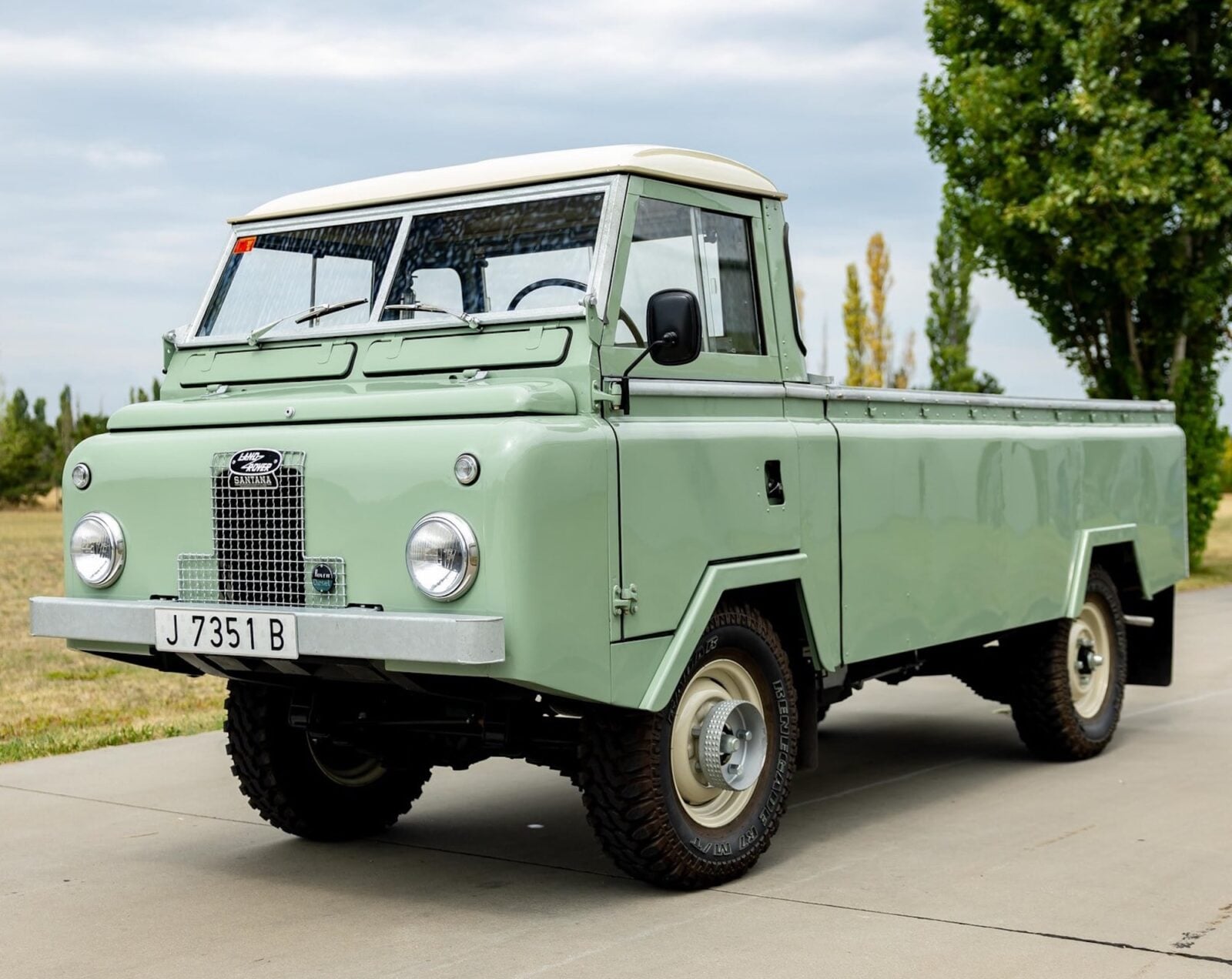
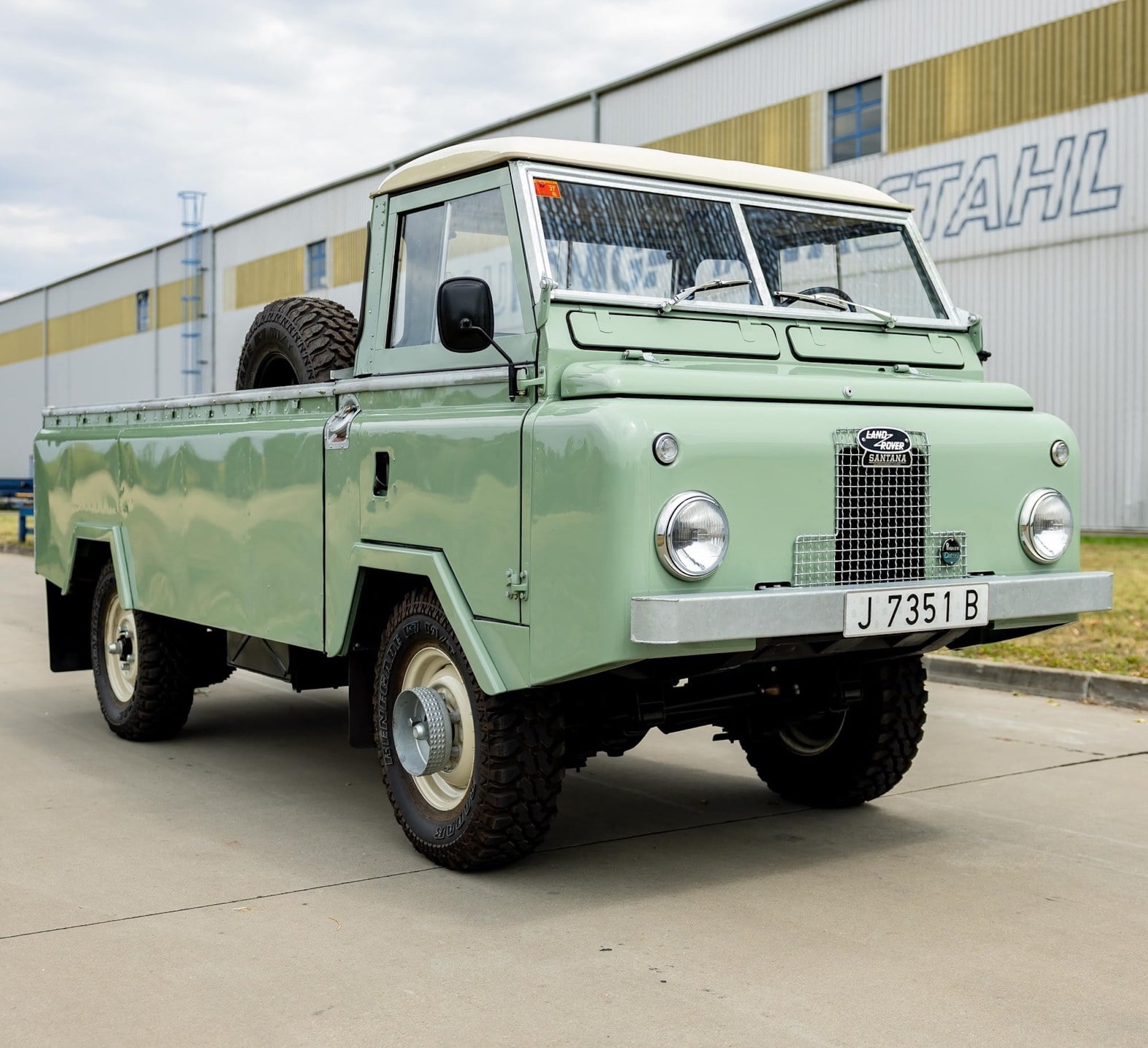
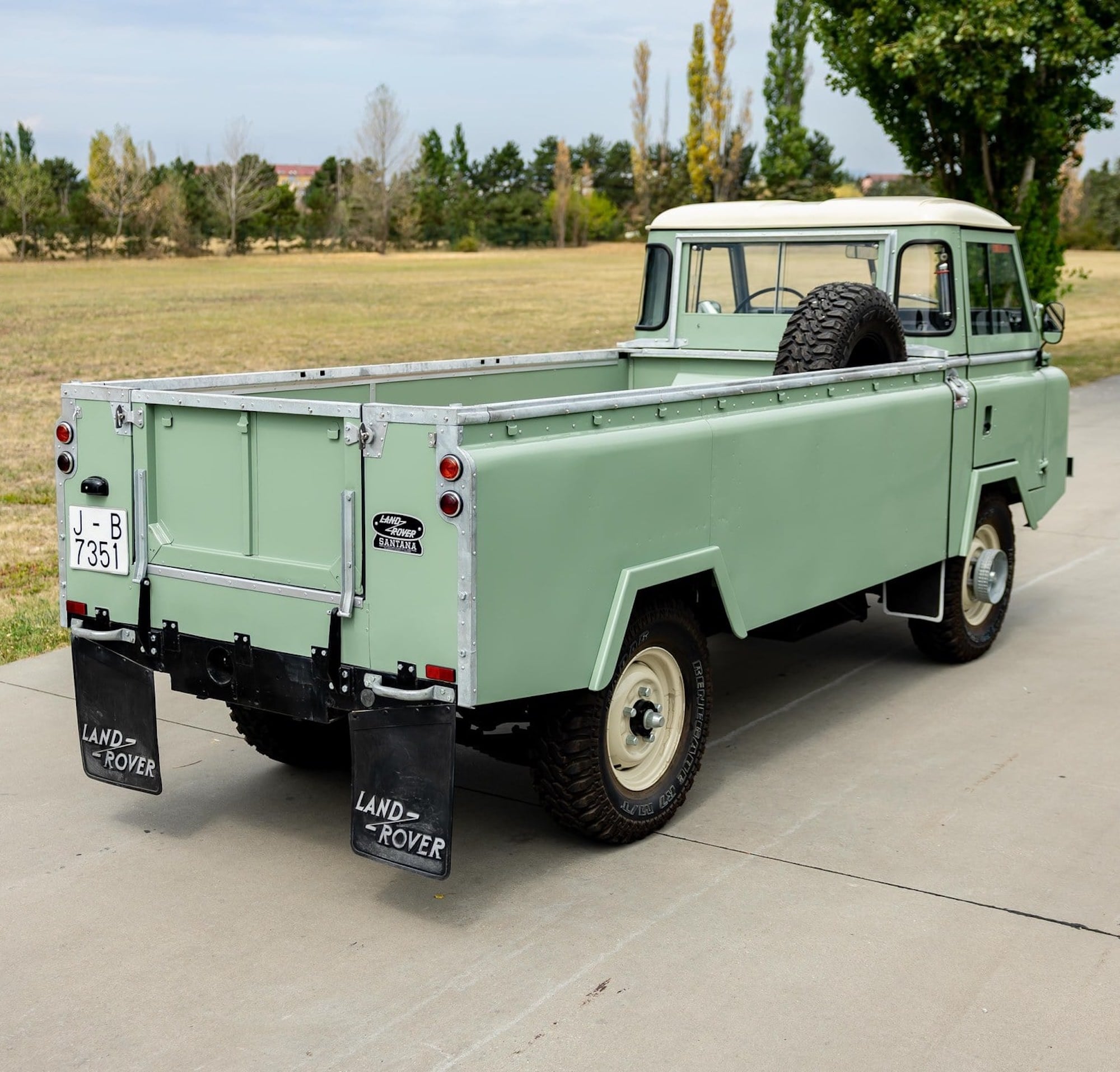
This is a rare surviving Land Rover Santana 1300. It’s often mistaken for a Land Rover Series IIA Forward Control from Britain, but it’s actually a unique vehicle developed in Spain on the LWB Land Rover Santana chassis.
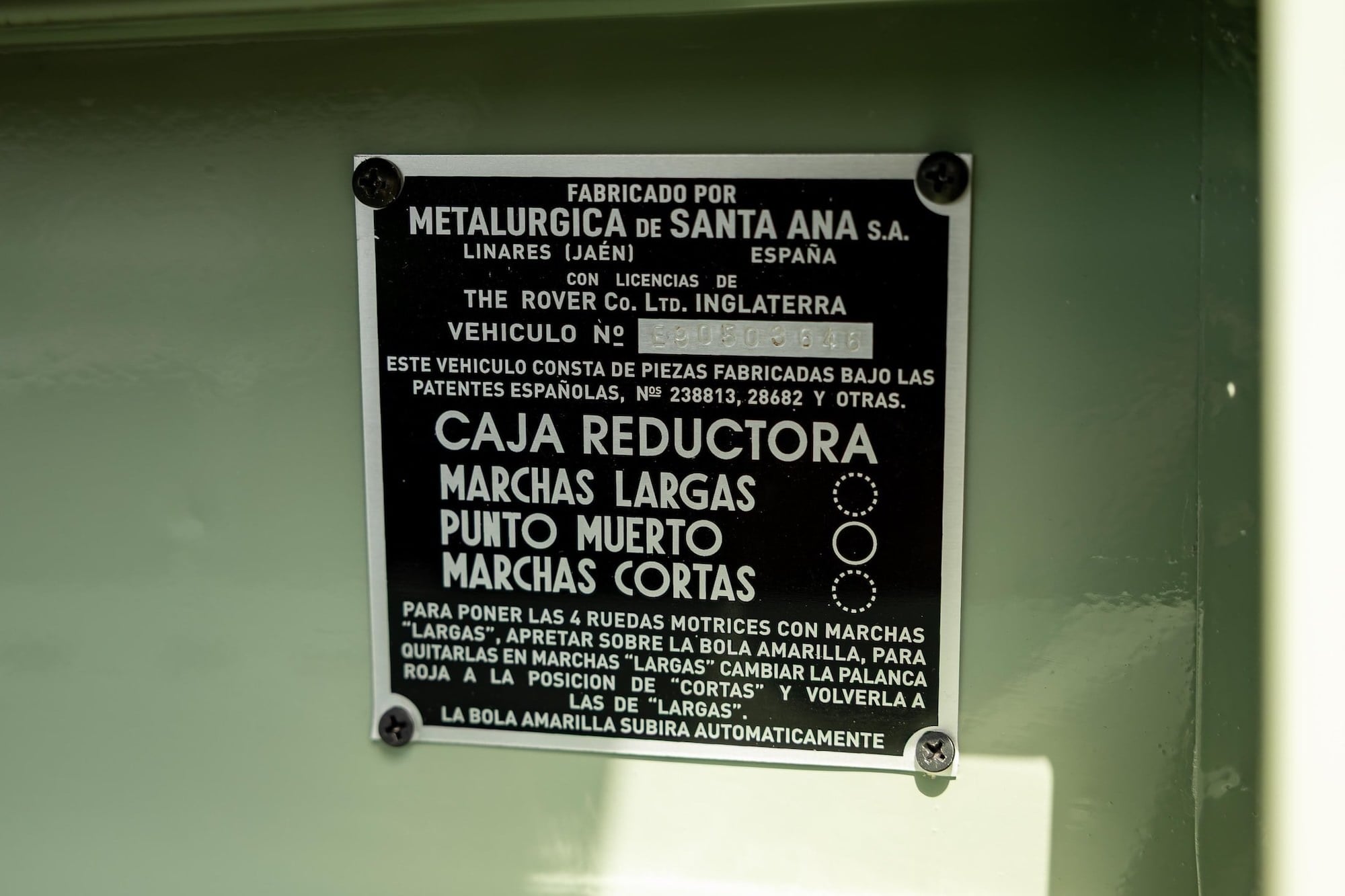
4,000 of them were made but only a tiny fraction of that number are thought to survive. Santana Land Rovers were built in Spain, with the vast majority of parts being wholly manufactured there, and they’re popular with vintage 4×4 enthusiasts in Europe.
Fast Facts: The Land Rover Santana 1300
- The Land Rover Santana 1300 was a Spanish-developed forward-control 4×4 based on Santana’s long-wheelbase Land Rover platform. Introduced in 1967, it moved the cab over the engine to create a larger cargo area, while keeping a ladder chassis, live axles, leaf springs, a 4-speed manual gearbox, and dual-range four-wheel drive.
- Santana built the 1300 in Linares after establishing licensed Land Rover production in 1958 with increasingly high Spanish-content requirements. Around 4,000 examples were produced through 1978, serving extensively with Spain’s military, police, public works agencies, firefighters, and commercial operators. The model took its name from its 1,300 kg payload rating.
- Power was typically supplied by 2.25 liter petrol or diesel four-cylinder engines, producing 80 bhp and just over 60 bhp respectively, while some versions received Santana six-cylinder engines. Performance was modest given curb weights approaching 1.8 tonnes, but the 1300 was valued for low speed load carrying, off-road ability, toughness, and for its adaptable body configurations.
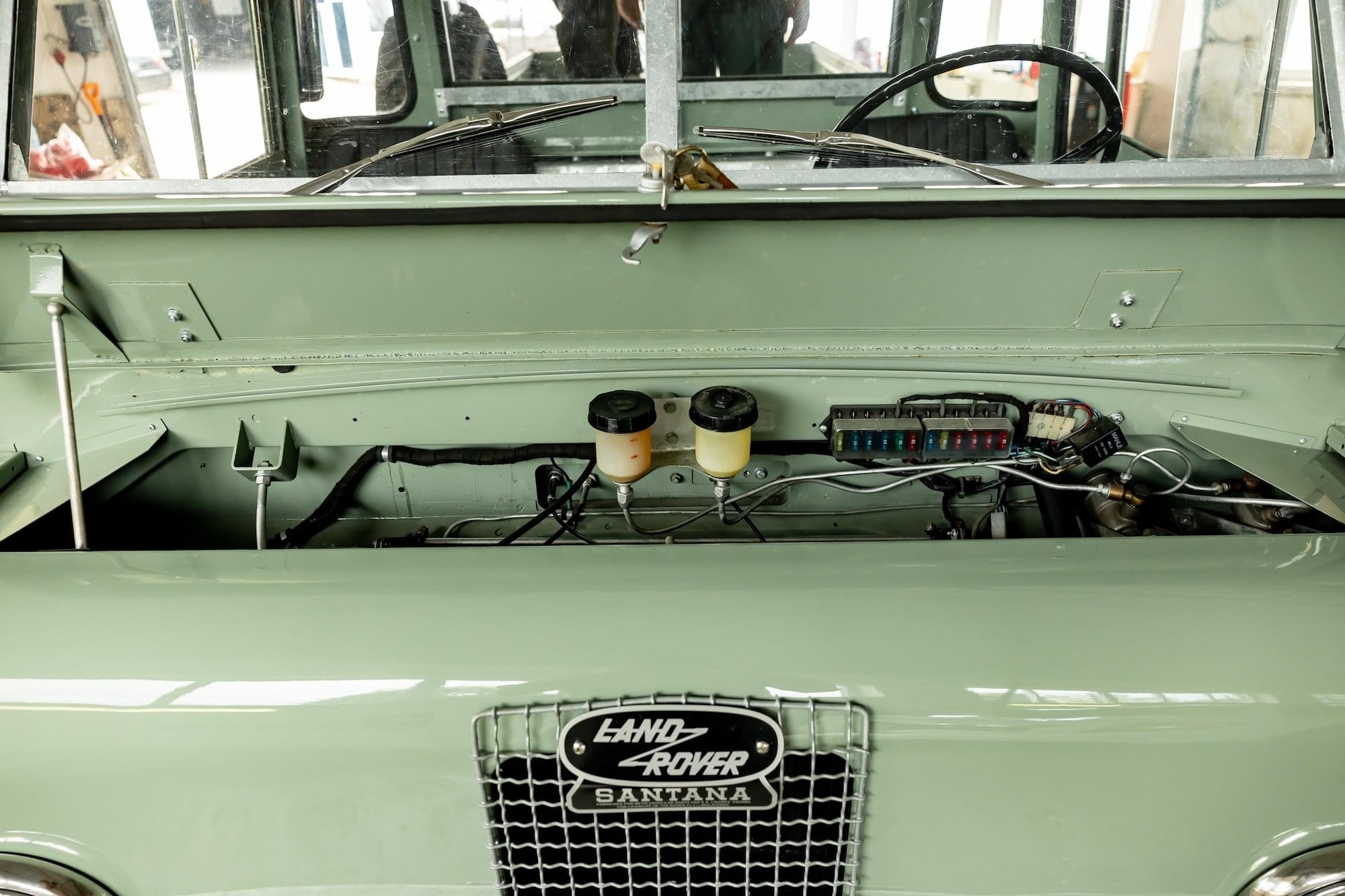
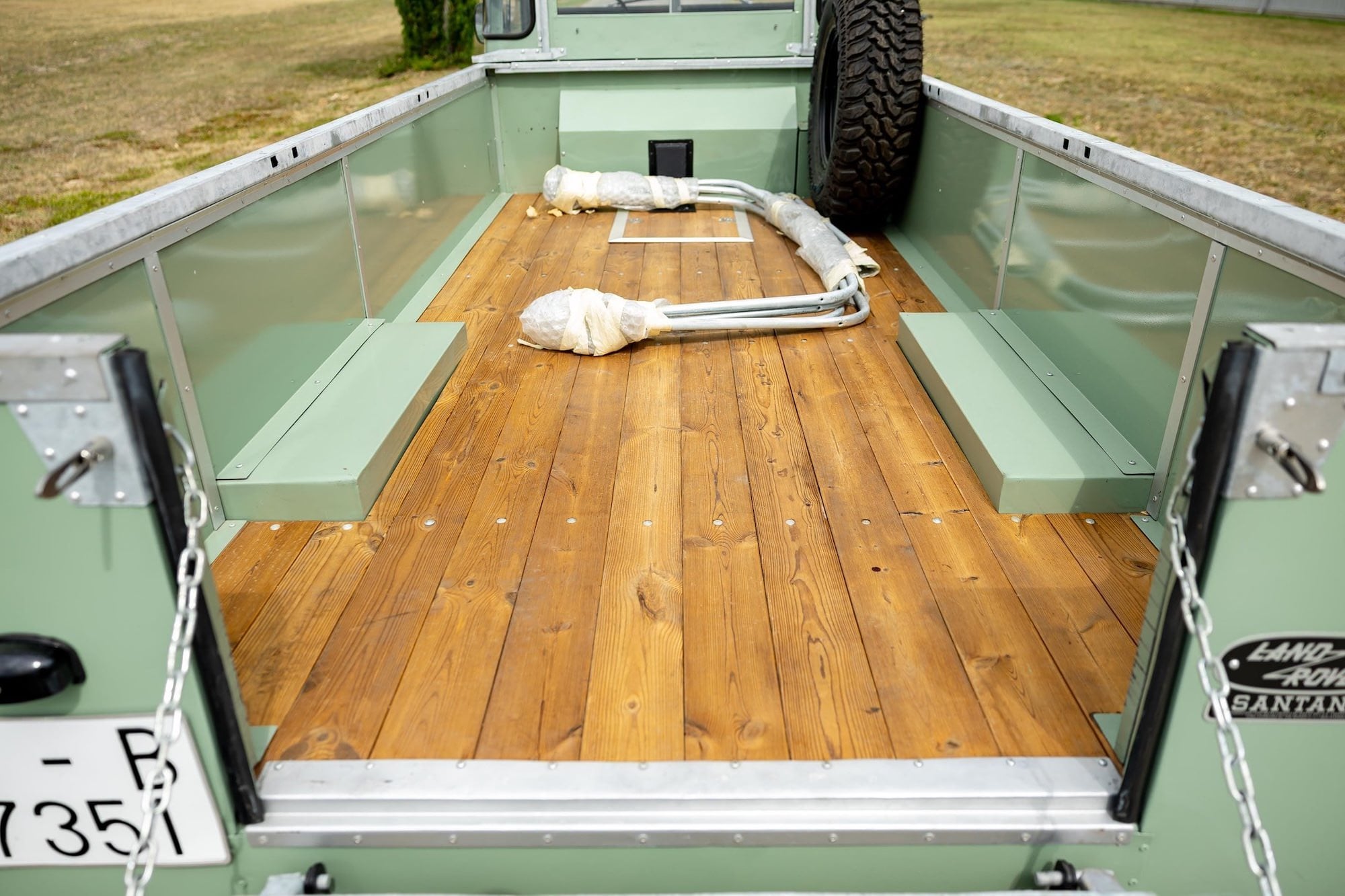
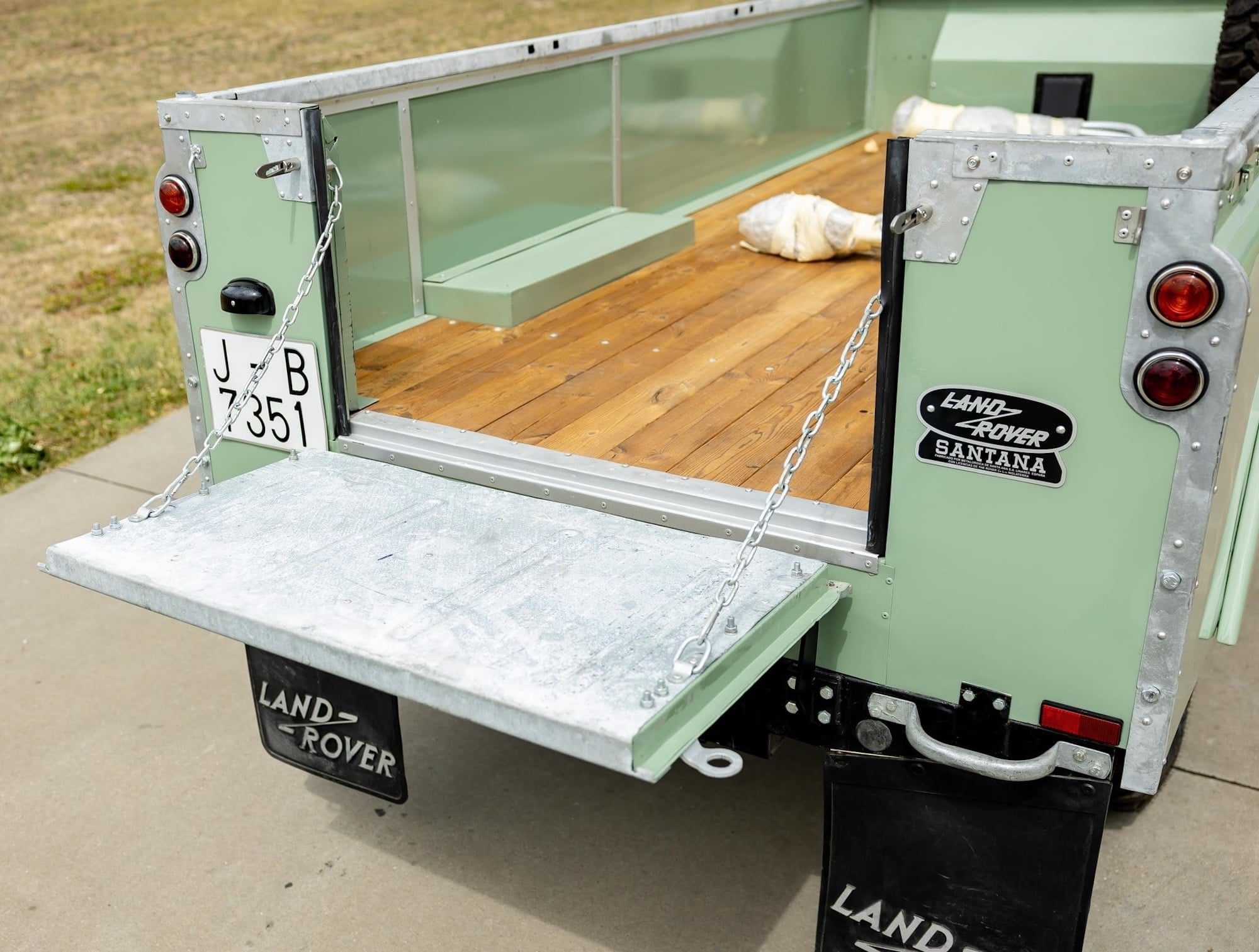
- The 1975 Santana 1300 shown here has reportedly received a restoration requiring more than 1,000 hours, covering the chassis, wiring, bodywork, interior, paint, and rear timber floor. It has a 2.3 liter diesel, 4-speed manual, part-time four-wheel drive, nine seats, disc brakes, about 11,256 kms showing, and inspection valid until January of 2027.
History Speedrun: The Land Rover Santana 1300
Metalúrgica de Santa Ana, the company better-known as Santana, was set up in Linares, Spain, under a Franco-era plan to revive the province’s economy – its first products were agricultural machines, mostly combine harvesters and the like.
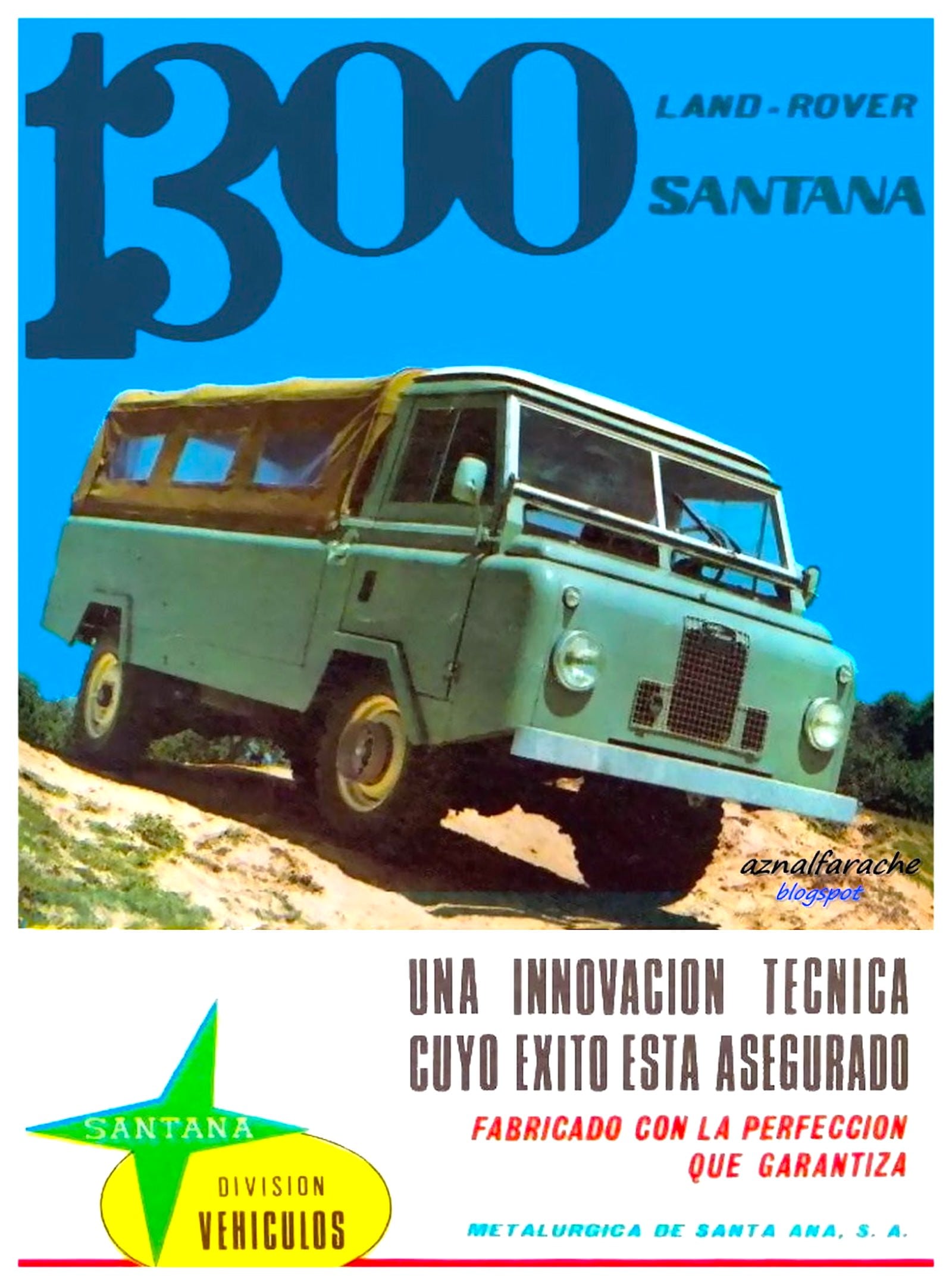
 The Land Rover Santana 1300 was developed to offer far more load carrying ability than the other Santana Land Rovers that were in production, the cab was shifted forward, significantly lengthening the cargo bay in the back. Image courtesy of Metalúrgica de Santa Ana.
When the company approached Rover about building Land Rovers under license, the British wanted it to make the Series I using tooling from Minerva, whose Belgian license had just ended. Santa Ana held out for the newer model, it was a smart move by the Spaniards, and production of the then-current Series II Land Rover began in 1958.
The Rover license came with a local-content clause, Spanish-made parts had to make up 75% of the first 1,500 vehicles, 85% of the next 1,000 and 95% after that. Meeting the quota took some serious improvisation at first, including pulling the spark plugs from imported engines and fitting Spanish-made ones in their place.
The buyers who took to the early trucks were mostly in the public sector, the army, the Guardia Civil, the Policía Armada, the public works ministry, and the national telephone company.
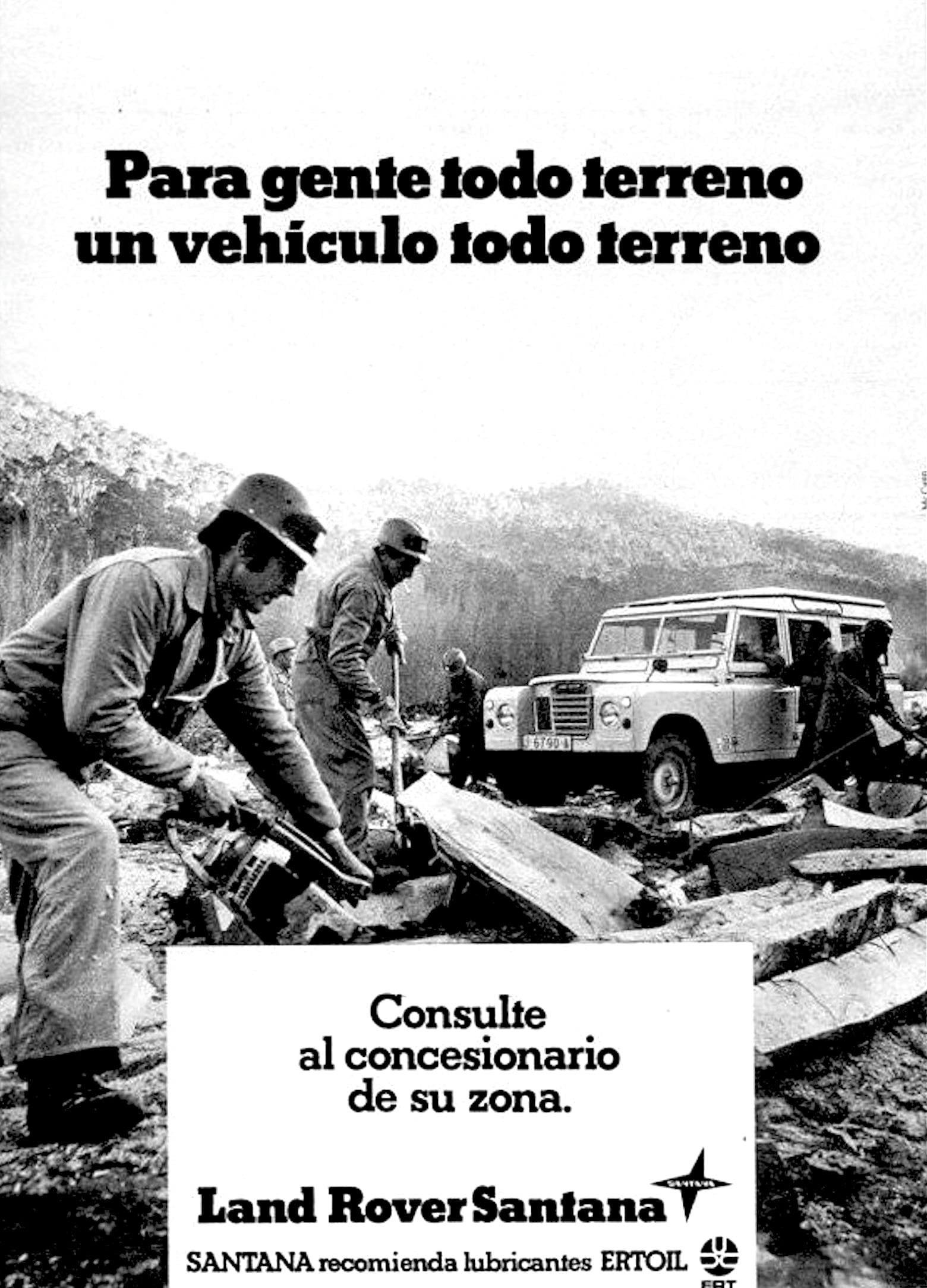
Santana’s Land Rovers had been used as light commercial vehicles from the start, and the company soon wanted a model that kept their off-road ability but could carry more cargo. The job went to its design and prototype department.
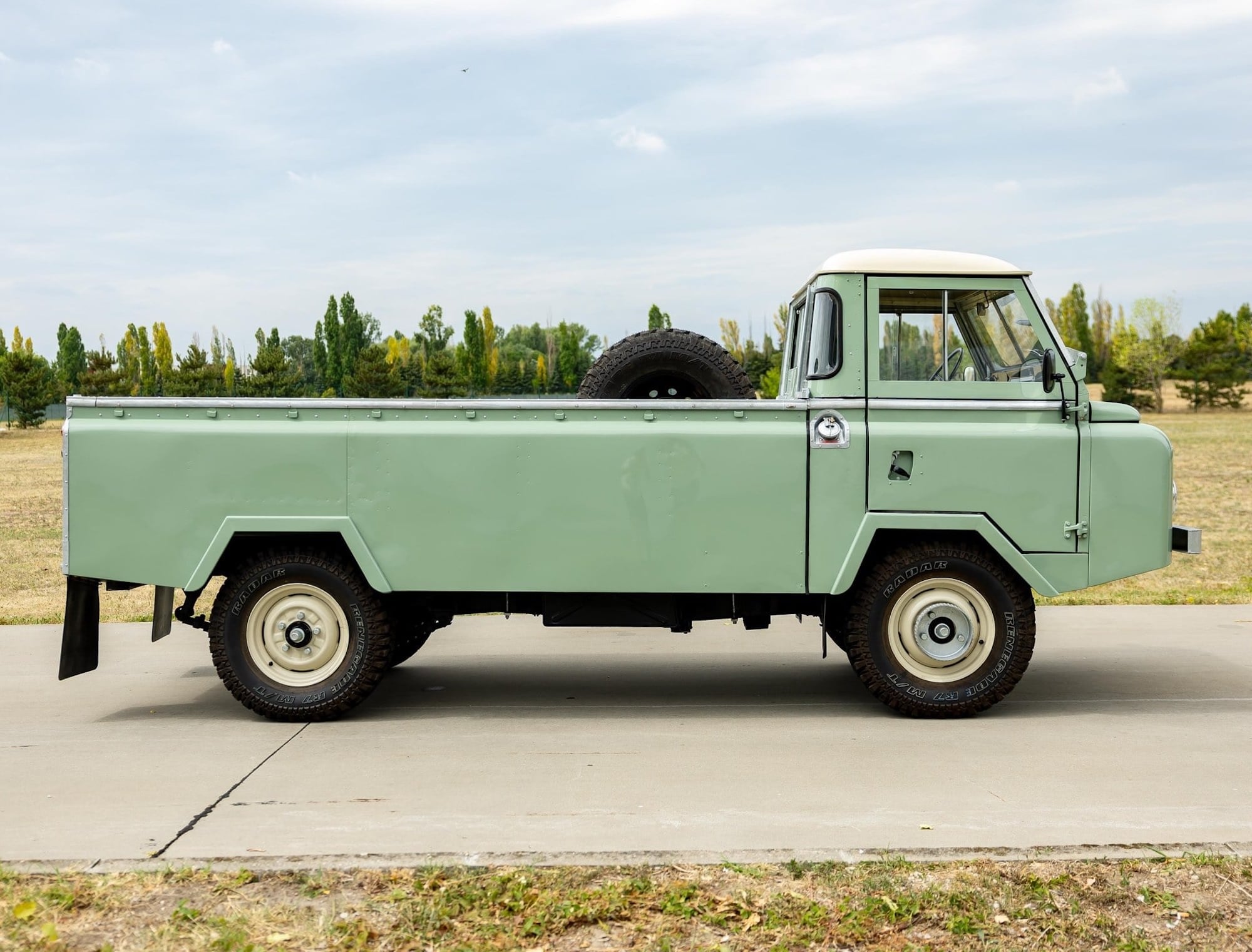
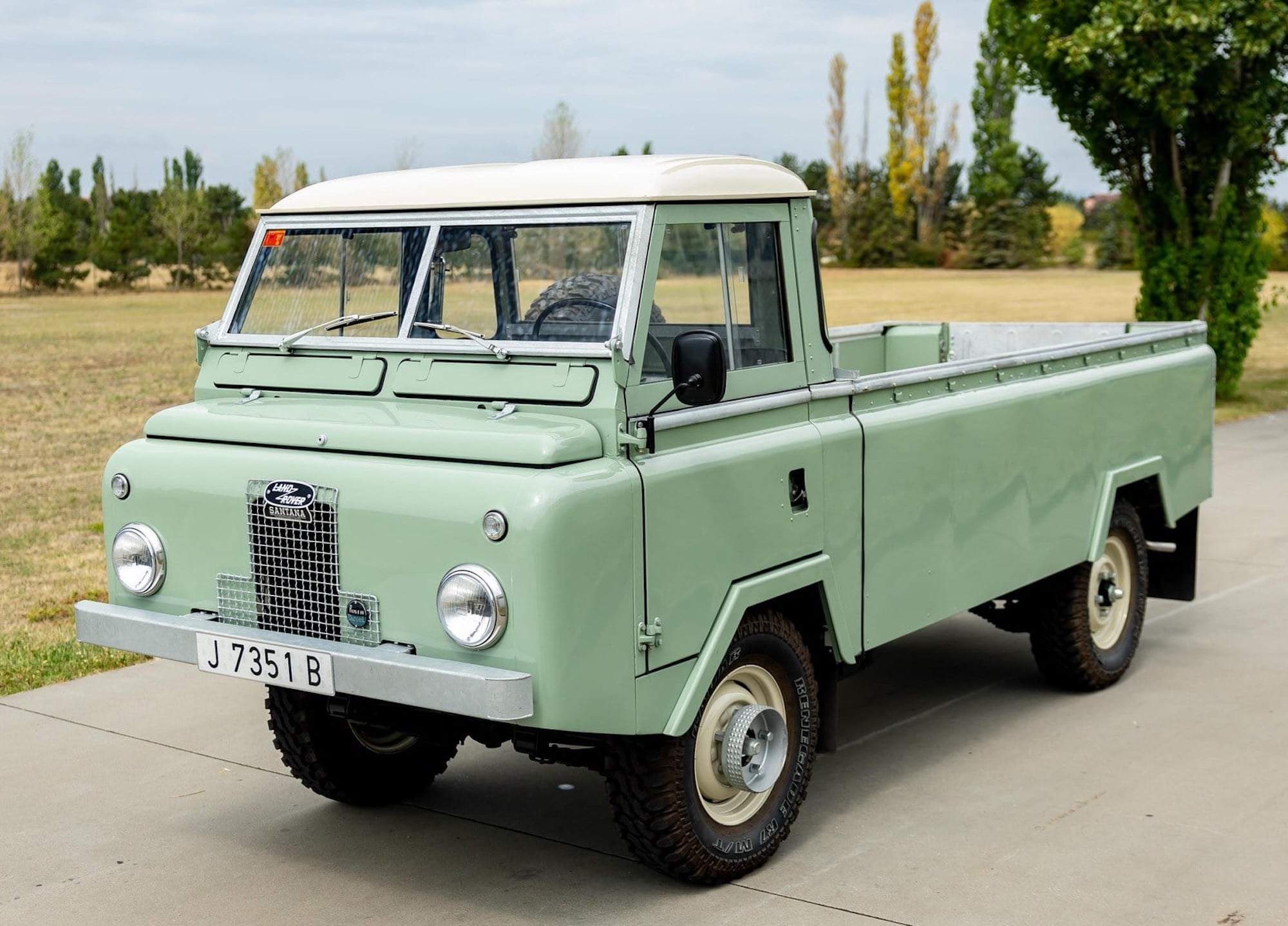
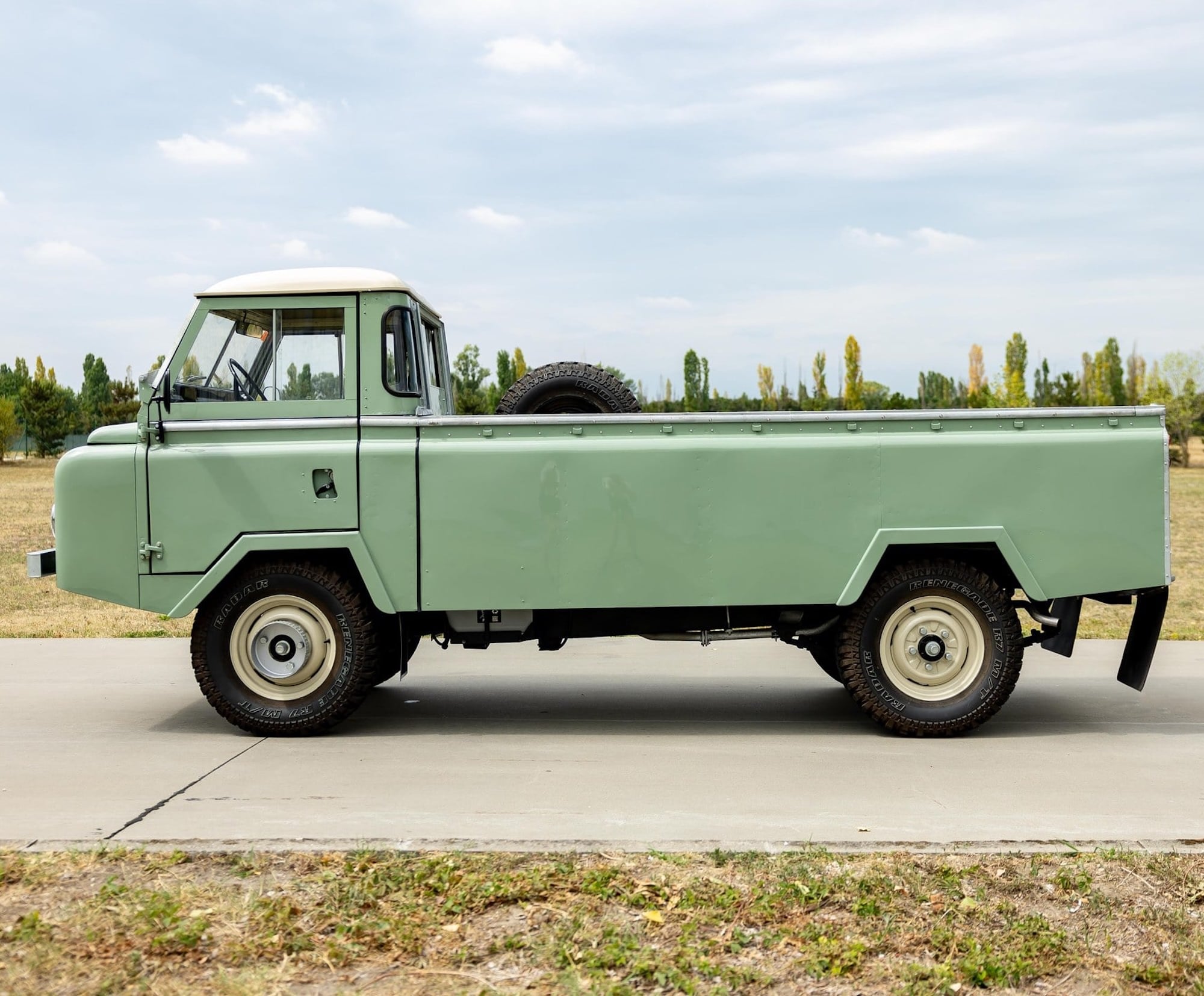
The vehicle they came up with was named the Santana 1300, it kept the 109 LWB Land Rover as its base platform, and kept the Land Rover four-cylinder engine, but the cab was moved forward over the engine, which opened up the length behind it for a long load bed. It had been named for its payload, 1,300 kgs (2,866 lbs).
Land Rover had been building a similar truck on the same principle since 1962, it was called the Series IIA Forward Control and it used a standard 109 chassis with a subframe bolted on to carry the cab – it was strong but heavy, and short of power. A revised Series IIB with a 110 inch wheelbase followed in 1966.
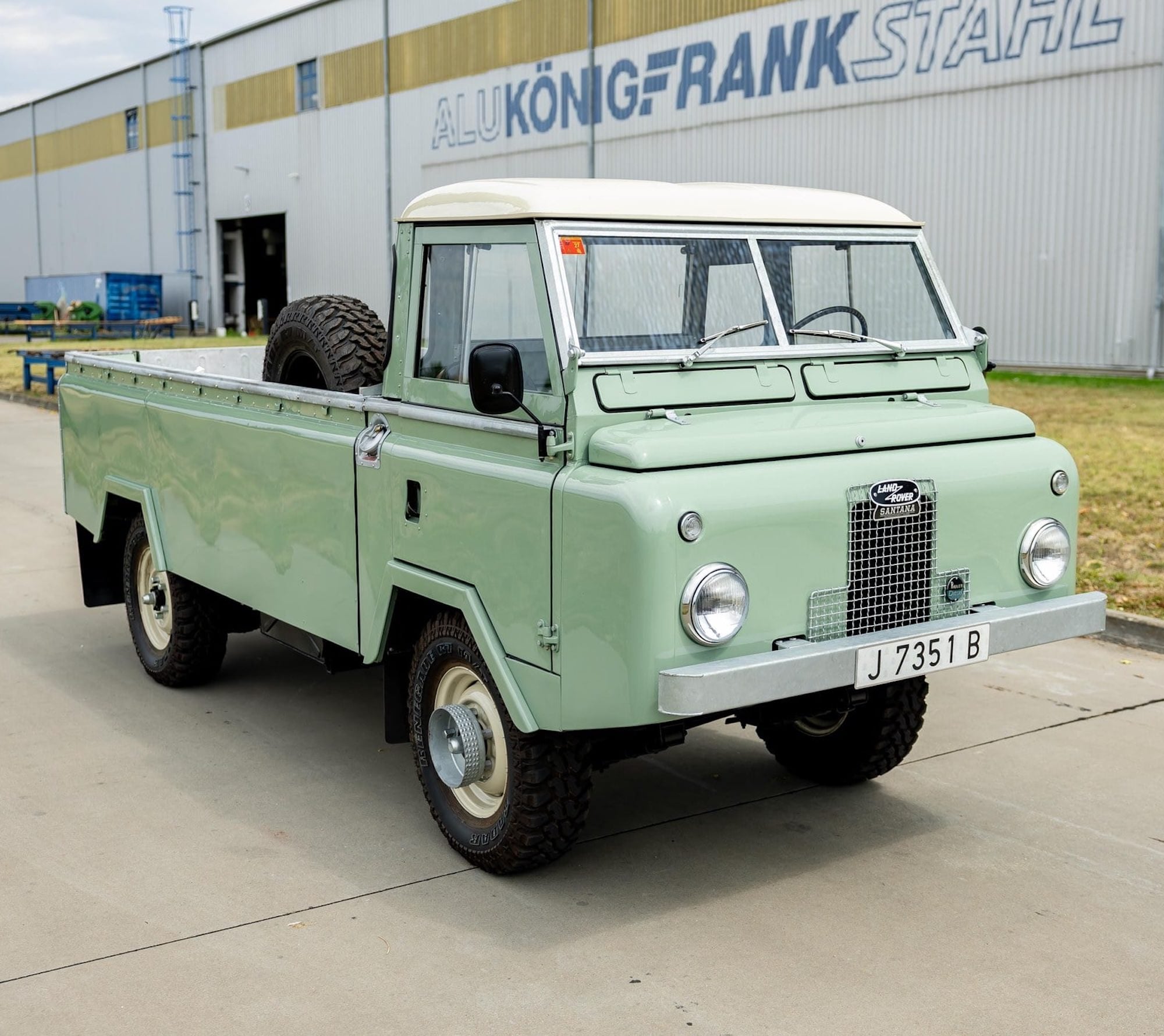
The Spanish truck has considerable similarities to the British one, but the 1300 was designed entirely by Santana, with the visual similarities largely coming down to similar parts bin availability, and the fact that both vehicles were based on the same fundamental platform.
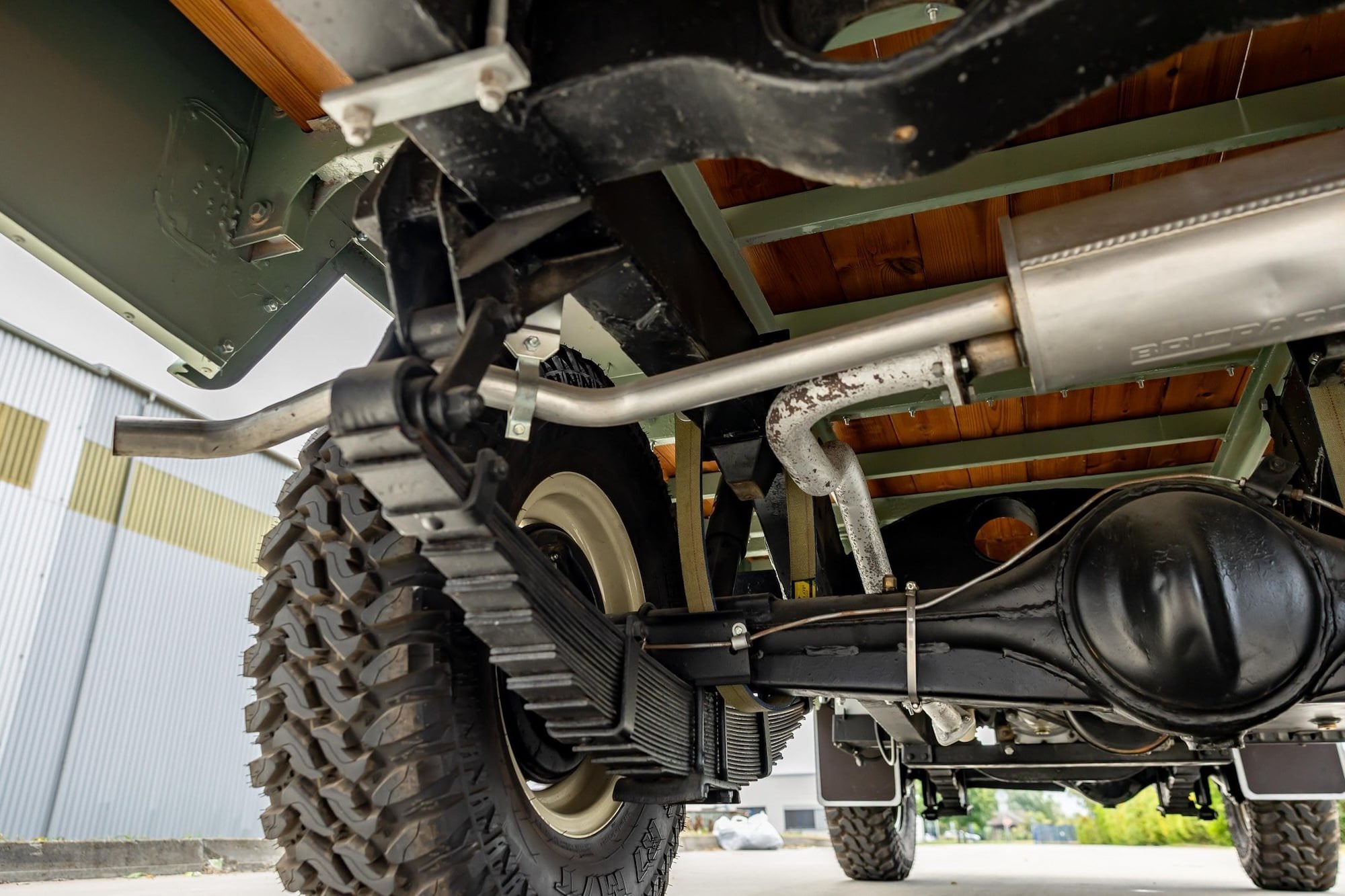
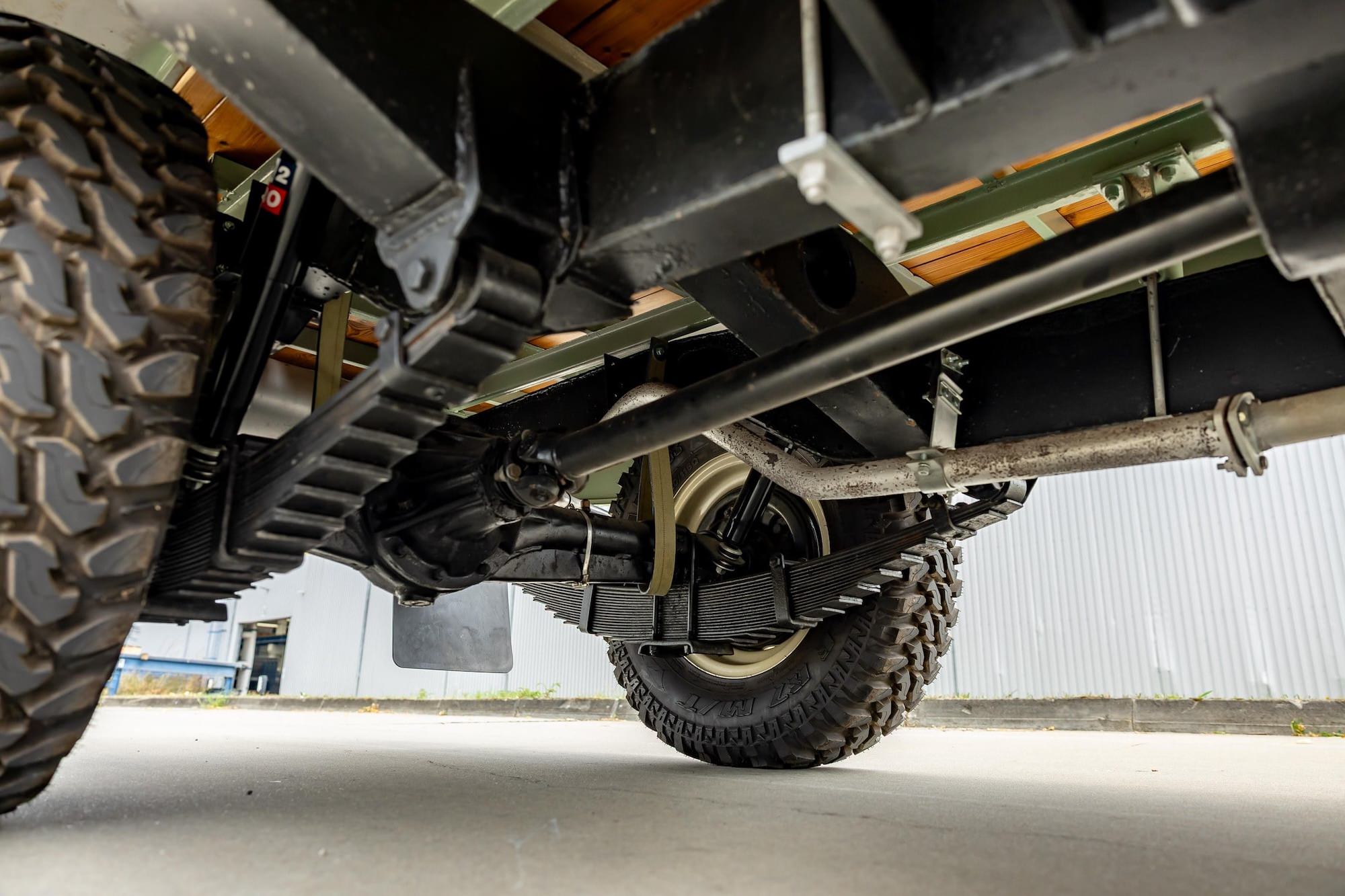
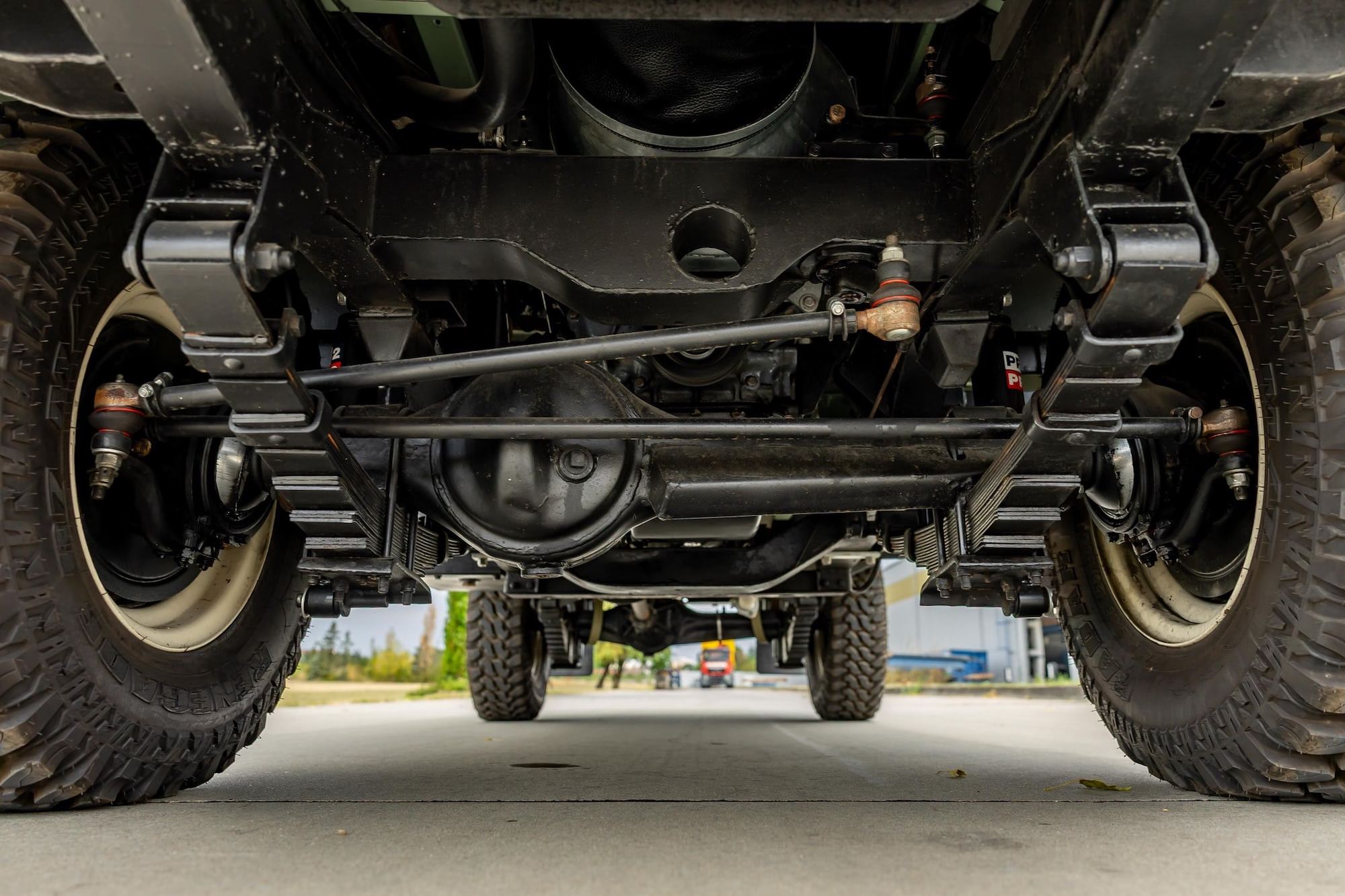
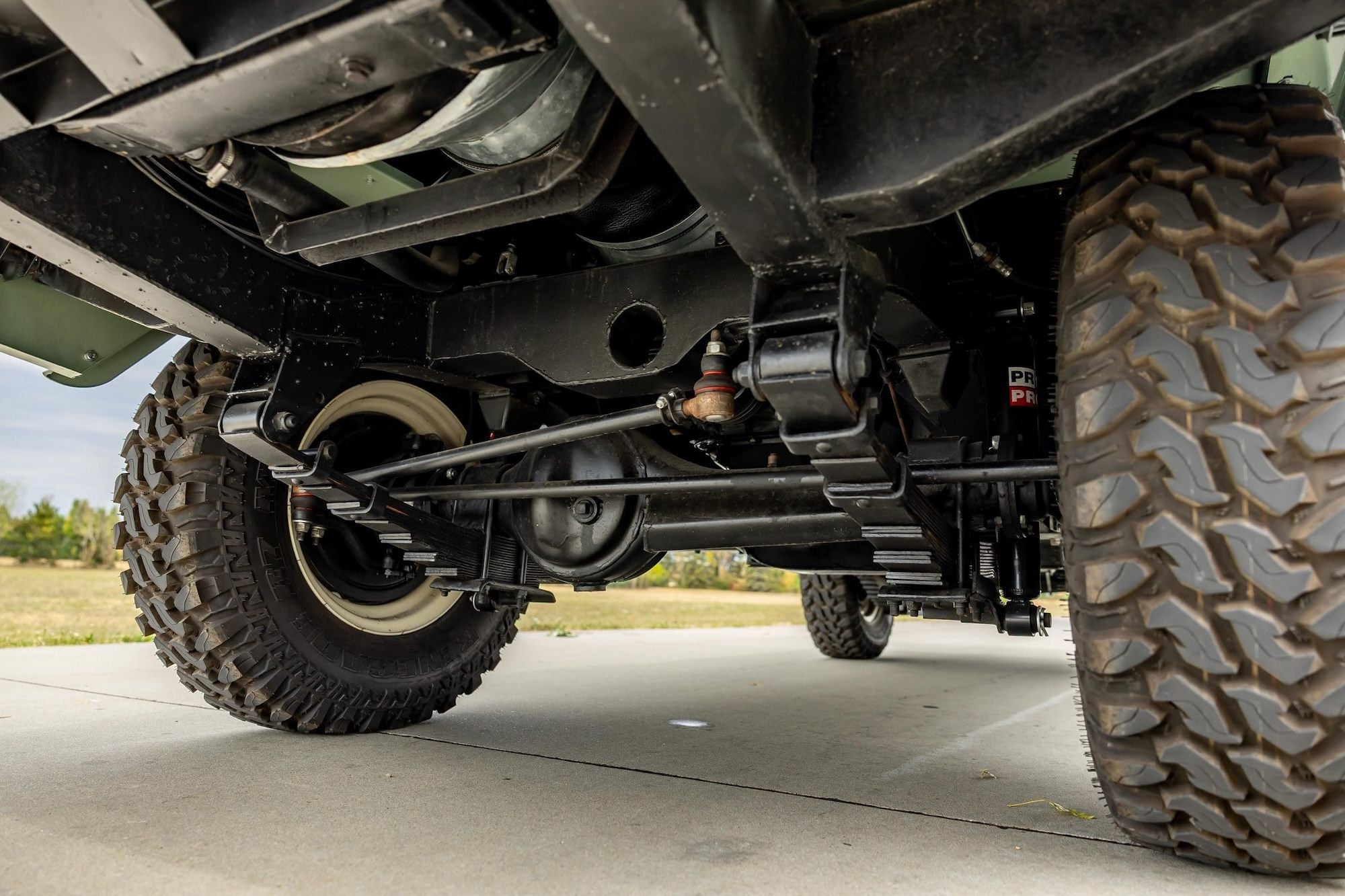
That platform included a steel ladder frame chassis, live axles front and back on semi-elliptic leaf springs, with a front-mounted engine mated to a 4-speed manual transmission and a dual-range transfer case offering either rear-wheel-drive or four-wheel-drive depending on the task at hand.
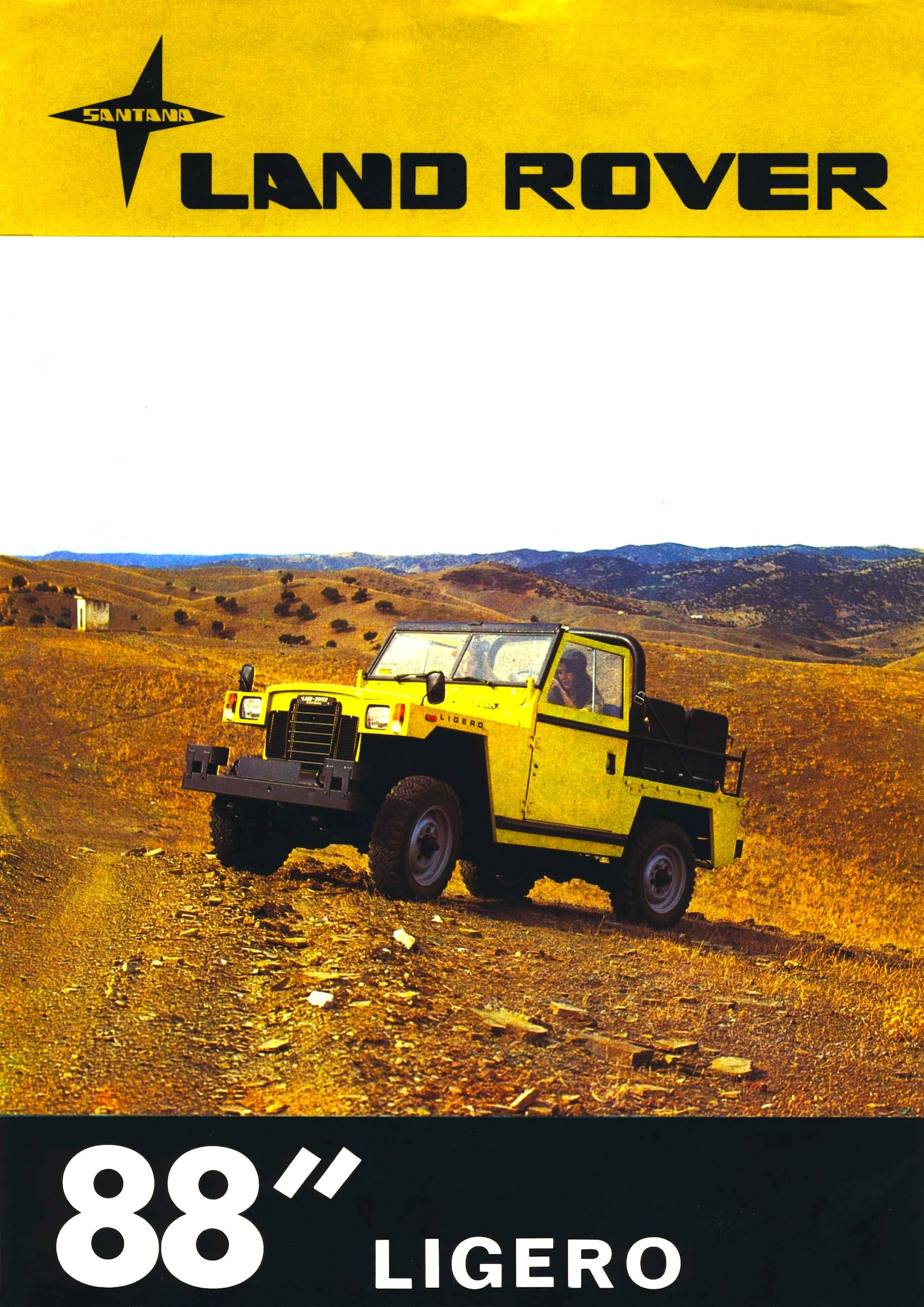
Santana made a wide variety of Land Rovers under license, but they also developed a number of vehicles themselves, still based on Land Rover running gear but looking very different to anything coming out of the UK. Image courtesy of Metalúrgica de Santa Ana.
Power came from the 2.25 liter four in petrol or diesel form, the petrol engine made around 80 bhp, the diesel a little over 60 bhp, and some trucks were built with Santana’s own six-cylinder engine instead. The 1300 was 4.84 meters (about 191 inches) long and weighed 1,760 kgs (3,880 lbs) with the petrol engine or 1,840 kgs (4,057 lbs) with the diesel.
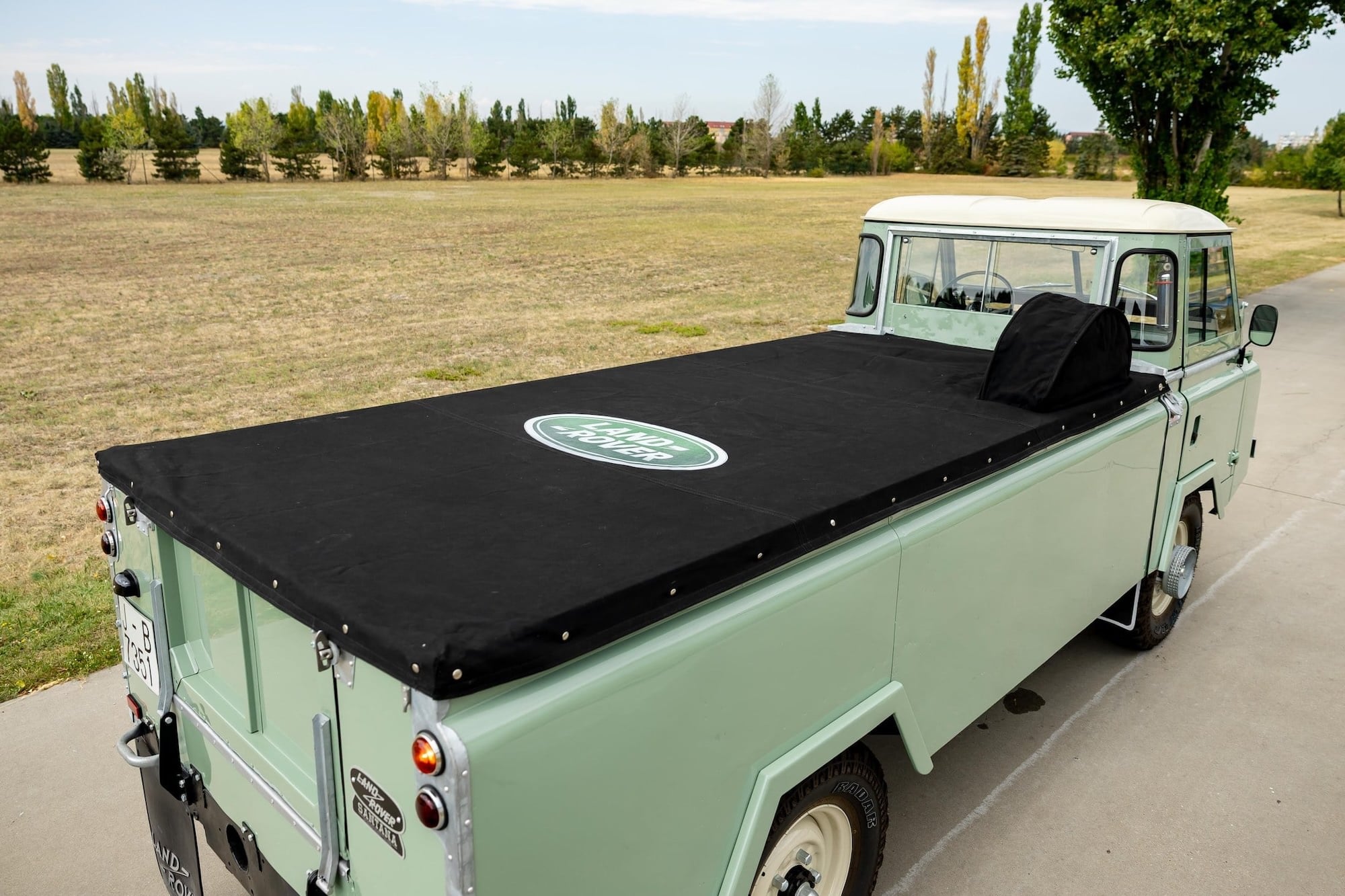
It only takes a quick read of the available power output and the curb weight to realize that these were not quick vehicles, particularly with a full load of cargo in the back. The driver had to make do with a simple 4-speed gearbox, and a dual range transfer case, so progress was slow. Most were supplied as chassis-cabs, ready for a body built to suit the job at hand, Santana also offered its own van and a pickup variant with a canvas top over the back.
Public institutions used the Santana 1300 in large numbers, but it was sold to some private buyers as well. It served with the Spanish armed forces, where it was widely used to carry troops, and it was used heavily in firefighting – Spain has wildfires on par with those in places like the United States and Australia, so the 1300s did crucial work hauling water, firefighters, and equipment.
The Santana 1300 stayed in production until 1978, and the number built is usually put at around 4,000 examples. Its successor, the Santana 2000, was developed from the 1300, shown in 1979 and put on sale in 1981.
It kept the forward-control layout, used Santana’s six-cylinder engines as standard and, like the 1300, took its name from its payload – 2,000 kgs (4,409 lbs).
The 1975 Land Rover Santana 1300 Shown Here
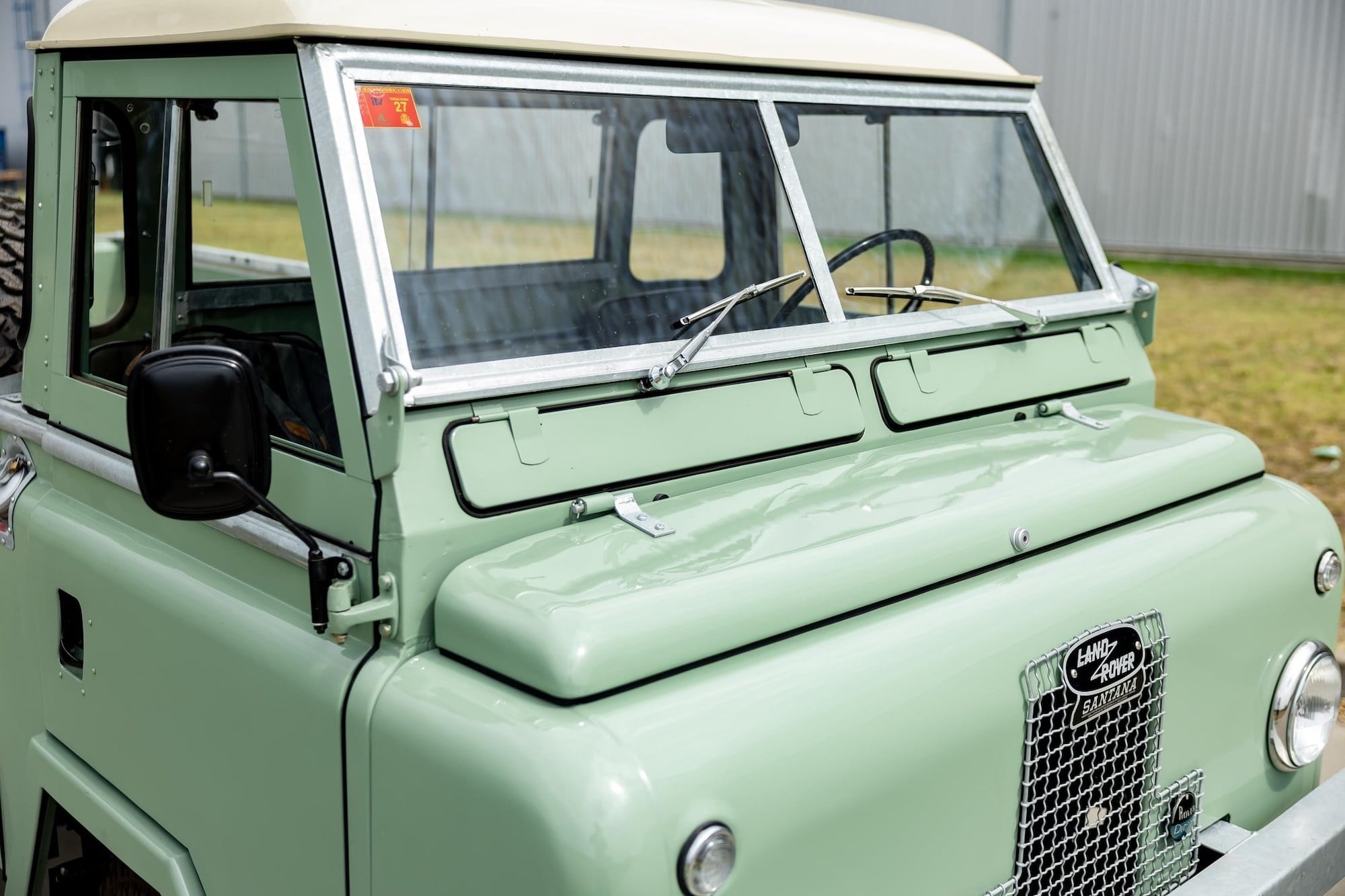
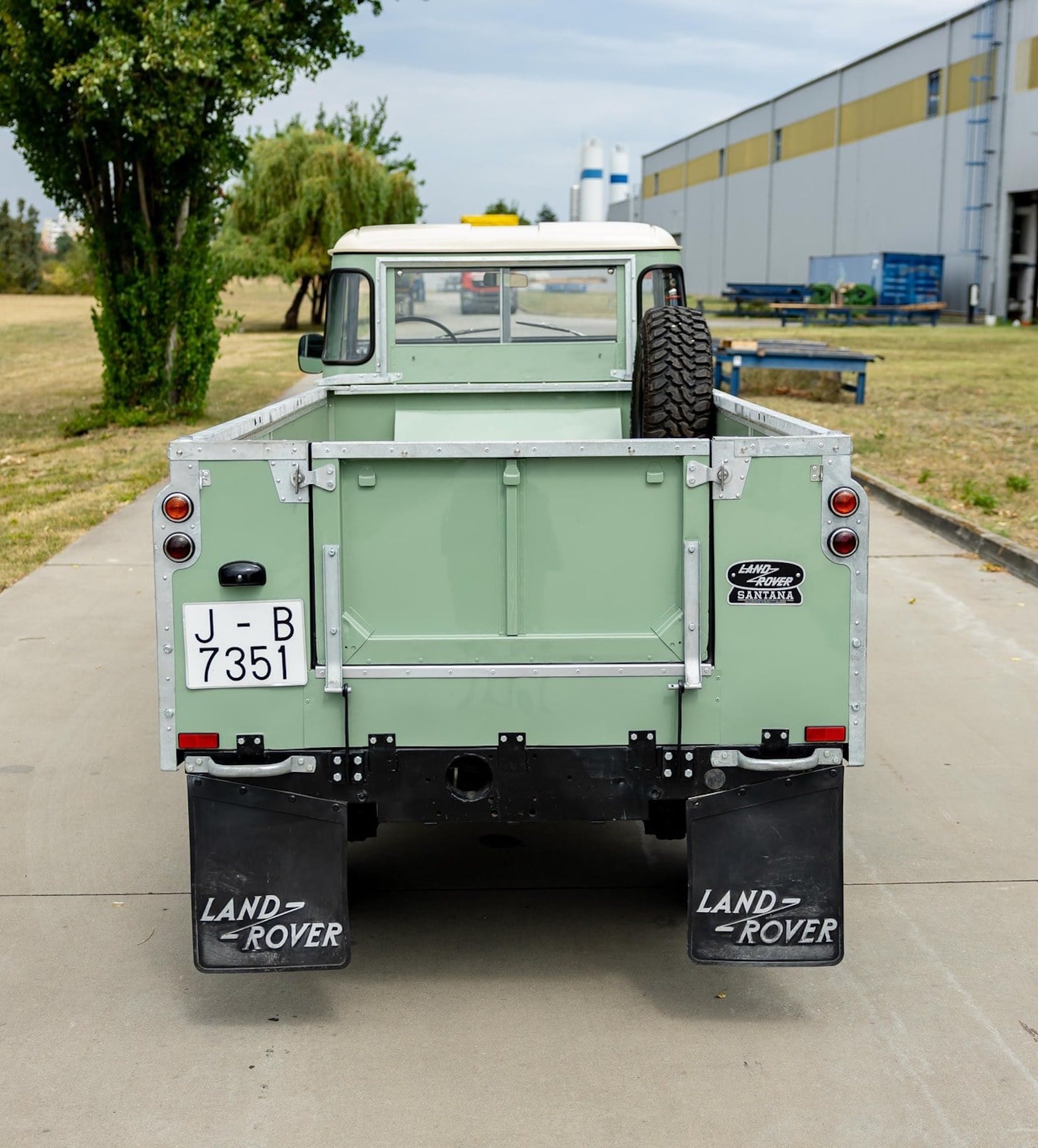
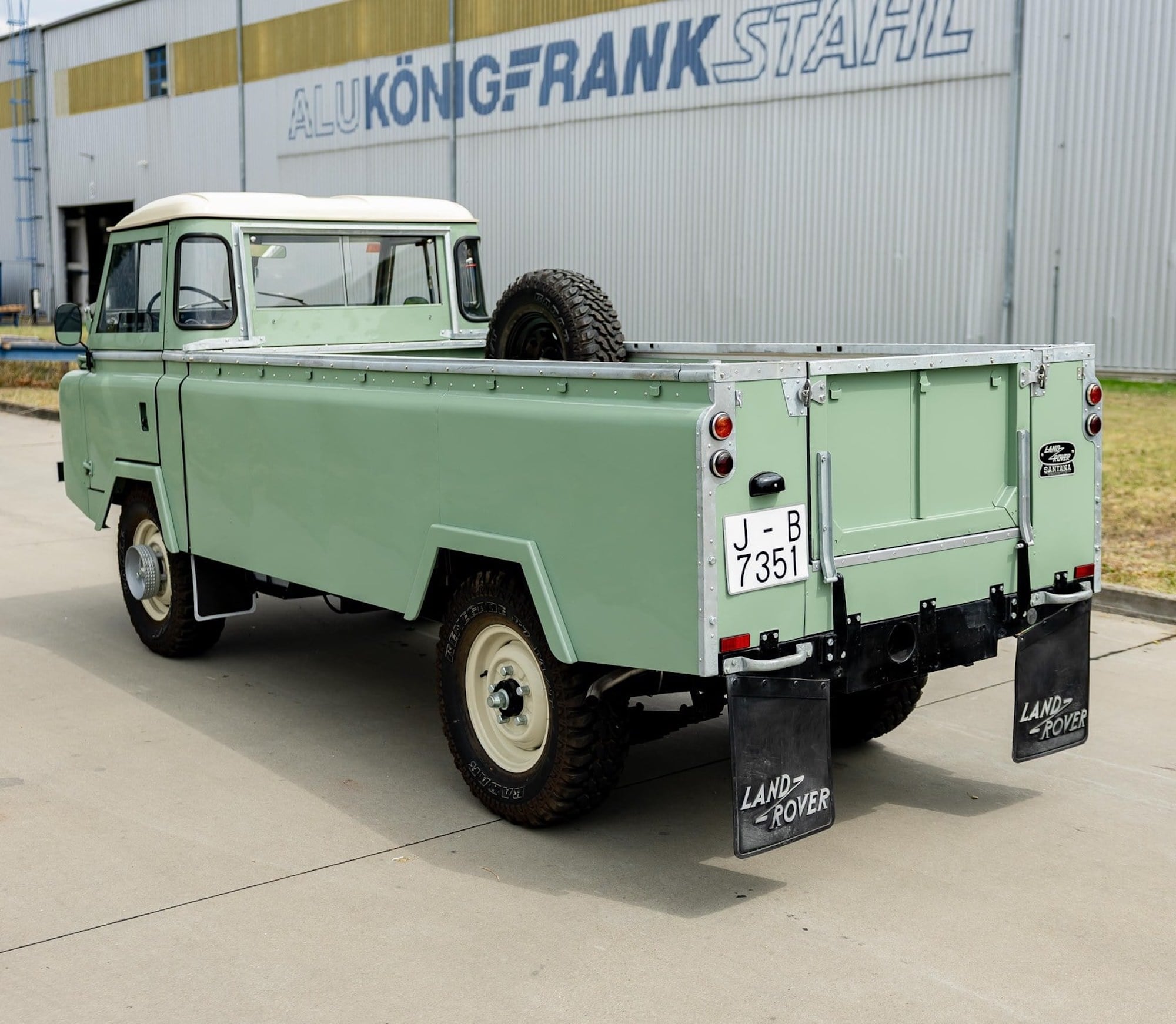
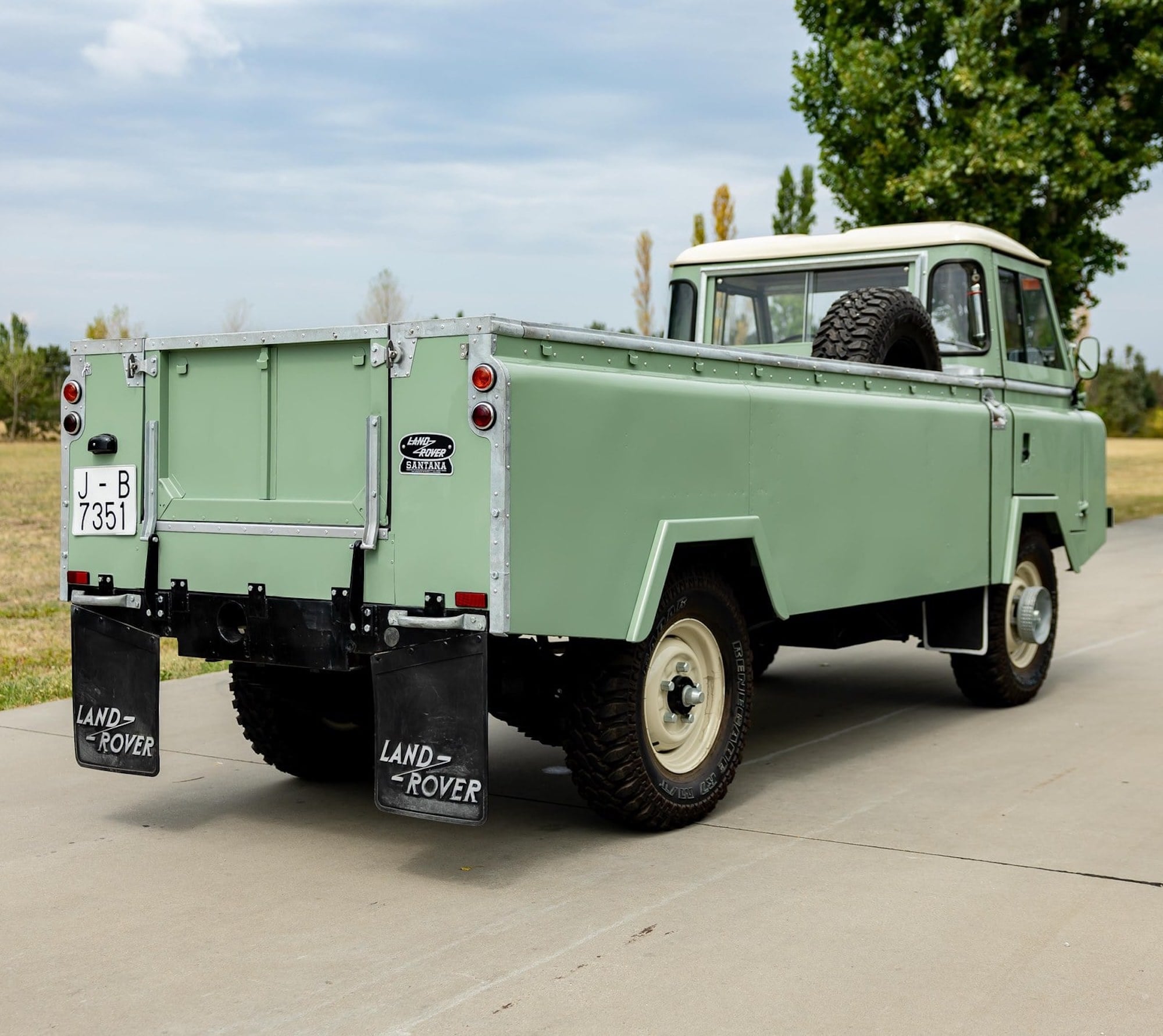
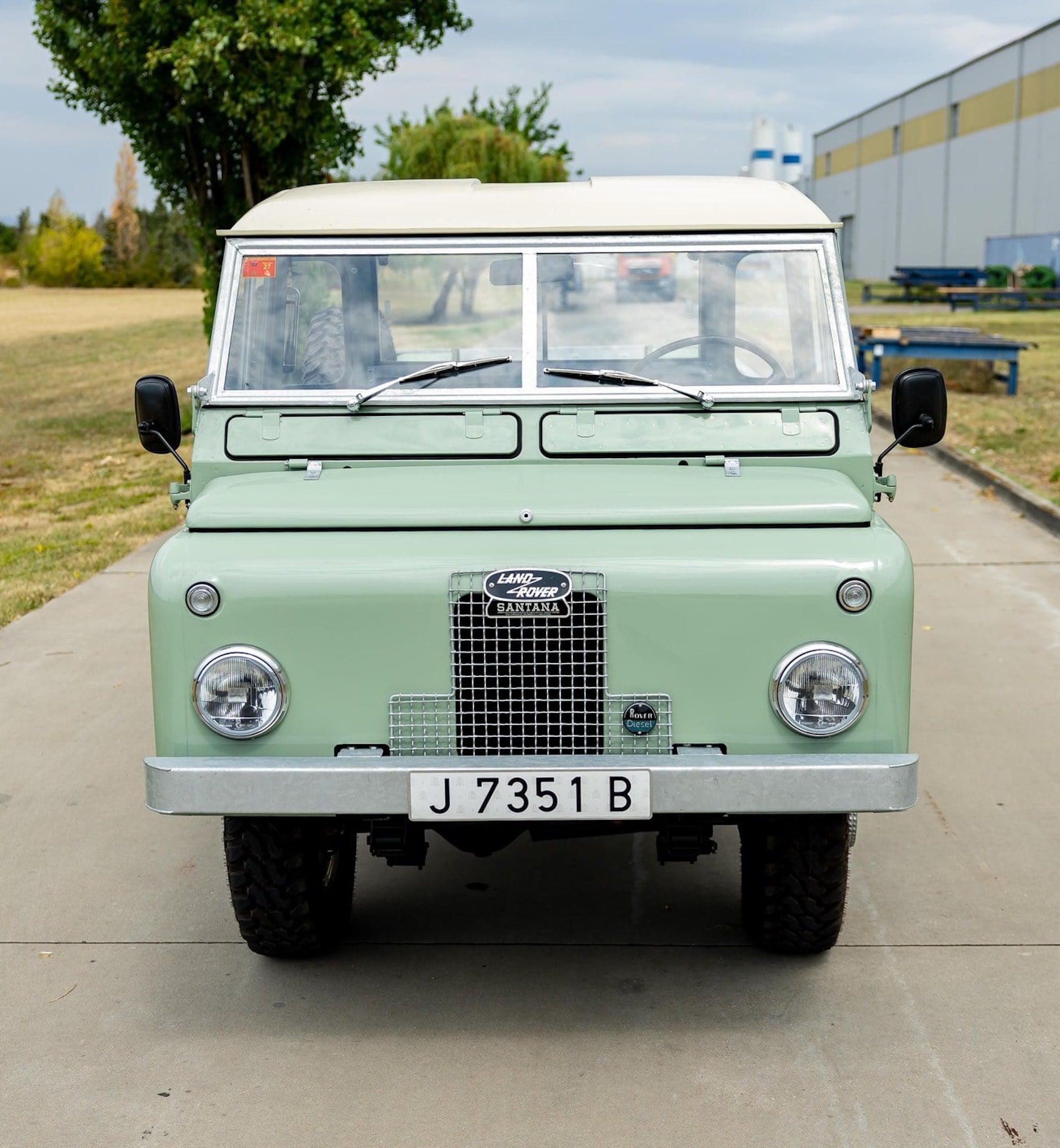
This is an original 1975 Santana 1300, it’s one of roughly 4,000 examples produced between 1967 and 1978, and it’s undergone an extensive restoration more recently, reportedly involving more than 1,000 hours of labor.
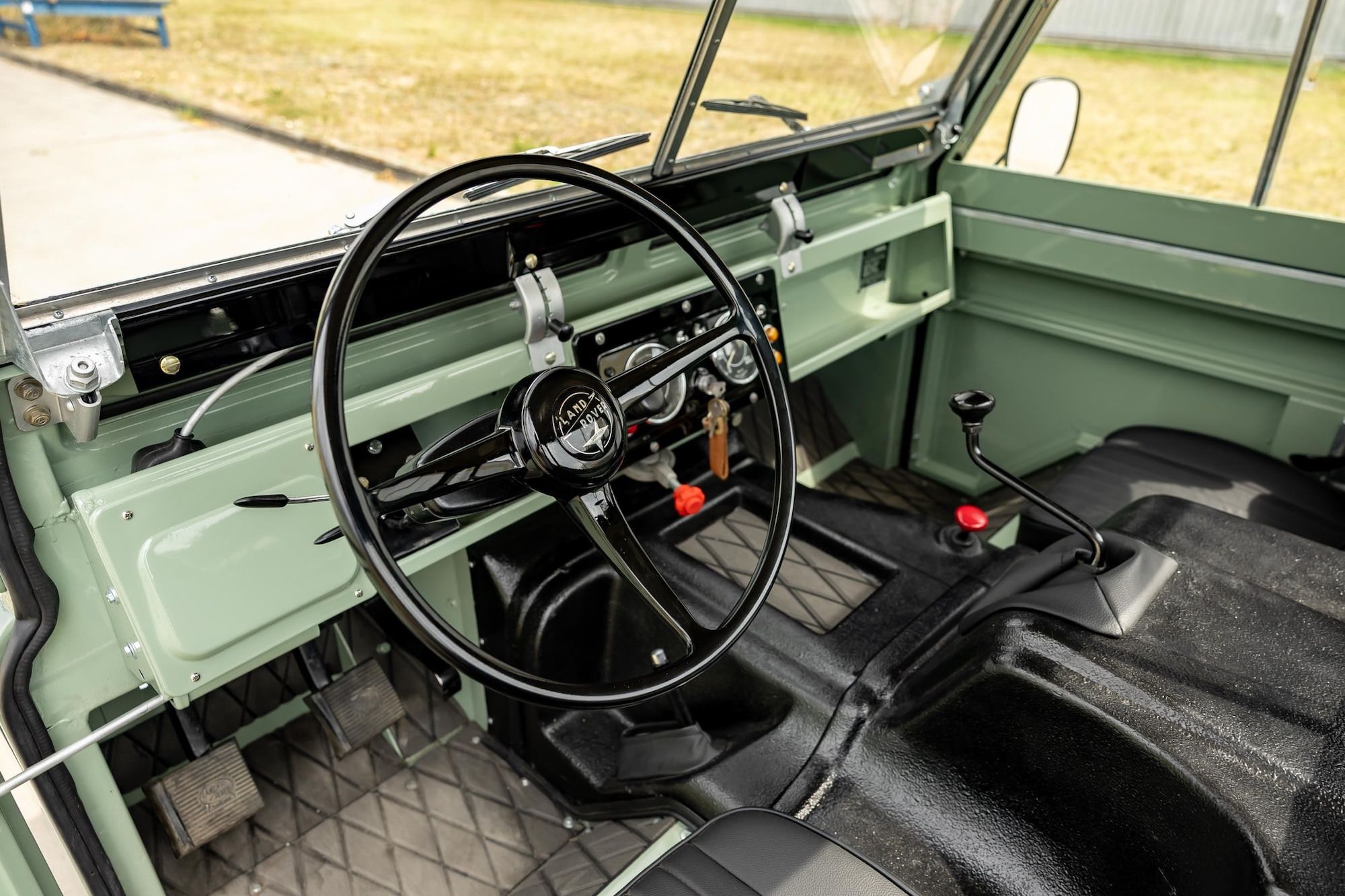
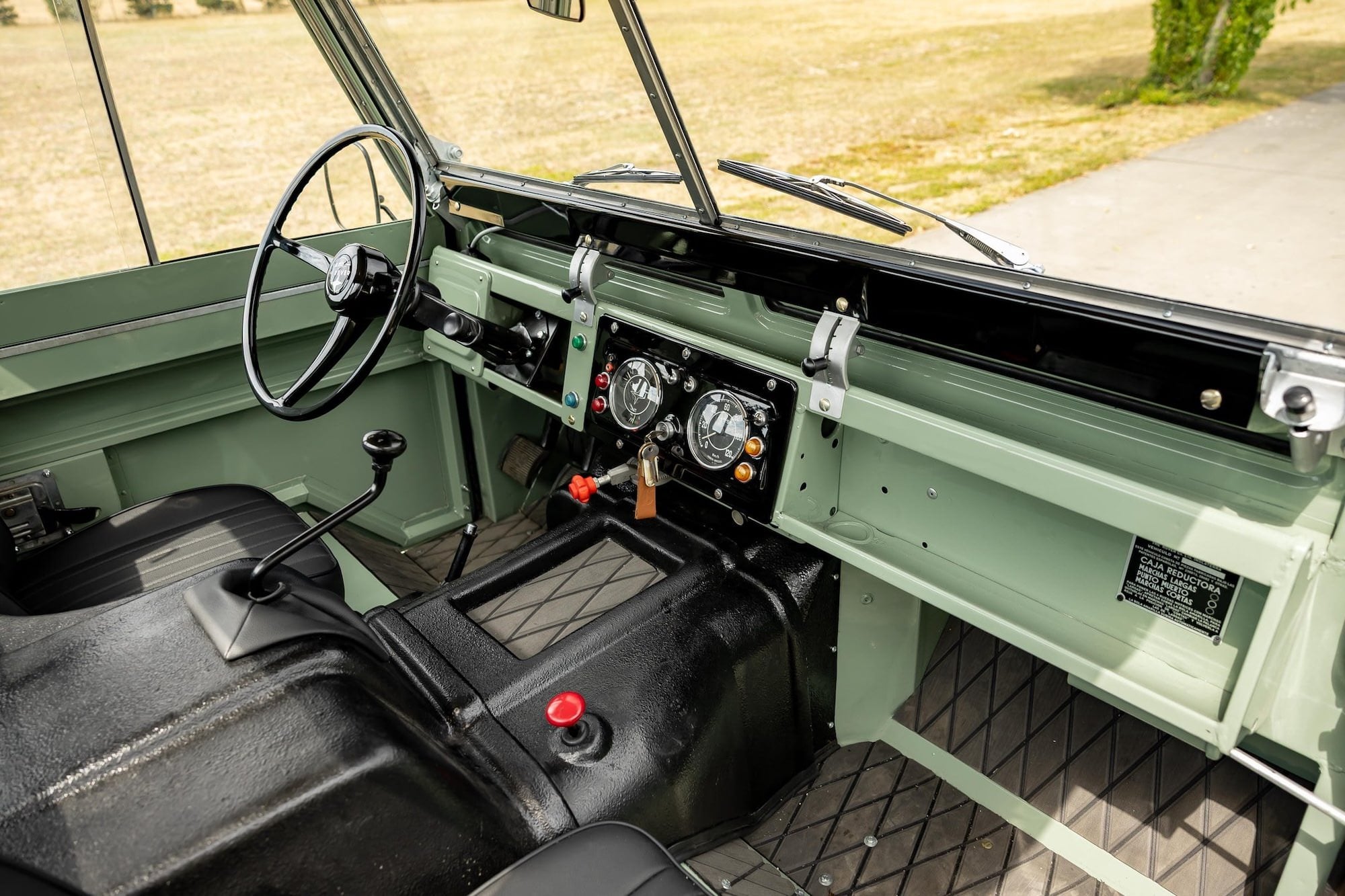
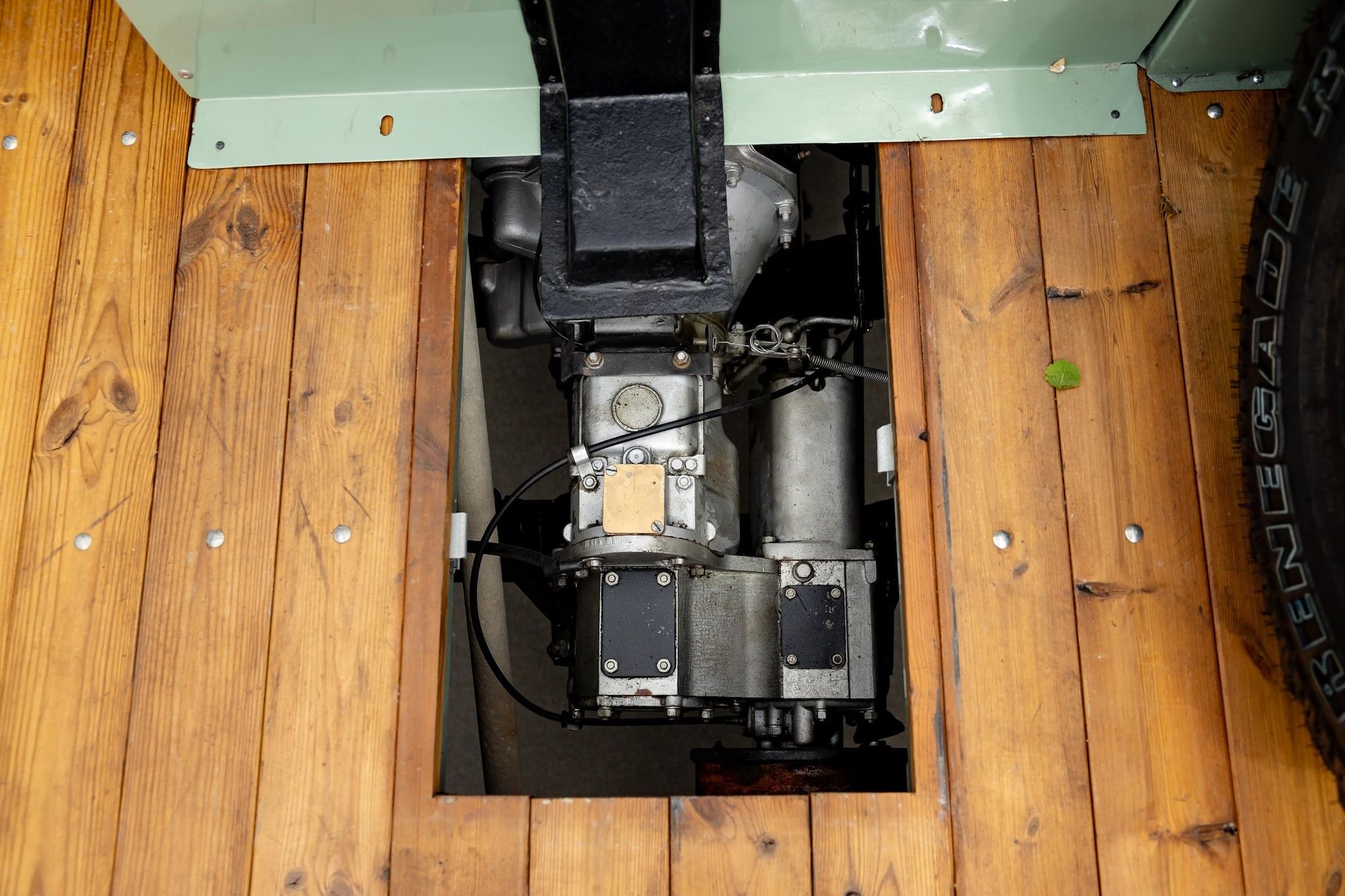
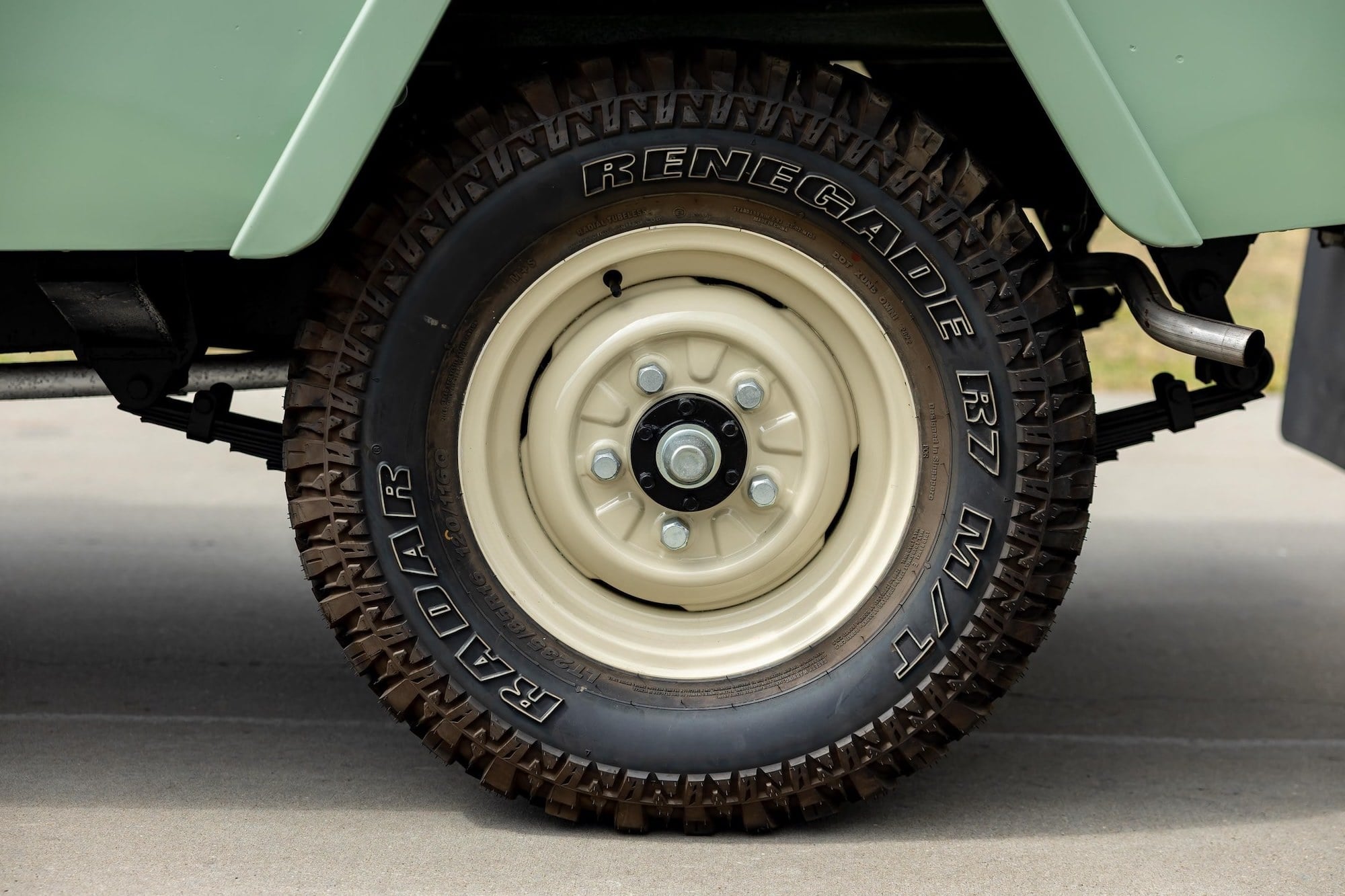
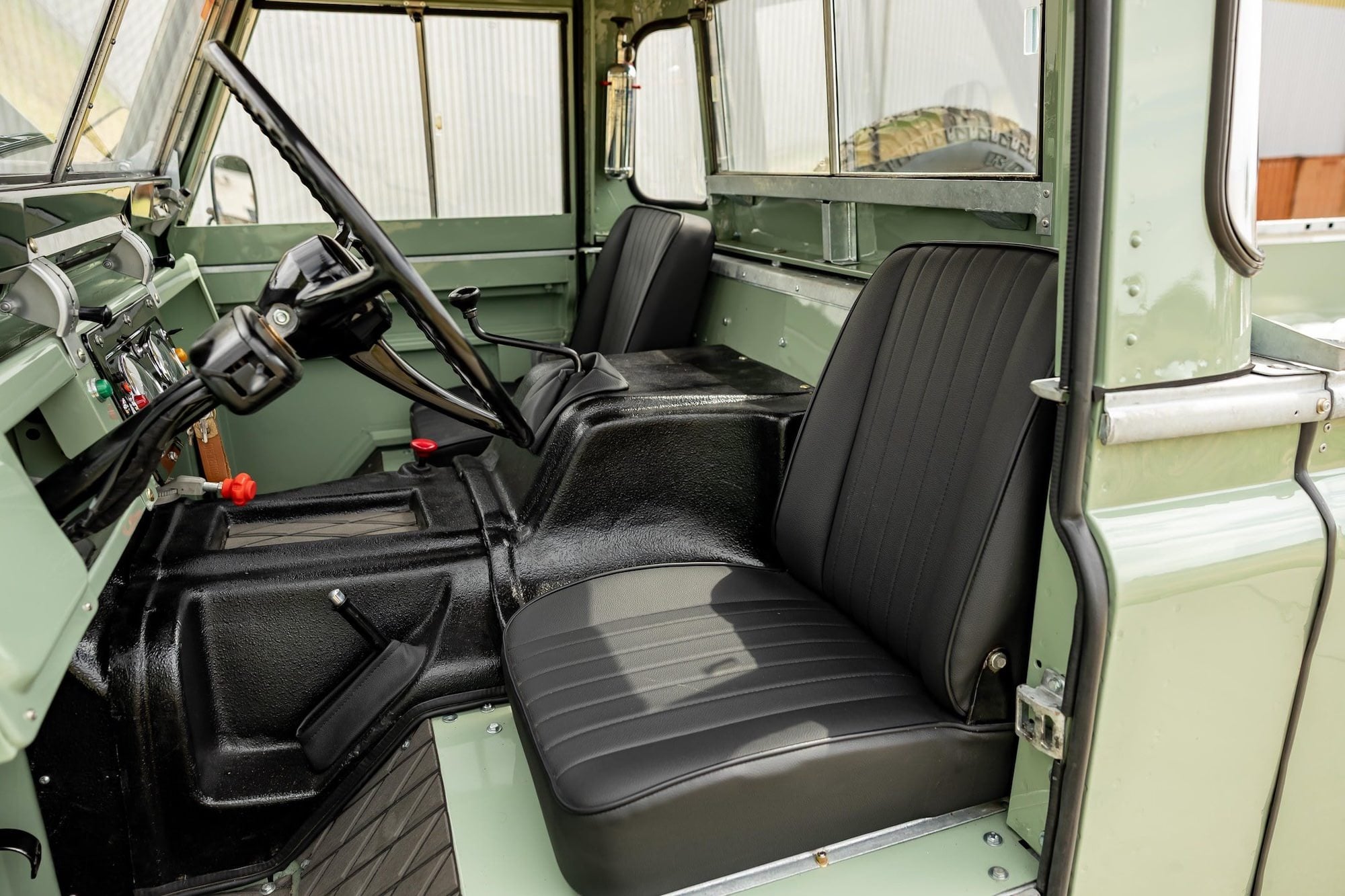
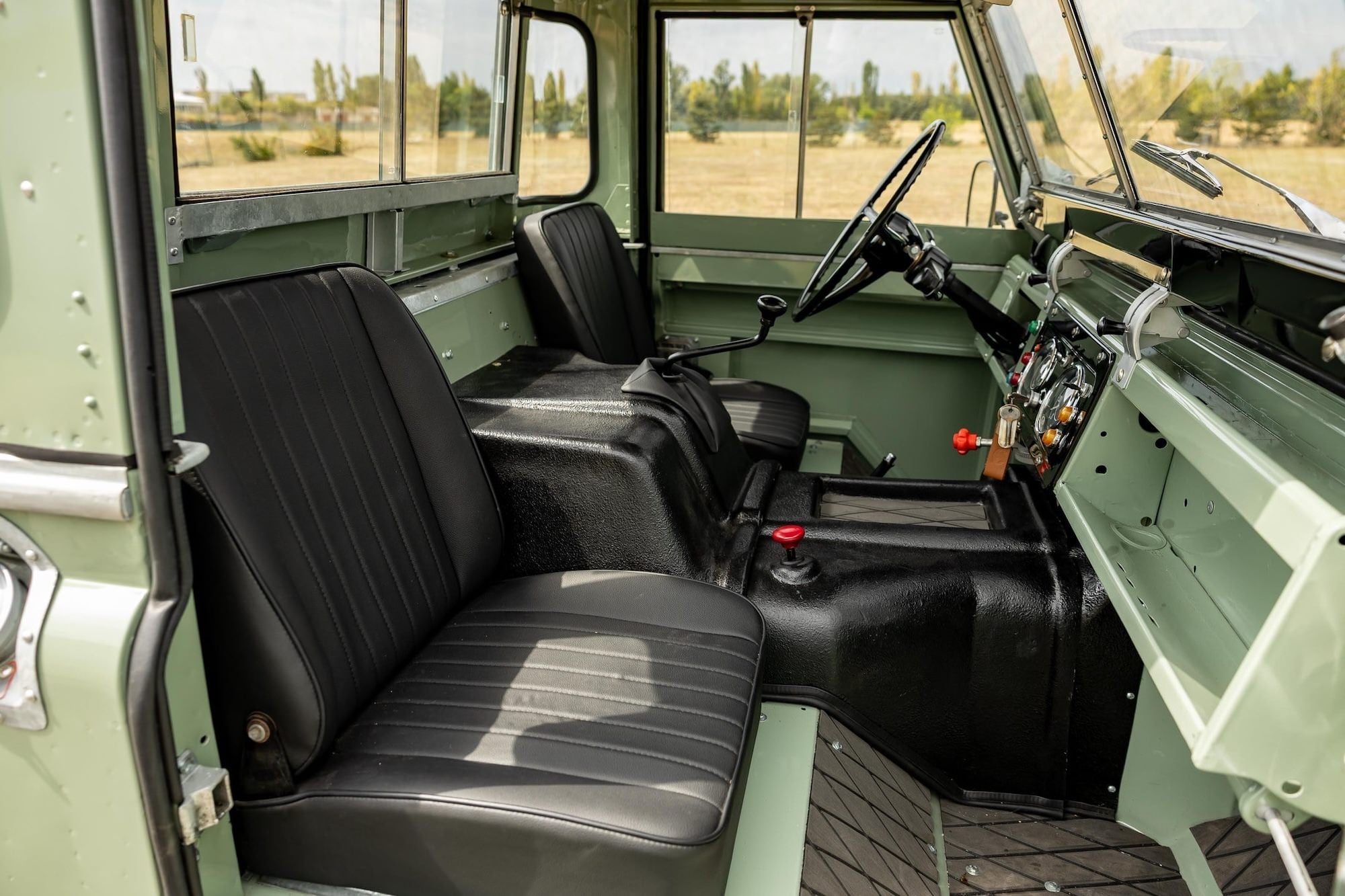
The work clearly appears to have been comprehensive, extending to the underside, wiring loom, interior, bodywork, paint, and timber flooring in the rear load area. The seller states that the original parts were kept, and the vehicle is presented as being in good mechanical condition – a photographic record of the restoration is included with the paperwork.
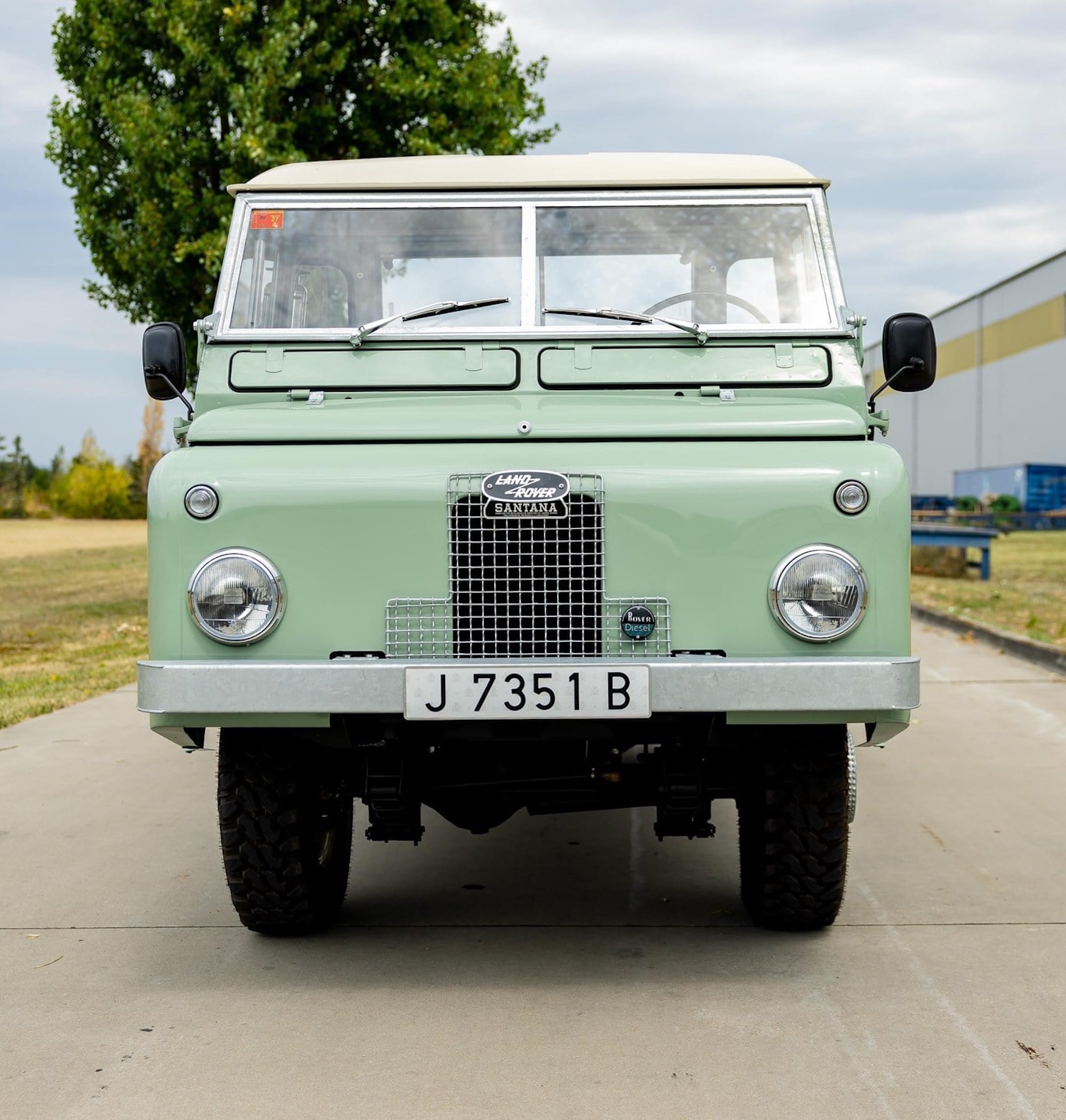
This is a rare surviving Land Rover Santana 1300. It’s often mistaken for a Land Rover Series IIA Forward Control from Britain, but it’s actually a unique vehicle developed in Spain on the LWB Land Rover Santana chassis.
Power comes from a 2.3 liter four-cylinder diesel paired with a 4-speed manual transmission and a part-time four-wheel drive system. This example is configured with nine seats, has a 1.3 tonne payload capacity, and is fitted with disc brakes. The odometer shows approximately 11,256 kms.
It’s said to drive very well, and its current technical inspection remains valid until January of 2027. It’s now being offered for sale with registration documents, the inspection sheet, and the restoration photographs. If you’d like to read more about it or register to bid you can visit the listing here.
Images provided by Car & Classic

Articles that Ben Branch has written have been covered on CNN, Popular Mechanics, Smithsonian Magazine, Road & Track Magazine, the official Pinterest blog, the official eBay Motors blog, BuzzFeed, Autoweek Magazine, Wired Magazine, Autoblog, Gear Patrol, Jalopnik, The Verge, and many more.
Silodrome was founded by Ben back in 2010, in the years since the site has grown to become a world leader in the alternative and vintage motoring sector, with well over a million monthly readers from around the world and many hundreds of thousands of followers on social media.