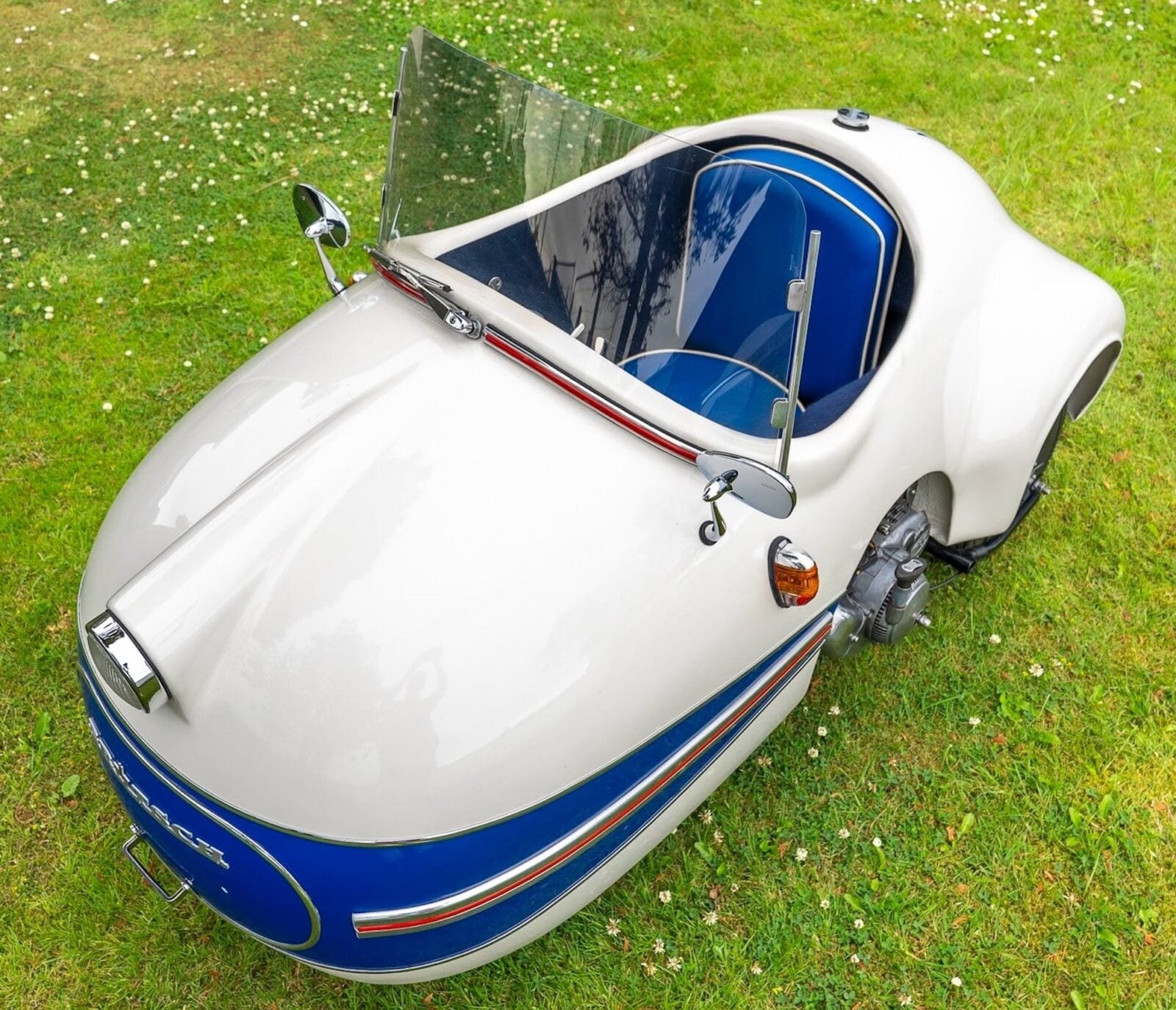
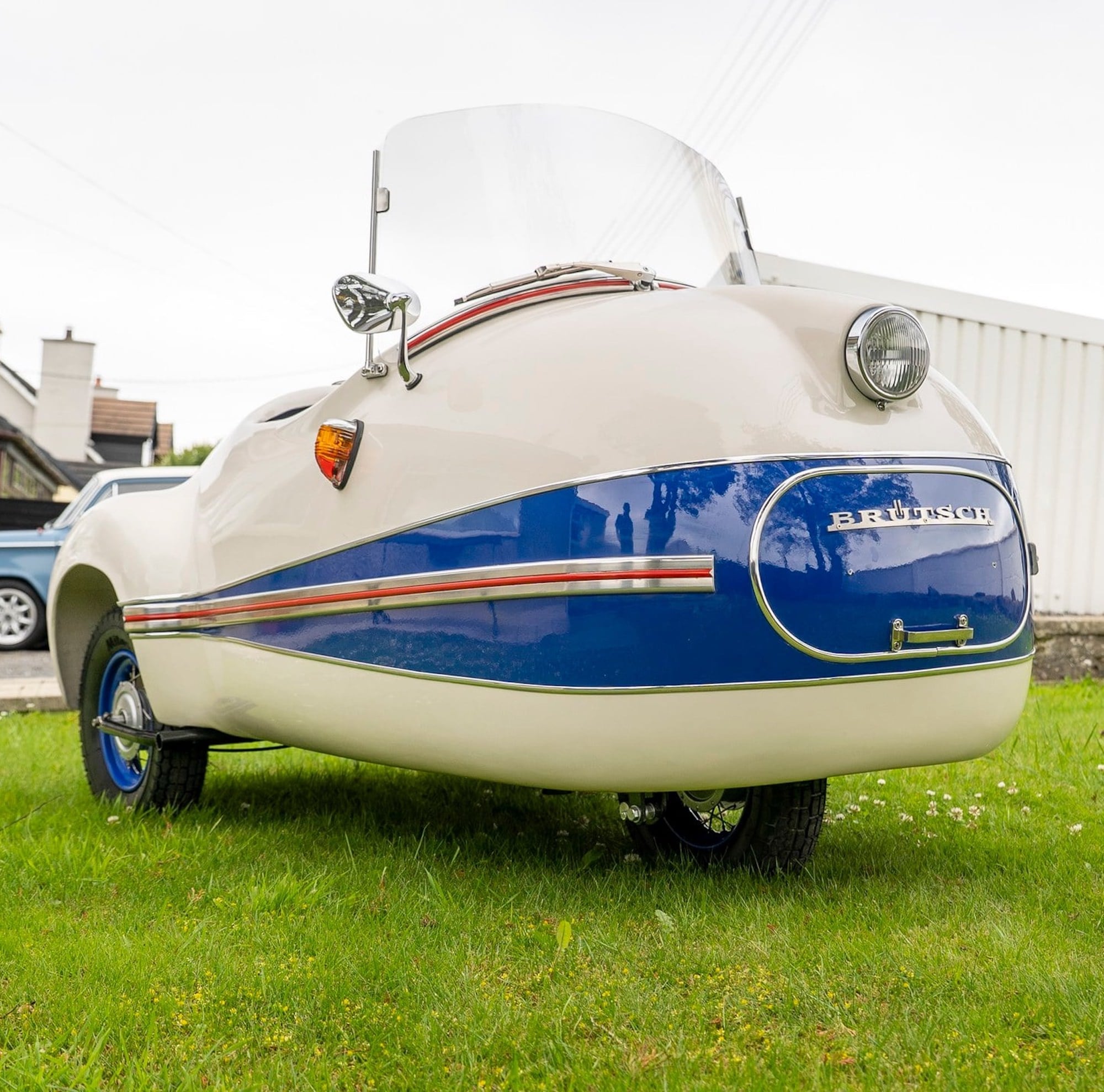
This is a brand new Brütsch Mopetta, well it’s an exact replica to be precise, but that’s still a sentence opener I never expected to type as only 14 original Mopettas were made back in the 1950s.
The Mopetta was developed in the 1950s to be the smallest car in the world, and it succeeded, it was also one of the cheapest to buy and cheapest to run – managing as much as 124 mpg in period testing. There are many of us who’d love a daily with mpgs like that given current fuel prices.
Fast Facts: A Brand New Brütsch Mopetta
- The Brütsch Mopetta was a tiny German three-wheeler developed by Egon Brütsch in the 1950s to be the world’s smallest car. Only 14 originals were built between 1956 and 1958, making it one of Brütsch’s rarest creations. Its fiberglass body, central driving position, and extraordinarily compact dimensions make it instantly memorable.
- The Mopetta began as a hurried show car for the 1956 IFMA exhibition in Frankfurt, where the first example was displayed before its mechanical parts were even installed. Brütsch promoted it as an ultra-cheap moped-car, priced affordably, and its 50cc classification meant favorable licensing and taxation rules in West Germany.
- Production Mopettas used a 49cc ILO two-stroke single producing 2.3 bhp, driving one rear wheel through a 3-speed gearbox and chain drive. Weighing just 78 kgs, the car managed around 20 to 22 mph in period testing, but returned an exceptional 124 mpg when driven steadily at 10 mph.
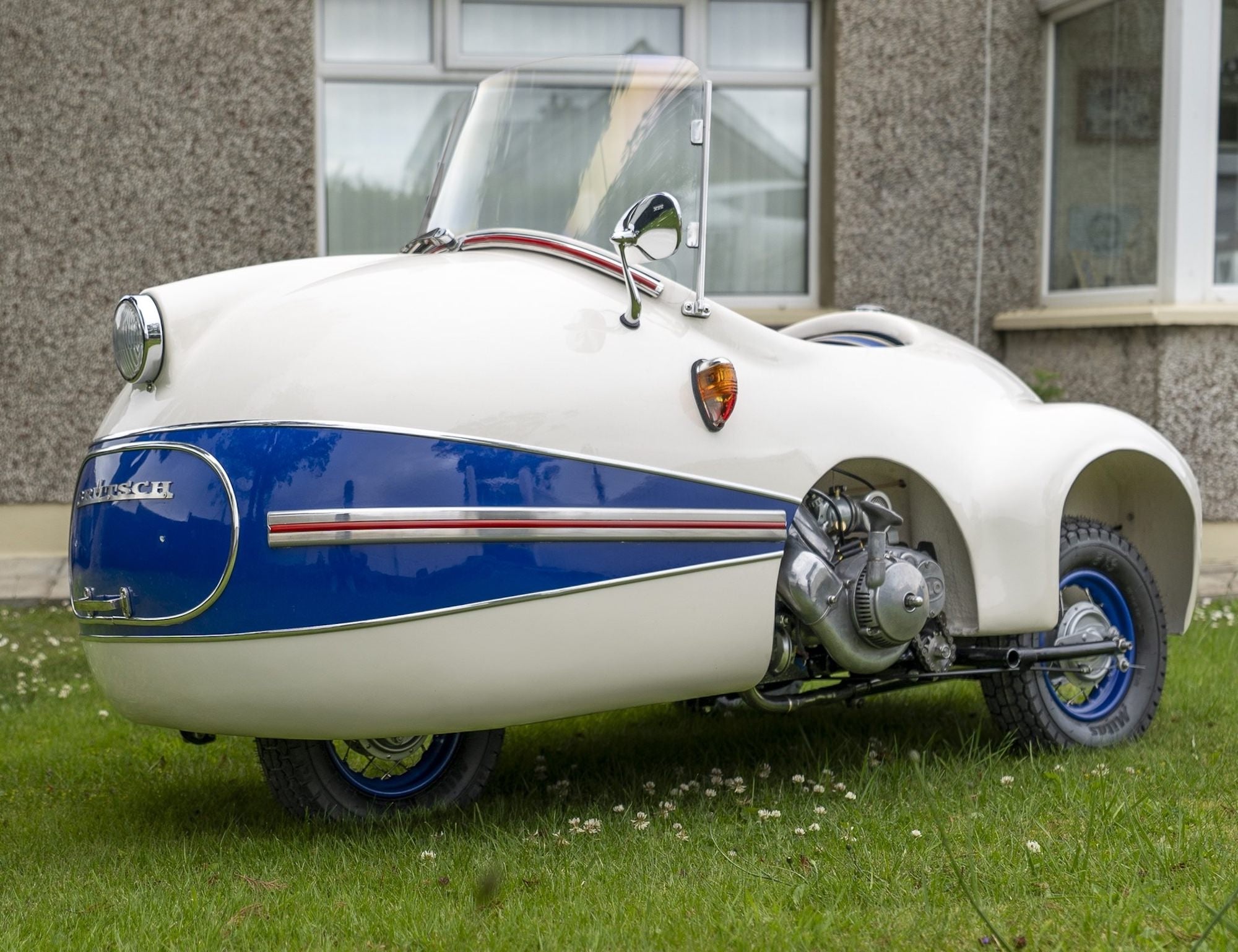
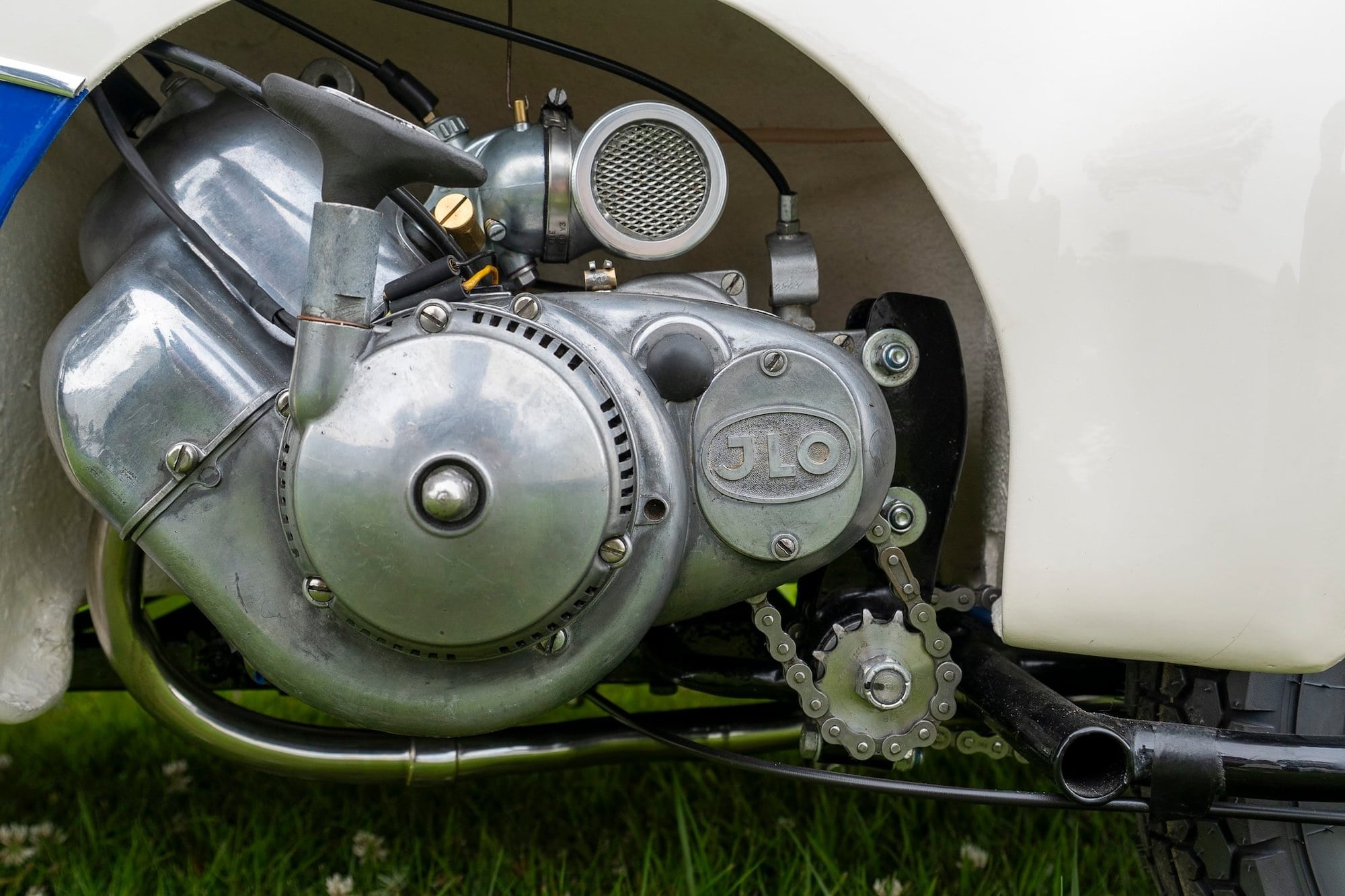
- The example shown is a newly completed replica built with new, period-correct parts and running gear, it’s finished in white and blue with matching trim and wire-spoke wheels. It uses a correct-type 49cc JLO engine and 3-speed gearbox, it’s said to run and drive well, and it’s currently being offered for sale out of Millisle, United Kingdom.
History Speedrun: The Brütsch Mopetta
Egon Brütsch built just 14 Mopettas between 1956 and 1958, it was a tiny number in the grand scheme of things, but it was still more than any other model he designed. The first Mopetta went on display in Frankfurt in October of 1956 without an engine – it was a single-seat, three-wheeled roadster with an egg-shaped fiberglass body, and Brütsch built it specifically to be the world’s smallest car.
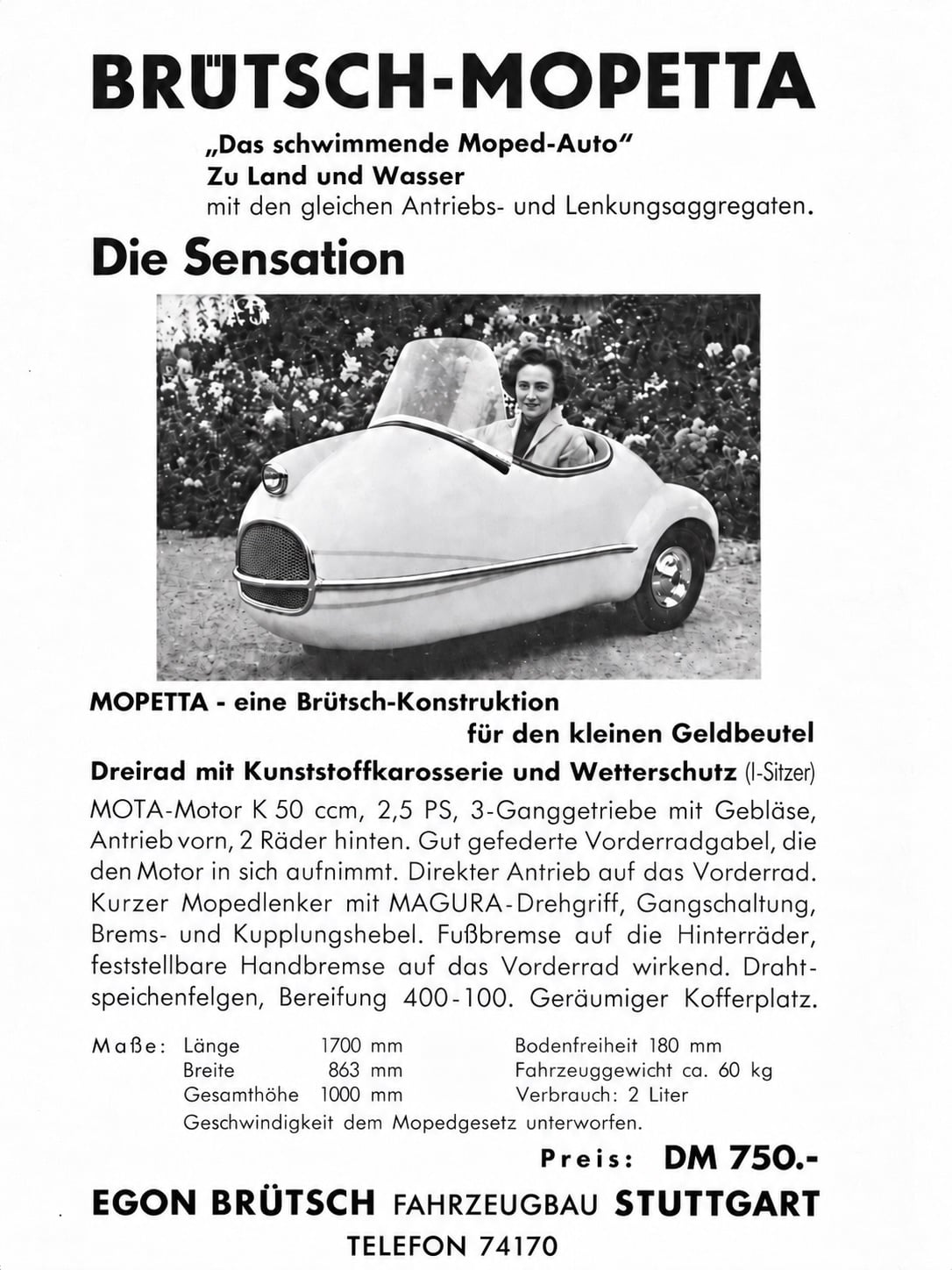
 The Brütsch Mopetta was a tiny German three-wheeler developed by Egon Brütsch in the 1950s to be the world’s smallest car. Image courtesy of Egon Brütsch Fahrzeugbau.
Brütsch came from a Stuttgart family that, unusually, had made its money in women’s stockings. He raced motorcycles and cars before the war and again in the late 1940s, when he entered a supercharged 1932 Alfa Romeo Monza in a series of German events. He founded Egon Brütsch Fahrzeugbau in Stuttgart in 1950, and between 1952 and 1958 the company produced 11 different models and about 80 vehicles in total.
The company appears to have existed mainly to develop new designs and sell manufacturing licenses, and didn’t seem to have the scale or resources needed for its own mass-production runs. The first Egon Brütsch Fahrzeugbau product was a scale Maserati racing car for children, it was priced high, and it flopped almost immediately.
The Mopetta: A Show Car Built (Almost) Overnight
The Brütsch Mopetta was made for the 1956 IFMA, the International Bicycle and Motorcycle Exhibition in Frankfurt. Brütsch is said to have produced the body overnight using fiberglass, he then leaned a set of wheels against it in the garden, sat his secretary inside it and took a photograph. The wheels were attached in time for the show, but the mechanical parts weren’t – the car was displayed high on the stand so nobody could see that it was just an empty mockup.
He announced it at a price of DM 750 (about $180 USD), interestingly this was the same price point as the earlier toy Maserati that had proven so difficult to sell. With its 50cc engine, the Mopetta was classed in West Germany as a moped, which exempted it from ordinary motor vehicle tax, and from the car driving-license requirement. As a result, almost anyone could buy and operate one.
Early brochures went further and described a floating moped-car for land and water. This seems to have been quite an overstatement, as the body wasn’t watertight, and period publicity photographs of it crossing a stream were taken in water just a few inches deep.
A running car existed by May of 1957, just seven months after that hollow rolling shell had been manhandled into place on the Frankfurt show stand. Say what you want about Egon Brütsch’s methods, but he could get things done when he needed to.
Above Video: This is some footage from a German TV show about the Brütsch Mopetta, and it shows one being driven on public roads, showing just how tiny they really are.
The Brütsch Mopetta: Specifications
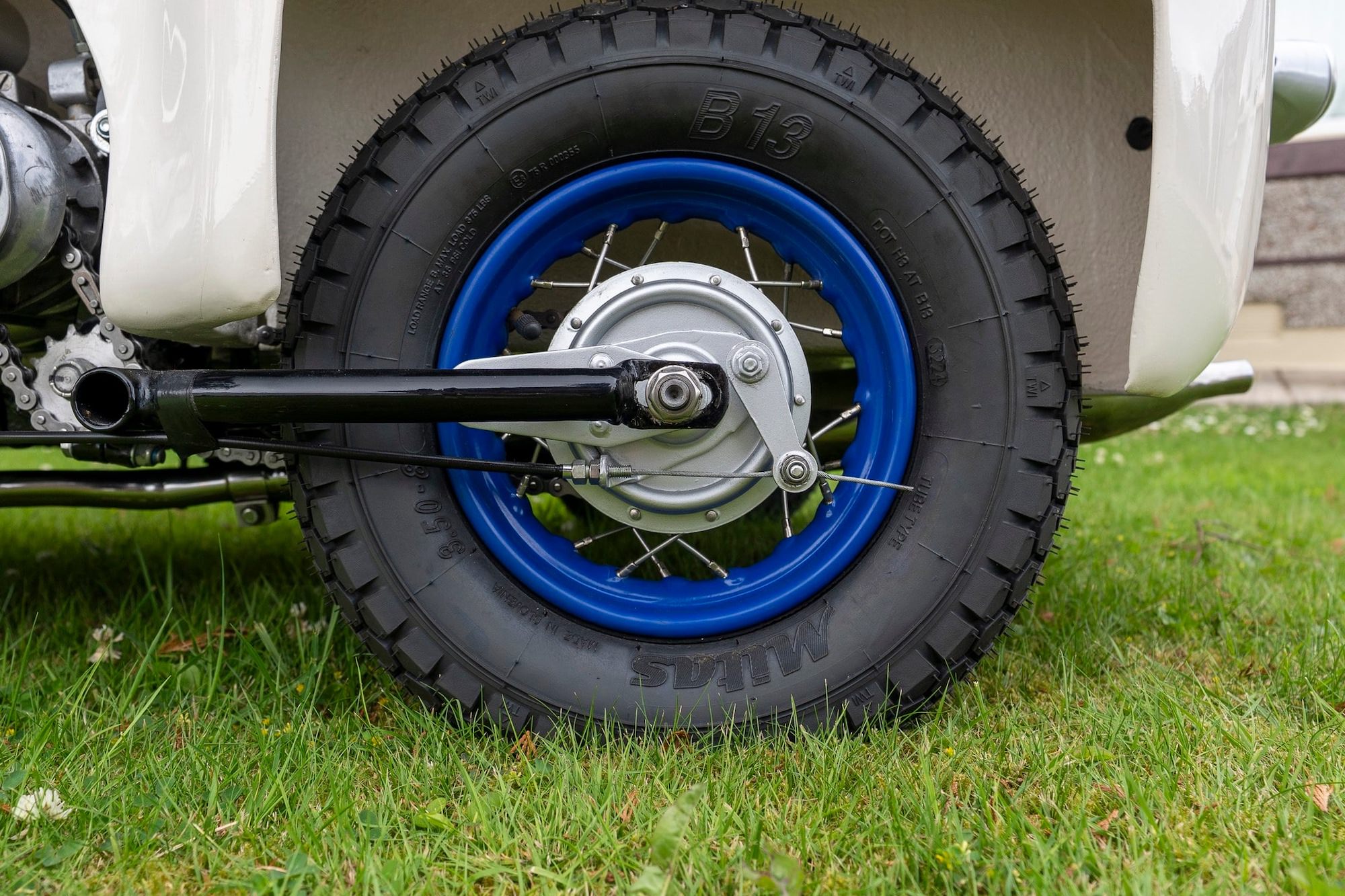
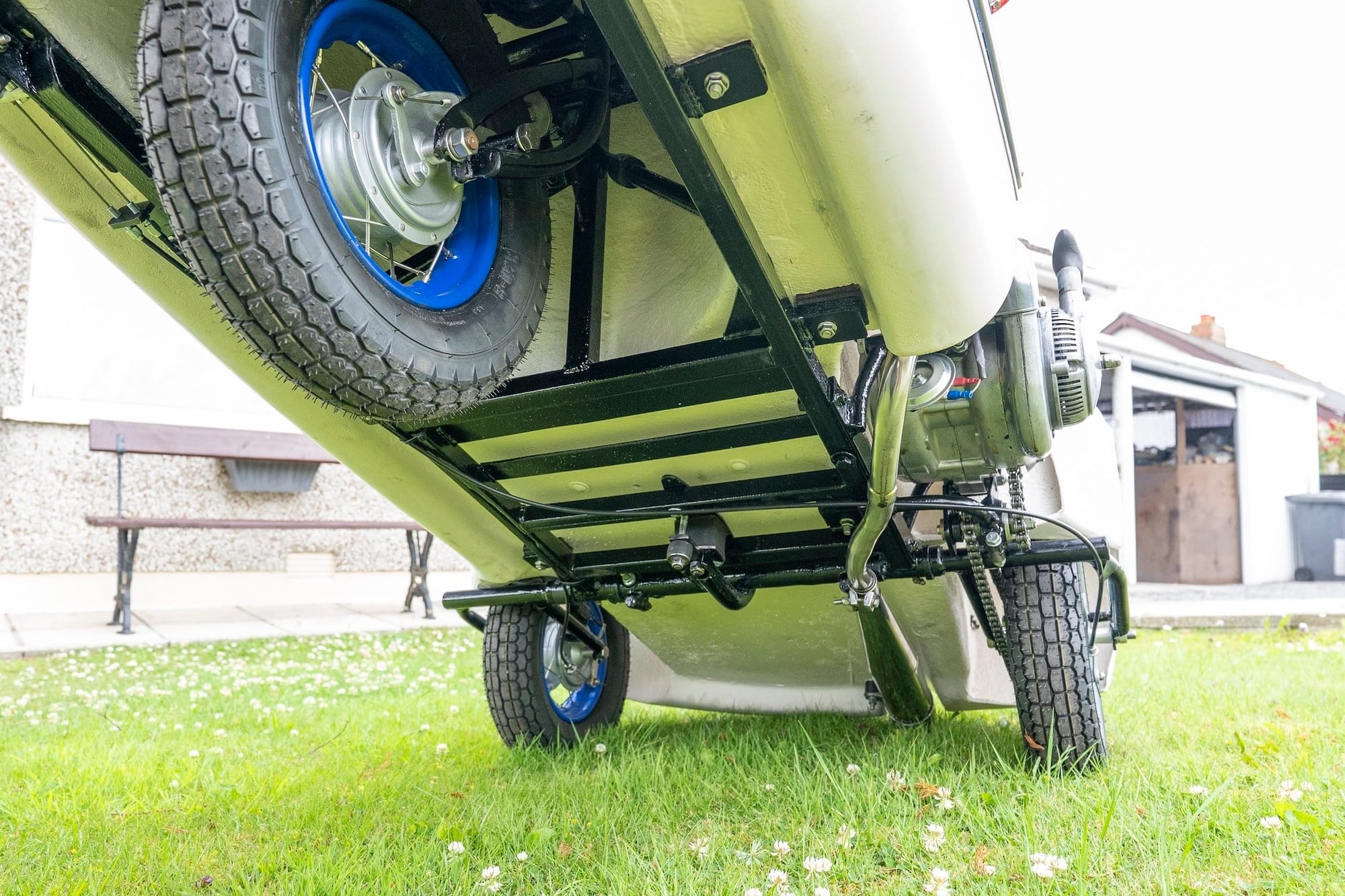
The production Mopetta was 1.7 meters (5 feet 7 inches) long and roughly 88 to 91 centimeters (about 35 to 36 inches) wide, with one wheel at the front and two at the rear, the doorless body was bolted to a short steel ladder frame. The front wheel sat in an Earles-type fork and the rear wheels on trailing arms, with rubber as the springing medium at both ends. There were drum brakes on all three wheels, and a handlebar lever worked the front brake and a foot pedal worked the rears.
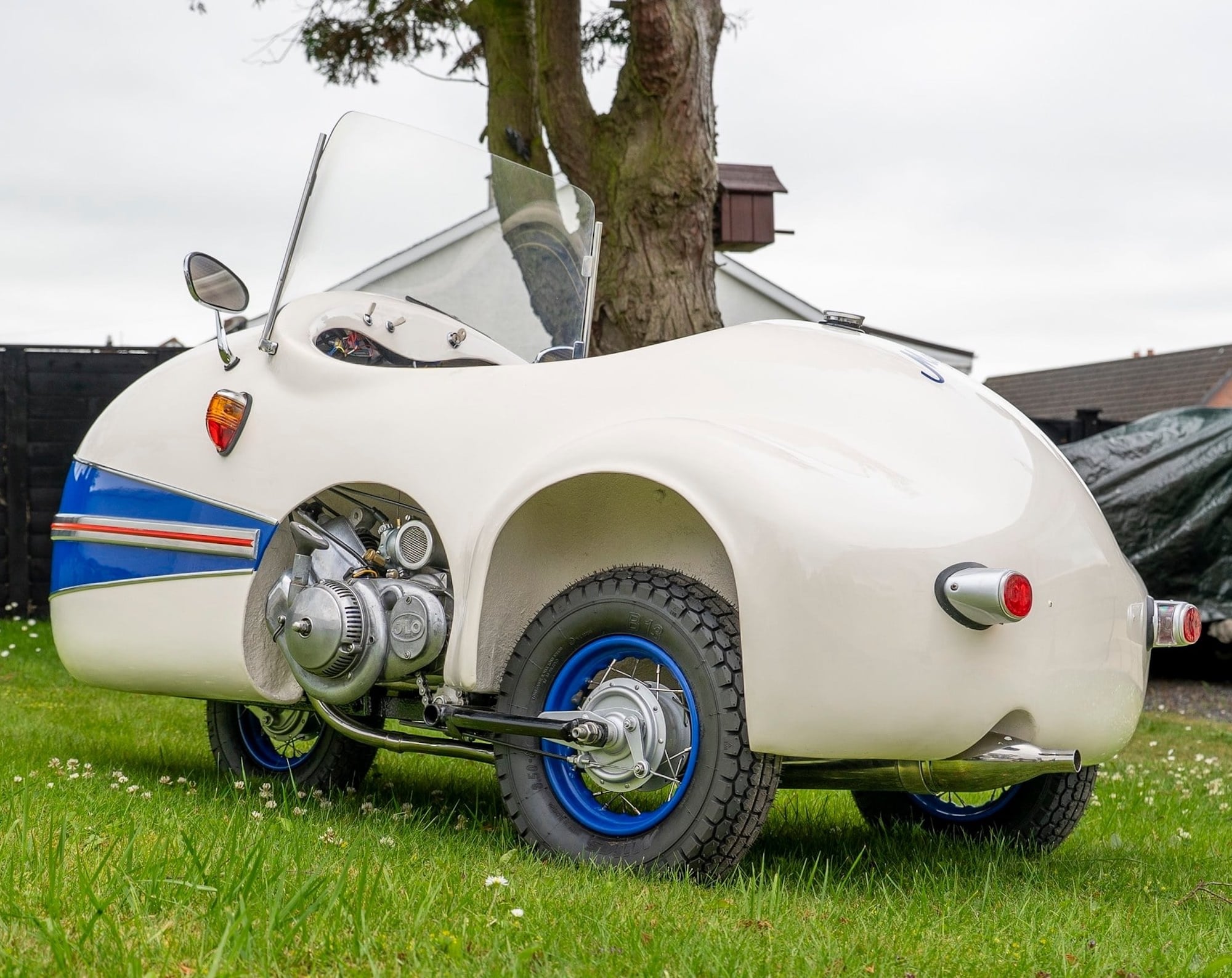
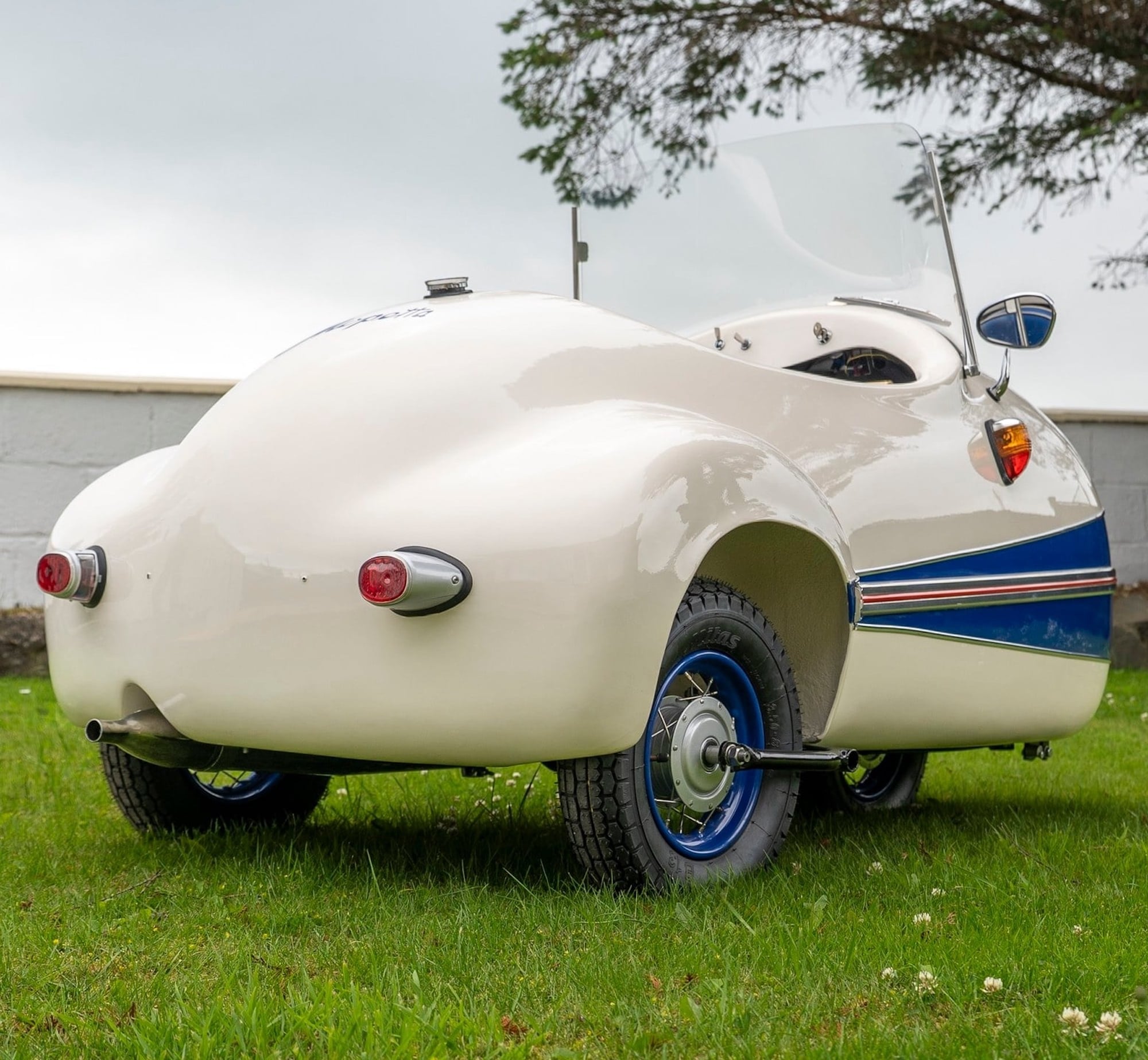
Power was provided by a 49cc air-cooled single-cylinder two-stroke made by ILO, it was rated at 2.3 bhp and started with a pull cord. The engine sat on the left, beside the driver, with an integral 3-speed gearbox and no reverse, then a chain drive to the left rear wheel.
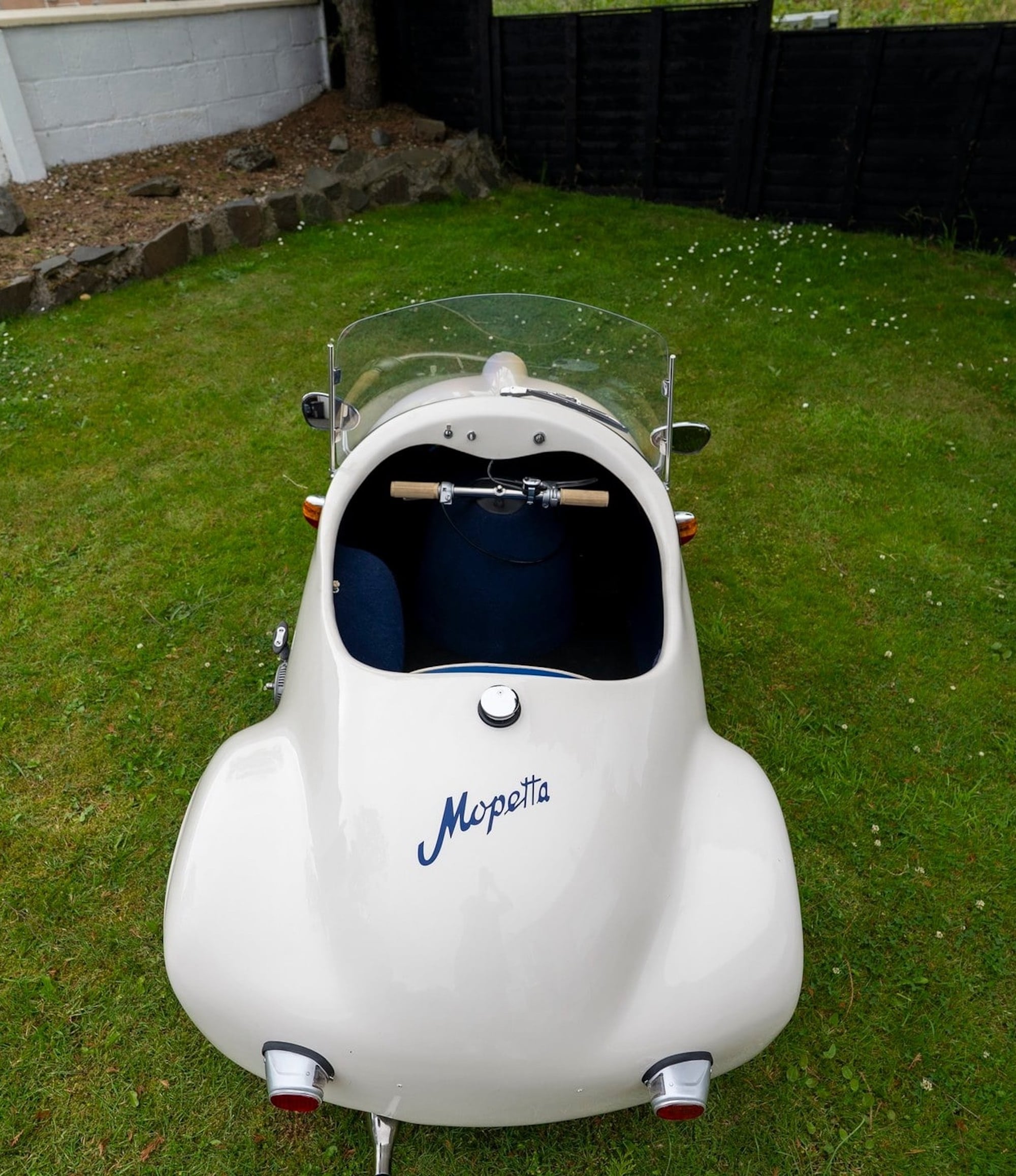
The controls were essentially those of a moped, and the handlebars turned only a quarter turn from lock to lock. The gearchange twist grip and clutch lever were on the left, and the throttle and front brake were on the right. Ignition was by magneto and the electrics were 6 volts, fairly standard for the time – the single headlight worked only while the engine was running. The empty weight was 78 kgs (172 lbs), and a clear folding hood was available, but it had to be lowered before the driver could climb in or out, making operation difficult on rainy days.
British magazine The Motor tested a Mopetta in 1957, the factory claimed a top speed of 27 mph at the time. In the test however, the top speed was barely 20 mph and up to about 22 mph as the engine warmed up. On the plus side, the car returned 124 miles per imperial gallon at a steady 10 mph.
The testers noted that the engine “gently warms the driver’s left thigh,” which might have been entirely unwelcome in the winter but may have become an issue in the warmer months. Because the engine’s weight sat on the left, a hard right-hand corner over a raised manhole cover could lift a rear wheel. The tester ultimately concluded that the car was genuinely useful for short journeys – in Britain it was priced at £200 (about $560), a reasonably affordable sum at the time.
The Period Competitors
In Germany, the Mopetta was far cheaper than most of the established microcars of the time, but they were also faster and usually offered seating for two. BMW’s Isetta 250 cost DM 2,550 (about $610 USD) in standard form, and Messerschmitt’s KR200 cost about DM 2,500 (about $600 USD).
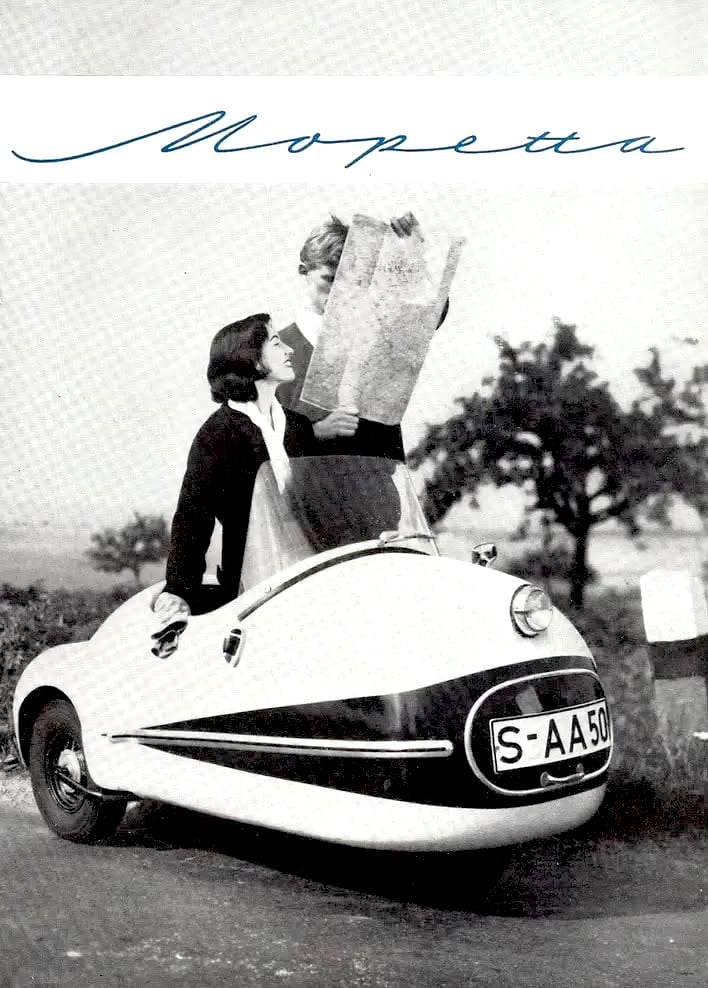
The Mopetta began as a hurried show car for the 1956 IFMA exhibition in Frankfurt, where the first example was displayed before its mechanical parts were even installed. Brütsch promoted it as an ultra-cheap moped-car, priced at DM 750, and its 50cc classification meant favorable licensing and taxation rules in West Germany. Image courtesy of Egon Brütsch Fahrzeugbau.
Almost An Opel
Georg von Opel was a member of the Opel family who sold Opels through his own dealership, he planned to build the Mopetta at the Horex motorcycle factory and sell it as the “Opelit.” Sales literature was printed, but von Opel withdrew from the project in spring of 1958, it’s not known why.
14 Mopettas were built in all, and five were exported to Britain, there were no issues with left/right hand drive as all Mopettas had a central driving position, much like the McLaren F1 which came along a little later.
In the autumn of 1958 Brütsch left car manufacturing to make plastic weekend cabins/holiday houses using the fabrication skills he’d honed moulding the body of the Mopetta.
Only five original Mopettas are thought to survive to the modern day, and replicas now vastly outnumber them.
The 1956 Brütsch Mopetta Replica Shown Here
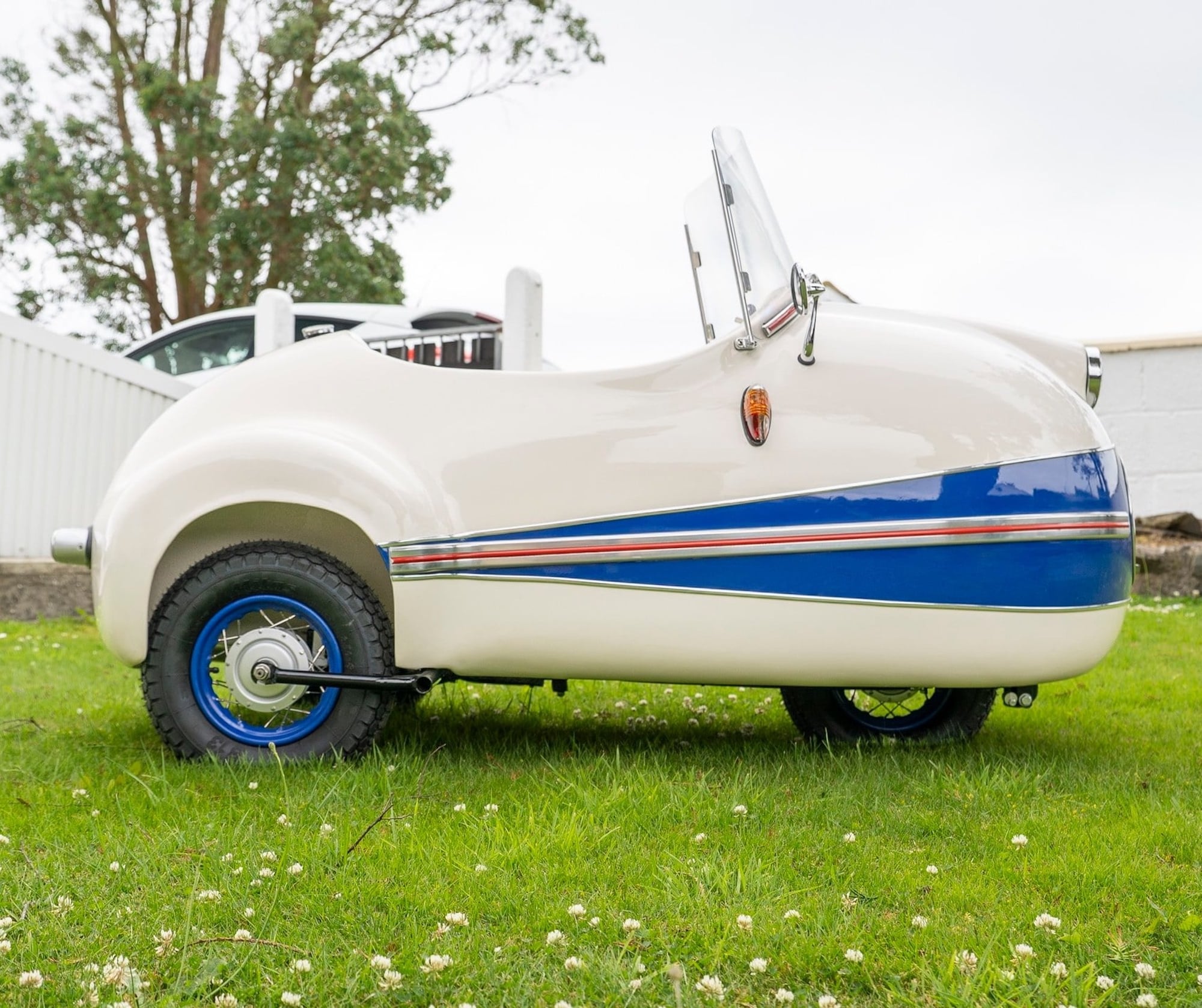
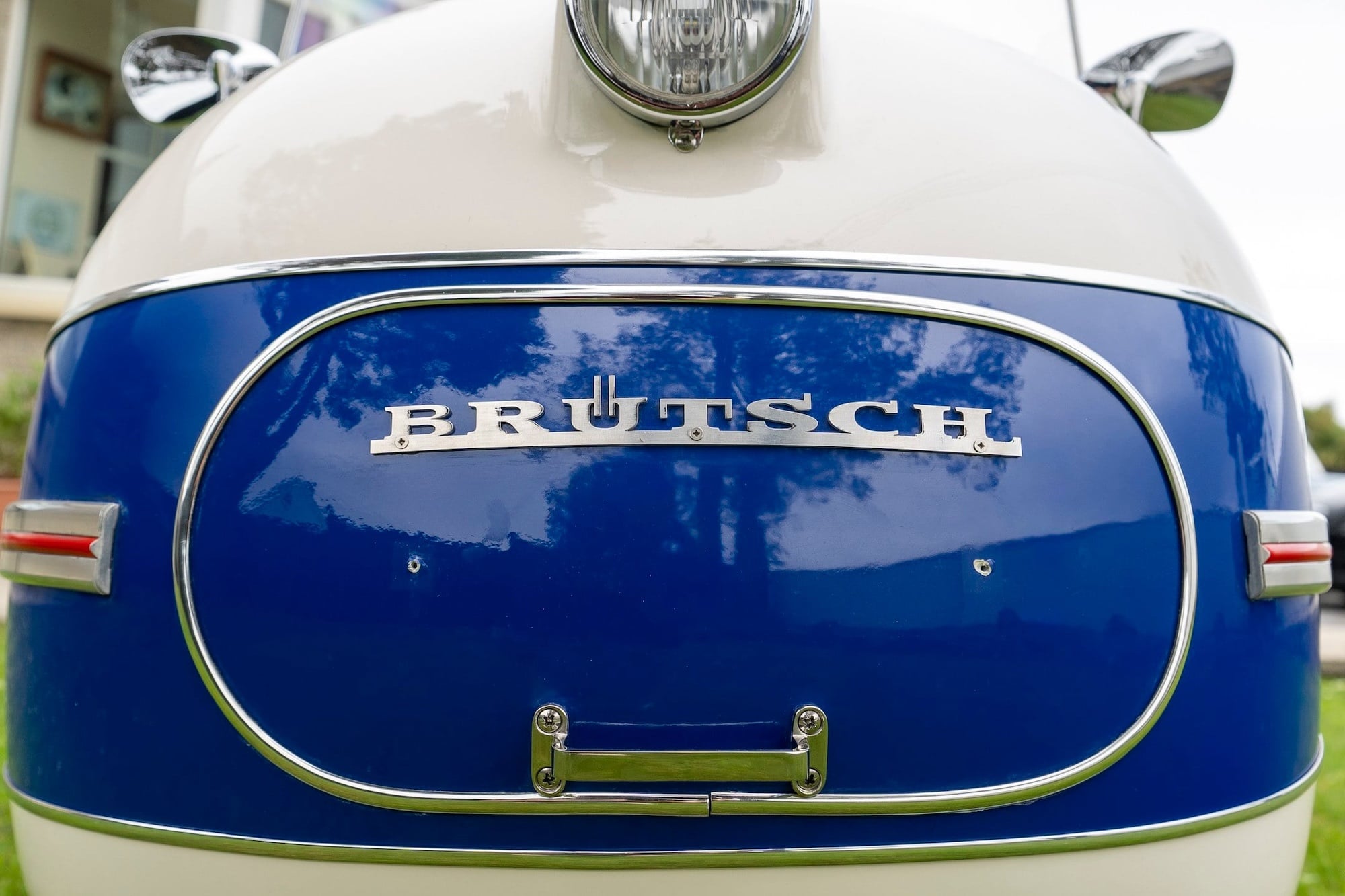
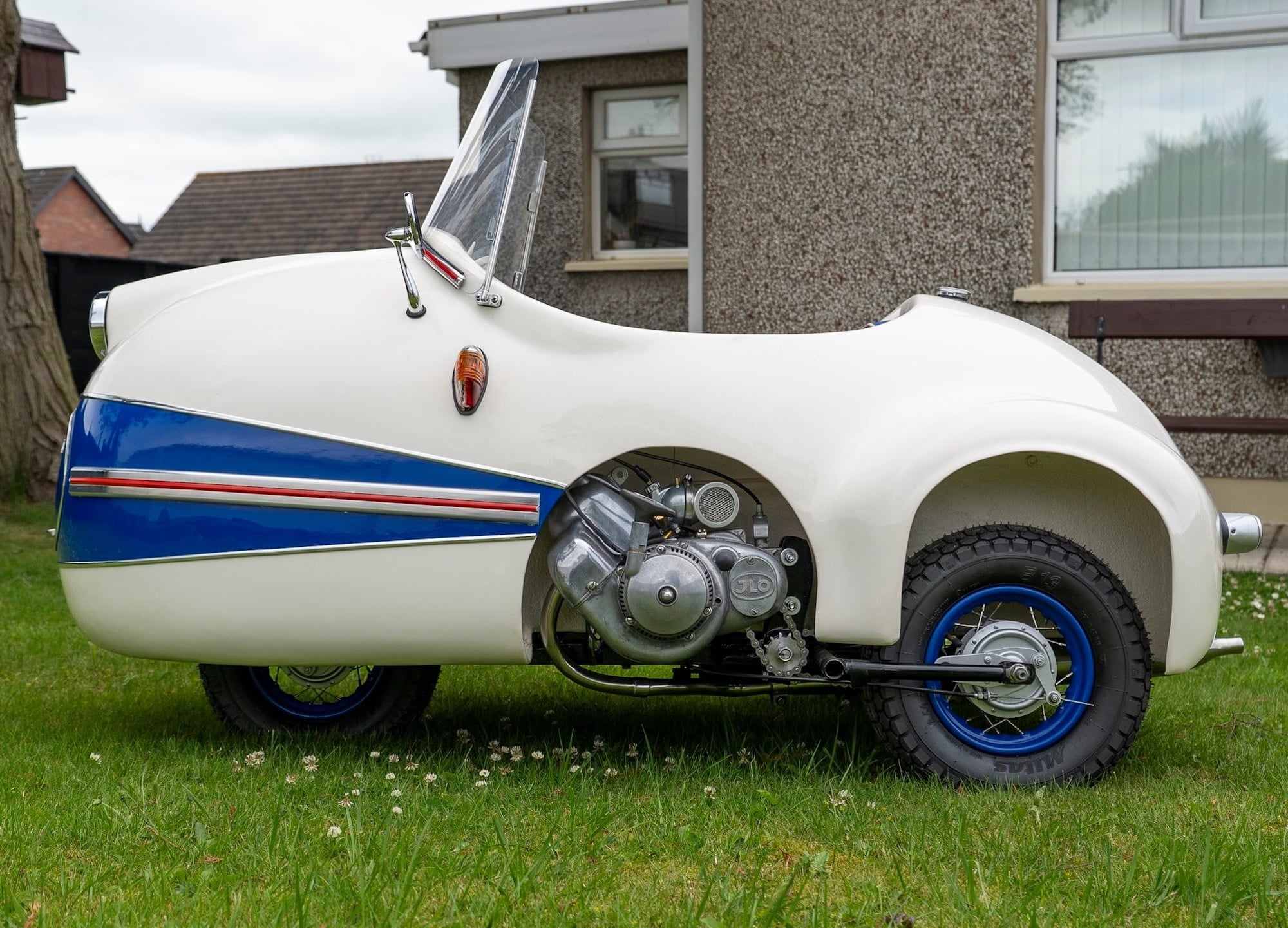
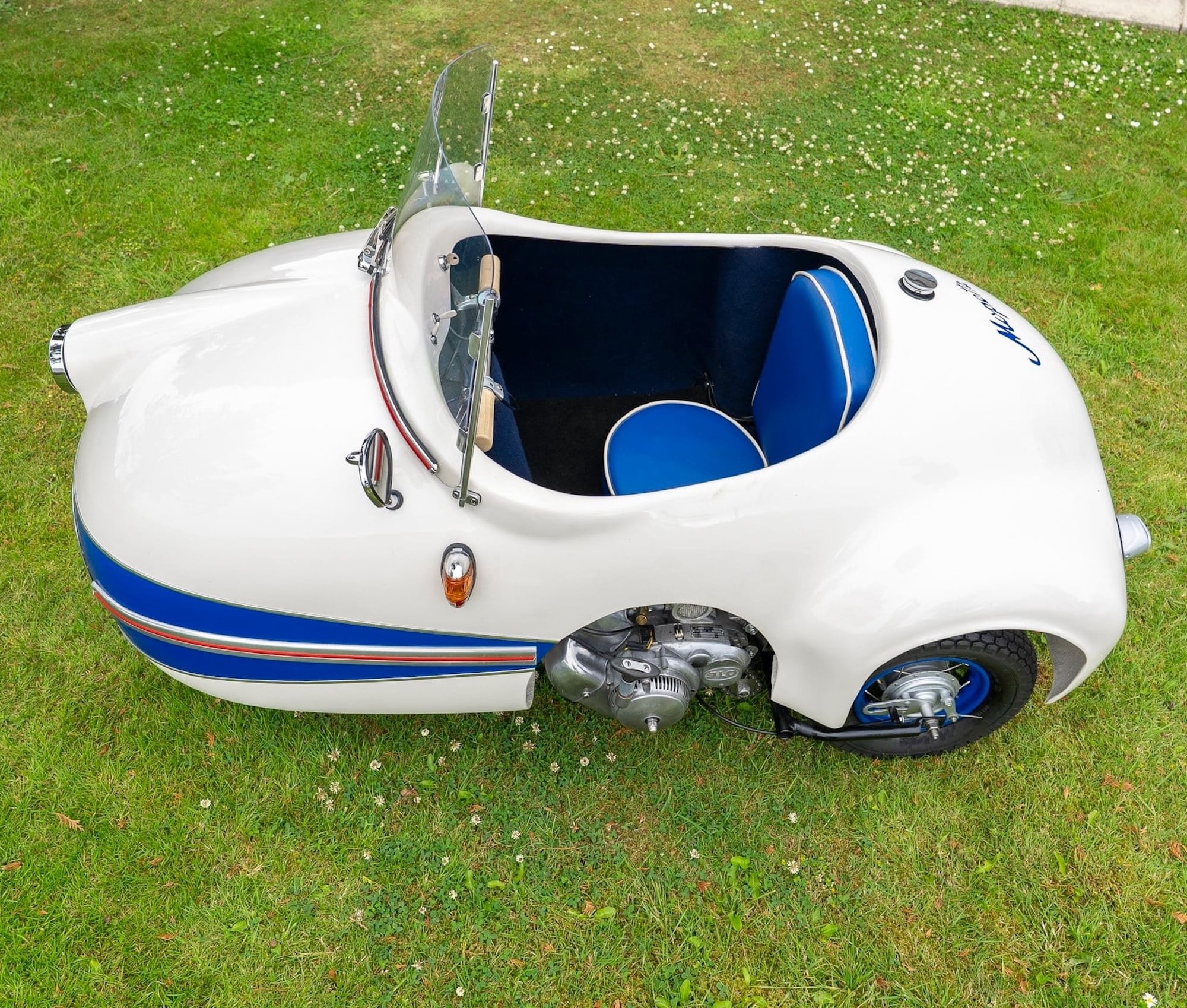
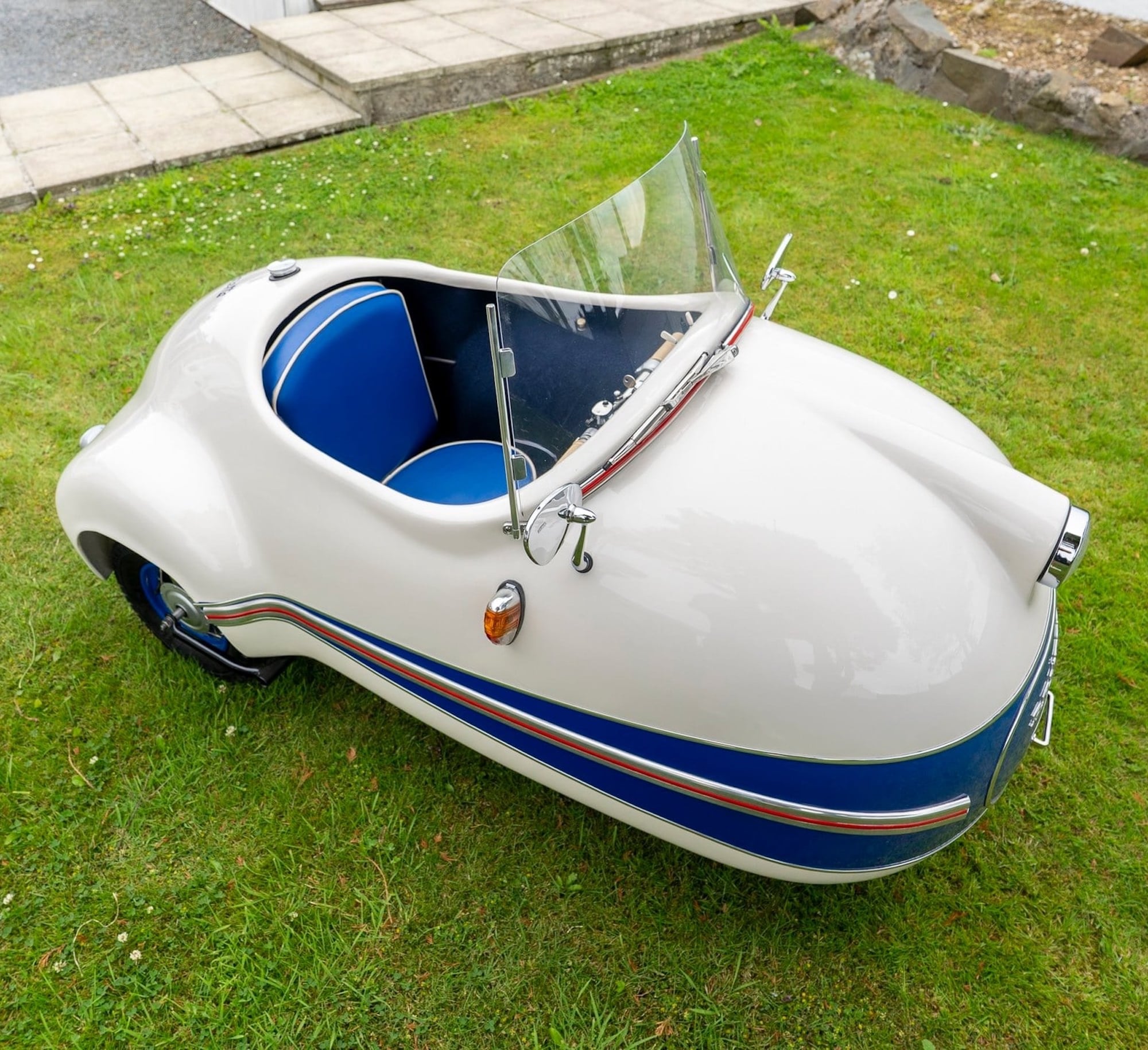
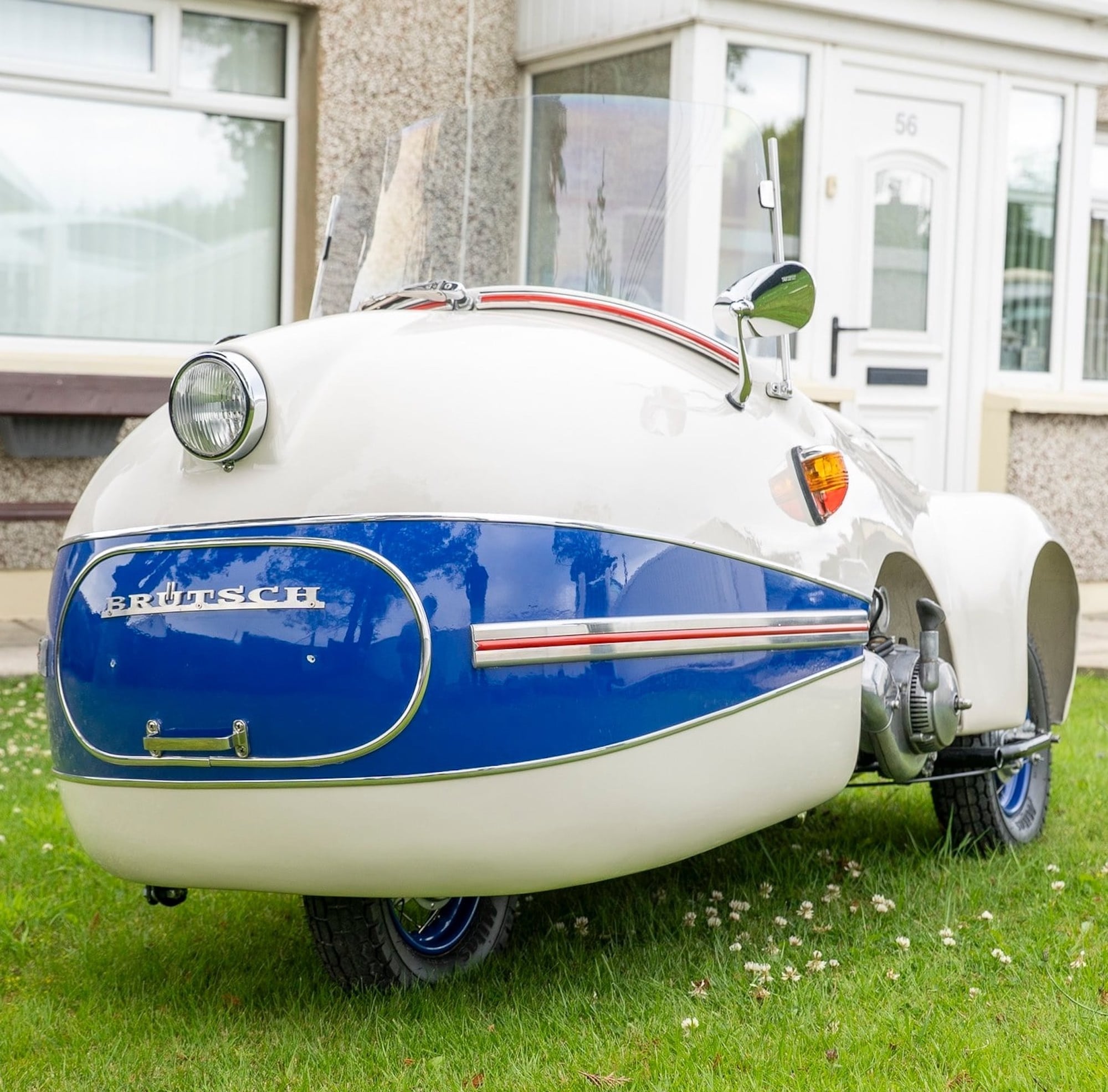
This is a freshly-completed Brütsch Mopetta replica that was built using new, period-correct parts throughout, and it’s presented in immaculate condition. Finished in white with a blue front panel carrying Brütsch badging, it also has blue “Mopetta” lettering at the rear, wire-spoke wheels with blue rims, Mitas B13 tires, and a neatly trimmed blue vinyl seat with white piping. The interior has been fully trimmed and carpeted in blue.
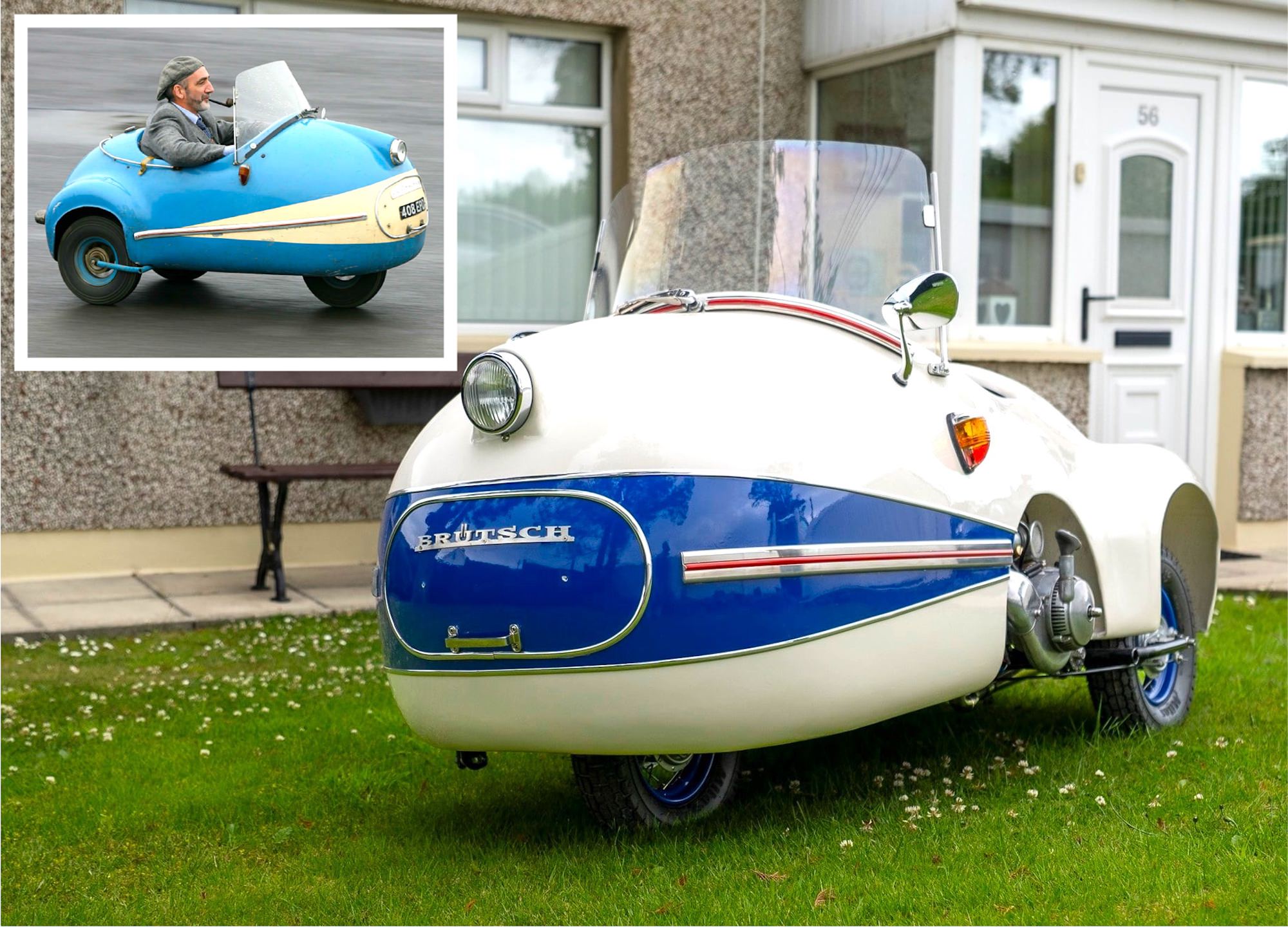
This is a freshly-completed Brütsch Mopetta replica that was built using new, period-correct parts throughout, and it’s presented in immaculate condition.
Power comes from a correct-type 49cc JLO single-cylinder engine paired with a 3-speed manual gearbox. The seller reports that it starts on the first pull and runs and drives well. Like the original Mopetta, it uses motorcycle-style handlebars and a very simple three-wheel layout, keeping the whole vehicle exceptionally compact and lightweight.
The car is currently unregistered and has never been registered since completion, so it’s effectively being offered as a new-build rather than as an historic vehicle. It’s being offered for sale out of Millisle in the United Kingdom and you can visit the listing here.
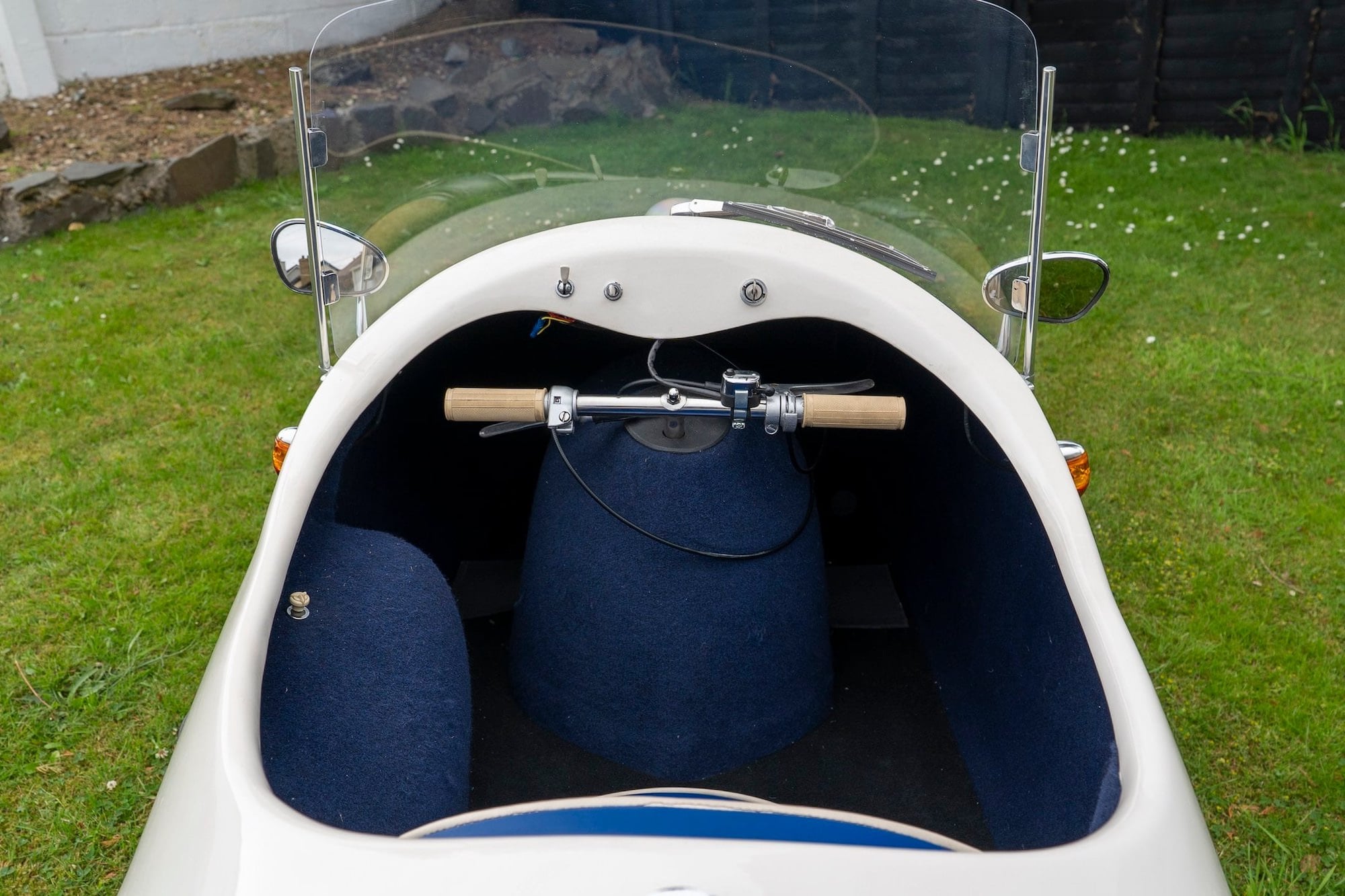
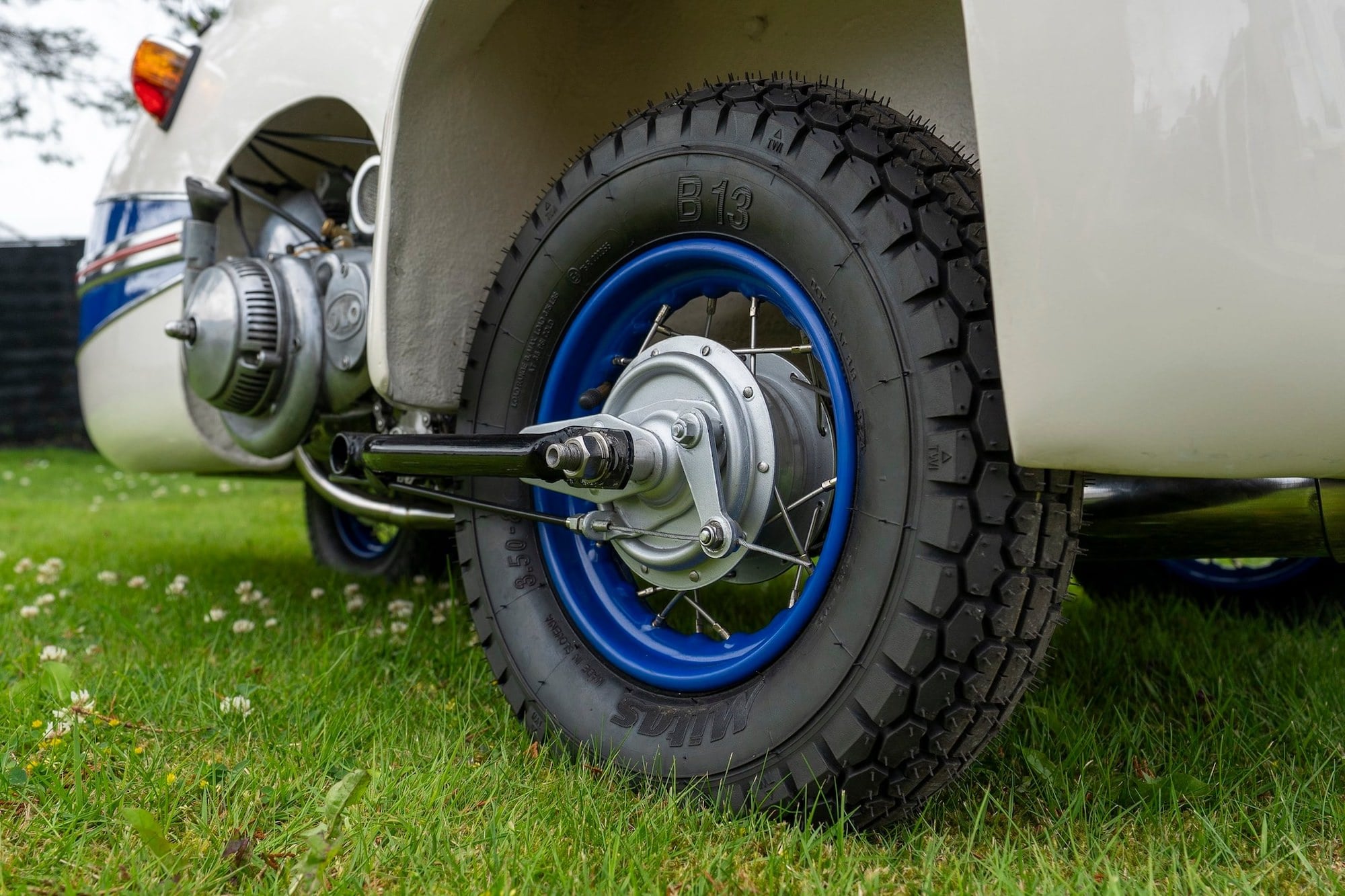
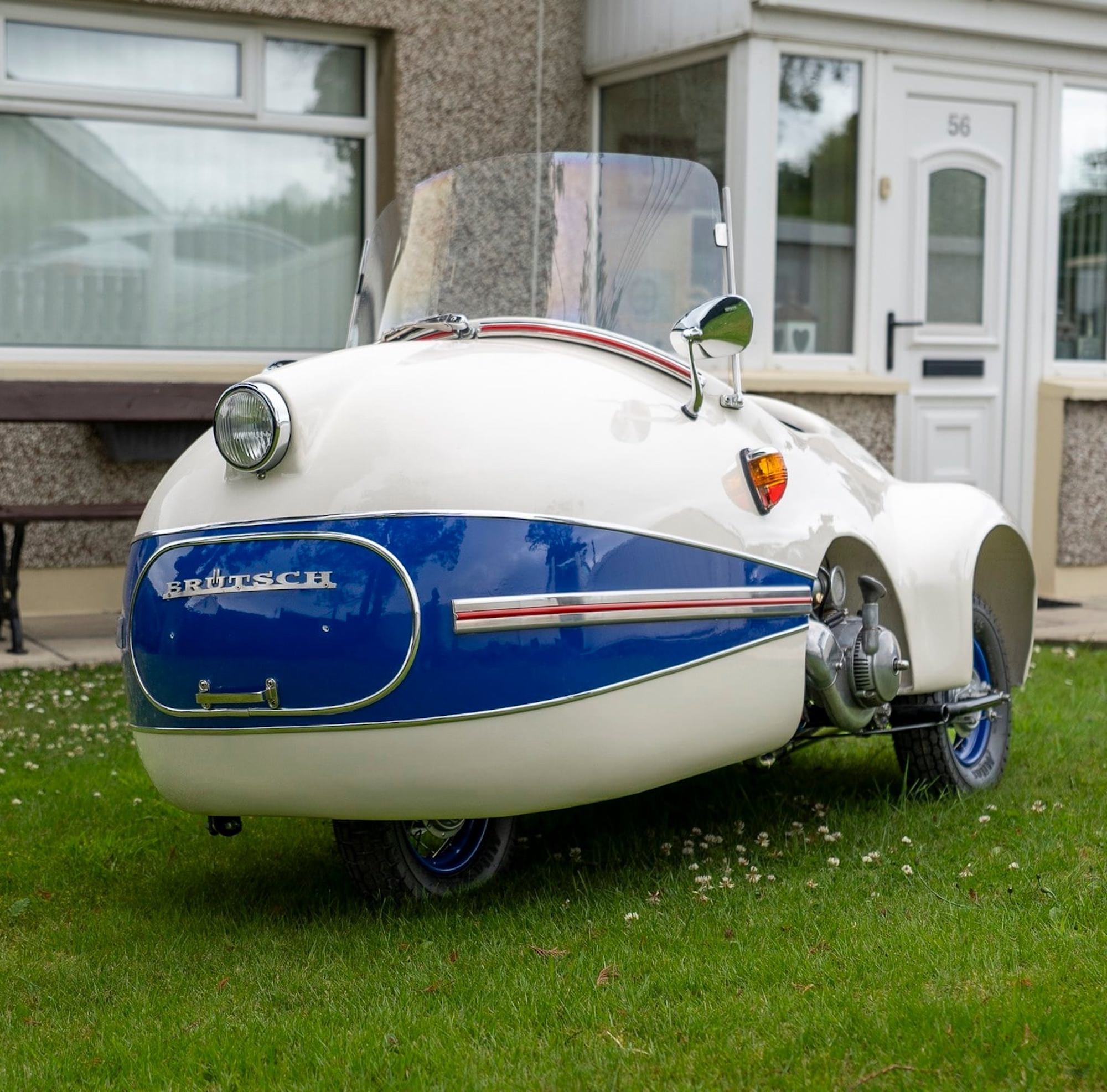
Images courtesy of Car & Classic

Articles that Ben Branch has written have been covered on CNN, Popular Mechanics, Smithsonian Magazine, Road & Track Magazine, the official Pinterest blog, the official eBay Motors blog, BuzzFeed, Autoweek Magazine, Wired Magazine, Autoblog, Gear Patrol, Jalopnik, The Verge, and many more.
Silodrome was founded by Ben back in 2010, in the years since the site has grown to become a world leader in the alternative and vintage motoring sector, with well over a million monthly readers from around the world and many hundreds of thousands of followers on social media.