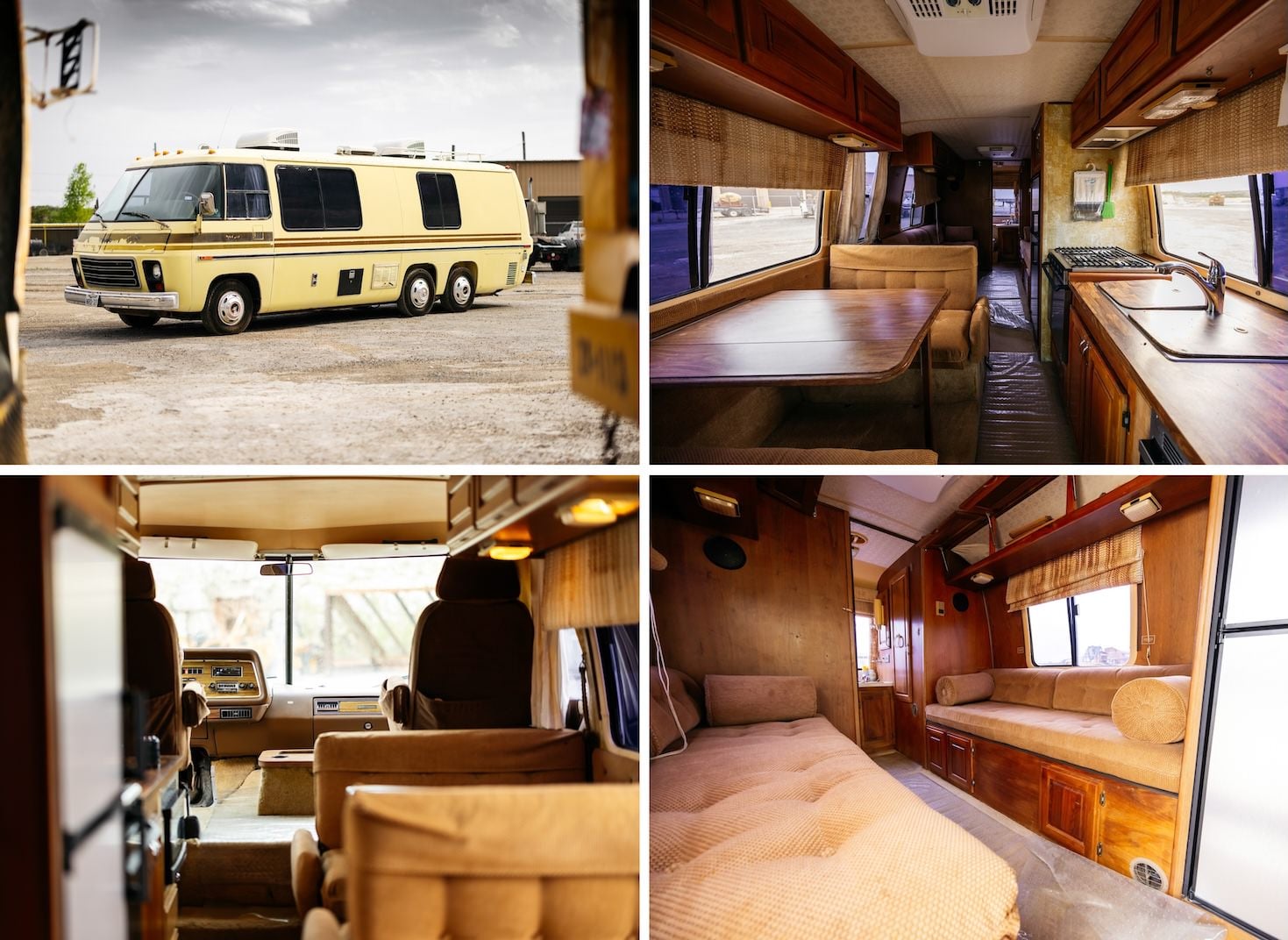
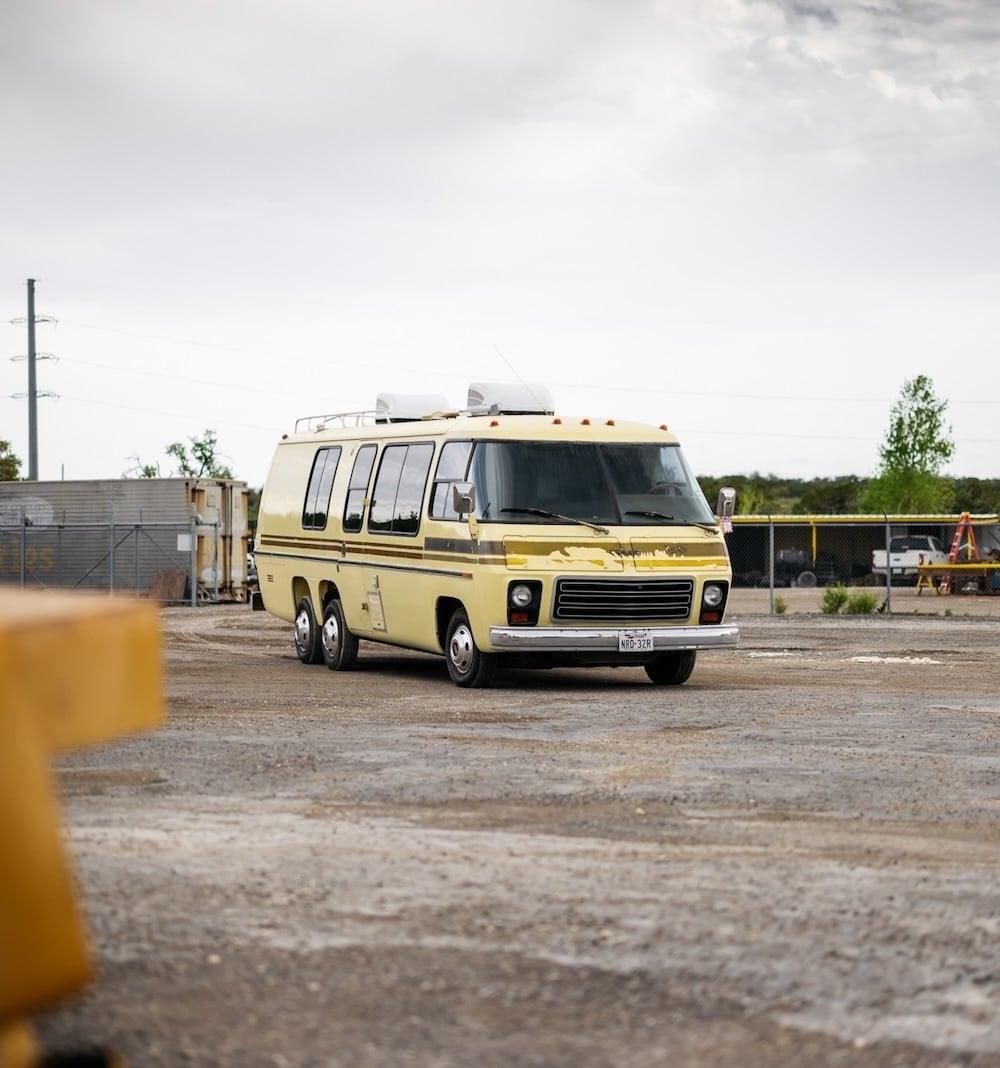
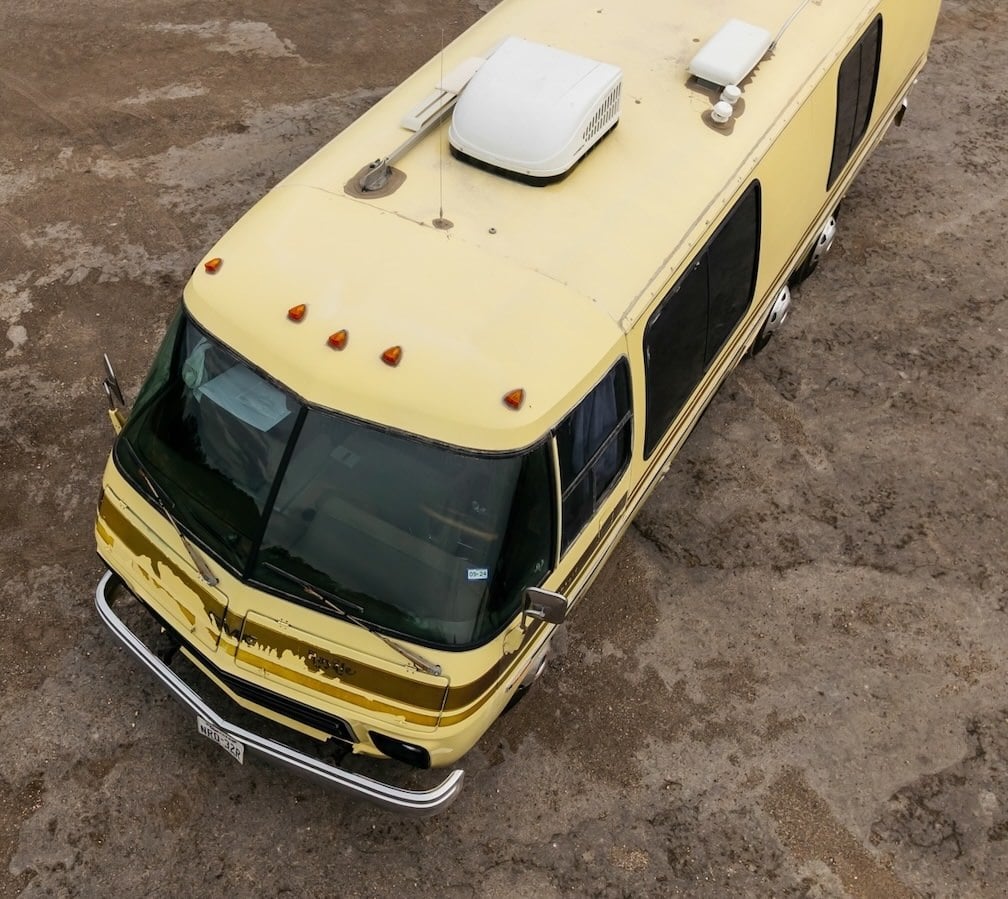
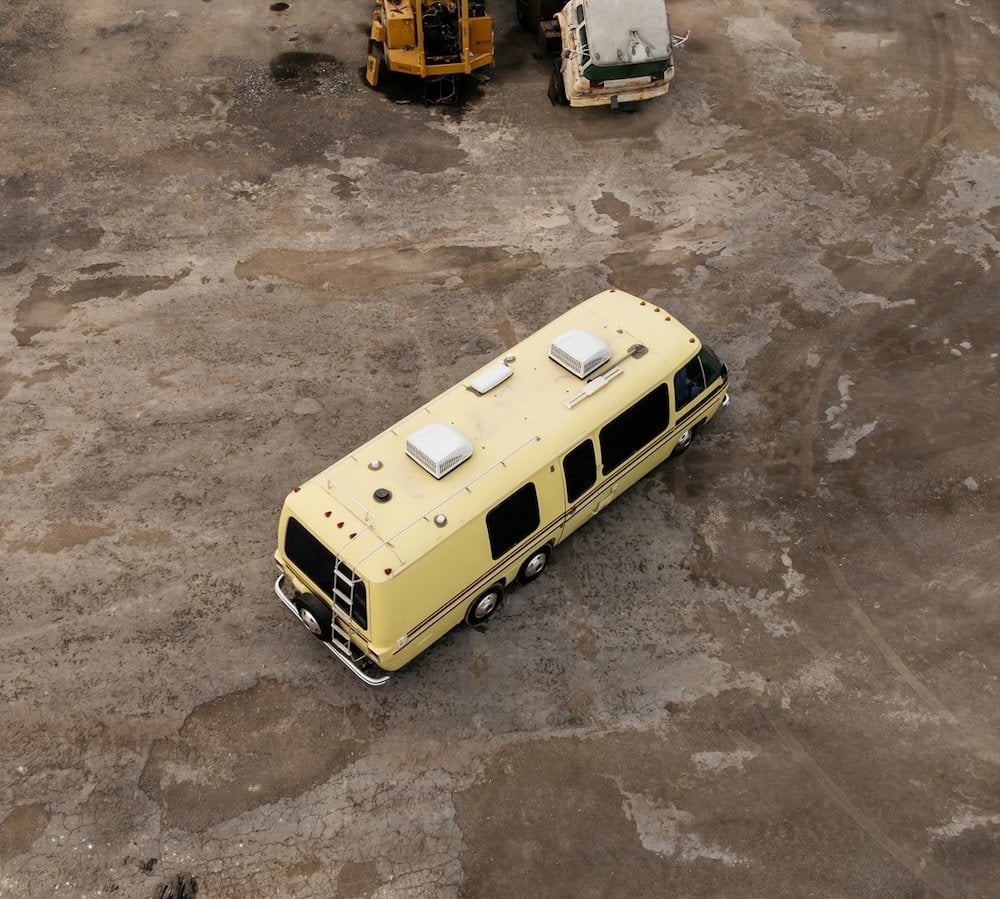
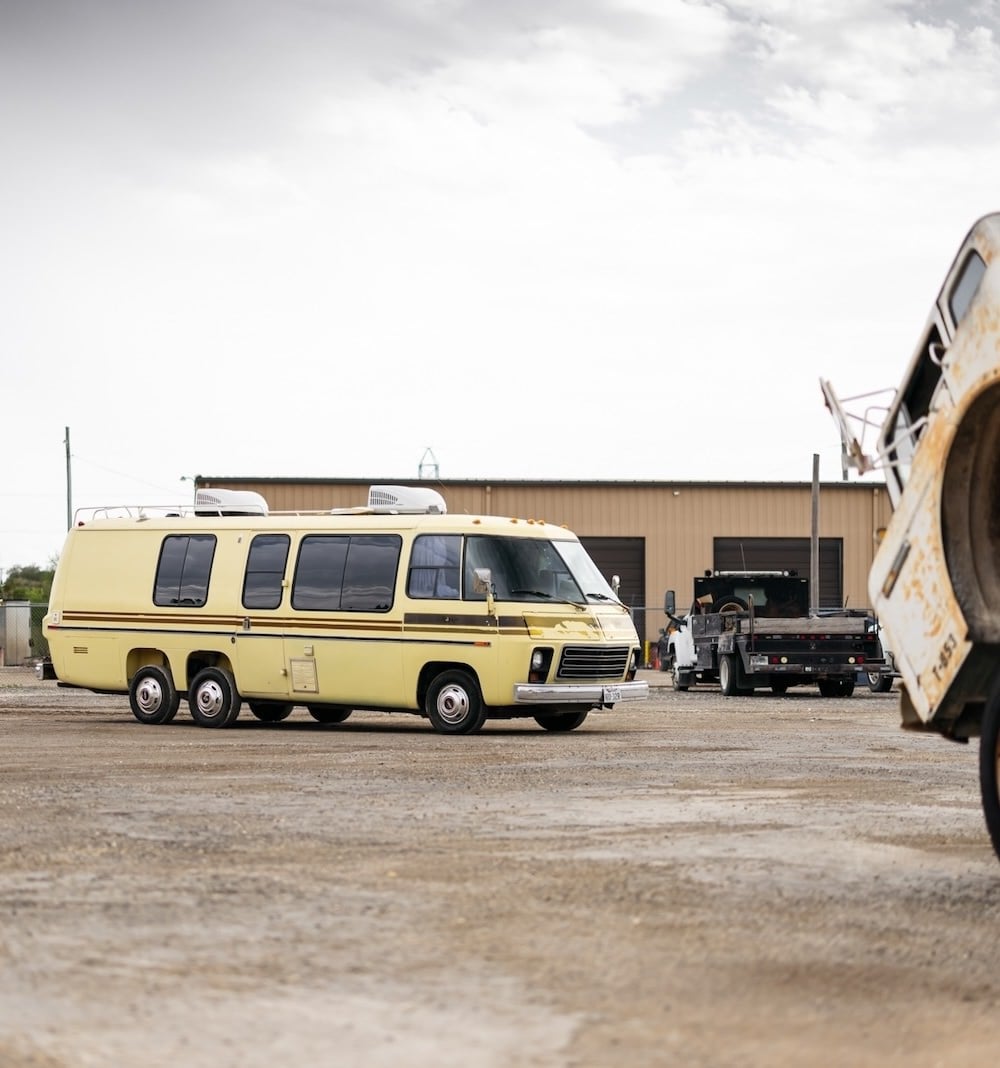
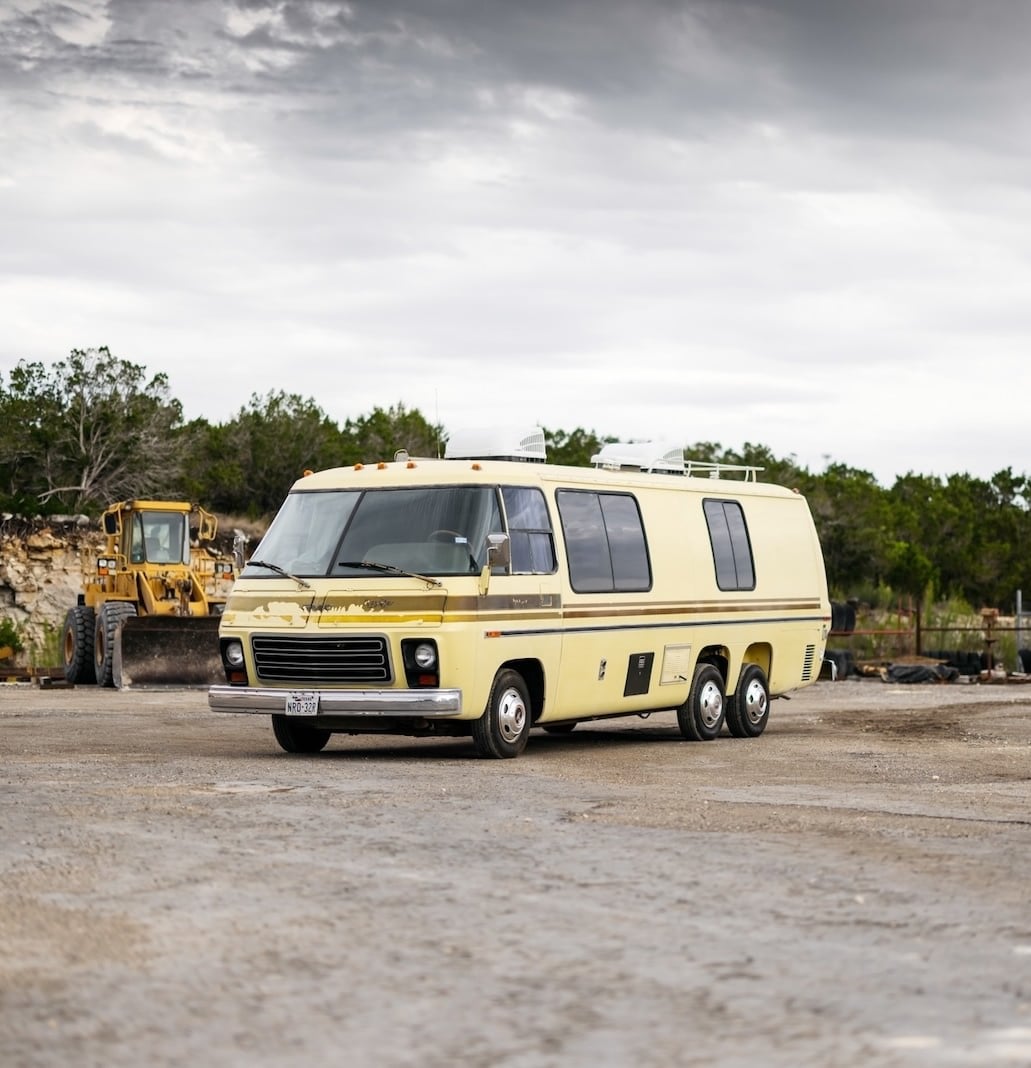
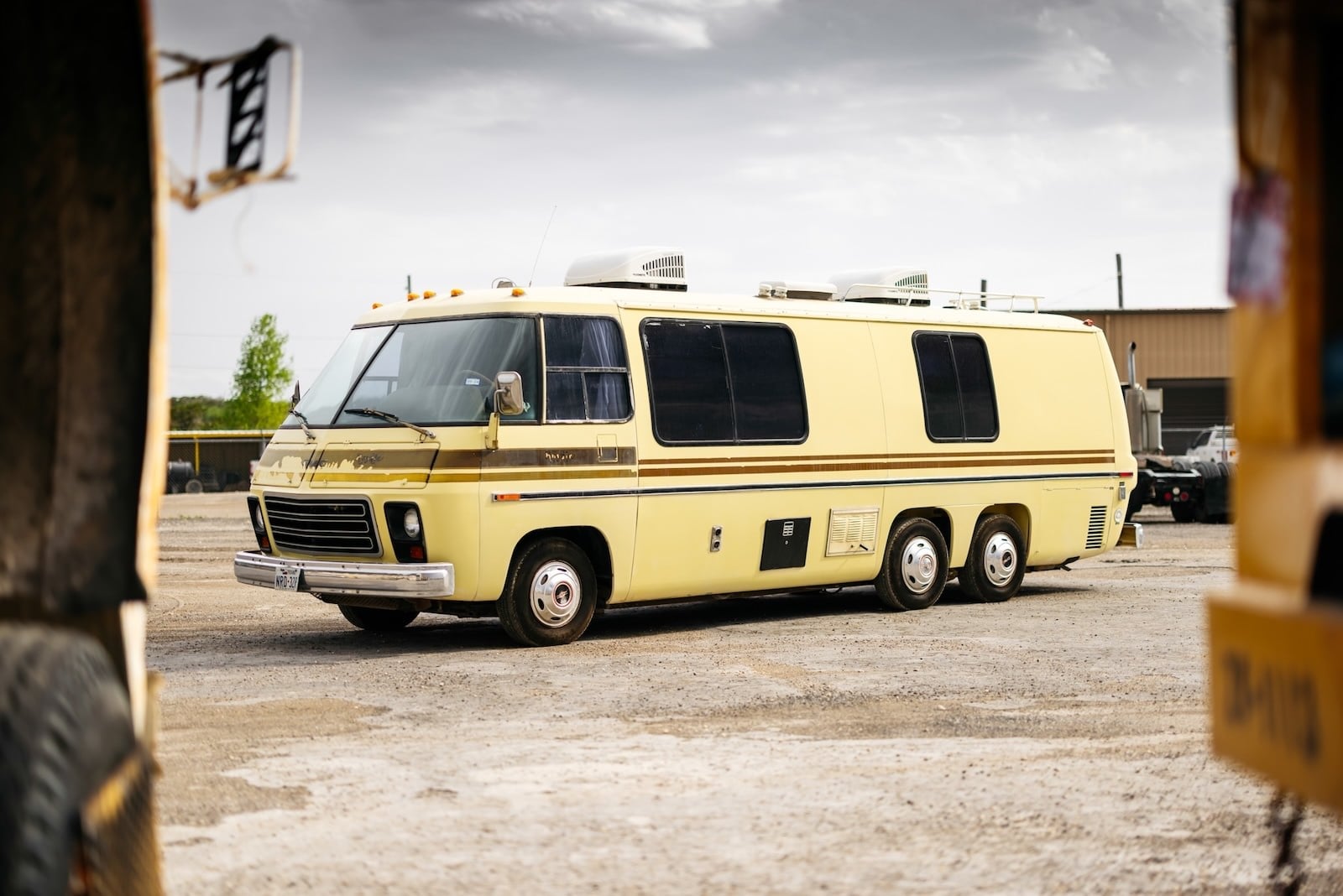
This is an original 1977 GMC Royale Motorhome, it was one of the most luxurious motorhomes money could buy in the 1970s, and this one remains in remarkably original condition throughout.
The 1970s were a boom time for RVs in the United States, so much so that General Motors developed their own in-house model and named it the “Motorhome,” perhaps not the most creative of names, but it would become one of the best-loved RVs of the decade.
Fast Facts: The GMC Royale Motorhome
- The GMC Motorhome was manufactured by General Motors from 1973 to 1978 at Pontiac, Michigan. It was the only complete motorhome built by a major automaker, using front-wheel drive engine and transmission package from the Oldsmobile Toronado to achieve a low, flat floor just 14 inches above the road and a car-like ride quality.
- The Royale was produced by Jimmy Motor Homes, a division of Coachmen Industries, on the GMC’s 26-foot TransMode shell beginning in 1976. They had lavishly appointed interiors with a full kitchenette, rear sleeping area, complete bathroom, Onan generator, and central heating and air conditioning as standard equipment.
- This particular 1977 Royale is finished in yellow with multi-tone accent stripes and has been in the same family for over four decades after being acquired from its original owner in the early 1980s. It’s powered by an Oldsmobile 403 V8 with a Turbo-Hydramatic 3-speed automatic transaxle.
- Extensive service work totaling $11,000 USD was carried out by Borene RV in Texas in 2023, including new stainless-steel appliances, dual Dometic air conditioners, comprehensive plumbing replacement, ignition system components, fluid flushes, roof resealing, and generator servicing. It’s now offered for sale with a clean Texas title.
History Speedrun: The GMC Motorhome
In the late 1960s, the American RV market was booming. The generation that had lived through the Great Depression and World War II was moving into retirement with money in their pockets and a deep desire to hit the road and see the country. The motorhome industry had grown rapidly to meet this demand, but almost every RV on the market shared the same fundamental shortcoming, they were coach bodies bolted onto truck chassis, with the rough ride quality that implied. General Motors saw an opportunity to do something different.
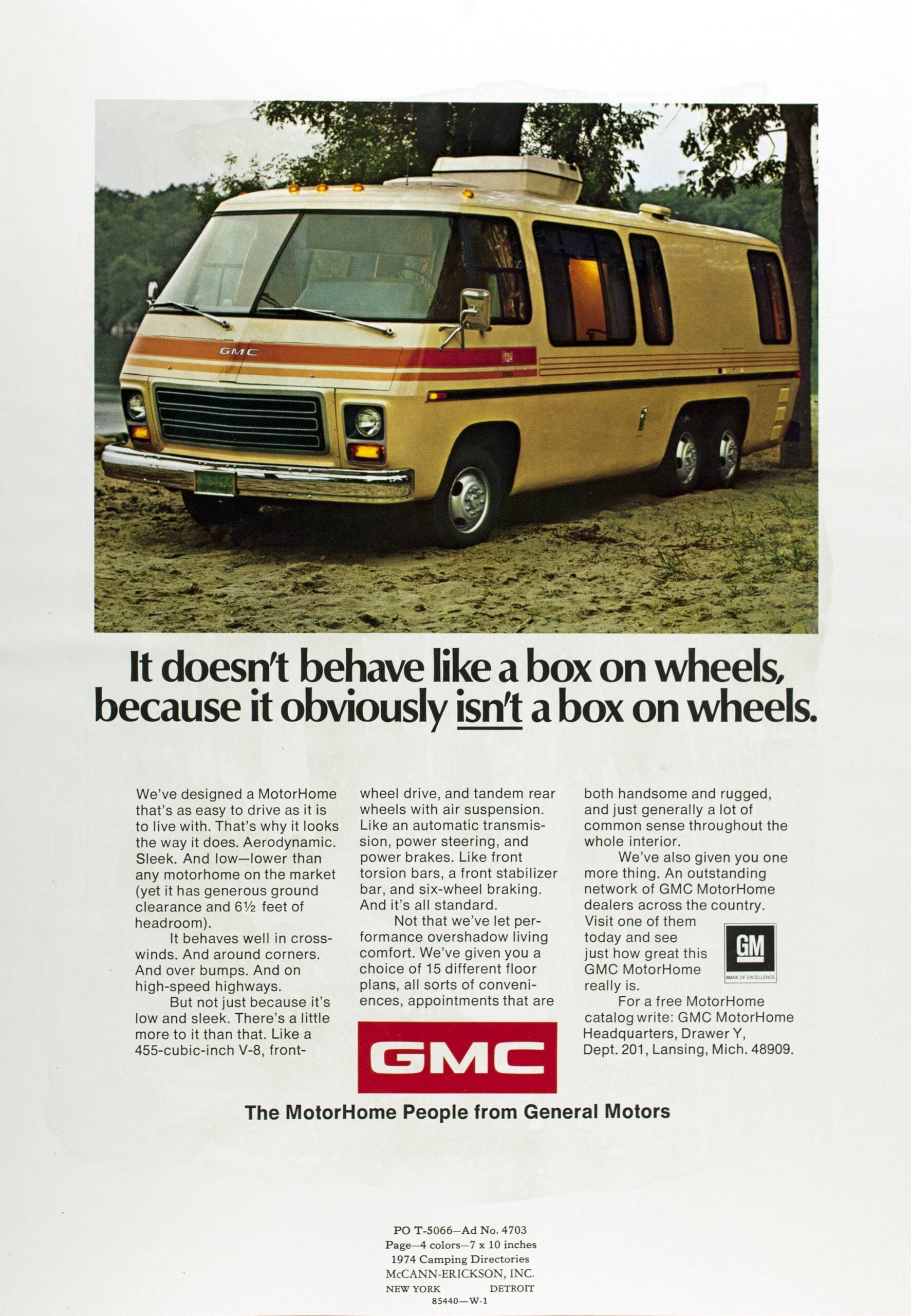
 The GMC Motorhome’s most consequential engineering decision was the adoption of front-wheel drive, using the Unified Powerplant Package from the Oldsmobile Toronado and Cadillac Eldorado. Image courtesy of GMC.
Why GM Built The Motorhome
Work on the concept began around 1969/1970 under the direction of Martin J. Caserio, GM Vice President and General Manager of GMC Truck and Coach. Caserio envisioned an affordable, high-volume product – a “Chevrolet of motorhomes.”
When Alex C. Mair succeeded him in 1973, the philosophy shifted upmarket. Mair wanted to create a “Cadillac of motorhomes,” a halo vehicle for the GMC brand. Styling was led by Michael Lathers, who was tasked with breaking from the boxy, truck-based convention that defined the RV industry, while engineering and product development were handled by a broader GMC team including Kurt Stubenvoll (product development), Ralph Merkle (chassis development), and John Locklin (body engineering).
After a prototype was displayed at the Transpo ’72 trade show in Washington, D.C., the production version debuted for the 1973 model year and was manufactured at Pontiac, Michigan through until 1978.
Engineering + Specifications
The GMC Motorhome’s most consequential engineering decision was the adoption of front-wheel drive, using the Unified Powerplant Package from the Oldsmobile Toronado and Cadillac Eldorado.
Early models were powered by the Oldsmobile 455 cubic inch (7.5 liter) V8 producing 265 bhp and 375 lb ft of torque, paired with a Turbo-Hydramatic 425 3-speed automatic transmission driven by a wide roller chain.
During the 1977 model year, the 455 was phased out and replaced by the Oldsmobile 403 cubic inch (6.6 liter) V8 making 185 bhp and 320 lb ft of torque, a change forced by the discontinuation of the larger engine as GM downsized the E-body platform.
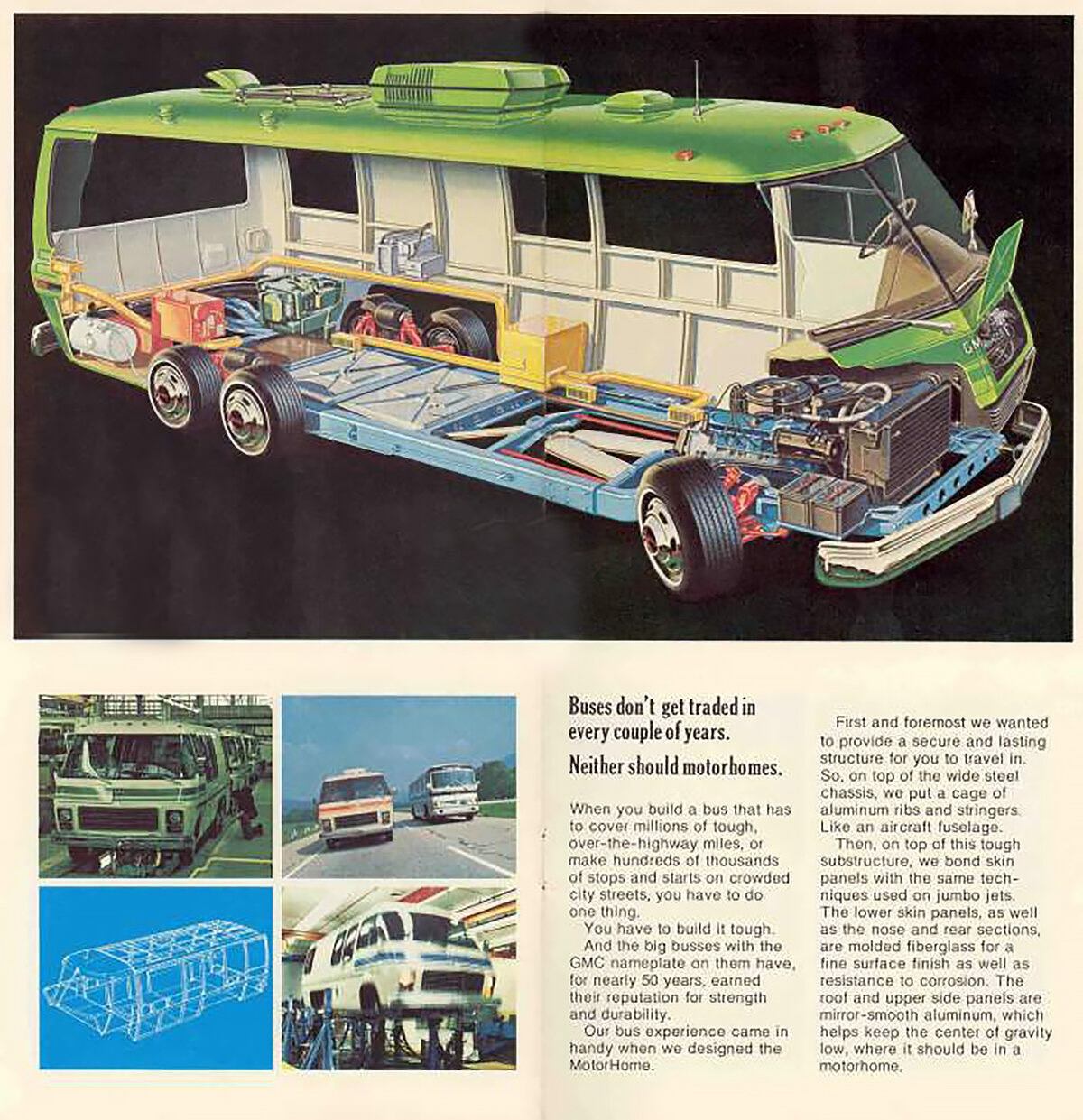
Early models were powered by the Oldsmobile 455 cubic inch (7.5 liter) V8 producing 265 bhp and 375 lb ft of torque, paired with a Turbo-Hydramatic 425 3-speed automatic transmission driven by a wide roller chain. Image courtesy of GMC.
The front-wheel-drive layout eliminated the long driveshaft to a rear differential, and the solid axle found on the conventional motorhomes of the time. This allowed the floor to sit just 14 inches above the road, dramatically lower than competitors, which lowered the center of gravity and the overall height.
The rear suspension was made up of tandem pairs of wheels on each side, mounted on leading-trailing arm bogies and sprung by air springs with an automatic leveling system. The result was the “magic carpet ride” the engineers had targeted from the outset.
The chassis was a steel ladder frame with a welded extruded aluminum body frame. Body panels were fiberglass below the waistline and at the ends, with sheet aluminum on the upper sides and roof. This rot-resistant construction is a key reason so many have survived to the modern day.
The GMC Motorhome was offered in 23 foot and 26 foot lengths, with the 26 footer accounting for almost 90% of finished Motorhome production.
The GMC Motorhome’s Main Competitors
The GMC wasn’t the first front-wheel-drive motorhome on the market. The Cortez Motor Home from Clark Equipment Corporation had offered front-wheel drive from 1963, and the redesigned Cortez-SD used the same Oldsmobile 455 and automatic transmission that the GMC would adopt.
The Revcon motorhome, also front-wheel-drive with the Toronado drivetrain, had been in production since 1971. Travoy and Tiara were among the other smaller manufacturers using the same powertrain.
However, none of these competitors had the engineering resources, manufacturing scale, or brand recognition of General Motors behind them, and the GMC quickly established itself as the benchmark in its class, even if it may have been influenced by these earlier designs.
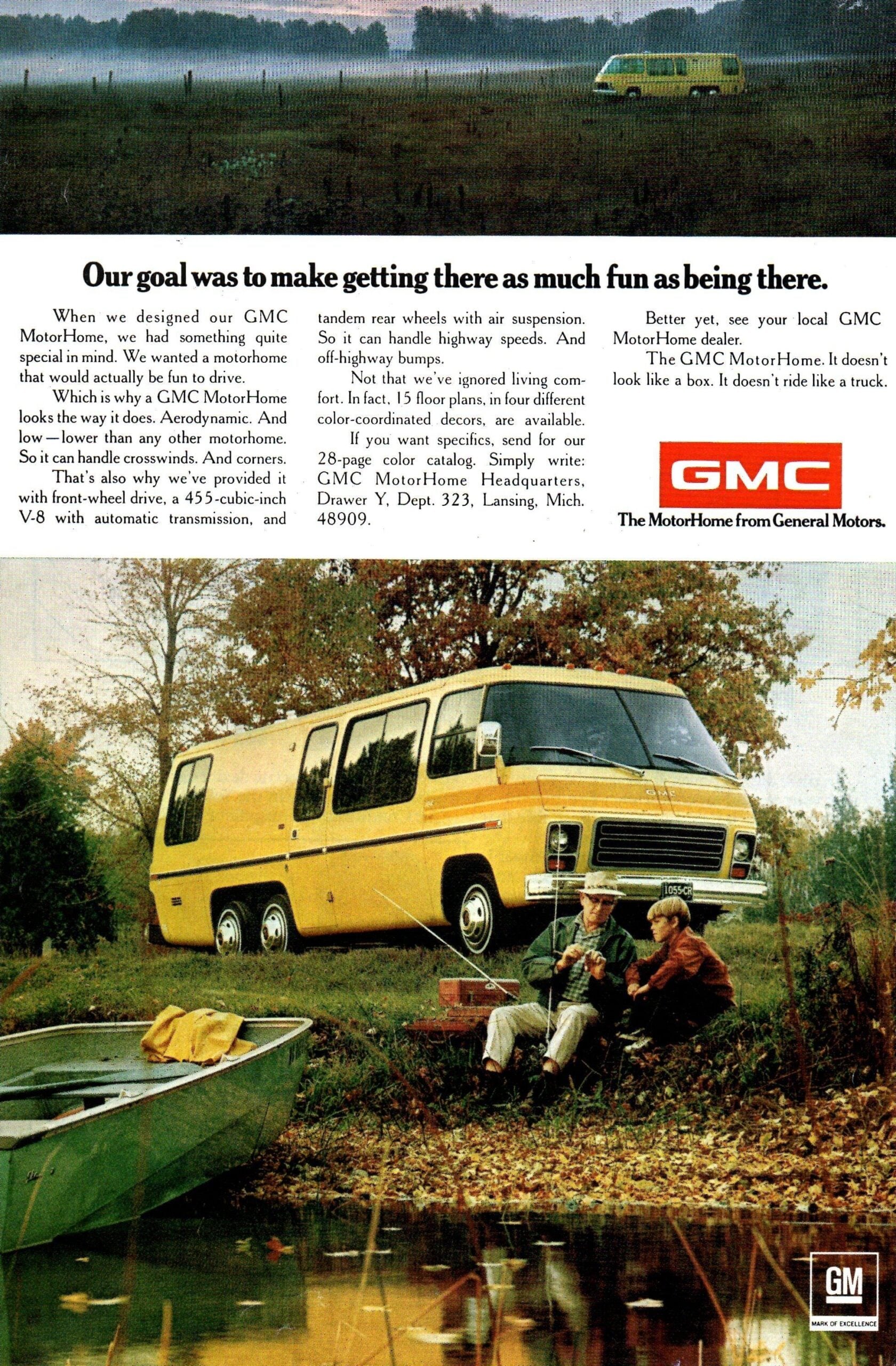
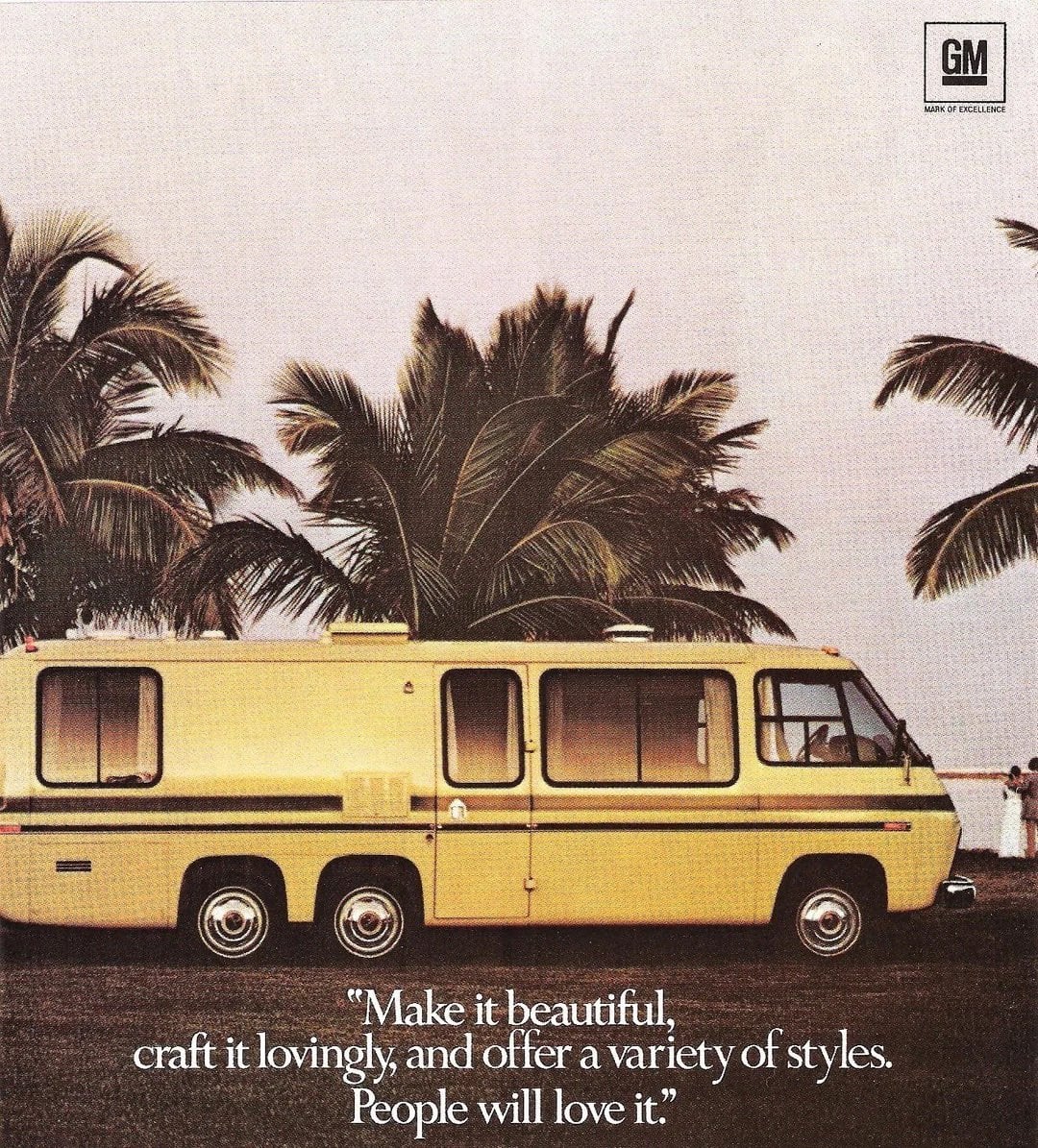
GM offered a range of variants throughout the production run, the early 1973-1974 models included the Sequoia, Painted Desert, Glacier, and Canyon Lands. For 1975, the Eleganza II and Palm Beach were introduced alongside improved furnishings and build quality – the Grand Rapids Furniture Co. began building the interior modules with dovetail joints, replacing glue and staples. Image courtesy of GMC.
The Main Variants
GM offered a range of variants throughout the production run, the early 1973-1974 models included the Sequoia, Painted Desert, Glacier, and Canyon Lands. For 1975, the Eleganza II and Palm Beach were introduced alongside improved furnishings and build quality – the Grand Rapids Furniture Co. began building the interior modules with dovetail joints, replacing glue and staples.
The Glenbrook and Edgemont followed in 1976, and the Kingsley debuted in 1977. The limited-run Eleganza SE, shown at the 1974 Las Vegas RV show with luxury Oldsmobile upholstery and Flexsteel seating, was perhaps an expression of Mair’s premium aspirations – though just 50 were built in the end.
From 1975, GM also offered the TransMode – this was an empty shell sold without interior or windows for custom outfitting. TransModes were converted into everything from ambulances to airport shuttles to mobile radio stations by companies including Avion, Winnebago, Foretravel, and most significantly, Coachmen Industries.
The GMC Royale By Jimmy Motor Homes
Perhaps the single most important TransMode upfitter was Jimmy Motor Homes, a division of Coachmen Industries, Inc. Beginning in 1976, Jimmy Motor Homes produced two models – the Royale on the 26 foot shell and the Birchaven on the 23 foot shell.
The official model designation was simply the GMC Royale, though these vehicles are frequently described in auction and classified sales listings under the shorthand “Jimmy Coachmen Royale” – a conflation of the division name, parent company, and model.
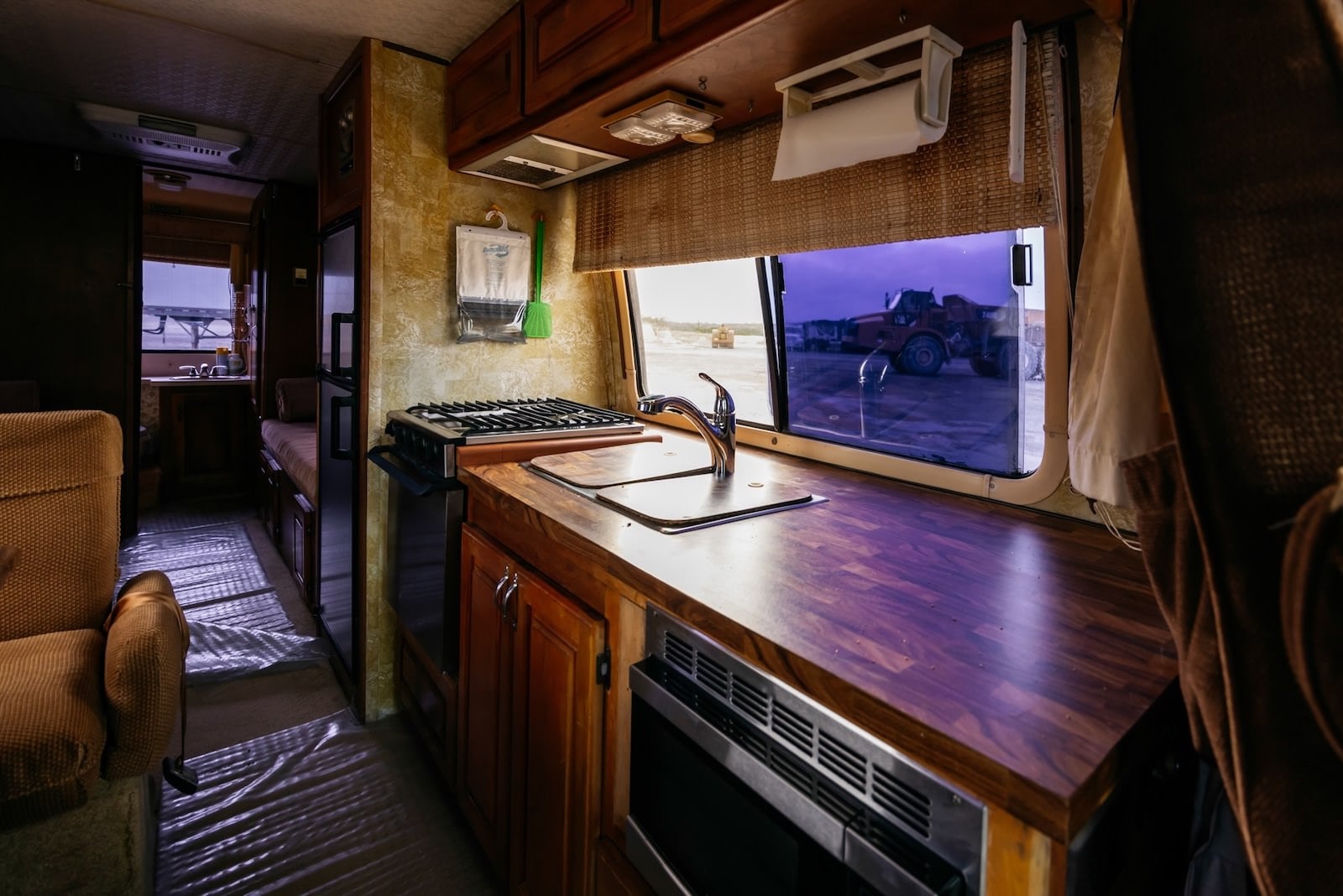
Both the Royale and Birchaven were offered in side-bath and rear-bath configurations with lavishly appointed interiors that were said to be even better than GM’s own offerings. The Royale typically had a full kitchenette with oven, stovetop, and refrigerator, a rear sleeping area with convertible couches, a complete bathroom with shower, an Onan generator, and central heating and air conditioning.
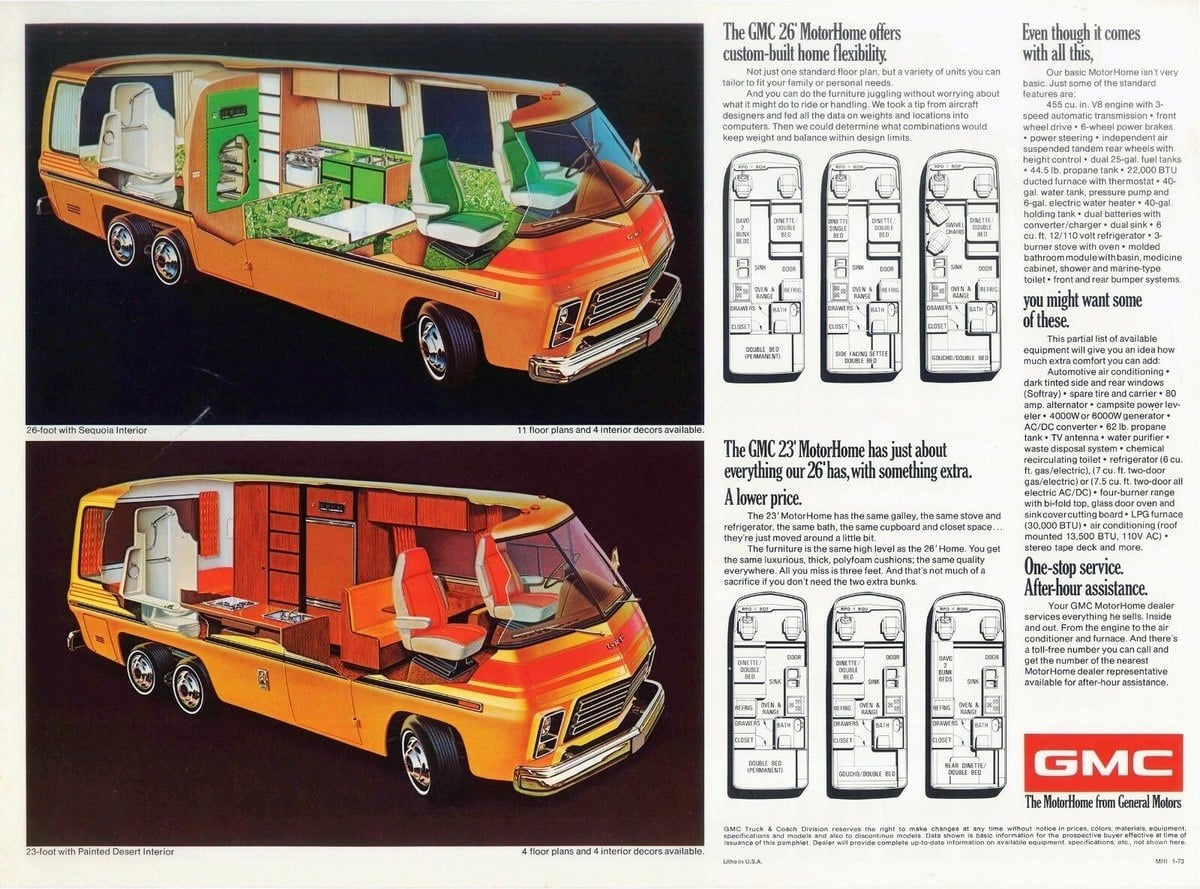
The GMC Motorhome was offered in 23 foot and 26 foot lengths, with the 26 footer accounting for almost 90% of finished Motorhome production. Image courtesy of GMC.
Coachmen remained the major TransMode upfitter through the end of production in 1978 and maintained their own serial number system, stamped on the rear frame cross-member alongside the standard GMC VIN.
A total of 12,921 GMC Motorhomes were built across the full production run. Despite lasting only six model years, squeezed out by a pair of fuel crises, rising prices, and the discontinuation of key drivetrain parts, the GMC Motorhome still outlived almost every major competitor from its era.
Over 8,000 are now listed in an international registry, and the rot-resistant construction continues to make even long-neglected examples viable restoration candidates almost five decades later.
The 1977 GMC Royale Motorhome Shown Here
This 1977 GMC Royale is a 26 foot motorhome that was built by General Motors and upfitted by Jimmy Motor Homes, a division of Coachmen Industries. Finished in yellow with multi-tone accent stripes, it was bought by the seller’s husband from its original owner in the early 1980s and has remained in the same family for over four decades.
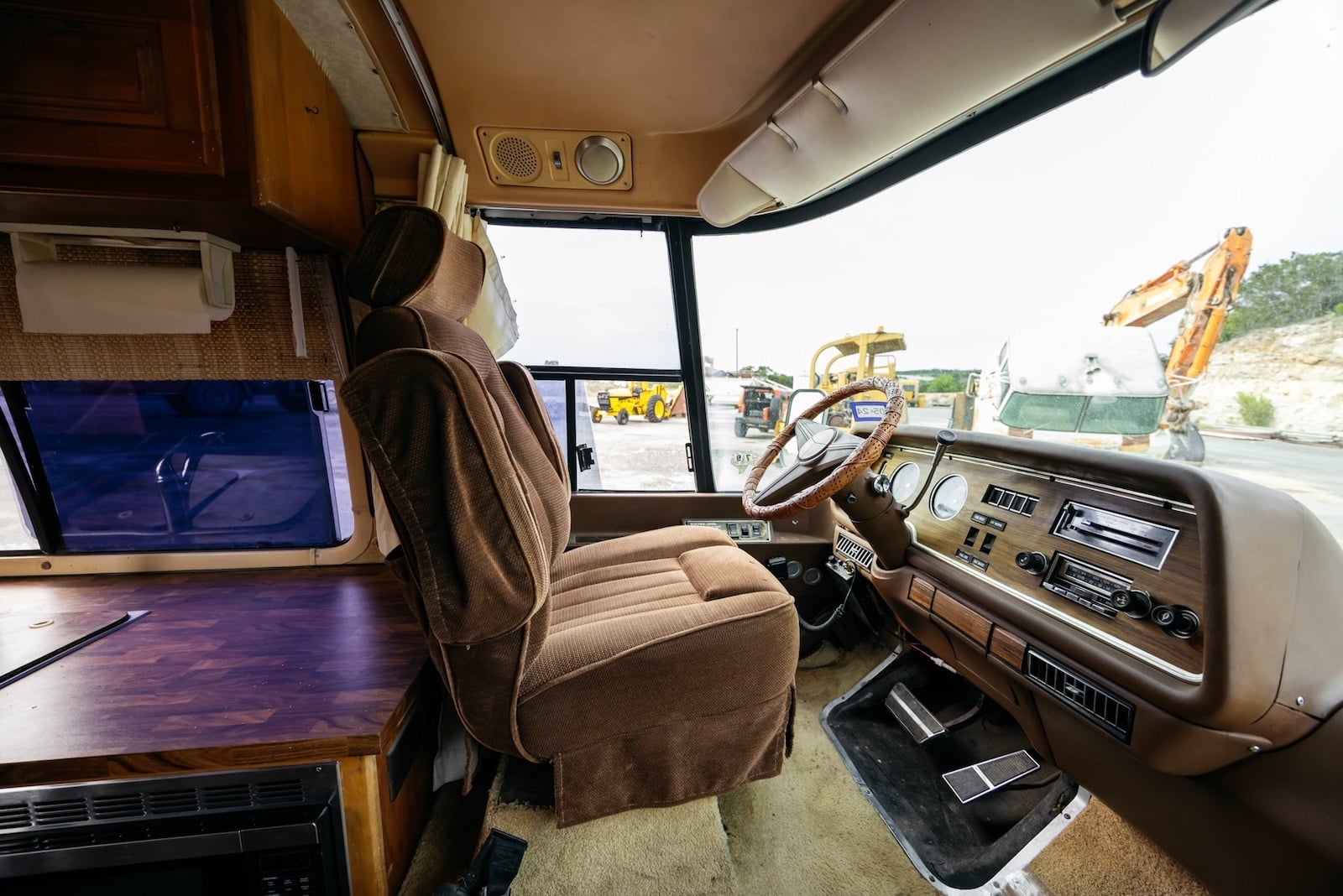
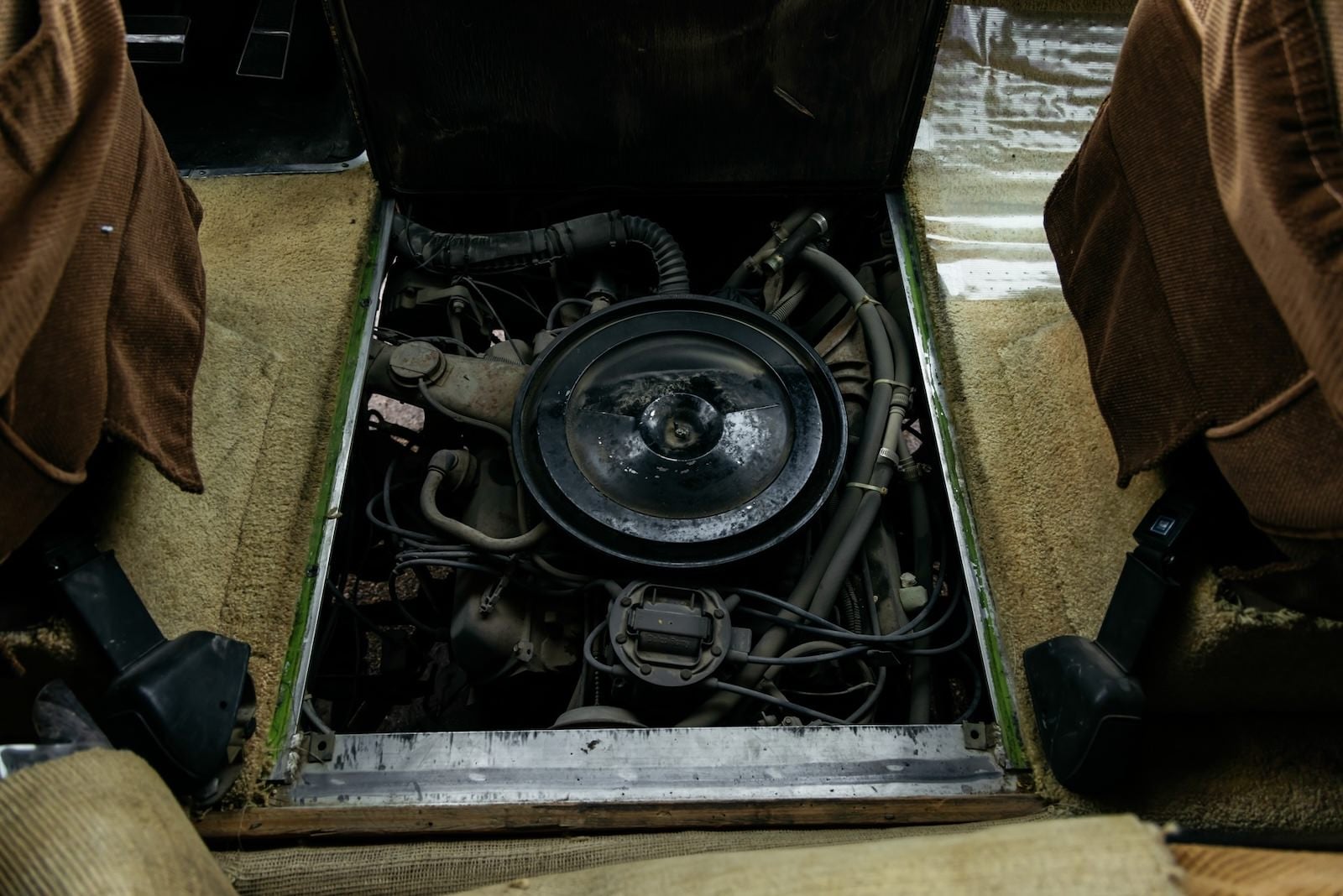
Power comes from an Oldsmobile 403 cubic inch V8 driving the front wheels through a Turbo-Hydramatic 3-speed automatic transaxle. The front axle is equipped with a torsion bar suspension, while the tandem rear axles have adjustable air suspension with Electro-Level controls located to the left of the driver.
Braking is handled by power-assisted front discs and rear drums. The RV rides on 16.5 inch steel wheels with chrome GMC-branded covers, shod with Firestone Transforce HT tires that were installed in preparation for the sale, and a matching spare is stowed at the rear.
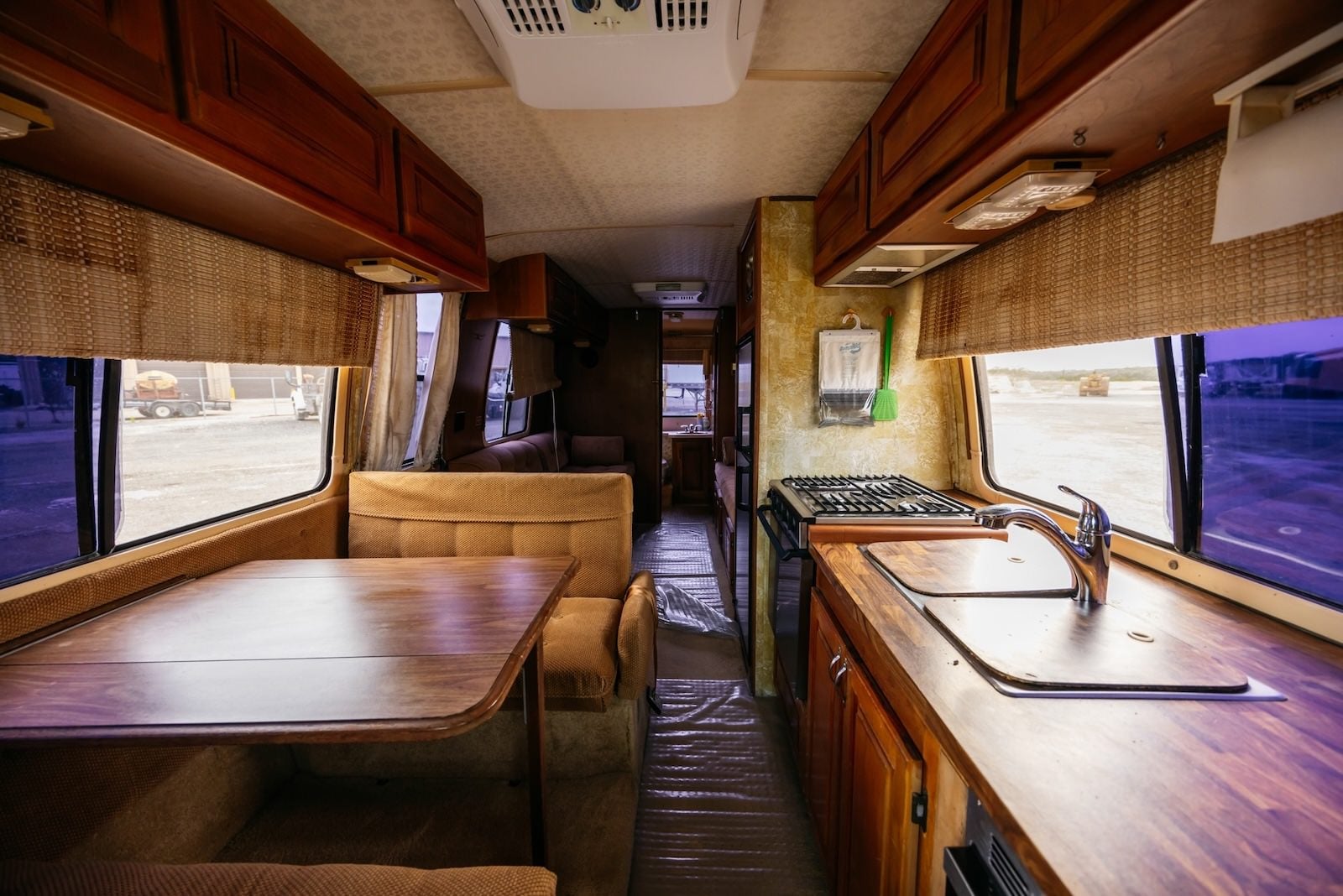
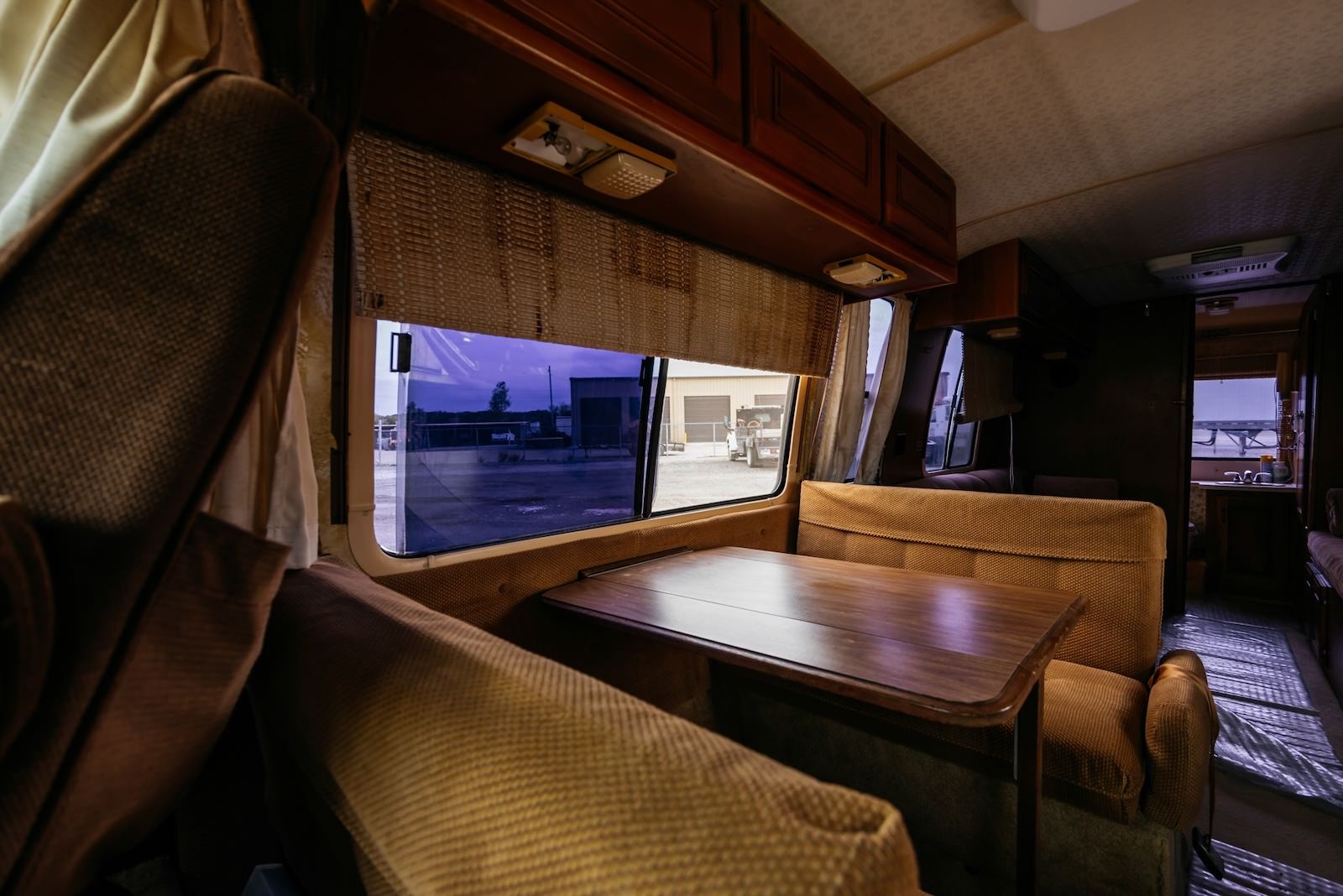
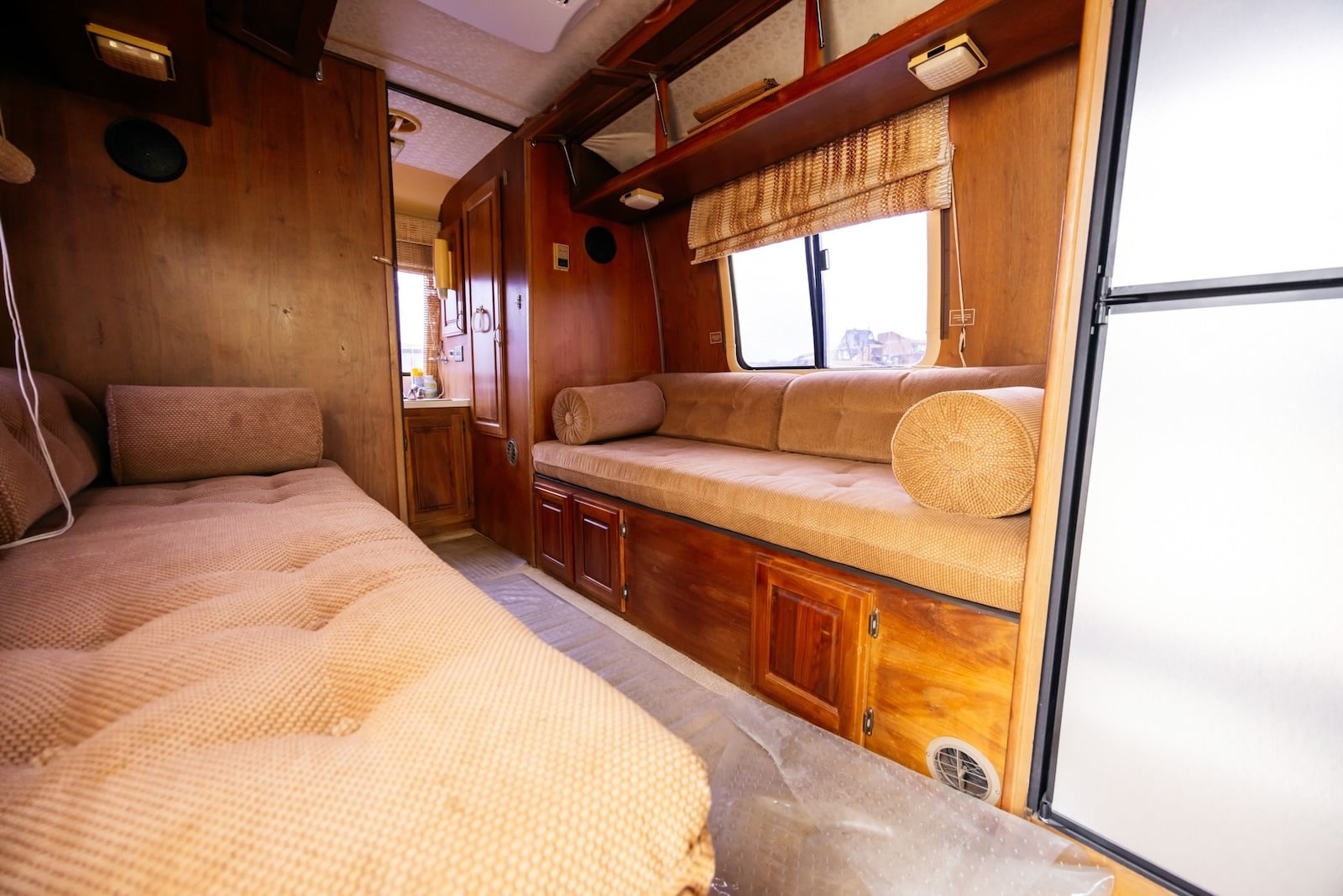
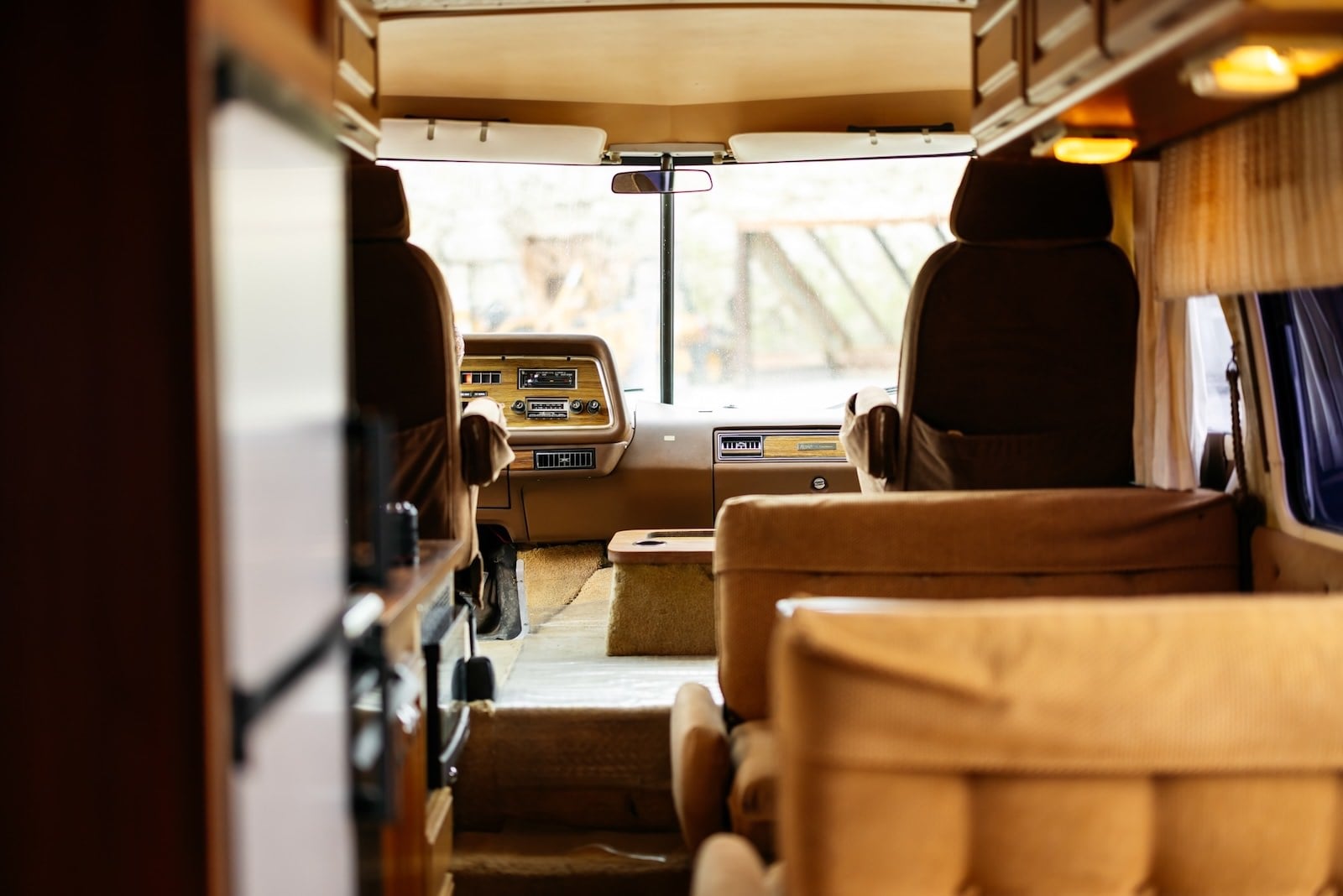
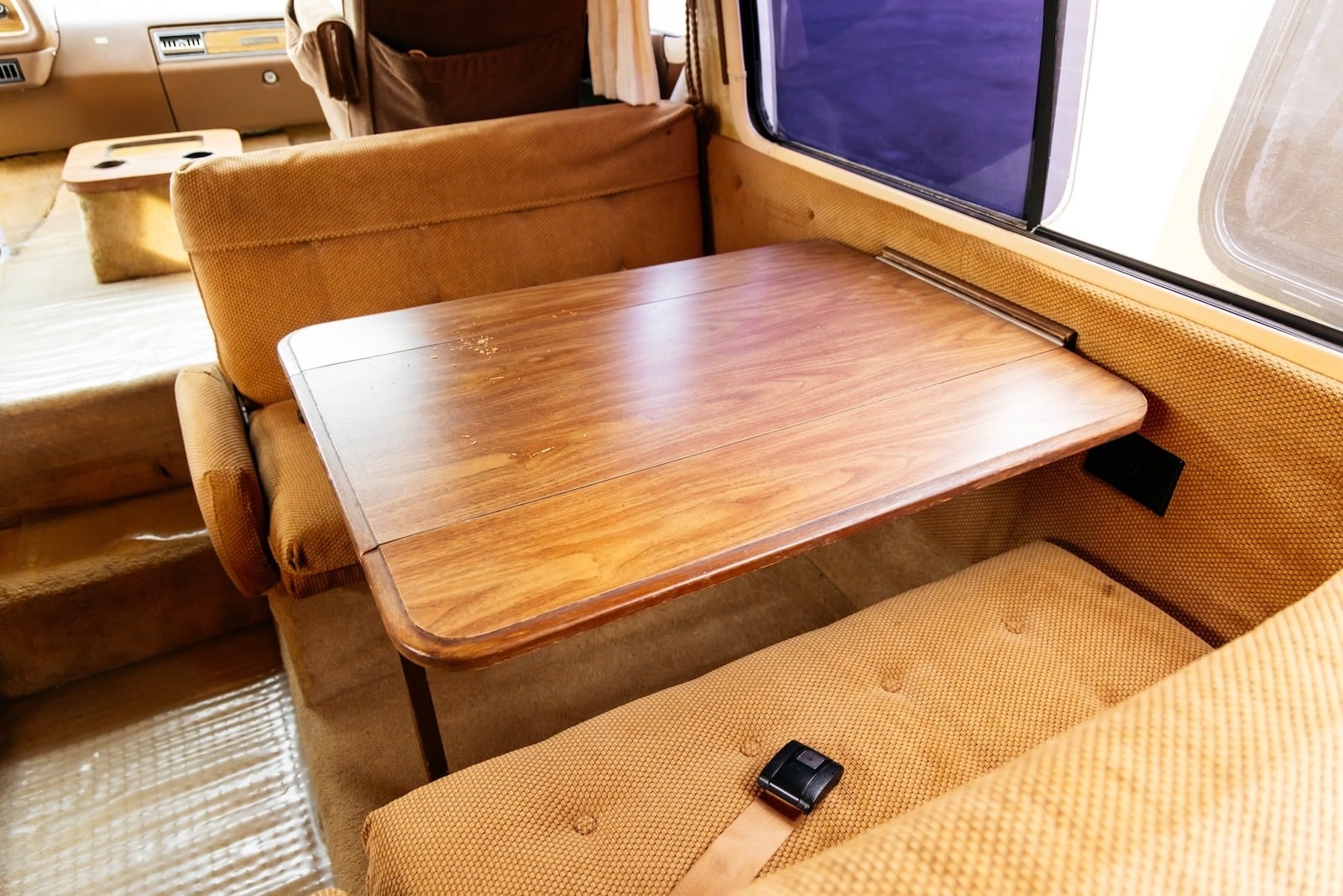
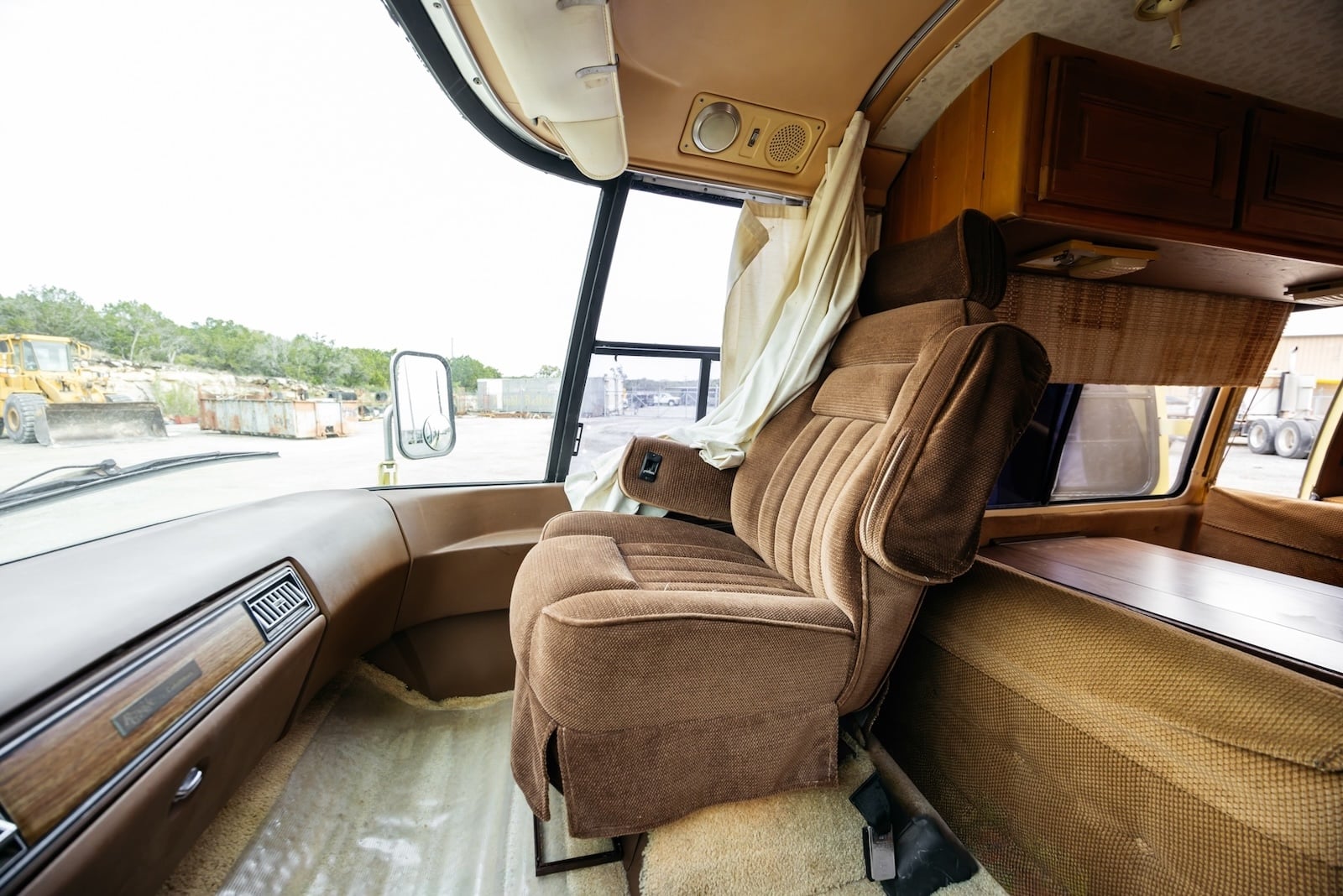
The interior layout is made up of a front cabin with brown cloth captain’s chairs, air conditioning, sliding side windows, and a Delco AM/FM radio. The dinette table and bench seats convert into a sleeping area for two, while the rear sleeping area features a pair of couches with upper and lower storage cabinets.
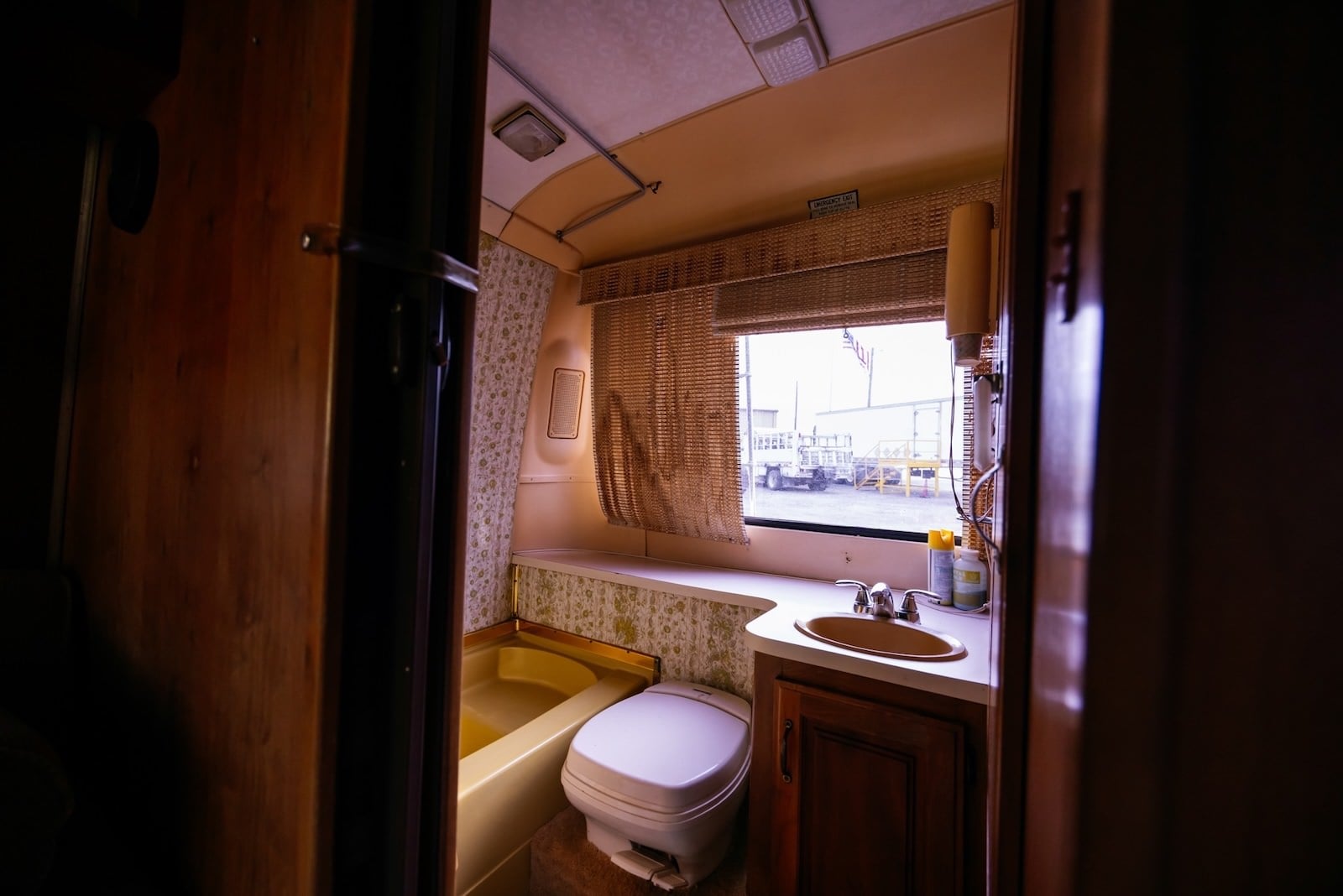
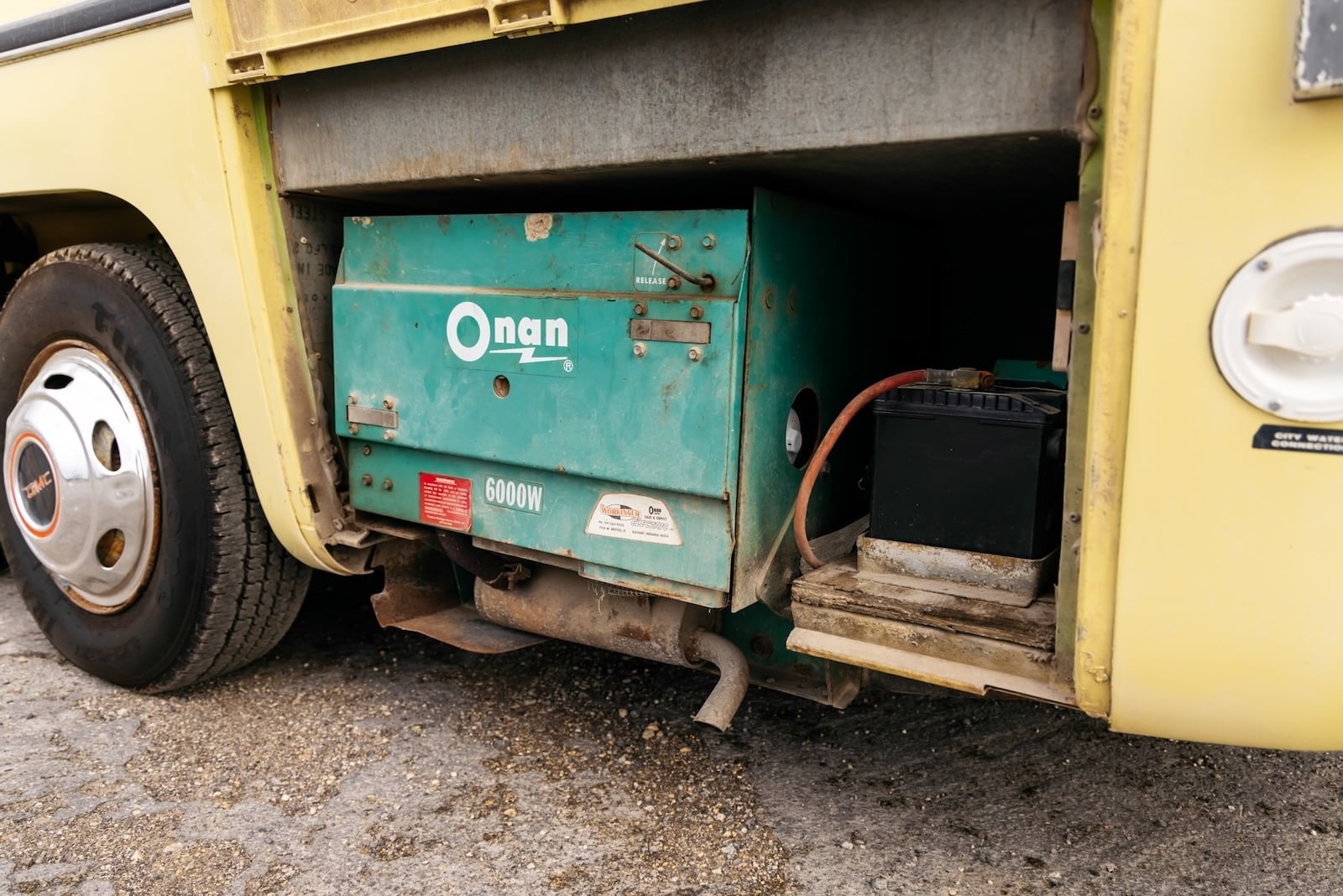
The lavatory at the rear is equipped with a toilet, sink, and a bath with a handheld shower head. An Onan 6,000-watt diesel-powered generator is mounted behind the left rear axle.
Extensive service work was performed in 2023 by Borene RV in Texas, documented with an $11,000 invoice. The kitchenette received stainless-steel appliances including a High Pointe microwave, a Dometic refrigerator and freezer, an oven with a three-burner range, and a replacement Dometic water heater and kitchen faucet.
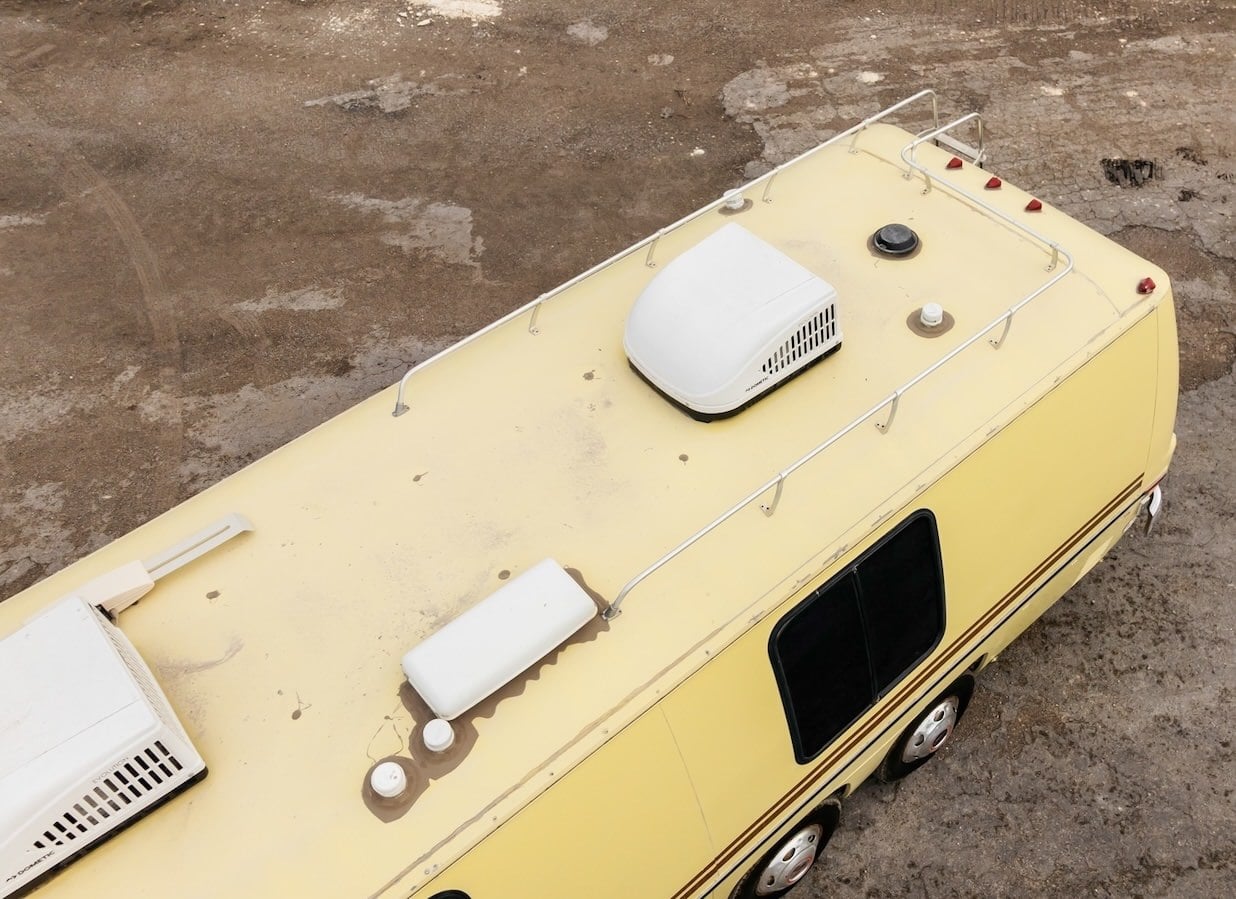
A pair of Dometic overhead air conditioners and a vent fan were also installed. Plumbing work included replacement of the black water tank, lines, dump valves, water pump, city fill lines, shut-off valve, shower and sink faucets, and toilet flange.
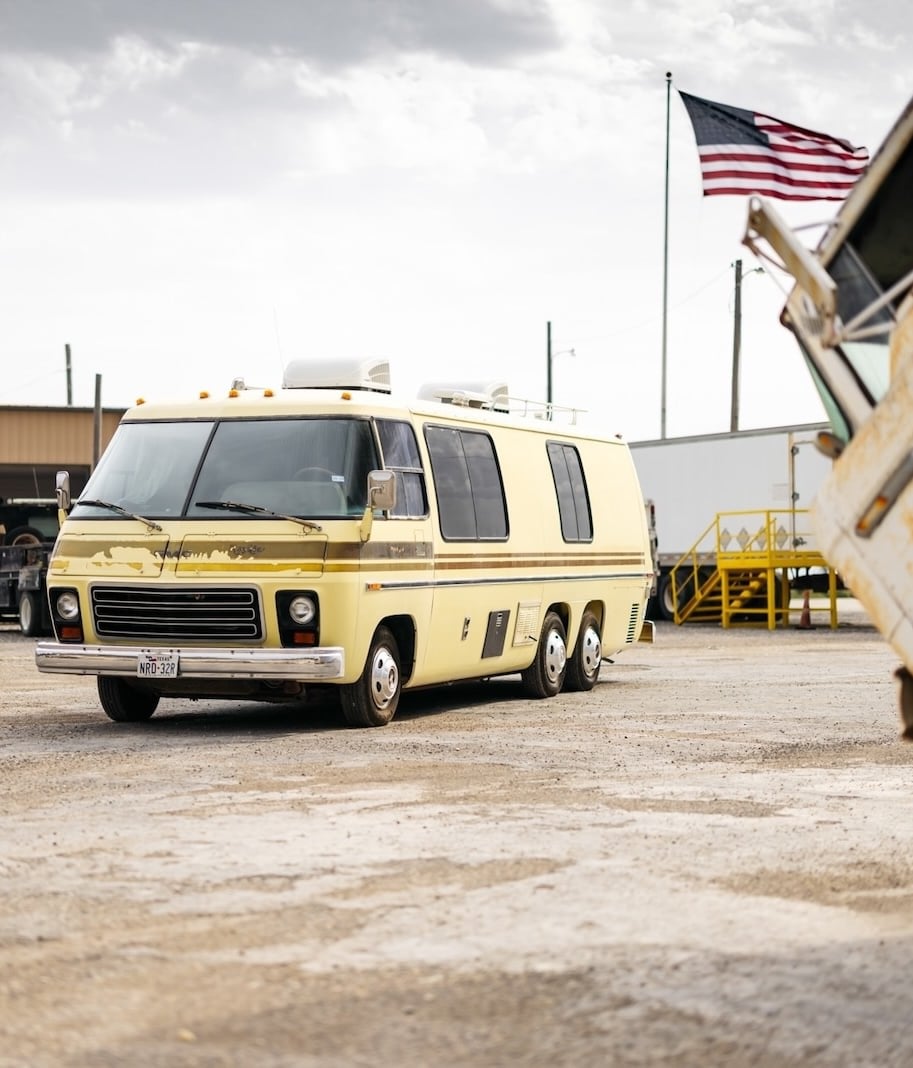
This is an original 1977 GMC Royale Motorhome, it was one of the most luxurious motorhomes money could buy in the 1970s, and this one remains in remarkably original condition throughout.
The roof was resealed, and ignition system components including the distributor cap, rotor, coil, spark plugs, and belts were replaced alongside a coolant flush, transmission flush, and oil change. The Onan generator was also serviced at that time.
It’s now being offered for sale out of Mico, Texas with manufacturer’s literature, recent service records, and a clean Texas title in the seller’s name, if you’d like to read more or place a bid you can visit the listing here.
Images courtesy of GMC + Bring a Trailer + Trust-in-the-Machine

Articles that Ben Branch has written have been covered on CNN, Popular Mechanics, Smithsonian Magazine, Road & Track Magazine, the official Pinterest blog, the official eBay Motors blog, BuzzFeed, Autoweek Magazine, Wired Magazine, Autoblog, Gear Patrol, Jalopnik, The Verge, and many more.
Silodrome was founded by Ben back in 2010, in the years since the site has grown to become a world leader in the alternative and vintage motoring sector, with well over a million monthly readers from around the world and many hundreds of thousands of followers on social media.