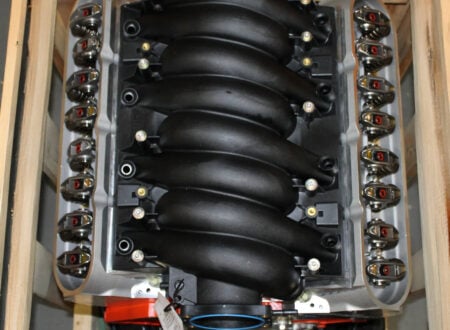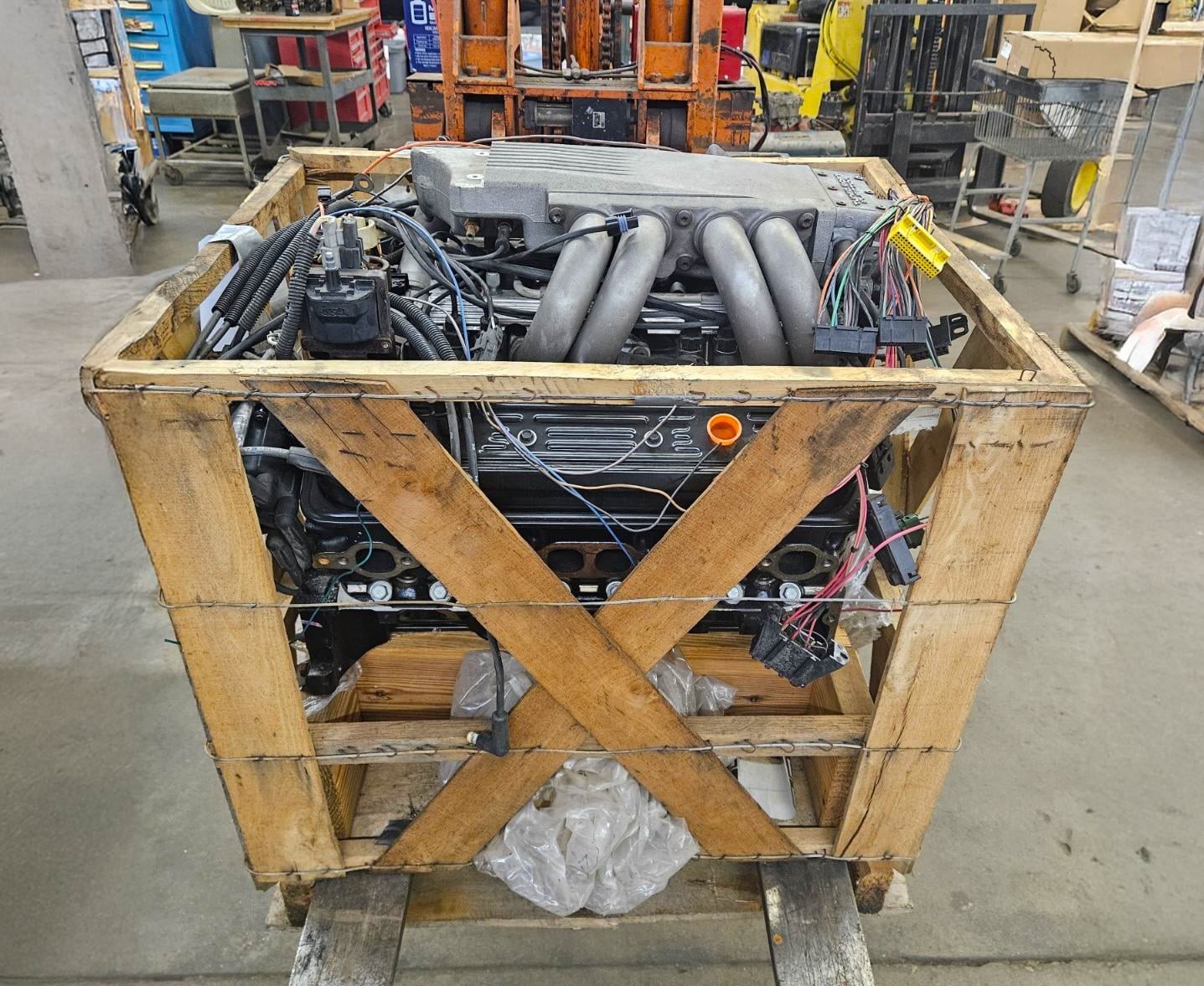
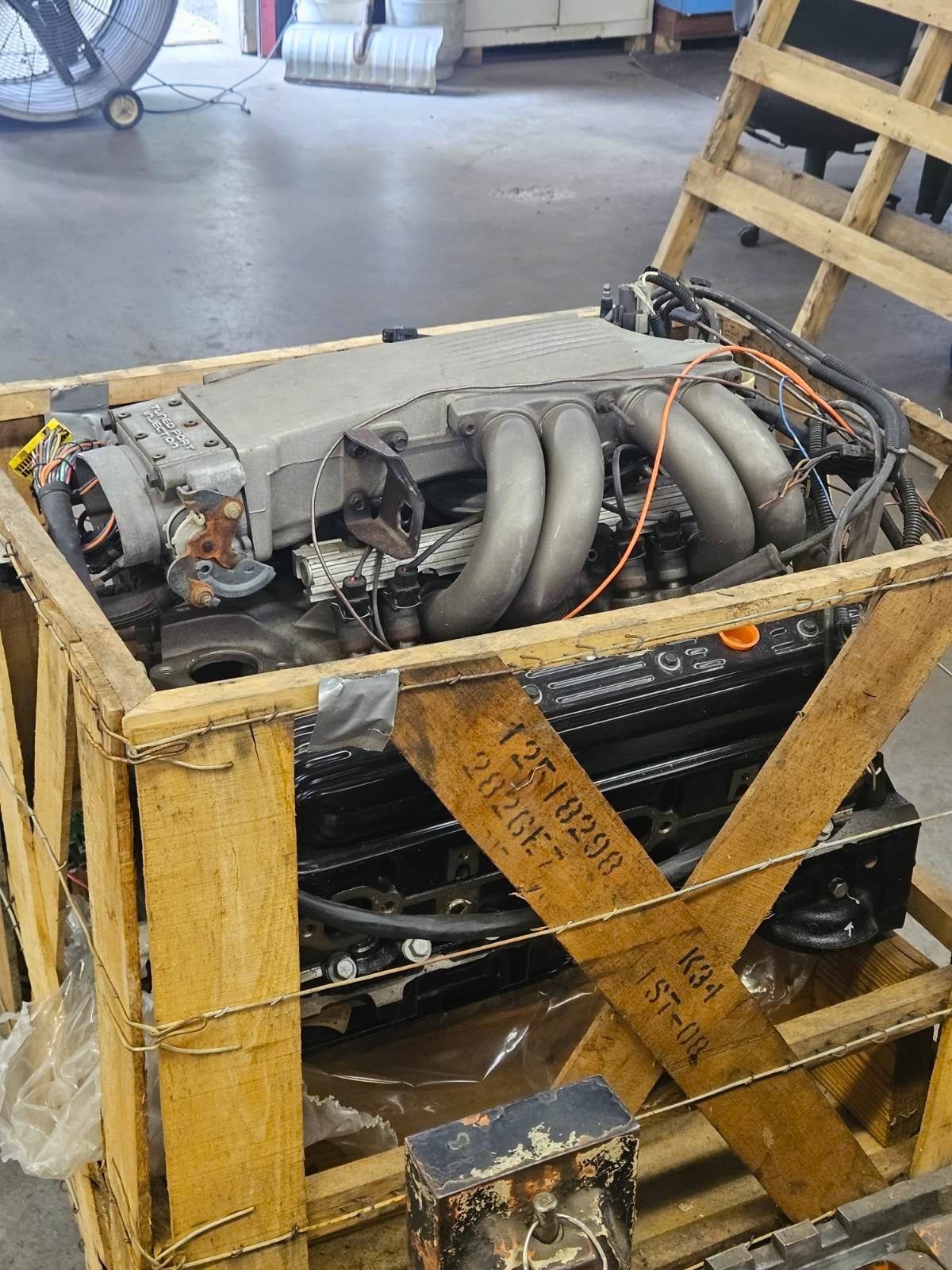
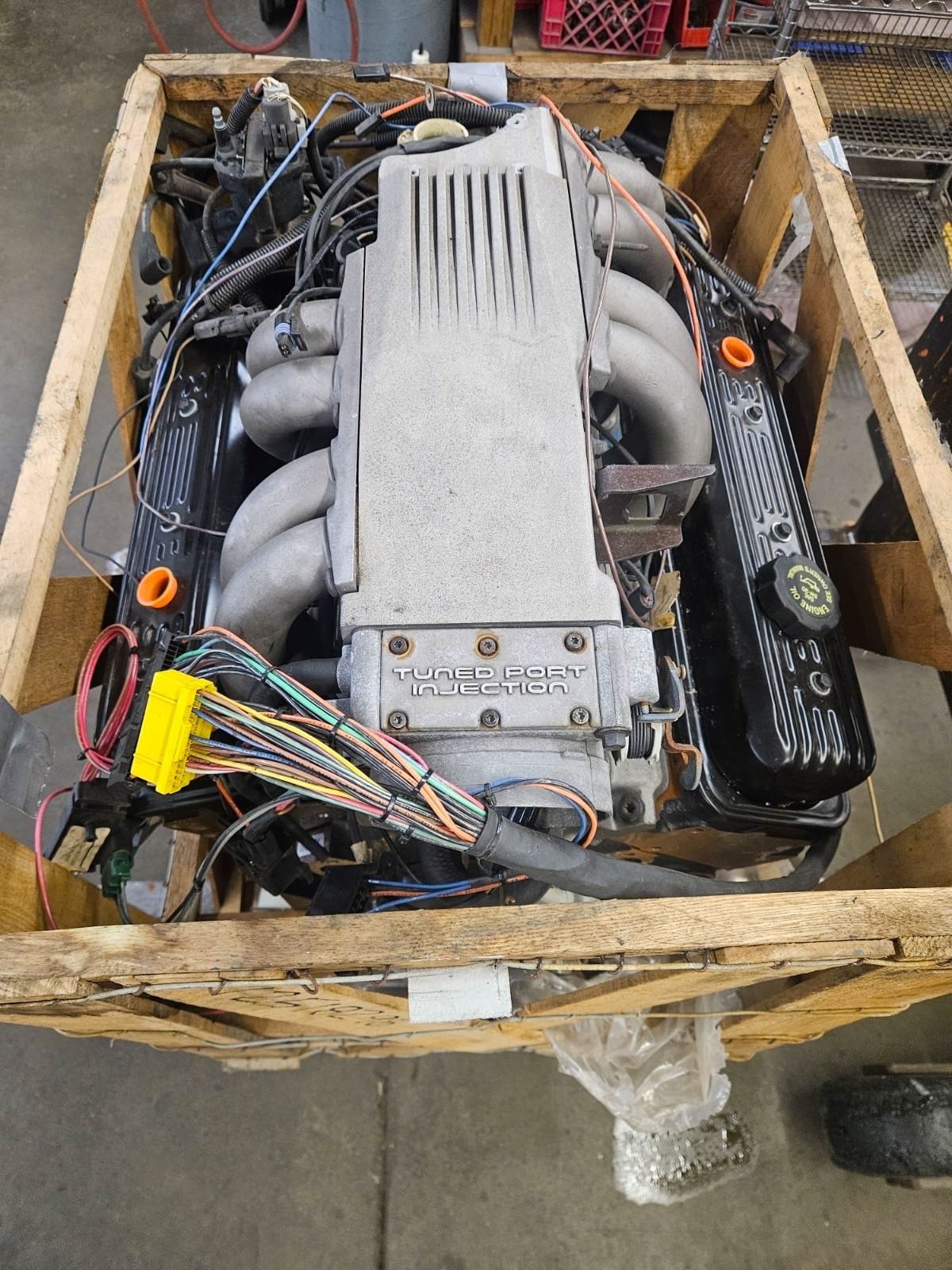
This is a new-old-stock (NOS) 1985 to 1992-era Camaro Firebird 5.0L V8 crate engine, it’s listed as being in new unused condition. It comes with a distributor and wiring harness, and everything needed to get it running.
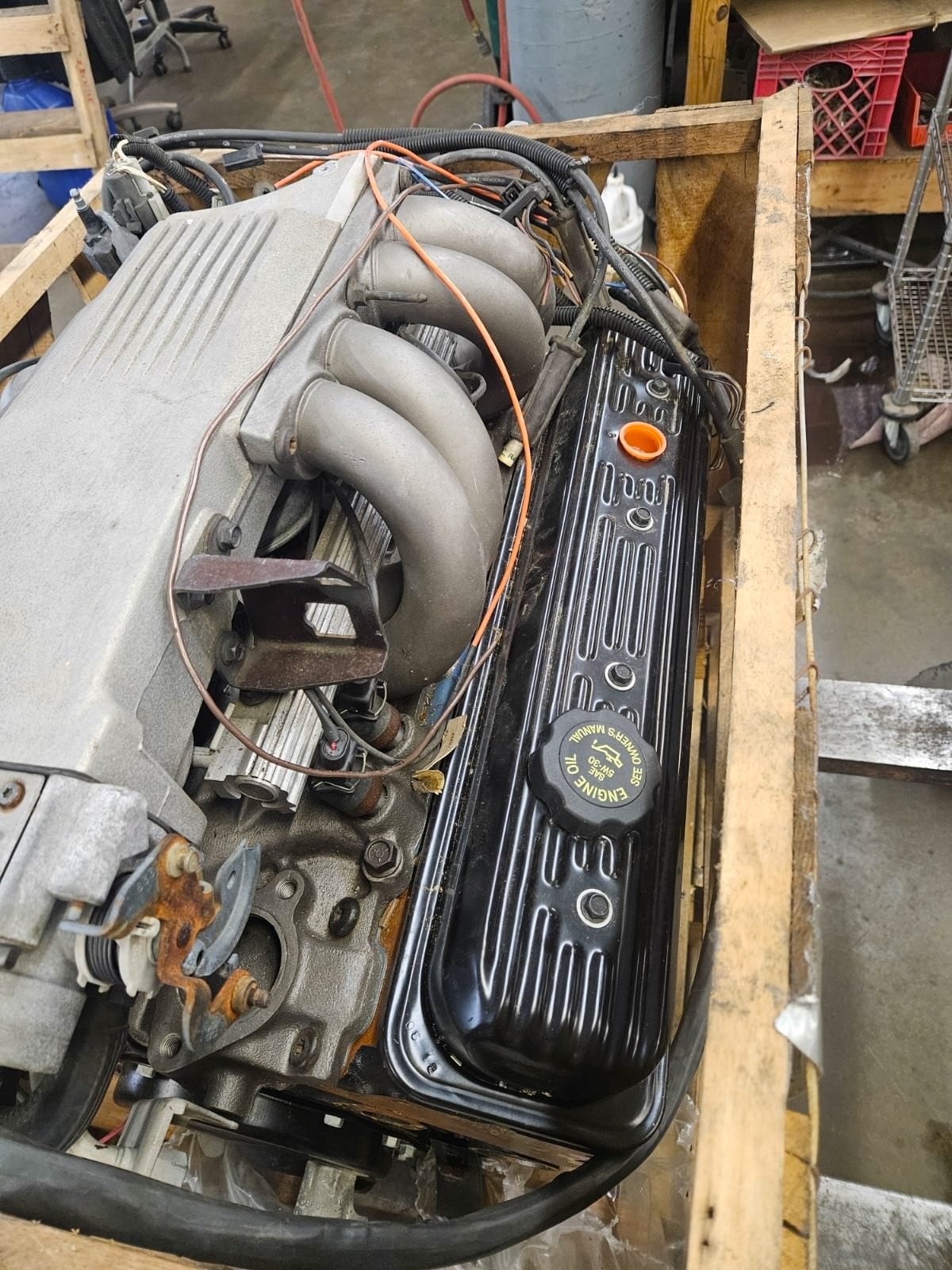
The seller notes that they’ve added a Tuned Port Injection (TPI) system that was used but in good running condition when it was fitted. The TPI system was fitted to some higher performance versions of this engine, and it’s proven to be a popular performance upgrade for non-TPI engines, for owners seeking more power.
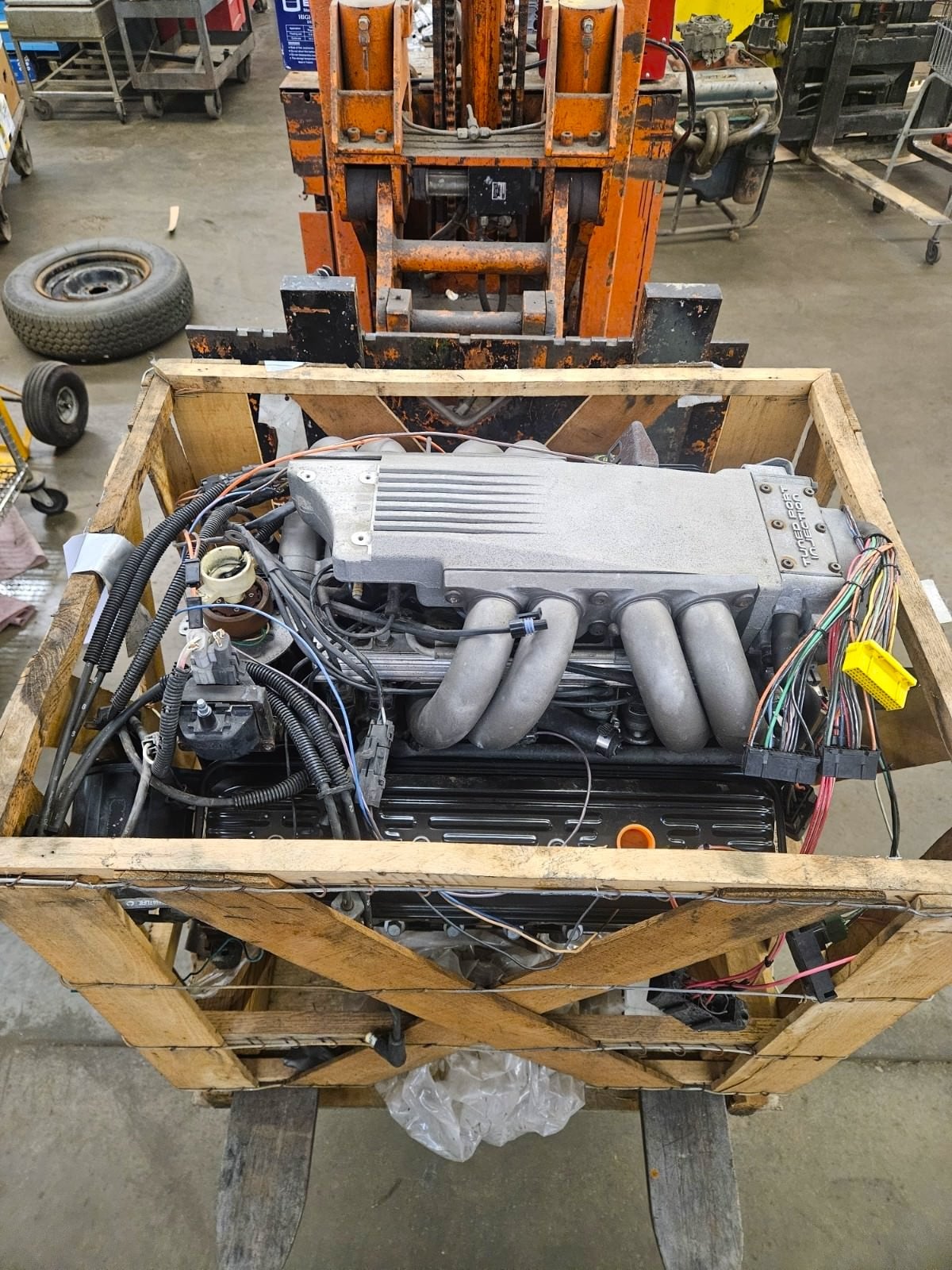
 This is a new-old-stock (NOS) 1985 to 1992-era Camaro Firebird 5.0L V8 crate engine, it’s listed as being in new unused condition. It comes with a distributor and wiring harness, and everything needed to get it running.
History Speedrun: The GM 305 “5.0 Liter” V8
The Chevrolet 305 cubic inch V8, marketed as the 5.0 liter, first appeared for the 1976 model year and remained in GM vehicle production, in various forms, through until 2002 – a remarkably long service life. The engine displaced 305.2 cubic inches with a 3.736 inch bore and 3.48 inch stroke, and it was General Motors’ answer to the tightening regulatory environment of the mid-1970s and it became, through much of the 1980s, GM’s most common V8, installed in many of the automaker’s rear-drive models.
The engine’s development was driven by three driving pressures – the Clean Air Act of 1970 tightened emissions limits, the 1973 Oil Crisis made fuel economy a first-order concern, and the then-impending CAFE rules (that took effect in 1978) required manufacturers to hit fleet-wide mpg targets.
GM needed a V8 smaller than the 350, cheaper to build, and able to meet emissions rules without the cost of an all new, fresh design. The 305 was the result – it filled the gap left by the earlier 283 and 307 and replaced the short-lived 262 as Chevy’s “entry level” V8.
To keep costs down, the 305 shared its deck height and crankshaft stroke with the ubiquitous 350 small block. Its smaller bore and lighter crankshaft, with counterweights sized to balance the smaller pistons, let it run down the same production lines. Many parts, including some cylinder heads, were also interchangeable with the 350.
The GM 305: Variants + Power Ratings
The first version of the 305, the LG3, used a Rochester 2GC two-barrel carburetor and an 8.5:1 compression ratio, producing up to 145 bhp with 245 lb ft of torque in its earlier years. When Chevrolet switched to the more fuel efficient Rochester Dual-Jet two-barrel for 1979, output fell to 130 bhp, or 125 bhp on California emissions cars.
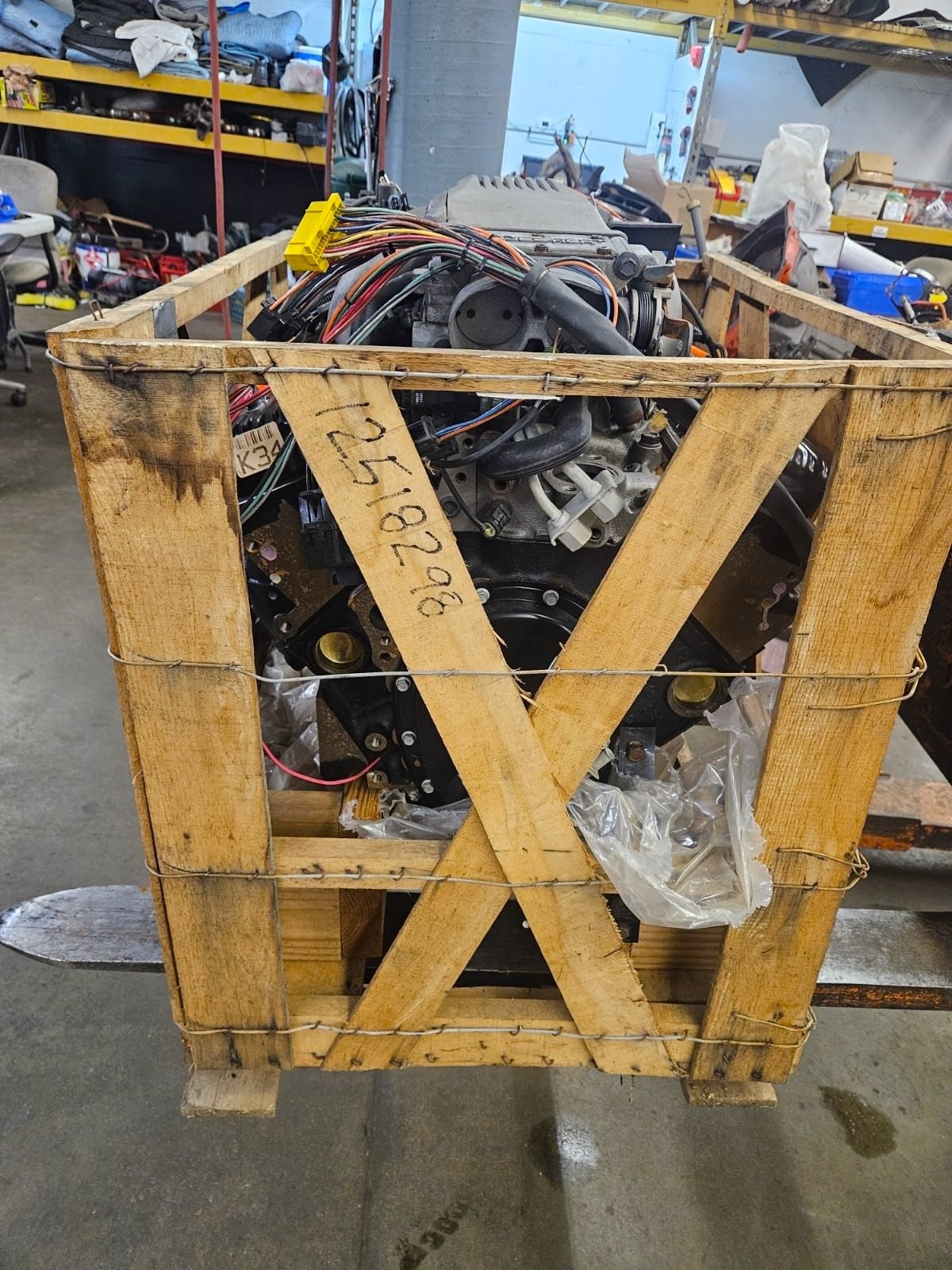
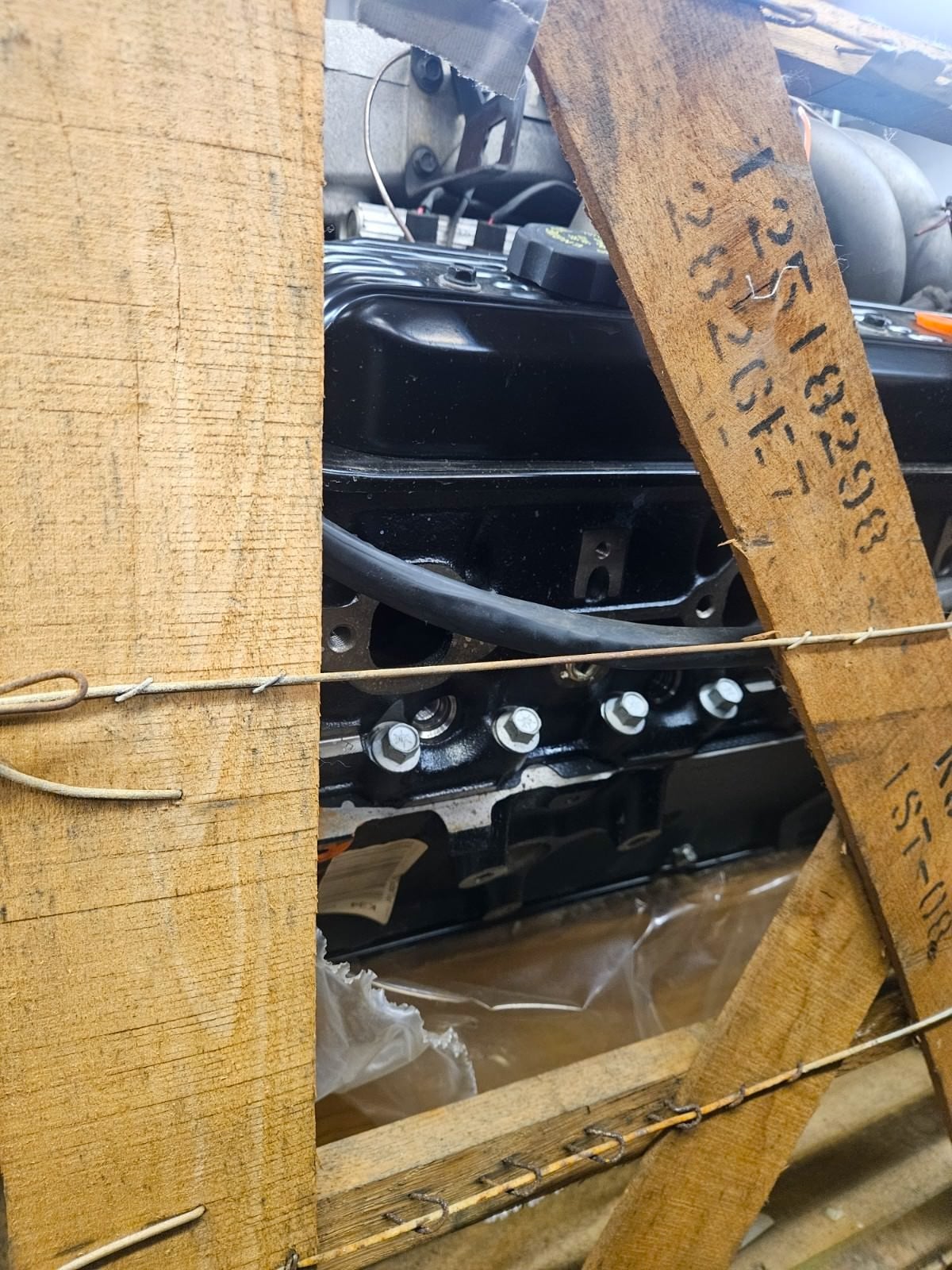
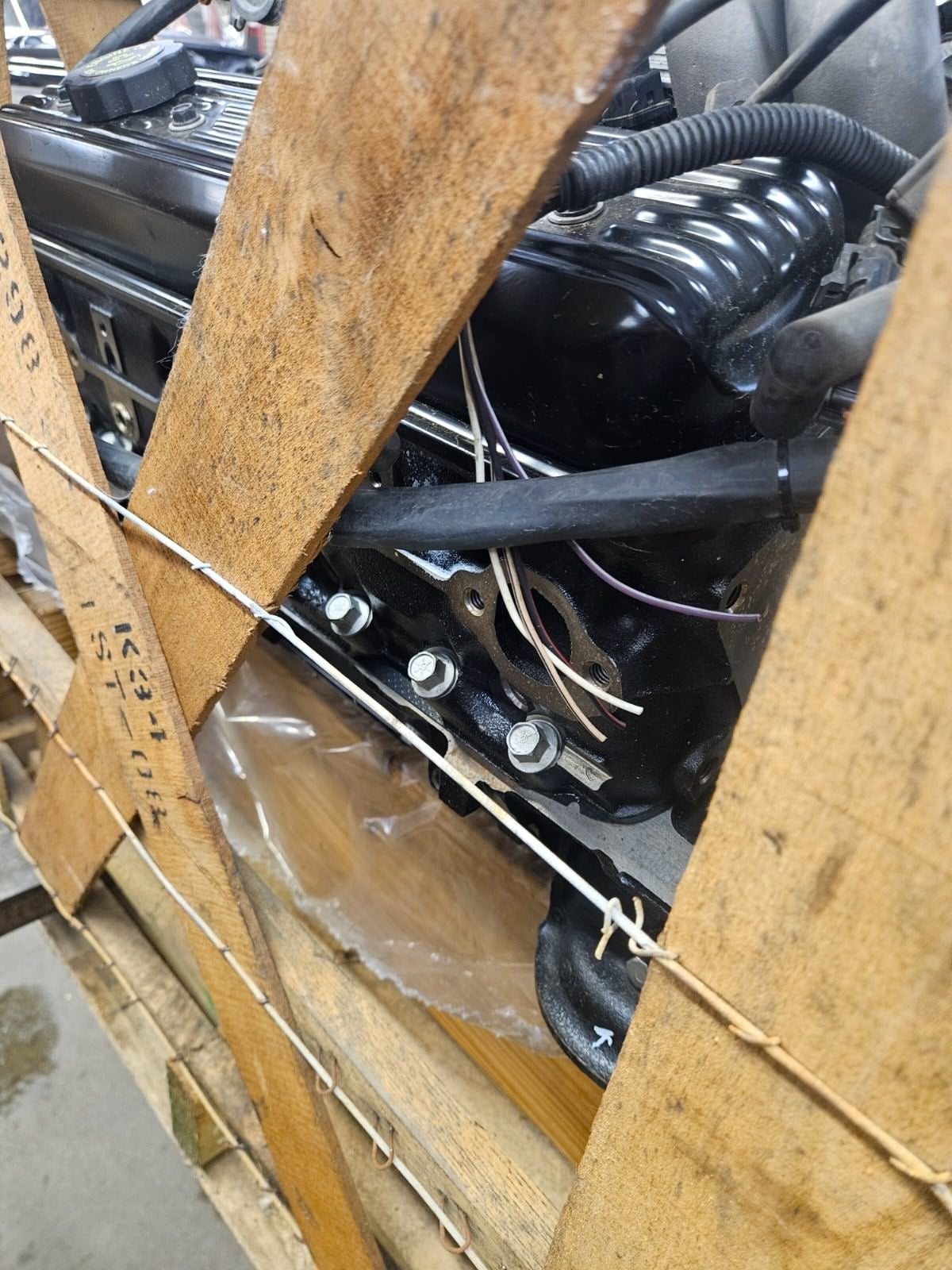
The engine you see here is a new-old-stock GM 305 cubic inch V8 crate engine, sold as a complete running package for the 1985 to 1992 Camaro and Firebird. From the heads down to the oil pan it’s new, unused GM stock, still in its original crate.
The LG4 added a four-barrel Quadrajet and larger valves, and over its production run produced 145 up to 180 bhp and 230 to 255 lb ft depending on the specific year and application. GM’s Computer Command Control system, added to California LG4s for 1980 and to the rest of the range for 1981, gave the engine precise, closed-loop control over mixture and spark for better power output while staying within strict emissions boundaries.
The LU5 Cross-Fire Injection 305 used two throttle-body injectors on a single aluminum manifold and made 165 to 175 bhp in the Camaro Z28 and Trans Am. Poor driveability soon earned it the nickname “Ceasefire” and the 305 LU5 was gone from the F-body after 1983. The higher-output L69, introduced late in the 1983 model year, ran 9.5:1 compression with a knock sensor and a 750 cfm Quadrajet for 190 bhp and 240 lb ft in the F-body, and 175 to 180 bhp in the Monte Carlo SS – it stayed in production through to 1988.
The LB9 Tuned Port Injection (TPI) 305 debuted in 1985 with a short block closely related to the L69 and topped with individual runner port injection. Built through till 1992, it produced between 190 and 230 bhp with 275 to 300 lb ft depending on year, and powered the Camaro Z28, IROC-Z, and Firebird Formula and Trans Am.
The LO3 throttle-body-injected 305 was built from the late 1980s and into the 1990s, it produced 170 bhp and served in a number of F-body cars and light trucks. The Vortec 5000 L30, in production until 2002, closed out the line at 220 to 230 bhp with revised Vortec cylinder heads.
The 305 was fitted to the Camaro from 1976 through 1992 and the Firebird from 1977 through 1992, the Caprice through 1993, and the Monte Carlo, Malibu, El Camino, Impala, Nova, and Monza. Under other divisions’ badges, it powered the Buick Regal and Skylark, the Oldsmobile Cutlass and Custom Cruiser, the Cadillac Brougham, the Pontiac Bonneville, Grand Prix, and Parisienne, and the Checker Marathon.
Full-size Chevrolet and GMC pickups, vans, and SUVs also carried it. It really was the engine for all applications, despite the fact it never became widely beloved like the 350 small block it was based on – mainly because it just never offered the same level of bang-for-buck in the power stakes.
Perhaps the most-remembered application of the 305 is the 1980 Corvette California. The federal L48 and L82 350s were not certified for California that year, so Chevrolet used a specially certified LG4 as the state’s only engine. Rated at 180 bhp and paired only with the Turbo Hydra-Matic automatic, it went into 3,221 cars and has been derided ever since for its abysmal performance.
The seller notes that they’ve added a Tuned Port Injection (TPI) system that was used but in good running condition when it was fitted. The TPI system was fitted to some higher performance versions of this engine, and it’s proven to be a popular performance upgrade for non-TPI engines, for owners seeking more power.
Regular-production GM vehicle use of the 305 ended in 2002, as noted higher up, it was superseded in trucks and vans by the LS-based Vortec 4800 LR4. The 305 continued afterward in replacement-engine channels, while the GM based 5.0 liter MerCruiser marine engines remained available until 2015. The lifespan of the basic 305 engine design far-surpassed anything the original General Motors engineering team could have imagined.
The Camaro Firebird 5.0L V8 Crate Engine Shown Here
The engine you see here is a new-old-stock GM 305 cubic inch V8 crate engine, sold as a complete running package for the 1985 to 1992 Camaro and Firebird. From the heads down to the oil pan it’s new, unused GM stock, still in its original crate.
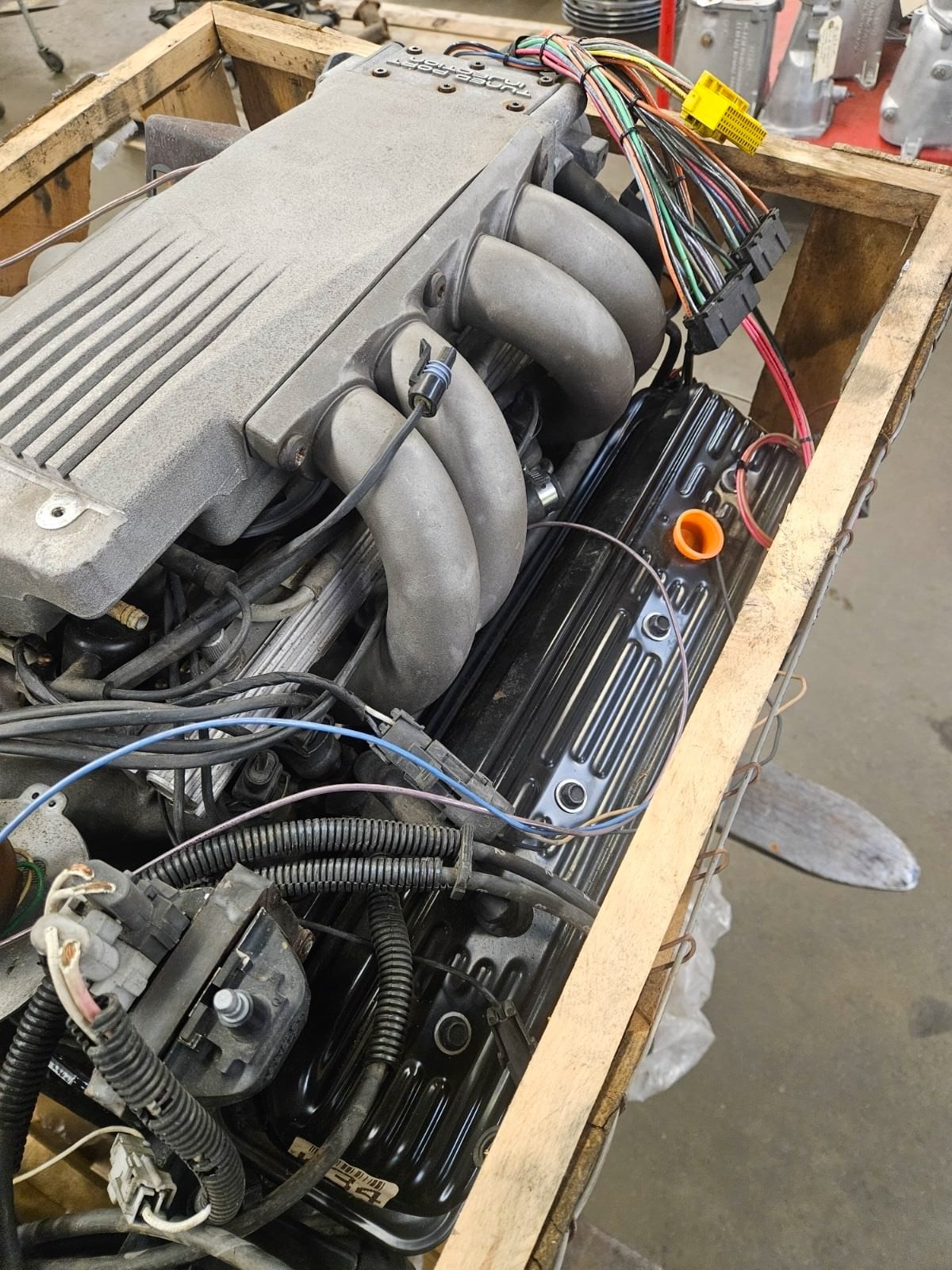
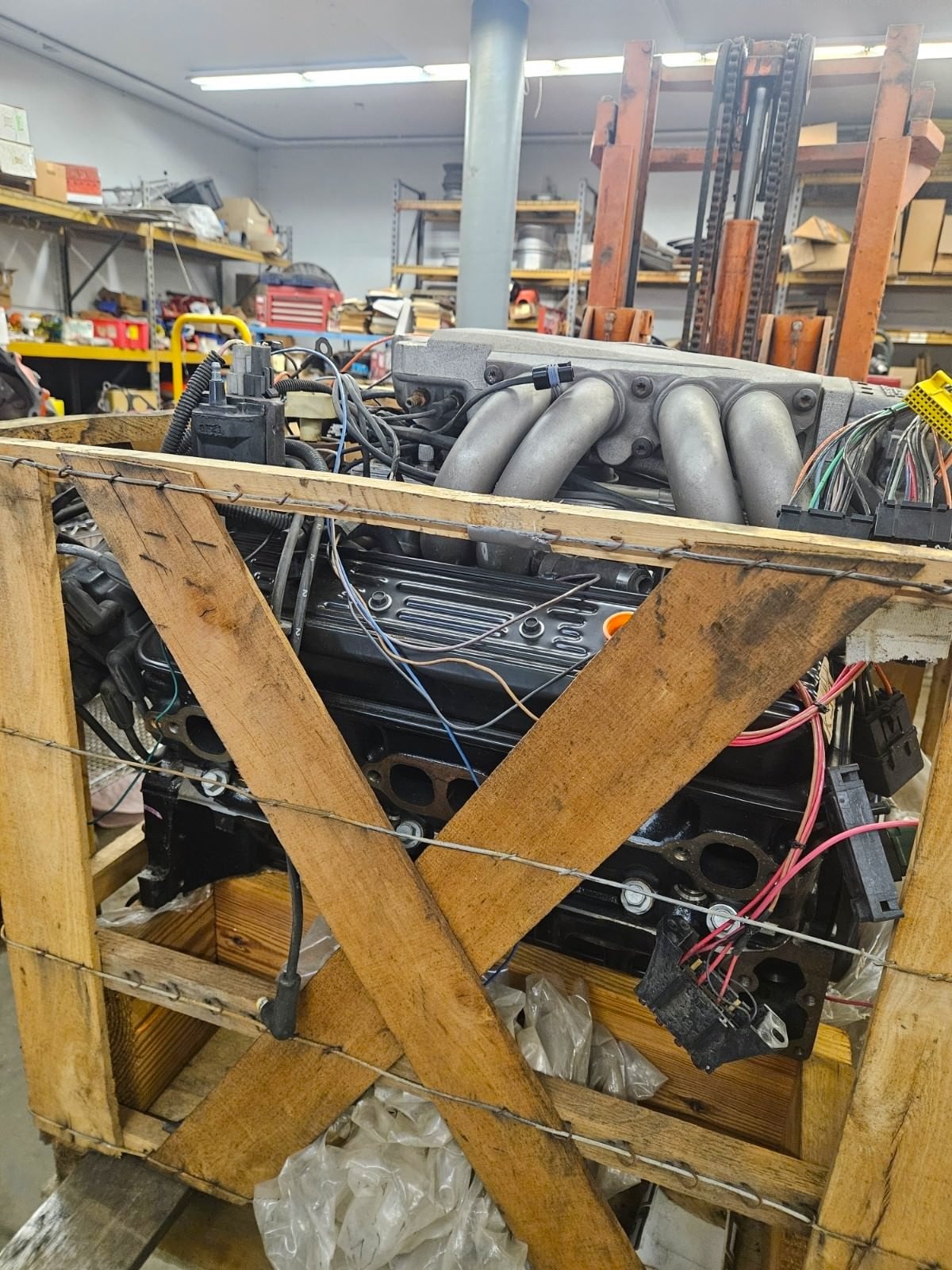
The Tuned Port Injection system on top has been added separately and is a used unit, described as a good running setup when it was transferred over. New intake gaskets were used during that install. The package includes everything needed to run the engine – the TPI intake and fuel rails, distributor, and full wiring harness. Freight is quoted at a flat $350 USD to a business address, with a small surcharge possible for residential delivery.
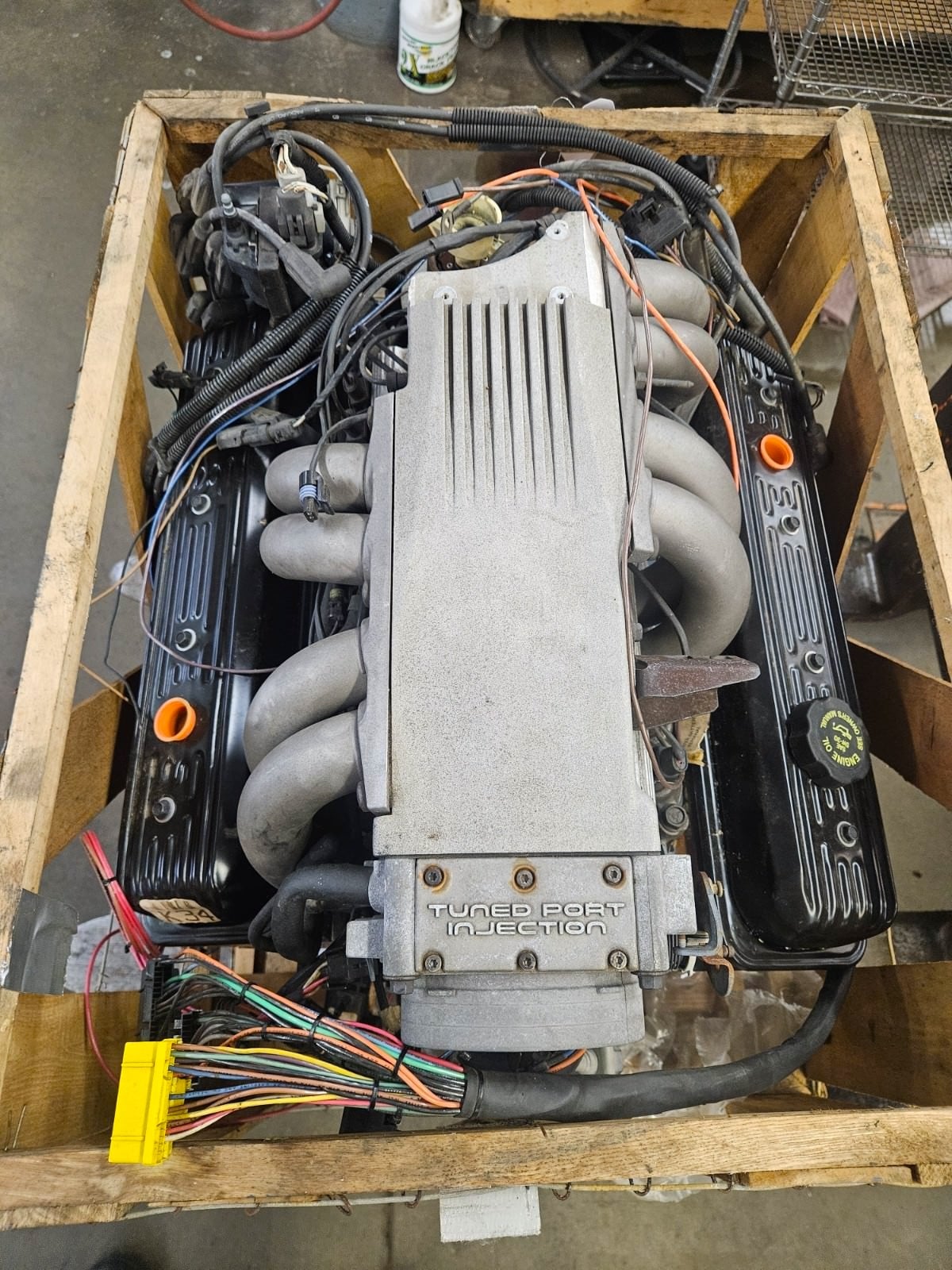
The seller has also offered a buy-it-your-way option – if the buyer doesn’t want the TPI setup, the injection system can be removed and the engine sold as a bare GM Performance long block instead.
The seller has also offered a buy-it-your-way option – if the buyer doesn’t want the TPI setup, the injection system can be removed and the engine sold as a bare GM Performance long block instead.
It’s now being offered for sale out of Cincinnati, Ohio on eBay by Howard’s Classic Car Parts, and you can visit the listing here if you’d like to read more or make them an offer.
Images courtesy of Howard’s Classic Car Parts

Articles that Ben Branch has written have been covered on CNN, Popular Mechanics, Smithsonian Magazine, Road & Track Magazine, the official Pinterest blog, the official eBay Motors blog, BuzzFeed, Autoweek Magazine, Wired Magazine, Autoblog, Gear Patrol, Jalopnik, The Verge, and many more.
Silodrome was founded by Ben back in 2010, in the years since the site has grown to become a world leader in the alternative and vintage motoring sector, with well over a million monthly readers from around the world and many hundreds of thousands of followers on social media.