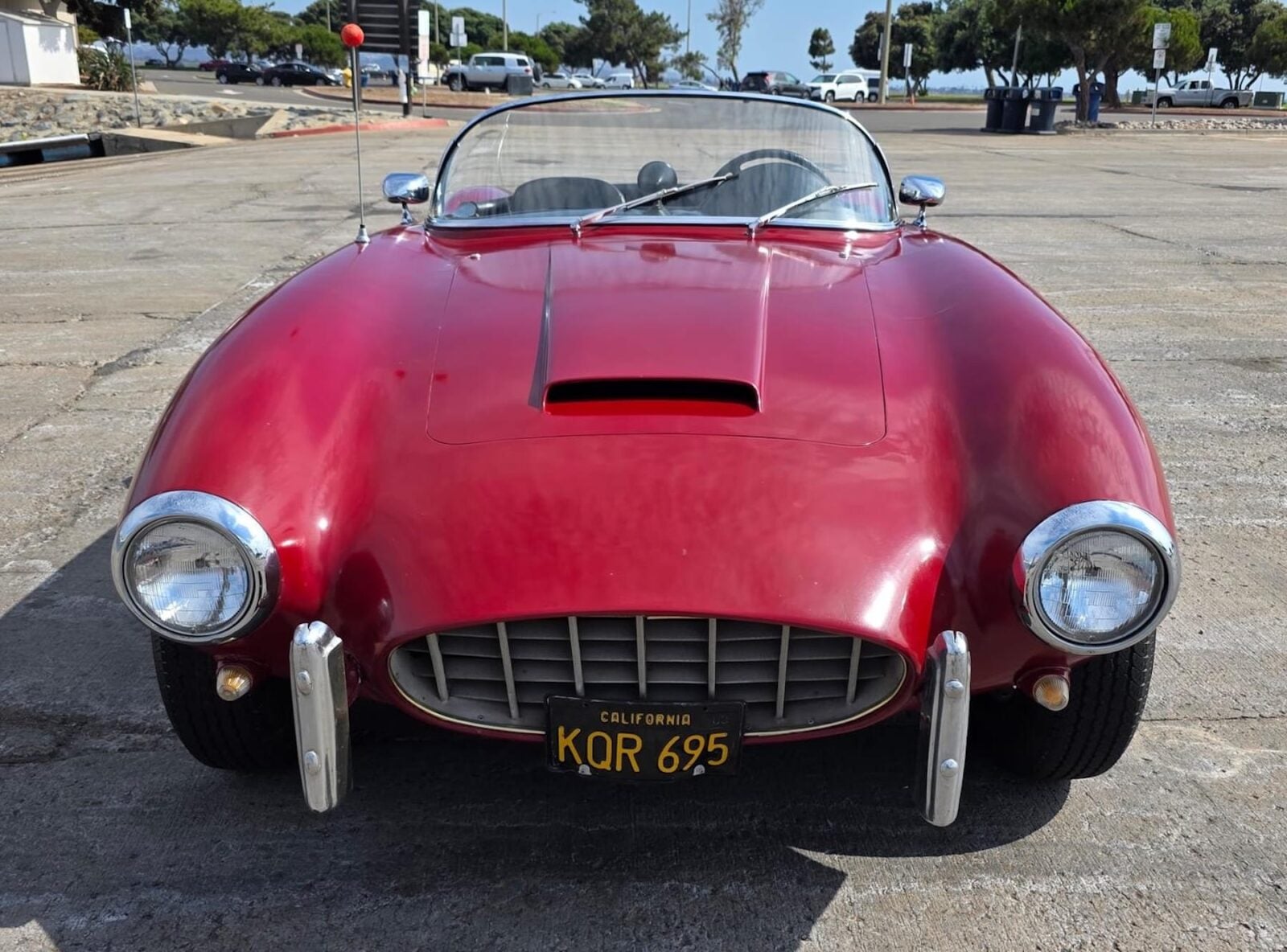
This is a rare Byers SR-100, it’s an American-made sports car from the 1950s with styling that’s been winning it fans for decades. The performance of the car can be extremely competitive as well – they had lightweight fiberglass bodies and most were fitted with V8s.
The SR-100 was better looking than many (if not most) production sports cars of the time, and it could be built at home in the owner’s spare time. The example you see here was built in the 1950s and then kept by its original owner for almost 50 years – right into the early 2000s. It’s now being offered for sale.
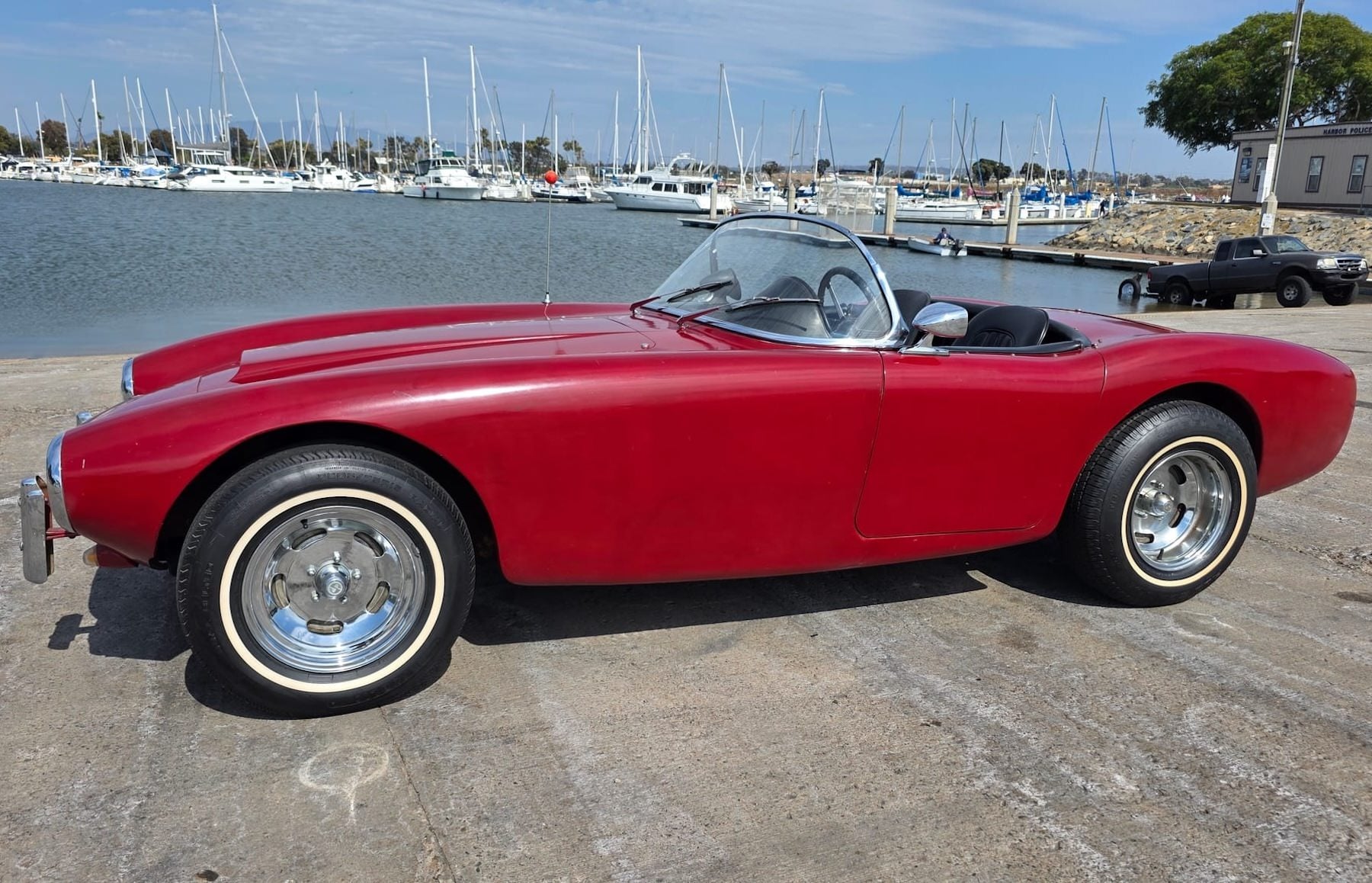
 This is a rare Byers SR-100, it’s an American-made sports car from the 1950s with styling that’s been winning it fans now for decades. The performance could be extremely competitive as well – they had lightweight fiberglass bodies and most were fitted with V8s.
Fast Facts: The Byers SR-100
- The Byers SR-100 was developed in the mid-1950s by Jim Byers, who honed his fiberglass skills at Victress and later at Meteor, where he helped design the SR-1. Striking out on his own in El Segundo, California, he created what many considered one of the finest post-WWII fiberglass specials.
- Fiberglass was the space-age composite of its era, enabling complex shapes that were lightweight, strong, and rust-proof. Byers sold bodies mail-order for buyers to fit to donor chassis at home, and the SR-100 earned such acclaim that Road & Track put one on its February 1957 cover, calling it beautiful – a huge boon for the company.
- Only about 25 SR-100 bodies were originally built by Byers, with Kellison later producing roughly 25 more from the acquired molds. This example was assembled in the late 1950s and kept by its original owner for nearly 50 years before being placed in storage, donated to charity, and acquired by the current seller in 2026.
- Built on a 1949 Ford frame with independent front suspension, the car is powered by a 1955 Pontiac 287ci Strato-Streak V8 with a Carter four-barrel and Pontiac 3-speed manual. It rides on 15″ polished five-slots and has a Corvette wraparound windshield, custom fastback hardtop, and vinyl bucket seats.
Fiberglass: The Carbon Fiber Of The 1950s
Fiberglass has been called the carbon fiber of the 1950s, and it’s an apt comparison. This space-age composite material allowed complex compound shapes to be created quickly and easily from molds, and the resulting part would be strong, lightweight, and impervious to rust.
This was long before the time that a million replica car manufacturers would appear and churn out innumerable low-quality fiberglass cars. This would tarnish the use of fiberglass in the eyes of many, but there was a time when even Ferrari released a car with a full fiberglass body.
The arrival of the Chevrolet Corvette in the early 1950s helped to popularize fiberglass for use in automotive bodies, though it was far from the first fiberglass car – a cottage industry had already popped up by this time offering lightweight fiberglass car bodies that people could buy to build their own sports car at home.
History Speedrun: The Byers SR-100
The Byers SR-100 was developed by Jim Byers in the late 1950s. He got his start working on fiberglass at Victress earlier that same decade, he then partnered with Dick Jones to design and develop the molds for the Meteor SR-1 sports car.
In the mid-1950s Jim had acquired ample knowledge about car design and the use of fiberglass so he amicably left Meteor and developed his own design – the Byers SR-100. The design was heralded as one of the finest of the post-WWII fiberglass specials, and some went so far as to call it “The World’s Most Beautiful Sports Car,” including Road & Track magazine when they put an SR-100 on the cover in 1957.
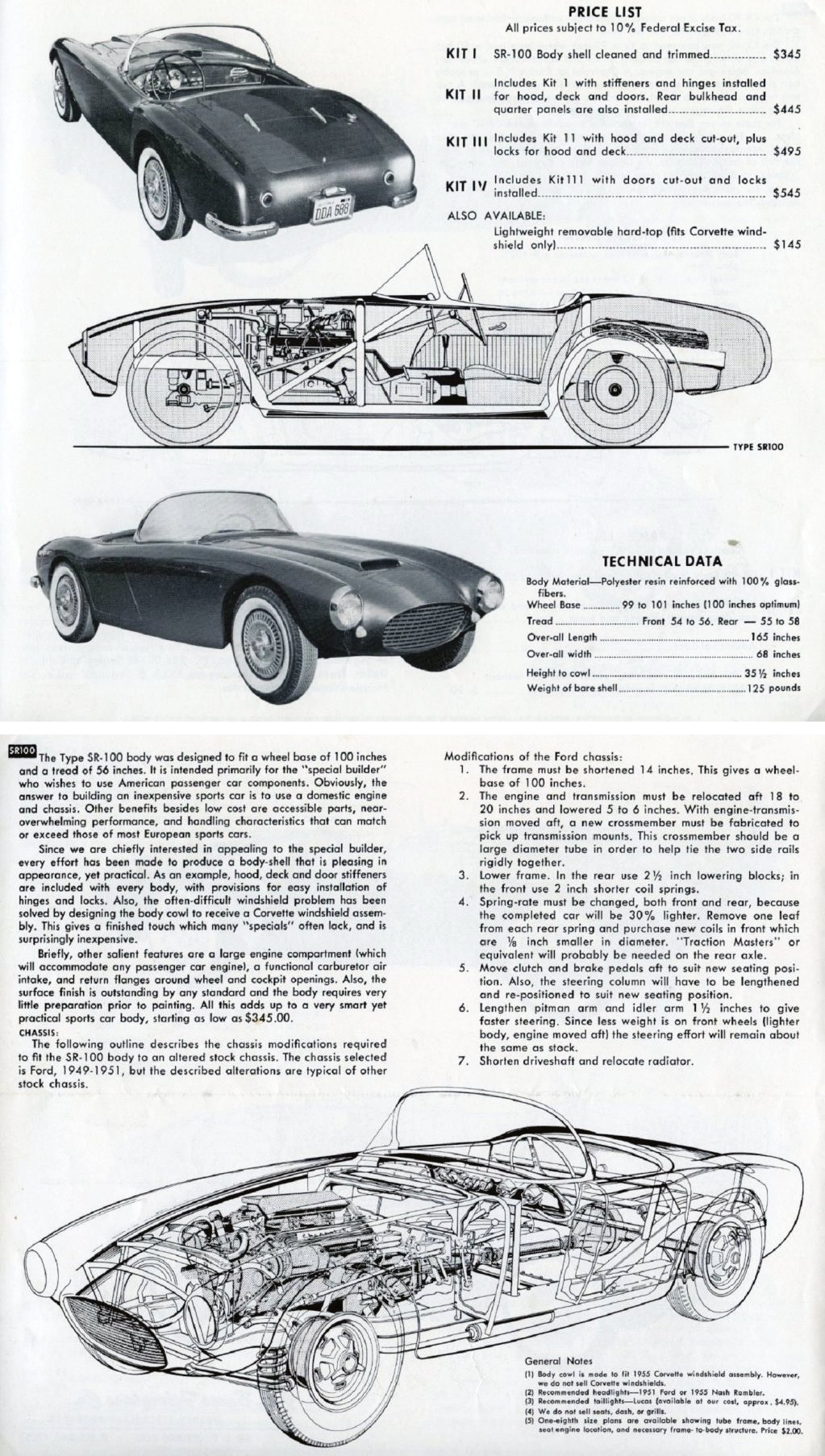
Most people who built a Byers SR-100 did so on a production car chassis that fit the wheelbase. Only 25 bodies were initially made, followed by 25 that were made by another company in the 1960s. Image courtesy of Undiscovered Classics and Geoff Hacker.
John Bond, the owner and publisher of Road & Track, liked the Byers SR-100 so much that he partnered with Jim Byers and built his own. It would be the only car he ever built himself, a testament to just how much he loved Jim’s design.
The SR-100 was advertised in the back of automotive magazines of the time alongside the Byers CR-90 which was designed for shorter wheelbase chassis. Customers would order a body from Byers, then install it to a suitable chassis in their garage. As a result of this there is plenty of variance among the completed examples of the car.
In total it’s believed that just 25 bodies were made. Kellison would buy the design and molds, and produce about 25 examples as well, bringing the total to roughly 50. It’s not known exactly how many were built into completed cars, but only a handful have survived to the current day.
The 1957 Byers SR-100 Shown Here
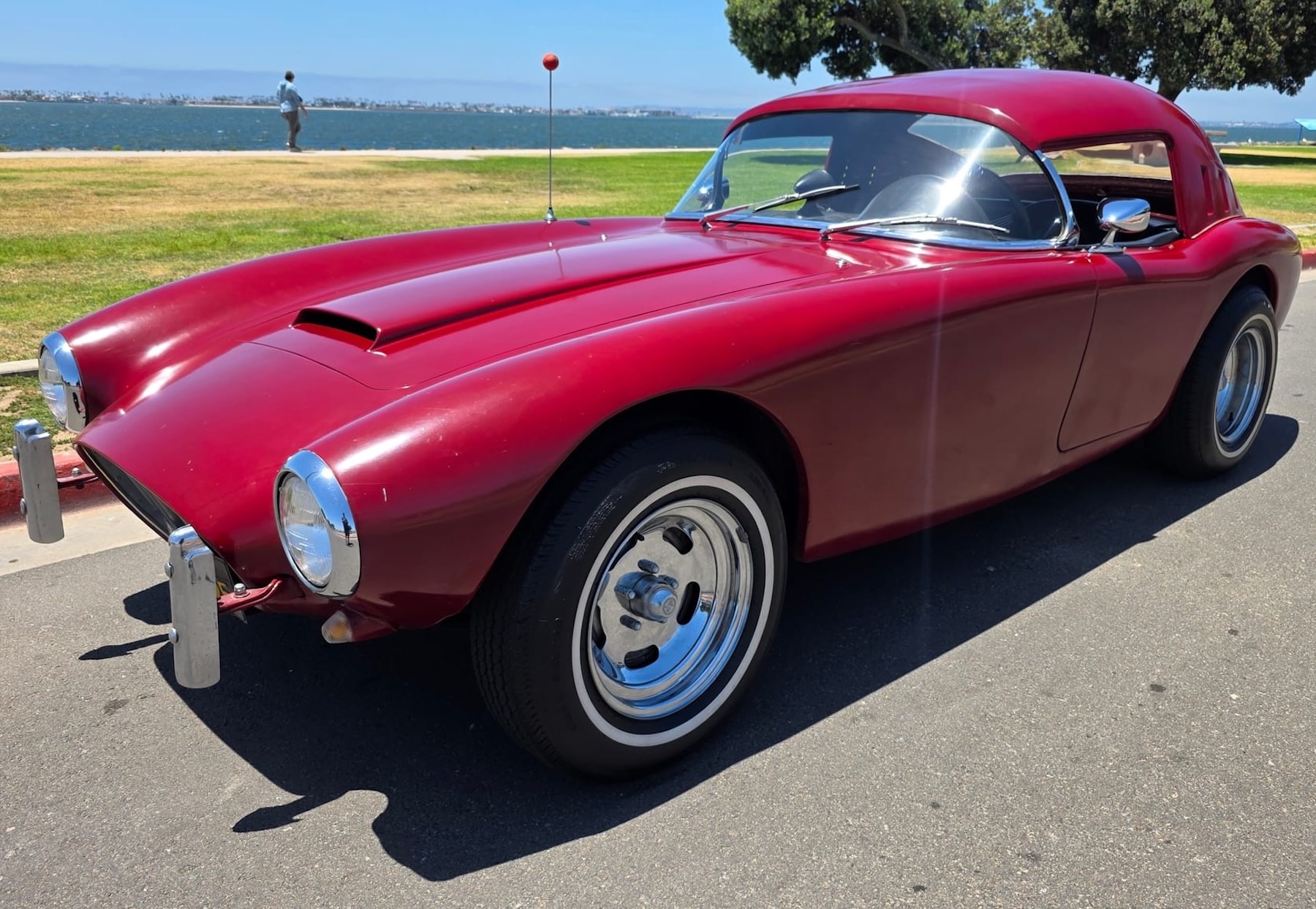
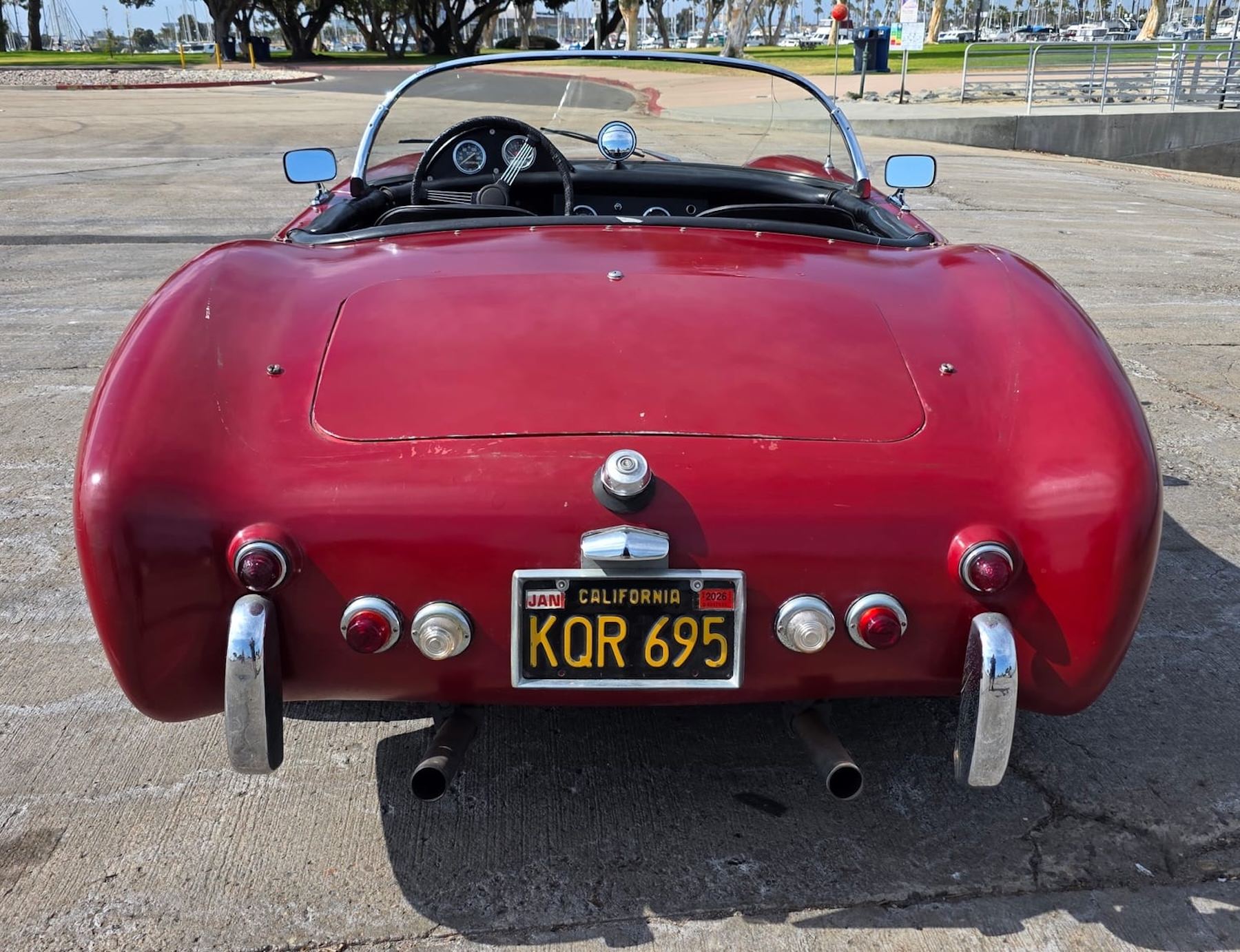
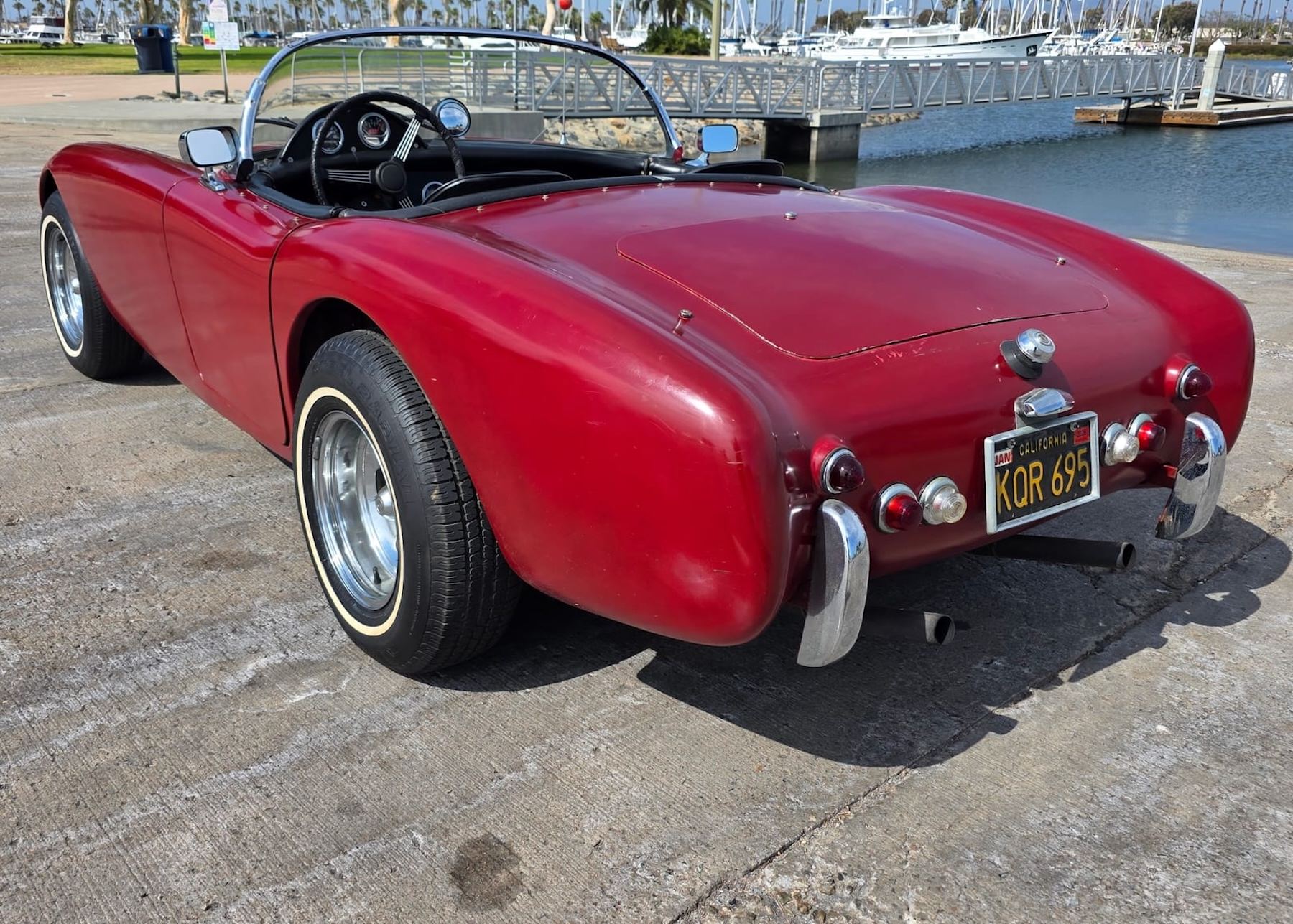
This Byers SR-100 is one of (approximately) 25 examples produced with fiberglass bodywork designed by Jim Byers in El Segundo, California. It was reportedly purchased and assembled in the late 1950s and remained with its original owner into the 2000s, after which his family placed it into storage.
The car was later donated to a charity and acquired by the selling party in 2026. It’s titled in California as a 1949 Ford under serial number 98BA639090 and is currently registered as Planned Nonoperation (PNO). Planned Nonoperation is a California DMV status indicating the vehicle is legally kept off public roads for the registration year, meaning it can be stored on private property without registration or insurance, but cannot be driven, towed, or parked on public streets until fully registered again.
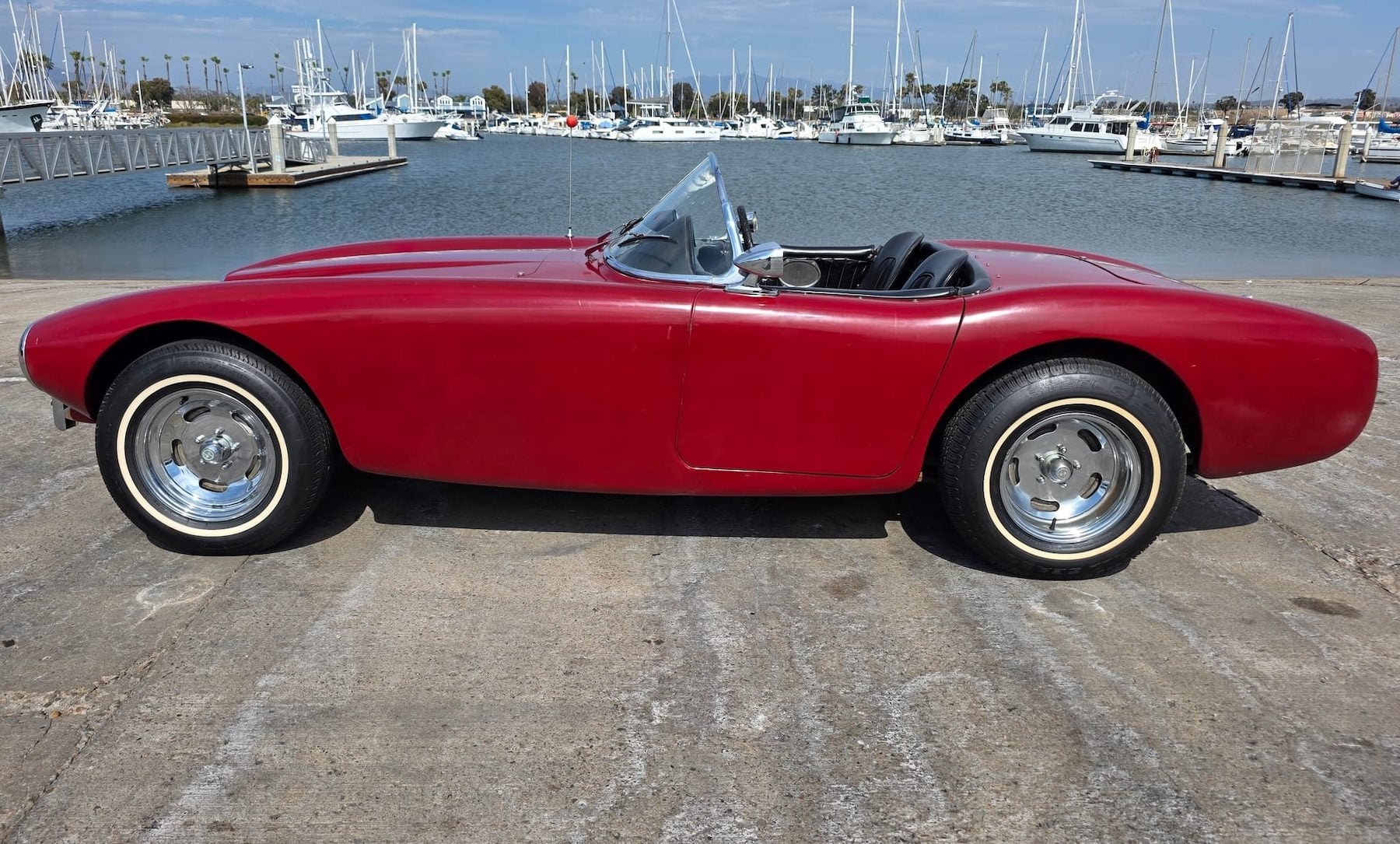
The SR-100 was better looking than many (if not most) production sports cars of the time, and it could be built at home in the owner’s spare time. The example you see here was built in the 1950s and then kept by its original owner for almost 50 years – right into the early 2000s. It’s now being offered for sale.
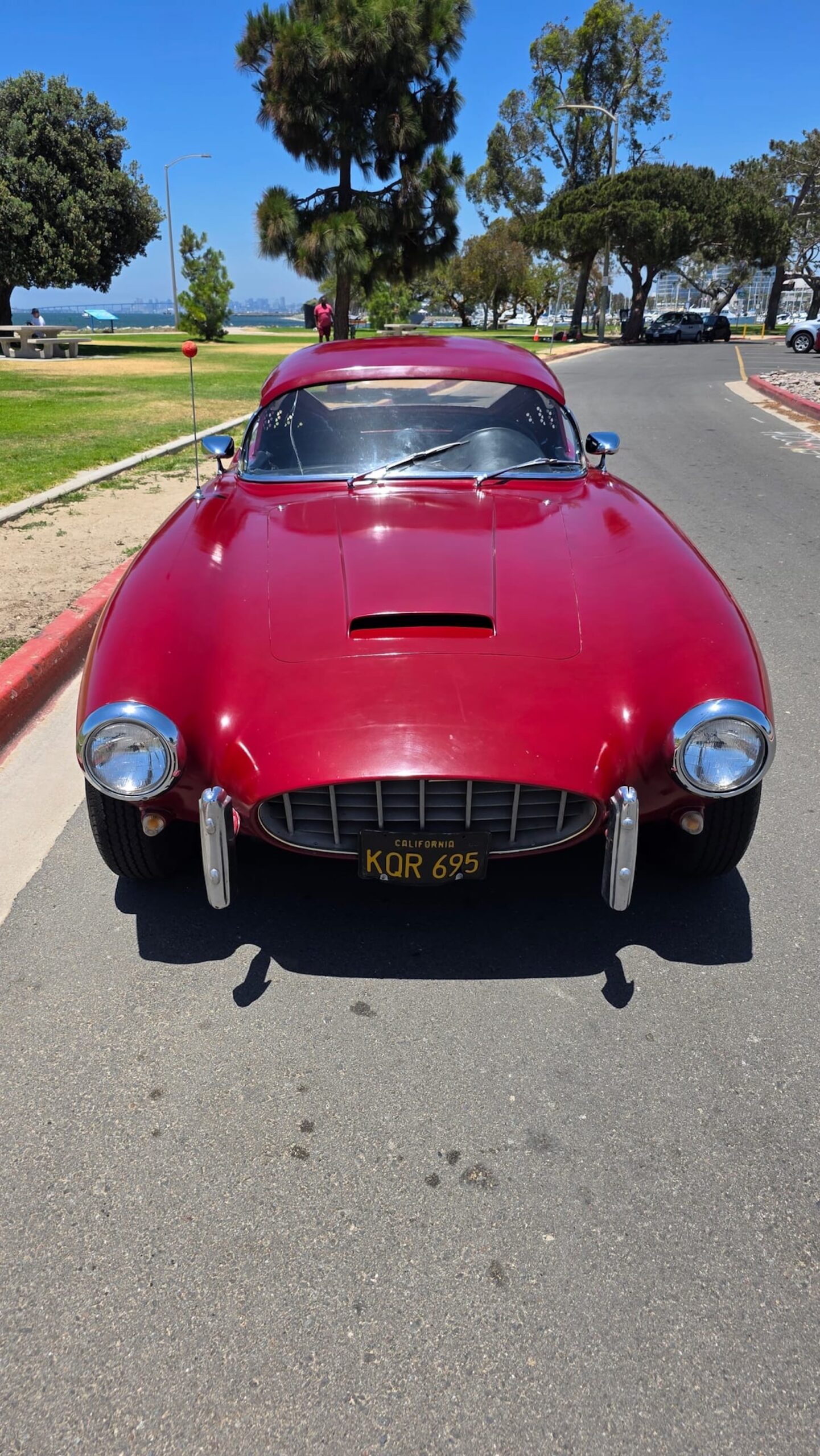
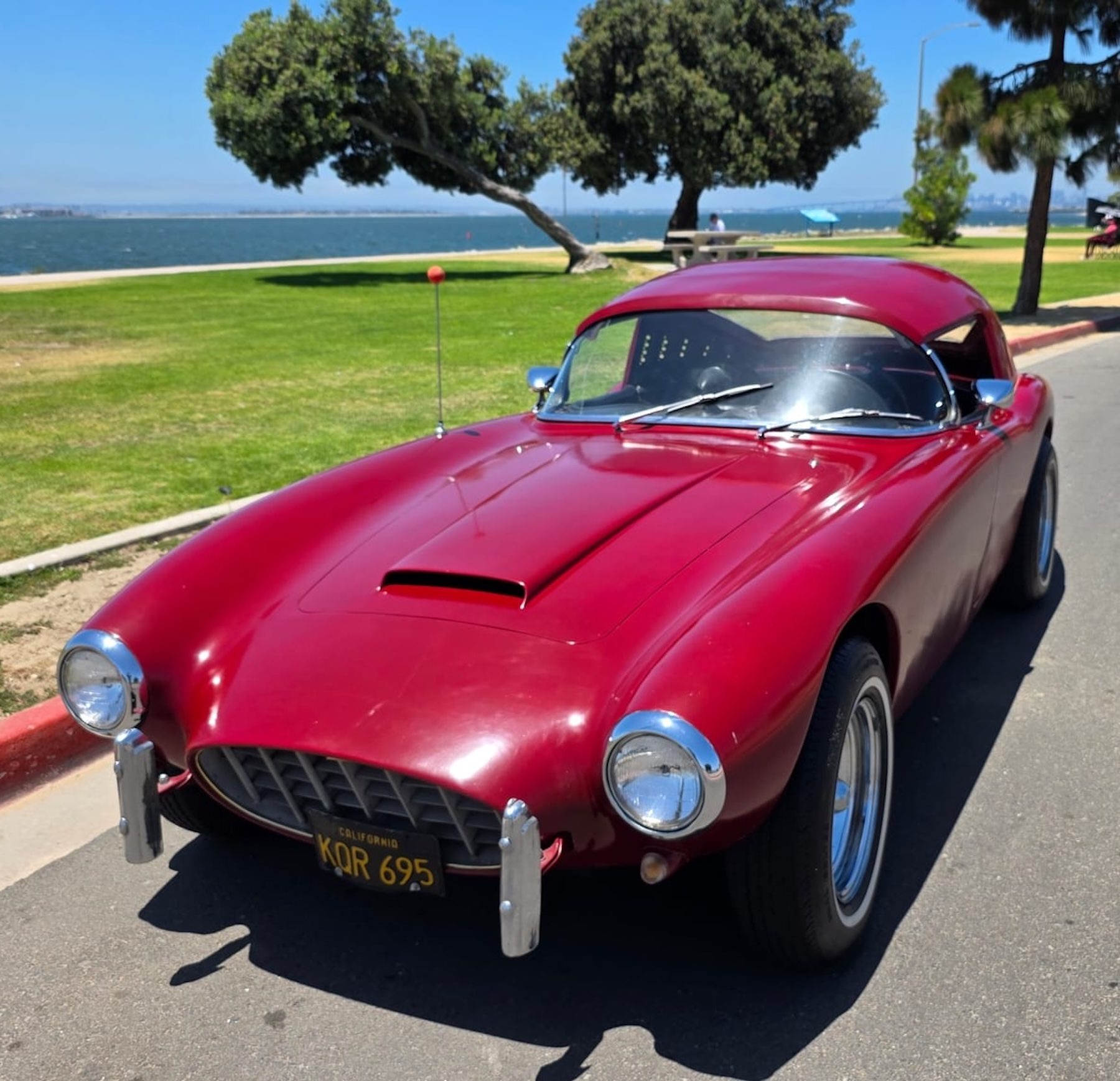
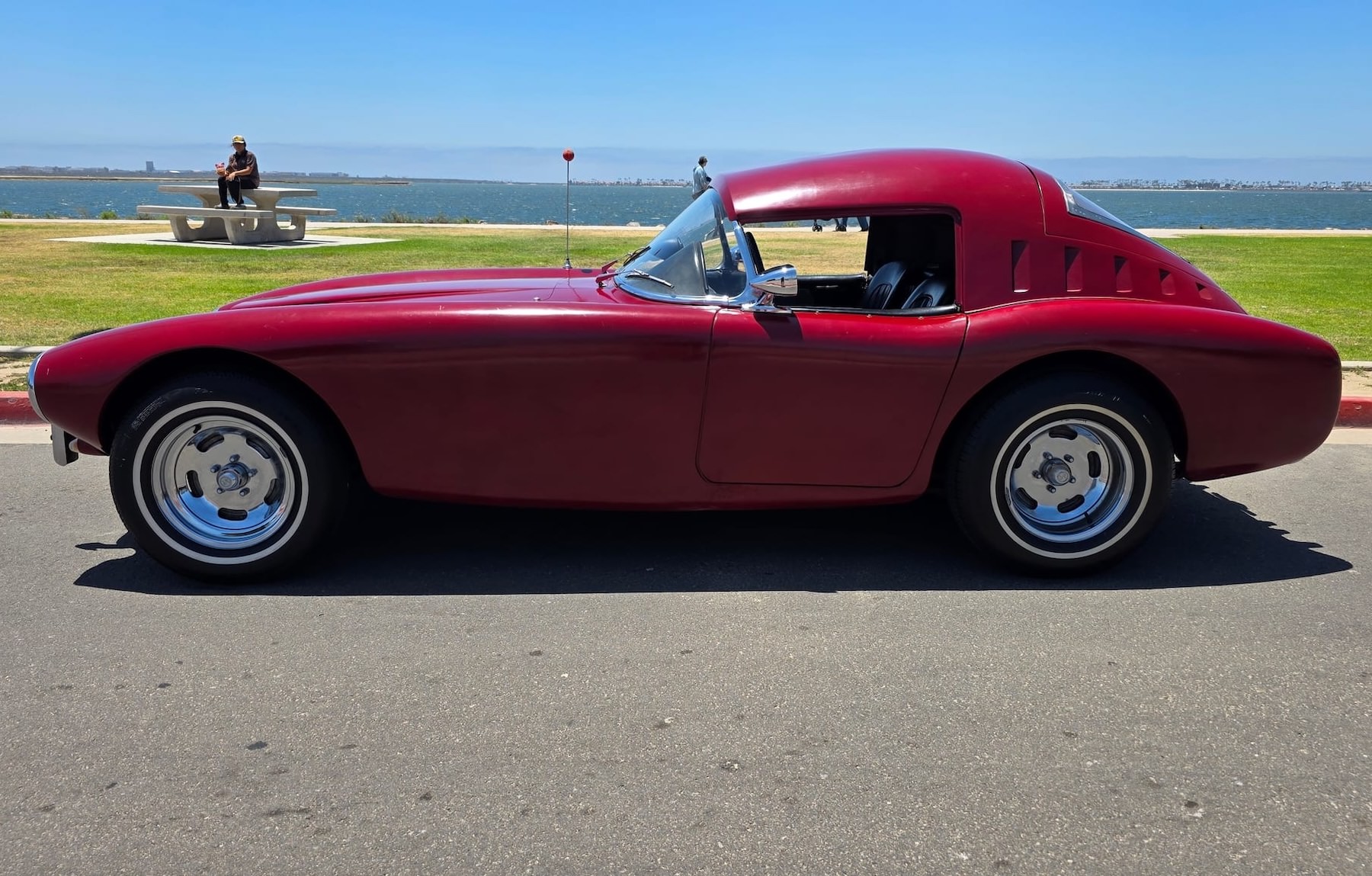
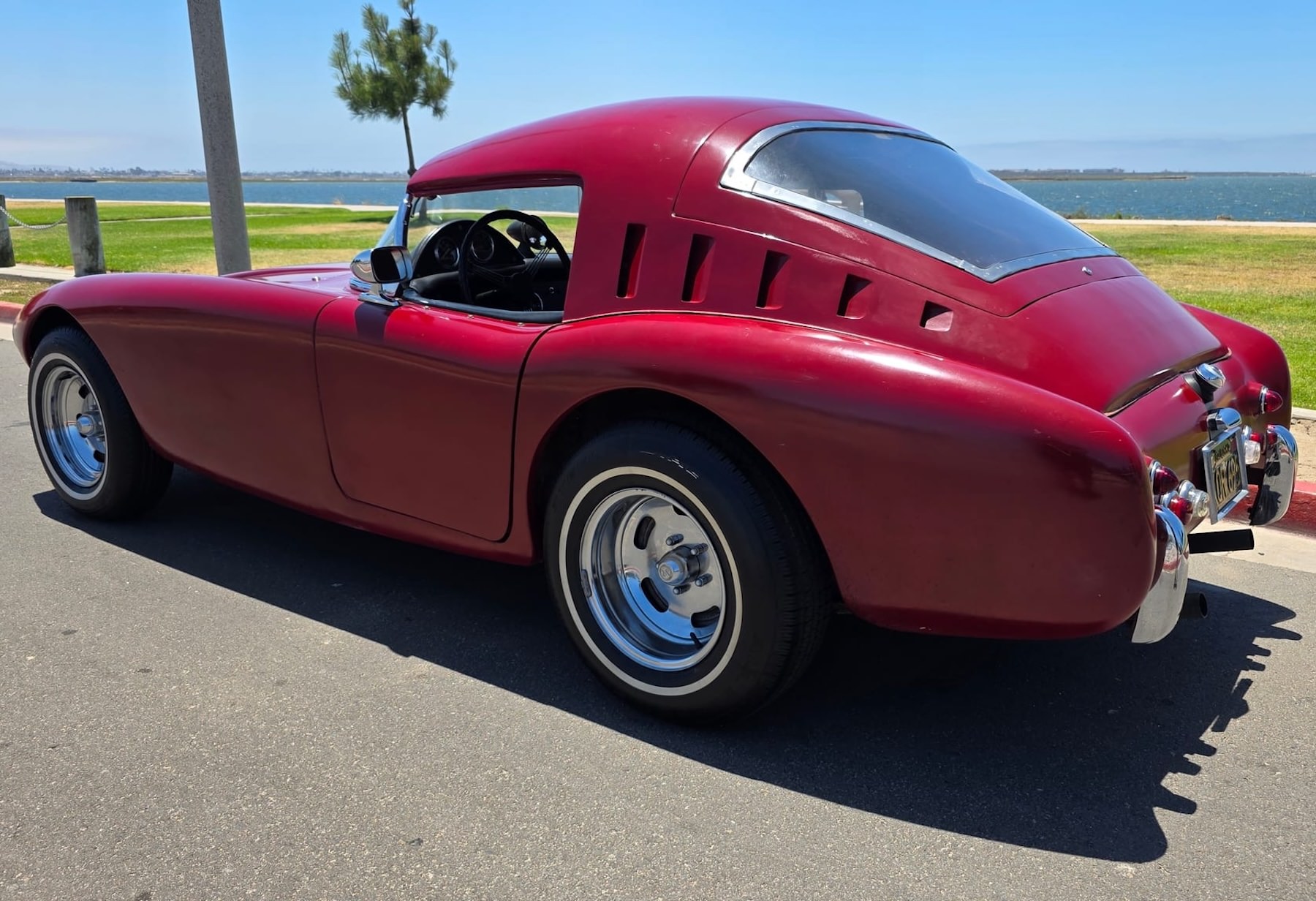
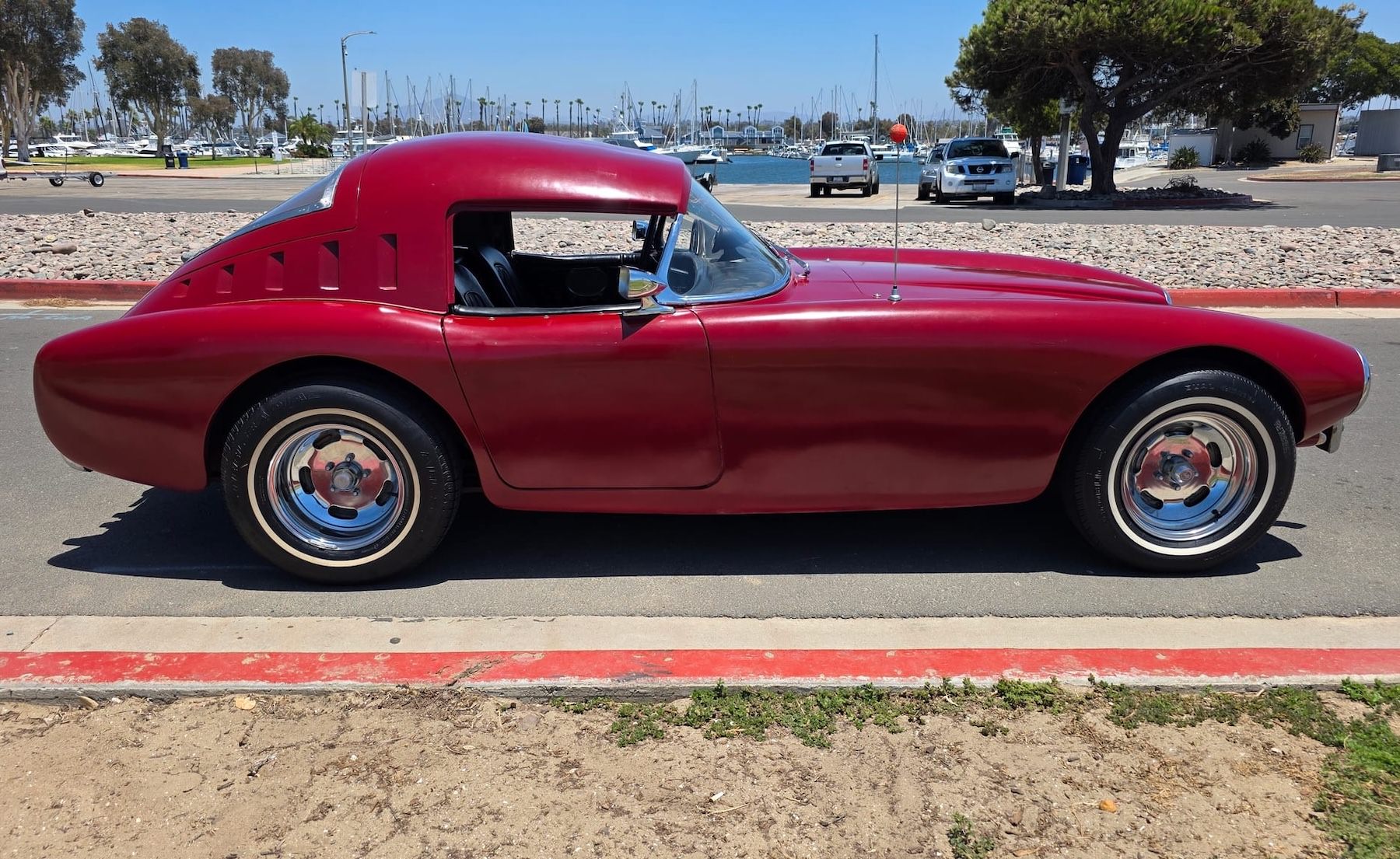
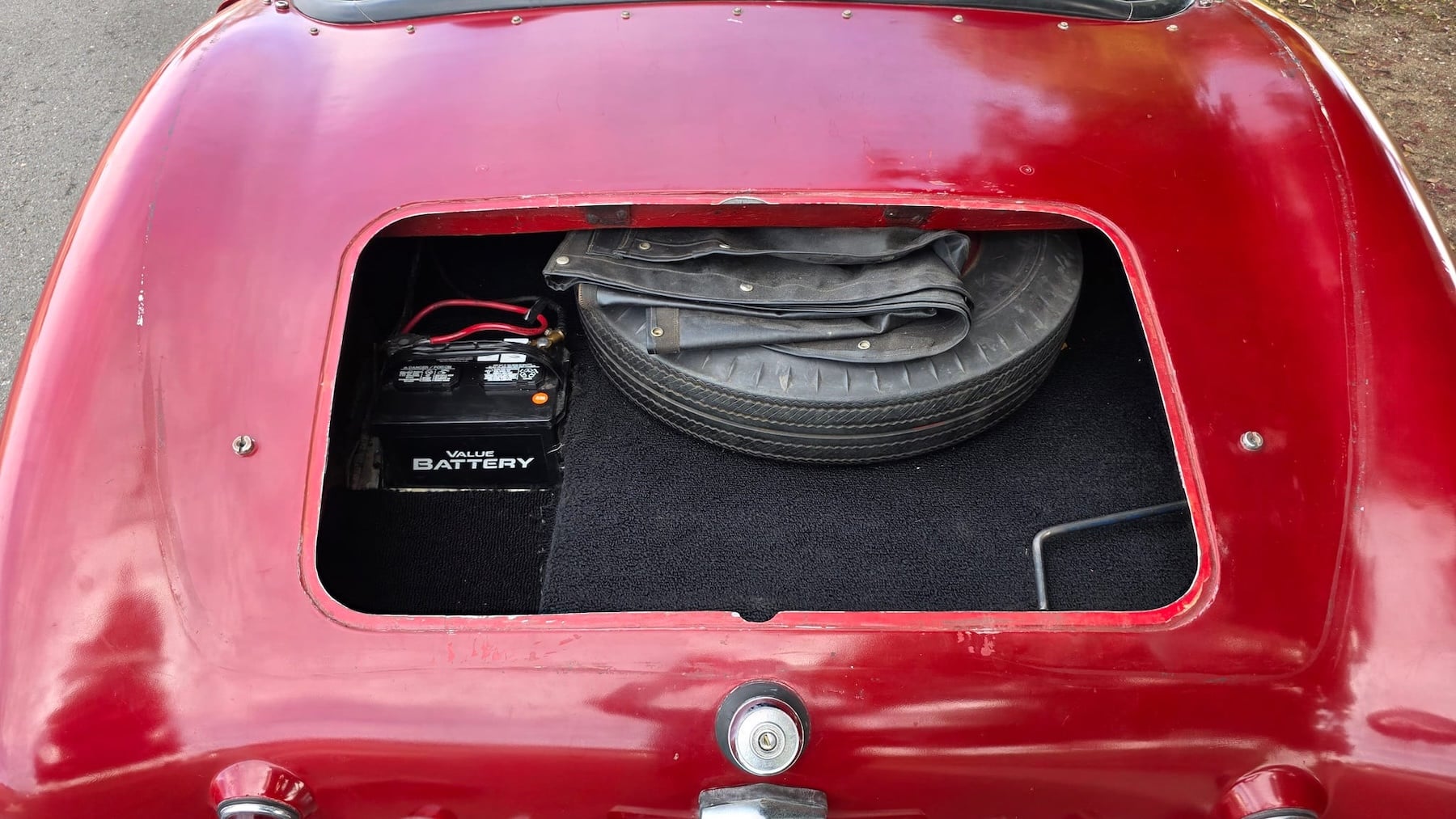
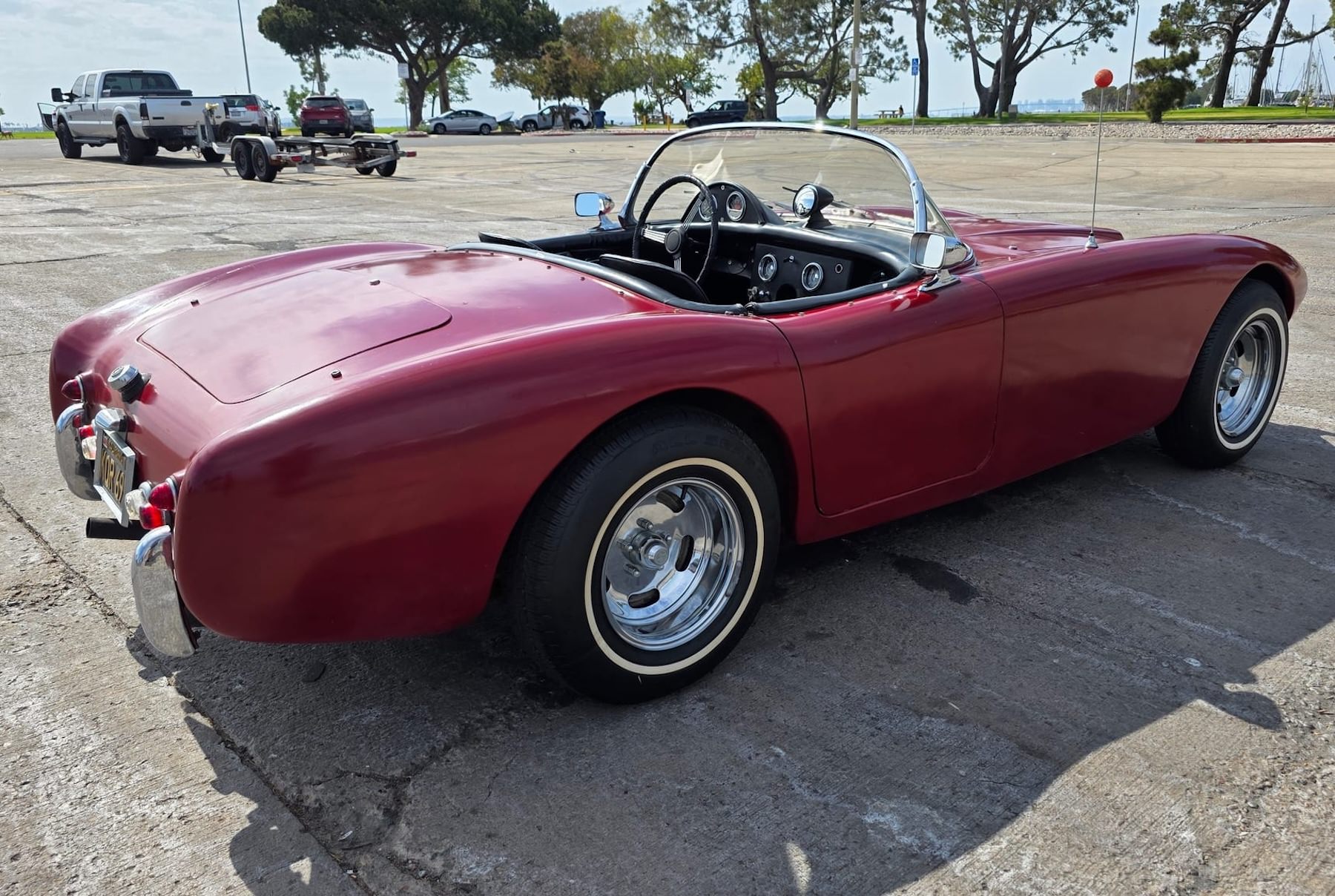
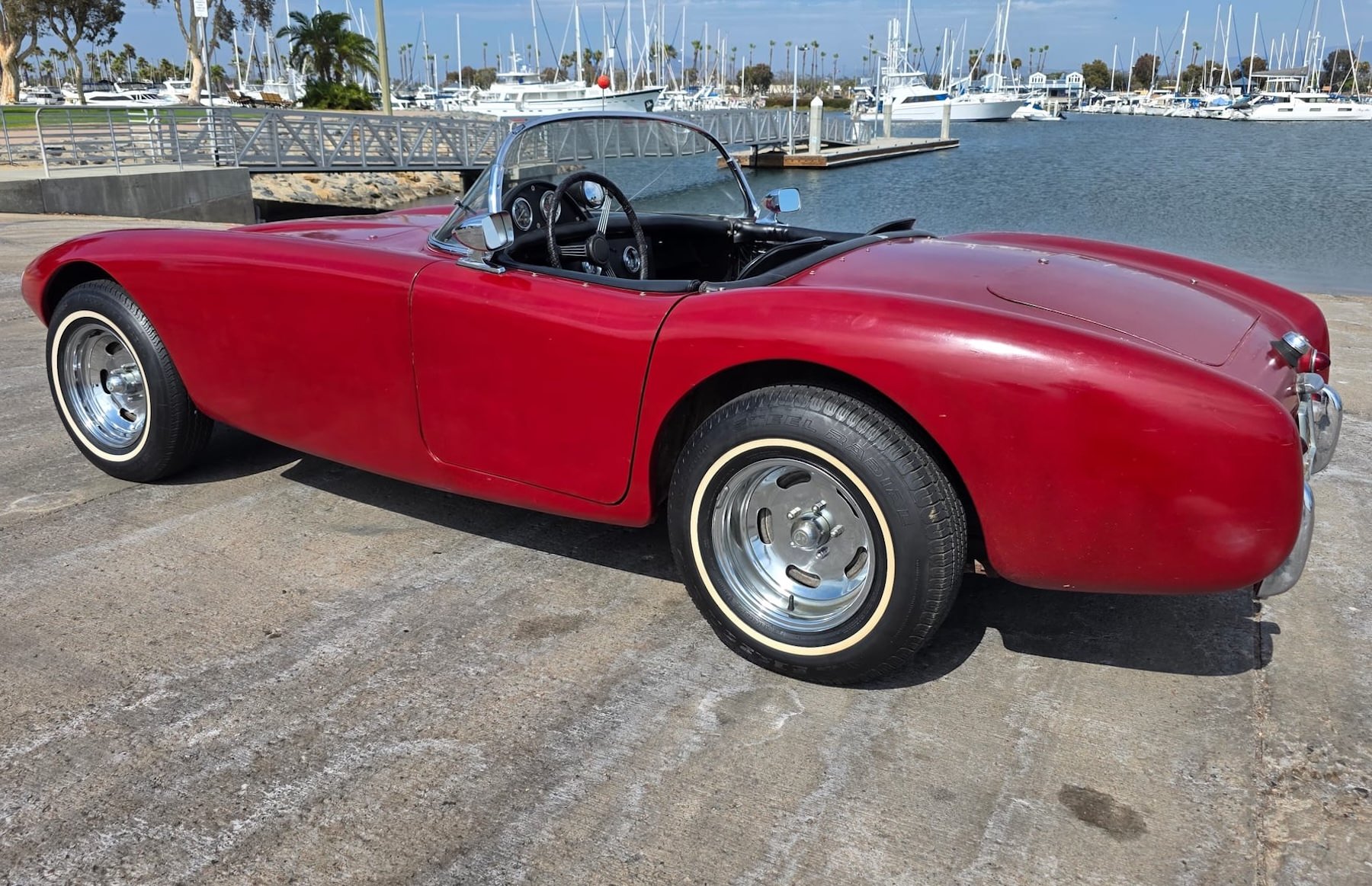
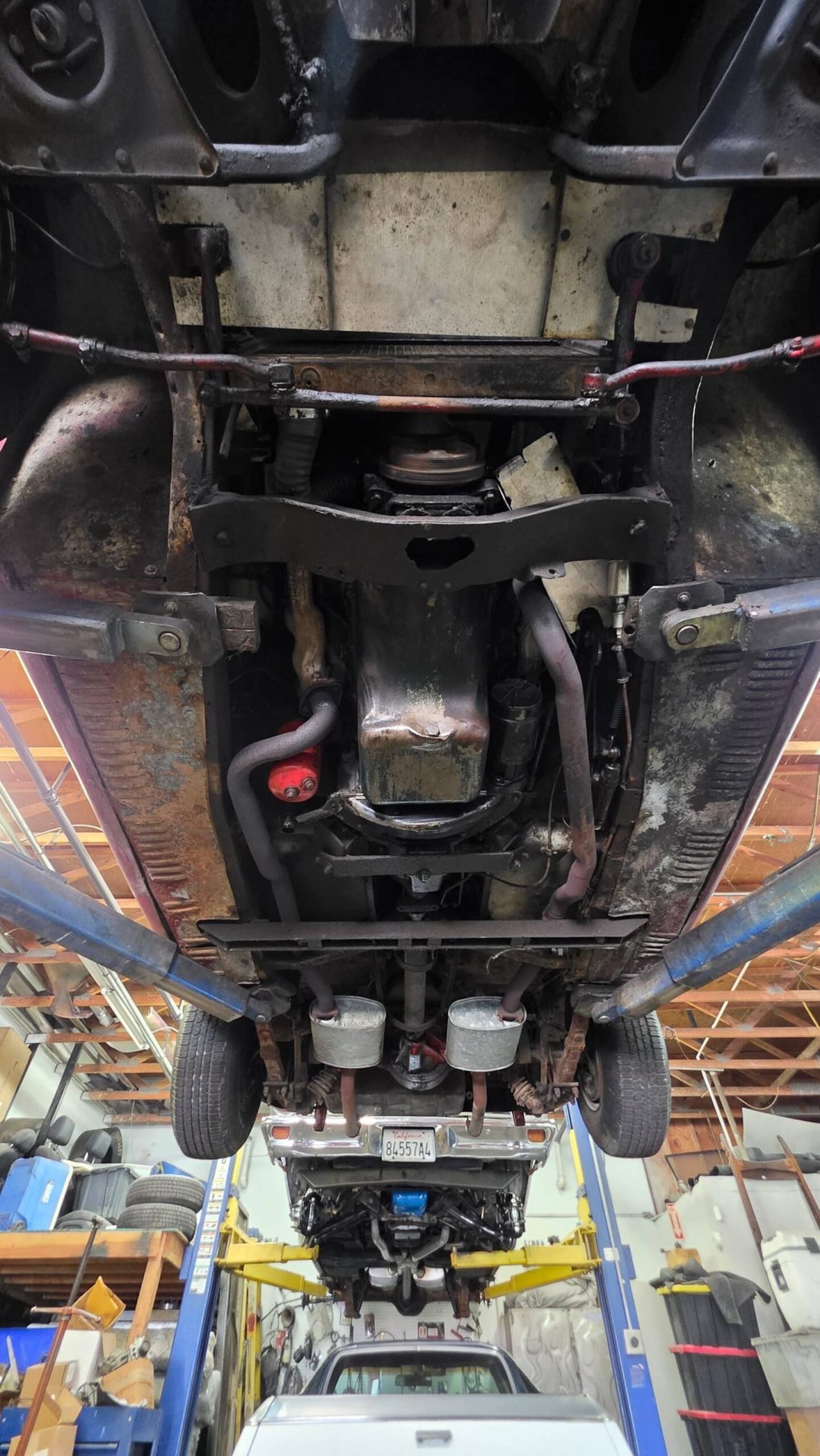
The body is fitted to a 1949 Ford frame and is finished in red, with a Corvette-sourced wraparound windshield, a hood scoop, Volkswagen signal lenses, Lucas taillights, and a removable trunklid. The ’49 Ford frame was common for cars like this, as it offered independent front suspension.
A body-color custom fastback hardtop with side vents and a lift-back rear window is also fitted, it’s worth noting that the windshield is cracked and the paint shows imperfections visible in the images above and below. It sits on 15″ polished five-slot wheels, which do show some areas of corrosion, shod with Fisk Steel Radial All-Season SR4 white-stripe tires.
Suspension is independent up front with coil springs and a sway bar, while the rear uses parallel leaf springs with shocks and coil helper springs. Braking is by drums, and the wheel cylinders, brake hoses, and master cylinder were serviced under current ownership.
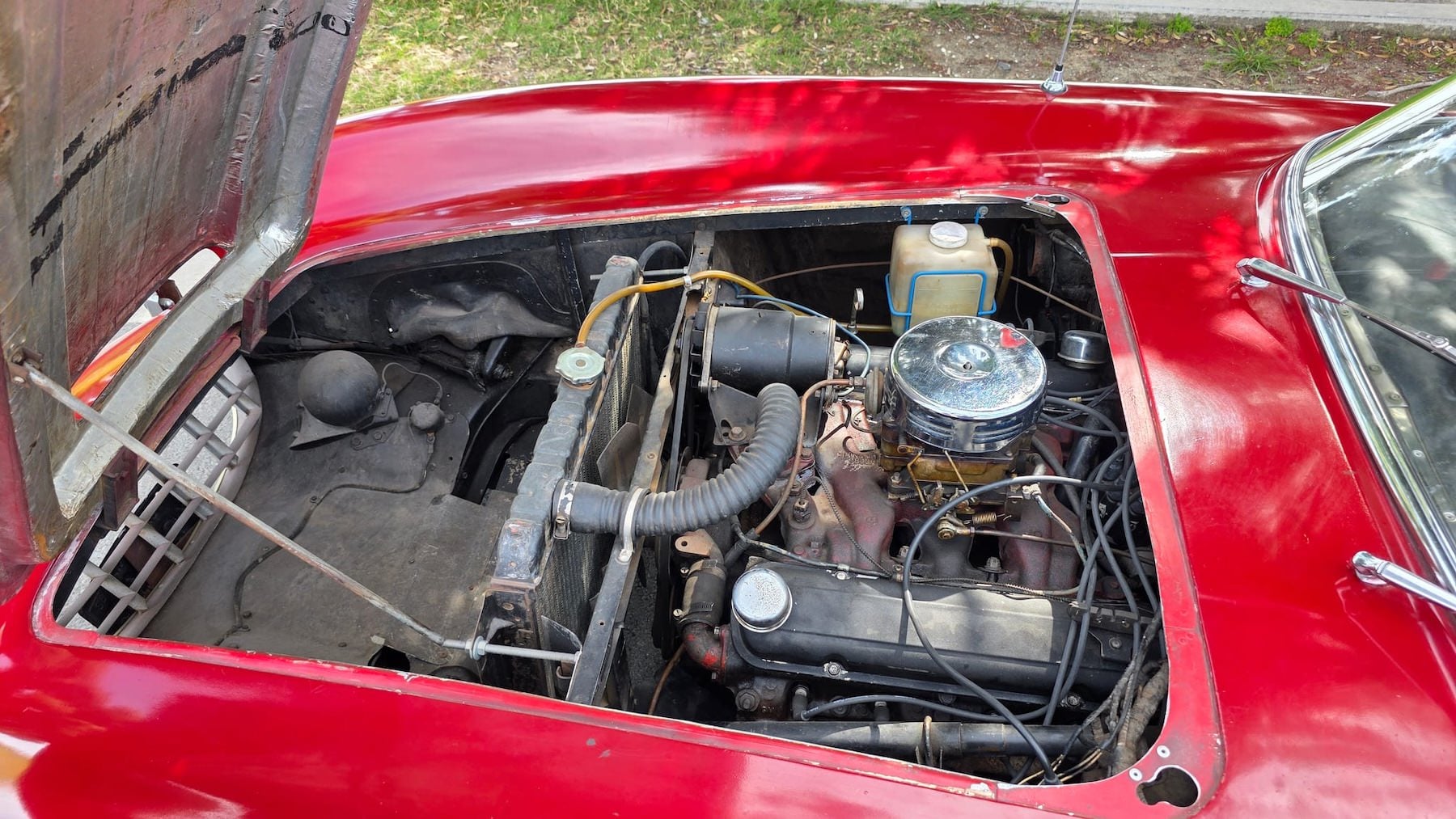
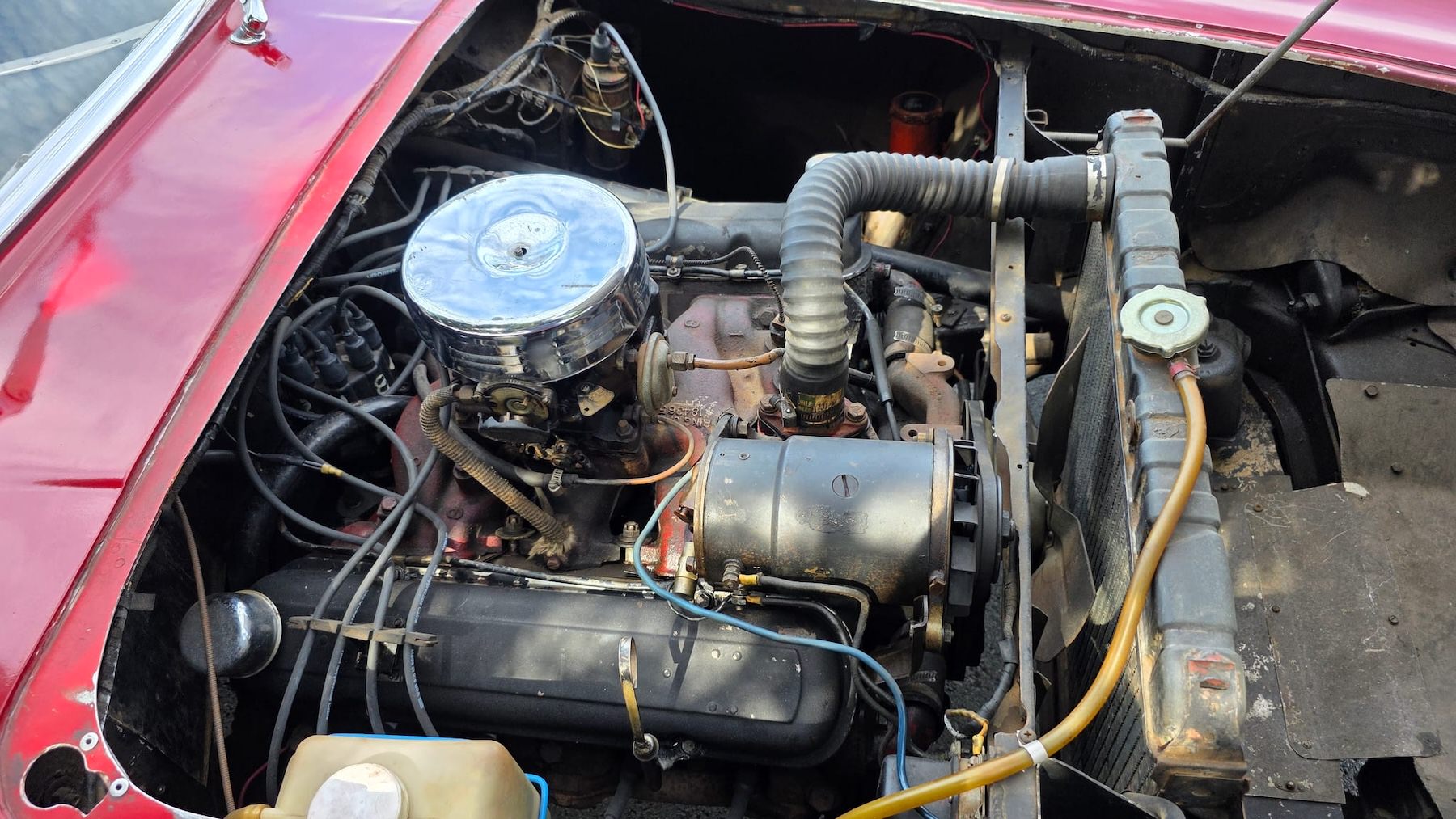
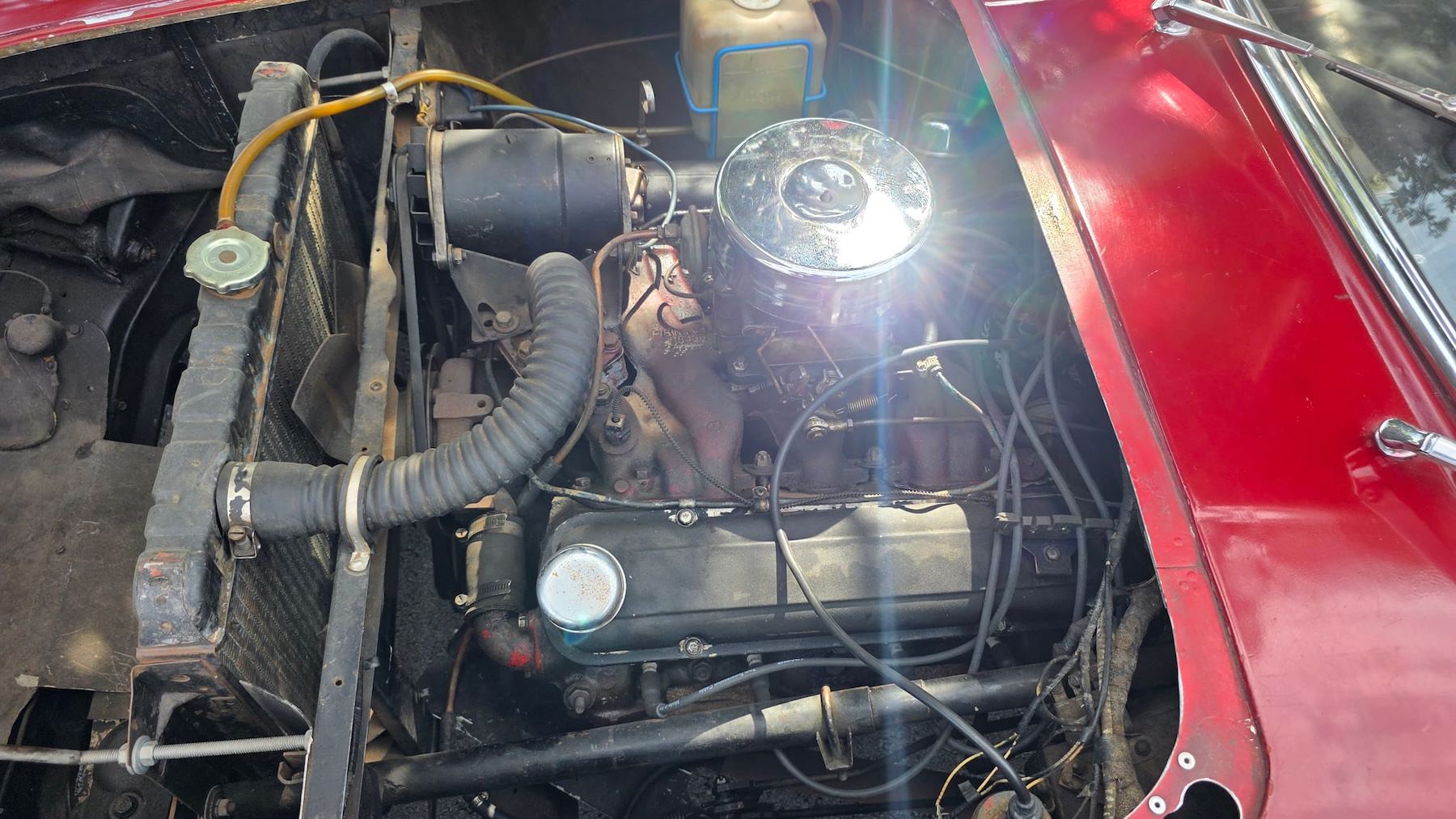
Power comes from a 1955 Pontiac 287 cubic inch Strato-Streak V8 topped with a Carter four-barrel carburetor and chrome air cleaner, cooled by a Willys radiator, and paired with a Pontiac 3-speed manual transmission topped with a Ford Thunderbird shifter.
Recent servicing work included replacing the spark plugs, wires, ignition points, and condenser, along with a carburetor cleaning. The fuel tank was sourced from a Chevrolet truck and has been cleaned and fitted with new rubber lines, though corrosion is visible on the underside.
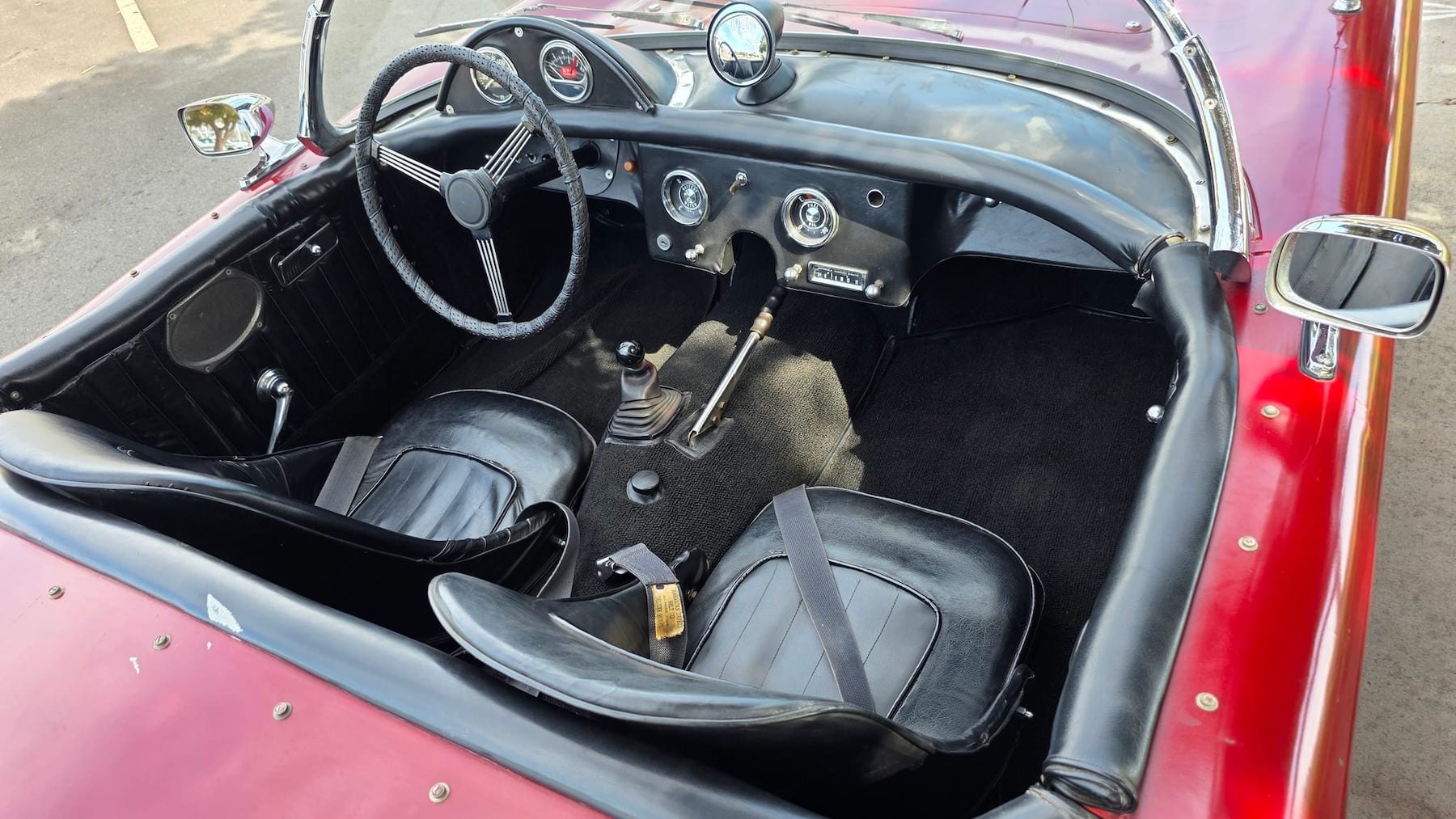
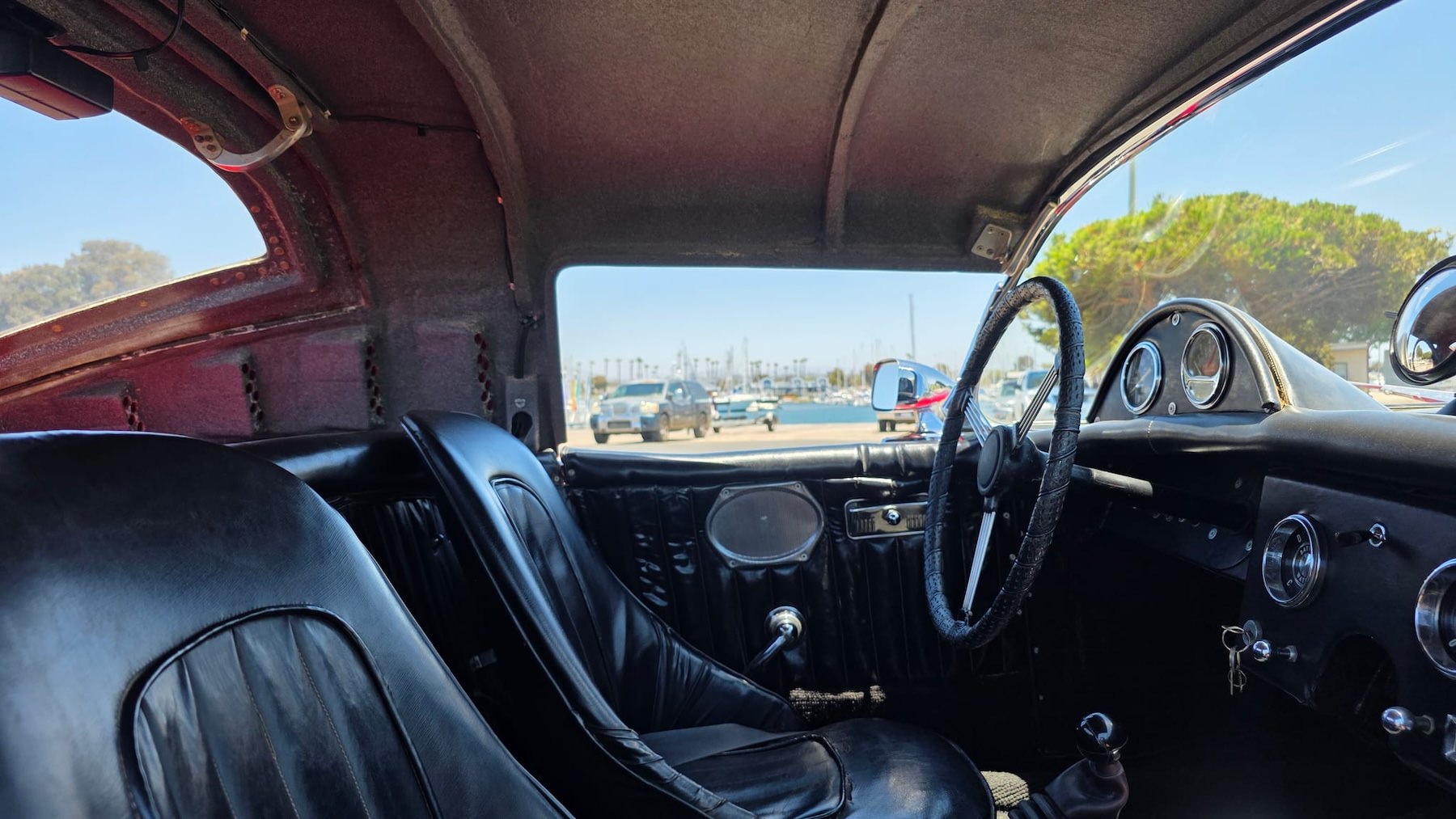
Inside you’ll find fixed-back bucket seats trimmed in black vinyl, a Motorola AM radio with door-mounted speakers, a bullet-style rear-view mirror, and lap belts. The door handles came from a Studebaker and the gas pedal assembly reportedly comes from a 1948 Plymouth.
This Byers SR-100 is one of (approximately) 25 examples produced with fiberglass bodywork designed by Jim Byers in El Segundo, California. It was reportedly purchased and assembled in the late 1950s and remained with its original owner into the 2000s, after which his family placed it into storage.
A vinyl-wrapped banjo-style steering wheel sits ahead of a Stewart Warner 160 mph speedometer and tachometer, with Pontiac auxiliary gauges mounted in the center of the dash. The five-digit odometer reads 42,000 miles, roughly 100 of which were added under current ownership, and total mileage is unknown.
The car is now being offered for sale out of San Diego, California with a California title listing the car as a 1949 Ford due to its chassis. If you’d like to read more about it or register to bid you can visit the listing here.
Images courtesy of Bring a Trailer

Articles that Ben Branch has written have been covered on CNN, Popular Mechanics, Smithsonian Magazine, Road & Track Magazine, the official Pinterest blog, the official eBay Motors blog, BuzzFeed, Autoweek Magazine, Wired Magazine, Autoblog, Gear Patrol, Jalopnik, The Verge, and many more.
Silodrome was founded by Ben back in 2010, in the years since the site has grown to become a world leader in the alternative and vintage motoring sector, with well over a million monthly readers from around the world and many hundreds of thousands of followers on social media.