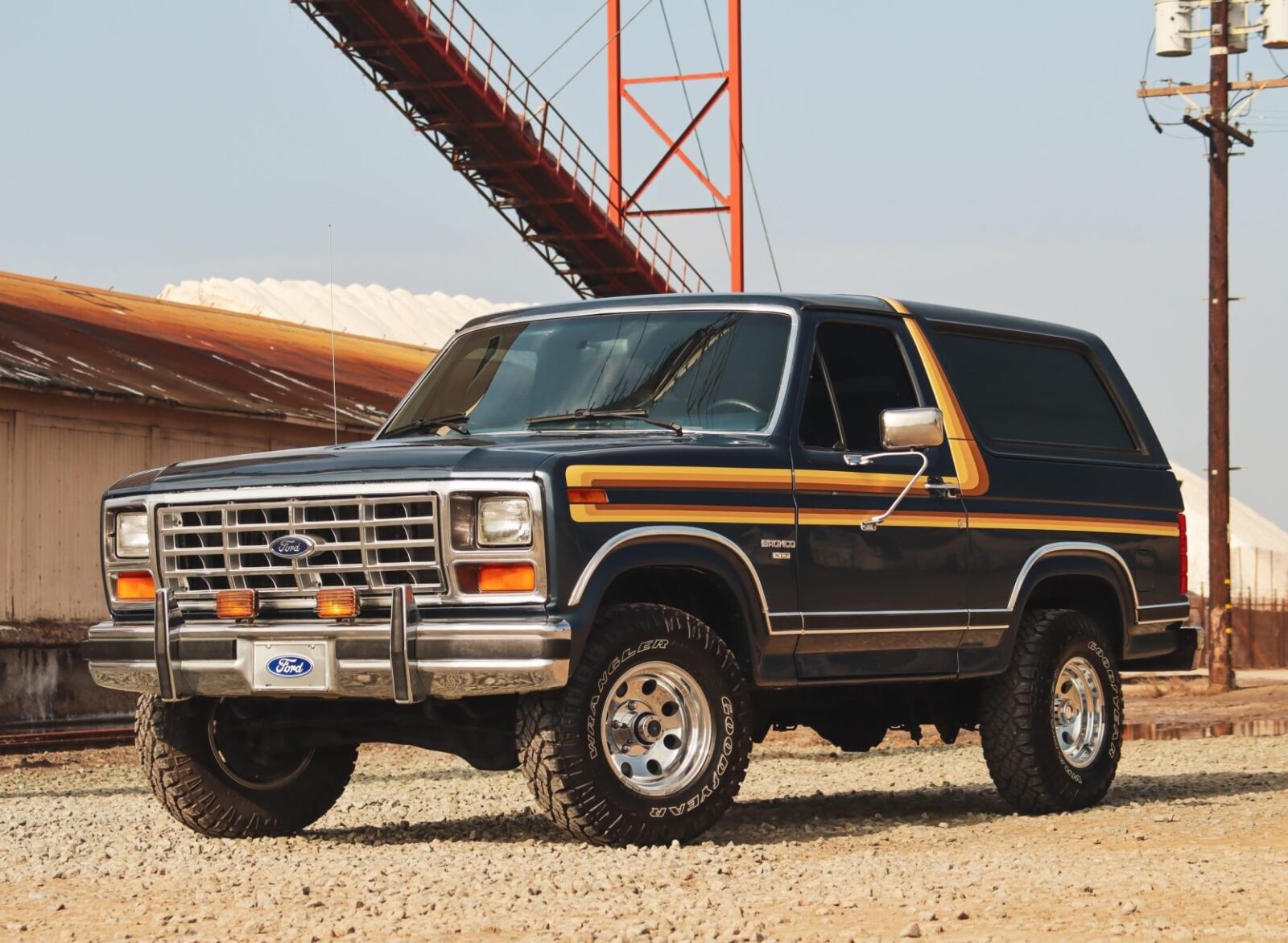
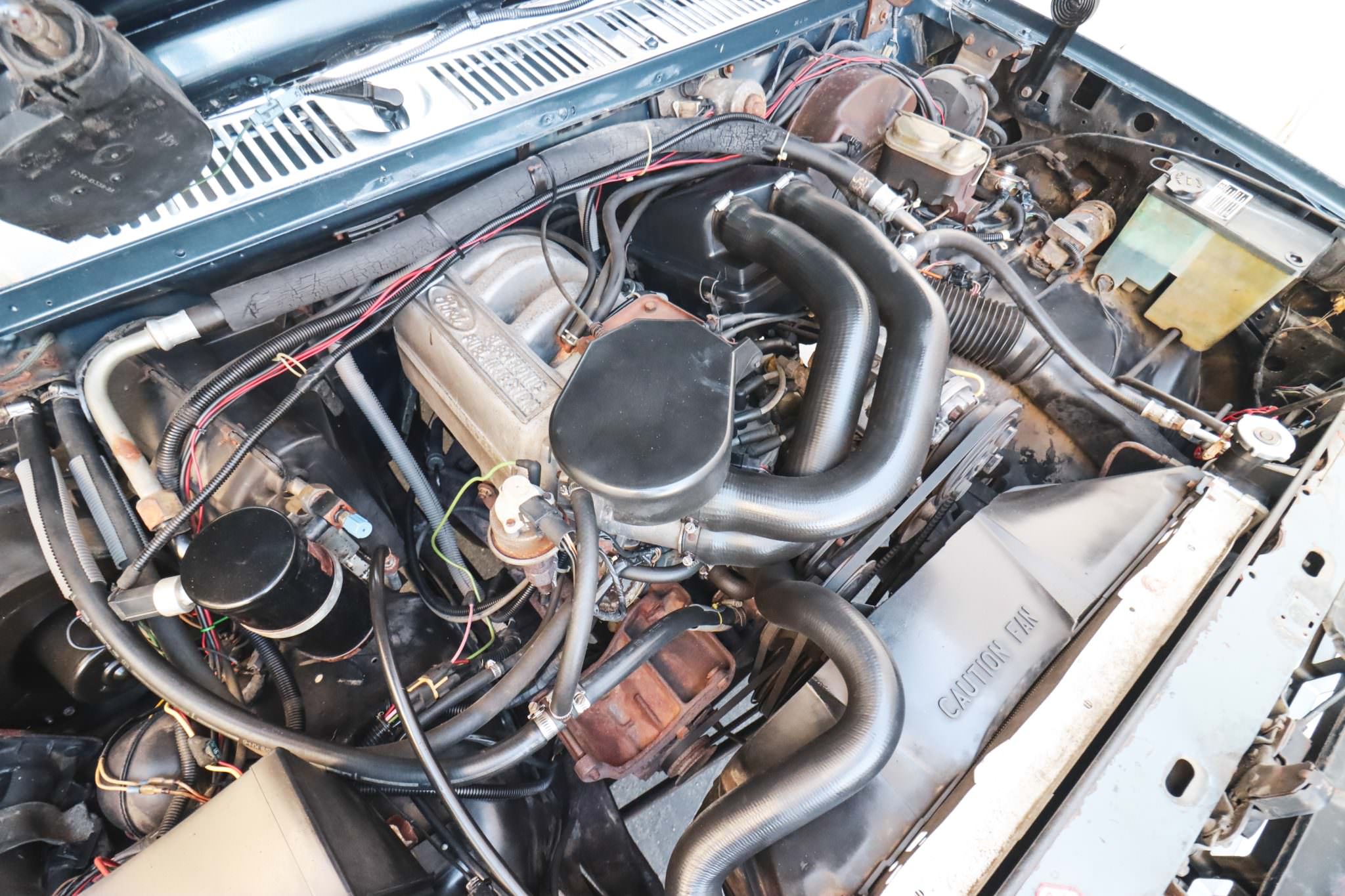
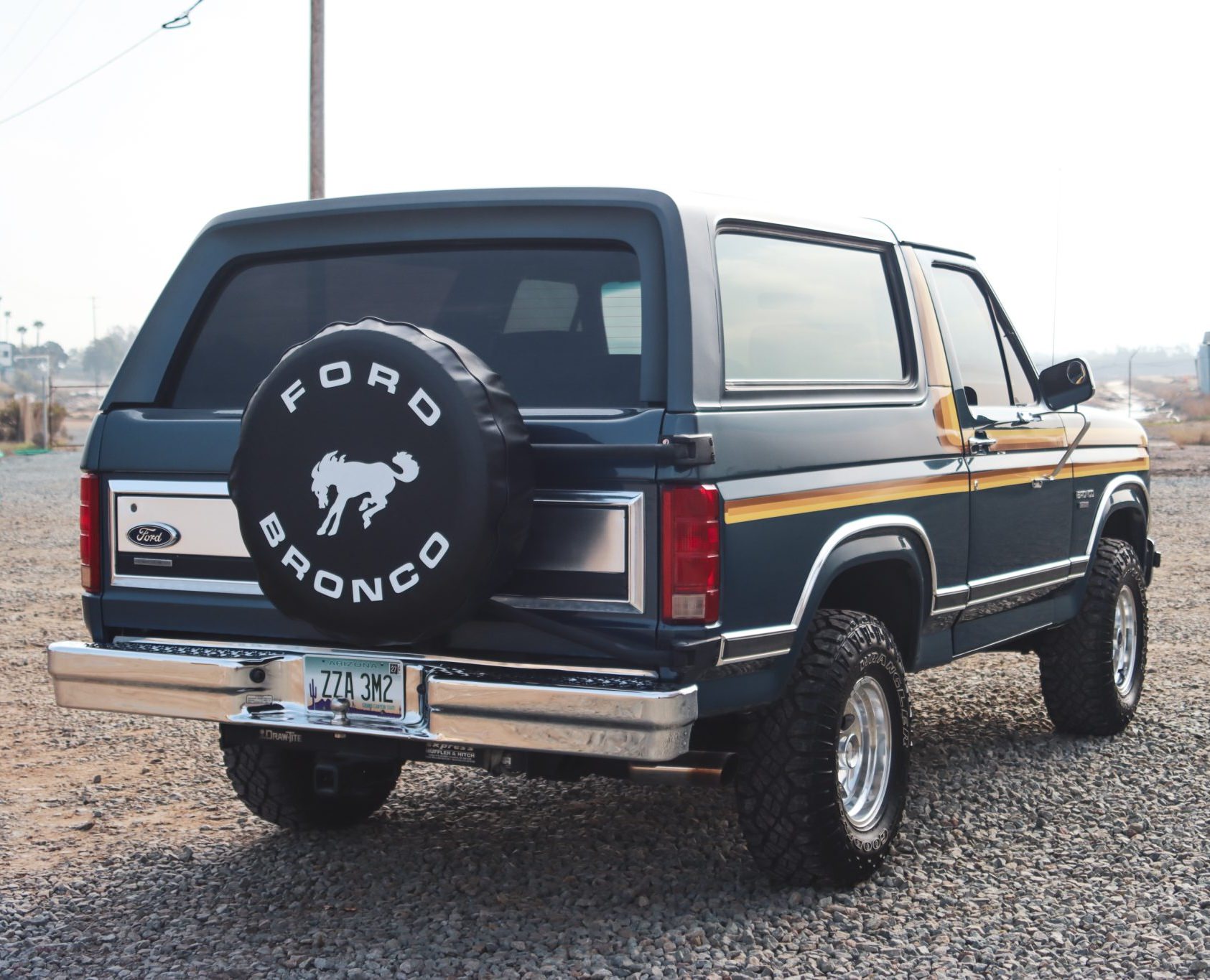
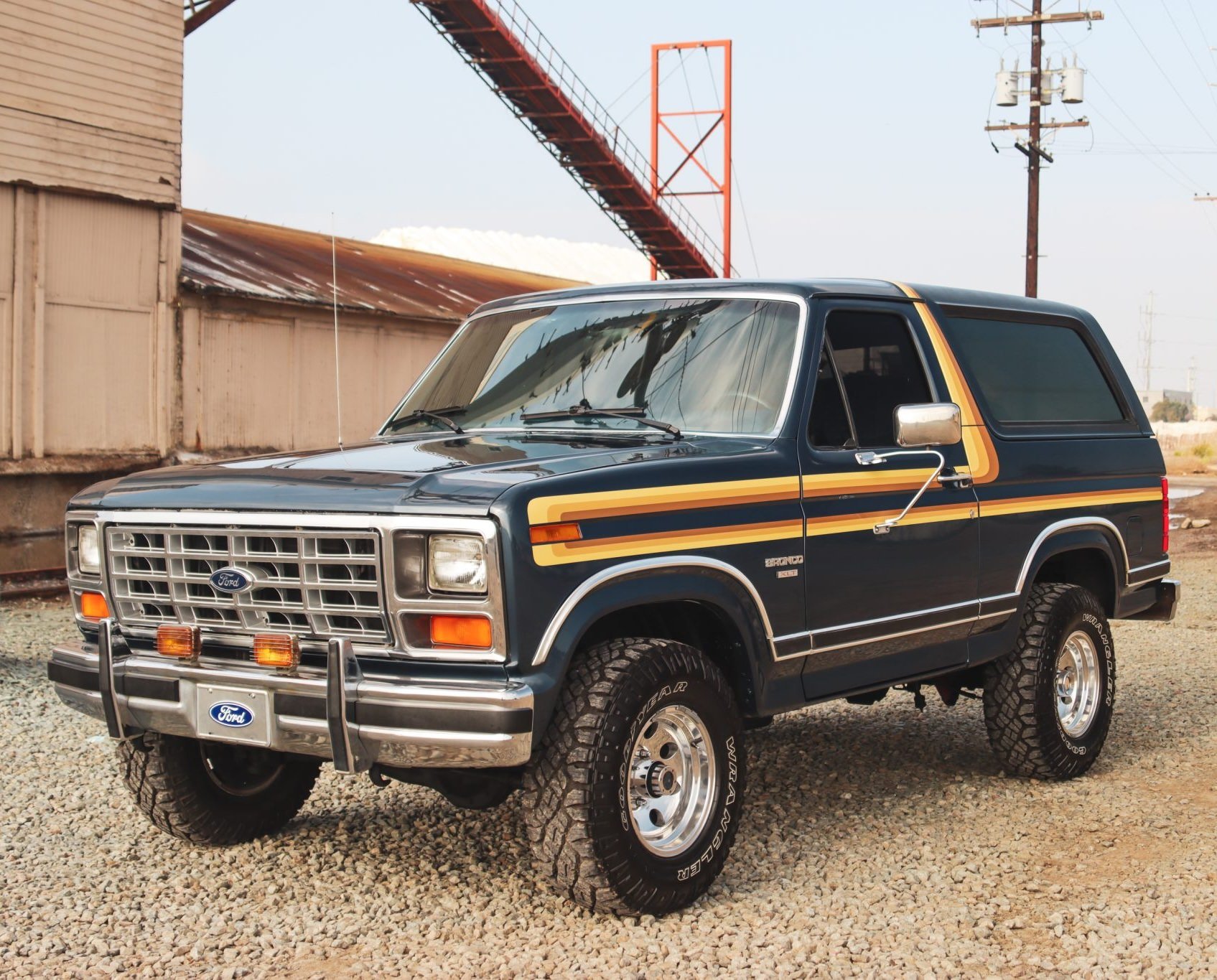
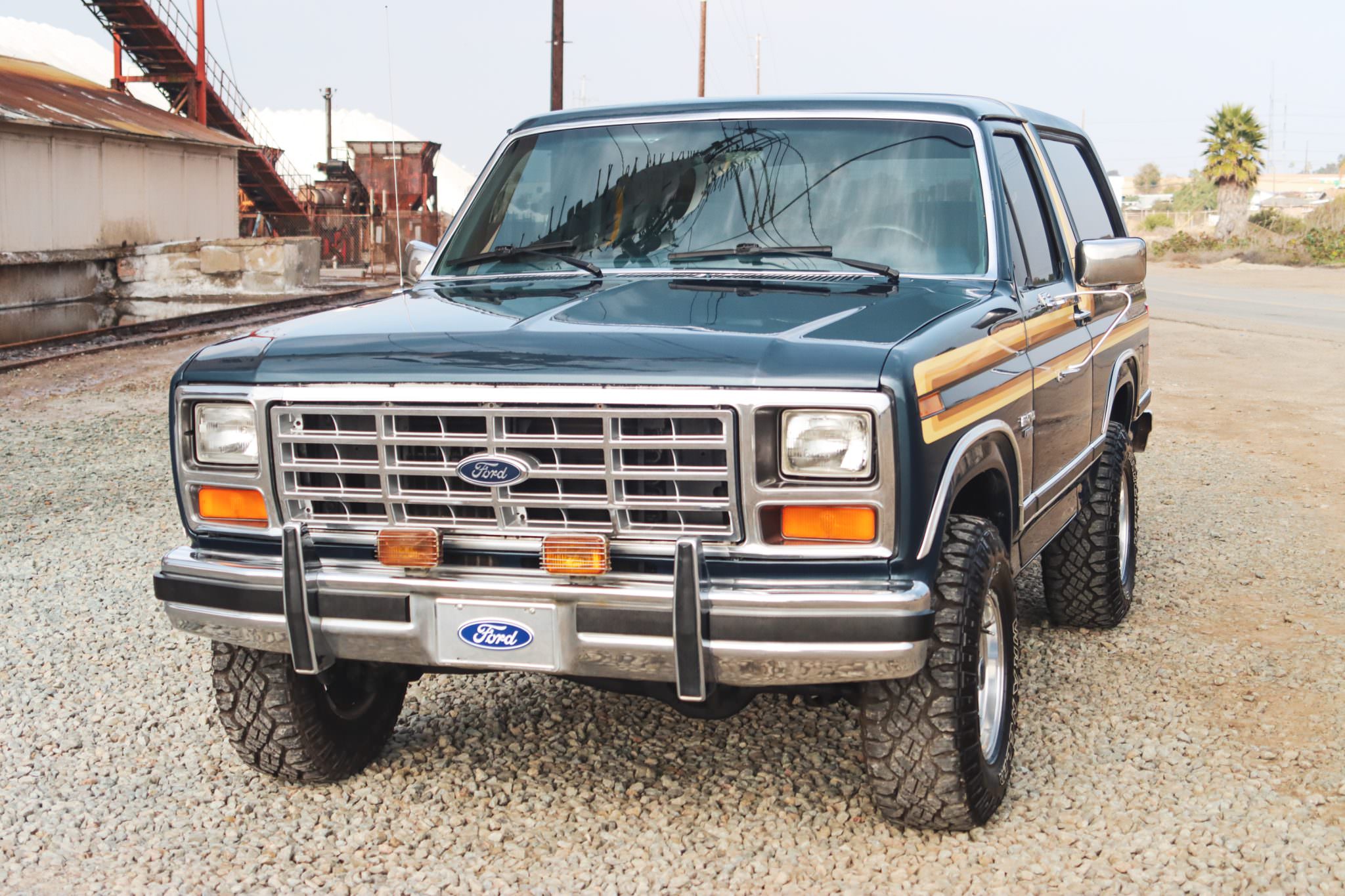
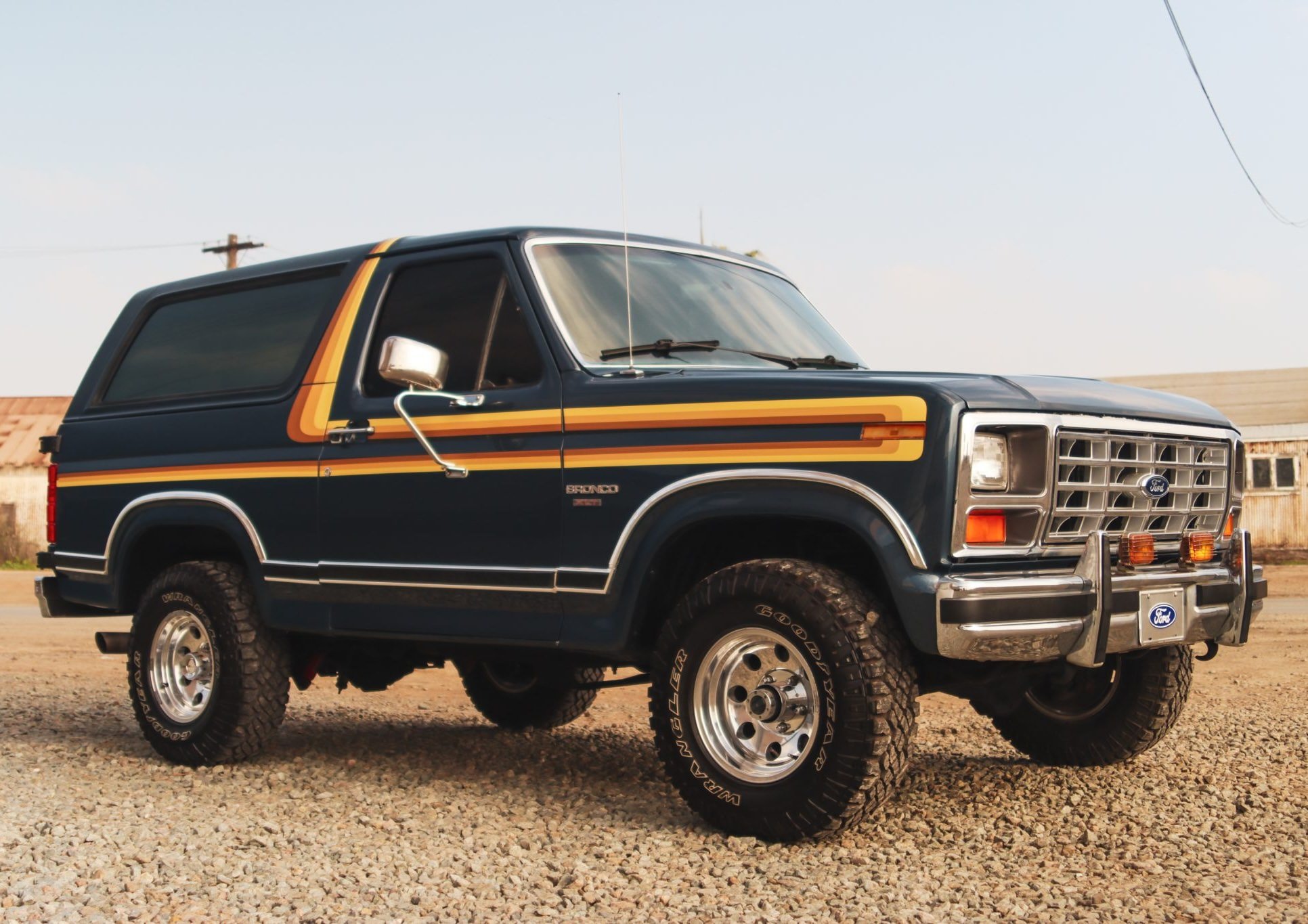
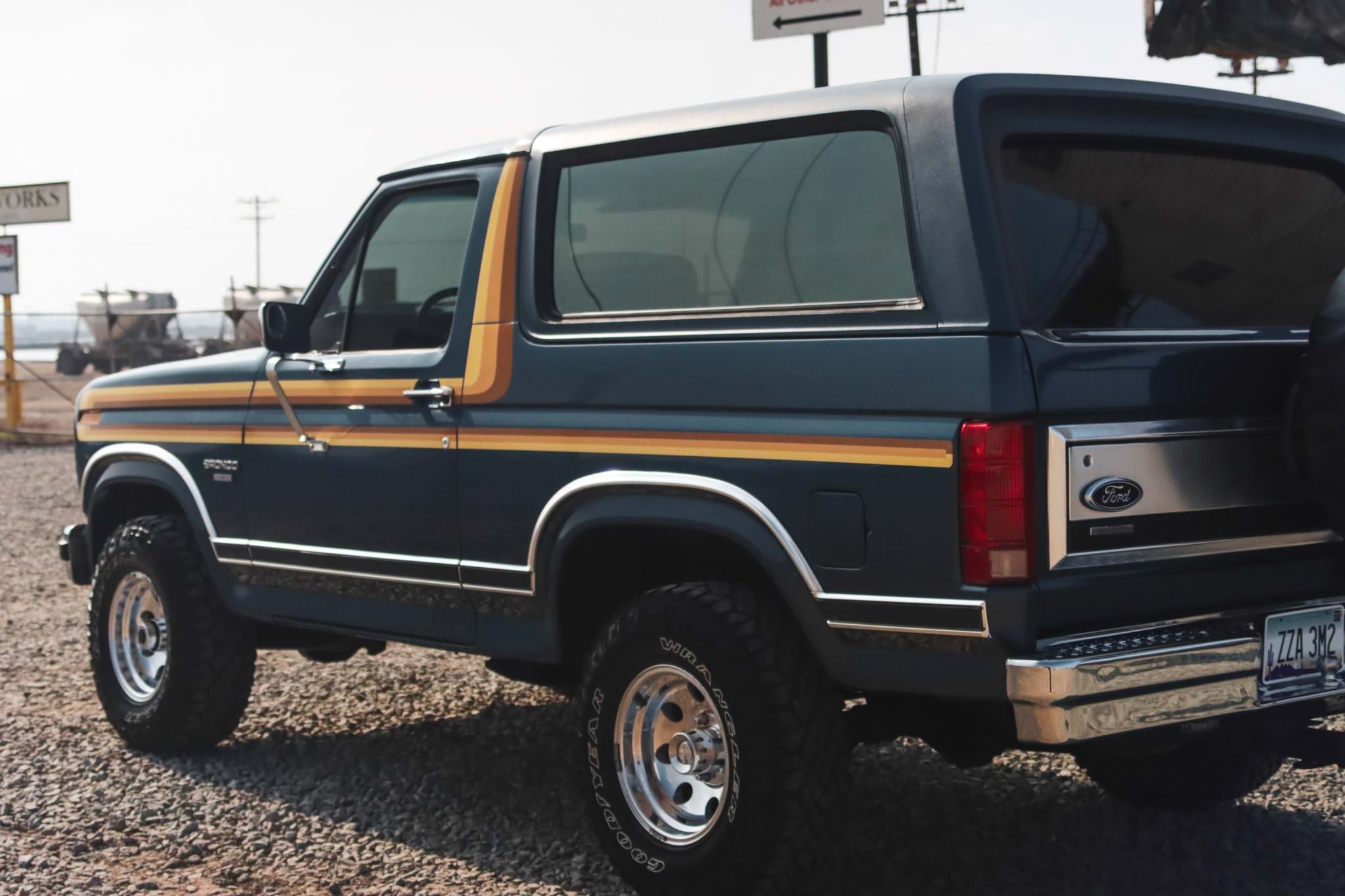
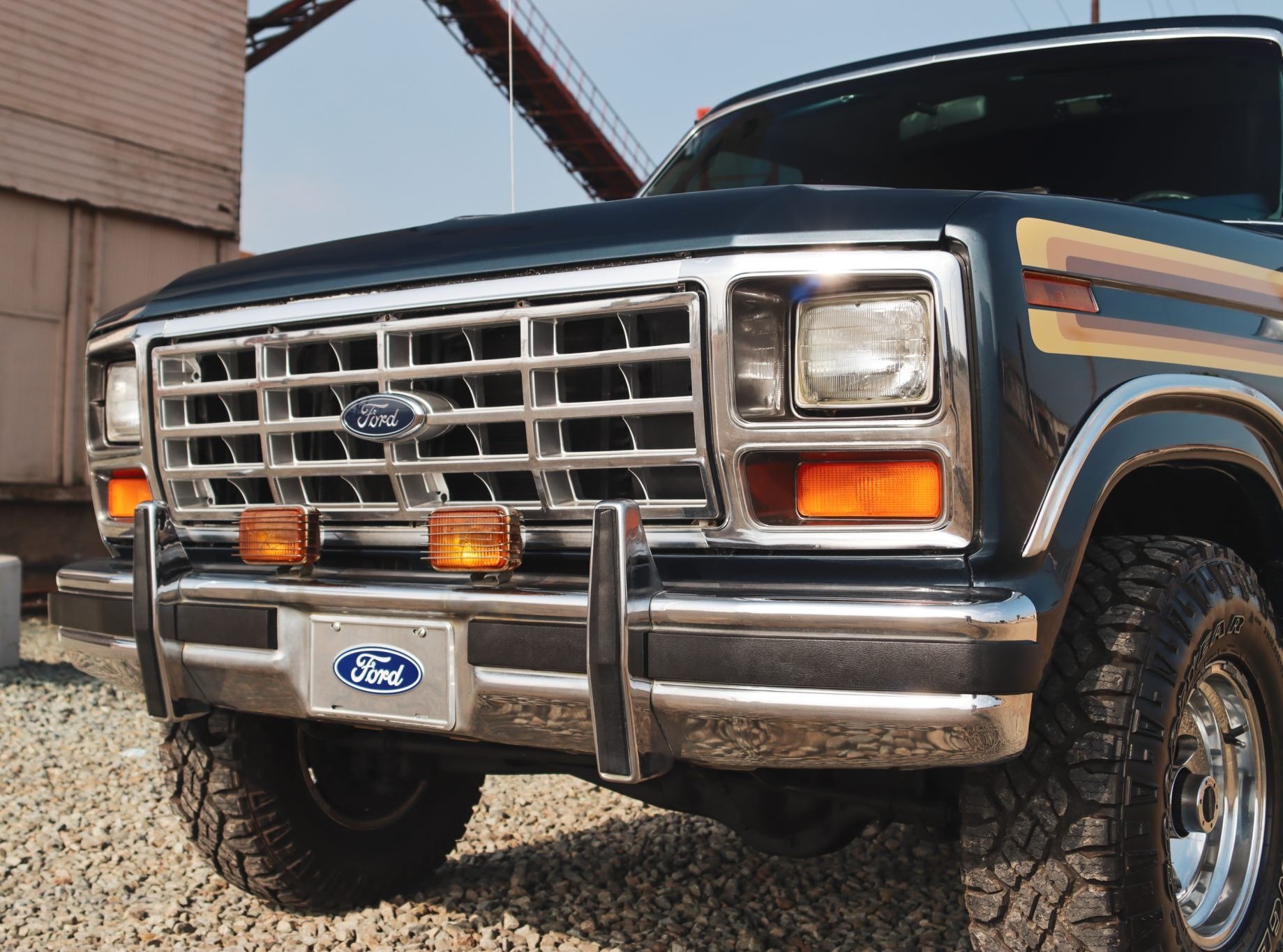
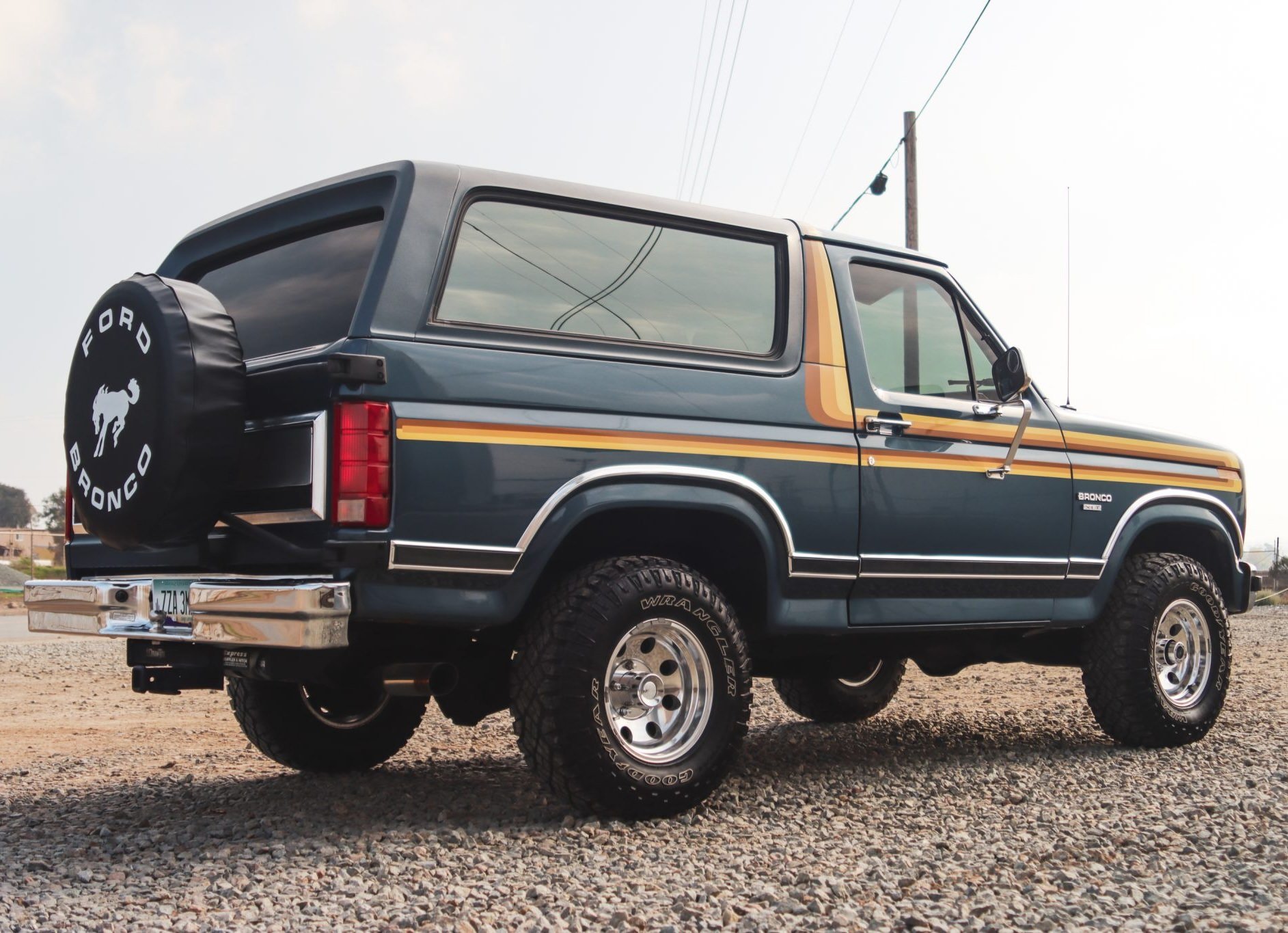
This is a time-capsule-like 1986 Ford “Bullnose” Bronco XLT powered by the 5.0 liter EFI V8 mated to the 4-speed automatic overdrive (AOD) transmission. It was recently refinished in Shadow Blue Metallic with period-correct “tri-color” decals.
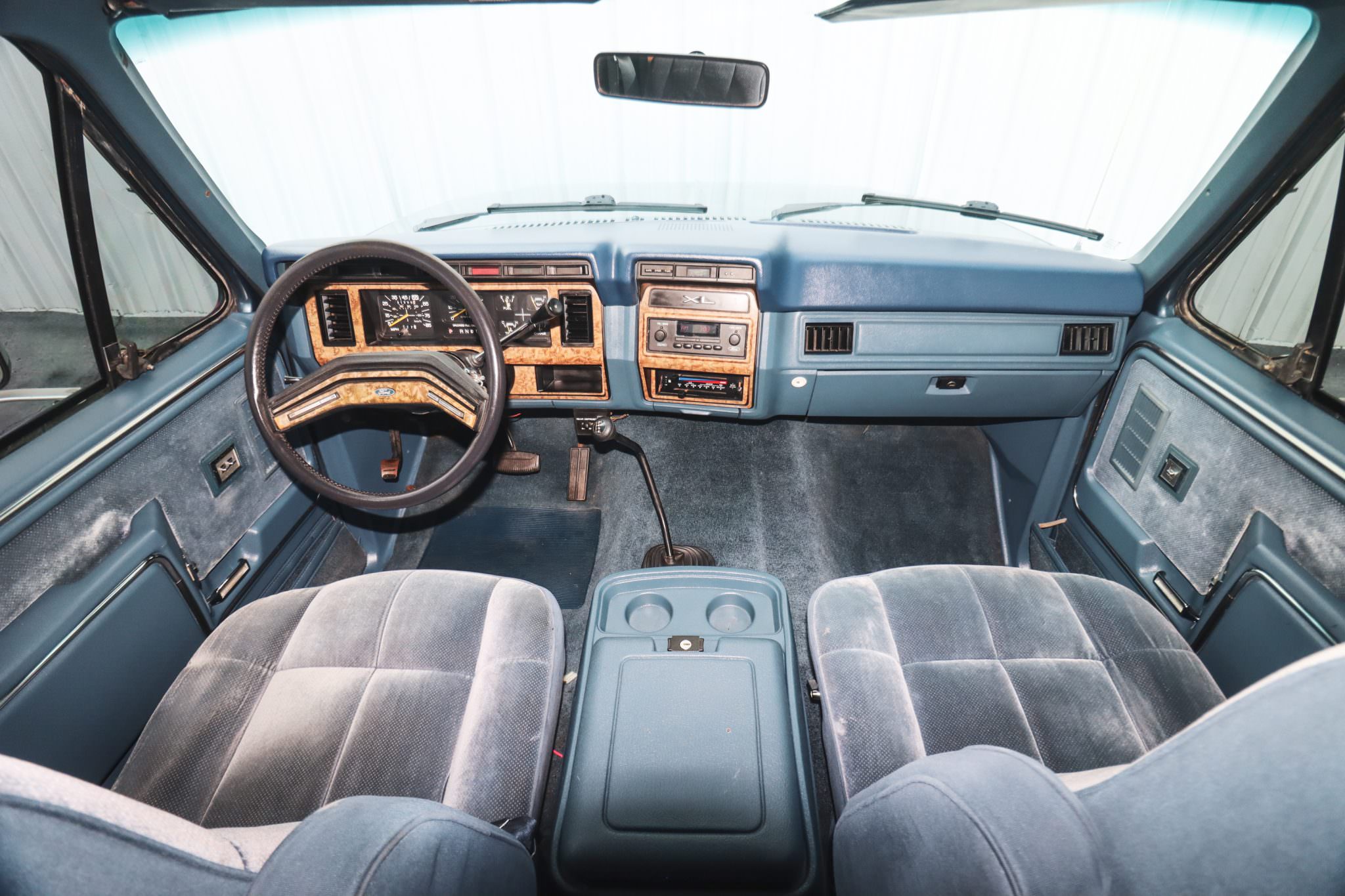
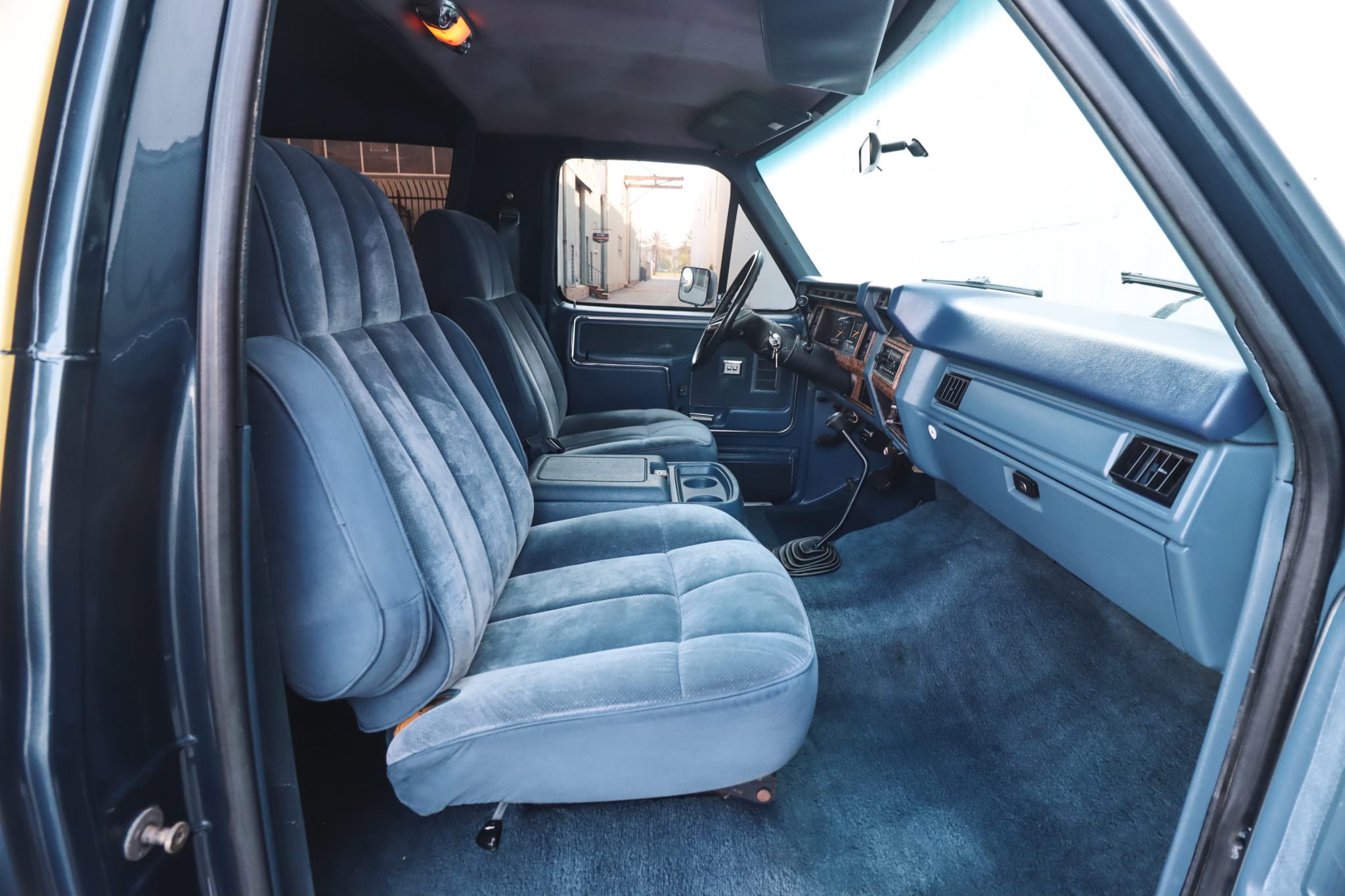
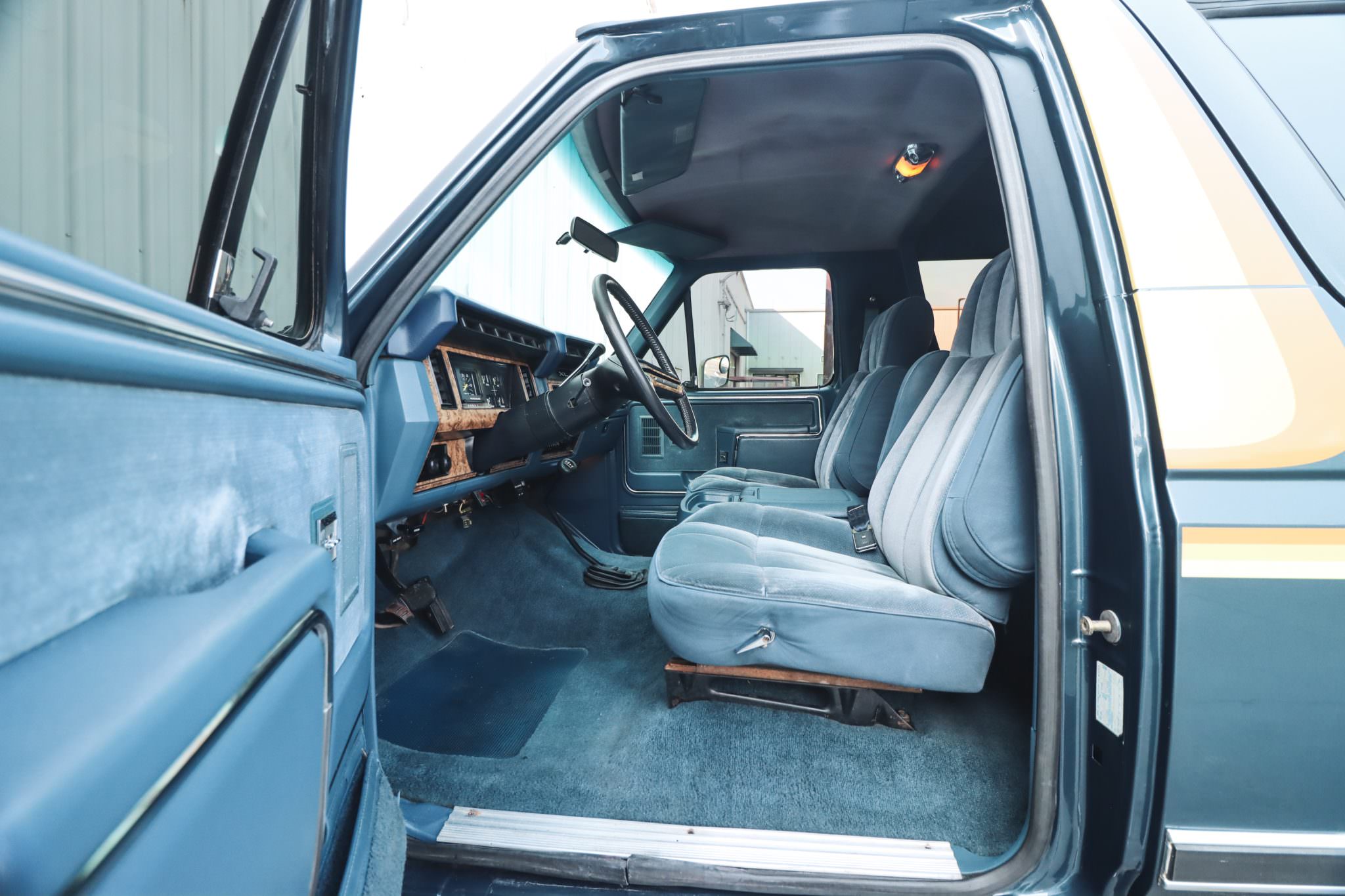
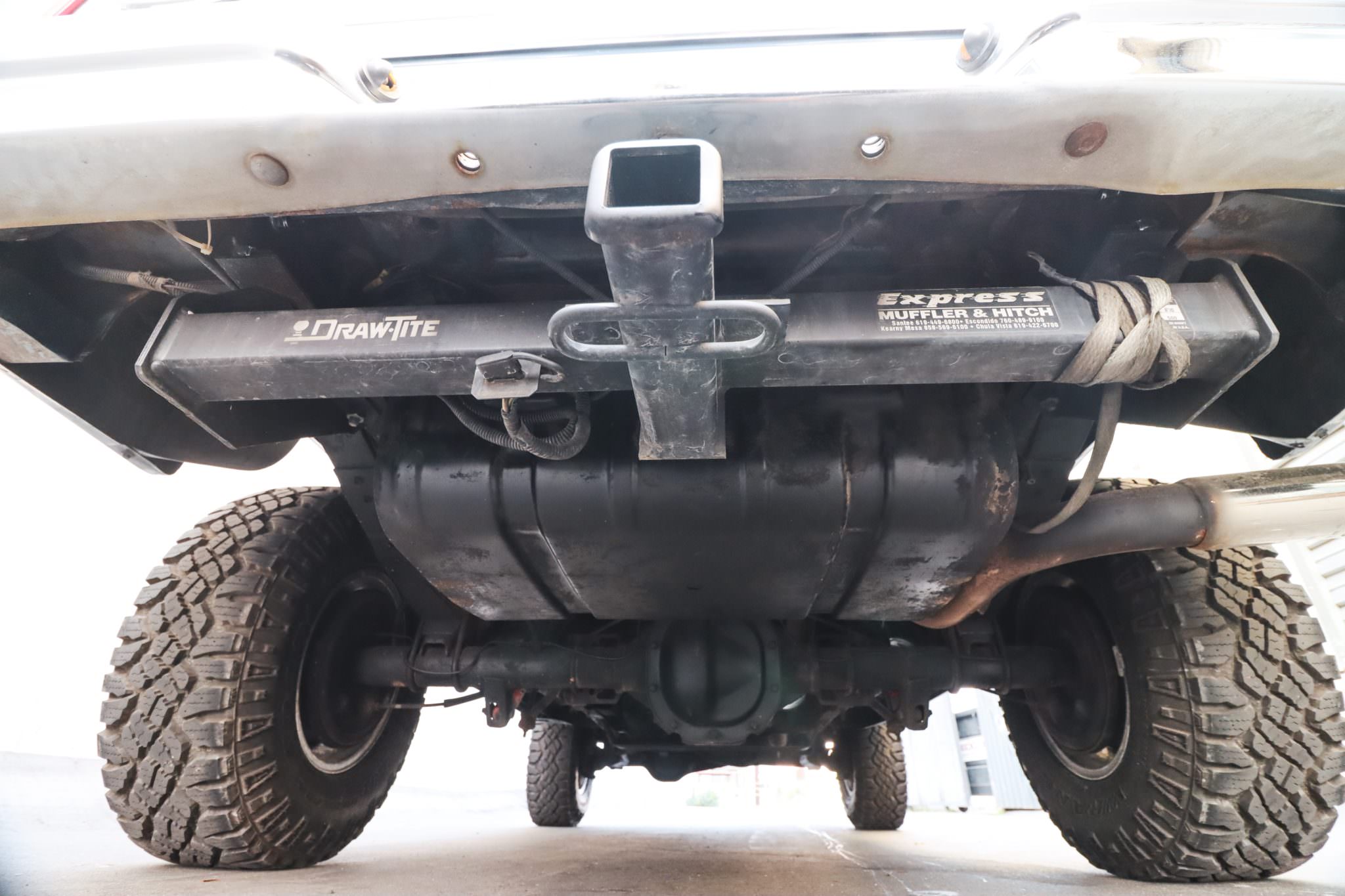
When it was ordered new it was optioned with air conditioning, cruise control, power windows, and an AM/FM stereo. It also has a tow receiver hitch, a power-operated tailgate window, 15″ eight-hole alloy wheels, and front captain’s chairs as well as a locking center console with twin cupholders.
Fast Facts: A 1986 Ford Bronco XLT
- This is a well-kept 1986 Ford Bronco XLT from the third-generation “Bullnose” era, powered by a fuel-injected 5.0 liter Windsor V8 and a 4-speed AOD (automatic overdrive) automatic. It was recently refinished in Shadow Blue Metallic with correct tri-color decals and presents as a largely stock, late-production example.
- When new, it was optioned with desirable options including air conditioning, cruise control, power windows, and an AM/FM stereo as part of the XLT package. Additional equipment includes a power tailgate window, tow receiver hitch, 15 inch eight-hole alloy wheels, front captain’s chairs, and a locking center console with dual integrated cupholders.
- The third-generation Bronco, built from 1980 to 1986, marked Ford’s shift toward a lighter, more efficient full-size SUV after the late-1970s fuel crisis. Using a shortened ladder frame from the F-150, it combined Twin Traction Beam front suspension, leaf-sprung rear axle, and standard four-wheel drive.
- This truck retains factory fuel injection, the removable hardtop, and stock ride height, riding on 31×10.50 tires. Rated at 180 bhp and 270 lb ft, the 5.0 liter V8 paired with the AOD offers good urban drivability and low-RPM highway cruising.
History Speedrun: The “Bullnose” Ford Bronco
The third-generation Ford Bronco was produced from 1980 through 1986, it represents one of the most important turning points in the model’s long history. Known informally as the “Bullnose” Bronco for its blunt grille and forward-leaning front fascia, this generation marked Ford’s response to rapidly changing market realities at the end of the 1970s – with fuel economy pressures, tightening emissions standards, and a growing expectation that full-size SUVs could serve double duty as work vehicles and daily transportation.
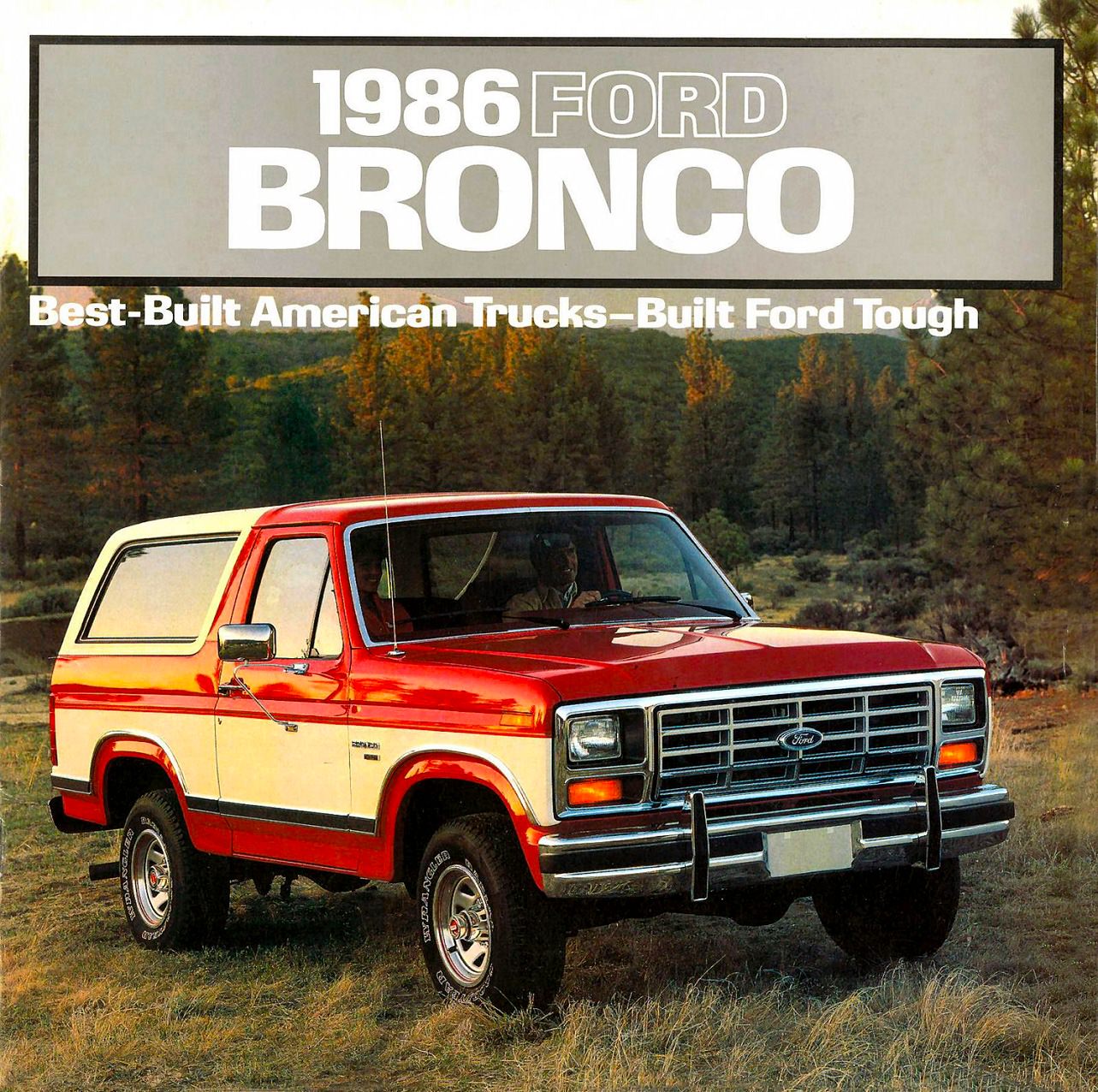
 The third-generation Ford Bronco was produced from 1980 through 1986, it represents one of the most important turning points in the model’s long history. Image courtesy of Ford.
To understand where the third generation sits in the Bronco family tree, it helps to briefly take a step back. The original first-gen Bronco, launched in 1966, was a compact, purpose-built off-roader aimed squarely at the Jeep CJ and International Scout.
Designed from the outset to be simple, with a short-wheelbase, and to be highly maneuverable, it established the Bronco name but it remained somewhat of a niche product. The second generation, introduced for 1978, was a radical departure from this original concept.
Built on the full-size Ford F-Series pickup truck platform, it was larger, heavier, and far more comfortable, positioning the Bronco as a direct competitor to the full-size Chevrolet Blazer and Dodge Ramcharger. The second generation Bronco was somewhat short-lived, lasting just two model years, but it set the template the Bronco would follow for the next decade and beyond.
The third-generation Bronco arrived for 1980 alongside Ford’s redesigned F-Series trucks. Although it retained the full-size format, the engineering brief emphasized weight reduction and efficiency. Ford reduced overall mass compared to the 1978/1979 model through revisions to the body and chassis, an overall weight reduction of around 300 lbs, slightly scaling the size of the vehicle down, and improving drivability as well as marginally improving fuel economy.
The result was a Bronco better aligned with the realities of the post-oil-crisis era, without abandoning the capability buyers expected and still offering a “full-size” Bronco.
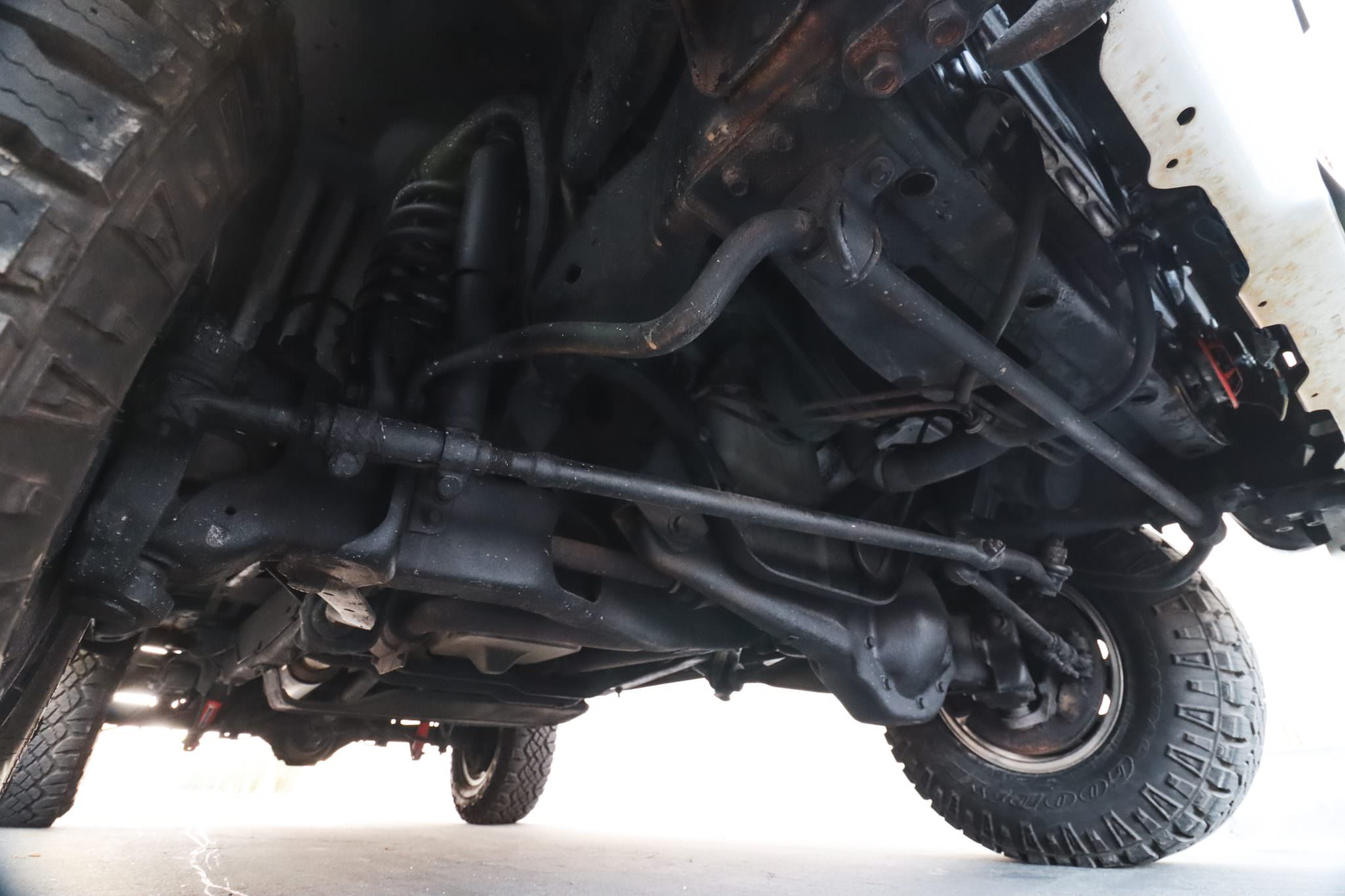
Underneath, the third-generation Bronco shared its ladder-frame chassis with the contemporary F-150. The front suspension was Ford’s familiar Twin Traction Beam setup, using coil springs, while the rear used semi-elliptic leaf springs and a live axle. This combination offered toughness and good articulation off-road, even if it lacked the on-road composure of later independent front end designs.
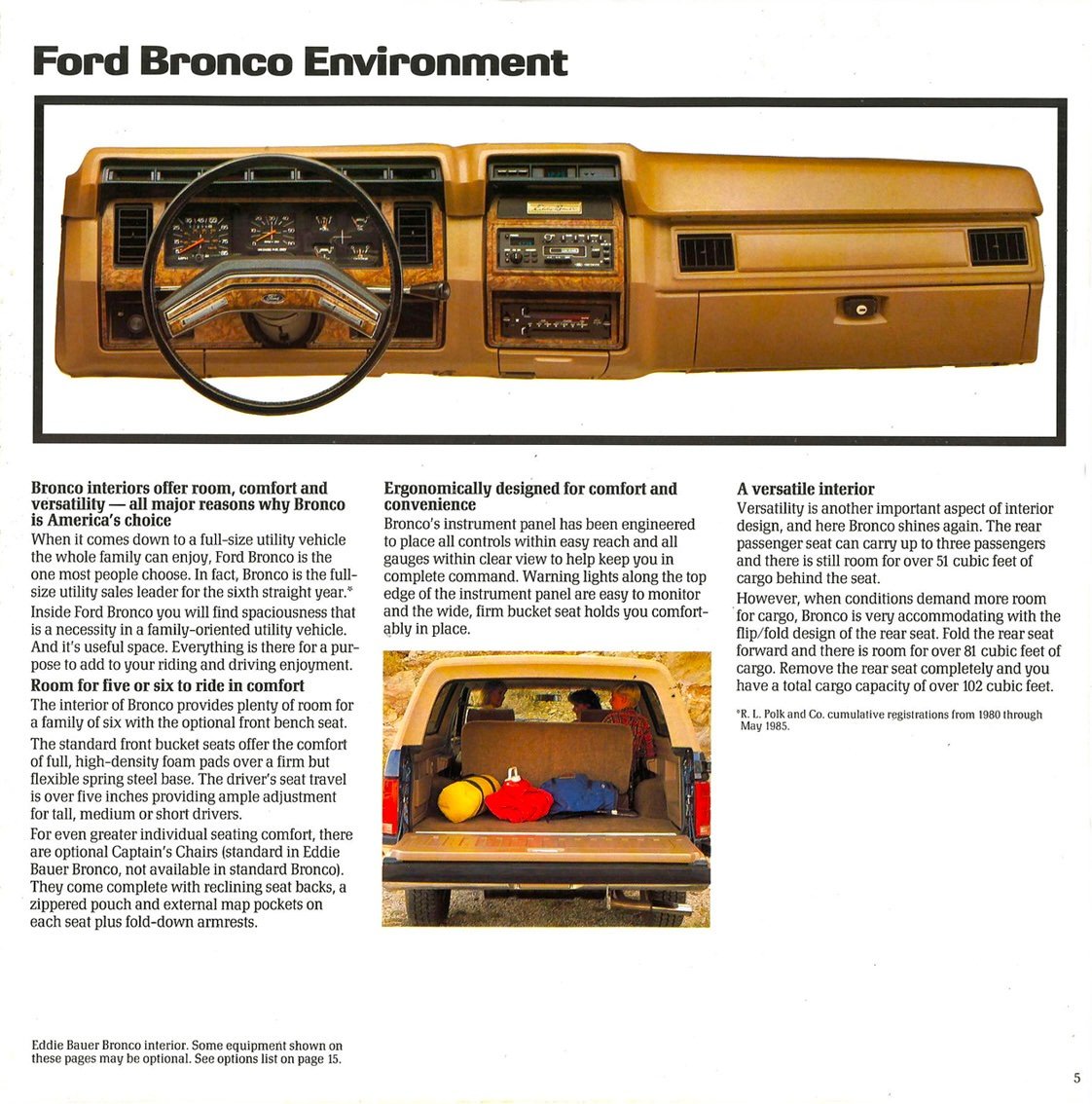
Trim levels and equipment were much the same as the F-150, base models were utilitarian, often paired with vinyl interiors and minimal brightwork. Higher trims, including the XLT and later the Eddie Bauer edition, introduced plusher interiors, upgraded upholstery, two-tone paint schemes, and additional convenience add-ons. Image courtesy of Ford.
Four-wheel drive was standard, with manual locking hubs common and automatic locking hubs offered as an option depending on year and specification. Some third-gen Broncos had quad front shock absorbers (two per side) as well as higher weight rated rear leaf springs as part of the heavy duty suspension package.
Powertrain options evolved significantly over the third generation Bronco’s lifespan. At launch, the base engine was Ford’s 300 cubic inch inline-six, widely respected for its reliability, towing friendly torque, and for its longevity. V8 options included the 302 cubic inch Windsor V8 and the 351M V8, with the 351 Windsor replacing the 351M later in production.
Output figures were modest by modern standards, generally ranging from roughly 115 to 210 bhp depending on engine and year, but torque was much higher, and was well suited to towing and low-speed off-road use. Transmissions included three and four-speed manuals, as well as Ford’s three-speed C6 and later four-speed AOD (automatic overdrive) automatic gearboxes.
Trim levels and equipment were much the same as the F-150, base models were utilitarian, often paired with vinyl interiors and minimal brightwork. Higher trims, including the XLT and later the Eddie Bauer edition, introduced plusher interiors, upgraded upholstery, two-tone paint schemes, and additional convenience add-ons.
The Eddie Bauer Bronco in particular played an important role in repositioning the model as a lifestyle vehicle rather than a purely functional truck, foreshadowing trends that would dominate the SUV market in the 1990s and beyond.
The most direct rival for the third-ten Bronco was the Chevrolet Blazer, which offered similar dimensions, V8 power, and removable rear tops. Dodge’s Ramcharger also competed in the same space.
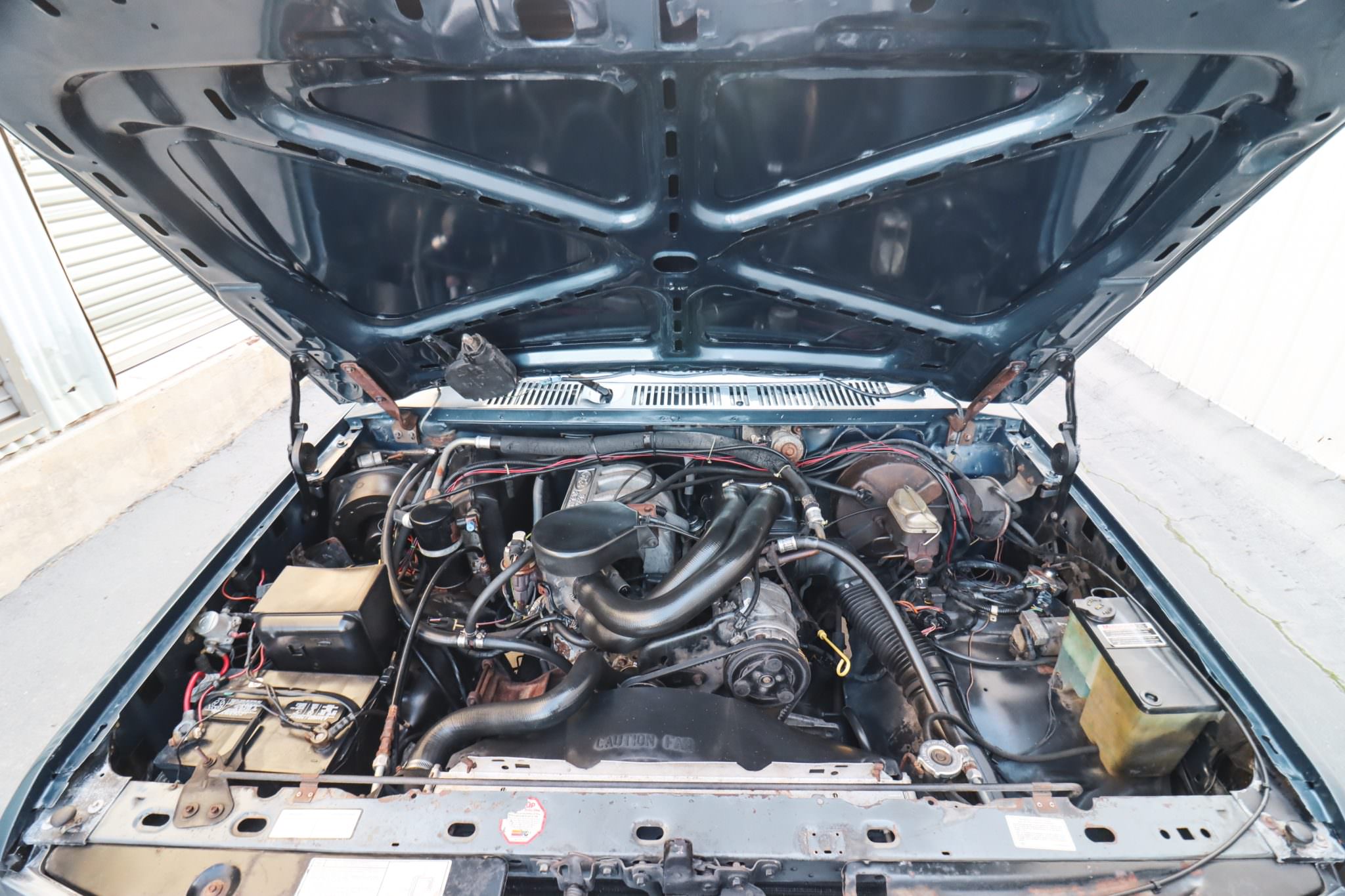
The final model year for the third-gun Bronco was 1986, a time when buyers were first offered the option of a fuel injected V8 – the 302 – which when paired with the 4-speed automatic overdrive (AOD) transmission offered both the best towing capacity and the best highway fuel efficiency of any of that year’s Broncos.
Against these, the Bronco remained a best-seller, taking full advantage of Ford’s huge national dealer network, with period marketing literature making a point to extol the virtues of the Bronco’s independent front suspension, opulent interior options like twin front captain’s chairs, a center lockbox with cupholders, and more common options like cruise control, air conditioning, and an AM/FM/cassette player.
The final model year for the third-gun Bronco was 1986, a time when buyers were first offered the option of a fuel injected V8 – the 302 – which when paired with the 4-speed automatic overdrive (AOD) transmission offered both the best towing capacity and the best highway fuel efficiency of any of that year’s Broncos.
Sales remained healthy throughout the early and mid-1980s, particularly in North America, where demand for full-size four-wheel drives remained strong (and still remains strong today). By the time production ended in 1986, the third-generation Bronco had firmly established the full-size Bronco formula.
It had bridged the gap between the raw, transitional second generation and the more refined fourth generation that followed in 1987, which would introduce fuel injection across the board and further improvements in ride and drivability.
Today, the third-generation Broncos occupy a sweet spot for enthusiasts – they retain the simplicity and mechanical accessibility of older trucks while offering more comfort and parts availability than earlier models. The Bullnose front-end is widely loved for its rugged good looks, and as a result values have been appreciating in recent years.
Today, the third-generation Broncos occupy a sweet spot for enthusiasts – they retain the simplicity and mechanical accessibility of older trucks while offering more comfort and parts availability than earlier models. The Bullnose front-end is widely loved for its rugged good looks, and as a result values have been appreciating in recent years.
The 1986 Ford Bronco XLT Shown Here
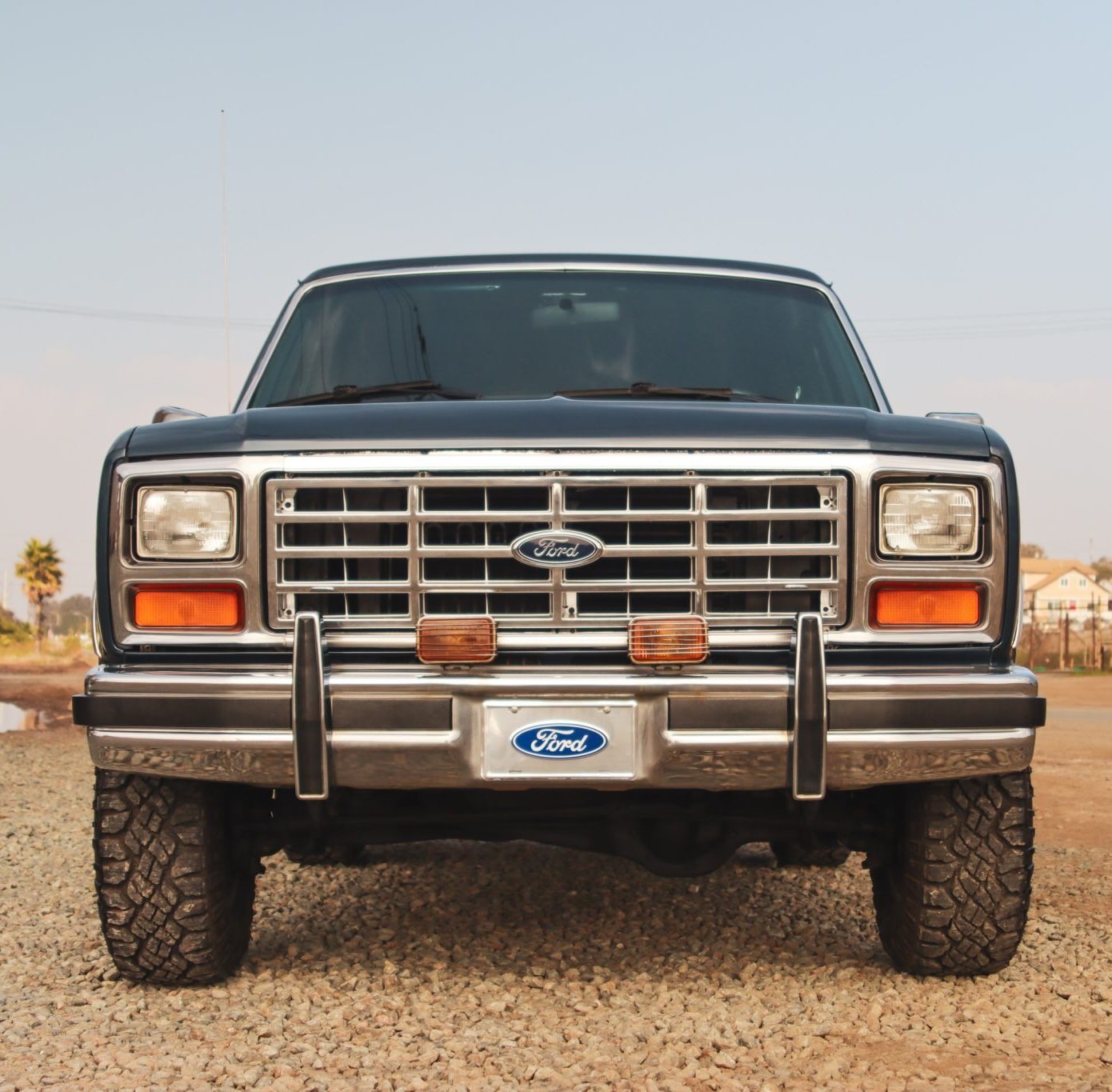
This 1986 Ford Bronco XLT 4×4 presents as a largely stock, late-third-generation example of the Bullnose Bronco finished in Dark Shadow Blue Metallic with period-correct tri-color decals over a blue cloth interior.
Power comes from the factory fuel-injected 5.0 liter Windsor V8, rated at 180 bhp and 270 lb ft of torque, paired with a four-speed automatic overdrive transmission and a dual-range transfer case. The truck was purchased by the current seller in 2025 and is offered in California with an accident-free Carfax report and a clean Arizona title.
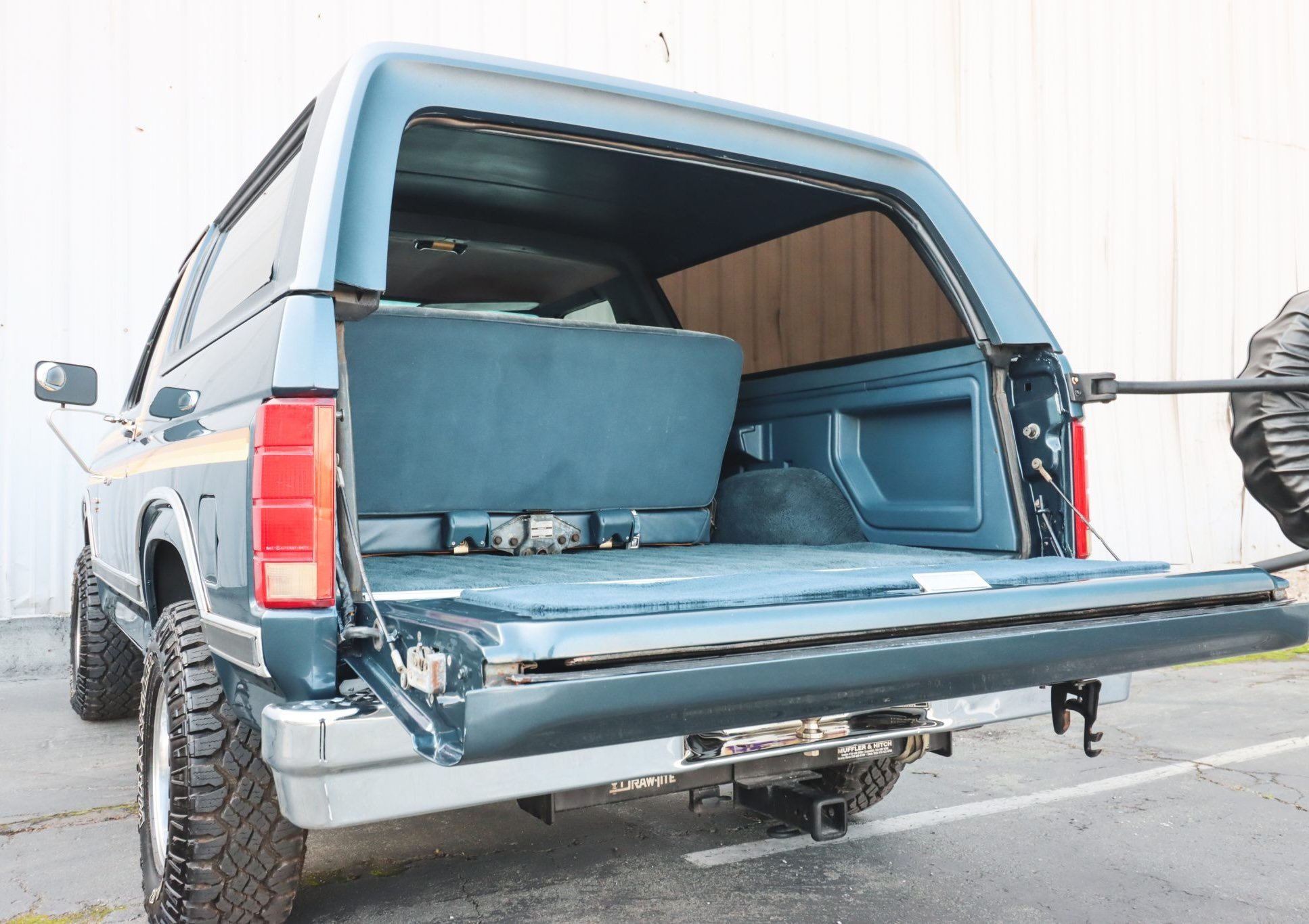
The exterior was repainted in September 2025 and retains the removable, body-color hardtop and drop-down tailgate with power window. Additional exterior details include yellow auxiliary driving lights, window tint, a receiver hitch, and a swing-away spare tire carrier. The ride height remains close to factory, it now sits on 15 inch eight-hole alloy wheels shod with 31×10.50 Goodyear Wrangler DuraTrac tires.
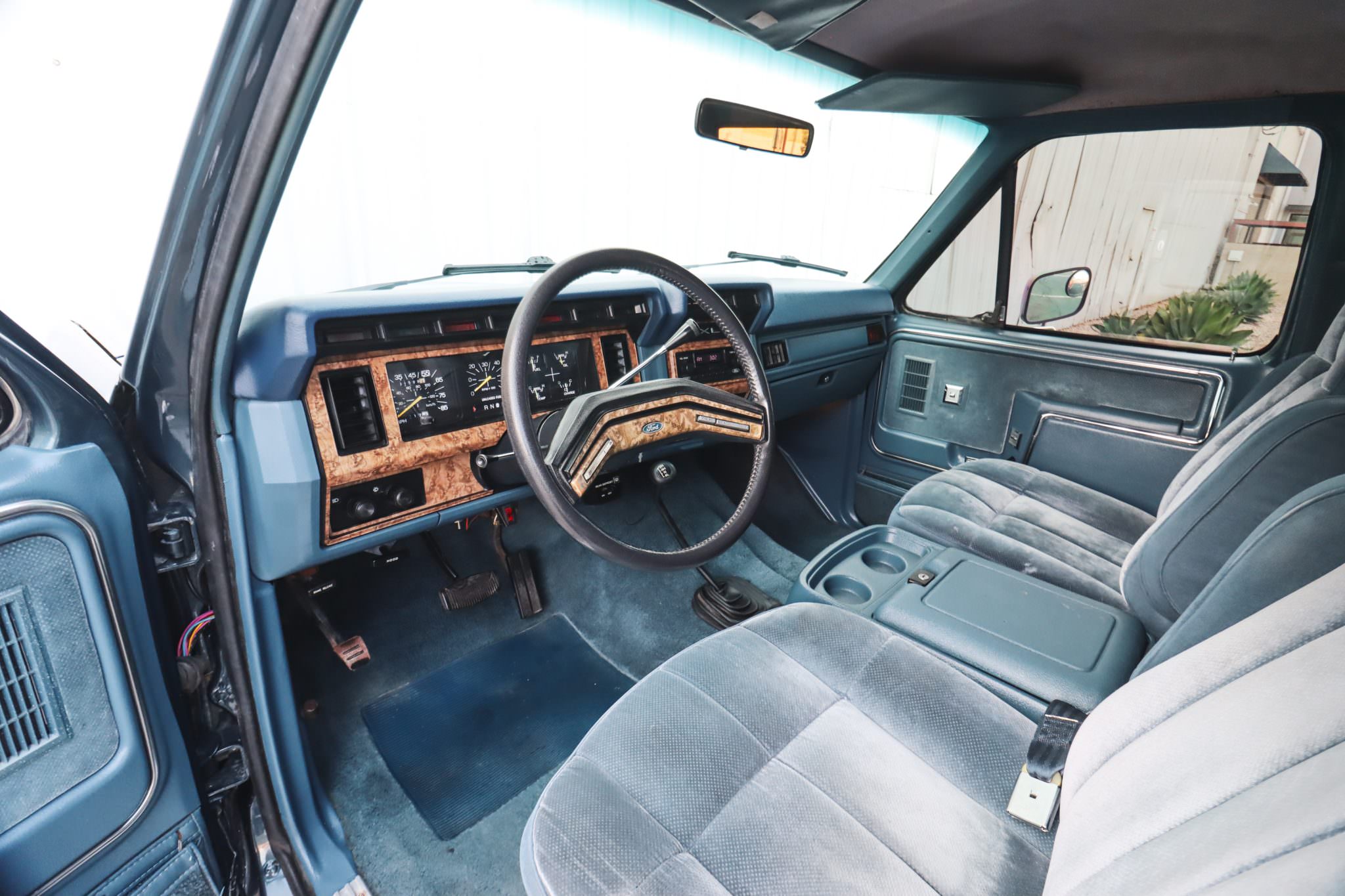
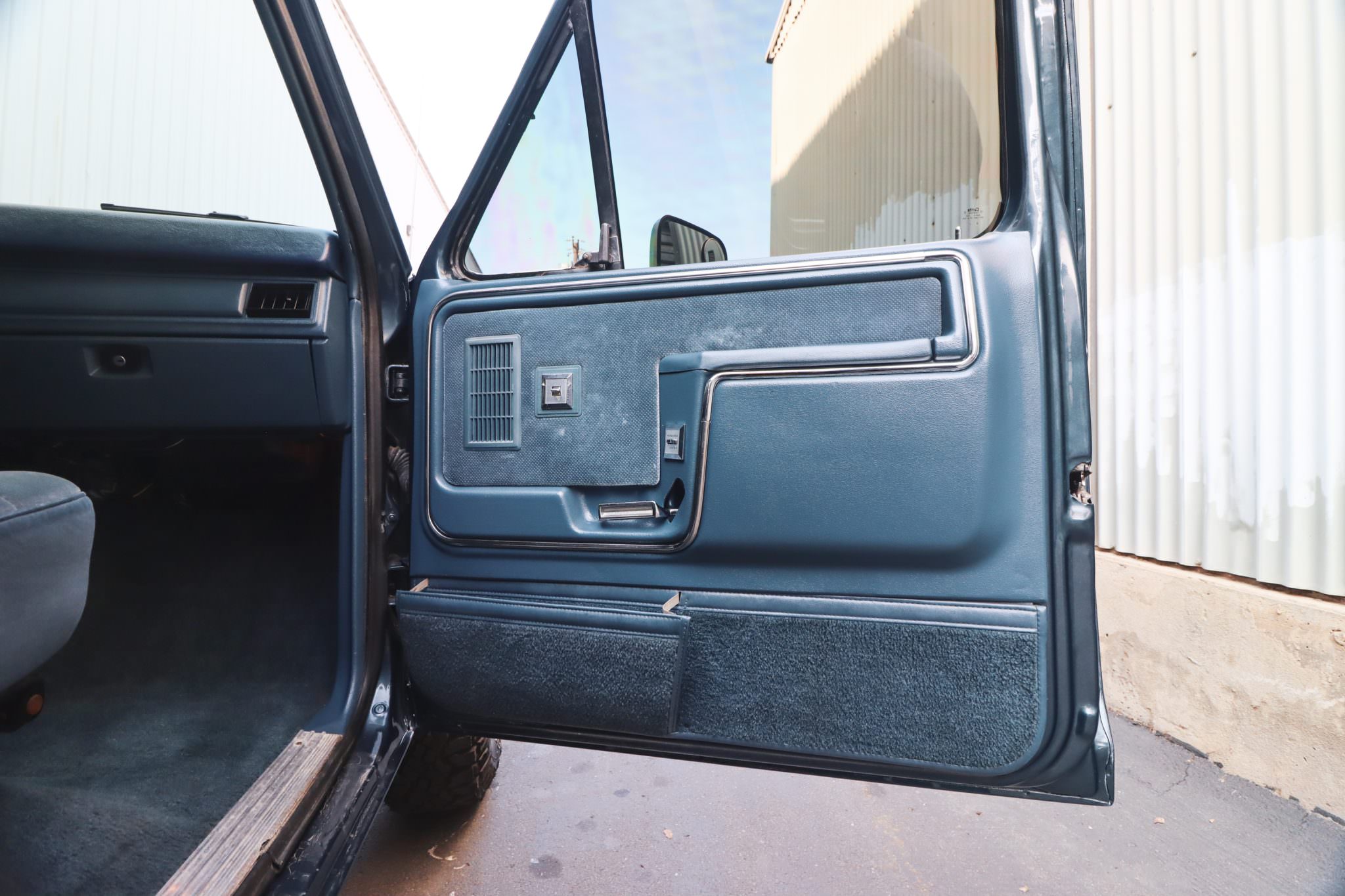
Inside, the cabin has blue cloth captain’s chairs up front with folding armrests and a removable rear bench, complemented by woodgrain dashboard trim. Equipment is on point for the XLT trim level and includes air conditioning, cruise control, power windows, a locking center console, and an AM/FM stereo with digital clock.
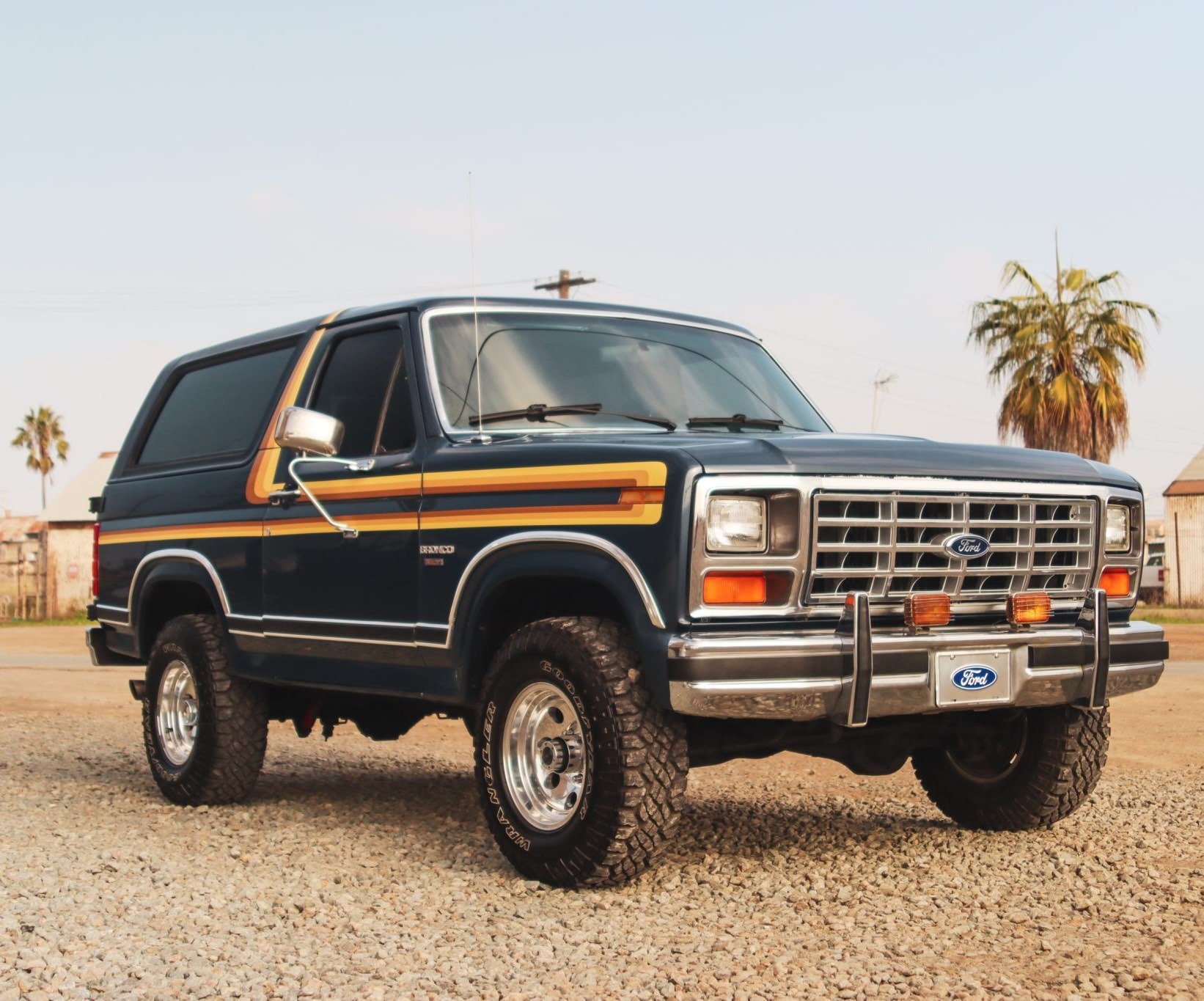
This 1986 Ford Bronco XLT 4×4 presents as a largely stock, late-third-generation example of the Bullnose Bronco finished in Dark Shadow Blue Metallic with period-correct tri-color decals over a blue cloth interior.
Mechanically, the Bronco retains its Twin Traction Beam independent front suspension with manually locking hubs, front disc, and rear drum brakes, and a recently refinished chassis. The seller reports recent service ahead of the sale, including an oil change, fuel tank cleaning, and replacement of the fuel pump and spark plugs.
It’s now being offered for sale out of Coronado, California with an accident-free Carfax report and a clean Arizona title in the seller’s name. If you’d like to read more about it or register to bid you can visit the listing here.


Images courtesy of Bring a Trailer

Articles that Ben Branch has written have been covered on CNN, Popular Mechanics, Smithsonian Magazine, Road & Track Magazine, the official Pinterest blog, the official eBay Motors blog, BuzzFeed, Autoweek Magazine, Wired Magazine, Autoblog, Gear Patrol, Jalopnik, The Verge, and many more.
Silodrome was founded by Ben back in 2010, in the years since the site has grown to become a world leader in the alternative and vintage motoring sector, with well over a million monthly readers from around the world and many hundreds of thousands of followers on social media.