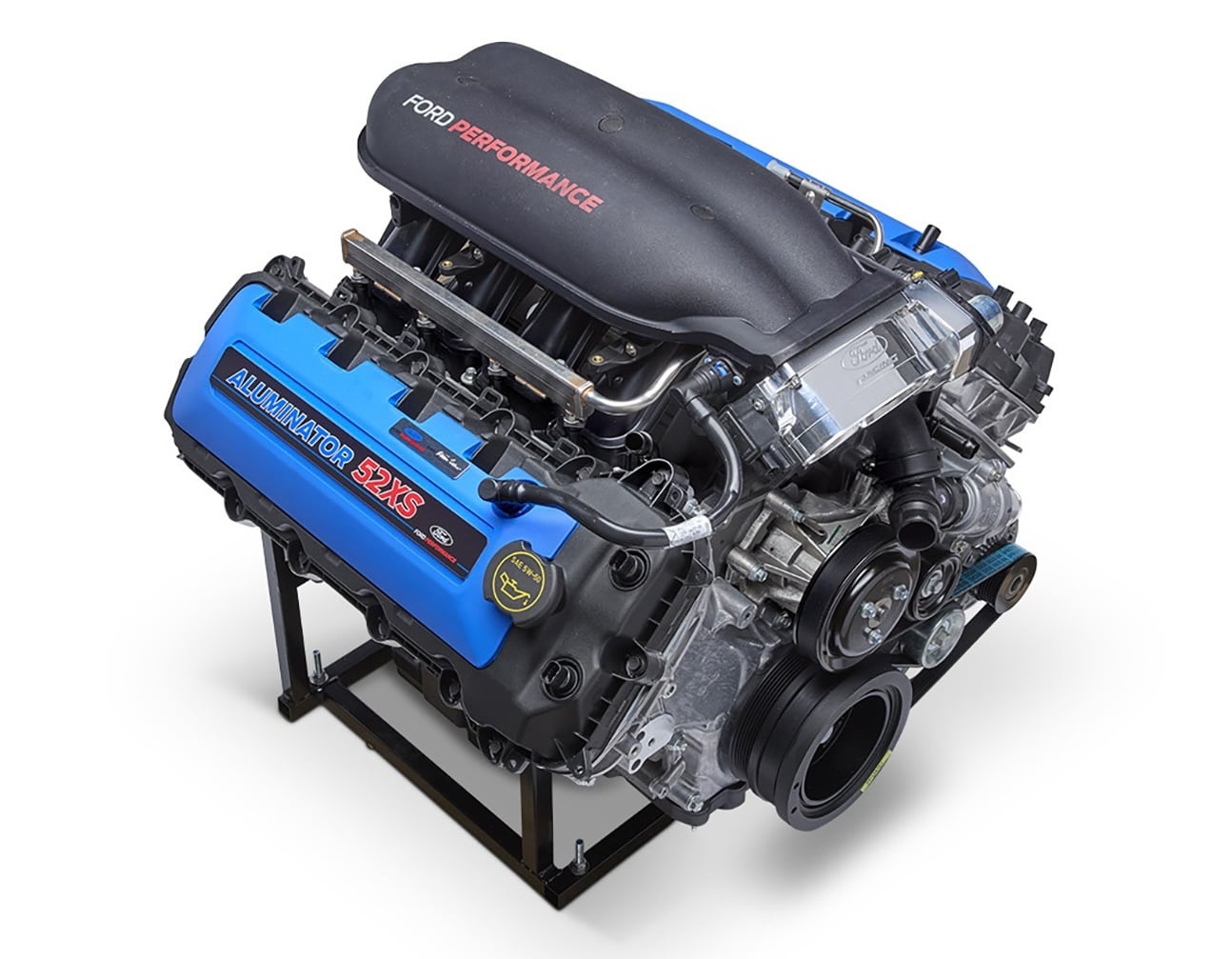
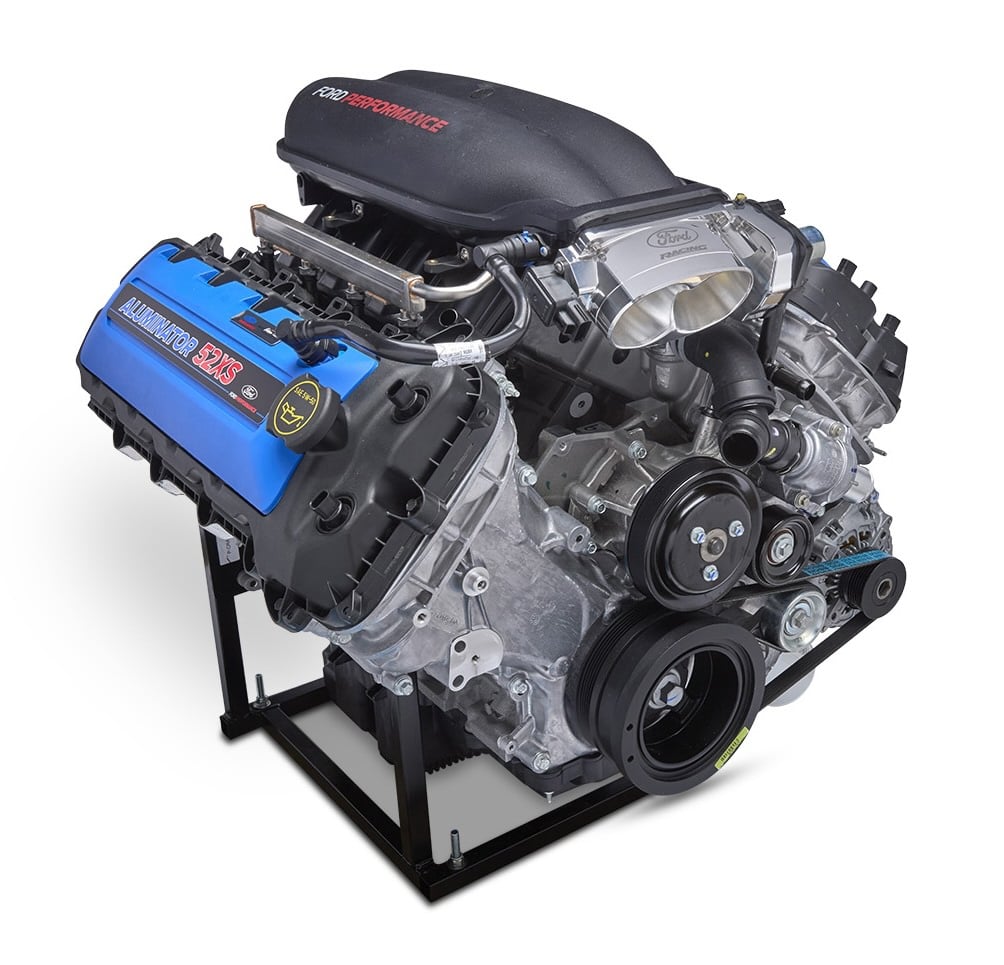
This is the Ford 5.2 XS Aluminator crate engine, it’s a 580 horsepower V8 with a displacement of 5.2 liters, and it’s made up of a slew of high-end parts used in Ford’s modern Shelby GT500 and GT350s.
The 5.2 XS is the latest version of the Aluminator series, so named due to their aluminum blocks and heads, and for the fact that many of their internal parts are made from high-tech aluminum alloys.
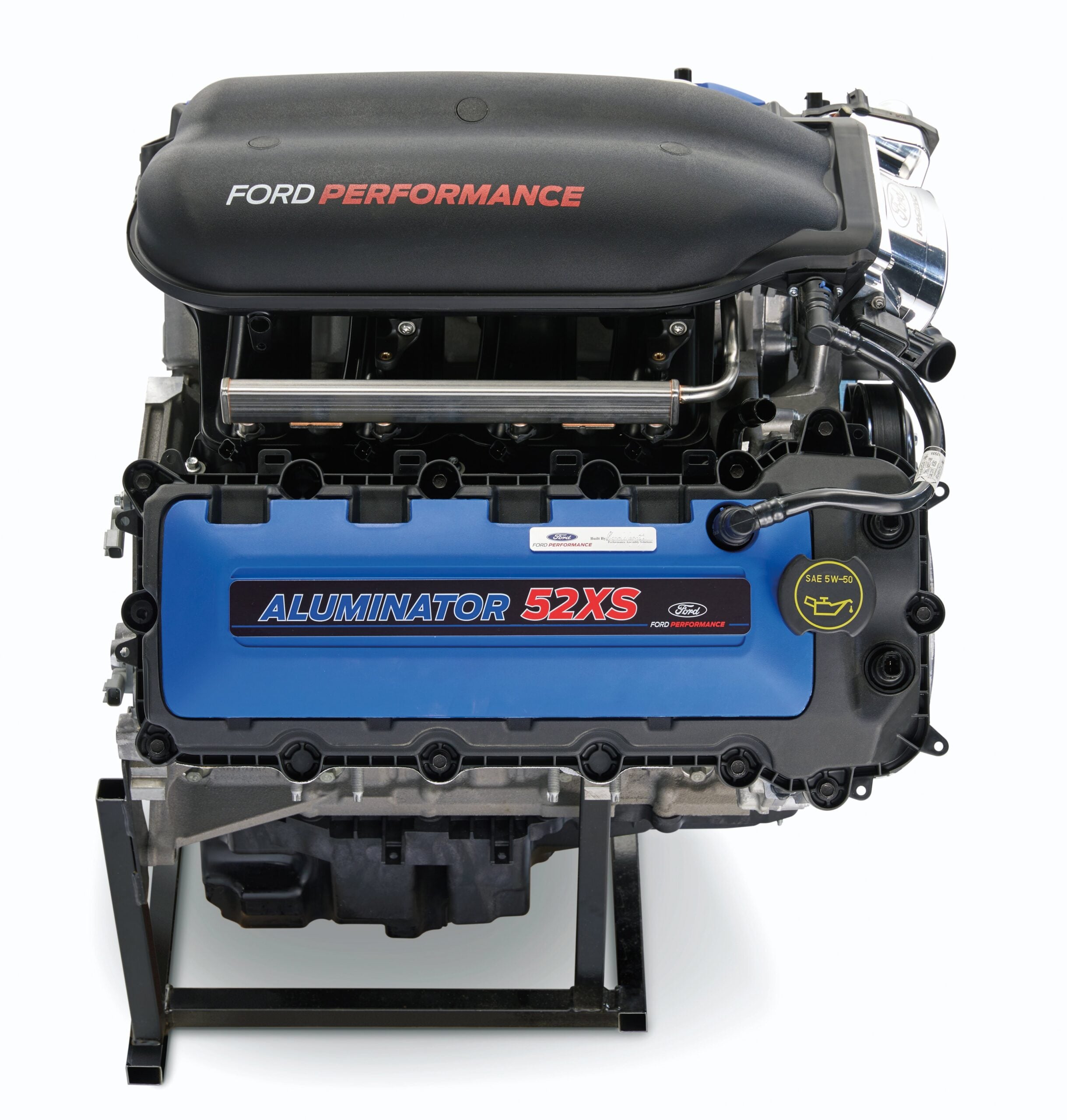
 This is the Ford 5.2 XS Aluminator crate engine, it’s a 580 horsepower V8 with a displacement of 5.2 liters, and it’s made up of a slew of high-end parts used in Ford’s modern Shelby GT500 and GT350s.
History Speedrun: The Ford Aluminator V8
Ford Racing debuted the “Aluminator” engine at the SEMA Show in Las Vegas in October of 2007. It was a new line of 4.6 liter aluminum crate engines sold as long blocks and short blocks, with short blocks starting at $4,500 USD.
The Aluminator name has since followed Ford’s overhead cam V8 from the 4.6 liter Modular engine to the 5.0 liter Coyote, and then to a 5.2 liter cross-plane relative of the Shelby GT350’s Voodoo V8. Every version of the Aluminator has been sold as a crate engine through Ford’s parts catalog and none have ever been fitted to a production car.
The Original 4.6 Liter Aluminator
Ford’s Modular V8 entered production for the 1991 model year, and the first Aluminators were built around the aluminum 4.6 liter block from the Mustang GT, a version Ford said was stronger than any of their previous production 4.6 aluminum blocks. The naturally aspirated DOHC long block displaced 281 cubic inches (4.6 liters) and had a 10:1 compression ratio.
It had a forged steel crankshaft, forged H-beam rods, and forged pistons sitting under 2003-2004 Mustang Cobra heads and cams. The supercharged Cobra switched to a cast-iron block for 2003, and a supercharged-application Aluminator gave 2003-2004 Cobra owners an aluminum-block alternative with a lower 8.5:1 compression ratio. A 9.8:1 compression short block then followed on for the three-valve 2005-2010 Mustang GT.
Factory Five Racing lent Ford one of its Challenge Car racers as the test mule for a 4.6 Aluminator, which the company rated at more than 650 bhp.
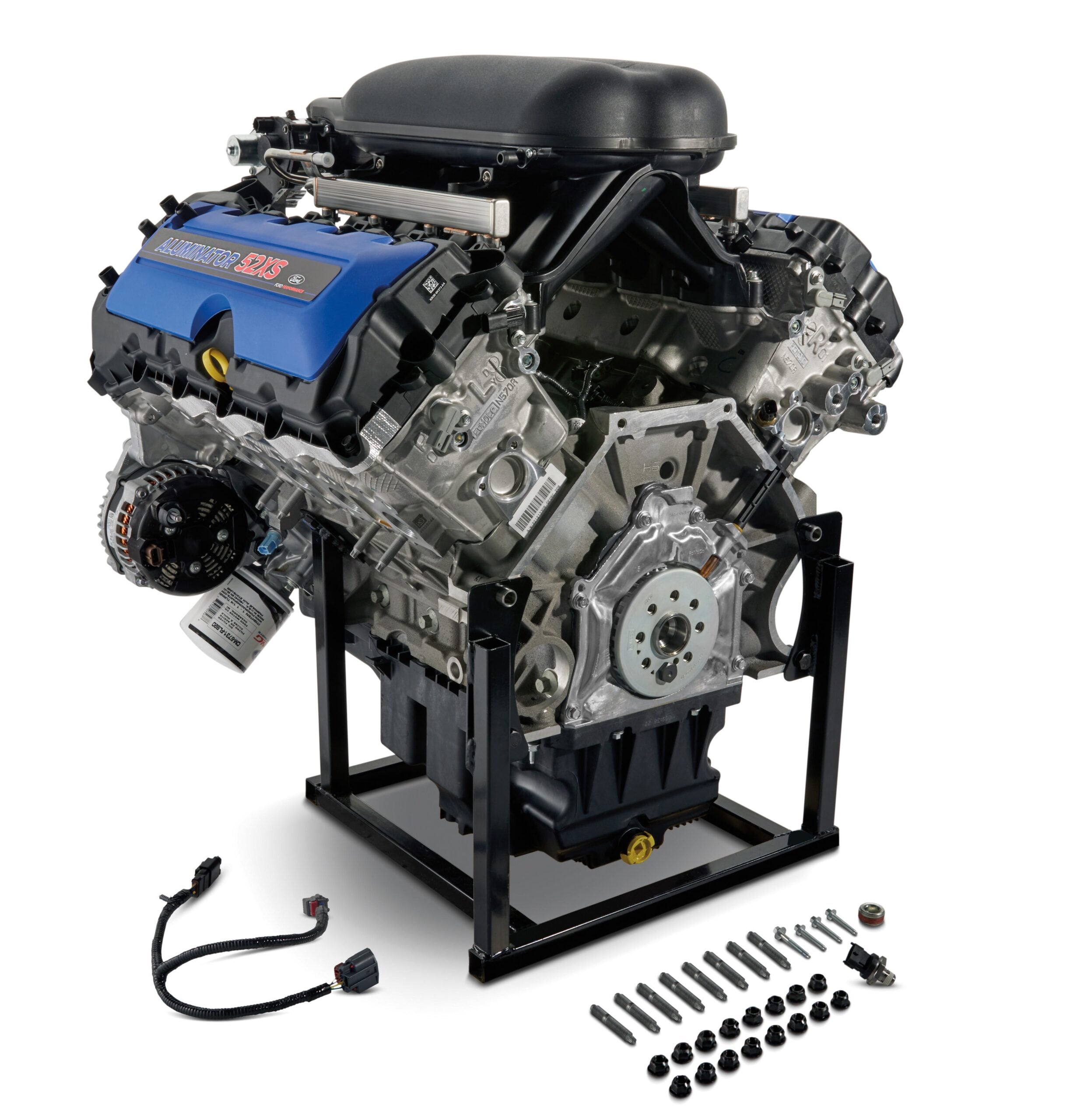
The 5.2 XS is the latest version of the Aluminator series, so named due to their aluminum blocks and heads, and for the fact that many of their internal parts are made from high-tech aluminum alloys.
The Arrival Of The Coyote Aluminators
The 5.0 liter Coyote V8 debuted in the 2011 Mustang GT, with 412 bhp and 390 lb ft, and the Aluminator engine family moved with it. The first Coyote versions came in two forms, the N/A one had Mahle forged pistons at the factory 11.0:1 compression ratio, and the S/C version ran at 9.5:1 for forced induction.
Performance Assembly Solutions in Livonia, Michigan (which also built Ford’s Mustang Cobra Jet drag engines) stripped down factory-fresh Coyotes and rebuilt them.
At the 2012 Performance Racing Industry Show, Ford added the Aluminator XS to the range. It was pitched at racers who had missed out on the limited-production 2013 Mustang Cobra Jet, whose naturally aspirated engine it was closely based on. CNC-ported Boss 302 heads, the Cobra Jet’s short-runner intake and dual 65 mm throttle body, and 13 mm-lift camshafts gave more than 500 bhp and a 7,700 rpm redline capability.
The third generation version of the engine starts out as an M50C crate engine from Ford’s Essex engine plant. Its Gen 3 block has 93 mm bores and the same plasma-transferred wire arc bore coating as the GT500’s supercharged Predator V8.
The production pistons and rods come out. In go Mahle forged pistons at 12.0:1 and Manley forged H-beam rods, a design also used in the 2003-2004 Cobra and the 2006 Ford GT. Steel ratcheting Boss-type chain tensioners replaced the production aluminum units, and GT500 head bolts are fitted.
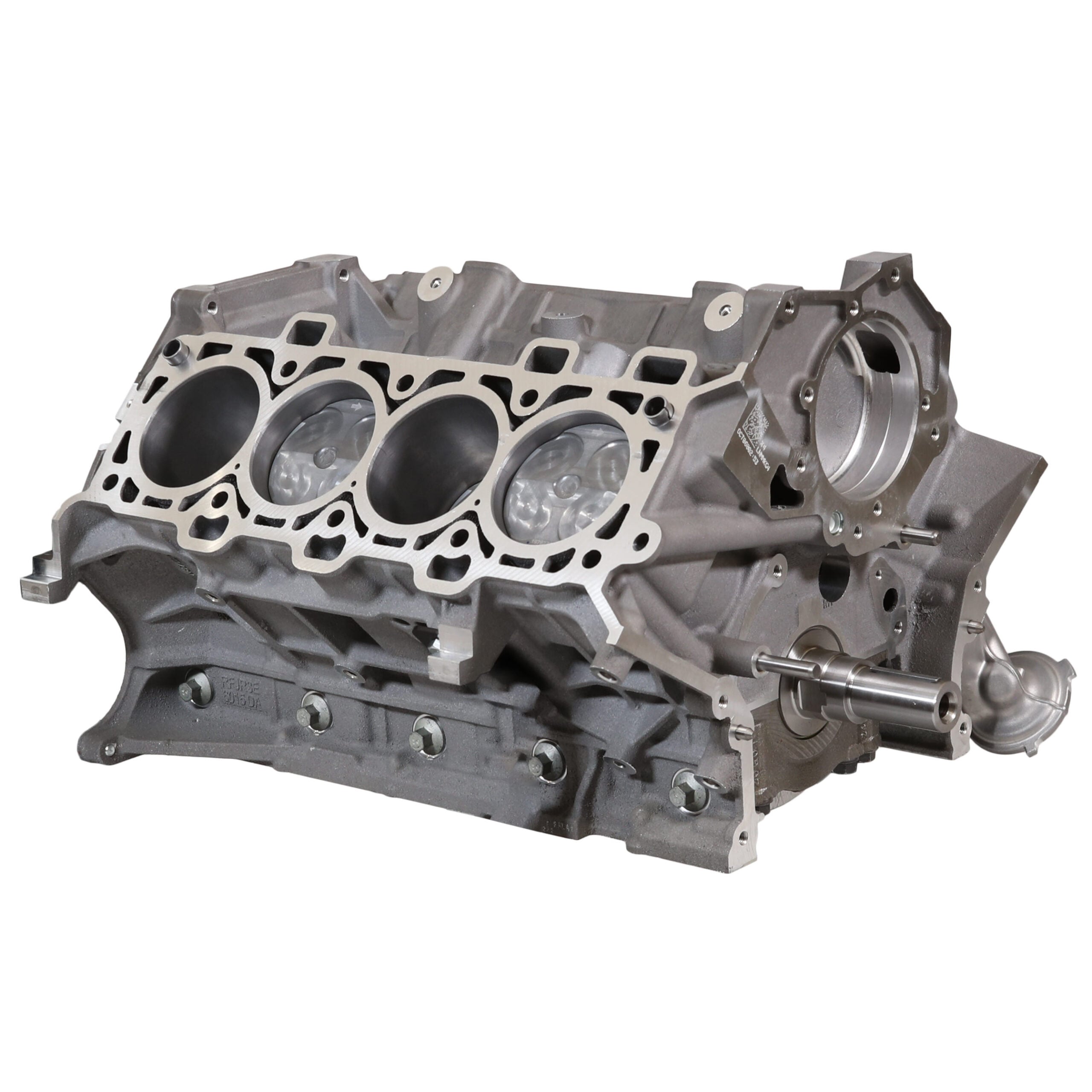
Ford Performance displayed the new 5.2 XS Aluminator at the 2015 Performance Racing Industry Show, each one built around the Shelby GT350’s 5.2 liter block with 94 mm bores.
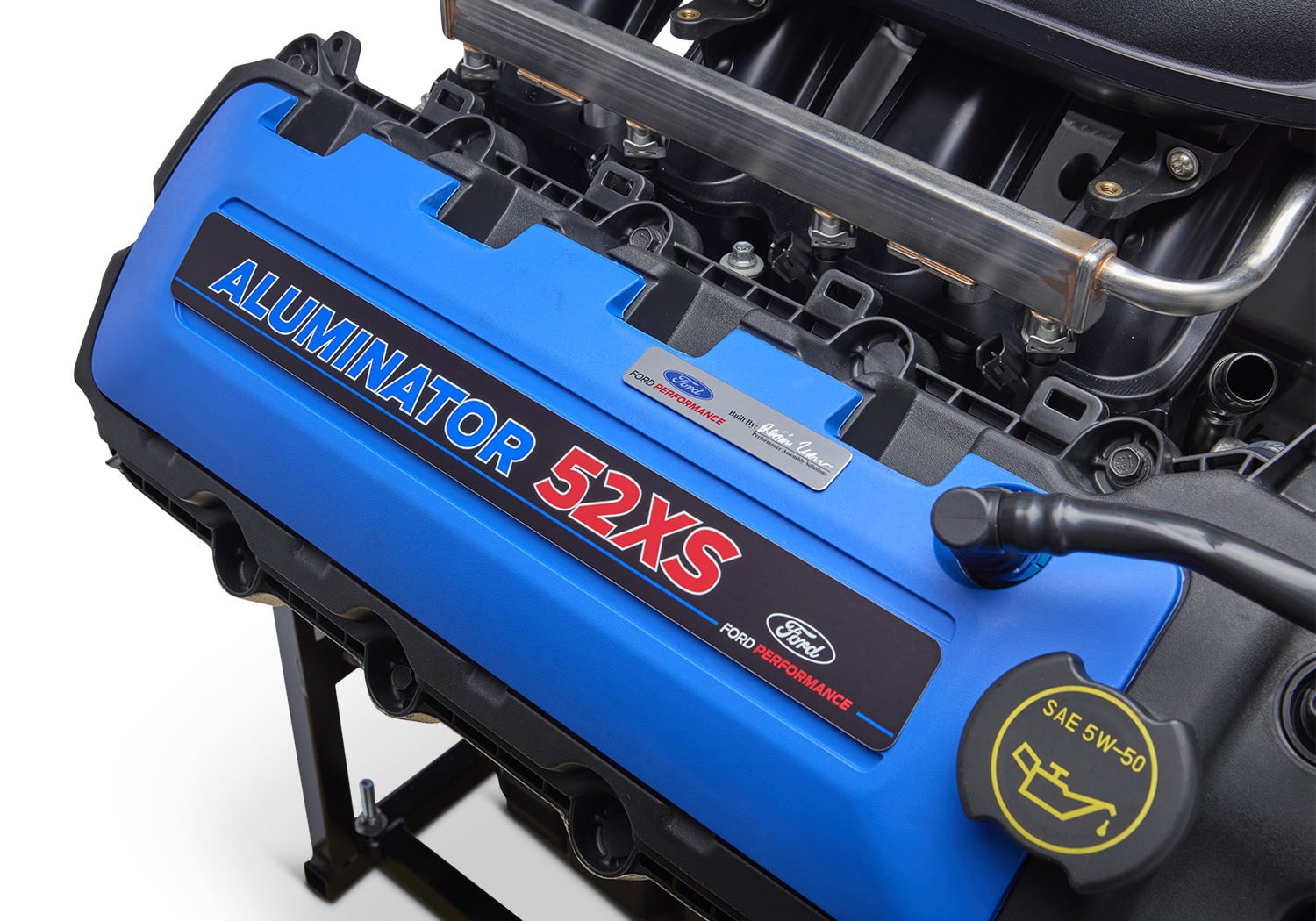
Each engine is cold-tested, spun without combustion while oil pressure and compression are measured, and the person who hand-built the engine signs a plaque. Ford rated the naturally aspirated Gen 3 at 460 bhp at 7,000 rpm and 420 lb ft of torque at 4,600 rpm.
The fourth-generation N/A version uses the 2024 Mustang GT block and that car’s dual 80 mm throttle bodies. Its 480 bhp and 415 lb ft match a 2024 Mustang GT without the active exhaust – the main difference is the forged pistons and rods.
The Current-Gen 5.2 XS Aluminator
Ford Performance displayed the new 5.2 XS Aluminator at the 2015 Performance Racing Industry Show, each one built around the Shelby GT350’s 5.2 liter block with 94 mm bores. The flat plane crank was exclusive to the GT350, so the XS used a cross-plane Mustang GT crank which gave the engine a burbling character all its own.
The GT350’s camshafts would suit only the flat-plane firing order of course, so Ford ground new ones with the same profiles and 14 mm of lift. The rest of the package was CNC-ported GT350 heads, the Cobra Jet intake and throttle body, and pistons giving a 12:1 compression ratio, down from 12.5:1 in the naturally aspirated Cobra Jet program.
Ford rates the 5.2 XS Aluminator at 580 bhp at 7,800 rpm and 445 lb ft of torque at 4,500 rpm, 54 bhp more than the Voodoo’s 526 bhp.
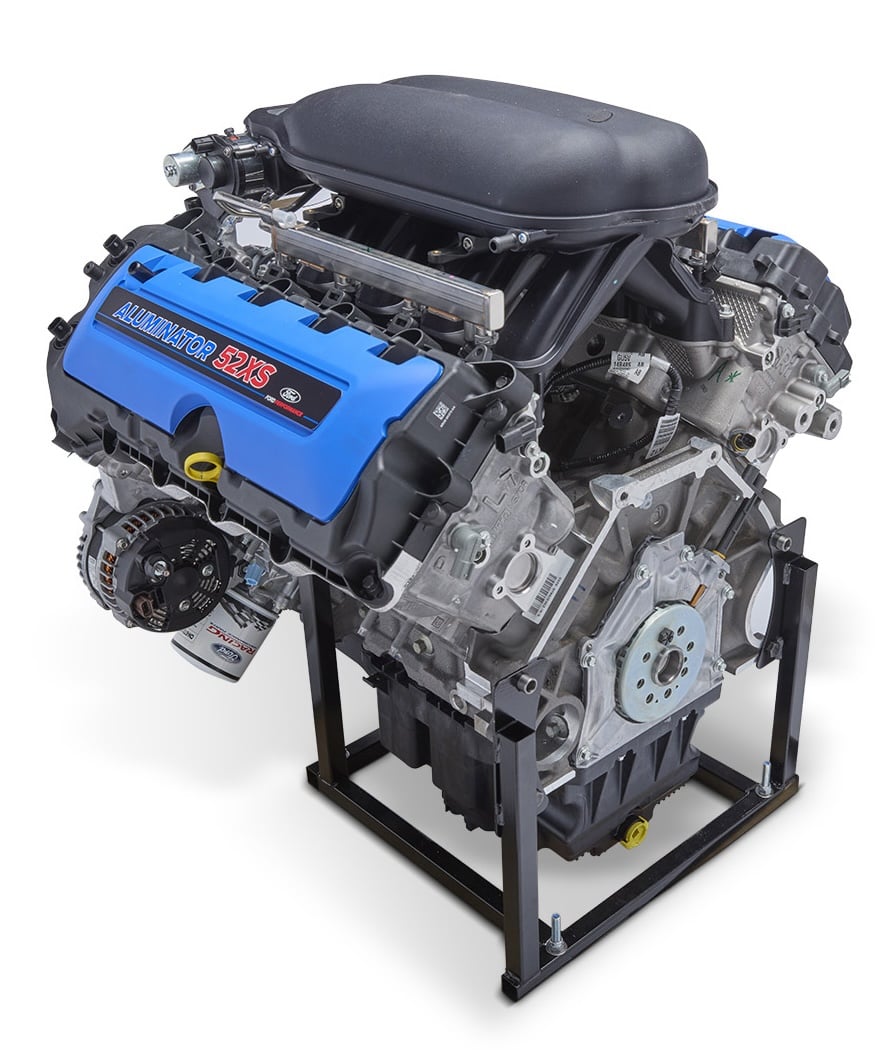
The flat plane crank was exclusive to the GT350, so the XS used a cross-plane Mustang GT crank which gave the engine a burbling character all its own.
Ford calls it the most powerful naturally aspirated Modular crate engine it’s ever built. The specification has been upgraded since 2015, the current spec sheet notes that the engine now uses a Shelby GT500 block and a dedicated forged cross-plane crankshaft.
Ford sells the 5.2 XS Aluminator as a crate engine only, and you can visit the listing for the engine on Ford’s official racing parts store here. It does retail for $25,500 USD, but given what goes into each engine and the performance they’re capable of, it’s not a bad MSRP.
Images courtesy of the Ford Motor Company

Articles that Ben Branch has written have been covered on CNN, Popular Mechanics, Smithsonian Magazine, Road & Track Magazine, the official Pinterest blog, the official eBay Motors blog, BuzzFeed, Autoweek Magazine, Wired Magazine, Autoblog, Gear Patrol, Jalopnik, The Verge, and many more.
Silodrome was founded by Ben back in 2010, in the years since the site has grown to become a world leader in the alternative and vintage motoring sector, with well over a million monthly readers from around the world and many hundreds of thousands of followers on social media.