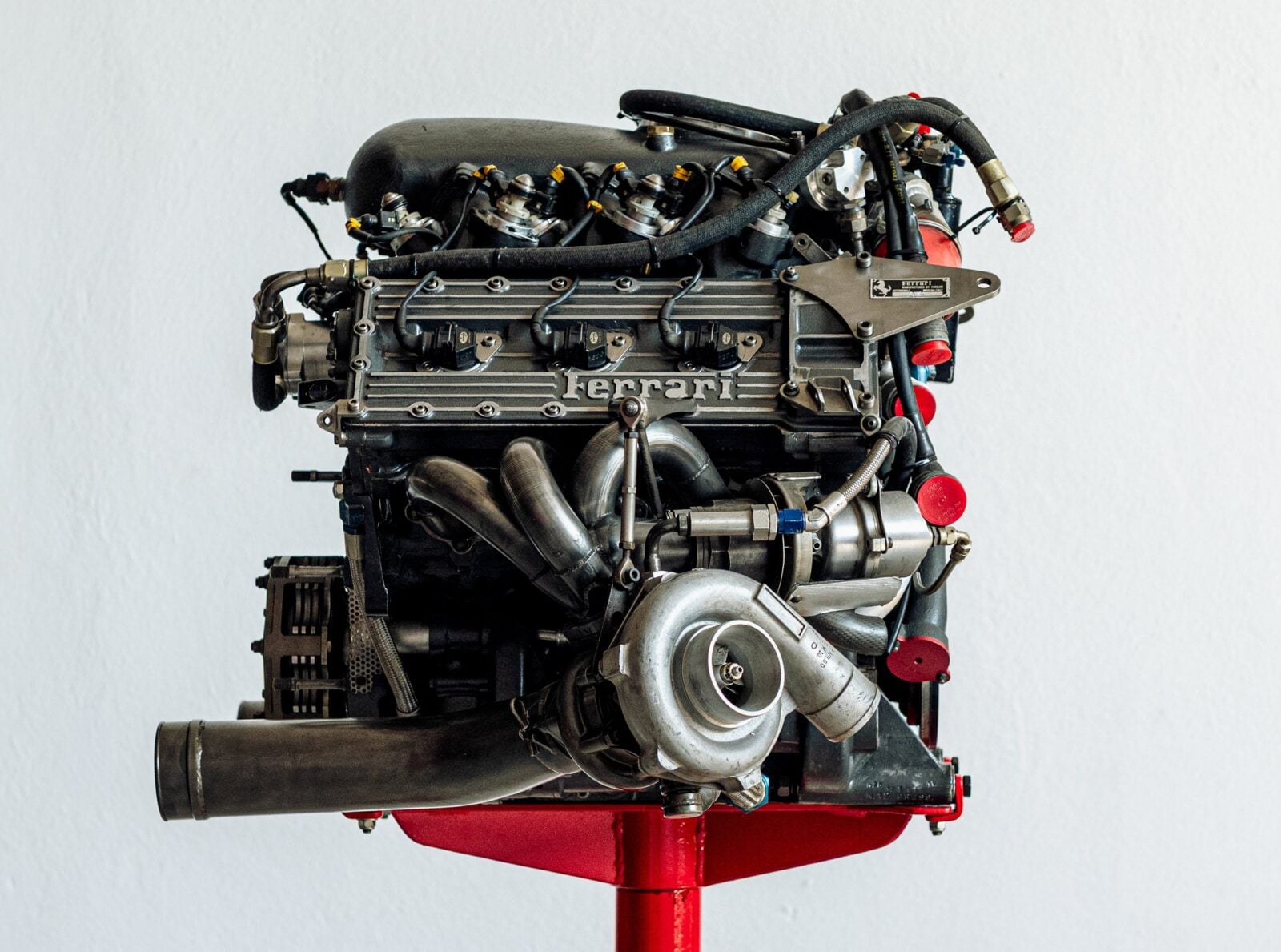
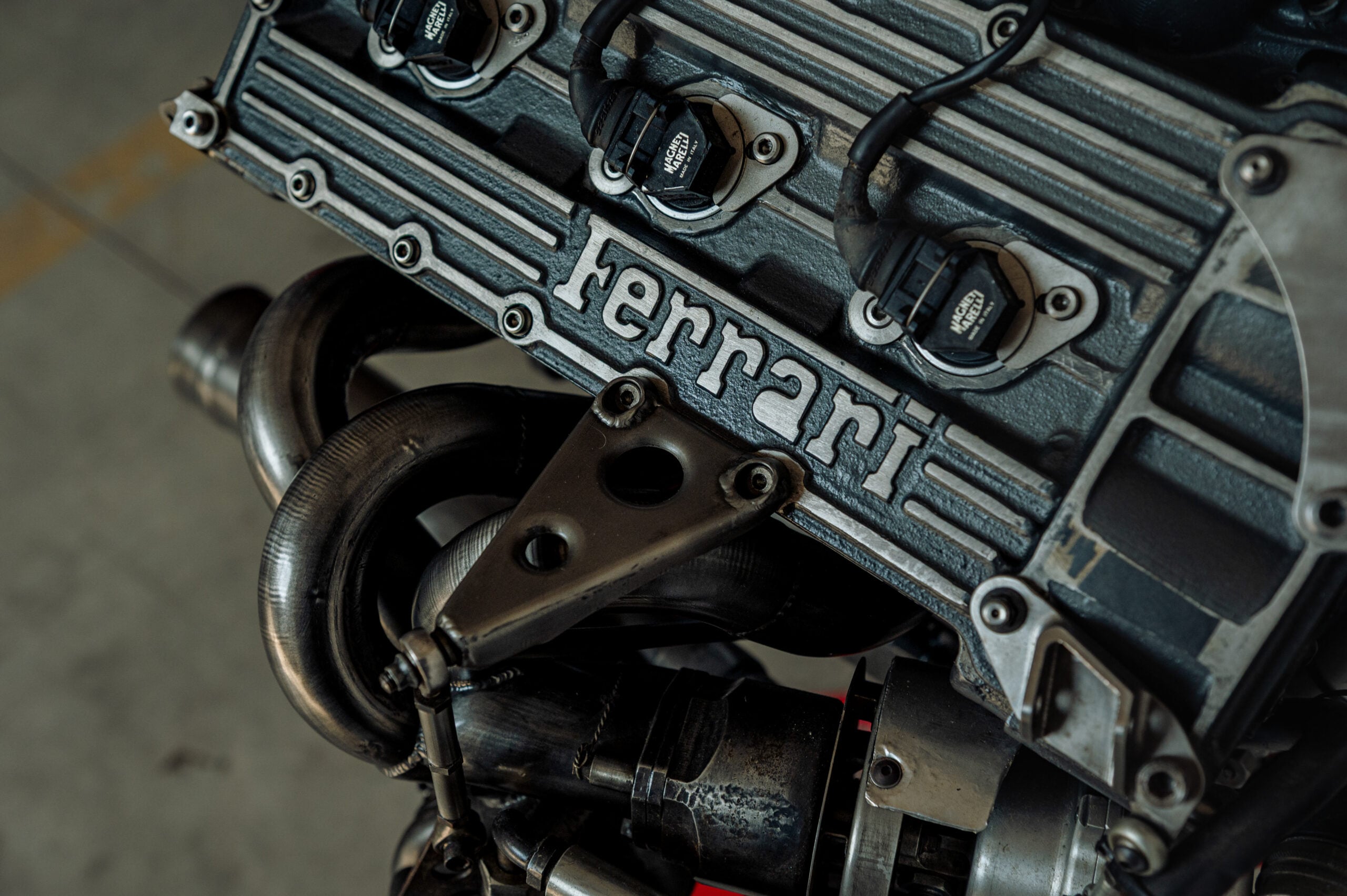
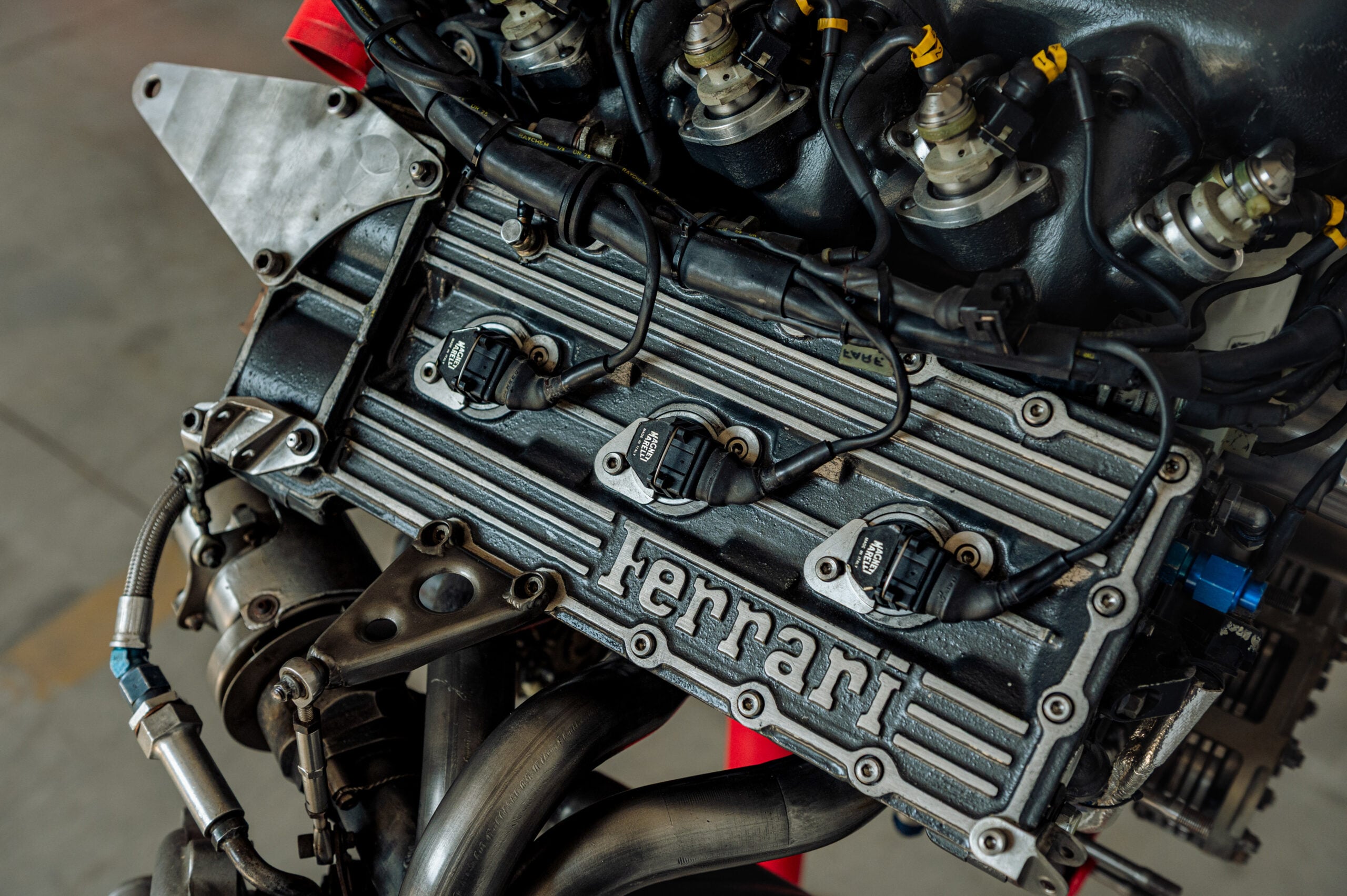
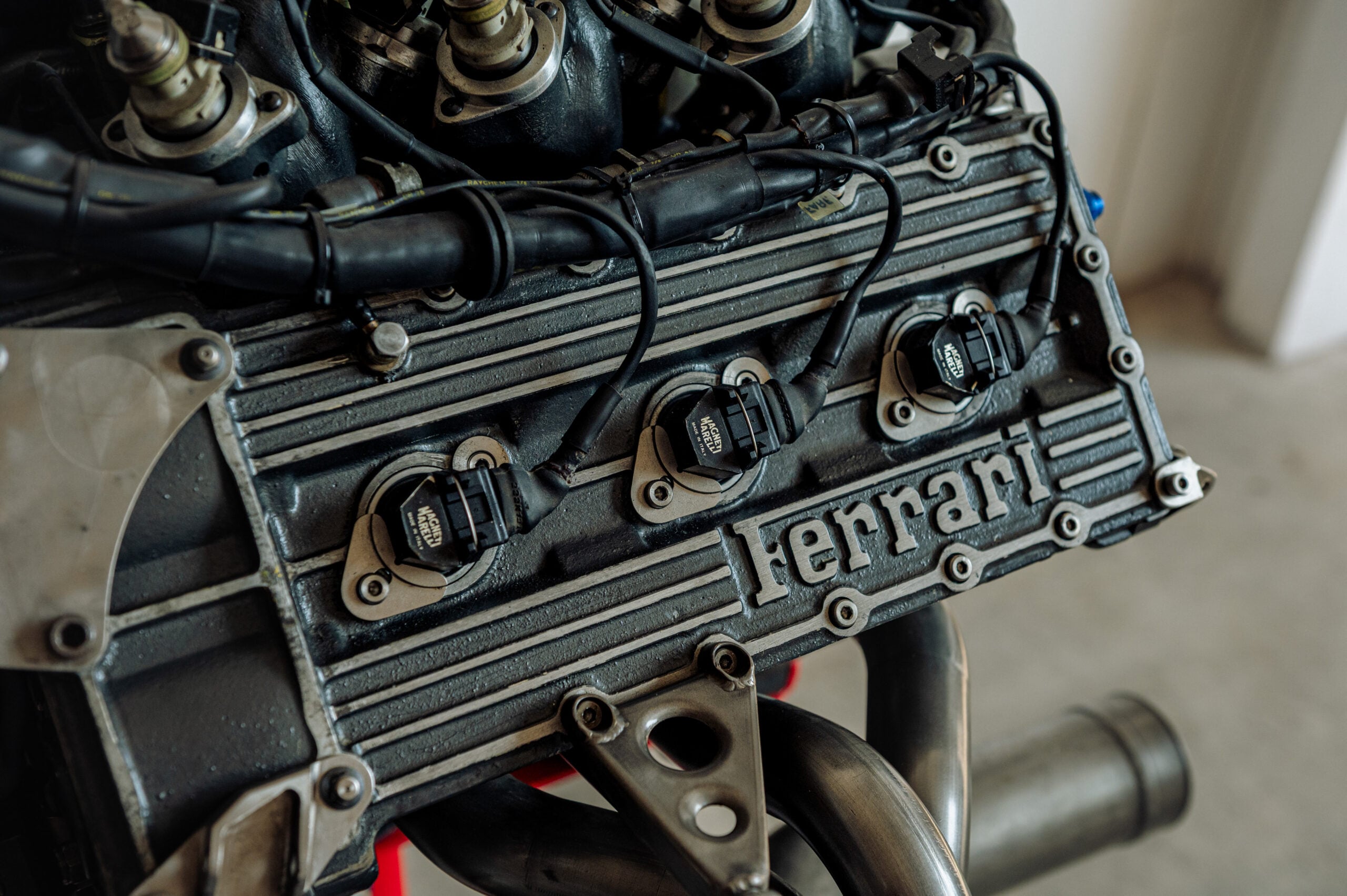
This is an original 1987 Ferrari F1/87 Tipo 33 Formula 1 engine, in qualifying trim it was capable of up to 950 bhp, and in regular race trim it was making closer to 880 bhp. Not bad for a 1.5 liter V6 with a couple of turbos bolted on.
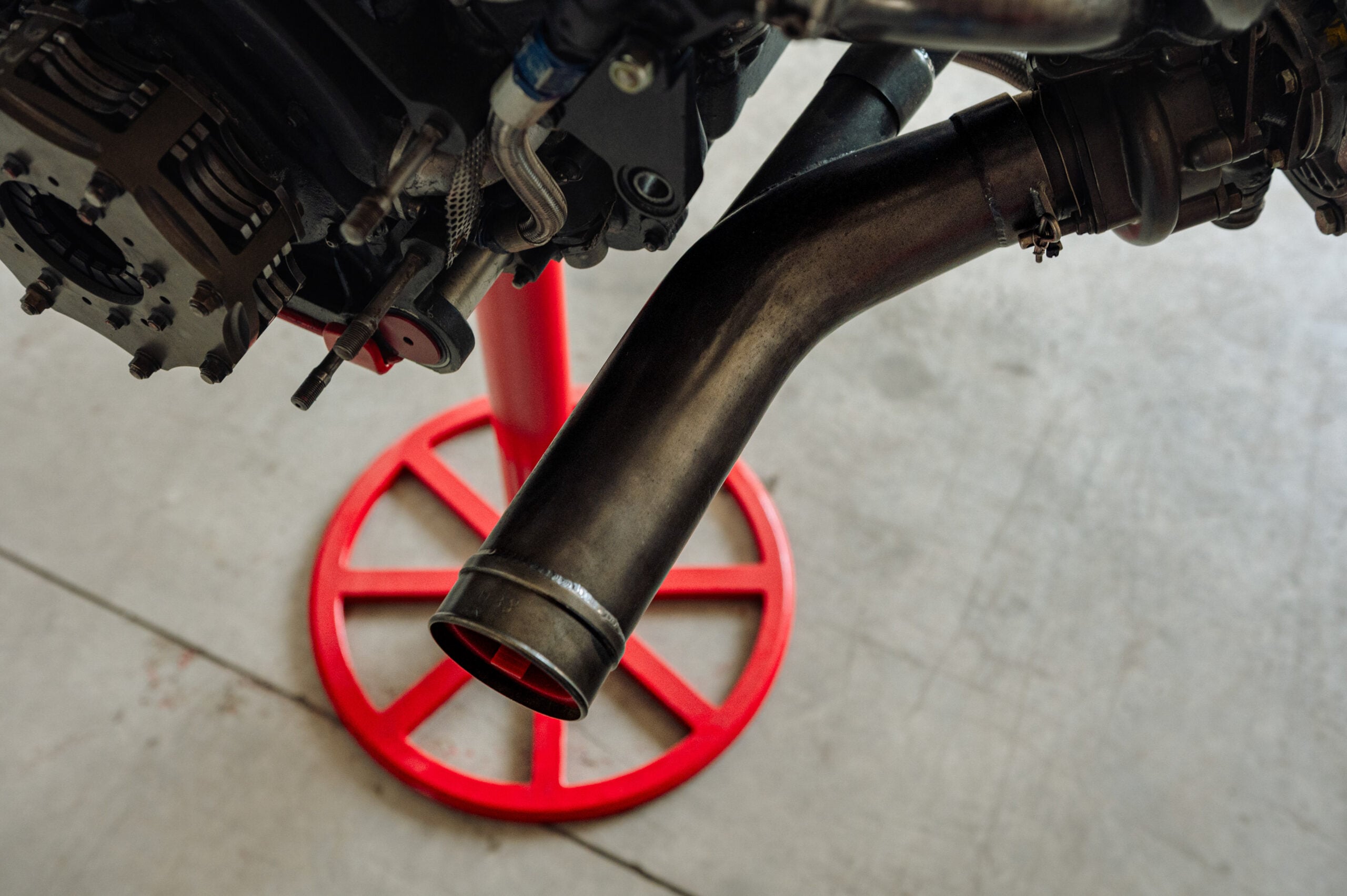
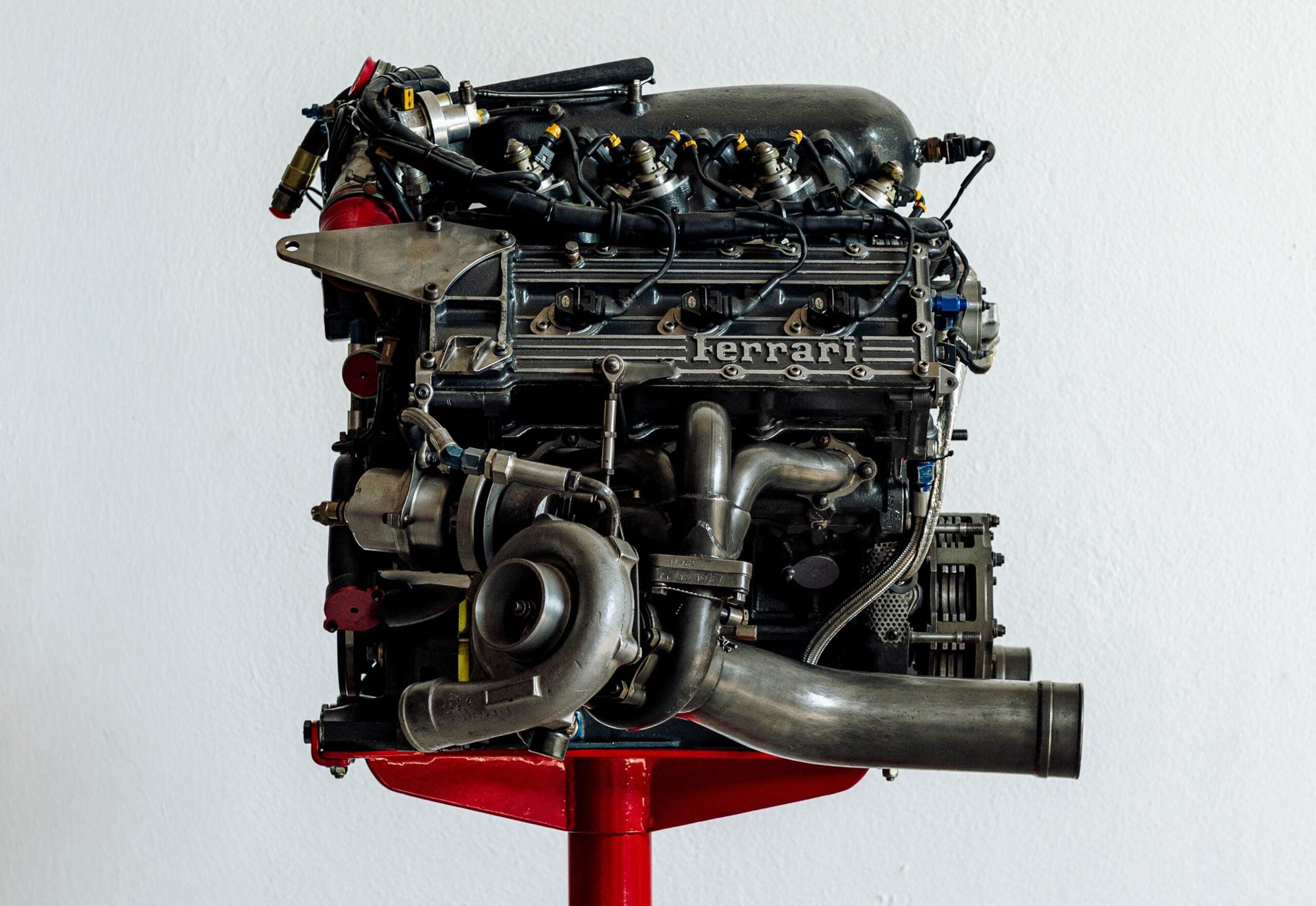
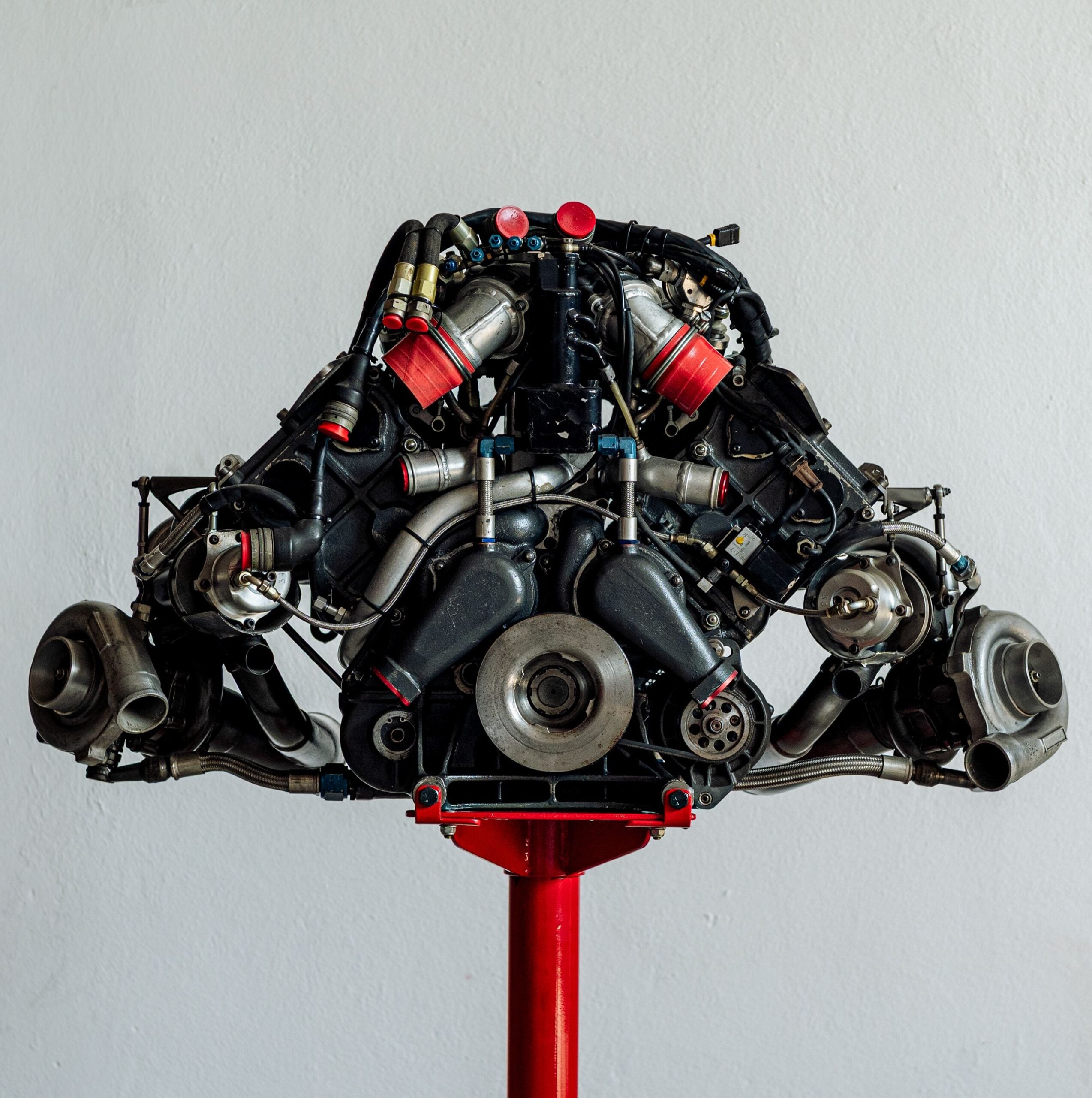
This engine is now fitted to a red display stand and it’s being offered for sale. Externally it looks relatively complete, however the internal condition of the engine is unknown and as a result, it’s being offered as a display engine only.
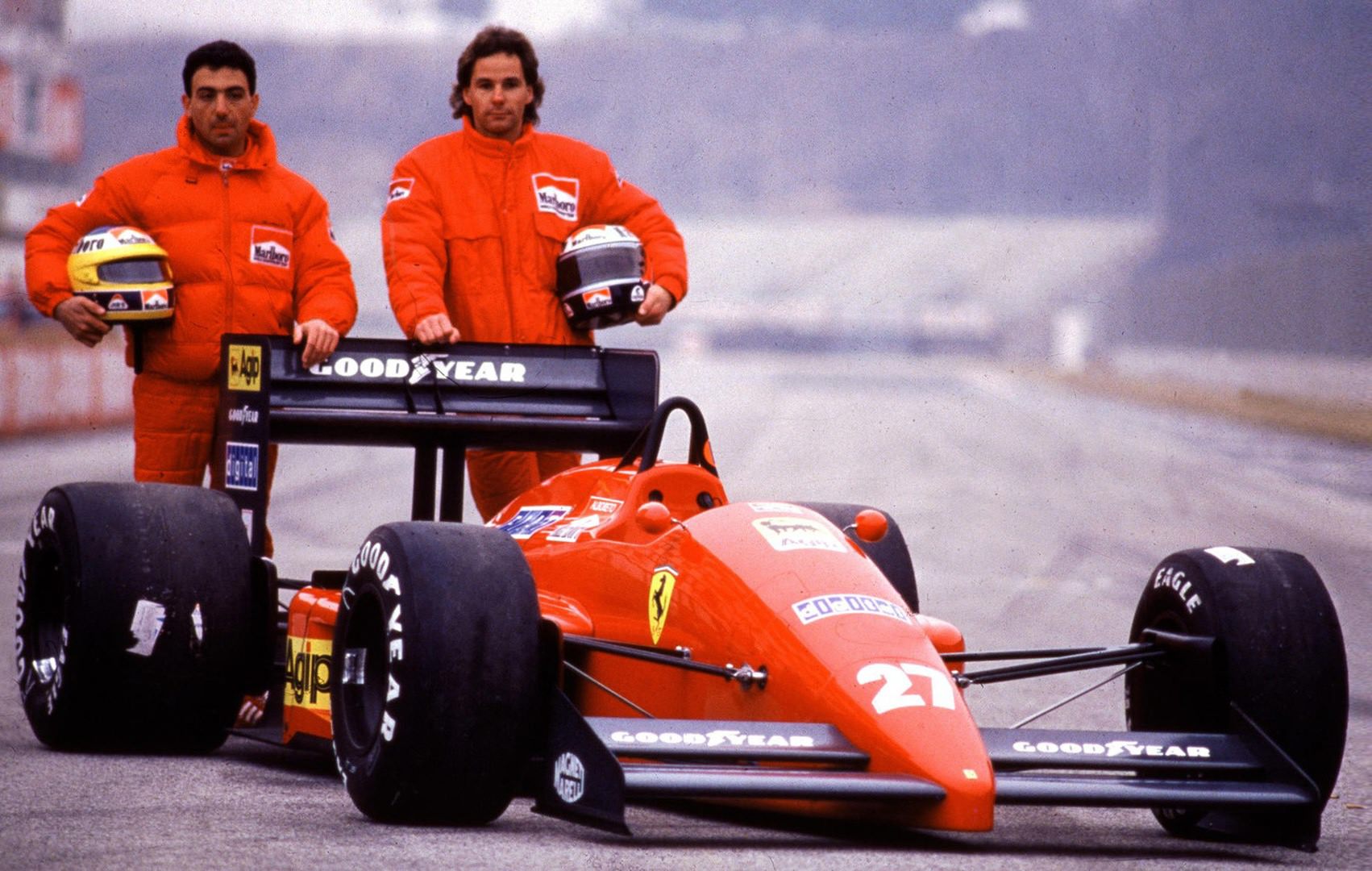
 In the F1/87 chassis (designed by Gustav Brunner) the engine proved to be fast but there were issues with the car around it. Michele Alboreto and Gerhard Berger (seen here left and right) struggled with persistent understeer through much of 1987, and although Ferrari brought aerodynamic developments through the summer, the car’s real breakthrough came from the Hungarian Grand Prix onward. Image courtesy of Ferrari.
History Speedrun: The Ferrari Tipo 33 F1 Engine
The Ferrari Tipo 033 was a 1.5 liter, 90º twin-turbo V6 that powered the F1/87 and F1/87/88C cars in the 1987 and 1988 Formula 1 seasons. It was the last turbocharged Ferrari F1 engine until the hybrid-era F14 T of 2014, and it represented a clean-sheet break from the 120º V6 architecture that had served the team since 1981.
Development work on the engine began in 1986 as part of a broader reshuffle at Maranello, with Harvey Postlethwaite departing and John Barnard arriving from McLaren as Technical Director, Ferrari installed Frenchman Jean-Jacques His (His is is surname) as head of the competition engine department.
Jean-Jacques had come from Renault Sport at Viry-Châtillon, where he had worked under Bernard Dudot on Renault’s turbo V6 program. The old 120º architecture, originally chosen to suit ground-effect aerodynamics, had become a packaging liability once flat bottoms were mandated, and so he designed the replacement around a tighter 90º bank angle better suited to the F1/87’s slimmer carbon-Kevlar monocoque.
The resulting engine, officially named the Tipo 033/D for the 1987 version, had a cast-iron block without wet liners, lightweight alloy heads, and bore and stroke of 81 mm × 48.4 mm for a total displacement of 1,496.43cc.
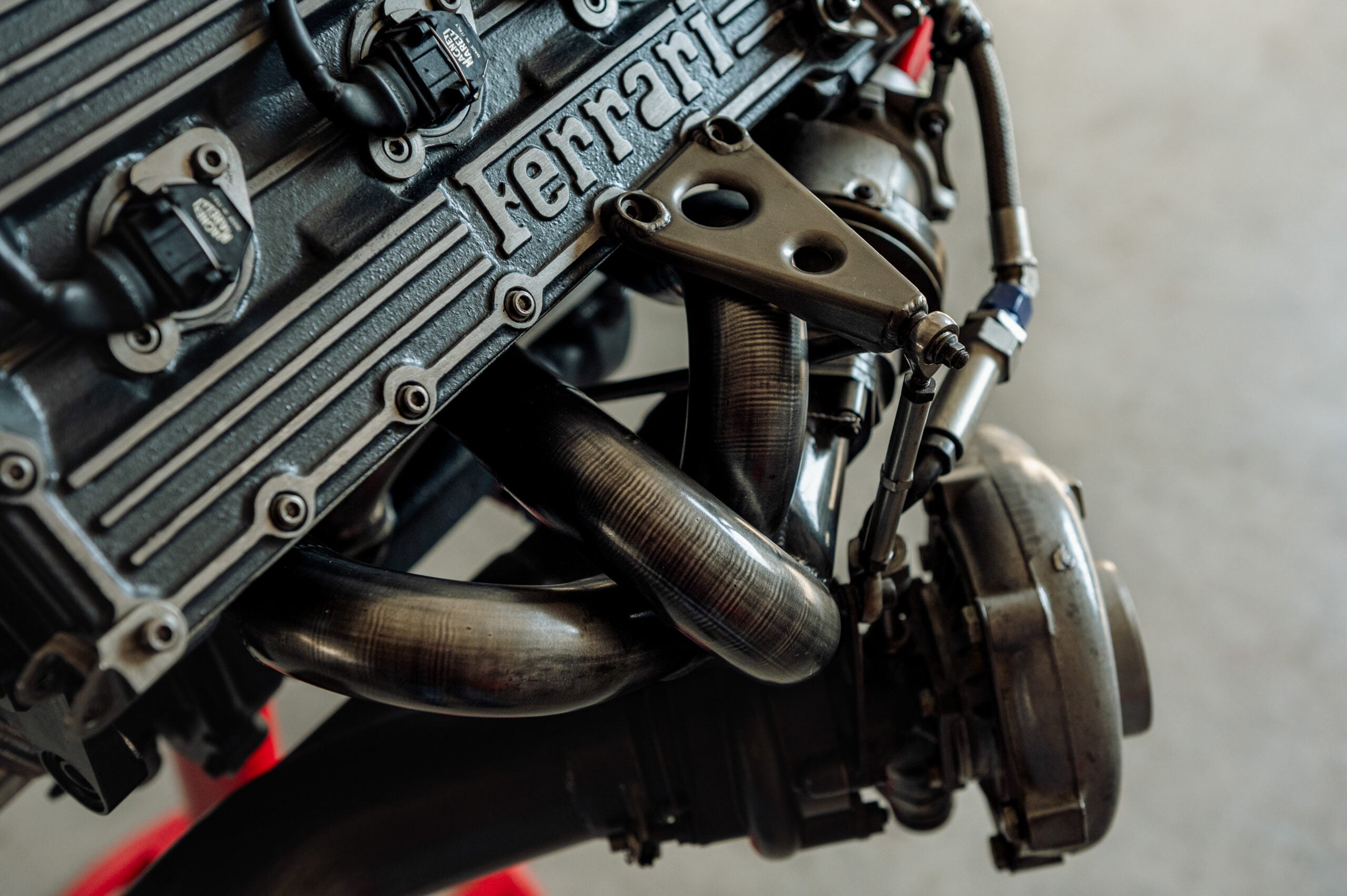
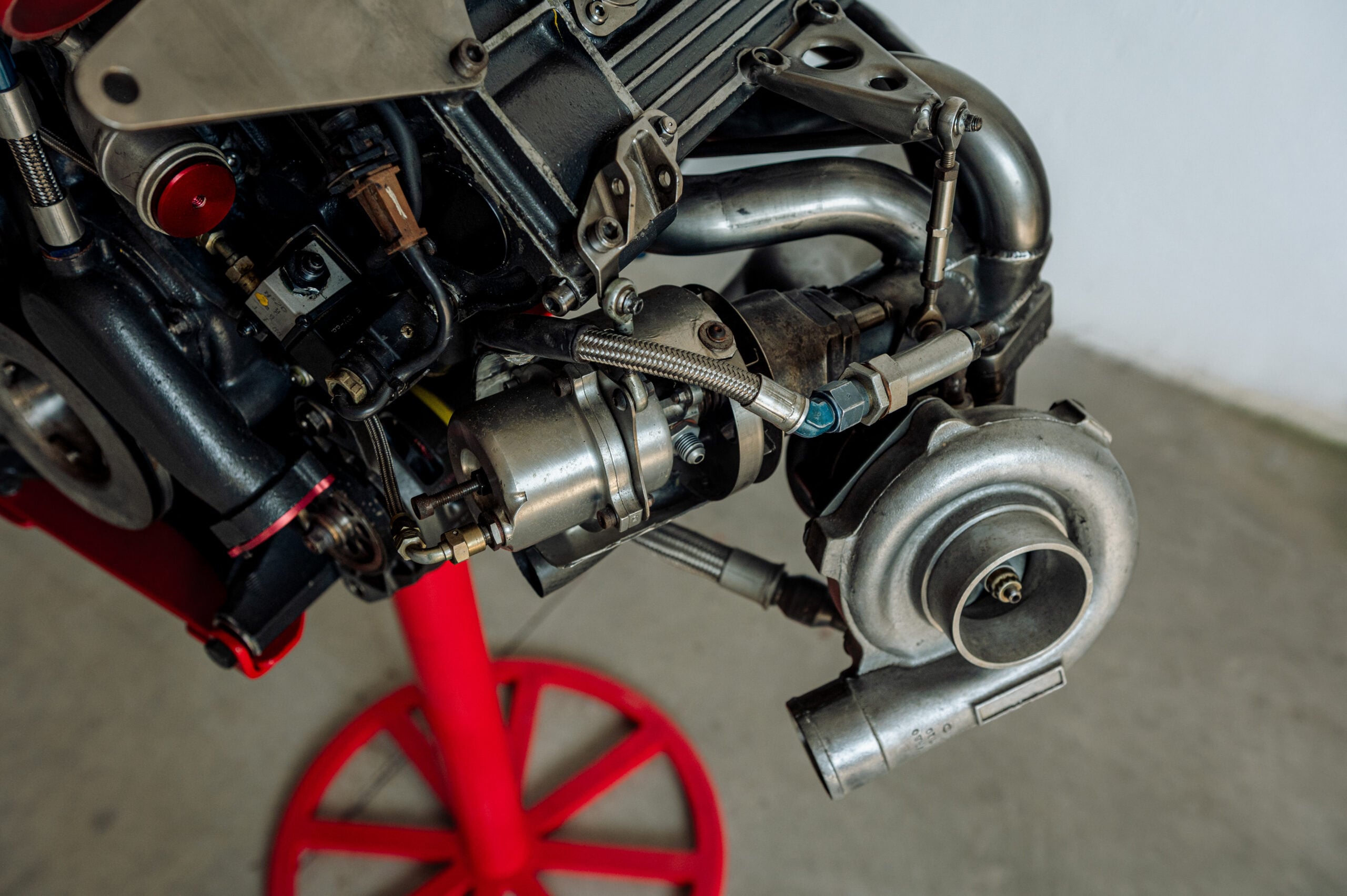
Compression was relatively low at 8:1 to accommodate high boost pressures, with four valves per cylinder actuated by gear-driven twin overhead cams on each bank. Fueling was handled by Weber-Marelli digital electronic injection with twin injectors per cylinder, ignition came from Magneti Marelli static electronic systems, and forced induction was supplied by two side-mounted Garrett turbochargers.
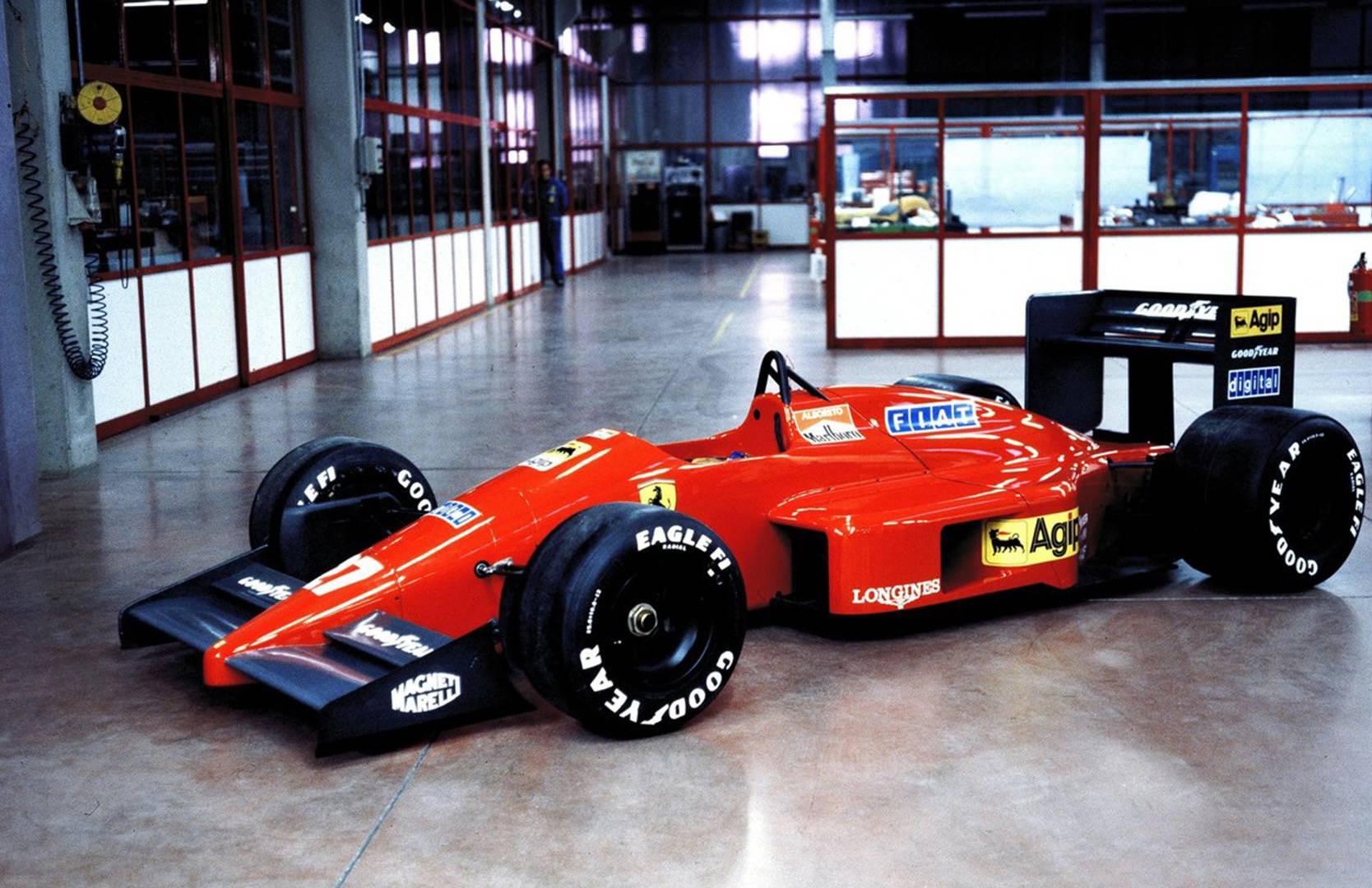
This is the Ferrari F1/87, despite its mixed successes it’s been called one of the most beautiful F1 cars of the era. Image courtesy of Ferrari.
At the FIA’s new 4.0 bar pop-off valve limit, race power was quoted at 880 bhp at 11,500 rpm, with qualifying output rated at up to 950 bhp.
In the F1/87 chassis (designed by Gustav Brunner) the engine proved to be fast but there were issues with the car around it. Michele Alboreto and Gerhard Berger struggled with persistent understeer through much of 1987, and although Ferrari brought aerodynamic developments through the summer, the car’s real breakthrough came from the Hungarian Grand Prix onward.
Berger qualified second in Hungary, third at Monza, and took pole at Estoril before winning the final two rounds at Suzuka and Adelaide. His Japanese Grand Prix victory ended a 38 race Ferrari drought dating back to the 1985 German Grand Prix.
For 1988, the regulations tightened significantly, boost was cut to 2.5 bar and fuel capacity reduced from 195 to 150 liters. Rather than design a new engine as Honda did, Ferrari revised the 033 into the Tipo 033A (factory 033/E), raising compression from 8:1 to 10:1 to compensate for the lower boost.
Race output fell to roughly 620 bhp to 720 bhp at 12,000 rpm. The updated F1/87/88C was among the fastest cars in a straight line – Berger was speed-trapped at 328 km/h at Hockenheim – but suffered heavy fuel consumption and poor throttle response against the Honda-powered McLarens.
Barnard was reported to have pushed for a more conservative engine strategy to improve fuel economy, but with limited success. Still, with McLaren having won the first eleven rounds of 1988, Berger and Alboreto delivered an emotional 1-2 at Monza just four weeks after Enzo Ferrari’s death, the only race McLaren failed to win that year.
Ferrari finished second in the Constructors’ Championship, and the Tipo 033 was retired at season’s end when turbocharged engines were banned for 1989 onwards.
The 1987 Ferrari Tipo 33 Formula 1 Engine Shown Here
The engine you see here is an original that was fitted in the Ferrari F1-87 car for the 1987 Formula 1 World Championship season. It has now been prepared for display duties, and comes on a red steel stand with a circular base.
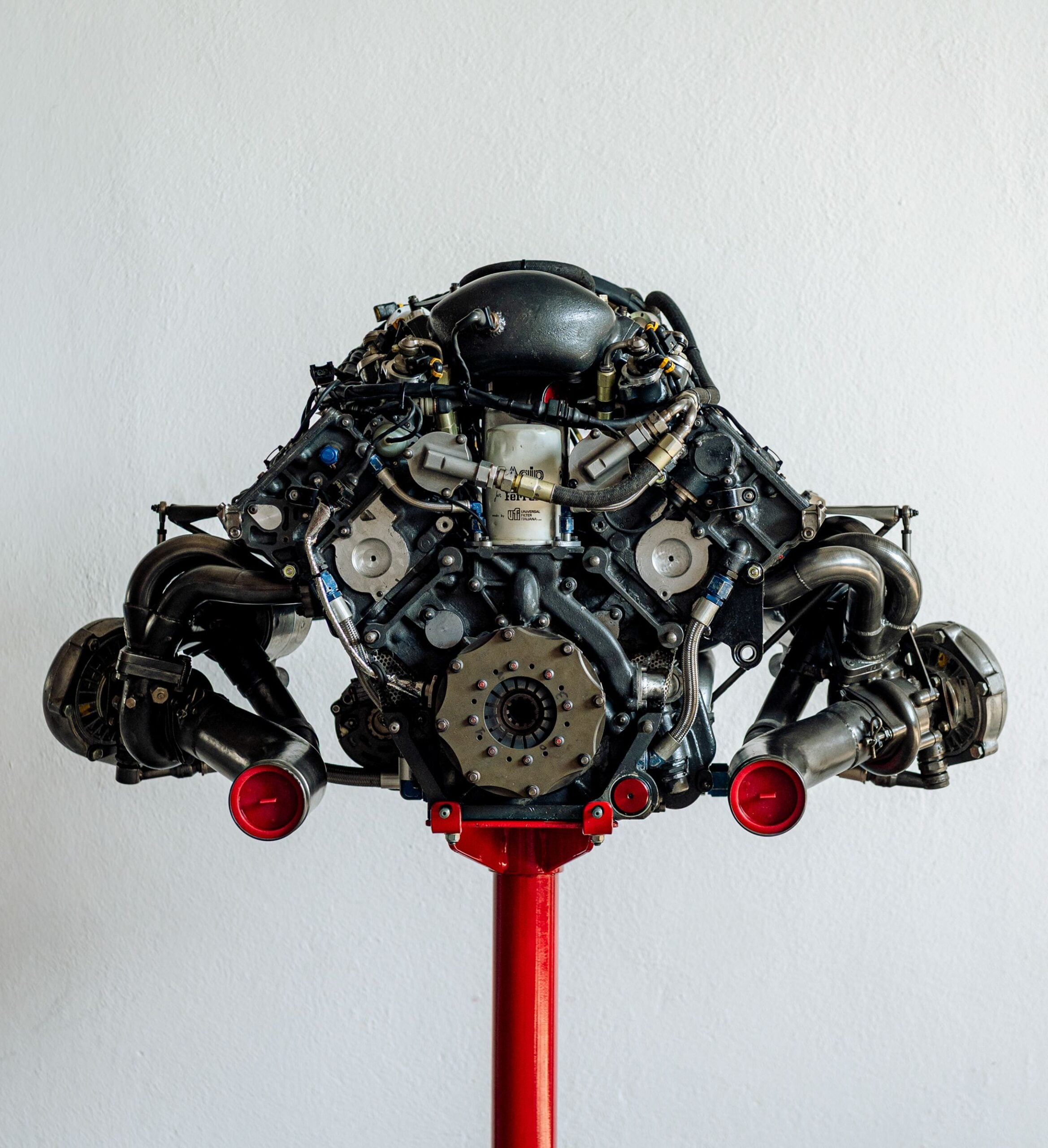
The engine you see here is an original that was fitted in the Ferrari F1-87 car for the 1987 Formula 1 World Championship season. It has now been prepared for display duties, and comes on a red steel stand with a circular base.
Externally, the engine looks to be largely complete (or entirely complete), with the intake and ignition systems in place, the exhaust manifolds and turbos bolted on, and even the clutch still attached. There is no word in the listing about the internal condition of the engine, though it’s likely safe to assume that it’s not currently in running condition.
It’s now being offered for sale with a price guide of $23,500 – $47,000 USD and you can visit the listing here if you’d like to read more about it or register to bid.
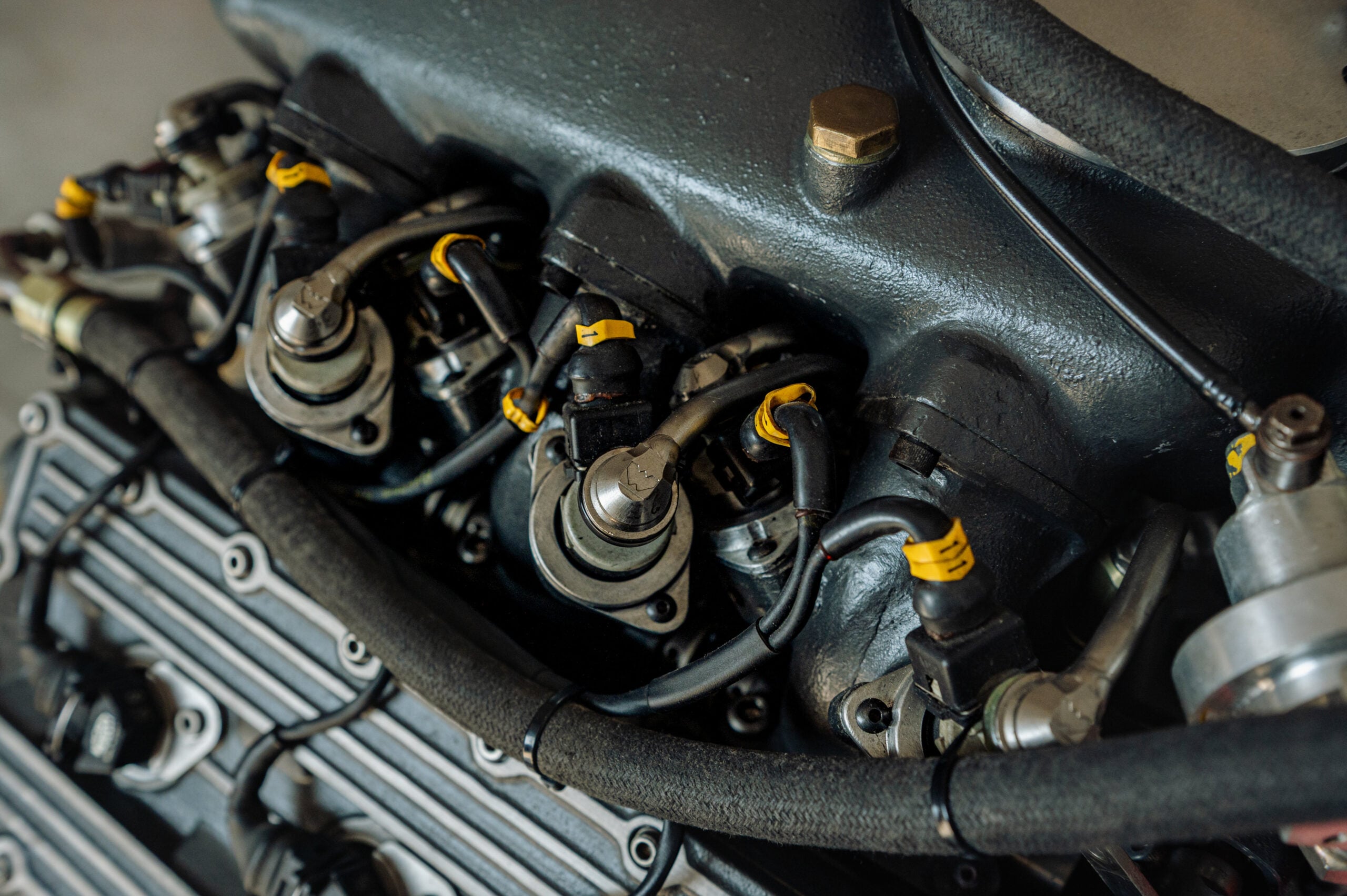
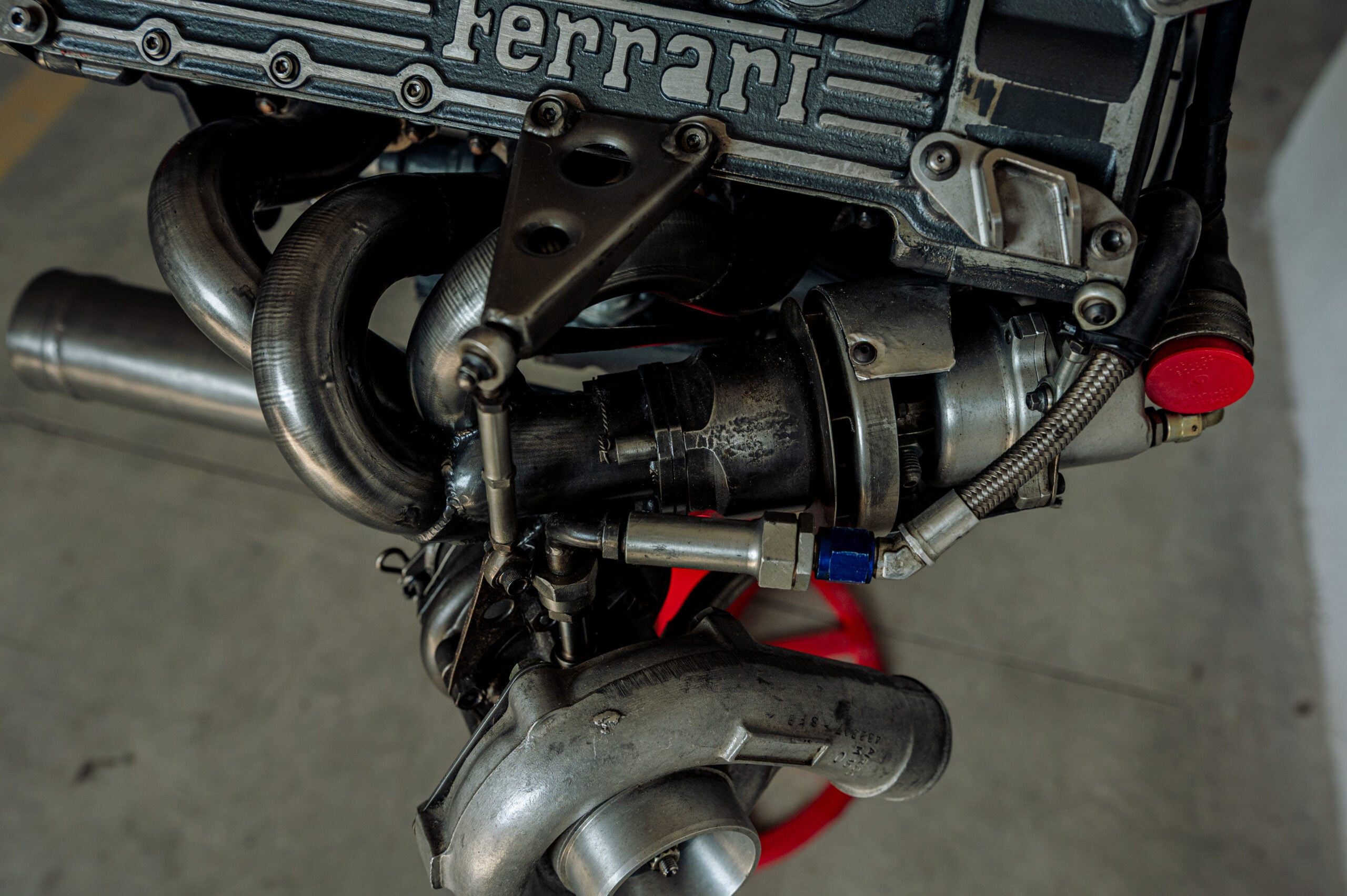
Images: Ferrari + Gabriele Natalini ©2026 Courtesy of RM Sotheby’s

Articles that Ben Branch has written have been covered on CNN, Popular Mechanics, Smithsonian Magazine, Road & Track Magazine, the official Pinterest blog, the official eBay Motors blog, BuzzFeed, Autoweek Magazine, Wired Magazine, Autoblog, Gear Patrol, Jalopnik, The Verge, and many more.
Silodrome was founded by Ben back in 2010, in the years since the site has grown to become a world leader in the alternative and vintage motoring sector, with well over a million monthly readers from around the world and many hundreds of thousands of followers on social media.