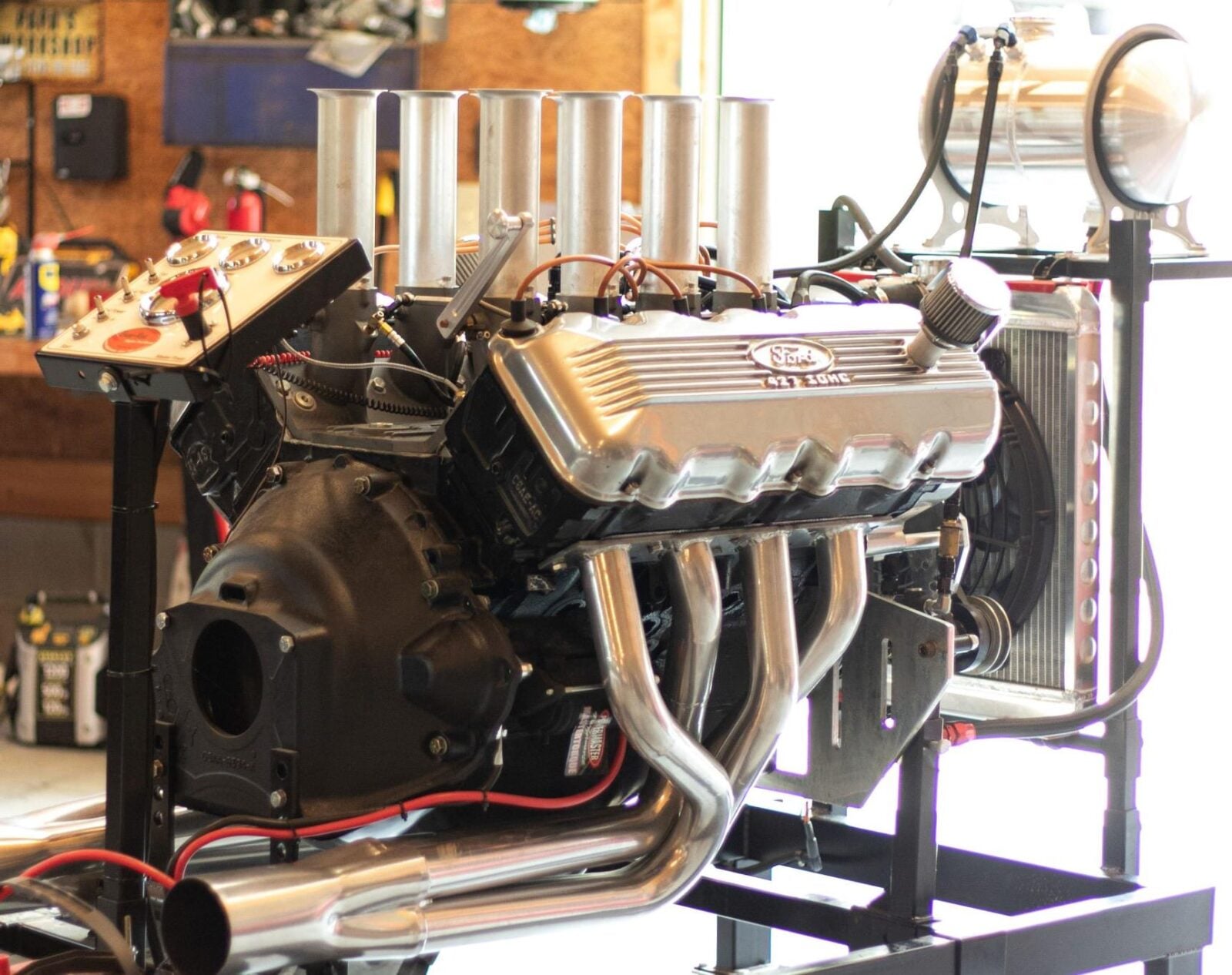
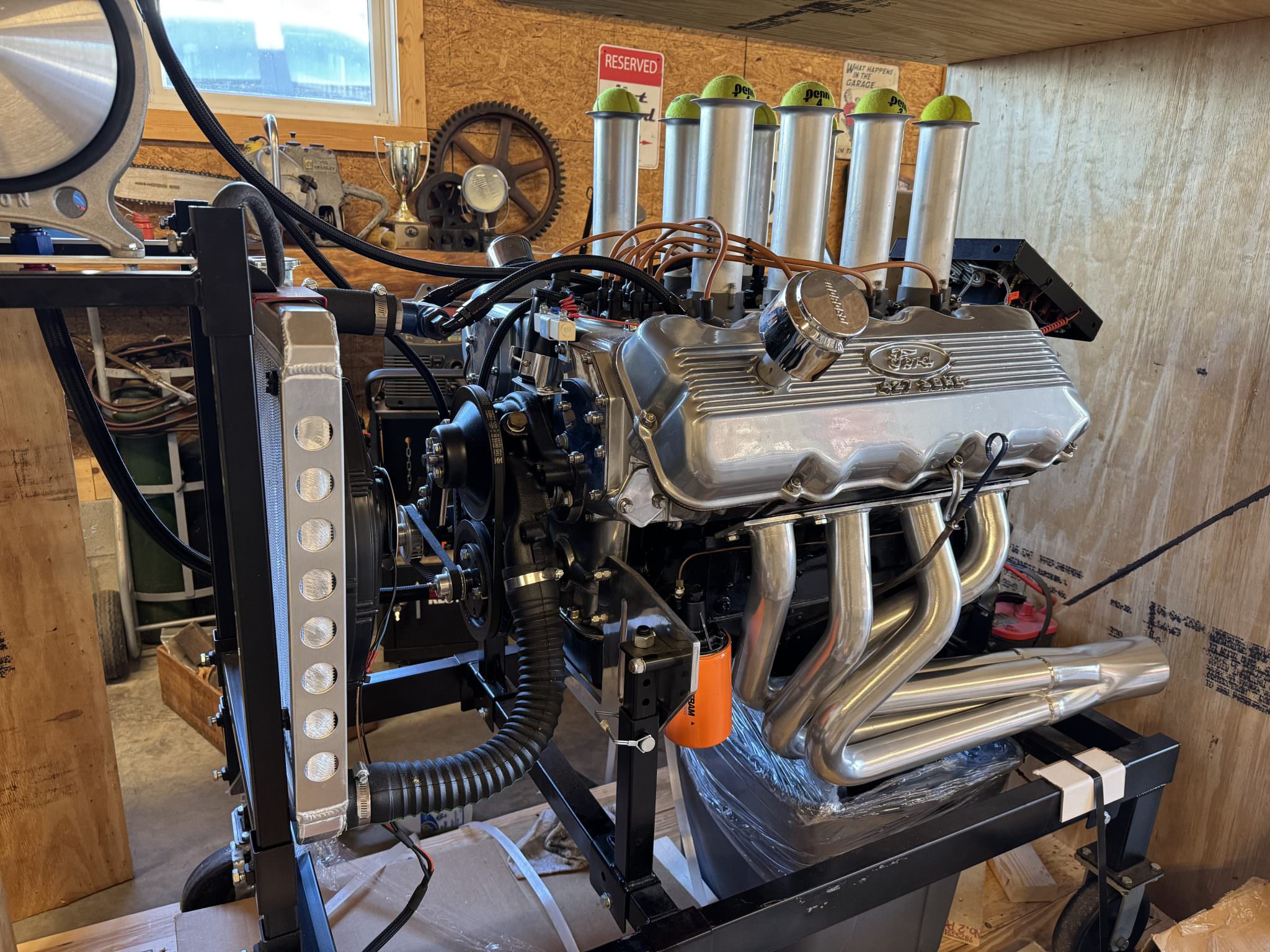
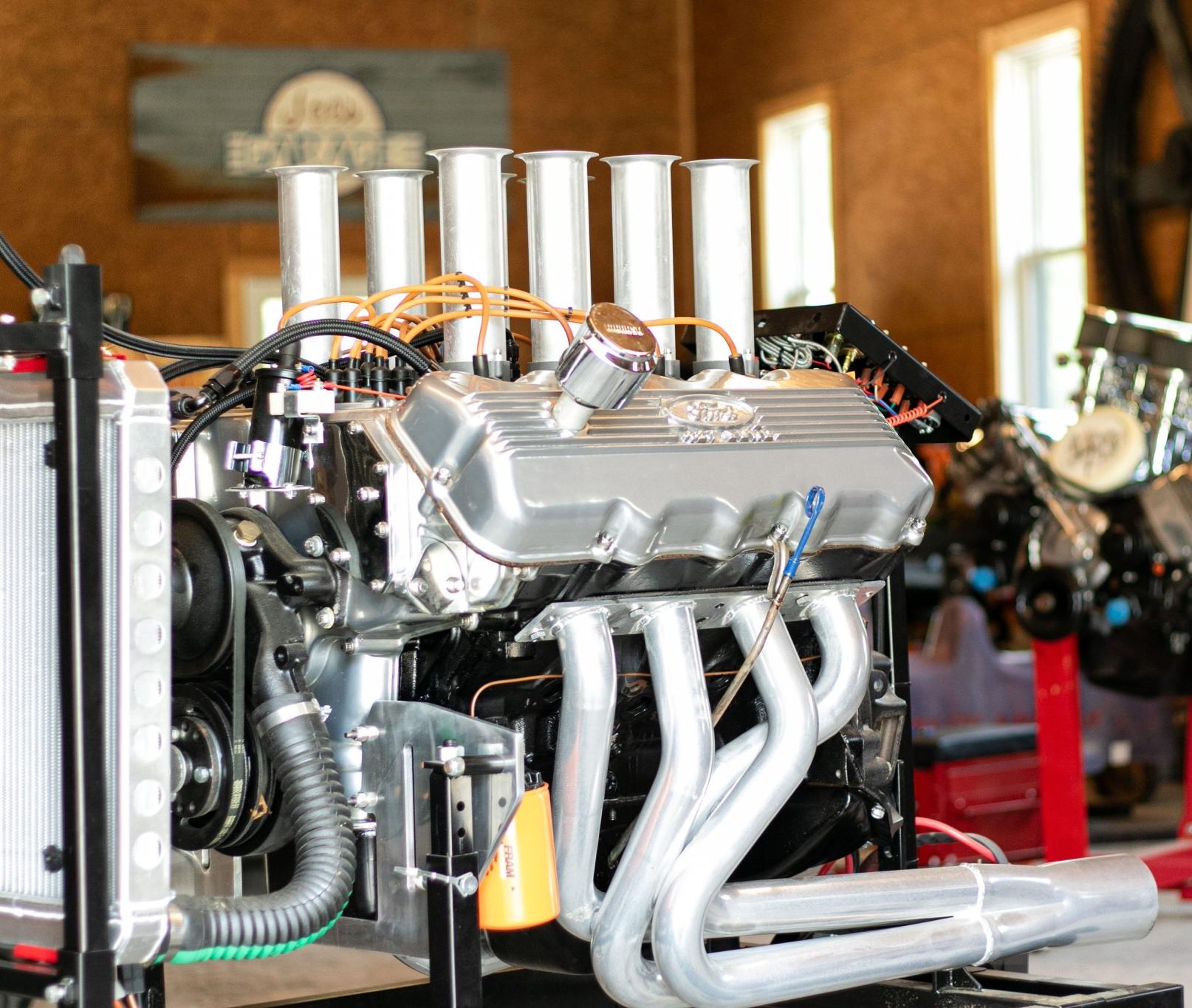
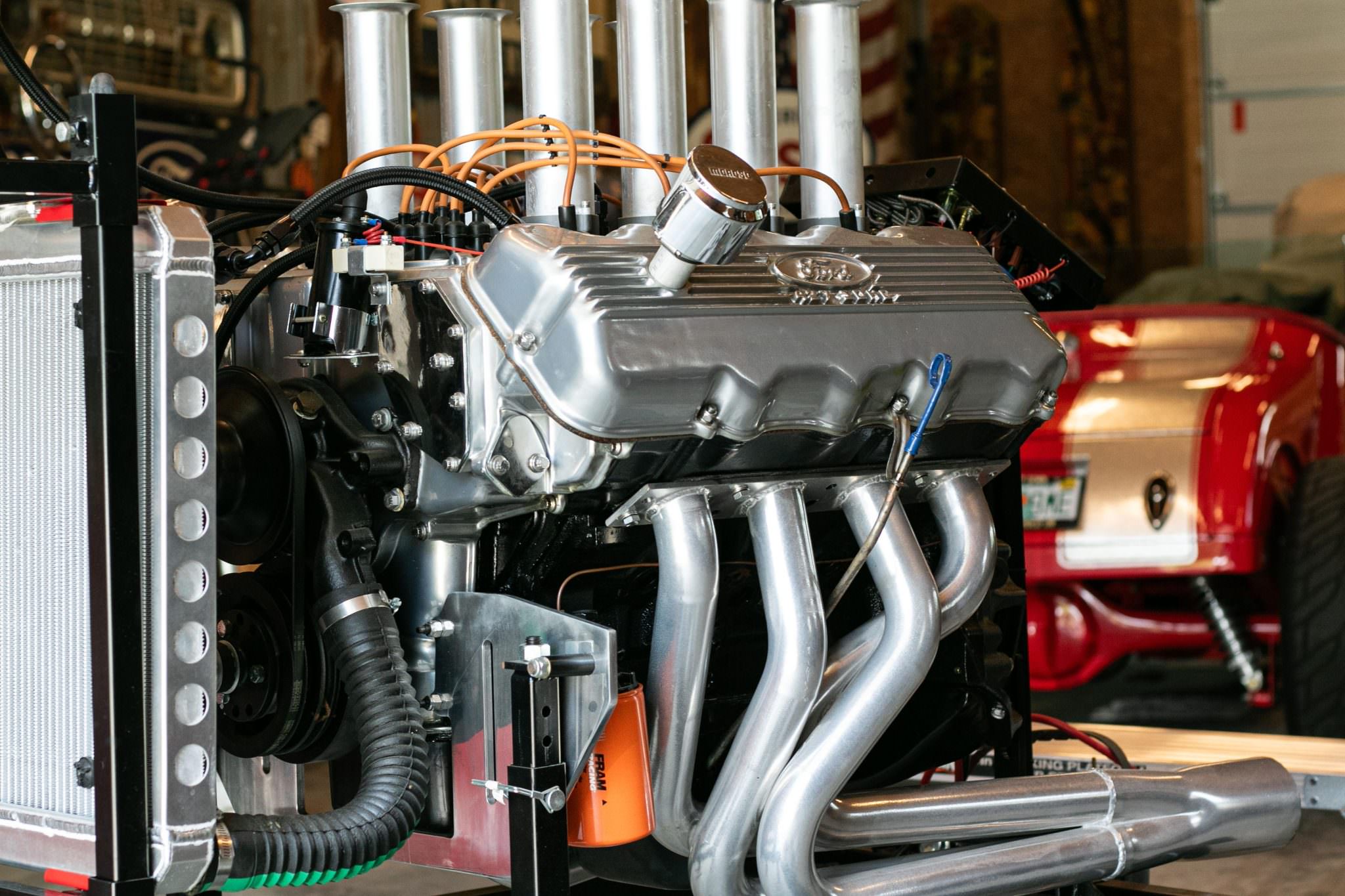
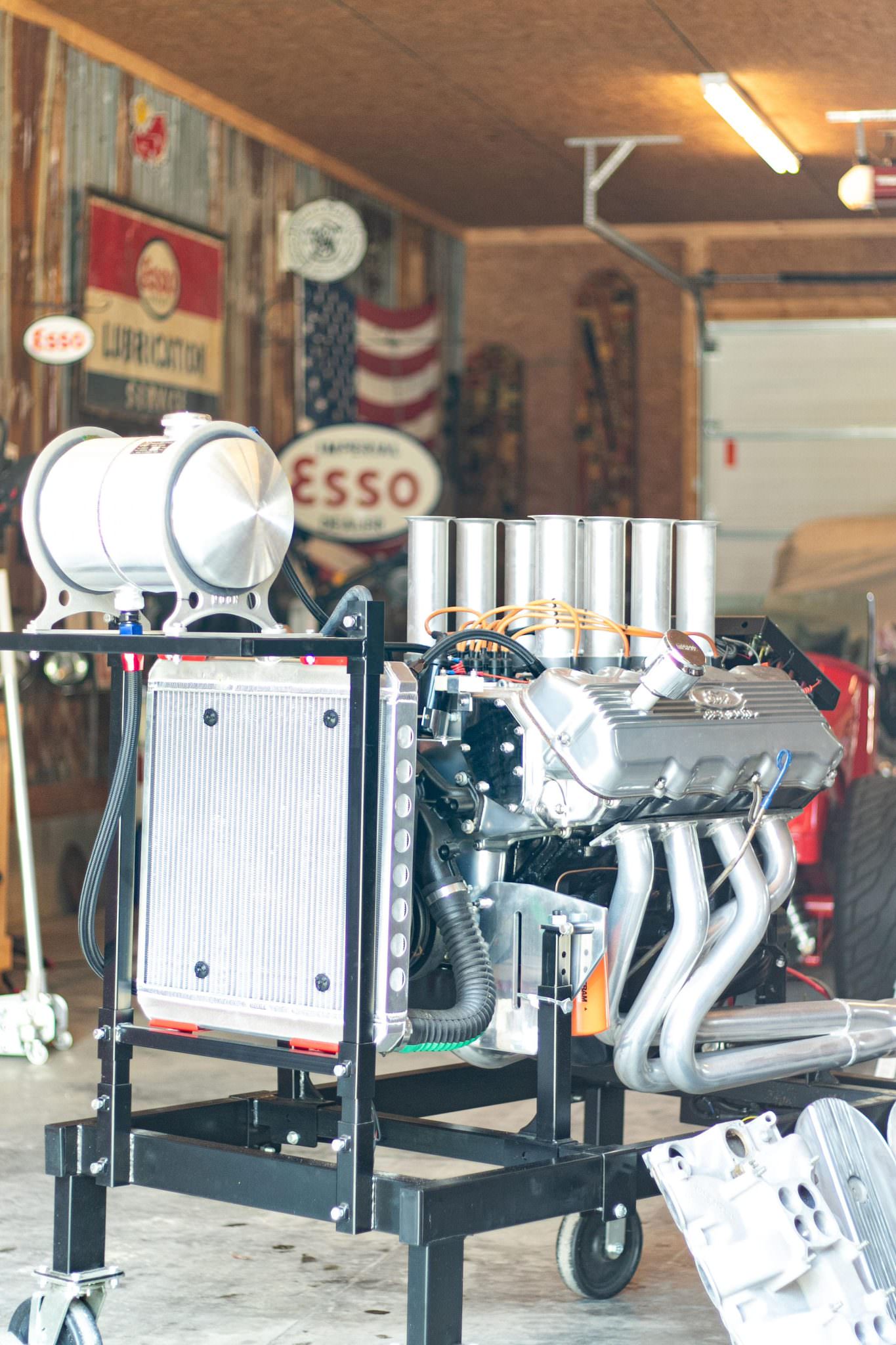
This is an original Ford “Cammer” SOHC V8 that is currently fitted to a run stand, and equipped with a radiator, battery, fuel source, and control panel allowing it to be run and demonstrated.
The Cammer, a nickname given to it after its release, was a wildcard engine development from Ford designed to take on the 426 Hemi in NASCAR. It never got the chance, but it did become one of the most interesting American engines of the era, and an early forefather of the modern day Ford Coyote V8.
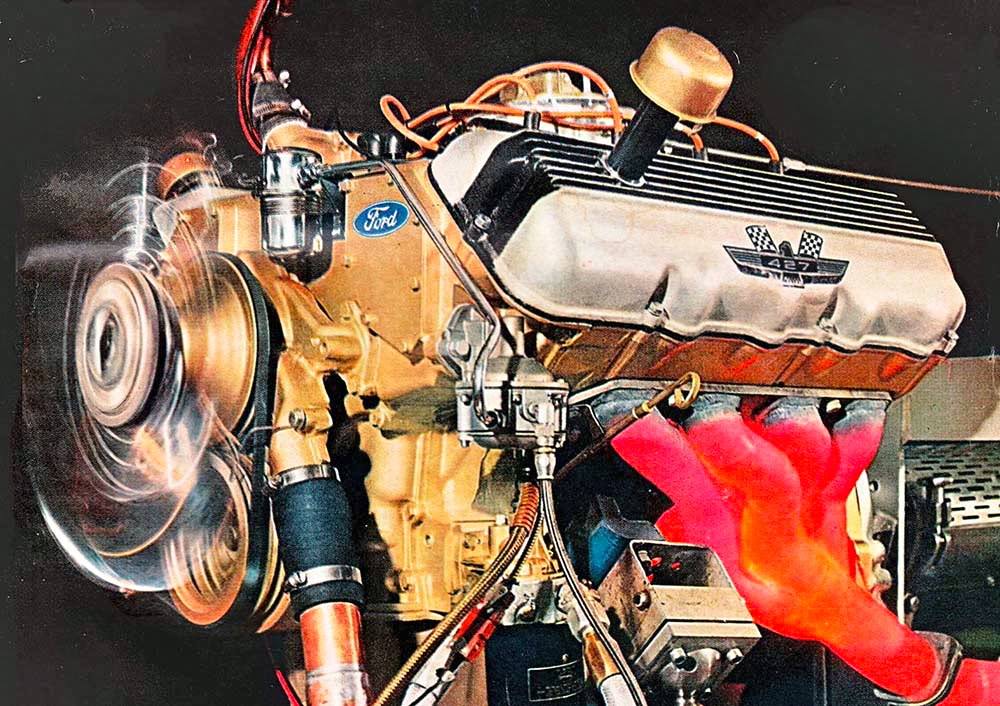
 Thanks in part to the fact that the Cammer could be run to higher-RPMs due to its overhead cams, it could run rather hot – as is demonstrated here. Image courtesy of Ford.
Ford’s Incredible Cammer V8
Chrysler’s introduction of the 426 Hemi in 1964 reshaped the competitive landscape of NASCAR, leaving rivals, including Ford, searching for a way to catch up. In response, Ford engineers turned to the reliable 427 FE big-block V8 as their foundation and gave it a revolutionary new upgrade.
This revolutionary upgrade was a technology that was already well-understood, and in use in many sports cars from Britain, Germany, and Italy. It was the use of an overhead cam. Almost all American engines of this era, and all of the American production V8s, used a cam-in-block which then actuated the overhead valves via pushrods and rockers.
Overhead cams do away with pushrods, and speaking in general terms, they allow higher RPM operation with more precise valve control. This is exactly what Ford needed if they were going to get more power out of the 427 FE big-block V8 – they couldn’t increase displacement any further due to NASCAR restrictions, but they could increase RPM and subsequently squeeze more power out.
The 427 SOHC Cammer was fitted with lightweight aluminum cylinder heads with large ports and oversized valves, which optimized airflow and improved heat dissipation. The overhead cams were chain operated, and this was perhaps the engine’s one key design flaw.
In fairness to the engineers working on the project, they had a small team, a compressed timeline, and a limited budget. The fact they they got the engine designed and out the door at all is a miracle, particularly given the volume of new parts that needed to be designed.
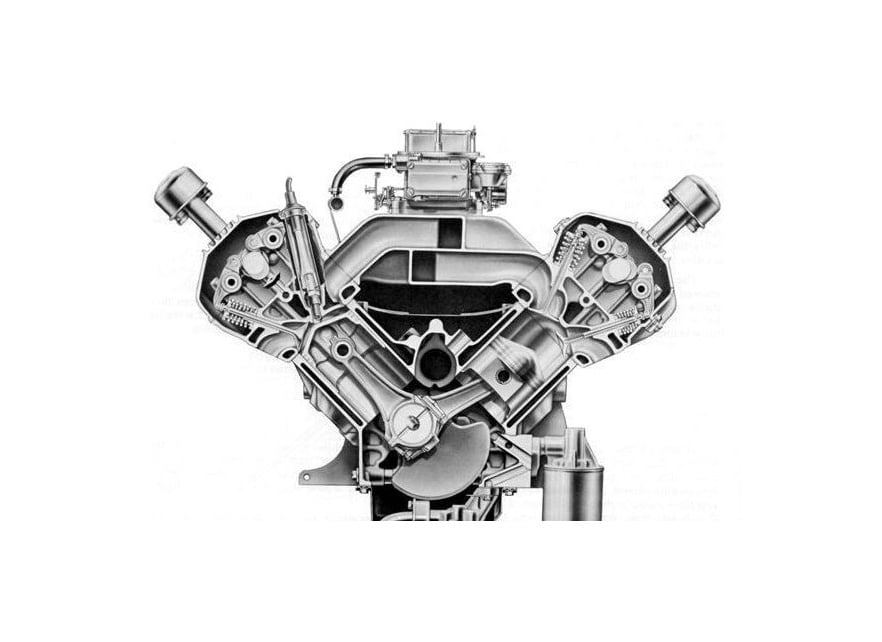
This is a cutaway illustration of the Ford 427 SOHC V8, showing the internal layout of the engine. Image courtesy of Ford.
The timing chain issues were perhaps predictable, as Ford engineers had created a 6 foot long timing chain to operate both cams simultaneously. This was almost certainly due to the short development timeline, as development of a gear-driven cam system was deemed too time consuming to pursue.
On its release the Ford 427 SOHC Cammer V8 was rated at 616 bhp at 7,000 rpm and 515 lb ft of torque at 3,800 rpm – excellent figures by the standards of the mid-1960s.
Sadly the Cammer would never get to turn a wheel in NASCAR competition as the rules were changed to ban special racing engines, the series was supposed to be for stock cars not prototype specials.
The ban affected the Ford Cammer and the Chrysler 426 Hemi, Chrysler sat out the 1965 racing season in protest and Ford made do with their earlier 427 V8 “Wedge.”
Members of the Cammer drag racing community largely solved the issues with the engine, developing stretch-resistant chromoly cam chains, improved oiling, and more, eventually developing Cammers with up to 2,500 bhp.
Though Ford never put the Cammer V8 into a production car the engine has been fitted to a number of road-legal cars over the years, including this Ford Mustang Mach 1.
The Ford 427 SOHC Cammer V8 Shown Here
This is a Ford 427 Cammer V8 that we previously featured on Silodrome mid-last year when it came up for sale originally. It now remains in the same condition it was in then, and it’s now looking for a new owner.
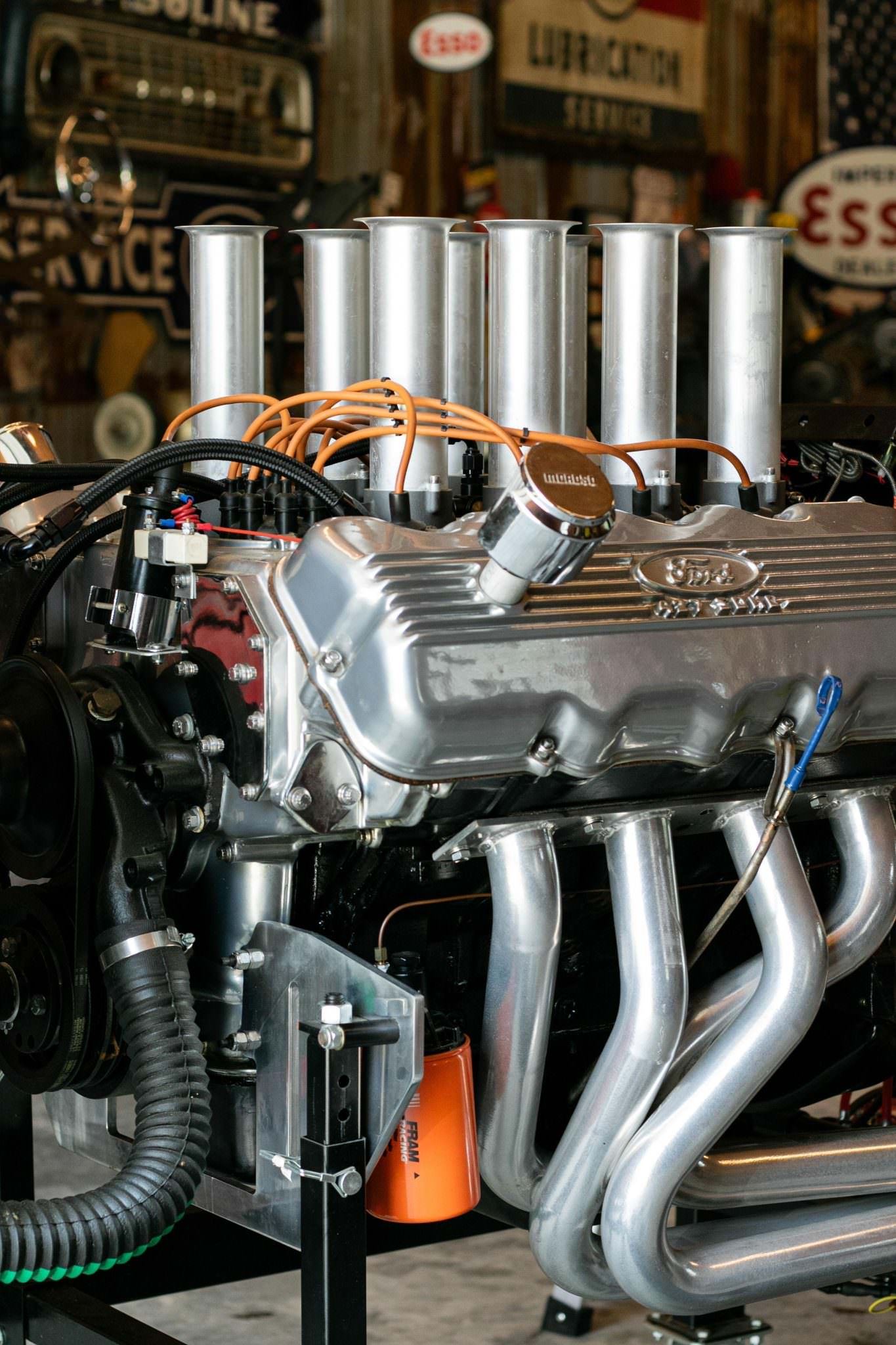
This is an original Ford “Cammer” SOHC V8 that is currently fitted to a run stand, and equipped with a radiator, battery, fuel source, and control panel allowing it to be run and demonstrated.
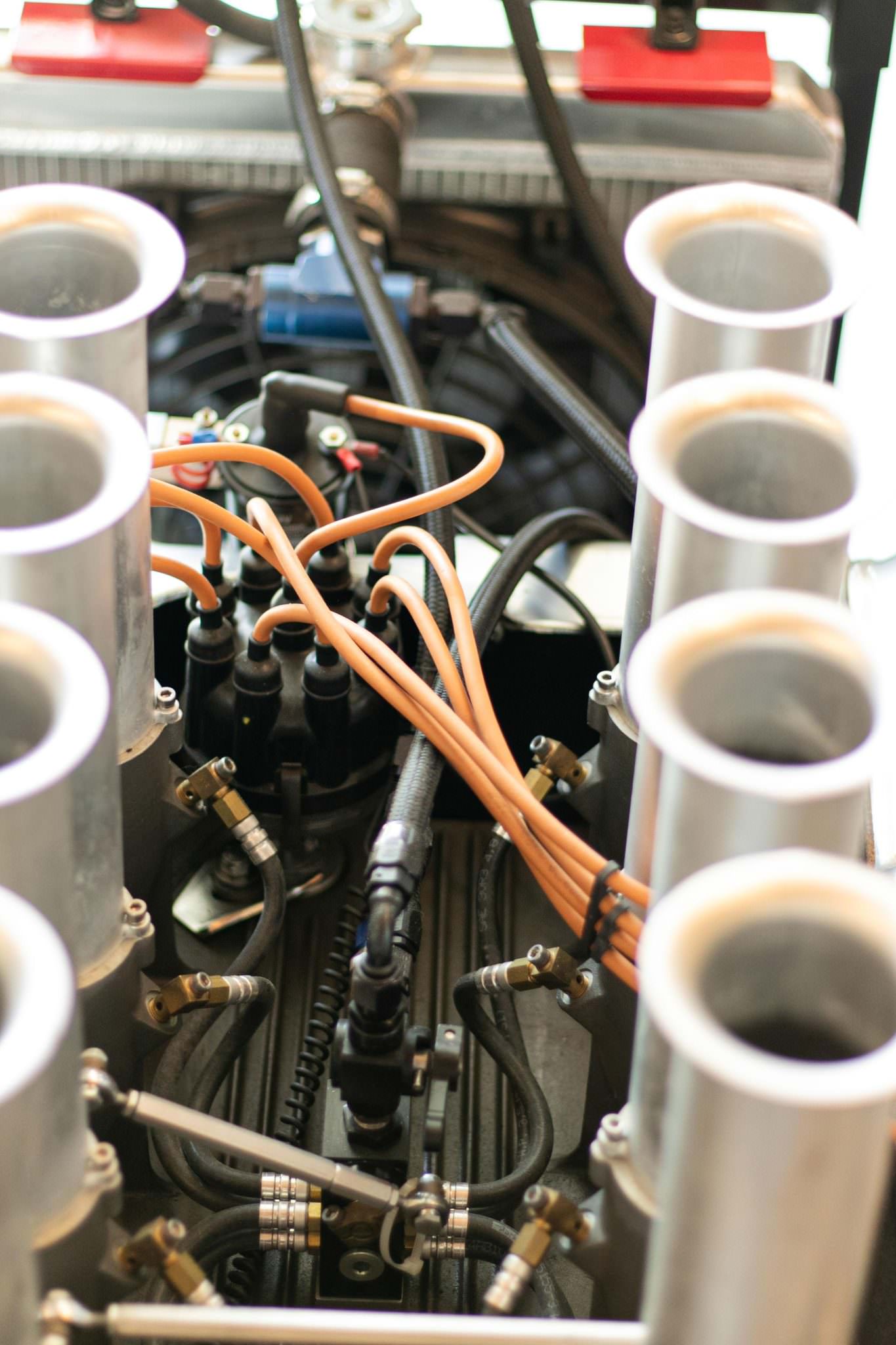
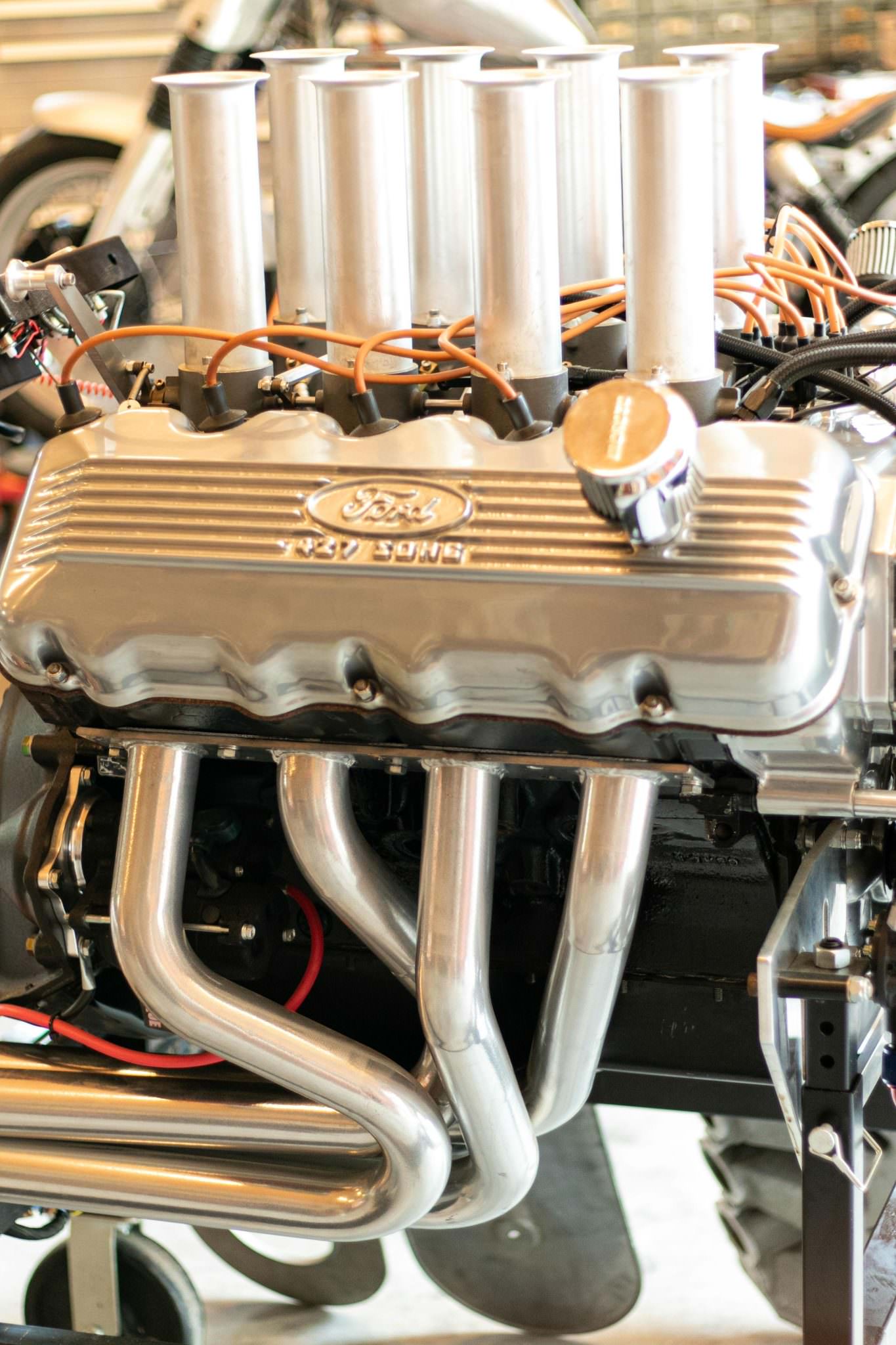
The engine is fitted to a black steel run stand equipped with a radiator, battery, fuel, and control panel, allowing it to be run for demonstration purposes. The engine is fitted with long tube headers, finned valve covers, and an unusual eight-stack fuel injection system fitted with long tube velocity stacks.
It’s now being offered for sale out of West End, North Carolina on Bring a Trailer and you can visit the listing here if you’d like to read more about it or register to bid.
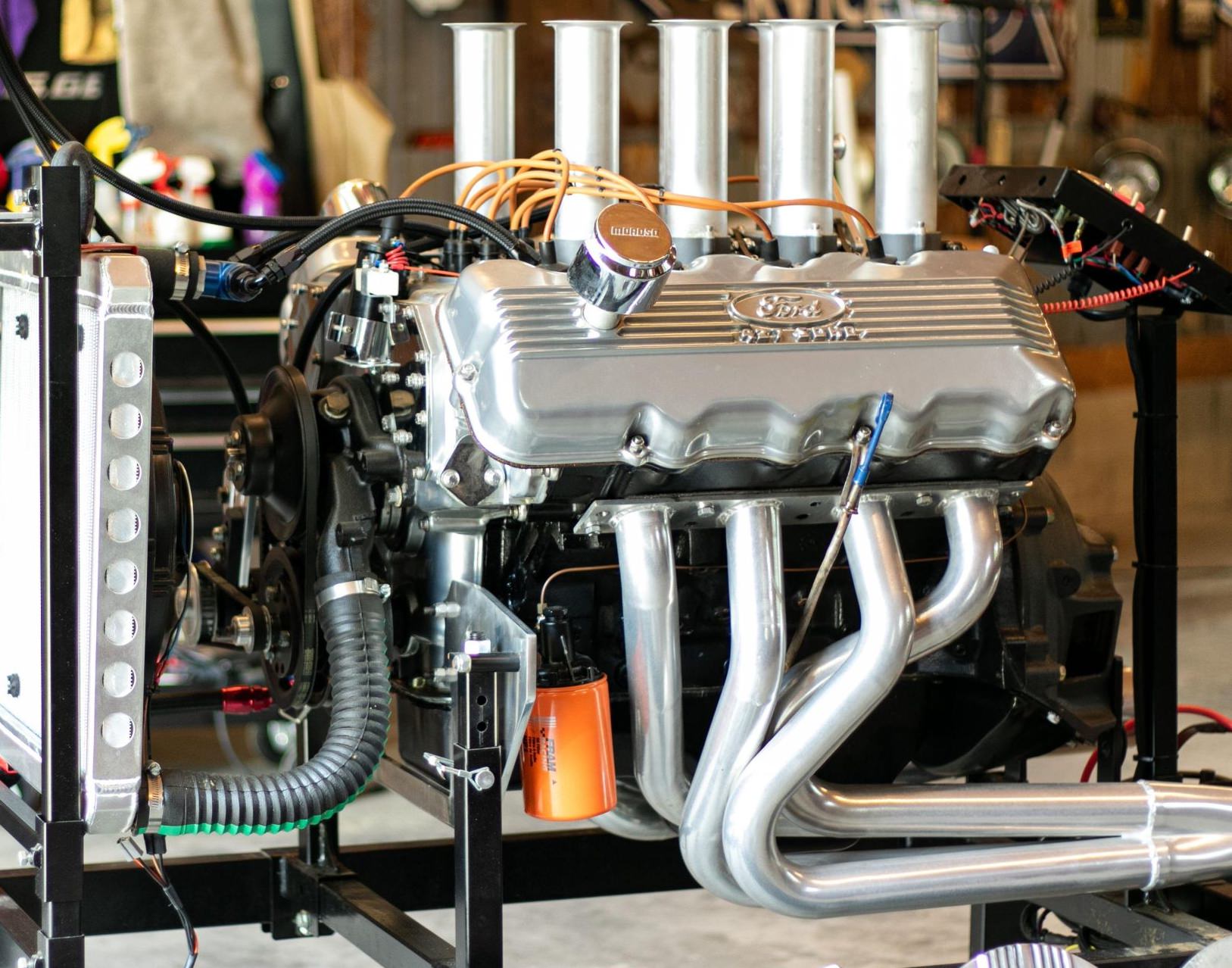
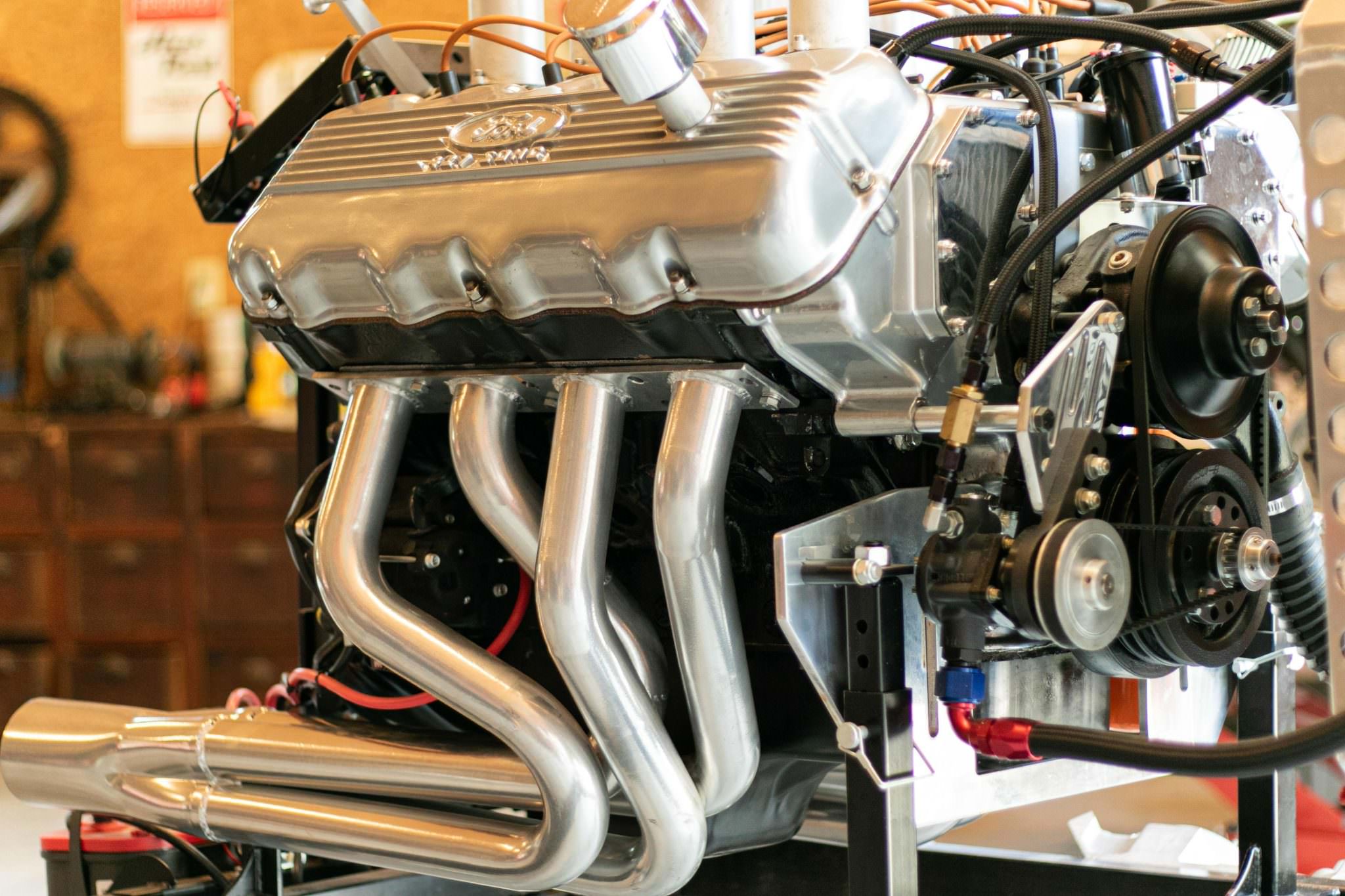
Images courtesy of Bring a Trailer

Articles that Ben Branch has written have been covered on CNN, Popular Mechanics, Smithsonian Magazine, Road & Track Magazine, the official Pinterest blog, the official eBay Motors blog, BuzzFeed, Autoweek Magazine, Wired Magazine, Autoblog, Gear Patrol, Jalopnik, The Verge, and many more.
Silodrome was founded by Ben back in 2010, in the years since the site has grown to become a world leader in the alternative and vintage motoring sector, with well over a million monthly readers from around the world and many hundreds of thousands of followers on social media.