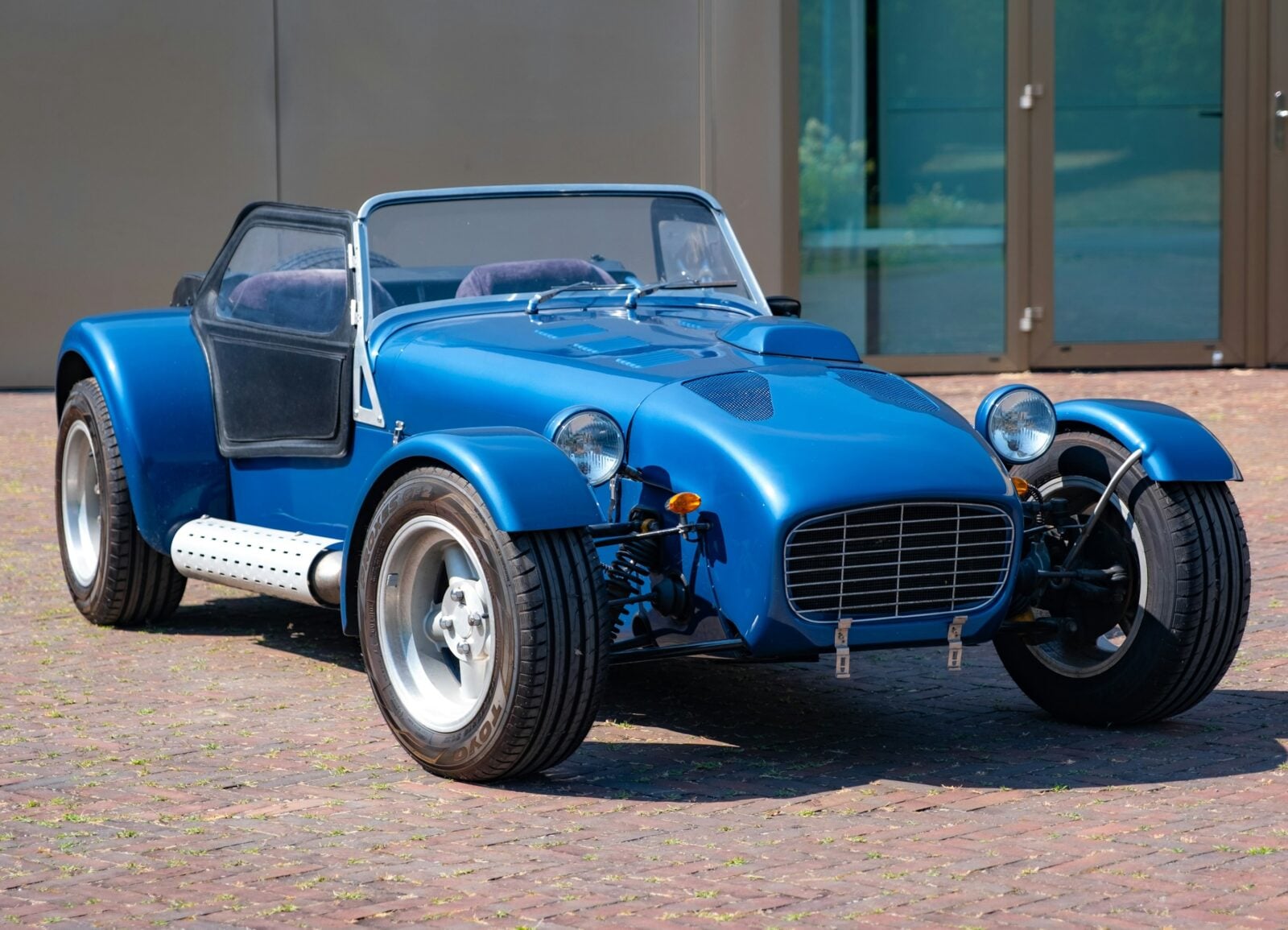
This is a rare Donkervoort S8 “Super Eight” from 1984. It’s a Dutch-built clubman style car, a format made popular by the Lotus 7, with the no-nonsense Dutch take on the genre by Donkervoort having become popular not just across Europe, but around the world.
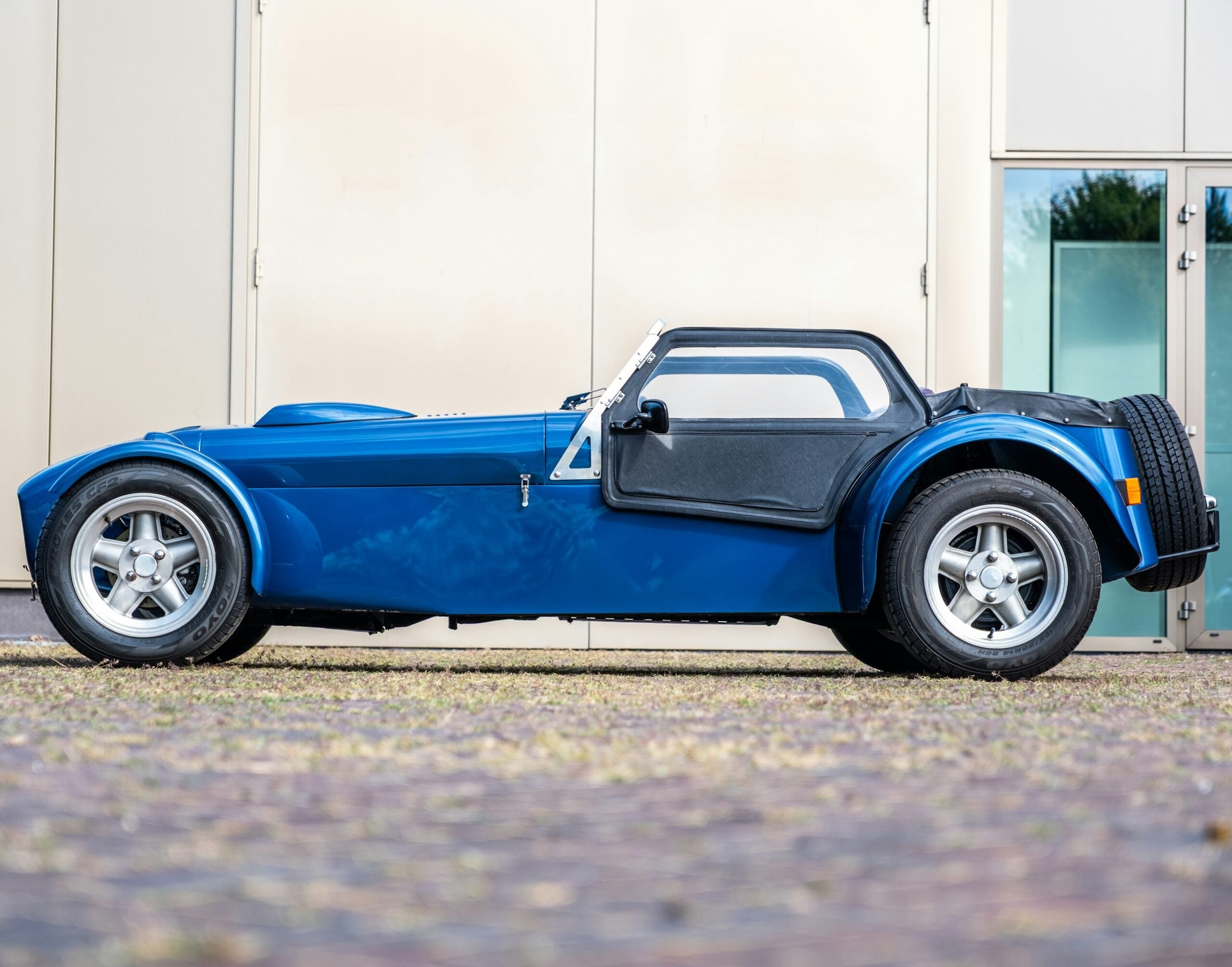
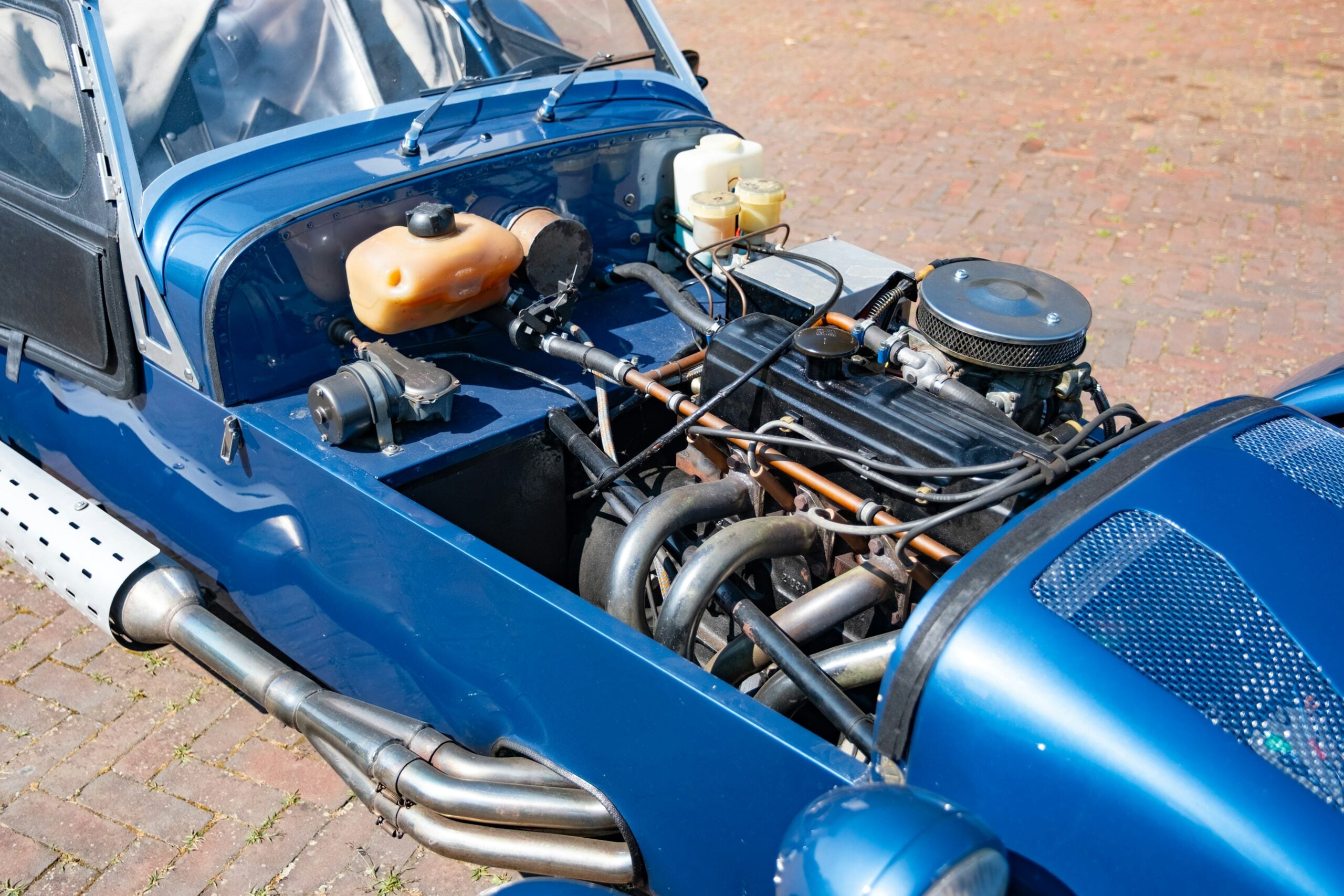
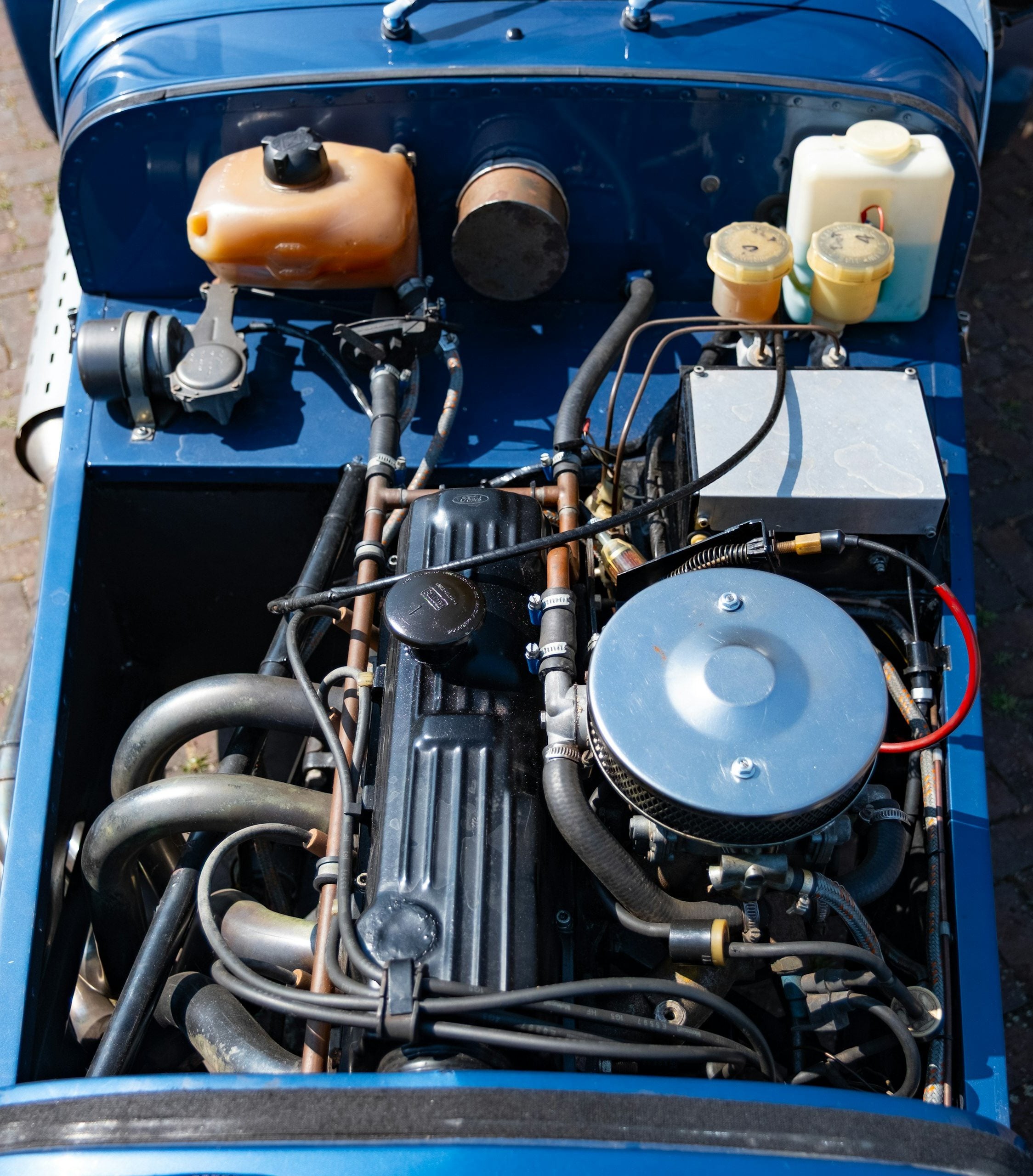
The S8 shown here is powered by a 2.0 liter Ford inline-four driving the rear wheels through a 5-speed manual gearbox – giving it a little more poke than the Kent-powered Caterhams of the same era. This car is left-hand drive, and it’s finished in Blue Metallic over a Black interior.
 This is a rare Donkervoort S8 “Super Eight” from 1984. It’s a Dutch built clubman style car, a format made popular by the Lotus 7, with the no-nonsense Dutch take on the genre by Donkervoort having become popular not just across Europe, but around the world.
History Speedrun: Donkervoort
Joop Donkervoort started Donkervoort Automobielen back in 1978 after taking over the Dutch Lotus Seven concession. The kits he had bought the rights to couldn’t pass Dutch type approval, and thus couldn’t be used on public roads, so he reworked the chassis until the RDW signed off on it. That car became the Donkervoort S7, built in a shed in Tienhoven around a 1.6 liter Ford four rated at 90 bhp, with a 4-speed gearbox and a curb weight of just 525 kgs (1,157 lbs).
The Donkervoort S8 came next in 1980, followed in 1985 by the fuel-injected Donkervoort S8A, with the “A” appended for Joop’s daughter Amber. The S8A used glued and riveted aluminum panels as stressed members and a multi-link rear axle designed by computer, and Donkervoort quoted 117 bhp and 205 km/h (127 mph) for it.
The turbocharged Donkervoort S8AT followed, developed in part because catalytic converters had cost the Ford engines some power. Donkervoort combined the 2.0 liter Ford block with a Garrett turbocharger and Cosworth internals for 170 bhp. For the company’s tenth anniversary in 1988 came the Donkervoort D10, shown at the Paris Motor Show without windshield or spare wheel and limited to just 10 cars.
The Donkervoort D8 replaced the S-series in the early 1990s, first with Ford Zetec engines and later the Cosworth YB. In 1999 Donkervoort switched to Audi’s turbocharged 1.8 liter 20-valve four, moved into a purpose-built factory at Lelystad in 2000, and brought chassis welding in-house in 2003.
Michael Düchting’s 7:14.89 Nordschleife lap in a D8 RS during the mid-2000s put the marque in front of a major international audience, and showed just how far ahead of their closest rivals, Caterham, they were at the time.
Audi’s 2.5 liter five-cylinder engine arrived with the D8 GTO prototype unveiled in December of 2011, with production following in 2013, and carried the company through the Donkervoort GTO JD70 and the 750 kgs (1,653 lbs) F22. Joop retired from the company in January of 2021 and his son Denis took over.
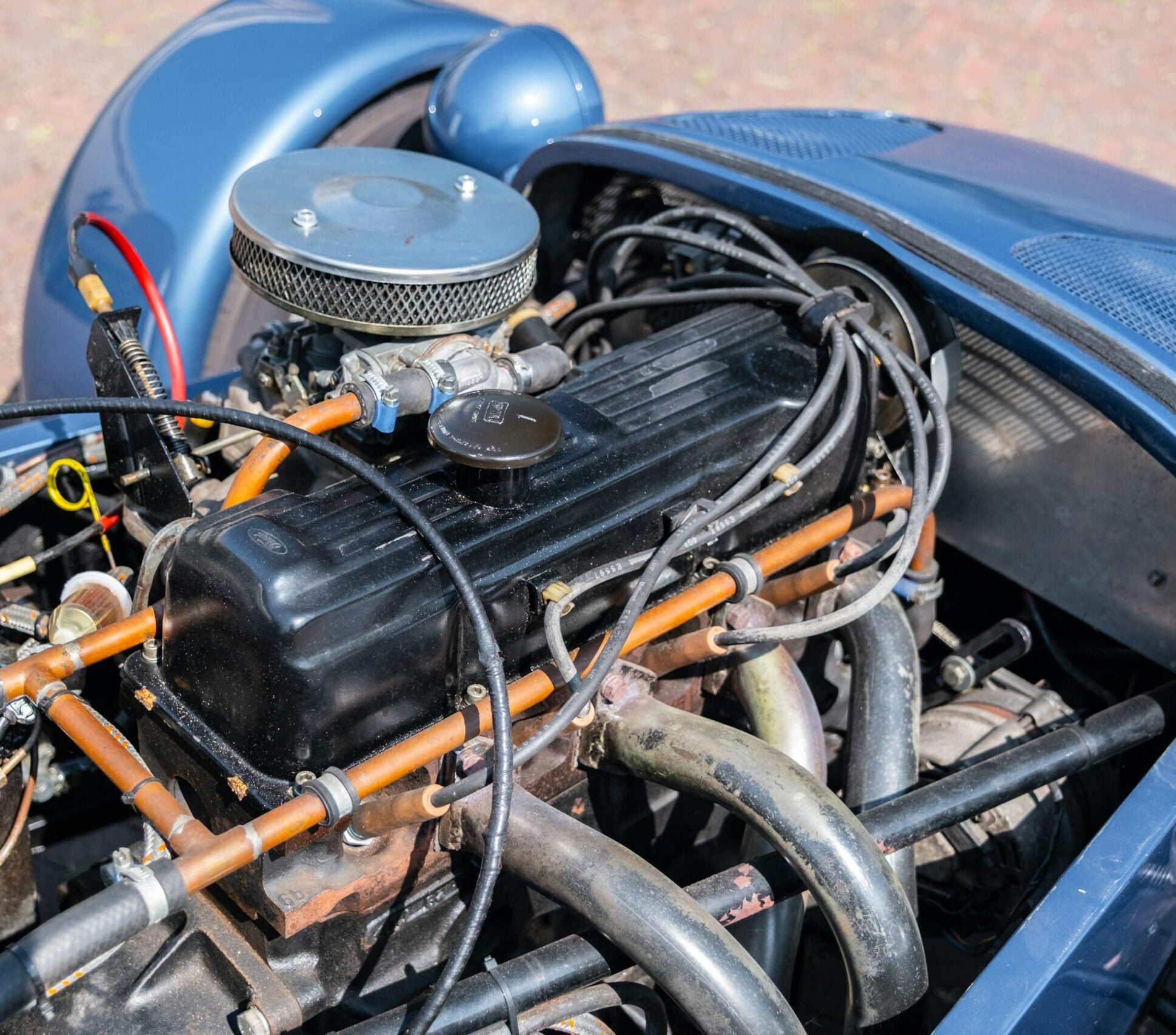
The S8 shown here is powered by a 2.0 liter Ford inline-four driving the rear wheels through a 5-speed manual gearbox – giving it a little more poke than the Kent-powered Caterhams of the same era. This car is left-hand drive, and it’s finished in Blue Metallic over a Black interior.
The current Donkervoort P24 RS, launched in early-2026, uses a heavily re-engineered, Ford EcoBoost-based 3.5 liter twin-turbo V6 with switchable power settings of approximately 395, 493 and 592 bhp. Donkervoort has built roughly 1,700 cars in total, at the time of writing.
The Donkervoort S8 “Super Eight”
The Donkervoort S8 was the second Donkervoort production car and the model that turned a one-man workshop into a serious going concern. It arrived in 1980, built at Tienhoven, and made a debut tour of the Paris, Geneva, Frankfurt, Brussels and Amsterdam motor shows that brought in orders from outside the Netherlands for the first time.
The model name did some quiet work, Lotus and subsequently Caterham had the Seven, Donkervoort offered an Eight, and the implication that this was the Seven done one better followed the model for the rest of its life.
Under the S8’s long hood sat a 2.0 liter Ford SOHC four in place of the S7’s 1.6, quoted by the factory at 110 bhp at 5,400 rpm and driving through a 5-speed gearbox. The front track was widened for better cornering. Braking was handled by a dual-circuit system with adjustable front-to-rear balance, unusual on a car of this type in the period, and two aluminum fuel tanks were mounted ahead of the rear axle.
That layout helped weight distribution and freed up enough space behind them to make the S8 usable over distance, which the S7 had not been. Construction stayed conventional for the breed, with a welded steel tube frame clothed in aluminum panels, with a live rear axle and Ford and Triumph-derived running gear.
At 625 kgs (1,378 lbs) the S8 carried about 100 kgs (220 lbs) more weight than the S7, but it was the quicker car. Donkervoort claimed 0 to 100 km/h in 6.0 seconds and a top speed of 190 km/h (118 mph). In 1980 that put a hand-built Dutch roadster into the same acceleration bracket as production sports cars costing considerably more, and it did so with no power steering, no anti-lock brakes, and nothing between the driver and the road but a thin aluminum floor. This was real seat-of-the-pants motoring.
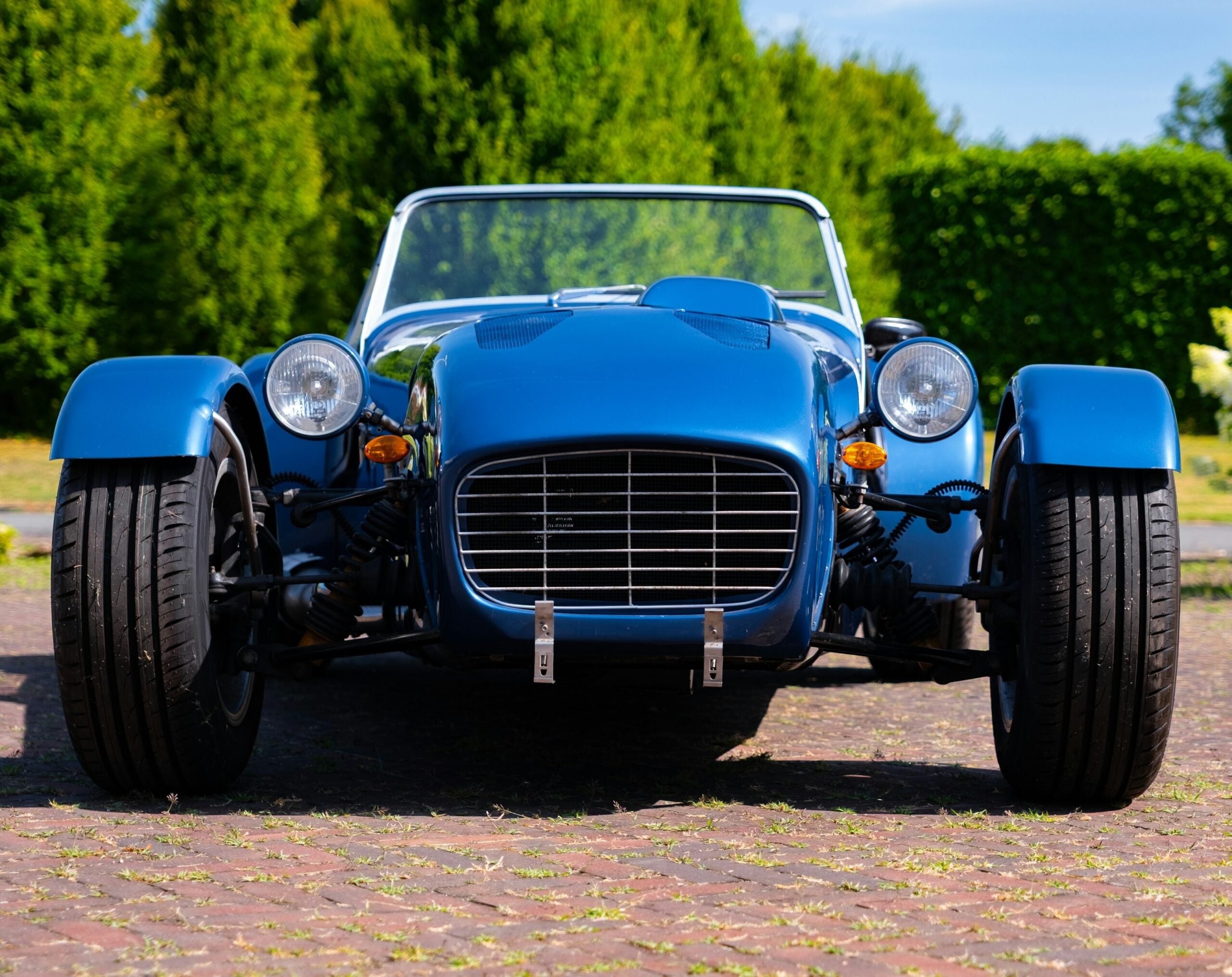
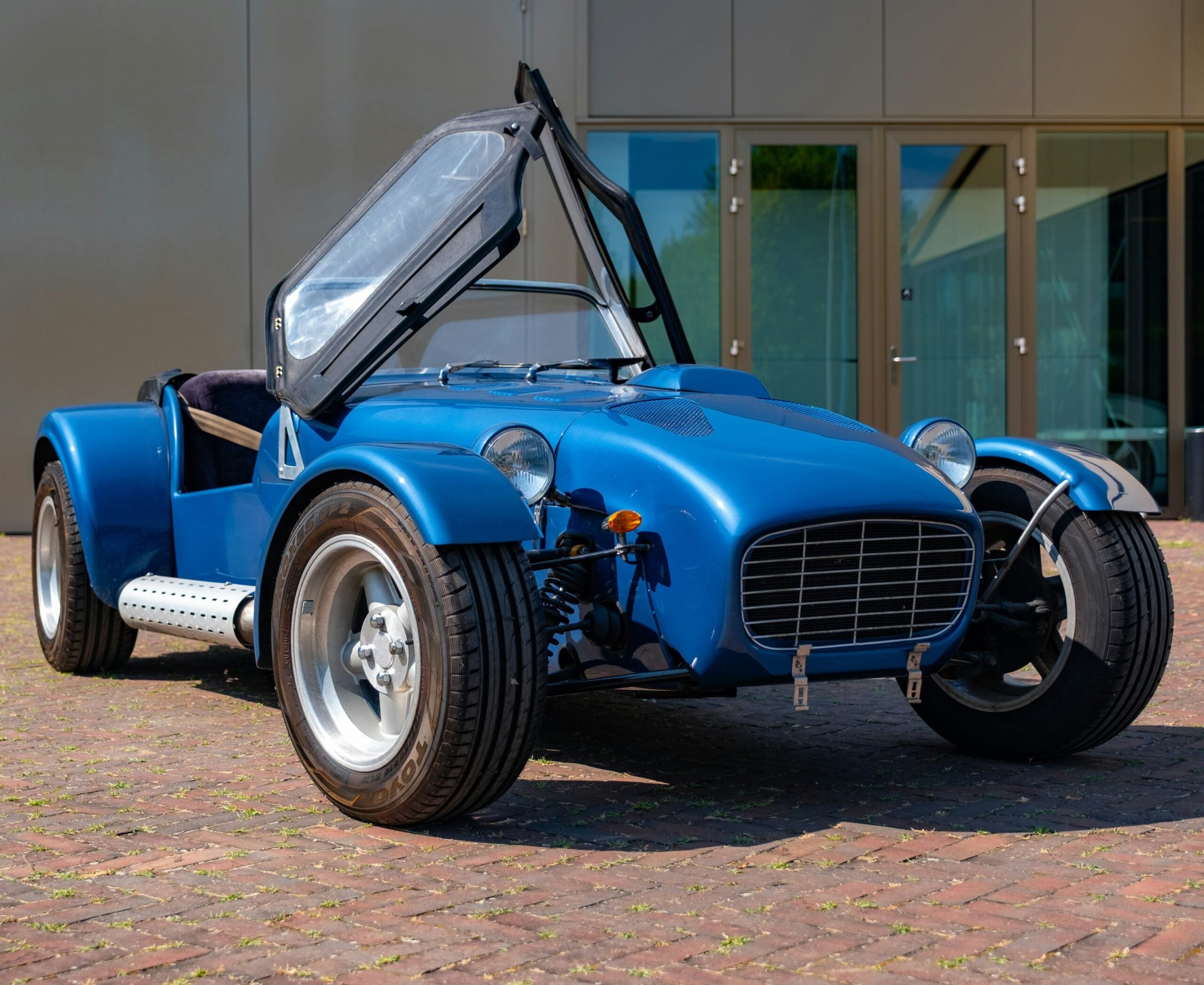
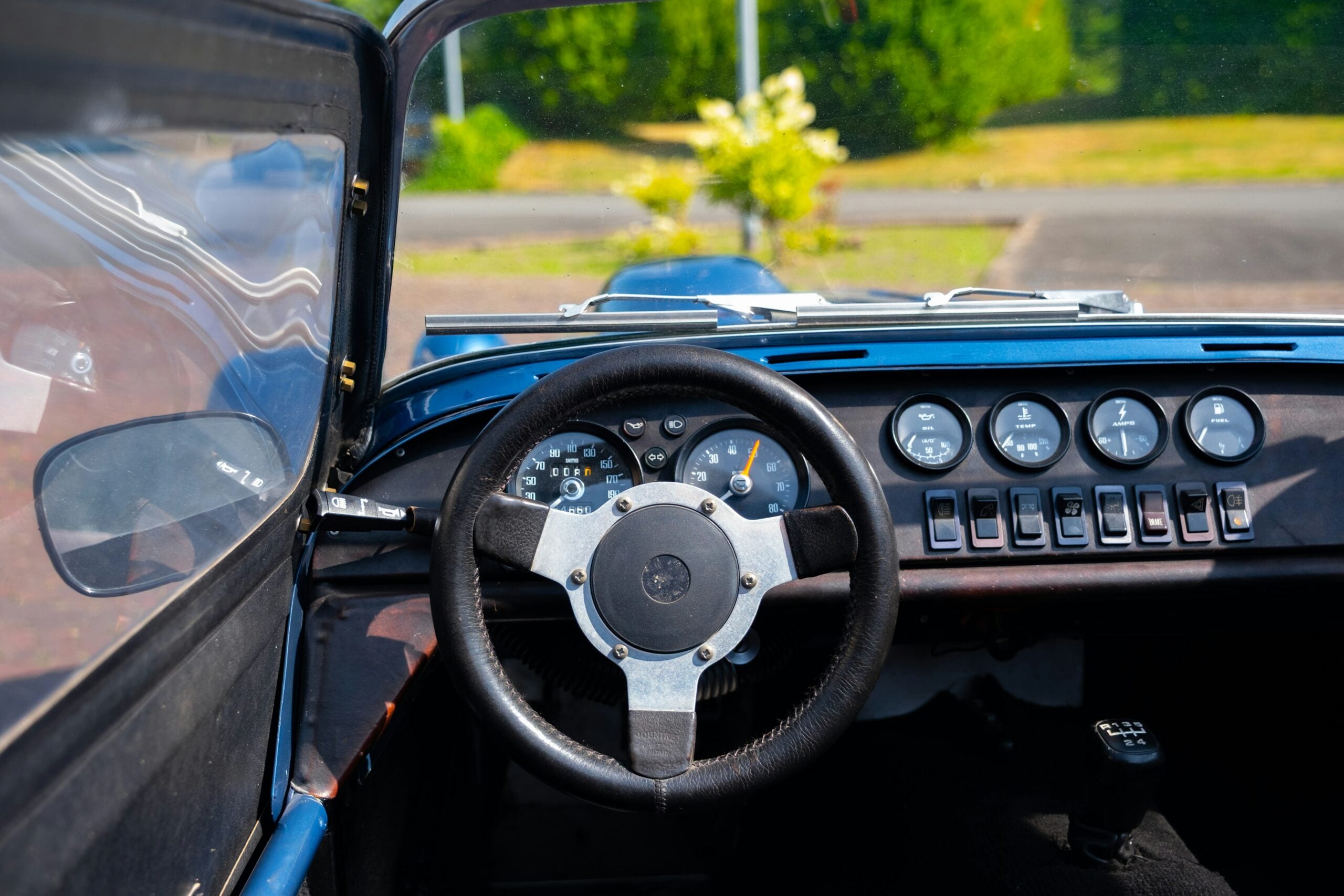
This car is chassis JD0082, it’s an early Donkervoort S8 “Super Eight” that was first registered in the Netherlands in July of 1984. It runs the naturally-aspirated 2.0 liter Ford inline-four driving the rear wheels through a 5-speed manual gearbox. The odometer shows 64,660 kms, which is just over 40,000 miles.
The S8 wasn’t replaced in the Donkervoort line-up so much as it was joined by other models. When the S8A appeared in 1985 with fuel injection, a wider and lighter chassis and independent rear suspension, the original carbureted car stayed in the price list for several more years before production ended.
The factory dates the last S8A leaving Loosdrecht to 1992, though some say 1993. 140 S7s and S8s were built at Tienhoven before the move to Loosdrecht, and Donkervoort doesn’t appear to publish an official total production figure covering the complete S-series.
Donkervoort now treats its early cars as a business in their own right. The company runs a dedicated Classics division that will restore anything it has built, and says interest in the S7 and S8 has picked up in recent years. In 2024 it returned Joop’s own restored 1980 S8 demonstrator to him, having tracked the car down more than 40 years after it left his hands.
The Donkervoort S8 “Super Eight” Shown Here
This car is chassis JD0082, it’s an early Donkervoort S8 “Super Eight” that was first registered in the Netherlands in July of 1984. It runs the naturally-aspirated 2.0 liter Ford inline-four driving the rear wheels through a 5-speed manual gearbox. The odometer shows 64,660 kms, which is just over 40,000 miles.
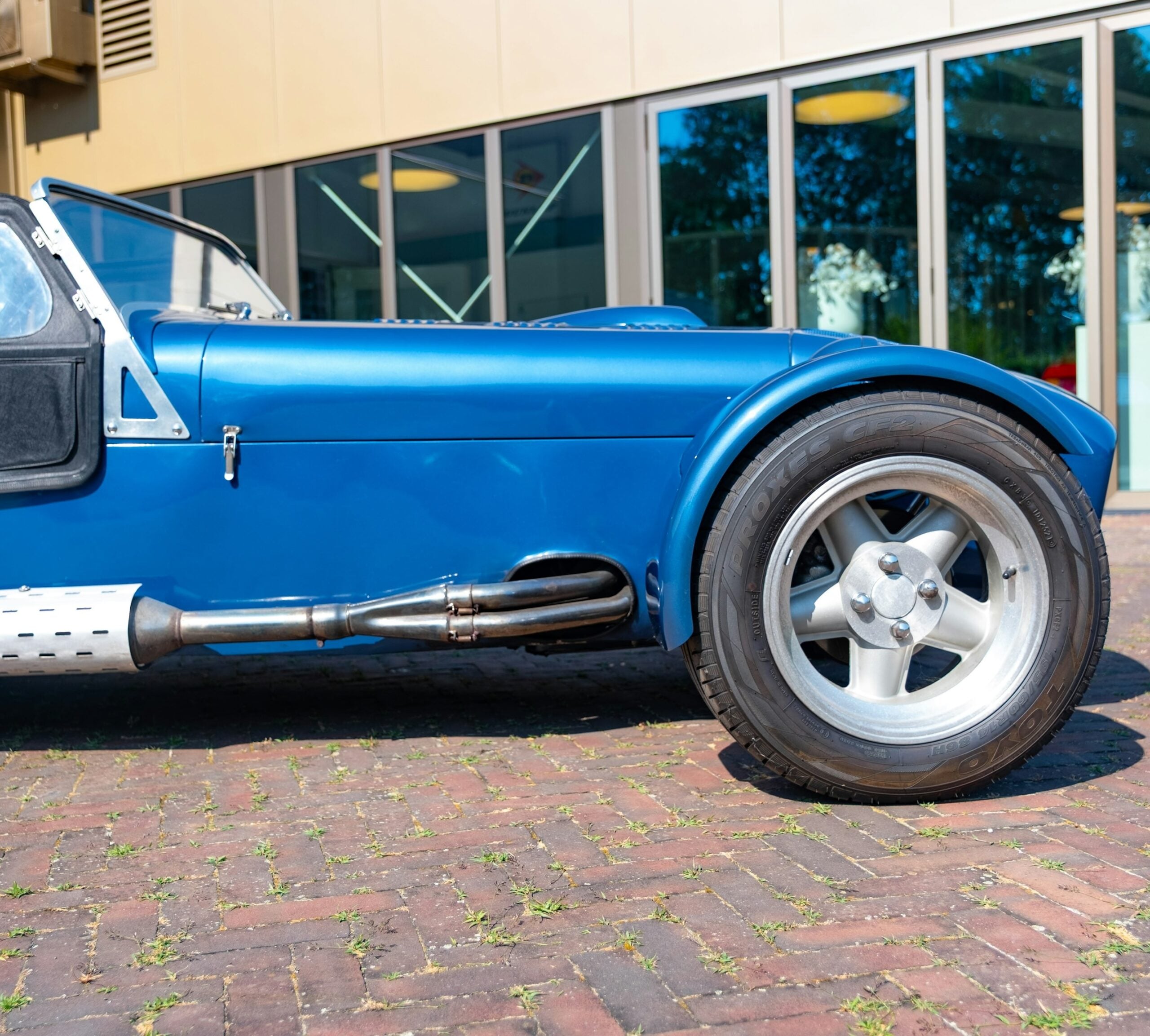
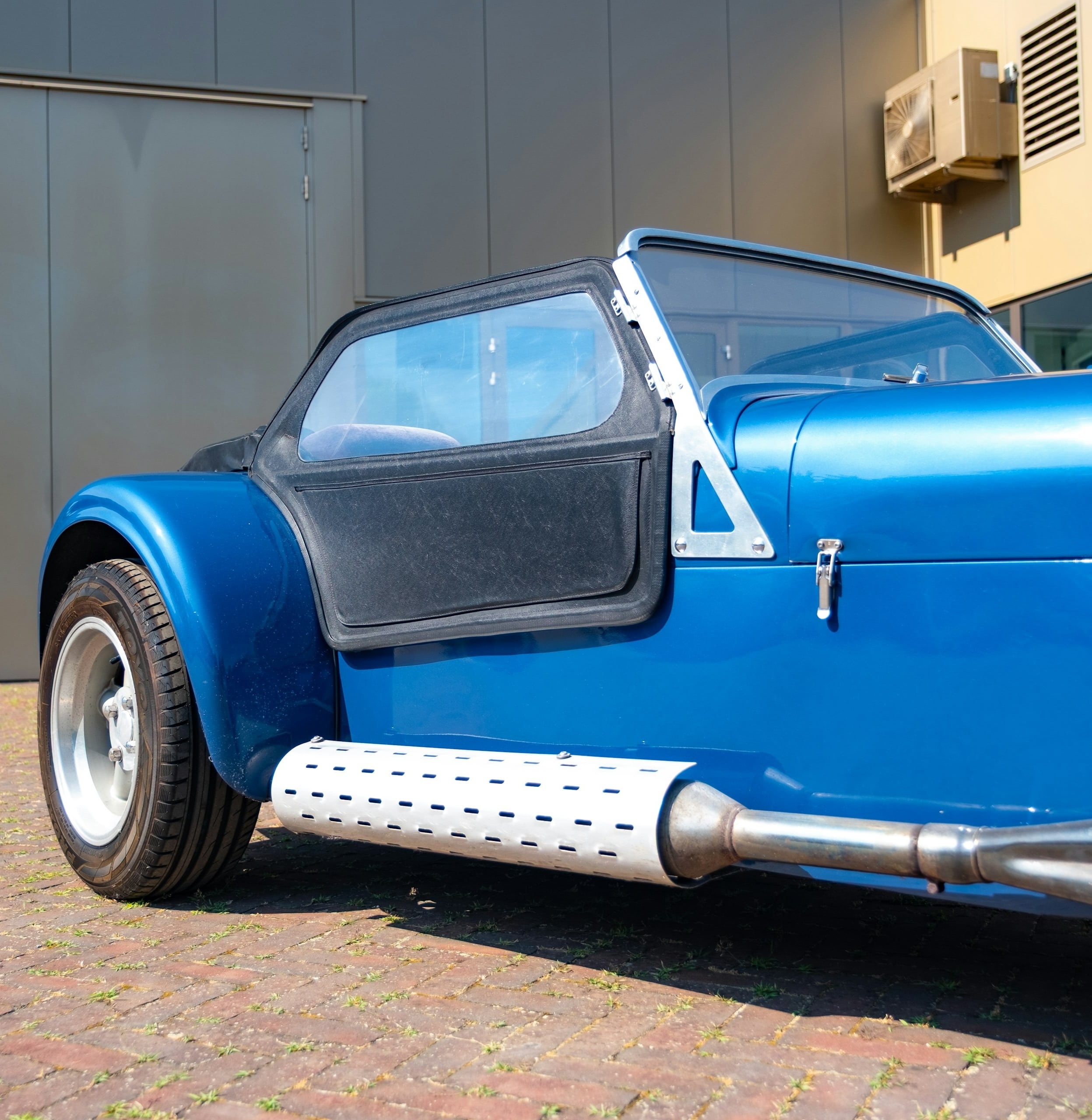
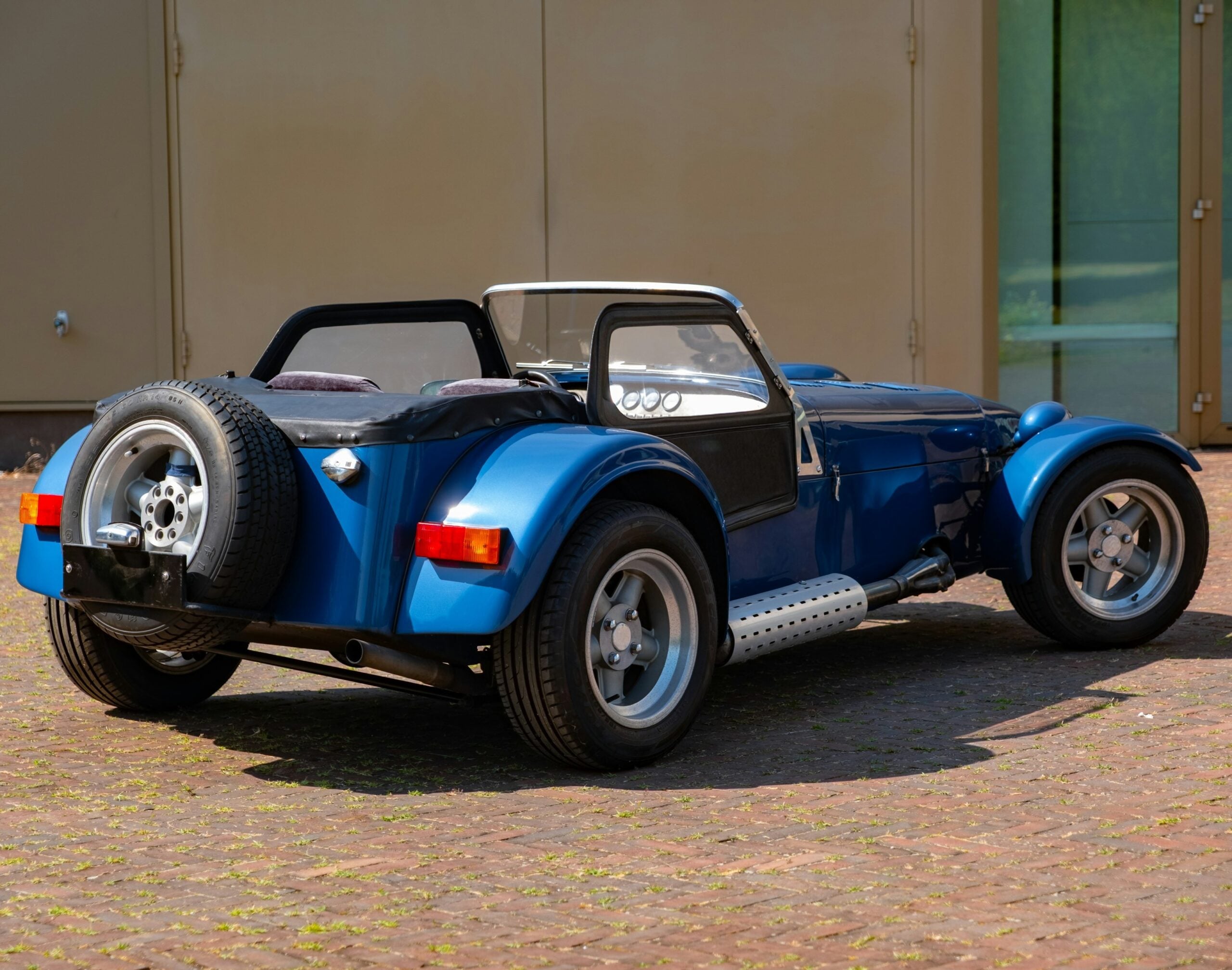
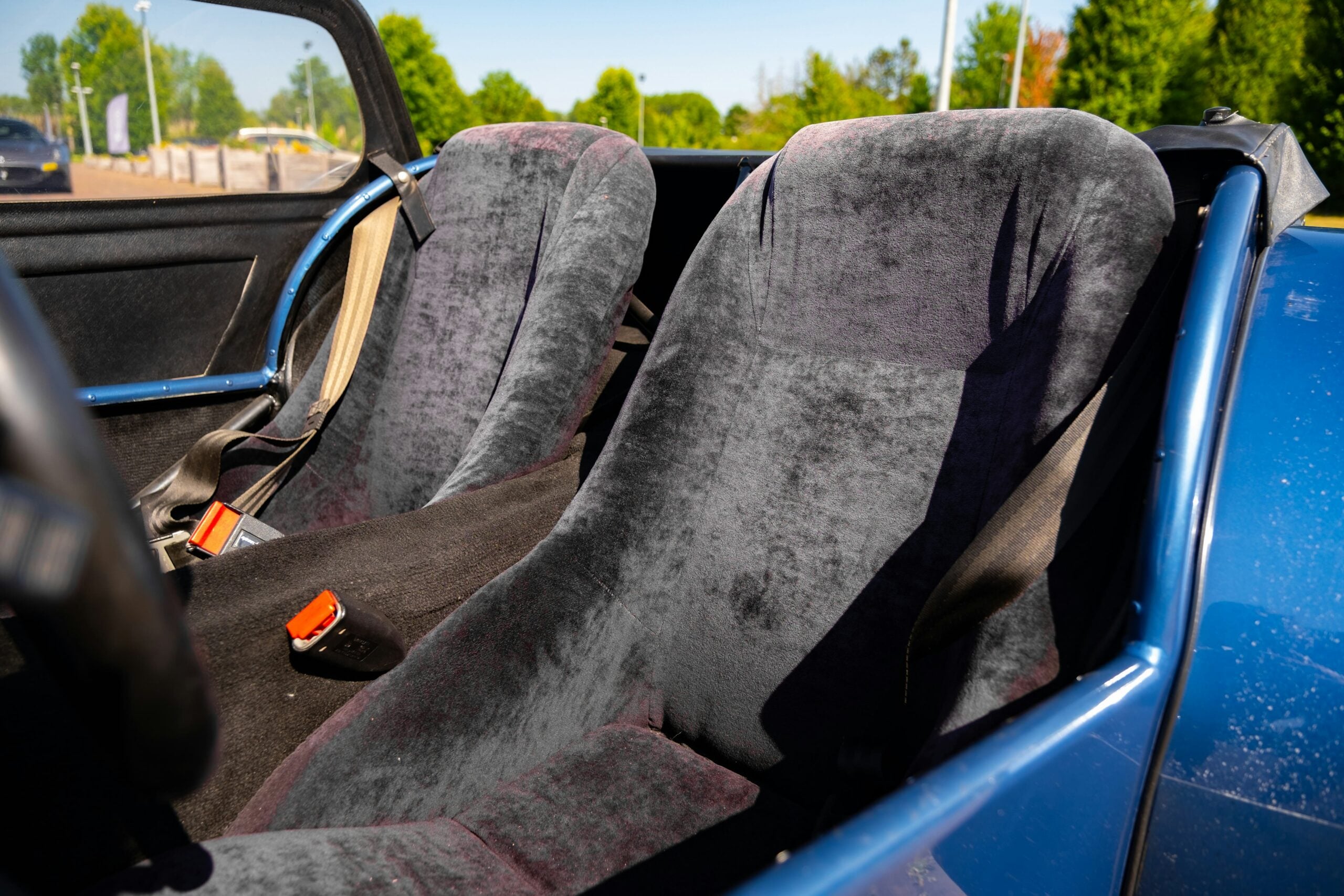
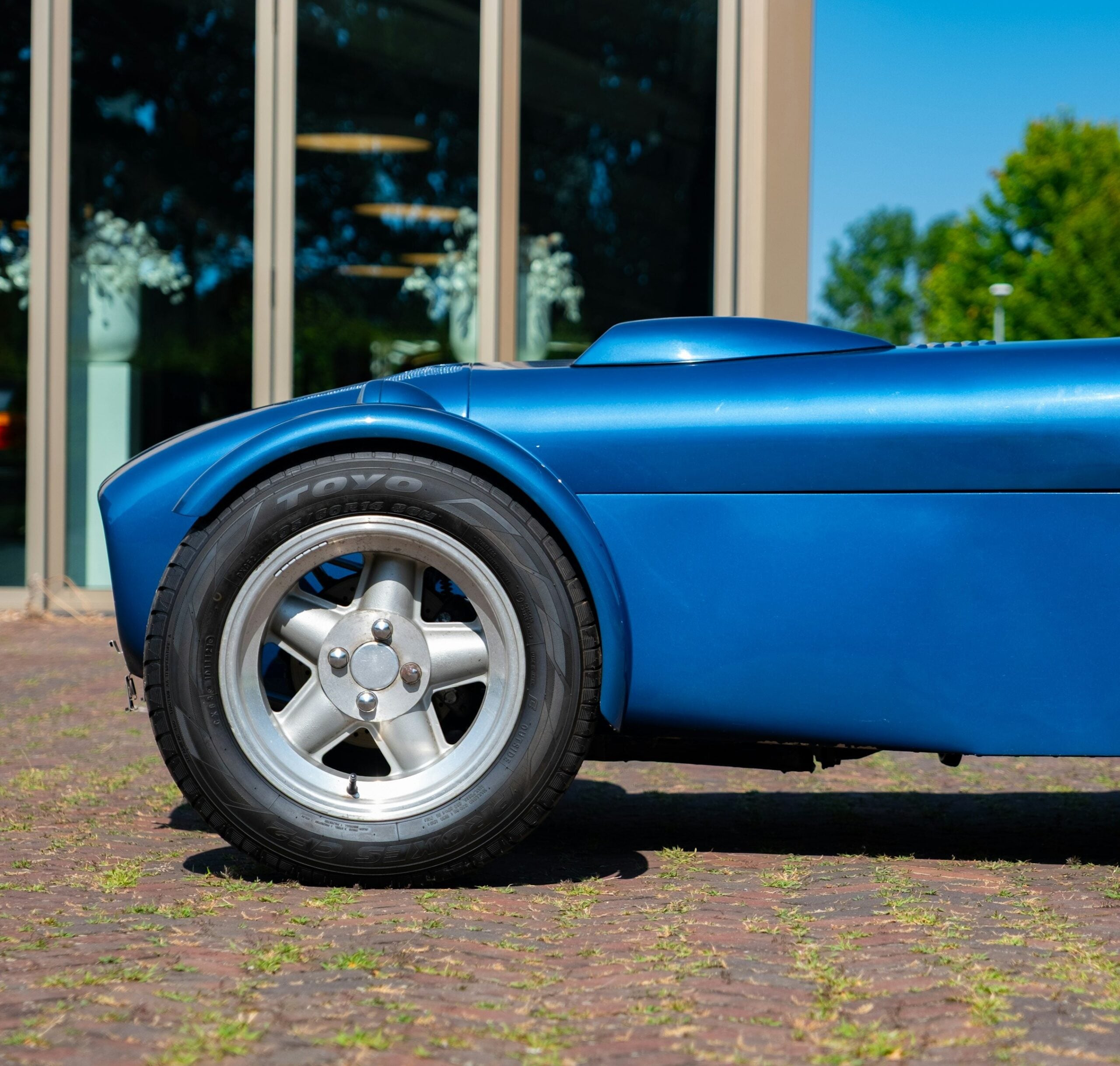
This S8 is said to have stayed with its first owner for 37 years before passing to the current owner and now seller in 2021. It’s finished in metallic blue over a black interior trimmed in vinyl and cloth, and rides on 14 inch five-spoke alloy wheels wearing Toyo Proxes CF2 tires.
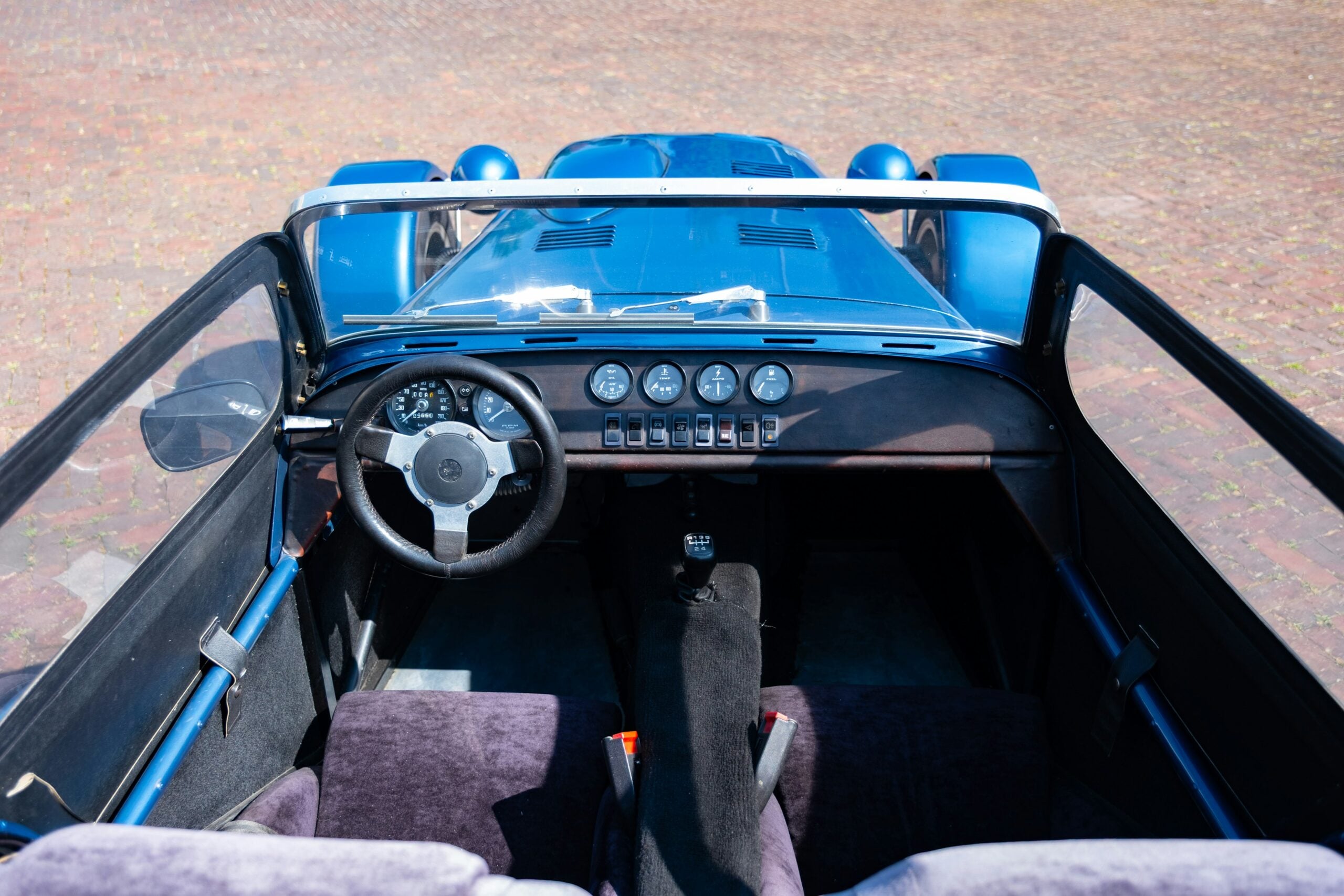
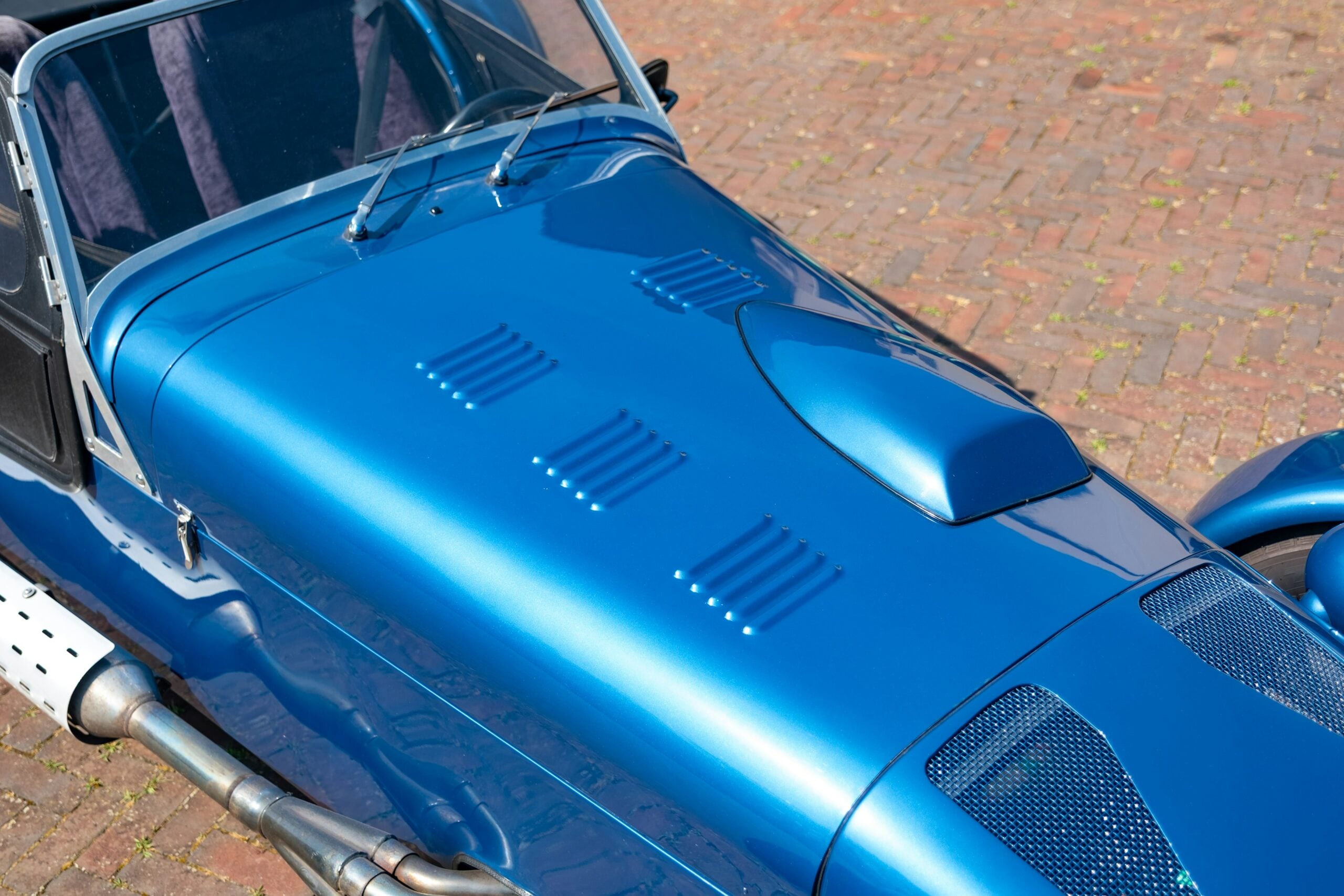
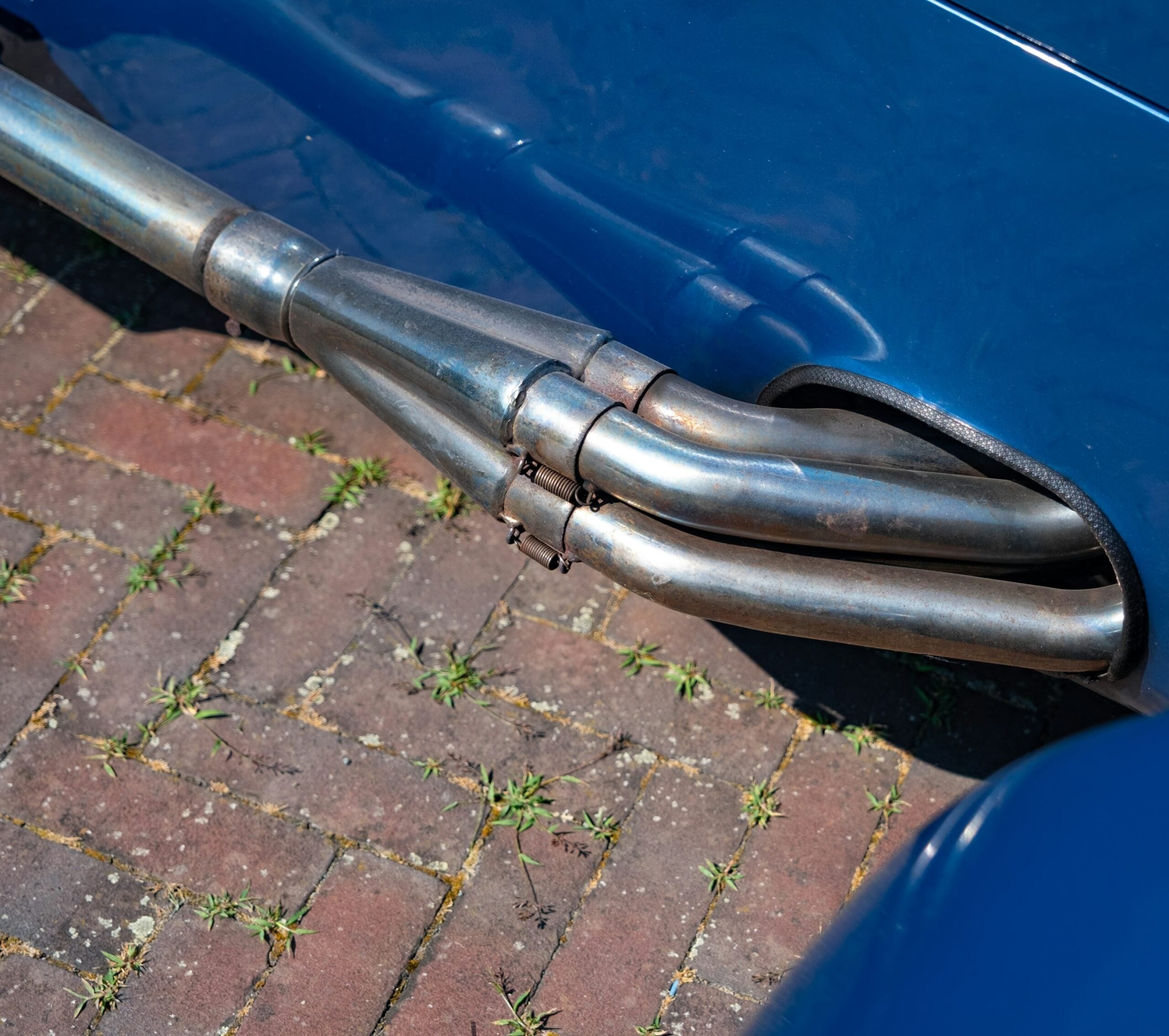
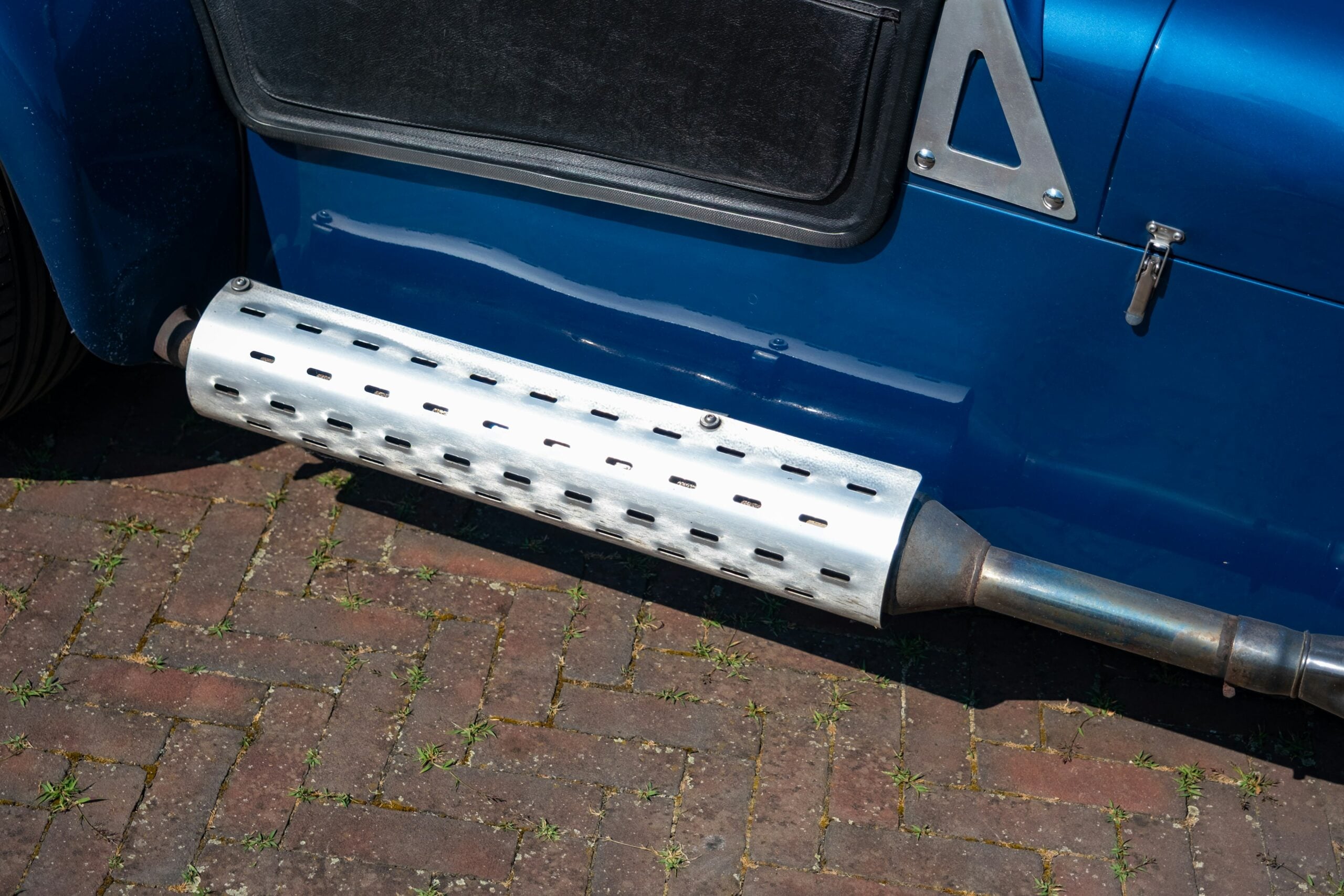
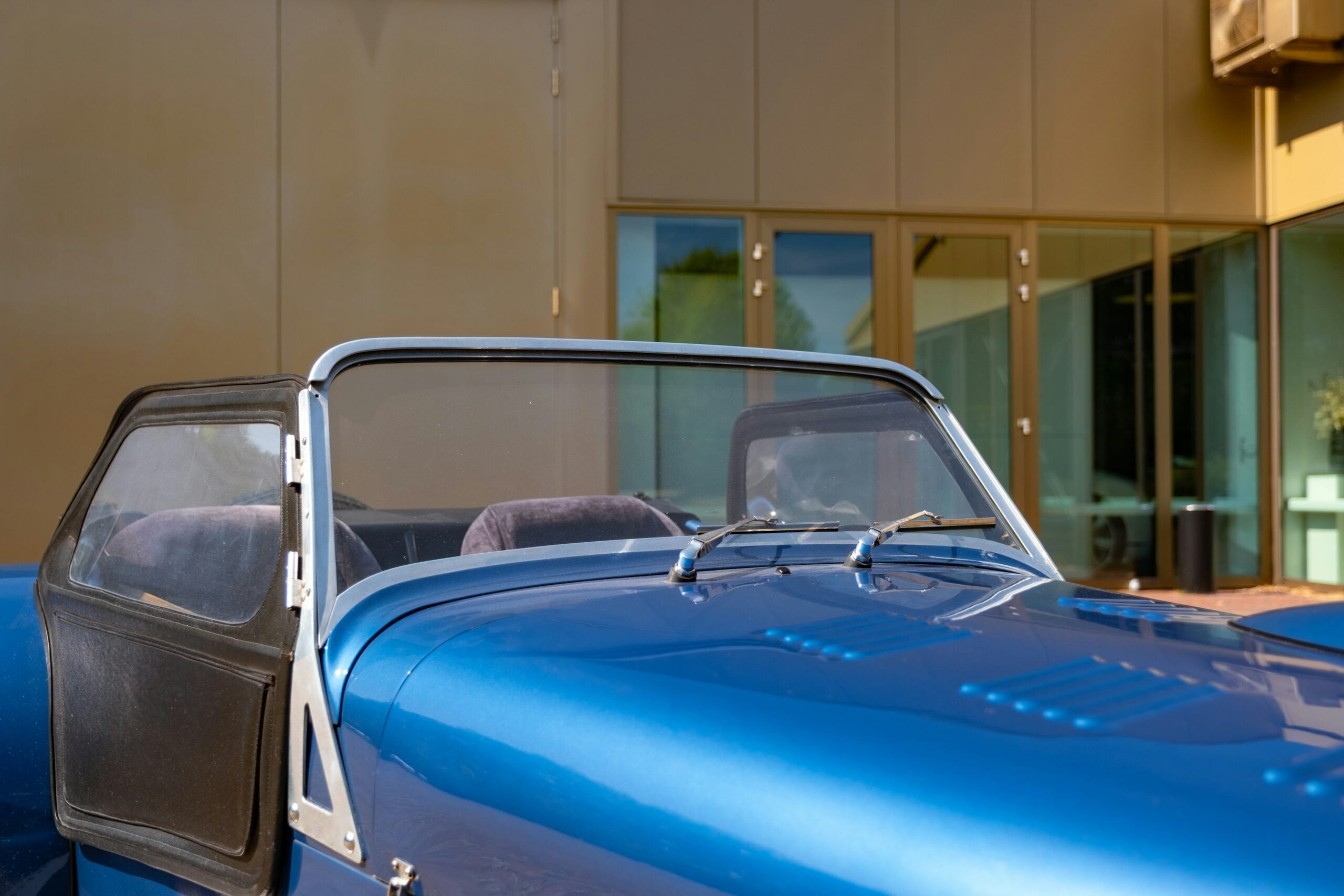
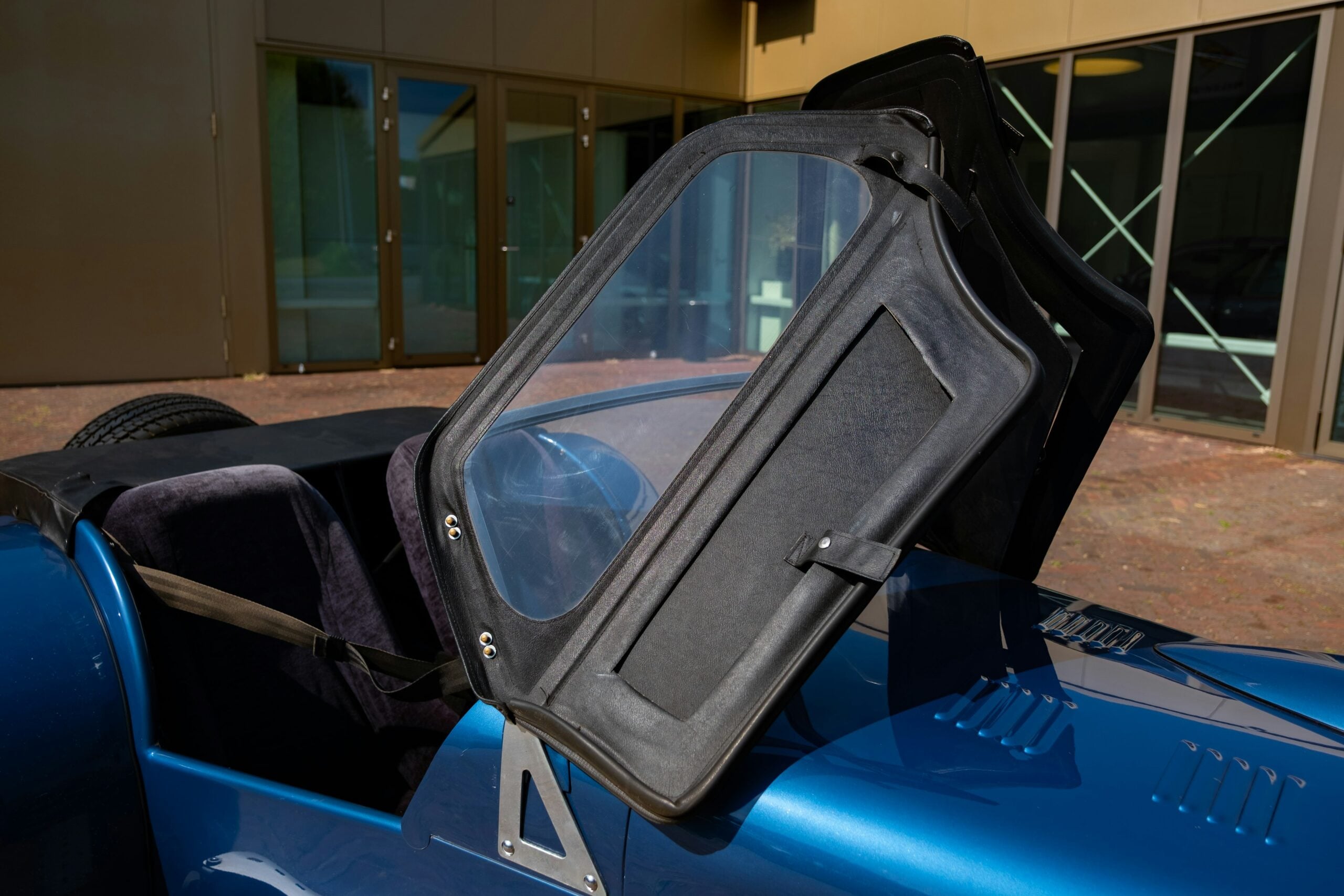
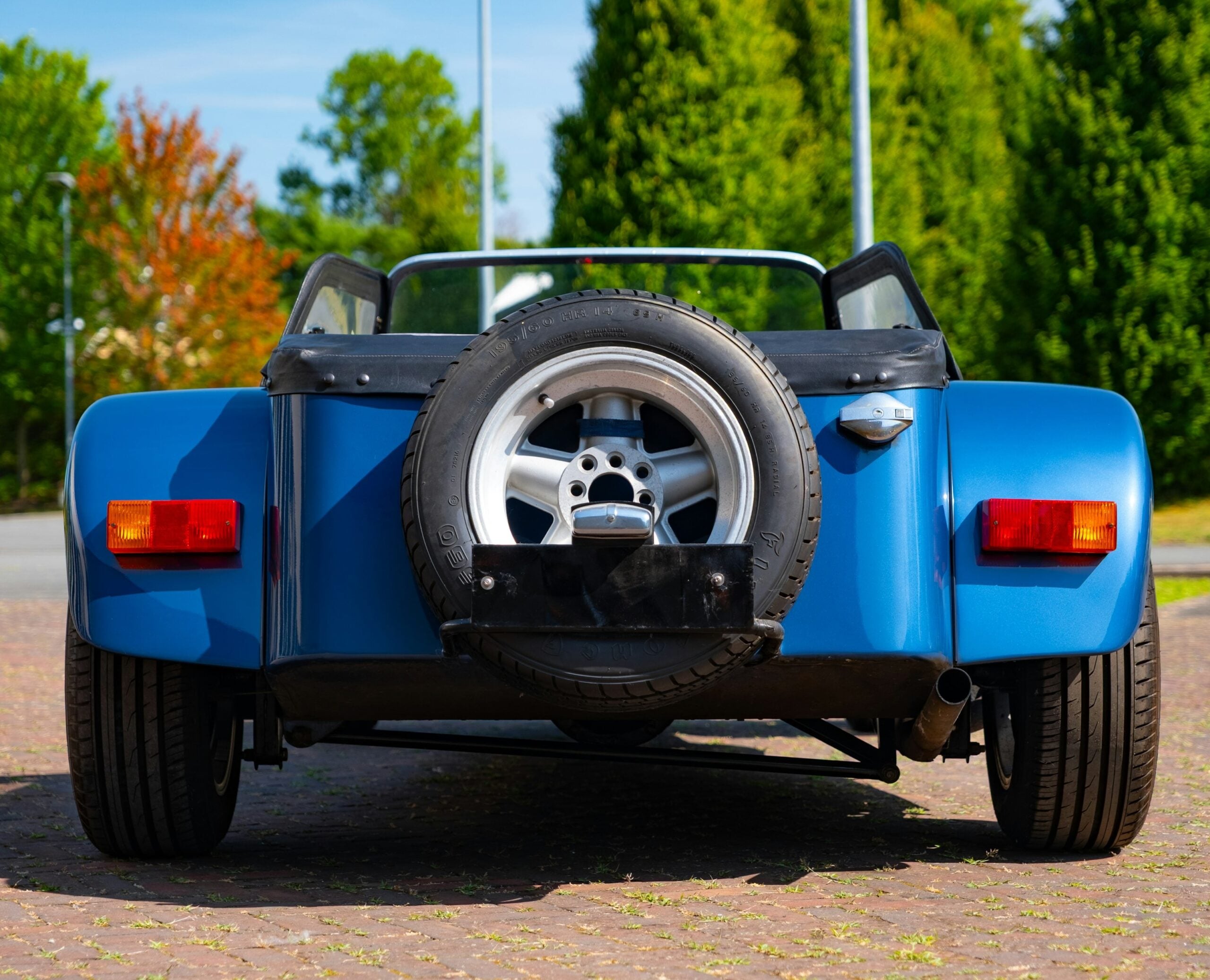
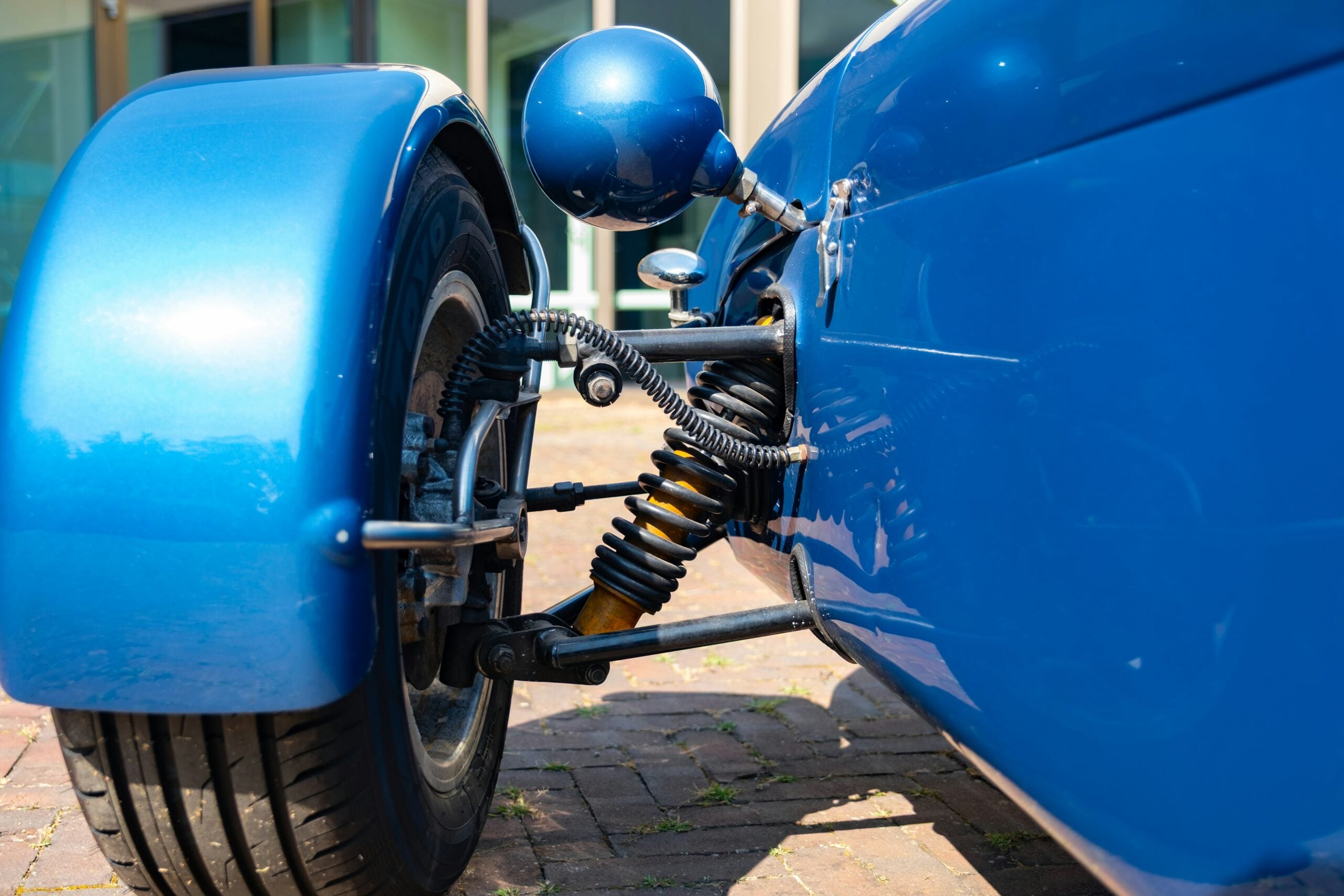
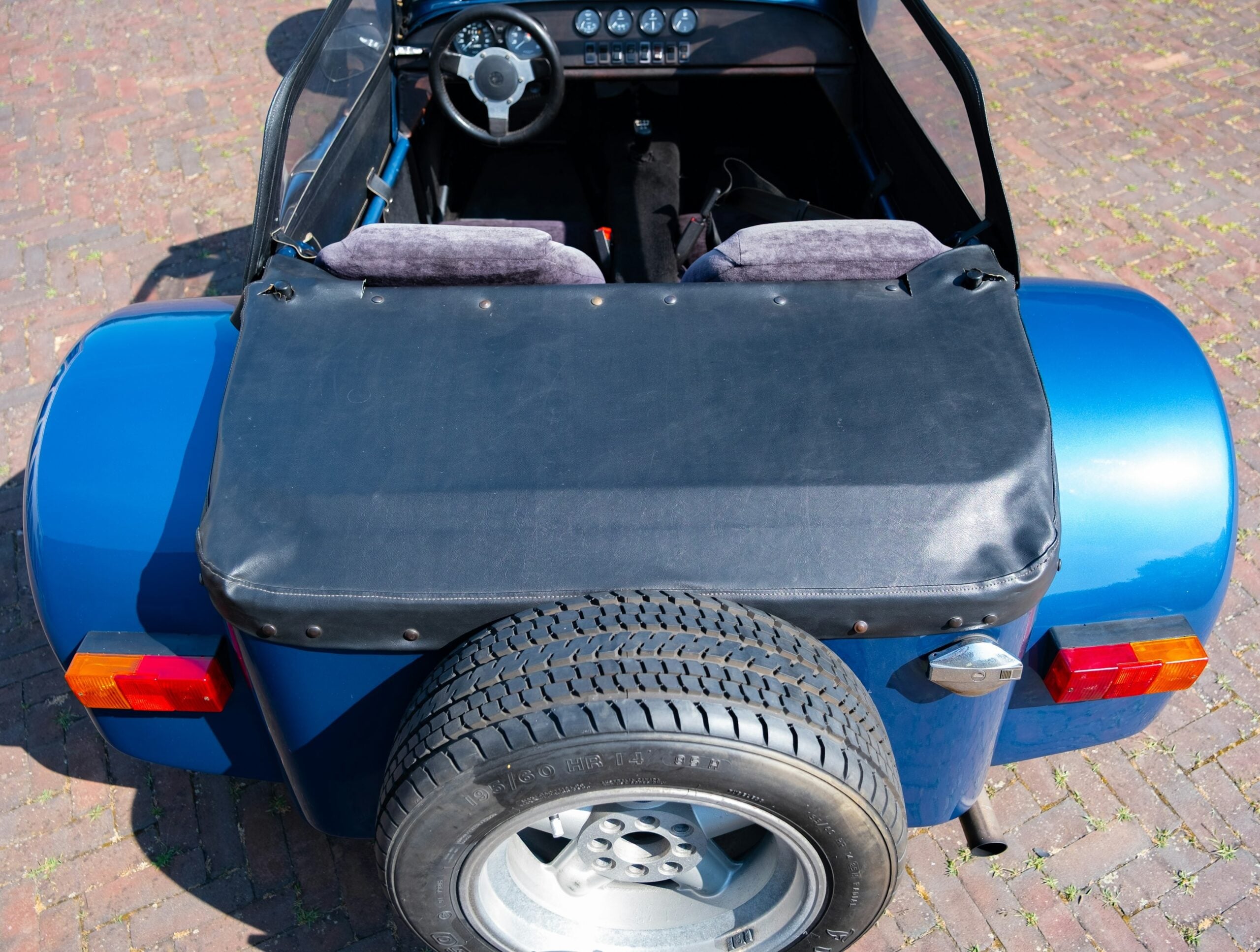
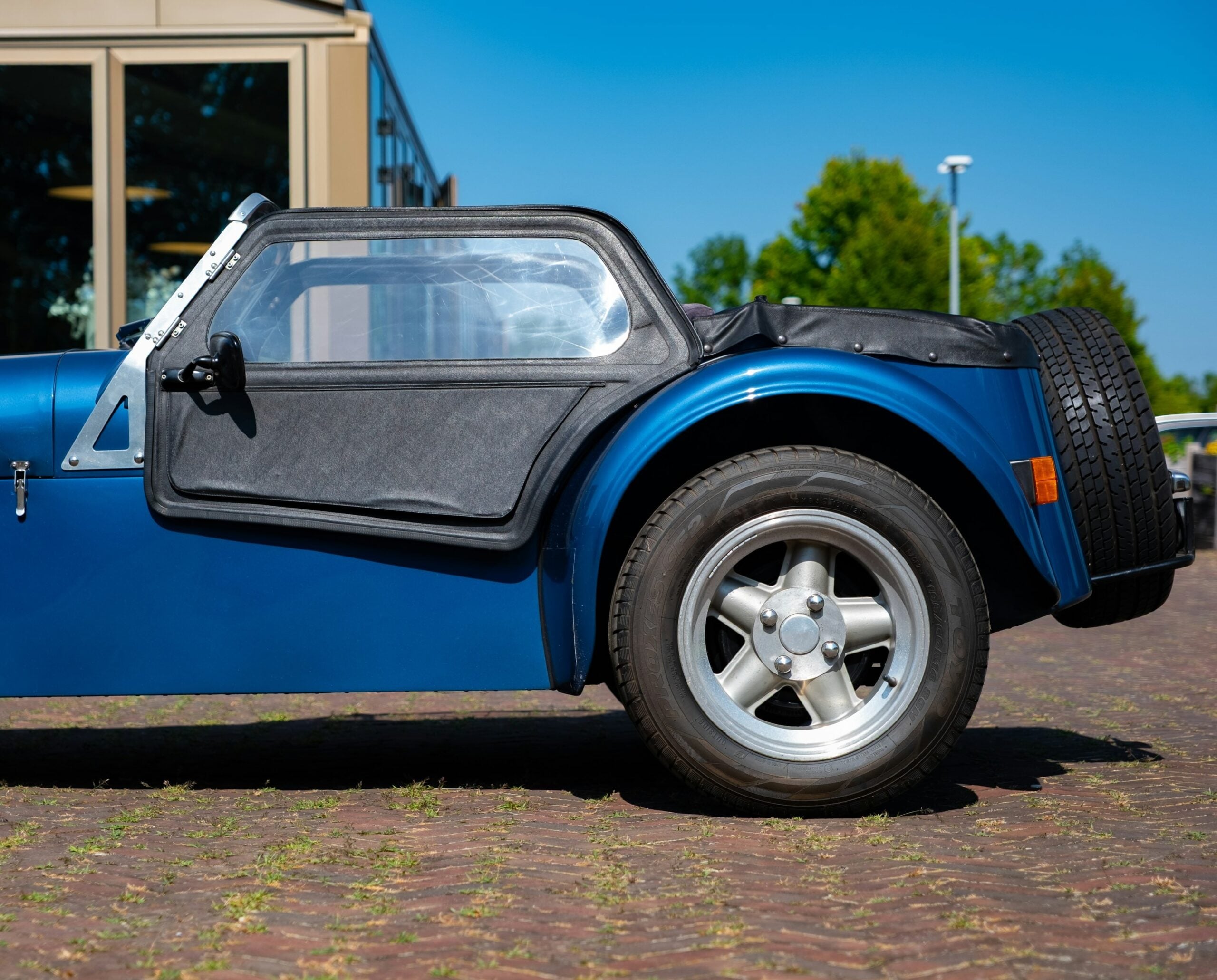
This car’s equipment list includes a side-exit exhaust, a rear-mounted spare wheel carrier, removable side windows, a black leather-trimmed Mountney steering wheel, Smiths gauges, and rocker switches on the dashboard. At some point it was fitted with later-style cycle wings, giving it the look of a younger S8, but the original long front wings come with the car.
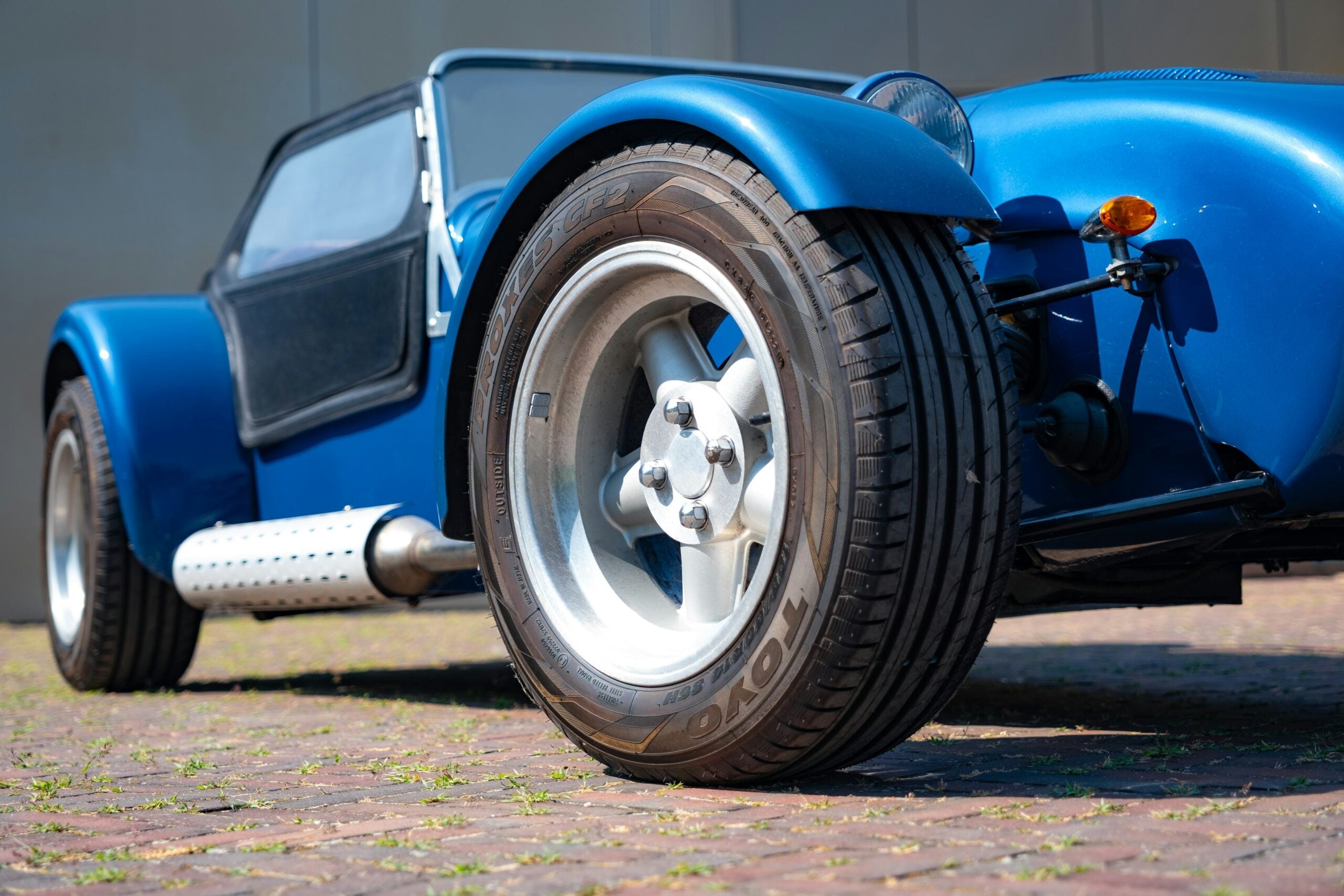
This car’s equipment list includes a side-exit exhaust, a rear-mounted spare wheel carrier, removable side windows, a black leather-trimmed Mountney steering wheel, Smiths gauges, and rocker switches on the dashboard. At some point it was fitted with later-style cycle wings, giving it the look of a younger S8, but the original long front wings come with the car.
Also included are an original S7/S8 owner’s handbook from 1981, complete with wiring diagrams and hand-drawn illustrations, and two ignition keys. The seller notes previous cosmetic refinishing to the paintwork and age-related wear inside and out, the last recorded service was carried out by Ibalo in July of 2021 at an indicated 64,268 kms, meaning the car has covered fewer than 400 kms since it changed hands.
It’s now being offered for sale out of the Netherlands and you can visit the listing here if you’d like to read more about it or register to bid.
Images courtesy of Collecting Cars

Articles that Ben Branch has written have been covered on CNN, Popular Mechanics, Smithsonian Magazine, Road & Track Magazine, the official Pinterest blog, the official eBay Motors blog, BuzzFeed, Autoweek Magazine, Wired Magazine, Autoblog, Gear Patrol, Jalopnik, The Verge, and many more.
Silodrome was founded by Ben back in 2010, in the years since the site has grown to become a world leader in the alternative and vintage motoring sector, with well over a million monthly readers from around the world and many hundreds of thousands of followers on social media.