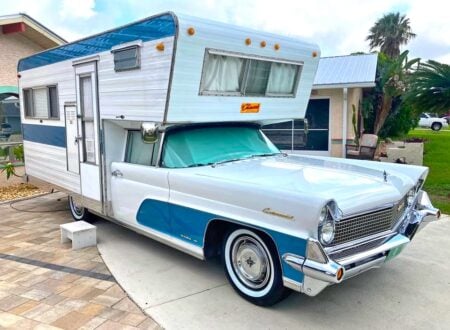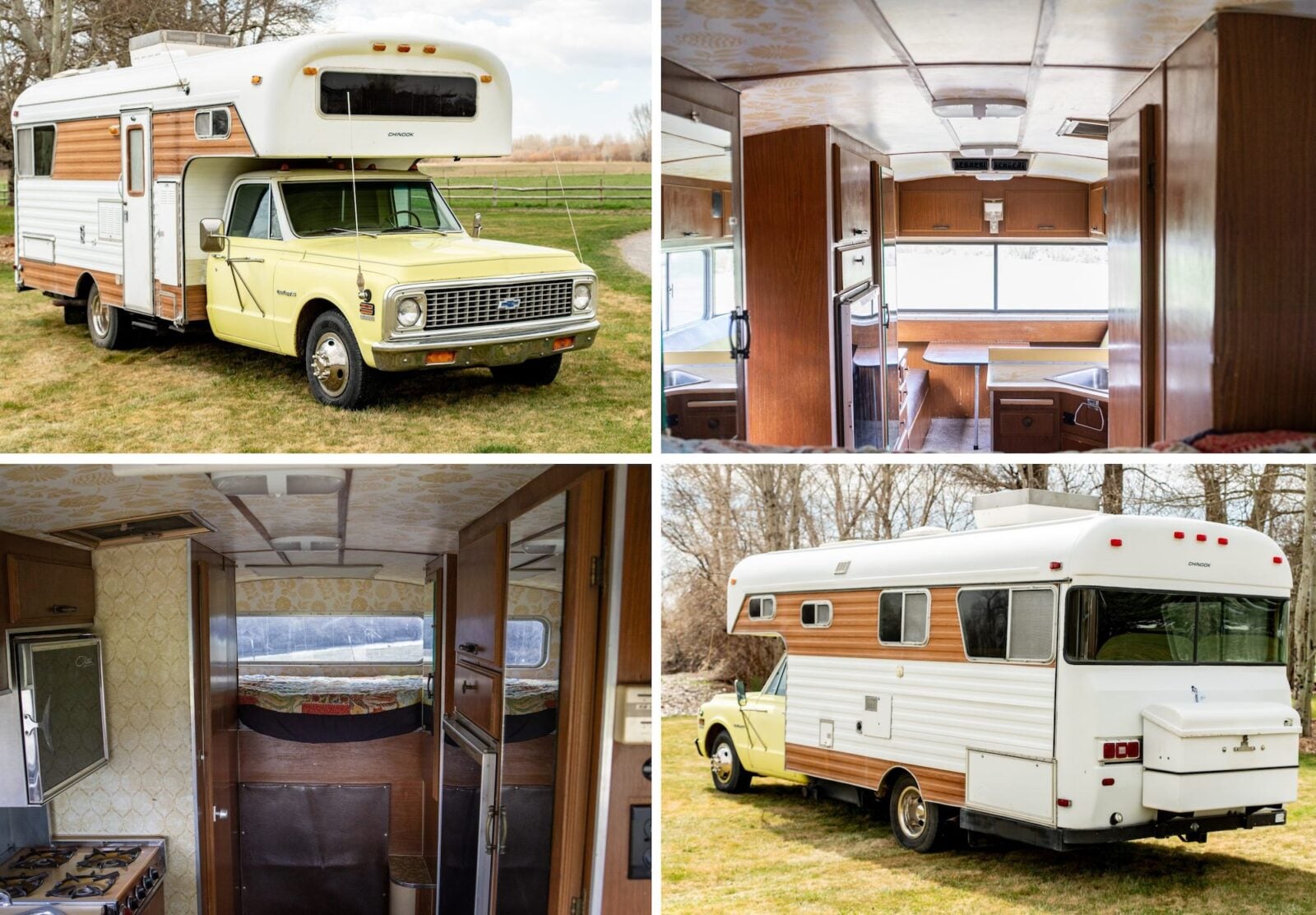
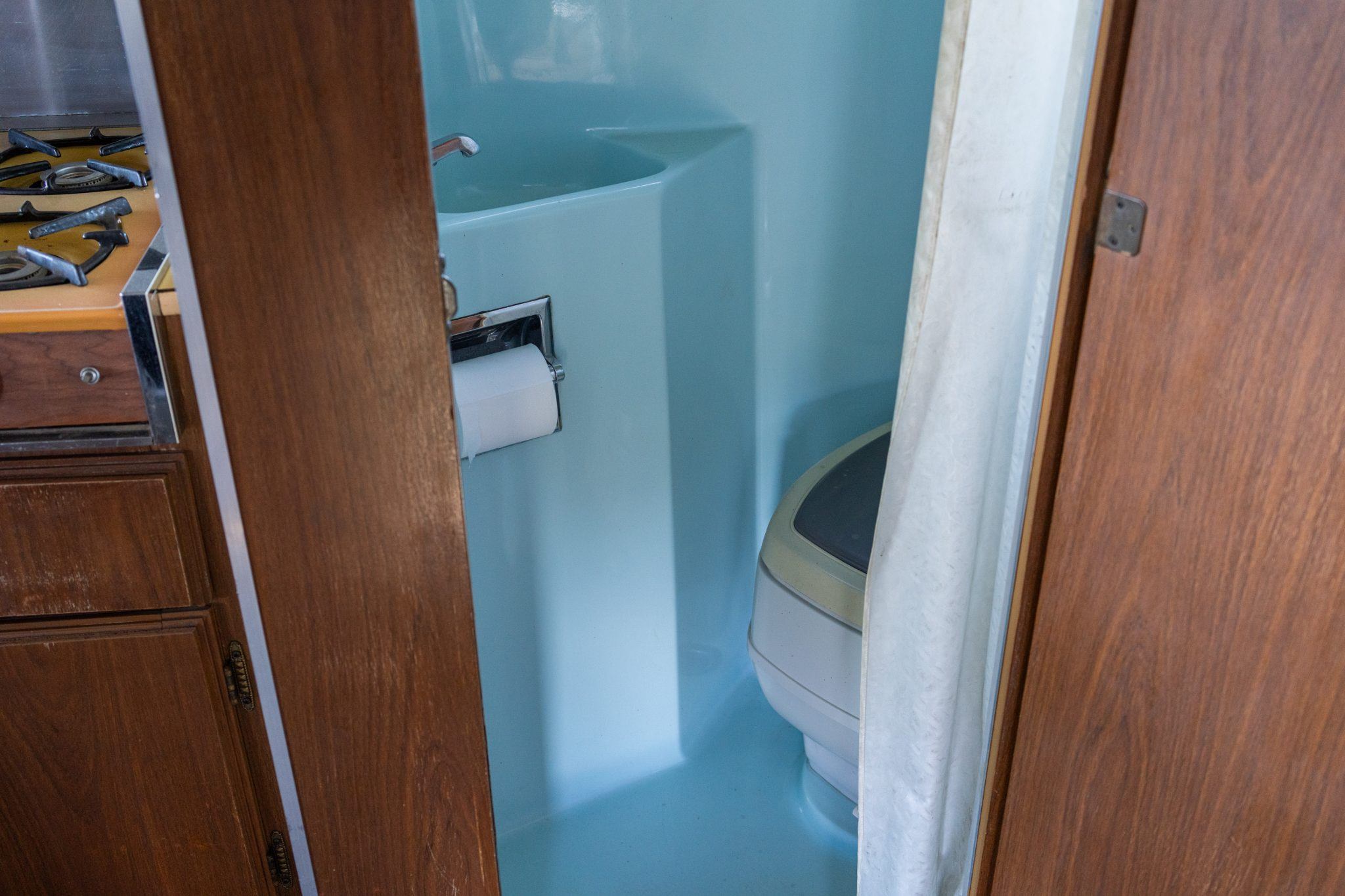
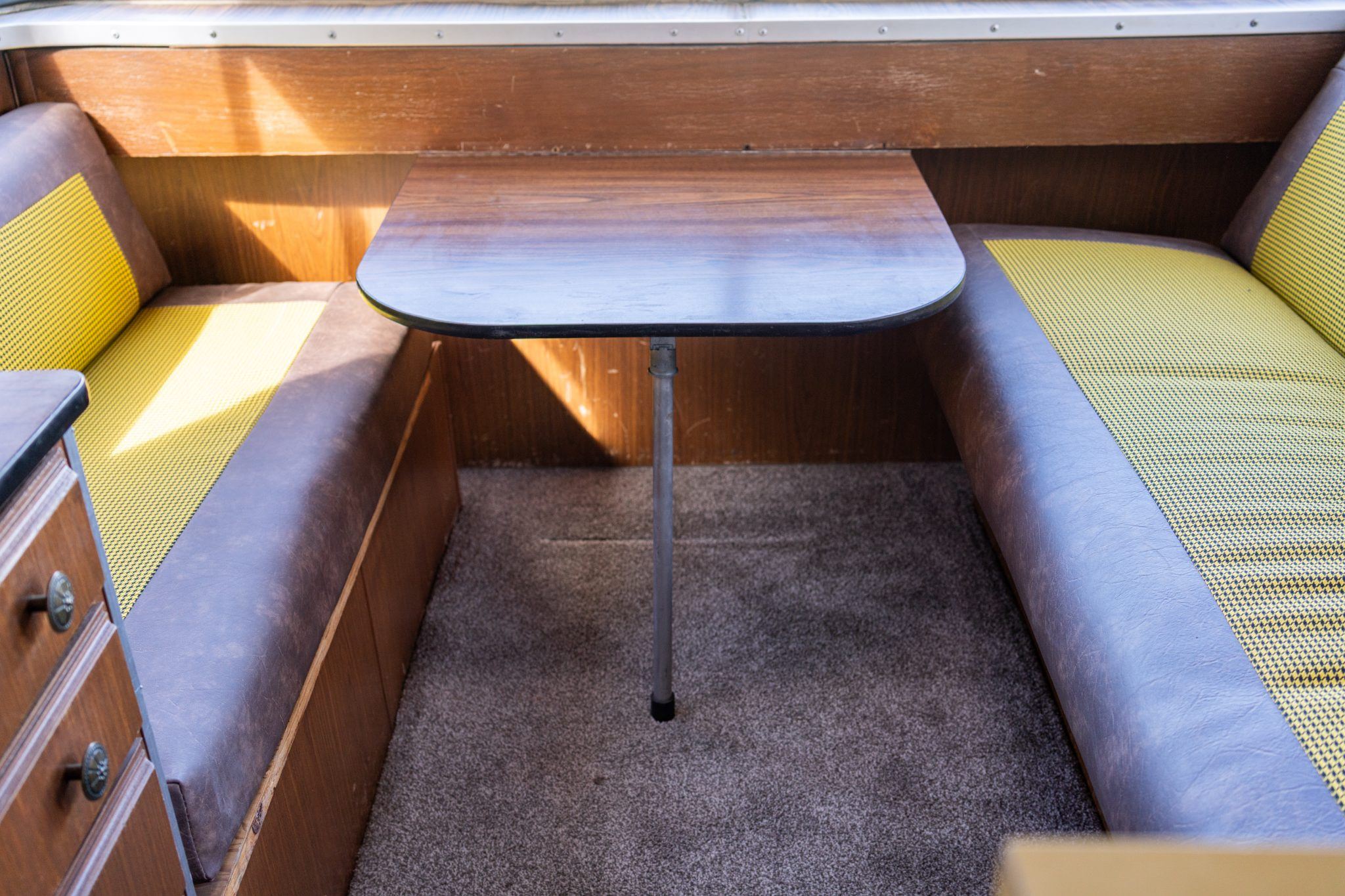
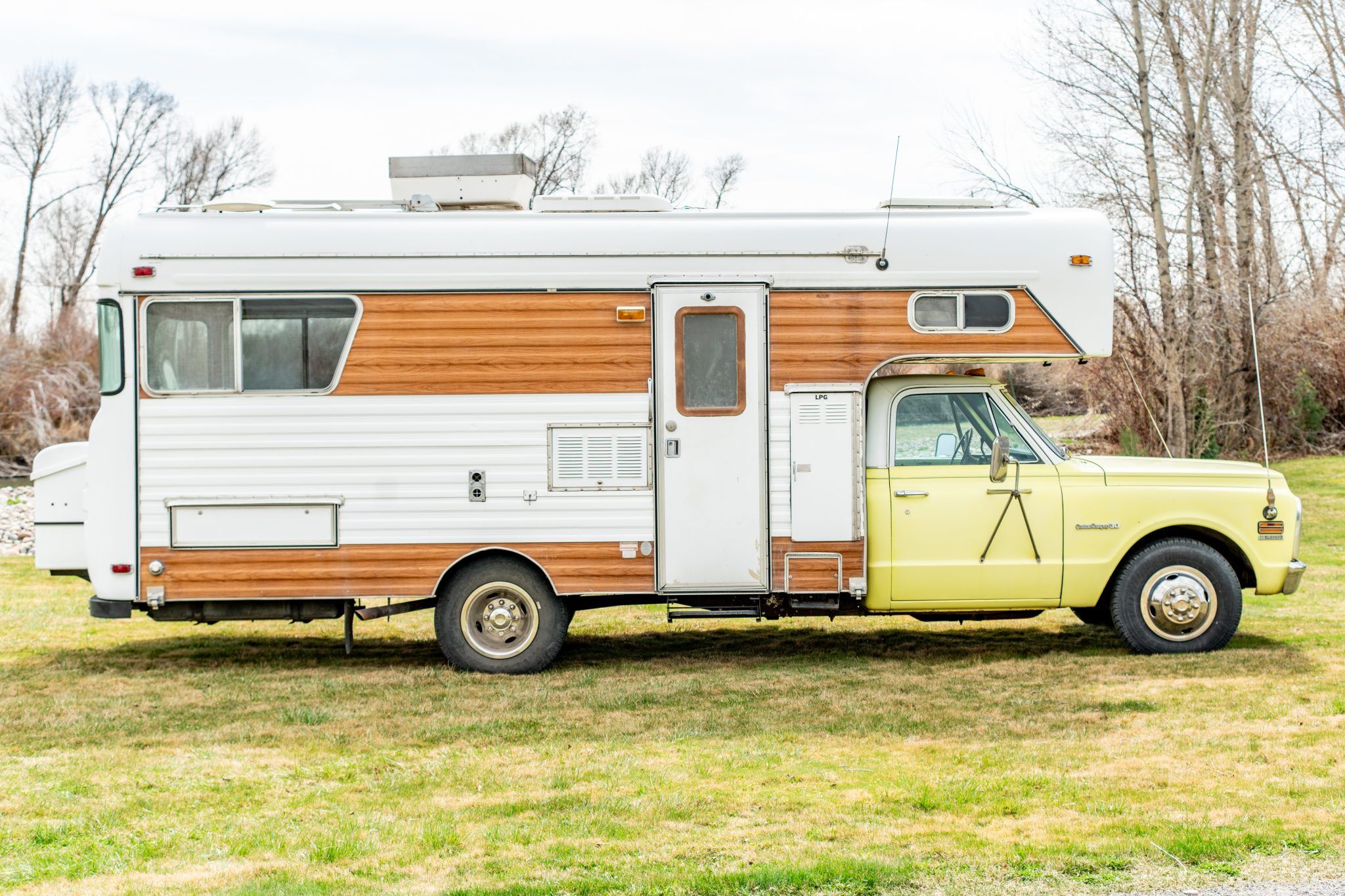
This is a 1971 Chevrolet C30 Chinook Camper that offers a surprising amount of living space with a double bed, a bathroom and shower, a kitchenette, and a dinette that converts into an additional double bed.
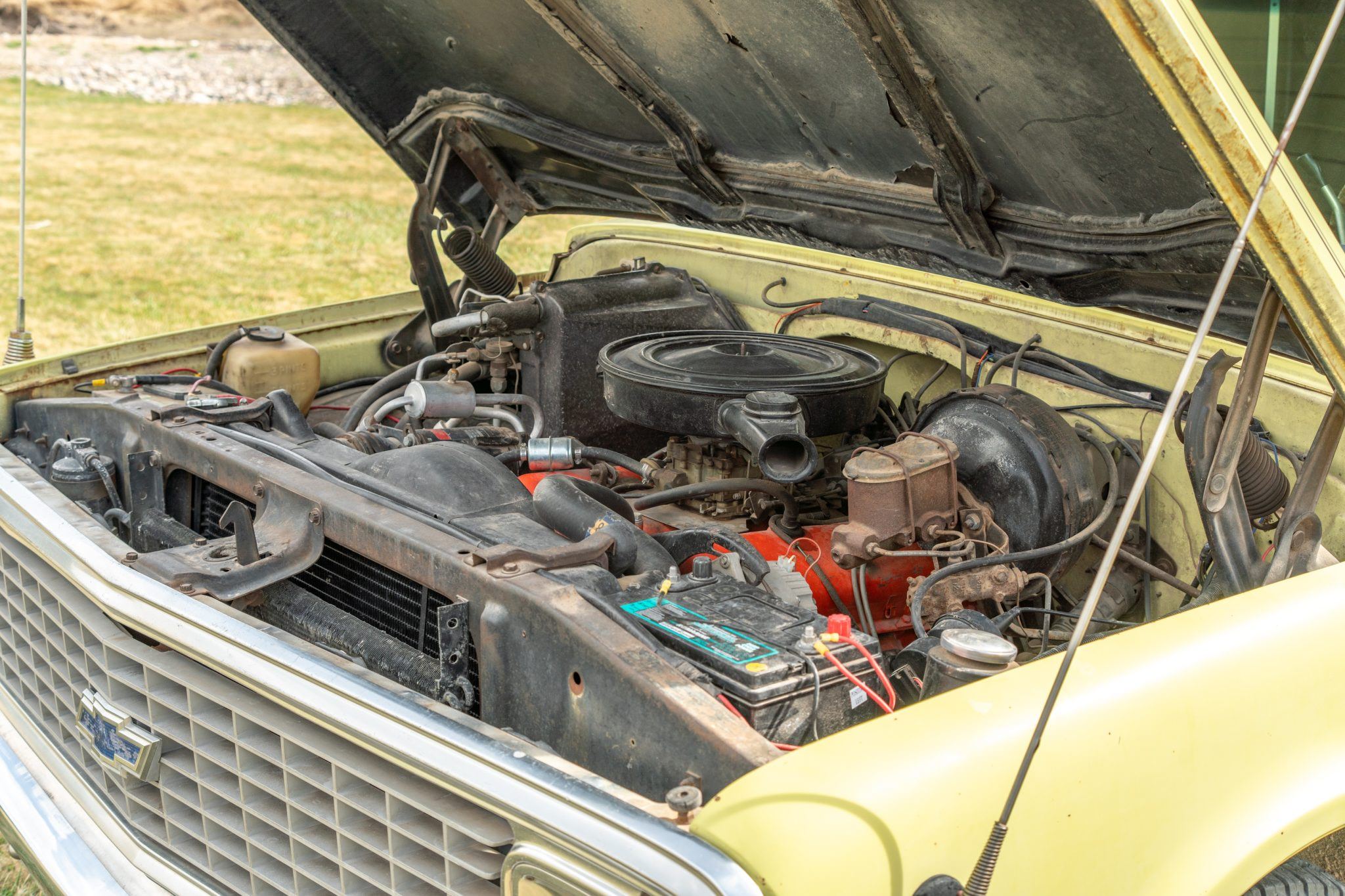
This camper is based on the Chevrolet C30 with a 400 cubic inch V8, ensuring there’ll be no shortage of torque, mated to a 3-speed Turbo Hydramatic automatic transmission. This would have been one of the higher-end models in this class back in the 1970s, offering many of the conveniences of home.
Fast Facts: A Chevrolet C30 Chinook Camper
- This 1971 Chevrolet C30 Custom Deluxe is a dually pickup fitted with a Chinook chassis-mounted camper, finished in yellow over brown vinyl with an aluminum-sided camper wearing brown and white accents and fiberglass caps. It’s said to have remained with its original owner until 2017 before passing to the selling dealer in 2023.
- Power comes from a 400 cubic inch V8 factory rated at 240 bhp and 340 lb-ft of torque, paired with a three-speed Turbo Hydramatic automatic transmission driving the rear wheels. The truck rides on 16-inch polished steel wheels with 235/85 Michelin LTX A/S tires and is equipped with power steering.
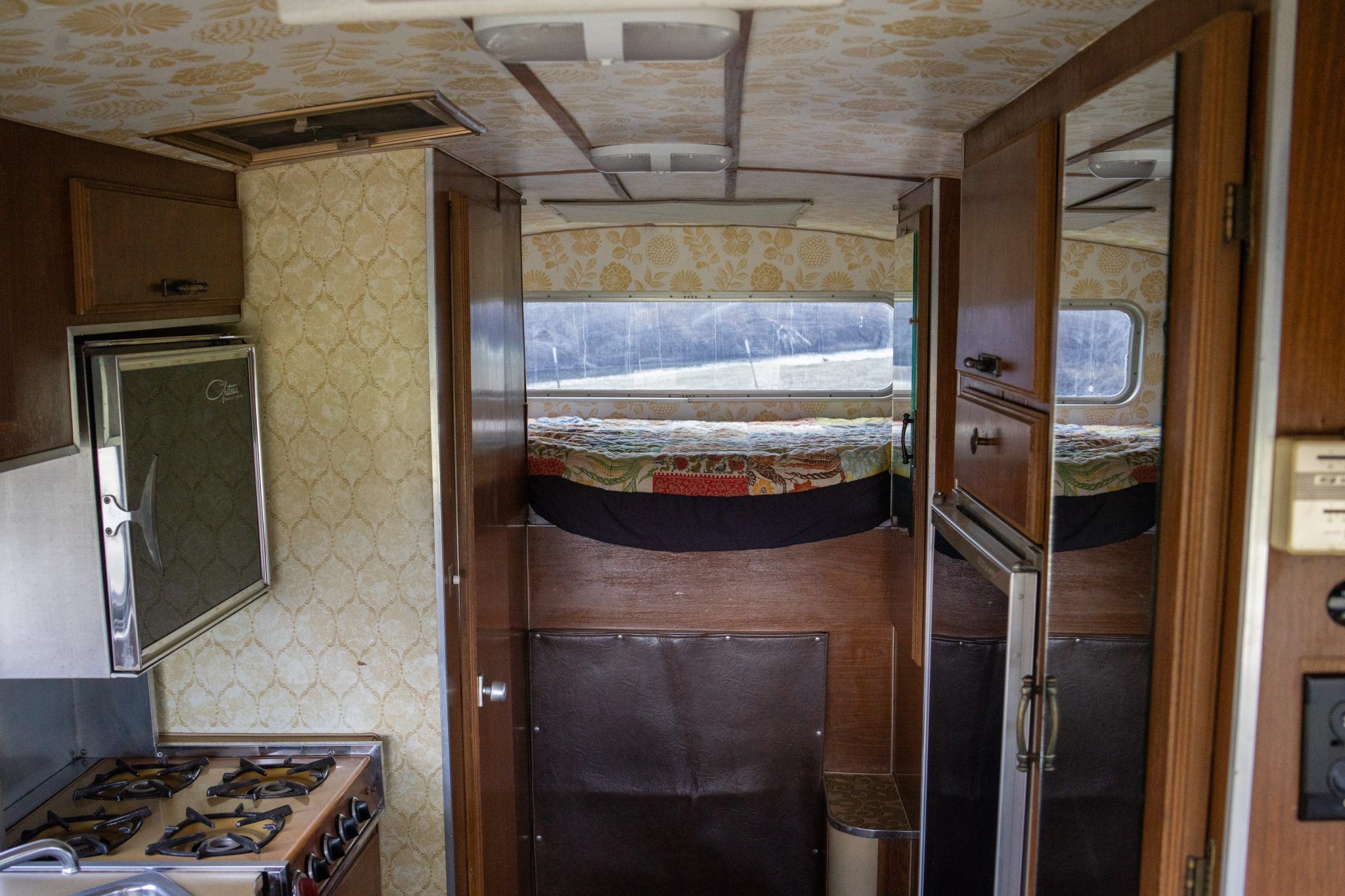
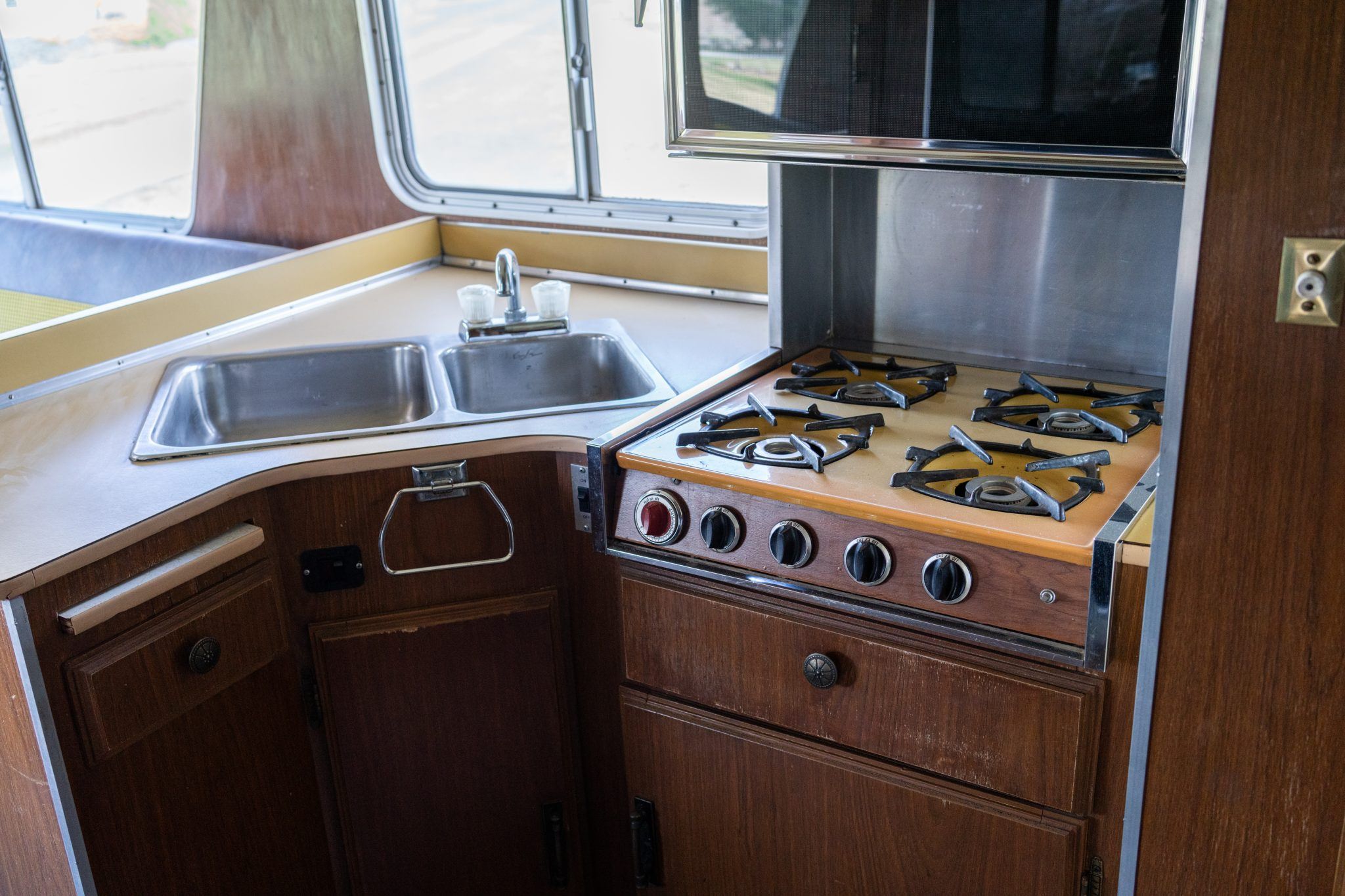
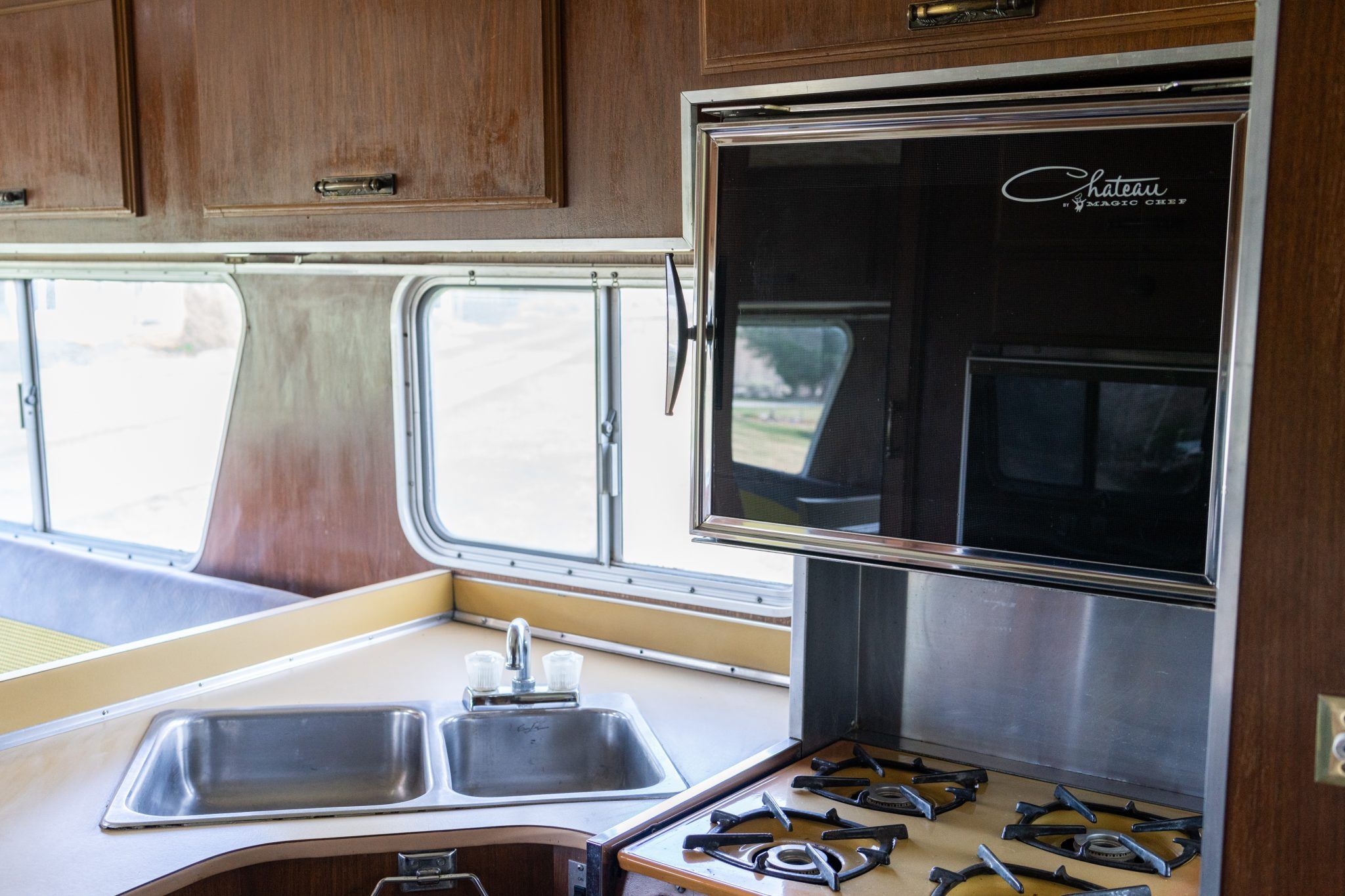
- The camper interior offers an over-cab sleeping area, rear bench seating with a folding dining table, and a combination lavatory and shower. The kitchenette features dual sinks, a four-burner cooktop, a Magic Chef oven, and a Dometic refrigerator, with climate control from a Suburban furnace and a roof-mounted air conditioner.
- The five-digit odometer shows 81,000 miles, and the listing notes scratches on the camper siding and a cracked rear camper window. The sale includes manufacturer’s literature and covers for the cab windshield, side windows, and tires, and it’s offered at no reserve with an Idaho title.
History Speedrun: Chinook
Chinook is one of the oldest brand names in the American RV and camper industry, it was founded all the way back in 1938 by Sy and Rose Mair in Orange County, California, initially under the name Mair & Son, Inc. It spent its first three decades building small travel trailers, pickup campers, and chassis-mount units on cab chassis.
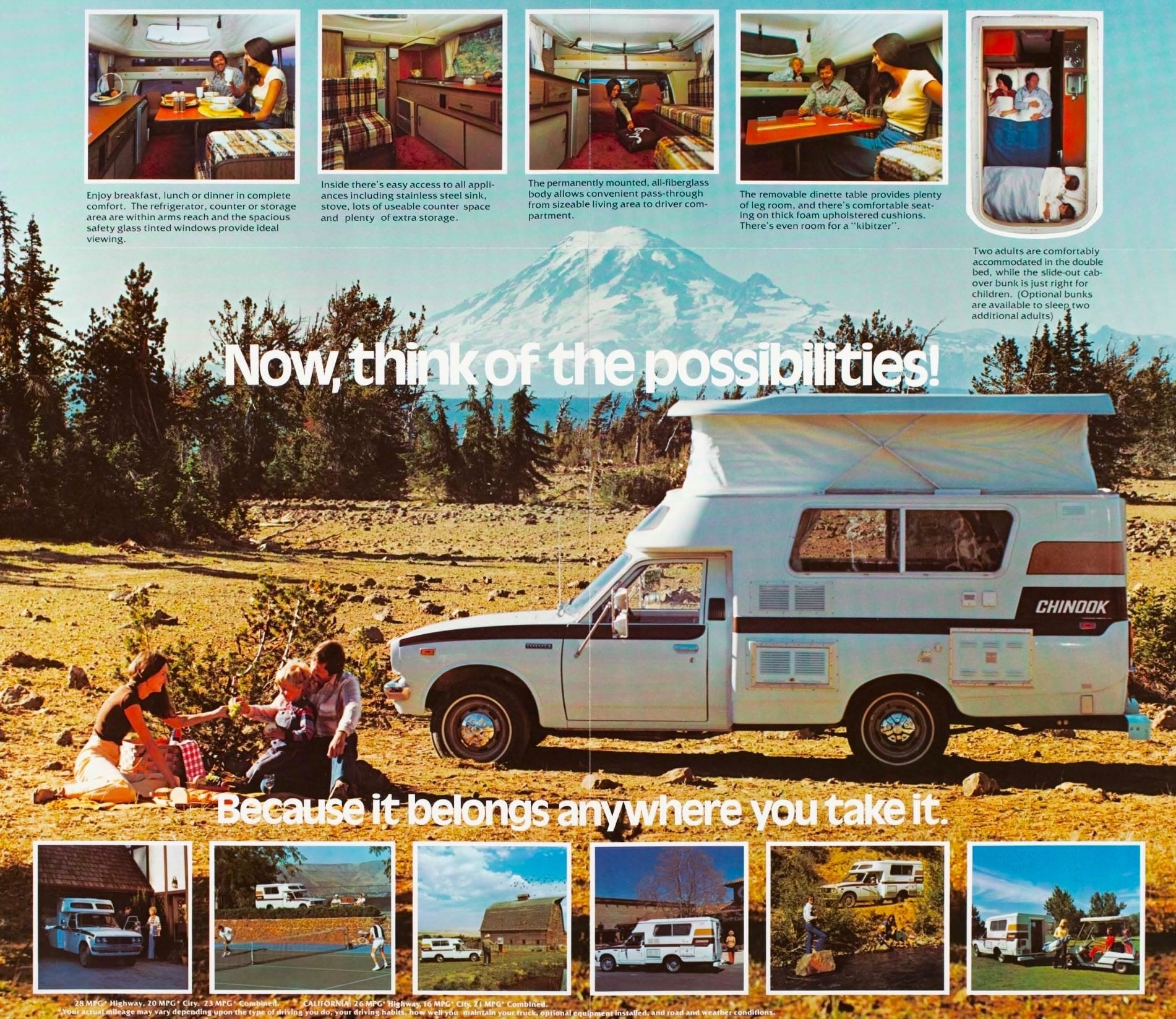
 Chinook is one of the oldest brand names in the American RV and camper industry, it was founded all the way back in 1938 by Sy and Rose Mair in Orange County, California, initially under the name Mair & Son, Inc. It spent its first three decades building small travel trailers, pickup campers, and chassis-mount units on cab chassis. Image courtesy of Chinook.
The early designs from Chinook were conventional wood-framed, aluminum-sided affairs – indistinguishable, at a glance, from anything else on the market. It wasn’t until the company relocated to Union Gap in Washington’s Yakima Valley and began experimenting with fiberglass that Chinook started to become something genuinely different.
On October the 14th, 1965, Mair & Son filed for federal trademark registration of the Chinook name. The following year, the company debuted the Chinook 1400, a cab-over Class C motorhome built on a Dodge truck chassis with an early fiberglass body design that stood out from the aluminum-clad norm. The more aerodynamic appearance was a marked departure from the boxy aluminum competition, and it caught the industry’s attention.
The Chinook 1400 was aerodynamic and relatively lightweight thanks to the extensive use of fiberglass, it was also impervious to rust or wood rot – major issues with other campers. Things were looking up for the company, but then on June the 19th, 1967, a devastating fire all but destroyed the company’s Union Gap facility.
Despite the difficulty, the company rebuilt, and the chapter that came next would be the most consequential in their history. The early 1970s saw the arrival of the best-known chapter in Chinook’s decades long story.
In 1971, Gary Lukehart (who had relocated his family from California to Yakima) merged his operation with the existing Chinook company and came on board as president. The company was by then owned by a New York City investment group looking to take the brand public.
That same year, Lukehart oversaw the development of the industry’s first one-piece, all-fiberglass motorhome shell, which debuted on the Chinook Mobilodge 2500 Vista and 2500 Brougham. Built on either a Dodge one-ton with a 159 inch wheelbase or a Chevrolet one-ton with a 157 inch wheelbase, the Mobilodge’s smooth, curved lines and low-profile body were a radical departure from the Winnebago Chieftain school of design – big, square, and aerodynamically equivalent to a house brick.
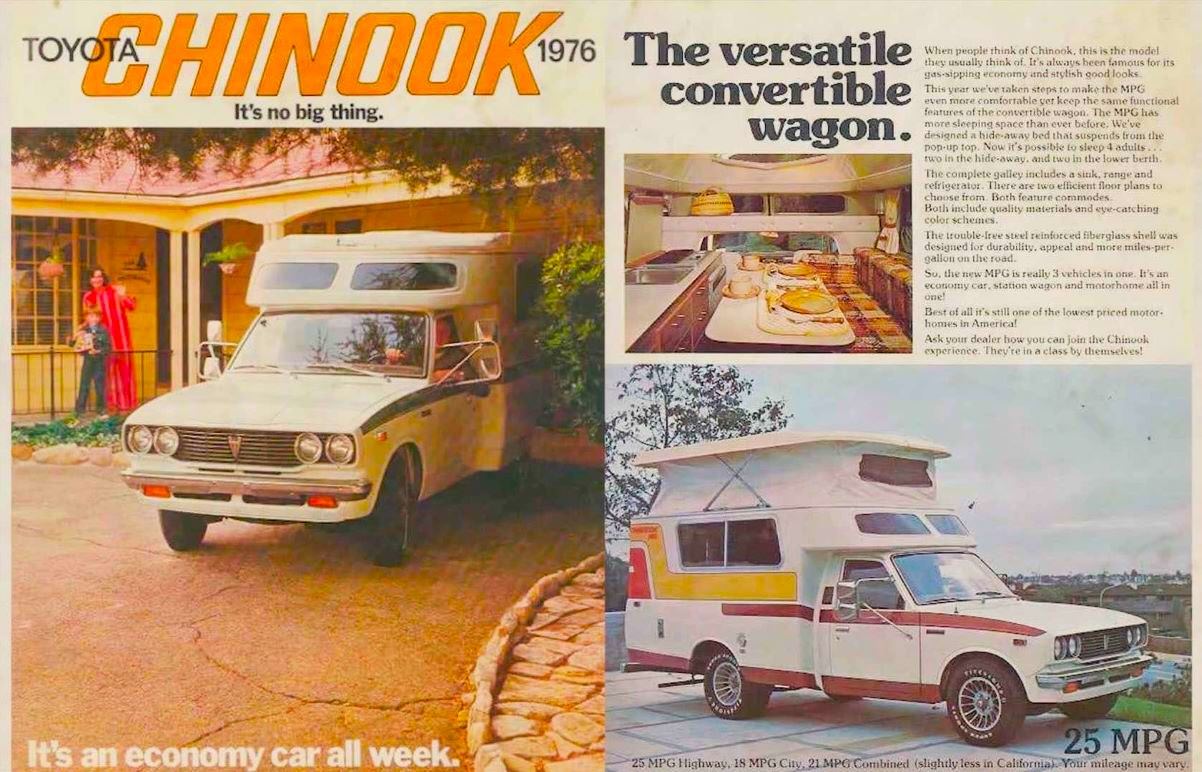
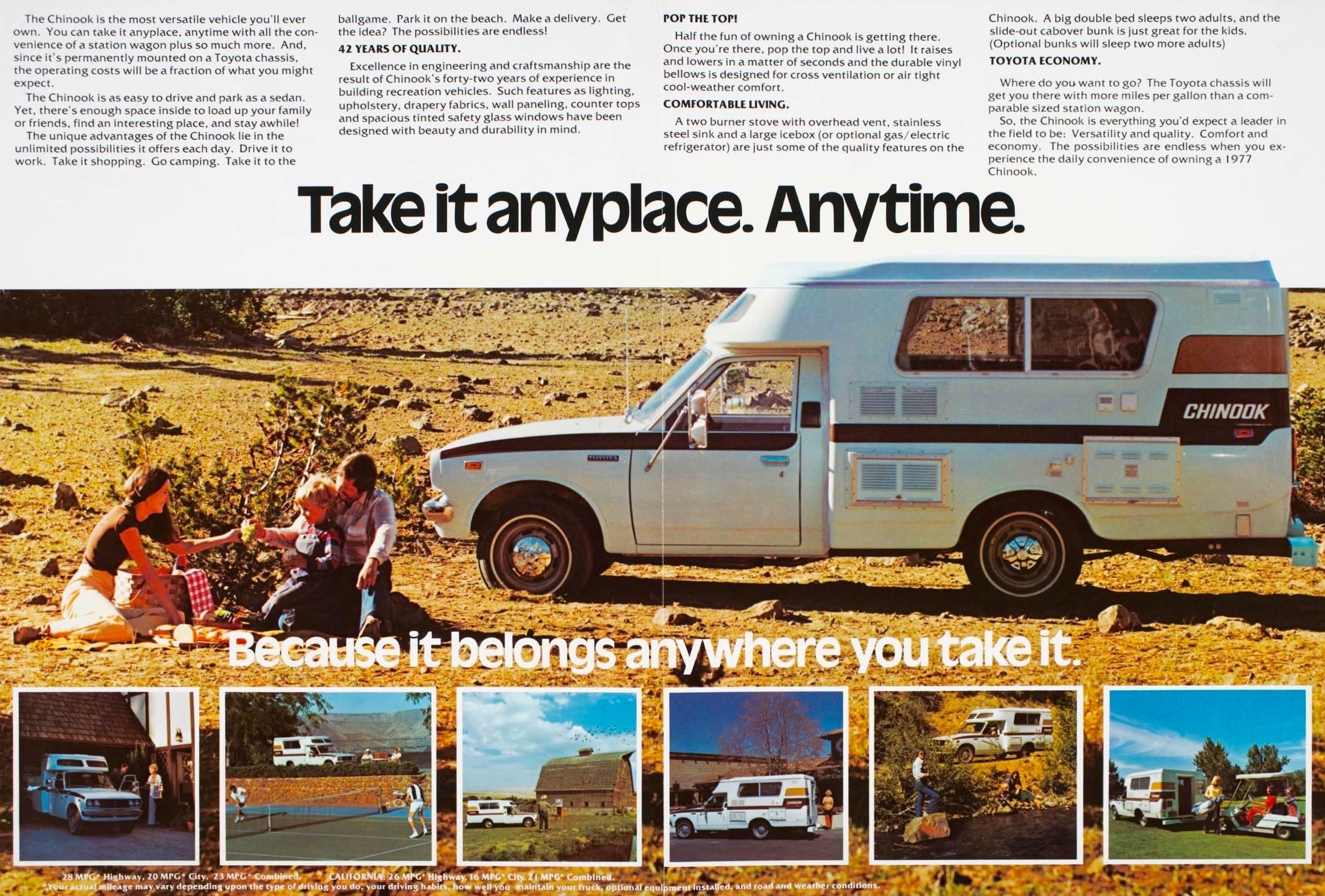
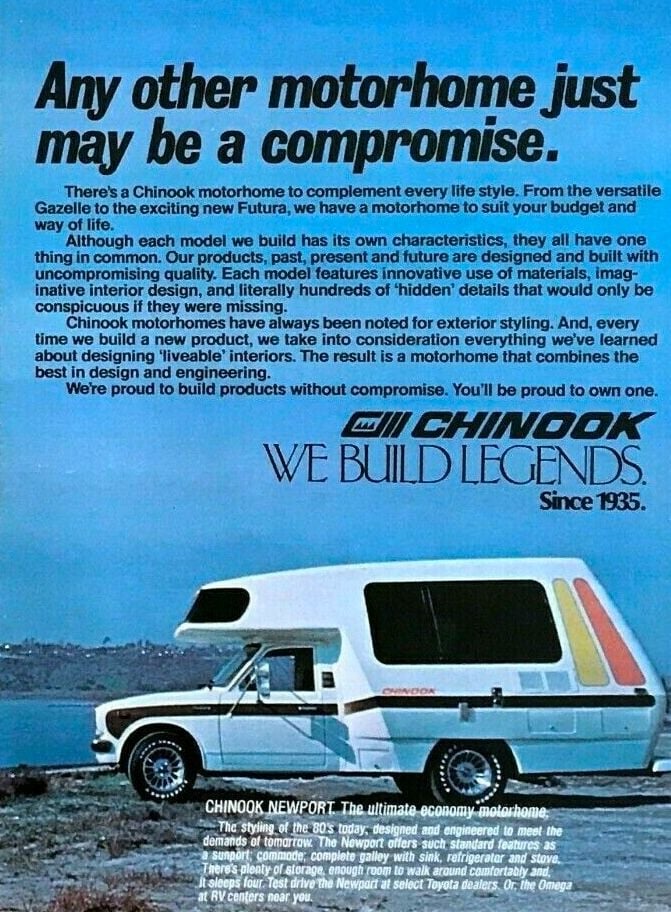
In 1971 that Chinook began collaborating with Toyota on what would become the company’s most famous design. The two firms set out to create a compact camper built on the Toyota Hilux cab and chassis, which they would market as the world’s first “micro mini-motorhome.” Image courtesy of Chinook.
It was also in 1971 that Chinook began collaborating with Toyota on what would become the company’s most famous design. The two firms set out to create a compact camper built on the Toyota Hilux cab and chassis, which they would market as the world’s first “micro mini-motorhome.”
In 1973 they signed a formal agreement to jointly produce and market the vehicles in the United States, with a Chinook subsidiary handling manufacturing at a plant in La Verne, California, and the finished product sold exclusively through Toyota dealerships. Initial targets called for up to 4,000 units in the first year, with (somewhat optimistic) projections reaching 10,000 a year thereafter.
The timing of this new model proved impeccable. When the 1973 Oil Crisis hit, fuel-efficient vehicles became urgently desirable, and the Toyota Chinook – with its pop-up camper design, lightweight construction, and small inline-four cylinder engine – could achieve 16 mpg in the city and up to 29 on the highway while still meeting California’s emissions standards.
It offered one of the cheapest entry points into RV ownership and became Chinook’s best-selling model. In a 2020 interview with the Yakima Herald-Republic, Gary Lukehart estimated that he built around 50,000 Chinooks in total, with the Toyota variant the most popular of the lot. The collaboration ran through 1978, after which Chinook sold its models through both Toyota and independent RV dealers.
Ironically, the same oil crisis that fuelled the Toyota Chinook’s success also killed the bigger models. The New York investment group pulled out in 1975, abandoning production of the 2200 and 2500 models and leaving the company idle.
Lukehart eventually departed to form Trail Wagons, Inc. in Yakima, building Class B van campers. His nephews, Tim and Hugh Lukehart, who had worked on Gary’s production line during their college years, carried the business forward.
Over the next decade, Trail Wagons/Chinook RV produced a full line of 17- to 19-foot van motorhomes, the Aspen, Buccaneer, Cruiser, Clipper, Runabout, Trek, Viking, Vista Classic, and Voyager, establishing the brand’s reputation as “The Sports Car of Motorhomes.”
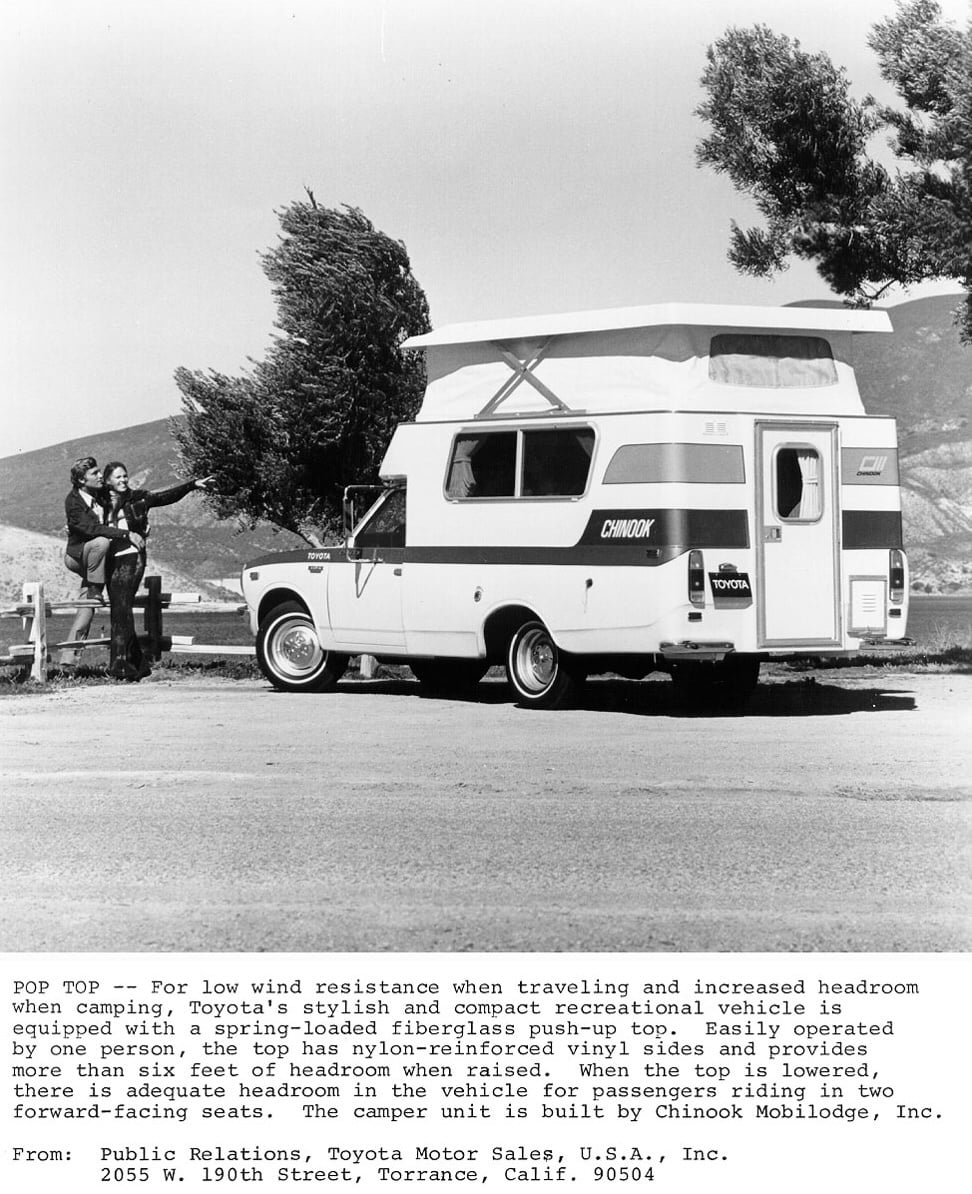
The pop-top design allowed these camper models to keep a lower frontal profile when on the highway, thus reducing fuel consumption. Image courtesy of Chinook.
Through the 1990s and into the 2000s, Chinook continued to release new models, like the Destiny, Cascade, Glacier, and Summit lines, with four-season insulation and luxury interiors that were well ahead of their time. In 1998, a Concourse XL set a land-speed record of 99.7 mph at the Bonneville Salt Flats, and in 2000, a Chinook Baja became the first motorhome to compete in the ALCAN 5000 Winter Rally.
Sadly, by 2005 rising fuel costs and shifting market conditions brought production to a halt, and on March the 31st, 2006, Trail Wagons was foreclosed. The property – including a 110,000 square foot plant – sold for $2.9 million on the Yakima County Courthouse steps. Lukehart stored the manufacturing equipment on his own personal ranch.
In 2013, RV industry figure Phil Rizzio bought the equipment and began the process of a revival. After a brief stint in Oregon, Chinook relocated to Peru, Indiana in 2019. In March of 2021, the company re-entered the market with the Summit B+, built on a Mercedes-Benz Sprinter chassis, followed by the Bayside on a Ford Transit AWD platform and the Maverick.
Today, Chinook operates from over 200,000 square feet of manufacturing space in Peru, Indiana – still building handmade motorhomes, and still trading on a name that dates back nearly nine decades.
The 1971 Chevrolet C30 Chinook Camper Shown Here
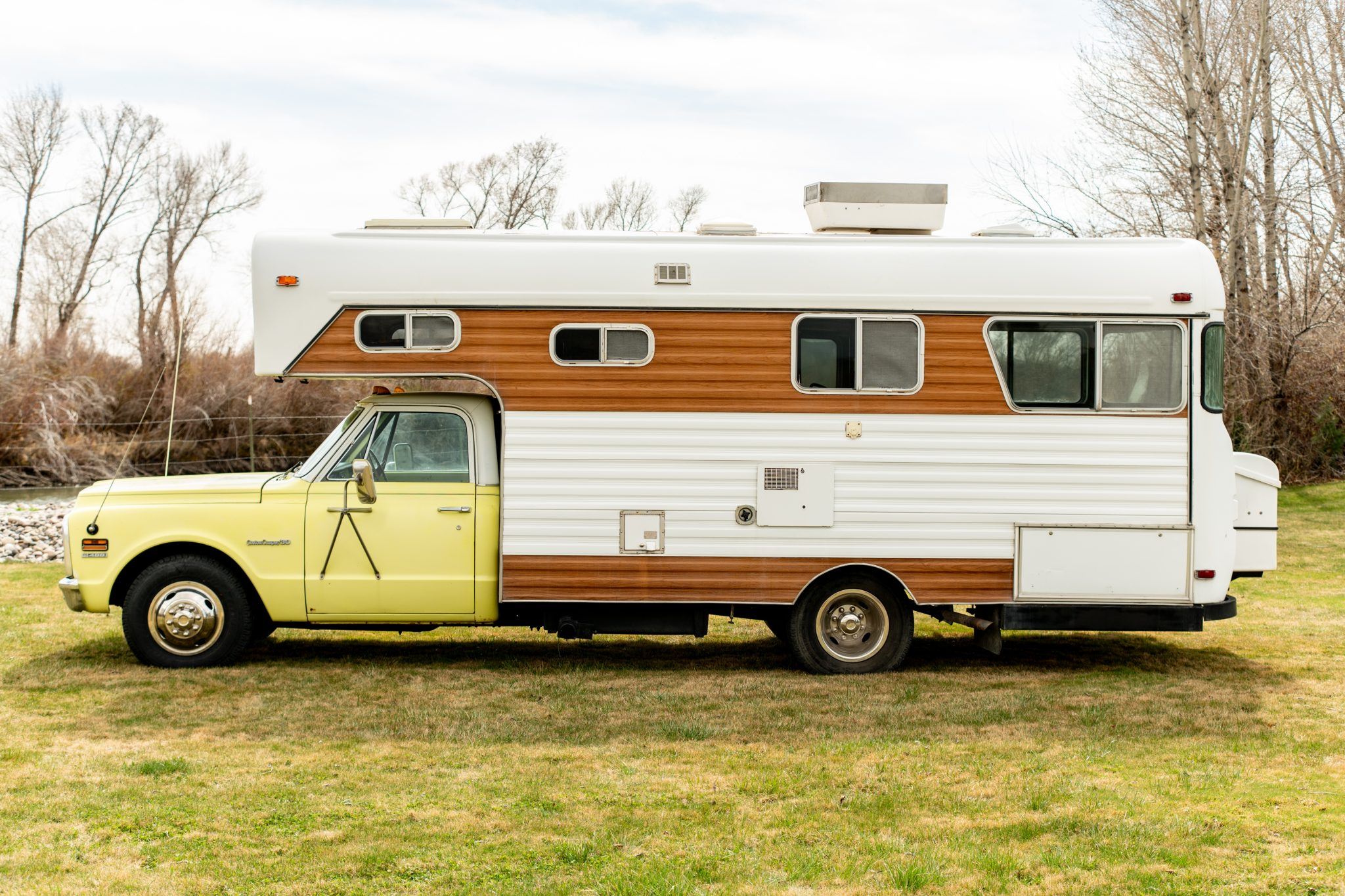
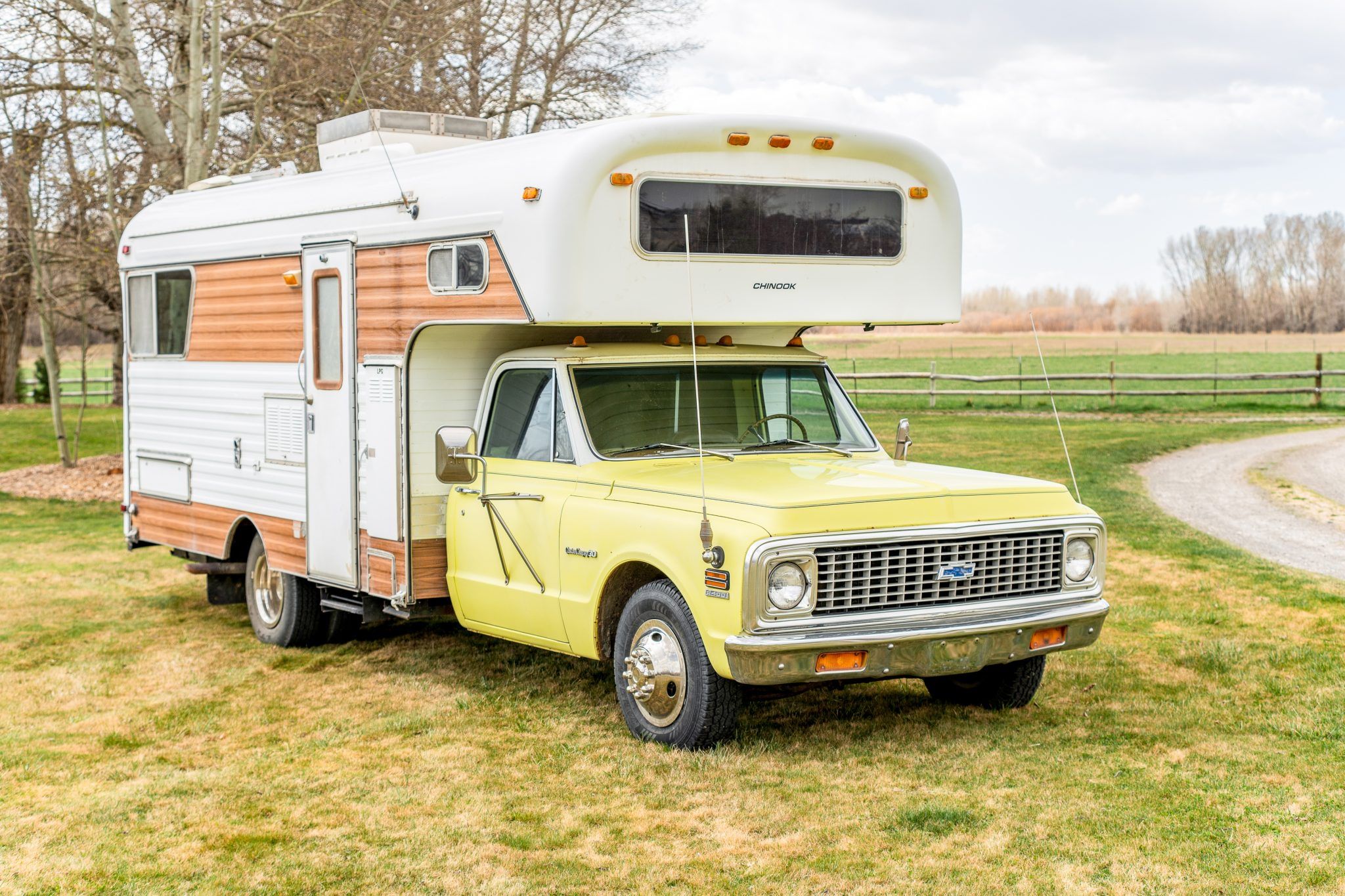
This is a 1971 Chevrolet C30 Custom Deluxe, it’s a dually pickup fitted with a Chinook chassis-mounted camper. It’s said to have stayed with its original owner until 2017, was later reacquired by that same owner, and then passed to the selling dealer in 2023.
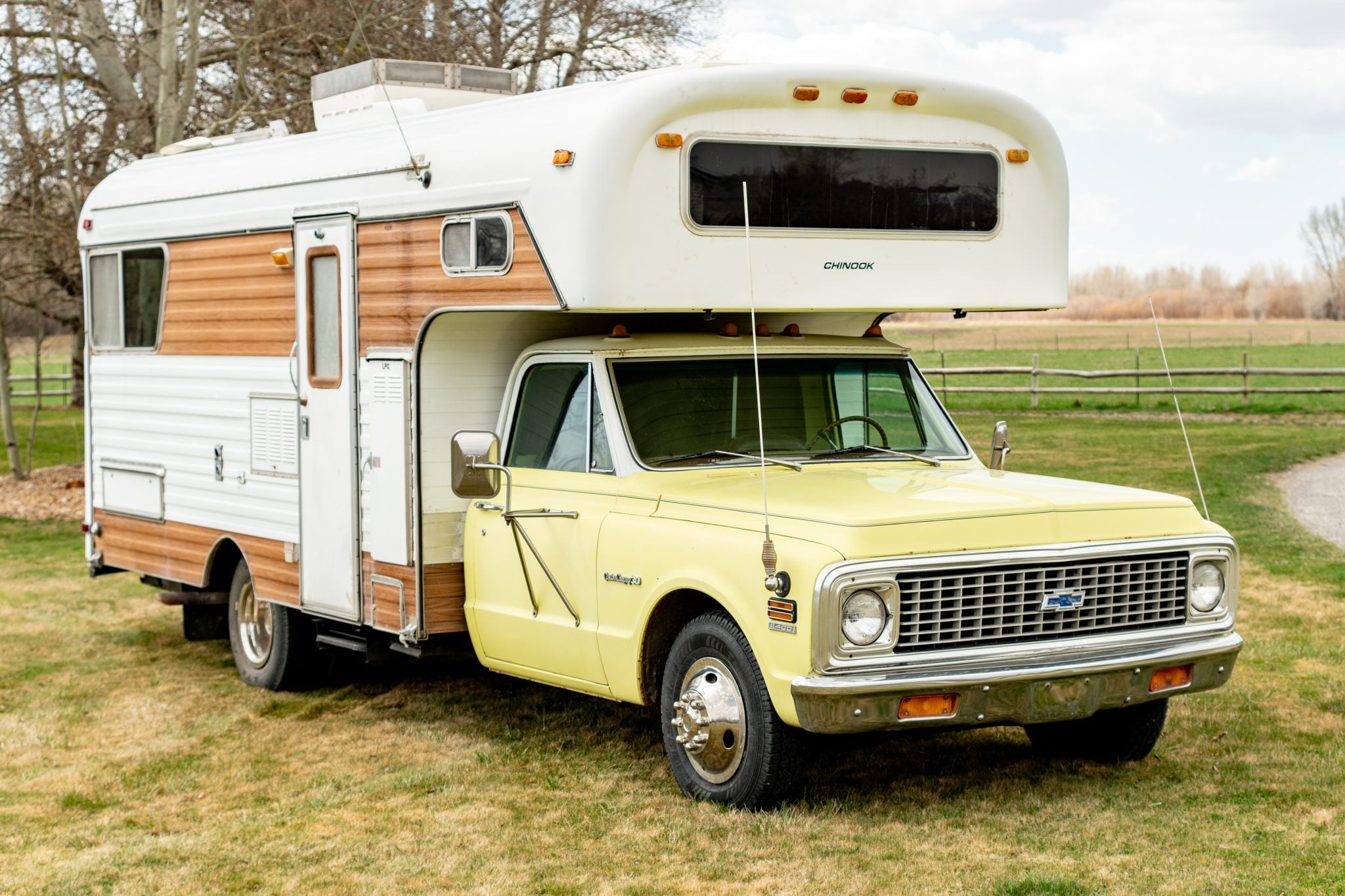
This is a 1971 Chevrolet C30 Chinook Camper that offers a surprising amount of living space with a double bed, a bathroom and shower, a kitchenette, and a dinette that converts into an additional double bed.
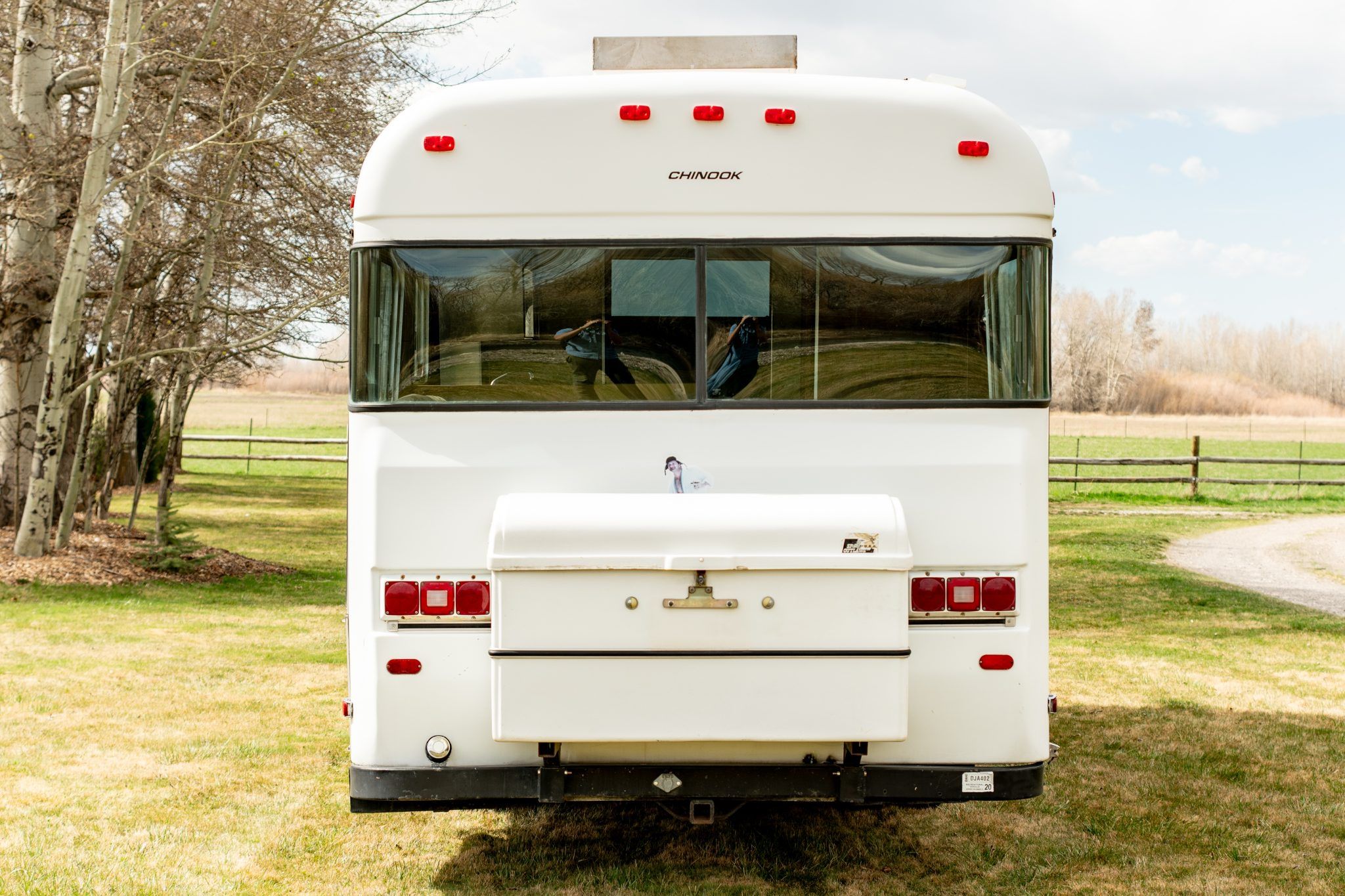
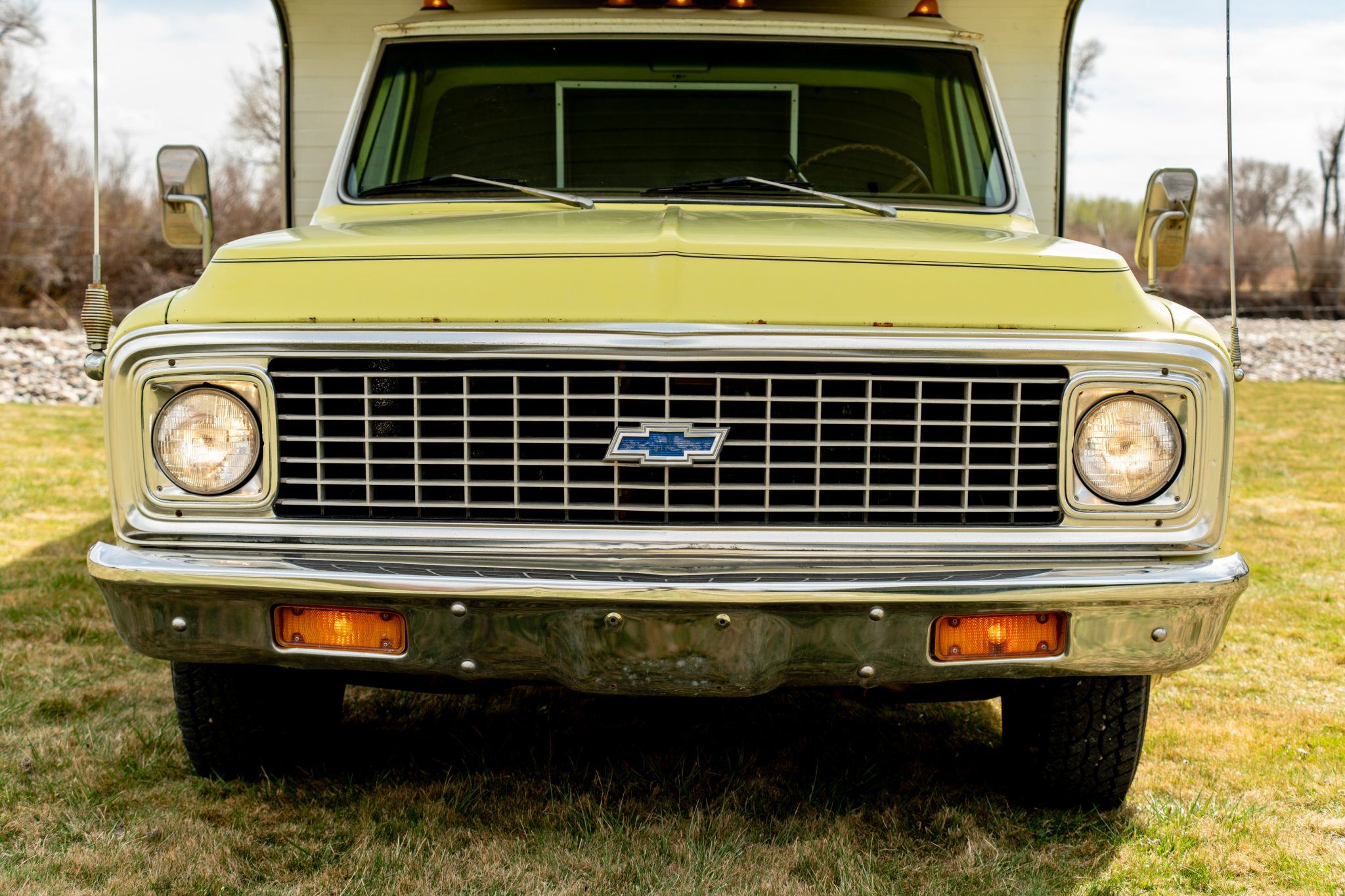
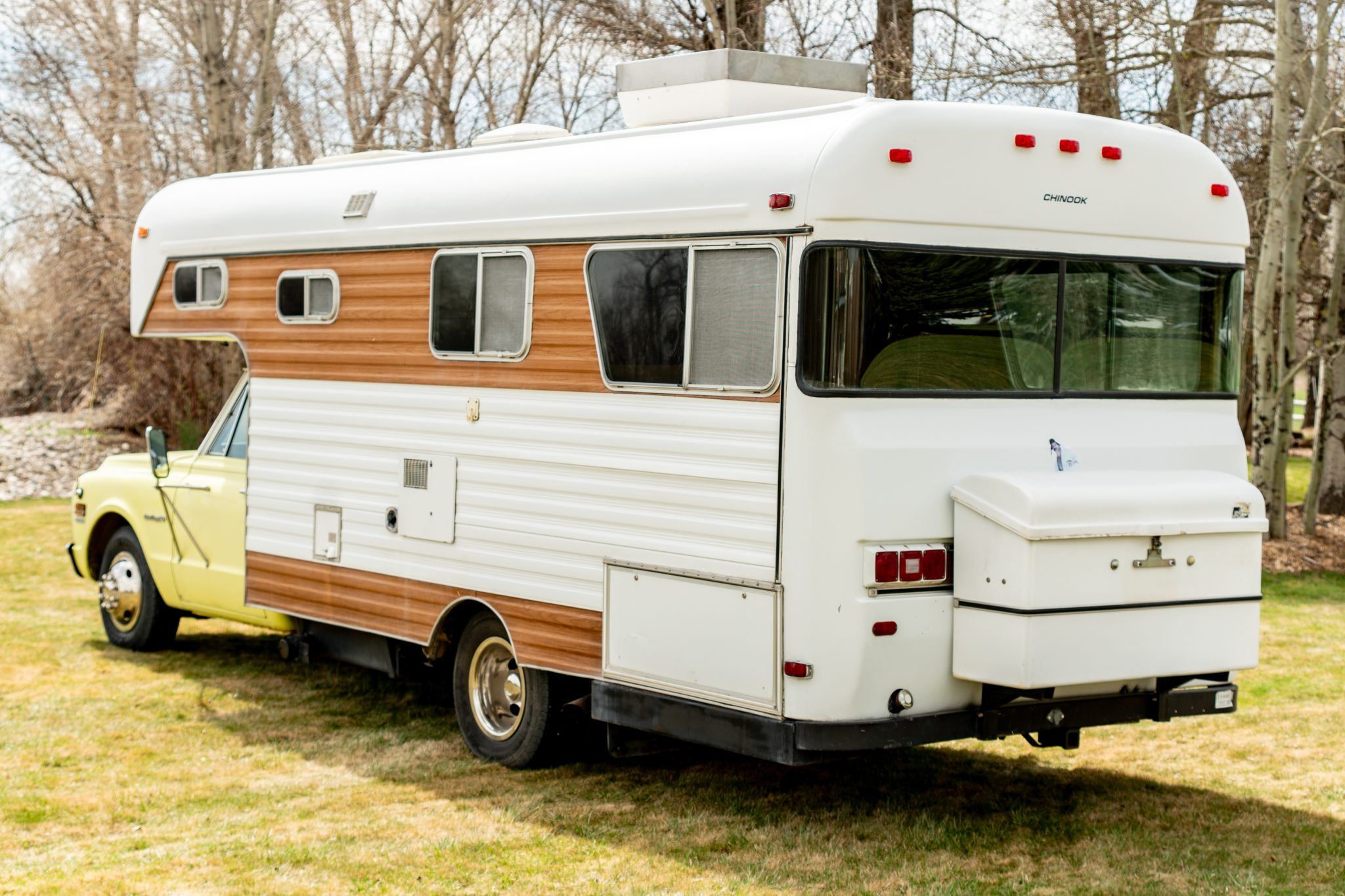
The cab is finished in yellow, while the Chinook camper is brown with white accents and fiberglass caps at the front and rear. Exterior details include towing mirrors, clearance lights, a curb-side entrance door with a fold-out step, water and electric hookups, and a rear-mounted storage box.
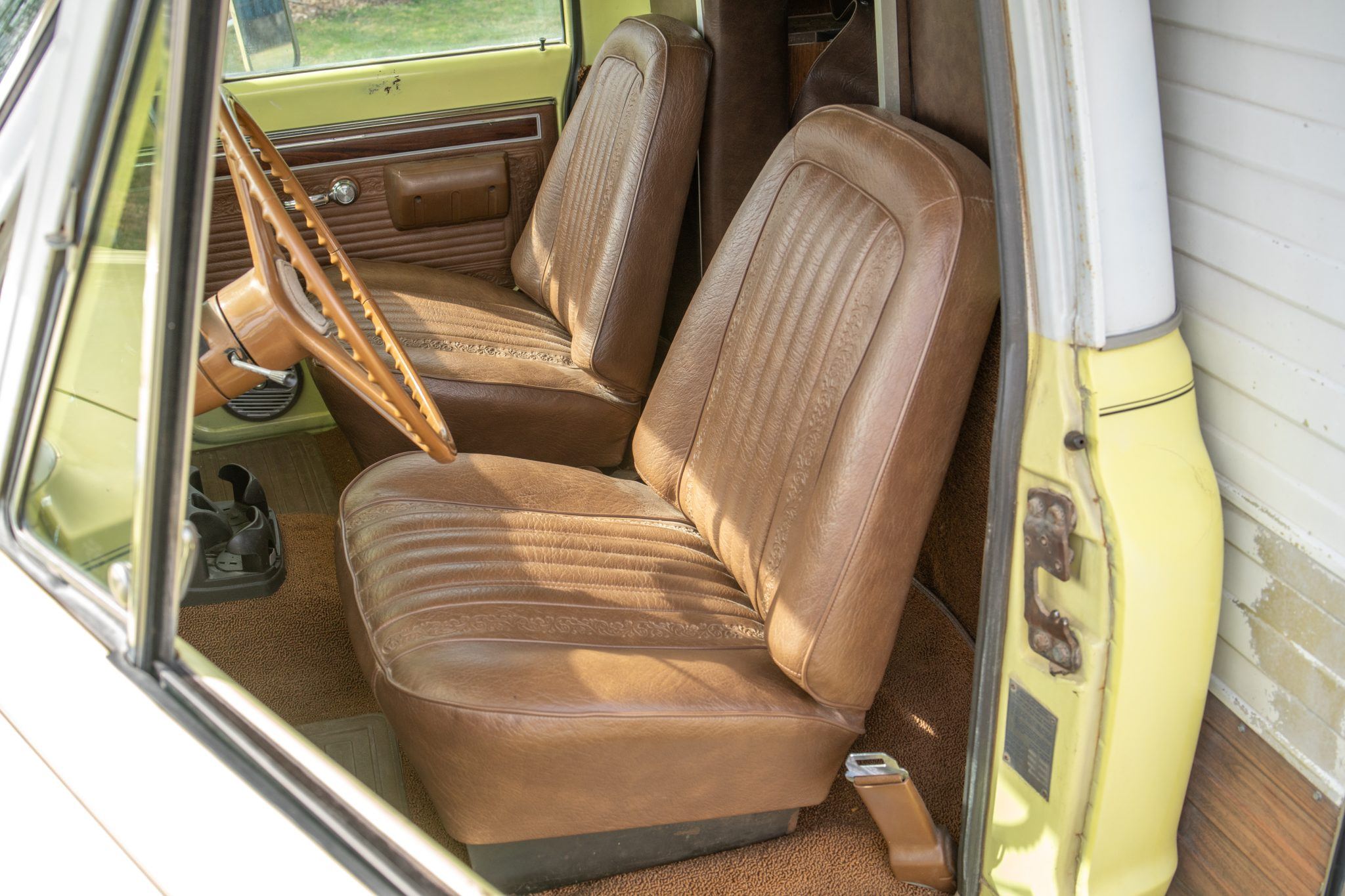
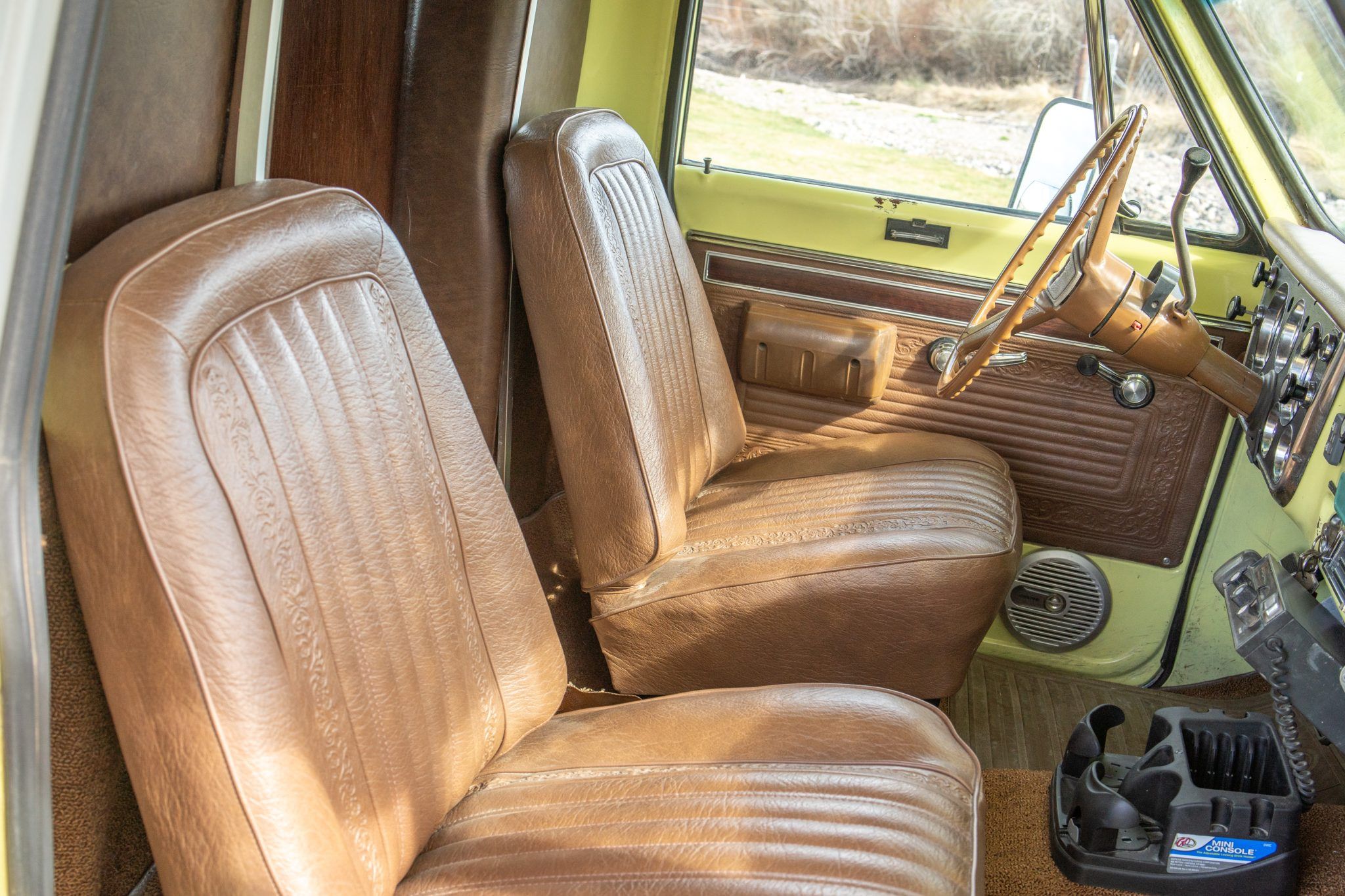
The truck rides on 16 inch polished steel wheels fitted with 235/85 Michelin LTX A/S tires and it’s equipped with a front stabilizer bar and power steering. Inside the cab, twin bucket seats are trimmed in brown vinyl that carries through to the door panels and padded dashboard topper, with brown carpeting protected by rubber floormats.
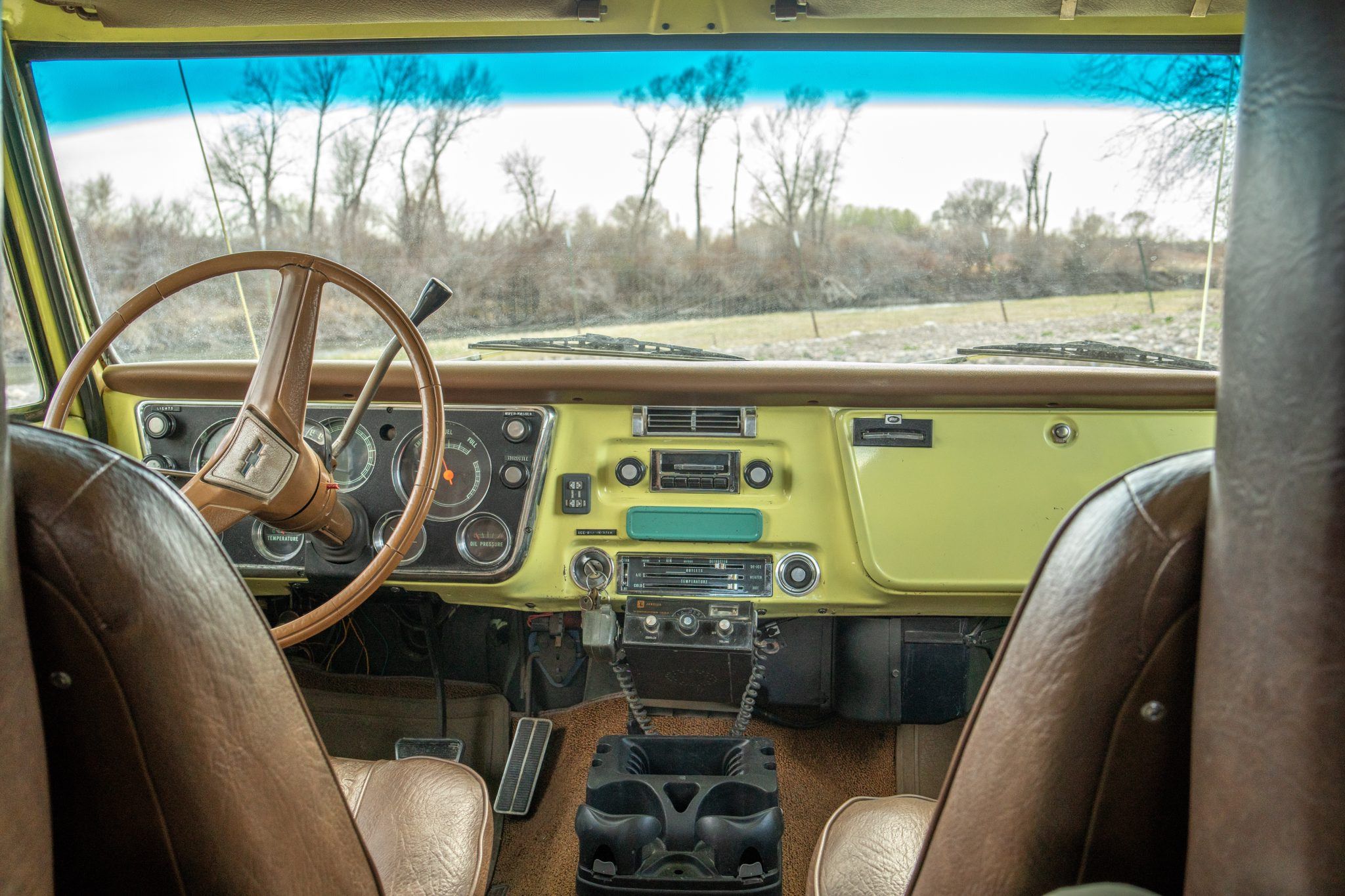
The cab is fitted with a cassette stereo, Alpine door speakers, a Johnson Messenger 123A CB radio, and a heater. A pass-through between the seats provides direct access to the camper area. The two-spoke steering wheel frames a 100 mph speedometer and gauges for amperage, coolant temperature, oil pressure, and fuel level, and the five-digit odometer shows 81,000 miles.
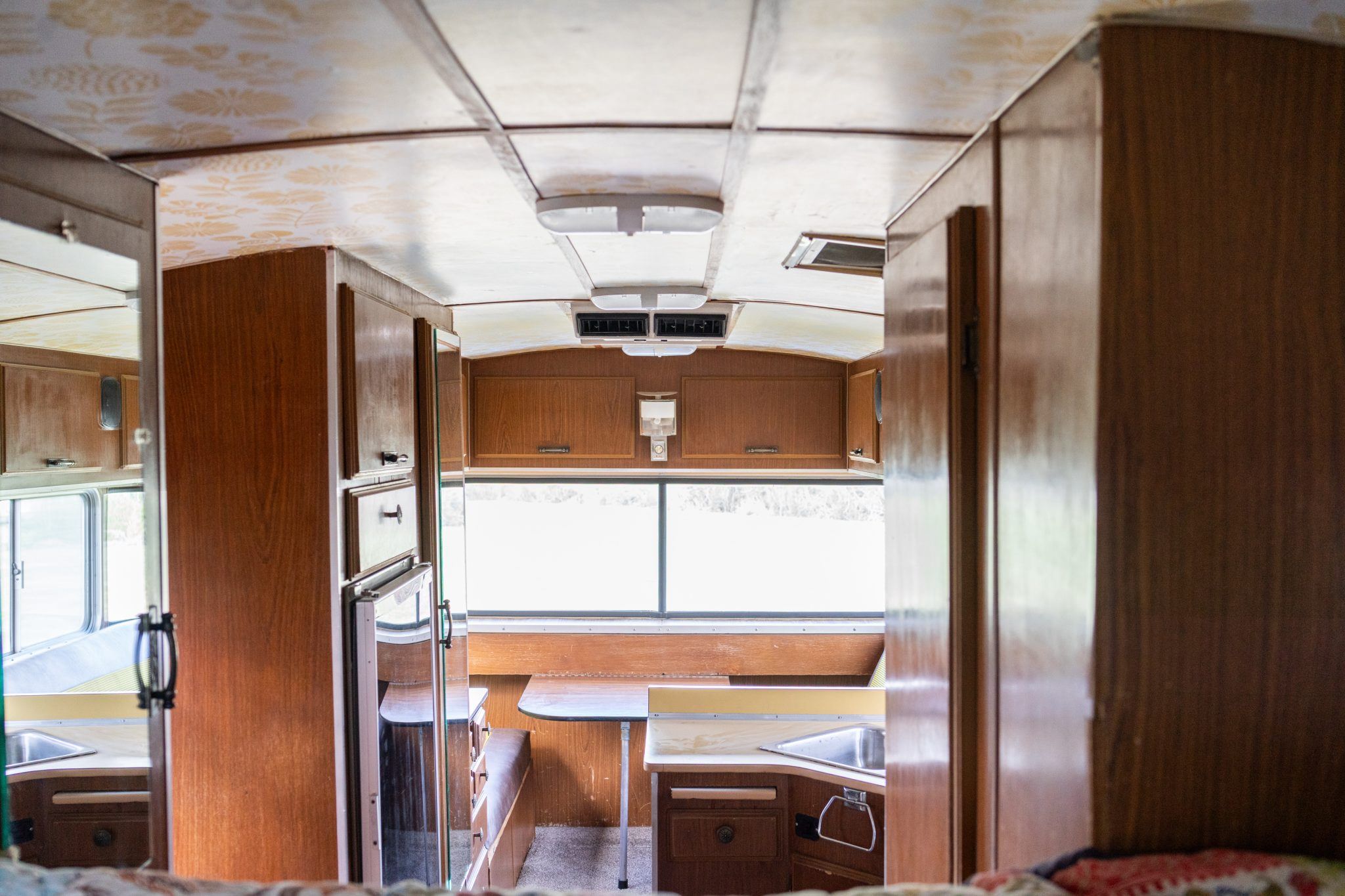
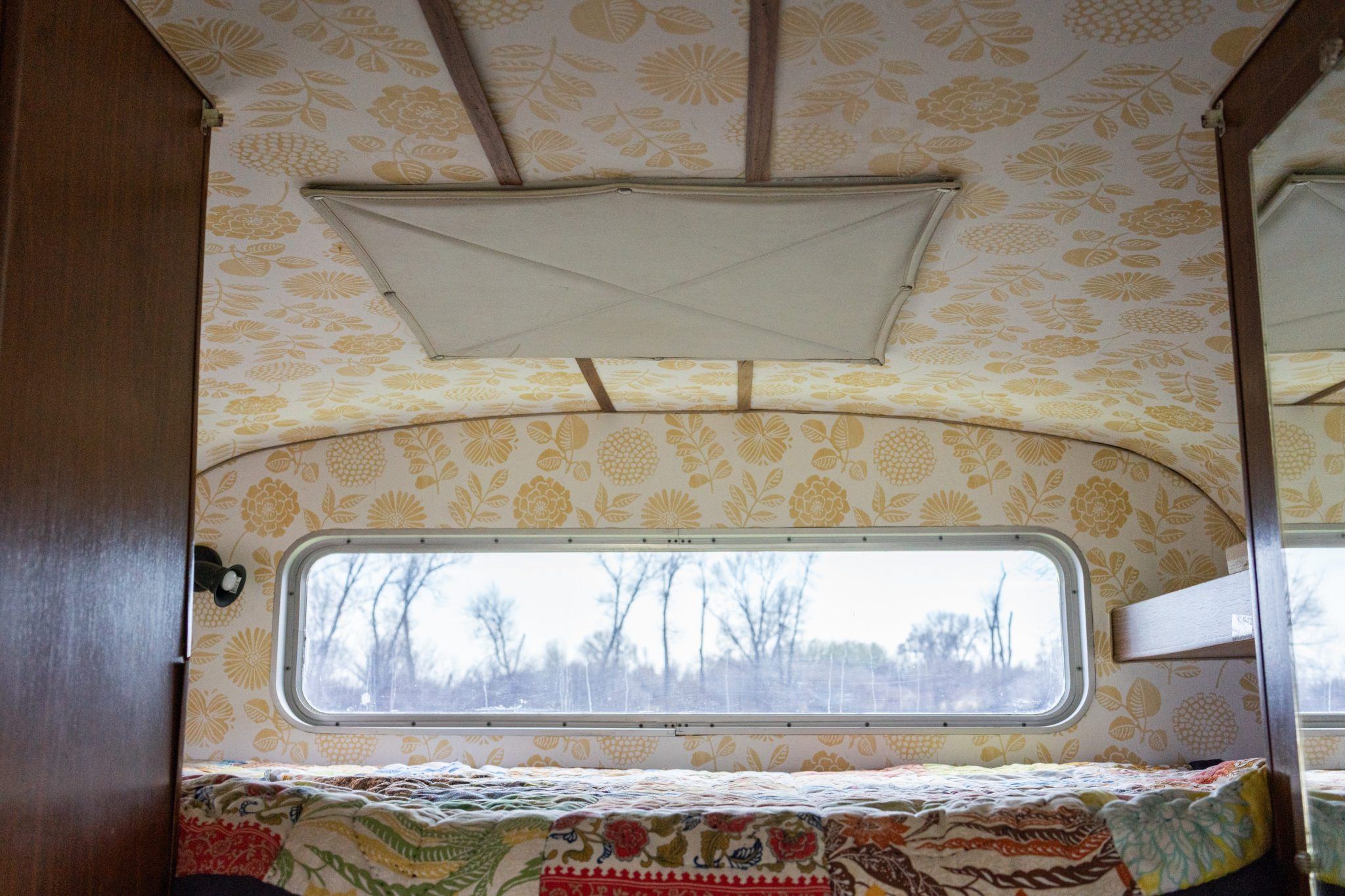
The camper interior is arranged around a rear seating area with bench seats and a folding dining table, while an over-cab sleeping area with a window sits above the cab. The combination lavatory and shower is complemented by a wardrobe, and the kitchenette incorporates dual sinks, a four-burner cooktop, a Magic Chef oven, a Dometic refrigerator, cupboards, and overhead storage.
A floral pattern decorates the ceiling, and climate control comes courtesy of a Suburban gravity-vented furnace and a roof-mounted air conditioner. Overhead lighting and speakers round out the camper’s equipment.
This camper is based on the Chevrolet C30 with a 400 cubic inch V8, ensuring there’ll be no shortage of torque, mated to a 3-speed Turbo Hydramatic automatic transmission. This would have been one of the higher-end models in this class back in the 1970s, offering many of the conveniences of home.
Power comes from a 400 cubic inch V8 that was factory rated at 240 bhp and 340 lb ft of torque, paired with a 3-speed Turbo Hydramatic automatic transmission driving the rear wheels. The sale includes manufacturer’s literature and covers for the cab windshield, side windows, and tires.
It’s now being offered for sale out of Idaho Falls, Idaho on Bring a Trailer and you can visit the listing here if you’d like to read more about it or register to bid.
Images courtesy of Bring a Trailer

Articles that Ben Branch has written have been covered on CNN, Popular Mechanics, Smithsonian Magazine, Road & Track Magazine, the official Pinterest blog, the official eBay Motors blog, BuzzFeed, Autoweek Magazine, Wired Magazine, Autoblog, Gear Patrol, Jalopnik, The Verge, and many more.
Silodrome was founded by Ben back in 2010, in the years since the site has grown to become a world leader in the alternative and vintage motoring sector, with well over a million monthly readers from around the world and many hundreds of thousands of followers on social media.