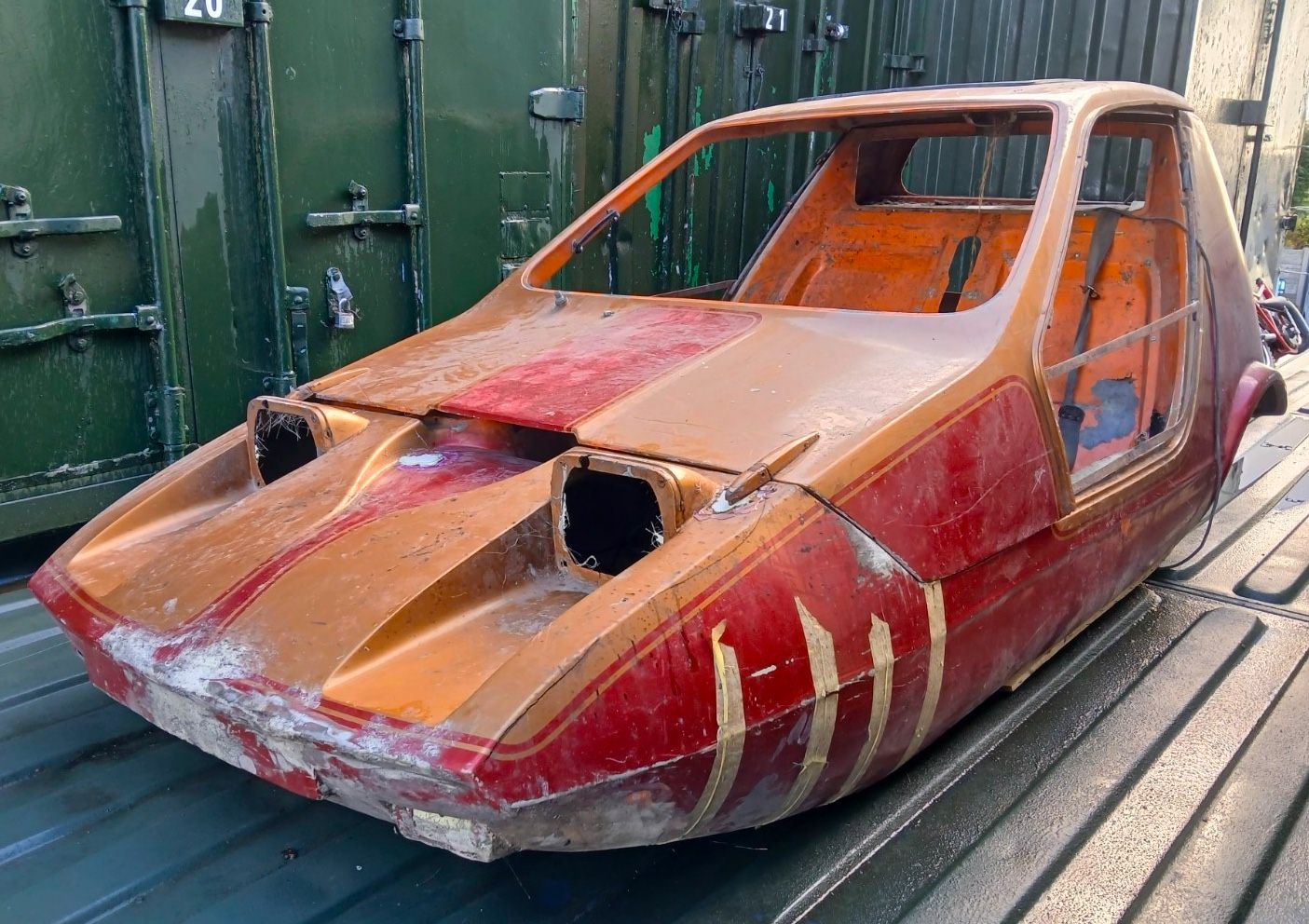
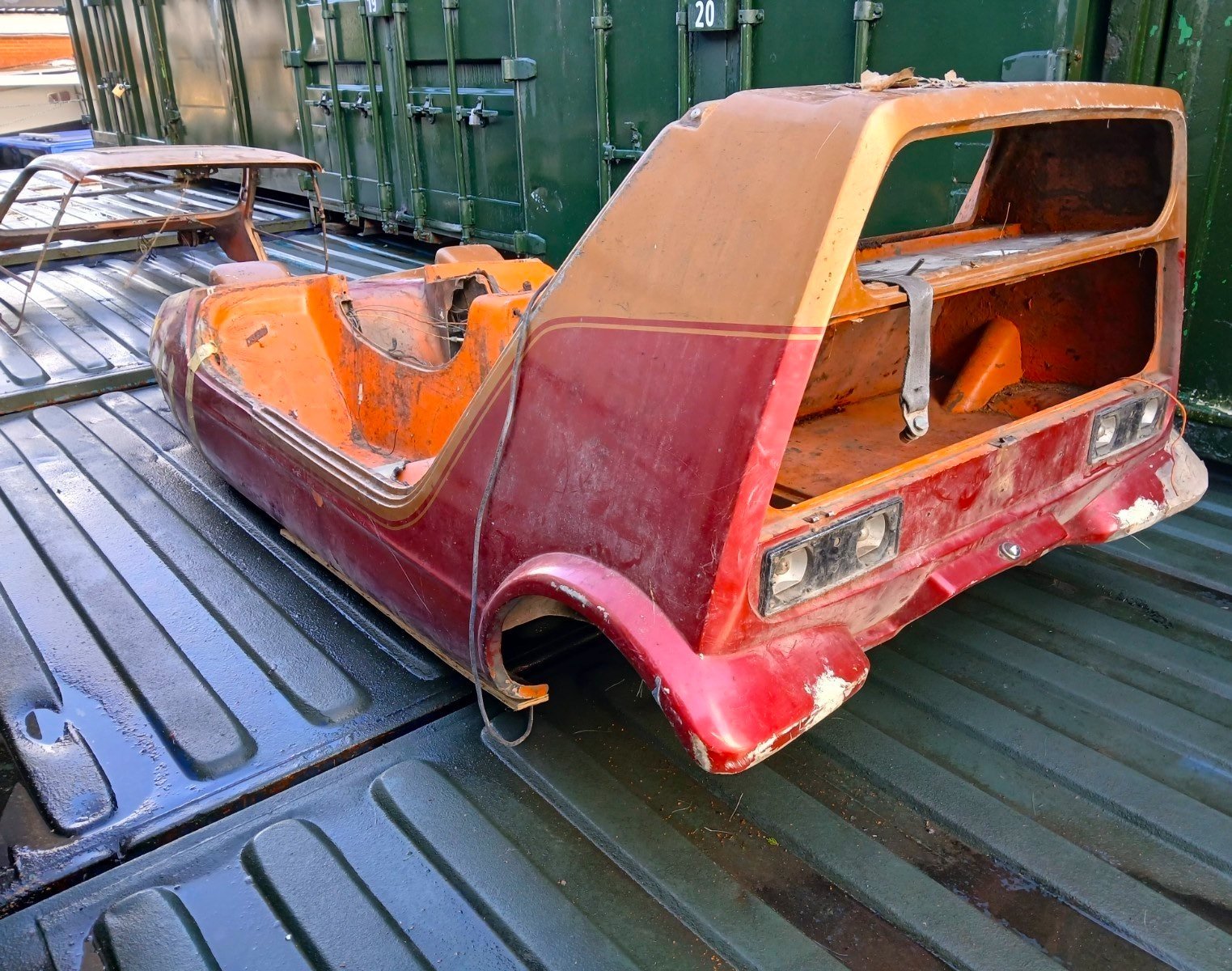
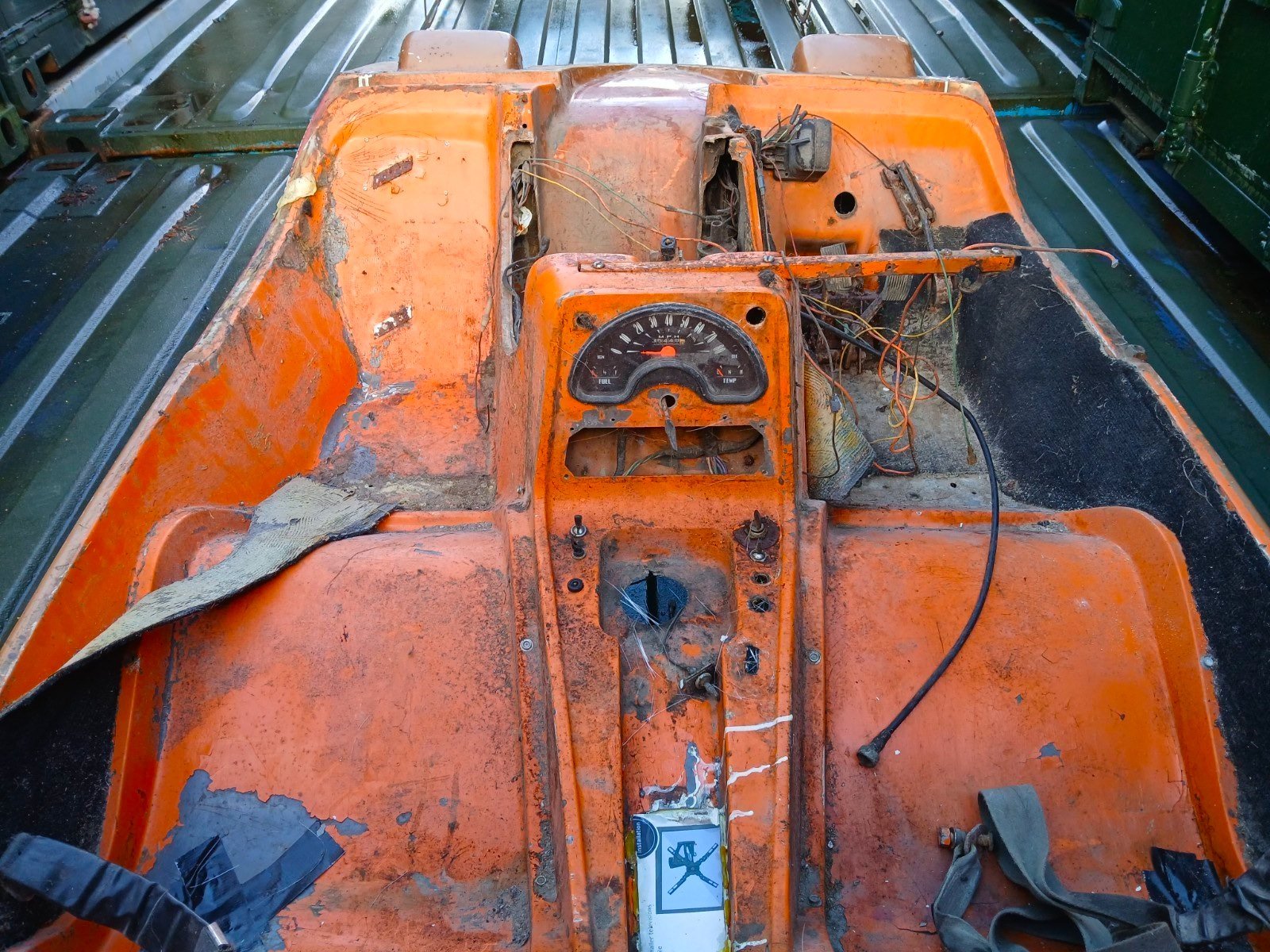
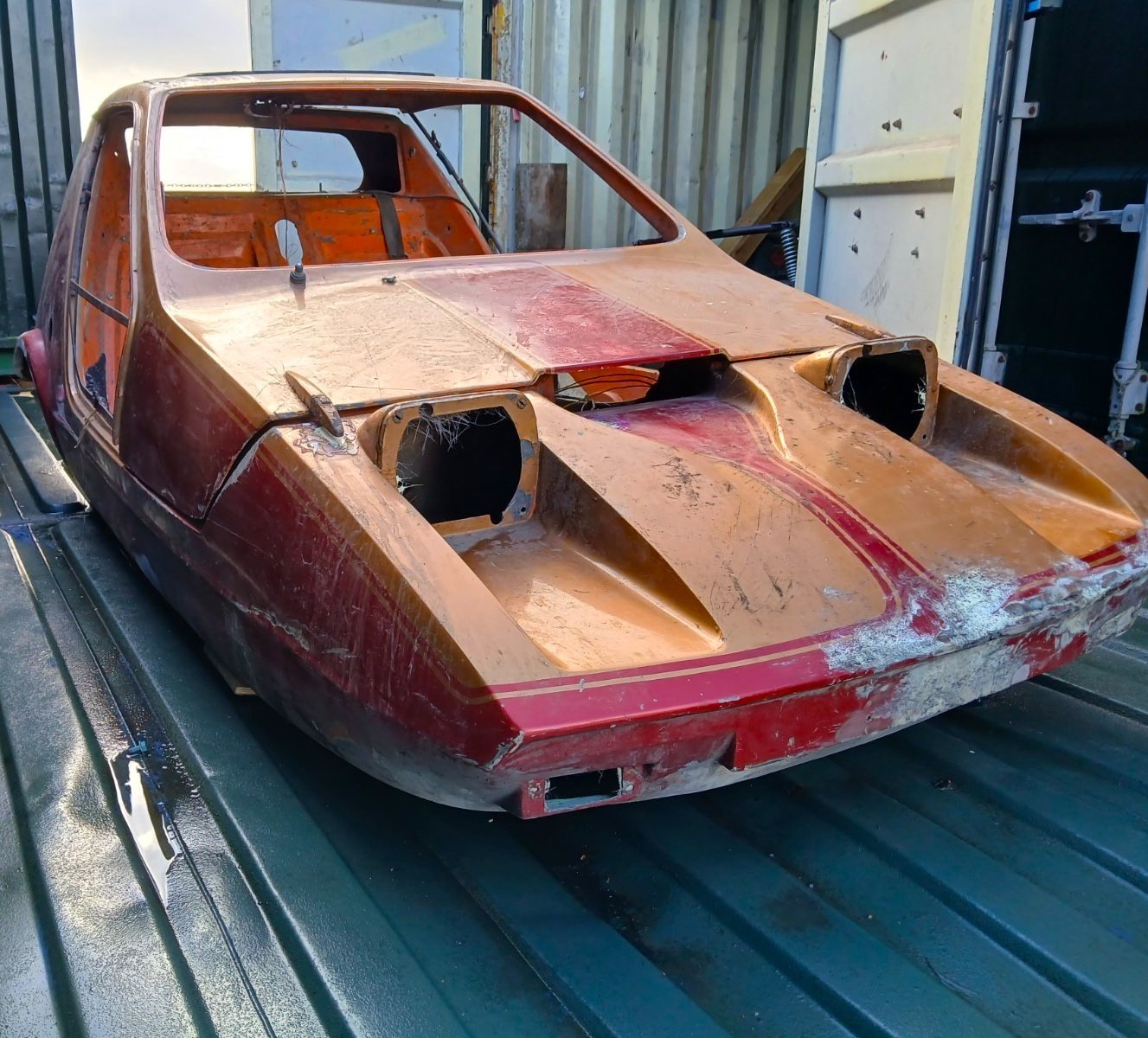
This is a Bond Bug 700ES that is very clearly needing a full restoration. The good news is that it’s cheap, and it comes with the body, chassis, and many other parts that’ll be needed in the rebuild.
Interestingly, there was a Bond Bug in the movie Star Wars (1977). You may not remember it until I tell you that it was a Bond Bug that provided the underpinnings of the Landspeeder driven by Luke Skywalker on Tatooine with Obi-Wan Kenobi.
Fast Facts: A Bond Bug 700ES Project Car
- This Bond Bug 700ES is a project car being offered cheaply and clearly needing a full restoration. It includes the body, chassis, and most key parts required to get started.
- The Bond Bug was launched in 1970 after Bond Cars Ltd was absorbed by Reliant. Styled by Tom Karen at Ogle Design, it used a wedge-shaped fiberglass body, a lift-up canopy, and three-wheel layout. The three-wheeled configuration reduced tax costs in the UK and helped keep running expenses low.
- The 700ES was the top specification, powered by Reliant’s 701cc aluminum inline four producing 34 bhp. With a curb weight near 400 kgs, performance felt lively rather than fast in any traditional sense. Equipment levels were improved over base models, though the cabin remained sparse and weather protection was limited to say the least.
- Production ended in 1974 after just over 2,000 examples had been built. Proposed four-wheel and higher-performance versions never reached full production. The Bug gained lasting pub quiz fame after forming the basis of the Star Wars Landspeeder. The example shown here includes a later 850 Reliant engine and is sold with UK registration paperwork.
History Speedrun: The Bond Bug
Bond Cars Ltd, best known for its pre-war and post-war three-wheelers, was absorbed into the larger Reliant Motor Company by the end of the 1960s. Reliant wanted a halo product that would modernize the Bond name and attract younger, more style-conscious buyers who would never consider a Robin or Regal. The answer was the Bond Bug, launched in 1970.
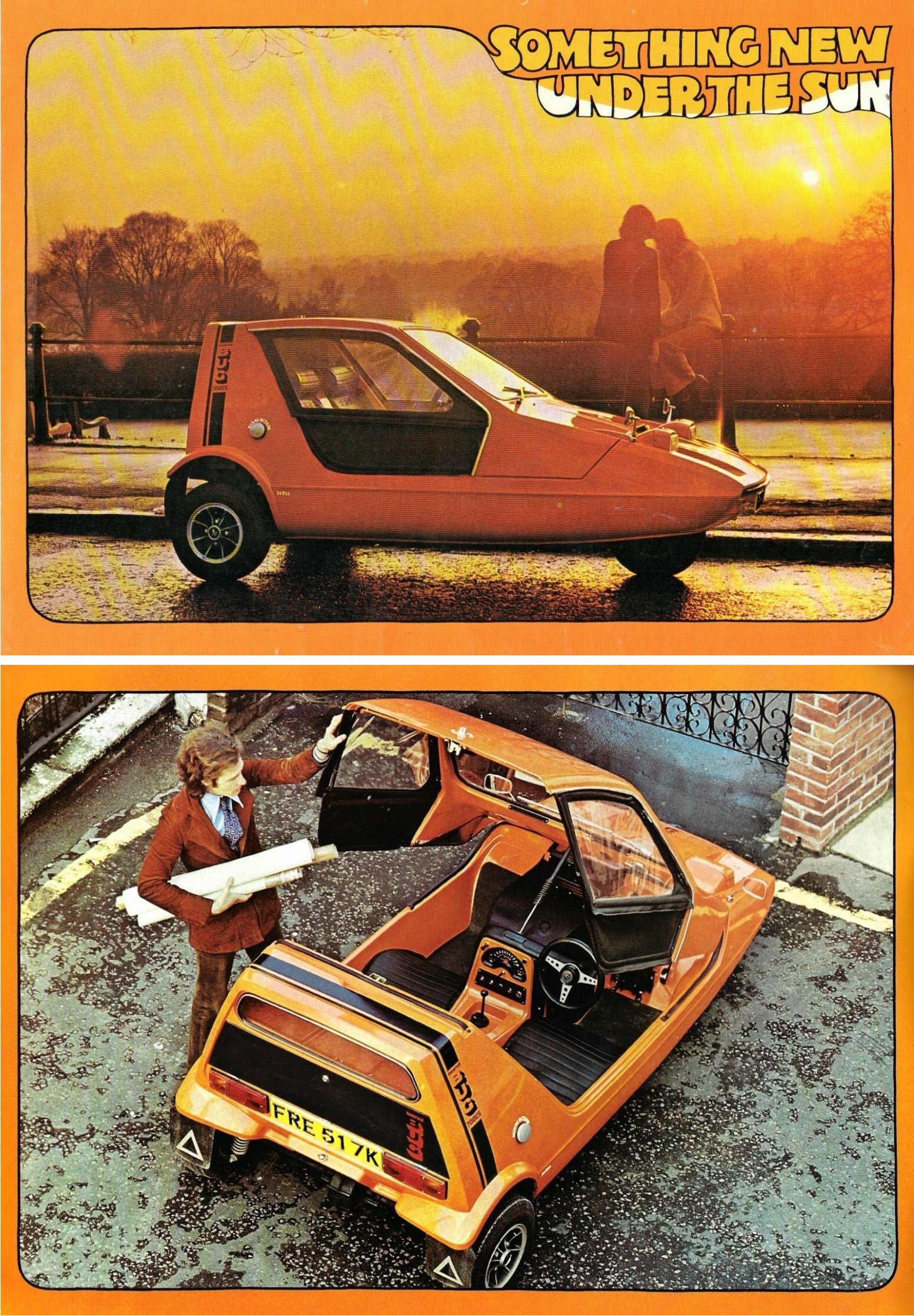
 The styling of the Bond Bug was deliberately confrontational – the wedge-shaped body, penned by Tom Karen at Ogle Design, looked more like an Italian concept car than a budget commuter from the UK. Images courtesy of Reliant Motor Company.
The styling of the Bond Bug was deliberately confrontational – the wedge-shaped body, penned by Tom Karen at Ogle Design, looked more like an Italian concept car than a budget commuter from the UK.
Finished predominantly in bright tangerine orange (though small numbers left the factory in other colors) and featuring a one-piece lift-up canopy instead of doors, the Bug was meant to stop people in their tracks. It succeeded immediately in that regard, even if it puzzled many of the older, more conservative motorists.
Underneath that dramatic triangular shell, the Bug followed familiar Reliant engineering methodology – it had a lightweight fiberglass body on a steel chassis, with a single front wheel and two at the rear. This three-wheel layout wasn’t just a styling quirk, in the UK, lightweight three-wheelers fell into the “motor tricycle” category, and for taxation purposes that sat under the broader “motorcycle” umbrella in official vehicle tax classes.
In plain terms, that meant a much lower Vehicle Excise Duty (tax) than a conventional four-wheeled car, and it helped keep overall running costs down for the sort of buyers Reliant was chasing. That’s the real reason Britain kept producing three-wheelers long after most countries moved on – the law treated them differently enough for them to make sense to many buyers with slimmer wallets.
The Bond Bug: Specifications
The Bug was powered by Reliant’s in-house developed aluminum 700cc inline-four, mounted up front and driving the rear wheels through a 4-speed manual gearbox.
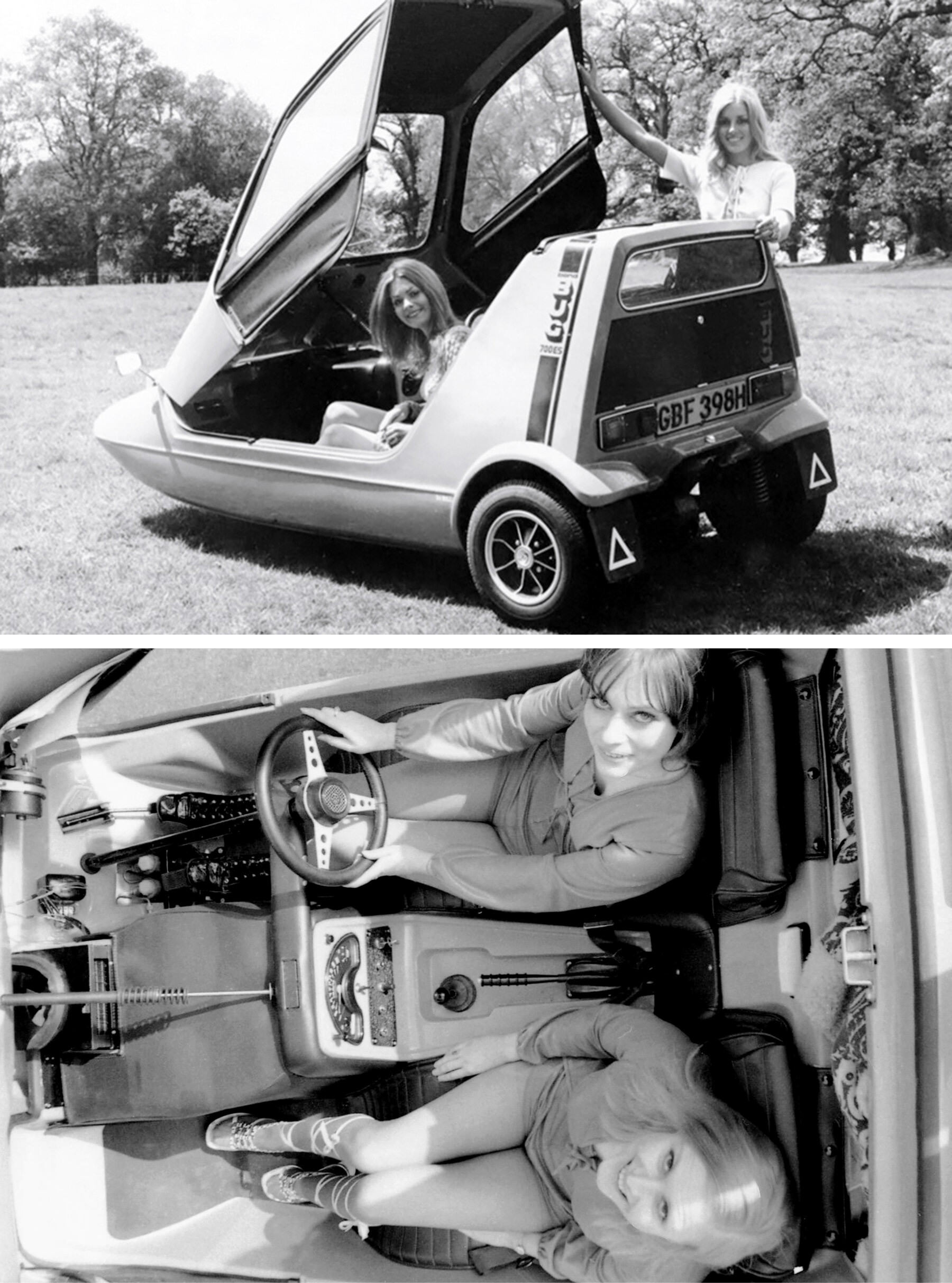
Bond Cars Ltd, best known for its pre-war and post-war three-wheelers, was absorbed into the larger Reliant Motor Company by the end of the 1960s. Reliant wanted a halo product that would modernize the Bond name and attract younger, more style-conscious buyers who would never consider a Robin or Regal. The answer was the Bond Bug, launched in 1970. Images courtesy of Reliant Motor Company.
The fastest and perhaps best-known version of the Bug was the 700ES. Introduced shortly after the initial launch, the ES was the range-topping specification and brought a modest but noticeable increase in performance.
The 701cc engine had a higher compression head and revised tuning, producing approximately 34 bhp according to period sources as well as a noticeable increase in torque right through the rev range.
With an unladen weight of 400 kgs (roughly 880 lbs), the power-to-weight ratio was respectable by early-1970s economy-car standards, even if outright speed was never anything to write home about.
The 700ES also received a more complete equipment package intended to make it feel less bare-bones and maybe even a little luxurious when compared to its minimalist siblings. Interior padding, improved seating, additional exterior trim, and practical details like a spare wheel helped distinguish it from lower-spec Bugs, along with the prominent decals of course.
The cabin was sparse due to weight and budgetary restrictions, it was dominated by the steeply raked windscreen and the novelty of climbing in through the hinged roof. Seats were surprisingly sporty feeling, with two individual buckets with side bolsters and head rests, mounted low in the cabin. Visibility was better than expected, though ventilation and weather sealing were compromises that owners had to learn to live with.
On the road, period testers reported that the 700ES felt eager and entertaining rather than fast in any conventional sense of the word. The three-wheel configuration demanded respect when pushed in the corners, but the Bug’s low center of gravity helped keep things relatively predictable for experienced drivers. It was happiest being driven briskly on smooth roads, where its low weight and direct steering made it feel alive in a way few economy cars of the time could match.
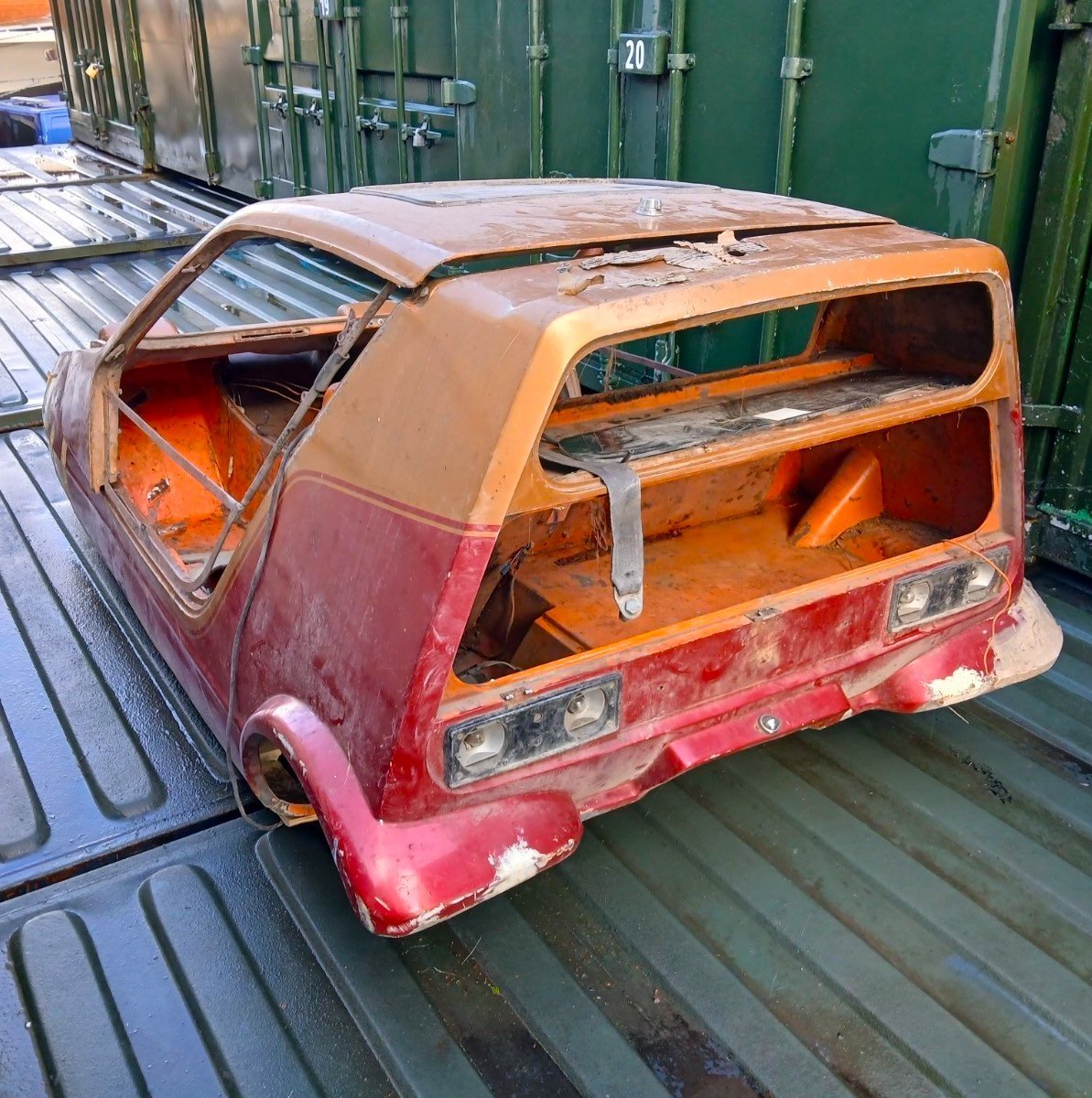
This is a Bond Bug 700ES that is very clearly needing a full restoration. The good news is that it’s very cheap, it comes with the body, chassis, and many other parts that’ll be needed in the rebuild.
The End And A New Beginning
Despite the attention it attracted, the Bond Bug’s production run was short. Built between 1970 and 1974, total output was just over 2,000 cars across all variants. Changing tax rules, rising costs, and shifting market tastes all worked against it, and Reliant quietly ended production before the middle of the decade.
This wouldn’t quite be the end of the Bond Bug however. Multiple four-wheeled Bond Bugs were made and a new version of the engine was in development for the model, engineered by Formula 1 team BRM with a swept capacity of 850cc, an overhead cam, and twin SU carburetors producing 70 bhp resulting in rather lively performance.
Sadly we’ll never know how well this four-wheeled Bond Bug may have sold as it was never given the green light for production.
This isn’t the end of the road for the concept however, in the 1990s the Webster Motor Company bought the moulds and rights to the Bug design and created their own four-wheeled version called the Webster Bug which they sold as a kit car, only 30 or so are thought to have been produced.
The Star Wars Connection
The most famous example of the Bond Bug was the aforementioned Landspeeder from Star Wars (1977) driven by Luke Skywalker on Tatooine. The Landspeeder was developed by the same man who designed the Bug – Tom Karen of Ogle Design. Interestingly, mirrors were fitted along each side of the Landspeeder at a slight downward angle to give the illusion that the vehicle was floating.
The Bond Bug 700ES Project Car Shown Here
The Bond Bug 700ES you see here is a project car in every sense of the word, and it’ll require a full restoration by the new owner. It comes with the body, chassis, and rear suspension/axle assembly.
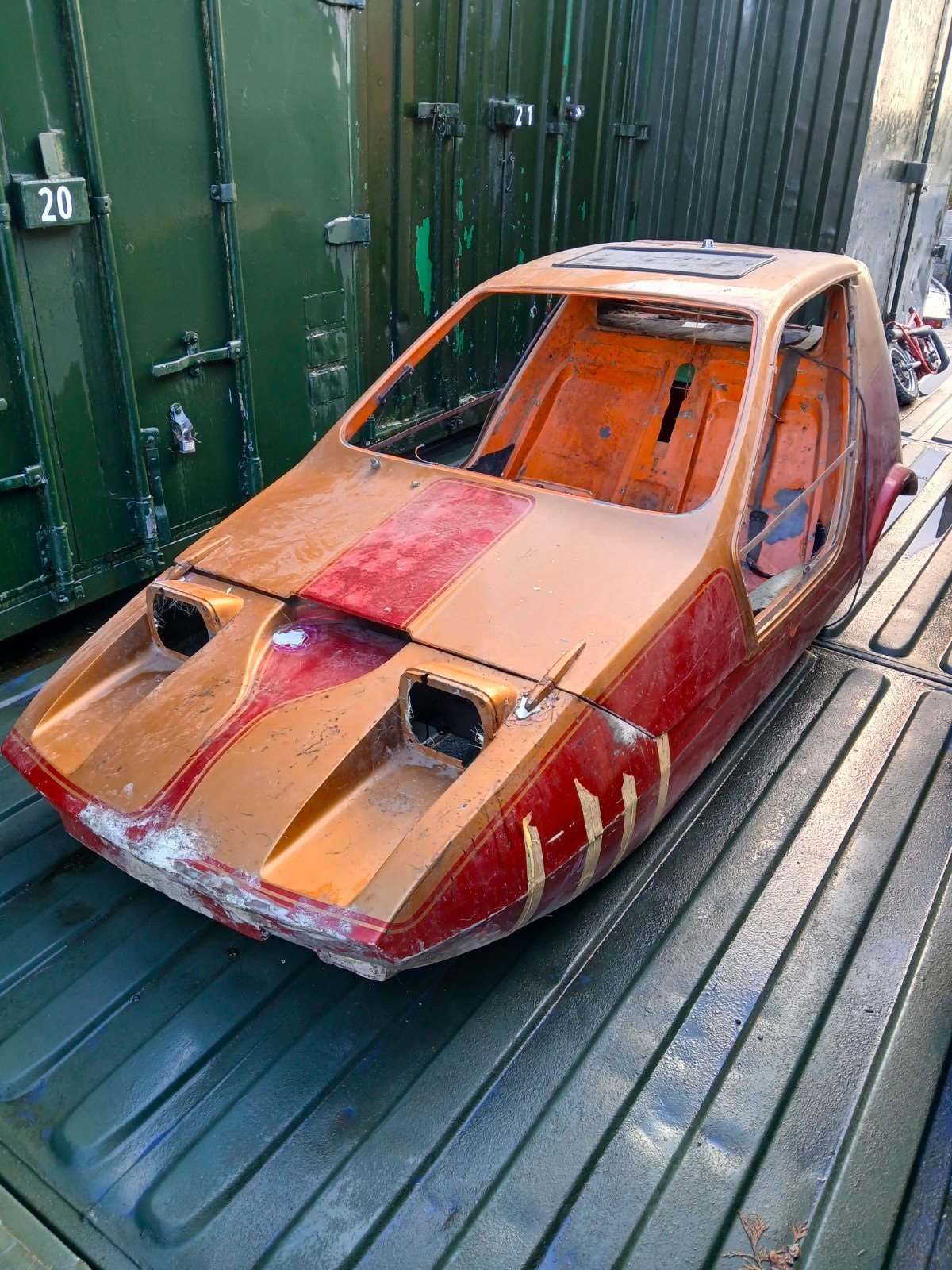
This Bond Bug 700ES is being supplied with a non-original 850 Reliant Robin engine and gearbox, though it’s worth noting that this is a more powerful engine than the unit that originally came in the Bug, even the more powerful 700ES version of the model series.
It’s being supplied with a non-original 850 Reliant Robin engine and gearbox, though it’s worth noting that this is a more powerful engine than the unit that originally came in the Bug, even the more powerful 700ES version of the model series.
It has a V5, a UK vehicle licensing document, and it’s being offered for sale out of the UK on eBay here with an asking price of £1,900 or best offer ($2,580 USD).
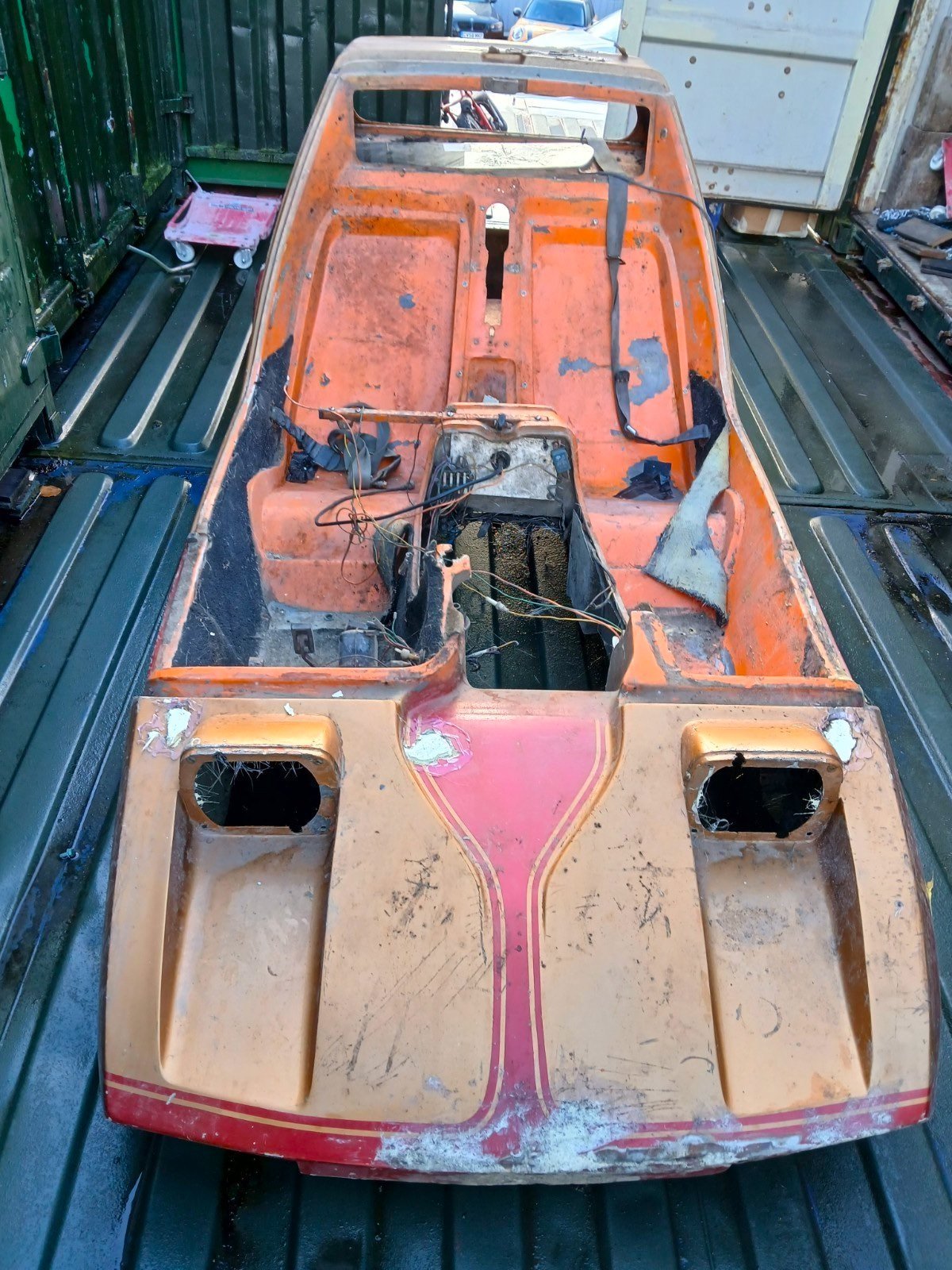
Images courtesy of Ben Homer

Articles that Ben Branch has written have been covered on CNN, Popular Mechanics, Smithsonian Magazine, Road & Track Magazine, the official Pinterest blog, the official eBay Motors blog, BuzzFeed, Autoweek Magazine, Wired Magazine, Autoblog, Gear Patrol, Jalopnik, The Verge, and many more.
Silodrome was founded by Ben back in 2010, in the years since the site has grown to become a world leader in the alternative and vintage motoring sector, with well over a million monthly readers from around the world and many hundreds of thousands of followers on social media.