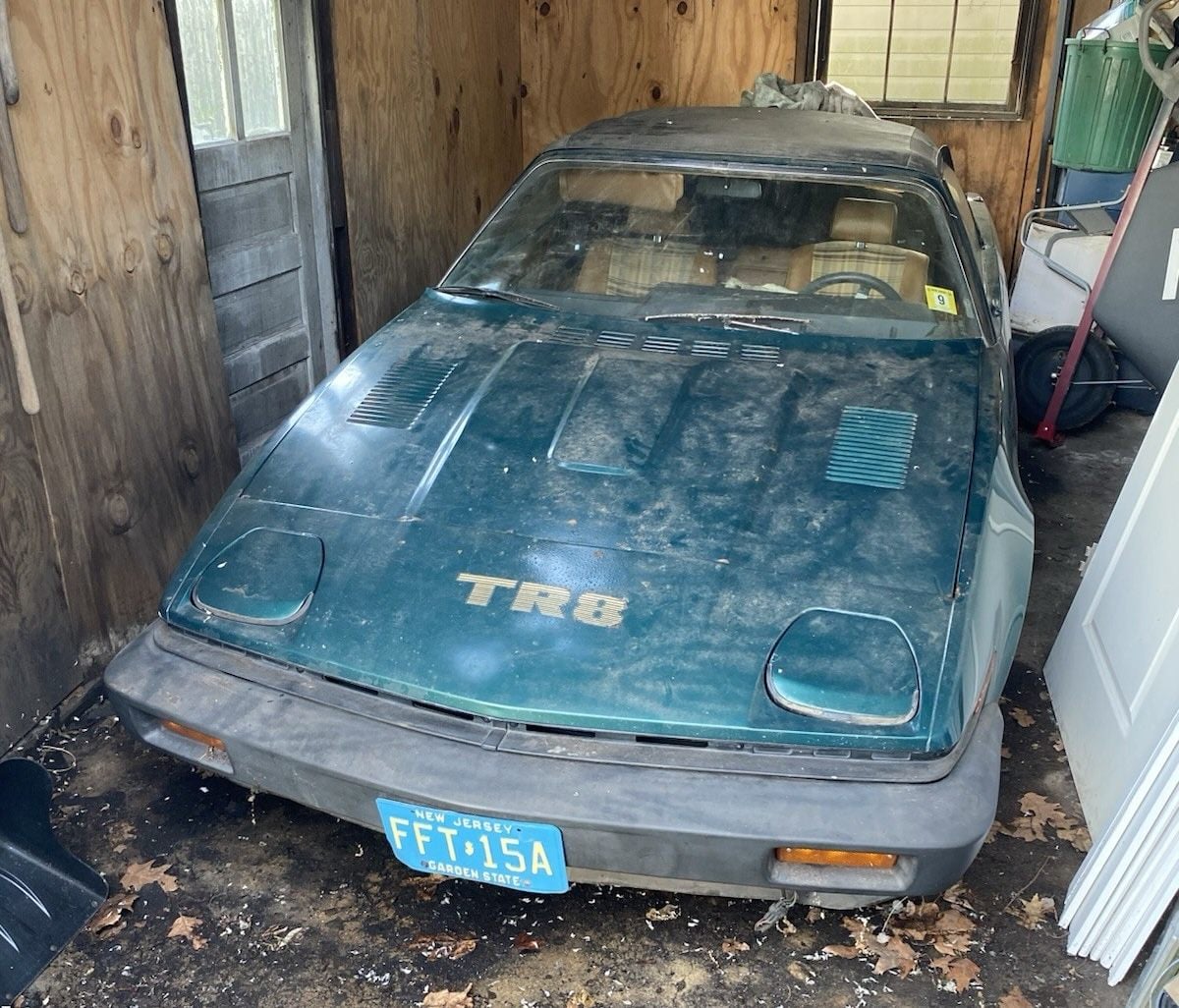
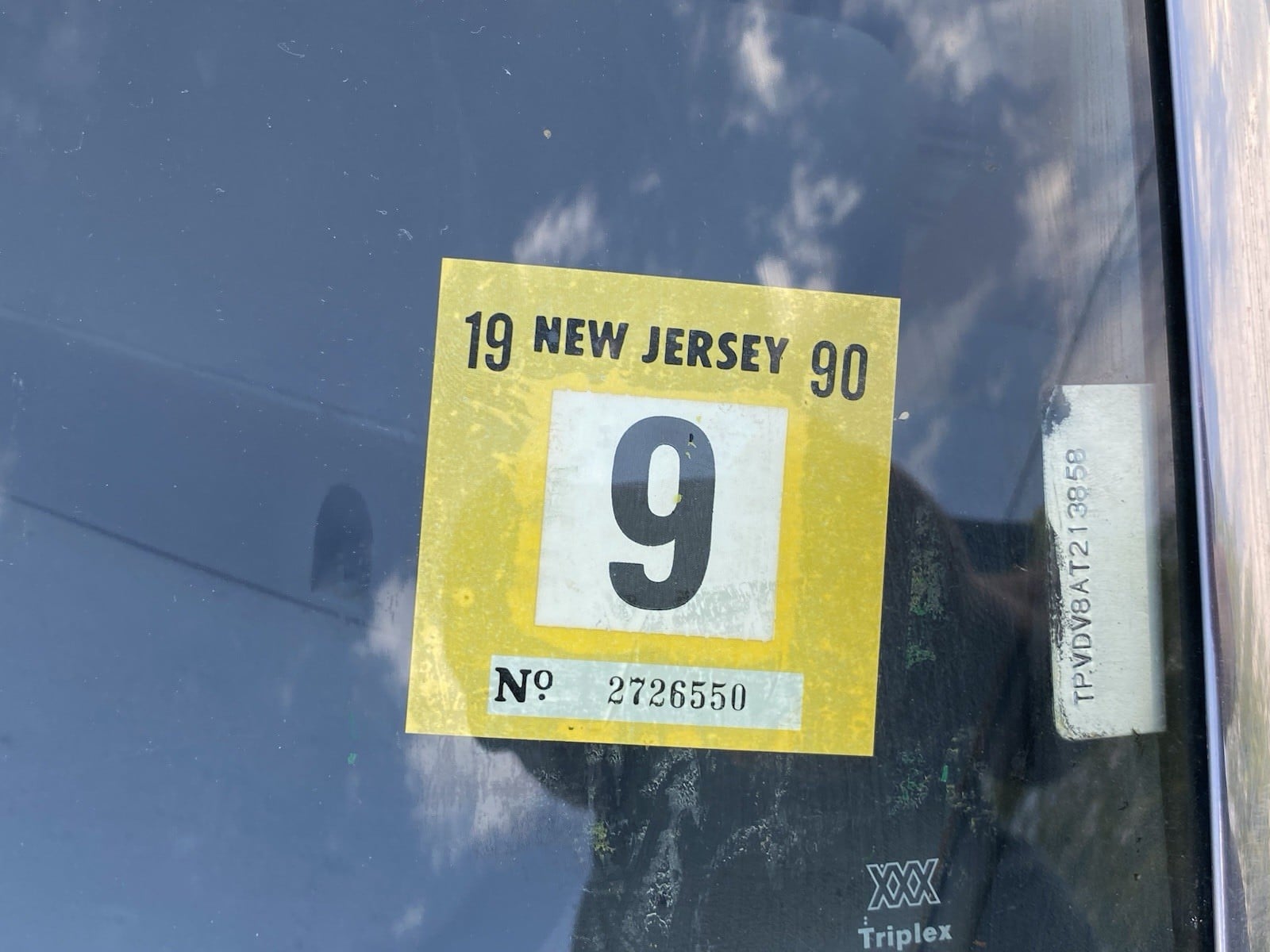
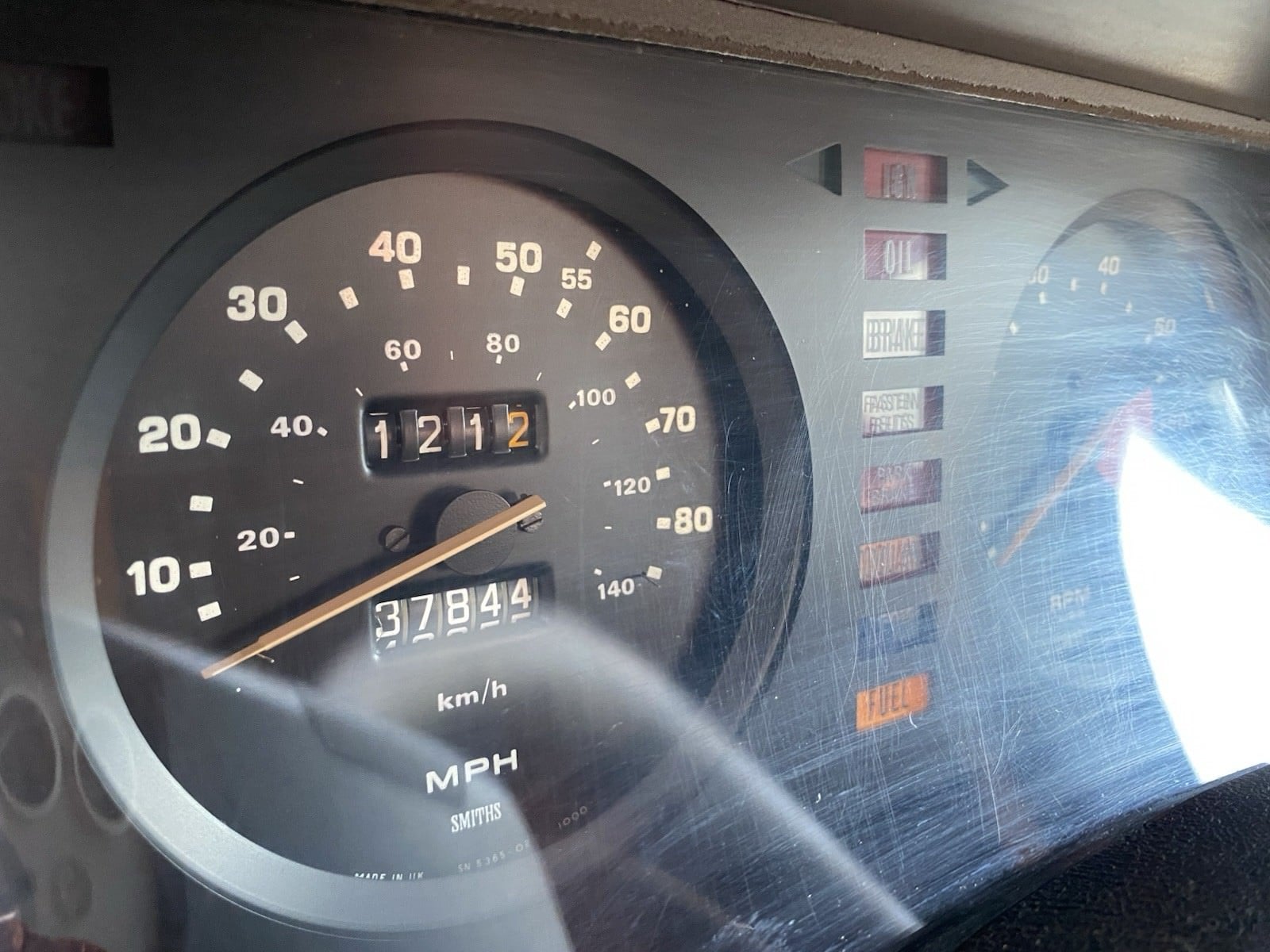
This is a Triumph TR8 that was tucked away in 1990 and then left, untouched, for 36 years. This is a desirable 5-speed manual version of the car, with fewer than 38,000 miles on the odometer.
The TR8 was the much faster sibling to the TR7, a car with which it shared a body and much of its underpinnings. The TR8 had a Rover V8 under the hood offering almost twice the power of the four-cylinder TR7, but it was produced in far lower numbers.
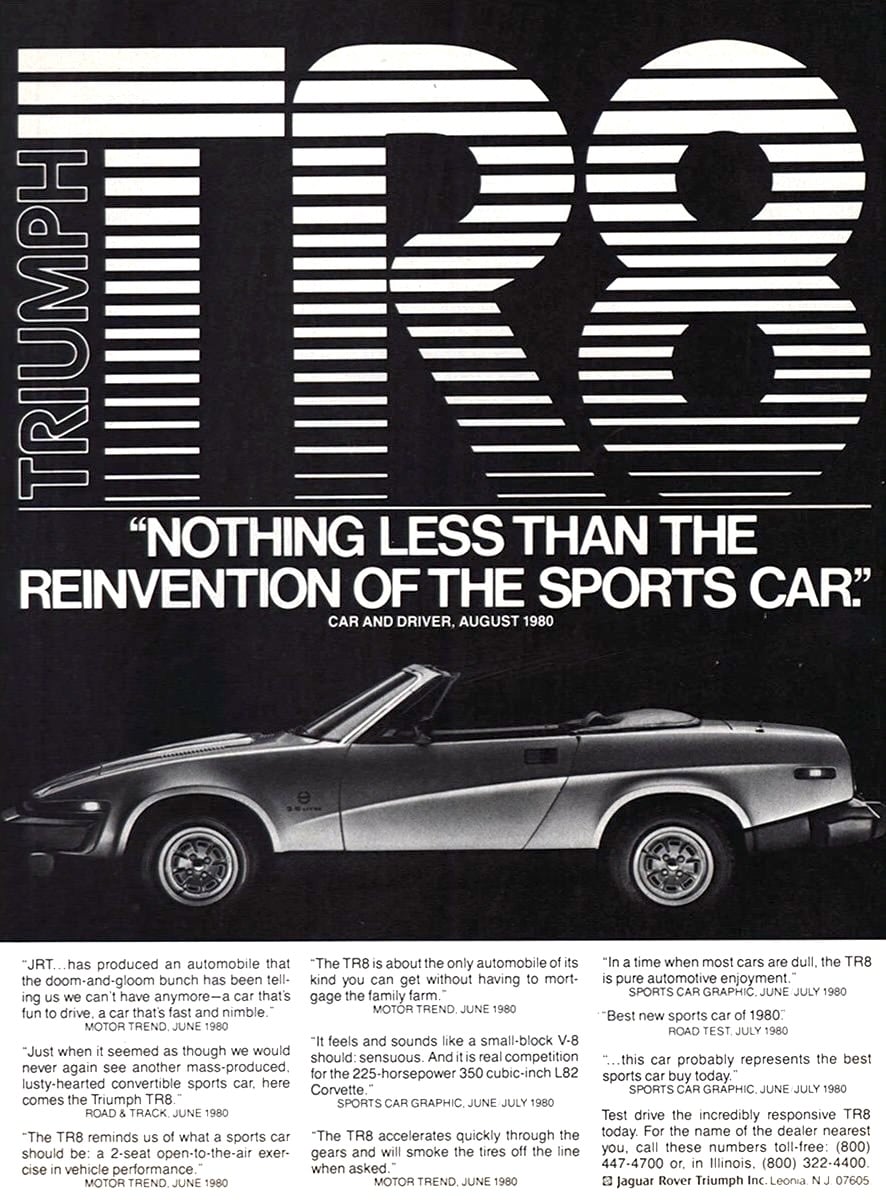
 The TR8 was the much faster sibling to the TR7, a car with which it shared a body and much of its underpinnings. The TR8 had a Rover V8 under the hood offering almost twice the power of the four-cylinder TR7, but it was produced in far lower numbers. Image courtesy of Triumph.
Fast Facts: A Barn Find Triumph TR8
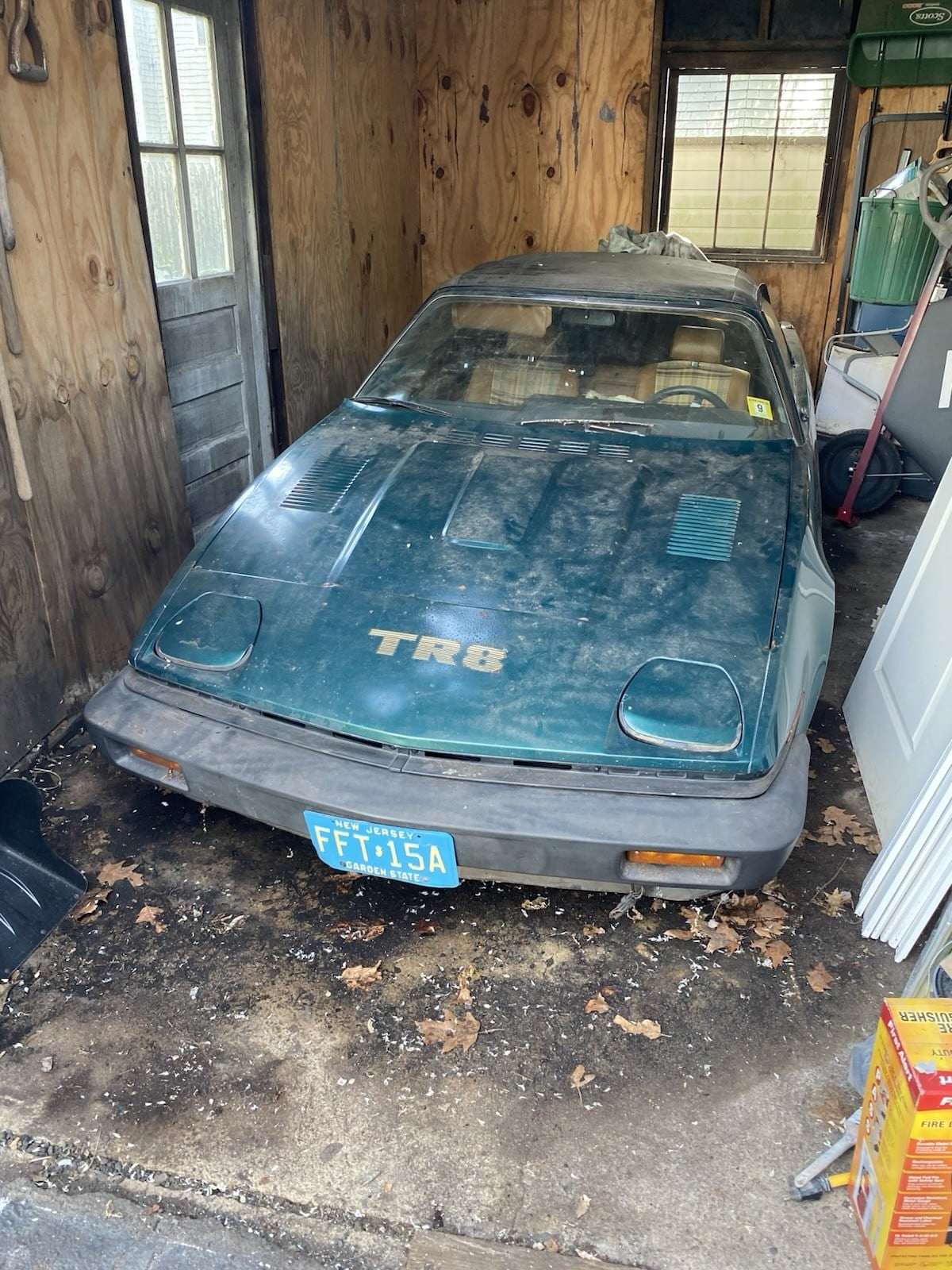
- This is a 1980 Triumph TR8 convertible in Poseidon Green over tan plaid, offered as a one-owner car with just under 38,000 miles on the odometer. It’s fitted with the desirable five-speed manual gearbox, and it’s been off the road since 1990, stored untouched for 36 years.
- The TR8 was the V8-powered version of the wedge-shaped TR7, built by British Leyland between 1978 and 1981 and sold almost entirely in the United States and Canada. It was the last sports car Triumph ever built, and with roughly 2,750 made, the rarest of the TR-badged production cars.
- Power came from the 3,528cc all-aluminum Rover V8, originally a Buick design, making between 133 bhp and 148 bhp depending on year and spec. Triumph fitted stiffer springs, a dual exhaust, and standard power steering. Bob Tullius’s Group 44 team took the car to a GTO class win at Sebring in 1980.
- The car isn’t currently running, as the exhaust and front engine accessories were disconnected at some point, though all the parts are said to be present. It’s described as solid underneath with light surface rust, and it retains its original paperwork and service records. It’s listed on eBay at $8,500.
History Speedrun: The Triumph TR8
The Triumph TR8 was a V8-powered version of the Triumph TR7, built by British Leyland between 1978 and 1981 and sold almost entirely in the United States and Canada.
It was the last sports car Triumph would ever build, and the rarest of the TR-badged production cars. Only around 2,750 examples of the TR8 were ever made, and only a fraction of them are thought to have survived to the current day.
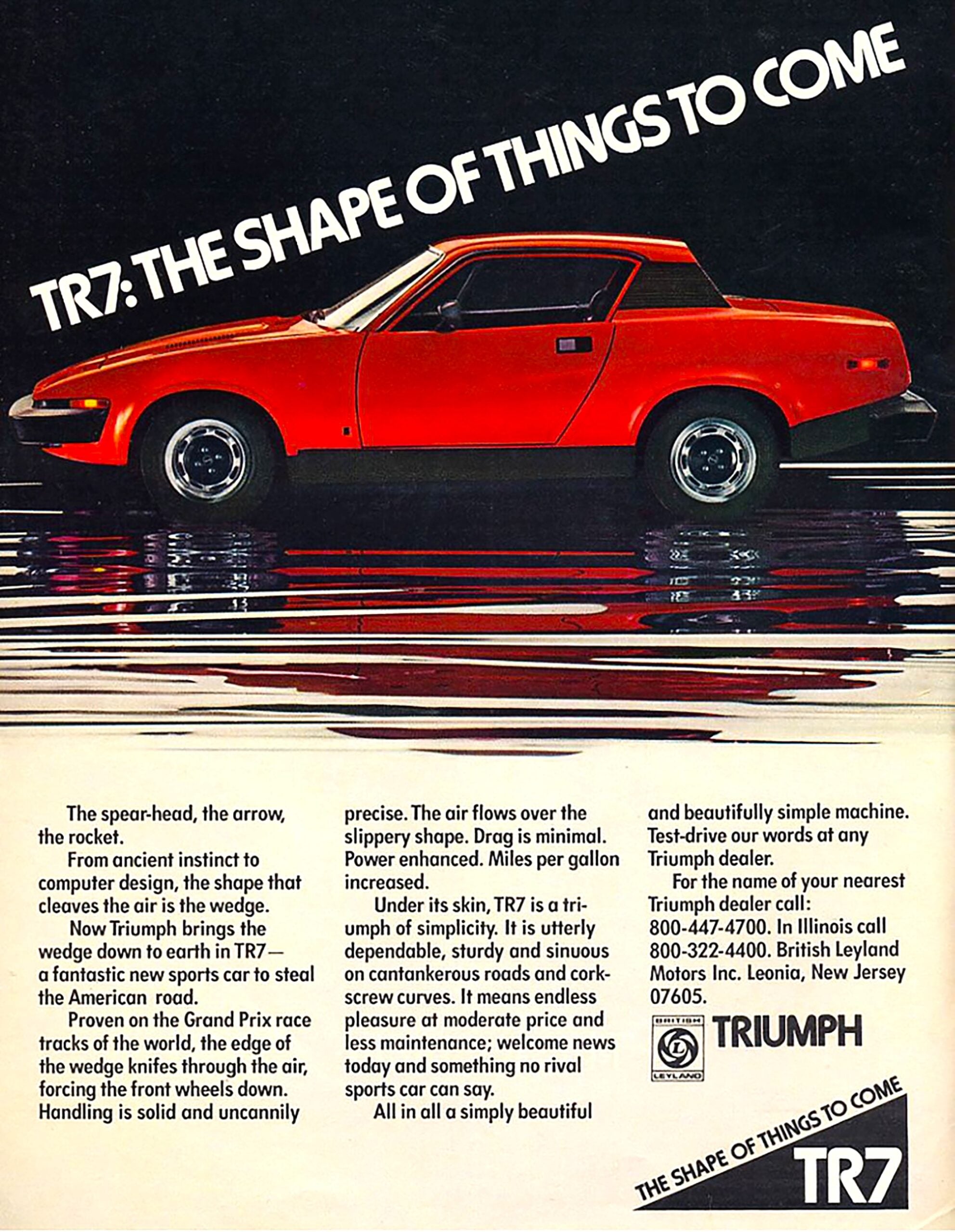
The Triumph TR7 reached American showrooms in early-1975 as the replacement for the TR6, with the UK launch following in May of 1976. Harris Mann’s wedge-shaped body was advertised as the shape of things to come, and it divided opinion immediately, to say the least. Image courtesy of Triumph.
The Car That Came Before: The Triumph TR7
The Triumph TR7 reached American showrooms in early-1975 as the replacement for the TR6, with the UK launch following in May of 1976. Harris Mann’s wedge-shaped body was advertised as the shape of things to come, and it divided opinion immediately, to say the least.
Under the hood sat a 2.0 liter Triumph slant four rated at 90 bhp in 49-state tune but only 76 bhp in California trim, which was on the weeny side even by the standards of a market, then choking on early emissions hardware.
A V8 had been part of the thinking from early in the TR7 program. British Leyland’s finances and its industrial relations kept pushing it back, and Rover V8 production capacity was spoken for elsewhere. The TR7’s own troubles didn’t exactly help matters.
Speke, the Liverpool plant that built the car from 1974, went on strike in October of 1977 and closed permanently in May of 1978, costing Triumph most of a model year. Production moved to Canley in Coventry, then to Solihull in 1980.
The Rover V8-Powered TR8 Appears
The V8 engine in question was the 3,528cc all-aluminum unit that Rover had bought from General Motors in the mid-1960s, originally the Buick 215 V8, and by 1978 shared with the Rover SD1. Triumph’s own overhead-cam V8 from the Stag was never a candidate. Its terrible warranty record and ensuing reputation had seen to that.
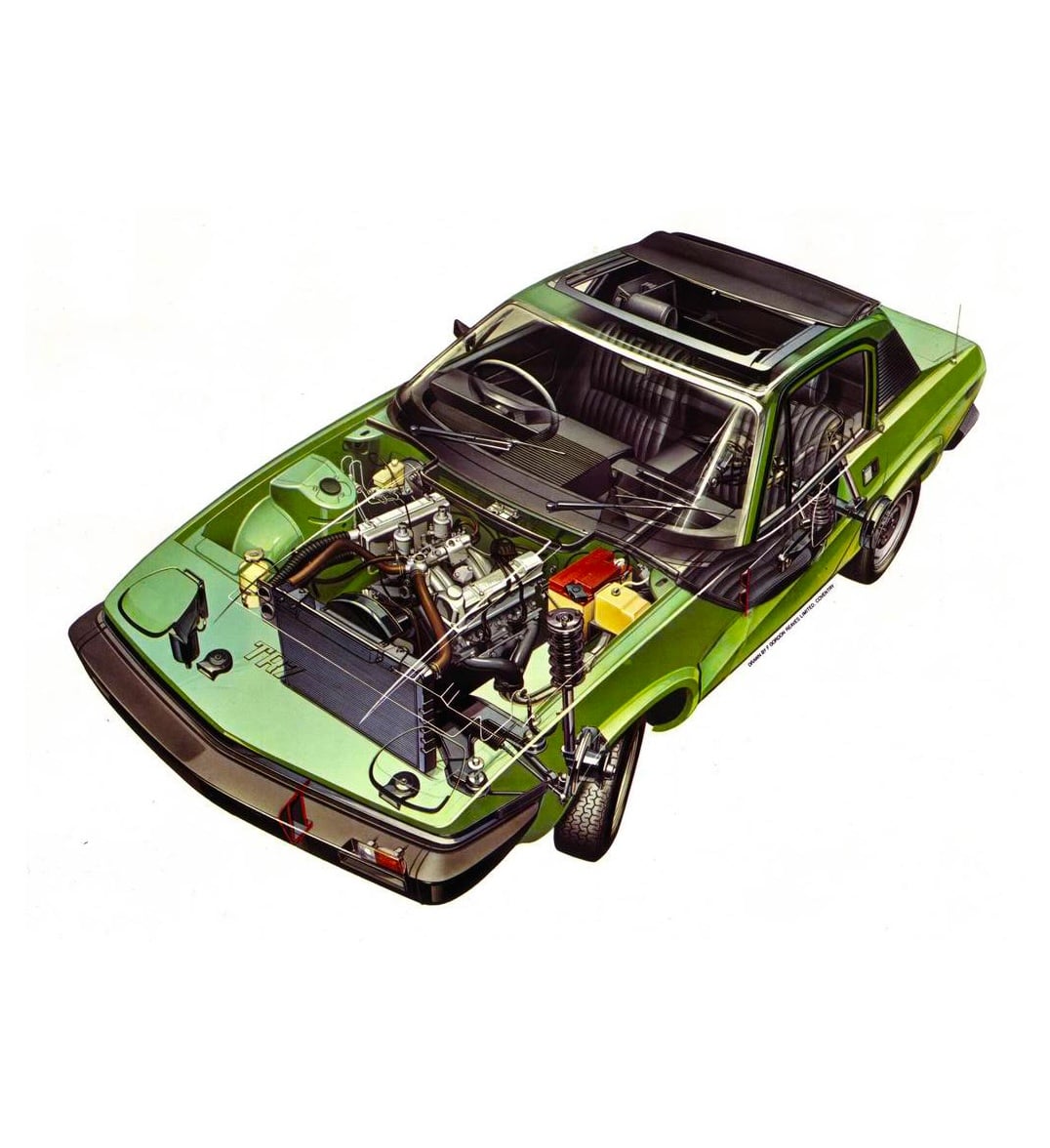
Under the hood of the Triumph TR7 sat a 2.0 liter Triumph slant four rated at 90 bhp in 49-state tune but only 76 bhp in California trim, which was on the weeny side even by the standards of a market, then choking on early emissions hardware. Image courtesy of Triumph.
Federal-specification TR8s ran 8.1:1 compression and twin Zenith-Stromberg carburetors for 133 bhp and 174 lb ft of torque. California cars got Bosch L-Jetronic electronic fuel injection with a Lucas-developed ECU, and as a result they made 137 bhp. It was actually quite rare for a California-spec car to make more than a Federal-spec car, and it’s a handy bit of trivia to hang on to in case it ever comes up in a pub quiz.
For 1981, fuel injection was implemented across the whole North American range and the engine was rated at 148 bhp at 5,100 rpm, the figure carried by Road & Track magazine’s road test annual for that year.
Although 148 bhp was a marked improvement over earlier TR8s, and a vast improvement over the earlier four-pot TR7, it still wasn’t a whole lot of power. Torque output was perhaps a little more important, the V8 gave the TR8 roughly 80% more than the four-cylinder car, which is what made up much of the difference from behind the wheel, it was power you could feel in the seat of your pants.
The curb weight of the TR8 was 2,654 lbs, and 0 to 60 mph took 8.4 seconds – that was a decent number for the time.
Triumph revised the suspension in the TR8 with stiffer springs and different damper rates, they also fitted a dual exhaust and a 3.08:1 final drive, moved the battery to the trunk to offset the heavier engine, and they made power steering standard. The four-cylinder car never offered it even as an option. A 5-speed manual was standard and a 3-speed automatic optional, though performance did suffer with the slushbox.
TR8 Body Styles: Coupes + Convertibles
Sorting out TR8 production is difficult because British Leyland’s records from this period are notoriously incomplete and its VIN practice was erratic on a good day.
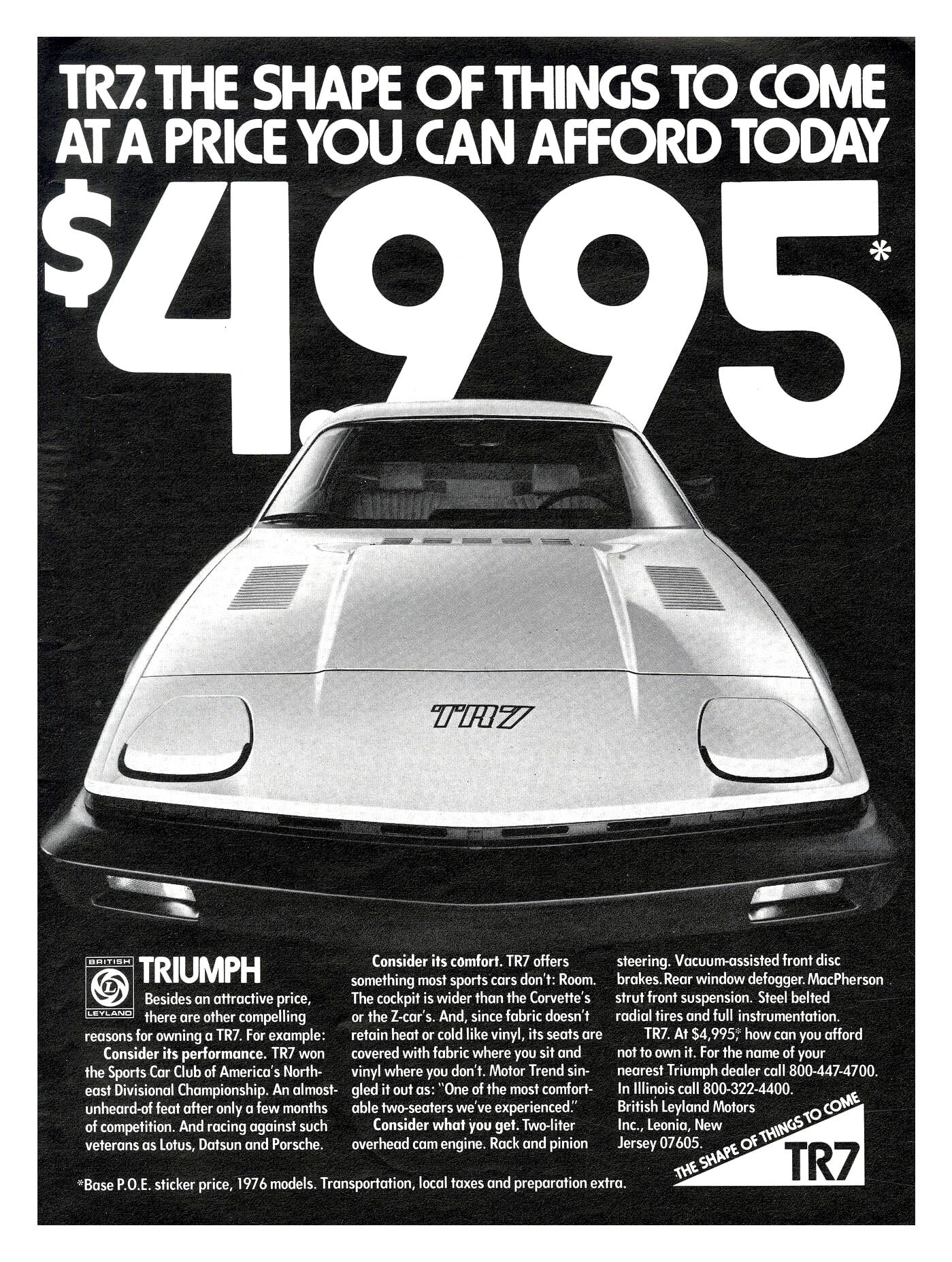
The Triumph TR7 offered wedge-shaped styling, all the rage in the 1970s, as well as pop-up headlights, and a well-appointed cabin for two. Image courtesy of Triumph.
Enthusiast Richard Connew counted 2,746 cars in the British Motor Industry Heritage Trust archives. Other published figures range from 2,722 to 2,815. Around 2,750 seems to be the working consensus, but there’s no universally agreed production figure.
The earliest TR8s were all fixed-head coupes, including a batch of roughly 145 to 150 pre-production cars, most of them automatics, built for evaluation and later sold off through the dealer network. North American owners’ club registries suggest about 400 coupes existed in total.
From 1980 onward the car was effectively a convertible only, the body deriving from a Michelotti prototype with the production engineering done at Triumph. A small pilot run of home-market cars was built with higher compression and twin SU carburetors, reportedly rated at 155 bhp, but British Leyland cancelled the UK launch before it happened.
Public Reception + The Competition
American reviewers were actually pretty enthusiastic about the TR8, Car and Driver magazine put the TR8 on its August 1980 cover, and Road Test named it its best new sports car of the year. The key problem with the car was more to do with its sticker price than its performance numbers.
The convertible listed just under $12,000, about $2,000 more than a TR7 or a Datsun 280ZX and $4,000 more than an MGB. A Mazda RX-7 could be had for well under $9,000. The car arrived just as the second oil shock made thirsty V8s unfashionable again, and by 1981 British Leyland was offering deep discounts just to move stock off dealership floors.
Against that, a Porsche 924 cost over $16,000 and made 110 bhp. The 1981 Corvette had 190 bhp and 280 lb ft from its 350 L81, but cost considerably more and was a much larger car. The TR8’s real trouble wasn’t the competition. It was Triumph’s reputation, which by this time had been tarred by unreliable, underpowered cars, factory strikes, and production delays.
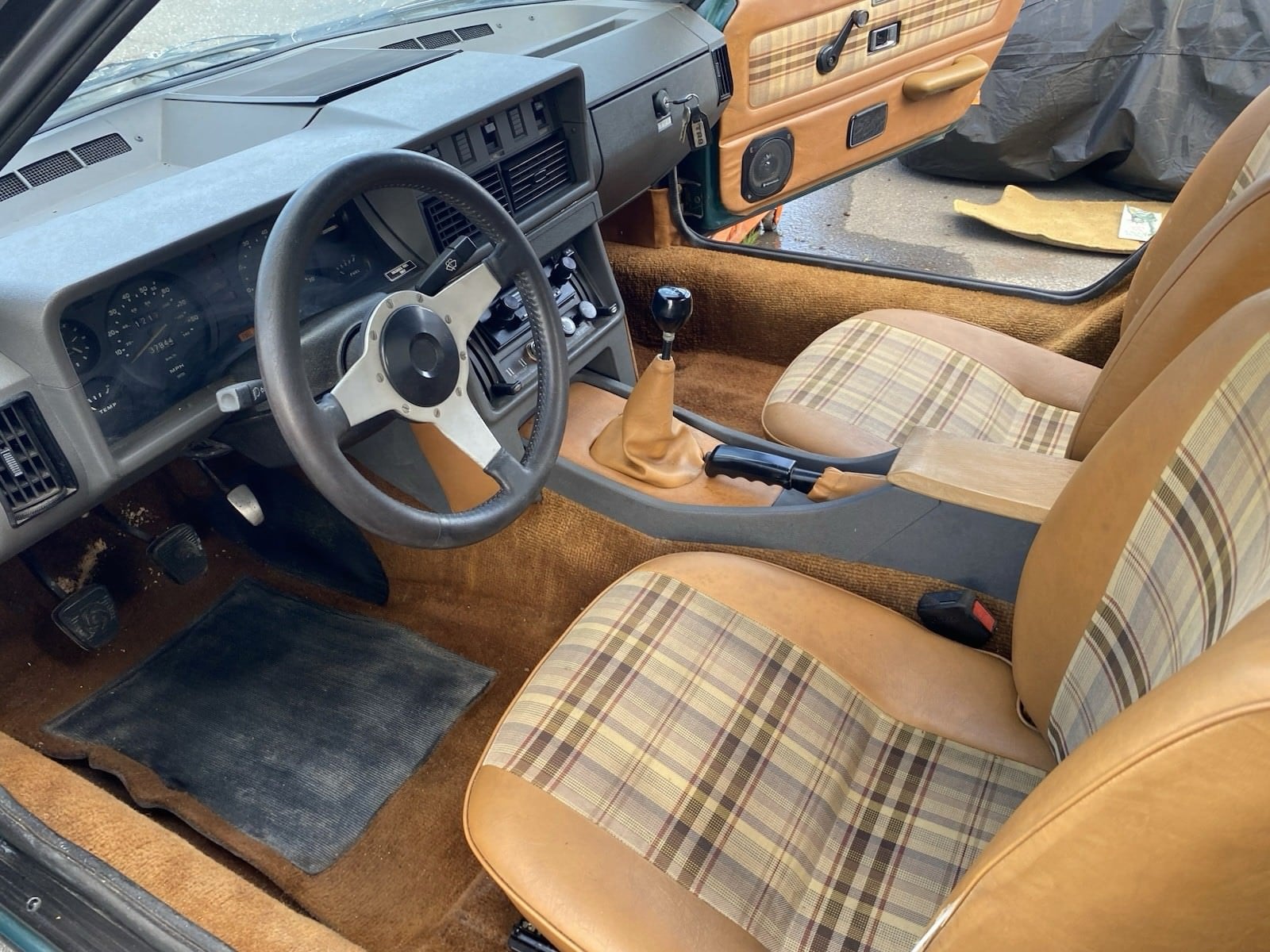
This is a 1980 Triumph TR8 convertible finished in Poseidon Green over Tan plaid, it has just under 38,000 miles on the clock and is offered as a one-owner car. It’s been off the road since 1990, stored untouched, and it comes with original sales paperwork and a run of service records.
At the end of the day, the TR8 reached the market about four years too late, by which time buyers had made up their minds about the wedge.
The Competition Record Of The TR8
The TR8 was quicker on a race track than it ever was off a showroom floor. Bob Tullius’s Group 44, British Leyland’s American factory team, ran two cars in SCCA Trans-Am and IMSA GTO.
The TR8 finished 7th overall and 1st in class on its debut at the Watkins Glen Six Hours in July of 1979, took Trans-Am category wins at Watkins Glen and Laguna Seca that season, and won the GTO class at the 1980 12 Hours of Sebring with Tullius sharing with Bill Adam. In rallying, John Buffum took four consecutive SCCA ProRally championships from 1977 driving TR7s and their V8 successors.
In Europe the works rally car was marketed as the TR7 V8 even though it had been FIA-homologated as the TR8, because the production TR8 had not yet been launched. British Leyland’s competition department debuted the Rover-engined car at the 1978 Texaco Rallysprint at Esgair Dafydd, where Tony Pond finished 2nd, and followed it with an outright win on the Granite City Rally.
In full works trim the engine eventually made around 300 bhp, and Pond took the Ypres and Manx International rallies in 1978 and again in 1980. BL closed the works program after that year’s RAC Rally.
It was a remarkably successful competition record for a car that was only produced in relatively low numbers, by a company that was teetering on the brink of the abyss. It leaves you to wonder what it might have achieved with a healthy budget and a little more development time.
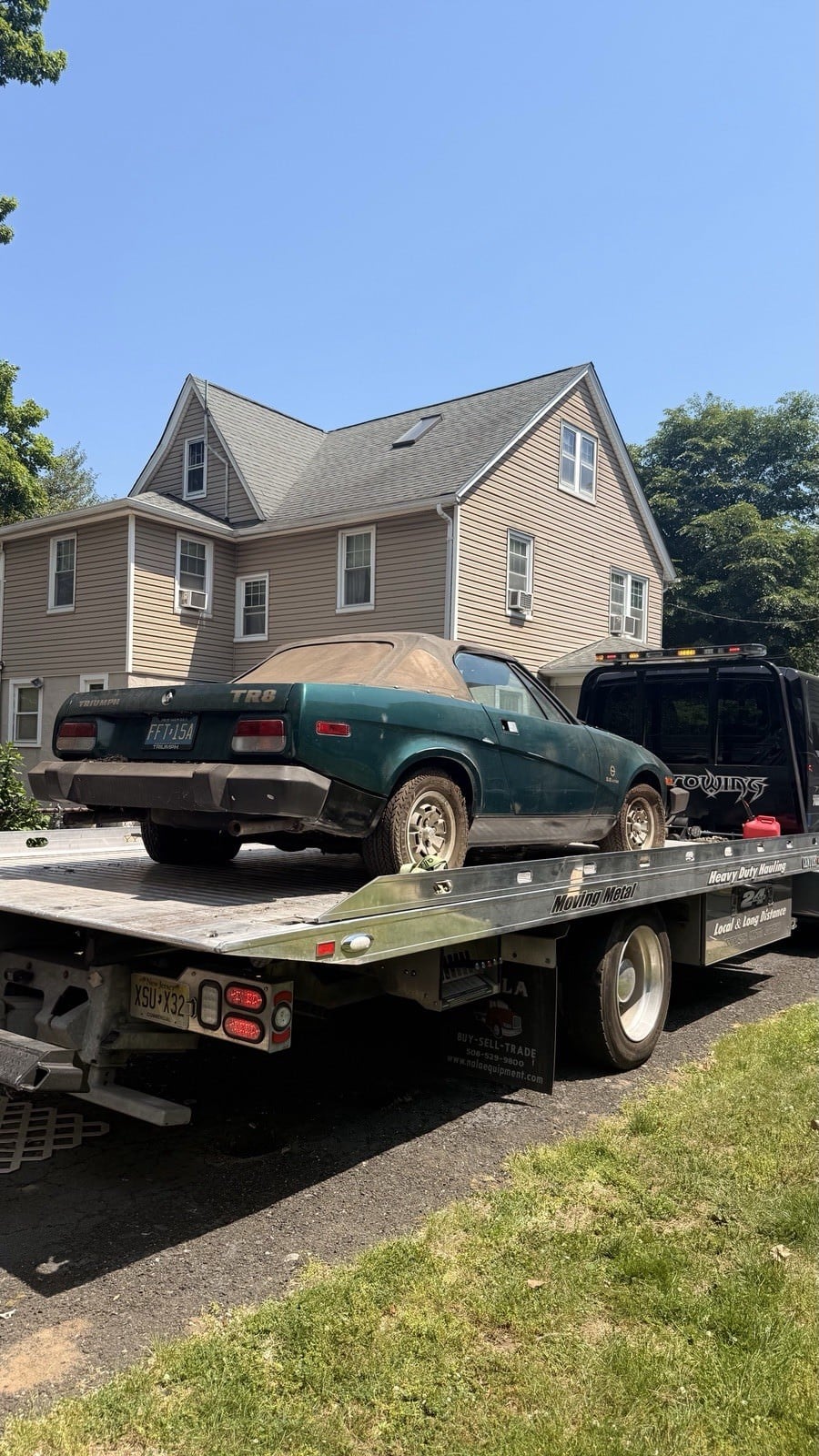
The seller has done nothing beyond cleaning it, and they haven’t attempted to start it. They note that it rolls and steers freely, and structurally it’s described as solid underneath with only some light surface rust and corrosion.
The End Of The Line
The Abingdon factory shut down in October of 1980, ending the MGB (well, almost). TR7 and TR8 production stopped at Solihull in October of 1981, leaving the newly launched, Honda-based Acclaim as the sole remaining Triumph model, albeit a badge-engineered one. The Triumph name survived on that car until 1984 and then disappeared for good.
TR8 values sat relatively flat for decades before rising in the early 2020s, the comparison enthusiasts make is with the Sunbeam Tiger – a small British roadster with a V8 in it, built in small numbers and overlooked for years. It’s also been compared with the MGB V8, and for similar reasons.
The Triumph TR8 Barn Find Shown Here
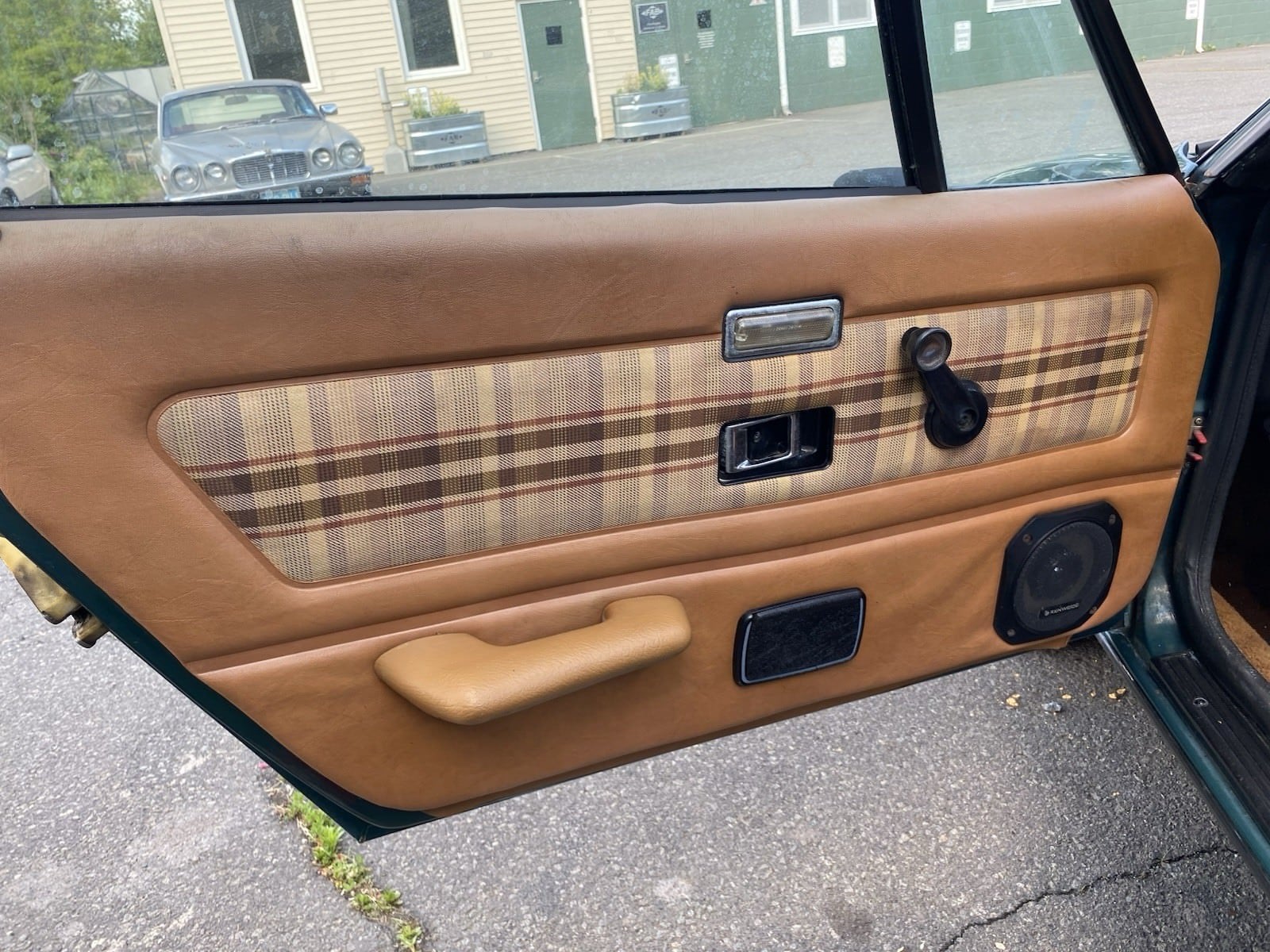
This is a 1980 Triumph TR8 convertible finished in Poseidon Green over Tan plaid, it has just under 38,000 miles on the clock and is offered as a one-owner car. It’s been off the road since 1990, stored untouched, and it comes with original sales paperwork and a run of service records.
The car is not currently running, perhaps understandably, as at some point the owner disconnected the exhaust and the front engine accessories, but all the removed pieces are said to be present. The seller has done nothing beyond cleaning it, and they haven’t attempted to start it. They note that it rolls and steers freely, and structurally it’s described as solid underneath with only some light surface rust and corrosion.
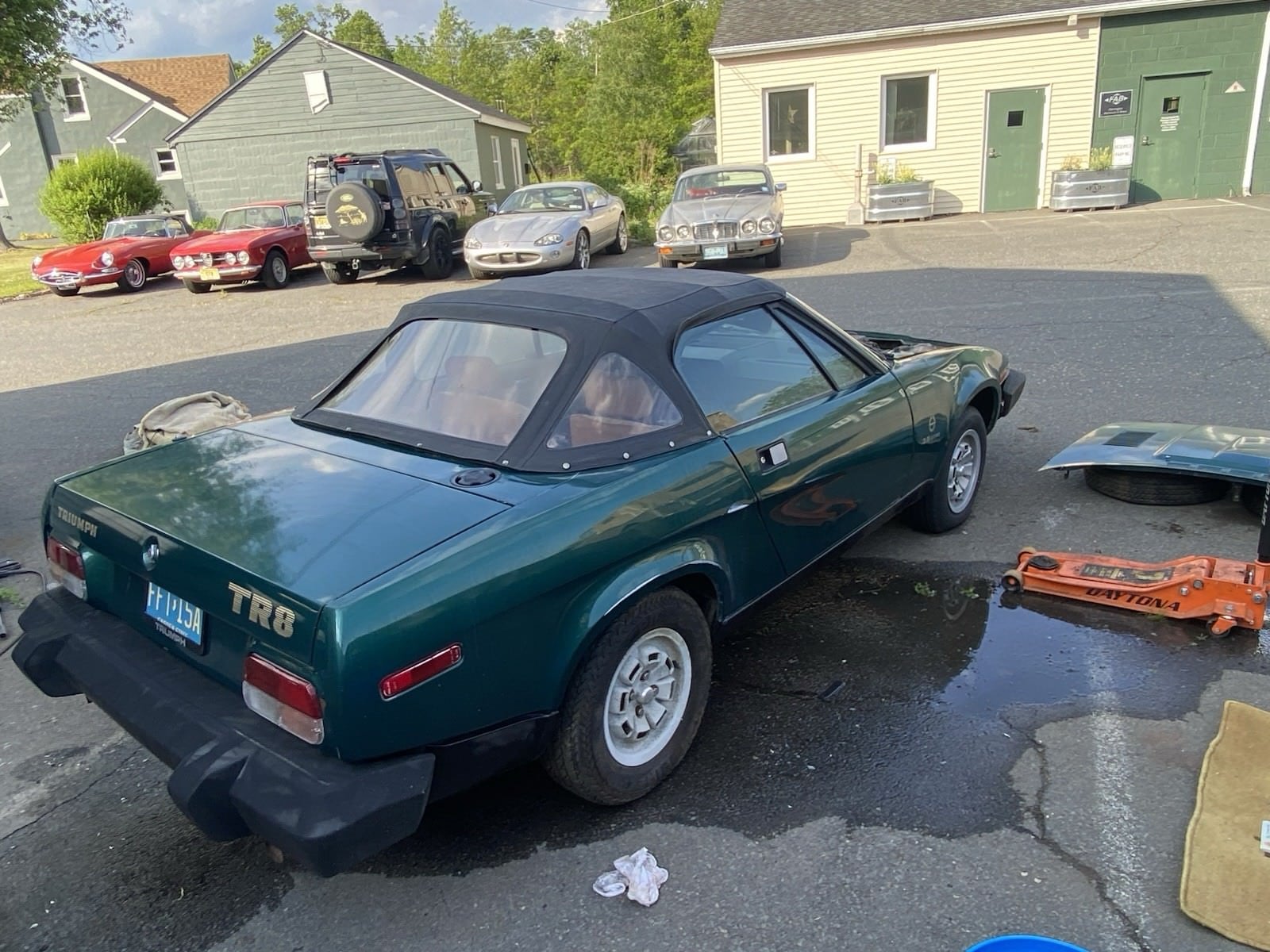
The car is not currently running, perhaps understandably, as at some point the owner disconnected the exhaust and the front engine accessories, but all the removed pieces are said to be present.
The paint is largely original, with the hood and nose panel resprayed at some point, documented in the included paperwork. The vinyl top and interior are described as original and in good order. It keeps its desirable 5-speed manual gearbox, factory AM/FM cassette, black convertible boot cover, spare wheel, jack, and tool kit.
It’s now being offered for sale out of Flemington, New Jersey on eBay with a Buy It Now price of $8,500 USD, if you’d like to read more or make them an offer you can visit the listing here.
Images courtesy of Jag Shop

Articles that Ben Branch has written have been covered on CNN, Popular Mechanics, Smithsonian Magazine, Road & Track Magazine, the official Pinterest blog, the official eBay Motors blog, BuzzFeed, Autoweek Magazine, Wired Magazine, Autoblog, Gear Patrol, Jalopnik, The Verge, and many more.
Silodrome was founded by Ben back in 2010, in the years since the site has grown to become a world leader in the alternative and vintage motoring sector, with well over a million monthly readers from around the world and many hundreds of thousands of followers on social media.