The AMC Eagle was released in 1979 as an entirely new class of vehicle, but it was a class that didn’t yet have a name. The Eagle is now seen as the very first “crossover,” offering sedan road-car comfort as well as the ground clearance and 4×4 system of an SUV.
Interestingly, the man behind the concept was Roy Lunn. That’s a name that might be familiar to you if you have an interest in motor racing, as Lunn was the chief engineer of the Ford GT40 program working alongside Eric Broadley of Lola Cars.
Fast Facts: The AMC Eagle 4×4
- The AMC Eagle debuted in 1979 and effectively created what would later be called the crossover class. It combined unibody passenger car comfort with raised ride height and permanent four-wheel drive, offering year-round traction without the compromises of truck-based 4×4 SUVs that dominated the era.
- The concept was driven by Roy Lunn, previously chief engineer on the Ford GT40 program. Facing severe financial constraints, AMC adapted the Concord platform with Jeep-derived four-wheel drive hardware, reinforced suspension points, and full-time AWD developed with Ferguson Formula, giving the Eagle uniquely car-like driving characteristics.
- Launched for the 1980 model year, the Eagle was offered as a sedan, coupe, and wagon, later joined by SX/4 and Kammback variants. Power initially came from AMC’s 4.2 liter inline-six, offering good durability and torque, while Select Drive systems and four-cylinder options later expanded the engine offerings.
- Sales were strongest in northern and mountainous regions where winter traction on snow and ice mattered the most. Production ran until 1988, and in hindsight the Eagle clearly created the modern crossover formula, arriving years before the market was ready for it.
History Speedrun: The AMC Eagle
By the mid-1970s, AMC was a small independent American automaker operating under constant financial pressure. The company lacked the capital to develop an all-new platform, yet it also understood that conventional sedans and wagons were losing ground to imported compacts and increasingly popular light trucks.
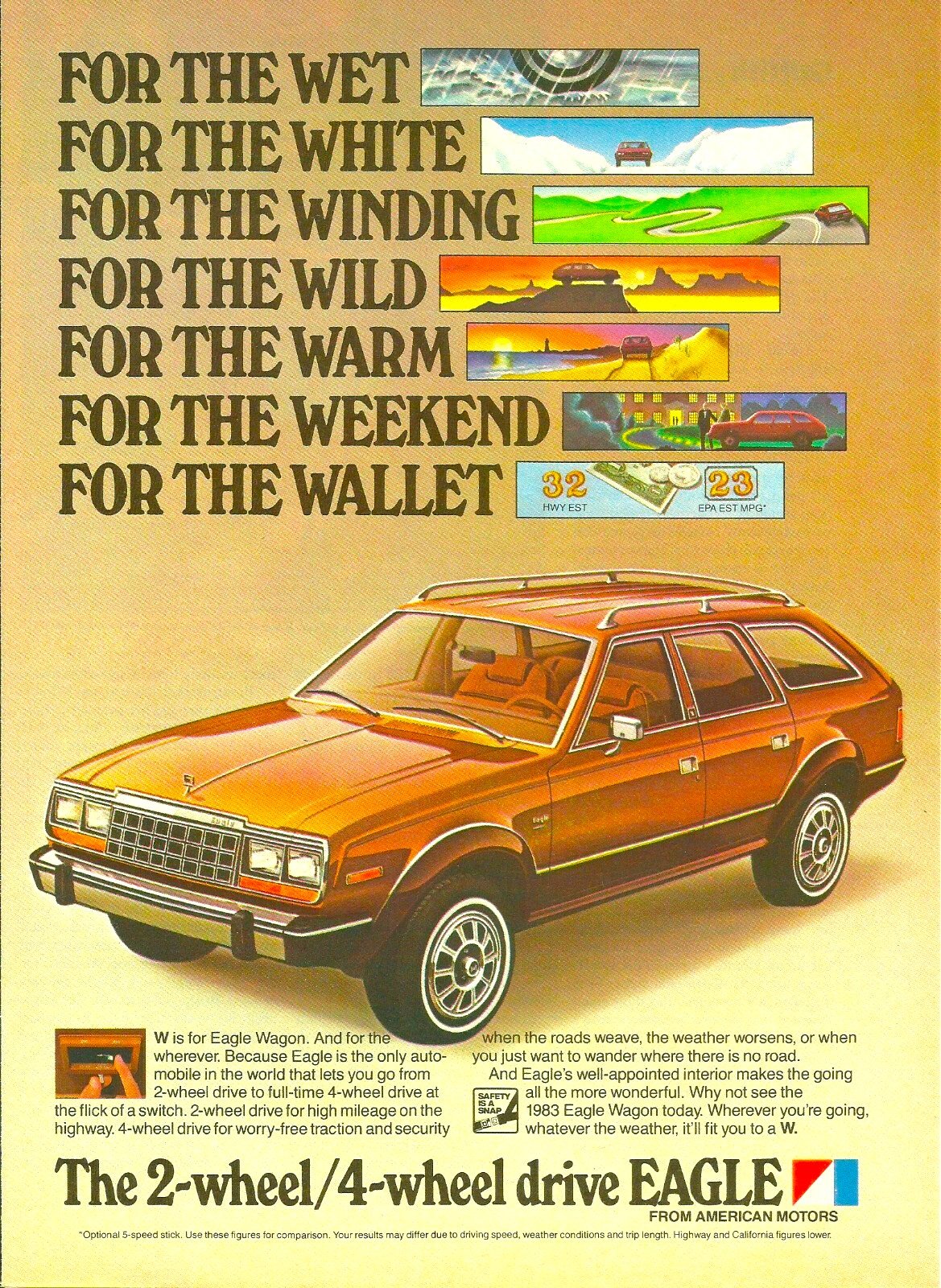
 The production Eagle debuted in 1979 for the 1980 model year in sedan, coupe, and station wagon body styles. All shared a raised ride height achieved through revised longer springs, and uprated mounting points. Unlike the part-time systems common in pickups and off-roaders, early Eagles used a full-time 4×4 layout with a viscous coupling center differential. Image courtesy of AMC.
Jeep, which AMC had acquired in 1970, was profitable and culturally relevant, but its vehicles were still squarely aimed at utility, enthusiast, and leisure buyers. AMC’s engineer Roy Lunn saw an opening – to combine Jeep’s 4×4 know-how with an existing passenger-car platform and offer something no one else ever had.
Development work that led to the Eagle began in the late 1970s, building on earlier four-wheel-drive passenger-car experiments and ultimately using the AMC Concord as the production foundation. Rather than creating a truck-based vehicle, AMC adapted its unibody passenger cars to accept a permanent 4×4 system derived from Jeep hardware (and related engineering programs.)
This decision shaped the Eagle’s character – as a result of these decisions it retained car-like ride quality, lower step-in height, and a conventional comfortable interior, while gaining all-weather traction that no competitors could match.
The production Eagle debuted in 1979 for the 1980 model year in sedan, coupe, and station wagon body styles. All shared a raised ride height achieved through revised longer springs, and uprated mounting points.
Unlike the part-time systems common in pickups and off-roaders, early Eagles used a full-time 4×4 layout with a viscous coupling center differential. Torque distribution was handled automatically, without driver intervention.
The prototyping and design of the 4×4 system was handled by Ferguson Formula (FF), working in conjunction with AMC and Jeep engineers led by Lunn. FF had been the company that developed the four-wheel drive system for the Jensen FF, the world’s first AWD passenger car – long before Audi or Subaru came along with similar concepts.
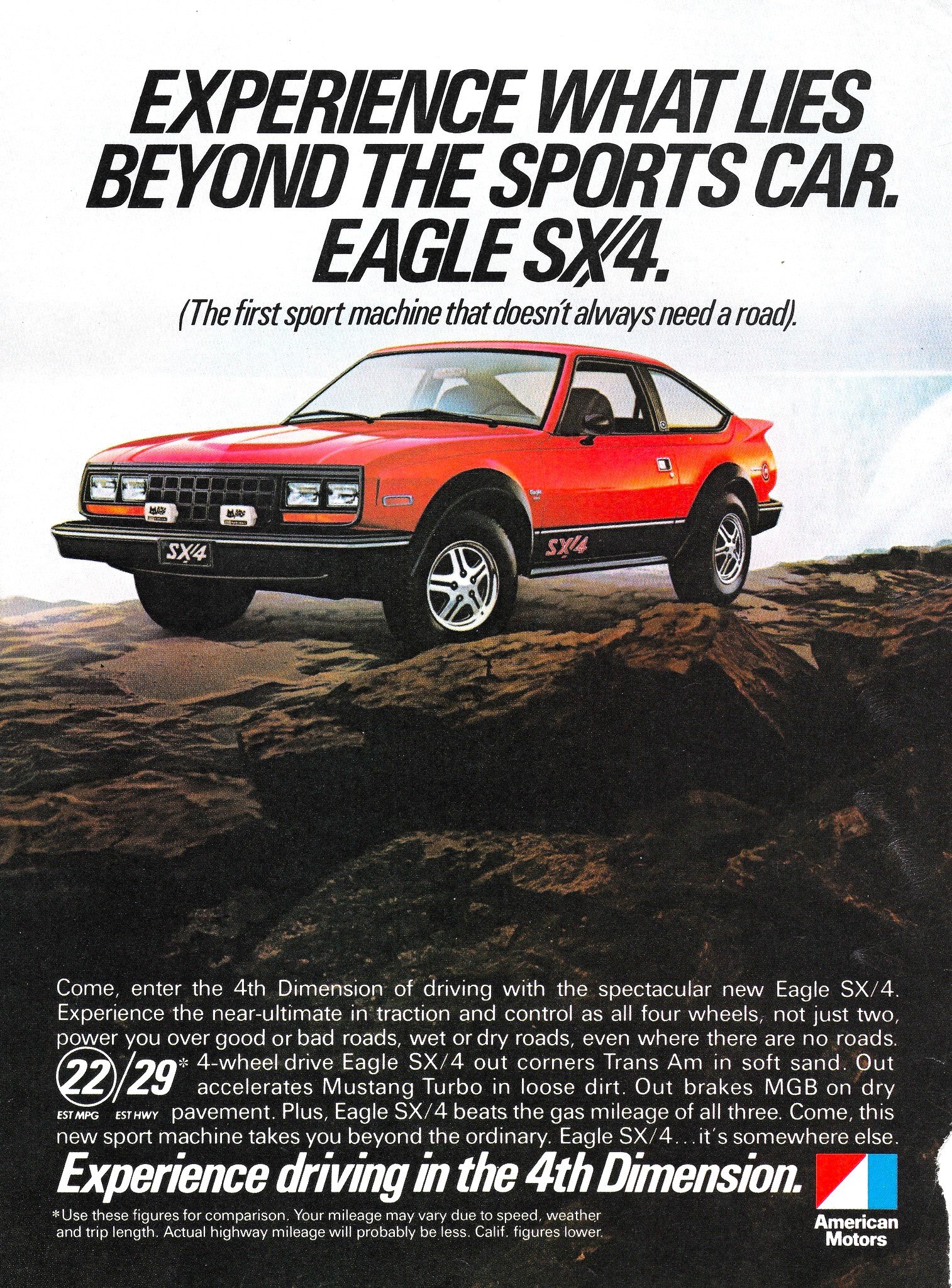
AMC quickly expanded the Eagle concept, in 1981 additional body styles joined the range, including the two-door SX/4 hatchback and the Kammback, both derived from the AMC Spirit two-door coupe. Image courtesy of AMC.
AMC Eagle: Specifications
Power for the AMC Eagle initially came from AMC’s 258 cubic inch (4.2 liter) inline-six, chosen for its toughness and low-speed torque rather than any sort of outright performance. A three-speed automatic transmission was standard at launch, with the drivetrain including a Dana 30 front differential and AMC or Dana-supplied rear axles depending on final configuration.
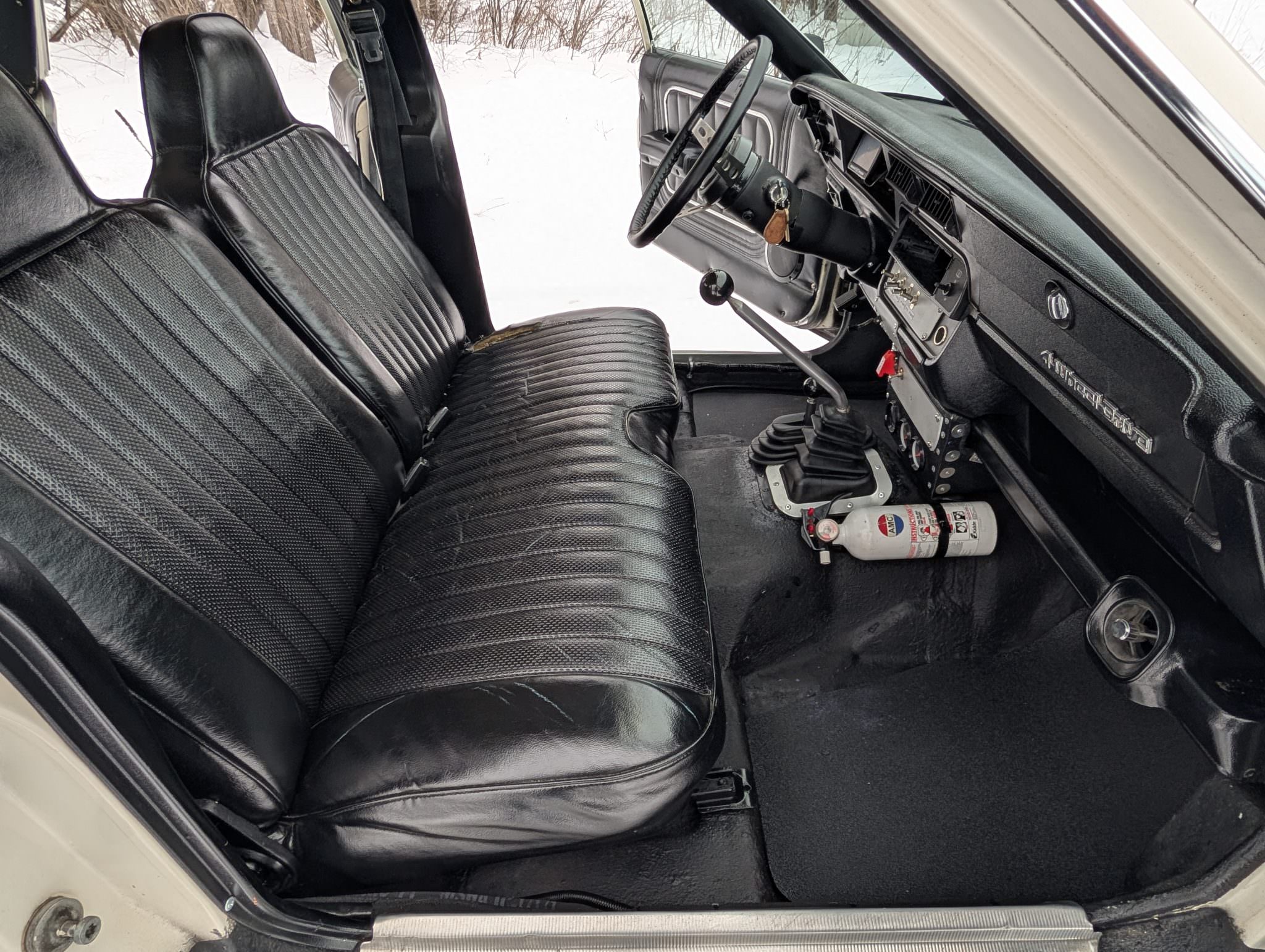
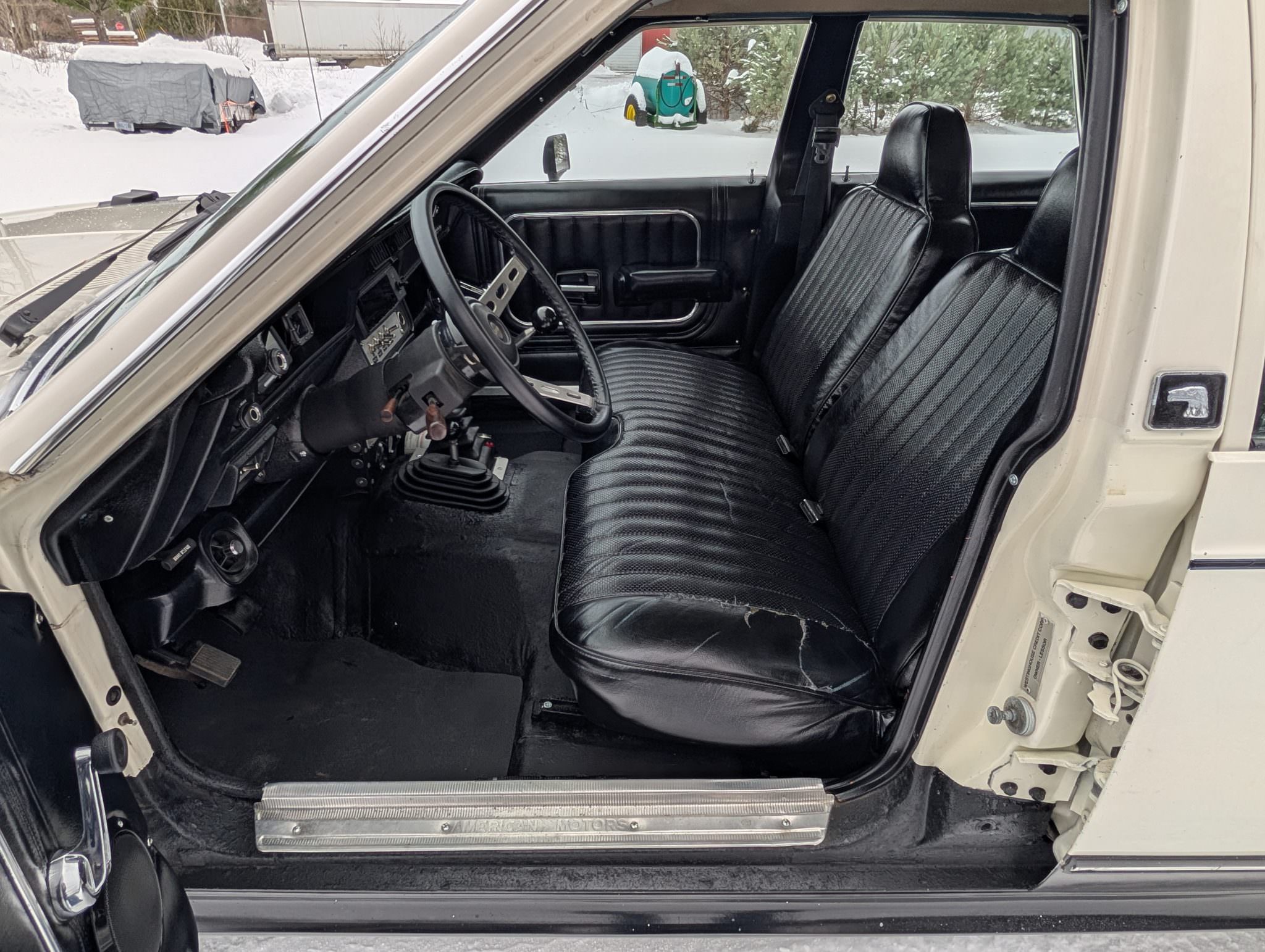
The unibody shell was reinforced around suspension pickup points, and underbody protection was improved to cope with gravel roads and the various winter conditions the cars were likely to encounter. Interior trim was similar to that of the Concord, ranging from basic cloth upholstery to more upscale finishes in later years.
The Eagle station wagon, in particular, was positioned as a family car for buyers in snowbelt states or northern/rural regions who wanted passenger-car comfort without sacrificing winter mobility on snow and ice.
The Debut Of The SX/4
AMC quickly expanded the Eagle concept, in 1981 additional body styles joined the range, including the two-door SX/4 hatchback and the Kammback, both derived from the AMC Spirit two-door coupe. Drivetrain offerings broadened as well, with the introduction of four-cylinder engines on some models and the availability of Select Drive systems that allowed drivers to choose between rear-wheel drive and four-wheel drive operation.
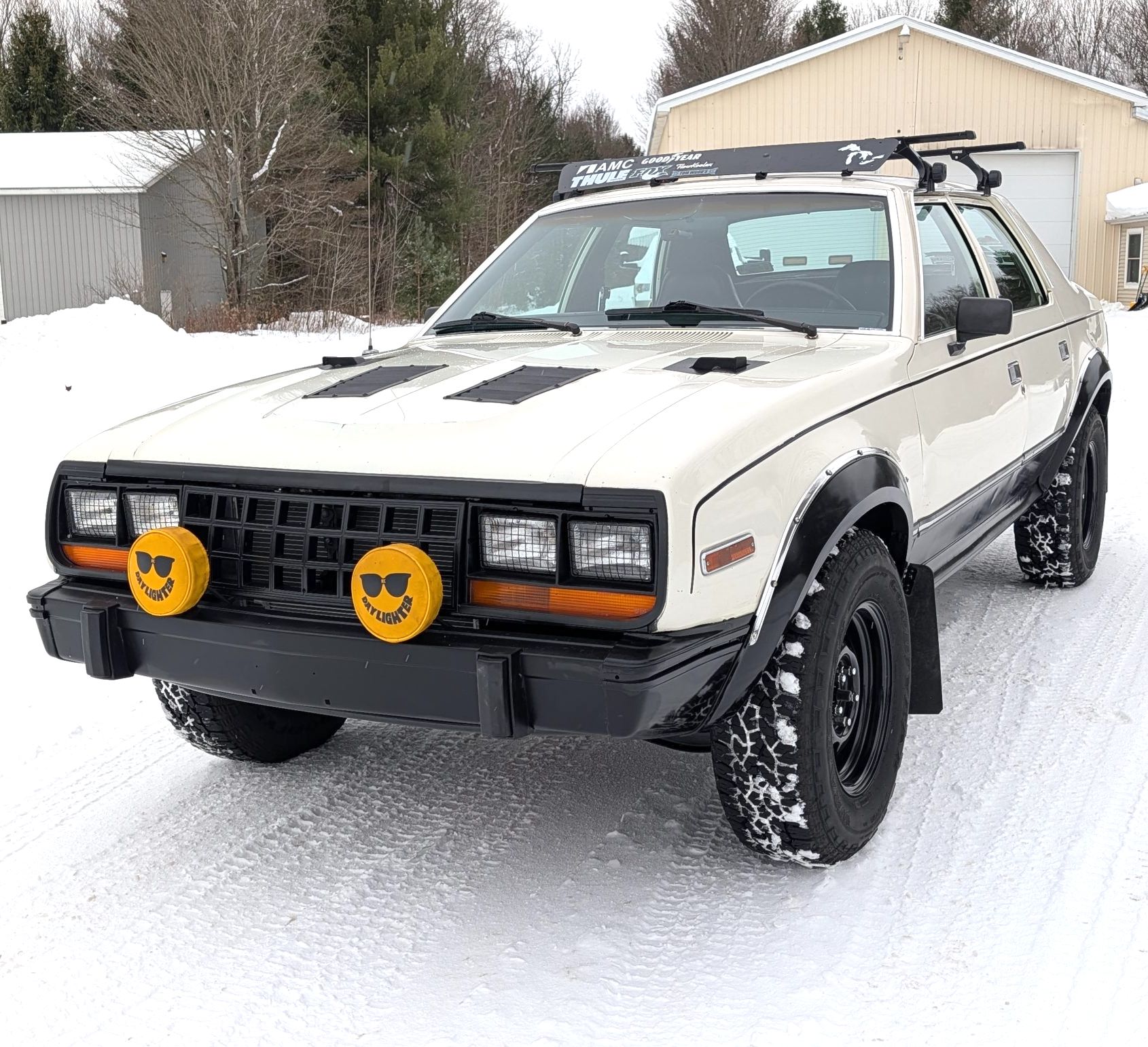
The unibody shell of the AMC Eagle was reinforced around suspension pickup points, and underbody protection was improved to cope with gravel roads and the various winter conditions the cars were likely to encounter. Interior trim was similar to that of the Concord, ranging from basic cloth upholstery to more upscale finishes in later years.
AMC continued to sell closely related conventional models without four-wheel drive in parallel, including the Concord and Spirit, before transitioning toward Renault-based platforms in the early 1980s. Renault began investing in AMC in 1979 and would go on to assume a controlling interest in the company in the following years, significantly influencing product planning as well as corporate strategy.
AMC Eagle sales were strongest in mountainous regions and northern climates, where winter traction mattered more than acceleration, fuel economy, or luxury vehicle bragging rights. Period reviewers often struggled to categorize the Eagle, describing it as neither a car nor a truck. That ambiguity limited its mass-market success to some degree, but it also foreshadowed a paradigm shift that the industry had yet to recognize.
The End Of AMC
Production of the Eagle continued through the 1988 model year, outlasting almost all other AMC passenger cars. By then, front-wheel drive platforms and truck-based sport-utility vehicles had taken market dominance. AMC itself was increasingly centered on Jeep, a focus that culminated in the company’s acquisition by Chrysler in 1987. The Eagle quietly disappeared soon after.
With hindsight, the Eagle’s influence is unmistakable – it anticipated, possibly even created the modern crossover formula, combining passenger-car comfort with all-weather 4×4 traction in a single package. Later vehicles improved on the concept with better fuel efficiency and more contemporary design, but the core idea was already there. AMC simply arrived too early, without the scale or resources to shape the market segment it pioneered.
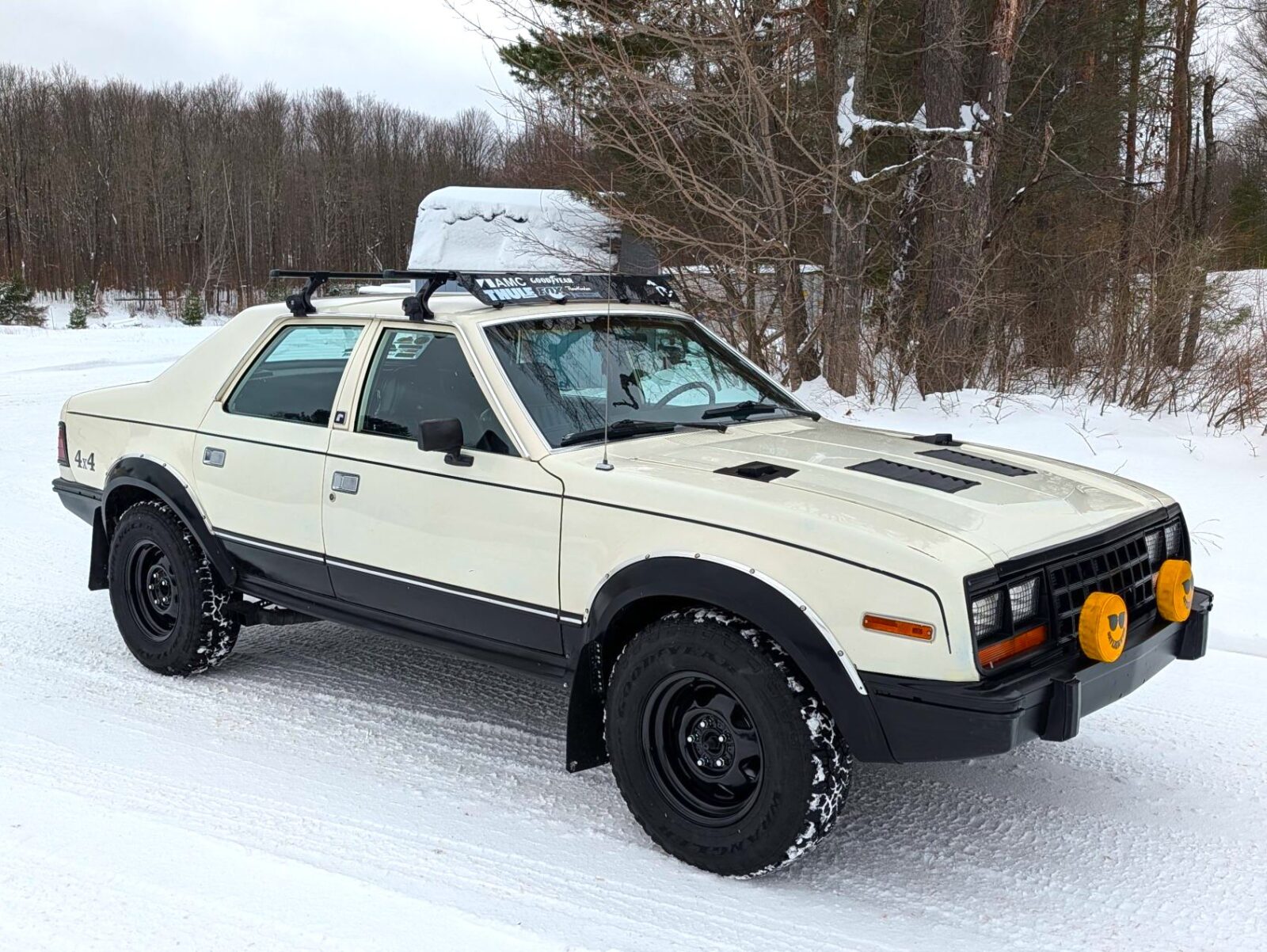
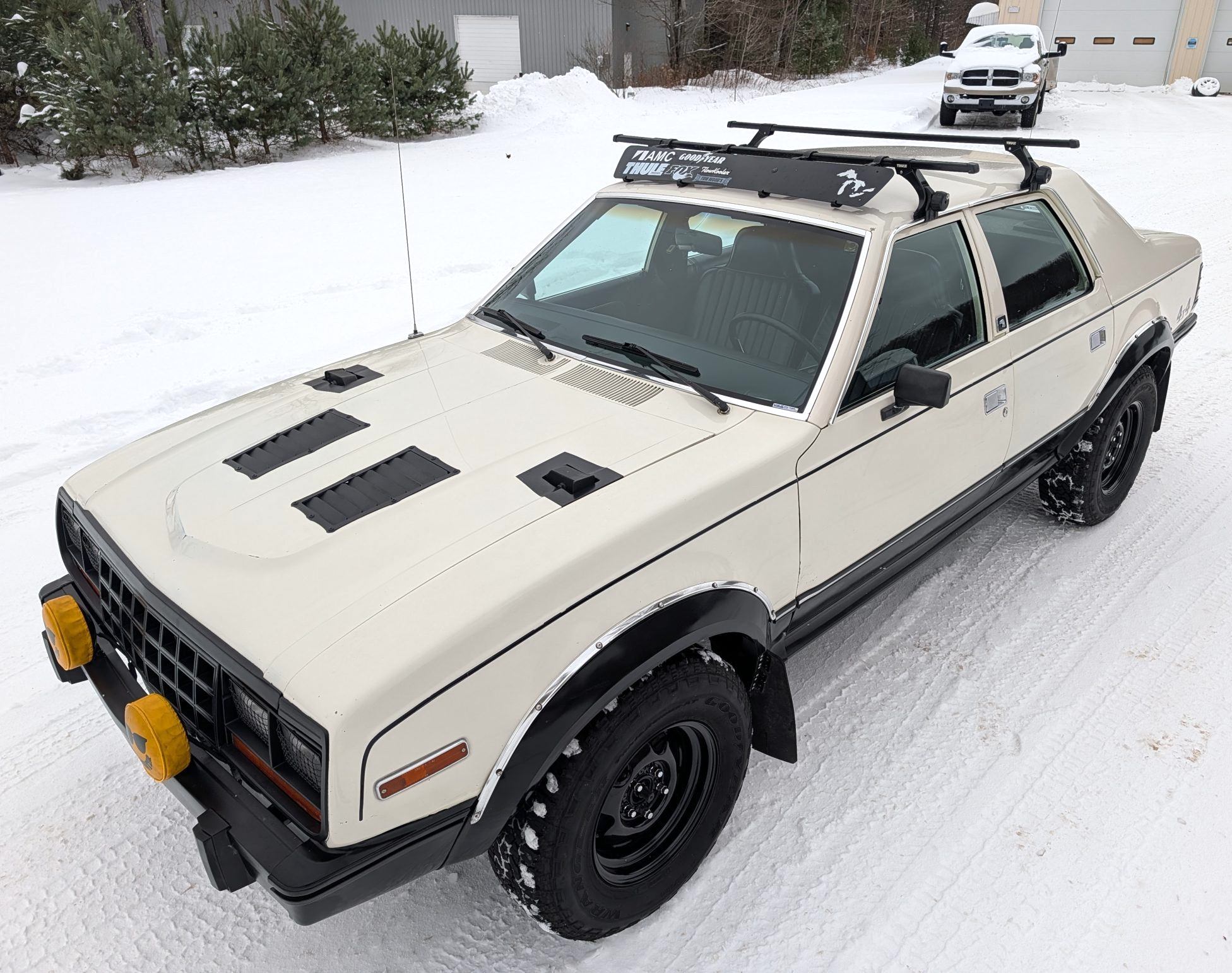
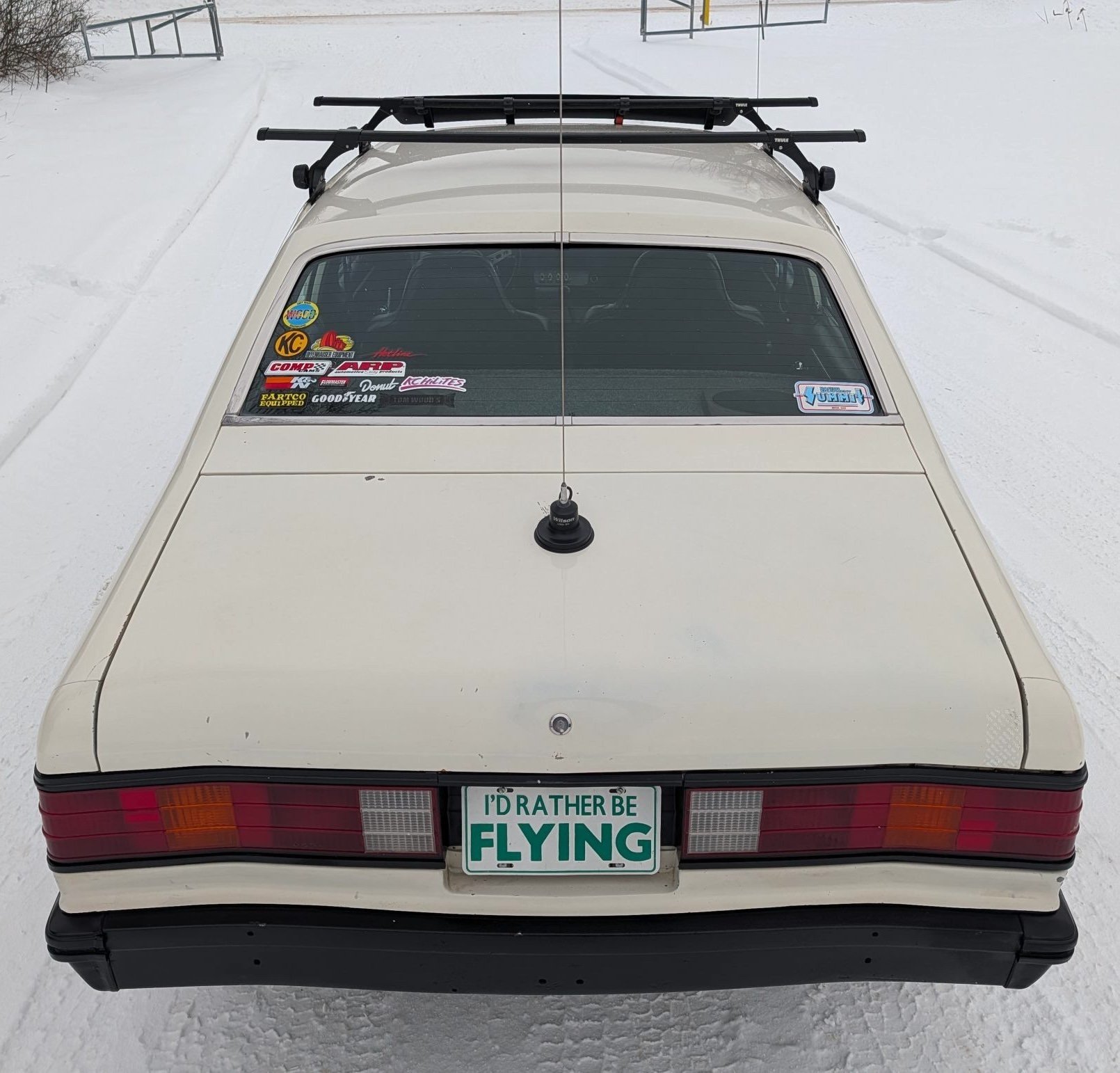
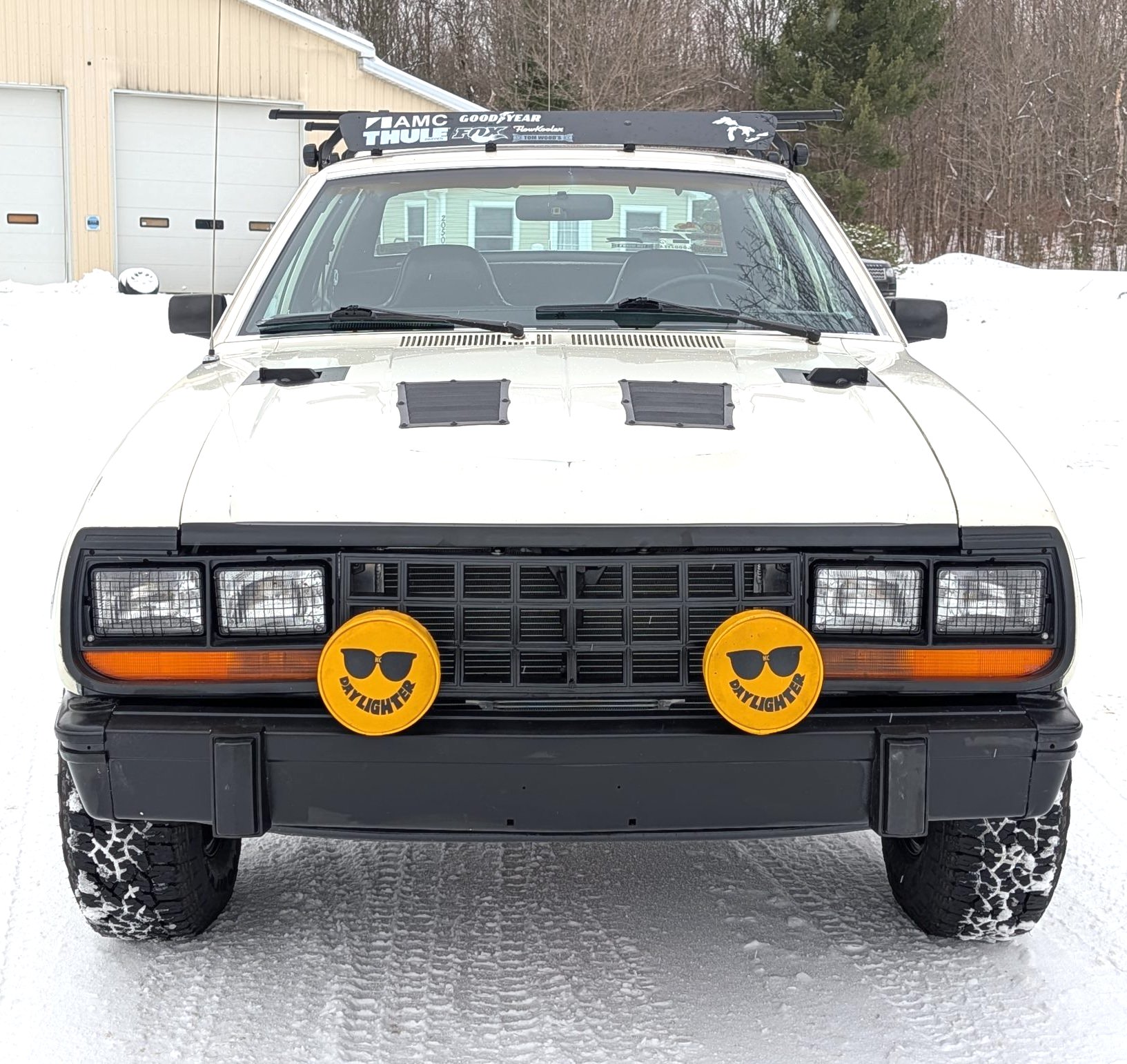
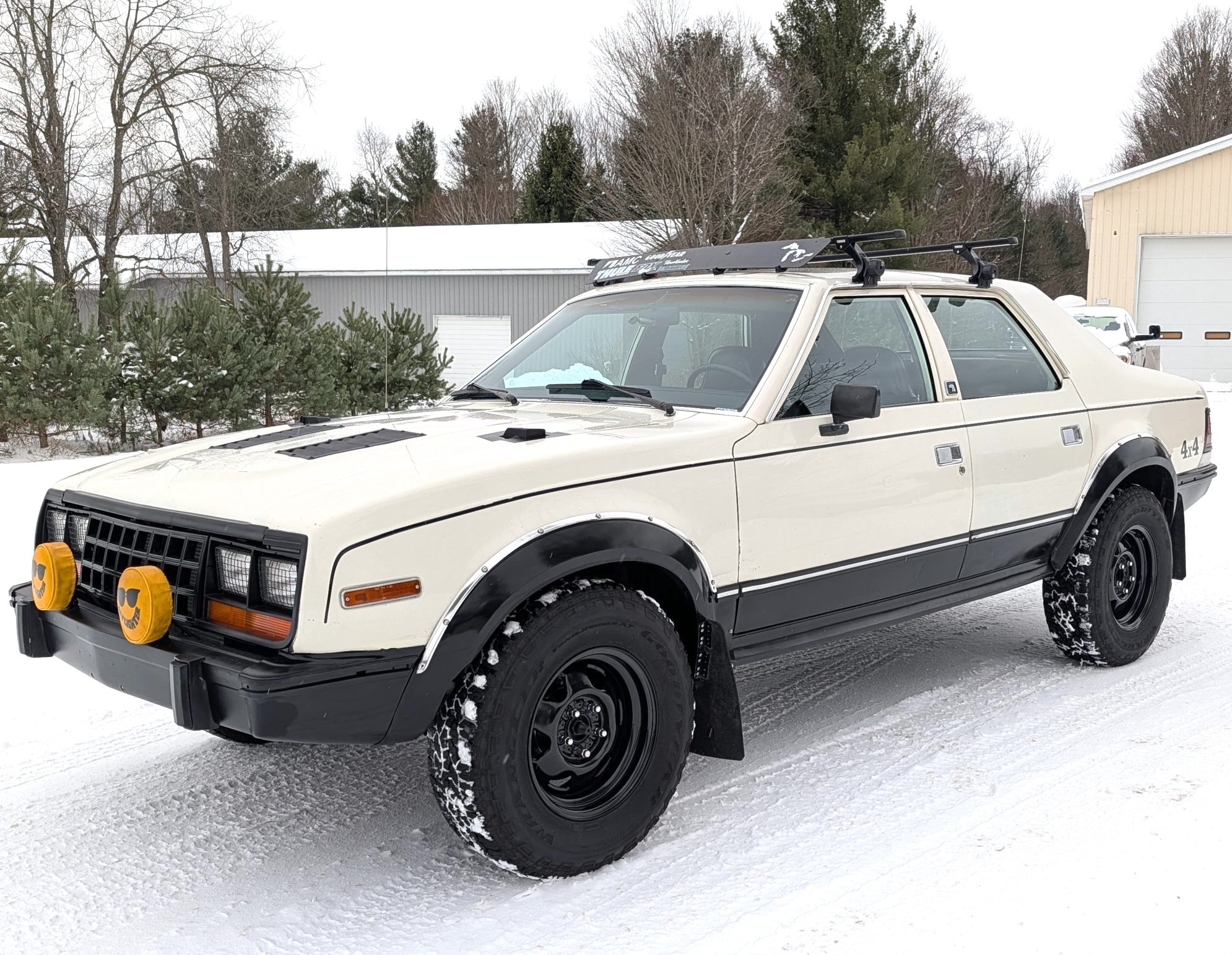
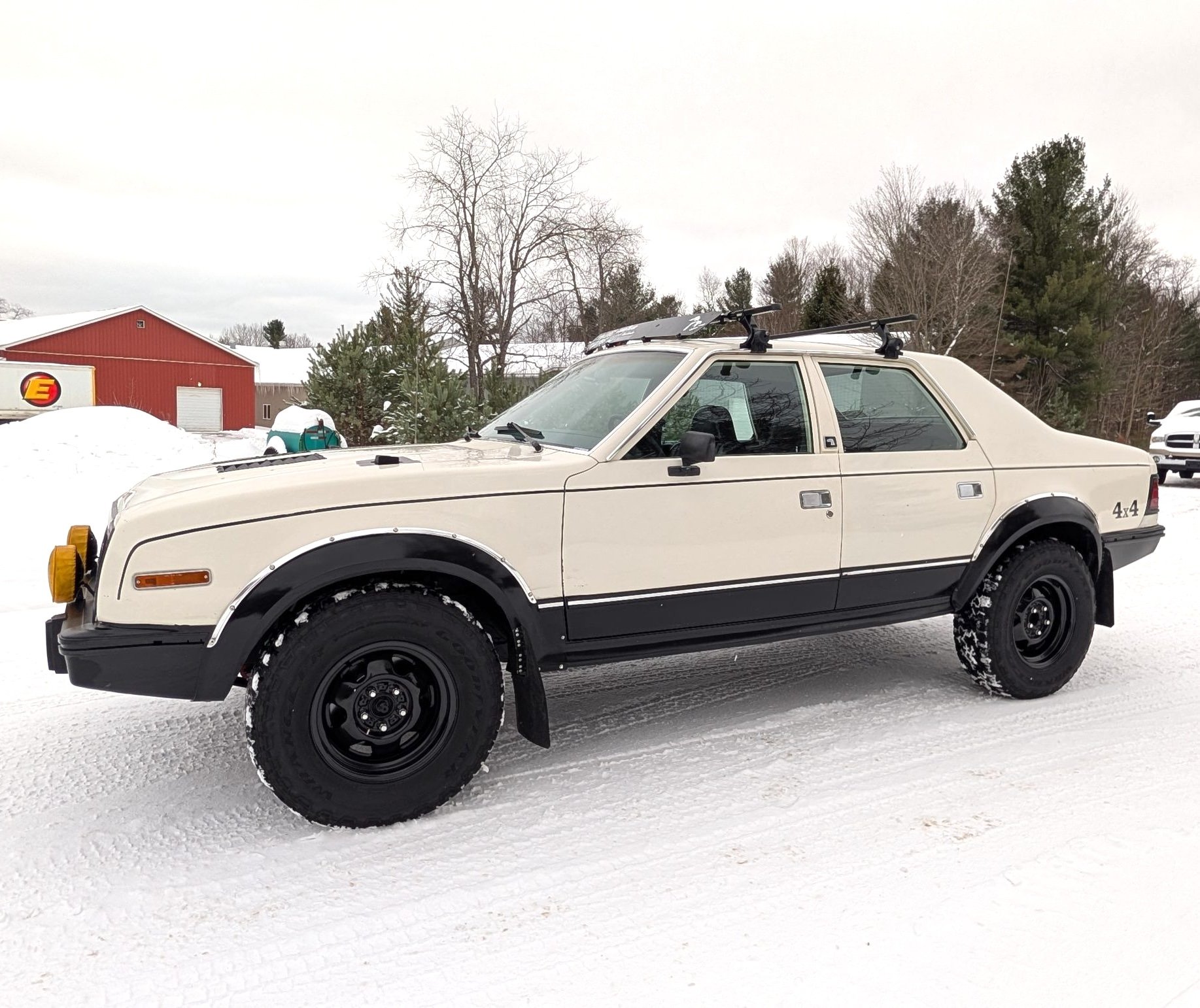
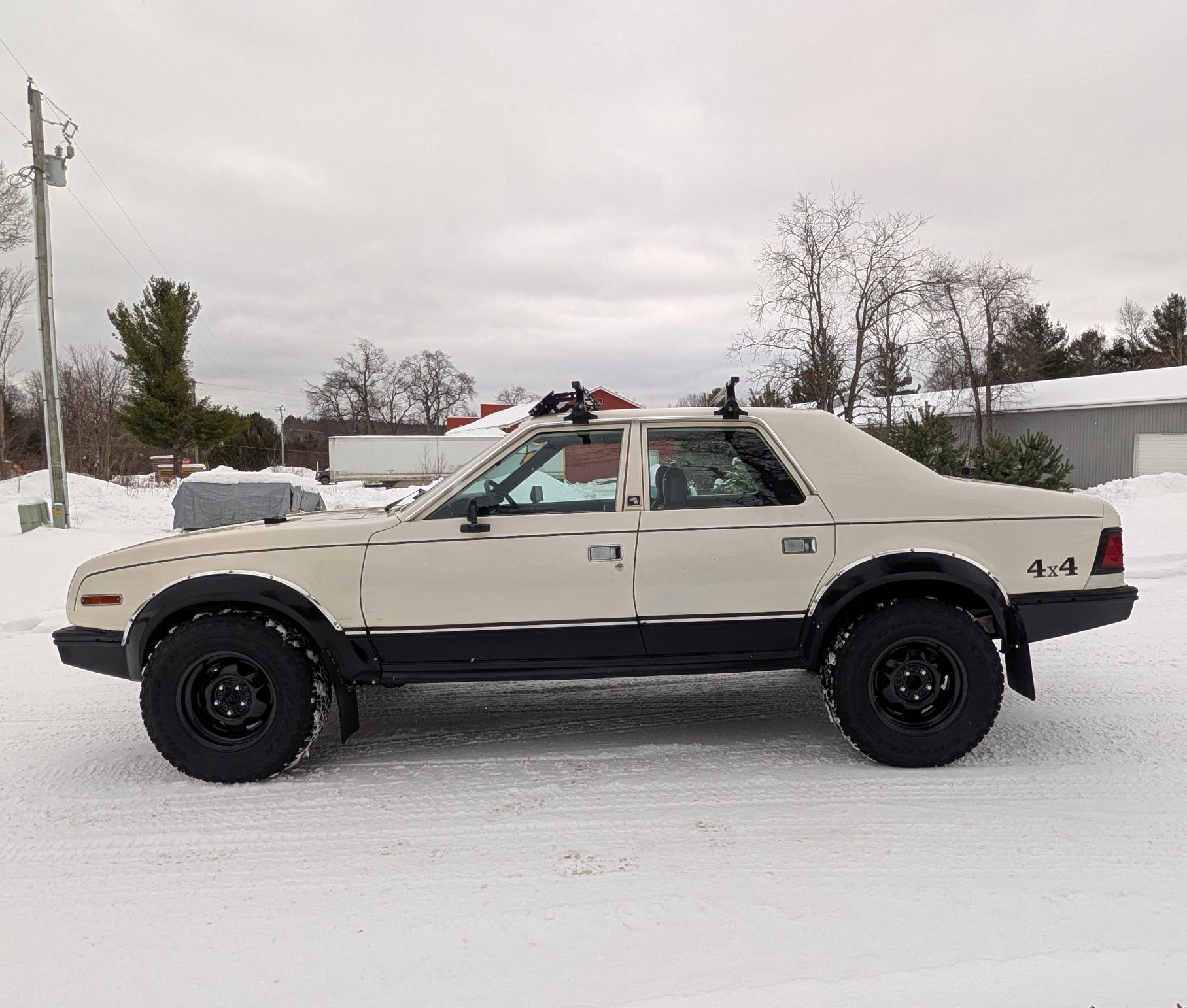
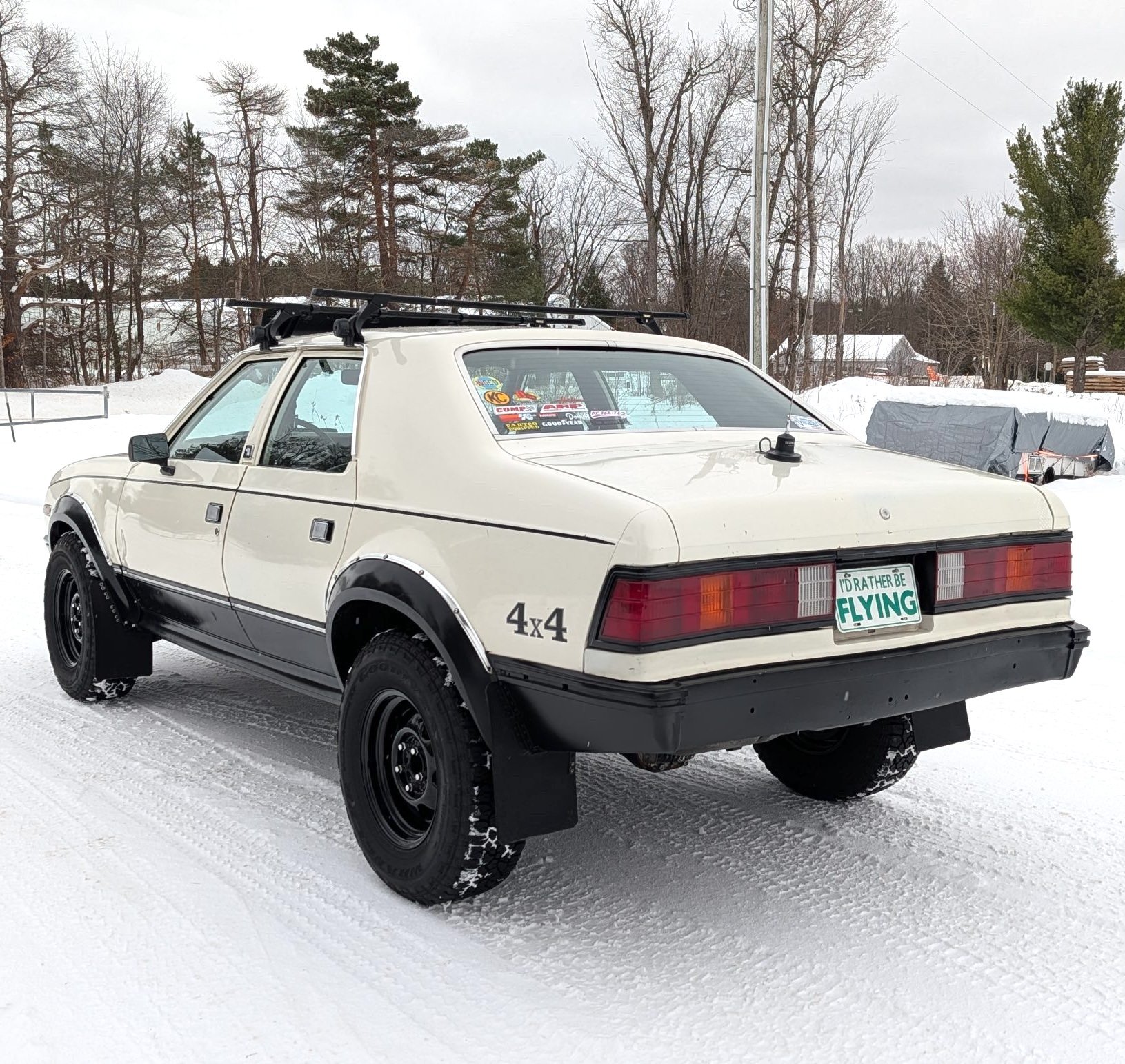
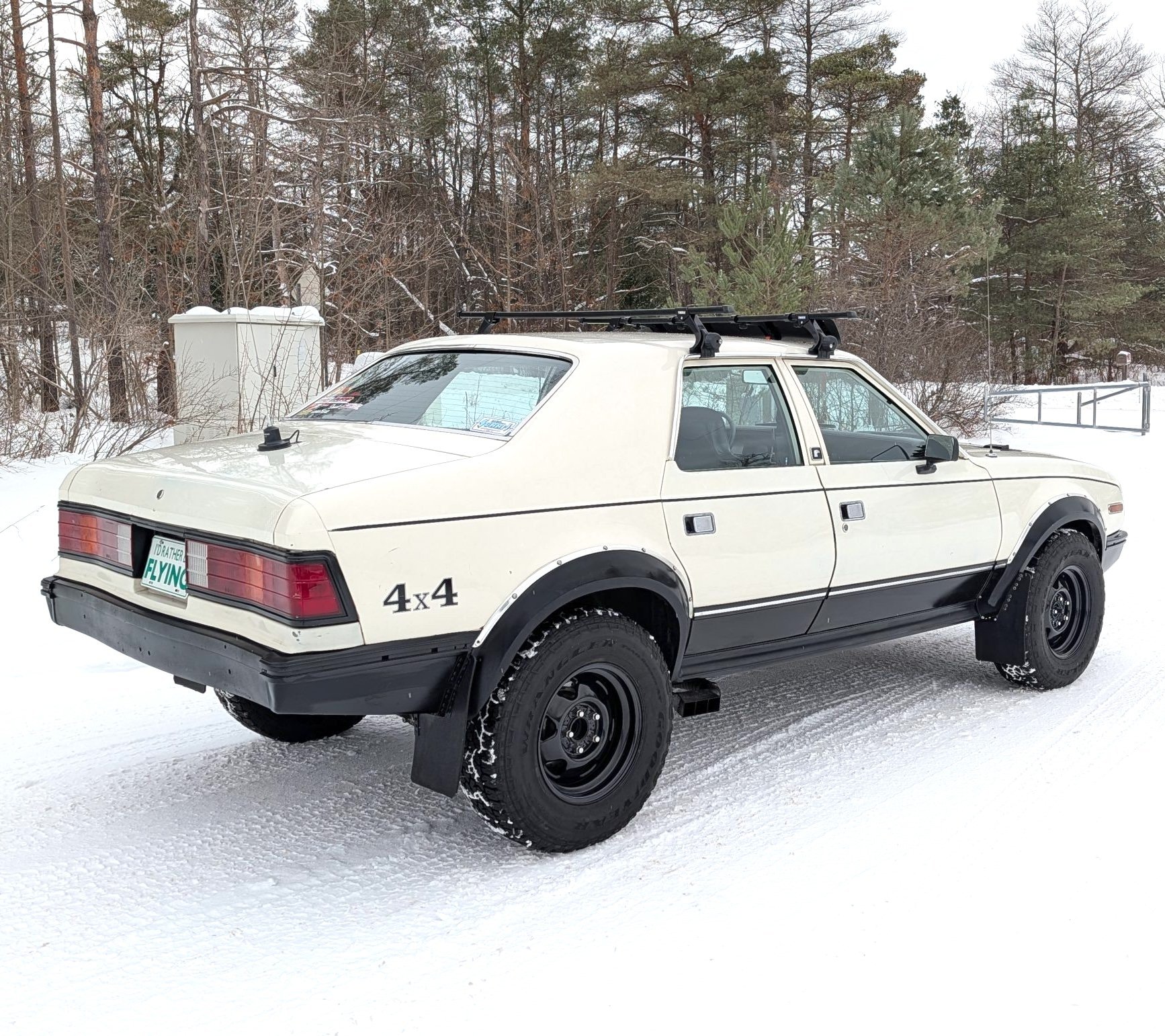
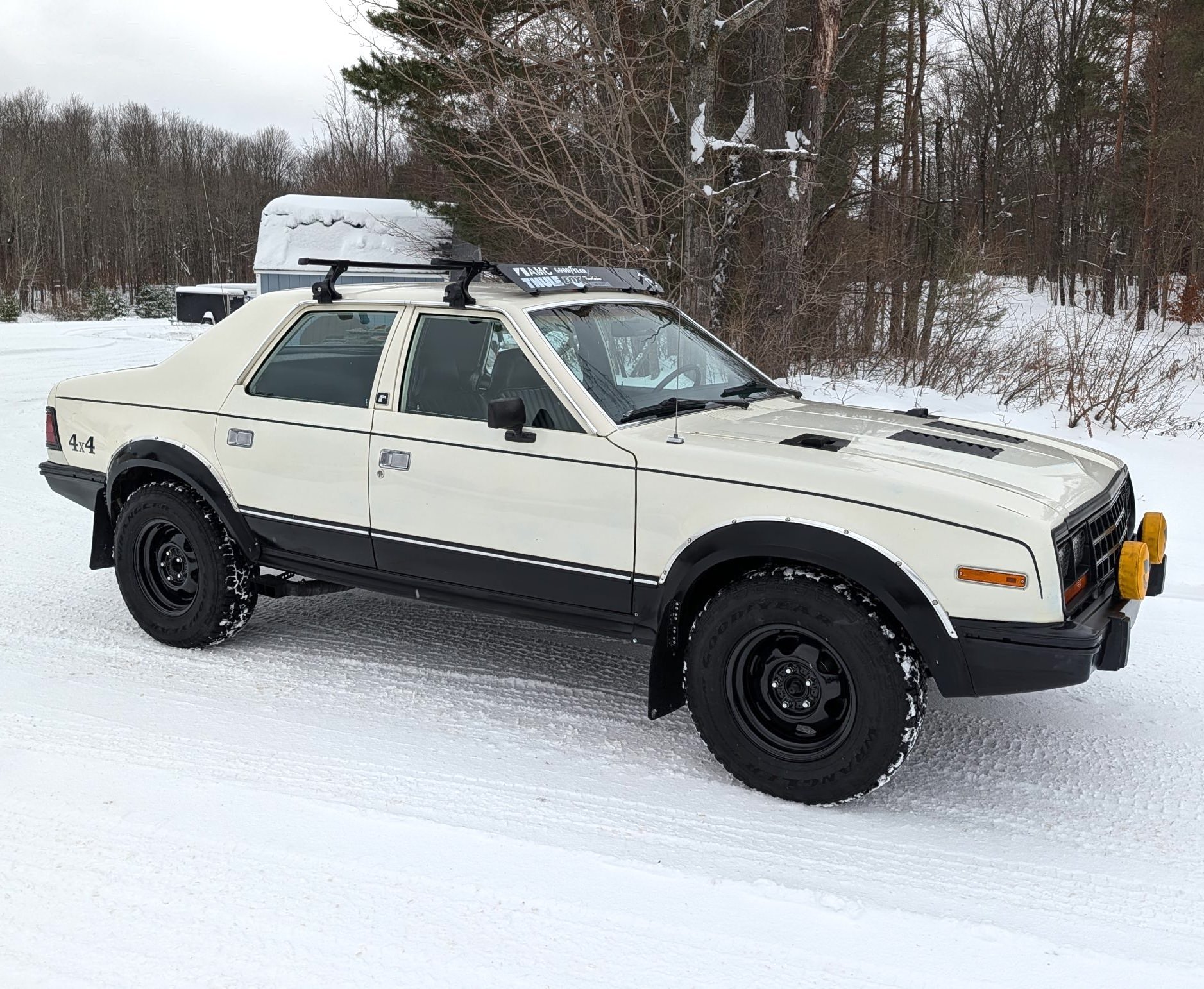
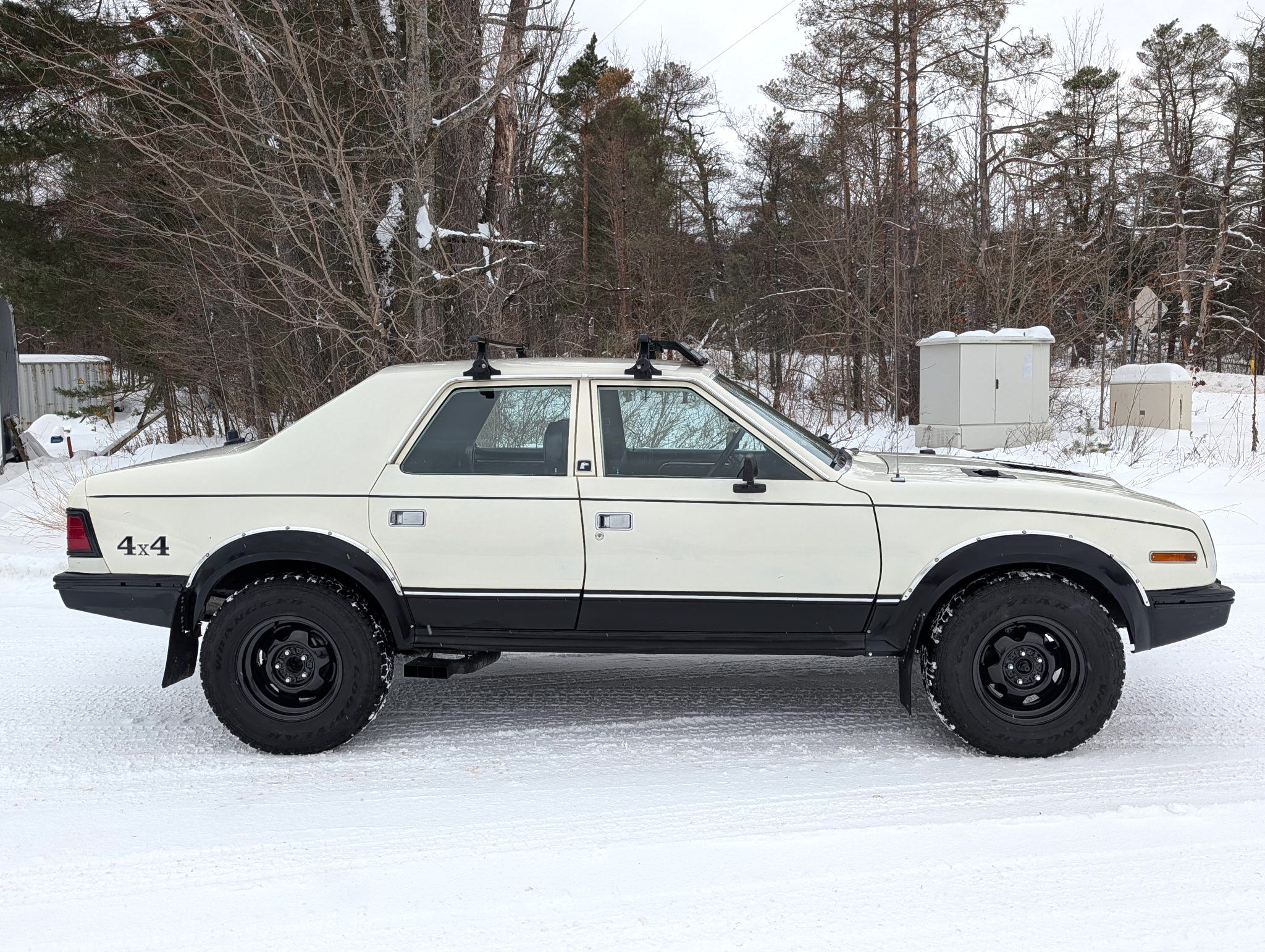
The 1985 AMC Eagle 5-Speed Shown Here
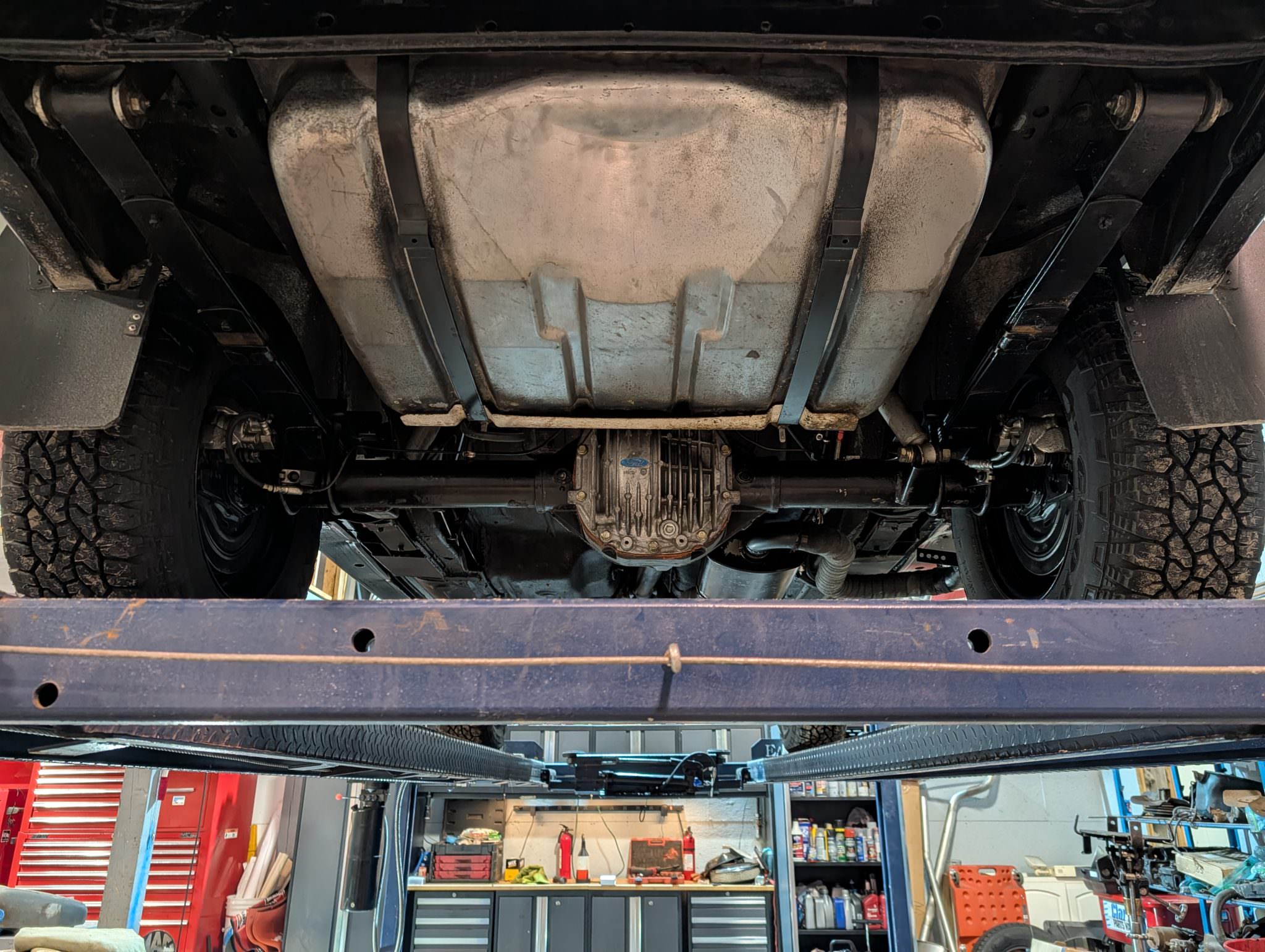
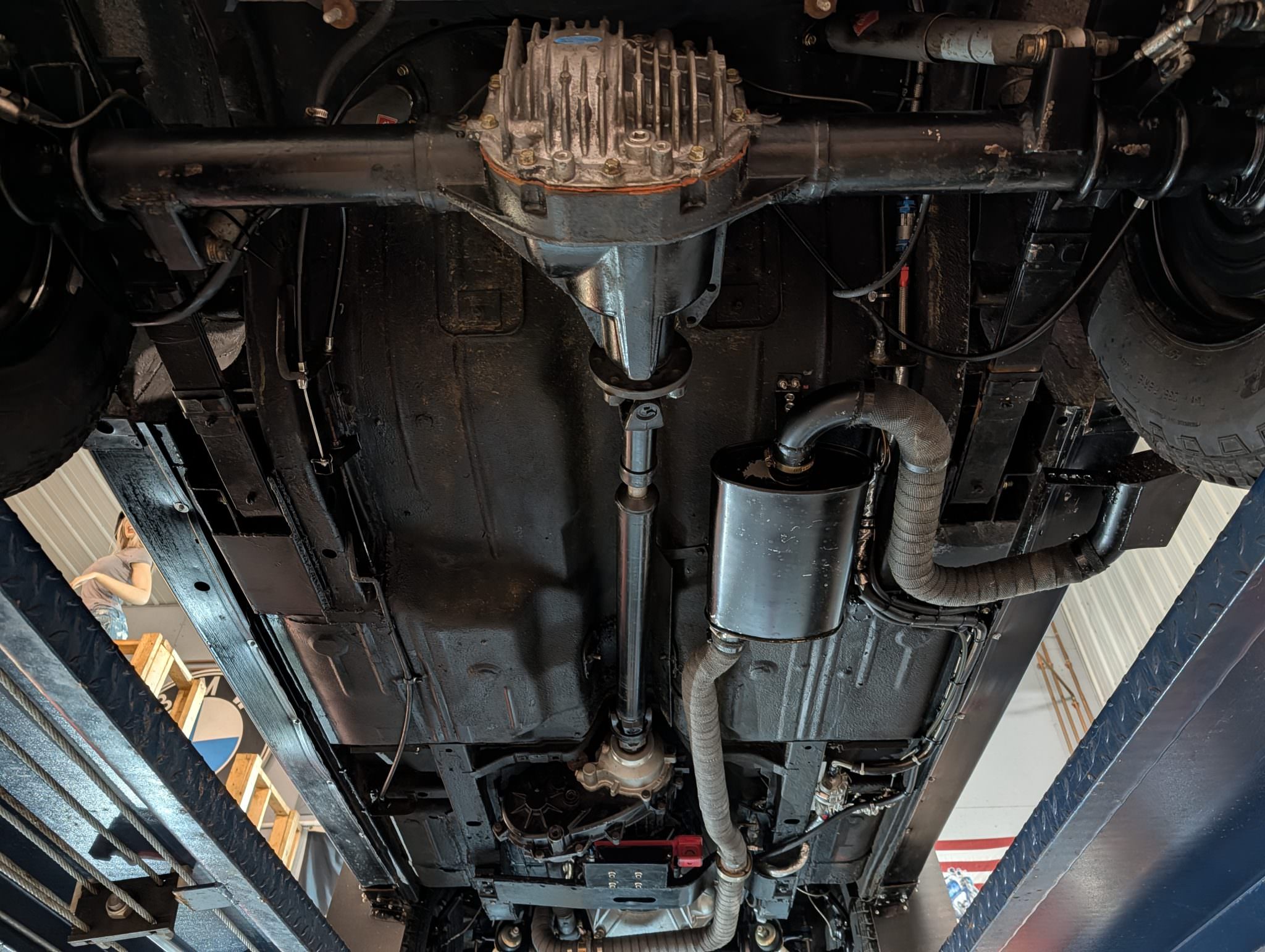
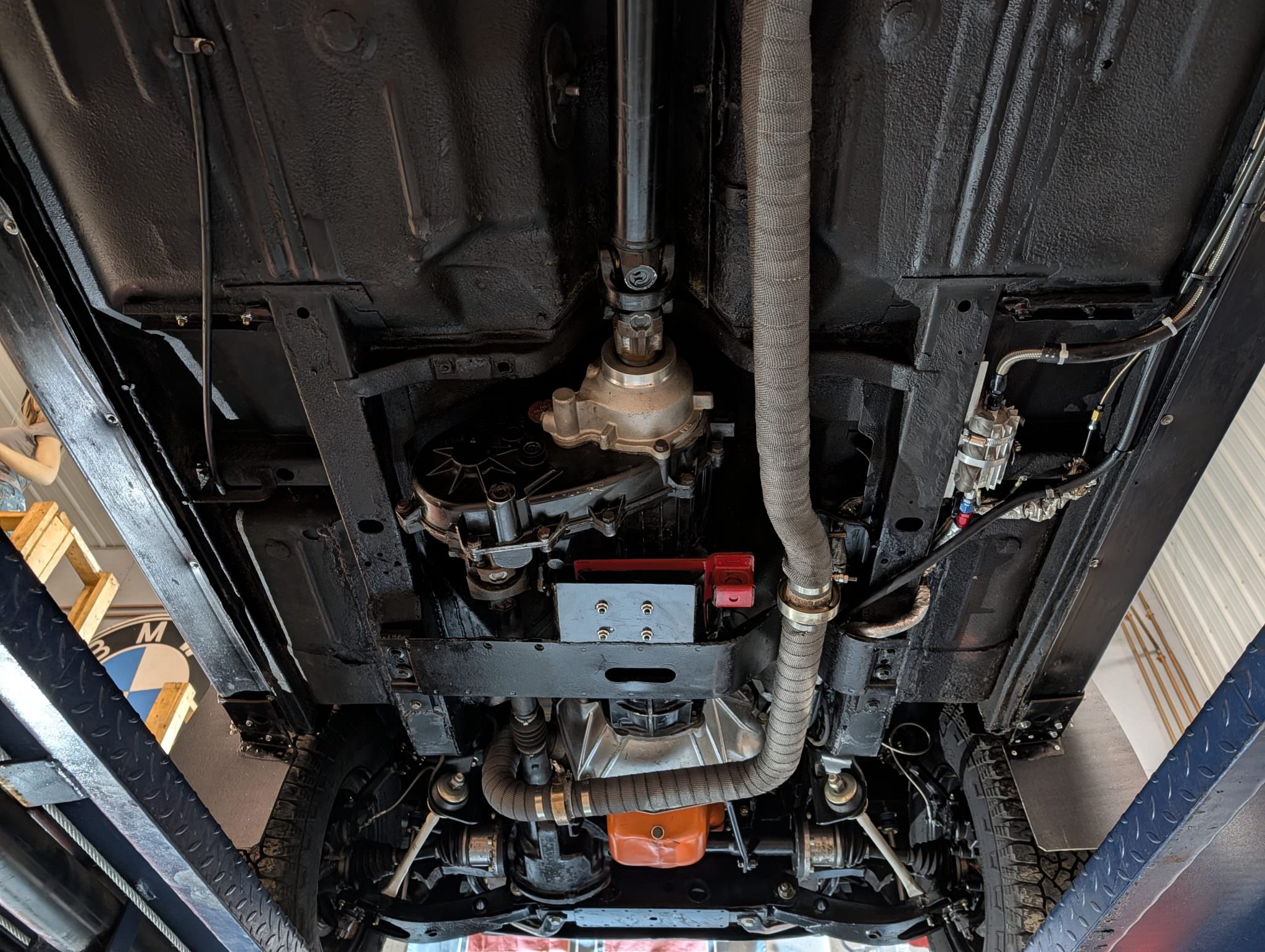
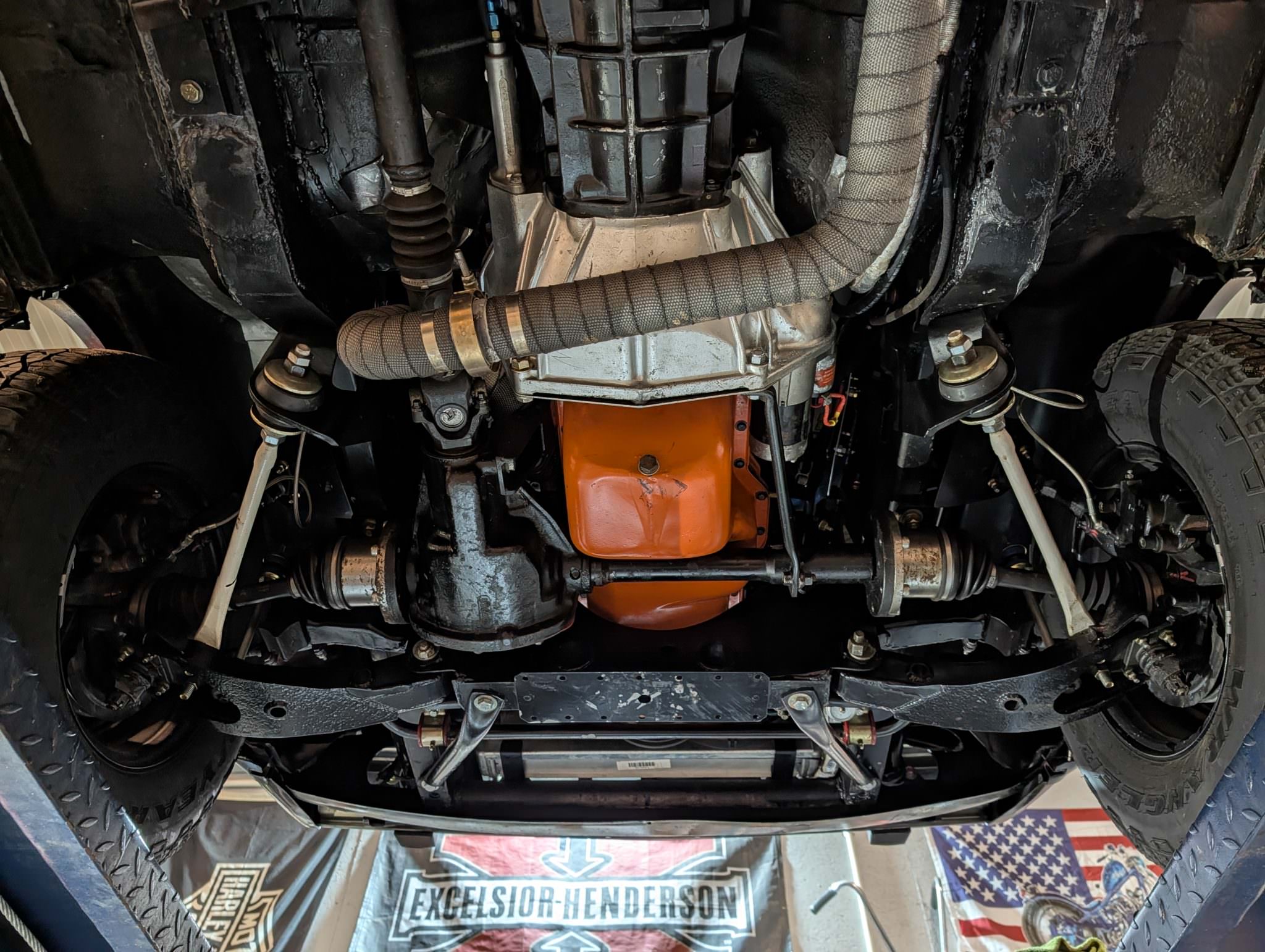
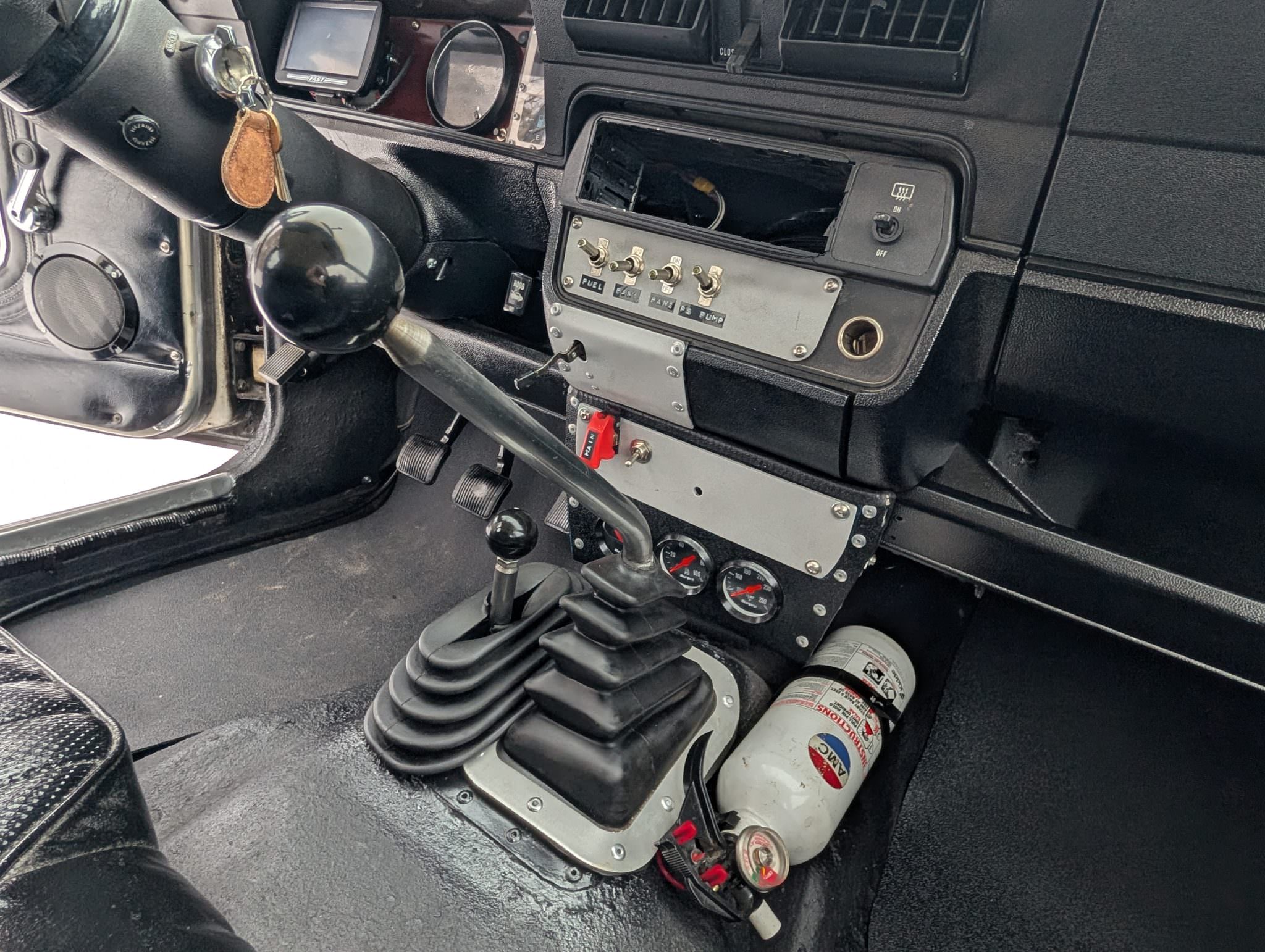
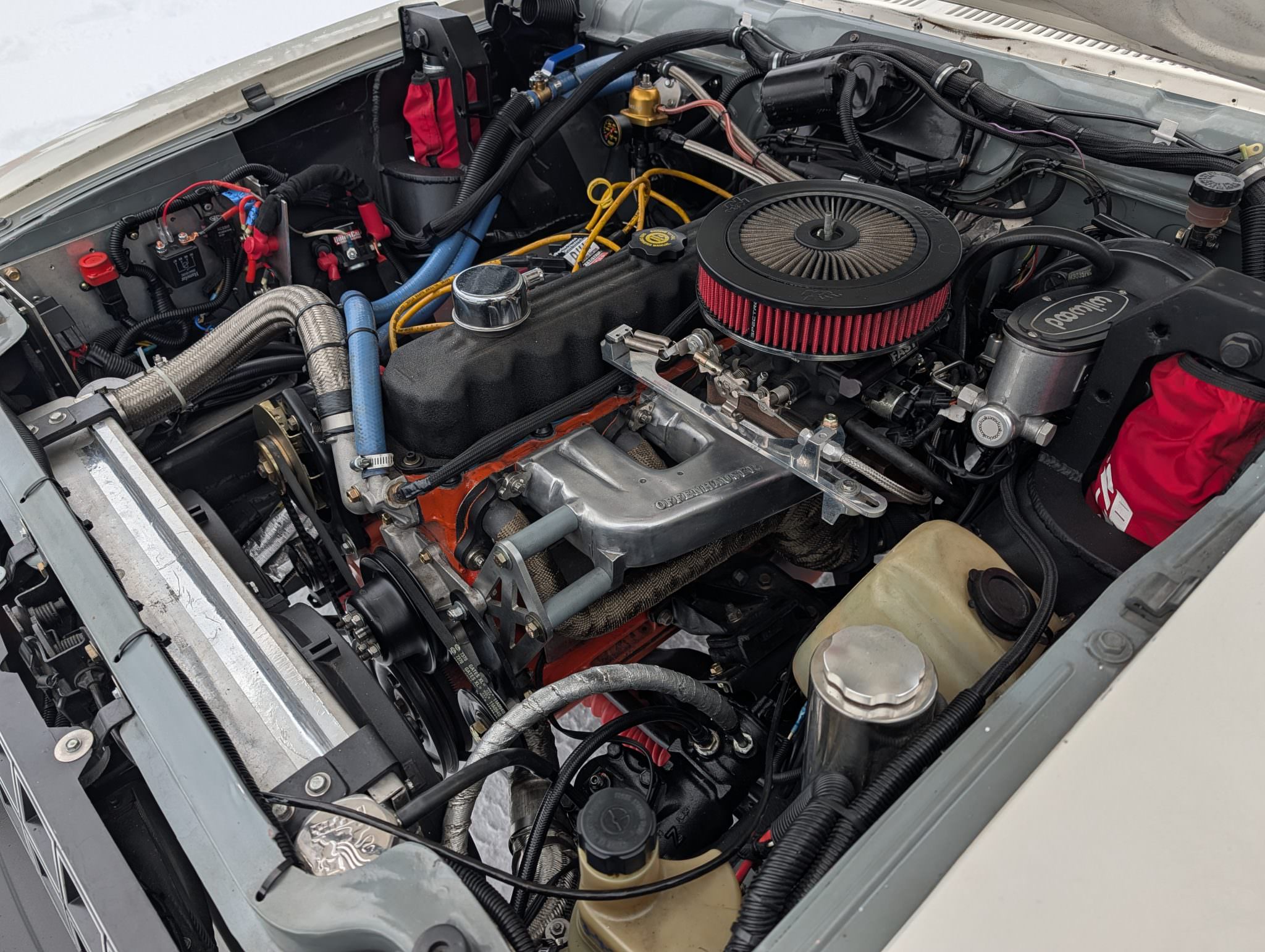
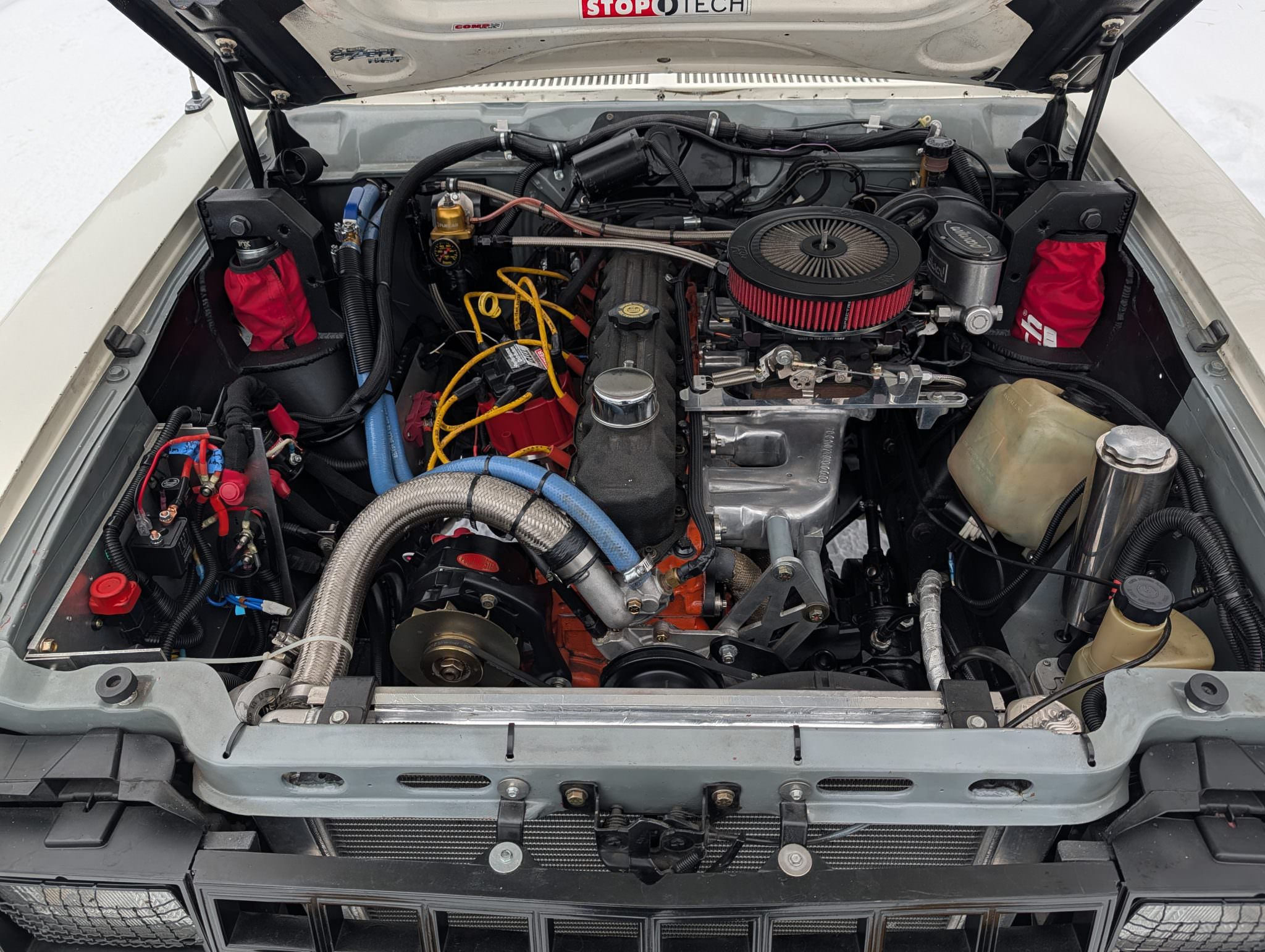
The 1985 AMC Eagle you see here has been given a series of upgrades including a Jeep Cherokee-sourced 4.0 liter inline-six that was expanded out to 4.6 liters, and power is sent back through an AX15 5-speed manual transmission linked to an NP242 transfer case, with Yukon 3.08 gearing, and Tom Woods driveshafts.
It now offers a nice bump in horsepower and stock over the standard 4.2 liter engine. The 4.6 liter six has also been fitted with FAST EZ fuel injection, an Offenhauser intake manifold, and a DUI distributor from Performance Distributors.
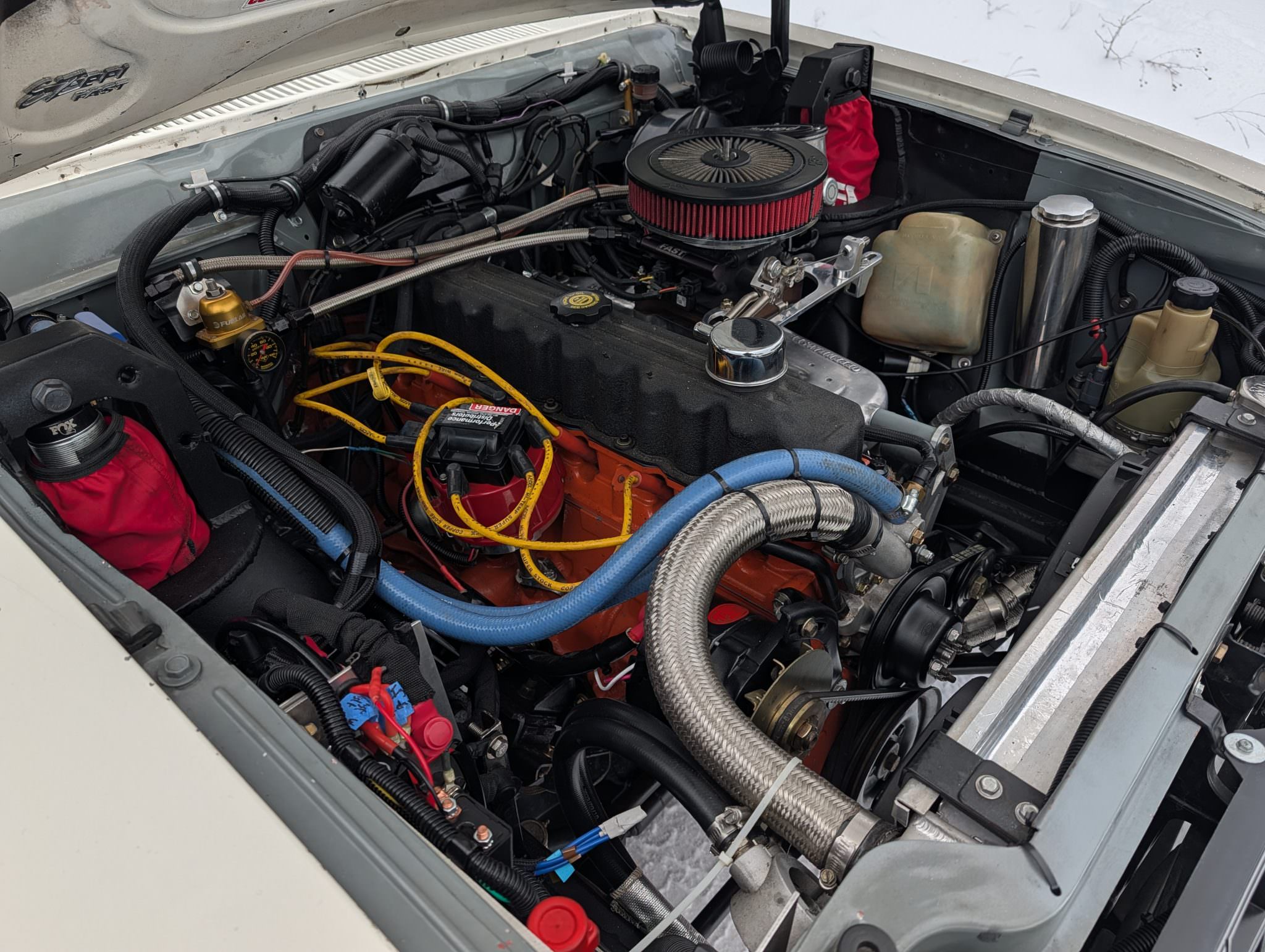
The 1985 AMC Eagle you see here has been given a series of upgrades including a Jeep Cherokee-sourced 4.0 liter inline-six that was expanded out to 4.6 liters, and power is sent back through an AX15 5-speed manual transmission linked to an NP242 transfer case, with Yukon 3.08 gearing, and Tom Woods driveshafts.
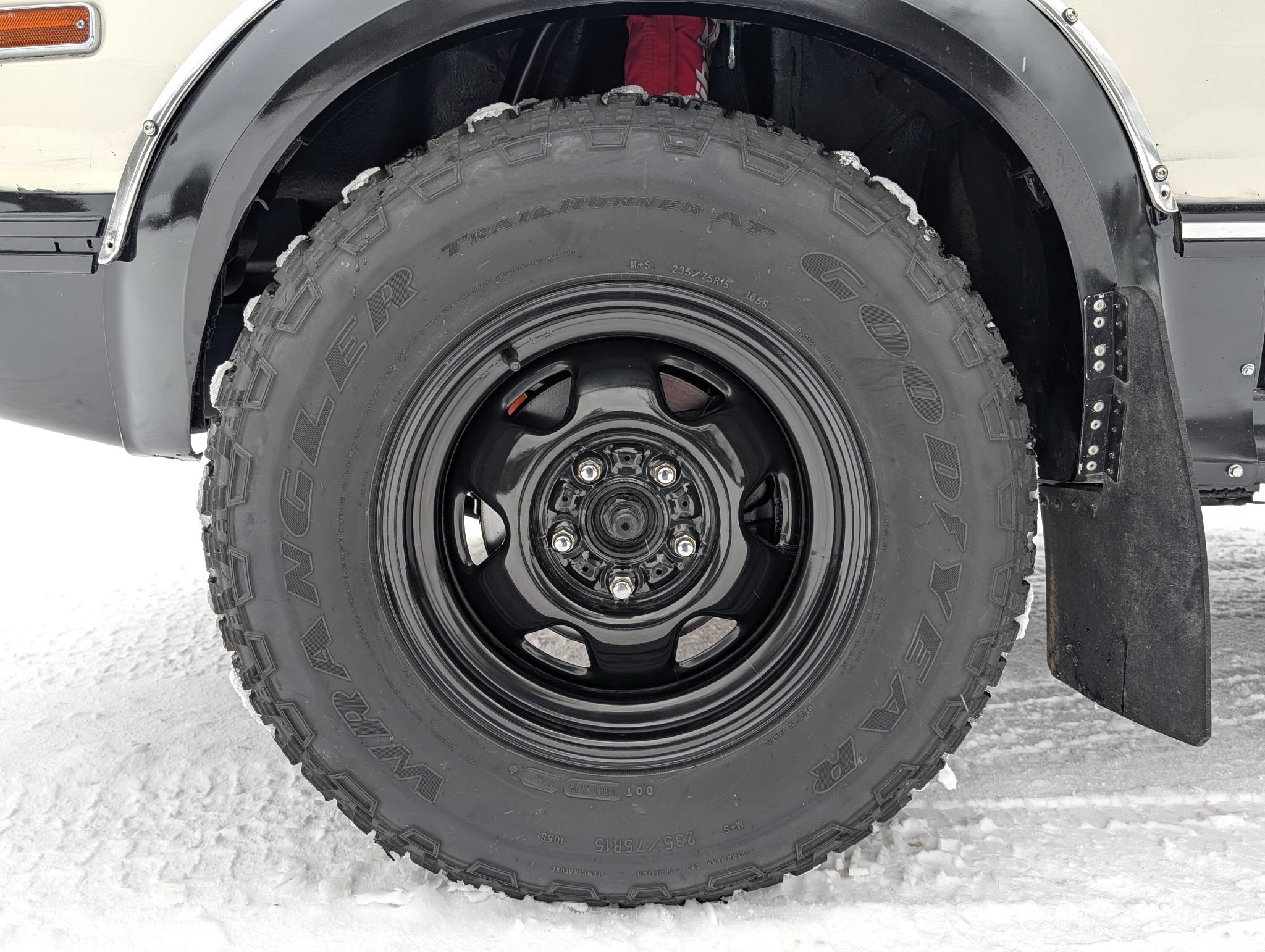
The suspension has also been upgraded, with Fox dampers with Eibach springs up front, fabricated upper control arms, and boxed lower control arms. It has four-wheel disc brakes that use a Wilwood master cylinder and proportioning valve, Volvo-sourced electric power steering, and it rides on 15″ wheels shod with 235/75 Goodyear Wrangler TrailRunner AT tires.
This unusual AMC Eagle is now being offered for sale out of Beulah, Michigan with a clean Michigan title in the seller’s name. If you’d like to read more about it or place a bid you can visit the listing here.
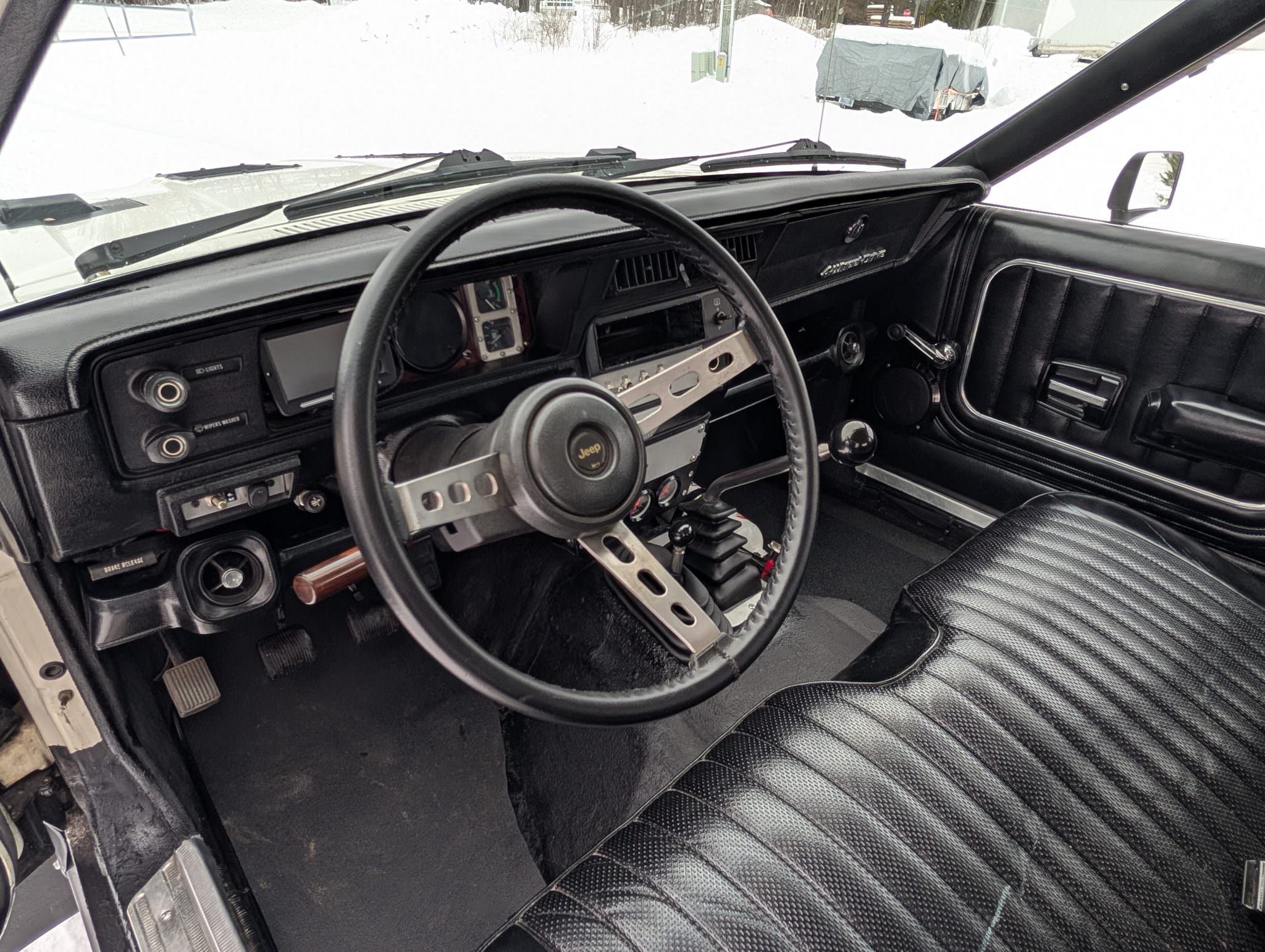
Images courtesy of Bring a Trailer

Articles that Ben Branch has written have been covered on CNN, Popular Mechanics, Smithsonian Magazine, Road & Track Magazine, the official Pinterest blog, the official eBay Motors blog, BuzzFeed, Autoweek Magazine, Wired Magazine, Autoblog, Gear Patrol, Jalopnik, The Verge, and many more.
Silodrome was founded by Ben back in 2010, in the years since the site has grown to become a world leader in the alternative and vintage motoring sector, with well over a million monthly readers from around the world and many hundreds of thousands of followers on social media.