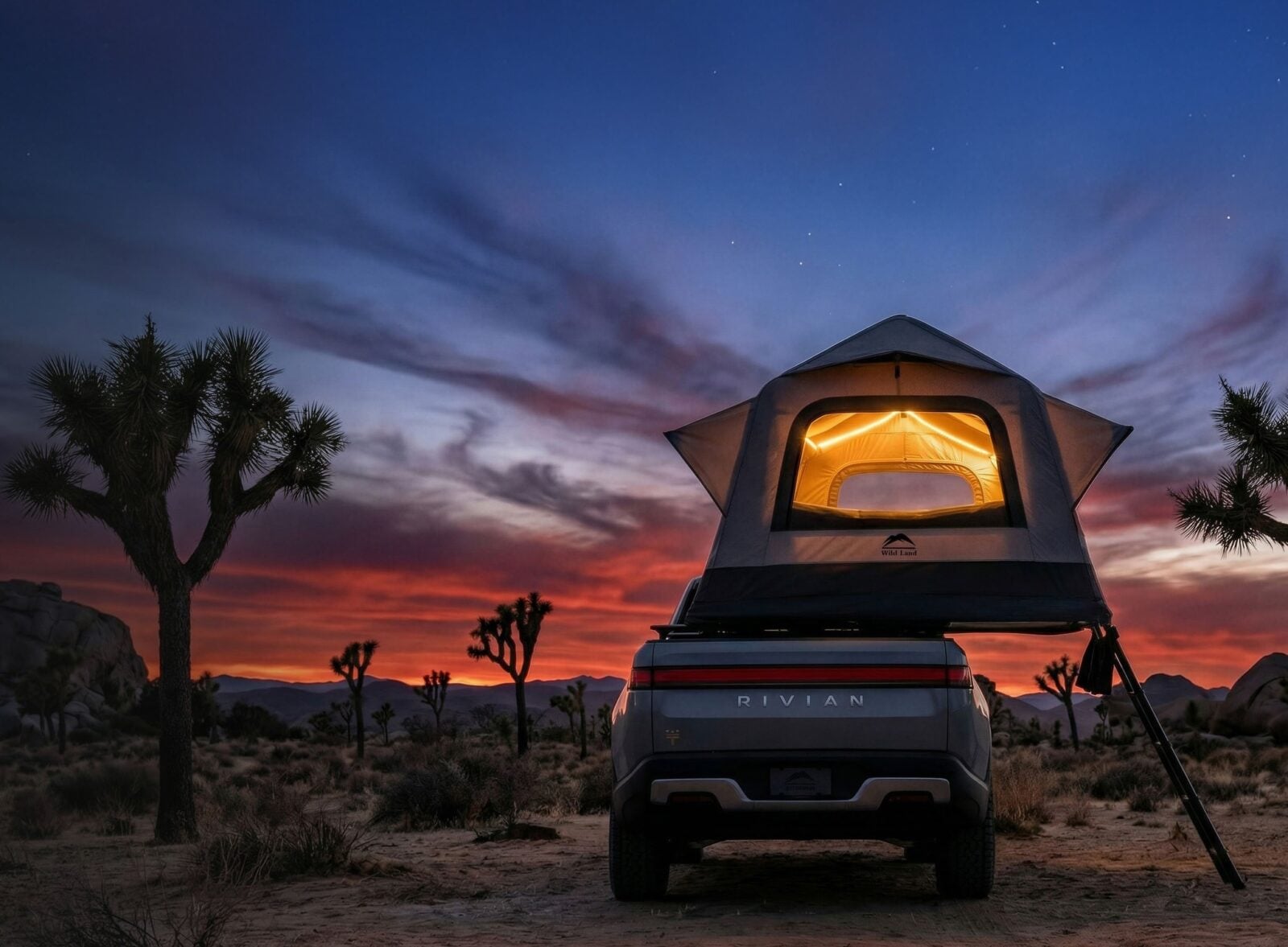
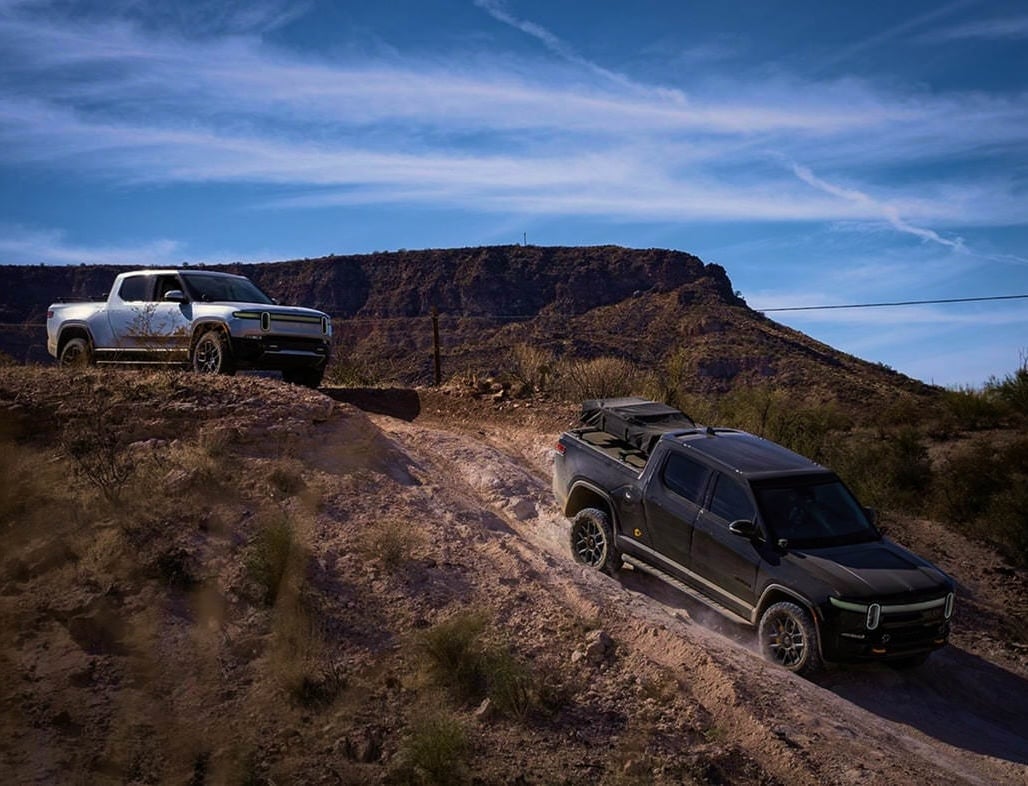
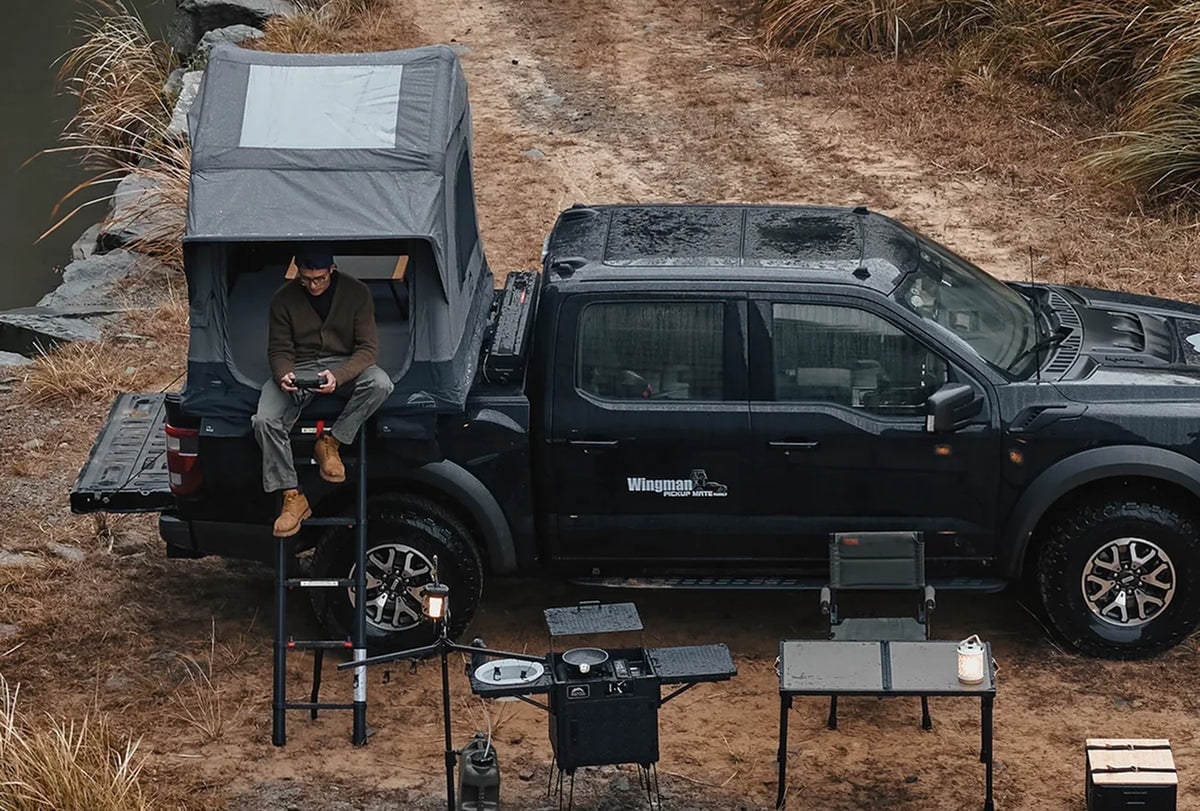
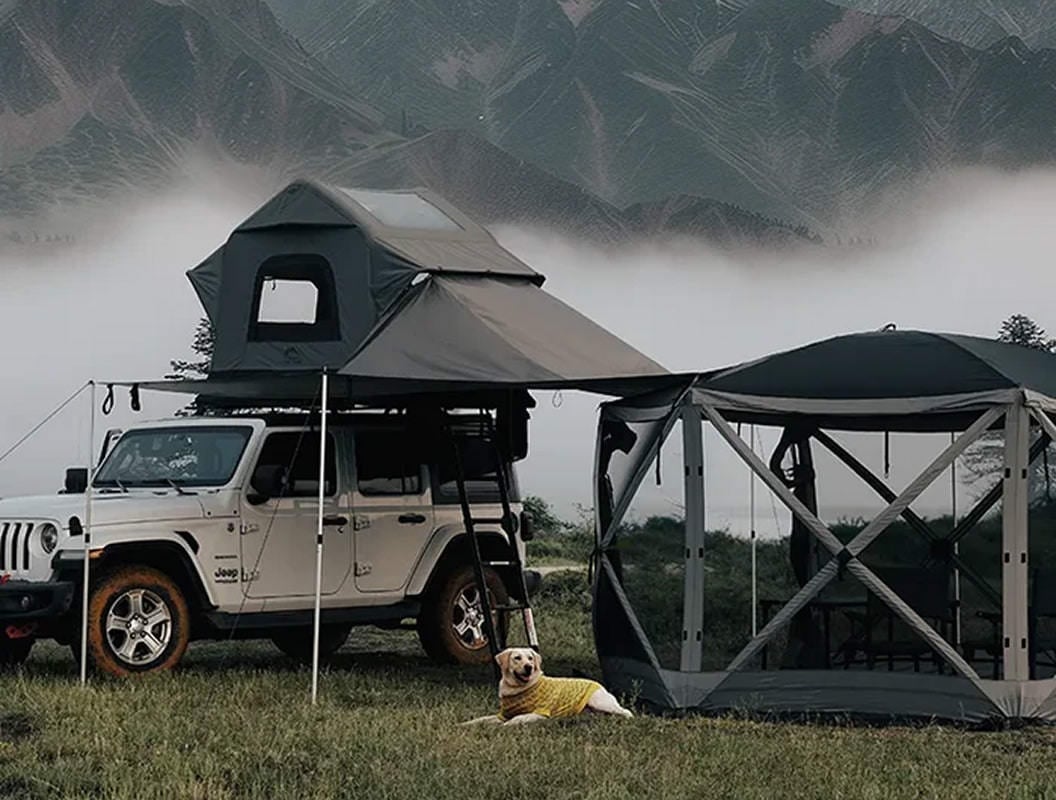
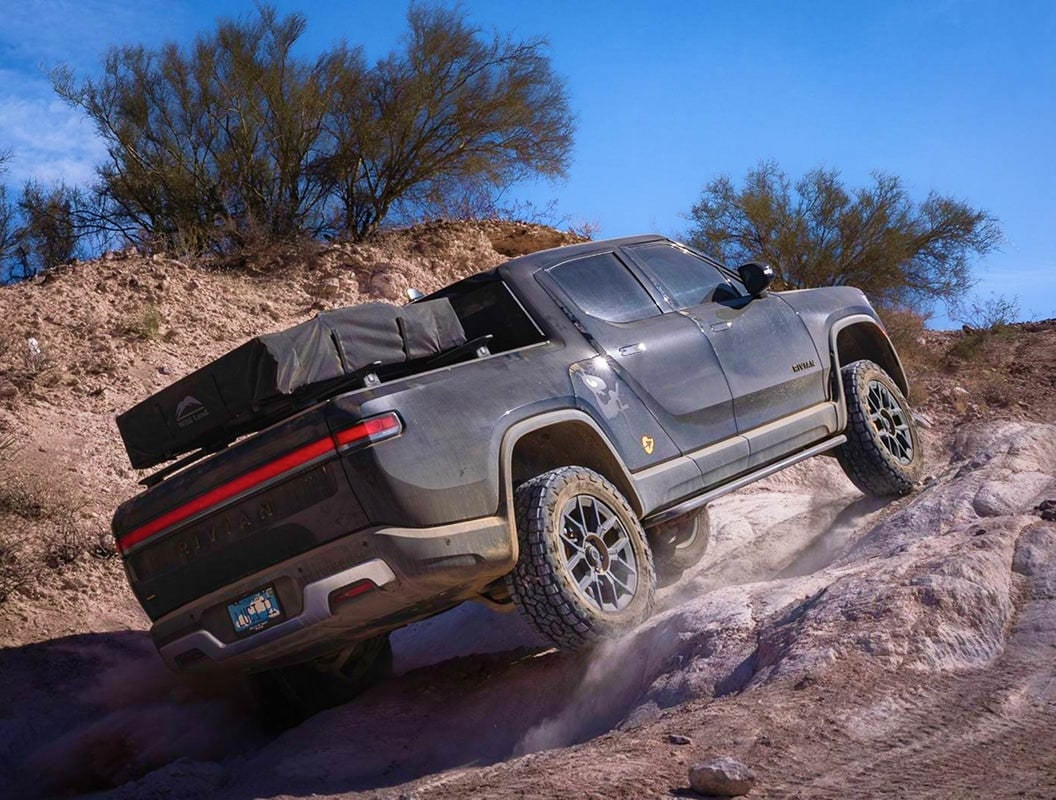
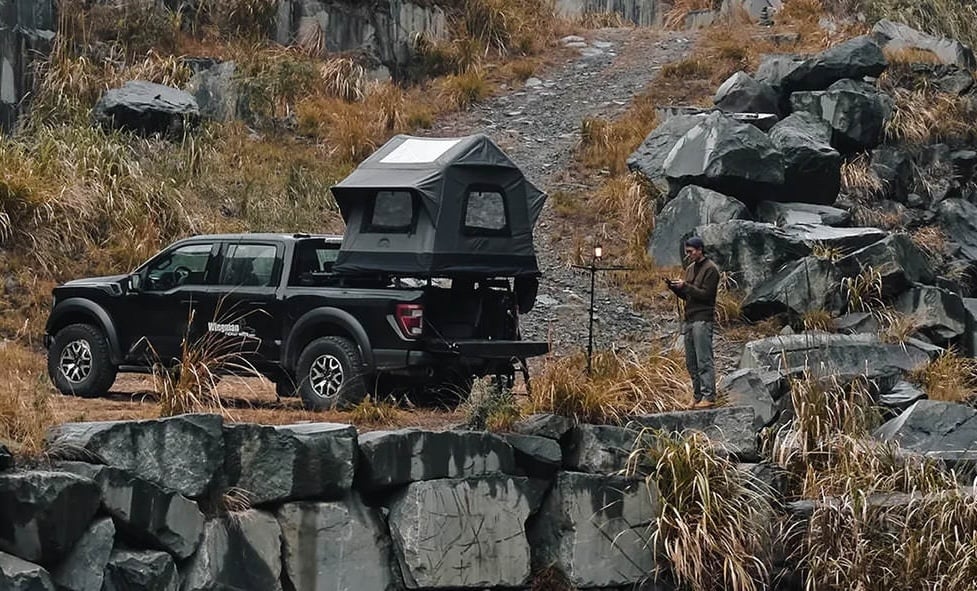
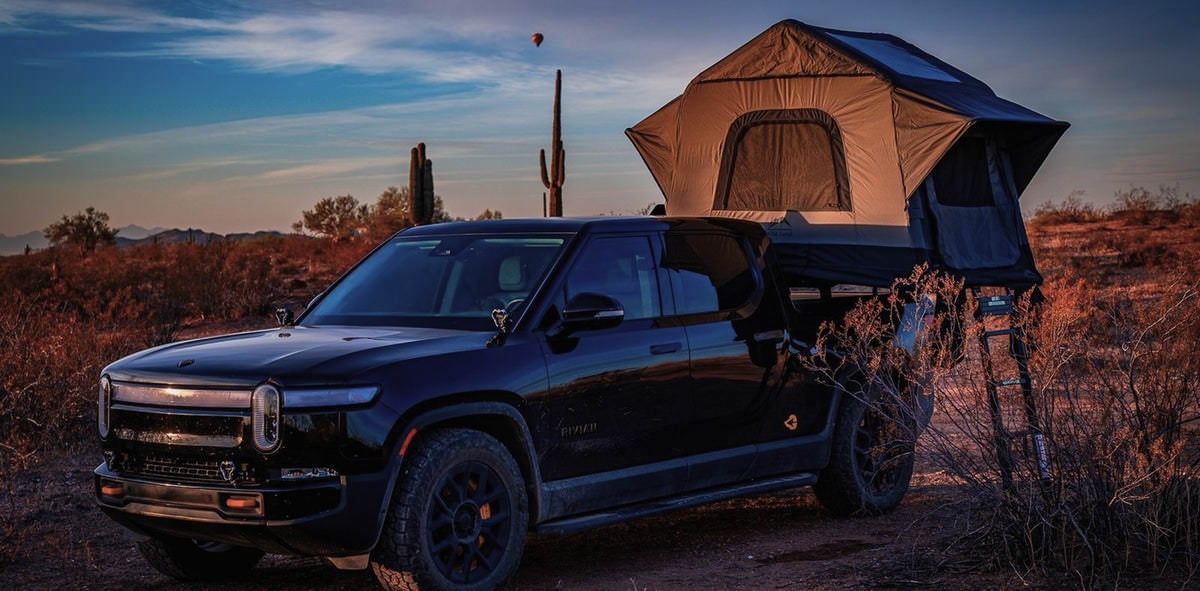
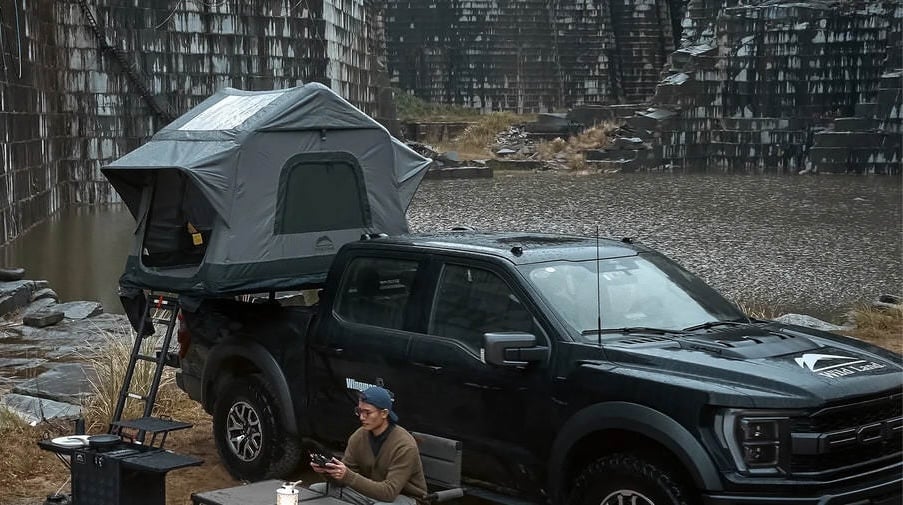
This is the Air Cruiser, it’s a new rooftop tent that uses a state-of-the-art inflatable frame to offer significantly more interior space than the majority of rooftop tents on the market today.
Pneumatic (or inflatable tents) tents, have been around for a few years, first becoming popular thanks to companies like Heimplanet. Their flexible, pressurized frames are excellent for handling high winds and wild weather – as they flex and twist rather than snap or collapse.

 This is the Air Cruiser, it’s a new rooftop tent that uses an pneumatic frame to offer significantly more interior space than the vast majority of rooftop tents on the market today.
The Air Cruiser Rooftop Tent
The Air Cruiser raised $443,396 USD on Kickstarter in the summer of 2023 from 242 backers over 28 days – that was 4,334% more than their relatively modest $10,000 USD original goal.
The reason the Air Cruiser brought in such a haul is that it’s a lightweight rooftop tent with no poles, instead, inflatable beams do the structural work, all fed by a 12V pump that runs off the vehicle’s own power supply.
The company behind the project is Cinch, founded by Jake Jackson in 2009. They’ve spent the last 17 years making quick-pitch ground tents, and they developed the concept in-house. They then partnered with Wild Land, an automotive rooftop tent manufacturer based in China to build it.
The tent weighs 99 lbs on its own, and 124.5 lbs with the 13 lb mattress and 12.5 lb ladder included. It packs down to 55 × 38 × 10 inches and opens to 83 × 51 × 57. The canopy is 280g ripstop polycotton under a PVC-coated 600D polyoxford travel cover.
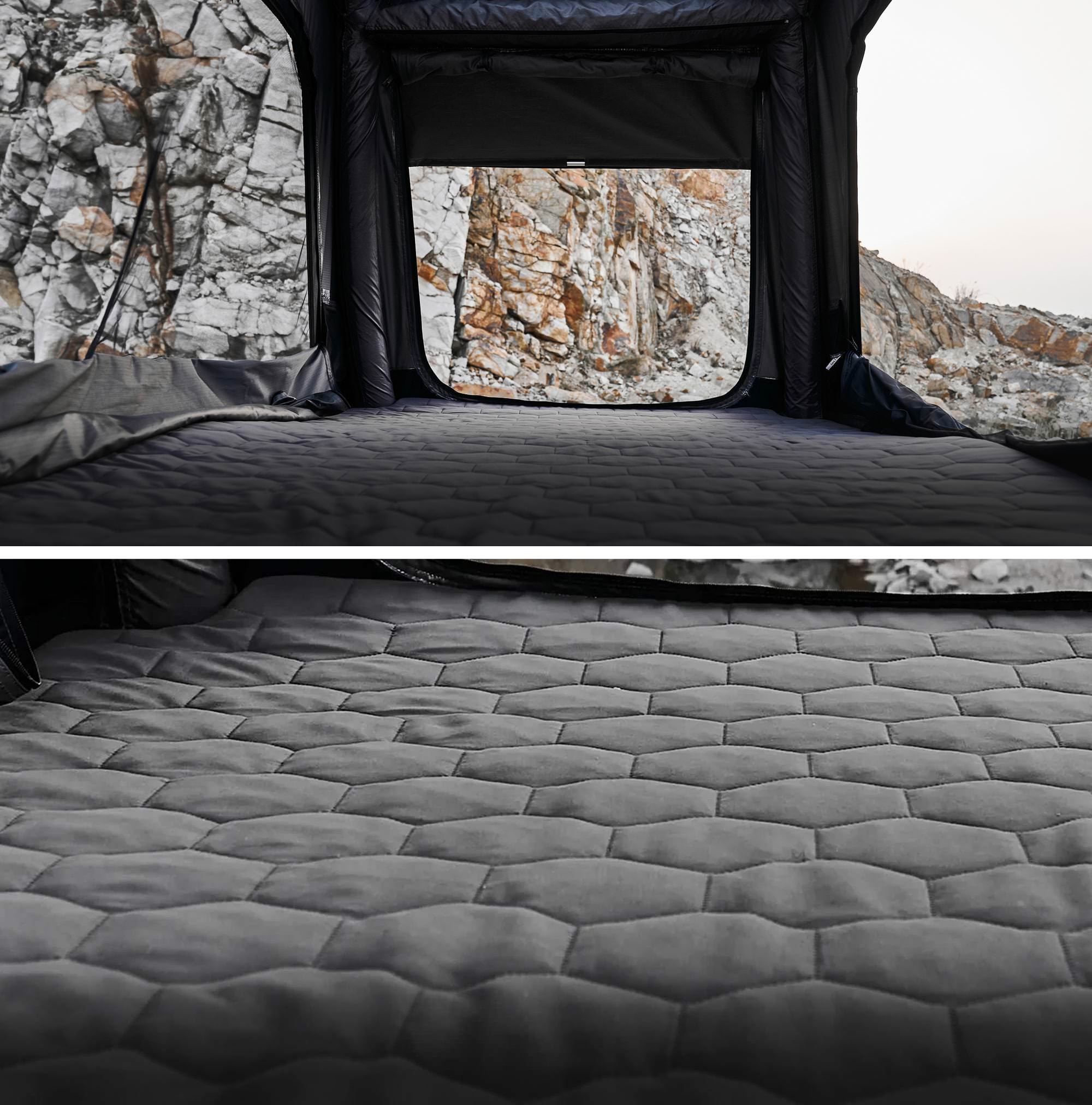
Cinch says the tent is the smallest and lightest case in its class, and that it has cabin space 30% higher than its nearest competitor. Looking over the data, it appears that they aren’t exaggerating, and the interior space is significantly larger than we’re used to seeing with more standard clamshell or folding-frame rooftop tents.
Setting up the tent is relatively straightforward. You remove the cover, unfold the tent, plug in the compressor, and hit the on button. Full inflation times can vary a little based on the capacity of the air pump you use, but it seems to fall into the three to five minute range for most owners. The deflation process only takes 30 seconds or so.
You can use a hand pump if your electric pump fails, it takes quite a bit longer obviously, but more off-roaders will have reliable inflation systems in place already for adjusting vehicle tire pressures for different surfaces.
The Air Cruiser comes with a two inch high-density foam mattress under a detachable peachskin thermal cover, laid over thermal peachskin flooring. You’ll find NeoGlow canopy and cabin lighting plus an illuminated ladder that comes on with night mode, all of it drawing from the same 12V supply as the pump.
Cinch says the tent has been tested from −4°F to 150°F ( −20°C exactly and 65.6°C) under the SPF 50+ polycotton shell. Those are temperature extremes most will never encounter of course, well hopefully not the warmer number anyway, as the highest temperature ever recorded on Earth was 56.7 °C – so if it hits 65.6°C when you’re out camping you’re probably not having a very nice afternoon.
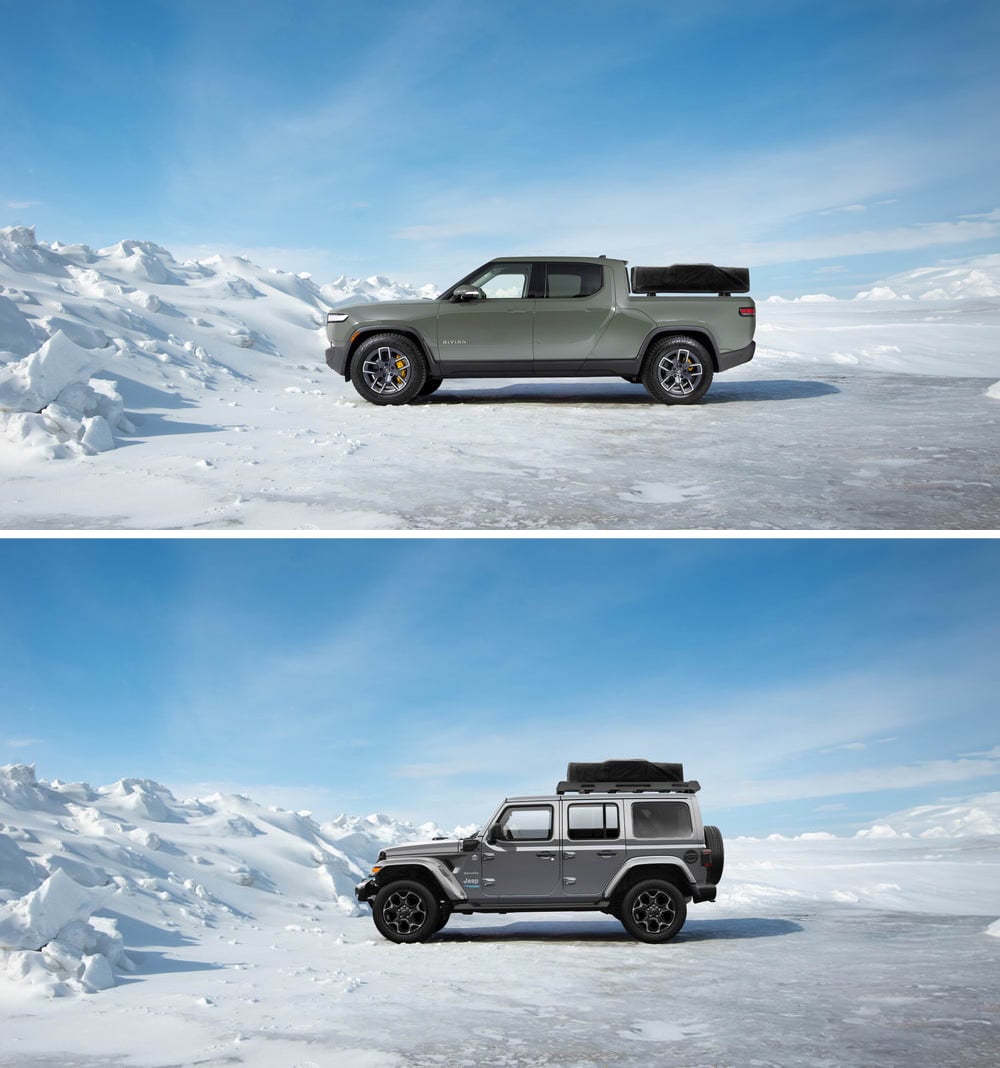
Cinch says the tent is the smallest and lightest case in its class, and that it has cabin space 30% higher than its nearest competitor. Looking over the data, it appears that they aren’t exaggerating, and the interior space is significantly larger than we’re used to seeing with more standard clamshell or folding-frame rooftop tents.
The tent has been tested to Force 7 on the Beaufort Scale, that’s 28 to 33 knots, 32 to 38 mph, or 50–61 km/h which is considered “near gale force.” It’s not the kind of weather you’d want to be on the roof for.
The Air Cruiser is now available to buy direct from the official Cinch store here with the next shipment expected later this month, it retails for $2,999 USD with a 24-month limited warranty against defects in materials and workmanship.

Images courtesy of Cinch

Articles that Ben Branch has written have been covered on CNN, Popular Mechanics, Smithsonian Magazine, Road & Track Magazine, the official Pinterest blog, the official eBay Motors blog, BuzzFeed, Autoweek Magazine, Wired Magazine, Autoblog, Gear Patrol, Jalopnik, The Verge, and many more.
Silodrome was founded by Ben back in 2010, in the years since the site has grown to become a world leader in the alternative and vintage motoring sector, with well over a million monthly readers from around the world and many hundreds of thousands of followers on social media.