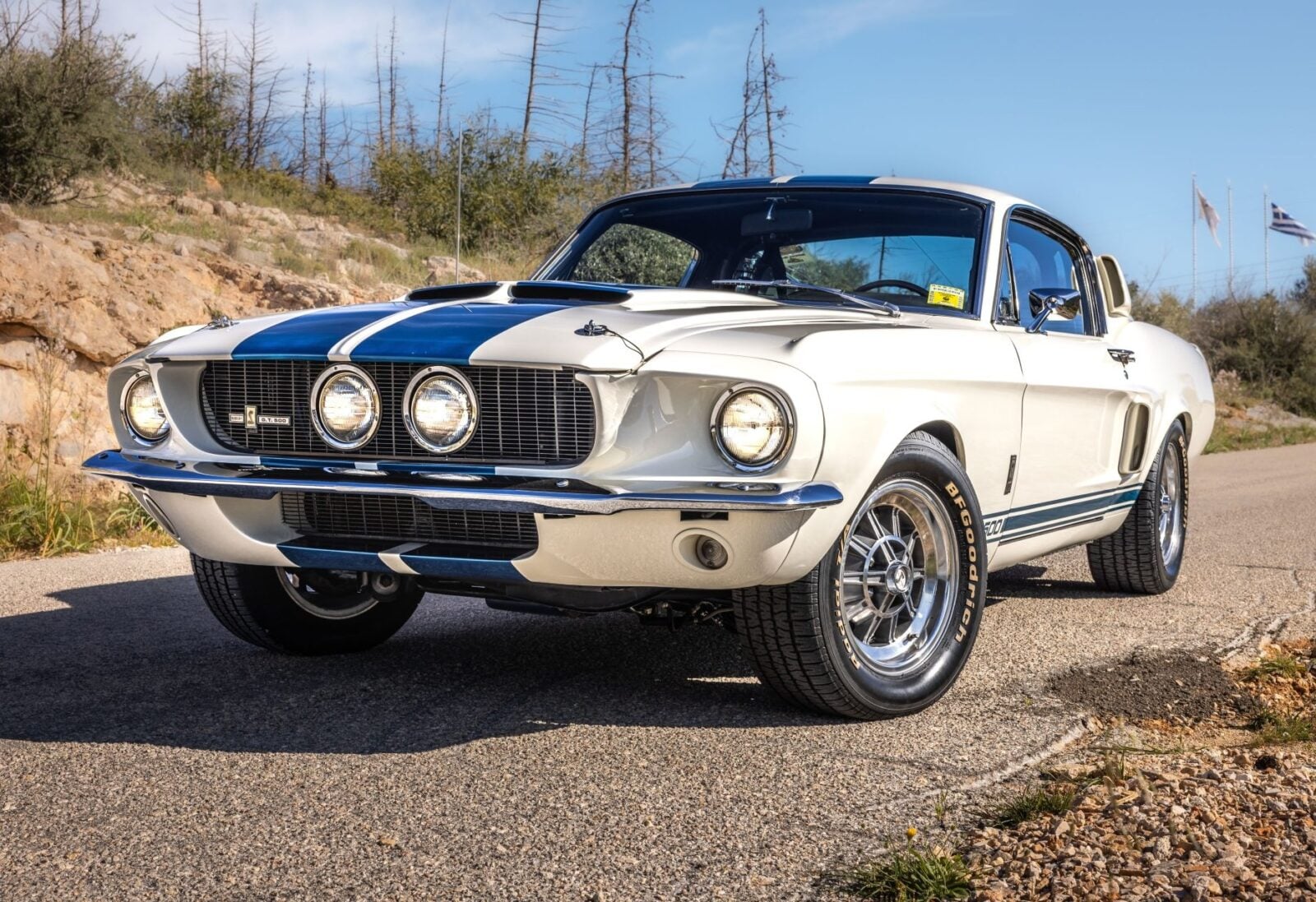
This is a 1967 Shelby Mustang GT500 that was originally won as a prize in a contest. It would be bought by racing driver Chuck Jones in California, who later sold it to Carroll Shelby and Stephen Becker in the late 1990s.
Under Shelby’s ownership, this GT500 was fitted with a modern air conditioning system and performance headers for its 428 Police Interceptor V8. This is a desirable 4-speed manual transmission vehicle, not an automatic, and it’s now being sold with an Elite Marti Report, a National Shelby Registry certificate, and a Shelby American Automobile Club certificate.
Fast Facts: The 1967 Shelby Mustang GT500
- This 1967 Shelby Mustang GT500 is one of 2,048 fastbacks produced for the model year. It was originally delivered to City Motors in National City, California, where it was won as a contest prize. It later passed through the hands of California-based racer Chuck Jones before being bought by Carroll Shelby and Stephen Becker in 1999.
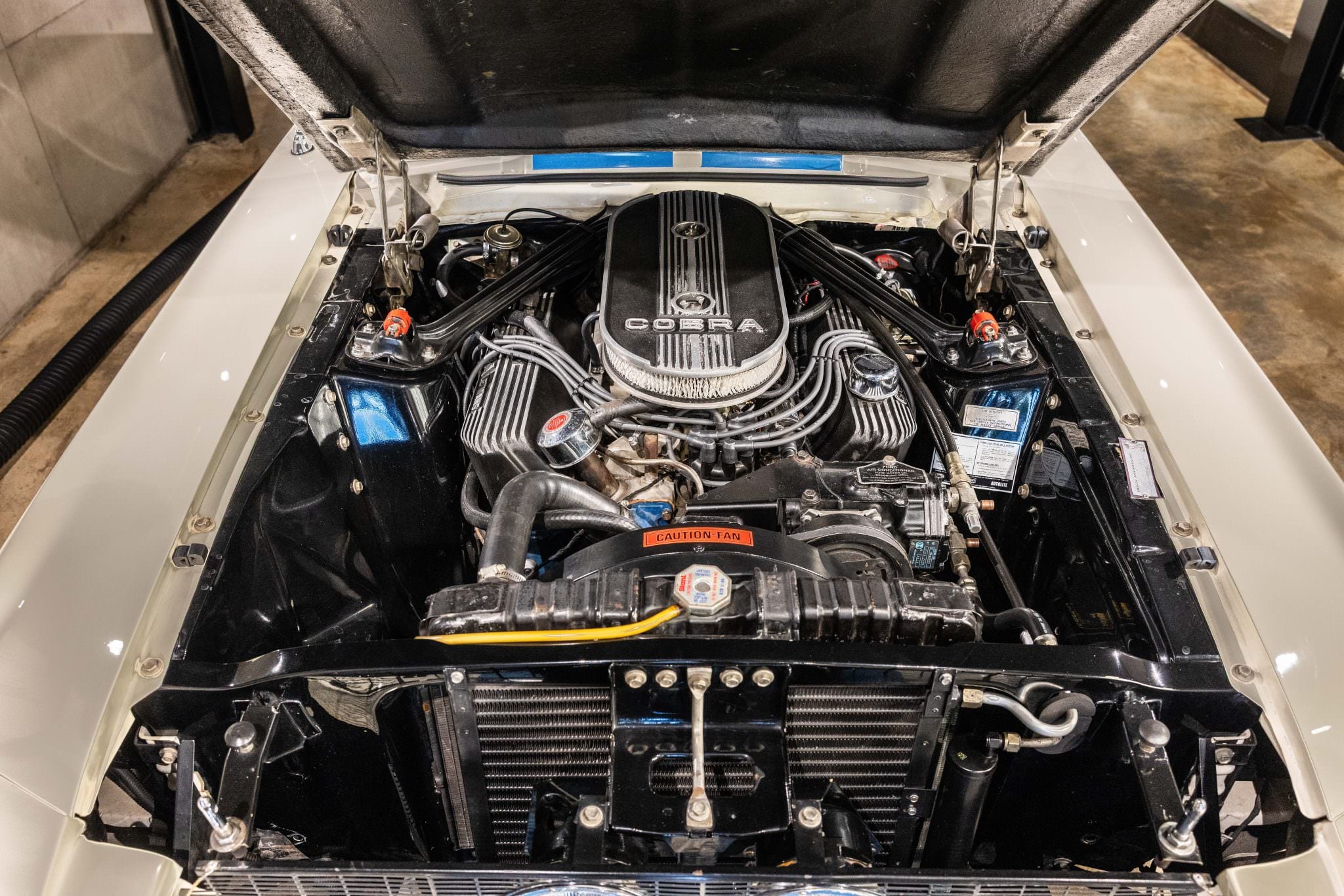
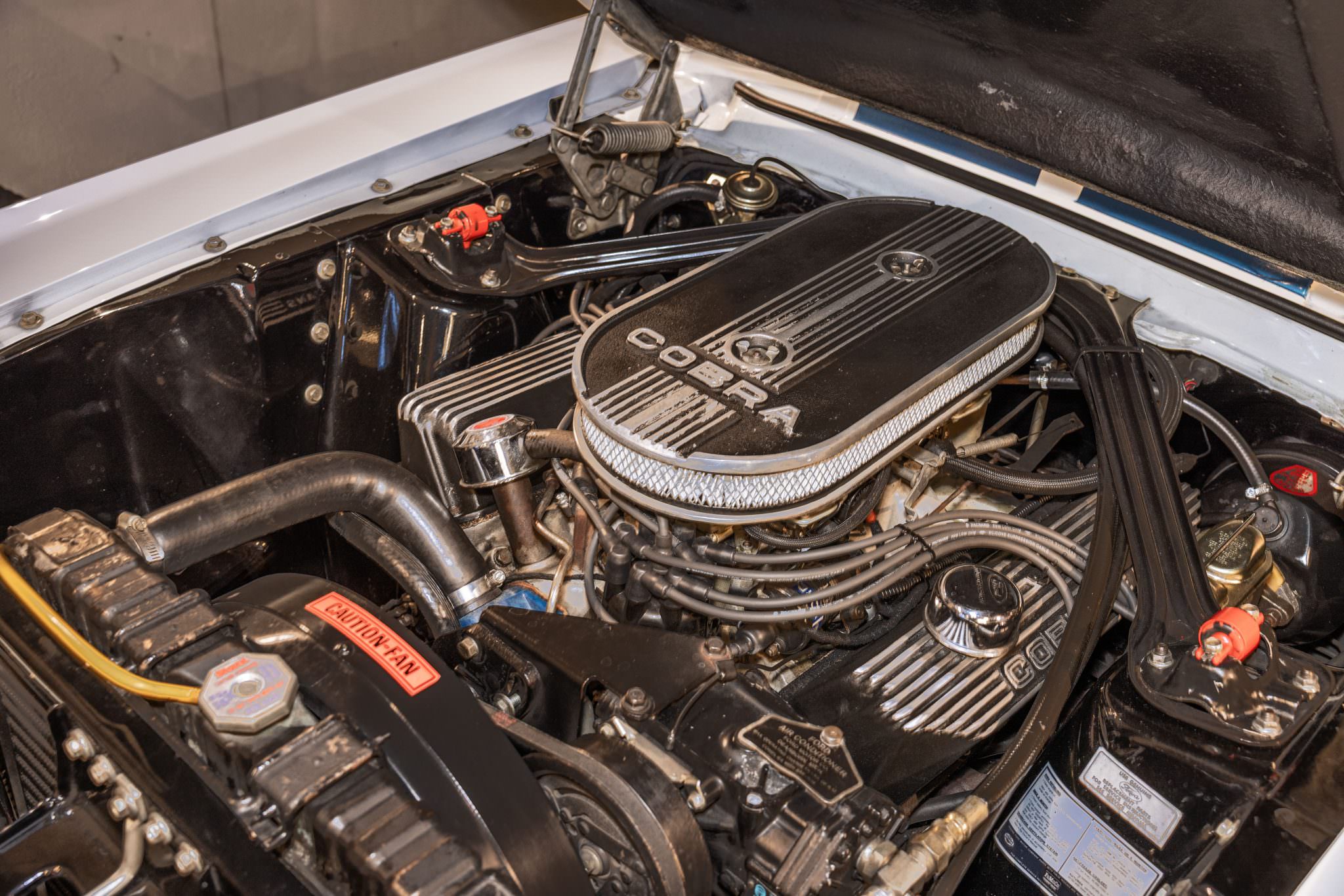
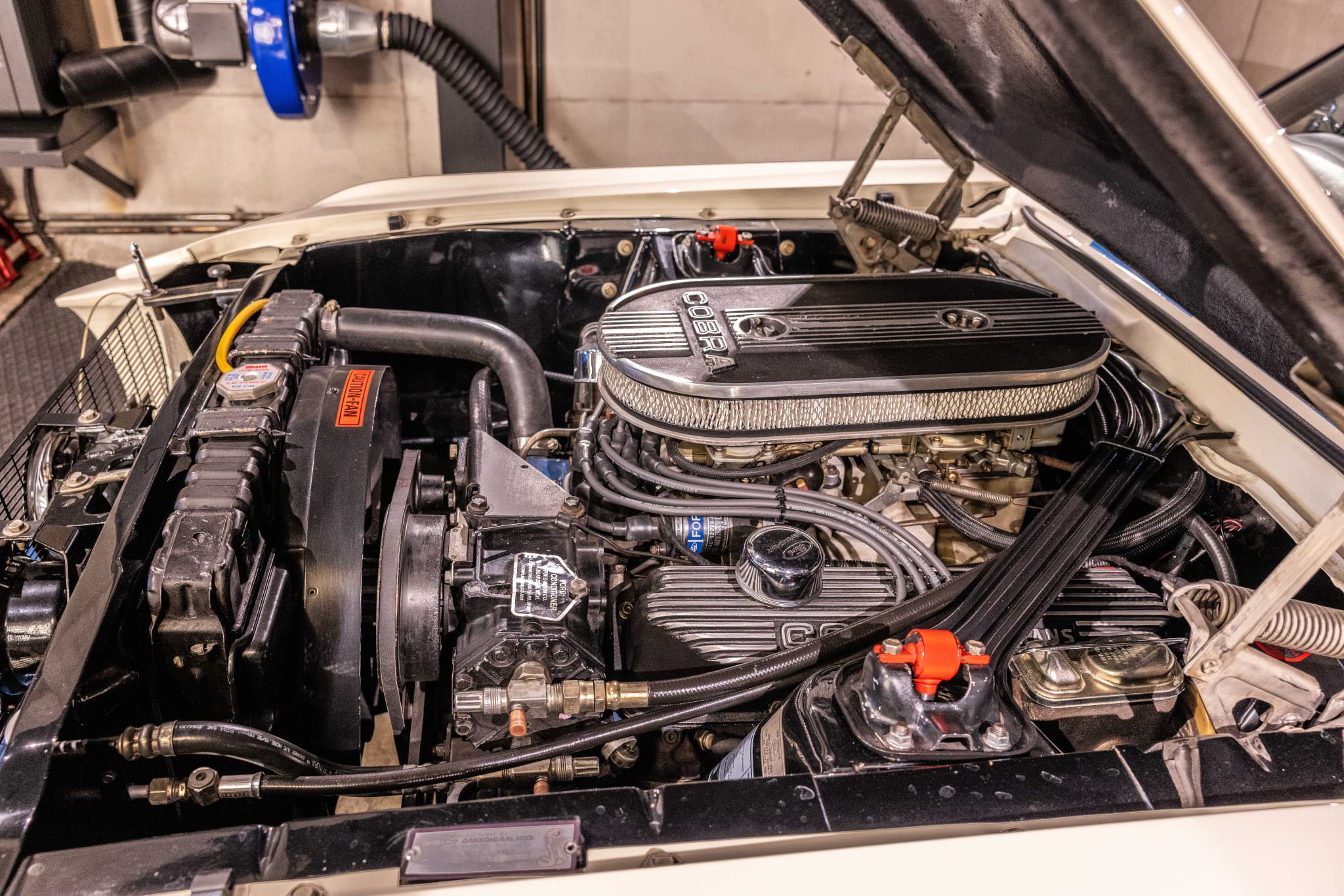
- The car is powered by its 428 cubic inch Police Interceptor V8 with dual four-barrel Holley carburetors, rated at 335 bhp and 420 lb ft of torque, paired with a desirable 4-speed manual transmission. Headers were fitted during Carroll Shelby’s ownership, and the original exhaust manifolds and emissions equipment are included with the sale.
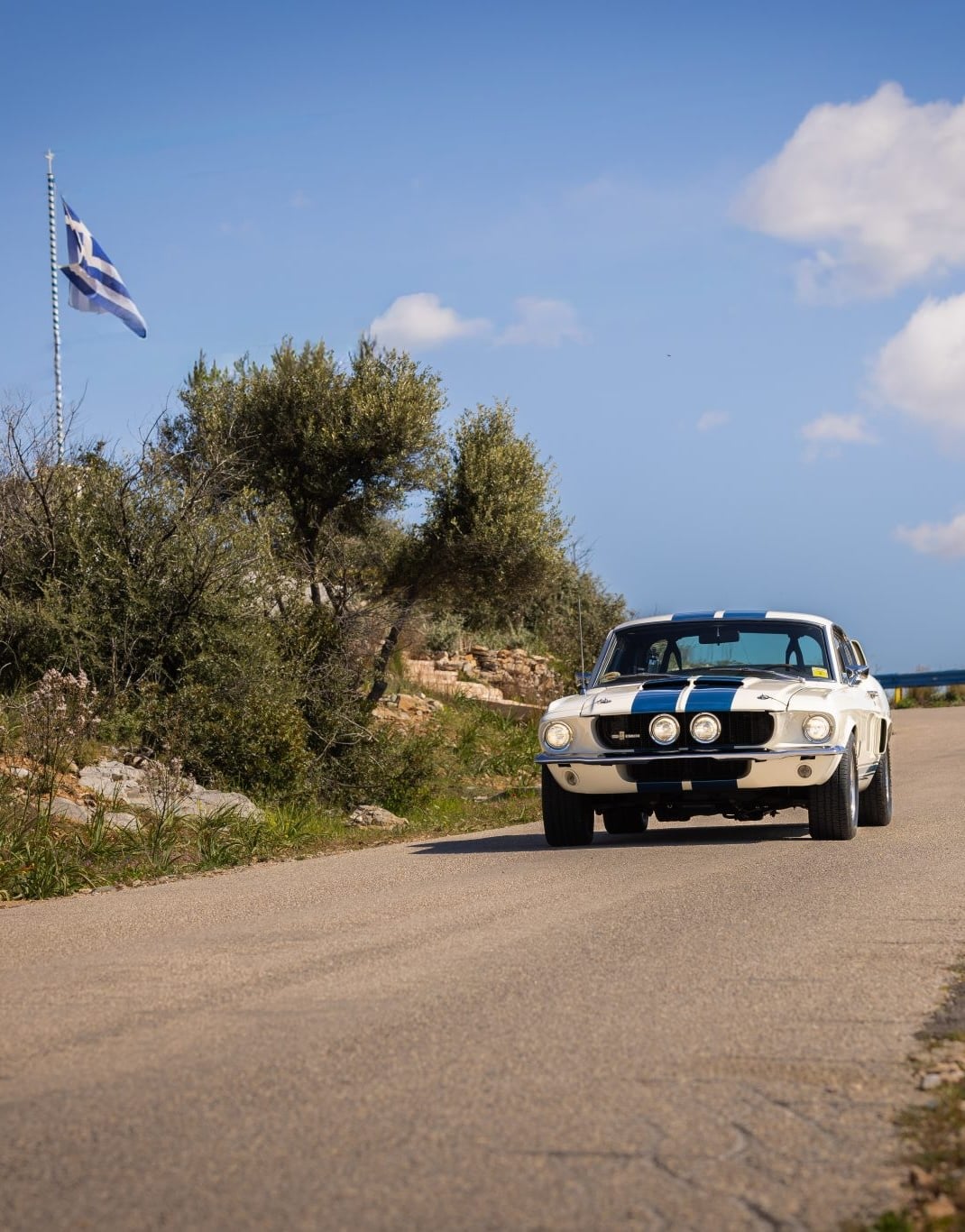
- The current owner purchased the car in 2011 and exported it to Greece, where it has been part of a collection with approximately 4,000 miles added under their ownership. The odometer currently shows 59,000 miles. Shelby’s signature appears on the glove box lid, and a period-style air conditioning system was retrofitted during his ownership.
- The GT500 is now offered for sale from Greece with supporting documentation including an Elite Marti Report showing a February 1967 production date, a National Shelby Registry certificate, a Shelby American Automobile Club certificate, service records, spare parts, and the car’s original Greek registration.
History Speedrun: The Shelby Mustang GT500
The Shelby GT500 was born out of the same partnership between Carroll Shelby and Ford that had already proven itself with the smaller-engined GT350 Mustang and the earlier Shelby Cobra. Shelby, a former racing driver who had co-driven an Aston Martin DBR1 to victory at the 1959 24 Hours of Le Mans with Roy Salvadori, had been approached by Ford Division General Manager Lee Iacocca in 1964 to develop a high-performance, race-ready version of the new Mustang.
Above Video: This is the original Ford TV advertisement for the 1967 Shelby GT500 starring Carroll Shelby himself.
The result of this Iacocca/Shelby project was the Shelby GT350, a stripped-back, K-Code 289-powered fastback that went on to win the SCCA B-Production championship three years on the trot from 1965 through to 1967.
The Arrival Of The Shelby GT500
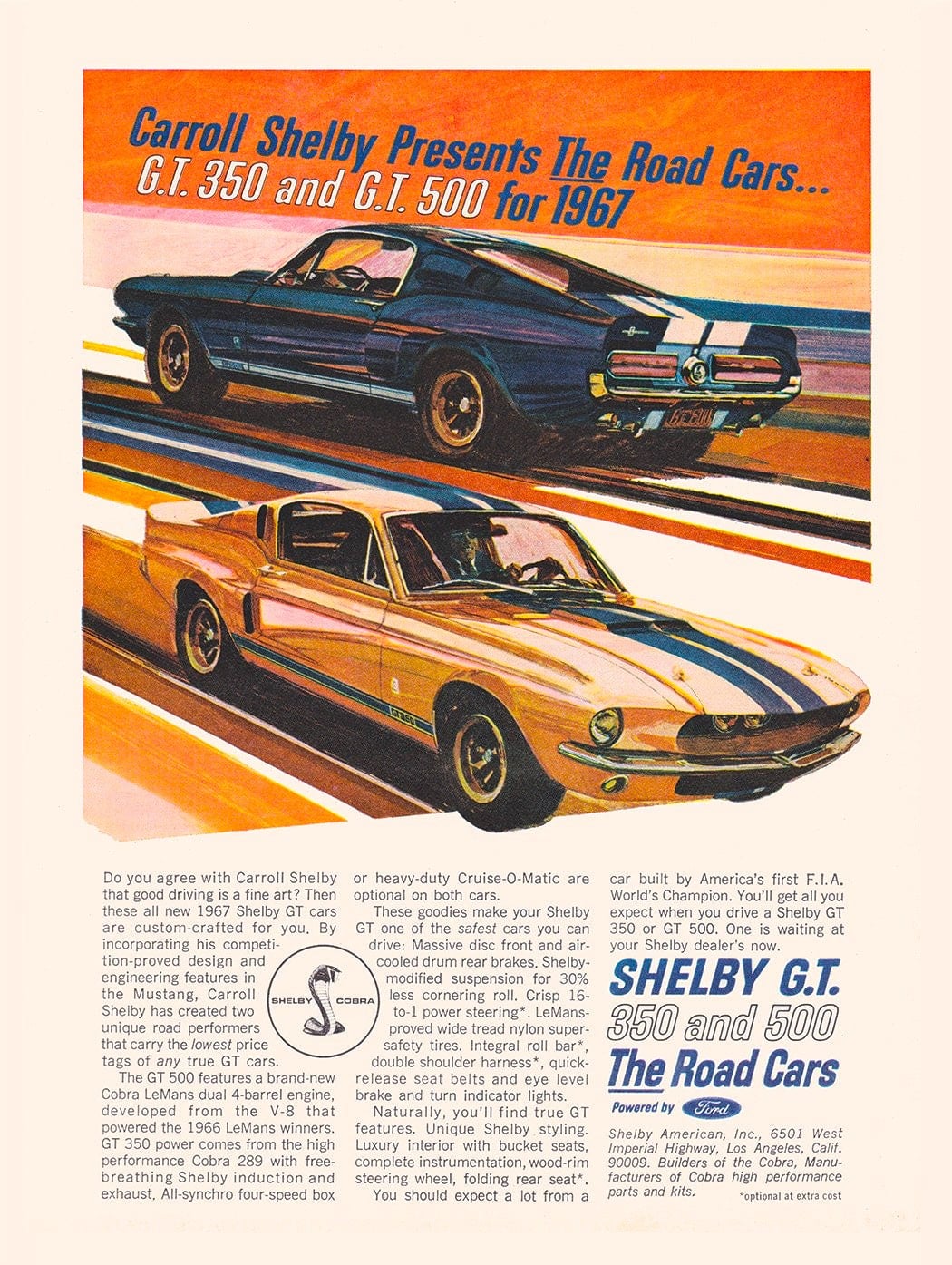
When Ford redesigned the Mustang for 1967 with a slightly larger body and a more spacious engine bay, the door was opened for something even more potent. Carroll Shelby and his team at their Los Angeles workshop shoehorned Ford’s 428 cubic inch (7.0 liter) FE-series Police Interceptor V8 into the new engine bay, creating the Shelby GT500.
The engine was topped with two 600 CFM Holley four-barrel carburetors mounted on an aluminum mid-rise intake manifold, producing a conservatively rated 355 bhp at 5,400 rpm and 420 lb ft of torque at 3,200 rpm. Power was sent rearward through either a 4-speed manual or optional 3-speed C6 automatic transmission to a live rear axle.
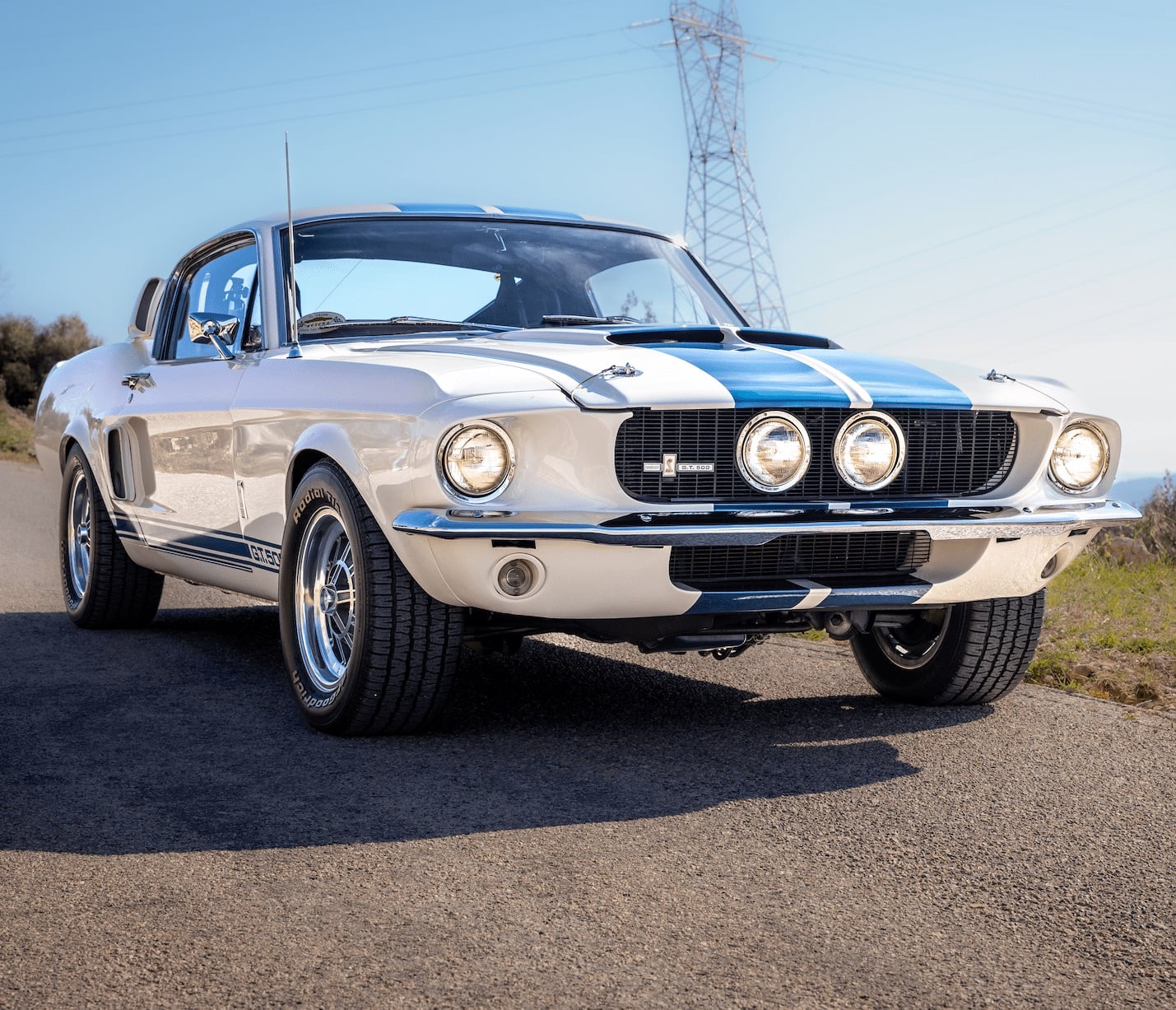
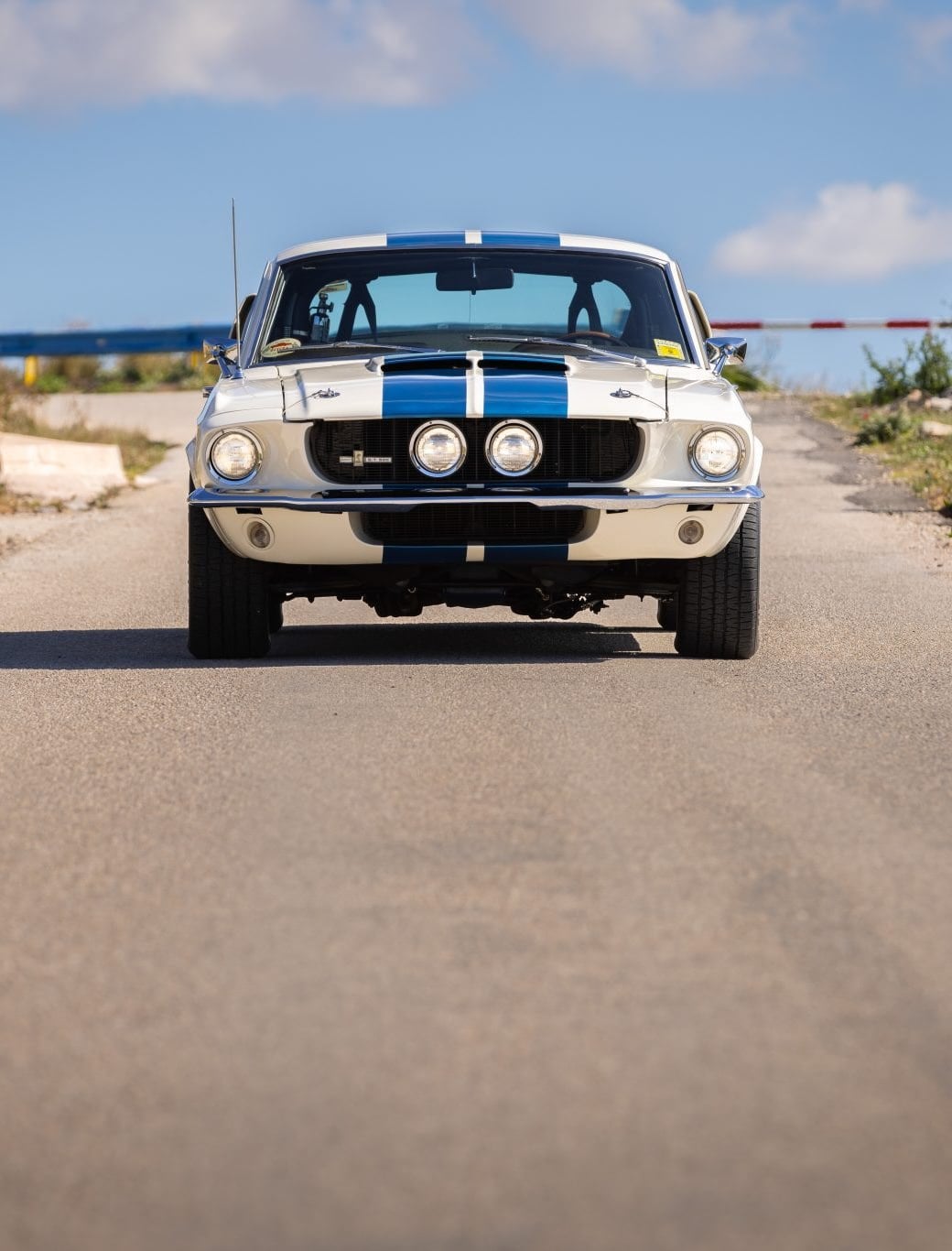
The 1967 GT500 was easy to tell apart from the standard Mustang thanks to its extensive use of fiberglass body parts, including a longer nose section, a functional hood scoop, and new rear fascia panels. Sequential turn signal lamps were borrowed from the Mercury Cougar, and a pair of high-beam headlamps was inset into the grille, giving the car a distinctive face that would later inspire the hero car “Eleanor” from the 2000 film Gone in 60 Seconds.
Inside, a roll bar was fitted as standard along with inertia-reel shoulder harnesses, a wood-rimmed steering wheel, and additional instrumentation. Suspension upgrades included uprated front coil springs, a thicker anti-roll bar, Gabriel shock absorbers, and standard power-assisted front disc brakes paired with rear drums.
Upon the GT500’s release, Carroll Shelby famously declared: “This is the first car I’m really proud of,” which may have been a slight exaggeration considering the wild success of the earlier Shelby Cobra, the Shelby Daytona Cobra Coupe, and the Shelby GT350.
A total of 2,048 GT500 fastbacks were produced for 1967, and the GT500 outsold its GT350 sibling by nearly two to one. One prototype, known as the “Super Snake,” was fitted with a 427 FE GT40 racing engine producing 650 bhp.
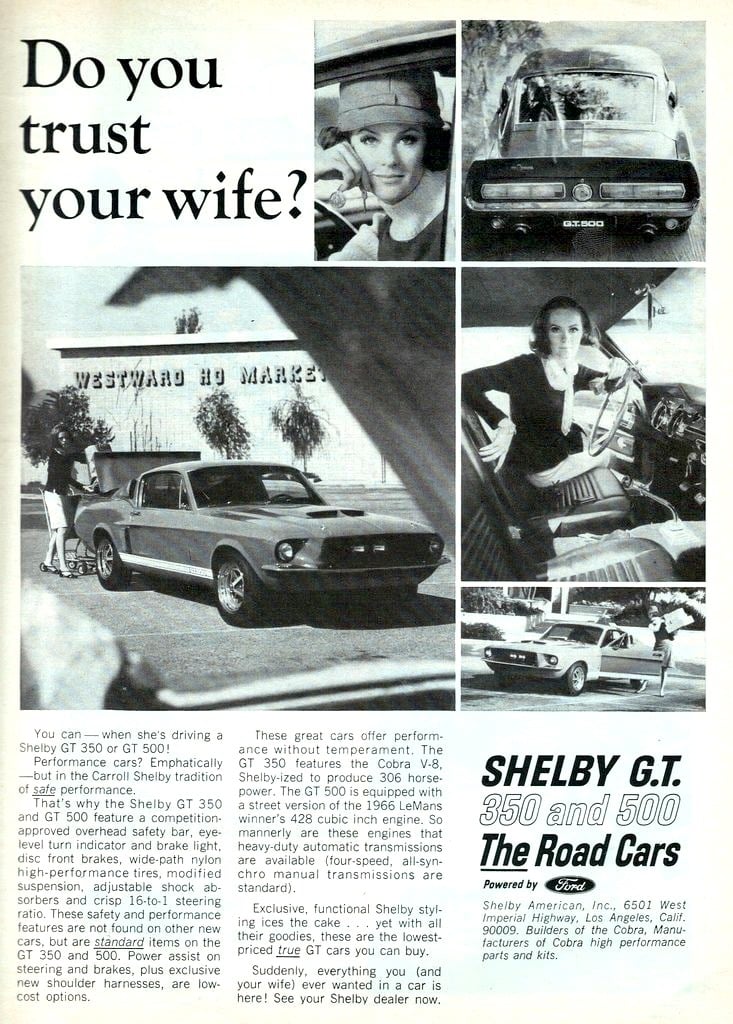
 Upon the GT500’s release, Carroll Shelby famously declared: “This is the first car I’m really proud of,” which may have been a slight exaggeration considering the wild success of the earlier Shelby Cobra, the Shelby Daytona Cobra Coupe, and the Shelby GT350. Image courtesy of Ford.
Carroll Shelby himself demonstrated the car at speeds exceeding 170 mph during a Goodyear tire test, though no further Super Snakes were built due to limited buyer interest and perhaps some concerns about further upsetting the automotive insurance companies. That sole prototype sold at Mecum’s 2013 Indianapolis auction for $1.3 million USD.
The 1967 model year was also the last in which Shelby American fully built the cars in-house at their Los Angeles facility. When Shelby lost the lease on their airport-adjacent premises in late 1967, production shifted to A.O. Smith Corporation in Ionia, Michigan, and Ford took more control over the program.
The King Of The Road
For 1968, the cars were rebranded as the Shelby Cobra GT500, and the early examples received a 428 Police Interceptor V8 with a single four-barrel carburetor rated at 360 bhp. The pivotal mid-year change came in April of 1968, when Ford began factory-installing a revised version of the 428 known as the Cobra Jet, with cylinder heads and intake manifold components taken from the 427 race engine.
The resulting car was designated the GT500 KR, with “KR” standing for “King of the Road.” Ford officially rated the Cobra Jet at 335 bhp and 440 lb ft of torque, though the actual output was widely believed to be significantly higher than this. Interestingly, the 1968 model year also marked the first time the Shelby Mustang was offered as a convertible.
The 1969 model year brought the most dramatic changes to the GT500 and, ultimately, marked the end of the line for Carroll Shelby’s involvement in the program. Ford had by this point taken over most design and development decisions, with Shelby’s input reduced to a minimum. The “Cobra” name was dropped, and the cars were marketed simply as the Shelby GT500 once more, with the “KR” suffix also discontinued.
Visually, the 1969 GT500 received an extensive facelift that extended the body by approximately four inches over the preceding year, though the wheelbase remained at 108 inches. A new, longer fiberglass front end had three functional hood scoops, while the grille was redesigned and the rectangular driving lights were relocated beneath the front bumper. New aluminum cast wheels and a striping and badging package further distinguished it from the regular run of the mill 1969 Ford Mustang.
Under the hood, the 1969 GT500 kept the 428 Cobra Jet V8, now fed by a single Holley 735 cfm four-barrel carburetor. The engine featured heavy-duty police interceptor connecting rods, 427 “low-riser” cylinder heads, and a hydraulic camshaft. Factory ratings remained at 335 bhp at 5,200 rpm and 440 lb ft at 3,400 rpm, and the car was capable of 0 to 60 mph times of 6.0 seconds.
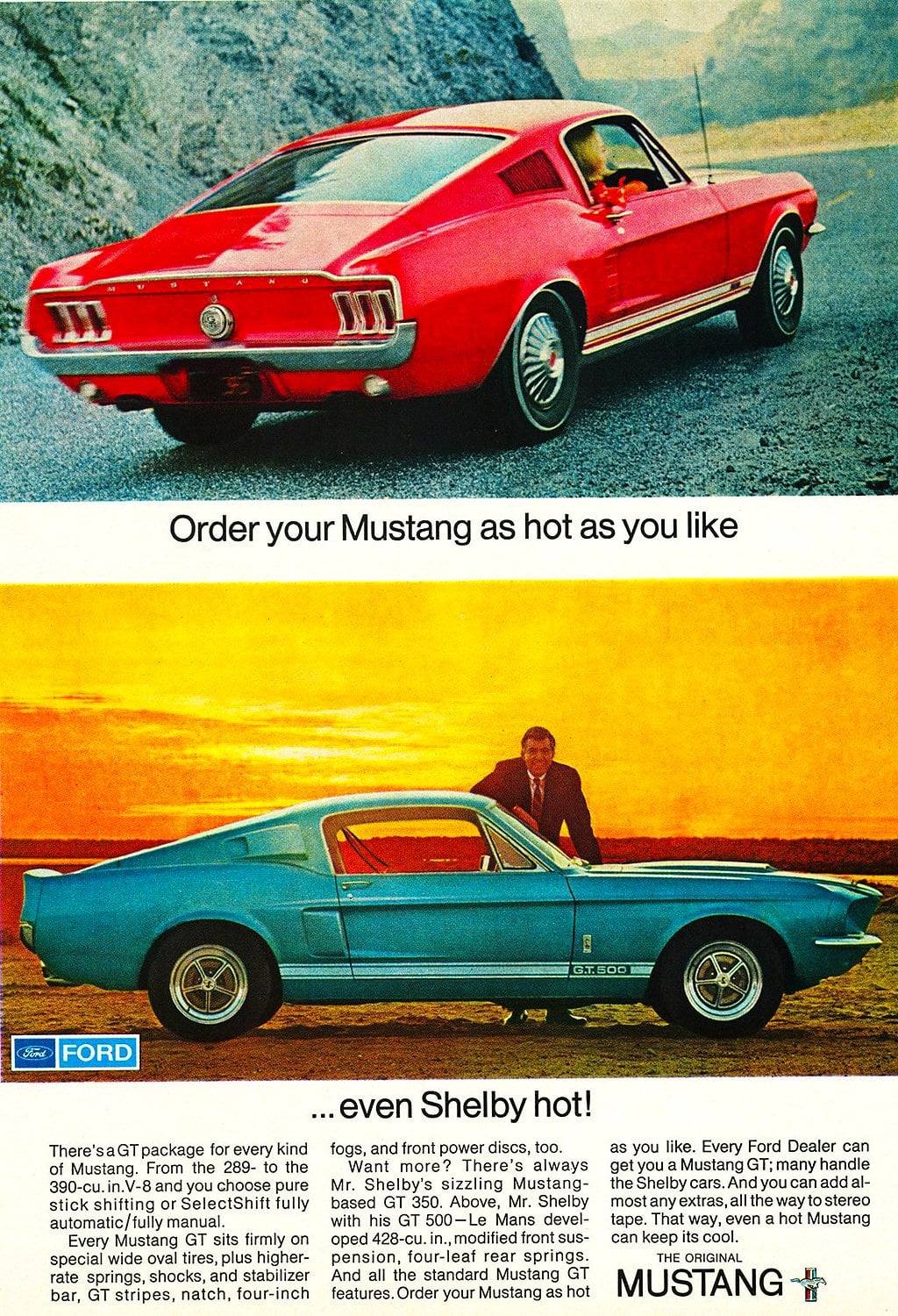
Carroll Shelby himself demonstrated the car at speeds exceeding 170 mph during a Goodyear tire test, though no further Super Snakes were built due to limited buyer interest and perhaps some concerns about further upsetting the automotive insurance companies. Image courtesy of Ford.
Power was sent back through a 4-speed Ford Toploader manual or an optional C6 automatic, with a Traction-Lok limited-slip rear end. The 1969 GT500 was available in both SportsRoof (fastback) and convertible body styles.
In the summer of 1969, Carroll Shelby officially terminated his agreement with Ford. According to SAAC (Shelby American Automobile Club) registry data, total 1969/1970 Shelby production across all models was 3,150 examples.
No new 1970 Shelby models were actually manufactured. Instead, 789 unsold 1969 cars were assigned 1970 vehicle identification numbers under FBI supervision and given two minor cosmetic changes, a front chin spoiler and twin black hood stripes, along with emissions-related modifications including a revised carburetor and updated distributor.
The Return Of The GT500
The GT500 badge would not return for more than three decades, until Ford revived it for the 2007 model year as part of the fifth-generation S-197 Mustang platform. That car, developed in collaboration with Carroll Shelby and Ford’s Special Vehicle Team (SVT), was fitted with a supercharged 5.4 liter V8 producing 500 bhp.
Later iterations pushed output even further, with the 2013-2014 GT500 packing a 5.8 liter supercharged V8 rated at 662 bhp. The most recent GT500, produced from 2020 through 2022 on the S550 platform, was powered by a supercharged 5.2 liter “Predator” V8 making 760 bhp and 625 lb ft of torque, making it the most powerful street-legal Mustang produced up to that point in history.
The 1967 Shelby Mustang GT500 Shown Here
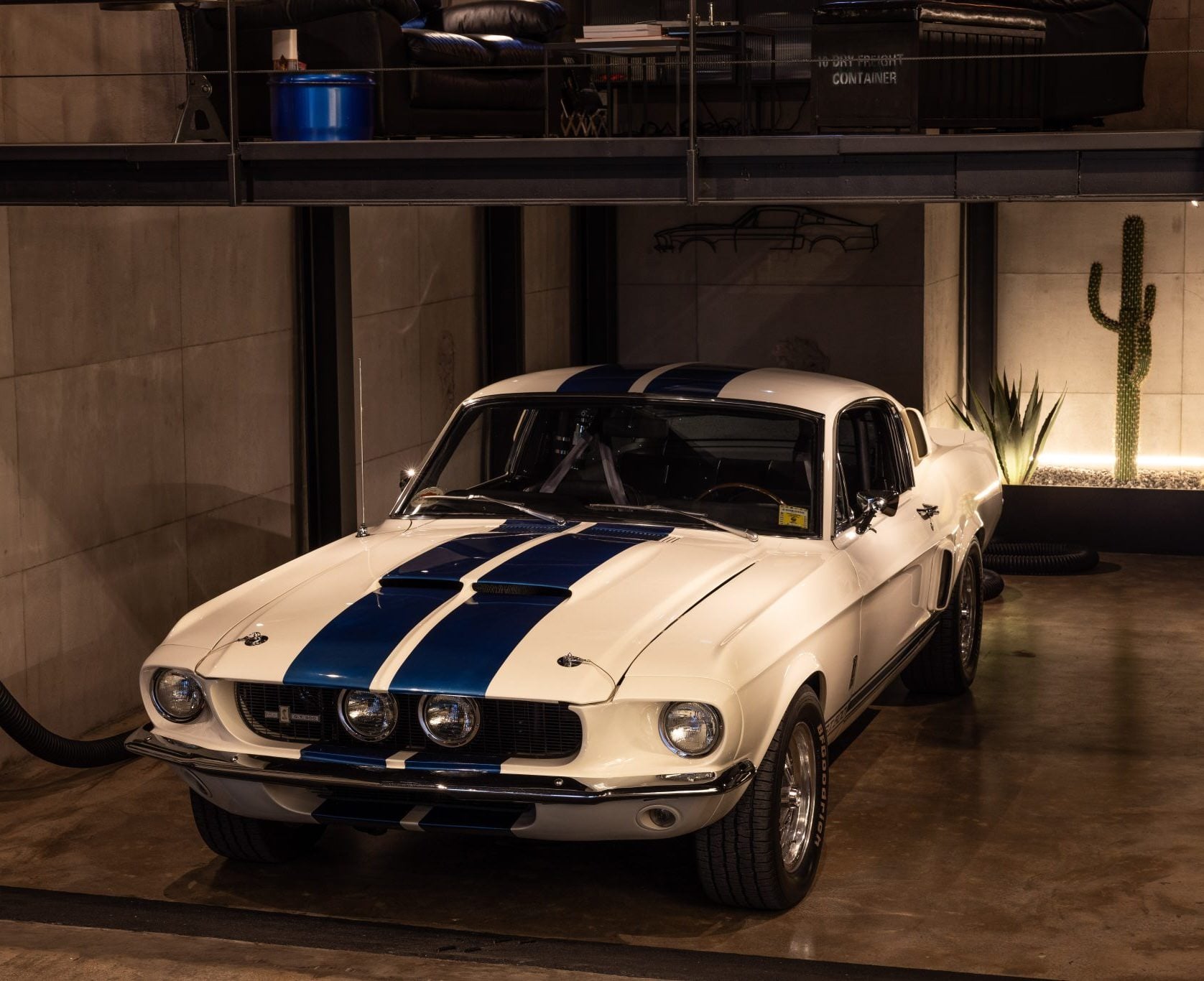
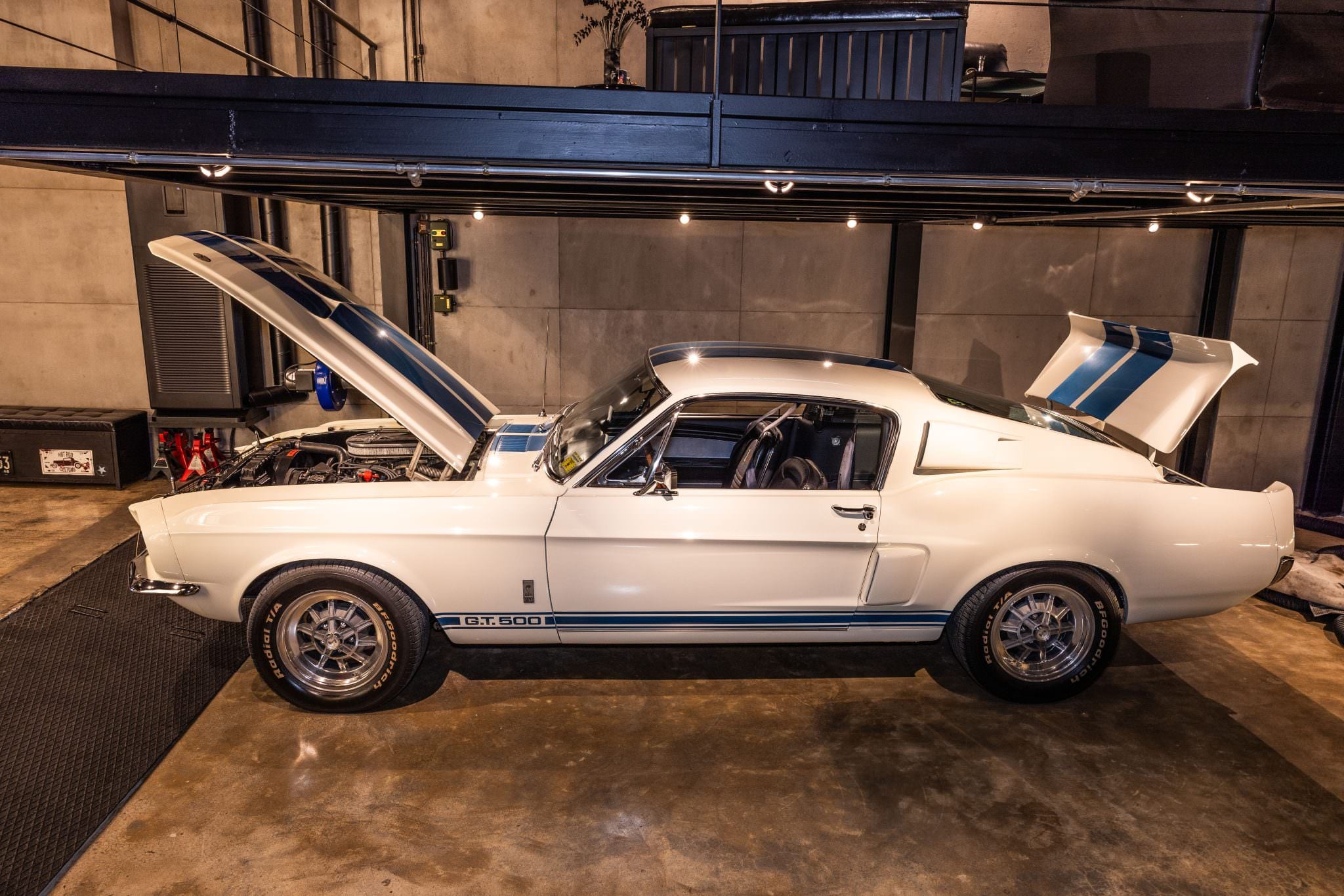
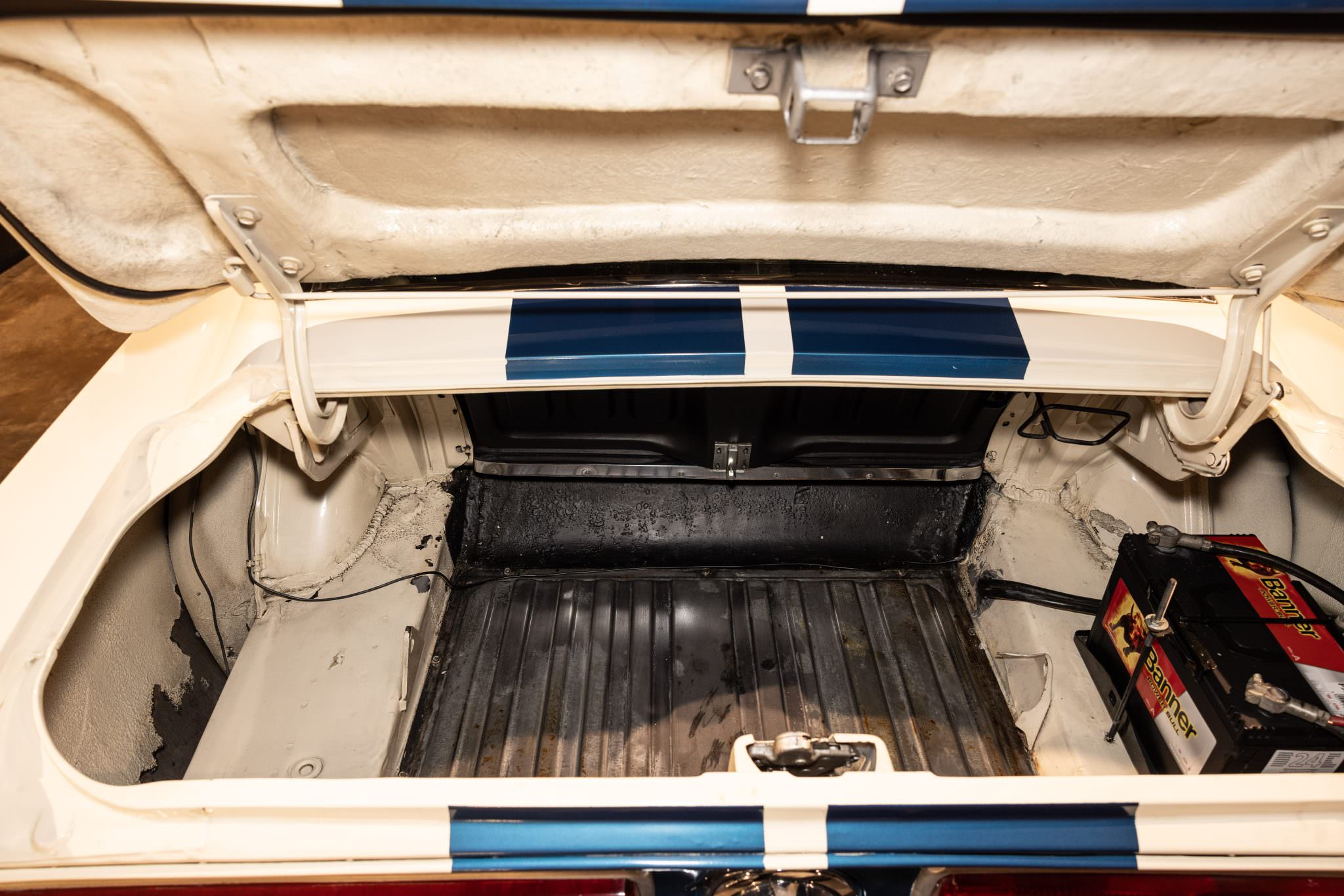
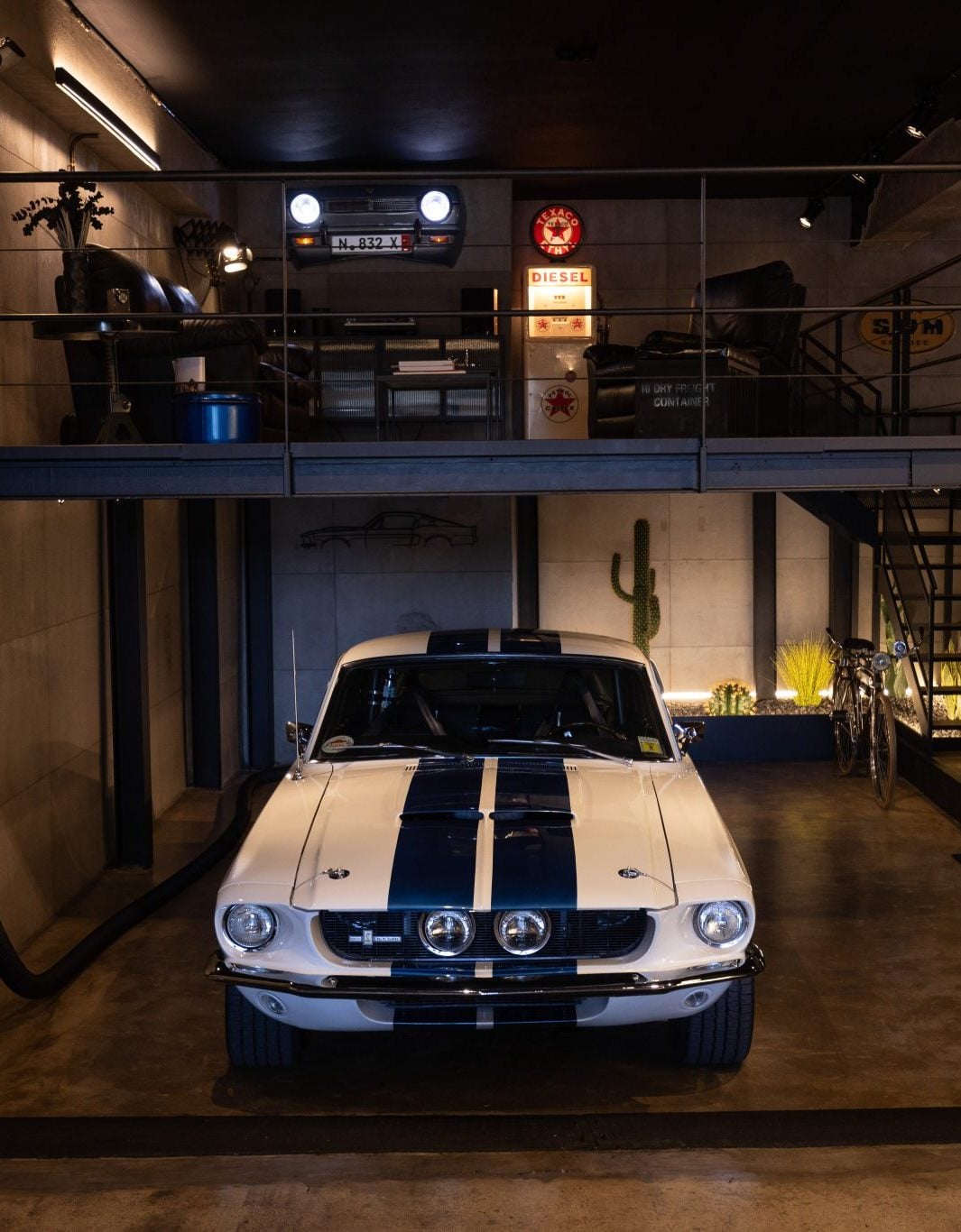
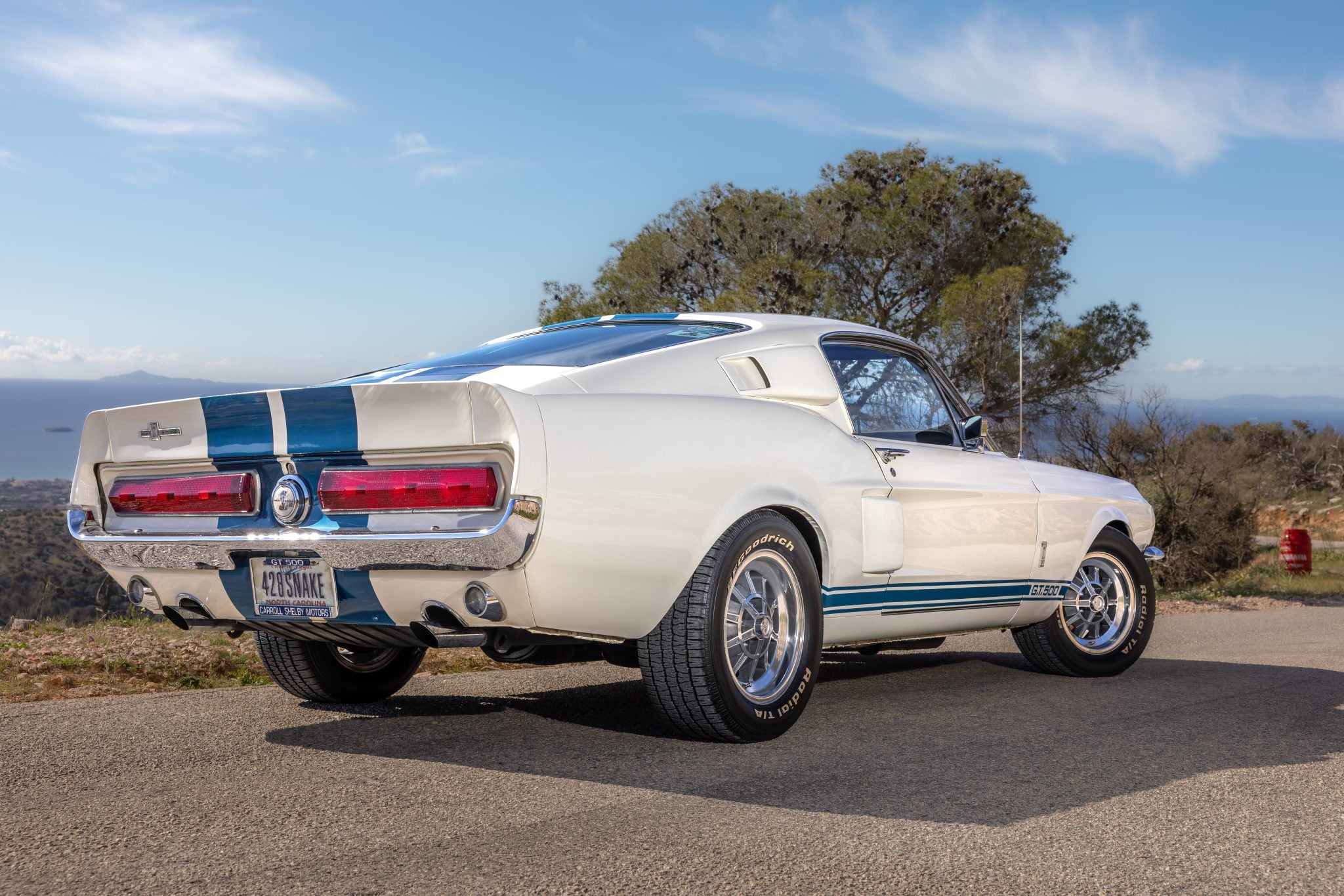
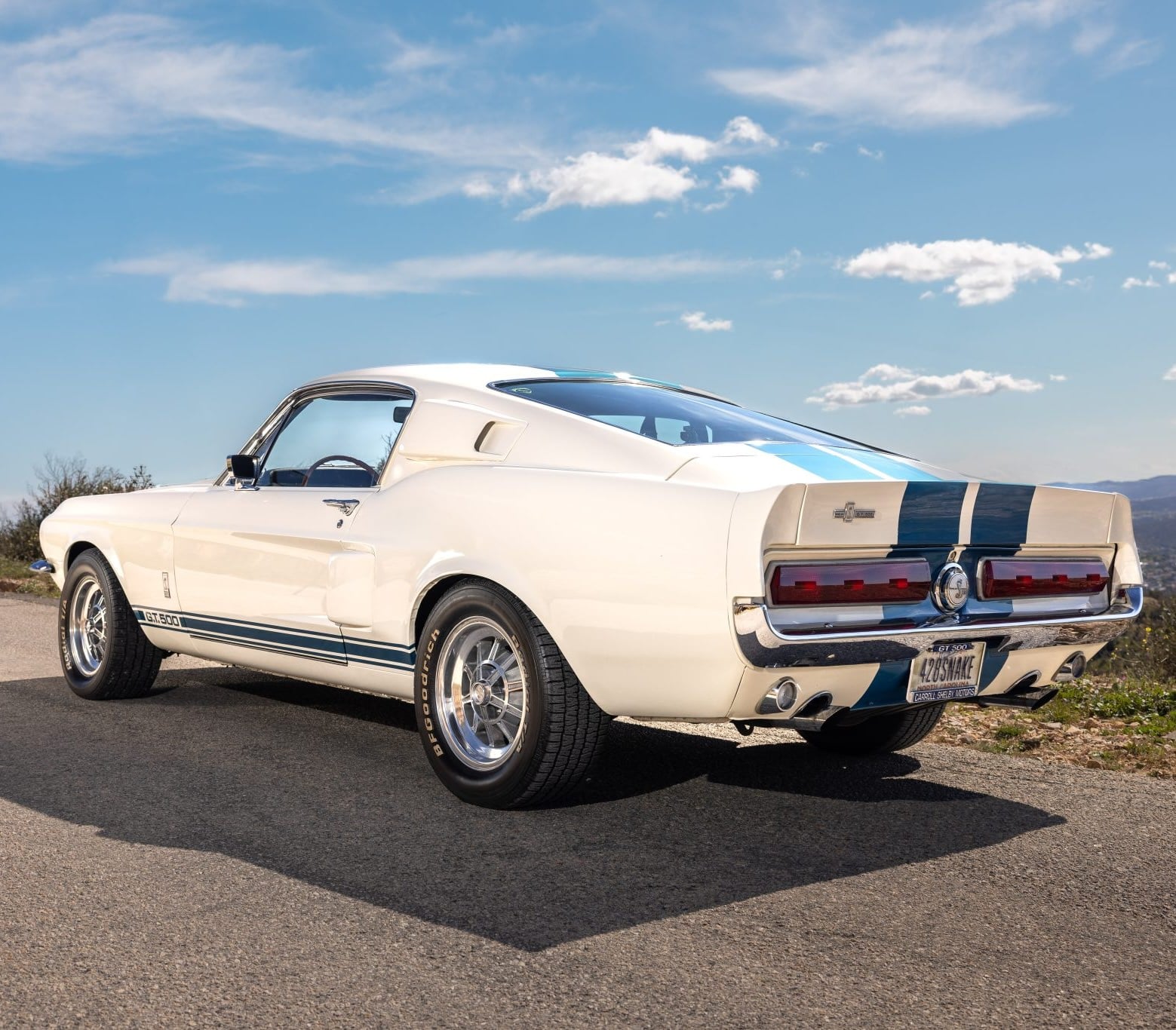
The car you see here is an original 1967 Shelby Mustang GT500, it’s one of 2,048 fastbacks produced for the model year and it carries some rather notable provenance, having been owned by Carroll Shelby himself alongside Stephen Becker from 1999 onwards.
This is a 1967 Shelby Mustang GT500 that was originally won as a contest prize. It would be bought by racing driver Chuck Jones in California, who later sold it to Carroll Shelby and Stephen Becker in the late 1990s.
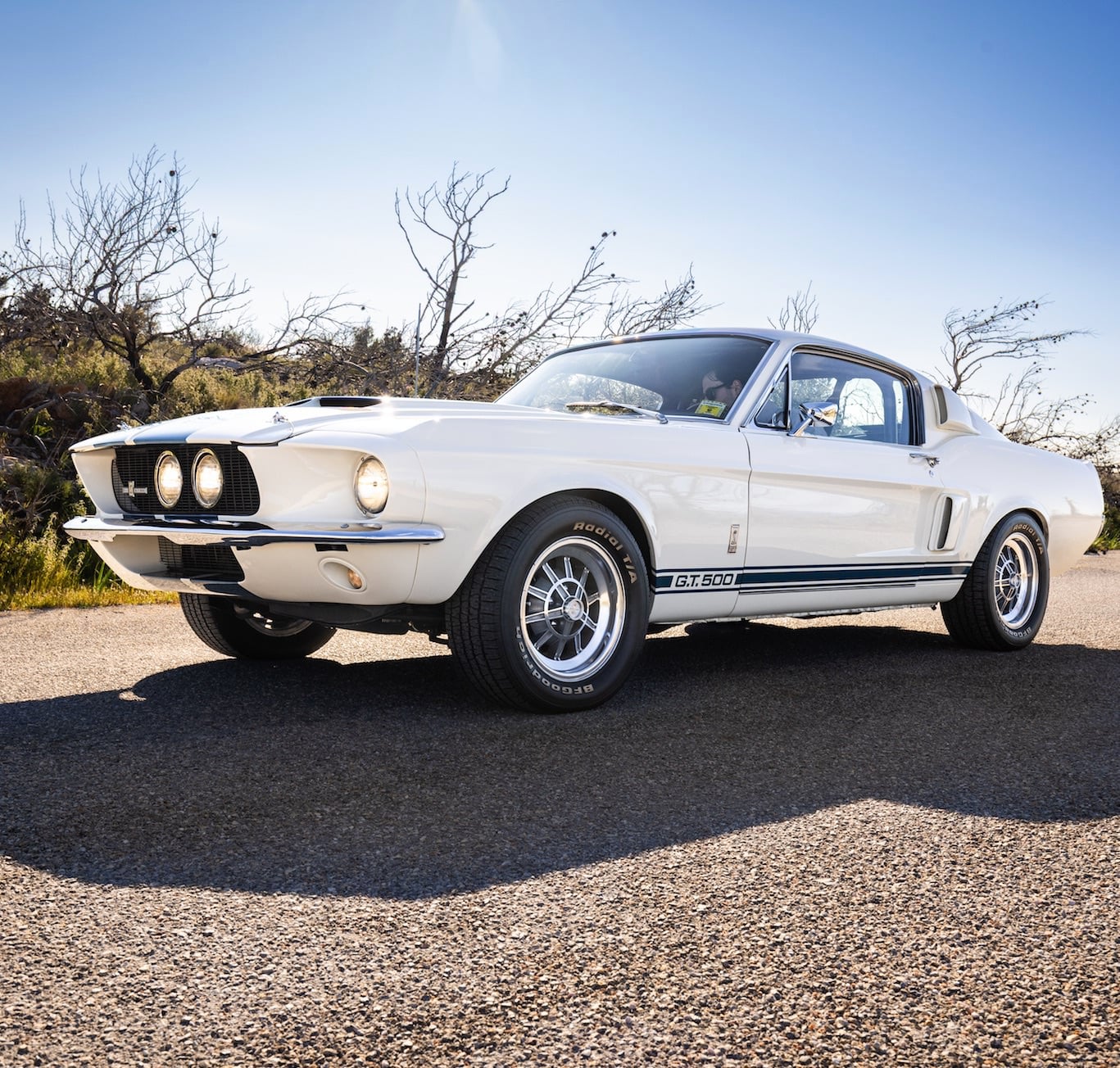
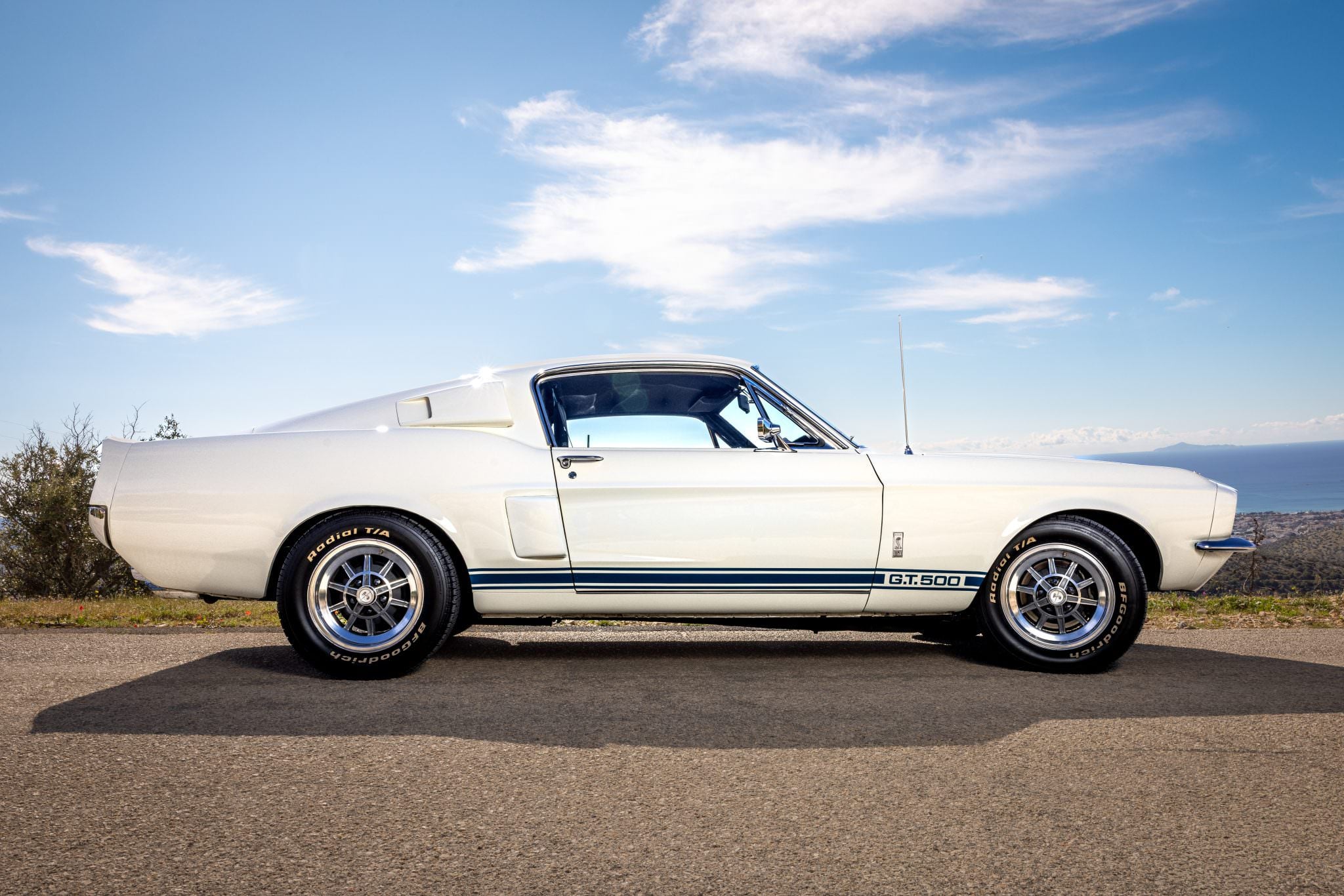
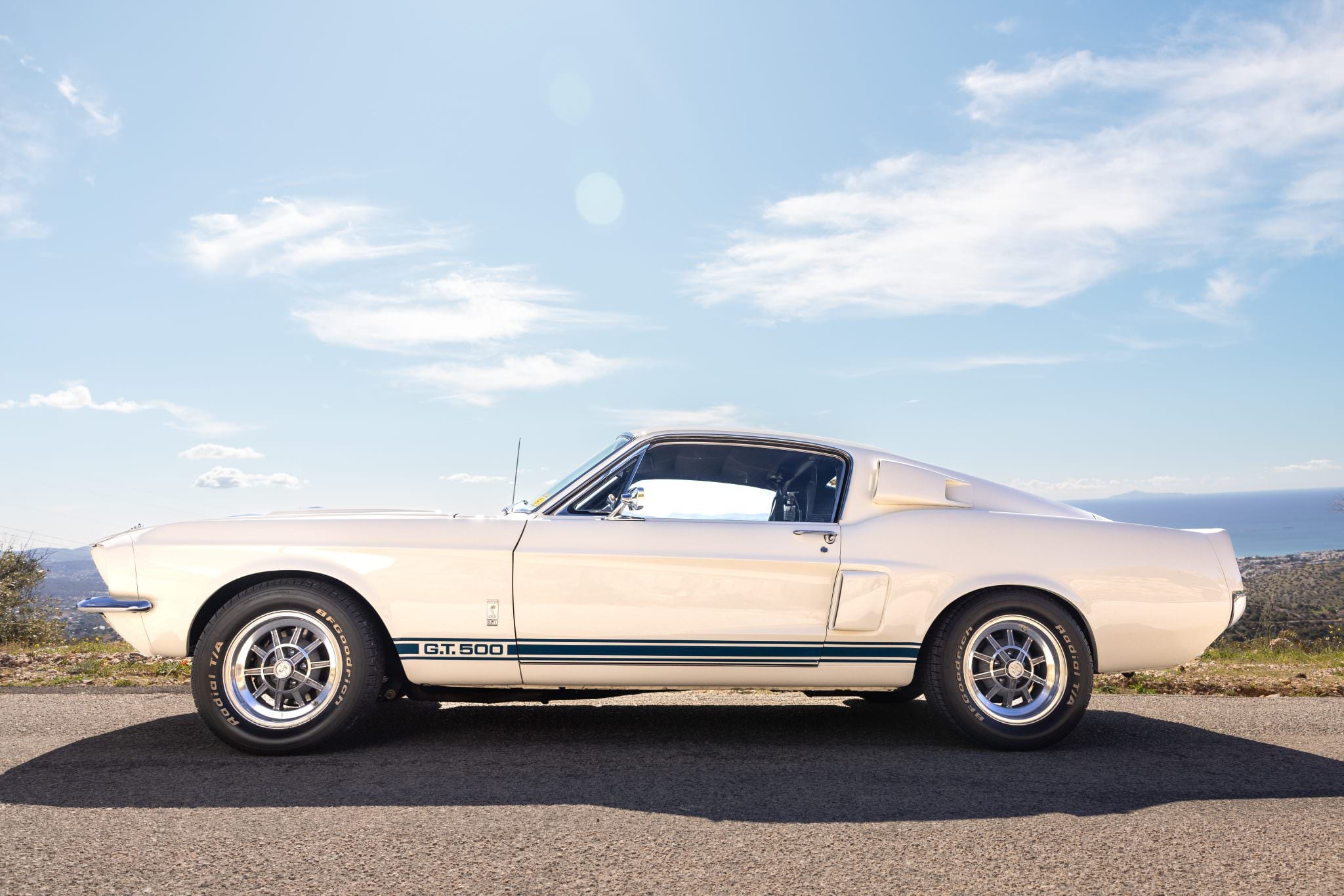
Finished in Wimbledon White with GT500 side stripes, the car was first delivered to City Motors in National City, California, where it was won in a contest by its original owners. It was later partially restored and passed through the hands of California-based racer Chuck Jones before Shelby bought it.
The current owner then bought the car in 2011 and exported it to Greece, where it has since been part of a collection with approximately 4,000 miles added under their ownership. The five-digit odometer currently shows 59,000 miles.
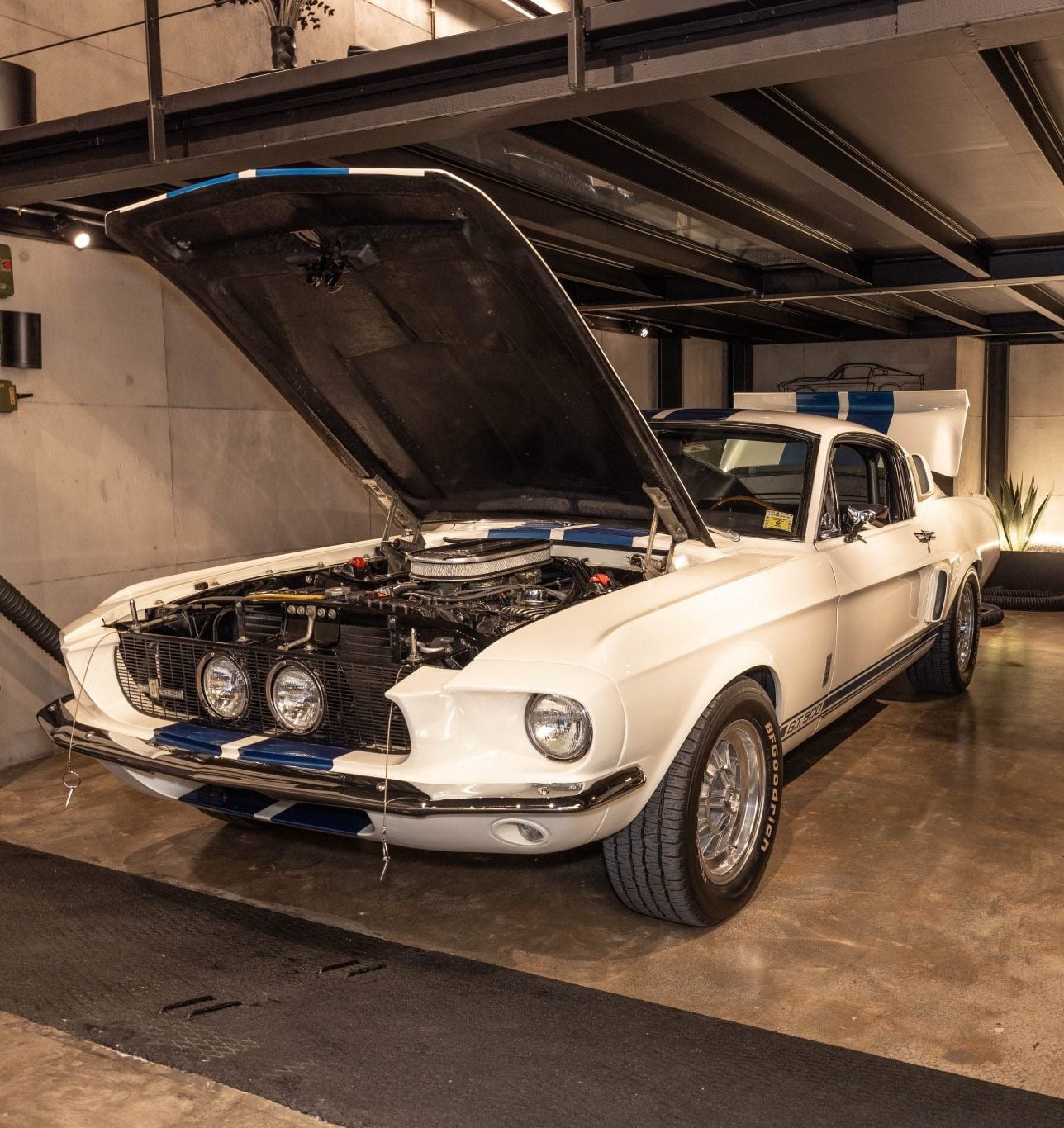
The car is powered by its 428 cubic inch Police Interceptor V8, which was factory-equipped with dual four-barrel Holley carburetors and rated at 335 bhp and 420 lb ft of torque. The engine is believed to have been freshened in the late 1980s, and it currently runs non-matching carburetors – a 2804 paired with a 2105 unit.
Headers were fitted during Carroll Shelby’s ownership, and the original exhaust manifolds and emissions equipment are included. Power is sent to the rear wheels through a 4-speed manual transmission.
The GT500 rides on 10-spoke 15-inch aluminum wheels with Shelby Cobra center caps, shod with BFGoodrich tires. The suspension includes the factory heavy-duty coil springs and front anti-roll bar along with heavy-duty rear leaf springs, and Koni dampers are also fitted. The car is equipped with power steering and power-assisted front disc brakes with rear drums.
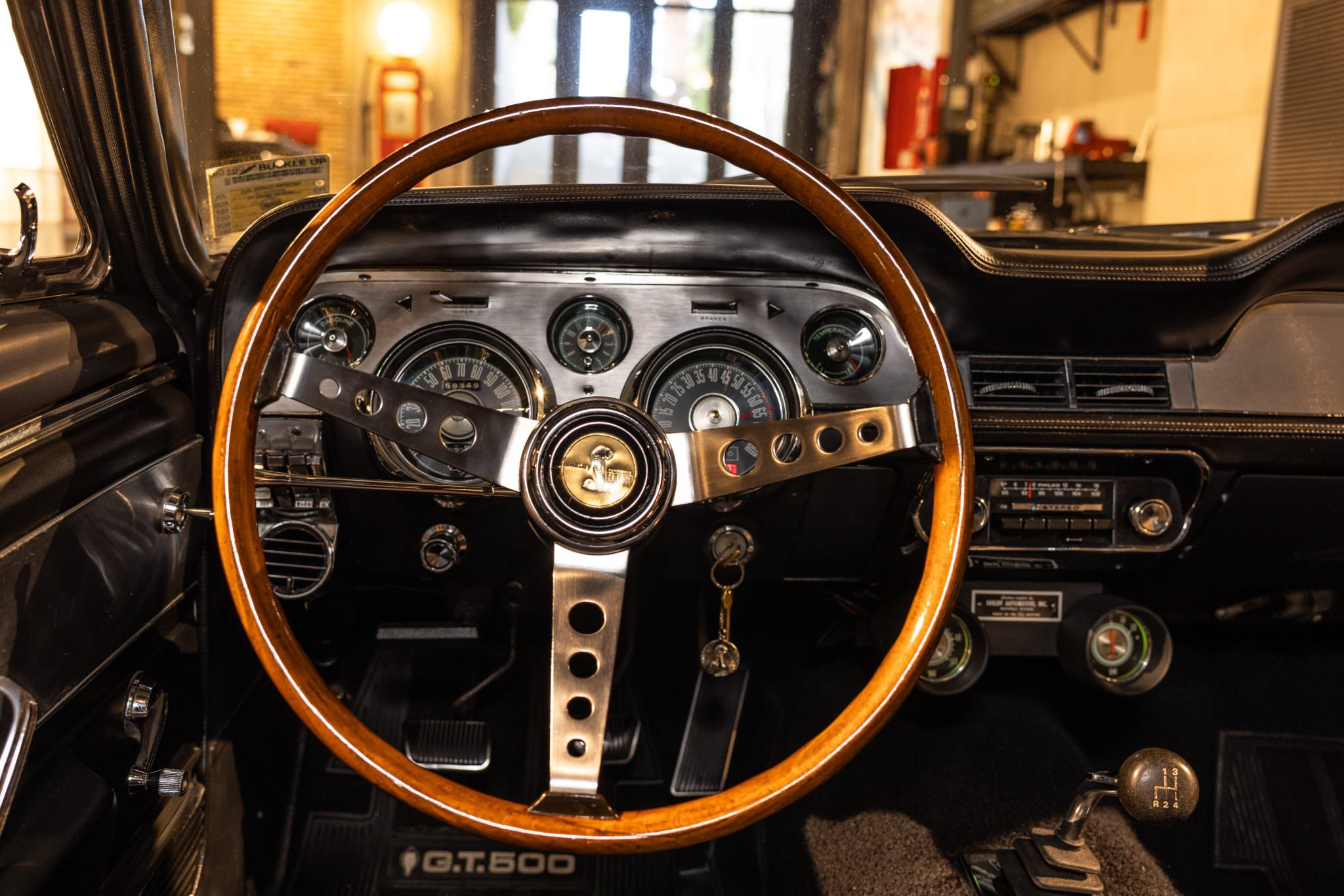
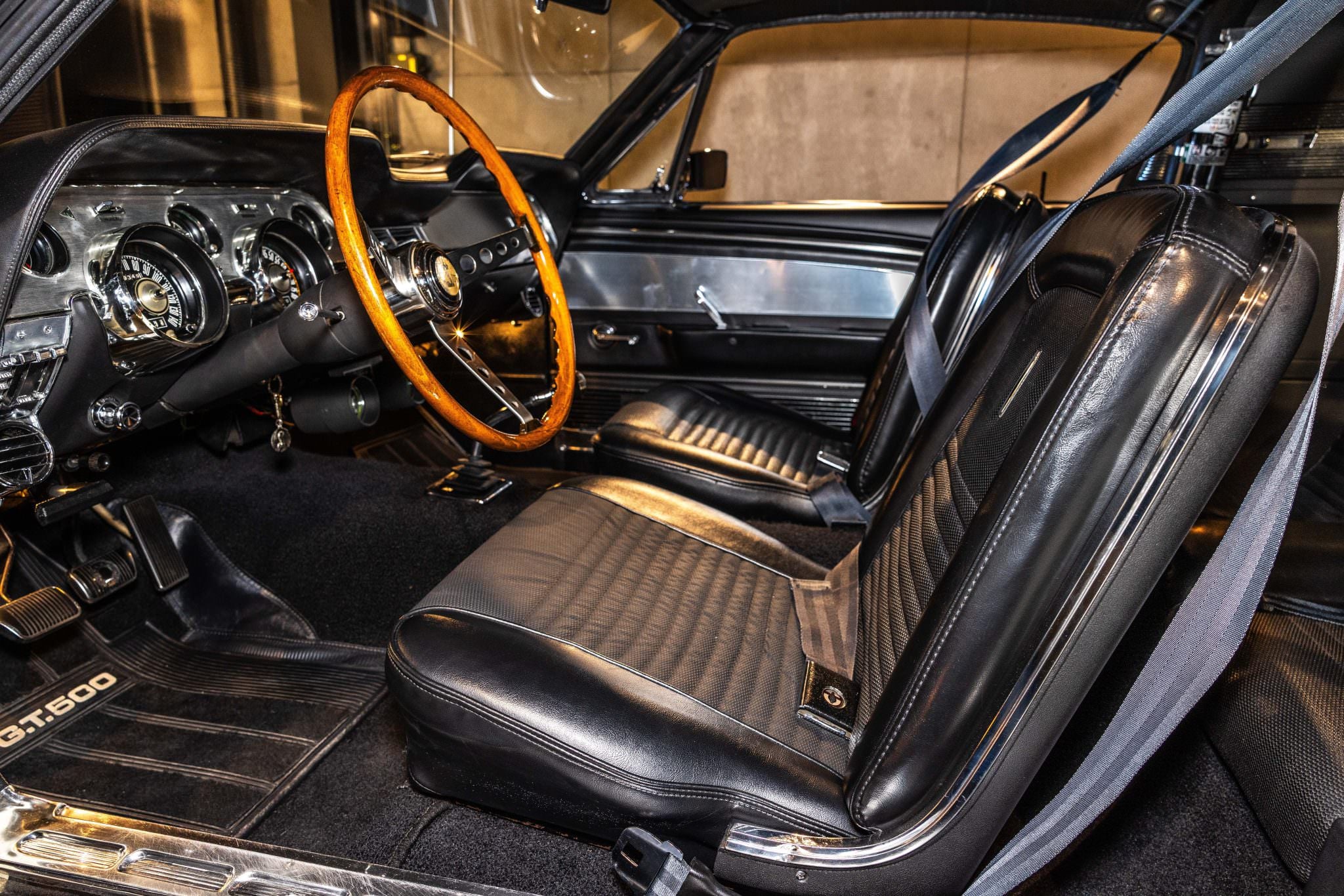
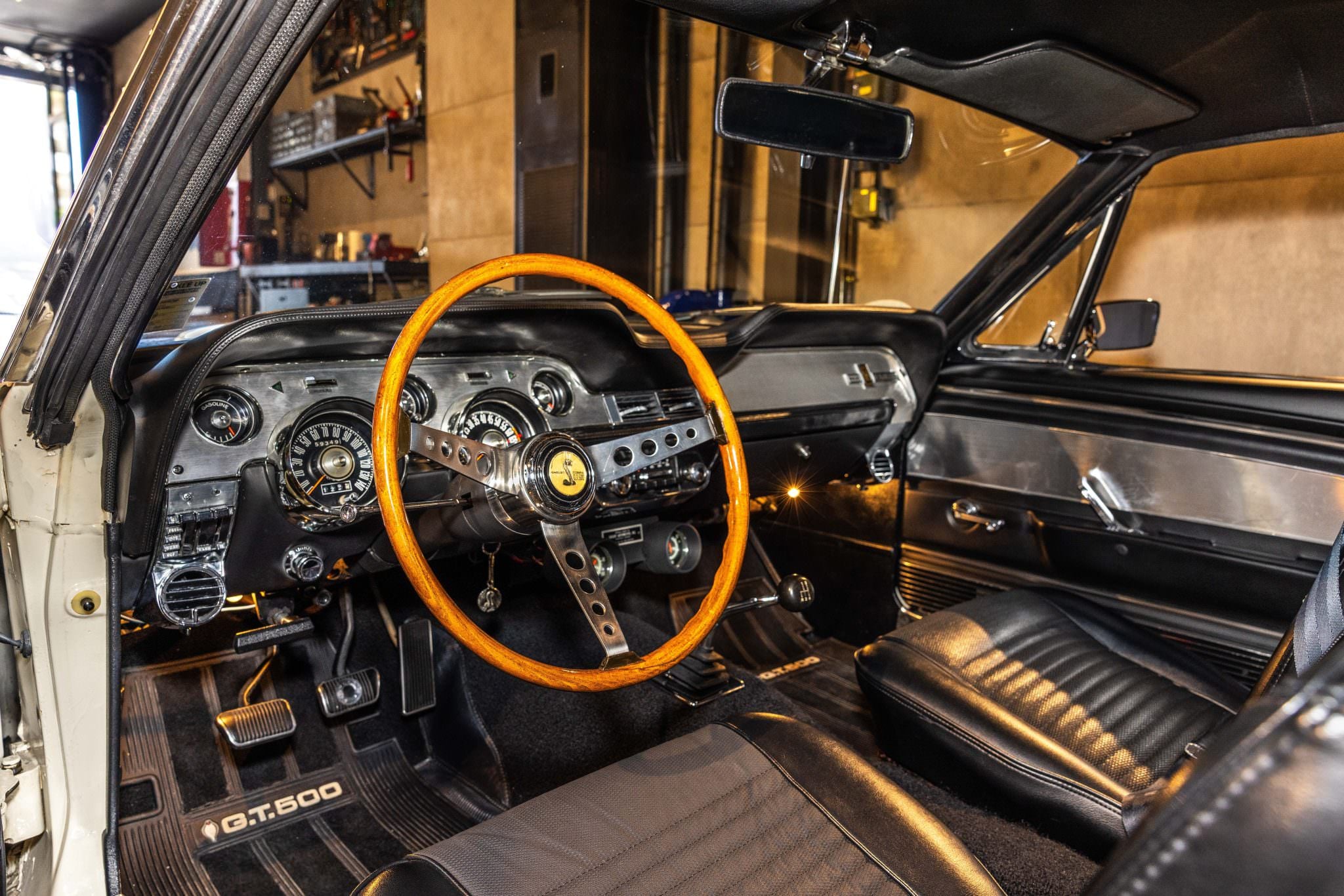
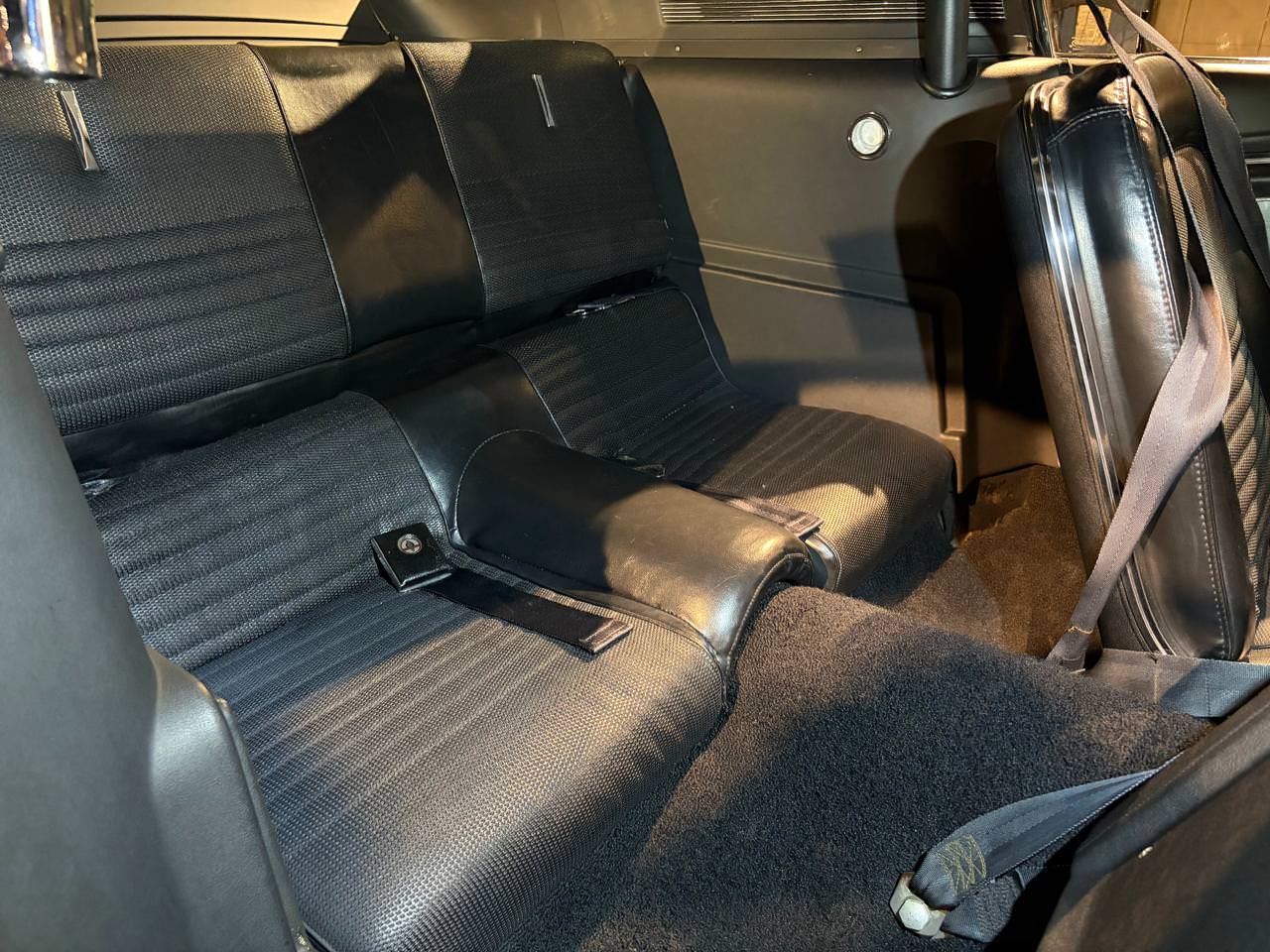
Inside, black vinyl covers the front bucket seats and a folding Sport Deck rear seat, with the driver’s seat reupholstered. A roll bar and shoulder harnesses are fitted, and the cabin has a woodgrain steering wheel, a 140 mph speedometer, an 8,000 rpm tachometer, and gauges for fuel level, coolant temperature, oil pressure, and amperage.
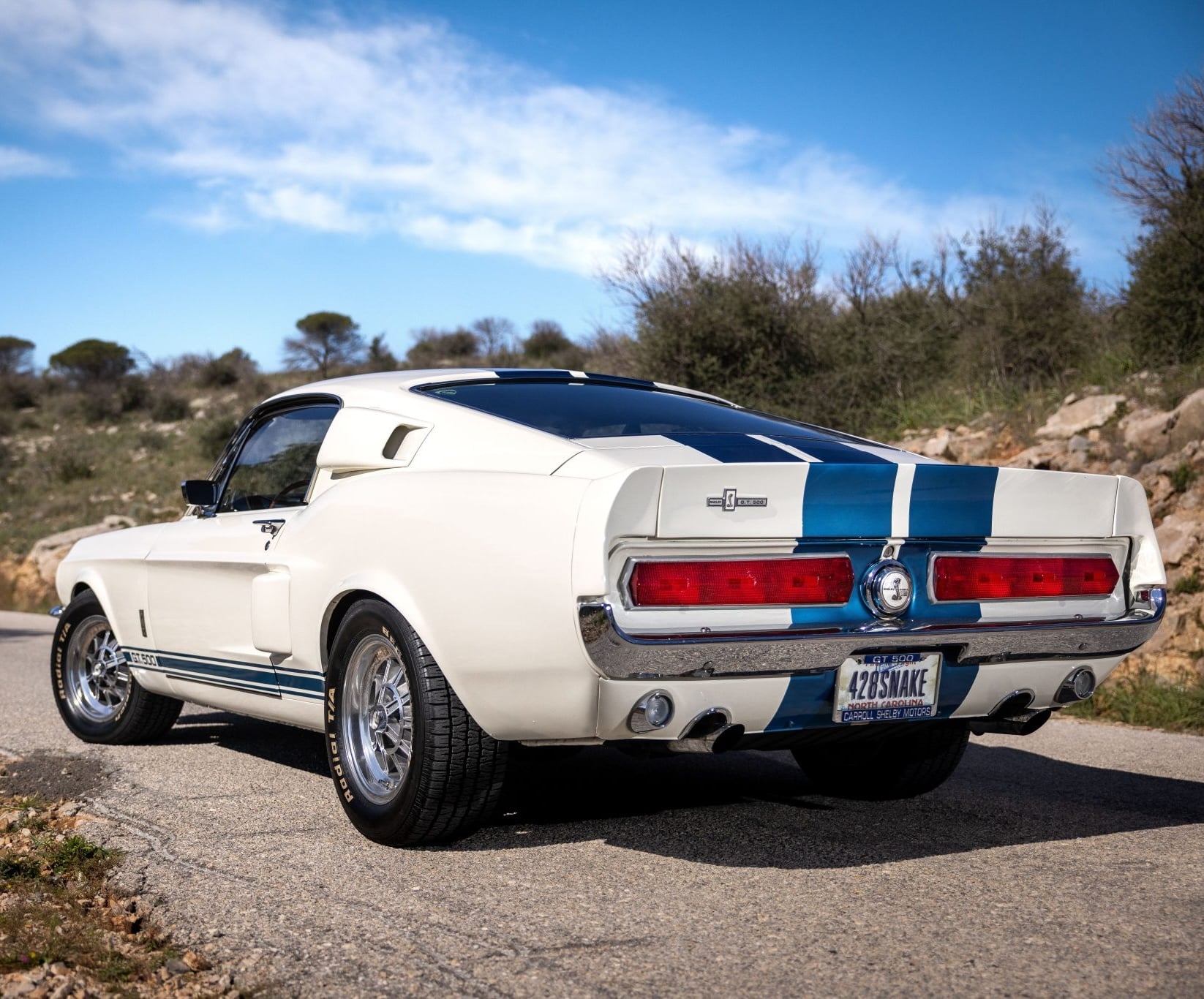
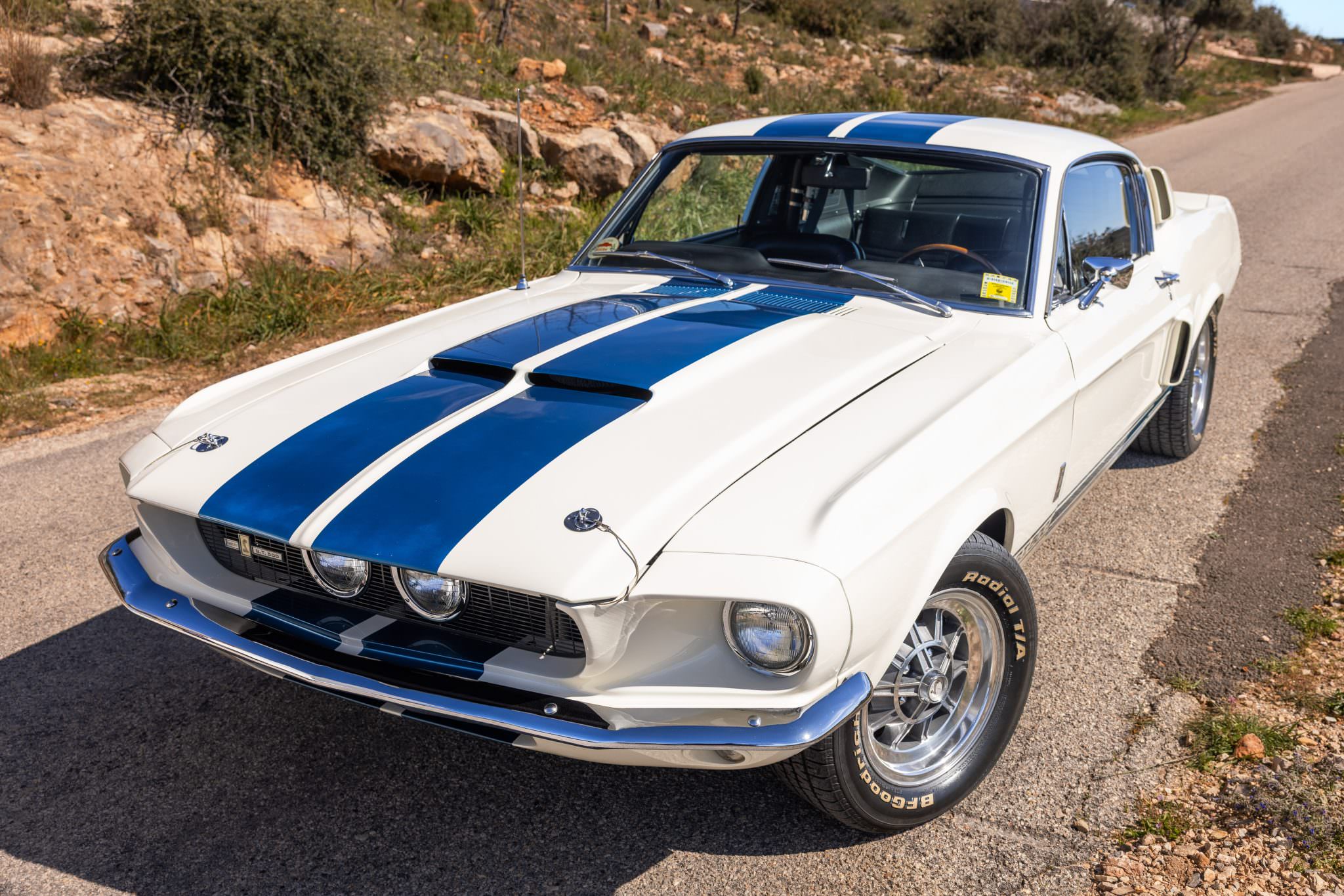
Finished in Wimbledon White with GT500 side stripes, the car was first delivered to City Motors in National City, California, where it was won in a contest by its original owners. It was later partially restored and passed through the hands of California-based racer Chuck Jones before Shelby bought it.
Carroll Shelby’s signature appears on the glove box lid. A modern but period-style air conditioning system was retrofitted by Shelby in the late 1990s, and an AM/FM radio is also fitted.
This car is now being offered for sale out of Ilioupoli, Greece with an Elite Marti Report, a National Shelby Registry certificate, and a Shelby American Automobile Club certificate. If you’d like to read more or register to bid you can visit the listing here.
Images courtesy of Bring a Trailer + Ford

Articles that Ben Branch has written have been covered on CNN, Popular Mechanics, Smithsonian Magazine, Road & Track Magazine, the official Pinterest blog, the official eBay Motors blog, BuzzFeed, Autoweek Magazine, Wired Magazine, Autoblog, Gear Patrol, Jalopnik, The Verge, and many more.
Silodrome was founded by Ben back in 2010, in the years since the site has grown to become a world leader in the alternative and vintage motoring sector, with well over a million monthly readers from around the world and many hundreds of thousands of followers on social media.