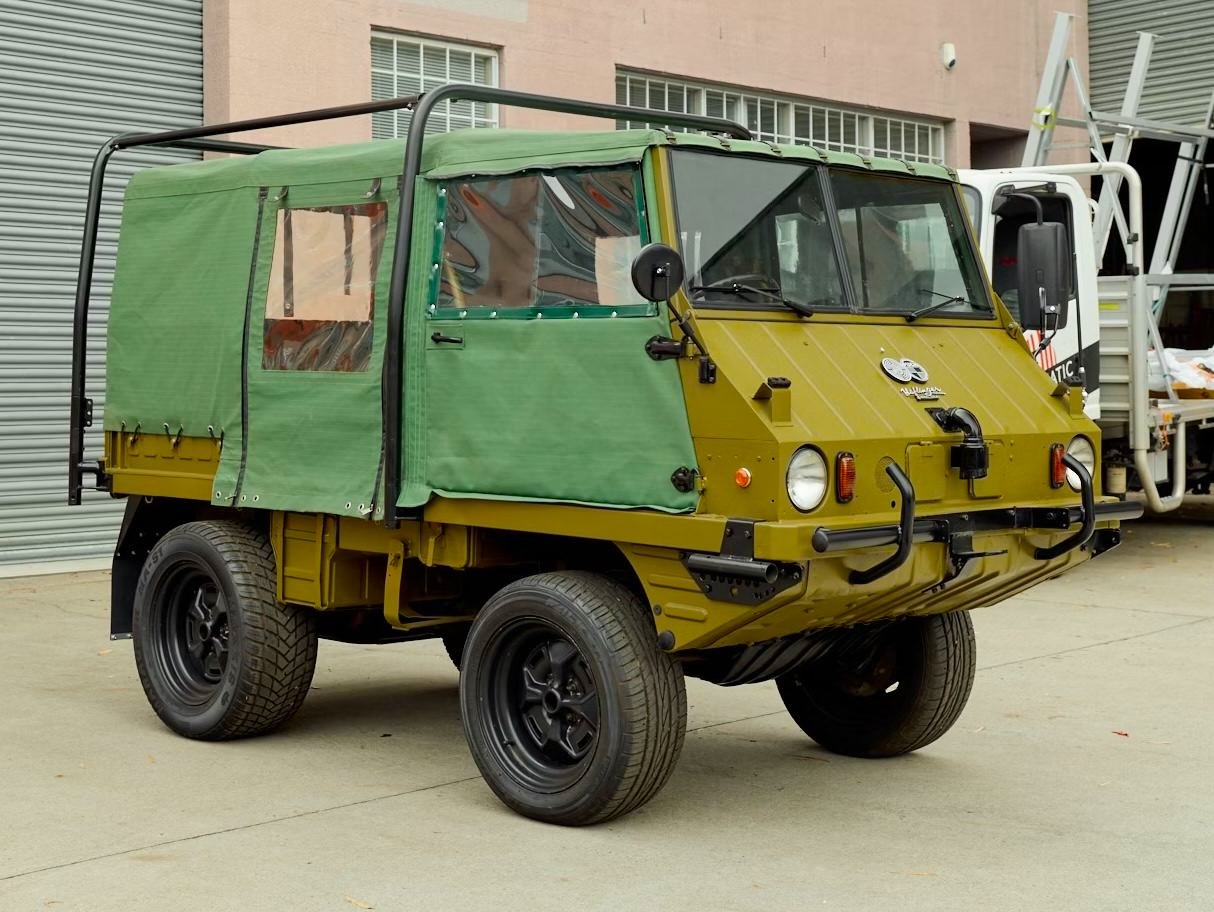
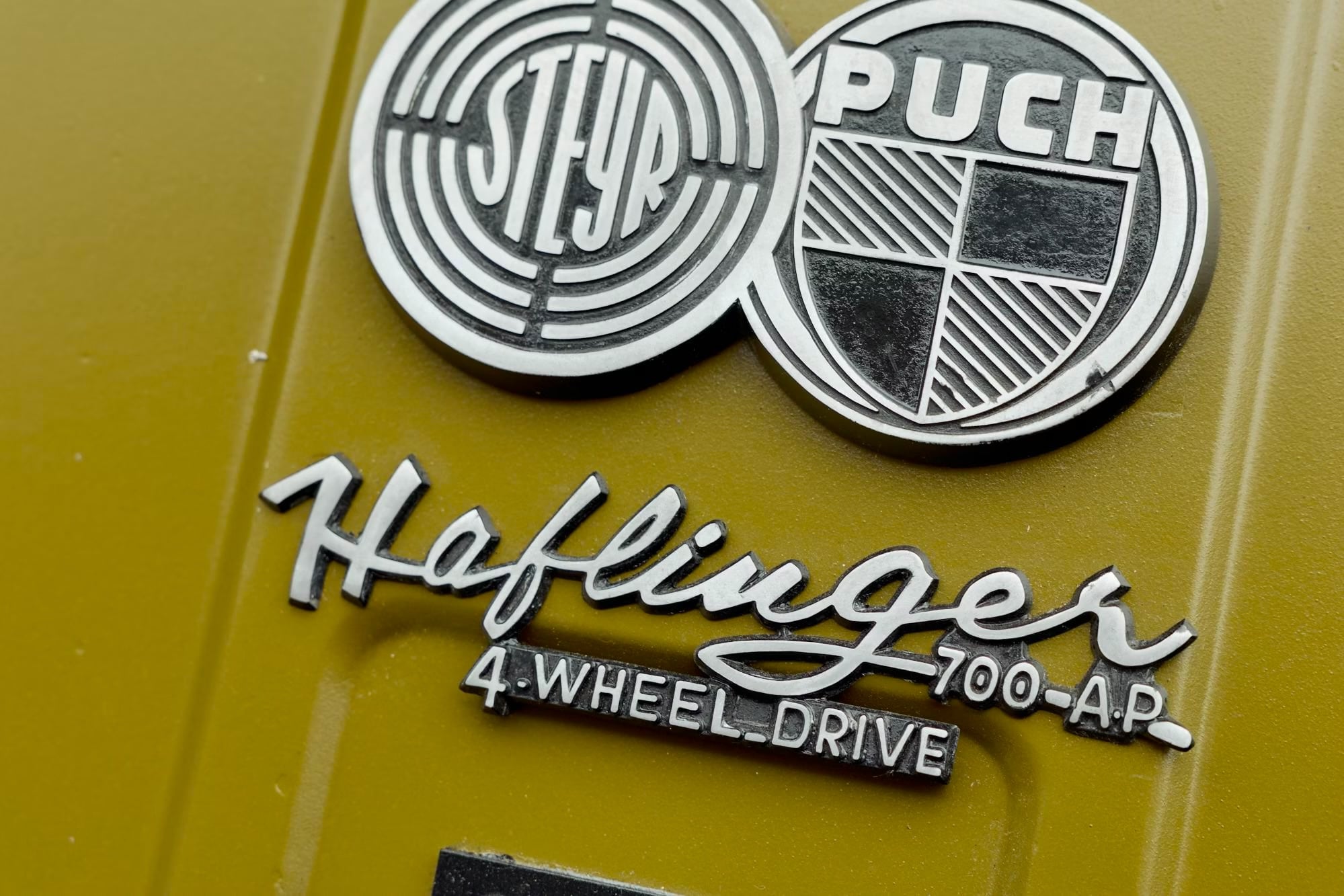
This is a 1970 Steyr-Puch Haflinger APT700, in the United States it’s a little-known military 4×4 from across the pond, but over in Europe the Haflinger is famous for its incredible off-road ability.
The Haflinger has an air-cooled, rear-mounted engine, portal axles, four-wheel independent suspension, locking hubs, and a dual-range transfer case. It’s known for being a small, lightweight, and highly capable off-roader.
Fast Facts: The Steyr-Puch Haflinger APT700
- The Steyr-Puch Haflinger APT700 is a compact military 4×4 that’s relatively obscure in the United States but well known in Europe for its serious off-road capability. Its key features include a rear-mounted air-cooled engine, portal hubs, four-wheel independent suspension, selectable 4×4, locking hubs, and a dual-range transfer case.
- It was developed for Austria as a lightweight replacement for surplus WWII Jeeps, aimed at steep alpine terrain without the bulk of full-size trucks. The production version arrived in 1959 under Steyr-Daimler-Puch designer Erich Ledwinka and ran through 1974. Total production is commonly cited as 16,647 vehicles, many built for military service.
- The engineering was clever, with a backbone chassis and very low gearing. The 643cc air-cooled flat-twin drove through a transaxle to selectable 4×4, with portal reductions and standard front and rear locking differentials. Period top speed was governed to a little over 42 mph. Dimensions ranged from 2.83 m to 3.15 m long, about 1.35 m wide.
- The specific 1970 APT700 shown here uses the 643cc boxer with a 4-speed manual and dual-range transfer case. It reportedly received a long mechanical rebuild from 1991 to 2001, then a 2025 repaint, seat re-trim, and new canopy. It has dual tanks, a rear PTO, spare wheels, and about 300 km since rebuild completion.
History Speedrun: The Steyr-Puch Haflinger
The Steyr-Puch Haflinger was developed as Austria needed a modern light 4×4 to replace the aging Willys MB and Ford GPW Jeeps left behind after WWII, and it wanted a domestically designed and built vehicle that could cope with steep alpine terrain without the weight and bulk of a full-size truck. In essence, it was a homegrown, improved version of the much-loved American Jeep.
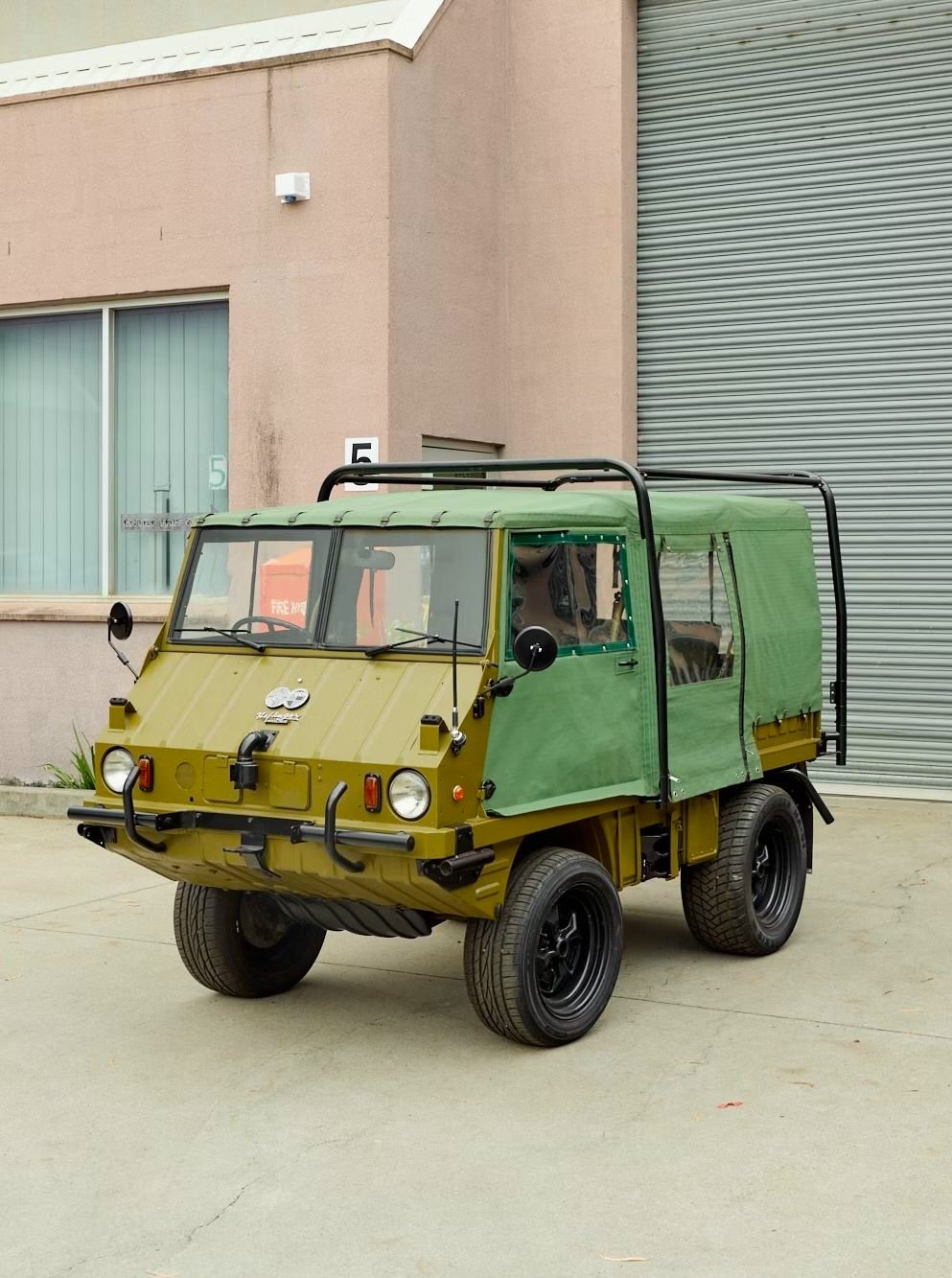
 This is a 1970 Steyr-Puch Haflinger APT700 with a 643cc air-cooled, naturally aspirated boxer engine, driving all four wheels through a 4-speed manual gearbox and a dual-range transfer case. As you would expect, it also has portal axles, independent suspension, and both front and rear differential locks.
The final production version arrived in 1959, with development led by Chief Designer of Steyr-Daimler-Puch Erich Ledwinka, and it remained in production through 1974. Across both main series, total production is most commonly believed to be 16,647 examples, with many of them going into military service.
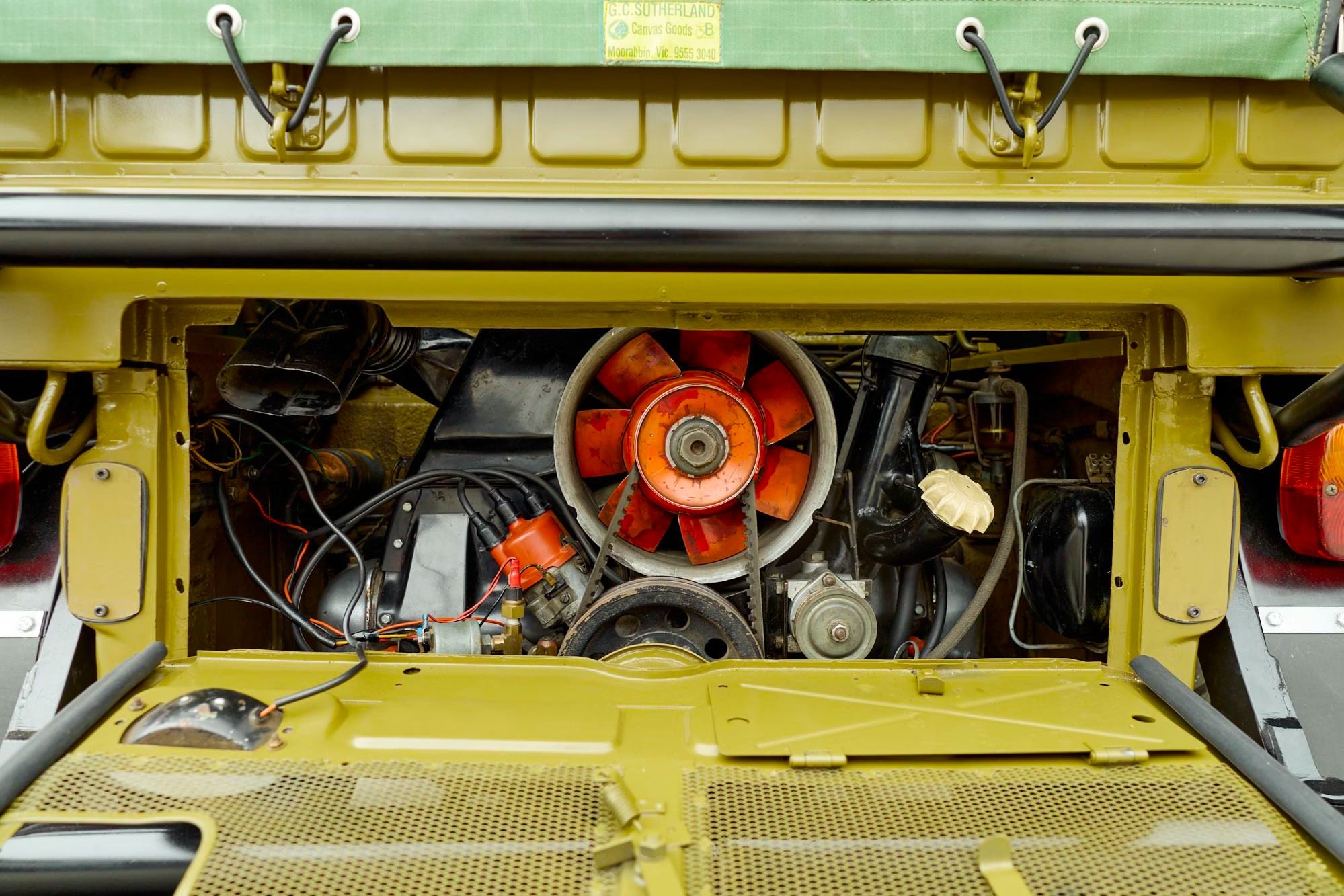
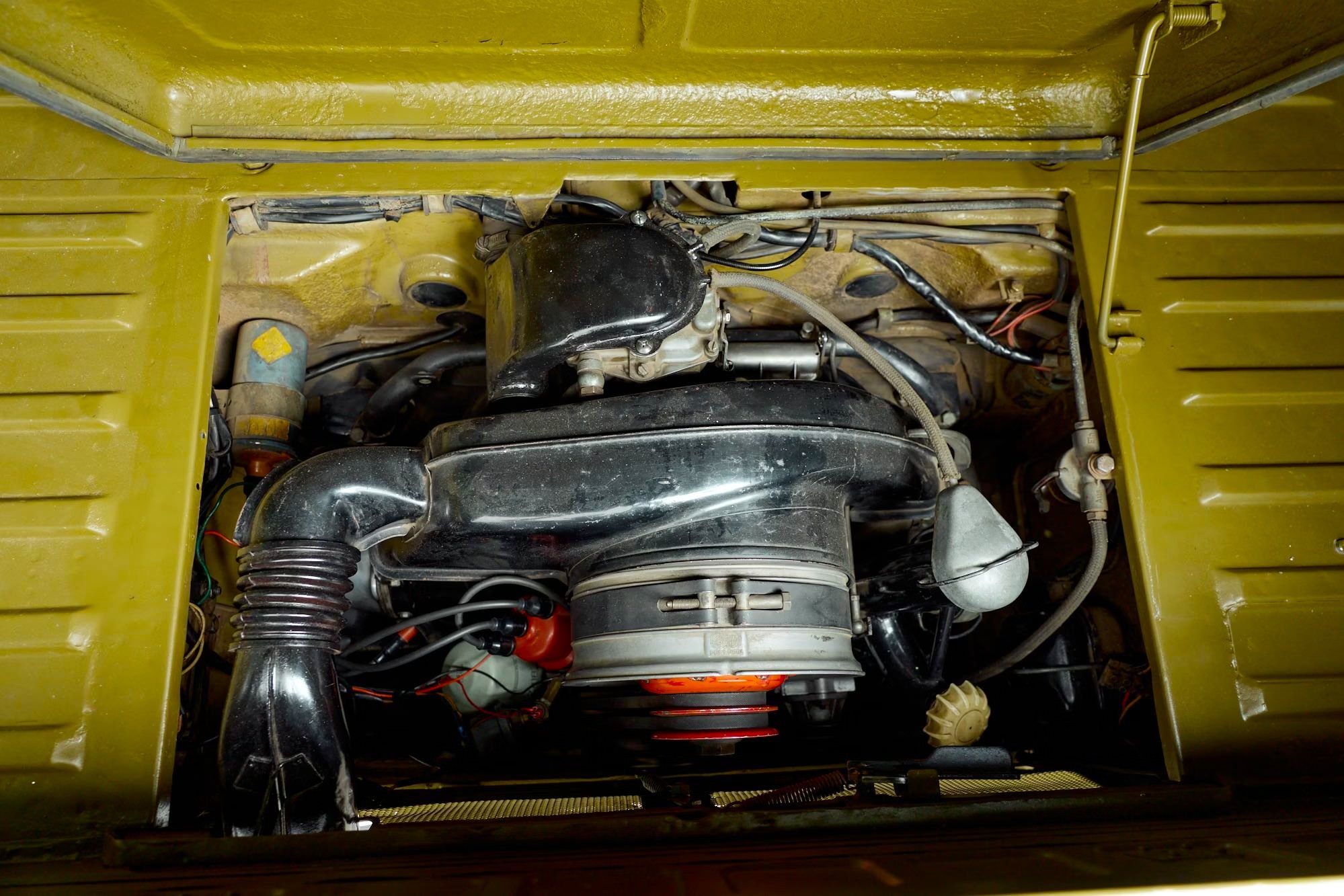
From an off-road engineering standpoint, the Haflinger’s underpinnings were always the secret to its success. The engine was an unusual rear-mounted, air-cooled flat-twin of 643cc displacement, driving through a transaxle to a selectable four-wheel drive system. Output varied slightly by specification, but it produced only modest horsepower that was deliberately paired with very low gearing, with a governed top speed a little over 42 mph in period tests.
The chassis and driveline consisted of a backbone-style chassis, independent suspension with swing axles front and rear, coil springs, and portal hubs that lifted the differential for better ground clearance without requiring tall tires.
Locking differentials front and rear were standard, and portal hub reductions provided extremely low overall gearing, allowing the vehicle to climb grades and traverse rough ground that would stop heavier trucks. The flip side of this of course, was the lower top speed. Though for military use, sustained speeds over 50 mph were more of a luxury.
The short-wheelbase model measured 2.83 meters in length, with the long-wheelbase version extending that to 3.15 meters. Width was 1.35 meters, curb weight was 600 to 635 kilograms depending on configuration, and payload capacity was 515 kilograms. The combination of a low curb weight, a low center of gravity, good portal clearance, and locking differentials made it unusually capable relative to its diminutive size.
Most Haflingers are grouped into two primary production series. Throughout production, both 4-speed and later 5-speed transmissions were offered, with the 5-speed including an ultra-low first gear designed specifically for slow off-road work rather than an over drive on top like you might otherwise assume.
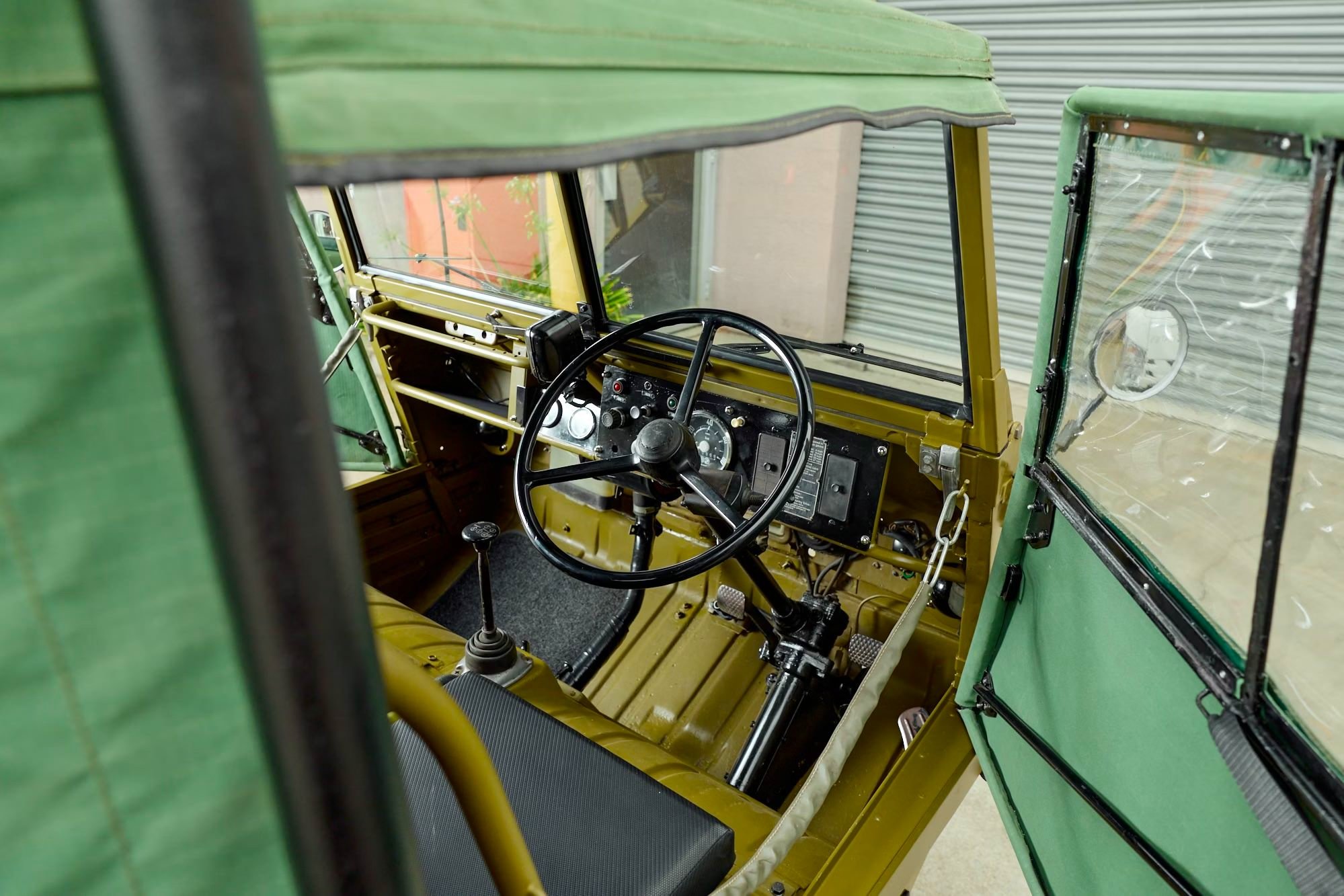
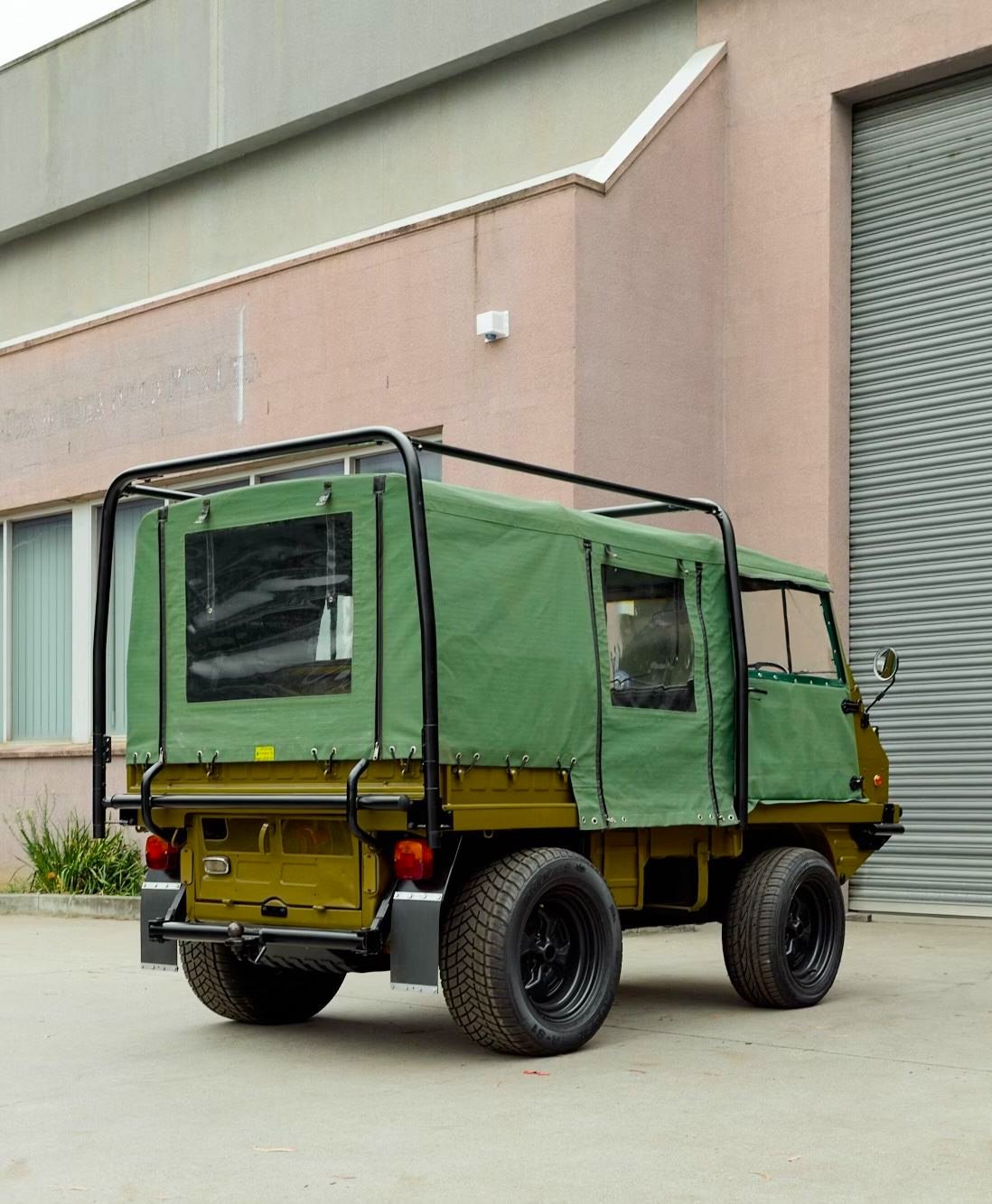
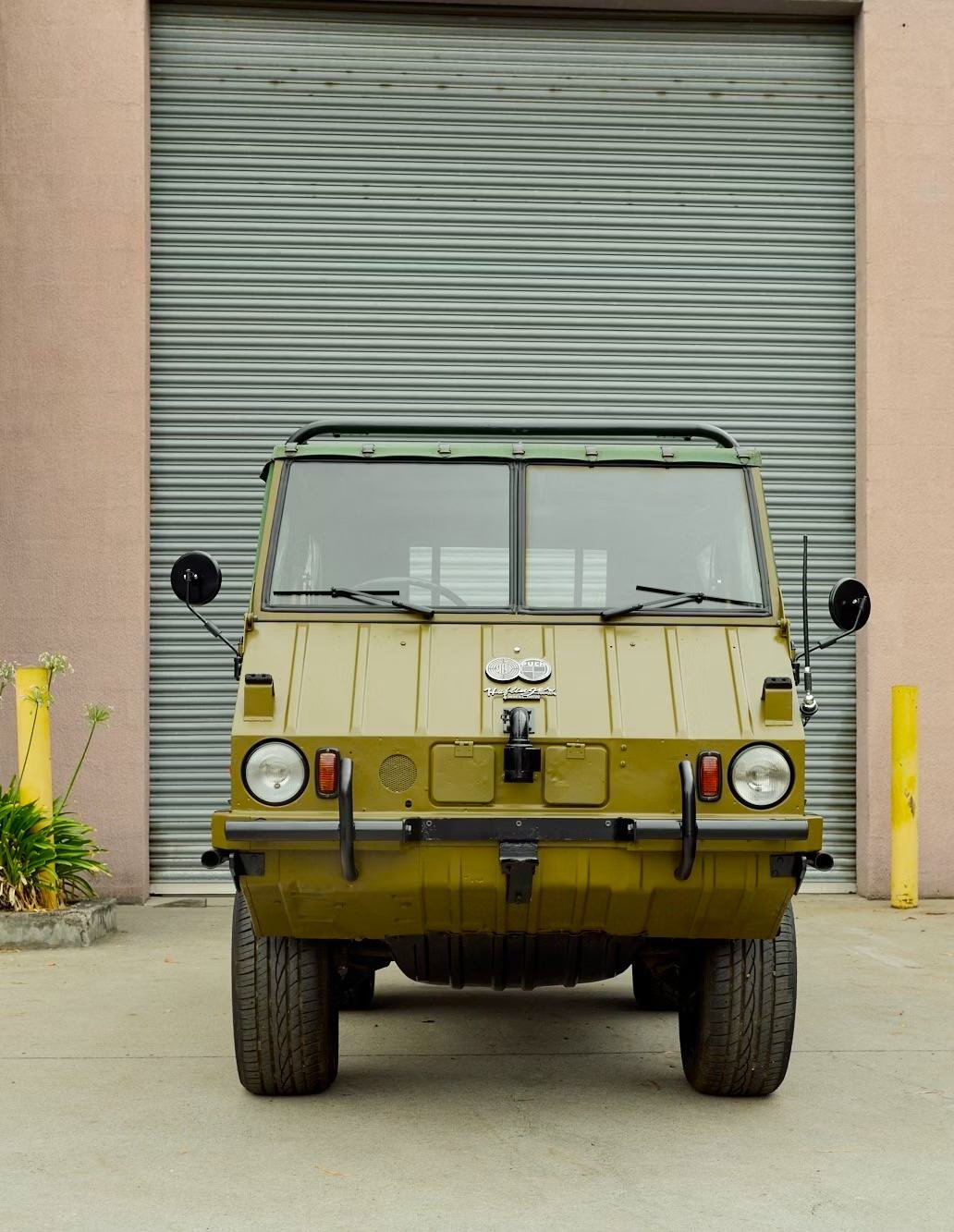
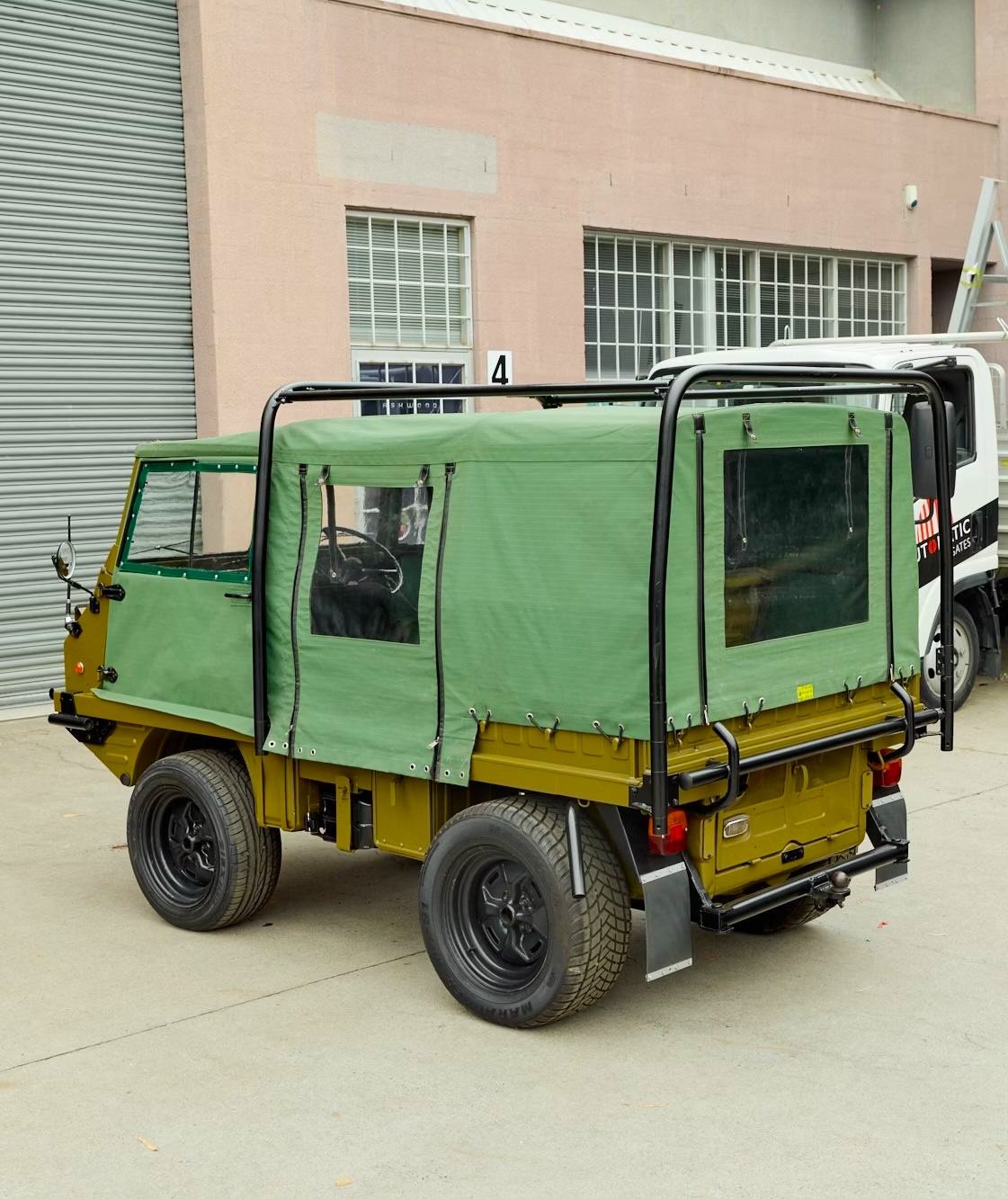
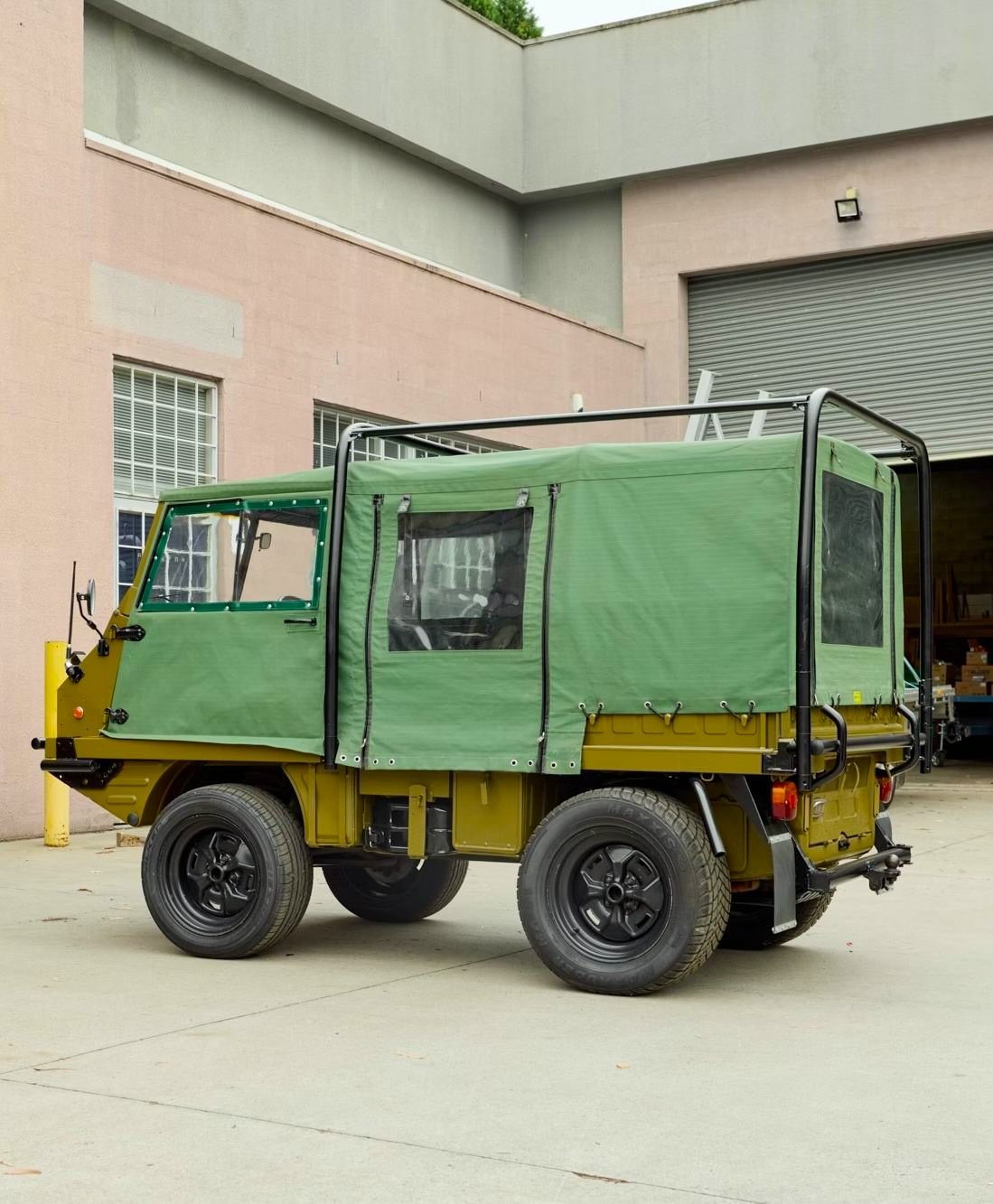
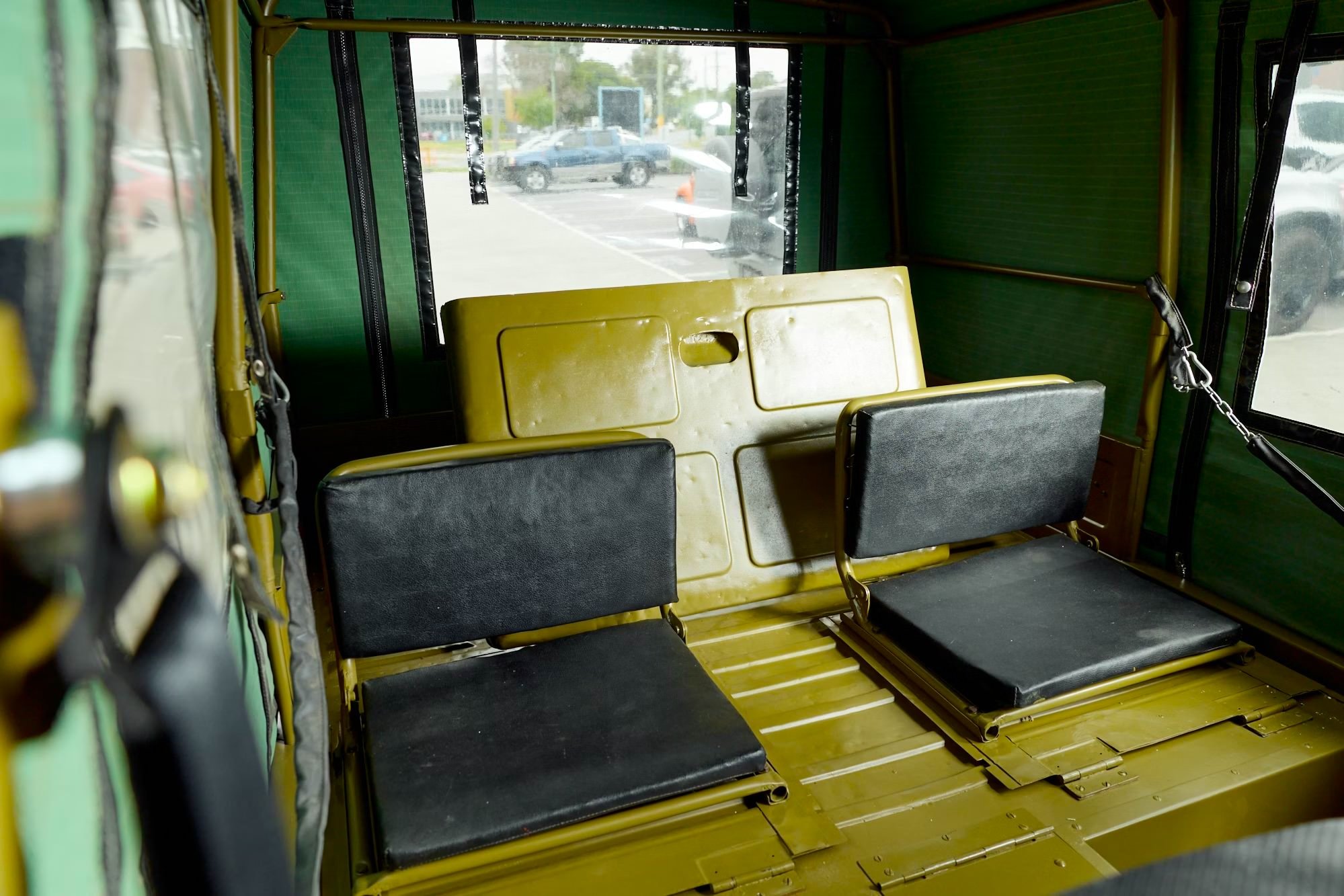
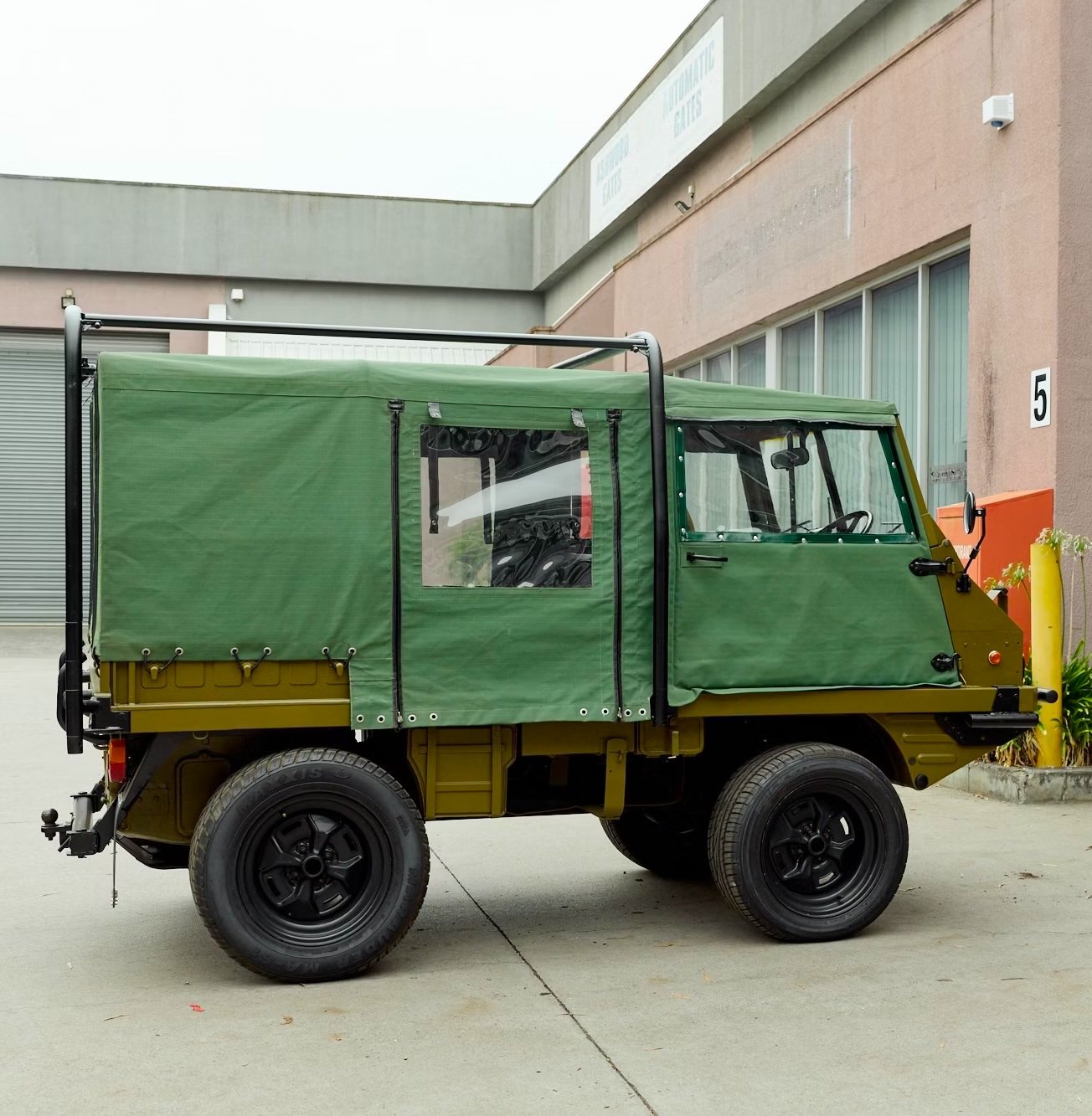
This Haflinger is finished in matte military green with a green canvas canopy and doors, over a body-colored cabin with black vinyl upholstery. It was repainted in 2025, the front seats were re-covered, and a new canopy was fitted.
Beyond drivetrain differences, the Haflinger appeared in short and long-wheelbase configurations, with various body styles including open utility versions. A US-market “Pathfinder” version was also offered for export, though it was only made in relatively limited numbers.
Military use formed a major part of the Haflinger’s production life – it was adopted by the Austrian Army and exported to numerous other military customers including Switzerland, Australia, Indonesia, Sweden, and to the United Kingdom where it was used by the Royal Navy.
By the time the larger Pinzgauer entered service in the early 1970s, the Haflinger had firmly established itself as Steyr-Puch’s lightweight military and utility platform. Its combination of a rear-mounted engine, portal axles, locking differentials, and extremely low gearing resulted in a small vehicle with capabilities that continue to make it highly-desirable today among off-road enthusiasts.
The 1970 Steyr-Puch Haflinger APT700 Shown Here
This is a 1970 Steyr-Puch Haflinger APT700 with a 643cc air-cooled, naturally aspirated boxer engine, driving all four wheels through a 4-speed manual gearbox and a dual-range transfer case. As you would expect, it also has portal axles, independent suspension, and both front and rear differential locks.
The seller notes that a comprehensive mechanical rebuild was carried out over a long time period, beginning in 1991 and then reaching completion in 2001. They mentioned that the chassis was removed, the front differential/front end and central tube were dismantled and reconditioned, and the rear differential and gearbox were stripped with bearings, gears, gaskets, and shafts replaced. The engine is also said to have been dismantled, bored, and rebuilt with new bearings and related parts.
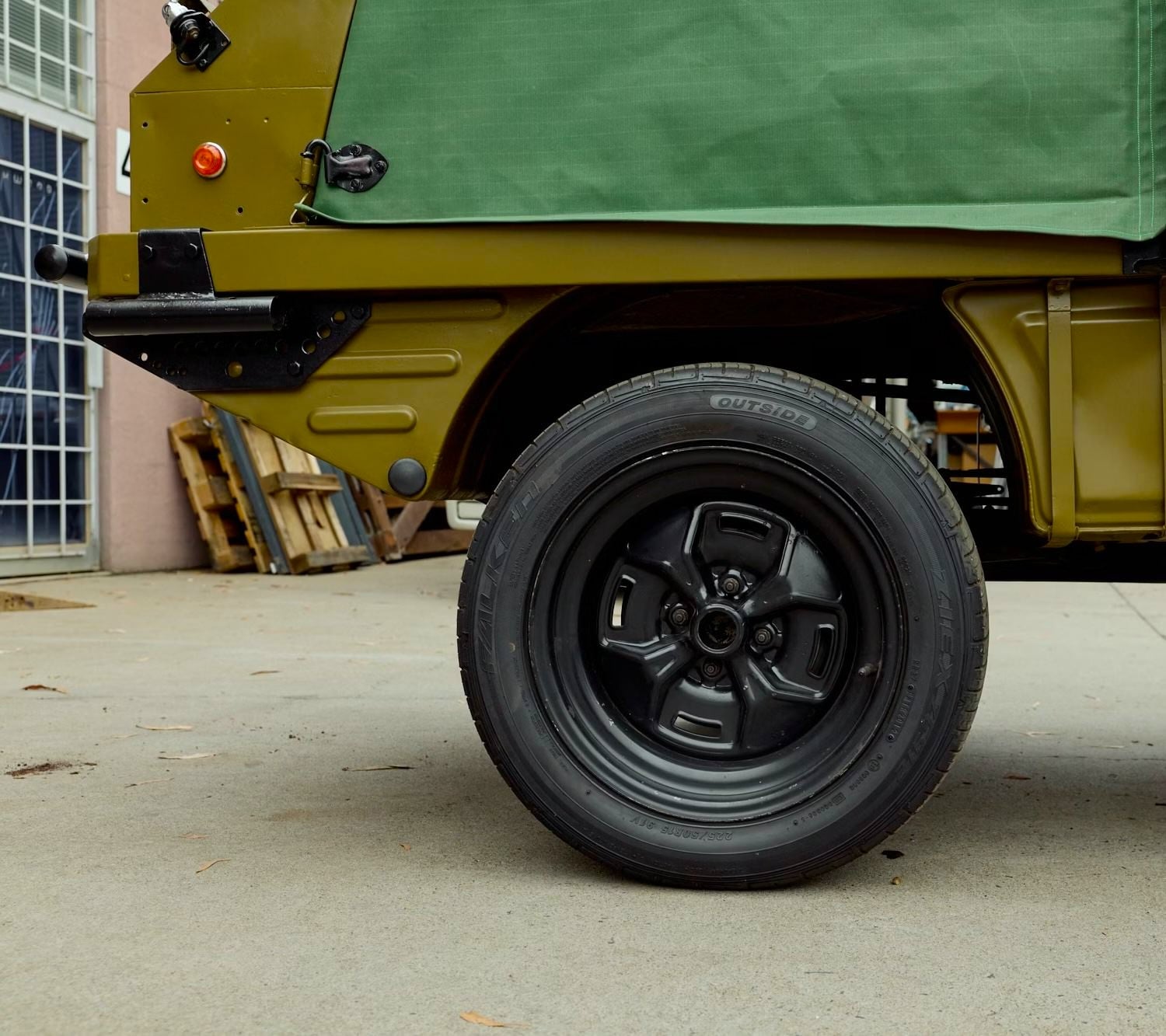
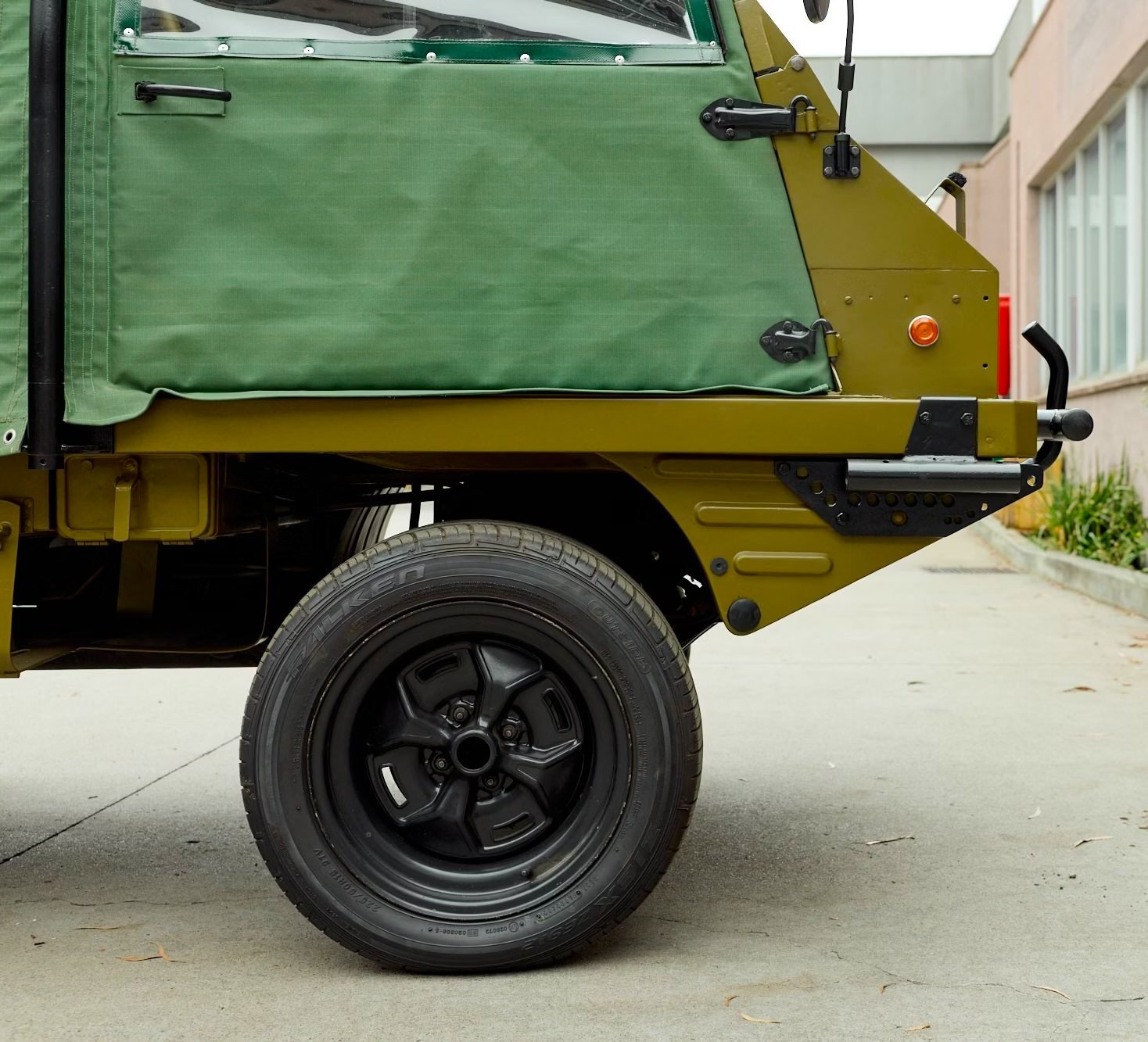
It’s finished in matte military green with a green canvas canopy and doors, over a body-colored cabin with black vinyl upholstery. It was repainted in 2025, the front seats were re-covered, and a new canopy was fitted. It rides on custom 15 inch black steel wheels with mixed tires, and it comes with a set of spare 13 inch Fiat wheels.
The seller notes that a comprehensive mechanical rebuild was carried out over a long time period, beginning in 1991 and then reaching completion in 2001.
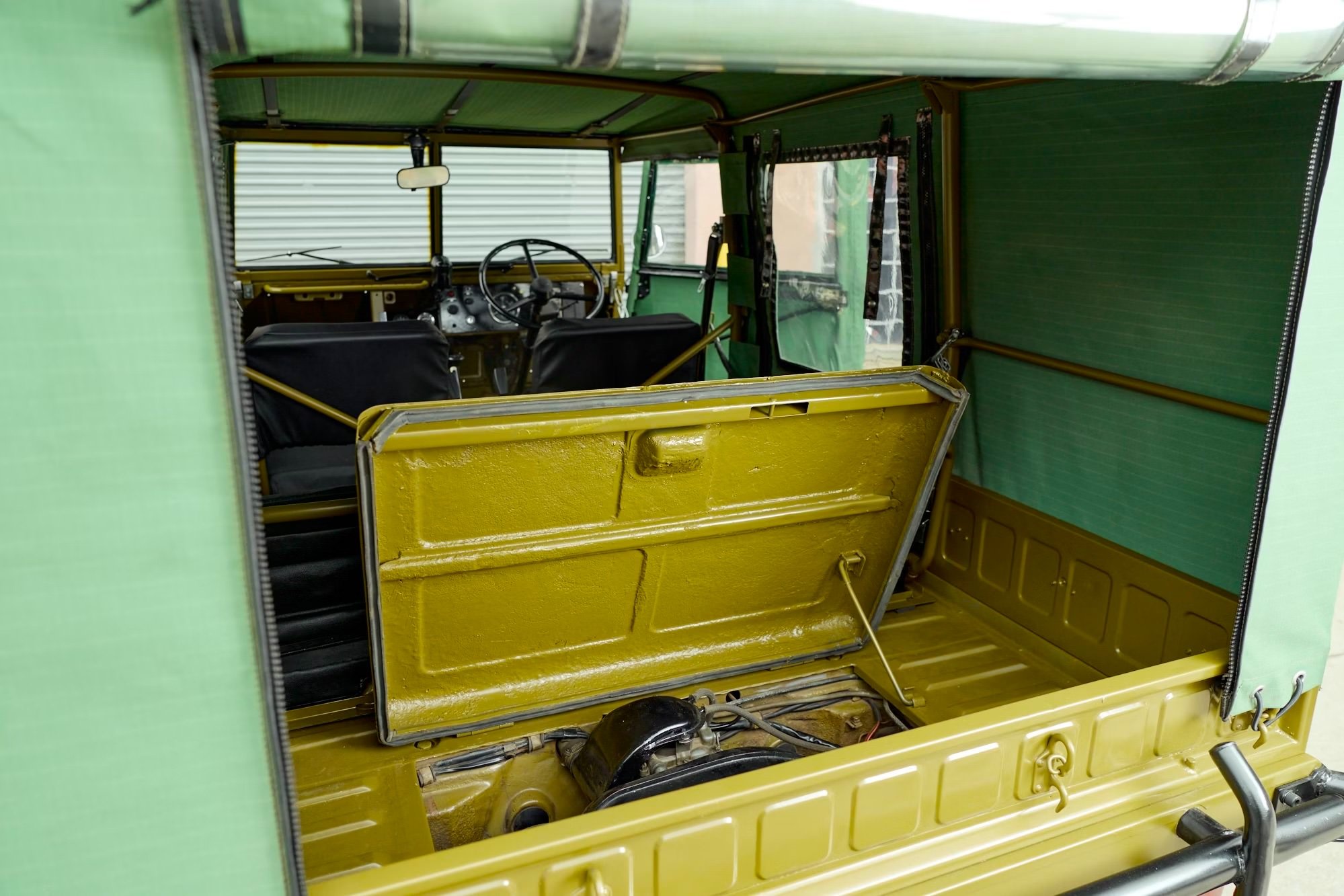
It has dual fuel tanks to Australian army-style specifications, a rear-mounted PTO assembly (reported to be fitted largely with new-old-stock components), and two rear seats. One ignition key is included, and the seller says it’s covered roughly 300 kms since the rebuild was completed, with the last recorded service noted as 2020 at an indicated 85,560 kms.
It’s located in Scoresby, Victoria (in Australia) and is being offered for sale on Collecting Cars. You can visit the listing here if you’d like to read more about it or register to bid.
Images courtesy of Collecting Cars

Articles that Ben Branch has written have been covered on CNN, Popular Mechanics, Smithsonian Magazine, Road & Track Magazine, the official Pinterest blog, the official eBay Motors blog, BuzzFeed, Autoweek Magazine, Wired Magazine, Autoblog, Gear Patrol, Jalopnik, The Verge, and many more.
Silodrome was founded by Ben back in 2010, in the years since the site has grown to become a world leader in the alternative and vintage motoring sector, with well over a million monthly readers from around the world and many hundreds of thousands of followers on social media.