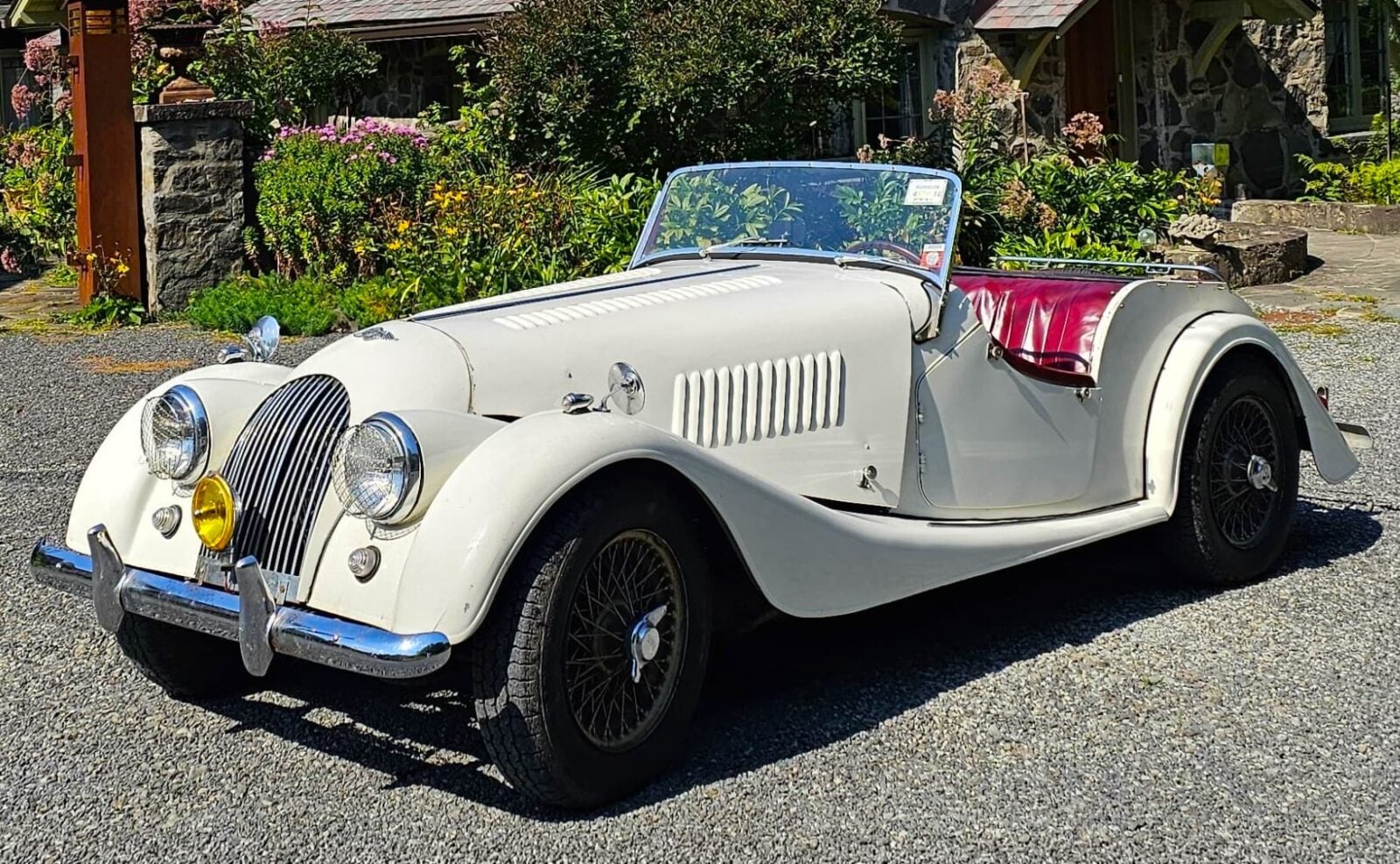
This is a 1964 Morgan Plus 4 that formerly belonged to Michael Lang, the organizer of the original Woodstock Music Festival in 1969. He later worked as an author, a sculptor, and famously as a manager for performing artists.
The Morgan Plus 4 is perhaps the most quintessential of all the Morgans, with the possible exception of the three-wheelers of course. The Plus 4 offers the right balance between low weight, good handling, and mechanical simplicity.
Fast Facts: An Ex-Michael Lang Morgan Plus 4
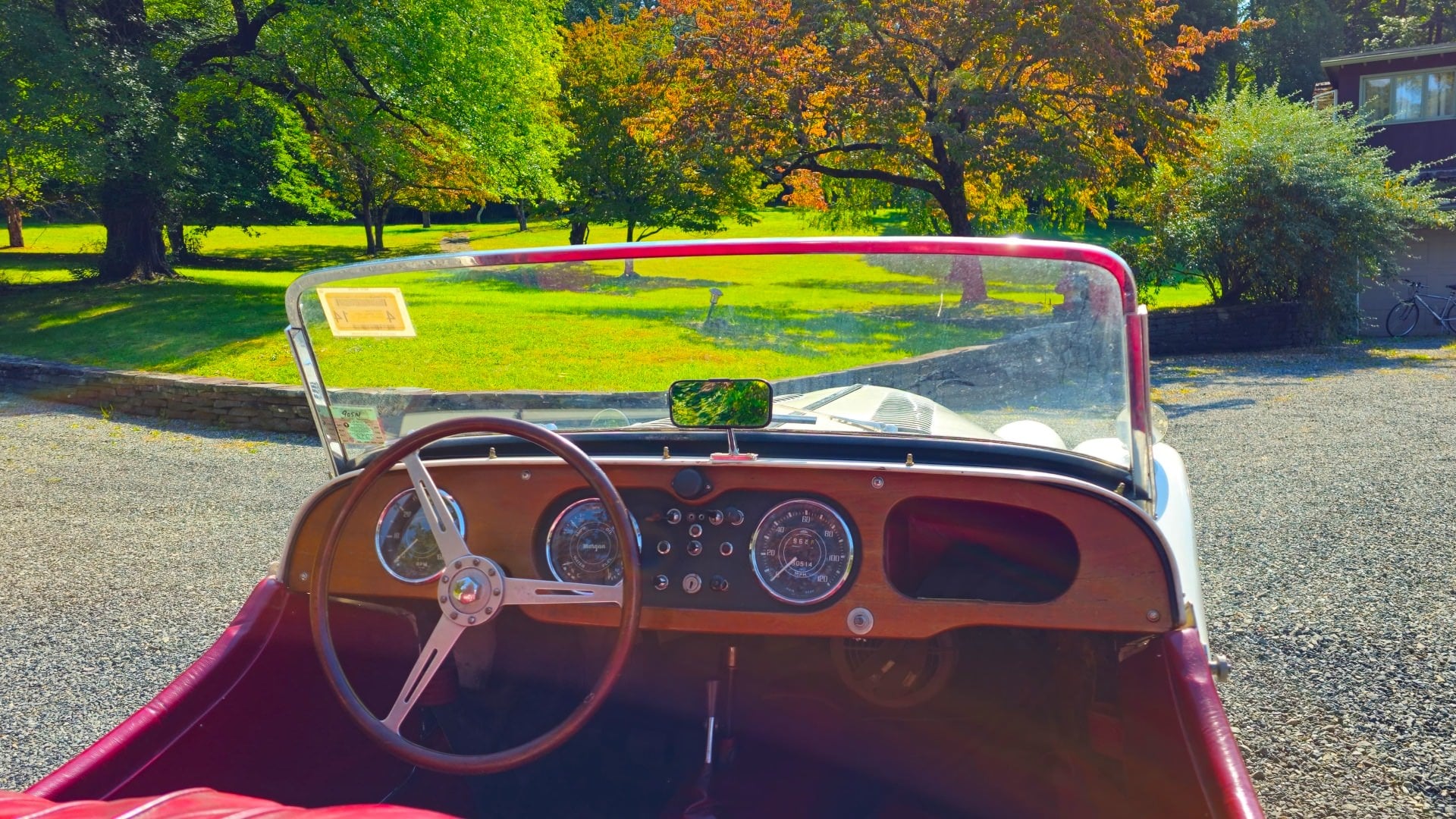
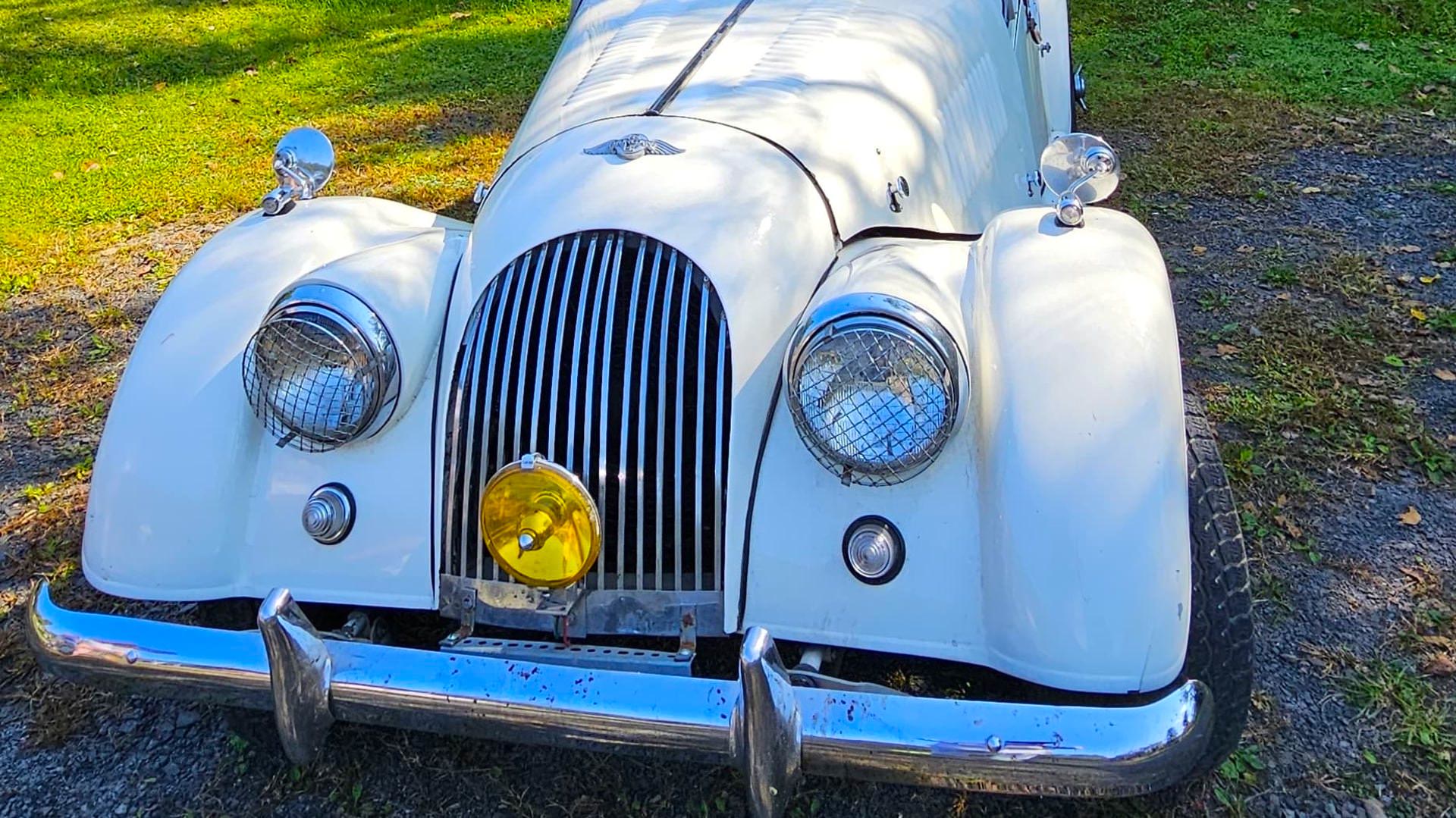
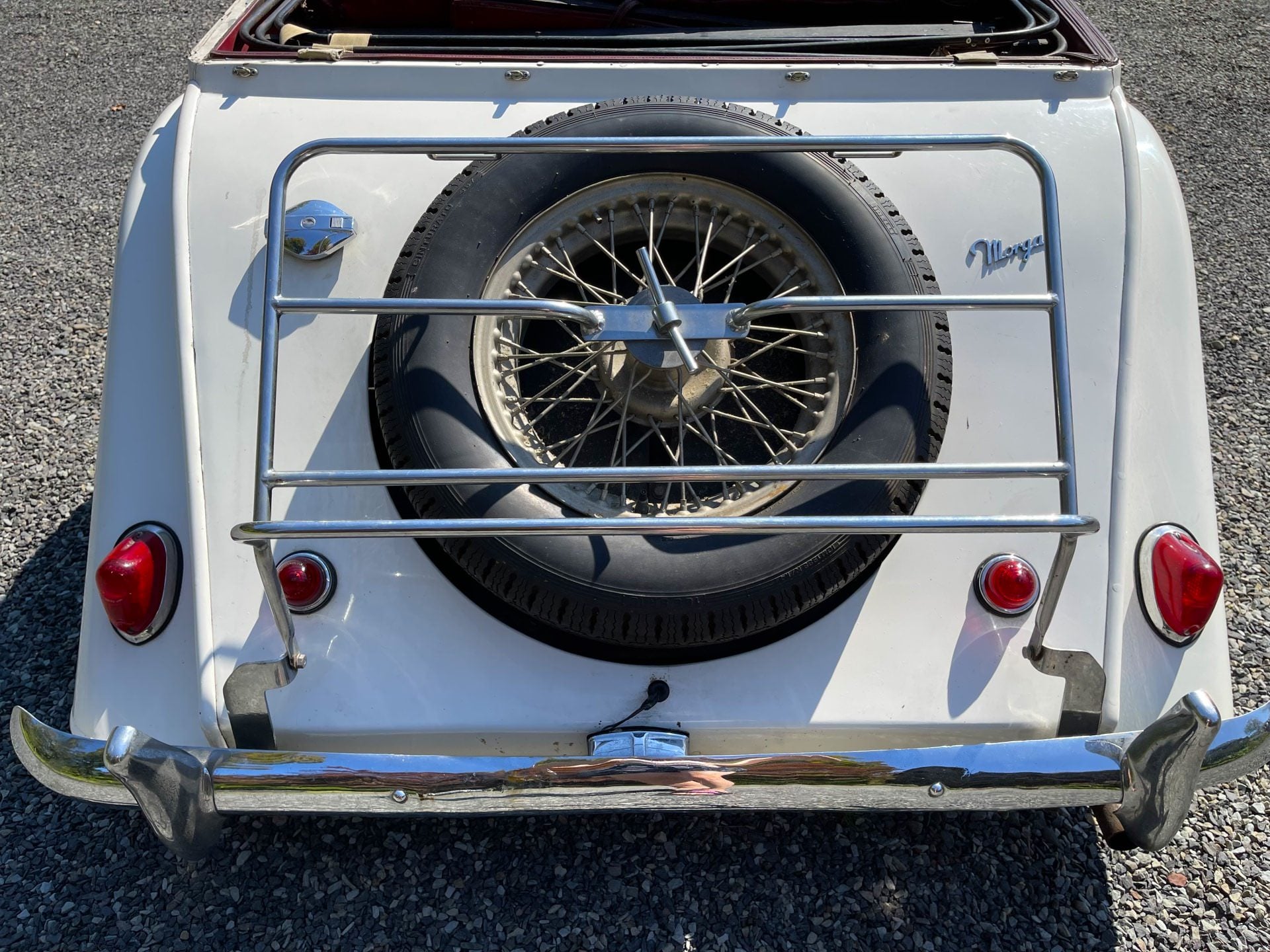
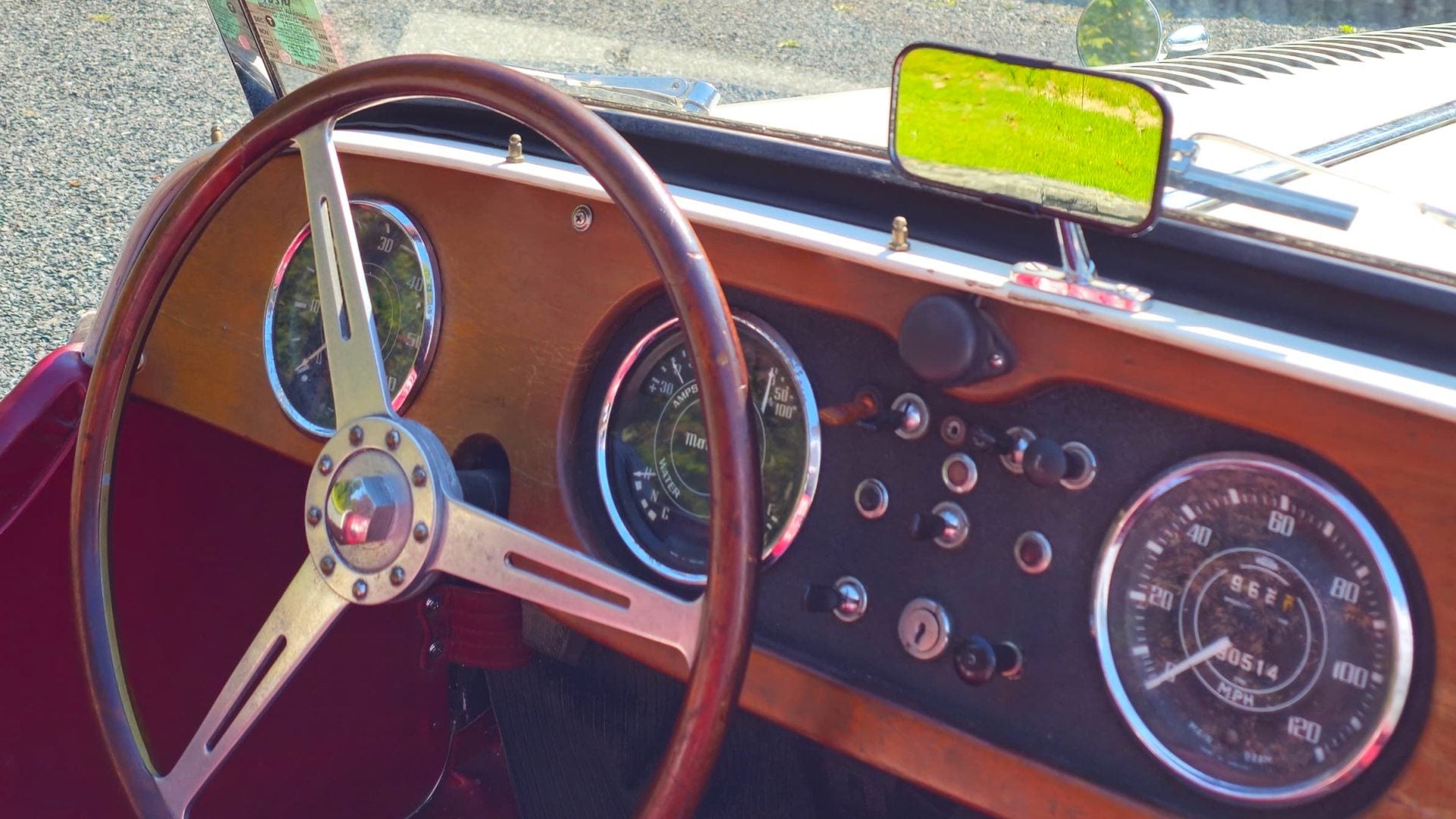
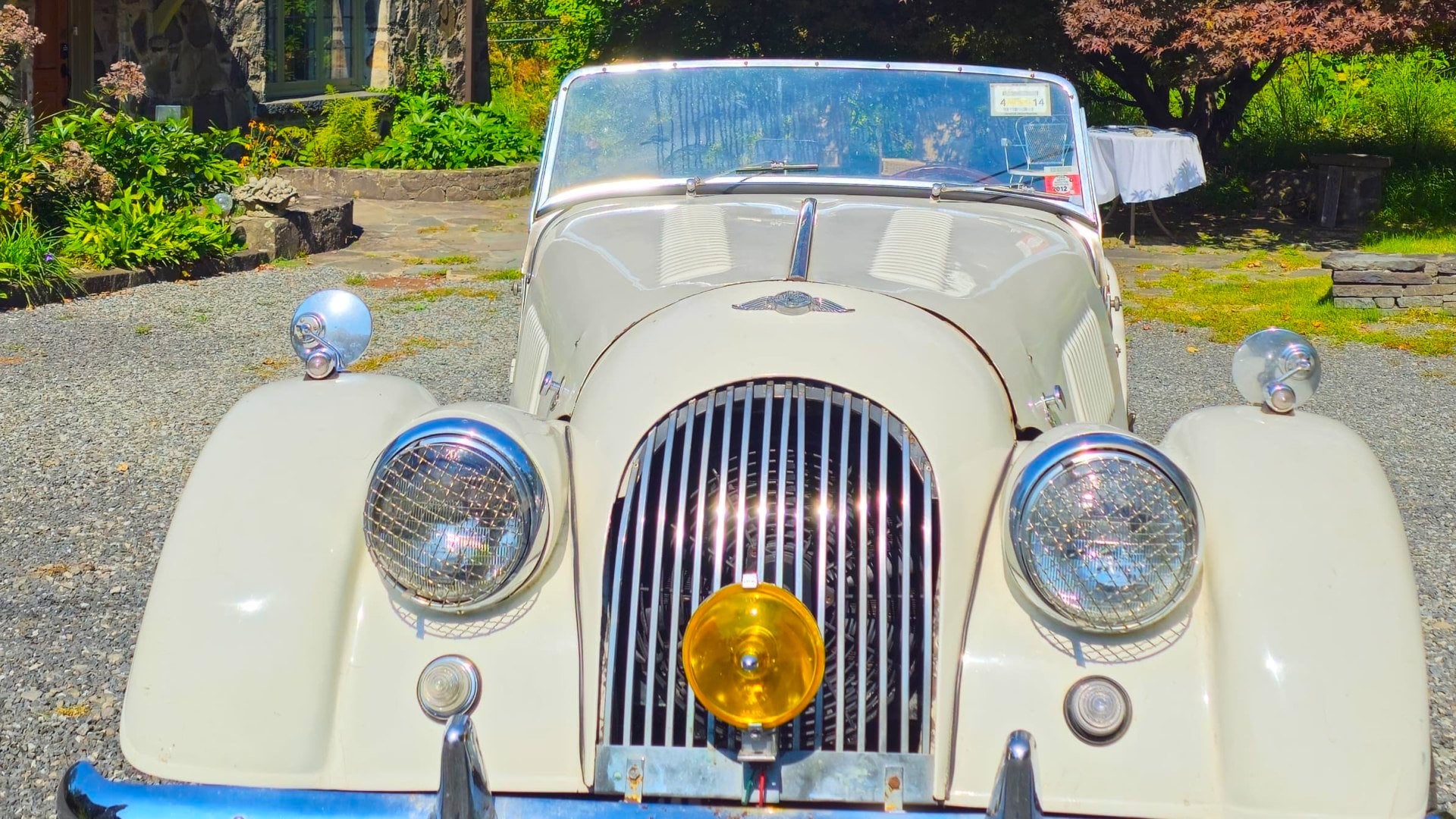
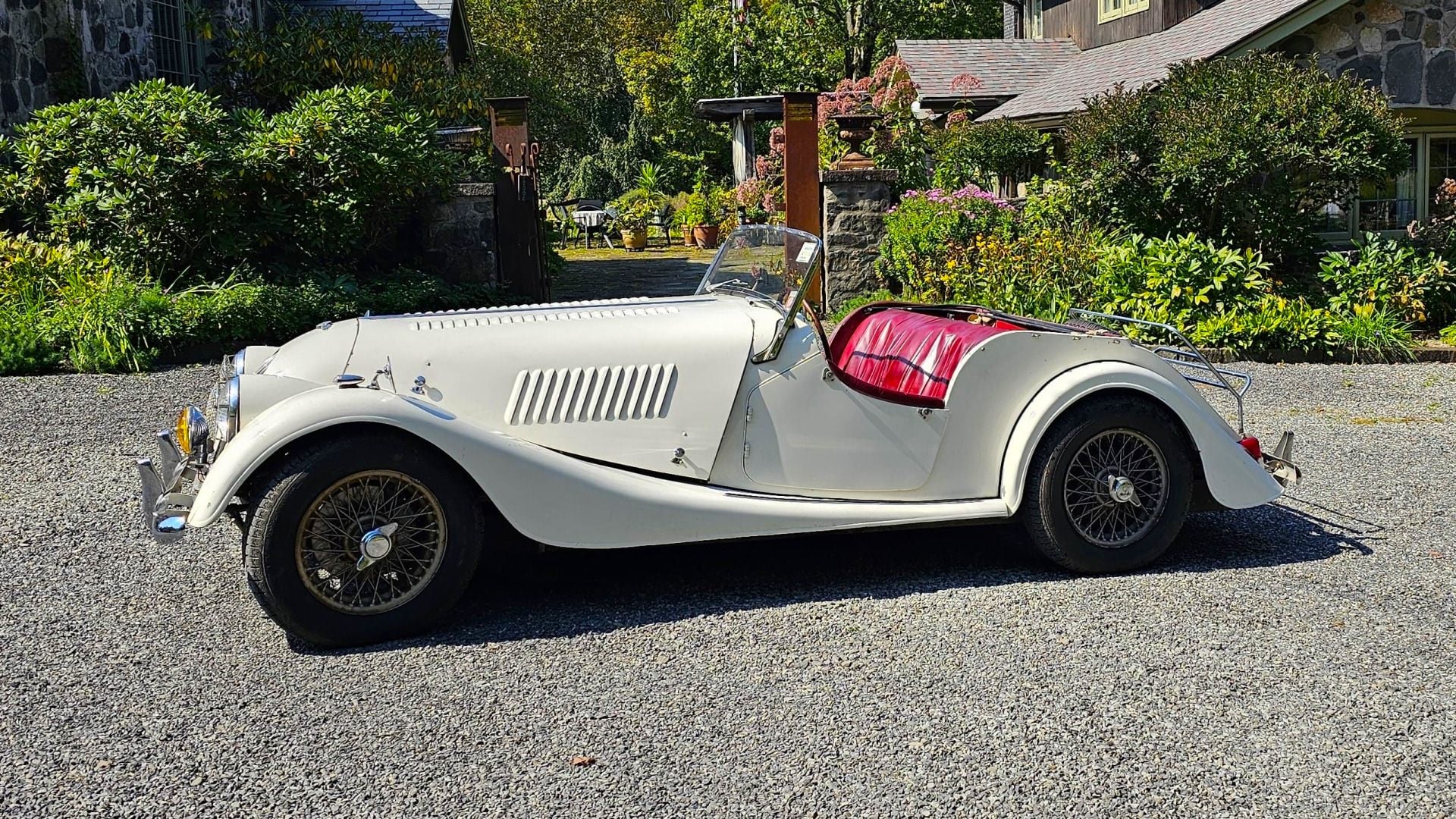
- This 1964 Morgan Plus 4 is a TR4-engined example from the classic 1962 to 1969 production run, powered by a 2.1 liter inline four-cylinder with a 4-speed manual transmission. It’s presented in cream over a red interior with wood dash trim, knock-off wire wheels, a luggage rack, and a rear-mounted spare tire.
- The car was formerly owned by Michael Lang, the American concert promoter and co-creator of the original 1969 Woodstock Music & Art Festival, which drew an estimated 400,000 people to Max Yasgur’s farm in Bethel, New York, and became one of the defining cultural events of the twentieth century.
- Lang’s career extended well beyond Woodstock. He organized both Woodstock ’94 and Woodstock ’99, managed and produced for artists including Joe Cocker, Billy Joel, and Rickie Lee Jones, consulted for the Rolling Stones, and founded Just Sunshine Records and the Michael Lang Organization.
- The Morgan Plus 4 was one of the company’s most important models, produced intermittently from 1950 to 2020 across multiple engine configurations. Built on a steel ladder chassis with a traditional ash wood body frame, it embodied Morgan’s hand-built ethos and even took a class win at the 1962 24 Hours of Le Mans.
History Speedrun: The Morgan Motor Company
There are plenty of car companies that chase the future or the next big thing, and then there’s Morgan. For well over a century and counting, the Morgan Motor Company has been building sports cars by hand in the same small English town, using many of the same techniques it started out with, and despite the odds being stacked against it, it’s become one of the most enduring stories of the automotive world.
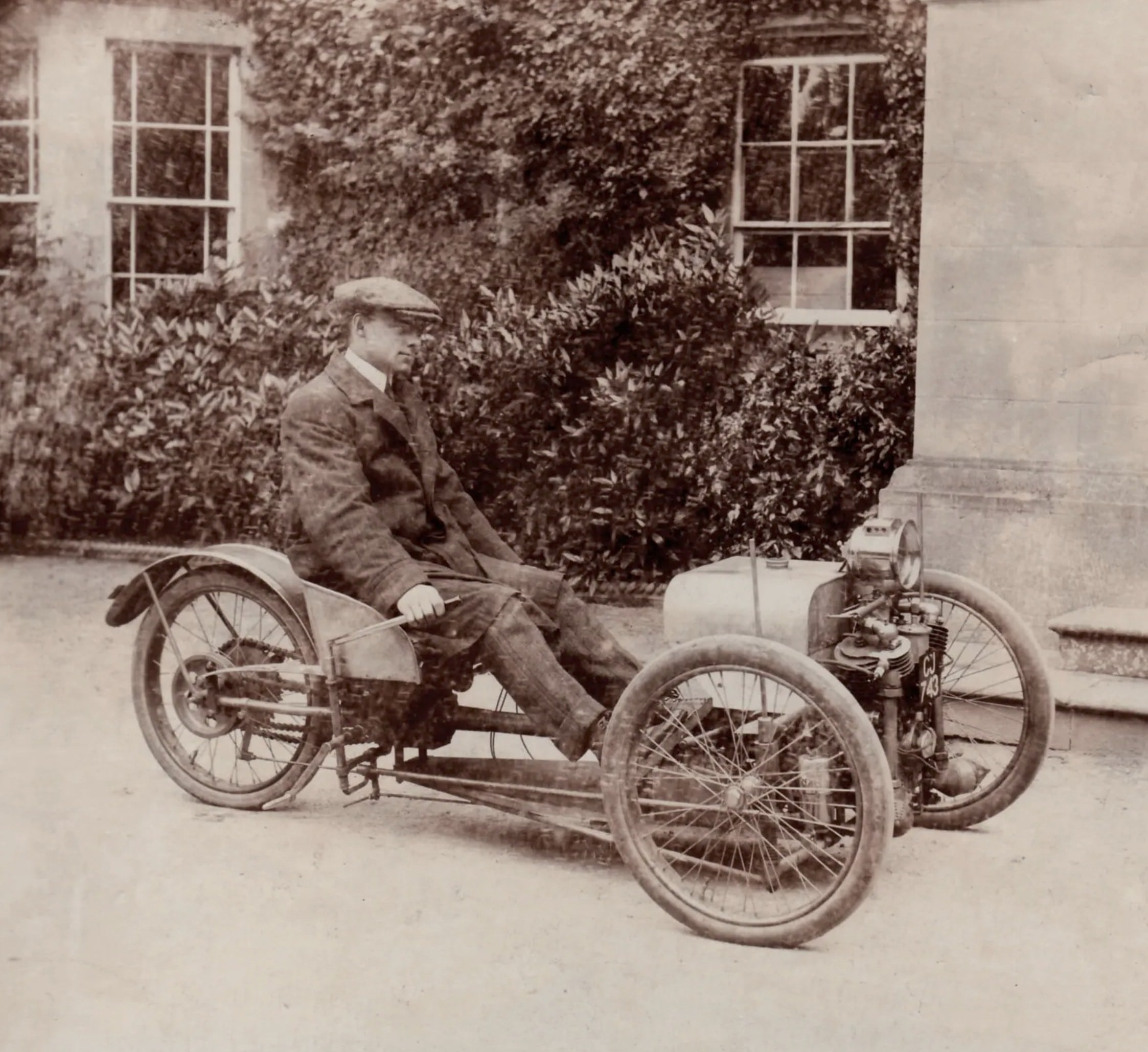
 The Morgan Motor Company can follow its roots back to 1909, when Henry Frederick Stanley Morgan (universally known as HFS) designed and built a single-seat, three-wheeled runabout for his own personal use in the Worcestershire spa town of Malvern. Image courtesy of the Morgan Motor Company.
If the story of the automobile industry is one of relentless modernization, Morgan is the stubborn-as-an-ox exception – and the Morgan Plus 4 is (arguably) the car that best tells that story.
Three-Wheels And A Dream
The Morgan Motor Company can follow its roots back to 1909, when Henry Frederick Stanley Morgan (universally known as HFS) designed and built a single-seat, three-wheeled runabout for his own personal use in the Worcestershire spa town of Malvern.
It was a bare-bones machine powered by a 7 bhp Peugeot twin-cylinder engine, with tiller steering, no body panels to speak of, and an innovative independent front suspension that HFS had developed in the engineering workshop at Malvern College. It was crude, but it was clever, and when friends and acquaintances saw it, they all wanted one too.
By 1910, HFS was showing three single-seater models at the Olympia Motor Show in London. A two-seat version followed in 1911, and Harrods (yes, the high-end department store) took up an agency, displaying a Morgan in its shop window at a selling price of £65. The Morgan Motor Company was formally registered as a private limited company in 1912, with HFS as managing director and his father, who had invested in the venture after seeing the overwhelming demand that existed for his son’s creations.
No one could possibly have known it at the time, but Morgans would still be in production over 110 years later, still showing no signs of losing their appeal.
Henry Morgan’s three-wheelers were a sales smash hit. Production neared 1,000 units before World War I broke out, and perhaps unexpectedly. the cars quickly proved themselves in the world of motorsport. Being classified as motorcycles under British tax law, they were also economical to own, which helped drive sales through the 1920s and into the 1930s.
But the world was changing, and by 1936, cheap four-wheeled cars like the Austin 7 were eating into the cyclecar market. Morgan responded with its first four-wheeled car, the 4/4 – the name simply standing for four wheels and four cylinders.
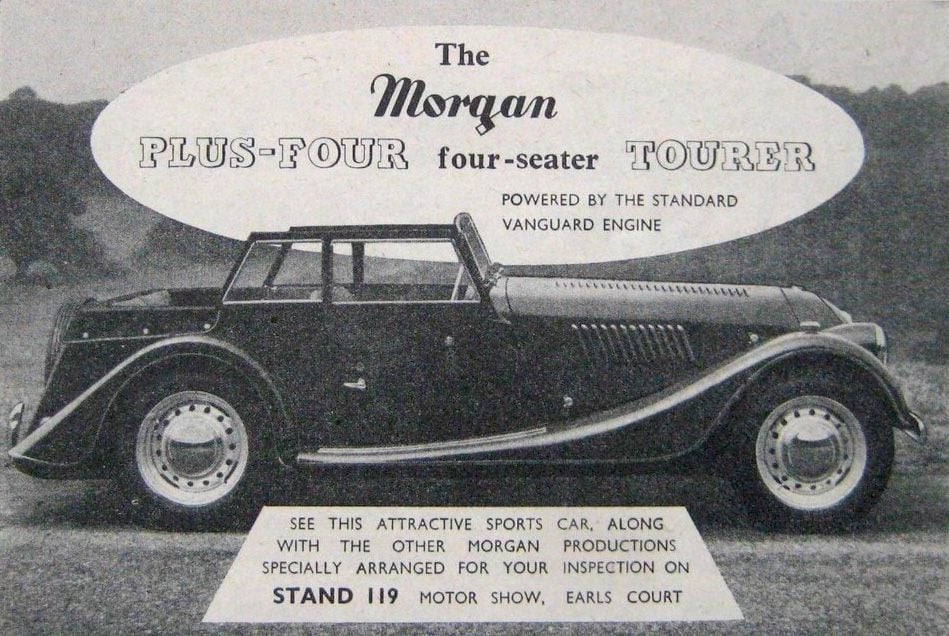
The Morgan Plus 4 arrived in 1950, announced at the Earl’s Court Motor Show in London. It would go on to become one of the company’s most important and enduring models. Image courtesy of the Morgan Motor Company.
Powered by a 1,122cc Coventry Climax engine producing a somewhat modest 34 bhp, the 4/4 was the template from which every subsequent four-wheeled Morgan would descend. Three-wheeler production would continue alongside the new car until 1952, but the future was clear, and the future had four wheels. For the most part, anyway.
Enter The Morgan Plus 4
The Morgan Plus 4 arrived in 1950, announced at the Earl’s Court Motor Show in London. It would go on to become one of the company’s most important and enduring models. It was, in essence, a beefed-up 4/4 now built on a widened and strengthened version of the same steel chassis, with the wheelbase stretched by four inches to accommodate a larger and more powerful 2,088cc Standard Vanguard engine. It was also the first Morgan to be fitted with hydraulic brakes, initially all-drums.
In 1953, a higher-performance version appeared carrying the 1,991cc engine from the Triumph TR2, producing 90 bhp – a significant step up from the Vanguard’s 68 bhp. The Triumph engine proved to be a perfect match, and subsequent Plus 4s would run through the TR3 unit (100 bhp from 1956) and eventually the TR4 engine, which bumped displacement up to 2,138cc from 1962 onward. Front disc brakes became optional in 1959 and were standardized the following year.
Plus 4 body styles included a two-seat sports, a four-seat sports, and a more luxurious drophead coupé. A four-seat version of the DHC was briefly offered between 1954 and 1956, but Morgan actually lost money on every one due to the complexity of construction – just 51 were built before the variant was quietly dropped.
The Morgan Plus 4’s finest hour in competition came at the 1962 24 Hours of Le Mans, where Chris Lawrence and Richard Shepherd-Barron took a class win in the 1601-2000cc GT category – a remarkable result for what was essentially a hand-built, ash wood-framed, steel-chassied roadster racing against purpose-built competitive machinery.
That success then spawned the Plus 4 Super Sports, a lightweight, tuned-engine variant of which just over 100 examples were produced. Surviving examples are hugely collectible today.
Production of the original Plus 4 ended in 1969 after supplies of the Triumph engine dried up. In total, 4,584 cars had been built during that first run. But it wouldn’t be the last.
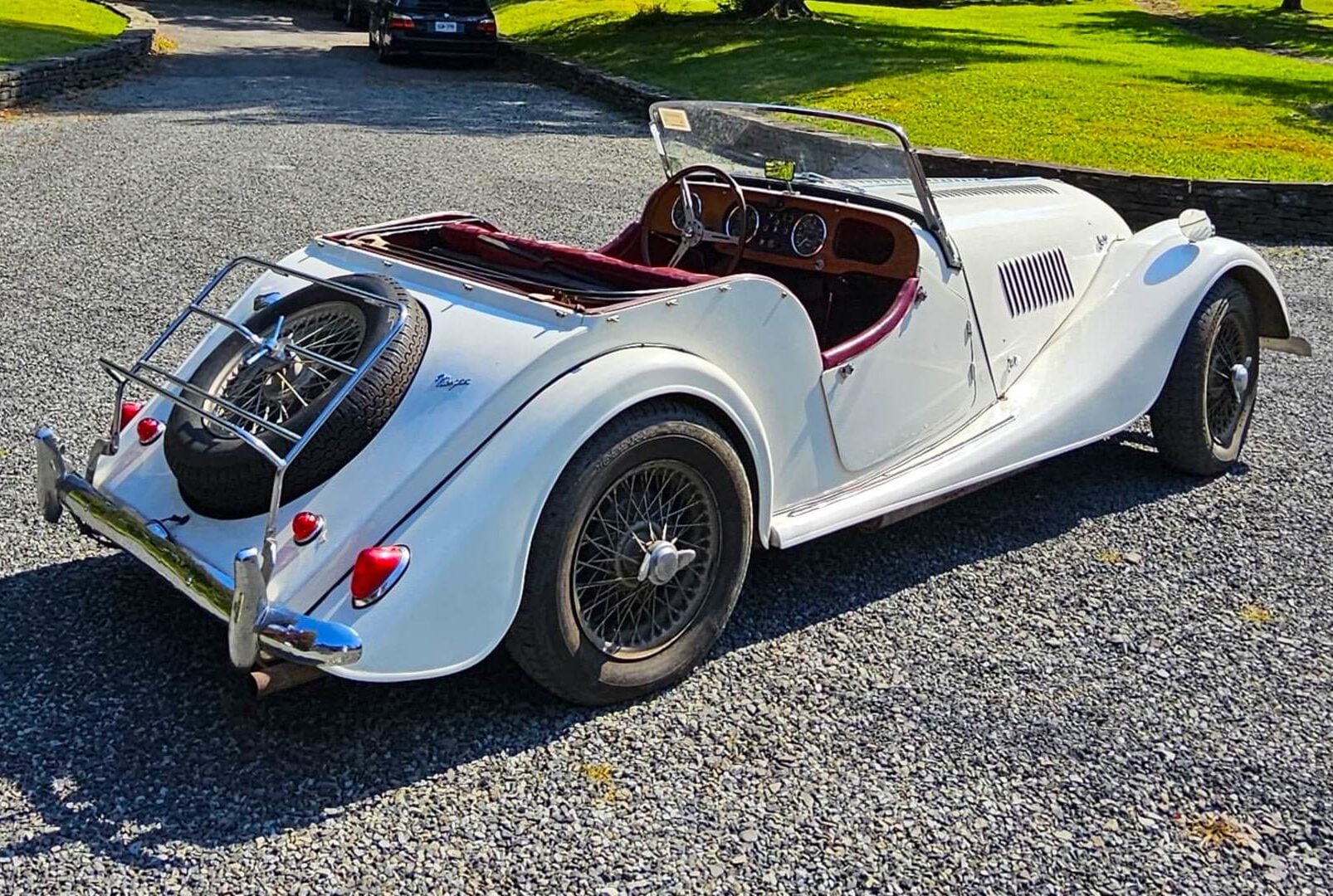
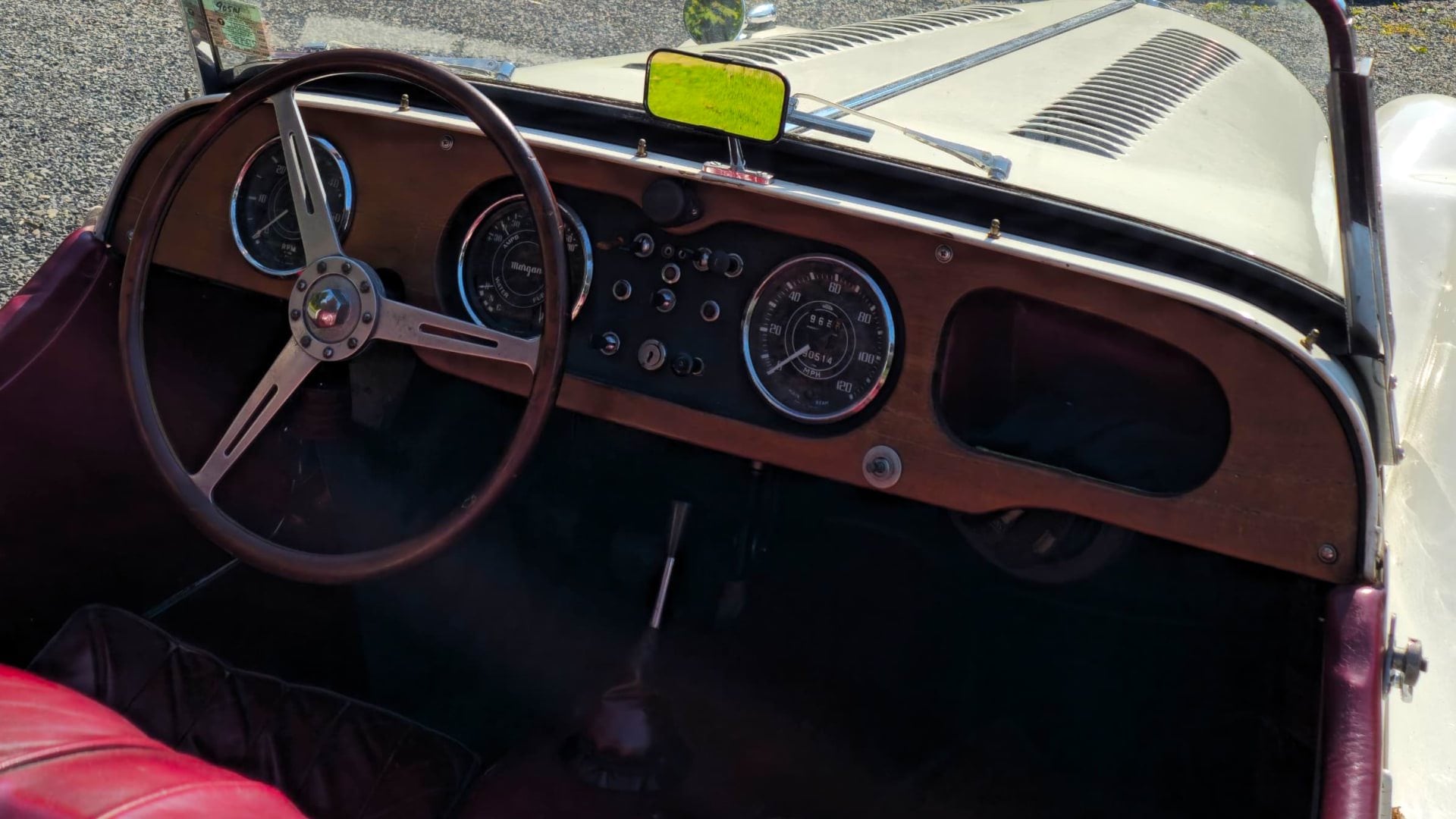
The cabin has a wood dash trim, and the body is built in the traditional Morgan fashion with an ash wood frame over a steel ladder chassis. External details include a luggage rack, knock-off wire wheels, and a rear-mounted spare tire.
The Car That Wouldn’t Stay Dead
The Plus 4 returned to production in 1985, now fitted with a 2.0 liter Fiat Twin Cam engine, before switching to Rover’s M16i unit in 1988, which bumped output to 138 bhp. In 1992, the car adopted the wider chassis from the V8-powered Plus 8, gaining an additional four inches of cabin width.
This second-series Plus 4 underwent 114 design changes during its run, including a galvanized steel chassis from 1995 and superformed aluminum wings from 1998, before production paused again in 2000.
It came back yet again in late 2004, this time powered by a 2.0 liter Ford Duratec engine producing 145 bhp, later increased to 154 bhp. This version would run until 2020, when it was finally succeeded by the all-new Plus Four (now spelled out as two words), built on Morgan’s CX-Generation bonded aluminum platform and powered by a 2.0 liter turbocharged BMW four-cylinder producing a hefty 255 bhp.
The new car was a genuine leap forward, it was lighter, stiffer, and dramatically more powerful, but it kept that classic Morgan silhouette, offered wire wheels, and kept the hand-built ethos alive that defined every Plus 4 before it.
A Little Bit Of Glorious Stubbornness
Throughout all of this, the Morgan Motor Company itself has remained remarkably successful. HFS ran the business until his death in 1959 at the age of 77. His son Peter took over and guided the company for over four decades, until shortly before his own death in 2003.
The Morgan family kept ownership for most of the company’s life, with Investindustrial, a European investment group, acquiring a majority stake in 2019. The family still holds a minority shareholding and remains closely involved with the company.
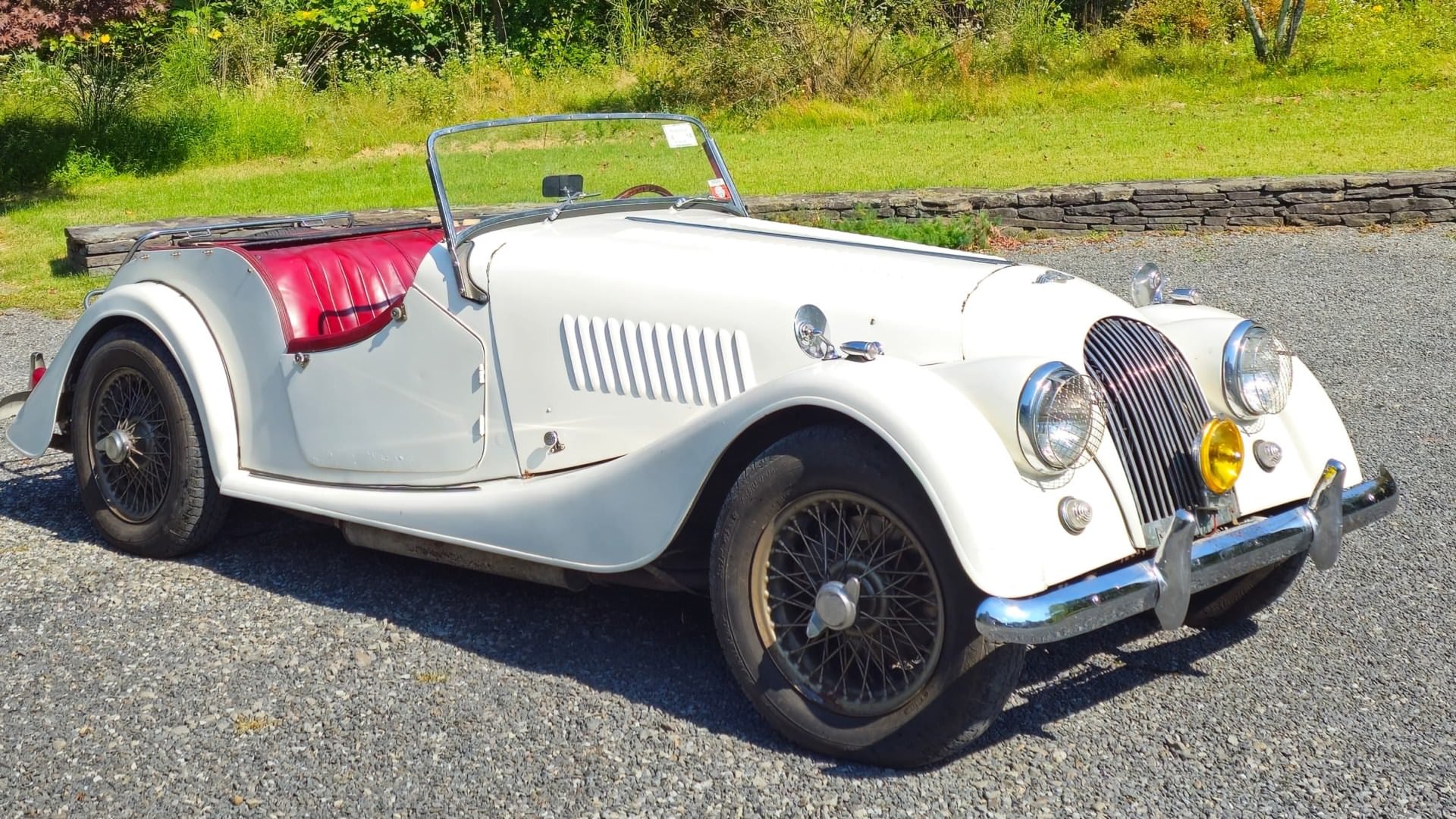
This is a Morgan Plus 4 is a TR4-engined example from the 1962-1969 production period with the 2.1 liter inline-four and 4-speed manual transmission, and it’s presented largely original condition with a cream exterior over a red interior.
Morgan employs roughly 220-250 people at its factory on Pickersleigh Road in Malvern, on the same site where production moved in 1913, and it builds somewhere in the region of 630 cars per year. Ash wood is still used to frame the body shells, just as it has been for more than a century.
In 1990, BBC presenter Sir John Harvey-Jones visited the factory for his Troubleshooter television program and recommended modernizing production and clearing the order backlog. Morgan politely ignored him. Sales went up. Harvey-Jones later said he was pleased to have been proven wrong.
That’s Morgan in a nutshell, really. It’s a company that does things its own way, builds cars that look like they rolled out of 1955, and has outlasted nearly every British sports car manufacturer that ever tried to teach it a lesson about the future.
The 1964 Morgan Plus 4 Roadster Shown Here
This is a Morgan Plus 4 is a TR4-engined example from the 1962-1969 production period with the 2.1 liter inline-four and 4-speed manual transmission, and it’s presented largely original condition with a cream exterior over a red interior.
The cabin has a wood dash trim, and the body is built in the traditional Morgan fashion with an ash wood frame over a steel ladder chassis. External details include a luggage rack, knock-off wire wheels, and a rear-mounted spare tire.
The car is noted as having been owned by Michael Lang, the American concert promoter and co-creator of the 1969 Woodstock Music & Art Festival. Born in Brooklyn in 1944, Lang first made his name organizing the Miami Pop Festival in 1968 before partnering with Artie Kornfeld, John P. Roberts, and Joel Rosenman to stage Woodstock on Max Yasgur’s dairy farm in Bethel, New York, in August of 1969 – an event that drew an estimated 400,000 people and became one of the defining cultural moments of the twentieth century.
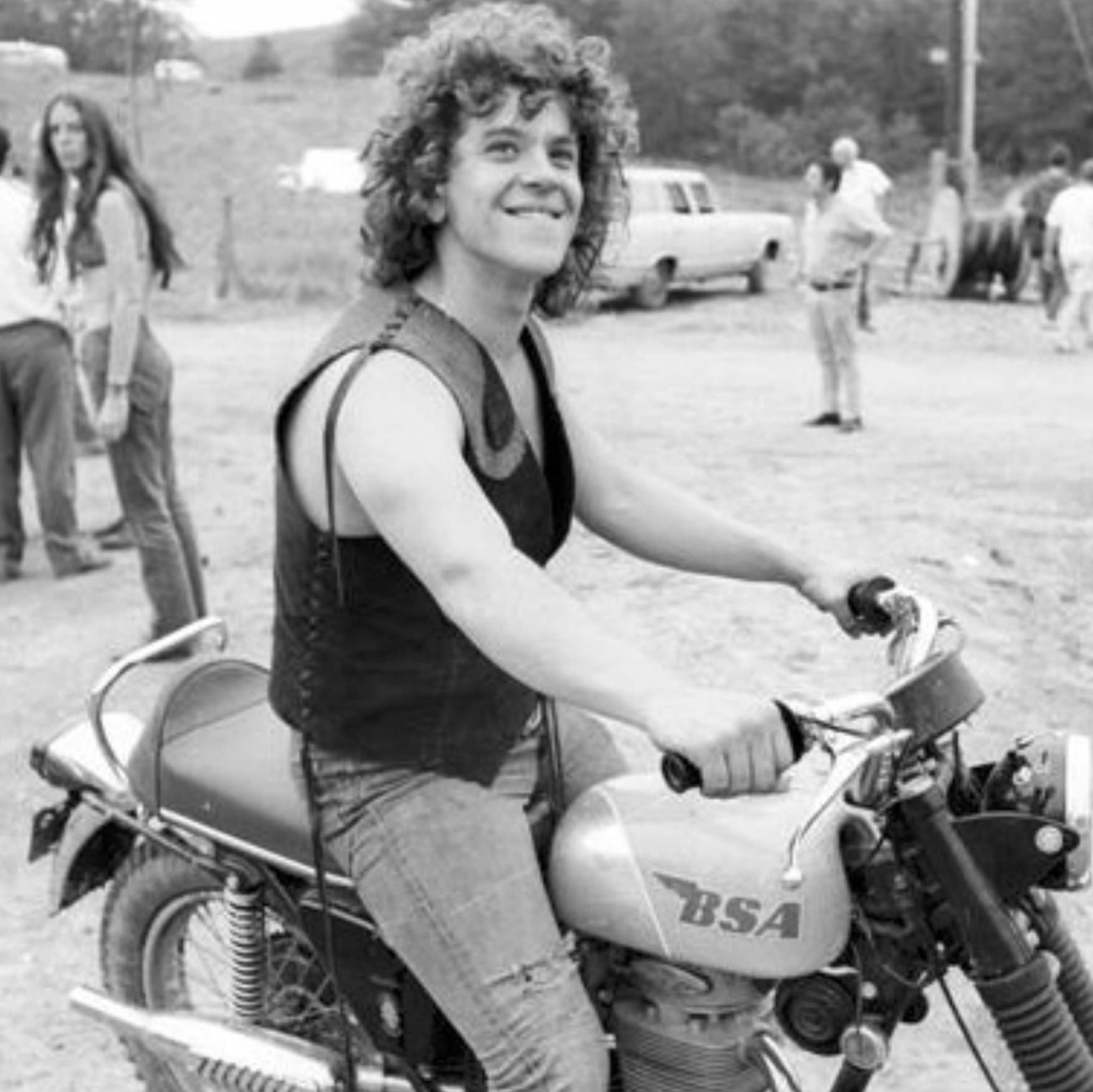
Michael Lang, the American concert promoter and co-creator of the 1969 Woodstock Music & Art Festival. Image courtesy of the Woodstock Archives.
Lang went on to organize Woodstock ’94 and Woodstock ’99, and over the course of his career he managed and produced for artists including Joe Cocker, Billy Joel, and Rickie Lee Jones, among others. He also served as a consultant to the Rolling Stones and founded Just Sunshine Records and the Michael Lang Organization.
This car is now due to roll across the auction block with Mecum in late July, if you’d like to read more about it or register to bid you can visit the listing here.
Images courtesy of Mecum

Articles that Ben Branch has written have been covered on CNN, Popular Mechanics, Smithsonian Magazine, Road & Track Magazine, the official Pinterest blog, the official eBay Motors blog, BuzzFeed, Autoweek Magazine, Wired Magazine, Autoblog, Gear Patrol, Jalopnik, The Verge, and many more.
Silodrome was founded by Ben back in 2010, in the years since the site has grown to become a world leader in the alternative and vintage motoring sector, with well over a million monthly readers from around the world and many hundreds of thousands of followers on social media.