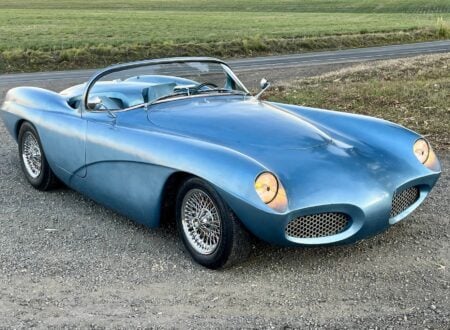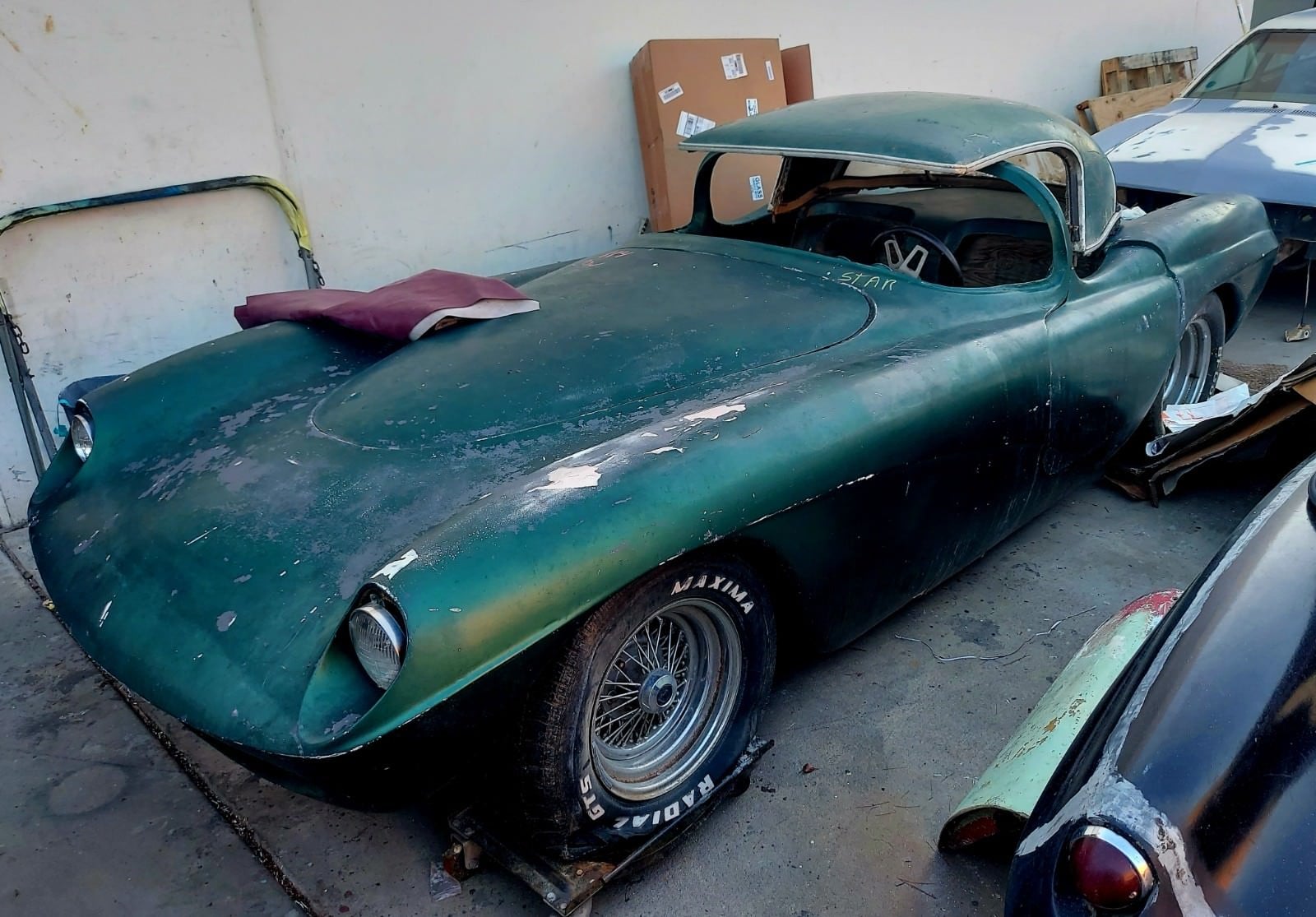
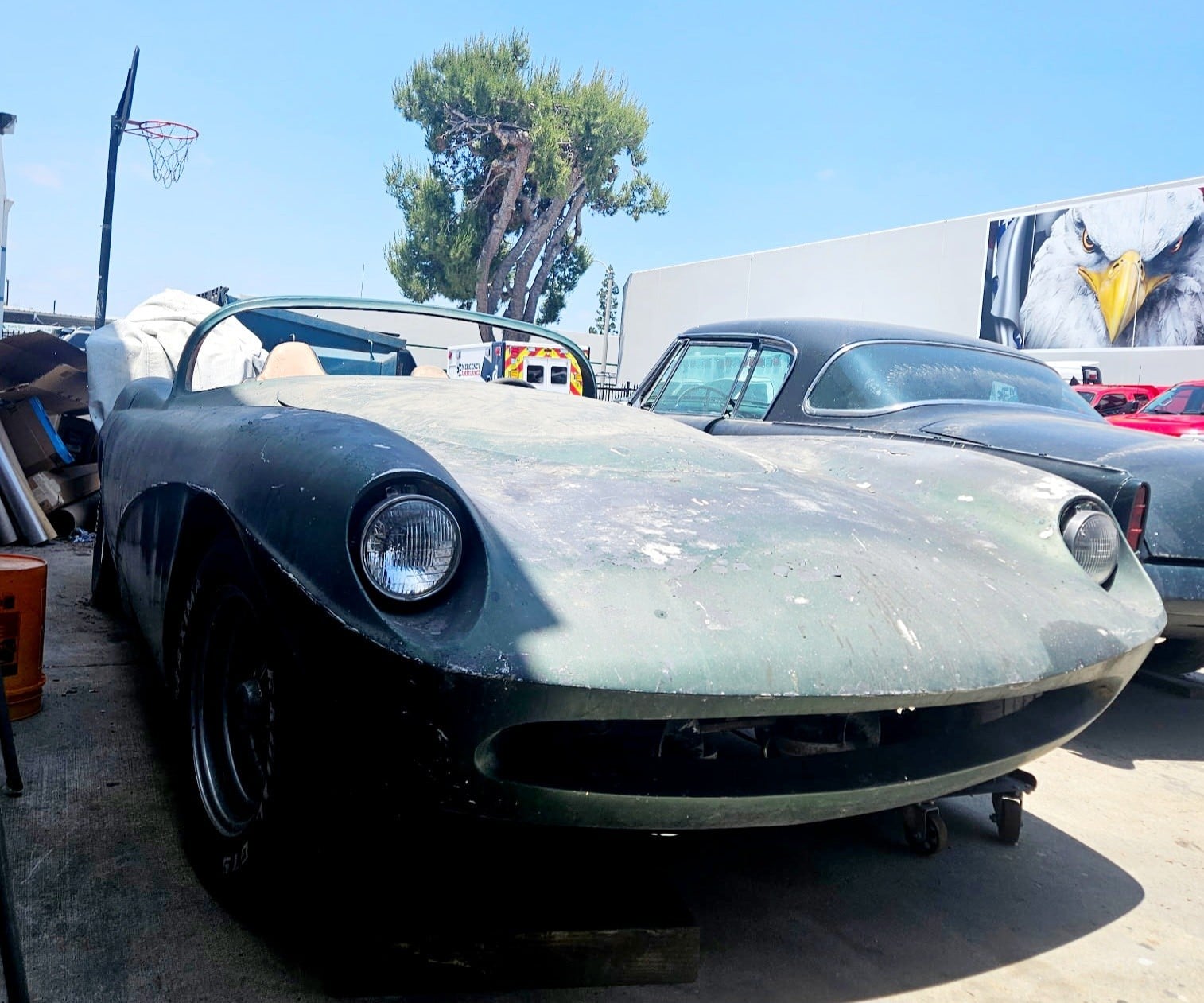
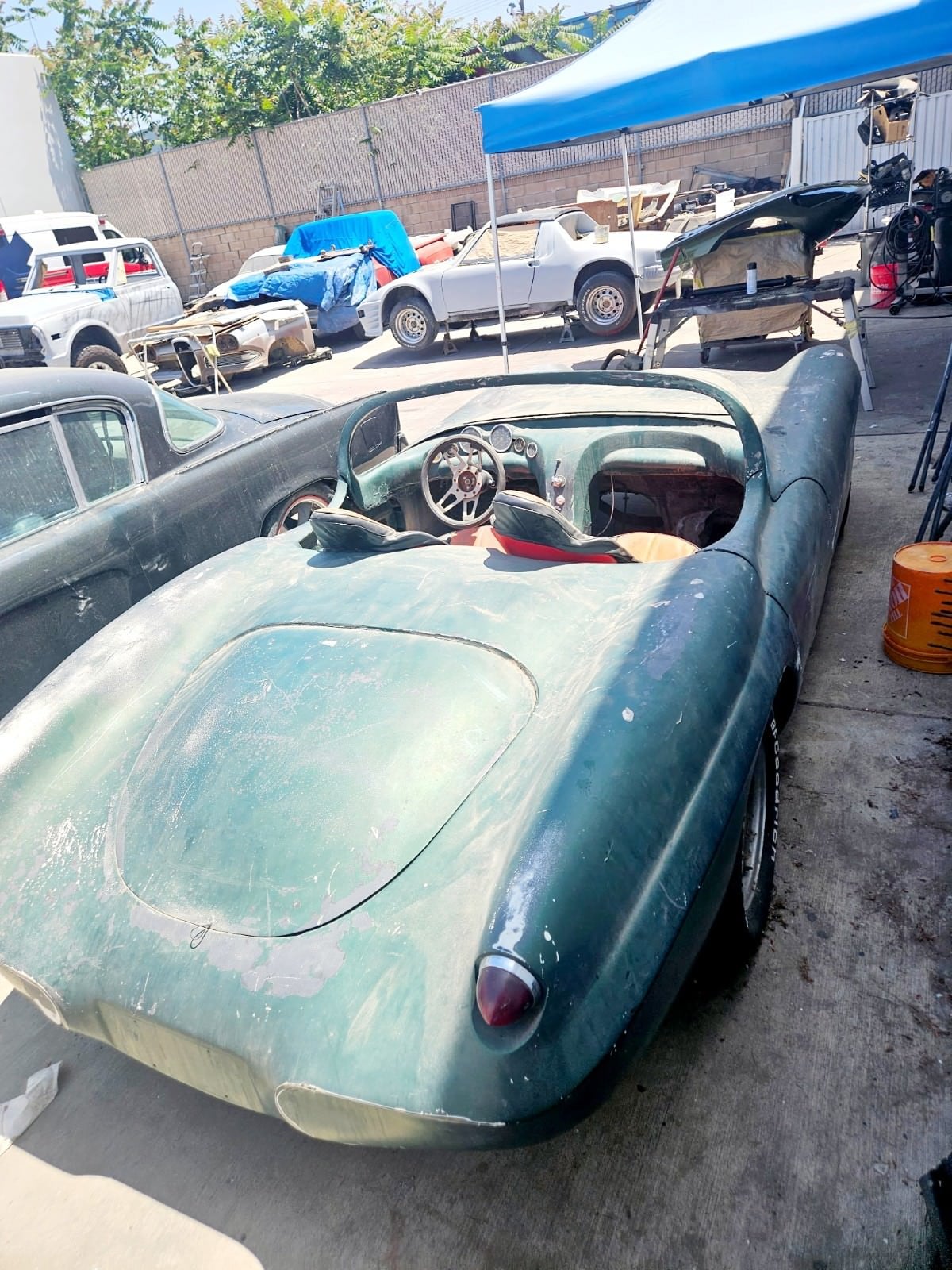
This is an original 1960s-era LaDawri Daytona that’s powered by a 350 Chevrolet V8, or at least it will be once the engine is put back into the car. As you can see by the images, this is a project vehicle in every sense of the term.
It’s being offered for sale on eBay out of Stanton, California with a Buy It Now price of $8,500 USD. The sale includes the rolling, steering chassis, the engine, and the body, with some other parts plus a title.
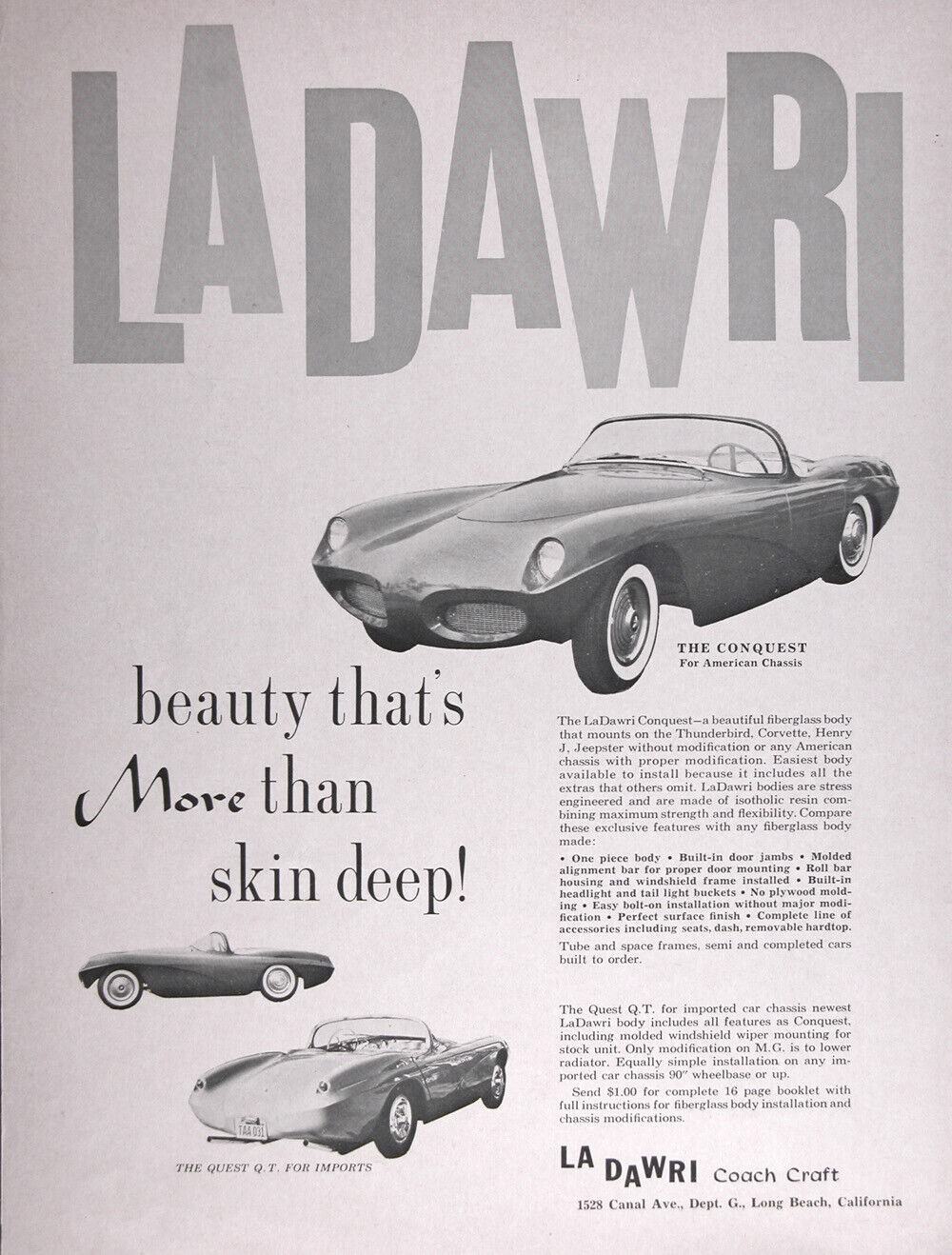
 The Conquest was LaDawri’s flagship model, it was introduced in 1956. It was an elegant two-seat open roadster on a 100 – 104 inch (≈2540 – 2640 mm) wheelbase, the body would be fitted by the builder with donor running gear of their choice – including small-block V8s or more modest straight-six or four-cylinder units.
History Speedrun: LaDawri Coachcraft
The history of LaDawri Coachcraft began in the mid-1950s, when a young Canadian entrepreneur named Leslie Albert Dawes, who was working in British Columbia, turned his attention to the fast-emerging world of fiberglass sports car bodies. At this time fiberglass was still a new and revolutionary composite material, it’s been called the “carbon fiber of the 1950s” for this very reason.
In 1956 Dawes introduced the LaDawri Cavalier, it’s now widely acknowledged as Canada’s first production fiberglass-bodied sports car. This small-scale enterprise rapidly evolved – the “LaDawri” name derives from his name “L.A. Dawes” combined with the surname of his business partner Don Wright – “La Da Wri” or “LaDawri.”
In 1957 Dawes relocated the company’s operations to Southern California, moving into the hotbed of post-war-kit-car activity. From that year onward the company offered a series of bodies to the enthusiast market, typically in kit form for home-builders. According to period sources we were able to dig up, LaDawri eventually offered around 19 different models and sold roughly 700 bodies between its founding and its eventual closure in 1965.
LaDawri’s most famous offering was the two-seat roadster design originally marketed as the Cavalier but soon renamed the LaDawri Conquest. This model appeared on the cover of Road & Track magazine in July 1957, giving the company a huge injection of public awareness in the all-important US market.
LaDawri also produced other bodies like the Quest (a smaller-wheelbase variant), the Daytona, and the Sebring. Each body was designed to accept donor chassis parts (primarily the frame, suspension, drivetrain) from common production cars of the era. In 1961 LaDawri acquired the moulds and rights of the Victress line and rebadged models like the Sicilian and Castilian coupes under LaDawri branding.
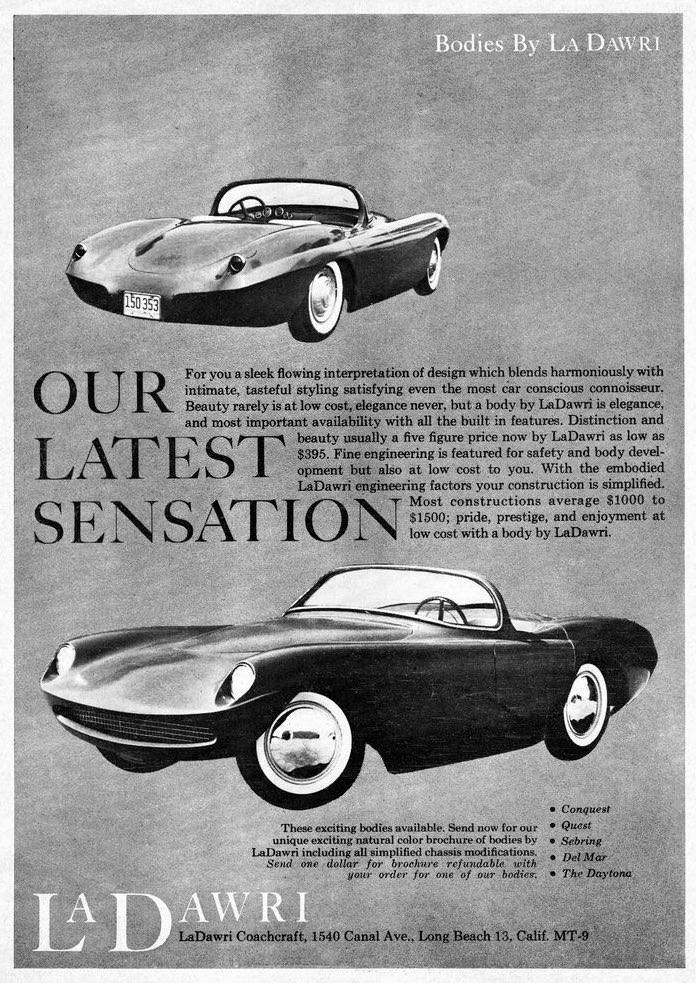
LaDawri’s most famous offering was the two-seat roadster design originally marketed as the Cavalier but soon renamed the LaDawri Conquest. This model appeared on the cover of Road & Track magazine in July 1957, giving the company a huge injection of public awareness in the all-important US market. Image courtesy of Undiscovered Classics.
In the years after WWII and into the 1950s there was a relative lack of homegrown, mass-produced American sports cars. The Corvette came along in 1953 and the Thunderbird in 1955, but for the most part the market was filled by British and European imports.
Companies like LaDawri were founded to help fill this niche, offering lightweight fiberglass bodies buyers could mount them on used American or Volkswagen mechanicals, creating a custom sports roadster at relatively low cost. Demand for these cars peaked in the late 1950s when post-war enthusiasm, simpler regulations, and the relative lack of local American sports cars had created a perfect storm.
The Conquest would be LaDawri’s flagship model, it was introduced in 1956. It was an elegant two-seat open roadster on a 100 – 104 inch (≈2540 – 2640 mm) wheelbase, the body would be fitted by the builder with donor running gear of their choice – including small-block V8s or more modest straight-six or four-cylinder units.
Since the chassis and drivetrain were supplied by the customer, power output and final build specs varied widely. Some Conquests used Chevrolet 265 V8s or Ford Thunderbird V8s, offering real performance thanks to the lightweight body. Others used more modest engines, like four or six cylinder units, thus performance figures range significantly depending on donor and build quality.
By the early to mid-1960s, the self-built car market began to languish – mass-produced sports cars from the major manufacturers, like the Ford Mustang and all the other affordable two-seaters reduced the appeal of one-off kit bodies.
In addition to all of this, overhead costs rose, and rumors abound that a factory fire or a tax-related issue contributed to LaDawri’s closure around 1965.
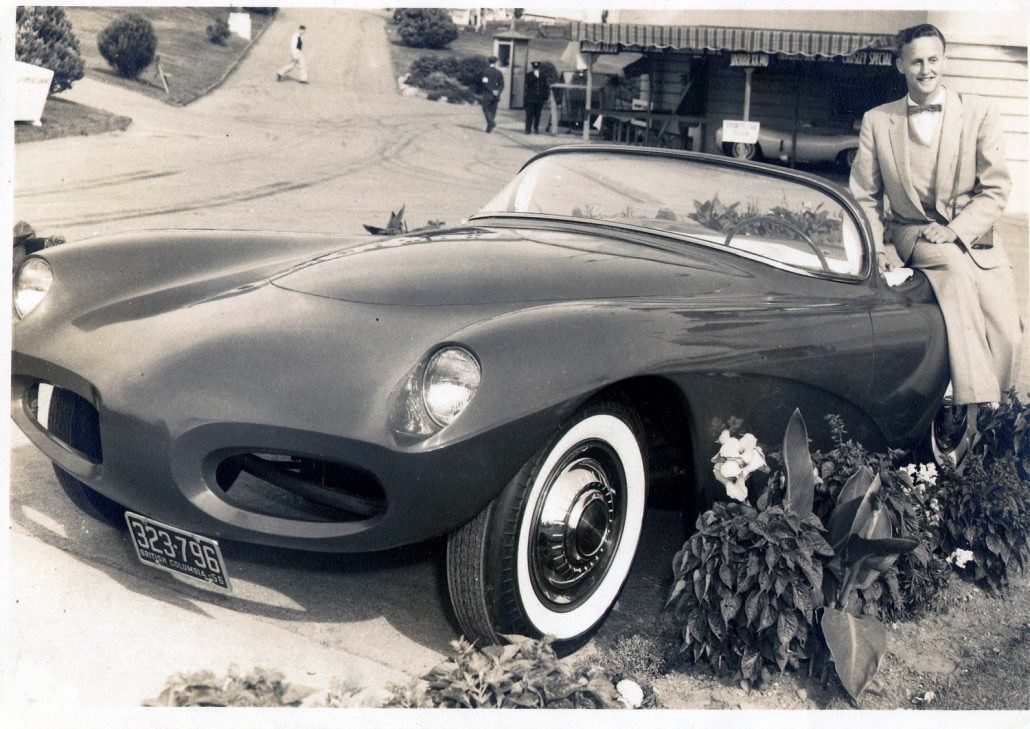
Earliest Publicity Still of Les Dawes and his LaDawri Conquest. Published in Vancouver Sun, 1956 When the Name of the Sports Car Was the “Cavalier” and Had Not Yet Changed to the “Conquest.” Image courtesy of Undiscovered Classics.
LaDawri’s legacy now rests chiefly with its niche among fiberglass-kit enthusiasts -the Conquest holds historic status as one of the earliest fiberglass sports-car bodies offered commercially in North America, and the fact that it was developed in Canada before migrating to California adds some unique historic texture.
Communities and registries for these cars exist, and survivors tend to command interest from collectors of 1950s DIY sports cars.
The LaDawri Daytona Project Car Shown Here
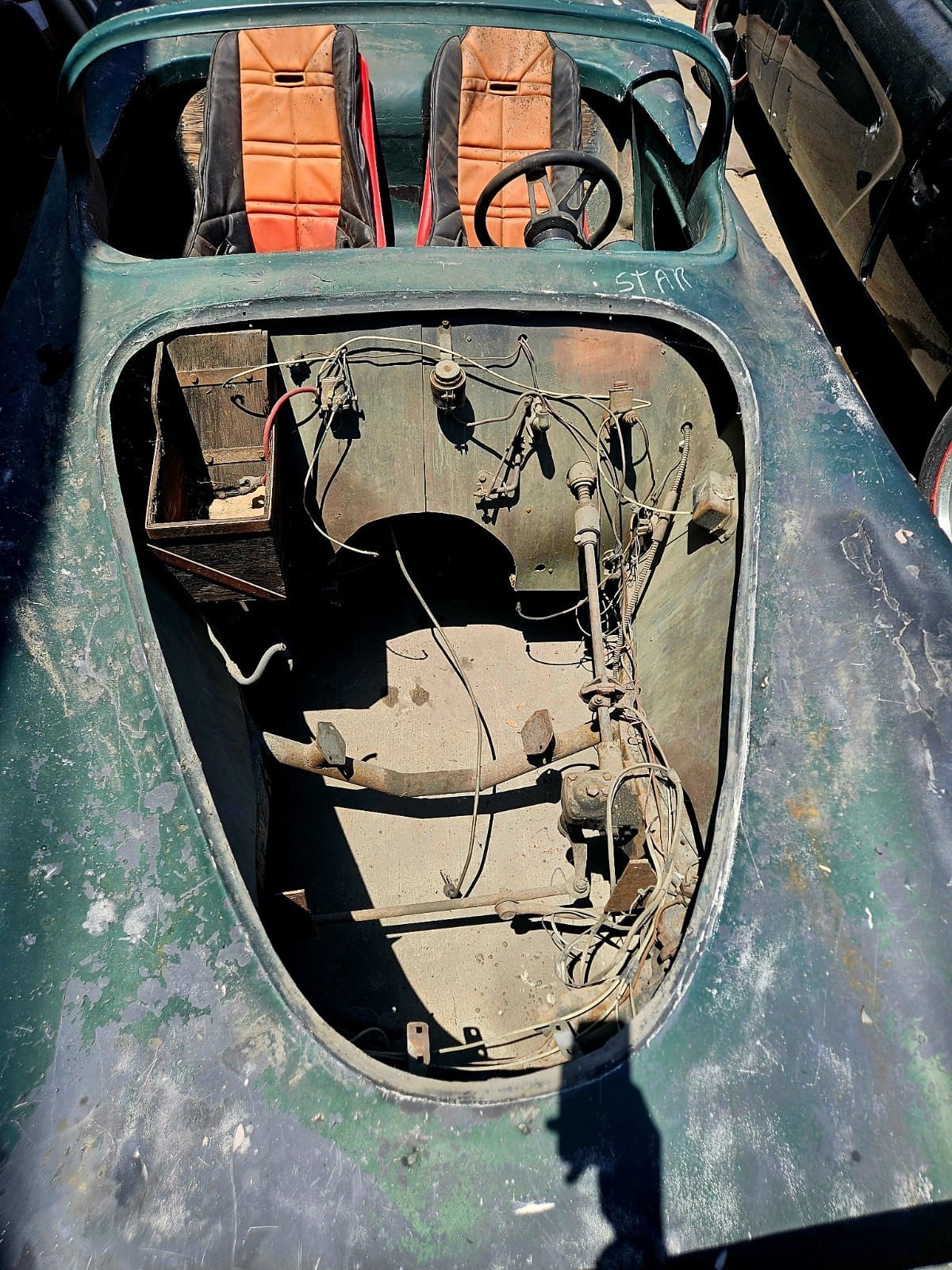
This LaDawri Daytona is offered as a rolling, steering project on what’s said to be a 1960s ladder-frame chassis, with a Chevy rear end already in place and a Chevy 350 V8 included but currently out of the car.
No transmission is fitted, which does at least leave the next owner free to choose between an automatic or a manual. Hopefully they make the correct decision and choose a three-pedal-row-your-own gears arrangement.
The chassis is described in this listing as having ample clearance and enough strength to accept an even larger engine if wanted, though given the low curb weight of the car, it might be overkill to go over 350.
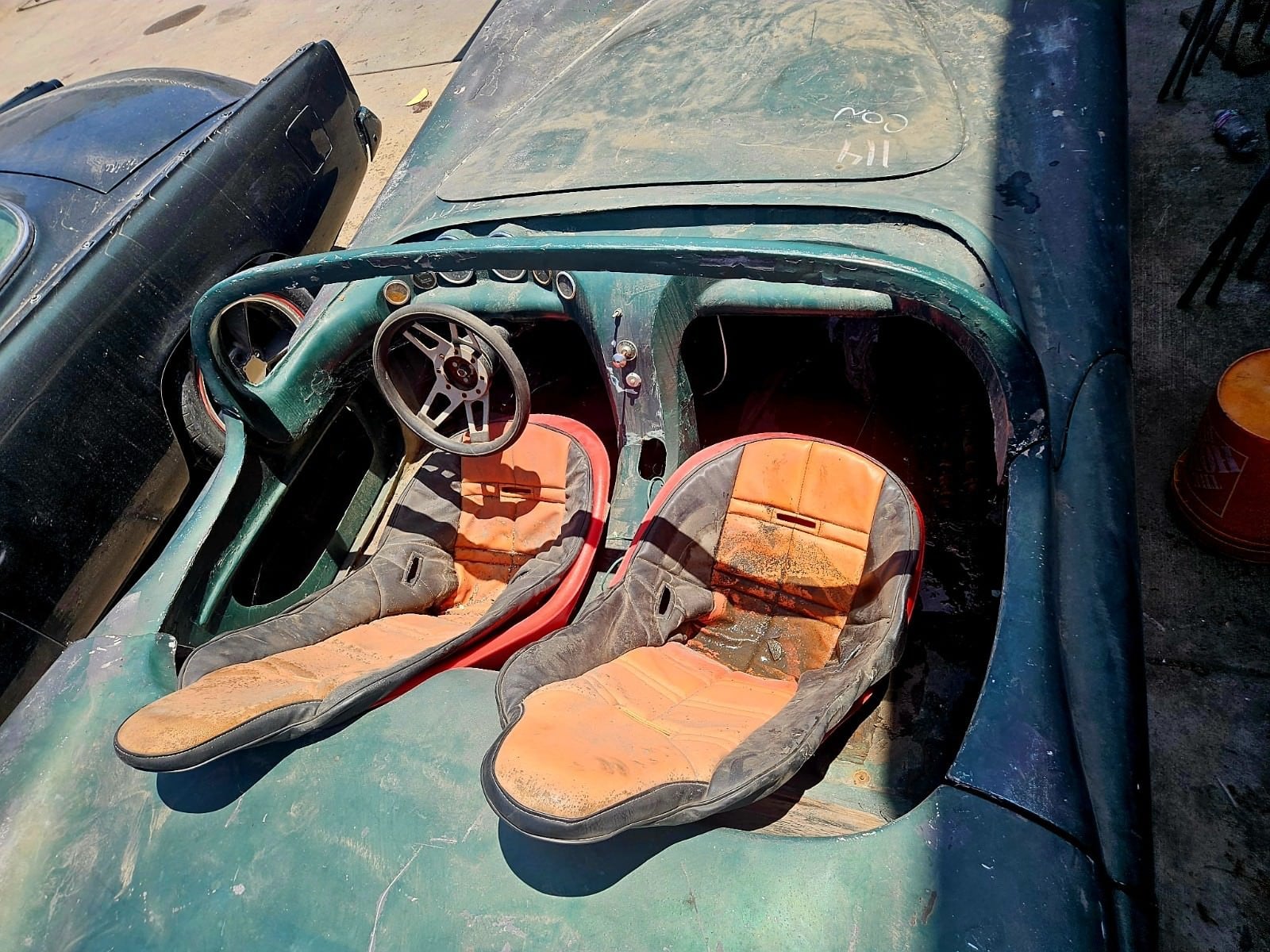
The 100 inch Daytona wheelbase sits close to (though not identical to) the C1 Corvette’s 102 inches, which gives some sense of the scale of the car. Inside, the seats, dash, gauges, and steering are all in place, with the gauge and seating layout clearly drawing on period-Corvette cues.
The body itself is reported to be in good shape for its age, one benefit of a full fiberglass body is that it doesn’t rust. The windscreen is missing, but that is easily addressed on a Daytona – the factory brochure originally specified a Chevrolet or GMC pickup truck windshield fitted upside down, and the seller notes that the correct donor is a 1957 Chevy pickup.
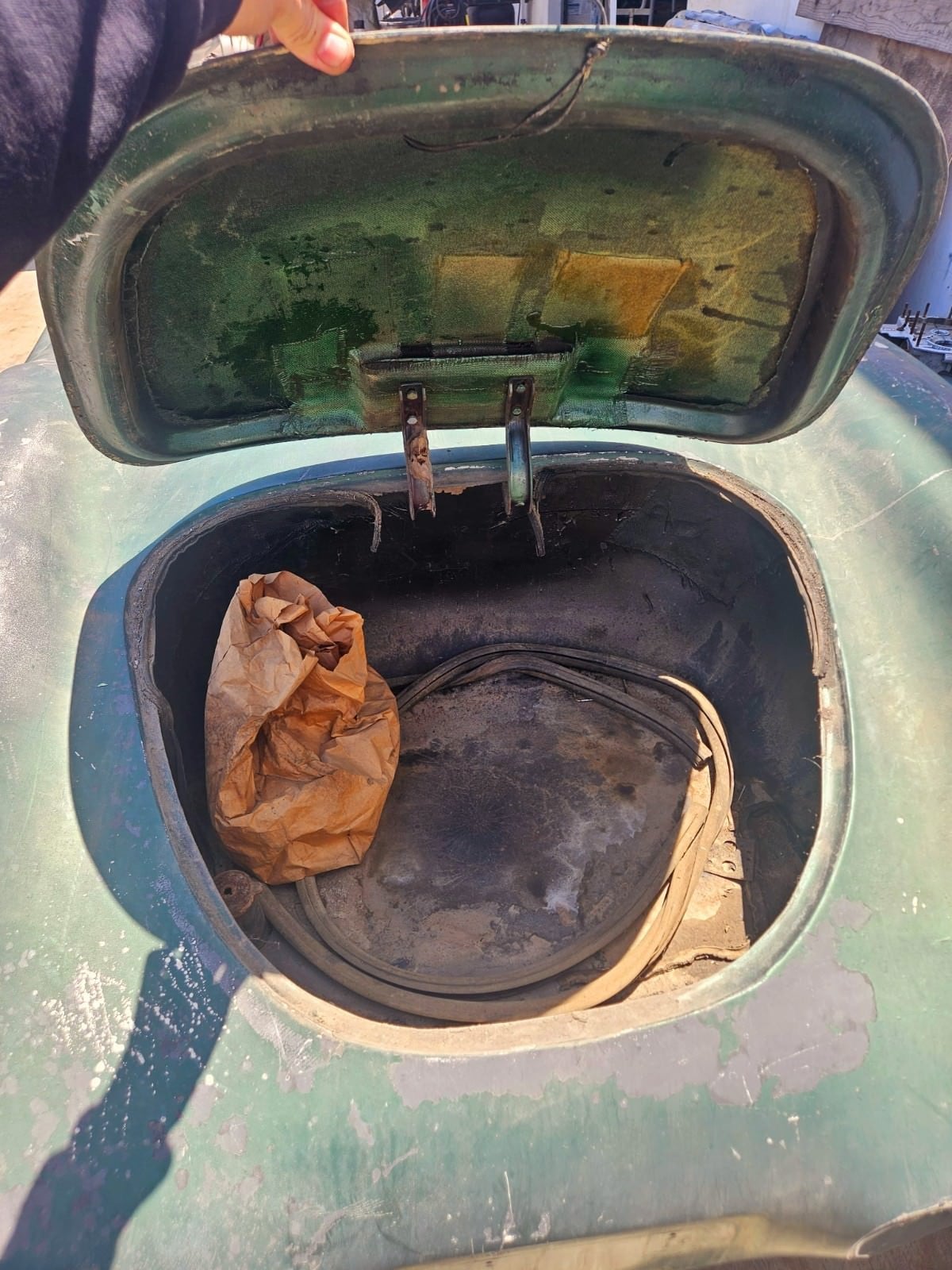
The taillights fitted are described as 1950s Oldsmobile units, a departure from the 1950 Pontiac lights that the LaDawri brochure specified, though a common substitution on owner-built cars of the era.
The hardtop shown in the seller’s photos does not belong to this car and isn’t part of the sale, but open-air driving is what cars like this is all about at the end of the day.
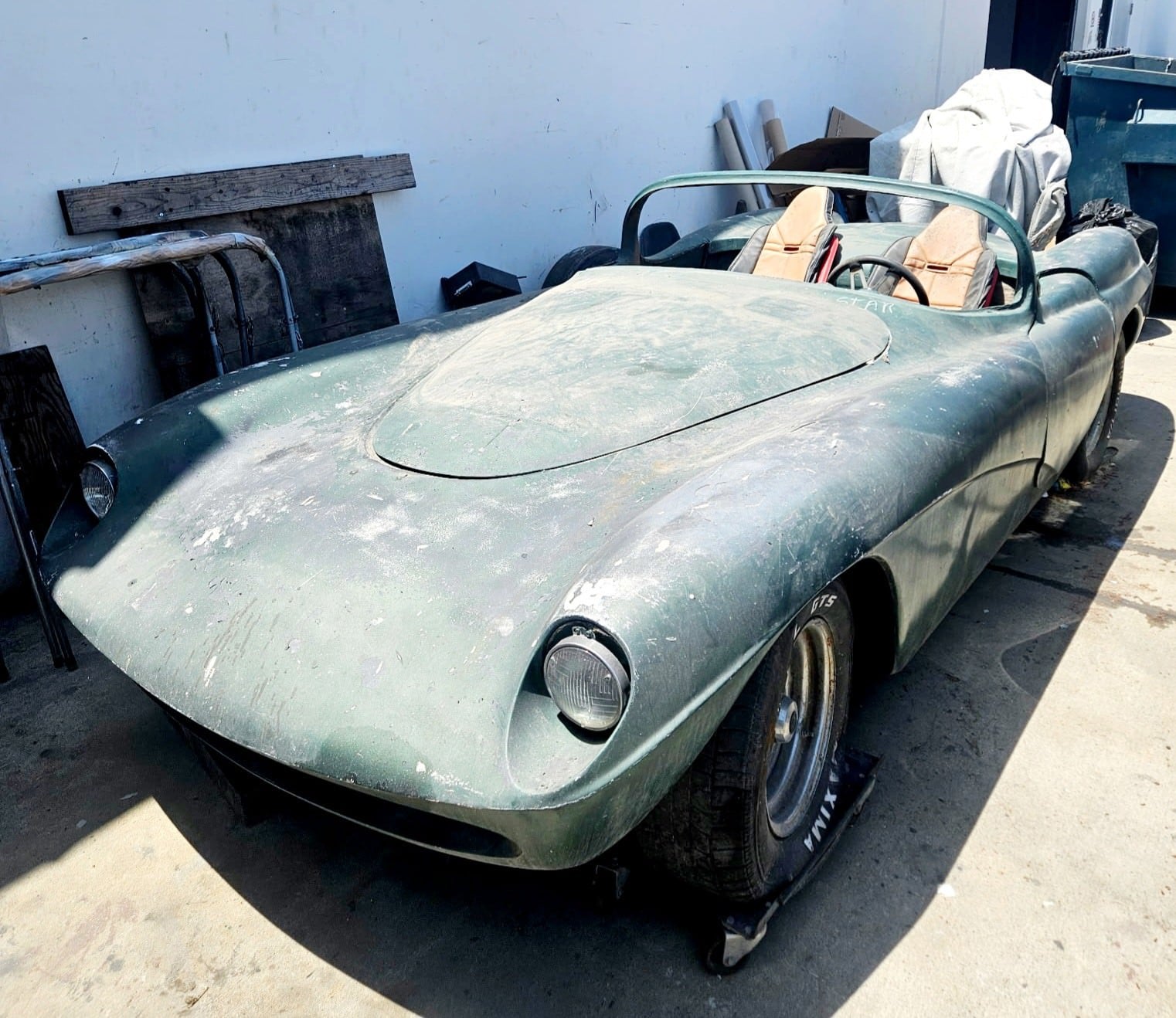
This LaDawri Daytona is offered as a rolling, steering project on what’s said to be a 1960s ladder-frame chassis, with a Chevy rear end already in place and a Chevy 350 V8 included but currently out of the car.
The car is titled as a 1968 Volvo, which is not quite as strange as it sounds. Kit cars have historically been registered under whatever donor VIN the builder had on paper at the time, and a LaDawri Daytona with no factory-issued identification on the body would have needed exactly that kind of workaround to get plates.
It’s now being offered for sale out of California on eBay here with a Buy It Now price of $8,500 USD, and the seller notes that they can assist with shipping arrangements if required.
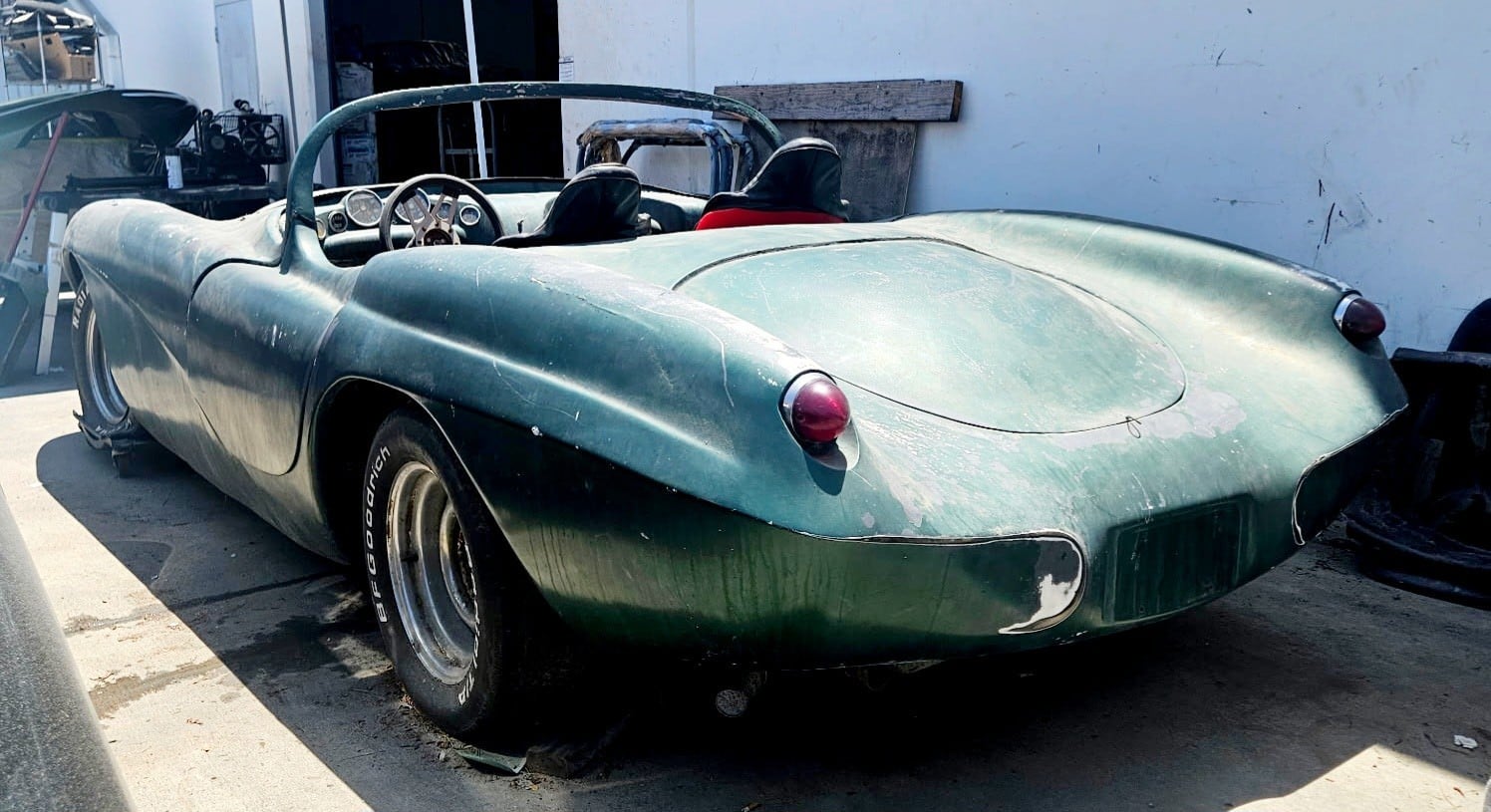
Images courtesy of Driven Co.

Articles that Ben Branch has written have been covered on CNN, Popular Mechanics, Smithsonian Magazine, Road & Track Magazine, the official Pinterest blog, the official eBay Motors blog, BuzzFeed, Autoweek Magazine, Wired Magazine, Autoblog, Gear Patrol, Jalopnik, The Verge, and many more.
Silodrome was founded by Ben back in 2010, in the years since the site has grown to become a world leader in the alternative and vintage motoring sector, with well over a million monthly readers from around the world and many hundreds of thousands of followers on social media.