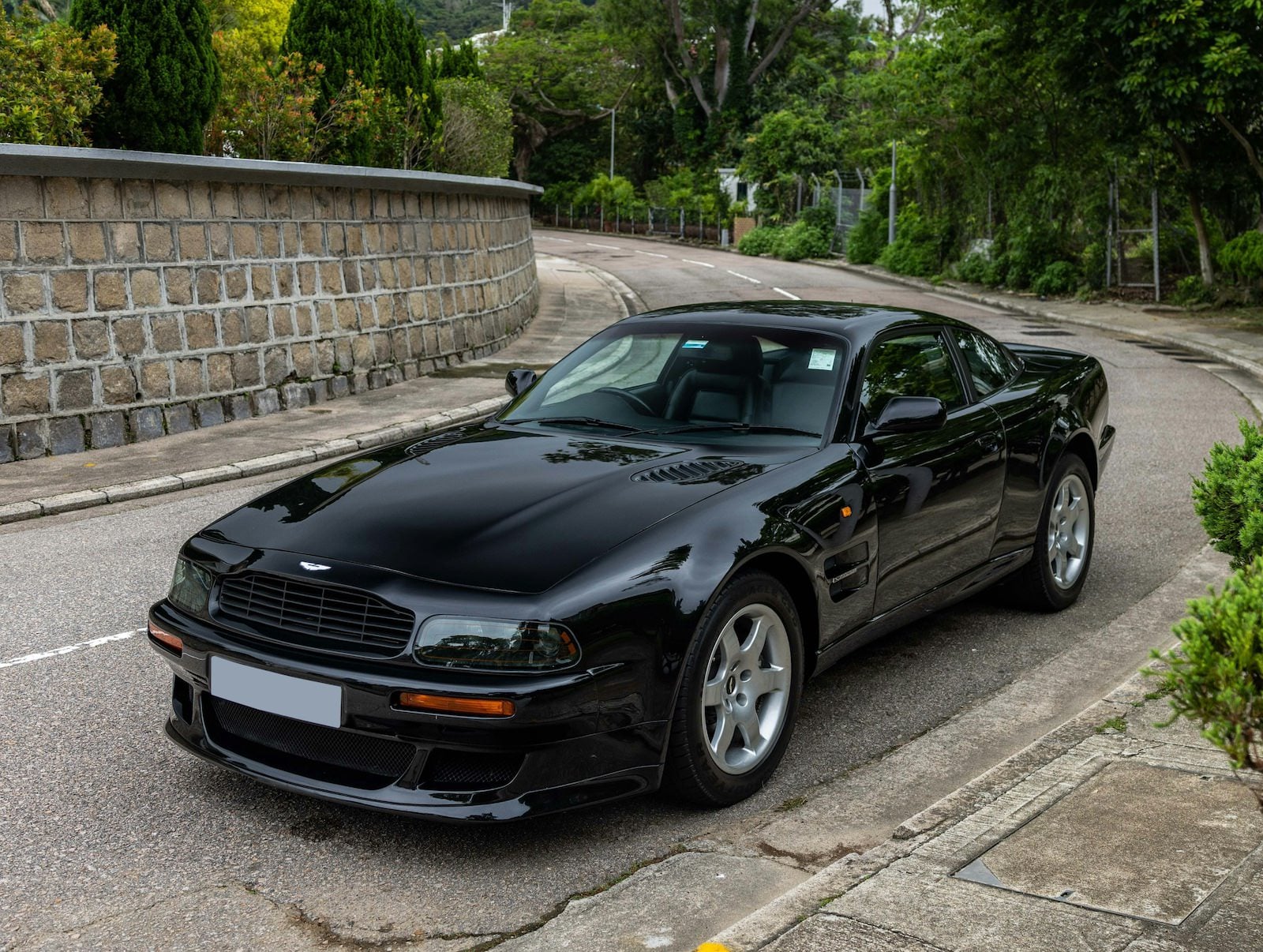
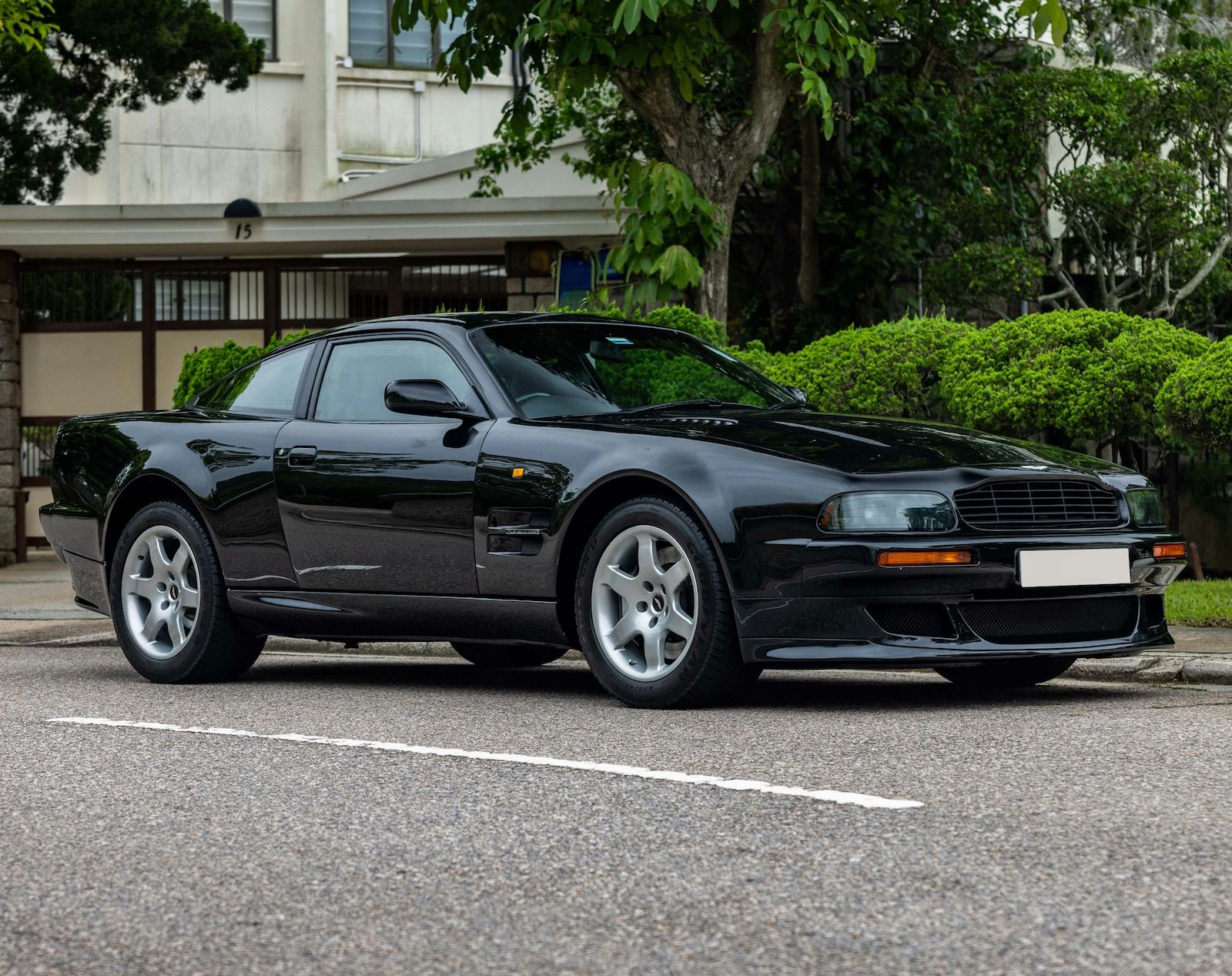
This is a 1997 Aston Martin V8 Vantage V550 that was delivered new to Elton John, the legendary British singer, songwriter, and showman who has sold over 300 million records worldwide since he started out back in the late 1960s.
Elton is famously quite the petrolhead, having owned a remarkable range of cars over the course of his life, including a 1975 Bentley Corniche Convertible, a 1965 Jaguar E-Type, a 1974 Ferrari 365 GT4 BB, a 1993 Jaguar XJ220, a 1973 Rolls-Royce Phantom VI Limousine, and of course, the 1997 Aston Martin V8 Vantage V550 shown here.
Fast Facts: The Aston Martin V8 Vantage V550
- This 1997 Aston Martin V8 Vantage V550 was delivered new to Sir Elton John through H.W.M Ltd. in Surrey in May of 1997. Finished in black over black leather with wood veneer trim, it’s powered by the twin-supercharged 5.3 liter V8 producing 550 bhp, paired with a 6-speed manual gearbox driving the rear wheels.
- The V550 was the last of the old-line Virage-based V8 cars hand-built at Newport Pagnell, sitting in a narrow window between the old world of hand-formed aluminum and the new era of the DB7 and Vanquish. Approximately 235 to 239 standard examples were built, making it one of the rarest British supercars of the 1990s.
- The odometer shows just 9,971 miles, believed genuine, with well-documented service history from new. Early servicing was handled by Aston Martin H.W.M, followed by Weybridge Automobiles, HA Fox Jaguar, Rikki Cann Ltd., and Aston Martin Works, with the most recent major UK service completed in January 2017 at 8,634 miles.
- The car has since been imported into Hong Kong, where road registration costs reportedly exceeded $1 million HKD (approximately $127,600 USD). Since arriving, it’s required substantial mechanical attention including fuel system, cooling system, and clutch work. It’s offered with service records, MOT documentation, a UK V5C copy, and two keys.
History Speedrun: The Aston Martin V8 Vantage V550
The Aston Martin V8 Vantage V550 was the product of a financially strained company that looked at its aging Virage model and decided to turn it into the most powerful production car in the world. This was perhaps not the wisest move, but making sensible business decisions is not something we typically associate with British automakers. They’ve made some of the greatest cars to ever exist mind you, but rarely have they been sensible.
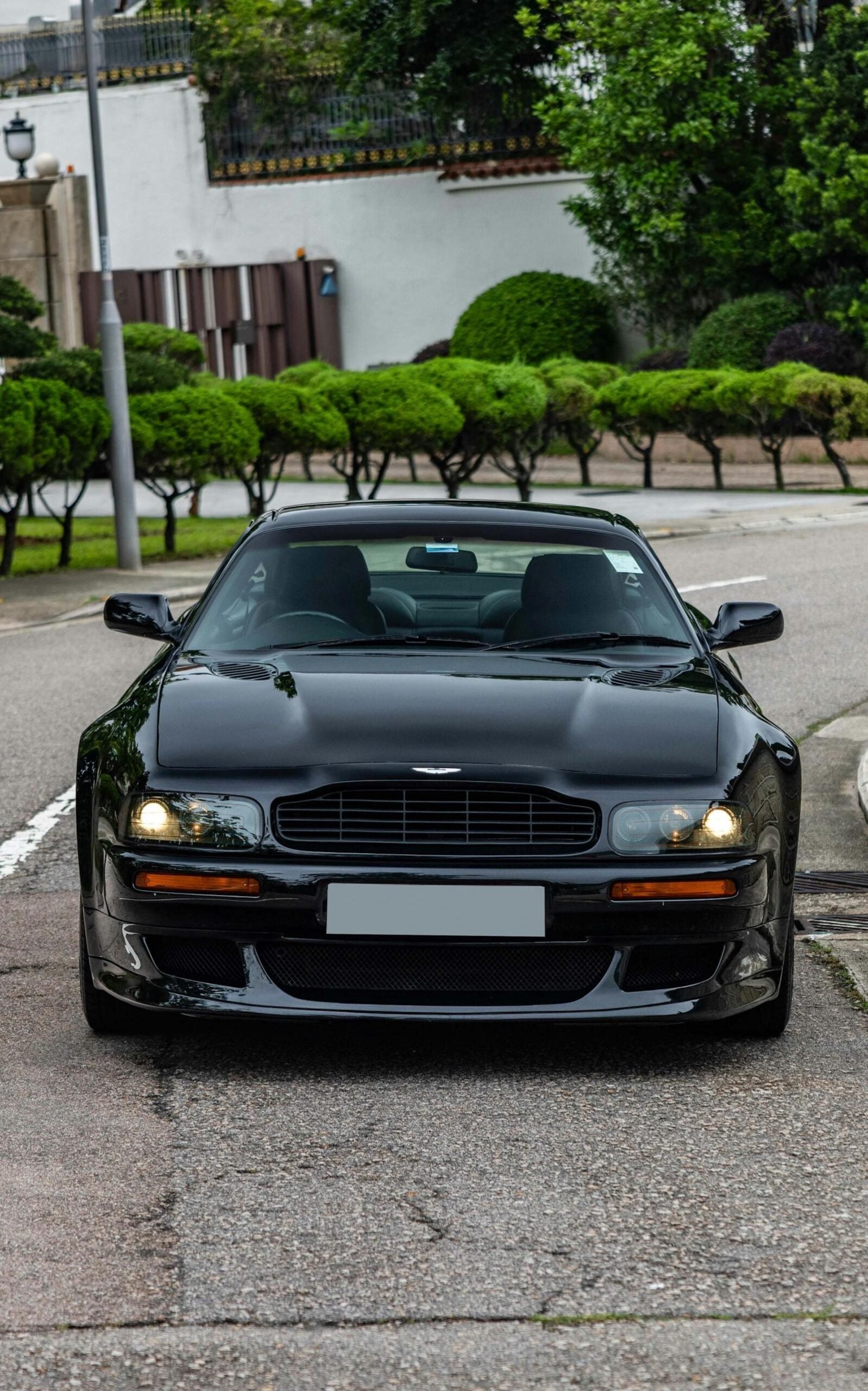
 This is a 1997 Aston Martin V8 Vantage V550 that was delivered new to Elton John, the legendary British singer, songwriter, and showman who has sold over 300 million records worldwide since he started out back in the late 1960s.
To understand the V550, you first have to remember the situation Aston Martin found itself in during the early 1990s. Ford had taken a majority stake in the company in 1987 and assumed full control by 1991, but the money was being funneled toward developing a smaller, more accessible model, the DB7, which would debut at Geneva in March of 1993 on a platform evolved from Jaguar and TWR development work, including XJS-related underpinnings and elements of the cancelled XJ41/42 program.
The hand-built flagship at Newport Pagnell, the Virage, was essentially left to fend for itself. Sales had slowed to a trickle after the late-1980s supercar bubble burst, and Aston needed something dramatic to keep the big car relevant, and to keep those much-needed pounds sterling rolling into the coffers until the DB7 was ready for prime time.
They decided to swing for the fences, and the result of this arrived at the Birmingham Motor Show in October of 1992, when they unveiled the Vantage. It was a car that shared the Virage’s roof and doors and precious little else. It’s worth noting that the “V550” designation didn’t actually exist at launch, the car was simply called the Aston Martin Vantage. It was only retroactively tagged “V550” after the more powerful V600 upgrade package arrived in 1998, and the distinction became necessary. But V550 is the name that stuck, and it’s how the car is universally known today.
The Vantage’s restyled body was developed in-house at Aston Martin, building on the Virage’s fundamental structure – itself originally penned by the design partnership of John Heffernan and Ken Greenley.
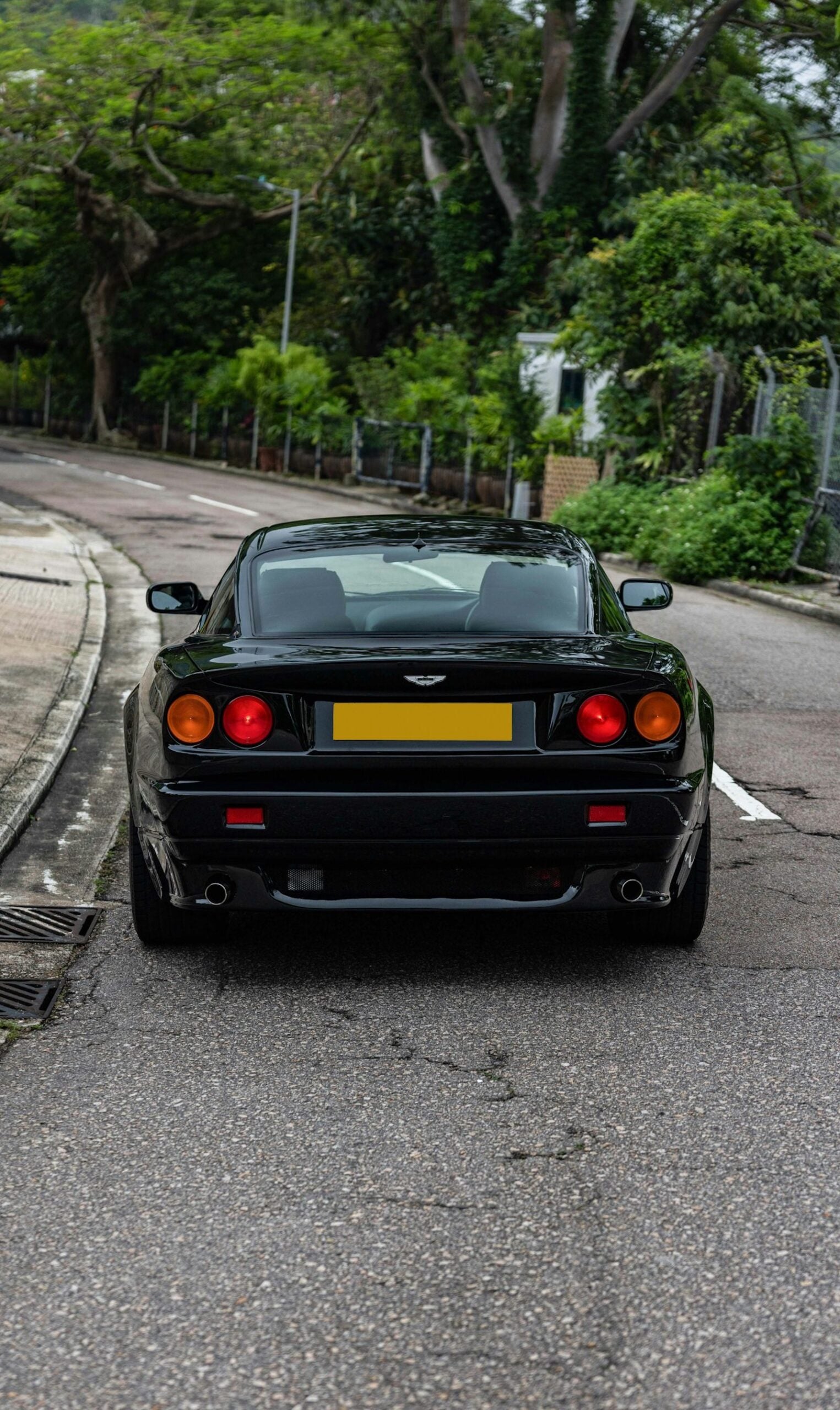
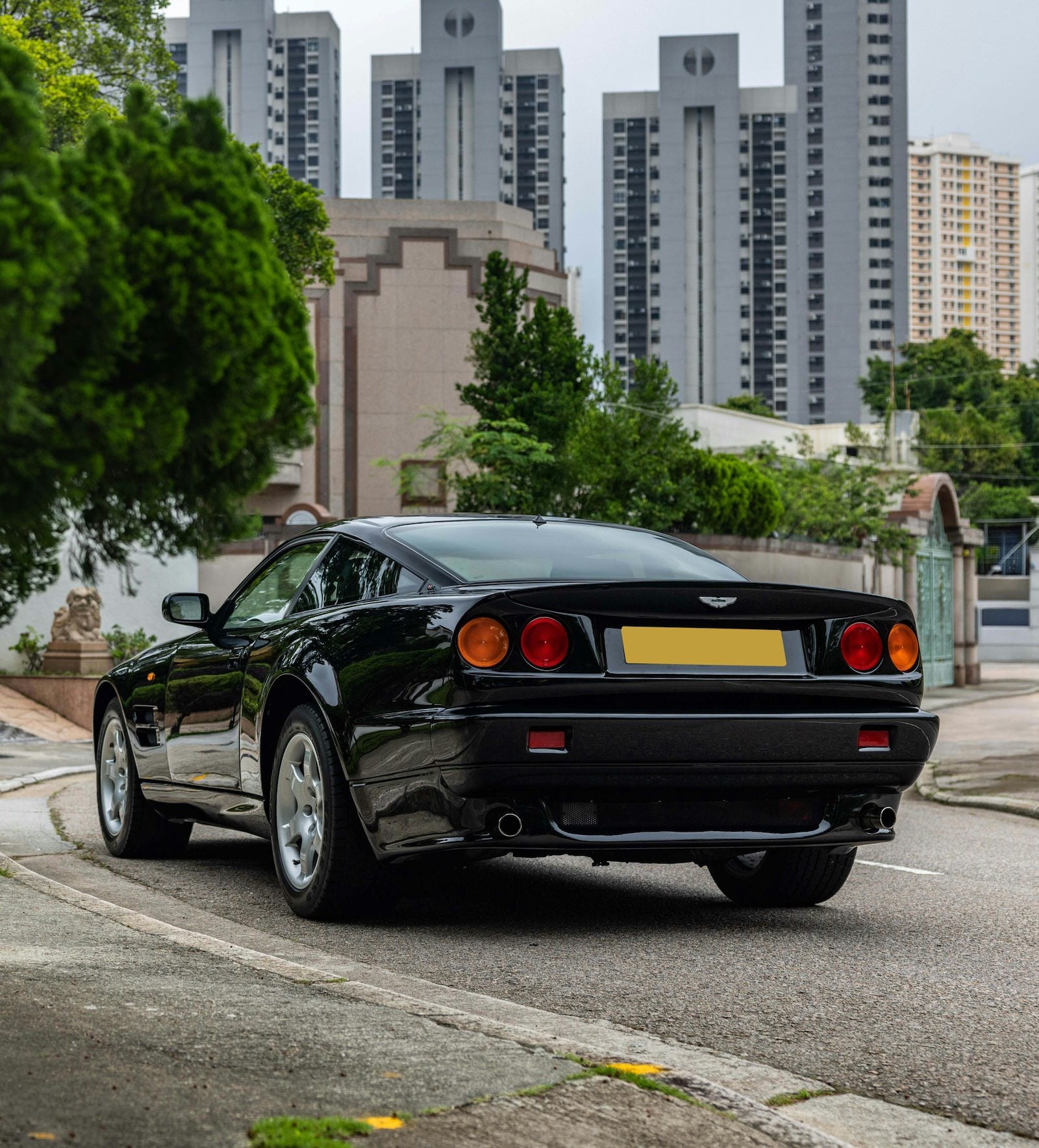
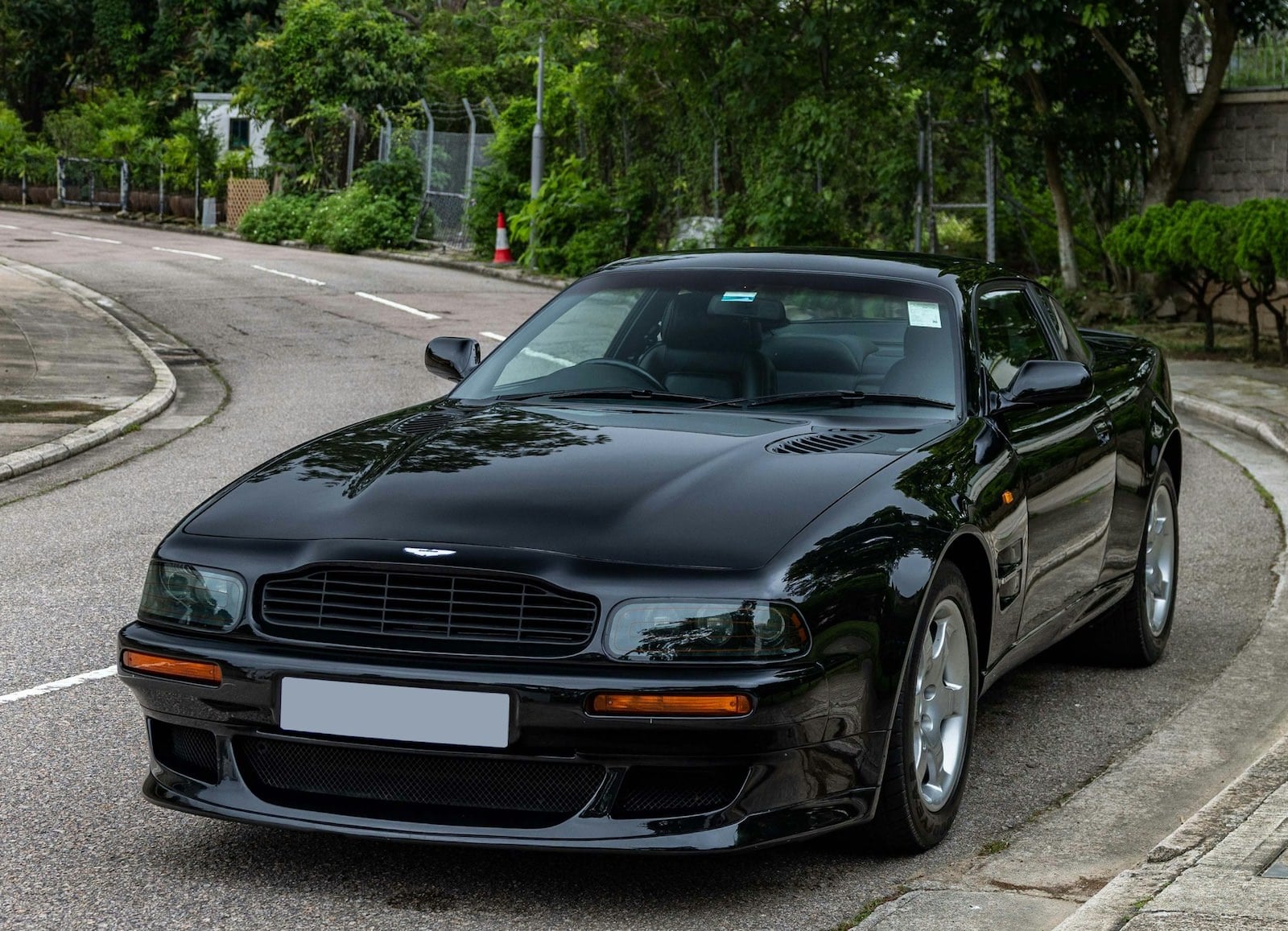
Only the roof and doors carried over from the standard car. Everything else was new – a wider, more aggressive front end wearing six headlights behind heated glass covers (square units on early cars, later replaced by round projector-type lamps), flared wheelarches, deep side skirts, slatted hood vents flanking a subtle power bulge, and a completely redesigned tail with twin circular lamps on each side.
The VW Scirocco-sourced rear lights of the Virage were gone. Aluminum body panels were used throughout, as was Aston tradition.
V550: Engine Specifications
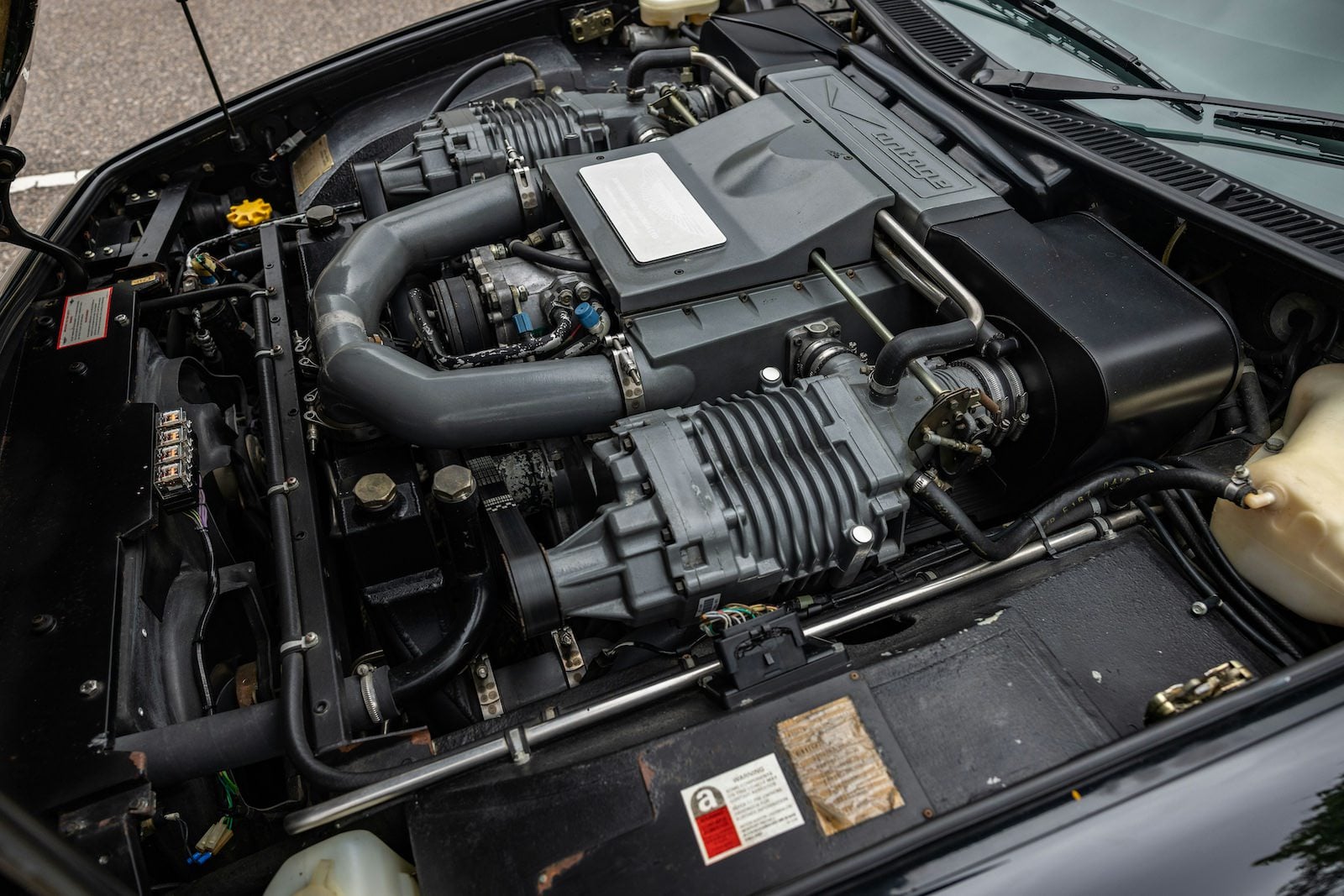
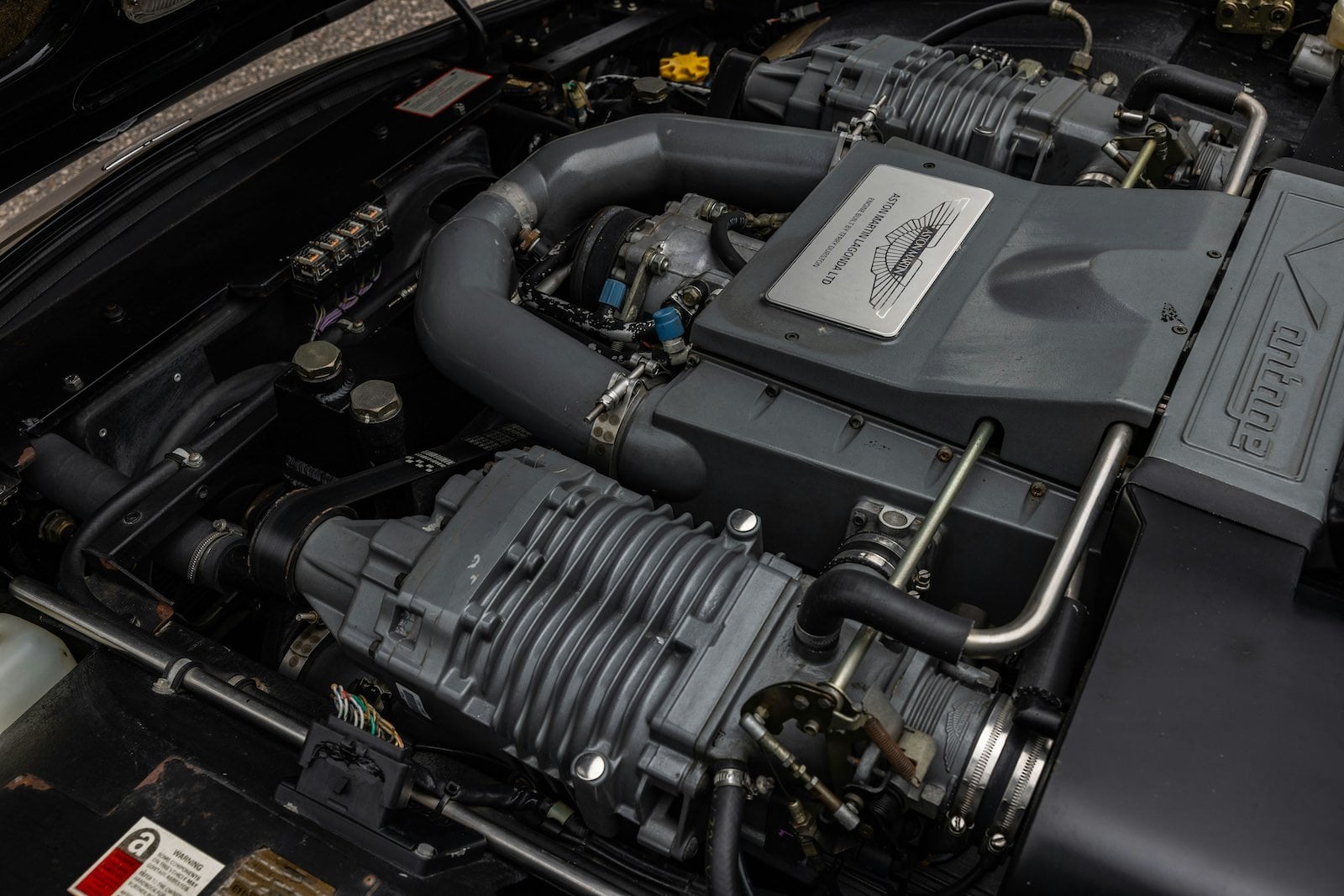
In reality, the body was kind of a distant secondary concern compared to what lay beneath the hood. The engine was Aston Martin’s venerable all-alloy quad-cam 5,340cc V8 – the same basic architecture that Tadek Marek had penned back in the 1960s, updated with the four-valve-per-cylinder heads that Reeves Callaway had developed for the Virage.
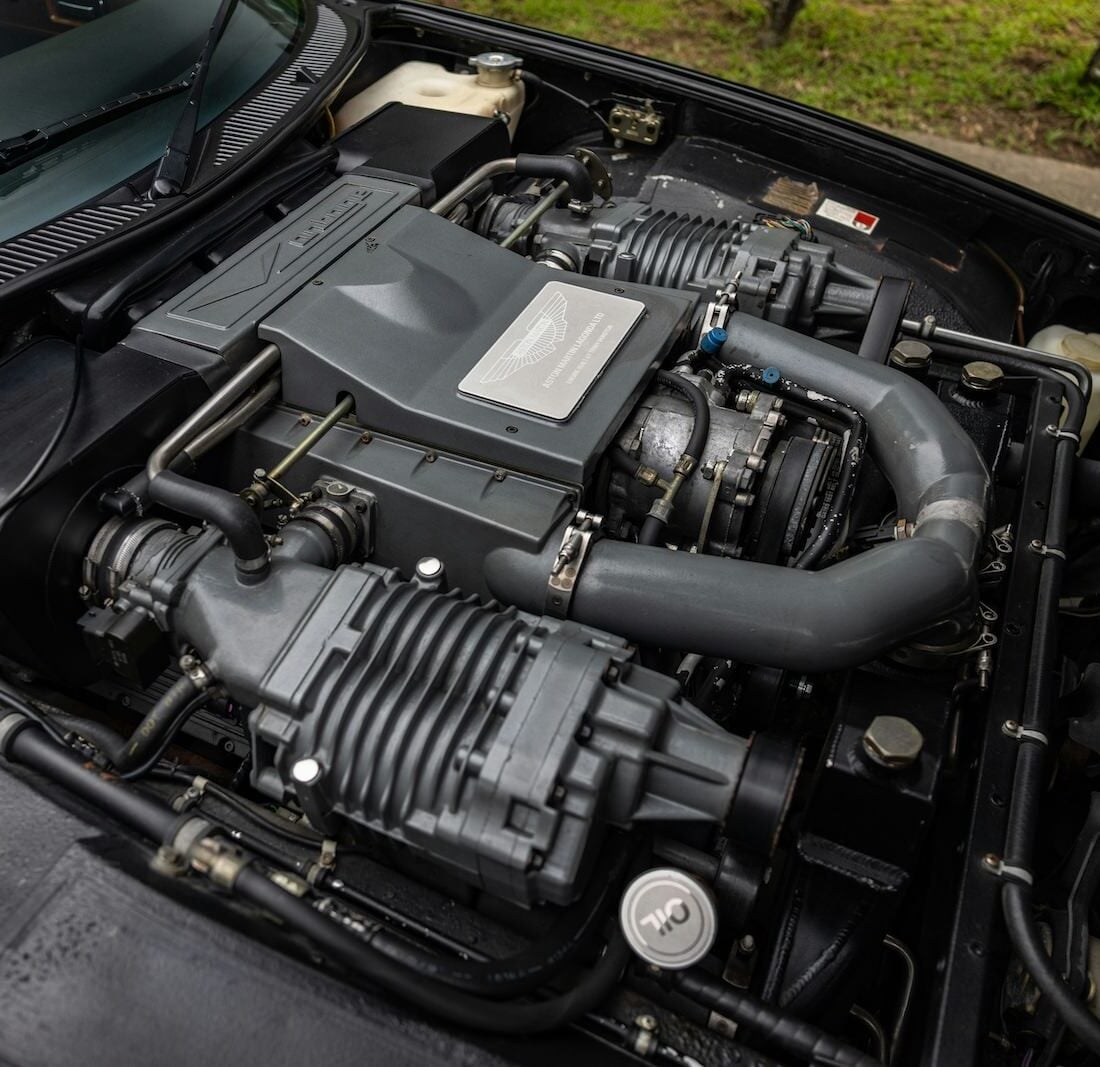
The engine received a stronger block, Cosworth pistons, and, most critically, a pair of intercooled Eaton M90 Roots-type superchargers, one feeding each cylinder bank via individual throttle bodies. It was essentially two force-fed 2.7 liter engines sharing a common crankshaft.
For the Vantage, this engine received a stronger block, Cosworth pistons, and, most critically, a pair of intercooled Eaton M90 Roots-type superchargers, one feeding each cylinder bank via individual throttle bodies. It was essentially two force-fed 2.7 liter engines sharing a common crankshaft. The compression ratio dropped from the Virage’s 9.5:1 to 8.2:1 to accommodate the forced induction, and fuel delivery was handled by a new Bosch sequential injection system.
The result was 550 bhp at 6,500 rpm and 550 lb ft of torque at 4,000 rpm. At launch, Aston Martin claimed it was the most powerful engine fitted to any production car in the world. Power was sent to the rear wheels through a ZF 6-speed manual gearbox, a first for Aston Martin, and a limited-slip differential with a twin-plate Valeo clutch.
Performance was, predictably, completely savage. Aston quoted 0 to 60 mph in 4.6 seconds and a top speed of 186 mph. Those numbers might sound modest by today’s supercar standards, but the V550 weighed nearly 4,400 lbs (1,990 kgs) making it nearly half a ton heavier than contemporary mid-engined Italians like the Ferrari F355 or Lamborghini Diablo. It matched or beat them to 60 mph anyway. Thanks in no small part to its prodigious torque output.
The V550 Chassis
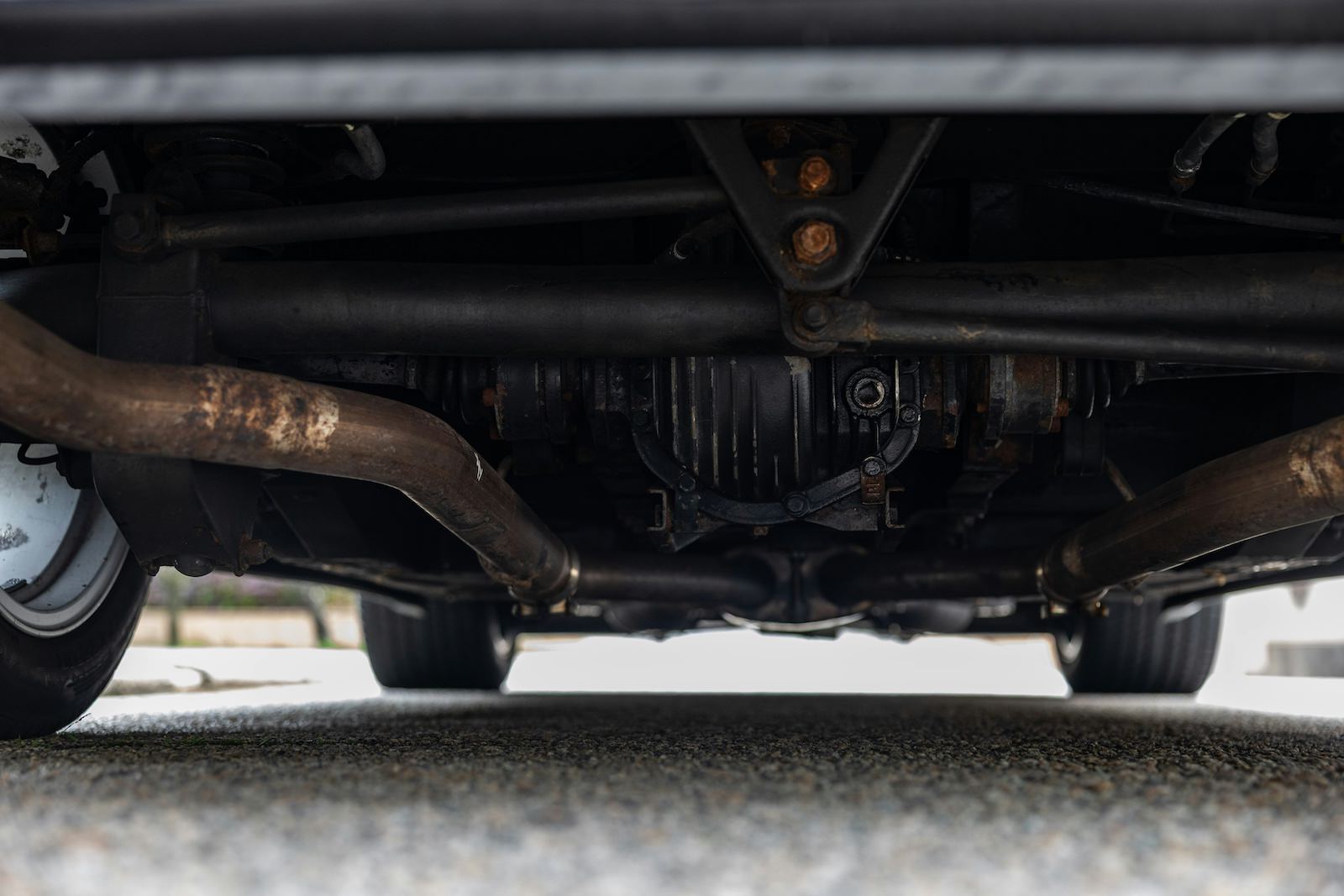
The chassis was based on a heavily modified version of the steel platform originally designed for the four-door Lagonda, carried over through the Virage. Suspension was double wishbones at the front and a cast aluminum de Dion rear axle located by triangulated radius rods and a Watts linkage.
Bilstein dampers were fitted at all four corners. Braking hardware was serious, it needed to be given the weight, with 362mm ventilated discs with four-piston AP calipers up front (the largest fitted to any production car at the time) and 310mm discs at the rear, all controlled by Bosch four-channel ABS. The car rode on bespoke 18 inch six-spoke alloy wheels, 10 inches wide, shod with Goodyear tires.
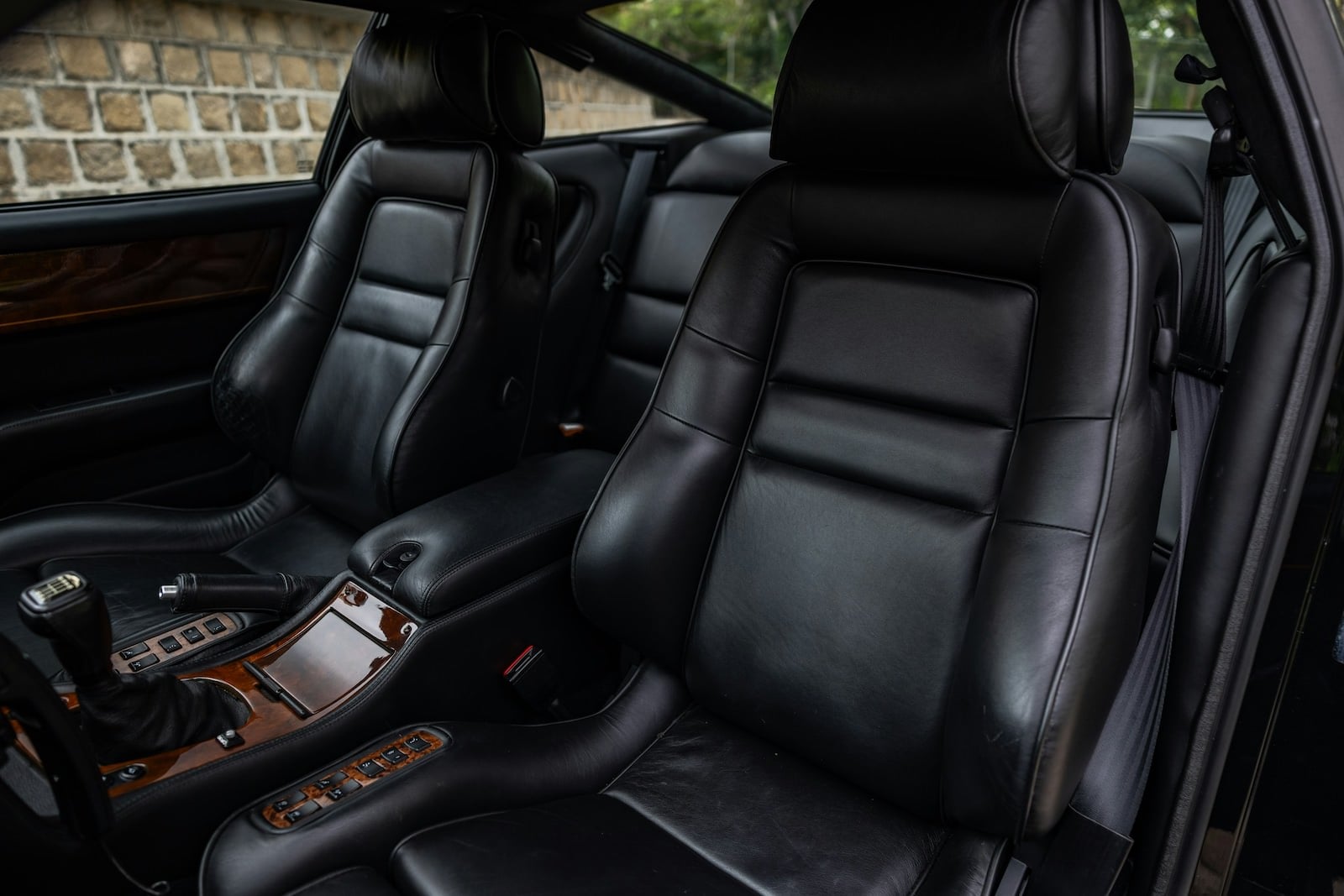
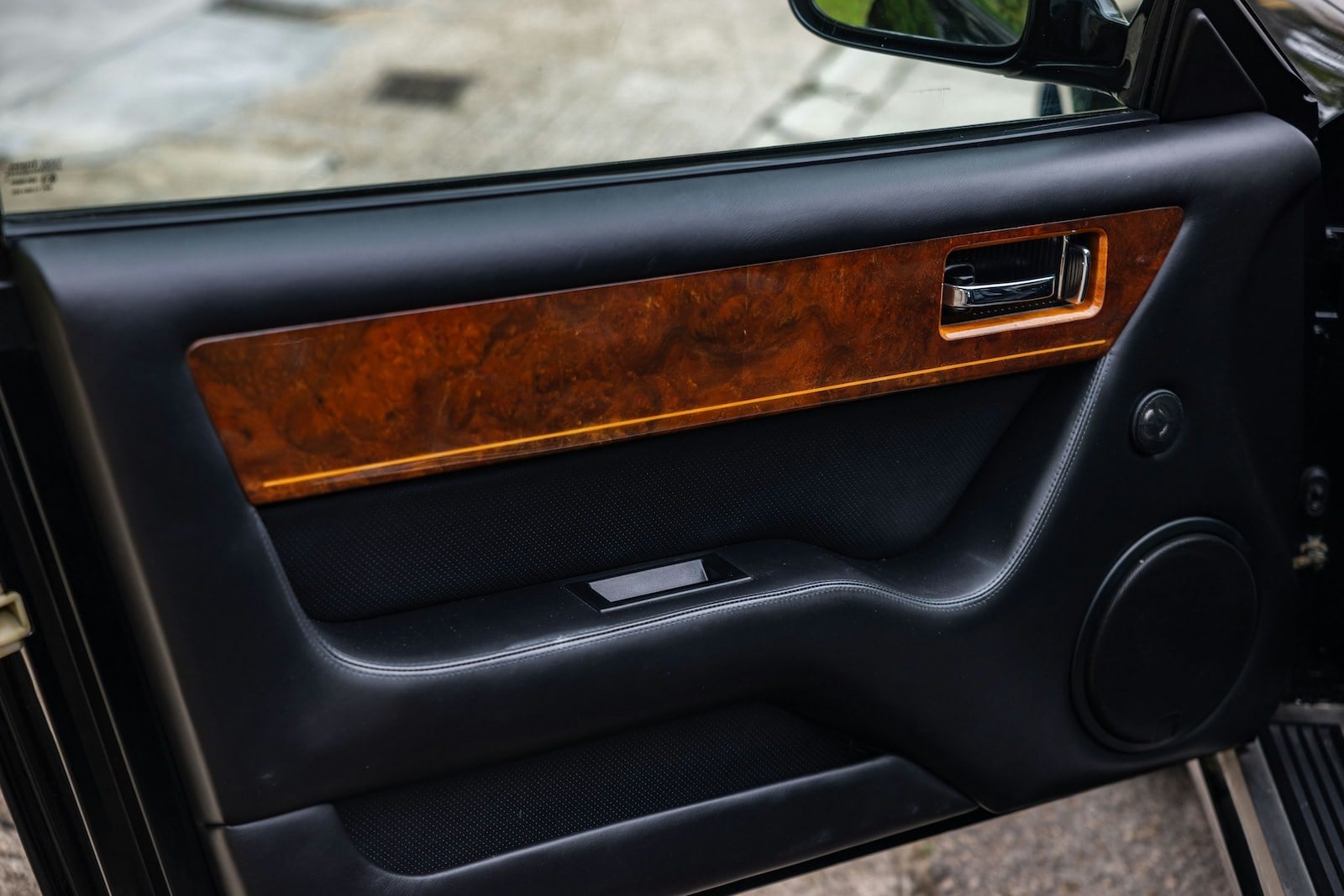
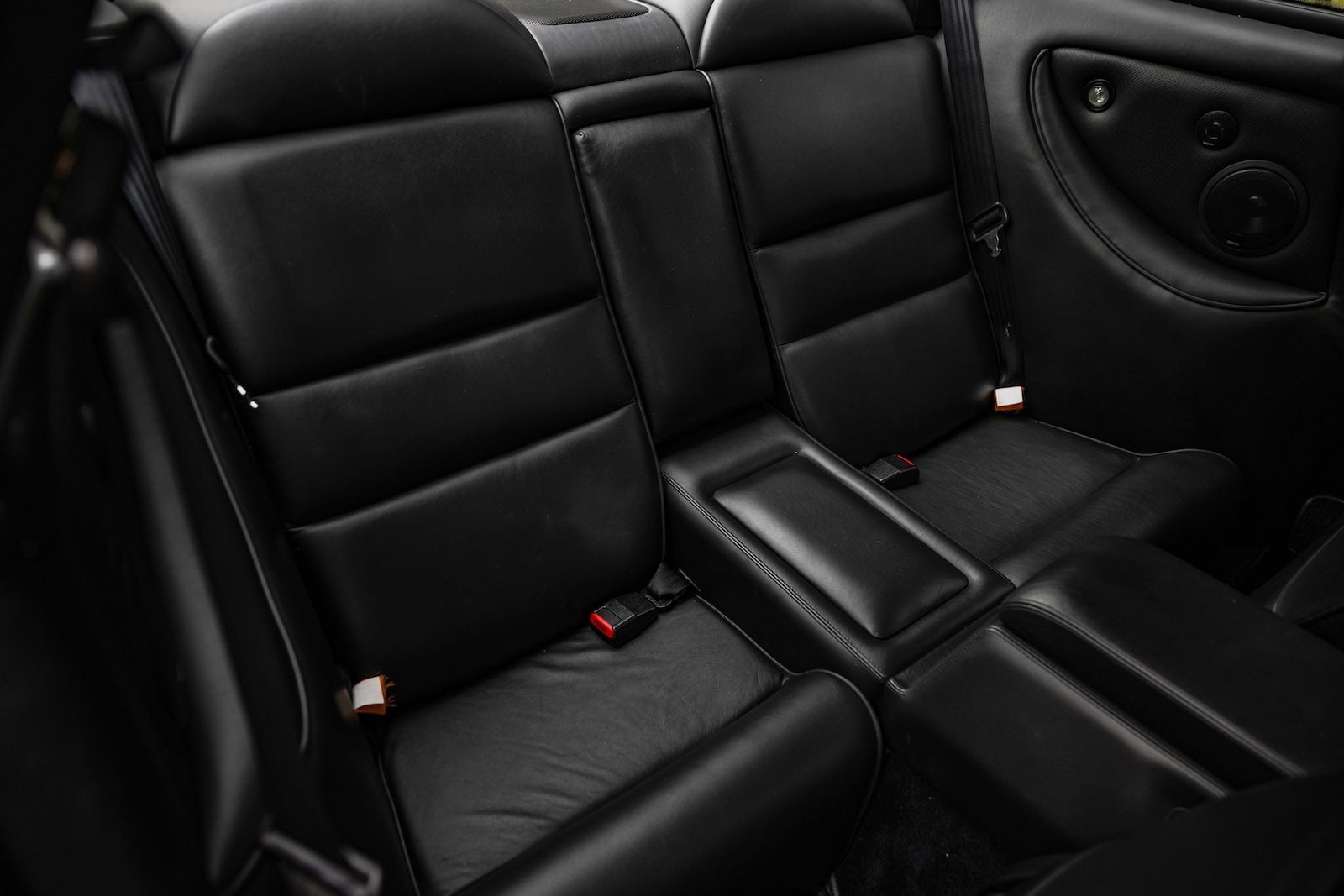
Inside, the V550 was pure Aston Martin excess. There were acres of Connolly leather, Wilton carpet, and burr walnut veneers, it was the full Newport Pagnell treatment. Heavily bolstered sport seats replaced the Virage’s more relaxed chairs, and the instrument binnacle housed a supercharger boost gauge nestled between the speedometer and tachometer, a constant reminder of what was happening under that vented hood. The fuel tank held 105 liters, with filler ports on both sides of the trunk – you’d need them both too, given the car’s famous thirst for petrol.
Production of the V550 was glacially slow, even by hand-built, low-volume car standards. At its peak, Newport Pagnell turned out just two cars per week. At times, the rate dropped to half a car per week. By the time production wound down, the total number of Vantages built depends on how you tally it.
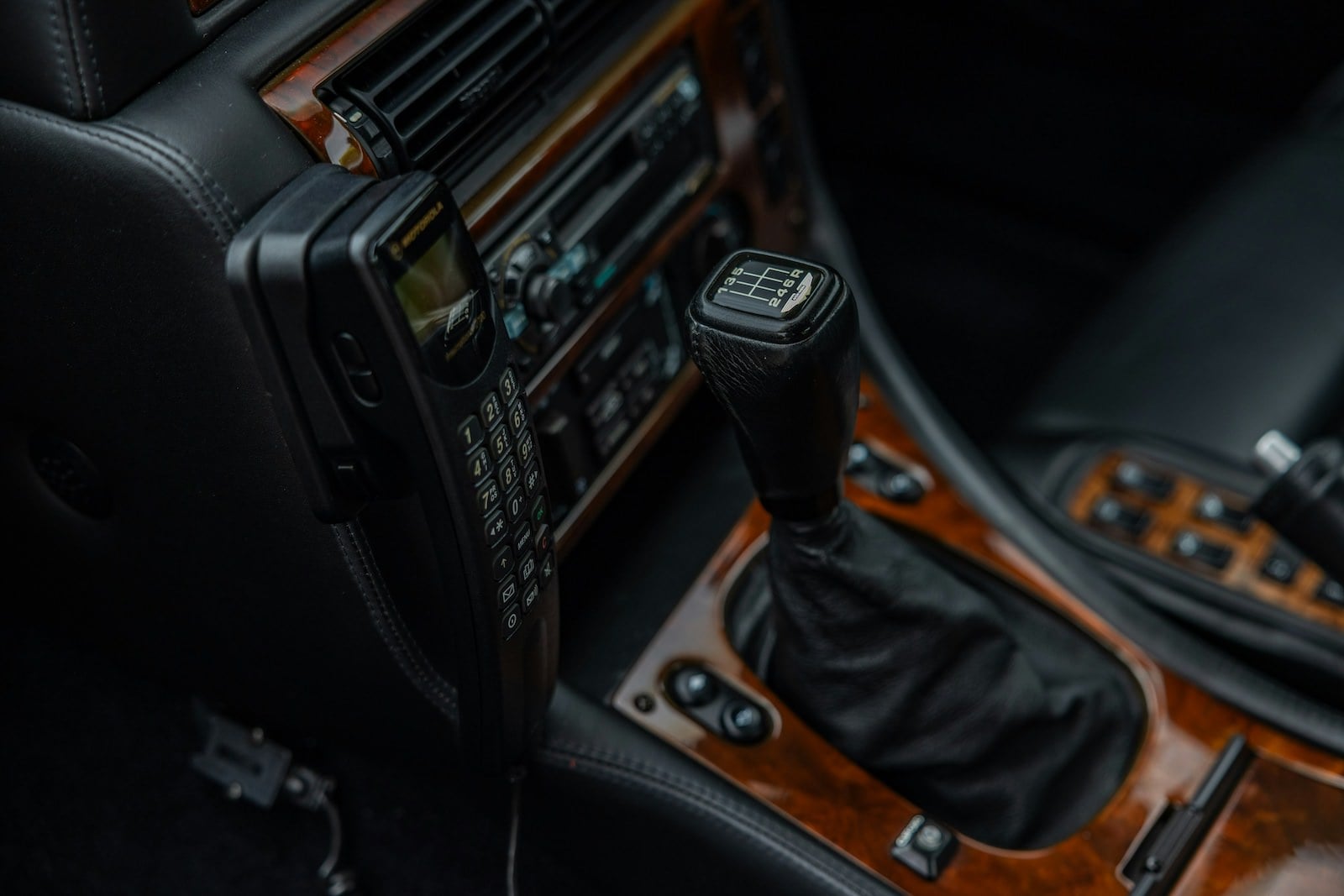
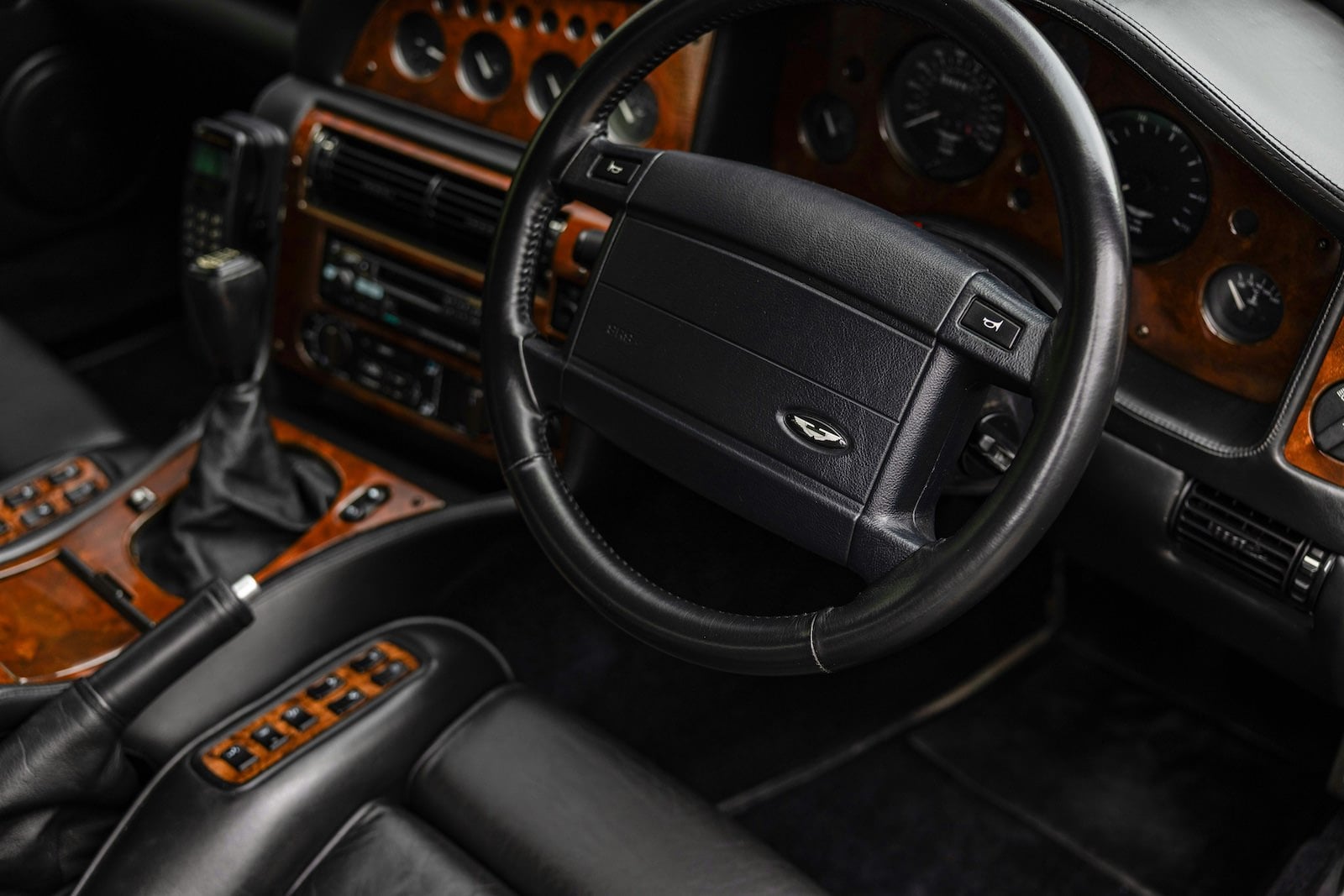
Inside, the V550 was pure Aston Martin excess. There were acres of Connolly leather, Wilton carpet, and burr walnut veneers, it was the full Newport Pagnell treatment. Heavily bolstered sport seats replaced the Virage’s more relaxed chairs, and the instrument binnacle housed a supercharger boost gauge nestled between the speedometer and tachometer.
The most detailed breakdown available puts the figure at 235 standard-bodied cars, with 186 coupes, 40 Le Mans special editions (introduced at Geneva in March of 1999 to mark the 40th anniversary of Aston’s 1959 Le Mans win), and nine Volante convertibles, eight of which were built on the standard short-wheelbase chassis as end-of-production specials offered to VIP customers.
Other sources count 239 standard examples before the Le Mans cars, using different methods for categorizing late-production and special-order chassis.
The V600 Upgrade
The V600 upgrade, announced at the Birmingham Motor Show in October of 1998, pushed power to 600 bhp through an uprated charge cooling system and added a Super Sport exhaust, as well as Eibach springs, adjustable Koni dampers, AP Racing brakes with six-piston front calipers, and lightweight Dymag magnesium wheels.
Some V600 conversions used a close-ratio 5-speed gearbox in place of the 6-speed, though specifications varied by car and later Works Service upgrades could alter the drivetrain further still. Aston claimed a top speed of 204 mph and a 0 to 62 mph time of 4.1 seconds – these numbers are still impressive for a grand tourer today, over a quarter of a century later.
The V550 appeared in a narrow window between the old world of hand-formed aluminum and the new world of the DB7 and eventually the Vanquish. It was the last of the old-line Virage-based V8 cars to be hand-built at Newport Pagnell, the last to rely on that magnificent quad-cam V8 in its most extreme form, and arguably the purest example of the marque’s old-school, brute-force philosophy before the Vanquish ushered in a new era.
The V550 (and V600) are now one of the great underappreciated supercars of the 1990s, a decade absolutely stacked with competition.
The Ex-Elton John V8 Vantage V550 Shown Here
This 1997 Aston Martin V8 Vantage V550 is a UK-supplied, right-hand drive example finished in black over a matching black leather interior with wood veneer trim. It was originally delivered new to Sir Elton John through H.W.M Ltd. in Surrey in May of 1997, and as you might expect, the car is powered by the twin-supercharged 5.3 liter V8 producing a factory-rated 550 bhp, paired with a 6-speed manual gearbox sending power to the rear wheels.
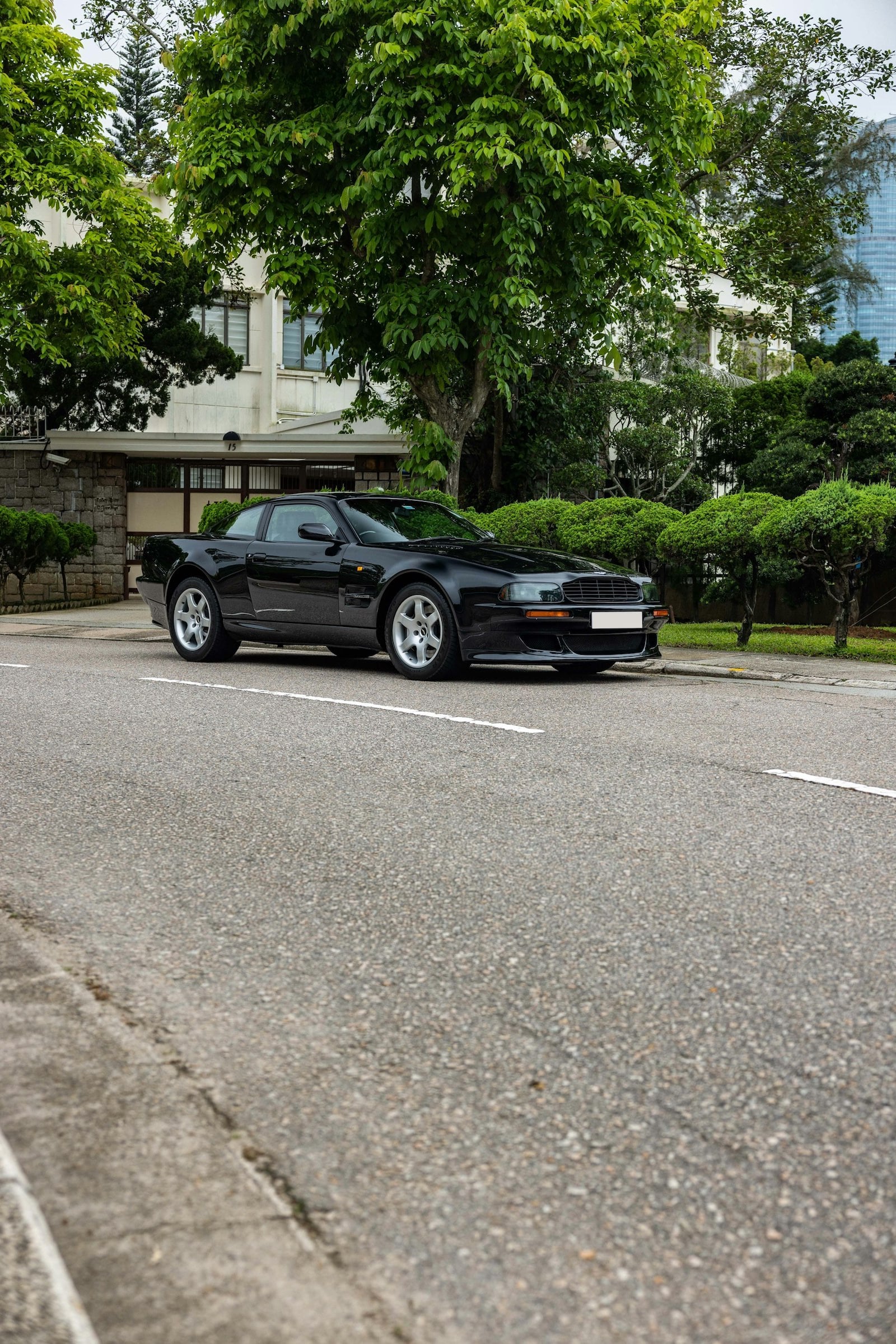
This 1997 Aston Martin V8 Vantage V550 is a UK-supplied, right-hand drive example finished in black over a matching black leather interior with wood veneer trim. It was originally delivered new to Sir Elton John through H.W.M Ltd. in Surrey in May of 1997.
It rides on 18 inch six-spoke alloy wheels fitted with Goodyear Eagle GS-D tires, and equipment includes air conditioning, electric windows, electrically adjustable front seats, an Alpine cassette stereo, an analogue clock, a top-tinted windscreen, and a period Motorola telephone. The odometer currently shows just 9,971 miles, which the seller believes to be genuine.
The car has since been imported into Hong Kong, where it was first registered in January of 2023 – the seller notes that the car has reportedly incurred more than $1 million HKD ($127,600 USD) in Hong Kong road registration costs, which speaks to the enormous expense of importing a vehicle of this type into the territory.
The service history is well documented from the earliest days of ownership – the first three services were carried out by Aston Martin H.W.M between June of 1997 and October of 1998, covering just 648 miles.
From 1999 to 2000, Weybridge Automobiles handled servicing, after which HA Fox Jaguar took over from 2002 through 2015, during which time the car accumulated from 2,223 to 5,508 miles, an average of just ~250 miles per year.
The specialist Rikki Cann Ltd. carried out work in January of 2016, and Aston Martin Works performed the most recent major UK service in January of 2017 at 8,634 miles, which included an annual service, brake fluid and coolant renewals, a new water pump gasket and thermostat, replacement exhaust flexi pipes, new fuel pipes, and a cam cover gasket.
Since arriving in Hong Kong, the car has required more substantial mechanical work. Stuttgart Performance replaced the fuel pressure regulators, injectors, lambda sensors, spark plugs, and ignition leads in May of 2022 and cleaned the catalytic converter.
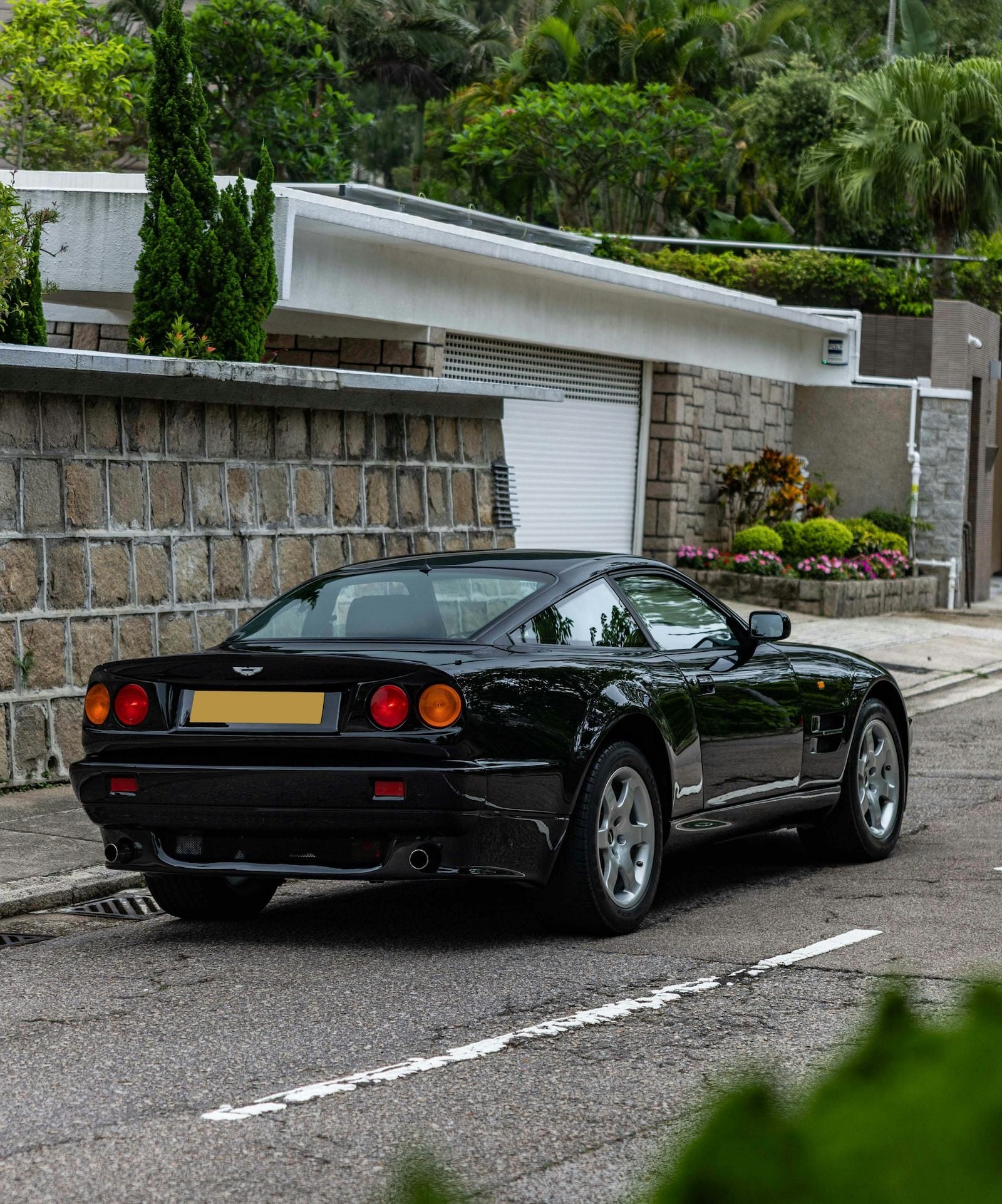
It rides on 18 inch six-spoke alloy wheels fitted with Goodyear Eagle GS-D tires, and equipment includes air conditioning, electric windows, electrically adjustable front seats, an Alpine cassette stereo, an analogue clock, a top-tinted windscreen, and a period Motorola telephone.
Invoices on file from later in 2022 cover a new radiator, water pump, cooling fan, and clutch slave and master cylinders. Considerable additional work has also been completed, which you can read in full in the listing.
The car is now being offered for sale out of Hong Kong with service records, past MOT documentation, a copy of the UK V5C, a Hong Kong registration document copy, and two keys. If you’d like to read more about it or register to bid you can visit the listing here.
Images courtesy of Collecting Cars

Articles that Ben Branch has written have been covered on CNN, Popular Mechanics, Smithsonian Magazine, Road & Track Magazine, the official Pinterest blog, the official eBay Motors blog, BuzzFeed, Autoweek Magazine, Wired Magazine, Autoblog, Gear Patrol, Jalopnik, The Verge, and many more.
Silodrome was founded by Ben back in 2010, in the years since the site has grown to become a world leader in the alternative and vintage motoring sector, with well over a million monthly readers from around the world and many hundreds of thousands of followers on social media.