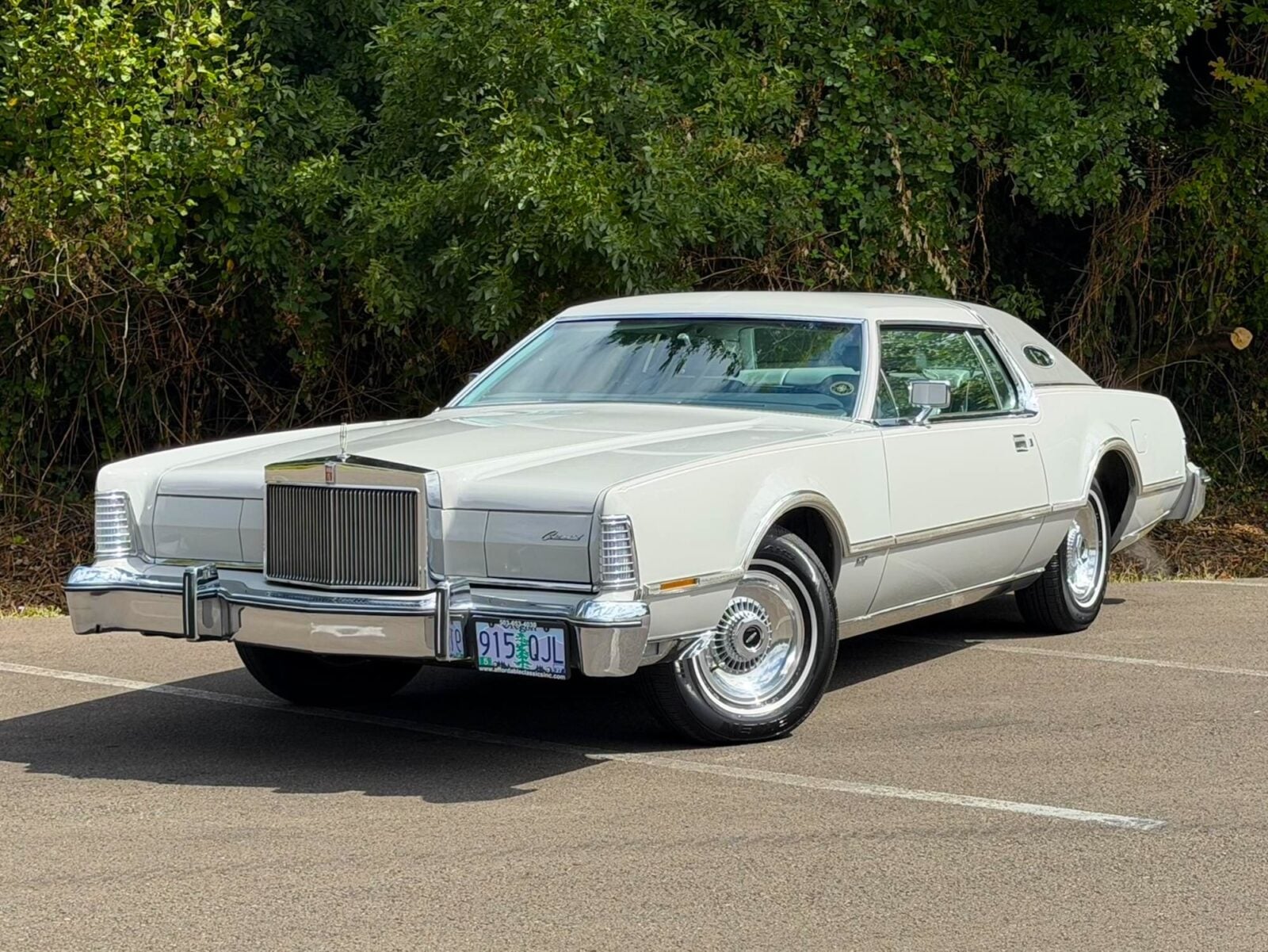
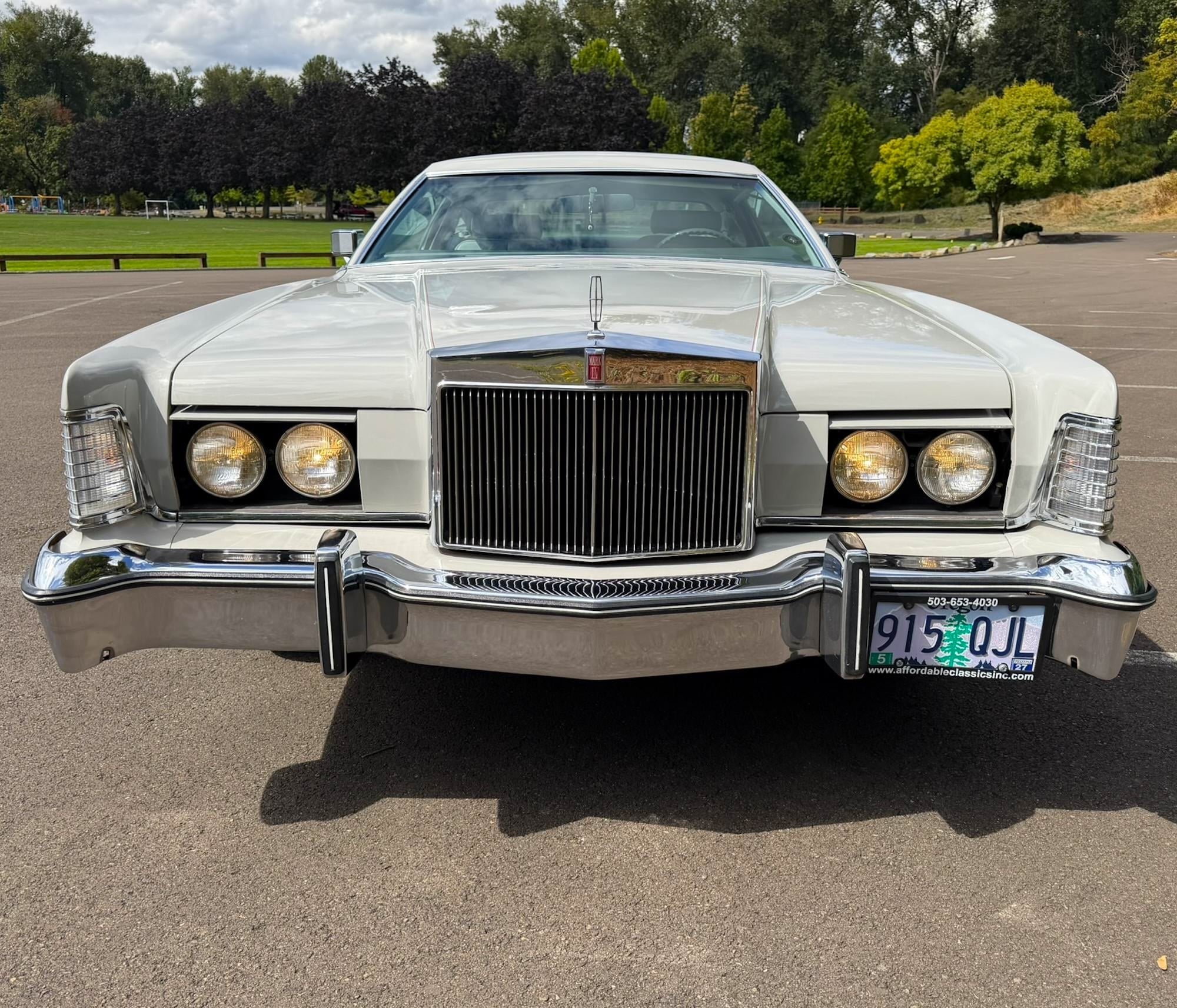
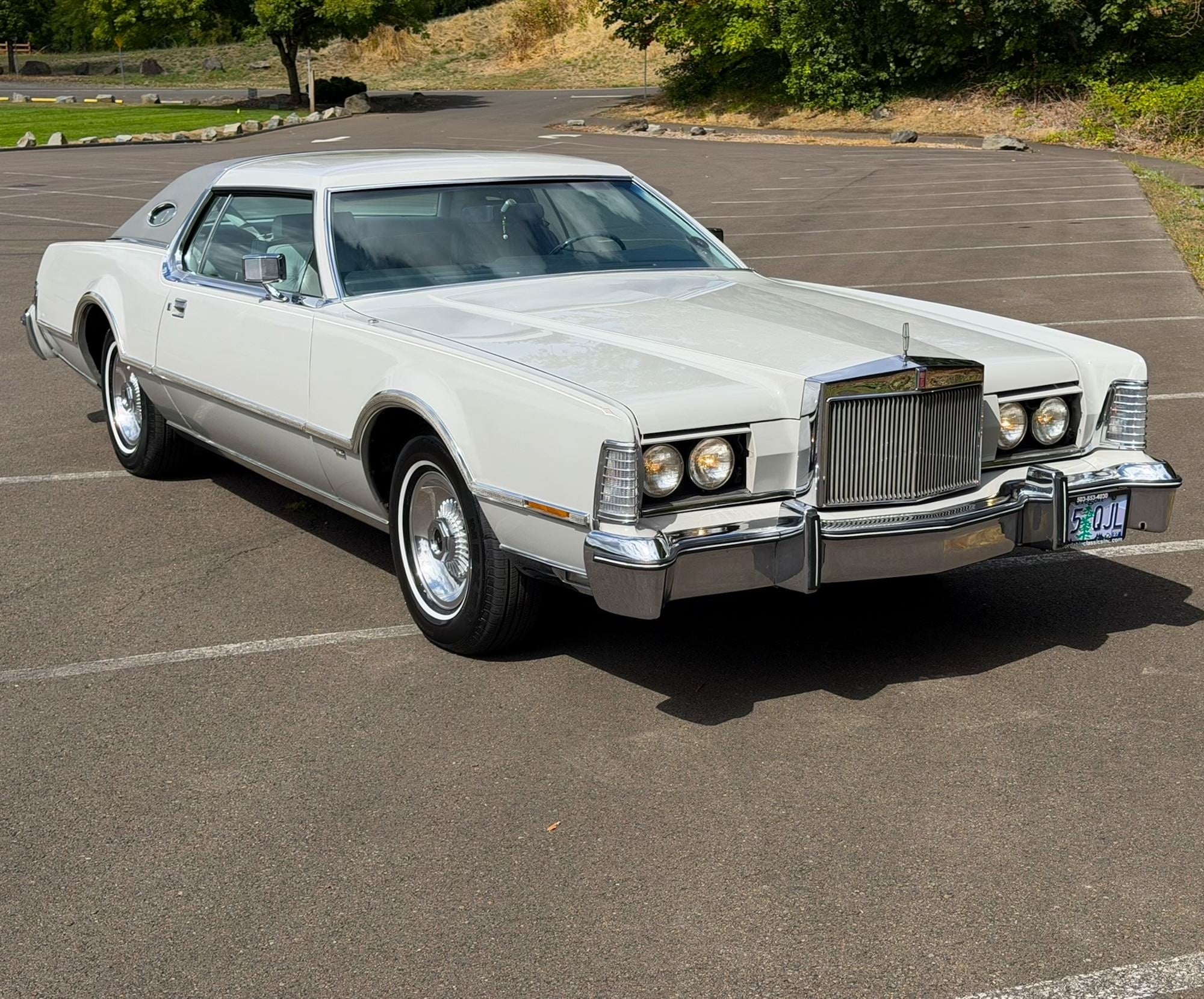
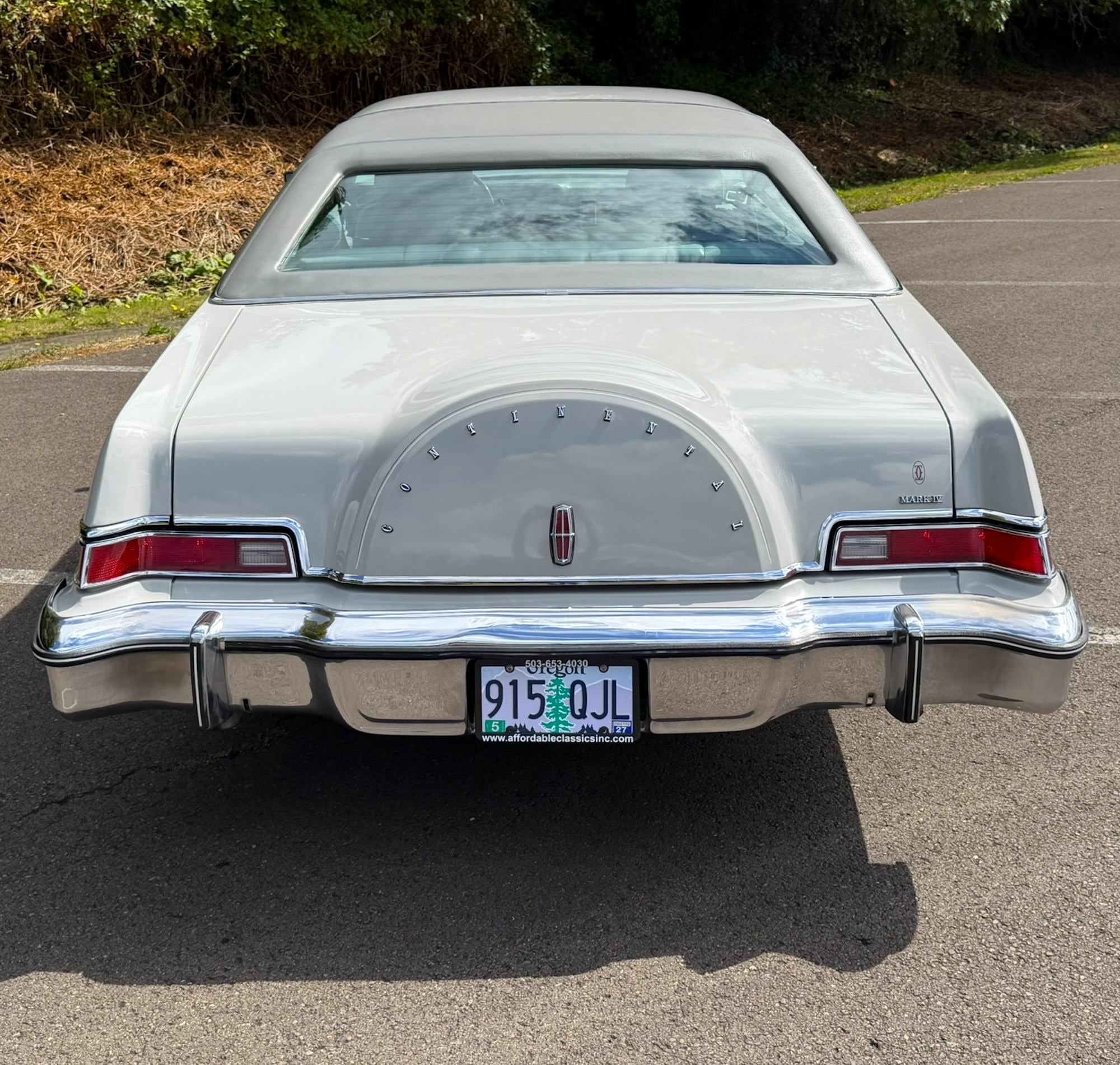
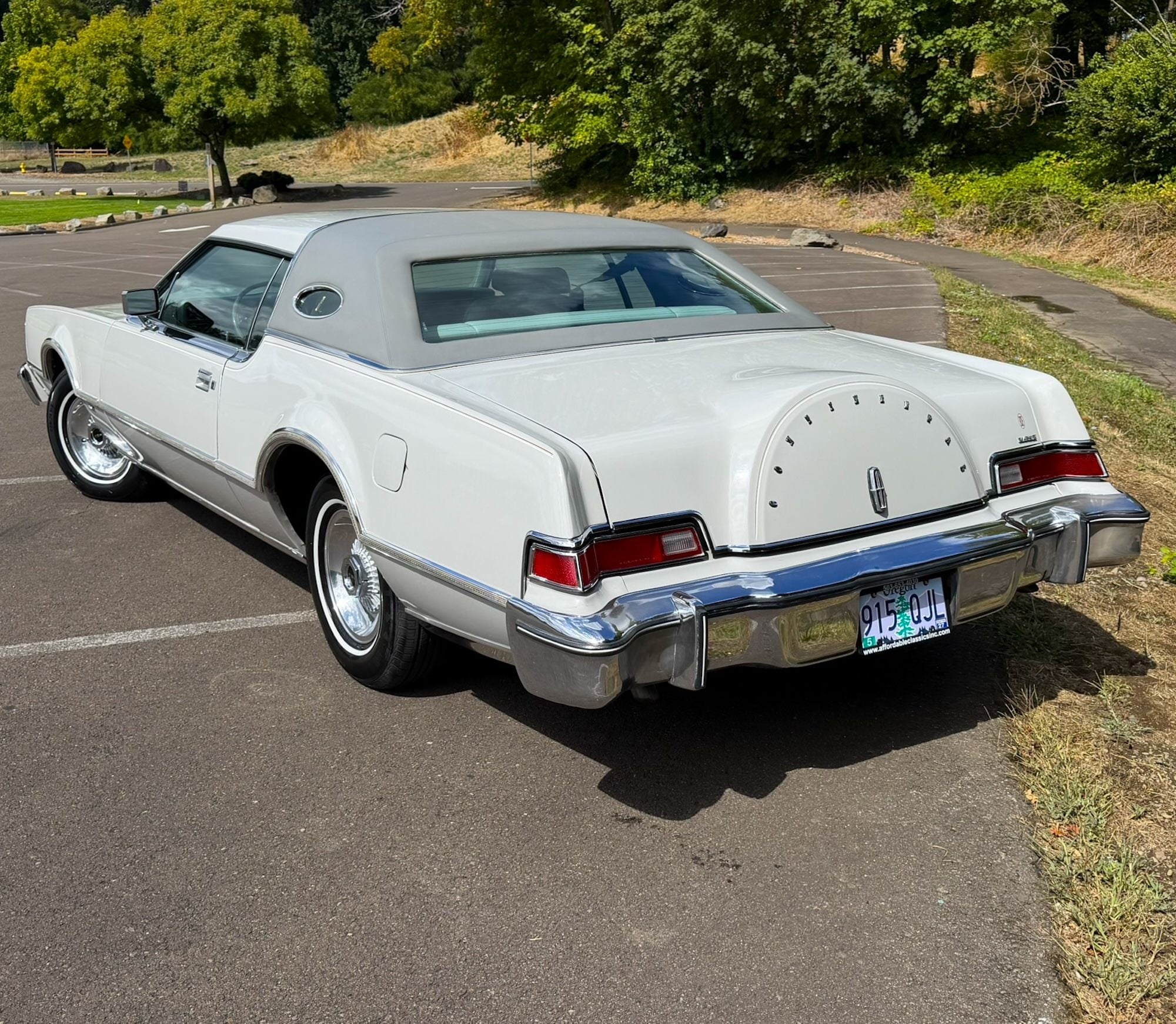
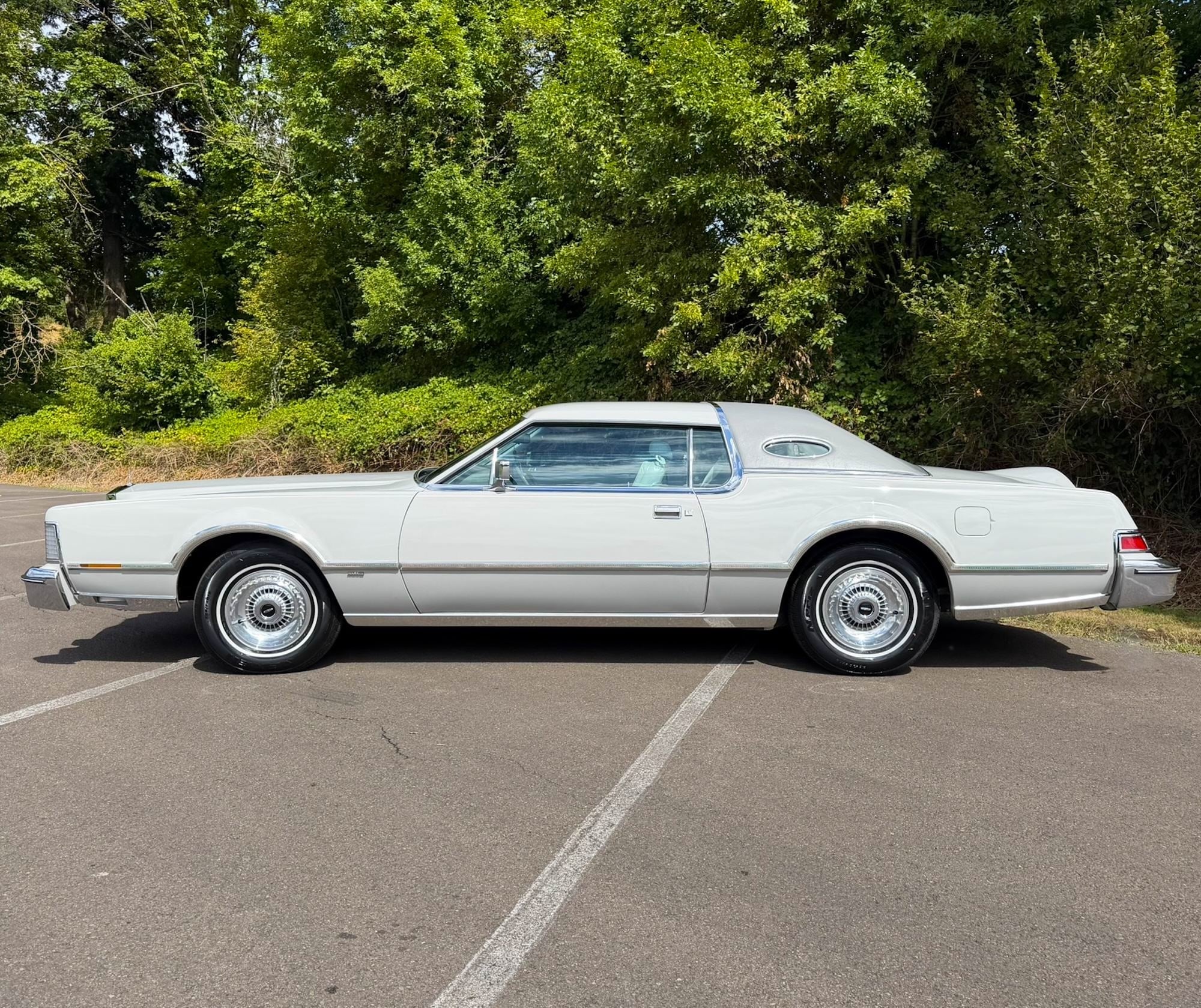
This is a “Cartier Edition” Lincoln Continental Mark IV, it’s one of the originals from 1976, and it remains in remarkably original condition throughout.
Along with the Givenchy, Pucci, and Bill Blass editions, the Cartier edition of the Continental Mark IV was a costly option package that added a slew of new styling touches and luxury features. These were very much the American Rolls-Royces of their day.
Fast Facts: A Cartier Edition Continental Mark IV
- The Continental Mark IV was developed in the late 1960s as the successor to the successful Mark III. Ford president Bunkie Knudsen personally selected the design developed by Wes Dahlberg’s team, overruling other executives. The car entered production for the 1972 model year, sharing its platform with the Ford Thunderbird.
- The Mark IV was powered exclusively by Ford’s 460 cubic inch (7.5 liter) V8, paired with a C6 3-speed automatic transmission. It had independent front suspension, a coil-sprung rear axle, Michelin radial tires, and an early rear-wheel antilock braking system. Lincoln built 278,599 examples between 1972 and 1976, consistently outselling the Cadillac Eldorado.
- For 1976, Lincoln introduced four Designer Series editions bearing the names Cartier, Givenchy, Bill Blass, and Pucci. Each had exclusive exterior colors, vinyl roof treatments, and matching interiors, along with forged aluminum wheels, designer signatures on the opera windows, and personalized gold-plated dashboard plaques. The Cartier Edition accounted for 5,716 cars.
- The 1976 Cartier Edition shown here has 49,000 miles on the odometer and retains its original Dove Grey color scheme, matching leather upholstery, and vinyl landau roof. Equipment includes four-wheel disc brakes, automatic climate control, cruise control, power-adjustable seats, and an eight-track stereo. It’s now being offered for sale out of Gladstone, Oregon.
History Speedrun: The Lincoln Continental Mark IV
In 1939, Ford design chief Bob Gregorie turned a Lincoln-Zephyr convertible into a one-off for company president Edsel Ford. It went into limited production for 1940 as the Lincoln Continental and lasted until 1948, with a gap in the middle for WWII of course. Ford revived the name in the 1950s with the Continental Mark II, sold by the brand’s separate Continental division. 3,000 or so were built in two model years but the division lost money on every one. Still, the series had value as the marque’s halo car.
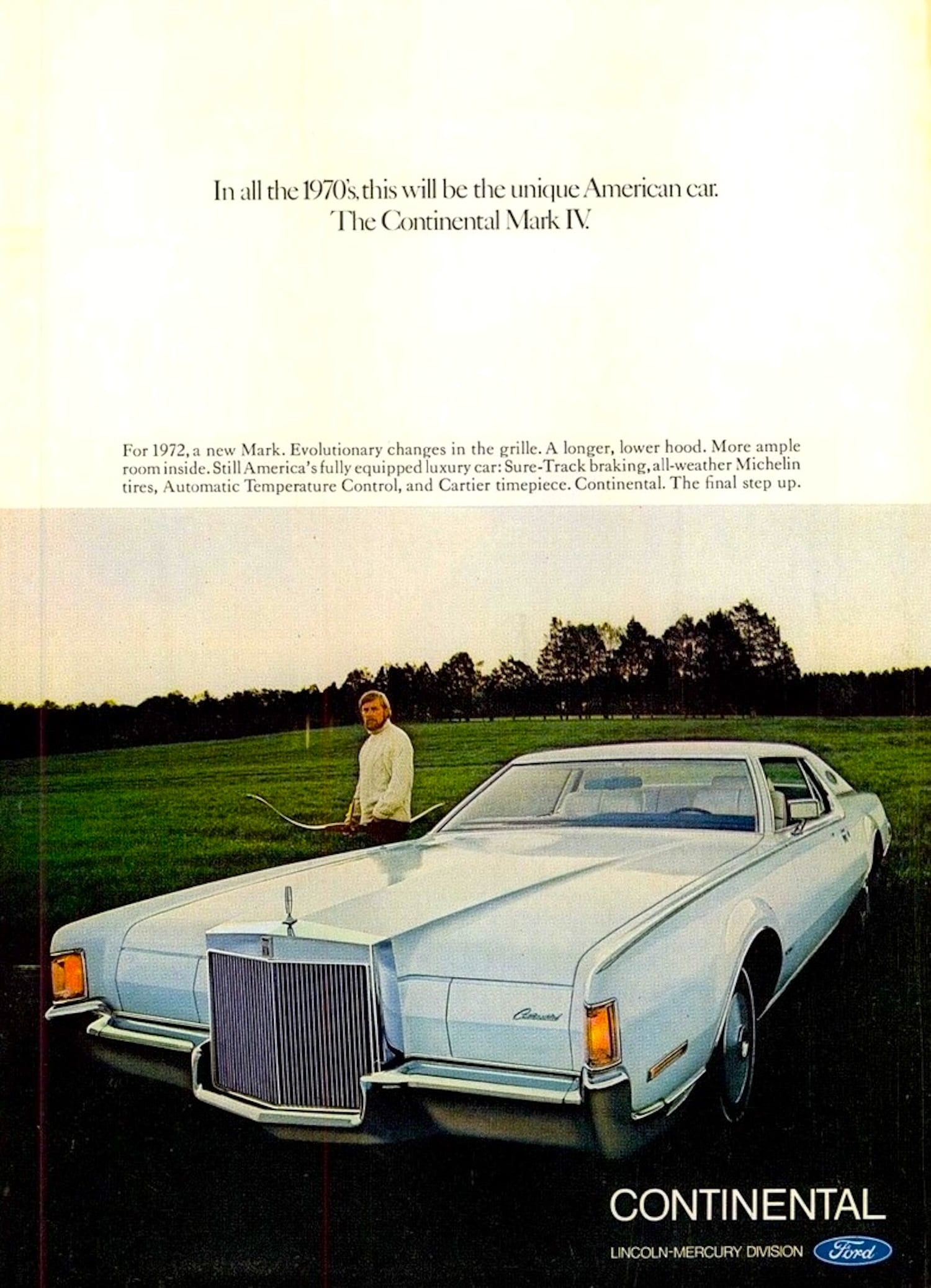
 The Continental Mark IV went on sale in late September of 1971 at $8,640 USD (about $69,800 USD in 2026 dollars). It shared its chassis, roofline, doors, and inner body panels with the 1972 Thunderbird, and both were built at Wixom, Michigan. Image courtesy of Ford.
The big Lincolns of 1958, 1959, and 1960 were badged Mark III, Mark IV, and Mark V, but they were unrelated to the Mark II, and Ford later chose to forget them for reasons we won’t rehash here – as this story is all about the Continentals that came later.
The Continental model count started again on April the 5th, 1968, when the Continental Mark III arrived as an early 1969 model at $6,585 USD (about $63,900 USD in 2026 dollars). It was Lee Iacocca’s project from the start, a Thunderbird perimeter frame and inner body structure under new sheet metal, with an upright grille inspired by Rolls-Royce and the Mark II’s spare tire hump on the trunk lid. It sold 23,088 in its first full year, and Lincoln’s profit was reportedly around $2,000 USD a car. Not bad considering the events of the decade prior.
Bunkie Knudsen Picks A Design
By the fall of 1968, work on a successor to the Mark III had begun in Ford’s Corporate Projects Studio. One proposal came from a team under Wes Dahlberg, the former head of design at Ford of Germany, working with Jim Arnold, Dean Beck, Richard Blair, and Bob Hackett. Dahlberg was on bad terms with Design Vice President Gene Bordinat, and the team didn’t actually expect their clay model to go anywhere.
Then, Semon “Bunkie” Knudsen, who had left General Motors to become Ford’s President in February of 1968, walked into the studio early one morning, asked to see the model, and approved it for production on the spot. Bordinat preferred an alternative by Ron Perry, Steve Sherer, and Fritz Mayhew, worked up from a Mayhew sketch. Knudsen promptly rejected it, and vetoed Bordinat’s attempts to change the Dahlberg car. It seems that, sometimes at least, office politics actually can go in your favor.
Knudsen’s decision antagonized Bordinat, Iacocca, and Henry Ford II, the latter of whom was used to having the last word on styling. Ford fired Knudsen in early September of 1969, but it was too late for any substantive change to the design. A proposal from early 1969 to move the Mark and the Thunderbird onto the smaller Torino platform had also been dropped. Iacocca became president in December of 1970 and inherited a flagship he hadn’t picked and didn’t seem to particularly like.
The rejected alternative preferred by Bordinat was meant to be reused for the next car, the Continental Mark V, but that plan fell through, and the 1977 Mark V was a fresh design that had started out in 1972.
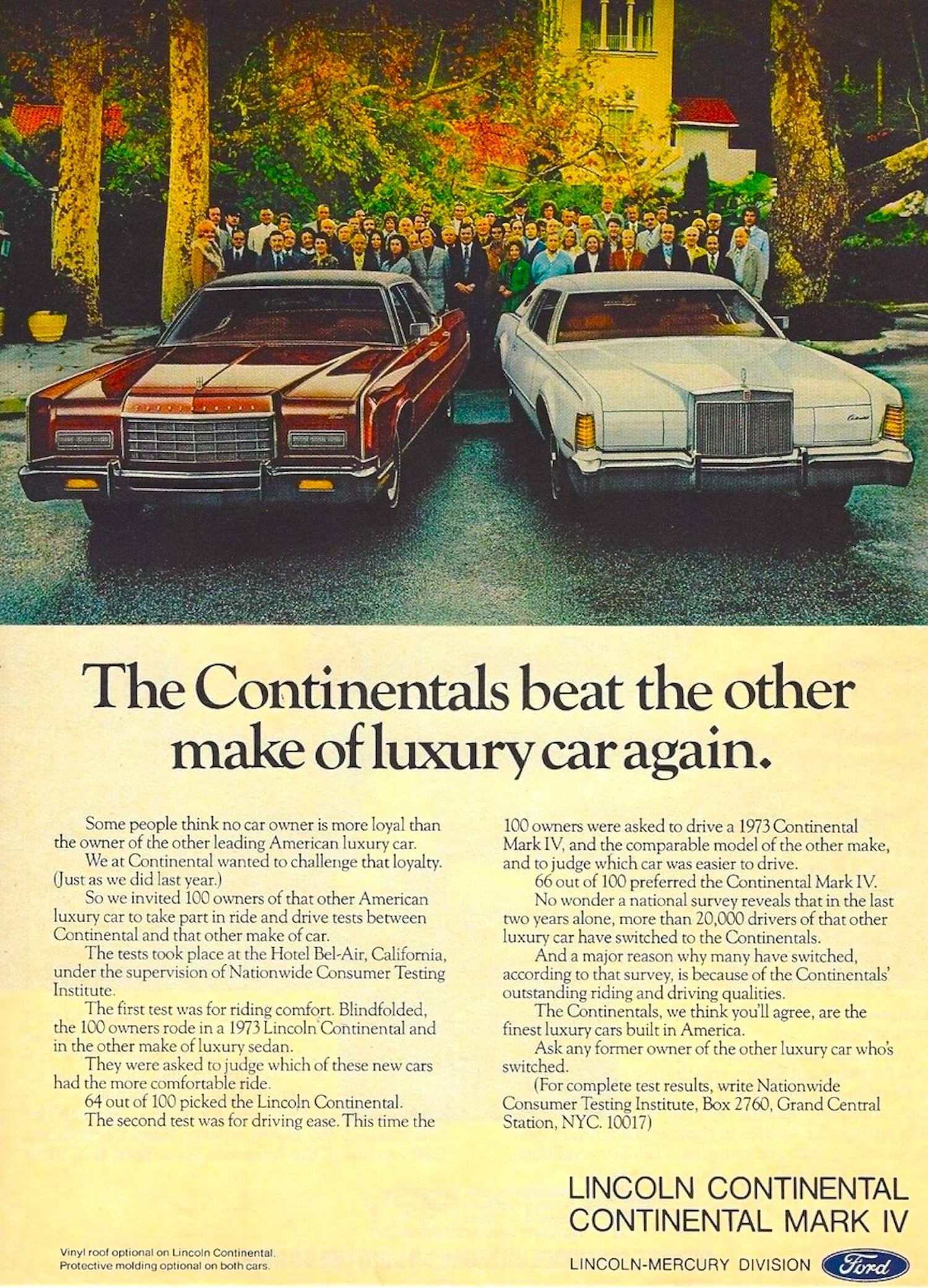
The only engine offered in the Continental Mark IV was Ford’s 460 cubic inch (7.5 liter) V8 with a four-barrel carburetor, driving through a C6 3-speed automatic. Image courtesy of Ford.
Continental Mark IV Specifications
The Continental Mark IV went on sale in late September of 1971 at $8,640 USD (about $69,800 USD in 2026 dollars). It shared its chassis, roofline, doors, and inner body panels with the 1972 Thunderbird, and both were built at Wixom, Michigan. The body sat on a new perimeter frame, designed to crush at a controlled rate in a collision, providing better protection for the occupants.
The front suspension was independent on coil springs, with a coil-sprung live axle at the back, now located by four links in place of the Mark III’s three links and Panhard rod, with anti-roll bars at both ends for a flatter ride through corners. Front disc and rear drum brakes came with Sure-Track, a Kelsey-Hayes antilock system that pulsed the rear brakes up to four times a second when its sensors detected lockup. Michelin radial tires were standard at all four corners.
At 220.1 inches on a 120.4-inch wheelbase, the car was 4 inches longer than the Mark III, and it weighed in at a hefty ~5,000 lbs at the curb. It was no shrinking violet.
The only engine offered was Ford’s 460 cubic inch (7.5 liter) V8 with a four-barrel carburetor, driving through a C6 3-speed automatic. For 1972 the compression ratio fell from 10.5:1 to 8.5:1 so the engine could run on unleaded fuel. Ratings moved from gross to net at the same time, and the Mark III’s 365 bhp became 212 bhp on the Mark IV. It was the Malaise Era after all.
Motor Trend’s July 1972 test car, fitted with the optional 3.00:1 axle, recorded 0 to 60 mph in 10.5 seconds and a standing quarter mile in 18.1 seconds at 80 mph. A 1970 Mark III on the standard 2.80:1 axle had managed 9.2 and 16.5 seconds. Not great numbers, but not bad for a 5,000 lb luxury tank from the early 1970s.
The oval opera window in the rear roof pillar was a later addition to the design, and at first it was an $81.84 USD option (about $660 USD in 2026). Few cars were ordered without it as it actually did help with rearward visibility and many dealers strongly recommended it, as a result it became standard for 1973.
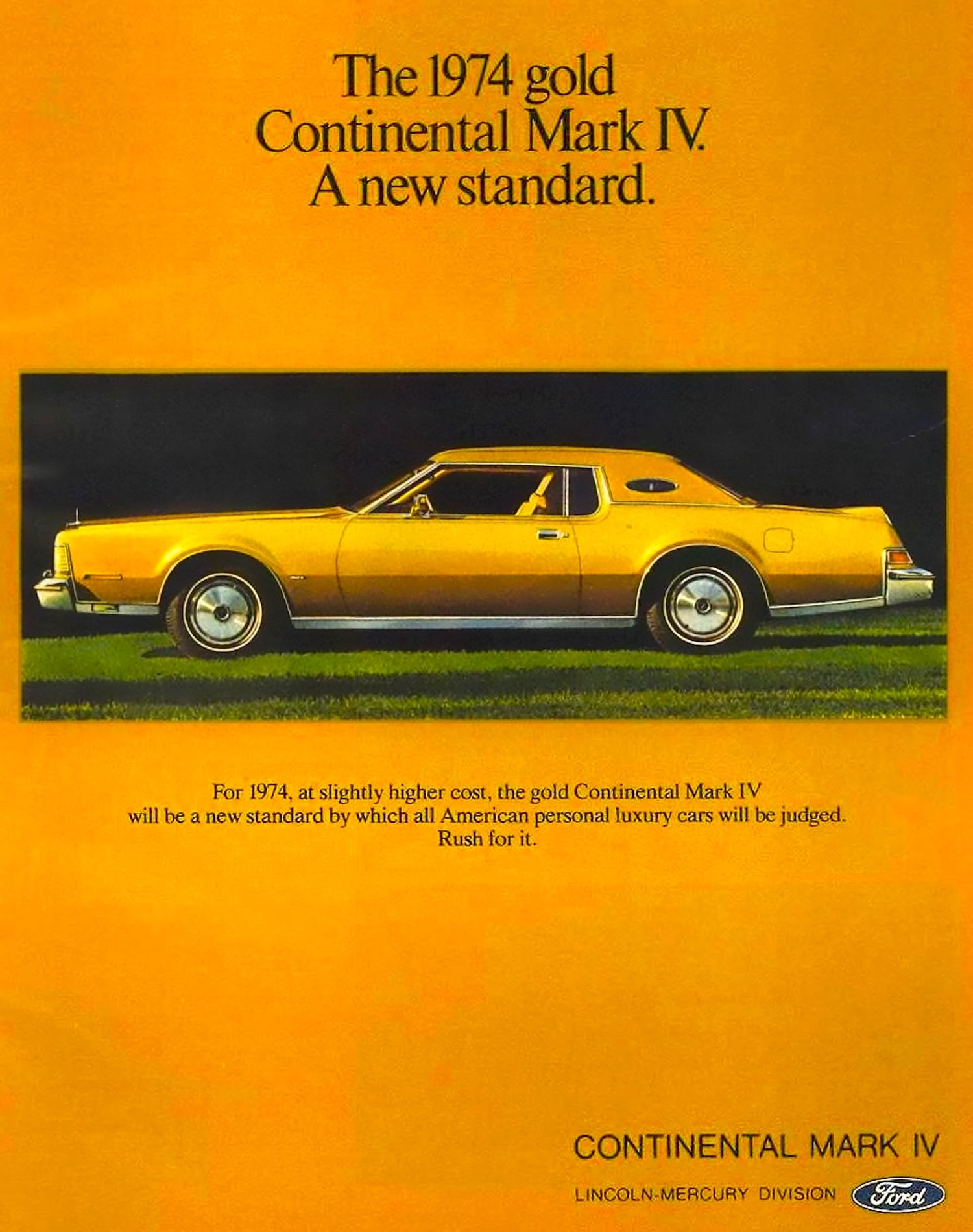
Lincoln built 48,591 Mark IVs for 1972, 69,437 for 1973, 57,316 for 1974, 47,145 for 1975, and 56,110 for 1976, a total of 278,599. It outsold the Cadillac Eldorado in every one of those years, the Eldorado’s five-year total was over 50,000 fewer cars at 225,873. Even the weakest year beat the Mark III’s best. Image courtesy of Ford.
Sales Figures + Running Changes
Lincoln built 48,591 Mark IVs for 1972, 69,437 for 1973, 57,316 for 1974, 47,145 for 1975, and 56,110 for 1976, a total of 278,599. It outsold the Cadillac Eldorado in every one of those years, the Eldorado’s five-year total was over 50,000 fewer cars at 225,873. Even the weakest year beat the Mark III’s best. It turns out that Bunkie Knudsen knew what he was talking about after all.
A 5 mph front bumper arrived on the nose for 1973, and a matching rear bumper for 1974 moved the taillights out of the bumper and into the body. Overall length grew to 228.1 inches, and a glass moonroof, conceived by Heinz Prechter of American Sunroof Corporation, became an option in 1973.
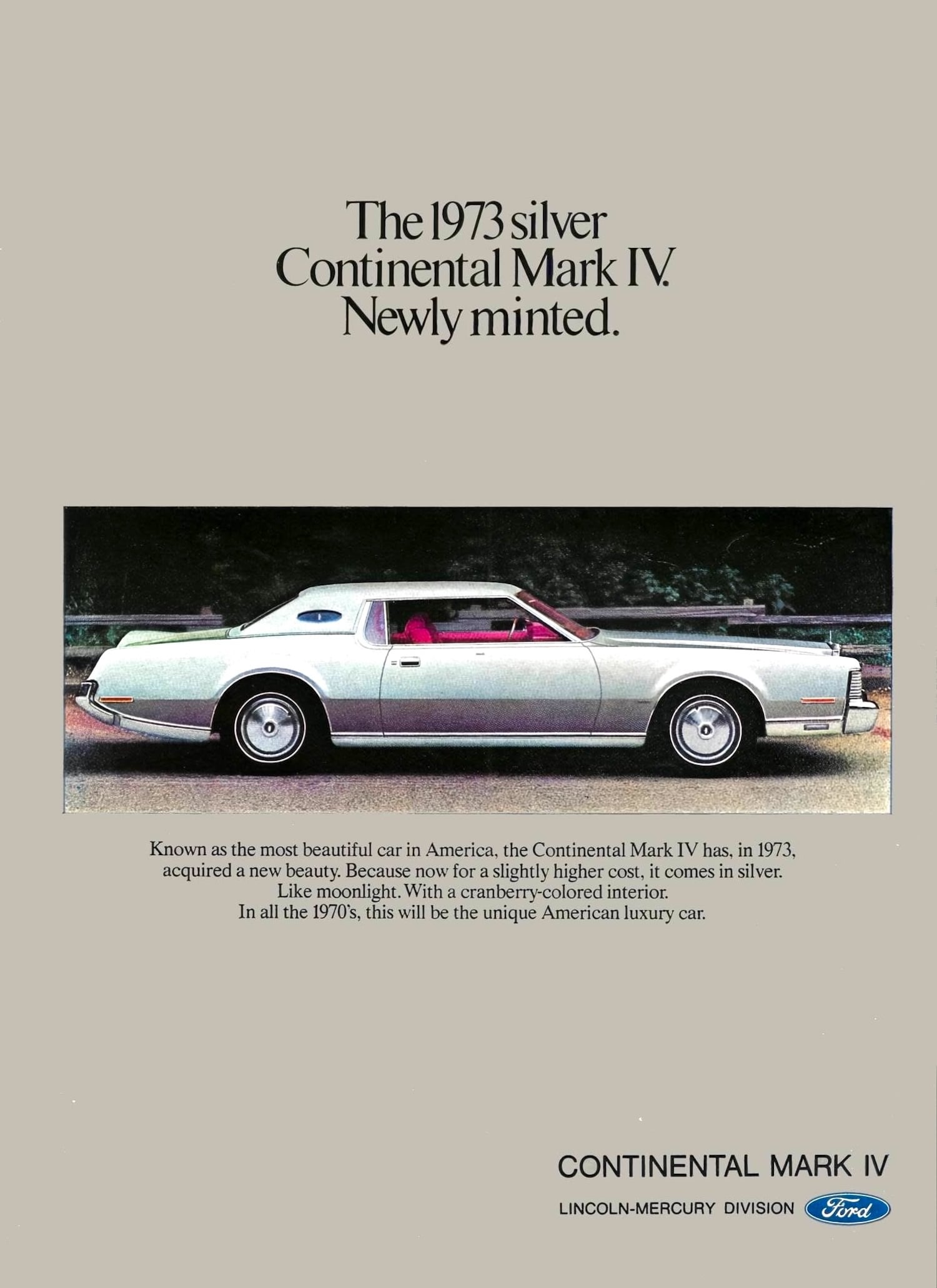
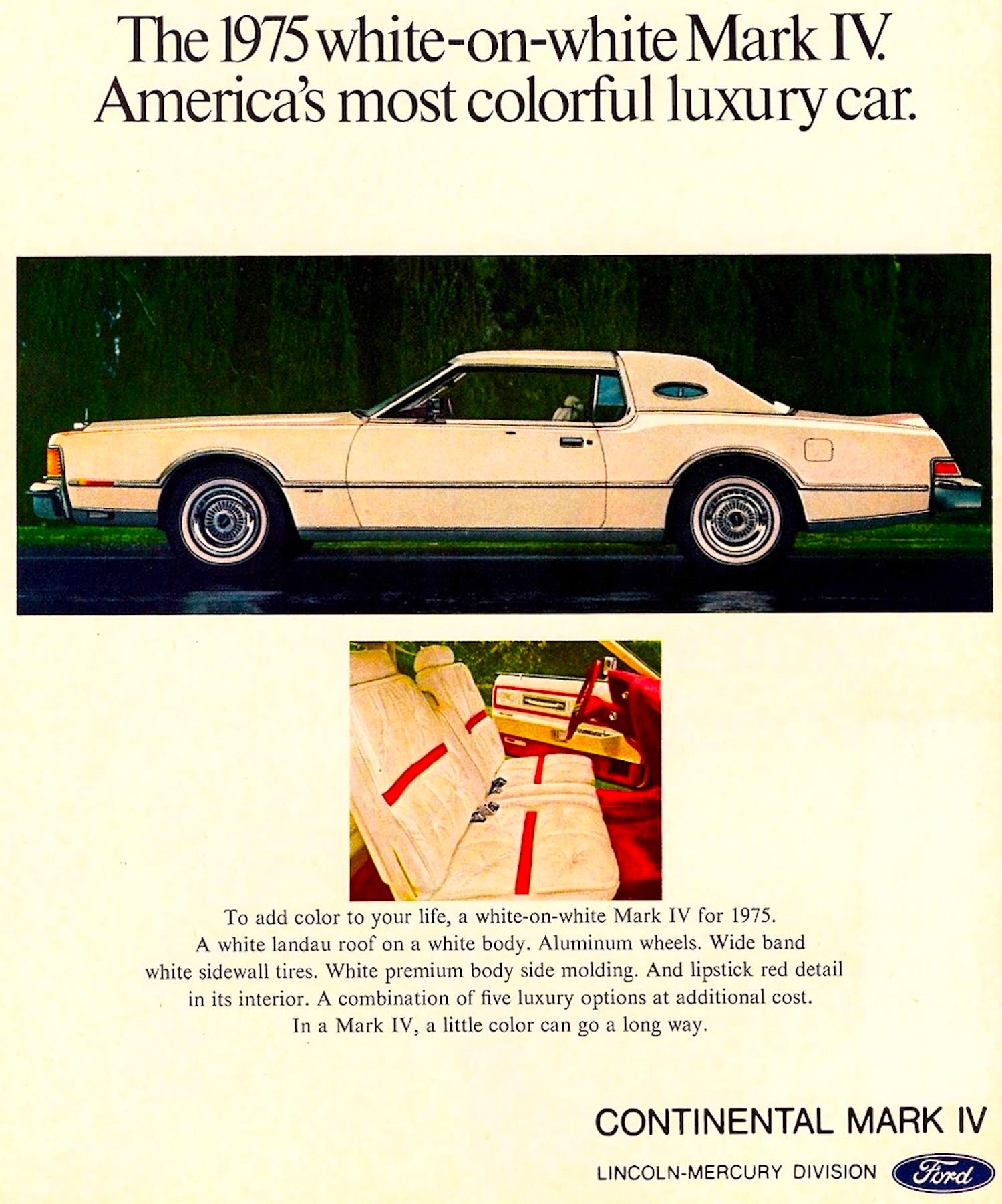
The same year brought the first of the Luxury Groups, color-matched paint, roof, and interior packages – Silver for 1973, Gold for 1974, Saddle and White late in the 1974 model year, then Blue Diamond and Lipstick and White for 1975. By 1976 every Mark IV had disc brakes at all four wheels, and Sure-Track had become an option. The base price was $11,060 USD (about $65,600 USD in 2026 dollars).
The Continental Designer Series
Four Designer Series cars launched with the rest of the 1976 range in October of 1975, all carrying the name of a fashion house or jeweler. Each edition had a single paint and vinyl roof combination and its own custom interior. Ford’s own interior designers developed the schemes, and each outside designer chose from the proposals and then approved the result. Though of course, that little detail wasn’t mentioned in the marketing materials.
Cartier – Dove Gray paint with red and white pinstripes, a matching gray landau roof in “Valino” grain vinyl, and gray velour or leather-and-vinyl inside. Cartier’s name was already on the dashboard clock, as it had been since the Mark III.
Givenchy – Aqua Blue paint with black and white pinstripes, a white “Normande” grain roof, and aqua velour or leather-and-vinyl.
Bill Blass – Dark blue metallic paint with cream and gold pinstripes, a cream roof, and navy velour or dark blue and cream leather-and-vinyl.
Pucci – Dark Red Moondust Metallic paint with silver and red pinstripes, a silver roof, and dark red velour, with dark red leather-and-vinyl added late in the model year.
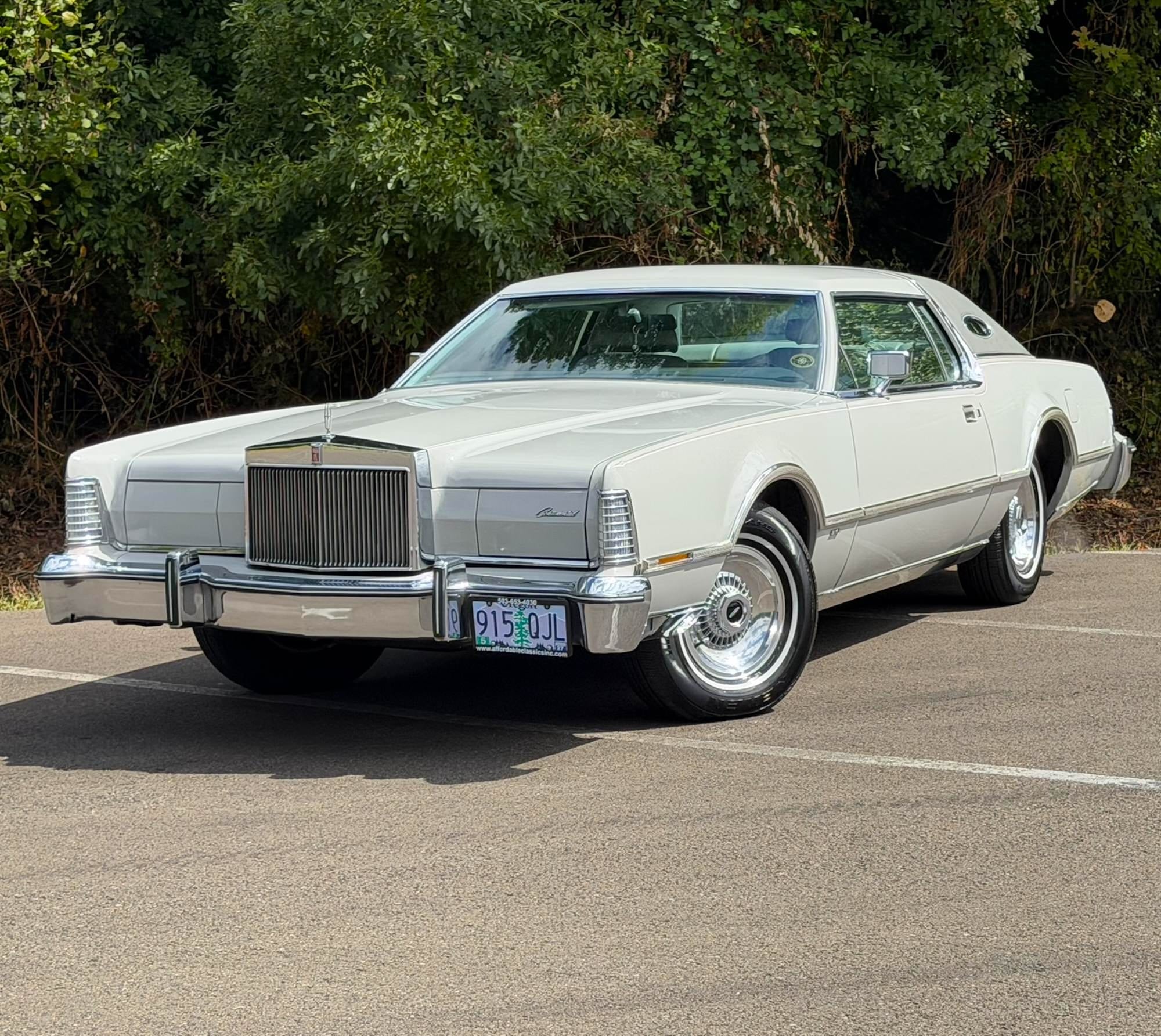
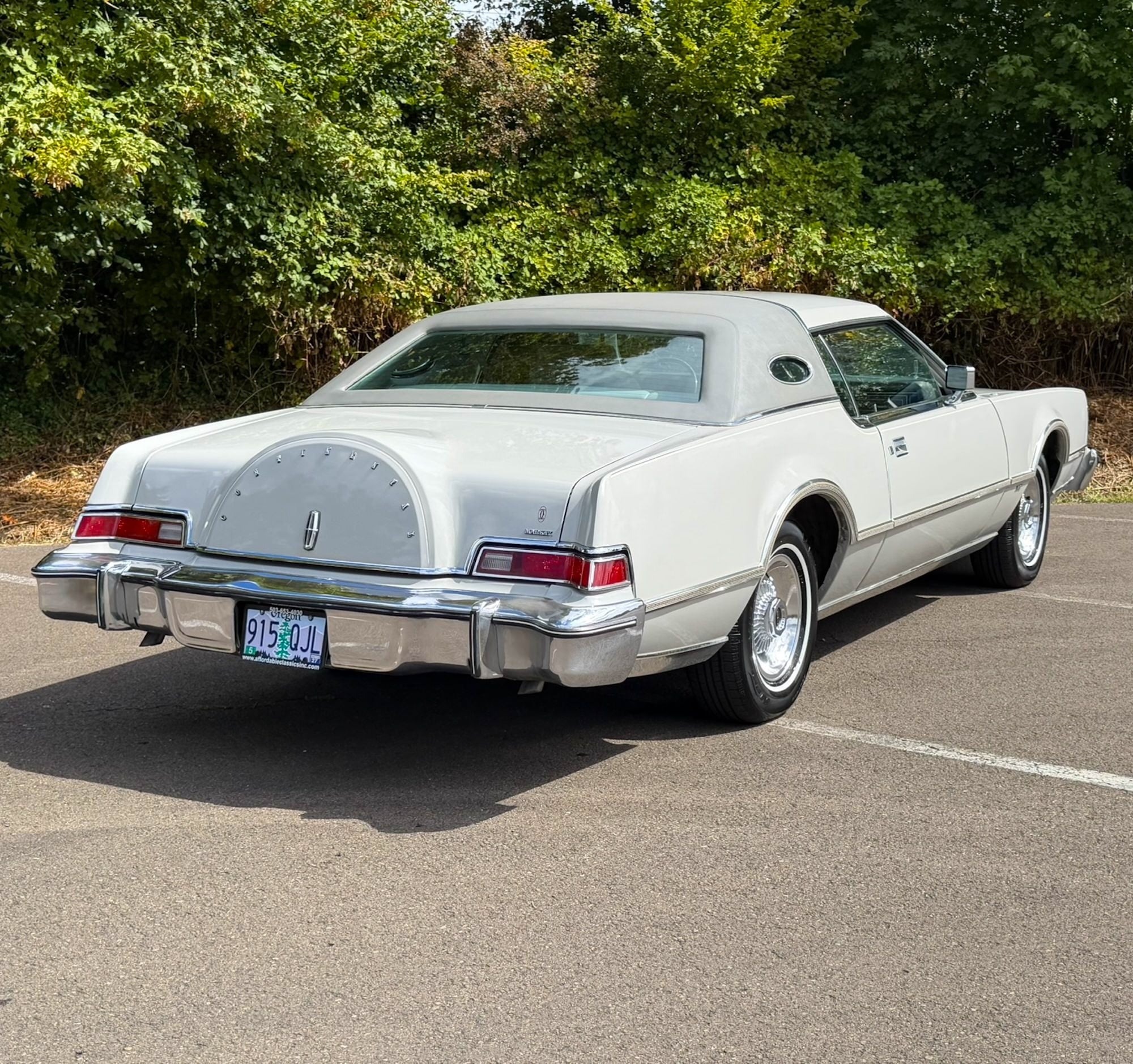
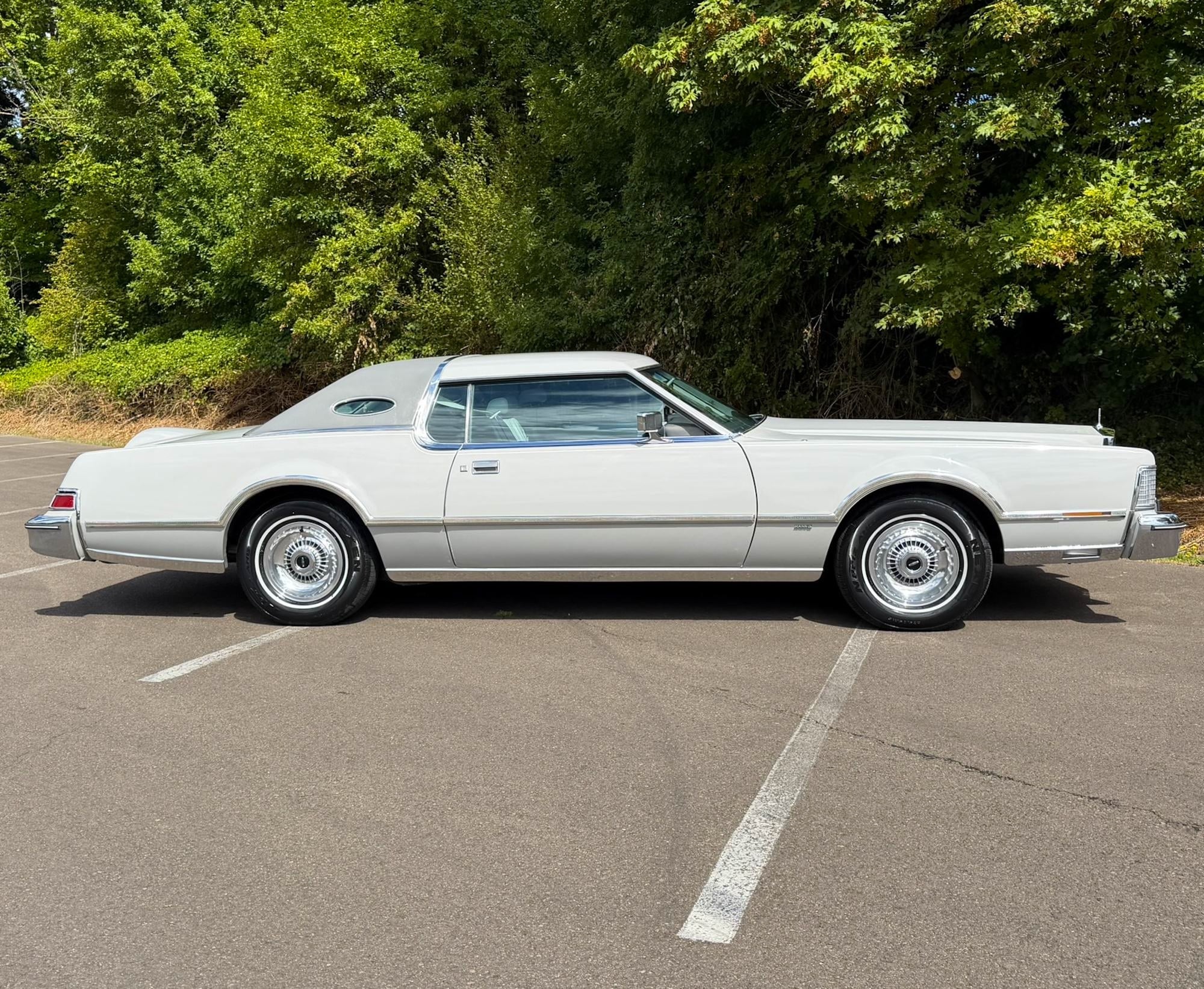
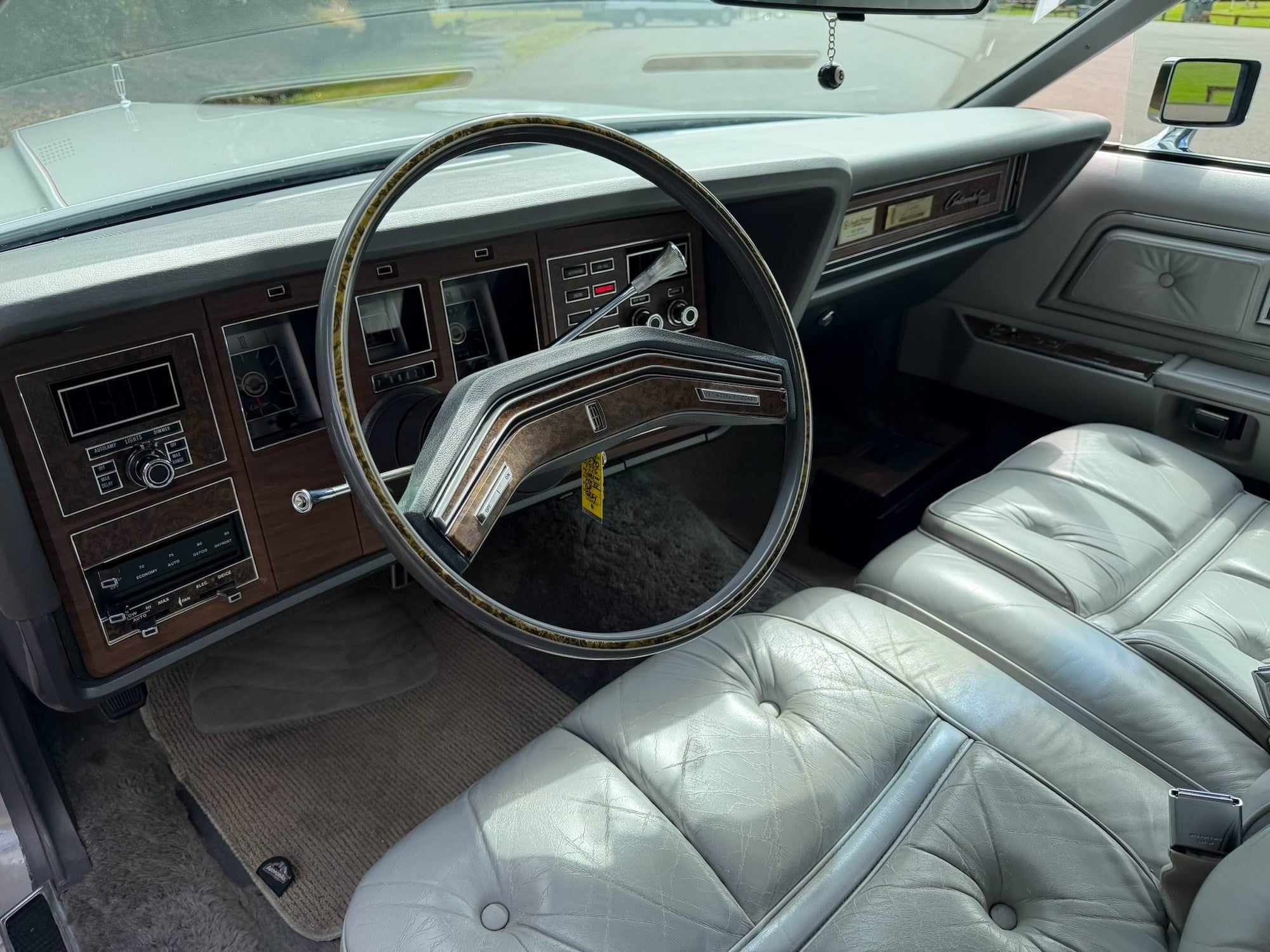
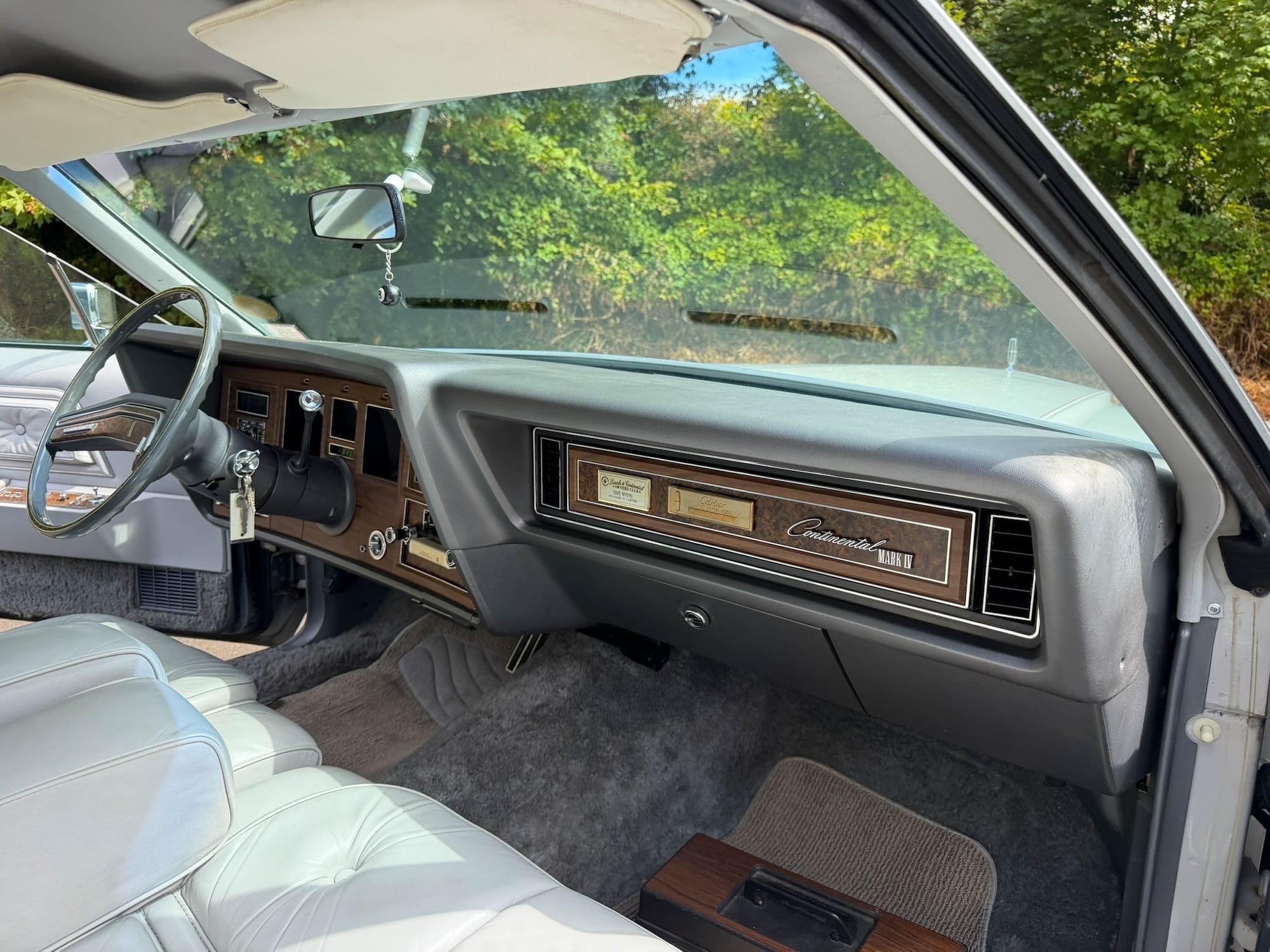
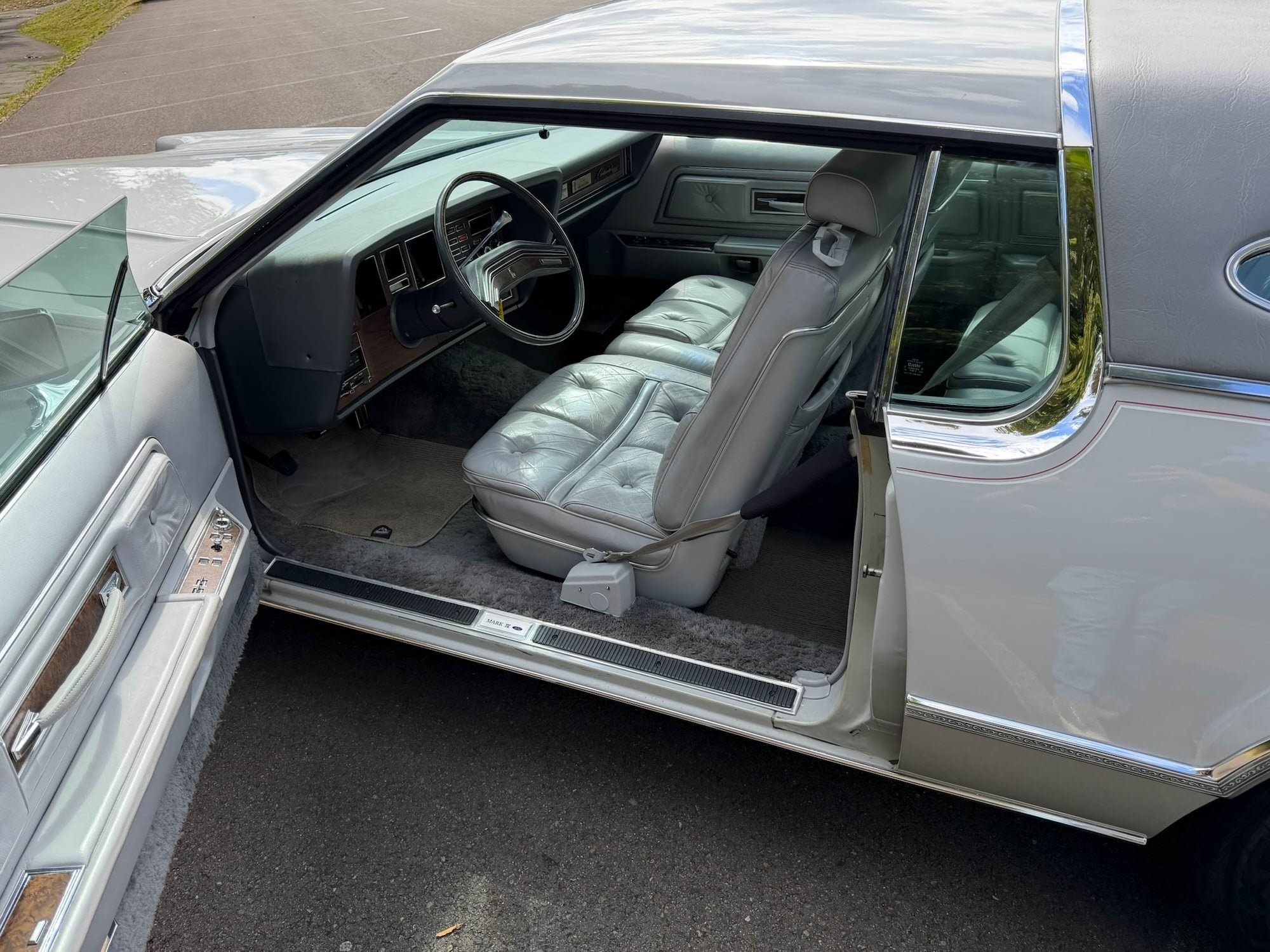
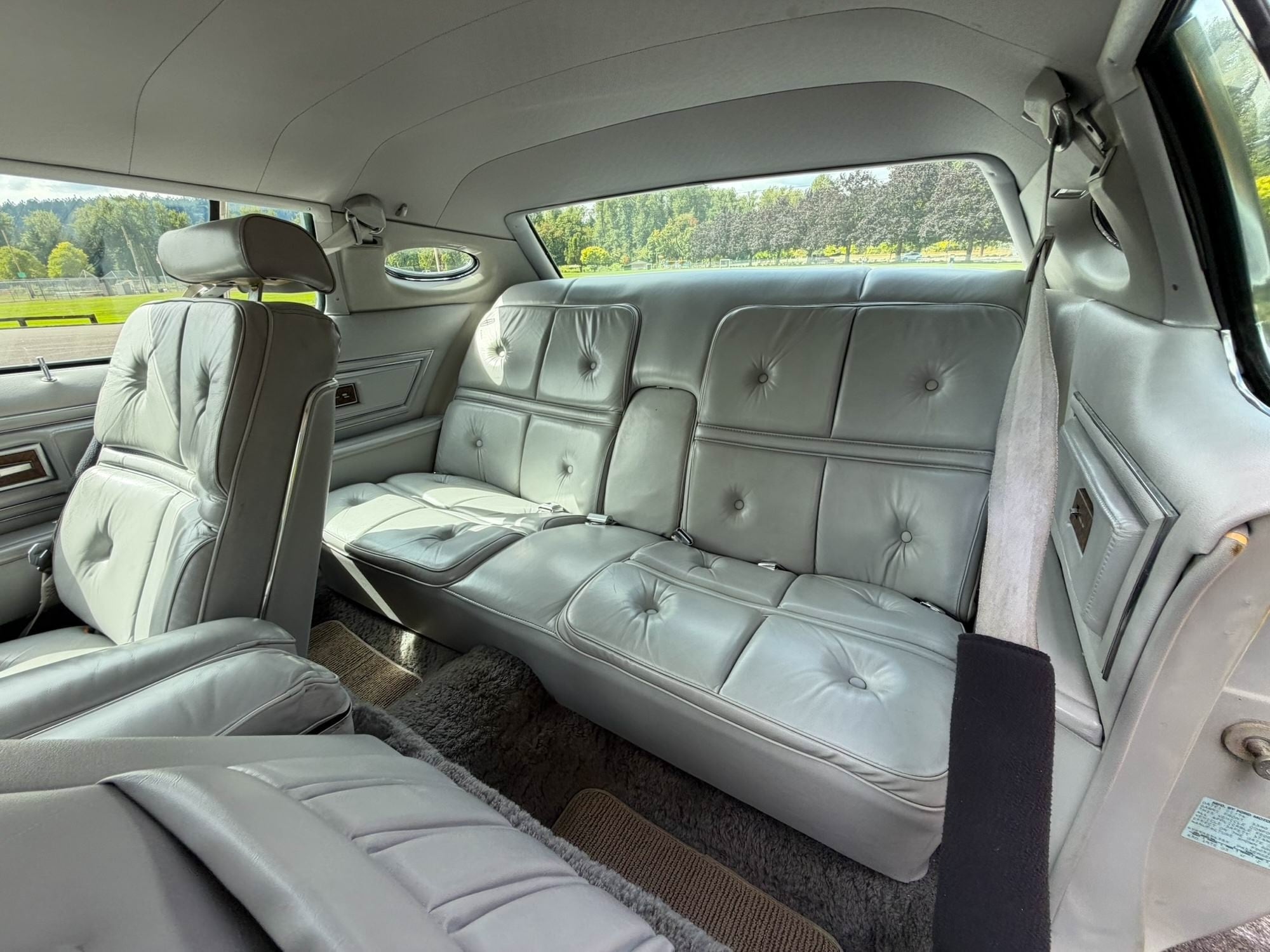
This is a 1976 Lincoln Continental Mark IV Cartier Edition, one of relatively few that have survived to the modern day in original condition. The car has 49,000 miles showing on the odometer and keeps its factory color combination of Dove Grey paint, a matching vinyl landau roof, and Dove Grey leather upholstery.
All four had the designer’s signature in gold on the opera window, forged aluminum wheels, and a 22-karat gold-plated dashboard plaque that could be engraved with the owner’s name. The package cost $1,500 USD with leather-and-vinyl or $2,000 USD with velour (about $8,900 USD and $11,900 USD in 2026 dollars).
Final totals put the Cartier at 5,716 cars and the Bill Blass at 3,213. The Designer Series carried over to the Mark V, which sold 228,862 cars in three model years. The Cartier name later moved to the Lincoln Town Car, and surprisingly, it stayed in the catalog until 2003.
The “Cartier Edition” Continental Mark IV Shown Here
This is a 1976 Lincoln Continental Mark IV Cartier Edition, one of relatively few that have survived to the modern day in original condition. The car has 49,000 miles showing on the odometer and keeps its factory color combination of Dove Grey paint, a matching vinyl landau roof, and Dove Grey leather upholstery.
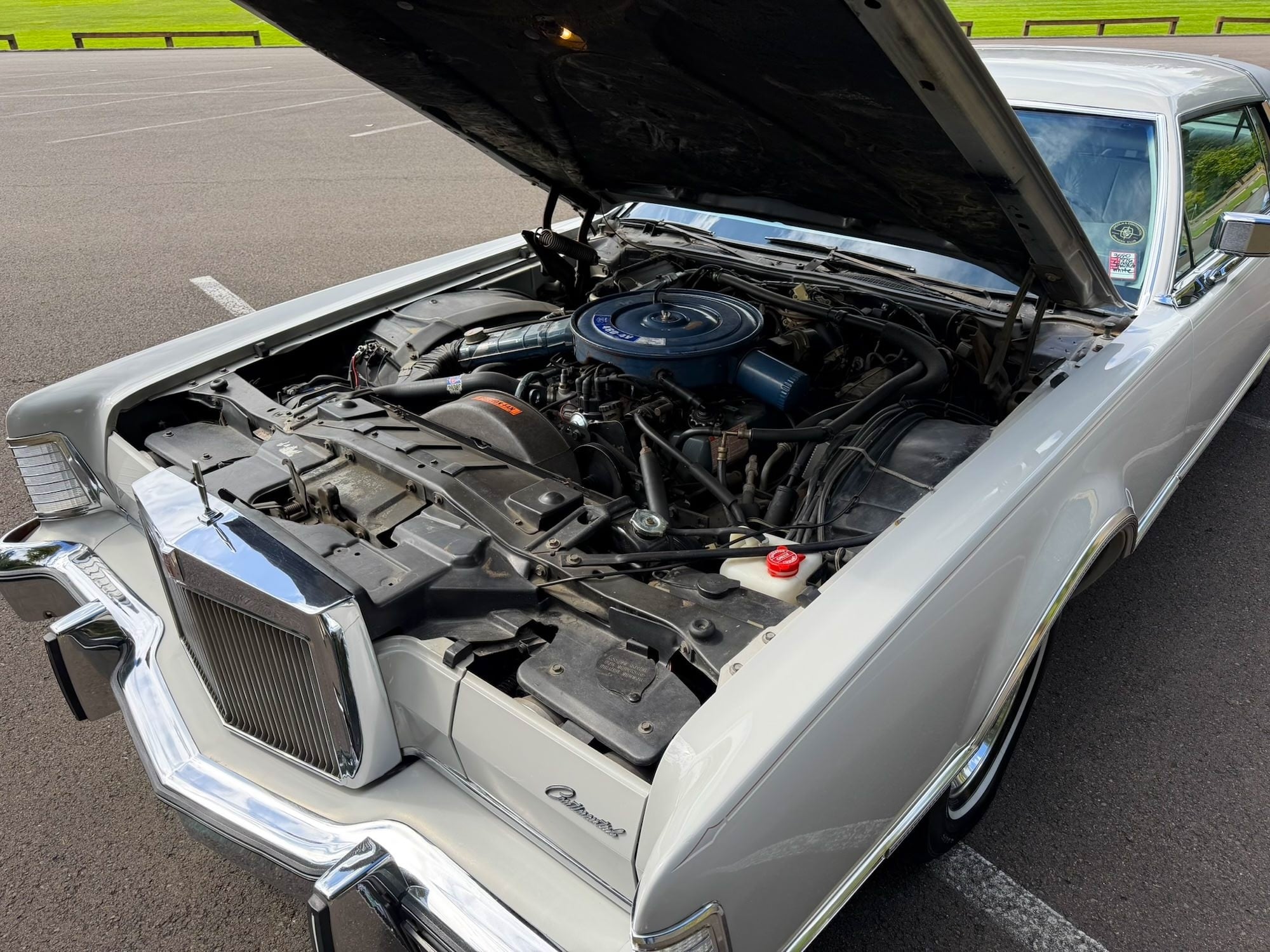
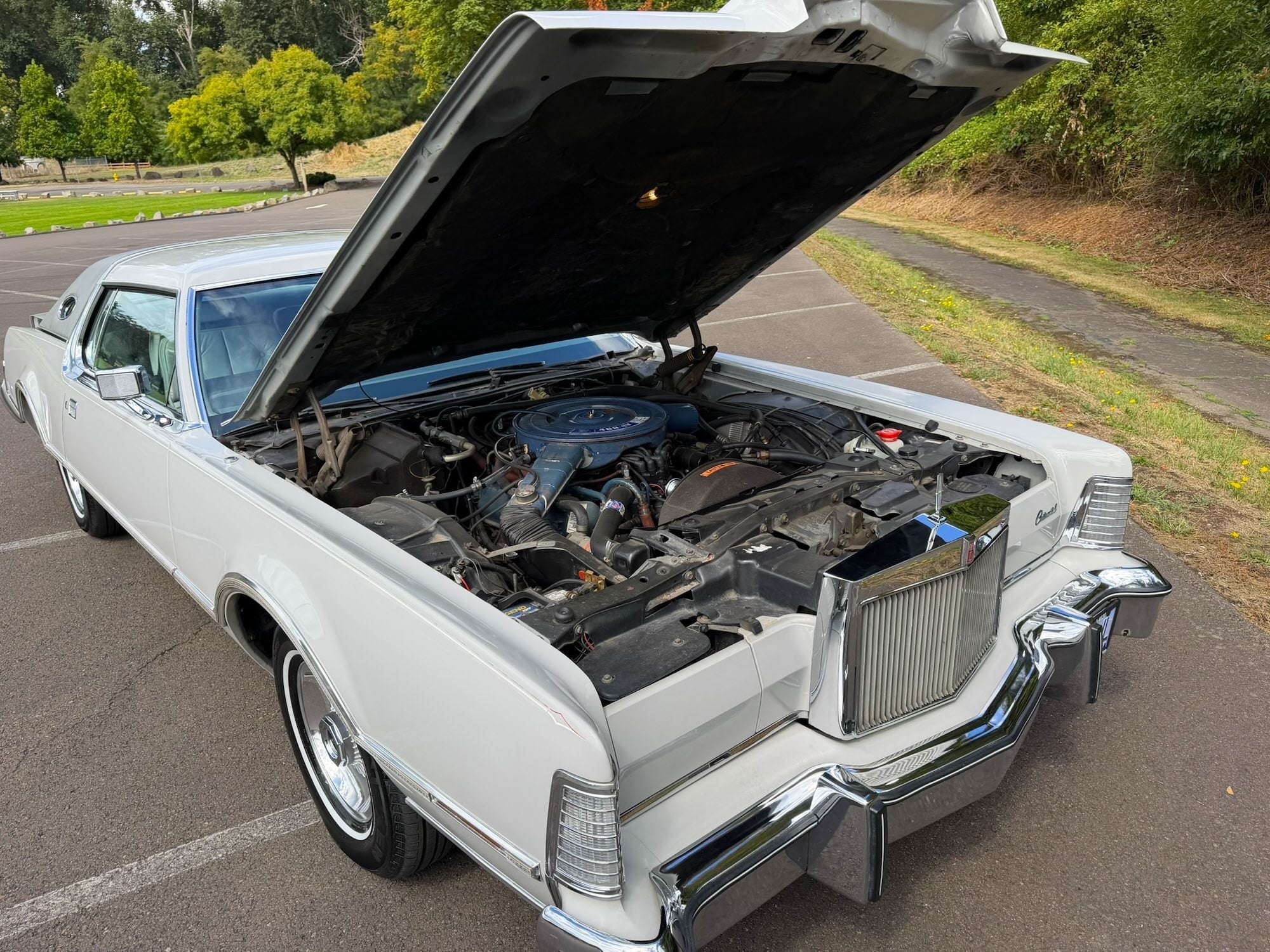
As you would expect, power is provided by a 460 cubic inch (7.5 liter) V8 fitted with a four-barrel carburetor, rated at a little over 200 bhp when new. Power is sent to the rear wheels through a Ford C6 3-speed automatic transmission and a 2.75:1 rear axle. The car rides on 15-inch forged aluminum wheels fitted with narrow-whitewall tires, and braking is provided by power-assisted discs at all four corners.
As you would expect, power is provided by a 460 cubic inch (7.5 liter) V8 fitted with a four-barrel carburetor, rated at a little over 200 bhp when new. Power is sent to the rear wheels through a Ford C6 3-speed automatic transmission and a 2.75:1 rear axle.
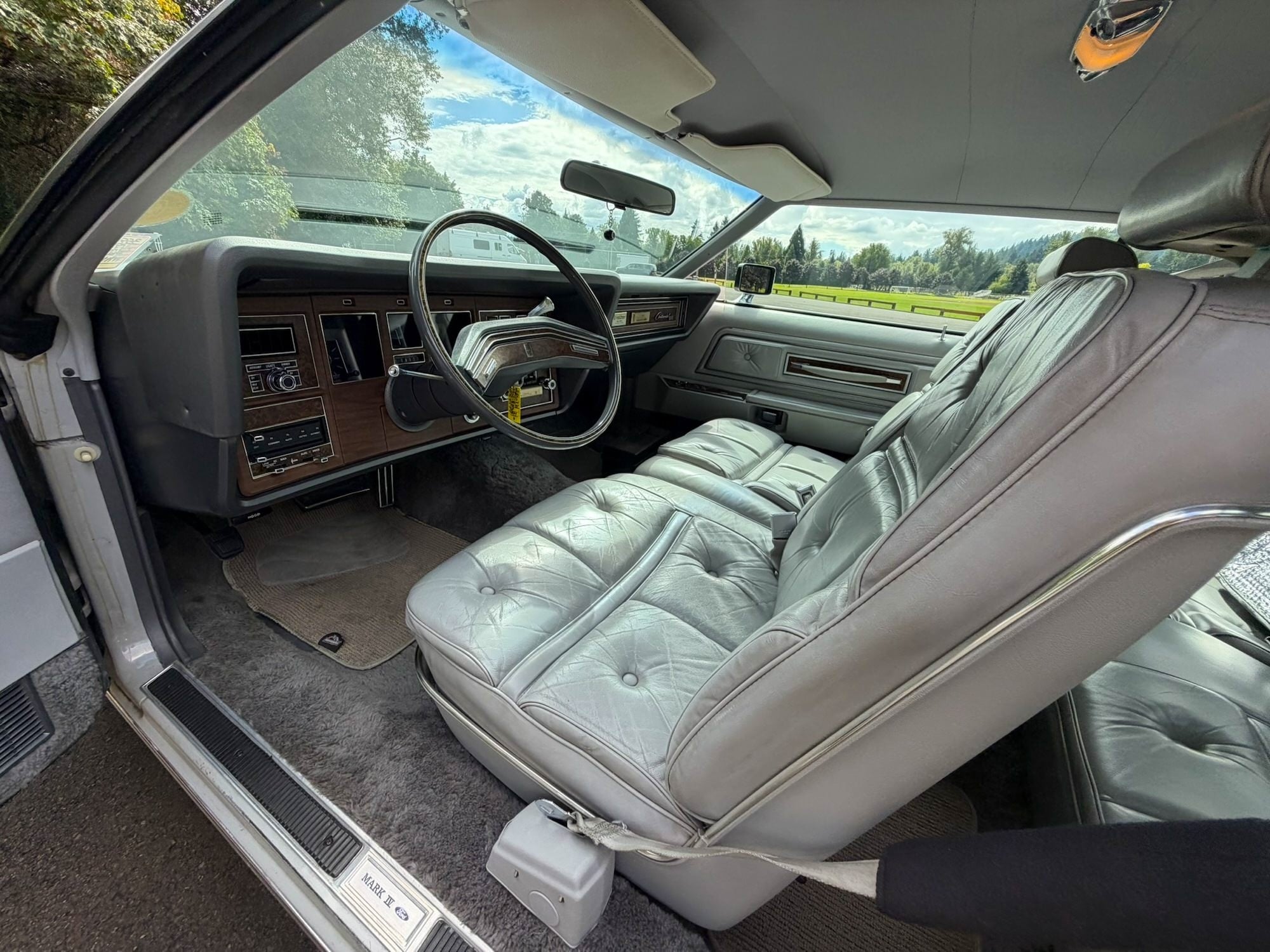
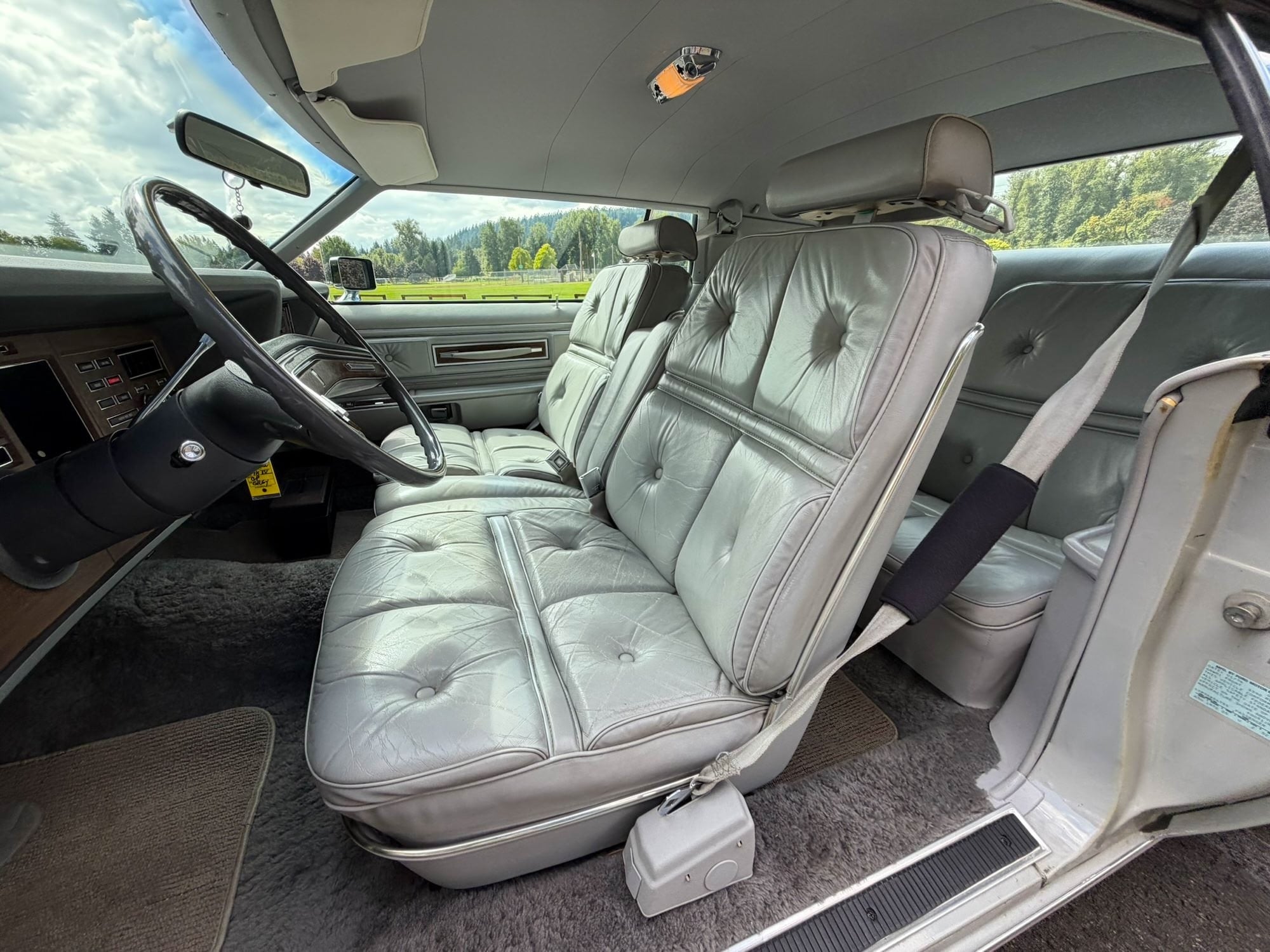
Cartier Edition exterior features include accent pinstriping and Cartier-branded opera windows. Interior equipment includes power-adjustable front seats, power windows and locks, automatic climate control, cruise control, a tilting steering column, woodgrain trim, a Cartier clock, and the factory AM/FM stereo with an eight-track player.
The factory door jamb sticker confirms the original color and drivetrain specifications, as well as allocation to the Los Angeles sales district. It’s now being offered for sale out of Gladstone, Oregon with an Oregon title. If you’d like to read more about it or register to bid you can visit the listing here.
Images courtesy of Bring a Trailer + Ford

Articles that Ben Branch has written have been covered on CNN, Popular Mechanics, Smithsonian Magazine, Road & Track Magazine, the official Pinterest blog, the official eBay Motors blog, BuzzFeed, Autoweek Magazine, Wired Magazine, Autoblog, Gear Patrol, Jalopnik, The Verge, and many more.
Silodrome was founded by Ben back in 2010, in the years since the site has grown to become a world leader in the alternative and vintage motoring sector, with well over a million monthly readers from around the world and many hundreds of thousands of followers on social media.