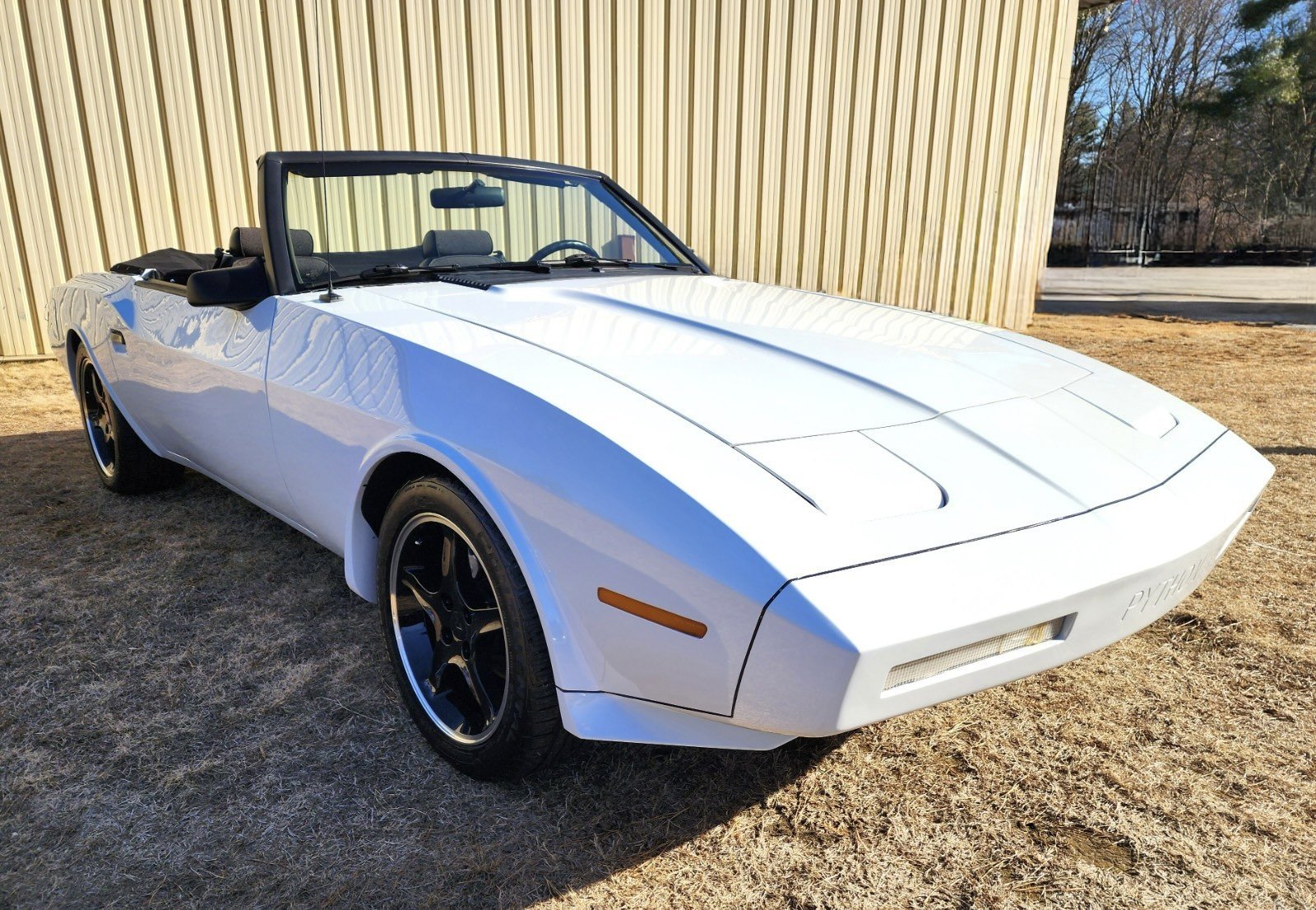
This is an original Kelly Python, it’s not a kit car but rather a fascinating low-volume production car built in limited numbers and sold through official Ford dealerships in the United States.
The Python was closely based on the Bordinat Cobra, an official Ford Concept car destined to be the replacement for the original Shelby Cobra. The project didn’t work out, but it was resurrected years later by Alvin Kelly (with the approval of Gene Bordinat), and put into limited production using Fox Body Mustang running gear. Just 12 are thought to have been made and only 7 have survived.
Fast Facts: The Kelly Python
- The Kelly Python was a low-volume production sports car, not a kit, sold through official Ford dealerships in the United States. The origins of its design go back to a cancelled 1960s Ford concept intended as a Shelby Cobra successor which was revived decades later by Alvin Kelly with Gene Bordinat’s approval.
- It was built in extremely small numbers, roughly 12 cars were completed and only about 7 are believed to survive. Kelly adapted Fox Body Mustang underpinnings, allowing Ford dealers to service and warranty the car, an unusual achievement for an independent manufacturer operating at this scale.
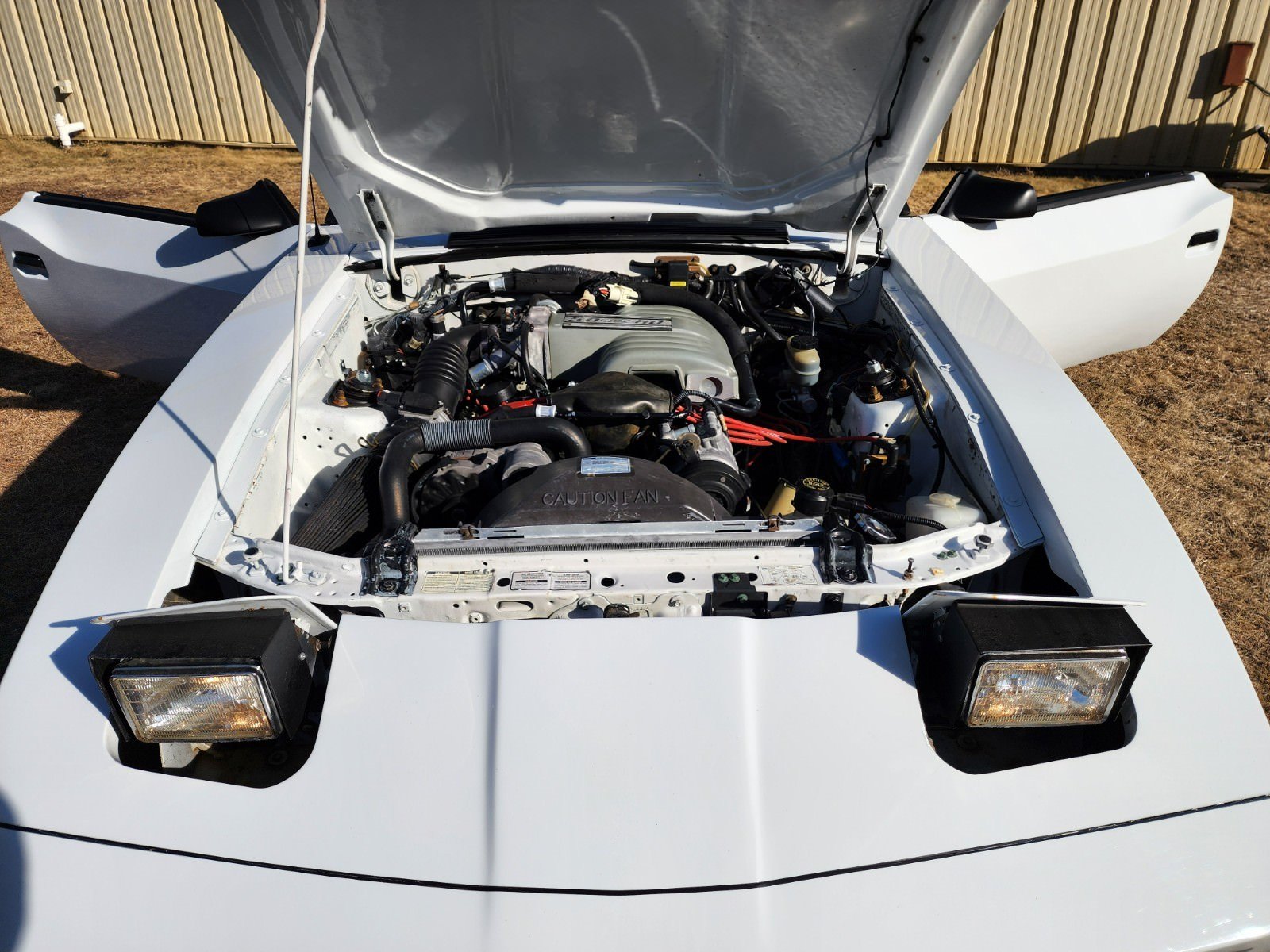
- The Python used a fiberglass body over a shortened Fox Body Mustang platform, with a rearward-shifted weight balance and a quoted 55/45 distribution. Power came from the 5.0 liter Mustang V8, producing 225 bhp and 300 lb ft, delivering better performance than the donor Mustang.
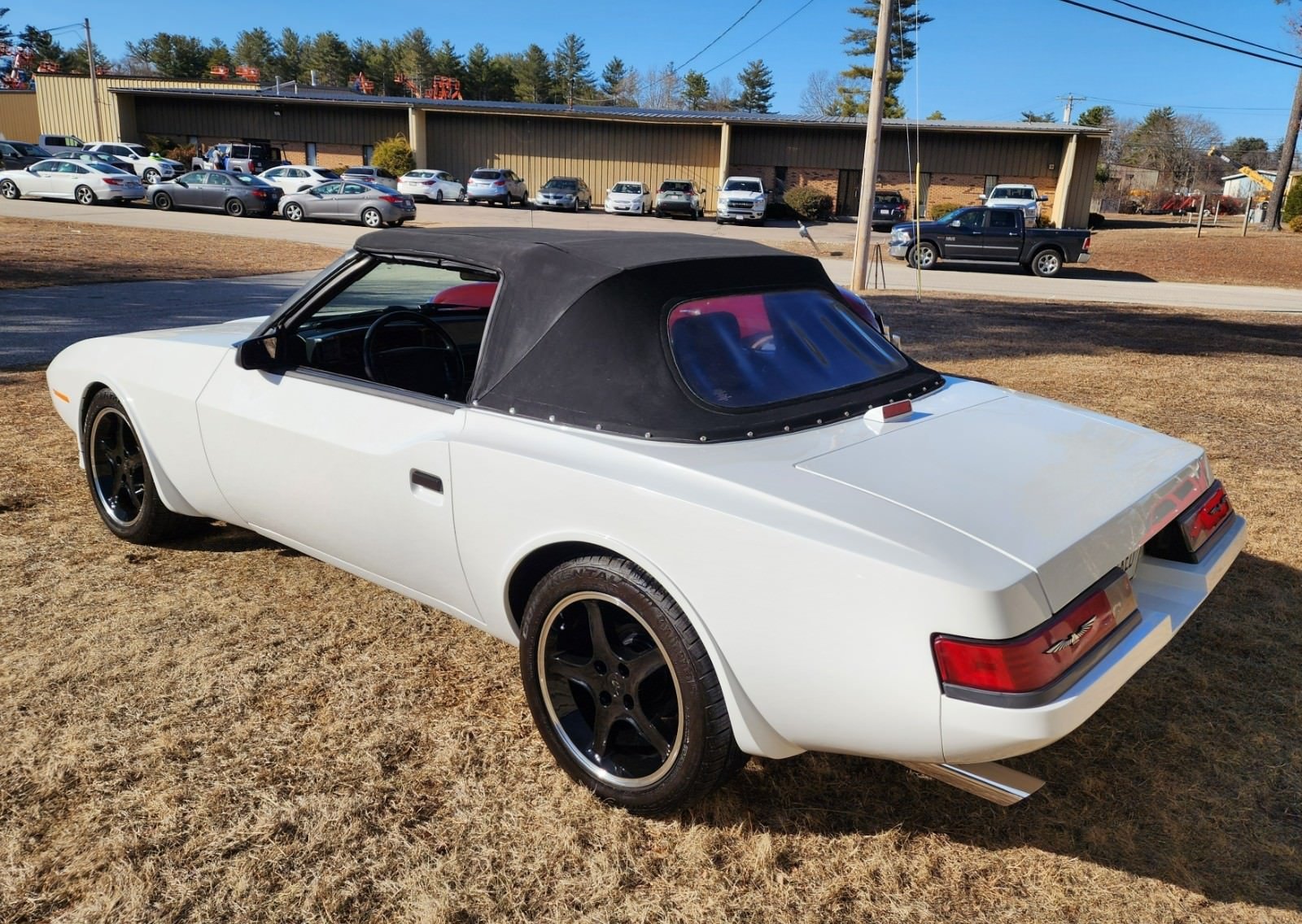
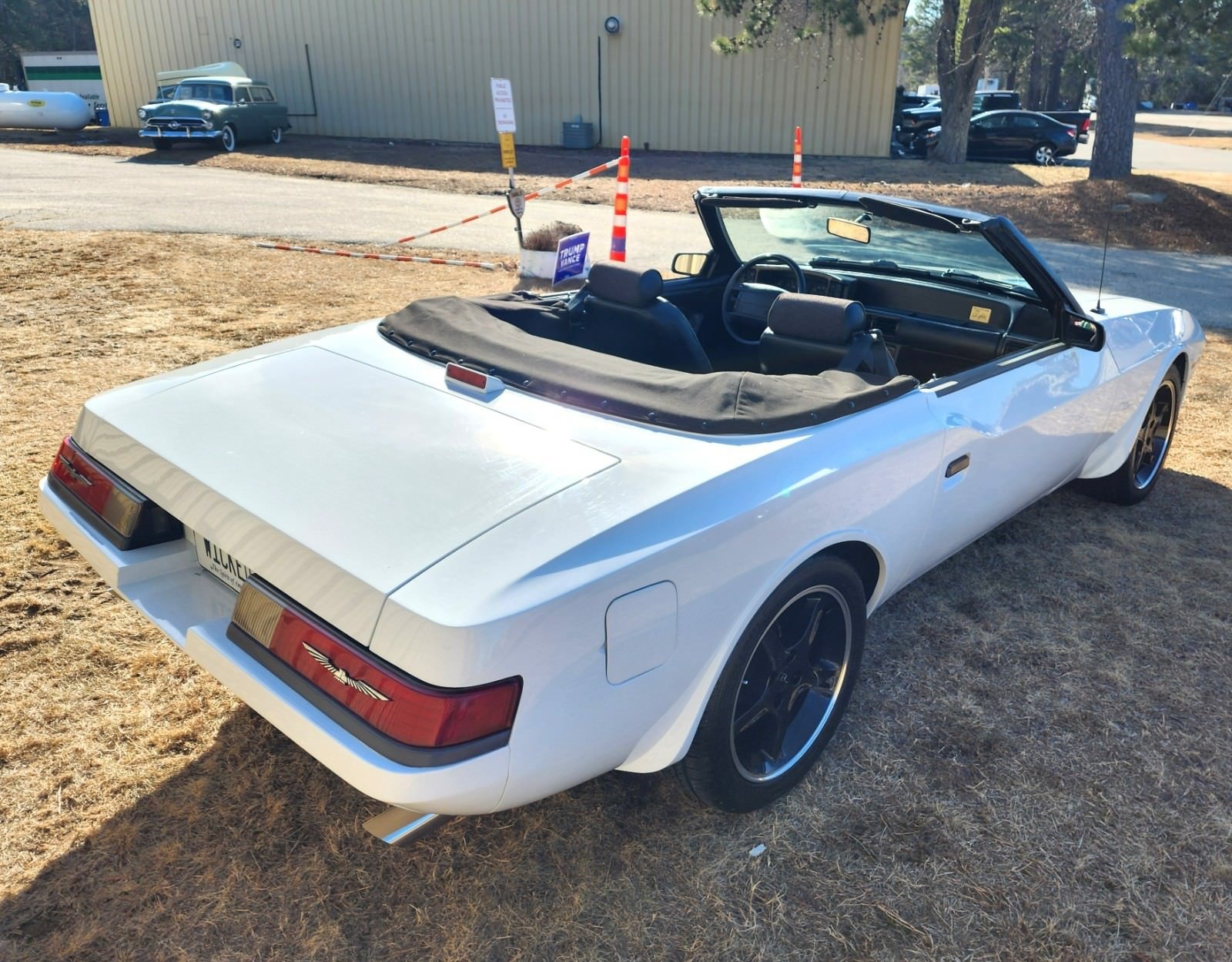
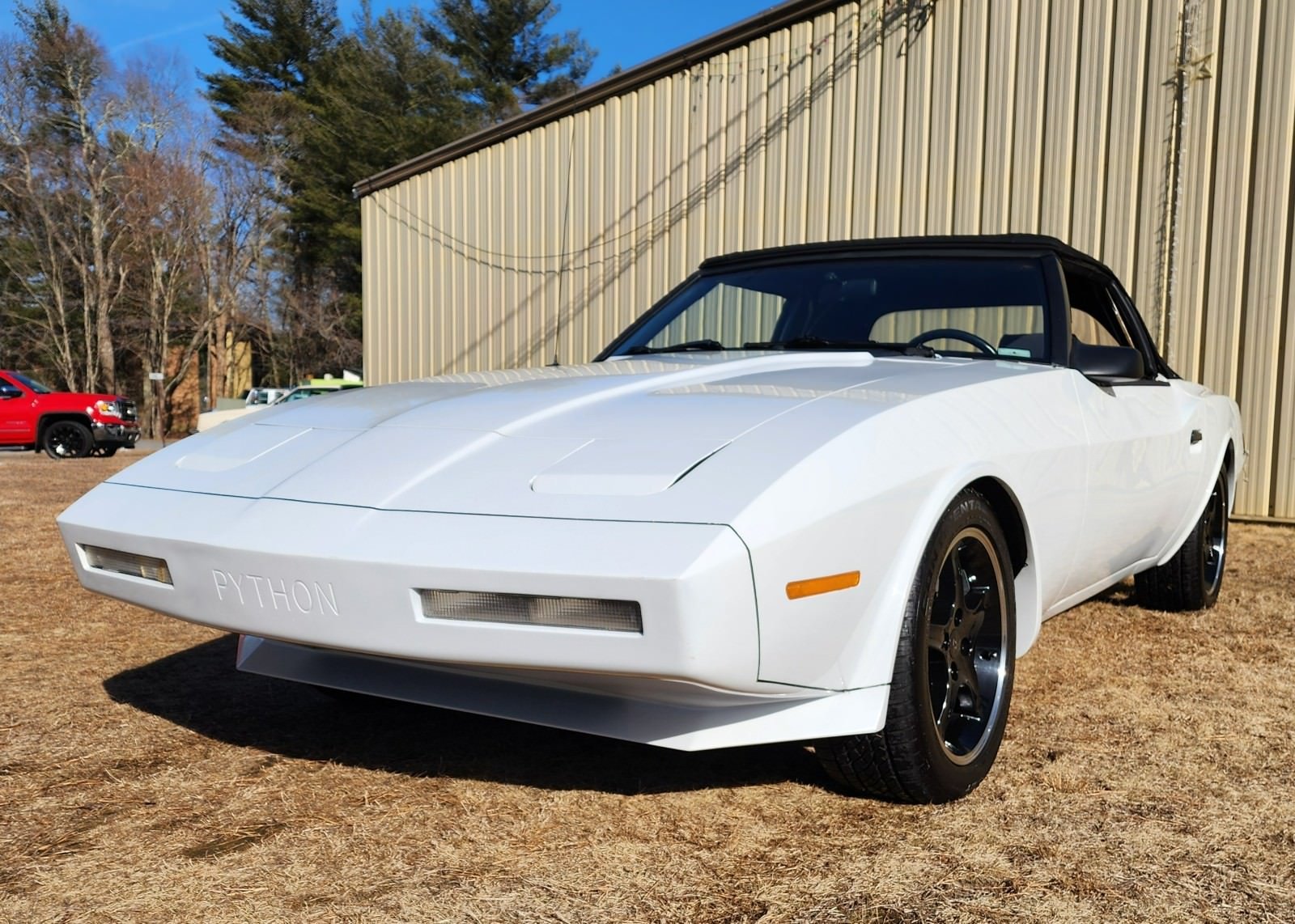
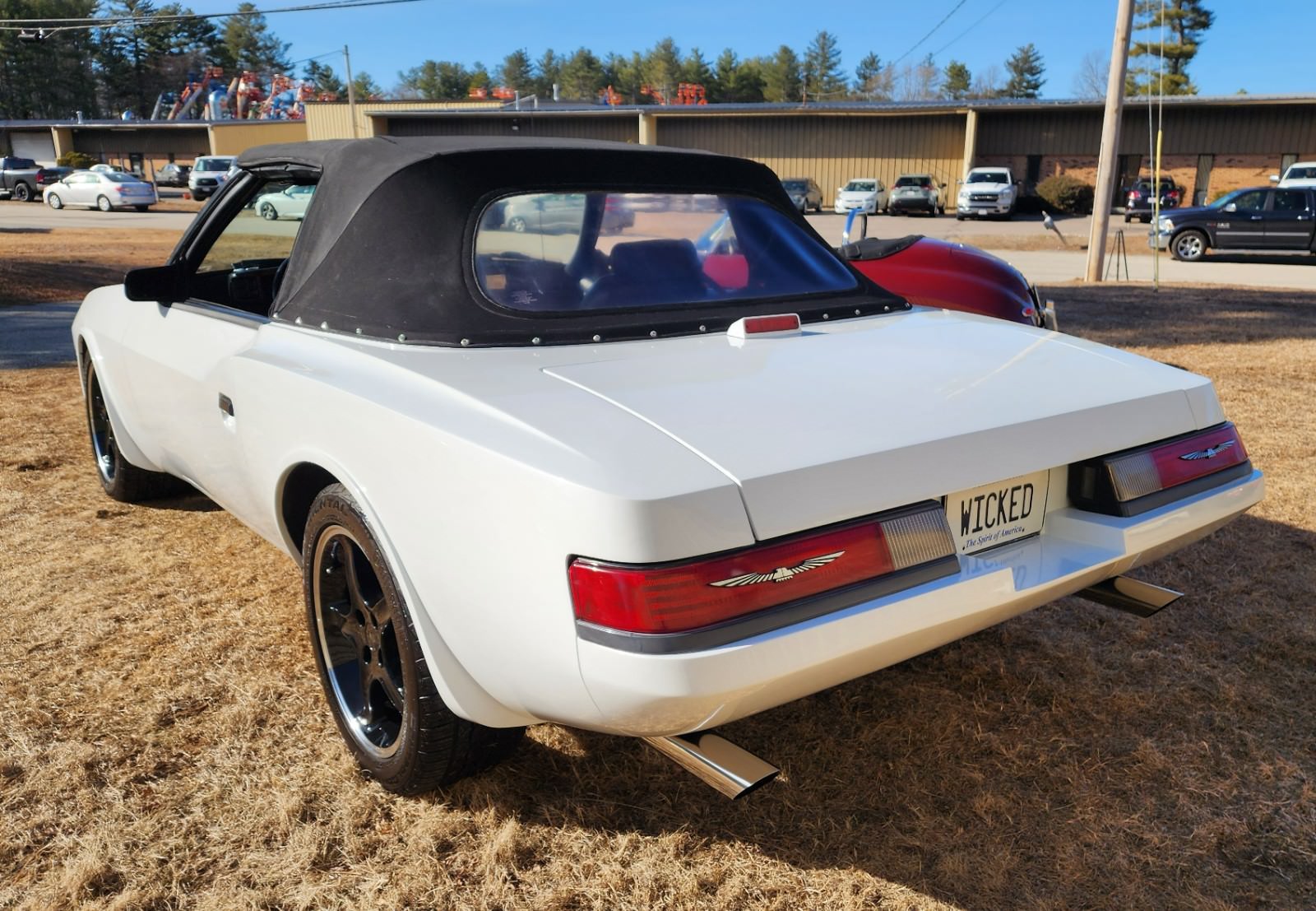
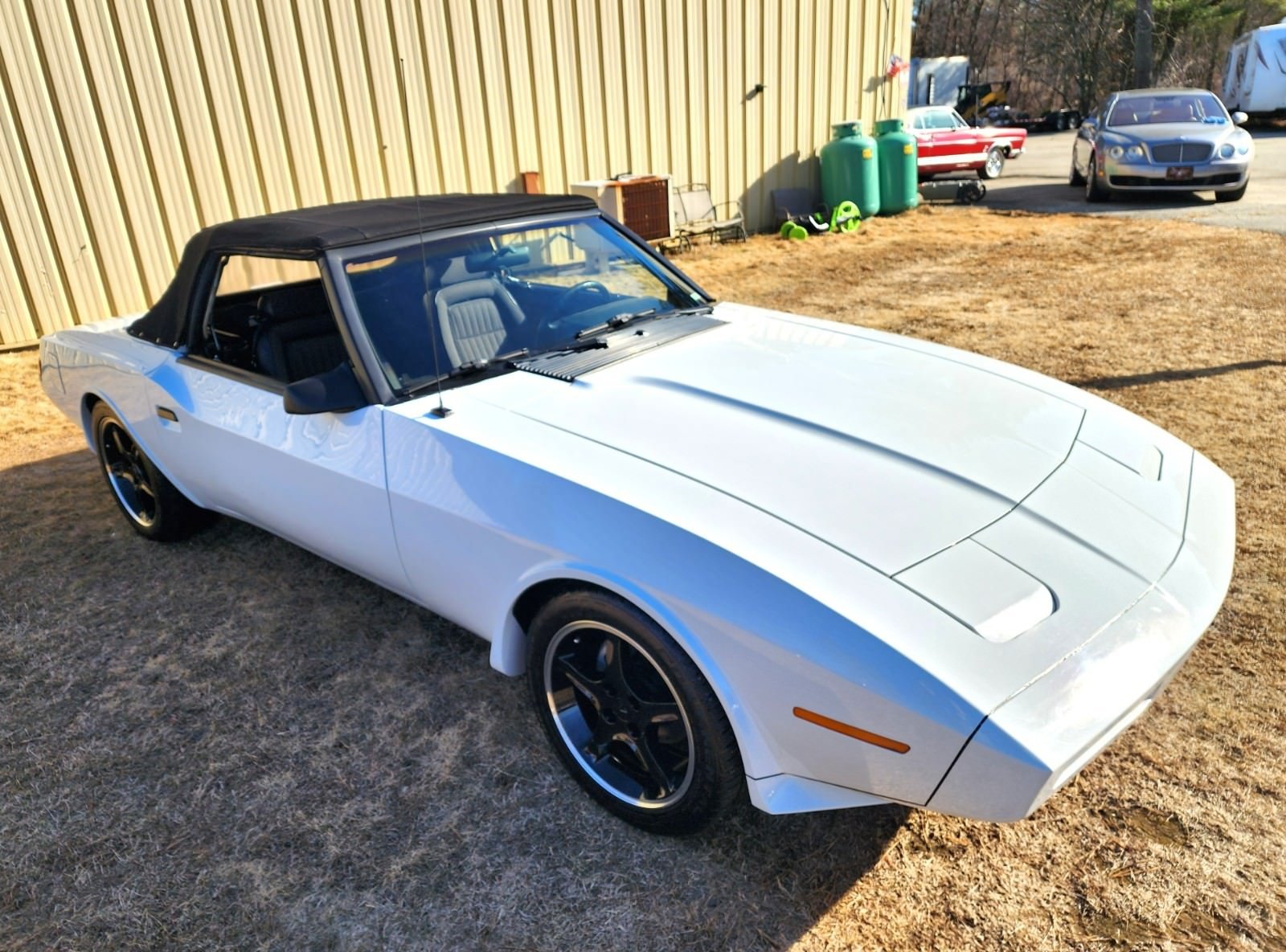
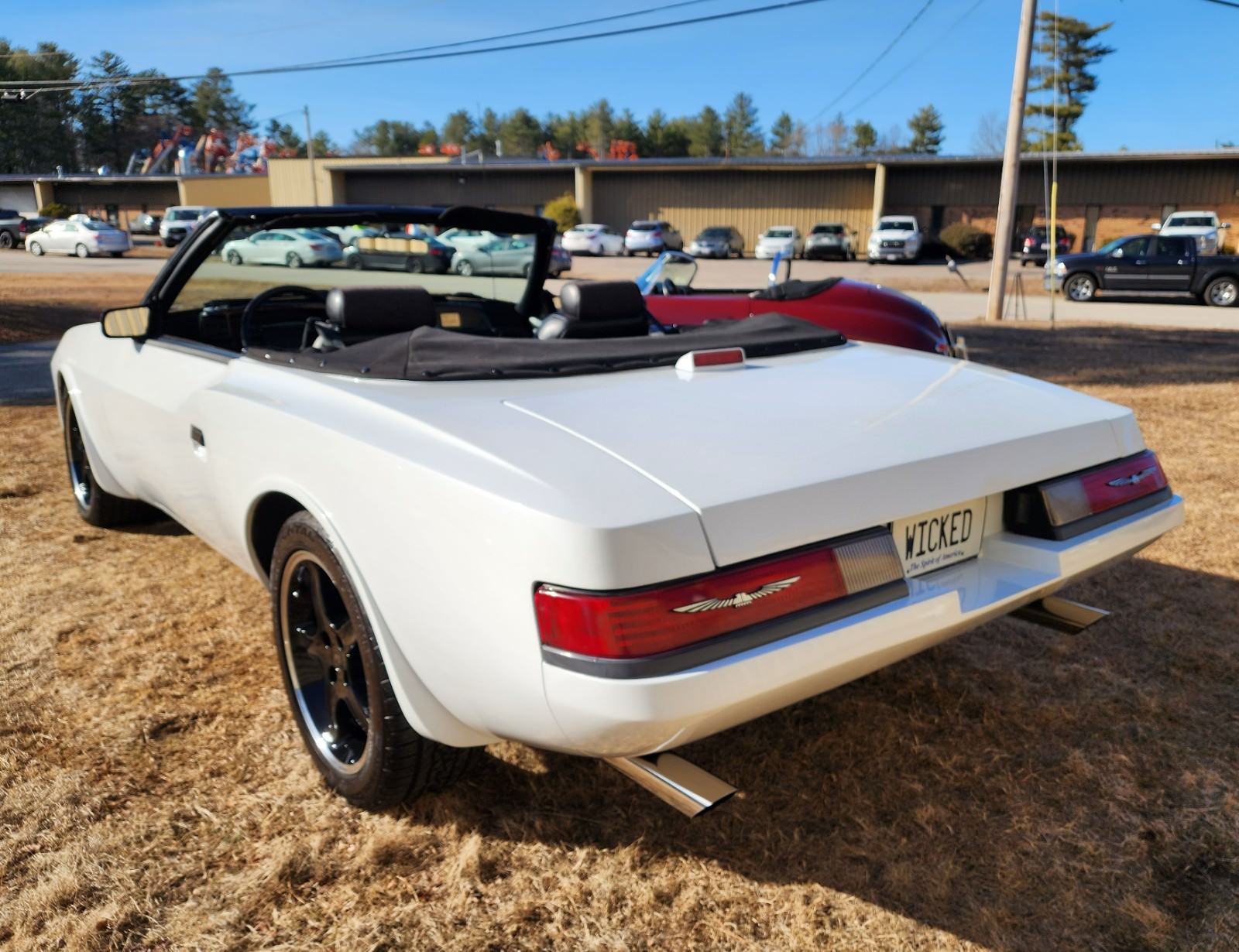
- The 1991 example shown here is chassis number 9, showing just over 41,000 miles and was built by Kelly Motors in Colorado. It’s finished in white with a black soft top, it has air conditioning, headers, and a dual exhaust, and is offered for sale at $22,000 USD.
History Speedrun: The Kelly Python
The Kelly Python was conceived as a modern, turn-key roadster with a visual and conceptual thread that could be followed directly back to a shelved Ford design exercise from the 1960s, yet executed with straightforward Fox Body Mustang mechanicals with a composite body on top.
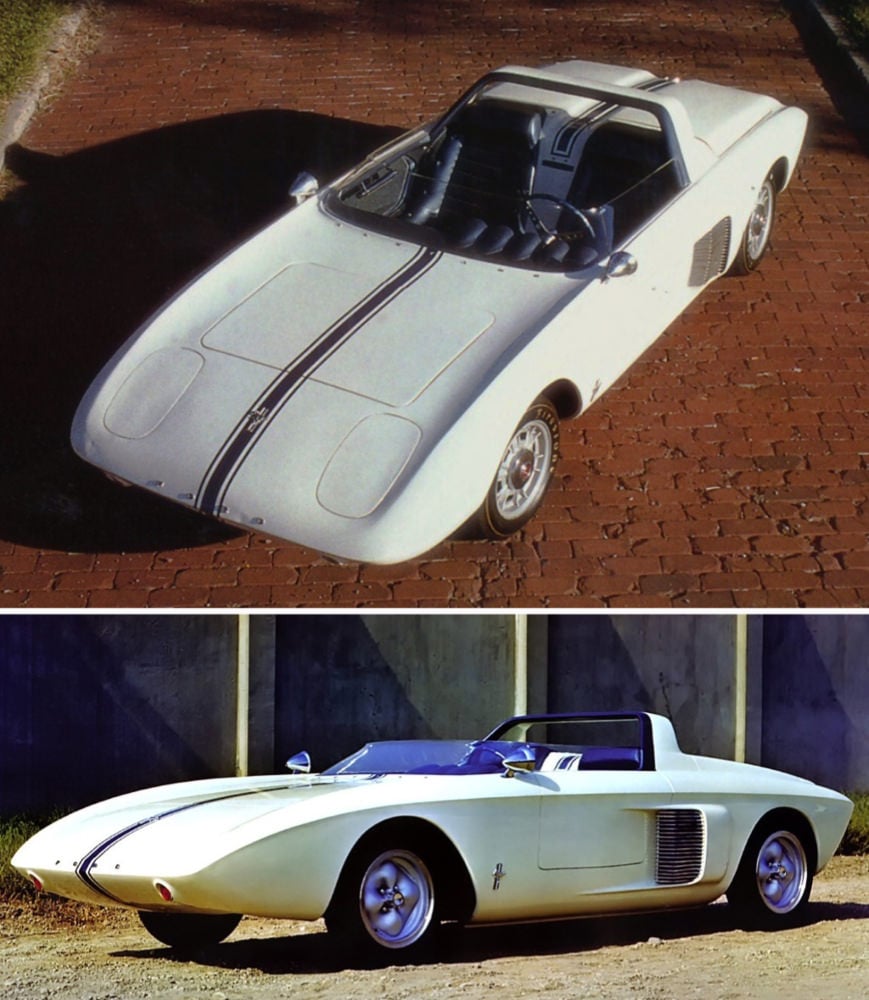
 This is the 1962 Ford Mustang I concept car, it was a rear-mid-engined sports car that preceded the Mustang production car, and this is the reason the Mustang road car had that faux vent just in front of the rear wheels. Image courtesy of the Ford Motor Company.
The backstory of the Kelly Python starts long before Alvin Kelly ever built the first car. In the mid-1960s, Ford design leadership explored a possible new direction for a Cobra successor, led by Ford Design VP Eugene “Gene” Bordinat and designer McKinley Thompson. The proposal involved an all-new body design and significant experimentation with then-new plastics.
The Ford Mustang I Connection
It seems likely that the styling of the concept car they created was influenced by the 1962 Ford Mustang I, a sleek concept car that shared almost no design elements with the Mustang production car that would debut a couple of years later.
The Mustang I had much more minimalist styling with a smooth, flat front end that curved down to the nose, a gently arching shoulder line, a roadster-style windscreen, and a flat deck in the rear that curved down to the tail. If you look at it side by side with the Kelly Python, the familial link does seem clear.
The concept to replace the Cobra was intended as a Corvette challenger, and perhaps as a result of this it had an all-plastic body made from a material called Royalex. This was a new plastic designed to compete with fiberglass that was produced by United States Rubber Company, which later changed its name to Uniroyal.
Sadly, the original Ford program to create an advanced new Shelby Cobra successor died on the vine as Ford and Shelby parted ways and the business case evaporated, but the styling theme lingered in the archive of “almost” projects that Detroit seemed to produce with almost reckless abandon.
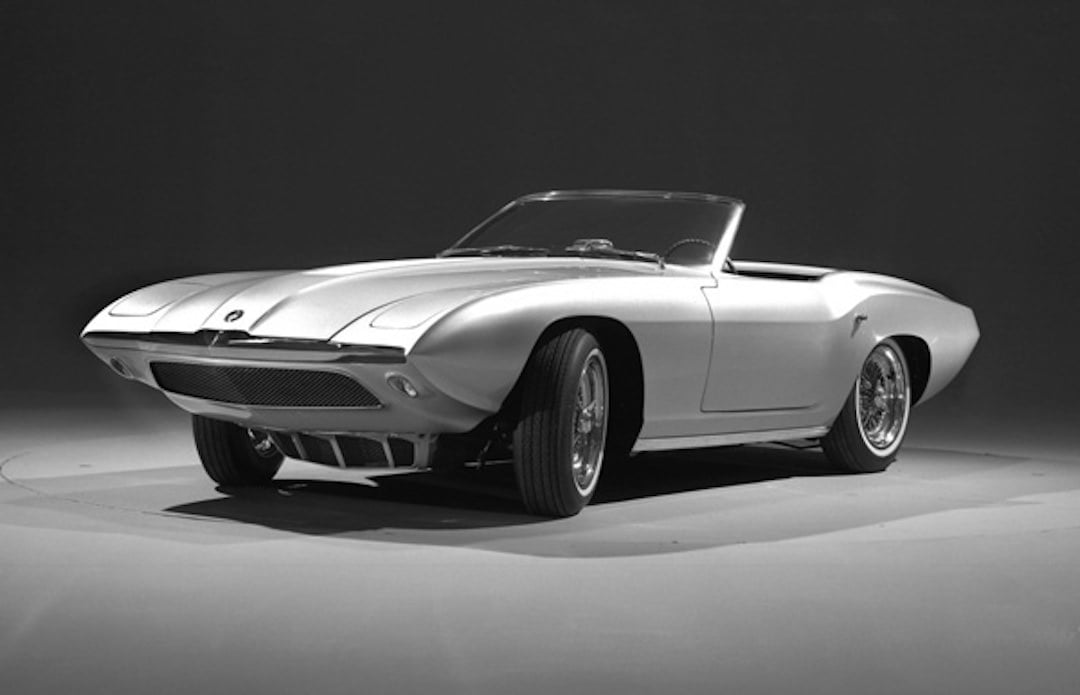
This is the Bordinat Roadster, the concept car developed with a view to replacing the Shelby Cobra in the 1960s. Image courtesy of the Ford Motor Company.
Alvin Kelly Enters Stage Left
Decades later, a man named Alvin Kelly picked up that loose thread. He discovered the original concept car body, and he decided that it deserved to see the light of day as a production sports car, albeit in low volumes.
He had a new mold made based on the original body, he got approval from Bordinat for the project and hired the original designer, Ford’s first African American designer McKinley Thompson, as a consultant on the project.
Perhaps Kelly’s most impressive feat was that he got Ford to agree to sell the car as a Corvette competitor through their own dealerships, and to offer full servicing and warranties on the car. Perhaps a key reason for this was that Kelly based the new version of the design on a shortened Fox Body Mustang platform, using the same drivetrains, suspension, brakes, interiors, and more.
The name Python was chosen for the project in order to follow on with the snake/cobra theme from the 1960s without stepping on the toes of any other manufacturers – as the name Python wasn’t being used by any of them or trademarked.
Kelly Python: Specifications
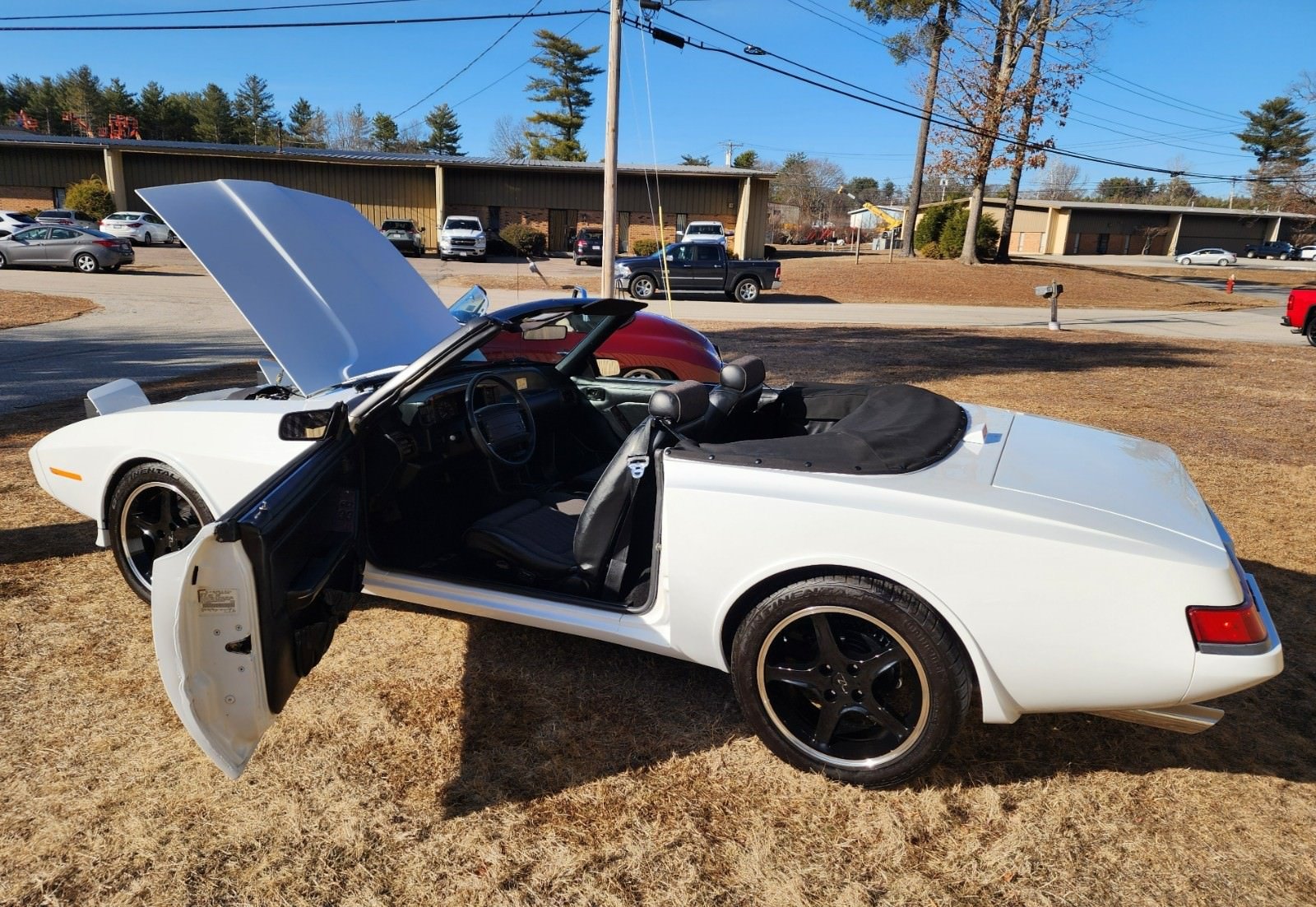
The body of the Kelly Python was made from fiberglass, closely following the design of the original concept but making use of the shortened proportions of the Ford Mustang GT convertible of the early 1990s. The wheelbase was shortened to slightly shift the weight balance backwards, and the final production version of the car offered a 55/45 front/rear weight distribution.
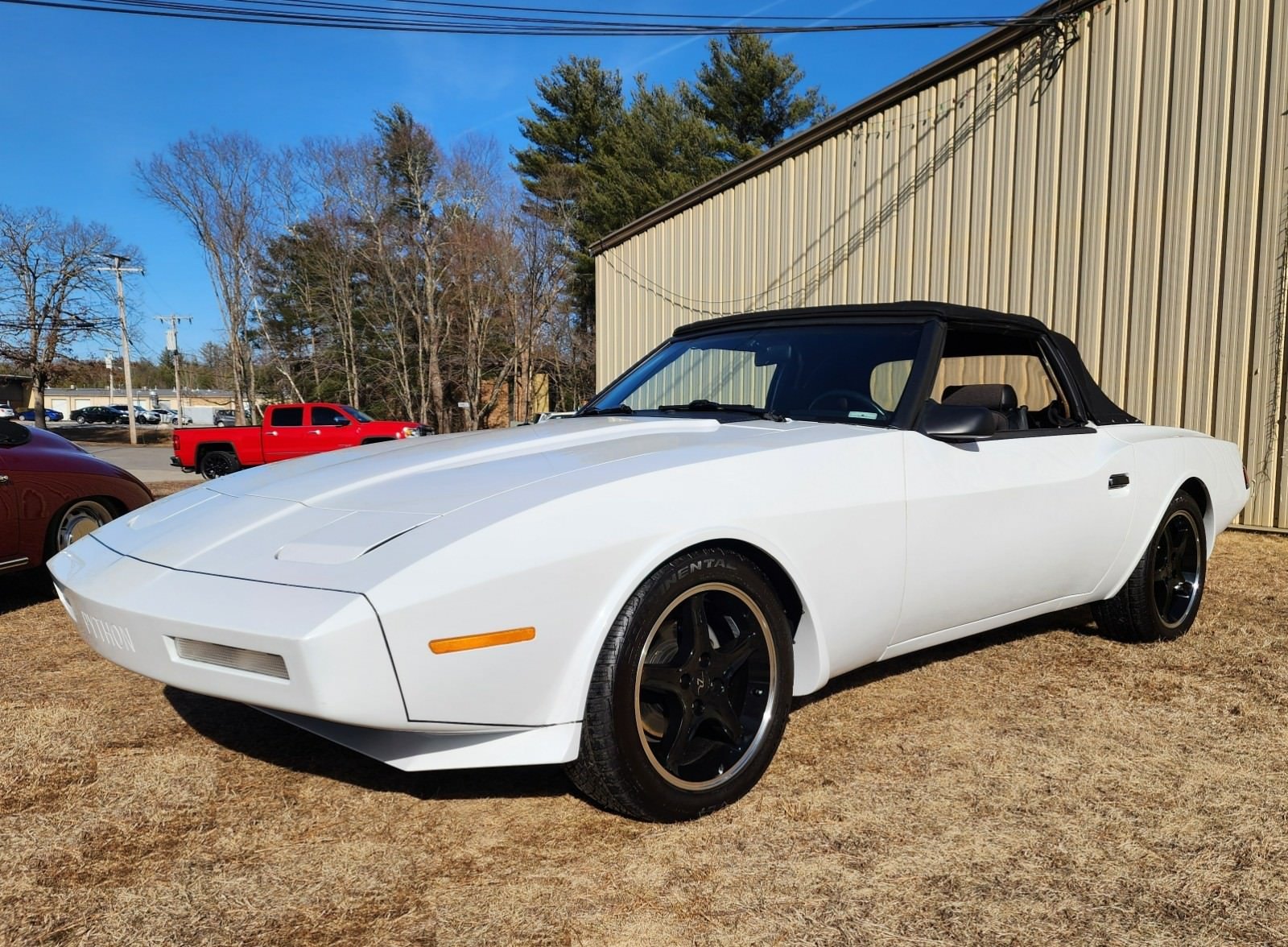
The body of the Kelly Python was made from fiberglass, closely following the design of the original concept but making use of the shortened proportions of the Ford Mustang GT convertible of the early 1990s.
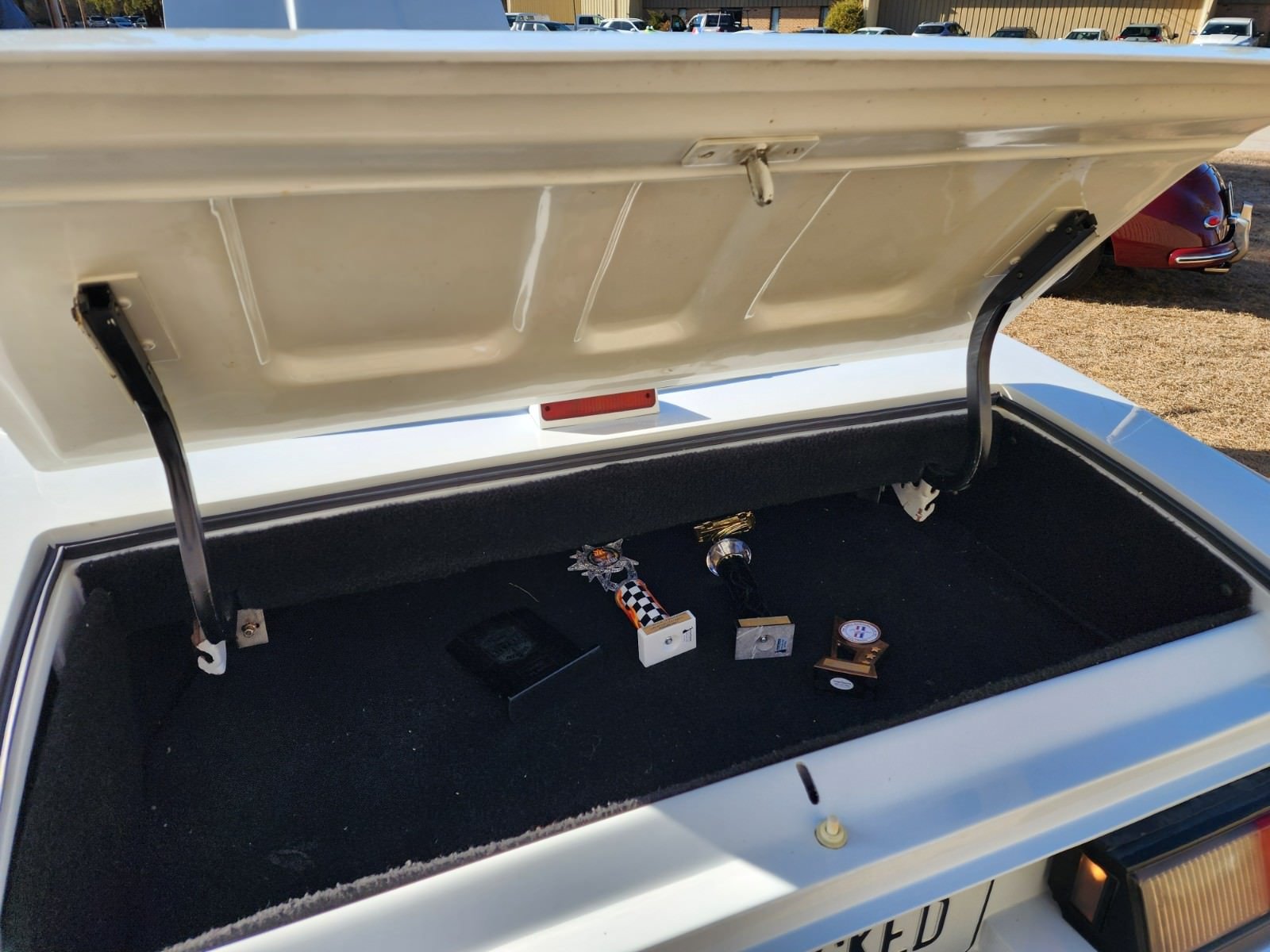
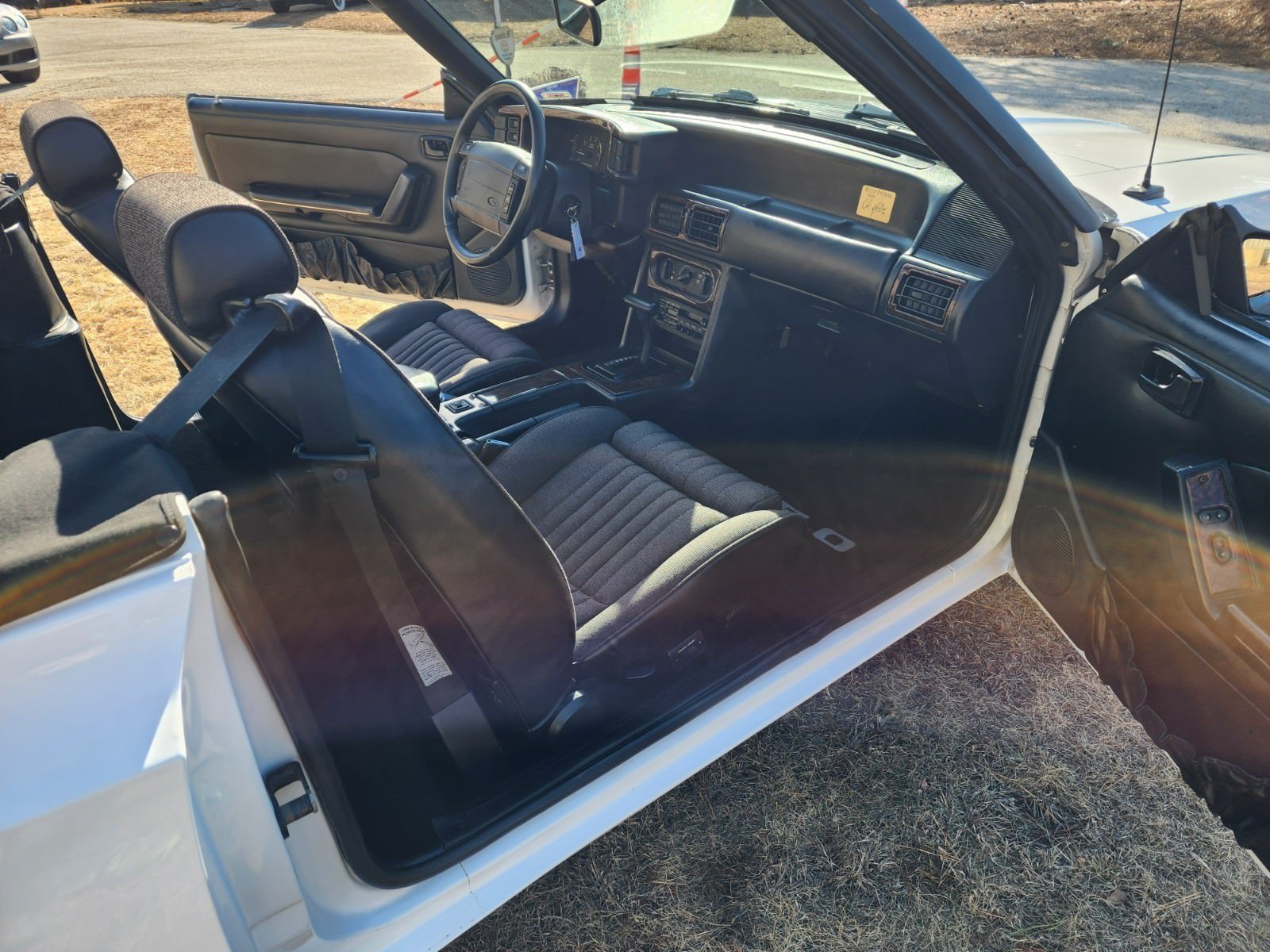
The car had sharp, minimalist styling, pop-up headlights, a folding soft top, decent trunk space, and an interior that was essentially all sourced from the Fox Body. With the lightweight fiberglass body and the resulting lower curb weight, the 5.0 Mustang V8 and its modest 225 bhp and 300 lb ft of torque actually moved the car at a decent turn of pace and it was faster than the Mustang it was based on.
Some reviews of the car mention the involvement of Lotus with the suspension tuning, though it’s not clear if this is true or a tall tale told by an owner at a car show and then repeated ad nauseam. It would be interesting if true as General Motors owned Lotus from 1986 to 1993, covering the window that the Python was in production, and it seems unlikely they would want Lotus helping make a new Ford-powered sports car go around corners better.
The End Of The Line
It’s widely believed that only around 12 examples of the Kelly Python were built before the money dried up. It’s a tale as old as time, well as old as the automobile at least, with an ambitious car company launched with a promising new design, only for it to shut down due to limited funding, low sales, or a private jet full of Bolivian marching powder.
Though exact numbers of surviving cars does vary to some degree, there seem to be around 7 left in the world, with the others either crashed, scrapped, or (hopefully) sitting under a tarp in a barn somewhere waiting to be rediscovered.
Surprisingly, the values on them haven’t really gone anywhere. Considering the fascinating story behind the car and its links back to Bordinat, Thompson, and the Shelby Cobra, it’s still possible to buy one (when they infrequently come up for sale) for a figure typically in the low five figures.
The 1991 Kelly Python Shown Here
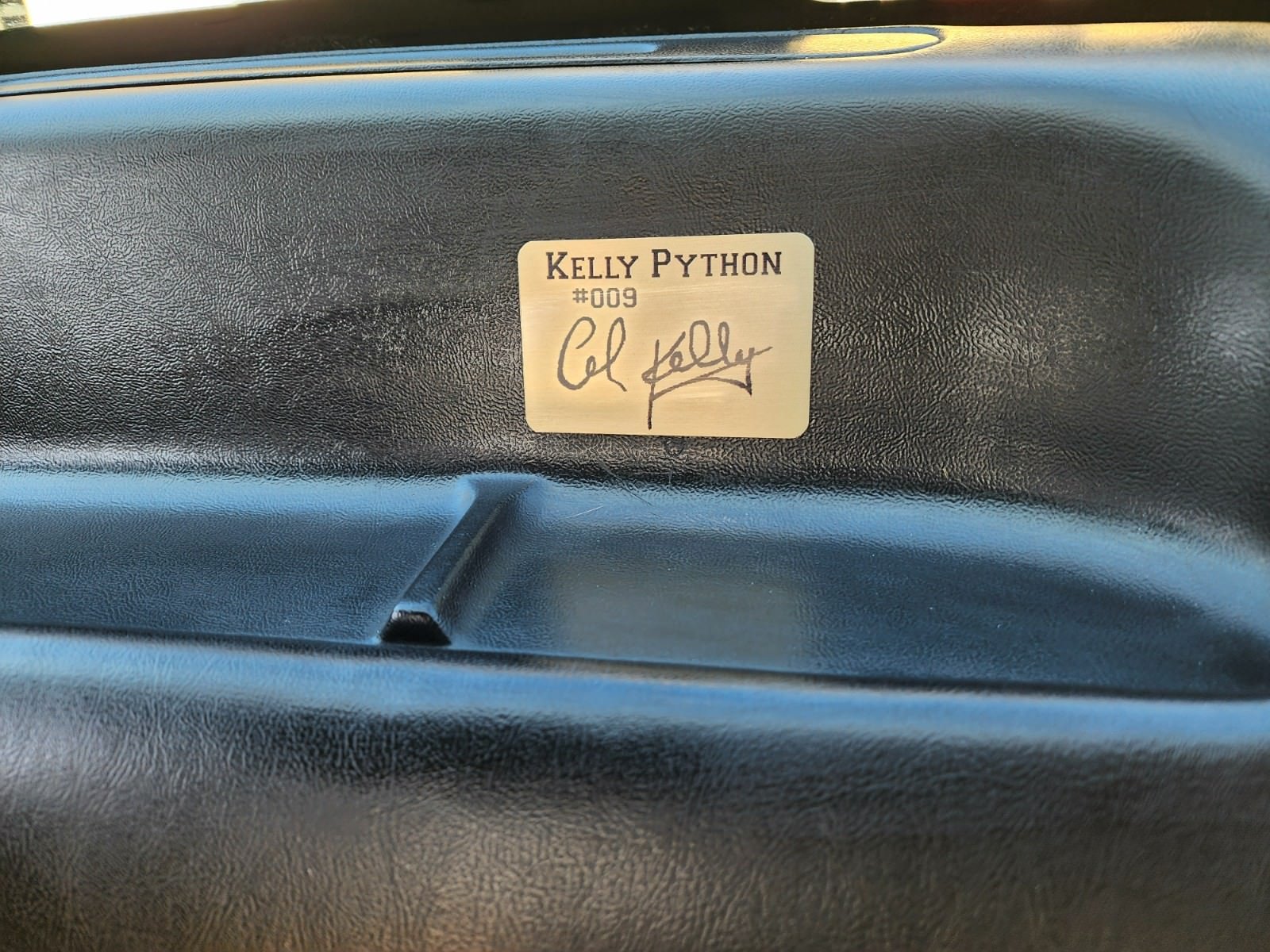
This 1991 Ford Kelly Python, chassis #009 of approximately 12 built, was factory-constructed by Kelly Motors in Fort Collins, Colorado. It carries a dash plaque confirming its build number and shows 41,305 miles. The car is titled in Colorado as a 1994 Kit Convertible, with a clean AutoCheck report noted in the listing.
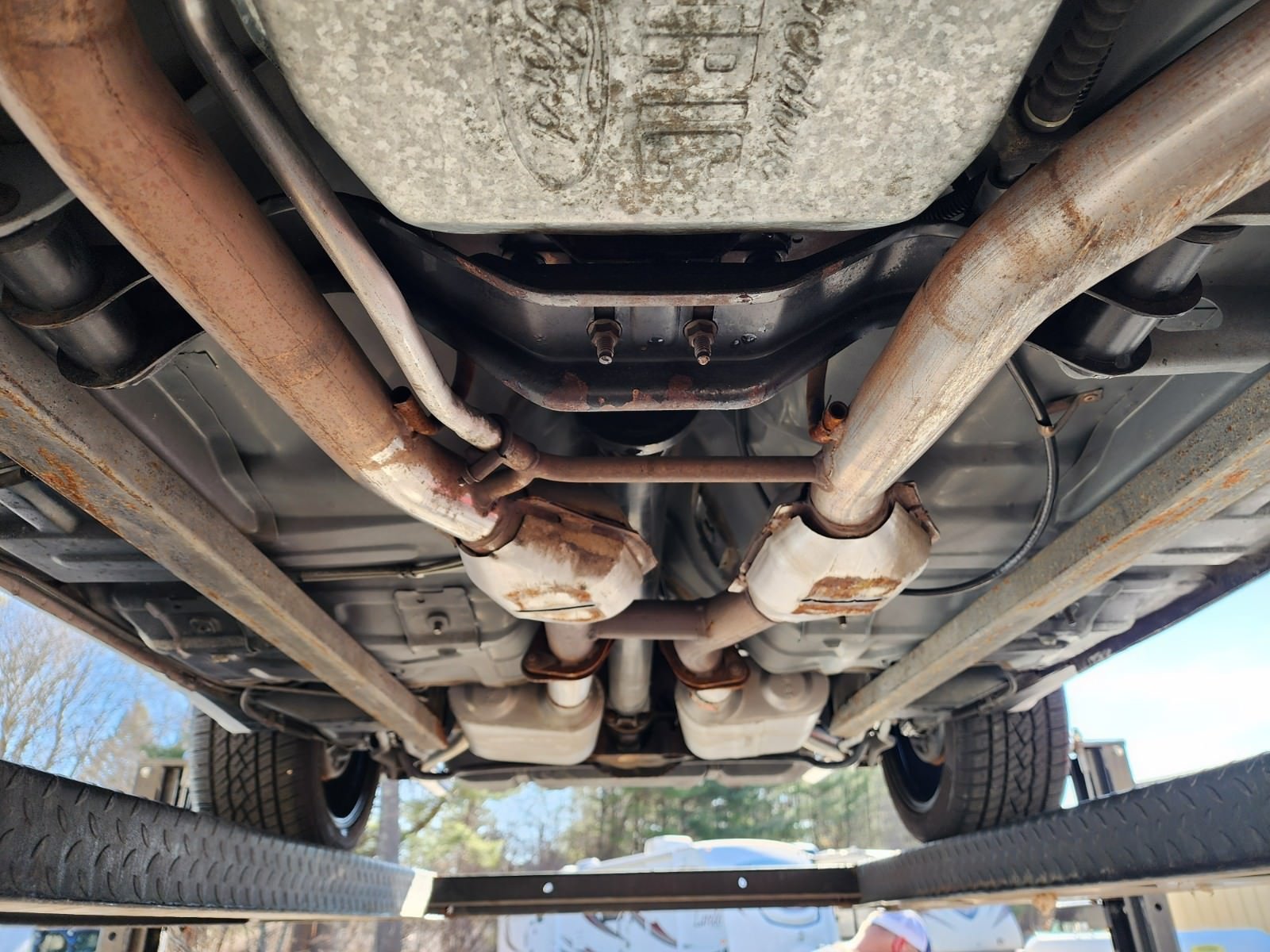
As you would expect, power comes from a 5.0 liter Ford V8 rated at 225 bhp and 300 lb ft of torque, and in this car it’s paired with an automatic transmission. The car is equipped with air conditioning and has headers installed by Kelly, along with a dual exhaust system with catalytic converters and Flowmaster mufflers exiting through chrome tips. The seller states that the car runs and drives well.
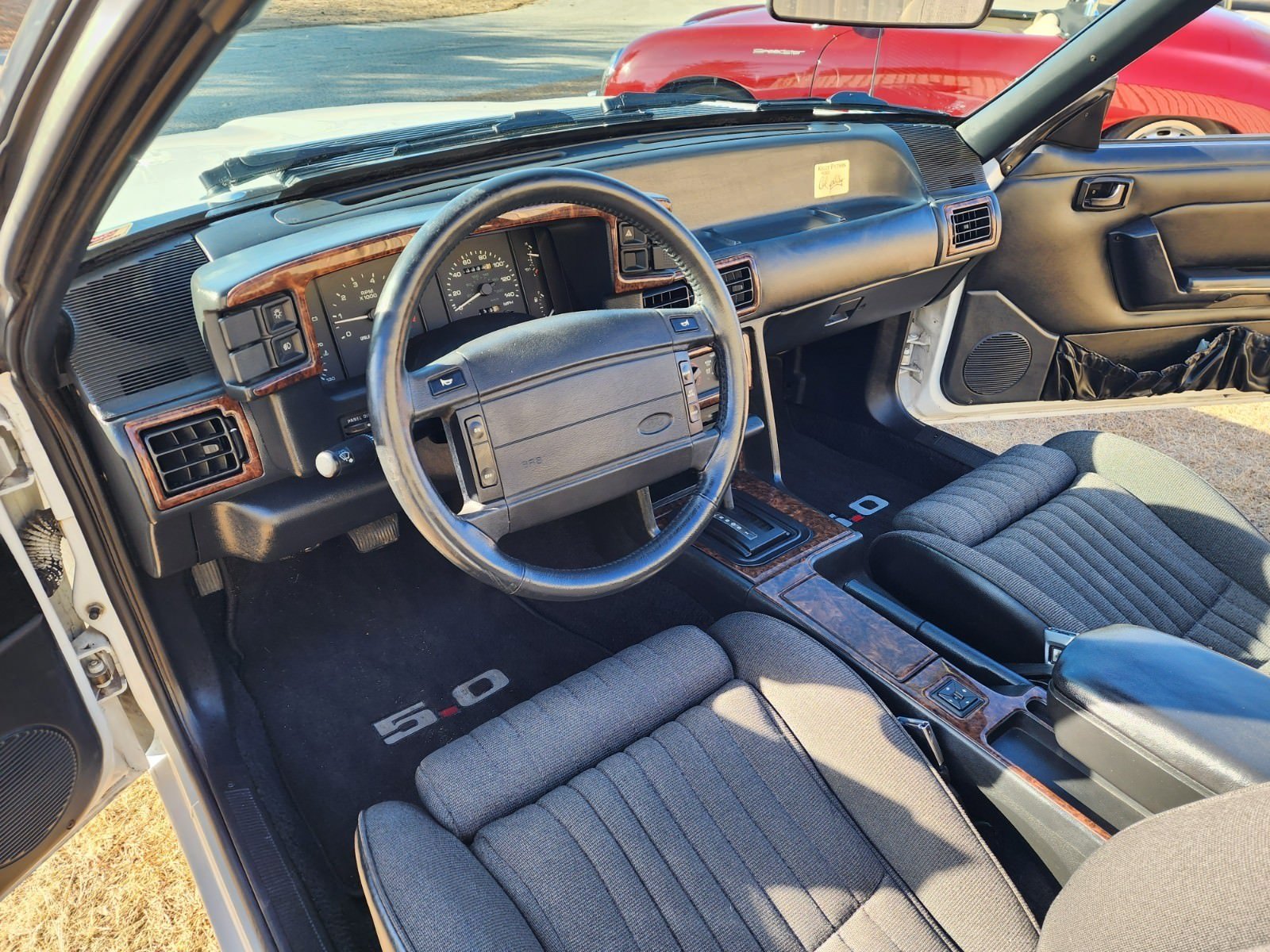
This 1991 Ford Kelly Python, chassis #009 of approximately 12 built, was factory-constructed by Kelly Motors in Fort Collins, Colorado. It carries a dash plaque confirming its build number and shows 41,305 miles.
It’s finished in white paint described as being in excellent condition, with a black soft top said to be in good original shape. It rides on Cobra R-style gloss black alloy wheels fitted with Continental 245/45ZR17 tires, and the pop-up headlights are fully functional.
It’s now being offered for sale out of Hopedale, Massachusetts on eBay with a Buy It Now price of $22,000 USD. If you’d like to read more about it or make an offer you can visit the listing here.
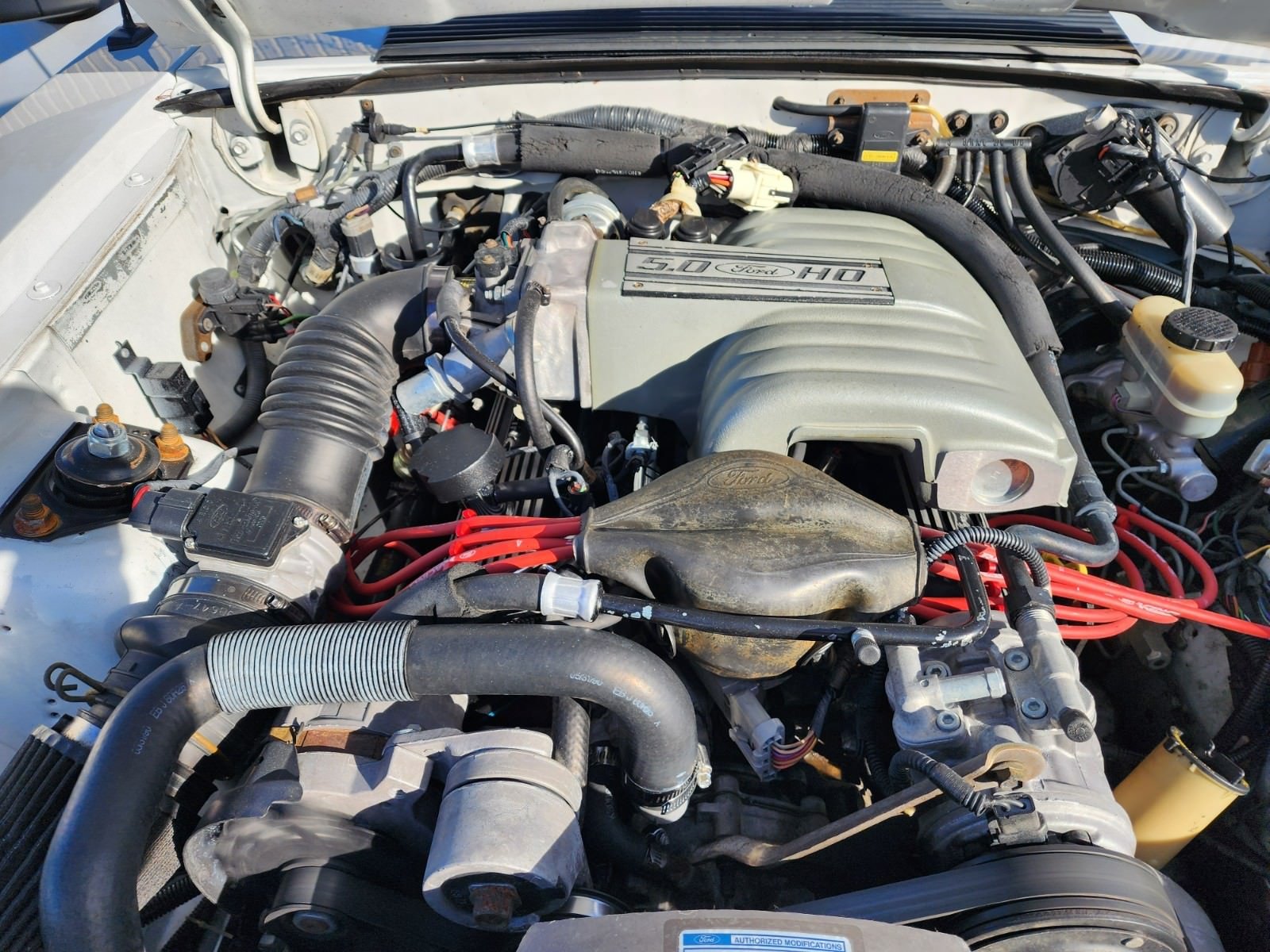
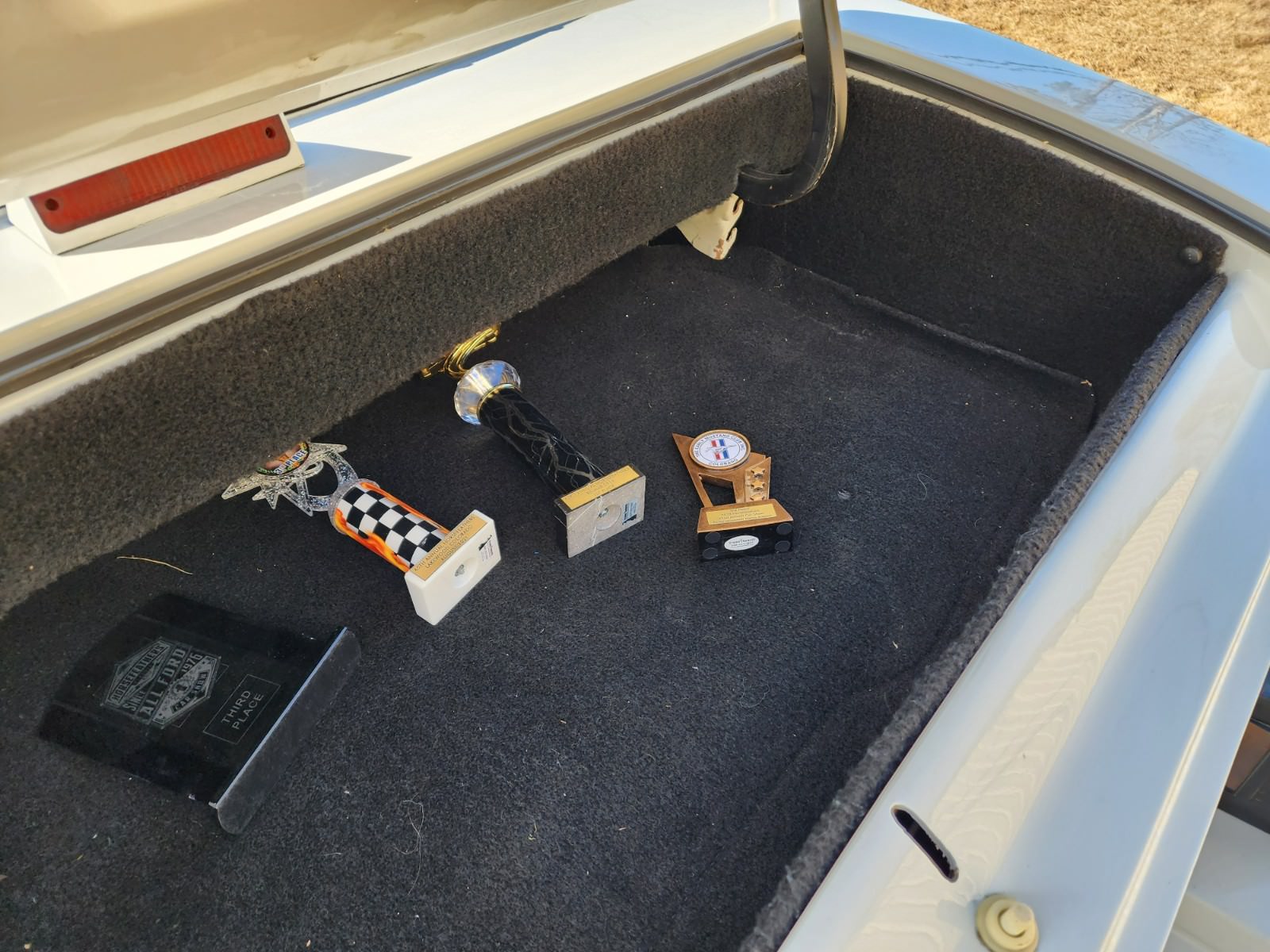
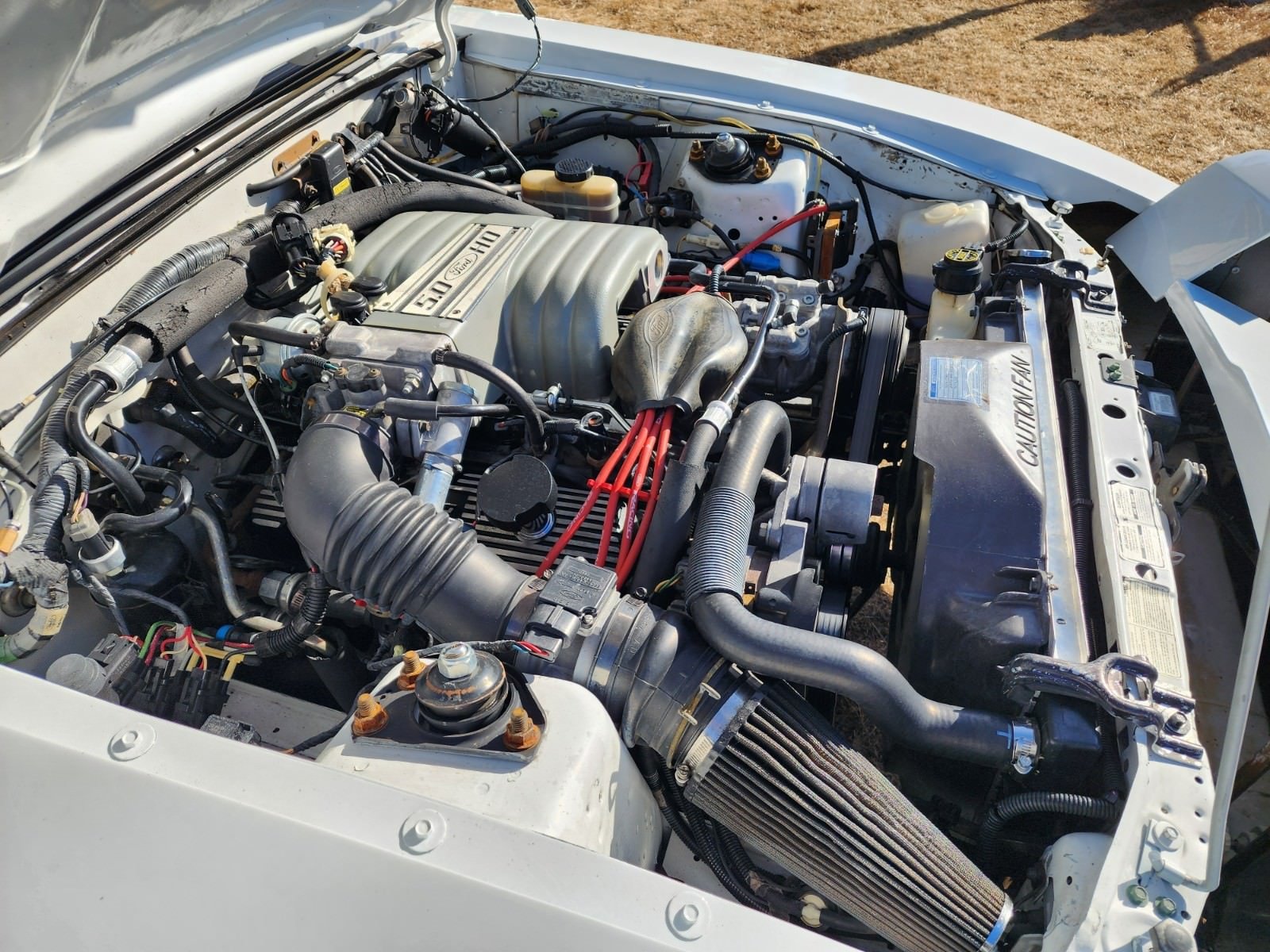
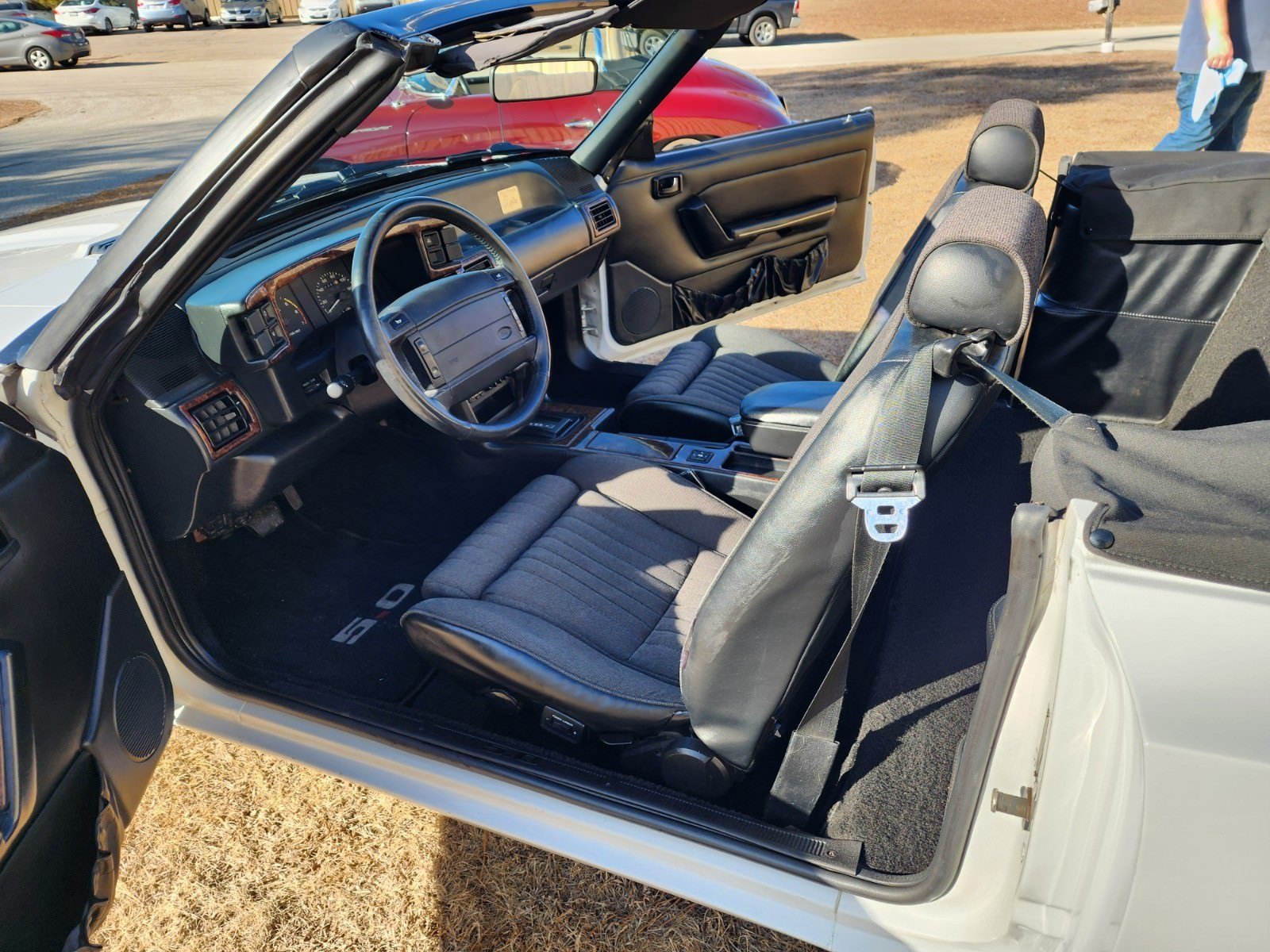
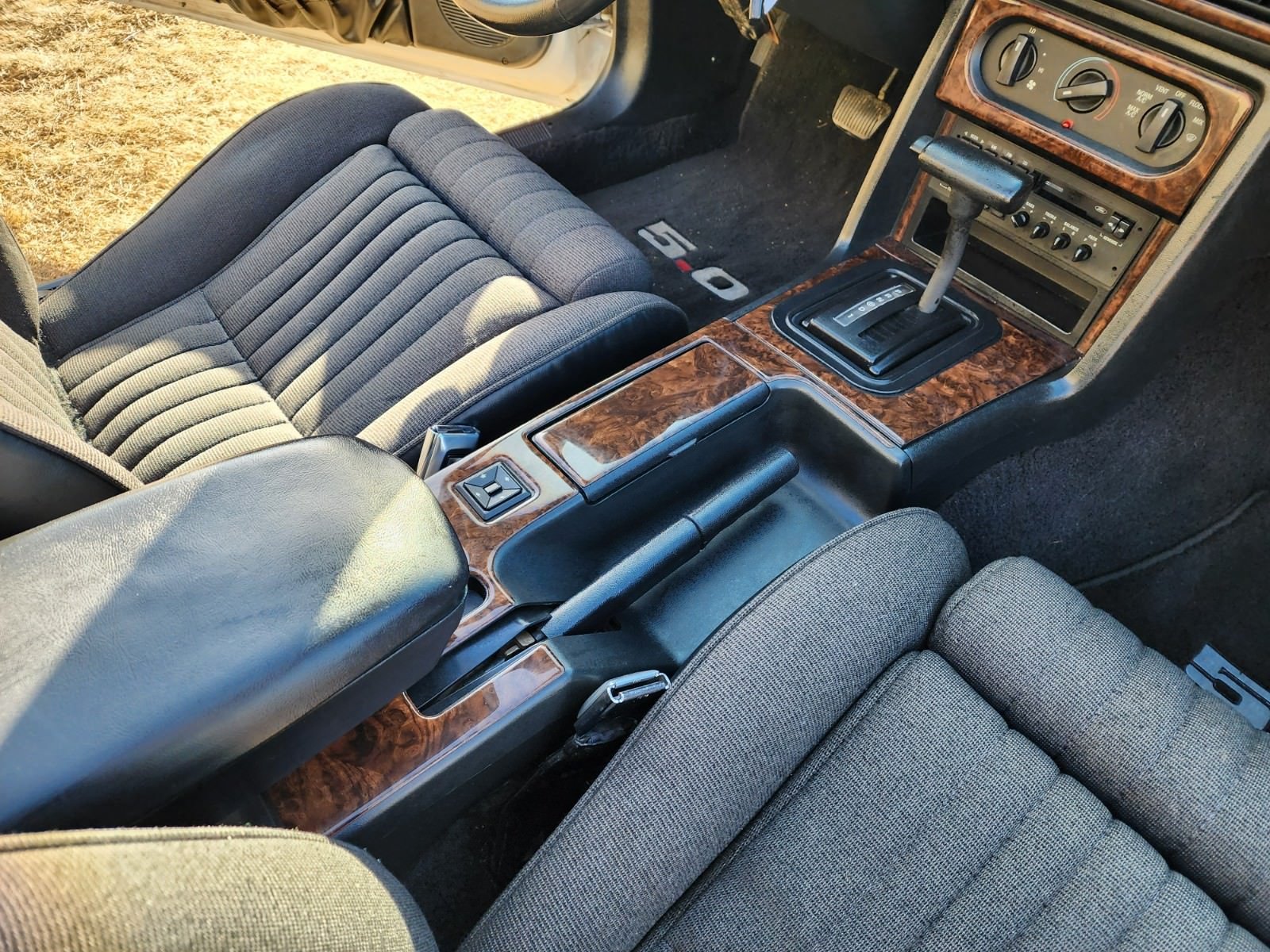
Images courtesy of Milford Auto Sales

Articles that Ben Branch has written have been covered on CNN, Popular Mechanics, Smithsonian Magazine, Road & Track Magazine, the official Pinterest blog, the official eBay Motors blog, BuzzFeed, Autoweek Magazine, Wired Magazine, Autoblog, Gear Patrol, Jalopnik, The Verge, and many more.
Silodrome was founded by Ben back in 2010, in the years since the site has grown to become a world leader in the alternative and vintage motoring sector, with well over a million monthly readers from around the world and many hundreds of thousands of followers on social media.