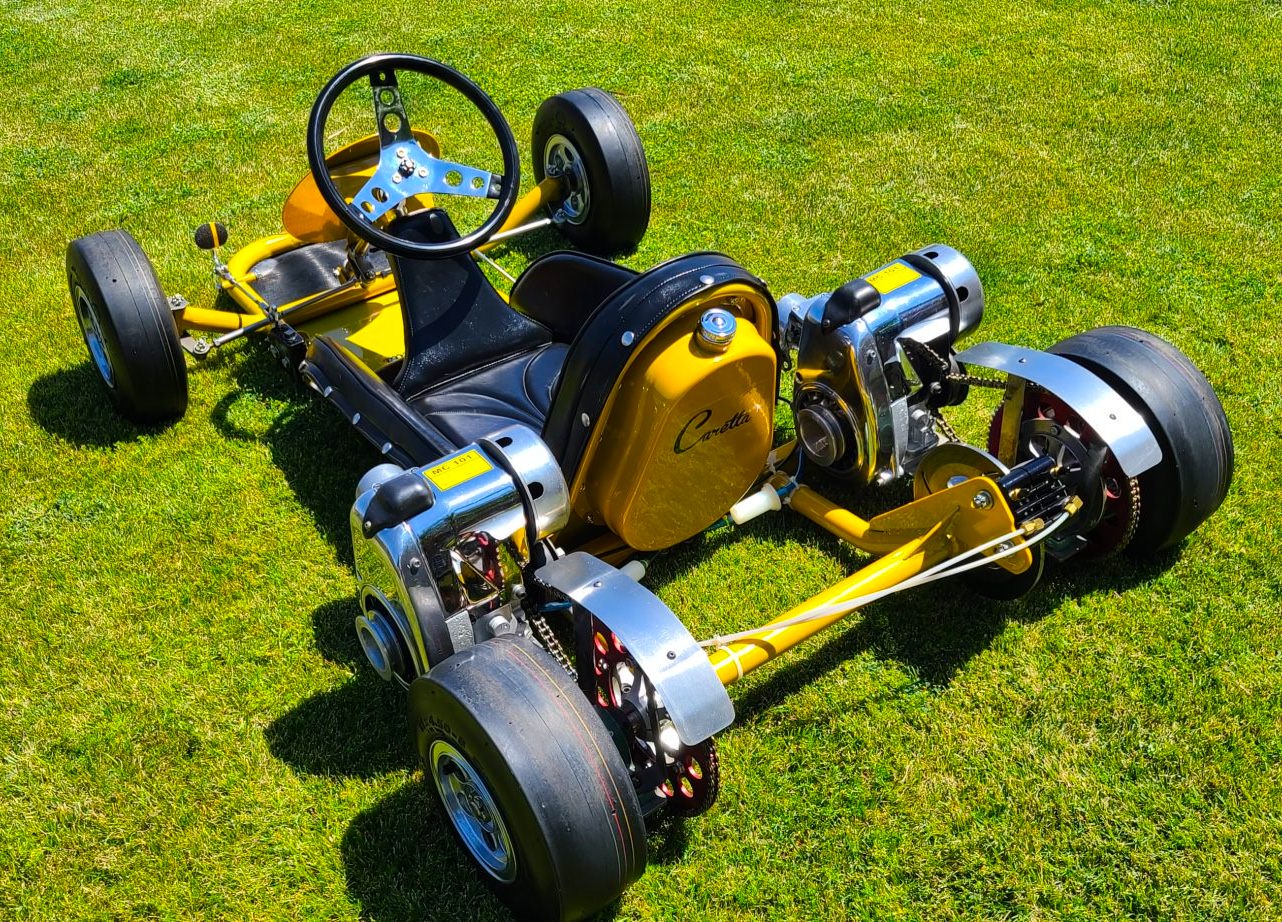
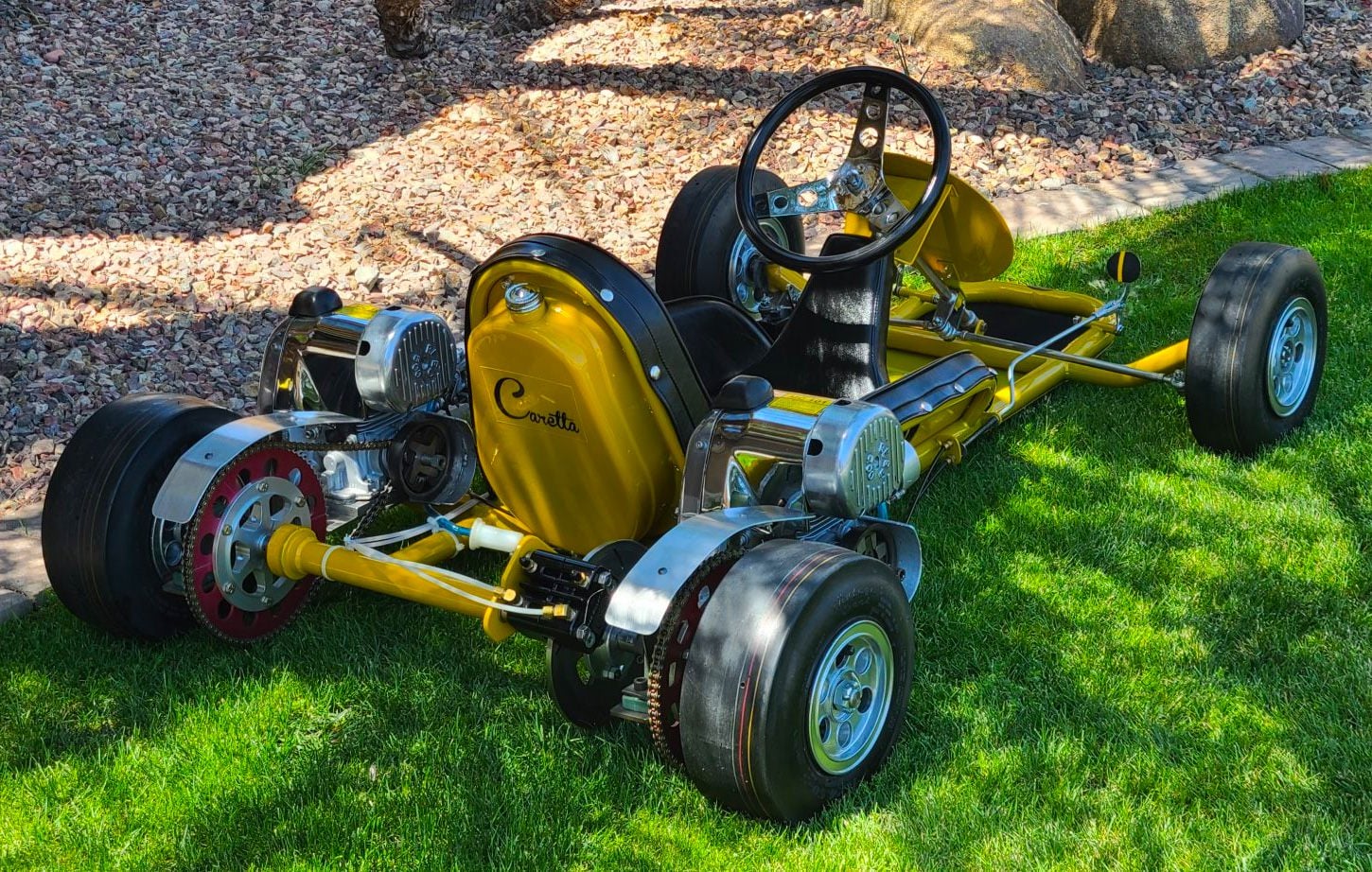
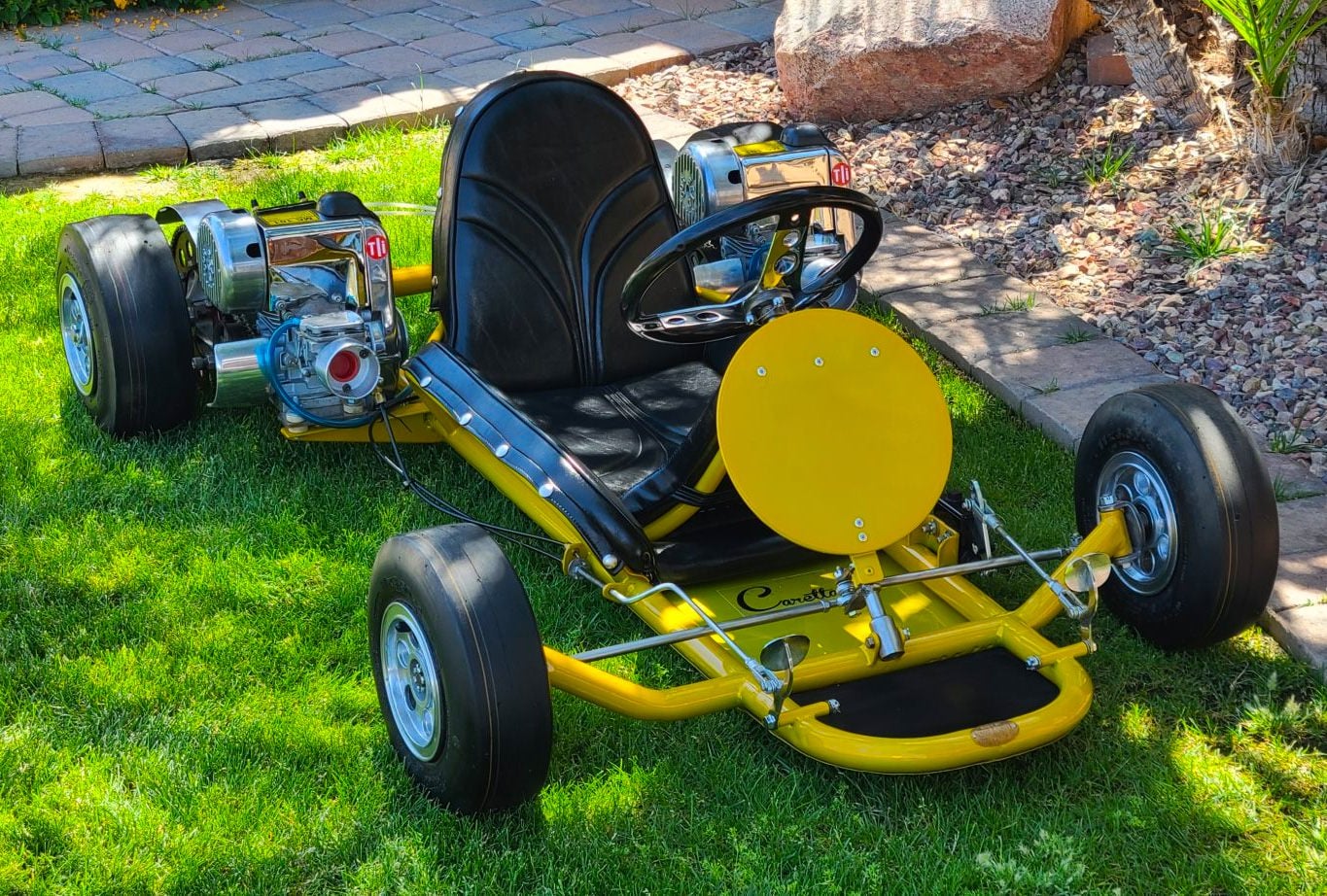
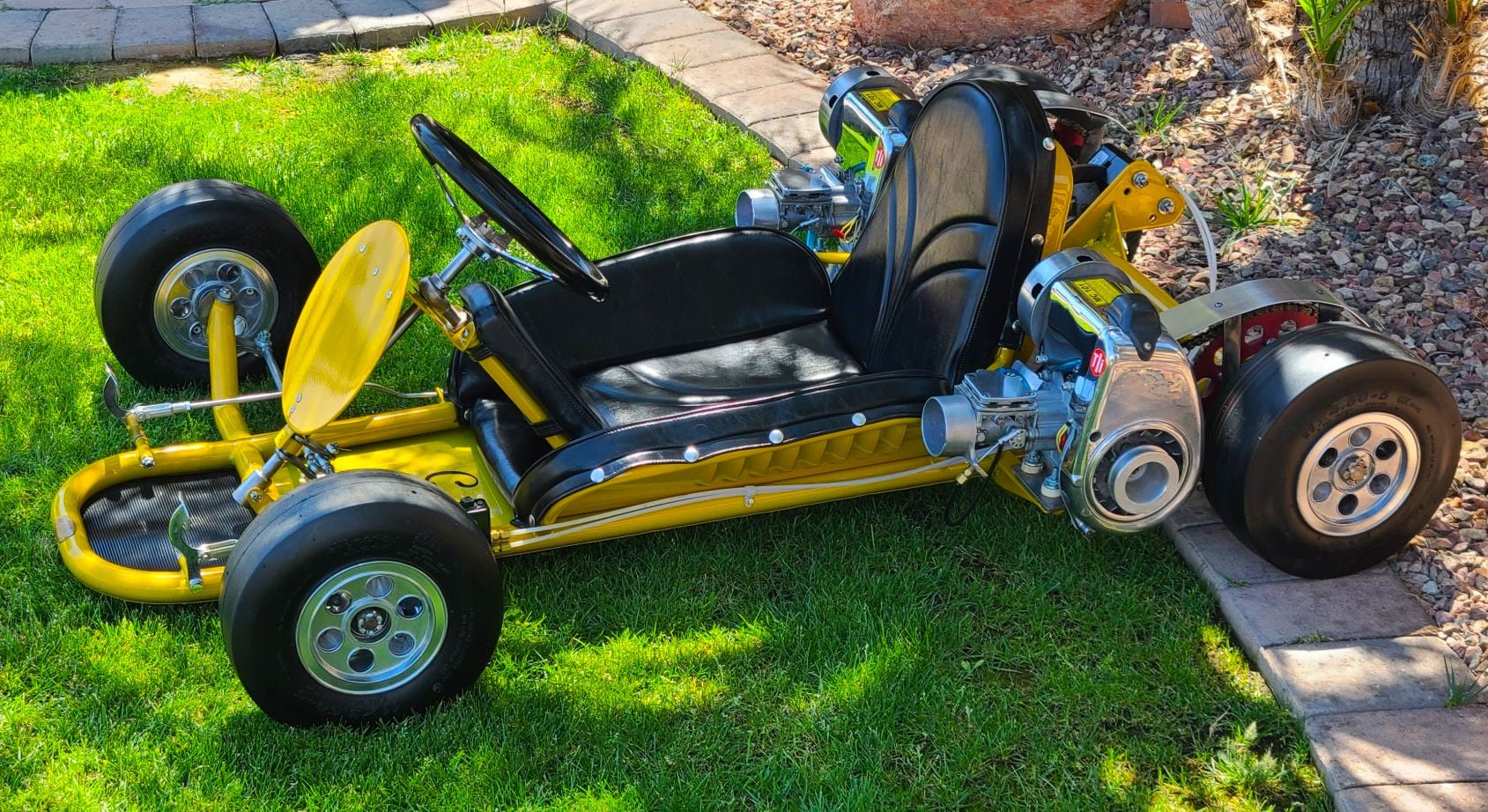
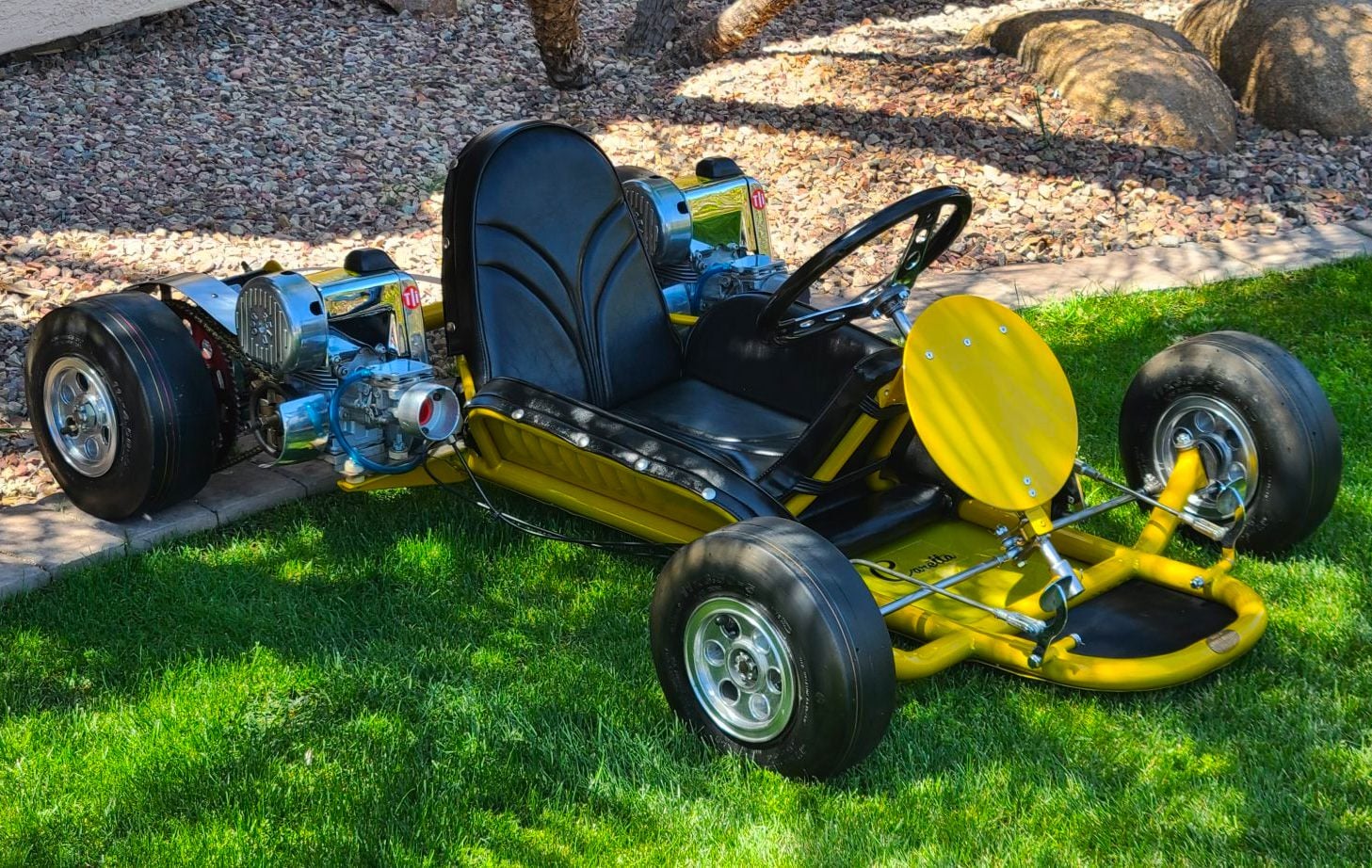
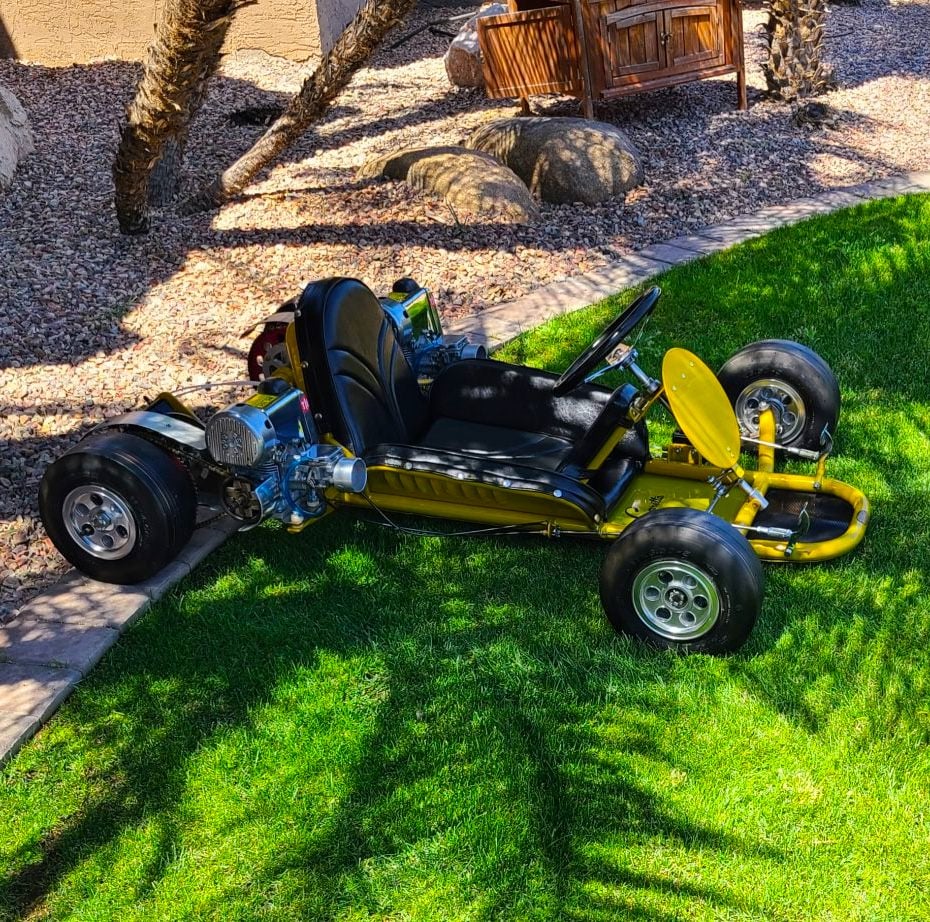
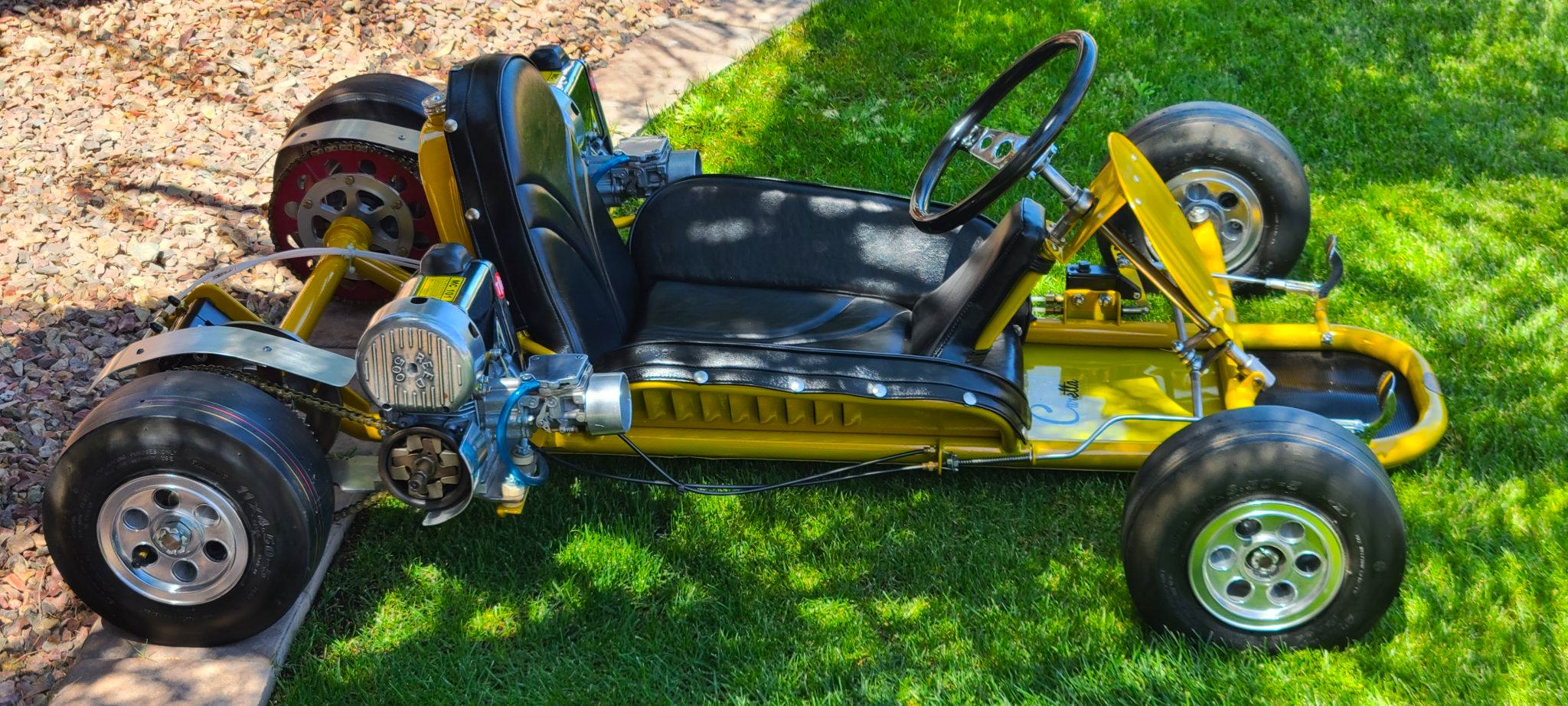
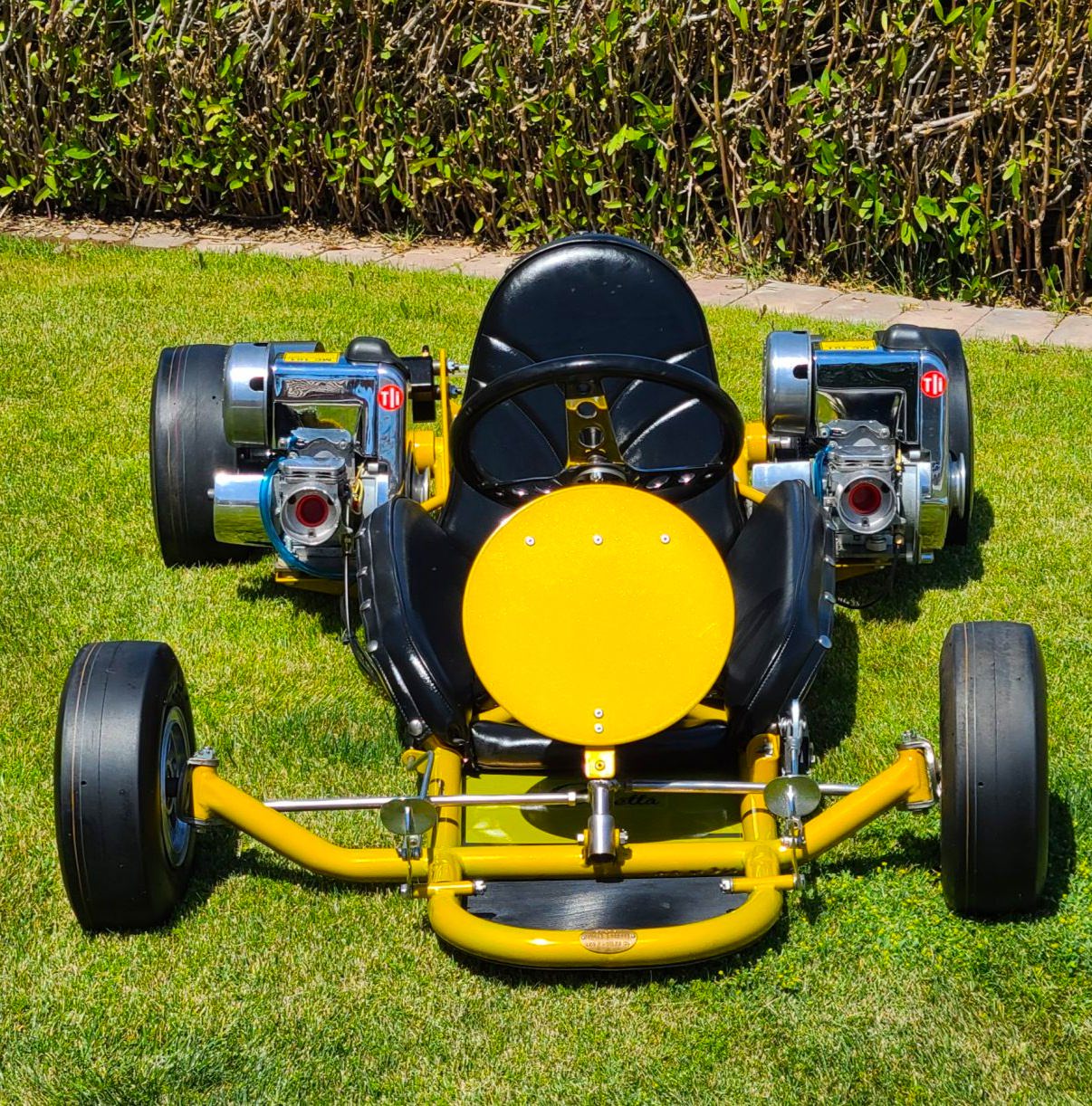
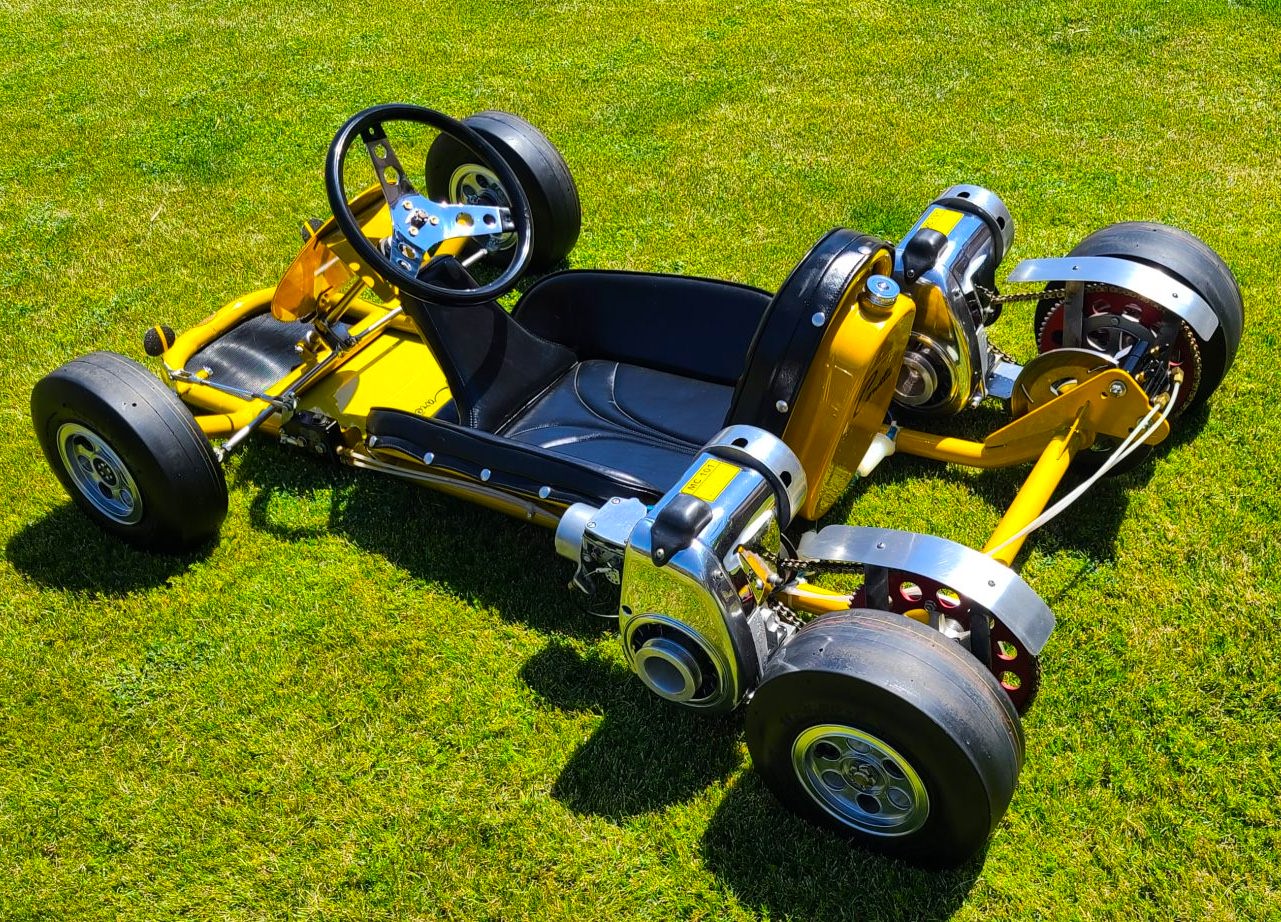
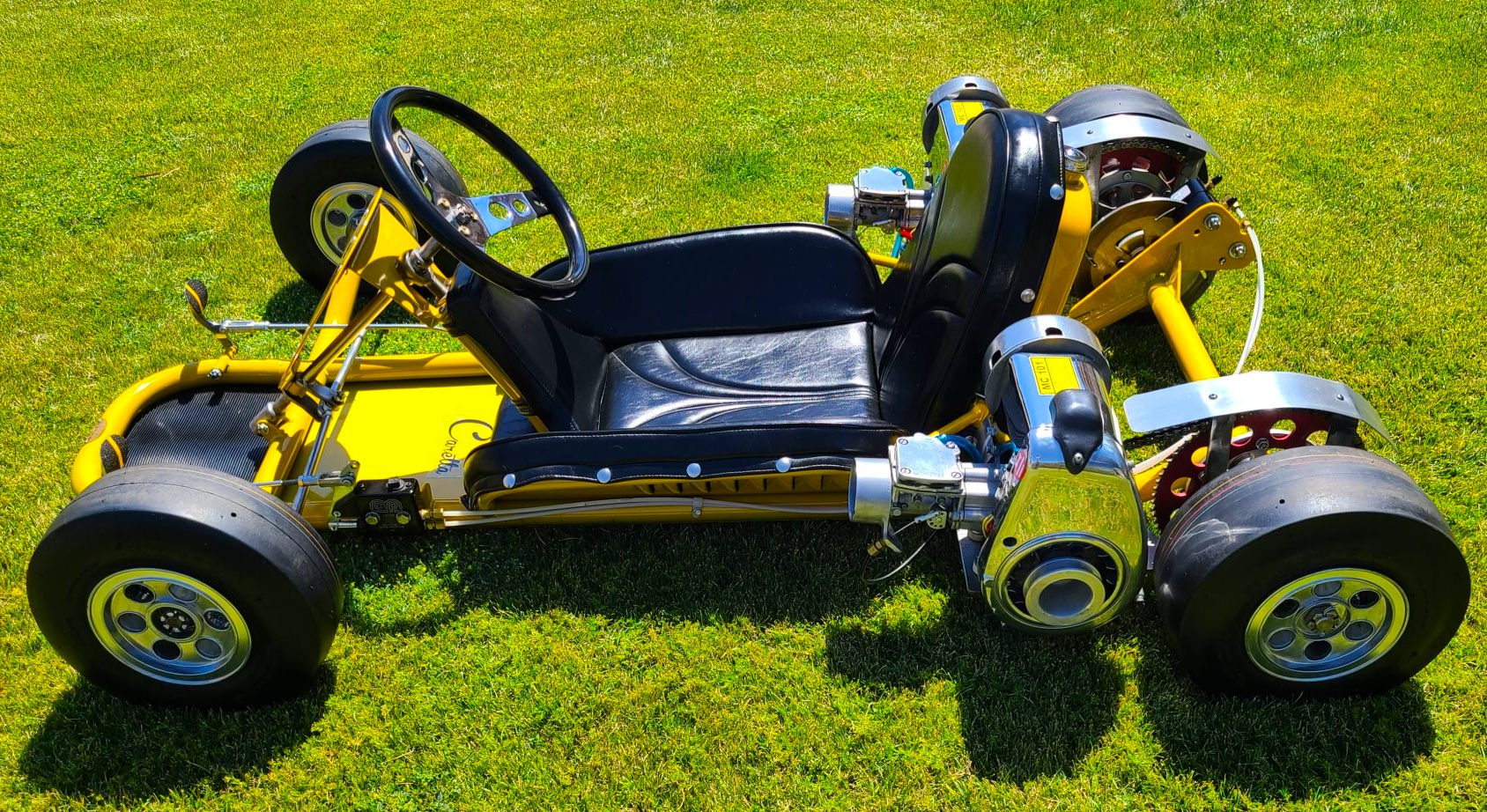
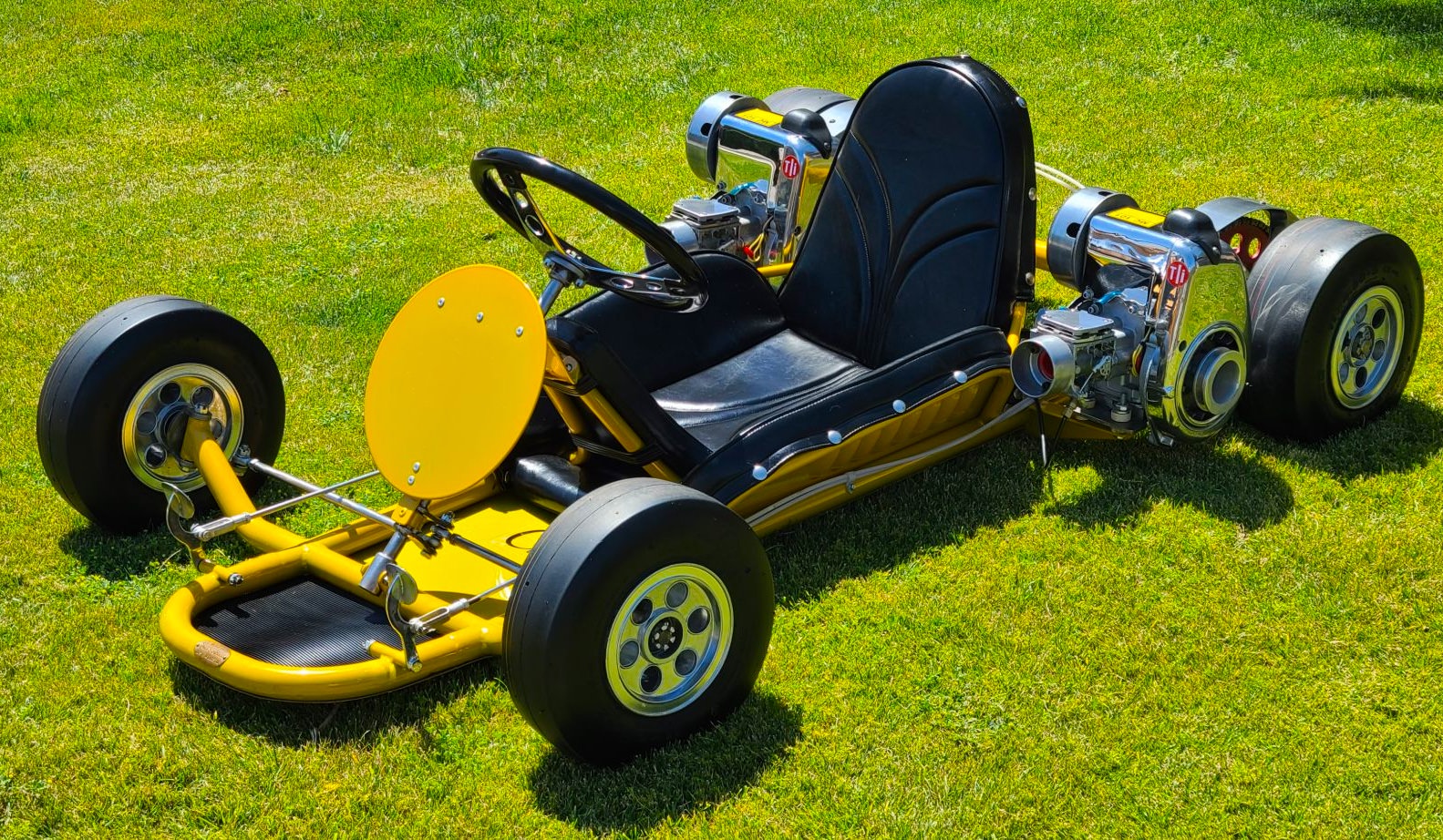
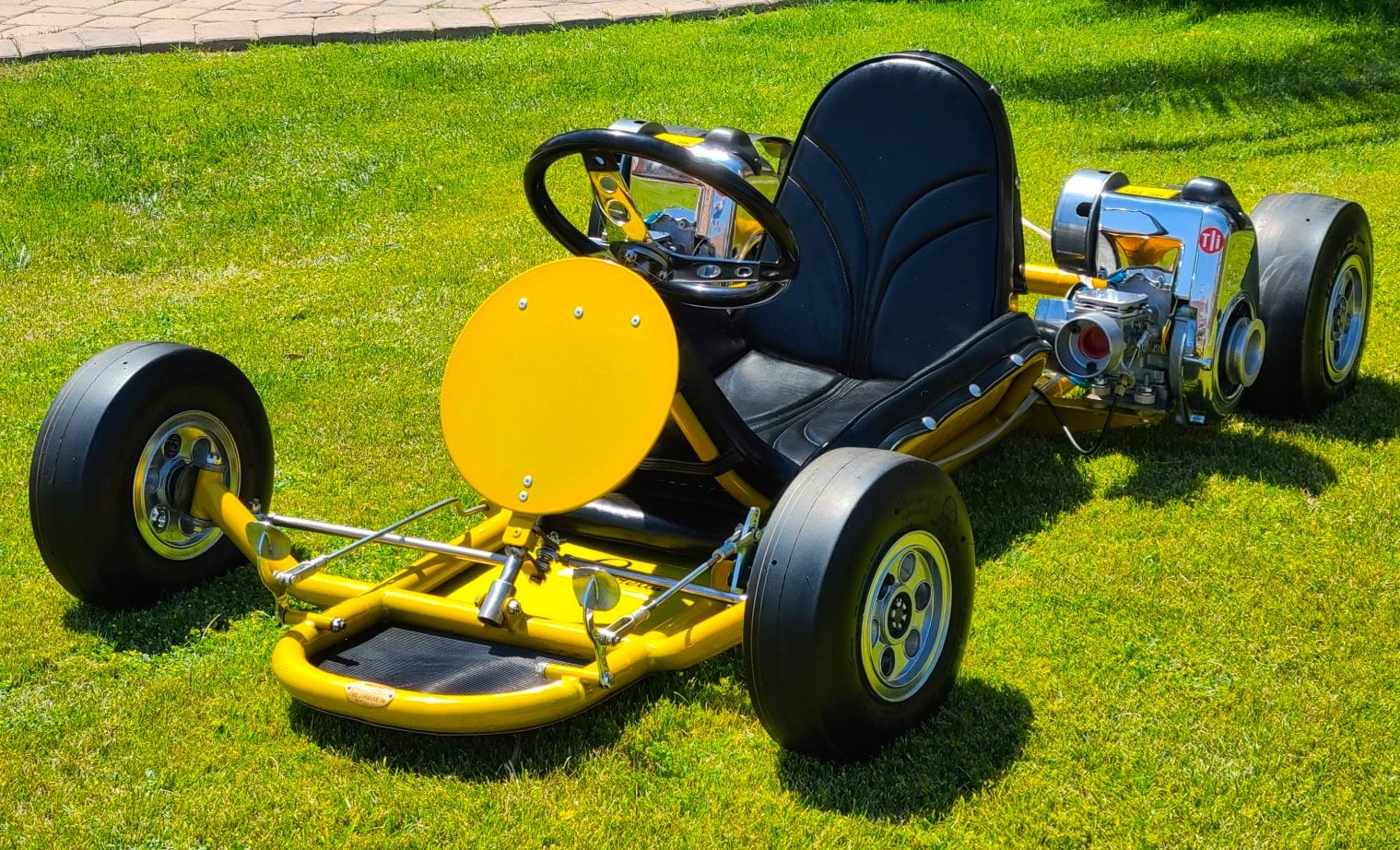
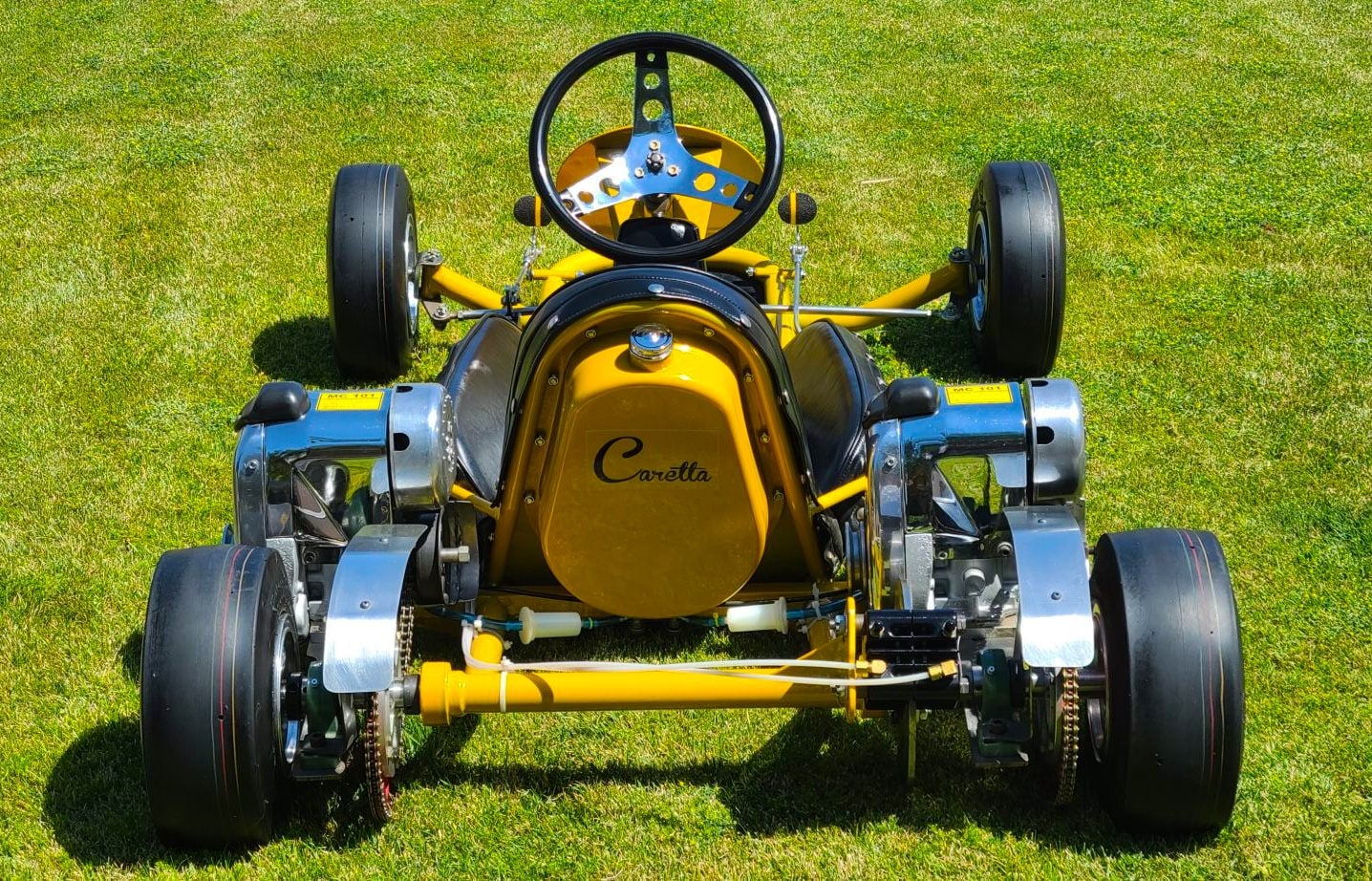
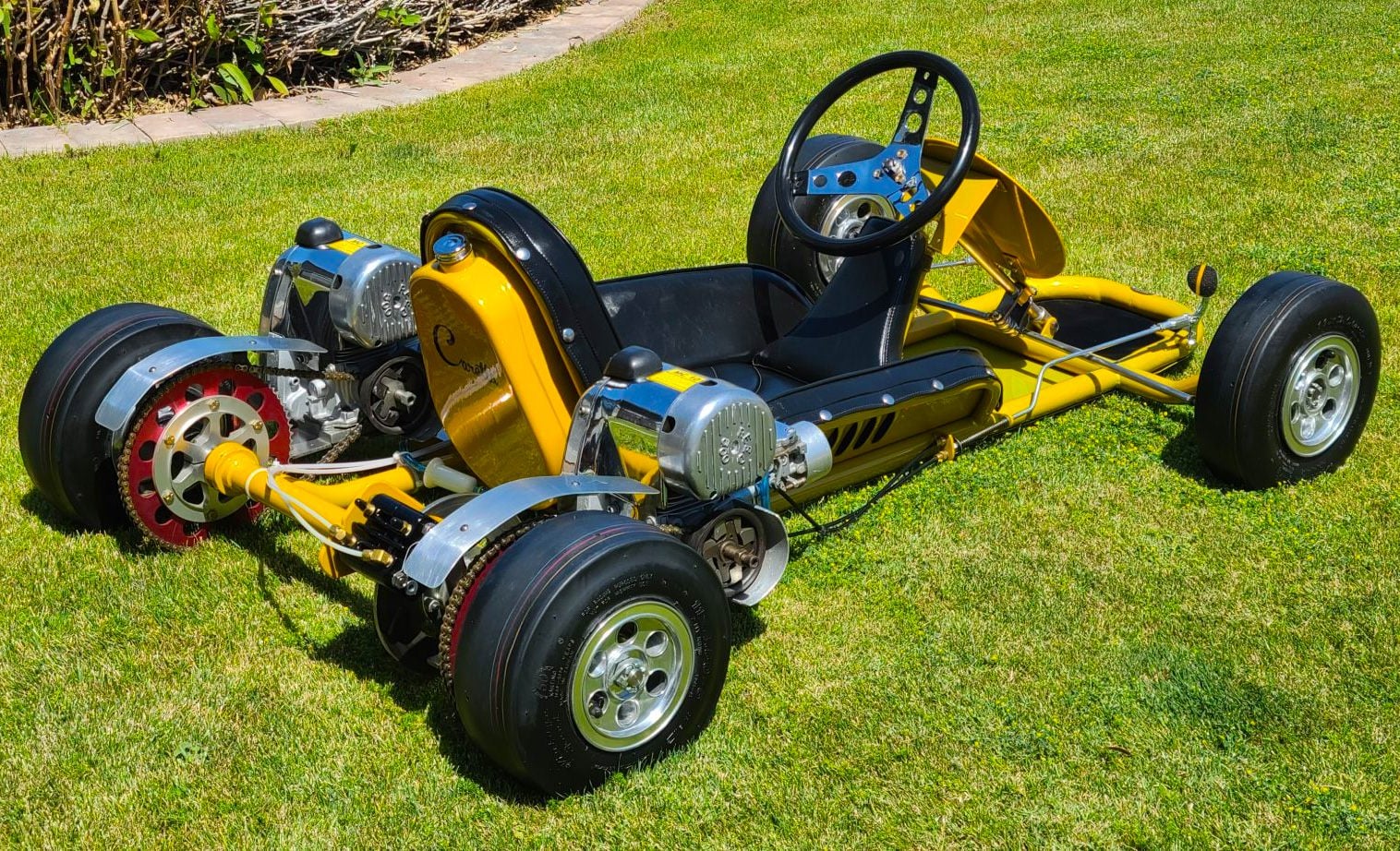
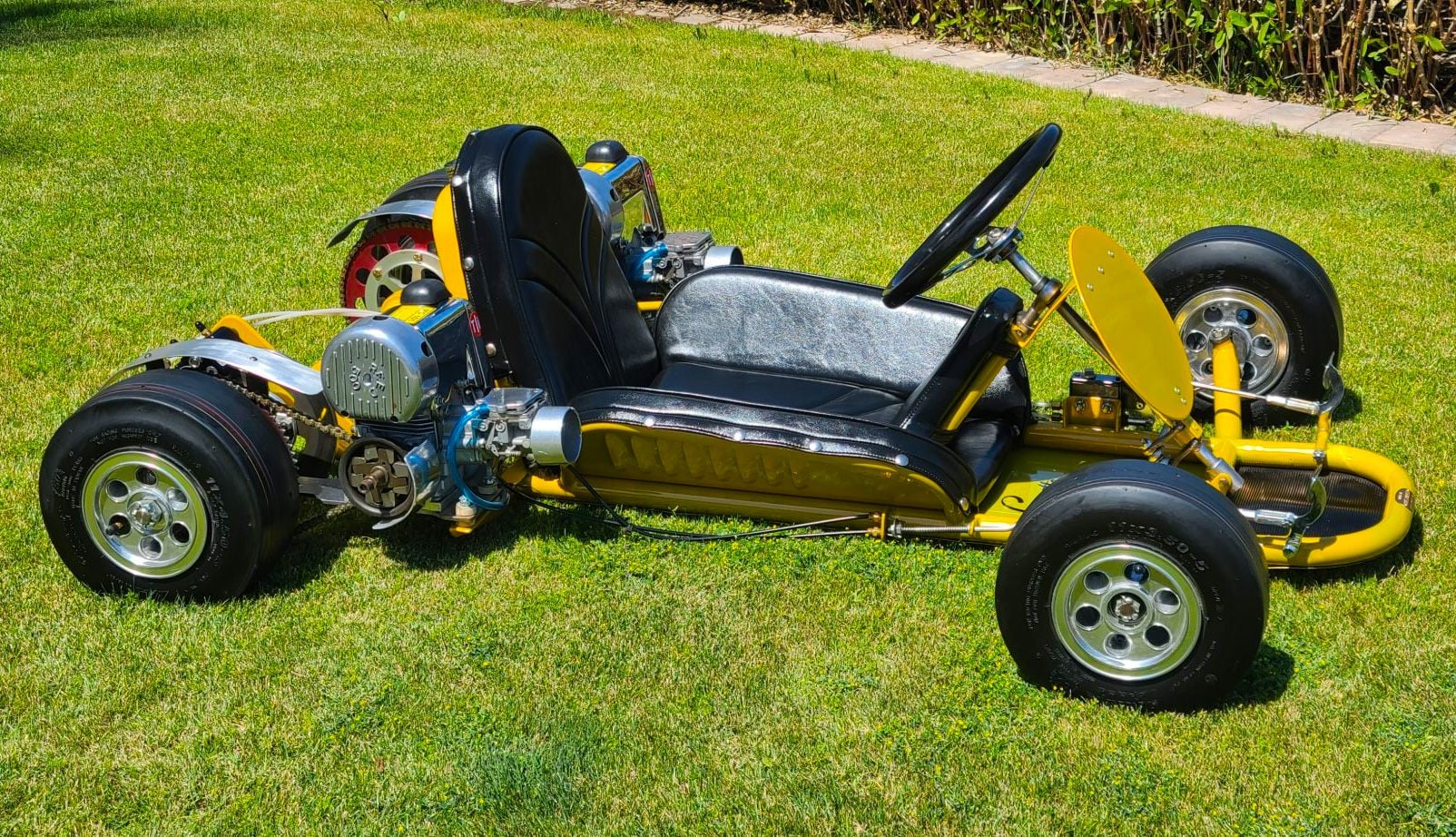
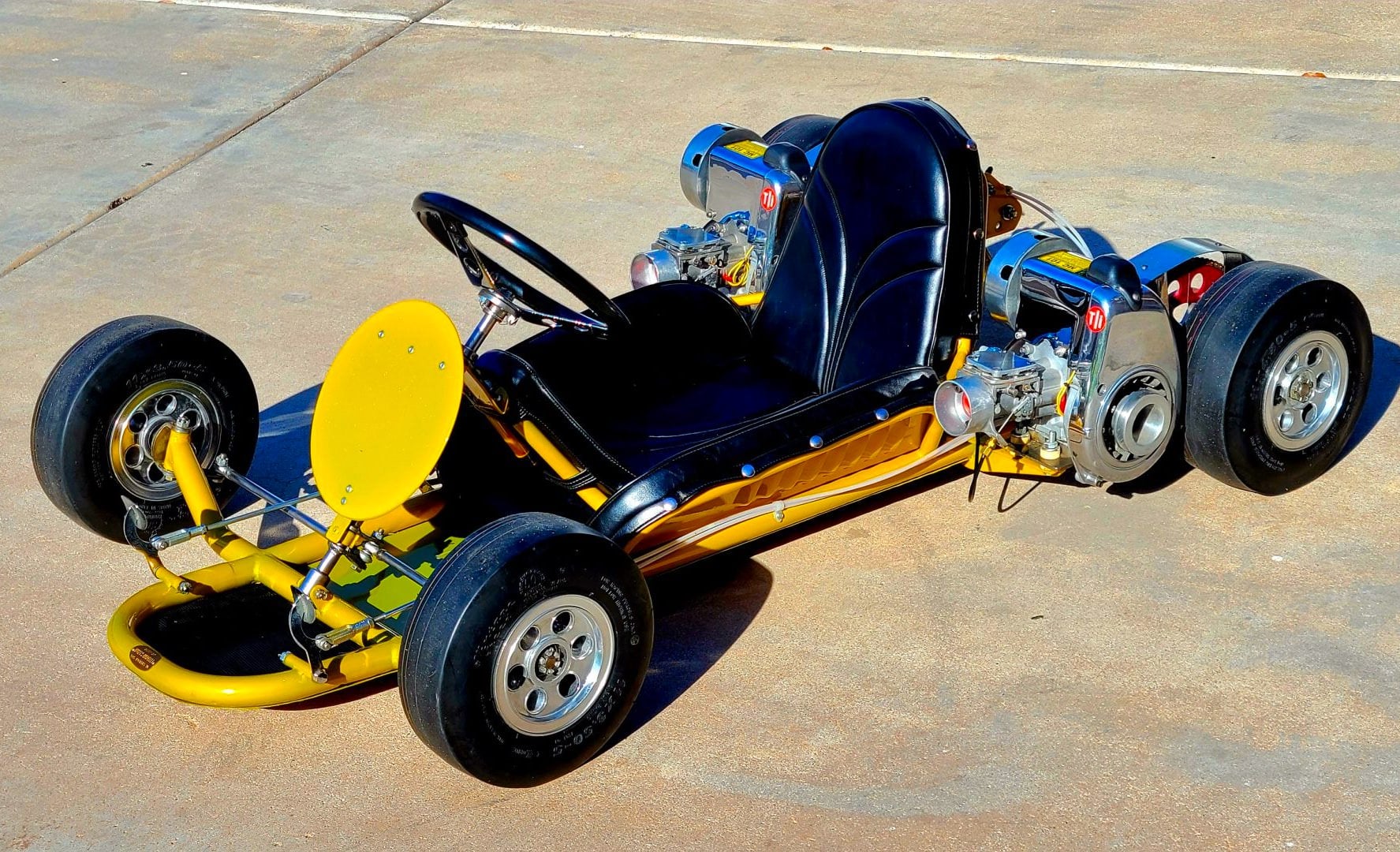
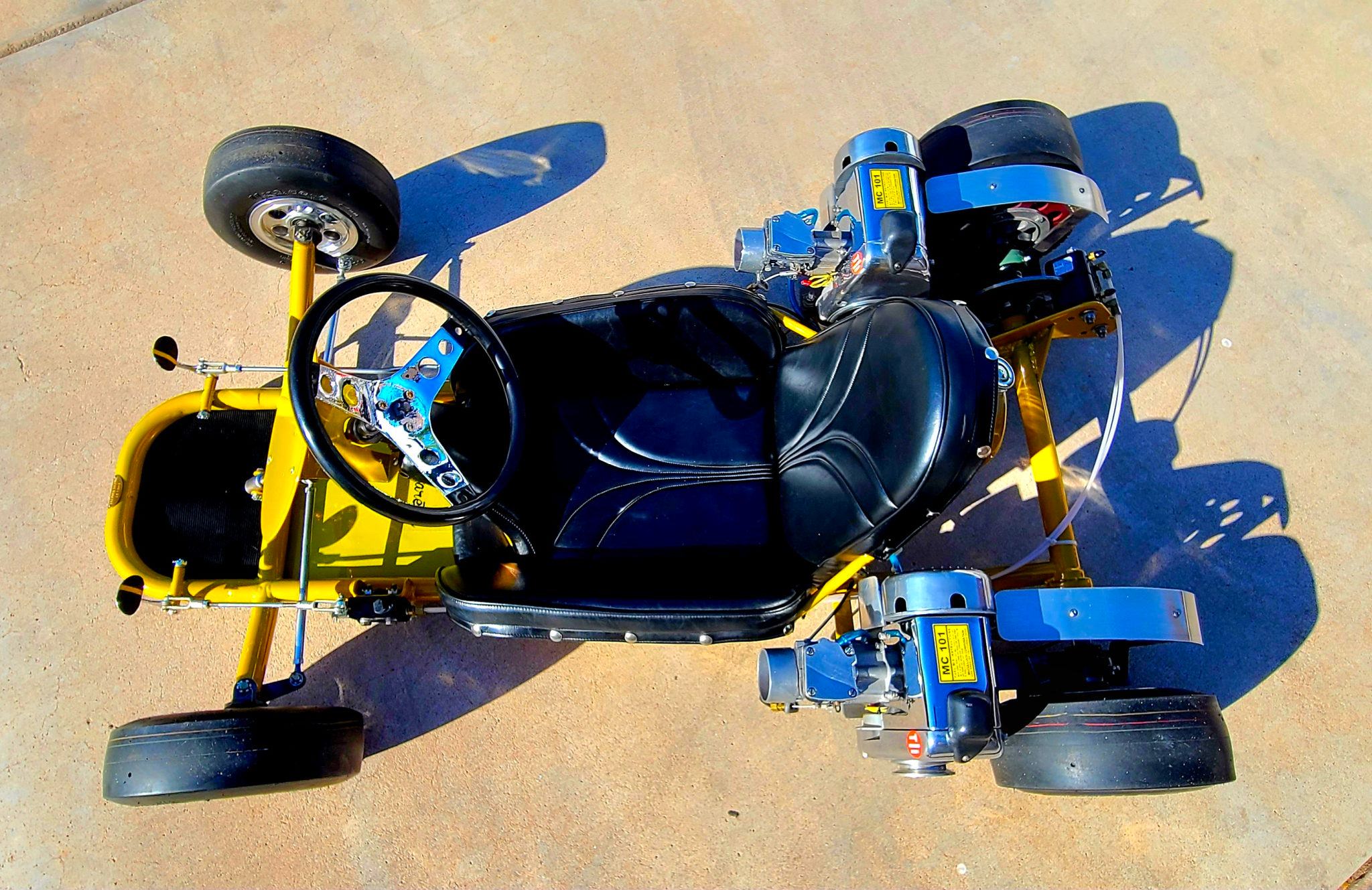
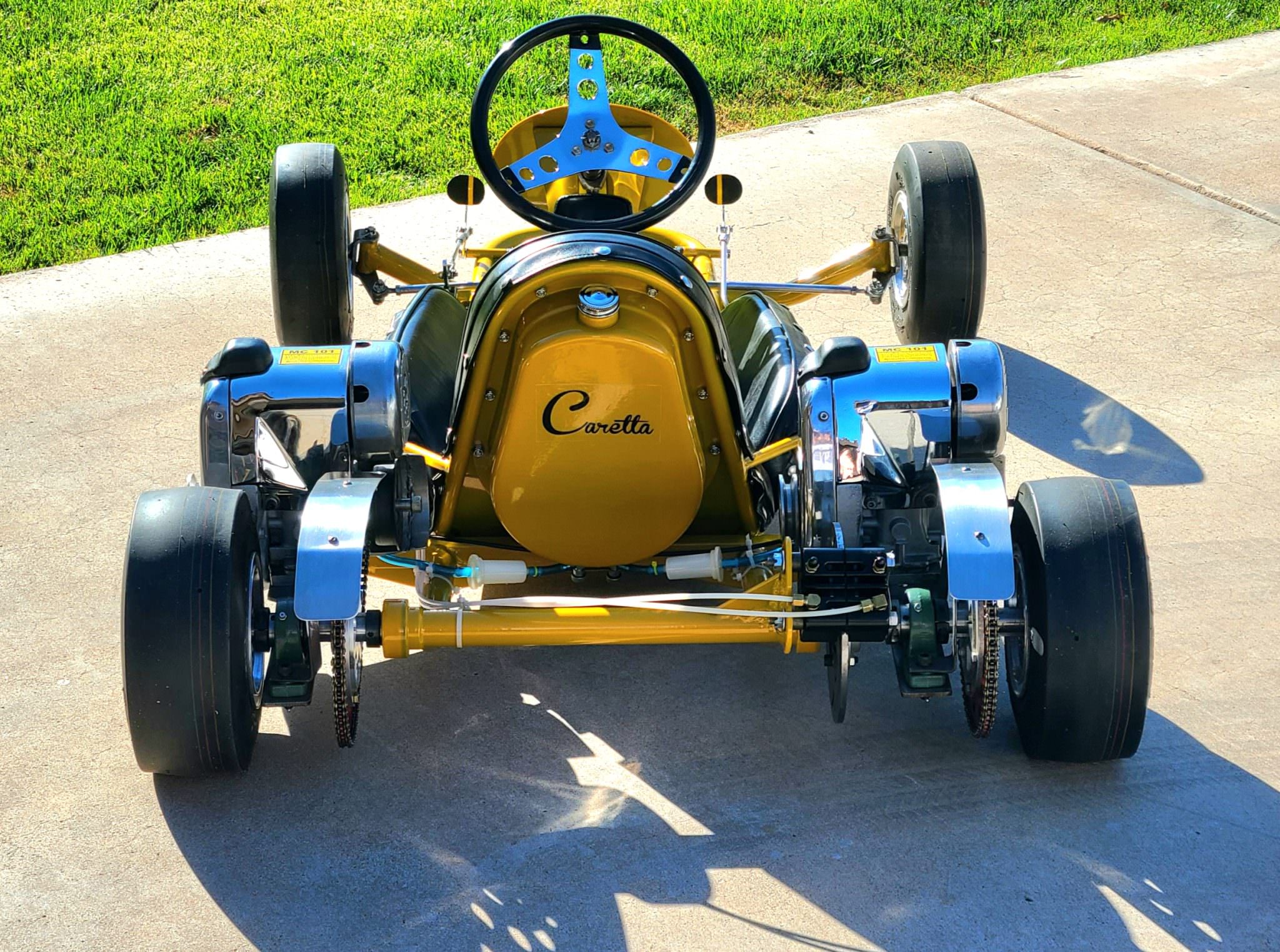
This is a 1968 Ingels-Borelli Caretta go kart with twin-engines, both sending power to the rear axle via a pair of chain drives.
Twin-engine set ups like this were used in period to quickly and easily double horsepower, and using a matching pair of engines means you only need spares for a single engine design. The engines used on this kart are 123cc McCulloch MC101 two-stroke singles with centrifugal clutches, so there’s no gear changing to worry about.
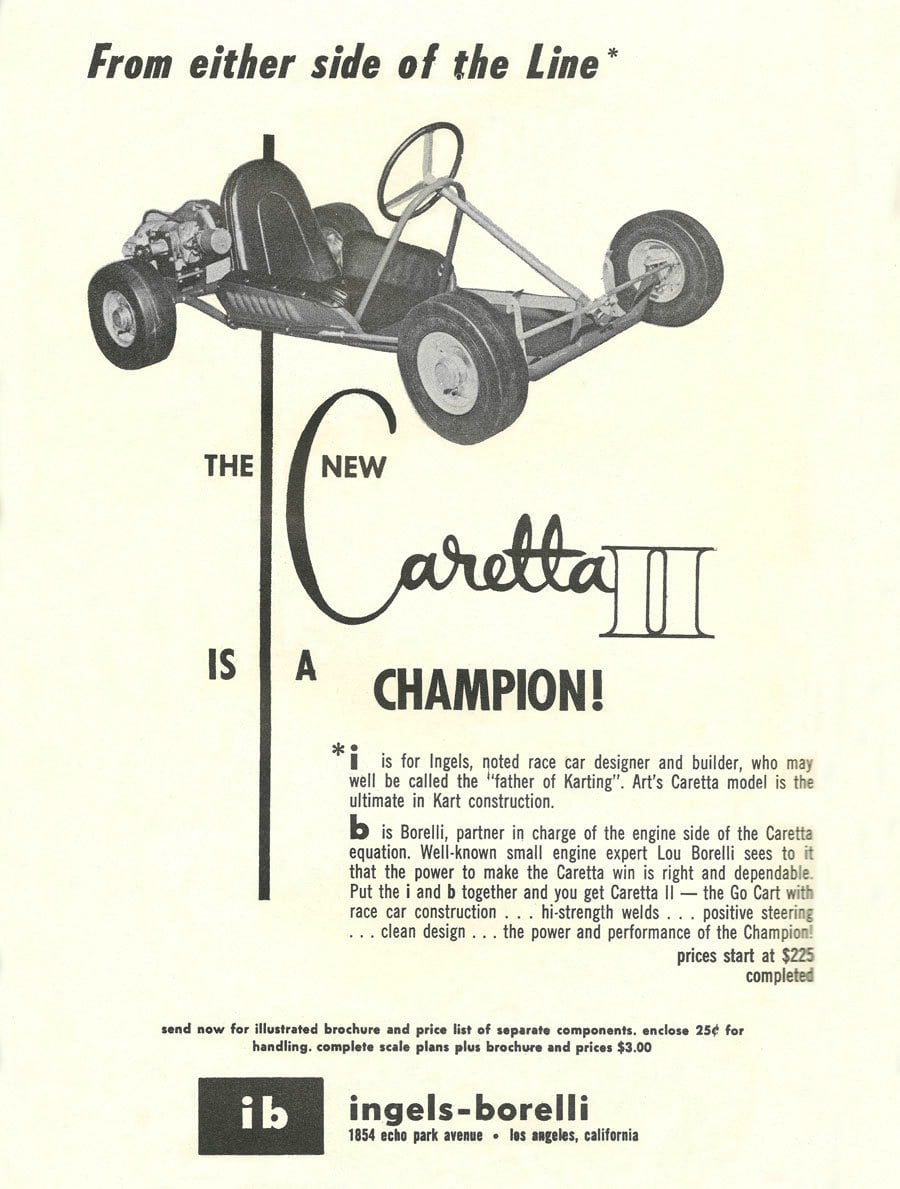
 In many respects, the story of the Ingels-Borelli Caretta is inseparable from the story of karting itself, because the men who built it were the same men who built the very first go kart. Image courtesy of Ingels-Borelli.
History Speedrun: Ingels-Borelli Caretta Go Karts
In many respects, the story of the Ingels-Borelli Caretta is inseparable from the story of karting itself, because the men who built it were the same men who built the very first go kart. Art Ingels, a fabricator at the legendary Kurtis Kraft racing company, and his neighbor Lou Borelli, a petroleum company worker with engine expertise, constructed what is now known as “Kart No. 1” in Ingels’ Echo Park, Los Angeles garage during the summer of 1956.
Their creation was mechanically simple – a West Bend 2-cycle 750 lawnmower engine making just 2.5 bhp, mounted on a tubular steel chassis with semi-pneumatic tires. Power reached the left rear wheel through a countershaft built from bicycle chains, sprockets, and a centrifugal clutch.
A hand-operated lever on the right side pressed a braking pad against a disc welded to the right rear rim. When Ingels and Borelli debuted the kart publicly at the Pomona sports car races, and the Rose Bowl parking lots in Pasadena, the response was immediate and it was completely overwhelming.
Going It Alone
Fatefully, Kurtis Kraft decided not to create a go-kart manufacturing division, so Ingels left the company and he and Borelli formally established the Ingels-Borelli Kart Company, setting up shop on Echo Park Avenue in Los Angeles. Their production karts were branded “Caretta,” (as in, “small car”) and the first six were built in time for the 1958 Christmas sales season – making Ingels-Borelli effectively the world’s first manufacturer of complete, ready-to-run go-karts.
The standard engine offered on the Caretta was the Clinton A-400, though any two-stroke could be specified. The frames were built from mild steel tubing rather than the chrome-moly used by later competitors – a deliberate choice, as chrome-moly could become brittle near welds. Period advertising emphasized that the firm specialized in building one-of-a-kind karts for discriminating buyers, all based on a standard Caretta frame that offered generous legroom for adults and not just children.
The model line offered by the Ingels-Borelli Kart Company evolved through multiple iterations over a relatively short time frame. The original Caretta was followed by the Caretta II in 1960, and by 1964 the range had reached the Caretta VI, available in a dedicated “E” Enduro variant.
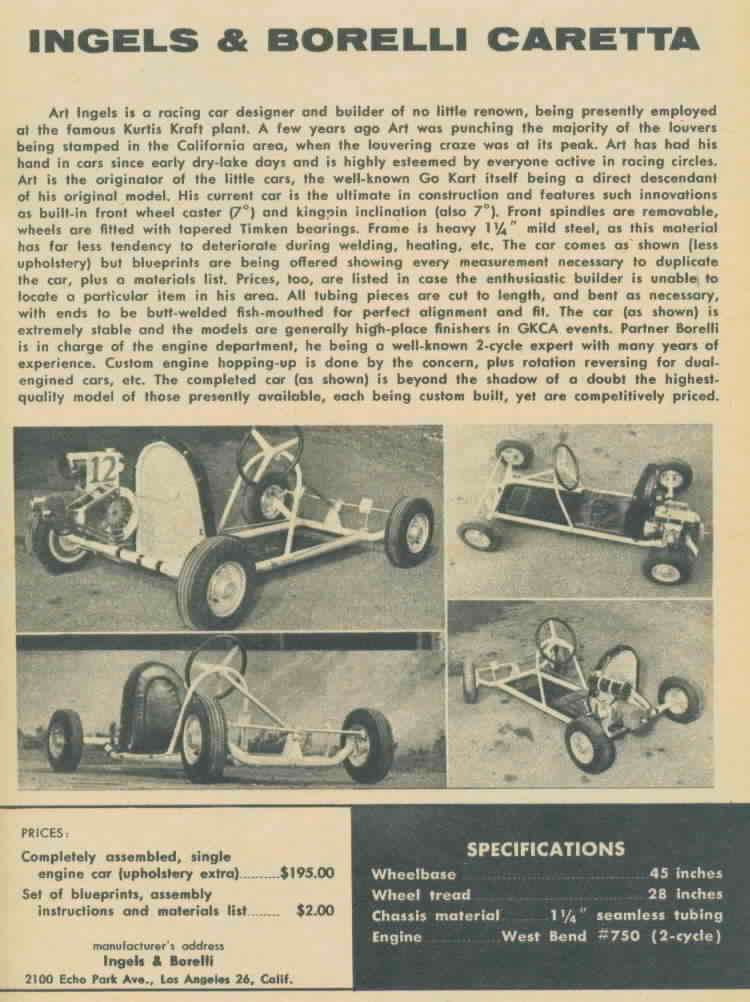
Ingels-Borelli production karts were branded “Caretta,” (as in, “small car”) and the first six were built in time for the 1958 Christmas sales season – making Ingels-Borelli effectively the world’s first manufacturer of complete, ready-to-run go-karts. Image courtesy of Ingels-Borelli.
The 1961 International Grand Prix de Tecate
This rapid progression was a clear indication of the rapid maturation of kart racing as a competitive discipline, and the Caretta played a very direct role in the early evolution – innovations that Ingels-Borelli introduced at the 1961 International Grand Prix de Tecate endurance race in Baja California are credited with helping to define the enduro kart as a category.
Racer Cub Lyon, the 1960 Tecate winner, entered the 1961 event with a specially prepared Caretta running twin West Bend Five Port 700 engines, side-mounted fuel tanks, and a front-mounted chain oiler. Lyon took the lead on the first lap but ultimately retired with front-end issues, it must have been frustrating as he looked like a lock for the win.
The early Carettas soon attracted serious customizers, this period was the time of Californian “Kustom Culture” after all. One of the most celebrated custom Carettas belonged to Ted Petersen, whose modified kart graced the cover of Kart Magazine in September of 1961.
Petersen had fitted a 15 cubic inch Villiers “Grand Prix” motorcycle engine producing 16 bhp, along with custom upholstery, a bespoke steering wheel, a modified Bendix brake setup, and Steen slicks on Gabrow and Hands wheels – all finished in the signature Caretta yellow of course.
To put that into perspective, most kart engines of the time were making around 2.5 bhp on average, with larger displacement engines making up to 5 bhp – so 16 bhp must have made it feel like a miniature formula car.
The Bugatti Of Vintage Karts
Beyond their own commercial kart manufacturing operations, Ingels and Borelli helped shape the future of the sport. Together with Go-Kart Manufacturing Co., they co-founded the American Kart Manufacturers Association to organize the rapidly growing industry.
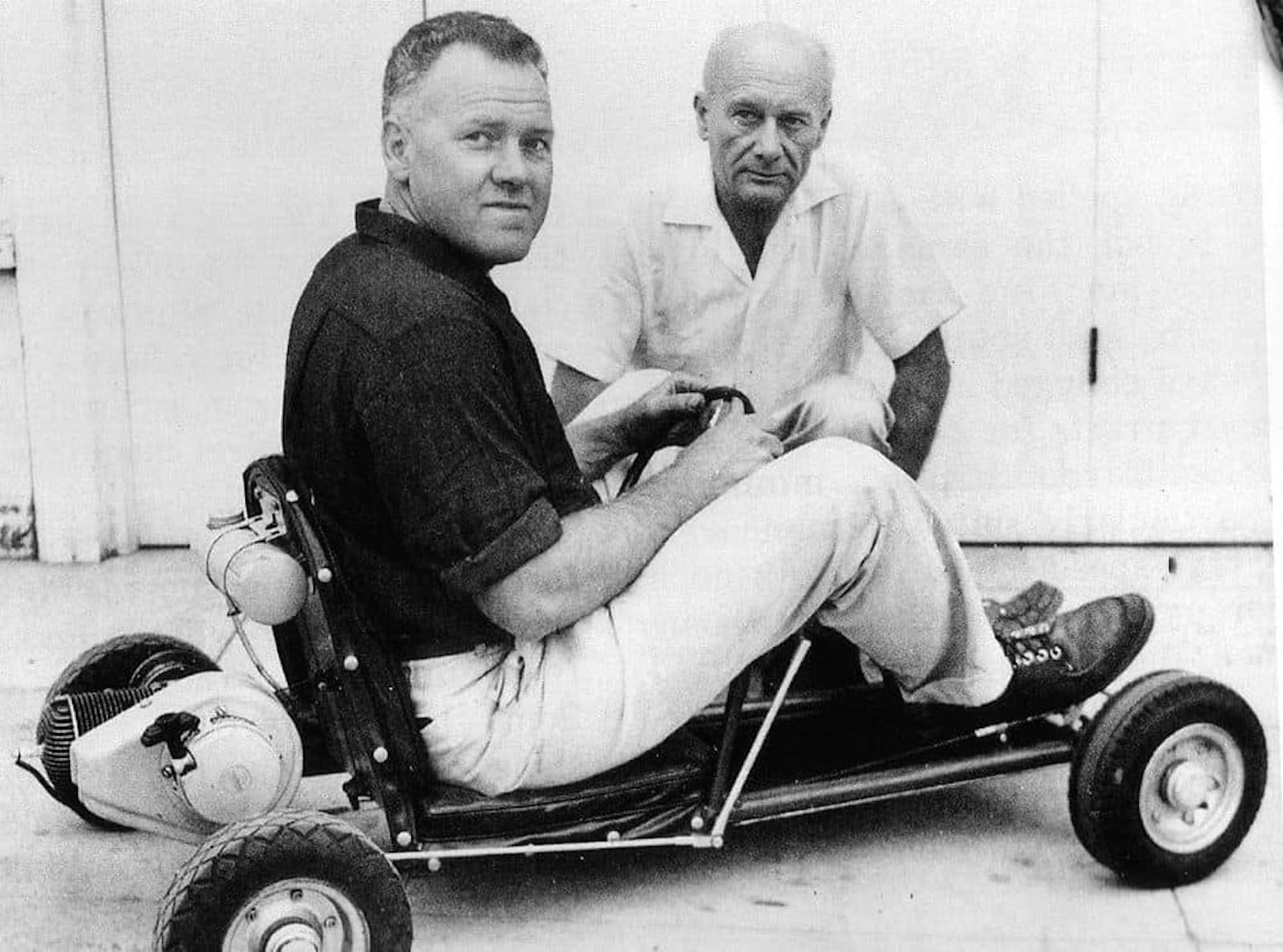
Art Ingels (on the left) and Lou Borelli (on the right) with the first go-kart outside Ingels workshop in Echo Park. Image courtesy of Ingels-Borelli.
Art Ingels passed away in December of 1981. Today, Carettas are among the most prized objects in the vintage karting world, with collector values that can reportedly reach five-figure sums for the most desirable examples – leading some enthusiasts to call them “the Bugatti of vintage karts.”
The 1968 Ingels-Borelli Caretta Go Kart Shown Here
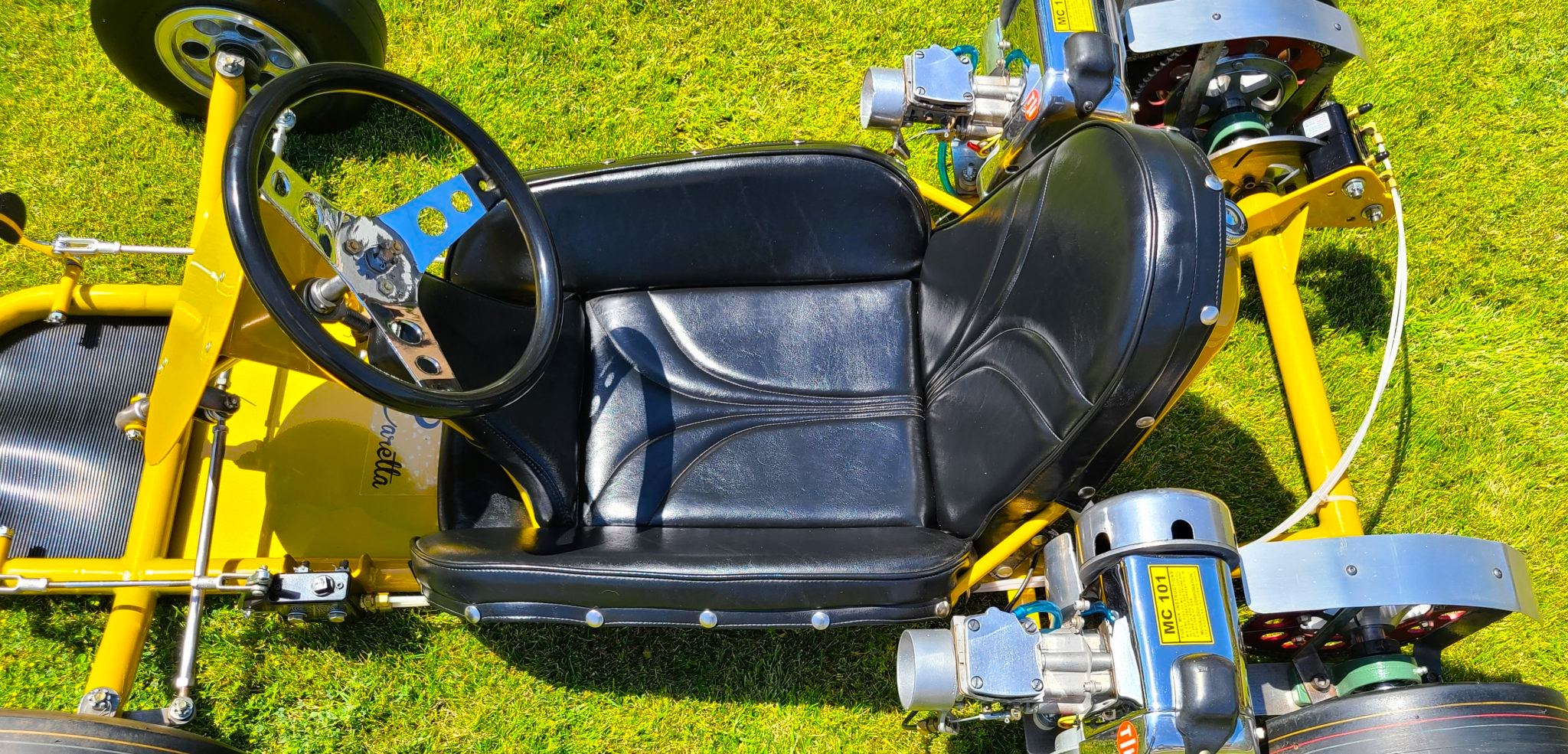
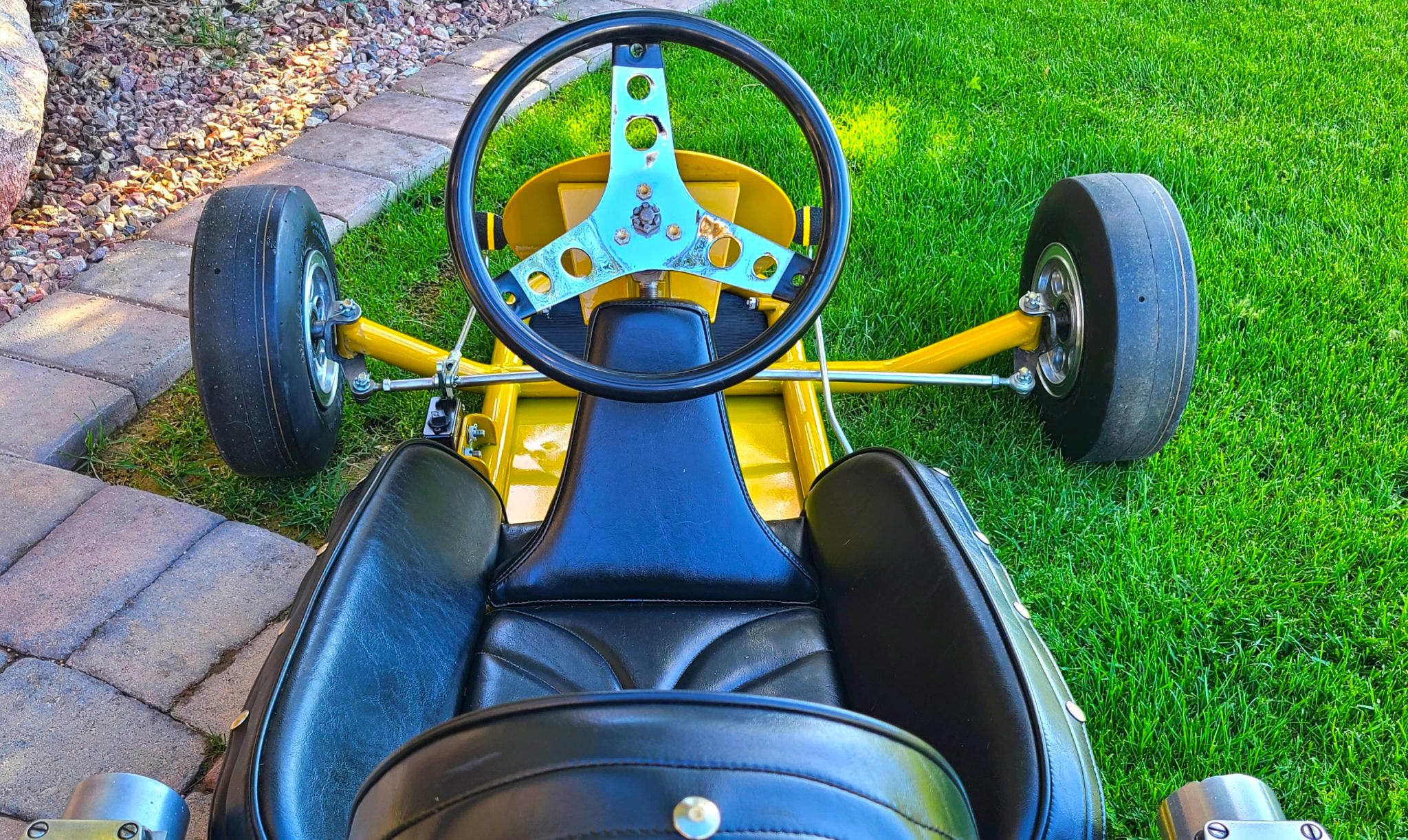
This is a rare 1968 Ingels-Borelli Caretta Sprint go kart that was bought by the seller two years ago, who subsequently had it refurbished. The kart is finished in the signature “Caretta Golden Yellow” over a steel frame and it has an integrated framework for the steering column and seat, a matching Nassau panel, a floor pan with an embossed Caretta logo, and a manufacturer’s plaque riveted to the frame.
Power comes from a pair of matched 123cc McCulloch MC101 two-stroke singles with chrome engine covers, both said to have been rebuilt by Terry Ives. The engines are fitted with flat-back carburetors, Reed 500 mufflers, Hortsman Rev-Grip dry clutches, and replacement drive chains sending power to the rear axle.
The polished 5-inch GoPower wheels now wear replacement staggered-width Vintage Speed slick tires, and an MCP hydraulic disc brake was fitted at the rear during the refurb, with the master cylinder mounted on the left side.
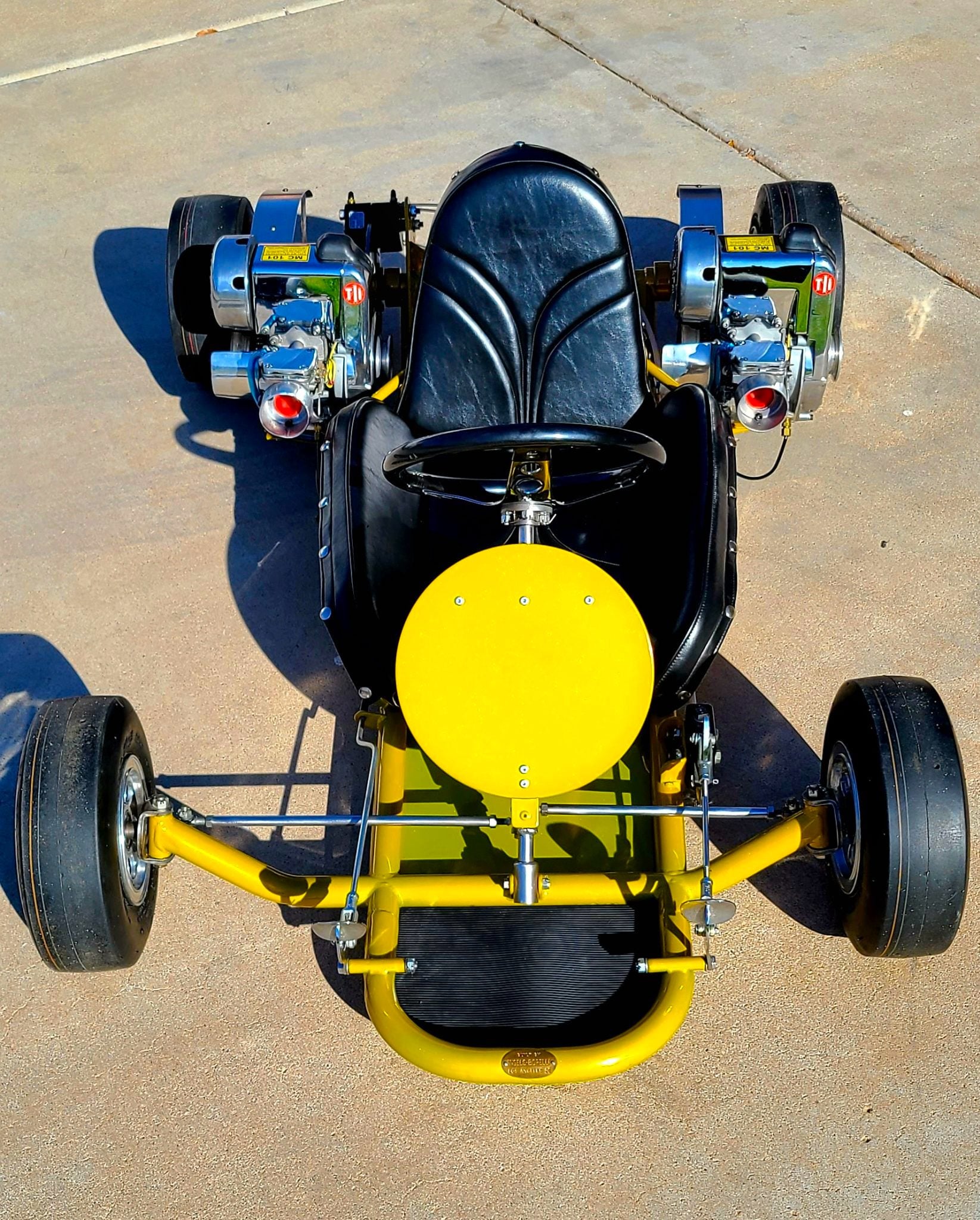
Power comes from a pair of matched 123cc McCulloch MC101 two-stroke singles with chrome engine covers, both said to have been rebuilt by Terry Ives. The engines are fitted with flat-back carburetors, Reed 500 mufflers, Hortsman Rev-Grip dry clutches, and replacement drive chains sending power to the rear axle.
The cockpit has a three-spoke steering wheel with a black grip, a single bolstered seat reupholstered in black, and twin foot pedals with black rubber grips and an under-heel grip pad – a Chilton seatback fuel tank is also mounted behind the seat.
This unusual twin-engined go kart is now being offered for sale out of Gilbert, Arizona on a bill of sale. If you’d like to read more or place a bid you can visit the listing here.
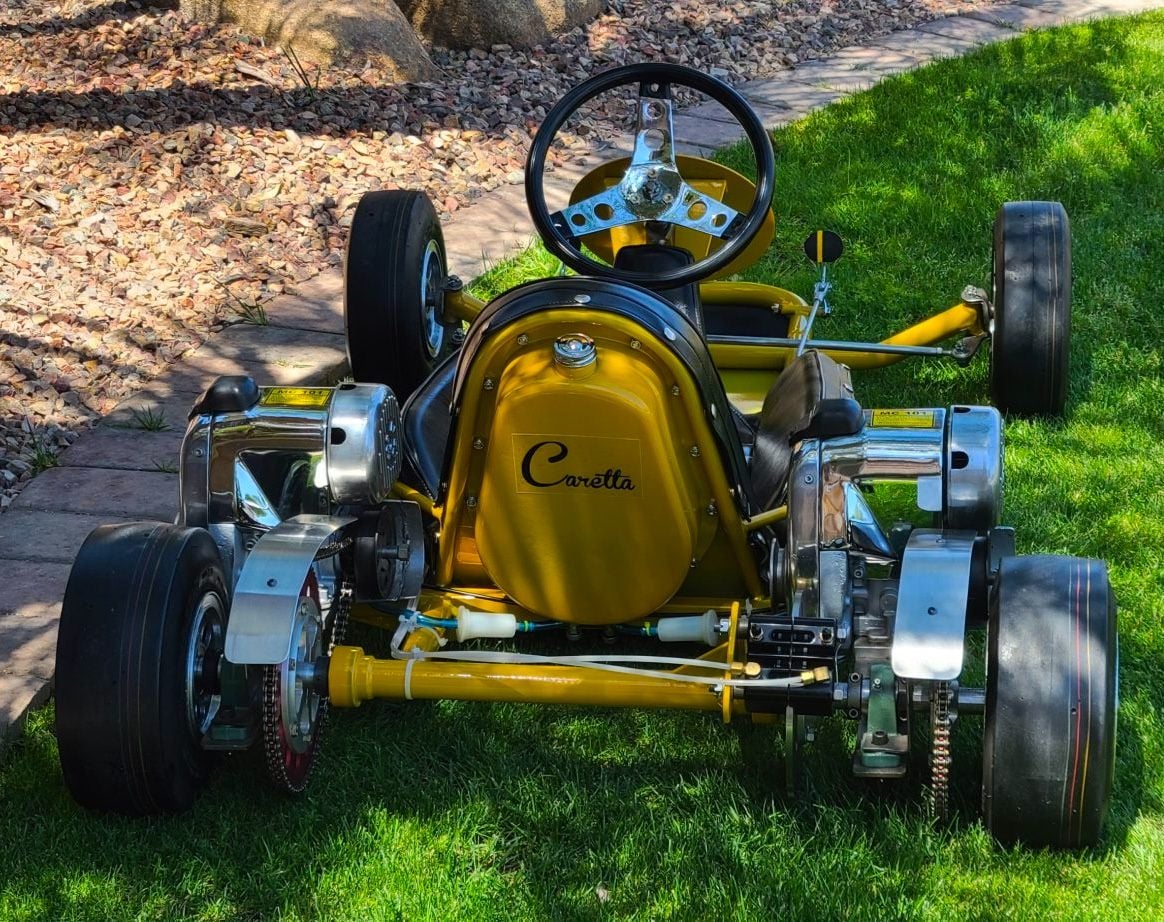
Images courtesy of Bring a Trailer

Articles that Ben Branch has written have been covered on CNN, Popular Mechanics, Smithsonian Magazine, Road & Track Magazine, the official Pinterest blog, the official eBay Motors blog, BuzzFeed, Autoweek Magazine, Wired Magazine, Autoblog, Gear Patrol, Jalopnik, The Verge, and many more.
Silodrome was founded by Ben back in 2010, in the years since the site has grown to become a world leader in the alternative and vintage motoring sector, with well over a million monthly readers from around the world and many hundreds of thousands of followers on social media.