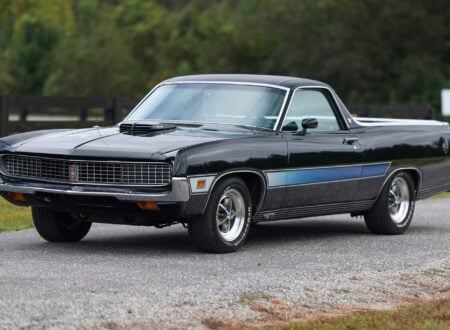
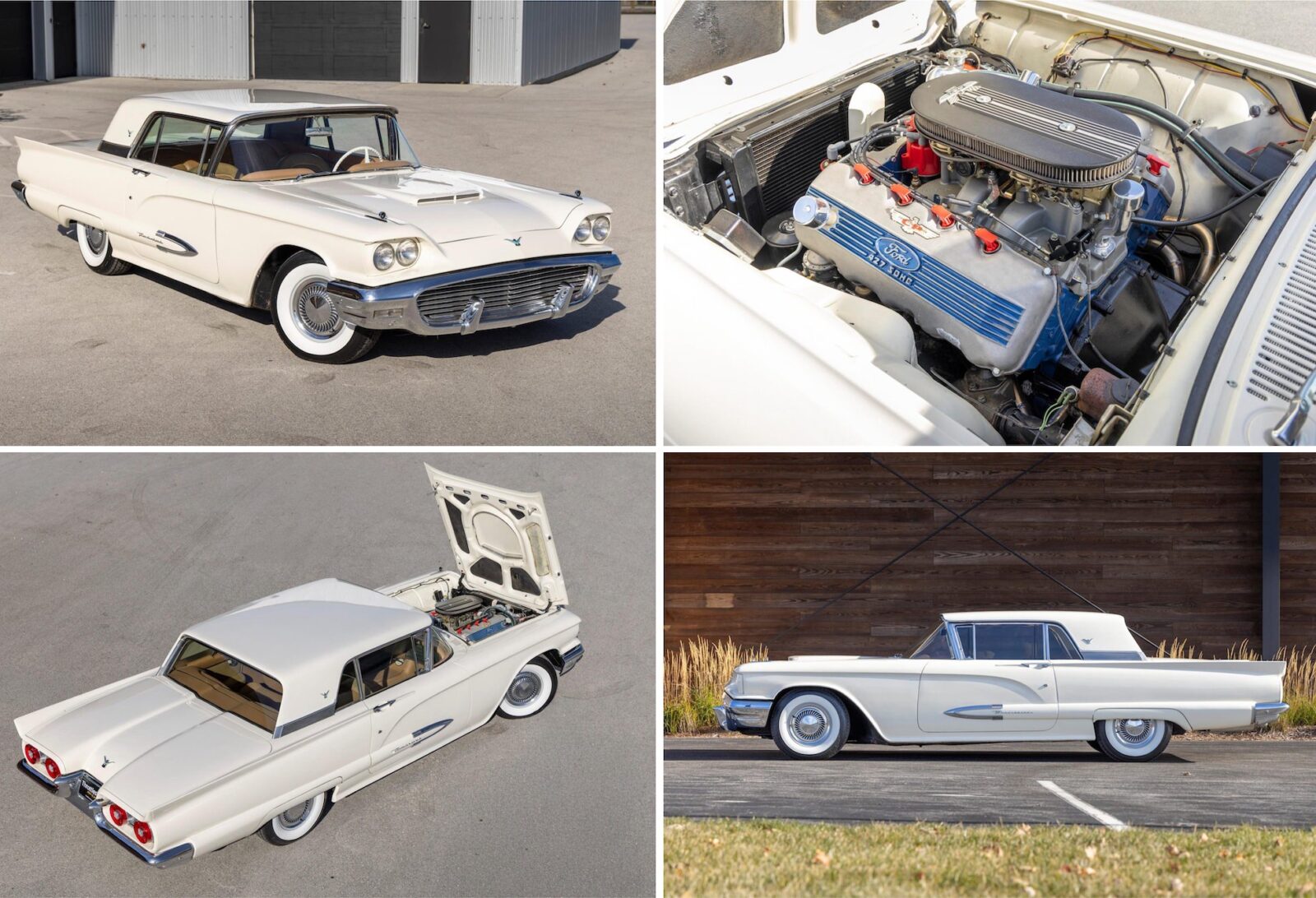
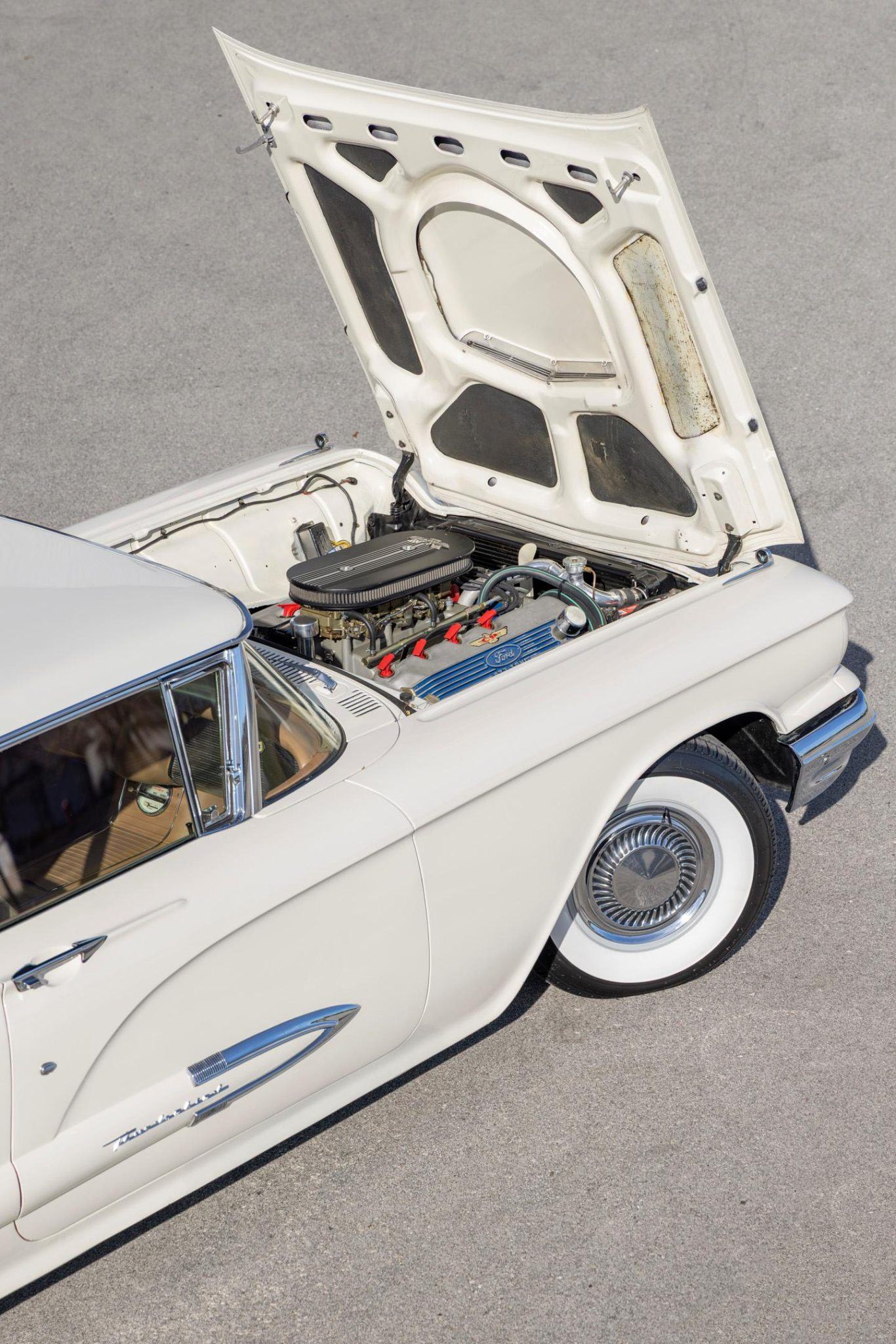
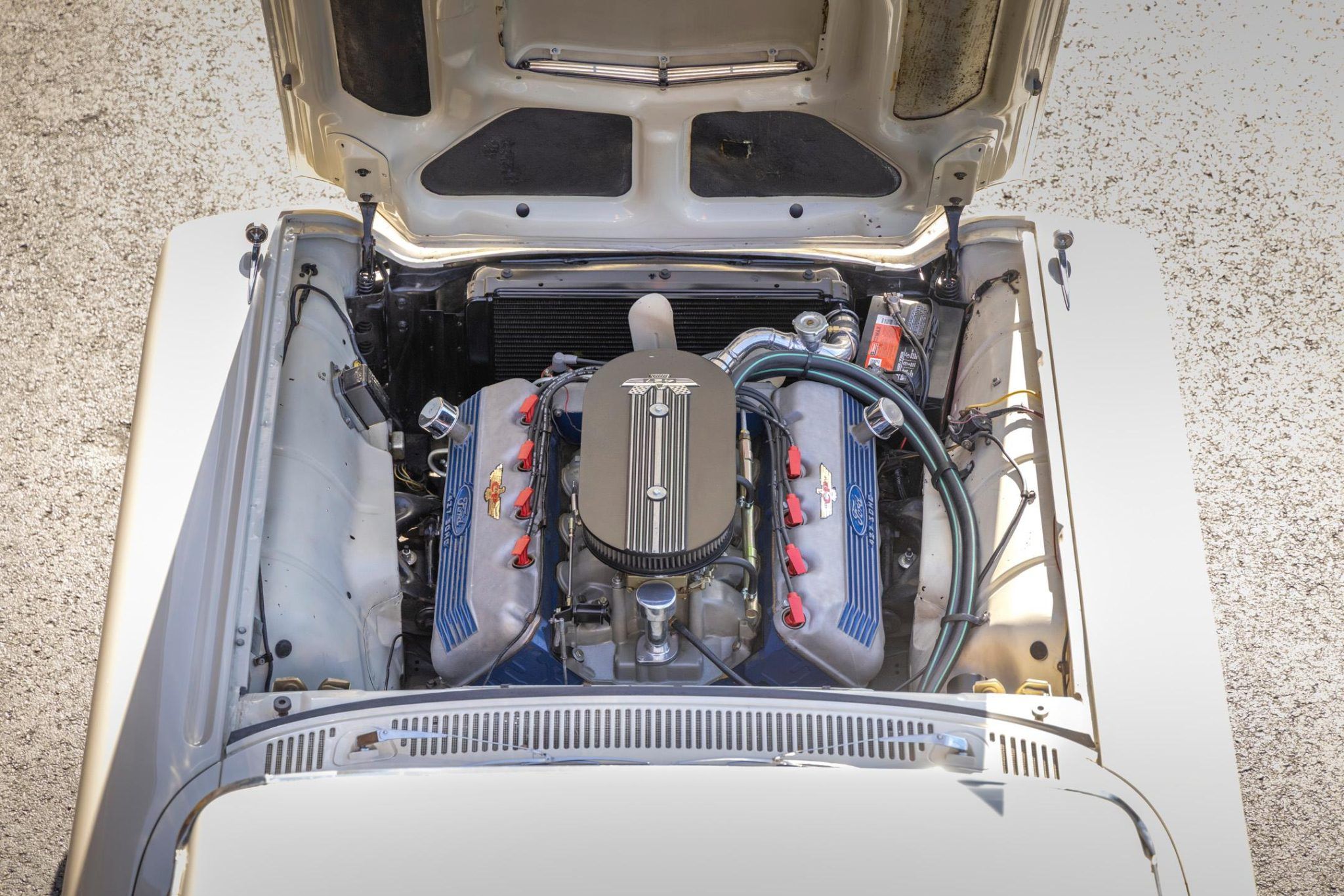
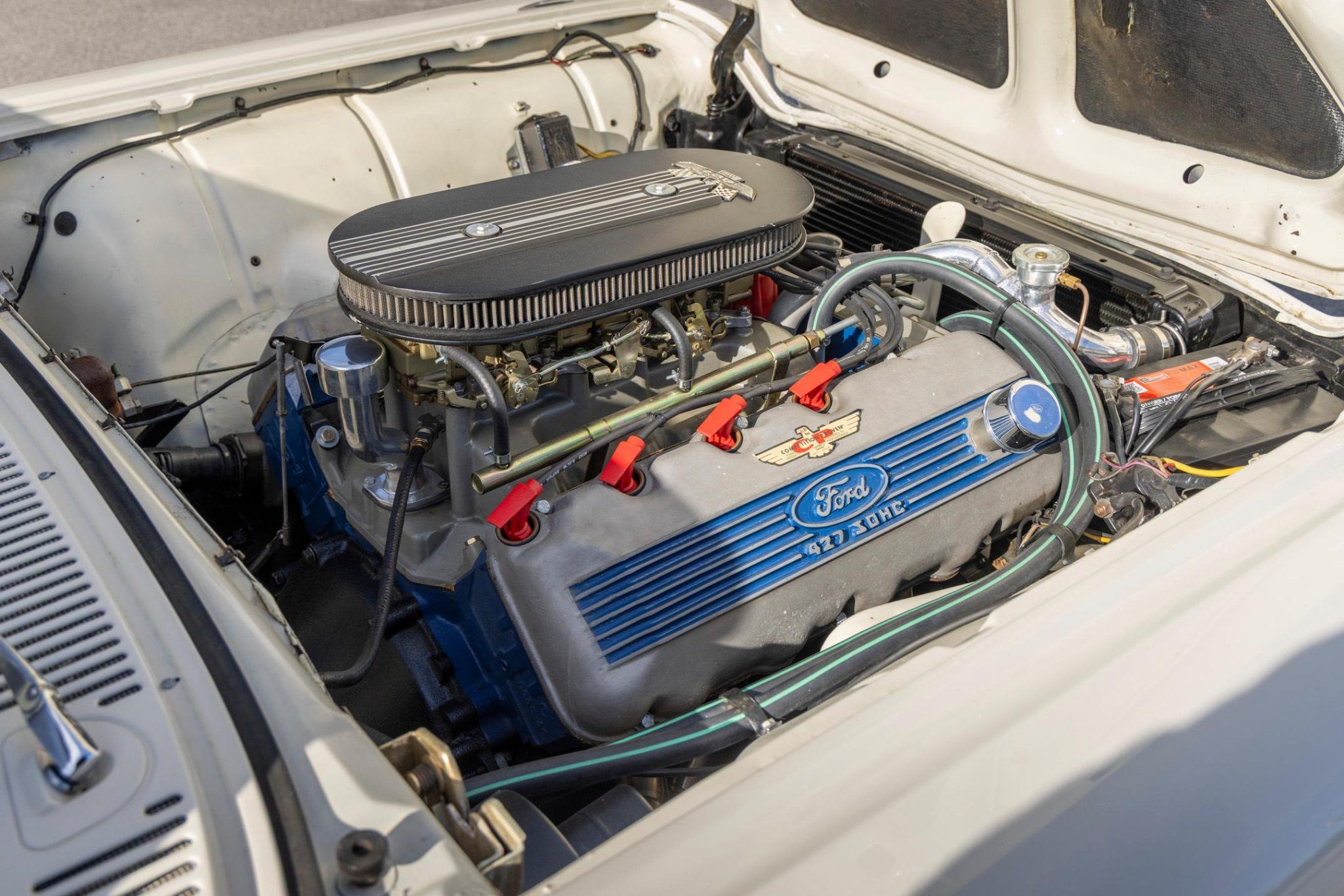
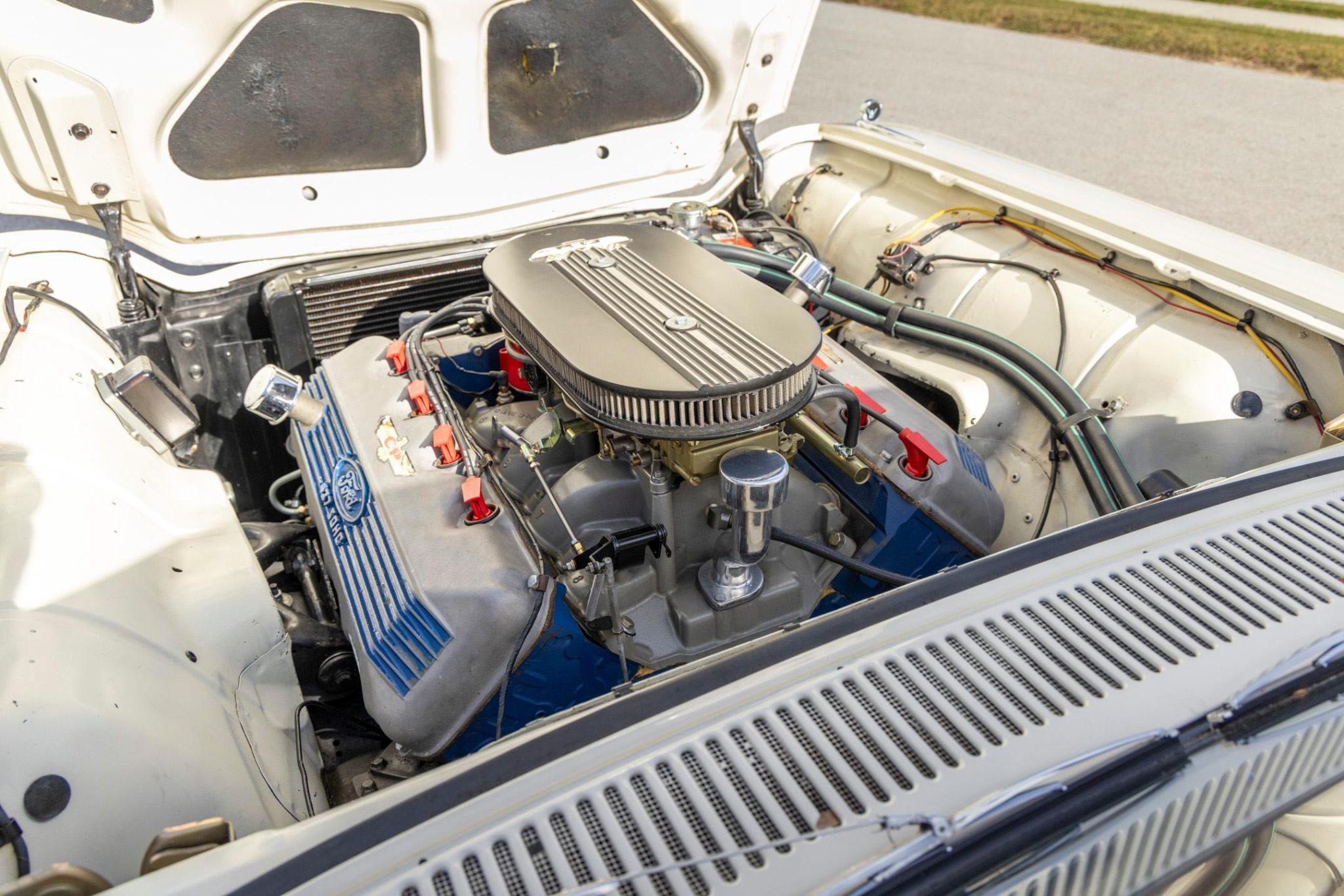
This is a 1959 Ford Thunderbird that has been given a significant series of upgrades including a Holman-Moody built Ford 427 SOHC “Cammer” V8 capable of up to 657 bhp depending on the state of tune.
The Cammer V8 could never have been fitted by the Ford factory in a 1959 Thunderbird because it didn’t exist yet, the 427 SOHC V8 wouldn’t debut until six years later in 1964 after a lightning fast 90 day development program by Ford’s “X-Garage” skunkworks engineering team.
Fast Facts: A Cammer-Powered Thunderbird Sleeper
- This 1959 Ford Thunderbird has been extensively modified with a Holman-Moody-built 427 cubic inch SOHC Cammer V8 producing up to 657 bhp depending on tune. The engine postdates the car by several years, making it a period-impossible but technically fascinating sleeper rooted in Ford’s mid-century racing history.
- The second-generation Thunderbird debuted for 1958 and was nicknamed the “Square Bird,” it shifted the model series from a two-seat personal car to a four-seat luxury tourer. Designed under Joe Oros, it emphasized Jet Age styling, comfort, interior space, and visual presence, abandoning any real sports car pretensions in favor of luxury cruising appeal.
- Mechanically, Square Birds were all about V8 torque and interior refinement, powered by the 352 cubic inch FE V8 and optional 430 cubic inch MEL V8. The car had independent front suspension, a coil-sprung live rear axle, and unibody construction. Despite its luxury focus, the model achieved a number of major NASCAR race wins in the late 1950s.
- Sales validated Ford’s strategy, with nearly 200,000 Square Birds built from 1958 to 1960, far exceeding first-generation totals. The featured car retains period aesthetics while hiding extreme performance, pairing its Cammer V8 with a manual gearbox, classic interior trim, and understated exterior details that reinforce its sleeper character.
History Speedrun: The Second-Gen Ford Thunderbird
Ford’s second-generation Thunderbird debuted for the 1958 model year, with enthusiasts quickly nicknaming it the “Square Bird” due its more squared off appearance – a design penned by Joe Oros. The original first-gen 1955 to 1957 Thunderbird had been a two-seat personal car pitched as a softer, more luxurious alternative to the Corvette.
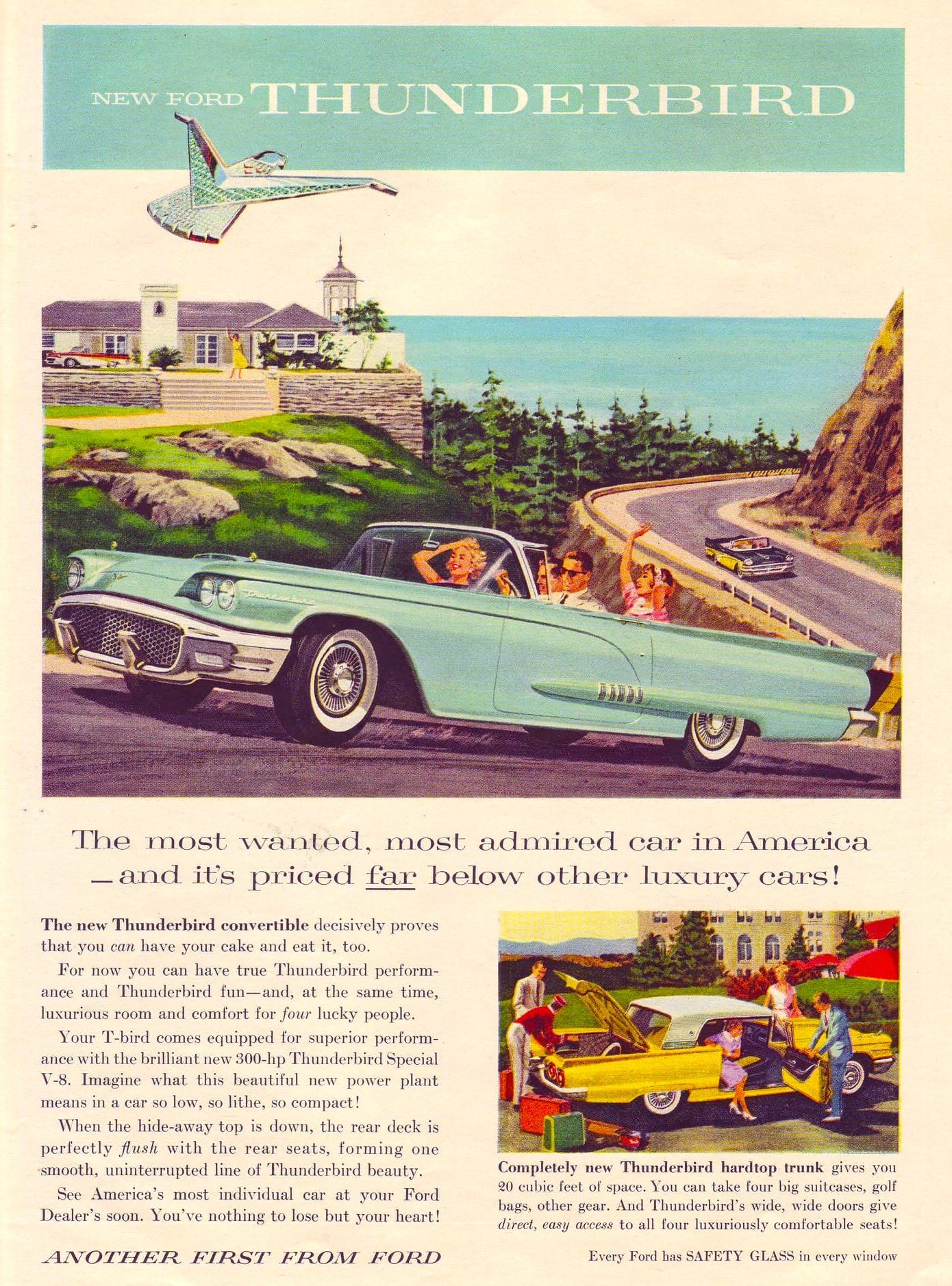
 Ford’s second-generation Thunderbird debuted for the 1958 model year, with enthusiasts quickly nicknaming it the “Square Bird” due its more squared off appearance – a design penned by Joe Oros. mage courtesy of Ford.
By the late 1950s, Ford’s internal research clearly showed that many people wanted Thunderbird style without the two-seat compromise. The 1958 redesign answered that demand with real rear seats, more cabin space, more trunk space, and a completely different set of priorities. It was still a Thunderbird, but any pretense of sports car performance had been abandoned in favor of 1950s Jet Age luxury and excess, and the American car-buying public loved it.
The Styling Of The Square Bird
The new Thunderbird body was longer, wider, and noticeably heavier than the first-gen model. The wheelbase now stretched to 113 inches, and overall length landed a touch over 205 inches, giving Ford room for a true four-place layout without turning the Thunderbird into a full-size sedan.
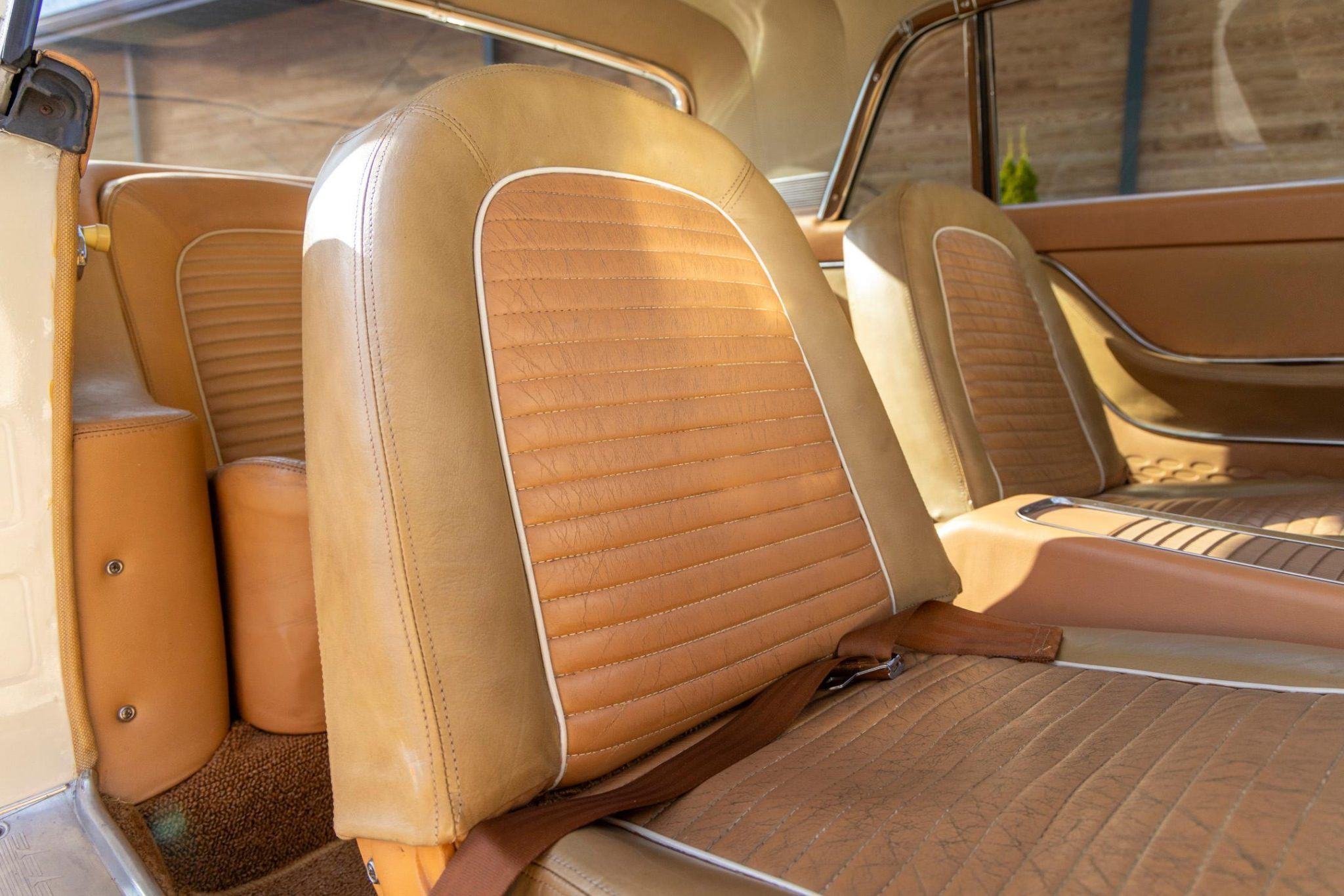
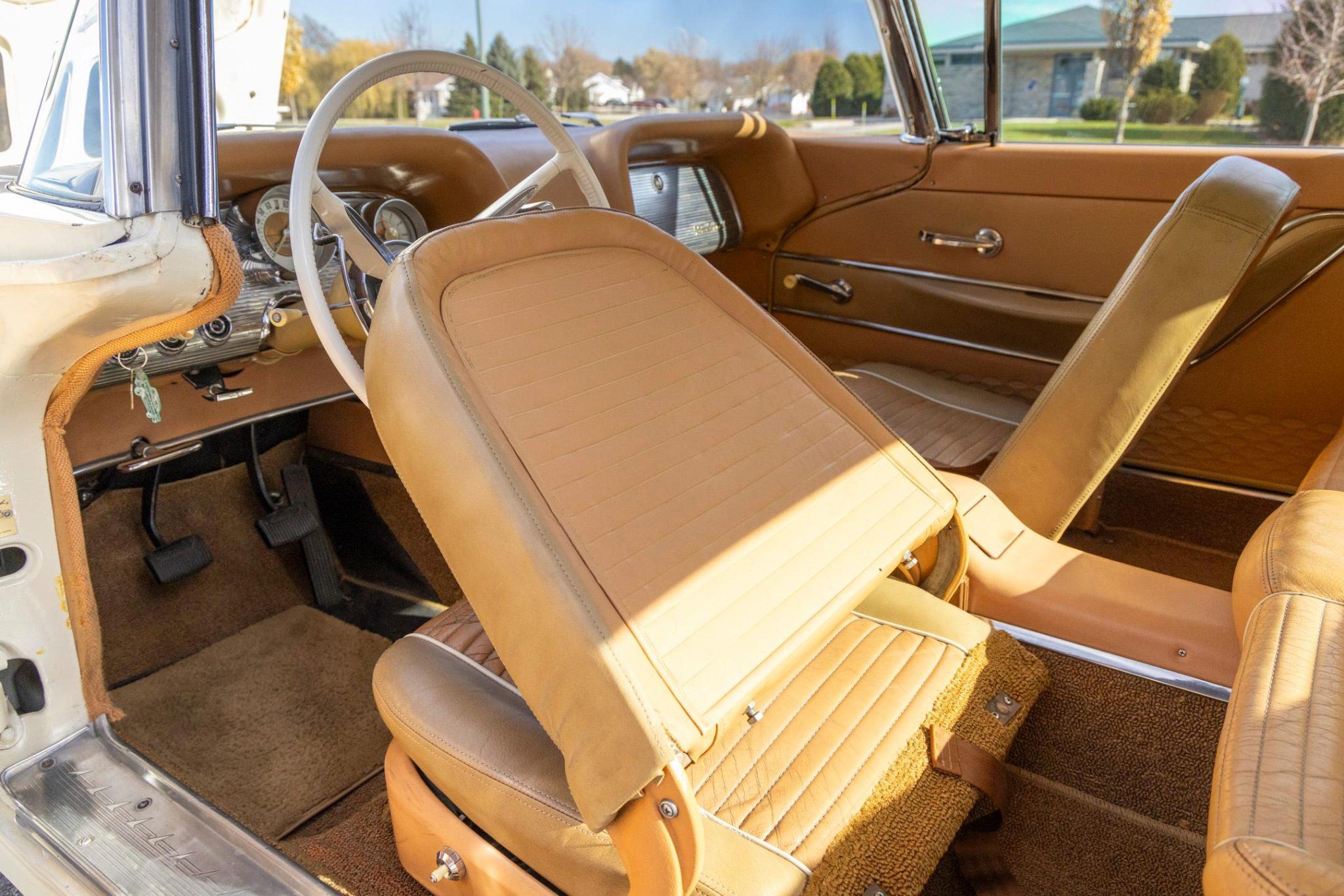
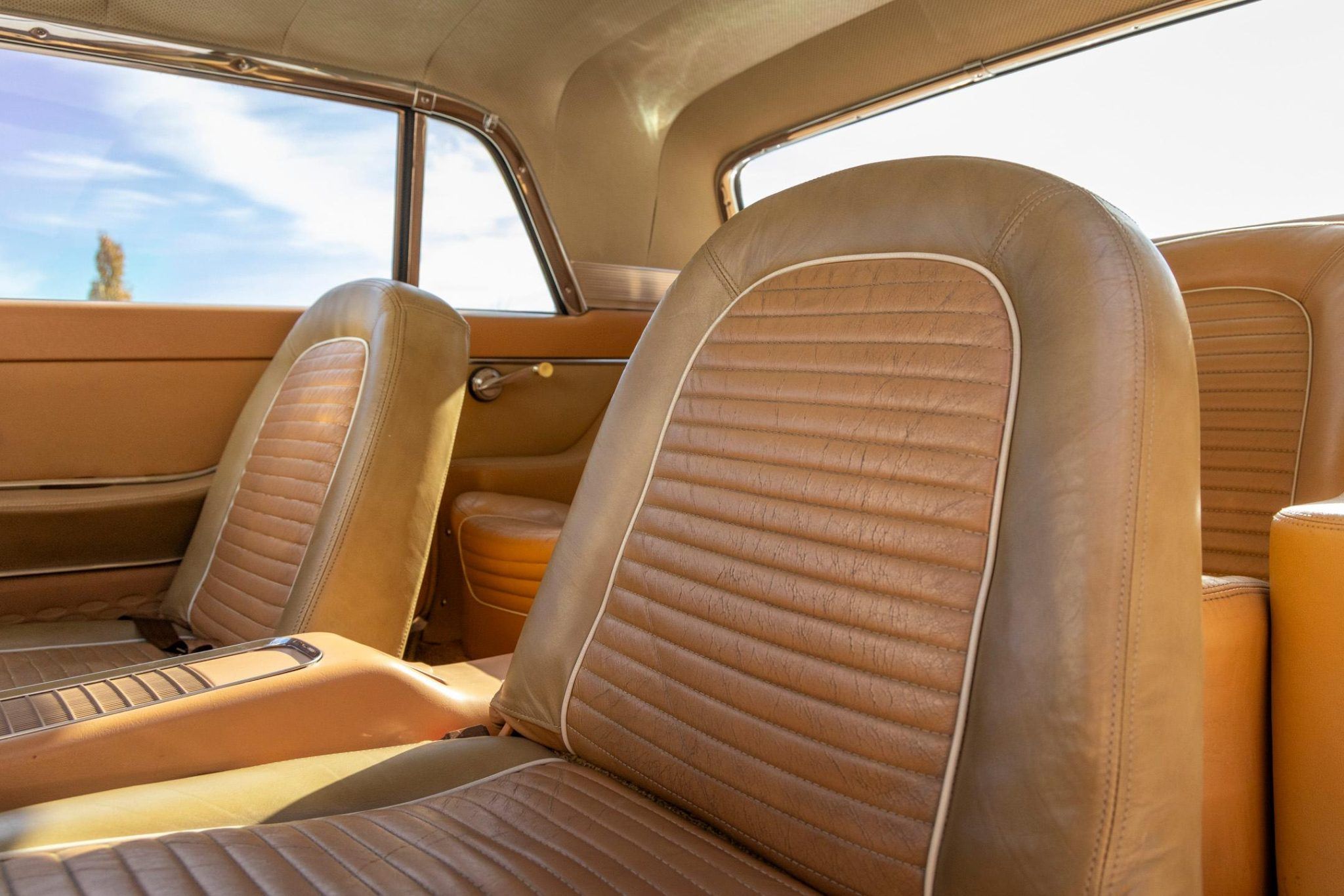
The second-gen Thunderbird also adopted unit-body design, a notable choice for a Detroit specialty car in that era and one that helped with packaging efficiency and stiffness. The prominent driveshaft tunnel acted as a structural spine, and rather than fight it, Ford’s designers made it a feature, with individual front seats flanked by a full-length center console that housed controls and storage, creating the cockpit-like look and feel that would be broadly copied across the industry.
The Square Bird’s square-edged roofline, quad headlamps, and assertive tail fins were pure late-1950s Jet Age Americana. It gave the Thunderbird the presence of a display car with the day-to-day practicality to be genuinely useful, which mattered a great deal in a market segment that barely existed before the four-seat Thunderbird carved out the niche.
Second-Generation Thunderbird: Specifications
Under the hood, Ford went with big-cube V8 torque rather than sports-car revs. The core engine for the series was the 352 cubic inch FE V8, listed at 300 bhp in Thunderbird tune. Transmission offerings included a 3-speed manual and Ford automatics, with the Cruise-O-Matic being a popular choice with many buyers.
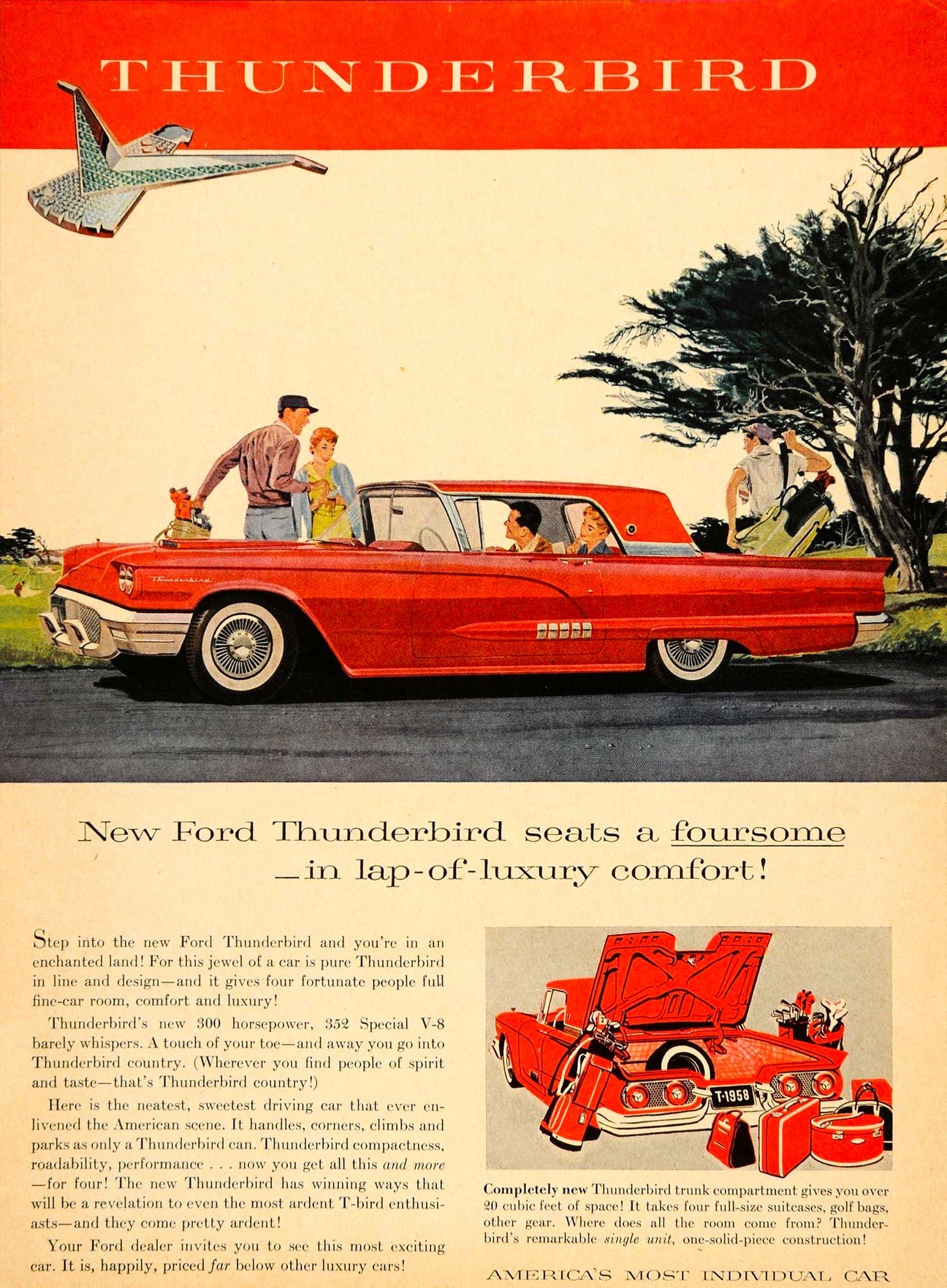
The new Thunderbird body was longer, wider, and noticeably heavier than the first-gen model. The wheelbase now stretched to 113 inches, and overall length landed a touch over 205 inches, giving Ford room for a true four-place layout without turning the Thunderbird into a full-size sedan. Image courtesy of Ford.
In 1959, the option list broadened with a 430 cubic inch MEL V8 rated at 350 bhp offering strong low- and mid-range pull, quiet cruising manners, and performance that was respectable but not the point. All Thunderbirds of this generation rode on independent front suspension consisting of coil springs and unequal-length A-arms, with a live axle rear end that had trailing arms and coil springs.
Though it’s largely forgotten today, the second-gen Thunderbird was remarkably successful in the world of NASCAR. This was largely thanks to that 430 cubic inch V8 that helped power drivers like Curtis Turner, Johnny Beauchamp, “Tiger” Tom Pistone, and Cotton Owens to six race wins in the top division for 1958.
Ford offered a two-door hardtop and a convertible across the second-generation, with running changes rather than major sweeping annual redesigns. The 1959 model year brought some detail refinements and option adjustments, while 1960 was focused more on trim and additional feature changes – including a distinctive third element in the tail lamp cluster and the availability of an optional sliding metal sunroof, often referred to as a “Golde Top” sunroof.
That sunroof variant is one of the clearest named subtypes within the Square Bird family, and it remains a talking point among collectors and enthusiasts because it’s relatively uncommon and highly desirable today.
Sales Figures + McNamara’s Vindication
Despite a tough 1958 economy, Thunderbird volume jumped to nearly 38,000 units, then climbed sharply in 1959 and again in 1960, with total 1958 to 1960 production sitting at 198,191 cars – completely dwarfing the 53,166 first-generation Thunderbirds sold from 1955 to 1957.
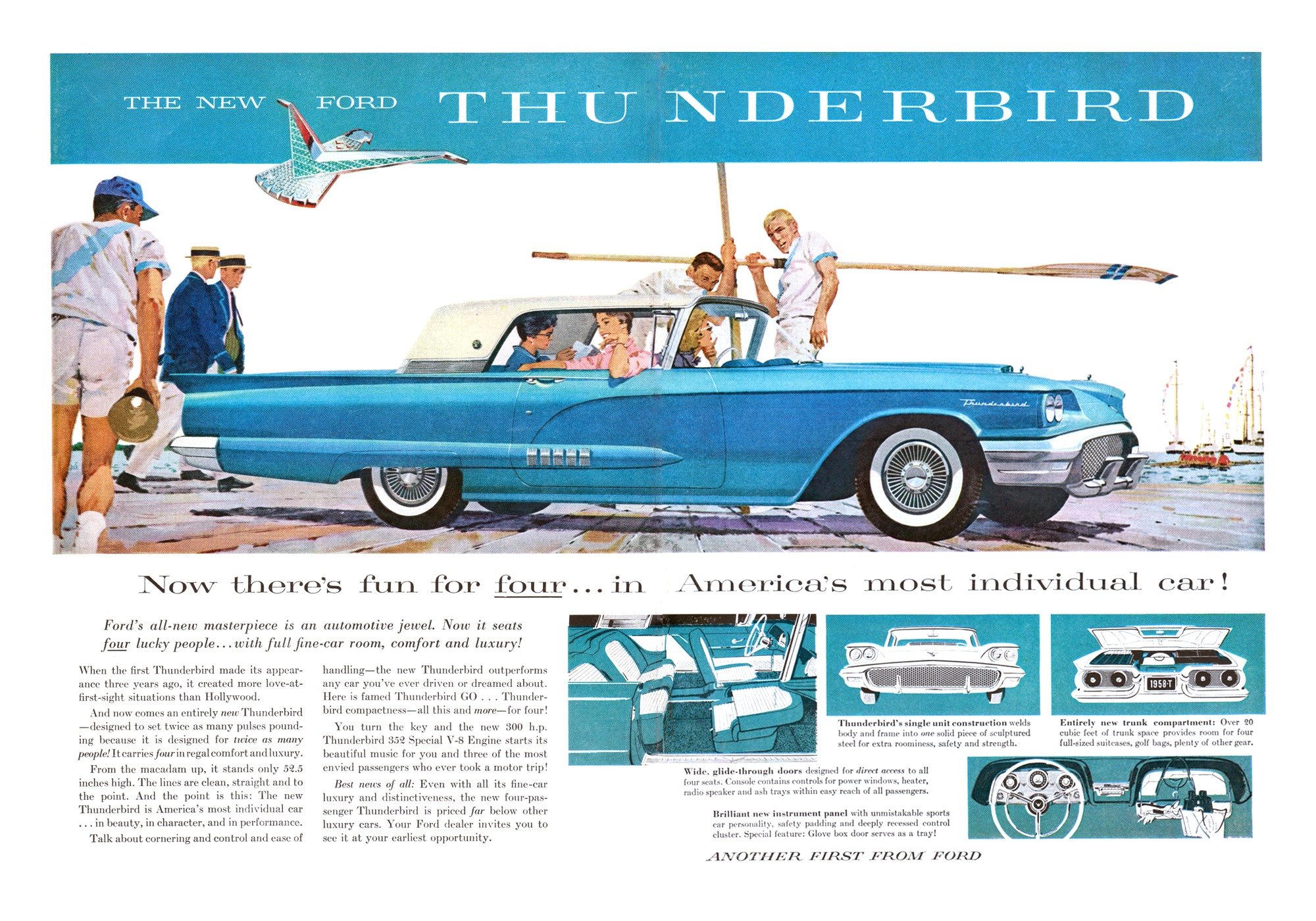
Despite a tough 1958 economy, Thunderbird volume jumped to nearly 38,000 units, then climbed sharply in 1959 and again in 1960, with total 1958 to 1960 production sitting at 198,191 cars – completely dwarfing the 53,166 first-generation Thunderbirds sold from 1955 to 1957. Image courtesy of Ford.
These sales numbers were a major vindication for Ford executive Robert McNamara who had championed the concept of a larger four-seat Thunderbird, despite many at Ford wanting to stick with the original two-seat formula to compete with the Corvette.
The Square Bird’s appeal is grounded in the fact that it’s a comfortable, style-forward V8 tourer with real usability, period-correct glamour, and a cabin design that still feels like a turning point in American automobile interior styling. It’s a classic car from the golden age of the 1950s that can be enjoyed by the whole family, and admired even by those who aren’t usually interested in classic cars.
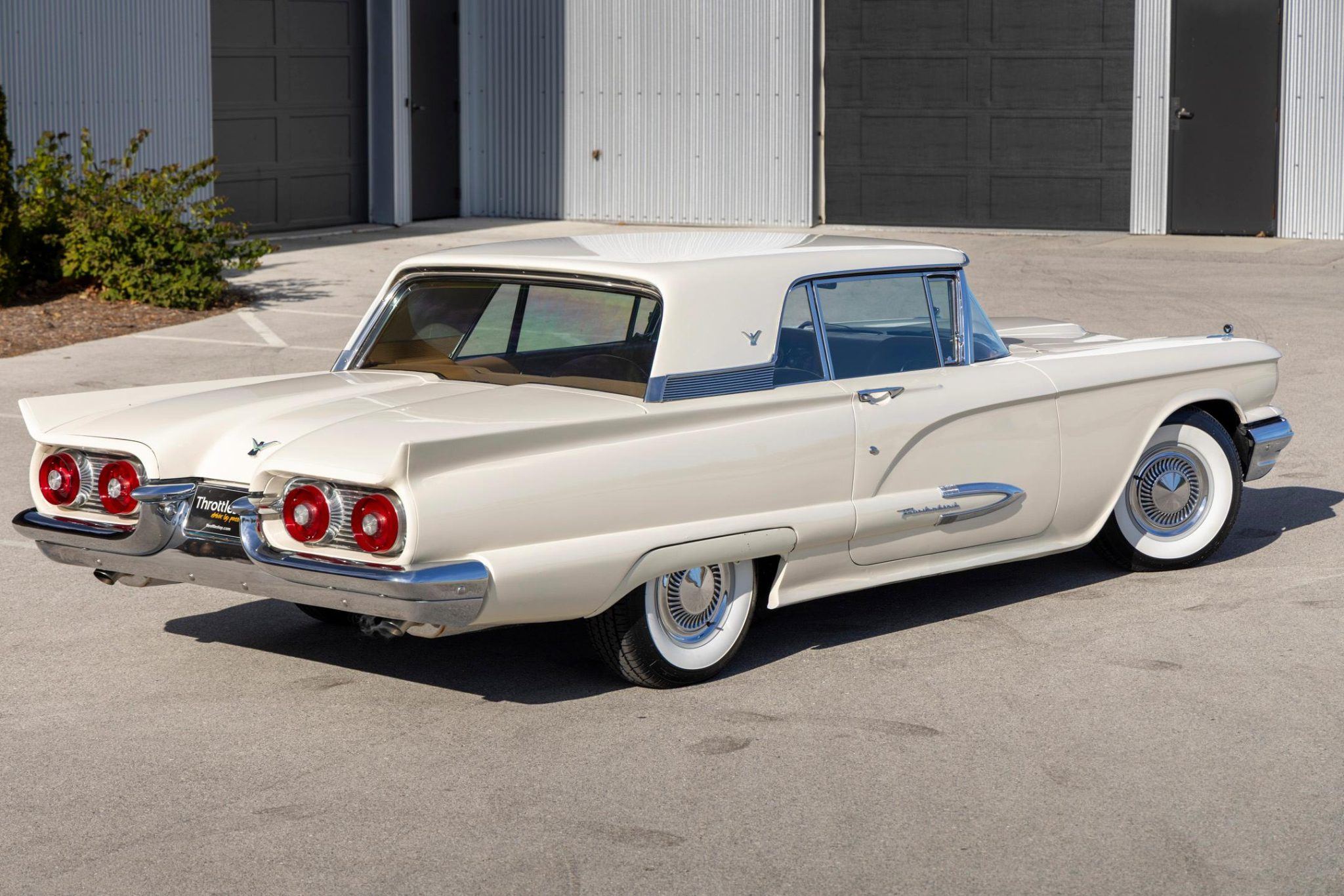
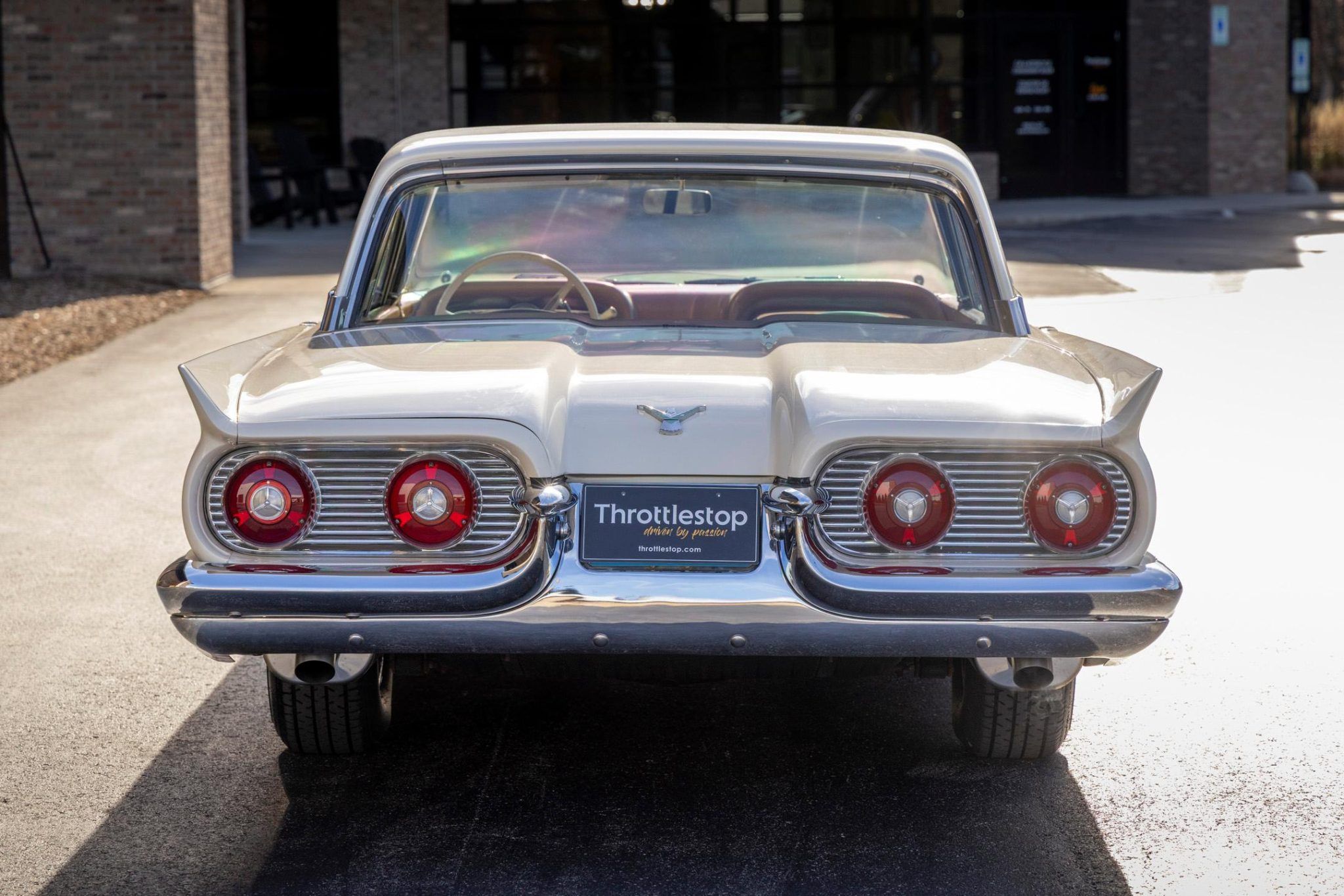
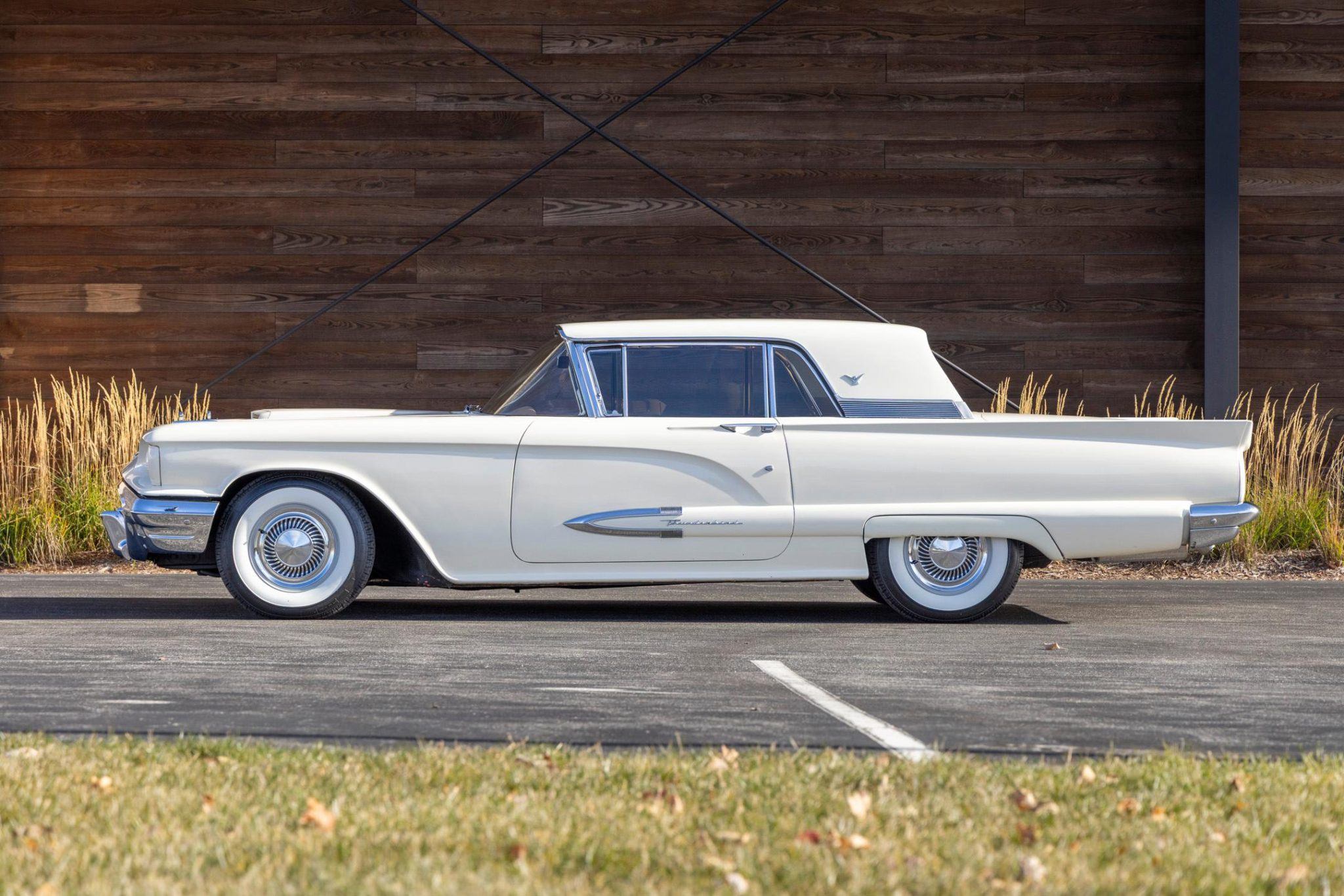
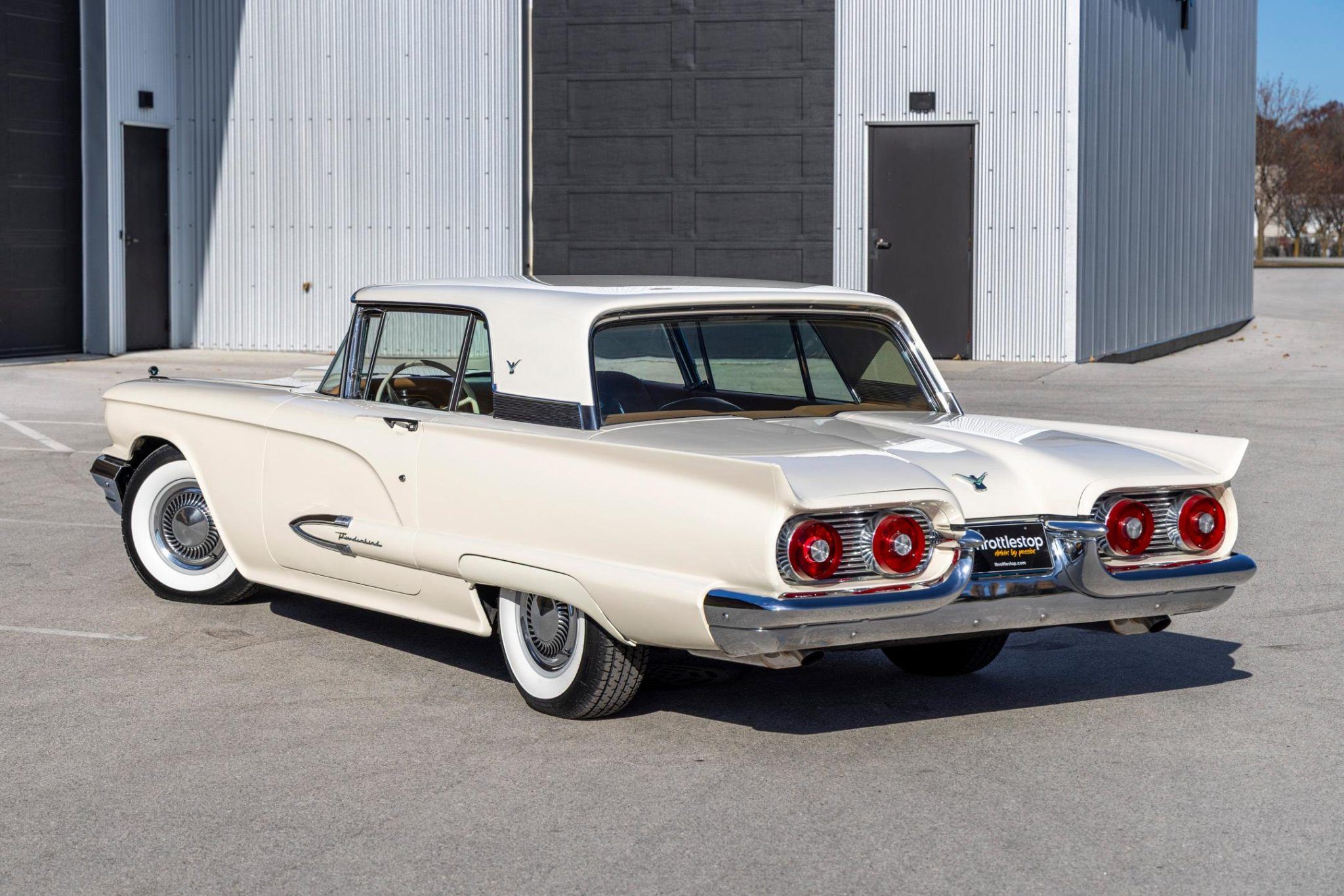
The 1959 Ford Thunderbird Shown Here
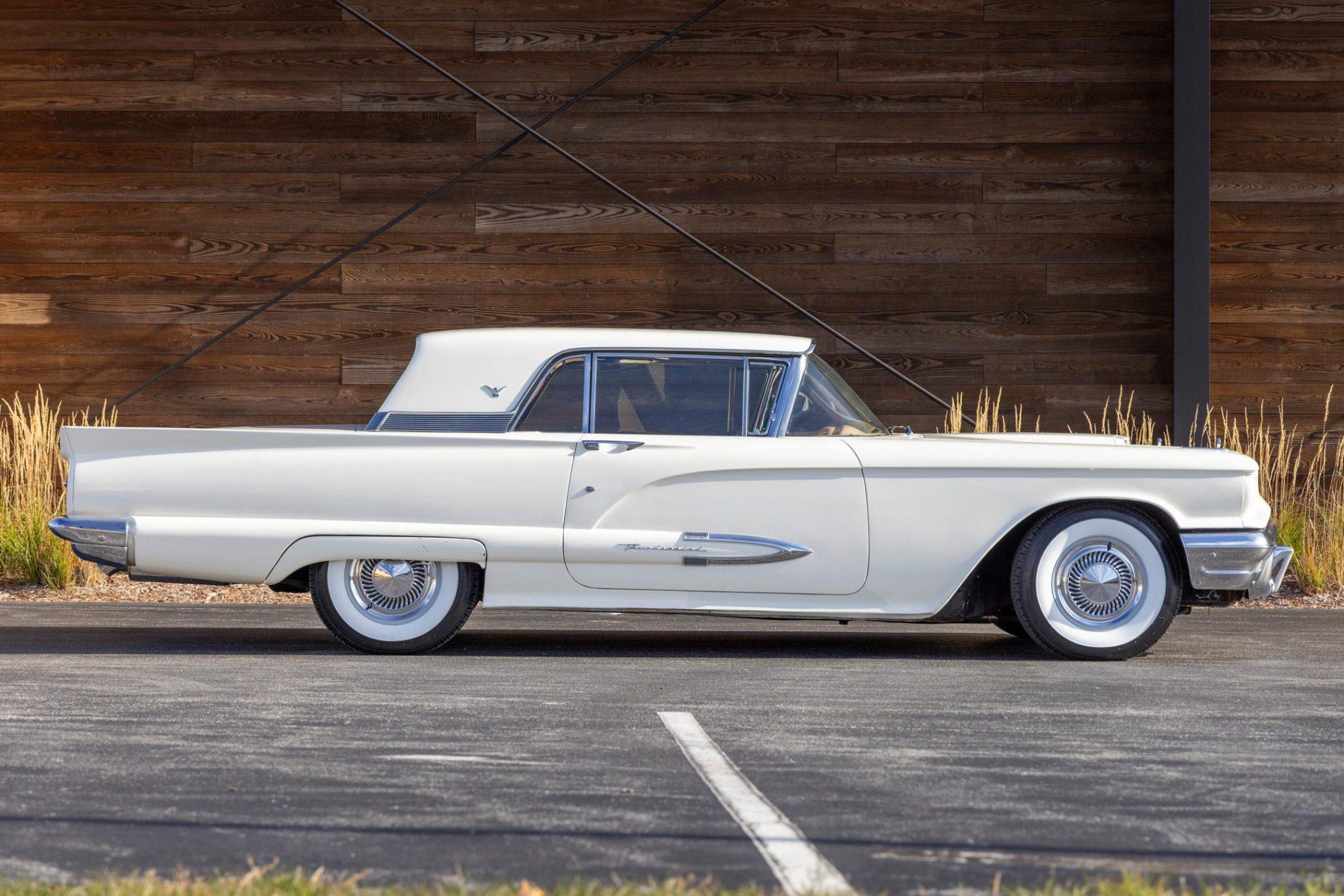
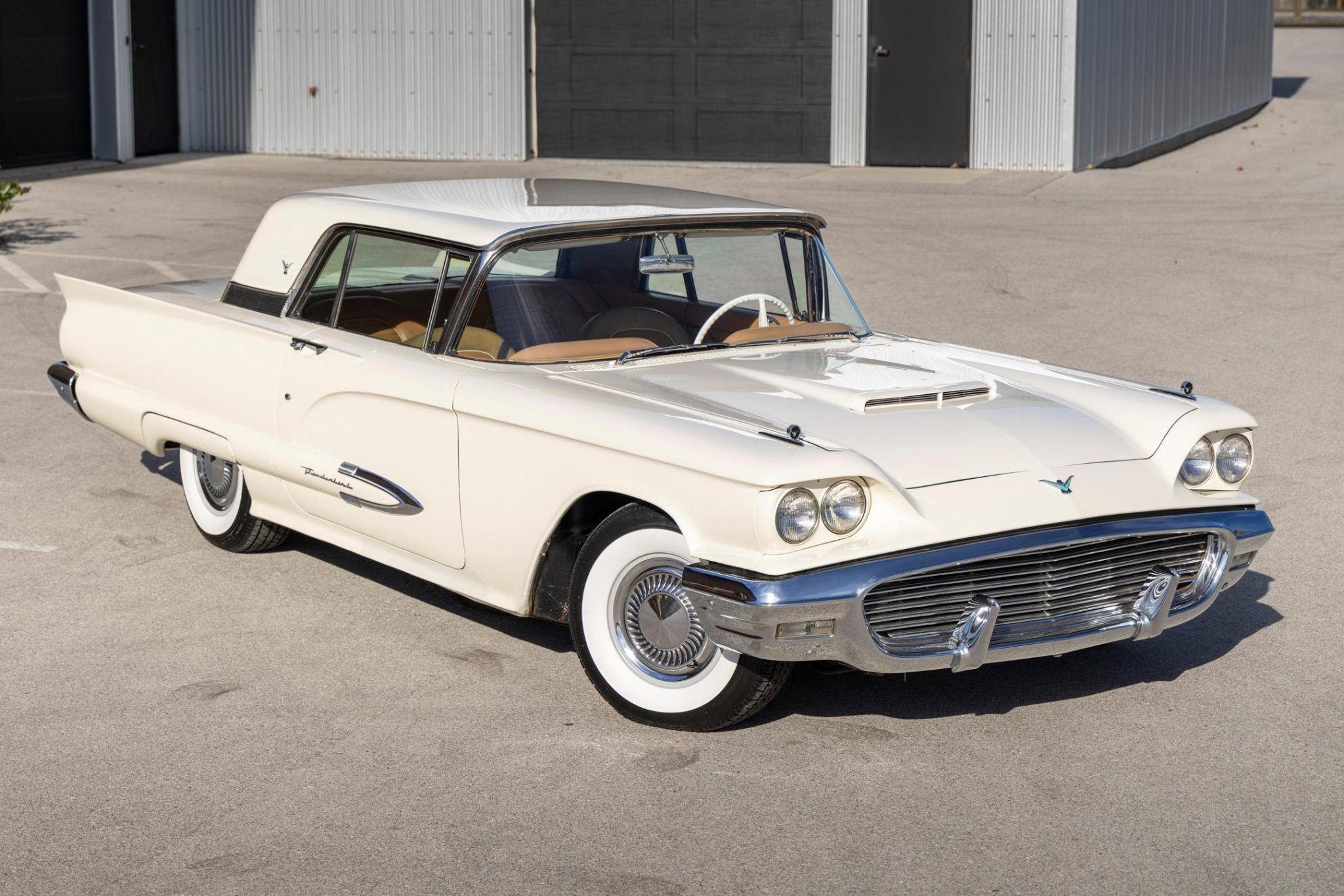
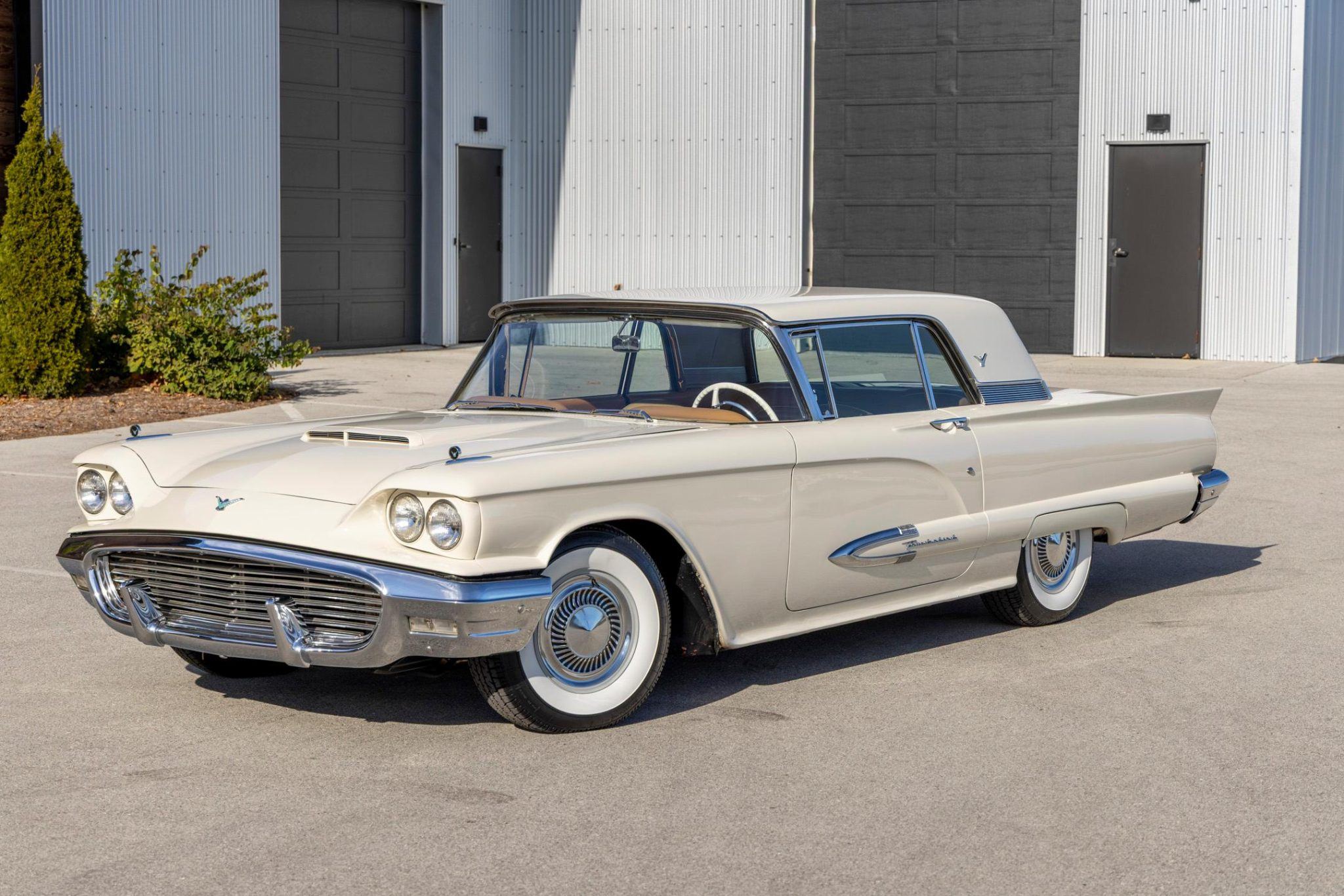
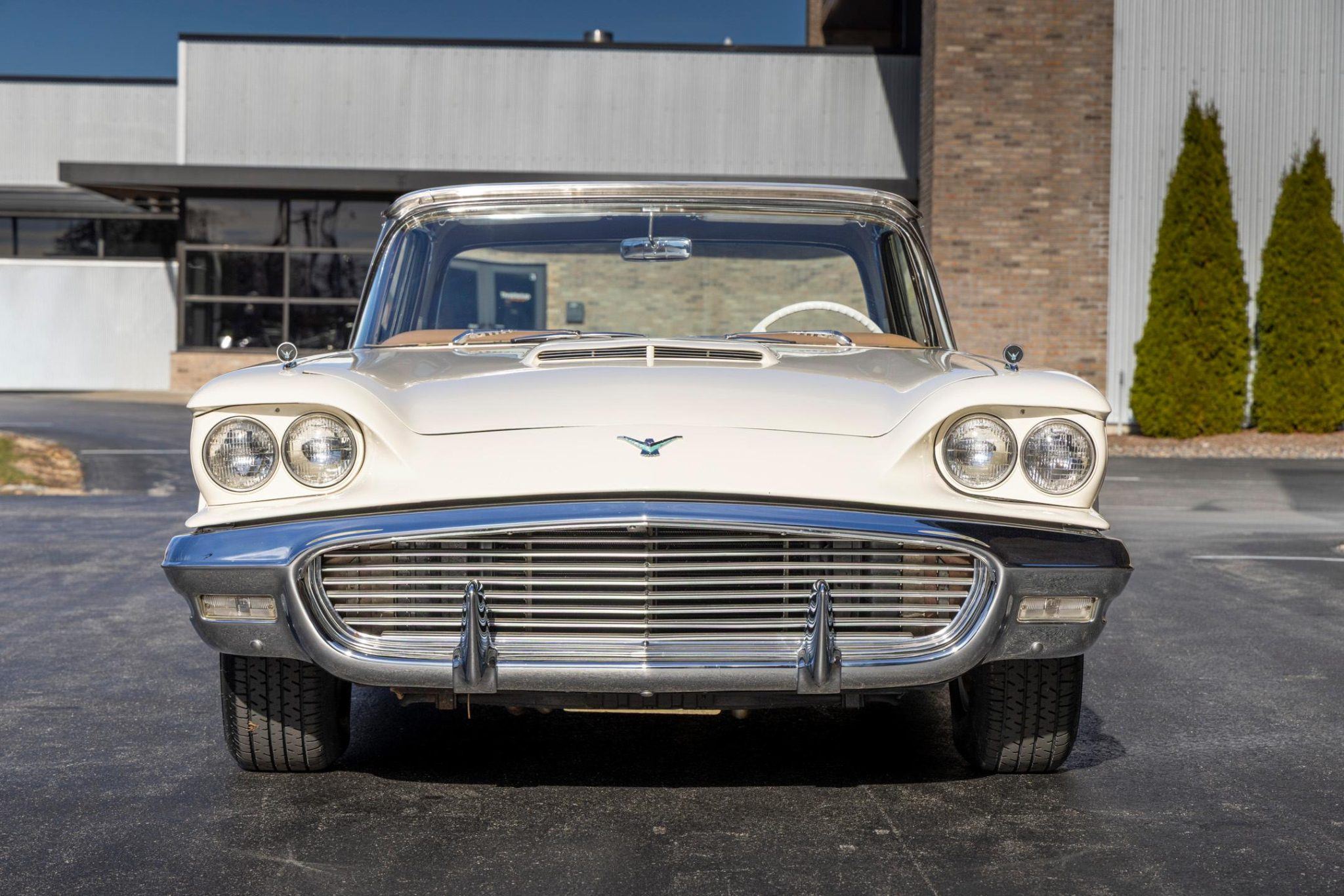
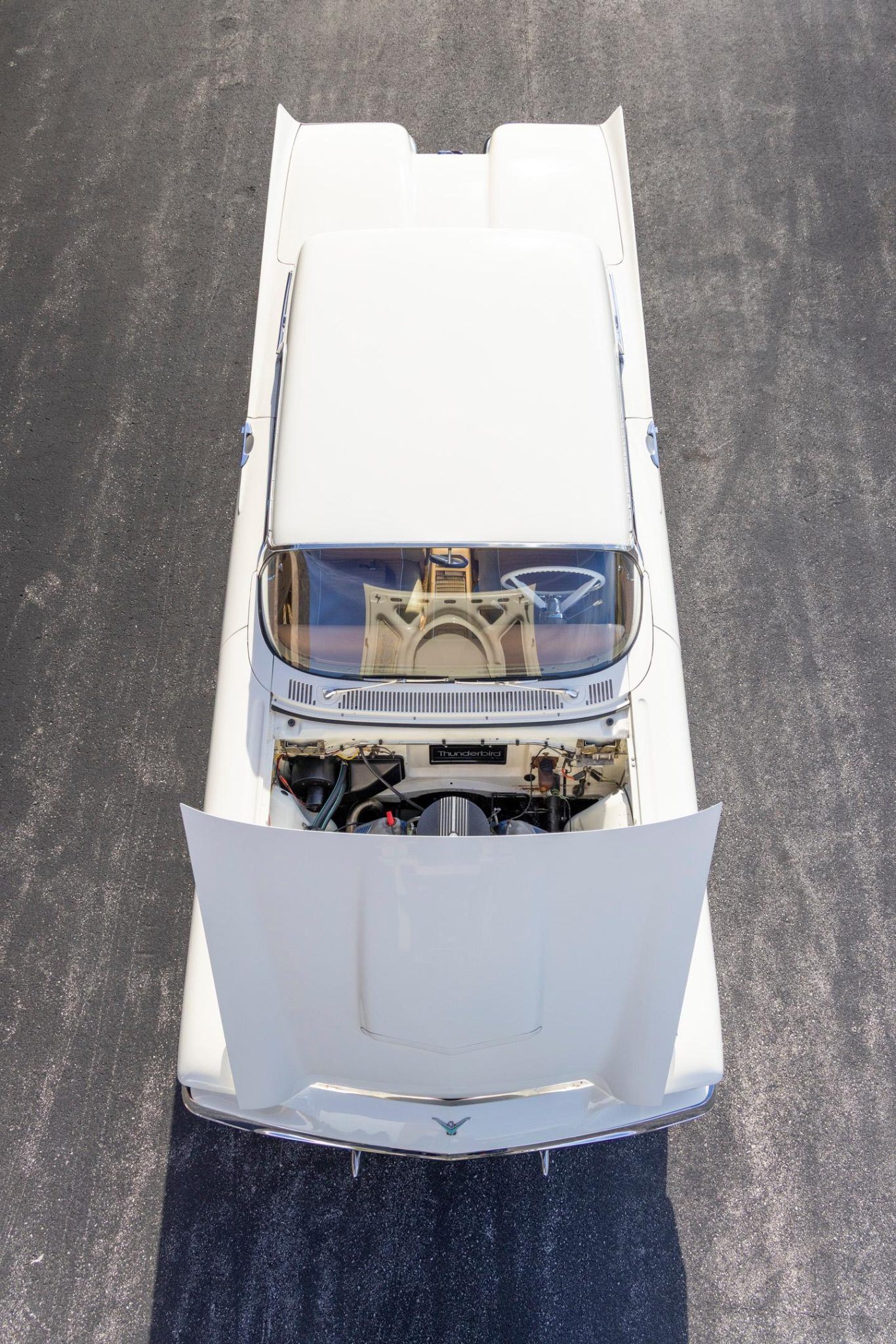
The car you see here is a 1959 Ford Thunderbird that has been significantly modified from new, it’s now powered by a 427 cubic inch SOHC “Cammer” V8 that was built by Holman-Moody.
Interestingly, the Cammer V8 was developed by Ford to challenge the dominant Chrysler 426 Hemi “elephant” V8 in the world of NASCAR, but rule changes would mean it never got the chance.
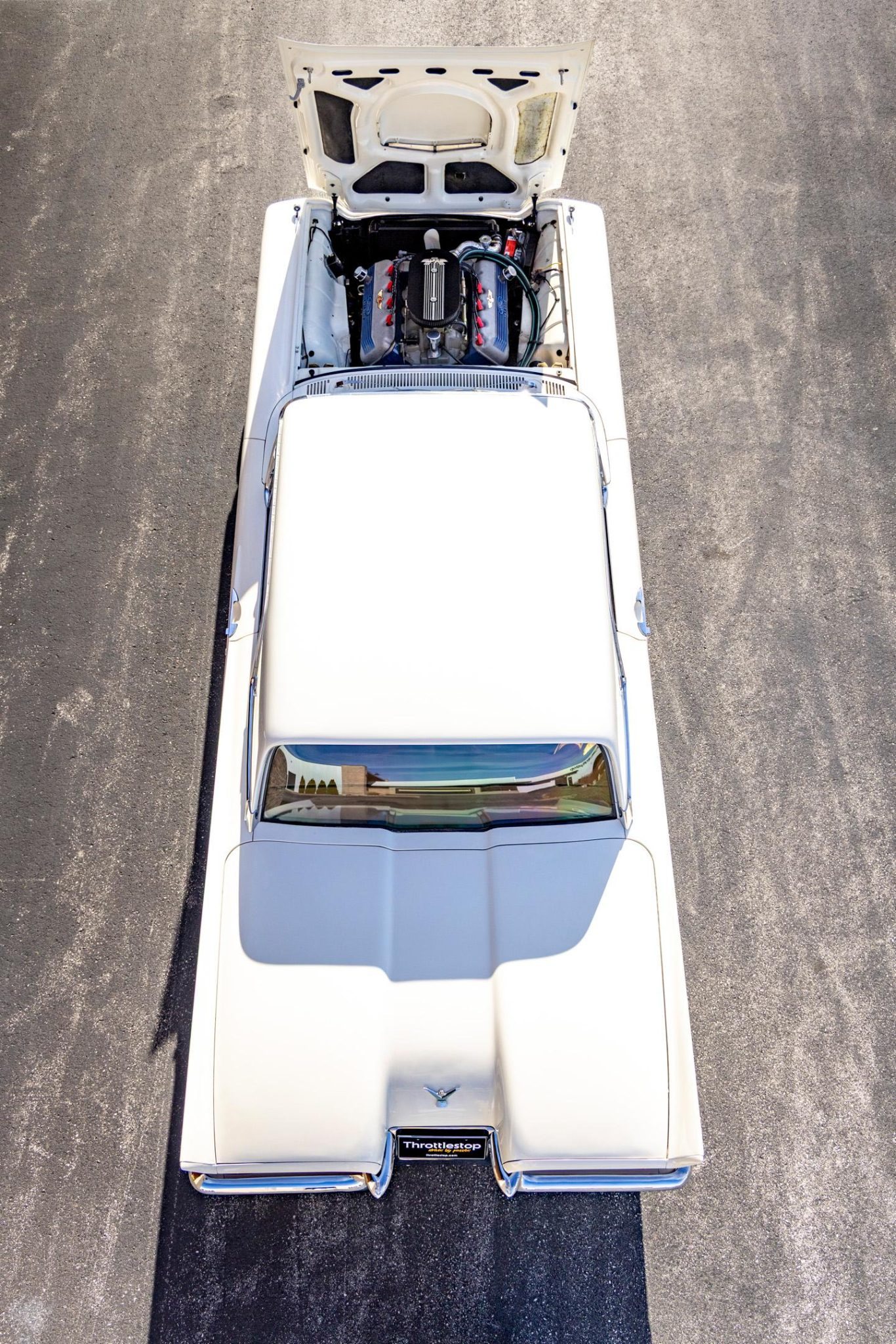
The car you see here is a 1959 Ford Thunderbird that has been significantly modified from new, it’s now powered by a 427 cubic inch SOHC “Cammer” V8 that was built by Holman-Moody.
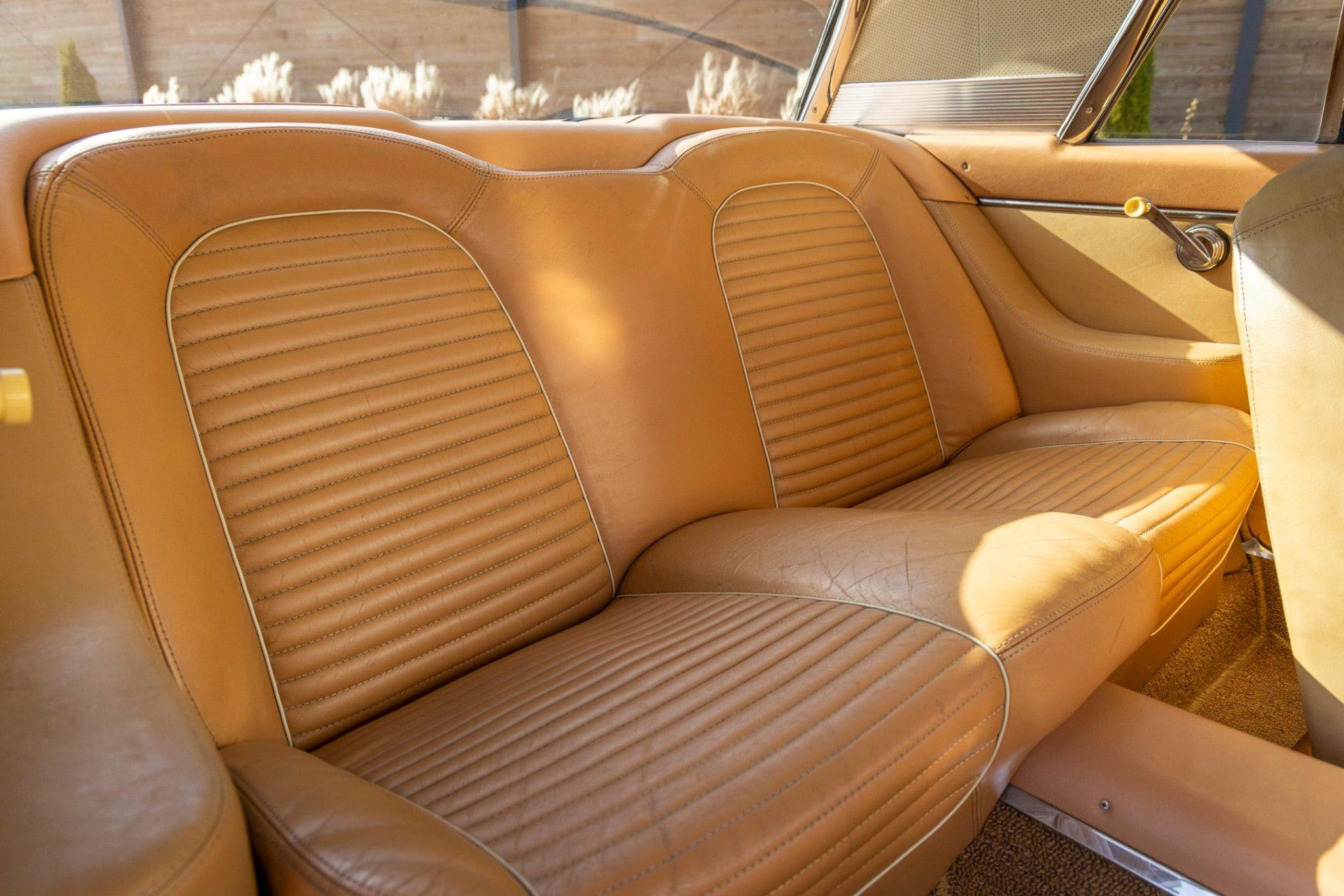
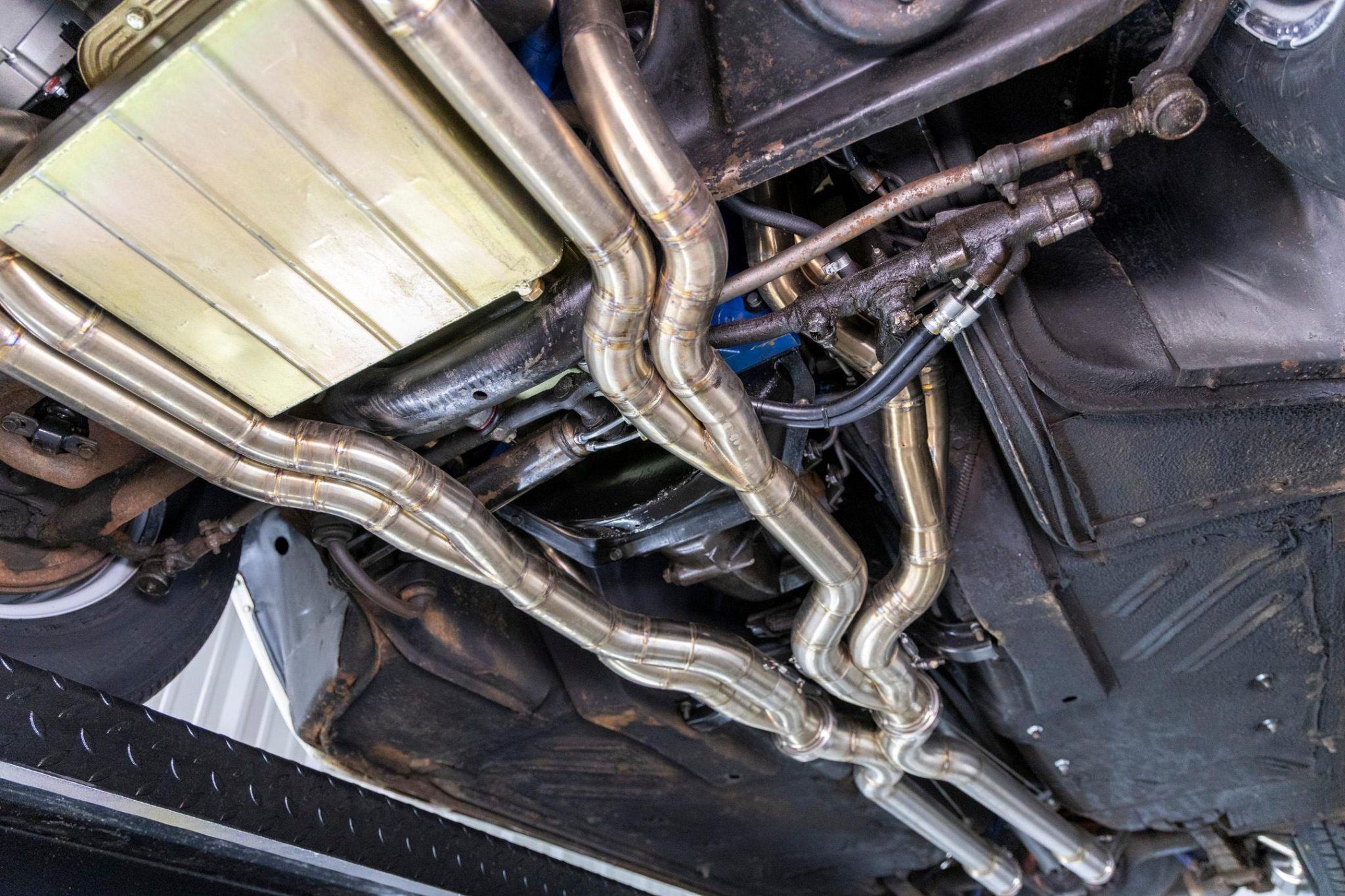
This 1959 Thunderbird has power steering and a 3-speed manual transmission, a custom exhaust system, and Colonial White paintwork over a Hickory Tan leather interior. It rides on 14″ steel wheels with chrome covers that are shod with 225/75 Coker Classic whitewall tires, and it has drum brakes at each corner.
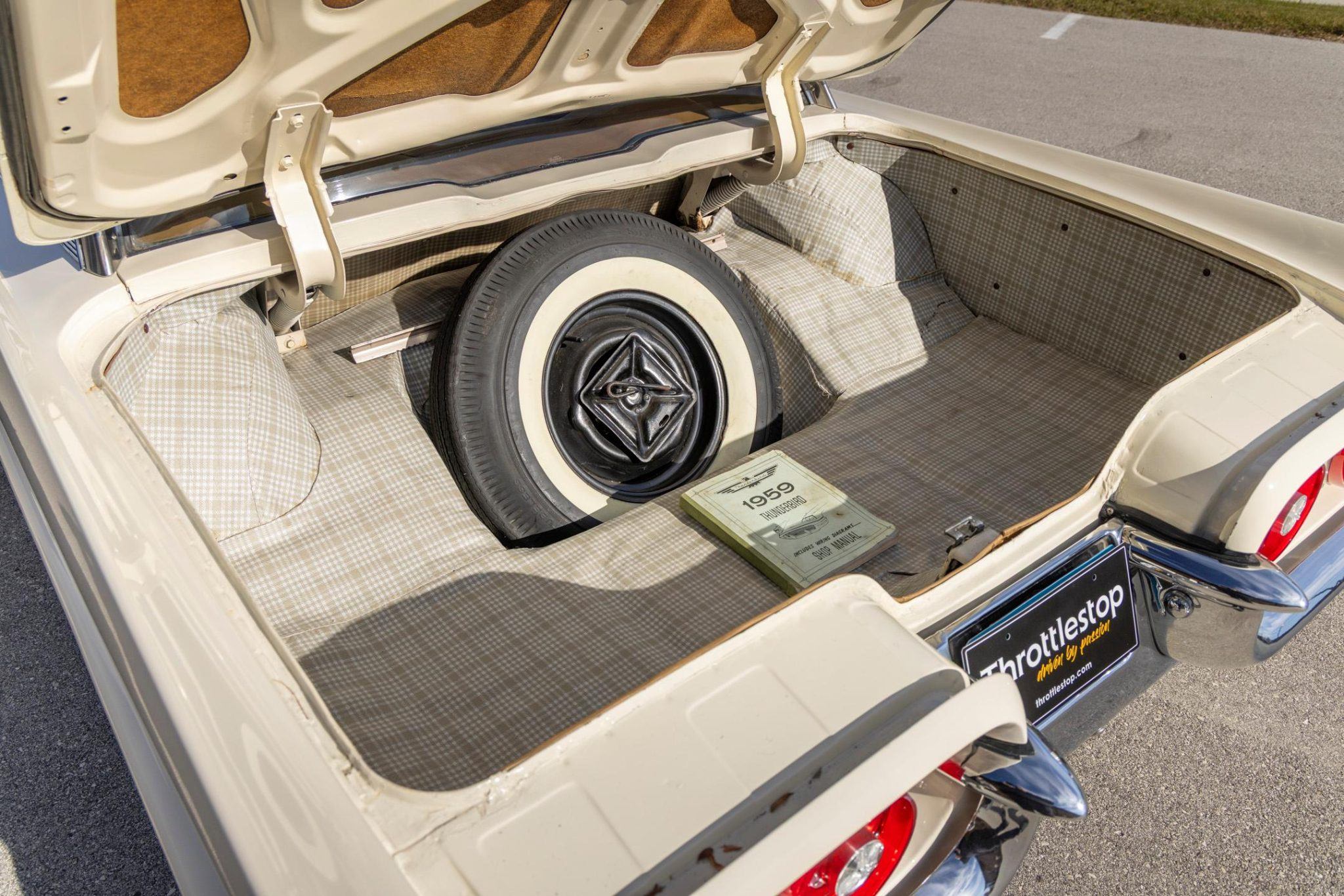
It’s now being offered for sale out of Elkhart Lake, Wisconsin with a shop manual and a clean New Jersey title. You can visit the listing here if you’d like to read more about it or place a bid.
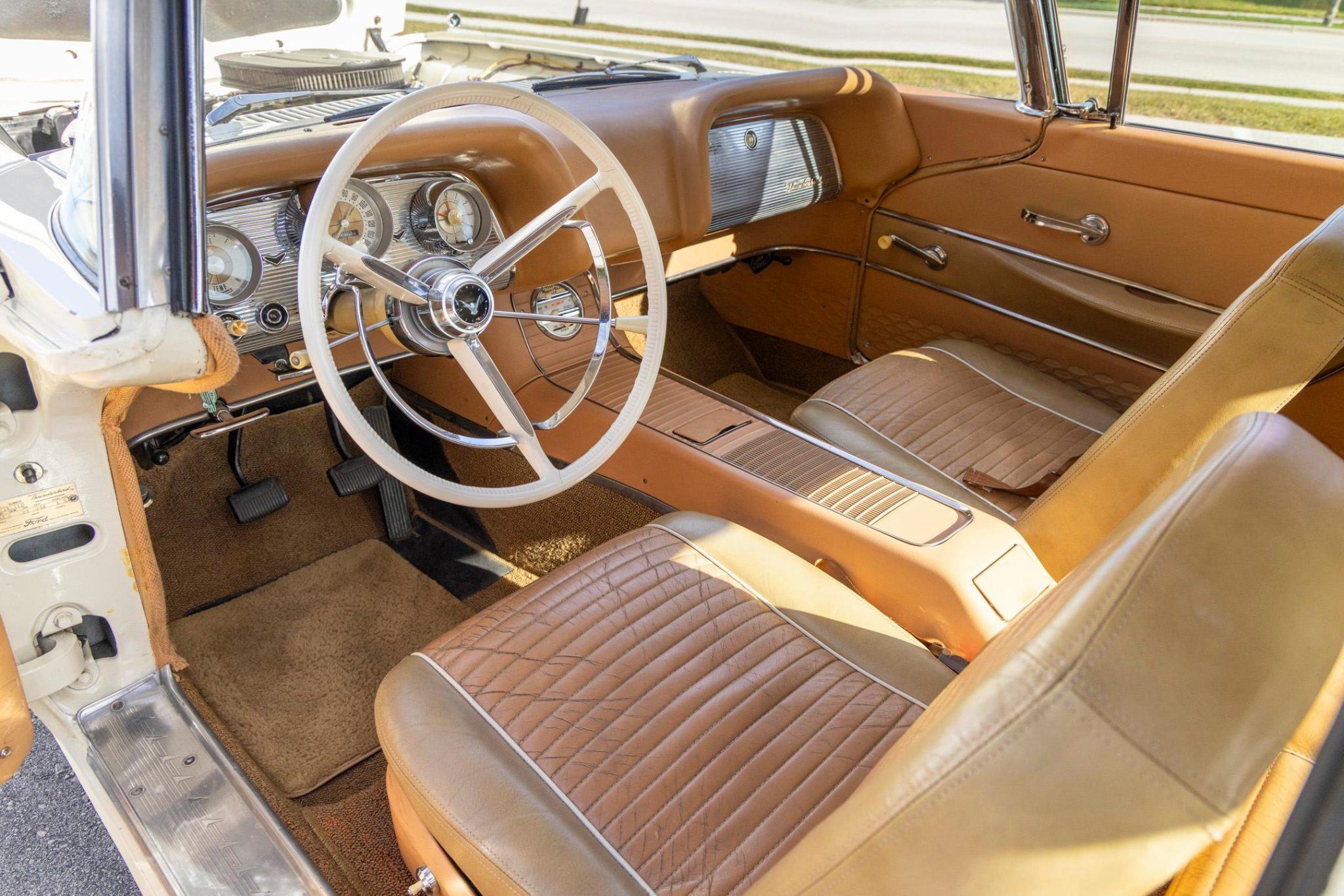
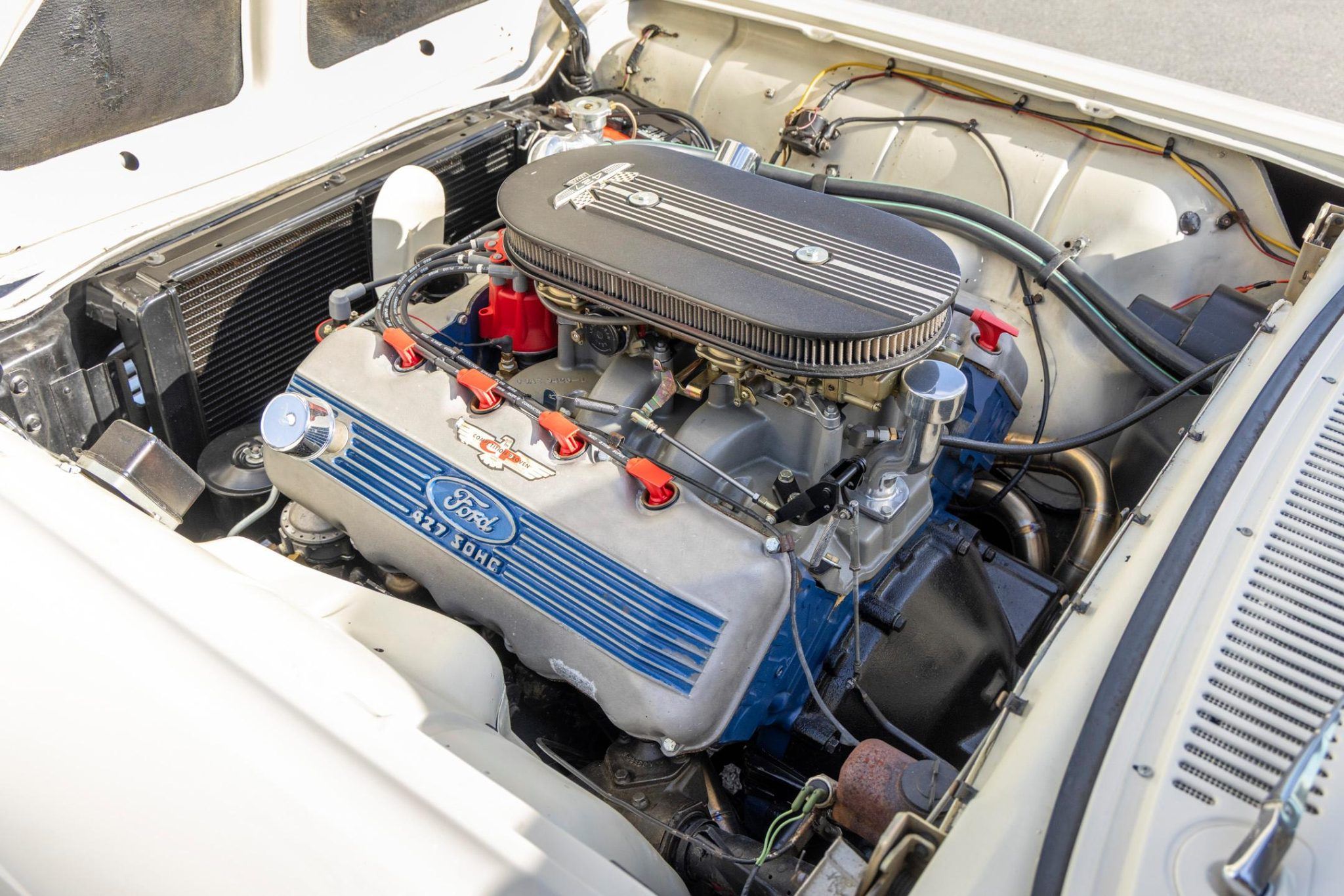
Images courtesy of Bring a Trailer

Articles that Ben Branch has written have been covered on CNN, Popular Mechanics, Smithsonian Magazine, Road & Track Magazine, the official Pinterest blog, the official eBay Motors blog, BuzzFeed, Autoweek Magazine, Wired Magazine, Autoblog, Gear Patrol, Jalopnik, The Verge, and many more.
Silodrome was founded by Ben back in 2010, in the years since the site has grown to become a world leader in the alternative and vintage motoring sector, with well over a million monthly readers from around the world and many hundreds of thousands of followers on social media.