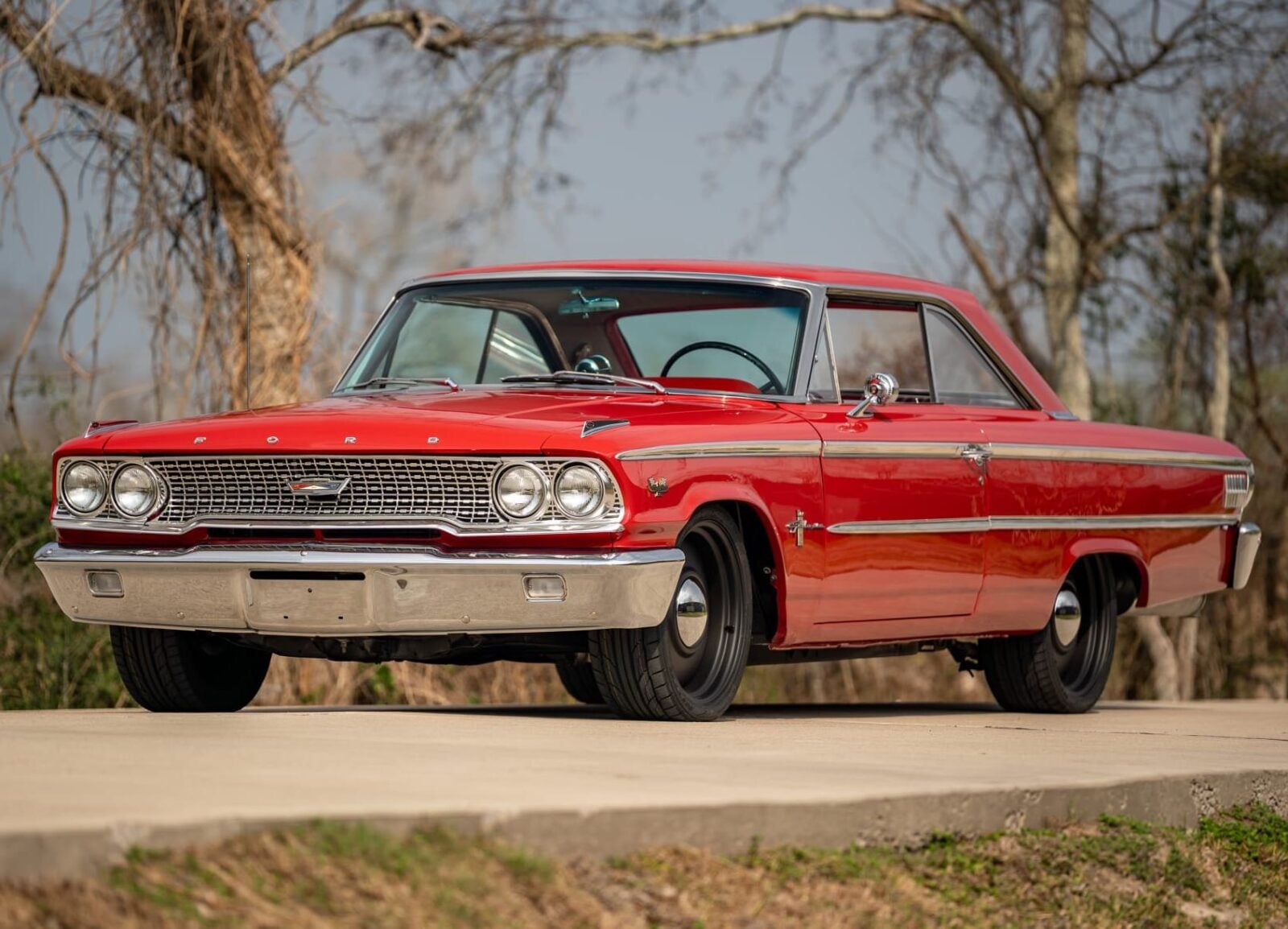
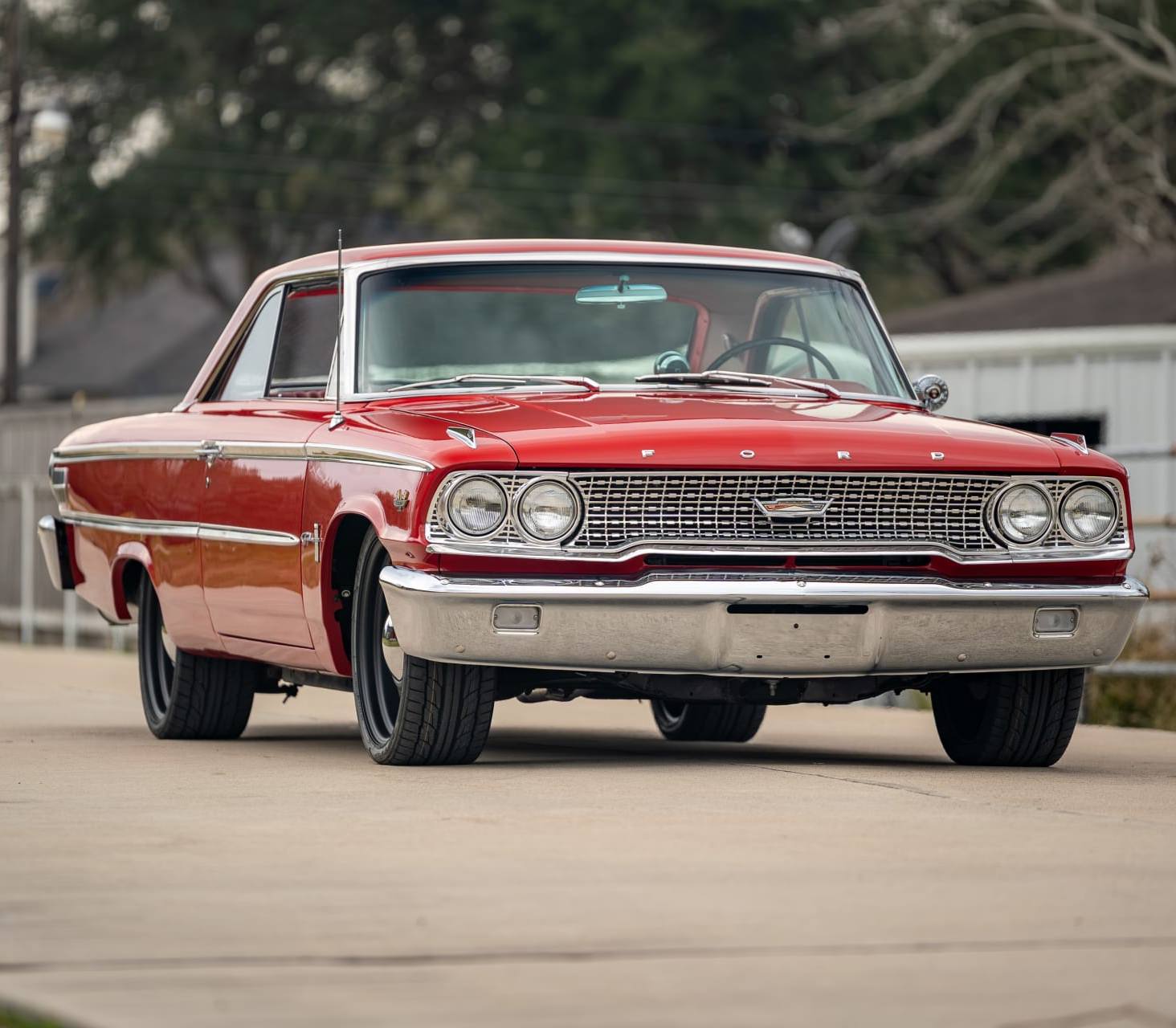
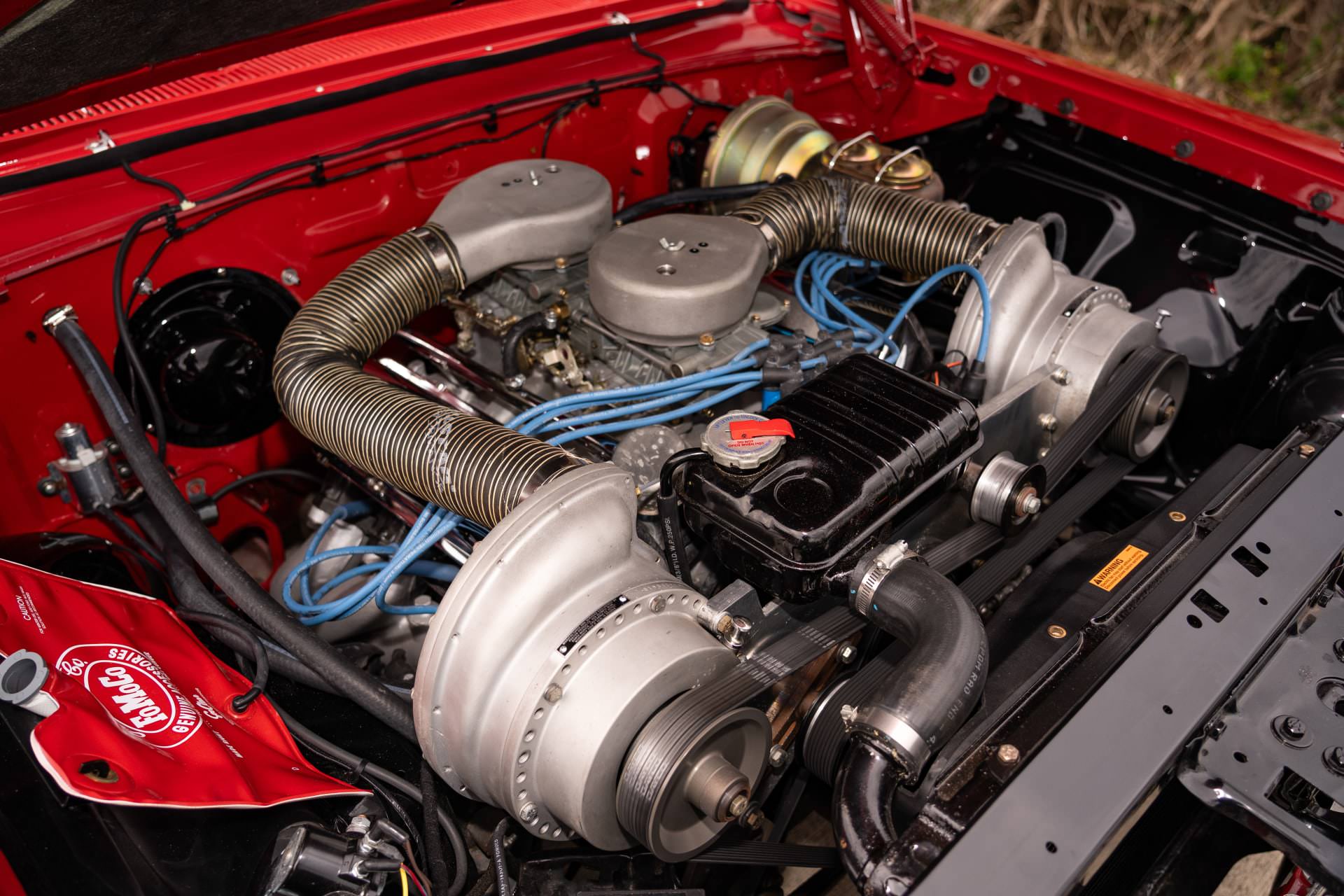
This is a 1963 Ford Galaxie 500 fitted with the R-code 427 cubic inch (7.0 liter) FE V8 – this would already be a potent combination, but this car takes it one step further with the addition of twin Paxton superchargers.
Perhaps a little frustratingly, the listing doesn’t mention horsepower or torque figures, but that R-code FE V8 was rated at 425 bhp at 6000 rpm and 480 lb ft at 3700 rpm in stock trim – and that’s without a pair of Paxton blowers making things more interesting.
Fast Facts: A Twin-Supercharged Galaxie 500
- This is a modified 1963 Ford Galaxie 500 fitted with the rare R-code 427 cubic inch (7.0 liter) FE V8 and twin Paxton superchargers. The engine originally produced 425 bhp at 6,000 rpm and 480 lb ft at 3,700 rpm in stock form, meaning the forced induction setup likely delivers significantly more performance.
- Ford introduced the Galaxie in 1959 as the top trim of the Fairlane 500 line, naming it to align with the public’s fascination with the Space Race. It served as Ford’s full-size rival to the Chevrolet Impala and Plymouth Fury and remained in production through 1974 across four generations.
- Early Galaxies offered a range of engines from a 223 cubic inch straight-six to FE-series V8s including the 352 and later the 390, 406, and 427. Performance models like the Galaxie 500 XL added bucket seats and a console, aligning the car with the growing muscle-oriented personal performance sector.
- The Galaxie built a hugely important motorsport reputation in NASCAR during the early 1960s, aided by the powerful 427 FE V8. Ford achieved numerous race wins, including the 1963 Daytona 500. Drivers also campaigned Galaxies internationally, and Ford later developed the famous 427 SOHC “Cammer” engine for competition use.
History Speedrun: The Ford Galaxie 500
The Ford Galaxie was built from the 1959 through to the 1974 model years, it was named to capitalize on America’s ongoing fascination with the Space Race. The Galaxie series served as Ford’s primary full-sized competitor to the Chevrolet Impala and Plymouth Fury, and over four generations it evolved from a chrome-laden flagship sedan into a NASCAR-dominating powerhouse before settling into its final years as a mid-range suburban workhorse.
 The Ford Galaxie was built from the 1959 through to the 1974 model years, it was named to capitalize on America’s ongoing fascination with the Space Race. Image courtesy of Ford.
The First Generation: 1959
The Galaxie debuted mid-year in 1959 as the new top trim of Ford’s full-size Fairlane 500 range. It carried both Fairlane 500 and Galaxie badging and was distinguished by a Thunderbird-inspired C-pillar on hardtop models.
The lineup included sedans, hardtops, the Sunliner convertible, and the Skyliner retractable hardtop – a complicated and expensive novelty that left almost no trunk space when folded down. Engine choices included a 223 cubic inch straight-six rated at 145 bhp, a 292 cubic inch Y-block V8 at 200 bhp, and two FE-series V8s, a 332 at 225 bhp and the top-option 352 rated at 300 bhp.
Transmissions included a 3-speed manual, 3-speed manual with overdrive, 2-speed Ford-O-Matic, and 3-speed Cruise-O-Matic automatic. Ford sold 464,100 Galaxie-trimmed cars that year, these were solid sales numbers by any yardstick, and it was clear that the American car buying public wanted just about as many Galaxies as Ford could build.
The Second Generation: 1960
The 1960 Galaxie redesign brought a cleaner look and the new Starliner two-door hardtop, with its sweeping rear window. The wheelbase grew to 119 inches, overall length to over 210 inches, and width to 81.5 inches.
The Galaxie series served as Ford’s primary full-sized competitor to the Chevrolet Impala and Plymouth Fury, and over four generations it evolved from a chrome-laden flagship sedan into a NASCAR-dominating powerhouse before settling into its final years as a mid-range suburban workhorse. Image courtesy of Ford.
Engine options now expanded significantly – the 390 cubic inch FE V8 arrived for 1961, available with a single four-barrel or triple two-barrel carburetors producing up to 401 bhp. A 406 cubic inch V8 followed for 1962, and the legendary 427 appeared in 1963.
The Galaxie 500 nameplate debuted for 1962 as the higher-trim series, and the more sporting Galaxie 500 XL (Ford said XL stood for “Xtra Lively”) answered Chevrolet’s Impala Super Sport with standard bucket seats and a center console.
Transmission options by 1963 included a 3-speed manual, 3-speed manual with overdrive, 4-speed manual, 2-speed Ford-O-Matic, and 3-speed Cruise-O-Matic automatic. The most common drivetrain combination was the 352 V8 with Cruise-O-Matic and a 3.00 rear axle ratio, the most fun was the 390 FE with triple two-barrels and a 4-speed box with the 500 option ticked.
Sales peaked in 1963 at 648,010 units, these numbers were boosted by the mid-year introduction of the Sports Hardtop fastback roofline and Ford’s “Total Performance” marketing campaign which was a hit across the country. For 1964, the fastback roof became standard on all non-wagon models, and the exterior received a somewhat more sculpted treatment designed (in part) to improve high-speed aerodynamics for what was to come in NASCAR.
The Third + Fourth Generations: 1965 Onwards
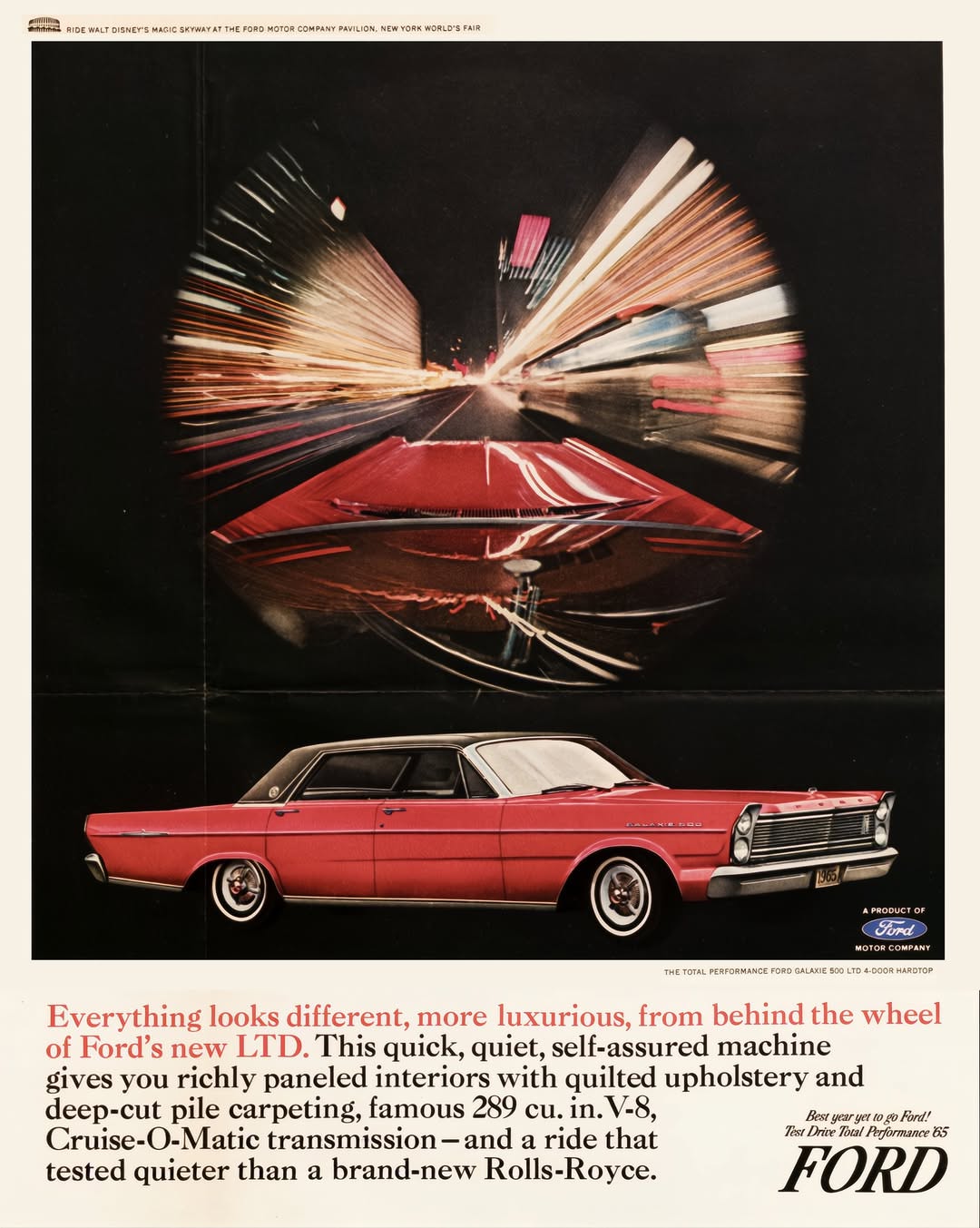
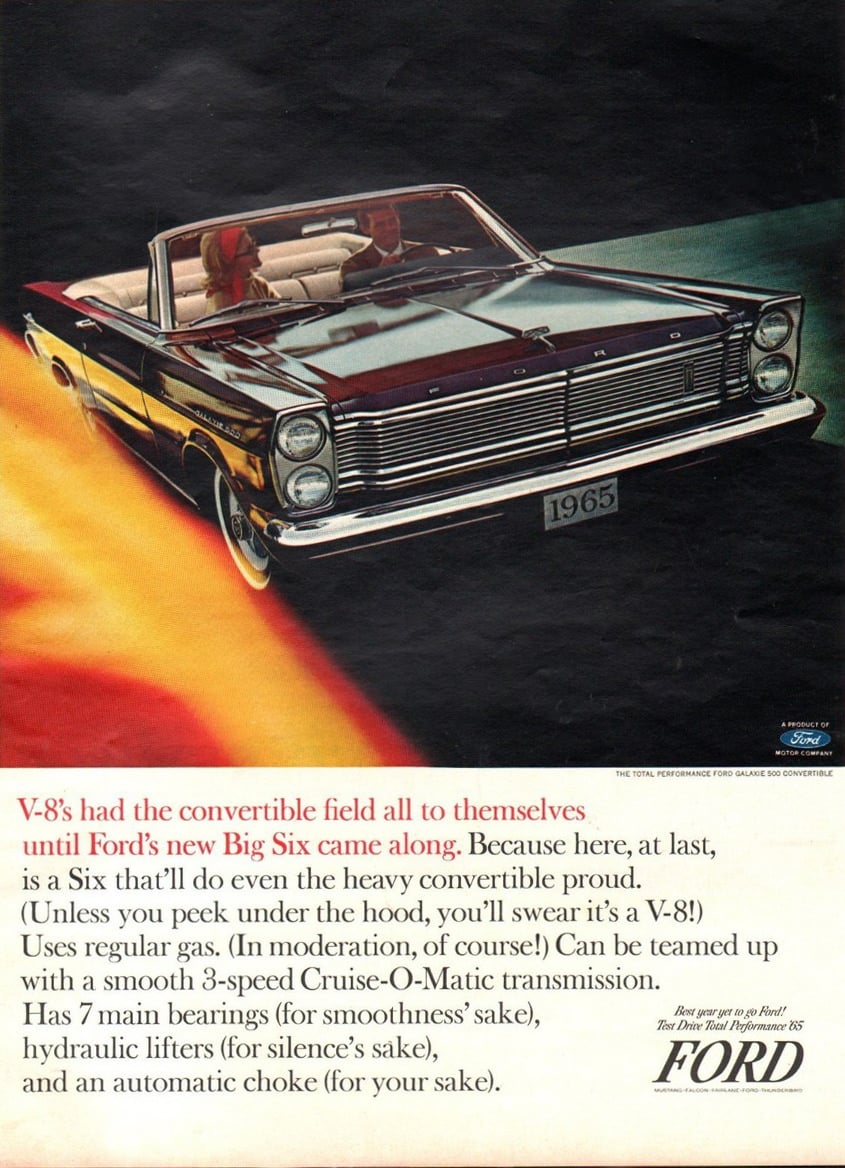
The 1965 redesign was sweeping, Ford called the cars “new from road to roof” as a result. The bodies sat on an all-new perimeter frame with coil springs at all four corners, a big upgrade over the earlier leaf sprung vehicles.
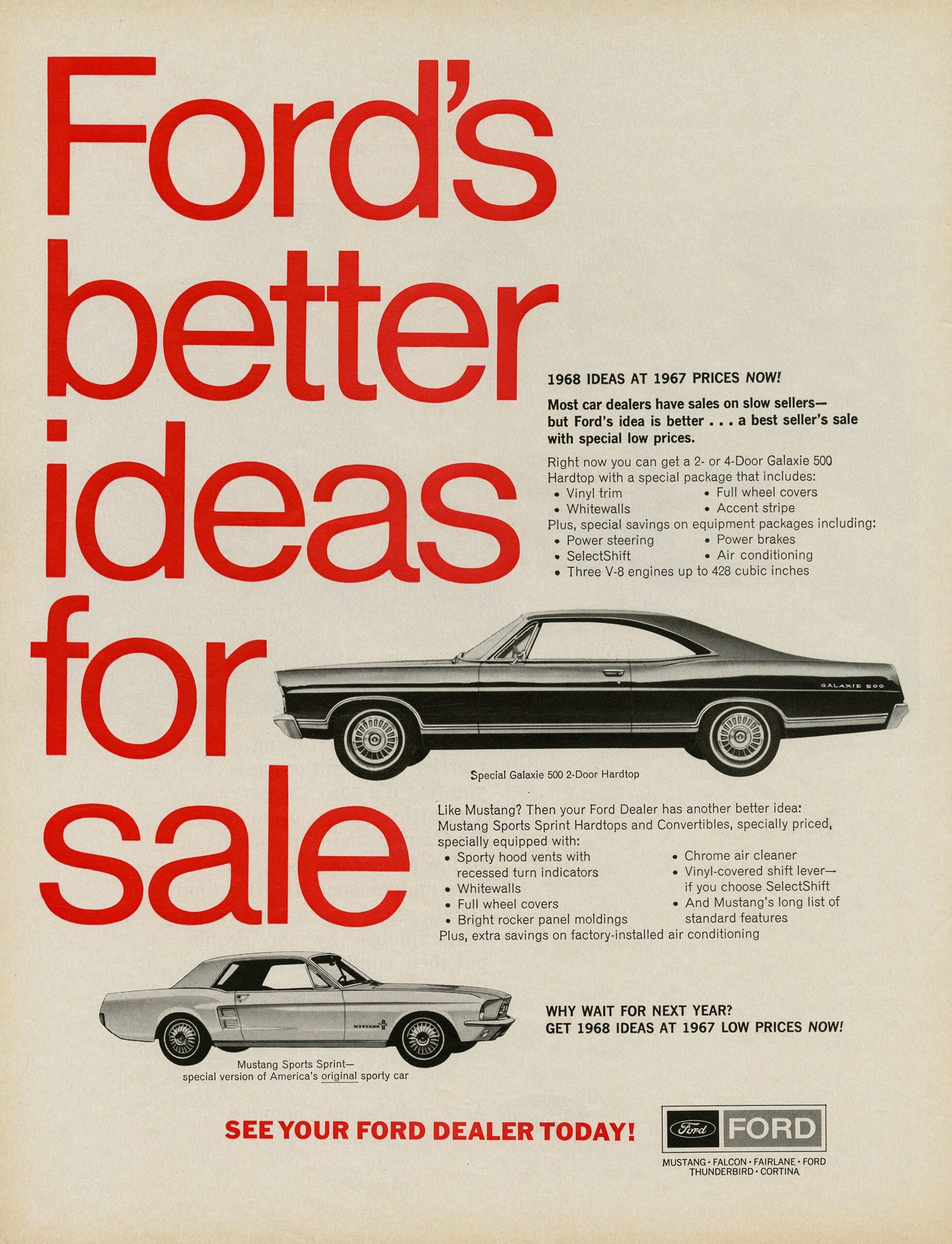
The 1965 redesign was sweeping, Ford called the cars “new from road to roof” as a result. The bodies sat on an all-new perimeter frame with coil springs at all four corners, a big upgrade over the earlier leaf springs. Image courtesy of Ford.
The Galaxie 500 LTD debuted as the luxury flagship, and the Galaxie 500 7-Liter arrived for 1966 with a standard 428 cubic inch V8. By 1967, the LTD and XL lines were separated from the Galaxie 500 series entirely, and the Galaxie settled into the mid-range of Ford’s full-size hierarchy.
The fourth generation launched in 1969 on a new 121 inch wheelbase chassis. The 427 and 428 FE engines gave way to the new 429 cubic inch “ThunderJet” from Ford’s 385 engine family, rated at up to 360 bhp. Through the early 1970s, the Galaxie 500 continued as a solid (if increasingly unremarkable) full-size sedan.
Ford then retired the nameplate after 1974, consolidating its full-size range under the LTD badge, a sign of the realities laid bare by the 1973 Oil Crisis and increasingly strict US emissions regulations.
The Ford Galaxie’s Racing Heritage
The Galaxie’s competition record is central to its legacy, and it’s what the model series is best-remembered for today in enthusiast circles. Ford invested heavily in NASCAR during the early 1960s, and the Galaxie was its weapon of choice.
The 427 cubic inch V8, with cross-bolted main bearing caps and improved oiling, soon earning it the “side-oiler” nickname, proved devastatingly effective. In 1963, Ford scored 23 NASCAR wins, including Tiny Lund’s victory at the Daytona 500 driving for the Wood Brothers. Ford swept the top five positions in that race. The following year, Ford won 30 NASCAR races.
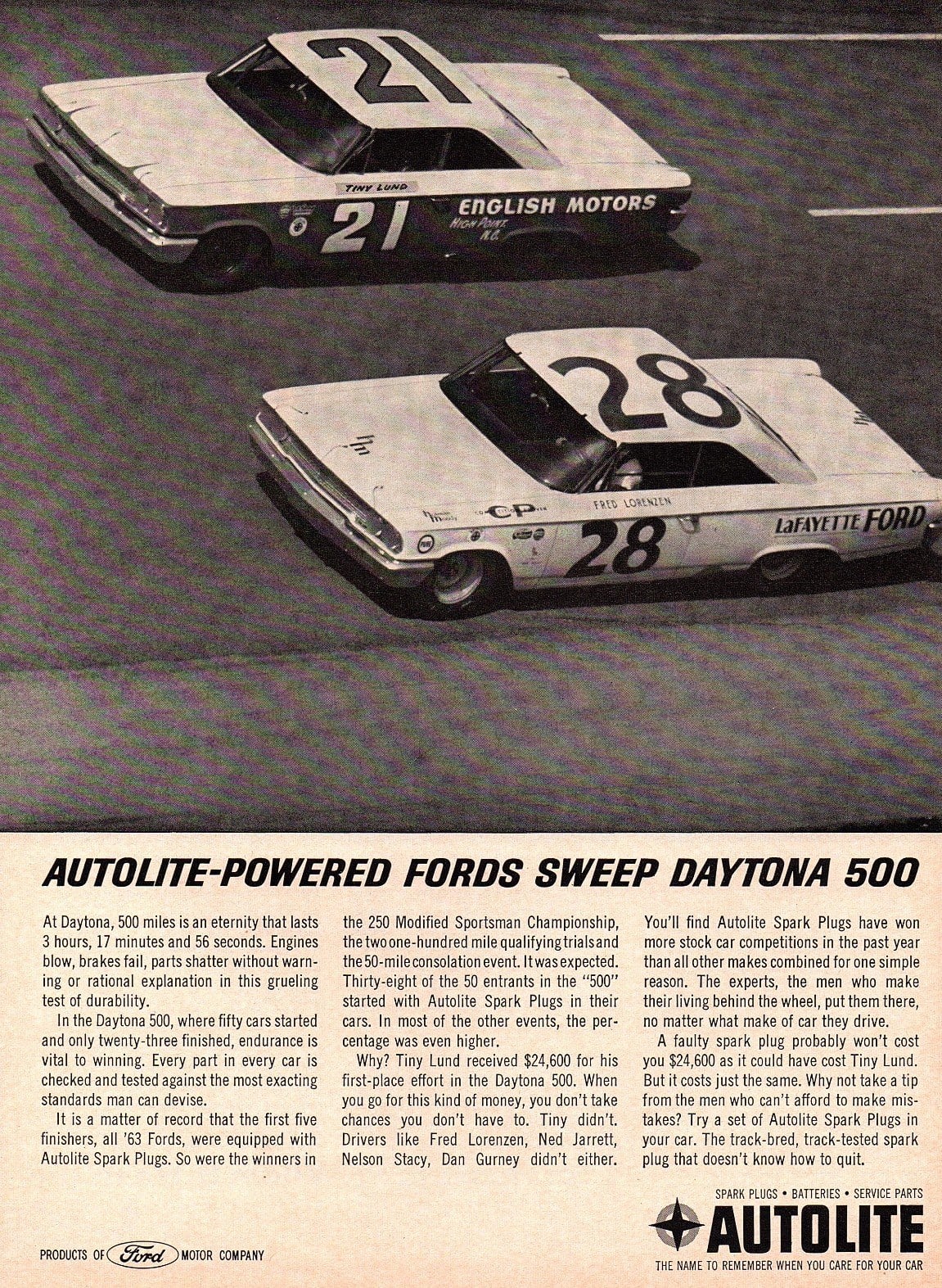
The Galaxie’s competition record is central to its overarching legacy, and it’s what the model series is best-remembered for today in enthusiast circles. Ford invested heavily in NASCAR during the early 1960s, and the Galaxie was its weapon of choice. Image courtesy of Autolite.
Fred Lorenzen won the rain-shortened 1965 Daytona 500 in a Holman-Moody prepared Galaxie 500, and Holman-Moody also built lightweight R-Code Galaxies for international competition. Jack Sears won the 1963 British Saloon Car Championship in a 427-powered Galaxie, with Graham Hill, Bob Olthoff, and other notable drivers also campaigning the big Fords in Europe.
Ford even developed a single overhead cam version of the 427 producing over 600 horsepower, known as the “Cammer” V8, but NASCAR’s Bill France banned it from competition before it ever raced, sparking much fury from Ford at the time.
The Twin-Supercharged 1963 Galaxie 500 Shown Here
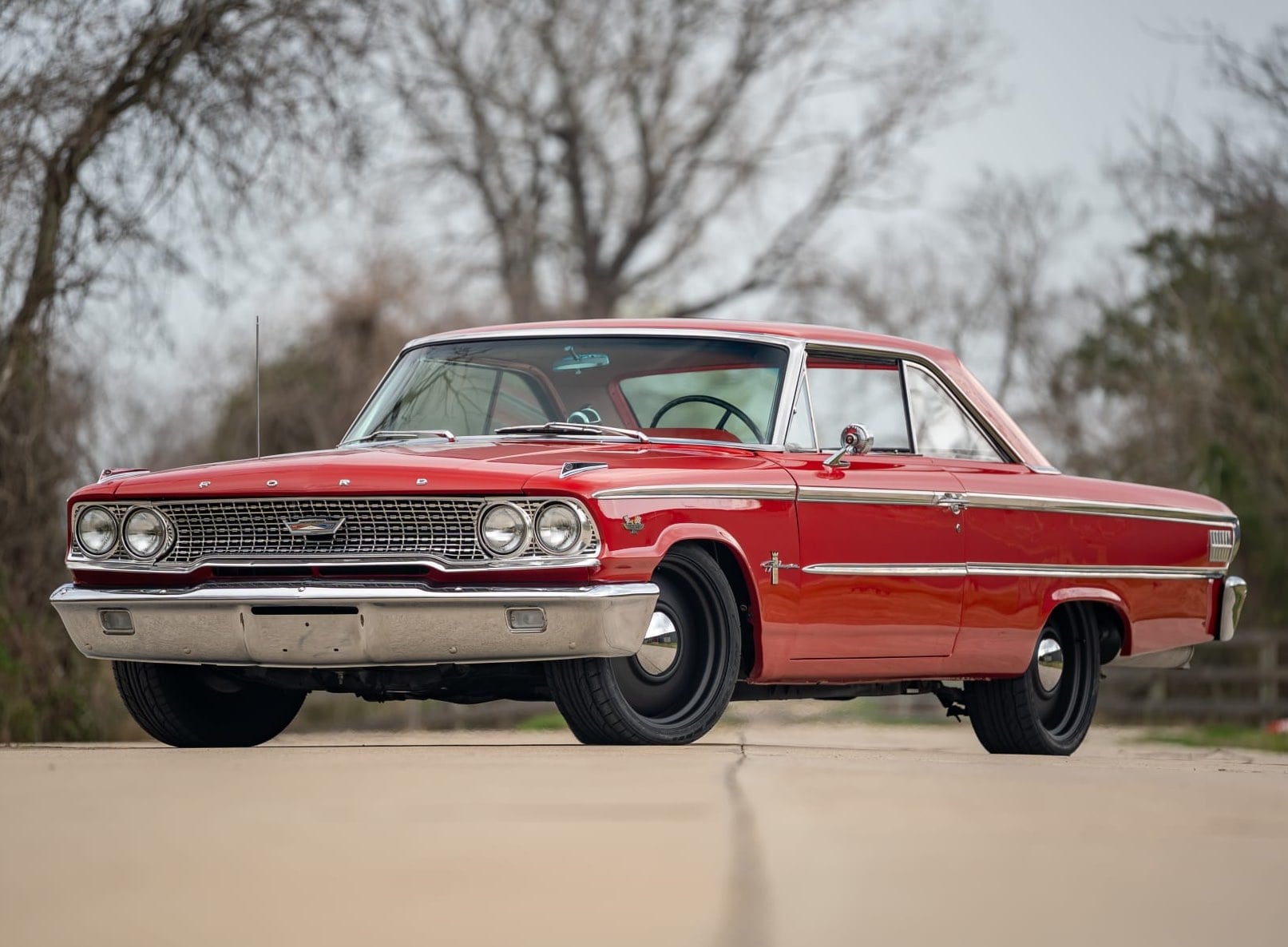
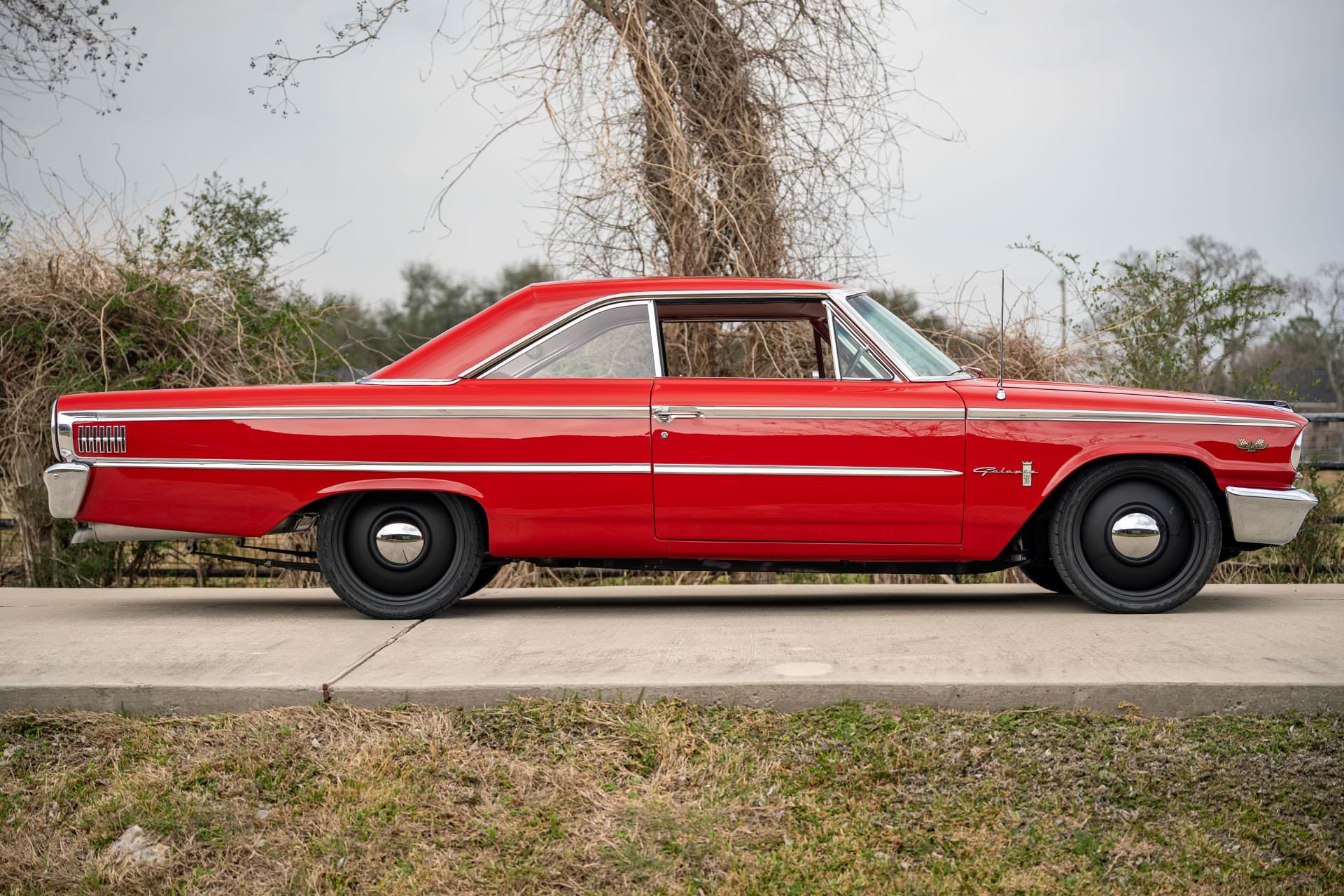
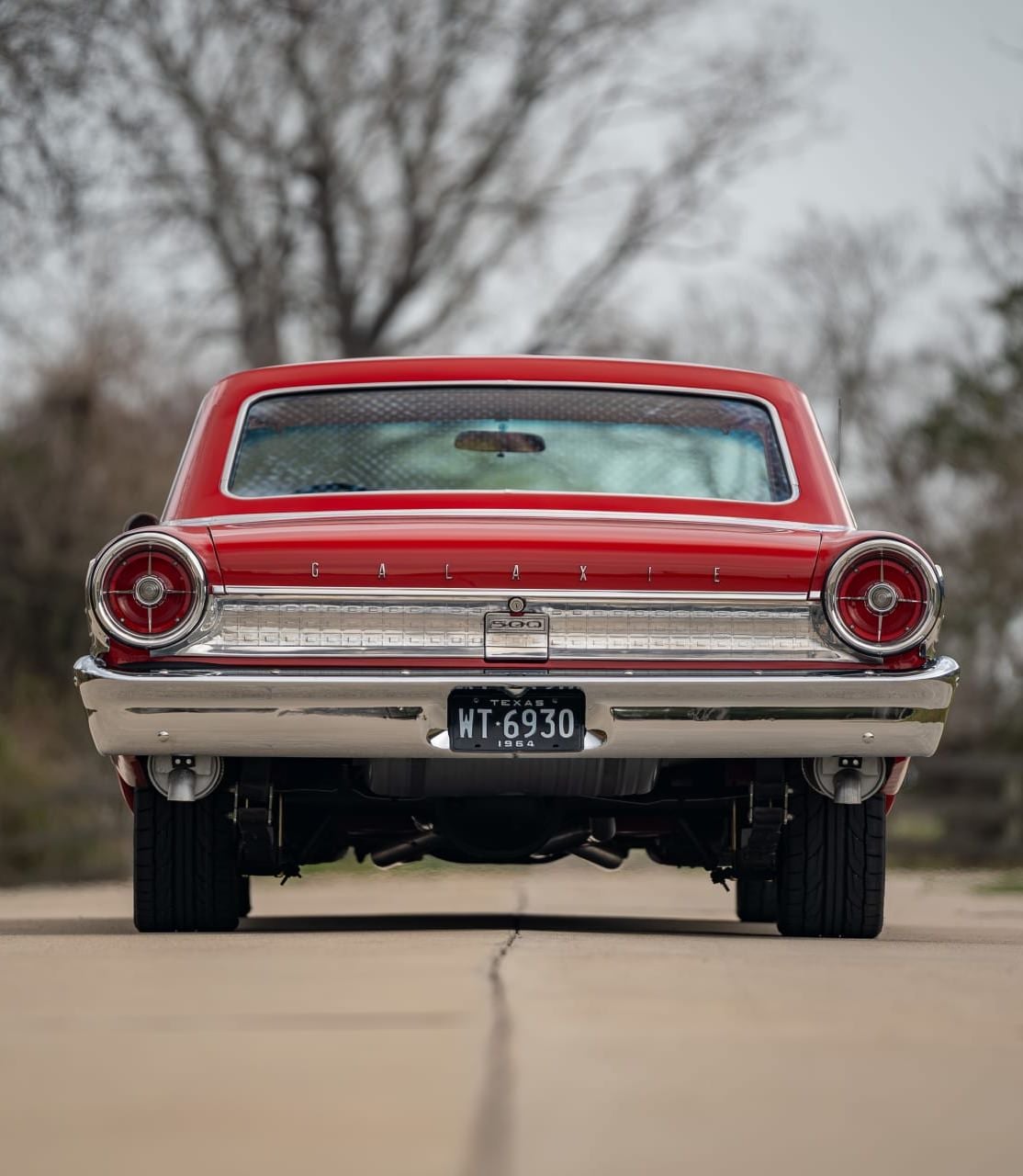
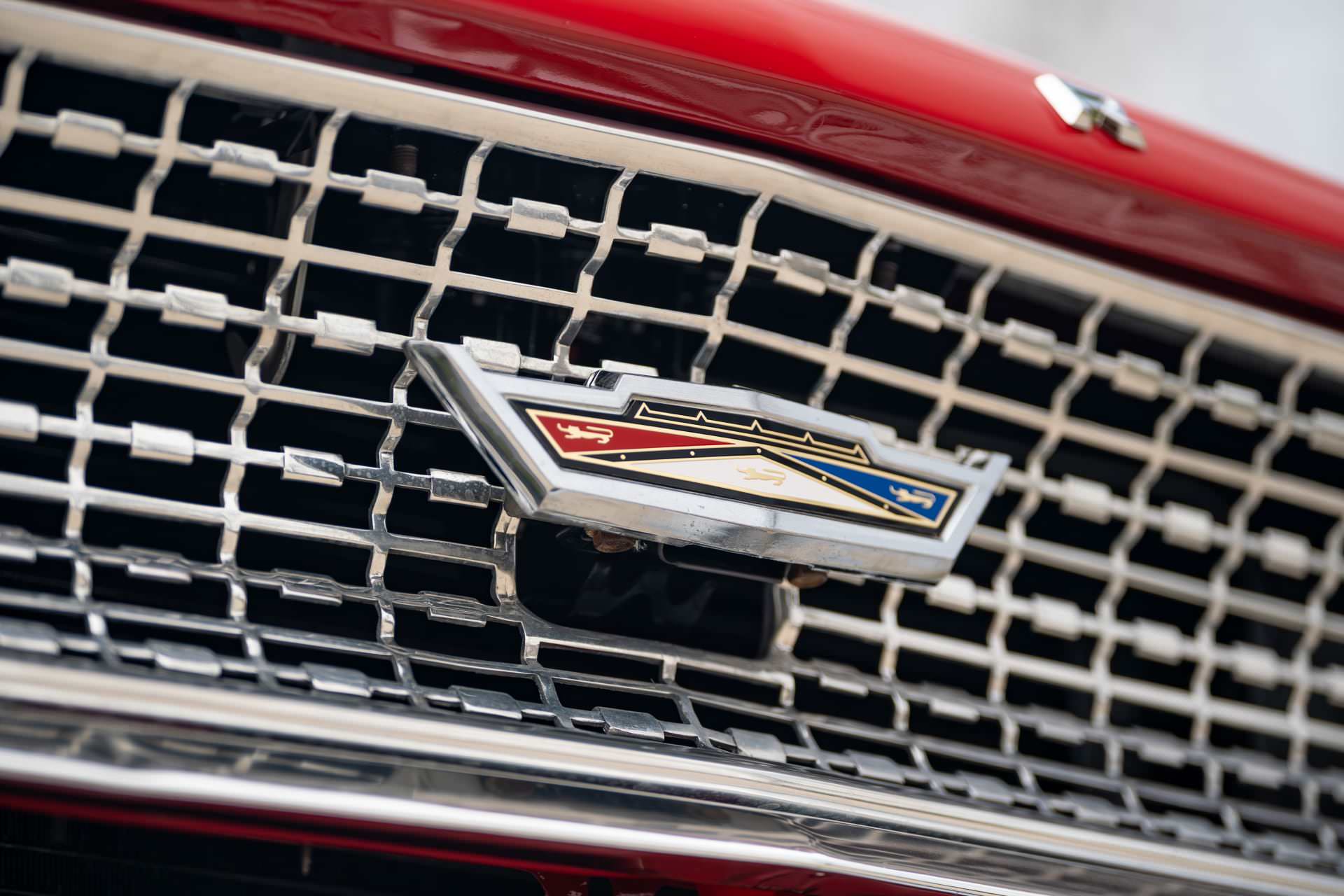
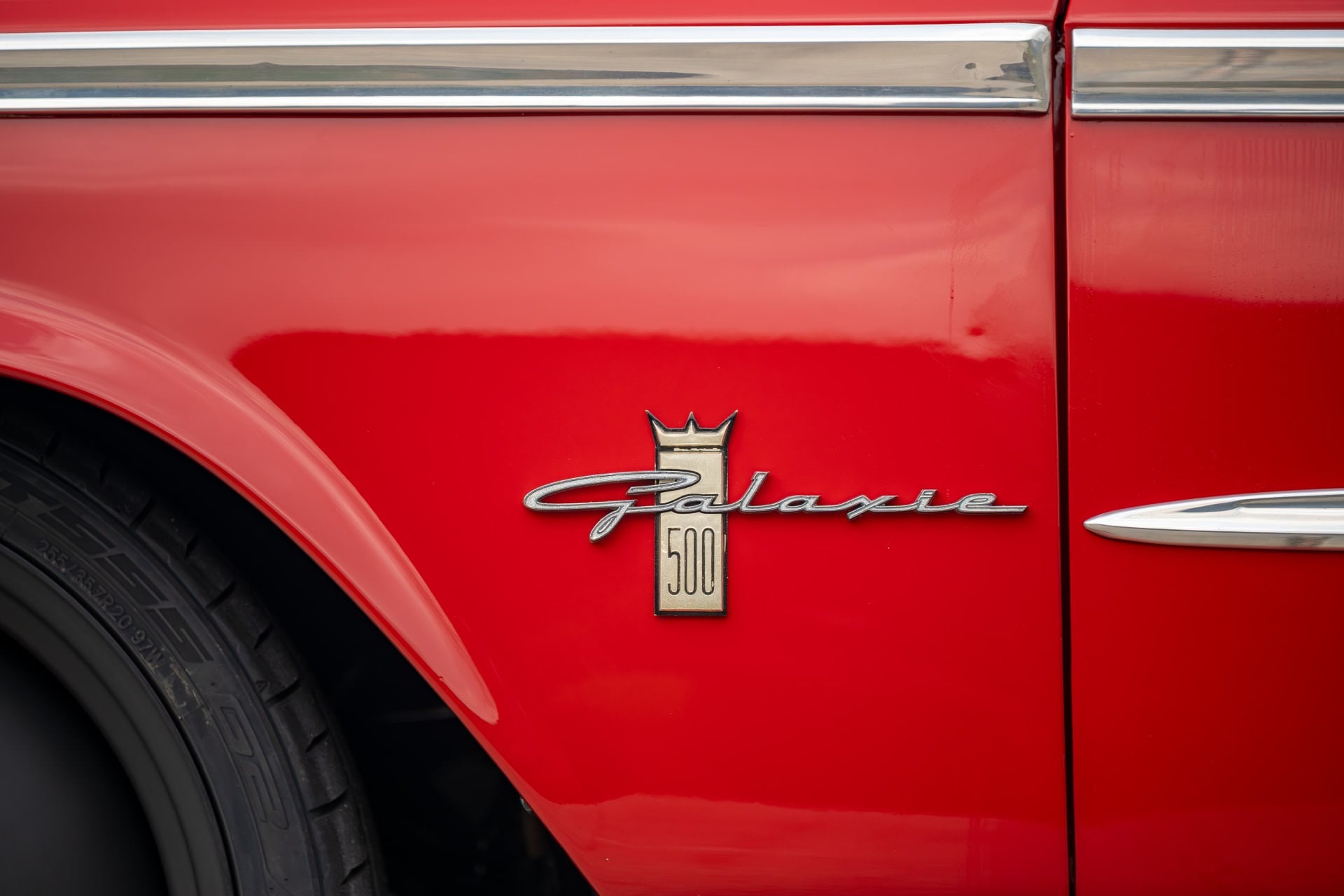
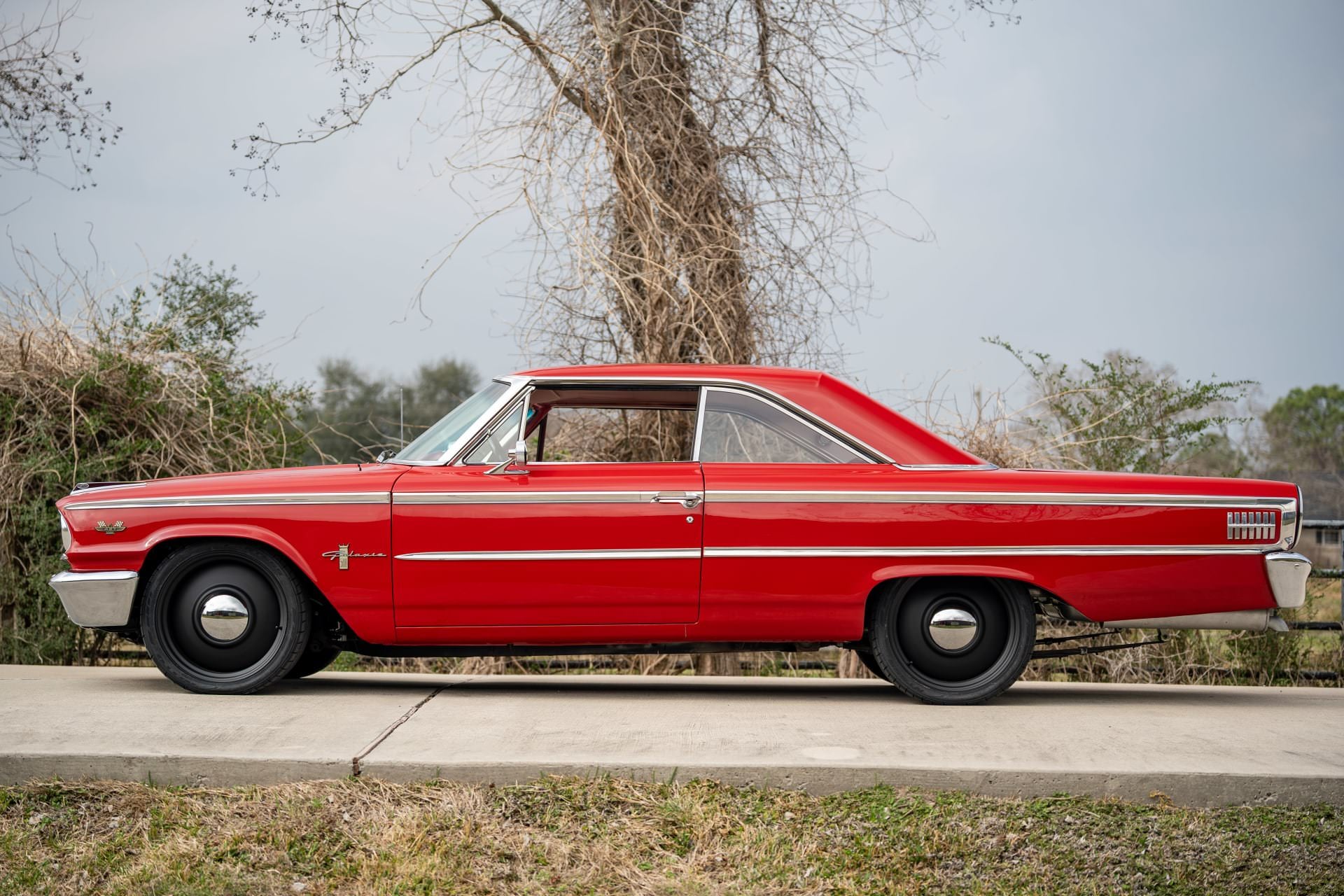
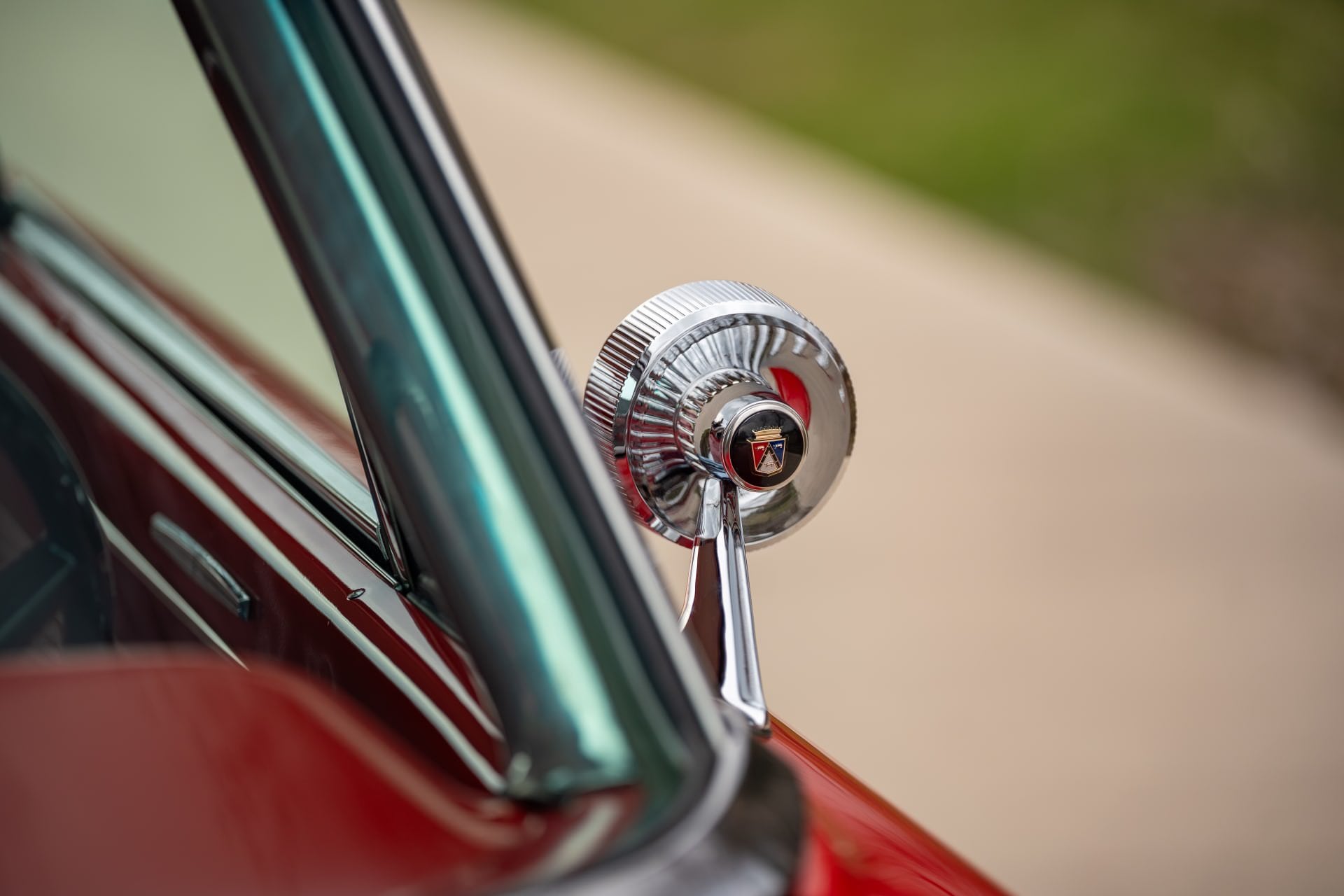
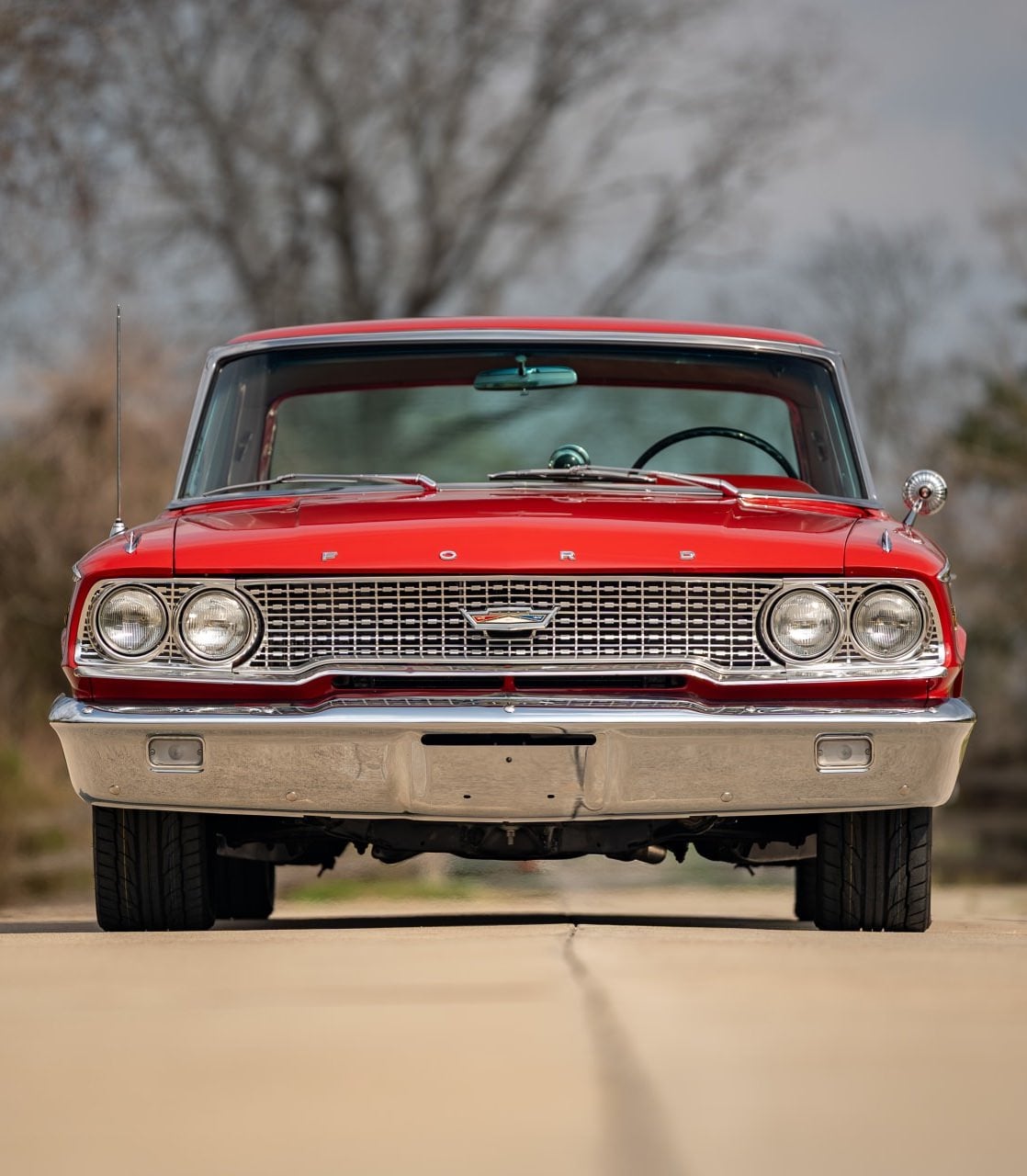
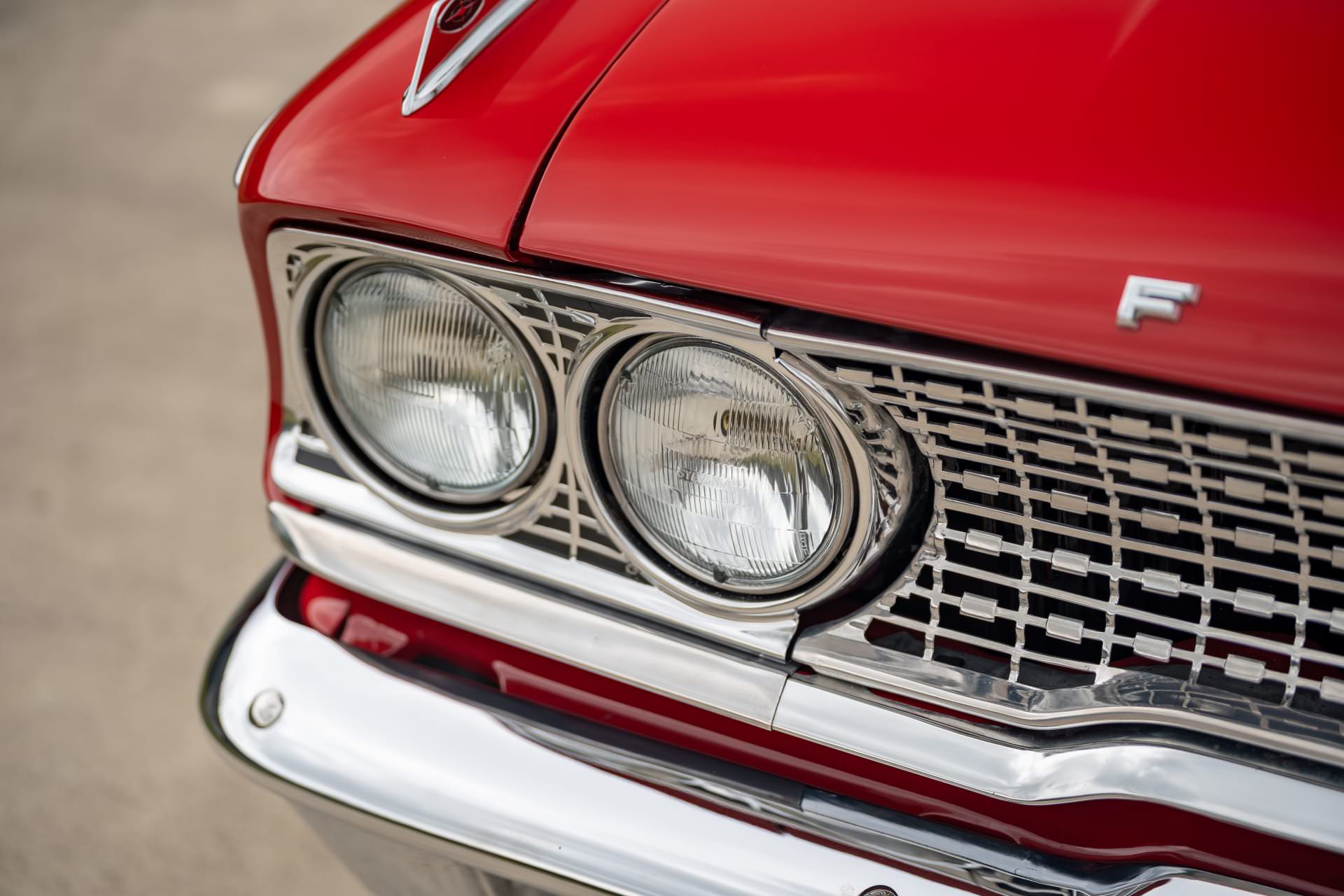
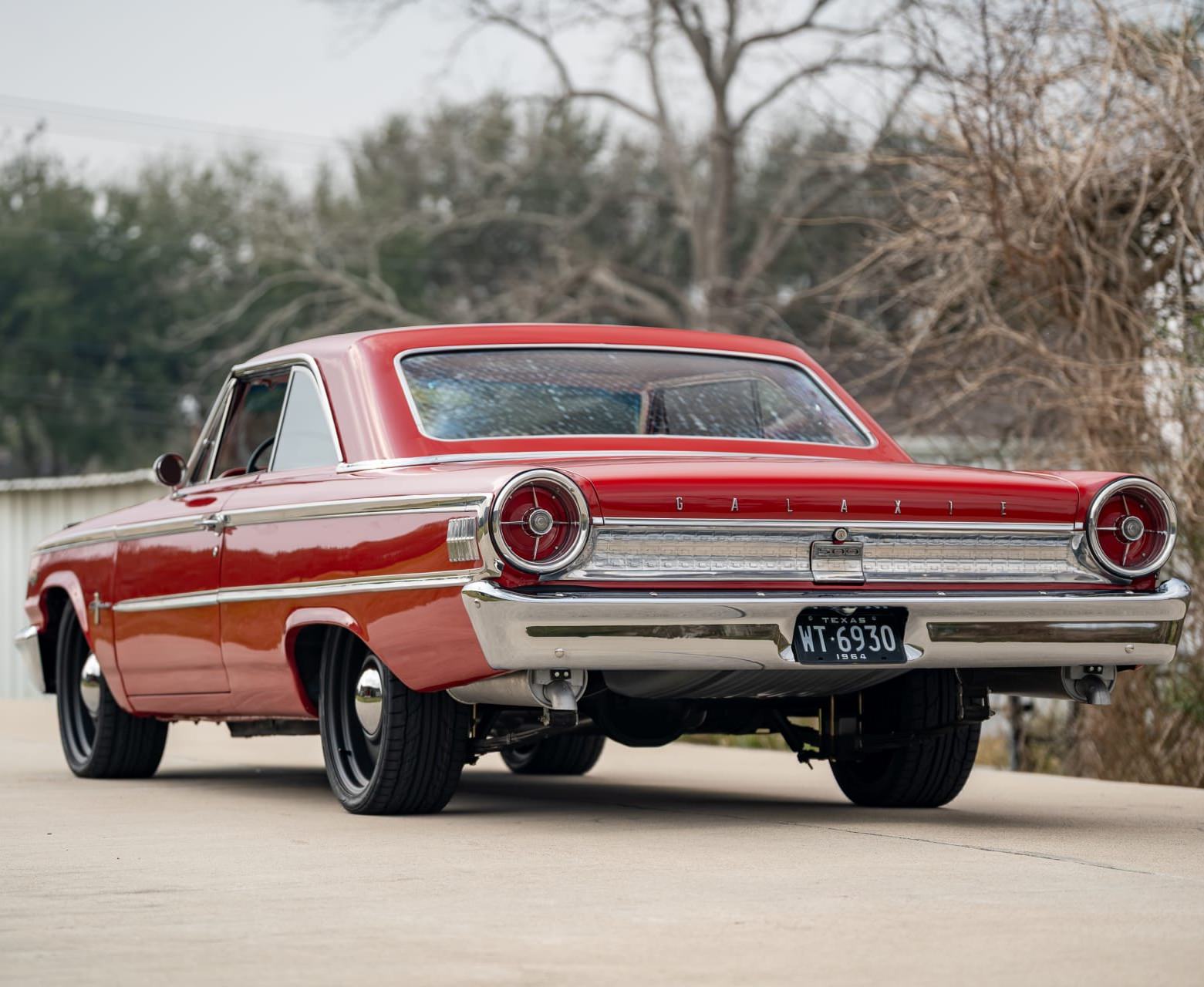
The car you see here is a 1963 Ford Galaxie 500 that has been given a series of discreet upgrades, turning it into a vintage sleeper capable of wiping the floor with almost anything you line up next to it.
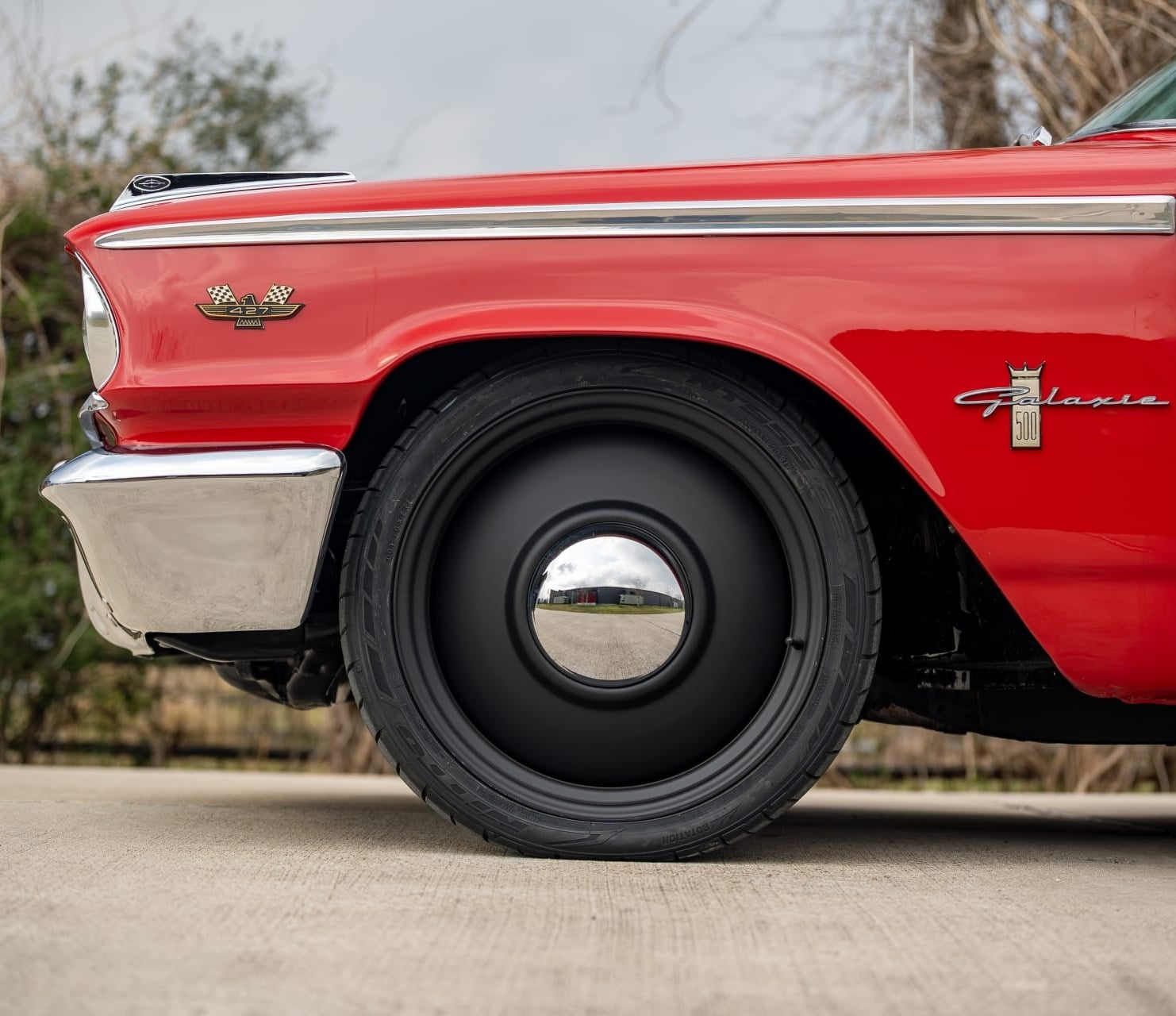
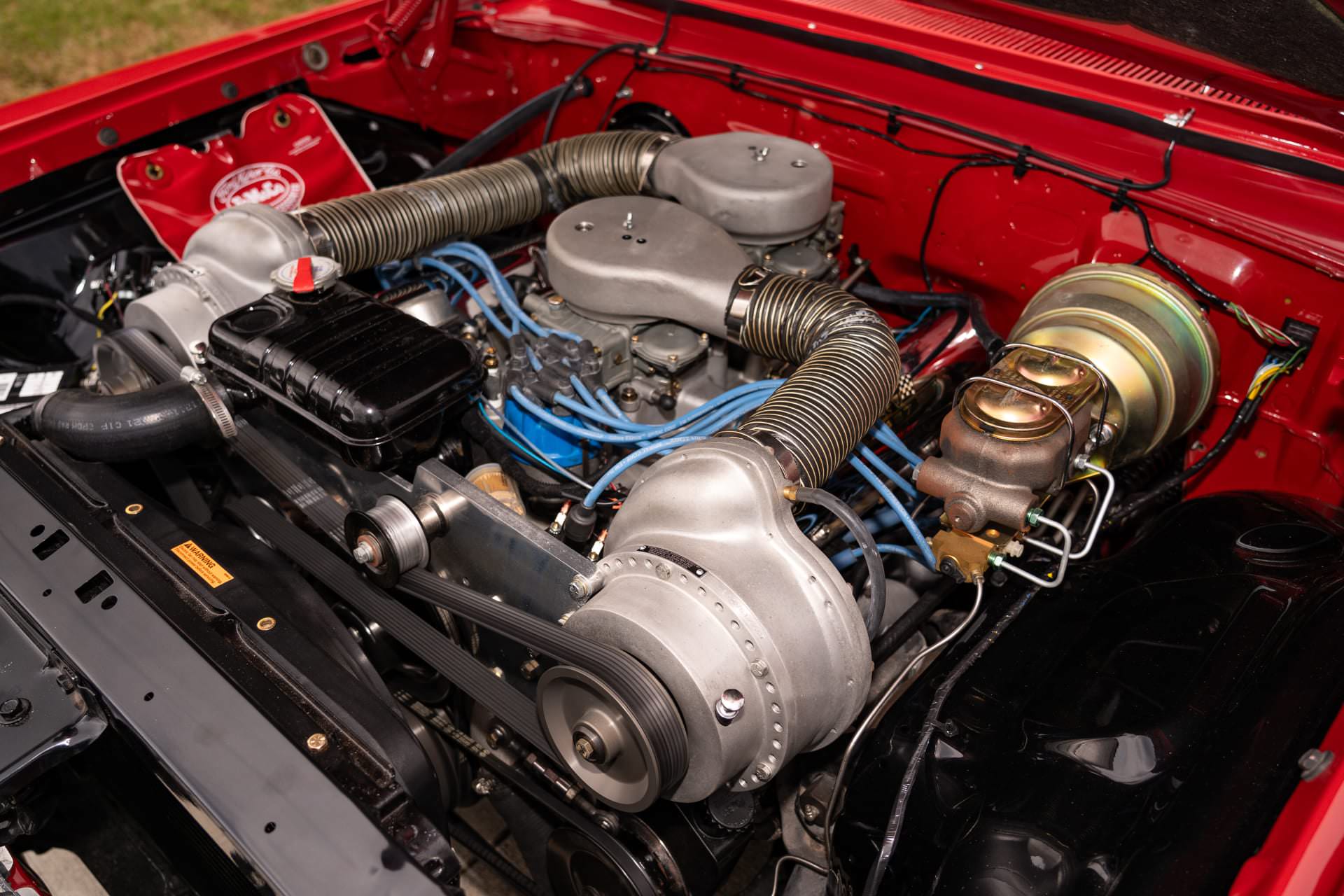
Under the hood you’ll find an R-code 427 cubic inch (7.0 liter) FE V8, from the factory this was good for 425 bhp at 6000 rpm and 480 lb ft at 3700 rpm – these are already impressive numbers.
The reason this car is a sleeper is because this engine has been fitted with a pair of matching Paxton superchargers, significantly boosting output. That said, there are no dyno figures for the car, however even with mild boost the numbers should be staggering.
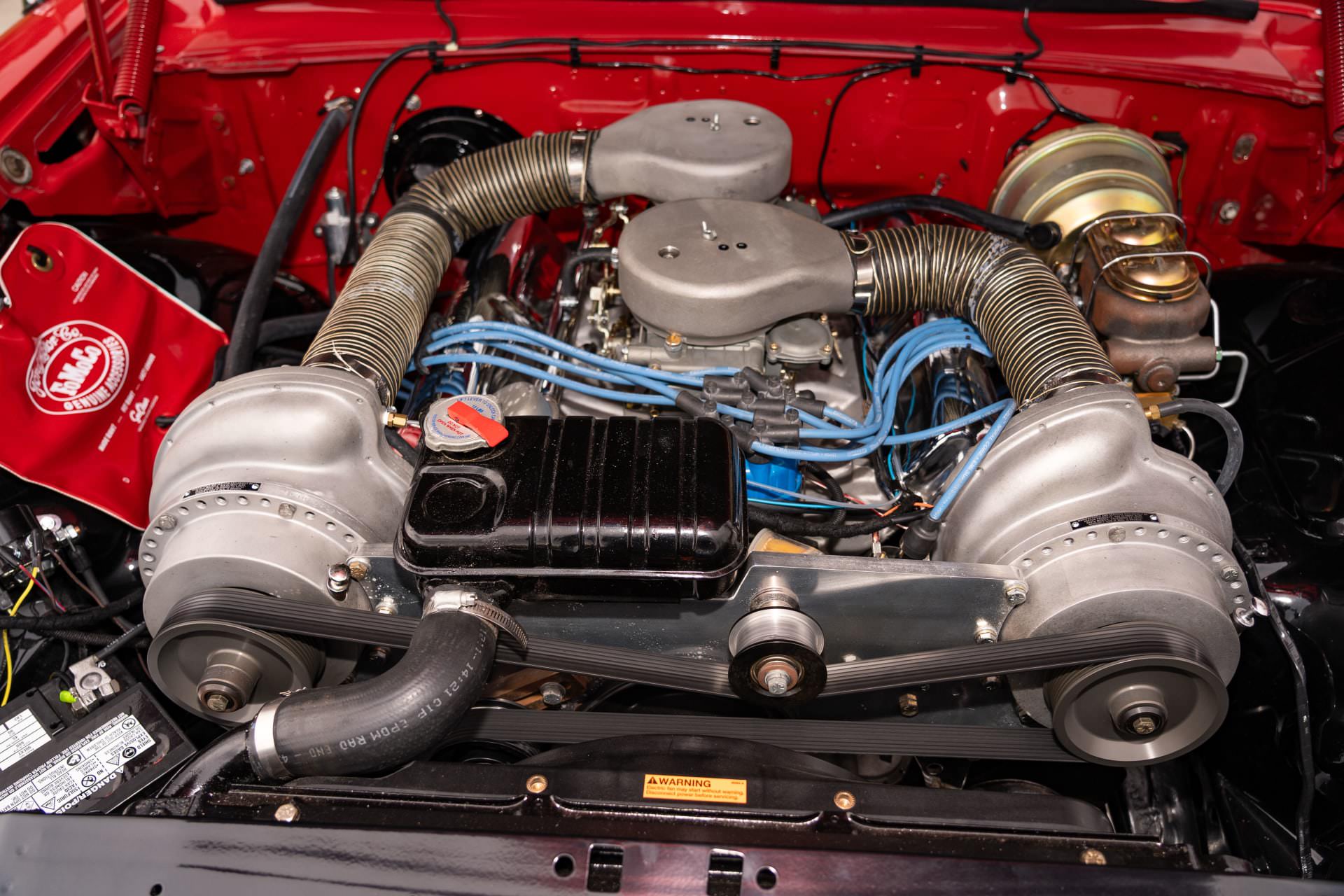
This is a 1963 Ford Galaxie 500 fitted with the R-code 427 cubic inch (7.0 liter) FE V8, this would already be a potent combination, but this car takes it one step further with the addition of twin Paxton superchargers.
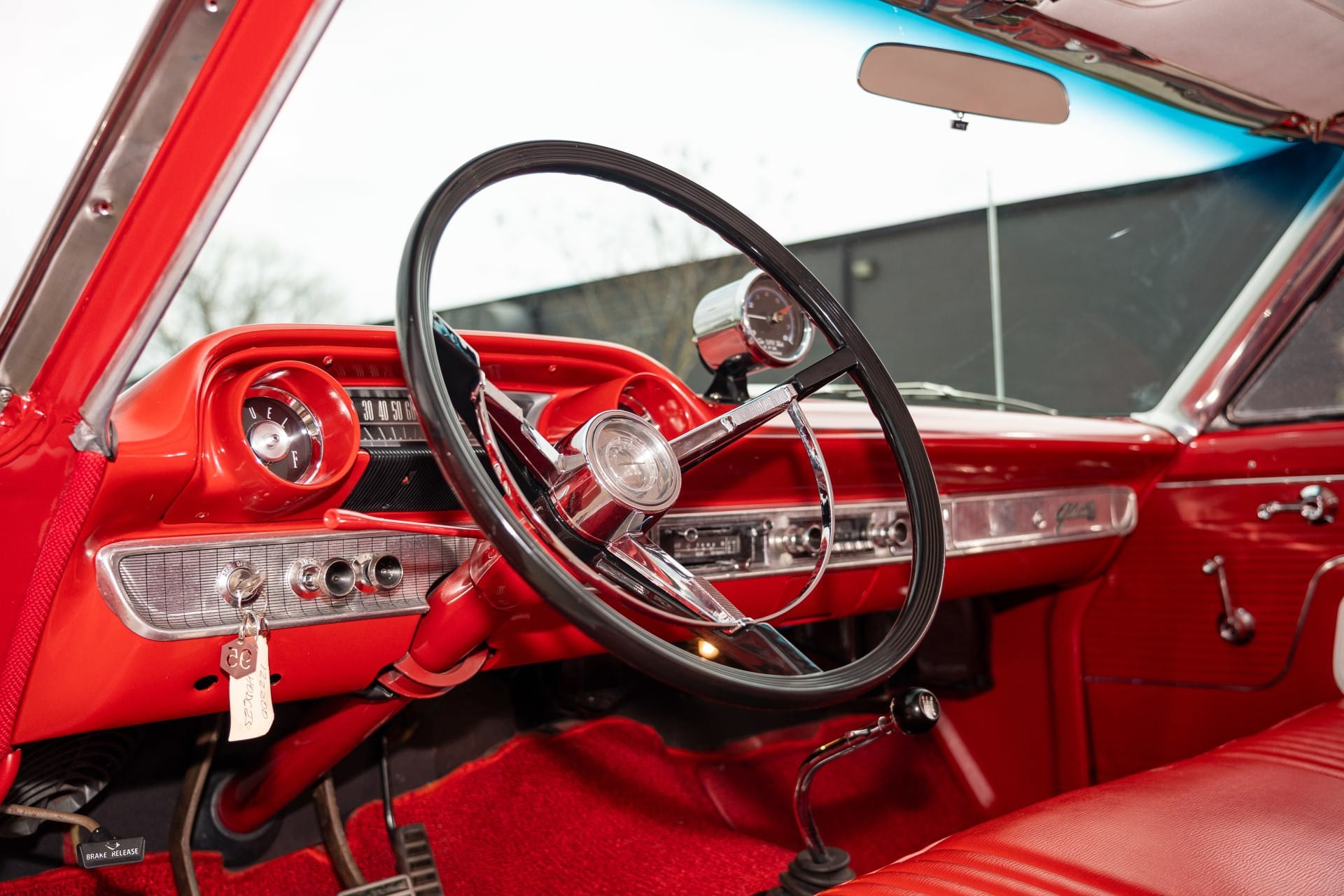
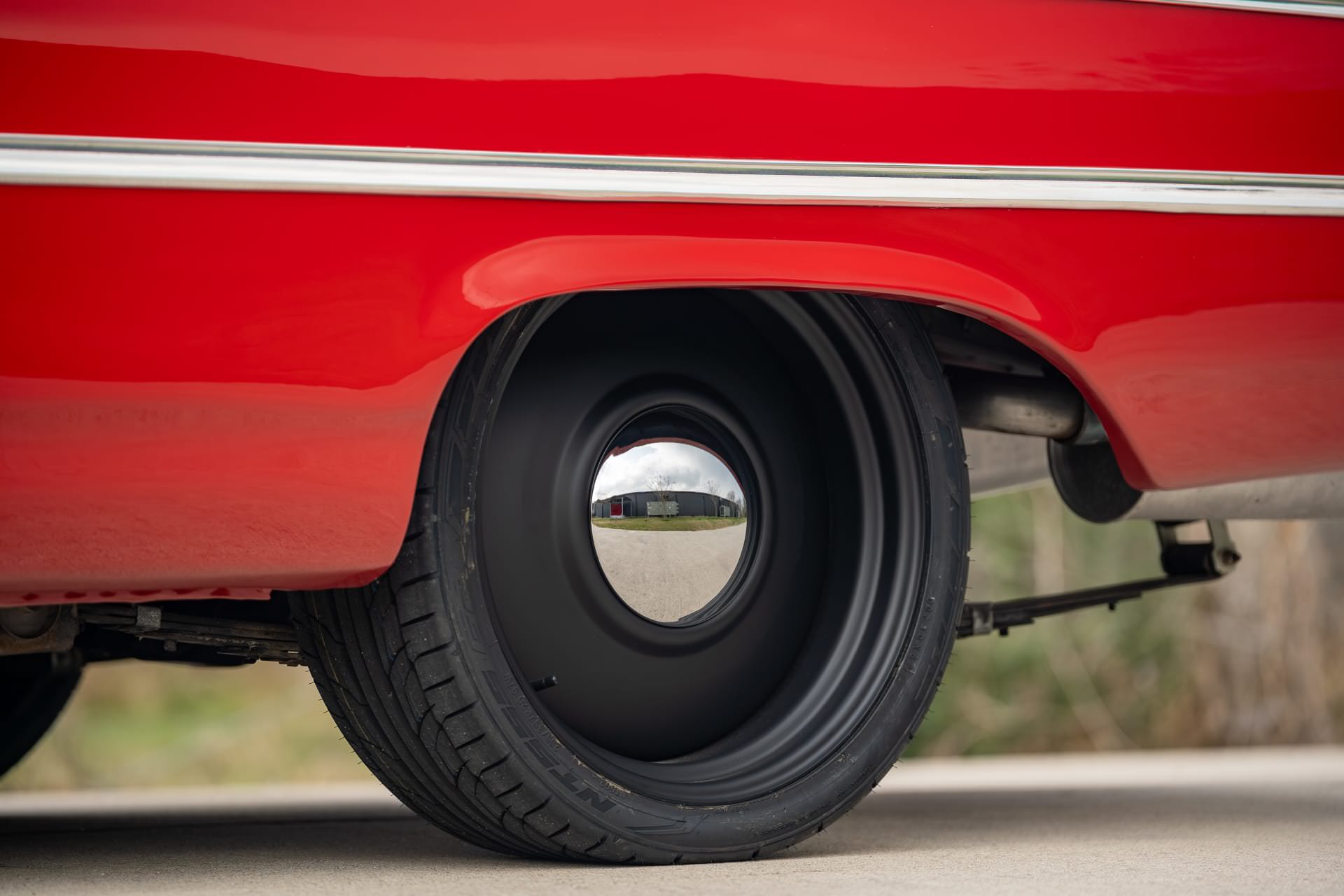
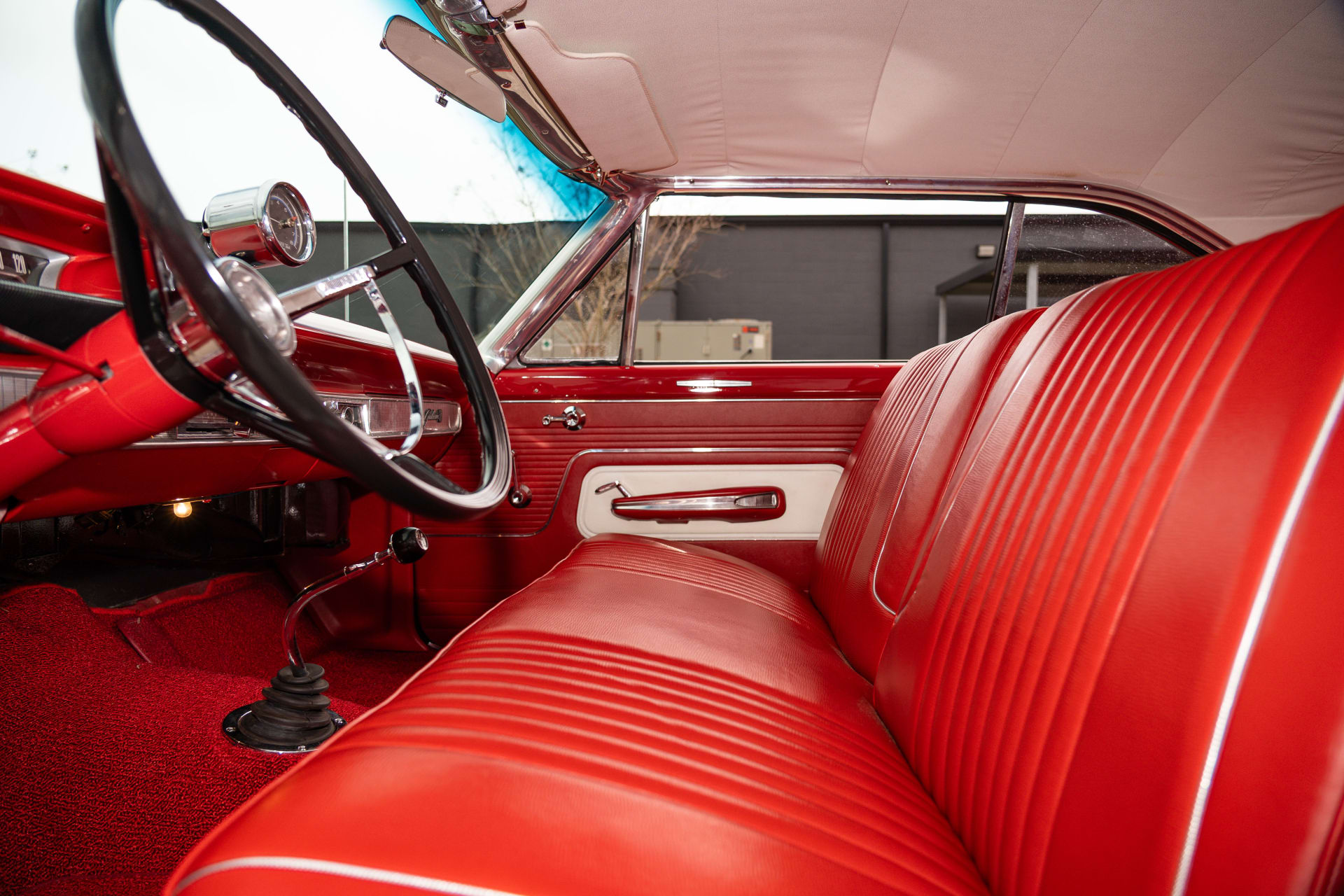
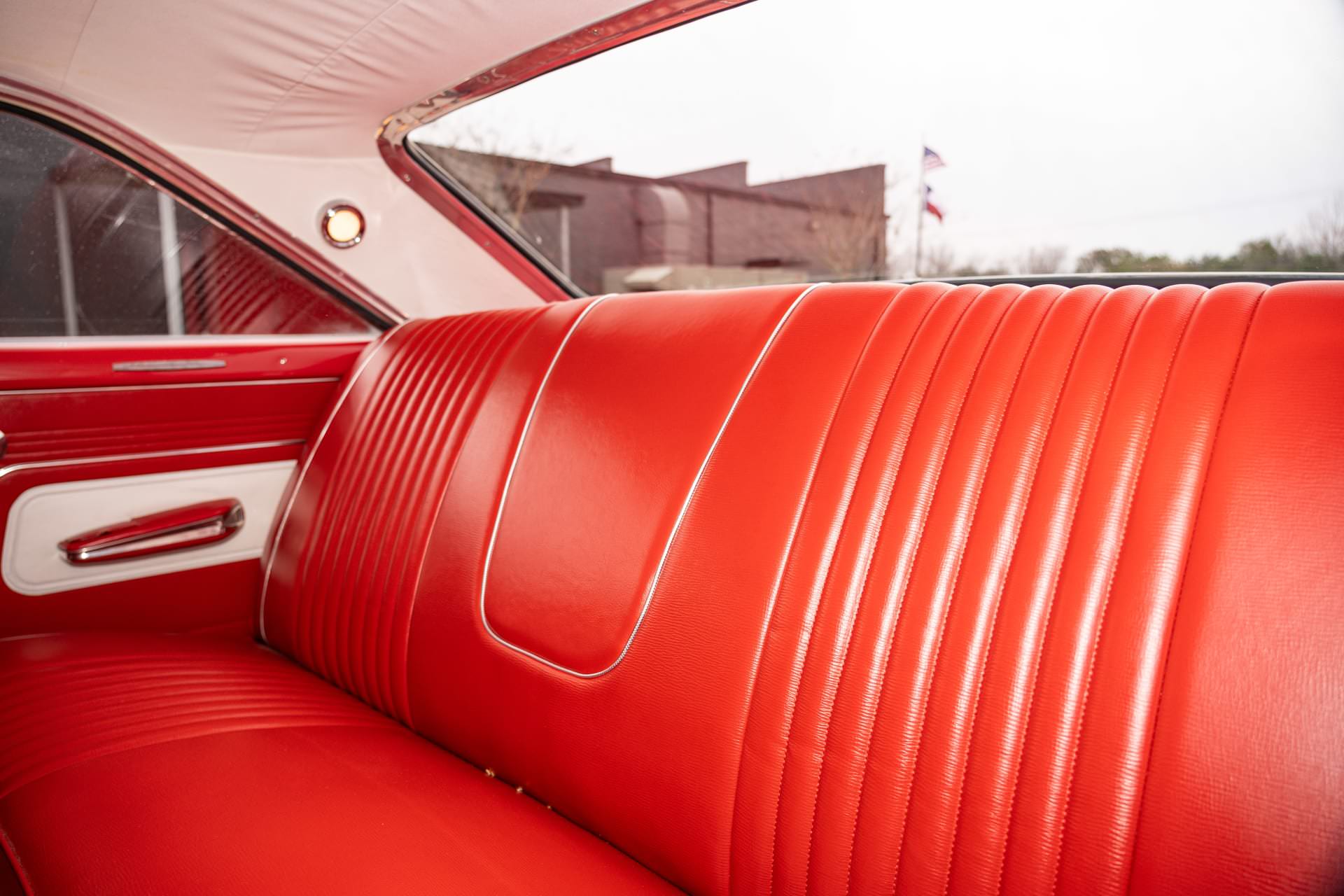
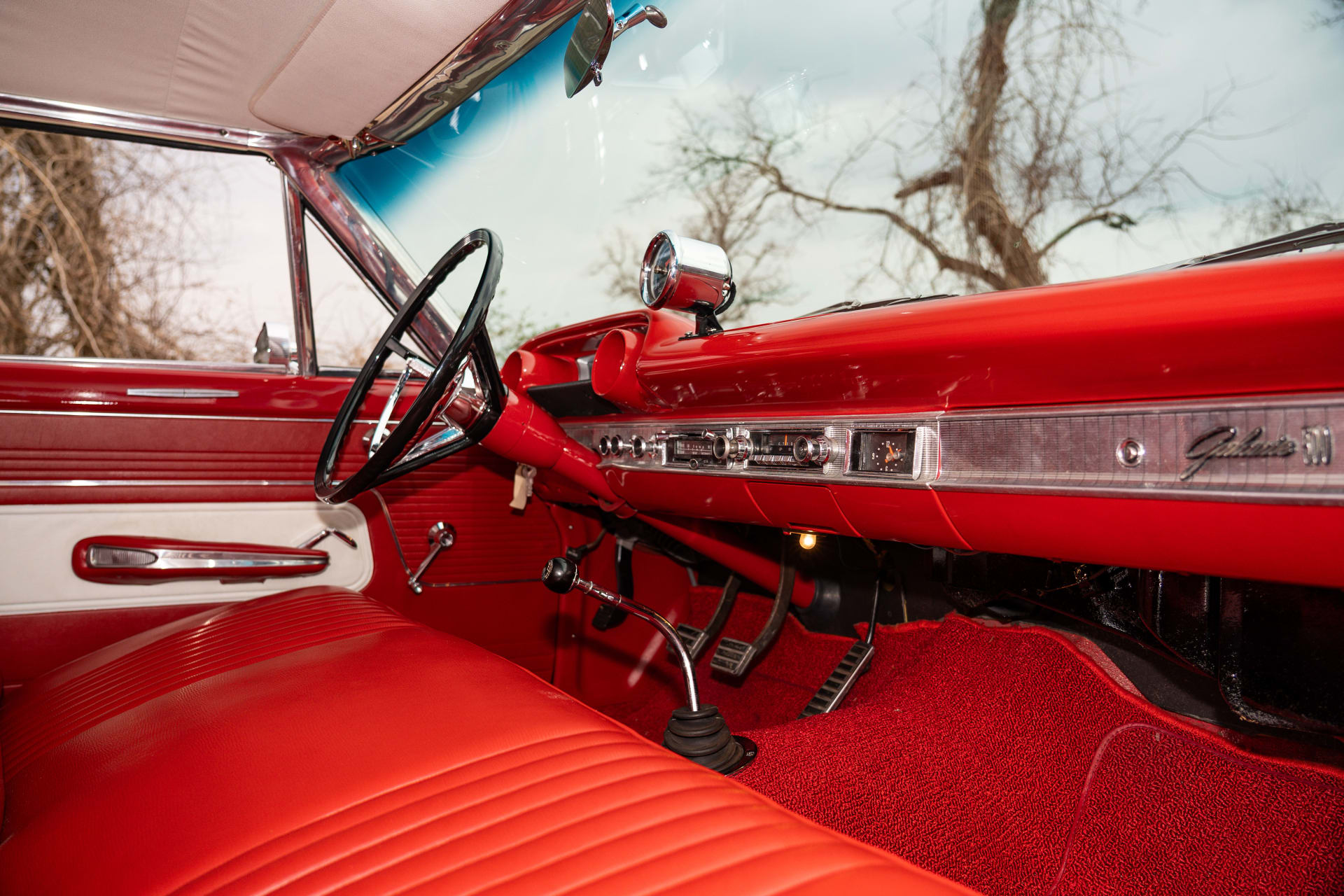
The car is also fitted with a 4-speed manual transmission, the correct choice for an enthusiast, it has power steering, front disc brakes, and it rides on Boyd Coddington 20 inch “Steelie” wheels. It’s finished in Rangoon Red over a Red interior, and it has a tachometer on the dash to help you keep an eye on things.
It’s now due to roll across the auction block with Mecum on the 10th of April and you can visit the listing here if you’d like to read more about it or register to bid.
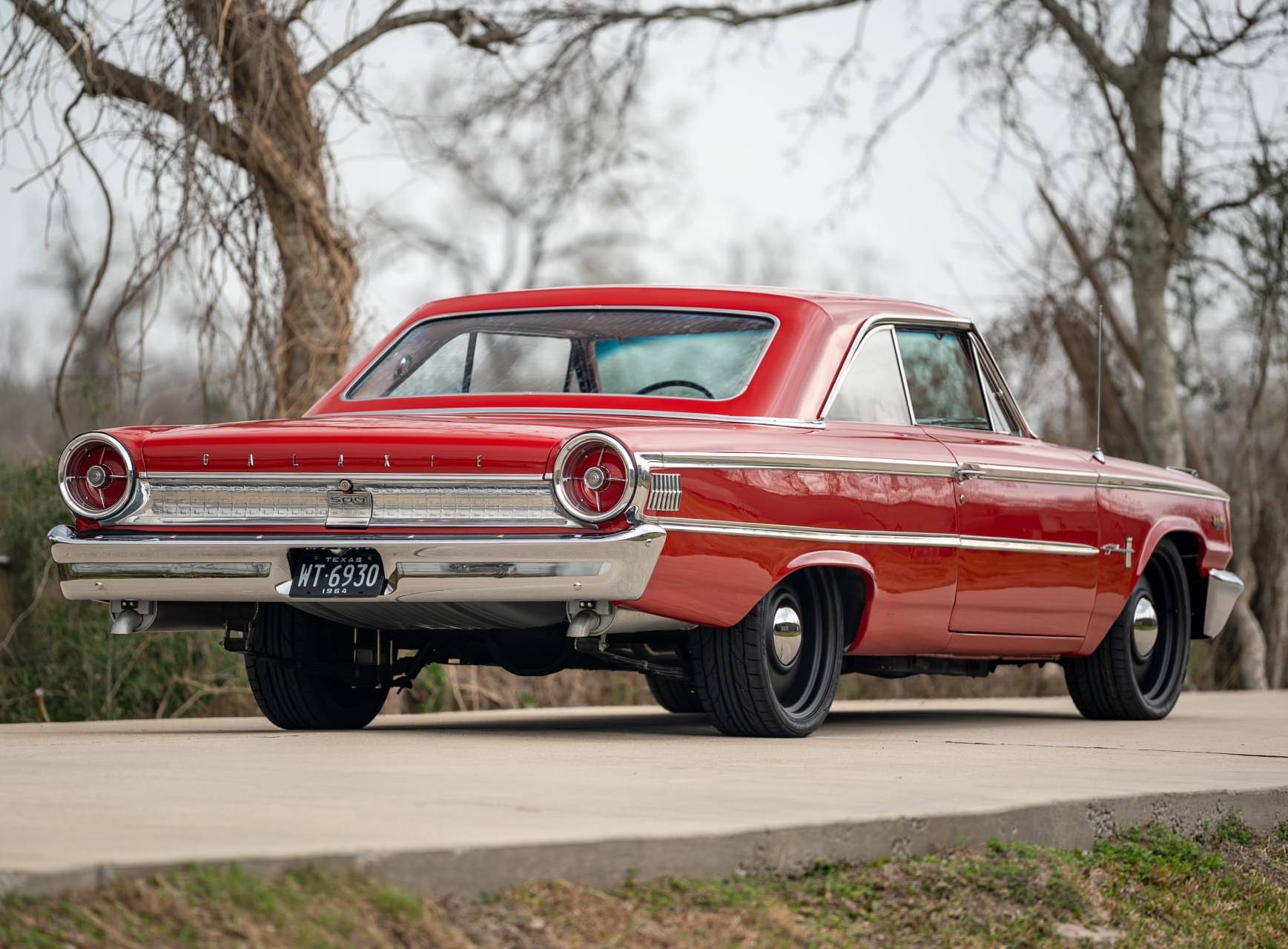
Images courtesy of Mecum + Ford

Articles that Ben Branch has written have been covered on CNN, Popular Mechanics, Smithsonian Magazine, Road & Track Magazine, the official Pinterest blog, the official eBay Motors blog, BuzzFeed, Autoweek Magazine, Wired Magazine, Autoblog, Gear Patrol, Jalopnik, The Verge, and many more.
Silodrome was founded by Ben back in 2010, in the years since the site has grown to become a world leader in the alternative and vintage motoring sector, with well over a million monthly readers from around the world and many hundreds of thousands of followers on social media.