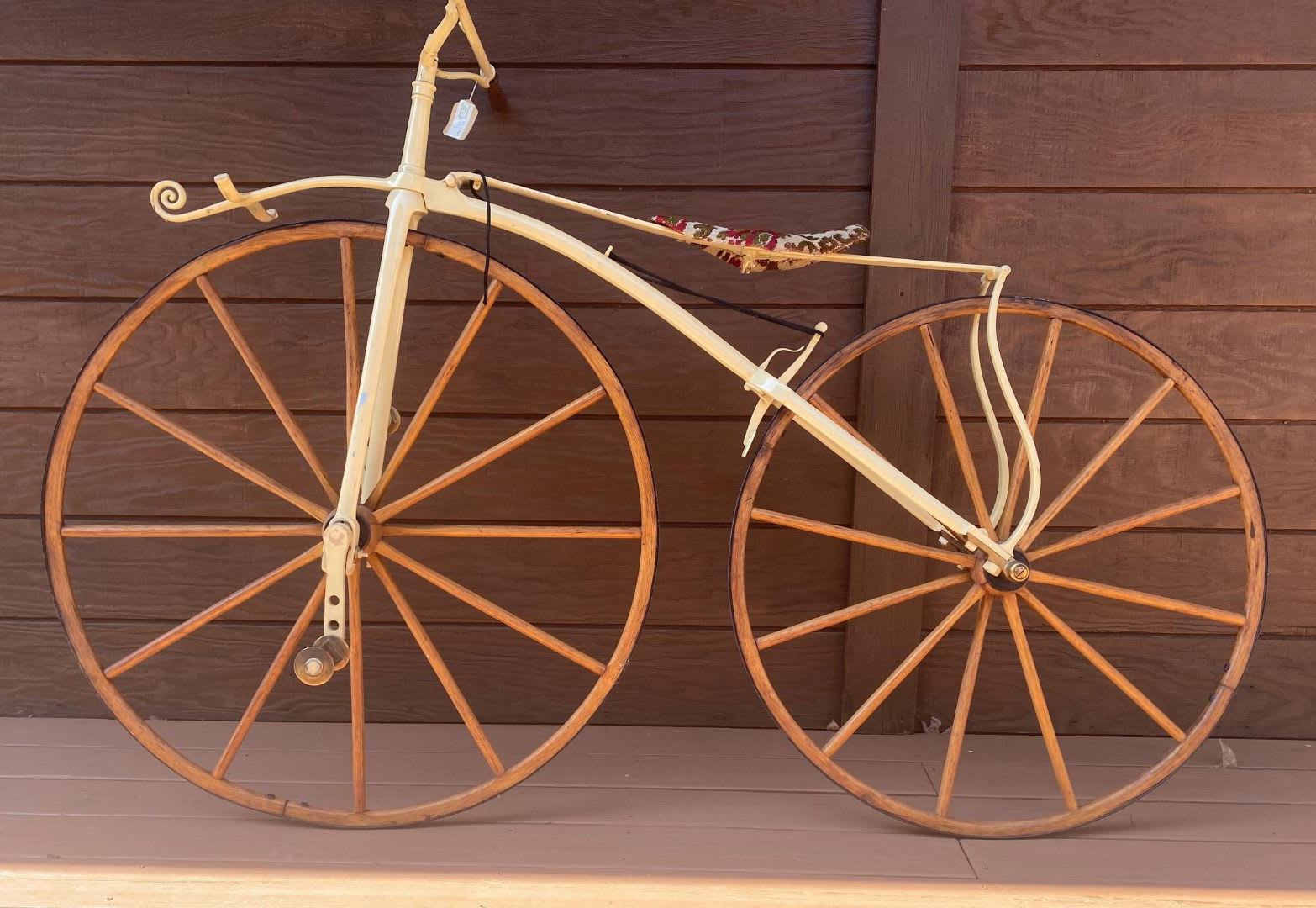
This is a rare surviving “boneshaker” bicycle from 1866, also known as a velocipede. It was built by the C. P. Kimball and Brothers Co, top carriage builders of the time who repurposed a section of their workshop to meet demand.
Relatively few original boneshakers have survived to the modern day, most were scrapped or otherwise lost to history, to be replaced later by Pennyfarthings, and then by the safety bicycle.
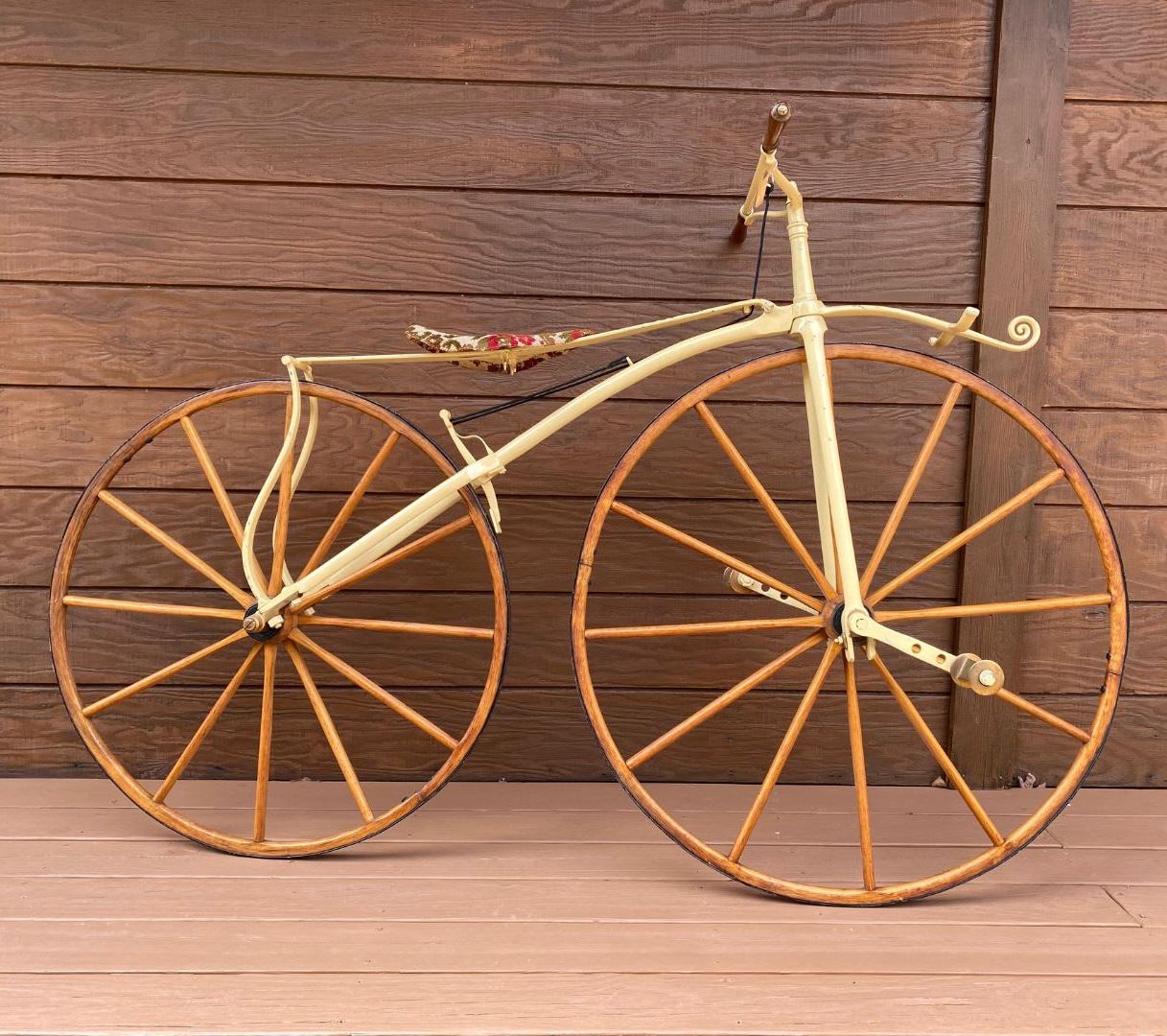
 This is a rare surviving “boneshaker” bicycle from 1866, also known as a velocipede. It was built by the C. P. Kimball and Brothers Co, top carriage builders of the time who repurposed a section of their workshop to meet demand.
History Speedrun: C. P. Kimball and Brothers Co.
The Kimball family’s involvement in wheeled transportation in the United States stretches back further than almost any other name in the trade. Richard Kimball, originally a wheelwright from England, arrived in Massachusetts aboard the ship Elizabeth in 1634 and settled first in Watertown before moving to Ipswich. Over the following two centuries, successive generations of Kimballs worked as wheelwrights and blacksmiths in Bradford, Massachusetts, before Peter Kimball and his sons expanded the family’s operations into Maine.
Peter had six sons, several of whom entered the carriage trade just like their old man. The most famous of them was Charles Porter Kimball, who established a carriage manufacturing company at Bridgton, Maine, and later built a vast carriage empire first in Portland and then in Chicago, where C.P. Kimball & Co. eventually transitioned into custom automobile coachbuilding before closing in 1929 as the Great Depression descended across the country and caused luxury automobile orders to dry up almost completely.
It would be another of Peter’s sons, George Franklin Kimball, who established the family’s Boston operations. George founded Kimball Brothers in 1864, employing his younger brothers James and Edwin – the firm operated out of Boston for over half a century, surviving until 1915 as the automobile began to replace the horse drawn carriage.
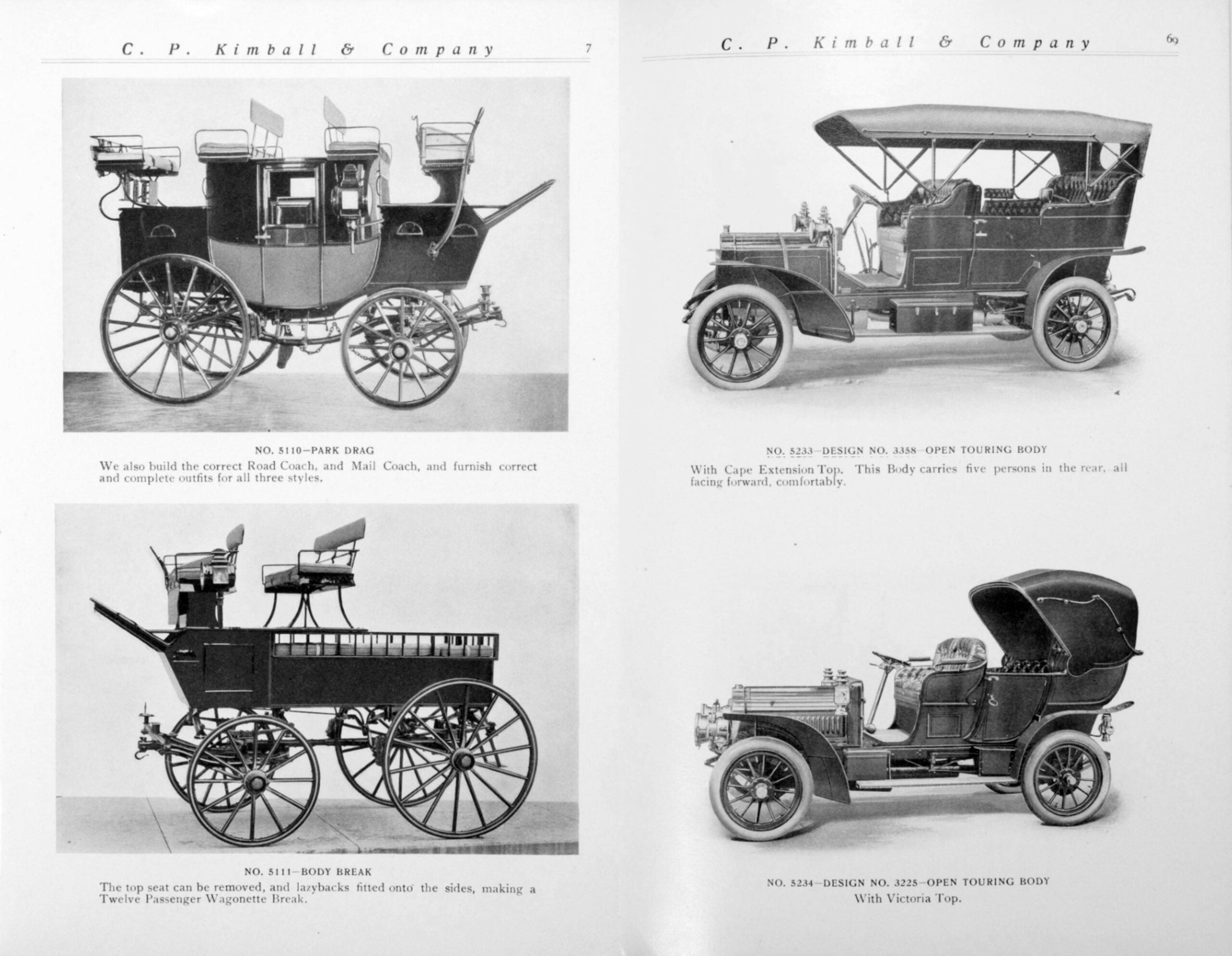
The Kimball Brothers initially built their reputation building carriages and sleighs, drawing on the family’s long wheelwright heritage that had defined them for generations. Their workshop was equipped with the full array of tooling and skilled workers required for high-end vehicle construction – including woodworking lathes, forges for iron and steel work, wheel-building jigs, and a full upholstery workshop.
It would be this combination of workshop capabilities that helped position carriage and coachbuilders like the Kimballs to take advantage of an unexpected craze that swept through American cities in the late 1860s – the velocipede.
The velocipede (or the boneshaker, as its detractors called it) was essentially a two-wheeled machine built using carriage technology. Its frame was wrought iron, its wheels were wooden-spoked with iron “tires” shrunk into place, and its saddle often sat on a long curved spring not unlike those found in light carriages of the period.
The Kimball Brothers initially built their reputation building carriages and sleighs, drawing on the family’s long wheelwright heritage that had defined them for generations. Their workshop was equipped with the full array of tooling and skilled workers required for high-end vehicle construction – including woodworking lathes, forges for iron and steel work, wheel-building jigs, and a full upholstery workshop.
The pedals were attached directly to the front axle, meaning the rider had to simultaneously pedal and steer the same wheel. There were no gears and no chain – just direct drive, with braking achieved through a rudimentary spoon brake activated by a lever or cord near the handlebars or frame top bar. The machines could weigh as much as 60 lbs or more, and earned the boneshaker nickname from riding over cobblestones and the teeth-rattling experience it offered to the pilot.
The velocipede craze arrived in America in the 1860s, inspired by news of the velocipede’s surging popularity in Paris, where Pierre Michaux and his son Ernest had been manufacturing pedal-driven two-wheelers since earlier in the same decade.
It spread rapidly through the major East Coast cities, with carriage makers across New York and Boston rushing to build velocipedes to meet demand. Indoor riding academies – often repurposed roller-skating rinks – sprang up in cities to teach new riders, and velocipede races began drawing crowds and newspaper coverage. The Kimball Brothers in Boston were among the firms associated with this brief but intense early period of American bicycle manufacturing.
The boneshaker boom, however, was remarkably short-lived. By the spring of 1869, barely a few years after it had begun, public enthusiasm was already fading. The machines were simply too heavy, too uncomfortable, and too impractical for road use outside of indoor rinks.
Calvin Witty’s aggressive patent royalty demands further stifled the nascent industry. Most carriage builders who had diversified into velocipede production quietly returned to their core trade, and nearly a decade would pass before the arrival of the high-wheel ordinary bicycle (also known as the Pennyfarthing), which then reignited American interest in cycling.
The Kimball “Boneshaker” Bicycle From 1866
This is an original boneshaker velocipede made by C. P. Kimball and Brothers Co. in 1866, right at the beginning of the velocipede craze that was sweeping America. It has an iron frame, with wooden spokes and wheels, and iron “tires.”
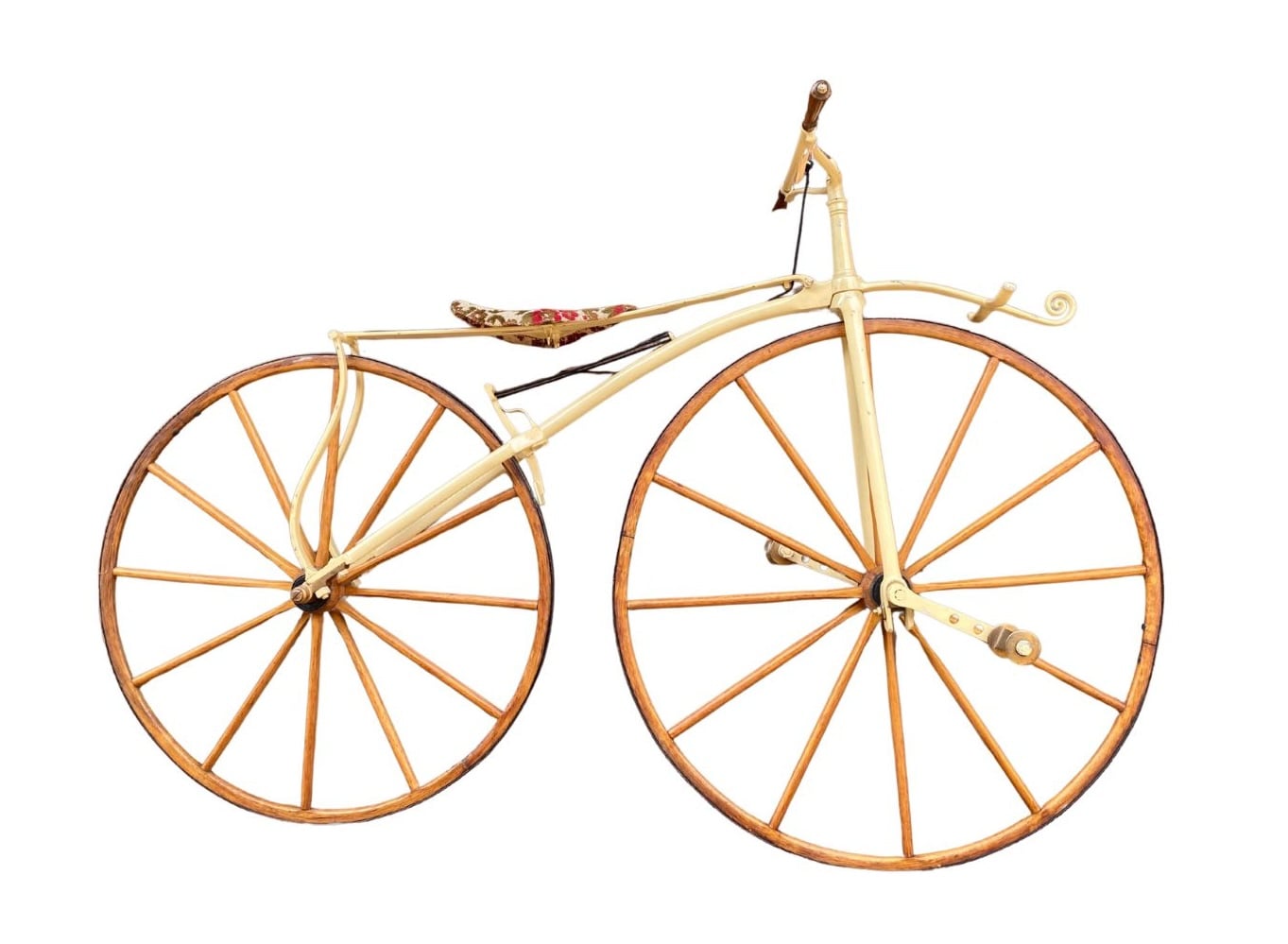
This is an original boneshaker velocipede made by C. P. Kimball and Brothers Co. in 1866, right at the beginning of the velocipede craze that was sweeping America. It has an iron frame, with wooden spokes and wheels, and iron “tires.”
The lack of pneumatic tires or any sort of genuinely functional suspension is what led to the “boneshaker” nickname, you can just about imagine what it must have been like to ride one of these down a simple cobblestone street in-period.
This velocipede is said to have been displayed at the Schwinn museum, and it has a rear pull-string brake, and a newer carpet bag style seat cover. It’s now due to roll across the auction block with Mecum in May and you can visit the listing here.
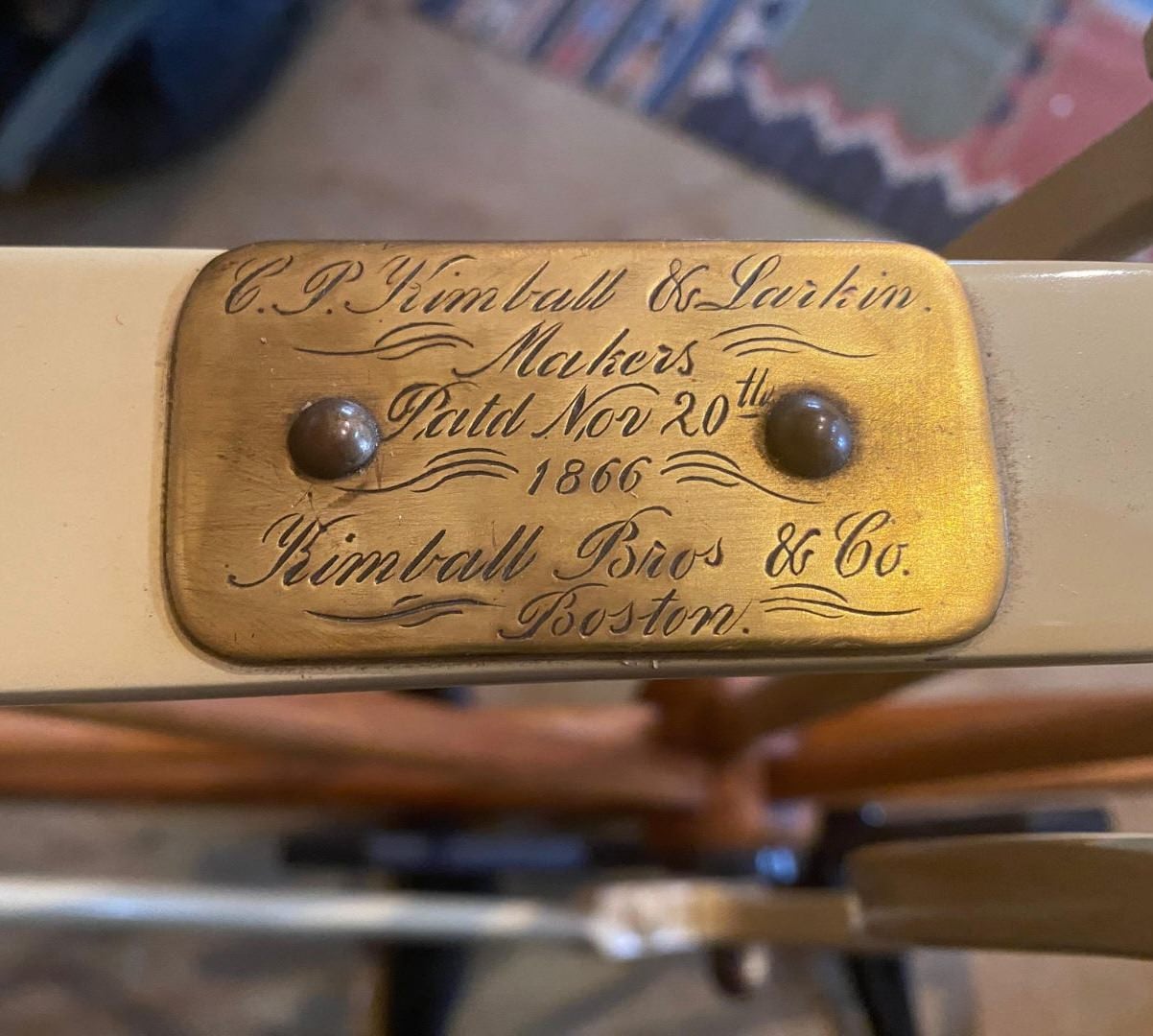
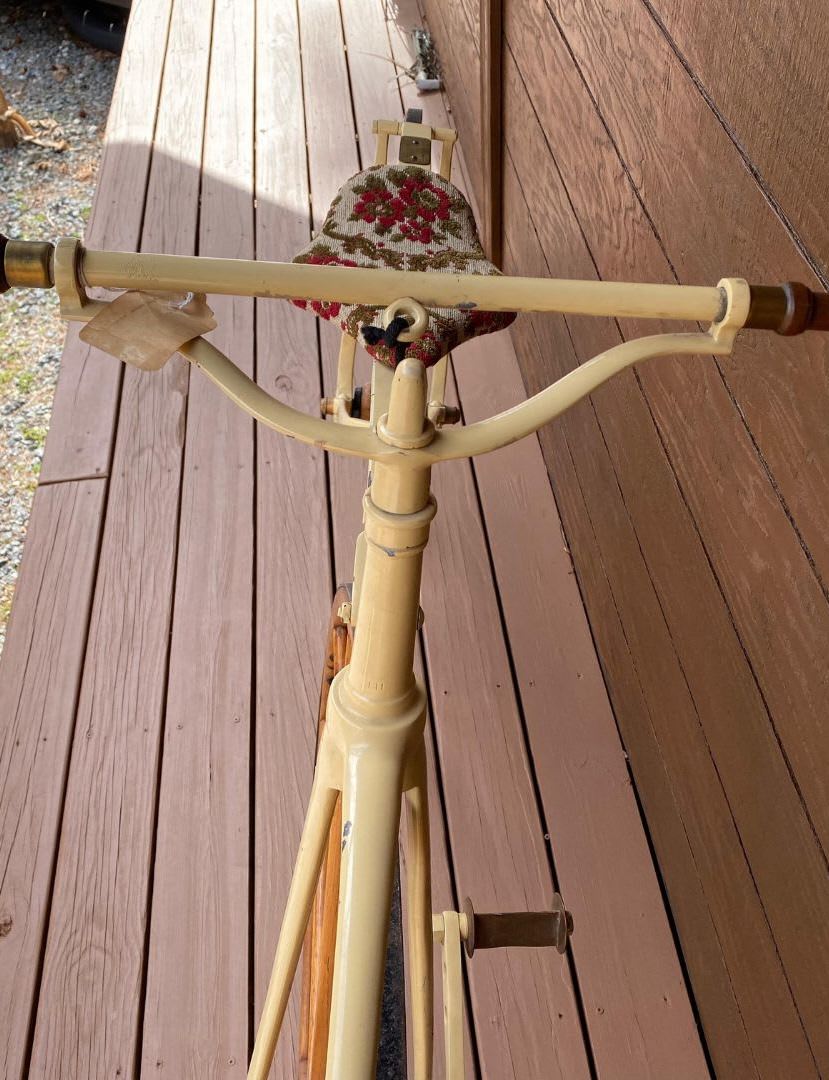
Images courtesy of Mecum

Articles that Ben Branch has written have been covered on CNN, Popular Mechanics, Smithsonian Magazine, Road & Track Magazine, the official Pinterest blog, the official eBay Motors blog, BuzzFeed, Autoweek Magazine, Wired Magazine, Autoblog, Gear Patrol, Jalopnik, The Verge, and many more.
Silodrome was founded by Ben back in 2010, in the years since the site has grown to become a world leader in the alternative and vintage motoring sector, with well over a million monthly readers from around the world and many hundreds of thousands of followers on social media.