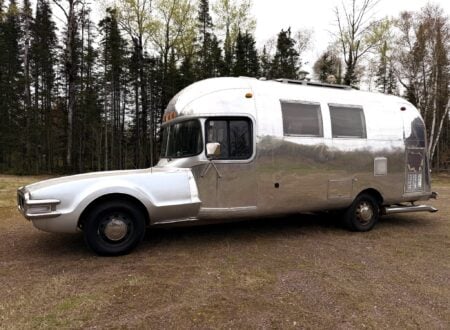
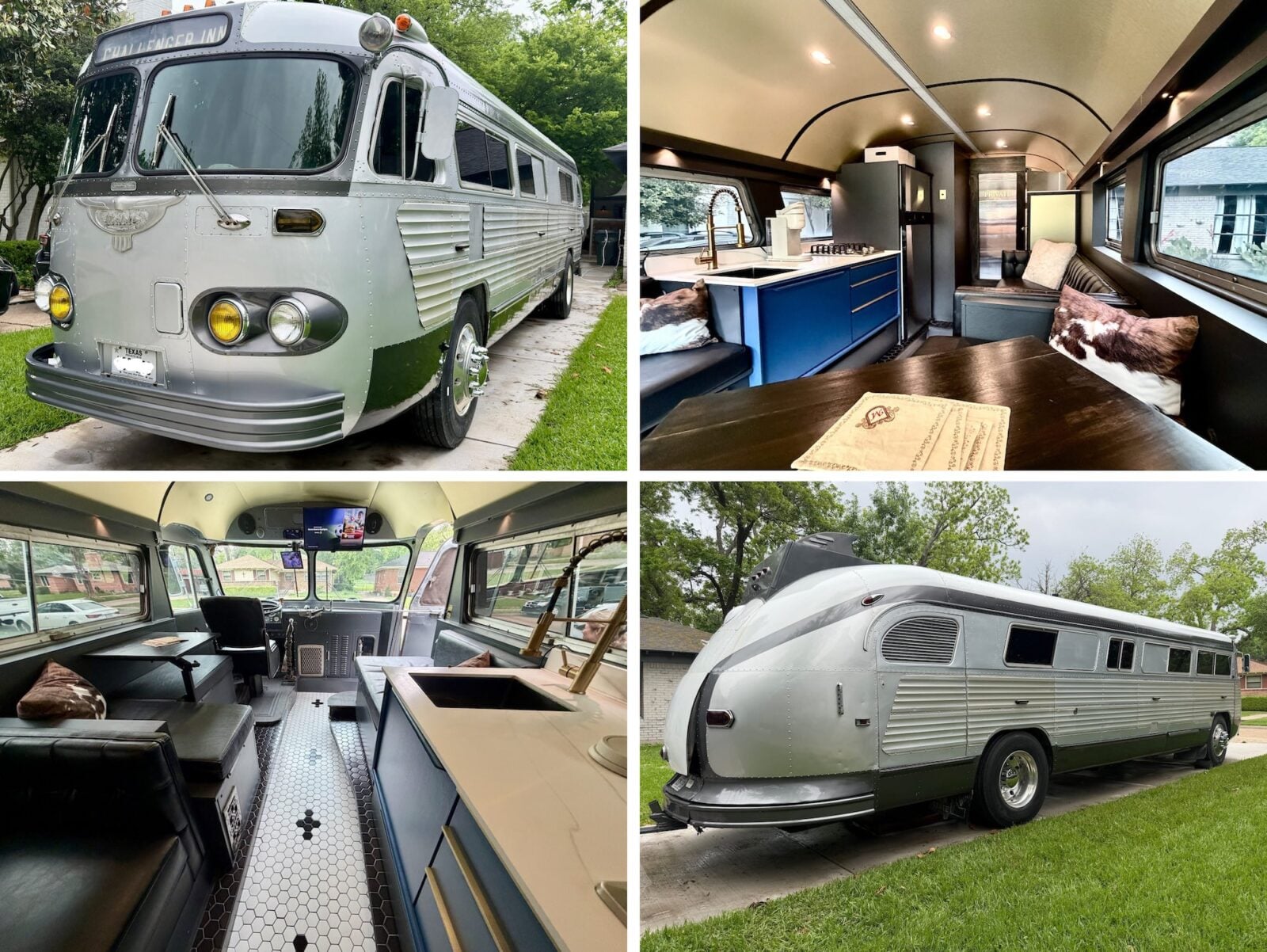
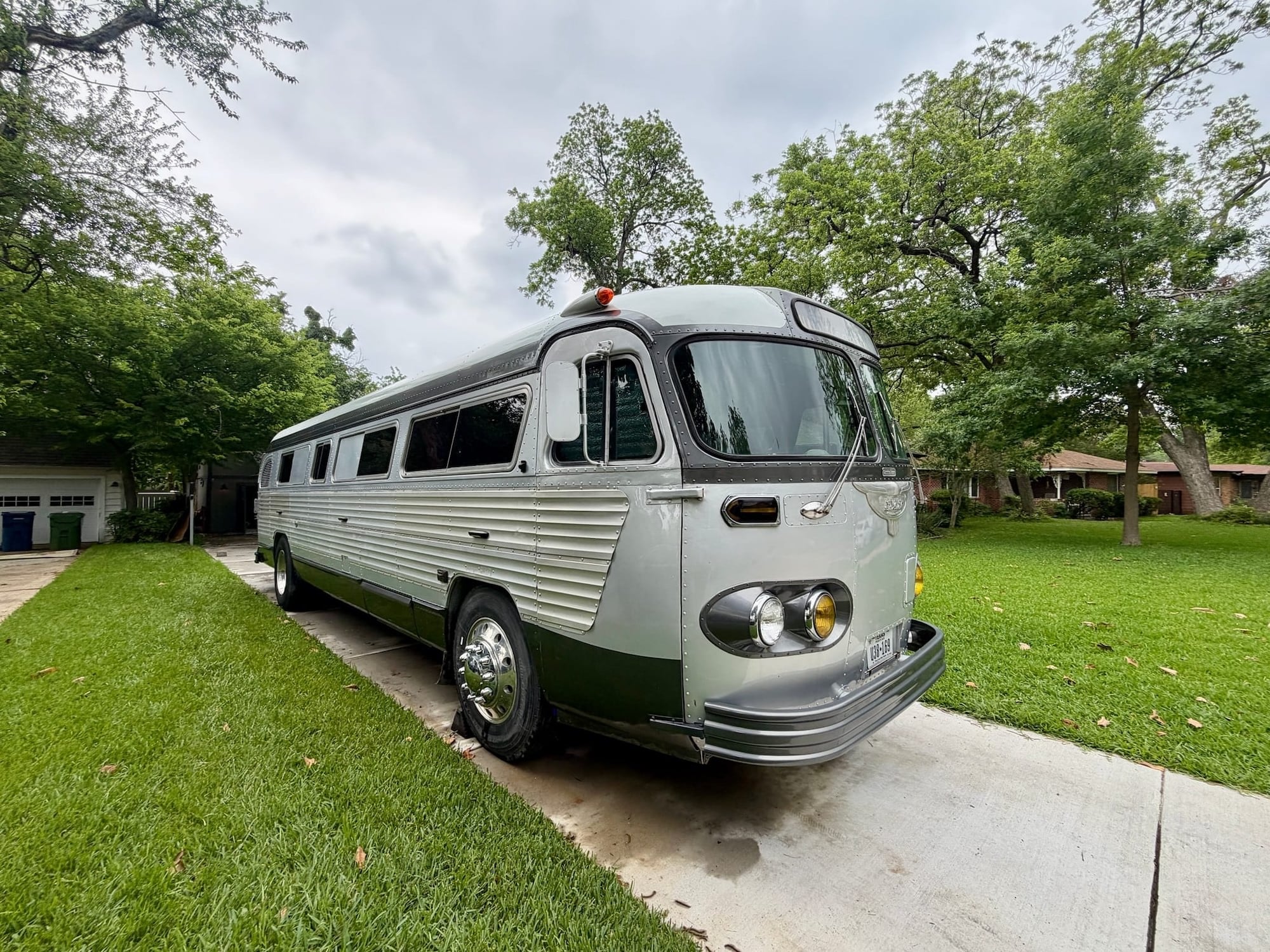
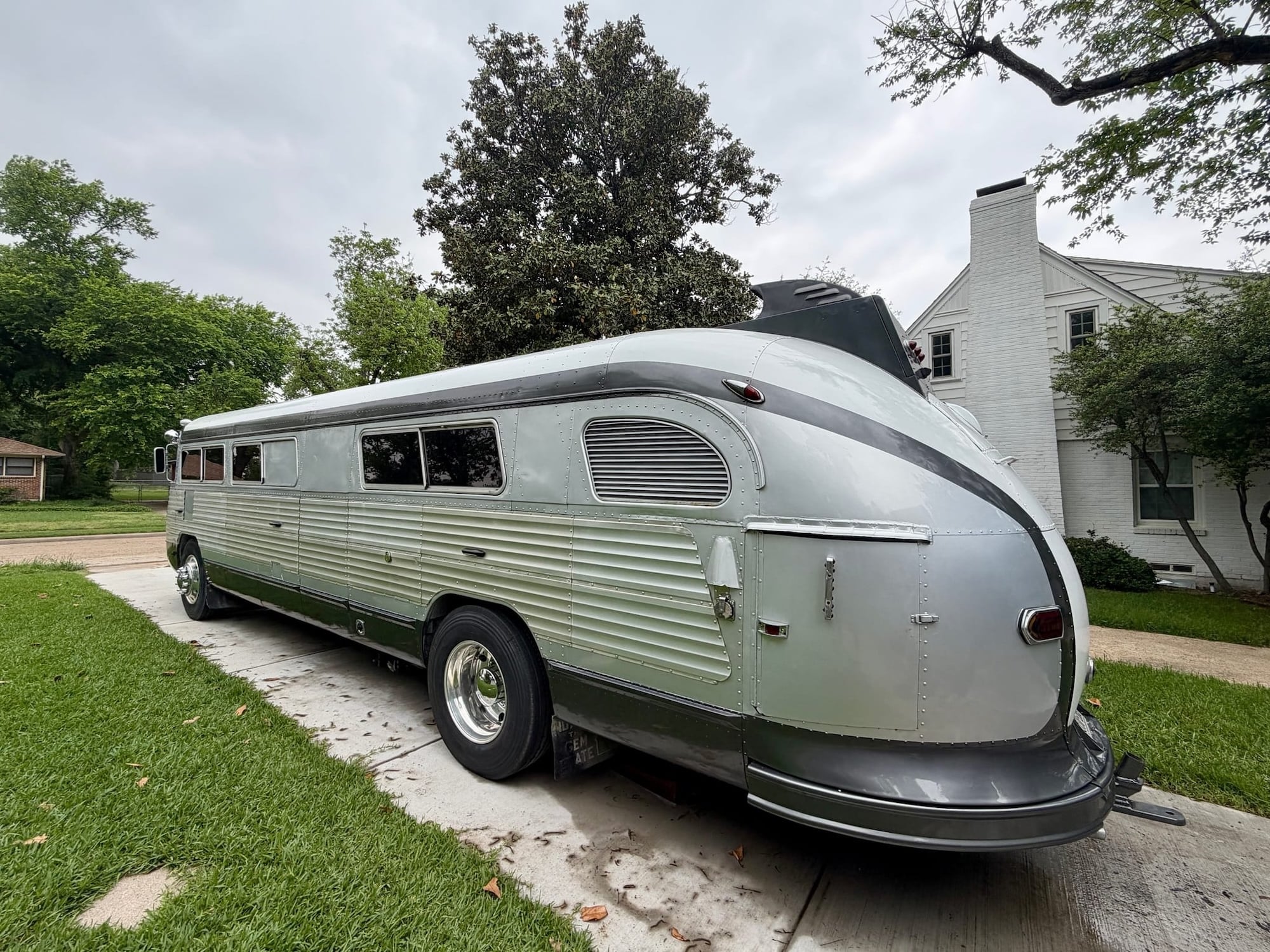
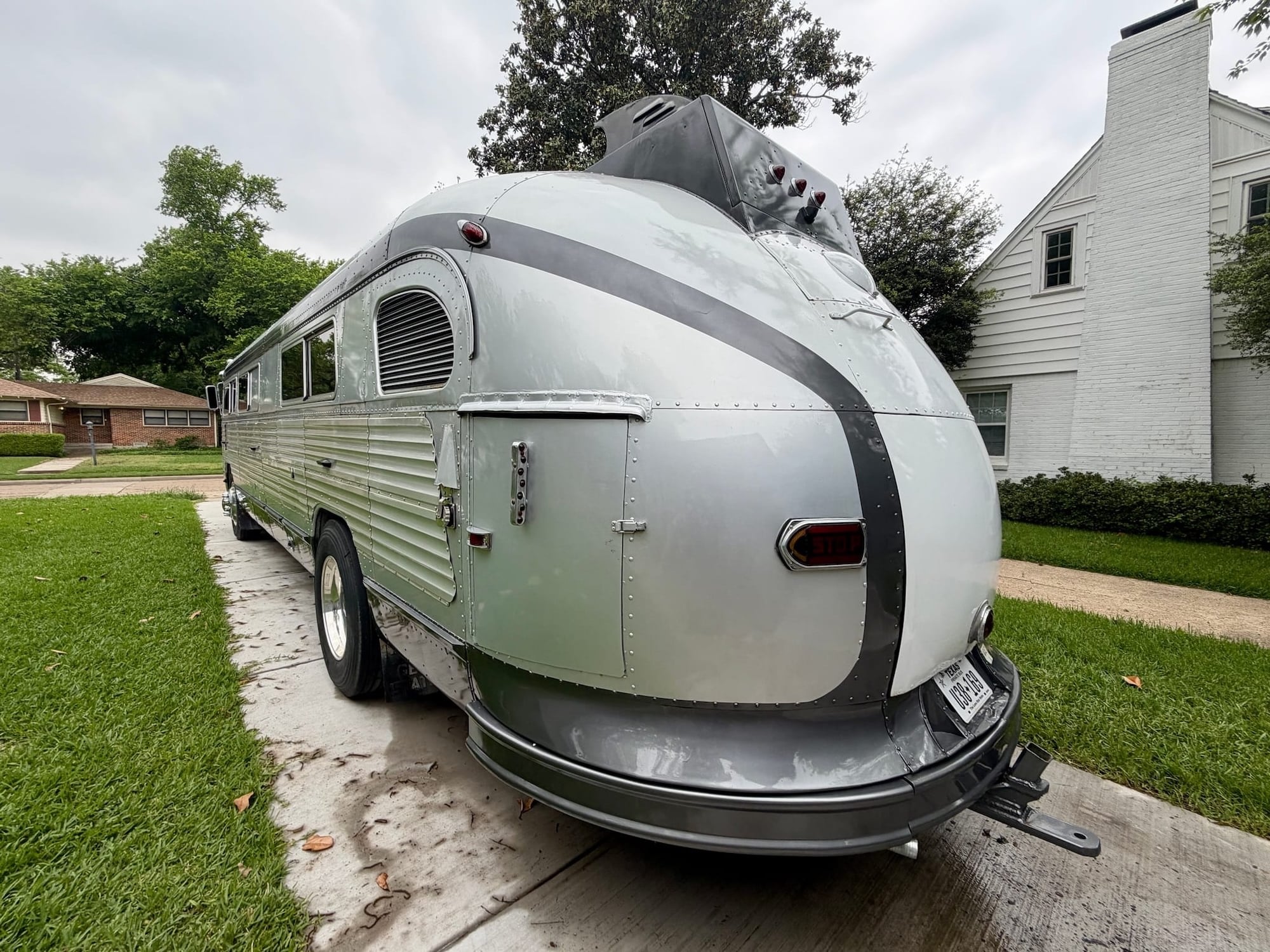
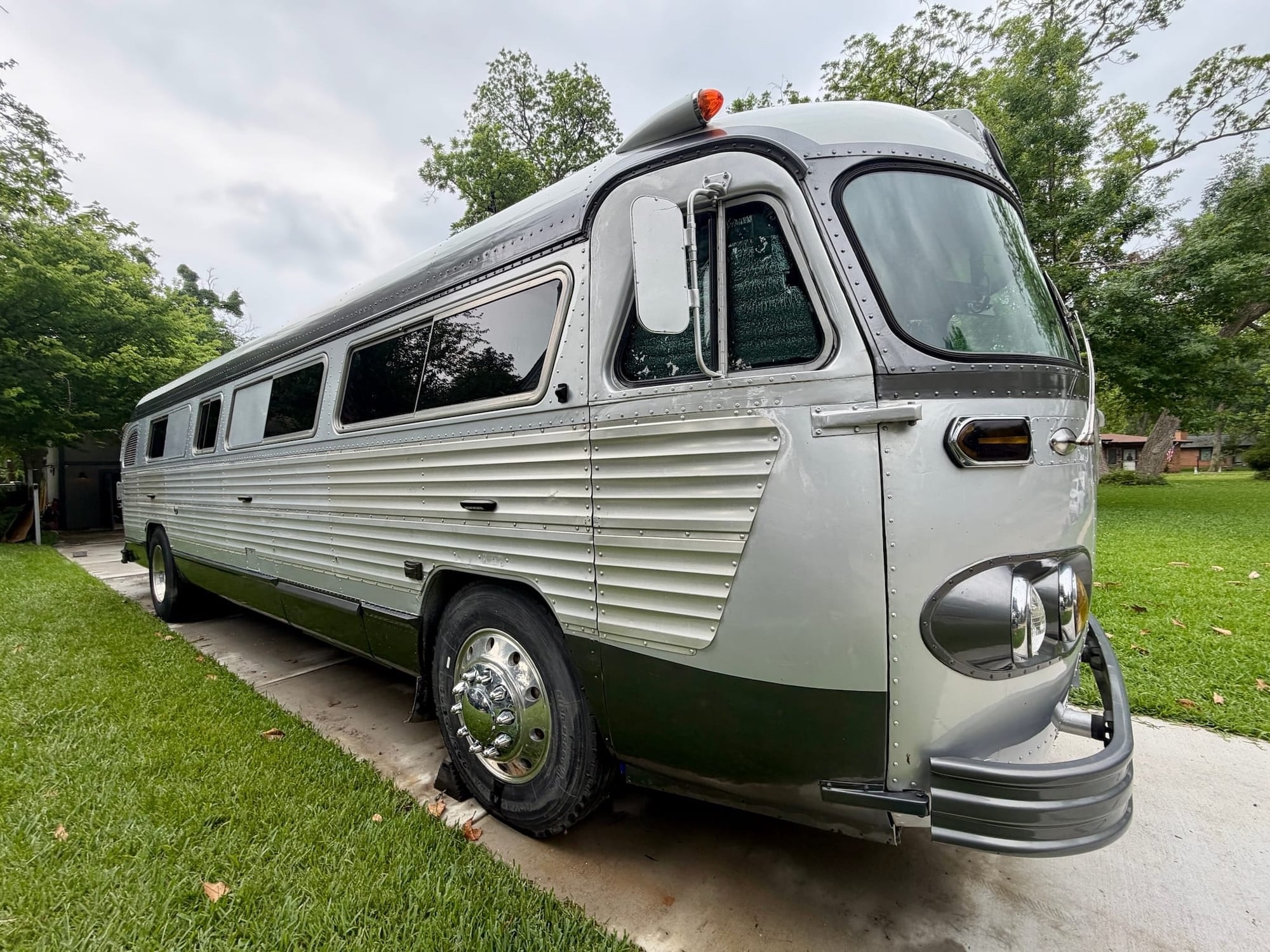
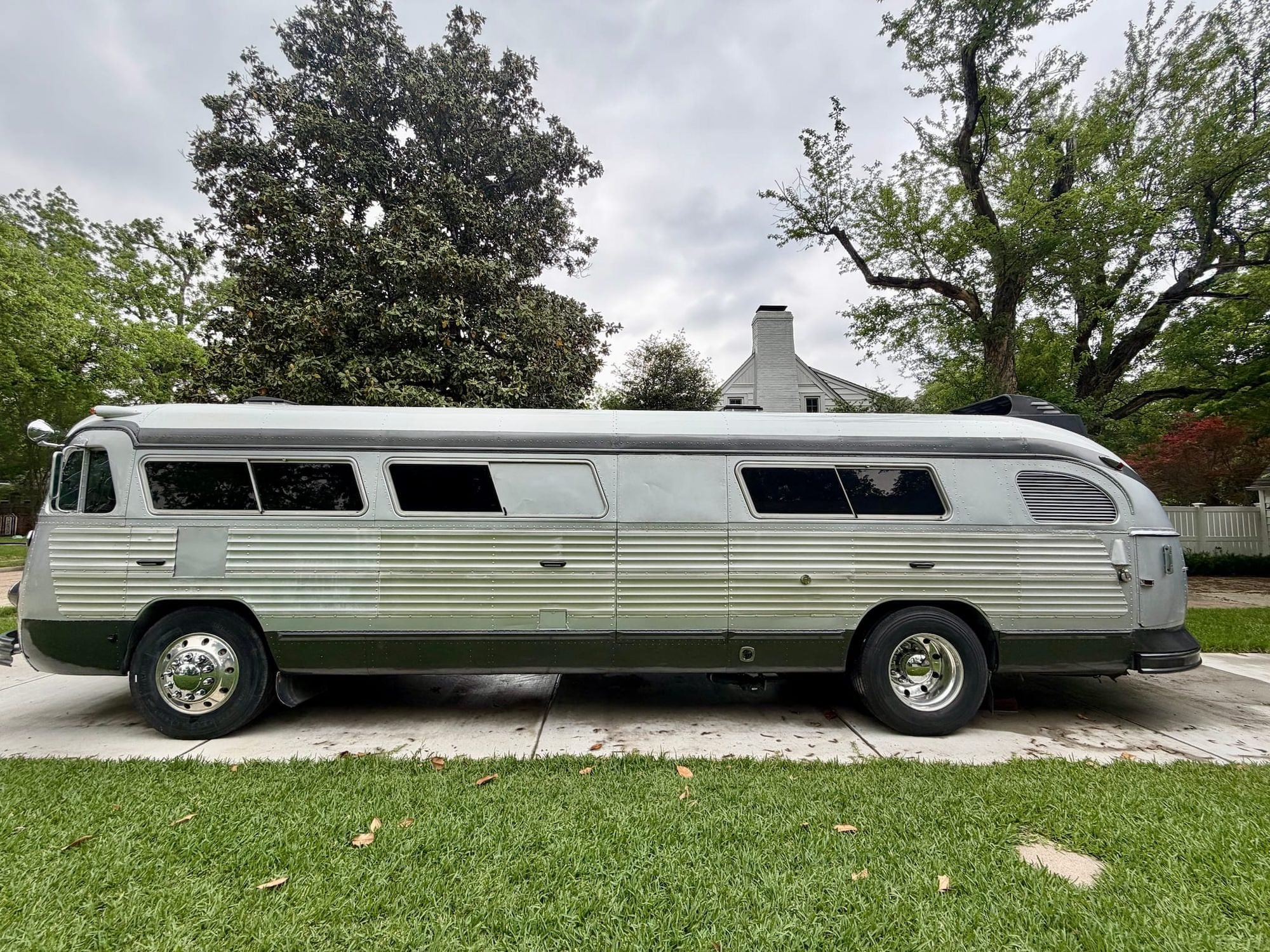
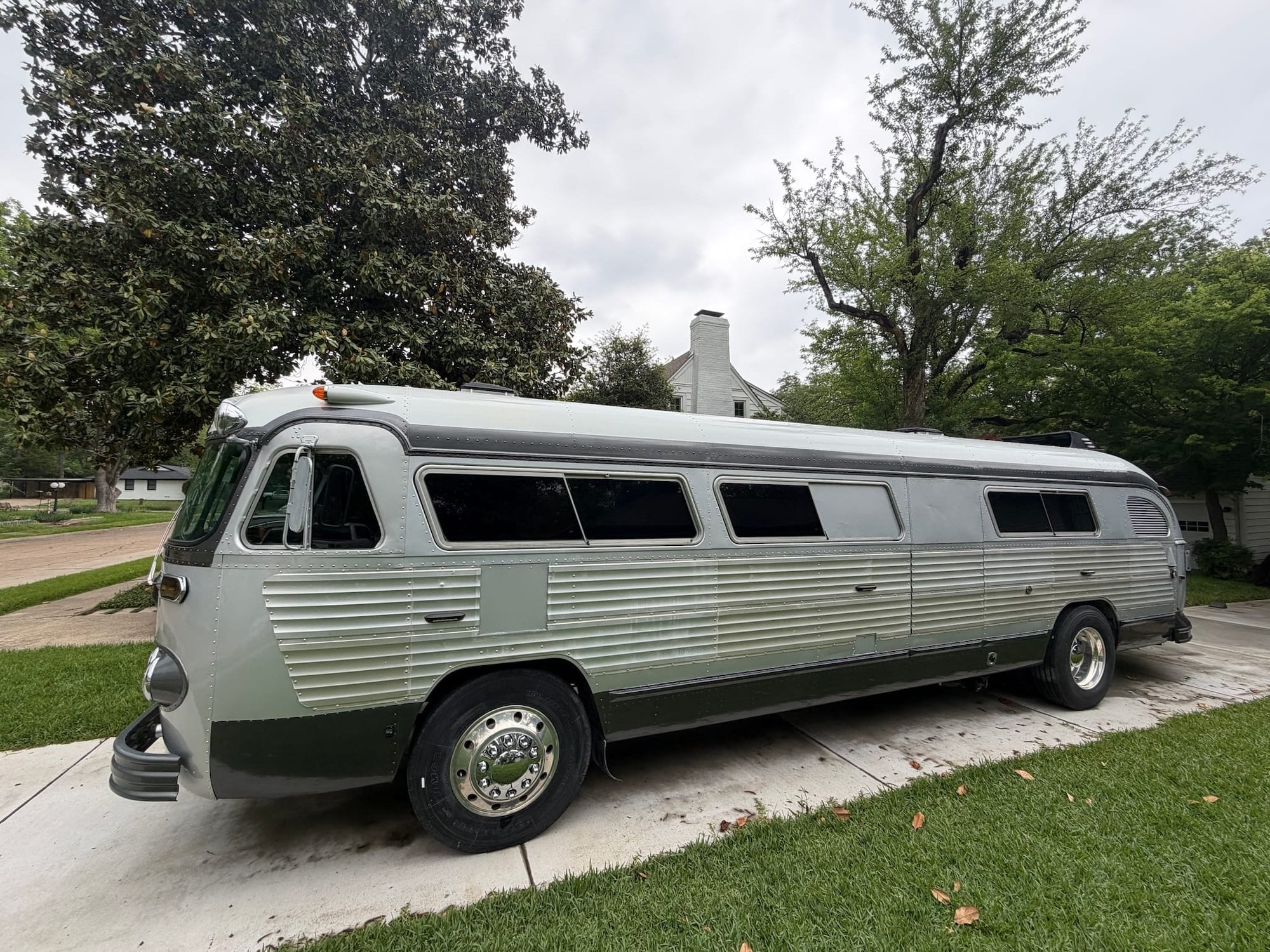
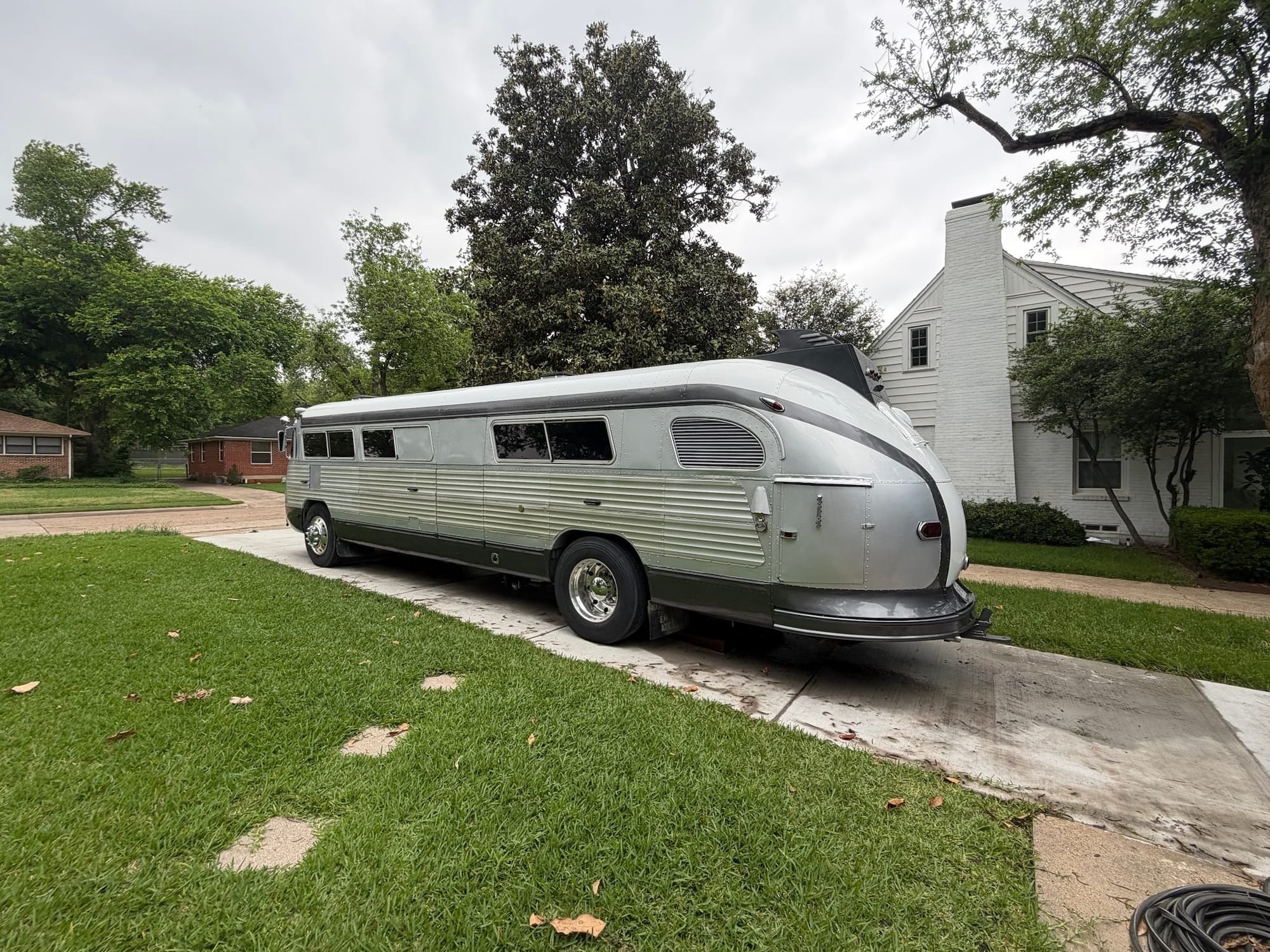
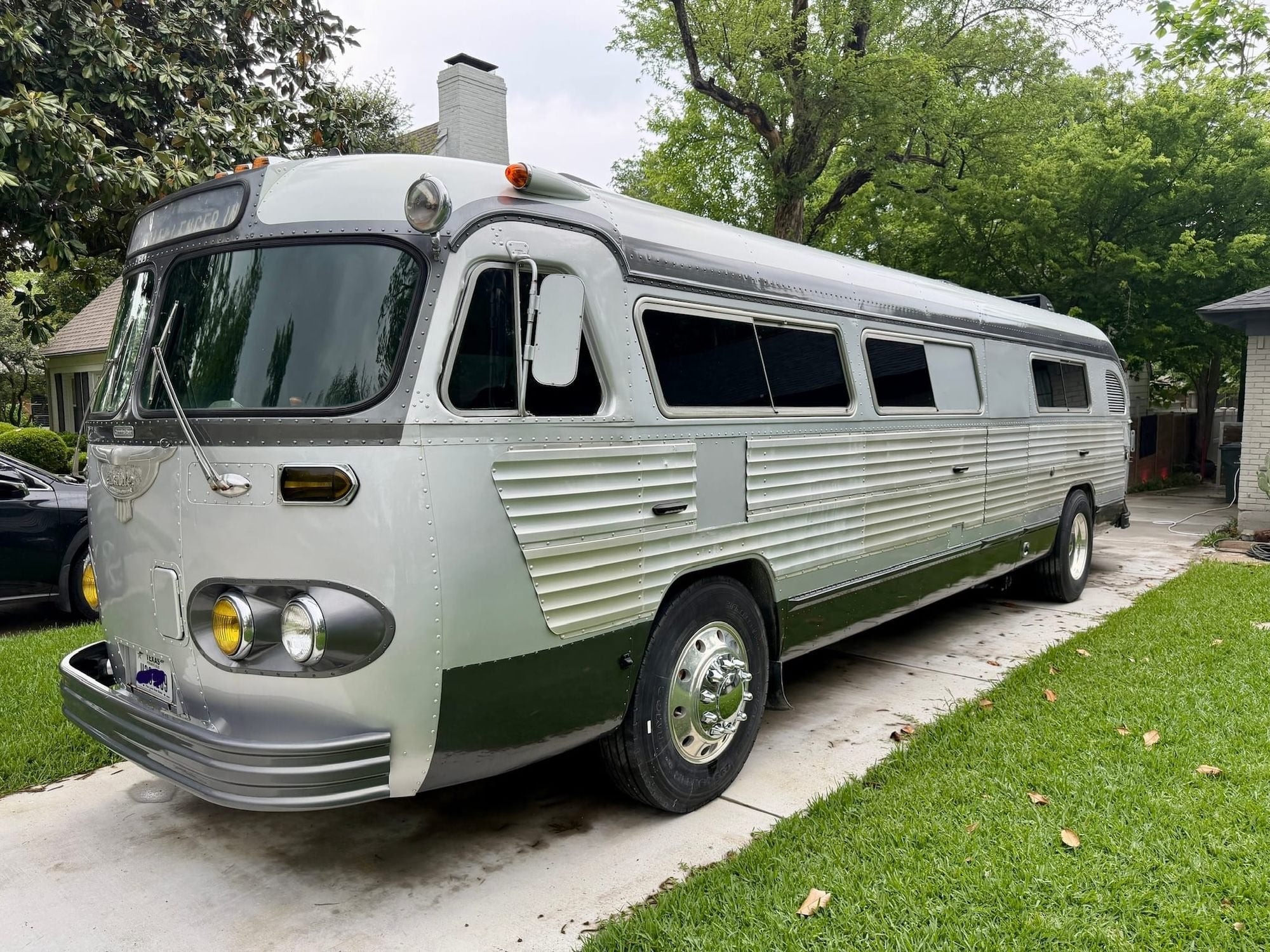
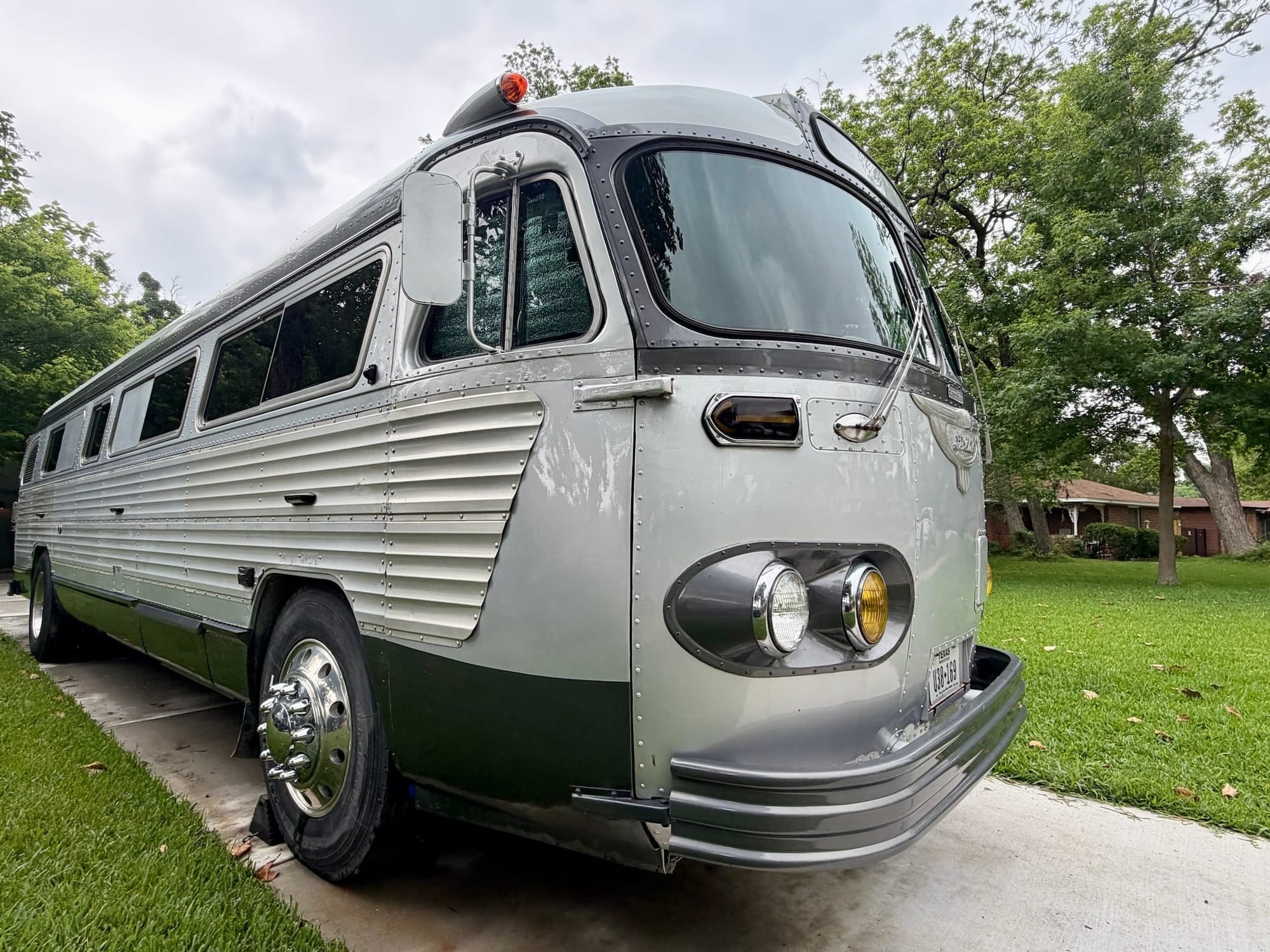
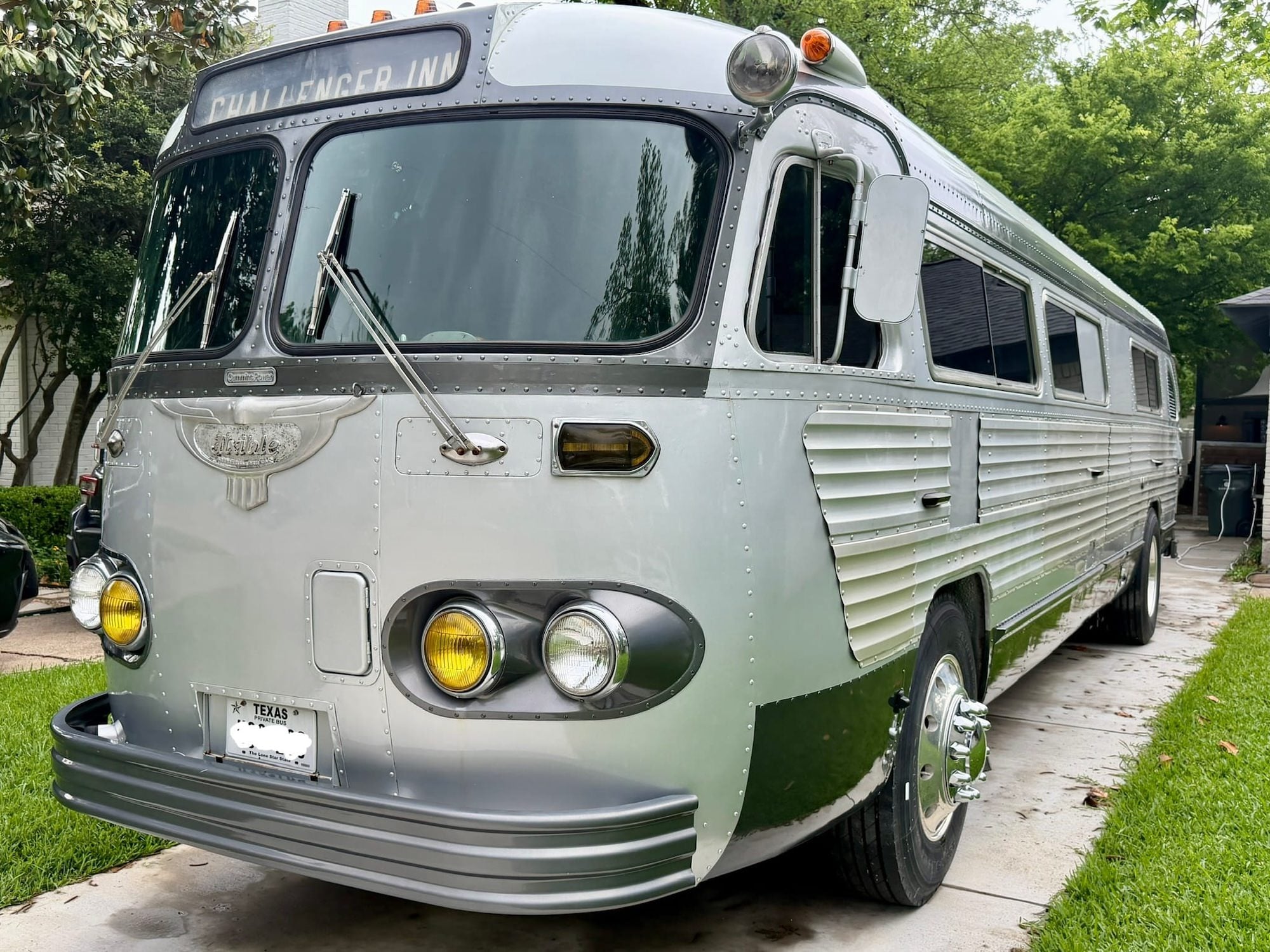
This is a 1954 Flxible Visicoach that was given a full motorhome conversion back in the 1980s. In 2021 a five year refurbishment was undertaken, and it was completed earlier this year with a tastefully executed interior fitout.
The 1950s-styling of the Flxible Visicoach has made it an excellent candidate for conversion into a motorhome with retro-styling, and at least a few dozen have been completed at the time of writing.
 This is a 1954 Flxible Visicoach that was given a full motorhome conversion back in the 1980s. In 2021 a five year refurbishment was undertaken, and it was completed earlier this year with a tastefully executed interior fitout.
History Speedrun: The Flxible Visicoach
The Flxible Visicoach was an intercity bus/coach built by The Flxible Company of Loudonville, Ohio for just six years between 1950 and 1956. It was an evolution of the earlier Flxible Clipper, the aluminum-and-steel monocoque bus that had defined a generation of American highway travel, and it carried the same swooping bullet-tail silhouette into a slightly larger, better-lit body.
Only 925 examples of the Visicoach were built, and many surviving examples have now been converted into motorhomes – a use case that can be traced back to a single 1952 Visicoach built for one family and now historically recognized as the first commercial coach-to-motorhome conversion in the United States.
The Flxible Company
Flxible was founded in Mansfield, Ohio in 1913, originally named the Flexible Side Car Company. Hugo H. Young, a Harley-Davidson dealer, had designed a flexible sidecar mount that let the sidecar lean into corners with the motorcycle, it was a concept decades ahead of its time.
Charles F. Kettering, the inventor and Delco founder, provided funding and became company president, moving production to a new plant in Loudonville. In 1919 the company dropped the first “e” from its name to make “Flxible” trademarkable – people have been mistaking it for a typo ever since.
Sidecar demand almost completely collapsed after affordable, mass-produced cars like the Model T reached the market, and Flxible quickly pivoted to buses, hearses, and ambulances. Now the company name made no sense at all, but the brandname awareness was such they decided to stick with it.
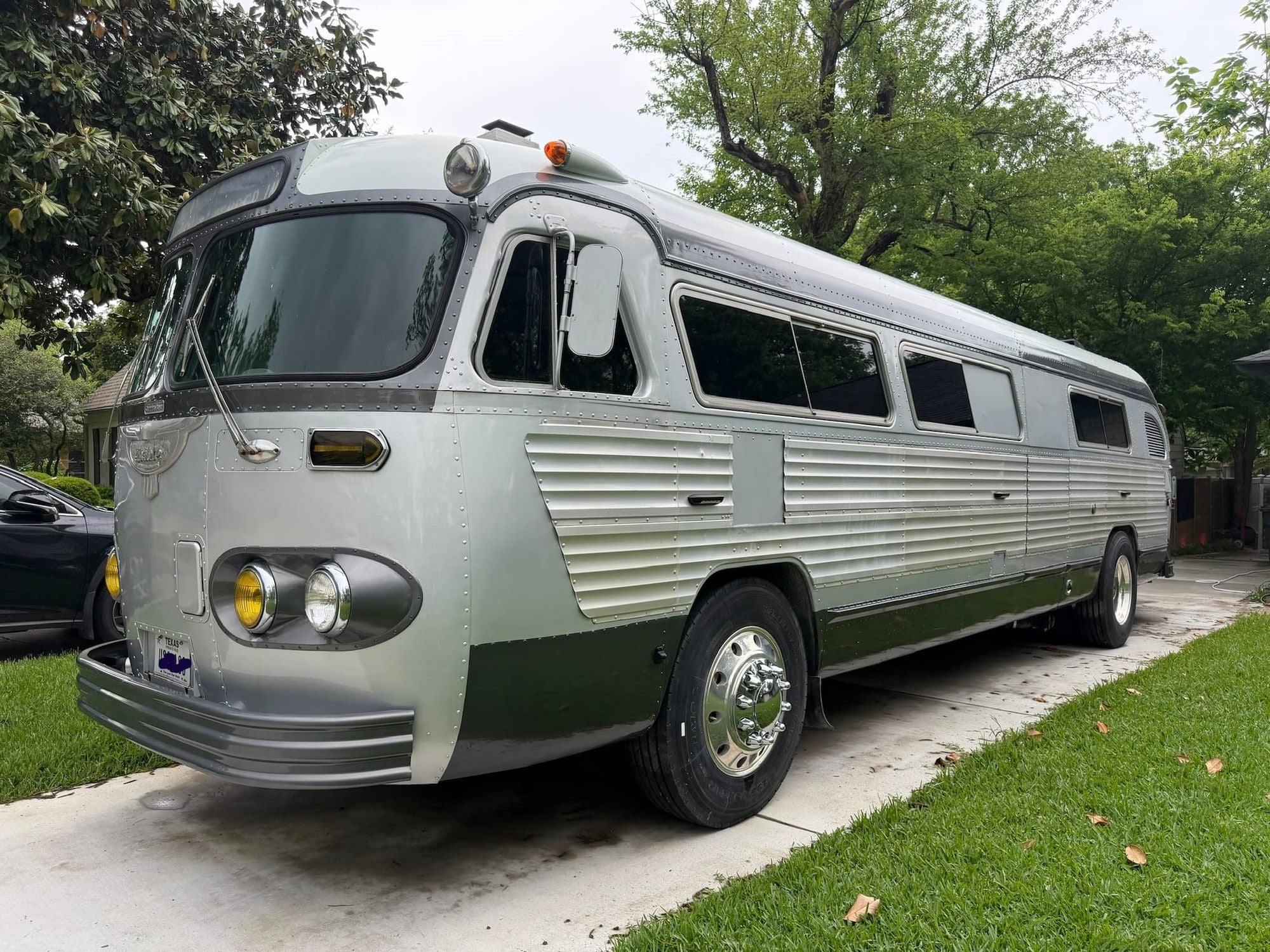
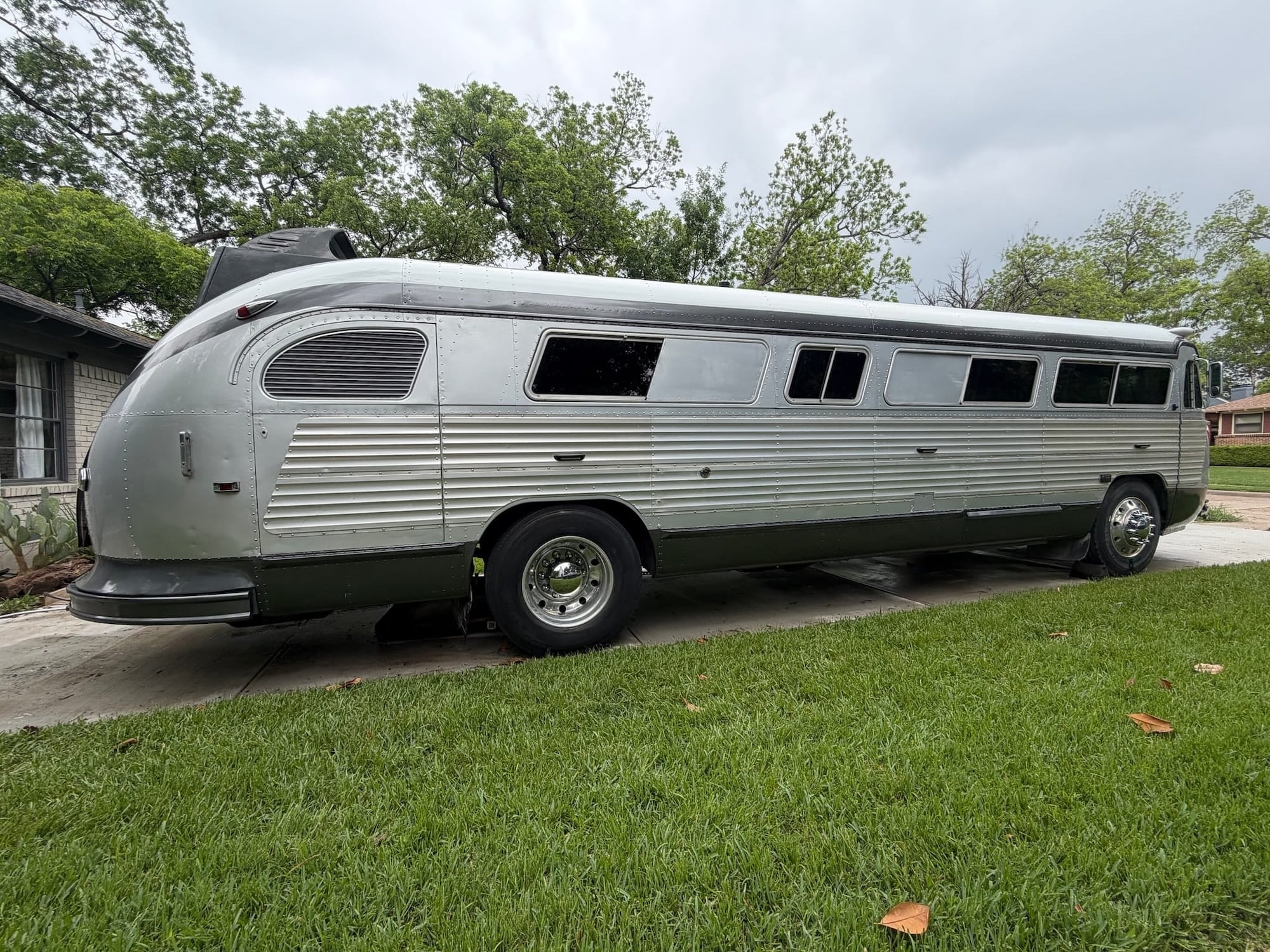
The Visicoach was built with a stressed-skin monocoque, there were two longitudinal frame rails that ran the length of the vehicle, welded to a series of transverse members and a lattice of hoops that formed the sides and roof. The aluminum skin was then riveted to that framework as a structural element.
The first Flxible bus, a twelve-passenger sedan on a Studebaker chassis, went to E.L. Harter in 1924 for a route between Ashland and Mount Vernon, Ohio. Kettering’s parallel role as a vice president at General Motors gave Flxible surprisingly easy access to Buick chassis and drivetrains.
Most Flxible ambulances, hearses, and early buses from the mid-1920s into the early 1940s were built on Buick chassis, and the Buick 320 straight-eight remained a common engine choice for the Clipper family that soon followed.
From The Clipper To The Visicoach
The first Clipper arrived in 1937 as a 28 foot, 25 passenger coach on a Chevy truck chassis with a wood-framed body. It lasted only a single year. In 1938 Flxible introduced a rear-engined, all-steel semi-monocoque version, and by 1940 the design had evolved into the shape most people recognize as a Clipper – a 29 passenger body with a rounded tail and a 320 cubic inch Buick straight-eight sitting under the back deck.
The forward-canted window pillars and the rooftop air scoop feeding the rear-mounted engine were both added in 1941. After a WWII pause during which Flxible built parts for Liberty ships, M4 tanks, F4U Corsairs, and Goodyear blimps, Clipper production resumed in 1944.
In 1950 Flxible re-developed the Clipper into the Visicoach. The name came from its larger side windows, roughly twice the width of the Clipper’s smaller windows, which gave passengers a vastly better view of the rapidly-passing countryside.
The Underlying Engineering
The Visicoach was built with a stressed-skin monocoque, there were two longitudinal frame rails that ran the length of the vehicle, welded to a series of transverse members and a lattice of hoops that formed the sides and roof. The aluminum skin was then riveted to that framework as a structural element.
The result was notably lightweight for a 30 plus-foot bus, and Flxible marketed its rigidity and low weight as advantages against heavier, and more primitive body-on-frame competitors.
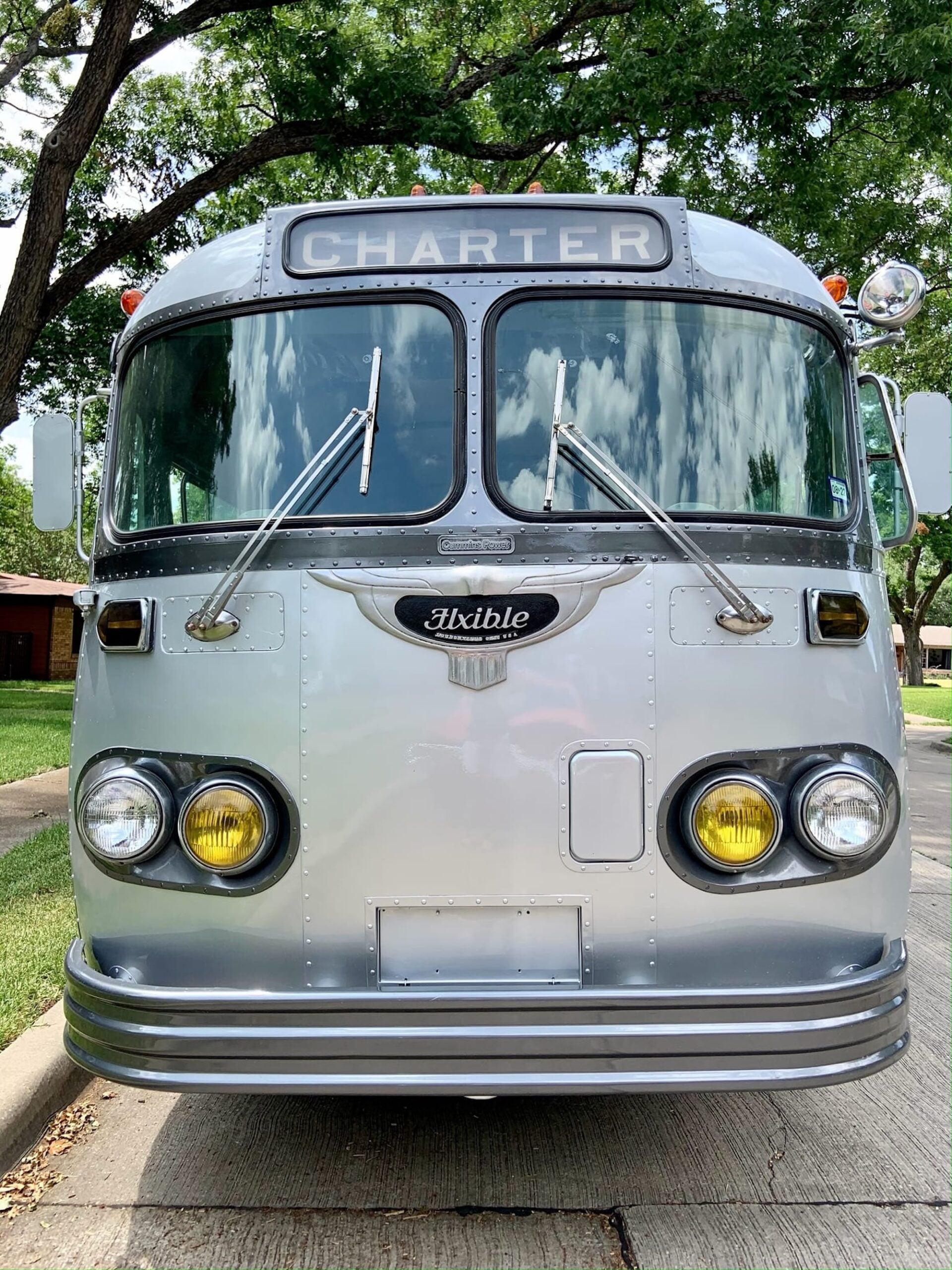
The refurb work included a full interior overhaul, new plumbing and electrical systems, replacement 22.5 inch alloy wheels wrapped in 275/80 Michelin X Line tires, and a silver exterior refinish over the original fluted aluminum side panels.
The rear engine bay was arguably the Visicoach’s most practical feature – engines were mounted on a bolted cradle that ran on rails and could be extended out through a removable rear cross-member for servicing or replacement. This made servicing much easier and faster, and helped lower maintenance costs.
The Buick 320 straight-eight remained the standard engine through the early 1950s. Fageol Twin Coach, Hall-Scott, White, and Cummins engines were all available, and after Flxible absorbed Fageol’s bus division in 1953 the gas and propane engines from that line became a common sight in the engine bay. A 4-speed or 5-speed manual transmission was standard, and the ram-air rooftop scoop that had appeared on Clippers in 1941 continued to feed the radiator.
Visicoaches were sold to a mix of intercity carriers and specialty operators, six went into service at Mount Rainier National Park for sightseeing tours, some fitted with scenic roof windows for overhead views. The Utah Parks Company took delivery of at least four for use around Bryce Canyon and Zion.
The Santa Fe Railway bought ten for its Grand Canyon transfer service and Continental Air Transport ran thirty Visicoaches between Chicago’s suburbs and O’Hare and Midway airports. In Australia, Ansair of Melbourne built 131 Clipper-family coaches under license between 1950 and 1960, powered variously by Leyland, Cummins, and Deutz diesels.
The First Commercial Coach Conversion
Flxible had established a Land Cruiser operation in the late 1940s (well before Toyota made the name famous) to build custom interiors on Clipper shells for corporate and government clients.
In 1952 Miles and Kirwan Elmers of Ohio persuaded Flxible to build a Visicoach with a residential-style interior for the Elmers family. The result, powered by a Buick straight-eight and a 5-speed manual, is widely recognized as the first commercial coach-to-motorhome conversion, the first step in establishing the commercial bus-conversion industry.
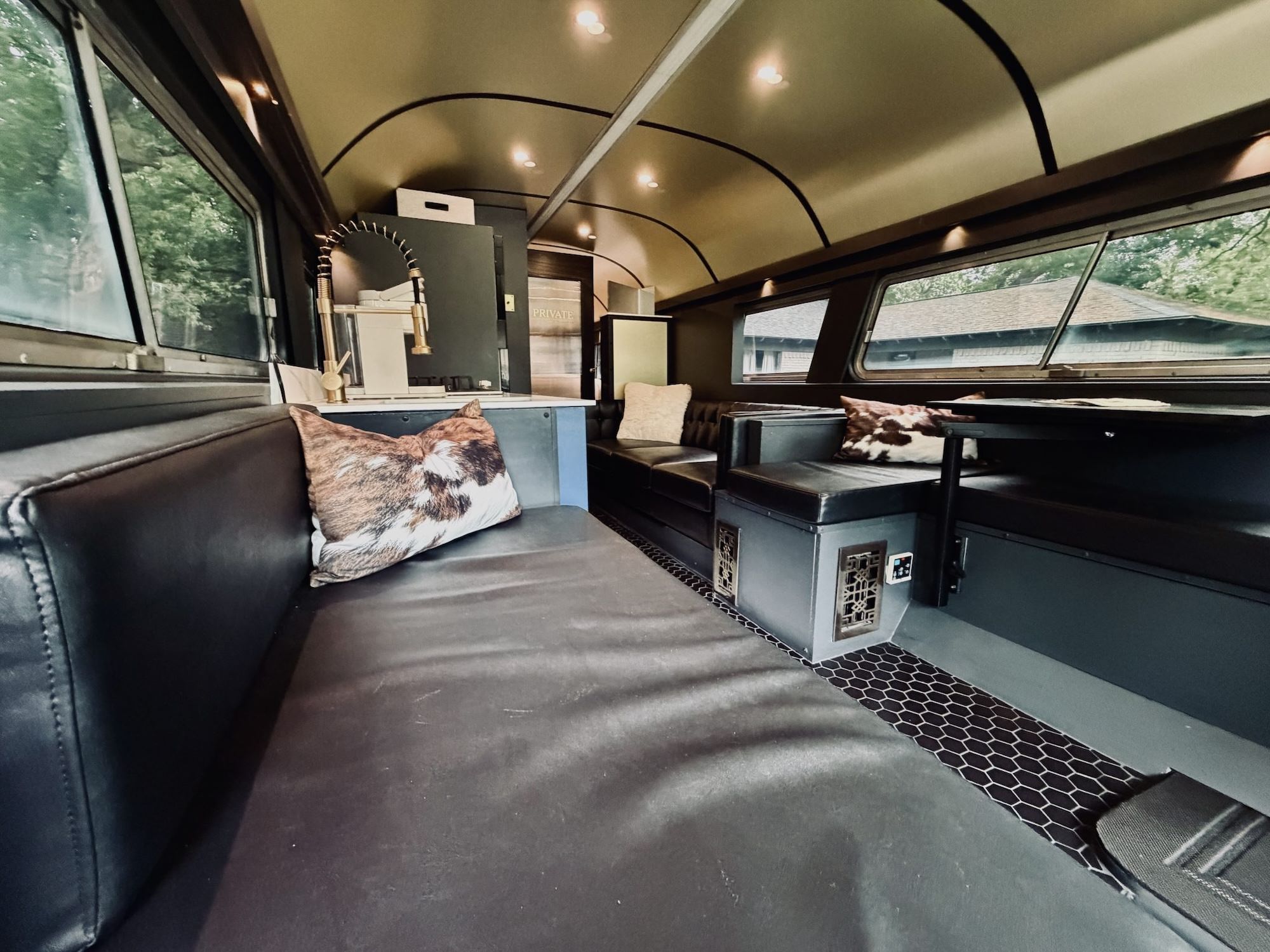
This 1954 Flxible Visicoach was converted into a motorhome in the 1980s and bought by the seller in 2021, kicking off a five-year refurbishment process to bring it back to its former glory.
The Elmers drove the coach from Ohio to Fairbanks, Alaska on the Alcan Highway for its shakedown run. In 1955 they bought the Land Cruiser division from Flxible and founded Custom Coach Corporation in Columbus, which went on to build motorhome conversions for musicians, actors, and heads of state, and later pioneered the first automatic transmission in an intercity bus shell in 1956, the first backup cameras in RVs in 1965, and the first cruise control in coaches in 1967.
The Flxible Visicoach Motorhome Shown Here
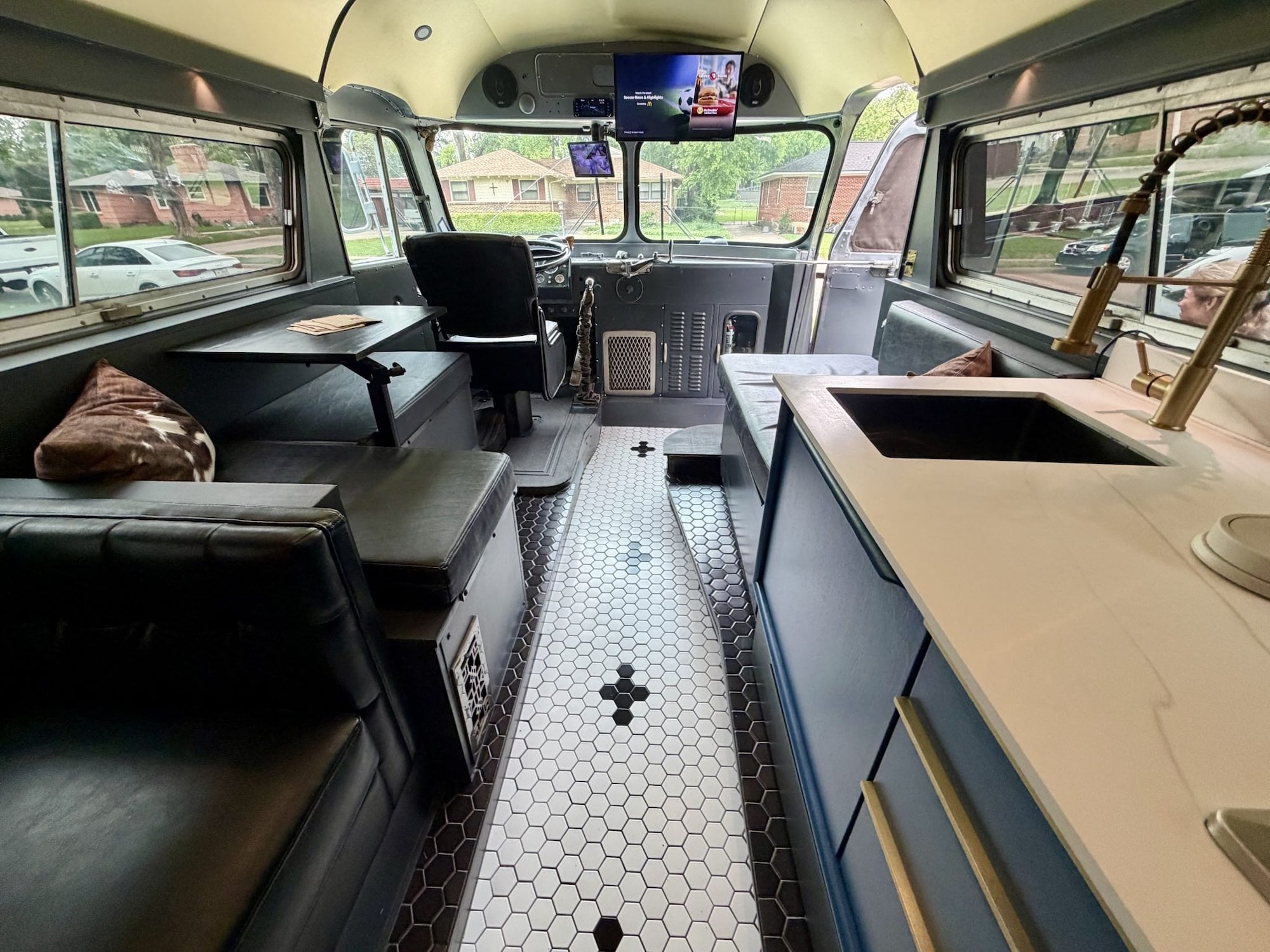
This 1954 Flxible Visicoach was converted into a motorhome in the 1980s and bought by the seller in 2021, kicking off a five-year refurbishment process to bring it back to its former glory.
The refurb work included a full interior overhaul, new plumbing and electrical systems, replacement 22.5 inch alloy wheels wrapped in 275/80 Michelin X Line tires, and a silver exterior refinish over the original fluted aluminum side panels.
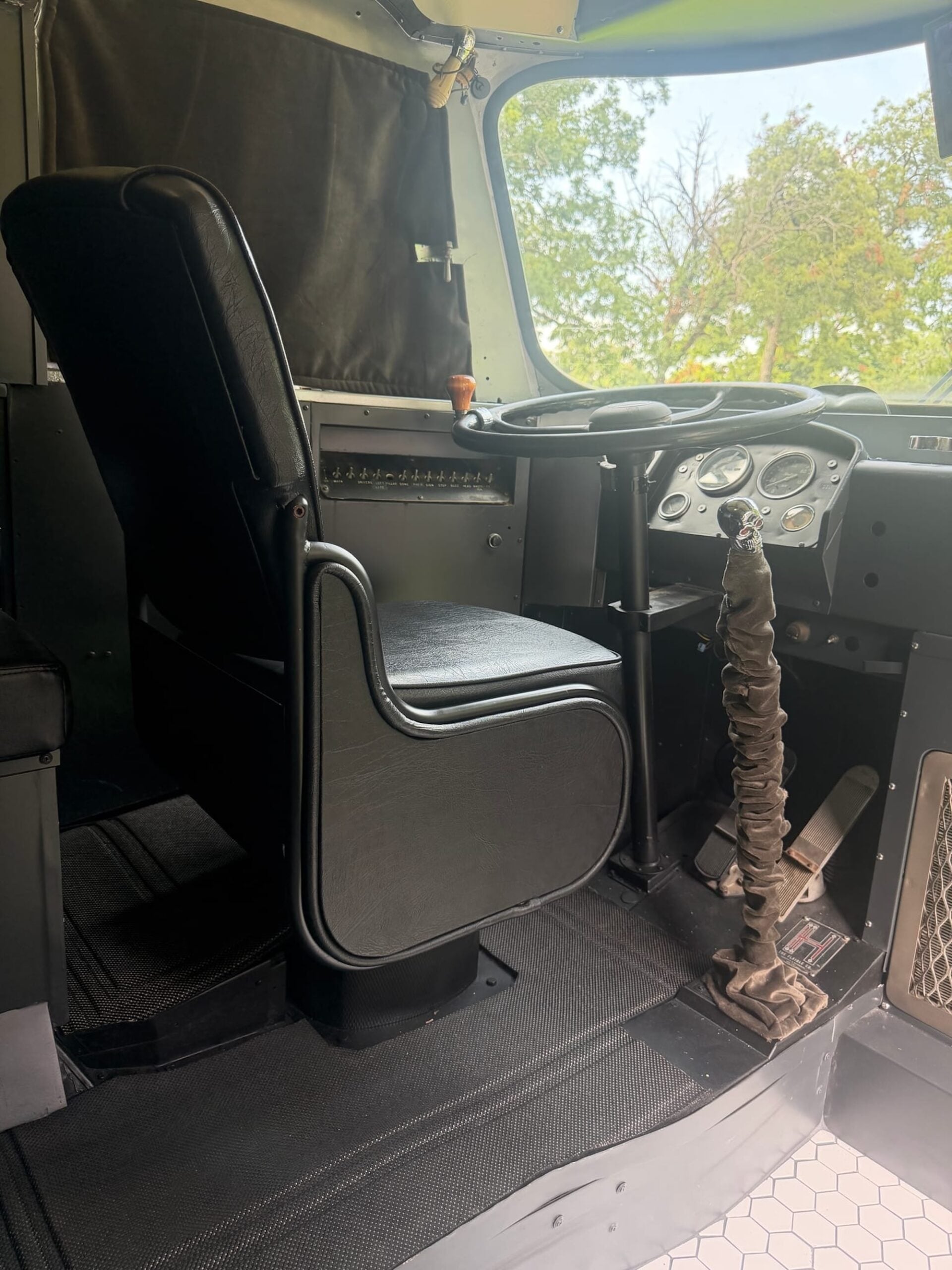
This Visicoach is powered by a 504 cubic inch Cummins diesel V8 paired with a 4-speed manual transmission with overdrive, driving the rear wheels through air-assisted drum brakes.
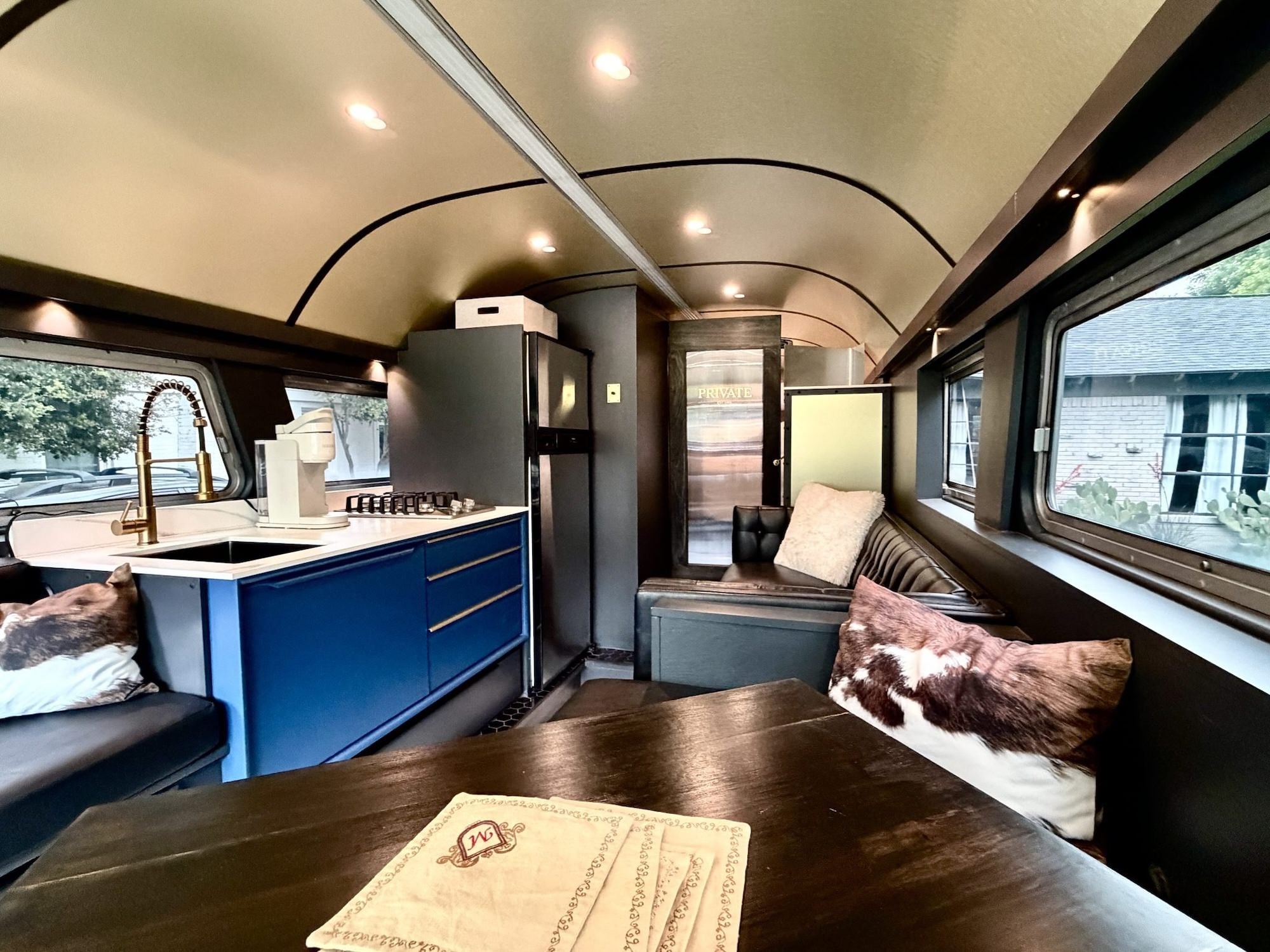
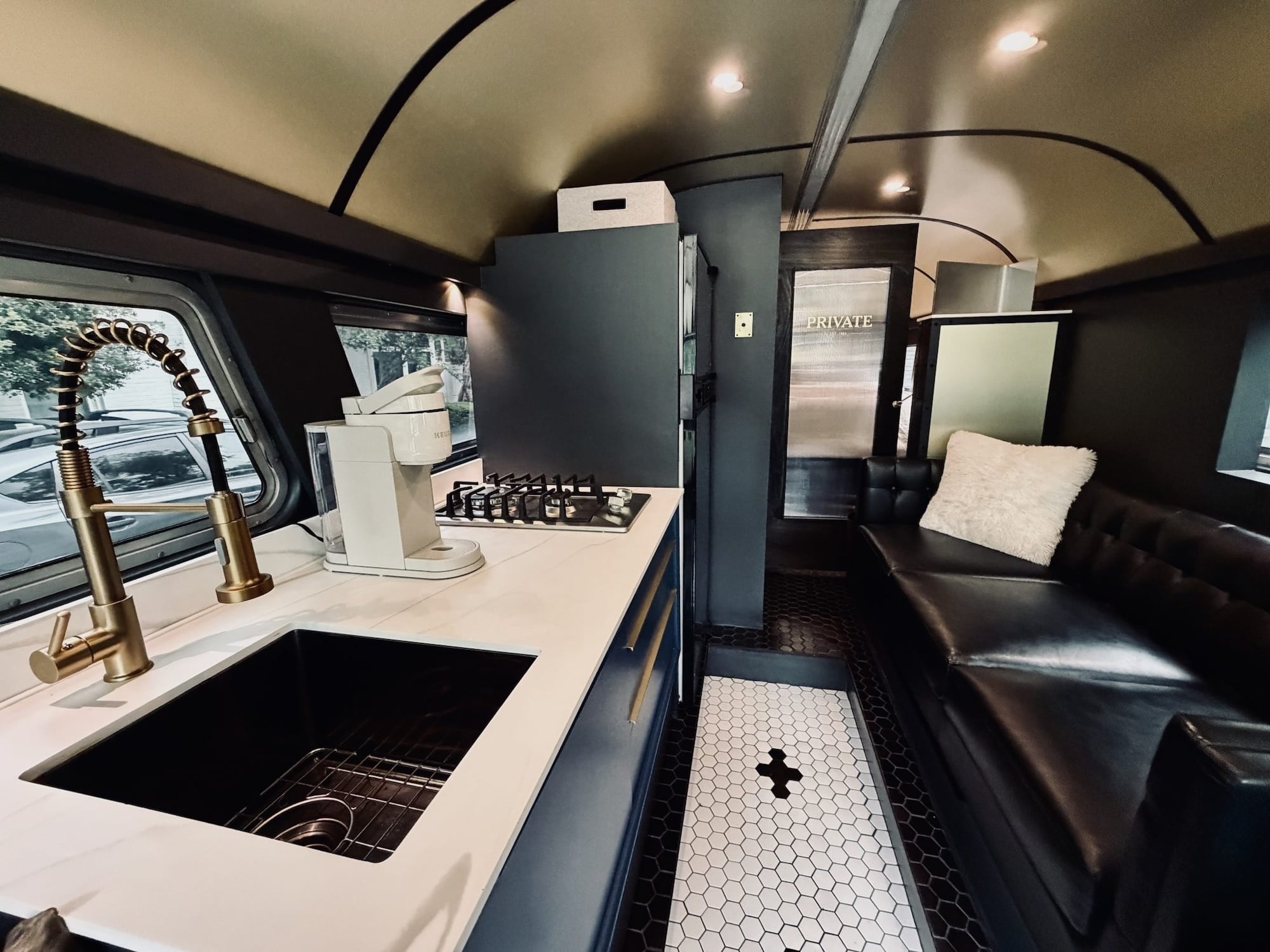
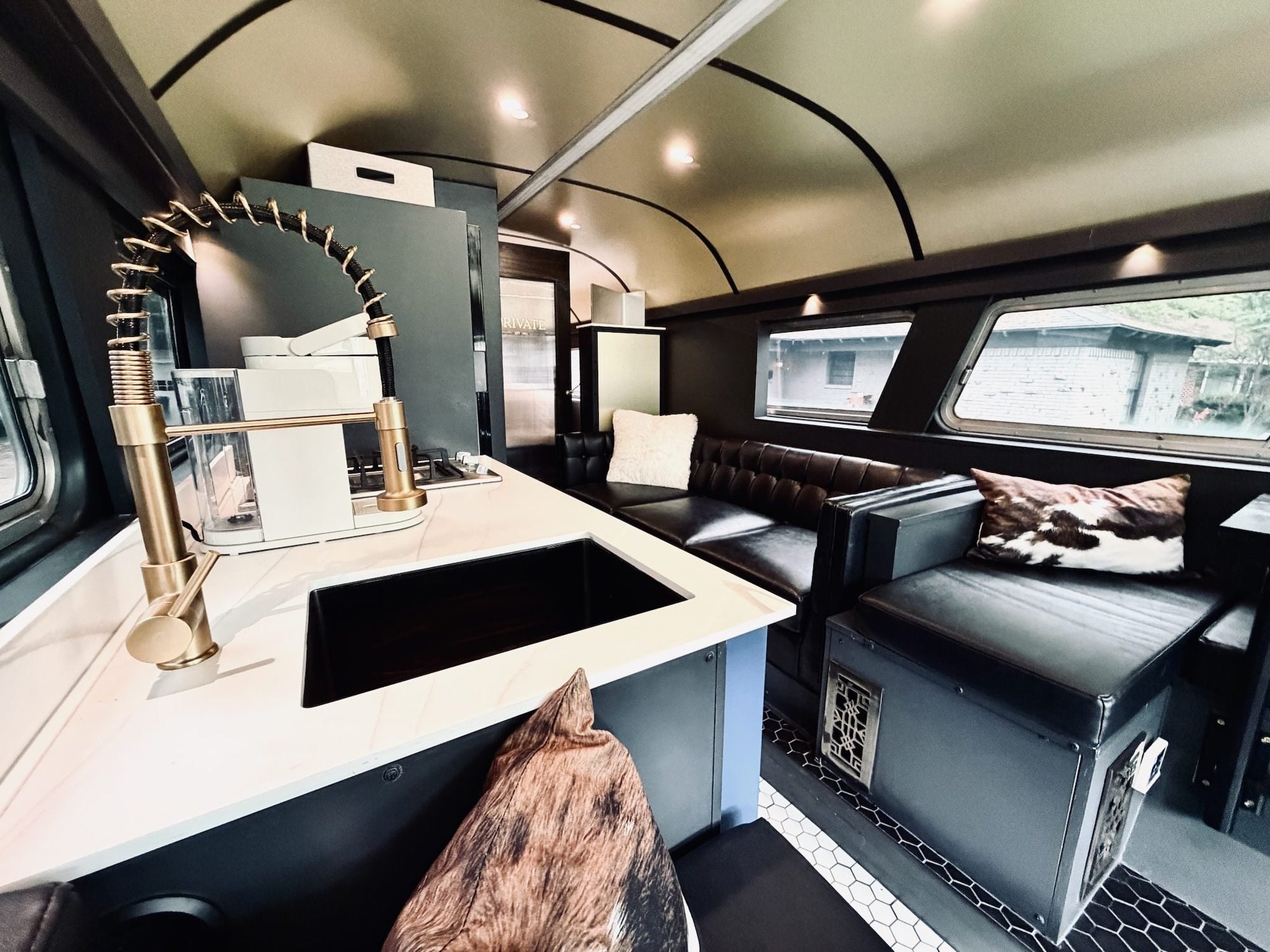
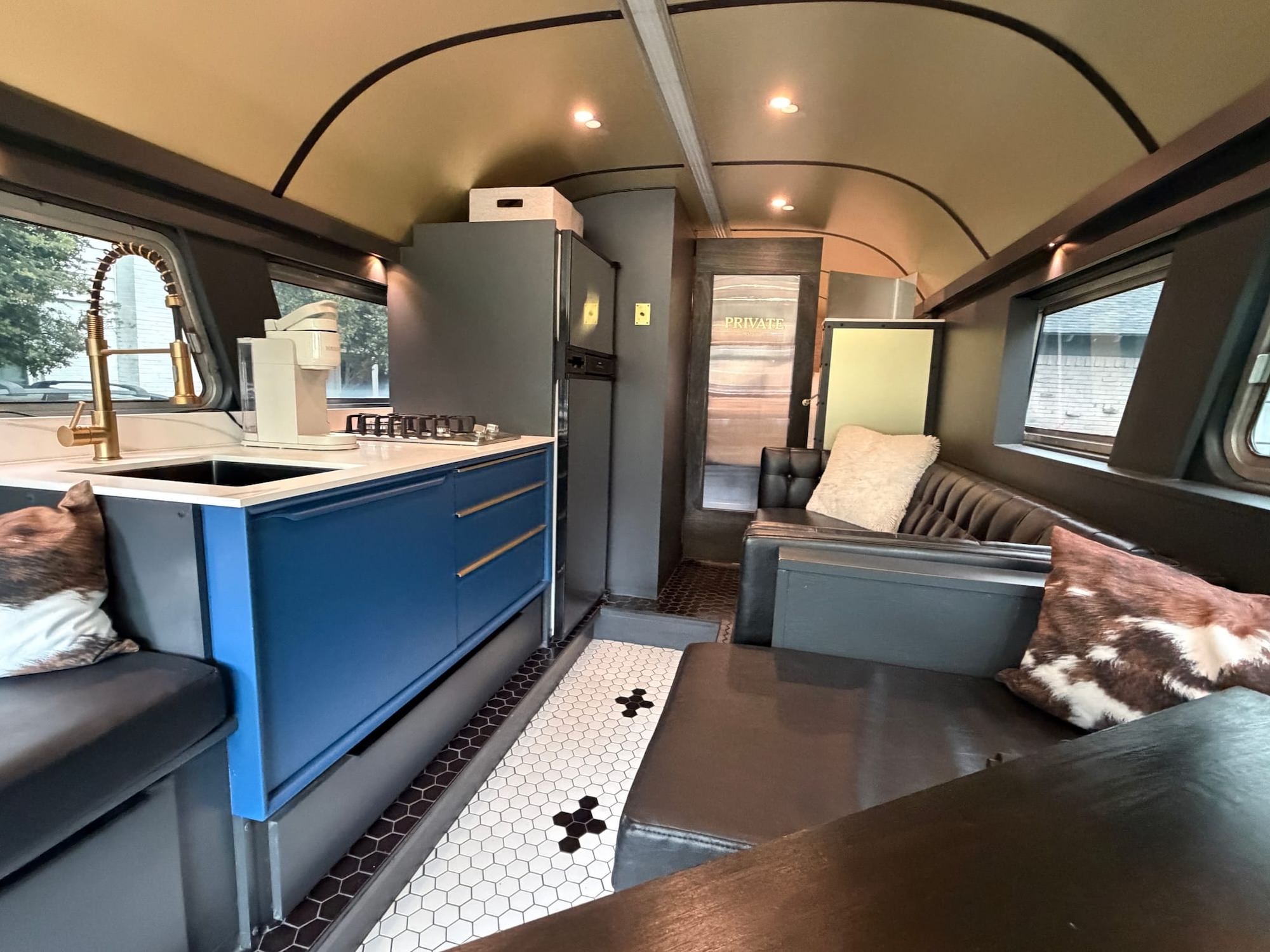
Inside, the living quarters have a black leather sofa, dimmable LED lighting, a flatscreen TV, a 9,000 BTU mini split air handler, and two Maxxair ventilation fans. The kitchen has a white stone countertop, a two-burner stove, a refrigerator/freezer, and a sink fed by an on-demand water heater.
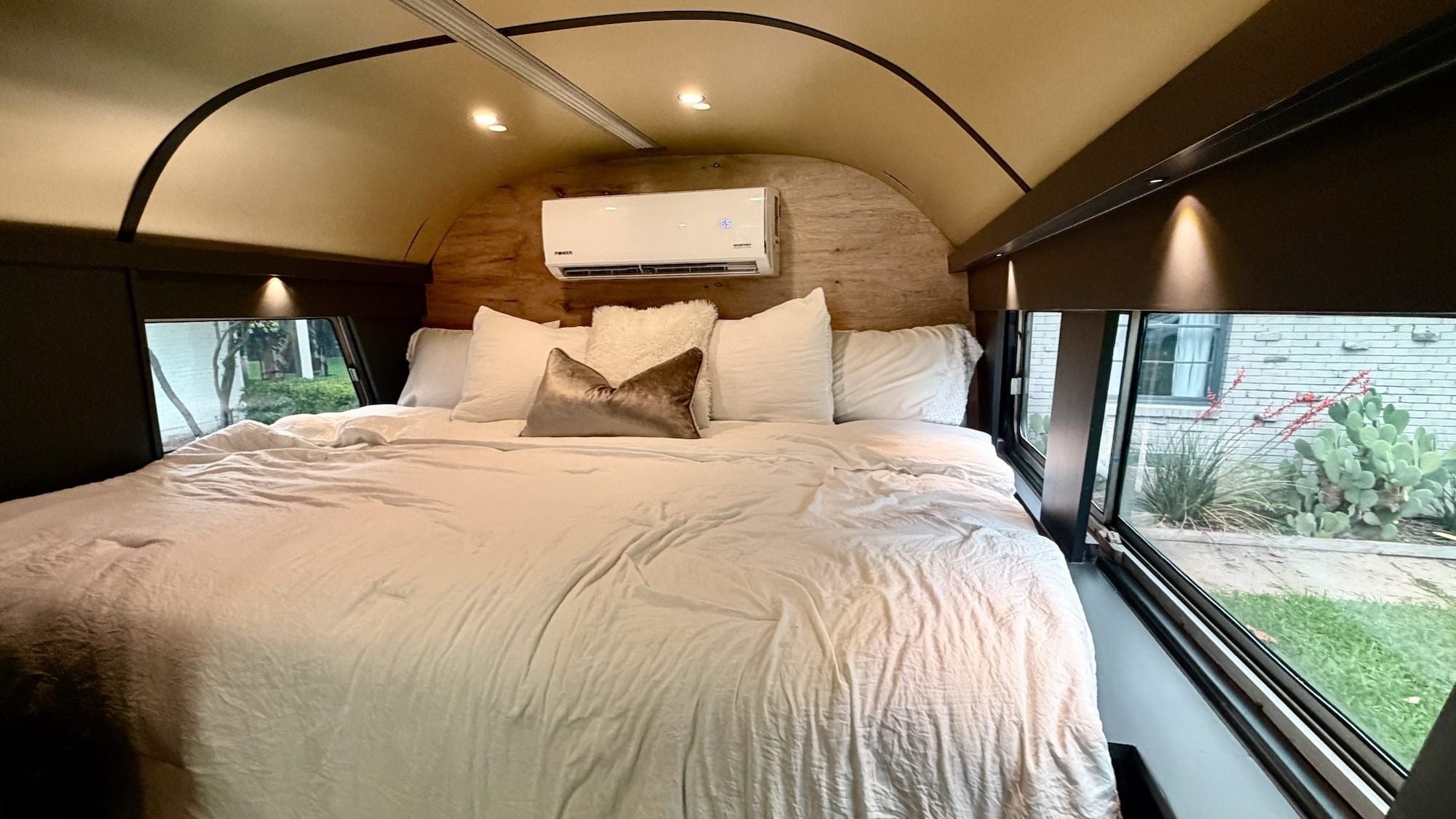
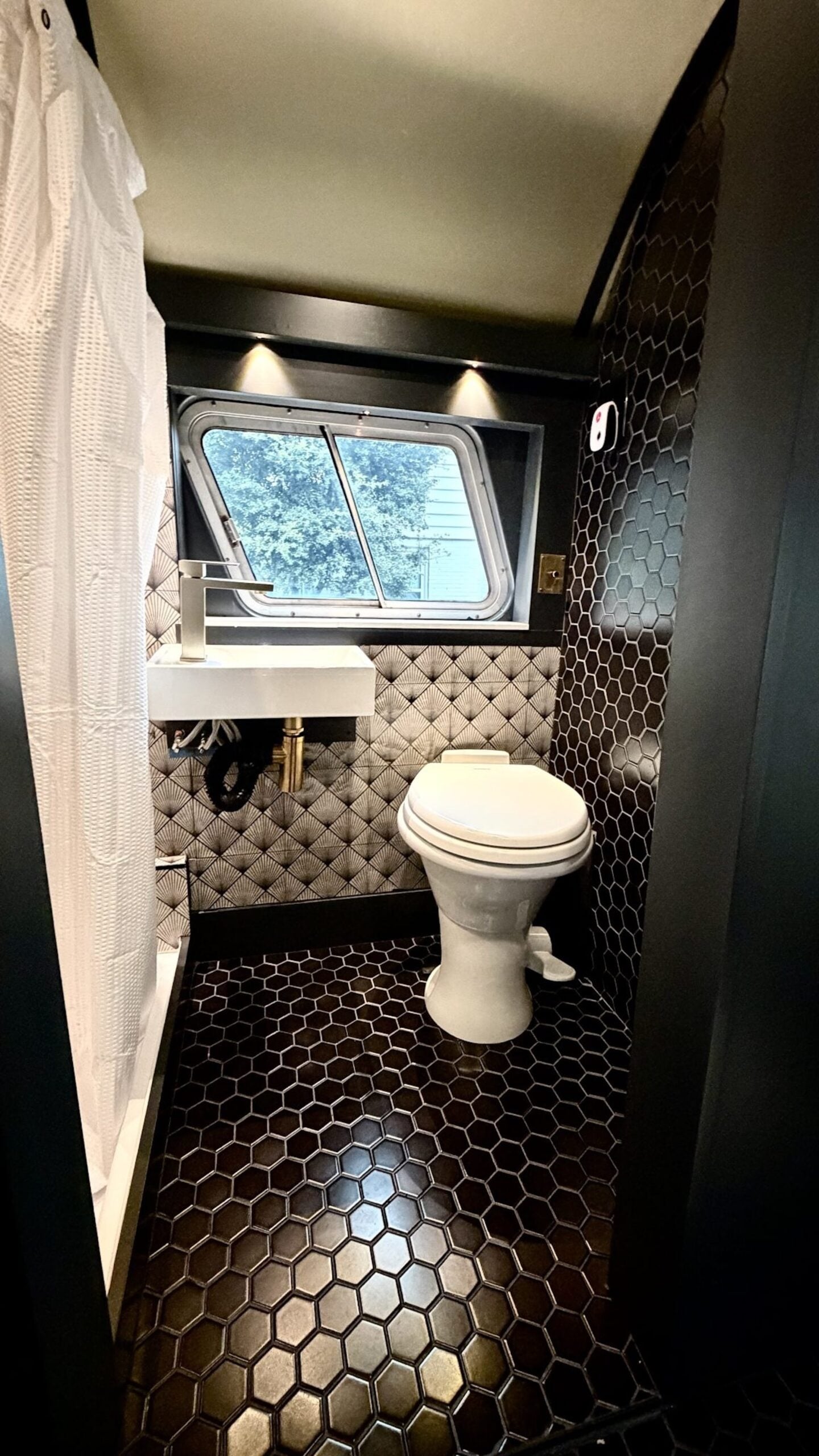
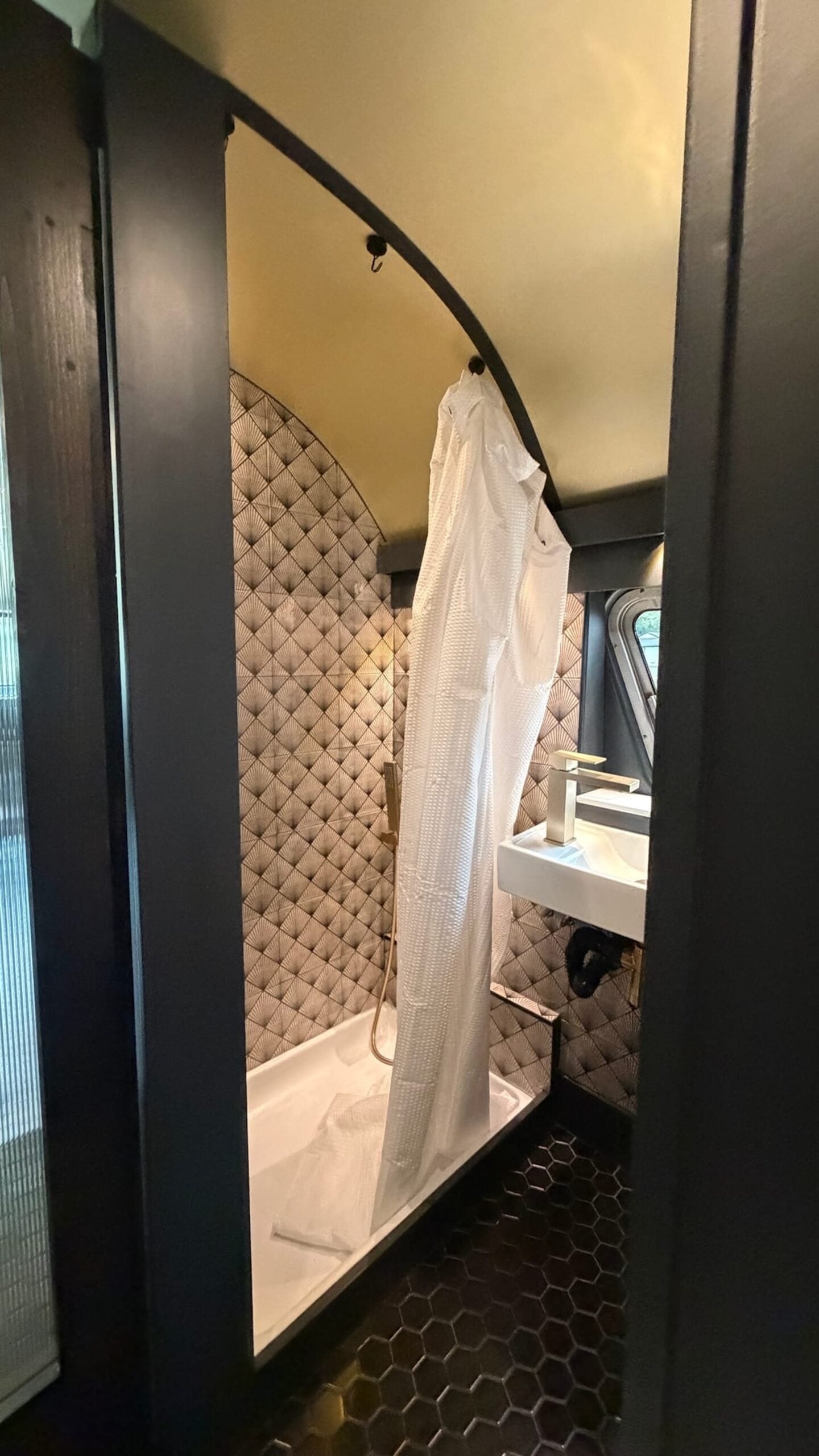
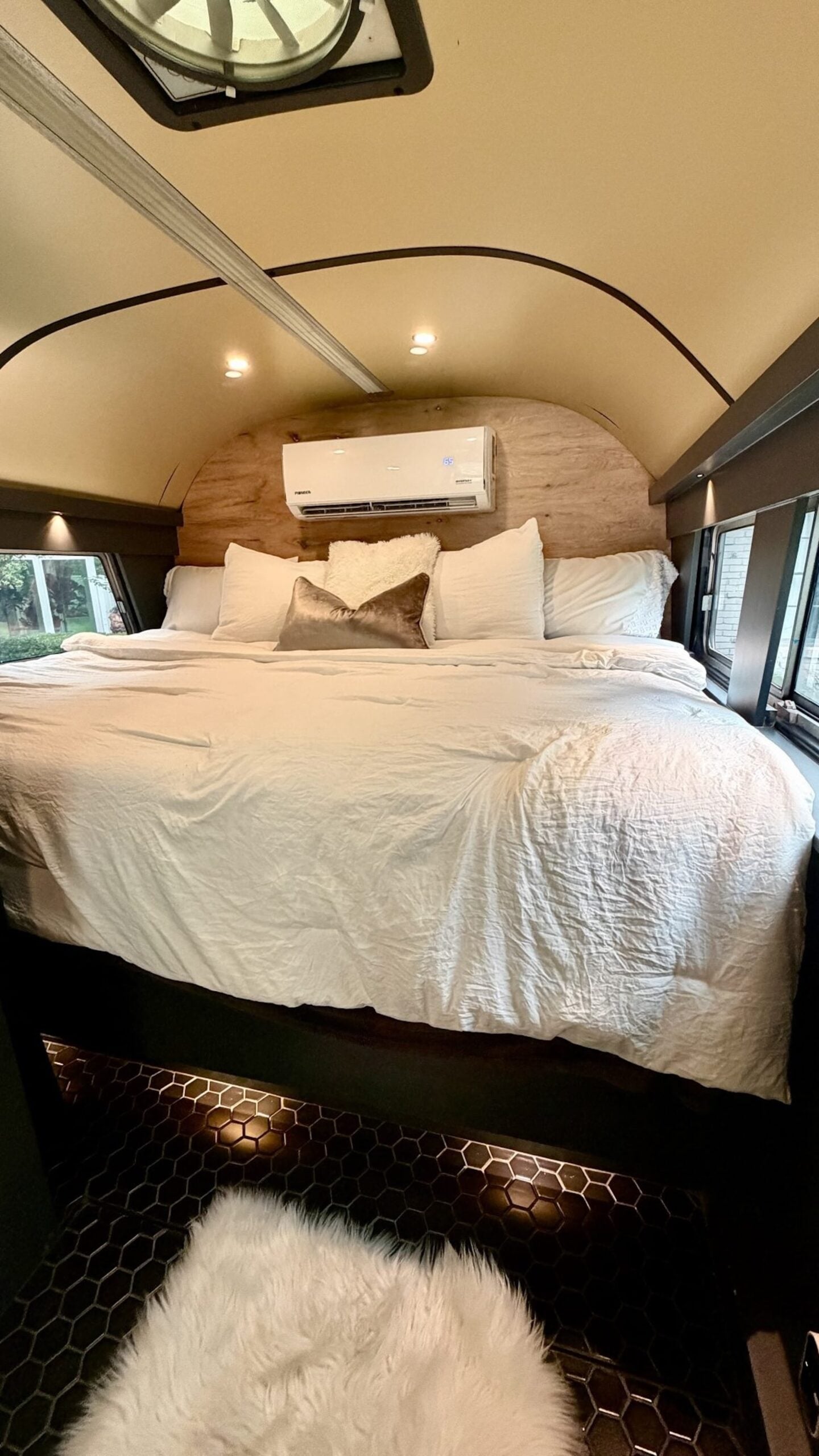
A rear bedroom holds a memory-foam queen mattress along with privacy shades, a flatscreen TV, and a 12,000 BTU mini split air handler. The tiled bathroom is accessed through a door with a custom frosted-glass insert and includes a shower, a flushing toilet, a sink, and accent lighting.
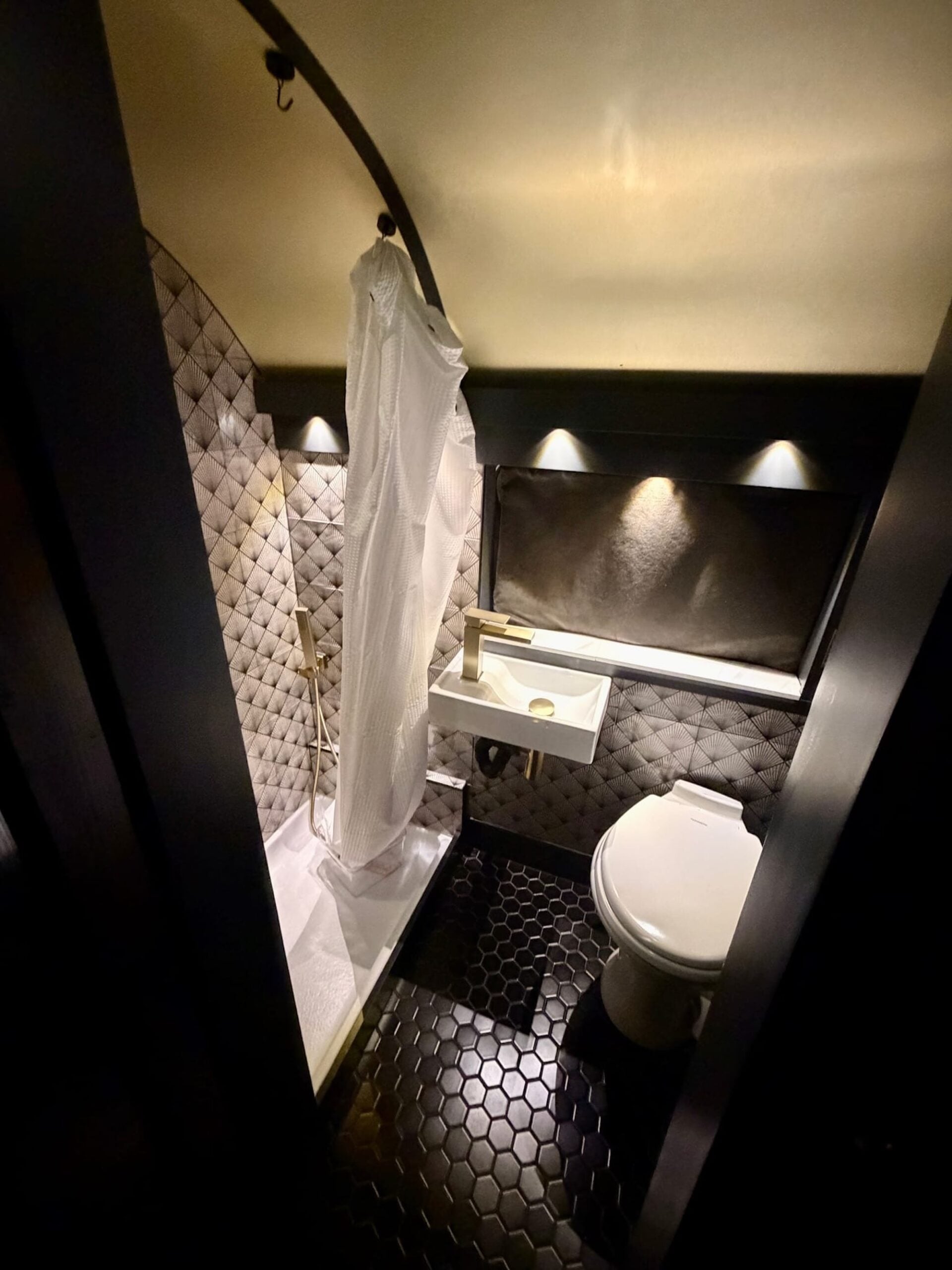
A rear bedroom holds a memory-foam queen mattress along with privacy shades, a flatscreen TV, and a 12,000 BTU mini split air handler. The tiled bathroom is accessed through a door with a custom frosted-glass insert and includes a shower, a flushing toilet, a sink, and accent lighting.
This Visicoach also has a 3,300 watt generator, a 30 amp shore power connection, a 60 gallon fresh water tank, a 30 gallon gray water tank, an 18 gallon black water tank, water and waste connections, and exterior accent lighting. The driver sits behind a speedometer and a 4,000 rpm tachometer, with gauges for fuel level, air and oil pressure, and coolant temperature.
It’s now being offered for sale out of Garland, Texas with a clean Texas title in the seller’s name. If you’d like to read more about it or register to bid you can visit the listing here.
Images courtesy of Bring a Trailer

Articles that Ben Branch has written have been covered on CNN, Popular Mechanics, Smithsonian Magazine, Road & Track Magazine, the official Pinterest blog, the official eBay Motors blog, BuzzFeed, Autoweek Magazine, Wired Magazine, Autoblog, Gear Patrol, Jalopnik, The Verge, and many more.
Silodrome was founded by Ben back in 2010, in the years since the site has grown to become a world leader in the alternative and vintage motoring sector, with well over a million monthly readers from around the world and many hundreds of thousands of followers on social media.